

Artificer Specialist:
Architect
Wondrous creators and architects of those majestic magical cities, fortresses, and wizard towers you see dotted across the landscapes, the architects are specialists in building, fortification, terraforming, and wondrous architecture. Architects are Masters at creating constructs to work for them and do various tasks in battle which makes it easier for them to move around and keep supporting the party they're working with, as well as keeping themselves safe and sound.
Tool Proficiency
3rd-level Architect feature
You gain proficiency with carpenter's tools. If you already have this proficiency, you gain proficiency with one other type of artisan’s tools of your choice.
Architect Spells
3rd-level Architect feature
You always have certain spells prepared after you reach particular levels in this class, as shown in the Architect Spells table. These spells count as artificer spells for you, but they don’t count against the number of artificer spells you prepare.
Architect Spells
| Artificer Level | Spell |
|---|---|
| 3rd | floating disk, shield |
| 5th | arcane lock, knock |
| 9th | meld into stone, tiny hut |
| 13th | fabricate, private sanctum |
| 17th | creation, passwall |
Destroy to Create
3rd-level Architect feature
Architects can break down items into scrap materials faster than anybody else. So long as you are capable of damaging it, you deal double damage to objects and structures.
Additionally, through 1 hour of work, which can be done during a short rest, you can dismantle an object or structure with an artisan's tool, acquiring the physical materials the majority of it is composed of. You add 1/2 of its market value, up to 100 gp, as scrap for the purpose of building other items.
Intuitive Design
3rd-level Architect feature
You can use your action and expend one artificer spell slot to focus your awareness on a man-made building around you. An aura with a radius of 30 feet centered on where you touched springs forth. For 1 minute per level of the spell slot you expend, you and a number of chosen creatures up to your Intelligence modifier (minimum of one creature), gain the following benefits:
- Any non-magically locked door within this aura will be unlocked to your group.
- You learn any damage or structural weaknesses within this aura.
- You learn the layout of the building within this aura.
- Your group cannot become lost except by magical means, within this aura.
This aura's radius increases as you gain artificer levels, to 60 feet at 9th level, and 90 feet at 15th level.
Constructed Cover
5th-level Architect feature
You can, as a bonus action, raise up a fabricated structure to provide cover to yourself, or an ally that you can see and is within 30 feet of you. The erected structure is a 5 foot by 5 foot wide panel, with statistics as described by the Constructed Cover Table below, and must be connected to the ground or contiguous with at least one other panel.
The structure can have any shape you desire, though it is immobile and permanent unless dismantled or destroyed. If the panel cuts through a creature's space when it appears, the creature is pushed to one side of the panel (your choice). If a creature would be surrounded on all sides by the panel (or the structure and another solid surface), that creature can make a Dexterity saving throw. On a success, it can use its reaction to move up to its speed so that it is no longer enclosed by the panel.
After using this feature to construct an amount of panels equal to half your artificer level, rounded down, you cannot use this feature again until you finish a short rest.
Constructed Cover Statistics
| Scrap Material | Armor Class | Hit Points | Damage Resistances | Damage Vulnerabilities |
|---|---|---|---|---|
| Wood | 10 | 5 x your Artificer level | Bludgeoning | Fire |
| Stone | 15 | 10 x your Artificer level | Bludgeoning, Slashing | None |
| Metal | 20 | 15 x your Artificer level | Bludgeoning, Piercing, Slashing | None |
Three R's
9th-level Architect feature
The appeal of architecture isn't set and is always developing. Over time some designs can become obsolete, or even ugly, keeping things up to date is always beneficial. An amount of times equal to your proficiency bonus, you can use one of the "Three R's" to restore your creation.
Refurbish. As a reaction, when an object or a structure you can see within 30 feet of you takes damage, using this feature can cause the structure to be immune to that single damage type for 1 minute.
Remodel. As an action, if you are within 30 feet of a structure you made, you may replace or update the scrap material it is made of. If this would increase the Hit Point maximum of a structure, it will restore an amount of Hit Points equal to 2 times your Intelligence modifier.
Renovate. As a bonus action, you can cast the mending spell on any structure or infused item you've crafted within 30 feet without touching it. This object will restore an amount of Hit Points equal to your Artificer level, if it can.
Monumental Fortresses
15th-level Architect feature
You have become a true master of your craft. Any short or long rest taken inside a building or structure you have built, conjured, constructed, or designed allows creatures of your choice to recover up to 2 extra hit die, and 2 spell slots of 3rd level or lower. If you have used your Intuitive Design feature on a structure within the past hour, it qualifies for this benefit.
Find it on DnDBeyond



Barbarian Primal Path:
Path of the Heavy Weapon
Some manned instruments of war require their user to have superior physical prowess to overcome their weight and encumbrance. Though usually these weapons may take an entire crew to employ, those fighters who choose to wield heavy weapons use their powerful bodies, and powerful armaments, to overwhelm their foes.
Steady Stance
You have learned to use the heft of your weapon to root yourself in place. At 3rd level when you adopt this path, you can use heavy weapons without incurring disadvantage due to your size.
Additionally, at the end of your turn, if you move less than half your speed while wielding a weapon with the heavy property, until the end of your next turn, you have advantage on saving throws to avoid being restrained, moved or knocked prone.
Pummeling Rage
At 3rd level, you leverage your immense strength with persistent focus. While you are raging, whenever you hit the same target with your Attack action in consecutive turns, you can force that creature to make a Strength saving throw (DC equals 8 + your proficiency bonus + your Constitution modifier). On a failed save, the target is pushed 5 feet back, and falls prone.
You can use this feature a number of times equal to your proficiency bonus, and you regain all expended uses when you finish a long rest.
Big Stick Diplomacy
Starting at 6th level, you know how to use either reputation, or the sheer size of your weapon to strike fear in those around you. You can add your Strength modifier to any Charisma (Intimidation) check you make while wielding a weapon with the heavy property. Consequently, as a bonus action, you can attempt to demoralize hostile a creature you can see within 30 feet of you that can see and hear you. Make a Charisma (Intimidation) check contested by the target's Wisdom (Insight) check. If your check succeeds, the target is frightened of you until the end of your next turn.
You can use this feature a number of times equal to your proficiency bonus, and you regain all expended uses when you finish a long rest.
Stand Tall
At 10th level, your unbending will for carnage makes it harder for you to go down in a fight. While you are raging, you gain immunity to being restrained, moved or knocked prone.
Denunciatory Might
Beginning at 14th level, whenever you use the Big Stick Diplomacy feature, you can effect an amount of creatures equal to your proficiency bonus.
Additionally, any creature that is within 10 feet of you and fails to beat your Intimidation check becomes paralyzed, as well as frightened, until the end of your next turn.
Find it on DnDBeyond

Bard College:
College of Velocity
Bards of the College of Velocity are known by a number of names such as Speed-Freaks, Quicksters, or even Blurs. Alacrity flows within them, ready to be utilized through either the arcane or athletic. Each bard has been granted, through practice, an increased speed and the reflexes to account for it. As they rush and swiftly move about, their magics are effected in tandem. Whether it be delivering messages and items across the land or travelling far to find new audiences. The legendary tales of their speed travel the world, almost, as fast as they do.
Rapid Movement
When you join the College of Velocity at 3rd level, your speed increases by 15 feet while you aren’t wearing medium or heavy armor and you gain proficiency with Acrobatics.
At 14th level, your speed bonus increases by 25 feet while you aren’t wearing medium or heavy armor. Additionally, you gain the ability to move along vertical surfaces and across liquids on your turn without falling during and movement is unaffected by difficult terrain.
Kinetic Inspiration
Also at 3rd level, you can inspire others to help both of you stay quick on your feet. Your movement speed increases by 5 feet for every creature that has a Bardic Inspiration die from you. Additionally, a creature that has a Bardic Inspiration die from you, instead of adding a bonus to an ability check, attack roll, or saving throw, can expend it to take the dash action.
Brisk Reflexes
At 3rd level, your increased speed and agility allow you to move and act quickly.
Whenever you move at least 45 feet without breaking up your movement, you can use one of the following Brisk Reflexes options of your choice. You can use only one Brisk Reflexes option per turn and your movement is broken by either, taking the attack action, stopping, or casting a spell that requires an attack roll.
Reflexive Dash. You can expend one use of your Bardic Inspiration to take the Dash action, you gain extra movement for the current turn.
Reflexive Reaction. You can expend one use of your Bardic Inspiration to gain a secondary reaction. If your first reaction interrupts another creature's turn, that creature can continue its turn right after that reaction, unless it is interrupted by your second reaction.
Reflexive Shove. You can expend one use of your Bardic Inspiration to make a special melee attack to shove a creature, either to knock it prone or push it away from you.
Evasion
Starting at 6th level, your honed swiftness enables you to dodge out of the way of certain area effects, such as a black dragon’s acidic breath or a call lightning spell. When you are subjected to an effect that allows you to make a Dexterity saving throw to take only half damage, you instead take no damage if you succeed on the saving throw, and only half damage if you fail.
Speeding Spell
Starting at 14th level, when you use your action to cast a bard spell of 5th level or higher, you gain an additional action on your turn. That action can be used only to take the Attack (one weapon attack only), Dash, Disengage, Hide, or Use an Object action.
Also at 14th level, your speed bonus increases by 25 feet while you aren’t wearing medium or heavy armor. Additionally, you gain the ability to move along vertical surfaces and across liquids on your turn without falling and your movement is unaffected by difficult terrain.
Find it on DnDBeyond

Cleric Divine Domain:
Vice Domain
Envy. Gluttony. Greed. Lust. Pride. Sloth. Wrath. These are the mortal sins. Acts that offend or defy the gods. Vice is the tendency to commit those sinful acts. While most being tend to strive for the golden mean between two sins, Vice Domain clerics believe there is strength in the extremes. Whether they act using the excess, deficiency or perversion of a virtue, those certain few are willing to empower this temperament. No one is ever truly good or bad, rather landing somewhere in between, but that can be fixed.
Domain Spells
1st-level Vice Domain feature
You gain domain spells at the cleric levels listed in the Vice Domain Spells table. See the Divine Domain class feature in the Player’s Handbook for how domain spells work.
Vice Domain Spells
| Cleric Level | Spells |
|---|---|
| 1st | command, heroism |
| 3rd | enlarge/reduce, magic weapon |
| 5th | create food and water, slow |
| 7th | compulsion, polymorph |
| 9th | dominate person, geas |
Bonus Proficiencies
1st-level Vice Domain feature
You gain proficiency in the Deception and Persuasion skills.
Associated Sin
1st-level Vice Domain feature
You can invoke the power of your chosen sin to enable special effects. Choose between Envy, Gluttony, Greed, Lust, Pride, Sloth or Wrath. You can also change your chosen sin whenever you finish a long rest.
The associated sins are listed alphabetically below.
Envy. You gain the ability to cast the disguise self spell an amount of times equal to your Wisdom modifier, and you regain all expended uses when you finish a long rest. You attempt to replicate the physical appearance of a creature you know.
Gluttony. You gain the ability to cast the goodberry spell an amount of times equal to your Wisdom modifier, and you regain all expended uses when you finish a long rest. Having a little snack never hurt anybody.
Greed. You gain the ability to cast the false life spell an amount of times equal to your Wisdom modifier, and you regain all expended uses when you finish a long rest. Your life is infinitely valuable.
Lust. You gain the ability to cast the charm person spell an amount of times equal to your Wisdom modifier, and you regain all expended uses when you finish a long rest. You are quite irresistible.
Pride. You gain the ability to cast the bless spell an amount of times equal to your Wisdom modifier, and you regain all expended uses when you finish a long rest. Your aid is infalliable.
Sloth. You gain the ability to cast the bane spell an amount of times equal to your Wisdom modifier, and you regain all expended uses when you finish a long rest. Laziness is in reality a weapon.
Wrath. You gain the ability to cast the hunter's mark spell an amount of times equal to your Wisdom modifier, and you regain all expended uses when you finish a long rest. On occasion, war is what's needed.
Channel Divinity: Virtuous Advantage
2nd-level Vice Domain feature
You can use your Channel Divinity to exemplify a persuasive tendency for others.
As an action, you present your holy symbol, and each creature of your choice that can see or hear you within 30 feet of you must succeed on a Wisdom saving throw. If they fail each of those creature's Charisma saving throws are made at disadvantage for the next 10 minutes. Additionally, any Charisma check from you or an ally is made with advantage for the next 10 minutes.
Saint or Sinner
6th-level Vice Domain feature
You have become remarkably adept at dispersing possessive magical energy.
As an action, you can touch a creature, within 5 feet, that is charmed, frightened, or possessed by a celestial, a creature with any class levels, an elemental, a fey, a fiend, or an undead. Once you have made this connection, you may choose to dismiss either the possessed or possessor. The creature must succeed on a CHA saving throw or be sent back to its home plane (if it isn't there already).
You can use this feature a number of times equal to your Wisdom modifier (minimum of once), and you regain all expended uses of it when you finish a long rest.
Divine Strike
8th-level Vice Domain feature
You gain the ability to infuse your weapon strikes with divine energy. Once on each of your turns when you hit a creature with a weapon attack, you can cause the attack to deal an extra 1d8 psychic damage to the target. When you reach 14th level, the extra damage increases to 2d8.
Corruptive Influence
17th-level Vice Domain feature
For 1 minute, you may touch a creature, within 5 feet, and attempt to alter the creature's alignment. The creature must succeed on a CHA saving throw or its alignment is changed to one of your choice. Additionally, this creature gains a flaw related to a sin of your choice. Perhaps a gluttony effected creature is compelled to drink every pint of mead or consume every pound of lamb in front of them. These effects last for an amount of days equal to your Cleric level. This creature has advantage on this saving throw unless they are already charmed by you.
You can use this feature a number of times equal to your Wisdom modifier (minimum of once), and you regain all expended uses when you finish a long rest.
Find it on DnDBeyond

Circle of the Visitant
The Circle of the Visitant has equated itself to the Circle of Spores as the circle most intrinsically tied to death. While the spores focus on the infliction of death and necrosis, Visitant druids hone in on the reversibility of death. Trained in the ways of necromancy, the companionship one may feel with the animal friends of the past shines through and embodies itself in the form of a resurrected companion.
Bonus Cantrip
When you choose this circle at 2nd level, you learn the chill touch cantrip. This cantrip doesn’t count against the number of druid cantrips you know.
Resurrected Companion
Starting when you choose this circle at 2nd level, you can return to life a former pet or animal companion. As an action, you can expend one use of your Wild Shape feature to summon your resurrected companion, rather than assuming a beast form. The companion appears in an unoccupied space of your choice within 30 feet of you.
The resurrected companion is friendly to you and your companions, and it obeys your commands. See this creature’s game statistics in the Resurrected Companion stat block, which uses your proficiency bonus (PB) in several places. You can determine the cosmetic appearance of the companion; for example, your companion may resemble skeletal forms of common animals like rats or dogs, but may also appear as a decaying body of an extinct beast. These choices have no effect on the companion’s game statistics.
In combat, the companion shares your initiative count, but it takes its turn immediately after yours. It can move and use its reaction on its own, but the only action it takes on its turn is the Dodge action, unless you take a bonus action on your turn to command it to take another action. That action can be one in its stat block or some other action. If you are incapacitated, the companion can take any action of its choice, not just Dodge.
The companion remains until it is reduced to 0 hit points or until you die, at which point the companion vanishes. If you use this feature to summon the companion again and you already have a companion present, the first companion immediately vanishes. Anything the companion was wearing or carrying is left behind when the companion vanishes.
Circle Spells
Your mystical connection to the revived infuses you with the ability to cast certain spells. At 3rd, 5th, 7th, and 9th level you gain access to circle spells connected to the undead creatures you derive companionship from.
Once you gain access to a circle spell, you always have it prepared, and it doesn’t count against the number of spells you can prepare each day. If you gain access to a spell that doesn’t appear on the druid spell list, the spell is nonetheless a druid spell for you.
Circle of the Visitant Spells
| Druid Level | Spells |
|---|---|
| 3rd | blindness/deafness, ray of enfeeblement |
| 5th | animate dead, speak with dead |
| 7th | black tentacles (as skeletal appendages), blight |
| 9th | arcane hand (a skeletal hand), raise dead |
Undead Ramifications
Starting at 6th level, when your resurrected companion falls below half of its maximum hit points, rounded down, it gains an amount of temporary hit points equal to your druid level.
Additionally, when your resurrected companion falls below this threshold both you and your companion gain the following benefits, for 1 minute:
- Melee attacks now deal bonus necrotic damage equal to your proficiency bonus.
- You gain resistance to necrotic damage.
- Any constitution saving throw to maintain concentration on a necromancy spell is made with advantage.
Necromantic Tendencies
When you reach 10th level, while you are in you wild shape form, your creature type becomes undead rather than beast, and you gain the ability to overcome resistance to necrotic damage.
Additionally, when you cast a druid spell, you can choose to spend an extra spell slot to change all spell's of the same level or lower's damage type to necrotic damage for 1 minute. You can use this feature an amount of times equal to half your proficiency bonus, rounded down, and you regain all expended uses of it when you finish a long rest.
Empowered Resurrection
When you reach 14th level, you learn the resurrection spell. You always have it prepared, it counts as a druid spell for you, and it doesn’t count against the number of spells you can prepare each day.
Additionally, when you cast this spell the restrictions are altered. The target could be dead for as long as 150 years, could have died from old age (if it is younger than you), and could be undead. Also, you regain your ability to cast spells after a short or long rest.

Resurrected Companion
Medium Undead, Neutral
- Armor Class 12+PB (natural armor)
- Hit Points 5 + five times your druid level (the companion has a number of Hit Dice [d10s] equal to your druid level)
- Speed 30 ft. or fly 30 ft. (hover) (your choice)
STR DEX CON INT WIS CHA 15 (+2) 15 (+2) 17 (+3) 6 (-2) 8 (-1) 12 (+1)
- Saving Throws Dex +2 plus PB, Con +3 plus PB
- Senses darkvision 60 ft., passive Perception 11
- Languages understands the languages you speak
- Proficiency Bonus (PB) equals your bonus
Actions
Strike. Melee Weapon Attack: +2 plus PB to hit, reach 5 ft., one target. Hit: 1d8 plus PB bludgeoning, piercing, or slashing damage (your choice).
Reactions
Intercept Attack. When a creature the companion can see hits a target with an attack, and the target is within 5 feet of the companion, the target instead takes half the damage. The companion takes the remainder of the damage.

Find it on DnDBeyond

Fighter Martial Archetype
Improvisor
The archetypal Improvisor is a master of all types of improv. Weaponry, fighting, combat and conversation are all facets of life the Improvisor understands well. They are especially effective when they do not possess the "right tools". Even if you aren't holding a classical weapon all things, in their own respect, can be utilized as an extension of one’s self. Thus your surroundings can be utilized quite well in a pinch.
Makeshift Arms
Beginning when you choose this archetype at 3rd level, you can pick up an improvised weapon as part of the attack you make with the weapon, as long as you have a free hand. You gain proficiency with improvised weapons and can now roll a d6 in place of the normal 1d4 damage of an improvised weapon. This die changes as you gain fighter levels (increasing to 1d8 at 7th level, 1d10 at 12th level, and 1d12 at 18th level). The damage type and other properties of these weapons are assigned appropriately by the DM. Your improvised thrown weapon has a normal range of 25 feet and a long range of 100 feet.
Bonus Proficiencies
At 3rd level, you gain proficiency with the Deception and Performance skills.
Extemporary Defense
Starting at 7th level, when you are hit by an attack and not wielding a shield, you can use your reaction to utilize an improvised item as a shield. Such examples include any object you can wield in one or two hands, such as a table leg, a frying pan, a wagon wheel, or a dead goblin. This improvised item provides a +3 bonus to AC, including against the triggering attack, but falls apart after 1d4 rounds. You can use this feature an amount of the times equal to your proficiency bonus, and you regain all expended uses of it when you finish a long rest.
Adaptive Grapple
At 10th level, when attempting to grapple a creature while wielding an improvised item such as rope or a sheet, your unorthodox fighting technique gives you some leverage.
As the grappler you gain the following benefits:
- The target of your grapple can now be no more than two sizes larger than you.
- You can choose whether the target makes a contested Strength (Athletics) or Dexterity (Acrobatics) check, instead of the target.
- When you move, drag or carry the grappled creature with you, it no longer halves your speed, unless the creature is one or more sizes larger than you.
As the grappled creature you gain the following benefits:
- While grappled, your speed is halved, rather than becoming 0.
- As an action you can attempt to reverse the grappled condition.
- When you are moved, dragged or carried by the grappler, any check you make to escape the grapple can be made with advantage.
Impromptu Repossession
Starting at 15th level, you can use your bonus action to wrestle away an opponents weapon. Target a creature that is within 5 feet of you and is wielding a weapon. Using at least one free hand, you try to seize the target's weapon by making a Strength (Athletics) or Dexterity (Sleight of Hand) check contested by the target's Strength (Athletics) or Dexterity (Sleight of Hand) check (the target chooses the ability to use). If the target is grappled by you, you are granted advantage on this check.
Ad-Hoc Armory
At 18th level, any item you hold in your hand is dangerous. You gain proficiency with any item you hold, if you do not already have it, and your proficiency bonus is doubled for any attack roll you make with improvised weapons. You ignore all class, race, and level requirements on the use or attunement of magic items. Additionally, when you roll initiative and have no uses of Extemporary Defense remaining, you regain 1 use.
Find it on DnDBeyond

Monk Monastic Tradition:
Way of the Marksman
A marksman is a person who is skilled in precision shooting or throwing ranged weaponry. With your mastery of ranged weaponry you know that the line between ranged and melee weapons is not entirely definite; for instance, spears, axes, daggers, and knives can be used for both throwing and striking, depending on purpose and situation, and a ranged weapon can also be used as a melee weapon in close encounters, such as an arrow being used as a hand weapon in desperate situations. Whether shot, thrown or even launched, a marksman can always aim down targets within their sights, especially with their seemingly uncanny vision.
Sniper Shot
Starting when you choose this tradition at 3rd level, you can fire off a deadly shot from deep range.
You gain a new attack option that you can use with the Attack action. This special attack originates from a ranged weapon of your choice and has a range of 90 feet. This range increases as you gain monk levels (increasing to 120ft at 5th level, 150ft at 11th level and 200ft at 17th level.) You are proficient with it, and you add your Dexterity modifier to its attack and damage rolls, unless stated otherwise by the weapons property. Its damage is piercing, and its damage die is a d4. This die changes as you gain monk levels, as shown in the Martial Arts column of the Monk table.
When you take the Attack action on your turn and use this special attack as part of it, you can spend 1 ki point to make the special attack twice as a bonus action.
When you gain the Extra Attack feature, this special attack can be used for any of the attacks you make as part of the Attack action.
Additionally you gain proficiency with ranged weapons, if you do not already have it.
Optic Superiority
At 3rd level, your vision becomes unparalleled in terms of observing hidden or non-visible threats. You gain proficiency with the Perception skill and can add your Dexterity modifier to Perception checks that pertain to eyesight.
Additionally, you can take the Search action as a bonus action. If you successfully find an obscured creature or object with this bonus action you become aware of the target's location, within a range equal to your Sniper Shot, as it no longer gains any benefits of being hidden or invisible to you.
Ranged Retribution
At 6th level, you have become quick and deadly enough to be able to react to incoming attacks. When a creature makes a failed attack on you, you may use your reaction and spend 2 ki points to attack by taking a singular shot at them with your Sniper Shot.
You can spend additional ki points to increase the amount of shots taken. Each additional ki point you spend allows you take take another Sniper Shot as a part of the same reaction. The maximum number of ki points (2 plus any additional points) that you can spend on this reaction equals your proficiency bonus.
Sensory Ambit
At 11th level, your vision improves even beyond assumed humanoid capabilities. You can see up to 1 mile away with your normal eyesight and gain immunity to the blinded or deafened conditions.
Additionally, you can spend 2 ki points to gain an extra sense as a bonus action. This sense is one of the following, blindsight, darkvision, or tremorsense (your choice). You gain this sense for an hour and it has a range of 60 feet, if you already have this sense its range increases by 60 feet.
You can spend additional ki points to gain an extra sense. Each additional 2 ki points you spend add another sense of your choice.
Cover Fire
At 17th level, you are able to take advantage of every drop in any enemy's guard. As an action by spending 2 ki points you release a barrage of ranged weapon attacks. Choose a point within your Sniper Shot's range, each hostile creature in a 20-foot-radius, 10-foot-high cylinder centered on that point takes 4d10 piercing damage and has their movement speed reduced by half until the end of your next turn.
If a creature attempts to hit you or an ally with an attack while within this area, a miss will cause the creature to fall prone.
Find it on DnDBeyond


Paladin Sacred Oath:
Oath of Assembly
The Oath of Assembly binds a paladin to the loftiest ideals of community, reliability and trust. Recognized as pillars of the community, these Paladins are often seen gathering trustworthy allies to call on in times of need. As living symbols of justice, paladins of assembly strive to protect the communities they serve from all threats, both from within and outside.
Tenets of Assembly
Though the exact words and strictures of the Oath of Assembly vary, paladins of this oath share these tenets.
Weight of Influence. Do not deceive or conspire. Your actions serve as communal advice.
Keep the Peace. Violence is a weapon of last resort. Diplomacy and understanding are the paths to long-lasting peace.
Protect Your People. Aid others, protect the weak, and punish those who threaten them. Life is nothing to go at alone, it is a collaborative experience.
Assemble Your Allies. Treat others with fairness, and let your honorable deeds be an example to them. The key to success is the assembly of trustworthy and strong allies.
Oath Spells
3rd-level Oath of Assembly feature
You gain oath spells at the paladin levels listed in the Oath of Assembly Spells table. See the Sacred Oath class feature for how oath spells work.
Oath of Assembly Spells
| Paladin Level | Spell |
|---|---|
| 3rd | comprehend languages, find familiar |
| 5th | find steed, suggestion |
| 9th | conjure animals, tongues |
| 13th | conjure minor elementals, conjure woodland beings |
| 17th | commune, conjure elemental |
Channel Divinity
3rd-level Oath of Assembly feature
You gain the following two Channel Divinity options. See the Sacred Oath class feature for how Channel Divinity works.
Righteous Challenge. As a bonus action, you can use your Channel Divinity to bellow a fierce war cry that strikes terror in the hearts of your enemies.
Shielding Smite. Immediately after you deal damage to a creature with your Divine Smite feature, you can use your Channel Divinity as a bonus action and temporarily increase the Armor Class by +1 for creatures of your choice within 15 feet of you, which can include you. The bonus lasts for one minute.
Aura of Empowerment
7th- and 18th-level Oath of Assembly feature
You emanate an aura that empowers you and your companions, within 10 feet, with magical offensive capabilities. This allows your allies', including yourself and any being you've summoned's, attacks to count as magical for the purposes of overcoming resistance and immunity to nonmagical attacks and damage.
When you reach 18th level in this class, the range of the aura increases to 30 feet.
Communal Auras
15th- and 20th-level Oath of Assembly feature
As an action, you can create new epicenters of your auras that emit from creatures you've summoned. A creature or being you have summoned can now each emit one of your Auras, whether it be Protection, Courage or Empowerment. These Communal Auras last for 1 minute and have a radius of 5 feet.
You can use this feature on a number of summoned creatures equal to half your proficiency bonus rounded down, and you regain all expended uses when you finish a long rest.
When you reach 20th level in this class, the range of the aura increases to 10 feet.
Flagship Focus
20th-level Oath of Assembly feature
You can empower your summoned creatures to maintain themselves instead of constantly requiring your focus. While you are concentrating on a conjuration spell, your concentration can’t be broken as a result of taking damage.
Additionally, any creature that you summon or create with a conjuration spell, and has been summoned for at least 5 rounds, no longer requires your concentration. Those creatures can last until your next long rest unless they are destroyed or you dismiss them as a bonus action.
Find it on DnDBeyond

Ranger Conclaves:
Abnormality
Change, alteration, mutation or evolution. Regardless of the morphological outcome, those haunted, forsaken and wicked subjects must still bear the weight of their new life. This is the structure of an Abnormality. The world around us is extraordinary, but so too are the bodies we inhabit.
Abnormality Magic
Starting at 3rd level, you learn an additional spell when you reach certain levels in this class, as shown in the Abnormality Spells table. The spell counts as a ranger spell for you, but it doesn’t count against the number of ranger spells you know.
Abnormality Spells
| Ranger Level | Spell |
|---|---|
| 3rd | false life |
| 5th | enlarge/reduce |
| 9th | vampiric touch |
| 13th | polymorph |
| 17th | antilife shell |
Mutated Form
At 3rd level, you gain the ability to mutate into an intensely different form. As a bonus action, you transform and gain the following benefits:
- A melee weapon you wield attaches to you, becoming a natural weapon, and can’t be removed against your will.
- Natural weapons become magical for the purposes of overcoming resistance and immunity to nonmagical attacks and damage.
- Whenever you make a Strength check or saving throw, you gain a bonus to the roll equal to your Wisdom modifier (minimum of +1).
- You gain an amount of temporary Hit Points equal to your ranger level + your Wisdom modifier.
- You have resistance to acid, necrotic, or poison damage (your choice).
This form lasts for 1 minute and ends if you are knocked unconscious or drop to 0 hit points. You can use this feature twice and regain expended uses when you finish a short or long rest.
Lasting Effects
At 3rd level, effects from your abnormal body stick around afterwards. For an amount of hours equal to your proficiency bonus, after you exit your mutated form, you gain one of the following benefits:
- A melee weapon you wield attaches to you, becoming a natural weapon, and can’t be removed against your will.
- Whenever you make a Strength check or saving throw, you gain a bonus to the roll equal to your Wisdom modifier (minimum of +1).
- You have resistance to acid, necrotic, or poison damage (your choice).
Deflective Blight
At 7th level, you learn to command your mutated energy to harm another. As a reaction, when a creature you can see hits you with a melee attack, you can force the attacker to make a Constitution saving throw against your spell save DC. On a failed save the creature takes an amount of necrotic damage equal to, either; half your ranger level, rounded down, or half the damage you were dealt (whichever is higher).
You can use this feature an amount of times equal to half your proficiency bonus, rounded down, and you regain all uses when you finish a short or long rest.
Absorbed Protection
At 11th level, your equipped weaponry gains a new purpose. While you are in your mutated form, you can have up to a maximum of 3 pieces of equipment, such as any armor, any weapons that your are proficient with, or magical items that your are attuned to, attach to you, and can’t be removed against your will.
Additionally, you gain a bonus to your Armor Class equal to the amount of items you have absorbed.
Intensified Metamorphosis
At 15th level, your mutated form becomes more powerful. While in your mutated form you gain the following properties, in addition to its original benefits:
- You gain resistance to all acid, necrotic, and poison damage.
- Your natural weapon attacks now deal acid, necrotic, or poison damage (your choice).
- Your walking speed increases by 10 feet.
Find it on DnDBeyond


Factotum
Whereas bards use their general knowledge to aid others, factotums focus their abilities solely upon themselves. Constantly on the hunt for new abilities and tricks, factotums eventually find the right tool to overcome practically any problem. As a factotum, you are a jack of all trades. For short periods of time, you can stand in for almost any other member of the party. Your intellect, training, and experiences allow you to bolster your efforts in almost any situation.
Opportunistic Piety
Starting at 3rd level, you are legendary for the number of holy symbols, lucky trinkets, and blessed items you keep handy. These items enable you to channel divine energy that allows you to learn an additional spell when you reach certain levels in this class, as shown in the Opportunistic Piety Spells table. The spell counts as a ranger spell for you, but it doesn’t count against the number of ranger spells you know.

Opportunistic Piety Spells
| Ranger Level | Spell |
|---|---|
| 3rd | bless |
| 5th | lesser restoration |
| 9th | beacon of hope |
| 13th | guardian of faith |
| 17th | mass cure wounds |
Cunning Acts
At 3rd level, while you may learn many paths, you master none of them. Rather than train in a given field, you master all the basics and manages to pull out something useful when the situation is desperate enough. At the beginning of each day you gain an amount of inspiration points equal to your Ranger level, that you can spend to activate your cunning acts. All inspiration points refresh after a long rest.
Cunning Awareness. When attempting to use the Primeval Awareness feature, you can spend 2 inspiration points to reveal the location or number of creatures and traps that are present within 1 mile of you (or within up to 6 miles if you are in your favored terrain).
Cunning Defense. You study your opponents and learn to anticipate their attacks, as a reaction, when you are hit by an attack, you can spend 3 inspiration points to gain a bonus to your Armor Class, equal to your Wisdom modifier, against the triggering attack.
Cunning Insight. Before making an attack roll or damage roll, you can spend 1 inspiration point to gain a bonus to the roll equal to your Wisdom modifier.
Cunning Knowledge. When making an ability check, with a skill in which you have proficiency, you can spend 1 inspiration point to gain a bonus to the roll equal to your Wisdom modifier. You can use this ability once per day for a particular skill. For example, if you use cunning knowledge to gain a bonus on a Stealth check, you cannot use the ability to improve other stealth checks for the rest of the day, though you can use it on different skills.
Brilliance
At 7th level, you can add half your proficiency bonus, rounded up, to any ability check you make that doesn’t already include your proficiency bonus.
Arcane Dilletante
At 11th level, your understanding of magic becomes more detailed. By spending an amount of Inspiration points equal to twice the spell's level, you may cast a Ranger spell without expending a spell slot.
Improved Cunning Acts
At 15th level, you have become the ultimate jack of all trades. With all your newfound cunning acts you can use your inspiration points in new ways. Additionally, when you roll initiative and have no inspiration points remaining, you regain 3 inspiration points.
Cunning Dodge. Your luck, reflexes, and intuition allow you to nimbly dodge attacks, as a reaction, when an attacker that you can see hits you with an attack you can spend 3 inspiration points to halve the attack’s damage against you.
Cunning Strike. Your broad knowledge allows you to study an opponent and gain a brief dash of insight to breach their defenses. When you take the attack action you can spend 2 inspiration points to ignore resistance to nonmagical attacks and damage until the end of your turn.
Cunning Surge. You learn to push yourself when needed, immediately after you take the Attack action on your turn, you can spend 4 inspiration points and can take one additional action.
Improved Cunning Knowledge. When making an ability check or saving throw, with a skill or save regardless of if you have proficiency, you can spend 2 inspiration points to gain a bonus to the roll equal to your Wisdom modifier.
Find it on DnDBeyond


Rogue Archetype:
Practitioner
On every battlefield, there are some whose focus is not on defeating their enemies but ensuring the survival of their allies. Brave individuals who scurry from person to person working to keep their Allies fighting strong. Practitioners are practical healers, relying on their own crafting skill instead of divine or arcane magic. They are trained to an expert level of understanding of medical knowledge, learnt through hours of study and practice.
Treatment Kit
When you choose this archetype at 3rd level, you can modify a healer's kit, creating a Treatment Kit that grants you the ability to administer a treatment of your choice. You also gain proficiency with the Medicine skill.
Treatments. You learn 3 treatments of your choice, which are detailed under “Treatments” below. You can only use one treatment on your turn. You learn an additional treatment of your choice at 9th, 13th, and 17th level. Each time you learn new treatments, you can also replace one treatment you know with a different one.
Treatment Kit. Your Treatment Kit has an amount of uses equal to twice your proficiency bonus. You regain all of your expended uses when you finish a short or long rest.
Saving Throws. Some of your treatments require your target to make a saving throw to resist the treatment's effects. The saving throw DC is calculated as follows:
Treatment save DC = 8 + your proficiency bonus + your Intelligence or Wisdom modifier (your choice).
First Aid
At 3rd level, you may, as an action, treat any wounds or injuries of an ally within 5 feet of you. Spend 2 uses of your treatment kit, the target regains an amount of hit points that scales equally to your sneak attack damage.
On Your Feet
At 9th level, you can, as a bonus action expend 3 uses of your Treatment Kit to revitalize your allies' health with a quick patch up. You can choose creatures, which can include you, that you can see within 10 feet of you, those creatures regain an amount of hit points equal to your rogue level. If the creature isn't prone, it can utilize 15 feet of free movement immediately. When you use this feature to restore hit points to a creature at 0 hit points, you can add your Intelligence or Wisdom modifier (your choice) to the amount of hit points restored.
Field Hospital
Starting at 13th level, once per day, you have ability to set up and operate a Field Hospital for 10 minutes.
The Field Hospital is a rectangular tent-like structure, 10 feet wide, 15 feet long and about 10 feet tall. When constructed the interior is populated by sheets, supplies and the occasional cot. The modified tent has an AC of 15 and 30 hit points. It is immune to poison and psychic damage.
If a creature remains inside the Field Hospital for the full duration, that creature gains the benefits of a short rest. If a creature with 0 hit points enters the Field Hospital, it becomes stabilized.
Hormonal Haste
Starting at 17th level, you can utilize chemical and hormone imbalances, like adrenaline, to their full potential. When you make an attack that uses a finesse or a ranged weapon, you gain a bonus to the attack roll equal to your Intelligence or Wisdom modifier (your choice).
Additionally, you can spend 3 uses of your treatment kit to make an extra attack on your turn, this attack gains a damage bonus equal to your Intelligence or Wisdom modifier (your choice).
Treatments
The treatments are presented in alphabetical order.
Adrenergic Dose. As an action, you may administer a boost of adrenaline to a creature within 5 feet, that grants one of the following benefits (your choice) for 1 minute:
- A +1 bonus to ability checks in a skill the target is proficient with.
- A +1 bonus to damage rolls made with a weapon the target is proficient with.
- A +1 bonus to attack rolls made with a weapon the target is proficient with.
Anesthesia. As an action, you may put a willing creature to sleep for 1 minute. When attempting to restore hit points to the creature, the creature regains additional hit points equal to 1d4. This creature is considered unconscious. If the creature has 0 hit points, the creature becomes stable.
Blunt Trauma. As an action, you may make an unarmed strike on a creature. On a hit, the target must make a Constitution saving throw. On a failed save the target becomes blinded or deafened (your choice) until the end of your next turn.
Breathing Routines. As an action, you may instruct one target within 30 feet to move through a series of breathing routines that removes any effect causing a target to be frightened.
Additionally, the target regains an amount of hit points as if they have expended 1 of their hit dice.
Check Up. As a free action, you may examine a creature within 15 feet of you and learn two of the following characteristics of your choice:
- Current hit points
- Maximum hit points
- Constitution score
- Under the effect of any condition aside from the charmed or invisible conditions.
- Currently making any saving throws
Chloroform. As an action, you may target a creature within 5 feet, forcing them to make a Constitution saving throw. On a failed save, the creature is put to sleep for 3 rounds. This creature is considered unconscious.
Cryotherapy. You may expend one use of your Treatment Kit to replace the damage type of your sneak attack damage with cold damage.
Detox. As an action, you may detoxify a nonmagical food and drink of your choice as it is purified and rendered free of poison and disease.
Incision. As an action, you may make an attack with a weapon that deals slashing damage and add an additional damage die of the same kind to the roll.
Injection. You may expend one use of your Treatment Kit to replace the damage type of your sneak attack damage with poison damage.
Painkiller. As a bonus action, you may administer a painkiller to a target within 5 feet which grants resistance to non-magical bludgeoning, piercing, and slashing damage until the end of your next turn.
Prescription. As a reaction, you may administer a prescription which grants a target within 5 feet advantage on its next saving throw against the poisoned, paralyzed, or stunned conditions.
Steroid. As an action, you may administer a steroid to a willing creature within 5 feet, which increases the target's STR and DEX scores by 2 for 1 minute. A creature can be administered a maximum of 6 steroids per long rest. For each steroid administered after the first, the creature suffers a level of exhaustion immediately after the effect ends.
If the creature is unwilling it must make a Dexterity saving throw.
Vaccination. As an action, you may administer a vaccine that grants immunity to the poisoned condition for 1 hour.
Optional Feature: Alternative Medicine
Instead of practicing the traditionally taught methods of medicine, you have educated yourself on its alternatives. Instead of modifying a healer's kit, you can modify alchemist's supplies, an herbalism kit, or a poisoner's kit into a Treatment Kit.
Find it on DnDBeyond


Sorcerer Origin:
Genetic Creation
There are two major types of creations: "genetic accident", the uncontrolled, unexpected and disastrous alteration of a species; and "planned genetic alteration", the focused, premeditated and unexpectedly dangerous. Whether controlled by magic or science, a genetic creation's true power is contained within.
Genetic Magic
1st-level Genetic Creation feature
You learn additional spells when you reach certain levels in this class, as shown on the Genetic Spells table. Each of these spells counts as a sorcerer spell for you, but it doesn’t count against the number of sorcerer spells you know.
Whenever you gain a sorcerer level, you can replace one spell you gained from this feature with another spell of the same level. The new spell must be a necromancy or a transmutation spell from the druid, sorcerer, or warlock spell list.
Genetic Spells
| Sorcerer Level | Spell |
|---|---|
| 1st | longstrider, mage armor |
| 3rd | barkskin, enhance ability |
| 5th | gaseous form, vampiric touch |
| 7th | polymorph, stoneskin |
| 9th | antilife shell, telekinesis |
Phenotypical Fixation
1st-level Genetic Creation feature
You are quite familiar with focusing on a singular magic source. When you, or an ally within 10 feet of you, fails a constitution saving throw to maintain concentration, you can use your reaction to add your Charisma modifier to the roll, potentially turning a failure into a success. You can use this feature a number of times equal to your proficiency bonus, once you have expended all charges, you cannot use this feature again until you finish a long rest or spend an amount of sorcery points equal to the level of the spell being concentrated on.
Recombinant Casting
6th-level Genetic Creation feature
Your body has been exposed to an immense amount of raw arcane energy allowing you to change a spell's saving throw type. When you cast a spell that forces a target to make a saving throw, you can spend an amount of sorcery points equal to the spell's level, and roll on the on the Saving Throw Type Table to change the saving throw type. For example, the third level, fireball spell requires a target to make a DEX saving throw, utilizing Recombinant Casting, you could spend 3 sorcery points and change it to the result you rolled on the table.
Additionally, you can spend an additional 2 sorcery points to roll twice and use either number.
Saving Throw Type Table
| d6 | Saving Throw Type |
|---|---|
| 1 | Strength |
| 2 | Dexterity |
| 3 | Constitution |
| 4 | Intelligence |
| 5 | Wisdom |
| 6 | Charisma |
Epistatic Negation
14th-level Genetic Creation feature
You sorcery is not necessarily, peaceful, when interacting within another being's arcane power. Once per long rest, you can cast the Antimagic Field spell without expending a spell slot or requiring material components. A chosen number of creatures up to your Charisma modifier (minimum of one creature) are unaffected.
Once you cast this spell, you can’t cast it again until you finish a long rest, or you spend 8 sorcery points to use it again.
Mitotic Concentration
18th-level Genetic Creation feature
Your form is able to hold steady grips on multiple concentration requiring spells. You may concentrate on up to 3 spells. To cast a concentration spell while you already have one active, you must pass a Constitution saving throw. The DC equals, 8 + the sum of the spells' levels. If you fail this saving throw you must drop concentration on any previous spell, and lose the spell slot of what you were attempting to cast.
While concentrating on more than one spell, if you fail a saving throw to maintain concentration, you lose all active concentration spells and gain a level of exhaustion for each spell you were concentrating on.
Find it on DnDBeyond

Warlock Otherworldly Patron:
The Rotten Verdancy
Your patron is a being of immense druidic magic. Their thorns can represent protection or intimidation but either way entities of vegetation imbue their warlocks with a variety of nature magics. Whether the patron themselves is natural or unnatural, their imposed will is not up for debate. An example of a powerful enough verdancy could be an elder Treant, or Primordial Beings of old.
Expanded Spell List
The Rotten Verdancy lets you choose from an expanded list of spells when you learn a warlock spell. The following spells are added to the warlock spell list for you.
Rotten Verdancy Expanded Spells
| Spell Level | Spell |
|---|---|
| 1st | entangle, goodberry |
| 2nd | barksin, spike growth |
| 3rd | plant growth, speak with plants |
| 4th | freedom of movement, stoneskin |
| 5th | commune with nature, tree stride |
Bonus Cantrips
At 1st level, you learn the druidcraft and shillelagh cantrips. They count as warlock cantrips for you, but they don’t count against your number of cantrips known.
Overgrown Aspect
At 1st level, your link to the Rotten Verdancy allows you to serve as an aspect of channeled energy. You gain proficiency with the Survival skill.
Additionally, as an action, you can summon this power for up to 1 minute. For the entire duration, your patron grants you the following benefits:
- Your AC becomes 13 + your Charisma modifier, when not wearing armor.
- As a reaction, you can summon wood, stone and plants from the earth to momentarily protect an ally, granting them advantage on their next Strength or Dexterity saving throw. You can make this reaction after the ally has been targeted but before the saving throw is made and the creature must not be more than 10 feet above the ground.
You can transform a number of times equal to your proficiency bonus, and you regain all expended uses when you finish a long rest.


Environmental Vagrant
Starting at 6th level, your patron has employed the natural world to protect and grant you free passage throughout your surroundings. You can ignore difficult terrain made from natural landscapes and gain the ability to use a bonus action to take the Dash or Disengage actions.
Enliven Woodland
Starting at 10th level, you magically animate plants you can see within 60 feet of you.
As an action, choose up to five nonmagical plants you can see within range, size indicates the amount of plants and their statistics. A tiny target counts as one plant, small as two and so on up to huge, representing 5 plants. Each target animates and becomes a creature under your control until a long rest or until reduced to 0 hit points. As a bonus action, you can mentally command any creature you made (if you control multiple creatures, you can command any or all of them at the same time, issuing the same command to each one). You decide what action the creature will take and where it will move during its next turn, or you can issue a general command, such as to guard a particular chamber or corridor. If you issue no commands, the creature only defends itself against hostile creatures. Once given an order, the creature continues to follow it until its task is complete. You can use this feature for free once per long rest or spend a spell slot of 5th level or higher.
Enlivened Woodland Plant Statistics
| Size | HP | AC | Str | Dex | Attack |
|---|---|---|---|---|---|
| Tiny | 20 | 18 | 4 | 18 | +8 to hit, 1d4 + 4 damage |
| Small | 25 | 16 | 6 | 14 | +6 to hit, 1d6 + 2 damage |
| Medium | 40 | 13 | 10 | 12 | +5 to hit, 2d6 + 1 damage |
| Large | 50 | 10 | 14 | 10 | +6 to hit, 2d10 + 2 damage |
| Huge | 80 | 10 | 18 | 6 | +8 to hit, 2d12 + 4 damage |
An enlivened plant is a plant with AC, hit points, attacks, Strength, and Dexterity determined by its size. Its Constitution is 10 and its Intelligence and Wisdom are 3, and its Charisma is 1. Its speed is 30 feet. If the plant is too securely rooted to a surface or a larger plant, such as a deeply intertwined root system, its speed is 0. It has tremorsense with a radius of 30 feet and is blind beyond that distance. When the enlivened plant drops to 0 hit points, it reverts to its original plant form, and any remaining damage carries over to its original plant form.
Bastion of Bailiwick
Starting at 14th level, the power granted to you by your patron allows you to command terrain. Once per long rest, you can cast one of the following spells, without expending a spell slot or requiring material components: find the path, move earth, or transport via plants.
Once you use this feature to cast one of these spells, you can’t use it again until you finish a long rest.
Find it on DnDBeyond


Wizard Arcane Tradition:
Disciples of Telepathy
For most, telepathy is merely an additional power of those talented in psionics. But for those who've honed and perfected it, it resembles a power set of its own. The Disciples of Telepathy share similarities with the teachings of Psionic, but holds a major difference. All psychic power supposedly emanates from its user, however these wizards have found a way to have an, external, source.
Consolidated Telepathy
Beginning when you select this school at 2nd level, you can speak telepathically to any creature you can see within 30 feet of you. Your telepathic utterances and knowledge of telepathy are so in depth that both you and the target creature can communicate for a number of minutes equal to your wizard level. The creature must have an Intelligence score of 3 or higher and know at least 1 language, you do not have to share this language. It ends early if you are incapacitated or die or leave range of the target. You can be mentally linked to an amount of creatures equal to your proficiency bonus. At 14th level, the amount of creatures you can link to is unlimited.
Techniques of Telesthesia
When you choose this school at 2nd level, as an action, you alter the psychic aura or mind of a creature or object you touch. The target can be a willing creature, yourself, or an object that isn’t being carried or worn by another creature. You can use this feature an amount of times equal to your Intelligence modifier. If you target a creature that is not yourself, you cannot use this ability to effect the same creature again until you finish a long rest.
When you use the feature, the target gains one of the following effects:
False Aura. You change the way the target appears to psychic effects or spells, such as detect thoughts. You can make an unawakened object or creature appear intelligent and to radiate a psychic aura, or a awakened object or creature appear unawakened and to radiate no aura.
When you use this effect on an object, you can make the false aura apparent to any creature that handles the item. The effect lasts until your next long rest.
Information Transfer. You replicate and impart the knowledge of either a subject, experience, or emotion from one creature or object into the mind of another. This could include either saving throw, skill or weapon proficiencies. Only one proficiency can be transferred at a time. The effect lasts until your next long rest.
Intellectual Interference. You may interfere with any psychic connection the target may have with another creature. This allows you to either, listen in, join in, or end the link. The effect lasts until your next long rest.
Nervous System Disconnect. You server the connection between the mind and the body, temporarily allowing the target to not experience pain. The target creature gains resistance to all non-magical bludgeoning, piercing and slashing damage until the end of your next turn.
Insightful Communication
Starting at 6th level, you gain the ability to “communicate” telepathically with objects or creatures you touch.
If you touch an object you can ask up to five questions and receive answers from inanimate objects, usually in the form of a auditory or visual hallucination. For example, touching the broken remains of a sword and asking how it got there may result in a vision of a knight relinquishing it to the ground on that spot. An object “questioned” in this way can only provide information relating to its past.
If you touch a creature, you learn what spell effects, if any, are currently affecting it. If the creature is unconscious you may communicate with it as an object, but it can only provide information relating to its last day's worth of memory.
Once you use this feature an amount of times equal to your Intelligence modifier, you cannot use it again until you finish a long rest.
Planar Parameters
By 10th level, you have increased the range of your mind's strength. Your telepathy can reach anywhere on your current plane. You can cast the Telepathy spell without expending a spell slot or requiring material components, an amount of times equal to your Intelligence modifier, per long rest.
Cerebral Superiority
Beginning at 14th level, your mental fortitude and psychic power has grown to a point where psionic opposition is futile. You gain resistance to psychic damage and are now immune to the frightened and charmed conditions.
Additionally, if a creature attempts to impose one of these conditions on you, you may expend one usage of Techniques of Telesthesia, as a reaction, to force the creature to make an Intelligence saving throw against your spell save DC. If the creature fails, the condition has no effect on any allied targets within 30 feet.
Find it on DnDBeyond
Big
Thanks to
These Artists
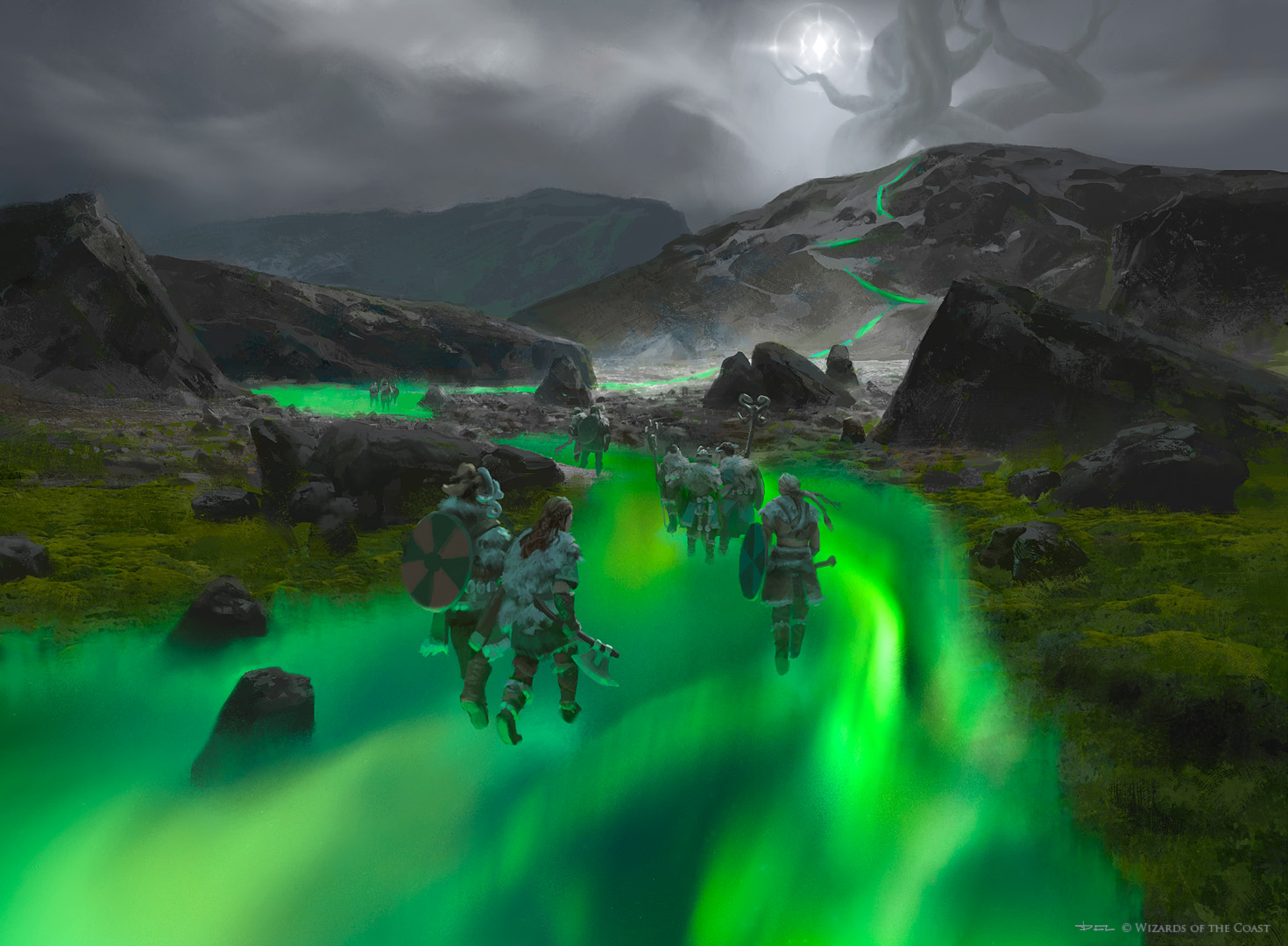
- Front Cover Art: Path to the World Tree MtG Art from Kaldheim by Daniel Ljunggren
- Page 2 Art: Wall of Runes MtG Art from War of the Spark by Zezhou Chen
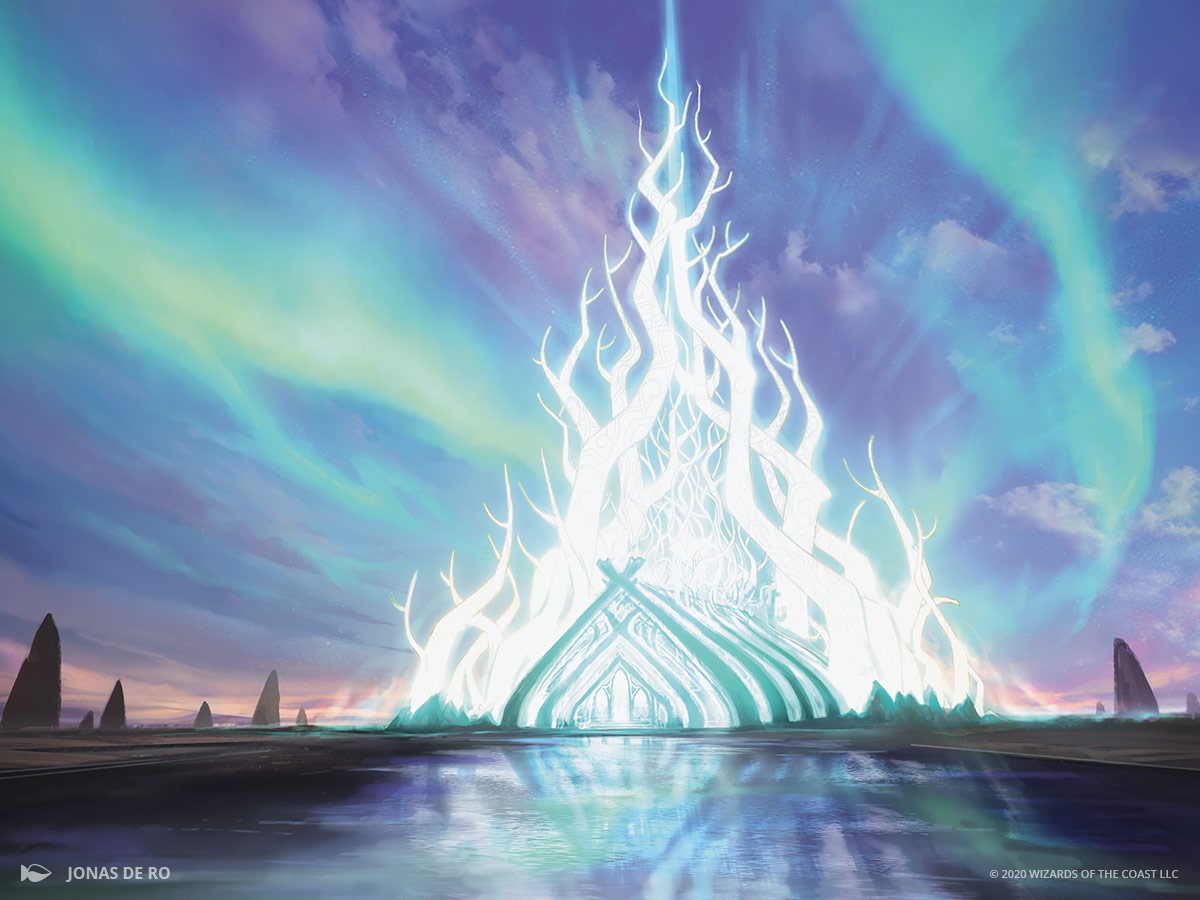
- Page 3 Art: Great Hall of Starnheim MtG Art from Kaldheim by Jonas De Ro
- Page 4 Art: Expedition Champion MtG Art from Zendikar Rising by Bram Sels
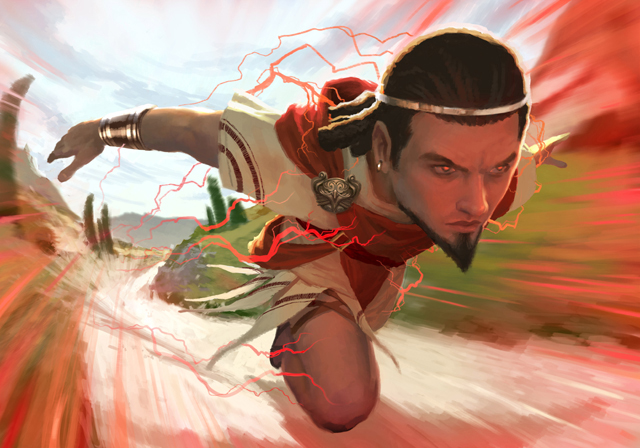
- Page 5 Art: Messenger’s Speed MtG Art from Theros by Clint Cearley
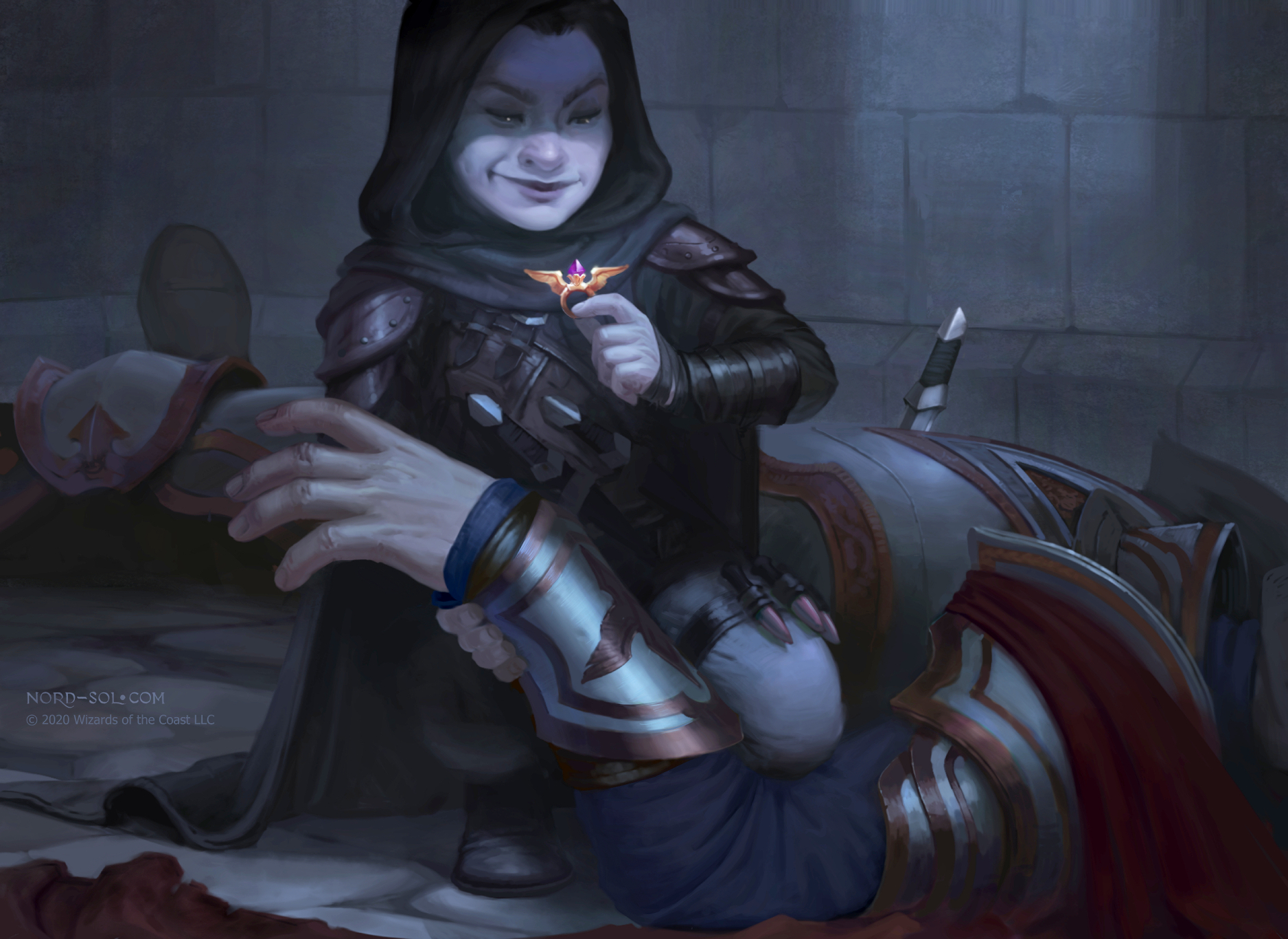
- Page 6 Art: Deadly Dispute MtG Art from Adventures in the Forgotten Realms by Irina Nordsol
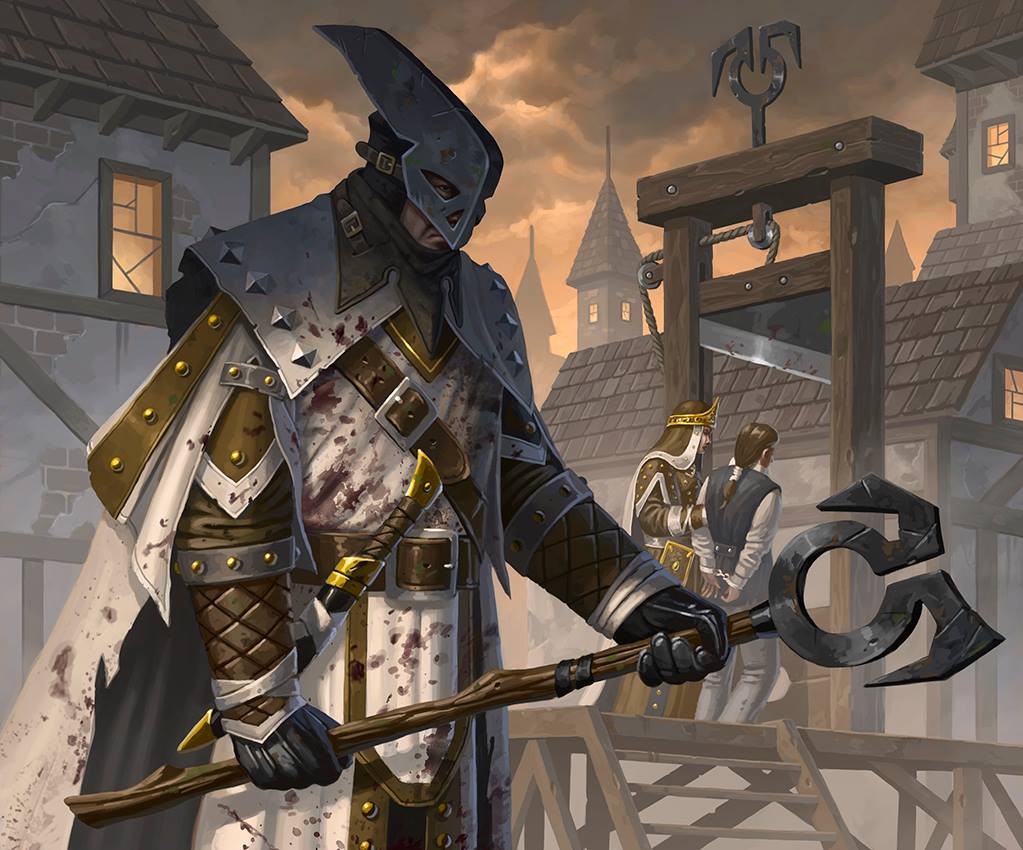
- Page 7 Art: Extricator of Sin MtG Art from Eldritch Moon by Craig J. Spearing
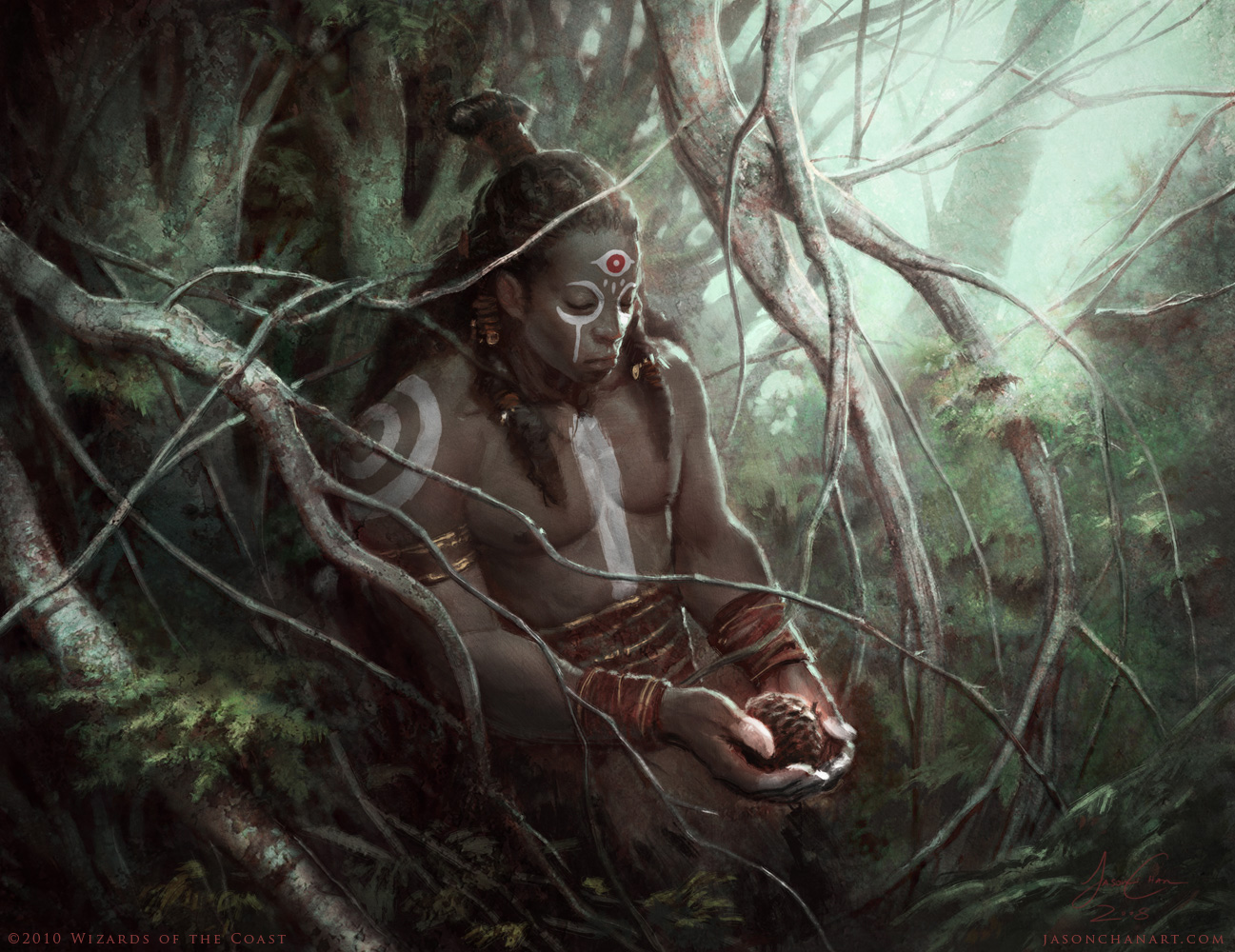
- Page 8 Art: Awakener Druid MtG Art from Magic 2011 by Jason Chan
- Page 9 Art: Stalhound - D&D Wiki
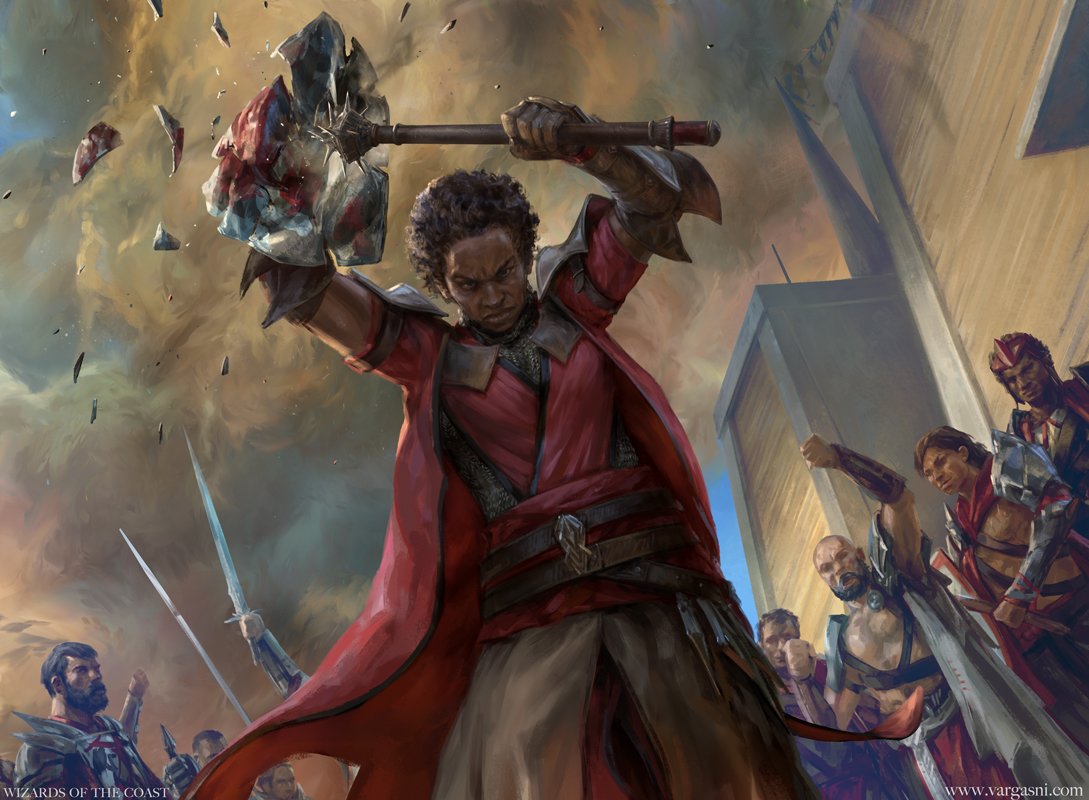
- Page 10 Art: Embereth Shieldbreaker MtG Art from Throne of Eldraine by Randy Vargasg
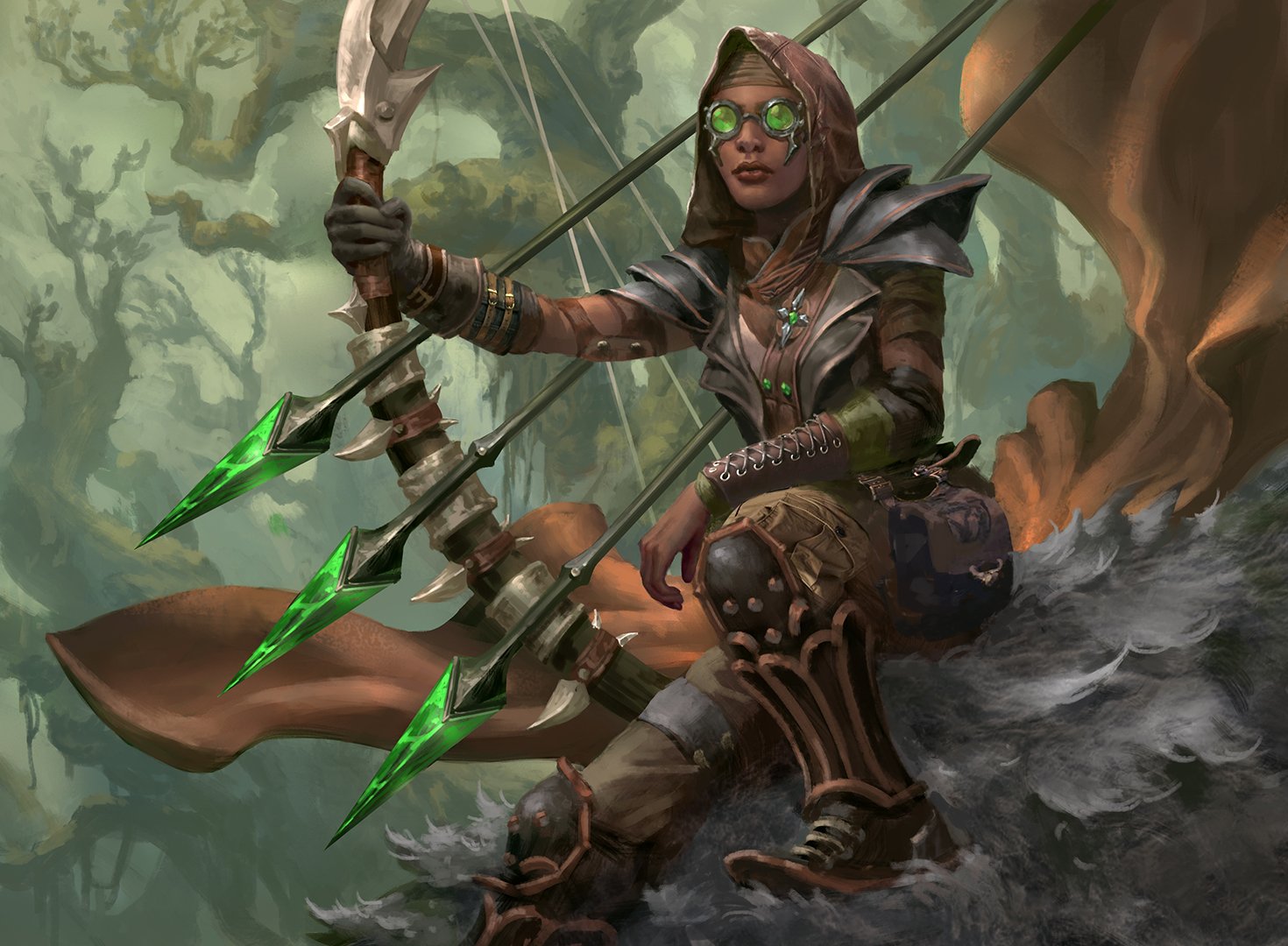
- Page 11 Art: Lurking Deadeye MtG Art from Ikoria by Livia Prima
- Page 12 Art: Falconer Adept MtG Art from Core Set 2021 by Billy Christian
- Page 13 Art: Oath of the Ancient Wood MtG Art from Magic 2014 by Dan Scott
- Page 14 Art: Crippling Blight MtG Art from Magic 2013 by Lucas Graciano
- Page 15 Art: Daring Archaeologist MtG Art from Dominaria by Sidharth Chaturvedi
- Page 16 Art: Drannith Healer MtG Art from Ikoria by Scott Murphy
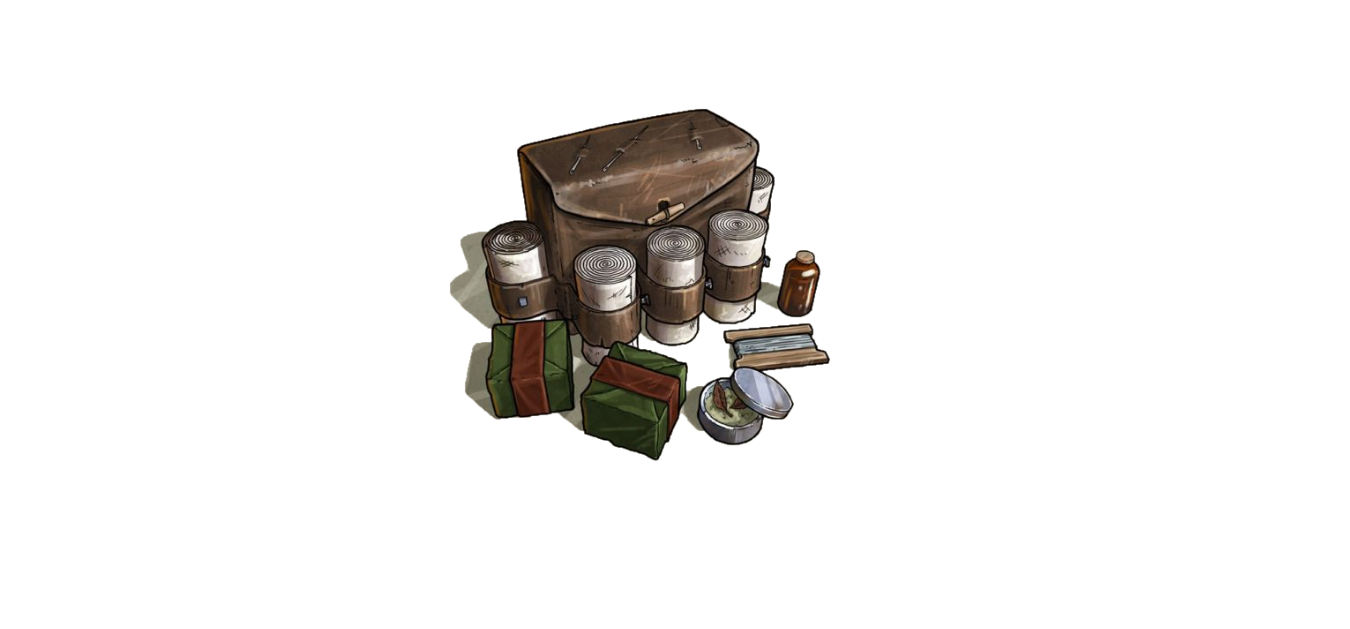
- Page 17 Art: Healer's Kit by Unknown
- Page 18 Art: Form of the Dinosaur MtG Art from Rivals of Ixalan by Daarken
- Page 19 Art: Vineweft MtG Art from Magic 2015 by Lucas Graciano
- Page 20 Art: Rootweaver Druid MtG Art from Commander Legends by Lie Setiawan
- Page 21 Art: Jace, Ingenious Mind-Mage MtG Art from Ixalan by Clint Cearley
Special Credits
I would like to give a special thanks to the following people.
- Dragik - Dragik#7097
- Skunch - gmodexo#7700
- The Ponderer - Jackson4499#6355
- The Nerd Immersion Discord
- r/UnearthedArcana