Fel'lonia: Shattered Moonlight
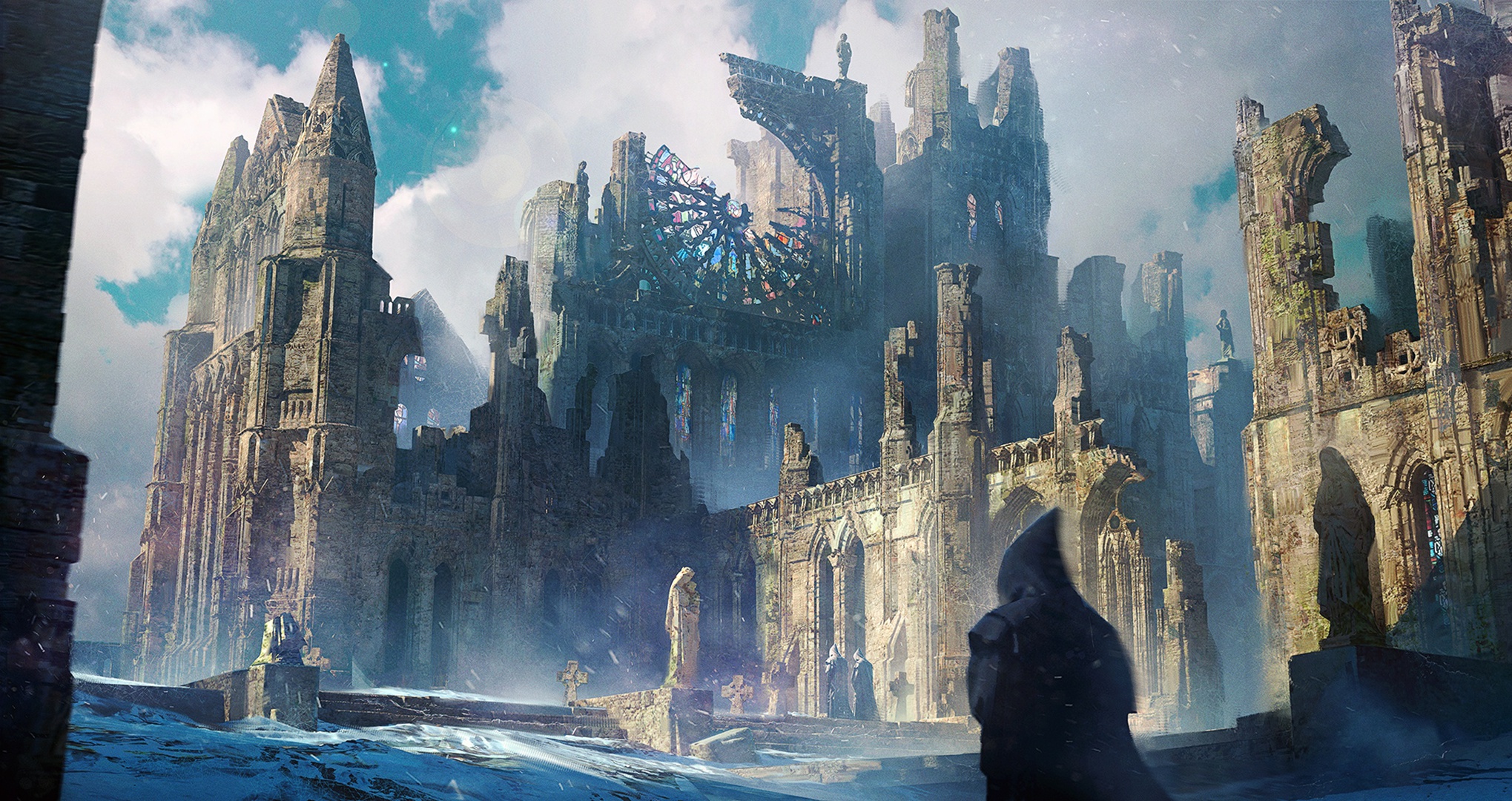
Cloaked and anonymous, a lone drow combs the ruins of his fallen sanctuary; rummaging through the dust and fallen stone for trinkets, baubles, and valuables of any kind, he must sell his kind's history if he is to survive the new Bright Age.
In the Lectvarius, a distant battle has been won for the greater good. The head of a sapphire blue wyrm lies within a crimson pool, with only a warrior beside it to grant it company in its final moments. Soldiers cheer victoriously around it as they hoist their new champion upon their shoulders.
Donning heavy armor of both metal and magic, groups of warriors fight each other cruelly and without honor to their last dying breath. What they fight for? At first glance it shows to be a small dagger of unassuming form, but the trained eye reveals it to be a shard of a god.
Post-Post Apocalyptic. As opposed to a standard post apocalyptic world, this world, while living within the ashes of a grander and much more older world, has moved on from the past long enough to where the destruction of the old status quo no longer evokes as much despair or hopelessness. It is simply a part of history, and the world left behind is deemed to be a hopeful restart for the denizens left behind.
Hopeful Age. As mentioned casually before, though a great number of people may have enjoyed lives of high luxury in the old empire, such luxury came at the cost of many in less fortunate positions. Generally, the destruction of the old status quo has not broken the world but rather set it free to try again.
High Magic. The world of Kelevrau is steeped in magic of all kinds. From raw arcane power of all schools to its divine opposite gifted from the gods, the world has been exposed to it all. As such, it is not out of place for many people to try their hand at the skill. Unfortunately, the state of the world being as it is now, many spellcasters find themselves disconnected from tools and peers that would give their training structure and aid.
A Land of Adventure. Ancient ruins, crypts of buried legends, temples to unknown entities, and all other manner of mystery and myth await those who want to walk brazenly into the unknown. More often than not, such boldness is rewarded.
Scattered Peoples. As opposed to the old age, where empire's border's touched each other, there are few kingdoms in the world who have genuinely made themselves known toall. Small villages and hamlets are common, towns and large villages can be found dappled across the map as well, but to find a coalition of peoples working together to form mighty cities or nations is rare.
Dead Gods. The deities of the old age are dead and gone, some had sacrificed their bodies and consciousnesses in order to ensure protection for the peoples of the world. Others were killed in battle by greater opponents. Some simply accepted death and believed their absence would put some greater drama in the world. Their bodies remain now only as divine shards of immensely coveted power. The sizes, effects, and forms of these shards can vary, but generally relate to the power and domain of the slain god.
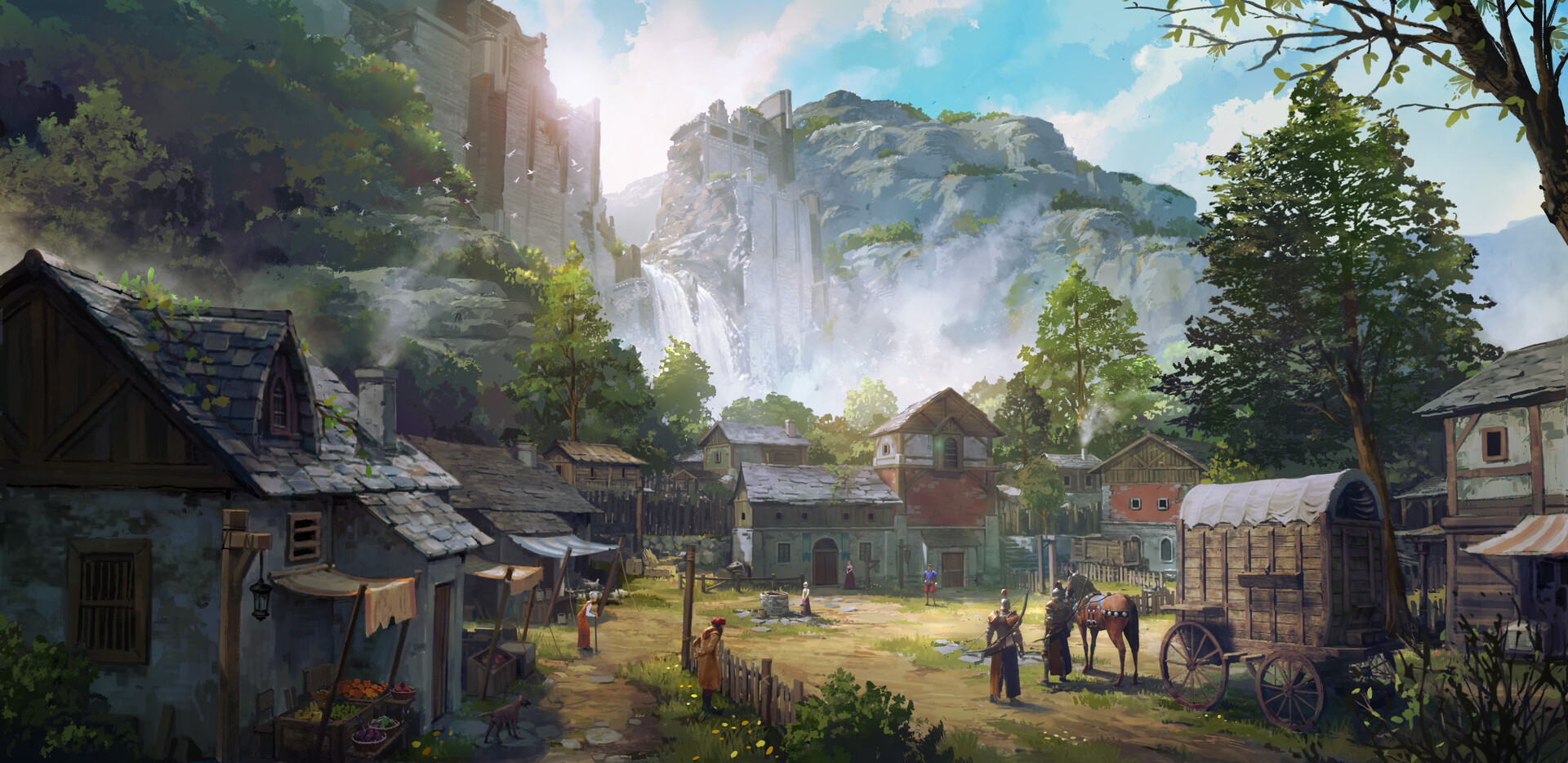
Shattered Moonlight. During the apocalyptic wars of old, the moon was plucked from its cradle within the sky and shattered into the earth. Though great divine intervention had prevented it from shattering the Material Plane, an 100 year era began in which the filtering dust in the sky had blocked out the light of the sun. The era of Dust and Dark.
Planar Influence. The world, having been deeply embroiled in an extraplanar conflict, is steeped in planar influence of all kinds. Plants and animals, as well as the earth and stone itself, come to succumb to the effect of these diverse planar influences and change accordingly. The influences of good, evil, and neutral magics have seeped into the land and its creatures, changing them and, henceforth, the game.
Introduction
The world of Fel'lonia (or, The Fel ) embodies a story of rising from harsh times into greatness, no matter what one has done in their past or how they have gone about it. Heroes come from nothing or everything, with no distinction towards class or race, and all are able to find redemption or corruption upon the trodden road. Typically, a campaign set within this setting will include the party changing the world drastically through their actions, as the world itself is quite new as kingdoms, regimes, and ideals begin to form.
As such, it would be paramount to create character whose arcs would fit in with such sentiments and take advantage of the world's state in some way or manner. If you have an atypical request in mind, such as a narrative in which a character purposefully leaves no mark on the world, then specifically speak to your DM about it.
Chapter One: History
The settling dust tells a story. In years gone past, ancient times numbering 100 years ago, empires of grand repute, wealth, power, and powerful culture roamed the Material Plane. Some boasted great prosperity for their people, who enjoyed happiness and luxury which would once have been fit for kings. Some others were powerful on the backs of oppressed peoples, their elites wielding enough power and influence to send the world into chaos with their armies. Their one similarity out of them all was their mutual desire to conquer the other; their destruction was coveted by all who had a hand in power.
100 years ago, the traditional world had been fully explored and mapped. Borders grew until they touched each other, often multiple different national borders met at the same time and same place. The world's resources were being exploited (in the most healthy and unhealthy of terms) as much as a heavily magical worldly society could do, and populations often exceeded the tens of millions for some nations. It was a most lively time, but also stagnant in a way. Nations, though bitter rivals, knew better than to attack another overtly (or even covertly for that matter) lest they risk their own destruction by the hands of their other rivals. Nothing changed, no nation could grow outwards, cities were built inwardly and grew to massive size while the sizes of exurbs and the wilderness became smaller and smaller.
Mortal Divide
Yet, with such potential, such size, and such power, control of these realms began to be widely desired by all manner of entities; both in the manner of extraplanar threats and organized enemies from within. This is how it had always been, until one day the bubble of sanctuary popped and a diplomatic blunder made by a notorious half-elven diplomat had set off a small cold war between two nations, which would snowball into hot war as the year quickly went on. As with most wars, neutral nations had to pick sides as their alliances were tested and their morals put to judge. Soon, the whole world would have fallen onto each other like a wild pack of dogs.
Up until this point, the mortal nations had been relatively slacking in their martial skills. No major wars had ever broken out for nearly 3 centuries, let alone with the technology and magic the world had now. There were miscalculations of offensive and defensive power, in which both under- and overestimations of military might lead to atrocity after atrocity. Civilian and innocent lives got caught in the crossfire, homes were destroyed in a myriad of ways, and nations swore deep and bitter vengeance towards their rivals all around them as the world grew closer to a mass breakout of violence. The war had only just begun at this point, and the mortal nations were not the only ones who would have stakes in this outbreak. The overflow of souls, power, wealth, and influence would attract the hands of the extraplanar.
Planar Divide
Demons and devils, from the Abyss and Nine Hells respectively, longed for deals they could make with desperate mortals wanting to survive the wars, and made immense profit from their captured souls or just sought rampant destruction for the sake of it. The heavens tore open and divulged legions of angelic and celestial creatures determined to win followers and power for their masters or themselves. Archfey and independent fey creatures found weaknesses in the political world and enacted their plots of intrigue in order to corral power on the Material Plane, all the while ensorcelling servants and adding champions to their ranks. Powerful sentient undead from the Shadowfell engorged themselves upon the souls and life force of the dying, and used the bodies of the dead to enlarge their armies in order to empower their deathly plane's influence. Genies and their sultanates within the elemental planes fought on the behalf of other nations for profit, as mercenary armies, and took slaves just as all else did as an additional prize.
All worlds would converge upon the Material Plane, and their influence would come along with them. With this planar influence, flora, fauna, and structures within the world began to change and bend to the will of the planar magic which seeped into it. Flowers steeped in devilish influence would sap the life from all those who sought to collect its nectar or sample its intoxicating scent, while a bird steeped in celestial influence would sing a beautiful song of health for all to hear. These mutated creatures would be categorized as the Malevolents or the Benevolents, in the context of whether or not they were harmful or helpful.

Divine Divide
The rapid, almost immediate escalation of the world's deterioration into mass death and destruction concerned the gods, with even the savage few being against the slaughter of their own followers and the decrease of offerings. The gods joined together at the behest of their father and overdeity who had devised a plan in secret to preserve his greatest creation of all time.
Instead of severing the Material Plane's tie to the multiverse (which would, in turn, sever his connection to his grand creation and followers) he would create another plane of existence in order to quell the extraplanar threat. To use his vast cosmic power in order to create a space between the Material Plane and the Inner and Outer Planes so as to make it difficult for extraplanar creatures to slip into the Material Plane. To do that however, he would need more power than even he had, and so his eyes turned to his godly children, of whom he gave up some of his own divine magics in order to create them in the past. The once neutral protector of the realms disposed himself of all love and compassion for his children, and severed their ties to the divine heavens and scattered their bodies.
The Godsworn Veil
As their bodies were scattered, and all of the gods were slain or driven to death in some manner, immense divine energy was unleashed upon the borders of the world. Gateways into the Material Plane, which lead into other extraplanar existences, were closed and sealed with powerful magics. These seals originated from a newfound barrier that encircled the Material Plane, putting space between the material world and the other planes. This barrier would be known as the Godsworn Veil, a plane created out of the corpses and dead memories of fallen gods, as well as the prayers of their followers which would forever go unanswered.
Divine Scars
What remained of the gods would scatter across the world. Each god's death left shockwaves of force which allowed the remnants of their bodies to fly so far across the world. These shards would either bring grace or grief. Their power allowed the gracious to summon miracles in order to soothe and aid the weak and wounded, all the while causing great misery as they fell unto the earth and attracted the hungry eyes of once neutral monsters in the world.
Some shards embedded themselves into people and creatures, or were later imbued or consumed by living creatures who happened upon them by accident, which granted them capabilities and powers larger than life itself. Heroes and villains empowered by these divine shards distinguished themselves during this age, and found fame or infamy in war and conquest. However, the legacy they left behind manifested itself not as memory, but also through blood. The children descended from these mythical individuals were no longer that of the original race of their parents, but forever changed by the touch of the gods.
In the modern era of the setting, there remain many bloodlines which could claim to come from these "God-Touched" individuals. Through this claim, they can become entitled to glory, fame, repute, and respect. However, it can be hard to find any trace at all of divine energy within these children, considering the dilution of divine energy from the blood of these every growing family trees. So many of these claims or ignored or no longer seen as something to be relished or concerned about in civilized circles.
Shattered Moonlight
Creating the Godsworn Veil would cost the overdeity innumerable amounts of energy, leaving him exhausted and torn but nevertheless alive. However, it did nothing to end the wars on the material world, merely staunching the flow of more threats.
Left over legions of fiends and undead, covens and dynasties of dangerous fey, and rabid angels still presented a world ending threat to the exhausted nations of the world. He was duty bound to find a solution, yet his exhaustion left him without the subtlety or concentration that would allow for a more effective and efficient plan to end the war. He would have to resort to drastic measures. At this notion, his eyes began to wander towards the moon.
With forlorn and hesitant action, the god of creation chose to fling the moon into the earth. Shattering it while midair into smaller pieces, so as to preserve the world upon impact. The impacts of these meteoric objects would shatter legions and cohorts of extraplanar intruders, as well as smother and crush innocent souls by the thousands. Cities would be split apart and smothered under the remnants of the moon, and the sky would be filled with moon dust. The sun's light would be smothered out, with only diminutive rays of light to breach through this veil and sustain the world.
Dead Magic
While the fallen shards of the moon killed more than enough extraplanar creatures to give the world a fighting chance, it was the after effect of the sun-suffocating dust that revealed the overdeity's true plan. The dust, in large quantities, had a nullifying effect on magic and magical creatures. The more magical a creature was, the more effected by the dust it was.
Lesser demons, devils, angels, and fey were more or less banished back to their realms or turned into marble statues as they were covered by the dust. Dragons and other notable monsters of magical origin all fell into a deep slumber, their inner energy being suppressed. Magical races -such as elves, firbolgs, or genasi- would only suffer symptoms when exposed to the dust for a long time; as such they had to go into hiding within the forests and mountain valleys of their ancestral homes.
In areas where the dust fell heavily, showering the land with a thick dark gray layer of snow, magic was completely and utterly nullified. All that which relied upon magic in those zones went dark and were both completely deactivated and disenchanted for a great long time.
Cities built upon magical foundations -with their walls, towers, and floating islands all suppported by magical influence- would crumble and fall apart even at the lightest of these dust showers; which would eventually come to be called Evaean Dust or Ever-snow. The modern world crumbled, and people evacuated the cities for underground refuges or sanctums designed above ground out of recommissioned fortresses and sturdy buildings.
The Era of Dust and Dark
"To remind us of what we had forgotten, preserve which had graced us with their touch, drown that which was dishonored. That is the duty of dust."
The settling dust tells a story. A common phrase that more or less remains the same beyond cultural borders, which carries an easily understood meaning, once provided context.
Not only did the Evaean Dust nullify magic and blot out the sun's splendor, but it also preserved that which it coated. Like soot from a volcano, it covered and fossilized the cities it destroyed and the peoples which ran for cover or shelter. Those afflicted by the dust under the right circumstances would be preserved under statuesque conditions -under the the layers of dust, soot, and dirt that buried them and their cities.
The dust preserves -telling a story in whatever it has buried. Perfectly preserved shells of ancient cities, battlegrounds which host the statuesque bodies of past soldiers, and even the remnant extraplanar creatures powerful or lucky enough to avoid the banishment effect of the Evaean Dust. Animal and plant life, to every last detail, was covered under a sleek coat of moon dust; much like the magical monsters who were cast into a deep slumber. Awaiting the day the sun would once more shine upon them.
A Sheltered Apocalypse
There was no solution other than to abscond away from the dust, for both magical races and mundane. No grain could grow nor could animals be reliably hunted; surface food became a luxury as fungi and animals originating from the Underdark became the world's prime source for food.
Remaining within open air became akin to suicide, due to the health complications of breathing in razor sharp particulate matter. The lungs of those caught outside with no respiratory protection became bloodied and shredded. Not to mention that the dust's natural dampening effect on magic had caused the old war machines of greater kingdoms to go berserk; essentially becoming empty and violent shells inured to pain, fear, or exhaustion of any form. Constructs, old magical vehicles, security systems, and glyphs meant to serve as protections to civilians were suddenly turned against them.
Elves and dwarves both suffered greatly from the effects of the dust, as their innately magical forms were highly susceptible to the effects of the moon dust. In the modern age, most drow and duergar are the consequence of the dust's effects; having their innate magic and personality become almost suppressed for a time.
To Become Undone
The dust could preserve much, even allowing the animals and plants to remain alive despite their suspended state; however it could not preserve the hearts of mortal men. The mountainous peoples of the world found ways to live above the wind channels which had flown forth these storms of moon dust; so too did the extraplanar creatures that tailed them.
Living within the mountain's highest points, only those of the toughest bodies and firmest spirits could stomach to live in such conditions, fighting against an unnatural threat and the fiercest forces of nature at the same time. Sometimes, raiders would rally down into the lowlands to break into sanctuaries in order to steal food, water, and sometimes slaves from within; sharing no comraderie for the people they once protected.
In response, communities within these sanctuaries began to dig deeper. Those targeted for raiding were mostly elves and dwarves -who were slowly being turned into drow and duregar by this age- due to their relative richness of food and usable resources. Some of the more monstrous races also became targets for slave raids, such as goblins, lizardfolk, orcs, and kobolds due to them being able to survive the harsh climate or not requiring a ton of food to sustain themselves.
Amidst the white snow and gray dust, denizens of the mountains -referred to as the Mount- march without rest throughout their territory. Fiercely defending their land from fiends, insidious fey, and the influence of angels.
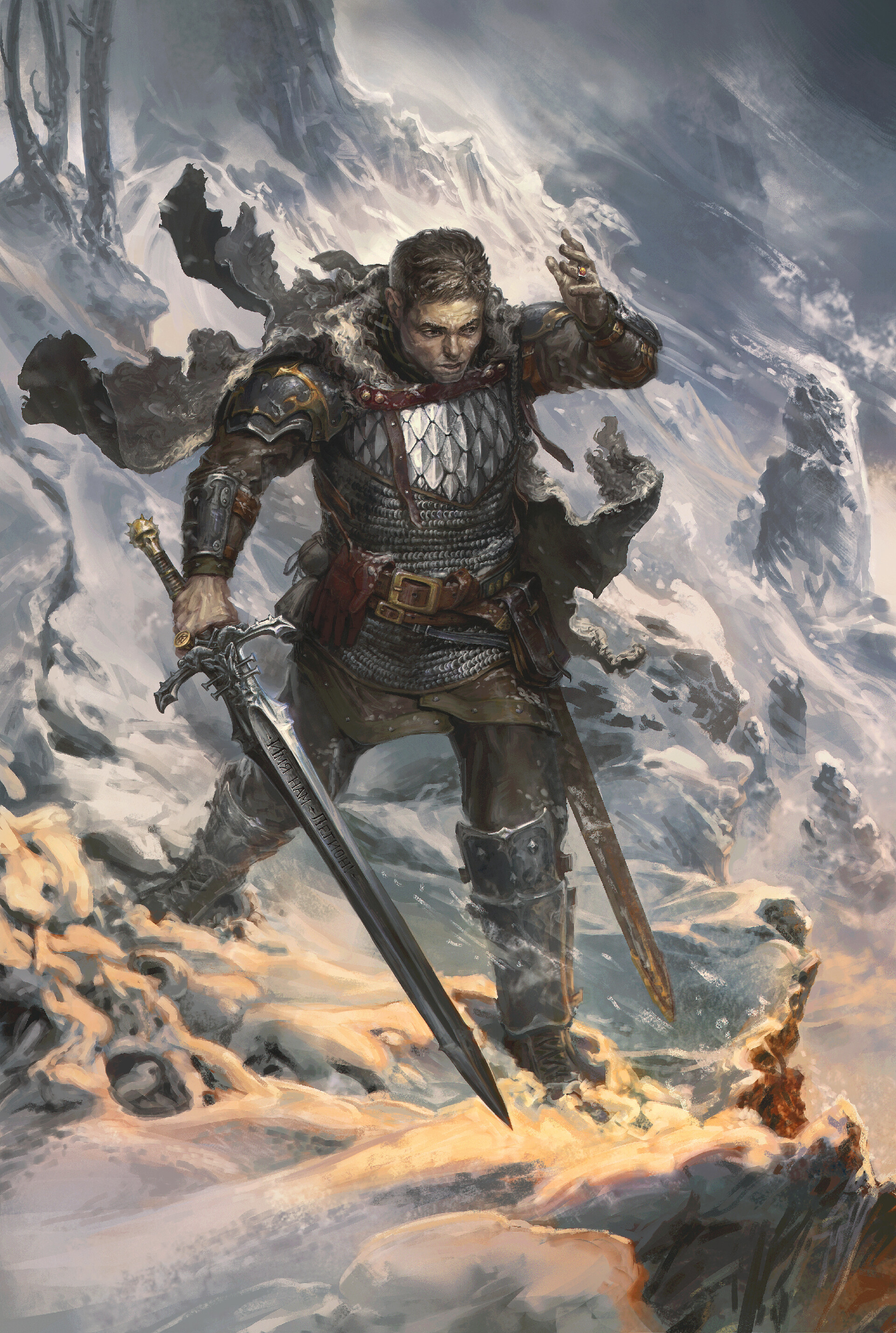
Such targeted raids separated clans of dwarves and groves of elves, pushing them further into the Underdark and away from their own families. The monstrous races had fortify their own sanctuaries with solid armies of layers upon layers of sadistic traps, becoming either militaristic or paranoid in the process. Humans, gnomes, halflings, and more remained otherwise distrusting of the outside world, hearing little news and not chancing to go outside and connect with their neighbors (whose existences and whereabouts were mostly unknown.)
An Unholy Crusade
"H̷̙͘a̵͉͛v̷̞͘e̷̦̊ ̷̳͛ÿ̴̻́o̷̯͝ű̶̘ ̶̟́h̵͓̀è̶̮ä̸̻ŗ̷͝ḏ̵͝ ̵͓͌ï̵̜t̷̨̎?̴̰͛ ̵̧̛T̷͇̈́h̴̰̓é̸̠ ̸̗̿c̸̨̑a̵̛̘l̵̙̕ḻ̴͝ ̴̟͠o̷͓͂f̷̺̈ ̴̣̚õ̶̩u̶̜͘ȓ̴̦ ̴͇̾n̷̪̔ẻ̸ͅŵ̵͉ ̵̘͛m̴͙̌ȧ̶͎s̸̹͘t̶̜͋ë̵̯́r̴̹͗,̴͍̄ ̴̪̈c̷̝̄ő̴̖m̷̟͝ē̶͜ ̴̯̐t̸̝͂ő̸̧ ̸̯͂b̶̖̅ĺ̵̮i̸͉͠ǹ̶̹d̴̲͠ ̵̦̇u̵̍ͅs̸͚͊ ̸̘̇w̶͈̆i̷̮͐t̴͈̀h̶̦͐ ̸͓͘b̷͚͝l̵̥̚i̷̥̒ś̴͇s̶̘̀f̶̫̀u̸̜͗l̸̪͒ ̵̼̿s̶̢͘ẻ̷̠r̴̜͠v̷̺̈́i̵̼͗c̵̡̈́e̶͔̾ ̷͓̈́õ̴͖n̷̞͑c̸̗͐e̸͍̿ ̷̩̅m̵̳̅ȍ̴̱r̵̳͌e̸̥̓!̷̯̊"
A world on the brink and an overdeity with no power left to defend it, Fel'lonia was divided and weak. One would think the world would be too dismantled to be of any worth to the powerful, however those with twisted minds seemingly still had something in store.
Old vestiges of the dead faiths -faiths of the gods whose names were forgotten with time- found themselves without purpose. Some angels had dedicated themselves to the protection of promising people or to the restoration of their gods; but most went insane in their attempts to scramble for purpose and belonging. For the first time in all of existence they had acquired free will, something their minds couldn't comprehend.
Almost as if psychosis took hold of all angels of weaker will, angelic and celestial forces began to convene; praising a new god -their new god. The Fel God.
The Fel worshipers gathered in large masses, unaffected by the lack of food, rest, or sunlight; their red radiance could be seen from afar, cutting through the thick dust storms with ease.
The Evaean Dust deafened their connection to their divine magics and celestial influence; so had their despair severed their old loyalties and morals. No longer did they conjure their mighty miracles and wrathful incantations. They fought only with steel and spite, emanating a red glow to signify their once magical presence.
The Breaking Point
The Fel, followers of the Fel God, were another apocalyptic threat in a cataclysmic era, with all events cascading towards an utter end to any sense of normality -let alone peace. They rooted out settlements and sanctuaries that were hidden within the earth, forcing them to resettle within the dust-riddled open air where most unprotected folks slowly suffocated; this was meant to act as both a form of penance for their past deicide and worship to their new god.
Settlements that fought back were forced to build enormous shrines and temples devoted to the Fel God, structures imbued with old shards of the dead gods. These structures, nicknamed Gates or Fel Gates, had an effect on the land and creatures around it, changing the land and creatures around it according to the origin of the shard's divine state. Shards of the old trickster deities made the land harder to navigate, where it was easier to ambush foreigners within; conversely, shards of the deities of law created a landscape which never changed for any factor, where everything was geometrically and mathematically perfect. This would be a slow process, as the dust always seemed intent on dampening this effect and preserving the land's natural state. However, the Fel had eternity to wait.
It seemed to be the intention -the holy mission- of the Fel to place such shards in strategic locations and reshape the world into their new god's image. Much of the world would be influenced by the use of these shards.

Rage in the Dark
A world in chaos, steeped in destruction, is enough to drive many to madness; yet this madness can often times be, in reality, bravery made manifest in the face of despair. Brave souls would step out of their hideaways, with nothing but cloaks and respirators to their name, determined to patch back together a broken world; no longer content with waiting for the world to piece itself back together or for the dust to simply go away. Walking the lands, they would reconnect various settlements, sanctuaries, and hideaways with each other, all in the name of restoring that brotherhood and camaraderie that seemed to have been missing.
Acting as diplomats, couriers, news-bringers, scouts, and minutemen, they kept these hidden places in touch with each other and, consequently, able to respond to disaster more rapidly. With time, a leader among them -notorious for their armor clad form- stepped up and organized the effort; with time they gained a name, Emissaries of the Gauntlet.
A World to be Reclaimed
With the help of the Emissaries, slowly plans were being for the future with the Emissaries being the conduit for the policies and actions to be suggested for both a future with and without clear skies. Geography was mapped out and future settlements underground and aboveground were planned meticulously to give a damaged world a good chance of reclaiming their world or making a new one underground.
This did not go unnoticed to the Fel, nor did the mountain raider clans not notice the rising defenses and capabilities of the sanctuaries. In response, their efforts were increased as well, both sides trying to outsmart the other and adapt to their tactics. Unfortunately, their brute strength would keep chipping away at the fortitude and strength of the surviving mortal races. As such when time went on, some sanctuaries and settlements began to become weary and fall back to their distrustful and paranoid ways reminiscent of a time before the work of the Emissaries; all their efforts seemed to be quickly falling in vain. It was then, their leader concluded, that something drastic must be done. As fate would have it, the world seemed to agree as well; as the Evaean Dust and the surrounding storms slowly began to die down.
Settling Snow
"I was there when their body was destroyed. I saw what they did and accomplished. I felt the pain they endured. If you think Tora was anything other than a god returned from the immaterium, then you are nothing but a fool."
-Ansello Lor'Cellone, Disciple of the United Church
60 years had passed, since the dawn of the Age of Dust and Dark; 50 years of a sunless world. It was divined by the greatest of scholars and meteorologists, using instruments and devices of the old world, that many of the dust storms were dieing down in strength.
The dust content of the air itself seemed to become less and less concentrated in some parts. A slow and gradual process, but it gave hope to many to return to some sense of normality. One of the souls who grasped this source of hope was none other than Tora Lothric, leader of the group known as the Emissaries of the Gauntlet.
They gathered many volunteers from their order and beyond it, turning them into specialized warriors rather than diplomats and traders. With this might, they intended to excise what they perceived to be the root of all evil in the world. They would do battle with the Fel.
At the zenith of their career, Tora would gain so much renown that later groups would interpret their mortal path as acts of a deity or a prophet. Forming their belief system upon the their ideals. These groups came to form the United Church.
Fractured History
It is true the settling dust tells a story; that it preserves. However, many of those who followed Tora followed them unto death, their stories long forgotten. Combat against the Fel was a lofty ideal and Tora knew this, for the Fel were a single collective of fanatically -and violently- insane ageless beings with incomprehensible minds that could concoct all sorts of unearthly stratagem and tactics. What was Tora's motley crew of ragged -albeit determined- warriors to this?
Guerrilla strikes would do nothing, and Tora would be losing valuable resources with every attempt. Total warfare was suicide, the Fel had nothing to lose and everything to prove. Psychological warfare would fall on deaf ears, as the Fel were already insane and used mental distress as a source of strength. So, in the end, Tora decide to break them ideologically.
A Gamble
Historians would argue exactly how Tora came down with the idea, or if it was even them that thought it up in the first place. What would end up happening is that Tora would scour the earth for shards of gods, risking her entire career and life for something that -back then- was barely known to exist. Tora's Emissaries would succumb to suffocation, attrition, battle with all manner of horrors; their diplomatic nature being replaced by cutthroat ruthlessness in order to survive and preserve their order's ideals and tenets.
Tora's gamble would pay off in the long run, for they eventually would tear a shard of a god stuck within the body of a dire wolf. A shard of an old, dead god of healing. Now wielding power reminiscent of the god's power, Tora could attempt to do a myriad of miracles in order to further their goals. They could possibly try and out heal the damage the Fel could do to their armies, cure the lame and ill and recruit more to their cause, or use this shard to try and find more pieces of its original body. Instead what Tora chose to do, was to use the shard on their enemy; to heal the Fel.
A Mind, Redone
The stories became even more muddled and obscure in this period of time, for few wrote down their plans nor had anyone to write to. The only catalogs left of this time period are religious texts of those who saw Tora as a deific figure, so understandably they are somewhat biased.
They tell a story of how Tora reclaimed a temple constructed by the Fel and their servants during the initial beginnings of their crusade. Implanting the shard at the heart of the temple, its power was awoken by the celestial machinations of the temple itself; diverted towards those that built the temple itself. The healing powers washed over the bodies and minds of the Fel all over the world, restoring what once was and what was healthy. For a moment, the Fel's sanity returned to them and they became angels once more; this was only for a single moment, rarely lasting more than a couple seconds.
Returning to their insane state, most Fel began to see different paths as their past loyalties began to cloud their psychotic ambitions. Their insane faith was now built upon a cracked foundation, memories of their old loyalties and virtues returned to them and celestial bliss dug its way into their hearts for but a moment. Then, all at once, it would leave them.
Ambitions would branch away from the original Fel plan, and infighting would begin. A manner of fighting fit only for agents of the dead gods would ensue, and Tora's armies would slip away silently into their sanctuaries. However, Tora would never get beyond the temple's reaches. They would be torn apart by the Fel, seeking revenge for tearing away their bliss from them.
Excised from an undeniable path, their lapse into sanity tore away their inane purpose. With that, so too did most of their power leave them, alongside their red glow.

The Silent Age
Tora would never return, but her followers and soldiers would be able to piece their lives and order back together from what few were left. They had left behind their diplomatic ways in order to defend their own tooth and nail, but they never forgot them; they had fought a corrupted enemy and their way of life had too been corrupted, but there was room for redemption. What made it worse was that the peaceful few who remained within the Emissaries left the fold, content to live out the rest of their lives in their sanctuaries. The order began to slowly lose momentum, most didn't see too much of a use for Emissaries since the Fel were dealt with and since the sanctuaries now had built proper defenses. As such, the Emissaries of the Gauntlet fell silent.
The order didn't collapse, rather they left the forefront of history with a whisper. With them gone, many of the connections to the outside world was lost, and the world fell silent. The world now had the privilege to fall back into its silence serenity, enduring the dust ridden skies. Most remained in the shelters, content enough to know that they could fight back against mountain raiders on their own and that the Fel were a problem of the past. Some ventured outside of their sanctuaries, to gather intelligence or even to try and jump start trade routes and diplomatic values of neighborly connection; most of their attempts failed at restoring anything at any meaningful level.
To make things worse, or perhaps just to enforce the status quo, the sheer scale of fighting caused by the Fel's infighting seemed to actually kick up the dust and perhaps even lengthen the amount of time such storms would exist for.
Rusting Gold
"Barely was an elf or dwarf who had lived through the ages, but even if we didn't have their wisdom to help us remember, we can see the past through their young and new. The settling dust tells a story, after all."
-Anonymous
Cultures would be changed by the Era of Dust and Dark, some irreversibly so. Humans, halfings, and other more adaptable races (who are also conveniently not inherently magical) would be able to change or find ways to circumvent the worst effects of the storm, barring suffocation should they remain exposed to the dust for too long. However, socially, the world began to slip into technological and scientific regression swiftly.
Ideas of densely populated cities left the minds of those cramped into underground shelters, technology of the old world began to become more and more indecipherable as their inventors passed on or were killed, education failed the people as there was very little need to educate someone beyond what they were assigned to do. Old world technology went from commonplace and expendable tools to relics with utmost value, unable to replicate and difficult to repair due to their excessive material costs. Quickly, the world regressed into a medieval like state in regards to its technological development.
Magic couldn't act as a crutch either, for the dust storms impeded all manner of attempts to relearn the ancient arts. True arcane grasp only lied within texts and documents hidden away from the world, lying under layers upon layers of dust and dirt.
For the more magical races, if northern raiders and old Fel threats had not already caused them to relinquish their traditions in favor of survival, then exposure to the dust would. Even in the initial days of the era, when elves, dwarves, and gnomes -for starters- were exposed to the dust, it changed them in mind, body, and soul. Drow, duergar, and deep gnomes were the products of the dust impeding their innate magics, causing their bodies to change drastically. Some were exiled in droves, seen as cancerous beings that would forever change their societies and their ways of life. Smaller, out of the way communities didn't seem to pay too much mind, not willing to throw away extra hands of help. This was only the beginning of their troubles, however.
Elves struggled to preserve their grottoes, with each magical solution eventually failing to last for long. Important and valued elven customs and traditions, along with all manner of relics, were lost to the dust; with them went much of the knowledge of the natural world, such as uses for medicinal herbs, proper crop growth, and the dangers and fruits of the wilderness.
The drow, like the one depicted below, oftentimes became more familiarized with human and halfling culture than their own elven origins. Using their clothing, language, and traditions fluently.

The dwarven holds within the mountains were buried under layers of dust, suffocating and starving all within and forcing those still living to endure shoddily and quickly built shelters that would never amount to the splendor of their old halls. Gnomes would suffer the loss of their precious machines and constructs or, worse yet, see them malfunction and turn on the innocent when their magical matrices glitch or fall into disrepair.
In such tumultuous times, decay was seen so often and in such virulent measure that it was commonly thought that even gold would rust. However, as the decades passed and entire generations lost hope for life on the surface, finally signs of light had begun to show.
The Era of the Bright and Bold
"We had mistook it for hellfire before we would ever think for the sun to show itself once more. But there it was, small rays of golden warmth peering through that hellish malaise. To think it was there the whole time, just behind it all."
-Has'atuun, Lectvarian Historian of the Second Age
100 years of dust and dark would finally see an end. Scavengers left their shelters one by one, only to find they could see easier, that their respirators didn't need cleaning out every trip, and that color could be seen amongst the wreckage of civilizations. It didn't happen overnight, but slowly the dust was clearing and the sun finally shone through once again.
When the dust cleared for good -only trace elements visible within splintered god rays- those who left their shelters found a world of unprecedented change and adventure. A land so bright demanded adventurers so bold.
As time went by, Evaean storms didn't seem to kick up as much dust anymore than it concentrated it and brought it to other places. The storms had been roiling for so long they had begun to adhere to each other as static energy began to turn into powerful lightning fill storms. Sure it meant more powerful storms when they did come around, but they were rarer and their damage could be mitigated with preparation.
Plant and animal life was discovered again; smaller critters hiding beneath the ground, adapting to life under the storms, or -in most cases- covered in a shell of hardened Evaean dust turned to rock. As rain filtered down onto these creatures, one by one entire populations of animal and plant species would break free of this "petrification" (seemingly with minimal psychological damage).
The Returning Times
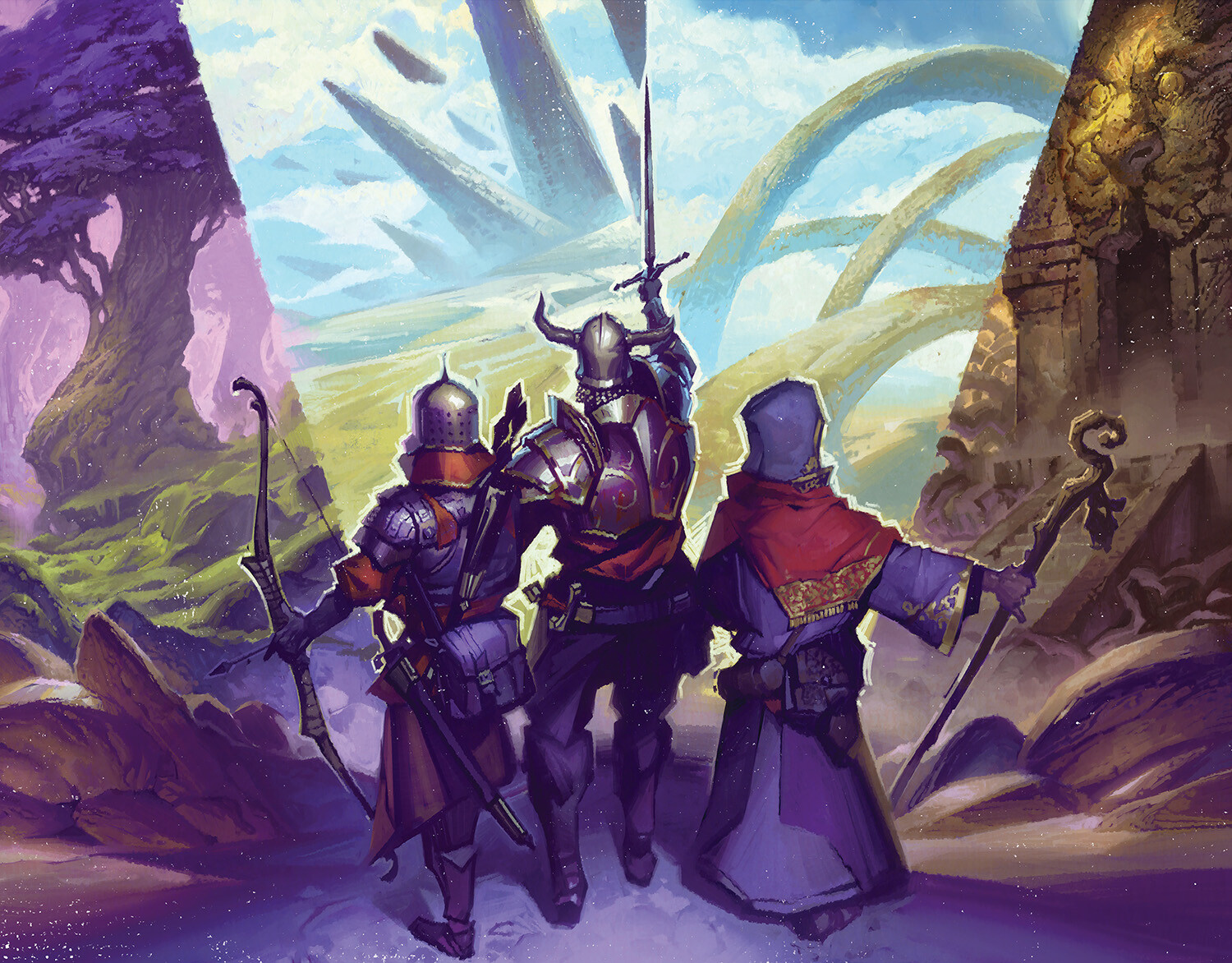
"The Returning Times", a title given to the first age of the new era for obvious reasons. Droves of people, filled with newfound hope, left their sanctuaries and shelters in order to settle the new world.
Humans and halfings, the relatively much more common races at the time, had an easier go at settling down, if just through sheer number of attempts at doing so. As such, many of the hamlets and villages a wanderer will find may predominantly be made up by them.
Dragonborns, tieflings, half-elfs, and half-orcs, typically races that more or less just lived side by side humans and halfings in the old world, either continued to do so or went on to band together and form homogeneous cultures; perhaps for the first time in a millennium. Some of these bands would even try to reform ancient customs and traditions, continuing what was lost in the old world (of what they have records of, at least.)
A Dark Forest
The original settlers, though filled with hope and excitement, also still carried old tenets and aspects of their lives during the Era of Dust and Dark, meaning hints of paranoia and distrust remained. The efforts of the Emissaries of the Gauntlet kept the world's people from tearing itself apart, but never stuck around long enough for these sentiments to totally disappear.
Unsure of who to trust or what they would find, the size of these settlements would rarely exceed anything beyond the hundreds, taking pains to remain as villages, hamlets, and towns. Remaining lower in number, they could always pick up and move if they found a threat they couldn't fight back against. Being small also meant that a settlement wouldn't be big enough to signify their presence to anything potentially harmful.
In the rare circumstance a settlement turns into a city, either through conquest of other settlements or simply being more prosperous, they usually tend to be bolder or braver and able to take drastic measures to stake holds in this new, yet unpredictably harsh, world.
As of the modern age, very few settlements and regions have come to form kingdoms, empires, coalitions, or any collection of sovereign states; with the exceptions that do exist only doing so due to unique reasons that otherwise prove the rule. An announcement and declaration of power over a domain, people, and riches such as that would potentially bring forth many enemies of different shapes and forms. So, many towns choose to stay quiet, pick their alliances with extreme doubt and caution, and are often wary of all visitors and outsiders.
Dark Forest Theory
A large part of this setting is built upon the idea of the "Dark Forest Theory." Originally a theory meant to deal with alien life and its dangers, it's become the foundation of caution when contacting other unknown civilizations or peoples in this setting. Based on the idea that all peoples wish to live mixed with the idea that no on truly knows the power of an enemy; it culminates into the end idea that the safest option is to annihilate all others around you, or remain quiet so as to hide away.
"In the dark forest of Fel'lonia, though people may prosper and many hands may shake, few want to send out the call for unity or diplomacy for fear of warning those who would conquer them or, worse, erase them straight up."
In Fel'lonia, despite the efforts of the Emissaries of the Gauntlet, the world is filled with a fair amount of paranoia that mixes poorly with a desire to live gained from newfound hope. Plenty of monsters, villains, and the remnant memories -almost warped into myths- of the Fel caused this.
Empires, kingdoms, or larger conglomerates are rare, but exist only as great exceptions to the "Dark Forest Rule." Either as many peoples who have broken the mold and unified to great extents, or existing as the very reason for the world's fear; a conquering force.
Empty Borders....
Due to this "Dark Forest" phenomena, if there are kingdoms, empires, or some sort of coalition of settlements that form a larger unit out there in the world their presence and influence is very small and inconsequential. Thats not to say word wont come across the world, but it would usually be warped beyond belief or stricken from context or detail to the point where very few things could be said about it.
Maps, perhaps one of the most rarest and important pieces of equipment in this world, are always different and foreign wherever a player would walk. Borders do not exist to the wider world and are always a contest between neighbors. Territory and exact lines rely on geographical landmarks, but are usually also always rarely exact; the reason for this distinction is that, for the existence of borders to be recognized so do neighbors -potential enemies- need to be sought out, which simply doesn't happens all the time.
Meta
This detail means that if one wanted so, a player could work with the DM on creating entire kingdoms or a large civilization that is included in their backstory; essentially taking on the burden/responsibility of world building for themselves and open many prospects for their development and story. This is possible since, even if the lore in this document doesn't explicitly state the existence of potential locations or settlements, the world is big and disconnected enough that it wouldn't have been common knowledge either way.
...but Bustling Lands
In spite of vague -or perhaps even just nonexistent- borders and territory claims, the world is still full of villages, hamlets, towns, villages, and even larger city states and coalitions -that exist in the exceptions to the "Dark Forest" rule. The world is an incredibly and impossibly diverse scene of thousands of different cultures thriving, mixing with others, or being destroyed. The world is full of bustling life after a large era of decay and stagnation.
Meta
This detail means that a party can be made of an incredibly diverse array of characters with their own unique ideologies, religions, cultures, or ways of life that can mix together and form interesting dynamics. When in doubt of pre-established lore, remember that exceptions will always exist even if this document has established it.
A Forlorn Resurgence
"The settling dust tells a story, but someone has to write it down. Yet, these days, it seems we've traded our pens for blades."
-Visarya Fimbulvin, author of Misbegotten Ambitions: An Order unto Dust
No one could forget the actions of the Emissaries of the Gauntlet during the Era of Dust and Dark. In fact, their existence is one of the few widely accepted facts in the wider world -when even the existence of their prestigious leader is called into question by some groups. Despite this, their actions to connect people and stop a social and cultural apocalypse fell in vain when they followed the militant path needed to defeat the Fel.
This bitter dishonor did not disappear with the retirement of the order, but rather spread to the children of those veterans (or the few longer lived ones who survived) who were mystified by their parent's history and accomplishments. With this in mind, the Returning Times came into fruition, it is no surprise some enterprising young souls -accompanied by the wizened old- tried to rebuild the order with its original goal; to connect the realms once more and foster a lasting peace. Yet, necessity soon demanded this order retain its militant background, to the dismay and despair of its predecessors, as the dangers and threats of the new era reared their ugly faces
Known for the love of the hunt, the Cobalt Cleavers Chapter tend to employ the use of many tracking and hunting beasts in their labors.
Fractured of Body...
Better than nothing, but not good enough."
It is not surprise that the Emissaries of the Gauntlet is a shell compared to its old self. The current organization lacks a leader, henceforth lacking the administrative skills and individual charisma necessary to keep many of her own kind together. Spread out over the entire world with disparate numbers and wildly varying skills, there is no central organization or hierarchy to speak of.
When someone mentions the order of the Emissaries or someone following that order, most likely they refer to the respective set of ideal the order upheld or someone following the approximation of those ideals. That being said, the sum result of this disunity, disorganization, and distance can cause many slight deviations from the traditional path of the order (that still keep the central idea). These deviations from the traditional path have created different "chapters" which have a certain culture surrounding them. More can be read on this in Chapter 3: For Faith and Faction
That being said, the works of the Emissaries tend to be few and in between, given how limited they are in their acts, affluence, and capabilities.
Yet Whole of Mind
"Give yourself the title, brandish their armor, even forge their own symbols, nothing matters until you earn the people's trust. If they would decide you worthy of the mandate, we would call you brother."
Despite their unfortunate disunity, no one group or individual soul would really aspire to be -and actually be seen as- an Emissary without emulating their core values, deviations be damned. A natural trial forms from the social pressures of the surrounding societies and inner conscience, discouraging pretenders and mentally and physically testing true walkers of the path.
A person can either get training from any fellow group or individual Emissaries they find on the road, or call themselves one as they find their true calling in life; however they walk the path is up to them, but they must all prove that they walk the same path. However, without a centralized organization to speak of, who does an Emissary prove their worth to? Simply put, it is the people that the order helps and provide aid to that give them the mandate of the title Emissary, without it they are merely vagabonds and pretenders to a path they do not swear themselves solemnly to.
The main central idea of the Emissaries -that being the desire to connect the realms and foster diplomacy- survives in spite of the disconnection through the goodwill that still thrives in this dangerous world through the sheer will of those trying to create a better life for others around them and those that will come after. Truly, perhaps many Emissaries who do exist don't even know if they fit that role themselves, but act out of goodwill on their own accord anyways; needing not the glory, renown, and affluence of the order's influence.
Overall, though the order is a shell of its former self, power, and reach, its newer generation bears the burden and inherits the responsibility with heart and determination.

Church of the United Faith
"Oh heavenly hand, sent from thoust immaterial realm. Bless us with thy mercy once more, display to us the false path and clear the growth which hath obscured your own footsteps."
-Litany of Warding from False Faiths
Devoid of gods, the world's people still clamor for faith and their souls still seek spiritual fulfillment. Many belief systems, faiths, and entities come to form -whose validity and proven existence are as varied in quality as the faiths themselves- but none are so truly prestigious, influential, and dominant as the Curch of the United Faith.
A following which has found spiritual and deific connotations in Tora Lothric, long gone leader of the first order of the Emissaries of the Gauntlet. With time the origins of Tora have become mystified and obscured in such as way that the their existence was seen by some as the coming of a god; with three different sects believing Tora to either be a god themself, a mortal prophet of a god still being born, or an angel of a hidden deity. Because of this belief, there is a fervent idea firmly implanted into the ideals of this specific church that Tora's path was more righteous than it was moral; and that the righteous paths are strewn with the blood, tears, and spite. An outsider observer can simply use this as a way of gauging the church's methods. However, this organization is much too influential to be pushed aside so quickly
Seen as sacred sites, the church only founds places of worship within the temples built by Fel slaves during the Era of Dust and Dark. In their eyes, a place of fear made into one of rebellion.
Knowledge Hoarders
An exception to the better part of the world, the Church's faithful can communicate with themselves over long distances, assuming the faithful are legitimate. As such they have a loose central organization and knowledge of the lands, and their neighbors within them, that they inhabit all over Fel'lonia. Understanding knowledge to be a powerful tool, as well as a dangerous weapon in an enemy's hands, they use it to secure their place and expand their influence. While many view this as hoarding knowledge out of greed, the church sees it as hiding dangerous information from getting out into the wrong hands while handing it to the worthy.
An upstart warlord wants to know where any potential conquest might lay? He can promise the nearest faithful a place in his new domain in exchange for information on his neighbors. The ends justify the means, if it gets the church closer to uniting the world under its faith's influence; whether dubious or not, it certainly does show that this church is one of the few, if only, impetuses for change in the world. Just one that often deals with necessary evils far more often than necessary to secure its survival.
Arbiters of Power
Seeing themselves as the rightful arbiters and guardians of the divine, they channel their energy into finding relics and artifacts of the First Age. This hunt for relics also includes the collection of God Shards, old physical manifestations of the dead gods' power. Due to this power, sometimes sovereigns will base their entire rule over the understanding that the church, and henceforth the divine, had chosen them to rule.

Chapter Two: The Known World
Every hero needs a home. Whether it be belonging to a small tribe barely known to the world that it so painstakingly tries to avoid, or a city that is a affluent and dominant (or perhaps conversely) in its home region. A home dictates cultures and traditions a character follows, potential motivations, backstory development, and even something so pivotal as race and class choice. The list will begin in the north and head south.
Where Do I Belong?
Usually, players already have character concepts that they've made in advance and want to apply. However, they may be hesitant to show them off because they might not be able attach important aspects of their backstory to the world they are about to be ushered into. This, combined with any anxiety that may show itself when showing off a piece of their own attempt at writing, can cause players to drop a developed and fondly thought of character in favor of one that fits the world. Before making any decisions such as the aforementioned, discuss with your DM if they can make exceptions or point out places in which your character would most likely be born or what area would fit them best. There will usually always be small, yet still applicable, exceptions to the written lore that can be worked with.
Do I Have to Pick a Region?
While the lore was not exactly made to be ignored, given that a player will be dealing with the worldly regions on the regular, there is no need to implicitly go for them. Characters can be born and have once lived within the planes outside the Godsword Veil, transported to the Material Plane via magics somehow strong enough to break through such a godly barrier.
Additionally, a character could be a relic of the past and still remain a mortal born on the Material Plane. The dust preserves, and it would not be unrealistic that some wild circumstance allowed for a character from the First Age to be preserved all the way up until the modern day. This could also be another route to be an extraplanar character, having been one of the invading conscripts from another plane of existence -such as an elf from the Feywild, a tiefling from the hells, or an undead from the Shadowfell.
Another idea would be to use the technology and magic of the First Age to your advantage when giving your character an extended lifespan for the sake of bringing someone from a forgotten age into the modern day of medieval culture. Such as putting a character under a magically induced sleep or simply making them a warfoged. Whatever the end decision be, when using lore and tools from the First Age understand that such a time was purposefully made vague for the lore - meaning that it would be best narratively for such characters to have foggy or broken memories for the sake of preserving the apocalyptic narrative of this setting.

The Frost
"You cannot speak to me of the weakness of mortal men. Not when their preferred state of being is when all hands are against them."
More of a blanket term for the sheer northern region of the world, the frozen crown of ice and snow at the very height of the world known for its bleakness and inhospitability. Despite its reputation, some few disparate and desperate peoples still cling to life in this harsh cradle.
Geography and Climate
The entire region is given a blanket term because its specific geography and climate. The snow shifts and resettles in different areas within its constant roiling storms, burying structures and uncovering others on the daily. As such most maps drawn even in the modern age become useless, and locals must use permanent and prominent landmarks to traverse and move around.
The Frost is separated by soft borders, between its northern and southern parts. Its southern tundra is defined by its flat landscape covered in yellow and rouge grasses, with disparate flowering plants budding during the few warm weeks out of the entire year. Though a chill holds to the south permanently, the summer brings with it a period of uncharacteristic warmth where the sun remains in the air for days (sometimes weeks) at a time.
The northern parts of this world bear a permanent storm, blotting out most sunlight, and snow and ice reign free. Large and pointed glaciers make up what mountains there would be in this otherwise flat terrain, devoid of rock or metal. Resources here are gathered from scrapping and melting down old First Age structures wherever they are found; hence these hidden peoples -out of the entire world- most likely wield the most experience in First Age technology and magic.
Lifestyle
Sole wanderers, hermits, and hunters live in its more southern parts, making a living off hunting migrating beasts such as geese and prey-cattle. Settlers here live within shoddy shelters of peat, mud, and perhaps even driftwood should they be lucky. So simple and destitute these peoples are that they rarely have the luxury of bows and traps to hunt with, but make do with spears, knives, or their bare hands. Occasionally they make trade with any tribes further down south in the barrier mountain ranges, but such treks are more dangerous than most would care for.
Foreigners to this part of the region may find exquisite guides and survivalists within these folk, but have to chance in the factor they may also find someone who isn't against cannibalistic tendencies. There is no distinction between those that work alone or in groups, sometimes circumstance has entire tribes destroyed with few sole survivors left over; sometimes warring folk put aside their differences and temporarily join together at the behest of spiritual and religious factors.
Further into the north, ironically, lies more easily accessible housing and structure. The peoples -called "Frost-folk"- there carve and dig their way into the glaciers and "perma-ice" mountainsides for shelter against the elements. In exceptional circumstances, some communities live within First Age structures that are painstakingly restored and maintained; finding a modicum of comfort within. These people sustain themselves off of spells used to summon poor quality food or -more preferably- hunting the powerful monsters in the area; creatures such as yetis, younger dragons and drakes, remorhazes, and other dangerous beasts.
Also referred to as the "Graveyard of Bad Choices", the land is speckled with First Age bunkers and treasures. Often these lands are foolishly braved in search of these trinkets.

Graveyard of Bad Choices
Often given the title of "Graveyard of Bad Choices", The Frost is speculated to have been a dumping zone for many defunct, defective, or broken machinery and First Age technologies; casted away for whatever reason and stored within the unreachable (for some) glacial mountains or deeper underneath the cold earth and stone within metal bunkers.
Weapons of mass destruction hidden from the world for fear of their cataclysmic dangers; magical artifacts stored away to use at another more pivotal time that never came; blueprints and schematics meant to guide constructions of scandalous inventions. All can be found within the most secluded or openly dangerous cracks and crevices of the Northern Frost, telling a history of shame hidden away. Most native Frost-folk leave behind ambitions or temptations to collect these artifacts, for there is a fear carried by the entire culture; a question as to why these objects were shamed for their lethality or dangerous misuse, and what part of their nature still caused these artifacts to avoid outright destruction?
Less hidden, unfortunately, were the constructs meant to defend these bunkers. Magical golems, malfunctioning machinery, and mentally broken warforged all dedicated to the protection of these objects all too often wreak havoc far from their quarries as they lose more and more of their restraint as the ages go on pass. A thankful side effect of this fact is that the machines mostly combat rogue Fel angels left over from past eras -a benefit that slowly turns sour once a Fel angel figures out how to possess one of these machines as a vessel; becoming more powerful and -even worse- physically stable while maintaining their mental instability.
A Hunt to Remember
Whatever descriptors the world over would ascribe towards the "Frost-folk" and their southern cousins, 'Monster Hunter' would be the most accurate - given that not everyone follows the profession, but oftentimes plays a part in such a role out of necessity.
The fletcher making the arrows to pierce a drake's skull, the shaman crafting a brew to embolden a warrior against pain, the carver creating weapons that would slice through even yeti hide; all members of various communities play the part of a monster hunter. Forced into conflict with such beings out of contest for control of resources like water, land, or food in the form of "mundane" beasts, monster hunting is more of a necessity than a lucrative career or blood sport; though many warriors could come to find some satisfaction or pride from their work.
Truly, the prevalence of these bestial monstrosities is so vivid that, in one way or another, entire societies form their cultures and traditions around the existence of monsters; their hunting, tracking, butchering of, and consumption of these creatures often have very important ritualistic factors involved within them.
Sometimes a community dedicates itself entirely to one creature in particular, emulating themselves and forming their own concepts of morality upon the creatures lifestyle and symbolic meanings. An example of this could of a tribe which specifically hunts griffons, wearing helmets made in the image of eagle heads and donning thick coats of bird skin and feathers to insulate and protect themselves; all the while adopting the courage and bravery that griffons display quite broadly in battle alongside their strong paternal instincts.
Guiding Beasts
Something akin to the idea of a spiritual animal, a "Guiding Beast" is a bestial aspect that a community or singular individual chooses to emulate their lifestyle around, adopt into their own personal ideals, or simply to graft its aesthetic onto themselves. Not every person native to the Frost adopts one, but doing so can often affect the way how they interact with the world around them as well in more mystical means; such as spells incorporating styles and aesthetics taken from various beasts and monsters into their incantations and effects.
Background Tables
The following tables can be used if you are struggling with creating backstories for this specific region. They are neither mandatory nor must you roll on them if you decided to use them for your benefit; they can be picked and chosen in any order.
| d6 | Origin |
|---|---|
| 1 | You lived your life as a scavenger, making a paltry living off of selling low-grade scrap metal and parts. However, an encounter with a machine of war forced you to leave your home in fleeing its path of destruction. |
| 2 | Your family had whispered to the ice for generations, molding it to create entire sanctuaries. One day, you tried your hand with improvised incantations, the result was catastrophic on your body and your family. |
| 3 | You lived a simple and sheltered life, beneath the ice, snow, and granite of the northern Frost. All of this was turned upside down by an encounter with a God-Shard. |
| 4 | Hunting and gathering within the souther tundra was your entire life, until an experience with accidentally consuming sacred herbs and fungi convinced you of a new holy path to follow. Your tribe was unconvinced, yet only exiled you for your theft. |
| 5 | Your tribe was uprooted and destroyed by a roving band of steel-wielding warriors, drunk on both blood and brew and looking to take slaves and prisoners alike. You've devoted yourself to a life of emancipation of your people and others made victim of this cruelty. |
| 6 | You saw visions of a land of milk and honey, much more warm and forgiving than your own, past the mountains. Your tribe is unwilling to take the gamble to move, but your pioneer's spirit decided otherwise and left for greener pastures. Potentially securing a new home for your people. |
Visinheim
"People are often a reflection of that land which raised them, and vice versa. So is it any wonder how blood drunk these people became when the world went to hell?
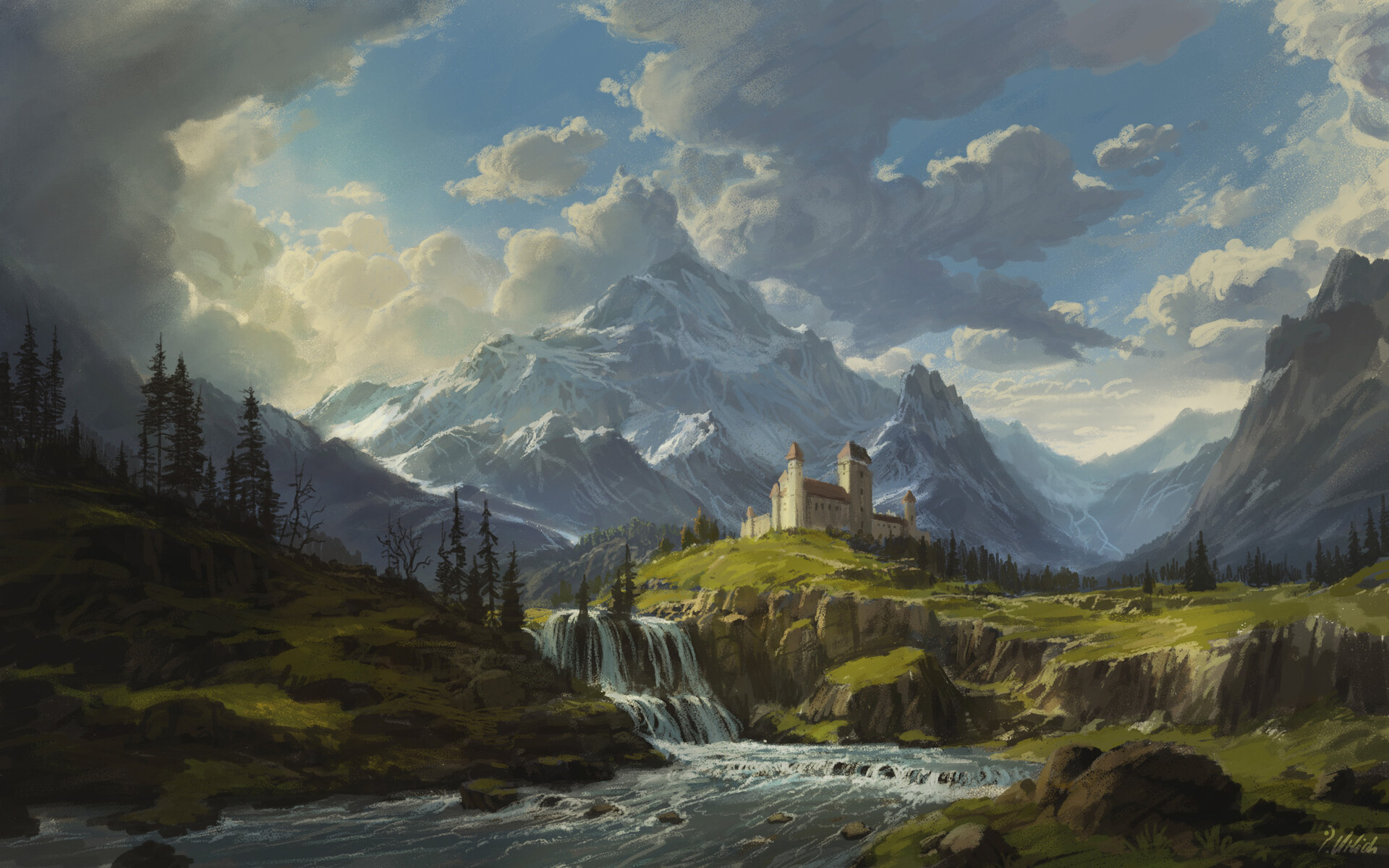
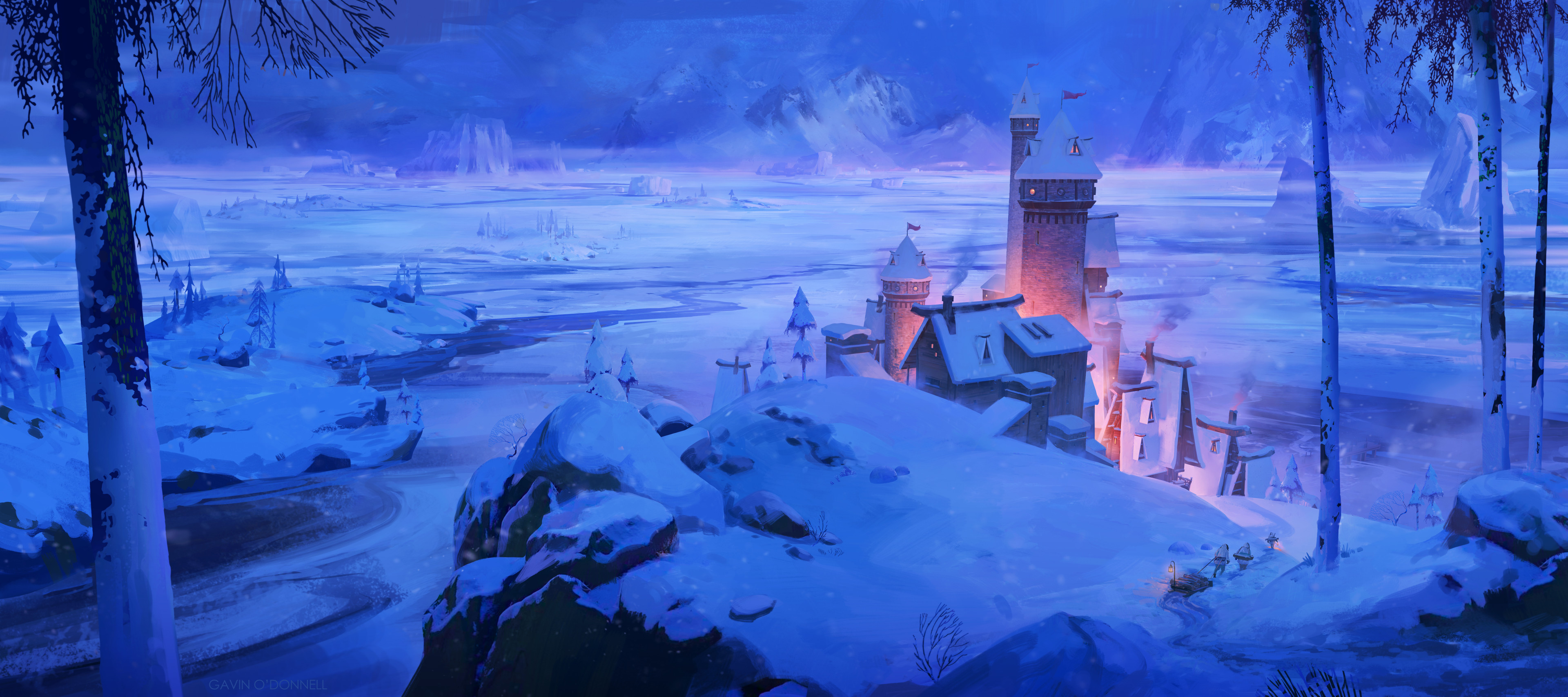
Visinheim is a contender for one of the most dangerous lands in the world; gaining such a title through a combination of factors, such as its climate, native creatures, geography, and the dominant warring culture that the peoples of this land take on. However, beneath the fire and ice there are just regular folks wanting to live normal lives, having to weather it all.
Geography and Climate
A lesser extreme to the Frost's permanent bitter chill, the realm of Visinheim is known for its harsh winters which clash down onto its populace with a temper wicked and wild temper; yet its gentle -if somewhat feeble- summers and springs are proof of prosperity to those patient enough to wade out the worst. Winds carrying an icy chill or the smell of blood and battle roam the entire land, acting as a prelude to the land's violent storms which have the ability to pull tree from root and -in the most extreme cases- raise houses from their foundations. Thunder sounds out loud enough to rouse the dead gods from their endless slumber and lightning strikes with an equally as powerful force as to send stone and wood splintering outwards. Truly, Visinheim is a vision into nature's most wrathful tendencies and unforgiving qualities.
Dominated by massive and wide spanning pine forests of various tree species, taigas and tundras line the lower grounds with massive rivers spanning from the roving mountainsides nourishing and drowning all life below it at its wild discretion. The mountains -home to Mount Raiders, bold settlers, and monsters alike- are rich with ore and compressed metals left over from massive structures of the old ages. Faces of gods, heroes, villains, and legends alike are carved into the mountains sporadically, weathered by time as proof of the First Age's decay. Its lower lands, though chilled and embroiled in nature's wrath, are as fertile as can be to both plant and person. Weathered by wind, storm, and cold, the loam is soft in the summer yet hard as stone come winter, covered in mosses and ill grasses to be feasted upon by the natural wildlife.
Jarls, warlords, and chieftains alike stow themselves and their people within walled fortresses -unable to leave their homes for fear of raiding parties and warring clans, all the while they prepare their own warriors to do the same elsewhere.
Lifestyle
Though there will always be exceptions to the mold, typically the climate and landscape allows for settlers and communities to take root to the land with hoe and rake, living off the fat of the land and prospering with access to forest game, fish from the rivers and lakes, and fragile grain off of the verdant loam soil. This is, of course, if all goes well and without a hitch, which isn't so much impossible as it is unlikely in a temperamental land such as Visinheim where a sunny day could turn to a wrathful storm not a day later.
Due to this -yet not the only factor at play- the people of this land must often turn to raiding and taking from those weaker (or stronger, if one is desperate enough to take the gamble) to make up for their losses. To take people and captives from one village to supplement one's own faltering population, or to steal away precious grain and meats from another to survive the coming winter, are common practices of the ever bitter and hungry clans dominating this landscape. Such cruel cycles have perpetuated a violent culture of warriorhood and conquest, where honor and glory can only be attained from success within brutal and upfront warfare with a bitter and ruthless enemy; a culture where the pacifist is craven and the craven are sinful.
Sometimes this evolves so eagerly where it creates communities of raiding gangs and clans purely specialized and outright dependent upon plunder and stolen goods to survive, becoming the exception to the world's "Dark Forest" rule where these communities must actively search out for and find other settlements and communities to raid from (though rarely do they sell out the location of these places, for fear other competitors will steal from their stock).
The Mighty Oaths
The "Mighty Oaths" are oaths and burdens taken on by the more noble souls of this otherwise warring land, who utilize their martial prowess and culture propagated courage for a more purposeful art; those who wish for more than just internecine conflict with their neighbors and invaders yet equally unafraid to take the battle to others at a moment's whim. Of these oaths -in spite of the worldwide self-imposed isolation- two stand out as the most notable and famous for the legends they give birth to. The Oath of the Einherjar and the Oath of the Valkyrie, both equals and opposites whom have attained both fear and awe from the forces of good, evil, and everything in between.
Truly, the main differences between the two oaths isn't written into their tenets but rather distinguished by gender; for the Einherjar are typically men while the Valkyrie are typically women; with those races -such as warforged- and peoples who are attributed to neither gender, yet still wishing to take oaths, being called the Loke Ridder, who opt for responsibilities from either of the two other more mainstream oaths.
The Einherjar
Stubborn and strong, with a temperament of a bull in a virulent rage, the Einherjar dominate battlefields with their mere presence alone -challenging all those who would dare to face them and take the mantle of responsibility and the power that comes with it for themselves. They are raucous folk, belonging more to a tavern or feast hall rather than a royal palace or within dignified company; they carry the understanding that the fuel for the fire which they fight with is not pure rage, but the aspect of cherishing their own life -henceforth having the greatest of all causes to fight for, to defend one's own life and the lives which they cherish. They drink, feast, burp, boast, carouse, and laugh with great intensity laced with an immeasurable zest for life.
At its inmost qualities, an Einherjar fights to preserve the idea of sacred life -an enjoyable one- and to give hope in the bleakest of moments to even the lowliest, especially when the world around them forgets why it fights at all if not to protect and preserve what little they have. A responsibility to protect their home and comrades, or to find a new home for themselves and all they allow within it.
The Valkyrie
Sharing the Einherjar's lust for combat, but tempering it with astute observation and keen judgement, the Valkyrie are a force to reckon with on the battlefield.
While an Einherjar may bring hope to turn a rout into victory, a worthy Valkyrie can end a battle once their presence is felt by any means. Patient and waiting, they plan their every move with exacting strategic and logical brilliance that turns into punishing divine wrath once they begin to enact them out. The purpose for their fight is to maintain a divine justice and sense of order where all else has fallen and failed -to maintain a balance between freedom and interventionism, yet to never fall into tyranny and oppression as they impose their divine will. With a lack of assured celestial judgement for the good, evil, and neutral, they seek to act to be that final unbreakable "net" to fall upon and catch any of those who fall through society's cracks.
A Valkyrie must keep a calm and level head, yet remind themselves that justice is not without heart. They must abstain from intervening in petty matters that would cloud their judgement in the long run, but to never ignore the genuine signs of despair. This oath can keep them at home, or take them far, far away from it.
Feast of the Land
Those that devote their lives to labor often find it backbreaking or time consuming, and much like how the prey far outnumber their own predators so too do the workers, farmers, fishermen, and artisans outweigh those that would plunder their riches and raid their lands -more to the point, there are a lot of mouths to feed made even more hungry by life's toll and hard labor. What a better way to feed them all than with a feast?
The Visin people, for all the diversity and borders within their fractured realms, love a feast. So deeply rooted and ingrained is it that their festivals, holidays, and celebrations all encompass a great feast where even the poor and penniless can eat their fill. To reconnect with friends or to meet new acquaintances, to take a break from one work and nourish their body, and to find reason to live once more, are all the noble qualities of feasting beloved by the Visin. To those that leave their home, breaking bread with another is the greatest sign of trust, peace, friendship, or devotion a Visin can show (even more so if you can convince them to pay for your meal).
Ancestral Worship
With the gods dead and their land left a dangerous, fractured realm, who else than to guide those left behind than those wizened by entire lifetimes and humbled by their own death. By this meaning, it is not uncommon for many folk to be convinced that their passed loved ones, long gone relatives, or even ancient ancestors have come to share their worldly experience with them. Some of more tribal societies even claim to be able to summon their spirits and commune with the ghosts, although it is more common to believe their ancestors speak through more subtle means.
Some examples of this could be; an orcish warlord struggling with disciplining his men until he sees a still burning field of wheat, deciding to feed his soldiers more and win their loyalty; or, an dwarven smith sees the melting snow dripping into the mud forming dwarven runes telling him to prepare for a terrible blizzard.
The Realms Expanded
Visinheim is called many things by its inhabitants, and so are the various landforms and landscapes in its domain. However there are some similarities and unified terms with which to name and catalog the land with in spite of the many cultural and linguistic borders.
Wyrmclaw Coast
Given its name for when a cartographers from the Emissaries of the Gauntlet attempted to draw out the landmass, it looked most like a massive continent wide dragon claw. Although, no one would be blamed if it was because many draconic -both true dragons and their cousins- creatures make their homes within the coast.
Where land meets water is usually marred by impassable rocks jutting out forth from the shore, blocking all larger vessels from going in and out of the sea but allowed some manner of fishing vessels and smaller longboats to wave in and around them. That is to say if there even is a visible sandy shore, as oftentimes the coastline will instead turn out to be a giant rocky cliff face lurching over the dark, cold waters.
The land further inward is known for is lushness, where plentiful -yet perhaps not truly abundant- taigas thrive in both summer and winter. Giant lakes dot the land, hidden within the forests, which can often hide entryways which lead to subterranean rivers and cave systems which themselves lead to the ocean; oftentimes, an unwary hunter could slip into a hidden hole and find themselves tumbling to their immediate doom or straight into a monster's lair.
"No matter how small it be, no matter how backwards its seems to be, reflect on how it still has survived the land of blades and bone and ye shall find a reason to fear it."
-Olog Gurnsson, Cartographer of the Emissaries
The Verdant Thumb
Pockmarked by rolling hills and sharp moss colored mountains, the Verdant Thumb (often called the "Green Thumb" by surrounding farmers) is known for its tendency to trap those that prefer the plow and crook over the blade and bow with promise of safe harvests and well fertile lands -only to attract more raids from all sources due to that very fact.
Its mountains are too low in altitude for Mount Raiders to ever have found a use for them, and as such their presence there is kept to a minimum, but many creatures of feather, beak, and claw roost and nest there; oftentimes preying solely upon the livestock and lard of the people below.
The Barrier
Otherwise known as the Great Barrier Forest, this massive singular forest bars Visinhein from the world below, and is often treated as a test of might to foreigners who would dare brave the unknown in search for Visinheim's glories. Populated by pine trees of all kinds, almost to the point of being choked by them, many things go unnoticed within this dark domain. Oftentimes, people mistake the land for being flat and otherwise easy to travel, but the rolling hills, the roving fog, and the dangerous beasts within correct that mistake with lethal efficiency.
Those that dwell here often see little of the sunlight itself, apart from their own home in which trees have been hewn down as much as they can. The people here hunt, fight, and die in the shade of their forest home.
Svinéad
"You will be found wanting; you will be left reeling; you will be torn asunder; but you must survive."
A large region of the world, infamous for its natural dangers and near inhospitable lands which tend to border on unfair to outright cruel for any living being to have to endure; and yet for most in this land it is their only option. It is safer to beware all which comes from the "Land of Brown and Gray."
Geography and Climate
Though it shares a cold climate much like its wester cousin, Visinheim, it is not known for its extreme sub-zero temperatures. Instead, Svinéad is a wind-whipped land often sucked into drought where there is little brevity or safety from. Dominated by a ruddy brownish-red, near inedible moss alongside dry, brittle stalks of tall grass which hold what little water there is, the land is otherwise infertile and refuses to give anything in plenty. Trees have grown here, but slowly and only preserved in such large numbers for their strange ability to draw water from the ground which then is tapped and used. Adding to their continued survival is their strange wood, which forms bonds as strong as iron and steel while their red and brown leaves can just about cut through human skin and rawhide while attached to their stems.
Small splotches of snow dominate the steppes and roving hillsides which lead to barren mountains, through which wellsprings of coveted water flow through; although the more experienced and wise souls would rather drink from another source, for the mountain springs hold many dangers such as elementals of earth and water which often use these springs as homes. In spite of all the snow, should disparate warfare or a dry flashstorm strike -which if often does- the dry grasses of the land will oftentimes be set alight and the resulting wildfire will displace many with its fires and kill many more with its smoke.
Its mountains are some of the tallest in the world, but also the most perilous for they hold the many clans and dynasties of Mount Raiders which have long since taken root in these lands and let it change them. Few of the societies below would tangle with them, for their dominance is uncontested, and they would rather remain hidden away within their slovenly hovels.
Lifestyle
Few can stop this land from changing them, should they live here long enough. Agriculture is limited to thew few plants which can sustain themselves in infertile and dry soil, and hunting or fishing for supply is a much more reliable source of food. All in all, small nomadic societies tend to mainly dominate the landscape, where homesteads are built, then hidden and left behind to later come back to when the land has somewhat recovered itself around the area.
For what permanently settled communities exist, they must have found small wellsprings of fertile land, discovered secrets to enhance crop growth, or found an intense fondness for fish; but this does mean they can still exist.
Whatever or wherever they call home, the climate and environment forces many of the people to shed their youthful innocence or naiveté for endurance and hardiness. Many communities often employ the use of specific spellcasters as "seers" in order to gain the upper hand against more powerful foes, perhaps a shaman of druidic skill or a cleric wielding divine power rather than a wizard or sorcerer of sophisticated talent. Due to the danger of the surrounding lands as well, and the spontaneity of such dangers, most communities have a ruler or leader figure which can give quick and concise orders that can be followed quickly and rapidly -whereas more democratic communities often have slower reaction speeds to genuine threats.
For what warriors there are, usually combat and attempts at organized warfare devolves quickly chaotic skirmishes and slaughters. Their alacrity and informal battle style allows them plenty of room for improvisation and retreat, leaving the battlefield with as minimal casualties as possible, yet unprepared when they encounter an enemy familiar with orderly conduct and subterfuge.
Adorned with armor meticulously to carry his clan's glory, this dwarven warrior also dons a mask to protect their identity. It is common Svina belief that if one presents their face at a slaughter or battlefield, the spirits of the slain will recognize their faces and slay their kin in retribution.
Color in a Grey Patch
In spite of all the drab and colorless features around them, the people of these lands try their best to bring color into their own lives, becoming adept at drawing vibrant dyes and potent paints from the wildlife and minerals around them to adorn their clothing, homes, tents, and tools. Artisans are widely regarded highly in these lands for their skill of forming color into art, and as such are often placed higher in social castes and hierarchies. This fondness for color also extends into a fondness for the sky itself, with many believing it to be the origin of all colors and inspiration for all art.
Celebrations of most kinds are often initiated with the hanging of draped, multicolored cloths or ribbons, with different colors signifying different occasions and meanings that can be understood even beyond language barriers. High social stations and notifiers of grand wealth (relative to the wealth around them) are usually clothings that flow in the plentiful wind to show off their intricate designs and give off an air of elegance and power. Lovers indicate their passions with tattoos and splotches of paints upon their personal belongings. The desire to spread color to offset their drab and dreary world is ingrained so incredibly deeply within Svina culture.
Grim Fighters
It makes sense a grim peoples would make for grim fighters and warriors, but many communities from the world over would see the Svina people as taking it too far.
In a world where sounding out the location of your home and settlement will most likely end in death and destruction, conflicts with the occasional competitors must be swift so as to not attract too much attention. To fulfill this, Svina warriors are prepared to enact any cruelty necessary to minimize their own casualties while maximizing the chance for victory (not necessarily maximizing enemy casualties). Leaders can be kidnapped and ransomed or scarified in the middle of the night, fires can be started in order to smoke out enemies from their dwellings, and water supplies are oft poisoned.
There are many sayings that encapsulate the idea that, all should fear a Svina warrior even if you are tenfold stronger and more experienced; for the Svina warrior will merely become tenfold more desperate and depraved in order to win and survive.
A Ruined Land
There are many theories within more scholarly circles within Svinéad -as scarce as these circles are- that the realm has changed from when it existed during the First Age and the Era of Dust and Dark. Many speculate that its environment was much similar to that of Visinheim in climate and ecology, however faced a calamitous change somewhere along time.
Given the presence of elementals plaguing the land alongside monstrosities of voracious appetites, some theories include ideas of a magical experiment gone wrong causing a tragic change in the realm; another idea entertains the idea that many of the monsters present in the realm are descendants of the old beasts of war brought in to fight the First Age's wars, guilty of causing immense trophic cascades and turning Svinéad into what it is now.
Whatever the case, there are some intrepid souls determined to find the solution and return Svinéad back into the land it may have once been, no matter how lofty it may seem.

The Realms Expanded
Svinéad is split apart from 4 major regions, which are separated by a variety of reasons including, but not limited to: levels of danger, demographics, geography, and ecology.
Unmell
Living within Unmell, once must grow incredibly accustomed to the roaring winds that blemish the land at sporadic times. Though all of Svinéad is afflicted by high winds, Unmell's mountain and valleys spew them out on the constant, acting as if they were conduits to the whirlwinds themselves.
The further north one goes, the trees can be seen having slanted trunks and stems as they slowly bend to the wind, only surviving and remaining rooted due to the unique strength of their wood and bark. Woe be upon the weary traveler who takes refuge from the wind within the sparse forests around them, for awaiting them is a deluge of razor sharp pines and leaves which travel at speeds high enough to gouge out eyes and cut through boiled leather. Most of the life here, including the the people who settle in these parts, oftentimes must find refuge in caves or underground, where they are equally in danger of creatures from the Underdark as well. Whats more to worry about are the predators which naturally dwell and thrive within the strong winds, such as Rocs which are strong and large enough to fly through the strong winds.
Though many communities can say they live here unwillingly, they do benefit from the fact that little to no Mount Raider clans dwell within the mountains above them; it is simply too inhospitable for anyone to live within.
The Thrushwood
Named for the songbird which surprisingly makes its home within this hostile land, its pleasant songs can be heard throughout the forests, grasslands, and steppes on occasion -yet few can truly claim to have actually seen and captured one of these birds.
The Thrushwood is the barrier between the Green End and Svinéad, and intertwines both region's ecology. Rare splotches of greenery, such as pine or hardy ash trees can dwell within these lands. The land itself isn't entirely infertile either, which is otherwise the norm for the entirety of Svinéad. Hardy crop can grow with patience and luck, and is often the staple food source for many permanent communities, where a single bad harvest could mean packing and moving to a more fertile plot of land.
This region is also home to a large amount of "bird-folk", a blanket term for races which carry bird-like features such as the kenku or the aaracockra. Those of them that can fly favor the strong winds, which help ease their travels around the lands, while those that must walk favor the forest's rustling leaves and songbirds chimes covering their stealthy movement about the Thrushwood floor.
The Gloomweave
Its honestly debated whether this region should be a part of Svinéad or rather an extended portion of Green End, but due to it being located behind a massive mountain range which cuts it off from the Green End many would agree that the realm of Svinéad must also shoulder its burdens. Also to that point, the general danger of the region itself lends to its relativity to the rest of realm, for it is just as inhospitable and dangerous as the rest of Svinéad claims to be.
The Gloomweave is a massive spanning forest shared by round-leafed, purpled hued deciduous trees that constantly exude a thing, yet adhesive film of sap all over their silver tinted bark. They also share the land with prehistoric, petrified remains of dead trees from the First Age -shells of Evean dust hardened to solid stone from years upon years of it collecting onto the sticky sap of the surrounding trees.
Yet, the most unique aspect of its ecology is its arachnid inhabitants. The Gloomweave is home to all manner of arachnid creatures, from simple orbweaver type spiders to massive phase spiders and giant wolf spiders this land is utterly dominated by those of many legged nature. They use the petrified trees to create large spanning nets to catch flying insects and birds for feed, yet they truly rely upon the poor gnomish and halfling communities which have mistakingly made their homes within the region -unable to leave due to fear, misdirection, and constant predation. Many communities live on the borders of this region, unaffected by its inhabitants but able to go on expeditions to collect the silk from nearby webs; some more unscrupulous peoples even collect the poisons from within corpses of slain spiders.
The Great Spine
Spine meaning the spines upon a creatures back, rather than the sole qualifying aspect of all vertebrates. It is believed that the great mountains which are found within the area belong to an equally as massive creature which slumbers deep within the earth. The thin rivers of murky and non-potable water are believed to be the blood from the creatures wounds, having gained them from a past battle in ancient times. Whether true or not, these sources of foul water often are also sources for elemental influence; even more so, there are many landmarks around the area in which carry massive elemental influence of varying types. All of these landmarks, in some way, are culturally recognized to be parts or aspects of the sleeping creature beneath the earth. The name of this creature is no other than Svinéad, henceforth since the land (by these people's beliefs) is made up of this creature's broken body it shall be named after the creature itself.
Sometimes, when children are conceived or born near certain landmarks carrying elemental influence, they tend to come out as Genasi rather than their original race. Children born around wellsprings of water are born as water genasi; those born close to the heart of the mountains become earth genasi; and so on.
The Green End
"The love for the green and good is beyond an appreciation for our world; its a lust for paradise. If only we had eyes to see it here, where our world bore us and still sustains us. If only we'd stopped trying to leave it for a concept we can't see."
One of the most largest and expansive lands within the world, the Green End is a collective of various landscapes which embody diverse landscapes and ecologies. Most, if not all, realms within the Green End contains thriving ecosystems -namely arcadian forests, grasslands, and other verdant and resource rich realms of temperate qualities. Though many communities here will still keep to their own and remain silent, for those that do travel many say that this realm is the kindest of them all.
Geography and Climate
As mentioned beforehand, most lands within this region are of an arcadian nature -meaning simple, yet bearing qualities of being pleasurable. Deciduous forests laden with hummus filled soil, grasslands of both tall and short stature make their homes within the forest clearings, fields of flowers filled with all manner of insect life, and wetlands and lakes bearing prospering aquatic and amphibian populations, are all just some of the few biomes listed. These lands experience mild winters in most circumstances that rarely fall into the negatives of Fahrenheit, with plentiful -yet not excessive- rainfall sustaining these lands and plentiful rivers and streams flowing about the terrain as if they were capillaries carrying blood around a body.
The mountains, like in many places within the world, are tall enough to have housed old clans of Mount Raiders who still remain to plague the populations below in the lower lands. Rolling hillsides are commonly found throughout this expanse, which line alongside and within the various valleys that provide shelter and resources to the creatures within them.
Small uncharted islands, alongside their larger cousins, dot the coastlines that are normally comprised of soft sands which lead outwards into swampy wetlands and mangrove forests. The deeper one traverses into various forests, they could observe how the land itself has soaked up drudic and sylvan magics -exacerbating the natural lushness and growth of the surrounding wildlife. Much of the land itself is very pliable to changing due to planar influence left over from the Planar Divide; where a land steeped in celestial influence will deviate from the norm just as much as land steeped in infernal influence will.
Lifestyle
The fertile land attracts many settlers who would much rather live out their lives in peace and quiet, working the land in groups or attempting to live out an isolated life. Those that do this often leave themselves undefended, and must root themselves for long periods of time, but often can dissuade raiders, bandits, or more intelligent monsters from attacking them with tributes of their own crop; in fact, there are many cases of this where bandits -either exiles of their old home- making livings as pseudo-mercenaries. Though their deal is backhanded and laced with coercion, they could also dissuade other more violent interlopers away from their source of food.
Some communities, sickened by the dangers of life on the ground, have instead took to dwelling within massive oaks as treehouse societies with the help of druidic magics. No longer beholden to the earth, and cloaked within the canopy of the forests, these elusive communities often are extremely difficult to find.

Hunters, bearing the most elusive careers, often feel comfortable living a more nomadic lifestyle and, more importantly, interacting with other communities and bartering their surplus for other supplies. Though some communities would outright capture and outright kill some hunters out of fear of them selling out their position to would-be-conquerers, the profession isn't laden with day to day strife or danger within these lands as it is elsewhere. Lakes, rivers, wetlands, and all other bodies of water provide adequate fish and other water-dwelling critters, enough that entire towns could subsist off of them alone should they wish to specialize enough. These open and common resources persuade many hamlets and small homesteads to become more tribal and nomadic rather than become permanent dwellers, following their food sources wherever they are most plentiful.
The mountains provide in terms of minerals, yet most would rather remain far from those old mines in fear of carrying wicked raiders or druidic beasts who would see their exploitation for harming nature.
Shepherds of the Green and Good
Given how the land commonly provides more than enough to fill the quotas of all, the people here have grown fond of the nature that surrounds them; the certainly picturesque beauty of the Green End certainly adds to this fondness. In some cases this ends at just a fondness for nature's bounty and beauty, but others take it so far as to adopt druidic customs and traditions; acting as protectors of nature's balance and shepherds of the green, some communities swear off excess and wasteful practices entirely in favor of more sustainable methods to living. Some are so zealous of this idea that some druidic figures often leave their homes as pariahs or exiles, due to their bloodthirsty tendencies to harm communities and peoples that harm nature in even the slightest way, treating it as if they were pruning dead leaves and stems from a dying plant.
Druidic powers are commonly sought after within the Green End, with secret druid circles mentoring acolytes with subtlety and great patience; so much so, that some chosen "acolyte" may not even recognize they are slowly being taught to understand the eldritch powers of nature. So powerful and influential these druids are that they often form the ruling or leading roles within some communities, and are known for shaping the land around them so as to work better with it. Some communities twist and reform the trees around them to create living walls of bark and wood, some move the earth to creature hovels within the ground rather than hew stone or wood to make normal dwellings, and there are even examples of massive trees being grown that are hollowed out and lived within deeper into some forests.
Sentry-Sprouts
To defend their communities, sometimes constructs or golems of pure wood and vegetation grow from the walls surrounding settlements like leaves and stems from a tree. These unique "warforged" sometimes break off and form wills of their own, either leaving the community to forge their own fate or staying to continue their duty.
A Lady of the Pure
Many attribute the health and vibrancy of the Green End towards the existence the multitude of streams and rivers which flow forth with life giving water, sustaining multiple ecosystems and connecting many more. However, the peoples of this land attribute the existence of these bodies of water to something more than mere geography, but rather believe in the idea of an entity -benificent in nature- who controls the flow of water. A kind and motherly entity, although elusive in nature, often called the "Pure Matron" or the "Lady of the Pure."
Some people can attest to having seen this entity, although accounts vary immensely on what she looks like. Accounts that describe her vary from a humanoid woman made purely of flowing, crystal clear water; a fey-like creature with control over water and nature, such as like a unicorn; an angelic celestial taking the form as the individual's mother or mother figure; an ever shifting water elemental, who does not define itself with a single form; and many more so onward. With some many conflicting descriptions, many attest to the entity itself not existing and just being part of local folk legend or, in extreme cases, extraplanar creatures left over from the Planar Divide taking advantage of this popular figure to meet their ends.
Whoever she is, or if she exists, sometimes individuals within the Green End carry powers over water much similar to how this entity showcases her power. These individuals claim that she is their patron of magic, whom they have made deals with.
A "Green Knight" is a blanket term for those who voluntarily defend nature to its last, and as such are granted customary powers over it.
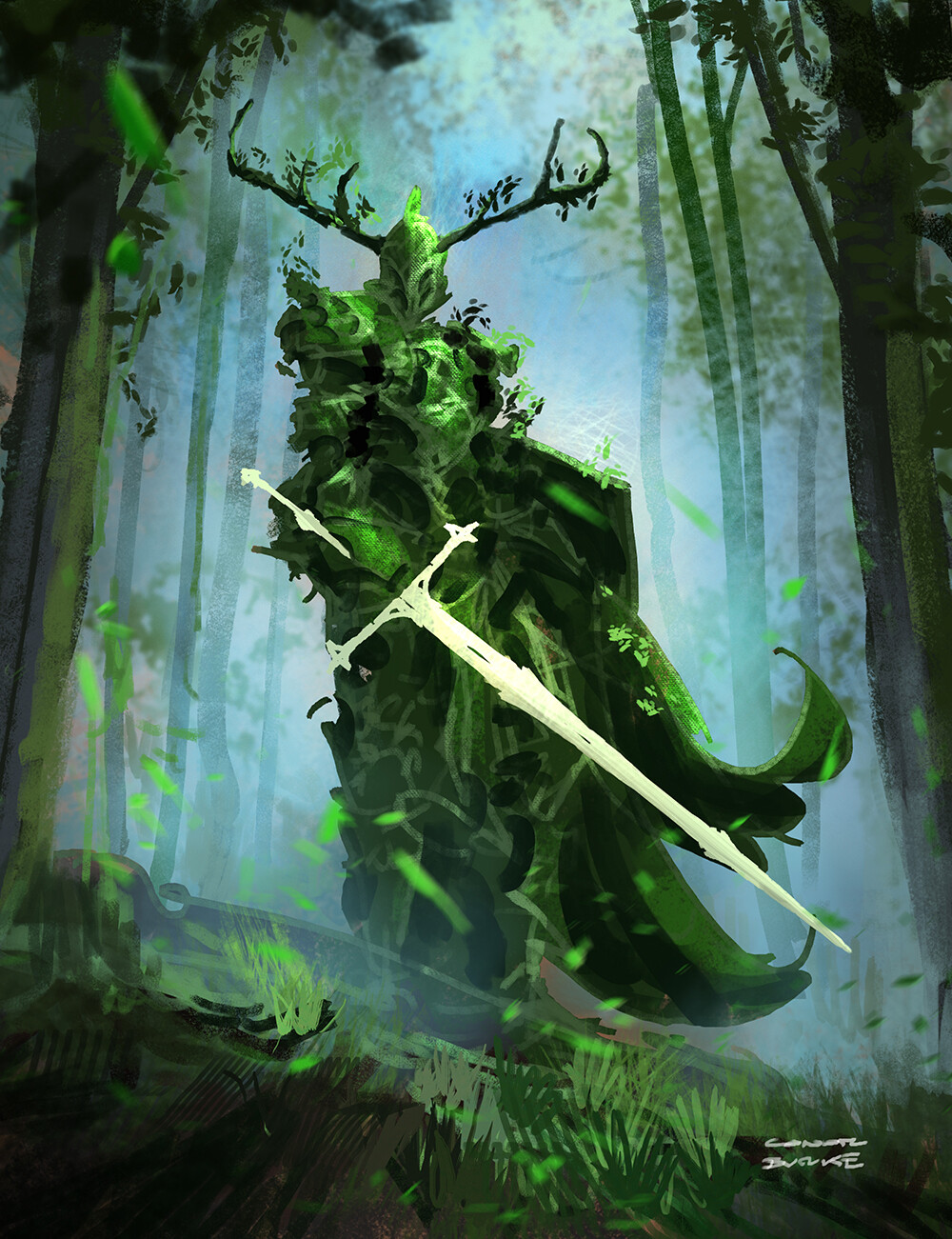
The Realms Expanded
The Azylwood
Known for its forests which range from dense to wide open, the Azylwood takes its place as one of the largest domains within the Green End. Its denizens carve out lives within the woods, clearing out trees for farming or abstaining from doing so in favor of hunting and trapping animals for food and furs. Those that do traverse into these lands must prepare to do so cautiously and respectfully, for creatures of the fey and sylvan might not take disrespect -unintentional or not- without equal disrespect being given. Treants may be roused from slumber to attack an interloper, or tricks and illusions may lead an adventurer astray and into a beast's den. However, such circumstances are not exactly common and wanderers may be treated with indifference just as they are with malice; some fey may be more liable to mischief rather than outright malice as well.
Kys'Koa Islands
These islands, based off the western coast of the Azylwood, are rumored to hold tale to immense magical power within. Its inhabitants are rarely not gifted with prowess over some manner of the arcane arts, although this power they are gifted with from birth usually is channeled through a sense of self and force of will rather than an innate and intelligent understanding of the arcane itself. This sorcerous power is said to be granted by proximity to the Kys Tree, which is an immensely large tree which size permits it to be seen all the way from the mainland coast.
Mere proximity to the tree itself can bestow magical prowess onto newborns or even the magically sensitive who remain close to the tree for a time. The dew falling from its leaves is said to cure any disease, its bark can create armor tougher than dragonscales, its leaves are a delicacy and also make for fine tea, but its true worth lies in its sap. Experienced alchemists who acquire the sap can brew mythical potions of immense power and other fascinating curios. However, those who drink the sap itself without further processing can become overwhelmed by its innate power and change into maddened beings, that is to say if they can get past the tree's defenders to even acquire it. Some people willingly drink its sap, either as part of a religious ritual or believing they are able to handle its immense power.
The Lectvarius
The Lectvarius is a peninsula that is separated from the rest of the Green End by a mountain range known as the "Trustlespine." Though it is not as forested as the Azylwood, its rolling hills carry ranges of tall spike-shaped cypress trees which line the ancient paved roads -planted there by an equally as ancient civilization for decoration. Flowers of many kinds dominate the rolling hills, creating picturesque scenes most artists and painters would die for.
However, this beautiful land was not once as it would seem. For a two-headed blue wyrm once dominated all peoples within the region; taking quick advantage of a splintered and uncontested world after the Era of Dusk and Dark. Though the blue wyrm was slain by a mysterious champion, its peoples and land reflect the once unified -albeit despotic- society that it created; understanding deeper and more complicated societal aspects, such as taxation, organized armies, different forms of autocratic and democratic leadership, advanced architecture, and city planning. Its communities reflect this and are, on average, more developed than most of the world at large.
The Lectvarius has too much detail, history, and development to explain entirely within this short space. For more on the peninsula, its history under the two-headed wyrm, and its mysterious champion see Chapter 5 "The Campaign"
The Autumnal Shelter
Golden god rays of warmth flow through leaves of autumnal coloration. A gentle, cool breeze whistles through the leaves of the trees, sounding out a soothing song of the forest enchanting enough to put any creature to sleep. Small bubbling streams and large rivers create melodies of peace with every splash of water onto rock and earth. This is the enchantment of the Autumnal Thicket.
A place of peace and tranquility in a world of constant danger with little exception to that rule. The only burdens bore upon the people here are their day to day careers and labors they must endure. The land harbors little monster life to terrorize the populace within. Mount Raiders, bandits, and interlopers unaffected by the soothing surroundings are kept at bay by the land's natural protectors.
The people here, while still scattered, seem to be at much more peace than any other regions. They live out their lives in quiet content, relishing the simple pleasures in life; pleasures such as a nice bowl of stew, the raindrops on the roof, or the companionship of a lover.
The Beige
A massive spanning wetland, where the Green End's many rivers and streams all flow into to flood the land. Fewer people live here than in any other region, due to the lack of available timber and stable ground, but the societies that do live here have learned tricks to thrive within. Forming communities which float upon the water and slick mud, their houses and buildings are lined with special kelp and vegetation which adhere to the ground and prove to be quite strong to hold everything in place. Here, the inhabitants swim to traverse or pull their cargo with massive dire river otters that they have tamed. Living off of the fish they catch, mussels, clams, crabs, or boiled kelp, they carve out meager -yet unique- livelihoods.
Alkana
"Tales and myths of questing knights had seemed so novel in the First Age, bringing home glory from unexplored and dangerous lands. When reality hit us with the oppression, bloodshed, and brutality of it all, it was only then we realized those stories were written in dried blood, not ink."
Alkana is a massive landmass nearing the equator of the world, diverse in its landscapes and people yet defined and given foundation by major cultural values. The dangers and sufferings of the inhabitants are more societal than borne from the environmental, geography, and ecosystem itself.
Geography and Climate
Nearing the equator, the realm of Alkana is known for its high temperatures, where in some places winter and autumn do not even register on harvest calendars. This warmth can create biomes ranging from temperate forests to arid savannas -all depending upon their proximity to the ocean or major bodies of water. Chaparrals and grasslands bloom into colorful fields of seasonal flowers come the rainy seasons, and are subject to wildfires every other time of the year.
Usually a flat landscape, that rule meets its exception when understanding the various plateaus that periodically dot the landscape like splotches of trees dot a savanna, providing zig-zagging natural roads from their rocky, red colored cliff walls.
Hills come in scarcity due to the usually flat landscape. The stone breaking through cliff walls consists of a usually marble or sandstone like rock in most places, exposing their sun-baked form to the world. Rain most often comes in seasons rather than chancing on the daily, but when the season does come it evolves into torrential downpour most usually.
Lifestyle
The people of this land usually come in two different forms, the unfortunate and the fortunate with little gray area in between. Most societies, due to a nature detailed later on, are feudalistic in nature with themes of intense autocratic power plaguing their government systems. Of course, such feudalistic societies can exist throughout the world, but here they evolve into the most extreme version of themselves; societies where the lower castes and classes exist only to serve the higher ups. This lifestyle and common style of living stems from the existence of First Age fortresses and castles, which provide utter protection and power to those who can hold control over them. Settlers come to lay their claim to the land around it, mainly for protection, of which gives the ruling sovereigns further influence. They offer small portions of their power and noble privilege to those that help propagate this style of living over the masses, creating warrior, artisan, and clergy castes synchronous to traditional medieval societies. All of which come to a detriment to the common person, despite the order it brings in a disorderly world.
Loyalty bought through land grants and privileged lifestyles, few knights would shirk their duty and return to the grime and grit of peasantry.
The commonfolk live lives of hard labor, and whatever ruling class that is systematically put in place usually are encouraged towards lives free of any kind of work (although civil and political work as well as independent scholarly pursuits are seen as honorable). The commonfolk till the fields, tenuously hoping for years of good harvest in a land of irregular rain, and are often taxed to the point where they can scrape by but the ruling castes and classes get the most out of it.
Due to the many castles and fortresses belonging to noble families of the past, as well as extremely wealthy and extravagant generals, depictions of royalty were still present (if a little dilapidated) and became synonymous as signs and symbols for power. Some also attest it to be the world's largest (unintentional) preservation of history, for one could see hints of the old royal crests and house sigils of First Age families in the modern depictions, as well as hints of familiarity in ancient aristocratic traditions and etiquette.
Oaths, Promises, and Civility
Civil conduct and societal expectations are levied here and in greater number than anywhere else. Though those in the higher social classes may experience greater power and quality of lives, unless they are the ruling sovereign and their family they still face obstacles or have limits to their influence. These obstacles are stone-deep societal expectations of civility and obedience. To step out of line once will attract the attention of other competitors hungry for high positions or praise, and failure in one's duty could result in humiliation and ostracism from other unrelated circles.
Knights and royal guards are made to perform and obey behind oaths and promises of civility, promising an honor code that puts their sovereign and their family first and their nation second. Peasants are reminded of their place through taxation and promises of better years, alongside with visits and armed escorts through populated areas as a show of force. If one is to step out of their place in a way that harms their betters, its a dire mistake; if one steps out of their place in a way that harms their lessers, thats thinking outside the box.
Steel and Silk
Alkanan smiths, cultivated by meticulous training and auditing processes by sovereigns wanting well equipped champions, are by no means weak of craft and skill. Aided by the abundant weaponry and rich mineral deposits within the earth, Alkanan steel is by far nothing to laugh at; merchant caravans and families that travel the world spread word of its strength and charge a heavy price for any weapon or tool made of it, spreading its prestige to places that don't even know what or where Alkan is. Of course, however, steel means something else and brings a different connotation than just the metal itself in Alkan. Some sovereigns and nobles of city-states and fortress hamlets will attest to a saying that essentially boils down to "Steel begets Silk."
Silk is as expensive as it is rare, usually a trade secret kept by nomadic merchant families who hold it close at hand, and utterly unobtainable to some. It can only be purchased through luck, and is to valuable to even think to barter for; so how else does one attain this product but through taking it from those who managed to acquire it the hard way? Silk in this meaning is of course relative, and could mean any form or manner of riches. Through the strength of steel, silk is taken. Through strength of armies and domination, riches and prosperity is gained. This is a mindset that is often used to rationalize taking land without causus belli. It seems the only time for peace is when neighbors are ignorant of each other's existences.
Feudal Nightmare, Noble Dream
Something to be said about those of high class and caste, particularly those born within it rather than those who somehow rise to it, is that they enjoy perhaps the highest quality of life out of everywhere else in the world on average. Noble children have almost unfettered access to: food, medicine of both mundane and magical means, higher education, access to peers, cleanliness and hygiene, entertainment, and tutoring in the many arts. They defend these values by offering slices of such privileges to those who would defend them from outside (or inside) threats.
For those not affiliated or serving far below these aristocratic groups, they find the lowest quality of life offered to any soul on the earth. True, they don't have to wade through nature's wrath apart from the hot seasons, but in terms of social and communal abuses these peoples face the worst. The wrath of a fickle lord, the overbearing demands of their spouse and family, the backbreaking labor required to serve the royal houses, and all other manner of harshness befalls them all.

The Realms Expanded
Due to its generally warm nature, what distinguishes different regions within this realm is usually more based on precipitation than anything else. Where certain amounts of rain can decide the difference between forest or savanna.
The Lawless Steppe
The Lawless Steppe is also called "The Border between Worlds" which separates the north and south from each other by various means. These settlements upon the edges of this verdant sea of tall grasses are similar to those all around Alkana, however further in lies a more criminal and cutthroat style culture. Deprived of resources critical for more advanced societies -such as stone, tool making expertise, wood, or metal- the groups which make up the communities within this land are inclined towards banditry and highwayman-type lifestyles in order to survive.
This gives the name "The Border between Worlds" credence, for traders, travelers, and all other manner of adventuring souls are waylaid and often forced to turn back with most -if not all- their goods and tools taken from them. Important books and knowledge kept by a wandering scholar are destroyed if not found to have inherent values or could be used by the more cunning minds within these lands; tools and weapons from near or distant lands are used till broken or beaten beyond recognition, only to be tossed out or melted down by scavengers; food and medicine are obviously dished out and used; and other wondrously magical items find new owners within those that simply called dibs. Not beyond cheating, stealing, and lying to lure travelers into traps or ambushes, these denizens oftentimes hide within the tall grasses only to leap out and subdue their targets. Commonly, these ambushers wear suits of woven grass and dirt to camouflage.
Despite their career paths, very rarely are these thieving communities open to trade, since many Alkan nobles would rather crush them and take their loot than make deals with "savages" and others may become suspicious of their ill-gotten ways. Again, once more despite their career paths, unlike Visin raiders in the north, bandits are open to leaving their targets alive if they work with them -of what exceptions there are, its mostly because the bandits become bloodthirsty or impatient with uncooperative victims. However, many targets simply get lost, discombobulated, misdirected, or simply robbed again and die anyways out in the endless grasses; keeping these people hidden from the world.
The Brigandine Sanctum
Warm, winding lands which produce mild winters and hot summers, allowing farmers to take advantage of the long summer seasons to fill their exhausting quotas for their lords and ladies. The Brigadnine Sanctum is named as such for its strange almost scale like mountains that seem to almost lay slanted and overlap each other at their highest peaks like brigandine armor or fish scales.
Here, the majority of fortifications and First Age defensible structures were built here and remained until the modern era. As such, given that Alkan culture is quite literally built around these structures this is where the majority of settlements and communities remain. If settlers or warriors lead by a rogue noble or aristocrat come upon an empty structure, it is sure to be used; more so if the same people come upon an inhabited structure, a violent siege is to occur (even if the odds be slightly above suicidal for the invader).
Also because of this, due to the unpredictability of First Age technology, the context of the war in which they were used in, and the ancient magics presiding within such places, these settlements could be dwelling within ticking timebombs without even knowing it. An example of this could include a royal servant pressing down on an isolated button disguised as a stone block, which in turn summons defenders of that very structure to assault and enact violence upon anything they don't recognize -which would be everyone within. As such, roaming these lands are creatures of ancient might and magic, be they summoned elementals, rogue constructs, or chained extraplanar creatures preserved from the Evean storms; all of them signs of a noble family or a too curious researcher digging into sciences and magics they know nothing of, and paying the ultimate price. These constant dangers give the region another name, used by the locals rather than the proud nobles or the cartographers -"The Brigandine Prison", a prison in which these serfs are trapped in.
Illyeem
An arid land which carries a harsh heat upon every wind, these peoples must collect around wellsprings of water or other bodies of it in order to slake their thirst and tend to their crops -with much needed rain coming only within allocated rainy seasons or months during the year. Because of this, the peoples and fractured communities are much more fewer and in between but also much more condensed so as to preserve resources. Outside of these lands are some of the freest peoples that Alkan has, not bound by nobles who wouldn't deign to settle in places without reliable water or protection.
In spite of the harshness the savanna can often show, the people of its land have a soft fondness for its golden plains and warm winds, even if they can often be the cause for one's own endangerment. Stories and tales of the local beasts and monsters -some fabricated, some not- come in great quantity and sometimes credible quality too.
These lands, in the First Age, must have been loosely inhabited or less valuable to the states-that-were, as less First Age structures have been raised within the region. The fortresses that have been built have been done so near bodies of water -split between those that are ancient and dried up or still living and flowing with water. Due to the nature of First Age structures and their hidden defenses, there are noticeably less dangers roaming the lands; ironically making these harsh lands much more safer than their temperate cousins.
The Heart Garden
"Our Ancestors guided us here, to the heart of the world. Where its lungs sputter and blood pours forth from its aching wounds. Truly they must've been devils and fiends, masquerading as ghosts of our own dead. What secrets do these lands hold that aren't hidden pathways to death?"
The Heart Garden is a massive, overgrown jungle that seems to fold in on itself at the detriment of every living being within. An ever broiling mass of vegetation where only the masses of green seem to be the only living thing thriving on the chaos and self destruction Few outsiders understand the scale of forest, where many beasts have taken on forms much more massive than their standard counterparts, and the sheer size of the region. Its inhabitants, though toughened by the dangers of the surrounding jungle, seem to have had adapted to this way of life and accepted the jungle as a fact of life and force of nature.
Geography and Climate
It seems in the sheer drop in regional population and the lack of industrial societies within the Heart Gardens, the surrounding vegetation has grown exponentially; to the point of defying logic, since to regrow to such a scale would mean that the forest was recovering during the Era of Dust and Dark, where there was very little available sunlight.
Even as the jungle resists all to some degree, there are still those who find simple lives within the fertile thicket. Though far from safe, they can come to be satisfying and productive.

How the forest had recovered to such a state, yet its inhabitants haven't recognized any expedient growth of the surrounding flora (not to the amount to make the aforementioned possible, at least) has yet to be answered; the surrounding dangers of the Heart Garden have made it difficult to search for answers as well.
As such, the Heart Garden is a massive rainforest -of the temperate, subtropical, and tropical variety- that spans takes up a massive portion of the world. Its massive canopy has made it difficult for cartographers to draw up maps for its creation, not by their usual method of riding griffon- or giant eagleback at least. However, ihabitants within can attest to the sprawling landscape as diverse in both geography and ecology (rainforests are hotspots for biodiversity, after all). Massive broadleaf trees blot out the sky with multiple layers of canopies that shade and hide the world beneath. Rivers of flowing waters bleed out from hidden wellsprings underground, enriched with minerals that color the waters either a cerulean blue or a faint crimson red. Despite the coloration, most of this water is potable or can be treated to be drinkable. Large and small clearings of swaying grasses are interspersed within otherwise dense forests, where sunlight can shine through unto the earth unimpeded.
From where more rivers and streams flow, and endless clouds carrying rainwater from the ocean come, are massive mountains with their own personal ecosystems clinging onto their sharp cliffs. Downwards, and around the region in packs, are large and tall tower like rock formations called karsts; too small to be mountains but too narrow and tall to be hills, these karsts make twisting passages through flat terrain and trees. They stand defiant in the sky, yet looking as if a strong wind or storm could topple them and send rock and stone careening onto the land below.
The air is thick with great humidity and a great heat, which seems to be trapped beneath the thick leafbound canopies. Sometimes this humidity forms as great fogs which cloud vision nearly entirely, allowing brevity from predators who hunt with their natural eyesight. The further north one goes, the tropical rainforest turns more into a relatively more spaced out temperate rainforest. Nearing the coast is where the subtropical type rainforests are found as well.
Lifestyle
The people here, in spite of what it may seem, usually band together as it seems it is their only chance of survival against the beasts of great size which wouldn't mind making them into a quick meal. However, such groupings are limited in size in order to remain hidden from the forest's great beasts as well as to not consume too many resources. For those groupings that find permanent settlement, they usually are located within more hidden groves or defensible positions that most beasts would find unfavorable. Typically, while some tribes may make it tradition to pit themselves against the various dangers of their home, most people understand that making yourself not worth the energy spent hunting is a reliable way to remain outside of a hungry beast's stomach.
Most people who live here lead a hunter gather lifestyle, using all factors of the forest to their advantage. Collecting sap for sugar and resin for adhesive to make rudimentary tools; using massive broad leaves for clothing, baskets, cups, and all other manner of containers; hunting and trapping for reliable meat and pelts as well as all else they can scavenge from the beasts; braving the flora for nectar, honey, fruits, and nuts with which they can eat or lure other animals; there is not an aspect of their oversized environment in which most inhabitants don't take advantage of.
Farming cultures do exist in these lands, but usually they are fringe communities who do not have to face the burden of clearing the dense foliage on their own -especially when the vegetation tends to fight back. They use fire to clear the weeds, roots, and grasses of the land and plant their crop within the leftover ashes and soot once it is all made fertile by rainfall.
In terms of culture, considering how the forest literally and figuratively epitomizes the "Dark Forest" rule of Fel'lonia, most communities are totally isolated and instances of open conflict and bloodshed are few and far between because of the distance and hidden nature of this region's communities. Due to this extreme isolation, most culture and tradition is totally unique from tribe to tribe, village to village, and town to town. However, they do usually share some similar features regarding how they interact with their giant-sized environment around them. Do they abhor it and fight against thee encroaching nature at every turn? Do they make it a matter of pride and social status to hunt these giant beasts singlehandedly? Do they seek to make friends with the beasts around them instead of hunting them, perhaps even taming them as communal pets and beasts of burden? Or perhaps their culture exists in the space anywhere between these examples?
Gentle Giants
Mortal kind isn't separated from nature, and since nature here is oftentimes oversized so too can this mythical effect come to affect the sentient inhabitants of this land. Tall in size (reaching 12 feet on average), with massive muscles that pair relatively gracefully with lanky limbs, most communities have gentle giants within their societies that live alongside their communities as their own. Happily helping away with the manual labor that would otherwise break anyone else, becoming beloved members of their communities.
These massive peoples are referred to as Arrakzhen and they are unilaterally peaceful folk born from otherwise normal parents. They typically lack in uniform intelligence and cunning, with most of them being unable to count beyond the number six or seven even with the help of their fingers, although they seem to be perfectly able to learn languages well enough. They make up for their lacking intellect with incredible strength of body and an unyielding loyalty and capacity for compassion and patience with their friends and family. Unfortunately, due to the stresses and traumas of birthing such abnormally large infants, the mothers rarely survive to see their progeny; and these gentle giants usually go on forever wondering what became of their mothers in melancholy fashions until they come to terms with this fact of life.
Arrakzhen cannot reproduce in any way and never have the urges to do so (perhaps a byproduct of the their massive nature), but they tend to take on a guardian roles with many children -especially those orphaned from their parents and family- despite their innately pacifistic nature.
The Dire and Deadly
Much like dire wolves, the oversized creatures which live within these lands often go by the same title. Dire deer, dire boar, dire komodo dragons, and many more to follow; often it is a blanket term used to define creatures of otherwise mundane species and genus that have transcended the normal size typical for their species. Obviously, most of these creatures take on alpha roles of their packs (if they have a social nature) or are excised from their flock due to the sheer need for food they demand.
Usually, upon reaching maturity, these dire creatures will have grown spiny bone-like protrusions from their spine that arch towards their heads (with the Arrakzhen being no exception either.) These spines are used as a telltale sign of aggression sine the increased need for food and the fierce competition they face have made most dire creatures incredibly violent and aggressive.
These spines are often collected and crushed down into powder, which is used by shamans to invigorate and enrage their warriors or enchant special gear and tools for specific purposes. Such collection of spines (and any other materials scavenged from dire creatures as well) is incredibly dangerous, but many communities would offer lucrative barters or deals in order to collect it; as such, many foreigners from safer and more developed lands make it their career to hunt these beasts. Earning both reasonable wealth and the respect of those they indirectly made safer.
The Realms Expanded
The Heart Garden is a singular realm without major dividing borders making smaller regions, however it does connect with other outside subregions which are too small to be considered significant realms. These subregions connect fluidly with the Heart Garden enough to where they are often categorized in the same realm as it by most cartographers and explorers, and as such will be included here.
The Rot Floods
A massive, overgrown, and half flooded landscape filled with rot and decay. Perhaps once this may have been a thriving swamp or a bog, but the ground has become too acidic and the soil too unstable for traditional wetland life to remain. While willow and wild cypress trees cling to the landscape alongside some other swamp plants, the rest of the landscape is hallmarked by its layers and layers of thick, half decomposed vegetation and living matter that makes up the food supply for whatever resilient fauna or migrating creatures that cling to life here. Of the mortal communities that live here, they usually only do so in forced hiding or in subjugation from magical creatures unaffected by the horrors of the land.
What is rather unique about this land is the strange faith and madness that it produces within its rather mentally unstable inhabitants. Where some individuals who stalk the lands, or claim to come from it, seem to treat pestilence and disease as fuel for their fervor and see the spreading of it as the most sacred and pious acts. Additionally, as if addled by their self-afflicted diseases of both mind and body, some of these faith also claim to come directly from the First Age itself. Self proclaimed prophets of the rotting corpses of the dead gods whom have promised them return to their ages should they spread their "faith" far and wide.
The Tassani Hills
Perhaps the more friendly of the subregions, where most of the Heart Garden's farming communities migrate to if they have the chance, the Tassani hills are a massive plot of rolling hills that span the western border of the Heart Gardens and act as a geographical border of sorts.
Of those that live in these overlooked hills, are often smaller folk who make homes and hovels directly within the hills themselves. Gnomes, halfings, kobolds, hill dwarves, and the occasional goblin, are all part of the scattered races of these lands. Due to smaller races having tendencies to use cunning or literal illusory magics to hide their presences, meeting with these factions and communities is hard but rarely has to end in bloodshed or battle.
Those who claim to come from the First Age can carry banners of empires or kingdoms unknown and forgotten. Acting in loyalty to a long gone sovereign or power and often aggressive to all.
The Sky Reaches
A subregion in which traditional jungle trees must share their domain with prolific bamboo forests that intersperse the landscape. Twisting and turning around karsts, hills, and mountains, these bamboo forests are the only of their kind here. However, the skies are this lands most notable feature, for large clearings, warm sunlight, and cool damp air from the mountains call forth strong -yet not harsh- winds which these people use to travel upon with makeshift gliders.
The people of this land live in the shadow of whatever nation or forgotten power which ruled in these reaches, as malevolent spirits and shells of ancient armor left over from the First Age lash out at a world that forgot their sacrifice.

The Delta
"Aye, something mighty fierce of those lands, though it don't be no monster or magic which is fierce. No, that honor is its people's, whose hearts are fueled by their raging fire of passion. Be they man or woman, dwarf or elf, youngin' or old bastard none lack the spark of life. Must be something in the air, or maybe the folk are just going crazy from the heat and humidity."
The Delta is a massive realm cut off from the mainland continent, with the most diversity in terms of the regions which make up the whole. In spite of this diversity, the lands here are askew with a passion, vigor, and danger rarely found elsewhere in the world in such supply. Its lands are as adventurous as they are perilous, but the rewards of adventure often meet the risks entailed.
Geography and Climate
The land is dominated by a generally warmer climate than most lands, with fierce winters still being a possibility although with summer months generally dwarfing them in their ferocity. Due to the land's proximity to the ocean, the air is often moist and humid. Additionally, this also means that any rain or storms range from moderate pours to calamitous torrents with little moderation. Idyllic, sandy coasts string along the edges of the landmass, generally poising as suitable places for settling and sustained living. The ocean surrounding the entire landscape hosts warm waters nearest to the coast, with many coral reefs dotting the beaches of the Delta sporadically. Colder, deeper waters mark their place further into the ocean, home to volumes of different -oft delicious- fish species.
The island's ecology and landscapes are diverse, but can all be described and cataloged. The Delta contains vast and open temperate forests, with trees rarely collecting in density, that contest with open grasslands of rolling hills and plentiful, vibrant flowers.
Coastal settlements make for promising future city-states. Access to food and easy travel, as well as defensible territory, however, can make a city quite bloated and decadent.
Further west lies truly astonishing sequoia and redwood forests, with trees of hardy, strong as stone wood which scrape the very clouds. These woods are known to be quite open beneath them, with shrubbery and lower vegetation dominating the ground level, and periodic fogs obscuring sight all around the land. South of the continent lays drier territory, with deserts and shrublands dominating the field. Northern lands lie more bizarre and extreme territory, with landscapes of steaming geysers and barren hills dominated by large -sometimes sapient- insect species.
Lifestyle
The peoples of this land are surely passionate. Filled with a zest for life rarely found to such a level elsewhere in the world, especially in more dangerous and grim lands. The current state of the world doesn't seem to affect them quite as harshly as it would on any other person -if they even happen to fully grasp the world's situation at all. The Delta is a land of adventure and energy, with untapped lore, treasure, and danger under every corner and hidden in every crack and cranny. Undoubtedly, this sense of adventure that roots itself deep within the culture ineitably leads many naive souls to their deaths, but for those that survive it produces avid scholars, warriors, and leaders; borne from the forlorn embers and ashes of this isolated world.
Of course, for many adventure isn't an option, perhaps due to disability or circumstance. The land then provides another path to a much more stable, if rather simple and dull, life of living off of the fat of the land. Usually this path is one realized by retired adventurers who wish to forget their regrets and relive their youth vicariously through the people they shepherd. For every town, there is at least one seasoned traveler, using their wisdom to lead their herd through dark times.
Fishing upon the shallow and deep waters, farming both grain and algae, collecting salt and spice from the surrounding land, and delving into rich gold and silver deposits are all paths and professions this promising land provides. Most settlements pride themselves of one aspect of their life, creating an identity. As an example; a small hamlet based in the mountains in the middle of nowhere, might just make the finest cheese in the modern world.

Diverse Faces
Being a land of adventure and great diverse landscapes, there is some manner of diversity in the challenges, obstacles, encounters gone through. That also includes the races found here. Within vast salt plains and volcanic islands live lizardfolk tribes and families which take on the characteristics of marine iguanas, able to express, feel, and understand emotion at a higher level than their mainland counterparts. A humanoid insectoid race -called Khi'krinn- live within tunnel systems of coarse and rough dirt live their lives amongst mycelial layers and fungi structures; they hide away crafting trinkets and making art to color their dull landscapes, and hide desperately away from Thri-keen hunters who would butcher and devour them on sight.
Coastal settlements have unique encounters with exceptionally curious water genasi, triton, and other water breathing races and creatures of the world. Some to do trade and disappear for good, some to worm their ways into land-based societies, and others to conquer or hunt for fresh meat, slaves, and plunder. Even more so are these settlements and aquatic races subject to the whims and wraths of deeper, more malicious, threats which breach the eras of the First and Second with their age and wisdom alone. Krakens, dragon turtles, mythical aboleths, or any other manner of creature who has slipped by the cracks of past extinction level events and apocalyptic cataclysms.
Some dragon turtles, made docile by age allow thousands of potential species and forms of life to flourish upon their backs. Some speculate this is the natural order of things; as the dragon usually cannot take care of itself in some manners on its own at this point, and so the locals take up the job.
Realms Expanded
The Delta is incredibly diverse, arguably more so than the Green End, and its lore and in depth details come more from its individual regions rather than any wide encompassing cultural values that are shared across the entire realm.
Halasta
An entire region sectioned off of the mainland continent, defined by more temperate landscapes than the rest of the continent provides. Mixed within its usually green hills and pastures lays ruddy hills of clay and red rock that end in a relatively small desert by the souther coast.
Halasta is a land of mostly tribal denizens, who value the lands hardships and rarely settle down out of choice and respect of their traditions. Collectively, the inhabitants of this land are descendants of mortals who had survived the Era of Dust and Dark exiled from shelters and sanctuaries from the mainland and had to make do with constant movement and interaction with the twisted creatures of the Dust Era -called the Forsaken- that evolved and adapted from mundane animals and beasts that hadn't been frozen in time. So much so were these people adapted to life under a darkened sky and of Fel threats that, when such an age ended and the The Returning Times began these people actually struggled to adapt to such a fast changing environment.
Due to their constant exposure to a First Age cataclysm, that being the evaean dust storms, these inhabitants are typically familiar with First Age technology -even if it is mostly destroyed, defunct, or a shell of its former use. The tribes that define this land's population aren't people of a neolithic hunter gatherer nature, but rather take on the form of scavengers and junkers living in the shells of former nations and empires.
Ant'Thill
A large barrens, with rolling brown hills of crumbly, dry earth and clay. Trees here are mostly barren of leaves -some of the long dead ones even being covered in shells of evaean dust- leeching whatever vitality the earth has in order to survive in the heat. One would look upon its land, and its few creatures and notable landscapes and mark it as dull and utterly apocalyptic; an example of a cataclysmic trophic cascade.
However, upon closer inspection, it seems as though the land harbors more than meets the eye. Large holes, both entrances and ventilation shafts, dominate the countryside if one looks hard enough. These holes lead down into deeper habitats -practically mazes to the untrained adventurer- made by the insectoid races which dominate this land. Both races, the industrious and surprisingly down to earth Khi'rinn and the analytical and hyper efficient Thri-keen, are sworn enemies and bitter rivals who constalty fight for survival in the face of each other's competition.
The Thri-keen make it a common effort to hunt and kill many of their rivals, for both food and security, never wasting anything and commonly fashioning weapons out of the exoskeletons and bones of their prey. The Khi'krinn would rather create art and fashion cities of their homes, but fail to move away from their past lives as slaves to their former queen; not helping the fact that they must wage war to just survive.
The Sloven
A landscape dominated by erratic, yet thankfully mostly mild, geothermal activity in which steam geysers shoot out spray of brimstone smelling rainbow mist and vapor; and the existence of common hot springs (not to be bathed within) speak of some active geothermal movement. The landscape is a mess of green verdant grass, brown and dead vegetation, exposed earth and stone, and flat ground pockmarked with holes and pits; an otherwise unsightly mess to most outsiders. Its people are rarely not covered in some muck or amount of water, commonly being exposed to the vapor of hot springs or covered in dirt shot outwards by the uncontained power of an unstable geysers; not to mention the grease and oils some of the land's inhabitants gain from working on ancient machines. The general disarray of the land and the stereotypical dirtiness of its people gave the land its name, The Sloven.
Creatures of magical origin take advantage of the land's occasional water spouts, and strangely affectionate eels and sphere shaped creatures of fur and feather use these spouts as ways to shoot themselves into the air and travel upon winds. Some settlements here use these geysers as potential sources of kinetic energy, using it to fuel their grindstones and other "machines".
Most of the land around geysers cannot grow traditional crops, which discourages most permanent settlement, but some communities seem to thrive off of aquaculture or utilizing rare First Age technology called "hydroponics" in order to thrive off of the land's constant water spouts and energy potential.
The Winged Coast
Not much can be said about the winged coast that isn't the standard for elsewhere. A large, almost wing-like, section of the realm which is covered in a temperate rainforest life biome and home to large amounts of birds of paradise and sentient bird races which find the land pleasant. The land, from its grasslands to its densest thickets, is rather iron poor with little to mine from the mountains. Upon its coasts, however, live veritably plentiful towns and villages of more land-based races that make use of the fertile land and available waters.
Additionally, once a month the inhabitants of the coasts are privy to sights of massive floating jellyfish rising from the ocean. In the air, they seem to pop with the spectacularity of fireworks, spreading their young across the ocean and laying down their lives to continue the cycle.
The Salt Plains
A large plains made of volcanic rock, plentiful salt deposits, and hard earth, which all are partially submerged in sea water. These plains are favored by its amphibious denizens, lizardfolk who bear the looks of marine iguanas and seem to carry the passion and emotion of the land as opposed to their cold mainland cousins; they live their lives as primal artisans, carving art and trinkets from bone, scale, coral, and salt crystals. They happily dine on fish and laze about in the sun's rays, while at twilight hours a warrior culture breaks through the surface and they fight fiercely amongst themselves and other clans -sometimes for play and practice, other times for territory and blood.
Redwood Run
A land comprised of one large redwood forest, filled with ancient and towering sequoia trees that scrape the very clouds. Nimble and crafty tribes dance amongst the forest floor, constantly looking for danger above while making do with their life on the ground; however the true uniqueness of this land's inhabitants come from the societies who live on the massive branches of the redwoods. Carving homes into the bark, building them on the outside, or simply living a nomadic life from branch to branch, these peoples usually only carry elven blood to be so nimble and daring.
Torched Valley
A deep recess that borders between two distinct forests, acting as the insurmountable obstacle to travellers. The valley itself is not of ash or carry any quality of being a wasteland, but rather is named as such for its unique ecology. Small grasses grow within the valley, ashen and black in color. The land itself is devoid of true trees, but shrubs and other cling to the ground as well -copying the grass's black coloration. Many creatures feed upon the vegetation (or each other), but instead of sharing in its color most animal life here is vibrant and grossly incandescent.
Spearhead Coast
Named for its propensity to become increasingly narrow and wedge shaped the more its land reaches east, the Spearhead Coast is home to temperate, dense forests and a rarely flat landscape. This land's inhabitants also rarely collect in peace, for the culture these peoples have endured alongside with from the First Age must've been militaristic and war-like. Collecting in city states or warbands, the people of these lands are incredibly nationalistic and loyal to their own and belligerent to all else.
Villages and towns are plundered and burned at night, and rebuilt in full during the day. Treasures of conquest are taken -which includes enslaved peoples as well- and amitions of a united empire across The Delta are dreamed up by the naive and wizened alike. Whereas most cultures in the world might prefer to remain ignorant o their neighbors and take many pains to stay isolated, peoples of the Spearhead Coast typically prefer to destroy and wipe their enemy off of the face of the earth. Subscribing to the idea that there can be no rival to exterminate them, if they do the same first.
Warriors are trained from birth, but all manner of potential is found everywhere here. In gladiatorial pits, conscript yards, or from enemy hands; few able men and women are able to escape the prospect of armed service. However, just the same few of those able men and women would want to escape their service, for war brings spoils that could lift their family to greatness and give their bloodline glory.
The Starved Sea
As the name suggests, it is a place of great hunger and want (though, nowhere near to the level of the Dust Basin). Communities that live here do so only around sources of water, which they protect with their lives, and make a living off of the exotic and rare plants that live around oases and water springs. Despite this poorness of food, the land itself is unimaginably rich in terms of minerals and no doubt has easy access to silver, gold, mithral, adamantine, and more. It is theorized that the Starved Sea was, at one point, part of the ocean surrounding The Delta but due to the First Age's many calamaties the ocean receded; this would explain the presence of strange, dormant vents and dead fields of calcified coral.
Candlewood Thicket
At first glance, it carries the qualities of a temperate forest much like the Spearhead Coast. However, its uniqueness comes from the quality of the wood itself. Each leaf in the forest seems to be tinged with faint burning embers, which fade away upon falling from their trees. The wood itself, once burnt, smells faintly of various incenses used in religious ceremonies. Alone, one of these "candlewood" trees shines a near impossible to see light, but at night the combined forests shower the land in comforting orange glow.
Creatures of whimsical and harmless mischeif, tend to make their homes here. Such as faerie dragons, pixies, or other lesser celestial creatures.

The Dust Basin
"We are mere children, wallowing in our afflictions and misery. Had the gods died for our follies just for us to return into the comforts of sin? No longer have we need for them to nurse us like infants, for we have walked the path before and can do so again. We have faced the wrath of high hell and heaven's warped servants, and we have come out stronger."
A zealous, god fearing peoples make up the entirety of the Dust Basin. Having confronted the howling abyssal fact that their gods, their reason for life, have gone, the peoples of the Dust Basin chase shadows in search for blinding light. The searing heat of the desert sun is little compared to the fervent fire in many a Dusted native born, which acts as the driving force for most -if not all- communities and civilization that cling to life within this desolate landscape.
Geography and Climate
One could send their presence and consciousness out towards and through the entire region and find naught but sand, mesa, and other sunbaked landscapes. Nearing the mountains, which consist of a sandstone based rock, they act as barriers to the wetter world around them. They deny monsoons regular entry into the desert, and are themselves practically unscalable with little to no flat ground that would allow for reliable climbing efforts (although some goat species and magical creatures defy this). Outwards from these mountains usually can be found mesas, large plateaus of orange and red rock which break off from the mountainsides and continue on with their elevated altitude until eventually coming to end at sheer drops into deep valleys. If anywhere in this sunbaked landscape bears a reliable water source, usually disparate rivers of melted mountain snow can flow into here from time to time. However these sources of water will usually be defended jealously by civilizations and monsters alike.
In terms of biological diversity, this burning desert has little to offer other than ecological dead zones, sparse hidden desert life, and rare wellsprings and oases of rich water. Cacti of various species dot the landscape, thinning out as they get farther and farther from the mountains. Camel, dromedaries, and other creatures resilient to searing heat and sparse water can be found hiding away in hidden dens, sandstone caves, or wherever it is cool and damp.
Though they are rarely charted on maps -because no civilization would care to put their water source at risk- rivers of rich and fertile waters can rarely dot the landscape, providing some measure of life and farming for those who take advantage of its floods.
Lifestyle
The people here live dual set lives, both incredibly simple and ludicrously complex. Most inhabitants are poor, with little to their names except their faith and what their faith has allowed them.
All life and production in the Dust Basin is centered around water accessibility. Farms rely on irrigation and flooding provided by rivers or nearby oases. People of lower status begin their days off with backbreaking labor in the fields, navigating through knee high waters (truly the only way to cool off) as they tend to their fragile crop and beat away encroaching threats like animals or insects. A middle class exists, however usually only as a manner of tradesmen in larger towns and cities, who have spent their entire lives dedicated to their craft usually in the form of some sort of worship. As for those of higher status, it is usually made up of a clergy that often holds authoritative power. They spend their days in preparation of ceremonies, rituals, and prayer, and are the ones commonly hosting daily mass sessions or other communal acts of worship. No matter status nor wealth, all peoples of Dusted culture gather in prayer almost daily, which -in spite of clear social divisions- seems to promote a sense of culture and loyalty.
Due to the isolated nature of the world -and the fact that very few facts of culture spread evenly- faith and religion are unique from settlement to settlement. One community might worship a war deity or entity of bloodshed, and host daily gladiatorial matches in worship of such faith; while another might worship and walk a path of ascetic peace and only seek to farm and live their lives. Simply put, they make their own gods and entities of worship, replacing those which died with faiths best suited for the environments they live in (or the environments they made).
Even in this sunblasted land, brief insights into prospering life can be seen between the mesas and mountains. Unfortunately, such fertile lands are under fierce protection by already established settlements.

Paranoia on High
The world is no doubt paranoid of each other's neighbors, whose existence is either real or fabricated, with usually the only meetings between other factions and settlements being swiftly forgotten in favor or blissful ignorance or met with extreme violence and conquest. Combine that with a region locked in a culture wide zealous passion for their faiths, then it only adds to the fires of paranoia and hate.
Though there may be exceptions, such as genuine faiths of peace and nonviolence, few faiths don't lack for heretics (or perceived heretics at that). People -although the culture might not consider them as such anymore- who have left behind their faith, broken their oaths, committed a crime against their church, or converted to another belief are all treated with as much animosity as they are with apathy. Their fate is usually dependent upon the culture, whereas some will be mistreated but tolerated others may be exiled or entirely executed as a show of force.
Even more affected are the tenets and mematic themes encouraged in such faiths; tenets that dictate who and what are tolerated and what isn't, or ones that tell what proper morality is and what is sin. Settlements taken over by paranoia of outsiders and outside faith can soon have their own faith reflect this paranoia in almost always despotic and dystopian outcomes. When making a character living within a the Dust Basin, reflect on how their home and its own faith has molded and affected them (even if they do not follow their own faith anymore.)
Flood and Fire
Farmers rely upon it to sustain their crops, and other communities deem them fit for celebrations amongst the lower or middle classes. Whenever a river or body of water floods, due to various reasons, it is more often than not a time to be merry or thankful. However, this is only because most people are ignorant to the dangers lurking within these rich waters, and even more ignorant towards the fact that they are not the only ones using such water.
Every flooding season invites prosperity, but it also brings forth destruction in the form of the various monsters living within the deep, cool recesses of these very bodies of water. Flooding season drives them mad, either with hunger, territorial instincts, or just a simple bloodthirst. Crocodiles sometimes shift into bipedal monstrous forms bearing great might and rage, water elementals can appear within the fervent, flooding waters, and some misshapen creatures -who are colloquial referred to as demons- break forth from stagnant pools and puddles of trapped flooding water to wreak havoc and plague upon the world around them.
Warriors of the faith are common, with even many common citizens taking up blades and pitchforks to defend their home from danger. Of the many that die in these "militias", true paladins are made of those who survive with faith intact.
The Golden Yaundego
A land of honey, a land of oats, milk, running waters, and golden rays of gilded sunlight for me and you. Amongst this paradise where all is given without work or want, why would you not indulge in other...fantasies? Sipping from nature's wine, taking the wonder from a living creature's eyes, or tasting the true flesh, all indulgences of this golden land.
A sister region to the Dust Basin, but even the most open minded Dusted individual would take offense to such a statement. Whereas the Dust Basin finds faith in the few things they have, the Golden Yanudego's limited population is marked with madness given to them by their land of plenty. A place where safety from hunger and thirst is assured, but life's purpose is rent and made hollow. From that hollow purpose, hearts too can be hollowed and only horror and hell follows.
Geography and Climate
On surface glance, the land takes qualities of a savanna, and surely one would think its location would prove that glance correct. However, it seems to harbor some magical qualities that live innately within the earth and influence the landscape and ecology of this land. These effects seem to predate the First Age, due to the seeming resilience and gargantuan size of the enchantment upon the region itself.
Despite its corrupting effects, some communities can learn to live alongside the dangers of the land. Learning a lesson of moderation and temperance in a land where greed is punished. Although these are few are far between, their existence is still undeniable.
The mountains bar the land from regular rainfall like any other savanna, however the earth doesn't seem to care anyhow and water still flow forth from the land up from within hidden freshwater reservoirs deep in the mountains and underground -all of which seemingly never run out of supply. The tall grasses of the land appear golden and glimmering -much like amber- as opposed to its fragile and dry counterpart. Pillowy soft moss coats the ground near rivers and under trees, sharing in the amber color of the grasses.
On the topic of ecology, there are some factors that seem larger than life -no doubt a manifestation of the magical influence and enchantment upon the land. Bushwillow trees are massive in size, providing large shade and cover to the veritable habitats below; baobab trees also share this larger size, and seem to be filled partly with a sweet wine-like concoction that is refreshing and soothing in taste. Mushrooms can form along these trees or in small colonies of their own which some sentient creatures hollow out to make their homes from. Honey bees form massive hives within hollowed out trees or upon their branches, with droplets of honey forming massive ponds of the sweet ichor (which may harden overtime.)
Temperatures often rise to high amounts, but seemingly never offending nor outright intolerable (unless one was so uncovered from the elements) and the land itself lacks a winter or true rainy season like other savannas. So how come a place seemingly so exotic in its formation, so comforting in its splendors, so inviting in its riches, can come to be known the world across for breaking mortal kind's minds and maddening them to the point of extreme violence and distress?

Lifestyle
There is little to document, given that, out of all the regions within the world, this realm harbors a very small population. The land itself is avoided like the plague by outside regions -even so much as regarded as a "den of sin and debauchery" by Dusted religious fanatics- and is only traversed when a path on sea is impossible (which, in the modern age, is often the case). Due to this, those that do live here either know nothing else but these lands -making life anywhere else too unpredictable and unknown- or are hiding from something or some sort of aspect since few people or creatures would dare ever venture here.
The majority of communities that do live within these lands are nomadic, rarely settling down and accepting the comforts that come with more permanent homesteads; lest they become enchanted by the magical influence surrounding the land. A permanent settlement that has not, in some capacity, been influenced by the strange maddening magics of the land is one that only exists in the imagination.
More exotic races live within this world, such as tabaxi, aaracockra, or leonin than more expansive races such as humans, halflings, or gnomes. As such, most of the individual culture, survival methods, and traditions are based around them and their own racial lifestyles than anything else.
Farming here is possible, but needless because of how much readily available food can be foraged from the surrounding areas. Still then, nomadic groups deny themselves of too much of this food and often dry out most of it to get rid of any euphoric tastes or luxurious textures they may have. Hunting other creatures is also preferable than to forage on the basis that the work, effort, and risk involved in the hunting seems to get rid of the strange magical influence upon the consumers of food gathered in such a manner.
Past Luxuries, Modern Mistakes
The surrounding land, as mentioned briefly beforehand, seems to be enchanted by magics and spellcasters from the First Age. Perhaps a spell too powerful to have been ultimately dispelled by the evaean storms which choked magic from the land -or perhaps directly because of those storms- no one knows why it covers the land still.
However it came to be, the effects of the enchantment still takes hold of the land and warps it nonetheless. As far as independent scholars and prodigy mages can tell, it is the reason for the grandness and "larger than life" ecology and geology of the region.
It is not really known how the magic causes such increases in size on such a focused level (but it is known that is is not at all related to the Heart Garden's similar problem). However, those that partake in the land's delight seem to change. Whether a psychological effect of having nothing to work towards -since the land provides no reason to work for one's gain- or perhaps an effect of the enchantment itself, those who indulge too much (or even so much as enjoy themselves a little) become more unhinged and psychotic in behavior. They lose pleasure in previously passionate trades and events, and seem to lose the ability to enjoy many things in life.
To replace the feeling of purpose and satisfaction in their labors, they go to extremes to find pleasure. Cannibalism, lecherous acts, communion with the supernatural, and more are all but symptoms of this corruption, which is named the Lost Man's Madness. Named as such because those who fall to it rarely become better, and walk as if lost and devoid of true purpose. It is for this sole reason why such a large region has little to share to the outside world.
There are those called Afeera who defy this land's magical influence, and seek to use evaean dust or other magical artifacts and ancient spells to try and excise their land's curse. They are heroes to some of their more sane people, but also regarded as foolish to shoulder something fit for failure.
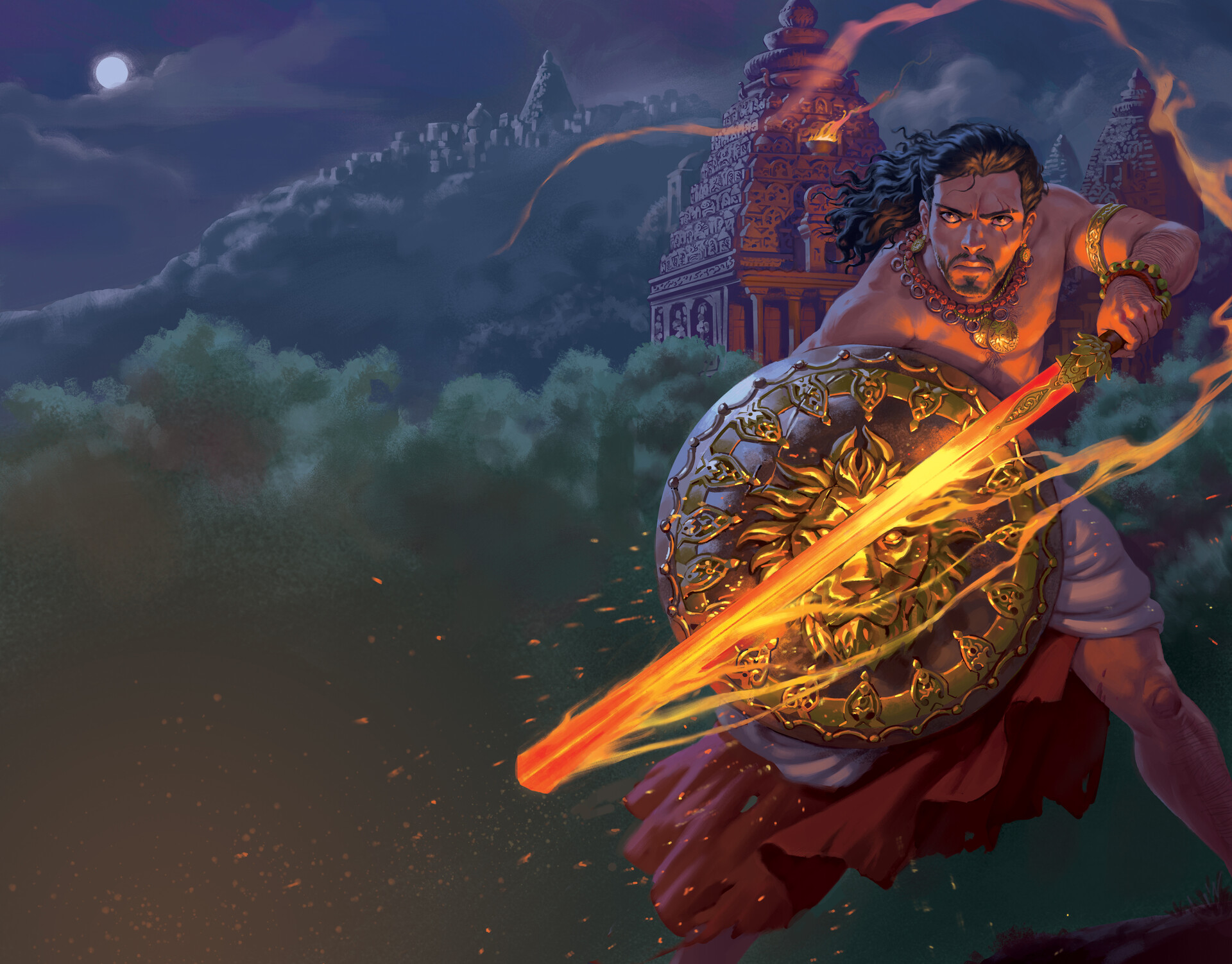
The World's Tail
"In the First Age, they deemed war too costly to truly be worth the gain. However, that didn't stop them from falling into its clutches. No, the First Age was too smart for their own good. They instead made machines, constructs, golems, abominations of metal and magic to do the sacrificing for them. When their service was done and over, their reward was to be dissasembled and trashed at the tail end of the world. This is loyalty's price."
Separated from the Golden Yaundego's cursed land by an ocean, this miniscule region of the world is often overlooked and has been overlooked by both the inhabitants of the First and modern Second Age. Home to warforged and constructs of the First Age, both broken down and still living, these lands carry a broken and fractured history of the world that is rarely available elsewhere.
Climate and Geography
This region is a chain of various islands that become more and more forested, verdant, and wet the further away from the mainland each island gets. Coastlines of smooth sand and jagged volcanic rock exist nearly side by side, whereas further in dense vegetation lays its claim to the surface of the islands. However, that is where natural landscape ends and more anomalous features show their faces.
Green vegetation rules over all, sinking into the deep, rich soils -that much is assured on most of these islands. However, perceptive spelunkers, junkers, and scrappers may recognize the unmistakable luster of metal and old machinery making up some of the floor of these islands. Mountains are not made of earth and stone, but are heaps of ancient trash and broken trinkets, machines, and all other manner of First Age refuse covered in a thin veneer of dirt. Whereas, in the north, The Frost is seen as a graveyard of First Age artifacts of great potential, the World's End seemed to have been one massive landfill of near useless or common rubbish.
Ponds, lakes, and streams are laced with unknown particulates that trace earth and stone around them with reddish hues of rust and mineral. Underground caverns and pits expose inner, ancient pipework systems and old cogwork in some places, while in other more deserted places it just shows layers upon layers of scrap metal and trash.
Lifestyle
Scrappers may have a field day with the spare metal, however no such society of junkers has formed in this desolate part of the world. Food that grows is laced with dangerous particulates, and the water is highly toxic and full of unsafe minerals and First Age chemicals. The natural plant-life seems to thrive just the same, but typical humanoid settling is near impossible here. However, that does not mean no civilization has sprung forth from these tropical, half-artifical islands.
Warforged seem to make this place their home, not completely voluntarily however. Not all warforged who still exist come from the World's Tail, that is true, however in the First Age most of them were decommissioned and left here to rust and rot. It seems as though, with time, some have awakened into this new world. Rarely do they have clear memories -if they have any at all- and their skills have waned to the point of non-existience. Original personalities have gained quirks or been upended completely, wear and tear changed has compromised their identity. However, it seems communities of "Cog-Walkers" -a name given to warforged who hail from the World's Tail specifically- have formed, with different societies banding together as they share the same build and original function.
Most Cog-Walkers are plagued by dreams of past excellence. Of better times, where wear and tear didn't claw at their bodies and their minds had a singular purpose. Due to this, Cog-Walkers seem to carry forms of dysphoria and self-loathing at their current state.
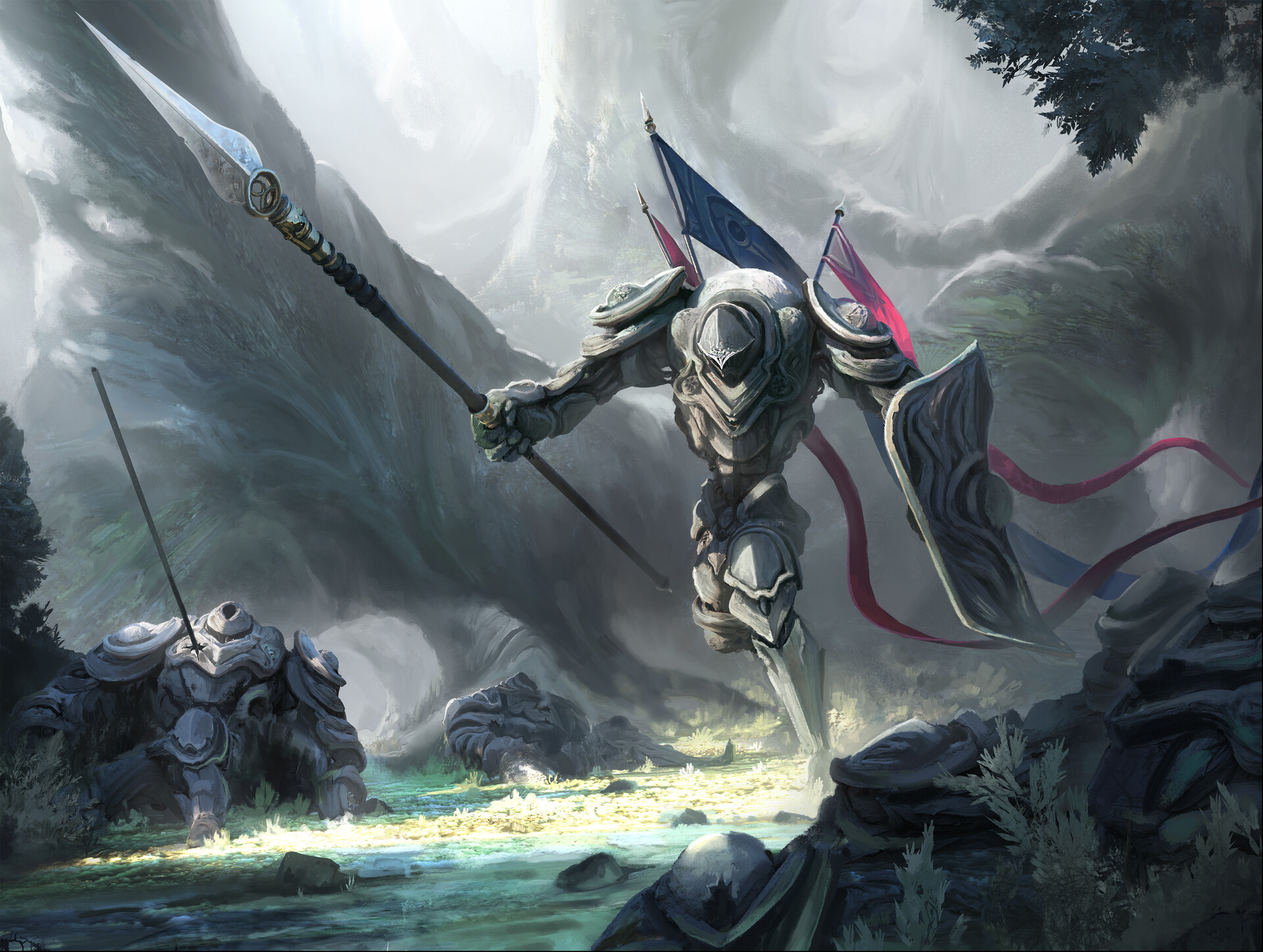
Cog-Walkers that seemed to have been built for digging and excavation stick with others of the same form, finding comradery and bonding over their shared traits. Those with weapons and explicitly thick plating will come together, forming communities selling out their expertise to more meek and clandestine Cog-Walker societies.
A Metal Masquerade
Of Cog-Walkers, and many other warforged who faintly remember better days, there is a widespread and collective diaspora. A lack of identity and home plagues those of metal and magic, and sometimes the affliction is so viruelent and devastating to the individual that it sheds them of all compassion, hope, and energy. These "husks" are dangerous and hyper violent enemies to all living beings who have delved fully into insanity and despair -no longer their original selves, and rarely having the capability to come back fully from their madness. They fight without inhibition and with a lack of fear for pain or death, and sometimes are able to utilize weaponry or once hidden tools within their bodies that might have otherwise been unknown to the individual.
To Cog-Walkers, this is a total "ego-death" and utter loss of personality and free-will, aspects that they hold dearly knowing their ancestors (which are essentially themselves) had lacked them. Since Cog-Walkers, if maintained properly, are functionally immortal, this is their ultimate fear -just as normal death would be to most mortals. To avoid this ego-death, they fill their lives with purpose, travel, growth, and adventure. They seek to find and cultivate an identity for themselves in the hopes it will prevent themselves from becoming husk-like, and potentially harming others in their madness. It doesn't help that, even though all warforged are mostly devoid of pain, Cog-Walkers experience a manner of discomfort and aging that gives them a simulated feeling of exhaustion, joint pain, and burn out; most of times, however, this can be avoided with proper distraction and upkeep.
The Forge Heart
Upon the smallest and last island of the World's Tail, practically making up the entire island, is a supermassive volcano. However, upon closer inspection, this is no normal volcano but rather an artificial mountain of metal scrap and forlorn earth blanketing the entire structure.
However, upon reaching the zenith of this mountain, the top would instead open up to a massive caldera spewing forth choking smoke and soot. Deeper within lies a pit of molten metal and superheated plasma. From where, whenever warforged has decided they wish to move on, or are too damaged to continue living on, some choose to instead have a trusted friend take them to The Forge Heart. Once having reached there, and ceremonies completed and goodbyes given, these warforged take the plunge and assimilate themselves with the molten metal.
However, its also seen as a sort of rebirth. For, while no warforged knows the secrets to making more of themselves, trained smiths take some of the molten metal to create all manner of artifacts out of the bodies of their kin. To them, it continues their story, but keeps their peace.
Cog-Walkers are notorious for having functional, yet decrepit, bodies -symbolic of their race-wide dysphoria. Exposed pipe and clockwork, worn aesthetic plating, and partially rusted features are all common.

Mycelia
"You could not kill me in a way that matters..."
A mysterious land with an ecology alien to that of the rest of the world, with landscapes so vividly whimsical and askew in fantastical colors. Mycelia is a massive landform, mostly uniform in its signature coloration and ecology. The land's ecology is dominated by fungal lifeforms that mostly grow to immense sizes and live amongst standard plant and animal life as giants. Few "standard" humanoid races live here, instead the land itself is dominated by magical races that reflect the strange cycle of nature present there. However vague and obscure the origins of this strange land are, clearly the entire land was formed by immense examples of violence and destruction; such aspects and qualities still remain to have a grip upon this land's inhabitants too.
Climate and Geography
This land is generally cold and oftentimes wet from common rains, although summers are uncharacteristically hot for this land's general lower equatorial position. It is large enough to carry deviations from that general rule, but oftentimes follows it relatively consistently. The flash of heat in the summer and, more importantly, wet nature allows for decay and decomposition of organic matter to set in quickly, feeding the generally dominant fungal life in the area. Though rains are indeed common, with wetlands a commonality among the landscapes, some large "tree fungi" seem to do an adequate job of absorbing uncountable gallons of overflow and prevent the region itself from becoming a massive floodlands.
Fungal life seems to, on a large scale, have replace traditional arboreal lifeforms. Massive mushrooms for trees, colorful mushrooms for blooming flowers, and more. However, purple, blue, and green grasses and other "true" plantlife still prove to cling to the land, changed by its anomalous nature.
Creating breaks between these forests are mountains and stone-ridden landscapes made of crystal and rock. Massive mountains made of a nearly opaque crystalline material form rings around large, country-sized craters that dot the landscape. Within these craters is another strange biosphere, with its own unique ecology where crystal and silicon-based life has replace traditional flora and fauna. Large trees of multicolored crystal shards, rivers of mineral laced water, an oddly smooth stone floor, and hulking creatures made of rough rock and stone are a common sight amongst these craters.
These two biospheres are completely separate from each other, although they share the same home region. Mycelia, which is the name given to the land of fungi, never touches nor shares land with the ecologies of the Silocaunum, which is the name given to the land of crystal and rock. However, it is a reason of bias (that being survivor's bias) that the entire region is simply given the name Mycelia, since few -to no- sentient creatures have ever ventured into the Silocaunum and returned; this is both due to the inherent danger and inhospitality of the land, which is a wasteland for organic creatures, and the fact that the mountainous land borders create a practically impassible obstacle. Since it is a land no one visits, it is often ignored albeit with some exceptional curiosities born by brazen and foolish scholars.
Lifestyle
The inhabitants of this land, though alien in form to the rest of the world, live out lives with similar obstacles and triumphs to the rest of the world. The dominant race, a peoples called the Fumigaul, live out their lives in search of survival and, once thats accomplished, a purpose to live for.
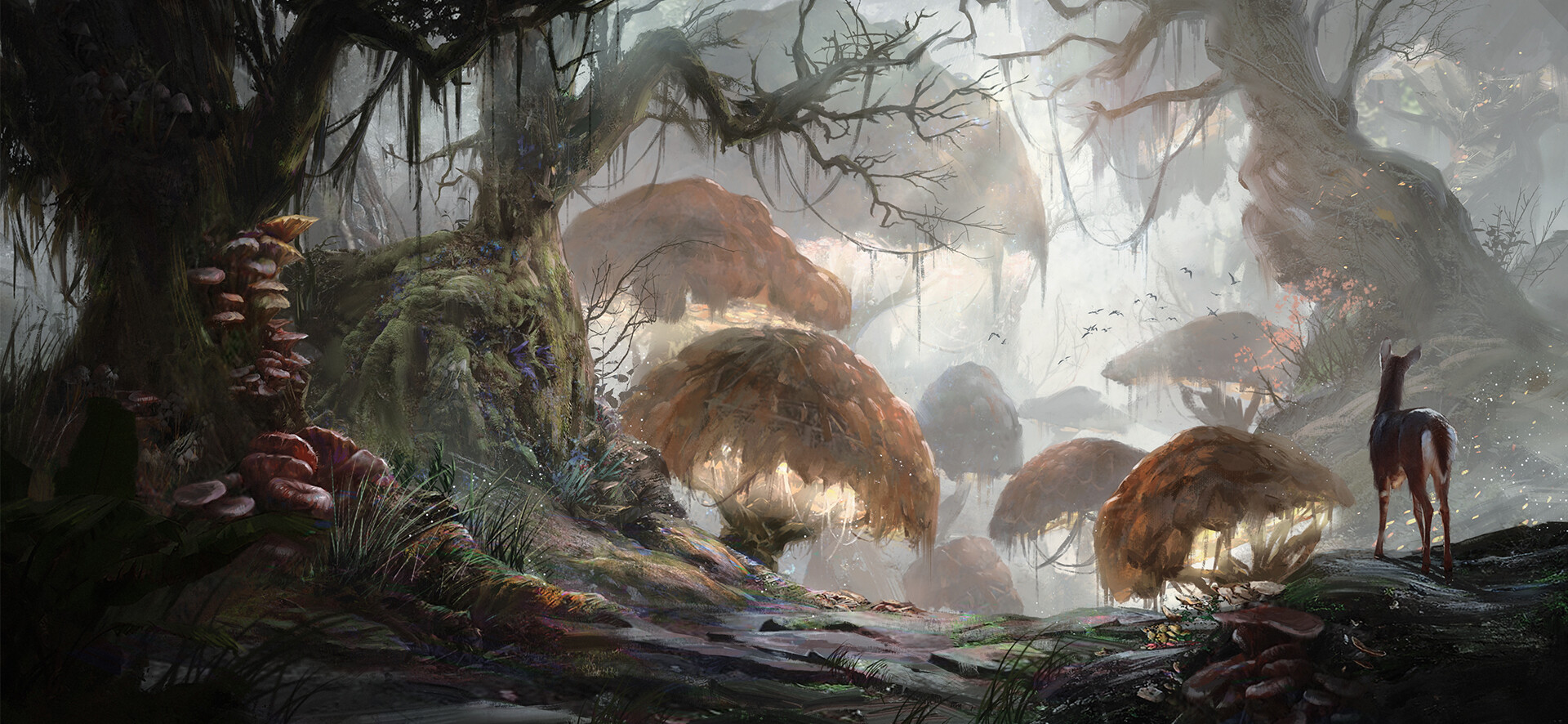
Large and massive mushrooms are hewn down, split, and sawed into fibrous planks for building houses with, animals are hunted for meat and whatever can't be eaten is used to grow edible mushrooms, fish are caught and treated as a delicacy to the fumigaul, and precious ore and stone is mined out from natural pits and cave systems or dug out mineshafts. From a surface level, although warped, the day to day life and tasks of this fungal land mimics the standard labors of agricultural, architectural, and other efforts in more familiar landscapes.
However, where the similarities end, is the mindsets of these separated and isolated towns and villages. Rarely, if ever, collecting into large cities, these people generally prefer simpler bucolic lifestyles within countryside settlements. It reflects most fumigauls outward serene nature, as they have ample chance to enjoy their contemplative surroundings; it also reflects, more subtly, their true inner restlessness, as hard labor and easily attainable purpose can be found in the country life. This sense of restlessness, that is often hidden beneath a veneer of calm, serene grace and dignity (though there can be exceptions), oftentimes twists into a lust for battle as well. A dignified (or sometimes undignified and barbaric) warrior culture that promotes skillful martial prowess. This restlessness and passion for combat often takes the fumigaul into outward world, where some return home with skill and wisdom in spades or not at all -both paths, however, bring honor to their name.
Battle Born, but not Blood Drunk
Unlike the inhabitants of Gonheim, or the marine lizardfolk communities upon the Salt Plains, these warrior culture present within these lands doesn't typically demand bloodshed or death. So long as there is battle wherein all individuals are sufficiently challenged and face consequence upon defeat, it is enough to satiate their pride and passion. This does not mean fumigaul culture is pacifistic -with an albeit cruel twist- as many of these warriors are trained to kill, but it does mean mercy is considered amongst a warrior's many armaments.
Bane to the Otherworldly
Strangely enough, even for the most calm and level headed of the fumigaul, once the prospect of felling demons, devils, or fiends of any kind comes into the picture, most would immediately be on board. To the fumigaul, fiends (and the extraplanar, for that fashion) defy death and decay, since their bodies leave behind little remains. However, most still remain to feast on the land's bounties, taking away from the collective decomposition. This is an abhorrence, to most fumigaul, who depend upon the fragile existence of decay to live their lives.
Many make their careers in fiend slaying, or hunters of the extraplanar and supernatural. This doesn't inherently mean, however, that these fumigauls carry divine or magical skills like clerics or paladins. They'd see such powers and talents as useful, although not required for a warrior to strike down their enemy.
Whimsical Whereabouts
The inhabitants of the land itself, and strangers visiting Mycelia, come to undergo a shift in their perception, it seems. Those that live here give vivid descriptions of a twilight sky, berefit of total darkness for its multitude of stars and swirling galaxies that provide immense light. Color seems to be more fluid and vibrant, food looks slightly better, and the night and darkness of the forest canopy doesn't seem entirely as scary as one might think. Travelers remark that, but miles behind them, they left a world much different than the one they entered. Perhaps it is the result of fey influence from the Planar Divide? Or some inherent magical influence from the First Age, much like the enchantment within the Golden Yaundego?
Perhaps, from afar, they could pass as stalky humanoids. However, up close, the fumigaul's utterly alien form earns them an amount of fear and distrust in lands outside of Mycelia.

Chapter Three: The Divine Decision
"The death of the old gods -The First- seems to have destroyed the walls and barriers of the past. No longer is religion and faith so easily defined. A demon to you, is an angel to us. An afterlife for you, is a depiction of hell for us..."
"But truth is relative to the culture, yes? Were we to wipe you from the earth, turn your heaven into a hell and your angels into demons, what would stop us from marking our place as rightful prophets and saviors, and you as fiends and scapegoats? Yes..yes I would like that very much."
-Svenon the Defiler. Prophet of the Ardent Prayer
The gods of old, dubbed The First in the modern age, may be dead, but religion and outlets of faith are alive and well, albeit scattered and in typically small. Isolation -adherence to the Dark Forest theory- has given many cultures and peoples chances to form their own traditions and religious ideals and faiths, each different and unique to their neighbors. The "truth" and validity of such religions are often obscure and hard to pin down, since divine power is no longer an absolute signal of an equally divine patron and is widely difficult to even obtain. Sometimes religions could even be usurped or warped by an outside influence -such as the influence of a conqueror or an entity surmising to be a god- and become a faith otherwise alien to those from the First Age.
Sometimes faith isn't even a matter of cultures or collections of individuals forming something out of belief and feats of imagination. Rather, it can be an aspect of solely personal ideals and zeal towards a certain goal or ideal state of being and mind. One may call this a faith of philosophy, but there is no genuine distinction made towards it being different than collective cults and faiths within the world.
Devotion and Oaths
Although some powerful entities remain to spare some meager amount of clerical power unto a promising acolyte, they are few and far between. Most, if not all current divine casters within the world achieve their power through a manner of passion. Clerics receive power on their own standing, because they believe in an aspect so fervently and so zealously that their very soul and spirit beseeches the ether and reaches the Godsworn Veil to borrow power from. As such, clerical faiths can evolve and change because of the fluidity of belief and faith, and can even break with time resulting in full loss of power for the cleric.
Oaths of paladins and other promises made towards faith have a similar relationship with passion granting power, but it is more orderly and admittedly never truly had relied upon devotion to a god in the past. Oaths are less flexible, and demand total adherence to a set path. The paths themselves are not discovered either, but made through the actions and set definitions of morals and ideals of a wider goal.
Sworn to these clearly defined goals, failure to adhere to them results in a whiplash of negative energy as their source of power is severed violently and those clearly defined ideals crash down like stone bricks upon a glass floor; the result of the aftermath is an Oathbreaker, a wielder of negative energy and traitor to defined aspects and qualities of the natural and man made world. Some Oathbreakers, in a twisted sense of truth, see this as a genuine path to follow and denote the process as a ritual to become a wielder of these warped energies.
Aasimar and "Wielders"
Aasimar, in the past, were blessed-folk or children of blessed bloodlines. Those who harbored within them a divine host and kept a clandestine guardian angel to guide them and help them grow while also acting in the service of a higher power and end goal. Though the "higher power" part may no longer apply, little else has changed. Except for the fact that, with no gods around to grant aasimar-hood to mortals, those that do exist only do so because of exceptional luck or that their lives are intertwined within fate's coils.
When the gods were killed and shattered into uncountably numbered shards, some splintered off and hid themselves (or violently landed within) the bodies of mortals and other living creatures. Not all who faced this fate became aasimar (but certainly were changed). Only those who harbored more powerful shards, ones that could hide even within the soul itself, would create bloodlines able to produce aasimar; even then, the shard could itself remain dormant within the soul and lead to an otherwise mundane child.
Some more influential and wealthy individuals sometimes seek shards out for the express purpose of creating a divine bloodline, for any number of reasons. Artificially implanting the shard within themselves to create a bloodline of potentially god-like children; however, this artificial process can oftentimes leads to the unwitting creation of Fallen Aasimar, which more often than not vilifies the bloodline rather than deifies it.
Wielders, on the other hand, are otherwise mundane people who have lesser shards within them, passed down by bloodline or acquired by chance. These "Wielders" sometimes exhibit little to no power at all -apart from perhaps cultivating unique features similar to the god shard they carry- and pass them on to their progeny without so much as a second thought. Other times, the shard can grant them power without them even being a divine caster -such as in cases of a child being a Divine Soul Sorcerer or a person learning the occult powers as a Celestial Warlock.
Witches and Warlocks
Occult power has changed -or at least the methods on how to grasp it- have changed little throughout the era. There are chances in which divine power can supplement occult learning, such as the method mentioned in Aasimar and "Wielders" above, however the two are more often opposites of each other than related in any way.
However, there are remnant quasi-divine beings that offer and are, themselves, masters of true occult power. Beings such as the Dark Fathers (see below) or the Pure Matron (see pg. 23) can offer power in return for patronage to any willing (or unwilling sometimes) warlocks. Once more, however, occult power will usually be in contest against divine power more often than not.
Patron Versatility
A powerful devil trapped under ever-snow, a remnant machine or entity of the First Age, a newborn power trying to manifest itself into the world; all of these are lore friendly examples of potential warlock patrons. Due to the intentional nature of the setting, a player can work with their DM on making a completely unique patron fitting for their character and aesthetic if the established lore examples do no intrigue them.
The Dark Fathers
"I'd taken most gods and demons with suspicion and doubt; most were figments of tribes and lonely town's imaginations. As soon as you left that place, the stories would change. But, everywhere I went, everywhere I studied, they were there. Cloaked men of baleful visages, some pale and hauntingly beautiful, most hollow of heart and slick with dust. The Dark Fathers are real, and so is their claim upon us all."
-Ansello Lor'Cellone, Oathbreaker and Traitor to the United Church
Some question what happens to the immortal soul upon death -that is, for scholars who believe mortals have them, or that they are real at all. Many would reluctantly suggest that the Godsworn Veil traps all souls within the Material Plane, denying us of a true heaven but also a true hell; others would say the Godswron Veil acts as a gate, where the overdeity made it so mortal souls can travel beyond it and seek rest or repentance.
However, very few question the act of death itself. A few would believe the soul itself knows the direction to its proper resting place, but the many speak of dark shepherds who take in souls according to their final acts in life. These shepherds are called the Dark Fathers, and for better or worse many people believe they hold claim to all expired mortal souls, guiding them to their afterlife or using them for their own gain.
The Beneficent and the Maleficent
The Dark Fathers, though sharing the same name, are split between two different groups. The Beneficent, those that claim dominion over mortals who died in virtuous, heroic, or otherwise "good" manners. The other half, the Maleficent, are those that claim ownership over souls of mortals who died in pain, despair, loneliness, or who were overwhelmed by chaos and ill intent in their final moments.
Each Dark Father represents a different aspect of mortal life and mortal qualities, with each quality having both a radiant mirror and a dark shadow attached to them.
-
Beneficent: Courage (STR), Grace (DEX), Vigilance (CON), Creativity (INT), Comfort (WIS), Beauty (CHA)
-
Maleficent: Rampage (STR), Shadow (DEX), Savagery (CON), Conspiracy (INT), Madness (WIS), Poison (CHA)
They hold no power over the aspect they represent; they cannot change it at their whims nor can they take it away. They do hold power over those who embody their aspects in death, although are not omnipresent it seems and take hold only onto the unlucky (or lucky) few. It is said, by many cultures, that if approached by any Dark Father, one can choose to go willingly or fight an uphill battle of wills against their reaper. What the Dark Fathers do with these souls, is rarely known, but there are some examples of their servants within the world attesting to some instances.
Servants of Courage have explained they had shown valor and bravery were approached as equals when they had passed on, chosen to continue to inspire such aspects. Servants of Rampage were the perpetrators of violent slaughter who died during the act -or even the victims themselves- who were brought back at a cost to continue the slaughter and carnage. Both servants were brought back from death (or possibly just from the brink), but owe an intense and identity consuming fealty to their respective Dark Fathers. So much so that many people question the voluntary nature of these servants.

Chapter Four: Character Creation
The first steps to making an impact upon the world of Fel'lonia (or at the very least, the story of it) is attaching a character to the lore of the world. However, keep in mind that much of the lore and the setting itself is intentionally made obscure and vague through forgotten history, undefined yet ever-present magics, and exceptional circumstances. Though there are some constants and rules that remain, the diversity of character builds and archetypes that can exist within one party can be staggering (to the point where it may even be jolting if no coordination is made between the party).
It should be noted that this chapter, out of all of them, can be ignored at the player's discretion. Any lists and tables provided, as well as any guidance, can be selectively picked or done so at random.
Class
A character's class dictates a sizable portion of their identity -albeit different classes affect it in different ways and to different amounts. A fighter can take on any historical warrior as its design and archetype, but usually can't taper outside a skilled and tough warrior. A wizard can specialize into various schools, but is typically an intelligent character (with or without wisdom to spare) that struggles with social cues. You can work with your DM to try and break free of these molds, or work to highlight them. Here are some tables that give examples of potential characters with different classes.
Despite the world's issues, children are still born, the lonely find love and lose it, childhoods can be adventures, towns are built, and marriages flourish.
| d6 | You are... (Fighter) |
|---|---|
| 1 | A warforged from the First Age, still proficient in combat, roaming the world looking for purpose. |
| 2 | A disgraced warrior-pilgrim, who was not worthy of faith and found wanting, cast out from the Dust Basin. |
| 3 | A member of your town's militia who fell asleep on watch, and woke up to the sounds of your home burning. |
| 4 | A conscripted soldier in a tyrant's army, who committed malign acts to earn your freedom. |
| 5 | A prodigy student trained in combat at a fortress hamlet, envied and betrayed by fellow students and friends. |
| 6 | A retired warrior of a brutal khan from Svinéad, seeking peace from the haunting ghosts of those you've slain |
| d6 | You are... (Ranger) |
|---|---|
| 1 | A bounty hunter, who has run out of traditional prey, and seeks a more unique hunt |
| 2 | An archer, from Kys'Koa whose aim is blessed by the Kys Tree itself, infusing magic within each shot |
| 3 | A hunter, who accidentally lead a dangerous beast back to your home and now promises to rid the world of them |
| 4 | A scout for a roaming mercenary band, who left after the band's descent into greed, violence, and recklessness |
| 5 | A self proclaimed anti-slaver, who hunts down slavers at the edge of The Frost, who now takes their career to the wider world |
| 6 | A far wanderer, who searches the realms for left over planar influence to banish or secure. |

| d6 | You are... (Barbarian) |
|---|---|
| 1 | A championed warrior of your clan, who lost a crucial battle and was cast out in order to cleanse your shame. |
| 2 | A member of a destroyed tribe, whose ancestor spirits drive you into bouts of powerful rage in order to avenge them. |
| 3 | A gladiator who escaped confinement after killing the guards, who struggles to live without chains. |
| 4 | An ancient warrior of the First Age without memory, free of your entombment in ever-snow and not a day older than when you asleep. |
| 5 | An outlander from the Frost, once content to fight and hunt but now burdened by gnawing unmet ambitions |
| 6 | An ex-enforcer for a group of bandits, who corralled the crew and crushed rebellions until the leader died and you were forced to flee |
| d6 | You are... (Rogue) |
|---|---|
| 1 | A simple pickpocket and pauper, who stole from your home's meager stock and was exiled in punishment |
| 2 | A cunning thrill seeker, whose thirst for danger ruined the lives of many and ended the lives of those you loved |
| 3 | An assassin for your home's cult, raised and trained to explicitly hunt down your following's enemies |
| 4 | A self-proclaimed detective, who travels from town to town solving crimes and dispensing a subtle justice |
| 5 | A treasure hunter with a weakness for gold and gems, now cursed by an artifact they can't seem to throw away |
| 6 | A rebellious insurgent, whose non-comformist attitude made them resist their feudal lord and pay a heavy price |
| d6 | You are... (Sorcerer) |
|---|---|
| 1 | A prodigy child born with miracle powers, who lived amongst envious peers and suffered a poor home life before fleeing. |
| 2 | A clandestine sorcerer, hiding within a society that fears and hunts them down now on the run from a relentless pursuer. |
| 3 | A hag's ill-born child, conceived from malignant ritual and born of a human mother only to be taken come your 13th year. |
| 4 | A reincarnation of a powerful individual, born to demanding parents and a society with unmeetable expectations. |
| 5 | A hermit from the Golden Yaundego, infused with magical spirit from the land's enchanting influence |
| 6 | A mage born with draconic heritage, determined to uncover the secrets of your broken heritage |
| d6 | You are... (Bard) |
|---|---|
| 1 | A schooled historian, once intent upon recovering the secrets of the First Age but loosed a destructive ancient force in the process. |
| 2 | A thirdborn noble cared little by their peers and parents, who set out to sing their name and make themself known. |
| 3 | A minstrel who uncovered an artifact of the First Age and tried to share it, but hunted for its power or because many people believed you tried to swindle them. |
| 4 | An artist whose magical and enchanting works quite literally came to life and harmed innocents, causing you to flee. |
| 5 | A revolutionary who inspires people to overthrow their tyrants wherever they travel, on the run from your many, many enemies. |
| 6 | A storyteller who fabricated a "perfect paradise" for people to escape to for whatever reason, who unwittingly idolized this fabrication and now searches for a "promised land." |
| d6 | You are... (Paladin) |
|---|---|
| 1 | A paladin taking their first steps on the path, who constantly is given advice from a scheming -albeit useful- impish creature. |
| 2 | A warrior who combined their holy oath with their matrimonial oath, forever loyal to their spouse; a powerful extraplanar creature. |
| 3 | A preserved guardsman from the First Age who made an oath to a now forgotten crown, struggling to reclaim their memories and their purpose. |
| 4 | The progeny to a long gone blessed bloodline, leaving your old life on a whim to go on a journey in order to realize your own potential. |
| 5 | An einherjar or a valkyrie from Visinheim, walking the realm in order to combat all manner of dangerous foe. |
| 6 | A paladin who follows an ancient First Age path, unaware of the truth of its origin, making, and meaning. |
| d6 | You are... (Wizard) |
|---|---|
| 1 | A young scholar who, in your curiosity, had marked yourself with a magical consumptive curse from a First Age artifact. |
| 2 | An archaeologist who uncovered an ancient spellbook in the field. You swear you hear its original author whisper advice and lessons into your dreams. |
| 3 | An occultist who used arcane powers to supplement magic your cult or circle didn't provide, until you were casted out as a heretic. |
| 4 | A merchant by trade who trades trinkets not for gold, but for magical tomes and tinctures in hope to make their own magical items business one day. |
| 5 | A mage from The Frost, descending to the world below in order to find a spell or artifact that can repair your malfunctioning sanctuary. |
| 6 | A peasant or serf who didn't understand the books you read were tomes of magic, not until you had cast a wild spell upon their sovereign. |
| d6 | You are... (Cleric) |
|---|---|
| 1 | An acolyte born into an unwanted faith who found a new, more beloved, religion, but was exiled and on the run for your apostasy. |
| 2 | An apostate, trying to become a new -and first- deity in the Second Age, but such ambitions have attracted much unwanted attention. |
| 3 | A wanderer who came into the possession of a holy relic, which grants guidance in a manner similar to a guardian angel. |
| 4 | An exiled priest of a faith from Alkana that served to endorse your city's sovereign, exiled once the people rebelled and burned your church down. |
| 5 | A Wielder of an unknown god shard, determined to understand the origins (if only that) of the power hidden within yourself. |
| 6 | A follower of the United Church, disillusioned of your church's ways but still a believer in Tora's divinity. |
| d6 | You are... (Monk) |
|---|---|
| 1 | A rather poor wanderer who still wanted to make a life as a warrior, training yourself in the monastic arts of hand to hand combat. |
| 2 | A sworn pacifist that conflicts with your zealous nature, finding purpose in preserving the lost sense of collective spirituality in the world. |
| 3 | A saboteur and espionage artist, selling your skills to whomever wants to ruin their rivals, be they singular individuals or entire settlements. |
| 4 | A martial artist trained within a hidden monastery, adopted there after your real home was violently conquered by another, stronger settlement. |
| 5 | A denizen of Mycelia, sworn to uphold the natural cycle of life, death, and rebirth through a closed fist. |
| 6 | A spiritualist who seeks communion and traversal of the outside planes, seeking to train yourself in order to project your consciousness outwards. |
| d6 | You are... (Artificer) |
|---|---|
| 1 | An amateur tinkerer accused of black magics when you had shown your works off to your superstitious village. |
| 2 | An physician who slowly taught themselves scraps of First Age medicine to save someone you loved, despite your failure you still found a passion in it. |
| 3 | A brilliant engineer who was conscripted to make weapons for a hegemonic tyrant, feeling remorse you escape to one day turn these weapons back on them. |
| 4 | A village smith who, out of spite for your rivals, worked First Age materials into your works, now you are on the run from powerful individuals who want your talent. |
| 5 | A, or were, a child cursed by a magical artifact, allowing you to slowly understand First Age technology but leaving you slightly neurotic. |
| 6 | Born, not by natural means, but through long abandoned First Age machines, left alone in a regressed world you know nothing about armed only with technical knowhow. |
| d6 | You are... (Druid) |
|---|---|
| 1 | An outlander exiled from your circle, due to your constant attempts to affiliate yourself with the civilized -though separated- world. |
| 2 | A pariah among your clan who burned down a sacred grove after finding a corrupting force, now on the search for forgiveness for this conflicting act. |
| 3 | A lone shepherd once content to tend to your flock and any animal who wished upon you, until a beast from the First Age ruined everything for you. |
| 4 | A shaman from the Heart Garden, longing for magics to turn your land into a more gentle and generous font of nature. |
| 5 | A soothsayer who lost their potential for foresight, constantly paranoid without a glimpse into your own future you set out to conquer your fears. |
| 6 | A farmer who survived harsh years only through druidic magics, however when you shared it with your neighbors they grew jealous and fearful of you. |
| d6 | You are... (Warlock) |
|---|---|
| 1 | A novice to occult magicss and the only one to be "blessed" by your circle's lord, exiled out of jealousy (or fear) by your leader. |
| 2 | A power hungry mage, who made a deal with a forlorn extraplanar entity in exchange for quick and easy magic. |
| 3 | A servant of one of the Dark Fathers, owing them a life debt and servitude beyond death in exchange for sparing you and your loved one's lives. |
| 4 | An adept mage seeking occult magics in order to undo the Godsworn veil itself, believing no one can go to their afterlives with it active. |
| 5 | A thirdborn child of a peasant family, who listened to a voice in your head telling them you can increase your family's station. |
| 6 | A witness to horrors beyond the Material Plane, too curious for your own good you contacted these beings. |
Multiclassing
Multiclassing is a subject matter that requires speaking to your DM with, more so about mechanical and balance factors rather than flavor (of which you will need to do the heavy lifting for). However, the typical norm for most DnD 5e games is two classes per one player character, anything beyond that point becoming at risk of being too unviable to keep up with the general progressive difficulty of a campaign; if you are concerned about falling into this trap, speak with your DM further about balancing issues.
Furthermore, multiclassing comes with an inherent backstory and character development demand. Depending on how many levels your character begins the campaign with, a player will need to incoporate proper reasoning for having multiple class levels in their backstory that the DM can clearly see and agree with. Additionally, during the game the player must properly develop their character in roleplay or beyond in order to reasonably multiclass into another class.
Chapter 5: The Campaign
"Its a rare place that makes itself well known through word alone in this world, yet Unity has done just that. A sparkling, warm hearth in a dark forest. All individuals with lesser and greater ambitions desire to see its gates, for the city is both a means to an end and a second chance to the beleaguered. The 'City of Second Chances', ensconced within the Lectvarius like an egg within its nest, had lain so close at hand."
"However, crossing the Trustlespine and making your pilgrimage proved unfortunate, for your capture by malicious dwarven hands could have signaled your end. Captured alongside other capable souls and sworn to slavery, ransom, or indoctrination -should you be a dwarf yourself- you must band together to escape to the world below."
"After such is done? The smart decision would be to band together for safety. However, who do you trust beyond yourselves? Do you trust Unity's steel champion and his blood-soaked past? Do you trust the democratic council he put into place? The city with its wavering morale in the face of its dwarven assailants? Or do you just want to go in, get your duty's done, and leave for the wider world?"
This chapter, and subsequent subsections, intend to provide a meta and lore-filled explanation for the campaign's beginning hook. Things such as character introduction, the initial "binding glue" of the party, and longer term character ambitions will all be covered here so players have a universal idea of what they are getting into.
The Lectvarian Wyrm
Cerulean scales, two-headed, ambitious, and patient, the "Sapphire Sovereign" was the name for a two-headed blue dragon who enslaved and ruled over the Lectvarius during the end of the Era of Dust and Dark and further. With vicious lizardfolk skirmishers, loyal dragonborn generals, and hobgoblin tax collectors, this two-headed dragon, named Vasakir, had a firm grip on an, admittedly, tiny empire (albeit in a world where empires were nonexistent).
To make matters worse, as opposed to many two-headed creatures who grow sick and weary of their forced company, the two heads upon the body of Vasakir saw each other as brothers. They treasured their company and conversation alongside their banter and arguments, and each other's advice was valued and held with great respect. One head would stay awake during odd hours so the other could sleep, eat, and relax without the pressure of vigilance, and the other would do the same later. Though different entities, only they knew each other's individual names and forced their servants to call them only by Vasakir. With such cooperative rulers, who only grew stronger with age, wiser with experience, and adaptive as their bond grew, little could resist them.
The hamlets, villages, and tribes below could do little to stop this monster infringing upon them. Not until they found someone, a mercenary, to rally behind as their fearless protector and invulnerable champion.
Damascus, The Steel Hand
Armed with a massive bardiche, strengthened by intense training, inured to fear through experience, and more than willing to fight for a decent price, Damascus is a prominent hero of the Lectvarius and a steel champion of what would become Unity. Seemingly, he is made of half human flesh and half steel (potentially, the reason for his name). Solid steel replaces his usual pale skin like vitiligo splotches, armoring him to his very core in those spots -a trait a warrior is most fortunate to have.
He organized many willing fighters with little to lose (which were in plenty), created scout companies and militias, bought out hobgoblin mercenary squads with gold and lizardfolk slaves with food, taught the basics of weapon smithing to those with the mind for it, and trained his small armies for a time in which they'd fight back against their dragon. He would call the warriors he trained the Stone Guard, for their duty would be to preserve their home until their traditions root themselves so deep they touch stone.
However, when the time came for the battle, it seemed as though some of Vasakir's own dragonborn quickly turned against him and fought his remnant armies alongside the rebelling soldiers -resentful of their master for kidnapping them from their home and taking them to a foreign land that despised them. While the Stone Guard and rebel dragonborn fought back against the dragon's army, Damascus himself was said to fight and kill the dragon. Surely, he did kill it, as he dragged back one of the severed heads as a trophy and proof of his duty and job done.

Unity, The City of Second Chances
The battle, though it may seemed to have been short, was only made possible through the sacrifice of all else. Able bodied men and women left their homes defenseless and to the mercy of the world in order to join the Stone Guard, leaving those they loved -those who surely wouldn't last- behind in order to make a better world. In addition, Vasakir and his loyal forces had personally made a business of pillaging and burning down entire villages to sate their lust for gold, trinkets, and essential resources.
When the battle was won, and a confused peace was found among the rebelling dragonborn and the Stone Guard, no one had a home to go back to. Surely there were still many settlements left, hidden within the forests or graced by a strange mercy, but they were isolated and would never accept these refugees. Aided by Damascus who was now heralded as a champion and leader (to only his reluctant acceptance), they decided to build a bustling city looking over the battlefield.
Unity, "The City of Second Chances", was built for the purposes of rebuilding the broken lives of the many refugees and victims of Vasakir's ambitions. However, Unity isn't fully excised from his empire, since they retain his aspects of taxes, organized government and armies, and a collective society. It opens its gates to those willing to leave their broken past behind, be they criminals or saints, and build a new life without any of the drama or noise of their past attached to them. To this day, word of its size, magnificence, and glory surrounding its founding have reached even to the ends of the earth.
Second chances, but for all?
Many people question the idea of allowing the dregs of other societies into their hard won homes, but typically they do appreciate the extra manpower and fresh blood. At most, these conflicts evolve into scuffles about property rights that are solved (or worsened) over a couple of drinks.
However, once rebelling dragonborn, lizardfolk, and hobgoblins found out about Damascus' aid to the Stone Guard, they went berserk and were widely reluctant and some even refused to be a part of Unity at all. Apparently, Damascus was -and to them, still is- an infamous Mount Raider, known for raiding, enslaving, and slaughtering his enemies with all the savagery that Mount Raiders are known for; it seems, as though, a lot of this maliciousness was directed towards these three races and even more by Damascus' old clan. Though the mass of Unity stood behind Damascus because of his hero status, no one could deny his Northern heritage nor how his muscled, athletic build is similar to many who spent their lives in the mountains. Damascus himself says little on these personal matters, saying himself too busy trying to drum up the idea of a central government and training men to care at all for rumors.
What can be said is that, in the entire world, few places will pride themselves so much on the idea of "second chances" as much as Unity does. However, many travelers agree that this generosity may be limited and temporary, and haste is demanded for those trying to find a new home within or without the city.
An Imperial Pinch
With the dragon gone, and with the remnants of his army leaving the peninsula, a new burgeoning rival reared its head. An expansionist, imperialist, resource hungry dwarven state, that hid within the mountains since the dragon's appearance, has started to take captives, slaves, and ransom from travelers that passed through their territory. In addition, they began to hew down entire forests, redirect rivers, and create quarries all over their territory in a noisome manner, all at the detriment of independent settlements around them (who surely were being harassed and pillaged all the while.) They call their state the Valorborne Dynasty and dwarves loyal to them are often called "Cavers" and earn a bad name for those of the same race all over the Lectvarius.
Increasing the stress on independent settlements, who continually opt for isolationism, is Unity's own interests branching out from itself. While they don't conquer or impede on anyone else -due to Unity's healthy respect for the Green End's dangers and independence- their calls for trade and diplomacy are very loud and have the habit of attracting ill intended groups to defenseless settlements. These two contesting powers reaching out to the world around them seem to create a tension and "pinch" effect on independent settlements in between the Trustlespine mountains and the Lectvarian coast.
A Zealous Affair
It is not just mundane politics that have made the Lectvarius more connected (and surely more chaotic) in its tensions, for many it is a religious and cultural matter as well. For one, the Valorborne Dynasty's resource hungry ways make them many enemies in the otherwise nature fearing land such as the Green End. Not only that, but they give their state-sanctioned cult free reign to collect tribute and sacrifices from those they can overpower. The Cult of the Copper Kiln endorses material wealth and encourages those without it to be loyal to those who do. At the center of its faith is a rapacious, flame obsessed, divine warrior-entity who takes what it wants by merit of strength and encourages its followers to do the same. The same entity seemingly retaught these dwarves the secrets to forging metal ever since the Great Three Divides, and they are ever so loyal to it because of that fact.
In contest to this, Unity has ties to the more subtle -yet not without its own flaws- Church of the United Faith, which offers its warriors and acolytes to aid in defense, medicine and healing, and preservation of Unity's unique history. The United Faith has a habit of siding with states with imperial ambitions, yet -being an egalitarian organization- it openly detests the Valorborne Dynasty's dwarf-only take on their society and the abject disdain they have for the other mortal races.
To make matters more chaotic, the Valorborne Dynasty and its elite caste have a habit of hoarding technologies and materials from the First Age. This has attracted many groups and circles who worship First Age technology and pragmatism, who commonly commit many wrongdoings in order to acquire these sacred relics.
Making your Character
This knowledge may seem overwhelming at first glance, make sure you take as much time to read and comfortably digest as much as you can. Ask your DM for clarification on any confusing topic or further inquiry into a topic you found interesting.
Knowing both the sufferings and salvations of the Lectvarius, when making your character you should incorporate multiple different aspects and ask yourself some questions. Below are some of those questions accompanied by tables that can help guide you if you are finding issues with developing answers.
- There is something, someone, or some aspect of Unity that has drawn your character to it. What is that?
| d4 | Motivation |
|---|---|
| 1 | Renown. I want to make a name for myself in and around the city, to increase my station or make myself into a notable individual. |
| 2 | Connection. There is a person that I must meet within the city, but their fame (or infamy) makes it difficult to see them. |
| 3 | Treasure. I am looking for an item important to me or my work, or just searching for treasure and wealth, that is hidden within the city. |
| 4 | Gamble. Simply with nowhere else to go, I'm making a gamble and investing my effort into Unity as a new home or base of operations. |
- What is your character's perception of Damascus, the city's champion and defender?
| d4 | Favor |
|---|---|
| 1 | Neutral. I recognize his importance and his background, but otherwise it does not concern me. |
| 2 | Favorable. He is a hero, or at least a warrior to be respected. His background is not for me to judge, nor has it affected me. |
| 3 | Unfavorable. He is a villain, or someone who deserves great disdain. He is not to be trusted and may have even done me a terrible misdeed. |
| 4 | Ignorant. I am unfamiliar or uncaring of Unity's background, and have no idea who the champion is. |
- How has your character made their way to the Lectvarius?
| d4 | Story |
|---|---|
| 1 | I walked, taking heed of professional guides or using my own survival skills to keep me steady. |
| 2 | Out of fortune (or misfortune) some magical spell or phenomena had transported me near to the peninsula. |
| 3 | I made my way by air, with the help of a flying creature or through a great air balloon. |
| 4 | I ended up here by random chance, and decided to jump on the opportunity when I found out where I was. |
- How was your character captured by the Valorborne Dynasty?
| d4 | Story |
|---|---|
| 1 | As I passed through the mountain valleys, I went off the beaten trail only to come upon a camp of dwarven soldiers who promptly arrested me. |
| 2 | I accidentally stepped onto sacred ground and interrupted an important ritual, and was taken by the dynasty's cult to be sacrificed. |
| 3 | The caravan or group I traveled with garnered a lot of attention, and I was captured while everyone else scattered and fled. |
| 4 | I was being actively tracked by them to begin with due to something I carry on me, or something I intend to do. |

Chapter 6: Homebrew
The following sections are completely optional and able to be skipped or read at one's leisure. They include additional subclasses and subrace options for players to use during character creation.
The following pages may not seem complete, polished, or currently be works in progress. However, if you come across a certain idea or creation that interests you, and is currently unfinished, unbalanced, or not entirely what you want, work with your DM to further add to it.
The Fumigaul
Fumigaul Traits
An enigmatic race of humanoids that take on the characteristics of various fungi species. On the outside they are depicted to have a serene, stoic grace that betrays their inner restlessness and drive for purpose. More about them can be found in Chapter Two: The Known World (page 42).
Ability Score Increase. Your Constitution increases by 2, and one other ability score of your choice increases by 1.
Age. Often the fumigaul tend to expire outside of natural means, due to the common call to lead dangerous lives. However, one meets maturity at around 15 years of age and theoretically can live for up to seven decades.
Alignment. The restless nature of a fumigaul tends to cause them to go down chaotic walks of life, however that is not a true reflection of their inner ideals and beliefs. Overall, a fumigaul tends to lean towards a neutral alignment.
Size. Fumigaul tend to be diverse in height and weight, the shortest among them reaching about four feet tall while the tallest reach around seven feet.
Speed. Your base walking speed is 30 feet.
Fungal Fortitude. Your innate physiology promotes strength against poison and pestilence. You have advantage on all saving throws made against being poisoned or diseased. You are also resistance to poison damage.
Skin of Spores. As a bonus action, you can create a hardened shell of spores and other fungal material for 1 minute. While this feature is active, your AC is equal to 13 + your Constitution modifier unless the armor you are currently wearing makes it higher. You can use this feature an amount of times equal to your proficiency modifier, regaining all expended uses on a long rest.
Decay's Doormate. Your kind stalk death, and decay follows your every step. Whenever you hit with an attack, you can also choose to expel necrotic spores that fly at that target and deal extra necrotic damage equal to 1d8 + your Constitution modifier.


The Khi'krinn
An insectoid race, unique to the Ant'thill hills of The Delta, which is made up of three distinguishably different subraces. Known for their instinctual distrustful ways, their close allies can attest to their gregarious nature once met with companionship and comfort.
Their past and origin is askew in mystery, but tells the story of a race victimized by greed, dark curiosities, and slavery. Theorized to be First Age creations, insects heavily mutated by unknowable magics, which were designed to be cheap replacements for workers and soldiers during the most intensive parts of the Great Divide and the wars that followed.
To mass produce these creatures, a "Queen" was created who would be able to birth these creatures. Given power and privilege by her creators, she constantly sated her dark curiosities by mutating her brood more and more to becoming more efficient, intelligent, and sapient through painful procedures and magics. Many would die under her experimentation, but she used pheromones and psionics to keep her subjects placid.
However, of those who survived these trials, and the generations that followed, a resistance to her poisons, psionics, and pheromones would be formed as these creatures slowly clamored for freedom under the thumb of their sovereign and the military industrial complex which pulled the strings and lorded over them both.
Sour-Tasting Freedom
The day of freedom came only when the world destroyed itself, and evaean dust sealed both the world and khi'krinn hearts in darkness and distrust. Their bodies were forever changed, but fortunately well accustomed to life belowground as it was aboveground. Though from the First Age, they retain nothing from it, not trusted with technology nor privy to any of its history; the only thing they did keep from it, their memories, they willingly repress and leave behind.
They live in underground nests with small, scattered populations that struggle to reproduce after the loss of their queen. They harvest mushrooms (which they find delectable) as a human does wheat, and hunt what monstrous beasts roam their land. They are preyed upon by the native Thri-keen population, which seek them out to feast on their eggs, young, and any resistance that builds up.
Distrustful Merchants
Most khi'krinn are distrustful, due to their past, but are naturally gregarious and see the act of trade and bartering as a rebellion against their former masters. They lead lives of craftmanship, and take pride in their creations. Practicing old arts of painting, carving, sculpting, and all other manner of trades, they seek to entice others with interesting trinkets, useful gear, and awe-inspiring art. Although, they find it difficult to locate willing and trusting buyers as well as allies who won't lash out at them in fear of their monstrous visages.
Khi'krinn Traits
Age. Khi'krinn usually live for almost a century. Reaching maturity at 20 years of age, after spending 6 months as a larva.
Ability Score Increase. Your Constitution score increases by 2.
Languages. You can read, write, and speak Common and any one language of your choice.
Lead Belly. You can safely eat rotten food, raw meat, and other substances otherwise dangerous for humanoid consumption due to natural toxins. Examples of edible foods include berries, mushrooms, and insects of the poisonous variety.
Resistant Biology. Evolved to resist the lure of enchantment and psionics, you have advantage on saving throws against being charmed or made frightened. Additionally, you have resistance to psychic damage.
Darkvision. Accustomed to the darkness of cave dwellings, you can see in dim light within 60 feet of you as if it were bright light, and in darkness as if it were dim light.
Subraces
The khi'krinn are divided into three different subraces, which all collectively serve to form the efficient and hardworking society that these creatures form.
Soldiers
Tall, intimidating, and bred to kill. Anyone with a sense of self preservation would have the hairs on the back of their neck stand should they lay their eyes upon this apex predator. A soldier usually stands at about 7 to 8 feet tall, but can even get up to 9 feet on uncommon occasions -usually through a painful mutation. They have a carapace-like structure around their body that resembles a thick human skeleton that carries strength behind it, with a massive plate of chitin where the ribcage would be.
A soldier, upon gaining consciousness, already has a drive to discipline itself and a talent for tools. This alone is barely more than a regular commoner, but when raised correctly it blooms into a burning passion to grow stronger and to become a better hunter. They also have the reasoning and logical skills to study the spellcasting at young ages. They focus on fire, to cook, and frost, to preserve; anything else is left to whims and their current living situation.
Each soldier understands their lot in life, and endeavor to put their personal biases, goals, ambitions, and ideals aside in defense of the colony. Only the most ingrained desires and ideals remain when they act in defense of their colony, these are the traits that distinguish them from slaves.
Soldier Traits
In addition to the Khi'krinn traits given beforehand.
Alignment. Being the hunters or law enforcers of their race, they tend to have a sense of purpose in protection. Thus being lawful creatures.
Speed. Your base walking speed is 30ft.
Ability Score Increase. You can choose either for your Intelligence, Strength, or Dexterity score to increase by 1.
Size. Soldiers range from 7 to 9 feet tall and weight about 190 lbs to 250 lbs, you are considered a medium creature.
Menacing. You gain proficiency in the Intimidation skill.
Ferocious Instinct. The scent and sight of blood can draw you into a frenzy. Once per turn, whenever you attack and hit a creature that does not have all its hit points, you can deal an extra 1d4 damage. Additionally, whenever you suffer a critical hit the damage die increases to a 1d8 until the end of your next turn.
Scouts
Almost completely opposite of the Soldier, fragile, small, and having an almost bumblebee like cuteness, there doesn't seem to much to the Scouts of the Khi'krinn. However, that is an assumption most make at their peril should they find an enemy in one. Scouts are immensely brave when it counts, and it would make sense due to their old line of work. Meant for the front lines of First Age warfare, their sense of fear is suppressed and often underdeveloped.
Looking from the backside of scouts, they look to have no features other than two reflective carapace plates that hide their wings, which take up the entirety of their back. From the front side however they look to be rotund creatures with two large dotted eyes and a fur-like hair on their body the provides warmth and insulation in the skies. Their arms and legs keep the bony and chitinous form that is uniform for their race, complete with five thin fingers.
To a scout, meeting enemies and resistance on the path of life doesn't mean that they are doing something wrong. It means they are going the right direction, and others are just jealous of that. Take it either as stubbornness or determination common in smaller races, it's a pride that all members of this subrace keep.
Scout Traits
In addition to the Khi'krinn traits given beforehand.
Alignment. Due to their constant search for danger they shift towards being chaotic creatures. Specifically chaotic neutral, as they hold their personal freedoms paramount.
Speed. You have a 40ft base walking speed, able to rapidly skitter place to place.
Air Glide. You use your wings to slow your fall or allow yourself to glide. When you fall and are not incapacitated, you can subtract up to 100 feet from your fall when calculating your fall damage and can move horizontally 2 feet for every 1 foot you fall.
Size. Scouts usually always come 3 feet tall, but from time to time can be smaller at 2 feet, weighing only 30 lbs to 45 lbs. You are considered a small creature.
Commune with Insects. You have the ability to communicate simple ideas to tiny insects through antennae and wing vibrations and simple gestures.
Scouts at Heart. You choose to have proficiency with either the Stealth or Perception skills.
Drones
The main working force of Khi'krinn society, and the most common of the subraces. From simple farming and unskilled labor to highly skilled trades, a drone never ceases to hone their skills even when presented with roadblock after roadblock.
They appear to be the most alien of their kind, but only because to some they look so bizarre when compared to their brethren. They have a thin humanoid form, with chitinous plates appearing only on their forearms, hands, and neck. The rest is simply flesh with a similar sensory feeling to that of a shark's skin, smooth when tracing it downwards, but rigid and sharp when tracing upwards towards their head.
Their eyes are two ebony dots with a highly reflective surface, with heads of similar shapes to that of a human with no nose, rather two small dots where a nose should be. Their mouths are the only other thing that directly look bug-like, being a pair of wide mandibles jutting outwards.
Their arms are similar to a human's as well, but they have these almost scythe like appendages on the side of their arms that they can extend at will. These are for foraging and simple craft-work like whittling a bone down to a sharp end or cutting rope.
Drone Traits
In addition to the Khi'krinn traits given beforehand.
Alignment. Drones tend to work for the colony and do love it, but ultimately they do it to further themselves and their skills. They shift towards neutrality.
Speed. You have a base walking speed of 30ft.
Ability Score Increase. Your Intelligence score increases by 1.
Size. Drones range from being 5 to 6 feet tall and weight about 100 lbs. You are considered a medium creature.
Busy Bees. Instead of sleeping to gain the benefits of a long rest, you can choose to enter a hibernation state that lasts for 4 hours. While hibernating in this way, you are deprived of all senses. Another creature must spend two consecutive actions physically shaking you to interrupt this hibernation. You are also forcefully awakened whenever you lose 10 or more hit points since hibernating. Whenever this hibernation is interrupted for longer than
Innate Scythes You can extend out two small scythe like appendages from your arms. Your unarmed damage changes to 1d4 slashing damage.
Tradesbugs. You are proficient with two artisan's tools of your choosing.
Oath of Freedom
"Want to watch me run to Alkana?....Want to see me do it again?"
The Oath of Freedom ironically binds a paladin to the ideals and aspects of raw, undiluted, and often chaotic personal freedoms. An embodiment of liberty on the domestic front and a blur of steel and radiant light on the battlefield, many who swear such an oath take it upon themselves to uphold the freedoms of all and retake them for the oppressed. Commonly, such paladins are forces for good even if their personal morals do not align as such. They espouse the freedom of soaring through the air as an attribute of divine grace, incorporating avian styles and designs within their idols, armor, weapons, and fighting styles.
Tenets of Freedom
Given the chaotic nature of unbound freedom, the wording of such oaths are often entirely esoteric in nature and can be hard to pin down exactly what they mean, however here is the general confines of it.
Liberty. Mortal kind, from its ushering into the world, has been endowed undeniable rights to freedom and unfettered expression of self, however such freedoms cannot, must not, and should not prevent others from enjoying these inalienable rights themselves.
Egality. No mortal can come to express themselves should their culture, community, or ideology bind them. Wherever you walk, open the doors to freedom for others.
Breaker of Chains. Slavery is a cruel, unjust, and horribly savage aspect of many mortal empires, where the souls of the oppressed often live lives of unknowable toil. You must end this wherever you meet it.
Virtue of Expression. No soul is wise without the backdrop of experience to light the corners of their ambition, explore this world deeply, cherish your freedoms, and foster the hope that will burn out all tyranny.
Oath Spells
| Paladin Level | Spells |
|---|---|
| 3rd | Expeditious Retreat, Jump |
| 5th | Spider Climb, Gust of Wind |
| 9th | Haste, Fly |
| 13th | Freedom of Movement, Dimension Door |
| 17th | Passwall, Far Step |
Channel Divinity
When you take this Oath at 3rd level, you gain the following two Channel Divinity Options.
Unchained Speed. As a bonus action, you can use your Channel Divinity to imbue yourself with unfettered speed and agility. For the next minute, you can use your bonus action to take the dash action. This movement does not provoke attacks of opportunity nor does difficult terrain hinder your movement in any way.
Abjure the Tyrant. As an action, your present your holy symbol and speak words of pure profound defiance in the face of oppression and tyranny and each fiend, fey, aberration, and undead within 30ft of you that can hear you must make a Wisdom saving throw. On a failed save, the creature is turned for 1 minute or until it takes damage.
A creature turned in this way must spend its entire movement moving as far away from you as possible and cannot willingly move closer to you. It also cannot take reactions. For their action, it can use only the dash action or try to escape from an effect that keeps it from moving.
Aura of Sovereignty
Starting at 7th, you emit an aura that fills you and your companions near you with agility and an unbridled sense of independence. You and friendly creatures within 10 feet of you have advantage on saving throws against being Grappled, Restrained, Stunned, or Paralyzed. Additionally, enemies have disadvantage on opportunity attacks while within this aura.
Wings of Freedom
Beginning at 15th level, as a bonus action you can sprout wings from your back (which the player can describe in detail, should they wish) that grant you a flying speed equal to your walking speed. You can retract these wings as a bonus action.
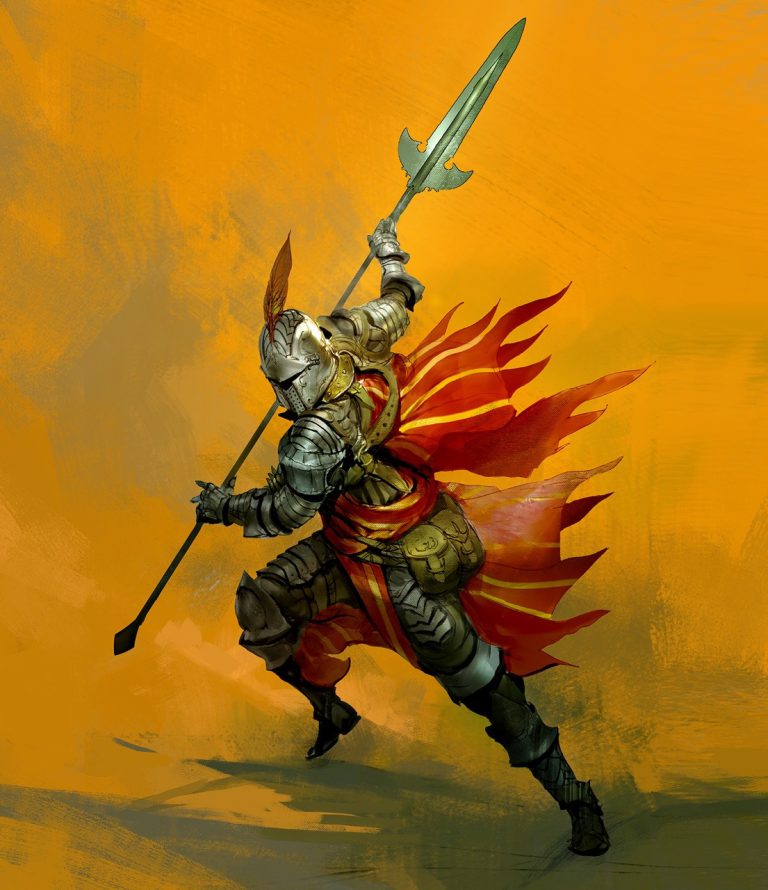
Champion of the People
At 20th level, as an action you can emanate an aura of blissful winds. For 1 minute, you are immune to being Grappled, Stunned, Paralyzed, Restrained, and having your movement slowed in any way.
Whenever a creature makes an attack against you while within your aura, they must make a Wisdom saving throw. On a failure, they must direct their attack to another creature of your choosing within their melee range or not at all. If a creature succeeds on their saving throw, they are immune to the effect for the next minute.
Oath of the Caldera
"How twisted are the vines of an untended vineyard. Just like the humble gardener, we too must shear off that which is twisted and baseless."
The Oath of the Caldera is a First Age path thats tenets have survived the test of time up until the modern day. Though very few walk the path currently, for it is one laden with the promise of self suffering and personal hardship, there are a few zealous souls who take on the challenge in order to create their own ideal world. Typically, this path is concerned with the cleansing of impure and sinful aspects of the world, be they corrupt organizations, extraplanar creatures, or simply malign individuals, often at the cost of the purifier themself and innocents standing by.
Few often survive long enough to bind themselves to this oath, the trials to truly being accepted by the oath's magics as an officially recognized paladin are fraught with danger meant to weed out the weak in will and body. Traditionally, most of their gear, such as weapons, armor, and holy symbols, take on iconography and symbolism of fire, as it is often this oath's tool of choice for cleansing the impure.
Tenets of the Caldera
The Tenets of the Caldera are forged from century old traditions, running deeper than the first blood spilt into the earth. They prepare an acolyte spiritually, physically, and mentally for the path ahead of them and the burden they must uphold.
Sins of the Father. Those who take on this oath understand that they carry with them a great sin that permeates their blood, that they are part of mortal kind and mortal kind is inherently sinful. A life of endless toil and determination will be the only redemption they may find.
Pain is Virtue. Those beholden to great sins must repent through equally as great pain in order to cleanse the darkness in one's soul. Deviate not from suffering.
Anger is Power. Frustration and rage, should they properly be focused and applied, are tools of utmost importance in gathering the energy needed to bear the heavy burden of the sinner's path.
Martyrdom. Struggle through hell so others can strive in a heaven of your own making. Face the worst that this world has to offer and cleanse it. The impure are guilty of only one crime, that of their own existence.
Oath Spells
| Paladin Level | Spells |
|---|---|
| 3rd | Inflict Wounds, Searing Smite |
| 5th | Branding Smite, Heat Metal |
| 9th | Fireball, Haste |
| 13th | Blight, Staggering Smite |
| 17th | Flame Strike, Cloudkill (as Sulfuric Gas) |
Channel Divinity
When you take this Oath at 3rd level, you gain the following two Channel Divinity Options.
Channel the Flame. You can use your Channel Divinity to focus one aspect of holy flame in particular, either its searing heat or its radiant cleansing. As a bonus action, for 10 minutes you may choose to convert any fire damage you may deal into radiant damage and any radiant damage you deal into fire damage for the purposes of bypassing resistances.
Cleanse the Impure. As an action you can use your Channel Divinity to cause a burst of holy fire, forcing all creatures within 30ft of you to make a Dexterity saving throw. A target that fails takes fire or radiant damage (your choice) equal to 5 times your Charisma modifier (minimum of 1) or half as much on a success. Undead, fiends, and aberrations have disadvantage on the saving throw, while celestials have advantage on the saving throw.

Aura of Zeal
Starting at 7th level, you and friendly creatures within 10ft of you cannot be frightened while you are conscious. In addition, any undead, fiends, and aberrations ignite into flames when inside your aura. A creature ignited in this way takes radiant damage equal to half your proficiency bonus at the start of their turns and cannot extinguish themselves unless outside of your aura.
A creature cannot be ignited while you are charmed by it. You can also willingly choose to not ignite a creature if it would otherwise be.
When you reach 18th level in this class, the aura affects creatures within 30 feet of you.
Spirit of Pain
At 15th level, the essence of violence and pain come under your control.
While a creature is ignited through any means, your attacks against them can score a critical hit on a 19 or a 20.
Child of the Caldera
At 20th level, you've finally become one with the Holy Caldera and the essence of fire itself. You can use your action to gain the benefits below for 1 minute.
- You have immunity to radiant and fire damage.
- You have advantage on Constitution saving throws, as do allies within 30ft of you
- When any hostile creature enters your Aura of Zeal for the first time since activating this feature, they immediately take 20 fire or radiant damage.
Once you use this feature, you can't use it again until you've finished a long rest.
Ironclad
"We ain't living by no code, but to turn suffering into strength is purpose enough."
Given their name, the ironclad are souls who are inured to the pain of injury, perceiving the feeling as nothing more than a superficial weakness that fetters the mind. Typically donning heavy metal plating from head to toe, like a second skin of sorts, an ironclad's training regimen drastically tests their endurance, mental fortitude, and demands peak physical strength. In battle, the ironclad throw themselves into the fray of battle and easily trade devastating blows with their enemy.
Sturdy
Starting at 3rd level, because of your demanding training regimen you gain an additional 2 hit points every time you gain a fighter level starting from 3rd level.
Honed Technique
When you choose this archetype at 3rd level, you gain the following features.
Thick Skin. Whenever you take damage, you may use your reaction to expend a hit die and reduce the damage by the total amount rolled + your Constitution modifier.
Spiteful Resistance. Whenever you suffer a critical hit, you may use your reaction to spend 2 hit dice and turn it into a normal attack. Any effects that would apply on a critical hit are canceled. In addition, you may make one attack against the creature who made the attack if they are within range.
Burdened Strike. Whenever hitting with an attack, you can choose to also expend one of your hit die and add the amount rolled to the damage dealt while also taking damage equal to the amount rolled.
In addition, you also gain proficiency with heavy armor if you didn't already have it.
Unrelenting Comeback
Starting at 7th level, whenever you are knocked down to 0 hit points, and not outright killed, you may use your reaction to remain at 1 hit point instead. Whenever you use this feature you can spend as many hit dice as you wish, provided you have them, and gain temporary hit points equal to the amount rolled.
You can use this feature as many times as equal to half your Constitution modifier (rounded down). Once you expend a use of this feature, you must finish a long rest before using it again.
Enhanced Vitality
At 15th level, your hit dice turn into d12s and you gain an additional 20 hit points. In addition, you regain all hit dice back on a long rest instead of half.
Sufferer's Strength
At 18th level, whenever you suffer a critical hit you can choose to add half of the damage taken from that attack on your next attack whenever you hit. If you choose not to, the extra damage is wasted.
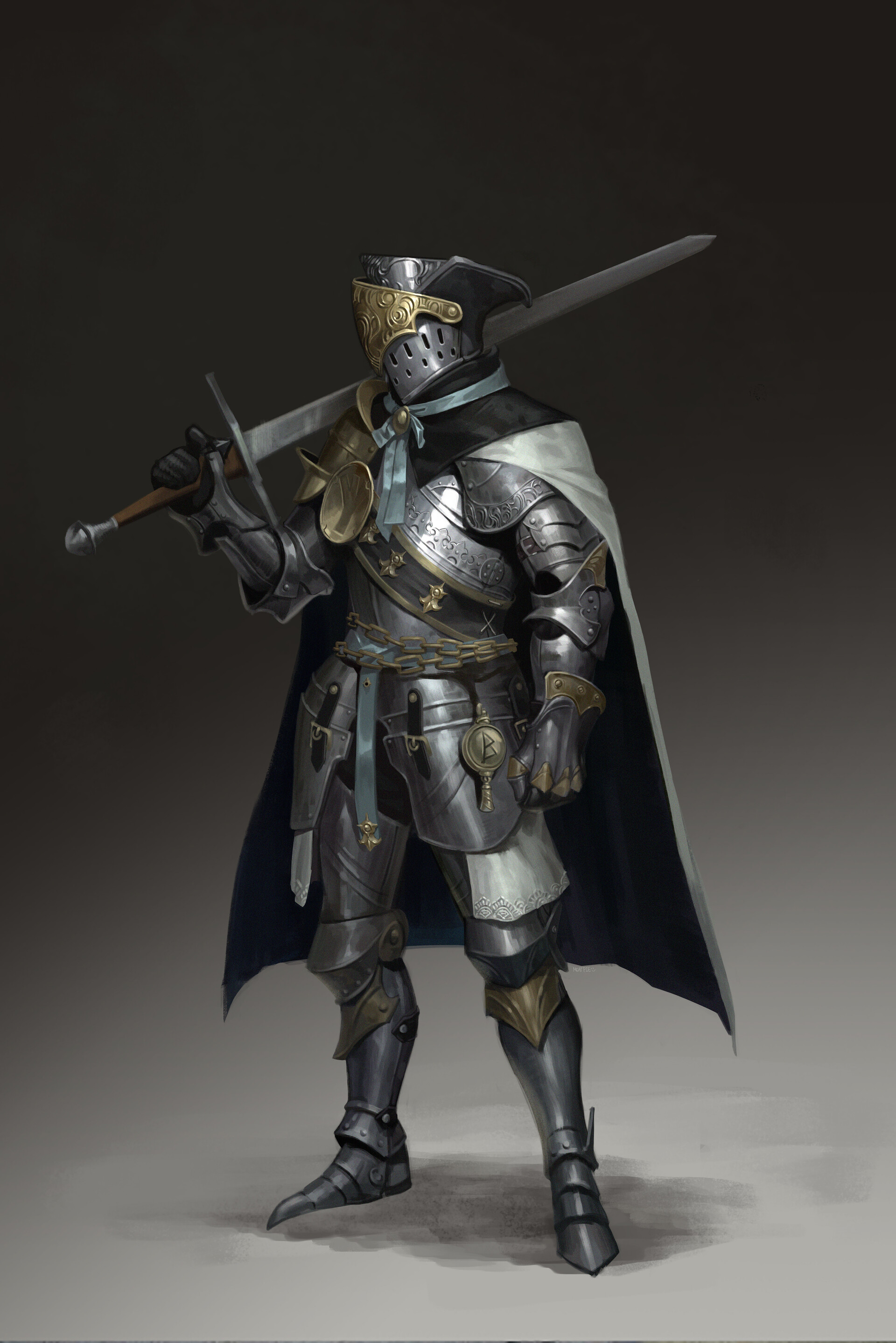
Hedge Knight
"Loyalty has gotten fine men and woman killed in the name of lesser kings. To be disloyal is to live."
Hedge knights are knights without masters, having casted off their bonds and given up on their chivalric code and noble title in favor of a scoundrel's life. Dirty fighting, reckless close combat, and brutal wrestling make up a hedge knight's battle style, engineered to give them every advantage possible at the cost of grace and fairness.
Rough Living
At 3rd level, your harsh lifestyle has taught you how to survive in the worst of environments and push yourself to endure illness.
You gain proficiency in the Survival (Wisdom) skill. In addition, you gain advantage on any saves meant to resist disease and ingested poisons.
Dirty Fighter
Starting at 3rd level, you begin to ruthlessly exploit any and all weakness in order to survive. Whenever you make an attack against a creature that a friendly creature has made a melee attack on within the last round you may do so at advantage.
Bloody Brawl
Starting at 7th level, immediately after you use the Attack action during your turn you may use your bonus action to make unarmed attacks equal to however many attacks you successfully hit during your turn, to a maximum of 3 attacks. This feature cannot be used while holding weapons with the Two-Handed or Heavy traits.
In addition, you gain proficiency with improvised weapons if you don't already have it.
Making Do
At 10th level, you are able to pack a punch with any weapon, so long as its designed to be one.
To you, any weapon that you are proficient with that deals damage equal to 1d4 or 1d6 now deals 1d8 damage of the same type it originally had. A weapon used in this way no longer has the Light or Finesse properties if they had them, as you are using the weapon outside its intended purposes. You can choose to forgo this feature whenever you want and use the weapon as normal.
In addition, anytime you roll a 1 for damage with a weapon that deals damage equal to 1d8 or 1d12 your 1 is replaced with a 2. This feature doesn't get rid of your ability to reroll the die if a feature you have allows you to do so.
Devastating Blows
At 15th level, whenever you score a critical hit you can roll one of the damage dice one additional time and add it to the extra damage of the critical hit.
If you score a critical hit with an unarmed strike, and you do not use dice to deal the damage, you can add you Strength modifier to the damage twice for that blow.
Weary Knight
At 18th level, your survival on the harshest of paths has made you invulnerable to some attacks and resistant to most.
Whenever you take damage equal to or less than your Constitution modifier, you instead take no damage at all. In addition, whenever you use your Second Wind feature, you also become resistant to all damage except psychic and force for as many turns equal to half your Constitution modifier rounded up. This benefit lasts as long as you are conscious.
Rationalizing "Making Do"
If you are having trouble understanding how smaller, light weapons could compare to larger arms, you could visualize it as your character aiming for weaknesses and vulnerabilities instead of just saying "you hit harder now" as the feature initially suggests.
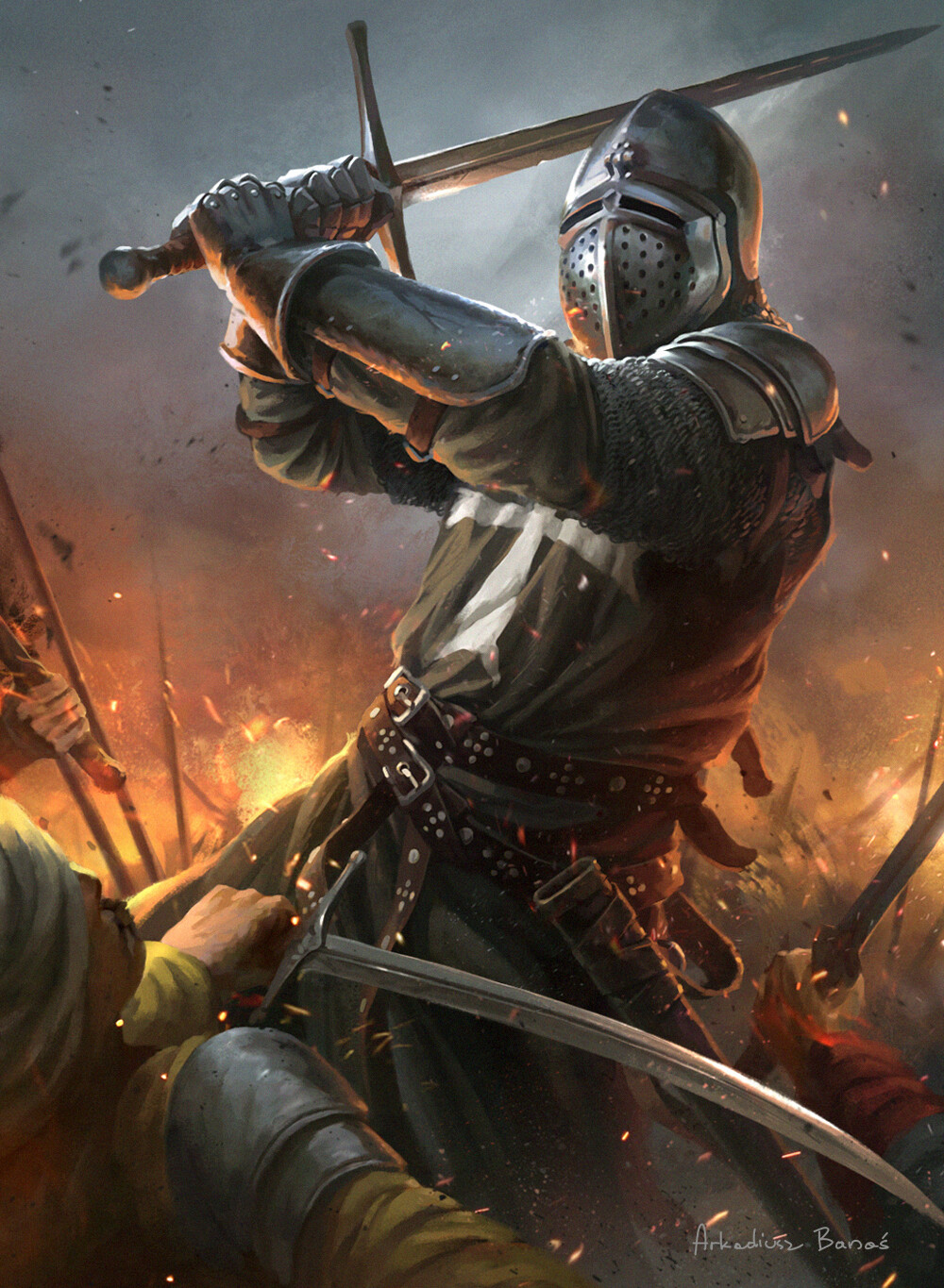
Siege Archer
"Enough with this ranger nonsense, you'll still stay put or die!"
As opposed to the typical fleet-footed hawk-eyed adventurer one might think of when faced with an archer, siege archers typically keep their feet rooted to the ground and stand up straight, moving only when absolutely necessary. They are at their best when allowed time to place their shots carefully, piercing through armor and breaking through bone with every loose of the bowstring.
Weight of the Draw
When you choose this archetype at 3rd level, you learn to use your strength and the weight of the bowstring to supplement your archery skills. When using a shortbow or a longbow, you can use your Strength instead of Dexterity when calculating your to hit and damage modifiers.
Steady Stance
At 3rd level, you may use your bonus action to take an archer's stance, assuming you haven't moved more than half your total movement in that turn. Until you either end this stance as a free action, are knocked unconscious, or forced to move through some effect you gain the following effects:
- Your movement speed is halved.
- Attacks with ranged weapons no longer impose disadvantage when done so from their long range
- Attacks with ranged weapons have an additional +2 bonus to hit when done so from their short range.
- Once per turn when you successfully hit a creature, the creature takes additional damage equal to your Strength or Dexterity modifier.
Hold Breath
Starting at 7th level, while the effects of the Steady Stance feature are active you can choose to forgo all movement for that turn in order to gain advantage on the next attack you make in that same turn. If you had already moved in that turn, this feature cannot be used.
Improved Stance
At 10th level, you can enter your archer's stance even after expending all of your movement in that turn. In addition, while benefiting from your Steady Stance feature you have advantage on saves against all effects that would force you to move.
Pack a Punch
At 15th level, when successfully hitting with a ranged weapon, you deal additional damage equal to the difference between your total roll to hit and your target's AC. If the DM would rather calculate this on his own, rather than give away the creature's AC, they may choose to do so.
Safe Distance
At 18th level, you no longer provoke attacks of opportunity when benefiting from your Steady Stance feature.
Greatbow
(Weapon; Martial, Ranged.)
200gp, 12 lbs. --- 1d12 piercing - ammunition, heavy, range (180/280), two-handed, STR required: 16
These hefty weapons are of a First Age design, made to rip through the scales of dragons and the metal shells of constructs. Their ammo was designed to be devastating, but at the cost of range. Requiring ample strength to carry and draw, few can wield them and even fewer can master them.
