Monk
Monks are united in their ability to magically harness the energy that flows in their bodies. Whether channeled as a striking display of combat prowess or a subtler focus of defensive ability and speed, this energy infuses all that a monk does.
You must have a Dexterity score and a Wisdom score of 13 or higher in order to multiclass in or out of this class.
The Monk
| Level | Proficiency Bonus | Martial Arts | Unarmored Movement | Flurry of Blows | Features |
|---|---|---|---|---|---|
| 1st | +2 | 1d6 | — | 1 | Martial Arts, Flurry of Blows |
| 2nd | +2 | 1d6 | +10 ft | 1 | Monk Disciplines, Unarmored Movement, Dedicated Weapon |
| 3rd | +2 | 1d6 | +10 ft | 1 | Monastic Tradition, Deflect Missiles |
| 4th | +2 | 1d6 | +10 ft | 1 | Ability Score Improvement, Slow Fall, Quickened Healing |
| 5th | +3 | 1d8 | +10 ft | 1 | Extra Attack, Stunning Strike, Focused Aim |
| 6th | +3 | 1d8 | +15 ft | 1 | Spirit Strikes, Monastic Tradition feature |
| 7th | +3 | 1d8 | +15 ft | 2 | Evasion, Stillness of Mind |
| 8th | +3 | 1d8 | +15 ft | 2 | Ability Score Improvement |
| 9th | +4 | 1d8 | +15 ft | 2 | Unarmored Movement Improvement |
| 10th | +4 | 1d8 | +20 ft | 2 | Purity of Body |
| 11th | +4 | 1d10 | +20 ft | 2 | Monastic Tradition feature |
| 12th | +4 | 1d10 | +20 ft | 2 | Ability Score Improvement |
| 13th | +5 | 1d10 | +20 ft | 2 | Tongue of the Sun and Moon |
| 14th | +5 | 1d10 | +25 ft | 3 | Diamond Soul |
| 15th | +5 | 1d10 | +25 ft | 3 | Timeless Body |
| 16th | +5 | 1d10 | +25 ft | 3 | Ability Score Improvement |
| 17th | +6 | 1d12 | +25 ft | 3 | Monastic Tradition feature |
| 18th | +6 | 1d12 | +30 ft | 3 | Empty Body |
| 19th | +6 | 1d12 | +30 ft | 3 | Ability Score Improvement |
| 20th | +6 | 1d12 | +30 ft | 3 | Perfect Self |
Class Features
As a Monk, you gain the following class features.
Hit Points
- Hit Dice: 1d10 per monk level
- Hit Points at 1st Level: 10 + your Constitution modifier
- Hit Points at Higher Levels: 1d10 (or 6) + your Constitution modifier per Monk level after 1st
Proficiencies
- Armor: Light Armor
- Weapons: Simple weapons, Shortswords
- Tools: Choose one type of artisan's tools or one musical instrument
- Saving Throws: Strenght, Dexterity
- Skills: Choose two from Acrobatics, Athletics, History, Insight, Religion, and Stealth
Equipment
You start with the following equipment, in addition to the equipment granted by your background:
- (a) a shortsword or (b) any simple weapon
- (a) a dungeoneer's pack or (b) an explorer's pack
- Leather armor and 10 darts
Martial Arts
At 1st level, your practice of martial arts gives you mastery of combat styles that use unarmed strikes and monk weapons, which are all weapons that you have profiency with and that don't have the two-handed, special or heavy property.
You gain the following benefits while you are unarmed or wielding only monk weapons and you are not wielding a shield or wearing heavy armor:
- You can use Dexterity instead of Strength for the attack and damage rolls of your unarmed strikes and monk weapons.
- You can roll a d6 in place of the normal damage of your unarmed strike or monk weapon. This die changes as you gain monk levels, as shown in the Martial Arts column of the Monk table.
- While you are wearing no armor, your AC equals 10 + your Dexterity modifier + your Wisdom modifier.
Some of your Monk features require your target to make a saving throw. The saving throw DC is calculated as follows: Monk Save DC = 8 + your proficiency bonus + your Wisdom modifier
Flurry of Blows
Also at 1st Level, your prowess in unarmed fighting gives you the ability to drown your enemies in punches, kicks and headbutts. Whenever you take the attack action on your turn to attack with an unarmed strike or a monk weapon, you can use your Bonus Action on the same turn to make one additional unarmed strike.
The number of additional attacks gained by this feature increases as you gain levels in this class, as shown in the Flurry of Blows column of the Monk table.
Monk Disciplines
Starting at 2nd level, your training allows you to harness power through special Disciplines taught to Monks as part of their education:
- Patient Defense: You can take the Dodge action as a bonus action on your turn.
- Step of the Wind: You can take the Disengage or Dash action as a bonus action on your turn. Whenever you use Step of Wind your jump distance is doubled until the end of your current turn.
You can use these Monk Disciplines as long as you are not wielding a shield or wearing heavy armor.
Unarmored Movement
Starting at 2nd level, your speed increases by 10 feet while you are not wearing heavy armor. This bonus changes as you gain levels in this class, as shown in the Monk table.
At 9th level, you gain the ability to move along vertical surfaces and across liquids on your turn without falling during the move if you are not wearing heavy armor.
Dedicated Weapon
Also at 2nd level, you train yourself to use a variety of weapons as monk weapons, not just simple melee weapons and shortswords. Whenever you finish a short or long rest, you can touch one type of weapon and focus your mind on it for 10 minutes, to gain proficiency with it until you use this feature again to focus on another weapon.
Monastic Tradition
When you reach 3rd level, you commit yourself to a monastic tradition. Your tradition grants you features at 3rd level and again at 6th, 11th, and 17th level.
- Way of the Astral Self
- Way of the Drunken Master
- Way of the Four Elements
- Way of the Kensei
- Way of the Long Death
- Way of Mercy
- Way of the Open Hand
- Way of the Shadow
- Way of the Sun Soul
- Way of the Ascendant Dragon
Deflect Missiles
Starting at 3rd level, your hardened spirit allows your to react with supernatural speed to deflect or even catch missiles. Whenever you are hit by a ranged attack you can use your reaction to reduce the damage taken by 1d10 + your Dexterity modifier + your monk level.
If you reduce the damage to 0, you can catch the missile if it is small enough for you to hold in one hand and you have at least one hand free. If you catch a missile in this way, you can make a ranged attack with a range of 20/60 using the weapon or piece of ammunition you just caught, as part of the same reaction. You make this attack with proficiency, regardless of your weapon proficiencies, and the missile counts as a monk weapon for the attack.
Ability Score Improvement
When you reach 4th level, and again at 8th, 12th, 16th, and 19th level, you can increase one ability score of your choice by 2, or you can increase two ability scores of your choice by 1. As normal, you can't increase an ability score above 20 using this feature.
Slow Fall
Starting at 4th level, if you are not wearing armor you can cast the Feather fall spell at will, but you can target only yourself if you cast the spell in this way.
Quickened Healing
Also at 4th level, as an action, you can roll a Martial Arts die to regain a number of hit points equal to the number rolled plus your Wisdom modifier.
You can use this feature a number of times equal to your proficiency bonus and you regain all uses upon finishing a long rest.
Extra Attack
Beginning at 5th level, you can attack twice, instead of once, whenever you take the Attack action on your turn.
Stunning Strike
Starting at 5th level, you can interfere with the flow of an opponents spirit. Once per turn, when you hit another creature with a melee weapon attack from a Monk weapon or from an unarmed strike, you can attempt a stunning strike. The target must succeed on a Constitution saving throw or be stunned until the end of your next turn.
You can do so a number of times equal to your proficiency bonus and you regain all uses when you roll initiative.
Focused Aim
Also at 5th level, your focus during battle helps you in guiding your strikes to hit attacks that would normally miss their target. Whenever you miss with an attack roll, you can increase your attack roll by a number equal to your Wisdom modifier potentially turning the miss into a hit.
You can use this feature a number of times equal to half your proficiency bonus and you regain all uses upon finishing a long rest.
Spirit Strikes
Starting at 6th level, your unarmed strikes count as magical for the purpose of overcoming resistance and immunity to nonmagical attacks and damage.
Evasion
At 7th level, if you are not wearing heavy armor, your instinctive agility lets you dodge out of the way of certain area effects, such as a blue dragon's lightning breath or a fireball spell. When you are subjected to an effect that allows you to make a Dexterity saving throw to take only half damage, you instead take no damage if you succeed on the saving throw, and only half damage if you fail.
Stillness of Mind
Starting at 7th level, you are not easily subdued because you can find inner peace even during combat. You gain advantage on saving throws against being charmed or frightened. Additionally you can use your action on your turn to end one effect on yourself that is causing you to be charmed or frightened.
Purity of Body
At 10th level, your mastery of your own spirit makes you immune to disease and poison.
Tongue of the Sun and Moon
Starting at 13th level, you learn to touch the Spirit of other creatures so that you understand all spoken languages. Moreover, any creature that can understand a language can understand what you say.
Diamond Soul
Beginning at 14th level, your mastery of your Spirit grants you additional protection against all kinds of harm. You gain proficiency in all saving throws.
If you fail any saving throw, you can choose to reroll the saving throw and use the second roll instead. Once you turn a fail into a success with this feature, you must finish a long rest before you can use this feature again.
Timeless Body
At 15th level, your body and your mind suffer none of the frailty of old age and you can't die of old age anymore. You also can't be aged magically. In addition, you no longer need food or water. Also, if your exhaustion level would normally decrease by 1 on a long rest, now it decreases by 2 instead.
Empty Body
Beginning at 18th level, you can use your action to cast the Greater Invisibility spell with a range of self, without needing vocal or somatic components. Additionally, you can cast the Astral Projection spell without needing material components. When you do so, you can't take any other creatures with you.
Once you cast either of these spells in this way, you can't do so again until you finish a long rest.
Perfect Self
At 20th Level, your body and mind have entered a state of absolute control and discipline that allows you to achieve things impossible to normal mortals. Your Dexterity and Wisdom scores increase by 4. Your maximum for those scores is now 24.
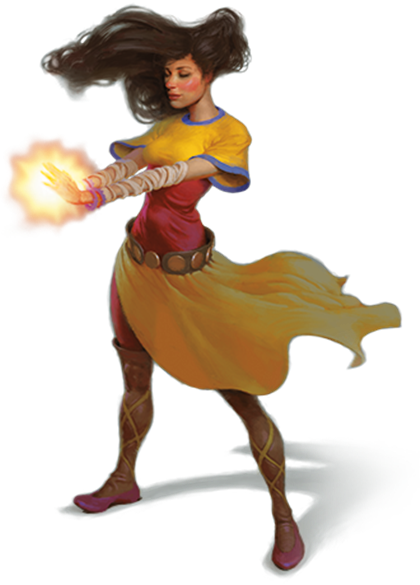
Way of the Astral Self
A monk who follows the Way of the Astral Self believes their body is an illusion. They see their spirit as a representation of their true form, an astral self. This astral self has the capacity to be a force of order or disorder, with some monasteries training students to use their power to protect the weak and other instructing aspirants in how to manifest their true selves in service to the mighty.
Arms of the Astral Self
At 3rd level, the mastery of your spirit allows you to summon a portion of your astral self. As an action on your turn, you can summon the arms of your astral self. Upon summoning your Astral Self, you can use your Flurry of Blows as a bonus action on the same turn.
For 10 minutes, these spectral arms hover near your shoulders or surround your arms (your choice). You determine the arms appearance, and they vanish early if you are incapacitated or die.
While the spectral arms are present, you gain the following benefits:
- You can use your Wisdom modifier in place of your Strength modifier when making Strength checks and Strength saving throws.
- You can use your spectral arms to make unarmed strikes or weapon attacks with any Monk weapon you are wielding.
- When you make an unarmed strike or a weapon attack with the Astral arms on your turn, your reach for it is 5 feet greater than normal and you can use your Wisdom for the attack and damage roll.
- The maximum number of attacks you can make with your Flurry of Blows feature increases by 1.
Visage of the Astral Self
When you reach 6th level, you can summon the visage of your astral self. As a bonus action, or as part of the action you use to activate Arms of the Astral Self, you can summon this visage for 10 minutes. It vanishes early if you are incapacitated or die.
The spectral visage covers your face like a helmet or mask. You determine its appearance.
While the spectral visage is present, you gain the following benefits.
Astral Sight. You can see normally in darkness, both magical and nonmagical, to a distance of 120 feet.
Wisdom of the Spirit. For the duration of this feature your Wisdom score temporarily increases by 2.
Word of the Spirit. When you speak, you can direct your words to a creature of your choice that you can see within 60 feet of you, making it so only that creature can hear you. Alternatively, you can amplify your voice so that all creatures within 600 feet can hear you.
Body of the Astral Self
Starting at 11th level, when you have both your astral arms and visage summoned, you can cause the body of your astral self to appear (no action required). This spectral body covers your physical form like a suit of armor, connecting with the arms and visage. You determine its appearance.
While the spectral body is present, you gain the following benefits.
Deflect Energy. When you take acid, cold, fire, force, lightning, or thunder damage, you can use your reaction to deflect it. When you do so, the damage you take is reduced by 1d10 + your Wisdom modifier + your monk level.
Empowered Arms. Whenever you use your Astral Arms to make an unarmed strike or weapon attack, the attack deals bonus damage equal to your Proficiency Bonus.
Awakened Astral Self
Starting at 17th level, your connection to your astral self is complete, allowing you to unleash its full potential. While you have the arms, visage, and body of your astral self summoned, you can use a bonus action to awaken its true form. This effect lasts for 1 minute and your Astral Self returns to its normal state once this effect runs out.
While your astral self is awakened, you gain the following benefits.
Armor of the Spirit. You gain a +2 bonus to Armor Class.
Astral Barrage. The maximum number of attacks made with your flurry of blows increases by 1.
Once you use this feature, you cannot use it again until you finish a long rest.
Way of the Four Elements
You follow a monastic tradition that teaches you to harness the elements. When you focus your spirit, you can align yourself with the forces of creation and bend the four elements to your will, using them as an extension of your body. Some members of this tradition dedicate themselves to a single element, but others weave the elements together.
Many monks of this tradition tattoo their bodies with representations of their spiritual powers, commonly imagined as coiling dragons, but also as phoenixes, fish, plants, mountains, and cresting waves.
Elemental Disciple
Starting when you choose this tradition at 3rd level, you learn to draw energy from the elemental powers of nature, to unleash elemental magic upon your foes, while still using your body as your primary weapon with your Martial Arts.
You learn multiple elemental Cantrips and Spells when progressing in this class as shown in the Spellcasting Feature.
Also, starting at 3rd level you can use any Monk weapon you are wielding as a Spell casting focus for your elemental spells and you can perform any somatic components for your elemental spells, even while wielding a Monk weapon in one or both hands.
Additionally, your fists and Monk weapons can absorb some of the elemental energy from your spells to deal the same kind of elemental damage. Whenever you cast a spell that deals Fire, Cold, Lightning or Thunder damage, you can choose your fists and Monk weapons to adapt to the damage you dealt. Until you use this feature again, or dismiss it as a bonus action on your turn, all of your unarmed strikes and weapon attacks with a Monk weapon now deal either Fire, Cold, Thunder or Lightning damage, depending on the damage type dealt by your spell.

Spellcasting
Elementalist Spellcasting Table
| Level | Elemental Cantrips | 1st | 2nd | 3rd | 4th |
|---|---|---|---|---|---|
| 3rd | 1 | 2 | — | — | — |
| 4th | 1 | 3 | — | — | — |
| 5th | 1 | 3 | — | — | — |
| 6th | 2 | 3 | 1 | — | — |
| 7th | 2 | 4 | 2 | — | — |
| 8th | 2 | 4 | 2 | — | — |
| 9th | 2 | 4 | 2 | — | — |
| 10th | 2 | 4 | 3 | — | — |
| 11th | 3 | 4 | 3 | 1 | — |
| 12th | 3 | 4 | 3 | 1 | — |
| 13th | 3 | 4 | 3 | 2 | — |
| 14th | 3 | 4 | 3 | 2 | — |
| 15th | 3 | 4 | 3 | 2 | ─ |
| 16th | 3 | 4 | 3 | 3 | ─ |
| 17th | 4 | 4 | 3 | 3 | 1 |
| 18th | 4 | 4 | 3 | 3 | 1 |
| 19th | 4 | 4 | 3 | 3 | 1 |
| 20th | 4 | 4 | 3 | 3 | 1 |
Cantrips
You learn 1 of the following Cantrips:
Elemental Cantrips
Fire Bolt, Frostbite, Gust, Lightning Lure, Mold Earth, Produce Flame, Ray of Frost, Shape Water, Shocking Grasp, Thunderclap
You learn one additional Cantrip from this list when you reach 6th, 11th and 17th level.
Spell slots
The Elementalist Spellcasting Table shows how many spell slots you have to cast your elemental spells of 1st level and higher. To cast one of the spells learnt by this feature, you must expend a slot of the spell's level or higher. You regain all expended spell slots when you finish a long rest.
Spells known of 1st Level and Higher
You can learn 2 Spells from the list below, of any Spell level you have spell slots for. You learn 2 additional spells, when you reach 6th, 11th and 17th level in this Class.
| Spell Level | Spells to choose |
|---|---|
| 1st | Absorb Elements, Burning Hands, Create or Destroy Water, Earth Tremor, Thunderwave |
| 2nd | Scorching Ray, Maximillian's Earthen Grasp, Rime's Binding Ice, Gust of Wind |
| 3rd | Erupting Earth, Fireball, Tidal Wave, Wind Wall, Lightning Bolt |
| 4th | Summon Elemental, Control Water, Stone Shape, Wall of Fire, Storm Sphere |
Spellcasting ability
Wisdom is your spellcasting ability for your elemental spells. You use your Wisdom whenever a spell refers to your spellcasting ability. In addition, you use your Wisdom modifier when setting the saving throw DC for a spell you cast and when making an attack roll with one.
Spell save DC = 8 + your proficiency bonus + your Wisdom modifier
Spell attack modifier = your proficiency bonus + your Wisdom modifier
Elemental Body
Starting at 6th level, you have learned to combine your ability to use magic with your physical ability to use martial arts. Whenever you use your action on your turn to cast a Cantrip, you can use your Flurry of blows as bonus action on the same turn. When you use your Flurry of blows feature in this way, you can make all of your unarmed strikes with a range of 15 ft. until the end of this turn.
Elemental Breaker
Starting at 11th level, you can break the elemental defenses of your enemies to deal damage more effectively. After you deal Fire, Cold, Lightning or Thunder damage with a Spell of 1st level or higher, you can choose one creature that took damage from this spell and remove the resistance this creature has against the type of damage taken from the spell. If the chosen creature does not have resistance against the damage taken, you can inflict vulnerability to all damage of this type, dealt by your unarmed strikes and Monk weapons.
This effect lasts for 1 minute or until you are incapacitated or die. This effect also ends, when you use this feature again for another type of damage or on another creature.
Master Elementalist
Starting at 17th level, you have mastered your ability to use your elemental magic in the most efficient way possible and combinate it with your Martial arts. Whenever you use your action on your turn to cast a Spell, you can use your Flurry of blows as a bonus action on the same turn. When you use your Flurry of blows feature in this way, you can make all of your unarmed strikes with a range of 30 ft. until the end of this turn.

Way of Mercy
Monks of the Way of Mercy learn to manipulate the life force of others to bring aid to those in need. They are wandering physicians to the poor and hurt. However, to those beyond their help, they bring a swift end as an act of mercy.
Those who follow the Way of Mercy might be members of a religious order, administering to the needy and making grim choices rooted in reality rather than idealism. Some might be gentle-voiced healers, beloved by their communities, while others might be masked bringers of macabre mercies.
The walkers of this way usually don robes with deep cowls, and they often conceal their faces with masks, presenting themselves as the faceless bringers of life and death.
Implements of Mercy
When you choose this tradition at 3rd level, you gain proficiency in the Insight and Medicine skills, and you gain proficiency with the herbalism kit.
You also gain a special mask, which you often wear when using the features of this subclass. You determine its appearance, or generate it randomly by rolling on the Merciful Mask table.
Merciful Mask
| d6 | Mask Appearance |
|---|---|
| 1 | Raven |
| 2 | Blank and white |
| 3 | Crying visage |
| 4 | Laughing visage |
| 5 | Skull |
| 6 | Butterfly |
Hands of Healing
At 3rd level, your mystical touch can mend wounds. As an action, you can touch a creature and restore a number of hit points equal to a roll of your Martial Arts die + your Wisdom modifier.
When you use your Flurry of Blows, you can replace one of the unarmed strikes with a use of this feature.
You can use this feature a number of times equal to your proficiency bonus and you regain all uses when you finish a long rest.
Hands of Harm
Also at 3rd level, your merciful spirit allows you to inflict grave wounds when you attack a creature. Once per turn, when you hit a creature with an unarmed strike, you can choose to deal extra necrotic damage equal to one roll of your Martial Arts die.
Physician's Touch
Starting at 6th level, you can administer even greater cures with a touch, and if you feel it's necessary, you can use your knowledge to cause harm.
When you use Hands of Healing on a creature, you can also end one disease or one of the following conditions affecting the creature: blinded, deafened, paralyzed, poisoned, or stunned.
When you use Hands of Harm on a creature, you can subject that creature to the poisoned condition until the end of your next turn.
Flurry of Healing and Harm
Starting at 11th level, you can now mete out a flurry of comfort and hurt. When you use your Flurry of Blows, you can spend one use of your Hands of Healing to cause all of your Flurry of Blows attacks to restore a number of hit points equal to a roll of your Martial Arts die + your Wisdom modifier instead of dealing damage.
Whenever you use your Flurry of Blows, you can now use your Hands of Harm feature twice instead of once per turn.
Hand of the Ultimate Mercy
By 17th level, Your mastery of life energy opens the door to the ultimate mercy. As an action, you can touch the corpse of a creature that died within the past 24 hours. The creature then returns to life, regaining a number of hit points equal to 4d10 + your Wisdom modifier. If the creature died while subject to any of the following conditions, it revives with them removed: blinded, deafened, paralyzed, poisoned, and stunned.
Once you use this feature, you can't use it again until you finish a long rest.
Way of Shadow
Monks of the Way of Shadow follow a tradition that values stealth and subterfuge. These monks might be called ninjas or shadowdancers, and they serve as spies and assassins. Sometimes the members of a ninja monastery are family members, forming a clan sworn to secrecy about their arts and missions. Other monasteries are more like thieves' guilds, hiring out their services to nobles, rich merchants, or anyone else who can pay their fees. Regardless of their methods, the heads of these monasteries expect the unquestioning obedience of their students.
Shadow Arts
Starting when you choose this tradition at 3rd level, you can use your spiritual power to duplicate the effects of certain spells. You can cast the Darkness, Pass without Trace, Silence and Shadow Blade spells once without providing material components. You regain the ability to cast these spells once you finish a long rest.
Additionally, you gain the Minor Illusion Cantrip if you don't already know it.
Eyes of the Shadow
Also at 3rd level, you receive the ability to see through darkness. You can see normally in darkness, both magical and nonmagical, to a distance of 60 feet.
Shadow Step
At 6th level, you gain the ability to step from one shadow into another. When you are in dim light or darkness, as an action you can teleport up to 60 feet to an unoccupied space you can see that is also in dim light or darkness.
Immediately after using this feature, you can make one melee weapon attack with an unarmed strike or a Monk weapon as part of the same action if there is a creature within range. If you do so, you can use your Flurry of Blows feature until the end of this turn.
Cloak of Shadows
By 11th level, you have learned to become one with the shadows. When you are in an area of dim light or darkness, you can use your bonus action to become invisible until the end of your next turn. While this feature is active, you can move without making any sounds.
This feature ends early, if you deal damage or take damage from an attack.
Opportunist
At 17th level, you can exploit a creature's momentary distraction when it is hit by an attack. Whenever a creature that you can see within 30 feet of you, is hit by an attack made by a creature other than you, you can use your reaction to use your Shadow step feature to teleport to a space within 5 feet of the creature, if this space is in dim light or darkness.
If you are already within 5 feet of the creature, you can instead use your reaction to make a melee attack against that creature.
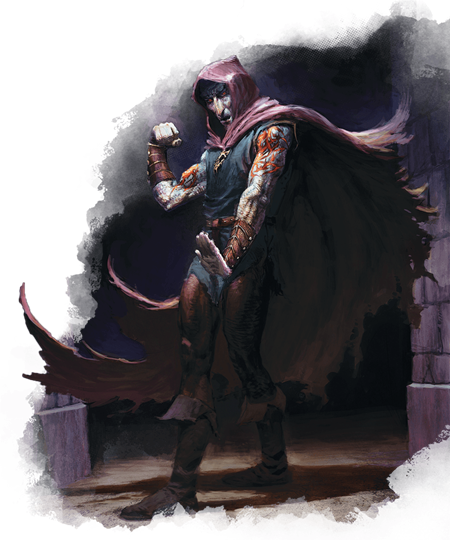
Way of the Kensei
Monks of the Way of the Kensei train relentlessly with their weapons, to the point that the weapon becomes like an extension of the body. Founded on a mastery of sword fighting, the tradition has expanded to include many different weapons.
A kensei sees a weapon much in the same way a calligrapher or a painter regards a pen or brush. Whatever the weapon, the kensei views it as a tool used to express the beauty and precision of the martial arts. That such mastery makes a kensei a peerless warrior is but a side effect of intense devotion, practice, and study.
Path of the Kensei
When you choose this tradition at 3rd level, your special martial arts training leads you to master the use of certain weapons. This path also includes instruction in the deft strokes of calligraphy or painting. You gain the following benefits:
- Kensei Weapons. You can choose one melee and one ranged weapon to be your kensei weapons. These weapons must lack the heavy and special properties. The Longbow and the Glaive are also valid choices. You gain proficiency with these weapons if you don't already have it. Many of this tradition's features work only with your kensei weapons. When you reach 6th, 11th, and 17th level in this class, you can choose another type of weapon – either melee or ranged – to be a kensei weapon for you, following the criteria above.
- Agile Parry. If you make an unarmed strike as part of the Attack action on your turn and are holding a melee kensei weapon, you can use it to defend yourself. You gain a +2 bonus to AC until the start of your next turn, while the weapon is in your hand and you aren’t incapacitated.
- Deft Strike. Once per turn, when you hit a creature with a weapon attack using a Kensei weapon, you can cause the weapon to deal extra damage to the target equal to one roll of your Martial Arts die.
- Way of the Brush. You gain proficiency with your choice of calligrapher's supplies or painter's supplies.
One with the blade
At 6th level, your spirit and body becomes one with your weapons. You gain the following benefits:
- Magic Kensei Weapons. Your attacks with your Kensei weapons count as magical for the purpose of overcoming resistance and immunity to nonmagical attacks and damage.
- Flurry of the Kensei Whenever you use your Flurry of Blows feature on your turn, you can exchange one attack of your Flurry of Blows, with one weapon attack using any Kensei weapon you are wielding.
Sharpen the Blade
At 11th level, you gain the ability to augment your weapons further by infusing them with your spirit. Whenever you finish a long rest, you can meditate over one of your Kensei weapons to infuse it with further power until you use this feature again on a long rest. The chosen weapon gains a +2 bonus to attack and damage rolls as long as you are wielding it.
A weapon that already has a bonus to attack and damage rolls from another source cannot exceed a bonus of +3 using this feature.
Unerring Accuracy
At 17th level, your mastery of weapons grants you extraordinary accuracy. Once per turn if you miss with an attack roll using a Kensei weapon, you can reroll it.

Way of the Long Death
Monks of the Way of the Long Death are obsessed with the meaning and mechanics of dying. They capture creatures and prepare elaborate experiments to capture, record, and understand the moments of their demise. They then use this knowledge to guide their understanding of martial arts, yielding a deadly fighting style.
Touch of Death
Starting when you choose this tradition at 3rd level, your study of death allows you to extract vitality from another creature as it nears its demise. When you reduce a creature of Challenge rating 1/8 or higher within 5 feet of you to 0 hit points, you gain temporary hit points equal to your Wisdom modifier + your monk level (minimum of 1 temporary hit point).
Hour of Reaping
At 6th level, you gain the ability to unsettle or terrify those around you as an action, for your soul has been touched by the shadow of death. When you take this action, you can choose a number of creatures equal to your proficiency bonus within 30 feet of you that can see you. The chosen creatures must succeed on a Wisdom saving throw or be frightened of you until the end of your next turn.
Mastery of Death
Beginning at 11th level, you use your familiarity with death to escape its grasp. When you are reduced to 0 hit points, you can roll a Wisdom saving throw (DC = Half the damage taken with a minimum of 5). On a success you drop to 1 hit point instead. After the saving throw succeeds, you can't use this feature again until you finish a long rest.
Touch of the Long Death
Starting at 17th level, your touch can channel the energy of death into a creature.
As an action, you touch one creature within 5 feet of you. The target must make a Constitution saving throw, and it takes 10d10 necrotic damage on a failed save, or half as much damage on a successful one.
If you reduce a creature to 0 hit points using this feature, you get twice the amount of temporary hit points you normally get from your Touch of Death feature.
Once you use this feature, you cannot use it again until you finish a long rest.

Way of the Open Hand
Monks of the Way of the Open Hand are the ultimate masters of martial arts combat, whether armed or unarmed. They learn techniques to push and trip their opponents, manipulate the flow of their spirit to heal damage to their bodies, and practice advanced meditation that can protect them from harm.
Open Hand technique
Starting when you choose this tradition at 3rd level, you can manipulate your enemy's flow of their spirit when you harness your own. Whenever you hit a creature with an unarmed strike, you can try to impose one of the following effects on that target:
- It must succeed on a Dexterity saving throw or be knocked prone.
- It must make a Strength saving throw. If it fails, you can move it up to 15 feet in any direction of your choice.
- It can't take reactions until the end of your next turn.
You can inflict multiple of these effects on multiple creatures per turn, but a creature can only be affected by one of those effects at a time.
Wholeness of Body
At 6th level, you gain the ability to heal yourself. As an action, you can regain hit points equal to half your maximum hit points. You must finish a long rest before you can use this feature again.
Tranquility
Beginning at 11th level, you can enter a special meditation that surrounds you with an aura of peace. At the end of a long rest, you gain the effect of the Sanctuary spell that lasts until the start of your next long rest. The spell only ends early if a number of creatures equal to your Wisdom modifier failed their saving throw against it.
The saving throw DC for the spell equals your Martial Arts save DC.
Quivering Palm
At 17th level, you gain the ability to set up lethal vibrations in someone's body. When you hit a creature with an unarmed strike, you can start these imperceptible vibrations, which last for a number of days equal to your monk level. The vibrations are harmless unless you use your action to end them. To do so, you and the target must be on the same plane of existence. When you use this action, the creature must make a Constitution saving throw. If it fails, it is reduced to 0 hit points. If it succeeds, it takes 10d10 necrotic damage.
You can have only one creature under the effect of this feature at a time. You can choose to end the vibrations harmlessly without using an action.
Once you use your action to end the vibration on a creature, you cannot do so again until you finish a long rest.

Way of the Ascendant Dragon
The fundamental teaching of this tradition holds that by emulating dragons, a monk becomes a more integrated part of the world and its magic. By altering their spirit to resonate with draconic might, monks who follow this tradition augment their prowess in battle, bolster their allies, and can even soar through the air on draconic wings. But all this power is in service of a greater goal: achieving a spiritual unity with the essence of the Material Plane.
Ascendant Dragon Origin
As a follower of this Monastic Tradition, you decide how you unlocked the power of dragons through your ki. The Ascendant Dragon Origin table offers some possibilities.
| d6 | Origin |
|---|---|
| 1 | You honed your abilities by observing a dragon and aligning your ki with their world altering power. |
| 2 | A dragon personally took an active role in shaping your inner energy. |
| 3 | You studied at a monastery that traces its teachings back centuries or more to a single dragon’s instruction. |
| 4 | You spent long stretches meditating in the region of influence of an ancient dragon’s lair, absorbing its ambient magic. |
| 5 | You found a scroll written in Draconic that contained inspiring new techniques. |
| 6 | After a dream that featured a five-handed dragonborn you awoke with altered ki, reflecting the breaths of dragons. |
Draconic Disciple
When you choose this tradition at 3rd level, you tap into the origin of one kind of chromatic, gem or metallic dragon to channel draconic power to magnify your presence and imbue your unarmed strikes with the essence of a dragon’s breath. Choose one of the following Origins:
Draconic Origin Table
| Origin | Element |
|---|---|
| Black / Copper | Acid |
| Blue / Bronze | Lightning |
| Red / Gold / Brass | Fire |
| Green | Poison |
| White / Silver | Cold |
| Amethyst | Force |
| Emerald | Radiant |
| Sapphire | Psychic |
| Topaz | Necrotic |
| Crystal | Radiant |
You gain the following benefits:
- Draconic Presence. If you fail a Charisma (Intimidation) or Charisma (Persuasion) check, you can use your reaction to reroll the check and use the second result, as you tap into the mighty presence of dragons. You can use this feature a number of times equal to your Wisdom modifier.
- Draconic Strike. Once per turn when you hit a target with an unarmed strike, you can deal bonus damage equal to your Martial Arts die. This damage is of the type chosen as your draconic origin.
- Tongue of Dragons. You learn to speak, read, and write Draconic or one other language of your choice.
Breath of the Dragon
Also at 3rd level you can channel destructive waves of energy, like those created by the dragons you emulate. Once on each of your turns, when you make an attack with a Monk weapon or unarmed strike, you can replace this attack with an exhalation of draconic energy in either a 20-foot cone or a 30-foot line that is 5 feet wide (your choice). Each creature in that area must succeed on a Dexterity saving throw against your Martial Arts save DC, or take damage of the type chosen of your draconic origin, equal to three rolls of your Martial Arts die on a failed save, or half as much damage on a successful one.
The damage of this feature increases to four rolls of your Martial Arts die when you reach 11th level and to five rolls of your Martial Arts die when you reach 17th level.
You can use this feature a number of times equal to your proficiency bonus, and you regain all expended uses when you finish a long rest.
Wings Unfurled
At 6th level you can use your bonus action to unfurl spectral draconic wings from your back that last for 10 minutes. While the wings exist, you have a flying speed equal to your walking speed.
You can use this feature a number of times equal to half your proficiency bonus, and you regain all expended uses when you finish a long rest.
Aspect of the Wyrm
At 11th level, you gain resistance to the damage type from your draconic origin.
Additionally, the power of your draconic spirit now radiates from you, warding your allies or inspiring fear in your enemies. As a bonus action, you can create an aura of draconic power that radiates 15 feet from you for 10 minutes. For the duration, you gain one of the following effects of your choice:
- Frightful Presence. When you create this aura, and as a bonus action on subsequent turns, you can choose a creature within the aura. The target must succeed on a Wisdom saving throw against your ki save DC or become frightened of you for 1 minute. The target can repeat the saving throw at the end of each of its turns, ending the effect on itself on a successful save.
- Radiating body. When you create this aura, and when you take the attack action on subsequent turns, you can choose a creature within the aura. The chosen creature takes damage equal to one roll of your Martial Arts die. This damage is of the type of your draconic origin.
- Aura of Resistance. Any chosen creature within the aura gains resistance to the damage type from your draconic origin.
Once you use this feature, you can’t use it again until you finish a long rest.
Ascendant Aspect
At 17th level, your draconic spirit reaches its peak. You gain the following benefits:
- Augment Breath. Your Breath of the Dragon feature becomes more powerful. The exhalation of draconic energy becomes either a 60-foot cone or a 90-foot line that is 5 feet wide (your choice).
- Blindsight. You gain blindsight out to 15 feet. Within that range, you can effectively see anything that isn’t behind total cover, even if you’re blinded or in darkness. Moreover, you can see invisible creatures within that range, unless the creature successfully hides from you.
- Explosive Fury. When you activate your Aspect of the Wyrm feature, you can spend one use of your Breath of the Dragon feature to let draconic fury explode from you. Choose any number of creatures you can see within your aura. Every chosen creature must make a Dexterity saving throw against your Martial Arts save DC. On a failed save it takes damage from your Breath of the Dragon feature or half as much damage on succesful one.
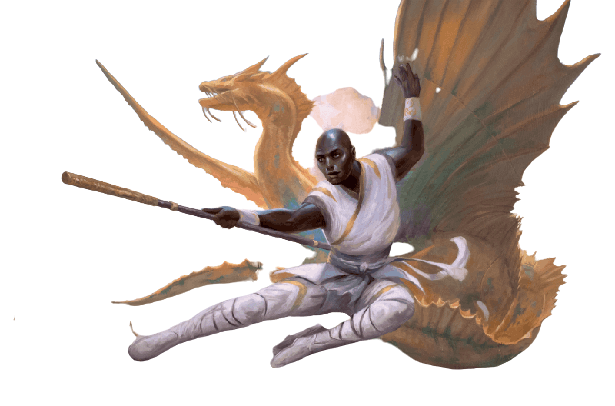
Way of the Drunken Master
The Way of the Drunken Master teaches its students to move with the jerky, unpredictable movements of a drunkard. A drunken master sways, tottering on unsteady feet, to present what seems like an incompetent combatant who proves frustrating to engage. The drunken master’s erratic stumbles conceal a carefully executed dance of blocks, parries, advances, attacks, and retreats.
A drunken master often enjoys playing the fool to bring gladness to the despondent or to demonstrate humility to the arrogant, but when battle is joined, the drunken master can be a maddening, masterful foe.
Bonus Proficiencies
You gain proficiency with Brewer's supplies if you don't already have it. You also have advantage on any check to recognize alcoholic beverages and their ingredients. You also gain proficiency with improvised weapons.
Additionally, you can make the "Use an Object" action as a bonus action on your turn, to drink potions or alcoholic drinks.
Drunken Technique
Starting when you choose this tradition at 3rd level, you can consume alcohol to motivate and empower you. When you drink alcohol, your physical and mental capabilities increase. You can only drink a certain amount of alcohol per day, before affecting yourself negatively as shown in the table below.
Consumption Table
| Monk Level | Maximum (oz. / cups) | Maximum stat bonus |
|---|---|---|
| 3 | 16 / 2 | +1 |
| 6 | 32 / 4 | +2 |
| 11 | 48 / 6 | +3 |
| 17 | 64 / 8 | +4 |
For every 8 oz. of alcohol you drink, you get the following benefits:
- Your movements get unpredictable and difficult to read for your enemies. You gain +1 to your Armor class.
- Your mind gets sharper and your eyesight clearer. You gain a +1 to your Wisdom (Perception) Skill. This also counts to your Passive Perception.
- Your Martial Arts Save DC increases by +1.
These benefits last for 1 hour.
For every 8 oz. of acohol you drink, that exceeds your maximum per day, you suffer 1 point of exhaustion. The amount of alcohol you drank resets when you finish a long rest.
Drunken Technique (Alternative)
Starting when you choose this tradition at 3rd level, you are able to brew special alchoholic beverages, that increase some of your capabilities, but at the same time reduce others. When you finish a long rest, you can use your brewer's tools to brew alcoholic beverages. These beverages can be any of the following:
Beverage Table
| Type | Effect |
|---|---|
| Sake | +2 to attack and damage rolls / -1 to AC |
| Gin | +2 to AC and Dex saves / -1 to attack and damage rolls |
| Rum | Advantage on all Skill checks except Initiative / Disadvantage on Initiative checks |
| Whiskey | +5 to Initiative and +10 to Movement / -1 to Wisdom saves |
To brew one of these beverages you need to spend ingredients of a value of 5 SP each and you can hold a maximum number of beverages equal to half your Monk level, rounded up.
You can drink these beverages the same way you would drink a potion and gain its effects for 1 hour or until you drink another beverage from the Beverage Table.
You can only consume a number of drinks equal to your Wisdom modifier before finishing a long rest. If you consume more than that, you will still gain the effects of the drink consumed, but you will suffer one point of exhaustion for each drink consumed over that limit.
Tipsy Sway
Starting at 6th level, you can move in sudden, swaying ways. You gain the following benefits.
- Leap to Your Feet. When you're prone, you can stand up by spending 5 feet of movement, rather than half your speed.
- Unconventional Fighter. Also while you are prone, you and other creatures do not gain advantage or disadvantage from melee attacks.
- Redirect Attack. When a creature misses you with a melee attack roll, you can use your reaction to cause that attack to hit one creature of your choice, other than the attacker, that you can see within 5 feet of you.
Drunkard's Luck
Starting at 11th level, you always seem to get a lucky bounce at the right moment. When you fail an ability check, attack roll or saving throw you can turn the fail into a success.
Once you use this feature you cannot use it again, until you finish a long rest.
Intoxicated Frenzy
At 17th level, you gain the ability to make an overwhelming number of attacks against a group of enemies. When you use your Flurry of Blows, you can make up to three additional attacks against different creatures with it, per turn.

Way of the Sun Soul
Monks of the Way of the Sun Soul learn to channel their own life energy into searing bolts of light. They teach that meditation can unlock the ability to unleash the indomitable light shed by the soul of every living creature.
Radiant Sun Bolt
Starting when you choose this tradition at 3rd level, you can hurl searing bolts of magical radiance.
You gain a new attack option. This special attack is a ranged spell attack with a range of 30 feet. You are proficient with it, and you add your Dexterity modifier to its attack and damage rolls. Its damage is radiant, and its damage die equals your Martial Arts die.
You can use your Flurry of Blows to make additional attacks with this feature, when you take the attack action on your turn. Additionally, when you gain the Stunning Strike feature, you can use it when you hit a creature with the special attack of this feature.
Searing Arc Strike
At 6th level, you gain the ability to channel your spirit into searing waves of energy. Immediately after you take the Attack action on your turn, you can cast the Burning Hands spell as a bonus action.
You can spend HP to cast Burning Hands as a higher level spell. Every 5 Hit points you spend increases the Spells level by 1. The maximum amount of HP you can spend on this spell equals 5. This number increases by 5 on every second level you gain in this class (10 at 8th level, 15 at 10th level, 20 at 12th level etc.)
Searing Sun Burst
At 11th level, you gain the ability to create an orb of light that erupts into a devastating explosion. As an action, you can cast the Fireball spell. When you cast this spell using this feature, its damage type changes to radiant damage.
You can use this feature a number of times equal to your Proficiency bonus and you regain all uses, when you finish a long rest.
Sun Shield
At 17th level, you become wreathed in a luminous, magical aura. You shed bright light in a 30-foot radius and dim light for an additional 30 feet. You can extinguish or restore the light as a bonus action.
If a creature hits you with a melee attack while this light shines, you can deal radiant damage to the creature equal to 5 + your Wisdom modifier. This damage can only apply to the same creature once per turn.
