
The Monk, Revised
Her fists a blur as they deflect an incoming hail of
arrows, a half-elf springs over a barricade and throws
herself into the massed ranks of hobgoblins on the other
side. She whirls among them, knocking their blows aside
and sending them reeling, until at last she stands alone.
Taking a deep breath, a human covered in tattoos settles into a battle stance. As the first charging orcs reach him, he exhales and a blast of fire roars from his mouth, engulfing his foes.
Moving with the silence of the night, a black-clad halfling steps into a shadow beneath an arch and emerges from another inky shadow on a balcony a stone's throw away. She slides her blade free of its cloth-wrapped scabbard and peers through the open window at the tyrant prince, so vulnerable in the grip of sleep.
Whatever their discipline, monks are united in their ability to magically harness the energy that flows in their bodies. Whether channeled as a striking display of combat prowess or a subtler focus of defensive ability and speed, this energy infuses all that a monk does.
The magic of Ki
Monks make careful study of a magical energy that most monastic traditions call ki. This energy is an element of the magic that suffuses the multiverse - specifically, the element that flows through living bodies. Monks harness this power within themselves to create magical effects and exceed their bodies' physical capabilities, and some of their special attacks can hinder the flow of ki in their opponents. Using this energy, monks channel uncanny speed and strength into their unarmed strikes. As they gain experience, their martial training and their mastery of ki gives them more power over their bodies and the bodies of their foes.
Training and Asceticism
Small walled cloisters dot the landscapes of the worlds of D&D, tiny refuges from the flow of ordinary life, where time seems to stand still. The monks who live there seek personal perfection through contemplation and rigorous training. Many entered the monastery as children, sent to live there when their parents died, when food couldn't be found to support them, or in return for some kindness that the monks had performed for their families.
Some monks live entirely apart from the surrounding population, secluded from anything that might impede their spiritual progress. Others are sworn to isolation, emerging only to serve as spies or assassins at the command of their leader, a noble patron, or some other mortal or divine power.
The majority of monks don't shun their neighbors, making frequent visits to nearby towns or villages and exchanging their service for food and other goods. As versatile warriors, monks often end up protecting their neighbors from monsters or tyrants. For a monk, becoming an adventurer means leaving a structured, communal lifestyle to become a wanderer. This can be a harsh transition, and monks don't undertake it lightly.
Those who leave their cloisters take their work seriously, approaching their adventures as personal tests of their physical and spiritual growth. As a rule, monks care little for material wealth and are driven by a desire to accomplish a greater mission than merely slaying monsters and plundering their treasure.
Creating a Monk
As you make your monk character, think about your connection to the monastery where you learned your skills and spent your formative years. Were you an orphan or a child left on the monastery’s threshold? Did your parents promise you to the monastery in gratitude for a service performed by the monks? Did you enter this secluded life to hide from a crime you committed? Or did you choose the monastic life for yourself?
Consider why you left. Did the head of your monastery choose you for a particularly important mission beyond the cloister? Perhaps you were cast out because of some violation of the community’s rules. Did you dread leaving, or were you happy to go? Is there something you hope to accomplish outside the monastery? Are you eager to return to your home?
As a result of the structured life of a monastic community and the discipline required to harness ki, monks are almost always lawful in alignment.


The Monk
| Level | Proficiency Bonus |
Martial Arts |
Unarmored Movement |
Features |
|---|---|---|---|---|
| 1st | +2 | 1d6 | — | Unarmored Defense, Martial Arts |
| 2nd | +2 | 1d6 | +10 ft. | Dedicated Weapon, Ki, Unarmored Movement |
| 3rd | +2 | 1d6 | +10 ft. | Monastic Tradition, Deflect Missiles |
| 4th | +2 | 1d6 | +10 ft. | Ability Score Improvement, Controlled Flow |
| 5th | +3 | 1d8 | +10 ft. | Extra Attack, Extra Reaction |
| 6th | +3 | 1d8 | +15 ft. | Ki-Empowered Strikes, Monastic Tradition Feature |
| 7th | +3 | 1d8 | +15 ft. | Evasion, Stillness of Mind |
| 8th | +3 | 1d8 | +15 ft. | Ability Score Improvement |
| 9th | +4 | 1d8 | +15 ft. | Unarmored Movement Improvement |
| 10th | +4 | 1d8 | +20 ft. | Purity of Body |
| 11th | +4 | 1d10 | +20 ft. | Monastic Tradition Feature, Extra Reaction (2) |
| 12th | +4 | 1d10 | +20 ft. | Ability Score Improvement |
| 13th | +5 | 1d10 | +20 ft. | Tongue of the Sun and Moon |
| 14th | +5 | 1d10 | +25 ft. | Diamond Soul |
| 15th | +5 | 1d10 | +25 ft. | Ascending Body |
| 16th | +5 | 1d10 | +25 ft. | Ability Score Improvement |
| 17th | +6 | 1d12 | +25 ft. | Monastic Tradition, Extra Reaction (3) |
| 18th | +6 | 1d12 | +30 ft. | Empty Body |
| 19th | +6 | 1d12 | +30 ft. | Ability Score Improvement |
| 20th | +6 | 1d12 | +30 ft. | Perfect Self |
Optional Rule: Multiclassing
If your group uses this optional rule, here's what you need to know if you choose the monk as one of your classes.
Ability Score Minimum. You must have a Dexterity and Wisdom score of at least 13 to take a level in this class, or to take a level in another class if you are already a monk.
Proficiencies Gained. If monk isn't your initial class, you gain proficiency with simple weapons and shortswords when you take your first level in monk.
Class Features
Hit Points
- Hit Dice: 1d10 per monk level
- Hit Points at 1st Level: 10 + your Constitution modifier.
- Hit Points at Higher Levels: 1d10 (or 6) + your Constitution modifier per monk level after 1st
Proficiencies
- Armor: None
- Weapons: simple weapons, shortswords
- Tools: Choose one type of artisan’s tools or one musical instrument
- Saving Throws: Dexterity, Wisdom
- Skills: Choose two from Acrobatics, Athletics, History, Insight, Perception, Religion, and Stealth
Equipment
You start with the following equipment, in addition to the equipment granted by your background.
- (a) a shortsword or (b) any simple weapon
- (a) a dungeoneer's pack or (b) an explorer's pack
- 10 darts

Unarmored Defense
Beginning at 1st level, while you are wearing no armor and not wielding a shield, your AC equals 10 + your Constitution modifier + your Martial Arts modifier.
Martial Arts
At 1st level, your practice of martial arts gives you mastery of combat styles that use unarmed strikes and monk weapons, which are shortswords and any simple melee weapons that don't have the two-handed or heavy property.
Choose an ability score from Dexterity or Wisdom, this cannot be changed later. The chosen score is tied to your Martial Arts "score".
You gain the following benefits while you are unarmed or wielding only monk weapons and you aren’t wearing armor or wielding a shield:
- You can use your Martial Arts instead of Strength for the attack and damage rolls of your unarmed strikes and monk weapons.
- You can roll 1d6 in place of the normal damage of your unarmed strike or monk weapon. This die changes as you gain monk levels, as shown in the Martial Arts column of the Monk table.
- When you use the Attack action with an unarmed strike or a monk weapon on your turn, you can make one unarmed strike as a bonus action. For example, if you take the Attack action and attack with a quarterstaff, you can also make an unarmed strike as a bonus action, assuming you haven't already taken a bonus action this turn.
Certain monasteries use specialized forms of the monk weapons. For example, you might use a club that is two lengths of wood connected by a short chain (called a nunchaku) or a sickle with a shorter, straighter blade (called a kama). Whatever name you use for a monk weapon, you can use the game statistics provided for the weapon.
Unarmored Movement
Starting at 2nd level, your speed increases by 10 feet while you are not wearing armor or wielding a shield. This bonus increases when you reach certain monk levels, as shown in the Monk table. In addition, you are able to take the Dash, Dodge, and Disengage actions as a bonus action on your turn.
At 9th level, you gain spider climb ability and can cross liquids on your turn without falling during the move.
Ki
Starting at 2nd level, your training allows you to harness the mystic energy of ki. Your access to this energy is represented by a number of ki points. Your have a number of ki points equal to your Martial Arts modifier + your monk level.
You can spend these points to fuel various ki features. You start knowing three such features: Flurry of Blows, Patient Defense, and Step of the Wind. You learn more ki features as you gain levels in this class.
If you spend 1 ki point or more as part of your action on your turn, you can make one attack with an unarmed strike or a monk weapon as a bonus action before the end of the turn.
When you spend a ki point, it is unavailable until you finish a short or long rest, at the end of which you draw all of your expended ki back into yourself. You must spend at least 30 minutes of the rest meditating to regain your ki points.
Some of your ki features require your target to make a saving throw to resist the feature’s effects. The saving throw DC is calculated as follows:
Ki save DC
Flurry of Blows
Immediately after you take the Attack action on your turn, you can spend 1 ki point to make two unarmed strikes as a part of the same attack action.
Patient Defense
You can spend 1 ki to gain the benefits of the Dodge action until the start of your next turn.
When you reach 10th level in this class, you can spend an additional ki point to add a +1 to your AC when you take this stance, or an additional 2 ki points at 18th level and higher to add a +2 to your AC. This bonus to AC lasts until the start of your next turn.
Step of the Wind
You can spend 1 ki to gain the benfits of the the Disengage or Dash action until the end of your turn, and your jump distance is doubled for the turn.
Deflect Attacks
Starting at 3rd level, you can use your reaction to deflect or catch attacks when you are hit by a weapon attack. When you do so, the damage you take from the attack is reduced by your Martial Arts die + your Martial Arts modifier + your monk level.
If you reduce the damage to 0, and the attack is from a ranged weapon attack, you can catch the missile if it is small enough for you to hold in one hand and you have at least one hand free. If you catch a missile in this way, you can immediately make a ranged attack with a range of 20/60 using the weapon or piece of ammunition you just caught, as part of the same reaction. You make this attack with proficiency, regardless of your weapon proficiencies, and the missile counts as a monk weapon for the attack.
Monastic Tradition
When you reach 3rd level, you commit yourself to a monastic tradition. Your tradition grants you features at 3rd level and again at 6th, 11th, and 17th level.
Ability Score Improvement
When you reach 4th level, and again at 8th, 12th, 16th, and 19th level, you can increase one ability score of your choice by 2, or you can increase two ability scores of your choice by 1. As normal, you can’t increase an ability score above 20 using this feature.
Controlled Flow
At 4th level, you gain the ability to control the flow of energy in your body. You can use your reaction when you fall to reduce any falling damage you take by an amount equal to five times your monk level.
In addition, as an action, you can choose a number of ki point to spend and roll an amount of your Hit Die equal to the Ki spent, no more than the amount of hit die you have. You regain a number of hit points equal to the number rolled plus your Martial Arts modifier.
Extra Attack
Beginning at 5th level, you can attack twice, instead of once, whenever you take the Attack action on your turn.
Extra Reaction
Beginning at 5th level, you can can use a reaction up to twice before the start of your next turn. You can only use one reaction to a given trigger. If a feature or effect would prevent you from taking reactions but does not incapacitate you, you instead lose one use of your reaction for the duration of the effect.
The number of times you can use a reaction in between the start of your turns increases to three when you reach 11th level in this class and to four when you reach 17th level in this class.
If you gain the ability to use extra reactions from another source, you choose which feature to benefit from.
Ki-Empowered Strikes
Starting at 6th level, your unarmed strikes count as magical for the purpose of overcoming resistance and immunity to nonmagical attacks and damage.
Additionally, you can interfere with the flow of ki in an opponent's body. When you hit another creature with a melee weapon attack or unarmed attack, you can spend 1 ki point to attempt a stunning strike. The target must succeed on a Constitution saving throw or be stunned until the end of your next turn.

Evasion
At 7th level, your instinctive agility lets you dodge out of the way of certain area effects, such as a blue dragon’s lightning breath or a fireball spell. When you are subjected to an effect that allows you to make a Dexterity saving throw to take only half damage, you instead take no damage if you succeed on the saving throw, and only half damage if you fail.
Stillness of Mind
Starting at 7th level, gain advantage on saving throws against the charmed or frightened conditions. In addition, at the beginning of your turn, if you are charmed or frightened, you may spend 1 ki point to end the effect causing the condition.
Finally, you may touch a creature and spend 1 ki point to end the charmed or frightened conditions.
Purity of Body
At 10th level, your mastery of the ki flowing through you makes you immune to diseases and the poisoned condition.
In addition, when an effect would decrease an ability score against your will, you may instead increase that ability score by an equal to the amount of points that would have been lost until the end of the next short or long rest.
Tongue of the Sun and Moon
Starting at 13th level, you learn to touch the ki of other minds so that you understand all spoken languages. Moreover, you can choose to let any creature understand you if they can understand a language.
Diamond Soul
Beginning at 14th level, your mastery of ki grants you proficiency in all saving throws.
Additionally, whenever you make a saving throw and fail, you can use a reaction and spend 1 ki point to reroll it. You must take the second result.
Finally, you gain proficiency with initiative rolls and you may use your Martial Arts modifier in place of Dexterity for initiative checks.
Ascending Body
At 15th level, your ki sustains you so that you suffer none of the frailty of old age, and you can’t be aged magically. You can still die of old age, however. In addition, you no longer need food or water, and you can hold your breath for a number of hours equal to half of your monk level.
After you finish a long rest, choose one damage type from acid, cold, fire, force, lightning, necrotic, poison, radiant, or thunder. Until you finish a long rest, you and friendly creatures within 60 feet of you have resistance to that damage type while you are conscious. You can change the chosen damage type for another type listed at the end of a long.
Empty Body
Beginning at 18th level, you can use your action to spend 4 ki points to become invisible for 1 minute. During that time, you also have resistance to all damage but force damage.
Additionally, you can cast the astral projection spell as an action without needing material components. When you do so, you can’t take any other creatures with you. You can only cast this once before needing a long rest to use this ability again.
Perfect Self
At 20th level, you have attained enlightenment, tapping into the universal flow of energy. The amount of ki points you have available to use is now +10 on current ki points, and your Martial Arts score increases by 4, to a maximum score of 24.


The Monk
Design Credits:
u/ThatOneThingOnce, incog, KireExion
Artist Credits:
Cover - 3QSTUDIO - Dragon Meditation
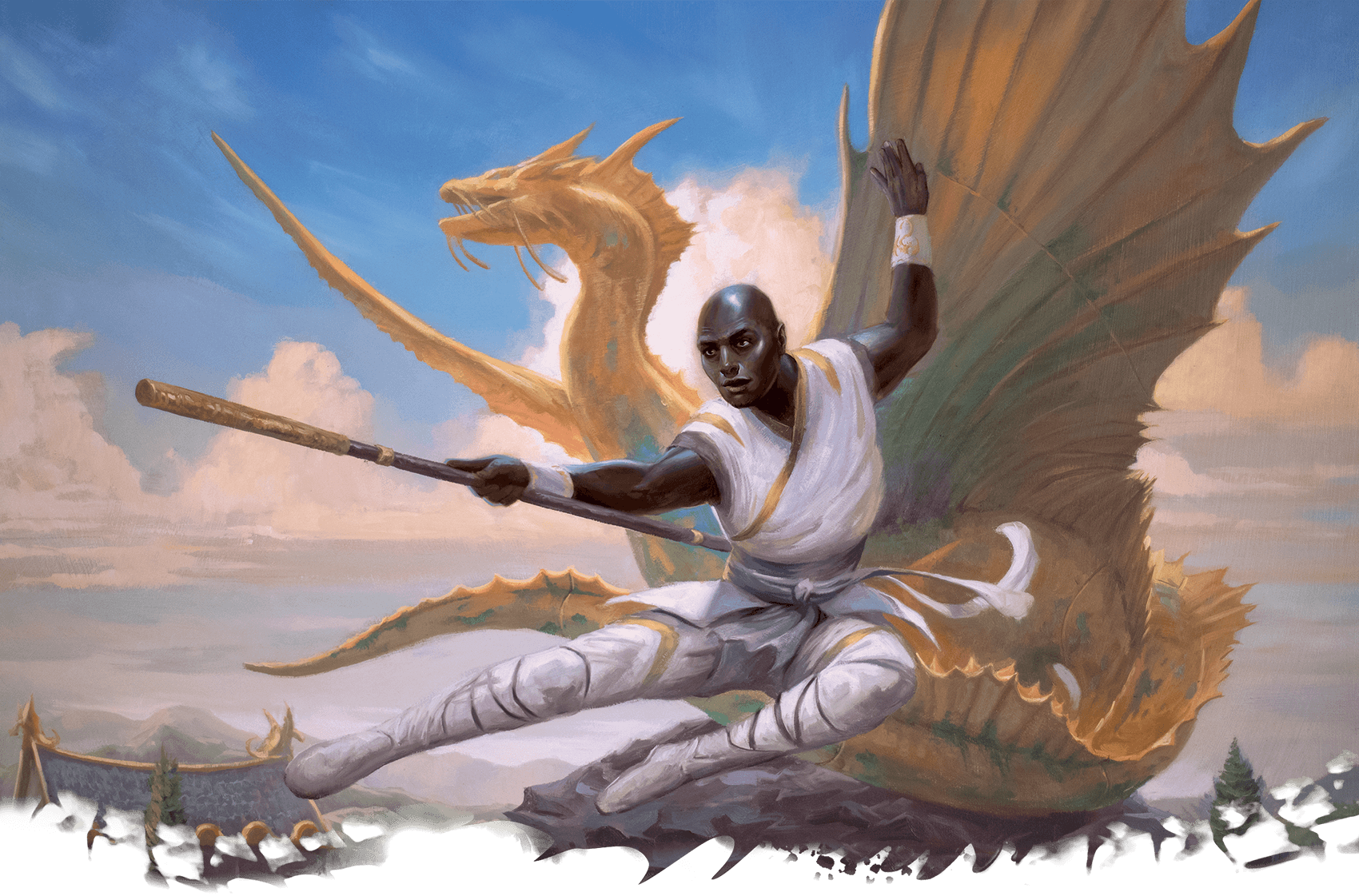
Page 1 - Jessica Nguyen - Astral Self Monk
Pages 2 & 3 - Alex Vanderlinde - The Summit
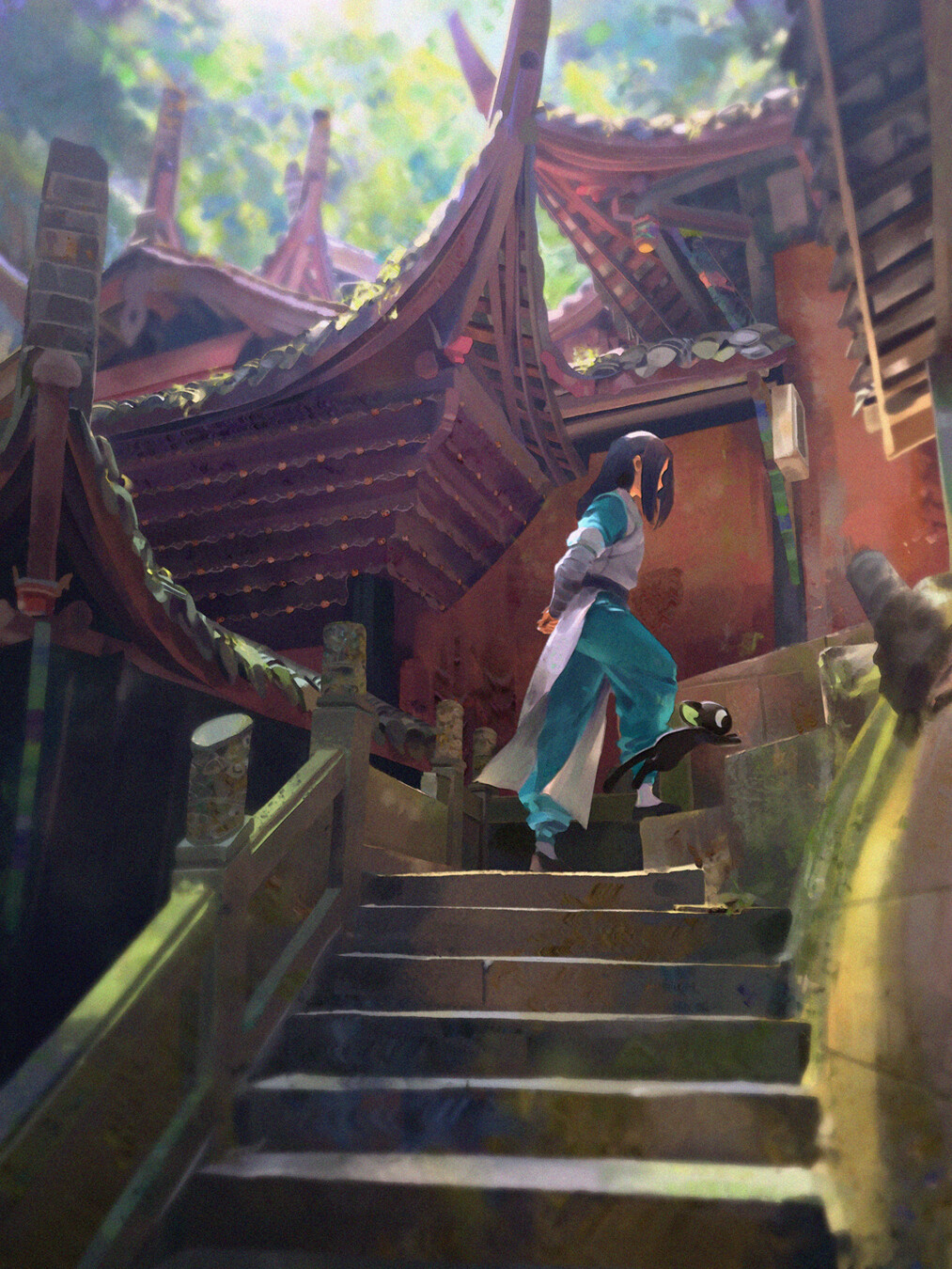
Pages 4 - Phouc Quan - The Flying Monestary
Back - Aliya Chen - 罗小黑战记 Luo Xiaohei