


Artificer: Nanoassembler
The Nanoassembler specialises in making tiny magic contraptions to aid them and their allies. These tiny contraptions, each about the size of a fly, move in sync to create a swarm. While their small size makes them fragile, it also allows them to go undetected during fights. A Nanoassembler’s swarm is extremely versatile, able to affect both creatures and weapons alike.
Tools of the Trade
3rd-level Nanoassembler feature
You gain proficiency with smith’s tools. If you already have this tool proficiency, you gain proficiency with one other type of artisan's tools of your choice.
Nanonassembler Spells
3rd-level Nanoassembler feature
You always have certain spells prepared after you reach particular levels in this class, as shown in the Nanoassembler Spells table. These spells count as artificer spells for you, but they don't count against the number of artificer spells you prepare.
Nanonassembler Spells
| Artificer Level | Spell |
|---|---|
| 3rd | faerie fire, fog cloud |
| 5th | mirror image, web |
| 9th | major image, stinking cloud |
| 13th | hallucinatory terrain, greater invisibility |
| 17th | cloudkill, insect plague |
Nanoswarm
3rd-level Nanoassembler feature
Your tinkering habits have made you an expert in making tiny contraptions, resulting in the creation of a nanoswarm. It is friendly to you and your companions, and it obeys your commands. See this creature's game statistics in the nanoswarm stat block, which uses your proficiency bonus (PB) in several places.
In combat, the nanoswarm shares your initiative count, but it takes its turn immediately after yours. It can move and use its reaction on its own, but the only action it takes on its turn is the Dodge action, unless you take a bonus action on your turn to command it to take another action. That action can be one in its stat block or some other action. If you are incapacitated, the nanoswarm can take any action of its choice, not just Dodge.
If the mending spell is cast on it, it regains 1d6 hit points. The nanoswarm remains until it is reduced to 0 hit points or until you die. When you no longer have a nanoswarm, you can use an action and expend a spell slot of 1st-level or higher to make a new one, using your smith’s tools as the spellcasting focus, where it appears in your space.
At the end of a long rest, you can create a new nanoswarm if you have your smith's tools with you. If you already have a nanoswarm from this feature, the first one immediately perishes.
Nanoswarm
Medium Swarm of Tiny Constructs, Unaligned
- Armor Class 18 (natural armour)
- Hit Points 1 + your Intelligence modifier + your artificer level (the nanoswarm has a number of Hit Dice [d4s] equal to your artificer level)
- Speed 0 ft., fly 60 ft. (hover)
STR DEX CON INT WIS CHA 4 (-3) 18 (+4) 10 (+0) 12 (+1) 10 (+0) 7 (-2)
- Saving Throws Dex +4 plus PB
- Skills Stealth +4 plus PB
- Damage Resistances bludgeoning, piercing, slashing
- Damage Immunities poison
- Condition Immunities charmed, exhaustion, frightened, grappled, paralyzed, petrified, poisoned, prone, restrained, stunned
- Senses darkvision 60 ft., passive Perception 10
- Languages understands the languages you speak
- Challenge — Proficiency Bonus equals your bonus
Constructed Swarm. The nanoswarm can occupy another creature's space and vice versa, and can move through a space as narrow as 1 inch wide without squeezing.
Evasion. If the nanoswarm is subjected to an effect that allows it to make a Dexterity saving throw to take only half damage, it instead takes no damage if it succeeds on the saving throw, and only half damage if it fails. It can't use this trait if it's incapacitated.
Actions
Swarm Attack. Melee Weapon Attack: your spell attack modifier to hit, reach 0 ft., one target you can see in the swarm’s space. Hit 1d4 + PB force damage


Swarming Assimilation
5th-level Nanoassembler feature
Your nanoswarm’s miniature size lets it affect things from the inside. You can command your nanoswarm to assimilate a creature or object when it is in the target’s space. An unwilling creature must succeed on a Constitution saving throw against your spell save DC or be assimilated. As part of the same command, and as a bonus action on each of your turns, your nanoswarm can do one of the following:
Healing Factor. Your nanoswarm continuously regulates a body’s vital functions. The assimilated creature regains 1d4 hit points.
Biological Decay. Your nanoswarm attacks the body from the inside. When you command your nanoswarm to make a Swarm Attack, the attack always hits the target. Additionally, when the creature makes an attack roll, you can use your reaction to give disadvantage on the roll. This also uses your nanoswarm’s reaction.
Item Improvement. Your nanoswarm assimilates with a willing creature’s suit of armour, shield, or simple or martial weapon. When it does, the object gains a +1 bonus to its AC or its attack and damage rolls, respectively.
While your nanoswarm assimilates with a creature or object, it can't use its traits, becomes invisible, shares the target’s space, and moves with the target. It also gains resistance to all damage except thunder and force damage. An attacker that makes an attack roll against an assimilated target also makes an attack against the nanoswarm at the same time. If your nanoswarm is hit, the attacker uses the same damage roll for the assimilated target and the nanoswarm. Your nanoswarm is still affected by area spell effects as normal. You can command your nanoswarm to stop assimilating a target (no action required).
An unwilling creature can repeat the saving throw at the end of each of its turns. On a success, the effect ends, your nanoswarm is no longer invisible, and it appears in the creature’s space. If the target your nanoswarm is assimilating is destroyed, it appears in the target’s space and is no longer invisible. If your nanoswarm dies while assimilating a target, it disappears.
Versatile Swarm
9th-level Nanoassembler feature
You’ve made improvements to the functionality of your nanoswarm, making it more versatile and potent in combat, gaining the following effects:
- Your nanoswarm can deliver an artificer spell you cast that has a range of touch to a creature or object it is assimilating, which also uses its reaction. When you cast in this way, you must be within 60 feet of the assimilated target.
- When a creature you can see uses an assimilated weapon to make an attack, you can use your reaction to give advantage on the attack. This also uses your nanoswarm’s reaction.
- When your nanoswarm hits an assimilated creature with a Swarm Attack, you can force the creature to succeed on a Constitution saving throw against your spell save DC or have it be blinded or deafened (your choice) until the start of your next turn.
Tiny Mastery
15th-level Nanoassembler feature
You are a master at creating tiny contraptions and gain the following benefits:
- Your nanoswarm gains a +2 bonus to Armour Class.
- Your nanoswarm’s Healing Factor is now 1d6. Also, as part of this ability, you can end one effect causing an assimilated creature to be blinded, charmed, deafened, frightened, or poisoned.
- When your nanoswarm makes a Swarm Attack while assimilated with a creature, the damage increases to 2d4. Additionally, when an assimilated creature you can see makes a saving throw, you can use your reaction to have the creature roll with disadvantage. This also uses your nanoswarm’s reaction.
- If a creature is wearing an assimilated armour or wielding an assimilated shield, attack rolls against it are made with disadvantage, as long as the creature is proficient in the armour or shield.
In addition, when your nanoswarm is damaged by an attack or spell and isn’t assimilated, it can use its reaction to disperse, taking 0 damage and ending any harmful effects and conditions. It then reforms at a point within 30 feet of you that you can see. Once your nanoswarm uses this ability, it can’t be used again until it reaches 0 hit points or until you make a new nanoswarm.
It's Your Nanoswarm!
A nanoswarm is a product of precise craftsmanship and clever use of magic; the very definition of being greater than the sum of its parts. When using your artificer spells, think of creative ways you can use your nanoswarm to flavour the casting. For example, when you cast mirror image, you can describe the swarm obscuring your form so you’re harder to hit.

Barbarian: Path of the Damned
Your rage comes from the Nine Hells, the inhospitable plane where devils reside. Perhaps you have created a pact with one of its beings in hopes of serving them after death as a devil yourselves. Maybe you have always known that your anger and resentment came from a nefarious source. Or it may be the case that you hold a psychopathic disdain toward other Humanoids. Whatever its source, you know that your rage has damned you in both this life and the next.
Cursed Tongue
3rd-level Path of the Damned feature
Your fiendish affinity allows you to comprehend the language of the Nine Hells. You can speak, read and write Infernal.
Hellish Fury
3rd-level Path of the Damned feature
You feel the hellish source of your rage consume your soul. You gain resistance to fire damage while you are raging. When you hit a target with a melee weapon attack while raging, your bonus damage is determined by your proficiency bonus rather than the Rage Damage table.
In addition, you can use your reaction to cast the hellish rebuke spell without expending a spell slot (DC equal to 8 + your proficiency bonus + your Constitution modifier). You can cast this spell even while you’re raging. At 10th level in this class, you can cast this spell as a 3rd-level spell. You can use this reaction a number of times equal to your proficiency bonus, and you regain all expended uses when you finish a long rest.
When you enter your rage, your appearance changes to signify its hellish nature. You can choose these attributes or determine them by rolling on the Hell Brand table.
Hell Brand
| d6 | Brand |
|---|---|
| 1 | Ram horns grow on either side of your head and your feet change into hooves. |
| 2 | Red, skeletal wings magically sprout from your back, each one adorning a horn on its ends. They are useless for flying. |
| 3 | A crown of thorns forms from the hair atop your head, causing your scalp to bleed. |
| 4 | You grow a lion’s mane, the tail of a snake, and your body becomes covered in the fur of a bear. |
| 5 | Your arms become bony and malnourished, though you can still carry objects normally. |
| 6 | You grow a goat’s snout and your body becomes covered in brittle scales that peel off on contact. |
Devil's Sight
6th-level Path of the Damned feature
The nature of your rage affects even your senses. You gain darkvision out to a range of 60 feet, and magical darkness doesn't impede your darkvision.
Hell Companion
10th-level Path of the Damned feature
Your association with the Nine Hells has granted you a familiar. Once before the end of your next long rest, you can conduct a 1 hour ritual to summon an imp, which appears in an unoccupied space within 5 feet of you (see its stat block in the Monster Manual). The imp is friendly only to you, and obeys your commands.
In combat, the imp acts during your turn. It can move and use its reaction on its own, but the only action it takes is the Dodge action, unless you take a bonus action on your turn to command it to take another action. That action can be one in its stat block or some other action. If you are incapacitated, the imp can take any action of its choice, not just Dodge.
You can communicate telepathically with the imp as long as you are within 1 mile of it. You can also use an action to see and hear through its senses, and return to your own senses as an action; you are blinded and deafened to your surroundings while using the imp’s senses. While the imp is within 10 feet of you, you share its Magic Resistance trait.
The imp remains until it is reduced to 0 hit points, until you use this feature to summon the imp again, or until you die. Anything the imp was wearing or carrying is left behind when the imp vanishes.
Crafty Killer
14th-level Path of the Damned feature
You are not above employing dirty tactics to get the jump on your foes. When you first enter your rage, you can magically become invisible, along with any equipment you are wearing or carrying, until the start of your next turn.



Bard: College of Sorrows
Bards of the College of Sorrows spread about tales of tragedies, sadness, and betrayal. Such bards may tell eulogies of a figure that was dear to a community, or regale the spectacular downfall of a once revered leader. However, they don’t do so merely for cheap tears. Rather, those of this college believe these stories serve as reminders that life is not always about riding the highs, and that without the sorrows that come about every once in a while, people would not have the strength to push past such difficult times.
Traumatic Display
3rd-level College of Sorrows feature
You’re able to bring up a person’s repressed grief. You know the dissonant whispers spell, and it doesn’t count against the number of bard spells you know. You can cast this spell without using a spell slot a number of times equal to your Charisma modifier (minimum of once), and you regain all expended uses when you finish a long rest.
Whenever you start casting the spell, you can expend a use of Bardic Inspiration and modify the spell so that the creature rolls with disadvantage, or you roll a Bardic Inspiration die and add the number rolled to one damage roll of the spell (your choice).
Disheartened Exchange
3rd-level College of Sorrows feature
Your words can make others feel dispirited. When a creature adds one of your Bardic Inspiration dice to its ability check, attack roll, or saving throw and the roll fails, it can deal psychic damage equal to the number rolled on the die to any number of creatures of its choice within 5 feet of it.
Disarming Words
6th-level College of Sorrows feature
You can start a melancholic performance that can make all who hear it despondent. As an action, you can begin this performance which lasts for up to 1 minute (as if you’re concentrating on a spell). Each creature of your choice within 60 feet of you that can hear you must succeed on a Wisdom saving throw against your spell save DC or be charmed by you for the duration. While charmed in this way, the target has disadvantage on ability checks and attack rolls, and its speed is halved.
Once you use this action, you can't use it again until you finish a short or long rest, unless you expend a use of Bardic Inspiration to use it again.
Laborious Inspiration
14th-level College of Sorrows feature
Your tales tell the need to constantly fight through the troughs of life. When a creature holding one of your Bardic Inspiration dice is reduced to 0 hit points, it can use its reaction to roll the die, expending it and dropping to a number of hit points equal to 1 + the number rolled on the die instead. As part of the same reaction, the creature can move up to its speed and make one weapon attack, adding the number rolled to its attack roll.
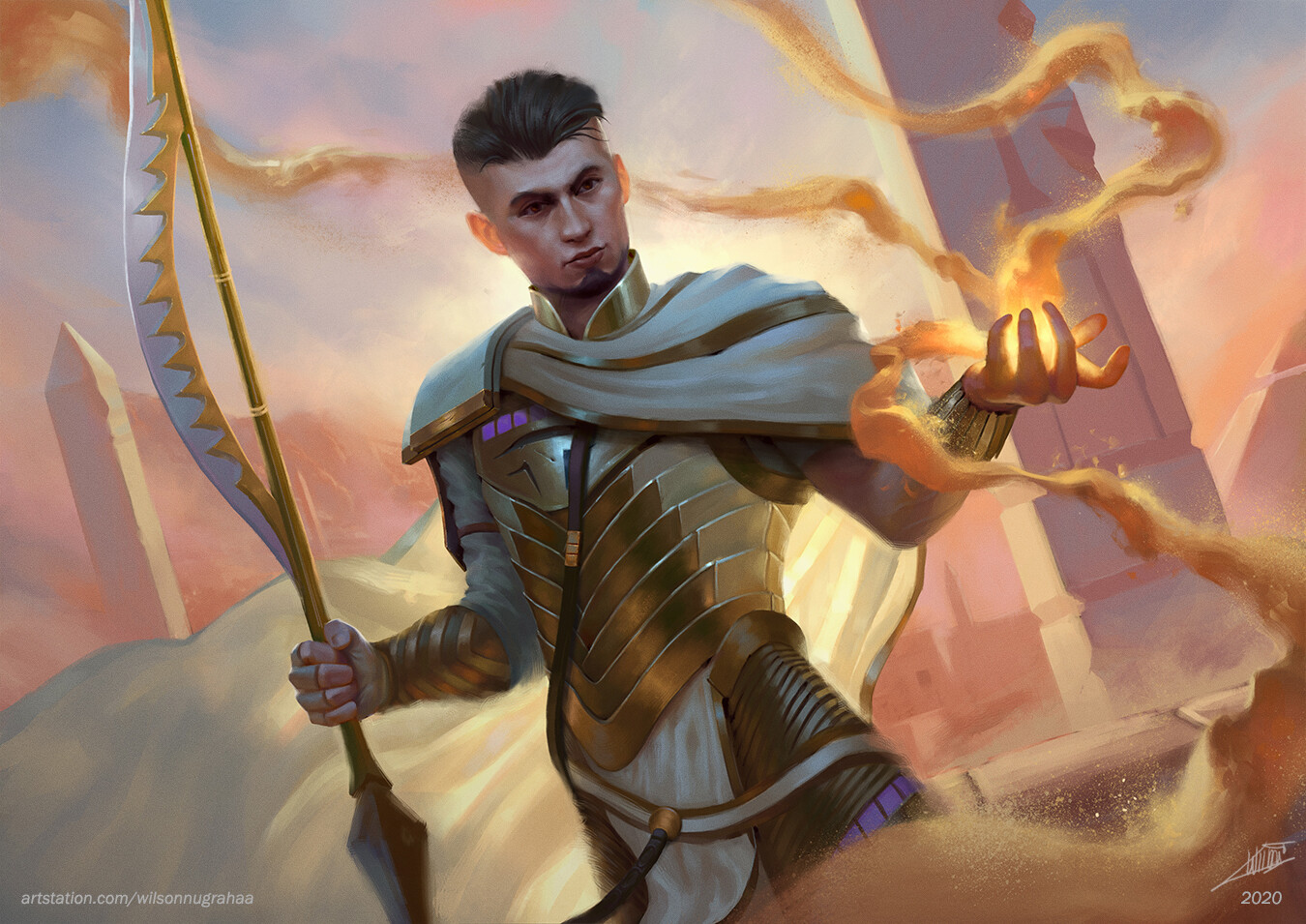


Cleric: Protection Domain
The need to live in safety is a constant in every individual and community. No matter one’s social standing and circumstances, the desire to have protection is a basic right that should never be sought out.
Clerics of the Protection Domain ensure that no one is extorted in exchange for protection, and that every person is afforded a measure of safety. These clerics bestow their divine power on those who need it most, providing shelter and security to any who ask.
Protection Deities
| Example Deity | Pantheon |
|---|---|
| Athena | Greek |
| The Silver Flame | Eberron |
| St. Cuthbert | Greyhawk |
| Tyr | Forgotten Realms |
Domain Spells
1st-level Protection Domain feature
You gain domain spells at the cleric levels listed in the Protection Domain Spells table. See the Divine Domain class feature for how domain spells work.
Protection Domain Spells
| Cleric Level | Spell |
|---|---|
| 1st | compelled duel, sanctuary |
| 3rd | aid, warding bond |
| 5th | glyph of warding, protection from energy |
| 7th | death ward, Mordenkainen's private sanctum |
| 9th | mass cure wounds, wall of force |
Bonus Proficiency
1st-level Protection Domain feature
You gain proficiency with heavy armour.
Fighting Style
1st-level Protection Domain feature
You adopt a style of fighting as your specialty. Choose one of the following options. You can't take a Fighting Style option more than once, even if something in the game lets you choose again.
Defense. While you are wearing armour, you gain a +1 bonus to AC.
Interception. When a creature you can see hits a target, other than you, within 5 feet of you with an attack, you can use your reaction to reduce the damage the target takes by 1d10 + your proficiency bonus (to a minimum of 0 damage). You must be wielding a shield or a simple or martial weapon to use this reaction.
Protection. When a creature you can see attacks a target other than you that is within 5 feet of you, you can use your reaction to impose disadvantage on the attack roll. You must be wielding a shield.
Channel Divinity: Faithful Shield
2nd-level Protection Domain feature
You can use your Channel Divinity to bestow divine protection. As a bonus action, you present your holy symbol, whisper a blessing, and choose one creature you can see within 30 feet of you. The chosen creature gains a +2 bonus to AC, which lasts for 1 minute. A creature can only be affected by one instance of this feature at a time, and the effect ends early if the creature is hit by a critical hit.
Magic Barrier
6th-level Protection Domain feature
You can weave magical wards into your magic to shield others from harm. When you cast a spell of 1st-level or higher that restores hit points to a creature, or an abjuration spell of 1st-level or higher, you can give the target of the spell temporary hit points equal to your cleric level.
You can use this feature a number of times equal to your Wisdom modifier (minimum of once), and you regain all expended uses when you finish a long rest.
Divine Strike
8th-level Protection Domain feature
You gain the ability to infuse your weapon strikes with divine energy. Once on each of your turns when you hit a creature with a weapon attack, you can cause the attack to deal an extra 1d8 radiant damage to the target. When you reach 14th level, the extra damage increases to 2d8.
Holy Aegis
17th-level Protection Domain feature
You can reduce the power of incoming damage. When a creature you can see within 60 feet of you is damaged by an attack or harmful spell, you can use your reaction to halve that instance of damage.
You can use this feature a number of times equal to your Wisdom modifier (minimum of once), and you regain all expended uses when you finish a long rest.


Druid: Circle of Golemancy
Druids of the Circle of Golemancy are able to create golems made of natural materials by offering a portion of their own life force. These formidable golems, under complete control of the druid, are used to protect the environment that is put under its charge.
Circle Spells
2nd-level Circle of Golemancy feature
Your studies into the creation of golems has granted you access to some spells when you reach certain levels in this class, as shown on the Circle of Golemancy Spells table.
Once you gain access to one of these spells, you always have it prepared, and it doesn’t count against the number of spells you can prepare each day. If you gain access to a spell that doesn’t appear on the druid spell list, the spell is nonetheless a druid spell for you.
Circle of Golemancy Spells
| Cleric Level | Spell |
|---|---|
| 2nd | armor of Agathys, earth tremor |
| 3rd | Maxmillian’s earthen grasp, heat metal |
| 5th | elemental weapon, protection from energy |
| 7th | fabricate, summon construct |
| 9th | cone of cold, transmute rock |
Golem Creation
2nd-level Circle of Golemancy feature
Using your own life energy, you can transmute material to create a living golem. As an action, you can expend a use of your Wild Shape to summon the golem, rather than transforming into a beast form.
The golem appears in an unoccupied space of your choice that you can see within 30 feet of you. When you summon the golem, you reduce any number of hit points you have remaining (minimum of 1 hit point), and the golem appears with 5 + the same amount of hit points. The summoning fails if you don’t expend any hit points.
The golem is friendly to you and your companions and obeys your commands. See this creature's game statistics in the Transmuted Golem stat block, which uses your proficiency bonus (PB) in several places. You must also choose a material: Earth, Gem, or Ice. The chosen material determines certain traits in its stat block.
In combat, the golem shares your initiative count, but it takes its turn immediately after yours. It can move and use its reaction on its own, but the only action it takes on its turn is the Dodge action, unless you take a bonus action on your turn to command it to take another action. That action can be one in its stat block or some other action. If you are incapacitated, the golem can take any action of its choice, not just Dodge.
During your turn, you can reduce any number of hit points you have remaining and the golem gains the same amount (no action required). The golem lasts for 1 hour, until it is reduced to 0 hit points, until you use this feature to summon the golem again, or until you die.

Transmuted Golem
Medium Construct, Unaligned
- Armor Class 18 (natural armour)
- Hit Points 5 + the number of hit points used to summon the golem
- Speed 30 ft.
STR DEX CON INT WIS CHA 16 (+3) 10 (+0) 16 (+3) 6 (-2) 10 (+0) 4 (-3)
- Saving Throws Str +3 plus PB, Con +3 plus PB
- Damage Resistances lightning (Earth only); cold (Ice only); psychic (Gem only)
- Damage Immunities poison
- Condition Immunities charmed, exhaustion, frightened, incapacitated, paralyzed, petrified, poisoned
- Senses darkvision 60ft., passive Perception 10
- Languages understands the languages you speak
- Challenge — Proficiency Bonus equals your bonus
Immutable Form. The golem is immune to any spell or effect that would alter its form.
Aftershock (Earth Only). The first time the golem moves within 5 feet of a creature it can see, it can force the creature to make a Dexterity saving throw against your spell save DC. On a failed save, the target takes 1d4 bludgeoning damage and falls prone. The golem can also force a creature that starts its turn within 5 feet of the golem to make this saving throw.
Actions
Slam. Melee Weapon Attack: your spell attack modifier to hit, 5 ft., one target you can see. Hit: 1d10 + PB bludgeoning damage
Ice Beam (Ice Only). Ranged Weapon Attack: your spell attack modifier to hit, 120 ft., one target you can see. Hit: 1d8 + PB cold damage
Reactions
Refractive Exterior (Gem Only). When the golem is damaged by an attack or spell that deals acid, cold, fire, lightning, or thunder damage, it gains resistance to that damage type until the start of your next turn.
Adaptive Transmutation
6th-level Circle of Golemancy feature
Your studies into the creation of golems have you adopt some of its properties. While you have your golem summoned, you have resistance and immunity to the same damage types it has resistance and immunity to. You also gain the following benefits based on the type of golem summoned:
- Earth. When you cast a spell on a creature, you can move it 5 feet to an unoccupied space of your choice if the creature is willing, the spell hits it with an attack, or it fails a saving throw against the spell.
- Gem. When the golem is first summoned in this form, you gain temporary hit points equal to your druid level, which lasts until the golem disappears. In addition, you gain the ability to use Refractive Exterior on yourself using your reaction.
- Ice. When a creature hits you with an attack roll, you can deal 1d8 cold damage to it.
In addition, your golem can make two attacks if you order it to take the Attack action. When you reach 14th level in this class, the golem can make three attacks.
Golem Advancements
10th-level Circle of Golemancy feature
You’ve made several improvements into your golem’s design and function. The golem gains additional benefits as shown below:
- Earth. The golem has tremorsense out to a range of 60 feet, and its Aftershock deals 1d6 bludgeoning damage to a creature on a failed save.
- Gem. The golem also has resistance to necrotic or radiant damage (your choice). In addition, when the golem uses its Refractive Exterior, it can also turn invisible until the start of your next turn.
- Ice. When the golem hits a creature with its Ice Beam, it can force the creature to make a Constitution saving throw against your spell save DC. On a failed save, the creature can't take reactions and has its speed reduced to 0, as it is hindered by ice. The affected creature, or another within its reach, can use an action to try and break away the ice by succeeding on a Strength check against your spell save DC.
Moreover, at the start of each of your turns while your golem is summoned, you can change its material type into another.
Hardened Skin
14th-level Circle of Golemancy feature
Your biology has further transformed to display more golem attributes. While your golem is summoned, you have resistance to bludgeoning, piercing, and slashing damage from nonmagical attacks.


Fighter: Ghost Operative
The Ghost Operative is a fighter that excels in covert operations, possessing exceptional abilities of espionage
and subterfuge. Masters of stealth, these fighters are
usually deployed as part of clandestine operations
where institutions can exercise plausible deniability.
In events of alleged kidnappings and assassinations,
the involvement of a Ghost Operative is always
suspected, but can never be fully proven.
Discreet Step
3rd-level Ghost Operative feature
You never let yourself out of the shadows. You can use
the Hide action as a bonus action if you are wearing no armour or only wearing light armour.
Additionally, you gain proficiency in the Stealth skill.
Precise Blow
3rd-level Ghost Operative feature
Your choice of lightweight weapons allow you to accurately strike at weak points. Once per turn, when you hit a creature with a weapon that has the light property or with an unarmed strike, you can roll an additional damage die.
Silent Maneuvers
7th-level Ghost Operative feature
You conduct your missions under the veil of silence, gaining the following benefits.
Gagging Order. You capture key persons of interest as part of your missions. While you’re grappling a creature, you can move up to your full speed. You can also use a bonus action to silence a creature that is grappled by you using a free hand. You must use a bonus action on subsequent turns to keep the creature silenced.
Ambush Retaliation. You strike quickly when found. When you’re hidden and a creature finds you, you can use your reaction to make one weapon attack against it, with advantage if the weapon has the light property or if you make an unarmed strike. If this attack reduces the creature’s hit points to 0, you are still considered hidden.
Lurker
10th-level Ghost Operative feature
You are used to being in clandestine missions and fight accordingly. When you are hidden from a creature and you miss it with a weapon attack roll, making the attack doesn’t reveal your position so long as you are still in an obscured space and the attack was made with a weapon that has the light property or if it was an unarmed strike. This benefit also applies if you fail a contested ability check to grapple a target, or if you hit a target with a weapon that has the aforementioned properties and reduce its hit points to 0 with that attack.
Target Extraction
15th-level Ghost Operative feature
You can effectively subdue a target you’ve captured. A creature that is grappled by you has disadvantage on its attack rolls. You can also use an action to force a creature you’re grappling to succeed on a Constitution saving throw (DC equal to 8 + your proficiency bonus + your Strength modifier) or fall unconscious for 1 minute or until it takes any damage.
In addition, you can attempt to hide while grappling a creature. However, if the creature can still speak or isn’t unconscious, you make this roll with disadvantage. Wisdom (Perception) checks made to find you also have advantage while you’re hiding in this way.
Execution
18th-level Ghost Operative feature
Your kills are clean and leave little mess. While you’re grappling a creature and you hit it with a melee weapon attack using a weapon that has the light property or an unarmed strike, you can force it to make a Constitution saving throw. The DC is the attack roll used to hit the creature. On a failed save, the creature dies if it has a number of hit points no higher than ten times your Strength modifier. If it has more hit points than this limit, it instead takes bludgeoning damage equal to your Strength score and is paralyzed for 1 minute. The creature can repeat the saving throw at the end of each of its turns and whenever it takes damage, ending the paralysis on a success.
Once you use this feature, you can’t do so again until you finish a long rest.

Monk: Way of Immortality
Monks of the Way of Immortality are devoted to the concept of eternal life. They use their ki to help extend their own natural lifespan well past what would normally be possible whilst still keeping their body in peak physical condition. Monks of this monastic tradition will spend their entire unending lives devoted to mastery of its techniques.
Recovering Strike
3rd-level Way of Immortality feature
You have learned techniques that allow you to quickly recover your body. Once on each of your turns, when you hit a creature with your unarmed strike or monk weapon, you can recover a number of hit points equal to half the damage dealt.
When you reach 11th level in this class, you can use this feature twice on your turn.
Ki Recovery
6th-level Way of Immortality feature
You are able to harness your ki’s energy to restore your life force. Whenever you spend ki points, you regain a number of hit points equal to the number of ki points spent.
Purity of Life
11th-level Way of Immortality feature
You can draw upon your ki to temporarily bolster your life force. Immediately after you take the Attack action on your turn, you can spend 2 ki points to cast false life as a bonus action.
You can spend additional ki points to cast false life as a higher-level spell. Each additional ki point you spend increases the spell's level by 1. The maximum number of ki points (2 plus any additional points) that you can spend on the spell equals a third of your monk level.
Everlasting Body
17th-level Way of Immortality feature
You have gained the ability to use your ki to extend your life. As an action, you can extend your lifespan by a number of years equal to the amount of ki points spent. Ki points expended in this way can’t be recovered until the end of a long rest.
In addition, you ignore the time limit of spells that have the sole effect of restoring you to life (but not undeath), such as the raise dead spell. Once you are brought back to life in this way, it can’t be replicated.
Untiring Physique
17th-level Way of Immortality feature
Your ki is able to passively heal your wounds. At the start of each of your turns, you regain hit points equal to 5 + your Wisdom modifier if you have no more than half of your hit points left. You don't gain this benefit if you have 0 hit points.


Paladin: Oath of Revelry
The Oath of Revelry seeks to uphold peace through joy and mirth. Those that join this oath know that maintaining peace in communities does not stop at mere protection of a city wall or border, but also through the held belief and morale that one can live and prosper inside them as well.
Paladins that are a part of this oath always look at the bright side of a situation, always ensuring those around them can draw strength from their relentless optimism.
Tenets of Revelry
A paladin who assumes the Oath of Revelry lifts the spirits of communities and keeps morale high among their comrades.
Spread Merriment. A victory that feels like defeat is no victory at all. You must ensure the people's joy.
Be in High Spirits. A cheerful gait and a well placed smile can heal the most weathered hearts.
Find the Bright Side. There is always a silver lining to draw strength from in any situation.
Oath Spells
3rd-level Oath of Revelry feature
You gain oath spells at the paladin levels listed in the Oath of Revelry table. See the Sacred Oath class feature for how oath spells work.
Oath of Revelry Spells
| Paladin Level | Spell |
|---|---|
| 3rd | charm person, Tasha's hideous laughter |
| 5th | enlarge/reduce, suggestion |
| 9th | haste, fly |
| 13th | freedom of movement, Mordenkainen's private sanctum |
| 17th | seeming, wall of light |
Channel Divinity
3rd-level Oath of Revelry feature
You gain the following Channel Divinity options. See the Sacred Oath class feature for how Channel Divinity works.
Captivating Persona. As a bonus action, you can use your Channel Divinity to sway others towards you. For the next 10 minutes, whenever you make an ability check that uses Charisma, you can treat a d20 roll of a 9 or lower as a 10.
Revelrous Smite. As a bonus action, you can use your Channel Divinity to imbue your smites with joyful energy. For the next 1 minute, when you use your Divine Smite, the attack deals an extra 1d6 psychic damage and the creature must succeed on a Wisdom saving throw against your spell save DC or be charmed by you until the start of your next turn.
Aura of Excitement
7th-level Oath of Revelry feature
You emit an aura of merriment that has you constantly moving. You have advantage on Dexterity saving throws and on saving throws against falling prone, as do creatures of your choice within 10 feet of you, as long as you aren’t incapacitated.
When you reach 18th level in this class, the range of the aura increases to 30 feet.
Joyful Dance
15th-level Oath of Revelry feature
You convince others to join in celebration. You can cast Otto's irresistible dance without expending a spell slot. If the target is inside your Aura of Excitement, it has disadvantage on the saving throw against the spell.
You can use this feature a number of times equal to your Charisma modifier (minimum of once), and you regain all expended uses when you finish a long rest.
Party Person
20th-level Oath of Revelry feature
You uplift everyone’s spirits and remind them of good times. As a bonus action, you gain the following benefits for 1 minute:
- As part of the same bonus action, and as a bonus action on your subsequent turns, you can use the Dash or Dodge action. Your walking speed also increases by 10 feet.
- When you or a creature of your choice inside your Aura of Excitement makes a Dexterity saving throw to take only half damage, it instead takes no damage if it succeeds on the saving throw, and only half damage if it fails.
- Your speed can’t be reduced in any way. You are also immune to being frightened, restrained, or paralyzed. If you are already affected by one of these conditions when you use this feature, the effect ends for you.
Once you use this feature, you can't use it again until you finish a long rest, unless you expend a 5th-level spell slot to use it again.


Ranger: Equinox
The Equinox is a ranger that is in tune with the changing of the seasons. This innate sense for keeping track of these seasonal shifts allows them to be more adaptable and aware of their surroundings. Such rangers are extremely versatile in that they can shift their hunting techniques to suit the time of day or the current season.
Seasonal Precipice
3rd-level Equinox feature
As a ranger that keeps track of the seasons, you are able to change your skillsets accordingly. Whenever you finish a long rest, you choose whether you want the Vernal or Autumnal version of each feature in this subclass.
Equinox Magic
3rd-level Equinox feature
You learn an additional spell when you reach certain levels in this class, as shown in the Equinox Spells table. You can choose from the Vernal or Autumnal list, and can change this list at the end of a long rest. When you change your spell list, you learn the spells from the new list and forget the spells from the previous list.
Each spell counts as a ranger spell for you, but it doesn't count against the number of ranger spells you know.
Equinox Magic
| Ranger Level | Vernal Spell | Autumnal Spell |
|---|---|---|
| 3rd | bless | sleep |
| 5th | branding smite | moonbeam |
| 9th | create food and water | spirit guardians |
| 13th | find greater steed | death ward |
| 17th | dawn | control winds |
Rise and Set
3rd-level Equinox feature
You observe whether the days hold more or less sunlight as part of your combat preparations.
- Vernal. The first time you hit a creature with a weapon attack, you regain a number of hit points equal to your Wisdom modifier (minimum of 1 hit point). You also ignore disadvantage when making an attack roll against creatures in bright light, unless they are hidden from you.
- Autumnal. When you attack a creature that is in dim light or darkness, you can use a bonus action to make the attack roll with advantage instead of disadvantage. If the attack hits, the target takes an extra 1d6 damage of the weapon’s type. At 11th level in this class, this becomes a 1d8.
Equitorial Senses
7th-level Equinox feature
You can instinctually trace and locate the sun’s path and positioning in the sky, giving you superior tracking abilities.
- Vernal. You have advantage on ability checks that use Wisdom, and you gain a +5 bonus to your passive Perception score. In addition, you can see up to 1 mile away with no difficulty, able to discern even fine details as though looking at something no more than 100 feet away from you, and dim light doesn't impose disadvantage on your Wisdom (Perception) checks.
- Autumnal. You gain advantage on Wisdom saving throws, and opportunity attacks made against you are made with disadvantage. If you are hit by an opportunity attack, you gain a +2 bonus to AC until the end of your current turn. You also gain the ability to see in normal and magical darkness out to a range of 60 feet.


Shifting Seasons
7th-level Equinox feature
You can adapt to the minute changes each day brings. As an action, you can expend a spell slot of any level and spend 1 minute in silent meditation (as if you were concentrating on a spell). At the end of the duration, you can choose one of your features from this subclass and change it to its other version. If you choose your Equinox Magic feature and have an ongoing effect from a spell in the Equinox Spells table,
it lasts for the remainder of the duration (as normal) or
until dispelled.
Once you use this feature, you can't do so again until you finish a long rest.
Mirrored Horizon
11th-level Equinox feature
You adopt techniques that imitate the two equal halves of the equinox.
- Vernal. Once on your turn, when you take the Attack action and miss with a weapon attack, you can immediately use a bonus action to make another weapon attack with advantage. If you hit, you deal extra damage equal to your Wisdom modifier (minimum of 1 damage). You can use this feature a number of times equal to your proficiency bonus, and you regain all expended uses when you finish a long rest.
- Autumnal. When you cast a spell with a range of touch and which only affects one creature or object, you can choose another creature or object you can see within 30 feet of the original target to be affected by the spell. If the spell requires concentration, the spell ends on you and the target if you lose concentration. You can use this feature a number of times equal to your Wisdom modifier (minimum of once), and you regain all expended uses when you finish a long rest.
Spring and Autumn
15th-level Equinox feature
You draw further power from the changing of the seasons to protect yourself.
- Vernal. You regain a number of hit points equal to your Wisdom modifier (minimum of 1 hit point) at the start of each of your turns if you are touching a natural earthen surface (such as soil, grass, or rock). You don't gain this benefit if you have 0 hit points or if you have at least half of your hit points.
- Autumnal. When you take damage, you can use your reaction to teleport to an unoccupied space you can see within 30 feet of you. You also gain resistance to all damage, including the triggering instance of damage, until the end of your next turn. You can use this feature a number of times equal to your Wisdom modifier (minimum of once), and you regain all expended uses when you finish a long rest.


Rogue: Marauder
The Marauder is a brutish rogue that looks out only for itself. Such a rogue will not hesitate use innocents as collateral to protect themselves if need be. For this rogue, concepts such as pride, honour, and fairness mean nothing in the heat of combat. The only thing that does matter is who is left alive at the end of it all.
Heavy Training
3rd-level Marauder feature
You gain proficiency in medium armour and two martial melee weapons of your choice. You can use the chosen weapons to deal Sneak Attack damage, even if they lack the finesse property, as long as you meet the other requirements for the Sneak Attack.
Dirty Fighting
3rd-level Marauder feature
You’re not above using crude tactics to gain the upper hand. You can attempt to grapple a target as a bonus action.
You also gain an additional way to use your Sneak Attack; you don’t need advantage on your attack roll to use Sneak Attack against a creature if you are grappling it, and you don’t have disadvantage on the attack roll. All the other rules for Sneak Attack still apply to you.
Butchering Blow
3rd-level Marauder feature
When you reveal yourself to your quarry, you make sure to land a killing blow. When you roll for Sneak Attack damage, you can choose to reroll a number of Sneak Attack dice up to your Strength modifier (minimum of one die), and you must use the new rolls.
Sneaky Savage
9th-level Marauder feature
You move silently even when wearing bulkier equipment. If an armour you’re wearing normally imposes disadvantage on Dexterity (Stealth) checks, it no longer does for you.
Additionally, if you are hidden from a creature and attempt to grapple it, you can do so with advantage.
Body Shield
13th-level Marauder feature
You don’t hesitate to put others in the line of fire to survive. When an attacker you can see hits you with an attack while you’re grappling a creature, you can use your reaction to take half the damage from the attack and make the grappled creature take the other half.
Deadly Grip
17th-level Marauder feature
A person is only free of your grasp when they're dead. When you hit a creature you’re grappling, you can make that attack a critical hit. You must finish a long rest before you can attack in this way again.
Additionally, your attack rolls against a grappled creature can’t be affected by disadvantage.



Sorcerer: Brightburn
The origin of your magic manifests itself in fiery heat and dazzling light. Through your magic, you can make yourself the embodiment the sun. The possession of such raw magical power usually lays dormant until a spark ignites the magic, and these moments are often eruptive and explosive in their own right.
Such sorcerers evoke tremendous strength and power. A Brightburn may display strong bloodties to fire elementals, or may have been blessed with the boon of fire by a dragon. You may have also acquired your powers through a rare cosmic event, like a solar flare.
Brightburn Spells
1st-level Brightburn feature
You learn additional spells when you reach certain levels in this class, as shown on the Brightburn Spells table. Each of these spells counts as a sorcerer spell for you, but it doesn't count against the number of sorcerer spells you know.
Whenever you gain a sorcerer level, you can replace one spell you gained from this feature with another spell of the same level. The new spell must be an evocation or illusion spell from the sorcerer, warlock, or wizard spell list.
Brightburn Spells
| Sorcerer Level | Spell |
|---|---|
| 1st | chromatic orb, guiding bolt |
| 3rd | scorching ray, flaming sphere |
| 5th | daylight, fireball |
| 7th | fire shield, sickening radiance |
| 9th | dawn, flame strike |
Sunrise Form
1st-level Brightburn feature
You are able to emit resplendent light from yourself. As a bonus action, you can shed bright light in a 20-foot radius and dim light for an additional 20 feet; this light is sunlight. Any magical darkness within the light is dispelled, and hostile creatures within the bright light have disadvantage on attack rolls made against you and your allies. This effect lasts for 1 minute or until you dismiss it (no action required).
Once you use this bonus action, you can't use it again until you finish a long rest. When you reach 2nd level in this class, you can spend 2 sorcery points to use this feature again.
Aura of the Sun
6th-level Brightburn feature
Your light can be a gentle warmth that soothes or a fiery blaze that harms. As part of the bonus action you take to enter your Sunrise Form, or as a bonus action on your subsequent turns, you can spend 2 sorcery points to intensify the light you emit. At the start of each of your turns, you can choose to deal fire damage or regain hit points equal to your proficiency bonus to any number of creatures you can see inside the bright light (your choice).
Sun Child
6th-level Brightburn feature
Your magic gives you a tolerance to blistering heat. While you are in your Sunrise Form, you gain resistance to fire and radiant damage.
Booster Flare
14th-level Brightburn feature
You spew out dangerous wisps of fire in order to take flight. As a bonus action, or as part of the bonus action you take to enter your Sunrise Form, you can spend 2 sorcery points to gain a flying speed equal to your walking speed. Using this flying speed doesn’t provoke opportunity attacks, and it lasts until the end of your next short or long rest. It ends early if you're incapacitated, you die, or you dismiss it as a bonus action.
When you use your flying speed to move within 5 feet of a creature or an object that isn't being worn or carried, it takes fire damage equal to half your sorcerer level from your trail of heat. A creature or object can take this damage only once during a turn.
Blazing Luminescence
18th-level Brightburn feature
You body acts as a catalyst to unleash the full power of the sun. While in your Sunrise Form, your spells and effects that deal fire or radiant damage ignores resistance, and treats immunity to fire and radiant damage as resistance to that damage.
In addition, when you cast a spell that deals fire or radiant damage, you can immediately use your bonus action to deal maximum damage instead of rolling (you needn’t be in your Sunrise Form to use this effect). Once you use this bonus action, you can't use it again until you finish a long rest, unless you spend 6 sorcery points to use it again.
Warlock: Beloved
You have made a pact with a being that you share a significant fondness with. Despite the gulf that stands between the two of you in terms of power and physical distance, the dynamic between you and your patron is unique among warlocks. You both treat each other as one would an important friend or significant other. A common goal warlocks have with such patrons are to be able to meet each other and be finally united, though there are always subtle nuances that only you and your patron share.
You decide what the finer details of your relationship with your patron are, or you can roll for a possible reason in the Beloved Motivations table.
Beloved Motivations
| d6 | Brand |
|---|---|
| 1 | Your patron was previously a mortal like yourself, and you both shared a special relationship in life. |
| 2 | Your patron will undoubtedly outlive you. You both are trying to find a solution to this problem. |
| 3 | You and your patron are supposed to be sworn enemies, but your feelings for each other have overcome that. The same can't be said for your respective kinds. |
| 4 | Your patron is a reincarnation of a loved one who has died, though they don't know it. All they see is your unwavering loyalty. |
| 5 | You had originally owed your patron a debt, though your actions now go beyond simple repayment. |
| 6 | Your family has served this patron for generations. They seem to have developed a particular interest in you. |
Expanded Spell List
1st-level Beloved feature
The Beloved lets you choose from an expanded list of spells when you learn a warlock spell. The following spells are added to the warlock spell list for you.
Beloved Expanded Spells
| Spell Level | Spells |
|---|---|
| 1st | ceremony, sanctuary |
| 2nd | aid, warding bond |
| 3rd | catnap, feign death |
| 4th | divination, Mordenkainen's private sanctum |
| 5th | creation, Rary’s telepathic bond |
Protective Veil
1st-level Beloved feature
Your loved one will always try to shield you from harm. When you take damage, you can use your reaction to halve the damage taken.
Once you use this feature, you can't use it again until you finish a short or long rest.



Devoted Body
6th-level Beloved feature
The devotion you show for your patron ensures you never stray from them. You are immune to being charmed.
In addition, your commitment to your patron manifests as further protection. As a bonus action, you can give yourself an AC of 13 + your Charisma modifier for 1 hour. You must finish a long rest before you can use this bonus action again.
Sweetheart's Shelter
10th-level Beloved feature
The power of your patron is able to protect you from harm. At the end of a long rest, you gain the effect of a sanctuary spell that lasts until the start of your next long rest (the spell can end early as normal). The saving throw DC for the spell is your spell save DC.
Loved One's Blessing
14th-level Beloved feature
Your love and devotion for your patron gives them the ability to temporarily merge with you. You can use an action to gain the following benefits for 1 minute:
- You have resistance to all damage.
- You regain hit points equal to 1d6 + your Charisma modifier if you end your turn in combat with fewer than half of your hit points remaining.
- If a creature hits you with an attack or harmful spell, it takes radiant damage equal to your Charisma modifier (minimum of 1 damage).
- When you use your Protective Veil feature, you can use your reaction to nullify all damage taken. This doesn’t negate any other effects that might accompany the attack or spell.
Once you use this feature, you can't use it again until you finish a long rest.



Wizard: Potion Master
The Potion Master specialises in making various magical concoctions infused with their spells. This arcane tradition requires a wizard to be adept both at spellcasting and alchemy.
Alchemical Savant
2nd-level Potion Master feature
You have an innate understanding of alchemical concepts. The gold and time you must spend to create a potion is halved.
You also gain proficiency in alchemist’s supplies and the herbalism kit.
Potion Craft
2nd-level Potion Master feature
You’ve mastered basic alchemical formulas. When you finish a long rest, you can use alchemist’s supplies or a herbalism kit, touching an empty flask to create a potion of healing. You can create a number of these potions up to your proficiency bonus. A potion made in this way loses its potency at the end of your next long rest. When you reach 10th level in this class, you can expend two uses of this feature to create a potion of greater healing.
Formulaic Notes
6th-level Potion Master feature
You take meticulous notes on the processes of creating potions. You can write down the steps needed to make a potion you have seen and ingested before into your spellbook. Copying down the steps required to make a potion requires
2 × the normal amount of gold and time for its respective rarity. Once you have written down the steps, creating that potion takes up a quarter of the gold and time required, rather than half.
In addition, when you craft a potion that emulates the effects of a spell (such as a potion of mind reading), you can have it use your spell save DC.
Magical Infusions
10th-level Potion Master feature
You’re able to infuse the potions you make with your own magic. You can cast a wizard spell of 4th-level or lower that has a range of self into a potion of healing you have made with your Potion Craft feature. When you do, a creature that drinks the potion also activates the spell. The spell uses your spell attack bonus and save DC, and the spell treats the creature who drank the potion as the caster for all other purposes.
Alchemical Mastery
14th-level Potion Master feature
Your experimentation with all sorts of potions have made you resistant to its detrimental effects. You gain resistance to acid damage and poison damage, and you are immune to the poisoned condition.
In addition, when a creature drinks a potion of healing that you created, it can treat a 1 rolled when regaining hit points as a 2.
Creating Potions and Magic Items
You can find rules on crafting magic items in
page 128 of Xanathar's Guide to Everything. Consumables like potions and scrolls take half the gold and time required to craft compared to normal magic items. Therefore, when you use the Alchmeical Savant feature, the gold and time spent is halved again.Potions of healing follow different crafting gold and time costs compared to other consumables. The table for creating a potion of healing can be found in page 130 of Xanathar's Guide to Everything. So when making potions of healing, or inscribing steps for it into your spellbook using Formulaic Notes, the gold and time cost is taken from this table instead.
Thank You For
Your Support!
Made by /u/Stuffies_12 (#Stuffies12#7807). Created in GM Binder.
A retrospective collection of my homebrewing journey thus far. It's been around 1.5 years since my homebrewing journey began and I never would have thought I would make it this far. I wouldn't have been able to continue doing so without all your support, so a sincere and generous thank you from me to you. Here's to another year of homebrewing!
Nanoassembler - Path of the Damned
College of Sorrows - Protection Domain
Circle of Golemancy - Ghost Operative
Way of Immortality - Oath of Revelry
Equinox - Marauder - Brightburn
Beloved - Potion Master

Art Credits
-
Front cover - Drafna , Founder of Lat-Nam by lie setiawan Prescott.
-
Artificer - Magic: The Gathering Cards by Darren Tan
-
Barbarian - Nihil, Tiefling Barbarian by WingBuffet.
-
Cleric - Basri, Devoted Paladin by wilson nugraha .
-
Fighter - Masked Blackguard by Brian Sola
-
Paladin - Join the Dance by Raoul Vitale
-
Ranger - Blessing of Frost by Mila Pesic and Verge Rangers by Livia Prima
-
Rogue - Coveted Prize by lie setiawan.
-
Sorcerer - Phoenix by Ekaterina Ratnikova
-
Warlock - Valse by aw anqi
-
Wizard - Era of Innovation by Jason Rainville.
-
Background splotches by Jared Ondricek
Notes and Disclaimer
The Best of 2022 is unofficial Fan Content permitted under the Fan Content Policy. Not approved/endorsed by Wizards. Portions of the materials used are property of Wizards of the Coast. ©Wizards of the Coast LLC.
Special thanks to all my followers who have continued to support me until now!
Like my work? Check out my links by clicking on the icon at the bottom of this page!