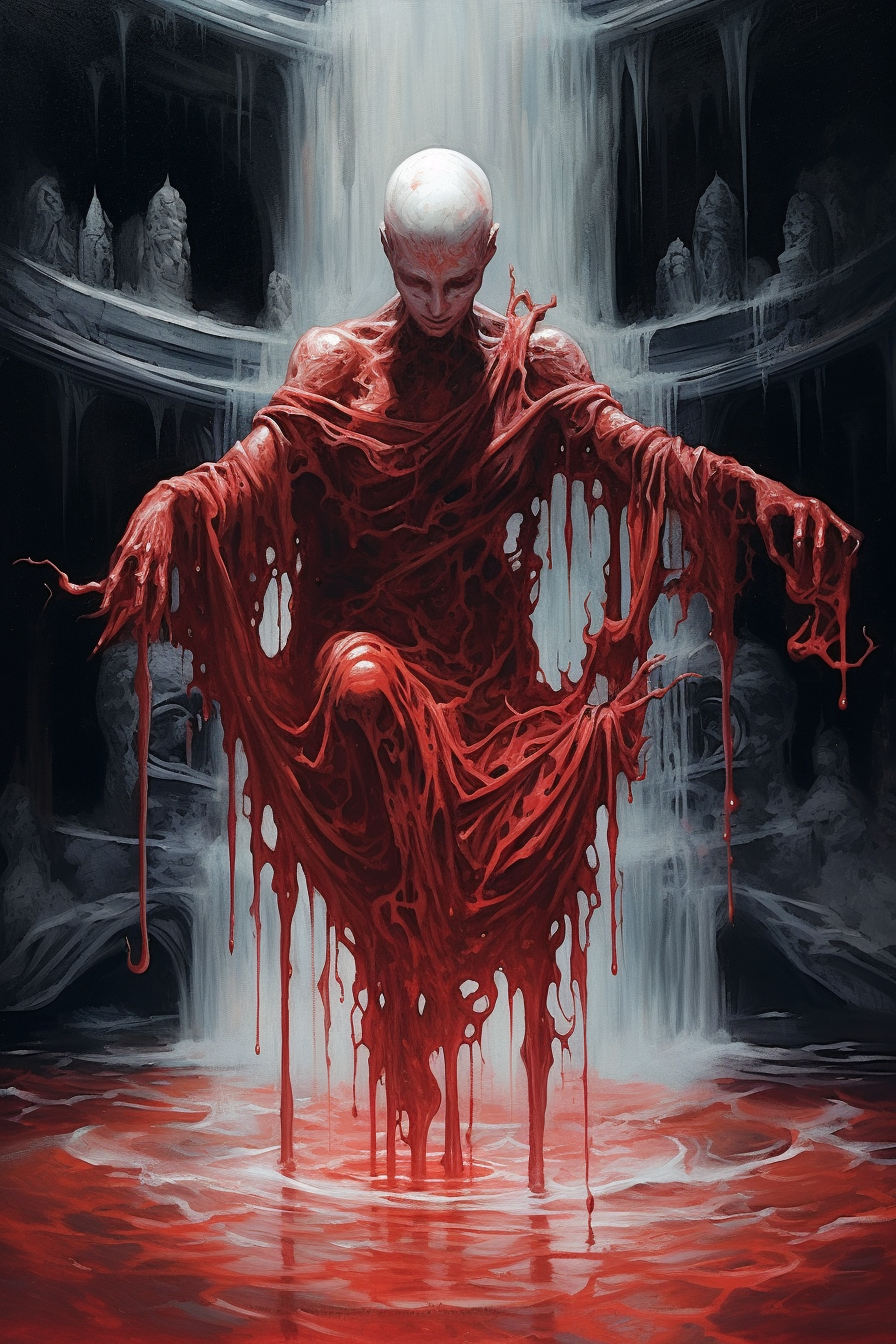

More Ghosts
The spirits of the dead take many forms, reflecting their misery in a uniquely horrific ways. A few of the most common categories described in Klinkworth's Compendium of Spirits are:
- Apparitions
- Ectoplasms
- Furies
- Haunts
- Poltergeists
Apparitions
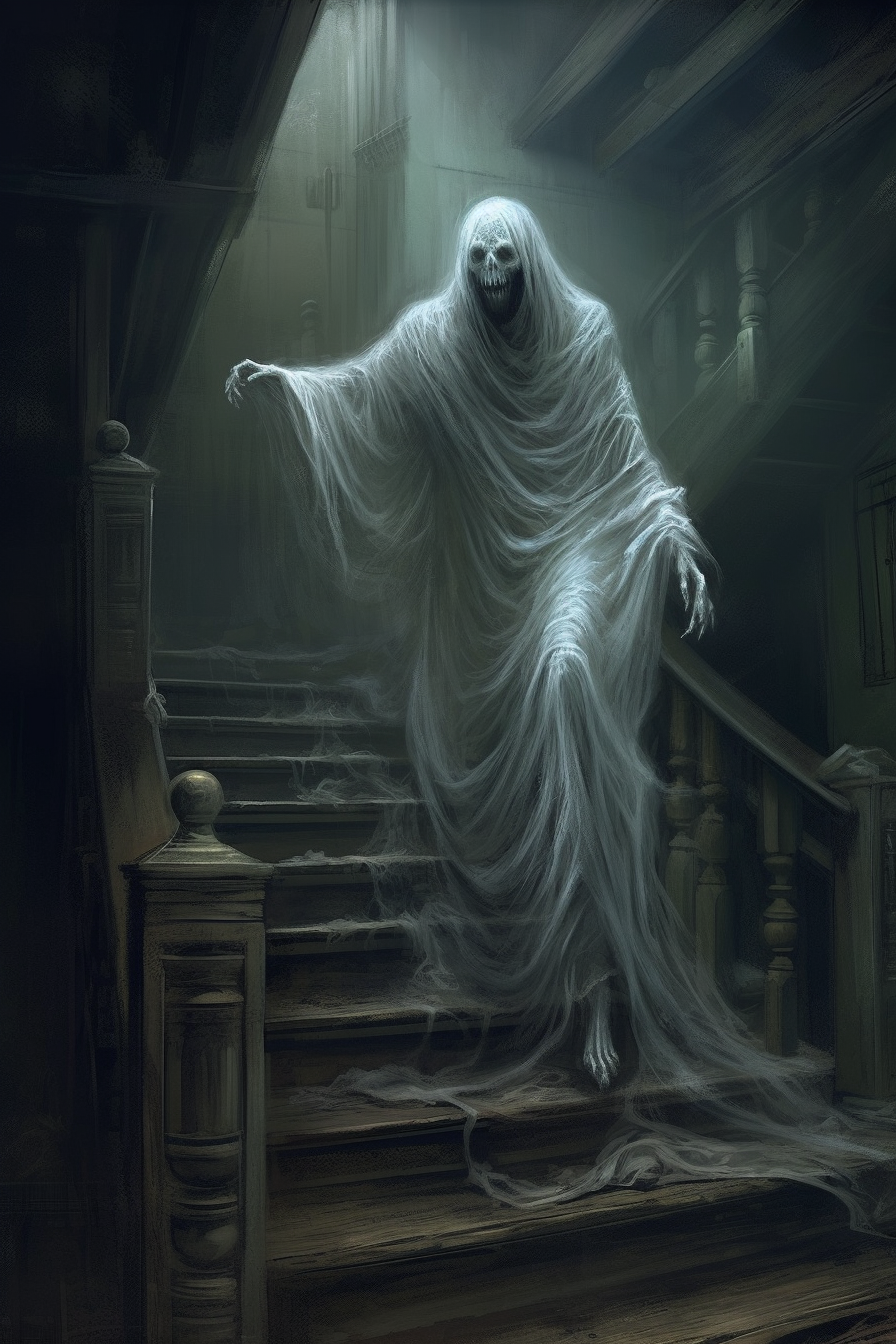
Apparitions are often harmless souls so lost and confused that they cannot find their way to the afterlife. Some are bound by unfulfilled promises or drawn so something they deeply desired or lost in life, ever searching.
Though an apparition can be dispersed, it is likely to reform in time unless the spirit's motivating need is somehow sated. Apparitions that are disturbed take on one of three moods that designate the apparition as a danger to living creatures: manic, protective, or vindictive.
Manic Apparition
The manic apparition is usually agitated by some kind of change in its environment. Believing itself to be either closer or farther from what it is seeking, it may confront living creatures and make unreasonable, and often impossible or impossible to understand demands.
Protective Apparition
The protective apparition stays near an object, location, or person it feels responsible for, or what it believes holds something it needs. It will attempt to drive out trespassers.
Vindictive Apparition
The most dangerous form of apparition is one that has become consumed by its own grief, pain, misery, or longing that it can no longer identify the source of its eternal woes. The vindictive spirit holds any and all creatures as the cause of its malaise and especially those who bear some likeness or common trait to one of its enemies in life. It will attack without provocation, slaughtering without remorse.
Apparition
Medium Undead, Chaotic Evil
- Armor Class 13
- Hit Points 32 (7d8)
- Speed fly 30 ft. (hover)
STR DEX CON INT WIS CHA 7 (-2) 13 (+1) 10 (0) 8 (-1) 13 (+1) 15 (+2)
- Damage Resistances resistance to damage from all non-magical attacks
- Damage Immunities cold, necrotic, poison
- Condition Immunities charmed, exhaustion, frightened, grappled, paralyzed, petrified, poisoned, prone, restrained
- Senses darkvision 60 ft., passive perception 11
- Languages any languages it knew in life
- Challenge 3 (450 xp)
- Ethereal Sight. The apparition can see 60 feet in to the Ethereal Plane when it is on the Material Plane, and vice versa.
- Incorporeal Movement The apparition can move through other creatures and objects as if they were difficult terrain. It takes 5 (1d10) force damage if it ends its turn inside an object.
- Disturbed Mood. the apparition has one of three moods that determines its behavior: manic, protective, or vindictive. Manic apparitions are best dealt with by sating whatever insane need of demand is causing them to become frenzied. Protective apparitions might hold a living hostage, delusionally believing themselves to be protecting it. Vindictive spirits mindlessly attack and kill living creatures without any semblance of remorse.
Actions
Withering Touch. Melee Weapon Attack: +5 to hit, reach 5 ft., one target. Hit: 12 (3d6+2) necrotic damage.
Unholy Command. (manic) (Recharge 4–6) The manic apparition forces its manic will on one creature within 30 feet. That creature must succeed on a DC 12 Wisdom saving throw or be controlled by the apparition on their next turn.
Turn Trespassers. (protective) (Recharge 4–6) The protective apparition gives a terrifying shriek. All creatures it designates within 30 feet suffer must succeed on a DC 12 Wisdom saving throw or be frightened of the apparition and suffer 2d6 psychic damage (half on a success). On their turn, frightened creatures must use their movement to move away from the apparition. A creature frightened of the apparition can attempt another saving throw at the end of its turn, ending the effect on a success.
Blood Letting. (vindictive) +5 to hit, reach 5 ft., one creature. Hit: 5 (1d8+1) slashing + 9 (3d6) necrotic damage. The apparition has advantage if it Fades to the Material Plane within 5 feet of the target. Hit or miss, the apparition gives a bloody scream, causing all creatures within 60 ft. that have been hit by its blood letting attack within one minute to suffer an additional 1d6 necrotic damage.Bonus Actions
Fade. The apparition transitions from the Material Plane to the Ethereal Plane or vice-versa.


Ectoplasms
Even Klinkworth's Compendium of Spirits offer's no compelling evidence as to where ectoplasms come from. Some have hypothesized "EP's" are the ghosts of sentient oblex oozes, though ectoplasms abound in areas with no history of mind flayer or oblex activity, so this theory is suspect.
But imagine an oblex as a ghost and you're not far off. Ectoplasms are disgusting ghosts that voraciously consume almost any form of matter in their instatiable gluttony, leaving behind trails of the slimy residue for which they are named.
Ectoplasms are attracted to scenes of gluttony, often appearing to ruin a lavish party, or haunting a trash heap. The offices of some particularly disorganized professors (including Klinkworth himself, allegedly) have been haunted by ectoplasms.
Though not entirely harmless, an ectoplasm is a supreme nuisance, particularly at a high society event, and nobles will pay extortioner's rates to anyone (and often charlatans) that can claim to prevent the arrival of an ectoplasm at their galas.
There are three common varieties of ectoplasms named for the properites of their ectoplasmic excretions: caustic, cold, and glutinous.
Ectoplasm
Medium Undead, Lawful neutral (protective), Chaotic Neutral (manic), Chaotic Evil (vindictive)
- Armor Class 11
- Hit Points 27 (6d8)
- Speed fly 30 ft. (hover)
STR DEX CON INT WIS CHA 14 (+2) 10 (0) 14 (+2) 6 (-2) 12 (+1) 12 (+1)
- Damage Resistances resistance to damage from all non-magical attacks
- Damage Immunities cold, necrotic, poison
- Condition Immunities charmed, exhaustion, frightened, grappled, paralyzed, petrified, poisoned, prone, restrained
- Senses darkvision 60 ft., passive perception 11
- Languages can understand languages it knew in life, but does not speak intelligibly
- Challenge 2 (200 xp)
- Ethereal Sight. The ectoplasm can see 60 feet in to the Ethereal Plane when it is on the Material Plane, and vice versa.
- Incorporeal Movement. The ectoplasm can move through other creatures and objects as if they were difficult terrain. It takes 5 (1d10) force damage if it ends its turn inside an object.
- Slimy Wake. Each surface or object through which the ectoplasm passes becomes coated in disgusting slime and becomes difficult terrain for 1d4 hours. There are two common varieties of slime: caustic and mucous.
- Caustic Slime. The first time on its turn that creature touches a surface with caustic slime (for example attempts to use movement on a surface with caustic slime) it must succeed on a DC 11 Dexterity saving throw or suffer a the prone condition and come into contact with the slime, suffering 2d4 acid damage. The creature takes 1d4 additional damage at the start of each of its turns until a creature uses its action to remove the slime.
- Cold Slime. The first time on its turn that creature touches a surface with cold slime (for example attempts to use movement on a surface with cold slime) it must succeed on a DC 11 Strength saving throw or suffer a the prone condition and come into contact with the slime and suffer 2d4 cold damage. The creature takes 1d4 additional damage at the start of each of its turns until a creature uses its action to remove the slime.
- Mucous Slime. The first time on its turn that creature touches a surface with mucous slime (for example attempts to use movement on a surface with mucous slime) it must succeed on a DC 11 Strength saving throw or suffer a the grappled condition and come into contact with the slime and suffer 2d4 poison damage. The creature takes 1d4 additional damage at the start of each of its turns until a creature uses its action to remove the slime.
Actions
Splatter. The ectoplasm flings slime at a creature or object within range. Ranged Weapon Attack: +5 to hit, range 60 ft., one object or creature. Hit: 15 (3d8+2) acid (caustic ectoplasm) or poison (mucous ectoplasm) damage and the creature or object is coated in slime. At the beginning of each of its turns the creature suffers 1d4 additional damage of the same type until a creature uses its action to remove the slime.
Engulf. The ectoplasm moves into the space of a creature. The creature must succeed on a Dexterity saving throw of DC 11 or become engulfed by the ectoplasm. While engulfed the creature is restrained and lightly obscured, and objects outside the translucent ectoplasm are lightly obscured. The engulfed creater cannot breathe. At the beginning of its turn the engulfed creature suffers 2d6 acid (caustic ectoplasm) or poison (mucous ectoplasm) damage. A creature can repeat the saving throw to escape as an action on its turn or at the end of its turn. On a success the creature emerges in the nearest space that fits the creature.Bonus Actions
Fade. The ectoplasm transitions from the Material Plane to the Ethereal Plane or vice-versa

Furies
Furies are spirits that died gruesome, tragic deaths, their essence merging with the very causes that brought about their demise: inferno furies wreathed in the phantom flames of a burning building or tempest furies wrapped in the deathly chill of a fierce blizzard. Sometimes mistaken for elementals, furies are a formidable foe for any occult investigator.
How to deal with them? Well, the guidebooks don't have a lot of advice on this particular ghost. In fact, Klinkworth's guide ends with a chapter on furies...an ominously incomplete chapter. The publisher Sword Coast Freedom Press has not returned inquiries on the matter.
What little is known leads up to believe that furies hold others responsible for their deaths and relish the role of sharing the favor with any that cross their path. Some seem themselves as angels of mercy, ending trite and painful lives. Others draw on negative psychic energies, such as feelings of guilt and shame, to fuel their furious fires.
Fury
Medium Undead, Neutral Evil
- Armor Class 16
- Hit Points 129 (18d10 + 30)
- Speed fly 30 ft. (hover)
STR DEX CON INT WIS CHA 14 (+2) 16 (+3) 16 (+3) 12 (+1) 14 (+2) 18 (+4)
- Saves Dexterity +8, Wisdom +7, Charisma +9
- Damage Resistances resistance to damage from all non-magical attacks
- Damage Immunities cold (tempest), fire (inferno), necrotic, poison
- Condition Immunities charmed, exhaustion, frightened, grappled, paralyzed, petrified, poisoned, prone, restrained
- Senses darkvision 60 ft., passive perception 11
- Languages languages it knew in life
- Challenge 11 (7,200 xp)
- Ethereal Sight. The fury can see 60 feet in to the Ethereal Plane when it is on the Material Plane, and vice versa.
- Furious Aura. The presence of a fury enraged by the approach of living creatures is heralded by phantasmal flames or numbing frost climbing up the walls. These auras cannot harm physical material but are deadly to living creatures. The aura steadily gains power the closer a creature comes to the fury itself. Any creature starting its turn within 120 feet of a fury must succeed on a DC16 Constitution saving throw or suffer 1d6 cold (tempest fury) or fire (inferno fury) damage, or half on a success. The damage increases to 2d6 for creatures within 60 feet.
- Incorporeal Movement. The fury can move through other creatures and objects as if they were difficult terrain. It takes 5 (1d10) force damage if it ends its turn inside an object.
- Spellcasting. The fury is a 10th level spellcaster with a spell attack bonus of +8 and a spell DC of 16, with access to the following spells which it can cast without material components. 4/day: absorb elements, burning hands (inferno fury), frost fingers (tempest fury), thunderwave
3/day: gust of wind, levitation, Rime's binding frost (tempest fury), Aganazzar's scorcher* (inferno fury)
3/day: counterspell, fireball (inferno fury), sleet storm (tempest fury)
2/day: compulsion, ice storm (tempest fury), wall of fire (inferno fury)
1/day: cone of cold (tempest fury), flame strike (inferno fury)
Actions
Multiattack. The fury makes two attacks.
Furious Blast. Ranged Spell Attack: +8 to hit, range 60 feet, one creature. Hit: 5d6 cold (tempest fury) or fire (inferno fury) damage and the creature must succeed on a DC 16 Dexterity saving throw or be blinded until the end of their next turn.
Embrace of Death. The fury wraps elemental tendrils around a creature within 5 feet. Melee Spell Attack. +8 to hit, reach 5 feet, one creature. Hit: the creature takes 5d6 cold (tempest fury) or fire (inferno fury) damage and is grappled. The inferno can grapple up to two creatures this way.Reaction
Fix Gaze. When the fury takes damage from an attack or spell originating within 30 feet, the fury can choose to look at the creature that dealt the damage if it does not have full cover from the fury. That creature must succeed on a DC 16 Constitution saving throw or become frightened of the fury and immobilized by the fear. The creature is grappled until they are no longer afraid and may repeat the saving throw at the end of each of their turns, ending the frightened condition and grapple on a success. If a fury attacks another creature, or fixes its gaze on another creature, the grapple ends.
Legendary Actions
The fury has a number of legendary actions equal to half the number of the hostile creatures that roll initiative (minimum 1, maximum 3). It can use a legendary action at the end of a player's turn and regains all spent legendary actions at the start of its turn.
Cast spell. The fury casts a spell (costs 2 legendary actions unless the fury has only one legendary action).
Blast Away. The fury flies up to its speed in a line without provoking opportunity attacks. Any creature within 5 feet of the fury's path must succeed on a DC 16 Dexterity saving throw or suffer 2d6 cold (tempest fury) or fire (inferno fury) damage.


Haunts
Haunts are ghosts whose very existence is tied to a location, often a place they frequented in life, and even more likely, the place of their untoward death.
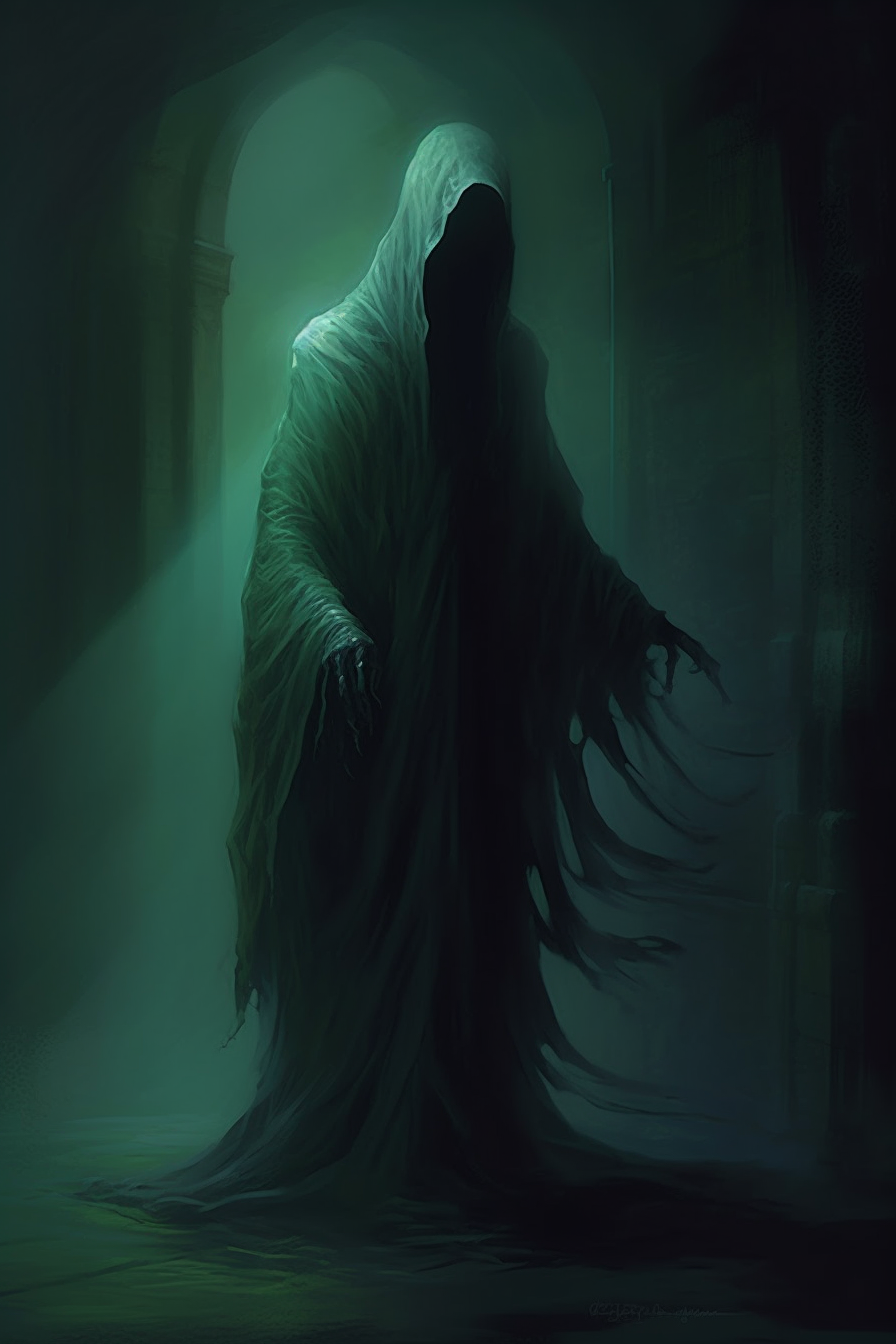
The motivations of haunts are as difficult to understand as they are disturbing. It is as if they feed on desperate, wild thoughts, haunts seek not to protect a place, but to disturb some particular creature that enters their limited domain. What makes it worse is the fact that they do not reveal themselves to everyone, leaving their chosen victim to wonder if they are seeing things, or if they are truly losing their mind.
Objects misplaced. Strange things seen in the corner of their vision. Another person in the reflection of mirror, but when the haunted one turns around, they see nothing. Deviant dreams. Wild imaginings and slow, steady, terrible descent into madness or acts so inconceivable the victim does not even realize what they have done until it is too late.
Beyond fear, beyond horror, the haunt is the master of terror, an opponent that fights with the power of its victim's own imagination. The sharper the mind, the more devious the haunting.
Haunts are not limited to forms of their own likeness, but can draw from the victim's own memory those images and identities that provoke deep distress, guilt, and above all an impossible mix of hope and terror.
Madness waits with open arms.
Among haunts, there are some so cunning and evil, that they can manipulate entire groups of people, seemingly all at once, like a puppeteer with nooses for strings.
Haunt
Medium Undead, Neutral Evil
- Armor Class 17
- Hit Points 180 (23d10 + 54)
- Speed fly 30 ft. (hover)
STR DEX CON INT WIS CHA 8 (-1) 12 (+1) 16 (+3) 20 (+3) 20 (+5) 18 (+4)
- Saves Wisdom +12, Charisma +11
- Damage Resistances resistance to damage from all non-magical attacks; psychic
- Damage Immunities cold, necrotic, poison
- Condition Immunities charmed, exhaustion, frightened, grappled, paralyzed, petrified, poisoned, prone, restrained
- Senses true sight 60 ft., passive perception 11
- Languages languages it knew in life, and any languages its victims know
- Challenge 18 (20,000 xp)
- Legendary Resistance (3/Day). If the haunt fails a saving throw, it can choose to succeed instead.
- Magic Resistance. The haunt has advantage on saving throws against spells and magical effects.
- Incorporeal Movement. The haunt can move through other creatures and objects as if they were difficult terrain. It takes 5 (1d10) force damage if it ends its turn inside an object.
- Unseen Nature. The haunt can become invisible as a bonus action or reaction to a creature noticing its presence. The haunt can cast spells without ending its invisibility.
- Spellcasting. The haunt is a 19th level spellcaster with a spell attack bonus of +13 and a spell DC of 20, with access to the following spells which it can cast without material components. If a spell requires consumable material components (such as symbol) it must be cast in a manner that does not deal damage directly.
At-will: mage hand, minor illusion, thaumaturgy
4/day: charm person, cause fear, silent image
3/day: darkness, phantasmal force, suggestion
3/day: counterspell, dispel magic, major image 3/day: arcane eye, dimension door, polymorph
3/day: dominate person, animate objects, dream, modify memory
2/day: eyebite, magic jar, programmed illusion
1/day: symbol
1/day: antipathy/sympathy, dominate monster
1/day: weird
Up the intensity and encounter difficulty with the following optional features.- Possessed Concentration. The haunt can spell cast while concentrating on the magic jar spell. If the haunt has a creature under a dominate person, dominate monster, or magic jar spell within 120 ft., when it casts a spell that requires concentration, rather than lose concentration on the domination or possession type spell, it can transfer concentration of the new spell to the creature that is being dominated or possessed.
- Deathly Aura. Creatures that take a rest within 120 feet of the haunt gain only half the hit points they would normally gain by a long rest, or spending hit dice on a short rest.
Actions
Fratricide. The haunt provokes up to three creatures within 60 feet to lash out in panic and mad terror. The creatures must succeed on a Wisdom saving throw of DC 20 or use their reaction, if available, to make a melee attack with a weapon in hand, or cantrip attack against a creature they can see within range. This cantrip attack does not prevent the character from casting a spell on their turn.
Bonus Actions
- Sudden Impulse. The haunt casts the spell command without expending a spell slot. The haunt's voice is only audible to the target creature as a whisper in their mind.

DM's note: The haunt is not a mere encounter. It may be part of any campaign or session with another purpose. Reveal secrets to players individually. Let them all begin their own investigations. Do not tell what is real and what is not. They may discover evidence of crimes, hear things, see things, suspect their own teammates or allies. Ideally one or more of them are lead to believe that if they do not immediately, or pre-emptively, something terrible will happen, and thus they are lead to commit the very act they would stop. The haunt should be the most terrifying experience the players have ever faced.
As an example, each player is delivered a unique experience. Ideally players are separated into different rooms. One hears a voice and may choose to investigate. They may have seen another character's murdered body. Another may have a premonition about something that is about to happen on another floor. Another may feel a need to leave their room suddenly (to be framed). Deliver each player a note with their observation. Then ask what they decide to do. Resolve the action with either reality, or a shared illusion. Involve NPCs. Make one portrayed by the haunt as a villain to be stopped. Make players or the NPC be discovered in compromising situations with knives out and bodies down. Make players wonder if they did something without realizing it.
Prepare at least three rounds of revelations, actions, and insanity, with increasing stakes. In round 1, have the PCs started separated, either sleeping in their own rooms, or at guard posts. Use illusions to provoke incriminationg actions, and for one PC: dominate person, and modify memory to have them do something terrible. In round 2, have them dominate person and polymorph them into a spider to try to paralyze an PC. Then have them face an NPC possessed by magic jar and a frantic search to the find the canopic jar in which the NPCs soul is trapped, a programmed illusion and finally antipathy/sympathy to draw them to the place where the haunt was killed.
In round 3, it is an all-out fight, with animate objects raising skeletons and weird conjuring deadly nightmares. You can also have other ghosts or undead in the crypt, to harrass players and prevent them focusing entirely on the haunt. In the fight, roleplay every fratricide attack. Tell the player what they see: such as a skeleton strangling their ally, or an ally being burned, either chosen response, such as an attack on the skeleton is the fratricide attack.

Poltergeists
Things that go bump in the night—there are many kinds. But the poltergeist conjures more dread than any other. A phantasm of brutal, nigh unstoppable power, and equally malicious, the poltergeist is an undead entity whose wrath channels psychic fury into telekinetic force. Poltergeists have been fed by otherwordly sources of psychic energy and pure evil, and perhaps even surpass beholders in their ability to alter the physical world at will, warping reality into a twisted vision born of its cunning, malice, and will dominate, terrify and punish the living.
Poltergeists are known go through periods of dormancy, allowing terror to fade to fear, fear to give way to fascination, and fascination to fade into ghost stories. Why they do this is not known, for once they their quarry, they are unrelenting in their methodical, terrifying murder of the living, often one at a time, leaving the survivors to wonder who will be next.
The few who have survived the haunting of a poltergeist, some speak of being hurled bodily around a room, battery by flying objects, choked by curtains, of doors and windows locking, denying any escape, and then, the final approach of the poltergeist heralded by rising pools of phantasmal blood.
Poltergeist
Medium Undead, Chaotic Evil
- Armor Class 18
- Hit Points 185 (18d10 + 30)
- Speed 30 ft, fly 40 ft. (hover)
STR DEX CON INT WIS CHA 22 (+6) 16 (+3) 20 (+5) 14 (+2) 14 (+2) 20 (+5)
- Saves Strength +11, Wisdom +7, Charisma +10
- Damage Resistances resistance to damage from all non-magical attacks
- Damage Immunities force, necrotic, poison
- Condition Immunities charmed, exhaustion, frightened, grappled, paralyzed, petrified, poisoned, prone, restrained
- Senses darkvision 120 ft., passive perception 12
- Languages languages it knew in life
- Challenge 14 (11,500 xp)
- Legendary Resistance (2/Day). If the poltergeist fails a saving throw, it can choose to succeed instead.
- Ethereal Sight. The poltergeist can see 60 feet in to the Ethereal Plane when it is on the Material Plane, and vice versa.
- Forceful Incorporeal Movement. The poltergeist can move through other creatures and objects as if they were difficult terrain. It deals 11 (2d10) force damage if it ends its turn inside an object or creature and the creature must succeed on a DC 18 strength saving throw or be pushed 5 ft. into an available space.
- Unseen Nature. The poltergeist can become invisible as a bonus action or reaction to a creature noticing its presence.
- Terrifying Presence. A creature that can see the poltergeist at the start of its turn must succeed on a DC 18 Wisdom saving throw or be frightened until the beginning of their next turn.
- Spellcasting. The haunt is a 14th level spellcaster with a spell attack bonus of +10 and a spell DC of 18, with access to the following spells which it can cast without material components.
At-will: mage hand, thaumaturgy
4/day: shield, magnify gravity
3/day: earthbind, hold person, levitate
3/day: slow, pulse wave
3/day: arcane eye, summon construct
3/day: bigby's hand, telekinesis
1/day: globe of invulnerability
1/day: whirlwindActions
Multiattack. The poltergeist makes three attacks.
Debris. The poltergeist telekinetically moves a medium or smaller nearby object, slamming it into the target. Ranged spell attack: +10 to hit, range 60 feet, one creature. Hit: 5d8+5 bludgeoning damage and the creature must succeed on a DC 18 Strength saving throw or fall prone.
Body slam. Ranged spell attack: +10 to hit, range 60 feet, one creature. Hit: Target creature is moved up to 30 feet in any direction. If target impacts a solid object such as a wall it takes 5d8+5 bludgeoning damage. Target must succeed on a DC 18 Dexterity saving throw or fall prone.Bonus Actions
Blood Teleportation. The poltergeist teleports to a pool of blood it has created that it can see.
Legendary Actions
The fury has a number of legendary actions equal to half the number of the hostile creatures that roll initiative (minimum 1, maximum 3). It can use a legendary action at the end of a player's turn and regains all spent legendary actions at the start of its turn.
Attack. The poltergeist makes a single attack.
Cast spell. The poltergeist casts a spell (costs 2 legendary actions). The poltergeist cannot take this action if it cast a spell on its turn.
Pool of blood. The poltergeist conjures a pool of blood on the ground in a 5 foot square within 90 feet. On future turns, if the square is unoccupied, the poltergeist can teleport to that location as a bonus action. If the square is occupied by a creature, the poltergeist has advantage on attack rolls against that target as blood gropes at their legs, impeding their movements.


Credits
Original art, Midjourney tool. Feel free to use for noncommercial purposes.
Change Log
| Date | Change |
|---|---|
| 2024.07.02 | fix some stat block formating, poltergeist saves and incorporeal movement and bonus action update |
| 2023.07.22 | fix ectoplasm statblock (add cold slime) |
| 2023.05.07 | Initial Release on GM Binder. |
| 2023.10.13 | Buffs for haunts (more features), and clerical fixes |
Copyright notice
This is unofficial Fan Content permitted under the Fan Content policy. Not approved/endorsed by Wizards of the Coast. Portions of the materials used are property of Wizards of the Coast, LLC.