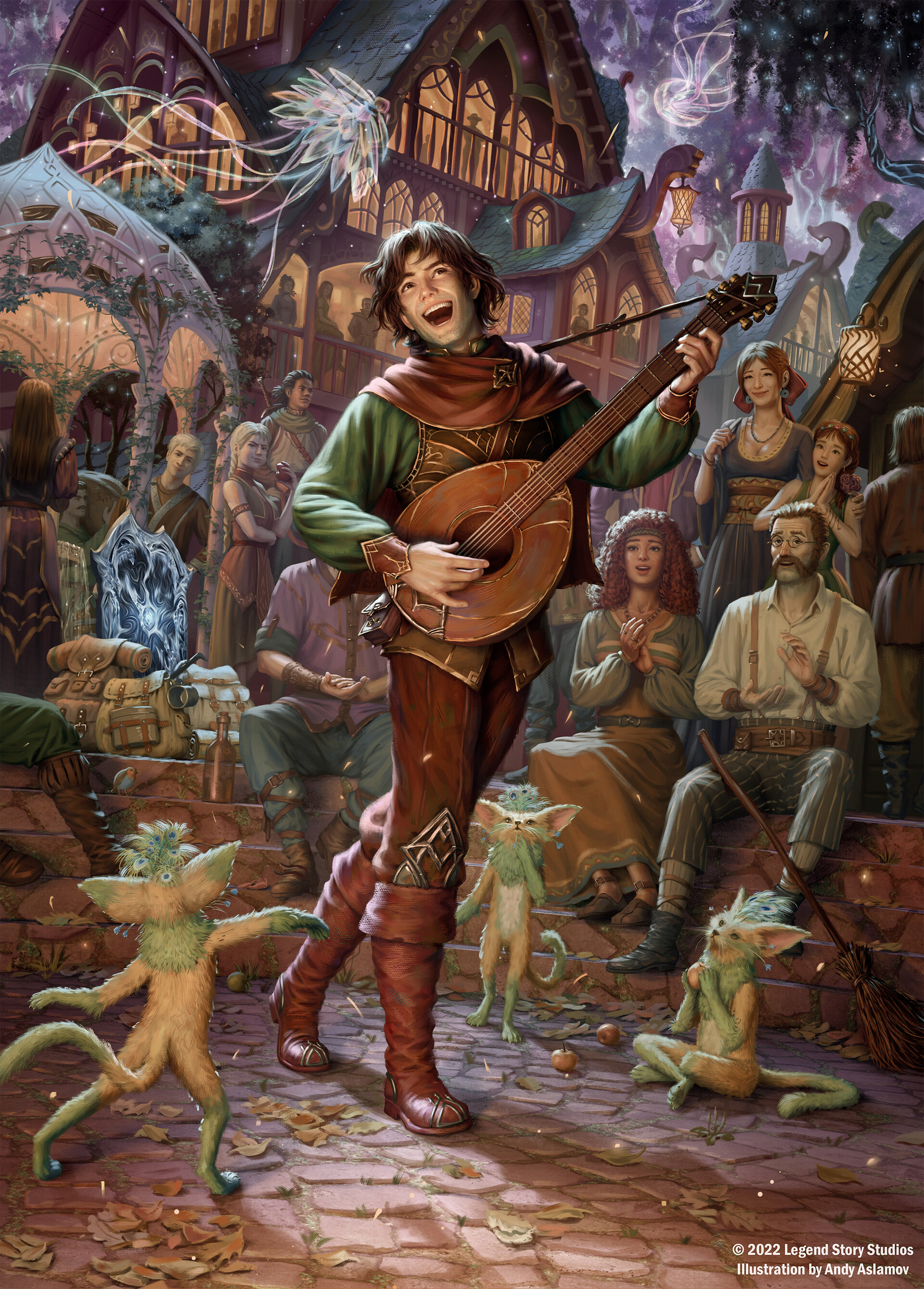

Bard (halfcaster variant)
A half-elf makes her way through the hoard of hobgoblin mercenaries, spinning and twirling between their blades. As she flourishes over the captain’s greatsword, they are too dazed to notice her stabbing their leader in the back.
A large crowd gathers around the gnome that sits at the edge of the city’s fountain. Glamorous illusions form around him as he tells stories of a faraway land. Unbeknownst to the city guards, his tale hides clues to a secret meeting to uprise against a corrupt local noble.
The drums of a bloodied dwarf echoes through the battlefield, her fallen comrades all around her. She lets out a mighty battle cry, inspiring her companions to raise off the ground and pick up their weapons once more.
Be they dancers, poets, musicians, or any other type of performer all bards have the power to move the hearts of the people around them, and a magical spark kindled by their artistic passion. With these abilities, bards are formidable social agents and curious learners with a unique assortment of knowledge and skills to aid in any situation.
Inspiring Performers
The power of art and stories is to move the hearts of those that behold them, inspiring them to do great things, or dissuading them from stepping into a dangerous path. Bards are well aware of this power, and they wield it like a master swordsman brandishes their blade. The performance of a bard is a projection of their soul, but it is also their way of viewing and transforming the world around them.
Bards are disparate and diverse, both as a kind and as individuals. The constant search for beauty and inspiration, as well as a vagabond nature, encourages them to pick a diversity of skills and knowledge, which they often share with those who travel along them. This varied skill set is also reflected on the bard’s particular magical style, which combines spells akin to those used by different classes. One thing is sure, bards shine brightest when they are accompanied, serving as an inspiration and support for their fellow adventurers.
Seekers of Stories
From an intricate speech crafted after weeks of meditation, to a spontaneous dance sparked from a powerful emotion, many things can be inspiring and artful. Even so, not every artist can be said to be a bard. To inspire others in desperate situations like those of the battlefield and channel the magic that comes from deep sentiment, it is necessary to gain mastery of one’s craft and a deep understanding of the soul. Some bards seek this knowledge through rigorous study, while others chase a thrilling life filled with varied experiences. Most use a combination of both methods.
It is this pursuit of meaning that pushes many bards to a life of adventure. Whether they are inspired by the accomplishments of others and wish to witness them firsthand, or they dream of becoming the protagonists of their own story, bards will often be found were few others dare to enter. With their unique set of skills, bards can see beauty in the darkest of places, and often help those around them to find the light.
Multiclassing and the Bard
If your group uses the optional rule on multiclassing, here’s what you need to know if you choose bard as one of your classes.
Ability Score Minimum. As a multiclass character, you must have at least a Charisma score of 13 to take a level in this class, or to take a level in another class if you are already a bard.
Proficiencies. If bard isn't your initial class, here are the proficiencies you gain when you take your first level as a bard: light armor, one skill of your choice, one musical instrument or one type of artisan's tools of your choice.
Spellcasting. Add half your levels (rounded up) in the bard class to the appropriate levels from other classes to determine your available spell slots.
The Bard
| Level | Proficiency Bonus | Features | Virtues Known | Performance Radius | Cantrips Known | 1st | 2nd | 3rd | 4th | 5th |
|---|---|---|---|---|---|---|---|---|---|---|
| 1st | +2 | Spellcasting, Inspiring Performance | 2 | 20 ft. | 2 | 2 | — | — | — | — |
| 2nd | +2 | Master of Lore, Bardic Inspiration | 2 | 20 ft. | 2 | 2 | — | — | — | — |
| 3rd | +2 | Bardic Discipline | 2 | 20 ft. | 2 | 3 | — | — | — | — |
| 4th | +2 | Ability Score Improvement | 2 | 20 ft. | 2 | 3 | — | — | — | — |
| 5th | +3 | Bardic Discipline Feature, Jack of All Trades | 2 | 30 ft. | 2 | 4 | 2 | — | — | — |
| 6th | +3 | Magical Secrets | 3 | 30 ft. | 2 | 4 | 2 | — | — | — |
| 7th | +3 | Flexible Performance | 3 | 30 ft. | 2 | 4 | 3 | — | — | — |
| 8th | +3 | Ability Score Improvement | 3 | 30 ft. | 2 | 4 | 3 | — | — | — |
| 9th | +4 | Bardic Discipline Feature | 3 | 40 ft. | 2 | 4 | 3 | 2 | — | — |
| 10th | +4 | Master of Lore, Magical Secrets | 4 | 40 ft. | 3 | 4 | 3 | 2 | — | — |
| 11th | +4 | Harmonious Performance | 4 | 40 ft. | 3 | 4 | 3 | 3 | — | — |
| 12th | +4 | Ability Score Improvement | 4 | 40 ft. | 3 | 4 | 3 | 3 | — | — |
| 13th | +5 | — | 4 | 50 ft. | 3 | 4 | 3 | 3 | 1 | — |
| 14th | +5 | Magical Secrets | 5 | 50 ft. | 4 | 4 | 3 | 3 | 1 | — |
| 15th | +5 | Bardic Discipline Feature | 5 | 50 ft. | 4 | 4 | 3 | 3 | 2 | — |
| 16th | +5 | Ability Score Improvement | 5 | 50 ft. | 4 | 4 | 3 | 3 | 2 | — |
| 17th | +6 | — | 5 | 60 ft. | 4 | 4 | 3 | 3 | 3 | 1 |
| 18th | +6 | Words of Power | 6 | 60 ft. | 4 | 4 | 3 | 3 | 3 | 1 |
| 19th | +6 | Ability Score Improvement | 6 | 60 ft. | 4 | 4 | 3 | 3 | 3 | 2 |
| 20th | +6 | Inspiring Presence | 6 | 60 ft. | 4 | 4 | 3 | 3 | 3 | 2 |
Creating a Bard
The most important aspect of a bard is their performance. Think of what you do to inspire people around you and what you communicate through your art. Is your bard a dancer, a poet, a musician, a storyteller, or some other sort of artist? How did they learn their skills? What makes them different from other performers? What does their performance say about their worldview?
As you step into a life of adventure you may also ask what is it your bard is seeking? Is there a project they are working on or are they looking for inspiration? You may see your performances as a series of masterpieces, each as beautiful as the one before, or you might believe that your magnum opus is yet to come, where will you find it?
Quick Build
You can make a bard quickly by following these suggestions. First, Charisma should be your highest ability score, followed by Dexterity. Second, choose the entertainer background.
Class Features
As a bard, you gain the following class features.
Hit Points
Hit Dice: 1d8 per bard level
Hit Points at 1st Level: 8 + your Constitution modifier.
Hit Points at Higher Levels: 1d8 (or 5) + your Constitution modifier per bard level after 1st.
Proficiencies
Armor: Light armor
Weapons: Simple weapons, hand crossbows, rapiers, shortswords
Tools Two musical instruments of your choice
Saving Throws: Dexterity, Charisma
Skills: Choose any three
Equipment
You start with the following equipment, in addition to the equipment granted by your background:
• (a) a rapier, (b) a shortsword, or (c) any simple weapon
• (a) a diplomat’s pack or (b) an entertainer’s pack
• (a) one musical instrument or (b) one set of artisan's tools
• Leather armor and a dagger

Spellcasting
The deep emotions you channel through your art allow you to reshape reality in harmony with your movements and words. Your spells are part of your vast repertoire, magic that you can tune to different situations. See Spells Rules for the general rules of spellcasting and the Spells Listing for the bard spell list.
Cantrips
At 1st level, you know two cantrips of your choice from the bard spell list. At higher levels, you learn additional bard cantrips of your choice, as shown in the Cantrips Known column of the Bard table.
When you gain a level in this class, you can replace one of the bard cantrips you know with another cantrip from the bard spell list.
Preparing and Casting Spells
The Bard table shows how many spell slots you have to cast your bard spells. To cast one of your bard spells of 1st level or higher, you must expend a slot of the spell’s level or higher. You regain all expended spell slots when you finish a long rest.
You prepare the list of bard spells that are available for you to cast, choosing from the bard spell list. When you do so, choose a number of bard spells equal to your Charisma modifier + half your bard level, rounded down (minimum of one spell). The spells must be of a level for which you have spell slots.
For example, if you are a 5th-level bard, you have four 1st-level and two 2nd-level spell slots. With a Charisma of 14, your list of prepared spells can include four spells of 1st or 2nd level, in any combination. If you prepare the 1st-level spell healing word, you can cast it using a 1st-level or a 2nd-level slot. Casting the spell doesn’t remove it from your list of prepared spells.
You can change your list of prepared spells when you finish a long rest. Preparing a new list of bard spells requires time spent recalling lore and rehearsing your performance: at least 1 minute per spell level for each spell on your list.
Spellcasting Ability
Charisma is your spellcasting ability for your bard spells. Your magic comes from the passion you pour into your artistic expression. You use your Charisma whenever a spell refers to your spellcasting ability. In addition, you use your Charisma modifier when setting the saving throw DC for a bard spell you cast and when making an attack roll with one.
Spell save DC = 8 + your proficiency bonus + your Charisma modifier
Spell attack modifier = your proficiency bonus + your Charisma modifier
Ritual Casting
You can cast any bard spell you know as a ritual if that spell has the ritual tag.
Artistic Casting
When you cast a bard spell, you can replace any material component for a somatic or vocal component (like playing an instrument, dancing, or reciting a poem), so long as the material component doesn’t have a gold cost and isn’t consumed by the spell.
Inspiring Performance
You can engage in a form of art that emboldens your allies and demoralizes your enemies. This performance can take the form of a beautiful ballad, a masterful dance, a moving speech, or any other form of expression that touches the hearts of those who can see or hear you.
Virtues Known
Pick two virtues to learn, choosing from the “Inspiring Virtues” section at the end of the class’s description. You learn additional virtues of your choice when you reach certain levels in this class, as shown in the Virtues Known column of the Bard table.
Whenever you gain a level in this class, you can replace one of your known virtues with a new one.
Initiating a Performance
As a bonus action you can initiate your Inspiring Performance, choosing one of your virtues known to instill onto those around you. While your performance is active, creatures of your choice within 20 feet of you gain the effects of the chosen virtue. You can affect a number of creatures equal to 1 + your Charisma modifier (minimum of one). The range of your performance increases as you gain levels in this class, as specified in the Performance Radius column of the Bard table.
Your inspiring performance lasts for 10 minutes. It ends early if you’re incapacitated, if you use this feature again, or if you voluntarily end it (no action required).
You can use this feature a number of times equal to your Charisma modifier (minimum of once). You can initiate additional performances by spending a spell slot of 1st level or higher. You regain any expended uses when you finish a long rest.
Master of Lore
By 2nd level, you have travelled far and wide, collecting knowledge from across the land and sharing it to new audiences. You gain proficiency in two skills, tools, or weapons of your choice. You can learn one language of your choice instead of gaining one of these proficiencies.
Whenever you finish a long rest, you can give proficiency in one skill, tool, or weapon that you have proficiency with, to one friendly creature that can see or hear you. The creature has this proficiency until the end of your next long rest.
At 10th level, you gain two additional proficiencies of your choice, and you can grant up to two proficiencies on a long rest with this feature.
Bardic Inspiration
Starting at 2nd level, you know exactly how to inspire your peers in times of need. Whenever a creature within 60 feet of you that can see or hear you rolls an ability check, attack roll, or saving throw, you can spend one use of your Inspiring Performance as a reaction to grant them a bonus to the triggering roll equal to your Charisma modifier.
Bardic Disciplines
At 3rd level, you follow the artistic practices of a bardic discipline of your choice. Your discipline grants you features at 3rd level and again at 5th, 9th, and 15th level.
Ability Score Improvement
When you reach 4th level, and again at 8th, 12th, 16th, and 19th level, you can increase one ability score of your choice by 2, or you can increase two ability scores of your choice by 1. As normal, you can’t increase an ability score above 20 using this feature.
Jack of All Trades
Starting at 5th level, you can add half your proficiency bonus, rounded down, to any ability check you make, including those in which you already add your proficiency bonus.
Magical Secrets
By 6th level, during your travels and studies you have learned from many different traditions of the arcane. Choose two spells from any classes, including this one. A spell you choose must be of a level you can cast, as shown on the Bard table, or a cantrip. These spells count as bard spells for you, but they don’t count against the number of bard spells you prepare.
You learn two additional spells from any classes at 10th level and again at 14th level.
Flexible Performance
At 7th level, you can adapt your vast repertoire to any situation. While your Inspiring Performance is active, you can use a bonus action to change its effect to one from another Inspiring Virtue you know.
Additionally, whenever you finish a short rest, you regain one use of your Inspiring Performance.


Harmonious Performance
Starting at 11th level, your Inspiring Performance becomes deeper and more complex, allowing you to instill many virtues in a single act. Whenever you initiate an Inspiring Performance, you can activate the effect of two of your known virtues.
Words of Power
At 18th level you have stumbled upon some of the most obscure secrets of the arcane arts. You learn the spells Power Word Pain, Power Word Stun, Power Word Heal and Power Word Kill. You can cast any of these spells once without expending a spell slot. Once you use this feature you can't use it again until you finish a long rest.
Inspiring Presence
At 20th level, your presence is enough to inspire the people around you. Your Inspiring Performance is always active unless you decide to repress it, or you become unconscious.
Additionally, if your total for a Charisma check is less than your Charisma score, you can use that score in place of the total.


Bardic Disciplines
In an effort to refine their artistry, bards often learn the customs of a greater bardic discipline. These disciplines require a lot of training to master, yet they still allow each individual to display their art in a unique way. Bards are as likely to gather with students of their same discipline, as they are to seek inspiration in other schools of thought.
Lorekeeper
Stories have the power to inspire the hearts of new generations by immortalizing the actions of heroes and villains alike. Lorekeeper bards travel the land in search of the most beautiful and inspiring stories to share with the rest of the world. In this search, it is not uncommon for lorekeepers to stumble upon terrible secrets, which they can then guard or pass on as they see fit.
Worldly Scholar
3rd-level Lorekeeper feature
You have communed with people from all walks of life, collecting knowledge in a variety of topics. Whenever you make an Intelligence check, you gain a bonus to the check equal to your Charisma modifier (minimum of +1).
Arcane Insights
3rd-level Lorekeeper feature
As part of your studies, you have found the secret to some well-guarded incantations. Choose one class that has the Spellcasting or Pact Magic feature. When you finish a long rest, you can prepare one spell from that class’s spell list. The spell must be of a level you can cast, as shown on the Bard table. This spell counts as bard spells for you, but it doesn’t count against the number of bard spells you prepare.
The number of spells you prepare increases to two when you reach 5th level in this class, three when you reach 9th level, four when you reach 13th level, and five when you reach 17th level.
Inspiring Words
3rd-level Lorekeeper feature
When you initiate your inspiring performance, or as a bonus action while the performance is active, you can recite an inspiring proverb to bolster the morale of an ally. Choose one creature within your performance's range. Until the start of your next turn, that creature can give itself advantage to one ability check, attack roll, or saving throw it makes.
You can use this feature a number of times equal to your Charisma modifier (a minimum of once). You regain any expended uses when you finish a short or long rest.
Trade Secrets
5th-level Lorekeeper feature
You have gathered an assortment of unexpected skills. Choose one of the following options:
- Defensive training: You gain proficiency with medium armor and shields.
- Esoteric practices: Choose one class that has the Spellcasting or Pact Magic feature. You learn two cantrips of your choice from that class's spell list.
- Expertise: Choose two of your skill proficiencies. Your proficiency bonus is doubled for any ability check you make that uses either of the chosen proficiencies.
- Military tactics: You learn one Fighting Style option of your choice from the fighter class. If you already have a style, the one you choose must be different.
- Polymathy: You gain proficiency in two skills, tools, or weapons of your choice. You can learn one language of your choice instead of gaining one of these proficiencies.
Quick-witted
9th-level Lorekeeper feature
You have advantage on intelligence saving throws. In addition, whenever you finish a short rest, you can replace one of your prepared spells with another spell from the same list.
Font of Inspiration
15th-level Lorekeeper feature
Your vast wisdom inspires the hearts of many. You can choose an additional option from the Trade Secrets feature.
Additionally, whenever you use your Inspiring Words feature, you can give the effect to two creatures within range instead of one.
Silver Tongue
Most wars are not won on the battlefield, but on the courts of powerful politicians. Such is the belief that guides disciples of the silver tongue, an art of social manipulation and diplomatic etiquette which requires subtle decorum and a precise use of words. While some bards of the silver tongue are court musicians and dancers, many more are diplomats whose performances take the form of elaborate speeches and poignant arguments.
Diplomatic Arts
3rd-level Silver Tongue feature
The grace of your performance allows you to ease your way into diplomatic alliances. Whenever a creature has seen you use your inspiring performance for at least one minute, or you succeed on a DC 15 Performance check in front of them, you gain advantage on your next deception, insight, intimidation or persuasion check against them.
Silver Tongue Spells
3rd-level Silver Tongue feature
You always have certain spells prepared after you reach particular levels in this class, as shown in the Silver Tongue Spells table. These spells count as bard spells for you, but they don’t count against the number of bard spells you prepare.
Silver Tongue Spells
| Bard Level | Spell |
|---|---|
| 3rd | cause fear, charm person |
| 5th | enthrall, suggestion |
| 9th | counterspell, intellect fortress |
| 13th | charm monster, confusion |
| 17th | dominate person, geas |
Unsettling Speech
3rd-level Silver Tongue feature
You know exactly what to say to get under the skin of your enemies. When you initiate your inspiring performance or as a bonus action while the performance is active, you can force one creature to make a Wisdom saving throw against your spell save DC. On a failure, the target must subtract a number equal to your Charisma modifier (minimum of 1) from their next ability check, attack roll or saving throw (whichever happens first).
Cutting Words
5th-level Silver Tongue feature
Whenever you cast an enchantment spell, or a spell that deals either psychic or thunder damage, you can deal one target of the spell an additional amount of psychic damage equal to your Charisma modifier (minimum of 1).
Universal Speech
5th-level Silver Tongue feature
You have gained the ability to make your speech intelligible to any creature. As an action, choose one or more creatures within 60 feet of you, up to a number equal to your Charisma modifier (minimum of one creature). The chosen creatures can magically understand you, regardless of the language you speak, for 1 hour.
Once you use this feature, you can’t use it again until you finish a long rest, unless you expend a spell slot to use it again.
Diplomatic Immunity
9th-level Silver Tongue feature
Whenever a creature deals damage to you, it must succeed on a Wisdom saving throw against your spell save DC or take an amount of psychic damage equal to your Charisma modifier (minimum of 1).
Master of Manipulation
15th-level Silver Tongue feature
You know how to hide the strings you pull so they can’t be traced back to you. Whenever you cast a spell that would allow a creature to realize it was charmed by you (such as charm person) you can alter the spell so that the creature doesn’t suspect anything out of the ordinary.
Once you use this feature, you can’t use it again until you finish a long rest.
Skald
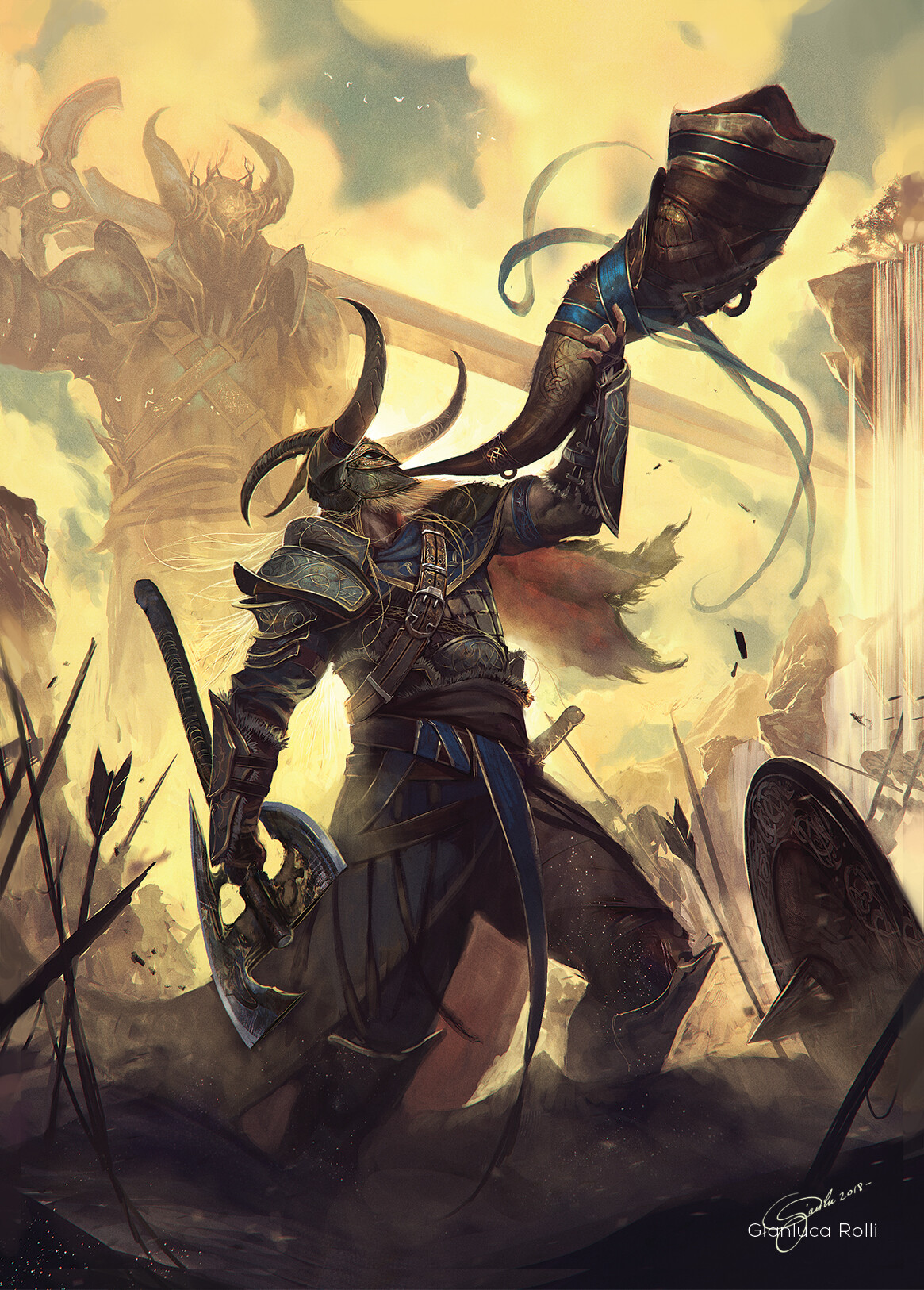
Following one of the oldest bardic disciplines, skalds are poets of the battlefield. As well versed with words as they are with a weapon, skalds inspire their companions to channel their rage in combat and to never give up, as their deeds shall be turned into legends for the ages.
Bonus Proficiencies
3rd-level Skald feature
You gain proficiency with medium armor, shields, and martial weapons.
Skald Spells
3rd-level Skald feature
You always have certain spells prepared after you reach particular levels in this class, as shown in the Skald Spells table. These spells count as bard spells for you, but they don’t count against the number of bard spells you prepare.
Skald Spells
| Bard Level | Spell |
|---|---|
| 3rd | compelled duel, heroism |
| 5th | aid, spiritual weapon |
| 9th | beacon of hope, crusader’s mantle |
| 13th | aura of life, staggering smite |
| 17th | antilife shell, conjure volley |
Battle Cry
3rd-level Skald feature
You know how to stir up the fury of your allies in combat. While your inspiring performance is active, you and any ally within its range can throw caution to the wind and decide to attack recklessly. Doing so gives the creature advantage on melee attack rolls during this turn, but attack rolls against them have advantage until their next turn.
Extra Attack
5th-level Skald feature
You can attack twice, rather than once, whenever you take the Attack action on your turn. Moreover, you can cast one of your cantrips in place of one of those attacks.
Words of Warning
9th-level Skald feature
Whenever a creature decides to attack recklessly by using your Battle Cry feature, they also gain a number of temporary hit points equal to your bard level and have advantage on Dexterity and Strength saving throws until the start of their next turn.
Undying Inspiration
15th-level Skald feature
Your words inspire your allies to fight beyond their physical limitations. Whenever a creature within range of your inspiring performance drops to 0 hit points and doesn’t die outright, you can use your reaction to encourage them to keep on fighting. The creature gains a number of hit points equal to your bard level.
Once you use this feature you can’t do so again until you finish a short or long rest.

Sylvan Dancer
One of the most well-kept secrets of the fey is that of the sylvan dance, a fighting style that combines graceful movements with precise strikes. Only a few bards have heard of this mystical art, and fewer still can truly become Sylvan Dancers. These masterful fighters can turn any combat into a breathtaking performance, dodging attacks with pirouettes and plunging into their enemies with an elegant skip.
Fey Secrets
3rd-level Sylvan Dancer feature
You gain proficiency in all weapons that have the finesse or light properties. You also learn to speak, read, and write either Druidic or Sylvan.
Sylvan Dancer Spells
3rd-level Sylvan Dancer feature
You always have certain spells prepared after you reach particular levels in this class, as shown in the Sylvan Dancer Spells table. These spells count as bard spells for you, but they don’t count against the number of bard spells you prepare.
Sylvan Dancer Spells
| Bard Level | Spell |
|---|---|
| 3rd | faerie fire, zephyr strike |
| 5th | mirror image, misty step |
| 9th | haste, thunderstep |
| 13th | freedom of movement, staggering smite |
| 17th | mislead, steel wind strike |
Sylvan Dance
3rd-level Sylvan Dancer feature
You have danced with the spirits of the forest and learned their graceful and deadly arts. While using your inspiring performance and not wearing medium or heavy armor, you gain the following benefits:
- You gain a bonus to your AC equal to your Charisma modifier (minimum of +1).
- You can take the dash or disengage action as a bonus action.
- Whenever a creature misses you with an attack, you gain advantage on your next attack roll made against them until the end of your next turn.
Extra Attack
5th-level Sylvan Dancer feature
You can attack twice, rather than once, whenever you take the Attack action on your turn. Moreover, you can cast one of your cantrips in place of one of those attacks.
Graceful Movement
9th-level Sylvan Dancer feature
You move with the grace of the fey. You gain the following benefits:
- Your speed increases by 10 feet.
- You have advantage on Dexterity (Acrobatics) checks.
- When a creature targets you with an attack, you can use your reaction to move 5 feet in a direction of your choice. If this movement causes you to be outside the range of the triggering attack, it misses.
Faerie Flight
15th-level Sylvan Dancer feature
The magic of your Sylvan Dance makes you soar through the battlefield. While you are using your Inspiring Performance you gain a flying speed equal to your walking speed. While you’re flying in this way, opportunity attacks against you are made at disadvantage.
Wild Call
Seeking beauty in its most natural form, bards that follow the discipline of the Wild Call have learned to interpret and reproduce the sounds of many animals, incorporating them into their own delightful performances. In return, large audiences of animals tend to follow these artists around, aiding them in their moments of need. Some followers of this discipline have a special bond with one kind of animal, such as mice or birds, while others travel through different environments looking to add the songs of the local fauna to their repertoire.
Beast Whisperer
3rd-level Wild Call feature
After learning their ways of speech, you have the ability to communicate with animals of all kinds. Beasts can understand your speech, and you gain the ability to decipher their noises and motions. Most beasts lack the intelligence to convey or understand sophisticated concepts, but a friendly beast could relay what it has seen or heard in the recent past. This ability doesn’t grant you friendship with beasts, though you can combine this ability with gifts to curry favor with them as you would with any nonplayer character.
Wild Call Spells
3rd-level Wild Call feature
You always have certain spells prepared after you reach particular levels in this class, as shown in the Wild Call Spells table. These spells count as bard spells for you, but they don’t count against the number of bard spells you prepare.
Wild Call Spells
| Bard Level | Spell |
|---|---|
| 3rd | animal friendship, beast bond |
| 5th | beast sense, summon beast |
| 9th | conjure animals, phantom steed |
| 13th | dominate beast, giant insect |
| 17th | insect plague, scrying |
Conclave of Critters
3rd-level Wild Call feature
Your performance calls forward an assortment of small animals that follow and protect you, acting as a single unit. When you initiate your inspiring performance, a conclave of critters forms in an unoccupied space of your choice that you can see within 30 feet of you.
The conclave is friendly to you and your companions and obeys your commands. See this creature’s game statistics in the Conclave of Critters stat block, which uses your proficiency bonus (PB) in several places. The conclave is composed of local small animals like squirrels, rabbits, songbirds, lizards, and toads, as determined by your DM. Conclaves formed in certain terrains or different planes may consist of more mystical beings, such as tiny elementals, wild sprites or celestial motes of light; check with your DM to see if these changes alter the conclave’s creature type or damage.
In combat, the conclave shares your initiative count, but it takes its turn immediately after yours. The only action it takes on its turn is the Dodge action, unless you take a bonus action on your turn to command it to take another action (you can command the conclave as part of the same bonus action used to initiate your inspiring performance). That action can be one in its stat block or some other action.
The conclave remains for the duration of your inspiring performance or until it is reduced to 0 hit points. When your performance ends, the creatures that formed the conclave scatter and return to their usual behavior.
Conclave of Critters
Medium swarm of tiny beasts
- Armor Class 13 + PB (natural armor)
- Hit Points 5 + five times your bard level
- Speed 30 ft.
STR DEX CON INT WIS CHA 11 (+0) 14 (+2) 10 (+0) 8 (-1) 14 (+2) 11 (+0)
- Damage Resistances Bludgeoning, Piercing, Slashing
- Condition Immunities Charmed, Grappled, Paralyzed, Petrified, Prone, Restrained, Stunned
- Senses passive Perception 12
- Languages understands the languages you speak
- Challenge: — Proficiency Bonus (PB): equals your bonus
Swarm. The conclave can occupy another creature's space and vice versa, and the swarm can move through any opening large enough for a Tiny beast. The conclave can't regain hit points or gain temporary hit points through spells or potions. Primal Bond. You can add your proficiency bonus to any ability check or saving throw that the conclave makes.
Actions
Overwhelm. Melee Weapon Attack: your spell attack modifier to hit, reach 0 ft., one target in the conclave’s space. Hit: 1d4 + PB slashing damage plus 1d4 + PB piercing damage. If the conclave has half of its hit points or more, the creature must succeed on a Strength saving throw against your spell save DC or be grappled.
Regather (3/Day). New creatures join the conclave to replace their fallen numbers. The conclave regains 2d8 + PB hit points.
Mystical Colleagues
5th-level Wild Call feature
The attacks of your conclave of critters now count as magical for the purpose of overcoming resistance and immunity to nonmagical attacks and damage.

Crescent Congregation
9th-level Wild Call feature
Your improving performance causes even more creatures to follow you. When you use your Conclave of Critters feature, you can cause the conclave to be big, rather than medium. Additionally, whenever a creature is grappled by your conclave of critters, they are also restrained.
Strength in Numbers
15th-level Wild Call feature
The presence of your bestial audience motivates you as much as you motivate them. Whenever you’re standing within 5 feet of your conclave of critters, both of you gain advantage on strength and dexterity saving throws, as well as attack rolls made against creatures within the same space as the conclave.
Inspiring Virtues
Virtues are the raw emotional resonance brought forth during a bard's performance. They motivate creatures within the Inspiring Performance's range to surpass their normal limits and stand against overwhelming forces.
The description of each of the following virtues details the effects it has on creatures targeted by the performance. The effects of each virtue only last while the creature is within range unless it is otherwise stated.
Some virtues specify a minimum bard level. You can't learn such a virtue until you are at least that level.
Boldness
Targeted creatures gain a bonus to their attack rolls equal to half your proficiency bonus, rounded down.
Caution
Prerequisite: 5th-level bard
Targeted creatures gain a bonus to their AC equal to half your proficiency bonus, rounded down.
Confidence
Prerequisite: 5th-level bard
Once per round, when a targeted creature makes an ability check, you can grant them a bonus to the total equal to half your proficiency bonus, rounded up.
Excellence
Prerequisite: 14th-level bard
Once per round, when a targeted creature misses with an attack or fails a saving throw, you can use your reaction to allow them to reroll their die. The creature must take the new result.
Fierceness
Targeted creatures gain a bonus to their damage rolls equal to half your proficiency bonus, rounded down.
Focus
Prerequisite: 10th-level bard
Targeted creatures gain advantage on Constitution saving throws made to maintain concentration on a spell.
Grace
Prerequisite: 5th-level bard
Targeted creatures can move through nonmagical difficult terrain without expending extra movement.
Liberty
Prerequisite: 5th-level bard
Targeted creatures gain advantage on ability checks and saving throws to avoid being grappled or restrained.
Lucidity
Prerequisite: 5th-level bard
Targeted creatures gain advantage on saving throws to avoid being frightened or charmed.
Retribution
Prerequisite: 10th-level bard
Once per round, when a targeted creature is hit by an attack, they can use their reaction to make a melee attack against a creature within their reach.
Sturdiness
Prerequisite: 5th-level bard
Targeted creatures gain advantage on saving throws to avoid being knocked prone or moved against their will.
Swiftness
Targeted creatures that start their turn within range of your performance have their speed increased by 10 feet until the end of their turn.
Valor
Once during your turn, you can grant targeted creatures a number of temporary hit points equal to your proficiency bonus.

The Bard
(Halfcaster
Variant) V.2
A revised take on the iconic Jack-of-All-Trades class with a focus on inspiring your allies through the power of performance.
Includes 5 bardic disciplines: Lorekeeper, Silver Tongue, Skald, Sylvan Dancer and Wild Call.
Art credits:
Tales of Adventure by Andy Aslamov
Quartier Latin Market by Ubisoft Entertainment
Fanart JIBARO by Narupiti Harunsong
Storytelling by randis
DR: Ancestry by Harpiya
Henrika, Infernal Seer by Billy Christian
HEIMDALLR by Gianluca Rolli
Elder Scrolls Commission by Jack Nguyen
Ecological Appreciation by lie setiawan
Dragon Caller by Shinotamar
Like what you see?
You can find more of my free D&D 5th Edition homebrew on GM Binder and on my reddit page u/senorvilla.
If you want to support my work and see content early, you can do so on Patreon (SenorVilla).