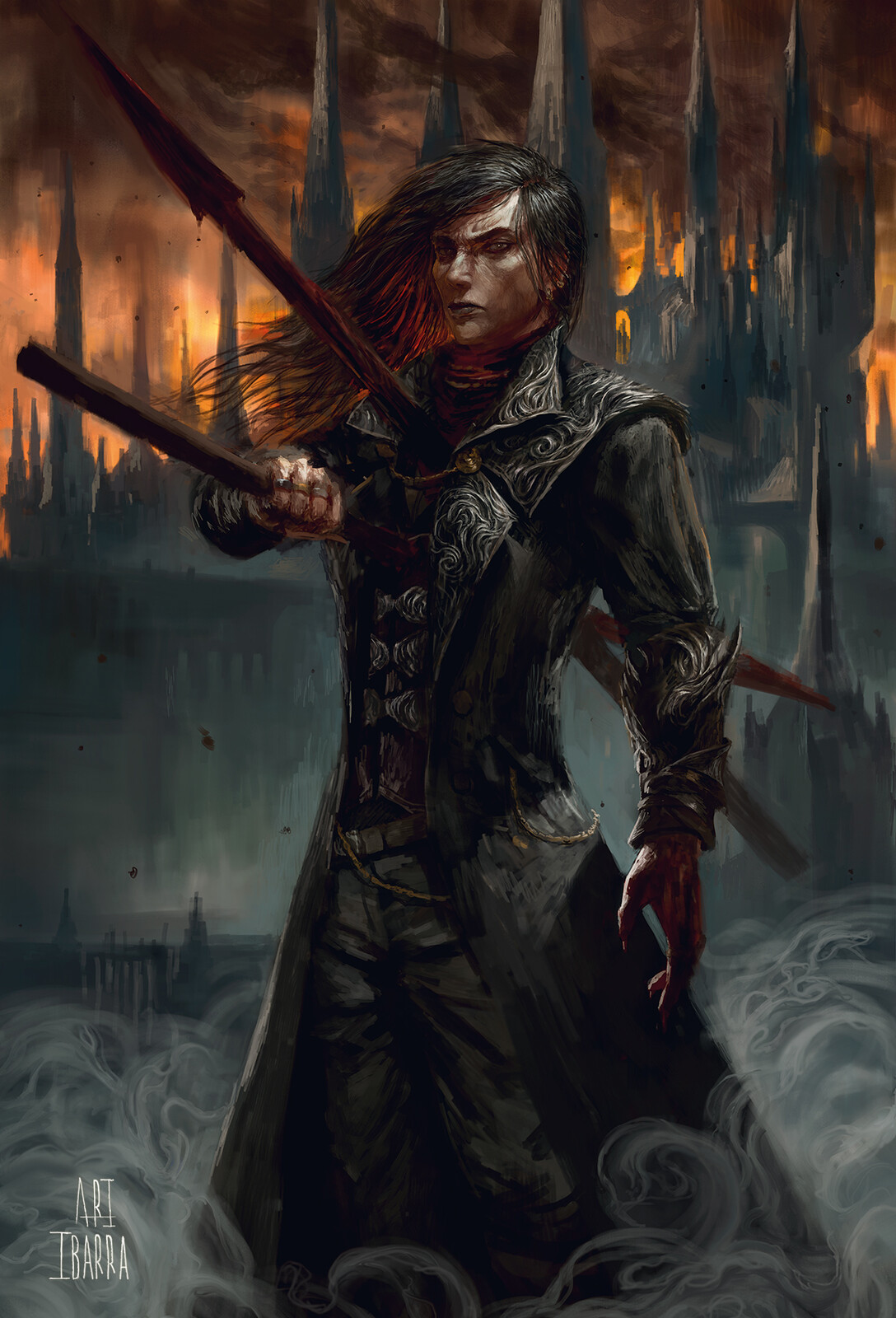
Rogue
Signaling for her companions to wait, a halfling creeps forward through the dungeon hall. She presses an ear to the door, then pulls out a set of tools and picks the lock in the blink of an eye. Then she disappears into the shadows as her fighter friend moves forward to kick the door open.
A human lurks in the shadows of an alley while his accomplice prepares for her part in the ambush. When their target — a notorious slaver — passes the alleyway, the accomplice cries out, the slaver comes to investigate, and the assassin’s blade cuts his throat before he can make a sound.
Suppressing a giggle, a gnome waggles her fingers and magically lifts the key ring from the guard’s belt. In a moment, the keys are in her hand, the cell door is open, and she and her companions are free to make their escape.
Rogues rely on skill, stealth, and their foes’ vulnerabilities to get the upper hand in any situation. They have a knack for finding the solution to just about any problem, demonstrating a resourcefulness and versatility that is the cornerstone of any successful adventuring party.
Skill and Precision
Rogues devote as much effort to mastering the use of a variety of skills as they do to perfecting their combat abilities, giving them a broad expertise that few other characters can match. Many rogues focus on stealth and deception, while others refine the skills that help them in a dungeon environment, such as climbing, finding and disarming traps, and opening locks.
When it comes to combat, rogues prioritize cunning over brute strength. A rogue would rather make one precise strike, placing it exactly where the attack will hurt the target most, than wear an opponent down with a barrage of attacks. Rogues have an almost supernatural knack for avoiding danger, and a few learn magical tricks to supplement their other abilities.
A Shady Living
Every town and city has its share of rogues. Most of them live up to the worst stereotypes of the class, making a living as burglars, assassins, cutpurses, and con artists. Often, these scoundrels are organized into thieves’ guilds or crime families. Plenty of rogues operate independently, but even they sometimes recruit apprentices to help them in their scams and heists. A few rogues make an honest living as locksmiths, investigators, or exterminators, which can be a dangerous job in a world where dire rats—and wererats—haunt the sewers.
As adventurers, rogues fall on both sides of the law. Some are hardened criminals who decide to seek their fortune in treasure hoards, while others take up a life of adventure to escape from the law. Some have learned and perfected their skills with the explicit purpose of infiltrating ancient ruins and hidden crypts in search of treasure.
Creating a Rogue
As you create your rogue character, consider the character’s relationship to the law. Do you have a criminal past—or present? Are you on the run from the law or from an angry thieves’ guild master? Or did you leave your guild in search of bigger risks and bigger rewards? Is it greed that drives you in your adventures, or some other desire or ideal?
What was the trigger that led you away from your previous life? Did a great con or heist gone terribly wrong cause you to reevaluate your career? Maybe you were lucky and a successful robbery gave you the coin you needed to escape the squalor of your life. Did wanderlust finally call you away from your home? Perhaps you suddenly found yourself cut off from your family or your mentor, and you had to find a new means of support. Or maybe you made a new friend—another member of your adventuring party—who showed you new possibilities for earning a living and employing your particular talents.
Quick Build
You can make a rogue quickly by following these suggestions. First, Dexterity should be your highest ability score. Make Intelligence your next-highest if you want to excel at Investigation or plan to take up the Arcane Trickster archetype. Choose Charisma instead if you plan to emphasize deception and social interaction. Second, choose the charlatan background.
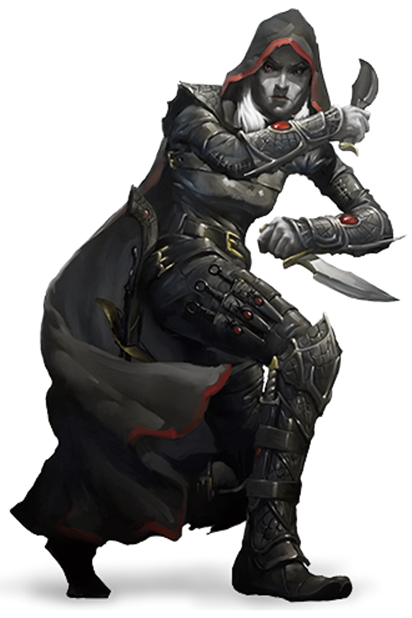
People forget that the entire point of venuring down into a dusty tomb is to bring back the prizes hidden away there. Fighting is for fools. Dead men can't spend their fortune.
-Barnabas Bladecutter
When brute force won't get the job done, or when magic isn't avalable or appropriate, the rogue rises to the fore. With skills tied to stealth, subterfuge, and trickery, rogues can get into and out of trouble in ways that few other characters can emulate.
Some rogues who turn to adventuring are former criminals who have decided that dodging monsters is preferable to remaining one step ahead of the law. Others are professional killers in search of profitable application of their talents between contracts. Some simply love the thrill of overcoming any challenge that stands in their way.
On adventures, a rogues is likely to mix an outwardly cautious approach—few rogues enjoy combat—with a ravenous hunger for loot. Most of the time, in a rogue's mind, taking up arms against a creature is not about killing the creature but about becoming the new owner of its treasure.
The following sections explore certain facets of what it means to be a rogue, which you can use to add depth to your character.
Guilty Pleasures
Most of what rogues do revolves around obtaining treasure and preventing others from doing the same. Little gets in the way of attaining those goals, except that many rogues are enticed away from that path by a compulsion that clouds their thinking—an irresistible need that must be satisfied, even if doing so is risky.
A rogue's guilty pleasure could be the acquisition of a physical item, something to be experienced, or a way of conducting oneself at certain times. One rogue might not be able to pass up any loot made of silver, for instance, even if said loot is hanging around the neck of a castle guard. Another one can't go through a day in the city without lifting a purse or two, just to keep in practice.
What's the one form of temptation that your rogue character can't resist when the opportunity presents itself, even if giving into it might mean trouble for you and your companions?
| d6 | Pleasure |
|---|---|
| 1 | Large gems |
| 2 | A smile from a pretty face |
| 3 | A new ring for your finger |
| 4 | The chance to deflate someone's ego |
| 5 | The finest food and drink |
| 6 | Adding to your collection of exotic coins |
Adversaries
Naturally, those who enforce the law are bound to come up against those who break it, and it's the rare rogue who isn't featured on at least one wanted poster. Beyond that, it's in the nature of their profession that rogues often come into contact with criminal elements, whether out of choice or necessity. Some of those people can be adversaries too, and they're likely to be harder to deal with than the average member of the city watch.
If your character's backstory doesn't already include a personage of this sort, you could work with your DM to come up with a reason why an adversary has appeared in your life. Perhaps you've been the subject of scrutiny for a while from someone who wants to use you for nefarious purposes and has just now become known to you. Such an incident could be the basis for an upcoming adventure.
Does your rogue character have an adversary who also happens to be a criminal? If so, how is this relationship affecting your life?
| d6 | Adversary |
|---|---|
| 1 | The pirate captain on whose ship you once served; what you call moving on, the captain calls mutiny. |
| 2 | A master spy to whom you unwittingly fed bad information, which led to the assassination of the wrong target. |
| 3 | The master of the local thieves' guild, who wants you to join the organization or leave town. |
| 4 | An art collector who uses illegal means to acquire masterpieces. |
| 5 | A fence who uses you as a messenger to set up illicit meetings. |
| 6 | The proprietor of an illegal pit fighting arena where you once took bets. |
Benefactor
Few rogues make it far in life before needing someone's help, which means thereafter owing that benefactor a significant debt.
If your character's backstory doesn't already include a personage of this sort, you could work with your DM to determine why a benefactor has appeared in your life. Perhaps you benefited from something your benefactor did for you without realizing who was responsible, and that person has now just become known to you. Who helped you in the past, whether or not you knew it at the time, and what do you owe that person as recompense?
| d6 | Benefactor |
|---|---|
| 1 | A smuggler kept you from getting caught but lost a valuable shipment in doing so. Now you owe them an equally valuable favor. |
| 2 | The Beggar King has hidden you from your pursuers many times, in return for future considerations. |
| 3 | A magistrate once kept you out of jail in return for information on a powerful lord. |
| 4 | Your parents used their savings to bail you out of trouble in your younger days and are now destitute. |
| 5 | A dragon didn't eat you when it had the chance, and in return you promised to set aside choice pieces of treasure for it. |
| 6 | A druid once helped you out of a tight spot; now any random animal you see could be that benefactor, perhaps come to claim a return favor. |
Rogue
| Level | Proficiency Bonus | Features | Sneak Attack | Fighting Styles Adopted | Debilitations Known |
|---|---|---|---|---|---|
| 1st | +2 | Fighting Styles, Roguish Archetype, Sneak Attack, Thieves’ Cant | 1d6 | 1 | — |
| 2nd | +2 | Adaptive, Cunning Action, Debilitate | 1d6 | 1 | 4 |
| 3rd | +2 | Expertise, Jack of all Trades, Steady Strike | 2d6 | 1 | 5 |
| 4th | +2 | Ability Score Improvement | 2d6 | 1 | 5 |
| 5th | +3 | Extra Attack, Uncanny Dodge | 3d6 | 2 | 6 |
| 6th | +3 | Roguish Archetype Feature | 3d6 | 2 | 6 |
| 7th | +3 | Advanced Prowess, Evasion | 4d6 | 2 | 7 |
| 8th | +3 | Ability Score Improvement | 4d6 | 2 | 7 |
| 9th | +4 | Roguish Archetype Feature | 5d6 | 2 | 8 |
| 10th | +4 | Ability Score Improvement | 5d6 | 2 | 8 |
| 11th | +4 | Extra Attack (2), Reliable Talent, Use Magic Item | 6d6 | 3 | 9 |
| 12th | +4 | Ability Score Improvement | 6d6 | 3 | 9 |
| 13th | +5 | Roguish Archetype Feature | 7d6 | 3 | 10 |
| 14th | +5 | Blindsense, Slippery Mind | 7d6 | 3 | 10 |
| 15th | +5 | Elusive | 8d6 | 3 | 11 |
| 16th | +5 | Ability Score Improvement | 8d6 | 3 | 11 |
| 17th | +6 | Extra Attack (3), Roguish Archetype Feature | 9d6 | 4 | 12 |
| 18th | +6 | Reflexes | 9d6 | 4 | 12 |
| 19th | +6 | Ability Score Improvement | 10d6 | 4 | 13 |
| 20th | +6 | Master of Luck | 10d6 | 4 | 13 |


Class Features
As a Rogue, you gain the following class features.
Hit Points
Hit Dice: 1d8 per rogue level
Hit Points at 1st Level: 8 + your Constitution modifier
Hit Points at Higher Levels: 1d8 (or 5) + your Constitution modifier per rogue level after 1st
Proficiencies
Armour: Light armor, shields
Weapons: Martial, simple, and improvised weapons
Tools: Thieves tools and one type of artisan's tools, one musical instrument, or the herbalism kit
Saving Throws: Dexterity and Intelligence or Charisma
Skills: Choose any four
Equipment
You start with the following equipment, in addition to the equipment granted by your background:
- (a) a rapier or (b) shortsword
- (a) a light crossbow and 20 bolts or (b) two handaxes
- (a) a burglar's pack, (b) dungeoneer’s pack or (c) an explorer’s pack
- Leather armor, two daggers, and thieves tools
Alternatively, you can purchase your starting equipment with a starting wealth of 6d4 x 10gp.



Fighting Style
Also at 1st Level, you adopt a particular style of Fighting as your specialty. Choose one of the following options. You can’t take a Fighting Style more than once. You adopt more Fighting Styles at later levels as shown in the Fighting Styles Adopted column.
Archery
You gain a +2 bonus to Attack Rolls you make with Ranged Weapons.
Attrition
Your hit point maximum increases by 1 and then increases by 1 whenever you gain a level in this class. As a bonus action, you can choose to recover 10 hit points. You can do this once per short or long rest.
Blind Fighting
You have blindsight with a range of 30 feet. Within that range, you can effectively see anything that isn't behind total cover, even if you're blinded or in darkness. Moreover, you can see an invisible creature within that range, unless the creature successfully hides from you.
Dueling
When you are wielding a melee weapon in one hand and no other Weapons, you gain a +3 bonus to Damage Rolls with that weapon.
Elemental Combatant. (HB)
Pick one of the following damage types: cold, fire, or lightning. You gain resistance to this damage type, and you can change the damage type of your current weapon to your chosen damage type every time you deal damage.
Thrown Weapon Fighting
You can draw a weapon that has the thrown property as part of the attack you make with the weapon. In addition, when you hit with a ranged attack using a thrown weapon, you gain a +3 bonus to the damage roll.
Tunnel Fighter (UA).
As a bonus action, you can enter a defensive stance that lasts until the start of your next turn. While in your defensive stance, you can use a reaction to make a melee attack against a creature that moves while within your reach.
Two-Weapon Fighting
When you engage in Two-Weapon Fighting, you can add your ability modifier to the damage of the second Attack. If you have the extra attack feature, then it applies to off hand attacks that you make as well.
Unarmed Fighting
Your unarmed strikes can deal 1d6 bludgeoning damage + your Strength modifier on a hit. If you aren't wielding any weapons or a shield when you make the attack roll you gain a +1 bonus to AC.
At the start of each of your turns, you can deal 1d4 bludgeoning damage to one creature grappled by you.
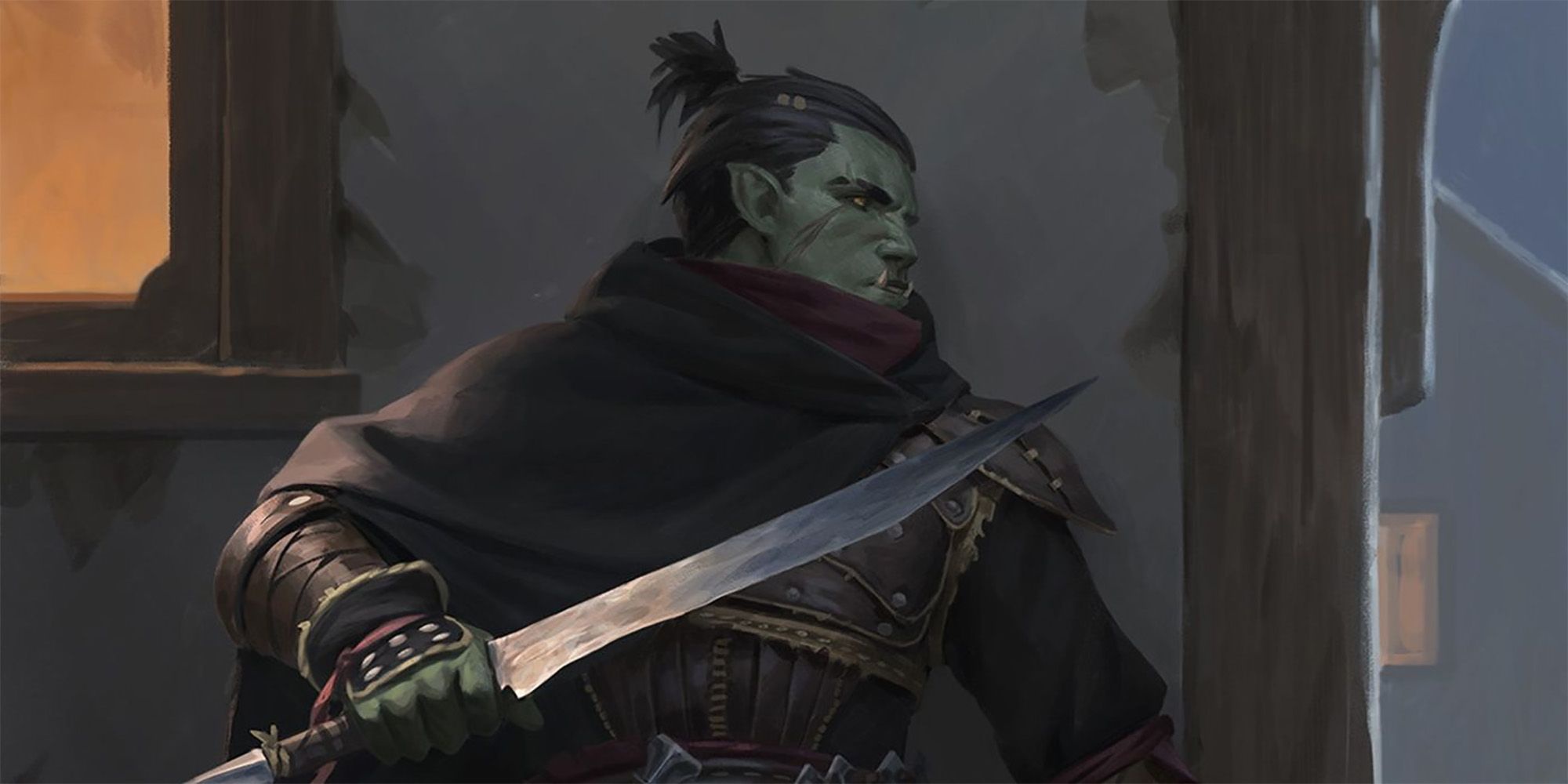

Roguish Archetype
Additionally at 1st level, you choose an archetype that you emulate in the exercise of your rogue abilities: Thief, detailed at the end of the class description, or one from another source. Your archetype choice grants you features at 1st level and then again at 6th, 9th, 13th, and 17th level.
Sneak Attack
Finally at 1st level, you know how to strike subtly and exploit a foe’s distraction. Once per turn, you can deal an extra 1d6 damage to one creature you hit with an attack if you have advantage on the attack roll.
You don’t need advantage on the attack roll if another enemy of the target is within 5 feet of it, provided that enemy isn’t incapacitated.
The amount of the extra damage increases as you gain levels in this class, as shown in the Sneak Attack column of the Rogue table.
Thieves’ Cant
During your rogue training you learned thieves’ cant, a secret mix of dialect, jargon, and code that allows you to hide messages in seemingly normal conversation. Only another creature that knows thieves’ cant understands such messages. It takes four times longer to convey such a message than it does to speak the same idea plainly.
In addition, you know and understand a set of secret signs and symbols used to convey short, simple messages, such as whether an area is dangerous or the territory of a thieves’ guild, whether loot is nearby, or whether the people in an area are easy marks or will provide a safe house for thieves on the run.
Adaptive
Thanks to your intense training you've gained amazing adaptability to the world around you.
At 2nd level, your walking speed is increased by 15 feet, you gain a swimming and a climbing speed equal to your current walking speed, your jump distance is multiplied by a quarter of your level (rounded up), and you have advantage on Constitution saving throws to avoid Exhaustion.
Cunning Action
Starting at 2nd level, your quick thinking and agility allow you to move and act quickly. You can take a bonus action on each of your turns in combat. This action can be used to do the following: You can take the Dash, Disengage, or Hide actions, make a Dexterity (Sleight of Hand) check, using your thieves' tools to disarm a trap or open a lock, or take the Use an Object action.
Debilitate
Finally at 2nd level, your attacks can hinder your foes, just as well as you can harm them.
Debilitations. You learn four debilitations of your choice from the list at the end of this class. If a debilitation has prerequisites, you must meet them to learn it. The Debilitations Known column of the Rogue table shows when you learn more debilitations of your choice. When you gain a level in this class or finish a long rest, you can replace a debilitation you know with another that you could learn at that level.
Using a Debilitation. When you use Sneak Attack against a creature, you can expend one or more of your Sneak Attack dice, removing it from the extra damage, to apply a debilitation. You must expend Sneak Attack dice in this way before you roll the extra damage, and you can only use one debilitation per attack.
Saving Throws. Some of your debilitations require a saving throw. The DC for this saving throw is calculated as follows:
Debilitation Save DC
Expertise
At 3rd level, choose four of your skill or tool proficiencies. Your proficiency bonus is doubled for any ability check you make that uses either of the chosen proficiencies.
Jack of all Trades
Also at 3rd level, you can add half your proficiency bonus, rounded down, to any ability check you make that doesn't already include your proficiency bonus.
Steady Strike
Finally at 3rd level, as a bonus action, you give yourself advantage on your next attack roll on the current turn. You can use this bonus action only if you haven't moved during this turn, and after you use the bonus action, your speed is 0 until the end of the current turn.
Ability Score Improvement
When you reach 4th level, and again at 8th, 10th, 12th, 16th, and 19th level, you can increase one ability score of your choice by 2, or you can increase two ability scores of your choice by 1. As normal, you can’t increase an ability score above 20 using this feature.
Using the "optional" feats rule, you can forgo taking this feature to take a feat of your choice instead.
Extra Attack
At 5th level, you can attack twice instead of once, whenever you take the attack action. Moreover, you can cast one of your cantrips in place of one of those attacks if you know a cantrip that requires an action to cast.
The number of attacks increases to three when you reach 11th level in this class and to four when you reach 17th level in this class.
Uncanny Dodge
Also at 5th level, when an attacker that you can see hits you with an attack, you can use your reaction to halve the attack’s damage against you.
Advanced Prowess
At 7th level, your martial capabilities have advanced so far to the point of being supernatural. All attacks you make and damage you deal, counts as magical for the purposes of overcoming resistance and immunity to nonmagical attacks.
Additionally, you can add half your Proficiency Bonus (rounded down) to attack and damage rolls you make. However, if you have a magical weapon that provides a higher Attack and Damage Bonus than this feature, the weapon overrides this feature.
Evasion
Also at 7th level, you can nimbly dodge out of the way of certain danger, such as an ancient red dragon’s fiery breath or an ice storm spell. When you are subjected to an effect that allows you to make a Dexterity saving throw to take only half damage, you instead take no damage if you succeed on the saving throw, and only half damage if you fail.
Reliable Talent
By 11th level, you have refined your chosen skills until they approach perfection. Whenever you make an ability check that lets you add your full proficiency bonus, you can treat a d20 roll of 9 or lower as a 10.
Use Magic Device
Also at 11th level, you have learned enough about the inner workings of magic that you can improvise the use of items even when they are not intended for you. You ignore all class, race, and level requirements on the use of magic items.
Blindsense
Starting at 14th level, you have blindsight with a range of 30 feet. Within that range, you can effectively see anything that isn't behind total cover, even if you're blinded or in darkness. Moreover, you can see an invisible creature within that range, unless the creature successfully hides from you.
If you gain blindsight from another source, you increase your blindsight range by half of the range that the feature provides.
Slippery Mind
Also at 14th level, you have acquired greater mental strength. You gain proficiency in Wisdom saving throws.
Elusive
Beginning at 15th level, you are so evasive that attackers rarely gain the upper hand against you. No attack roll has advantage against you while you aren’t incapacitated.
Reflexes
When you reach 18th level, you have become adept at laying ambushes and quickly escaping danger. You can take two turns during the first round of any combat. You take your first turn at your normal initiative and your second turn at your initiative minus 10. You can't use this feature when you are surprised.
Master of Luck
At 20th level, you have an uncanny knack for succeeding when you need to. If an attack you make misses, an ability check that you roll fails, or you fail a saving throw, you can turn the result of the roll into a 20.
You can use this feature twice, and must finish a short or long rest to regain one use of this feature. However, if you roll a Natural 20, and have no uses of this feature left, you regain one use.

Roguish Archetype: Arcane Trickster
Some rogues enhance their fine-honed skills of stealth and agility with magic, learning tricks of enchantment and illusion. These rogues include pickpockets and burglars, but also pranksters, mischief-makers, and a significant number of adventurers.
Spellcasting
When you reach 1st level, you augment your martial prowess with the ability to cast spells.
Cantrips. You learn four cantrips: Mage Hand and three other cantrips of your choice from the wizard spell list. You learn an additional cantrip of your choice at 7th and 13th level.
Spell Slots. The Arcane Trickster Spellcasting table shows how many spell slots you have to cast your wizard spells of 1st level and higher. To cast one of these spells, you must expend a slot of the spell's level or higher. You regain all expended spell slots when you finish a long rest.
For example, if you know the 1st-level spell Charm Person and have a 1st-level and a 2nd-level spell slot available, you can cast Charm Person using either slot.
Spells Known of 1st Level and Higher. You know three 1st-level wizard spells of your choice, one of which you must choose from the enchantment and illusion spells on the wizard spell list.
The Spells Known column of the Arcane Trickster Spellcasting table shows when you learn more wizard spells of 1st level or higher. Each of these spells must be of a level for which you have spell slots. For instance, when you reach 7th level in this class, you can learn one new spell of 1st or 2nd level.
Whenever you gain a level in this class, you can replace one of the wizard spells you know with another spell of your choice from the wizard spell list. The new spell must be of a level for which you have spell slots.
Spellcasting Ability. Intelligence is your spellcasting ability for your wizard spells, since you learn your spells through dedicated study and memorization. You use your Intelligence whenever a spell refers to your spellcasting ability. In addition, you use your Intelligence modifier when setting the saving throw DC for a wizard spell you cast and when making an attack roll with one.
Spell Save DC
Spell attack modifier
Arcane Trickster Rogue
| Rogue Level | Cantrips Known | Spells Known | 1st Level | 2nd Level | 3rd Level | 4th Level |
|---|---|---|---|---|---|---|
| 1st | 3 | 3 | 2 | ─ | ─ | ─ |
| 2nd | 3 | 3 | 2 | ─ | ─ | ─ |
| 3rd | 3 | 3 | 2 | ─ | ─ | ─ |
| 4th | 3 | 4 | 3 | ─ | ─ | ─ |
| 5th | 3 | 4 | 3 | ─ | ─ | ─ |
| 6th | 3 | 4 | 3 | ─ | ─ | ─ |
| 7th | 4 | 5 | 4 | 2 | ─ | ─ |
| 8th | 4 | 6 | 4 | 2 | ─ | ─ |
| 9th | 4 | 6 | 4 | 2 | ─ | ─ |
| 10th | 4 | 7 | 4 | 3 | ─ | ─ |
| 11th | 4 | 8 | 4 | 3 | ─ | ─ |
| 12th | 4 | 8 | 4 | 3 | ─ | ─ |
| 13th | 5 | 9 | 4 | 3 | 2 | ─ |
| 14th | 5 | 10 | 4 | 3 | 2 | ─ |
| 15th | 5 | 10 | 4 | 3 | 2 | ─ |
| 16th | 5 | 11 | 4 | 3 | 3 | ─ |
| 17th | 5 | 11 | 4 | 3 | 3 | ─ |
| 18th | 5 | 12 | 4 | 3 | 3 | ─ |
| 18th | 5 | 12 | 4 | 3 | 3 | 1 |
| 20th | 5 | 12 | 4 | 3 | 3 | 2 |
Mage Hand Legerdemain
Starting at 3rd level, when you cast Mage Hand, you can make the spectral hand invisible, and you can perform the following additional tasks with it:
- You can stow one object the hand is holding in a container worn or carried by another creature.
- You can retrieve an object in a container worn or carried by another creature.
- You can use thieves' tools to pick locks and disarm traps at range.
You can perform one of these tasks without being noticed by a creature if you succeed on a Dexterity (Sleight of Hand) check contested by the creature's Wisdom (Perception) check.
In addition, you can use the bonus action granted by your Cunning Action to control the hand.
Magical Indecency
At 6th level, your spells inflict a rather indecent effect upon your targets. As a bonus action, after you cast a spell on a creature, you can force the target to make a Constitution saving throw, or be magically blinded for 1d4 rounds.
Stowaway
Also at 6th level, when a creature within 5 feet of you teleports itself away, you can use your reaction to teleport in a free space within 5 feet of the new position of that creature.
Magical Ambush
Starting at 9th level, if you are hidden from a creature when you cast a spell on it, the creature has disadvantage on any saving throw it makes against the spell this turn.
Versatile Trickster
At 13th level, you gain the ability to distract targets with your Mage Hand. As a bonus action on your turn, you can designate a creature within 5 feet of the spectral hand created by the spell. Doing so gives you advantage on attack rolls against that creature until the end of the turn.
Spell Thief
At 17th level, you gain the ability to magically steal the knowledge of how to cast a spell from another spellcaster.
Immediately after a creature casts a spell that targets you or includes you in its area of effect, you can use your reaction to force the creature to make a saving throw with its spellcasting ability modifier. The DC equals your spell save DC.
On a failed save, you negate the spell's effect against you, and you steal the knowledge of the spell if it is at least 1st level and of a level you can cast (it doesn't need to be a wizard spell). For the next 8 hours, you know the spell and can cast it using your spell slots. The creature can't cast that spell until the 8 hours have passed.
Once you use this feature, you can't use it again until you finish a short or long rest.
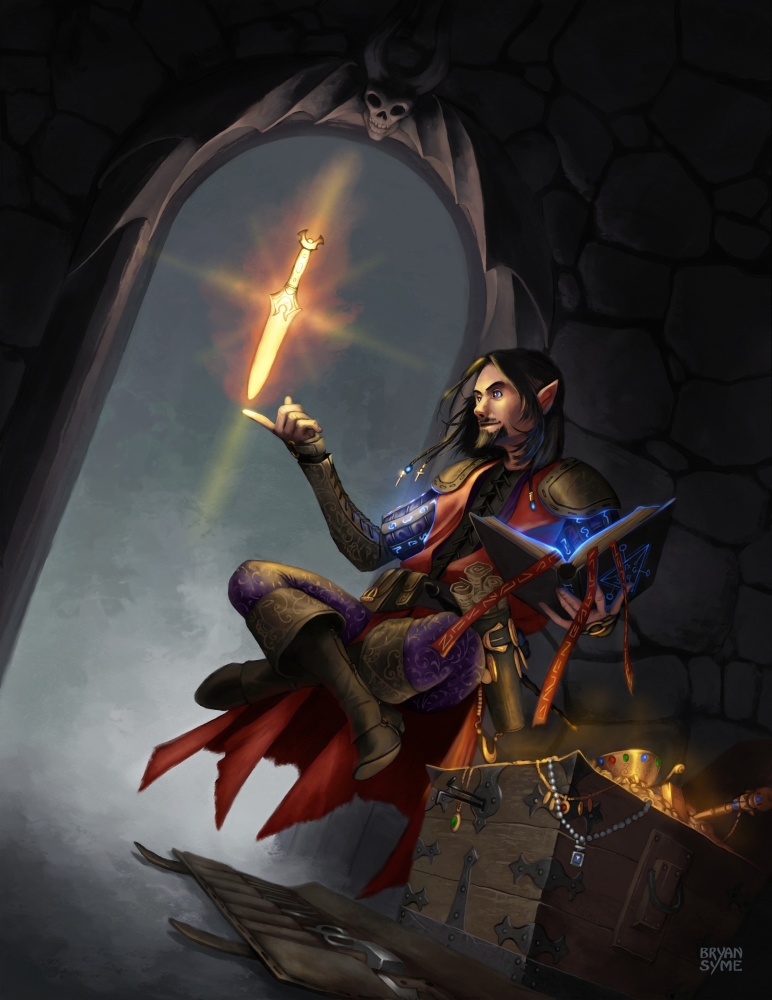
Roguish Archetype: Assassin
You focus your training on the grim art of death. Those who adhere to this archetype are diverse: hired killers, spies, bounty hunters, and even specially anointed priests trained to exterminate the enemies of their deity. Stealth, poison, and disguise help you eliminate your foes with deadly efficiency.
Bonus Proficiencies
When you choose this archetype at 1st level, you gain proficiency with the disguise kit and the poisoner's kit.
Assassinate
At 1st level, you are at your deadliest when you get the drop on your enemies. You have advantage on attack rolls against any creature that hasn't taken a turn in the combat yet. In addition, any hit you score against a creature that is surprised or you have successfully hidden from is a critical hit.
Assassins Presence
At 6th level, your visual presence is uncannily gone from the sight of those you oppose. When you successfully take the hide action, you become non-magically invisible to all enemies for one minute.
Once you use this feature, you can't use it again, until you finish a short or long rest, or until you successfully land a sneak attack.
Additionally, when you take the hide action with three creatures within 5 feet of you, you gain advantage on the Dexterity (Stealth) check.
Infiltration Expertise
Starting at 9th level, you can unfailingly create false identities for yourself. You must spend seven days and 25 gp to establish the history, profession, and affiliations for an identity. You can't establish an identity that belongs to someone else. For example, you might acquire appropriate clothing, letters of introduction, and official- looking certification to establish yourself as a member of a trading house from a remote city so you can insinuate yourself into the company of other wealthy merchants.
Thereafter, if you adopt the new identity as a disguise, other creatures believe you to be that person until given an obvious reason not to.
Impostor
At 13th level, you gain the ability to unerringly mimic another person's speech, writing, and behavior. You must spend at least three hours studying these three components of the person's behavior, listening to speech, examining handwriting, and observing mannerisms.
Your ruse is indiscernible to the casual observer. If a wary creature suspects something is amiss, you have advantage on any Charisma (Deception) check you make to avoid detection.
Death Strike
Starting at 17th level, you become a master of instant death. When you attack and hit a creature that is surprised or you've successfully hidden from, it must make a Constitution saving throw (DC 8 + your Dexterity modifier + your proficiency bonus). On a failed save, double the damage of your attack against the creature.




Roguish Archetype: Firecracker
Long ago an alchemist accidentally blew her lab sky high after discovering the process to make what we call today gunpowder. Rogues who use this miraculous and explosive substance have sacrificed their stealthy ways for a more potent solution.
Demolitionist
At 1st level, you learn how to create small explosives and employ them in combat, you gain proficiency in Alchemist's Supplies and using these tools you can make Black Powder Bombs.
At the end of each long rest, so long as you have access to your alchemist's supplies, you produce a number of Black Powder Bombs equal to your Intelligence modifier + your Proficiency Bonus.
You are proficient with Black Powder Bombs and require a ranged weapon attack roll to use creating a loud localized shockwave dealing the damage shown below, dealing double damage to structures.
These Bombs can trigger your Sneak Attack feature and alway apply sneak attack damage against structures.
Bomb Damage: Your Black Powder Bombs deal a number of d6's of bludgeoning damage equal to half your Proficiency Bonus (rounded up).
Explosive Escape
Also, at 1st level, when a creature hits you with a melee attack you can, as a reaction, detonate a Black Powder Bomb that you have on you. That creature must make a Dexterity saving throw against your Debilitation Save DC. On a failed save, you and the creature are pushed 10 feet apart and that creatures movement speed is reduced to 0 until the end of its next turn.
Arts and Crafts
Starting at 6th level, you have learned how to hastily make bombs when need be. During a short rest, if you have no Black Powder Bombs, you can craft a number of Black Powder Bombs equal to your half your Dexterity or Intelligence Modifier (Rounded Down).
Remote Trigger
At 9th level, you have developed a remote that allows you to trigger your Black Powder Bombs from a great distance. As an action, you can trigger a Black Powder Bomb as long as you are within 100 feet of it. Your Bombs have been upgraded, now when you use your Black Power Bombs creatures within 10ft. of the bomb must make a Dexterity saving throw. On a failed save, each creature takes the bombs damage or half as much on a successful save.
Explosive Surprise
Starting at 13th level, you have mastered the techniques to conceal and trigger explosions to exploit your foes weaknesses. Creatures have disadvantage on the saving throw against your Bombs and take double the damage if they are surprised or cannot see the bomb.
Pyrotechnician
At 17th level, you have become a savant at creating and deploying Black Powder Bombs. Once per long rest, you can hastily create two Black Powder Bombs as an action.
Additionally, when you are reduced to 0 hit points you can, as a reaction, cause all the Black Powder Bombs you have on you to detonate at once. Creatures within 15 feet of you must make a Dexterity saving throw or take 3d6 per bomb detonated bludgeoning damage or half as much on a successful save. You take no damage from this explosion.


Roguish Archetype: Inquisitive
As an archetypal Inquisitive, you excel at rooting out secrets and unraveling mysteries. You rely on your sharp eye for detail, but also on your finely honed ability to read the words and deeds of other creatures to determine their true intent. You excel at defeating creatures that hide among and prey upon ordinary folk, and your mastery of lore and your sharp eye make you well equipped to expose and end hidden evils.
Ear for Deceit
When you choose this archetype at 1st level, you've developed a keen ear for picking out lies. Whenever you make a Wisdom (Insight) check to determine whether a creature is lying, treat a roll of 7 or lower on the d20 as an 8.
Eye for Detail
Also at 1st level, you can use a bonus action to make a Wisdom (Perception) check to spot a hidden creature or object or to make an Intelligence (Investigation) check to uncover or decipher clues.
Insightful Fighting
Finally at 1st level, you gain the ability to decipher an opponent's tactics and develop a counter to them. As a bonus action, you make a Wisdom (Insight) check against a creature you can see that isn't incapacitated, contested by the target's Charisma (Deception) check.
If you succeed, you can use your Sneak Attack against that target even if you don't have advantage on the attack roll, but not if you have disadvantage on it.
This benefit lasts for 1 minute or until you successfully use this feature against a different target.
Knowledgable Combatant
Starting at 6th level, your combat awareness allows you to read your room and opponent quickly. You add twice your Intelligence modifier to the damage you deal. Additionally, as a reaction, you can check your surroundings up to 30 feet for environmental advantages that you can use against your opponent.
Steady Eye
At 9th level, you gain advantage on any Wisdom (Perception) or Intelligence (Investigation) check if you move no more than half your speed on the same turn.
Unerring Eye
At 13th level, your senses are almost impossible to foil. As an action, you sense the presence of illusions, shapechangers not in their original form, and other magic designed to deceive the senses within 30 feet of you, provided you aren't blinded or deafened. You sense that an effect is attempting to trick you, but you gain no insight into what is hidden or into its true nature.
Eye for Weakness
At 17th level, you learn to exploit a creature's weaknesses by carefully studying its tactics and movement. While your Insightful Fighting feature applies to a creature, your Sneak Attack damage against that creature increases by 5d6.
Roguish Archetype: Mastermind
Your focus is on people and on the influence and secrets they have. Many spies, courtiers, and schemers follow this archetype, leading lives of intrigue. Words are your weapons as often as knives or poison, and secrets and favors are some of your favorite treasures.
Master of Intrigue
Upon choosing this archetype at 1st level, you gain proficiency with the disguise kit, the forgery kit, and one gaming set of your choice. You also learn two languages of your choice.
Additionally, you can unerringly mimic the speech patterns and accent of a creature that you hear speak for at least 1 minute, enabling you to pass yourself off as a native speaker of a particular land, provided that you know the language.
Master of Tactics
Also at 1st level, you can use the Help action as a bonus action. Additionally, when you use the Help action to aid an ally in attacking a creature, the target of that attack can be within 30 feet of you, rather than 5 feet of you, if the target can see or hear you.
Insightful Manipulator
Starting at 6th level, if you spend at least 1 minute observing or interacting with another creature outside combat, you can learn certain information about its capabilities compared to your own. The DM tells you if the creature is your equal, superior, or inferior in regard to two of the following characteristics of your choice:
- Intelligence score
- Wisdom score
- Charisma score
- Class levels (if any)
At the DM's option, you might also realize you know a piece of the creature's history or one of its personality traits, if it has any.
Undivinable
At 9th level, your manipulative underhanded nature carries such an influence upon your soul that your undetectable through scrying. You cannot be target by spells or magical effects of the Divination school, and you have advantage on saving throws against spells and magical effects of the Enchantment and Illusion school.
Misdirection
Beginning at 13th level, you can sometimes cause another creature to suffer an attack meant for you. When you are targeted by an attack while a creature within 5 feet of you is granting you cover against that attack, you can use your reaction to have the attack target that creature instead of you.
Soul of Deceit
Starting at 17th level, your thoughts can't be read by telepathy or other means, unless you allow it. You can present false thoughts by making a Charisma (Deception) check contested by the mind reader's Wisdom (Insight) check.
Additionally, no matter what you say, effects that would determine if you are telling the truth indicates you are being truthful if you so choose, and you can't be compelled to tell the truth by any means.

Roguish Archetype: Phantom
Many rogues walk a fine line between life and death, risking their own lives and taking the lives of others. While adventuring on that line, some rogues discover a mystical connection to death itself. These rogues take knowledge from the dead and become immersed in negative energy, eventually becoming like ghosts. Thieves' guilds value them as highly effective information gatherers and spies.
Many shadar-kai of the Shadowfell are masters of these macabre techniques, and some are willing to teach this path. In places like Thay in the Forgotten Realms and Karrnath in Eberron, where many necromancers practice their craft, a Phantom can become a wizard's confidant and right hand. In temples of gods of death, the Phantom might work as an agent to track down those who try to cheat death and to recover knowledge that might otherwise be lost to the grave.
How did you discover this grim power? Did you sleep in a graveyard and awaken to your new abilities? Or did you cultivate them in a temple or thieves' guild dedicated to a deity of death?
Whispers of the Dead
When you choose this archetype at 1st level, echoes of those who have died cling to you. You can see into the ethereal plane out to 60 feet. Also, whenever you finish a short or long rest, you can gain one skill or tool proficiency of your choice, as a ghostly presence shares its knowledge with you. You lose this proficiency when you use this feature to choose a different proficiency that you lack.
Wails from the Grave
At 1st level, as you nudge someone closer to the grave, you can channel the power of death to harm someone else as well. Immediately after you deal your Sneak Attack damage to a creature on your turn, you can target a second creature that you can see within 30 feet of the first creature. Roll half the number of Sneak Attack dice for your level (round up), and the second creature takes necrotic damage equal to the roll's total, as wails of the dead surround them for a moment.
Tokens of the Departed
At 6th level, when a life ends in your presence, you're able to snatch a token from the departing soul, a sliver of its soul or life essence that takes physical form: as a reaction when a creature you can see dies within 30 feet of you, you can open your free hand and cause a Tiny trinket to appear there, a soul trinket. The DM determines the trinket's form or has you roll on the Trinkets table in the Player's Handbook to generate it.
You can have a maximum number of soul trinkets equal to your proficiency bonus, and you can't create one while at your maximum. You can use soul trinkets in the following ways:
- You learn how to speak, read, and write a number of languages of your choice equal to the amount of soul trinkets you possess.
- As long as you have at least one soul trinket, you gain proficiency in one saving throw of your choice, you can change this saving throw after you finish a long rest.
- As a reaction, when you take damage, you can destroy one of your soul trinkets that's on your person and then immediately use Wails from the Grave on your attacker.
- As an action, you can destroy one of your soul trinkets, no matter where it's located. When you do so, you can ask the spirit associated with the trinket three questions. The spirit appears to you and answers in a language it knew in life. It's under no obligation to be truthful, and it answers as concisely as possible, eager to be free. The spirit knows only what it knew in life, as determined by the DM.
Audience with Death
By 9th level, when at death's door, you can converse with the powers of death. You have advantage on death saving throws, and whenever you make a death saving throw, your spirit can ask the proxy of death a question that can be answered with "yes," "no," or "unknown." The entity answers truthfully, using the knowledge of all those who have died.
When you are healed or stabilized from 0 hit points, you can change your personal characteristics: personality trait, ideal, bond, or flaw.
Also, whenever you fall under a negative status condition such as: Blinded, Charmed, Deafened, Frightened, Paralyzed, or Petrified. You can destroy one of your soul trinkets to remove the condition/s as a reaction.
Dead Walk
When you reach 13th level, like a ghost, you have the ability to slip in and out of the Realms of Life & Death. You can now use your Cunning Action to teleport to an unoccupied space within 120 feet of you. You don't need to see that space to teleport to it. Additionally, you're immune to disease and the poisoned condition, and you have immunity to necrotic and poison damage.
Death Knell
At 17th level, your association with death has become so close that you gain the following benefits:
When you use your Wails from the Grave, you can now deal the necrotic damage to both the first and the second creature. At the end of a long rest, a soul trinket appears in your hand if you don't have any soul trinkets, as the spirits of the dead are drawn to you.



Roguish Archetype: Psi-Blade
Most assassins strike with physical weapons, and many burglars and spies use thieves' tools to infiltrate secure locations. In contrast, a Psi-Blade strikes and infiltrates with the mind, cutting through barriers both physical and psychic. These rogues discover psionic power within themselves and channel it to do their roguish work. They find easy employment as members of thieves' guilds, though they are often mistrusted by rogues who are leery of anyone using strange mind powers to conduct their business. Most governments would also be happy to employ a Psi-Blade as a spy.
Amid the trees of ancient forests on the Material Plane and in the Feywild, some wood elves walk the path of the Psi-Blade, serving as silent, lethal guardians of their woods. In the endless war among the gith, a githzerai is encouraged to become a Psi-Blade when stealth is required against the githyanki foe.
As a Psi-Blade, your psionic abilities might have haunted you since you were a child, only revealing their full potential as you experienced the stress of adventure. Or you might have sought out a reclusive order of psychic adepts and spent years learning how to manifest your power.
Psionics
Starting at 1st level, you harbor a wellspring of psionic energy within yourself, that you use to augment your martial capabilities.
Psionic Energy Dice. This energy is represented by your Psionic Energy Dice, which starts as a d4, the Psionic table shows how big the Die you use is later. You have a number of Psionic Energy Dice equal to twice your Proficiency Bonus.
You regain one expended Psionic Energy Dice upon rolling for initiative, and you regain all your expended Psionic Energy dice when you finish a short or long rest.
Psionic Powers Known. You know six Psionic Powers of your choice from the Psionics Power page shown below.
The Psionic Powers Known column shows when you learn more Psionic Powers of your choice. Each of these Powers must be of a grade for which you can cast with Psionic Energy Dice. For instance, when you reach 8th level in this subclass, you can learn one new Psionic Power.
Some Psionic Powers may have a prerequisite to them, such as obtaining another Power beforehand, or character level.
Psionics Ability. Intelligence is the ability use for your Psionics Powers, since you gain your powers through the manipulation of psychic energy. You use your Intelligence whenever a Psionic Power refers to your Psionic Ability. In addition, you use your Intelligence modifier when setting the Saving Throw DC for a Psionic Power you use, and when making Attack Rolls with one.
Psionics Save DC
Psionics Attack Modifier
Psionics Table
| Rogue Level | Psionic Powers Known | Psionic Energy Die |
|---|---|---|
| 1st | 3 | 1d4 |
| 2nd | 3 | 1d4 |
| 3rd | 3 | 1d4 |
| 4th | 3 | 1d4 |
| 5th | 4 | 1d6 |
| 6th | 4 | 1d6 |
| 7th | 4 | 1d6 |
| 8th | 5 | 1d6 |
| 9th | 5 | 1d8 |
| 10th | 5 | 1d8 |
| 11th | 6 | 1d8 |
| 12th | 6 | 1d8 |
| 13th | 7 | 1d10 |
| 14th | 7 | 1d10 |
| 15th | 7 | 1d10 |
| 16th | 7 | 1d10 |
| 17th | 8 | 1d12 |
| 18th | 8 | 1d12 |
| 19th | 8 | 1d12 |
| 20th | 8 | 1d12 |
Telepathy
Also at 1st level, your mind awakens to the ability to communicate via telepathy, and detect the psychic energy within others. You can detect the location of any creature within 120 feet of you that has an Intelligence Ability Score of 3 or higher. However, if the creature has successfully hidden themselves from you, you cannot detect them.
Also, as an action, choose one or more creatures you can see or know, up to a number of creatures equal to your Proficiency Bonus, and then roll one Psionic Energy Die.
For a number of hours equal to the number rolled, the chosen creatures can instantaneously share words, images, sounds, and other sensory messages with one another through the link, and the targets recognize you as the creature they're communicating with.
You and the other creature must be within 1 mile of each other. A creature can't use this telepathy if it can't understand any languages, and a creature can end the telepathic connection at any time (no action required). You and the creature don't need to speak a common language to understand each other.
Psychic Blades
You can manifest your psionic power as shimmering blades of psychic energy. Whenever you take the Attack action, you can manifest a psychic blade from your free hand and make the attack with that blade. This blade is a magical simple melee weapon with the finesse and thrown properties. It's damage die is the same as your Psionic Energy Die, and it has a normal range of 60 feet and a long range of 300 feet.
On a hit, it deals 1dX + your Intelligence modifier + the Ability modifier you used for the Attack Roll in psychic damage. The blade vanishes immediately after it hits or misses its target, and you can choose if it leaves marks on its target when it deals damage or not.
After you attack with the blade, you can make a melee or ranged weapon attack with a second psychic blade as a bonus action on the same turn, provided you have a free hand to create it.
Guarded Mind
At 6th level, the psionic energy flowing through you has bolstered your mind. You have resistance to psychic damage. Moreover, you're immune to the charmed and frightened conditions.
Third Eye
At 9th level, your psionics have gifted you enhanced sight that can pierce through the veils of reality. You gain the following benefits:
- Immunity to psychic damage.
- Expertise in Intelligence Saving Throws.
- Truesight out to 120 feet of you.
- Darkvision out to 300 feet of you.
Psychic Speed
At 13th level, you've learned how to surge your physical body with psioinic energy. As a bonus action, you can cast the Haste spell on yourself. Once you cast the spell with this feature, you can't do so again until you finish a rest, unless you expend a Psionic Energy die to cast it again.
Rend Mind
When you reach 17th level, you can sweep your Psychic Blade directly through a creature's mind. When you use your Psychic Blades to deal Sneak Attack damage to a creature, you can force that target to make an Intelligence saving throw. If the save fails, the target is stunned for 1 minute. The stunned target can repeat the saving throw at the end of each of its turns, ending the effect on itself on a success.
Psionic Powers
All Psionic powers are sorted in order by their level and alphabetical order.

Astral Psionics.
Prerequisite: None
You can cast the Mage Hand cantrip, requiring no components, using your Psionics Ability for the Spellcasting. The hand is invisible when you cast the cantrip with this feature.
Additionally, You can cast the spells Jump and Misty Step, requiring no components, using your Psionics Ability for the spellcasting; Once you cast either spell with this feature, you can't do so again until you finish a long rest, unless you expend a Psionic Energy Die to cast it again.
Astral Arm.
Prerequisite: Astral Psionics
You can summon a third arm of psionic energy that you can move around from your back or from one of your shoulders. The arm acts as a free hand and grants you a +2 bonus to Strength and Dexterity checks or saving throws. You can make the arm invisible while not using it, but it reappears when it interacts with creatures or objects, or deals damage.
Homing Strikes.
Prerequisite: Rogue
If you make an attack roll and miss the target, you can roll one Psionic Energy Die and add the number rolled to the attack roll. If this causes the attack to hit, you expend the Psionic Energy Die.
Mentally Bolstered Knack.
Prerequisite: Rogue
When your nonpsionic training fails you, your psionic power can help: if you fail an ability check using a skill or tool with which you have proficiency, you can roll one Psionic Energy Die and add the number rolled to the check, potentially turning failure into success. You expend the die only if the roll succeeds.
Mind Sliver.
Prerequisite: Homing Strikes
As an bonus action, you can spend a Psionic Energy Die to drive a disorienting spike of psychic energy into the mind of one creature you can see within range. The target must make succeed on an Intelligence saving throw or take psychic damage equal to three rolls of your Psionic Energy Die, and the first time it makes a saving throw before the end of your next turn, it must roll a d6 and subtract the number rolled from the save.
Psionic Assistance.
Prerequisite: Rogue
If you make a saving throw, and fail, you can roll one Psionic Energy Die and add the number rolled to the saving throw, potentially turning a failiure into a success. You expend the die only if the roll succeeds.
Psychic Identification
Prerequisite: None
You can expend one Psionic Energy Die to cast the spell Identify, requiring no components, using your Psionics Ability for the spellcasting.
Telekinetics.
Prerequisite: None
You can move an object or a creature with your mind. As an action, you target one loose object or one creature that is Large or smaller. If you can see the target and it is within 30 feet of you, you can move it up to 30 feet to an unoccupied space you can see. If your target is an enemy or hostile creature they must succeed on a Constitution saving throw.
Alternatively, if it is a Tiny object, you can move it to or from your hand. Either way, you can move the target horizontally, vertically, or both. Once you take this action, you can't do so again until you finish a short or long rest, unless you expend a Psionic Energy die to take it again.
5th Level Powers
Combine.
Prerequisite: 5th level
As a bonus action, you can combine your psychic powers with your physical reality, enhancing your physical performance. For the next minute, your movement speed increases by 15 feet, and your attacks gain a damage increase equal to one roll of your Psionic Energy Die.
Levitation.
Prerequisite: 5th level, Telekinetics
As a bonus action, you can propel your body with your mind. You gain a hover speed equal to twice your walking speed for 1 hour. Once you take this action, you can't do so again until you finish a short or long rest, unless you expend a Psionic Energy die to take it again.
Mind Blast.
Prerequisite: 5th level, Mind Reader
As an action, you can spend two Psionic Energy Die to emit psychic energy in a 60-foot cone. Each enemy creature in that area must succeed on an Intelligence saving throw or take psychic damage equal to five rolls of your Psionic Energy Die and be stunned for 1 minute. A creature can repeat the saving throw at the end of each of its turns, ending the effect on itself on a success.
Mind Reader.
Prerequisite: 5th level, Astral Psionics
You can expend one Psionic Energy Die to cast the spell Detect Thoughts, requiring no components, using your Psionics Ability for the spellcasting.
Protect Mind.
Prerequisite: 5th Level, Mind Sliver
As an action, you can spend a Psionic Energy Die to shield you or one willing creature you can detect within 30 feet of you. The target has resistance to psychic damage, as well as advantage on Intelligence, Wisdom, and Charisma saving throws for 1 hour.
Psychic Teleportation.
Prerequisite: 5th level, Astral Pionics
As an attack action, you can teleport to the location within 60 feet of you that you can see.
Once you use this feature, you can't do so again until you finish a long rest, unless you expend a Psionic Energy Die to use this feature again.
Psychic Veil.
Prerequisite: 5th level, Psi-Bolstered Knack
You can weave a veil of psychic static to mask yourself. As an action, you can become nonmagically invisible, along with anything you are wearing or carrying, for 1 hour or until you dismiss this effect (no action required). This invisibility ends early immediately after you deal damage to a creature.
Once you use this feature, you can't do so again until you finish a long rest, unless you expend a Psionic Energy Die to use this feature again.
11th Level Powers
Convergence.
Prerequisite: 11th level, Combine
As an action, you combine and materialize mental and physical realities into an explosive convergence, everything within a 15 foot wide, 120 feet long line, must make a Dexterity saving throw. Creatures and objects in the line take eight rolls of your Psionic Energy Dice in force damage.
Mind Thrust.
Prerequisite: 11th level, Protect Mind
As an action, you can spend two Psionic Energy Die to thrust a lance of psychic disruption into the mind of one creature you can see within range. The target must make an Intelligence saving throw. On a failed save, the target takes psychic damage equal to eight rolls of your Psionic Energy Die, and it can’t take a reaction until the end of its next turn. Moreover, on its next turn, it must choose whether it gets a move, an action, or a bonus action; it gets only one of the three. On a successful save, the target takes half as much damage and suffers none of the Psionic Powers other effects.
Telekinetic Mastery.
Prerequisite: 11th level, Levitation
You can cast the Telekinesis spell, requiring no components, using your Psionics Ability for the spellcasting. On each of your turns while you concentrate on the spell, including the turn when you cast it, you can make one attack with a weapon as a bonus action.
Once you cast the spell with this feature, you can't do so again until you finish a long rest, unless you expend a Psionic Energy die to cast it again.
17th Level Powers
Telekinetic Displacer.
Prerequisite: 17th level, Psychic Teleportation.
You can expend three Psionic Energy Die to cast the spell Teleport on yourself alone, requiring no components, using your Psionics Ability for the spellcasting.
You can expend two Psionic Energy Die to include another creature within 30 feet of you.
Plane Warping Mind.
Prerequisite: 17th level, Telekinetic Displacer
You can expend four Psionic Energy Die to cast the spell Plane Shift on yourself alone, requiring no components, using your Psionics Ability for the spellcasting.
You can expend two Psionic Energy Die to include another creature within 30 feet of you.
Roguish Archetype: Sanguine Robber
Some rogues learn arcane magic to enhance their abilities, some excel using their wits and whims, while others fall to darker arts. Sanguine Robbers, otherwise known as ichor thieves, specialize in manipulating the blood they produce from their foes, and sometimes even themselves. They can kill in an instant, with no signs of ever having been there, or they can leave behind the dry remains of their marks.
Vital Tokens
Starting at 1st level, your specialized training taught you how to store blood within your body to use at important moments later before you even need to sacrifice any of your vitality. You have a number of Vital Tokens equal to your Consittution Modifier + your Proficiency Bonus (Minimum of 3), and you can use them for the following abilities and class features.
You regain a Vital Token whenever a creature with blood in their body dies within 120 feet of you, when you spend a Hit Dice during a short rest, or if you choose to spend 1d8 of your own hit points as a bonus action to regain one, and you regain all of your Vital Tokens when you finish a long rest. You cannot have more Vital Tokens than your current maximum.
Vital Ability. You use your Constitution Modifier whenever a subclass feature calls for a saving throw or attack roll.
Save DC
Attack Modifier
Bloody Talents
Also at 1st level, thanks to your brutal training and precise manipulation of blood, you have resistance against Necrotic and Poison damage and you've gained the ability to manipulate blood in the following ways:
Blood Siphon: As an action, you can spend 1 Vital Token to target one creature within 30 feet of you that has blood in it's body, the target must make a Constitution Saving Throw. The target takes Necrotic or Poison damage (your chocie) equal to your Rogue Level on a failed save, or half as much damage (Rounded up) on a successful one. You regain hit points equal to the damage dealt if you're currently missing any, otherwise you gain Temporary Hit Points equal to the damage dealt, you regenerate blood bone and flesh when healed this way. If you are hidden from the target at the time you use this ability, you add your Sneak Attack damage.
Ichor Blade: As a bonus action, you can spend 1 Vital Token to create a melee weapon of crystallized blood or coat the weapon that your currently wielding in crystallized blood. The weapon can be any weapon of your choice, it uses your Constitution for attack and damage rolls, and deals an extra 2d8 Necrotic or Poison damage (your choice). Also, it is considered magical for the purposes of overcoming resistance and immunity to nonmagical damage and always has the Finesse weapon property.
Seek Blood: As a reaction to starting combat, you can spend 2 Vital Tokens to enter a near feral state for 1 minute, that allows you to sense all creature within 300 feet of you that have blood. While in this state, your movement speeds are doubled, you have advantage on all rolls against creatures with blood, and they cannot hide from you.
Exsanguinating Strike
At 6th level, you have learned a technique that involves striking deep into an already festering wound and hemomantically breaking as many blood vessels as possible in the strike so the wound is left bleeding at an alarming rate. When you deal damage to a creature that is already missing hit points, you can spend 2 Vital Tokens to deal double the damage of your attack, and the creature not only cannot heal, but takes damage from any healing that they receive until the start of your next turn.
Hemomagnetics
At 9th level, you have gained mastery over the blood that surrounds you, and understand how to pull/push the blood of others closer to reach their hearts. As a bonus action, you can spend 1 Vital Tokens to create a magnetic pulse of sanguine power, where each creature of your choice that has blood within 60 feet of you must succeed on a Constitution saving throw or be pulled/pushed 30 feet closer/further to or from you. Also, creatures that have failed the save have dis-advantage on all of their rolls until the end of their next turn.
Sanquine Vortex
At 13th level, you can create a storm of ichor and life energy that sucks away all life in the area to fuel your selfish desires. As an action, you can spend 3 Vital Tokens and choose an area within 120 feet of you which blossoms with a low rumble into an flowering storm of blood. For 10 rounds, each creature of your choice in a 20-foot-radius sphere centered on that point has their movement speed halved and must make a Constitution Saving Throw at the start of each of their turns while they remain in the area. A creature takes 3d8 Necrotic or Poison damage (Your choice) on a failed save, or half as much damage on a successful one.
Every time a creature with blood takes damage from this feature, you or an ally of your choice regains hit points equal to the damage dealt. Also, if a creature is at the center of the vortex when your create it, they have disadvantage on the saving throw and take double the damage at the start of their turn until they leave the center.
Heart Attack
At 17th level, you've masterd the sanguine arts and have immunity to Necrotic and Poison damage, and you can turn the blood of others into crystals, whenever you kill a creature with a feature from this subclass, their body is crystalized and cannot be returned to life outside of a True Resurrection or Wish spell.
Also, as an action, make an attack roll, on a hit, you can spend 4 Vital Tokens to completely stop the blood flow inside of a creature that you can see within 300 feet of you, killing them instantly. Roll your Sneak Attack Dice, and if your target has less hit points than the rolled result, it dies instantly, becoming as crystal blood statue. Otherwise this feature has no effect.
Roguish Archetype: Scout
You are skilled in stealth and surviving far from the streets of a city, allowing you to scout ahead of your companions during expeditions. Rogues who embrace this archetype are at home in the wilderness and among barbarians and rangers, and many Scouts serve as the eyes and ears of war bands. Ambusher, spy, bounty hunter – these are just a few of the roles that Scouts assume as they range the world.
Skirmisher
Starting at 1st level, you are difficult to pin down during a fight. You can move up to half your speed as a reaction when an enemy ends its turn within 5 feet of you. This movement doesn’t provoke opportunity attacks.
Survivalist
When you choose this archetype at 1st level, you gain proficiency in the Nature and Survival skills if you don't already have it. Your proficiency bonus is doubled for any ability check you make that uses either of those proficiencies.
Superior Mobility
At 6th level, all of your available movement speeds increase by 20 feet. Additionally, when you take the dash action you ignore difficult terrain.
Mark Target
At 9th level, you learn the Hunters Mark spell, and you can cast it using your Cunning Action. You use your Intelligence for the spellcasting of the spell.
You can use this feature a number of times equal to your Proficiency Bonus, and you regain all expended uses after a rest.
When you cast hunters mark in this way, it is considered nonmagical and not considered a 1st level spell.
Ambush Master
Starting at 13th level, you excel at leading ambushes and acting first in a fight.
You have advantage on initiative rolls. In addition, the first creature you hit during the first round of a combat becomes easier for you and others to strike; attack rolls against that target have advantage until the start of your next turn.
Sudden Strike
Starting at 17th level, you can strike with deadly speed. If you take the Attack action on your turn, you can make one additional attack as a bonus action. This attack can benefit from your Sneak Attack even if you have already used it this turn, but you can't use your Sneak Attack against the same target more than once in a turn.

Roguish Archetype: Swashbuckler
You focus your training on the art of the blade, relying on speed, elegance, and charm in equal parts. While some warriors are brutes clad in heavy armor, your method of fighting looks almost like a performance. Duelists and pirates typically belong to this archetype.
A Swashbuckler excels in single combat, and can fight with two weapons while safely darting away from an opponent.
Fancy Footwork
When you choose this archetype at 3rd level, you learn how to land a strike and then slip away without reprisal. During your turn, if you make a melee attack against a creature, that creature can't make opportunity attacks against you for the rest of your turn.
Rakish Audacity
Starting at 3rd level, your confidence propels you into battle. You can give yourself a bonus to your initiative rolls equal to your Charisma modifier (Minimum of +0).
You also gain an additional way to use your Sneak Attack; you don't need advantage on the attack roll to use your Sneak Attack against a creature if you are within 5 feet of it, no other creatures are within 5 feet of you, and you don't have disadvantage on the attack roll. All the other rules for Sneak Attack still apply to you.
Panache
At 6th level, your charm becomes extraordinarily beguiling. As an action, you can make a Charisma (Persuasion) check contested by a creature's Wisdom (Insight) check. The creature must be able to hear you, and the two of you must share a language.
If you succeed on the check and the creature is hostile to you, it has disadvantage on attack rolls against targets other than you and can't make opportunity attacks against targets other than you. This effect lasts for 1 minute, until one of your companions attacks the target or affects it with a spell, or until you and the target are more than 60 feet apart.
If you succeed on the check and the creature isn't hostile to you, it is charmed by you for 1 minute. While charmed, it regards you as a friendly acquaintance. This effect ends immediately if you or your companions do anything harmful to it.
Parry
At 9th level, thanks to your quick wit and your fancy footwork, you can respond to attacks with a defensive strike. When you are hit with an attack, you may use your reaction to add +3
to your AC for the purposes of that attack, possibly
causing it to miss.
Regardless of weather the attack hits or misses, your
AC returns to normal after you parry the attack. You
may use this reaction after the DM announces the
results of the attack roll, but before damage
is rolled.
Elegant Maneuver
Starting at 13th level, you can use a bonus action on your turn to gain a +5 bonus on the next Dexterity (Acrobatics) or Strength (Athletics) check you make during the same turn.
Expert Duelist
Beginning at 17th level, your mastery of the blade lets you turn failure into success in combat. Your attacks score a critical hit on a roll of 19 or 20.
Also, if you miss with an attack roll, you can roll it again with advantage. You can use this feature twice per short or long rest.
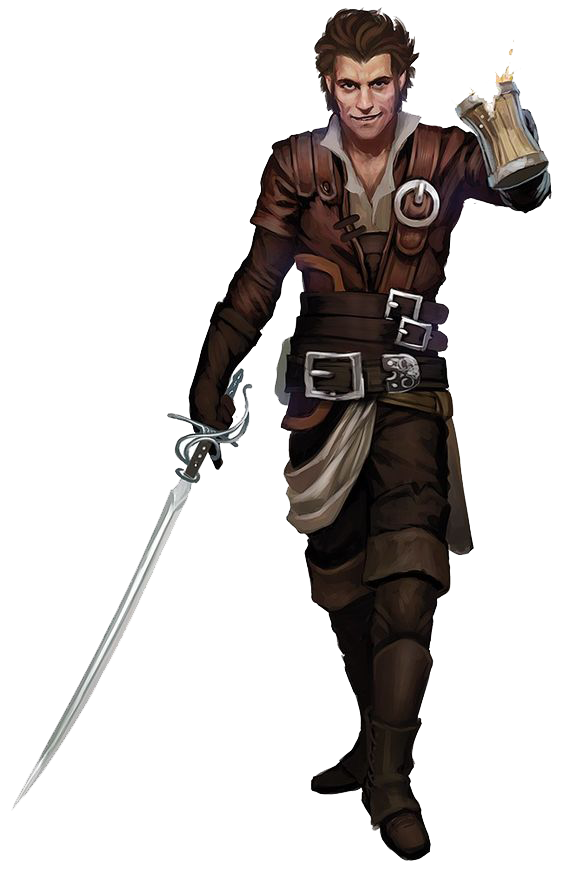
Debilitations
The debilitations are presented in order of level prerequisite. A level prerequisite refers to your rogue level.
Deny Reaction
You can expend 1 Sneak Attack die to prevent the target from reacting quickly. The target is unable to take reactions until the start of your next turn.
Disarm
You can expend 1 Sneak Attack die to attempt to disarm the target. The target must make a Strength saving throw or drop one item of your choice that it's holding and kick it 15 feet away.
Hamstring
You can expend 1 Sneak Attack die to hamper the target's movement, reducing its walking speed by half until the end of your next turn.
Slice and Swipe
You can expend 1 Sneak Attack die to make a Dexterity (Sleight of Hand) check against the target's Passive Wisdom (Perception) score. On a success, you steal an object from the target that can fit in one hand and weighs no more than 20 pounds. The object must be accessible such that the target can draw it with an object interaction.
Sweep the Leg
If the target is Large or smaller, you can expend 1 Sneak Attack die to trip the target over. The target must make a Dexterity saving throw or fall prone.
Pin
Prerequisite: 7th level
You can expend 2 Sneak Attack dice to attempt to grapple the target. You can make Dexterity (Acrobatics) checks instead of Strength (Athletics) checks for this grapple, and the target has disadvantage on the check to avoid the grapple.
Silencing Strike
Prerequisite: 7th level
You can expend 2 Sneak Attack dice to strike at the target's vocal cords or similar parts. The target must make a Constitution saving throw or be unable to speak or supply the vocal components of spells until the creature finishes a short or long rest, or regains any number of hit points.
Thief's Evasion
Prerequisite: 7th level
You can expend 2 Sneak Attack dice to impose disadvantage on all attacks the target makes against you before the end of your next turn.
Bleed Out
Prerequisite: 11th level
You can expend 3 Sneak Attack dice to open a wound on the target. The target takes 3d6 necrotic damage at the start of each of its turns. Regaining any number of hit points ends the wound, as does using an action to staunch the wound.
Unseen Strike
Prerequisite: 11th level
If you are hidden from the target, you can expend 3 Sneak Attack dice to make a Dexterity (Stealth) check against the target's passive Wisdom (Perception) score. On a success, you remain hidden from the target.
Staggering Strike
Prerequisite: 11th level
You can expend 3 Sneak Attack dice to deliver a dazzling blow. The target must make a Constitution saving throw or be staggered until the end of its next turn. A staggered creature has disadvantage on attack rolls, ability checks, saving throws, and can't take reactions.
Concuss
Prerequisite: 15th level
You can expend 4 Sneak Attack dice to disorient the target with a well-placed blow. The target must make a Constitution saving throw or choose whether it gets a move, an action, or a bonus action on its next turn; it only gets one of the three.
Immobilise
Prerequisite: 15th level
You can expend 4 Sneak Attack dice to completely cripple the target's movement. All of the target's speeds are reduced to 10 feet until the end of your next turn, unless they're already lower.
Lightning Hands
Prerequisite: 15th level
You can expend 4 Sneak Attack dice to immediately use your bonus action to activate a magic item that takes 1 action to use. If the magic item targets any creatures, you must include the target in its effects.
Archetype Debilitations
Your choice of Roguish Archetype also grants you access to more specialised debilitations, which are added to the list of debilitations you can learn.
Arcane Trickster
The following debilitations are available for you to learn.
Undercut Resistance
You can expend 1 Sneak Attack die to cause the attack's damage to bypass any damage resistance the target has.
Sabotage Defenses
Prerequisite: 7th level
You can expend 2 Sneak Attack dice to cripple the target's magical defenses. The next time it makes a saving throw against a spell you cast before the end of your next turn, it must roll a d8 and subtract the result from the save.
Dispelling Strike
Prerequisite: 11th level
You can expend 3 Sneak Attack dice to subject the target to the effects of the dispel magic spell, treating your spellcasting ability as Intelligence.
Steal Mana
Prerequisite: 15th level
If the target is a spellcaster, you can expend 4
Sneak Attack dice to force the target to make a
saving throw with its spellcasting ability modifier.
On a failure, the target loses its highest level spell
slot that is no higher than 4th level, and you regain an expended spell slot of that level or lower.
Assassin
The following debilitations are available for you to learn.
Persistent Wound
You can expend 1 Sneak Attack die to leave a festering wound on the target. Damage from the attack can't be healed by any means other than a short or long rest.
Mark For Death
Prerequisite: 7th level
You can expend 2 Sneak Attack dice to render the target more vulnerable to weapon attacks. Until the start of your next turn, whenever the target takes damage from a weapon attack, it takes an additional 1d4 damage.
Poisoned Strike
Prerequisite: 11th level
You can expend 3 Sneak Attack dice to apply a lingering poison. The target must make a Constitution saving throw. On a failed save, it takes 3d6 poison damage at the start of each of its turns. The target can repeat the save at the end of each of its turns, reducing the poison damage by 1d6 on a successful save. The debilitation ends when the damage is reduced to 0 or when you use it again against the target.
Killing Stroke
Prerequisite: 15th level
You can expend 4 Sneak Attack dice to attempt to instantly kill the target. Roll 10d6; if the target has that many hit points or fewer after taking the attack's damage, it dies.
Firecracker
The following debilitations are available for you to learn.
Flash Bang
You can expend 1 Sneak Attack dice to blind your target. The target must make a Constitution saving throw or become blind and deafened until the end of your next turn.
Surprise Bomb
Prerequisite: 7th level
You can expend 2 Sneak Attack dice to throw two Black Powder Bombs at two separate targets within 15 feet of your original target, making a new attack roll for each target.
Shrapnel Grenade
Prerequisite: 11th level
You can expend 3 Sneak Attack dice to toss a Black Powder Bomb loaded with shrapnel at a target within 40 feet of you, all targets within a 20 foot radius of the Bomb must make Dexterity saving throw. A target takes 5d6 piercing damage on a failed save, or half as much damage on a successful one.



Pocket Surprise
Prerequisite: 15th level
You can expend 4 Sneak Attack dice to sneak a Black Powder Bomb into a creatures pockets, putting them in imminent danger. The creature must make a Constitution saving throw. On a failed save, the creature takes double the dice worth of damage from the Black Powder Bomb, or take the normal damage on a successful one.
Inquisitive
The following debilitations are available for
you to learn.
Deduce
If the target is under the effects of your Insightful Fighting feature, you can expend 1 Sneak Attack die to learn one of the following facts about the target (your choice):
- Its damage immunities
- Its damage resistances
- Its damage vulnerabilities
- Its condition immunities
- One of its defining traits and its mechanical effects (such as a hydra's Multiple Heads trait)
- One of its defining actions and its mechanical effects (such as a dragon's Breath Weapon)
Expose
Prerequisite: 7th level
You can expend 2 Sneak Attack dice to give away the target's location. Until the end of your next turn, the target can't hide from you, and if it's invisible, it gains
no benefit from that condition against you.
Create Vulnerability
Prerequisite: 11th level
You can expend 3 Sneak Attack dice to expose a weak point on the target until the end of your next turn. The next time the target is hit by a weapon attack, it is vulnerable to the weapon's damage (excluding additional damage like Divine Smite and Sneak Attack), and the debilitation ends.
Predict Turn
Prerequisite: 15th level
If the target is under the effects of your Insightful Fighting feature, you can expend 4 Sneak Attack dice to learn exactly what the target plans to do on its next turn. During the target's turn, you have advantage on any ablity check or saving throw the target forces you to make, and the target has disadvantage on all attack rolls against you.
Mastermind
The following debilitations are available for you to learn.
Probe Thoughts
You can expend 1 Sneak Attack die to learn the target's current surface thoughts, as per the spell detect thoughts.
Incite Paranoia
Prerequisite: 7th level
You can expend 2 Sneak Attack dice to plant confusion and paranoia in the target's mind. The target must make an Intelligence saving throw or use its reaction to make a melee weapon attack against a creature of your choice within its range.
Discombobulate
Prerequisite: 11th level
You can expend 3 Sneak Attack dice to disorient the target. The target must make a Wisdom saving throw or be unable to attack you or target you with harmful abilities and magical effects until the start of your next turn.
Setup
Prerequisite: 15th level
You can expend 4 Sneak Attack dice to force the target to make an Intelligence saving throw. On a failure, it automatically fails the first saving throw it makes against the next debilitation you apply to it before the end of your next turn.
Phantom
The following debilitations are available for you to learn.
Scars of the Grave
You can expend 1 Sneak Attack die to prevent the target from regaining hit points until the start of your next turn.
Siphon Vitality
Prerequisite: 7th level
You can expend 2 Sneak Attack dice to shear off some of the target's life force to shield your own, gaining 2d6 hit points.
Dreadful Strike
Prerequisite: 11th level
You can expend 3 Sneak Attack dice to fill the target with the fear of death. The target must make a Wisdom saving throw or be stunned by you until the start of your next turn, and becomes frightened of you for 1 minute.
Inscribe Soul
Prerequisite: 15th level
You can expend 4 Sneak Attack dice to force the target to make a Charisma saving throw. On a failure, you bind the target's soul to a soul trinket in your possession. As an action, you can destroy this soul trinket to deal 10d10 necrotic damage to the target, as long as it's on the same plane of existence as you. A remove curse spell or similar magic ends this effect, as does using this debilitation again.
Psi-Blade
The following debilitations are available for you to learn.
Plant Delusion
You can expend 1 Sneak Attack die to create a phantom image or sound, as per the minor illusion spell, that only the target can see or hear. The delusion lasts until the start of your next turn, or until it uses its action to see through the delusion with a successful Intelligence (Investigation) check against your debilitation save DC.
Psychic Haze
Prerequisite: 7th level
You can expend 2 Sneak Attack dice to cloud the target's mind with a static haze. The target must make an Intelligence saving throw. On a failure, you are invisible to the target until the end of your next turn.
Unravel Psyche
Prerequisite: 11th level
You can expend 3 Sneak Attack dice to expose the target's soul to your psychic attacks. The next time you attack the target with your Psychic Blades before the end of your next turn, you can treat its AC as 10 + its Dexterity modifier.
Rend Mind
Prerequisite: 15th level
If this attack was made with your Psychic Blades, you can expend 4 Sneak Attack dice to strike directly at the target's soul. The target must make an Intelligence saving throw. On a failed save, its Intelligence score is decreased by 2 until it takes a long rest. If a creature's Intelligence score is reduced to 0 in this way, it dies. Constructs and undead aren't affected by this debilitation.
Sanguine Robber
THe following debilitations are available for you to learn.
Hemorrhage
You can expend 1 Sneak Attack die to cause the target severe caustic bleeding until they can close the wound. While a creature is affected by this debilitation, the target takes 1d6 necrotic damage at the start of each of their turns, and must make a Strength saving throw at the end of each of their turns, the effects of the debilitation ends upon the first succesccful Strength saving throw.
Every time an effected target fails a Strength saving throw to this feature, you recover a Vital Token if you have expended any.

Bloodlock
Prerequisite: 7th level
You can expend 2 Sneak Attack dice to increase the viscosity of your targets blood. The target must make a Constitution saving throw or become stunned and poisoned until the end of your next turn.
Supernova
Prerequisite: 11th level
You can expend 3 Sneak Attack dice to cause your targets blood to violently explode from their body in an instant. All creatures of your choice within 15 feet of your target must make a Dexterity saving throw or take 3d6 piercing damage and be poisoned until the end of their next turn.
Impalement
Prerequisite: 15th level
You can expend 4 Sneak Attack dice to impale your target making a hole through their chest, deal Maximum damage to the target and the result you need to roll for a critical hit against that target drops by one (19-20).
Scout
The following debilitations are available for you to learn.
Tracking Strike
You can expend 1 Sneak Attack die to mark the target until the end of your next turn. While a creature is marked, you have advantage on any Wisdom (Perception) or Wisdom (Survival) check to find it, and you can't have disadvantage on weapon attacks against it.
Distract
Prerequisite: 7th level
You can expend 2 Sneak Attack dice to set the target up for a subsequent attack. The next time a weapon attack is made against the target before the start of your next turn, its AC against that attack is reduced by 3.
Outmaneuver
Prerequisite: 11th level
You can expend 3 Sneak Attack dice to gain a +3 bonus to your AC against attacks made by the target and the benefits of the Disengage action until the start of your next turn.
Blindside
Prerequisite: 15th level
If it's currently the first round of a combat, you can expend 4 Sneak Attack dice to strike the target with blinding speed. The target takes additional damage equal to your initiative score, and you can move it to the bottom of the initiative order for the remainder of this combat.
Swashbuckler
The following debilitations are available for you to learn.
Goad
You can expend 1 Sneak Attack die to provoke the target into attacking you. The target must make a Wisdom saving throw or have disadvantage on attack rolls against creatures other than you until the start of your next turn. The debilitation ends early if you attack or harm another creature or if a creature other than you attacks or harms the target.
Duelist's Feint
Prerequisite: 7th level
You can expend 2 Sneak Attack dice to gain advantage on the next weapon attack you make against the target before the end of your next turn.
Instant Counter
Prerequisite: 11th level
You can expend 3 Sneak Attack dice to prepare to parry the target's attack with your own. If the target makes a melee weapon attack against you before your next turn, you can use your reaction to make a melee weapon attack against it at the same time. If your attack roll surpasses that of the target's, the target's attack misses.
Masterful Maneuver
Prerequisite: 15th level
You can expend 4 Sneak Attack dice to use your acrobatic skill to either dodge the target's attack or aid your own. Make a Dexterity (Acrobatics) check and record the result. If either you or the target makes a weapon attack against the other before the end of your next turn, you can replace your AC or attack roll with the recorded result for that attack. You can do this after the attack roll is made but before any of its effects are applied. The debilitation ends after you replace your AC or attack roll in this way once.
Practice
Safe
Hamstringing
Rogue's a fun class to play, but compared to the other martials, and skill monkey classes it still lacks. I opted to give it better combat potential, and with the help of noname, I managed to do just that.
With this class revision, the rogue should be able to keep up without any issue, aside from maybe still being out done by bards. But what are you gonna do?
Have fun with this class revision, and don't expect another one from me any time soon.
Cover Art: Marel Ares
Massive credit and respect to This Guy for making the Debilitations feature.
If you want me to list the credits for the art, or make suggestions, contact me via discord (coffeesorcerer69) of who they are, or help me find who they are.