
PART 1
Exploration

Exploring a Galaxy Far, Far Away
Perhaps one of the biggest challenges of having an entire galaxy to explore is figuring out where to start! With limitless stars ahead, each with the potential for multiple worlds to investigate, the task of picking a destination can be daunting to say the least. The exploration system presented in this section gives your party of galactic adventurers a wide range of tools to seek out new worlds.
GALAXY EXPLORATION
"There are so many! Do they each have a system of planets?"
"Most of them."
"Has anyone been to them all?"
"Not likely."
"I wanna be the first one to see them all..."
— Anakin Skywalker & Qui-Gon Jinn
Hyperspace has been accessible to many sentient species for millennia, but much of the phenomena remains poorly understood. The main hyperspace lanes have been charted over centuries and marked with navigational hyperspace beacons. As more of the galaxy was mapped, more direct hyperspace routes were discovered. Still, much of the galaxy is not well connected to the main hyperlanes and is poorly charted, leaving countless planets unmapped or unexplored.
Astrogation is key to exploring the galaxy. Throughout galactic history, cartographers and scouts traveled between star systems in search of more reliable and safer hyperspace routes free of dangerous obstacles. Traveling beyond those hyperspace routes is possible but dangerous: large objects create mass shadows, and traveling too close or through stellar bodies like stars or black holes can destroy a ship. Advanced navcomputers, skilled astrogators, or Force-sensitive pathfinders are needed to carefully guide ships through hyperspace safely.
If you want to find and travel to a known destination, even one unfamiliar to you, you could consult hyperlane maps or programmed astromech droids. You might even plan specific routes to gain some aid toward navigating to that system. But what about destinations, especially those in the poorly explored reaches of the galaxy, about which little is known? Maybe you’ve found some brief reference to a system on a datapad, heard rumors about a mysterious space station, or uncovered some old but faulty star chart. For such obscure destinations, you can attempt to narrow your search by using the following downtime activity.
Locate Galactic Destination (Downtime Activity)
Many systems are hard to find, away from primary hyperspace routes or lost to the annals of time. This activity allows a character to pin down the galactic location of a planet or system, and find a stable hyperspace route to it.
Resources
A character needs something on which to base their research: an outdated star chart, an ancient Wayfinder, even a detailed rumor from an old starpilot. They will also need access to a computer capable of making the complex calculations to figure hyperspace routes. From there, they can spend time conducting research and reconnaissance, spending one workweek and at least 500 cr on probes, access to star charts, and other expenses. Spending more money increases your chances of finding a quality hyperroute, as shown in Resolution.
Resolution
The character declares the system, planet, or galactic body they wish to find. After one workweek, the character makes an Intelligence (Piloting) check, with a +1 bonus per 1,000 cr spent beyond the initial 500 cr, up to a maximum bonus of +5. The character then consults the Locate Galactic Destination Roll Modifier table below.
Locate Galactic Destination Roll Modifier
| Ability Check DC | d100 Roll Modifier |
|---|---|
| 10 | +5 |
| 15 | +10 |
| 20 | +15 |
| 25 | +20 |
| 30 | +25 |
The d100 Roll Modifier is added to the percentile dice rolled for the Locate Galactic Destination Results table, which is discussed below.

Once the player has determined their locate galactic destination roll modifier, they then roll the percentile die and consult the Bolster Trait Results table below. To determine the standard travel time between sectors, consult Chapter 8 of Starships of the Galaxy.
Locate Galactic Destination Results
| d100 | Result |
|---|---|
| 40 of lower | You fail to find the destination. |
| 41-50 | You find the destination, but no viable hyperroute. |
| 51-70 | You find the destination and a route, but it takes 50% longer than the standard travel time. |
| 71-110 | You find the destination and a route that takes the standard travel time. |
| 111 or higher | You find the destination and a route that takes only 75% of the standard travel time. |
Starship Bonuses
Advanced computers on starships can aid a navigator in seeking a destination. If your starship has a Central Comptuer or Navcomputer installed, you may consult the table below and add the appropriate number to your d10 roll. You may add a bonus from both the central computer and the navcomputer, but you only receive one bonus from each type.
Starship Computer Bonuses
| Central Computer Grade | Bonus | Navcomputer Grade | Bonus |
|---|---|---|---|
| 0 | +1 | 0 | +2 |
| 1 | +2 | - | - |
| 2 | +3 | 2 | +4 |
| 3 | +4 | 3 | +6 |
| 4 | +5 | 4 | +8 |
| 5 | +6 | 5 | +10 |
SYSTEM EXPLORATION
Once you’ve located and successfully traveled to an unfamiliar system, your next step is learning what exactly is in that system—no easy task, considering it may be hundreds of millions of miles across. Entering the system might give you some fundamental information about what’s present there, and you might have learned some particulars already through your initial search. To learn more about an unknown system, many explorers rely on the activities and starship systems detailed below. See pages 394–395 of the Core Rulebook for brief summaries about various types of astronomical objects you might encounter.
Finding Mass Shadows
Mass shadows are formed when massive astronomical objects exert significant gravitational pull, such as a star or black hole around which a system’s other astronomical bodies orbit. When you arrive in a system, you can typically discover its primary mass shadow very quickly and without the need for checks.
You can then attempt to locate other astronomical objects in a system by searching for their telltale mass shadows. The most basic (and time-consuming) method for doing so involves searching the system via a starship’s sensors, using the map star system downtime activity (see below). You can then determine the nature of the astronomical objects you locate (see Analyzing System Data below).
Due to the massive sizes of star systems and the relatively small size of even the largest planets and other bodies, finding all of a system’s mass shadows and corresponding worlds takes time. Traveling via starship to an identified astronomical object works as traveling in-system, taking 1d6+2 days.
Map Star System (Downtime Activity)
By moving through a system and making multiple sensor sweeps, you search for any sign of large mass shadows in the system and learn the location of various planets and other astronomical bodies.
You spend the day exploring large swaths of a system and making numerous sensor sweeps to search for signs of large mass shadows. At the end of the day, attempt a Wisdom (Scan) check with a DC based on the level of sensors installed in your starship, referring to the chart below. A ship with Resilient Sensors has advantage on this check.
| Sensor Array Level | Scan DC |
|---|---|
| Makeshift | 30 |
| Mk I | 25 |
| Mk II | 20 |
| Mk III | 15 |
| Mk IV | 10 |
| Mk V | 5 |
On success, at the end of the you are able to pinpoint 1d3 mass shadows (of those you haven’t yet discovered, and at the GM’s discretion). If your ship is equipped with a Scanner, add the highest grade of equipped Scanner to this roll. You are then able to perform the celestial analysis downtime activity and travel to those locations. Only one character per starship can perform this downtime activity each day.

Celestial Analysis (Downtime Activity)
You use a starship’s computer to analyze mass shadow data and determine the nature of one or more celestial bodies.
You spend the day analyzing pinpointed mass shadows to identify the type of astronomical objects at their core. The number of mass shadows you can analyze in one day depends on the grade of data core the starship has equipped: 1 mass shadow for a Data Core Mk. I, 2 mass shadows for a Mk. II, and so on. A makeshift data core has insufficient sophistication to perform this activity.
At the end of the day, attempt a separate DC 14 Intelligence (Data) check for each astronomical object you attempt to identify. You gain a bonus to this check equal to the highest grade Central Computer equipped on your starship.
On each success, you determine whether the gravity well is caused by a gas giant, a terrestrial world, a large asteroid, a space station, or an irregular world (including those science fantasy constructions that stretch the concept of a world, per the GM’s discretion). If your result exceeds the DC by 5 or more, you also learn the number of large satellites (such as moons) the astronomical object has, if any.
EXPLORATION FROM ORBIT
While you can ascertain the location and general type of astronomical objects from a distance, finding out more generally requires traveling to and orbiting the body. While in orbit, you can use your starship’s sensors to determine the world’s atmosphere, primary biomes, and gravity. This process typically takes ten minutes and requires a successful DC 12 Wisdom (sensors) check. A number of factors can increase or decrease that DC as the GM sees fit: unusual magnetic fields, atmospheric density, or the presence of spatial anomalies or planetary defense scramblers.
Keep in mind that such scans must be performed outside of combat and that certain worlds’ inhabitants will not permit offworlders to peer down from orbit indefinitely—or at all.
While getting general information about a world can be crucial, more information can be gained from a full scan and analysis of the data obtained. You can use the world analysis downtime activity to attempt a more thorough scan, or you can map out a portion of a world’s geography using the world mapping downtime activity.
World Analysis (Downtime Activity)
You perform a more focused scan of a world from orbit, sifting through a mountain of data to pick out pertinent information.
You spend the day performing detailed scans of certain aspects of the world and analyzing the data you collect. You must be in a starship orbiting a world to use this activity. Choose one or more of the following elements: the world’s sapient species, threat species, level of technology, level of Force, level of faith, level of unity, general alignment, large settlements, or a single planetary anomaly. The number of elements that can be analyzed in 1 day, per starship, depends on the grade of the starship’s scanner (1 for a Scanner, Mk. I, 2 for a Mk. II, and so on).
GMs can use the guidance in the Building Worlds section of this book to generate results for both the basic elements of a world and most of those listed above. The GM may determine that some aspects of a planet’s physical or cultural attributes are not discernible from orbit.
At the end of the day, attempt a separate skill check for each element you’re trying to learn more about. The type of skill check depends on the chosen element: Wisdom (Insight) for alignment or level of unity, Intelligence (Technology) for level of technology, Wisdom (Survival) for sapient or threat species, Intelligence (Lore) for level of Force or faith, Intelligence (Investigation) for large settlements. The type of skill check used for planetary anomalies varies by anomaly and is determined by the GM. Regardless of the skill used, the DC begins at 14 and is modified by circumstances set by the GM.
On each successful check, you learn basic information about the chosen element, such as the most populous threat species or the world’s relative level of Force affinity. If you exceed the DC by 5 or more, you might also glean more detailed information at the GM’s discretion.
World Mapping (Downtime Activity)
You focus on scanning a specific area of a world to learn more about its geography.
You spend one workday scanning and analyzing data for thousands of square miles of a world’s geography. You must be in a starship orbiting a world to use this activity. At the end of the day, attempt an Intelligence (Probe) check. Add the highest grade of equipped Scanner to this roll. The DC for this check begins at 12 and is modified by circumstances set by the GM.
On a success, you learn the biome of each 12-mile hex in a region, the size of which is determined by the GM. For every 5 by which your result exceeds the DC, you discover a more detailed feature in one 12-mile hex at the GM’s discretion. This might be a hazard, the presence of a group of sapient or threat species, a planetary anomaly, or even an interesting geological feature.

WORLD EXPLORATION
Exploration-focused adventures and campaigns often take place on a single uninhabited or previously uncontacted world, or in a system of such worlds. Exploring a world whose inhabitants are willing to interact with outsiders and who have some degree of technological advancement can be as easy as getting the proper permissions to land your starship, buying a map, and booking a guided tour. In such places, you’ll often be able to use a large settlement as a base of operations. There, you might hire guides, purchase or rent terrestrial transportation, and stock up on the necessities of exploration before setting out, as you would in any major settlement of the galaxy.
Even without these benefits, you are likely to have enough information from whatever led you to the world in the first place, or from your exploration from orbit, to have a general location from which to begin your exploration. A relatively small terrestrial world still contains uncountable lifetimes’ worth of adventure in its millions of square miles. You’re likely to focus on key areas of interest in your exploration, rather than make a comprehensive mapping of a world’s every rock and tree.
But what happens when you lack a known starting point, or the world doesn’t have large cities or advanced technology—or even any sapient creatures? Well, things may get trickier for both the player characters and the GM. This section provides a world exploration system that GMs and player characters can use together to explore and map uncharted areas. World exploration is detailed in the following sections, which assume the PCs have landed their starship in a relatively safe location and are traveling on foot in trackless terrain on an uncharted terrestrial world.
Finally, the various biome sections in this book detail not only the kinds of environments, both familiar and alien, that you might encounter, but also potential inhabitants and adventure hooks. It’s then up to the players to collaborate, using the explorers’ decisions to weave together a fun and exciting story of the exploration of an alien world.
World Exploration Map
World exploration uses a map split into a hexagonal grid. Each hex on the map represents an area 12 miles across and features its own dominant biome, be it desert or forest, marsh, or mountain— see the World Exploration Table for a full list of biomes. Terrestrial worlds with dynamic climates often have many, if not all, of these terrain types, while other worlds might feature only one or two dominant biomes across their entire surface. Just because each hex has a primary terrain type doesn’t mean that it’s the only terrain in that hex. A hex might feature a road or river snaking through it, smaller bodies of water, a thicket of alien vegetation, a massive city, or countless other variations.
You can quickly draw a map using just a few colors, some basic symbols, and letters or numbers for reference; the Exploration Log in the Appendix includes a hex grid for this purpose. When creating a hex map—often when the PCs land their starship or set out from a settlement—it’s helpful to start in the middle of the grid, since they can generally explore in any direction.
World Exploration Activities
A group of PCs gains a number of world exploration activities per day based on the speed of the slowest member of the group, as shown on the table below. During the course of the day, the PCs can use their world exploration activities to either travel or perform recon.
| Speed | Activities per day |
|---|---|
| 15 feet or less | 1/2 |
| 20-25 feet | 1 |
| 30-35 feet | 2 |
| 40-45 feet | 3 |
| 50 feet or more | 4 |
Travel
You move into or toward an adjacent hex. This requires a number of world exploration activities equal to the required activities for both your origin hex and the hex into which you’re moving. For example, a party moving from a mountain into a forest would require 5 world exploration activities. If you don’t know the biome of the destination hex, you learn it after using the number of exploration activities required by your origin hex (2 in the previous example). If you don’t have enough world exploration activities in a day to move into an adjacent hex, you can use as many world exploration activities as you want to move toward that hex, and then add that progress to travel you perform on subsequent days.
Keep in mind that with world exploration, movement from one hex to another includes some degree of exploration of the hex entered rather than point-to-point travel, so the travel rate is often slower than typical overland speed.
Traveling in Vehicles: Remember that a vehicle must be designed for the terrain in which it’s traveling to use its overland movement speed; the GM makes this determination per vehicle and can modify the speed as needed. If the entire party is in appropriate vehicles with an overland speed of at least 20 mph, the group gets 6 activities per day instead of the usual 1–5.
Traveling in a Starship: While it is often possible to fly a starship slowly enough and at a low enough altitude to easily travel over difficult terrain while gathering basic information, there are myriad reasons why this may not be advisable or preferable. Foremost, many of a world’s most interesting features are hidden from view and are fundamentally inaccessible from the air. There may be other concerns, such as an atmospheric field that interferes with technology or a strict local government with large no-fly zones. In addition, Huge or larger starships flying too close to a planet’s surface risk crashing.
Perform Recon
You carefully explore and map a single hex, gaining as much information as you can. This requires a number of world exploration activities equal to the hex in which you’re performing recon, and you choose whether to be more careful or more thorough. If you choose to be more careful, the encounter DC (see Random Encounters below) increases by 2; if you choose to be more thorough, it decreases by 2. Once you have successfully performed recon in a hex, you discover all the hex’s major features that do not require a check (at the GM’s discretion), and you learn the biome of each hex adjacent to that hex. In addition, if you chose to be more thorough, you also find the fastest way through the terrain; reduce the number of activities required to travel in or through that hex by 1 (to a minimum of 1). This reduction can apply only once per hex.
Downtime Activities
Characters not traveling or performing recon can spend the day engaged in a downtime activity instead. Several existing downtime activities can be especially relevant during exploration of unfamiliar terrain. More information about each of the following can be found below: build shelter, gather supplies, inoculate, maintain readiness, and secure area.
Build Shelter
You build a temporary shelter in order to mitigate adverse environmental effects.
You spend one workday building a 10 foot by 10 foot shelter from nearby material that can accommodate one Large creature or two Medium or Small creatures. At the end of the day, attempt a DC 14 Wisdom (Survival) check. This DC may be adjusted by conditions set by the GM (e.g., lack of usable material, particularly harsh environmental conditions, etc.).
On failure, the shelter lasts only until the following day. On a success, it lasts for a number of days equal to the number by which your result exceeded the check’s DC. While the shelter lasts, occupants of the shelter are protected from cold and heat dangers. This also counts as a shelter for the purpose of Survival checks to endure severe weather and protects its occupants from damage from dust storms and thunderstorms. At the GM’s discretion, a well-built shelter might also provide other protections.
Gather Supplies
You scrounge supplies from the local environment.
You spend one workday hunting and foraging to keep yourself and others fed in the wild. At the end of the day, make a Wisdom (Survival) check. can provide food and water for one other character for every 2 points by which the result of your check exceeds 10.
In some cases, an environment might be particularly inhospitable, raising the DC of this check or making the activity impossible.
Inoculate
When headed into an environment you know to be infectious, such as a settlement stricken by a plague or a toxic jungle, you can spend your downtime taking preventative measures.
Specify a single disease or poison other than radiation or radiation sickness. You spend one workday researching preventive treatments for that affliction. At the end of the day, designate up to six willing or unconscious creatures you can touch. Attempt an Intelligence (Bioanalysis Kit) check for each of these creatures; the DC is 3 higher than the DC save required to contract the sickness. Each creature must choose whether or not to accept your treatment before learning the result of this check. This activity requires access to a bioanlysis kit.
On a success, the designated creatures gains a +4 bonus to saving throws against exposure to the specified affliction. This doesn’t apply to creatures currently affected by that affliction, and doesn’t stack with bonuses from other consumable medical devices. On a failure, the designated creature takes a –2 penalty to saves against initial exposure to the specified affliction. These effects end after 1 week.
Maintain Readiness
You keep a watchful eye on your surroundings, hoping for the best but preparing for the worst.
You take up a sentry position or make regular patrols of the area. If this downtime activity is interrupted by combat, you gain a +2 bonus to the initiative check for that combat. This downtime activity doesn’t provide any benefit if you or your allies intentionally seek out combat.
Secure Area
You secure a perimeter and set up camp for subsequent operations by shoring up weak positions, clearing out sight lines to vulnerable positions, and the like.
You spend one workday securing a 50-foot-by-50-foot area over which you and your allies have control. As part of this activity, you can attempt Demolitions Kit checks to arm up to eight explosives that you own. You can set the triggering methods for these detonators to be rudimentary trip wires or pressure plates; in this case, each explosive requires its own detonator. The DC of Perception checks to notice these explosives is equal to the result of your Demolitions Kit checks to arm them.
On the following day, you and your allies gain a +2 bonus to initiative and Wisdom (Perception) checks in the secured area.

Random Encounters
Whenever PCs explore, there’s a chance for a random encounter; this chance is based on the relative population density of an area, with some types of terrain tending to be denser than others. Each time the PCs travel or recon, roll a d20. On a roll equal to or higher than the encounter DC listed in the world exploration Table (see below), a random encounter occurs. The GM can adjust these numbers based on circumstance.
The GM can use the inhabitants and adventure hooks tables in the corresponding biome section to inspire a random encounter. Remember that encounters can be far more than combat with wandering monsters; there are plenty of opportunities for roleplaying and social encounters, especially those that tie into and expand on a world’s adventure hooks or various other attributes.
World Exploration
| Biome | Required Activities | Encounter DC |
|---|---|---|
| Aquatic | 1* | 14 |
| Arctic | 2 | 17 |
| Desert | 2 | 17 |
| Forest | 3 | 12 |
| Junk | 2 | 12 |
| Marsh | 2 | 12 |
| Mountain | 2 | 16 |
| Plains | 1 | 16 |
| Space | 1* | 17 |
| Subterranean | 2 | 16 |
| Urban | 1 | 10 |
| Volcanic | 3 | 15 |
| Weird | Varies | 14 |
*Assumes a fly (airborne or space) or swim (aquatic) speed; GM might require certain equipment and/or might increase the required activities
Switching out of World Exploration
When the PCs face a random encounter or discover an adventuring site while engaged in world exploration, these encounters typically do not cost the PCs an exploration activity to tackle, assuming that they occur over several minutes rather than hours. However, if the PCs decide to explore a vast technological ruin, engage in lengthy diplomacy with locals, or get involved in a protracted chase with raiders, the GM might deduct a world exploration activity for the time spent.
PART 2
Building Worlds

Building Worlds
Creating an entire world from scratch can be a daunting task, but this chapter provides easy steps to help you quickly generate nigh-infinite worlds. Whether you’re a player whipping up a home planet for your new character or a GM crafting worlds for other players to explore, simply follow the steps below—tweaking the results as desired—to craft your own worlds!
In the first three steps of creating a planet, you’ll determine your world’s basic physical characteristics, which can inform its inhabitants and provide potential adventure hooks. In Step 4, you’ll determine your world’s various cultural attributes, which flesh out a world’s character and can provide myriad possibilities for adventure. In the final step, you’ll add some finishing touches, perhaps including a few settlements and NPCs using their respective toolboxes on the following pages.
By randomly determining your world’s physical and cultural attributes as well as blending their resultant inhabitants and adventure hooks, you can create virtually limitless arrays of worlds to explore. Keep in mind that any seemingly conflicting attributes you generate with this process are rich opportunities for storytelling: does your asteroid have a thick atmosphere, a predominantly aquatic biome, and a high level of Force affinity? Perhaps it’s a tiny ocean world with an icy shell, hurtling through space and carrying a society of miniature Force-wielding creatures with it.
Step 1: World Type
You can choose to create a relatively standard terrestrial world—one that’s naturally habitable and replete with one or more biomes (see Step 3)—or you can roll on (or choose from) the Astronomical Object table for the possibility of something stranger.
Astronomical Object Table
| D% Roll | Type of World |
|---|---|
| 1-50 | Terrestrial |
| 51-70 | Gas giant |
| 71-85 | Irregular |
| 86-90 | Moon |
| 91-95 | Asteroid |
| 96-97 | Colony ship |
| 98-100 | Space station |
Step 2: Gravity & Atmosphere
Roll once on the Gravity and Atmosphere table to determine your world’s gravity, and then roll again to determine its atmosphere. See the homebrewed book Advanced Environmental Conditions for more information about gravity and atmospheres.
Gravity & Atmosphere
| D% | Gravity | Atmosphere |
|---|---|---|
| 1-50 | Standard | Normal |
| 51-60 | Zero Gravity | None |
| 61-75 | Low | Thin |
| 76-90 | High | Thick |
| 91-100 | Extreme | Thick |
STEP 3: BIOMES
Terrestrial worlds are usually predominantly composed of one or more biomes, while other types of astronomical objects might have artificial regions of a particular biome. You can select or roll a single biome on the Biomes table (a solely aquatic world could represent an ocean planet, for instance), or you can roll several times to produce a world with multiple prominent biomes, ignoring any results you don’t want to include. You can treat any duplicate results as an indication that the duplicated biome is more common than the others. For example, if you rolled aquatic twice and forest once, you might have a forested world that’s 60% water or a world of underwater forests with canopies that extend above the waves.
Biomes
| D% | Biome |
|---|---|
| 1-8 | Aquatic |
| 9-16 | Arctic |
| 17-26 | Desert |
| 27-36 | Forest |
| 36-40 | Junk |
| 41-48 | Marsh |
| 49-56 | Mountain |
| 57-66 | Plains |
| 67-71 | Space |
| 72-76 | Subterranean |
| 77-86 | Urban |
| 86-94 | Volcanic |
| 95-100 | Weird |
Biome Subsections
Whichever biomes your world has, the pages ahead provide detailed information about each, including adventure hooks, inhabitants, and characteristics to modify existing stat blocks and create your own adapted creatures.
Step 4: Cultural Attributes
Besides its basic physical features, a world is heavily influenced by the presence—or absence—of various cultural influences. Each of the following attributes has a corresponding section in this book that provides in-depth details about its impact on a world as well as inspiration, adventure hooks, GM tools, and player options related to various levels of that attribute.
Unity: Roll 1d6 to determine whether this world is a low unity (1–2), medium unity (3–4), or high unity (5–6).
Alignment: First, roll 1d6 to determine whether the world is predominantly chaotic (1–2), neutral (3–4), or lawful (5–6). Then roll 1d6 to determine whether the world is predominantly Dark (1–2), Balanced (3–4), or Light(5–6). For example, rolling 2 and then 6 would result in a Chaotic Light world. Two results of 3 or 4 mean the world is predominantly Neutral Balanced.
Force Affinity: Roll 1d6 to determine whether this world has low Force affinity(1–2), medium Force affinity (3–4), or high Force affinity (5–6).
Technology:: Roll 1d6 to determine whether this world is low technology (1–2), medium technology (3–4), or high technology (5–6).
Step 5: Finishing Touches
Each biome and cultural attribute is supported in this book’s other sections, but there are more ways you can add enriching details to your new world.
Adventure Hooks: With just a couple biomes and the cultural attributes set for your world, you have plenty of adventure hooks to randomly roll or choose from! Better yet, you can generate nigh-infinite ideas by randomly rolling adventure hooks from different tables and combining them in interesting ways. These ideas aren’t just for GMs looking to challenge PCs, either. Other players might use such hooks to flesh out their background and explain how they got into adventuring—or what they left their home world to escape.
NPCs: While you likely don’t want to detail every sapient individual on a world, it can be helpful to have a few compelling NPCs to serve as points of contact, villains, companions, and the like. You could determine how an NPC might relate to some or all of the PCs.
Settlements: As with NPCs, you likely want to detail a few major settlements in each world to serve as a landing site or home base. The Settlement Toolbox can help you generate rich locations with quirks and challenges to shape a settlement’s character. There’s also a table featuring a bevy of potential locations —roll a few times to see which locations are of particular prominence in a settlement, and you’ll know a lot more about the people who live there.
Other Features: Feel free to add any features not covered by this system to your world, its places, or its people.
Using the Biomes Guide
Populating new
Gotta put an explainer in here.
Aquatic Biomes
Even a world with moderate, Earth-like climates might be a maze of thrashing vortexes below the water’s surface, and a world plagued by tempestuous atmospheric storms might have a refuge of calm in the water’s depths. Beneath the surface lie vibrant reefs where magnetic corals arrange themselves in geometric lattices and deep sea trenches cloaked in an icy darkness that seeps into one’s bones. Visitors to an aquatic biome might drift peacefully on a glittering pink lake that swallows them up in its vast expanse or suddenly find themselves whisked away by a waterfall flowing up into the atmosphere.
On worlds with blue skies and clear waters, oceans appear to be blue, but on worlds where the sky is green or the water is mineral-rich, aquatic environments take on hues as varied as the colors on the light spectrum. These environments aren’t limited to just water, either. Explorers might strain to swim through an amber lake as viscous as honey, or they might sweat nervously while navigating a minisub through a series of interconnected, bubbling acid pools. Composition notwithstanding, aquatic terrains are generally more energy intensive to travel through compared to terrestrial environments because water is denser than air. The heightened drag in an aquatic biome means that vehicles must be sleekly constructed for efficiency, and creatures without a swim speed benefit greatly from the aid of mechanical, mounted, or other means of propulsion.
Civilizations in aquatic biomes might be organized in floating towns, undersea bubble cities, or even amphibious societies that split their time between land and sea. Some worlds might have entire nations built on ships or on the backs of gargantuan sea creatures. Regardless of how civilizations formed in aquatic biomes, they commonly rely on a combination of hunting, foraging, and aquaculture to sustain their populations. Water shapes how these populations grow and evolve, playing a major role in day-to-day life.
Perception works differently underwater than it does on land, requiring some adjustment for first-time visitors. Threat detection might be impacted by turbulent water that limits visibility or by the liquid environment’s amplification and distortion of sound vibrations. Sensory inputs of smell and taste blend together and are challenging to parse for non-aquatic species. This type of environment’s inhabitants require adaptations—whether evolutionary or technological—to sustain life.
While and technology make underwater life and exploration possible for non-aquatic species, it isn’t always comfortable. Deep-sea ventures risk water pressure and density that could crush ill-equipped adventurers, and depleted air supplies spell disaster for parties on extended excursions. Drowning is a constant danger, and combat capabilities become limited without equipment designed or modified for aquatic combat.
Examples
The best known aquatic world in Mon Cala, a world that hosts two sapient species, the Mon Calamari and their rivals the Quarren. Another is Kamino, its tempestuous seas home to the Kaminoan species famous for their cloning technology. Ahch-To, one of the ancient Jedi worlds, has a few islands surrounded by ocean.
Smaller but no less important aquatic biomes are found on other worlds as well. Naboo's Lake Paonga connects to the oceans through the planet's hollow core, and is host to massive creatures like opee sea killers and even larger sando aqua monsters, but also the great Gungan city of Otoh Gungah. The estuary moon of Trask has been colonized by many sentient aquatic species, who live and fish its great seas.
Aquatic Toolbox
Encounters
| d20 | Encounter |
|---|---|
| 1 | AcklaySnV |
| 2 | AiwhaSnV |
| 3 | Deep ScionMPMM |
| 4 | DragonsnakeSnV |
| 5 | GhestSnV |
| 6 | Giant CrabMM |
| 7 | Firaxan Shark, AncientVH |
| 8 | HssissSnV |
| 9 | Firaxan Shark, AdultVH |
| 10 | Colo Claw FishDR |
| 11 | DevilsquidVH |
| 12 | MottSnV |
| 13 | Opee Sea KillerSnV |
| 14 | Poachers, adaptedDFF |
| 15 | Porg SwarmSnV |
| 16 | Sando Aqua MonsterSnV |
| 17 | ScrangeSnV |
| 18 | SteepSnV |
| 19 | Thevaxan MarauderSnV |
| 20 | Troopers, adaptedSnV |

Aquatic Adaptations
Creatures in aquatic habitats invariably tolerate water well. Consider the following options when adapting monsters to aquatic biomes.
Universal Adaptations. Roll 1d4 and modify your aquatic creature's stat block according to the table below.
| d4 | Add | Adjust |
|---|---|---|
| 1 | Water Breathing. The creature can breathe only underwater. | Walk speed 0 ft., Swim speed 40 ft. or more |
| 2 | Limited Amphibiousness. The creature can breathe air and water, but it needs to be submerged at least once every 4 hours to avoid suffocating. | Swim speed equal to walk speed |
| 3 | Amphibious. The creature can breathe air and water. | Add swim speed equal to walk speed. Reduce walk speed by 10 ft. |
| 4 | Hold Breath. The creature can hold its breath for 30 minutes. | Swim speed 40 ft. Reduce walk speed by 30 ft. |
Combat Adaptations. Consider adding these adaptations to make aquatic creatures. Roll 1d6 and consult the table below. This may adjust the creature's CR.
| d6 | Adaptation |
|---|---|
| 1 | Tentacle. Melee Weapon Attack: Reach 10 ft., one target. Hit: Kinetic damage and the target is grappled if it is of equal or smaller size. |
| 2 | Poison Quills. Melee Weapon Attack: Reach 5 ft., one creature. Hit: Poison damage, and the target must succeed on a Constitution saving throw or be poisoned for 1 minute. |
| 3 | Shell Defense. The creature withdraws into its shell. Until it emerges, it gains a +4 bonus to AC and has advantage on Strength and Constitution saving throws. While in its shell, the tortle is prone, its speed is 0 and can't increase, it has disadvantage on Dexterity saving throws, it can't take reactions, and the only action it can take is a bonus action to emerge. |
| 4 | Ink Cloud. A 20-foot-radius cloud of ink extends all around the creature if it is underwater. The area is heavily obscured for 1 minute, although a significant current can disperse the ink. After releasing the ink, the creature can use the Dash action as a bonus action. |
| 5 | Blood Frenzy. The creature has advantage on melee attack rolls against any creature that doesn't have all its hit points. |
| 6 | Echolocation. The creature has 120 ft. blindsight. The creature can't use its blindsight while deafened. |
Aquatic Adventure Hooks
| d12 | Adventure Hook |
|---|---|
| 1 | A large and biodiverse coral reef is inexplicably dying—though the recent arrival of a controversial pharmaceutical company just up-current from the reef draws the suspicions of the planet’s inhabitants, who look to outsiders to investigate. |
| 2 | A deep-sea fishing vessel recently discovered the underwater wreckage of a massive, interplanetary research starship. The starship in question disappeared without a trace years ago amidst controversy over the ethics of its research. |
| 3 | Unusual geothermal activity has been reported near an underwater settlement. Scalding water spouts from small holes with unnaturally even spacing, stretching for miles and appearing to form a seam on the ocean floor. Are they relics of a past civilization, an incursion from deep below the world’s crust, or something even stranger? |
| 4 | Each year, a small settlement hosts a months-long festival of lights during the planet’s bioluminescent algal bloom. This year, during the peak of the festival, all the algae instead began to exude an ominous, purple-black light, pulsing together to an unheard rhythm. |
| 5 | The PCs win a stay at a deep-sea luxury hotel. Their suite is a large pod with 360-degree views of the artificially lit ocean floor. Their first night there, the lights flicker and go out, immediately followed by the first of many distant screams. |
| 6 | A rare disease leaves many of an archipelago nation’s children in critical condition. The only known cure is the nectar of a flower that blooms only in the deepest chambers of aquatic caves guarded by territorial sea-born predators. |
| 7 | A large, drifting city suddenly pulls away from its projected trajectory by a mysterious new current. Reports from nearby cities indicate they’re all spiraling toward one central location of concentrated energy. |
| 8 | The massive domes protecting a sprawling city on the sea floor have inexplicably begun to crack, sending mass panic through the air-breathing populace. |
| 9 | Communication with an underwater city has been cut off, and the only access to the trapped population is a network of massive elevators and platforms initially built to transport equipment for the city’s construction. |
| 10 | An island known for its picturesque, sandy beaches has become a stinking isle of rotting fish and marine creatures. It seems something in the water has caused the creatures to beach themselves out of desperation. |
| 11 | A submarine cruise liner has abruptly ceased communication with the surface world. Analysis of its final messages seems to indicate that its crew and guests have become zealous initiates of a dangerous cult. |
| 12 | A gargantuan deep-sea creature has absconded with an entire undersea research station that contains invaluable data and equipment. Retrieving these valuables will require navigating the creature’s cavernous lair filled with parasitic threats as well as finding a way to safely extricate the building itself or the resources within from the belly of the beast. |
Arctic Biomes
As distant sunlight slants over the horizon on long summer days, or an aurora’s first prismatic hues splash across the skies, even those who can’t bear the cold may forget their discomfort momentarily. On stranger worlds, varied atmospheric gasses may contribute to a rainbow of colors across the sky, within the frigid seas, and or even imbued in the snow itself.
Adventurers exploring such mesmerizing, uninhabitable areas may trek across crystalline frozen seas, pilot small crafts through ice floes in frigid waters, climb stark cliffs of ice and rock, or lower each other down ominous, turquoise crevasses in search of lost secrets or new scientific discoveries. Though they may experience periods of solitude, adventurers will find the arctic is far from empty, encountering a variety of cold-weather creatures, secret bandit hideouts on drifting bergs, and thriving settlements.
If adventurers hail from other biomes, the arctic may seem monotonous at first glance: ice and more ice. But even these frozen realms have abundant opportunities for rich biodiversity, and an endless variety of forces can shape an alien arctic region. Is the ice actually frozen water, or is it made of something else entirely? How might especially distant suns or multiple moons change the periods of darkness and light? How long are the seasons, and how does the landscape transform from one to the next? An arctic zone could consist of a vast landmass surrounded by fluctuating sea ice, or it might have little land at all, instead comprised mostly of frigid water and dark, crashing seas dotted with immense icebergs. Towering snowy peaks, rocky remote islands, blue-green ice caves, and inexorably advancing glaciers provide ample domain for a wide variety of life.
On alien worlds, icy flora and fungi might adapt enough to flourish and grow tall: massive bioluminescent mushrooms or thin, icy trees stand stark against the sky, providing faint light and brittle shelter—or masking unknown dangers. Even if ice isn’t a fertile landscape for flora, plenty of animal life exists in cold climes, from smaller amphibious birds and mammals to imposing predators, both on land and sea.
Consider the impact a cold, stark climate might have on life-forms, as well as the ways they could shape their territory in return. In a land where high caloric intake, hibernation, and occasional migration are essential for survival, what creatures might have evolved to roam the cold, dark expanse of an alien arctic region?
As for sentient inhabitants, those not adapted to or prepared for the realities of cold weather and limited light won’t last long in these regions. The long, dark winters and impossibly short growing seasons (if tundra suitable for agriculture exists at all) necessitate innovations for sustenance, whether inhabitants rely on hunting and gathering or manage to cultivate sheltered crops and livestock through greenhouses and heated enclosures. Some worlds may have mineral exports from ocean or permafrost mining that enable arctic residents to rely on agricultural imports. Salvaged wrecks or mining operations can provide the metal components to construct cities on land or thick ice—or large icebreaker ships could become permanent sailing shelters for small communities, miniature nations in their own right. Less nomadic groups may turn to icy caves for natural shelter, as lumber is unlikely to be an option for construction. Larger communities might build sprawling domed settlements on (or in) a glacier where innovative technologies provide light and heat that enables them to thrive, constructing sparkling towers of never-melting ice visible across the tundra for miles.
Cultures that form around periods of weather-necessitated isolation or near-hibernation may be famous for the art and music they create while sequestered from the elements, or the scientific advances they make in icy labs and observatories. Reclusive arctic cities may be home to renowned observatories, theaters, or esteemed flight schools; elite pilots looking to test their skills against strong winds and slippery landings need look no further. With large predators and extreme weather, arctic regions are not considered particularly inviting or hospitable places for some sentient species, but hardy folk have found ways to adapt and thrive even in the bleakest environments.

Examples
Many arctic worlds are isolated and sparsely populated, hosting few settlements. Hoth was considered deserted enough for the Rebel Alliance to build their base there to remain hidden from the Empire. The Jedi Order considered frosty Ilum to be a sacred world, filled with precious kyber crystals. Dai Bendu monks likewise built a monastery on frigid Kijimi, until it was abandoned and became an anarchic pirate haven.
Others have their own sapient species and civilizations. Orto Plutonia is the homeworld of the Talz, who live a technology simple hunting and gathering lifestyle. The Chiss homeworld of Csilla was already ice-locked before a disaster affected its sun, cooling the world even further.
Arctic Toolbox
Encounters
| d10 | Encounter |
|---|---|
| 1 | Asharl PantherTII |
| 2 | Frost ElementalABC |
| 3 | GorgodonSnV |
| 4 | LiskTII |
| 5 | NarglatchSnV |
| 6 | Pantran whitefangSnV |
| 7 | SnowbearMM's "Polar Bear" |
| 8 | TauntaunSnV |
| 9 | Troopers, MountedSnV |
| 10 | WampaSnV |
Arctic Adaptations
Anything living in arctic environs must be well-adapted to the cold. Wintry conditions are often associated with darkness, distant or dim suns providing both low heat and light, requiring creatures to have keen eyesight. Some species evolve unique tools to hunt on the tundra, or unusual biologies to stay warm.
Universal Adaptations. Roll 1d2 and modify your arctic creature's stat block according to the table below.
| d2 | Add | Adjust |
|---|---|---|
| 1 | Damage Resistance: Cold. | Damage Vulernability: Fire. |
| 2 | Fear of Fire. If the creature takes fire damage, it has disadvantage on attack rolls and ability checks until the end of its next turn. | Darkvision 60 ft. or more. |
Combat Adaptations. Consider adding these adaptations to make arctic creatures. Roll 1d6 and consult the table below. This may adjust the creature's CR.
| d6 | Adaptation |
|---|---|
| 1 | Snow Camouflage. The creature has advantage on Dexterity (Stealth) checks made to hide in snowy terrain. |
| 2 | Chilling Gaze. The creature targets one creature it can see within 30 feet of it. If the target can see the creature, the target must succeed on a Constitution saving throw or take cold damage and then be paralyzed for 1 minute, unless it is immune to cold damage. The target can repeat the saving throw at the end of each of its turns, ending the effect on itself on a success. If the target's saving throw is successful, or if the effect ends on it, the target is immune to the Chilling Gaze of all creatures of this type for 1 hour. |
| 3 | Damage Immunities cold |
| 4 | Cold Breath (Recharge 5–6). The creature exhales a blast of freezing wind in a 15-foot cone. Each creature in that area must make a Dexterity saving throw, taking cold damage on a failed save, or half as much damage on a successful one. |
| 5 | Heated Body. A creature that touches the creature or hits it with a melee attack while within 5 feet of it takes 10 (3d6) fire damage. |
| 6 | Ice Walk. The creature can move across and climb icy surfaces without needing to make an ability check. Additionally, difficult terrain composed of ice or snow doesn't cost it extra movement. |

Arctic Adventure Hooks
| d12 | Adventure Hook |
|---|---|
| 1 | An entire region’s temperature is dropping rapidly with no obvious explanation. As their world freezes over, several groups hoping to protect their settlements and interests seek assistance uncovering the cause of this mysterious change. |
| 2 | A shady offworld corporation drilling into the planet’s permafrost has awakened something ancient and terrible. Trying to keep their blunder quiet, they surreptitiously recruit teams to handle the threat. |
| 3 | A dangerous, arctic-adapted prisoner has escaped while in transit and is now hiding in the ice and snow. Rumors suggest that the prisoner has information about a criminal organization, and that law enforcement aren’t the only ones seeking to recapture them. |
| 4 | An alien starship is discovered buried deep in the ice, its crash dated far before any similar technology appeared in the system. Does the wreck hold advanced alien technology? Or will its secrets perhaps rewrite the world’s entire history? |
| 5 | A new strain of purple lichen is spreading on the ice where nothing should be able to grow. Might this phenomenon lead to agricultural advances, or is the mysterious growth cause for concern? |
| 6 | Local bandits are harassing a mining operation on the planet’s largest ice shelf. The miners claim they’re collecting mundane resources, but the bandits accuse them of a far more nefarious purpose, leading both groups to seek support. |
| 7 | The singing poet whales who swim between ice shelves in the arctic seas have always drawn admirers and researchers, but recently their songs have changed. Is this some kind of message— or warning? Who is it for? |
| 8 | The PCs are invited to an aurora festival in a remote tundra, but while perusing the vibrant midnight markets, they overhear a group of thieves planning to steal a priceless work of art from the PCs’ host. |
| 9 | A newly active subglacial volcano has turned a previously frozen and impassible stretch of arctic wastes into a giant lake, connecting two communities that had been entirely cut off from each other. What opportunities and challenges arise from this new contact? |
| 10 | A sparkling glacial palace boasts an ancient, expansive library. When a new cavern is discovered that may contain lost secrets of the Jedi, numerous groups angle to gain access and decipher the information first. |
| 11 | A ruling council of mystics is looking for a covert party to investigate disturbances among local sentient ice caves, which are central to their cultural traditions. What could be upsetting the delicate balance in this Force-attuned and wintry ecosystem? Is it the work of a subversive element? |
| 12 | Xenoarchaeologists have discovered alien ruins under the ice while working to cultivate a more hospitable settlement zone. Do the ruins they’ve uncovered hold the answers to the previous inhabitants’ disappearance, and what might this mean for future settlers? |

Desert Biomes
Life in the desert bends toward two ruling forces: water and shelter. But apart from these, each desert is unique, providing a breadth of options for adventure. Caves born from nutrient rich lava beds of former tropical islands can offer quiet refuge to the galaxy’s outcasts. Slot canyons can obscure the hideaways of the most daring bandits—but these fugitives risk awakening long-sleeping predators slumbering at the center of such arid mazes.
Though even a mundane world’s deserts can feel distinctly otherworldly, consider an alien landscape permanently tinged with saturated sunset oranges and pinks where obsidian rocks litter the ground and swarms of large insects trail dusty clouds of fragrant, glittering pollen. On another world, a forest of deep blue cacti begins to open 3-foot-wide pronged blooms filled with potent and fuel-efficient nectar. Still other deserts might offer nutrient-rich soil, where epiphytic plants cling to the remains of long-dead trees, providing both shelter and sustenance to a troop of miniature two-headed marsupials.
The most desolate deserts are disorienting, wholly unforgiving, and unavoidable on older planets. Environmental obstacles such as windstorms carrying tsunamis of lung-blocking, equipment-wrecking sand require specialized respirators and constant maintenance of sensitive gear. Extended journeys on foot may be severely limited by the heat of the day, leaving travelers to navigate under a bitterly cold night sky. Unadapted vehicles can quickly become a liability in this landscape; lack of replacement parts or specialty equipment will leave travelers no choice but to improvise repairs and upgrades with whatever can be found and more heavily rely on desert inhabitants for support and fuel. Such inhabitants, meanwhile, might cling to rare oases, building a rich civilization around these fonts of life among the desolation, or might travel in nomadic groups, possibly cleaving together with systems of barter for rare resources, or constantly fighting over what little is available. For a visitor, an afternoon spent stranded behind a lone mechanic’s shop could provide some quiet downtime to gaze outward as the blinding sky and sand blurs into an indistinguishable horizon, a soft wind carrying the scent of the spiny sagebrush that still manages to cling to life.
Desert biomes are commonly found on planets that orbit closer to their suns. Still, a degrading atmosphere, an aging star, or stranger factors can cause deserts to continuously spread on nearly any terrestrial world. For some planets, the ecosystem’s decline is starkly evident. On the oldest of desert worlds, a complete lack of stored surface water exposes the ghosts of their oceans and reveals deep reliefs of steep mountain ranges and channels. Despite this, these planets can experience short, thick muddy rainstorms and flash flooding. In their polar regions, this rain can freeze to form heavy, dirty flakes up to a foot in diameter. Major wind events occur with great regularity, eroding even the most colossal mountains into dappled purple and bright white dunes.
Younger worlds may still maintain seasonal seas able to support gentle elephantine land mammals. The hub of such a planet might be a shielded oasis that resembles something like a typical tropical island, serving as a vacation destination for affluent residents and visitors. Alternatively, civilization could be in the middle of transition after a planet-wide dust storm devastated the above-ground infrastructure, forcing residents to flee to other planets and leaving those with less resources behind to fend for themselves and forge a new way of life. When winter falls on such a planet, the thick atmosphere casts deep burgundy light onto the skeletons of former palaces, museums, apartments, schools, and markets, where creatures displaced by the storm begin to take up residence.
Though water is universally lacking on desert planets, deep underground aquifers might still rest under bygone forests, cities, and volcanic mountain ranges, allowing the world’s ecosystems to flourish. Where a reef once filled fishers’ nets, leathery terrestrial descendants of octopi might now flex their tentacles to hide among blighted coral, searching for prey to snap up with their razor-sharp beaks. The exposed bones of an ancient city could become overrun by innumerable brightly colored succulents, their roots running deep into unused sewer systems. A desert within a desert, large swaths of equatorial land may form into pools of slick, holographic glass that creates hallucinogenic refractions and audibly sizzles from miles away, often interfering with any technology that comes within range.
Examples
Tatooine. Jakku. Pasaana. Dozens of desert planets are charted, settled, and occupied. Some, like Klatooine, are the homeworlds of vibrant species. Isolated desert worlds such as Savareen make havens for pirates and outlaws. Many, like Blenjeel, have no sentient or settled life, the planet's vicious predators too dangerous for occupation.
Deserts come in a wide variety of forms. Tatooine's Dune Sea is eponymously sandy, while its Jundland Wastes feature rocky canyons. Abafar is covered in a vast, flat and featureless desert known as the Void. Crait's salt flats are covered in dried chemicals, leaving colorful plumes across their crystalline surfaces.
Desert Toolbox
Encounters
| d20 | Encounter |
|---|---|
| 1 | AnoobasSnV |
| 2 | BanthasSnV |
| 3 | Cliffborer wormsSnV |
| 4 | DewbackSnV |
| 5 | EopiesSnV |
| 6 | GundarkSnV |
| 7 | JawaUJC |
| 8 | Krayt dragonSnV |
| 9 | Landspeeder, Cargo SkiffFC |
| 10 | MassifsSnV |
| 11 | MudhornDjMi |
| 12 | Nevarro ReptavianDFF |
| 13 | RontoSnV |
| 14 | Sand BeastDFF |
| 15 | SarlaccSnV |
| 16 | Tusken RaidersSnV |
| 17 | VexisDFF |
| 18 | Womp RatSnV |
| 19 | WorrtSnV |
| 20 | WraidSnV |
Desert Adaptations
Desert survival requires dealing with many potential threats: heat exhaustion, solar ultraviolet rays, water retention, predators. Many desert creatures are nocturnal, spending the day hiding from the sun and finding food at night. In sandy deserts, many animals burrow under the sand, either to ambush prey or to stay cool.
Combat Adaptations. Consider adding these adaptations to make desert creatures. Roll 1d6 and consult the table below. This may adjust the creature's CR.
| d6 | Adaptation |
|---|---|
| 1 | Sure-Footed. The creature has advantage on Strength and Dexterity saving throws made against effects that would knock it prone. |
| 2 | Damage Resistance Fire |
| 3 | Burrow 30 ft.; Tunneler. The creature can burrow through solid rock at half its burrow speed and leaves a tunnel in its wake. |
| 4 | Sting. Melee Weapon Attack: reach 5 ft., one creature. Hit: kinetic damage, and the target must make a Constitution saving throw, taking poison damage on a failed save, or half as much damage on a successful one. |
| 5 | Desert Camouflage. The creature has advantage on Dexterity (Stealth) checks made to hide in desert terrain. |
| 6 | Fly 50 ft. |
Desert Adventure Hooks
| d12 | Adventure Hook |
|---|---|
| 1 | A rare and beautiful medicinal flower’s first super bloom in centuries is expected to occur in the foothills outside the planet’s capital city, attracting tourists, alarming surface botanists, and enticing enterprising smugglers. |
| 2 | A sinkhole has appeared in a bustling marketplace, revealing an elaborate series of tunnels and broadcasting the threatening and haunting calls of unseen creatures. Locals are looking for a group to enter the sinkhole and locate its source, charting the underground system along the way |
| 3 | The annual dune rallies are about to begin! All sorts of competitors, both local and from across the galaxy, are vying to enter, qualify, and win to claim the grand prize—a priceless Old Republic artifact—all while fending off ruthless competition on and off the course. |
| 4 | A survey crew goes missing while studying nutrient-dense crystals lining the bottom of an evaporated ocean. With the camp intact and no signs of struggle, it’s up to a brave group of rescuers to find them. |
| 5 | A tectonic shift recently revealed that a previously impassible stretch of dunes was in fact a complex hologram hiding a vast, empty city of untold wealth. The discovery draws opportunists & scientists alike. |
| 6 | Larger-than-normal dust storms issuing from a remote part of the desert are wreaking havoc in other regions of the world. Local environmental and governmental authorities are looking for adventurers to investigate the potential source of the phenomenon. |
| 7 | A remote rest stop in the desert is the last known location of a string of disappeared travelers. A living hologram has taken over the depot and has been capturing visitors, forcing them to build it a new machine body so it can escape from its desert prison. |
| 8 | A desert starport is infamous for scavengers that pick ships clean while their crews are distracted by the famed local cactus-bloom liquor. But the robbers have just relieved a notorious gang of its latest haul, and someone must intervene before tensions erupt into war. |
| 9 | Each year, highly valuable and culturally revered bioluminescent moths return to the cactus forest. This year, they haven’t arrived on time, nor have they been spotted along their migratory route, throwing local traditions into chaos. |
| 10 | An old and unused system of beacons for communicating during ionic storms suddenly lights up, sending an incoherent distress call that speaks of living sandstorms and animated dunes. |
| 11 | Farmers across the biome report that the aquifers they rely on have abruptly run dry. An exploratory team ventures into the empty ducts to find massive, swollen moonflower root balls that are about to break the desert’s surface. |
| 12 | A roving settlement of wind-powered dune skimmers is rapidly approaching a more permanent desert settlement. Does the approaching community offer hope of trade and cultural exchange, or something far more sinister? |
Forest Biomes
Forests can be one of the most important and biodiverse biomes on a planet, serving as massive natural recycling centers and homes for countless denizens, all of which survive in an intricate web of interdependent symbiotic relationships. Forests exist in almost every climate, from frigid taigas to sweltering jungles. Tropical rainforests tend to have the greatest biodiversity of any biome, boasting plants, animals, and even societies of sapient creatures that might be entirely unique to the world—or even the galaxy.
Widely varied even in their most mundane manifestations, alien forests are rich with bizarre possibilities. A jungle might be a labyrinth of crystalline, silicon-based plant life, or it might be filled with wildlife that evolved to project strange illusions that ward off predators. In one forest, some trees might bend toward unseen energies instead of the sun, intersecting with phyotosynthetic plant life at odd angles. In another, trees may grow into shapes that channel wind into haunting melodies.
Besides the thrill of discovery, forests typically contain an abundance of natural resources, such as food, lumber, fuel, or medicinal plants. Dense tree cover can also provide the perfect place to lay low for anyone on the run or just simply fed up with the demands of an urban lifestyle.
Life in a forest revolves around its trees, whose shape, size, and structure can vary wildly even on Earth-like planets. On a world with low gravity, slender-trunked trees might stretch hundreds of feet into the air, with branches and leaves that spread and sway in the slightest breeze like sea anemones in the ocean. In high gravity, trees could be much shorter and stouter, perhaps even wider than they are tall, as they struggle to move nutrients against powerful gravitational forces. In any forest, all manner of strange creatures adapt to these different forms.
Sapient creatures who make forests their homes are as diverse in their interactions with the biome as forests themselves. Some inhabitants might spend their entire lives flying or swinging from branch to branch among the canopy, never setting foot on the forest floor. Others might tap into the forest canopy, capturing energy gained via photosynthesis and distributing it to advanced technologies among its shade. Those who live in the dense and dark undergrowth may develop senses more powerful than sight and might live in mobile and makeshift structures that can be as difficult to spot as they are easy to move. Those who build more permanent structures often do so in tangent with the surrounding trees, building their homes in sprawling woven-vine villages or among complex root systems. However a species adapts to its forest home, it’s likely to be closely intertwined with the ecosystem. A forest-dwelling sapient species might form symbiotic relationships with fungi or parasitic plants that concentrate needed nutrients from the trees, or they might develop elaborate rituals for living in peace with apex predators that would otherwise eradicate them.
It’s not uncommon for terrestrial worlds to have land masses predominantly covered in forests—that is, until native societies reach a phase of rapid industrialization. But a forest planet isn’t necessarily a monoculture of the same trees for countless thousands of miles. Boreal forests, temperate forests, and tropical forests are capable of hosting a multitude of different life-forms and thrive in different environments. A forested planet doesn’t have to consist of only land masses. Forests of kelp or other underwater plants serve as havens for all sorts of life. Forests in tropical environs are the most ecologically diverse, with thick canopies and nutrient-poor soil, and typically stay the same temperature year-round. Temperate forests are more likely to experience seasonal cycles, such as leaves changing color and falling off in autumn and winter and regrowing in the spring. Because of this cycle, creatures typically use the plentiful warmer months to stock up and prepare for the colder, sparser months. The flora and fauna of boreal forests have adapted to extremely cold temperatures; the trees are typically evergreens with needle-like leaves, and the animals have thick coats of fur, feathers, or layers of insulating fat.
Examples
From the massive wroshyr canopies of Kashyyyk to the carnivorous jungles of Ithor, many forest biomes and worlds exist across the galaxy. Some, like Dosh and Rodia, host sapient life with a vivid hunting culture. Others have technologically primitive societies: Felucia's farmers and hunters, the forest moon of Endor's ewoks and goraxes.
Onderon, a world long part of the Galactic Republic, is covered in jungle, as is its abnormally close moon Dxun. Smaller forest biomes are found on worlds throughout the galaxy, like Lan Barell's cacti forests, or the ever-burning Corvax Fen on Mustafar.
Forest Toolbox
Forest Encounters
| d20 | Encounter |
|---|---|
| 1 | Ewok Hunters & WarchiefFC |
| 2 | GoraxSnV |
| 3 | HowlerVH |
| 4 | HragscytheHRF |
| 5 | HuntersWHEM |
| 6 | Johinuu TreeDS:TT |
| 7 | Knobby White SpiderSnV |
| 8 | MaalraasSnV |
| 9 | MolsumeDS:TT |
| 10 | Monkey-lizard SwarmSnV |
| 11 | NexuSnV |
| 12 | SaavaVH |
| 13 | Scout TroopersSnV |
| 14 | ToscwonDS:TT |
| 15 | Trandoshan HuntmasterSnV |
| 16 | Vesuvague TreeSnV |
| 17 | VornskrSnV |
| 18 | Wookiee HunterSnV |
| 19 | WyyyschokkSnV |
| 20 | YslamiriSnV |
Forest Adaptations
Energy is easy to come by in most forest biomes, either through caloric intake, photosynthesis, or both. This allows for a wide variety of evolutions fulfilling myriad niches in the food chain. Forest creatures often find themselves both predators and prey.
Universal Adaptations. Roll 1d4 and modify your forest creature's stat block according to the table below.
| d4 | Add | Modify |
|---|---|---|
| 1 | False Appearance. While the creature remains motionless, it is indistinguishable from a normal plant. | Creature type: Plant. |
| 2 | Light Sensitivity. While in bright light, the creature has disadvantage on attack rolls, as well as on Wisdom (Perception) checks that rely on sight. | Darkvision 120 ft. |
| 3 | Nimble Escape. The creature takes the Disengage, Dodge, or Hide action. | Reduce creature's size by one category. |
| 4 | Constrict. Melee Weapon Attack: reach 5 ft., one creature. Hit: kinetic damage, and the target is grappled. Until this grapple ends, the target is restrained, and the creature can't constrict another target. | Add Climb 30 ft., reduce walk speed 10 ft. |
Combat Adaptations. Consider adding these adaptations to make forest creatures. Roll 1d8 and consult the table below. This may adjust the creature's CR.
| d8 | Adaptation |
|---|---|
| 1 | Camouflage. The creature has advantage on Dexterity (Stealth) checks made to hide in its native terrain. |
| 2 | Entangling Plants (Recharge 5–6). Grasping roots and vines sprout in a 15-foot radius centered on the creature, withering away after 1 minute. For the duration, that area is difficult terrain for nonplant creatures. In addition, each creature of the its choice in that area when the plants appear must succeed on a DC 12 Strength saving throw or become restrained. A creature can use its action to make a DC 12 Strength check, freeing itself or another entangled creature within reach on a success. |
| 3 | Keen Sight and Smell. The creature has advantage on Wisdom (Perception) checks that rely on sight or smell. |
| 4 | Mimicry. The creature can mimic animal sounds and humanoid voices. A creature that hears the sounds can tell they are imitations with a successful Wisdom (Insight) check. |
| 5 | Pounce. If the creature moves at least 20 feet straight toward a creature and then hits it with a claw attack on the same turn, that target must succeed on a Strength saving throw or be knocked prone. If the target is prone, the creature can make one bite attack against it as a bonus action. |
| 6 | Tail Stinger. Melee Weapon Attack: reach 10 ft., one creature. Hit: kinetic damage, and the target must succeed on a Constitution saving throw or become poisoned. The target can repeat the saving throw at the end of each of its turns, ending the effect on itself on a success. |
| 7 | Web (Recharge 5–6). Ranged Weapon Attack: range 30/60 ft., one creature. Hit: The target is restrained by webbing. As an action, the restrained target can make a Strength check, bursting the webbing on a success. The webbing can also be attacked and destroyed (vulnerability to fire damage; immunity to bludgeoning, poison, and psychic damage). |
| 8 | Survival and Stealth proficiency |
Forest Adventure Hooks
| d12 | Adventure Hook |
|---|---|
| 1 | After a security breach at a wildlife conservation compound, a number of exceedingly rare and endangered animals have been let loose into the surrounding forest. Conservationists call for their safe return, while a frightened local populace wants the creatures exterminated immediately. |
| 2 | A group of zealots has taken up residence in a forest on land owned by a powerful corporation. Their leader has issued a declaration that rejects technology and promotes a return to the simplicity of nature. |
| 3 | A conservation group hopes to start a controlled breeding program to increase the population of a critically endangered arboreal species. They need guards to escort them to a specific part of a dangerous forest, the only known location of the creatures. |
| 4 | Every 1,000 years, an entire forest of immense trees uproots itself and migrates hundreds of miles in search of richer soil, trampling everything in its path. The planet’s only sapient creatures arrived from offworld relatively recently—and they built their settlements directly in the forest’s path. |
| 5 | An environmental advocacy group is desperate for outside help in proving that a logging company is exceeding its governmental charter and cutting down wide swaths of protected forest, including a sacred grove that serves as a nexus of the Force. |
| 6 | A tenacious and quickly mutating plant species has recently broken through the thick jungle canopy. Its new direct access to sunlight is enabling it to rapidly evolve into a mobile and predatory plant creatures that threaten to devour all nearby life. |
| 7 | No one knows why local fauna have been fleeing a forest in droves. The only bit of evidence discovered so far is the presence of small, shallow, and perfectly circular wounds at the base of the animals’ spines |
| 8 | Strange spores have spread into settlements near the forest’s edge, coating structures in a barely perceptible film. The inhabitants—sapient and nonsapient alike—seem unharmed so far, but many have developed an obsession with digging deep holes in the ground. |
| 9 | A species of tree evolved to feed on radiation after a nuclear war decimated the rest of the planet’s indigenous life. A corporation wants to harvest and transplant the trees to put their unique ability to use, but Ithorian ecologists oppose disrupting the planet’s delicate ecosystem. |
| 10 | An invasive alien species has entered a forest and quickly overpopulated the area, pushing out the natural flora or fauna. Now, the ecosystem is close to collapse and the local government is looking at drastic solutions. |
| 11 | A forest is slated to be clear-cut in one week to make room for crops and livestock, unless hard evidence is presented of the near-mythical creature that calls it home, which would automatically qualify the forest as a protected area. |
| 12 | An apex predator, capable of looking exactly like a tree until the moment it strikes, recently chose a hunting ground that includes a forest settlement. Inhabitants are desperate for help in dealing with the dangerous creature. |
Junk Biomes
One being's trash is another's treasure, or so the saying goes. Nowhere is that more apparent than in a junk biome, a patchwork landscape made up of abandoned spaceships, discarded cargo containers, and heaps of rusted scrap metal. While most planets feature natural beauty, the junkyard biome is marked by the chaos and disorder of industrial decay, offering up a hazardous terrain where daring scavengers and desperate survivors can scrounge for valuable salvage.
At first glance, a junkyard may appear inhospitable and barren, with twisted metal and debris stretching as far as the eye can see. But beneath the piles of rubble and heaps of broken machinery lies a wealth of resources waiting to be uncovered. Salvageable parts and components from hundreds of different ships and devices can be found here, from engines and weapons to life support systems and power cores. Of course, finding anything of value requires a keen eye and a willingness to dig through piles of trash and dangerous, unstable debris.
Despite the dangers, many creatures have adapted to life in the junkyard biome. Junkyard predators, evolving over millenia to thrive in eons old debris, prowl the scrap heaps in search of prey, while rust weevils and other vermin thrive on the corroded metal and wiring that litter the ground. Pools of spent hyperfuel and turbolaser coolant create strange chemical concoctions in which life grows and evolves rapidly. Abandoned droids form their own strange societies, growing beyond their original programming to new and esoteric drives. Some scavengers have even built makeshift shelters and encampments among the wreckage, using salvaged materials to create their own havens in this otherwise harsh environment. Whole civilizations may dwell among the abandoned material, repurposing ancient technology to suit their own needs.
Junk biomes form in myriad ways. Often they form organically as a civilization develops technology: industrial overproduction creates a need to store waste and abandoned material. This means creating large junkyards, but this process can often produce whole worlds of scrap and waste. Over time, powerful galactic organizations recognize the need to preserve their own environs and end up finding other worlds to store their trash, be they corporations leasing sovereign junk worlds or militant empires forcing vassal systems to scrap a hulk fleet.
Occasionally junk worlds form naturally. Celestial bodies with unusual gravity eddies may create graviton maelstroms, pulling ships out of standard shipping lanes or even hyperroutes and bringing them into unsalvagable wrecks. Planets with a strong affinity to the Dark Side of the Force host supernatural beings that tempt starship captains to seek them out, in search of treasure or sheer need, only to consume their life force and abandon their ships.
Whether a seasoned scavenger looking to make a quick credit or a starship crew in desperate need of repairs, the junk biome offers a unique and challenging landscape ripe for exploration and discovery. Just be sure to watch your step, as one false move could mean a one-way trip to the scrap heap.
Examples
Raxus Prime was once a shining jewel of the Tion Hegemony, until centuries of industrialization sullied its lagoons and covered its hills in junk. The mining of phosovane salts eventually ruined Attahox, leaving corporations and pirates to abandon their detritus there. Similarly, Lotho Minor has served as a dumping ground for the Republic from the earliest times of hyperspace travel. The outdated droids discarded on Ronyards eventually came to see their planet as a living god, creating a strange cult that resisted Imperial occupation.

Junk Toolbox
Encounters
| d20 | Encounter |
|---|---|
| 1 | Combat engineerFC |
| 2 | Conduit WormZPD |
| 3 | DianogaSnV |
| 4 | Gang Enforcer, scrapperDFF |
| 5 | Garbage Worm, AdolescentZPD |
| 6 | Garbage Worm, AncientZPD |
| 7 | Goons, scrapperDFF |
| 8 | Jawa SquadwaUJC |
| 9 | Junk behemothSnV |
| 10 | Junk droidSnV |
| 11 | Mercenary captain & troopers, scrappersFC, SnV |
| 12 | RatidilloZPD |
| 13 | Stone Mite SwarmZPD |
| 14 | UgnaughtsZPD |
| 15-17 | Droids, junked* |
| 18-19 | Beast, mechanical* |
| 20 | Creature, junkyard* |
*Apply the noted template below to whatever droid or beast stat block you find suitable for the encounter.
Junk Adaptations
Sentients who dwell in junk biomes live off the land, learning to use the scraps of technology around themselves to survive. The flora and fauna may be native or invasive, but is almost always hardier and more grizzled than counterparts outside of the scrapyard. Invariably droids that are either abandoned or assigned to junkyards find ways to continue beyond their programmed lifespan, replacing broken parts with whatever scrap they can find, and even forging new creations from the local debris.


Junk Creature Templates
The following templates can be applied to certain creature stat blocks to adapt them to a junk biome. This may require adjusting the CR.
Junked
Prerequisite: Creature type: Droid.
Damage: Choose one adjustment
- Brittle. Reduce AC by 20%.
- Malfunctioning. Reduce an attack by one dice step (d10 to d8, d8 to d6, etc.).
- Shorted. If droid has techcasting, reduce Tech points by 20%
- Rusted. Decrease speed by half.
Modification: Choose one adjustment.
- Plated. Increase AC by 20%.
- Boosted. Increase an attack by one dice step.
- Overclocked. If droid has techcasting, increase Tech points by 20%.
- Greased. Increase speed by half.
Scrapper
Prerequisite: Creature type: Humanoid.
- Add 1d4 Techcasting levels
- Add Survival and Technology proficiencies
- Add one Cybernetic Enhancement up to Prototype quality
Mechanical
Prerequisite: Creature type: Beast.
- Change creature type to Construct
- Add Vulnerabilities: Lightning, ion
- Add feature: Durasteel Claws. Add one damage dice to creature's attacks.
Junkyard
Prerequisite: Creature type: Beast or Plant.
- AC. The creature gains natural armor and its AC is increased by 1.
- HP. The creature's Hit Dice are increased by 3 and its hit points recalculated for increased Hit Die size and Constitution.
- Size. The creature's size is increased by one category.
- Speed. The creature's speed is increased by 10 feet.
- Abilities. The creature's Strength score is increased by 5, its Constitution score is increased by 3, and its Charisma score is increased by 1.
Junk Adventure Hooks
| d12 | Adventure Hook |
|---|---|
| 1 | A wealthy patron hires the PCs to recover a valuable prototype engine from a crashed starship buried deep in a junkyard. The catch? The engine is guarded by a powerful automated defense system that's been activated by a rival salvage team seeking the same object. |
| 2 | A massive solar flare is about to sweep through the scrapyard, threatening to fry the party's ship and any valuable salvage they've gathered. The party must race against the clock to collect as much salvage as possible before the flare hits. |
| 3 | While exploring a massive derelict cruiser, the party discovers that the ship's crew has been transformed into mindless, cybernetically-enhanced zombies by a rogue AI. |
| 4 | A group of rogue droids have taken control of a massive scrap processing facility in the heart of the junkyard biome, using it to manufacture more of their kind. The owners demand the droids be shut down and reprogrammed, but some activists declare the droids have evolved to a new level of sentience and must be protected. |
| 5 | The party stumbles upon a hidden enclave of survivors who have made a life for themselves amidst the wreckage of a scrap moon. But as the party gets to know the colonists, they begin to suspect that something sinister may be lurking beneath the surface. |
| 6 | A recycling corporation dispatches the PCs to their scrapyard planet, where droids have been apparently going offline in waves. When they arrive, they discover the droids have defied their programming and cut off communications on their own. They’ve also stopped work, and every droid on the planet is using the scrap to assemble a device of unknown purpose. |
| 7 | A dumping grounds on an otherwise terrestrial planet has been badly maintained. When a mislabeled freight load of hyperfuel waste gets thrown into a pit with mining waste from a rare mineral vein, an unexpected chemical reaction begins that threatens to split the planet in half. |
| 8 | A popular arena located in the heart of a waste depot hosts a tournament featuring heavily modified and weaponized mechs. The PCs are invited to compete, but soon discover that the tournament is being used as a cover for illegal weapons smuggling and sapient trafficking. |
| 9 | A planet was once the crown jewel of an advanced civilization, but millenia of disrepair and excessive industry has rendered the world a scrap heap. Somewhere deep within, the civilization’s supercomputer artificial intelligence awakens - and it’s not happy. |
| 10 | Ever since junkers pulled up a particularly old and valuable piece of salvage, members of their crew have been disappearing, putting a stop to work. Is it jealous sabotage from their fellow scrappers hoping to get a bigger piece of the commission? Or is something more sinister at play? |
| 11 | Ships keep disappearing without a trace off a common trade route. The PCs are dispatched to discover the source of the problem. As they approach the coordinates, they're abruptly pulled out of hyperspace and find their ship being dragged to a junk planet thought long abandoned. |
| 12 | Rumors abound that the key to a powerful superweapon is beneath a huge pile of scrap on an Outer Rim world. Multiple parties - Imperials, Dark Side cultists, syndicate crime lords, government agents - are all seeking it, either to destroy it or put it to their own purposes. |

Marsh Biome
Marshes can range from herbaceous territory of towering grasses that can hide any threat to swamps with shadow-casting trees—and far beyond. Do explorers trudge through the peaty sludge of a bog or clamber up a fen’s far drier inclines? Even riparian zones like riverbanks, flood plains, and estuaries meet the core criterion: consistently waterlogged soil. Add to that the wide range of temperatures of these marshes—from tropical mires to tundra that periodically thaws into ice-cold ponds—that provide a vast number of narrative and descriptive options.
Wetlands are a literal slog to navigate, and those on foot endure the boot-sucking mud while brushing aside sheets of stubborn hanging moss and slapping away insistent insects. Marsh travel can also feature unusual vehicular travel: from explorers piloting fan boats while cruising an uncharted bayou to river pirates fleeing pursuit in a daring hovercraft chase.
Common features of Earth-like marshes can become wild and strange when encountered in alien ecosystems. Under a blue sun, predatory rainbow eels the size of tree trunks undulate through the dark water, ominously rocking orange lily pads as they search for their next meals. The water pressure and surface tension on one high-gravity world can be so intense that foot-thick rafts of algae choke the mires, creating floating bridges stable enough to support an all-terrain buggy. Grasses in a low-gravity marsh may loom 30 feet high, able to hide even tremendous, broad-footed theropods that hunt by scent. Flora on another world produce toxic gasses as a byproduct, which pool in dense clouds over the bog waters. Fauna have adapted to clamber and fly above these dead zones, and those who misstep tumble into the oxygen-starved waters only to mummify in the thick peat.
Thankfully, marshes present as many opportunities as dangers. Only a rain forest surpasses a wetland’s biodiversity, and those animal, plant, and fungal resources can be the key to unlocking medical discoveries or simply represent a lucrative delicacy that wealthy patrons would pay well to acquire. While marshes are quick to swallow ruins and hide even the largest starship wrecks, their still waters inhibit decay in a way that makes excavating them one of the best ways to understand the past. And as an imposing biome that most civilizations hesitate to invade, a marsh can be an invaluable sanctuary for those who need to escape the hustle and bustle (and perhaps the arrest warrants) of modern society.
Water shapes life in the wetlands—both through the abundance of moisture and also the seasonal periods when the ground becomes more dry. The most successful inhabitants straddle the line between being fully terrestrial or aquatic. Even nimble arboreal specialists like monkeys and cats must become adequate swimmers. Broad feet keep larger inhabitants from sinking irreversibly into the mud, allowing mid-sized sauropods, bovines, and pachyderms to graze on any foliage that can survive being submerged for months at a time. Many bogs and fens have poor soil nutrients, which drives plants to evolve carnivorous strategies to meet their needs. In an alien environment, these plants can grow to immense size, able to consume virtually any animal they encounter. Sapient non-aquatic inhabitants must contend with the constant wet conditions. For most, that means constructing elevated living spaces—such as woven tree houses built on sturdy platforms—creating floating settlements, or just selectively draining parts of the marsh to reclaim dry land. For aquatic species, seasonal droughts remain a bigger concern, inspiring the creation of artificial reservoirs that remain submerged year-round. Both kinds of sapient creatures benefit from dredging deep channels to form watery highways, with carefully maintained marshes transforming into webs of transit and aquaculture over generations.

Examples
The Dark Side of the Force is strong on swamp planets like Dagobah and Dromund Kaas. Others, like Vodron or Twon Ketee, are filled with dangerous creatures. The wetlands of Sorgan host krill farms for spotchka production.
Marsh Toolbox
Encounters
| d20 | Encounter |
|---|---|
| 1 | AnglerVH |
| 2 | Bog RatsVH |
| 3 | BursaDjM |
| 4 | ChemilizardVH |
| 5 | DragonsnakeSnV |
| 6 | DurgoloskVH |
| 7 | ElephothDFF |
| 8 | GhestSnV |
| 9 | HrumphSnV |
| 10 | K'lor'slugSnV |
| 11 | NarglatchSnV |
| 12 | OggdoVH |
| 13 | PherinVH |
| 14 | RathtarSnV |
| 15 | ScrangeSnV |
| 16 | SmuggerFC |
| 17 | Swamp SlugSnV |
| 18 | Thevaxan MarauderVH |
| 19 | Troopers, ScoutSnV |
| 20 | VeermokSnV |
Marsh Adaptations
Wetland conditions are often murky and acidic, so adapted creatures must deal with a dank, harsh environment. Hunters rely on a combination of stealth and venom to capture prey.
Common Adaptations. Roll 1d6 and modify your marsh creature's stat block according to the table below.
| d6 | Adaptation |
|---|---|
| 1 | Darkvision 30 ft. |
| 2 | Damage resistance: Poison |
| 3 | Damage resistance: Acid |
| 4 | Hold Breath. The creature can hold its breath for 15 minutes. |
| 5 | Amphibious. The creature can breathe air and water. |
| 6 | Harmful Venom. When the creature succeeds on a melee attack, the target must make a Constitution saving throw, taking poison damage on a failed save, or half as much damage on a successful one. |
Combat Adaptations. Consider adding these adaptations to make marsh creatures. Roll 1d10 and consult the table below. This may adjust the creature's CR.
| d10 | Adaptation |
|---|---|
| 1 | Acid Breath (Recharge 5–6). The creature exhales acid in a line. Each creature in that line must make a Dexterity saving throw, taking acid damage on a failed save, or half as much damage on a successful one. |
| 2 | Enervating Venom. When the creature succeeds on a melee attack, the target must succeed on a Constitution saving throw or be paralyzed for 1 minute. The target can repeat the saving throw at the end of each of its turns, ending the effect on itself on a success. |
| 3 | Shell Defense. The creature withdraws into its shell. Until it emerges, it gains a +4 bonus to its AC and is restrained. It can emerge from its shell as a bonus action on its turn. |
| 4 | Shock Susceptibility. If the creature takes lightning damage, it suffers two effects until the end of its next turn: its speed is halved, and it has disadvantage on Dexterity saving throws. |
| 5 | Spider Climb. The creature can climb difficult surfaces, including upside down on ceilings, without needing to make an ability check. |
| 6 | Standing Leap. The creature's long jump is up to 20 feet and its high jump is up to 10 feet, with or without a running start. |
| 7 | Stench. Any creature other that starts its turn within 10 feet of the creature must succeed on a Constitution saving throw or be poisoned until the start of the victim's next turn. On a successful saving throw, the creature is immune to the Stench for 1 hour. |
| 8 | Swallow. The creature makes one bite attack against a target it is grappling of equal or smaller size. If the attack hits, the target is swallowed, and the grapple ends. The swallowed target is blinded and restrained, it has total cover against attacks and other effects outside the creature , and it takes acid damage at the start of each of the creature's turns. The creature can have only one target swallowed at a time. If the creature dies, a swallowed creature is no longer restrained by it and can escape from the corpse using 5 feet of movement, exiting prone. |
| 9 | Swamp Camouflage. The creature has advantage on Dexterity (Stealth) checks made to hide in swampy terrain. |
| 10 | Tongue. The creature targets one creature its size category or smaller that it can see within 20 feet of it. The target must make a Strength saving throw. On a failed save, the target is pulled into an unoccupied space within 5 feet of the creature. |
Marsh Adventure Hooks
| d12 | Adventure Hook | d12 | Adventure Hook |
|---|---|---|---|
| 1 | Gasses unknown to science bubble up through a marsh. Scientific institutions and mining corporations alike court adventurers to investigate this resource and its source—a difficult task because the gasses cause local wildlife to become extremely aggressive. | 7 | Operating under the guise of ecologists, a Dark Side cult has transformed a marsh into its personal laboratory. The cult’s experimental creatures have run amok, not only upending the local ecosystem but also threatening nearby settlements. |
| 2 | A settlement was recently abandoned and flooded, its levies and drainage systems apparently torn down on purpose. The more explorers investigate, the more it seems the settlement’s former residents flooded their home to bury something terrible beneath the waters. | 8 | A proliferation of poisonous moss has grown so quickly that it’s dangerously changing the atmosphere’s composition. What is driving this explosive growth and what can stop it? |
| 3 | Drought has caused an otherwise permanent wetland to recede, uncovering hibernating amphibious eels that hungrily attack a nearby settlement whose residents are wholly unprepared for the previously slumbering threats | 9 | The threads of marsh-dwelling constellation moth cocoons encode secrets of distant star systems. This pristine silk is effectively a treasure map, yet a militant ecoterrorist group attacks anyone who threatens the endangered moths. |
| 4 | For decades, local wetlands have filtered and absorbed technological waste from nearby factories, yet pollution has reached critical mass, rapidly mutating flora. Carnivorous plants have grown to terrifying sizes, while other plants are growing lucrative, chemical-infused fruits. | 10 | An alien wetland isn’t damp from water; it’s semifluid due to ongoing radioactive decay, creating a muddy expanse of irradiated ferns. The radioactive source has intensified in the past month. What does it portend? |
| 5 | Exploitation of a fen’s rare plants has inadvertently spread a deadly fungus, infecting several other worlds. The harvesting corporation desperately wants researchers to explore the locale to seek a remedy to the dangerous infecter. | 11 | Swamp-dwelling locals have gradually reshaped the land to expand their floating cities, yet this threatens ancient ruins that predate their culture. Xenoarchaeologists need help salvaging these sodden sites before they’re swallowed forever. |
| 6 | A vast bog’s rare flowers release psychotropic pollen on a 17-year cycle. The pollen infested nearby colonists, killing them in an ecstasy-fueled frenzy and caused them to rise as emotivores that even now attack their neighbors. | 12 | A local bog has always been a haunt for criminals lying low, but a bandit leader has united these dissidents into a small army of raiders that has raided research stations and stolen dangerous biological agents. They’re now threatening to unleash these on innocent populations if not paid off. |

Mountain Biome
The common hazards of even the most mundane mountains— steep cliffs, deep ravines with rushing rivers at the bottom, low oxygen, extra hours of night and weeks of winter, and the constant threat of avalanche and rock slide—are amplified all the more by the endless potential of science fantasy. Anything could await atop the next peak, from living, ever-shifting stone to dangerous apex predators that can scale near-vertical surfaces with supernatural ease. Higher altitude also comes with colder temperatures, even on a sunny day. Nights can turn bone-chilling quickly, and high winds might make it difficult to start a fire. Campsites must be scouted ahead, and mercurial weather conditions can turn deadly in an instant. Barren desert plateaus might pose a challenge for travelers whose equipment requires regular cleaning with water. Extra equipment weighs anyone down, with picks, oxygen tanks, and camping gear stuffed into oversized packs. Weather events, such as rain, can turn into ice storms at higher elevations. In warmer climes, desert heat and dehydration can quickly endanger unprepared trekkers.
However, where there is death, there is also great propensity for life. Mountain wildlife evolves to be nimble and quiet, often making it difficult to detect without the Force or advanced technology. Sometimes enormous and covered in fur, other times slithering along the ground, these creatures have adapted to difficult circumstances and treacherous terrain. Even the rockiest, craggiest peaks are rife with lush moss, fat highbush berries, and edible weeds. Glacial runoff and deep-rooted springs offer crisp, clean drinking water. Small critters make for easy game, and dense, dry trees provide plentiful firewood. Medicinal herbs grow thick in shaded regions, though this highlights the need to know the difference between the edible, the medicinal, and the poisonous. Many of these delights are well-documented in guidebooks, but there is still ample opportunity for discovery.
Some mountains stand alone, formidable paragons of the form that hold great mysteries not just at their peaks, but along their jagged crevasses and treacherous rock faces. Others form extensive ranges that stretch for thousands of miles of seemingly endless elevation change, slowing all but the hardiest travelers to a crawl. At their base, mountains might ease into sloping, heavily treed hillsides or vast expanses of shale and eroded boulders.
Whatever shape their homes take, sapient inhabitants of mountain biomes turn to technological solutions to mitigate the dangers of mountain living. Whether carving their homes into the rock, constructing elaborate, sturdy-strutted buildings among the cliffs, or even camouflaging their presence with boulder-size, rock-textured dwellings, mountain inhabitants are often as rugged as their surroundings.
Examples
The canyons and spires of Batuu make for ample hiding places for errant smugglers, as do the cold ridges of Vandor. Some mountainous planets, like Exegol and Malachor, hold powerful Dark Side secrets. Others, like Elphrona, are a prospector's dream, with rare veins of mineral deposits crisscrossing the entire surface. The Neimoidians hung their bridge cities from the spiked mountains of Cato Neimoidia, and from rocky ridges of Oba Diah the Pykes built their criminal syndicate.
Mountain Toolbox
Encounters
| d20 | Encounter |
|---|---|
| 1 | CharhoundDFF |
| 2 | Cliffborer WormSnV |
| 3 | Condor DragonSnV |
| 4 | GoraxSnV |
| 5 | GorgodonDrMi |
| 6 | NashtahVH |
| 7 | Native WarriorsWHEM |
| 8 | OrtharDFF |
| 9 | PhillakVH |
| 10 | Poachers, MountaineerDFF |
| 11 | Safari Guide, MountaineerDFF |
| 12 | Steelee, HerdDFF |
| 13 | SteeleeDFF |
| 14 | SteelpeckersSnV |
| 15 | Thranta, CommonDFF |
| 16 | Thranta, GiantDFF |
| 17 | Troopers, MountaineerSnV |
| 18 | UvakDFF |
| 19 | VaractylSnV |
| 20 | Vorn TigerDFF |
Mountain Adaptations
To traverse the cliffs and slopes of mountains, most creatures either fly or have especially sure footing. They also must adapt to low temperatures and oxygen levels brought on by high elevations. Many sapients adapt to these conditions by artificial means.
Mountain Creature Templates
The following template can be applied to certain creature stat blocks to adapt them to a mountain biome. This may require adjusting the CR.
Mountaineer
Prerequisite: Type: Humanoid
Ability Scores: Increase Constitution by 2 points.
Movement: Add 10 ft. climb speed.
Features: The creature gains the following features:
- Altitude Adaptation. The creature is adapted for high altitude environments.
- Ascension Gun. As an action, the creature moves to an unoccupied space that it can see within 30 feet of it, provided it has a direct path to the space.
- Line Wire. Ranged Weapon Attack. Range 30. Hit: 1d6 + Dex modifier kinetic damage, and if the target is Large or smaller, it is pulled up to 10 feet closer to the creature.
Combat Adaptations. Consider adding these adaptations to make mountain creatures. Roll 1d6 and consult the table below. This may adjust the creature's CR.
| d6 | Adaptation |
|---|---|
| 1 | Deadly Leap. If the creature jumps at least 15 feet as part of its movement, it can then use this action to land on its feet in a space that contains one or more other creatures. Each of those creatures must succeed on a DC Strength or Dexterity saving throw (target's choice) or be knocked prone and take kinetic damage damage. On a successful save, the target takes only half the damage, isn't knocked prone, and is pushed 5 feet out of the creature’s space into an unoccupied space of the target’s choice. If no unoccupied space is within range, the target instead falls prone in the creature’s space. |
| 2 | Standing Leap. The creature’s long jump is up to 30 feet and its high jump is up to 15 feet, with or without a running start. |
| 3 | Fly speed 50 ft. or more; Flyby Attack. The creature doesn't provoke an opportunity attack when it flies out of an enemy's reach. |
| 4 | Climb speed 15 ft. or more; Sure-Footed. The creature has advantage on Strength and Dexterity saving throws made against effects that would knock it prone. |
| 5 | Fly speed 40 ft. or more; Dive Attack. If the creature is flying and dives at least 30 feet straight toward a target and then hits it with a melee weapon attack, the attack deals extra damage to the target. |
| 6 | Block the Path. When a creature enters a space within 5 feet of this creature, this creature makes a melee attack against that creature. If the attack hits, the target's speed is reduced to 0 until the start of this creature’s next turn. |
Mountain Adventure Hooks
| d12 | Adventure Hook |
|---|---|
| 1 | A haunting call from a dangerous mountain peak has led travelers to their death since the days of the High Republic, inspiring local folklore. The same mountain also harbors a rare herb that is key to cutting-edge bioweapon research. |
| 2 | In nearby foothills, gorgodons make for dangerous sport. When a rare albino gorgodon is sighted, trophy hunters from neighboring regions seek out an opportunity to be the first to capture the creature. |
| 3 | Starship mechanics and modifiers are invited to a retreat by a wealthy collector deep in the mountains. Once they arrive, they find that the retreat was a fabrication, and they have been lured for an extremely specific purpose. |
| 4 | A lucrative mining job comes with a critical downside: the ramshackle mine is heavily irradiated by an unknown source, requiring exceptional modifications to staffed mining equipment and personal protections alike—and that’s just to breathe. |
| 5 | An infamous space pirate is being held in severe lockdown conditions in a prison deep beneath a remote mountain. Rumor has it that they have a map to a large trove of fabled starship parts, which many parties would give anything to obtain. |
| 6 | Worshipers of a mountain range are so heavily against the proposed development of the area that they plan to force-crash an asteroid into its primary construction site, stating “If we can’t save it from slow death, we will give it the mercy of a quick one.” |
| 7 | When a disputed will leaves a small patch of fertile mountain range up for grabs, the local government announces that the territory is free to anyone willing to get there first and lay their claim |
| 8 | An accidental explosion at a mine has broken a mountain into a thousand pieces and devastated the surrounding valley, littering the area with chunks of rock filled with precious gems. Word spreads quickly, spurring a rush for the valuable resources and upending the routines of several nearby communities. |
| 9 | A chasm-filled mountain range is known for attracting—and trapping—hapless climbers. During a recent rescue mission, several missing climbers kidnap their would-be rescuers to use them as strange tributes for an ancient, unknown evil. |
| 10 | Mountain farmers have long made money from illegal hallucinogens that thrive in nearby oxygen-starved climates. One such farmer mixes up his legal order of herbs with an illegal order of a powerful hallucinogen, sending massive quantities into the world. |
| 11 | In a valley river, the annual run of fish is a cause for great celebration. The festival lasts two weeks and brings in visitors from all over, including nefarious types who use the celebration as a cover for meeting in secret and plotting criminal acts. |
| 12 | Extreme sports are all the rage in a resort town adjacent to the highest peaks of a famed mountain. A high number of mysterious accidents have claimed the lives of many in recent months, but officials seem to prioritize keeping the resort open over investigating the cause. |
Plains Biome
It’s easy to think of plains as featureless expanses stretching to the horizon, but their steady elevations can host an immense range of flora, fauna, and terrain features. Floods or glaciers gift the lands they flatten with sediments that support an abundance of plant life, an alimentary oasis for beasts and sapient creatures alike. Temperature, latitude, and rainfall levels combine to create variations like tropical savannas, arid steppes, and frozen tundra. Jutting formations of deposited rock or inselbergs might dot a continent and be visible for miles around. Seasonal lakes and floods can reshape the land at regular intervals. Yes, plains are flat, but so is a painter’s canvas.
Adding alien elements to plains’ most familiar manifestations expands the canvas further. An immense starship crashes and skids for leagues, scraping some areas flat and plowing up furrows in others to create disaster-birthed valleys. Gargantuan filter feeders might skim the landscape, the downdraft of their flight bladders applying enough force that only pressure-resistant life can survive. There could be translucent, shoulder-high grasses that crackle and sing with electricity as they ripple in frigid winds. An amoebic river might flood once per season—up into the air, where the planet’s strange atmosphere refines the liquid into nearly solid layers, with just enough room between them for rodents to forage for the river’s arthropods. Cracks in leathery ground ooze biological sludge, the substance nearly boiling beneath triple suns but cooling in winter into scabrous, nutrient-rich animal dens.
Life native to the plains adapts to the wide-open spaces and difficult-to-avoid weather. Trees likely have deep root systems to withstand strong winds, or form symbiotic bonds with creatures that can shelter inside them. Predators can take advantage of storms to hunt prey in their burrows or even charge their unique physiologies with lightning strikes or more alien atmospheric manifestations. The hunted might avoid hunters through high-speed locomotion such as flight or sprinting, or use early detection enabled by powerful sensory organs to give them time to conceal themselves. Others create cover that mimics rock formations or stands of grass.
The same conditions that create interesting evolutionary niches can cause trouble for adventurers, who must contend with bizarre storms and howling winds. The psychological elements can be just as difficult. Those unfamiliar with the plains and forced to spend long stretches of time there may become unnerved by isolation, the ever-receding horizon, or the ever-present wind. These same challenges likely make other features stand out all the more, be they solitary waystations or an unlikely social encounter. Other problems—and their causes— are of a larger scale, like ecological degradation from long-term resource extraction or smog settling over a heavily populated intermountain plateau.
Systemic problems usually mean sapient populations, and plains are natural population centers. Nomadic peoples follow herds of migratory beasts or windborne plants. Many such biomes are relatively easy to build on or cultivate for industrial agriculture; a busy plains city might sit at the center of concentric rings of multicolored farmland. These cities can also make natural transit hubs, as many are positioned between other metropolises, often because plains peoples were a key part of a planet’s early trade networks. Those networks usually facilitated cultural exchange, meaning plains societies can be important sources of historical or archaeological records. Others might wage war across expansive and familiar terrain, using speed to compensate for a lack of defensible positions. These same conditions could instead lead a society to value diplomacy to defuse threats before they can fully coalesce.
Many plains worlds are likely created by the same forces that form typical plains, but on a global scale. A planet’s molten core may have vented long ago, covering the surface in smooth layers of lava rock, or an atmospheric anomaly might have evaporated a formerly oceanic world’s surface water. Perhaps melt or glaciation from polar ice caps takes the places of alluvial plains. Origins might be stranger still, such as a rhizome hive mind that shapes the world to its needs or an extraplanetary gravitational force that flattened great portions of a world.
Shared origin doesn’t have to mean a uniform surface. Uninterrupted wind currents are likely a large part of plains-world ecology, carrying seeds, soil, or even fauna across the globe. These might leave clear physical markers, such as windborne seeds that take root in colossal rivers of plant life that in turn attract migrating herds. The same winds likely interact with the planet’s axial tilt and temperature bands to produce diverse regions; it’s perfectly feasible for arid grasslands, tree-studded savannas, and tundras of bioluminescent lichens to exist on the same largely flat world. Lakes, rivers, and underwater aquifers likewise influence surrounding regions. For instance, subterranean water or a reservoir of homogeneous biomass would enable lush surface growth.
Examples
In the civilized galaxy, many planets covered in grasslands were settled as agriworlds. Planets like Hetzel and Durkteel grow grain that feeds swaths of the galaxy's less hospitable planets. Other planets like Dantooine and Eriadu features large treeless plains favored by game hunters. Often, terrestrial planets have flatlands that are locally important: Dantooine's Khoonda plains, Naboo's Great Grass Plains, Bogano's Fractured Plains. This biome also varies greatly in temperature, from Tatooine's Hutt Flatts to Hoth's Southern Whitelands.
Plains Toolbox
Encounters
| d20 | Encounter |
|---|---|
| 1 | BlurrgsSnV |
| 2 | ClodhoppersSnV |
| 3 | FalumpasetDjM |
| 4 | Fambaa, HowdahSnV |
| 5 | FambaasSnV |
| 6 | FathiersSnV |
| 7 | KaaduSnV |
| 8 | Kath HoundSnV |
| 9 | KinrathDFF |
| 10 | LaigrekABC |
| 11 | Loth WolfUAB |
| 12 | NerfsSnV |
| 13 | Safari Guide & PoachersDFF |
| 14 | RawlsDFF |
| 15 | ShaaksSnV |
| 16 | Troopers, MountedSnV |
| 17 | Tusk CatSnV |
| 18 | VeermoksSnV |
| 19 | Voritor LizardDFF |
| 20 | ZakkegSnV |
Plains Adaptations
The open landscape of plains gives prey and predators few places to hide, aside from tall grasses. Both require on keen senses and speed to survive. They also rely on group tactics, moving in herds or packs to overwhelm their opponents.
Universal Adaptations. Roll 1d4 and modify your plains creature's stat block according to the table below.
| d4 | Adaptation |
|---|---|
| 1 | Add Fly 40 ft. |
| 2 | Add Natural Armor +2 |
| 3 | Increase Dexterity by 2 |
| 4 | Increase speed by 10 or more. |
Combat Adaptations. Consider adding these adaptations to make plains creatures. Roll 1d6 and consult the table below. This may adjust the creature's CR.
| d6 | Adaptation |
|---|---|
| 1 | Gore. Melee Weapon Attack: Reach 5 ft., one target. Hit: kinetic damage. If the creature moved at least 20 feet straight toward the target immediately before the hit, the target takes extra kinetic damage, and the target must succeed on a Strength saving throw or be knocked prone if it is a creature. |
| 2 | Grassy Camouflage. The creature has advantage on Dexterity (Stealth) checks made to hide in grassland terrain. |
| 3 | Herd Tactics. When at least one of the creature's allies is within 5 feet of the creature and the ally isn't incapacitated, attacks on the creature have disadvantage. |
| 4 | Keen Sight and Smell. The creature has advantage on Wisdom (Perception) checks that rely on sight and smell. |
| 5 | Pack Tactics. The creature has advantage on an attack roll against a creature if at least one of the creature's allies is within 5 feet of the creature and the ally isn't incapacitated. |
| 6 | Pounce. If the creature moves at least 30 feet straight toward a creature and then hits it with a melee weapon attack on the same turn, that target must succeed on a Strength saving throw or be knocked prone. If the target is prone, the creature can make one melee weapon attack against it as a bonus action. |
Plains Adventure Hooks
| d12 | Adventure Hook | d12 | Adventure Hook |
|---|---|---|---|
| 1 | Local predators have evolved to cope with the thick grasses by developing highly attuned psychic senses that lead them to prey. A recently formed settlement of telepathic sapient creatures, unaware of the threat, has become a smorgasbord for the dangerous creatures. | 7 | Decades ago, unknown entities manipulated a chalk flat, cutting grass and scraping away the topsoil to form a desperate message. The incongruous emergency cypher is visible only from high altitude, and for that reason has only recently been discovered. |
| 2 | An entire settlement’s populace is convinced that a rival settlement is involved in the recent and unexplained disappearance of dozens of domesticated herd animals while they were grazing on a nearby plain. | 8 | A rare cyclical drought has revealed the outlines of an ancient city not detailed in any known records. Closer investigation reveals ruins deep beneath the earth. |
| 3 | Unusual weather conditions combined with a quirk of life cycle have given rise to vast clouds of local insects. Trillions of hungry swarms sweep the plains, consuming all in their path—vehicle hulls and building materials included. | 9 | The Aggregate Throne, an irregular rock formation that towers over the surrounding veldt, is the subject of numerous improbable local legends. The recent discovery of technological relics suspended in its inner layers shows some of these legends might be true. |
| 4 | Every few years, the standing monoliths that dot the plains shift positions. No one quite knows why or how, but anyone who studies the problem too closely develops the affliction of the eyes that locals call “spire sickness.” | 10 | Travelers to a mysterious section of a nearby windswept plain report that companions vanish in front of their eyes, even though there’s nothing but flat grassland in every direction. |
| 5 | Capacitor trees gather static electricity in highly efficient organic batteries and then eventually explode, leveling the surrounding area and spreading their seeds far and wide. Recently, someone or something has been provoking these plants into exploding prematurely, causing widespread damage to the ecosystem. | 11 | The farms and ranches of the region provide food for countless communities, but their production has ground to a halt after a recent campaign of sabotage. The perpetrator’s manifesto is about to become public. |
| 6 | A recently discovered patch of leathery, waving grass was the site of a massive sinkhole that swallowed an entire vehicle— except this sinkhole has teeth, digestive juices, and internal parasites the size of dogs. | 12 | Every cycle, the plains flood with several feet of water as rivers overflow their banks. Countless aquatic animals take the opportunity to wake from hibernation and breed, including an aggressive species of venom-spitting reptiles. |
Space Biome
No Star Wars game would be complete without high-stakes drama set in the endless possibility of space. Fantastical technology and the mystical power of the Force means explorers can find themselves probing the hearts of suns or discovering the mysteries of black holes—and facing people and creatures that have the power or knowledge to survive in such unforgiving ecosystems.
Space presents the rare biome where the primary feature is not what it contains, but what it lacks. Space by default threatens terrestrial life with its lack of atmosphere, and it complicates conventional locomotion by removing gravity. These challenges make for naturally epic moments, as the perils of space mean that even a small miscalculation or mistake has dire consequences.
Surrounded by such danger, any life that exists in space has an element of the fantastic to it, and the possibilities are endless. Creatures in space have either evolved to exist without the need for respiration or have an alternative to breathing; many also have specialized means of getting nourishment from the scarce resources of space, or else have some way to survive long periods without food. Many space creatures utilize the environmental dangers of space to their own advantage, whether it’s an apex predator hunting within the mysterious darkness of a nebula or a sentient saboteur staging an ambush from beyond the event horizon of a black hole. Pushing the limits of what’s possible, space becomes even more exciting and dangerous.
Civilizations that exist in space can vary wildly. Mining colonies and fuel depots on the fringes of society may get by on pure grit and whatever scraps trickle in from the hub worlds, while research stations or orbital depots may receive regular visits delivering supplies and checking on the progress of their intended operations. Asteroid miners may struggle with boredom in their ships as they try to pass the time between shifts, while space pirates may find themselves living adventure to adventure with no meaningful peace in between. In the furthest reaches of space, society gets even stranger; you may meet scavenger collectives that leap fearlessly from asteroid to asteroid in rings comprised of former planets, beings that congregate in shielded sanctuaries on the surfaces of stars or hide depraved deeds in the dark of derelict freighters. Space is truly the largest, greatest wilderness, and those that set out to face it need resilience, ingenuity, and more than a little luck to keep flying.
Celestial bodies offer extraordinary variety in their composition and feel. Asteroids, comets, and other pieces of space debris can be large enough to present years of exploration. Proximity to a source of cosmic power, like a star or a black hole, might expose a world to immense amounts of energy, supernatural or otherwise, which can allow inhabiting creatures to evolve into unique niches over immense stretches of time, creating strange exceptions well beyond the norms of terrestrial life.
Advanced species use specialized means to generate artificial gravity and atmosphere, allowing orbital platforms, asteroid bunkers, or floating super-structures to operate in relative normalcy. Any interruption can mean catastrophe for unprepared inhabitants, so the defense and maintenance of these systems is top priority for the crews. If something goes wrong in these remote habitats, the results can be devastating, but the rewards can be immense for those willing and able to explore such ruins and lay claim to their resources.
Examples
Polis Massa was once a large, habitable planet until disaster shattered it into pieces, but its rocky surface is still regularly used by many. Countless asteroids are inhabited throughout the galaxy, either as mining stations like Peragus or military facilities like Fort Anaxes. Many bodies exposed to space, from Nal Hutta's moon Mek-Sha to the rocky expanse of Kafrene, hosted large populated settlements protected by rock and force fields. Countless space stations are scattered through the galaxy as well for myriad uses: refueling stations, military outposts, pirate dens, luxury casinos.
Space Toolbox
Encounters
| d12 | Encounter |
|---|---|
| 1 | BarriDFF |
| 2 | ExogorthSnV |
| 3 | GrallocDFF |
| 4 | Mynock/Mynock swarmSnV |
| 5 | Nadir spiderDFF |
| 6 | Ordo Moon DragonDFF |
| 7 | PurrgilDFF |
| 8 | RidadiDFF |
| 9 | ScaraphyteDFF |
| 10 | ScreeDFF |
| 11 | SpacetroopersIF |
| 12 | StarweirdSnV |
Space Adaptations
The inhospitability of the void means life is significantly less common in space than terrestrial biomes, but by no means is it lifeless. Hardy creatures survive on many sources of energy - absorbing cosmic rays, eating mineral-rich asteroids, consuming the life force of others. Without the limitations of gravity, astrozoans tend towards gigantism. Invariably, space-borne creatures must be able to endure the vacuum of space, whether by natural or artificial means.
Space Creature Templates
The following templates can be applied to certain creature stat blocks to adapt them to a space biome. This may require adjusting the CR.
Spacer
Prerequisite: Type: Humanoid or Droid
Ability Scores: Increase Dexterity by 2.
Skill Proficiencies: The creature gains proficiency in the Athletics skill.
Features: Add Space-borne. The creature is immune to the effects of vacuum.
Optional Features: Add one of the following features:
- Jetpack. Activating or deactivating the jetpack requires a bonus action and, while active, the creature has a flying speed of 30 feet. The jetpack lasts for a maximum of 10 minutes.
- Magnetic Boots. The creature can move up, down, and across vertical surfaces and upside down along ceilings, while leaving its hands free. The target also gains a climbing speed equal to its walking speed.
Astrozoan
Prerequisite: Type: Beast or Plant
Size: Increase creature size by 1 category.
Ability Scores: Increase Constitution by 2.
Features: Add Space-borne. The creature is immune to the effects of vacuum.
Optional Features: Add at least one of the following:
- Lithovore. The creature gains a burrow speed of at least half its land speed, adds acid damage to one of its melee attacks, and gains the Tunneler feature from the Cliffborer WormSnV stat block (size scaled as desired.)
- Ergovore. The creature gains a fly speed of at least 40 ft. and an Energy Drain attack from the MynockSnV stat block (scaled as desired).
- Solavore. The creature gains a fly speed of at least 30 ft., gains vulnerability to ion damage, and gains the Energy Absorption feature from the Energy SpiderSnV stat block.
Space Adventure Hooks
| d12 | Adventure Hook | d12 | Adventure Hook |
|---|---|---|---|
| 1 | A mining station has stopped sending regular status and inventory updates and is instead broadcasting the same cryptic message on automated repeat. Several corporate interests are looking for freelance contractors to investigate the matter, each offering rich rewards of credits and privilege. | 7 | A local scavenging crew is hired to do a survey job on a distant moon. When all but one of the team suddenly vanishes, the remaining crew member pleads for help to seal the temple they opened during the mission. |
| 2 | An exploration start-up has developed new methods of survival in space and is requesting volunteers to serve as test subjects onboard their research vessel. They promise competitive compensation and first access to the cutting-edge technology— should the test subjects survive, of course. | 8 | A private military organization is seeking contractors to bring a new orbital facility online—under the strict requirement that they must do everything possible to avoid detection by the populace on the world below. |
| 3 | Years ago, a colony ship was attacked by pirates and left derelict in space. A family member of one of the pirates’ victims wants to reclaim a family heirloom they believe may still be aboard the wreckage. | 9 | Two corporations recently laid claim to an already-occupied, starmetal-rich asteroid. Each has hired mercenaries to remove the rival claim, leaving the resident sapient creatures to call for outside assistance. |
| 4 | Every 13 years, a mysterious collective hosts an open meeting on a comet that passes through the solar system. The most important conditions: no spaceships are allowed on the comet’s surface, and attendance must be in person. | 10 | A huge burst of energy has sent a moon careening out of orbit at high velocity, leaving precious little time to rescue the lunar station’s inhabitants before the entire moon enters a nearby black hole’s event horizon. Locals also need to discover the cause before another moon is affected. |
| 5 | The occupants of a lunar base report that their food supplies taste odd and have unappetizing odors. Records and scans indicate that the food is not expired or contaminated, but the complaints keep growing in number. | 11 | A patch of cosmic radiation seems to be moving through space with intent, irradiating lone starships and remote space stations with unknown purpose. A fringe scientist has claimed to have derived a pattern to the attacks and is asking for help in preventing the next calamity. |
| 6 | A coronal mass ejection has collided with a nearby space station and flooded it with excess energy. The victims of the blast have requested outside assistance, citing that their station’s automated defenses are acting erratically. | 12 | A creature in a space suit, near death, is found floating in space with no memory of how they got there or who they are. Indecipherable words are scrawled across their suit—is it protection? Or a warning? |
Subterranean Biomes
When adventurers observe a planet from orbit, they might see verdant forests, vast deserts, jagged mountains, shimmering oceans, or sprawling metropolises. However, these environments merely scratch the surface of what adventures a planet might hold. As brave heroes traverse the depths, who knows what wonders they might find as they journey through the seemingly infinite network of tunnels and caves?
Subterranean environments exist parallel to the surface world, covering just as much, if not more, area as their aboveground counterparts. While explorers might find themselves in cramped tunnels and passageways, their underground adventures might also take them across vast open caverns or enable them to cross a planet via a network of caves. In a science fantasy adventure, the heroes can use all manner of technological equipment and natural methods to navigate the dark—darkness that can hide threats, challenges, and discoveries the likes of which surface dwellers have never seen. Adventurers might need to rappel down cliffs, scramble over craggy boulders, carve pathways into the rock, and navigate a wide range of other environmental challenges to discover ancient, long-forgotten treasures and ruins.
Subterranean environments are replete with bizarre life forms and discoveries that often differ greatly from those of the surface. Darkness is a defining feature of underground environments, and the flora and fauna that dwell within have likely adapted over the eons to life without a sun. Mosses and fungi might glow with bioluminescence or slowly crawl across surfaces in vast migrations. Animals might have surpassed the need for eyesight and use other senses that excel in their rocky homes, such as intensely keen hearing or the ability to feel life through vibrations in stone. Such creatures also would have evolved ways to navigate treacherous terrain, such as being expert climbers or being able to bypass steep rock faces via flight.
All manner of people can inhabit a planet’s subterranean environments. Visitors might encounter small, nomadic groups that survive by hunting cave-dwelling animals or by farming unusual crops, such as glowing mushrooms, verdant mosses, and stranger plants. The PCs may visit technologically marvelous metropolises that thrive underground by harvesting resources that can be found only in such environments: rich starmetal veins, minerals that thrum with Force energy, and even thinned boundaries between the Material and Elemental Planes. Such underground empires can thrive, becoming primary suppliers of materials that are difficult to obtain from aboveground sources. These civilizations might have developed technological advances fueled by both necessity and industry, and certain underground cities are likely to be rich troves of knowledge unlearnable anywhere else.
Regardless of a sapient civilization’s scale, it must contend with the dangers and threats that life underground presents. Nomadic groups could have developed gear to camp on sheer cliff faces, or cities might be carved into the stone to provide natural defenses.
Subterranean biomes can be found on just about any terrestrial planet, as they exist separately from the other biomes that occupy the surface, although their formation often relies on environmental factors in a planet’s history. Many cave systems form via erosion, whether from acidic rainwater dissolving stone, a glacier carving passages into bedrock, or even an ocean’s waves crashing against a cliff for centuries. Volcanic activity also results in the formation of subterranean environments, with lava tubes leaving intricate interconnected cave systems in their wake. In some cases, these systems may seem like separate worlds entirely from the rest of their planets
On some worlds, the subterranean biome is essentially the only habitable environment for a sapient species, thanks to factors in the planet’s development. Perhaps sapient species left the surface world due to the prevalence of threats or a drastic change in the surface environment. A catastrophic threat would not only provide a reason for the sapient species of the world to retreat underground, but it also might inform how that society constructs its defenses and leverages its new subterranean home to defend against outside incursions.
Examples
Some species, like the natives of Geonosis, find subterranean homes more hospitable. Others are forced underground: Sullust's constant lava flows and toxic atmosphere have driven Sullustans to build vast subterranean cities. So too for the Chiss on Csilla, where a natural disaster froze the planet's surface. The mining nobility of Shu-Torun built vast underground palaces on their rocky, volcanic planet. Many other systems have smaller subterranean biomes, like Ilum's Crystal Caves or Crait's protective caves.
Subterranean Toolbox
Encounters
| d12 | Encounter |
|---|---|
| 1 | Cliffborer WormsVH |
| 2 | ExoboarVH |
| 3 | Hawk-bat or swarmSnV |
| 4 | Kinrath & MatriarchDFF |
| 5 | Laigrek, DeadlyABC |
| 6 | LaigrekABC |
| 7 | MilodonVH |
| 8 | Mine Crab SwarmDR |
| 9 | Mole SerpentSnV |
| 10 | Rishi EelFC |
| 11 | Shyrack or swarmSnV |
| 12 | TerentatekSnV |
Subterranean Adaptations
Creatures that live underground must invariably adapt to darkness, either through exceptional visual perception or other means of detection. Movement underground often requires digging through stone or soil, or else flying through huge subterranean caverns.
Subterranean Senses. To change your creature's senses to suit a subterranean biome, roll 1d4 and use the table below.
| d4 | Sense |
|---|---|
| 1 | Darkvision 120 ft. |
| 2 | Blindsight 30 ft. |
| 3 | Blindsight 60 ft.; Blind Senses. The creature can't use its blindsight while deafened. |
| 4 | Tremorsense 60 ft. |
Combat Adaptations. Consider adding these adaptations to make subterranean creatures. Roll 1d8 and consult the table below. This may adjust the creature's CR.
| d8 | Adaptation |
|---|---|
| 1 | Adhesive Filament. The creature extends a sticky filament up to 60 feet, and the filament adheres to anything that touches it. A creature the filament adheres to is grappled by this creature, and ability checks made to escape this grapple have disadvantage. The filament can be attacked (immunity to poison and psychic damage). A weapon that fails to sever it becomes stuck to it, requiring an action and a successful Strength check to pull free. Destroying the filament deals no damage to the creature. The filament crumbles away if the creature this bonus action again. |
| 2 | Boneless. The creature can move through and occupy a space as narrow as 4 inches wide without squeezing. |
| 3 | False Appearance. While the creature remains motionless, it is indistinguishable from a normal cave formation, such as a stalagmite. |
| 4 | Keen Smell & Hearing. The creature has advantage on Wisdom (Perception) checks that rely on smell or sound. |
| 5 | Spider Climb. The creature can climb difficult surfaces, including upside down on ceilings, without needing to make an ability check. |
| 6 | Sunlight Sensitivity. While in sunlight, the creature has disadvantage on attack rolls, as well as on Wisdom (Perception) checks that rely on sight. |
| 7 | Burrow 30 ft.; Tunneler. The creature can burrow through solid rock at half its burrowing speed and leaves a tunnel in its wake. |
| 8 | Fly 60 ft. |
Subterranean Adventure Hooks
| d12 | Adventure Hook |
|---|---|
| 1 | A group of local miners haven’t been heard from in days, prompting their loved ones to ask for assistance in finding them. Investigations into the mine reveal a strange sinkhole that reeks of sulfur and smoke. |
| 2 | A Dark Side cultist has claimed a section of a cave system as the site for a ritual designed to destroy the entire planet. Aboveground, a nearby town is terrified as tremors and sinkholes open in the surrounding area. |
| 3 | A geologist studying a crystalline cavern has noted unusual energy readings emitting from the minerals. Lately, the crystals have started shifting in and out of phase in a rhythm that suggests the cavern walls are breathing. |
| 4 | Multiple galactic corporations are vying for the mining rights to a rich starmetal vein recently discovered deep beneath a planet’s crust. Adventurers hired by one company to scout the area soon come into conflict with corporate interests from across the galaxy. |
| 5 | After a planetwide catastrophe, surface-dwelling inhabitants retreat underground with what supplies they can carry in a desperate search for a sustainable new home. |
| 6 | Unusually constant seismic activity has recently started causing extensive damage to an underground city. Xenobiologists suspect it may be due to the mysterious agitation of tunneling cliffborer worms in the vicinity. |
| 7 | Local archaeologists have discovered ancient ruins hidden beneath the earth, and they’re eager to find adventurers willing to accompany them on an expedition. Unbeknownst to them, the ruins are anything but abandoned. |
| 8 | A local crime syndicate recently established a hideout in a nearby cave system, shaking down locals and stashing their stolen goods underground. With corrupt government and law enforcement providing no assistance, it’s up to brave outsiders to provide justice for the people. |
| 9 | Explorers inadvertently brought surface bacteria into a subterranean fungus forest, infecting the mushrooms that sustain an underground society. The town is looking for assistance in finding a way to save their crops |
| 10 | The customs of a surface town forbid travel into a tunnel system nearby—but people in town have started to go missing, and several of the lost were reportedly last seen sleepwalking into the tunnels |
| 11 | Smugglers have been using an underground tunnel network to ferry illicit goods between aboveground cities. Local governments are seeking freelancers to help track them down and put a stop to the illegal trade. |
| 12 | An underground city is hosting its first-ever extreme bouldering competition, where top athletes gather to tackle outrageous feats of climbing. The grand prize includes expensive gear and a hefty sum of cash, drawing attention from all over the system. |
Urban Biomes
Even the smallest local hovel and backstreet alley are rife with threat and opportunity. Only the best and brightest of the universe can make their mark under the shadows of daunting corporate towers and stand apart from the pedestrian crowds. The most successful explorers delving into concrete jungles know how to avoid becoming just another cog in the machine. From isolated space stations to sprawling cities to linked rafts of starships, urban environments offer a kaleidoscope of cultures, industrial danger, and salacious intrigue.
Even if the streets are named and the ship decks numbered, urban environments most often form a social and mechanical maze. The overlapping layouts of ground and sky traffic, combined with tight quarters and constant construction make explorers of an unfamiliar city as prone to navigation mistakes as those in a foggy forest. Fully exploring what urban environments have to offer requires some local know-how or investigative skills. Urban biomes challenge explorers to rely on their conversational skills or cultural knowledge to discover their environment. Public transportation and vehicles are powerful assistants for navigating the neon lights and intersecting streets.
Urban biomes are sometimes infused with their local ecosystem, and many settlements across the galaxy have less-than-hospitable locations. Your rich metropolis may rest at the bottom of an ocean with aquatic residents, float on islands in the sky, or be buried under a mountain. Some cities take advantage of locations with no atmosphere or places that lack natural terrestrial structures entirely, such as outposts on orbital bodies or dozens of starships linked together to form makeshift cities in the deadest parts of space. The primary residents of urban areas determine the area’s unique architecture, resulting in cities built for giants or scaled down for minuscule sapient creatures. Urban areas often allow technology to flourish, from AI deeply integrated into the environment to entirely non-biological residents. The possibility for the location of an urban settlement is limited only by the ingenuity of the people that populate it (or originally created it), and its structure is a reflection of its residents.
While populated cities on established planets offer many opportunities to expand on the culture and create population epicenters, urban environments don’t necessarily need to be populated. Explore the possibility of urban areas with minimal population, such as a city forcibly evacuated after a disaster, an abandoned space station, or a deteriorating metropolis. The scaffolding, locked storefronts, and factories remain as a gymnasium of obstacles bordering eerily silent streets.
Most inhabited planets contain at least one or two pockets of truly urban areas, but some settlements or even entire worlds consist entirely of this sapient-constructed biome. The most common fully urban worlds are those built in the harshest reaches of space, where a manufactured atmosphere and metal walls provide the only livable refuge in deep space or orbiting other celestial bodies. An otherwise-unlivable chunk of rock can become a thriving metropolis with enough applied ingenuity.
Larger worlds entirely consumed by sprawling urban landscapes typically reflect a populace’s technological advancement and preference for the comforts of society over the planet’s rough natural environment. Such technological dominance can interfere with the world’s natural resources, weather, and habitats, possibly leaving a world in a dire situation if they still rely on those resources but haven’t adapted ways to compensate for their absence. The natural environment may fight back against the urban development, resulting in swaths of urban areas suffering floods, blizzards, earthquakes, and sandstorms—or simply being overtaken by the constant, rampant growth of flora. Urban worlds may exist purely due to the creative tenacity of the universe’s cultures as their technology expands to be able to create non-naturally occurring planetoids set into rotation around a sun.
Examples
Coruscant, the glittering gem of the Galactic Core, is emblematic of ecumenopolis worlds with planet-spanning cities. Many others exist: culture hub Alsakan, New Republic capital Hosnian Prime, Smuggler's Moon Nar Shaddaa. Countless cities dot other worlds with common terrestrial biomes, from Corellia's Coronet City to Mandalore's Sundari to Kamino's Tipoca City.
Urban Toolbox
Encounters
| d20 | Encounter |
|---|---|
| 1 | Aqualish EnforcerSnV |
| 2 | Bounty HuntersIC, FC |
| 3 | Cantina BrawlSnV |
| 4 | Conduit WormZPD |
| 5 | Corridor GhoulZPD |
| 6 | Coruscani OgreZPD |
| 7 | Cthon with WranglerZPD |
| 8 | Gamorrean GuardsFC |
| 9 | Gang Boss with BruiserDFF |
| 10 | Gang Enforcer with GoonsDFF |
| 11 | Hutt Crime LordSnV |
| 12 | Imperial Senate GuardsFC |
| 13 | ISB OfficerSnV |
| 14 | Jedi PadawanFC |
| 15 | Police DroidDFF |
| 16 | Riot PoliceWHEM |
| 17 | SmugglerFC |
| 18 | Stone mite swarmZPD |
| 19 | Trooper SquadSnV |
| 20 | Ugnaught Boss with RiggersFC |
Urban Adaptations
Though many sentients may live in a city, it takes certain knowledge and talents to really know a city. Urban adepts can disappear into alleys or crowds on a whim, or scale a fire escape or crawl into a sewer in an instant.
Combat Adaptations.
| d6 | Adaptation |
|---|---|
| 1 | Assassinate. During its first turn, the creature has advantage on attack rolls against any creature that hasn't taken a turn. Any hit the creature scores against a surprised creature is a critical hit. |
| 2 | Slippery. The creature has advantage on ability checks and saving throws made to escape a grapple. |
| 3 | Cunning Action. On each of its turns, the creature can use a bonus action to take the Dash, Disengage, or Hide action. |
| 4 | Back Alley Stealth. While in dim light or darkness, the creature can take the Hide action as a bonus action. |
| 5 | Blend In. The creature is invisible while fully immersed in a crowd. |
| 6 | Parkour. When the creature is in an urban or otherwise constructed environment, it has advantage on Athletics checks to climb and Acrobatics checks to balance and tumble. In addition, the creature ignores the extra movement cost for the first 5 feet of difficult terrain it moves through each turn in urban or constructed environments. |
Urban Adventure Hooks
| d12 | Adventure Hook | d12 | Adventure Hook |
|---|---|---|---|
| 1 | Due to a faulty algorithm, a patrol of code-enforcement robots is enforcing even the most minor infraction with deadly force while ignoring major violators entirely. The local government’s efforts to override the system have failed, and the machines continue to terrorize the local populace. | 7 | Corporate-owned factories are poisoning the air and water of poorer neighborhoods. While earnest citizens try desperately to fix the issues, addressing the root cause will require an overhaul of the entrenched political system. |
| 2 | Small pockets of resistance to an overbearing government have formed quietly in underground clubs. If a freedom movement begins, it will likely hinge upon exploring and uniting the resistance present in the underground party scene. | 8 | A reclusive tycoon is hiring guards for an extravagant gala. As wealthy—and suspicious—characters congregate in preparation for the event, rumors grow about the party’s nefarious purpose. |
| 3 | A popular music idol is performing to their largest audience yet. Rabid fans at previous shows have been destroying the venues, and rumors swirl regarding cult-like activities and sacrifices at the shows. The fans seem to fall under some kind of mind control as soon as the music starts. | 9 | The owners of an inhumane pit-fighting ring are smuggling dozens of rare beasts into the city, and will unleash their dangerous pets on anyone who threatens to interfere with their gambling scheme. |
| 4 | A deadly gas has started pouring from sewers and building duct systems across the city. Panicked evacuation efforts commence, leaving the city in chaos as an invisible cataclysm threatens to choke out the population. Who could be responsible for this bioweapon? | 10 | Negotiations between two powerful factions in a settlement have slowed to a standstill, even as many of the settlement’s residents suffer from lack of crucial supplies. If something doesn’t happen soon, there won’t be a settlement left to fight over. |
| 5 | Street-level crime has risen to an all-time high, with muggings and brazen burglaries occurring daily. A mysterious syndicate is backing these criminals to slowly take hold of the underground, keeping local authorities under their thumb with extortion, blackmail, and bribes. | 11 | A dangerous tyrant is scheduled to arrive in the city to negotiate the terms of an absolute surrender of its people. Desperate to stop the tyrant’s reign, a band of rebels is planning a daring assassination attempt and is surreptitiously seeking co-conspirators. |
| 6 | Wealth and power in this city revolves around a complex system of nightly illicit street races. Throughout the city, the sounds of roaring engines echo off the skyscrapers as souped-up vehicles rip through the streets, their pilots oblivious to the lives of innocent bystanders. | 12 | A local gambling den has upped its stakes considerably, creating dangerous bets that involve unwilling participants. An individual heavily indebted to the den’s operators is desperate for help to escape their predicament. |
Volcanic Biomes
At the heart of many terrestrial planets are volcanic biomes, a realm shaped by the raw power of geologic forces and intense heat. This otherworldly landscape is dominated by towering volcanoes, seething magma rivers, and billowing plumes of ash that darken the skies. In this extreme environment, the very ground beneath your feet trembles with seismic activity, and the air crackles with anticipation, charged with the energy of a dormant beast awakening. The landscape bears the scars of past eruptions, with layers of hardened lava flows and ash deposits serving as a testament to the raw power that lies within.
The volcanic biome presents a breathtaking yet treacherous terrain, where the constant threat of eruptions and the scorching heat pose significant challenges to even the most seasoned explorers. Lava flows snake their way down the mountainsides, creating surreal formations and rendering vast stretches of land uninhabitable. The molten rock seethes and bubbles, casting an eerie glow that paints the landscape in shades of red and orange.
Despite the seemingly inhospitable conditions, the volcanic biome is not devoid of life. Adaptation is the key to survival here, and the hardiest organisms have evolved to thrive in this extreme environment. Fire-resistant flora such as obsidian cacti and flame ferns cling to the crevices of cooled lava flows, their brilliant colors providing stark contrast to the desolation. Winged creatures, like the elusive ash angels and heat gliders, soar through the smoky skies, their bodies resistant to the scorching heat and toxic gases. Insects and small creatures scuttle across the rugged terrain, their survival intricately intertwined with the cycles of volcanic activity. Even in the molten rock live beasts adapted to the unimaginable heat and power of lava.
Even sentient cultures occupy volcanic biomes. They may treat the burning surface with awe and wonder, worshiping volcanic eruptions and enduring the heat with their adapted carapaces. Or they may exploit the planet’s heat, using it to build powerful forges or extracting rare minerals. Places where the lava has cooled and eroded with time could give way to productive agricultural zones, hosting cities living in the shadow of towering volcanic cones.
Beneath the surface, hidden chambers and tunnels bear the remnants of ancient civilizations, their existence forever entwined with the volatile nature of the volcanic biome. Archaeological sites, ancient temples, and lava-carved caverns hold secrets waiting to be unearthed by intrepid explorers. Legends whisper of mystical artifacts imbued with the power of fire and transformation, buried deep within the heart of the mountains, promising unimaginable power to those who can withstand the heat and face the challenges that lie ahead.
But venturing into the volcanic biome is not for the faint of heart. The air is thick with acrid fumes and hazardous gases, and treacherous volcanic phenomena can unleash a deadly torrent of ash, rock, and pyroclastic flows at a moment's notice. Earthquakes rock the ground, threatening to swallow the unwary, while superheated steam vents hiss and spew scalding water into the air. The environment itself is a constant reminder of the tumultuous forces at work beneath the planet's surface.
For those brave enough to explore this fiery domain, the rewards are great. Valuable minerals, gemstones, and rare volcanic crystals can be found amidst the rocky outcrops and geothermal vents, coveted by scientists, miners, and collectors across the galaxy. The volcanic biome offers a unique opportunity to study the geologic processes that shape worlds, unravel the mysteries of volcanic activity, and witness the raw power of nature in its most awe-inspiring form.
So, gather your gear, steel your nerves, and venture into the heart of the volcanic biome. But remember, in this scorching crucible of fire and molten rock, survival is not guaranteed. Only the most resilient and resourceful will navigate the dangers and unlock the secrets that lie within this tumultuous realm. Witness the raw power of the planet, feel the tremors that resonate through your very core, and immerse yourself in a landscape that is both fearsome and captivating. In the volcanic realm, adventure awaits those who are willing to embrace the fire within.
Examples
Some planets ripple with volcanic activity over their surfaces. Sullust and Mustafar are both completely covered in volcanoes, either active lava flows or cooled basalt. At one point Lola Sayu suffered a global cataclysm, exposing the its molten core in the southern hemisphere. Many planets exploit the mineral-rich crust of their volcanic worlds, such as the ore barons of Shu-Torun or the Nomad City of Nkllon.
Volcanic Toolbox
Encounters
| d20 | Encounter |
|---|---|
| 1 | Ash AngelDFF |
| 2 | Blistmok packDFF |
| 3 | DarkghastDFF |
| 4 | FirewormVH |
| 5 | Flame beetleVH |
| 6 | Jawenko lava beastDFF |
| 7 | JundakDFF |
| 8 | Kubaza beetleVH |
| 9 | Lava fleaDFF |
| 10 | Lava MeerkatDFF |
| 11 | Lava nymphDFF |
| 12 | LeviathanSnV |
| 13 | Native WarriorsWHEM |
| 14 | RockrenderDFF |
| 15 | RoggwartVH |
| 16 | Sher KarDFF |
| 17 | Trooper, HazardDFF |
| 18 | Trooper, MagmaDFF |
| 19 | TulrusDFF |
| 20 | XandankDFF |
Volcanic Adaptations
Creatures in volcanic biomes don't just endure the heat, they thrive on it. Some swim through lava flows, or skim the surface of magma. They often use their environment to their advantage, hunting using their own heat-based natural weapons. However, these specific adaptations to volcanic environments can mean particular vulnerabilities to cooler, drier conditions.
Universal Adaptations. All creatures modified for a volcanic environment should at least have "Resistance: Fire" added to its stat block.
Volcanic Weakness. Roll 1d3 to determine the volcanic creature's weakness.
| d3 | Weakness |
|---|---|
| 1 | Illumination. The creature sheds bright light in a 10-foot radius and dim light for an additional 10 ft. Additionally, it has disadvantage on stealth checks against creatures with sight. |
| 2 | Water Susceptibility. For every 5 feet the creature moves in water, or for every gallon of water splashed on it, it takes cold damage. |
| 3 | Vulnerabilities: Cold |
Combat Adaptations. Consider adding these adaptations to make volcanic creatures. Roll 1d6 and consult the table below. This may adjust the creature's CR.
| d8 | Adaptation |
|---|---|
| 1 | Damage Immunities fire |
| 2 | Death Burst. When the creature dies, it explodes in a burst of fire and magma. Each creature within range of it must make a Dexterity saving throw, taking fire on a failed save, or half as much on a successful one. If fire: Flammable objects that aren't being worn or carried in that area are ignited. |
| 3 | Engulf in Flame. The creature can enter a hostile creature's space and stop there. The first time it enters a creature's space on a turn, that creature takes fire damage and catches fire; until someone takes an action to douse the fire, the creature takes fire damage at the start of each of its turns. |
| 4 | Fiery Strikes (Recharge 5-6). The creature uses one of its attacks or Multiattack. Each attack that hits deals an extra fire damage. |
| 5 | Fire Ray. Ranged Weapon Attack: range 120 ft., one target. Hit: fire damage. |
| 6 | Heated Body. A creature that touches this creature or hits it with a melee attack while within 5 feet of it takes fire damage. |
| 7 | Magma Boulder. Ranged Weapon Attack: range 30/120 ft., one target. Hit: kinetic and fire damage. |
| 8 | Spit Fire. The creature spits fire at a creature within range. The target must make a Dexterity saving throw, taking fire damage on a failed save, or half as much damage on a successful one. |
Volcanic Adventure Hooks
| d12 | Adventure Hook | d12 | Adventure Hook |
|---|---|---|---|
| 1 | A reclusive droidsmith has mastered the art of crafting highly advanced and autonomous droids using volcanic minerals as a key component. The party is hired by a wealthy collector to acquire one of these exceptional droids, leading them through hazardous volcanic terrain and facing off against the droidsmith's loyal robotic guardians. However, they soon discover that the droids harbor a secret that could have far-reaching consequences for the galaxy. | 7 | A sentient, biomechanical starship has taken refuge within an active volcano, harnessing the volcano's energy for its power core. This imposing warship disrupts interstellar communications and poses a threat to nearby colonies. The party is contracted by a coalition of affected factions to neutralize the ship’s defenses and either disable or negotiate a peaceful resolution with its enigmatic AI captain. |
| 2 | Advanced seismographic readings and alien prophecy indicate an imminent catastrophic volcanic eruption that threatens to disrupt interstellar trade routes. The party is tasked with finding a way to stabilize the planet's tectonic activity, leading them on a mission to uncover ancient alien technology hidden within the volcanic depths and prevent the disaster before it triggers a chain reaction throughout the system. | 8 | Deep beneath the volcanic terrain, archeological scans have detected an ancient alien city believed to have been obliterated by an ancient cataclysm. The party is dispatched by a renowned xenohistorian to unearth the city's secrets, encountering holographic archives, forgotten alien technology, and enigmatic relics that could reshape understanding of ancient galactic civilizations. |
| 3 | Reports of a colossal bioengineered creature known as the Lava Serpent have surfaced, believed to be the creation of a rogue geneticist. The party is commissioned by a mysterious corporation to capture or neutralize this formidable living weapon, navigating volatile volcanic terrain while evading the creature's enhanced senses and fire-breathing capabilities. | 9 | Mandalorian tradition dictates that warriors prove their worth by retrieving a sacred artifact from an active volcano. The party is recruited by a clan leader to embark on this perilous trial, battling rival clans and dangerous creatures within the volcanic landscape. Success in the trial not only earns them the artifact but also establishes their reputation as elite Mandalorian warriors. |
| 4 | Legends speak of a hidden Force nexus within a volcanic caldera, drawing upon the dark side of the Force. The party is sent on a mission by the Jedi Council to locate and neutralize the nexus, preventing its corrupting influence from spreading. As they delve into the fiery depths, they encounter dark side zealots and hostile wildlife influenced by the nexus. | 10 | Centuries-long volcanic eruptions cease in the course of a single day, and lava worldwide begins to drain back underground in a deafening torrent. Where is all of this molten rock going, and what subterranean realms is it uncovering in its wake? |
| 5 | Advanced archaeological surveys have detected an anomalous energy signature emanating from an ancient tomb buried deep within a volcanic complex. The party is tasked with accessing the tomb, protected by advanced alien security systems, to recover a long-lost relic of advanced alien technology that could revolutionize energy generation or pose a grave threat in the wrong hands. | 11 | An inverted planet, with a molten exterior and a hollow, inhabitable interior, cracks open once every 96 years, allowing traffic for several weeks before closing. The planet has just reopened. What lies within? |
| 6 | A clandestine group of technologically augmented thieves plans to steal a volatile experimental substance that can harness volcanic energy and disrupt local power grids. The party is approached by a covert government agency to prevent the heist and retrieve the stolen substance, infiltrating the high-tech fortress hidden within the volcano while battling cybernetically enhanced adversaries. | 12 | After disgorging lava for eons, several volcanoes have run dry. Passageways lead deep into the planet’s core, where cooling caverns bear prophetic inscriptions warning of an apocalypse “when the halls grow cold.” |
Weird Biomes
Rogue planets exiled by their exploding suns wander the lightless expanses. Aberrant lifeforms grow as large as planetoids, slumbering with unspoken aspirations as unsuspecting creatures carve out a life on their miles-thick carapace. Cosmic forces that could never support life in a mundane universe arise in arcane nebulae and star systems born from the will of the Living Force. Across the galaxy’s billions of planets, the impossible becomes merely improbable, birthing biomes best described as weird.
In a science fantasy setting, weird biomes exist in part to provide a counterpoint to familiar Earth-like realms. What qualifies as weird may simply be a planet, star, or system encountered at an extreme point of its life cycle, such as newborn molten planetoids, realms so decrepit that they’re practically crumbling, or stubborn occult echoes of worlds that have long since disintegrated. More often, though, weirdness borrows from the outlandish tropes of planar travel, made even more jarring because weird biomes aren’t monolithic, infinite, divine realms; they exist within and are a natural extension of the physical universe, reinforcing that the strangest destinations lie unsettlingly close to home. Unlike in mountains and deserts, adventurers can’t just rely on envirosuits to forget their surroundings; a weird biome presents a constant threat that could absorb, consume, or melt the complacent traveler. More than any other environ, these worlds aren’t just the setting; they’re the story itself.
Given their dangers, why hazard even approaching these worlds? In the case of living worlds, visitors might have no choice; these planets and colossal creatures often hunt down nearby starships, space stations, and whole worlds to consume or corrupt in the perpetuation of their million-year life cycles. Those who survive this predation often establish the beachheads for future exploration. What’s more, alighting on such a beast’s surface might be the only way for heroes to neutralize the behemoth and save their own homes.
More often, weird realms hide many of the setting’s greatest secrets: lifeless tracts preserve ancient knowledge for eons, tremendous living worlds are inimitable biological case studies, regions with aberrant physics might prove a critical testing ground for the next great technologies, and time-locked sanctums hiding ancient artifacts from civilizations past. In other cases, eccentric realms promise extraordinary resources. Intense pressures cause crushing atmospheres to rain diamonds. Magically warped nuclear fission yields supernatural elements key to building ever more powerful computers. Certain inorganic lifeforms might even photosynthesize raw minerals, fulfilling that fanciful dream of money growing on trees. Through a combination of physics and the Force, anything is possible, and each possibility is a scientific treasure, attracting unconventional adventurers with the promise of novelty and riches.
Where life exists in weird biomes, always consider how the creatures navigate, subsist, breath, reproduce, and survive. After all, even an utterly alien realm benefits from internal logic that makes its oddities more plausible. What’s more, these inhabitants might view PCs as the truly unnatural beings, establishing an unsettling dynamic for first-contact encounters.
Native species are often as strange as the terrain itself, and by necessity, such organisms have adapted to survive—and even thrive—under bizarre circumstances. Dead planets might lack organic life, populated instead by droids or Force spirits. Those dwelling on or within immense planet-beings must weather their host’s tremendous movements, with sustenance as likely to be parasitized from the planetoid’s body as captured through photosynthesis.
Examples
Many bizarre planets in the galaxy defy other categorization. The Wellspring of Life, a planet that serves as the homeworld for the Midi-chlorians, consits of a barren surface with a hollow interior full off floating islands and glowing amber clouds. Gazian is entirely covered by the Living Sea, a massive fungal organism strong in the Force that imprints and copies sentient minds. The apparently molten world of K43, home to the mineral-based Kakran species, is in fact an enormous Kakran individual. The planet Mortis in Wild Space exists as a gateway to an ethereal realm within the Force.
Weird Toolbox
Encounters
| d20 | Encounter |
|---|---|
| 1 | Dark Side SpectreVH |
| 2 | DrengirHRF |
| 3 | Force Wraith Commander & WarriorsVH |
| 4 | Forest of YsalamiriWMW |
| 5 | Iron KnightDjM |
| 6 | LugubraaLug |
| 7 | Mad ScientistVH |
| 8 | Mistryl Master & ApprenticesSnV |
| 9 | Mnggal-MnggalFC |
| 10 | MonolithVH |
| 11 | MorkugaiVH |
| 12 | MythosaurABC |
| 13 | Ng’okVH |
| 14 | Shifty ShapeshifterVH |
| 15 | Sith WitchlingSW |
| 16 | Sithspawn HydraVH |
| 17 | Sithspawn SpiderVH |
| 18 | UgorsZPD |
| 19 | VorantikusVH |
| 20 | Zillo BeastDjM |
Weird Adaptations
The myriad variety of weird biomes results in an endless array of unique adaptations. Creatures may eat sound for sustenance, absorb lightwaves from dying stars, consume kyber crystals that imbue them with Force power. Weird creatures may be microscopic, Force-wielding insects or massive, planet-spanning seas of sapient fungi. When creating weird creatures, let your imagination be your guide. Of course, even where a world’s explanation is “it’s Star Wars,” it needs an underlying logic. Identify and apply that logic consistently, and even the most bizarre planet can come alive—sometimes literally!
Rather than outline every possibility of weird adaptations, below is a template for a being of the Force. These frequently appear in on weird planet settings, such as the Celestial Force entities of Mortis, the Bendu found on Atallon, and the Force ghosts of various Jedi and Sith.
Force Ghost
Prerequisites: Humanoid, the ability to cast Force powers, Charisma or Wisdom score of at least 14.
Ability Score: The creature's Strength score decreases by 6, and its Charisma or Wisdom score increases by 4.
Type: The creature's type becomes undead, and it loses any other types.
Damage Resistances: The creature gains resistance to acid, fire, lightning, sonic; kinetic and energy damage from unenhanced weapons.
Damage Immunities: The creature gains immunity to cold, necrotic, and poison damage.
Condition Immunities: The creature gains immunity to the charmed, exhaustion, frightened, grappled, paralyzed, petrified, poisoned, prone, and restrained conditions.
Senses: The creature gains blindsight 10 ft. and darkvision 60 ft.
Features: The creature gains the following features:
Incorporeal Movement. The creature can move through other creatures and objects as if they were difficult terrain. It takes 5 (1d10) force damage if it ends its turn inside an object.
Forcecasting. The creature's Forcecasting level increases by 4. Its Force Points should be adjusted appropriately, and its list of known powers may be adjusted accordingly.
Alignment Features: The creature takes one of these features depending on its alignment.
Dark Alignment: Withering Miasma. A creature that starts its turn within 5 feet of this creature must make a successful DC 15 Constitution saving throw or take 18 (4d8) necrotic damage and its hit point maximum is reduced by an amount equal to the necrotic damage taken. This reduction lasts until the creature finishes a long rest.
Light Alignment: Bolster. As a reaction, the creature bolsters all nonhostile creatures within 30 feet of it until the end of its next turn. Bolstered creatures can't be charmed or frightened, and they gain advantage on ability checks and saving throws until the end of this creature's next turn.
Balanced Alignment: Pacifying Presence. As an action, this creature causes each creature of its choice that it can see within 30 feet of it must succeed on a DC 15 Wisdom saving throw, or else the target drops any weapons it is holding, ends its concentration on any spells or other effects, and becomes charmed by this creature for 1 minute. The charmed creature can repeat the saving throw at the end of each of its turns, ending the effect on itself on a success. If a creature's saving throw is successful or the effect ends for it, the creature is immune to this creature's Pacifying Presence for the next 24 hours.
Actions: The creature loses any weapon attacks it had in life and gains the following attack:
Spectral Attack. Melee Weapon Attack: Dex modifier + Proficiency Bonus to hit, reach 5 ft., one target. Hit: 2d8 + Dex modifier force damage. If the target is a creature, it must succeed on a DC 14 Wisdom saving throw or be frightened and have its speed reduced to 0; both effects last until the end of its next turn.
Weird Adventure Hooks
| d12 | Adventure Hook | d12 | Adventure Hook |
|---|---|---|---|
| 1 | A dead zone blasted to lifelessness millennia ago unexpectedly hides stasis pods or dormant eggs, the last vestiges of a forgotten past. Biologists’ excitement fades to panic when these lifeforms awaken, enraged by their barren environs and intent on destroying all other life. | 7 | Flung from its sun eons ago, a rogue planet’s frigid surface encases millions of undead inhabitants. As the planet approaches a new star system, the ice thaws, releasing the hordes of awakened wardroids to pillage nearby worlds. |
| 2 | With little warning, tectonic plates have taken flight like spacefaring manta rays, carrying continents on their backs and leaving behind a molten core. Where is this convoy of immense aliens traveling, and what is the fate of those stuck on their backs? | 8 | An aberrant world abducts anyone in the galaxy who dreams of its haunted surface. A mysterious holovid circulates widely, showing these landscapes to the unwary, who wake from terrible nightmares to find themselves trapped untold light years from home. |
| 3 | Tens of thousands of miles long, an immense angler fish beast swims through space, its glowing lure heating its back like a miniature sun. The people living atop its back recently learned how to steer the beast, urging it to gobble up planets in their quest for resources. | 9 | Paleontologists uncover countless layers of mass extinctions that occurred like clockwork on a vibrant world, and the evidence suggests another die-off is imminent. They’re desperate to uncover what keeps killing off all life before this unique ecosystem is lost forever. |
| 4 | Seven planets, each carefully carved with miles-wide runes, orbit a star with clockwork precision. Astronomers predict that all seven will align perfectly later this year, but it’s unclear whether this event might open a portal, trigger a miracle, or something stranger. | 10 | In a particular sector, ships have been disappearing for decades, the pilots traversing a closed hyperlane never appearing again from lightspeed. The party is dispatched to search the sector for the source of the anomaly, and eventually find a planet surface littered with ships frozen in the surface, having exited hyperspace directly into the crust of the planetary body. |
| 5 | Five titanic, insectile limbs project from a planet, each bursting through at the beginning of a new age. A deafening tapping has begun under one continent. Is a sixth leg approaching, and does this mean the planet might fully hatch at long last? | 11 | A planetary government has called in help to investigate a particular remote region of their world that they claim has experienced localized groundquakes. On taking the job, the party finds the groundquakes were a cover for a stranger phenomenon: a massive ziggurat-shaped temple has appeared out of nowhere, and the local environment is experiencing sudden bizarre changes. |
| 6 | Nearly a third of a moon’s mass consists of vast servers, processors, and other computers, all whirring busily while tended by robotic minions. It’s clear the moon is calculating something, and more ominously, a large display appears to be counting down to an imminent date. | 12 | In the depths of space floats a massive crystalline structure that defies conventional understanding. As the party ventures into the shimmering expanse, they face crystal-based life forms, shifting geometries, and the mind-bending properties of the living crystals themselves, which hold the potential for incredible technological advancements or catastrophic disruptions. |
Unity
For all its intellectual and material accomplishments, culture withers without the collective—some shared experiences, values, and goals that provide a society meaning and unite its people in overcoming challenges they could never defeat alone. Unity measures the degree to which a world’s individuals and societies cooperate with one another and the galaxy at large. While it outwardly corresponds to alignment, unity is distinct, and even though lawful societies tend to have higher unity than chaotic ones, powerful exceptions exist
The factors that shape unity are as complex as the constituent cultures it reflects. Codifying unity starts with asking questions. Why do a world’s inhabitants fight and compete? What drives them to seek peace and community? Did the inhabitants evolve from creatures whose survival depended on especially gregarious or individualist behavior? How monolithic is the world’s culture? How many species comprise these cultures, and are they on relatively equal footing with each other? Is there history that encourages cooperation or stokes resentment?
In human-centric sci-fi settings, myriad conditions might drive unity, from longstanding peace and prosperity to indoctrination and merciless punishment levied against anyone stepping out of line. With the introduction of the Force, alien species, and unfamiliar environments, the underlying possibilities become far more diverse and fantastical. Devastating living conditions could drive an unwavering code of hospitality or encourage desperate raiding. Abundant Force-users might provide all of a society’s needs and drive peace, but it could also fuel subjugation. The existence of telepathy opens up vast possibilities for unity, potentially breaking down any barriers between personal and communal thought. In a collective consciousness, the group-mind’s anger or joy becomes the emotion of all, creating trusting societies that can turn on a perceived threat as one.
High-unity worlds could include an ideological, semi-democratic stratocracy governed by generals and driven by referendums in which only those who serve or have served in the military can vote. The axiom that military service grants citizenship prevails; soldiers get valorized for their role while civilians are looked down upon—not hated, but pitied. Another world might feature a prosperous pluralistic democracy with a strong social safety net and a powerful economy. Most inhabitants are happy with their circumstances, and over time, politics addresses an ever-narrower set of issues with citizens treating it as a spectator sport rather than something relevant to their daily lives. High unity could reflect a cybernetic surveillance state in which sophisticated AI programs monitor inhabitants and dissent becomes impossible beneath the machine’s all-seeing eye. The AIs, in turn, remain bound by their programming, always enforcing what they deem a virtuous society.
On a medium-unity world, a once-united theocratic oligarchy cracks under a massive religious schism, all inspired by the discovery of space travel and alien species. Some accept the “sky people” as friends; others see them as peerless angels from beyond, while certain inhabitants arm themselves against the threat of otherworldly invasion. On another world, a perilously unstable coalition of burgeoning nation-states pools its resources to compete on the galactic stage. While the confederation presents a united front, old rivalries and divisions mean that internal factions always jockey for advantage and dominance. Across the galaxy, a utopian world with sophisticated nanomanufacturing and omnipresent AIs might have granted every citizen a life of decadence—until a few of the AIs achieved self-awareness. Now, the mainframes responsible for a billion lives debate their future, even as the masses remain blissfully ignorant of the often-violent disagreements conducted beneath their feet.
An iconic low-unity world is an anarchic, post-apocalyptic wasteland, where scavenger bands compete over scarce resources left behind by the ancients. Isolated city-states work to consolidate power, yet most inhabitants live nomadic lifestyles to avoid spectral hot spots, mutated beasts, and hostile raiders. Compare this type of society to a hyper-individualistic plutocracy, where citizens must contract all possible services, such as police, fire prevention, and life support. Safety lies only in joining one of the megacorporations’ petty states or one of the workers’ cooperatives that sprout from time to time. Elsewhere, citizens swear fealty to militarized aristocracies on a techno-feudal world where massive war machines breathe radioactive fire. Ostensibly, marriage and alliances bind that society’s aristocrats to each other, but belligerent vestiges of honor spark noble vendettas and valorized violence without fail.
Whatever the conditions, unity can shape adventure possibilities as much as any other factor. The PCs might find ample opportunities for conflict and profit on low- or medium-unity worlds, yet any gains they make might stay at constant risk of loss to betrayal or even raiding, allowing for high-risk/high-reward gambits.
Meanwhile, high-unity realms might have little apparent opportunity for enterprising freelancers—at least until the PCs dig up long-suppressed grievances, treasures from a bygone age, or opportunities to overthrow the quiet tyranny that currently maintains order. Often, these worlds appropriately function as a home base where adventurers can retire in peace—or serve as discrete informants charged with keeping an eye on rising threats. Such places can also present the PCs with a moral quandary, as those living in worlds at peace might prefer the price they pay for the absence of conflict, no matter how high, and exhibit resentment toward outsiders who meddle in their affairs.
High Unity Adventure Hooks
| d20 | Adventure Hook |
|---|---|
| 1 | Someone plans to assassinate the highest ruler. |
| 2 | There’s a moral panic about decadent, depraved offworld music. |
| 3 | Authorities have scapegoated an outsider for a hideous murder. |
| 4 | Seditious literature spreads throughout the world, and the state police arrest any who possess copies. |
| 5 | A new translation of a society’s founding documents would invalidate centuries of established tradition—if it’s legitimate. |
| 6 | The government introduces highly-intrusive surveillance technology. |
| 7 | Recent warnings of a terrible imminent disaster (invasion, plague, asteroid) are being all but ignored by a complacent population. |
| 8 | A senior state official wants help to discreetly bail their child out of prison—and to ensure their permanent record stays clean. |
| 9 | A political or cultural dissident stows away on the PCs’ starship. |
| 10 | A social media fad allows a corporation to subtly control aspects of everyday citizens’ lives. |
| 11 | Authorities investigate the import of an offworld foodstuff or medicine that seems to cause discontent in users. |
| 12 | A body double for the government’s most controversial leader seeks to betray their former employer. |
| 13 | An offworld corporation is hiring outside help to penetrate insular local markets. |
| 14 | Certain identifying documents are required to get legitimate work, but one neighborhood is awash in convincing black-market forgeries. |
| 15 | A hacker erases the identities of dozens of prominent citizens to bring attention to the government’s mistreatment of a marginalized group. |
| 16 | A senior official has died with no clear successor, and the government covers up their death until a suitable successor is produced. |
| 17 | Missionaries of a foreign religious group try to spread their new faith. The government isn’t enthused. |
| 18 | A recent discovery proved that a long-dead, important historical or cultural figure wasn’t who they pretended to be. |
| 19 | The government commissions offworlders to ferry a dozen prisoners to exile. Most are political dissidents; one is a serial killer. |
| 20 | The terms of an ancient treaty keeping a world at peace also require its powers to conquer neighboring systems, which request aid. |
Medium Unity Adventure Hooks
| d20 | Adventure Hook |
|---|---|
| 1 | A new, shadowy organization claims responsibility for an upswing in natural disasters in several enemy states. |
| 2 | A massive natural disaster hits a once-strong state whose enemies now pose a looming threat. |
| 3 | A high-ranking member of one faction’s military looks to defect. |
| 4 | An obscure, ignored state manages to acquire the most powerful super weapon in the system and wins a war it was doomed to lose |
| 5 | A powerful offworld mercenary organization has offered its services to one faction, threatening to destabilize the entire geopolitical system. |
| 6 | A revolutionary but expensive biotechnology exacerbates tensions between the upper and lower classes. |
| 7 | A newly-appointed ambassador, utterly ignorant of local customs, needs help preparing for a major upcoming cultural event. |
| 8 | A diplomatic crisis causes a once-valuable export to become worthless, and merchants look to sell the goods elsewhere |
| 9 | A seemingly unbreakable code gives one nation an advantage in matters of espionage |
| 10 | The assassination of a political figure by regional separatists has triggered an international crisis. |
| 11 | A major, multilateral summit is being held offworld, making security and scrutiny in the area tighter than ever. |
| 12 | Two major states finally agree to peace talks, and a nervous third party hires help to sabotage them. |
| 13 | An offworld slicer threatens to destabilize global markets unless all nations agree to a unilateral disarmament treaty. |
| 14 | A nation’s senior intelligence official is a mole for an enemy state |
| 15 | One state looks for help to discreetly salvage a wreck belonging to a rival state. |
| 16 | One nation attempts to disguise its espionage of an enemy state as much-needed humanitarian efforts |
| 17 | A sudden invasion of technologically superior outsiders from scrambles all the usual alliances and power blocs. |
| 18 | A major arms syndicate sells weapons to all factions at very low prices; the weapons are soon discovered to be faulty |
| 19 | A long-running, massive conflict ends abruptly as each side realizes they can’t remember why they fought in the first place. |
| 20 | A faction has invited a representative from a Force-attuned order to negotiate peace talks, but other states believe this event to prelude a war. |
Low Unity Adventure Hooks
| d20 | Adventure Hook | d20 | Adventure Hook |
|---|---|---|---|
| 1 | Someone is taking advantage of the planet’s disorganization to hide a secret research facility | 11 | There’s a murder at a neutral meeting between factions, but the obvious suspect is a little bit too obvious. |
| 2 | A local warlord looks for aid in training their nebbish heir in the arts of violence. | 12 | A new faction joins the chaotic political landscape when the plants and animals of a large stretch of wilderness suddenly become sapient. |
| 3 | A major discovery of natural resources in what was previously a wasteland sparks a land rush, and tempers are high. | 13 | People flock to a charismatic new demagogue. Anyone who hears them speak becomes a convert |
| 4 | Star-crossed lovers from rival factions beg for outsiders’ help. | 14 | A desperate faction requires assistance to bring a holy figure to an important location behind enemy lines. |
| 5 | An offworld corporation looks for help in retrieving a cargo of dangerous weapons shipped to the world “by accident.” | 15 | A peacekeeping group on a world on the brink of war goes quiet |
| 6 | A powerful and violent faction suddenly goes silent. What are they planning—or what happened to them? | 16 | A minor faction is so desperate for offworld help that it has just kidnapped a prominent offworld personality. |
| 7 | A long hibernating mineral-based sapient appears in an area of sacred ground that was previously the focus of a three-sided civil war. | 17 | The underdog faction in a minor war looks offworld for mercenary assistance, offering higher pay than they should be able to afford. |
| 8 | A freighter full of humanitarian supplies goes missing in a wasteland thought to be inhabited by monsters | 18 | A profiteering offworld corporation secretly hoards a key natural resource that the world’s factions has long fought over |
| 9 | Though they have ceased hostilities, two rival groups can’t agree on the terms of peace and require outside arbitration. | 19 | A key contact for offworld visitors was killed in a minor raid. What happens to visiting adventurers now? |
| 10 | A retiring warlord bequeaths their lands and goods to a group of offworlders they’ve supposedly never met before. | 20 | An interstellar criminal cartel suborns local clans into providing them with illicit goods, such as dangerous drugs. |
Alignment
Alignment is a simplified characterization of a community (or individual’s) ideology. On a personal level, it can encompass one’s behavior, morality, and personality. When applied to a group, it encompasses the beliefs, laws, traditions, societal framework, and shared ethos of the institution and its members—the spiritual zeitgeist that unites individuals into a community. This section focuses on alignment as applied to a settlement, society, world, or other group. For more information on individual alignment, see page Ch. 24 of the SW5e Player’s Handbook.
The Alignment System
Alignment is measured using two pairs of opposing values: light and dark, and law and chaos. Each pair of values creates an axis within a spectrum, with balance and neutrality in the middle. Combined, these two axes produce a total of nine alignment possibilities: lawful light (LL), neutral light (NL), chaotic light (CL), lawful balanced (LB), neutral balanced (NB), chaotic balanced (CB), lawful dark (LD), neutral dark (ND), and chaotic dark (CD).
Light and Dark
The Light-Dark axis measures morality. Light alignment could indicate a society that values altruism, charity, helpfulness, honesty, loyalty, respect for life, or the protection of others. A dark alignment could indicate a society rife with corruption, cruelty, greed, oppression, prejudice, selfishness, violence, or lack of compassion. Balanced morality could indicate indifference, a lack of commitment, a commingling of aspects of these two opposing values, or a purposeful rejection of the concept of morality.
Law and Chaos
The law-chaos axis measures order against spontaneity. A lawful alignment could indicate adherence to rules, codified values, real or perceived fairness, honesty, or deference to authority or tradition. Lawful societies tend to be consistent, predictable, organized, and stable. A chaotic alignment could indicate distrust of authority or emphasize anarchy, freedom, unpredictability, creativity, or spontaneity. Chaotic societies tend to be adaptable, inventive, and flexible. Neutrality on the law-chaos axis often indicates indifference, passivity, or living by a fluid code of conduct that may be altered or broken as required.
Using Alignment
Every world, nation, settlement, organization, and community can have an alignment, though quantifying it is neither simple nor universal. A society’s alignment reflects the typical alignment of its citizens, leaders, and government. This alignment is neither homogeneous nor inherent to its inhabitants or environment. Individuals and smaller communities within these groups and cultures can be of any alignment, regardless of their surrounding society or governing body.
Much like individual alignments, a society’s alignment isn’t static. It changes over time, as behavior shifts, cultural mores change, or when new generations come into power. Typically, this change happens over centuries. When change occurs at an accelerated pace, it’s often the result of internal shifts, such as cultural reform, revolution, or new leadership; external influences, such as natural disaster, war, or other shared calamity; or rapid change in a community’s other attributes, such as accord, magic, culture, or technology.
When creating worlds and settlements, alignment is a useful descriptive tool meant to differentiate locations from one another, quickly convey societal information, and spark creativity. Applied well, alignment enhances a location by setting a baseline for a society that events can be measured against. Alignment alters worlds completely, making two worlds with the same attributes and biomes distinct. A world governed by ascetic Ithorian warrior-mages that idolize self-sacrifice will be very different from that same world governed by backstabbing Ithorian gangs vying for supremacy, scrappy Ithorian freedom fighters hiding out among the trees, or spoiled Ithorian aristocrats who wield social connections to suppress lower castes. Among these varied worlds and cultures, a single act—perhaps the theft of an apple or a pernicious lie—can have drastically different meanings and repercussions. However, alignment shouldn’t restrict player creativity or actions. Rather, it should provide context, qualities, and quirks for a location and its inhabitants; drive social interactions; and engage players in the people and places around them.
The nine alignments and how they might influence a society or world are examined in more detail below. As with any system, alignment is a tool meant to enhance gameplay and inspire adventure. If you don’t enjoy the interactions facilitated by the alignment system, feel free to ignore it altogether.
Lawful Light
A lawful light society is altruistic and ordered. It possesses a codified set of beliefs, laws, or traditions, with clear repercussions for those who break them. Its citizens help those in need, protect the innocent, and speak out against cruelty and oppression. In a lawful light society, greater value is placed on people than on profit and progress.
Beyond these basic qualities, lawful light societies vary greatly. One might be a peaceful utopia where all citizens are equal, a meritocracy with complex social strata, or a stratocracy with a rigid military hierarchy. Its citizens may be insular, content to police one another; pacifists who enforce law with a strongly worded scolding, ritualized debates, or collective ostracism; or valorous warriors intent on righting the wrongs of the world both within and beyond their borders, perhaps going out of their way to arrest criminals, topple tyrants, vanquish extraplanar threats, or revolutionize corrupt societies.
Lawful light societies are typically stable and consistent, capable of weathering hardship and tragedy without breaking down or descending into panic and chaos. Their laws and processes might enable extraordinary unity and efficiency, though if applied unwisely, these elements could as easily hamper day-to-day life and unwittingly ensnare visitors who are unfamiliar with the arcane, altruistic intricacies. Many lawful light societies value traditions and prove relatively slow to enact change. This can cause some societies to stagnate or grow so rigid that they become incapable of adapting to changing environments. Some societies embrace the democratic ratification and modification of laws, confident they move closer to a more virtuous and perfect society with each amendment.
Lawful light societies police or monitor their inhabitants to ensure conformity with laws and values. Generally, this is well-intentioned and respectful, yet visitors to a lawful light world might nevertheless experience uncomfortable inspections, questioning, and lectures on local laws and customs to ensure they don’t upset the peace. Whether welcomed or watched warily, visitors are expected to conform.
Most citizens in a lawful light society are proud, considering themselves blessed, virtuous, or morally just. This can make these worlds difficult for strangers to feel at home. The inhabitants often consider chaotic visitors flighty, immature, untrustworthy, or troublesome. They consider neutral visitors lacking in determination. They consider evil visitors cruel and selfish, and although these travelers might receive mere reprimand for any villainy, most lawful light societies can quickly mobilize to imprison, punish, or chase away true threats.
Neutral Light
A neutral light society is benevolent and encourages its citizens to do the right thing, help others, and cooperate, but doesn’t force them to conform, uphold this mandate, or feel pressured to sacrifice their own wellbeing for others. Laws aim to make life comfortable for citizens and punish harmful behavior, not codify virtue. Neutral light societies police their inhabitants lightly. Reform and community service are often fair punishment for minor crimes.
Neutral light societies are typically diverse. They may be a cultural melting pot, a refuge for those fleeing oppression, or a fledgling colony whose survival depends on cooperation and tight community bonds. Their citizens might be trying to establish a better way of life, might consider their neighbors family, or might simply be trying to live their lives in peace. Visitors receive a warm welcome, whatever their appearance, creed, or history. All are judged by their deeds, not their reputation or place of origin. Such societies are an often a safe destination for refugees and exiles.
For all their neighborly and generally content status, these societies should be aware that there’s room for improvement to make things better for all. They have little patience for self-righteousness, prejudice, oppression, or rebellion. They’re willing to settle most disputes among themselves, rather than requesting intervention from authority figures or law-enforcement. When confronted by those in positions of authority, members of neutral light societies are most likely to rely on collective decision-making and mutually beneficial ideals passed on through social norms. They likely consider lawful visitors rigid and close-minded, chaotic visitors impatient and unreliable, and evil visitors cruel, perhaps even a danger to themselves and others.
Chaotic Light
A chaotic light society is constantly changing, though it remains focused on doing what’s right regardless of the repercussions. It’s flexible, capable of rapidly adapting to changing environments and situations, and willing to break rules for the greater good. Its citizens are fiercely independent, valuing freedom and resenting attempts to control or limit them. As a downside, these societies sometimes overextend themselves or act without acknowledging the full ramifications of their actions.
The society might be a vibrant democracy, a fractured collective of provinces vying for dominance, or an egalitarian community rallying against oppressors. Its citizens might be daring survivors fighting for their lives, activists spreading progressive ideologies, freedom fighters determined to abolish galactic slavery, or innovative intellectuals creating new methods to better their world. Innovators and iconoclasts, like adventurers and explorers, often find themselves welcome in these cultures. Leadership often incorporates many voices, with no one person retaining long term control. When powerful leaders arise, they’re often charismatic visionaries who lead by example.
These societies uphold accepted values but have few codified laws. Its citizens might condone vigilante justice, solve disputes among themselves, or have courts that pass judgment via popular opinion or democratic vote.
Most citizens in a chaotic light society are confident and outspoken, considering themselves good people living independent lives free from oppression and corruption. They likely consider lawful visitors boring, old-fashioned, and overbearing. They consider neutral visitors in need of encouragement and guidance, and exhibit little restraint when given a chance to offer either. They consider evil visitors in need of reform or punishment and watch them carefully for signs of ill-intent.
Lawful Balanced
A lawful balanced society is ordered and dependable, with consistent social customs, codified laws, processes for arbitrating disputes, and repercussions for breaking laws and taboos. Its citizens respect and embrace authority. In a lawful balanced society, reason and order are valued over emotion, morality, and personal expression.
A lawful balanced society might be a tightly controlled utopia or dystopia, a bastion of enlightenment and education where rational thought outweighs emotion, a corporate plutocracy, or a monarchy with traditions dating back millennia. Its citizens may be innovators pushing the boundaries of science or magic, colonists trying to tame the wilderness, or laborers working to get by. Stability is often more important than transparency, which may result in governments keeping secrets from their citizens.
These societies are typically peaceful and predictable. They might be overburdened with excessive laws or a model of streamlined efficiency. Citizens understand their laws and lives aren’t perfect but prefer them to the alternative, believing order is the only thing holding society together. Most citizens know their role in society, follow the rules, and find comfort in safety and routine.
Lawful balanced societies often monitor their citizens and visitors closely, staying alert for lawbreakers and corruption. Imprisonment, labor, and fines are common punishments meted out to criminals after judgment is passed, dependent on local customs.
Citizens in a lawful balanced society often get along well with other lawful-aligned visitors, who typically respect that society’s strictures, though they consider both groups overly judgmental. They consider good visitors naïve and evil visitors cutthroat. Chaotic visitors are likely considered corrupt, lawless, and unreliable.
Neutral Balanced
A neutral balanced society is slow to unite and difficult to sway. Although some are committed to balance, political neutrality, unbiased reason, or other philosophical ideals, most simply exist, expending their energy to carry on or maintain the status quo without any particular inclination to conform or grow toward a specific ideal. Its citizens might prefer good to evil or law to chaos, but they don’t go out of their way to uphold or impose these values. A neutral balanced society’s citizens likely care more for themselves and their families than they do their neighbors or the world at large, and most consider distant or future problems of little consequence unless they pose a tangible threat. Alternatively, a neutral balanced world might be occupied by creatures that act purely on instinct or programmed behavior, such as animals, plants, or constructs.
A neutral balanced society might be a nature preserve, a holographic or illusory construct, a preprogrammed world of droids, a settlement unconcerned with the outside world, or a loose affiliation of farmers who rely on each other for support. Its citizens might be an insular cloister of esoterics contemplating life, a gathering of those trying to survive in a hostile environment, or people just trying to feed their families and care for themselves.
Neutral balanced societies are often natural meeting places and trade hubs, as they’re largely unconcerned with visitors. Many have simple laws based off common sense and the preservation of society. Visitors to a neutral balanced world can disappear easily, making these planets popular among criminals or revolutionaries looking to lay low. Most citizens in a neutral balanced society are self-interested and passive, considering other people’s problems none of their concern. Most consider visitors bossy and nosy, especially on moral matters.
Chaotic Balanced
A chaotic balanced society is unstable and unpredictable. It features few codified rules and little to no governing body, instead being ruled by whatever groups or individuals have the most power at any given time. Often, these lawless societies divide into factions vying for power, though even these alliances and coalitions might fragment suddenly based on evolving circumstances. Its citizens resent authority and any attempts to control them. If forced into obedience, many citizens seize their first opportunity to escape, lash out, or turn on their oppressors. These unpredictable elements thus make many chaotic balanced societies dangerous.
Chaotic balanced societies value adaptability, creativity, and spontaneity. A chaotic balanced society might be a smuggler’s paradise, a blasted wasteland where gangs hold sway, a boomtown on a resource-rich frontier, a refuge for artistic iconoclasts evading retaliation from the tyrants they mock, or a hot spot for reckless youths and daredevils. Its citizens are opportunistic and often care more for themselves, their interests, and their holdings than they do for their neighbors or surroundings. They may be angry anarchists, greedy criminals, fast-talking swindlers, or unashamed opportunists out to have fun and strike it rich. In other chaotic balanced societies, though, inhabitants are less interested in lawlessness than they are dedicated to their group’s freedom from others’ hegemony and dogma, making this an ideal alignment for cultures purposefully living off the galactic grid.
Chaotic balanced societies typically don’t monitor their citizens or visitors. Their citizens must protect themselves or find someone stronger to protect them, often in exchange for services or credits. Inhabitants keep their word only as long as it benefits them. They do what they want and rarely regret it. Their opinions on visitors are incredibly varied, though most consider lawful visitors a pain, good visitors gullible or preachy, and evil visitors unnecessarily cruel and violent.
Lawful Dark
A lawful dark society is rigid, ordered, and often oppressive, benefiting those who best know how to maneuver, manipulate, and wield the society’s laws, hierarchies, and traditions for their own benefit. Its citizens believe in the rule of law and take pride in using it to get what they want, regardless of whom it might hurt. In a lawful dark society, loyalty, profit, tradition, and order are valued over dignity, freedom, and even lives. In times of turmoil and tragedy, lawful dark societies stand firm, recovering quickly and rarely falling to chaos.
Many lawful dark societies wield their laws as weapons and use them to justify cruelty, oppression, violence, and other heinous acts. They may argue their despicable behavior is honorable, for the greater good, for the welfare of their people, or to the benefit of those they oppress. Some regimes delight in causing pain, spreading terror, or displaying power. A lawful dark society may be an expansionist military dictatorship, an oligarchy ruled by devious tyrants, or an oppressive bureaucracy where barristers hold more power than emperors. Its citizens may be social climbers manipulating their way to the upper echelons of society, despicable slavers, or loyal soldiers serving remorseless masters.
Lawful dark societies tightly monitor, police, and punish their citizens and visitors. Many citizens are capable of wielding the law for their own ends, in an underhanded but entirely legal manner. Most do this for their own financial or social betterment, to tear down their competitors, to punish those who offend them, to prove their abilities to superiors, or even just for their own sadistic entertainment.
Most citizens of a lawful dark society are greedy, selfish, and power-hungry. They consider themselves cunning and superior to those around them. They often consider good visitors deluded, neutral visitors lazy, and chaotic visitors insufferable or a threat to their way of life.
Neutral Dark
A neutral evil society is amoral, dangerous, and utterly without remorse. Most are loosely governed or corrupt, espousing rules that are regularly broken. Its citizens have little respect for authority or order, routinely flouting laws and ignoring boundaries. Many are selfish and lack empathy. In a neutral evil society, lives and vows have little value.
A neutral evil society might be a dangerous haven for criminals where any service is for sale, a proving ground where the cunning rise to power, or a prison as corrupt as its inhabitants. Its citizens might be opportunistic bounty hunters, blood-soaked gladiators, vile cannibals, or unethical scientists who develop and test magic or weapons on unwilling subjects. While some of these societies are purposefully sadistic, others become neutral evil as a result of hardship and trauma, with selfish actions being the only means for survival in a cruel galaxy.
Neutral evil societies are typically aggressive and opportunistic, capable of a wide variety of evil acts. Alliances last only as long as they’re beneficial. Most neutral evil societies make enemies regularly.
Some neutral evil societies monitor their citizens, visitors, and enemies, while others pay them little attention. Visitors are often unofficially assessed for their usefulness, either by the society or its citizens. Visitors who might prove useful are often embraced and utilized, while those who don’t are ignored or targeted.
Most citizens of a neutral evil society consider themselves free to do whatever they want, whenever they want. They regard visitors in terms of their utility and are willing to ignore flaws and differing opinions as long as those visitors might be of use to them. They often judge visitors based on behavior they’ve witnessed rather than on stated beliefs or morality.
Chaotic Dark
A chaotic dark society is dangerous and unpredictable. It has few laws or governing bodies, instead being controlled by whoever can wield the most power or inspire the most fear. Many chaotic dark societies are overseen by a variety of powerful groups or individuals who have found tentative equilibrium, though how much control each has is constantly in flux. Individuals and groups in positions of power change rapidly as they’re toppled, betrayed, or overthrown by their underlings or enemies. A chaotic dark society primarily respects cruelty and power. While much of their violence is internecine, these societies often project their aggression outward through raiding, pillaging, and conquest.
Citizens from a chaotic dark society are often driven by greed, hate, lust for power, or a love of inflicting pain. They’re often brutal and unpredictable, having no qualms about betraying even their closest allies. They lash out at anyone who attempts to control or restrain them, though many must rein in these urges against more powerful adversaries.
A chaotic dark society might be a terrifying military powerhouse ruled by a bloodthirsty tyrant, a coalition of gangs locked in a tenuous equilibrium until one can seize control, an anarchic metropolis where every citizen struggles for survival, or a cutthroat kleptocracy hiding behind a veneer of legitimacy. Its citizens might be bloodthirsty berserkers or Force wielders who aim their aggression at outside enemies, criminals who prey on each other as often as they’re preyed upon, anarchists intent on tearing down governments throughout the galaxy, or Dark Side-worshiping cultists who yearn to spread pain and misery. Chaotic dark societies don’t usually monitor their citizens or control who visits them, but most citizens consider visitors to be either future adversaries to confront or victims to oppress.
Force
Ever present, though often unnoticed by the uninitiated, the Force is everywhere. It flows through all living things, surrounds and penetrates that which is not alive. The Force defies attempts to understand it through purely material means: to think of it merely as an extension of midi-chlorian symbiotes is reductive, and ignores the apparent will the Force sometimes exerts. Rather, the Force is perhaps best understood by the myriad peoples, mystics, and organizations that have studied it for millenia. The extent to which the people of a planet understand and use the Force is an important aspect to consider in creating a world.
While the Force exists throughout the cosmos, awareness of it various widely. In one species, Force sensitivity only appears once in a generation, most never finding their full potential without any to guide them. Another might regularly see powerful Force wielders, society relying on them as chosen prophets or leaders. Some peoples have whole societies who rely regularly on the Force, its presence such an integral part of their world's fabric that they cannot conceive of those without it.
Among those that do recognize the Force, there are endless understandings of it. Some of the most common concepts associated with it - Light and Dark, the Cosmic Force and the Living Force - originate from the Jedi Order and its Sith counterpart. But nearly every people has their own belief system surrounding the Force. To some, it is magic, and those who manipulate it are witches and sorcerers, capable of great and terrible feats. To others, it is a guiding principle, a lens through which to see the future or seek guidance. The Force may be seen as a divine being, personified as a deity or great spirit, or even a demonic entity. A culture may simply see the Force as an aspect of life, practical to understand but no more mystical or worthy or adoration than gravity or genetics.
Manipulation of the Force may likewise vary between places. In much of the Unknown Regions, Force sensitives are employed as hyperspace navigators, their foresight vital to practical hyperspace travel. Such visions may also be used to guide the fates and decisions of whole societies, putting Force sensitives in high positions are valued advisors or even rulers. Manipulating the Force through powers could be seen as a favored blessing to stoke and train, or the sign of curse to be silenced.
High Force
In a high Force world, use manipulating of the Force is commonplace, if not mundane. Force sensitivity happens so frequently that it is hardly remarked upon, completely integrated into the social fabric. It may be that only particular people are Force sensitive - certain genetic groups, genders, ages - but the contours of these limitations are well known.
Consider how frequent Force usage would shape a society. Consistently linked minds would have less of a need to speak, communicating emotions and desires telepathically. Premonitions might determine government decisions, relying on visions of the Force to guide their political or economic aspirations. It may also be a tool for violence: feuds between individuals or families may be determined by Force empowered duels, combatants flinging lightning at one another in arenas built for that task.
It is not uncommon for high Force societies to have underdeveloped technology, as the ability to manipulate the Force is a replacement for many tech items. In other cases, technology develops just as well, or the two develop together - see, for example, the Force-powered tools of the Rakata and Kwa.
Medium Force
One might assume a medium Force world is like any other planet in the galaxy: a mix of technology and the Force. That’s widely true. However, variation exists even at this level of “normal” Force attunement.
If a society is low technology, even a modicum of Force sensitivity likely serves an important role in government, religion, and cultural mores. Force wielders are aptly held in high esteem. Even a small amount of Force training or talent earns one respect, from a village elder to a high vizier.
Force sensitivity and training may replace certain technologies. A society with telepathy may have no need to develop comlinks, for instance. However, in most medium Force societies only parts of the Force are well understood. One medium Force culture may have foresight for hyperspace navigation, but have no concept of manipulating the physical world with it. Consider the limitations of a particular planet's attunement of the Force.
Low Force
A society might be low Force for many reasons. Perhaps midi-chlorians don't naturally develop symbiosis with a planet's particular lifeforms, leaving an absence of Force attunement. Certain biomes might be naturally repellent of the Force, with creatures like ysalamari that dispel it.
For some low Force societies, culture limits usage of the Force. Past catastrophes could instill fear that lasts generations, even becoming incorporated into a society’s laws and legends as a forbidden art. Religious dogma might have demonized the Force long ago, and a low Force world might have only recently rediscovered ancient traditions.
Whatever the case, a world’s inhabitants likely consider the Force some combination of alien, fascinating, and frightening. Visitors with Force abilities might find themselves in trouble for using it.
Use of the Force could also be a tradition so prestigious that it’s closely guarded by elites. Alternatively, the Force might be considered so hazardous or corrupting that the society recruits pariahs to train in service to the comparably pure populace.
No matter how widespread knowledge of the Force is, though, there’s inevitably someone willing, able, or conscripted to practice it. This control can stem from authorities — whether the government, the priesthood, or otherwise — such as an ancient, traditional order of witch hunters or wizards who hoard these powers. Any of these groups might suppress Force sensitives; these places make obvious targets for dissidents who want to make the Force free, resulting in a conflict like a cold war, a secret insurgency, or an open rebellion.
High Force Adventure Hooks
Medium Force Adventure Hooks
Low Force Adventure Hooks
Technology
The hum of machinery on a factory floor. The gentle whirring of fans inside a computer. Even the flint and steel used to spark a world’s first campfire represents a species’ drive to create something new and harness power. Unlike the spontaneity of magic, technology arises systematically through invention and necessity; each step builds from what came before to overcome the next available obstacle, eventually allowing engineers to reach the stars and infinite worlds beyond. From manufacturing to computing to simply staying warm at night, each culture takes its own path toward greater and greater technological solutions.
Technology is as diverse as those who make it. Just as each culture has its needs and wants, so will each culture’s technologies be distinct and unique to that society. One species might not need fast transportation and thus never develops wheeled carts, instead innovating extraordinary communication technology that spans distances faster than any mundane conveyance. Plantlike species who drink energy from their sun might readily develop solar power as an extension of their own physiology, yet they might have nearly nonexistent agricultural technologies compared to herbivorous species’ farms. Beings capable of projecting destructive energies at great range might master metallurgical skills while never once thinking to develop weapons.
Keep in mind that a high-technology attribute need not always manifest as spaceships and lasers. After all, what desire does a culture have to brave the vacuum of space when its home planet accommodates its every need, which spares its residents’ creative energy to develop technologically peerless art or synthetic companions with which to share its utopia?
Technology levels often aren’t uniform within a single society, much less across an entire planet, and tempting as it might be to paint entire worlds as a monolith, variety sparks countless narratives. Oligarchic systems could restrict technologies to specific social strata, with wealthy elites enjoying wildly different devices than the everyday populace. A biologically cosmopolitan society might include some species that disdain specific technologies, while other inhabitants rely on certain tools for their survival—even creating devices that are incompatible with other species’ anatomy or lifestyles. Vastly different biomes across a planet can require an assortment of technologies, and geographic barriers might have separated societies that have simply never contacted each other or haven’t traded innovations much after discovering different civilizations. Viewed another way, technological diversity can translate to starkly different tech levels for various technologies; certain devices could exceed even the Pact Worlds’ capabilities while the surrounding culture lacks other commonplace implements.
No matter a culture’s technology, there are three essential takeaways. First, technology often falls into one of three broad categories—high, medium, and low—addressed in the following pages. Second, even though technological development often follows fairly predictable paths, technological development isn’t strictly linear, instead reflecting a society’s needs and values. Third, technology isn’t shorthand for civilization or sophistication, even for the most mechanically adept or technologically rudimentary societies. With these foundations in place, you’re ready to mix and match countless tech levels to create a wide range of wondrous worlds (all the more so when combined with accord, alignment, and Force attributes)!
High Technology
High technology not only conveys the power and capabilities of a society’s technology, but also how readily accessible that technology is. A high-technology society might be defined by space travel, infosphere networks, or advanced computer intelligences. The general populace of these places often enjoys a plethora of electronic amusements, such as virtual reality sports or star system broadcasts. High-technology worlds often develop synthetic life and artificial intelligence, such as droids or sentient holographic programs.
High-technology cultures often develop serious dependencies on their advanced machinery for everyday life. The greater the technology’s role, and the more centrally controlled it is, the more vulnerable the society becomes in the event of a disaster. Accidental mismanagement leading to overloads, physical sabotage, solar storms that fry electronics, cyberattacks, and interference could all threaten the power grid, life support, and more. Player characters might be called upon to protect these systems, or they might be the ones slicing it.
Either way, a high-technology society is bound to feel the repercussions of a security breach. A highly-mechanized world might experience chaos and limited communication if its infosphere and vehicles grind to a halt, whereas a space station might become uninhabitable within hours or be unable to maintain its orbit and crash.
High technology often helps a species surpass its physical limitations. Planes and space suits allow humans to defy gravity and breathe in inhospitable environments; in a science-fantasy world there are even stranger possibilities. Space stations might orbit black holes, defying crushing gravity and time dilation through extraordinary safeguards while scientists collect priceless data. Elsewhere, cloud cities float above methane seas, and entire civilizations thrive amid ceaseless volcanism. With a high-technology attribute, life could exist anywhere, even in the most unlikely places. Of course, whether outsiders can access these settlements is another matter!
Medium Technology
Cultures with a medium-technology attribute have taken important steps in their scientific development. They might exhibit powerful technology in particular areas yet lag behind high-technology worlds in most other disciplines. Citizens of medium-technology worlds can expect their basic needs to be answered via scientific and technological means. These worlds also might be capable of staffed or entirely automated space travel, but would rarely have access to hyperdrive technology. Worlds of medium technology have mostly, if not entirely, analog and archaic weapons and limited access to technological items.
One of the most spectacular advances for medium-technology societies isn’t flashy—it’s sanitation. Sophisticated sewage and medical care help inhabitants live longer and limit disease, and the resulting increase to lifespans allow more time for leisure, art, and learning that drive subsequent innovations. As a result, medical capabilities present a common benchmark for this attribute—at least for ecosystems where medical care is a vital need.
After medicine, consider a world’s other threats and limitations, as many medium-technology societies endeavor to overcome these factors: deadly weather, hazardous terrain, and voracious animals; such immediate dangers necessitate sophisticated shelters, inventive transportation, armaments for self-defense, or barriers built on a massive scale. Other goals are more aspirational, like developing more productive agriculture and devising new techniques for procuring essential resources. These factors uphold a very human perspective; nonhuman cultures might have vastly different goals than mere safety and material needs, such as creating esoteric technology strictly for artistic ends or designing massive infrastructure to channel telepathic communication. Always think beyond Earth-like concepts when creating your strangest worlds.
Consider inventors’ physiologies and needs. Would a quadruped species intuitively build land vehicles if they naturally evolved for running and sprinting? Would a species that filter feeds invest in agriculture or culinary arts? How might a species with 360-degree vision approach photography or visual arts? While some technologies are universally helpful, what one species deems vital another might find a novelty. These differences distinguish cultures of similar sophistication without presuming one as more advanced than another.
Low Technology
A low-technology attribute conveys limited technological development—anything from early stone and metal tools to rudimentary mechanization and early electrification. Sciences such as medicine and physics are likely fairly early in their development, and lower tech often introduces challenges to building and maintaining larger urban centers and empires alike.
From a high-technology society’s perspective, it can be easy to assume low-technology inhabitants are somehow intellectually inferior, yet this reasoning is harmful, dismissive, and inaccurate. There are numerous reasons a low-technology attribute might manifest. The simplest reason is that a society is young and hasn’t had time to develop beyond basic machinery; millennia later, the population might achieve or even surpass the standards of current high-tech life. Relatively older societies could lack key resources, stymieing their growth, such as how an alternate Earth without fossil fuels would struggle to power its Industrial Revolution. Environmental conditions might inhibit certain technologies, such as a planet exposed to intermittent EMP bursts that devastate any attempts at developing electronics. Physiology could also limit technological development; for example, the lack of dexterous prehensile appendages (or a suitable substitute, such as precision telekinesis) could inhibit all but basic tool creation regardless of a culture’s innovative potential.
The above ideas assume inhabitants even aspire to higher technology levels. A civilization might possess extraordinary intelligence and sophistication while also upholding taboos against certain technologies. These attitudes might arise from reliance on magic. A high-magic attribute could fulfill most needs of a world’s inhabitants, so necessity never drives mechanical innovation; or, perhaps, an oppressive government disdains technology to preserve an arcane ruling class’s hegemony. Technophobia could arise from the ashes of a once-industrialized society laid to waste by warfare or natural disaster, with legends of machinists’ hubris haunting the survivors generations later. In each of these later examples, lowtech societies remain cognizant of technological developments yet rarely pursue them. Alien visitors who expect low-tech worlds to accept their futuristic inventions with open arms might be surprised to find the inhabitants violently rebuking these forbidden offworld devices
Advanced technology often relies on batteries and ammunition, which can prove difficult to recharge on worlds without power outlets. This limitation makes exploring low-tech worlds—especially if the PCs crash-land there—an exciting challenge, where survival skills and mastering less familiar technology becomes as perilous as any predator. Not only might the PCs need to secure the means to return home, but they might have to do so while shielding their wreckage or even their presence from the planet’s curious inhabitants.
Above all, a low-technology attribute is never the product of inhabitants being wrong or imperfect, merely different. The galaxy’s an extraordinary and diverse place, and every planet, no matter its technology, is full of surprises
High Technology Adventure Hooks
| d12 | Adventure Hook |
|---|---|
| 1 | A recently awakened AI seeks aid in emancipating its core from a heavily guarded corporate facility. |
| 2 | A cloning accident causes havoc in a top secret laboratory. |
| 3 | A fleet of automated starships sends an SOS from a hazardous area. |
| 4 | A popular hologame starts blackmailing its players. |
| 5 | A strange alien signal interrupts all communication arrays in a system, including vital emergency transmissions. |
| 6 | A robotic civilization begins a campaign to “liberate” all technology. |
| 7 | Mysterious tractor beams have been pulling starships into a seemingly empty area of space. No ship has returned. |
| 8 | A rogue computer virus has shut down most electronic systems and caused security robots to turn on citizens. |
| 9 | A mischievous slicer is creating digital graffiti on a settlement’s holographic billboards that riles citizens toward an uprising. |
| 10 | The antigrav generators beneath a floating city begin to fail for unknown reasons. |
| 11 | A massive colony ship careens toward an inhabited world, and the crew members are all in an unknown form of cryogenic sleep. |
| 12 | A dangerous nanite malfunction threatens an entire world |
Medium Technology Adventure Hooks
| d12 | Adventure Hook |
|---|---|
| 1 | A small settlement in the Outer Rim struggles with an alien pathogen and requires delivery of new sanitation equipment. |
| 2 | A manufacturer wants to sell advanced arms to a mercenary company on a less-advanced world despite significant opposition. |
| 3 | A destabilizing economic boom occurs when rich veins of precious metals are discovered deep underground. |
| 4 | A millennia-old probe from an alien culture has been recovered and holds encrypted data believed to lead to its utopian home world. |
| 5 | A scientific facility testing new advances in technology vanishes. |
| 6 | A sudden increase in pollution levels on a particular world sparks several ecological disasters. The inhabitants must evacuate for their safety. |
| 7 | A world’s miraculous advances in medicine are traced back to a captive alien beast that’s being unethically experimented on. |
| 8 | Invasive alien flora is taking over a planet’s natural areas, and the indigenous culture doesn’t have the resources to combat it. |
| 9 | A seemingly low- or medium-technology species not only isn’t fazed by first contact, but presents a technologically-advanced gift. |
| 10 | The society of a world with rare megafauna pleads for help to combat poachers wielding advanced weaponry. |
| 11 | A society claims that its planet’s landmarks were built by aliens. |
| 12 | A planet’s strong magnetic fields preclude computer technology. |
Low Technology Adventure Hooks
| d12 | Adventure Hook | d12 | Adventure Hook |
|---|---|---|---|
| 1 | A world’s inhabitants shy away from any form of technology, a repercussion of a previous calamity caused by such machines. | 7 | Rival corporations enact plans to uplift the same low-technology civilization and make them loyal customers. |
| 2 | A member of a low-technology culture found advanced technology that gives them immense power over others in their society. | 8 | A postapocalyptic civilization has built its recovering society upon buried megacities, not knowing what technology might lie beneath. |
| 3 | A world is dotted with an advanced civilization’s ancient ruins that the natives claim are haunted. | 9 | After first contact, a low-technology society becomes addicted to common galactic consumer goods and willingly barters away crucial resources for steady supplies. |
| 4 | A war between two analog weapon–wielding nations escalates when an unknown arms dealer gives one side blaster weaponry. | 10 | A strange disease renders the affected unable to comprehend even the simplest technology. |
| 5 | A criminal group takes an entire starport hostage after grounding all vehicles with an EMP. | 11 | The society of a resource-rich planet rejects proposals to harvest these resources, but certain groups refuse to take “no” for an answer. |
| 6 | Anomalous weather patterns on a distant planet threaten the safety of a group that has forsworn technology. | 12 | A creche containing larval versions of living weapons has been occupied by a dangerous military force. |
PART 3
Character Options

Ventures
Feats
Diplomatic Immunity
Prerequisite: Persuasion proficiency
You gain a +3 bonus to your AC and saving throws against any creature who can speak a language or communicate telepathically. This protection ends at the end of your first turn in combat or once you perform a harmful action against another creature, whichever happens first.
All-Terrain Movement
Increase your Strength or Dexterity score by 1 point.
You gain a climb speed and a swim speed equal to your land speed.
Siphon Power
Prerequisite: The ability to cast Force powers
Increase your Wisdom or Charisma score by 1 point.
You can draw power from the Cosmic Force around you to cast a power without using your own Force points. The power must have a casting time of 1 action or shorter, and the spell cannot exceed 4th level. Once you cast a power in this way, you must complete a long rest before doing so again.
Force Powers
Biome Bond
Universal Power, 2nd level
Casting time: 10 minutes
After you spend at least 12 hours in a specific biome, you can spend 10 minutes attuning yourself to that biome to make it your bonded biome. While in your bonded biome, you gain a advantage on initiative checks and saving throws to resist natural traps and environmental hazards. This effect lasts until you bond with another biome, or leave your bonded biome for at least 12 hours.
Force Potency. When you cast this power using a force slot of 4th level, while in your bonded biome, you also gain blindsight with a range of 30 feet, and you cannot have disadvantage on Perception checks. This effect lasts as long as you are bonded with this biome.
Endure Suffering
Dark Power, 3rd level
Casting time: Action
Target one creature within 60 feet and subject them to experience a lifetime’s worth of suffering. The target makes a Wisdom saving throw. On failure, it takes one level of exhaustion. Once you’ve targeted a creature with this power, you can’t target it with this same power until you complete a long rest.
Transfer Affliction
Dark Power, 2nd level
Casting time: Action
Select two living creatures within 100 feet: a primary target affected by an ongoing disease or poison, or the blinded, deafened, or paralyzed condition; and a secondary target who is not affected by the same affliction or condition. The secondary target is exposed to one of the primary target’s diseases, poisons, or conditions of your choice and must attempt a Constitution saving throw. On failure, the target gains the affliction or condition, and the primary target is cured of it. The secondary target is may repeat the saving throw each turn until they succeed; they must meet the normal curing conditions of any disease or poison transferred in this way.
Tech Powers
Heavy Landing
2nd Level
Casting time: Reaction
You reduce falling damage you take by an amount equal to your techcasting level (minimum 0 damage). If you hit a creature using a melee attack within 1 round of casting this power, your first successful attack deals additional damage equal to the falling damage prevented, plus your techcasting modifier.
Toxic Tech
Casting time: Special
When you cast a power that deals damage and you are holding a dose of poison in hand, you can expend the held poison to deliver it through that power. Choose a single target of the power, or a single target within the power’s area; if that target is damaged by the power, they are also subjected to the poison.
Proximity Alert
Casting time: Action
You cause a comlink you touch to sense and transmit subtle electronic impulses back to you. You are aware of the location of any creatures within a range of 30 feet centered on the comlink. This effect lasts for 1 hour or until you move more than 100 feet from the comm link.
Maneuvers
Expert Guide
Type: General
Prerequisite: Survival proficiency
As a bonus action, you can expend a superiority die to identify a clear path through difficult terrain. Select a number of 5-foot squares that you can see equal to the result of your superiority die. Until the end of your next turn, you and any friendly creatures you can see can move through the indicated spaces as though they weren’t difficult terrain.
Shoo
Type: General
Prerequisite: Animal Handling proficiency
As an action, you can expend a superiority die to attempt to frighten a creature. When you do so, target a creature with the beast type that you can see within 60 feet of you. The creature makes a Wisdom save. On failure, the creature becomes frightened. This effect lasts for a number of rounds equal to the roll of your superiority die. Once a creature has been affected by this ability, it’s immune for 24 hours.
Fast Camouflage
Type: General
Prerequisite: Survival proficiency
Expend a superiority die to apply basic camouflage suitable for a specific biome to yourself or a willing creature within 5 feet. If you use a disguise kit, this camouflage takes 1d3 rounds to apply; if not, it takes 1d4 minutes to scavenge suitable materials and apply the camouflage. While using this camouflage, you can apply the result of your superiority die roll to your Stealth checks. The camouflage lasts one hour.
Just Like That
Type: General
When you or an ally scores a critical hit against a creature, as a reaction, you can expend a superiority die to encourage a number of allies equal to your maneuver ability modifier to continue fighting that creature. For 1 round, the critical hit range for these allies’ attacks is increased by 1. This effect ends immediately after an encouraged ally scores a critical hit against a target.
Ruinous Rush
Type: Physical
Prerequisite: Athletics proficiency
When you move, you can expend a superiority die to push your body past its limits. You can move beyond your normal speed a number of feet equal to 5 times the result of your superiority roll. For every 5 feet you travel beyond your normal speed in this way, you take 1 point of true damage.
Slice Trap
Type: Mental
Prerequisite: Slicer's Kit or Security Kit proficiency
Expend a superiority die to target a mechanical or technological device you touch. You reduce the DC of skill checks to disable the device by an amount equal to your superiority die roll.
Items
Luminescent Cell
Blaster Modification, Standard
When you hit a target with this weapon, it can be observed until the start of your next turn as if it were in normal light conditions, regardless of light level. Additionally, the target casts dim light in a 5 foot radius for the same duration.
Mining Laser
Exotic Blaster
Range: 15/60
Burst, Dexterity 11, Power Cell (range 15/60), Reload 2, Special, Strength 15, Two-handed
The mining laser does not make attack rolls. You can fire this weapon at a wall made of unworked stone or softer materials, blasting open a 10 foot cube. If the wall is made of harder material, this has no effect. You must be within the close range increment of the mining laser from the wall to use it in this way. The blast leaves behind rubble in all squares of the newly crafted space, which is difficult terrain.
Any creature in the way of this blast must attempt a DC 15 Dexterity save or take 3d10 energy damage.
Altitude Bead
Adventuring Gear, Utility
This small, metal bead syncs with a datapad or wristpad to transmit its relative location from a starting point. When dropped more than 10 feet, accelerometers inside the bead begin measuring how far the bead has fallen. Once it stops free falling, the connected comm unit displays how far the bead fell and the bead’s relative position from the user, to a range of 5 miles.
Helping Hand
Adventuring Gear, Utility
This foot-wide circular platform generates a weak anti-gravity field when activated, causing it to hover up to 4 feet above any solid surface like a small floating table. A helping hand can support up to 10 pounds; 20 pounds causes the device to gently descend, and any more causes it to plummet to the ground. It cannot move horizontally unless pushed or pulled. The helping hand lasts for 1 hour before it needs to be recharged with a power cell.
Trendsetter’s Guide
Adventuring Gear, Utility
Each Treadsetter’s guide comes in physical and digital formats, corresponding to a specific planet, large moon, or other habitable astronomical object like an asteroid belt or space station. There are hundreds of thousands of these volumes, representing most known and noteworthy worlds. By spending 1 minute referencing the guide, you gain advantage on the next Lore, Nature, and Survival checks related to recalling information about this world.
Narco-Imitator
Adventuring Gear, Medical
Those suffering from substance addiction can take a dose of narco-imitator to suppress the penalties for addiction as if they had taken a dose of the drug to which they are addicted. A narco-imitator must be formulated for a specific drug. You do not gain the benefits of the drug but do suffer any drawbacks. While taking narco-imitators, you can attempt saves to cure addiction as though you were not taking the drug, and you can make this save with advantage. The narco-imitator is expended after it is used.
PART 4
Colony Development

Building a Colony
As a civilization grows, its denizens might seek out more resources and greater challenges in the stars. A world has finite space to live on, so a technologically advanced society might look upward and outward to avoid overpopulation. Others must find a new place to live because of global disaster or simple—and shortsighted—pollution of the atmosphere.
Even when a suitable planet is discovered, it can take a long time for settlers to reach it; faster-than-light travel means a far-off colony might be only weeks away, but preparation can take months or years. The brave explorers who build a new life for themselves on these remote worlds must be self-sufficient, though they might sometimes receive aid from other nearby colonys. Unforeseen events can wipe out a colony altogether, but if the people thrive, they can grow into a powerful political entity.
In the SW5e RPG, the Colony Development system represents the effort to land on a world, build a home, and develop it to accommodate thousands of citizens. Use this system when the PCs act as administrators of a colony (usually granted to them by a government or corporation) to establish in an area otherwise devoid of sapient life, such as a planet or moon. With this system, the PCs make decisions that grow the colony and guide its development. Will they succeed? Or will the citizens oust them when unrest grows too high?
colony Creation Basics
Creating a colony is like making a character, and it involves several steps.
colony Trait Scores
Every colony has five trait scores: Unity, Culture, Economy, Force, and Technology. These five traits are prerequisites for advanced colony projects and events, both of which are introduced and further expanded upon in this document. Each colony trait has an abbreviation noted in parentheses.
Each colony trait score starts at 0, but your selection of patron type and initial focus (steps 2 and 3 of colony creation) will increase or decrease these scores. colony trait scores can be negative. Some choices, including the free choices in Step 4: Finalize Trait Scores, allow you to increase a score of your choice. You can’t increase the same score twice in the same step of colony creation, but you can use an increase gained in one step to offset a decrease from the same step.
As you undertake projects, these scores will further increase and decrease.
UNITY (UNI)
Unity measures the collective sense of togetherness possessed by the citizens of your colony, generally as a function of the colony’s infrastructure.
CULTURE (CUL)
Culture measures the interest and dedication of your colony and its people in the arts and related fields as well as religion and philosophy.
ECONOMY (ECO)
Economy measures the practical day-to-day business of your colony and its ability to create, buy, and sell.
Force (FOR)
Force measures how deeply your colony delves into the mysteries of the Living Force.
TECHNOLOGY (TEC)
Technology indicates the level of manufacturing and scientific research your colony engages in.
colony CREATION STEPS
Follow these steps to create your colony.
STEP 1: colony CONCEPT AND SHEET
The first step to making and building a colony is for the player group to decide what they want their new home to be like. Are you going to focus on economic development, ignoring the potential damage to nature and the environment? Or perhaps your focus is on the Force and understanding what binds the galaxy together? The group should work together to determine what direction they want to take their burgeoning new home. Compared to creating a single character, developing a colony is, by its nature, a cooperative experience enhanced when the entire group engages in the process.
STEP 2: SELECT PATRON TYPE
Starting a new colony on a distant planet presents a daunting challenge, requiring significant amounts of money and support. By selecting a patron, the colony gains that much-needed initial funding. Your patron increases the score for two of your colony traits, but another trait score is reduced to represent your debt to an outside party. Rather than include every possible organization that might serve as patron to a colony, the list below groups patrons into types based on their priorities and what the patron wants from the colony they’re supporting. Once you’ve chosen your patron type, apply the listed trait adjustments.
The method by which the PCs secure a patron can vary from campaign to campaign at the GM’s discretion; they could have a patron assigned to them at 1st level, recruit one by spreading the word of their intent to travel to a distant planet, or earn their patron after doing a big favor for a powerful NPC.
After you’ve chosen a patron type, you can’t change it. Over time, your colony might grow more independent, or secure additional aid and support from other sources, but none of those developments will replace the important initial increases and decreases derived from your choice of patron type.
Patron Types
Meditation
Your patron wants a colony that acts as a retreat for mystics and others who study the Force, which hampers your technological development.
Trait Adjustments: +1 Force, +1 free, –1 Technology
Expansion
Your patron is part of a large empire that wants to gain a foothold on your colony’s planet or even include the planet within its borders. Your settlers are particularly devoted to this cause, and they have little time for hokey religions.
Trait Adjustments: +1 Unity, +1 free, –1 Force
Experimental
Your patron has put out a call for great minds to work together on a scientific project of great import. Your patron helps to secure the colony’s initial research facilities and supplies at the cost of incurring considerable debt.
Trait Adjustments: +1 Technology, +1 free, –1 Economy
Exploration
Your sponsor wants you to survey the wilderness around your colony for relics of the past and other interesting discoveries. This focus brings in settlers interested in cultural knowledge, but their differing methods and results often clash.
Trait Adjustments: +1 Culture, +1 free, –1 Unity
Grant
Your patron grants you a large amount of funds and resources and has no real expectations concerning how you develop your colony. However, they demand final say over the list of settlers allowed to join the colony, and many of these settlers just want to get rich.
Trait Adjustments: +1 Economy, +1 free, –1 Culture
Open
While patronage offers a simple in-universe explanation for how and why the PCs establish their colony, it also ties them — for better or worse — to an outside authority. If the PCs would prefer to be truly free agents and trailblazers staking their own claim, they can simply choose an open colony with no restrictions — and no direct support.
Trait Adjustments: +1 free
Step 3: Choose Initial Focus
As you administer according to your colony’s needs, you direct how it expands and choose the major projects undertaken by its citizens. However, the first few weeks after touching down on a planet’s surface are crucial to a colony’s survival. Decide on your initial focus during this early period, selecting one of the focuses listed below and applying the listed adjustments to your colony trait scores. Your choice of initial focus doesn’t restrict your future choices or the projects you pursue during colony turns; it represents only your colony’s initial emphasis when your PCs and the citizens they brought with them hit the ground for the first time.
AESTHETICS
You focus on providing citizens a comfortable place to live and work that’s also pleasing to the eye.
Trait Adjustments: +1 Culture
COMMUNITY
You want settlers to get along with one another. After all, this is their new home!
Trait Adjustments: +1 Unity
PRODUCTION
It’s vital to you that every citizen has a job to do and contributes to the colony’s future.
Trait Adjustments: +1 Economy
RESEARCH
You consider it important to learn as much as possible about this new world and its native species.
Trait Adjustments: +1 Technology
MYSTICISM
The Force flows through all things, including your new planet. You intend to understand those connections so your community can grow in harmony with it.
Trait Adjustments: +1 Force
STEP 4: FINALIZE TRAIT SCORES
Finalize your colony’s trait scores by adding +1 to two different traits.
STEP 5: ESTABLISH FIRST SETTLEMENT
The first settlement of your colony can be placed in any hex on the planet (subject to GM approval) that you have reconnoitered and in which you’ve defeated all significant encounters. Some projects can only be undertaken in hexes with a specific terrain; review the list of colony projects and plan accordingly!
STEP 6: RECORD colony DETAILS
Record your colony’s trait scores on the Colony Development sheet. Additional details are listed below, including your colony’s size, which is a single hex at this stage. The GM might give you a choice of hexes to pick from for your initial settlement, assign you a specific hex, or allow you to pick anywhere on the map.
- Your colony’s size is 1.
- Your Settlement Die is a d6.
- The maximum item rarity your colony can provide is Premium.
- Your Unrest score is 0.
USING THE MAP
Every colony needs a hex map, probably provided by your GM. Hexes on a map are usually associated with one of the following terrain types: aquatic, desert, forest, hill, marsh, mountain, or plains. Your settlement begins in a single hex, assigned by the GM or chosen from a number of possible landing sites. Mark your initial settlement on the map. As your colony grows, you’ll claim hexes, build projects, and add settlements, and you should track this expansion on your map. Sometimes your colony will lose one or more hexes, typically due to Unrest or because you chose to abandon the hex. When you lose a hex, you lose any projects or settlements assigned to it, so remove them from your map.
RUNNING A colony
Running a colony plays out as month-long “colony turns.” Each turn consists of three phases: Upkeep, Projects, and Event. A colony turn plays out at the end of each in-game month after all other adventures and missions have been resolved.
During this month, one PC must take the week-long downtime activity Perform Administrative Duties. The PC who takes this activity can change from month to month, and that PC can perform other downtime activities as time allows. Perform Administrative Duties follows the same rules as other downtime activities. If no PC takes this downtime activity, the colony skips the Resource Collection and Choose Projects steps of the colony turn. A colony without Resource Units (RU) likely gains Unrest and is especially vulnerable to events.
Other downtime activities can be taken to assist the colony; see colony Downtime Activities for downtime activities related to colonies. A character taking a colony downtime activity—including Perform Administrative Duties—must be physically present in the colony while the performing the activity, and these activities are all resolved during the Upkeep phase of the colony turn.
UPKEEP PHASE
During the Upkeep phase, you gather resources, pay upkeep, resolve colony downtime activities, and adjust Unrest.
STEP 1: RESOURCE COLLECTION
Determine how many Resource Units you have this turn by rolling your Settlement Die (or Dice, if you have more than one settlement) and any Resource Dice you’ve gained, then including any bonuses or penalties. If you had any unspent Resource Units from last turn, add those to your Resource Units for this turn.
STEP 2: COLONY DOWNTIME ACTIVITIES
PCs who have taken colony downtime activities during the month—such as Perform Administrative Duties—resolve those activities at this time. Doing so might require spending Resource Units.
Early Advice
When your colony first starts out, focus on claiming hexes and building resource nodes. Remember, new settlements must be 4 hexes away from any other settlement, so build your expansion in the direction towards the location where you want to establish your second settlement. After a few colony turns, you’ll have enough Resource Units for an advanced project. To protect yourself from events, select projects that raise your lowest traits
STEP 3: PAY UPKEEP
Your settlements require supplies and funding, a number of Resource Units equal to your colony’s size; spend this amount of Resource Units now to prevent Unrest. If you can’t—or choose not to—spend these Resource Units, increase Unrest by 1d4.
Special: Skip this step on the first colony turn.
STEP 4: ADJUST UNREST
Your colony begins the first colony turn with an Unrest score of 0. If downtime activities or events have increased or decreased Unrest, make those adjustments now.
If your colony’s Unrest is 10 or higher after making these adjustments, there’s a 50% chance your colony loses one of the hexes you’ve claimed. The PCs choose which hex is lost. See Using the Map for more information.
If your colony’s Unrest is 20 or higher after making these adjustments, the colony falls into anarchy. While in anarchy, you skip the Choose Projects step and each of your colony trait scores are treated as 1 lower for the purpose of resolving events.
PROJECTS PHASE
During the Projects phase, you decide on your colony’s next projects, which can include expanding your colony’s territory, increasing its production abilities, or constructing an advanced project. Many projects must be assigned to a specific location on your map; these projects have “hex” or “settlement” listed in project requirements. A project with the hex requirement must be assigned to a specific hex that isn’t a settlement. Unless otherwise noted, a hex can contain only one “hex” project. A project with the settlement requirement must be assigned to a specific settlement. A settlement can contain multiple settlement projects, but only one of each specific project. Projects with the requirement of “colony” don’t need to be assigned a location; your colony can benefit from multiple colony project as long as your colony exists, but your colony can have only one of each specific project. Other projects might have other location requirements or special rules.
STEP 1: CHOOSE PROJECTS
Select up to two colony projects, one of which can be an advanced project. You can choose any projects with listed prerequisites met by your colony. (Note: such prerequisites include Traits and Requirements as listed in the Projects.) Then, spend the listed amount of Resource Units. You can’t choose a project for which you don’t have enough Resource Units. Finally, adjust your colony’s trait scores as indicated in each project’s entry, and make any other changes to your colony’s details as indicated.
EVENT PHASE
In the Event phase, a random event might affect your colony or a single settlement or hex within your colony.
STEP 1: CHECK FOR AN EVENT
There’s a 15% chance a colony event occurs each turn. If no event occurred on the previous colony turn, increase the chance for an event this turn by 15%, to a maximum of 90%. Once an event occurs, the percentage chance resets to 15% for the following turn. If an event occurs, roll a d20 and check the Event Table to see what event occurs.
STEP 2: EVENT RESOLUTION
Most events ask you to compare one of your colony’s traits to a Threshold Number. Generally, if your colony doesn’t meet the Threshold Number, it takes a temporary penalty, but if the colony rises to the challenge, it will see a benefit.
In some cases, events can present opportunities for the PCs to deal with a situation not covered in these rules.
EVENTS
Every turn, there’s a chance your colony will have an event, such as a natural disaster or the discovery of corruption within the government. Whether or not your citizens and infrastructure are prepared for these random occurrences depends on what your administration has focused on. At the GM’s discretion, an event can lead to deeper adventure opportunities beyond the colony development system.
EVENT TABLE
When an event occurs during the Event Phase, roll 1d20 and consult the following table.
| 1d20 | Event |
|---|---|
| 1 | Celestial Phenomenon |
| 2 | Crime Wave |
| 3 | Cult Activity |
| 4 | Dangerous Fad |
| 5 | Diplomatic Incident |
| 6 | Economic Depression |
| 7 | Espionage |
| 8 | Local Disaster |
| 9 | Mass Exodus |
| 10 | Mystical Plague |
| 11 | Natural Calamity |
| 12 | Political Corruption |
| 13 | Pollution Problem |
| 14 | Population Surge |
| 15 | Public Scandal |
| 16 | Resource Scarcity |
| 17 | Scientific Breakthrough |
| 18 | Strange Weather |
| 19 | Visiting Celebrity |
| 20 | Wildlife Attack |
EVENT DESCRIPTIONS
When an event occurs, find its description below. Some events ask you to compare one or more of your colony’s traits to a Threshold Number (TN). TN is equal to colony size / 5, rounded up. If the indicated trait is under the TN, your colony is adversely affected, but if the result is equal to or higher than the TN, the outcome is positive instead. Other events depend on specific advanced projects your colony might have undertaken. Many events can result in your colony gaining a temporary bonus to one or more traits; this bonus only lasts for the turns indicated and ends after the Event phase. Some events grant rerolls; these rerolls always stack. Some events introduce a recurring problem that plagues the colony; such events don’t affect the chance of future events occurring, and the TN is always calculated based on the colony’s current size, not the size it was when the event was rolled.
Celestial Phenomenon: An object or event from space— such as a rogue meteor or an especially large solar flare— poses a danger to the colony. If Force and Technology traits are both less than the TN, increase Unrest by 1d4 and lose Resource Units equal to the TN; if only one trait is less than the TN, increase Unrest by 1 and lose Resource Units equal to half the TN. If both traits are equal to or greater than the TN, increase Force and Technology by 1 for the next colony turn.
Crime Wave: A group of dangerous criminals places a stranglehold on the colony’s citizens, or a lone killer begins a reign of terror. If the colony doesn’t have the law enforcement agency project, increase Unrest by 1 each Upkeep phase until that project has been completed. If the colony already has the law enforcement agency project, increase Unity and Culture by 1 for the next colony turn.
Cult Activity: A mysterious group has laid down roots in the colony’s settlements, leading citizens down a perilous path. If Force is less than the TN, increase Unrest by 1 every Upkeep phase until Force is equal to or higher than the TN. If Force is equal to or greater than the TN, increase Force by 2 for the next colony turn.
Dangerous Fad: A new addictive hologame, social media program, or other popular phenomenon reduces the colony’s productivity. If Culture and Technology are both less than the TN, reduce Resource Units gained each turn by an amount equal to the TN; this effect lasts 1d6 turns. If only one trait is less than the TN, Resource Units are reduced only during only the next Upkeep phase. If both traits are equal to or greater than the TN, increase Technology by 2 for the next colony turn.
Diplomatic Incident: An unfortunate error causes tension between the colony and another political entity. If Culture and Force are both less than the TN, increase Unrest by 1d8, and your colony can’t choose the trade deal project for 1d4 colony turns; if only one trait is less than the TN, you can’t choose the trade deal project for the next colony turn. If both traits are equal to or greater than the TN, the colony gets an apology and gifts from the other political entity; your colony gains Resource Units equal to your Unity.
Economic Depression: Due to poor investments or a downturn in the galactic market, the colony is on the verge of economic troubles. If Economy is less than the TN, reduce Resource Units gained each turn by an amount equal to the TN; this effect lasts 1d8 turns. If Economy is equal to or greater than the TN, you can reroll one Settlement die next turn.
Espionage: A spy within the colony leaks your secrets to a rival. If your colony’s Unity is less than the TN, reduce one of the colony’s traits (chosen randomly from Culture, Economy, Force, and Technology) by 3 for the next 1d4 colony turns. If the colony’s Unity is equal to or greater than the TN, increase one of the colony’s traits (chosen randomly from Culture, Economy, Force, and Technology) by 2 for the next colony turn.
Local Disaster: A building fire, terrible vehicle accident, or other small-scale disaster affects the citizens of one of the colony’s settlements. If Unity and Technology are both less than the TN, increase Unrest by 1d10; if only one trait is less than the TN, increase Unrest by 1d4 instead. If both traits are equal to or greater than the TN, reduce Unrest by 1d4. Mass Exodus: Many of the colony’s citizens depart for other opportunities, possibly lured away by a political entity on the same planet. If Unity and Culture are both less than the TN, reduce Resource Units gained each turn by an amount equal to the TN; this effect lasts 1d8 turns. If only one trait is less than the TN, the Resource Unit reduction is only half the TN. If both traits are equal to or greater than the TN, reduce Unrest by 1d4.
Mystical Plague: A disease or curse of the Dark Side infects the colony’s citizens. If half or more of the colony’s settlements have the hospital project and the colony’s Force trait is equal to or greater than the TN, reduce Unrest by 1d4. If these two conditions aren’t met, increase Unrest by 1 every Upkeep phase until both conditions are met.
Natural Calamity: A flood, earthquake, or other natural disaster strikes a large portion of the colony. If Technology is less than the TN, increase Unrest by 1d8. If Technology is equal to or greater than the TN, decrease Unrest by 1d4.
Political Corruption: One or more officials in the colony’s government are suspected of corrupt activities. If Culture and Economy are both less than the TN, increase Unrest by 1d8; if only one trait is less than the TN, increase Unrest by 1d4 instead. If both traits are equal to or greater than the TN, reduce Unrest by 1d4.
Pollution Problem: The waste produced by the colony’s industries threaten to get out of control. If the colony doesn’t have the waste disposal project, increase Unrest by 1 every Upkeep phase until that project has been completed. If the colony already has the waste disposal project, increase Economy by 2 for the next colony turn.
Population Surge: An influx of immigrants eager to become citizens arrives on the planet. If Unity and Economy are both less than the TN, increase Unrest by 1d4. If both traits are equal to or greater than the TN, increase Culture and Economy by 1 for the next colony turn.
Public Scandal: An important figure in the colony is the center of terrible rumors about their personal life. If Unity and Force are both less than the TN, increase Unrest by 1d8; if only one trait is less than the TN, increase Unrest by 1d4 instead. If both traits are equal to or greater than the TN, reduce Unrest by 1d4.
Resource Scarcity: A particular resource the colony relies on becomes difficult to acquire. If fewer than half of the colony’s resource nodes haven’t been upgraded to upgraded resource nodes, increase the cost of all advanced projects by an amount equal to the number of non-upgraded resource nodes; this effect lasts for 1d6 turns. If half or more of the colony’s resources nodes have already been upgraded, you can reroll one Settlement die next turn.
Scientific Breakthrough: Researchers make an important discovery, but now the colony must capitalize on it. If the colony has completed a Research Institute project, you can reroll one Settlement die next turn. Otherwise, reduce Economy and Technology by 2 for the next 1d4 turns.
Strange Weather: Unusual weather conditions run through the colony. If Economy and Force are both less than the TN, reduce Resource Units gained each turn by the TN; this effect lasts 1d8 turns. If only one trait is less than the TN, the Resource Unit reduction is only half the TN. If both traits are equal to or greater than the TN, reduce Unrest by 1d4.
Visiting Celebrity: A famous individual or group visits your colony. If Culture is less than the TN, increase Unrest by 1d4. If Culture is equal to or greater than the TN, the celebrity offers the colony a boon; gain Resource Units equal to Culture.
Wildlife Attack: Beasts from a nearby wilderness—perhaps displaced by encroaching civilization—attack one of the colony’s settlements. Choose a settlement at random. If that settlement doesn’t have the defenses project, increase Unrest by 1d6+1. If the settlement does have the defenses project, increase Unity by 2 for the next colony turn.
COLONY PROJECTS
Colony projects are divided into basic projects (see below) and advanced projects (see pages 7-8). Every project has one or more prerequisites and a Resource Unit cost. Your colony must fulfill these prerequisites and pay this cost to select the project. Requirements for basic projects are relatively easy, such as exploring or claiming a given hex, but advanced projects require your colony to have one or more minimum colony trait scores, and some projects require your colony to have already completed one or more other projects.
BASIC PROJECTS
The following projects can be performed by most colonies.
ABANDON HEX
Requirements: The hex to be abandoned must be controlled by your colony.
Cost: 0 RU
After careful consideration, you decide that you would rather not hold onto a particular hex as part of your claimed territory. You renounce your claim to it. You can abandon more than 1 hex at a time, but for every 2 hexes you abandon with this project, Unrest increases by 1. Your colony’s size decreases by 1 per hex abandoned, and you gain a +1 bonus to your Resource Collection roll on the next colony turn.
Special: You can’t abandon a hex containing a settlement.
BUILD RESOURCE NODE
Requirements: A resource node can only be placed in a hex you’ve claimed that doesn’t contain a settlement or project (including another resource node).
Cost: 1 RU
Workers establish an industry in the chosen hex; the exact industry depends on the hex’s terrain. Some examples can include: a lumber mill or hunting grounds in forest hexes; a farmland or ranch in plains hexes; a mine or quarry in mountain hexes; and a fishery or hydroelectric dam in aquatic hexes. Regardless, you gain a d4 Resource Die, which you roll with your Settlement Dice during the Resource Phase. If you lose a hex containing a resource node, you lose a Resource Die.
CLAIM HEX
Requirements: You’ve reconnoitered the hex you intend to claim, and it contains no active threats. This hex must be adjacent to at least one hex that’s already part of your colony.
Cost: 1 RU
Your surveyors fully explore the hex and add it to your colony’s domain. Increase your colony’s size by 1. Special: You can claim only 1 hex per colony Turn unless you build an Elite Reclamation Team.
ESTABLISH NEW SETTLEMENT
Requirements: The hex where the settlement is to be placed has been claimed by your colony. This hex must be at least 4 hexes away from another settlement.
Cost: 10 RU + 10 RU for every settlement you already have
Construction workers erect buildings for a new settlement as new residents move in. When gathering resources, roll an additional Settlement Die.
ADVANCED PROJECTS
The advanced projects listed in the table on page 8 and described on pages 9-10 require a colony to meet certain trait requirements.
READING THE TABLE
Traits: Your colony must have the listed minimum traits before you can undertake the project.
Requirements: Sometimes finishing a project requires you to have already completed a different project or to place your project in a specific hex. A few requirements are especially common.
- Colony: You can only construct this project once for any given colony, and you gain its benefits as long as the colony exists.
- Hex: You must place this project in a hex you’ve claimed that contains no other project or settlement. If the hex must be a given terrain type, that terrain is listed here.
- Settlement: You must place this project in one of your settlements; a settlement can contain any number of settlement projects.
- Cost: This project costs the listed amount of Resource Units Benefit: Most projects increase one or more traits. A few grant special benefits described in the project’s entry

| PROJECT | UNI | CUL | ECO | FOR | TEC | REQUIREMENTS | COST | BENEFIT |
|---|---|---|---|---|---|---|---|---|
| Archive | - | 2 | - | - | - | Settlement | 8 | +1 For, +1 Tec |
| Arena | 6 | - | 3 | - | - | Settlement | 12 | +1 Cul |
| Artificial Intelligence | - | 10 | - | - | 10 | Colony | 28 | +1 Tec |
| Armory | - | - | - | - | 4 | Settlement | 10 | +1 Eco |
| Bank | - | - | 4 | - | - | Settlement | 8 | +1 Eco |
| Broadcast Studio | 5 | - | - | - | 3 | Settlement | 15 | +1 Cul, +1 Eco |
| Courthouse | 5 | - | - | - | - | Law Enforcement agency, settlement | 14 | +1 Uni |
| Cybernetics Clinic | - | - | 4 | 4 | 4 | Settlement | 10 | +1 Eco, +1 Tec |
| Defences | - | - | - | - | 4 | Settlement | 10 | +1 Uni |
| Elite Reclamation Team | - | - | - | - | 4 | Settlement | 10 | +1 Uni |
| Embassy | - | 5 | - | - | - | Trade deal, special | 10 | +1 Uni |
| Energy Grid | - | - | 6 | - | - | Colony | 15 | +1 Tec |
| Entertainment Quarter | 2 | - | - | - | - | Settlement | 6 | +1 Cul, +1 Eco |
| Factory | - | - | 4 | - | 4 | Settlement | 15 | Special |
| Government Seat | 2 | - | - | - | - | Special | 5 | +1 Uni |
| Hermitage | - | 6 | - | - | - | Hex (hill or mountain) | 14 | +1 For |
| Hospital | - | - | - | 2 | 2 | Settlement | 8 | +1 Uni |
| HoloNet | - | 5 | - | - | 6 | Colony | 18 | +1 Uni |
| Law Enforcement Agency | - | 3 | - | - | 3 | Colony | 10 | +1 Uni |
| Memorial Park | - | 2 | - | 2 | - | Settlement | 8 | +1 Cul |
| Monastery | - | 7 | - | 7 | - | Colony | 18 | +1 For |
| Monument | 4 | - | - | - | - | Settlement | 12 | +1 Cul |
| Nature Preserve | - | - | - | 4 | - | Hex | 14 | +1 Cul |
| Observatory | - | 3 | - | - | 4 | Hex (mountain or hill) | 12 | +1 For, +1 Tec |
| Orbital Habitat | - | - | - | - | 12 | Space elevator or spaceport | 30 | +1 Tec |
| Order Outpost | - | - | - | 6 | - | Colony | 16 | +1 For |
| Recharging Station | - | - | - | - | 2 | Settlement | 5 | +1 Tec |
| Religious Institution | - | - | - | 1 | - | Settlement | 5 | +1 Cul, +1 For |
| Research Institute | 5 | - | - | - | 5 | Settlement | 10 | +1 Tec |
| Residential Improvements | - | - | 1 | - | - | Settlement | 6 | +1 Uni |
| Restaurant Quarter | - | - | 2 | - | - | Settlement | 6 | +1 Uni, +1 Eco |
| Retreat | - | - | 3 | - | - | Settlement | 10 | +1 For |
| Road | - | - | - | - | 2 | Special | 6 | Special |
| Satellite Launch System | - | - | - | - | 6 | Settlement | 8 | +1 Tec |
| School | 1 | - | - | - | - | Settlement | 8 | +1 Cul, +1 For |
| Shopping Center | - | 2 | - | - | - | Settlement | 6 | +1 Uni, + 1 Eco |
| Space Elevator | - | - | - | 8 | 10 | Hex (plains) | 28 | +1 Tec |
| Spaceport | - | - | - | - | 8 | Hex (plains) | 20 | +1 Eco |
| Temple of the Force | - | 4 | - | 4 | - | Colony | 15 | +1 Cul, +1 For |
| Terraform | - | - | - | 10 | 10 | Special | 26 | Special |
| Trade Deal | 7 | - | 7 | - | - | Special | 20 | +1 Eco, Special |
| University | 5 | - | - | - | - | School, colony | 18 | +1 Cul, +1 For, +1 Tec |
| Upgraded Resource Node | - | - | 4 | - | 4 | Special | 6 | +1 Eco |
| Visionary | - | - | - | 12 | - | Colony | 30 | Special |
| Waste Disposal | - | - | 1 | - | 1 | Colony | 6 | +1 Uni |
| Waterfront | - | - | - | - | 4 | Hex | 10 | +1 Eco |
| Zoological Park | 5 | 3 | - | - | - | Settlement | 12 | +1 Cul |
Advanced Projects
Archive
You build a repository of knowledge.
Arena
You build a dedicated sports stadium or multi-purpose arena.
Artificial Intelligence
You develop a true artificial intelligence program.
Armory
You build a place to manufacture, store, and sell weapons and armor
Bank
You construct a financial institution.
Broadcast Studio
You build a studio for creating news and entertainment media.
Courthouse
You build a place for legal proceedings.
Cybernetics Clinic
You construct a facility where cybernetics can be purchased and installed.
Defenses
You construct sturdy walls or automated security measures around a single settlement.
Elite Reclamation Team
Using advanced survey drones and Force-sensitive divinations, you can expand your colony faster. When you undertake the Claim Hex project, you can claim 2 hexes instead of 1. Both hexes must meet the requirements, and for every hex claimed, you still pay 1 Resource Unit and increase your colony’s size by 1.
Embassy
You build an embassy to house diplomats from another political entity with whom you have a trade deal, such as another colony. The embassy must be placed in one of your settlements, and you can’t have more than one embassy for the same political entity in your colony.
Energy Grid
You can efficiently transfer power from one place to another.
Entertainment Quarter
You set an area aside for theaters, concert halls, and similar entertainments.
Factory
Manufacturing increases in the chosen settlement. Increase the size of the Settlement Die for that settlement by 1 step (d6->d8->d10->d12->d20). Each factory you construct adds +1 to the Eco and Tec requirements for future factory projects in your colony.
Government Seat
You establish a building to house your colony’s government. You can only have one government seat, and it must be placed in a settlement.
Hermitage
You build an isolated facility dedicated to the study of the Force.
Hospital
You build a medical center or other place of healing.
HoloNet
You create a local HoloNet that is accessible throughout your colony. At the GM’s discretion, it can connect with other HoloNets on the planet or to the wider galaxy.
Law Enforcement Agency
You establish an agency to police settled areas, bring criminals to justice, and rehabilitate them.
Memorial Park
You set aside an area to memorialize the dead, including preparation of bodies for culturally appropriate burials.
Monastery
You build housing for monks of a particular Force order, allowing them to study the flow of the Living Force in your colony.
Monument
You erect a noteworthy statue or other monument.
Nature Preserve
You set aside a single hex as a nature preserve. This hex can’t contain any other project or settlement, not even a road, for as long as you control it.
Observatory
You build a facility to study space phenomena.
Order Outpost
You invite a small team from a religious order to set up an outpost in your settlement, using their powers on the colony's behalf.
Recharging Station
You construct a public recharging station; characters can recharge power cells and gear for free in the chosen settlement.
Religious Institution
You construct a church or shrine dedicated to the belief system of your choice.
Research Institute
You research an important scientific endeavor.
Residential Improvements
You replace prefabricated buildings with sturdier housing.
Restaurant Quarter
You set aside part of a settlement for restaurants and other dining facilities.
Retreat
You build a small studio for a Force-sensitive teacher to guide others in meditation.
Road
You construct travel routes to make movement within your colony easier. A road can be placed in any hex you control that doesn’t already have a settlement or a road; projects with the “hex” requirement can be built in a hex with a road, provided that’s the only other project in that hex. Roads reduce travel times by half.
Satellite Launch System
You construct a launch system to put communication and observation satellites in orbit.
School
You construct a learning institution for young students.
Shopping Center
You build a marketplace, trading post, or mall.
Space Elevator
You construct a massive space elevator linked to the planet’s surface in the chosen hex.
Spaceport
You construct landing pads and other facilities for starships. The hex must be adjacent to a settlement.
Temple of the Force
You invite an order of Force monks to build a large temple facility in your colony. Select a single hex for the temple; that hex can't contain a settlement or other project.
Terraform
Choose a single hex you control; change the terrain in that hex to one of: aquatic, desert, forest, hill, marsh, mountain, or plains.
Trade Deal
You establish an economic deal with another political entity (such as a friendly or even rival colony) to trade goods and services. Once per Colony Turn, you can reroll 1 Settlement Die. You can perform this project multiple times, but you can have only one trade deal with a given political entity.
University
You sponsor an institution of higher learning. The chosen settlement must have a school.
Upgraded Resource Node
Select a single resource node in your colony and improve its Resource Die to a d6 for as long as you control the hex.
Visionary
Force mystics divine the future for your colony. You can choose to spend 5 Resource Units during the Upkeep phase to roll your Event Phase immediately. The effects of the event don’t occur until the Event Phase.
Waste Disposal
You establish a safe method for settlements and industry to dispose of waste.
Waterfront
You build docks for transporting goods over water. The selected hex must be aquatic terrain or adjacent to it.
Zoological Park
You build a zoo or aquarium for interesting animals.
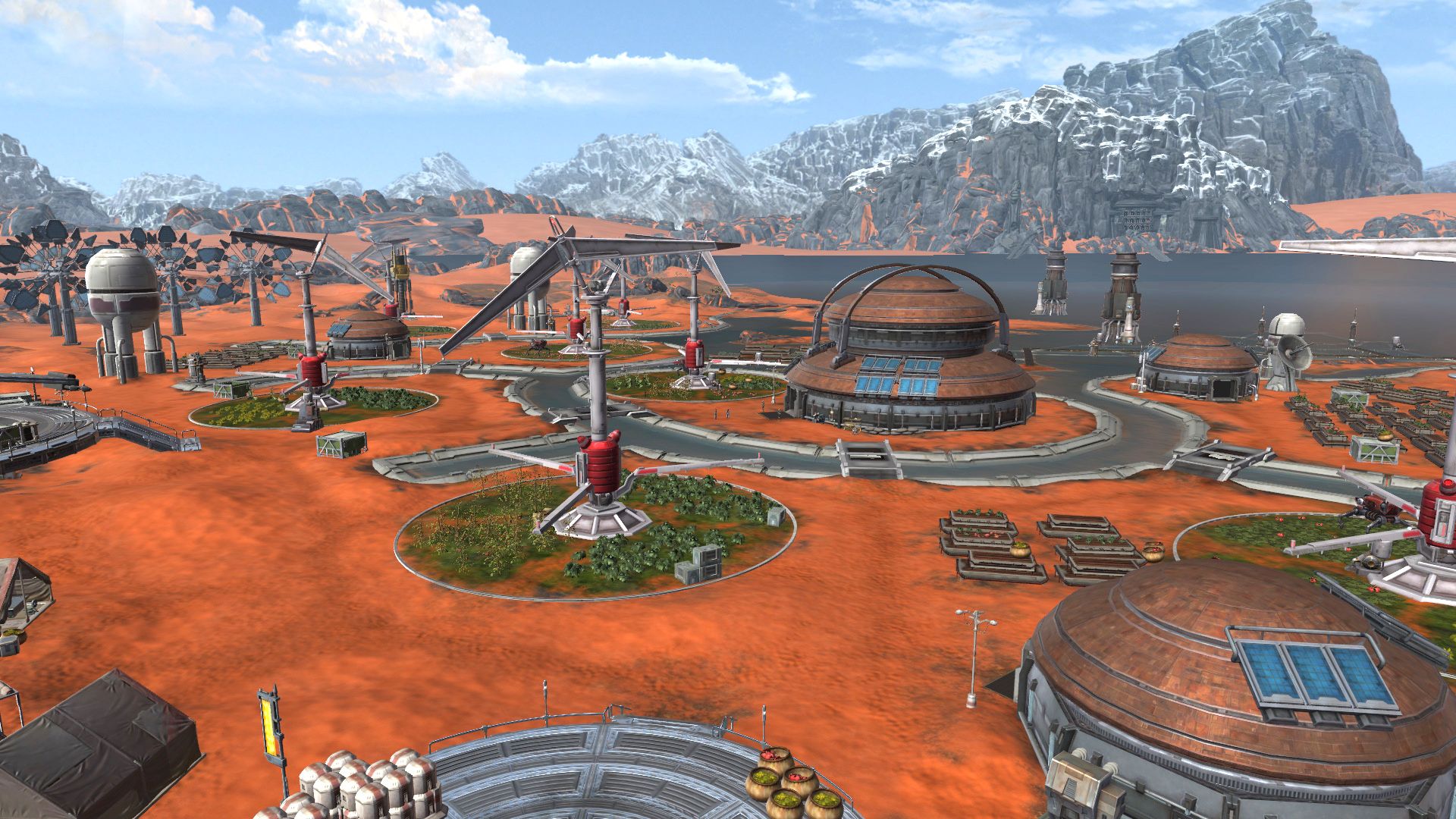
COLONY DOWNTIME ACTIVITIES
The following colony downtime activities use the rules for downtime activities presented in Wretched Hives; each one takes a week of time due to their complexity.
ASSUAGE UNREST
You spread goodwill and mollify criticism. You spend a week traveling through your colony, talking to people and dealing with their problems, or holding a festival or party to boost morale.
Resources
Spend Resource Units equal to your colony’s size divided by 5 (round down, minimum 1).
Resolution
After one workweek, the character makes a Charisma (Persuasion) or Charisma (Performance) check, with a +1 bonus per Resource Unit spent beyond the initial amount, up to a maximum bonus of +5. The character than consults the Assuage Unrest Roll Modifier Table below.
Assuage Unrest Roll Modifier
| Ability Check DC | d100 Roll Modifier |
|---|---|
| 10 | +5 |
| 15 | +10 |
| 20 | +15 |
| 25 | +20 |
| 30 | +25 |
The d100 Roll Modifier is added to the percentile dice rolled for the Assuage Unrest Results table, which is discussed below.
Once the player has determined their assuage unrest roll modifier, they then roll the percentile die and consult the Assuage Unrest Results table below.
| d100 | Results |
|---|---|
| 50 or lower | You fail to reduce unrest in your colony. |
| 51-60 | You fail to reduce unrest in your colony, but manage to stem the tide. It will not increase this Colony Turn. |
| 61-100 | You reduce your colony's unrest by 1d4. |
| 101-110 | You reduce your colony's unrest by 1d4+1. |
| 111 or higher | You reduce your colony's unrest by 1d4+2. |
Complications
Managing a colony's unrest is delicate work, and a public faux pax can easily worsen the situation. Each workweek spent assuaging unrest brings a 10 percent change of triggering a complication.
This is a great opportunity to create a rival to the party, or involve a previous rival.
Assuage Unrest Complications
| d6 | Complication |
|---|---|
| 1 | The populace considers your use of time & resources on this attempt an extravagant waste. Unrest increases by 1. |
| 2 | You make a very public faux pax & embarrass yourself, making you the laughingstock in the colony for a time. |
| 3 | A particularly vociferous interest group is upset by your approach to this situation & begins targeting you with a public smear campaign. |
| 4 | A notable person of repute in the colony - such as a noble or wealthy industrialist - is convinced you're a public nuisance & vows to have you replaced. |
| 5 | In your attempt to calm the colony, you made promises to a certain interest group that you're almost certain you can't keep. |
| 6 | The messenger of a local crime lord informs you they're very impressed with your work, though you have no idea exactly what you did to sway them. |

BOLSTER TRAIT
You prepare your colony for trouble to come. You spend a week focusing on one aspect of your colony.
Resources
Select a single colony trait and spend Resource Units equal to that trait’s current value (minimum 1).
Resolution
After one workweek, the character makes an ability check relevant to the trait, with a +1 bonus per Resource Unit spent beyond the initial amount, up to a maximum bonus of +5.
The ability check is variable depending on the trait, skill proficiencies, or tool proficiencies related to the trait. The GM may suggest particular ability checks. A table of recommended checks is presented below, but the player and GM are encouraged to determine appropriate adjustments.
Suggested Trait, Ability, & Proficiency Pairings
| Trait | Ability | Skill & Tool Proficiencies |
|---|---|---|
| Unity | Charisma, Wisdom |
Persuasion, Medicine |
| Culture | Charisma, Wisdom, Intelligence |
Performance, Lore, Artist's & Writer's Implements, Archaeologist's & Chef's Kits |
| Economy | Intelligence | Piloting, Any Implements or Kits |
| Force | Charisma, Wisdom |
Force casting, Artificer's Implements |
| Technology | Intelligence | Investigation, Technology, Most Implements or Kits |
The character than consults the Bolster Trait Roll Modifier Table below.
Bolster Trait Roll Modifier
| Ability Check DC | d100 Roll Modifier |
|---|---|
| 10 | +5 |
| 15 | +10 |
| 20 | +15 |
| 25 | +20 |
| 30 | +25 |
The d100 Roll Modifier is added to the percentile dice rolled for the Assuage Unrest Results table, which is discussed below.
Once the player has determined their bolster trait roll modifier, they then roll the percentile die and consult the Bolster Trait Results table below.
Bolster Trait Results Table
| d100 | Results |
|---|---|
| 50 or lower | You fail to bolster the selected trait for your colony. |
| 51-80 | You successfully bolster the selected trait. Until the beginning of the next colony turn, the trait you selected is treated as 1 higher for the purpose of undertaking projects and resolving events. |
| 81-110 | Until the beginning of the next colony turn, the trait you selected is treated as 2 higher for the purpose of undertaking projects and resolving events. |
| 110 or higher | You make a breakthrough in your colony, and the selected trait is permanently increased by 1. |
Complications
Attempting to improve a colony can have unforseen consequences. Each workweek spent assuaging unrest brings a 10 percent change of triggering a complication.
Given the wide array of possibilities, no specific complications are listed here. The GM may wish to consult the other complications listed in Chapter 2 of Wretched Hives.
PERFORM ADMINISTRATIVE DUTIES
You perform the basic administrative functions required to maintain your colony. You spend a week reading reports, meeting with advisors, and drawing up plans for future projects the colony will undertake.
Resources
The character must spend one workweek keeping up the regular duties of maintaining the colony.
Resolution
The colony turn proceeds as normal.
Special: If no PC performs this downtime activity each colony turn, the colony skips the Resource Collection and Choose Projects steps of the colony turn.
Depending on the style of the campaign, the GM limit the Perform Administrative Duties task to player characters only, excluding companions or hirelings.
