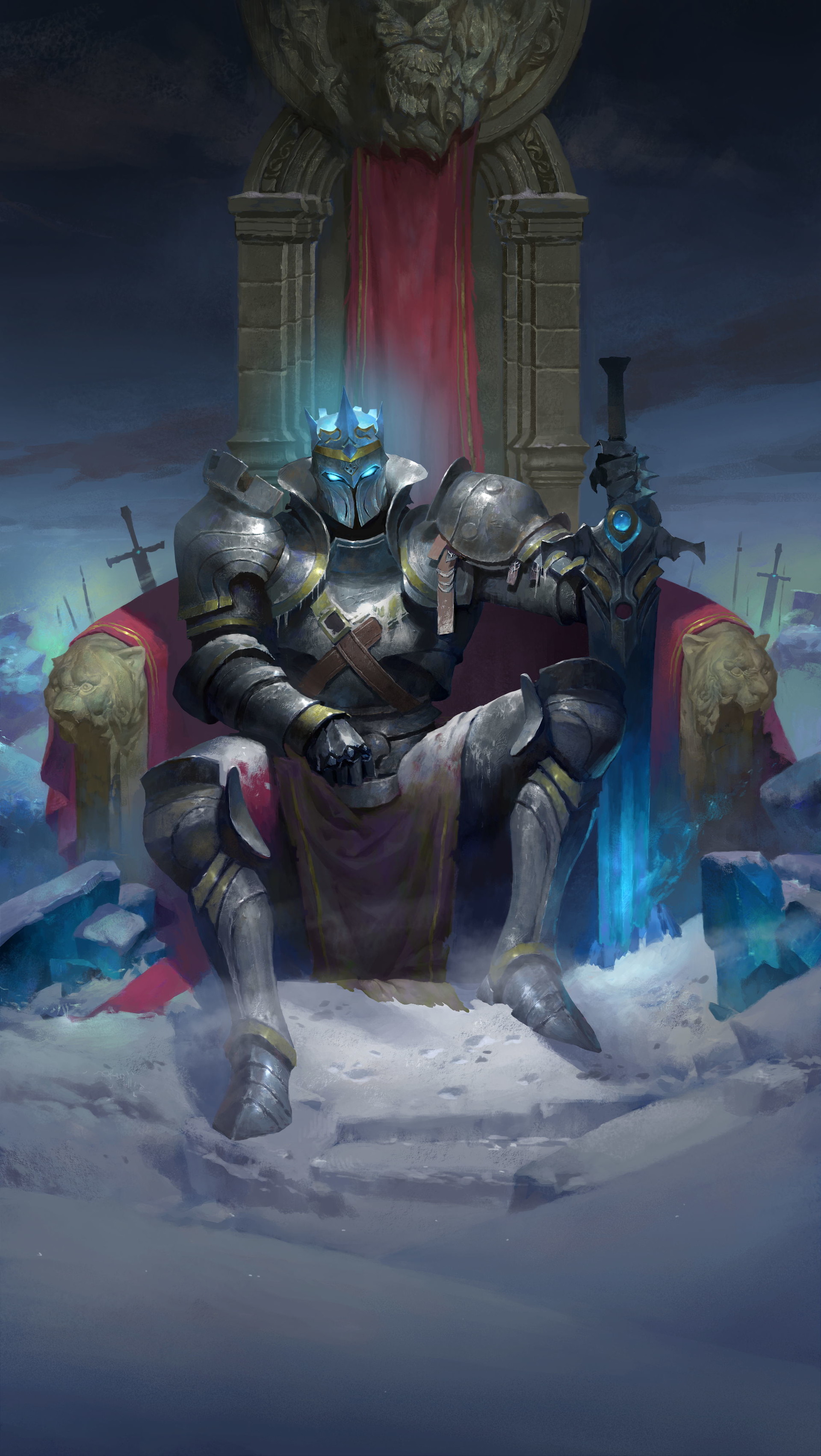


Magus
With blood dripping down their arm and onto the pommel of their blade, the tiefling looks at the monster ahead. The monster's flesh weaves back together, mending after each strike. The tiefling glides their fingers along their blade, leaving red arcane runes behind, immediately the runes take shape enveloping the blade with fire. With a heavy swing the tiefling strikes the creature, exposing its weakness.
A ghostly human in studded leather exits a dilapidated church in a ruined city, continuing her hunt. Her teal eyes begin to glow as she looks up and down the destroyed cobbled streets. The magical object in the hands of her target along with its properties are revealed to her from behind the cover of buildings. With the object revealed, she dashes towards its location.
Cornered by snarling wolves, the goliath weaves his hands in the air and begins to cast fireball. Before he releases the spell there is a flash of arcane energy from within, increasing the power of the spell. Launching a small bead of light it explodes, surrounding each of the wolves incinerating them, a feat which should only be capable by powerful wizards.
A Magus is a warrior that has been infused with magic through a lengthy and gruelling process, binding them to the arcane energy that travels throughout the world. They use their arcane abilities to hunt down evil and monsters, even if others see them as what they strive to destroy.
Infused with Magic
Through a careful and gruelling process, a magus is created by taking the blood of a humanoid and mixing it with a liquid magic. The result of this concoction is transferred back to the magus turning them into a warrior with a direct connection to the arcane. These rituals are conducted by one of the many magi orders throughout the world, alongside magus training. As their training progresses through meticulous study and practice, magi learn to use this magic to a point where it becomes as natural to them as breathing.
As a magus furthers their abilities eventually, they begin to specialise in their arcane ability by joining a magus order. It is not uncommon for a magus to join one order to go through their infusion ritual and then to join another. Each order may have slight variations to both their training and the infusion ritual, but adapting to new changes is second nature to a magus by the time they must choose to join an order.
After joining an order the world becomes larger for a magus, many doors open and others close. Some magi orders are more specific to their duties compared to others. However, whether a praised monster hunter, a noble protector or following in the footsteps of other magi, the unfortunate image of a monster created to fight monsters will always be in the background. Civilisations react differently to the presence of a magus, but what's important for them is to never forget that they fight monsters for those who can't.
Creating a Magus
When creating a magus, it's worth to think about what drove them to become a magus. Was becoming a magus their own choice or a series of fortunate or unfortunate events. Does your magus seek honour and glory from monster hunting, or do they seek an adventurous lifestyle free from the constraints of regular society?
Furthermore, it's worth to keep in mind the order your magus will later join. For some magi the choice is clear, they join the order that first turned them into a magus. Others join an order that aligns with values they have gained on their adventures.
Work with your DM to determine how your character became a magus, what order they may join and how they will use their infused arcane abilities.
Quick Build
You can make a magus quickly by following these suggestions. First, your highest ability score should be Strength or Dexterity, depending on your combat preference. Your next highest ability score should be Intelligence, as this determines your spellcasting and magical abilities. Which should be followed by Constitution. Second, choose the sage or soldier background.
The Magus Table
| Level | Proficiency Bonus | Features | Cantrips Known | 1st | 2nd | 3rd | 4th | 5th |
|---|---|---|---|---|---|---|---|---|
| 1st | +2 | Spellcasting, Arcane Pool | 2 | 2 | — | — | — | — |
| 2nd | +2 | Fighting Style, Magical Intuition, Spellstrike | 2 | 2 | — | — | — | — |
| 3rd | +2 | Magus Order | 2 | 3 | ─ | — | — | — |
| 4rd | +2 | Ability Score Improvement | 2 | 3 | ─ | — | — | — |
| 5th | +3 | Extra Attack | 2 | 4 | 2 | — | — | — |
| 6th | +3 | Order Feature | 2 | 4 | 2 | — | — | — |
| 7th | +3 | Monster's Bane | 2 | 4 | 3 | — | — | — |
| 8th | +3 | Ability Score Improvement | 2 | 4 | 3 | — | — | — |
| 9th | +4 | 2 | 4 | 3 | 2 | — | — | |
| 10th | +4 | Order Feature, Empowered Arcane Pool | 3 | 4 | 3 | 2 | — | — |
| 11th | +4 | Spell Combat | 3 | 4 | 3 | 3 | — | — |
| 12th | +4 | Ability Score Improvement | 3 | 4 | 3 | 3 | — | — |
| 13th | +5 | 3 | 4 | 3 | 3 | 1 | — | |
| 14th | +5 | Order Feature | 4 | 4 | 3 | 3 | 1 | — |
| 15th | +5 | Spell Recall | 4 | 4 | 3 | 3 | 2 | — |
| 16th | +5 | Ability Score Improvement | 4 | 4 | 3 | 3 | 2 | — |
| 17th | +6 | 4 | 4 | 3 | 3 | 3 | 1 | |
| 18th | +6 | Magical Ward | 4 | 4 | 3 | 3 | 3 | 1 |
| 19th | +6 | Ability Score Improvement | 4 | 4 | 3 | 3 | 3 | 2 |
| 20th | +6 | True Magus | 4 | 4 | 3 | 3 | 3 | 2 |
Class Features
As a magus, you gain the following class features
Hit Points
- Hit Dice: 1d10 per magus level
- Hit Points at 1st Level: 10 + your Constitution modifier
- Hit Points at Higher Levels: 1d10 (or 6) + your Constitution modifier per magus level after 1st
Proficiencies
- Armor: Light armor, medium armor, shields
- Weapons: Simple weapons, martial weapons
- Tools: None
- Saving Throws: Constitution, Intelligence
- Skills: Choose two skills from Acrobatics, Arcana, Athletics, History, Insight, Intimidation and Perception
Equipment
You start with the following equipment, in addition to the equipment granted by your background:
- (a) a martial weapon or (b) two simple weapons
- (a) scale mail or (b) studded leather armor
- (a) a component pouch or (b) an arcane focus
- (a) a scholar’s pack or (b) an explorer’s pack
- A spellbook
Optional Rule: Multiclassing
If your group uses the multiclassing rules from the Player’s Handbook, here’s what you need to know if you choose magus as one of your classes.
Ability Score Minimum. As a multiclass character, you must have at least a Strength score or Dexterity score of 13 and an Intelligence score of 13 to take a level in this class, or to take a level in another class if you are already a magus.
Proficiencies Gained. If magus isn’t your initial class, you gain the following proficiencies when you take your first level as a magus: light armor, medium armor, shields, simple weapons, martial weapons.



Spellcasting
As you are infused with arcane magic, you have a spellbook containing spells that enable you to go further beyond in combat. See Chapter 10 of the Players Handbook for the general rules of spellcasting.
Cantrips
At 1st level, you know two cantrips of your choice from the magus spell list. You learn an additional magus cantrip of your choice at level 10, and again at level 14 as shown in the Cantrips Known column of the Magus table.
Spellbook
At 1st level, you have a spellbook containing four 1st-level magus spells of your choice. Your spellbook is the repository of the magus spells you know, except your cantrips, which are fixed in your mind.
Preparing and Casting Spells
The Magus table shows how many spell slots you have to cast your magus spells of 1st level and higher. To cast one of these spells, you must expend a slot of the spell’s level or higher. You regain all expended spell slots when you finish a long rest.
You prepare the list of magus spells that are available for you to cast. To do so, choose a number of magus spells from your spellbook equal to your Intelligence modifier + half your magus level, round down (minimum of one spell). The spells must be of a level for which you have spell slots.
For example, if you’re a 3rd-level magus, you have eight 1st-level spells. With an Intelligence of 16, your list of prepared spells can include four spells of 1st level, in any combination, chosen from your spellbook. Casting the spell doesn’t remove it from your list of prepared spells.
You can change your list of prepared spells when you finish a long rest. Preparing a new list of magus spells requires time spent studying your spellbook and memorizing the incantations and gestures you must make to cast the spell: at least 1 minute per spell level for each spell on your list.
Spellcasting Ability
Intelligence is your spellcasting ability for your magus spells, since you learn your spells through your connection to the arcane energy infused within you. You use your Intelligence whenever a spell refers to your spellcasting ability. In addition, you use your Intelligence modifier when setting the saving throw DC for a magus spell you cast and when making an attack roll with one.
Spell Save DC
Spell attack modifier
Ritual Casting
You can cast a magus spell as a ritual if that spell has the ritual tag and you have the spell in your spellbook. You don’t need to have the spell prepared.
Spellcasting Focus
You can use an arcane focus (found in chapter 5 of the Players Handbook) as a spellcasting focus for your magus spells.
Learning Spells of 1st Level and Higher
Each time you gain a magus level, you can add two magus spells of your choice to your spellbook for free. Each of these spells must be of a level for which you have spell slots, as shown on the Magus table. On your adventures, you might find other spells that you can add to your spellbook (see the “Your Spellbook” sidebar).
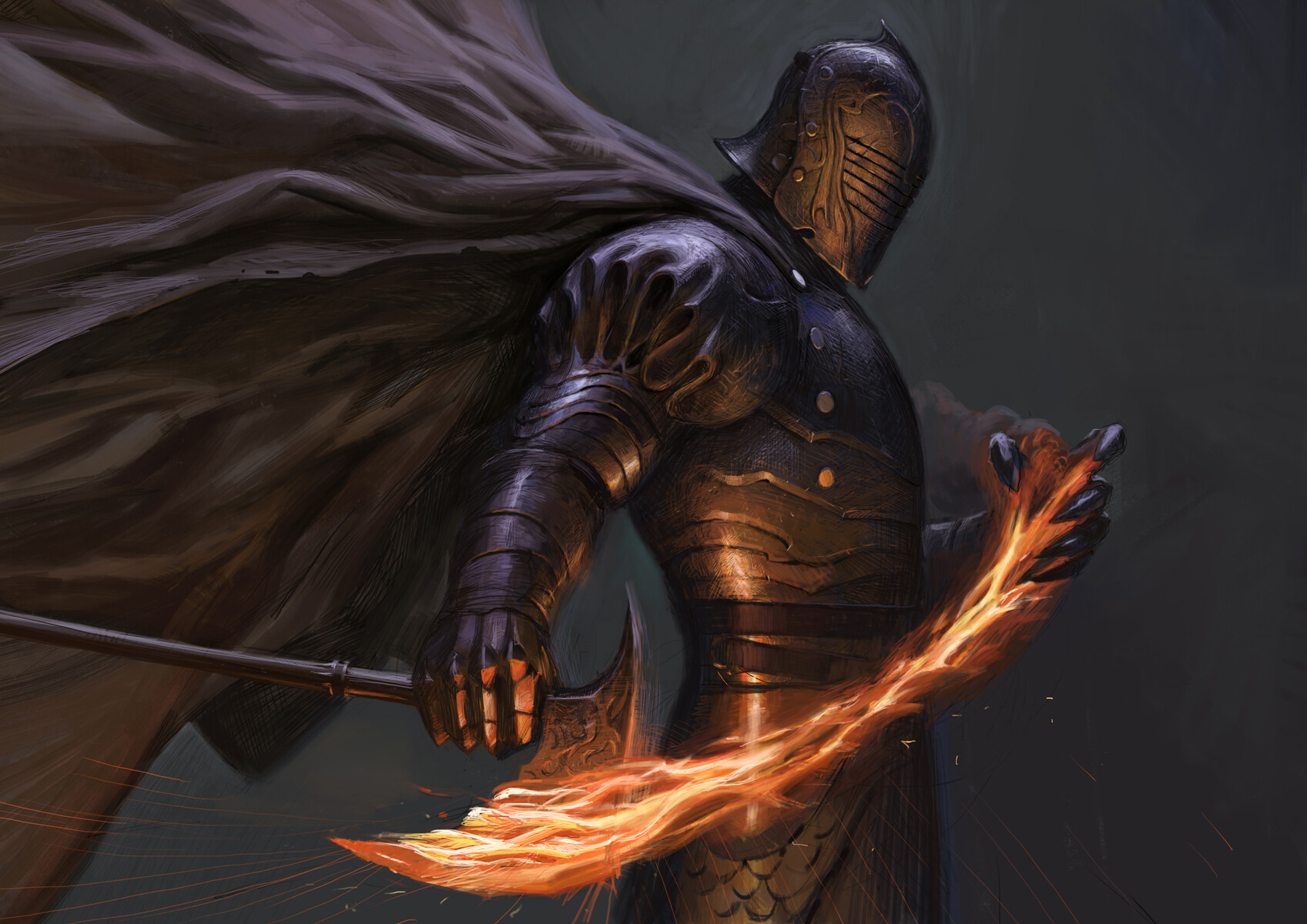

YOUR SPELLBOOK
The spells that you add to your spellbook as you gain levels reflect the arcane research you conduct on your own, as well as intellectual breakthroughs you have had about the nature of the multiverse. You might find other spells during your adventures. You could discover a spell recorded on a scroll in an evil wizard’s chest, for example, or in a dusty tome in an ancient library.
Copying a Spell into the Book. When you find a magus spell of 1st level or higher, you can add it to your spellbook if it is of a spell level you can prepare and if you can spare the time to decipher and copy it. The spell must be of 5th level or lower.
Copying that spell into your spellbook involves reproducing the basic form of the spell, then deciphering the unique system of notation used by the wizard or magus who wrote it. You must practice the spell until you understand the sounds or gestures required, then transcribe it into your spellbook using your own notation.
For each level of the spell, the process takes 2 hours and costs 50 gp. The cost represents material components you expend as you experiment with the spell to master it, as well as the fine inks you need to record it. Once you have spent this time and money, you can prepare the spell just like your other spells.
Replacing the Book. You can copy a spell from your own spellbook into another book—for example, if you want to make a backup copy of your spellbook. This is just like copying a new spell into your spellbook, but faster and easier, since you understand your own notation and already know how to cast the spell. You need spend only 1 hour and 10 gp for each level of the copied spell.
If you lose your spellbook, you can use the same procedure to transcribe the spells that you have prepared into a new spellbook. Filling out the remainder of your spellbook requires you to find new spells to do so, as normal. For this reason, many wizards and magi keep backup spellbooks in a safe place.
The Book’s Appearance. Your spellbook is a unique compilation of spells, with its own decorative flourishes and margin notes. It might be a plain, functional leather volume that you received as a gift from your master, a finely bound gilt-edged tome you found in an ancient library, or even a loose collection of notes scrounged together after you lost your previous spellbook in a mishap.
Arcane Pool
You have a reservoir of arcane energy that you can draw upon to fuel your magical powers and enhance your weapon. This arcane pool has a number of points equal to your magus level.
At the end of a short or long rest you can choose one weapon. This weapon becomes your magus weapon and can be used as an arcane focus, allowing you to to perform the somatic components of spells even when you have weapons or a shield in one or both hands. You can only have one magus weapon at a time.
As a bonus action you expend 1 point from your arcane pool to enhance your magus weapon. It gains one of the following benefits for 1 minute:
- Your magus weapon counts as magical and has a +1 to attack and damage rolls.
- All damage you deal through your magus weapon instead deals cold, fire or lightning damage (you choose when you apply the enhancement).
The benefits of this enhancement end early if you die, are incapacitated or if you choose to end it as a bonus action.
If you enhance your magus weapon by expending an additional point, the previous benefit ends.
You gain all expended points from your arcane pool at the end of a long rest.

Fighting Style
At 2nd levell, you adopt a particular style of fighting as your specialty. Choose one of the following options. You can’t take a Fighting Style option more than once, even if you later get to choose again.
Arcane Warrior
When you attack with a two-handed melee weapon, you can use your Intelligence modifier, instead of your Strength modifier, for both the attack and damage rolls.
Blind Fighting
You have blindsight with a range of 10 feet. Within that range, you can effectively see anything that isn’t behind total cover, even if you’re blinded or in darkness. Moreover, you can see an invisible creature within that range, unless the creature successfully hides from you.
Defense
While you are wearing armor, you gain a +1 bonus to AC.
Dueling
When you are wielding a melee weapon in one hand and no other weapons, you gain a +2 bonus to damage rolls with that weapon.
Great Weapon Fighting
When you roll a 1 or 2 on a damage die for an attack you make with a melee weapon that you are wielding with two hands, you can reroll the die and must use the new roll, even if the new roll is a 1 or a 2. The weapon must have the two-handed or versatile property for you to gain this benefit.
Interception
When a creature you can see hits a target, other than you, within 5 feet of you with an attack, you can use your reaction to reduce the damage the target takes by 1d10 + your proficiency bonus (to a minimum of 0 damage). You must be wielding a shield or a simple or martial weapon to use this reaction.
Protection
When a creature you can see attacks a target other than you that is within 5 feet of you, you can use your reaction to impose disadvantage on the attack roll. You must be wielding a shield.
Two-Weapon Fighting
When you engage in two-weapon fighting, you can add your ability modifier to the damage of the second attack.
Magical Intuition
By 2nd level you gain the ability to focus on magical energy. As an action you channel your intuition to magic around you. Until the end of your next turn, you sense the presence of magic within 60 feet of you that isn't behind total cover, and you learn its school of magic, if any.
You can use this feature a number of times equal to 1 + your Intelligence modifier (a minimum of once). When you finish a long rest, you regain all expended uses.
Spellstrike
Starting at 2nd level, whenever you cast a spell you can choose to channel it through your magus weapon if it meets one of the following requirements:
- The spell requires you to make a spell attack roll.
- The spell requires a creature to make a saving throw.
After you spend a spell slot for the spell, you make a melee weapon attack using your magus weapon. If the attack hits, the creature is affected as if the spell was cast as normal.
- If spell would normally hit multiple targets it instead only hits the target of your weapon attack.
- If the attack hits, a creature takes damage from the spell as if they were hit by a spell attack or if they were to fail a saving throw against the spell to avoid damage.
- If the spell required the creature to make a saving throw to avoid an affect and the attack hits, that creature is affected by the spell as if they failed the saving throw.
- If the attack misses, the spell continues to channel through your magus weapon until the end of your next turn.
- If the spell requires you to concentrate on it, the spell continues to channel through your weapon until the end of its duration. Additionally, you can continue to use the concentration spell as part of Spellstrike on subsequent turns without the need to expend additional spell slots, this lasts until the spell ends or you drop concentration.
You cannot have more than one spell channeling through your magus weapon at a time. You can only use Spellstrike once per turn.
Magus Order
When you reach 3rd level, you choose an archetype that is the order who began the process of turning you into a magus or the order that aligns with your preferred way of magical combat. Choose Order of the Bladebound, Order of the Ghostwalkers, Order of the Protectors or Order Null, each of which is detailed at the end of the class description.
Your choice grants you features at 3rd level and then again at 6th, 10th, and 14th level.

Ability Score Improvement
When you reach 4th level, and again at 8th, 12th, 16th, and 19th level, you can increase one ability score of your choice by 2, or you can increase two ability scores of your choice by 1. As normal, you can’t increase an ability score above 20 using this feature.
Using the optional feats rule, you can forgo taking this feature to take a feat of your choice instead.
Extra attack
Beginning at 5th level, you can attack twice, instead of once, whenever you take the Attack action on your turn.
Moreover, you can spend 1 point from your arcane pool to use your Spellstrike feature in place of one of those attacks.
Monster's Bane
Starting at 7th level your ability to research creatures is honed by your magical instincts. When you make an Intelligence (Arcana) or Intelligence (History) check for the purpose of recalling or researching information about creatures, you can treat a d20 roll of 9 or lower as a 10.
Empowered Arcane Pool
At 10th level you learn to empower your spells using your Arcane Pool. Whenever you cast a spell you can choose to spend points from your Arcane Pool to increase the level of the spell (no action required).
For each point you spend the level of the spell increases by 1. The amount of points you can spend in this way cannot exceed half your proficiency bonus (rounded down).
Spell Weaver
Starting at 11th level whenever you use an action to cast a cantrip or a spell you can make one melee weapon attack as part of that action.
Spell Recall
Starting at 15th level, you can spend points from your Arcane Pool to recall a spell in your spellbook that you have not prepared. As an action, you can spend a number of points from your Arcane Pool equal to the level of the spell you wish to recall. The spell is then stored in a reservoir for 8 hours or until it is used.
You can only store one spell in this way at a time.
Magical Ward
By 18th level, the magic infused within you wards you from suffering the frailty of old age, you can't be aged magically. Additionally, your life span is increased by a century. However, you can still die of old age.
Additionally, you gain advantage on saving throws against spells.
True Magus
At 20th level you are fully in tune with your connection to the arcane energy infused within you.
Spells cast as part of your Spellstrike feature can be cast as a bonus action.
Additionally, you can use Spellstrike more than once per turn.


Order of the Bladebound
Originally the Order of the Bladebound was created so that old Magi could continue fighting and pass on their knowledge forever. With members joining the Order participating in a ritual to bind a soul of a powerful Magi to their blades. Allowing them to learn and take on the techniques of older Magi.
In recent years with the order dwindling in numbers, no longer does the ritual require the soul of a previous Magi, but rather a powerful warrior, or a soul that had incredible combat prowess in life.
These Magi seek to master the combat techniques of the soul that dwells in their blade all while retaining the purpose of all Magi. To destroy any evil that walks the earth.
When choosing this Order for your Magus, it is worth discussing with your DM who the soul within your blade belongs to. If you know who it belongs to and if the soul was even humanoid during life.
Bladebound Magic
Starting at 3rd level, the Order of the Bladebound lets you chose from an expanded list of spells when you learn a magus spell. The following spells are added to the magus spell list for you.
Bladebound Expanded Spells
| Spell Level | Spells |
|---|---|
| 1st | armor of agathys |
| 2nd | borrowed knowledge |
| 3rd | speak with dead |
| 4th | phantasmal killer |
| 5th | mislead |
Arcane Charge
Starting at 3rd level when you join the Order of the Bladebound, you gain proficiency in smiths' tools and you can choose for your magus weapon to deal psychic damage as part of your Arcane Pool feature.
Additionally, whenever you enhance your magus weapon using your arcane pool, you can spend 1 additional point to strengthen the effect in one of the following ways:
- You gain a +1 bonus to attack rolls. This bonus increases to +2 at 14th level.
- Your magus weapon deals an additional 1d6 of cold, fire, lightning or psychic damage (you choose when you strengthen the effect).


Umbral Blade
At 3rd level whenever you choose for a weapon to become your magus weapon, its appearance takes on a darker colour as a soul from a powerful warrior is bound to the weapon turning it into a sentient Umbral Blade.
You can communicate telepathically to your Umbral Blade. It has its own Umbral Pool with a maximum number of points equal to your proficiency bonus. As well as an Ego equal to 8 + your proficiency bonus + its current umbral pool points.
While holding your Umbral Blade you can use it in the following ways:
- As a bonus action you can choose to restore your Umbral Blade's umbral pool from your own Arcane Pool. Points given to your Umbral Blade's umbral pool in this way cannot exceed its maximum.
- As an action you can spend 1 point from its umbral pool to ask it a question to gain specific knowledge from it. You must make a Charisma saving throw with the DC equal to your Umbral Blade's Ego. On a success, you gain knowledge determined by your DM, the knowledge must be true and cannot be something you already know. You cannot ask the same question again before you take a long rest.
- Whenever you are about to make an ability check you can choose to spend 1 point its umbral pool and add 1d6 to the roll as you draw from the memories of the warrior bound to the blade.
- Whenever you are about to make an attack using your Umbral Blade you can choose to spend 1 point from its umbral pool to overcharge it. While overcharged, weapon attacks with your Umbral Blade are made at advantage. At the end of your turn you must make a Wisdom saving throw equal to your Umbral Blade's Ego or take 1d8 psychic damage for each attack made. This damage cannot be reduced in any way.
Your Umbral Blade's umbral pool points return to its maximum at the end of a long rest.
Mirror Strike
Starting at 6th level, whenever a creature that you can see within 30 feet of you makes an attack, you can choose to spend 1 point from your Arcane Pool to make one melee weapon attack as a reaction.
Twin Soul
Starting 10th level, you have formed a closer bond between you and your Umbral Blade. You gain resistance to psychic damage.
Additionally, whenever you are about to make a saving throw against your Umbral Blade's Ego you can choose to add 1d6 to the roll (no action required).
You can do this a number of times equal to your Intelligence modifier and gain all expended uses on a long rest.
Arcane Amplify
At 14th level, whenever you enhance your magus weapon with your Arcane Charge feature, you can spend 1 additional point to strengthen the effect in one of the following ways:
- Your magus weapon deals additional damage equal to your proficiency bonus.
- Damage from your magus weapon ignores resistance to cold, fire, lightning or psychic damage (you choose when you strengthen the effect).
Order of the Protectors
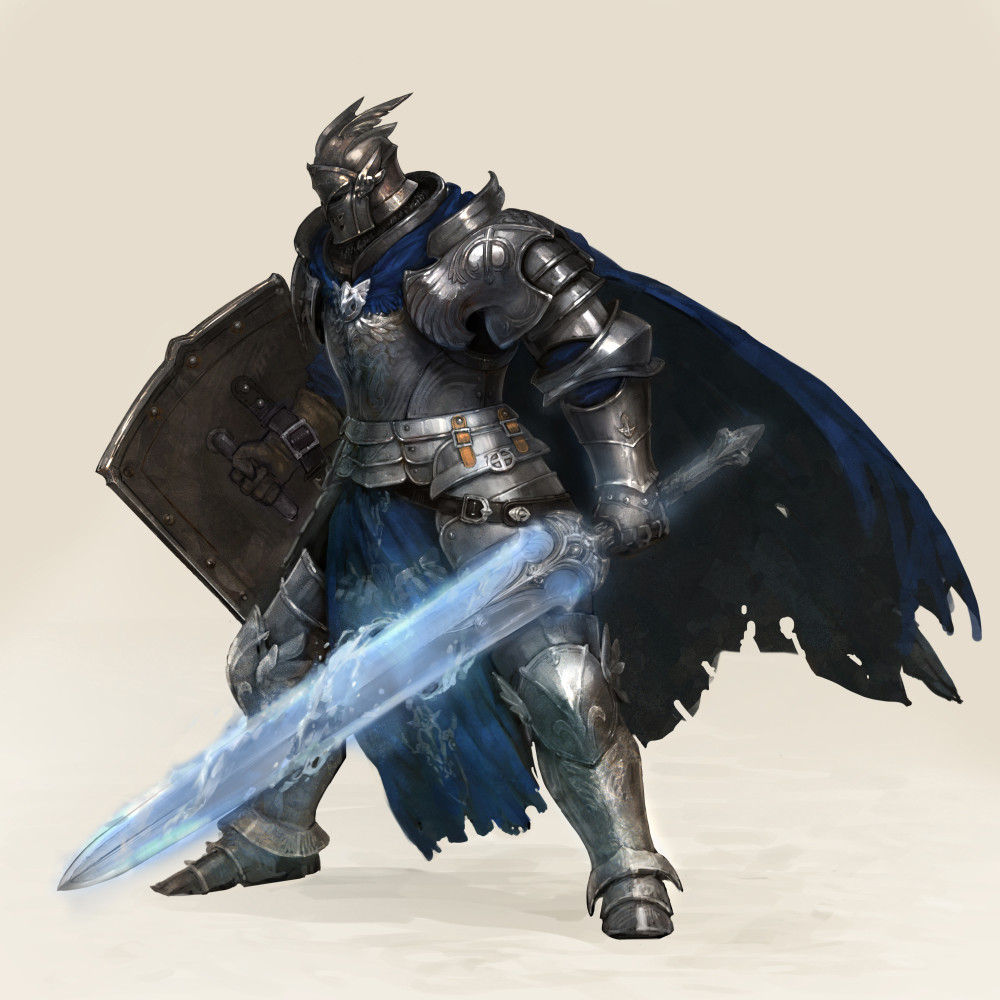
Magi who join the Order of the Protectors strive to shield those who cannot protect themselves from the evil denizens of the world. Unlike other orders of Magi, the Order of the Protectors are seen in a light that gives those around them a sense of security.
Magi who join this order find themselves guarding small towns and villages from monsters. Safeguarding caravans or even as bodyguards to nobles. With their positive reputation and goal to protect, heroic deeds from these Magi never go unnoticed.
Protectors Magic
Starting at 3rd level, the Order of the Protectors lets you chose from an expanded list of spells when you learn a magus spell. The following spells are added to the magus spell list for you.
Protectors Expanded Spells
| Spell Level | Spells |
|---|---|
| 1st | protection from evil and good |
| 2nd | warding bond |
| 3rd | protection from energy |
| 4th | death ward |
| 5th | dispel evil and good |
Arcane Defence
Starting at 3rd level when you join the Order of the Protectors, you gain proficiency in heavy armour and you can choose for your magus weapon to deal force damage as part of your Arcane Pool feature.
Additionally, whenever you enhance your magus weapon using your arcane pool, you can spend 1 additional point to strengthen the effect in one of the following ways:
- You gain a +1 bonus to AC.
- You gain resistance to cold, fire, force or lightning damage (you choose when you strengthen the effect).
Magical Bind
At 3rd level, you learn to bind the magical energy infused within you to another creature and focus their attention towards you.
While your magic weapon is enhanced with arcane energy from your Arcane Pool feature, a creature hit with an attack from it has disadvantage on any attack roll that isn't against you until the start of your next turn.
Soul Link
Starting at 6th level, you can link your soul to that of another at a moment's notice.
Whenever an ally within 30ft of you takes damage, you may choose to take the damage instead at the cost of 1 point from your Arcane Pool (no action required).
This damage cannot be reduced in any way, you also receive any effects of taking that damage. If you are required to make a concentration check as a result of concentrating on a spell while taking damage in this way, you have a bonus to the roll equal to 1 + your Intelligence modifier (minimum of 1).
Ally's Aid
Starting at 10th level, whenever you or another creature you can see within 60 feet of you fails an attack roll, a saving throw, or an ability check, you can use your reaction to allow a reroll, however the new roll must be used.
You can use this feature a number of times equal to your proficiency bonus, and you gain all expended uses after a long rest.
Arcane Guardian
At 14th level, whenever you enhance your magus weapon using your Arcane Defence feature, you can spend 1 additional point to strengthen the effect in one of the following ways:
- Allies within 10ft of you gain a +1 bonus to AC.
- Allies within 5ft of you gain resistance to cold, fire, force or lightning damage (you choose when you strengthen the effect).

Order of the Ghostwalker
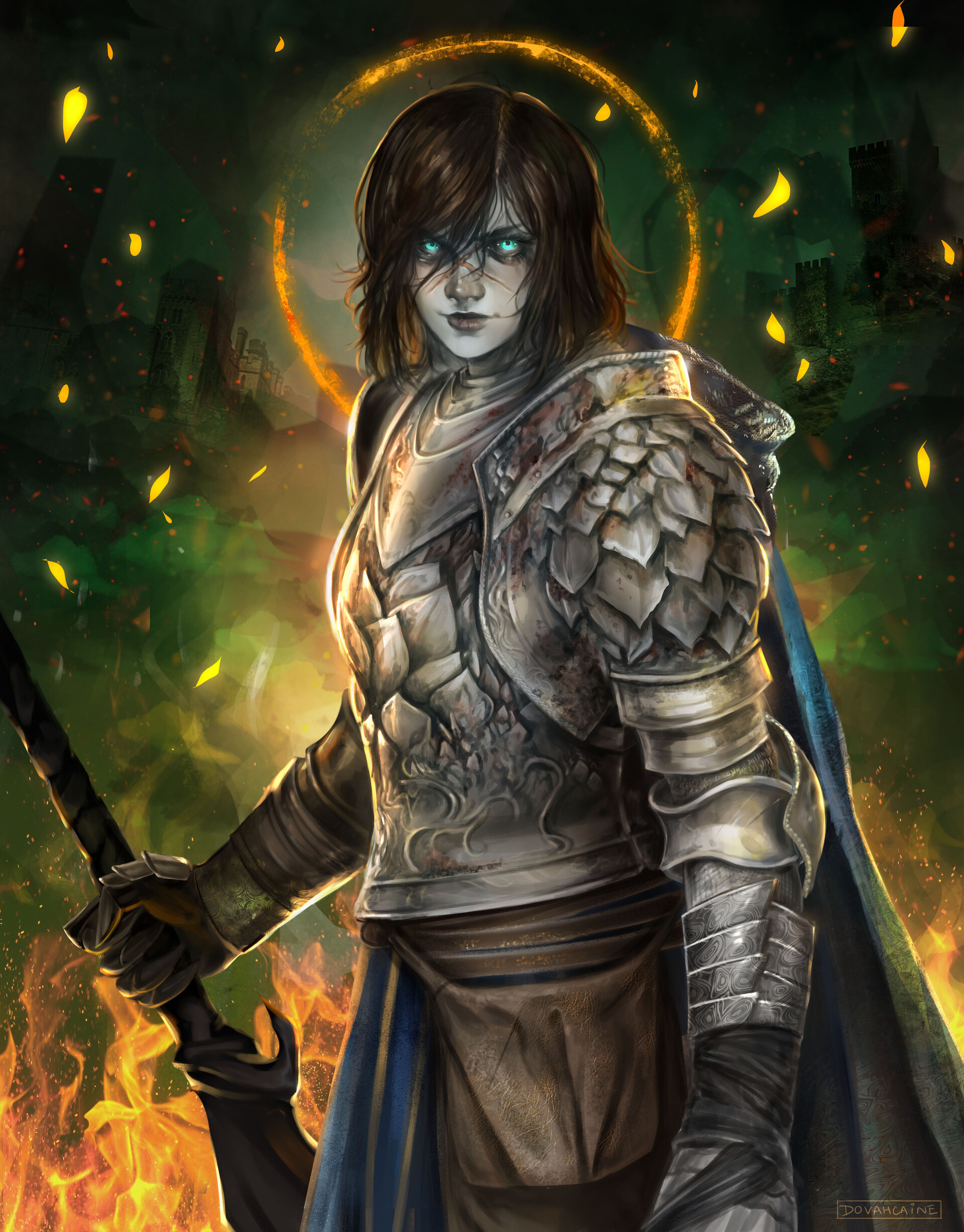
Born from a ritual to bind them in a state between life and death. Ghostwalker Magi are in a limbo that allows them to hunt down their undead targets without the fear of being attacked by them.
Ghostwalker Magi are considered undead and may be feared by those they're trying to protect. If you choose this order it's worth discussing how characters in their world may react to this and if you will encounter undead creatures.
Ghostwalker Magic
Starting at 3rd level, the Order of the Ghostwalker lets you chose from an expanded list of spells when you learn a magus spell. The following spells are added to the magus spell list for you.
Ghostwalker Expanded Spells
| Spell Level | Spells |
|---|---|
| 1st | detect evil and good |
| 2nd | pass without trace |
| 3rd | spirit guardians |
| 4th | aura of life |
| 5th | enervation |
Arcane Rebirth
Starting at 3rd level when you join the Order of the Ghostwalker, you learn the spare the dying cantrip, which doesn’t count against the number of magus cantrips you know and you can choose for your magus weapon to deal radiant damage as part of your Arcane Pool feature.
Additionally, whenever you enhance your magus weapon using your arcane pool, you can spend 1 additional point to strengthen the effect in one of the following ways:
- You gain resistance to necrotic damage.
- You gain a bonus to your Wisdom saving throws equal to your Intelligence modifier.
Walk as Undead
At 3rd level, undead see you as one of them and aren't immediately hostile towards you provided their challenge rating is at or below your level, as shown in the table below. An undead creature becomes hostile if you attack it or affect it in any way.
Additionally, you retain your creature type, yet you register as undead to spells and other effects that detect the presence of the undead creature type.
| Magus Level | CR |
|---|---|
| 3rd | 1 or lower |
| 5th | 3 or lower |
| 9th | 5 or lower |
| 13th | 9 or lower |
| 17th | 13 or lower |
Touch of the Grave
Starting at 6th level, whenever you hit a creature with your magus weapon you can spend 1 point from your arcane pool to restore a number of hit points equal to 1d6 + your Constitution modifier.
Embrace Undeath
By 10th level your body had embraced its undead nature. You don't need to eat, drink or breathe and you gain advantage on death saving throws.
Additionally, you gain a bonus equal to your Intelligence modifier on saving throws against harmful effects from undead creatures.
Arcane Resurrection
At 14th level, whenever you enhance your magus weapon using your Arcane Rebirth feature, you can spend 1 additional point to strengthen the effect in one of the following ways:
- You become partially incorporeal and gain resistance to bludgeoning, piercing and slashing damage.
- You are immune to the frightened condition.

Order Null
Whenever a Magus abandons or doesn't choose an order their order becomes Null. A Magus may choose this path for several reasons. They may have disagreed with their orders ideologies, their order may have discarded them, or they decided to take their magus training into their own hands. Some Order Null Magi seek to destroy the already faltering image of Magi, while others seek redeem it.
When choosing this order it's worth discussing with your DM what brought your Magi to the decision in making their Order Null.
Null Magic
Starting at 3rd level, Order Null lets you chose from an expanded list of spells when you learn a magus spell. The following spells are added to the magus spell list for you.
Null Expanded Spells
| Spell Level | Spells |
|---|---|
| 1st | bane |
| 2nd | borrowed knowledge |
| 3rd | enemies abound |
| 4th | confusion |
| 5th | immolation |
Arcane Imbue
Starting at 3rd level when your order becomes Null, you gain proficiency in one skill of your choice, Deception, Intimidation or Persuasion, and you can choose for your magus weapon to deal necrotic damage, as part of your Arcane Pool feature.
Additionally, whenever you enhance your magus weapon using your arcane pool, you can spend 1 additional point to strengthen the effect in one of the following ways:
- You gain an additional 10 feet of movement speed. Moreover, you ignore difficult terrain at 14th level.
- Whenever a creature hits you with an attack, each creature of your choice within 5 feet of you takes cold, fire, lightning or necrotic damage (you choose when you strengthen the effect), equal to your proficiency bonus.
Disruptive State
At 3rd level you have learnt to disrupt the flow of your enemies while in the midst of battle.
Whenever you hit a creature while your magus weapon is enhanced with arcane energy they have disadvantage on attack rolls against you until the start of your next turn. You can only effect one creature in this way at a time.
Negate Curses
Starting at 6th level, whenever a creature that you can see within 60 feet of you beings to cast a spell, you can use your reaction and spend 2 points from your arcane pool to attempt to interrupt the casting of the spell.
Make an ability check using your spellcasting ability. The DC equals 10 + the spell's level. On a success, the creature's spell fails and has no effect. On a failure, the spell is cast as normal.
Magical Awareness
Starting at 10th level, as an action you can use your connection to your own magic to discern the sources of magic from other creatures.
Until the end of your next turn you know the location of any creature that can cast at least one spell within 60 feet of you that isn't behind total cover. In addition, provided they have one, you learn each of those creatures' spellcasting abilities and their spellcasting focus such as "learnt Intelligence" and "wand" for a wizard.
You can use this feature a number of times equal to your proficiency bonus, and you gain all expended uses after a long rest.
Arcane Intensify
At 14th level, whenever you enhance your magus weapon using your Arcane Imbue feature, you can spend 1 additional point to strengthen the effect in one of the following ways:
- You score a critical hit on a roll of 19 or 20.
- Whenever you miss an attack you deal 1d6 cold, fire, lightning or necrotic damage (you choose when you strengthen the effect) to each creature within 5 feet of you.
Magus Spell List
Cantrips (0 Level)
- Blade Ward
- Booming Blade
- Control Flames
- Create Bonfire
- Dancing Lights
- Eldritch Blast
- Fire Bolt
- Frostbite
- Green-Flame Blade
- Light
- Lightning Lure
- Mage Hand
- Mending
- Message
- Mind Sliver
- Minor Illusion
- Prestidigitation
- Ray of Frost
- Resistance
- Shocking Grasp
- Sword Burst
- Thaumaturgy
- Thunderclap
- True Strike
1st Level
- Absorb Elements
- Alarm
- Burning Hands
- Catapult
- Cause Fear
- Chaos Bolt
- Charm Person
- Chromatic Orb
- Color Spray
- Compelled Duel
- Comprehend Languages
- Detect Magic
- Feather Fall
- Fog Cloud
- Frost Fingers
- Gift of Alacrity*
- Guiding Bolt
- Hellish Rebuke
- Heroism
- Ice Knife
- Identify
- Illusory Script
- Inflict Wounds
- Jump
- Longstrider
- Mage Armor
- Magic Missile
- Magnify Gravity*
- Purify Food and Drink
- Shield
- Silvery Barbs
- Sleep
- Snare
- Thunderwave
- Witch Bolt
2nd Level
- Aganazzar's Scorcher
- Air Bubble
- Blindness/ Deafness
- Blur
- Calm Emotions
- Cloud of Daggers
- Continual Flame
- Darkvision
- Detect Thoughts
- Dragon's Breath
- Earthbind
- Enlarge/ Reduce
- Find Traps
- Flaming Sphere
- Hold Person
- Invisibility
- Kinetic Jaunt
- Levitate
- Locate Object
- Magic Weapon
- Mind Spike
- Misty Step
- Protection from Poison
- Rime's Binding Ice
- Scorching Ray
- See Invisibility
- Shatter
- Silence
- Snilloc’s Snowball Swarm
- Suggestion
- Tasha's Mind Whip
- Vortex Warp
- Web
3rd Level
- Ashardalon's Stride
- Blink
- Call Lightning
- Counterspell
- Create Food and Water
- Dispel Magic
- Elemental Weapon
- Fireball
- Flame Arrows
- Fly
- Glyph of Warding
- Haste
- Intellect Fortress
- Life Transference
- Lightning Arrow
- Lightning Bolt
- Magic Circle
- Nondectection
- Pulse Wave*
- Sending
- Sleet Storm
- Slow
- Spirit Shroud
- Thunder Step
- Tongues
- Vampiric Touch
- Water Breathing
4th Level
- Arcane Eye
- Banishment
- Blight
- Charm Monster
- Compulsion
- Elemental Bane
- Fire Shield
- Freedom of Movement
- Gravity Sinkhole*
- Greater Invisibility
- Ice Storm
- Locate Creature
- Otiluke's Resilient Sphere
- Private Sanctum
- Raulothim's Psychic Lance
- Resilient Sphere
- Shadow of Moil
- Storm Sphere
- Wall of Fire
5th Level
- Alternate Initiative*
- Arcane Hand
- Bigby's Hand
- Ceil's Citadel*
- Cone of Cold
- Far Step
- Flame Strike
- Hold Monster
- Mislead
- Passwall
- Planar Binding
- Rary's Telepathic Bond
- Steel Wind Strike
- Synaptic Static
- Telekinesis
- Telepathic Bond
- Teleportaion Circle
- Wall of Force


Art Credits
In oder of appearance:
-
Front Cover: 插图 by 姚 远
-
Back Cover: The Spellsword by lancevl
If you are the original creator of any of the artworks used in this document and would like them removed from this document, please email me.
Playtesters
-
genericvillager.exe
-
Ryan O'Connor (Noodle)
Change Log
Ver. 1.0:
- Initial Release.
Ver. 1.1:
Bladebound:
- Bladebound arcane pool has been renamed to Umbral Pool, text has been changed to suit these changes.
- "You cannot ask the same question again before you take a long rest." Has been added to asking your Umbral blade a question to avoid spending points until a success.
Protectors:
- Fixed grammar error in the Arcane Defence feature.
Null:
- Clarified the "spellcasting abilities" in the Magical Awareness feature, as well as added the ability to know what the creature uses as a spellcasting focus.
Magus Spell List:
- Removed Flame Blade
- Removed Shadow Blade
Both spells did not met the requirements for Spellstrike and instead interfered with the "flow" of the class.

Magus
Infuse yourself with magic to hunt down monsters with this new class for the world's greatest roleplaying game.
Magus (Version 1.1) Created by MohanLaoch/ jmohandm@gmail.com
Feel free to email feedback.
This is unofficial Fan Content permitted under the Fan Content Policy. Not approved/ endorsed by Wizards. Portions of the materials used are property of Wizards of the Coast. ©Wizards of the Coast LLC.
For use with the fifth edition Player's Handbook, Monster Manual and Dungeon Master's Guide.