
Credits
Max Locke: Writer and creator
The images used in this document are almost entirely licensed by Wizards of the Coast within D&D sourcebooks or Magic: the Gathering cards. As a result, I am using them as an extension of the Open Gaming License.
The following images are exceptions to this, listed in order of appearance with the location in brackets:
"Mind Flayer" by Tooth Wu on ArtStation
"Human insect 'loomer'" by Matter-Splatter on DeviantArt
"Caduceus Clay" by Clint Cearley
"Gorgan Creature" by CrystalSully on DeviantArt
"Barbarian, Path of the Fractured" by Angevere on DeviantArt (Classes, Barbarian)
"Yasha" by Banished Potato [@ShadowBanished]
"Personal Work" by sanghyun kam on ArtStation "Alice Smile" by ArséneCorner [@Arsenes_Corner]
"Pathfinder: Kraelos" by WillOBrien on DeviantArt
"Gunslinger" by Bryan Syme
"Vanitas" by Elvira Shatunova on ArtStation
"Dunamancer Weaver" by Irina Nordsol Kuzmina
"Just a dwarf doing dwarf things" by astajsic [@stajsica]
"So Owlbears are extremely ferocious predators, but sometimes... they just chill" by u/Marta_Beegee on reddit
"Remnants members" by Biagio D'Alessandro
"The Calamity" by Kent Davis
"Vestiges" by Kent Davis
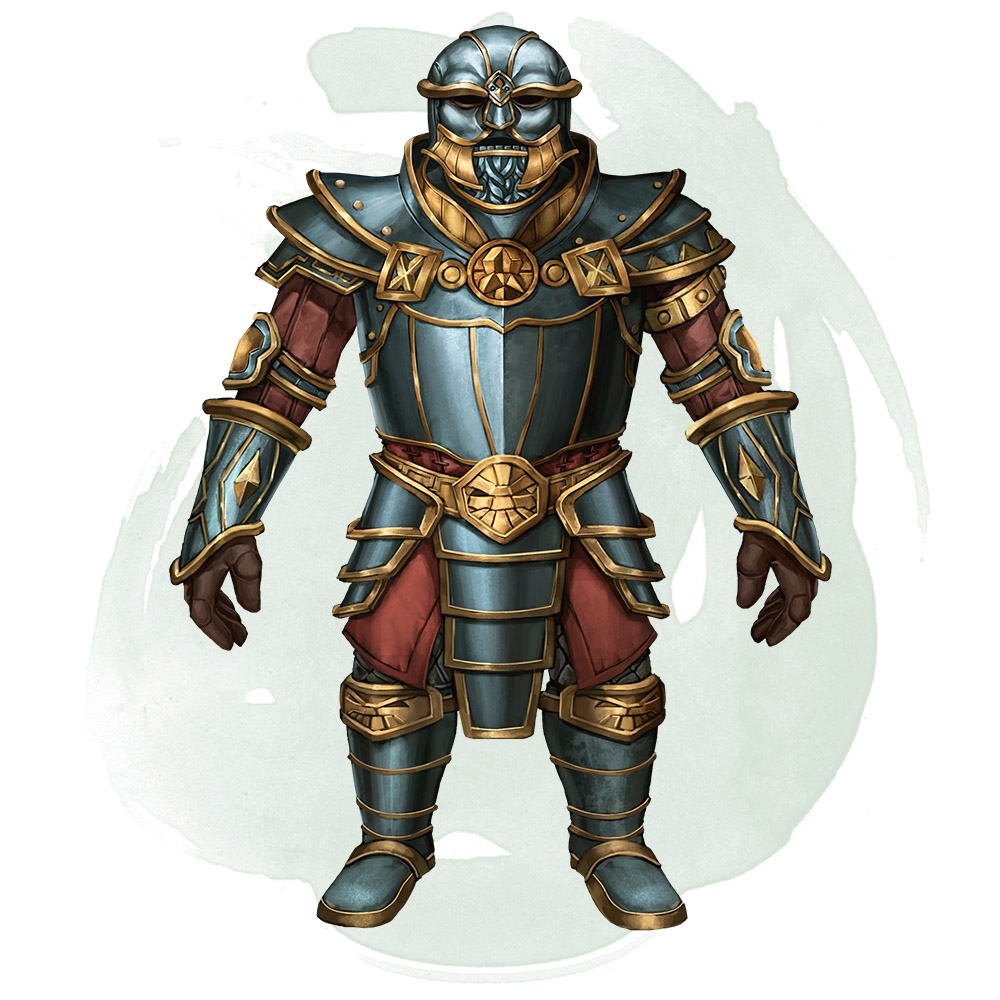
Three pieces of AI generated art were included in this document, including the cover. I am a broke student and cannot afford to commission - please forgive me.
Contents
Introduction
Chapter 1: Ancestries
Common Species ..................................8
Uncommon Species .............................26
Alternate Ancestries .........................44
Chapter 2: Classes
Artificer ..........................................61
Barbarian .........................................93
Bard ...............................................105
Cleric ............................................120
Druid ..............................................137
Fighter ...........................................155
Monk ..............................................171
Paladin ...........................................197
Ranger ............................................215
Rogue .............................................237
Sorcerer .........................................247
Warlock ..........................................266
Wizard ............................................308
Chapter 3: Background
Background Features .......................325
Chapter 4: Equipment
Armour and Shields ..........................342
Weapons ..........................................343
Tool Sets ........................................348
Trinkets ..........................................356
Chapter 5: Customisation Options
Feats ...............................................365
Ancestral Feats ...............................377
Fighting Styles ................................394
Infusions ..........................................79
Invocations .....................................279
Metamagic .......................................263
Monastic Disciplines ........................191
Psionic Powers .................................401
Re-Balanced WotC Spells ..................408
Appendix A: Playing the Game
Your Turn in Combat ...419
Special Rules ...420
Conditions ...421
Languages ...423
Appendix B: Outer Beings of the Multiverse
Gods ...425
Fey Courts ...428
Archfiends ...429
Elder Evils ...431
Planar Cosmology ...433
Appendix C: Class Tables ...442
Preface: Step-By-Step Characters
Your first step toward playing a character in a game of Dungeons & Dragons is to imagine and create a character of your own. Your character is a combination of game statistics, roleplaying hooks, and your imagination. You choose a species (such as human or halfling) and a class (such as fighter or wizard). You also invent the personality, appearance, and backstory of your character. Once completed, your character serves as your representative in the game, your avatar in the Dungeons & Dragons world.
The following steps are presented in this order for the purposes of introducing new players to the game and getting them comfortable with the mechanics.
Once you are familiar with the system, it can often be better to begin with your character's background by skimming the Background Features list, working from there
Step 1: Choose a species
Every character belongs to an species, one of the many types of intelligent humanoids in the D&D world. Some species also have races, such as mountain dwarf or wood elf, as a part of their ancestry. Ancestry is the combined nature of your character's species and cultural circumstance of birth.
The ancestry you choose contributes to your character’s identity in an important way, by establishing a general appearance and the natural talents gained from their culture and genetic makeup. Your character’s ancestry grants particular traits, such as special senses, proficiency with certain weapons or tools, proficiency in one or more skills, or the ability to use minor spells.
These traits sometimes synergise with the capabilities of certain classes (see step 2). For example, the racial traits of lightfoot halflings make them exceptional rogues, and high elves tend to be powerful wizards. Sometimes playing against type can be fun, too. Goliath rogues and mountain dwarf wizards, for example, can be unusual but memorable characters.
Your ancestry also increases one or more of your ability scores, which you determine in step 3. Note these increases and remember to apply them later.
Step 2. Choose a Class
Every adventurer is a member of a class. Class broadly describes a character’s vocation, what special talents they possess, and the tactics they are most likely to employ when exploring a dungeon, fighting monsters, or engaging in a tense negotiation.
Your character receives a number of benefits from your choice of class. Many of these benefits are class features — capabilities (including spellcasting) that set your character apart from members of other classes.
You also gain a number of proficiencies: armour, weapons, skills, saving throws, and sometimes tools. Your proficiencies define many of the things your character can do particularly well, from using certain weapons to telling a convincing lie.
Step 3. Determine Ability Scores
Much of what your character does in the game depends on their six abilities:
Strength, Dexterity, Constitution,
Intelligence, Wisdom, Charisma.
Each ability has a score, which is a number you record on your character sheet. You generate your character's six ability scores in one of two ways: Either randomly, or using a Standard Array.
Random. Roll four 6-sided dice and record the total of the highest three dice on a piece of scratch paper. Do this five more times, so that you have six numbers. The total sum of these numbers must be between 70 and 80 (inclusive); if the total is too great, reroll the highest score, if too low, reroll the lowest. Repeat this process until you are within range.
Standard Array. If you want to save time or don’t like the idea of randomly determining ability scores, you can use the following scores instead: 16, 15, 14, 12, 10, 8.
Now take your six numbers and write each number beside one of your character’s six abilities to assign scores to Strength, Dexterity, Constitution, Intelligence, Wisdom, and Charisma. Afterward, make any changes to your ability scores as a result of your race choice.
After assigning your ability scores, determine your ability modifiers:
to determine an ability modifier, subtract 10 from the ability score and then divide the result by 2 (round down). Write the modifier next to each of your scores.
Step 4. Describe Your Character
Once you know the basic game aspects of your character, it’s time to flesh them out as a person. Your character needs a name. Spend a few minutes thinking about what they look like and how they behave in general terms.
Your character’s background describes where they came from, their original occupation, and/or the character’s place in the D&D world, granting your character features based on the experiences of their background. Your DM might offer additional backgrounds beyond the ones included below.
As restated in the ‘Backgrounds’ section, a background gives your character a background feature (a general benefit) and proficiency in three skill or tool proficiencies, or languages of their choice, either a proficiency in the use of a type of weapon or armour or an expertise in a single skill with which they are already proficient, 50 gold pieces, to have or spend on starting gear, and a tiny trinket or memento of their past.
PART I
Species and Ancestry


Ancestry
Your character belongs to one of the many peoples in the worlds of D&D. Your choice of ancestry affects many different aspects of your character. It establishes fundamental qualities that exist throughout your character’s adventuring career. When making this decision, keep in mind the kind of character you want to play. For example, a halfling could be a good choice for a sneaky rogue, a dwarf makes a tough warrior, and an elf can be a master of arcane magic.
Your character's ancestry not only affects your ability scores and traits but also provides the cues for building your character’s story. Each ancestry description in this chapter includes information to help you roleplay a character of that species, including personality, physical appearance, and features of their traditional culture. These details are suggestions to help you think about your character; adventurers can deviate widely from the norm for their ancestry. It’s worthwhile to consider why your character is different, as a helpful way to think about your character’s background and personality.
Species
The description of each ancestry includes traits that are common to members of that species. 'Species' refers only to the direct genetic parentage of the character, and perhaps also their race of that species; 'Ancestry' encapsulates not only their species, but also the entirety of the character's inherited traits from birth beyond genetics - such as any pacts or fey deals their parents may have entered them into before they were born.
Ability Score Bonus. Every ancestry increases one or more of a character’s ability scores from birth.
Age
The age entry notes the age when a member of the species is considered an adult, as well as the species’ expected lifespan. This information can help you decide how old your character is at the start of the game, such as the legal drinking age at which it might be possible to have them found in a tavern. You can choose any age for your character, which could provide an explanation for some of your ability scores. For example, if you play a young or very old character, your age could explain a particularly low Strength or Constitution score, while advanced age could account for a high Intelligence or Wisdom .
Size
Characters of most species are Medium, a size category including creatures that are roughly 4 to 8 feet tall. Members of a few species are Small (between 2 and 4.5 feet tall), which means that certain rules of the game affect them differently.
The most important of these rules is that Small characters have trouble wielding Unwieldy weapons, as explained in the Equipment section.
Speed
Your speed determines how far you can move in 6 seconds.
Languages
By virtue of your family and upbringing, your character can speak, read, and write certain languages, likely those taught by their parents.
Races
Some species have races. Members of a race have the traits of the parent species in addition to the traits specified for their race. Relationships among races vary significantly from one species to another and world to world.
In the Dragonlance campaign setting, for example, mountain dwarves and hill dwarves live together as different clans of the same people, but in the Forgotten Realms, they live far apart in separate kingdoms and call themselves shield dwarves and gold dwarves, respectively.
Ancestry List:
Common Species
Dragonborn
Dual-Blood
Dwarf
Elf
Gnome
Goblin
Goliath
Halfling
Human
Kobold
Orc
Skink
Warforged
Uncommon Species
Aarakocra
Centaur
Changeling
Fairy
Firbolg
Genasi
Gith
Grung
Illithid
Kenku
Loxodon
Merfolk
Minotaur
Myconid
Naga
Satyr
Theria
Tortle
Treant
Alternate Ancestries
Aasimar
Hexblood
Hollow
Hybrid
Kalashtar
Shifter
Tiefling
Common Species
Dragonborn
The dragonborn walk proudly through a world that greets them with fearful incomprehension. Shaped by the dragons themselves, the first of the dragonborn hatched from dragon eggs as a unique species, combining the best attributes of dragons and humanoids.
Dragonborn Traits
Dragonborn look very much like dragons standing erect in humanoid form, though they lack w ings or a tail. The first dragonborn had scales of vibrant hues matching the colors of their dragon kin, but generations of interbreeding have created a more uniform appearance.
Age. Young dragonborn grow quickly. They walk hours after hatching, attain the size and development of a 10-year-old human child by the age of 3, and reach adulthood by 15. They live to be around 80.
Size. Dragonborn are taller and heavier than humans, standing well over 6 feet tall and averaging almost 250 pounds. Your size is Medium.
Speed. Your base walking speed is 30 feet.
Draconic Resistance. You have resistance to the damage type associated with your draconic ancestry (see chromatic or metallic). If you gain resistance to Poison damage, you also have advantage on saving throws against poison
Languages. You can speak, read, and write Common and Draconic.
Draconic Ancestry
You are distantly related to a particular kind of dragon. Choose one of the following ancestries:
Half-Dragon
You are directly born of dragonblood. You are the only type of dragonborn to have a tail.
Ability Score Bonus. Your Strength score increases by 2, and your Charisma score increases by 1
Damage Immunity. You are immune to the damage type associated with your draconic parent.
Breath Weapon. When you take the Attack action on your turn, you can replace one of your attacks with an exhalation of destructive energy. It deals the damage type associated with your parent to all creatures in a 10-foot wide, 20-foot long line.
When you use your breath weapon, all creatures in
the area must make a Dexterity saving throw.
If the damage type is Cold or Poison, they make a Constitution saving throw instead. The DC of this saving throw is 8 + your Constitution modifier + your proficiency bonus. A creature takes 2d6 damage on a failed save, and
half as much damage on a successful one.
The damage increases to 3d6 at 6th level, 4d6 at 11th, and 5d6 at 16th level.
After using your breath weapon, you cannot use it again until you complete a short or long rest.
Chromatic Dragonborn
You partake of the heritage of chromatic dragons, the heirs of the tyrant queen Tiamat
Ability Score Bonus. Increase one ability score by 2 and increase a different one by 1, or you increase three different scores by 1.
Chromatic Ancestry. You trace your ancestry to a chromatic dragon, granting you a special magical affinity. Choose one type of dragon from the Chromatic Ancestry table. This determines the damage type for your other traits as shown in the table.
Dragon Damage Type Black Acid Blue Lightning Green Poison Red Fire White Cold


Breath Weapon. When you take the Attack action on your turn, you can replace one of your attacks with an exhalation of magical energy in a 30-foot line that is 5 feet wide. Each creature in that area must make a Dexterity saving throw (DC = 8 + your Constitution modifier + your proficiency bonus). On a failed save, the creature takes 1d10 damage of the type associated with your Chromatic Ancestry.On a successful save, it takes half as much damage.
This damage increases by 1d10 when you reach 5th level (2d10), 11th level (3d10), and 17th level (4d10).
You can use your Breath Weapon a number of times equal to your proficiency bonus, and you regain all expended uses when you finish a long rest.
Chromatic Warding. Starting at 5th level, as an action, you can channel your draconic energy to protect yourself. For 1 minute, you become immune to the damage type associated with your Chromatic Ancestry. Once you use this trait, you can’t do so again until you finish a long rest.
Metallic Dragonborn
You partake of the heritage of metallic dragons, the heirs of Bahamut.
Ability Score Bonus. Increase one ability score by 2 and increase a different one by 1, or you increase three different scores by 1.
Metallic Ancestry. You trace your ancestry to a metallic dragon, granting you a special magical affinity. Choose one type of dragon from the Metallic Ancestry table. This determines the damage type for your other traits as shown in the table.
Dragon Damage Type Brass Fire Bronze Lightning Copper Acid Gold Fire Silver Cold
Breath Weapon. When you take the Attack action on your turn, you can replace one of your attacks with an exhalation of magical energy in a 15-foot cone. Each creature in that area must make a Dexterity saving throw (DC = 8 + your Constitution modifier + your proficiency bonus). On a failed save, the creature takes 1d10 damage of the type associated with your Metallic Ancestry. On a successful save, it takes half as much damage.
This damage increases by 1d10 when you reach 5th level (2d10), 11th level (3d10), and 17th level (4d10).
Metallic Breath Weapon. At 5th level, you gain a second breath weapon. When you take the Attack action on your turn, you can replace one of your attacks with an exhalation in a 15-foot cone. The save DC for this breath is 8 + your Constitution modifier + your proficiency bonus. Whenever you use this trait, choose one breath weapon type:
Enervating Breath. Each creature in the cone must succeed on a Constitution saving throw or become incapacitated until the start of your next turn.
Repulsion Breath. Each creature in the cone must succeed on a Strength saving throw or be pushed 20 feet away from you and be knocked prone.
Slowing Breath. Each creature in the cone must make a Constitution saving throw or be unable to use reactions, have its speed halved, and be only able to use either an action or a bonus action on its turn, not both. These effects last for 1 minute. A creature can repeat the saving throw at the end of each of its turns, ending the effect early on a success.
Once you use your Metallic Breath Weapon, you can’t do so again until you finish a long rest.
Drakeblood
Drakebloods possess elongated teeth attached to poisoned glands and have vestigial webbing beneath their armpits. They are descended from Wyverns rather than 'true' dragons.
Ability Score Bonus. Your Intelligence score increases by 2, and your Charisma score increases by 1
Darkvision. You can see in dim light within 60 feet of you as if it were bright light, and in darkness as if it were dim light. You can't discern colour in darkness, only shades of grey.
Wyvern Resistance. You have resistance to Poison damage, and you have advantage on saving throws against poison.
Envenomed Bite. You can make unarmed strikes using your Bite, with the Finesse property. It deals 1d4 piercing damage on a hit instead of the bludgeoning damage usual for unarmed strikes. Also on a hit, the target must succeed on a Constitution saving throw (DC 8 + your Proficiency bonus + your Constitution modifier) or take 1d6 Poison damage and become poisoned for 1 minute. If the saving throw fails by 5 or more, the target is paralysed while poisoned in this way, ending the paralysis early if it takes damage. The poison damage increases by 1d6 when you reach 5th level (2d6), 11th level (3d6), and 17th level (4d6).
Untrue Dragon You can take Ancestry Feats associated with skink, kobolds, and naga as well as dragonborn.

Dual Ancestry
Walking in two worlds but truly belonging to neither, half-bloods combine what some say are the best qualities of their combined ancestries. Many of these become adventurers, achieving greatness for their mighty deeds and notoriety for their unconventional start in life.
Mixed Traits
Your features and traits are a combination of each of your parents' species. Often, however, half-bloods end up being infertile.
Ability Score Bonus. Three ability scores of your choice each increase by 1.
Age. Half-bloods age at much the same rate as their fastest-maturing parent, but live much longer, however, gaining the larger life expectancy of the two parents.
Size. Half-bloods tend to be from 5 to 6 feet tall, but can range anywhere from 3 to 8 feet. Your size is Small or Medium.
Speed. Your base walking speed is 30 feet.
Darkvision. Thanks to your heritage from at least one side, you have superior vision in dark and dim conditions. You can see in dim light within 60 feet of you as if it were bright light, and in darkness as if it were dim light. You can't discern colour in darkness, only shades of grey.
Lifelong Versatility. If neither of your parents have Darkvision, you gain proficiency in two skills of your choice or four weapons of your choice, replacing the Darkvision trait.
Dual Ancestry. You inherit three ancestry features from your parents, as detailed in the recommended ‘Variable Traits’ below.
Languages. You can read, speak, and write Common, and two other languages of your choice - usually one from each parent.
Variable Traits
You gain three traits from your parents species' features. They cannot all be derived from the ancestry of only one parent. The following are some of the most common:
Amphibious (Various). You can breathe water as well as air. You also have a swim speed equal to your walking speed
Brave (Halfling or Kobold). You have advantage on saving throws against being frightened.
Climber (Various). You have a climbing speed equal to your walking speed.
Deep Resilience (Svirfneblin, Duergar, or Derro).
You have advantage on saving throws against illusions
and against being charmed or paralyzed.
Innate Spellcasting (Various). You can cast one 2nd-level spell once, and it recharges after a short or long rest. The spell and its spellcasting ability are determined by your parentage (such as Misty Step for an Eladrin, or Levitate for an Air Genasi).
Fleet of Foot (Various). Your base walking speed increases by 5 feet.
Flight. If both your parents are naturally capable of flight, you can gain a fly speed equal to your walking speed. You can take only one other Variable Trait when you gain this trait.
Fey Ancestry (Various). You have advantage on saves to resist being charmed, and magic can't put you to sleep.
Limited Telepathy (Kalashtar, Ghostwise Halfling, or Gith). You can telepathically speak to any creature within 30 feet. You do not have to share a language to speak, however, they must be able to speak a language.
Magical Insight (Gnome or Vedalken). You have advantage on all Wisdom and Charisma saving throws.
Natural Weapon (Various). You have horns, claws, talons, tusks, sharp teeth, or a tail that you can use to make unarmed strikes. When you hit with them, the strike deals 1d6 + your Strength modifier piercing damage, instead of the bludgeoning damage normal for an unarmed strike.
Nimble (size Small). You can move through the space of any creature that is of a size larger than yours and can take the Disengage action as a bonus action.
Powerful Build (size Medium). You count as one size larger when determining your carrying capacity, the weight you can push, drag, or lift, and the creatures you can grapple.
Powerful Leaps (Grung, Harengon, or Satyr). Your long jump is up to 25 feet and your high jump is up to 10 feet, with or without a running start.
Resistance (Various). You gain resistance to the same damage type as your parent. If you gain resistance to Poison, you also have advantage on saving throws against poison
Superior Darkvision (Various). Your Darkvision range increases to 120 feet. However, you have Sunlight Sensitivity, giving you disadvantage on Attack rolls and Wisdom (Perception) checks that rely on sight when you, the target of your attack, or whatever you are trying to perceive is in direct sunlight.
Tough (Dwarf or Human).
Your hit point maximum increases by 1, and it increases by 1 again every time you
gain a level.
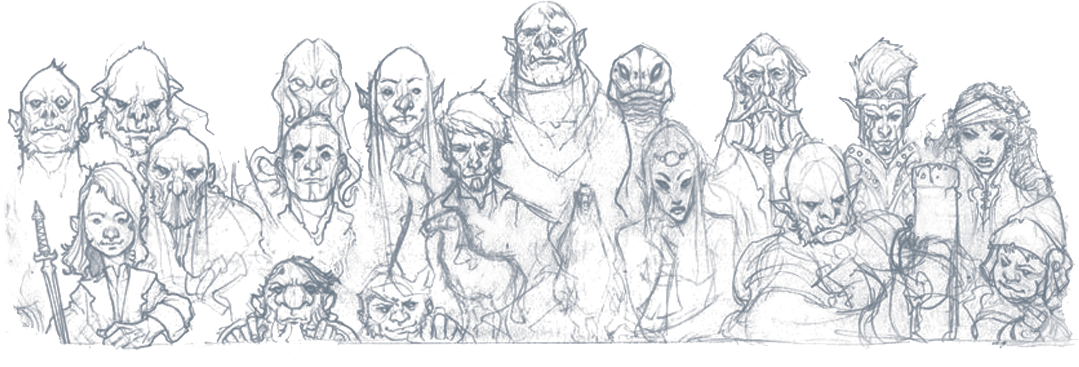
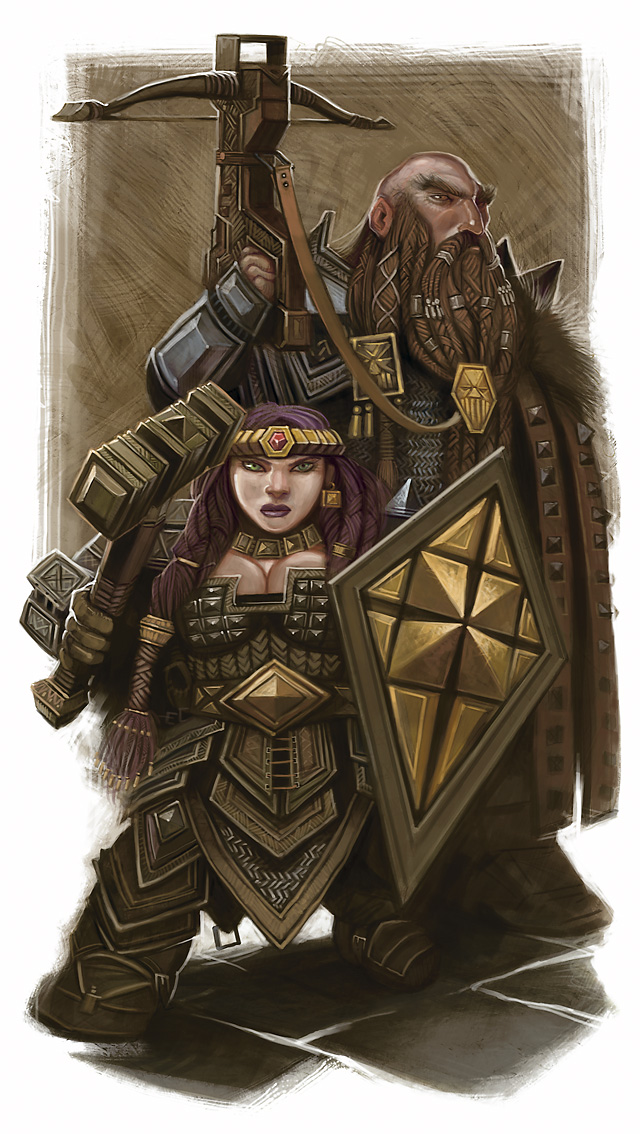
Dwarf
Kingdoms rich in ancient grandeur, halls carved into the roots of mountains, the echoing of picks and hammers in deep mines and blazing forges, a commitment to clan and tradition, and a burning hatred of goblins and orcs – these common threads unite all dwarves.
Dwarf Traits
Dwarves are solid and enduring like the mountains they love, weathering the passage of centuries with stoic endurance and little change; determined and loyal, dwarves are true to their word and decisive in action, sometimes to the point of stubbornness.
Ability Score Bonus. Your Constitution score increases by 2
Age. Dwarves mature at the same rate as humans, but they're considered young until they reach the age of 50. On average, they live about 350 years.
Size. Dwarves stand between 3 and a half and 4 and a half feet tall and average about 150 pounds. Your size is Small.
Speed. Your base walking speed is 25 feet. Your speed is not reduced by wearing heavy armour.
Darkvision. Accustomed to life underground, you have superior vision in dark and dim conditions. You can see in dim light within 60 feet of you as if it were bright light, and in darkness as if it were dim light. You can't discern colour in darkness, only shades of grey.
Dwarven Resilience. You have advantage on saving throws against poison, and you have resistance to poison damage.
Dwarven Tradecraft. You have proficiency with the battleaxe, handaxe, light hammer, and warhammer, and you gain proficiency in a single Artisan's tool of your choice.
Forgecunning. You feel a warm aura whenever any magic items are within 15 feet of you, and can tell how many and in what direction from you they are. You can cast the identify spell once with this trait, requiring no verbal or material components, regaining the use of this feature when you complete this long rest.
Outsize Might. You count as one size larger when determining your carrying capacity, the weight you can push, drag, or lift, and the creatures you can grapple. Wielding an Unwieldy weapon doesn't impose disadvantage on attack rolls.
Languages. You can speak, read, and write Common and Dwarvish.
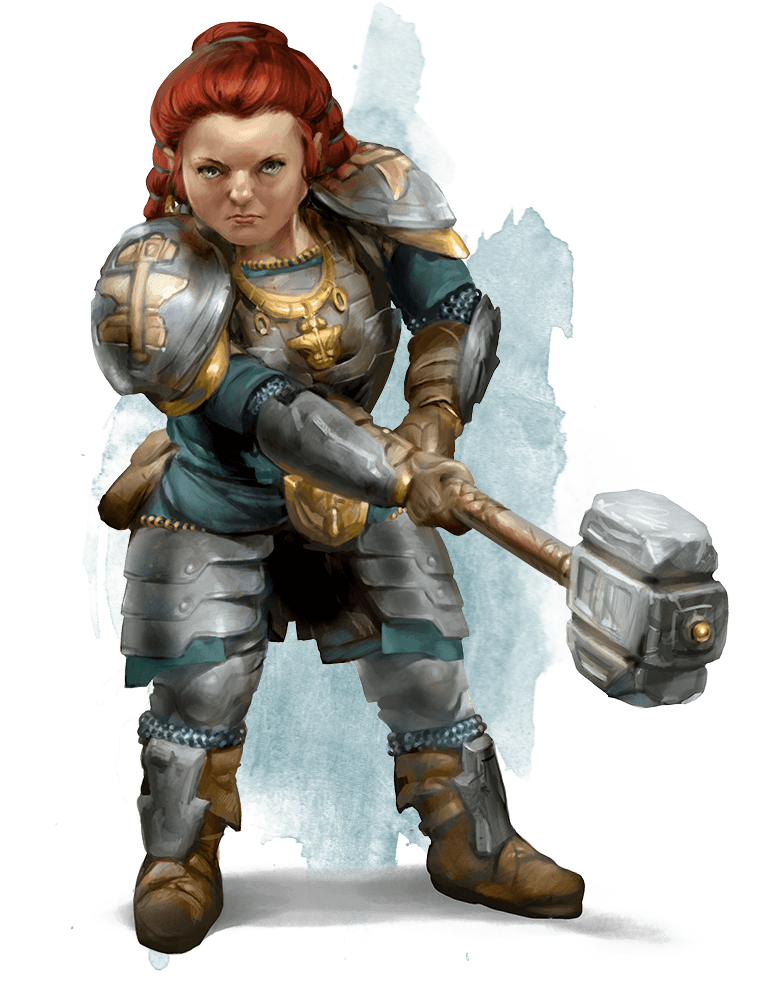
Dwarven Roots
Roots were the names of dwarven clans of old, burrowing into mountains like the roots of a tree. Over time they developed into biologically distinct races. Choose one of the following:
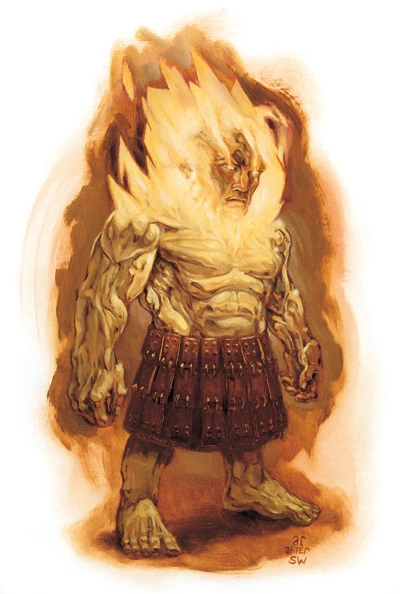
Azerblood
Azerblood dwarves descended from groups of elemental azer who found dwarven mates on the material plane. These red-haired dwarves channel heat into air around them.
Ability Score Bonus. Your Wisdom score increases by 1.
Fire Resistance. You have resistance to fire damage.
Inner Fire. You know the burning hands cantrip. Once you reach 5th level, you can cast the heat metal spell once per day as a 2nd-level spell. Wisdom is your spellcasting ability for these spells.
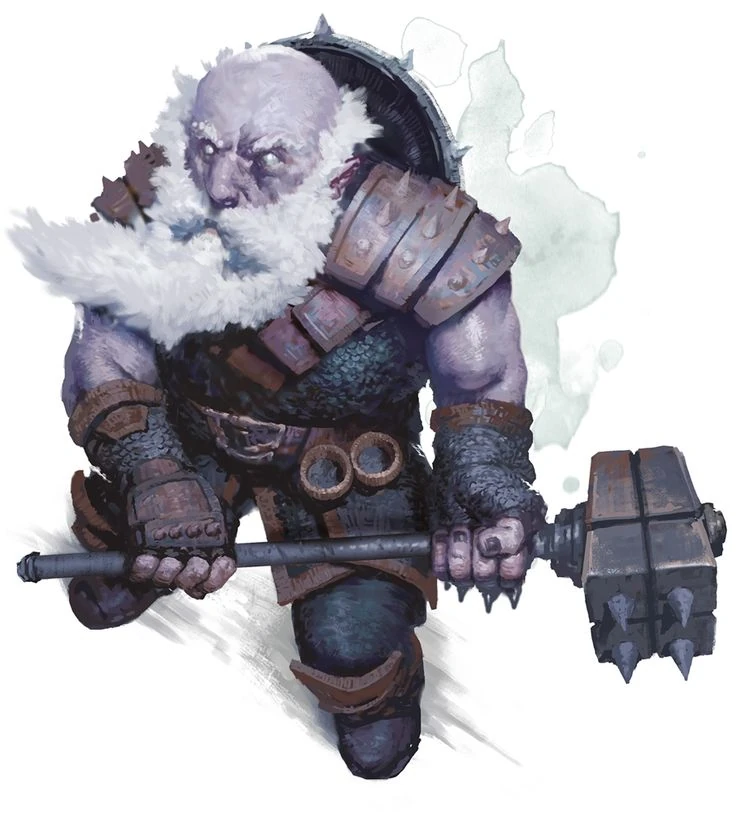
Duergar
Duergar are pale, grey dwarves whose ancestors were transformed by centuries living in the deepest places of the Underdark, further altered when mind flayers and other cosmic horrors invaded and experimented on them. In time, they liberated themselves from their aberrant tyrants, forging a new life for themselves in the Underdark and beyond.
Superior Darkvision. You can see in dim light within 120 feet of you as if it were bright light, and in darkness as if it were dim light. You can't discern colour in darkness, only shades of grey.
Deep Resilience. You have advantage on saving throws against illusions and against being charmed or paralyzed.
Duergar Magic. When you reach 3rd level, you can cast the Enlarge/Reduce spell on yourself once with this trait, using only the spell's enlarge option. When you reach 5th level, you can cast the Invisibility spell on yourself once with this trait. You don't need material components for either spell, but you can't cast them while you're in direct sunlight, although sunlight has no effect on them once cast. You regain the ability to cast these spells with this trait when you finish a long rest. Intelligence is your spellcasting ability for these spells.
Sunlight Sensitivity. You have disadvantage on Attack rolls and Wisdom (Perception) checks that rely on sight when you, the target of your attack, or whatever you are trying to perceive is in direct sunlight.
Hill Dwarf
As a hill dwarf, you have keen senses, deep intuition, remarkable resilience, and a tenacity and drive uncommon even among other dwarves.
Ability Score Bonus. Your Wisdom score increases by 1
Dwarven Toughness. Your hit point maximum increases by 1, and it increases by 1 every time you gain a level.
Fleet of Foot. Your base walking speed increases to 30 feet.

Korred
These goat-legged dwarves descended from groups of duergar who found satyr mates as they wandered from Shaedar to Faerie. No other dwarf compares to the weight of reverence for their braided locks as a korred.
Ability Score Bonus. Your Charisma score increases by 1
Earthen Fey. You have advantage on saving throws against being charmed and petrified.
Stone Camouflage. You have advantage on Dexterity (Stealth) checks made to hide in rocky terrain.
Command Hair. Over the course of a short or long rest, you can create a 50-foot-long rope woven out of your braided beard hair. As a bonus action you can command your rope, if within 30 feet of it, to move up to 20 feet and entangle a Large or smaller creature that you can see. The target must succeed on a Dexterity saving throw or become grappled by the rope (escape and save DC 8 + your Wisdom modifier + your Proficiency bonus). Until this grapple ends, the target is restrained. You can use a bonus action to release the target, which is also freed if you die or become incapacitated. A rope of korred hair has AC 20 and 20 hit points. It regains 1 hit point at the start of each of your turns while it has at least 1 hit point and you are alive. If the rope drops to 0 hit points, it is destroyed.
Once you create a beard-hair rope, you cannot create another one until a week has passed. If attuned to a belt of dwarvenkind, you can instead create a rope this way each time you finish a long rest. You cannot have more than one korred rope at once.
Mountain Dwarf
As a mountain dwarf, you're strong and hardy, accustomed to a difficult life in rugged terrain. You’re probably on the tall side (for a dwarf), and tend toward lighter colouration having spent a great deal of time within mountains.
Ability Score Bonus. Your Strength score increases by 2
Dwarven Armour Training. You have proficiency with light and medium armour.
Nidavellir
Dwarves of the lowest plane of Ysgard, the Nidavellir are the origin of the dwarven reverence for achieving mastery of a craft. No greater smiths of wondrous items exist in the multiverse over.
Ability Score Bonus. Your Wisdom score increases by 1
Artisanal Intuition. Whenever you make a History check related to the origin of any architectural construction (including buildings, public works such as canals and aqueducts, and even the massive cogwork that underlies much of the construction of Mechanus), you can use your Wisdom instead of Intelligence modifier, and you are considered proficient in the History skill and add double your proficiency bonus to these checks.
Nidavellir Resilience. You have advantage on saving throws against spells and effects which attempt to teleport you, or alter your form or plane, against your will.
Nidavellir Spellcasting. If you have the spellcasting or pact magic feature, the following spells are added to the spell list of your spellcasting class. (If you are a multiclass character with multiple spell lists, these spells are added to all of them.)
Nidavellir Spells
Cantrips: Control Flame, Mould Earth
1st-level: Tenser's Floating Disk, Unseen Servant
2nd-level: Arcane Lock, Heat Metal
3rd-level: Dispel Magic
4th-level: Banishment
5th-level: Bigby’s Hand
Elf
Elves are a magical people of otherworldly grace, living in places of ethereal beauty, in the midst of ancient forests or in silvery spires glittering with faerie light, where soft music drifts through the air and gentle fragrances waft on the breeze. Elves love nature and magic, art and artistry, music and poetry.
Elf Traits
Like the branches of a young tree, elves are flexible in the face of danger. They trust in diplomacy and comprom ise to resolve differences before they escalate to violence. But when the need arises, elves reveal a stern martial side, drilled into them from birth, demonstrating skill with sword, bow, and strategy.
Ability Score Bonus. Your Dexterity score increases by 2
Age. Although elves reach physical maturity at about the same age as humans, the elven understanding of adulthood goes beyond physical growth to encompass worldly experience. An elf typically claims adulthood and an adult name around the age of 100 and can live to be 750 years old; within the feywild, elves live almost indefinitely.
Size. Elves range from under 5 to over 6 feet tall and have slender builds. Your size is Medium.
Speed. Your base walking speed is 30 feet.
Darkvision. Accustomed to twilit forests and the night sky, you have superior vision in dark and dim conditions. You can see in dim light within 60 feet of you as if it were bright light, and in darkness as if it were dim light. You can't discern colour in darkness, only shades of grey.
Fey Ancestry. You have advantage on saving throws against being charmed, and magic can't put you to sleep.
Trance. Elves do not sleep. Instead they meditate deeply, remaining semi-conscious, for 4 hours a day. The Common word for this meditation is "trance." While meditating, you dream after a fashion; such dreams are actually mental exercises that have become reflexive after years of practice. After resting in this way, you gain the same benefit a human would from 8 hours of sleep.
Keen Senses. You have proficiency in the Perception skill.
Languages. You can speak, read, and write Common and Elven.


Elven Vein
Your heritage flows into the past much as marble
is run with rich dark lines.
Choose one of the following:
Drow
Descended from an earlier race of dark-skinned
elves who worshipped the sun and bathed in its
light, the drow were tricked into abandoning
the surface world, led by the goddess Lolth
down the path to evil and corruption.
Having
thrown off the shackles of the Mother of Spiders
and banished the heretics to Pandemonium,
they have built their own civilization in the
depths of the Underdark.
The drow have purple-toned skin that resembles polished jasper and stark white or pale lilac hair.
Ability Score Bonus. Your Charisma score increases by 1
Superior Darkvision. Your darkvision has a range of 120 feet, instead of 60.
Sunlight Sensitivity. You have disadvantage on attack rolls and Wisdom (Perception) checks that rely on sight when you, the target of the attack, or whatever you are trying to perceive is in direct sunlight.
Drow Magic. You know the Dancing Lights cantrip. When you reach 3rd level, you can cast the Faerie Fire spell once with this trait and regain the ability to do so when you finish a long rest. When you reach 5th level, you can cast the Darkness spell once and regain the ability to do so when you finish a long rest. Charisma is your spellcasting ability for these spells.
Drow Weapon Training. You have proficiency with rapiers, shortswords, whips, and hand crossbows.
Eladrin
Eladrin are elves native to the Feywild, a realm of beauty, unpredictable emotion, and boundless magic. An eladrin is associated with one of the four seasons and has coloration reminiscent of that season, which can also affect the eladrin's mood:
Autumn: peace and goodwill
Winter: contemplation and dolor
Spring: cheerfulness and merriment
Summer: boldness and aggression
Ability Score Bonus. Your Charisma score increases by 1
Cantrips. You know one cantrip of your choice from the Bard or Druid spell list. Charisma is your spellcasting ability for this spell.
Fey Step. As a bonus action, you can magically teleport up to 30 feet to an unoccupied space you can see. Once you use this trait, you can't do so again until you finish a short or long rest.
When you reach 3rd level, your Fey Step gains an additional effect based on your season; if the effect requires a saving throw, the DC equals 8 + your proficiency bonus + your Charisma modifier.
The seasonal effects are as follows:
Autumn. Immediately after you use your Fey Step, up to two creatures of your choice that you can see within 10 feet of you must succeed on a Wisdom saving throw or be charmed by you for 1 minute, or until you or your companions deal any damage to it.
Winter. When you use your Fey Step, one creature of your choice that you can see within 5 feet of you before you teleport must succeed on a Wisdom saving throw or be frightened of you until the end of your next turn.
Spring. When you use your Fey Step, you can touch one willing creature within 5 feet of you. That creature then teleports instead of you, appearing in an unoccupied space of your choice that you can see within 30 feet of you.
Summer. Immediately after you use your Fey Step, each creature of your choice that you can see within 5 feet of you takes fire damage equal to your Charisma modifier (minimum of 1 damage).

High Elf
As a high elf, you have a keen mind and a mastery of at least the basics of magic. Many of the older high elves are haughty and reclusive, clinging to the edifice of a now long-gone decadent, arcane past.
Ability Score Bonus. Intelligence score increases by 1
Cantrips. You know two cantrips of your choice from the Wizard spell list. Intelligence is your spellcasting ability.
Elf Weapon Training. You have proficiency with the longsword, shortsword, shortbow, and longbow.
Extra Language. You can read, speak, and write one additional language of your choice.
Moon Elf
Much paler than most elves, Moon elves have alabaster skin sometimes tinged with blue, often with hair of silver-white, grey, or blue. One of the more common and sociable elven veins, they are often encountered among other species.
Ability Score Bonus. Your Wisdom score increases by 1
Incisive Instinct. You have advantage on Investigation, Insight, and Perception checks.
Blessing of the Moonweaver. You know the Light cantrip. When you reach 3rd level, you can cast Sleep once, and it recharges after a long rest. When you reach 5th level, you can cast Invisibility (Self Only) once, and it recharges after a long rest. You do not need the material components required of the spells. Wisdom is your spellcasting ability for these spells.
Dream Guide. You sleep when you rest unlike normal elves; when you finish a long rest, you add 1d4 to a single type of skill check of your choice for 8 hours.

Shadar-Kai
Sworn to the Raven Queen's service, the
mysterious shadar-kai venture into the
Material Plane from the Shadowfell to
advance her will. Once they were fey like the
rest of their elven kin, and now they exist
in a strange state between life and death.
Eladrin and shadar-kai are reflections of
each other: one bursting with emotion,
the other nearly devoid of it.
Ability Score Bonus
Your Constitution
score increases by 1
Necrotic Resistance.
You have
resistance to necrotic damage.
Corvian Weapon Training.
You
have proficiency with two martial
weapons of your choice.
Fey Step.
As a bonus action, you can
magically teleport up to 30 feet to an
unoccupied space you can see. Once
you use this trait, you can't do so
again until you finish a long rest.
Starting at 3rd level, you also gain
resistance to all damage except force
when you teleport using this trait. The
resistance lasts until the start of your next
turn. During that time, you appear ghostly
and translucent.
Sun Elf
Those ancestors of the drow who were led into the darkness were not the whole of their line; those that remained in the light continued to worship the sun, and were named for it. Known also as the Sunrisen, they have bronze or brown skin and hair of copper, black, or even gold.
Ability Score Bonus. Your Wisdom score increases by 1
Radiant Resistance. You have resistance to radiant damage.
Radiant Soul.
When you succeed on a death save,
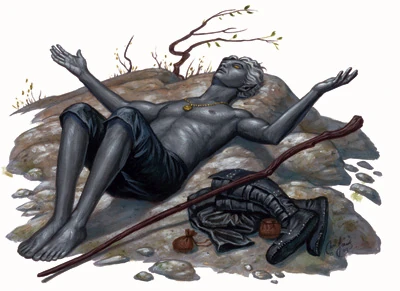 you can regain a number of hit points equal to your Proficiency bonus + your Wisdom modifier. You can’t use this trait again until you finish a long rest.
Fire of Pelor. You know one of the following cantrips of your choice: control fire, produce flames, light, or sacred flame. Wisdom is your spellcasting ability for it.
Triton
Sea elves, called Triton in Elven, fell in love with the wild beauty of the ocean in the earliest days of their kind. While other elves travelled from realm to realm, the Ttriton navigated the deepest currents and explored the waters across a hundred worlds. Long-established guardians of the deep ocean floor, the noble triton have gradually become increasingly active in the world above.
Ability Score Bonus. Your Constitution score increases by 1
Sea Elf Weapon Training. You have proficiency with the spear, trident, and net, and in the Survival skill.
Amphibious. You have a swimming speed of 30 feet, and you can breathe air and water.
Emissary of the Sea.
 Aquatic beasts have an extraordinary affinity with your people. You can speak, read, and write Aquan. You can also communicate
simple ideas with beasts that can breathe
water. They can understand the meaning of
your words, though you have no special
ability to understand them in return.
Vedalken
Vedalken are tall and slender, standing
almost a head taller than humans but
weighing about the same. Their
hairless skin comes in a range of
shades of blue. Their eyes are darker
shades of blue or violet. They have
pointed ears, their noses are broad
and flat, and they are partially
amphibious, hailing from the underdark
and the elemental plane of water.
Ability Score Bonus.
Your Wisdom
score increases by 1. You can choose to
increase your Intelligence score by 2,
rather than your Dexterity.
Vedalken Insights.
You have advantage
on all Intelligence, Wisdom, and
Charisma Saving Throws.
Tireless Precision.
You learn one
language or gain proficiency in one of the
following skills of your choice: Arcana,
History, Investigation, Medicine, Performance,
or Sleight of Hand. You are also proficient with
one tool of your choice. Whenever you make an ability check with the chosen tool, roll 1d4 and add the number rolled to the check's total.
Amphibious. By absorbing oxygen through your skin, you can breathe normally without requiring the use of your mouth or nose, including underwater and within toxic inhalants.
Wood Elf
As a wood elf, you have keen senses and intuition, and your fleet feet carry you quickly and stealthily through your native forests. Wood elves' tend to be copperish in hue, sometimes with traces of green. Their hair tends toward browns and blacks, but it is occasionally aubern. Their eyes are green, brown, or hazel.
Ability Score Bonus. Your Wisdom score increases by 1
Wood Elf Weapon Training. You have proficiency with the spear, sickle, shortbow, and longbow.
Fleet of Foot. Your base walking speed increases to 35 feet.
Mask of the Wild. You can attempt to hide even when you are only lightly obscured by foliage, heavy rain, falling snow, mist, and other natural phenomena.
Gnome
A constant hum of busy activity pervades the warrens and neighbourhoods where gnomes form their close-knit communities. Louder sounds punctuate the hum: a crunch of grinding gears here, a minor explosion there, a yelp of surprise or triumph, and especially bursts of laughter.
Gnome Traits
Gnomes take delight in life, enjoying every moment of invention, exploration, investigation, creation, and play.

Ability Score Bonus. Your Intelligence score increases by 2
Age. Gnomes mature at the same rate as humans, and most are expected to settle into adult life around the age of 40. They can live to 350 years on average, but it's not too uncommon for them to reach 500 years of age.
Size. Gnomes are between 3 and 4 feet tall and weigh around 40 pounds. Your size is Small.
Speed. Your base walking speed is 25 feet.
Darkvision. Accustomed to life underground, you have superior vision in dark and dim conditions. You can see in dim light within 60 feet of you as if it were bright light, and in darkness as if it were dim light. You can't discern colour in darkness, only shades of grey.
Gnome Cunning. You have advantage on all Intelligence, Wisdom, and Charisma saving throws against magic.
Languages. You can read, speak, and write Common and Gnomish.
Gnomish Paths
The lines of a gnome's ancestry, they say, is a spiritual journey that all must walk. Choose one of the following:
Bonny Gnome
The absolute pinnacle of the gnomish stereotype, bonny gnomes live to have a good time and improve the lives of those who encounter them.
Ability Score Bonus. Your Charisma score increases by 1
Meal of Champions. You gain proficiency in Cook's utensils or Brewer’s supplies. During a long rest, you can prepare a meal for your allies. When the rest completes, up to 6 creatures of your choice who ate the meal gain a number of temporary hit points equal to your level.
Skipping Step. Your walking speed increases to 30 feet.
Forest Gnome
Forest gnomes tend to be friendly with other good-spirited woodland folk, and they regard elves and good fey as their most important allies. These gnomes also befriend small forest animals and rely on them for information about threats that might prowl their lands.
Ability Score Bonus. Your Dexterity score increases by 1
Natural Illusionist. You know the Minor Illusion cantrip. Intelligence is your spellcasting modifier for it.
Speak with Small Beasts. Through sound and gestures, you may communicate simple ideas with Small or smaller beasts.
Rock Gnome
As a rock gnome, you have a natural inventiveness and hardiness beyond that of other gnomes. Rock gnomes make up the largest proportion of the gnomish population.
Ability Score Bonus. Your Constitution score increases by 1
Artificer's Lore. Whenever you make an Intelligence (History) check related to magical, alchemical, or technological items, you can add twice your proficiency bonus instead of any other proficiency bonus that may apply.
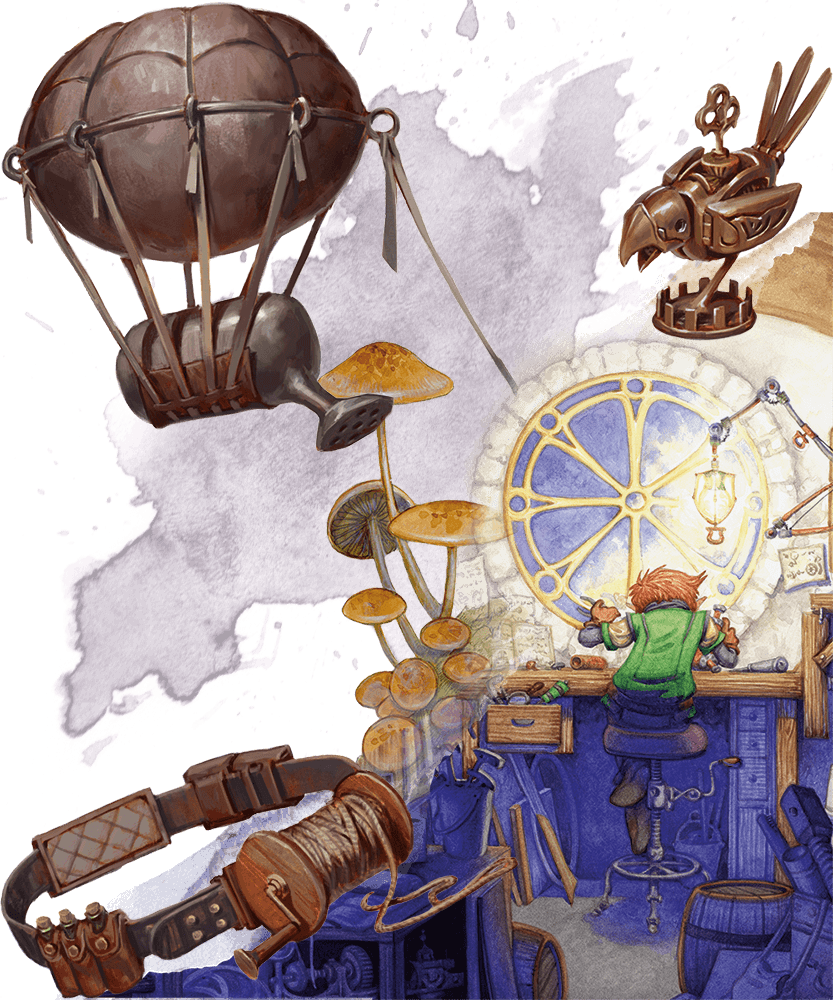
Tinker. You have proficiency with artisan tools (tinker's tools). Using those tools, you can spend 1 hour and 10 gp worth of materials to construct a Tiny clockwork device (AC 5, 1 hit point). The device ceases to function after 24 hours (unless you spend 1 hour repairing it to keep the device functioning), or when you use your action to dismantle it; at that time, you can reclaim the materials used to create it. You can have up to three such devices active at a time. These devices otherwise follow the guidance for, and produce the effects of, the Magical Tinkering feature of a 1st-level artificer, but the devices are considered to be non-magical.
Redcap
The redcap, powrie, or dunter is a type of cantankerous gnome found in the borders of the feywild. They tend to inhabit ruined castles or shacks, especially those that were the homes of tyrants or wicked creatures. The nickname comes from their tendency for soaking their caps in the blood of their homes' former tenants.
Ability Score Bonus. Your Strength or Charisma score increases by 1.
Outsize Might. You count as one Size larger when determining your carrying capacity, the weight you can push, drag, or lift, and the creatures you can grapple. Also, wielding an Unwieldy weapon doesn't impose disadvantage on your attack rolls.
Ironbound Pursuit. When you use your action to Dash, if you end your movement within 5 feet of a creature you can make one attack of opportunity against that creature as a reaction.

Spelljammer Arknaut
Makers of Spelljammers, autognomes, skyships, and Githyanki astral warfleets, the Arknaut shipbuilders are unparalleled - indeed, they alone remember the secret to the creation of floating islands. It is said they were taught in ages long passed by the celestial Reigar of Wildspace
Ability Score Bonus Your Dexterity score increase by 1.
Slight Build. Due to your hollow bones, you weigh half as much as normal, and are considered one size smaller when determining the weight you can push, drag, or lift, and the creatures which can grapple you.
Hollow Bones. You can make a long jump equal to a number of feet equal to five times your Strength score with or without a running start. You can make a high jump equal to 10 + your Strength modifier with or without a running start. Additionally, you fall half as fast as normal.
Arknaut Combat Training. You have proficiency with the flail, lance, trident, and war pick. You also gain proficiency with Air Vehicles or Spelljammers, if available.
Astral Magic. Your ancestors' prolonged exposure to the astral sea has granted you innate magical abilities. You know the gust or mending cantrip. When you reach 3rd level, you can cast the longstrider spell once with this trait and regain the ability to do so when you finish a long rest. When you reach 5th level, you learn either the earthbind or levitate spell. You can cast the chosen spell once and regain the ability to do so when you finish a long rest. Intelligence is your spellcasting ability for these spells.
Svirfneblin
Deep gnomes, or svirfneblin, are natives of the Underdark and are suffused with that subterranean realm’s magic. They can supernaturally camouflage themselves, and their svirfneblin magic renders them difficult to locate. These abilities have enabled them to survive for generations among the perils of the Underdark.
Ability Score Bonus. Your Dexterity score increases by 1
Superior Darkvision. Your darkvision has a range of 120 feet, instead of 60.
Sunlight Sensitivity. You have disadvantage on Attack rolls and Wisdom (Perception) checks that rely on sight when you, the target of your attack, or whatever you are trying to perceive is in direct sunlight.
Gift of the Svirfneblin. Starting at 3rd level, you can cast the Disguise Self spell with this trait. Starting at 5th level, you can also cast the Nondetection spell with it, without requiring a material component. Once you cast either of these spells with this trait, you can’t cast that spell with it again until you finish a long rest. Wisdom is your spellcasting ability for these spells when you cast them with this trait. You can also cast these spells using spell slots you have of the appropriate level.
Cavern Camouflage. You have advantage on Dexterity (stealth) checks to hide in rocky terrain and within dim light and darkness.
Goblin
Long before the god Maglubiyet conquered them, early goblins served in the court of the Queen of Air and Darkness, one of the Shadowfell’s archfey. Goblins thrived in her dangerous domain thanks to a special boon from her — a supernatural knack for finding the weak spots in foes larger than themselves and for getting out of trouble.
Since Maglubiyet's death at the hands and spears of Gruumsh, many goblins pursue their own destinies, escaping the plots of both archfey and gods.
Goblin Traits
Goblins are inquisitive and artistic by nature and are quick to bond with small creatures with which they are often friends; humanoids are often unnerved by their green skin, large bat-like ears, and pointed teeth. They are fast, nimble, and they love to explore. Because of this they make great adventurers and guides.
Ability Score Bonus. Your Dexterity score increases by 2, and your Constitution score increases by 1
Age. Goblins reach adulthood at age 8 and live up to 60 years.
Size. Goblins are between 3 and 4 feet tall and weigh between 40 and 80 pounds. Your size is Small.
Speed. Your base walking speed is 30 feet.
Darkvision. You can see in dim light within 60 feet of you as if it were bright light, and in darkness as if it were dim light. You can't discern colour in darkness, only shades of grey.
Fury of the Small. When you damage a creature with an attack or a spell and the creature's size is larger than yours, you can cause the attack or spell to deal extra damage to the creature. The extra damage equals your level. Once you use this trait, you can't use it again until you finish a short or long rest.
Nimble Escape. You can take the Disengage or Hide action as a bonus action on each of your turns.
Languages. You can speak, read, and write Common and Uruk.
Hobgoblin
Goblins experiencing prolonged stress of war, persecution, and strife for numerous generations produce larger offspring with visibly red skin. War is the lifeblood of hobgoblins; its glories are the dreams that inspire them, its horrors don't feature in their nightmares. Cowardice is more terrible to hobgoblins than dying, for they carry their living acts into the afterlife. A hero in death becomes a hero eternally.
Hobgoblin Traits
Hobgoblins are generally taller than regular goblins but not quite as big as bugbears. They have curved, pointed ears and noses that turn bright red or blue during displays of emotion.
Ability Score Bonus. Your Constitution score increases by 2, and your Intelligence score increases by 1
Goblinoid. Hobgoblins retain the Age, Speed, Darkvision, and Languages features of being a Goblin.
Size. Hobgoblins are between 5 and 6 feet tall and weigh between 150 and 200 pounds. Your size is Medium.
Martial Training. You are proficient with two martial weapons of your choice and with either shields or medium armour.
Martial Advantage. You can deal an extra 2d6 damage to a creature you hit with a weapon attack if that creature is within 5 feet of an ally that isn’t incapacitated. You can use this trait only once per round.
Saving Face. Hobgoblins are careful not to show weakness in front of their allies, for fear of losing status. If you miss with an attack roll or fail an ability check or a saving throw, you can gain a bonus to the roll equal to the number of allies you can see within 30 feet of you (maximum bonus of +5). Once you use this trait, you can't use it again until you finish a short or long rest.


Goliath
At the highest mountain peaks dwell the reclusive goliaths, wandering a bleak realm of rock, wind, and cold. Their bodies look as if they are carved from mountain stone and give them great physical power. Their hearts are infused with the cold regard of their frigid realm, leaving each goliath with the responsibility to earn a place in the tribe or die trying.
Goliath Traits
Distantly related to giants and infused with the supernatural essence of their ancestors’ mountainous home, goliaths have a wide array of skin tones resembling different types of stone.
Ability Score Bonus. Your Strength score increases by 2, and your Constitution score increases by 1
Age. Goliaths have lifespans comparable to humans. They enter adulthood in their late teens and usually live less than a century.
Size. Goliaths are between 7 and 8 feet tall and weigh between 280 and 340 pounds. Your size is Medium.
Speed. Your base walking speed is 30 feet.
Natural Athlete. You have proficiency in the Athletics skill.
Stone's Endurance. You can focus yourself to occasionally shrug off injury. When you take damage, you can use your reaction to roll 1d12. Add your Constitution modifier to the number rolled, and reduce the damage by that total.
Once you use this trait, you can’t use it again until you finish a short or long rest.
At 11th level, you roll 2d12 instead of 1d12.
Powerful Build. You count as one size larger when determining your carrying capacity, the weight you can push, drag, or lift, and the creatures you can grapple.
Mountain Born. You’re acclimated to high altitude, including elevations above 20,000 feet. You can hold your breath for twice as long as normal and you are resistant to cold damage.
Languages. You can speak, read, and write Common and Giant.

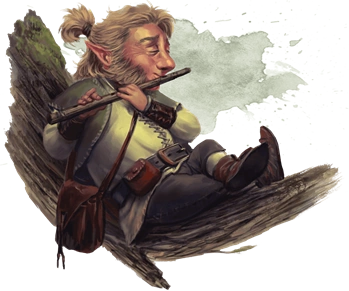
Halfling
The comforts of home are the goals of most halflings'
lives: a place to settle in peace and quiet, far
from marauding monsters and clashing
armies. Others form nomadic bands that
travel constantly, lured by the open road and
the wide horizon to discover the wonders
of new lands and peoples. Halflings work
readily with others, and they are
loyal to their friends, whether
halfling or otherwise. They can display
remarkable ferocity when their friends,
families, or communities are threatened.
Halfling Traits
Halflings are an affable and cheerful people. They cherish the bonds of family and friendship as well as the com forts of hearth and home, harboring few dreams of gold or glory.
Ability Score Bonus. Your Dexterity score increases by 2
Age. A halfling reaches adulthood at the age of 20 and generally lives into the middle of his or her second century.
Size. Halflings average about 3 feet tall and weigh about 40 pounds. Your size is small.
Speed. Your base walking speed is 25 feet.
Naturally Lucky. When you roll a 1 on an attack roll, ability check, or saving throw, you can reroll the die. You must use the new result, even if it is a 1.
Brave. You have advantage on saving throws against being frightened.
Nimble. You can move through the space of any creature that is of a size larger than yours.
Languages. You can speak, read, and write Common & Ori
Halfling Family Trees
To a halfling, the wellbeing of your family and those you care about is all that matters. Choose one of the following:
Lightfoot
Lightfoots are more prone to wanderlust than other halflings, and often dwell alongside other races or take up a nomadic life; having spread the farthest, they are considered to be the most common variety, even if they're not actually the highest proportion of the halfling population.
Ability Score Bonus. Your Charisma score increases by 1
Naturally Stealthy. You can attempt to hide even when you are only obscured by a creature that is at least one size larger than you.
Stout
As a stout halfling, you’re hardier than average and have some resistance to toxins. Some say that stouts have dwarven blood - whether true or not, they have historically maintained strong ties to the clans of the Mountain dwarfs.
Ability Score Bonus. Your Constitution score increases by 1
Stout Resilience. You have advantage on saving throws against poison, and you have resistance to poison damage.
Derro
The derro were another unfortunate group that was long held by mind flayers in the underdark. With blue-gray skin, and hair of white, yellow, or pale tan in color, Derro also lack both irises and pupils, showing uniformly pale eyes.
Bitter Madness. When a creature you can see within 30 feet of you rolls an attack roll, ability check, or saving throw, you can use your reaction to force them to reroll the d20 (or both if at advantage or disadvantage). This replaces the Naturally Lucky feature.
Darkvision.
Accustomed to life underground, you have superior vision in dark and dim conditions. You can
see in dim light within 60 feet of you as if it were
bright light, and in darkness as if it were dim light.
You can't discern colour in darkness.
Underdark Traveller.
You have a climbing
speed equal to your walking speed as long
as you are not wearing heavy armour.
Madman's Resilience
You have resistance
to psychic damage, and your emotions and
thoughts cannot be read or altered; creatures
that attempt to take 1d10 psychic damage. You
also have advantage on saving throws against
illusions & against being charmed or paralyzed.

Ghostwise
Ghostwise halflings are the rarest of their kin, found only in the plains and a few isolated forests, often living near crossed leylines; many ghostwise carry a piece of their birthland with them at all times.
Ability Score Bonus. Your Wisdom score increases by 1
Silent Speech. You can speak telepathically to any creature within 30 feet of you. The creature understands you only if the two of you share a language. You can speak telepathically in this way to one creature at a time. At 5th level, this increases to a 60-foot range.
Unstable Magic. You know the Chaos Bolt spell, and can cast it once per long rest. Constitution is your spellcasting ability for this spell. When you cast Chaos Bolt by any means, you can expend one of your Hit Dice and roll it. If you roll an even number, you gain a number of temporary hit points equal to the number rolled. If you roll an odd number, the closest creature within 30 feet of you takes force damage equal to the number rolled. If no other creatures are in range, you take the damage.
Lotusden
Long tied to the natural heart of the Lotusden in the deepest of jungles, these halflings have adapted to live symbiotically with the laws of the wilds.
Ability Score Bonus. Your Wisdom score increases by 1.
Children of the Woods. You know the Druidcraft Cantrip. At 3rd level, you can cast the Entangle spell once per long rest. At 5th level, you can cast the Spike Growth spell once per long rest. These spells don't require the material components normally required. Wisdom is your spellcasting ability for these spells.
Timberwalk. Ability checks made to track you are at disadvantage and you can move through difficult terrain made of non-magical plants and overgrowth without expending extra movement.

Talloen
These northern tribes of halflings are cunning survivors who revere the Old Powers, and who are at home in hardship. Abandoned halflings who survive in the wild also often exhibit these traits.
Ability Score Bonus. Your Constitution score increases by 1.
Plains Hunter.
You have advantage on Dexterity (stealth) checks to
hide in natural foliage, and on checks made to recall
or ascertain information about Beasts.
Ancestral Guidance.
Your connection to those who
lived before guides your knowledge of the world.
You can use your Wisdom instead of Intelligence
when making History, Nature and Religion checks. Furthermore, you can cast the Guidance cantrip at will. It has a casting time of 1 bonus action and a range of 30 feet when you cast it.
Yondallan
The patron of small-folk, the matron of hearth and harvest bestows her gifts to those of her faith who deserve it.
Ability Score Increase. Your Wisdom score increases by 1.
Ever Hospitable. Whenever you roll a Charisma (Persuasion) check or an ability check involving Artisan’s Tools, roll a d4 and add the number rolled to the total ability check.
Helper’s Magic. You know the Prestidigitation cantrip. You can also cast Find Familiar (ritual only, no Material components required) and Unseen Servant with this trait. Once you cast either spell with this trait, you can't cast that spell again until you finish a long rest. Wisdom is your Spellcasting Ability for these spells.
Spells of the Smallfolk. If you have the Spellcasting or Pact Magic class features, the spells on the Helper's Spells table are added to the spell list of your spellcasting class.
Helper's Spells
Cantrips: Guidance
1st-level: Goodberry, Sleep
2nd-level: Aid, Calm Emotions
3rd-level: Leomund's Tiny Hut
4th-level: Guardian of Faith
5th-level: Hallow
Human
Perhaps it is because of their comparatively short lives that Humans strive to achieve as much as they can in the years they are given. Or maybe they feel they have something to prove to the elder Ancestries, and that's why they build their mighty empires on the foundation of conquest and trade. Whatever drives them, humans are the innovators, the achievers, and the pioneers of many worlds.
Human Traits
Humans who seek adventure are the most daring and ambitious members of a daring and ambitious race. They seek to earn glory in the eyes of their fellows by amassing power, wealth, and fame. More than other peoples, humans champion causes rather than territories or groups, often enough to lay down their fragile lives for them.
Ability Score Bonus. One ability score of your choice increases by 2, or two different ability scores of your choice increase by 1.
Natural Talent You gain one Feat or another Background Feature of your choice.
Age. Humans reach adulthood in their late teens and live less than a century.
Size. Humans vary widely in height and build, from barely 5 feet to well over 6 feet tall. Regardless of your position in that range, your size is Medium.
Speed. Your base walking speed is 30 feet.
Languages. You can speak, read, and write Common, Ori, and one extra language of your choice. Humans typically learn the languages of other peoples they deal with, including obscure dialects. They are fond of sprinkling their speech with words borrowed from other tongues: Orc curses, Elvish musical expressions, Dwarvish military phrases, and so on.
Specialised. Humans are notably able to adapt to a myriad of different environments. You gain one Specialised Trait below:
Specialised Trait
You gain one of the following options of your choice:
Versatile. Your ability scores each increase by 1. This replaces both the Ability Score Bonus and Natural Talent features.
Brave. You have advantage on saving throws against being frightened.
Darkvision. You can see in dim light within 60 feet of you as if it were bright light, and in darkness as if it were dim light. You can't discern colour in darkness, only shades of grey.
Innate Intuition. Whenever you make a skill check in an ability score of your choice (chosen at 1st level; it cannot be changed) or an Ability Check involving Artisan's Tools you're proficient with, you can roll a d4 and add the number rolled to the total ability check.
Magewright. You know two cantrips of your choice from the Cleric, Druid, or Sorcerer spell list. Intelligence, Wisdom, or Charisma is your spellcasting ability for them.
Powerful Build. You count as one size larger when determining your carrying capacity, the weight you can push, drag, or lift, and the creatures you can grapple.
Studied. You gain proficiency in a number of
skills, tools, or languages of your choice equal to
your Intelligence modifier. Whenever your
modifier increases, you gain another
(minimum 1 proficiency, maximum 6).
Tough. Your hit point maximum
increases by 1, and it increases by 1
again every time you gain a level.
Verdant-Tinged Blood. You have
advantage on saving throws made to
resist being charmed, possessed, or put
to sleep.
Fleet of Foot. Your base walking speed
is 35 feet.
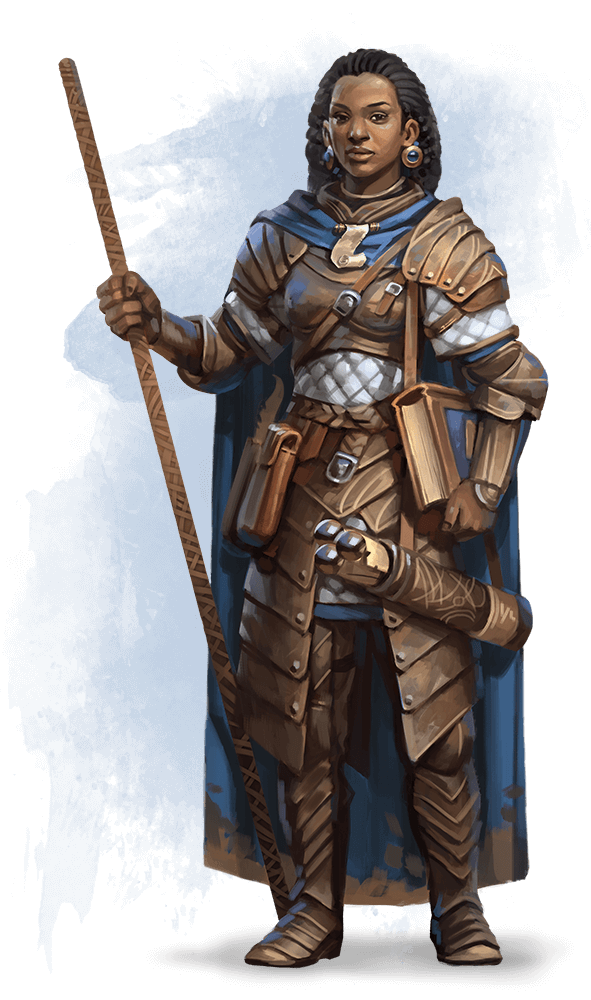
Splinter Races
While still human, some groups diverted
from the rest of their kind a long time ago,
displaying different traits.
Choosing a
splinter group forfeits the Natural Talent and
Specialised features.
Northlander
Expert fishermen of the mountainous northern isles, the Northlanders are adapted to the permanent winter. Nothlander warriors are almost exclusively female, earning their raiders the nickname of 'Valkyries.'
Ability Score Bonus. Your Strength, Constitution, or Wisdom score increases by 1
Natural Mariner. You can hold your breath for twice as long, you have a swim speed equal to your walking speed, and you have proficiency in Navigator's tools and Water vehicles.
Northern Resilience. You gain proficiency in either Strength or Constitution saving throws.
Child of Frost. You are naturally adapted to cold climates and to extreme elevations, as described in chapter 5 of the Dungeon Master’s Guide. You can speak, read, and write Giant, having been raised alonside Goliaths.
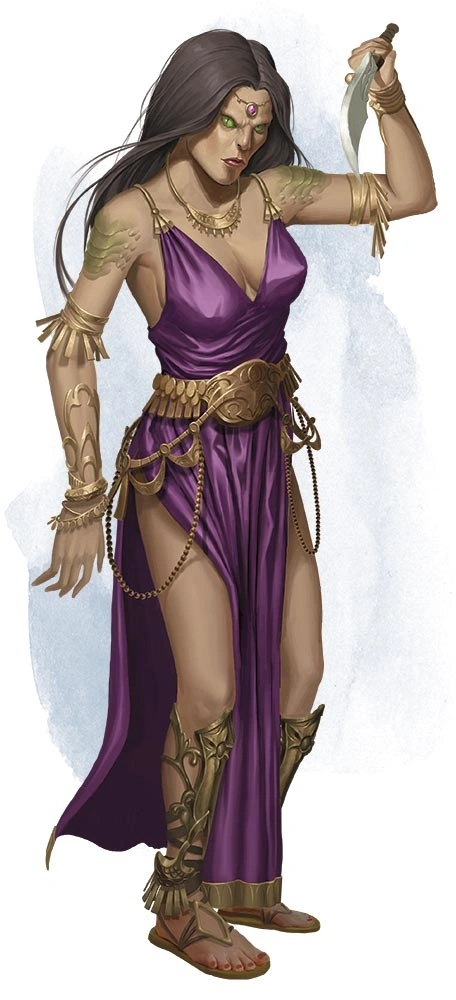
Yuan-Ti Pureblood
The remains of an ancient, decadent human empire; the Obyrith taught them profane, cannibalistic rituals to mix their flesh with that of snakes, producing these ophidian hybrids.
Darkvision.
 You can see in dim light within 60 feet of you as if it were bright light, and in darkness as if it were dim light. You can't discern colour in darkness, only shades of grey.
Innate Spellcasting. You know the Poison Spray cantrip. You can cast Animal Friendship and Speak with Animals an unlimited number of times with this trait, but you can target only snakes with it. Charisma is your spellcasting ability for these spells.
Magic Resistance. You have advantage on saving throws against spells and other magical effects.
Kobold
Kobolds are often dismissed as cowardly, foolish, and weak, but these little reptilian creatures actually have a strong social structure that stresses devotion to the tribe, are clever with their hands, and viciously work together in order to overcome their physical limitations.
Kobold Traits
Whatever their relationship to dragons, kobold scales tend to be rust colored, although the occasional kobold sports a scale color more akin to that of a chromatic or a metallic dragon. Kobolds feel emotion intensely, but fleetingly; regardless of the emotion expressed, their passion resonates with draconic power.
Ability Score Bonus. Your Dexterity score increases by 2, and your Charisma score increases by 1
Age. Kobolds reach adulthood at age 6 and can live up to 120 years but historically rarely do so.
Size. Kobolds are between 2 and 3 feet tall and weigh between 25 and 35 pounds. Your size is Small.
Speed. Your base walking speed is 30 feet. You have a burrowing speed of 20 feet through mud and soil, and 5 ft. through stone.
Darkvision. You can see in dim light within 60 feet of you as if it were bright light, and in darkness as if it were dim light. You can't discern colour in darkness, only shades of grey.
Pack Tactics. You have advantage on attack rolls against a creature if at least one of your allies is within 5 feet of the creature and the ally isn't incapacitated.
Drake Tongue. You have proficiency in either the Persuasion, Deception, or Intimidation skill.
Descendant of Dragons. You gain one Draconic Legacy trait, choosing from the adjacent list.
Languages. You can speak, read, and write Common and Draconic.

Draconic Legacy
The kobold connection to dragons can manifest in unpredictable ways in an individual kobold. Choose one of the following legacy options when you select this ancestry:
Brave. You have advantage on saving throws against being frightened and on checks made to contest Intimidation.
Innate Spellcasting. You know one cantrip of your choice from the sorcerer spell list. Charisma is your spellcasting ability for this cantrip.
Bahamut's Roar. As a bonus action, you let out a roar at your enemies, as though you were a True Dragon. All creatures of your choice within 10 feet of you must make a Wisdom saving throw (DC 8 + your Proficiency bonus + your Charisma modifier) or become frightened of you until the end of your next turn. Also until the end of your next turn, you and all your allies have advantage on attack rolls against any creatures frightened in this way. Once you use this feature, you cannot use it again until you finish a long rest.
Twitchy Hoarder. You can add your Intelligence or Charisma modifier (minimum 1) to checks relating to things being taken from you or your allies (including passive Perception), as well as to Initiative checks.
Incubated Brood. You take half as much damage from any breath weapon.
Tooth of Tiamat. As a bonus action, you can touch a simple or martial melee weapon and infuse it with one of the following damage types: acid, cold, fire, lightning, or poison. For the next minute, the weapon deals an extra 1d8 damage of the chosen type when it hits. After you use this bonus action, you can’t do so again until you finish a long rest.
Scaled Hide. Your AC increases by 1 when you are not wearing Medium or Heavy armour.
Sauricide. You deal an additional weapon die of the attack's damage type to reptiles and dragon type creatures when you hit them with weapon attacks.
Great Wyrm's Might. You count as one size larger when determining your carrying capacity, the weight you can push, drag, or lift. You can make unarmed strikes with your tail. When you hit with it, the strike deals 1d6 + your Strength modifier bludgeoning damage, instead of the bludgeoning damage normal for an unarmed strike. Also, wielding an Unwieldy weapon doesn't impose disadvantage on your attack rolls.
Vengeful Assault. When you take damage from a creature in range of a weapon you are wielding, you can use your reaction to make a weapon attack against that creature. Once you have used this ability, you cannot use it again until you have completed a short or long rest.
Artifact Sensitivity. You can cast Identify, Detect Magic, or Locate Object once as a bonus action, without requiring any components or expending a spell slot. You regain the use of this ability when you finish a short or long rest.
Inner Dragon. As a bonus action, you can gain Blindsight out to a range of 10 feet for 1 minute. Once you have used this ability, you cannot use it again until you have completed a short or long rest.
Orc
Orcs are one of the Materium’s youngest natural ancestries, and are said to have been born from elves seared by the blood of Gruumsh, the Ruiner, when Corellon pierced the dark god’s eye on the field of battle. Orcs and half-orcs do feel a certain pull toward violence and anger. But the simple truth is that there is no curse of ruin. No supernatural power drives orcs to kill. Rather, they are simply victims of the same selfish, violent impulses that corrupt all mortal beings, and can be as civilised or as wild as anyone else.
Orc Traits
Orcs are tall, standing head and shoulders above most humans, and are generally twice as broad. They often accentuate their bulging muscles by wearing tight-fitting bands and accessories around the thickest parts of their arms and necks. Their skin color ranges from forest-grey to almost neon green.
Ability Score Bonus. Your Strength score increases by 2, and either your Constitution or Wisdom score increases by 1
Age. Orcs reach adulthood at age 16 and live up to 80 years.
Size. Orcs stand easily 8 feet tall and corded with powerful muscles, weighing up to 280 pounds. Your size is Medium.
Speed. Your base walking speed is 30 feet.
Darkvision. You can see in dim light within 60 feet of you as if it were bright light, and in darkness as if it were dim light. You can't discern colour in darkness, only shades of grey.
Rushdown. You can take the Dash action as a bonus action. You must end movement taken this way closer to a hostile creature than you started.
Powerful Build. You count as one size larger when determining your carrying capacity, the weight you can push, drag, or lift, and the creatures you can grapple.
Relentless Endurance. When you are reduced to 0 hit points but not killed outright, you can drop to 1 hit point instead. You can’t use this feature again until you finish a long rest.
Savage Attacks. When you score a critical hit with a melee weapon attack, you can roll one of the weapon's damage dice one additional time and add it to the extra damage of the critical hit.
Languages. You can speak, read, and write Common and Uruk.




Skink
The Skink, a species
of humanoid lizard, possess an
alien and inscrutable mindset, their
desires and thoughts driven by a different set of basic principles than those of warm-blooded creatures. Their dismal swamp homes might lie hundreds of miles from the nearest human settlement, but the gap between their way of thinking and that of the smooth-skins is far greater.
Skink Traits
These lizardfolk have colorful scales and exhibit a wide array of scale patterns. Oftentimes, skink exhibit crests down their spines of brilliant hues that contrast with the rest of their colouration. Their individual facial features are as varied as those of lizards.
Ability Score Bonus. Your Constitution score increases by 2, and your Wisdom score increases by 1
Age. Skink reach maturity around age 14 and rarely live longer than 60 years.
Size. Skink are a little bulkier and taller than humans, and the colourful frills males develop make them appear even larger. Your size is Medium.
Speed. Your base walking speed is 30 feet, and you have a swimming speed of 30 feet.
Rending Jaws. Your fanged maw is a natural weapon, which you can use to make unarmed strikes. If you hit with it, you deal piercing damage equal to 1d6 + your Strength modifier, instead of the bludgeoning damage normal for an unarmed strike.
In battle, you can throw yourself into a vicious feeding frenzy. As a bonus action, you can make a special attack with your bite.
Cunning Artisan. As part of a short rest, you can harvest bone and hide from a slain beast, construct, dragon, monstrosity, or plant creature of size Small or larger to create one of the following items: a shield, a club, a javelin, or 1d4 darts or arrows. To use this trait, you need a blade, such as a dagger, or appropriate artisan's tools, such as leatherworker's tools. If you have access to gunpowder and have proficiency in Tinker’s Tools, you can also make 1d6 light firearm rounds
Hold Breath. You can hold your breath for up to an hour.
Hunter's Lore. You gain proficiency with two of the following skills of your choice: Animal Handling, Nature, Perception, Stealth, and Survival.
Natural Armour. You have tough, scaly skin. When you aren't wearing armour, your AC is 13 + your Dexterity modifier. You can use your natural armour to determine your AC if the armour you wear would leave you with a lower AC. A shield's benefits apply as normal while you use your natural armour.
Languages.
You can speak, read, and write Common and
Draconic.
Warforged
The warforged were built to fight in the Insurgence. The first warforged were mindless automatons, but House Cannith devoted vast resources to improving these steel soldiers. An unexpected breakthrough produced fully sentient soldiers, blending organic and inorganic materials. Warforged are made from bone and metal, but they can feel pain and emotion. The internal components used in different generations of the warforged’s manufacture can vary wildly; one might have an actual beating heart in its chest cavity, while another might be powered by intricate clockwork gears or a large Residuum crystal.
Warforged Traits
Built as weapons, the warforged must now find a purpose beyond bloodshed. A warforged can be a steadfast ally, a cold-hearted killing machine, or a visionary in search of purpose and meaning.
Ability Score Bonus. Your Constitution score increases by 2, and one other ability score of your choice increases by 1.
Age. The maximum lifespan of the warforged remains a mystery; so far, warforged have shown no signs of deterioration due to age.
Size. Your size is Medium. Height = 6’ to 6’10” depending on your model Weight in pounds = 280 - 320
Constructed Resilience. You were created to have remarkable fortitude, represented by the following benefits:
- You have advantage on saving throws against being paralysed or poisoned, and you have resistance to poison damage.
- You don’t need to eat, drink, or breathe.
- You are immune to disease and ageing effects.
- You don't need to sleep, and magic can't put you to sleep.
- Being beheaded (for example, by a vorpal sword) is no longer fatal to you, though you cannot speak, see, or hear without it.
Sentry's Rest. When you take a long rest, you must spend at least six hours in an inactive, motionless state, rather than sleeping. In this state, you appear inert, but it doesn’t render you unconscious, and you can see and hear as normal.
Bonus Proficiency. You have proficiency in Firearms, Tinker's tool, or Smith's tools.
Integrated Protection. Your body has built-in defensive layers, which can be enhanced with armour. You can don only armour with which you have proficiency. To don armour, you must incorporate it into your body over the course of 1 hour, during which you must remain in contact with the armour. To doff armour, you must spend 1 hour removing it. You can rest while donning or doffing armour in this way. While you live, your armour can't be removed from your body against your will.
Languages. You can speak, read, and write Common and one other language of your choice.
Forge Iteration
You gain one forge iteration, depending on the period in which you were built, from the following:
MK. I: Warforged
A typical warforged between 30 and 300 years old, built by artificers as soldiers for the calamity from organic material salvaged from the dead.
Speed. Your base walking speed is 30 feet.
Purposeful Design. You gain one skill proficiency and one tool proficiency of your choice. You also gain a +1 bonus to your Armour Class regardless of what you're wearing or wielding.
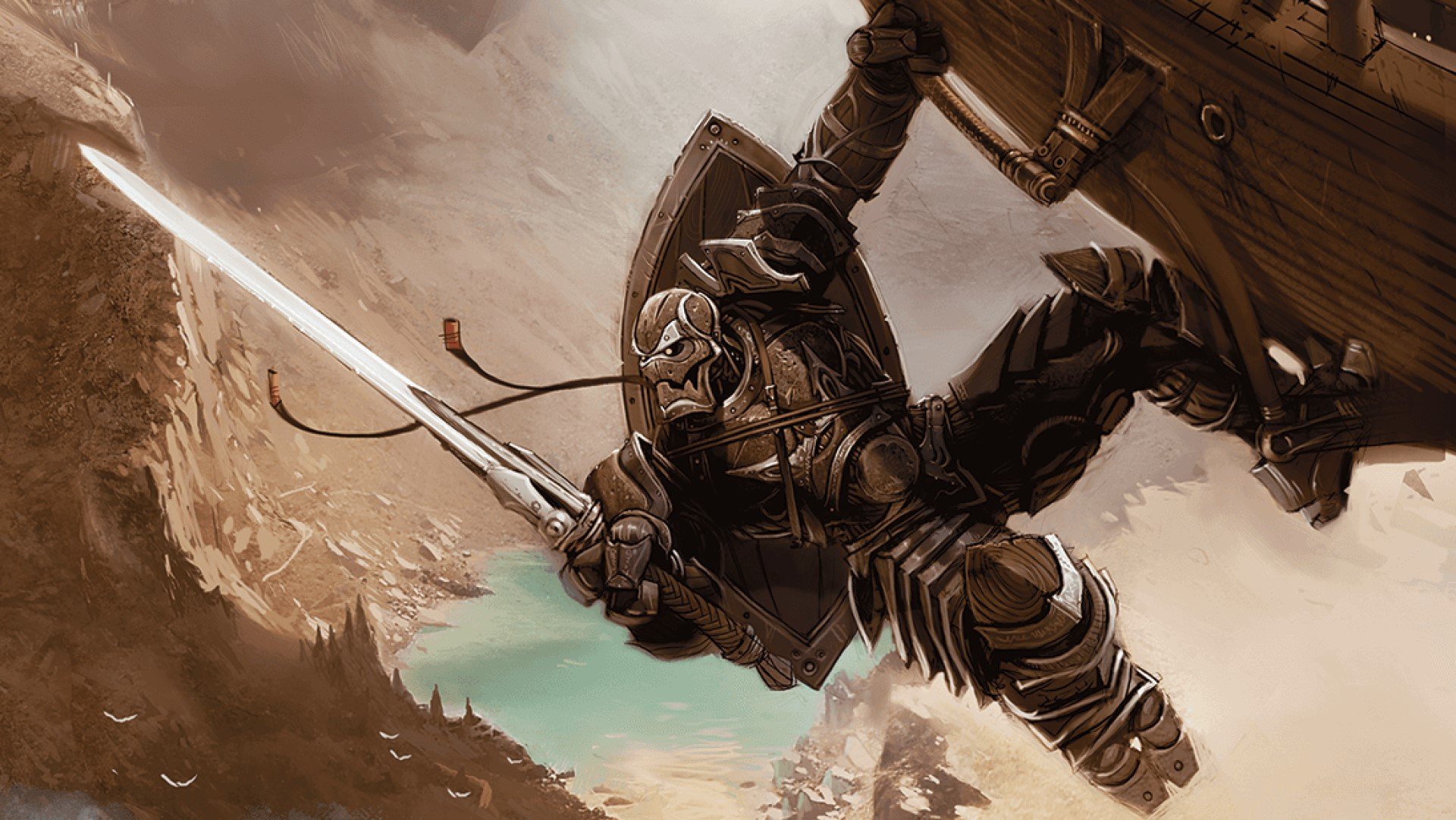

MK. II: Autognome
A typical warforged between 30 and 150 years old, built
by rock gnomes and bearing a resemblance to its creator species.
Gnomish Stature. You are Small, rather than Medium. Your base walking speed is 25 feet.
Armoured Casing.
You are encased in a thin metal or some other durable material. While you aren't wearing armour, your base Armour Class is 13 + your
Dexterity modifier.
Built for Success.
You can add a d4 to one attack roll, ability check, or saving throw you make, and you can
do so after seeing the d20 roll but before the effects of
the roll are resolved. You can use this trait a number of
times equal to your proficiency bonus; you regain all expended uses when you finish a long rest.

MK. III: Artifice Intellect
A typical warforged built within the last 30 years, slighter and more advanced than its predecessors.
Speed. Your base walking speed is 35 feet.
Darkvision. You can see in dim light within 60 feet of you as if it were bright light, and in darkness as if it were dim light. You can't discern colour in darkness, only shades of grey.
Entirely Artificial.
As a result of the lack of organic matter in the creation process, you gain the following features:
Unliving. You are immune to poison and necrotic damage and the poisoned condition, though you cannot be resistant or immune to acid or force damage.
Machine Spirit. You have the creature type Construct
rather than humanoid though, still having a soul,
you are considered a living creature.
Nanobots. If the Mending spell is
cast on you, you can spend a Hit Die, roll it,
and regain a number of hit points equal to the
roll plus your Constitution modifier
(minimum of 1 hit point regained).
Gift of Primus. Your creator designed you to
benefit from several spells that preserve life but
that normally don't affect Constructs:
Cure Wounds, Healing Word,
Mass Cure Wounds, Mass Healing Word,
Heal, Power Word Heal, Spare the Dying
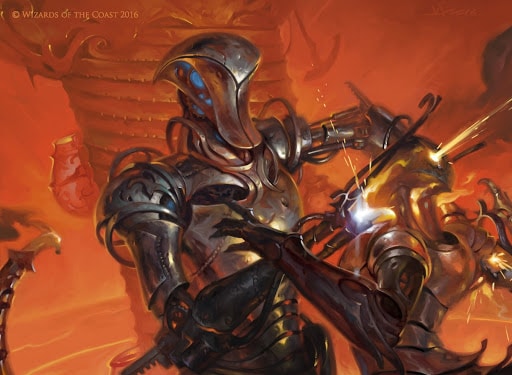



Uncommon Species
Aarakocra
Sequestered in high mountains atop tall trees, the aarakocra evoke fear and wonder. Many of these birdfolk hail from the boundless vistas of the Elemental Plane of Air. They are immigrants, refugees, scouts, and explorers, their outposts functioning as footholds in a world both strange and alien.
Aarakocra Traits
Ability Score Bonus. Your Wisdom increases by 1
Age. Aarakocra reach maturity by age 15. Aarakocra do not usually live more than 80 years.
Size. Aarakocra are about 5 feet tall. They have thin, lightweight bodies that weigh between 80 and 100 pounds. Your size is Medium.
Speed. Your base walking speed is 35 feet.
Keen Eyes. You have advantage on any ability checks which primarily rely on sight, such as seeking a hidden creature or observing subtle body-language changes.
Wings. You have a flying speed equal to your walking Speed. To use this speed, you can’t be wearing medium or heavy armour, and the clothes you wear must be adjusted to accommodate your wings.
Slight Build. You have brittle, hollow bones which allow for your great flying abilities. You count as one size smaller when determining the weight you can push, drag, or lift, and the creatures which can grapple you.
Languages.
You can speak, read,
and write Common and Auran.
Ornic Feathers
An aarakocra's lineage can often be traced by its
plumage.
Aquila
Remnicient of eagles and hawks.
Ability Score Bonus.
Your Strength
or Dexterity score increases by 1.
Talons. You are proficient with your unarmed strikes, which deal 1d4 slashing damage on a hit.
Raptor. You are proficient in the Perception and Survival skills.
Carrionite
Long-necked and lacking plumage above the shoulders, remnicient of vultures and emu.
Ability Score Bonus.
Your Intelligence or
Wisdom score increases by 1.
Bookish.
You are proficient in your choice of
two of the following skills: Arcana, History,
Investigation, Medicine, Nature, or Religion
Death Rattle.
At 3rd level, you can cast Speak
With Dead once without requiring material
components. You regain the use of this
trait when you finish a long rest.
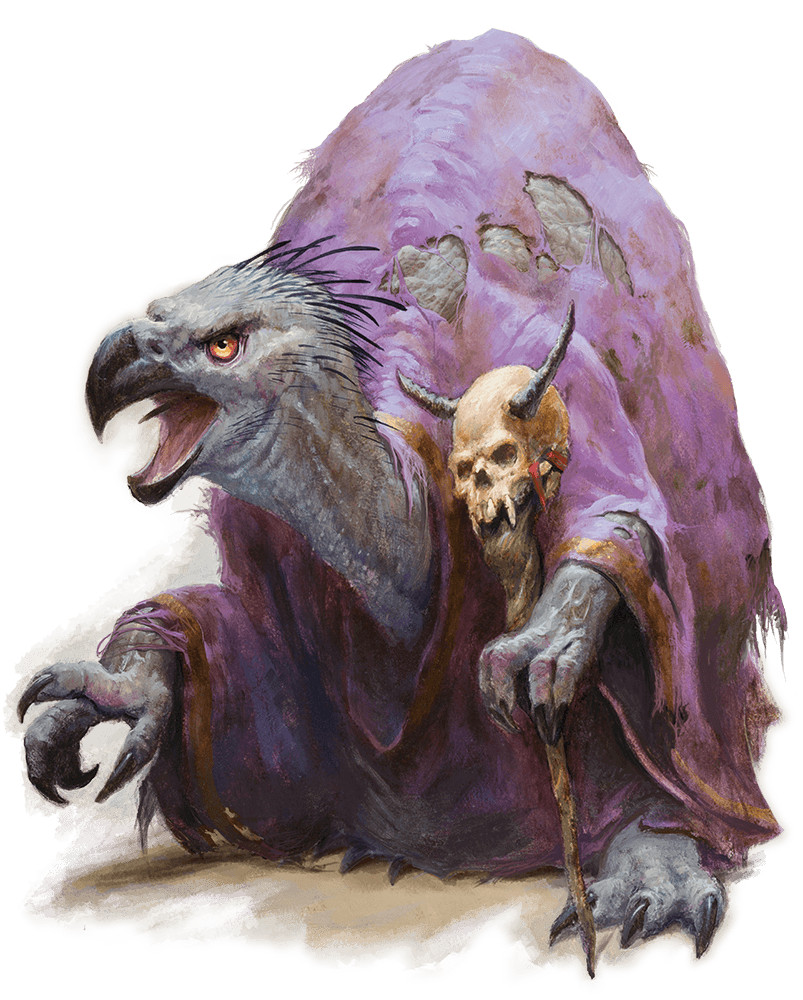
Noctua
Remnicient of Owls
Ability Score Bonus.
Your Dexterity
or Wisdom score increases by 1.
Superior Darkvision. You can
see in dim light within 120 feet of
yourself as if it were bright light
and in darkness as if it were dim
light. You discern colours in that
darkness only as grey shades.
Brightness Sensitivity. While
in bright light, you have
disadvantage on attack rolls,
and your Keen Eyes feature ceases to work.
Silent Feathers. You have proficiency in the Stealth skill, and have advantage on such checks while in dim light or darkness.
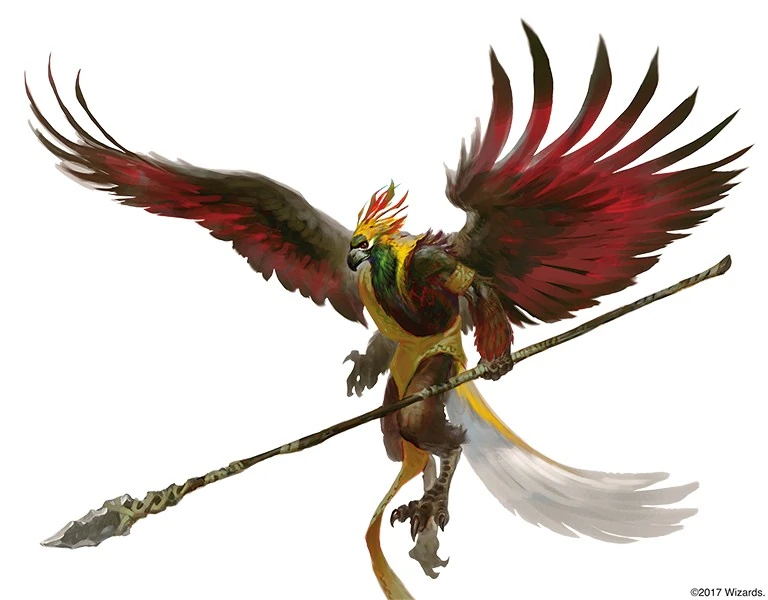
Parakai
Brilliantly colourful descendants of the celestial Coatls, these aaroakocra appear similarly to birds of paradise.
Ability Score Bonus. Your Wisdom or Charisma score increases by 1.
Coatl Ancestry. You know the Sacred Flame cantrip. When you reach 3rd level, you can cast the Feather Fall or Chromatic Orb spell once with this trait and regain the ability to do so when you finish a long rest. You can choose between the two options whenever you use this feature.
When you reach 5th level, you can cast the Cure
Wounds spell at 2nd-level once with this trait
and regain the ability to do so when you finish a
long rest. Wisdom or Charisma (your choice) is
your spellcasting ability for these spells.
Passerine
The smaller, sweet-voiced brethren of the aarakocra.
Ability Score Bonus. Your Dexterity or Charisma score increases by 1.
Size. Your size is Small.
Songbird. You know either the Thaumaturgy or Vicious Mockery cantrips. Charisma is your spellcasting ability for this spell.
Nimble. You can move through the space of any
creature that is of a size larger than yours.
Cower.
You can attempt to hide when you are
obscured by a creature that is at least one size
larger than you. The creature must be
standing in front of you and considered friendly.
Centaur
Roamers at heart, centaurs love open spaces and the freedom to travel. As much as they can, centaurs run. They race the wind, hooves thundering and tails streaming behind them. As a Centaur you gain the following traits:
Centaur Traits
Ability Score Bonus. Your Strength score increases by 2, and your Wisdom score increases by 1
Age. Centaurs mature at around 14, though are nor considered adult until at least 16, and they have a life expectancy of between 200 and 300 years.
Size. Centaurs stand between 6 and 7 feet tall, with their equine bodies reaching about 4 feet at the withers. Your size is Medium.
Speed. Your base walking speed is 40 feet.
Fey. Your creature type is fey, rather than humanoid, and you have advantage on saving throws against being charmed.
Charge. Your hooves are natural melee weapons, which you can use to make unarmed strikes. If you hit with them, you deal bludgeoning damage equal to 1d4 + your Strength modifier, instead of the bludgeoning damage normal for an unarmed strike. If you move at least 20 feet in a straight line toward a target and then hit it with a melee weapon attack on the same turn, unless it succeeds on a Strength saving throw (DC 8 + your Proficiency bonus + your Strength modifier), you can push it a number of feet away from you equal to five times your Proficiency bonus or knock it prone at your feet. You can then make an additional attack with your hooves as a part of that Attack action, even if the target succeeded on the saving throw.
Equine Build. You count as one size larger when determining your carrying capacity and the weight you can push or drag. In addition, any climb that requires hands and feet is especially difficult for you because of your equine legs. When you make such a climb, each foot of movement costs you 4 extra feet, instead of the normal 1 extra foot.
Survivor.
You have proficiency in the use of spears, nets, and longbows, and in one of the following skills:
Animal Handling, Medicine, Nature, or Survival.
Languages.
You can speak, read,
and write Common and Sylvan
Changeling
Changelings can shift their forms with a thought. Many changelings use this gift as a form of artistic and emotional expression.
A casual shape — one created on the spur of the moment, with no depth or history — is called a mask. A mask can be used to express a mood or to serve a specific purpose and then might never be used again. However, many changelings develop identities that have more depth, crafting whole personas complete with histories and beliefs. A changeling adventurer might have personas for many situations, including negotiation, investigation, and combat.
Changeling Traits
In their true form, changelings appear faded, their features almost devoid of detail. It is rare to see a changeling in that form, for a typical changeling changes their shape the way others might change clothes.
Ability Score Bonus. Your Charisma score increases by 2 In addition, one other ability score of your choice increases by 1.
Age. Changelings mature slightly faster than humans but share a similar lifespan — typically a century or less. While a changeling can transform to conceal their age, the effects of ageing affect them similarly to humans.
Size. In their natural forms, changelings average between 5 to 6 feet in height, with a slender build. Your size is Medium. You have the creature type Humanoid (Shapechanger)
Speed. Your base walking speed is 30 feet.
Fey.
Your creature type is fey, rather than humanoid,
and you have advantage on saving throws against
being charmed.
Shapechanger.
As an action, you can change your appearance and your voice. You determine the
specifics of the changes, including your
colouration, hair length, and sex. You can also
adjust your height and weight, but not so much
that your size changes. You can make yourself
appear as a member of another species, though
none of your game statistics change. You can't
duplicate the appearance of a creature you've
never seen, and you must adopt a form that
has the same basic arrangement of limbs that
you have. Your clothing and equipment aren't
changed by this trait.
You stay in the new form until you use an action
to revert to your true form or until you die.
Changeling Instincts.
You gain proficiency
with one of the following skills of your choice:
Deception, Insight, Intimidation, and Persuasion.
Languages.
You can speak, read, and write
Common, either Sylvan or Undercommon, and
one other language of your choice.


Exiled Illithid
You are an outcast, and serve no elder brain colony. In the Astral Sea or the Void of space where distances are huge, this is not a totally uncommon incident.
Mind-Flayer Traits
Other people don't tend to like Illithid, but most will respect you out of fear. As an Illithid you gain the following traits:
Ability Score Bonus. Your intelligence increases by 2.
Age. As illithid are parasitic hive creatures, individual age is scarcely recorded, and nigh inconceivable to a mind flayer, though they mature from their tadpole form a week after they reach the brain of a living creature. A mind flayer has the life expectancy of the body of the creature from which it is spawned.
Alignment. Illithid are used to the confines of the hive mind, valuing order and law, and embodying the selfish, evil values of the elder brain. Exiled from the hive, you may retain these values or choose to reject them entirely.
Size. Illithid are approximately the size of the creature whose body was used as the progenitor, though they often grow or shrink a little to be between five and seven feet tall, averaging about 300 pounds. Your size is Medium.
Speed. Your base walking speed is 30 feet.
Darkvision. Accustomed to the depths of the Void and the Underdark, you have superior vision in dark and dim conditions. You can see in dim light within 60 feet of you as if it were bright light, and in darkness as if it were dim light. You can't discern colour in darkness, only shades of grey.
Menacing. You are proficient in the Intimidation skill.
Alhoon Psionics.
You know the Mage Hand cantrip, and the hand is invisible when you cast the cantrip with this trait.
When you reach 3rd level, you gain one Psionic Energy
die, which is a d6, and you gain another at 5th level; if you later gain more Psionic Energy dice, you add
these dice to that pool. You learn two 1st-level
Warlock or Wizard spells and can cast them at
their lowest level by expending a Psionic Energy
die. You regain all of your expended Psionic
Energy dice when you finish a short or long
rest. Intelligence is your spellcasting
ability for these spells. When you cast
them with this trait, they don't require
components.
Tentacles.
You have four tendrils at the
end of each long, rubbery, boneless arm.
You can use an attack as part of the Attack
action or an attack of opportunity to attempt
to grapple a creature within 5 feet of you with
your tentacles, making a contested Athletics
check against the target’s Athletics or
Acrobatics. On a success, you also deal
psychic damage equal to 1d4 + your
Intelligence modifier, and you can't use
your tentacles on another target until
the grapple ends.

Additionally, you can use your
action to try to pin a creature
grappled by your tentacles.
When you do so, the creature
must make an Intelligence saving
throw against your Alhoon
Psionics DC. On a failed save,
the creature is stunned until
the start of your next turn, and
both you and the creature are restrained until the grapple ends.
Extract Brain. If you kill a creature with your tentacles during a grapple, you can consume the fresh brain and sense the mire of its fleeting emotions and thoughts. While consuming a fresh brain you learn one piece of simple information you seek, typically less than 10 words, from the brain. The brain only knows only what it knew in life, including the languages it knew. Answers are usually brief, cryptic, or repetitive. The brain can't maintain a conversation, and it can't speculate about future events. Consuming a creature's brain in this way either restores a number of total spell slot levels equal to your Intelligence modifier, or restores that number of your Hit Dice worth of hit points (as if taking a short rest and expending that number of hit dice).
Languages. You can speak telepathically to any creature you can see within 60 feet of you. You don't need to share a language with the creature for it to understand your telepathic messages, but the creature must be able to understand at least one language or be telepathic itself. Creatures without telepathy can receive and respond to these telepathic messages but can't initiate or terminate a telepathic conversation.
You can speak, read, and write Undercommon. You can speak Deep Speech, and read and write its (very rarely)
written form, Qualith.
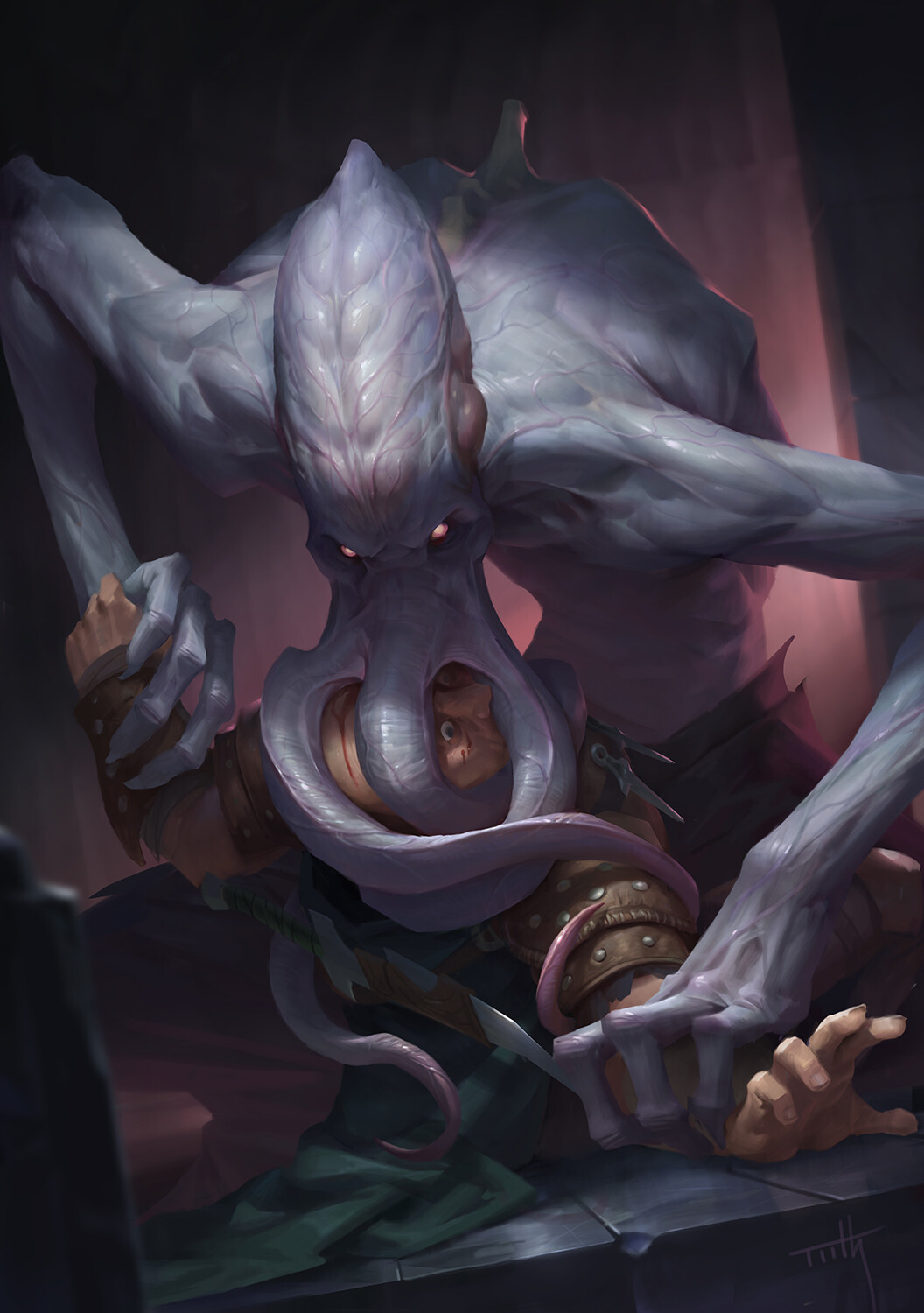



Fairy
The Feywild is home to a great range of fantastical peoples, including fairies. Fairies are a wee folk, but not nearly as much so as their pixie and sprite friends. The first fairies spoke Elvish, Celestial, or Sylvan, and encounters with interplanar travellers prompted many of them to learn Common as well.
Fairy Traits
Infused with the magic of the Fey, most fairies look like Small elves with insectile wings, but each fairy has a range of physical characteristics that set it apart from its brethren.
Ability Score Bonus. Your Dexterity score increases by 2 and your Charisma score increases by 1
Age. Fairies have a lifespan of about a century, though they do not age in the feywild once they come of age at around 30.
Size. You are Small, appearing as an elf with more exaggerated features, standing up to only 3 feet or so tall.
Speed. Your walking speed is 30 feet.
Fey. Your creature type is fey, rather than humanoid, and you have advantage on saving throws against being charmed.
Fairy Magic. You know the Druidcraft cantrip. Starting at 3rd level, you can cast the Faerie Fire spell with this trait. Starting at 5th level, you can also cast the Enlarge/Reduce spell with this trait. Once you cast Faerie Fire or Enlarge/Reduce with this trait, you can't cast that spell with it again until you finish a long rest. Charisma is your spellcasting ability for these spells when you cast them with this trait. These spells are also added to the list of spells you know and can cast with any spellcasting class levels you have, but do not count against the number of spells you know or can prepare.
Wings. Because of your wings, you have a flying speed equal to your walking Speed. You can't use this flying speed if you're wearing medium or heavy armour, or any clothes unadapted to accommodate your wings.
Languages. You can speak, read, and write Common and Sylvan.
Fell Fairies
Also known as Tooth Fairies or Fairy Driders, the shadowfell possesses its own twisted little versions of these fey creatures. They have two, three, or four pairs of insectoid legs jutting from a dark purple or black thorax below their waist, three rows of needle-like teeth, and large shiny black eyes on either side of their near-spherical heads. Their skin is usually a pale blue, green, yellow, or purple, reminiscent of a bruise.
Tooth-Fairy Traits
Fell fairies usually occupy caves and move in vast swarms - none but the fastest or tactically smartest get to feed. The smartest of all escape the caverns, often going on to become adventurers or wanderers.
They have the same Ability Score Bonus, Age, and Language traits as their Feywild counterparts.
Size. Drider faeries stand between 3 and 4 feet tall, with their four-to-eight legs extending up to 2 feet long and a thorax as long as their torso. Your size is Small.
Speed. Your base walking speed is 30 feet. You have a climbing speed equal to your walking speed, and can climb up walls and ceilings with ease and without requiring any checks. In addition, due to your tattered vestigial wings, your long jump is up to your speed and your high jump is half that amount, with or without a running start.
Fell. Your creature type is your choice of either fey or monstrosity, rather than humanoid, and you have advantage on saving throws against being frightened.
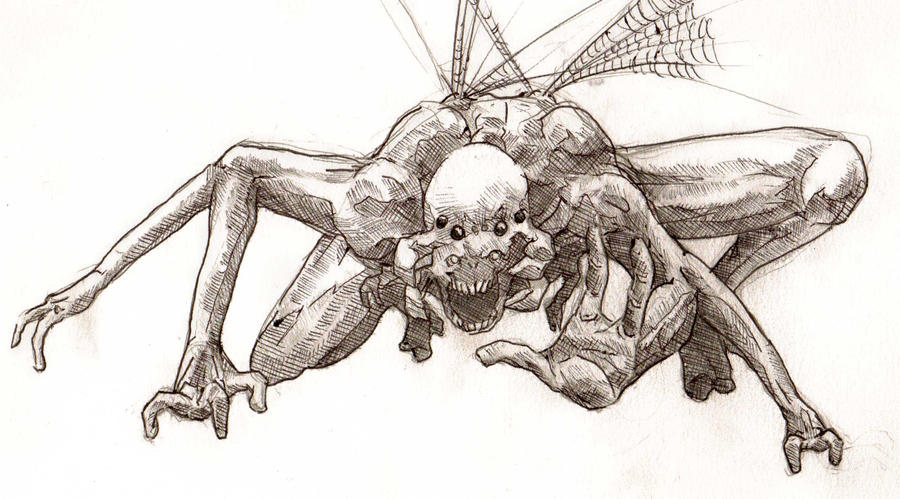
Superior Darkvision. Accustomed to dank forests and endless night skies, you have superior vision in dark and dim conditions. You can see in dim light within 120 feet of you as if it were bright light, and in darkness as if it were dim light. You can't discern colour in darkness, only shades of grey.
Sunlight Sensitivity. While in sunlight, you have disadvantage on Attack rolls, as well as on Wisdom (Perception) checks that rely on sight.
Bite. Your tiny, rending jaws are a natural weapon with the Light, Finesse, and Bleed properties, which you can use to make unarmed strikes. If you hit with it, you deal piercing damage instead of the bludgeoning damage normal for an unarmed strike.
Hungry Magic. You know the Primal Savagery cantrip. When you reach 3rd level, you can cast the Hex spell with this trait. Starting at 5th level, you can also cast the Darkness spell with this trait. Once you cast Hex or Darkness with this trait, you can't cast that spell with it again until you finish a long rest. Charisma is your spellcasting ability for these spells when you cast them with this trait. These spells are also added to the list of spells you know and can cast with any spellcasting class levels you have, but do not count against the number of spells you know or can prepare.
Firbolg
Firbolgs are fey-oriented half-giants, having descended from a line of goliath that wandered into the timeless verdant wilds of Faerie. Their tribes cloister in remote forest strongholds, preferring to spend their days in quiet harmony with the woods. When provoked, firbolgs demonstrate formidable skills with weapons and druidic magic.
Firbolg Traits
Fey magic still thrums inside a firbolg, even one who has never lived under the boughs of a great forest. A firbolg’s magic is an obscuring sort, which allowed their ancestors to pass through a forest without disturbing it. So deep is the connection between a firbolg and the wild places of the world that they can communicate with flora and fauna.
Ability Score Bonus. Your Wisdom score increases by 2, and your Strength score increases by 1
Age. As giantkin related to the fey, firbolg have long lifespans. A firbolg reaches adulthood around 30, and the oldest of them can live for over 500 years.
Size. Firbolg are between 7 and 8 feet tall and weigh between 240 and 300 pounds. Your size is Medium.
Speed. Your base walking speed is 30 feet.
Firbolg Magic. You can cast Detect Magic and Disguise Self with this trait, using Wisdom as your spellcasting ability for them. Once you cast either spell, you can't cast it again with this trait until you finish a short or long rest. When you use this version of disguise self, you can seem up to 3 feet shorter than normal, allowing you to more easily blend in with humans and elves.
Hidden Step. As a bonus action, you can magically turn invisible until the start of your next turn or until you attack, make a damage roll, or force someone to make a saving throw. Once you use this trait, you can't use it again until you finish a short or long rest.
Powerful Build. You count as one size larger when determining your carrying capacity, the weight you can push, drag, or lift, and the creatures you can grapple.
Speech of Beast and Leaf. You have the ability to communicate in a limited manner with beasts and plants. They can understand the meaning of your words, though you have no special ability to understand them in return. You have advantage on all Charisma checks you make to influence them.
Languages. You can speak, read, and write Common, Sylvan, and Giant.


Genasi
Those who think of other planes at all consider them remote, distant realms, but planar influence can be felt throughout the world. It sometimes manifests in beings who, through an accident of birth, carry the power of the planes in their blood. The genasi are one such people, usually the offspring of genies and mortals.
Genasi Traits
The circumstances of your elemental affinity grants you a certain mesure of control over the primordial forces.
Ability Score Bonus. Your Constitution score increases by 2
Age. Genasi mature at about the same rate as humans and reach adulthood in their late teens. They live somewhat longer than humans do, up to 120 years.
Size. Genasi are as varied as their mortal parents but are generally built like humans, standing anywhere from 5 feet to over 6 feet tall. Your size is Medium.
Speed. Your base walking speed is 30 feet.
Languages. You can speak, read, and write Common and Primordial. Primordial is a guttural language, filled with harsh syllables and hard consonants.
Elemental Origin
You are aligned with one of the four elemental planes:
Air Genasi
Air genasi typically have light blue skin, hair, and eyes. A faint but constant breeze accompanies them, tousling the hair and stirring the clothing. Some air genasi speak with breathy voices, marked by a faint echo. A few display odd patterns in their flesh or grow crystals from their scalps.
Ability Score Bonus. Your Dexterity score increases by 1
Unending Breath. You can hold your breath indefinitely while you’re not incapacitated.
Mingle with the Wind. You can cast the Levitate spell once with this trait, requiring no material components, and you regain the ability to cast it this way when you finish a long rest. Constitution is your spellcasting ability for this spell.

Earth Genasi
Elemental earth manifests differently from one individual to the next. Some earth genasi always have bits of dust falling from their bodies and mud clinging to their clothes, never getting clean no matter how often they bathe. Others are as shiny and polished as gemstones, with skin tones of deep brown or black, or with smooth metallic flesh, dull iron skin spotted with rust, a pebbled and rough hide, or even a coating of tiny embedded crystals.
Ability Score Bonus. Your Strength increases by 1.
Earth Walk. You can move across difficult terrain made of earth or stone without expending extra movement.
Merge with Stone. You can cast the Pass without Trace spell once with this trait, requiring no material components, and you regain the ability to cast it this way when you finish a long rest. Constitution is your spellcasting ability for this spell.
Fire Genasi
Nearly all fire genasi are feverishly hot as if burning inside, an impression reinforced by flaming red, coal-black, or ash-grey skin tones. The more human-looking have fiery red hair that writhes under extreme emotion, while more exotic specimens sport actual flames dancing on their heads. Fire genasi voices might sound like crackling flames, and their eyes flare when angered.
Ability Score Bonus. Your Intelligence score increases by 1
Darkvision. You can see in dim light within 60 feet of you as if it were bright light, and in darkness as if it were dim light. Your ties to the Elemental Plane of Fire make your darkvision unusual: everything you see in darkness is in a shade of red.
Fire Resistance. You have resistance to fire damage.
Reach to the Blaze. You know the Produce Flame cantrip. Once you reach 3rd level, you can cast the Burning Hands spell once with this trait as a 1st-level spell, and you regain the ability to cast it this way when you finish a long rest. Constitution is your spellcasting ability for these spells.
Water Genasi
Most water genasi look as if they just finished bathing, with beads of moisture collecting on their skin and hair. They smell of fresh rain and clean water. Blue or green skin is common, and most have somewhat overly large eyes, blue-black in colour. A water genasi’s hair might float freely,
swaying and waving as if underwater. Some have voices
with undertones reminiscent of whale song or trickling
streams.
Ability Score Bonus. Your Wisdom score increases by 1
Acid Resistance. You have resistance to acid damage.
Amphibious. You can breathe air and water.
Swim. You have a swimming speed of 30 feet.
Call to the Wave.
You know the Shape Water cantrip.
When you reach 3rd level, you can cast the Create or
Destroy Water spell as a 2nd-level spell once with this
trait, and you regain the ability to cast it this way when
you finish a long rest. Constitution is your spellcasting
ability for these spells.
Gith
Long ago, groups of elves ventured from the Feywild to the Astral Plane to be closer to their gods. Before there were githyanki or githzerai, these creatures were a single elven race who eventually became enslaved by the illithids. Whether these tall, gaunt creatures were peaceful or savage, cultured or primitive before the illithids enslaved and changed them, none can say. Not even the original name of their culture remains from that distant time.
Gith Traits
Ability Score Bonus. Your Intelligence score increases by 1
Age. Gith reach adulthood in their late teens and usually live for about a century, though embracing their psionic adeptitude can extend this to nearly 800.
Size. Gith are taller and leaner than humans, with most a slender 6 feet in height. Your size is Medium.
Speed. Your base walking speed is 30 feet.
Gith Psionics. You know the Mage Hand cantrip, and the hand is invisible when you cast the cantrip with this trait. When you reach 3rd level, you gain one Psionic Energy die, which is a d6, and you gain another at 5th level; if you later gain more Psionic Energy dice, you add these dice to that pool. You learn the Shield and can cast it at its lowest level by expending a Psionic Energy die.
You regain all of your expended Psionic Energy dice when you finish a short or long rest. Intelligence is your spellcasting ability for these spells. When you cast them with this trait, they don't require components.
Languages. You can speak, read, and write Common and Deep Speech.
Gith Xenos
The warlike githyanki and the contemplative githzerai are a sundered people – two cultures that utterly despise one another.
Githyanki
The brutal githyanki are trained from birth as warriors. Because nothing ages on the Astral Plane, these gith who inhabit that plane can be very old, and their longevity gives them an unusual perspective on the passage of time. Some are prone to melancholy, while others might display an absence of feeling.
Ability Score Bonus. Your Strength score increases by 2
Alignment. Githyanki tend toward lawful evil. They are aggressive and arrogant, and they remain the faithful servants of their lich-queen, Vlaakith. Renegade githyanki tend toward chaos.
Decadent Mastery. You learn draconic and one other language of your choice, and you are proficient with one skill or tool of your choice. In the timeless city of Tu'narath, githyanki have bountiful time to master odd bits of knowledge.
Martial Prodigy. You are proficient with light and medium armour and with shortswords, longswords, and greatswords.
Githyanki Psion You can expend one Psionic Energy die to cast the Jump or Misty Step spell.
Githzerai
In their fortresses within Limbo, the githzerai hone their minds to a razor's edge.
Ability Score Bonus. Your Wisdom score increases by 2
Alignment. Githzerai tend toward lawful neutrality. Their rigorous training in psychic abilities requires an implacable mental discipline.
Mental Discipline. You have advantage on saving throws against the charmed, frightened and stunned conditions. Under the tutelage of monastic masters, githzerai learn to govern their own minds.
Githzerai Psion You can expend one Psionic Energy die to cast the Mage Armour or Detect Thoughts spell.
Grung
Grungs are aggressive frog-like humanoids found in rainforests and tropical jungles. They are fiercely territorial and see themselves as superior to most other creatures. Grung society is a caste system. Each caste lays eggs in a separate hatching pool, and juvenile Green grungs join their siblings upon emergence from the hatchery. Over time, their colours change to reflect their passions and proficiencies, delineating their caste.
Grung Traits
All grungs are a dull greenish grey when they are born, but each individual takes on the colour of its caste as it grows to adulthood.
Ability Score Bonus. Your Dexterity score increases by 1 and your Constitution score increases by 1
Age. Grungs mature to adulthood in a single year, but have been known to live up to 50 years.
Size. Grungs stand between 2 ½ and 3 ½ feet tall and average about 30 pounds. Your size is Small.
Speed. You have a walking speed of 25 feet. Your sticky fingers and toe pads, or light webbed feet, give you either a climb or swim speed equal to your walking Speed.
Amphibious. You can breathe air and water.
Natural Resistance. You are resistant to poison damage and have advantage on saves made to resist the poisoned condition.
Poisonous Skin. Any creature that grapples you, or which hits you with an unarmed strike or natural weapon attack, takes 1d4 poison damage. At the start of each of your turns, you also deal this poison damage to any creature grappling you or any creature grappled by you. The skin's poison damage increases by 1d4 when you reach 11th level (2d4).
Standing Leap. Your long jump is up to 25 feet and your high jump is up to 15 feet, with or without a running start.
Water Dependency. If you take any points of fire damage during a day, you suffer 1 level of exhaustion at the end of your next long rest. You can recover from this exhaustion only through magic or by immersing yourself in water for at least 1 hour.
Languages. You can speak, read, and write Common and Aquan.

Embodied Caste
Grung caste is divided by the colourful markings a growing grung develops to reflect their personality. While its hierarchical roots have been long left behind, certain mannerisms and behaviours still develop these markings in grung over time. You gain one of the following features:
Green
The most common and versatile, all grungs are born green.
Observant & Athletic. You have proficiency in the Athletics and Perception skills. You also gain a swim speed equal to your walking speed; if you already have a swim speed, your base movement speed increases by an additional 5 feet.
Poison Immunity. Your natual resistance is heightened. You have immunity to poison damage and the poisoned condition.
Fleet of Foot. Your base walking speed increases to 30 feet.
Blue
Blue grungs are known for their unusual size and strength, sometimes called Great Horned Toads.
Powerful Build. Your size is Medium instead of Small. In addition, You count as one size larger when determining your carrying capacity, the weight you can push, drag, or lift, and the creatures you can grapple. Finally, your walking speed and jump distances increase by 5 feet.
Thunderous Croak. When you take the Attack action on your turn, you can replace one of your attacks with a bellow which is audible out to a range of 100 feet. Each creature within 10 feet of you must make a Constitution saving throw (DC 8 + your Constitution modifier + your proficiency bonus). On a failed save, a creature takes 1d10 thunder damage and is deafened for 1 minute. On a success, a creature takes half as much thunder damage and isn’t deafened. At the end of each of its turns, a deafened creature can make another Constitution saving throw, ending the effect on a success. Grungs are immune to the effects of this croak.
The damage of your croak increases by 1d10 at 5th level (2d10), 11th level (3d10), and 17th level (4d10).
Purple
Once the main hunters of grung society, Purple grung now usually specialise into long-range fighters and assassins.
Slick Skin. You have tough, bumpy skin, which is made slippery by the poison you secrete. When you aren’t wearing armour, your AC is 12 + your Dexterity modifier. A shield’s benefits apply as normal while you use your natural armour. While unarmoured, you can add your Constitution modifier to any check made to escape a grapple or restraint.
Grung Weapon Training. You gain proficiency with the spear, javelin, blowgun, and nets.
Poison Dart Frog. You can add your Poisonous Skin damage to damage rolls made with blowguns. This poison damage overcomes resistance to poison, and treats immunity as resistance.
Red
Red grungs often find that they have a knack for survival in the wild, herbalism, or for natural magics.
Bushcraft. You gain a single tool proficiency, and either an additional language of your choice or proficiency in the Arcana, Medicine, Nature, Religion, or Survival skills.
Shamanic Spells. You learn two Druid cantrips of your choice. You also learn a single 1st-level Ranger spell, which you can cast once without expending a spell slot. You regain the ability to cast this spell in this way, or can change the chosen spell, when you finish a long rest. Constitution is your spellcasting ability modifier for these spells.
Orange
Traditionally the first into battle, Orange grungs often become soldiers.
Potent Poison. You can add your Poisonous Skin damage to damage you deal with your Unarmed strikes.
Mesmerising Chirr. As an action, you can inflate and retract your neck to create a low rhythmic croak, producing vibrations powerful enough to penetrate through walls. Each humanoid or beast that is within 15 feet of you must succeed on a Wisdom saving throw (DC 8 + your Constitution modifier + your Proficiency bonus) or be charmed by you until the end of your next turn. While Charmed this way, a creature is also Stunned. Grungs and creatures which are resistant or immune to psychic or thunder damage are not affected by this feature. Creatures do not need to hear or see you to be affected, but are unaffected if behind a creation of magical force such as a Shield or Wall of Force spell.
You can use this ability a number of times equal to your Constitution modifier (minimum 1), regaining all expended uses when you finish a long rest.
Gold
Golden grungs would likely tell you they're gold for a reason; they tend towards positions of leadership.
Authoritative. You gain proficiency in the Insight, Intimidation, or Persuasion skill.
Increased Resilience. You do not become exhausted by exposure to fire damage. In addition, you have advantage on saving throws against being charmed, exhausted, paralyzed, stunned, or put to sleep.
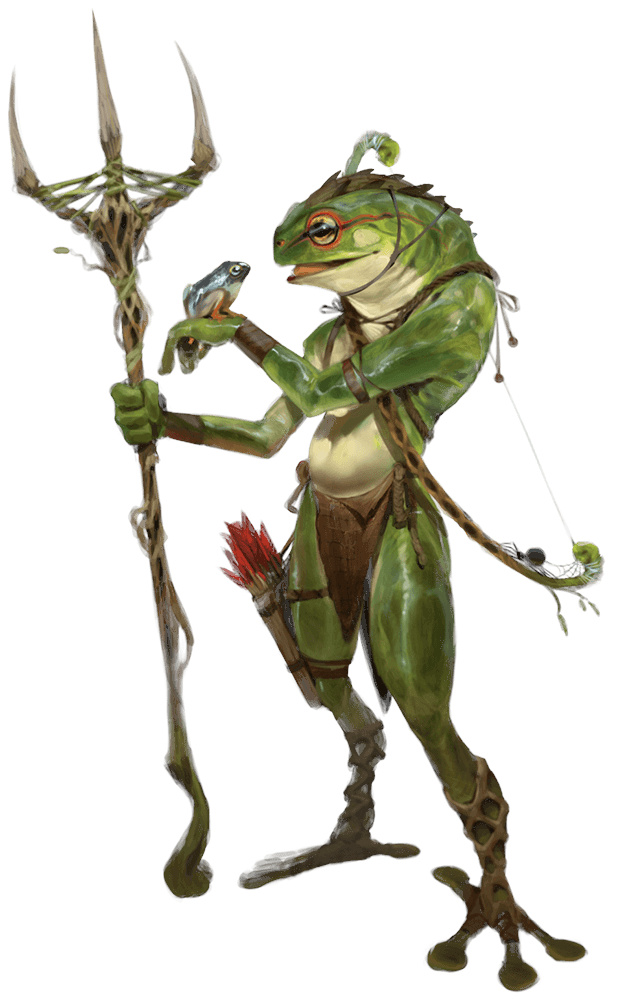
Kenku
Haunted by an ancient crime that robbed them of
their wings, the flightless kenku wander the world
as vagabonds and burglars who live at the edge of
human society. Kenku suffer from a sinister reputation
that is not wholly unearned, but they can prove to
be valuable allies.
Kenku Traits
Feathered folk who resemble ravens, kenku are blessed with keen observation and supernaturally accurate memories. Some of them paint their genesis as a curse, being a flightless bird people doomed to mimic other people’s creations. Other kenku recite cryptic but beautiful poems about their advent being a blessed event in which they were sent into the multiverse to observe and catalog its many wonders.
Ability Score Bonus. Your Dexterity score increases by 2, and your Wisdom score increases by 1
Age. Kenku have shorter lifespans than humans. They reach maturity at about 12 years old and can live to 60.
Size. Kenku are around 5 feet tall and weigh between 90 and 120 pounds. Your size is Medium.
Speed. Your base walking speed is 30 feet.
Expert Forgery. You can duplicate other creatures' handwriting and craftwork. You have advantage on all checks made to produce forgeries or duplicates of existing objects.
Kenku Training. You are proficient in your choice of two of the following skills: Acrobatics, Deception, Stealth, and Sleight of Hand.
Mimicry. You can mimic sounds you have heard, including voices. A creature that hears the sounds you make can tell they are imitations with a successful Wisdom (Insight) check opposed by your Charisma (Deception) check.
Vestigial Wings. When you fall at least 10 feet above the ground, you can use your reaction to extend your wings to glide horizontally a number of feet equal to your walking speed, and you take 0 damage from the fall. You determine the direction of the glide.
Languages. You can read and write Common and Auran, but you can speak only by using your Mimicry trait.

Loxodon
With the heads- trunks, tusks, ears, and faces-of elephants, and hulking bipedal bodies covered by thick, leathery skin loxodon are gentle giants. Each of their hands has four thick digits, and their feet are the flat-bottomed, oval-shaped feet of elephants.
Loxodon Traits
Loxodons are often oasis of calm in a chaotic world. They hum or chant in sonorous tones and move slowly or sit in perfect stillness.
Ability Score Bonus. Your Strength or Constitution score increases by 2, and your Wisdom score increases by 1
Age. Loxodons mature at the same rate as humans, however, they are considered mature by their people at 60 years old. Their lifespan can be as long as 450 years.
Size. Loxodons are between 7 and 8 feet tall and weigh between 300 and 400 pounds. Your size is Medium.
Speed. Your base walking speed is 30 feet.
Powerful Build. You count as one size larger when determining your carrying capacity, the weight you can push, drag, or lift, and the creatures you can grapple.
Hardy Serenity. You have advantage against being frightened, stunned or poisoned, and on checks made to resist being intimidated.
Natural Armour. You have thick, leathery skin. When you aren't wearing armour, your AC is 12 + your Constitution modifier. You can use your natural armour to determine your AC if the armour you wear would leave you with a lower AC. A shield's benefits apply as normal while you use your natural armour.
Trunk. You can grasp things with your trunk, and you can use it as a snorkel. It has a reach of 10 feet, and it can lift a number of pounds equal to five times your Strength score. You can use it to do the following simple tasks: lift, drop, hold, push, or pull an object or a creature; open or close a door or a container; grapple someone; or make an unarmed strike. It can't wield weapons or shields, or do anything that requires manual precision, such as using tools or magic items or performing the somatic components of a spell.
Languages. You can speak, read, and write Common and either Giant, Therian, or Terran.

Merfolk
An amphibious species, born and at home in the water but comfortable on dry land, they have long fins extending from their shoulders, forearms, middle backs, and calves. The hairlike growths on their heads are either thick and bristly like the needles of a sea urchin, or long and wavy, resembling fine seaweed, typically in any number of vivid hues.
Merfolk Traits
All merfolk can breathe air or filter oxygen from the water, and they can walk on land or swim with equal ease.
Ability Score Bonus. Your Charisma score increases by 1.
Age. Merfolk mature at the same rate humans do and reach adulthood around the age of 20. They live considerably longer than humans, though, usually well over 100 years.
Size. Merfolk are significantly taller than most humans, standing between seven and eight feet tall and averaging about 300 pounds. Your size is Medium.
Speed. Your base walking speed is 30 feet. You also have a swimming speed of 45 feet.
Amphibious. You can breathe air and water.
Emissary of the Sea. Aquatic beasts have an extraordinary affinity with your people. You can communicate simple ideas with beasts that can breathe water. They can understand the meaning of your words, though you have no special ability to understand them in return.
Languages. You can speak, read, and write Common, Aquan, and one additional language of your choice.
Racial Depths
Merfolk are actually two separate races. The green
merfolk favour the land, walking among the trees
and savouring the sunlight that filters through the
leaves, while the red merfolk are more at home in
the waters of the deep sea and cavernous lakes
of the underdark.
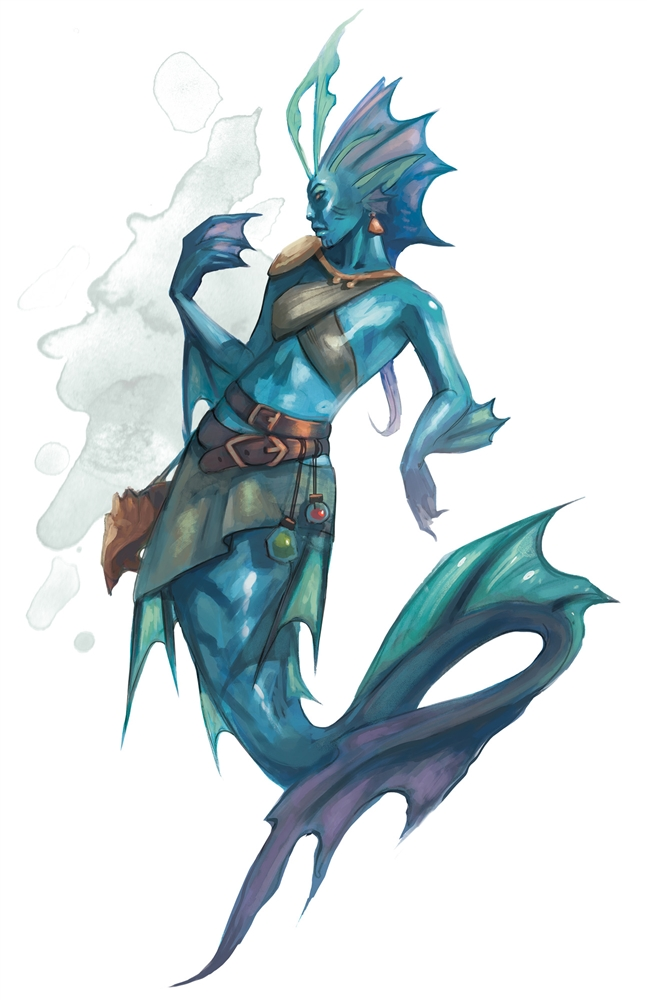
Green Merfolk
The patterns on the teal to swamp-green skin
of Green Merfolk suggest the colours of the tree
frogs common in the rainforest, as do their eyes of
orange, lime green, or sky blue. Their fins are relatively
short and thick. They climb trees with ease, move through undergrowth unhindered, and use magic to shape vines
and branches to their will. They prefer to dwell in
shallow waters, spending a fair amount of time on land.
Ability Score Bonus. Your Dexterity score increases by 2.
Mask of the Wild. You gain a climbing speed equal to your walking Speed. You can attempt to hide even when you are only lightly obscured by shadow, foliage, heavy rain, falling snow, mist, and other natural phenomena.
Control of Air and Water. A child of the shallows, you can call on the magic of elemental air and water. You know one cantrip of your choice from the Druid spell list. You can also cast Fog Cloud with this trait. Starting at 3rd level, you can cast Gust of Wind with it; starting at 5th level, you can cast Wall of Water this way. Once you cast a levelled spell with this trait, you can’t cast that spell again until you finish a long rest. Charisma is your spellcasting ability for these spells
Red Merfolk
Red merfolk generally have lilac chests and pale pink faces, shading to dark blues and purples on their backs and limbs. They are often muscled and blubbery, insulated against the freezing deep-ocean waters, or lean and sinewy to withstand crushing oceanic pressures. Their eyes are violet, and their long, thin, and elegant fins resemble scarves or veils of fine fabric, but are tougher than seasoned leather. They swim easily, even against strong currents, and clamber over corals and through rapids with ease.
Ability Score Bonus. Your Constitution score increases by 2.
Vision of the Deep. You can see in dim light within 120 feet of you as if it were bright light, and in darkness as if it were dim light, even when obscured by fluid such as thick dust or deep water. You can't discern colour in darkness, only shades of grey.
Sunlight Sensitivity. You have disadvantage on attack rolls and on Wisdom (Perception) checks that rely on sight when you, the target of your attack, or whatever you are trying to perceive is in direct sunlight.
Powerful Build. You count as one Size larger when determining your carrying capacity, the weight you can push, drag, or lift, and the creatures you can grapple. This is doubled while both you and the target you're holding are fully submerged.
Impact Resistance. You have thick, blubbery flesh. When you aren't wearing medium or heavy armour, you have resistance to bludgeoning damage.
Guardians of the Depths. Adapted to even the most extreme ocean depths, you have resistance to cold damage and are unaffected by immense atmospheric pressures.

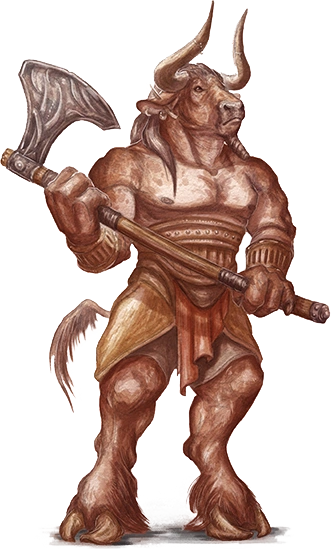
Minotaur
Minotaurs are barrel-chested humanoids with heads resembling those of bulls. Their horns range in size from about 1 foot long to great, curling weapons easily three times that length. Some minotaurs, known as budding-horns, grow sprawling antlers; others grow a single great horn from their forehead instead.
Minotaur Traits
Minotaur horns range in size from about 1 foot long to easily three times that length. Minotaurs often carve their horns to sharpen their edges, etch symbols of power into them, or sheathe them in bronze to prevent them from shattering during battle.
Thick hair extends down minotaurs’ necks and powerful backs, and some have long patches of hair on their chins and cheeks. Their legs end in heavy, cloven hooves, and they have long, tufted tails.
Ability Score Bonus. Your Constitution score increases by 2, and your Strength or Intelligence score increases by 1
Age. Minotaurs mature and age at about the same rate as humans.
Size. Minotaurs average over 6 feet in height, and they have stocky builds. Your size is Medium.
Speed. Your base walking speed is 30 feet.
Powerful Build. You count as one size larger when determining your carrying capacity, the weight you can push, drag, or lift, and the creatures you can grapple.
Goring Horns. Your horns are natural melee weapons, which you can use to make unarmed strikes. If you hit with them, you deal piercing damage equal to 1d6 + your Strength modifier, instead of the bludgeoning damage normal for an unarmed strike.
If you move at least 20 feet in a straight line toward a target and then hit it with an attack using your horns on the same turn, unless it succeeds on a Strength saving throw (DC 8 + your Proficiency bonus + your Strength modifier), you can push it 10 feet away from you or knock it prone at your feet. You can then make an additional melee weapon attack against the target as a part of that Attack action, even if the
target succeeded on the saving throw.
Labyrinthine Recall.
You can perfectly recall any path you
have travelled, and you’re immune to the Maze spell.
Savage Attacks.
When you score a critical hit with a
melee weapon attack, you can roll one of the weapon’s
damage dice one additional time and add it to the extra
damage of the critical hit.
Beast King’s Cleaver. You can use Two-Weapon fighting even if the weapons you’re holding do not have the Light property, provided they do not have the Unwieldy property.
Languages. You can speak, read, and write Common and one of either Giant, Uruk, Therian, or Abyssal.
Myconid
Myconids are a species of ambulatory fungus creatures. They are known for their peacefulness and appreciation of quiet, making their homes in the darker corners of the world
Myconid Traits
Myconids speak no audible language, so their names are often descriptions of their appearance, like Caphead or Dimplefoot.
Ability Score Bonus. Your Wisdom score increases by 1 and your Constitution score increases by 2.
Age. Myconids grow slowly over long periods of time. The oldest myconids can live several centuries.
Size. Myconids stand between 2 and 12 feet tall and weigh between 80 and 400 pounds. Your Size is Small or Medium. Depending on your Size you are either a Sprout, Adult, or Sovereign, respective of your height.
Speed. Your base walking speed is 25 feet.
Superior Darkvision. You can see in dim light within 120 feet of you as if it were bright light, and in darkness as if it were dim light. You can't discern colour in darkness, only shades of grey.
Sunlight Sensitivity. You have disadvantage on attack rolls and Wisdom (Perception) checks that rely on sight when you, the target of the attack, or whatever you are trying to perceive is in direct sunlight.
Myconid Magic. Though you lack a mouth, you may still cast spells that require verbal components. While casting a spell with a verbal component you glow blue, casting a dim light in a 25 foot radius, but do not actually make a sound. You cannot cast spells with verbal components in magical darkness.
Rapport Spores.
As an action you may
produce a cloud of
psionically-active spores.
All creatures within 30 feet
of you with an Intelligence of 2
or higher that aren't undead,
constructs, or elementals can
communicate telepathically
with you and with one another,
as long as the creatures share
a language and are within 30 feet
of each other. The spores’ effect lasts on a
creature until the creature finishes a long rest.
Pacifying Spores. As an action, you can eject spores at one creature you can see within 5 feet of you. The target must succeed on a Constitution saving throw or be stunned until the end of its next turn. The DC for the save is equal to 8 + your Proficiency bonus + your Constitution modifier. Once you use this trait, you can't use it again until you finish a long rest.
If you are a Sovereign, you can replace this trait with the Powerful Build trait.
If you are a Sprout, you can replace this with the Nimble trait.
Nimble. You can move through the space of any creature that is of a Size larger than yours.
Hallucination Spores. As an action, you can eject spores at one creature you can see within 15 feet of you. The target must succeed on a Constitution saving throw or be poisoned for 1 minute. While poisoned in this way, the creature hallucinates as though a major image spell was visible to them. The target can repeat the saving throw at the end of each of its turns, ending the effect on itself on a success. The DC for the save is equal to 8 + your Proficiency bonus + your Constitution modifier.
Once you use this trait, you can't use it
again until you finish a long rest.
Languages.
You can read and
understand Common and
Undercommon, but cannot normally
speak or write them. Writing can,
however, be taught to you.
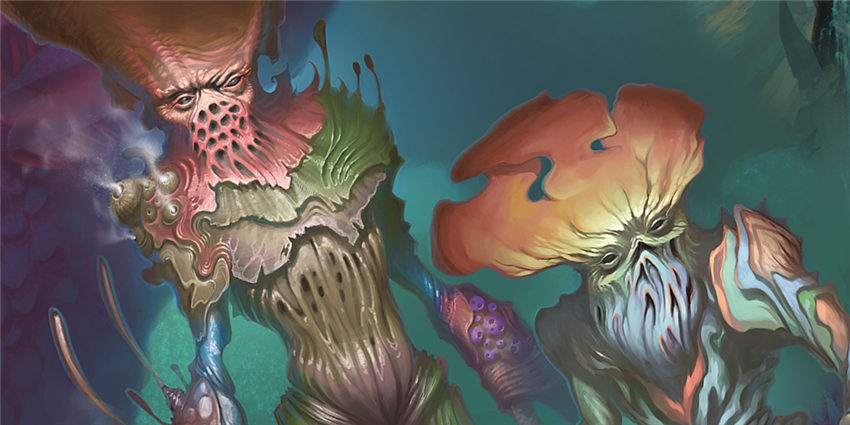
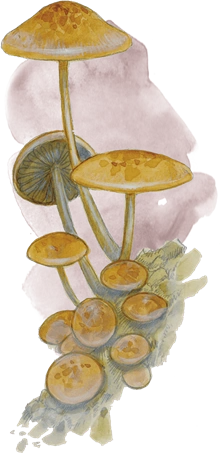

Naga
The serpent creatures known as Naga are all that
remains of an ancient, decadent human
empire known as the yuan-ti. In ages past,
their leaders gave in to the profane, cannibalistic,
serpentine gnawing that coiled around their
minds as they slept; the result of their dark
rituals produced a new humaniod species
Naga Traits
The Naga resemble enormous snakes with arms,
shoulders, and a torso which is typically held
off the ground that resembles a human. Male
naga have hoods broader than their shoulders,
while females have narrower hoods and longer faces.
Ability Score Bonus. Your Dexterity, Constitution, and Intelligence scores increase by 1.
Age. Like humans, naga reach adulthood in their late teens. They show no signs of ageing beyond that point except for growing larger, so in theory a naga could live indefinitely.
Size. Naga stand about 5 feet tall when upright, but the total length of their bodies, head to tail, ranges from 10 to as much as 20 feet. Your size is Medium.
Speed. Your base walking speed is 30 feet.
Serpentine Blindsight. You can detect heat sources nearby using your forked tongue, provided you can open your mouth. You gain blindsight out to a radius of 30 feet, but can only detect levels of heat; you can distinguish the intensity, however, for example between a bonfire and body heat. The sense can penetrate most barriers, but it is blocked by 1 foot of stone, or 3 feet of wood or dirt.
In addition, you do not need to blink, even in gas clouds, storms, or underwater.
Slithering Movement. Your slippery coiling excels at escape on the ground. Being prone does not incur disadvantage on your melee attacks, nor do attacks against you gain advantage from you being prone, and your speed increases by 10 feet instead of being halved. In addition, you have advantage on checks and saves made to escape being grappled.
Natural Weapons. Your fanged maw and constricting serpentine body are natural weapons, which you can use to make unarmed strikes. If you hit with your bite, you deal piercing damage equal to 1d6 + your Strength modifier. At the start of each round you are grappling a creature, the creature takes bludgeoning damage equal to your Strength modifier. Until this grapple ends, provided you don't move on your turn, the target is also restrained until the start of your next turn.
Serpentine Base. You count as one size larger when determining your carrying capacity and the size of creatures you can grapple. In addition, any climb that requires hands and feet is especially difficult for you because of your lack of legs. When you make such a climb, each foot of movement costs you 4 extra feet, instead of the normal 1 extra foot.
Poison Resistance. You have resistance to Poison damage, and you have advantage on saving throws against being poisoned.
Languages. You can speak, read, and write Common and Abyssal.
Satyr
Satyrs have a well-earned reputation for their good spirits, gregarious personalities, and love of revels. Most satyrs are driven by two simple desires; to see the world and to sample its every pleasure. While their spontaneity and whimsy
sometimes put them at odds with more stoic peoples, satyrs
rarely let the moodiness of others hinder their own
happiness.
Satyr Traits
Resembling elves with goatlike legs and cloven hooves,
Satyrs usually have ram or goat horns. They can,
however, have antlers or a single horn like a rhino
depending on the wildlife native to the region in which
they were raised.
Ability Score Bonus. Your Charisma score increases by 2, and your Dexterity score increases by 1
Age. Satyrs mature and age at about the same rate as humans while outside the Feywild.
Size. Satyrs range from just under 5 feet to about 6 feet in height, with generally slender builds. Your size is medium.
Speed. Your base walking speed is 35 feet.
Fey. Your creature type is fey, rather than humanoid, and you have advantage on saving throws against being charmed.
Ram. You can use your hooves and horns to make unarmed strikes. If you hit with them, you deal bludgeoning damage equal to 1d6 + your Strength modifier.
Magic Resistance. You have advantage on saving throws against spells and other magical effects.
Mirthful Leaps. Whenever you make a long or high jump, you use the sum of both your Strength and Charisma (minimum 0) to determine the number of feet you cover.
In addition, you can make a long jump as a bonus action on your turn. If you end the jump within 5 feet of a target, you can attempt to batter that target with your horns as you land. The target must be no more than one size larger than you. Unless it succeeds on a Strength saving throw (DC 8 + your proficiency bonus + your Strength modifier), you knock it prone.
Reveller. You have proficiency in the Performance and Persuasion skills, and you have proficiency with one instrument of your choice.
Languages.
You can speak,
read, and write Common,
and either Sylvan or Therian.

Theria
Theria are mammalian humanoids driven by
curiosity to collect interesting artifacts, gather
tales and stories, and lay eyes on all the
world's wonders. Ultimate travellers, the
inquisitive Theria rarely stay in one place for
long. Their natural curiosity and cultural values
of exploration pushes them to leave no secrets
uncovered, no treasures or legends lost.
Theria Traits
Therian appearance is as varied as their attitudes, but is dependant largely on their race.
Ability Score Bonus. Your Dexterity score increases by 2, and either your Wisdom or Charisma score increases by 1
Age. Theria have lifespans comparable to that of humans, if slightly shorter.
Size. Theria are taller on average than humans and relatively slender. Your size is Medium or Small.
Speed. Your base walking speed is 30 feet.
Darkvision. You have keen senses, especially in the dark. You can see in dim light within 60 feet of you as if it were bright light, and in darkness as if it were dim light. You can't discern colour in darkness, only shades of grey.
Bite. Your powerful jaws make your bite a natural weapon, which you can use to make unarmed strikes. If you hit with it, you deal piercing damage equal to 1d4 + your Strength modifier, instead of the bludgeoning damage normal for an unarmed strike.
Keen Senses. You have advantage in Wisdom (Perception) checks which rely on hearing or smell.
Languages. You can speak, read, and write Common, Therian, and one other language of your choice.
Race
That which links the Theria is their general appearance; lightly furred, with protruding ears and tails. It is the specifics of these features which distinguishes them from one another.
Gnoll
Most closely resembling human-hyena hybrids, gnolls are obligate carnivores. Between that and their habitual gibbering, is believed by some that gnolls had traces of demonic blood - perhaps further evidenced my their likeness to the Demon Prince Yeenoghu.
Feral. The damage die of your natural weapons increases by one step at 5th level, 11th level, and 17th level. If this increases beyond 1d12, the weapon deals 1d10 + 1d4 damage; you increase one die at a time if they are stepped-up again from that point.
Rampage. When you reduce a creature to 0 hit points with a melee attack on your turn, you can use your bonus action to move up to half your speed and make a melee weapon attack.
Bloodrage. When you are reduced below half your maximum hit points, you gain +1 AC bonus and a bonus to weapon damage rolls equal to half your Proficiency bonus (rounded down) for 1 minute. Once you use this trait, you cannot use it again until you have finished a long rest.
Fiendish Cackling You can speak, read, and write Abyssal.
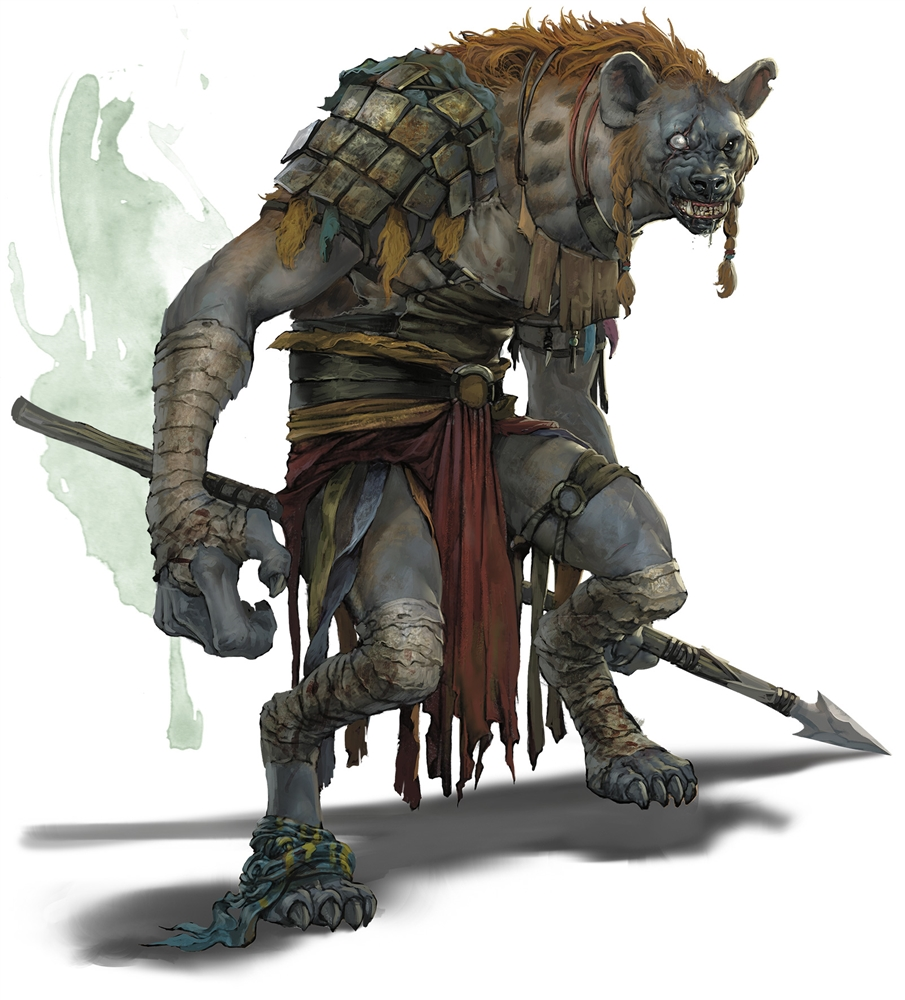
Hadozee
In addition to being natural climbers, the simian
hadozee - also known as the Oz - have feet and tails that
are as dexterous as their hands.
You do not gain the Darkvision trait usual to Theria.
Prehensile Limbs.
Your tail and feet are abnormally
capable of manipulating objects and using tools. Your tail
can support your weight and balance. You gain a climb
speed equal to your walking speed, and can cast spells,
use items, and make attacks as normal even
while climbing.
Monkey's Paw. You can use your reaction when a creature you can see within 30 feet of you makes an attack roll, ability check, or saving throw to give them disadvantage on the roll. You can use this ability once, regaining the use of it when a creature you can see within 60 feet of you rolls a 1 on a d20.
Springtail. You do not begin to take fall damage until you have fallen a number of feet equal to twice your High Jump. In addition, you have advantage on checks and saving throws made to climb, to resist being moved, or to initiate, maintain, or escape a grapple.
Harengon
Harengons are taller than most theria, with the characteristic long feet and ears of the rabbits they resemble and fur in a variety of colors.
Hare-Trigger. You can add your proficiency bonus to your initiative rolls.
Lucky Footwork. When you fail a Dexterity saving throw, you can use your reaction to roll a d4 and add it to the save, potentially turning the failure into a success. You can't use this reaction if you're prone or your speed is 0.
Rabbit Hop. Your long jump is up to 30 feet and your high jump is up to 15 feet, with or without a running start.
Kitsune
Usually with stark aubern and shock-white fur, these graceful canid people also occasionally grow multiple tails.
Sly Talents. You have proficiency in two of the following skills of your choice: Deception, Insight, Persuasion, Sleight of Hand, or Stealth
Fox’s Cunning. You have advantage on either Wisdom or Intelligence saving throws. You choose this when you make your character and cannot change it afterwards.
Dancing Grace. Your base movement speed increases to 35 feet, and you can add your Dexterity modifier to the distance you jump.




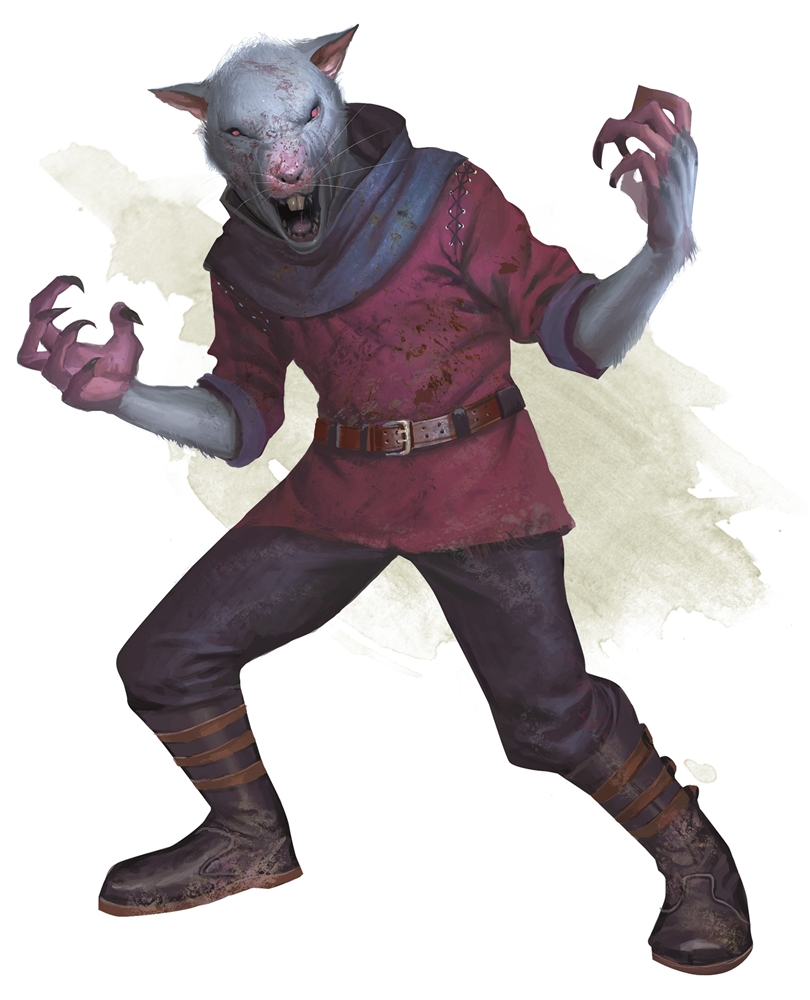
Skaven
The undercity scavengers of the theria, skaven dwell in city sewers and in the underdark, often highly misunderstood and prejudiced against as a result. As such, they have a bitter sense of humour, but are very socially conscious.
Deft Climber. You have a climbing speed equal to your walking speed.
Nimble. You can move through hostile creatures’ spaces as long as they are Medium or larger. You cannot end your turn in their space. Furthermore, you can crawl through any space large enough to fit your head.
Pestilent. You are immune to the poisoned condition, and to the effects of disease. You can still carry diseases by which you're unaffected. In addition, you gain the Infestation cantrip. Constitution is your spellcasting ability for this cantrip.
Tabaxi
In some lands, tabaxi live like the cats they resemble, naturally curious and at home in playful environments.
Feline Agility. Your reflexes and agility allow you to move with a burst of speed. When you move on your tum in combat, you can double your speed until the end of the tum. Once you use this trait, you can't use it again until you move 0 feet on one of your turns.
Lion's Claws. Because of your claws, you have a climbing speed of 20 feet. In addition, your claws are natural weapons, which you can use to make unarmed strikes. If you hit with them, you deal slashing damage equal to 1d4 + your Strength modifier, instead of the bludgeoning damage normal for an unarmed strike.
Cat's Talent. You have proficiency in the Perception and Stealth skills
Ursa
These bearfolk are built for survival in cold climates, especially for toughing through brutal storms and winter frost; Often living near cold coasts as a consequence.
Powerful Build. Bearfolk can reach heights of 8 feet, but rarely fall below 6 feet tall, and weigh as much as 400-600 lbs. You count as one size larger when determining your carrying capacity, the weight you can push, drag, or lift, and the creatures you can grapple.
Thick Coat. Your hide is tough and battle scarred, and insulated against the northern winds. You have resistance to cold damage, and an unarmoured AC of 13 + your Dexterity modifier
Hardy Talent. You have proficiency in either Survival, Athletics or Perception. You can also speak, read, and write Giant.
Bear Hug. When you take the Attack action, you can use your bonus action to grapple a target you damaged with your attack. At the start of a turn you're grappling a creature, the creature is crushed by your grip, taking bludgeoning damage equal to your Strength modifier (minimum 1).


Tortle
What many tortles consider a simple life, others might call a life of adventure. Tortles are born near sandy coastlines, but as soon as they're able to walk on two legs, they become nomad survivalists eager to explore the wilderness, experience its many wonders, put their skills to the test, and make new acquaintances.

Tortle Traits
These turtle folk live on many lands, most often journeying up and down coasts, along waterways, and across the sea. Tortles exhibit the same range of coloration and patterns found among turtles, and many tortles enjoy adorning their shells in distinctive ways.
Ability Score Bonus. Your Strength score increases by 2, and your Wisdom score increases by 1
Age. Young tortles crawl for a few weeks after birth before learning to walk on two legs. They reach adulthood by the age of 15 and live an average of 50 years.
Size. Tortle adults stand 5 to 6 feet tall and average 450 pounds. Their shells account for roughly one-third of their weight. Your size is Medium.
Speed. Your base walking speed is 30 feet.
Claws. Your claws are natural weapons, which you can use to make unarmed strikes. If you hit with them, you deal slashing damage equal to 1d4 + your Strength modifier, instead of the bludgeoning damage normal for an unarmed strike.
Hold Breath. You can hold your breath for up to 1 hour at a time. Tortles aren't natural swimmers, but they can remain underwater for some time before needing to come up for air.
Natural Armour. Due to your shell and the shape of your body, you are ill-suited to wearing armour. Your shell provides ample protection, however; it gives you a base AC of 17 (your Dexterity modifier doesn't affect this number). You gain no benefit from wearing armour, but if you are using a shield, you can apply the shield's bonus as normal.
Shell Defence. You can withdraw into your shell as an action. Until you emerge, you gain a +4 bonus to AC, and you have advantage on Strength and Constitution saving throws. While in your shell, you are prone, your speed is 0 and can't increase, you have disadvantage on Dexterity saving throws, you can't take reactions, and the only action you can take is a bonus action to emerge from your shell.
Survival Instinct. You gain proficiency in the Survival skill. Tortles have finely honed survival instincts.
Languages. You can speak, read, and write Common and Aquan.
Treant
Treants take their names from a variety of sources. Many name themselves, being awoken with a grasp of multiple languages. Others are named by friends, both humanoid and fey. Whatever the source, most names combine two words based on a characteristic unique to the treant’s personality or build.
Treant Traits
Though treants do not have a true sex, they typically present as consistently either more feminine or masculine throughout their lives - but not exclusively. Treants are as varied as the trees from which they grow, but in general all have the following traits.
Ability Score Bonus. Your Strength and Constitution scores both increase by 1.
Age. Treants can grow to many hundreds or thousands of years old, their magic sustaining them far beyond the normal lifespan of their tree ancestors. Most treants awaken within the first century of their sprouting, and it is while a treant is young and small that they travel the world.
Size. Treants continue to grow steadily for the entirety of their lives. Most treant saplings are between 7 and 8 feet tall when they leave their forest homes and weigh 300-700 lbs. Your Size is Medium.
Speed. Your base walking speed is 30 feet.
False Appearance. While you remain motionless, you are indistinguishable from a normal tree. Instead of sleeping, you enter an inactive state for 4 hours each day. You do not dream in this state; you are fully aware of your surroundings and notice approaching enemies and other events as normal.
Natural Armour. Your tough bark protects you from harm. While unarmoured, you gain a +1 bonus to your AC.
Powerful Build. You count as one Size larger when determining your carrying capacity, the weight you can push, drag, or lift, and the creatures you can grapple.
Tree Whisperer. You can speak, read, and write Common, and Druidic. Through your own treeish nature, you can communicate simple ideas with plants of all kinds. Plants might be able to perform tasks on your behalf, at the DM's discretion. They are unable to uproot themselves and move about, but they can freely move branches, tendrils, and stalks.
Treefolk.
You are considered a plant instead of a humanoid. Instead of eating or breathing normally, you harness the sun's energy and surrounding
oxygen to create your own food. You can
survive a number of days equal to your
Constitution modifier (minimum 1)
without sunlight or oxygen before
starving or suffocating. You must
drink twice as much water as a
normal humanoid, but can take
in this water through your
root-like feet during travel or
other activities if it is available.
You can discern the purity of
water and the fertility of soil
by touching it, and might be
affected by it as any other
Plants in the area would.
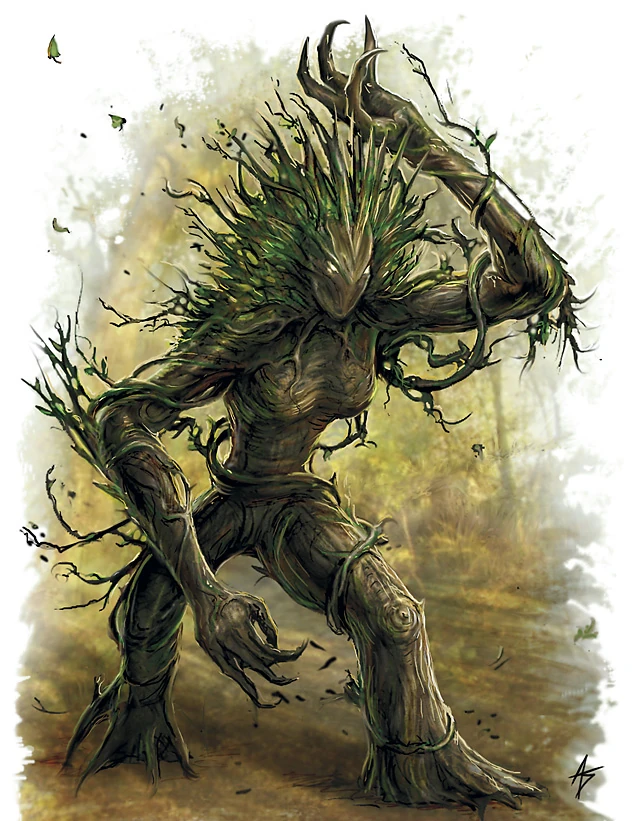
Floral Copse
A treant's copse, its close-knit family of other treants, determines the ruggedness of its form and the litheness of its limbs. Choose one of these races.
Broadleaf
Broadleaf treants include the ashes, birches, maples, elms, oaks, and willows, among others. They are particularly hardy and powerful, with sturdy bark and thick trunks. Treants which awaken from a broad-leaf tree can survive
conditions which would kill other creatures, and
they use their heavy bodies to great effect when
defending their homes.
Ability Score Bonus.
Your Constitution score
increases by 1 again.
Hardwood Toughness.
Your hit point maximum
increases by 1, and it increases by 1 again each time
you gain a level.
Heavy Limbs.
Your limbs are particularly weighty, increasing your unarmed strike bludgeoning damage
to 1d6 + your Strength modifier on a hit.
Drosera
At first glance, a drosera’s head looks like a large, ripe
melon. In truth, is made of two to four thick, interlocked toothy plates which, when opened, expose their mouth
and a pair of eyes.
This under-visage can be disturbing to other races, and so most traveling Drosera keep their plates closed, wearing fanciful wooden or ceramic masks in a vague mockery of most races’ facial structure.
Ability Score Bonus. Your Dexterity score increases by 1.
Headplate Vision. While your headplates are unhinged, you can see in darkness within 120 feet of you as if it were bright light. However, you can't discern color in darkness, only shades of gray. While your headplates are closed, they obscure your vision: you require bright light to see further than 15 feet away, and are only able to see to a distance of 60 feet even with the aid of it. You can hinge or unhinge the headplates that form your jaw using your bonus action. When your jaw is unhinged, your sensitive eyes and mouth are exposed. If you are subject to a critical hit while your jaw is unhinged, the attack deals an additional 1d10 damage.
Carnivorous Bite. While your headplates are unhinged, you can use your fearsome jaw to make unarmed strikes that deal piercing instead of bludgeoning damage, plus additional acid damage equal to your proficiency bonus.
Ambush Hunter. You are proficient with longbows, spears, and the Stealth skill.
Evergreen
Evergreen treants include the cedars, cypresses, firs, junipers, pines, and spruces. They are taller and thinner than other treants, possessing lithe bodies and fast reflexes. The wood of their bodies is oily and soft, but better able to resist the freezing conditions of winter.
Ability Score Bonus. Your Dexterity score increases by 1.
Hasty Movement. Your base walking speed is 40 feet.
Winterised. You're acclimated to high altitude, including elevations above 20,000 feet. You're also naturally adapted to cold climates; you are resistant to cold damage, but vulnerable to fire damage.

Greensinger
Found most commonly within the feywild and rarely elsewhere, Greensingers, known also as Spriggans, hold the same treant respect for the value of life and growth, but view it as a process of creativity - plants are the universe's greatest sculptors, and they are their own medium. Oddly, almost all greensingers are olive treants, but are always fruiting or flowering trees otherwise.
Ability Score Bonus. Your Charisma score increases by 1.
Feyflower Resistance.
You have advantage on saving
throws against spells and other magical effects, and
against being charmed.
Fey Darkvision. You have superior vision in dark and dim
conditions. You can see in darkness within 120 feet of
you as if it were bright light, and in color.
Efflorescence. As an action, you create a grand display
with your petals for 1 minute. For the duration, you can
add your Charisma modifier (minimum 1) to any
Wisdom checks and saving throws you make. Once you
use this trait, you can’t use it again until you finish
a long rest.
Ironwood
The warriors of the treant people, Ironwoods are usually
larger and stronger than their kin. These treants include
the great redwoods, the dark-oaks, and the mahoganies.
They are, however, the fewest of the treant races.
Ability Score Bonus. Your Strength score increases by 1 again.
Steel Bark. While you aren't wearing armour, your base AC is 13 + your Constitution modifier. You can use your natural armour to determine your AC if the armour you wear would leave you with a lower AC. A shield's benefits apply as normal.
Rooted Sentinel. As long as you are in direct contact with the ground, any attempt made to move you against your will has the distance moved reduced by half. Furthermore, if prone on the ground, your speed cannot be greater than 0, you cannot be moved against your will, you have advantage on Strength saving throws and disadvantage on Dexterity saving throws, and your Stalwart Skin AC becomes 16.

Leshen
Gifted with a closeness to Maelora that others of their kin often do not possess, Leshens are disposed heavily towards the earthen sorcerous or druidic practises. Often lither and more limber than their brethren, these Treants include the yew and willow trees, though can even be known to extend to mistletoe and grapevines. Guardians of nature, Leshens often retreat toward ruins and sites of magical power hoping to repel incursions against the natives of their forest.
Ability Score Bonus. Your Wisdom score increases by 1.
Ruin Delver. You have a climbing speed equal to your walking speed. In addition, you have advantage on checks to move through and learn information about abandoned structures. Your movement is unimpeded by nonmagical difficult terrain if it is caused by any kind of plant, and you will not take damage if they have thorns, spines or a similar hazard. You also have advantage on ability checks and saving throws to escape being grappled or restrained by magical and nonmagical plants, such as those of the Entangle spell.
Guardians' Blessing. Without outside forces, Leshens can live for 3 to 5 millennia, with some claiming to be closer to 8000. Such a large timescale can make verification difficult for such claims. Your size is Small. When you reach 5th-level, your size becomes Medium. When you reach 15th-level, your size becomes Large.
Leshen Magic.
You know the thorn whip cantrip. When you reach 3rd level, you can cast Entangle once, and it recharges after a long rest. When you reach 5th level, you can cast Enlarge/Reduce (self only) once, and it recharges after a long rest. Wisdom is your spellcasting
ability for these spells.
Blackroot
Rage-filled treants are rare, but their wrath corrodes the land around them making it hostile to all but the plants themselves. Once a treant devolves into a blackroot, it is rarer still that they ever return.
Ability Score Bonus. Your Constitution score increases by 1.
Bitter. You have advantage on attacks of opportunity.
Host of Blackbriars. Creatures who hit you with a melee attack or begin their turn grappling you take 1d4 magical piercing damage. In addition, your melee weapon attacks are considered to have the Bleed property when you hit a creature who is engaged in a Grapple with you.
Seed of Rage. When you reach 3rd level, as a bonus action on your turn you can manifest a blight upon the world around you. For the next minute, weapon attacks you make deal an additional 1d8 necrotic damage, and you are resistant to any one damage type of your choice. Once you have used this ability, you cannot use it again until you complete a long rest.

Alternate Ancestries
The following ancestries require you to choose a species, and these features replace the usual features granted by that ancestry. These Ancestries often require external intervention from a greater power such as a fiend, lycanthrope, or great old one, but can also be passed through hereditary traits. If your species has Races, you can take the features of a Race of your chosen species instead of a Background Feature.
Aasimar
All aasimar, except for one who has fallen from grace, has a link to an angelic being. That being provides guidance to the aasimar, though this connection functions only in dreams. As such, the guidance is not a direct command or a simple spoken word. Instead, the aasimar receives visions, prophecies, and feelings.
Aasimar Traits
Aasimar are a people of otherworldly visages, with luminous features that reveal their celestial bonds.
Ability Score Bonus. Your Charisma score increases by 2
Age. Aasimar mature slightly slower than humans, but they can live up to about 60% longer than their base species.
Size. Aasimar have the same range of height and weight as their base species but are usually a few inches above average. Your size is Medium or Small.
Speed. Your base walking speed is 30 feet.
Ancestral Legacy. If you replace your species' traits with this ancestry, you can keep the following elements of that species: any languages and skill proficiencies you gained from it and any climbing or swimming speed you gained from it. If you had a flying speed, you can forfeit taking an Angelic Heraldry feature to retain itt. If you don't keep any of those elements or you choose this ancestry at character creation, you gain proficiency in two skills of your choice.
Darkvision. Blessed with a radiant soul, your vision can easily cut through darkness. You can see in dim light within 60 feet of you as if it were bright light, and in darkness as if it were dim light. You can't discern colour in darkness, only shades of grey.
Celestial Resistance. You have resistance to necrotic damage and radiant damage.
Healing Hands. As an action, you can touch a creature and cause it to regain a number of hit points equal to your level. Once you use this trait, you can't use it again until you finish a long rest.
Godbearer. You can innately channel minor deific magic; you know one cantrip from the Cleric spell list. Whenever you finish a Long Rest, you can replace that cantrip with a different Cleric cantrip. Wisdom or Charisma is your spellcasting ability for any cantrip you cast with this trait (choose the ability when you select the ancestry).
Languages. You can now speak, read, and write Celestial.
Angelic Heraldry
Devotion
Ability Score Bonus. Your Wisdom score increases by 1
Divine Embrace. Starting at 3rd level, you can use your action to unleash the divine energy within yourself, causing a warm light to radiate from you, bringing comfort to the cold and dark. Your transformation lasts for 1 minute or until you end it as a bonus action. During it, you shed bright light in a 15-foot radius and dim light for an additional 5 feet, and at the end of each of your turns, you regain a number of lost hit points equal to half your level (rounded up). In addition, creatures within the area who heal creatures other than themselves, or targets of healing provided by others in the area of bright light, gain an extra 1d8 hit points restored from each instance of healing.
Once you use this trait, you can't use it again until you finish a long rest.
Fallen
Ability Score Bonus. Your Strength score increases by 1
Necrotic Shroud. Starting at 3rd level, you can use your bonus action to unleash the divine energy within yourself, causing your eyes to turn into pools of darkness and two skeletal, ghostly, flightless wings to sprout from your back. The instant you transform, other creatures within 10 feet of you that can see you must each succeed on a Charisma saving throw (DC 8 + your proficiency bonus + your Charisma modifier) or become frightened of you until the end of your next turn. Your transformation lasts for 1 minute or until you end it as a bonus action. During it, once on each of your turns, you can deal extra necrotic damage to one target when you deal damage to it with an attack or a spell. The extra necrotic damage equals your level.
Once you use this trait, you can't use it again until you finish a long rest.
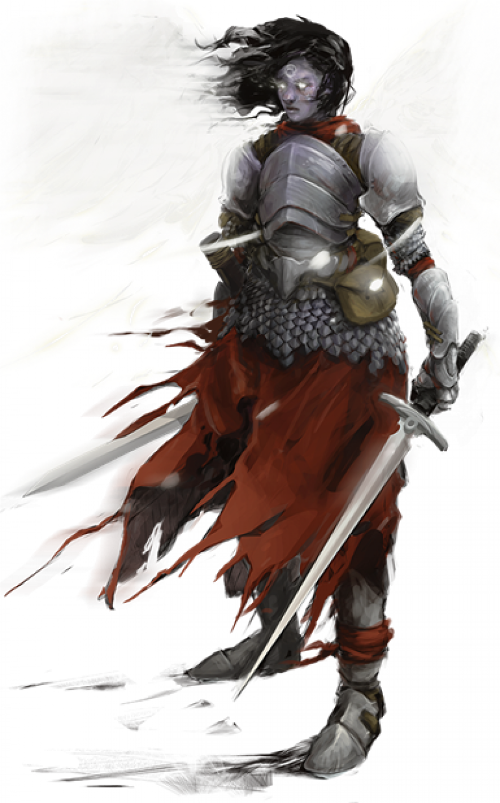

Farseer
Ability Score Bonus. Your Intelligence score increases by 1
Cloak of Nyx. Starting at 3rd level, as a bonus action, you can transform yourself into a starry being, appearing like a silhouette formed of the night sky. Your transformation lasts for 1 minute or until you end it (no action required). During it, attack rolls have disadvantage against you and you are resistant to one additional damage type of your choice. Once you use this trait, you can't use it again until you finish a long rest.
Protector
Ability Score Bonus. Your Dexterity score increases by 1
Radiant Soul. Starting at 3rd level, you can use your bonus action to unleash the divine energy within yourself, causing your eyes to glimmer and two luminous, incorporeal wings to sprout from your back. Your transformation lasts for 1 minute or until you end it as a bonus action. During it, you have a flying speed of 30 feet, and once on each of your turns, you can deal extra radiant damage to one target when you deal damage to it with an attack or a spell. The extra radiant damage equals your level. Once you use this trait, you can't use it again until you finish a long rest.
Scourge
Ability Score Bonus. Your Constitution score increases by 1
Radiant Consumption. Starting at 3rd level, you can use your bonus action to unleash the divine energy within yourself, causing a searing light to radiate from you, pour out of your eyes and mouth, and threaten to char you. Your transformation lasts for 1 minute or until you end it as a bonus action. During it, you shed bright light in a 10-foot radius and dim light for an additional 10 feet, and at the end of each of your turns, you and each creature within 10 feet of you take radiant damage equal to half your level (rounded up). In addition, once on each of your turns, you can deal extra radiant damage to one target when you deal damage to it with an attack or a spell. The extra radiant damage equals your level. Once you use this trait, you can't use it again until you finish a long rest.
Betrayer
Not all gods are imbued with grace, and to be chosen by such dark beings often leaves a mark on the soul they claimed, known as a Shadow Omen.
Ability Score Bonus. One ability score of your choice other than Charisma increases by 1.
Fell Omen. You lose the Healing Hands and Godbearer traits.
Grasping Shadow. You learn the Mage Hand cantrip if you don't already know it, and require no components to cast it. The hand created by the spell is shadowy but is not bound to your actual shadow- it is invisible and can carry twice as much while in dim light or darkness. Your spellcasting ability for this spell is Wisdom, or Charisma.
Flood of Darkness. Starting at 3rd level, you can let your eyes and mouth well up with black mist, allowing darkness to seep from your body. Your transformation lasts for 1 minute or until you end it as a bonus action. During it, the radius produced by all light sources within 60 feet of you is halved, and when you make melee attack rolls, you can increase your reach for that attack by 10 feet. Your shadow stretches and delivers the attack as if it were you. In addition, you fall at a rate of 60 feet each round and can add your Charisma modifier to Stealth checks you make for the duration.
Once you use this trait, you can't use it again until you finish a long rest.
Hexblood
Hexbloods are individuals infused with eldritch magic, fey energy, or mysterious witchcraft. While many hexbloods gain their ancestry after making a deal with a hag, others reveal their nature as they age— particularly if a hag influenced them early in life or even before their birth.
Hexblood Traits
Some who become hexbloods gain their deepest wishes but eventually find themselves transformed. For example: ears that split in forked points, skin in lurid shades, long hair that regrows if cut, and an irremovable living crown. Along with these marks, hexbloods manifest hag-like traits, such as darkvision, and a variety of magical methods to beguile the senses and avoid the same.
Ability Score Bonus. Increase one ability score by 2 and increase a different one by 1, or increase three different ability scores by 1.
Creature Type. You are a Fey, and have advantage on saving throws against being charmed. You are the same size and weight as a creature of your base species. You mature at the same rate as normal, but can live up to twice as long as your base species.
Speed. Your base walking speed is 30 feet.


Ancestral Legacy.
If you replace
your species' traits with this ancestry,
you can keep the following elements
of that ancestry: any languages and
skill or tool proficiencies you
gained from it, and any climbing or
swimming speed you gained from it.
If you had a flying speed, you can
forfeit the Hex Magic feature to
retain it. If you don't keep any of
those elements or you choose this
ancestry at character creation, you
gain proficiency in two skills of
your choice.
Darkvision.
You can see in dim
light within 60 feet of you as if it were
bright light and in darkness as if it were
dim light. You discern colours in darkness as grey shades.
Hex Magic. You can cast the Disguise Self and Hex spells with this trait. Once you cast either of these spells with this trait, you can’t cast that spell with it again until you finish a long rest. You can also cast these spells using any spell slots you have. Intelligence, Wisdom, or Charisma is your spellcasting ability for these spells (choose the ability when you gain this ancestry).
Eerie Token. As a bonus action, you can harmlessly remove a lock of your hair, one of your nails, or one of your teeth. This token is imbued with magic until it is destroyed or you use this feature again. While the token is imbued this way, you can take these actions:
Telepathic Message. As an action, you can send a telepathic message to the creature holding or carrying the token, as long as you are within 10 miles of it. The message can contain up to twenty-five words.
Remote Viewing. If you are within 10 miles of the token, you can enter a trance as an action. The trance lasts for 1
minute, but it ends early if you dismiss it (no action required) or are incapacitated. During this trance, you can see and hear from the token as if you were located where it is. While you are using your senses at the token's location, you are blinded and deafened in regard to your own surroundings. When the trance ends, the token is harmlessly destroyed.
Resonant Connection. If you have even a tiny piece of a creature or an object in your possession, such as a lock of hair or a splinter of wood, you can turn it into your Eerie Token. While holding or carrying the token, you know the most direct route to that creature or object if it is within 1 mile of you.
Once you create a token using this feature, you can't do so again until you finish a long rest, at which point your missing part regrows.
Languages. You can now speak, read, and write Sylvan or Undercommon
Hollowed One
Poised between the worlds of the living and the dead, Hollowed Ones retain a shred of their grip on life yet are endlessly tested by vicious hungers and the cursed existence of undeath.
As a Hollow, the void left behind in your corporeal shell by your departed soul is filled with the strange magic of the ever-present supernatural forces of the worlds of D&D.
Hollow Traits
Some hollows exhibit the scars of fatal ends, their ashen flesh or bloodless veins making it clear that they’ve been touched by death. Some hollows are failed sires of vampires, ghouls which gained sentience, or liches who lived so long they forgot themselves completely. Others still are marvels of magic or science, being stitched together from disparate beings or bearing mysterious minds in manufactured bodies.
Ability Score Bonus. Increase one ability score by 2 and increase a different one by 1, or increase three different ability scores by 1.
Revenance.
You retain your size and creature type, though you give off necromancy magic under the effect of a Detect Magic spell, and you register as undead to spells and other effects which detect or harm the undead. In addition, at 3rd level, you gain an Echoing Manifestation of your choice.
You can also keep the following elements of your base species from life: any languages and skill proficiencies you gained from it, and any climbing or swimming speed you gained from it. If you had a flying speed, you can forfeit gaining an Echoing Manifestation feature to retain it.
If you don't keep any of those elements, you gain darkvision out to a distance of 60 feet instead.
Knowledge from a Past Life.
You temporarily remember glimpses of the past, perhaps faded memories from ages ago or a previous life. When you make an
ability check that uses a skill, you can roll a d6
immediately after seeing the number on the d20
and add the number on the d6 to the check. You
can use this feature a number of times equal to your proficiency bonus, and you regain all expended uses
when you finish a long rest.
Deathless Nature.
You have been unnaturally
withheld from death, a fact represented by the
following traits:
You have advantage on saving throws against
disease and being poisoned, and you have
resistance to poison damage.
You have disadvantage on death saving
throws.
You don’t need to eat, drink, or breathe, but
you are insatiably stricken with strong urges
to consume living flesh.
You don't age, and effects that would
cause you to age don't work on you.
You don’t need to sleep, and magic can’t put
you to sleep. You can finish a long rest in 4
hours if you spend those hours in an inactive,
motionless state, during which you
retain consciousness.

Echoing Manifestations
Either a shred of what you used to be clings to you, guiding its empty vessel, or whatever necromantic influence or encounters with mysterious immortals might have transformed your character has now begun to take hold. You gain one of the following Manifestations at 3rd level, and another at 5th level.
Death Touch. You can focus on the hollow space within to draw the souls from your foes. As an action, make a single unarmed strike. On a hit, the target takes an additional 1d10 necrotic damage. The damage increases by 1d10 at 5th-level (2d10), 11th-level (3d10), and 17th-level (4d10).
Empty Husk. You are immune to the charmed and frightened conditions but are vulnerable to psychic damage.
Enduring Awareness. You know the distance and direction between you and any creature directly involved in causing your death. This awareness fails if the creature is on another plane of existence or if there is no mortal responsible. This shred of humanity grants you immunity to effects which would turn undead, and grants undead creatures of your choice within 10 feet of you advantage on saving throws against effects that turn undead.
Gouged Shell. You can use your reaction to cause a critical hit against you to become a normal hit. Once you use this trait, you must finish a short rest before you can use it again.
Haunting Wail. When you are hit by an attack roll, you can use your reaction to channel your haunting spirits, letting their voices howl through you. If the attacker isn't deafened, add your Proficiency bonus to your AC against that attack, potentially causing it to miss. Once you cause an attack to miss this way, you can't use it again until you finish a long rest
Inevitable. When you hit a creature making death saving throws with an attack, they die instantly
Liminal Purge. Damaging effects that originate from you extend into the Ethereal Plane, hurting creatures within. In addition, as an action, you can touch a creature other than yourself and end one Possession effect on them.
Poltergeist.
As a bonus action, you can transform yourself
into a translucent being, appearing like a silhouette formed
of pale light. Your transformation lasts for 1 minute or
until you end it (no action required). During it, your speed
becomes 0, but you gain a flying speed of 40ft and can
hover. You can move through other creatures and objects
as if they were difficult terrain. You take 5 (1d10) force
damage if you end your turn inside an object. Once you
use this trait, you can't use it again until you finish
a long rest.
Shallow Grave.
When you regain hit points while at
0 hit points, you can immediately spend and roll a number
of hit dice up to your proficiency bonus, regaining
additional hit points equal to the combined total of the
results.
Souleater.
At the end of a turn in which you damaged a
creature with a soul, you gain temporary hit points equal to
your Proficiency bonus. Creatures of CR greater than
your level are immune to this ability.
Soulsight. You can see into the Ethereal Plane when you are on the Material Plane, and vice versa, within the range of your darkvision. Any living Beast, Dragon, Humanoid, Giant, or Monstrosity within this range produces a red aura, even if behind total cover. You know the type of any being whose presence you sense this way, but not its identity. Within the same radius, you also detect the presence of any place or object that has been consecrated or desecrated, as with the hallow spell.
Spirits’ Whispers. You learn the Message cantrip if you don't already know it, and require no components to cast it. When you cast the spell, the messages are delivered by a whispering spirit of the dead rather than you or the target's voice. Your spellcasting ability for this spell
Thought for Food. If you devour at least one mouthful of brain from a deceased creature, for the next 24 hours, you can experience memories of their life as if you had cast the detect thoughts spell upon the creature. The target creature does not make a saving throw, and you experience a memory of theirs as a vision from their own perspective. The nature of the vision is determined by the DM. Once you use this trait, you can’t use it again until you finish a short rest
Undead Fortitude. You lose all other creature types and become only Undead. If damage reduces your hit points to 0, you must make a Constitution saving throw with a DC of 5 + the damage taken, unless that damage is radiant or a critical hit. On a success you have 1 hit point instead.
Unsettling Presence. As a bonus action, you can unsettle a creature you can see within 15 feet of you. The target has disadvantage on the next saving throw it makes within the next minute, and has disadvantage on all attacks against you until it is forced to make a saving throw. Constructs, undead, and creatures that can't be frightened are immune to this feature. Once you use this feature, you can't use it again until you finish a long rest.
Vampiric Bite.
Your fanged bite is a natural weapon, which counts as a simple melee weapon with which you are proficient, but you can attack with it only once each round. You can add your Constitution modifier, instead of your Strength modifier, to the attack and damage rolls when you attack with this bite. It deals piercing damage on a hit instead of the bludgeoning damage normal for unarmed strikes, plus an additional 1d8 necrotic damage. While you are missing half or more of your hit points, you have advantage on attack rolls you make with this bite.
When you attack with this bite and hit a creature that isn’t a Construct or an Undead, you can empower yourself:
You either regain a number of hit points, or gain a bonus to the next ability check or attack roll you make, equal to the necrotic damage dealt by the bite.
You can empower yourself with this bite a number of times equal to your proficiency bonus, and you regain all expended uses when you finish a long rest.

Kalashtar
The kalashtar are a compound race created from the union of humanoids and renegade spirits of the lost dead. Kalashtar are seen as wise, spiritual people with great compassion for others and are often revered as sages. There is an unmistakable alien quality to the kalashtar, however, as they are haunted by the conflicts of their otherworldly spirits.
Kalashtar Traits
Kalashtar creatures appear indistingishable from their kin until, at the point when the voices become too great to deny the fact of their existence, the spirit begins to exert itself on their host's appearence.
Ability Score Bonus. Your Wisdom score increases by 2, and your Intelligence score increases by 1
Age. Kalashtar develop physically at the same rate as their base species and have similar, if slightly longer, lifespans.
Alignment. A noble spirit tied to a kalashtar drives it toward lawful and good behaviour. Most kalashtar combine strong self-discipline with compassion for all sentient beings, but some kalashtar resist the virtuous influence of their spirit. Occasionally, a kalashtar will be tied to a spirit of the manipulating, corrupting dead, and are pushed towards chaos and evil.
Size. Kalashtar are similar in build to their base species, though they are typically a few inches taller, and are often leaner, less heavy, and paler. Your size is Medium.
Ancestral Legacy. If you replace your species' traits with this ancestry, you can keep the following elements of that species: any languages and skill or tool proficiencies you gained from it, and any climbing or swimming speed you gained from it. If you had a flying speed, you can forfeit either the Mental Discipline or the Soulbound feature to retain it. If you don't keep any of those elements or you choose this ancestry at character creation, you gain proficiency in two skills of your choice.
Speed. Your base walking speed is 30 feet.
Mental Discipline. You have resistance to psychic damage and advantage on Intelligence saving throws.
Mind Link. You can speak telepathically to any creature you can see, provided the creature is within a number of feet of you equal to 10 times your level. You don't need to share a language with the creature for it to understand your telepathic utterances, but the creature must be able to understand at least one language. When you're using this trait to speak telepathically to a creature, you can use your action to give that creature the ability to speak telepathically with you for 1 hour or until you end this effect as an action. To use this ability, the creature must be able to see you and must be within this trait's range. You can give this ability to only one creature at a time; giving it to a creature takes it away from another creature who has it.
Severed from Dreams. The Kalashtar sleep, but they don’t connect to the plane of dreams as other creatures do. Instead, their minds draw from the memories of their otherworldly spirit while they sleep. As such, you are immune to magical spells and effects that require you to dream, but not to those which put you to sleep.
Languages. You can now read and speak Deep Speech.
Soulbound
You gain additional traits depending on the type of soul to which you're linked:
Quori Dreamer
Your soul has been claimed by a Quori spirit; a separate entity adrift from the plane of dreams.
Entwined Existence. The Quori has symbiotically bound its own mind to yours, rather than being a soul entwined with your own. It isn't a separate creature and relies on you to survive, but cannot be targeted by spells and effects, and cannot take damage except in the Astral Sea. It has its own Intelligence, Wisdom, and Charisma scores. The DM sets the Quori spirit's abilities or determines them randomly (2d8 +4). The Quori spirit can see and hear using your senses. It has its own goals and will try to steer you towards them, with a methodology dependent on its personality. The Quori spirit speaks and understands Deep Speech, as well as one other language you speak. It can communicate with you and vice versa at will. If you die, so does your Quori spirit. If you are subsequently returned to life, your Quori spirit revives as well. If you are raised as an undead, your Quori takes control of the soulless corpse.
Dual Mind. You have advantage on checks made to recall information.
Sustained Corporeality. Your Quori spirit has a vested interest in your survival and takes steps to ensure it. When you fail a saving throw, you can choose to have your Quori spirit expend one of your Hit Dice to roll it and add the number rolled to the saving throw, potentially turning the failure into a success. If it uses this feature on a death saving throw, you succeed on the save and regain 1 hit point regardless of the number rolled on the d20. Once you succeed on a saving throw due to this trait, the Quori spirit can't use it again until you finish a long rest.

Demidritch
You are the very child of the starborn horrors, and can feel their influence writhe in the back of your mind.
Withered Frame. You count as one size lesser when determining your carrying capacity and the weight you can push, drag, or lift, as well as for the type of weapons you can ably wield.
Eldritch Psionics You know the Mage Hand cantrip, and the hand is invisible when you cast the cantrip with this trait. When you reach 3rd level, you gain one Psionic Energy die, which is a d6, and you gain another at 5th level; if you later gain more Psionic Energy dice, you add these dice to that pool. You learn one 1st-level Warlock spell and can cast it at its lowest level by expending a Psionic Energy die. At 5th level, you learn a 2nd-level Warlock spell which you can cast this way. You regain all of your expended Psionic Energy dice when you finish a short or long rest. Intelligence is your spellcasting ability for these spells. When you cast them with this trait, they don't require components.
Alien Mind. If a creature tries to read your thoughts or alter your memories, that creature must succeed on an Intelligence saving throw against your Eldritch Psionics DC or be stunned for 1 minute. The stunned creature can repeat the saving throw at the end of each of its turns, ending the effect on itself on a success.
Kyrian
You are inhabited by the remnant of some ancient creature once lost in, and adapted to, the astral sea. Your mind exists in realms greater than the mere materium. Only slivers of this immense dimensional understanding are accessible to your mere mortal consiousness.
Minor Patronage. You gain a single Wizard or Warlock cantrip of your choice. Intelligence is your spellcasting ability for that spell.
Spacetime Rupture. Starting at 3rd level, you can use your action to tear the fabric of reality asunder, drawing your enemies toward you. Your transformation lasts for 1 minute or until you end it as a bonus action. When you take this action, all creatures within 10 feet of you other than yourself must make a Strength saving throw (DC equal to 8 + your Intelligence modifier + your proficiency bonus) or take a number of d6 force damage equal to your proficiency bonus, halved on a successful save. During your transformation, you shed bright light in a 10-foot radius and dim light for an additional 10 feet, and you generate a powerful gravitational field in a 20-foot-radius around you; creatures within the field moving in any direction other than straight toward you treat that movement as though it’s through difficult terrain.
Once you use this trait, you can't use it again until you finish a long rest.
Reiga
You have become host to a spiritual
parasite from deep wildspace.
All-Seeing Eyes.
You often have many
more eyes than normal for your species, though
your sight extends far beyond normal even
when they're shut. You can see
normally in darkness, both magical and nonmagical,
to a distance of 60 feet. You also gain
blindsight out to a range of 10 feet, and you are immune to the blinded condition.
Everwatching. You gain proficiency in the Perception skill. You can maintain watch during a long rest even while sleeping, but only within the range of your blindsight.
Esthesial Glory. When viewed from the ethereal plane, you appear to be surrounded by a cloud of glowing, colorful motes that change colour in random patterns, called a glory. You can use an action to change the way you appear to spells and magical effects that detect creature types, such as a paladin’s Divine Sense or the trigger of a symbol spell. You choose a creature type and other spells and magical effects treat you as if you were a creature of that type, in addition to being humanoid. You maintain the new creature type until you use this ability again, or until you dispel it as an action.

Spliced Hybrid
Transmutative and druidic mages are known on occasion to use magic to fuse different life forms together, such as in the creation of Owlbears. In recent years, they have extended this research to humanoid subjects, magically transferring the traits of various creatures into humanoids. The goal of the so-called Guardian Project is to build a Magebred army of superior beast-men soldiers, perfectly adapted to a variety of combat situations. These hyper-evolved specimens are called Hybrids, though if indoctrinated they sometimes call themselves legionnaires.
Hybrid Traits
Ability Score Bonus. Your Constitution score increases by 2, and another ability score of your choice increases by 1.
Age. Hybrids are created at adulthood from any starting species. Their maximum life expectancy is reduced to about 75% of what is normal for a creature of their species as a result of the extended testing.
Size. Hybrids are the same size of the species that they were created from. Your size is Small or Medium.
Speed. Your base walking speed is 30 feet.
Mortal Canvas. If you replace your species' traits with this ancestry, you can keep the following elements of that species: any languages and skill or tool proficiencies you gained from it, and any climbing or swimming speed you gained from it. If you had a flying speed, you can forfeit the 5th-level Grafted Enhancement feature to retain it. If you don't keep any of those elements or you choose this ancestry at character creation, you gain proficiency in two skills of your choice.
Darkvision. You can see in dim light within 60 feet of you as if it were bright light, and in darkness as if it were dim light. You can't discern colour in darkness, only shades of grey.
Languages. You can speak, read, and write Common and one other language of your choice


Grafted Enhancements
Your body has been implanted repeatedly with residuum, and the body parts of other creatures have been spliced to your nervous system. You choose two enhancements now and one at 5th level.
Abyssal Skin (1st level). You are, in part, infused with fiendish vigour. You gain resistance to either cold, fire, or lightning damage. Cannot be taken alongside Godskin or Natural Resilience.
Acid Spit (5th level). As an action, you can spray acid from glands in your mouth, targeting one creature or object you can see within 30 feet of you. The target must make a Dexterity saving throw against a DC of 8 + you proficiency bonus + your Constitution modifier. The target takes acid damage equal to 2d10 + your Constitution modifier if they fail. The damage increases to 3d10 at 11th level and 4d10 at 17th level.
Amphibious Adaptations (1st level). Developing gills or a semipermeable membranous skin, you can breathe air and water and you gain a swim speed equal to your walking speed.
Amorphous (5th level). You can squeeze through a space as narrow as 1 inch wide, provided you are wearing and carrying nothing. You also have advantage on ability checks you make to initiate or escape a grapple. As an action, you can reshape your body to give yourself a head, one or two arms, one or two legs, and makeshift hands and feet, or you can revert to a limbless blob. While you have a humanoid shape, you can wear clothing and armour made for a Humanoid of your Size. As a bonus action, you can extrude a pseudopod that is up to 6 inches wide and 10 feet long or reabsorb it into your body. As part of the same bonus action, you can use this pseudopod to manipulate an object, open or close a door or container, or pick up or set down a Tiny object. The pseudopod contains no sensory organs and can’t attack, activate magic items, or lift more than 10 pounds.
Armoured Hide (1st level). While you aren’t wearing armour, your hardened carapace gives you a base Armour Class of 13 + your Dexterity modifier.
Chameleonic Skin (1st level). As an action, you can change the colour and texture of your skin to match that of your surroundings, giving you advantage on Dexterity (Stealth) checks made to hide in those surroundings.
Dissembled Hemispheres (1st level).
You have advantage on saving throws you make to avoid or end the charmed and frightened condition on yourself.
When you fail a saving throw to avoid or end either condition on yourself, you can choose to succeed instead. Once you succeed on a saving throw in this way, you can't do so again until you finish a long rest.
Fluid Sacks (5th level). You grow large, liquid filled, pouches. You can use an action on your turn to produce a nonmagical effect identical to a Grease, Fog Cloud, or Web spell centred on you. The effects last for 1 minute. You are immune to the effects you create with this feature. Once you use this ability, you cannot use it again until 10 minutes have passed, at which point your internal store of the fluid has refilled.
Forced Regeneration (1st level). Whenever you take the Dodge action during initiative, you can consume 1 hit die to force your cells to repair your wounds. Roll the die and regain a number of hit points equal to the result (minimum of 2). Each time you use this feature after a number equal to your Charisma modifier (minimum 1), you must succeed a Concentration check of DC 10 or equal to your level (whichever is greater), or you gain a level of exhaustion.
Godskin (1st level). You are embalmed in divine-resistant ichor. You gain resistance to radiant and necrotic damage, perfect for hunting the divine. Cannot be taken alongside Abyssal Skin or Natural Resilience.
Grappling Appendages (5th level). You have two special appendages growing alongside your arms. You determine their appearance, such as claws or tentacles. As an action, you can use one of them to grapple a creature. Each one is also a natural weapon, which you can use to make an unarmed strike with. If you hit, they do 1d6 + your Strength modifier bludgeoning damage. Immediately after hitting, you can try to grapple the target as a bonus action. These appendages are not dexterous enough to use weapons, magic items, or other specialised equipment.
Hardened Carapace (5th level). Your skin in places is covered by a thick shell. You gain a +1 bonus to your AC when not wearing heavy armour.
Immutable Form (5th level). You are immune to any spell or effect that would alter your form.
Kenkuan Voicebox (1st level). You can perfectly repeat any sound you have heard while you’ve had this feature. You cannot imitate voices with this ability.
Lashing Tail (1st level). You have a semi-prehensile tail tipped with a bony blade or stinger. Immediately after a creature within 10 feet of you deals damage to you with a melee attack, you can use your reaction to make an unarmed strike against that creature with your tail. If you hit, you deal piercing damage equal to 1d6 + your Strength or Dexterity modifier, instead of the bludgeoning damage normal for an unarmed strike.
Manta Glide (1st level). You have ray-like fins that you use as wings to slow your fall or allow you to glide. When you fall and are not incapacitated, you can subtract up to 100 feet from your fall when calculating your fall damage and can move one foot horizontally for every foot you fall vertically.
Natural Resilience (1st level). You have resistance to acid and poison damage, and you have advantage on saving throws against being poisoned. Cannot be taken alongside Abyssal Skin or Godskin.
Nimble Climber (1st level). You have a climb speed equal to your walk speed.
Phosphorescence (1st level). Through biochemical reactions, you can produce light from a point of your choice on/in your body. It shines bright light in a 30-foot radius, and dim light for 30 feet beyond that. You can turn it on or off as an action. This is considered nonmagical light.
Poison Spines (5th level). You have a set of poison spines equal to half your Constitution score which you can fire reflexively in response to being attacked. When a creature within 30 feet of you that you can see targets you with an attack, you can use your reaction to make a ranged unarmed strike attack against your attacker using this natural weapon. If you hit, your attacker takes piercing damage equal to the damage normal for your unarmed strikes, plus 1d4 poison damage. As long as you are not poisoned, diseased or exhausted, any of your missing spines regrow when you finish a long rest.
Retractable Talons (1st level). You gain a natural weapon that deals 2d4 damage (piercing or slashing, your choice), which can be extended or retracted from your flesh as a free action. If you already have a natural weapon, you can increase the damage of an existing natural weapon by one step instead (from a d6 to a d8, for example) while they are 'extended.'
Secondary Arms (5th level). You have two slightly smaller secondary arms below your primary pair. The secondary arms can manipulate an object, open or close a door or container, pick up or set down a Tiny object, or wield a weapon that has the light property. These arms cannot be used to make unarmed strikes, however.
Sleepless (1st level). You cannot sleep by any means, and do not need to, though you must still refrain from strenuous activity for at least 4 hours to gain the benefit of a long rest.
Springheels (1st level). Your base walking speed increases by 10 feet and your jump distances are doubled.
Shifter
Shifters are sometimes called the weretouched,
as they are the offspring of humanoids and
lycanthropes. They are humanoids with a
bestial aspect; while they cannot fully
change shape they can temporarily
enhance their animalistic features – a
state they call shifting. Whatever their
origins, shifters walk on the knife’s edge
between the wild within and the world
around them.
Shifter Traits
Ability Score Bonus.
Increase one ability
score by 2 and increase a different one by 1,
or increase three different ability scores by 1.
Age. Shifters are quick to mature both physically and emotionally, reaching young adulthood at age 15. They rarely live to be more than 70% of their species' life expectancy.
Size. Shifters range from 5 to almost 7 feet tall, depending on their race. Your size is Medium.
Speed. Your base walking speed is 30 feet.
Ancestral Legacy. If you replace your species' traits with this ancestry, you can keep the following elements of that species: any languages and skill or tool proficiencies you gained from it, and any climbing or swimming speed you gained from it. If you had a flying speed, you instead gain proficiency in two skills of your choice.
Darkvision. You have superior vision in dark and dim conditions. You can see in dim light within 60 feet of you as if it were bright light, and in darkness as if it were dim light. You can’t discern colour in darkness, only shades of grey.
Keen Senses. You have advantage on Perception checks which rely on hearing or smell.
Shifting. As a bonus action, you can assume a more bestial appearance. This transformation lasts for 1 minute, until you die, or until you revert to your normal appearance as a bonus action. When you shift, you gain temporary hit points equal to your level + your Constitution modifier (minimum of 1 temporary hit point). You also gain benefits that depend on your Primal Heritage, described below. Once you shift, you can’t do so again until you finish a short or long rest.
Natural Weapon.
While shifted, your unarmed
strikes are considered Natural Weapon attacks.
They deal 1d6 damage on a hit of your choice
of either bludgeoning, piercing, or slashing
as appropriate for the natural weapon.
Languages.
You can speak, read, and
write Therian.


Primal Heritage
Beasthide
Stoic and solid, a beasthide shifter draws
strength and stability from the beast within.
Beasthide shifters are typically tied to the
bear or the boar, but any creature known for
its toughness could apply.
Shifting Feature.
Whenever you shift, you gain
1d6 additional temporary hit points and,
while shifted, you count as one size larger when
determining your carrying capacity, the weight
you can push, drag, or lift, and the creatures
you can grapple.
Longtooth
Longtooth shifters are fierce and aggressive, but they form deep bonds with their friends. Many longtooth shifters have canine traits that become more pronounced as they shift, but they might instead draw on tigers, hyenas, or other predators.
Shifting Feature. While shifted, you can use your elongated fangs to make an unarmed strike as a bonus action. In addition, the damage die of your Natural Weapon attacks increases by one step (e.g. from 1d6 to 1d8)
Mountainborn
Often compared to satyrs, these goat-like shifters are at home at precarious heights, often growing small horns as they shift.
Shifting Feature. While shifted, you do not take damage from falling 30 feet or less, and have a climbing speed equal to your walking speed.
Swiftstride
Swiftstride shifters are graceful and quick. Typically feline in nature, they are often aloof and difficult to pin down physically or socially.
Swift Stride. Your walking speed increases by 5 feet.
Shifting Feature.
While shifted, your walking speed increases by an additional 5 feet. Additionally, you can move up to 10 feet as a reaction when an enemy ends its turn within 5 feet of you. This movement doesn’t provoke
opportunity attacks.
Wildhunt
Wildhunt shifters are sharp and insightful. Some are constantly alert, ever wary of possible threats. Others focus on their intuition, searching within. Wildhunt shifters are excellent hunters, and they also tend to become the spiritual leaders of shifter communities.
Mark the Scent. As a bonus action, you can mark one creature you can see within 10 feet of you. Until the end of your next long rest, your proficiency bonus is doubled for any ability check you make to find the marked creature, and you always know the location of that creature if it is within 60 feet of you. You can’t use this trait again until you finish a short or long rest.
Shifting Feature.
While shifted,
you have advantage on Wisdom-
based ability checks, and have
either a climbing or swimming
speed equal to your walking speed.
You cannot change your choice,
as it depends on the beast
you're tied to.
Feral
Some shifters lose
themselves to the ever- present
gnawing of the beast within, always on
the verge of shifting, often as a result of
isolation or personal trauma. Such
people are often nomadic, so must
improvise much of their ways
of living.
Wild Reflexes You add half your Proficiency bonus (rounded down) to your Dexterity saving throws, even if already proficient.
Shifting Feature. You can shift as a reaction when you are required to roll for initiative. While shifted, any roll of 9 or lower on the d20 you make for initiative checks is considered to be a 10.
Tiefling
Horned, lithe, and sporting skin colours of every shade imaginable, the tailed tieflings are not scarce in any city. Their appearance and their nature are not their fault but the result of a fiendish sin, the procreation of devils and demons with mortal humanoids. Tieflings may also be the result of infernal pacts with such beings, the nature of which permanently alters their bodies into these horned humanoids.
Tiefling Traits
Their appearance and their nature are not their fault, but they and their children, and their children's children will always be held accountable.
Ability Score Bonus. Your Charisma score increases by 2, and your Intelligence score increases by 1
Age. Tieflings typically mature at the same rate as humans, regardless of their base species, but live a few years shorter.
Size. Tieflings are always between five and seven feet tall. Your size is Medium.
Speed. Your base walking speed is 30 feet.
Darkvision. Thanks to your infernal heritage, you have superior vision in dark and dim conditions. You can see in dim light within 60 feet of you as if it were bright light, and in darkness as if it were dim light. You can’t discern colour in darkness, only shades of grey.
Hellish Resistance. You have resistance to fire damage.
Magical Blood. You gain one Fiendish Legacy option (below). Charisma is your spellcasting ability for any spells gained from your Fiendish Legacy, and they don't require a focus or any material components to cast.
Languages.
You can speak,
read, and write Common and
Infernal.

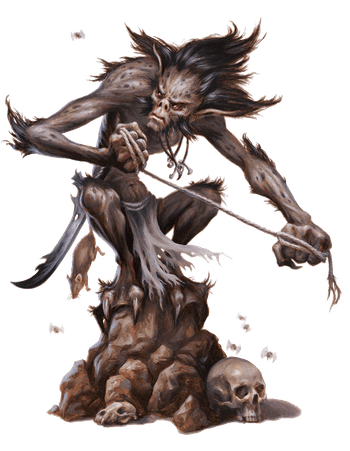

Fiendish Legacy
Asmodeus
The tieflings connected to Nessus command the power of fire and darkness, guided by a keener than normal intellect, as befits those linked to the devil god Asmodeus himself.
Legacy of Nessus. You know the Thaumaturgy cantrip. Once you reach 3rd level, you can cast the Hellish Rebuke spell once as a 2nd-level spell. Once you reach 5th level, you can also cast the Darkness spell once. You regain the ability to cast these spells with this trait when you finish a long rest.
Baalzebul
The crumbling realm of Maladomini is ruled by Baalzebul, who excels at corrupting those whose minor sins can be transformed into acts of damnation. Tieflings linked to this archdevil can corrupt others both physically and psychically.
Corrosive Resistance. You can choose to be resistant to acid instead of fire damage.
Legacy of Maladomini. You know the Thaumaturgy cantrip. Once you reach 3rd level, you can cast the Ray of Sickness spell once as a 2nd-level spell. When you reach 5th level, you can also cast the Crown of Madness spell once. You regain the ability to cast these spells with this trait when you finish a long rest.
Dispater
The great city of Dis occupies most of Hell's second layer. It is a place where secrets are uncovered and shared with the highest bidder, making tieflings tied to Dispater excellent spies and infiltrators.
Ability Score Bonus. Your Dexterity score, instead of your Intelligence, increases by 1.
Legacy of Dis. You know the Thaumaturgy cantrip. Once you reach 3rd level, you can cast the Disguise Self spell once as a 2nd-level spell. Once you reach 5th level, you can also cast the Detect Thoughts spell once. You regain the ability to cast these spells with this trait when you finish a long rest.
Fierna
A master manipulator, Fierna grants tieftings tied to her forceful personalities.
Ability Score Bonus. Your Wisdom score, instead of your Intelligence, increases by 1.
Legacy of Phlegethos. You know the Friends cantrip. Once you reach 3rd level, you can cast the Charm Person spell once as a 2nd-level spell. Once you reach 5th level, you can also cast the Suggestion spell once. You regain the ability to cast these spells with this trait when you finish a long rest.
Glasya
Hell's criminal mastermind grants her tieflings magic that is useful for committing heists.
Ability Score Bonus. Your Dexterity score, instead of your Intelligence, increases by 1.
Legacy of Malbolge. You know the Minor Illusion cantrip. Once you reach 3rd level, you can cast the Disguise Self spell once as a 2nd-level spell. Once you reach 5th level, you can also cast the Invisibility spell once. You regain the ability to cast these spells with this trait when you finish a long rest.
Levistus
Frozen Stygia is ruled by Levistus, an archdevil known for offering bargains to those who face an inescapable doom.
Ability Score Bonus. Your Constitution score, instead of your Intelligence, increases by 1.
Gelid Resilience. You can choose to be resistant to cold instead of fire damage
Legacy of Stygia. You know the Ray of Frost cantrip. Once you reach 3rd level, you can cast the Armour of Agathys spell once as a 2nd-level spell. Once you reach 5th level, you can also cast the Darkness spell once. You regain the ability to cast these spells with this trait when you finish a long rest.
Mammon
The great miser Mammon loves coins above all else. Tieflings tied to him excel at gathering and safeguarding wealth.
Legacy of Minauros. You know the Mage Hand cantrip. Once you reach 3rd level, you can cast the Tenser's Floating Disk spell once as a 2nd-level spell. Once you reach 5th level, you can also cast the Arcane Lock spell once. You regain the ability to cast these spells with this trait when you finish a long rest.
Mephistopheles
In the frozen realm of Cania, Mephistopheles offers arcane power to those who entreat with him. Tieflings linked to him master some arcane magic.
Gelid Resilience. You can choose to be resistant to cold instead of fire damage
Legacy of Cania. You know the Mage Hand cantrip. Once you reach 3rd level, you can cast the Burning Hands spell once as a 2nd-level spell. Once you reach 5th level, you can also cast the Flame Blade spell once. You regain the ability to cast these spells with this trait when you finish a long rest.
Zariel
Tieflings with a blood tie to Zariel are stronger than the typical tiefling and receive magical abilities that aid them in battle.
Ability Score Bonus. Your Strength score, instead of your Intelligence, increases by 1.
Legacy of Avernus. You know the Green-Flame Blade cantrip. Once you reach 3rd level, you can cast the Searing spell once as a 2nd-level spell. Once you reach 5th level, you can also cast the Branding Smite spell once. You regain the ability to cast these spells with this trait when you finish a long rest.
Feral Tiefling
Over time, the blood of the damned becomes diluted and untraceable to its fiendish heritage. You may just as easily be the spawn of an incubus as the 100th descendant of either a yochlol, a Fiendish Warlock, or Asmodeus himself.
Appearance. You exhibit accursed features, such as the following suggestions: small horns; fangs or sharp teeth; a forked tongue; catlike eyes; six fingers on each hand; goat-like legs; cloven hooves; a forked tail; leathery or scaly skin; red or dark blue skin; cast no shadow or reflection; exude a smell of brimstone.
Ability Score Bonus. Your Dexterity score, instead of your Charisma, increases by 2.
Natural Weapon. You have developed a natural weapon of your choice, such as horns, claws, or vicious teeth, which you can use to make unarmed strikes. If you hit with your natural weapon, you deal bludgeoning, piercing, or slashing damage (depending on the type of natural weapon) equal to 1d4 + your Strength modifier, instead of the bludgeoning damage normal for an unarmed strike.
Accursed Blood
You may take only one of the following features:
Brood of the Ten-Thousand. You gain a climbing speed equal to your walking speed, and you become resistant to force and necrotic damage rather than fire.
Chaos Demon. When you reach 3rd level, you can cast the Chaos Bolt spell once as a spell of level equal to ⅓ your character level. You gain an additional use of this feature at 5th level. You regain any expended casts of this spell when you finish a long rest.
Devil's Tongue. You know the Vicious Mockery cantrip. Once you reach 3rd level, you can cast the Charm Person spell once as a 2nd-level spell. Once you reach 5th level, you can also cast the Enthrall spell once. You must finish a long rest to cast these spells again with this trait.
Draining Kiss. Once you reach 3rd level, you can cast the Vampiric Touch spell once, though you make an Unarmed Strike rather than a spell attack to hit. You gain an additional use of this feature at 12th level. You regain any expended casts of this spell when you finish a long rest.
Kostchtchie’s Might. You count as one size larger when determining your carrying capacity, the weight you can push, drag, or lift, and the creatures you can grapple.
Lashing Tail. Your semi-prehensile tail is tipped with a bony blade. Immediately after a creature within 10 feet of you deals damage to you with a melee attack, you can use your reaction to make an unarmed strike against that creature with your tail. If you hit, you deal slashing damage equal to 1d6 + your Strength modifier, instead of the bludgeoning damage normal for an unarmed strike. Furthermore, grappling a creature with your tail does not restrict the use of your hands.
Sleepless. While asleep, you are tormented by visions. You cannot be put to sleep or forced to dream by magic, and you gain the same benefit a human would from 8 hours of sleep from only 4. You also have advantage on rolls made to resist exhaustion and magical effects which attempt to read or alter your mind.

Demonic Princeling
All abyssal tieflings trace their bloodline to the demon princes of the Abyss. These tieflings have the following additional features.
Ability Score Bonus. Your Constitution score increases by 1
Abyssal Arcana. You know two cantrips of your choice from the Sorcerer or Warlock spell lists. When you reach 3rd level, you can also cast a 1st-level spell. At 5th level, you can cast a 2nd-level spell.
| d8 | School of Magic |
|---|---|
| 1 | Abjuration |
| 2 | Conjuration |
| 3 | Divination |
| 4 | Enchantment |
| 5 | Evocation |
| 6 | Illusion |
| 7 | Necromancy |
| 8 | Transmutation |
When attempting to cast a spell using this feature, roll a d8. The number rolled corresponds to the school of magic, as shown in the table. The spell can be any spell of your choice from the Sorcerer or Warlock spell list, provided it is of the determined school.
At 11th level, when casting a spell this way you can instead roll a d3 to determine the level of the cast spell.
You can cast a spell gained from this trait only once until you complete your next long rest. You can cast a cantrip gained from this trait at will, as normal. Charisma is your spellcasting ability for these innate spells.
Abyssal Fortitude. Your hit point maximum increases by 1, and it increases by 1 every time you gain a level.
Languages. You can speak, read, and write Abyssal instead of Infernal
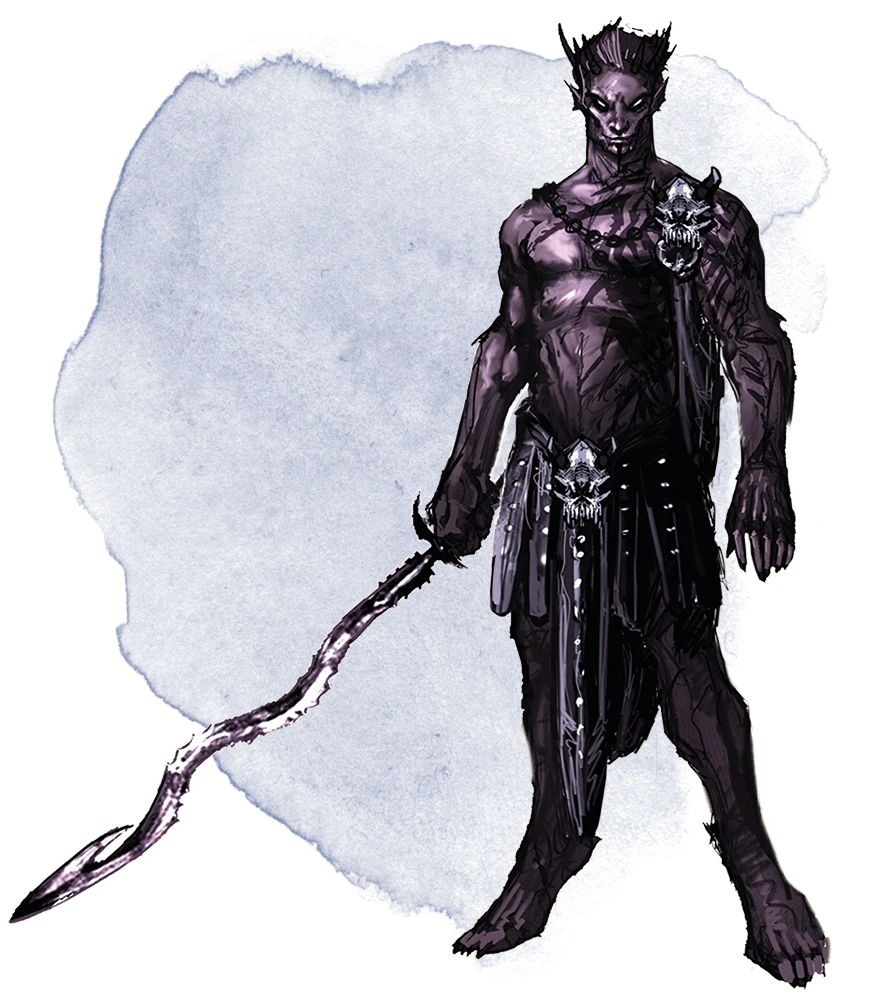

PART II
Classes

Classes
Your class gives you a variety of special features, such as a fighter's mastery of weapons and armour, and a wizard's spells. At low levels, your class gives you only two or three features, but as you advance in level you gain more and your existing features often improve. Each class entry in this chapter includes a table summarising the benefits you gain at every level, in the appendix at the back, and a detailed explanation of each one.
Adventurers sometimes advance in more than one class. A rogue might switch direction in life and swear the oath of a paladin, A barbarian might discover latent magical ability and dabble in the sorcerer class while continuing to advance as a barbarian. Elves of the past were known to combine martial mastery with magical training and advance as fighters and wizards simultaneously. Combining classes in this way is called multiclassing.
Artificer: A skilled maker of magic-infused objects
Barbarian: A fierce warrior of primitive background who can enter a battle rage
Bard: An inspiring magician whose power echoes the music of creation
Cleric: A priestly champion who wields divine magic in service of a higher power
Druid: A priest of the Old Faith, wielding the powers of nature -moonlight and plant growth, fire and lightning- and adopting animal forms
Fighter: A master of martial combat, skilled with a variety of weapons and armour
Monk: A master of martial arts, harnessing the power of the body in pursuit of physical and spiritual perfection
Paladin: A holy warrior bound to a sacred oath
Ranger: A warrior who uses martial prowess and nature magic to combat threats on the edges of civilisation
Rogue: A scoundrel who uses stealth and trickery to overcome obstacles and enemies
Sorcerer: A spellcaster who draws on inherent magic from a gift or bloodline
Warlock: A wielder of magic derived from a bargain with an extraplanar entity
Wizard: A scholarly magic-user capable of manipulating the structures of reality
Multiclassing
| Class | Requirements | Proficiencies Gained |
|---|---|---|
| Artificer | Int 13 | Light & medium armour, shields, thieves & tinkers tools |
| Barbarian | Str 13 | Shields, simple & martial weapons |
| Bard | Cha 13 | Light armour, any one skill, one musical instrument |
| Cleric | Wis 13 | Light & medium armour, shields. |
| Druid | Wis 13 | Light & medium armour, shields. |
| Fighter | Str or Dex 13 | Light & medium armour, shields, simple & martial weapons |
| Monk | Dex & Wis 13 | Simple weapons, one Monk skill or Artisan's tool set. |
| Paladin | Str & Cha 13 | Light & medium armour, shields, simple & martial weapons |
| Ranger | Dex & Wis 13 | Light & medium armour, shields, simple & martial weapons, one Ranger skill |
| Rogue | Dex 13 | Light armour, thieves tools, one Rogue skill |
| Sorcerer | Cha 13 | one Sorcerer skill |
| Warlock | Cha 13 | Light armour & simple weapons |
| Wizard | Int 13 | one Wizard skill |
Duplicated Class Features
When you gain a new level in a class, you get its features for that level. You don't, however, receive the class's starting equipment.
If you gain an identical class feature from more than one class (such as Extra Attack), the features don't add together; instead, in order to still gain value from the feature, you can take a single Fighting Style or other class-specific feature (such as another Invocation or Infusion known- usually detailed in the class' Ability Score Increase section).
If you already have the Channel Divinity feature and gain a level in a class that also grants the feature, you gain either the Channel Divinity effects granted by that class, or can gain an additional use of it between rests, for example.
Subclasses
Artificer
Specialisation
Alchemist ...65
Armourer ...71
Artillerist ...73
Battle Smith ...74
Forge Adept ...75
Mastermaker ...77
Maverick ...78
Barbarian
Primal Path
Ancestral Guardian ...95
Battlerager ...96
Beast ...97
Berzerker ...98
Juggernaut ...99
Storm Herald ...99
Tanarukk ...100
Totem Warrior ...101
Wild Magic ...103
Zealot ...103
Bard
Bardic College
Creation ...108
Dirge Song ...110
Eloquence ...110
Glamour ...111
Lore ...112
the Maestro ...112
Satire ...114
Spirits ...115
Swords ...116
Tragedy ...117
Valour ...118
Whispers ...119
Cleric
Divine Domain
Arcana ...122
Blood ...123
Death ...124
Fate ...125
the Forge ...126
Grave ...127
Knowledge ...128
Life ...128
Light ...129
Nature ...130
Order ...130
Peace ...131
Tempest ...132
Trickery ...132
Twilight ...133
War ...134
Techpriest ...135
Domainless ...136
Druid
Druidic Circle
Blight ...140
Dreams ...141
the Four Seasons ...142
the Hive ...143
the Horizon ...144
the Land ...145
the Moon ...147
the Sea ...147
Shepherds ...148
Spores ...149
Stars ...150
Storms ...152
Wildfire ...152
Forged War ...154
Fighter
Martial Archetype
Arcane Archer ...156
Banneret ...158
Battle Master ...159
Cavalier ...162
Champion ...163
Echo Warrior ...163
Eldritch Knight ...164
Gunslinger ...165
Psi Warrior ...167
Ronin ...168
Rune Knight ...168
Monk
Monastic Tradition
Ascendant Dragon ...175
Astral Self ...176
Cobalt Soul ...177
Drunken Master ...177
the Four Elements ...179
Living Weapon ...185
Long Death ...186
Mercy ...187
the Open Hand ...187
Shadow ...188
Sun Soul ...188
Zerth Mystic ...189
Paladin
Sacred Oath
the Ancients ...200
Conquest ...201
the Crown ...202
Devotion ...203
Glory ...203
the Peacemaker ...204
the Profane Soul ...205
Redemption ...207
the Samurai ...207
the Seafarer ...209
Vengeance ...210
the Watchers ...211
Zeal ...211
Oathbreaker ...212
Death Knight ...213
Ranger
Wayfarer Conclave
Arboreal Guardian ...218
Beastmaster ...219
Blood Hunter ...221
Drakewarden ...222
Fey Wanderer ...226
Ghost Slayer ...227
Gloom Stalker ...228
Horizon Walker ...229
Monster Hunter ...230
Outlaw ...233
Swarmkeeper ...233
Valkyrie ... 235
Wild Healer ...236
Rogue
Roguish Archetype
Arcane Trickster ...239
Assassin ...240
Enforcer ...241
Inquisitive ...241
Mastermind ...242
Phantom ...242
Scout ...243
Soul Knife ...244
Surgeon ...245
Swashbuckler ...246
Thief ...246
Sorcerer
Sorcerous Origin
Aberrant Mind ...250
Clockwork Soul ...251
Divine Soul ...252
Draconic Bloodline ...253
Fiendish Ichor ...254
Hexblood ...255
Leviathan ...256
Monolith Spirit ... 257
Moontouched ... 258
Phoenix Heart ...259
Runechild ...260
Shadow Umbra ...261
Storm's Eye ...262
Wild Magic ...263
Warlock
Otherworldly Patron
Archfey ...269
Celestial ...270
Fathomless ...271
Fiend ...271
Genie ...273
Great Old One ...275
Hexblade ...276
Machine Spirit ...274
Seeker ...277
Undying ...278
Wizard
Arcane Order
Abjurer ...311
Archivist ...311
Bladesinger ...313
Blood Witch ...313
Chronomancer ...314
Conjurer ...315
Diviner ...315
Enchanter ...316
Evoker ...317
Graviturgeon ...317
Heirophant ...318
Illusionist ...319
Loremaster ...320
Necromancer ...320
Technomage ...321
Transmuter ...323
War Mage ...324
The Artificer
Masters of invention, artificers use ingenuity and magic to unlock extraordinary capabilities in objects. They see magic as a complex system waiting to be decoded and then harnessed in their spells and inventions. You can find everything you need to play one of these inventors in the next few sections. Artificers use a variety of tools to channel their arcane power. To cast a spell, an artificer might use alchemist's supplies to create a potent elixir, calligrapher's supplies to inscribe a sigil of power, or tinker's tools to craft a temporary charm. The magic of artificers is tied to their tools and their talents, and few other characters can produce the right tool for a job as well as an artificer.
You must have an Intelligence score of 13 or higher in order to multiclass in or out of this class.
Class Features
As an artificer, you gain the following class features.
Hit Points
- Hit Dice: 1d8 per artificer level
- Hit Points at 1st Level: 8 + your Constitution modifier
- Hit Points at Higher Levels: 1d8 (or 5) + your Constitution modifier per artificer level after 1st
Proficiencies
- Armour: light armour, medium armour, shields
- Weapons: simple weapons, firearms
- Tools: thieves’ tools, tinker’s tools, one type of artisan’s tools of your choice
- Saving Throws: Constitution, Intelligence
- Skills: Choose two from Arcana, History, Investigation, Medicine, Nature, Perception, Sleight of Hand
Equipment
You start with the following equipment, in addition to the equipment granted by your background:
- any two simple weapons
- (a) a light crossbow and 20 bolts or (b) a pepperbox and 20 light rounds
- (a) studded leather armour or (b) scale mail thieves’ tools and a dungeoneer’s pack
Magical Tinkering
At 1st level, you've learned how to invest a spark of magic into mundane objects. To use this ability, you must have thieves' tools or artisan's tools in hand. You then touch a Tiny nonmagical object as an action and give it one of the following Minor Imbuements of your choice.
The chosen property lasts indefinitely. As an action, you or a creature you allow can touch the object and end the property early, or can change the effect produced by the imbued property (for example, recording a new message or changing the produced sound from one kind of bird to another). Unless otherwise dispelled, this effect can be deactivated using an action.
Minor Imbuements
- The object sheds bright light in a 5-foot radius and dim light for an additional 5 feet.
- Whenever tapped by a creature, the object emits a recorded message that can be heard up to 10 feet away. The message records when you bestow this property on the object, and the recording can be no more than 6 seconds long.
- The object continuously emits your choice of an odour or a nonverbal sound (wind, waves, chirping, or the like). The chosen phenomenon is perceivable up to 10 feet away.
- A static visual effect appears on one of the object's surfaces. This effect can be a picture, up to 25 words of text, lines and shapes, or a mixture of these elements, as you like.
Bestow Magic
At 5th level in this class, you can instead bestow any single harmless cantrip of your choice into the items. You do not need to know the cantrip to produce this effect in an item, but the spell must not be able to deal damage, imbue magic in another object, or heal, statistically enhance, or produce a condition effect in any creature. The cantrip can be activated or deactivated as an action while holding the item, and is considered to use your artificer spell save DC.
You can bestow magic on multiple objects, touching one object each time you use this feature, though a single object can only bear one property at a time. The maximum number of objects you can affect with this feature at one time is equal to your Intelligence modifier (minimum of 1). If you try to exceed your maximum, the oldest property immediately ends, and then the new property applies.

The Artificer
| Level | Proficiency Bonus | Features | Infusions Known | Infused Items | Cantrips Known | 1st | 2nd | 3rd | 4th | 5th |
|---|---|---|---|---|---|---|---|---|---|---|
| 1st | +2 | Magical Tinkering, Spellcasting | - | - | 2 | 2 | - | - | - | - |
| 2nd | +2 | Infuse Item | 4 | 2 | 2 | 2 | - | - | - | - |
| 3rd | +2 | Artificer Specialisation, The Right Tool for the Job | 4 | 2 | 2 | 3 | - | - | - | - |
| 4th | +2 | Ability Score Improvement | 4 | 2 | 2 | 3 | - | - | - | - |
| 5th | +3 | Artificer Specialist feature | 4 | 2 | 2 | 4 | 2 | - | - | - |
| 6th | +3 | Tool Expertise | 6 | 3 | 2 | 4 | 2 | - | - | - |
| 7th | +3 | Flash of Genius | 6 | 3 | 2 | 4 | 3 | - | - | - |
| 8th | +3 | Ability Score Improvement | 6 | 3 | 2 | 4 | 3 | - | - | - |
| 9th | +4 | Artificer Specialist feature | 6 | 3 | 2 | 4 | 3 | 2 | - | - |
| 10th | +4 | Magic Item Adept | 8 | 4 | 3 | 4 | 3 | 2 | - | - |
| 11th | +4 | Spell-Storing Item | 8 | 4 | 3 | 4 | 3 | 3 | - | - |
| 12th | +4 | Ability Score Improvement | 8 | 4 | 3 | 4 | 3 | 3 | - | - |
| 13th | +5 | - | 8 | 4 | 3 | 4 | 3 | 3 | 1 | - |
| 14th | +5 | Magic Item Savant | 10 | 5 | 4 | 4 | 3 | 3 | 1 | - |
| 15th | +5 | Artificer Specialist feature | 10 | 5 | 4 | 4 | 3 | 3 | 2 | - |
| 16th | +5 | Ability Score Improvement | 10 | 5 | 4 | 4 | 3 | 3 | 2 | - |
| 17th | +6 | - | 10 | 5 | 4 | 4 | 3 | 3 | 3 | 1 |
| 18th | +6 | Magic Item Master | 12 | 6 | 4 | 4 | 3 | 3 | 3 | 1 |
| 19th | +6 | Ability Score Improvement | 12 | 6 | 4 | 4 | 3 | 3 | 3 | 2 |
| 20th | +6 | Soul of Artifice | 12 | 6 | 4 | 4 | 3 | 3 | 3 | 2 |
Spellcasting
You've studied the workings of magic and how to cast spells, channelling the magic through objects. To observers, you don't appear to be casting spells in a conventional way; you appear to produce wonders from mundane items and outlandish inventions.
Tools Required
You produce your artificer spell effects through your tools. You must have a spellcasting focus-specifically thieves' tools or some kind of artisan's tool-in hand when you cast any spell with this Spellcasting feature (meaning the spell has an "M" component when you cast it). You must be proficient with the tool to use it in this way.
Cantrips
At 1st level, you know two cantrips of your choice from the artificer spell list. At higher levels, you learn additional artificer cantrips of your choice, as shown in the Cantrips Known column of the Artificer table. When you gain a level in this class, you can replace one of the artificer cantrips you know with another cantrip from the artificer spell list.
Preparing and Casting Spells
The Artificer table shows how many spell slots you have to cast your artificer spells. To cast one of your artificer spells of 1st level or higher, you must expend a slot of the spell's level or higher. You regain all expended spell slots when you finish a long rest. You prepare the list of artificer spells that are available for you to cast, choosing from the artificer spell list. When you do so, choose a number of artificer spells equal to your Intelligence modifier + half your artificer level, rounded down (minimum of one spell). The spells must be of a level for which you have spell slots.

For example, if you are a 5th-level artificer, you
have four 1st-level and two 2nd-level spell slots. With an Intelligence of 14, your list of prepared spells can include four spells of 1st or 2nd level, in any combination. If you prepare the 1st-level spell Cure Wounds, you can cast it using a lst-level or a 2nd-level slot. Casting the spell doesn't remove it from your list of prepared spells.
You can change your list of prepared spells when you finish a long rest. Preparing a new list of artificer spells requires time spent tinkering with your spellcasting focuses: at least 1 minute per spell level for each spell on your list.
Ritual Casting. You can cast an artificer spell as a ritual if that spell has the ritual tag and you have the spell prepared.
Spellcasting Ability
Intelligence is your spellcasting ability for your artificer spells; your understanding of the theory behind magic allows you to wield these spells with superior skill. You use your Intelligence whenever an artificer spell refers to your spellcasting ability. In addition, you use your Intelligence modifier when setting the saving throw DC for an artificer spell you cast and when making an attack roll with one.
Spell Save DC
Spell attack modifier
Infuse Item
At 2nd level, you've gained the ability to imbue mundane items with certain magical infusions, turning those objects into magic items. You can also use any item bearing one of your infusions as a spellcasting focus for your artificer spells.
Infusions Known
When you gain this feature, pick four artificer infusions to learn. You learn additional infusions of your choice when you reach certain levels in this class, as shown in the Infusions Known column of the Artificer table.
Whenever you gain a level in this class, you can replace one of the artificer infusions you learned with a new one.
Infusing an Item
Whenever you finish a long rest, you can touch a nonmagical object and imbue it with one of your artificer infusions, turning it into a magic item. An infusion works on only certain kinds of objects, as specified in the infusion's description. If the item requires attunement, you can attune yourself to it the instant you infuse the item. If you decide to attune to the item later, you must do so using the normal process for attunement (see the attunement rules in the Dungeon Master's Guide). Your infusion remains in an item indefinitely, but when you die, the infusion vanishes after a number of days equal to your Intelligence modifier (minimum of 1 day). The infusion also vanishes if you replace your knowledge of the infusion.
You can infuse more than one nonmagical object at the end of a long rest; the maximum number of objects appears in the Infused Items column of the Artificer table. You must touch each of the objects, and each of your infusions can be in only one object at a time. Moreover, no object can bear more than one of your infusions at a time. If you try to exceed your maximum number of infusions, the oldest infusion ends, and then the new infusion applies. If an infusion ends on an item that contains other things, like a bag of holding, its contents harmlessly appear in and around its space.
Artificer Specialist
At 3rd level, you choose the type of specialist you are. Your choice grants you features at 5th level and again at 9th and 15th level.
The Right Tool for the Job
At 3rd level, you've learned how to produce exactly the tool you need: with thieves' tools or artisan's tools in hand, you can magically create one set of artisan's tools in an unoccupied space within 5 feet of you. This creation requires 1 hour of uninterrupted work, which can coincide with a short or long rest. Though the product of magic, the tools are nonmagical, and they vanish when you use this feature again.
Ability Score Improvement
When you reach 4th level, and again at 8th, 12th, 16th, and 19th level, you can increase one ability score of your choice by 2, or you can increase two ability scores of your choice by 1. As normal, you can't increase an ability score above 20 using this feature. Alternatively, you may take a feat in place of the ASI, provided you fulfil its prerequisites.
Tool Expertise
At 6th level, your proficiency bonus is now doubled for any ability check you make that uses your proficiency with a tool.
Flash of Genius
At 7th level, you've gained the ability to come up with solutions under pressure. When you or another creature you can see within 30 feet of you makes an ability check or a saving throw, you can use your reaction to add your Intelligence modifier to the roll.
You can use this feature a number of times equal to your Intelligence modifier (minimum of once). You regain all expended uses when you finish a long rest.
Magic Item Adept
When you reach 10th level, you achieve a profound understanding of how to use and make magic items:
- You can attune to up to four magic items at
once. - If you craft a magic item
with a rarity of common or
uncommon, it takes you a quarter
of the normal time, and it costs
you half as much of the
usual gold.
Spell-Storing Item
At 11th level, you can now store a spell in an object. Whenever you finish a long rest, you can touch one simple or martial weapon or one item that you can use as a spellcasting focus, and you store a spell in it, choosing a lst- or 2nd-level spell from the artificer spell list that requires 1 action to cast (you needn't have it prepared).
While holding the object, a creature can take an action to produce the spell's effect from it, using your spellcasting ability modifier. If the spell requires concentration, the creature must concentrate. The spell stays in the object until it's been used a number of times equal to twice your Intelligence modifier (minimum of twice) or until you use this feature again to store a spell in an object.
Magic Item Savant
At 14th level, your skill with magic items deepens more: You can attune to up to five magic items at once. You ignore all class, race, spell and level requirements on attuning to or using a magic item.
Magic Item Master
Starting at 18th level, you can attune up to six magic items at once.
Soul of Artifice
At 20th level, you develop a mystical connection to your magic items, which you can draw on for protection:
- You gain a +1 bonus to all saving throws per magic item you are currently attuned to.
- If you're reduced to 0 hit points but not killed out-right, you can use your reaction to end one of your artificer infusions, causing you to drop to 1 hit point instead of 0.

Artificer Specialisations
Alchemist
An Alchemist is an expert at combining reagents to produce mystical effects. Alchemists use their creations to give life and to leech it away. Alchemy is the oldest of artificer traditions, and its versatility has long been valued during times of war and peace.
Tool Proficiency
When you adopt this specialisation at 3rd level, you gain proficiency with alchemist's supplies. If you already have this proficiency, you gain proficiency with one other type of artisan's tools of your choice.
Alchemist Spells
Starting at 3rd level, you always have certain spells prepared after you reach particular levels in this class, as shown in the Alchemist Spells table. These spells count as artificer spells for you, but they don’t count against the number of artificer spells you prepare.
Alchemist Spells
| level | Spells |
|---|---|
| 3rd | Healing Word, Ray of Sickness |
| 5th | Flaming Sphere, Melf's Acid Arrow |
| 9th | Gaseous Form, Mass Healing Word |
| 13th | Blight, Death Ward |
| 17th | Cloudkill, Raise Dead |
Chemically Bolstered
At 3rd level, your body has become numb to the constant ingestion of vile chemicals which slowly have imbued you with resilience. You gain resistance to acid damage and poison damage, and you have advantage on saving throws made to resist the poisoned condition.
You can use your bonus action to administer a potion or other consumable item to a creature within reach.
Alchemical Elixir
You begin to uncover esoteric alchemical formulae that temporarily alter your mental and physical abilities. Beginning at 3rd level, you choose to learn four alchemical formulae. You gain an additional formula at 7th level, 11th level, 15th level, and 18th level.
Additionally, when you gain a new alchemical formula, you can choose one of the formulae you already know and replace it with a new alchemical formula.
Creating an alchemical elixir requires you to have alchemist supplies on your person; you can concoct a single Elixir when you finish a short or long rest. Starting at 7th level, the number of Elixirs you can create when you finish a rest increases to two, and you can create three Elixirs at 15th level.
As a bonus action you can consume a single Elixir, and gain its effects and side effects which last until you finish a short or long rest, unless otherwise specified. While one or more Elixirs are affecting you, you can use an action to focus and flush the toxins from your system, ending the effects and side effects of all Elixirs.
Elixirs are designed for your biology and have no effect on other creatures. They are also unstable by nature, losing their potency over time and becoming inert if not used before you finish your next short or long rest.
Strange Metabolism
Beginning at 5th level, your body has begun to adapt to toxins and venoms, ignoring their corroding effects. You gain immunity to poison damage and the poisoned condition. In addition, you can instil a burst of adrenaline to temporarily resist the negative effects of an elixir. As a bonus action, you can choose to ignore the side effect of an elixir affecting you for 1 minute. Once you use this feature to resist side effects, you can’t do so again until you finish a long rest.
Starting at 13th level, you are also immune to Acid damage and to being diseased.
Restorative Reagents
Also at 5th level, you can incorporate restorative necromantic alchemy into some of your works. You can expend one Hit Die when you create an elixir during a rest to create a Restorative Reagent. This is an additional elixir which does not count against the number you have crafted that rest. Whenever a creature drinks a Restorative Reagent, the creature regains a number of hit points equal to 2d6 + your Intelligence modifier (minimum of 1 hit point). This is the only elixir which other creatures can drink and still gain the effects, and which has no side effects.
This healing increases by 1d6 when you reach 11th level (4d6) and 17th level (8d6).

Unstable Concoctions
Starting at 9th level, you can create additional alchemical elixirs on the fly by expending a spell slot of 1st-level or higher for each one. When you do so, you use your action to create the elixir you choose in an empty flask you touch, and you roll an additional side effect from the Experimental Instabilities table. This effect lasts for the full duration of the elixir. Both the elixir and the side effect can be removed together if the drinker is targeted by a remove curse or greater restoration spell (or other similar magics), but the additional Instability cannot be flushed out of your system like a normal side effect.
Experimental Instabilities
| d10 | Effect |
|---|---|
| 1. | The creature gains a single level of exhaustion. |
| 2. | The creature gains disadvantage on attack rolls. |
| 3. | The creature gains disadvantage on Constitution saving throws. |
| 4. | The creature's movement speed is halved, and they can't take reactions |
| 5. | The creature is reduced to 1 hit point and gains a number of temporary hit points equal to half their hit point maximum. |
| 6. | The creature gains a +10 bonus to their passive Perception but they are unable to speak. |
| 7. | The creature gains advantage on Constitution saving throws. |
| 8. | The creature is immune to being exhausted, paralysed, petrified, poisoned, stunned, and unconscious. They cannot rest for the duration. |
| 9. | The creature gains the effect of your Restorative Reagents healing. |
| 10. | The elixir has no side effect, but its duration is halved. |
Chemical Mastery
By 15th level, you have been exposed to so many chemicals that they pose little risk to you, and you can use them to quickly end certain ailments:
- When making Unstable Concoctions, you can roll twice on the Experimental Elixir table and choose the effect of either die.
- When you are forced to make a Constitution saving throw, you can add a bonus equal to your Intelligence modifier to the roll, having long prepared to resist the effect.
- Whenever you heal or deal acid, fire, necrotic, or poison damage to a creature by casting a spell using your alchemist's supplies as the focus, or from imbibing an alchemical elixir, you gain a bonus to one roll of the effect equal to your Intelligence modifier plus the number of items you’re attuned to.
Alchemical Formulae
Aether
Prerequisites: 11th level
You gain a flying speed (hover) equal to your walking speed for 1 hour.
Side Effect. You gain disadvantage on Strength and Dexterity ability checks for 1 hour.
Alert
You add your Intelligence modifier to all initiative and perception checks, and to your passive Perception. In addition, you are unable to be surprised while conscious.
Side Effect. You have disadvantage on Wisdom saving throws.
Alluring
Your skin and voice become malleable, allowing you to slightly enhance your appearance and presence. You have advantage on Charisma ability checks.
Side Effect. You gain disadvantage on initiative rolls.
Altruism
Prerequisites: 11th level
You can transfer the effect of the next alchemical elixir you imbibe to a creature as an action after you drink it.
Side Effect. They must drink your blood to receive the elixir’s effects, directly from your body - you take damage equal to your Intelligence modifier and lose the potion effect on yourself in the process.
Arcanum
You gain resistance to force and psychic damage.
Side Effect. You gain vulnerability to radiant and necrotic damage.
Arrogance
So long as you are at your hit point maximum, you can add 1d6 to your weapon damage rolls. At 11th level, the extra damage increases to 2d6.
Side Effect. You have disadvantage on Wisdom saving throws, and you take 1d8 psychic damage which cannot be resisted or negated in any way whenever you fail an ability check.
Balm
You gain the effect of a Lesser Restoration spell. At 15th level, you can instead choose to gain the effect of a Greater Restoration spell.
Side Effect. You take necrotic damage, which cannot be negated in any way, equal to twice your Intelligence modifier, or 5 times your Intelligence modifier if used for Greater Restoration.
Beasthood
You gain advantage on Perception and Investigation checks using any of the five senses, and on checks made to track creatures. You also gain a climbing speed equal to your walking speed. At 15th level, you have advantage on weapon attack rolls against any creature that doesn't have all its hit points.
Side Effect. You have disadvantage on checks and saves made to resist radiant or thunder damage, and against being blinded or deafened.
Blackblood
If an aberration, celestial, elemental, fiend, or undead creature successfully hits you with a melee attack, your blood will hurt them as it's spilled, dealing acid damage to them equal to your Intelligence modifier. If that attack was a bite attack, the creature takes double the damage and can't regain hit points from the attack.
Side Effect. You gain vulnerability to Radiant damage
Brute
Whenever you hit a target with a strength-based weapon attack, you deal an additional 1d4 weapon damage. At 11th level, the extra damage increases to 1d8.
Side Effect. You have disadvantage on Intelligence saving throws and vulnerability to Psychic damage.
Bulette
Bludgeoning, piercing and slashing damage you take from nonmagical attacks is reduced by your Intelligence modifier (minimum 1).
Side Effect: You sink immediately in fluids and have a swim speed of 5 ft., ignoring any effects which would increase it.
Bulwark
You gain a number of temporary hit points equal to twice your Artificer level for 1 minute.
Side Effect. Your movement speed is reduced by 15 feet while you have temporary hit points from the Bulwark elixir active.
Cat’s Eye
Prerequisites: 7th level
Empowers your darkvision, giving you the ability to see in magical darkness within its range, to see invisible creatures and objects as if they were visible, and see into the Ethereal Plane. Ethereal creatures and objects appear ghostly and translucent.
Side Effect. You gain disadvantage on Constitution saving throws.
Celerity
Your Dexterity score increases by 3, as does your Dexterity maximum. This bonus increases by 1 at 11th level (+4) and 18th level (+5).
Side Effect. You gain disadvantage on Wisdom saving throws.
Cerebral
You can add your Intelligence modifier to all Wisdom and Charisma ability checks.
Side Effect. You gain disadvantage on all Strength and Dexterity ability checks.
Coagulant
You are immune to damage from the Bleed weapon property and from non-magical damage-per-round effects for 1 hour.
Side Effect. You have disadvantage on saving throws made to resist poisons and disease for 1 hour and cannot be immune or resistant the their effects for the duration.
Conversant
You gain advantage on Intelligence ability checks.
Side Effect. You gain disadvantage on Wisdom ability checks.
Cruelty
Prerequisites: 11th level
When you use the Attack action, you can make an additional weapon attack as a part of the Attack action.
Side Effect. You gain disadvantage on Intelligence, Wisdom, and Charisma saving throws.
Deftness
You gain advantage on Dexterity ability checks
Side Effect. You gain disadvantage on Wisdom ability checks.
Dirvish
Prerequisites: 7th level
For a number of rounds equal to your Intelligence modifier, your speed is doubled, you gain a +2 bonus to your AC, you have advantage on Dexterity saving throws, and you gain an additional action on each of its turns. That action can be used only to take the Attack (one weapon attack only), Dash, Disengage, Hide, or Use an Object action.
Side Effect. When this alchemical effect ends, you are stunned until the end of your next turn.
Draconian
Prerequisites: 7th level
You gain a bonus to your AC equal to one-fifth of your Artificer level (rounded down), as draconic scales burst from your skin. This has no effect if you’re wearing heavy armour.
Side Effect. You take poison damage equal to your Artificer level, overcoming resistance and immunity to poison, and your Hit Point Maximum is reduced by that amount.
Embers
You gain resistance to fire damage.
Side Effect. You gain vulnerability to cold damage.
Empyrean
You gain resistance to radiant and necrotic damage.
Side Effect. You gain vulnerability to force and psychic damage.

Endurance
When you drink this elixir, your exhaustion level, if any, is reduced by 1. Also, potions and elixirs you consume last twice as long, and you can hold your breath for twice as long. At 11th level, you can ignore the effects of your highest level of exhaustion, dying at 7 levels, instead of 6.
In addition, you can suppress all your life signs, allowing yourself to feign death; however for every 10 minutes you sustain this, you suffer 1d10 psychic damage which cannot be resisted or negated in any way.
Side Effect. Whenever you fail a saving throw, you take 1d10 psychic damage (before the result of the failed save takes effect) which cannot be resisted or negated in any way.
Entwined
Your current and maximum number of spell slots of level of your choice (maximum 5th-level) are increased by 1.
Side Effect. You take a number of d8s of force damage equal to the gained spell level, overcoming resistance and immunity to force damage, and your Hit Point Maximum is reduced by that amount for 1 hour.
Fletching
The short and long ranges of your ranged weapon attacks are doubled.
Side Effect. You gain a -5 penalty to your passive Perception and you have disadvantage on Wisdom ability checks.
Full Moon
Prerequisites: 11th level
Your form and plane cannot be changed or altered, even if you desire them to be.
Side Effect. Damage from silver weapons overcomes any resistance to the weapon damage you may have.
Gelid
You gain resistance to cold damage.
Side Effect. You gain vulnerability to fire damage.
Gigantism
Prerequisites: 7th level
Your size increases by one level, your melee range increases by 5 ft., and your melee weapon attacks deal an additional weapon die of the weapon's damage type. These effects persist for 1 hour.
Side Effect. You gain disadvantage on saving throws made to resist spells and other magical effects for 1 hour.
Gish
When you make an attack roll, the next spell you cast until the end of your next turn that deals damage deals an additional 1d6 damage of the spell’s type. When you cast a spell, the next time you hit a creature with a weapon attack until the end of your next turn, it takes an additional 1d6 damage of the weapon’s type. At 11th level, the additional damage increases to 2d6.
Side Effect. You cannot willingly move away from a hostile creature on your turn unless you are also moving toward a different hostile creature.
Gorgon
You are immune to the prone condition and do not have your speed reduced by difficult terrain. At 11th level, you are also immune to the petrified condition.
Side Effect. You gain disadvantage on Dexterity ability checks.
Hexbreaker
You have advantage on saving throws against spells and magical effects.
Side Effect. Weapon attacks made against you score a critical hit on a roll of 19-20.
Hippocampus
You can breathe underwater and you have a swim speed equal to your walking speed.
Side Effect. If you take fire damage within 1 hour, you gain 1 level of exhaustion when you finish your next short or long rest.
Impermeable
You gain resistance to piercing damage.
Side Effect. You gain vulnerability to slashing damage.
Insomnium
You no longer need to sleep and cannot be forced to sleep or dream until you finish a long rest. Taking a short or long rest takes half as long as normal.
Side Effect. For each level of exhaustion you gain, you gain an additional level.
Juiblecean
You gain resistance to acid damage.
Side Effect. You gain vulnerability to lightning damage
Longclaw
Your melee weapon attacks gain a 10-foot bonus to their Reach. At 11th level, your Reach increases by 15 feet instead.
Side Effect. You gain disadvantage on Strength saving throws.
Lucidity
You are immune to being charmed and do not suffer the effects of madness. At 11th level, you are also immune to having your emotions, thoughts, and memories read or altered.
Side Effect. You gain disadvantage on Constitution saving throws
Luck
You can reroll one d20 roll of your choice within 10 minutes. You must use the new roll. At 11th level, you are instead able to grant yourself advantage on one roll of your choosing once per round for the duration. At 15th level, d20 rolls of 19 are considered to be rolls of 20 for the duration.
Side Effect. d20 rolls of 2 are considered to be rolls of 1 for 1 hour. Starting at 15th level, rolls of 3 are also considered to be rolls of 1 this way.
Marilith
Prerequisites: 15th level
Greatly improves reaction speed. You can take one reaction on every turn in combat, and when you are hit by an attack while holding a melee weapon or shield you're proficient with, you can use your reaction to add your proficiency bonus to your AC for that attack.
Side Effect. You have disadvantage on Strength-based ttack rolls and ability checks, and Strength-based damage you deal is halved.
Mobile
You are immune to the grappled and restrained conditions. At 11th level, you are also immune to the paralyzed condition.
Side Effect. You gain disadvantage on Strength ability checks.
Nighteye
You gain darkvision out to a range of 60 feet. If you already have darkvision, this increases its range by 60 additional feet. At 7th level, you don’t suffer disadvantage to your Wisdom (Perception) checks in a lightly obscured area.
Side Effect. You gain sunlight sensitivity (detailed in the Dark Elf section on page 24 in the Player’s Handbook).
Nothic
The first time you would roll damage dice for a spell within 1 minute after drinking this elixir, instead of rolling dice, you can use the highest number possible for each die.
Side Effect. The next attack that hits you within 1 minute deals twice as much damage to you.
Obsidian
At the end of each of your turns, you gain a cumulative +1 bonus to your weapon damage rolls, to a maximum equal to half your proficiency bonus (rounded down). The bonus is reset if your turn ends and you haven't attacked a hostile creature or taken damage since your last turn.
Side Effect. You have a penalty to your AC equal to the attack roll damage bonus gained from this elixir.
Percipient
You gain advantage on Wisdom ability checks.
Side Effect. You gain disadvantage on Charisma ability checks.
Potency
Your Strength score increases by 3, as does your Strength maximum. This bonus increases by 1 at 11th level (+4) and 18th level (+5).
Side Effect. You have disadvantage on Dexterity saving throws.
Precision
Prerequisites: 11th level
Your weapon attacks score a critical hit on a roll of 19-20.
Side Effect. You gain disadvantage on Strength saving throws.
Rapidity
Your speed increases by 10 feet. At 11th level, you make attacks of opportunity with advantage, and any opportunity attack made against you is made with disadvantage.
Side Effect. You gain disadvantage on Intelligence ability checks.
Reconstitution
The next time you spend hit dice to regain hit points, you regain an additional number of hit points equal to your Intelligence modifier per hit die spent.
Side Effect. You gain 1 level of exhaustion after you next complete a short or long rest.
Resolve
You cannot be frightened, and you have advantage on Wisdom saving throws.
Side Effect. You can be charmed even if normally unable, and you have disadvantage on saving throws made to resist being charmed
Sagacity
Your Intelligence score increases by 3, as does your Intelligence maximum. This bonus increases by 1 at 11th level (+4) and 18th level (+5).
Side Effect. You gain disadvantage on Charisma saving throws.
Snake's Eye
Prerequisites: 7th level
You can see heat signatures, even through walls, allowing you to detect warmblooded creatures within 60 feet for 1 hour. This sense can penetrate most barriers, but it is blocked by 1 foot of stone, 1 inch of common metal, a thin sheet of lead, or 3 feet of wood or dirt. You can percieve this way even when blinded.
Side Effect. If you take cold damage within 1 hour, you gain 1 level of exhaustion when you finish your next short or long rest.
Shielded
You gain resistance to slashing damage.
Side Effect. You gain vulnerability to bludgeoning damage.
Sting
When you score a critical hit with a weapon attack, you gain a bonus to that weapon's damage roll equal to your Artificer level.
Side Effect. You gain a penalty to saving throws against spells and magical effects equal to half your Proficiency bonus (rounded down).
Transcendence
Your mind races and time slows to a crawl around you, gaining a bonus to initiative equal to your Intelligence modifier. You also have advantage on checks and saving throws you make to stave off exhaustion and paralysis, and on ability checks to appraise or inspect anything that is small or highly detailed.
Side Effect. Your Strength score is reduced by your Intelligence modifier (minimum penalty of 1) for 1 minute.
Tressym
You can detect poisons by taste. You are immune to the disease and poisoned conditions, and resistant to poison damage for 1 hour. At 11th level, you are also immune to the stunned condition.
Side Effect. You gain disadvantage on Wisdom saving throws
Trollblood
Prerequisites: 7th level
For 1 minute, at the start of each of your turns, you regain hit points equal to your Intelligence modifier + your proficiency bonus if you have at least 1 hit point.
At 15th level, any hit points you would regain above your hit point maximum are instead gained as temporary hit points.
Side Effect. Your speed decreases by 10 ft for 1 minute.
Unbreakable
You gain resistance to bludgeoning damage.
Side Effect. You gain vulnerability to piercing damage.
Vermillion
You gain an additional number of Hit Dice (d10s) equal to your Intelligence modifier.
Side Effect. You gain disadvantage on death saving throws.
Vilebrew
Prerequisites: 7th level
For 1 hour, Constitution and Wisdom saving throws against your Artificer spells are made at disadvantage.
Side Effect. At the start of your turn 10 minutes after consuming this elixir, you are paralysed until the start of your next turn.
Witherling
Prerequisites: 11th level
For 1 hour, when you are at half your hit point maximum or below, your weapon attacks deal two additional weapon dice of weapon damage.
Side Effect. You gain 2 levels of exhaustion when you finish your next short or long rest
Armourer
An artificer who specialises as an Armourer modifies armour to function almost like a second skin. The armour is enhanced to hone the artificer's magic, unleash potent attacks, and generate a formidable defence. The artificer bonds with this armour, becoming one with it even as they experiment with it and refine its magical capabilities.
Tools of the Trade
When you adopt this specialisation at 3rd level, you gain proficiency with heavy armour. You also gain proficiency with smith's tools. If you already have this tool proficiency, you gain proficiency with one other type of artisan's tools of your choice.
Armourer Spells
Starting at 3rd level, you always have certain spells prepared after you reach particular levels in this class, as shown in the Armourer Spells table. These spells count as artificer spells for you, but they don't count against the number of artificer spells you prepare.
Armourer Spells
| Level | Spells |
|---|---|
| 3rd | Magic Missile, Thunderwave |
| 5th | Mirror Image, Shatter |
| 9th | Hypnotic Pattern, Lightning Bolt |
| 13th | Fire Shield, Greater Invisibility |
| 17th | Passwall, Wall of Force |

Arcane Armour
Beginning at 3rd level, your metallurgical pursuits have led to you making armour a conduit for your magic. As an action, you can turn a suit of armour you are wearing into Arcane Armour, provided you have smith's tools in hand. The armour continues to be Arcane Armour until you don another suit of armour or you die. For the purposes of applying Infusions only, your Arcane Armour is considered a suit of armour, a construct, and a vehicle.
You gain the following benefits while wearing this armour:
- If the armour normally has a Strength requirement, the arcane armour lacks this requirement for you.
- You can use the arcane armour as a spellcasting focus for your artificer spells.
- The armour attaches to you and can’t be removed against your will, although you can retract or deploy the helmet as a bonus action. It also expands to cover your entire body, replacing any missing limbs and functioning identically to a body part it is replacing.
Armour Model
Beginning at 3rd level, you can customise your Arcane Armour. When you do so, choose one of the following armour models: Guardian or Infiltrator. The model you choose gives you special benefits while you wear it.
Each model includes a special weapon. When you attack with that weapon, you can add your Intelligence modifier, instead of Strength or Dexterity, to the attack and damage rolls.
You can change the armour's model whenever you finish a short or long rest, provided you have smith's tools in hand.
Guardian
You design your armour to be in the front line of conflict. It has the following features:
Thunder Gauntlets. Each of the armour's gauntlets counts as a simple melee weapon while you aren't holding anything in it, and it deals 1d8 thunder damage on a hit. A creature hit by the gauntlet has disadvantage on attack rolls against targets other than you until the start of your next turn, as the armour magically emits a distracting pulse when the creature attacks someone else.
Defensive Field. As a bonus action, you can gain temporary hit points equal to your level in this class, replacing any temporary hit points you already have. You lose these temporary hit points if you doff the armour. You can use this bonus action a number of times equal to your Intelligence modifier (minimum 1), and you regain all expended uses when you finish a long rest.
Infiltrator
You customise your armour for subtle undertakings. It has the following features:
Lightning Launcher. A gemlike node appears on one of your armoured fists or on the chest (your choice). It counts as a simple ranged weapon, with a normal range of 90 feet and a long range of 300 feet, and it deals 1d6 lightning damage on a hit. Once on each of your turns when you hit a creature with it, you can deal an extra 1d6 lightning damage to that target.
Powered Steps. Your walking speed increases by 10 feet.
Dampening Field. You have advantage on Dexterity (Stealth) checks. If the armour normally imposes disadvantage on such checks, the advantage and disadvantage cancel each other, as normal.
Jetstepper
You customise your armour for exploration and mobility. It has the following features:
Piton Claws. Your hands grip knuckledusters mounted with large spikes, which are built into the gauntlets. You have a climbing speed equal to your walking speed, but cannot hold any weapons or shields in your hands while you climb. In addition, your unarmed strikes deal an additional 1d6 piercing damage on a hit and deal double damage to objects and structures. You cannot use your traction claws to climb and attack in the same round.
Shoulder-Mounted Propellor. You have a swimming speed equal to your walking speed.
Rocket-Powered Boots. Your jump distance is tripled. Additionally, the damage you take from falling is halved.
Extra Attack
Starting at 5th level, you can attack twice, rather than once, whenever you take the Attack action on your turn.
Armour Modifications
At 9th level, you learn how to use your artificer infusions to specially modify your Arcane Armour. That armour now counts as separate items for the purposes of your Infuse Items feature: armour (the chest piece), boots, helmet, and the armour's special weapon.
Each of those items can bear one of your infusions, and the infusions transfer over if you change your armour's model with the Armour Model feature.
In addition, the maximum number of items you can infuse at once increases by 2, but those extra items must be part of your Arcane Armour.
Perfected Armour
At 15th level, your Arcane Armour gains additional benefits based on its model, as shown below.
Guardian. When a Huge or smaller creature you can see ends its turn within 30 feet of you, you can use your reaction to magically force the creature to make a Strength saving throw against your spell save DC, pulling the creature up to 30 feet toward you to an unoccupied space. If you pull the target to a space within 5 feet of you, you can make a melee weapon attack against it as part of this reaction. You can use this reaction a number of times equal to your Intelligence modifier (minimum 1), and you regain all expended uses of it when you finish a long rest.
Infiltrator. Any creature that takes lightning damage from your Lightning Launcher glimmers with magical light until the start of your next turn. The glimmering creature sheds dim light in a 5-foot radius, and it has disadvantage on attack rolls against you, as the light jolts it if it attacks you. In addition, the next attack roll against it has advantage, and if that attack hits, the target takes an extra 1d6 lightning damage.
Jetstepper.
You can combine the full power of all of your jets for 1 minute as a bonus action. You have a flying speed equal to twice your walking speed. While flying in this way you do not provoke attacks of opportunity from
moving, and you have advantage on
Dexterity checks and saving throws.
Once you use this ability, you cannot use
it again until you finish a long rest,
unless you expend a spell slot of
3rd-level or higher to use it again.
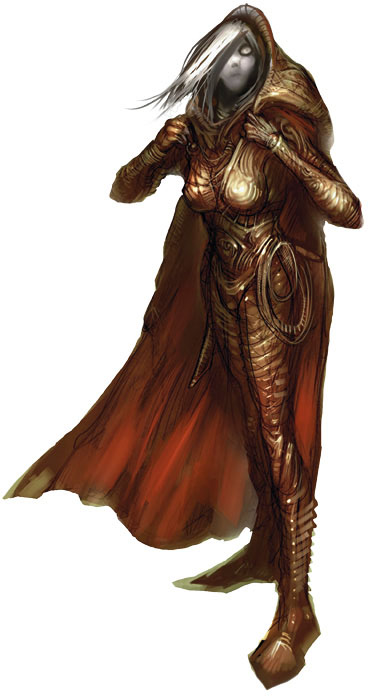
Artillerist
An Artillerist specialises in using magic to hurl energy, projectiles, and explosions on a battlefield. This destructive power is valued by armies in the wars on many different worlds. And when war passes, some members of this specialisation seek to build a more peaceful world by using their powers to fight the resurgence of strife.
Artillerist Spells
Starting at 3rd level, you always have certain spells prepared after you reach particular levels in this class, as shown in the Artillerist Spells table. These spells count as artificer spells for you, but they don’t count against the number of artificer spells you prepare.
Artillerist Spells
| Level | Spells |
|---|---|
| 3rd | Shield, Thunderwave |
| 5th | Scorching Ray, Shatter |
| 9th | Fireball, Wind Wall |
| 13th | Ice Storm, Wall of Fire |
| 17th | Cone of Cold, Wall of Force |
Tool Proficiency
When you adopt this specialisation at 3rd level, you gain proficiency with woodcarver's tools. If you already have this proficiency, you gain proficiency with one other type of artisan's tools of your choice.
Eldritch Cannon
Also at 3rd level, you've learned how to create a magical cannon. Using woodcarver's tools or smith's tools, you can take an action to magically create a Small or Tiny eldritch cannon in an unoccupied space on a horizontal surface within 5 feet of you. A Small eldritch cannon occupies its space, and a Tiny one can be held in one hand. Once you create a cannon, you can't do so again until you finish a long rest or until you expend a spell slot to create one. You can have only one cannon at a time and can't create one while your cannon is present.
The cannon is a magical object. Regardless of size, the cannon has an AC of 18 and a number of hit points equal to five times your artificer level. It is immune to poison damage and psychic damage. If it is forced to make an ability check or a saving throw, treat all its ability scores as 10 (+0). If the mending spell is cast on it, it regains 2d6 hit points. It disappears if it is reduced to 0 hit points or after 1 hour. You can dismiss it early as an action. When you create the cannon, you determine its appearance and whether it has legs. You also decide which type it is, choosing from the options on the Eldritch Cannons table.
On each of your turns, you can take a bonus action to cause the cannon to activate if you are within 60 feet of it. As part of the same bonus action, you can direct the cannon to walk or climb up to 15 feet to an unoccupied space, provided it has legs.
Eldritch Cannon
Flamethrower. The cannon exhales fire in an adjacent 15-foot cone that you designate. Each creature in that area must make a Dexterity saving throw against your spell save DC, taking 2d8 fire damage on a failed save or half as much damage on a successful one. The fire ignites any flammable objects in the area that aren't being worn or carried.
Force Ballista. Make a ranged spell attack, originating from the cannon, at one creature or object within 120 feet of it. On a hit, the target takes 2d8 force damage, and if the target is a creature, it is pushed up to 5 feet away from the cannon.
Protector.
The cannon emits a burst of
positive energy that grants itself and
each creature of your choice within
10 feet of it a number of temporary hit
points equal to 1d8 + your Intelligence
modifier (minimum of +1).

Arcane Firearm
At 5th level, You know how to turn a wand, staff, or
rod into an arcane firearm, a conduit for your
destructive spells. When you finish a long rest,
you can use woodcarver's tools to carve special
sigils into a wand, staff, or rod and thereby
turn it into your arcane firearm. The sigils
disappear from the object if you later carve
them on a different item. The sigils otherwise
last indefinitely.
You can use your arcane firearm as a
spellcasting focus for your artificer spells.
When you cast an artificer spell through the
firearm, you gain a bonus to one of the spell's
damage rolls equal to your Intelligence modifier
(minimum 1).
Explosive Cannon
Starting at 9th level, every eldritch cannon you create is
more destructive:
The cannon's damage rolls all increase by 1d8.
As an action, you can command the cannon to detonate if you are within 60 feet of it. Doing so destroys the cannon and forces each creature within 20 feet of it to make a Dexterity saving throw against your spell save DC, taking 3d8 force damage on a failed save or half as much damage on a successful one.
Fortified Position
By 15th level, you’re a master at forming well-defended emplacements using Eldritch Cannon:
- You and your allies have half cover while within 10 feet of a cannon you create with Eldritch Cannon, as a result of a shimmering field of magical protection that the cannon emits.
- You can now have two cannons at the same time. You can create two with the same action (but not the same spell slot), and you can activate both of them with the same bonus action. You determine whether the cannons are identical to each other or different. You can't create a third cannon while you have two.
Battle Smith
Armies require protection, and someone has to put things back together if defences fail. A combination of protector and medic, a Battle Smith is an expert at defending others and repairing both materiel and personnel. To aid in their work, Battle Smiths are accompanied by a steel defender, a protective companion of their own creation. Many soldiers tell stories of nearly dying before being saved by a Battle Smith and a steel defender.
Tool Proficiency
When you adopt this specialisation at 3rd level, you gain proficiency with smith's tools. If you already have this proficiency, you gain proficiency with one other type of artisan's tools of your choice.
Battle Smith Spells
Starting at 3rd level, you always have certain spells prepared after you reach particular levels in this class, as shown in the Battle Smith Spells table. These spells count as artificer spells for you, but they don’t count against the number of artificer spells you prepare.
Battle Smith Spells
| Level | Spells |
|---|---|
| 3rd | Heroism, Shield |
| 5th | Branding Smite, Warding Bond |
| 9th | Aura of Vitality, Conjure Barrage |
| 13th | Aura of Purity, Fire Shield |
| 17th | Banishing Smite, Mass Cure Wounds |
Battle Ready
When you reach 3rd level, your combat training and your experiments with magic have paid off in two ways: You gain proficiency with martial weapons. When you attack with a magic weapon, you can use your Intelligence modifier, instead of Strength or Dexterity modifier, for the attack and damage rolls.
Steel Defender
By 3rd level, your tinkering has borne you a faithful companion, a steel defender. It's friendly to you and your companions, and it obeys your commands. See its game statistics in the Steel Defender stat block, which uses your proficiency bonus (PB) in several places. You determine the creature's appearance and whether it has two legs or four; your choice has no effect on its game statistics.
In combat, the defender shares your initiative count, but it takes its turn immediately after yours. It can move and use its reaction on its own, but the only action it takes on its turn is the Dodge action, unless you take a bonus action on your turn to command it to take another action. That action can be one in its stat block or some other action. If you are incapacitated, the defender can take any action of its choice, not just Dodge.
Steel Defender
Medium construct, Unaligned
- armour Class 15 (natural armour)
- Hit Points (5 + your Intelligence modifier) times your artificer level
- Hit Dice a number of d8s equal to your artificer level
- Speed 40 ft.
STR DEX CON INT WIS CHA 14 (+2) 12 (+1) 14 (+2) 4 (−3) 10 (+0) 6 (−2)
- Saving Throws Dex +1 plus PB, Con +2 plus PB
- Skills Athletics +2 plus PB, Perception +0 plus PB x 2
- Damage Immunities necrotic, poison
- Condition Immunities charmed, exhaustion, frightened, paralysed, poisoned
- Senses darkvision 60 ft., passive Perception 10 + (PB x 2)
- Languages understands the languages you speak
- Challenge CR equal to 1/3 your artificer level
Vigilant. The defender can't be surprised.
Actions
Force-Empowered Rend. Melee Weapon Attack: your spell attack modifier to hit, reach 5 ft., one target you can see. Hit: 1d8 + PB force damage.
Repair (PB/Day). The magical mechanisms inside the defender restore 2d8 + PB hit points to itself or to one construct or object within 5 feet of it.
Reactions
Deflect Attack. The defender imposes disadvantage on the attack roll of one creature it can see that is within 5 feet of it, provided the attack roll is against a creature other than the defender.
If the Mending spell is cast on it, the steel defender regains 2d6 hit points. If it has died within the last hour, you can use your smith's tools as an action to revive it, provided you are within 5 feet of it and you expend a spell slot of 1st level or higher. The steel defender returns to life after 1 minute with all its hit points restored.
At the end of a long rest, you can create a new steel defender if you have smith's tools with you. If you already have a defender from this feature, the first one immediately perishes. The defender also perishes if you die.
Extra Attack
Starting at 5th level, you can attack twice, rather than once, whenever you take the Attack action on your turn.
You can forfeit one of your attacks when you take the Attack action to have your Steel Defender make a single Force-Empowered Rend.
Arcane Jolt
At 9th level, you've learned new ways to channel arcane energy to harm or heal. When either you hit a target with a magic weapon attack or your steel defender hits a target, you can channel magical energy through the strike to create one of the following effects:
- The target takes an extra 2d6 force damage.
- Choose one creature or object you can see within 30 feet of the target. Healing energy flows into the chosen recipient, restoring 2d6 hit points to it.
You can use this energy a number of times equal to your Intelligence modifier (minimum of once), but you can do so no more than once on a turn. You regain all expended uses when you finish a long rest.
Improved Defender
At 15th level, your Arcane Jolt and steel defender become more powerful:
- The extra damage and the healing of your Arcane Jolt both increase to 4d6.
- Your steel defender gains a +2 bonus to its Armour Class.
- Whenever your steel defender uses its Deflect Attack, the attacker takes force damage equal to 1d4 + your Intelligence modifier.

Forge Adept
As a Forge Adept, you carry on ancient traditions of the fire giant smiths, creating mystical weapons and armour, strengthening allies on the battlefield, and bringing down enemies with weapons tempered with soul energy.
Forge Adept Spells
Starting at 3rd level, you always have certain spells prepared after you reach particular levels in this class, as shown in the Forge Adept Spells table. These spells count as artificer spells for you, but they don’t count against the number of artificer spells you prepare.
Forge Adept Spells
| Level | Spells |
|---|---|
| 3rd | Armour of Agathys, Shield of Faith |
| 5th | Spiritual Weapon, Warding Bond |
| 9th | Beacon of Hope, Remove Curse |
| 13th | Death Ward, Fire Shield |
| 17th | Banishing Smite, Wall of Force |
Gifts of the Forge
Beginning at 3rd level, you’re deeply attuned to the needs, use, and skills of steel. If you already have one of these proficiencies, you gain proficiency with one other type of artisan’s tools of your choice.
Additionally, when you attack with a magic weapon, you can use your Intelligence modifier, instead of Strength or Dexterity, for the attack and damage rolls.
Moreover, you can use smith's tools to cast the Identify spell as a ritual without the need for material components, but only when targeting weapons or armour, and you can use smith's tools to cast the Mending spell without the need for material components. If you have access to a forge or bonfire, you may use the spell to repair breaks or tears up to 5 feet in any dimension.
Machine Spirit
At 3rd level, you learn to imbue a weapon with a spirit of animating creation. This process must be performed in an unoccupied space on a horizontal surface within 5 feet of you. It takes a total of 1 hour, and can be done during a short or long rest while still gaining the benefits of the rest. Imbuing a machine spirit works like infusing an item, but does not count toward your maximum number of infused items. When you finish the hour, you can touch a magic or nonmagical simple or martial melee weapon, which becomes your Ex Machina.
Once imbued, your Ex Machina is a magic weapon that grants a +1 bonus to attack and damage rolls, unless the base weapon you imbued already grants a higher bonus.
This bonus increases when you reach certain levels in this class, increasing to +2 at 8th level and +3 at 13th level. If the weapon you imbued has the thrown property, it returns to your hand immediately after it is used to make a ranged attack.

If you have access to a forge or bonfire, you can use
smith's tools to add, remove or swap one of the properties listed below to your Ex Machina by performing the Machine Spirit ritual again:
- Thrown (30/90)
- Unwieldy (cannot be added to Light or Finesse weapons)
- Light or Finesse (cannot be added to Unwieldy or Two-Handed weapons)
- Versatile (increase the die by one size for damage with two hands; cannot be added to Light or Two-Handed weapons)
Your Ex Machina’s benefits remain until the weapon is destroyed or until you use this ability to imbue a new item with this power. Other creatures can’t benefit from your Ex Machina’s powers, and to them, it functions as the unimbued weapon did.
Extra Attack
Starting at 5th level, you can attack twice, rather than once, whenever you take the Attack action on your turn.
In addition, if you use your action to cast an Artificer spell, you can make a single weapon attack as a bonus action.
Fog of War
At 9th level, you gain the ability to enhance the weapons of your squad, targeting the damage to the weakness of your enemies. You have an aura of evocational infusion that extends from you in a 30-foot radius. The aura moves with you, centred on you.
As a bonus action on your turn, you can activate the magic of your aura. When you activate this aura, choose one of the following damage types: acid, cold, fire, lightning, or thunder. Until the start of your next turn, each creature of your choice deals an extra 1d6 damage of the chosen type when it hits a creature in the aura with a weapon attack. You can use this feature a number of times equal to your Intelligence modifier (minimum of once), and you regain all expended uses when you finish a short or long rest.
Perfected Weapon
At 15th level, you learn how to imbue your Ex Machina with additional power, and how to draw on it in time of need. The first time you attack with your Ex Machina on your turn, you can transfer some or all of its bonus to your armour class, instead of using the bonus on any attacks that turn. For every 1 you reduce your attack and damage rolls by, you gain +1 to your AC. As long as you continue holding your Ex Machina, the AC bonus remains in effect until the start of your next turn.
Additionally, when you finish a long rest, you can select one of the following benefits. Until you finish your next long rest, you gain the selected benefit whenever you’re holding your Ex Machina.
- You use your Ex Machina to channel the elements. When you select this ability, select one of the following damage types: acid, cold, fire, lightning, or thunder. When you hit with your Ex Machina, the target takes an extra 2d6 damage of the chosen type.
- You can use your reaction to increase your AC by your Intelligence modifier against a single attack.
- Your speed increases by 10 feet, and you can Dash as a reaction when a creature misses you with an attack.

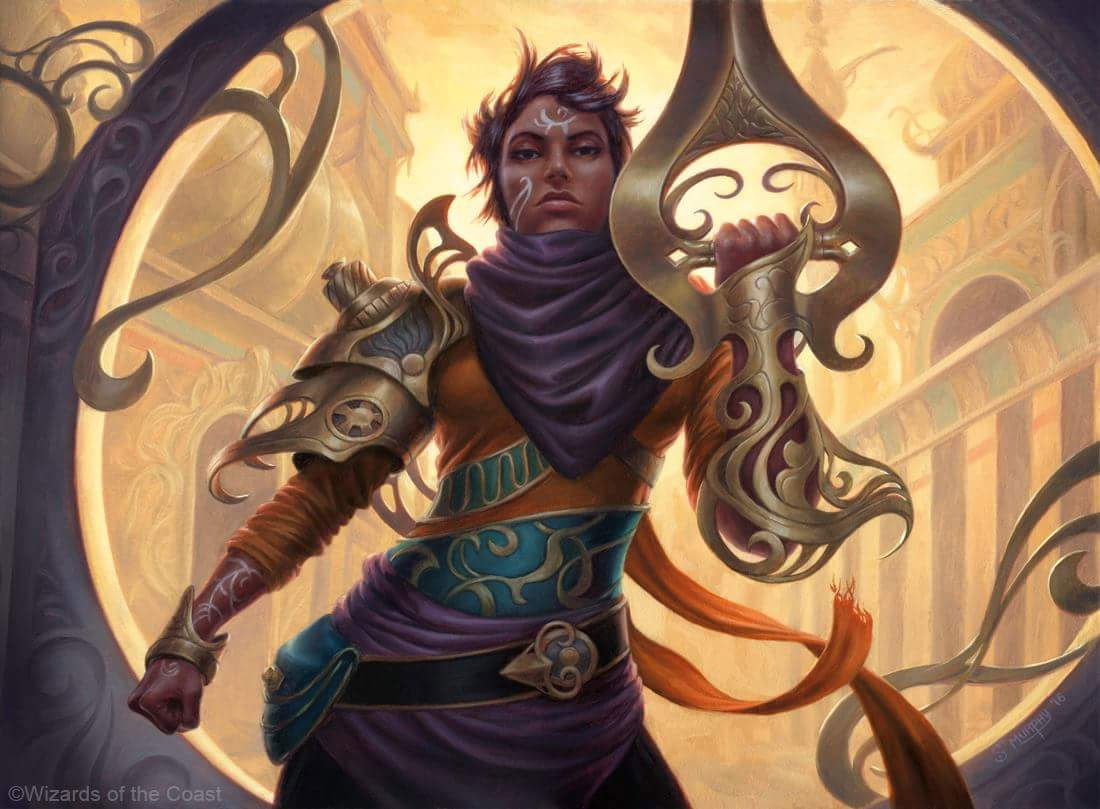
Mastermaker
A Mastermaker specialises in integrating flesh
and steel, creating powerful construct limbs and
replacing weak organs of flesh with components of metal and stone.
Tools of Integration
Beginning at 3rd level, you gain proficiency Heavy armour, and smith’s tools. If you already have this tool proficiency, you gain proficiency with one other type of artisan’s tools of your choice.
Mastermaker Spells
You always have certain spells prepared after you reach particular levels in this class, as shown in the Mastermaker Spells table. These spells count as artificer spells for you, but they don’t count against the number of artificer spells you prepare.
Mastermaker Spells
| Level | Spells |
|---|---|
| 3rd | Absorb Elements, Thunderous Smite |
| 5th | Branding Smite, Enhance Ability |
| 9th | Blinding Smite, Haste |
| 13th | Freedom of Movement, Staggering Smite |
| 17th | Greater Restoration, Steel-Wind Strike |
In addition, you gain the Blade Ward or True Strike cantrip. It is an Artificer cantrip for you, but does not count against the number of cantrips you know.
Battlefist
When you adopt this specialisation at 3rd level, you replace one of your limbs with a battlefist, a magical prosthetic you created. Your battlefist is considered both a gauntlet and simple melee weapon (knuckleduster), and you can use it as a spellcasting focus for your artificer spells. Your new mechanical arm also grants you proficiency in the Athletics and Intimidation skills and advantage on Strength saving throws.
While your battlefist is a magical weapon, it can be infused as if it were a nonmagical weapon. When you attack with your battlefist, you can use your Intelligence modifier instead of Strength for the attack roll. Your attacks with your battlefist deal 1d6 bludgeoning damage instead of the normal damage of unarmed strikes. The damage die increases to 1d8 at 5th level, 1d10 at 9th level, 2d6 at 13th level, and 2d8 at 17th level.
You can choose one of the following weapon properties to add to your battlefist: finesse, Unwieldy, thrown (range 30/60), or reach. When you finish a long rest, you can replace this property with a different weapon property from the list.
Prosthesis Expertise
Also at 3rd level, whenever you finish a long rest you can touch a nonmagical object and imbue it with your power, creating a permanent magical item that replaces a lost limb — a hand, arm, foot, leg, or similar body part. While the prosthetic is attached, it functions identically to the part it replaces. The wearer can detach or reattach it as an action, and it can’t be removed against the wearer’s will. It detaches if the wearer dies.
Extra Attack
Starting at 5th level, you can attack twice, rather than once, whenever you take the Attack action on your turn. Moreover, you can cast one of your cantrips in place of one of those attacks.
Improved Battlefist
By 9th level, you have modified your battlefist in both mundane and magical ways. It gains the following benefits:
- When you infuse your battlefist, you can apply two infusions to it at a time. If both infusions grant bonuses to your attack rolls or armour class, you gain only the greater bonus.
- Creatures grappled by your battlefist are also restrained until the grapple ends.
- Your battlefist is also a shield, increasing your armour class by 2. You can use it to make unarmed strikes even while you are using it as a shield. You can now also infuse it as if it were a shield.
- The maximum number of items you can infuse at once increases by 1, but the extra infusion must be applied to your battlefist.
Construct Apotheosis
When you reach 15th level, you have modified your form to the point of becoming nearly impervious to the weaknesses of flesh. You gain the following benefits:
- You gain resistance to poison damage and psychic damage, and you are immune to the poisoned condition.
- If you are affected by a spell or magical effect, you can choose to consider yourself a construct instead of your other creature types.
- When you expend a spell slot to cast an artificer spell, you may choose to gain resistance to all bludgeoning, piercing, and slashing damage until the start of your next turn.
- You can cast the Antilife Shell and Investiture of Stone spells without expending a spell slot, without preparing the spell, and without material components, provided you use your battlefist as the spellcasting focus. Once you cast either spell with this feature, you can’t cast that spell with it again until you finish a long rest.
Maverick
In the world of artifice, the Maverick is a jack of all trades and master of none. A Maverick is always experimenting with new designs, forever abandoning yesterday’s work in pursuit of a new obsession — although their idiosyncratic techniques can rarely be replicated by others.
Arcane Breakthroughs
Starting at 3rd level, you gain amazing insights into spell effects beyond the reach of most artificers. Choose one of the following Classes: bard, cleric, druid, paladin, ranger, sorcerer, warlock, or wizard. This class’s spells become your Breakthrough spell list. You can choose an additional class and add its spells to your Breakthrough spell list at 5th, 9th, 13th, and 17th levels.
When you change your list of prepared artificer spells after a long rest, you can prepare an additional 1st-level spell. This spell must be from your Breakthrough spell list. When you reach certain levels in this class, you increase the number of Breakthrough spells that you can prepare.
You can prepare an additional 2nd-level spell at 5th level, an additional 3rd-level spell at 9th level, an additional 4th-level spell at 13th level, and an additional 5th-level spell at 17th level. These prepared spells don’t count against the number of artificer spells you prepare.
When you cast a spell you’ve prepared using this feature, it’s considered to be an artificer spell for you, and Intelligence is your spellcasting ability for it. When you swap a prepared Breakthrough spell for a new spell, you lose any ongoing benefits from having cast it (such as a steed summoned by find steed).
Cantrip Specialist
You excel at producing minor magical effects and at abandoning your current projects to pursue new ideas. Starting at 3rd level you gain the following benefits:
- You know one additional cantrip beyond what’s normally allowed for an artificer of your level.
- When you finish a short or long rest rest (instead of when you gain a level in this class), you can replace one of the artificer cantrips you know with another cantrip from the artificer spell list or your Breakthrough spell list. This cantrip is considered an artificer cantrip for you.
- As an action, you can replace a single artificer cantrip you know with a different cantrip from the artificer spell list or your Breakthrough spell list. Once you use this feature, you can’t use it again until you finish a long rest.
Cantrip Savant
Starting at 5th level, you continue to develop your talent for the simplest spells. You gain the following benefits:
- When casting an artificer cantrip, you gain a +1 bonus to attack rolls and to your artificer spell save DC unless your spellcasting focus grants a higher bonus. This bonus increases when you reach certain levels in this class: +2 at 9th level, and +3 at 15th level.
- When you cast an Artificer spell of 1st-level or higher which deals damage and has a duration of Instantaneous using your action, you can then cast an artificer cantrip as a bonus action.
Superior Breakthroughs
Starting at 9th level, when you cast one of the spells you prepared with Arcane Breakthroughs, you can do so as if the spell was cast using a spell slot two levels higher than the spell slot you expend.
Alternatively, as an action, you can replace any prepared artificer spell with any other spell from either the artificer spell list or your Breakthrough spell list, which then counts as a prepared spell for you.
You can use Superior Breakthroughs a number of times equal to your Intelligence modifier (minimum of 1). You regain all expended uses after you finish a long rest.
Final Breakthrough
At 15th level, you gain one additional spell slot of each spell level, up to 4th-level. These spell slots can only be used to cast the bonus spells granted by your Arcane Breakthroughs. As you gain levels in this class and are able to prepare 5th-level artificer spells, you gain an additional spell slot of that level.
Infusions
Arcane Amplifier
Prerequisites: 14th-level artificer
Item: one Small or smaller object
While holding or wearing this item, a creature gains a +2 bonus to an ability score of your choice, to a maximum of 20.
Arcane Imbuement
Item: Self
You learn one additional spell from the Druid or Wizard spell lists, for which you have an Artificer spell slot. It does not count against the number of spells you know.
Arcane Propulsion Armour
Prerequisites: 14th-level artificer
Item: A suit of armour (requires attunement)
The armour includes gauntlets, each of which is a magic melee weapon that can be wielded only when the hand is holding nothing. The wearer of this armour gains these benefits:
- The wearer's walking speed increases by 5 feet.
- The wearer is proficient with the gauntlets, and each one deals 1d8 force damage on a hit and has the thrown property, with a normal range of 20 feet and a long range of 60 feet.
- When thrown, the gauntlet detaches and flies at the attack's target, then immediately returns to the wearer and reattaches.
- The armour can't be removed against the wearer's will.
- If the wearer is missing any limbs, the armour replaces those limbs - hands, arms, feet, legs, or similar appendages. The replacements function identically to the body parts they replace.
Armour of Magical Strength
Item: A suit of armour (requires attunement)
This armour has 6 charges. The wearer can expend the armour's charges in the following ways:
- When the wearer makes a Strength check or a Strength saving throw, it can expend 1 charge to add a bonus to the roll equal to its Intelligence modifier.
- If the creature would be knocked prone, it can use its reaction to expend 1 charge to avoid being knocked prone.
The armour regains 1d6 expended charges daily at dawn.
Armour of Utility
Item: A suit of armour
As an action, a creature wearing this infused armour can integrate artisan's tools or thieves’ tools into it. The tools remain integrated in the armour for 8 hours or until the wearer removes the tools as an action. The armour can have only one tool integrated at a time. The wearer can add its Intelligence modifier to any ability checks it makes with the integrated tool. The wearer must have a hand free to use the tool.
Armour Tailor
Prerequisites: 6th-level artificer
Item: Any piece of armour or a shield
You can take this infusion multiple times, but must choose one different option from the list below or a different piece of armour each time you do. You can apply multiple enhancements to a single armour piece.
Battlerager Spikes (Medium armour only). Whenever the wearer of this armour is hit with a melee attack by a creature within 5 feet of them, the attacker takes 1d4 piercing damage. In addition, any creature grappling or being grappled by the wearer takes piercing damage equal to the wearer's proficiency bonus at the start of their turn.
Bolstering. When you are the target of a spell that causes you to regain hit points, you regain additional hit points equal to your Constitution modifier.
Brawn. You have advantage on checks made to grapple, and on checks and saving throws to escape being grappled, restrained, or knocked prone.
Charmward. You have advantage on saving throws against the charmed condition.
Deathward. You have advantage on death saving throws.
Fearward. You have advantage on saving throws against the frightened condition.
Fortified. This armour reduces all damage its wearer takes by an amount equal to their Intelligence modifier.
Modular. This armour weighs half as much as it normally would, and can be donned or doffed by the wearer with an action. If the wearer has help, the time required is reduced to 1 bonus action. If this property is added to a shield, the wearer can don or doff it as a free action.
Protective Bindings. You always make one type of ability saving throw at advantage, depending on the save chosen when infused.
Quickleathers (Light armour only). You have advantage on initiative rolls while wearing this armour.
Resistive. When you add this property, choose one damage type between bludgeoning, slashing, piercing, fire, cold, thunder, lightning, acid or poison. This armour's wearer has resistance to the chosen type. This property can be added multiple times to the same armour; choose a different damage type for each instance.
Scout’s. You have advantage on attacks in the first round of combat.
Underhanded Ward. You can use your reaction to cause a melee attack targeting you, or an ally within 5 feet of you, to be made at disadvantage.
Willwethers. While wearing this armour, you can add 1d4 to a skill check of your choice. You may use this ability after rolling the check, but before you know if it was successful. You must declare you are using this feature before you make the roll, and you must finish a long rest before you can use this ability again.
Armourer Schematic: Hellion Model
Prerequisites: 6th-level Armourer
Item: Jetstepper Arcane Armour
This Arcane Armour mode sacrifices armour and mobility, preferring instead to rain destruction on foes from long range with heavy weaponry. It has the following features:
Exoskeletal Mountings. You can ignore the Two-handed property on firearms and heavy crossbows.
Bombardment. As a bonus action, you can assume a braced firing stance if you are standing on a solid surface or climbing using your Piton Claws. While in this stance, you can use a bonus action to make a single ranged weapon attack. Additionally, attacking at long range doesn't impose disadvantage on your ranged weapon attack rolls, your speed becomes 0, you can’t be knocked prone, and you cannot be pushed or pulled by any effect. As a bonus action, you can exit this stance.
Armourer Schematic: Titan Model
Prerequisites: 6th-level Armourer
Item: Guardian Arcane Armour
This Arcane Armour mode is focused on close quarters combat with its ironclad defense. It has the following features:
Exoskeletal Mountings. You can ignore the two-handed property on a single melee weapon you’re holding.
Rebuff. When you hit a creature that is no more than two sizes larger than you with a melee weapon attack, you can immediately use a bonus action to force it to make a Strength saving throw against your spell save DC. On a failed save, you can push the creature up to 15 feet away from you.
Bulwark. Your current and maximum hit points increase by an amount equal to your artificer level. When a creature you can see attacks a target other than you, you can use your reaction to move up to half your movement speed. At the end of this movement, if you are within 5 feet of the target of the attack, you can force the attack to target you instead. This movement doesn’t provoke opportunity attacks.
Armourer Schematic: Valkyrie Model
Prerequisites: 6th-level Armourer
Item: Infiltrator Arcane Armour
This Arcane Armour mode is adept at skirmishing in mobile battlefronts. It has the following feature:
Blitz. You can Dash or Disengage as a bonus action. When you Dash, your jumping distances are tripled until the end of your turn, and if you move at least 10 feet in a straight line straight toward a target before hitting it with a weapon attack, it takes an extra 1d8 lightning damage. You can deal this extra damage only once on each of your turns.
Blackout. You can cast the Pass Without Trace spell using the Arcane Armour (self only) without somatic or material components and without requiring your concentration. Once you use this ability, you cannot use it again until you finish a short or long rest, unless you expend a spell slot of 2nd-level or higher to use it again.
Arresting Rope
Item: A length of rope
You speak the command word and specify a target within 20 feet, and the arresting rope animates and attempts to tie up the target. It either ties up the target completely, or only lassos the target, leaving the other end in your hand, your choice. The target creature must succeed on a Strength or Dexterity saving throw against your artificer Spell save DC, becoming grappled on a failed save. It may repeat this save at the end of each of its turns, freeing itself on a success.
Beholder's Eye
Prerequisites: 18th-level artificer
Item: an eyeball, with the white plated in gold worth at least 50 gp
You can point the eye at a creature, casting Disintegrate on it without requiring material components and expending a spell slot. Once you use this ability, you cannot use it again until you finish a long rest.
Boots of the Winding Path
Prerequisites: 6th-level artificer
Item: A pair of boots (requires attunement)
While wearing these boots, a creature can teleport up to 15 feet as a bonus action to an unoccupied space the creature can see. The creature must have occupied that space at some point during the current turn.
Bracers of Hercules
Prerequisites: 18th-level artificer
Item: a set of bracers or gauntlets
While wearing these bracers, a creature can cast Tenser's Transformation on themselves. Once you use this ability, you cannot use it again until you finish a long rest.
Broad-Magic Focus
Prerequisites: 14th-level artificer
Item: any focus
You can cast any Artificer spell you do not have prepared throught his focus by expending an additional spell slot of at least 1st-level.
Chronomancer’s Apprentice
Prerequisites: 10th-level artificer
Item: any tiny object
You create a trinket suffused with minor chronomancy. As an action while you wear or carry the object, you can cast either Haste or Slow without expending a spell slot. Once you use this ability, you cannot use it again until you finish a long rest.


Construct Enhancement
Item: one construct you created
You can take this infusion multiple times, but must choose one different option from the list below or a different construct each time you do. You can apply multiple enhancements to a single construct.
Agile Suspension. The construct has advantage on Dexterity saving throws, and Athletics and Acrobatics checks.
All-Terrain. The construct ignores difficult terrain for travel over Arctic, Desert, Swamp, Plains, and Underdark terrains.
Amphibious. The construct gains a swim speed equal to its walking speed
Arcane Armour. Your construct is resistant to nonmagical bludgeoning, piercing, and slashing damage.
Armoured Carapace. The construct gains a +1 bonus to its AC.
Dense Armour Plating. Small but heavy metal plates are attached to the frame of the construct. This infusion increases the weight by 40 lbs., decreases its movement speed by 5ft., and imposes disadvantage on Dexterity saving throws and Acrobatic and Stealth checks, but the construct gains a damage threshold equal to half your Artificer level + your Intelligence modifier.
Devastating Weapons. The construct's weapon damage dice increase by one step (for example from 1d10 to 1d12)
Divine Effigy. Your construct is considered a Holy Symbol to a god or patron of your choice, granting it a permanent 1d4 bonus to all its ability checks and saving throws.
Piton Claws. The construct gains a climbing speed equal to its walking speed
Fortitude. The construct gains a +4 bonus to its Constitution score, and its hit points increase immediately by 2x its number of hit dice.
Graceful Chassis. The construct gains a +4 bonus to its Dexterity score.
Focal Homunculus. You can use the construct as a spellcasting focus for your Artificer spells while it’s within 100 feet of you. Spells cast in this way originate from the construct's space as though it was the caster.
Integrated Tool. You integrate a tool set you have into your construct's limbs. It makes checks with these tools using double your proficiency bonus + the relevant ability modifier.
Parting Ram. A wedge-shaped ram has been affixed to the front of the construct. It can use this to knock down a target creature in combat. The parting ram works the same way as the Ram action in combat but the target creature must make a successful Strength save or be knocked prone. The ram has the Siege property. This Upgrade also provides half-cover to the front face of the construct as it covers the lower half of their body in much the same way a low wall would.
Programmed Training. The construct gains proficiency in two skills and one saving throw of your choice.
Resistive Carapace. The construct gains resistance to a damage type of your choice; this type cannot be bludgeoning, piercing or slashing damage
Swift Chassis. The construct’s movement speed increases by 10 feet

Crossbow Spider
Prerequisites: 6th-level Artillerist
Item: an eldritch cannon and either a light or hand crossbow, or a one-handed firearm
An infused cannon gains the following properties:
- The eldritch cannon absorbs the ranged weapon into its frame, and you can activate it to have it make a ranged weapon attack using the integrated weapon against a creature it can perceive within the weapon’s short range.
- It can hold up to 10 pieces of ammunition at once, which you can refill over the course of 1 minute.
- If the integrated weapon is magical, you can have the cannon activate the abilities it possesses as if you were holding the weapon in the cannon’s space. You must be attuned to the weapon to do so if it requires attunement.
At 6th level, the cannon can make two attacks with the integrated weapon when activated, and its ammo capacity is doubled.
At 10th level, you can reload the weapon ammunition as an action.
Dancing Weapon
Prerequisites: 10th-level artificer
Item: any melee weapon
You use an action to speak the command word allowing this weapon to attack independently for 1 minute. For this duration, the weapon floats in the air and fights independently of you.
You may use a bonus action to move the weapon up to 20 feet and make a melee attack as though you were holding it, and you may use your reaction to allow the weapon to make an opportunity attack from the weapon’s location, following the normal attack of opportunity rules. You must complete a short or long rest before you can use this ability again.
Duergar Armament
Item: a belt, set of gauntlets or bracers, or circlet
You can cast Enlarge/Reduce on yourself without expending a spell slot. Once you use this ability, you cannot use it again until you finish a long rest, unless you expend a spell slot of 1st-level or higher.
Energy Weapon
Item: Rod, Wand or Staff (requires attunement)
The focus you choose becomes a martial weapon of raw magical power. A plane of energy extends from the Focus, as though the focus was the weapon's shaft. It is a 1d8 damage melee weapon and inflicts a damage type of your choice which is not bludgeoning, piercing, psychic, or slashing damage on a hit. The focus has a +1 bonus to all melee attack and damage rolls made with it. The bonus increases to +2 at 10th-level in this class. Choose one of the following options:
Mage Blade (sword). Rod - gains the light, finesse and versatile (1d10) properties.
Force Lash (whip). Wand - gains the finesse and reach properties.
Psi Pike (polearm). Staff - uses 1d10 damage die; gains
the two-handed, finesse and reach properties.
Enhanced Ammunition
Item: up to 12 pieces of ammunition, or a weapon with the Reload (2+) property
You can use this infusion at the end of a long rest, or as an Action by expending an artificer spell slot. If performing this at the end of a long rest you are considered to have expended a slot of the highest level available to you.
1st-level: +1 ammo (attack and damage)
2nd-level: +1 ammo, deals +1d6 force damage on a hit
3rd-level: +2 ammo, deals +1d6 force damage on a hit
4th-level: +2 ammo, deals +2d6 force damage on a hit
5th-level: +2 ammo, deals +3d6 force damage on a hit
The ammunition remains enchanted until used, or until you use this infusion again.
Enhanced Protection
Item: A suit of armour or a shield
A creature gains a +1 bonus to Armour Class while wearing (armour) or wielding (shield) the infused item.
The bonus increases to +2 when you reach 10th level in this class, and to +3 at 18th level
Enhanced Focus
Prerequisites: 6th-level artificer
Item: any focus
This spellcasting focus grants a +1 bonus to the spell Save DC and attack modifier of spells cast with it.
The bonus increases to +2 when you reach 12th level in this class, and to +3 at 18th level
Ethereal Phaser
Prerequisites: 10th-level artificer
Item: Any tiny object
You saturate an object with the magic of the border ethereal. As an action while wearing or carrying the object, you can cast Blink (no concentration required) or Dimension Door without expending a spell slot. Once you use this ability, you cannot use it again until you finish a long rest.
Flame Sprayer
Prerequisites: Arcane Firearm feature
Item: an eldritch cannon
You can cast Dragon’s Breath as though you were in the cannon’s space without expending a spell slot and without requiring concentration. Once you use this ability, you cannot use it again until you finish a long rest, unless you expend a spell slot of 2nd-level or higher.

Flashbang
Prerequisites: Arcane Firearm feature
Item: an eldritch cannon
As an action, your arcane cannon produces a flash of blinding sunlight. All creatures within 20 feet of the cannon must succeed on a Dexterity saving throw against your spell save DC or be blinded until the end of your next turn. Once you use this ability, you cannot use it again until you finish a long rest, unless you expend a spell slot of 1st-level or higher.
Focal Firearm
Item: A rod, staff or wand (requires attunement)
The focus you choose becomes a firearm suffused with magical power, known colloquially as a Blik. A moulded handle extends near-perpendicular to the focus, connecting to a wand which runs parallel to the focus, as though the focus was the weapon's barrel. It is a ranged weapon (firearm), requiring no ammunition, and inflicts a damage type of your choice which is not bludgeoning, piercing, psychic, or slashing damage on a hit. The properties of the Blik depend on the focus.
Pistol. (Wand) - Damage die: 1d6; Properties: Range (60/120), Light, Misfire 1, Firearm
Shotgun. (Rod) - Damage die: 1d10; Properties: Range (120/300), Two-Handed, Misfire 2, Firearm
Long-rifle. (Staff) - Damage die: 1d8; Properties: Range (300/600), Two-Handed, Misfire 2, Firearm
The focus grants a +1 bonus to all ranged spell and weapon attack rolls made with it. The bonus increases to +2 at 10th level in this class.
In addition, the wielder ignores half cover when making a spell attack cast from the Blik. While a misfired Blik is jammed, it makes spell attacks with disadvantage.
Form of the Forge
Prerequisites: 14th-level Forge Adept
If you are wearing or wielding a Wondrous Item made from your Infusion feature, you can destroy it as a bonus action and encase your body in glowing hot liquid metal for 1 minute. While in this form your AC cannot be below 20 and any melee attacks that you make deal an additional amount of fire damage equal to half your Artificer level. You are also immune to Fire damage and have resistance to Slashing, Bludgeoning, and Piercing damage from non-magical attacks. You also retain any of the effects of the destroyed Infusion until the effect is over. After the effect ends the metal cools and solidifies giving you the restrained condition until you use an action to break free
Great-Weapon Golem
Prerequisites: 10th-level Battle Smith
Item: your Steel Defender
You affix a large melee weapon of your choice to a limb of your construct, such as a maul at the end of their tail or a set of sickles for fingers. The construct gains the following attack option, under your control:
Great Weapon. Melee Weapon Attack: your spell attack modifier to hit, reach 10ft., one target. Hit: 2d8 + its Strength modifier bludgeoning, slashing, or piercing damage (as applicable)
Greater Construct Enhancements
Prerequisites: 6th-level artificer
Item: one construct you created
You can take this infusion multiple times, but must choose one different option from the list, or a different construct, each time you do. You can apply multiple enhancements to a single construct.
Electrified Exterior. When a creature hits your construct or the driver with a melee attack, the driver can use their reaction to force them to make a Constitution saving throw. If they fail, they take 3d6 lightning damage and are Paralyzed until the start of their next turn. If they succeed, they only take half the damage and are not Paralyzed. This ability can be used an amount of times equal to your Intelligence modifier per long rest.
Elemental Absorption. When it’s forced into a Saving Throw against an effect that deals cold, fire, or lightning damage, the construct has advantage on the save.
Enchanted Frame. The construct is resistant to bludgeoning, piercing or slashing damage dealt by non-magical weapons. In addition, the bludgeoning, piercing or slashing damage dealt by your construct is also considered magical.
Floodlights. Your construct can use its action to produce a 30-foot cone of bright light, disorienting your opponents, and 30-feet of dim light extending beyond that in the cone (total of 60ft.). When a creature within the bright light makes an attack roll, you can make your construct use their reaction to remove an amount equal to your Intelligence modifier (minimum of 1) from the roll, potentially turning a hit into a miss. This light remains for 1 minute, and after it runs out you must wait 1 hour before it can be used again.
Golem Plating. You infuse the carapace of your construct with one of the following enhanced versions of golem hide:
Flesh. The construct gains immunity to lightning damage
Stone. A creature the constuct hits with an attack has its speed reduced by 10 feet until the end of its next turn.
Clay. A creature the constuct hits with an attack cannot regain hit points until the start of your next turn.
Iron. The construct gains immunity to fire damage
Martial Battle Sequencing. Your construct can take one additional attack when it takes the Attack action on its turn.
Shield Guardian. When you would take damage while you have the Construct within 30 feet of you, you can use your reaction to conjure it to you (momentarily sharing your space) and, transposing it between you and the source of damage, it takes the damage instead of you. If the attack deals more damage than it has hit points, you take the remainder of the damage. The construct is then moved to the nearest unoccupied space.
Stable. Whenever an effect would knock your construct Prone, it can make a DC 15 Constitution saving throw to avoid being knocked Prone.
Suspension Springs. Creatures within your construct do not take fall damage if it falls from any significant height.
Threatening Aura. Enemies within 20 feet of your construct have disadvantage on opportunity attacks against creatures also within that range, other than your construct.
Thruster Jets. Your construct can take the Dash or Disengage action as a bonus action on its turns.
Guardian Plate
Prerequisites: 10th-level artificer
Item: Any piece of armour or apparel
You gain proficiency on a saving throw of your choice. If you can see the source of the effect, you also gain advantage on these saving throws.
Hair of the Dog
Prerequisites: 14th-level Alchemist
Item: A vial of alcoholic liquid.
You can use your action to pour this potent elixir down the throat of a creature that is dying or has died within the last minute. The creature returns to life with 1 hit point, consuming the mixture.
Helm of Awareness
Prerequisites: 6th-level artificer
Item: A helmet (requires attunement)
While wearing this helmet, a creature has advantage on initiative rolls. In addition, the wearer can’t be surprised, provided it isn’t incapacitated.
Hermean Armour
Prerequisites: 10th-level artificer
Item: breastplate, chain shirt, or other fortified chestpiece
You gain a flying speed equal to your movement speed.
Homunculus Servant
Item: A gem or crystal worth at least 100 gp
You learn intricate methods for magically creating a special homunculus that serves you. The item you infuse serves as the creature's heart, around which the creature's body instantly forms. You determine the homunculus's appearance. Some artificers prefer mechanical-looking birds, whereas some like winged vials or miniature, animate cauldrons.
The homunculus is friendly to you and your companions, and it obeys your commands. See this creature's game statistics in the Homunculus Servant stat block, which uses your proficiency bonus (PB) in several places.
In combat, the homunculus shares your initiative count, but it takes its turn immediately after yours. It can move and use its reaction on its own, but the only action it takes on its turn is the Dodge action, unless you take a bonus action on your turn to command it to take another action. That action can be one in its stat block or some other action. If you are incapacitated, the homunculus can take any action of its choice, not just Dodge.
The homunculus regains 2d6 hit points if the mending spell is cast on it. If you or the homunculus dies, it vanishes, leaving its heart in its space.
Impact Gauntlets
Item: a single gauntlet, bracer, handwrap, or knuckleduster.
This fist-weapon uses minor graviturgy to amplify the force of your punches. Unarmed Strikes made with the ‘gauntlet’ have the Light and Finesse properties and deal an additional 1d4 force damage on a hit.
Furthermore, when you hit with the impact gauntlet, you can forgo dealing damage to push the target up to 15 feet in a straight line away from you.
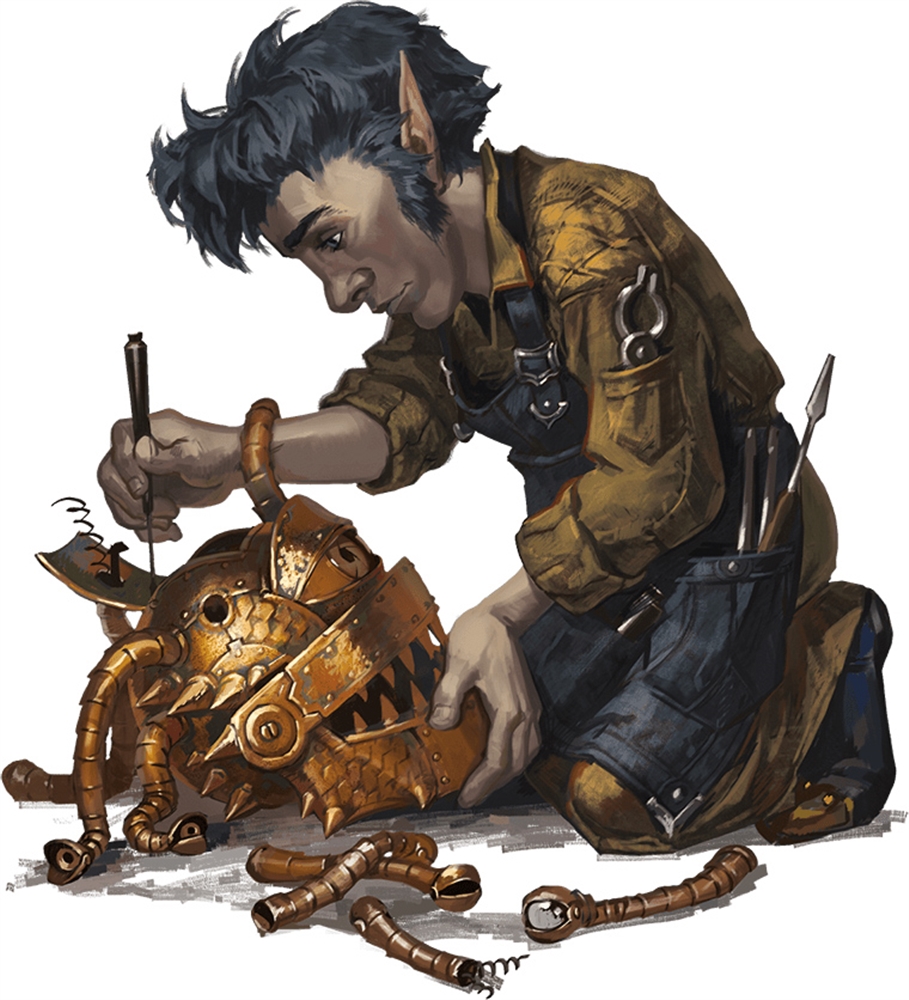
Homunculus Servant
Tiny construct, Unaligned
- armour Class 13 (natural armour)
- Hit Points 1 + your Intelligence modifier + your artificer level
- Hit Dice a number of d4s equal to your artificer level
- Speed 20 ft., fly 30 ft.
STR DEX CON INT WIS CHA 4 (-3) 15 (+2) 12 (+1) 10 (+0) 10 (+0) 7 (−2)
- Saving Throws Dex +2 plus PB
- Skills Perception +0 plus PB x 2, Stealth +2 plus PB
- Damage Immunities poison
- Condition Immunities exhaustion, poisoned
- Senses darkvision 60 ft., passive Perception 10 + (PB x 2)
- Languages understands the languages you speak
- Challenge -
- Proficiency Bonus (PB) equals your bonus
Actions
Force Strike. Ranged Weapon Attack: your spell attack modifier to hit, range 30 ft., one target you can see. Hit: 1d4 + PB force damage.
Channel Magic. The homunculus delivers a spell you cast that has a range of touch. The homunculus must be within 120 feet of you.
Improved Alterations
Prerequisites: 6th-level, Weapon Alterations infusion
The following options are added to the list of properties you can infuse into a weapon, and you can infuse one weapon with one of these properties when you take this infusion:
Hunters' (Ranged weapon only). You may use your reaction to make an attack of opportunity with this weapon against a creature moving within 30 feet of you.
Piercing. You have a +1 bonus to attack rolls against enemies with shields, natural armour, or heavy armour using this weapon. At 10th level, this bonus increases to +2, and to +3 at 14th level.
Radiant. While holding it, the wielder can take a bonus action to cause it to shed bright light in a 30-foot radius and dim light for an additional 30 feet. The wielder can extinguish the light as a bonus action. As a reaction immediately after being hit by an attack, the wielder can expend 1 charge and cause the attacker to be blinded until the end of the attacker's next turn, unless the attacker succeeds on a Constitution saving throw against your spell save DC. The weapon has charges equal to your Intelligence modifier, and regains all expended charges when the wielder finishes a long rest.
Reinforced. The weapon's damage die increases by one size (d8 to d10, d10 to d12, etc). This applies to any secondary damage types, and also increases the Versatile damage, if applicable. If the weapon's damage die is a d12 or 2d6, this property changes it to 1d6 + 1d8.
Vicious. Your hits with this weapon deal an extra damage die of damage of the weapon’s type.
Wrathful (Melee weapon only). You have advantage on attacks with this weapon against any creature you start your turn over 20 feet away from.
Item Transposition
Item: any shield, wondrous item, or weapon which already requires attunement
You can use your bonus action to summon or dismiss this item to/from a pocket dimension while you are attuned to it.
Kinetic Mine
Prerequisites: Arcane Firearm feature
Item: an eldritch cannon
You can cast Shatter or Thunderwave as though you were in the cannon’s space without expending a spell slot. Once you use this ability, you cannot use it again until you finish a long rest, unless you expend a spell slot of 1st-level or higher.
Lantern of Guiding Light
Prerequisites: 10th-level artificer
Item: A lit lantern (requires attunement)
This lantern sheds bright light in a 20-foot radius and dim light for an additional 20 feet. Friendly creatures within the light can benefit from the effect of the guidance spell once per turn.
Magebane Shackles
Prerequisites: 6th-level artificer
Item: a set of manacles
A creature wearing these manacles cannot cast spells with somatic components, and is immune to effects that would teleport them, or alter their plane or form. The DC for breaking these shackles is 5 greater than normal, and the manacles are immune to all damage types except force damage.
At 10th level, the manacles are immune to the effect of spells of 2nd-level or below
At 14th level, the manacles are immune to spells of 5th-level or below.
Mage Cannon
Prerequisites: Arcane Firearm feature
Item: an eldritch cannon
An infused cannon gains the following properties:
- You can use it as a spellcasting focus if it is within 60 feet of you. You can cast artificer spells originating from the cannon.
- Artificer spells with a casting time of 1 reaction and a range of self can instead affect a single creature within 10 feet of an eldritch cannon.
- Spells cast through an eldritch cannon are considered to be cast with your arcane firearm focus.
Magical Core
Prerequisites: 14th-level artificer
Item: any Tiny item
When you select this infusion, choose any 1st-level spell. You can cast this spell from the item without expending a spell slot or requiring material components. You can use this ability at will. The spell uses your spell attack bonus and save DC.
Magic Mechanic
Prerequisites: Mending cantrip
Item: tinkers tools or an arcane focus
When you cast the Mending cantrip using this item targeting a Construct, it heals the construct for 2d6 hit points. This increases to 3d6 at 5th level, 4d6 at 11th level, and 5d6 at 17th level.
Magustaff
Prerequisites: 6th-level artificer
Item: focal staff or rod
This focus is considered a magical quarterstaff, granting a +1 bonus to melee attack rolls using it, and a +1 bonus to AC while unarmoured.
At 10th level, both bonuses increase to +2
At 14th level, both bonuses increase to +3
Marksman Chamber
Prerequisites: 6th-level artificer
Item: any weapon with the Ammunition property
This weapon does not require physical ammunition; upon readying this weapon, a spectral arrow, bolt, or round is notched that acts as magical ammo of its normal type.
Mind Sharpener
Item: A suit of armour or robes
The infused item can send a jolt to the wearer to refocus their mind. The item has 4 charges. When the wearer fails a Constitution saving throw to maintain concentration on a spell, the wearer can use its reaction to expend 1 of the item's charges to succeed instead. The item regains 1d4 expended charges daily at dawn.
Mobile Greaves
Prerequisites: any pair of shoes or boots
Your base movement speed is increased by 10 feet while wearing this item.
Nullifier Cannon
Prerequisites: 10th-level Artillerist
Item: an eldritch cannon
You can cast Counterspell or Dispel Magic as a reaction or action respectively as an Artificer spell as though you were in the eldritch cannon’s place, without expending a spell slot. Once you use this feature, you can’t use it again until you finish a long rest, unless you expend a spell slot of 3rd-level or higher.
Overdrive Core
Prerequisites: 10th-level Armourer
Item: Arcane Armour
You can push your Arcane Armour to its limits. As an action, you can activate your Arcane Armour’s Overdrive ability, which grants you effects based on its model, as shown below. This ability requires a loud vocal component, and you must be wearing your Arcane Armour to use it.
Jetstepper. You gain advantage on your ranged weapon attacks for 1 minute.
Infiltrator. You cast the haste spell on yourself without somatic or material components and without requiring your concentration.
Guardian. You cast the enlarge/reduce spell on yourself without somatic or material components and without requiring your concentration. While you are under the effect of the spell, you gain temporary hit points equal to your artificer level at the end of each turn.
Once you have used an Overdrive ability, you cannot use that armour’s Overdrive ability again until you have finished a long rest.
Pathfinder’s Boon
Item: A stick of chalk, charcoal, or graphite
Any marks made on surfaces with this material become magically enchanted with positional magic. The user always knows the direction and distance to these marks, as long as they’re within 1,000 feet. Only 10 marks can exist at a time; if an 11th mark is made, the 1st vanishes- and so on.

Permanent Mutation
Prerequisites: 10th-level Alchemist
Item: Self
You can spend 1 hour mutating your body with alchemist's supplies. Once this ritual is completed, you gain the effects and side effects of one Alchemical Elixir of your choice indefinitely. You do not need to know the formula of the chosen elixir to gain its effects this way. Ending or changing this infusion removes the mutation applied to your body, so the ritual must be undertaken again to regain this infusion.
Philosopher’s Stone
Prerequisites: 18th-level Alchemist
Item: a gemstone worth at least 250 gp
The Philosopher’s stone has a number of charges equal to your Intelligence modifier (minimum 1). By expending 1 charge as a bonus action, you can activate the Philosopher's Stone to apply one of the following effects:
- You or a creature that you can see regains 13 (3d8) hit points.
- You or a creature that you can see gains advantage on any attack roll they make. This effect lasts until the creature hits with an attack, which deals an extra 9 (2d8) force damage.
- You or a creature that you can see gains advantage on the next saving throw that they make.
- You or a willing creature that you can see teleports to an unoccupied space within 60 feet of you that you can see.
- You or a willing creature that you can see becomes invisible until they make an attack, cast a spell, or until the Philosopher's Stone is used.
You can only activate a single effect at a time.
Alternatively, you can forgo the activation of the Philosopher's Stone and crush it in your hand as an action. When you do so, you choose to apply one of the following effects afterwards:
- You cast an 8th-level spell of your choosing that does not require concentration.
- You cast a spell of 5th-level or lower. If the spell requires concentration, you do not need to concentrate on the spell, and the spell lasts for its full duration.
- You and any friendly creature that you can see regains 27 (6d8) hit points.
- You greatly empower a creature's weapon. The next attack that is made with this weapon that hits deals an extra 44 (8d10) force damage. If the weapon is non-magical, it breaks due to the immense force behind this magical empowerment.
After breaking the Philosopher's Stone, the magic stored inside is released. Any creature within 20 feet of you, including you, takes 11 (2d10) force damage and must roll on the Wild Magic Sorcerer's Wild Surge table.

Potion Bender
Prerequisites: 6th-level Alchemist, the Shape Water cantrip
Item: a set of Alchemist's Supplies
You learn to magically control your elixirs, allowing you to apply them to your allies all over a battlefield. As a bonus action, you can turn a potion, elixir, or any other fluid you have on your person into a floating ball of liquid, sending it to an ally within 30 feet of you and granting them the effect.
Potion-Specialised Supplies
Prerequisites: 6th-level Alchemist
Item: a set of Alchemist's Supplies
Whenever you drink a potion or elixir, you gain temporary hit points equal to 1d10 + your Intelligence modifier. If the consumable already grants temporary hit points, the temporary hit points from the two sources stack for this instance only.
In addition, when you create Alchemical Elixirs after a long rest, you can create one additional item so long as the additional Elixir does not have a level prerequisite.
Power Surge
Prerequisites: 10th-level artificer
Item: any focus
Once per long rest, you can use a spell slot to cast any Wizard or Druid spell you know of up to 2 levels higher than that of the spell slot expended.
Primordial Cannon
Prerequisites: 10th-level Artillerist
Item: an eldritch cannon
Elemental Blast (Recharge 5-6). Ranged Spell Attack: your spell attack modifier to hit, range 90ft., one target. Hit: 4d8 damage of your choice of cold, fire, lightning, necrotic, radiant, or thunder damage.
Proficient Item
Prerequisites: 6th-level artificer
Item: any object (requires attunement)
The wearer gains proficiency in a number of skills, weapons, or tools of their choice equal to your Intelligence modifier (minimum 1).
Repeating Shot
Item: Any weapon with the ammunition property (requires attunement)
This magic weapon grants a + 1 bonus to attack and damage rolls made with it when it's used to make a ranged attack, and it ignores the loading property if it has it.
If you score a critical hit on a ranged weapon attack using this weapon, you can make an additional ranged weapon attack against the same target. If you roll a 1, or the weapon Mifires (if applicable), the round ricochets from the chamber back at you; you become the target of the attack you had just made, and it automatically hits you.
Replicate Magic Item
Using this infusion, you replicate a particular magic item. You can learn this infusion multiple times; each time you do so, choose a magic item that you can make with it, picking from the Replicable Items tables. A table's title tells you the level you must be in the class to choose an item from the table. Magic items replicable using this feature cannot be weapons, armour, or spellcasting foci, and they cannot be sigle-use items like potions or spell scrolls.
| Replicable Magic Item | Attunement |
|---|---|
| 2nd-Level Artificer | |
| Common (any, including weapons and foci) | Either |
| Uncommon (Communication, Detection, Utility) | No |
| 6th-Level Artificer | |
| Uncommon (Communication, Detection, Utility) | Yes |
| Uncommon (Buff, Deception, Movement) | No |
| 10th-Level Artificer | |
| Uncommon (Buff, Deception, Movement) | Yes |
| Uncommon (Protection, Restoration, Scrying, Summoning) | Yes |
| 14th-Level Artificer | |
| Uncommon (Damage) | Yes |
| Rare (Alteration, Communication, Damage, Summoning, Utility) | No |
| Rare (Buff, Detection, Movement, Protection) | Yes |
For Example: A 6th-level artificer could create Boots of Elvenkind, a Cloak of the Manta, or Gloves of Thievery, but could not create Boots of Speed, a Cloak of the Bat, or Bracers of Defence.

Repulsion Shield
Prerequisites: 6th-level artificer
Item: A shield (requires attunement)
A creature gains a +1 bonus to Armour Class while wielding this shield. The shield has 4 charges. While holding it, the wielder can use a reaction immediately after being hit by a melee attack to expend 1 of the shield's charges and push the attacker up to 15 feet away. The shield regains 1d4 expended charges daily at dawn.
Retractable Greatshield
Prerequisites: 6th-level Battle Smith
Item: your Steel Defender
You integrate a large plate of dragon-breath-tempered steel into your construct, allowing it to extend or retract a massive metal shield as a bonus action on its turn, or as both its and your reaction to an attack targeting it. Extending the shield increases the construct’s AC by 2, though decreases its movement speed by 10 feet. At 11th level, you ignore the movement decrease. While out, the construct also gains the Shield Bash attack option, and the Shield Parry reflex (which requires both your reaction and the construct’s):
Shield Bash. Melee Weapon Attack: your spell attack modifier to hit, reach 5ft., one target. Hit: 1d8 + the construct’s Strength modifier bludgeoning damage, and the target must succeed a DC (10 + your PB + the construct’s Strength modifier) Strength saving throw or be knocked 10 feet away and fall prone. If the creature is Huge or larger, it has advantage on this saving throw. On a successful save, the target is not moved and does not fall prone.
Shield Parry. The construct must not have its Greatshield extended to take this reaction. As a reaction when the construct or a creature within 5ft. of it is targeted by an attack, the construct extends the greatshield in the way, imposing disadvantage on the attack.
Returning Weapon
Item: A simple or martial weapon with the thrown property
This magic weapon grants a +1 bonus to attack and damage rolls made with it, and it returns to the wielder’s hand immediately after it is used to make a ranged attack.
Ritualist Fetish
Item: any piece of jewellery, apparel, or armour
The additional time to ritual cast spells is reduced to 1 minute whilst wearing this item.
Shaman Stone
Prerequisites: 6th-level artificer
Item: crystal ball
Increases the power of cantrips, dealing additional spell-type damage to foes equal to your Intelligence modifier.
Shock Generator
Prerequisites: Arcane Firearm feature
Item: an eldritch cannon
An infused cannon gains the following property: You can use a bonus action to cast Lightning Lure or Shocking Grasp as though you were in the cannon’s space.
Skeleton Key
Prerequisites: 10th-level artificer
Item: a tiny object, usually a key
You infuse a weapon with powerful smuggler’s magics. As an action while wearing or carrying this item, you can touch it to a surface to cast Arcane Lock, Darkness, Knock, or Silence on that surface, requiring no concentration and without expending a spell slot. In addition, you can cast Passwall in this way once, regaining the use of the spell when you finish a long rest.
Smoke Bomb
Item: Any object with the Thrown property
When this item hits with a ranged attack from being thrown at a target, you can use your reaction to cause thick black smog to pour from the object. This effect is identical to the Fog Cloud spell centred around the object, but it’s non-magical, does not require concentration, has a duration of 1 minute, and a creature within the fog is under the effect of a Darkness spell. This effect ends early if you throw the infused object again.
Spell Link
Item: any arcane focus
You gain an additional 1st-level spell slot. This spell slot is refreshed on a long rest.
At 6th level, this increases to a 2nd-level slot. At 10th level, it increases again to a 3rd-level slot, and then to a 4th-level slot at 14th level.

Spell-Refuelling Ring
Prerequisites: 6th-level artificer
Item: A ring (requires attunement)
While wearing this ring, the creature can recover one expended spell slot as an action. The recovered slot can be of 3rd level or lower. Once used, the ring can't be used again until the next dawn.
Stink Bomb
Prerequisites: 10th-level Alchemist, Smoke Bomb infusion
Item: a smoke bomb
Your smoke bomb produces the effect of a Stinking Cloud spell rather than a Fog Cloud spell.
At 18th level, the bomb can produce the effect of a Cloudkill spell instead.
Superior Alterations
Prerequisites: 10th-level artificer, Weapon Alterations infusion
The following options are added to the list of properties you can infuse into a weapon:
Beacon (Melee weapon only). You can use an action to plant this weapon in the ground. For the next 1 minute, whilst your weapon remains planted, the weapon glows with a divine light, shining bright light in a 30-foot radius, and dim light for an additional 30-foot. All allies within 15 feet gain a +1 bonus to their AC, and their attacks deal 1d6 additional force damage. Any ally that can draw line of sight to the weapon can take a bonus action to move up to half their movement towards the weapon. This movement doesn’t provoke opportunity attacks. You must complete a short or long rest before you can use this ability again
Enchanted The weapon ignores resistance to one of its damage types (your choice upon making the alteration).
Envenomed Each creature damaged by this weapon must succeed on a Constitution save against your spell save DC or suffer 2d6 poison damage at the start of each of their turns for 1 minute. An afflicted creature can repeat the saving throw at the end of each of their turns, ending the effect on themselves on a success. If the creature's saving throw is successful they are immune to this effect for the next 24 hours.
Homing (Ranged or Thrown weapon only). You may attack creatures within the weapon's close range even if you cannot see them, provided you know they are there. These attacks are made at disadvantage. Any creature targeted this way counts as being in ¾ cover.
Jagged The weapon scores a critical hit on a roll of 19-20.
Jarring Any enemy that you make a weapon attack against with this weapon cannot make attacks of opportunity against you until the beginning of your next turn.
Rallying You can use an action to raise this weapon in the air and let out a war cry bolstering your allies. For the next minute your weapon lets off a shining bright light for 30 feet, and all allies within the light gain advantage on Wisdom saving throws and are immune to the frightened condition. Any ally moving directly towards you during this time can increase their movement speed by 10 feet. You must complete a short or long rest before you can use this ability again
Slayer’s When you select this infusion, choose a single creature type such as dragons, beasts, fey, humanoids, monstrosities, or aberrations. This is not an exhaustive list. Your weapon attacks from this weapon deal 3d6 additional weapon-type damage to all creatures of this type.
Spellbreaker Attacks with this weapon deal an additional 2d6 force damage when you hit against spellcasters. Concentration checks made against damage from this weapon have disadvantage.
Superior Construct Enhancements
Prerequisites: 10th-level artificer, Construct Enhancement infusion
Item: one construct you created
You can take this infusion multiple times, but must choose one different option from the list below or a different construct each time you do. You can apply multiple enhancements to a single construct.
Awakened Engine. The construct gains an Intelligence, Wisdom and Charisma score of 12, unless already higher, and it can speak one language of your choice. Its alignment is Lawful Neutral, but accepts commands from you. You can use a bonus action to order the construct to control itself, or to return to your command. The construct loses its condition immunities to be charmed, frightened, paralysed and unconscious. If the construct drops to 0 hit points, it’s unconscious until it regains at least 1 hit point.
Barbed Armour. The construct is covered with wicked spikes. The first time on a turn that the construct moves within 5 feet of a target, or that a creature moves within 5 feet of the construct, that target takes 1d10 piercing damage.
Displacer Illusion. You can activate this magical device as a bonus action, causing the construct to project an illusion that makes it appear near its actual location, causing attack rolls against the construct to have disadvantage. If the construct is hit by an attack, this illusion dispels until the start of your next turn.
Forcefield Generator. You provide an arcane core of abjurative shielding to your construct. It gains a number of temporary hit points at the start of each of its turns equal to your Intelligence modifier + your Proficiency bonus. It does not gain this benefit when at 0 hit points. This effect is stopped for 1 minute if dispelled or within an area of antimagic.
Mounted Ballista. Your construct gains a mounted ballista that can be used instead of its normal attack. This attack cannot target a creature within 30 feet of your construct. Ballista Bolt. Ranged Weapon Attack: your spell attack modifier to hit, range 100/300 ft, one target. Hit: 2d8 + PB piercing damage.
Percussion Disks. The construct launches a load of percussion disks to 5 points within 60 feet of it. Each creature in a 15-foot-radius sphere centred on each point must make a Constitution saving throw against your spell save DC; on a failed save, the creature takes 4d8 thunder damage and is pushed 10 feet away from the point of origin. On a successful save, the creature takes half as much damage and isn't pushed. A creature only makes one save and takes damage from one disk if within multiple regions, but the push effect compounds. Once you use this ability, you cannot use it again until you finish a long rest.
Spider Legs. Tucked up snugly within the shell are 8 mechanical legs, folded up tightly in a claw-like position. Activated or deactivated an action, the legs fold out and stand, lifting the construct 4 feet off the ground, allowing it to move across the ground in the same manner a spider does. The construct can move up, down, and across vertical surfaces and upside down along ceilings, gaining a climbing speed equal to its walking speed while the legs are out.
Supplement Wonders
Prerequisites: 14th-level artificer
Item: A wondrous item with charges or uses per day
As a bonus action while holding the object in your hand, you can expend a spell slot of any level you possess. Expending slots this way restores a number of charges or per-day uses of features to the item equal to the expended slot level.
An Item cannot have more charges than its maximum, so any extra charges are shed instantly.
Synergistic Focus
Prerequisites: 10th-level artificer
Item: any focus
Reduces the spell slot level required to cast spells at 6th-level or lower by 1 (minimum 1st-level slot expended) when cast using this focus (minimum of 1st-level slot expended). A creature casting spells with this focus can use this ability a number of times equal to your Intelligence modifier, regaining all expended uses when they finish a long rest.
Telepathic Link
Item: Any weapon or focus (requires attunement)
The weapon gifts you the ability to communicate telepathically with any willing creature within 60 feet that you can see.
Tenacious Focus
Prerequisites: 6th-level artificer
Item: any focus
Casters add your Intelligence modifier to checks made to dispel or counter spells cast using this focus, or to resist such effects.
Thruster Jets
Prerequisite: 10th-level artificer
Item: A Large or smaller construct or vehicle
This vehicle has a flying speed of 50 feet. The vehicle can fly for up to 10 minutes, all at once or in several shorter flights, each one using a minimum of 1 minute from the duration. If the vehicle is flying when the duration expires, the vehicle falls.
Trapped Spell
Prerequisites: 6th-level artificer
Item: any focus
when you finish a short or long rest you can store one spell you know in this weapon. You can, as a bonus action, release this spell from the focus. You do not need to
expend a spell slot, and you ignore any verbal or
somatic components.
Ultimate Alterations
Prerequisites: 14th level, Weapon Alterations infusion
The following options are added to the list of properties you can imbue into a weapon:
Hateful When you add this property, choose one creature type other than humanoids. Attack rolls with this weapon are made with advantage against creatures of the chosen type. This doesn't apply if the target has legendary or lair actions.
Linked *Prerequisites: attunement to the weapon While attuned to this weapon, you can't be disarmed of it unless you are incapacitated. As long as it resides on the same plane of existence, you can summon this weapon as a bonus action on your turn, causing it to teleport instantly to your hand. Alternatively, if you are within 100 feet of it, you may use your action to teleport yourself over to where it is instead.
Nimble Whenever a creature provokes an opportunity attack from you, this weapon allows you to make an attack against it without expending your reaction.
Staggering. Whenever a creature is hit with this weapon, they must make a Strength saving throw (DC 8+ your Strength modifier + your proficiency bonus). On a failed save, the target is then either knocked prone or pushed 10 feet away from you (your choice).
Trueseeing You have 30 feet of truesight when holding this weapon.
Vanishing Rabbit
Prerequisites: 6th-level Artillerist
Item: an eldritch cannon
After it has been activated, the eldritch cannon teleports 30 feet to an unoccupied space it can perceive within range. Once you use this ability, you cannot use it again until you complete a short or long rest, unless you expend a spell slot of 1st-level or higher.
Wayward Compass
Item: any Small or Tiny object (requires attunement)
Attuned creatures can exactly pinpoint the Compass' current distance and direction from them as long as they're on the same plane of existence. The needle of the compass always points toward them.
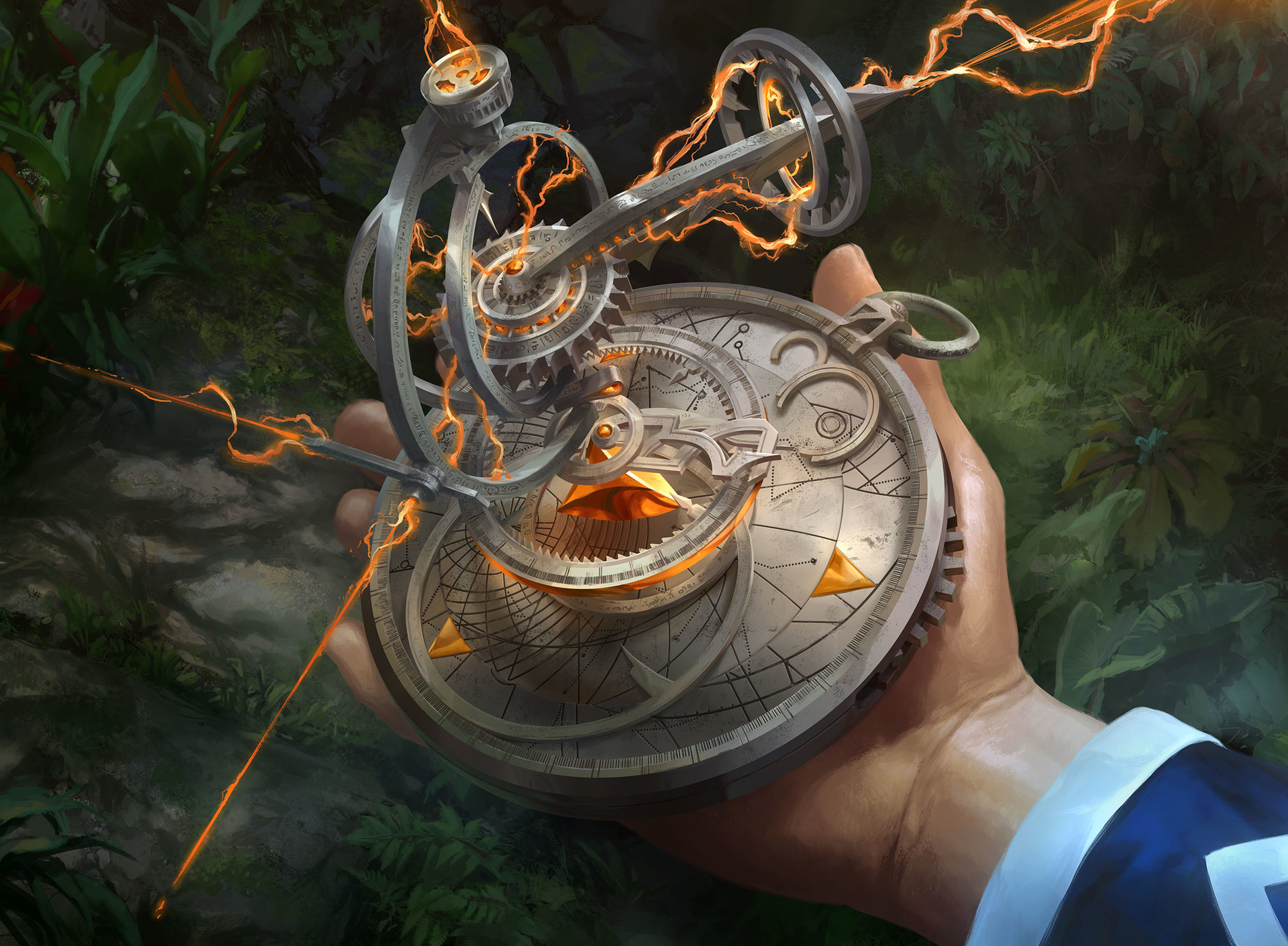
Weapon Alterations
Item: Any weapon
The infused weapon gains one of the following properties. You can choose the same weapon for multiple instances of this infusion at once, choosing different properties each time, up to a maximum number of alterations on a single weapon equal to your Intelligence modifier (minimum 1).
Aerodynamic (Melee weapon only). The weapon is streamlined and stabilised. It gains the Thrown property, with a range of 10/30. If it is not already light, it gains the Light property.
Barbaric. When you reduce a creature to 0 hit points with this weapon, you gain advantage on your next attack.
Blindside. When you have advantage on an attack roll made with this weapon, you deal an additional 1d6 damage of the weapon type. You can use this feature only once each turn. At 10th-level, this increases to 2d6
Duelist’s (Melee weapon only). When you are targeted by a melee attack you can see, you can use your reaction to add 1 to your AC until the start of your next turn. This bonus increases to +2 at 6th level and +3 at 10th level
Giant-Bane. Your weapon attacks deal an additional 1d6 damage to creatures of large size or larger.
Hidden. You can use an action to turn this weapon into a mundane version of itself. During this period it cannot be seen by the detect magic spell or similar, and loses all abilities. You can use an action to speak the weapon’s command word, restoring it to its magical form.
Icebane (Melee weapon only). The first time you hit a creature with this weapon on a turn, it must make a Constitution saving throw with a DC equal to your Artificer spell save DC. Upon failure, it is Slowed (as the Slow spell) until the end of its next turn.
Juggernaut (Unwieldy weapon only). You deal double damage against objects and structures with attacks made by this weapon.
Leomund’s. When a command word is spoken, the weapon shrinks down, taking the form of a tiny sized trinket of your choice. Speaking the command word again returns the weapon to its normal form.
Occult. When rolling damage for this weapon, you can choose to add your Constitution, Intelligence, Wisdom or Charisma modifier (your choice) instead of its usual ability modifier.
Precise. You can reroll weapon attack damage dice from this weapon. You must accept the second result.
Quickshot (Ranged weapon only). The first time you hit a target with an attack from this weapon on your turn, you gain advantage on your next attack with this weapon until the end of your turn.
Reach (Melee weapon only). Increase the range of this weapon by 5 feet for 1 minute. For the duration, the weapon inflicts an additional 1d4 force damage. You must complete a short or long rest before you can use this ability again.
Rotten (Melee weapon only). The first time you hit a creature with this weapon on a turn, it must make a Constitution saving throw with a DC equal to your Artificer spell save DC. Upon failure, it takes 1d6 poison damage and is poisoned until the end of its next turn.
Sharpshot (Ranged weapon only). When making attacks with this weapon, your target’s cover counts as being one degree lower than it is. For example ¾ cover counts as ½ cover. This has no effect against creatures not in cover.
Stern (Unwieldy weapon only). At the beginning of your turn, you can declare you are using this ability. Until the beginning of your next turn, you gain a +2 bonus to your AC, and your movement speed is reduced to 0. You cannot take any reactions whilst this ability is in effect.
Transfused (Melee weapon only). The damage dealt by this weapon is one of the following types, chosen when you infuse the weapon: cold, fire, force, necrotic, or radiant damage.
Whirlwind (Melee weapon only). You can use your action to perform a melee attack against each creature within melee range.
Willful Focus
Prerequisites: 14th-level artificer
Item: any focus
When you fail a concentration check, you can choose to pass instead. Once you have used this feature 3 times, you must finish a long rest before you can use this ability again.
Wondrous Green Cube of Power
Prerequisites: 10th-level artificer
Item: A 2-inch cube of glass, and 5 gp of emerald dust
You can use an action to speak the command word and throw this slimy green cube to a point on the ground within 60 feet of you, transforming it into a Gelatinous Cube. If the space where the creature would appear is occupied by other creatures or objects, or if there isn't enough space for the creature, the figurine doesn't become a creature.
The creature is friendly to you and your companions. It understands your languages and obeys your spoken commands. If you issue no commands, the creature defends itself but takes no other actions.
The cube stays a creature for 10 minutes, at the end of which it reverts to its object form. It reverts early if it drops to 0 hit points or if you use an action to speak the command word again while touching it. When the creature becomes an object again, its property can't be used again until you complete a long rest.

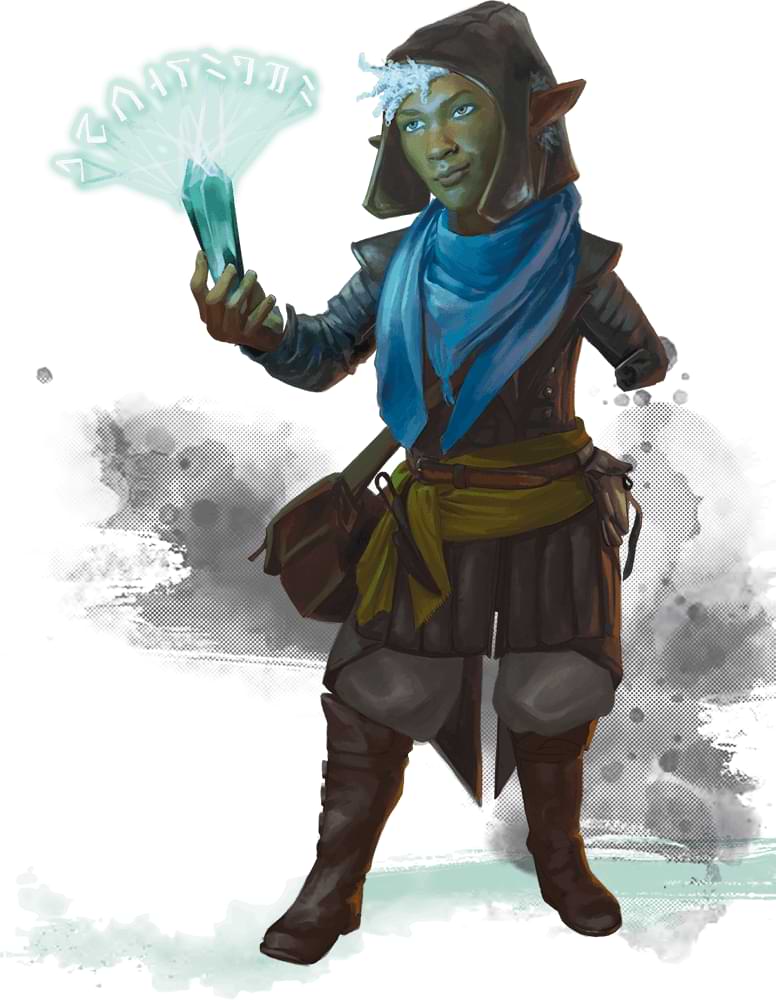
The Barbarian
For some, their rage springs from a communion with fierce animal spirits. Others draw from a roiling reservoir of anger at a world full of pain. For every barbarian, rage is a power that fuels not just a battle frenzy but also uncanny reflexes, resilience, and feats of strength.
You must have a Strength score of 13 or higher in order to multiclass in or out of this class.
Class Features
As a barbarian, you gain the following class features.
Hit Points
- Hit Dice: 1d12 per barbarian level
- Hit Points at 1st Level: 12 + your Constitution modifier
- Hit Points at Higher Levels: 1d12 (or 7) + your Constitution modifier per barbarian level after 1st
Proficiencies
- Armour: Light armour, medium armour, shields
- Weapons: Simple weapons, martial weapons
- Tools: None
- Saving Throws: Strength, Constitution
- Skills: Choose two from Animal Handling, Athletics, Intimidation, Nature, Perception, and Survival
Equipment
You start with the following equipment, in addition to the equipment granted by your background:
- (a) a greataxe or (b) any martial melee weapon
- (a) two hand axes or (b) any simple weapon
- An explorer's pack and four javelins
Rage
In battle, you fight with primal ferocity. On your turn, you can enter a rage as a bonus action. While raging, you gain the following benefits if you aren't wearing heavy armour:
- You have advantage on Strength checks and Strength saving throws.
- When you make a melee weapon attack using Strength, you gain a bonus to the damage roll that increases as you gain levels as a barbarian, as shown in the Rage Damage column of the Barbarian table.
- You have resistance to bludgeoning, piercing, and slashing damage.
- If you are able to cast spells, you can't cast them or concentrate on them while raging.
Your rage lasts for 1 minute. It ends early if you are knocked unconscious or if your turn ends and you haven't attacked a hostile creature since your last turn or taken damage since then. You can also use your bonus action to either end your rage on your turn, or to maintain your rage by taking Psychic damage equal to your Rage damage bonus.
You have a number of uses of Rage shown for your barbarian level in the Rages column of the Barbarian table, regaining any expended uses when your finish a long rest. You regain a single use of Rage when you finish a Short rest.

Unarmoured Defence
While you are not wearing any armour, your armour class equals 10 + your Dexterity modifier + your Constitution modifier. You can use a shield and still gain this benefit.
Reckless Attack
Starting at 2nd level, you can throw aside all concern for defence to attack with fierce desperation. When you make your first attack on your turn, you can decide to attack recklessly. Doing so gives you advantage on melee weapon attack rolls using Strength during this turn, but attack rolls against you have advantage until your next turn.
Survival Instincts
At 2nd level, you gain an uncanny affinity for the natural world, and an awareness of when things nearby aren't as they should be. You become proficient in your choice of two of the following skills: Animal Handling, Medicine, Nature, Perception, or Survival. Your proficiency bonus is doubled for any ability check you make that uses either of those skills.
In addition, you have advantage on Dexterity saving throws.
Primal Path
At 3rd level, you choose a path that shapes the nature of your rage. Your choice grants you features at 3rd level and again at 6th, 10th, and 14th levels.
The Barbarian
| Level | Proficiency Bonus | Features | Rage Uses | Rage Damage |
|---|---|---|---|---|
| 1st | +2 | Rage, Unarmoured Defence | 2 | +2 |
| 2nd | +2 | Reckless Attack, Survival Instincts | 2 | +2 |
| 3rd | +2 | Primal Path | 3 | +2 |
| 4th | +2 | Ability Score Improvement | 3 | +2 |
| 5th | +3 | Extra Attack, Fast Movement | 3 | +2 |
| 6th | +3 | Path Feature | 4 | +2 |
| 7th | +3 | Feral Instinct | 4 | +2 |
| 8th | +3 | Ability Score Improvement | 4 | +2 |
| 9th | +4 | Brutal Critical | 4 | +3 |
| 10th | +4 | Path Feature | 4 | +3 |
| 11th | +4 | Relentless Rage | 4 | +3 |
| 12th | +4 | Ability Score Improvement | 5 | +3 |
| 13th | +5 | Brutal Critical (2 dice) | 5 | +3 |
| 14th | +5 | Path Feature | 5 | +3 |
| 15th | +5 | Persistent Rage | 5 | +3 |
| 16th | +5 | Ability Score Improvement | 5 | +4 |
| 17th | +6 | Brutal Critical (3 dice) | 6 | +4 |
| 18th | +6 | Indomitable Might | 6 | +4 |
| 19th | +6 | Ability Score Improvement | 6 | +4 |
| 20th | +6 | Primal Champion | - | +4 |
Ability Score Improvement
When you reach 4th level, and again at 8th, 12th, 16th, and 19th level, you can increase one ability score of your choice by 2, or you can increase two ability scores of your choice by 1. As normal, you can't increase an ability score above 20 using this feature. Alternatively, you may take a feat in place of the ASI, provided you fulfil its prerequisites.
Instead of increasing ability scores as detailed above, you may increase one ability score of your choice by 1 and gain one fighting style available to you.
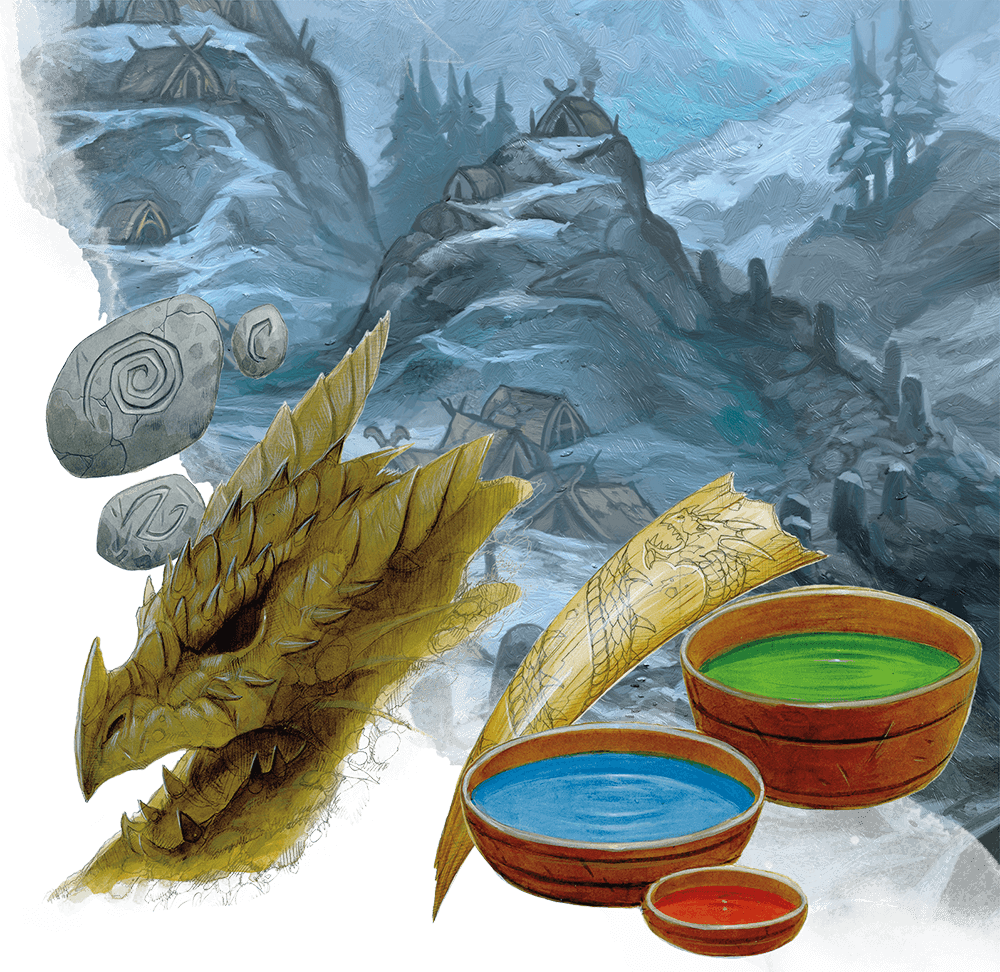
Extra Attack
Beginning at 5th level, you can attack twice, instead of once, whenever you take the Attack action on your turn.
Fast Movement
Starting at 5th level, your speed increases by 10 feet while you aren't wearing heavy armour.
As a bonus action on your turn, you can increase your speed by 10 feet until the start of your next turn.
Feral Instinct
By 7th level, your instincts are so honed that you have advantage on initiative rolls.
Additionally, if you are surprised at the beginning of combat and aren't incapacitated you can act normally on your first turn, but only if you enter your rage before doing anything else on that turn.
Finally, as part of the bonus action you take to enter your rage, you can now move up to half your speed.
Brutal Critical
Beginning at 9th level, you can roll one additional weapon damage die when determining the extra damage for a critical hit with a melee attack.
This increases to two additional dice at 13th level and three additional dice at 17th level.
Relentless Rage
Starting at 11th level, your rage can keep you fighting despite grievous wounds. If you drop to 0 hit points while you're raging and don't die outright, you can make a DC 10 Constitution saving throw. If you succeed, you drop to hit points equal to your Barbarian level instead. Each time you use this feature after the first, the DC increases by 5. When you finish a short or long rest, the DC resets to 10.
Persistent Rage
Beginning at 15th level, your rage is so fierce that it ends early only if you fall unconscious or if you choose to end it.
Indomitable Might
Beginning at 18th level, if your total for a Strength check is less than your Strength score, you can use that score in place of the total.
Primal Champion
At 20th level, you embody the power of the wilds. Your Strength and Constitution scores increase by 4. Your maximum for those scores is now 24.

Primal Paths
Path of the Ancestral Guardian
When a barbarian who follows this path rages, the barbarian contacts the spirit world and calls on these guardian spirits for aid. Barbarians who draw on their ancestral guardians can better fight to protect their tribes and their allies. In order to cement ties to their ancestral guardians, barbarians who follow this path cover themselves in elaborate tattoos that celebrate their ancestors’ deeds.
Ancestral Protectors
Starting when you choose this path at 3rd level, spectral warriors appear when you enter your rage. While you’re raging, the first creature you hit with an attack on your turn becomes the target of the warriors, which hinder its attacks. Until the start of your next turn, that target has disadvantage on any attack roll that isn't against you, and when the target hits a creature other than you with an attack, that creature has resistance to the damage of the target’s attacks.
Spirit Shield
Beginning at 6th level, the guardian spirits that aid you can provide supernatural protection to those you defend. If you are raging and a creature you can see within 30 feet of you takes damage, you can use your reaction to reduce that damage by 2d6. When you reach certain levels in this class, you can reduce the damage by more: by 3d6 at 10th level and by 4d6 at 14th level.
Ancestral Guide
Also at 6th level, you can cast the Find Familiar spell without requiring material components, but only as a ritual. When you perform this ritual, you instead summon the spirit of an ancestor who wishes to guide your way through life. It has the statistics of a Will-o-Wisp, but lacks the Consume Life trait.
Consult the Ancestors
At 10th level, you gain the ability to consult with your ancestral spirits. When you do so, you cast the Augury or Clairvoyance spell, without using a spell slot or material components. Rather than creating a spherical sensor, this use of Clairvoyance invisibly summons one of your ancestral spirits to the chosen location. Wisdom is your spellcasting ability for these spells. After you cast either spell in this way, you can’t use this feature again until you finish a short or long rest.
Vengeful Spirits
At 14th level, your ancestral spirits grow powerful enough to retaliate. When you use your Spirit Shield to reduce the damage of an attack, the attacker takes an amount of force damage that your Spirit Shield prevents.
Path of the Battlerager
Known as Kuldjargh (literally "axe idiot") in Dwarvish, battleragers are dwarf followers of the gods of war and take the Path of the Battlerager. They specialise in wearing bulky, spiked armour and throwing themselves into combat, striking with their body itself and giving themselves over to the fury of battle.
Restriction: Dwarves Only. The battlerager fills a particular niche in dwarven society and culture alone. Your DM can lift this restriction to better suit the campaign.
Battlerager Armour
When you choose this path at 3rd level, you gain proficiency in medium armour, leatherworker's tools, and smith’s tools. You also make yourself (or otherwise procure) a set of Spiked Armour at no cost.
Spiked armour is a rare type of medium armour made by specialist smiths. It consists of a leather coat and leg plates covered with spikes that are usually made of metal, bone, or gemstones.
Spiked Armour
Cost: 25 gp
AC: 14 + Dexterity modifier (max. 2)
Stealth: Disadvantage
Weight: 45 lb.
While raging and wearing spiked armour, you gain the following benefits:
- You benefit from Unarmoured Defence and other barbarian features as if you were wearing no armour.
- When you hit a creature with an unarmed strike or a creature hits you with a melee attack, you immediately deal 1d4 piercing damage to the creature as they’re impaled on the armour’s spikes.
- If you grapple or are grappled by a creature, at the start of each of the creature’s turns while in the grapple, it takes 1d4 piercing damage.
- From 11th level, any unarmed strikes you make while wearing the armour have the Bleed property.
- The spikes’ piercing damage increases by 1d4 when you reach 5th level (2d4), 11th level (3d4), and 17th level (4d4).
You can forge these specialised spikes into a set of medium armour which is not an artifact over the course of an 8-hour ritual, provided you destroy the spikes from the previous set. This is a secret, highly coveted armourer's trick known to a select few, and should only be performed privately, without an audience. Such a set of armour also gains the above properties for you.
Reckless Abandon
At 6th level, whenever you use Reckless Attack while raging, you gain temporary hit points equal to half your Barbarian level (rounded down) until the end of your next turn.
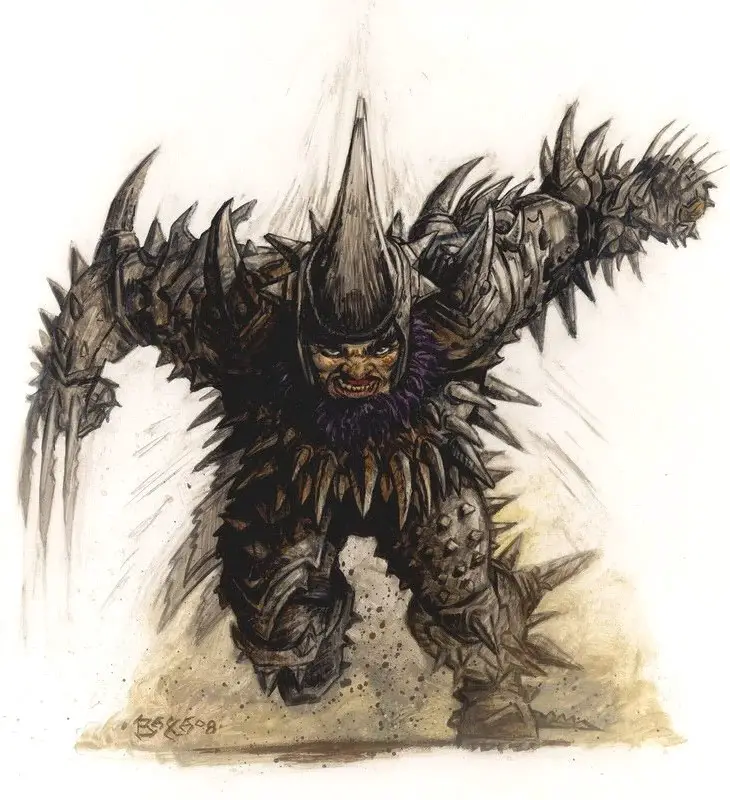
Spiked Retribution
Also at 6th level, the piercing damage inflicted by your spiked armour is considered magical for the purpose of overcoming resistance and immunity.
Fastball Charge
Beginning at 10th level, your jump distance is doubled and you can take the Dash action as a bonus action while you are raging. If you run at least 20 feet in a straight line while wearing spiked armour before hitting with a melee attack, you deal additional piercing damage equal to your barbarian level. You can deal this extra damage only once per turn.
Mourning Star
Using a grappling hook, tail, whip, or chain, starting at 14th level you can attack by swinging around a point you choose within 10 feet of you as an action. All creatures in a 15-foot-radius, 5-foot-high cylinder around that point must make a Dexterity saving throw (DC 8 + your Strength modifier + your Proficiency bonus). On a failed save, each creature falls prone and takes 6d8 piercing damage. On a successful save, a creature takes half as much damage but is not knocked prone. You end the action on the opposite side of the point you chose, 10 feet away from the point. When you take this action, you become dizzy until the end of your next turn, incurring the following traits:
- Your speed is halved.
- You have a -2 penalty to your AC and Dexterity saving throws.
- You can't take reactions.
- You have disadvantage on all attack rolls and ability checks.
You once you use this feature, you cannot use it again until you complete a short or long rest, unless you expend one use of your Rage feature.
Path of the Beast
Of the many terrible curses that plague the realm, few are as ancient or as feared as Lycanthropy. Barbarians who walk the Path of the Beast draw their rage from a bestial spark burning within their souls. That beast bursts forth in the throes of rage, physically transforming the barbarian. Such a barbarian might be inhabited by a primal spirit or be descended from shape-shifters, dragons, or a cursed bloodline.
Heightened Senses
Starting when you choose this archetype at 3rd level, you begin to adopt the improved abilities of a natural predator. You gain advantage on Wisdom (Perception) checks that rely on hearing or smell.
Hybrid Transformation
Starting when you choose this path at 3rd level, when you enter your rage, you can transform, revealing the bestial power within you. While you are transformed, you gain the following features:
Resilient Hide. While you are not wearing heavy armour, you gain a +1 bonus to your AC and you have resistance to non-magical damage from all sources (such as mundane fire, natural acids, and non-enchanted weapons) other than silver.
Bloodlust. If you begin your turn with no more than half of your maximum hit points, you must succeed on a DC 10 Wisdom saving throw or move directly towards the nearest creature to you and use the Attack action against that creature. You can choose whether or not to use your Extra Attack feature for this frenzied attack. If there is more than one possible target, roll to randomly determine the target. You then regain control for the remainder of your turn.
Form of the Beast
Also at 3rd level, until the rage ends, you manifest one of the following natural weapons. It counts as a simple melee weapon for you, and you add your Strength modifier to the attack and damage rolls when you attack with it, as normal. You choose the manifested weapon each time you rage:
Bite. Your mouth transforms into a bestial muzzle, crushing beak, or great mandibles. It deals 1d8 piercing damage on a hit. Once on each of your turns when you damage a creature with this bite, you regain a number of hit points equal to your Constitution modifier, provided you have less than half your hit points when you hit.
Claws. Each of your hands transforms into a claw, which you can use as a weapon if it’s empty. It deals 1d6 slashing damage on a hit. Once on each of your turns when you attack with a claw using the Attack action, you can make one additional claw attack as part of the same action. You can instead choose these to be hooves, dealing bludgeoning instead of piercing damage on a hit.
Tail. You grow a lashing, spiny tail, which deals 1d8 bludgeoning, piercing, or slashing damage (your choice) on a hit and has the reach property. If a creature you can see within 10 feet of you hits you with an attack roll, you can use your reaction to swipe your tail and roll a d8, applying a bonus to your AC equal to the number rolled, potentially causing the attack to miss you.
Horns. Thick antlers, a rhino’s horn, or curling ram horns burst from your skull. It deals 1d8 damage on a hit of either bludgeoning or piercing damage (your choice). When you move at least 20 feet in a straight line and make a melee attack against a creature, they must make a Strength saving throw (DC 8 + your Strength modifier + your proficiency bonus) or be knocked Prone.
Bestial Soul
Beginning at 6th level, the feral power within you increases, causing the natural weapons of your Form of the Beast to count as magical for the purpose of overcoming resistance and immunity to nonmagical attacks and damage.
You can also alter your form to help you adapt to your surroundings. When you finish a short or long rest, choose one of the following benefits, which lasts until you finish a short or long rest:
Manta Fins. You gain a swimming speed equal to your walking speed, and you can breathe underwater.
Spider Climb. You gain a climbing speed equal to your walking speed, and you can climb difficult surfaces, including upside down on ceilings, without needing to make an ability check.
Spry Leaps. You can jump as a bonus action. Your long jump increases by 10ft., and your high jump increases by 5ft.
Siege Monster. Your natural weapons deal double damage to objects and structures.
Predatory Strikes. You gain a +1 bonus to attack rolls made with your unarmed strikes. This bonus increases by 1 at 11th level (+2) and 18th level (+3).
Defensive Spines. Thick quills burst from your back. When a creature grapples you, and at the start of every turn it begins grappling you, the grappler takes 1d8 piercing damage.
Fleet. Your movement speed increases by 10 feet, and you are not affected by nonmagical difficult terrain.
Lycan Regeneration. At the start of each of your turns, before you roll for bloodlust, you regain hit points equal to 1 + your Constitution modifier (minimum of 1) if you have at least 1 hit point and no more than half of your hit points left.
Feral Weapons. You can manifest all your Form of the Beast natural weapons at once while raging, and can draw or stow any number of them as a bonus action. You can also manifest one of your Form of the Beast natural weapons even while not raging.


Infectious Fury
At 10th level, when you hit a creature with your
natural weapons while you are raging, the
beast within you can curse your target with
rabid fury. The target must succeed on a
Wisdom saving throw (DC equal to
8 + your Constitution modifier
suffer one of the following
effects (your choice):
- The target must use its reaction
to make a melee attack against
another creature of your choice that
you can see. - The target must use its reaction to
take the dash action toward a creature
of your choice that it can see. - The target takes 2d12 psychic damage.
You can use this feature a number of times
equal to your Constitution modifier (minimum of once),
regaining all expended uses when you finish a long rest.
Call the Hunt
At 14th level, the beast within you grows so powerful that you can spread its ferocity to others and gain resilience from them joining your hunt. When you enter your rage, you can choose a number of other willing creatures you can see within 30 feet of you equal to your Constitution modifier (minimum of one creature). You gain 5 temporary hit points for each creature that accepts this feature.
Until the rage ends, the chosen creatures can use the following benefit once on each of their turns:
Hunter's Pack. When the creature hits
a target with an attack roll and deals
damage to it, the creature can roll
a d6 and gain a bonus to the
damage equal to the
number rolled.
In addition, each
creature within 30 feet of you
that can hear you who is not a
part of your Hunter's Pack must
succeed on a Wisdom saving
throw (using your Infectious
Fury DC) or become
frightened of you until
the end of your next
turn. If they fail their
saving throw by 5 or
more, they are stunned
while frightened in
this way.
Path of the Berzerker
For some barbarians, rage is a means to an end – that end being violence. The Path of the Berzerker is a path of
untrammelled fury, slick with blood. As you enter the
berserker's rage, you thrill in the chaos of battle,
heedless of your own health or well-being.
Frenzy
Starting when you choose this path at 3rd level, you can go into a frenzy when you rage, ending your turn this round. If you do so, once each turn for the duration of your rage, you can make a single additional melee weapon attack when you take the Attack action. In addition, your speed increases by 10 feet and your jumping distances are doubled.
At the end of the next long rest after you have gone into a
frenzy, you gain one level of exhaustion.
Mindless Rage
Beginning at 6th level, you can't be charmed or frightened while raging. If you are charmed or frightened when you enter your rage, the effect is suspended for the duration of the rage.
Intimidating Presence
Beginning at 10th level, you can use your bonus action to unleash a terrifying presence. When you do so, all creatures of your choice that can see or hear you within 30 feet of you must succeed on a Wisdom saving throw (DC equal to 8 + your proficiency bonus + your Strength modifier) or be frightened of you until the end of your next turn. On subsequent turns, you can use your bonus action to extend the duration of this effect on creatures frightened this way until the end of your next turn. This effect ends if the creature ends its turn out of line of sight or more than 60 feet away from you.
If the creature succeeds on its saving throw, it is immune to the effects of this feature for 24 hours.
Retaliation
Starting at 14th level, when you take damage from
a creature that is within 5 feet of you, you can use
your reaction to make a melee weapon attack
against that creature.

Path of the Juggernaut
Juggernaut barbarians are siege engines in their own right, able to stand their ground and move their foes into positions of weakness. While raging, they make any battlefield their domain, shoving their foes over mountainsides and destroying even the strongest structures with their attacks.
Thunderous Blows
Starting when you choose this path at 3rd level, your rage instils you with the strength to shove and smash your way through your foes, making any battlefield your domain. When you hit a creature with a melee attack while you’re raging, you can push that creature up to 10 feet away from you in a direction of your choice. A creature that is Huge or larger makes a Strength saving throw with a DC equal to 8 + your proficiency bonus + your Strength modifier. On a success, the creature is not pushed.
Starting at 10th level, you can push a creature up to twice as far away when you hit it with a melee attack while you're raging.
Spirit of the Mountain
At 3rd level, you harness your fury to anchor your feet to the ground, becoming a bulwark of strength. While you are raging, you can’t be knocked prone or moved along the ground against your will.
Demolishing Might
Starting at 6th level, your melee weapon attacks deal an extra weapon die of damage to constructs, and deal double damage to objects and structures.
Resolute Stance
Also at 6th level, you can temporarily refocus your combat ability to make yourself a bulwark of defence. At the start of your turn (no action required), you can assume a defensive stance that lasts until the start of your next turn. While in this stance, you can’t be grappled, attack rolls against you have disadvantage, and your weapon attacks are made with disadvantage.
Hurricane Strike
Starting at 10th level, your blows can hurl
foes through the air and into the attacks
of your allies. As a reaction when
you push a creature at least
5 feet, you can then leap into an
unoccupied space next to the
creature. If you do so, the
creature must succeed on a Strength
saving throw with a DC equal to
8 + your proficiency bonus + your
Strength modifier or be knocked prone.
This leap costs no movement and
does not provoke attacks
of opportunity.
Additionally, whenever you
push a creature into a
space within 5 feet of one of
your allies, the ally can use its
reaction to make a melee
weapon attack against it.
Unstoppable
At 14th level, your fury in battle makes you unstoppable. While you’re raging, your speed cannot be reduced, and you are immune to the frightened, paralyzed, prone, and stunned conditions; if you are affected by one of these conditions, you can still use a bonus action to enter a rage (even if you can’t otherwise take actions) and gain the rage's immunity.
Path of the Storm Herald
Typical barbarians harbour a fury that dwells within. Their rage grants them superior strength, durability, and speed. Barbarians who follow the Path of the Storm Herald learn instead to transform their rage into a mantle of primal magic that swirls around them. When in a fury, a barbarian of this path taps into nature to create powerful, magical effects.
Storm Soul
When you select this path at 3rd level, the storm crackles within your wrath. You gain resistance to thunder and lightning damage while you are raging. You also gain a 5 ft. bonus to your movement speed. This increases by 5 feet at 9th level (+10 ft.) and 15th level (+15 ft.).
Storm Aura
At 6th level, you emanate a stormy, magical aura while you rage, granting you resistance to lightning and thunder damage. The aura extends 10 feet from you in every direction, but not through total cover. If a creature of your choice starts their turn within the aura, or moves into it on their turn, the target must make a Dexterity saving throw (DC 8 + your proficiency bonus + your Constitution modifier). The target takes 1d6 lightning damage on a failed save, or half as much damage on a successful one. The damage increases when you reach certain levels in this class, increasing to 2d6 at 10th level, 3d6 at 14th level, and 4d6 at 18th level.
Furthermore, at 18th level the radius of the
aura increases to 30 feet.

Roaring Storm
At 10th level, you learn to use your mastery of the storm to bolster others. Each creature of your choice other than you deals an additional 1d6 lightning damage with all their weapon attacks while they are within your Storm Aura.
Storm Caller
Also at 10th level, you can slip through the battlefield like a lightning bolt through the skies. As a bonus action on your turn while raging, you can expend one use of your Rage to cast Thunderstep or Lightning Bolt, using your Aura save DC.
Raging Storm
At 14th level, the power of the storm you channel grows mightier, lashing out at your foes. Immediately after a creature in your aura hits you with an attack, you can use your reaction to force that creature to make a Dexterity saving throw. On a failed save, the creature takes lightning damage equal to your Barbarian level, or takes half as much thunder damage and is pushed 10 feet away from you.
Path of the Tanarukk
Few creatures leave a greater trail of devastation in their wake than the Tanarukk, the resulting abyssal devolution of orc and their kin through the influence of Gruumsh. Through zealotism in his name, pure sadism, or simply the lust to see the world burn, these barbarians become angels of ruin at the smallest provocation.
Restriction: Orcs Only. The Tanarukk is a genetic mutation of orc blood, or a gift from Gruumsh to his most devout. Your DM can lift this restriction to better suit the campaign.
Wrathful Warfare
At 3rd level, you channel the eye of Gruumsh as you wade through the bodies of your foes. You can take a Fighting Style of your choice, obeying prerequisites.
Ire of Ruin
Also at 3rd level, you naturally manifest destruction upon the weak, unleashing a cull upon them with your fury. When you hit with a weapon attack while raging, you can use your bonus action to increase the attack’s weapon damage by 1d6 and reduce the target’s speed by 10 feet until the end of its next turn.
The damage you can inflict with this feature increases when you reach 6th level (1d10), 10th level (2d8), and 14th level (2d10).

Butcherer
At 6th level, you draw strength from death, empowering you to bring the world crumbling down around you. Whenever you score a critical hit or a creature you can see within 30 feet of you is reduced to 0 hit points, you can use one of the following features:
Bloodrush. As a reaction, you can move up to your speed and make a melee weapon attack against a creature within range. You deal additional damage if you hit as though you used your Ire of Ruin feature.
Weeping Weapon. The weapon used to score the critical hit gains the Bleed property for the next minute. If it already has the Bleed property, its critical hit range increases by 1 instead.
Gore. You are fed by the sapping of life. You regain a number of hit points equal to half your Barbarian level (rounded down) + your Constitution modifier. Hit points gained this way which exceed your hit point maximum are gained as temporary hit points.
Bleeding Eye. Closing one eye, the other begins to weep blood. As a reaction, you force a creature within 30 feet of you who can see you to make a Wisdom saving throw. On a failed save, they are frightened of you for the next minute. They can repeat the saving throw at the end of each of their turns, ending the effect on themselves on a success.
Saving throws that you force creatures to make from your Tanarukk features have a DC equal to 8 + your Constitution modifier + your Proficiency bonus.
Stench of Death
By 10th level, the stink of rotting blood saturates every pore of your being. Hostile creatures that start their turn within 10 feet of you must make a Constitution saving throw or be Poisoned until the start of their next turn.
Furthermore, creatures below their hit point maximum have disadvantage on checks made to hide from you, and you have advantage on all contested Wisdom and Charisma checks made against wounded creatures, such as to track, seach for, or intimidate them.
Finally, melee weapon attacks you make against creatures who are poisoned or below half of their hit point maximum score a critical hit on a roll of 19 or 20.
Bloodlust
By 14th level, you walk as an executioner upon fields of war. As an action, you can make a melee weapon attack against a creature half your movement speed or less away from you below its hit point maximum, rushing up to them. You can then leap that distance from that target to a different wounded creature within that range of the last target. You can only attack a creature once each with this feature. Damage you deal from these attacks all deal your Ire of Ruin bonus damage on a hit. You can repeat this process until there are no more valid targets, or until you have hit a number of targets with attacks equal to your Constitution modifier.
Once you use this feature, you cannot use it again until you finish a long rest.

Path of the Totem Warrior
The Path of the Totem Warrior is a spiritual journey, as the barbarian accepts a spirit animal as guide, protector, and inspiration. In battle, your totem spirit fills you with supernatural might, adding magical fuel to your barbarian rage.
Spirit Seeker
Yours is a path that seeks attunement with the natural world, giving you a kinship with beasts. At 3rd level when you adopt this path, you gain the ability to cast the Beast Sense and Speak with Animals spells, but only as rituals.
At 10th level, you also gain the Beast Bond and Land Bond spells as rituals.
Totem Spirit
At 3rd level, when you adopt this path, you choose a totem spirit and gain its feature. You must make or acquire a physical totem object – an amulet or similar adornment – that incorporates fur or feathers, claws, teeth, or bones of the totem animal. At your option, you also gain minor physical attributes that are reminiscent of your totem spirit. For example, if you have a bear totem spirit, you might be unusually hairy and thick-skinned, or if your totem is the eagle, your eyes turn bright yellow.
Unless specifically relevant to your character’s backstory (or animal totems such as Owlbears), you should take the same totem creature at each stage.
Totem Spirits
Your totem animal might be an animal related to those listed here but more appropriate to your homeland. For example, you could choose a hawk or vulture in place of an eagle.
Bear. You gain the might of a bear. Your carrying capacity (including maximum load and maximum lift) is doubled, and you have advantage on Strength checks made to push, pull, lift, or break objects.
Dragon. When raging, you deal an extra 1d6 damage to a creature whenever you hit it with a melee attack, the type of which is determined by your totem dragon's damage resistance.
Eagle. While you're raging and aren't wearing heavy armour, other creatures have disadvantage on opportunity attack rolls against you, and you can use the Dash action as a bonus action on your turn, provided you move closer to a hostile creature. The spirit of the eagle makes you into a predator who can weave through the fray with ease.
Elk. While you're raging and aren't wearing heavy armour, your walking speed increases by 15 feet. The spirit of the elk makes you extraordinarily swift.
Ram. When you move 15 feet in a straight line and then hit with an attack while raging, you can push the target back up to 15 feet.
Shark. You have a swimming speed equal to your walking speed, and you can hold your breath for twice as long.
Spider. You ignore movement restrictions of webbing, have advantage on contested grappling checks, and gain a climbing speed equal to your walking speed.
Tiger. While raging, you can add 10 feet to your long jump distance and 5 feet to your high jump distance, and if you move at least 20 feet in a straight line toward a creature you gain advantage on melee weapon attack rolls against that creature that turn.
Viper. You have advantage rather than disadvantage on melee attacks made while you are Prone.
Wolf. While you're raging, your allies have advantage on melee attack rolls against any creature within 5 feet of you that is hostile to you.
Aspect of the Beast
At 6th level, you gain a magical benefit based on the totem animal of your choice.
Bear. While raging, you have resistance to all damage except psychic damage. The spirit of the bear makes you tough enough to stand up to any punishment.
Dragon. You gain resistance to your totem dragon's damage type. If you already have resistance to this type, then you reduce damage of that type by an amount equal to your Constitution modifier (minimum 1) after halving the damage.
Eagle. You gain the eyesight of an eagle. You can see up to 1 mile away with no difficulty, able to discern even fine details as though looking at something no more than 100 feet away from you. Additionally, dim light doesn't impose disadvantage on your Wisdom (Perception) checks.
Elk. Whether mounted or on foot, your travel pace is doubled, as is the travel pace of up to ten companions while they're within 60 feet of you and you're not incapacitated. The elk spirit helps you roam far and fast.
Ram. You can add your Constitution modifier to Athletics checks, and can fall 20 feet without taking damage.
Shark. You know the exact location of any creature within 30ft. of you as long as they have a heartbeat, and you ignore any imposed disadvantage while you attack these creatures with a Reckless Attack.
Spider. When you score a critical hit with a melee weapon attack while raging, the creature you hit becomes paralysed until the start of your next turn. You cannot impose this upon a creature that is already paralysed.
Tiger. You gain proficiency in two skills from the following list: Athletics, Acrobatics, Stealth, and Survival. The cat spirit hones your survival instincts.
Viper. You gain proficiency in the Persuasion and Deception skills, and your proficiency bonus is doubled. You also gain a natural weapon (bite) attack, dealing 1d6 + STR Piercing damage on a hit. If you already have a natural bite, the damage die increases by 1 step instead (1d10 to 2d6)
Wolf. You gain the hunting sensibilities of a wolf. You can track other creatures while travelling at a fast pace, and you can move stealthily while travelling at a normal pace.
Spirit Walker
At 10th level, you can cast the Commune with Nature and Phantasmal Steed spella, but only as rituals. When you do so, a spiritual version of the animal you chose for Totem Spirit or Aspect of the Beast appears to you to convey the information you seek or transport you to your destination.

Totemic Attunement
At 14th level, you gain a magical benefit based on a totem animal of your choice.
Bear. While you're raging, any creature within 5 feet of you that's hostile to you has disadvantage on attack rolls against targets other than you or another character with this feature. An enemy is immune to this effect if it can't see or hear you or if it can't be frightened.
Dragon. While you're raging, when you hit a creature with a melee attack you can create a burst of intense energy in a 10-foot-radius sphere around that creature as a bonus action. Each creature other than you in that area takes 3d6 damage of the type associated with your totem dragon.
Eagle. While raging, you have a flying speed equal to your current walking speed. This benefit works only in short bursts; you fall if you end your turn in the air and nothing else is holding you aloft.
Elk. While raging, you can use a bonus action during your move to pass through the space of a Large or smaller creature. That creature must succeed on a Strength saving throw (DC 8 + your Strength bonus + your proficiency bonus) or be knocked prone and take bludgeoning damage equal to 1d12 + your Strength modifier.
Ram. While raging, you have advantage on Strength and Constitution saving throws, and immunity to the Prone condition.
Shark. When you make a melee attack against a creature below its hit point maximum while you’re raging, you score a critical hit on a roll of 19 or 20.
Spider. You can climb on difficult surfaces including upside down without the need for an ability check. Additionally, you are immune to the Grappled condition while raging.
Tiger. While you're raging, if you move at least 20 feet in a straight line toward a Large or smaller target right before making a melee weapon attack against it, you can use a bonus action to make an additional melee weapon attack against it.
Viper. Your melee weapon attacks while raging inflict additional poison damage equal to 1d8 + your Constitution modifier. You gain immunity to poison damage and the poisoned condition while raging.
Wolf. While you're raging, you can use a bonus action on your turn to knock a Large or smaller creature prone when you hit it with a melee weapon attack.
Path of the Zealot
Some deities inspire their followers to pitch themselves into a ferocious battle fury. These barbarians are zealots – warriors who channel their rage into powerful displays of divine power.
Divine Fury
Starting when you choose this path at 3rd level, you can channel divine fury into your weapon strikes. While you're raging, the first creature you hit on each of your turns with a weapon attack takes extra damage equal to 1d6 + half your Barbarian level. The extra damage is necrotic or radiant; you choose the type of damage when you gain this feature.
Warrior of the Gods
At 3rd level, your soul is marked for endless battle. If a spell, such as Raise Dead, has the sole effect of restoring you to life (but not undeath), the caster doesn't need material components to cast the spell on you.
Fanatical Focus
Starting at 6th level, the divine power that fuels your rage can protect you. If you fail a saving throw while raging, you can reroll it, and you must use the new roll. You can use this ability only once per rage.
Zealous Presence
At 10th level, you learn to channel divine power to inspire zealotry in others. As a bonus action, you unleash a battle cry infused with divine energy. Up to ten other creatures of your choice within 60 feet of you that can hear you gain advantage on attack rolls and saving throws until the start of your next turn. Once you use this feature, you can’t use it again until you finish a long rest.
Rage Beyond Death
Beginning at 14th level, the divine power that fuels your rage allows you to shrug off fatal blows. While you're raging, having 0 hit points doesn’t knock you unconscious. You still must make death saving throws, and you suffer the normal effects of taking damage while at 0 hit points. However, if you would die due to failing death saving throws, you don’t die until your rage ends, and you die then only if you still have 0 hit points.
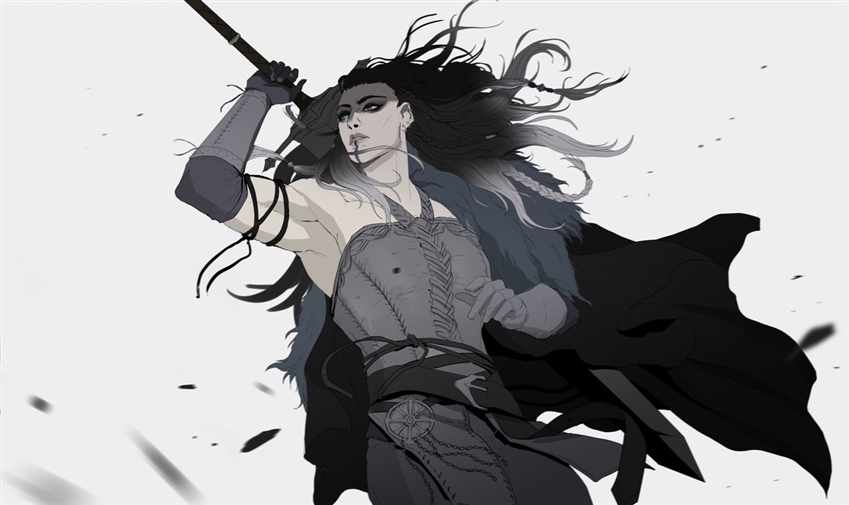
Path of Wild Magic
Many places in the multiverse abound with beauty, intense emotion, and rampant magic; the Feywild, the Upper Planes, and other realms of supernatural power radiate with such forces and can profoundly influence people. As folk of deep feeling, barbarians are especially susceptible to these wild influences, with some barbarians being transformed by the magic. These magic-suffused barbarians walk the Path of Wild Magic. satyr, tiefling, aasimar, and genasi barbarians often seek this path, eager to manifest their otherworldly magic.
Magic Awareness
When you choose this path at 3rd level, as an action, you can open your awareness to the presence of concentrated magic. Until the end of your next turn, you know the location of any spell or magic item within 60 feet of you that isn’t behind total cover. When you sense a spell, you learn which school of magic it belongs to.
You can use this feature a number of times equal to your Constitution modifier (minimum 1), and you regain all expended uses when you finish a long rest.
Wild Surge
Also at 3rd level, the magical energy roiling inside you sometimes erupts from you. When you enter your rage, roll on the Wild Magic table to determine the magical effect produced.
If the effect requires a saving throw, the DC equals 8 + your proficiency bonus + your Constitution modifier.
Bolstering Magic
Beginning at 6th level, you can harness your wild magic to bolster yourself or a companion. You are resistant to force damage while raging.
As an action, you can touch one creature (which can be yourself) and confer one of the following benefits of your choice to that creature: For 10 minutes, the creature can roll a d4 whenever making an attack roll or an ability check and add the number rolled to the d20 roll. Roll a d4. The creature regains one expended spell slot, the level of which equals the number rolled or lower (the creature’s choice, up to their slot maximum).
You can take this action a number of times equal to your Constitution modifier (minimum 1), and you regain all expended uses when you finish a long rest.
Unstable Backlash
At 10th level, when you are imperilled during your rage, the magic within you can lash out; immediately after you take damage or fail a saving throw while raging, you can use your reaction to roll on the Wild Magic table and immediately produce the effect rolled. This effect replaces your current Wild Magic effect.
Controlled Surge
At 14th level, whenever you roll on the Wild Magic table, you can roll the die twice and choose which of the two effects to unleash. If you roll the same number on both dice, you can ignore the number and choose any effect on the table.
Wild Magic Surge
| d10 | Effect |
|---|---|
| 1. | Each creature of your choice that you can see within 30 feet of you must succeed on a Constitution saving throw or take 1d12 necrotic damage. You also gain temporary hit points equal to 1d12 plus your barbarian level. |
| 2. | You teleport up to 30 feet to an unoccupied space you can see. Until your rage ends, you can use this effect again on each of your turns as a bonus action. |
| 3. | An intangible spirit, which looks like a flumph or a pixie (your choice), appears within 5 feet of one creature of your choice that you can see within 30 feet of you. At the end of the current turn, the spirit explodes, and each creature within 5 feet of it must succeed on a Dexterity saving throw or take 1d6 force damage. Until your rage ends, you can use this effect again, summoning another spirit, on each of your turns as a bonus action. |
| 4. | Magic infuses one weapon of your choice that you are holding. Until your rage ends, the weapon's damage type changes to force, and it gains the light and thrown properties, with a normal range of 20 feet and a long range of 60 feet. If the weapon leaves your hand, the weapon reappears in your hand at the end of the current turn. |
| 5. | Whenever a creature hits you with an attack roll before your rage ends, that creature takes 1d6 force damage, as magic lashes out in retribution. |
| d10 | Effect |
|---|---|
| 6. | Until your rage ends, you are surrounded by multicoloured, protective lights; you gain a +1 bonus to AC, and while within 10 feet of you, your allies gain the same bonus. |
| 7. | Flowers and vines temporarily grow around you; until your rage ends, the ground within 15 feet of you is difficult terrain for your enemies. |
| 8. | A bolt of light shoots from your chest. Another creature of your choice that you can see within 30 feet of you must succeed on a Constitution Saving throw or take 1d6 radiant damage and be blinded until the start of your next turn. Until your rage ends, you can use this effect again on each of your turns as a bonus action. |
| 9. | Raw arcane energy pulses under your flesh. Roll a d4 and a d8. You cast one sorcerer spell, the level of which equals the number rolled on the d4 - 1 and of the school of magic corresponding alphabetically to the number rolled on the d8. The spell must have a casting time of 1 action or bonus action and cannot require concentration. You do not require material components to cast the spell. Cantrips are considered level 0 for this purpose. You take a number of d8s of force damage equal to the result of the d4. |
| 10. | Roll on the Wild Magic Sorcerer table, replacing any level of spell slots or number of sorcery points mentioned with a single use of your Rage feature. |
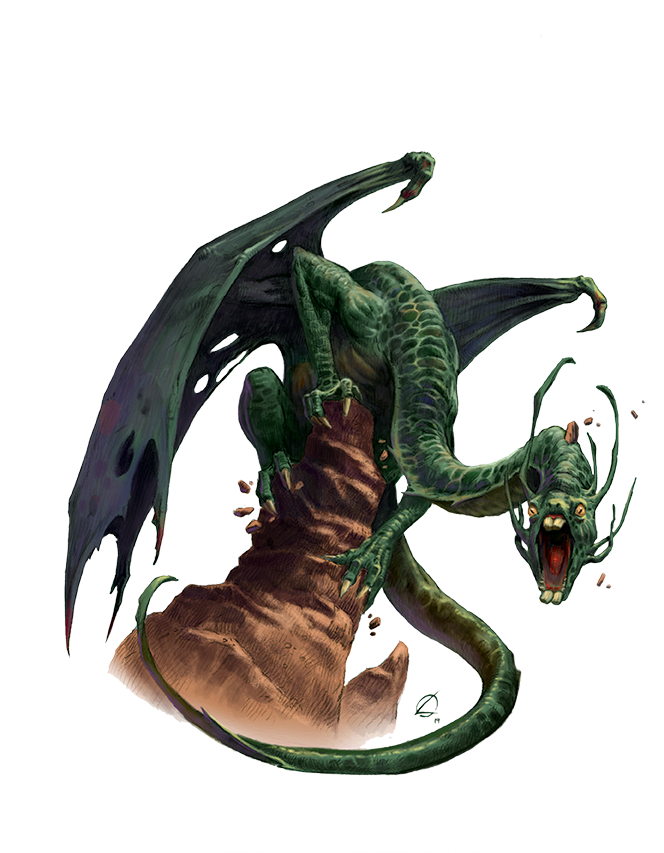

The Bard
Whether scholar, skald, or scoundrel, a bard weaves
magic through words and music to inspire allies,
demoralise foes, manipulate minds, create
illusions, and even heal wounds. The bard is a
master of song, speech, and the magic they contain.
You must have a Charisma score of 13 or higher in
order to multiclass in or out of this class.
Class Features
As a bard, you gain the following class features.
Hit Points
- Hit Dice: 1d8 per bard level
- Hit Points at 1st Level: 8 + your Constitution modifier
- Hit Points at Higher Levels: 1d8 (or 5) + your Constitution modifier per bard level after 1st
Proficiencies
- Armour: Light armour
- Weapons: Simple weapons, hand crossbows, longswords, rapiers, shortswords
- Tools: Three musical instruments of your choice
- Saving Throws: Dexterity, Charisma
- Skills: Choose any three skills.
Equipment
You start with the following equipment, in addition to the equipment granted by your background:
- (a) a rapier, (b) a longsword, (c) a flintlock pistol and 10 light rounds, or (d) any simple weapon
- (a) a diplomat's pack or (b) an entertainer's pack
- (a) a lute or (b) any other musical instrument
- Leather armour and a dagger
Spellcasting
You have learned to untangle and reshape the fabric of reality in harmony with your wishes and music. Your spells are part of your vast repertoire, magic that you can tune to different situations.
Cantrips
You know two cantrips of your choice from the bard spell list. You learn additional bard cantrips of your choice at higher levels, as shown in the Cantrips Known column of the Bard table.
Spell Slots
The Bard table shows how many spell slots you have to cast your spells of 1st level and higher. To cast one of these spells, you must expend a slot of the spell's level or higher. You regain all expended spell slots when you finish a long rest.
For example, if you know the 1st-level spell Cure Wounds and have a 1st-level and a 2nd-level spell slot available, you can cast Cure Wounds using either slot.

Spells Known of 1st Level and Higher
You know four 1st-level spells of your choice from the bard spell list. The Spells Known column of the Bard table shows when you learn more bard spells of your choice. Each of these spells must be of a level for which you have spell slots, as shown on the table. For instance, when you reach 3rd level in this class, you can learn one new spell of 1st or 2nd level.
Additionally, when you gain a level in this class, you can choose one of the bard spells you know and replace it with another spell from the bard spell list, which also must be of a level for which you have spell slots.
Spellcasting Ability
Charisma is your spellcasting ability for your bard spells. Your magic comes from the heart and soul you pour into the performance of your music or oration. You use your Charisma whenever a spell refers to your spellcasting ability. In addition, you use your Charisma modifier when setting the saving throw DC for a bard spell you cast and when making an attack roll with one.
Spell Save DC
Spell attack modifier
Ritual Casting
You can cast any bard spell you know as a ritual if that spell has the ritual tag.
The Bard
| Level | Proficiency Bonus | Features | Cantrips Known | Spells Known | 1st | 2nd | 3rd | 4th | 5th | 6th | 7th | 8th | 9th |
|---|---|---|---|---|---|---|---|---|---|---|---|---|---|
| 1st | +2 | Spellcasting, Bardic Inspiration (d6) | 2 | 4 | 2 | - | - | - | - | - | - | - | - |
| 2nd | +2 | Jack of All Trades, Song of Rest | 2 | 5 | 3 | - | - | - | - | - | - | - | - |
| 3rd | +2 | Bard College, Expertise | 2 | 6 | 4 | 2 | - | - | - | - | - | - | - |
| 4th | +2 | Ability Score Improvement | 3 | 7 | 4 | 3 | - | - | - | - | - | - | - |
| 5th | +3 | Bardic Inspiration (d8), Font of Inspiration | 3 | 8 | 4 | 3 | 2 | - | - | - | - | - | - |
| 6th | +3 | Countercharm, Bard College feature | 3 | 9 | 4 | 3 | 3 | - | - | - | - | - | - |
| 7th | +3 | - | 3 | 10 | 4 | 3 | 3 | 1 | - | - | - | - | - |
| 8th | +3 | Ability Score Improvement | 3 | 11 | 4 | 3 | 3 | 2 | - | - | - | - | - |
| 9th | +4 | Bard College feature | 3 | 12 | 4 | 3 | 3 | 3 | 1 | - | - | - | - |
| 10th | +4 | Bardic Inspiration (d10), Magical Secrets, Expertise | 4 | 14 | 4 | 3 | 3 | 3 | 2 | - | - | - | - |
| 11th | +4 | - | 4 | 15 | 4 | 3 | 3 | 3 | 2 | 1 | - | - | - |
| 12th | +4 | Ability Score Improvement | 4 | 15 | 4 | 3 | 3 | 3 | 2 | 1 | - | - | - |
| 13th | +5 | Countercharm Improvement | 4 | 16 | 4 | 3 | 3 | 3 | 2 | 1 | 1 | - | - |
| 14th | +5 | Magical Secrets, Bard College feature | 4 | 18 | 4 | 3 | 3 | 3 | 2 | 1 | 1 | - | - |
| 15th | +5 | Bardic Inspiration (d12) | 4 | 19 | 4 | 3 | 3 | 3 | 2 | 1 | 1 | 1 | - |
| 16th | +5 | Ability Score Improvement | 4 | 19 | 4 | 3 | 3 | 3 | 2 | 1 | 1 | 1 | - |
| 17th | +6 | - | 4 | 20 | 4 | 3 | 3 | 3 | 2 | 1 | 1 | 1 | 1 |
| 18th | +6 | Magical Secrets | 4 | 22 | 4 | 3 | 3 | 3 | 3 | 1 | 1 | 1 | 1 |
| 19th | +6 | Ability Score Improvement | 4 | 22 | 4 | 3 | 3 | 3 | 3 | 2 | 1 | 1 | 1 |
| 20th | +6 | Superior Inspiration | 4 | 22 | 4 | 3 | 3 | 3 | 3 | 2 | 2 | 1 | 1 |
Spellcasting Focus
You can use a musical instrument (found in chapter 5) as a spellcasting focus for your bard spells.
Bardic Inspiration
You can inspire others through stirring words or music. To do so, you use a bonus action on your turn to choose one creature other than yourself within 60 feet of you who can hear you. That creature gains one Bardic Inspiration die, a d6. Once within the next 10 minutes, the creature can roll the die and add the number rolled to one ability check, attack roll, or saving throw it makes. The creature can wait until after it rolls the d20 before deciding to use the Bardic Inspiration die, but must decide before the DM says whether the roll succeeds or fails.
Alternatively, if a creature has a Bardic Inspiration die from you and casts a spell that restores hit points or deals damage, the creature can roll that die and choose a target affected by the spell. Add the number rolled as a bonus to the hit points regained or the damage dealt.
Once the Bardic Inspiration die is rolled, it is lost. A creature can have only one Bardic Inspiration die at a time.
You can use this feature a number of times equal to your Charisma modifier (a minimum of once). You regain any expended uses when you finish a long rest.
Your Bardic Inspiration die changes when you reach certain levels in this class. The die becomes a d8 at 5th level, a d10 at 10th level, and a d12 at 15th level.
Jack of All Trades
Starting at 2nd level, you can add half your proficiency bonus, rounded down, to any ability check you make that doesn't already include your proficiency bonus.
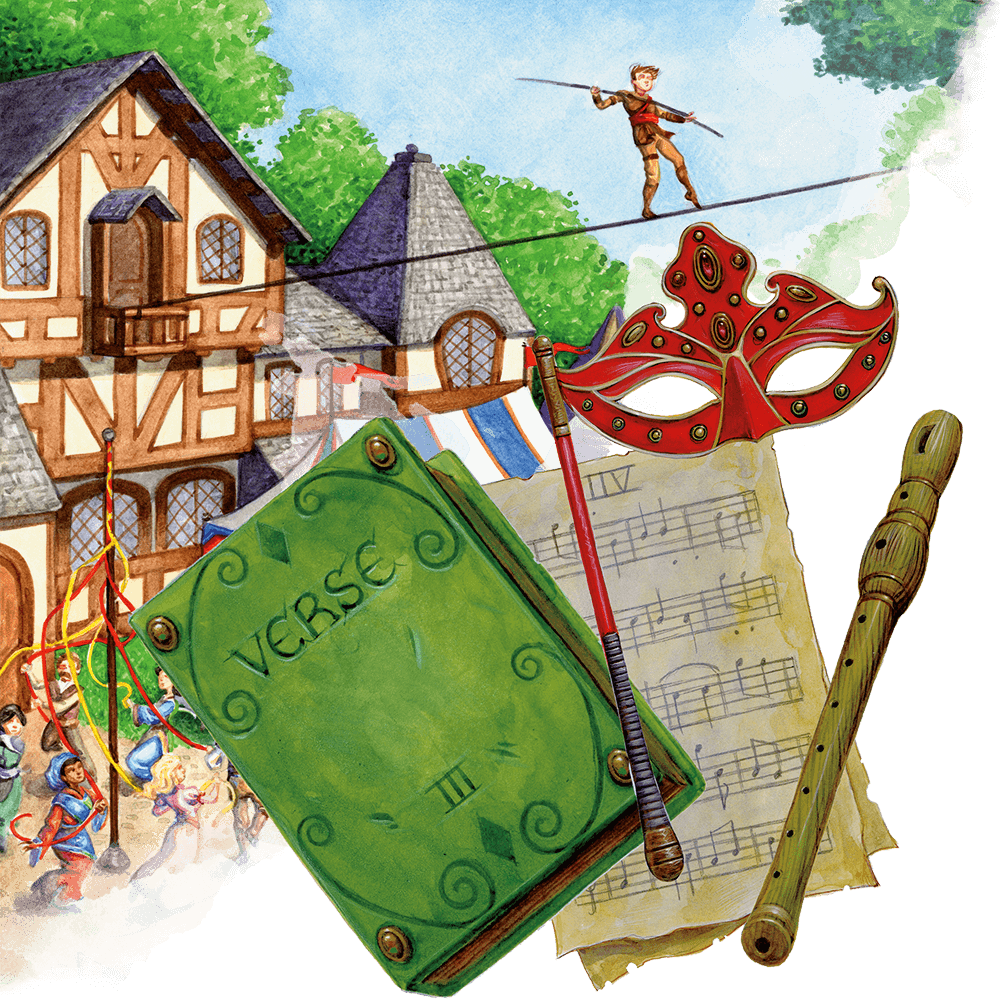
Song of Rest
Beginning at 2nd level, you can use soothing music or oration to help revitalise your wounded allies during a short rest. If you or any friendly creatures who can hear your performance spend one or more Hit Dice to regain hit points at the end of the short rest, each of those creatures regains an extra number of hit points equal to one roll of your Bardic Inspiration die.
Bard College
At 3rd level, you delve into the advanced techniques of a bard college of your choice. Your choice grants you features at 3rd level and again at 6th and 14th level.
Expertise
At 3rd level, choose two of your skill proficiencies. Your proficiency bonus is doubled for any ability check you make that uses either of the chosen proficiencies.
At 10th level, you can choose another two skill proficiencies to gain this benefit.
Ability Score Improvement
When you reach 4th level, and again at 8th, 12th, 16th, and 19th level, you can increase one ability score of your choice by 2, or you can increase two ability scores of your choice by 1. As normal, you can't increase an ability score above 20 using this feature.
Alternatively, you may take a feat in place of the ASI, provided you fulfil its prerequisites. Instead of increasing ability scores as detailed above, you may increase one ability score of your choice by 1 and gain an additional use of bardic inspiration. This also increases its maximum number of uses by 1.
Bardic Versatility
Whenever you reach a level in this class that grants the Ability Score Improvement feature, you can do one of the following, representing a change in focus as you use your skills and magic:
Replace one of the skills you chose for the Expertise feature with one of your other skill proficiencies that isn't benefiting from Expertise.
Replace one cantrip you learned from this class's Spellcasting feature with another cantrip from the bard spell list.
Font of Inspiration
Beginning when you reach 5th level, you regain all of your expended uses of Bardic Inspiration when you finish a short or long rest.
Countercharm
At 6th level, you gain the ability to use musical notes or words of power to disrupt mind-influencing effects. As an action, or as a part of the bonus action taken to grant a creature a Bardic Inspiration die, you can start a performance that lasts until the end of your next turn. During that time, you and any creatures of your choice within 30 feet of you have advantage on saving throws against being frightened, charmed, or possessed. A creature must be able to hear you to gain this benefit. The performance ends early if you are incapacitated or silenced, or if you voluntarily end it (no action required).
Each time you cast a Bard spell or expend a use of Bardic Inspiration while under the effect of a countercharm you are performing, the duration of the countercharm increases by 1 round. You can also use an action or bonus action on your turn to extend the effect this way.
Magical Secrets
By 10th level, you have plundered magical knowledge from a wide spectrum of disciplines. Choose two spells from any class, including this one. A spell you choose must be of a level you can cast, as shown on the Bard table, or a cantrip. The chosen spells count as bard spells for you and are included in the number in the Spells Known column of the Bard table.
You learn two additional spells from any class at 14th level and again at 18th level.
Countercharm Improvement
At 13th level, your countercharm becomes especially potent. You gain one of the following additions to your countercharm:
Arcane Counterpoint. Your Countercharm feature also bestows advantage on saving throws made to resist spells and magical effects.
Battle Trance. While you are performing a countercharm, you have advantage on Strength checks and Strength saving throws, you deal one Bardic Inspiration die of extra weapon damage with your melee weapon attacks, and you gain temporary hit points at the start of each of your turns equal to your Charisma modifier (minimum 1).
Inspire Heroics. Any creature under the effect of your countercharm gains a bonus to their Wisdom and Charisma saving throws, and to their AC, equal to your Charisma modifier (minimum 1). This effect lasts for as long as the creature benefits from the countercharm.
Intone Dissonance. Hostile creatures who start their turn within the range of your countercharm or move into it for the first time on their turn and aren't deaf must make a Concentration check against your spellcasting DC in order to maintain any concentration they are holding. In addition, perceiving creatures must make this check whenever they attempt to cast a spell within range. If the Concentration check fails, the spell is lost and has no effect. If the Concentration check succeeds, the spell is cast as normal. The effect lasts for as long as the countercharm persists.
Intone Harmony. Your Countercharm feature also bestows advantage on Saving Throws against the paralyzed, petrified, restrained, and stunned conditions for the duration.
Protective Vibrations. While you are performing a countercharm, the reverberations of the performance provides all creatures within the radius resistance to thunder damage from sources other than you. In addition, when a creature hits you with a ranged weapon attack or ranged spell attack, you can use your reaction to block the attack from truly reaching you. When you do so, the damage you take from the attack is reduced by 1d10 + your Bard level.
Reverse Enchantment. By the sheer force of your personality, you have learned to resist and reflect certain magics. When you are targeted by charm effect or a spell from the school of Enchantment while performing a countercharm, you can use your reaction to roll a Spellcasting ability check contested with the caster's charm ability. If you prevail, you automatically succeed on the saving throw. You may then expend one use of your Bardic Inspiration to turn the effect back on them without requiring a spell slot or material components. Other requirements of the spell remain in place, such as concentration.
Soothing Refrain. You and any creatures affected by the countercharm gain resistance to poison and necrotic damage, and advantage on saving throws made to resist being poisoned or diseased.
Stunning Performance. Hostile creatures who start their turn within the range of your countercharm or move into it for the first time on their turn and aren't deaf must make a Charisma saving throw or be unable to take reactions and have their movement speed reduced to 0 until the end of it's next turn.
Words of Resolve. While under the effect of your Countercharm feature, affected creatures automatically succeed or recover from saves against being charmed or frightened.
You can change your chosen improvement whenever you finish a long rest.
Superior Inspiration
At 20th level, you do not expend uses of your Bardic Inspiration while you are in initiative.
Bardic Colleges
College of Creation
Bards believe the cosmos is a work of art - the creation of the first dragons and gods. That creative work included harmonies that continue to resound through existence today, a power known as the Song of Creation. The bards of the College of Creation draw on that primaeval song through dance, music, and poetry, and their teachers share this lesson.
Note of Potential
When you join the College of Creation at 3rd level, whenever you give a creature a Bardic Inspiration die, you can utter a note from the Song of Creation to create a Tiny mote of potential, which orbits within 5 feet of that creature. The mote is intangible and invulnerable, and it lasts until the Bardic Inspiration die is lost. The mote looks like a musical note, a star, a flower, or another symbol of art or life that you choose.
When the creature uses the Bardic Inspiration die, the mote provides an additional effect based on whether the die benefits an ability check, an attack roll, or a saving throw, as detailed below:
Ability Check. When the creature rolls the Bardic Inspiration die to add it to an ability check, the creature can roll the Bardic Inspiration die again and choose which roll to use, as the mote pops and emits colourful, harmless sparks for a moment.
Attack Roll. Immediately after the creature rolls the Bardic Inspiration die to add it to an attack roll against a target, the mote thunderously shatters. The target and each creature of your choice that you can see within 5 feet of it must succeed on a Constitution saving throw against your spell save DC or take thunder damage equal to the number rolled on the Bardic Inspiration die.
Saving Throw. Immediately after the creature rolls the Bardic Inspiration die and adds it to a saving throw, the mote vanishes with the sound of soft music, causing the creature to gain temporary hit points equal to the number rolled on the Bardic Inspiration die plus your Charisma modifier (minimum of 1 temporary hit point).

Performance of Creation
Also at 3rd level, as an action, you can channel the magic of the Song of Creation to create one nonmagical item of your choice in an unoccupied space within 10 feet of you. The item must appear on a surface or in a liquid that can support it. The gp value of the item can't be more than 20 times your bard level, and the item must be Medium or smaller. The item glimmers softly, and a creature can faintly hear music when touching it. The created item disappears after a number of hours equal to half your Bard level (rounded down).
Dancing Item
Large or smaller construct, Unaligned
- armour Class 16 (natural armour)
- Hit Points 8 + 4 times your bard level
- Speed 30 ft., fly 30 ft. (hover)
STR DEX CON INT WIS CHA 18 (+4) 14 (+2) 16 (+3) 4 (−3) 10 (+0) 6 (−2)
- Damage Immunities necrotic, poison, psychic
- Condition Immunities charmed, exhaustion, frightened, paralysed, poisoned
- Senses darkvision 60 ft., passive Perception 10
- Languages understands the languages you speak
- Challenge —
- Proficiency Bonus (PB): equals your bonus
Immutable Form. The item is immune to any spell or effect that would alter its form.
Irrepressible Dance. When any creature starts its turn within 10 feet of the item, the item can increase or decrease (your choice) the walking speed of that creature by 10 feet until the end of the turn, provided the item isn't incapacitated.
Actions
Force-Empowered Slam. Melee Weapon Attack: your spell attack modifier to hit, reach 5 ft., one target you can see. Hit: 1d10 + PB force damage.
Once you create an item with this feature, you can't do so again until you finish a long rest, unless you expend a spell slot of 2nd level or higher to use this feature again. You can have only one item created by this feature at a time; if you use this action and already have an item from this feature, the first one immediately vanishes.
The size of the item you can create with this feature increases by one size category when you reach 6th level (Large) and 14th level (Huge).
Animating Performance
By 6th level, as an action, you can target a Large or smaller nonmagical item you can see within 30 feet of you and animate it. The animated item uses the Dancing Item stat block, which uses your proficiency bonus (PB). The item is friendly to you and your companions and obeys your commands. It lives for 1 hour, until it is reduced to 0 hit points, or until you die.
In combat, the item shares your initiative count, but it takes its turn immediately after yours. It can move and use its reaction on its own, but the only action it takes on its turn is the Dodge action, unless you take a bonus action on your turn to command it to take another action. That action can be one in its stat block or some other action. If you are incapacitated, the item can take any action of its choice, not just Dodge.
When you use your Bardic Inspiration feature, you can command the item as part of the same bonus action you use for Bardic Inspiration.
Once you animate an item with this feature, you can't do so again until you finish a long rest, unless you expend a spell slot of 3rd level or higher to use this feature again. You can have only one item animated by this feature at a time; if you use this action and already have a dancing item from this feature, the first one immediately becomes inanimate.
Creative Crescendo
At 14th level, when you use your Performance of Creation feature, you can create more than one item at once. The number of items equals your Charisma modifier (minimum of two items). If you create an item that would exceed that number, you choose which of the previously created items disappears. Only one of these items can be of the maximum size you can create; the rest must be Small or Tiny.
Additionally, you are no longer limited by gp value when creating items with Performance of Creation.

College of the Dirge Singer
Bards of the College of the Dirge Singer are trained to inspire their people and direct soldiers on the battlefield. Students of both history and war, dirge singers use tales of past glory and their knowledge of great victories to inspire their allies and provide keen strategic insight, directing allies to strike when enemies are weak.
Broad Inspiration
When you join the College of Dirge Singers at 3rd level, you learn to strengthen the hearts of your troops and stir them to greatness. You learn the Guidance cantrip, which is considered a bard spell for you, but doesn’t count against your number of cantrips known. Additionally, when you expend uses of your Bardic Inspiration to inspire one creature, it instead affects multiple allies. When you do so, choose two creatures within 60 feet of you that can hear you. Each creature gains one of your Bardic Inspiration dice.
Your Bardic Inspiration die does not change at 5th level, but remains a d6; it becomes a d8 at 10th level, and a d10 at 15th level.
Keeper of History
Also at 3rd level, you gain proficiency in either History or Performance. If you are already proficient in both of these skills, you gain proficiency in one of the following skills of your choice: Arcana, Intimidation, or Persuasion. In addition, choose either History or Performance. Your proficiency bonus is doubled for any ability check you make that uses that skill.
Commanding Voice
Starting at 6th level, you excel at inspiring and directing soldiers in battle. When a creature that has a Bardic Inspiration die from you takes the Attack action on its turn, you can use your reaction to allow it an additional weapon attack. The creature rolls the Bardic Inspiration die, adding the number rolled to its weapon damage roll if it hits.
Master Commander
Starting at 14th level, you unflaggingly maintain the spirits and discipline of your unit. During your turn, you can start to perform a Countercharm as a bonus action.
When you start a Countercharm performance, if any creature that gains its benefit is currently charmed or frightened, it can immediately make another saving throw against the effect that imposed the condition. In addition, when a creature that gains the benefit of your Countercharm performance makes an ability check or saving throw, it can roll a d4 and add the number rolled to the ability check or saving throw.
College of Eloquence
Adherents of the College of Eloquence master the art of oratory. Persuasion is regarded as a high art, and a well-reasoned, well-spoken argument often proves more powerful than objective truth. These bards wield a blend of logic and theatrical wordplay, winning over sceptics and detractors with logical arguments, and plucking at heartstrings to appeal to the emotions of entire audiences.
Unfailing Inspiration
Starting at 3rd level, your inspiring words are so persuasive that others feel driven to succeed. When a creature adds one of your Bardic Inspiration dice to its ability check, attack roll, or saving throw and the roll fails, the creature can keep the Bardic Inspiration die.
Unsettling Words
Also at 3rd level, you can spin words laced with magic that unsettle a creature and cause it to doubt itself. As a bonus action, you can expend one use of your Bardic Inspiration and choose one creature you can see within 60 feet of you. Roll the Bardic Inspiration die. The creature must subtract the number rolled from the next saving throw it makes before the start of your next turn.
Silver Tongue
By 6th level, you have become a master at saying the right thing at the right time. When you make a Charisma (Persuasion) or Charisma (Deception) check, you can treat a d20 roll of 9 or lower as a 10.
Universal Speech
Also at 6th level, you have gained the ability to make your speech intelligible to any creature. As an action, choose one or more creatures within 60 feet of you, up to a number equal to your Charisma modifier (minimum of one creature). The chosen creatures can magically understand you, regardless of the language you speak, for 1 hour.
Once you use this feature, you can't use it again until you finish a long rest, unless you expend a spell slot of 3rd-level or higher to use it again.
Infectious Inspiration
At 14th level, when you successfully inspire someone, the power of your eloquence can now spread to someone else. When a creature within 60 feet of you adds one of your Bardic Inspiration dice to its ability check, attack roll, or saving throw and the roll succeeds, you can use your reaction to encourage a different creature (other than yourself) that can hear you within 60 feet of you, giving it a Bardic Inspiration die without expending any of your Bardic Inspiration uses.


College of Glamour
The bards of this college are regarded
with a mixture of awe and fear. Their
performances are the stuff of legend.
These bards are so eloquent that a speech
or song that one of them performs can cause
captors to release the bard unharmed and can
lull a furious dragon into complacency.
Mantle of Inspiration
When you join the College of Glamour at 3rd level, you gain the ability to weave a song of fey magic that imbues your allies with vigour and speed. As a bonus action, you can expend one use of your Bardic Inspiration to grant yourself a wondrous appearance. When you do so, choose a number of creatures you can see and who can see you within 60 feet of you, up to a number equal to your Charisma modifier (minimum of one). Each of them gains temporary hit points equal to the maximum roll of one of your Bardic Inspiration dice. When a creature gains these temporary hit points, it can immediately use its reaction to move up to its speed, without provoking opportunity attacks.
At 6th level, you can add your Charisma modifier (minimum 1) to the number of temporary hit points creatures gain from this ability.
Enthralling Performance
Starting at 3rd level, you can charge your performance with seductive, fey magic. If you perform for at least 1 minute, you can attempt to inspire wonder in your audience by singing, reciting a poem, or dancing. At the end of the performance, choose a number of humanoids within 60 feet of you who watched and listened to all of it, up to a number equal to your Charisma modifier (minimum of one). Each target must succeed on a Wisdom saving throw against your spell save DC or be charmed by you. This effect ends on a target after 1 hour, if it takes any damage, if you attack it, or if it witnesses you attacking or damaging any of its allies. If a target succeeds on its saving throw, the target has no hint that you tried to charm it. While charmed in this way, the target falls under one of the following additional effects:
Charming Melody. The target idolises you, it speaks glowingly of you to anyone who speaks to it, and it hinders anyone who opposes you, avoiding violence unless it was already inclined to fight on your behalf.
Frightening Strain. The target is frightened of you, terrified to even speak in your presence and completely unable to look at your face; it acts as though trying to appease an angry god.
Gentle Lullaby. The creature falls asleep and is unconscious. The effect ends if someone takes an action to shake the creature awake.
Once you use this feature, you can’t use it again until you finish a short or long rest, unless you expend a spell slot of 2nd-level or higher to use it again.
Mantle of Majesty
At 6th level, you gain the ability to
cloak yourself in a regal, mighty veil
that makes others want to serve you. As a bonus action,
you cast Command, without expending a spell slot, and you take on an appearance of unearthly beauty for 1 minute or until your concentration ends (as if you were concentrating on a spell). During this time, you can cast Command as a bonus action on each of your turns, without expending a spell slot.
Any creature charmed by you automatically fails its saving throw against the Command you cast with this feature.
Once you use this feature, you can’t use it again until you finish a long rest, unless you expend a spell slot of 3rd-level or higher to use it again.
Unbreakable Majesty
At 14th level, your appearance permanently gains an otherworldly aspect that makes you look more lovely and fierce. In addition, as a bonus action, you can assume a magically majestic presence for 1 minute or until you are incapacitated. For the duration, whenever any creature hits you with an attack for the first time on a turn, the attacker must make a Charisma saving throw against your spell save DC. On a failed save, it can't attack you on this turn, and it must choose a new target within range for the triggering attack or the attack is wasted. On a successful save, it can attack you on this turn, but it has disadvantage on any saving throw it makes against your spells on your next turn.
Once you assume this majestic presence, you can't do so again until you finish a short or long rest, unless you expend a spell slot of 4th-level or higher to use it again.
College of Lore
Bards of the College of Lore know something about most things, collecting bits of knowledge from sources as diverse as scholarly tomes and peasant tales. Whether singing folk ballads in taverns or elaborate compositions in royal courts, these bards use their gifts to hold audiences spellbound. The loyalty of these bards lies in the pursuit of beauty and truth, not in fealty to a monarch or following the tenets of a deity. A noble who keeps such a bard as a herald or advisor knows that the bard would rather be honest than politic.
Bonus Proficiencies
When you join the College of Lore at 3rd level, you gain proficiency with three skills of your choice.
Cutting Words
Also at 3rd level, you learn how to use your wit to distract, confuse, and otherwise sap the confidence and competence of others. When a creature that you can see within 60 feet of you makes an attack roll, an ability check, or a damage roll, you can use your reaction to expend one of your uses of Bardic Inspiration, rolling a Bardic Inspiration die and subtracting the number rolled from the creature's roll. You can choose to use this feature after the creature makes its roll, but before the DM determines whether the attack roll or ability check succeeds or fails, or before the creature deals its damage. The creature is immune if it can't hear you or if it's immune to being charmed.
Additional Magical Secrets
At 6th level, you learn two spells of your choice from any class. A spell you choose must be of a level you can cast, as shown on the Bard table, or a cantrip. The chosen spells count as bard spells for you but don't count against the number of bard spells you know.
Peerless Skill
Starting at 14th level, when you make an ability check, you can expend one use of Bardic Inspiration. Roll a Bardic Inspiration die and add the number rolled to your ability check. You can choose to do so after you roll the die for the ability check, but before the DM tells you whether you succeed or fail.

College of the Maestro
The College of the Maestro calls to those who enjoy enabling their companions to become even more adept, working in unison with your sonata. It refines those of raw talent into majestic performers who can pluck the thoughts from a mind like a musical note, amplify the fears of lesser beings through sourceless, ominous tones, and seemingly stretch time by commanding the tempo of a heartbeat. Maestros become heroes who can take the chaos of the world and carve it as they see fit by controlling the vibrations of music that subtly guide the realm
Battle Muse
When you join the College of the Maestro at 3rd level, you gain one additional use of your Bardic Inspiration feature. This feature grants you another additional use of Bardic Inspiration at 6th level, and again at 14th level.
Symphony of Conflict
You've been trained in the bardic art of magically manipulating the sounds of combat into a concert of powerful melodies that can alter the very battlefield around you. When you select this bardic school at 3rd level, you learn 2 conducting techniques of your choice, which are detailed under "Conducting Techniques" below. All techniques require at least one free hand, baton, or wand to utilise. For these techniques to function, you must be able to see your target, and they must be able to hear you.
You learn 1 additional conducting technique of your choice at 6th and 14th level. Each time you learn a new technique, you can also replace one technique you know with a different one.
Frenetic Crescendo
At 6th level, you can harness the beat of battle, whipping it into a frenzy of drums, chants, and glory. You can use your action to expend any number of uses of your Bardic Inspiration feature. For each expended use, you can immediately grant a Bardic Inspiration die to a creature other than yourself within 60 feet that you can see. A creature can have only one Bardic Inspiration die at a time.
Virtuoso of Captivation
Upon reaching 14th level, you can begin conducting a mystical symphony as an action, distracting and capturing the minds of nearby creatures. While performing a Countercharm, any number of creatures you choose within 60 feet who can hear you have disadvantage on any saving throws against being charmed and against magical sleep, and disadvantage on Wisdom (Perception) rolls that rely on sight or sound to detect targets other than you.
Once you perform your Virtuoso of Captivation, you can't do so again until you finish a short or long rest, unless you expend a spell slot of 4th-level or higher to use it again.
Conducting Techniques
The conducting techniques are listed in alphabetical order.
Accelerando. Your manipulation of tempo and song can inspire others to act more quickly. You can use your Bonus action on your turn to choose one creature other than yourself within 60 feet. Expend and roll a Bardic Inspiration die, adding the number rolled to the creature's initiative and moving them up to the initiative order accordingly. If this would move them higher than you, they immediately take their turn after you finish this round. A creature cannot be affected by Accelerando again until they've finished a short or long rest.
Ansia. You build an air of tension and paranoia with subtle, droning tones. As an action, you expend and roll a Bardic Inspiration die. For the next 10 minutes, any creatures of your choice within 60 feet cannot be surprised, and gain a bonus on saving throws against traps and environmental hazards equal to your Bardic Inspiration die roll.
Discordia. Summoning a harsh, discordant tone, you muddle the mind of an opponent, lessening their defences. When a creature within 60 feet is forced to make a saving throw, you can use your reaction to expend and roll a Bardic Inspiration die. You reduce their saving throw by half of the number rolled. You can use this feature after the creature makes its saving throw roll, but before the DM determines a success or failure.
Dolore. Your dour tones sap the life from those who hear you. As an action, you can spend 1 Bardic Inspiration die to force one creature that is not a construct or undead who can hear you to make a Charisma saving throw. On a failed save, the target gains one level of exhaustion.
Elettrizzante. The force of your song momentarily fries the internals of constructs. As a bonus action, you expend and roll a Bardic Inspiration die. All constructs within 30 feet of you take your choice of either thunder or lightning damage equal to the number rolled.
Fermata. You drag a sharp chord through the mind of a creature, forcing it to suddenly buckle. As a bonus action, you expend and roll a Bardic Inspiration die and select a creature other than yourself within 60 feet. The target must succeed on a Wisdom saving throw against your Spell save DC or take psychic damage equal to half of the number rolled and be pushed 10 feet in a direction you choose. A target can fail the saving throw voluntarily.
Finale. You play a terrifying dirge to accompany a deathblow, striking fear into the hearts of your nearby enemies. When an ally brings a creature within 60 feet to 0 hit points, you can use your reaction to expend and roll a Bardic Inspiration die. Select a number of creatures within 15 feet of the triggering ally equal to half of the number rolled (minimum 1). Each target must make a Wisdom saving throw against your Spell save DC or become frightened of the triggering ally until the end of that ally's next turn. After the effect ends, or the save is successful, targeted creatures are immune to Finale for the next 24 hours.
Harmonia. The melodies surrounding your allies promote rapid recovery. When a creature that has a Bardic Inspiration die from you regains any hitpoints, they can expend and roll their inspiration die to regain additional hit points equal to the number rolled.
Maestoso. Pulled from the chaos, you muster an uplifting melody that bolsters the resolve of your allies. You can expend and roll a Bardic Inspiration die as an action, and all other creatures you choose within 60 ft gain temporary hit points equal to the number rolled plus your Charisma modifier (minimum of 1). These temporary hit points last until the end of your next turn.
Marcato. You learn how to harness and amplify the roar of a well-placed blow into a violent explosion of sound. When a creature other than yourself within 60 feet of you hits with an attack, you can use your reaction to expend and roll a Bardic Inspiration die. The target of the triggering attack must make a Strength saving throw against your Spell save DC or take thunder damage equal to half of the number you rolled and be knocked prone.
Presto. The song you conjure can stir the winds, pushing along those who require expedient travel. A creature that has a Bardic Inspiration die from you can expend and roll their inspiration to increase their speed for that turn. A roll of 1-4 increases their speed of 10 feet, a roll of 5-8 increases their speed by 15 feet, and a roll of 9-12 increases their speed by 20 feet.
Protettiva. The melodies surrounding your allies protect and guard them. A creature that has a Bardic Inspiration die from you who can hear you can use its reaction to gain a +2 bonus to its AC until the end of your next turn when you cast a bard spell or expend a Bardic Inspiration die.
Risonanza. You shape the harmonic vibrations of a weapon's movements into a dangerous, sonic enhancement. Using a bonus action, you can expend and roll a Bardic Inspiration die, choosing one weapon within 60 feet of you. Until the end of your next turn, all attacks with that weapon deal additional thunder damage equal to half of the number rolled (minimum of 1).
Silencio. Your song dominates the sonic vibrations around you. As a bonus action, you can expend a use of your Bardic Inspiration to grant immunity to thunder damage and the deafened condition to all creatures other than you within 30 feet of you until the end of your next turn; such creatures are also unable to produce the verbal components for spells. Effects you produce ignore deafness and thunder immunity gained this way.

College of Satire
Bards of Satire are known colloquially as jesters.
They use lowbrow stories, daring acrobatics,
theatre arts, and cutting jokes to entertain audiences,
ranging from the crowds in a rundown dockside pub to
the nobles of a king’s royal court. A jester never lets taste, social decorum, or shame get in the way of a good laugh;
they generally reserve their mockery for individuals and guilds that need to be taken down a peg,
rather than piling further humiliation onto those
who are already struggling. This expectation
allows a jester to serve as a critic or a voice of
reason when others are too intimidated to
speak the truth.
Among bards, jesters are unmatched
acrobats, and their ability to tumble,
dodge, leap, and climb makes them
slippery opponents in battle.
Jester's Privileges
When you join this college at 3rd level you gain
proficiency with the disguise kit, thieves’ tools,
and playing cards. You also gain proficiency in Sleight
of Hand and Acrobatics. If you are already proficient in this skill, you gain proficiency in another skill of your choice instead.
Additionally, you may choose one skill proficiency and your proficiency in the Disguise Kit, Playing Cards, or Thieves’ Tools to benefit from your Expertise feature.
Tumbling Fool
At 3rd level, you master a variety of acrobatic techniques that allow you to evade danger. Your jump distances are doubled. As a bonus action, you can tumble. When you tumble, you gain the benefits of taking both the Dash and Disengage actions.
Barbed Tongue
Also at 3rd level, you know the Vicious Mockery cantrip; it does not count against the number of cantrips you know. When you cast vicious mockery, add your Charisma modifier to the damage it deals on a failed saving throw.
Additionally, instead of dealing increased damage, vicious mockery consists of multiple insults when you reach higher levels: two insults at 5th level, three insults at 11th level, and four insults at 17th level. You can direct the insults at the same target or at different ones. A creature makes a separate save for each insult directed at it.

Resilient Smirk.
At 6th level, your tomfoolery and your malicious joy benefits from your chaotic agency. You gain a climbing speed equal to your current speed, and you take half damage from falling.
Joker’s Tricks
Also at 6th level, you have begun to approach mastery of the mischievous. You can expend a Bardic Inspiration die as a reaction to enact one of the following tricks each turn:
Misdirection. When a creature you can see makes an
attack roll against you or an ally within 15 feet of you, you
allow the target to magically swap places with someone
else. Choose another willing creature within 15 feet of
you and roll your Bardic Inspiration die. That creature
gains temporary hit points equal to the roll. It then
magically swaps places with the original target and
becomes the new target of the triggering attack.
Who’s Laughing Now? When you fail to charm a
creature, you can force them to make a Charisma saving throw. On a failed save, they stumble into a ridiculous
social engagement - for example, they trip and fall, or are
compelled to tell a tasteless joke. This is usually left
up to the DM.
Scathing Jest. When you successfully charm
creatures, you can empower the charm with mocking words. Targets charmed by that feature take psychic damage at the start of their turns while charmed equal to one roll of your Bardic Inspiration die. Damage taken this way does not break their charm or other effects which change upon taking damage.
Quick Wit. When you cast a spell with a Verbal component, you can force within 60 feet of you who can see or hear you to make a Wisdom saving throw. A creature which fails this save falls prone and is incapacitated until the start of your next turn as it begins to laugh hysterically, unable to speak for the duration.
Laugh it Off. When you take damage, you can laugh off the seriousness of the injuries. Roll your Bardic Inspiration die. The damage you take is reduced by an amount equal to the roll plus half your bard level (to a minimum of 0 damage)
Fool's Luck
Jesters seem to have a knack for pulling themselves out of tight situations, transforming what looks like sure failure into an embarrassing but effective success. At 14th level, you can expend one use of Bardic Inspiration after you fail an ability check, fail a saving throw, or miss with an attack roll. Roll a Bardic Inspiration die and add the number rolled to your attack, saving throw, or ability check, using the new result in place of the failed one.
If using this ability grants you a success on the attack, saving throw, or ability check, you have disadvantage on Strength and Dexterity saving throws until the end of your next turn, as you mock the creature against whom you recovered the roll.

College of Spirits
Bards of the College of Spirits seek tales with inherent power-be they legends, histories, or fictions-and bring their subjects to life. Using occult trappings, these bards conjure spiritual embodiments of powerful forces to change the world once more. Such spirits are capricious, though, and what a bard summons isn't always entirely under their control.
Guiding Whispers
At 3rd level, you can reach out to spirits to guide you and others. You learn the Guidance cantrip, which doesn’t count against the number of bard cantrips you know. For you, it has a range of 60 feet when you cast it.
Spiritual Focus
At 3rd level, you employ tools that aid you in channeling spirits, be they historical figures or fictional archetypes. You can use nonmagical trinkets of strong emotional value to a dead person as a spellcasting focus for your bard spells, such as a crystal ball, someone’s skull, a rabbit’s foot, or an oracle deck.
Starting at 6th level, when you cast a bard spell that deals damage or restores hit points through the Spiritual Focus, roll a d6, and you gain a bonus to one damage or healing roll of the spell equal to the number rolled.
Tales from Beyond
At 3rd level, you reach out to spirits who tell their tales through you. While you are holding your Spiritual Focus, you can use a bonus action to expend one use of your Bardic Inspiration and roll on the Spirit Tales table using your Bardic Inspiration die to determine the tale the spirits direct you to tell. You retain the tale in mind until you bestow the tale’s effect or you finish a short or long rest.
You can use an action to choose one creature you can see within 30 feet of you (this can be you) to be the target of the tale’s effect. Once you do so, you can’t bestow the tale’s effect again until you roll it again.
You can retain only one of these tales in mind at a time, and rolling on the Spirit Tales table immediately ends the effect of the previous tale.
If the tale requires a saving throw, the DC equals your spell save DC.
Spirit Tales
| Insp. Die | Tale Told Through You |
|---|---|
| 1 | Tale of the Clever Animal. For the next 10 minutes, whenever the target makes an Intelligence, a Wisdom, or a Charisma check, the target can roll an extra die immediately after rolling the d20 and add the extra die's number to the check. The extra die is the same type as your Bardic Inspiration die. |
| 2 | Tale of the Renowned Duelist. You make a melee spell attack against the target. On a hit, the target takes force damage equal to two rolls of your Bardic Inspiration die + your Charisma modifier. |
| Insp. Die | Tale Told Through You |
|---|---|
| 3 | Tale of the Beloved Friends. The target and another creature of its choice it can see within 5 feet of it gains temporary hit points equal to a roll of your Bardic Inspiration die + your Charisma modifier |
| 4 | Tale of the Runaway. The target can immediately use its reaction to teleport up to 30 feet to an unoccupied space it can see. When the target teleports, it can choose a number of creatures it can see within 30 feet of it up to your Charisma modifier (minimum of 0) to immediately use the same reaction. |
| 5 | Tale of the Avenger. For 1 minute, any creature that hits the target with a melee attack takes force damage equal to a roll of your Bardic Inspiration die. |
| 6 | Tale of the Traveler. The target gains temporary hit points equal to a roll of your Bardic Inspiration die + your bard level. While it has these temporary hit points, the target’s walking speed increases by 10 feet and it gains a +1 bonus to its AC. |
| 7 | Tale of the Beguiler. The target must succeed on a Wisdom saving throw or take psychic damage equal to two rolls of your Bardic Inspiration die, and the target is incapacitated until the end of its next turn. |
| 8 | Tale of the Phantom. The target becomes invisible until the end of its next turn or until it hits a creature with an attack. If it hits a creature with an attack during this invisibility, the creature it hits takes necrotic damage equal to a roll of your Bardic Inspiration die and is frightened of the target until the end of the frightened creature's next turn. |
| 9 | Tale of the Brute. Each creature of the target’s choice it can see within 30 feet of it must make a Strength saving throw. On a failed save, a creature takes thunder damage equal to three rolls of your Bardic Inspiration die and is knocked prone. A creature that succeeds on its saving throw takes half as much damage and isn’t knocked prone. |
| 10 | Tale of the Dragon. The target spews fire from the mouth in a 30-foot cone. Each creature in that area must make a Dexterity saving throw, taking fire damage equal to four rolls of your Bardic Inspiration die on a failed save, or half as much damage on a successful one. |
| 11 | Tale of the Angel. The target regains hit points equal to two rolls of your Bardic Inspiration die + your Charisma modifier, and you end one condition from the following list affecting the target: blinded, deafened, paralyzed, petrified, or poisoned. |
| 12 | Tale of the Mind-Bender. You envoke an incomprehensible fable from an otherworldly being. The target must succeed on an Intelligence saving throw or take psychic damage equal to three rolls of your Bardic Inspiration die and be stunned until the end of its next turn. |
Spirit Session
At 6th level, spirits provide you with supernatural insights. You can conduct an hour-long ritual channeling spirits (which can be done during a short or long rest) using your Spiritual Focus. You can conduct the ritual with a number of willing creatures equal to your Charisma modifier (including yourself). At the end of the ritual, you temporarily learn one spell of your choice from any class.
The spell you choose must be of a level equal to the number of creatures that conducted the ritual or less, the spell must of a level you can cast, and it must be in the school of Divination or Necromancy. The chosen spell counts as a bard spell for you but doesn’t count against the number of bard spells you know.
Once you perform the ritual, you can’t do so again until you start a long rest, and you know the chosen spell until you start a long rest.
Mystical Connection
At 14th level, you now have the ability to nudge the spirits of Tales from Beyond toward certain tales. Whenever you roll on the Spirit Tales table, you can roll the die twice and choose which of the two effects to bestow. If you roll the same number on both dice, you can ignore the number and choose any effect on the table.

College of Swords
Bards of the College of Swords are called blades, and
they entertain through daring feats of weapon prowess. Blades perform stunts such as sword swallowing, knife throwing and juggling, and mock combats. Though they use their weapons to entertain, they are also highly trained and skilled warriors in their own right.
These bards gather in mead halls or around great bonfires to sing the deeds of the mighty, both past and present. They travel the land to witness great events firsthand and to ensure that the memory of their mastery of both blade and bardic artistry doesn't pass from the world.
Bonus Proficiencies
When you join the College of Swords at 3rd level, you gain proficiency in a number of melee weapons equal to your Charisma modifier. If you’re proficient with a melee weapon you’re holding, you can use it as a spellcasting focus for your bard spells.
Blade Flourish
At 3rd level, you learn to conduct impressive displays of martial prowess and speed. Whenever you take the Attack action on your turn, your walking speed increases by 10 feet until the end of the turn, and if a weapon attack that you make as part of this action hits a creature, you can use one of the following Blade Flourish options of your choice.
Blade Flourishes
You can use only one Blade Flourish per turn.
Defensive Flourish. You can expend one use of your Bardic Inspiration to cause the weapon to deal extra damage to the target you hit. The damage equals the number you roll on the Bardic Inspiration die. You also add the number rolled to your AC until the start of your next turn.
Leaping Flourish. You jump, twist, and turn unexpectedly. You can take the Dodge action as a bonus action, and until the start of your next turn, the distances you can cover making a long or high jump increase by a number of feet equal to the number you roll on the Bardic Inspiration die.
Mobile Flourish. You can expend one use of your Bardic Inspiration to cause the weapon to deal extra damage to the target you hit. The damage equals the number you roll on the Bardic Inspiration die. You can also push the target up to 5 feet away from you, plus a number of feet equal to the number you roll on that die. You can then immediately use your reaction to move up to your walking speed to the closest unoccupied space to the target you can reach.
Slashing Flourish. You can expend one use of your Bardic Inspiration to cause the weapon to deal extra damage to the target you hit and to any other creature of your choice that you can see within 5 feet of you. The damage equals the number you roll on the Bardic Inspiration die.
Tandem Flourish. You can take the Help action as a bonus action. If the ally you are helping hits with their next attack, it deals additional damage of the attack type equal to the number you roll on the Bardic Inspiration die + your Charisma modifier (minimum 1).

Combat Inspiration
Also at 3rd level, you learn to
inspire others in battle. A creature
that has a Bardic Inspiration die from
you can roll that die and add the number
rolled to a weapon damage roll it just made. Alternatively, when an attack roll is made against the creature, it can use its reaction to roll the Bardic Inspiration die and add the number rolled to its AC against that attack, after seeing the roll but before knowing whether it hits or misses.
Extra Attack
Starting at 6th level, you can attack twice, instead of once, whenever you take the Attack action on your turn.
In addition, when you use your action to cast a bard spell, you can make one weapon attack as a bonus action.
Battle Skald
Also at 6th level, you can replace your Countercharm feature with a single Fighting Style of your choice that you do not already possess. You can then choose to gain another at 13th level instead of the Countercharm Improvement feature.
Master's Flourish
Starting at 14th level, whenever you use a Blade Flourish option, you can roll a d6 and use it instead of expending a Bardic Inspiration die.
College of Tragedy
Not all grand stories conclude in triumphant victory. Many tales end with death and despair, and bards of the College of Tragedy know that sorrow and pathos are emotions just as potent as joy and delight. These bards specialise in the power of tragic storytelling, weaving words and spells together to dramatic and devastating effect.
Poetry in Misery
When you join the College of Tragedy at 3rd level, you learn to harness the beauty in failure, finding inspiration in even the direst twists of fate. Whenever you or an ally within 30 feet of you rolls a 1 on the d20 for an attack roll, an ability check, or a saving throw, you can use your reaction to soliloquise and regain one expended use of your Bardic Inspiration feature.
Sorrowful Fate
Starting at 3rd level, you exploit a foe’s peril to instil deep feelings of sorrow and doom. When you or an ally you can see forces a creature to make a saving throw, you can expend one use of your Bardic Inspiration to change the type of saving throw to a Charisma save instead.
If the target fails this save, roll a Bardic Inspiration die. The target takes psychic damage equal to the result, and is plagued with regret for 1 minute. If the target is reduced to 0 hit points during this time and can speak, they are magically compelled to utter darkly poetic final words before succumbing to their injuries.
Once you use this feature, you can’t use it again until you finish a short or long rest, unless you expend a spell slot of 2nd-level or higher to use it again.
Tale of Hubris
At 6th level, you learn to weave a magical narrative that draws out the fatal arrogance of your foes. When a creature scores a critical hit against you or an ally within 60 feet of you that you can see, you can use your reaction and expend one use of your Bardic Inspiration to target the attacking creature and evoke the story of their downfall. For 1 minute or until the target suffers a critical hit, any weapon attack against the target has its critical hit range increased by 2 (usually to 18–20).
At 14th level, the critical hit range of this feature increases by 1 (usually to 17–20).
Unstoppable
Also at 6th level, your words can twist the power of fate to create triumph from the promise of future despair. When you make an attack roll or a saving throw, you can gain a +10 bonus to the roll, but the next attack roll or saving throw you make takes a −10 penalty. Until used, this penalty remains indefinitely and you cannot regain the use of this feature by any means.
You can’t use this feature again until you finish a short or long rest, or until you are reduced to 0 hit points, unless you expend a spell slot of 3rd-level of higher to use it again.
Nimbus of Pathos
Upon reaching 14th level, you can touch a willing creature as an action and empower it with tragic heroism. For 1 minute, the creature is surrounded by mournful music and ghostly singing, granting it the following benefits and drawbacks:
- The creature has a +4 bonus to AC.
- It has advantage on attack rolls and saving throws.
- When the creature hits a target with a weapon attack or spell attack, that target takes an extra 1d10 radiant damage.
- Any weapon attack against the creature has its critical hit range increased by 2 (usually to 18–20).
When this effect ends, the creature immediately drops to 0 hit points and is dying. Once you use this feature, you can’t use it again until you finish a long rest, unless you expend a spell slot of 5th-level or higher to use it again.

College of Valour
Bards of the College of Valour, colloquially termed the Heralds of War, are daring skalds whose tales keep alive the memory of the great heroes of the past, and thereby inspire a new generation of heroes. With their songs, they inspire others to reach the same heights of accomplishment as the heroes of old.
Jack of Battle
When you join the College of Valour at 3rd level, you gain proficiency with the Athletics skill, medium armour, shields, and martial weapons.
In addition, you can add half your Proficiency bonus, rounded down, to any weapon attack roll or saving throw in which you don’t have proficiency.
Icon of Heroism
Also at 3rd level, you learn to inspire others in battle. While a creature has one of your Bardic Inspiration dice, they can roll a d4 whenever they make an attack roll and add the result to the total of the attack roll.
A creature that has a Bardic Inspiration die from you can roll that die and add the number rolled to a weapon damage roll it just made. Alternatively, when an attack roll is made against the creature, it can use its reaction to roll the Bardic Inspiration die and add the number rolled to its AC against that attack, after seeing the roll but before knowing whether it hits or misses.
Finally, as a bonus action, the creature can expend and roll the Bardic Inspiration die to gain a number of temporary hit points equal to the number rolled + your Charisma modifier (minimum of 2 temporary hit points).
War Chant
By 6th level, you have begun to embody the legendary barbarism of the heralds of old. As a bonus action, you unleash a furious chant, bolstering your allies. While you shout out your Countercharm, you and all creatures of your choice within 30 feet of you gain advantage on attack rolls and saving throws while they can hear you. Their speed also increases by 10 feet for the duration. This effect ends if your countercharm ends.
Sound the Warhorn
Also 6th level, when you roll initiative, you gain a number of temporary hit points equal to your Bard level. In addition, when you grant a creature your Bardic Inspiration, it gains temporary hit points equal to your Charisma modifier (minimum 1).
Master Tactician
At 14th level, your ability to inspire your allies grows even stronger. When a creature gains temporary hit points from being granted a Bardic Inspiration die or using it on their turn, the number of temporary hit points they gain increases by one roll of your Bardic Inspiration die.
In addition, while a creature benefits from your War Chant
feature, they may take an extra action once on each of their
turns. They can use this action to Attack (one
weapon attack only), Disengage, or Dash
College of Whispers
Most folk are happy to welcome a bard into their midst. Bards of the College of Whispers use this to their advantage. They appear to be like any other bard, sharing news, singing songs, and telling tales to the audiences they gather. In truth, the College of Whispers teaches its students that they are wolves among sheep. These bards use their knowledge and magic to uncover secrets and turn them against others through extortion and threats.
Psychic Blades
When you join the College of Whispers at 3rd level, you gain the ability to make your weapon attacks magically toxic to a creature's mind. When you hit a creature with a weapon attack, you can expend one use of your Bardic Inspiration to deal an additional 2d6 psychic damage to that target. You can do so only once per round on your turn.
The psychic damage increases when you reach certain levels in this class, increasing to 3d6 at 5th level, 5d6 at 10th level, and 8d6 at 15th level.
Words of Terror
At 3rd level, you learn to infuse innocent-seeming words with an insidious magic that can inspire terror. If you speak to a humanoid alone for at least 1 minute, you can attempt to seed paranoia and fear into its mind. At the end of the conversation, the target must succeed on a Wisdom saving throw against your spell save DC or be frightened of you or another creature of your choice. The target is frightened in this way for 1 hour, until it is attacked or damaged, or until it witnesses its allies being attacked or damaged. If the target succeeds on its saving throw, the target has no hint that you tried to frighten it but is immune to being frightened this way for 24 hours.
Mantle of Whispers
At 6th level, you gain the ability to adopt a humanoid's persona. When a humanoid dies within 30 feet of you, you can magically capture its shadow using your reaction. You retain this shadow until you use it or you finish a long rest.
You can use the shadow as an action. When you do so, it vanishes, magically transforming into a disguise that appears on you. You now look like the dead person, but healthy and alive. This disguise lasts for 1 hour or until you end it as a bonus action.
While you're in the disguise, you gain access to all information that the humanoid would freely share with a casual acquaintance. Such information includes general details on its background and personal life, but doesn't include secrets. The information is enough that you can pass yourself off as the person by drawing on its memories. Another creature can see through this disguise by succeeding on a Wisdom (Insight) check contested by your Charisma (Deception) check. You gain a +5 bonus to your check.
Once you capture a shadow with this feature, you can't capture another one with it until you finish a short or long rest.

Inspire Fear
Also at 6th level, you can use your Words of Terror as an action while you are performing a Countercharm, targeting one creature within range of your Countercharm that can hear you. This action cannot be taken on the first round that you began to perform the Countercharm.
Shadow Lore
At 14th level, you gain the ability to weave dark magic into your words and tap into a creature’s deepest fears. As an action, you magically whisper a phrase that only one creature of your choice within 30 feet of you can hear. The target must make a Wisdom saving throw against your spell save DC. It automatically succeeds if it doesn’t share a language with you or if it can’t hear you. On a successful saving throw, your whisper sounds like unintelligible mumbling and has no effect.
If the target fails its saving throw, it is charmed by you for the next 8 hours or until you or your allies attack or damage it. It interprets the whispers as a description of its most mortifying secret. While you gain no knowledge of this secret, the target is convinced you know it. While charmed in this way, the creature obeys your commands for fear that you will reveal its secret. It won’t risk its life for you or fight for you, unless it was already inclined to do so. It grants you favours and gifts it would offer to a close friend. When the effect ends, the creature has no understanding of why it held you in such fear.
Once you use this feature, you can’t use it again until you finish a long rest, unless you expend a spell slot of 5th-level or higher to use it again.
The Cleric
Clerics are intermediaries between the mortal world and the distant planes of the gods. As varied as the gods they serve, clerics strive to embody the handiwork of their deities. No ordinary priest, a cleric is imbued with divine magic.
You must have a Wisdom score of 13 or higher in order to multiclass in or out of this class.
Class Features
As a cleric, you gain the following class features.
Hit Points
- Hit Dice: 1d8 per cleric level
- Hit Points at 1st Level: 8 + your Constitution modifier
- Hit Points at Higher Levels: 1d8 (or 5) + your Constitution modifier per cleric level after 1st
Proficiencies
- Armour: Light armour, medium armour, shields
- Weapons: All simple weapons
- Tools: None
- Saving Throws: Wisdom, Charisma
- Skills: Choose two from History, Insight, Medicine, Persuasion, and Religion
Equipment
You start with the following equipment, in addition
to the equipment granted by your background:
- (a) a mace or (b) a warhammer (if proficient)
- (a) scale mail, (b) leather armour, or (c) chain mail (if proficient)
- (a) a light crossbow and 20 bolts or (b) any simple weapon
- (a) a priest's pack or (b) an explorer's pack
- A shield and a holy symbol
Spellcasting
As a conduit for divine power, you can cast cleric spells.
Cantrips
At 1st level, you know three cantrips of your choice from the cleric spell list. You learn additional cleric cantrips of your choice at higher levels, as shown in the Cantrips Known column of the Cleric table.
Whenever you gain a level in this class, you can replace one cleric cantrip you know with another cantrip from the cleric spell list.
Spell Slots
The Cleric table shows how many spell slots you have to cast your spells of 1st level and higher. To cast one of these spells, you must expend a slot of the spell's level or higher. You regain all expended spell slots when you finish a long rest. You prepare the list of cleric spells that are available for you to cast, choosing from the cleric spell list. When you do so, choose a number of cleric spells equal to your Wisdom modifier + your cleric level (minimum of one spell). The spells must be of a level for which you have spell slots.

For example, if you are a 3rd-level cleric, you have four 1st-level and two 2nd-level spell slots. With a Wisdom of 16, your list of prepared spells can include six spells of 1st or 2nd level, in any combination. If you prepare the 1st-level spell Cure Wounds, you can cast it using a 1st-level or 2nd-level slot. Casting the spell doesn't remove it from your list of prepared spells.
You can change your list of prepared spells when you finish a long rest. Preparing a new list of cleric spells requires time spent in prayer and meditation: at least 1 minute per spell level for each spell on your list.
Spellcasting Ability
Wisdom is your spellcasting ability for your cleric spells. The power of your spells comes from your devotion to your deity. You use your Wisdom whenever a cleric spell refers to your spellcasting ability. In addition, you use your Wisdom modifier when setting the saving throw DC for a cleric spell you cast and when making an attack roll with one.
Spell Save DC
Spell attack modifier
Ritual Casting
You can cast a cleric spell as a ritual if that spell has the ritual tag and you have the spell prepared.
The Cleric
| Level | Proficiency Bonus | Features | Cantrips Known | 1st | 2nd | 3rd | 4th | 5th | 6th | 7th | 8th | 9th |
|---|---|---|---|---|---|---|---|---|---|---|---|---|
| 1st | +2 | Spellcasting, Divine Domain | 2 | 2 | - | - | - | - | - | - | - | - |
| 2nd | +2 | Channel Divinity, Divine Domain feature | 2 | 3 | - | - | - | - | - | - | - | - |
| 3rd | +2 | - | 2 | 4 | 2 | - | - | - | - | - | - | - |
| 4th | +2 | Ability Score Improvement | 3 | 4 | 3 | - | - | - | - | - | - | - |
| 5th | +3 | - | 3 | 4 | 3 | 2 | - | - | - | - | - | - |
| 6th | +3 | Channel Divinity (x2), Divine Domain feature | 3 | 4 | 3 | 3 | - | - | - | - | - | - |
| 7th | +3 | - | 3 | 4 | 3 | 3 | 1 | - | - | - | - | - |
| 8th | +3 | Ability Score Improvement | 3 | 4 | 3 | 3 | 2 | - | - | - | - | - |
| 9th | +4 | - | 3 | 4 | 3 | 3 | 3 | 1 | - | - | - | - |
| 10th | +4 | Divine Intervention | 4 | 4 | 3 | 3 | 3 | 2 | - | - | - | - |
| 11th | +4 | - | 4 | 4 | 3 | 3 | 3 | 2 | 1 | - | - | - |
| 12th | +4 | Ability Score Improvement | 4 | 4 | 3 | 3 | 3 | 2 | 1 | - | - | - |
| 13th | +5 | - | 4 | 4 | 3 | 3 | 3 | 2 | 1 | 1 | - | - |
| 14th | +5 | Channel Divinity (x3) | 4 | 4 | 3 | 3 | 3 | 2 | 1 | 1 | - | - |
| 15th | +5 | - | 4 | 4 | 3 | 3 | 3 | 2 | 1 | 1 | 1 | - |
| 16th | +5 | Ability Score Improvement | 4 | 4 | 3 | 3 | 3 | 2 | 1 | 1 | 1 | - |
| 17th | +6 | Divine Domain feature | 4 | 4 | 3 | 3 | 3 | 2 | 1 | 1 | 1 | 1 |
| 18th | +6 | - | 4 | 4 | 3 | 3 | 3 | 3 | 1 | 1 | 1 | 1 |
| 19th | +6 | Ability Score Improvement | 4 | 4 | 3 | 3 | 3 | 3 | 2 | 1 | 1 | 1 |
| 20th | +6 | Mouthpiece of the Gods | 4 | 4 | 3 | 3 | 3 | 3 | 2 | 2 | 1 | 1 |
Spellcasting Focus
You can use a holy symbol as a spellcasting focus for your cleric spells.
Divine Domain
At 1st level, you choose a domain shaped by your choice of Deity and the gifts they grant you. Your choice grants you domain spells and other features when you choose it at 1st level. It also grants you additional ways to use Channel Divinity when you gain that feature at 2nd level, and additional benefits at 6th, 8th, and 17th levels.
Domain Spells
Each domain has a list of spells-its domain spells that you gain at the cleric levels noted in the domain description. Once you gain a domain spell, you always have it prepared, and it doesn't count against the number of spells you can prepare each day. If you have a domain spell that doesn't appear on the cleric spell list, the spell is nonetheless a cleric spell for you.
Channel Divinity
At 2nd level, you gain the ability to channel divine energy directly from your deity, using that energy to fuel magical effects. You start with three such effects: Turn Undead, Harness Divine Power, and an effect determined by your domain. Some domains grant you additional effects as you advance in levels, as noted in the domain description.
When you use your Channel Divinity, you choose which effect to create. You must then finish a short or long rest to use your Channel Divinity again. Some Channel Divinity effects require saving throws. When you use such an effect from this class, the DC equals your cleric spell save DC.
Beginning at 6th level, you can use your Channel Divinity twice between rests, and beginning at 18th level, you can use it three times between rests. When you finish a short or long rest, you regain your expended uses.
Channel Divinity: Turn Undead
As an action, you present your holy symbol and speak a prayer censuring the undead. Each undead that can see or hear you within 30 feet of you must make a Wisdom saving throw. If the creature fails its saving throw, it is turned for 1 minute or until it takes any damage.
A turned creature must spend its turns trying to move as far away from you as it can, and it can't willingly move to a space within 30 feet of you. It also can't take reactions. For its action, it can use only the Dash action or try to escape from an effect that prevents it from moving. If there's nowhere to move, the creature can use the Dodge action.
Channel Divinity: Harness Divine Power
As a bonus action, you touch your holy symbol, utter a prayer, and regain one expended spell slot, the level of which can be no higher than your proficiency bonus.
Ability Score Improvement
When you reach 4th level, and again at 8th, 12th, 16th, and 19th level, you can increase one ability score of your choice by 2, or you can increase two ability scores of your choice by 1. As normal, you can't increase an ability score above 20 using this feature.
Alternatively, you may take a feat in place of the ASI, provided you fulfil its prerequisites.
Destroy Undead
Starting at 5th level, when an undead fails its saving throw against your Turn Undead feature, the creature is instantly destroyed if its challenge rating is at or below a certain threshold. The threshold is equal to: Your Cleric level minus 2, then divided by 3.
Divine Intervention
Beginning at 10th level, you can call on your deity to intervene on your behalf when your need is great. Imploring your deity's aid requires you to use your action. Describe the assistance you seek, and roll percentile dice. If you roll a number equal to or lower than your cleric level, your deity intervenes. The DM chooses the nature of the intervention; the effect of any cleric spell or cleric domain spell would be appropriate. If your deity intervenes, you can't use this feature again for 7 days. Otherwise, you can use it again after you finish a long rest.
Mouthpiece of the Gods
At 20th level, your call for Divine Intervention succeeds automatically, no roll required, provided you are below half your hit point maximum.

Divine Domains
Arcana Domain
Magic is an energy that suffuses the multiverse and that fuels both destruction and creation. Gods of the Arcana domain know the secrets and potential of magic intimately. For some of these gods, magical knowledge is a great responsibility that comes with a special understanding of the nature of reality. Other gods of Arcana see magic as pure power, to be used as its wielder sees fit. The gods of this domain are often associated with knowledge, as learning and arcane power tend to go hand-in-hand.
Arcane Initiate
When you choose this domain at 1st level, you gain proficiency in the Arcana skill, and you gain two cantrips of your choice from the wizard spell list. For you, these cantrips count as cleric cantrips.
In addition, you do not gain Domain spells as normal; instead, you can prepare a number of additional spells each day equal to your Intelligence modifier (minimum 1). These additional spells can be any spell of your choice from the Wizard spell list, of any level up to your highest spell slot (maximum 5th-level).
Divine Recovery
Also at 1st level, you can regain some of your magical energy by calling forth the power of your deity. Once per day when you finish a short rest, you can choose expended spell slots to recover. The spell slots can have a combined level that is equal to or less than half your cleric level (rounded up), and none of the slots can be 6th level or higher.
Channel Divinity: Arcane Abjuration
Starting at 2nd level, you can use your Channel Divinity to abjure otherworldly creatures. As an action, you present your holy symbol, and one celestial, elemental, fey, or fiend of your choice that is within 30 feet of you must make a Wisdom saving throw, provided that the creature can see or hear you. If the creature fails its saving throw, it is turned for 1 minute or until it takes any damage.
A turned creature must spend its turns trying to move as far away from you as it can, and it can't willingly end its move in a space within 30 feet of you. It also can't take reactions. For its action, it can only use the Dash action or try to escape from an effect that prevents it from moving. If there's nowhere to move, the creature can use the Dodge action.
When you reach 5th level, when a creature fails its saving throw against your Arcane Abjuration feature, the creature is banished for 1 minute (as in the Banishment spell, no concentration required) if it isn't on its plane of origin and its challenge rating is at or below a certain threshold, as shown on the Arcane Banishment table.
Arcane Banishment
| Level | Banished Creature's CR |
|---|---|
| 5th | 1/2 or lower |
| 8th | 1 or lower |
| 11th | 2 or lower |
| 14th | 3 or lower |
| 17th | 4 or lower |
Spell Breaker
Starting at 6th level, when you restore hit points to an ally with a spell of 1st-level or higher, you can also end one spell of your choice on that creature. The level of the spell you end must be equal to or lower than the level of the spell slot you use to cast the healing spell. When using this ability, you can intuitively assess the level and school of magic of the spells affecting your target.
Instead of ending a spell affecting the target, you can grant them the ability to repeat the saving throw to resist a single magical effect on itself - even if the effect is not a spell, or is a spell of a higher level than the healing.
Potent Spellcasting
Starting at 8th level, you add your Wisdom modifier to the damage you deal with any cleric cantrip.
Arcane Mastery
At 17th level, you choose four spells from the wizard spell list, one from each of the following levels: 6th, 7th, 8th, and 9th. You add them to your list of cleric spells; they are always prepared and count as Domain cleric spells for you.
In addition, your Potent Spellcasting feature affects spells you cast from any source and of any level.
Blood Domain
The Blood domain centres around the understanding of the natural life force within one’s own physical body. The power of blood is the power of sacrifice, the balance of life and death, and the spirit’s anchor within the mortal shell. Clerics of blood seek to tap into the connection between body and soul through divine means, exploit the hidden reserves of will within one’s own vitality, and even manipulate or corrupt the body of others through these secret rites.
Blood Domain Spells.
| Level | Spells |
|---|---|
| 1st | tongue lash, ray of sickness |
| 3rd | alter self, profaned flame |
| 5th | haste, slow |
| 7th | blight, stoneskin |
| 9th | dominate person, hold monster |
Phlebotomancy
From 1st level, your divine magics draw the blood from inflicted wounds, worsening the agony of your nearby foes. When you use a spell of 1st level or higher to inflict damage to any creatures that have blood, those creatures suffer additional necrotic damage equal to 2 + the spell’s level.
In addition, you gain proficiency with martial weapons.
Channel Divinity: Blood Puppet
Starting at 2nd level, you can use your Channel Divinity to briefly control a creature’s actions against their will. As an action, you target a Large or smaller creature that has blood within 60 feet of you. That creature must succeed on a Constitution saving throw against your spell save DC or immediately move up to half of their movement in any direction of your choice and make a single weapon attack against a creature of your choice within range. Dead or unconscious creatures automatically fail their saving throw.
At 8th level, you can target a Huge or smaller creature.
Channel Divinity: Crimson Bond
Starting at 6th level, you can use your Channel Divinity as an action to focus on the blood from a creature that is at least 2 ounces, and that has been spilled no longer than a week ago to form a bond and gain information about their current circumstances. You know their approximate distance and direction from you, as well as their general state of health, as long as they are within 10 miles of you. You can maintain this effect for up to 1 hour (as if concentrating on a spell).
During your bond, you can spend an action to attempt to connect with the bonded creature’s senses. The target makes a Constitution saving throw against your spell save DC. If they succeed, the connection is resisted, ending the bond. You suffer 2d6 necrotic damage. Upon a failed saving throw, you can choose to either see through the eyes of or hear through the ears of the target for a number of rounds equal to your Wisdom modifier (minimum of 1). During this time, you are blind or deaf (respectively) with regard to your own senses.
Once this connection ends, the Crimson Bond is lost.

Sanguine Recall
At 8th level, you can sacrifice a portion of your own vitality to recover expended spell slots. As an action, you recover spell slots that have a combined level equal to or less than half of your cleric level (rounded up), and none of the slots can be 6th level or higher. You immediately suffer 1d6 necrotic damage per spell slot level recovered. You can’t use this feature again until you finish a long rest.
For example, if you are an 8th-level cleric, you can recover up to four levels of spell slots. You can recover a single 4th-level spell slot, two 2nd-level spell slots, or soem other combination. You then suffer 4d6 damage.
Vascular Corruption Aura
At 17th level, as an action, you can emit a powerful aura that extends 30 feet out from you. This aura pulses necrotic energy through the veins of nearby foes, causing them to burst and bleed. For 1 minute, any enemy creatures with blood that begin their turn within the aura or enter it for the first time on their turn immediately suffer 2d6 necrotic damage. Any enemy creature with blood that would regain hit points while within the aura only regains half of the intended number of hit points (rounded up).
Once you use this feature, you can’t use it again until you finish a long rest, unless you expend a spell slot of 5th-level or greater to use it again.
Death Domain
The Death domain is concerned with the forces that cause death, as well as the negative energy that gives rise to undead creatures. Gods of the Death domain also embody murder, pain, disease or poison, and the underworld.
Death Domain Spells
| Level | Spells |
|---|---|
| 1st | False Life, Ray of Sickness |
| 3rd | Blindness/Deafness, Ray of Enfeeblement |
| 5th | Animate Dead, Vampiric Touch |
| 7th | Blight, Death Ward |
| 9th | Antilife Shell, Cloudkill |
Bonus Proficiency
When you choose this domain at 1st level, you gain proficiency with martial weapons.
Reaper
At 1st level, you learn one necromancy cantrip of your choice from any spell list. When you cast a necromancy cantrip that normally targets only one creature, the spell can instead target two in-range creatures within 5 feet of each other.
Channel Divinity: Touch of Death
Starting at 2nd level, you can use Channel Divinity to destroy another creature's life force by touch. When you hit a creature with a melee attack, you can use Channel Divinity to deal extra necrotic damage to the target. The damage equals 5 + twice your cleric level.
Inescapable Destruction
Starting at 6th level, your ability to channel negative energy becomes more potent. Necrotic damage dealt by your cleric spells and Channel Divinity options ignores resistance to necrotic damage.
Divine Strike
At 8th level, you gain the ability to infuse your weapon strikes with necrotic energy. Once on each of your turns when you hit a creature with a weapon attack, you can cause the attack to deal an additional 1d8 necrotic damage to the target.
At 14th level, the extra damage increases to 2d8.
Harvester of Souls
Starting at 17th level, when you cast a necromancy spell of 1st through 5th level that targets only one creature, the spell can instead target two creatures within range and within 5 feet of each other. If the spell consumes its material components, you must provide them for each target.
Fate Domain
Gods of fate perceive the future and how the choices of mortals drive them toward their destinies. Some deities consider the future preordained, while others understand the multiverse as a place of infinite possibility. The glimpses diviners and mages get at peering at the threads which thrum the tunes of the future pale in comparison to the sight of the gods. The chosen of such deities wield this power of prophecy.
Fate Domain Spells.
| Level | Spells |
|---|---|
| 1st | guiding bolt, identify |
| 3rd | fortune’s favour, warding bond |
| 5th | beacon of hope, clairvoyance |
| 7th | death ward, divination |
| 9th | dream, geas |
Eye of the Oracle.
When you choose this domain at 1st level, your god bestows a mark upon your skin which symbolises your entanglement with the threads of fate, such as a third eye, a runic tattoo, or a second pupil in one eye. While your mark is visible, you can cast the augury spell without expending a spell slot and, when you cast the spell in this way, the spell has no verbal, somatic, or material components.
Once you cast the spell in this way, you cannot do so again until you finish a long rest.
In addition, until you finish a long rest, when you cast a divination spell that includes a chance the DM gives you no answer or a random reading— such as augury, commune, or divination —reduce that chance by 25%.
Ties that Bind
Also at 1st level, you can temporarily tie your fate to others. As an action, you can touch one object or creature and magically tie a strand of fate from yourself to it for 1 hour or until you use this feature again. An unwilling creature must succeed on a Wisdom saving throw against your spell save DC to resist this effect. While the target is bound to you and on the same plane of existence as you, you can sense the direction to the target’s location, and you know the direction of its movement if it is in motion.
In addition, once per turn when you cast a spell using a spell slot to deal damage or restore hit points to the target, roll a d6, and the target receives extra damage or healing, respectively, equal to the number rolled.
You can use this feature’s action a number of times equal to your Wisdom modifier (minimum 1), and you regain all expended uses when you finish a long rest.
Channel Divinity: Threads of Fate
Starting at 2nd level, you can use your Channel Divinity to see and manipulate the strands of fate that weave around other individuals. As a bonus action, you can enter this state for up to 1 minute or until you lose your concentration (as if you were concentrating on a spell). For the duration, whenever another creature you can see makes an attack roll or an ability check, you can use a reaction to give the roll advantage or disadvantage (your choice).
Destined Insight
At 6th level, you hoard the discarded ethereal threads of fate to weave your own tapestry. As a bonus action, you can choose one creature you can see within 30 feet of yourself. Your magic grants you a brief vision of the target’s defences:
The next time you make an attack roll against the target before the end of your next turn, you can roll a d6 and add the number rolled to the total.
The next time the target must make a saving throw against a spell you cast before the end of your next turn, you can instead use this ability to force the target to roll a d6 and subtract the number rolled from the saving throw.
You can take this bonus action a number of times equal to your Wisdom modifier (minimum 1), and you regain all expended uses when you finish a long rest.
Potent Spellcasting
Starting at 8th level, you add your Wisdom modifier to the damage you deal with any cleric cantrip.
Prophetic Glimpse.
At 17th level, your god grants you the ability to see perfectly accurate visions of the future. At the start of your turn, you can activate this ability (no action required). For the next three rounds, any attacks which target you deal no damage, you have advantage on attack rolls and saving throws; and if you are subjected to an effect that allows you to make a saving throw to take only half damage, you instead take no damage if you succeed on the saving throw, and only half damage if you fail.
Once you use this feature, you can’t use it again until you finish a long rest, unless you expend a spell slot of 5th-level or greater to use it again.
Forge Domain
The gods of the forge, patrons of artisans who work with metal, teach that, with patience and hard work, even the most intractable metal can be transformed from a lump of ore to a beautifully wrought object. Clerics of these deities search for objects lost to the forces of darkness, uncover rare and wondrous materials necessary to create potent magic items, and take great pride in their work.
Forge Domain Spells
| Level | Spells |
|---|---|
| 1st | Identify, Searing Smite |
| 3rd | Heat Metal, Magic Weapon |
| 5th | Elemental Weapon, Protection from Energy |
| 7th | Fabricate, Wall of Fire |
| 9th | Animate Objects, Creation |
Bonus Proficiencies
When you choose this domain at 1st level, you gain proficiency with heavy armour and smith's tools.
Blessing of the Forge
At 1st level, you gain the ability to imbue magic into a weapon or armour. At the end of a long rest, you can touch one nonmagical object that is a suit of armour or a simple or martial weapon. Until the end of your next long rest or until you die, the object becomes a magic item, granting a +1 bonus to AC if it’s armour or a +1 bonus to attack and damage rolls if it’s a weapon.
Once you use this feature, you can’t use it again until you finish a long rest.
Starting at 9th level, the bonus increases to +2; it increases again to +3 at 17th level.
Channel Divinity: Artisan's Blessing
Starting at 2nd level, you can use your Channel Divinity to create simple items. You conduct an hour-long ritual that crafts a nonmagical item that must include some metal: a simple or martial weapon, a suit of armour, ten pieces of ammunition, a set of tools, or another metal object. The creation is completed at the end of the hour, coalescing in an unoccupied space of your choice on a surface within 5 feet of you.
The thing you create can be something that is worth no more than 100 gp. As part of this ritual, you must lay out metal, which can include coins, with a value equal to the creation. The metal irretrievably coalesces and transforms into the creation at the ritual’s end, magically forming even nonmetal parts of the creation.
The ritual can create a duplicate of a nonmagical item that contains metal, such as a key, if you possess the original during the ritual.
Soul of the Forge
Starting at 6th level, your mastery of the forge grants you special abilities. You gain resistance to fire damage and, while wearing heavy armour, you gain a +1 bonus to AC.
Divine Strike
At 8th level, you gain the ability to infuse your weapon strikes with the fiery power of the forge. Once on each of your turns when you hit a creature with a weapon attack, you can cause the attack to deal an extra 1d8 fire damage to the target.
At 14th level, the extra damage increases to 2d8.
Saint of Forge and Fire
At 17th level, your blessed affinity with fire and metal becomes more powerful. You gain immunity to fire damage and, while wearing heavy armour, you have resistance to bludgeoning, piercing, and slashing damage from nonmagical attacks.
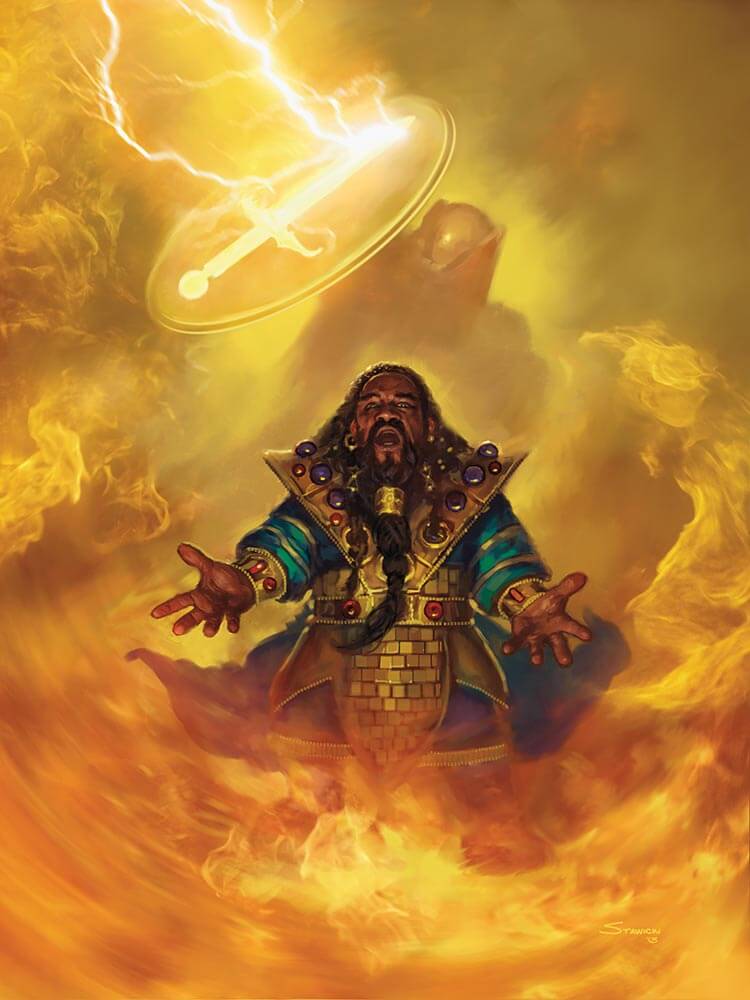
Grave Domain
Gods of the grave watch over the line between life and death. To these deities, death and the afterlife are a foundational part of the multiverse’s workings. To resist death, or to desecrate the dead’s rest, is an abomination. Followers of these deities seek to put restless spirits to rest, destroy the undead wherever they find them, and ease the suffering of dying creatures.
Grave Domain Spells
| Level | Spells |
|---|---|
| 1st | Bane, False Life |
| 3rd | Gentle Repose, Ray of Enfeeblement |
| 5th | Revivify, Vampiric Touch |
| 7th | Blight, Death Ward |
| 9th | Antilife Shell, Raise Dead |
Circle of Mortality
At 1st level, you gain the ability to manipulate the line between life and death. When you would normally roll one or more dice to restore hit points with a spell to a creature at 0 hit points, you instead use the highest number possible for each die.
In addition, you learn the Spare the Dying cantrip, which doesn't count against the number of cleric cantrips you know. For you, it has a range of 30 feet, and you can cast it as a bonus action.
Eyes of the Grave
At 1st level, you gain the ability to occasionally sense the presence of the undead, whose existence is an insult to the natural cycle of life. As an action, you can open your awareness to magically detect undead. Until the end of your next turn, you know the location of any undead within 60 feet of you that isn't behind total cover and that isn't protected from divination magic. This sense doesn't tell you anything about a creature's capabilities or identity.
You can use this feature a number of times equal to your Wisdom modifier (minimum 1), regaining all expended uses when you finish a long rest.
Channel Divinity: Path to the Grave
Starting at 2nd level, you can use your Channel Divinity to mark another creature’s life force for termination. As an action, you choose one creature you can see within 30 feet of you, cursing it until the end of your next turn. The next time you or an ally of yours hits the cursed creature with an attack, the creature has vulnerability to all of that attack's damage, and then the curse ends.
Sentinel at Death's Door
At 6th level, you gain the ability to impede death’s progress. As a reaction when you or an ally that you can see within 30 feet of you suffers a critical hit, you can turn that attack into a normal hit. Any effects triggered by a critical hit are cancelled.
You can use this feature a number of times equal to your Wisdom modifier (minimum of once). You regain all expended uses when you finish a long rest.
Potent Spellcasting
Starting at 8th level, you add your Wisdom modifier to the damage you deal with any cleric cantrip.
Keeper of Souls
At 17th level, you can seize a trace of vitality from a parting soul and use it to heal the living. When an enemy you can see dies within 30 feet of you, you or one ally of your choice that is within 30 feet of you regains hit points equal to the enemy’s number of Hit Dice. You can use this feature only if you aren't incapacitated.
Once you use it, you can't do so again until the start of your next turn.


Knowledge Domain
The gods of knowledge value learning and understanding above all. Some teach that knowledge is to be gathered and shared in libraries and universities, or promote the practical knowledge of craft and invention. Followers of these gods study esoteric lore, collect old tomes, delve into the secret places of the earth, and learn all they can.
Knowledge Domain Spells
| Level | Spells |
|---|---|
| 1st | Command, Identify |
| 3rd | Augury, Suggestion |
| 5th | Nondetection, Speak with Dead |
| 7th | Arcane Eye, Confusion |
| 9th | Legend Lore, Scrying |
Blessings of Knowledge
At 1st level, you learn two languages of your choice. You also become proficient in your choice of two of the following skills: Arcana, History, Nature, or Religion. Your proficiency bonus is doubled for any ability check you make that uses either of those skills.
Channel Divinity: Knowledge of Aeons
Starting at 2nd level, you can use your Channel Divinity to tap into a divine well of knowledge. As an action, you choose one skill or tool. For 10 minutes, you have proficiency with the chosen skill or tool.
Channel Divinity: Read Thoughts
At 6th level, you can use your Channel Divinity to read a creature's thoughts. You can then use your access to the creature's mind to command it. As an action, choose one creature that you can see within 60 feet of you. That creature must make a Wisdom saving throw. If the creature succeeds on the saving throw, you can't use this feature on it again until you finish a long rest.
If the creature fails its save, you can read its surface thoughts (those foremost in its mind, reflecting its current emotions and what it is actively thinking about) when it is within 60 feet of you. This effect lasts for 1 minute.
During that time, you can use your action to end this effect and cast the Suggestion spell on the creature without expending a spell slot. The target automatically fails its saving throw against the spell.
Potent Spellcasting
Starting at 8th level, you add your Wisdom modifier to the damage you deal with any cleric cantrip.
Visions of the Past
Starting at 17th level, you can call up visions of the past that relate to an object you hold or your immediate surroundings. You spend at least 1 minute in meditation and prayer, then receive dreamlike, shadowy glimpses of recent events. You can meditate in this way for a number of minutes equal to your Wisdom score and must maintain concentration during that time, as if you were casting a spell.
Object Reading. Holding an object as you meditate, you can see visions of the object's previous owner. After meditating for 1 minute, you learn how the owner acquired and lost the object, as well as the most recent significant event involving the object and that owner. If the object was owned by another creature in the recent past (within a number of days equal to your Wisdom score), you can spend 1 additional minute for each owner to learn the same information about that creature.
Area Reading. As you meditate, you see visions of recent events in your immediate vicinity (a room, street, tunnel, clearing, or the like, up to a 50-foot cube), going back a number of days equal to your Wisdom score. For each minute you meditate, you learn about one significant event, beginning with the most recent. Significant events typically involve powerful emotions, such as battles and betrayals, marriages and murders, births and funerals. However, they might also include more mundane events that are nevertheless important in your current situation.
Once you use this feature, you can’t use it again until you finish a short or long rest, unless you expend a spell slot of 4th-level or greater to use it again.
Life Domain
The Life domain focuses on the vibrant positive energy that sustains all life. The gods of life promote vitality and health through healing the sick and wounded, caring for those in need, and driving away the forces of death and undeath. Almost any non-evil deity can claim influence over this domain, particularly agricultural deities, sun gods, gods of healing or endurance, and gods of home and community.
Life Domain Spells
| Level | Spells |
|---|---|
| 1st | Bless, Cure Wounds |
| 3rd | Lesser Restoration, Spiritual Weapon |
| 5th | Beacon of Hope, Revivify |
| 7th | Death Ward, Guardian of Faith |
| 9th | Mass Cure Wounds, Raise Dead |
Bonus Proficiency
When you choose this domain at 1st level, you gain proficiency with heavy armour.
Disciple of Life
Also starting at 1st level, your healing spells are more effective. Whenever you use a spell of 1st level or higher to restore hit points to a creature, the creature regains additional hit points equal to 1d4 + the spell's level.
At 8th level, the d4 increases to a d8.
At 14th level, the d8 increases to a d12.
Channel Divinity: Preserve Life
Starting at 2nd level, you can use your Channel Divinity to heal the badly injured. As an action, you present your holy symbol and evoke healing energy that can restore a number of hit points equal to five times your cleric level. Choose any creatures within 30 feet of you, and divide those hit points among them. This feature can restore a creature to no more than half of its hit point maximum. You can't use this feature on an undead or a construct.
Blessed Healer
Beginning at 6th level, the healing spells you cast on others heal you as well. When you cast a spell of 1st level or higher that restores hit points to a creature other than you, you also gain the benefits of your Disciple of Life healing.
Divine Strike
At 8th level, you gain the ability to infuse your weapon strikes with divine energy. Once on each of your turns when you hit a creature with a weapon attack, you can cause the attack to deal an extra 1d8 radiant damage to the target.
At 14th level, the extra damage increases to 2d8.
Supreme Healing
Starting at 17th level, when you would normally roll one or more dice to restore hit points with a spell, you instead use the highest number possible for each die. For example, instead of restoring 1d8 hit points to a creature, you simply restore 8.
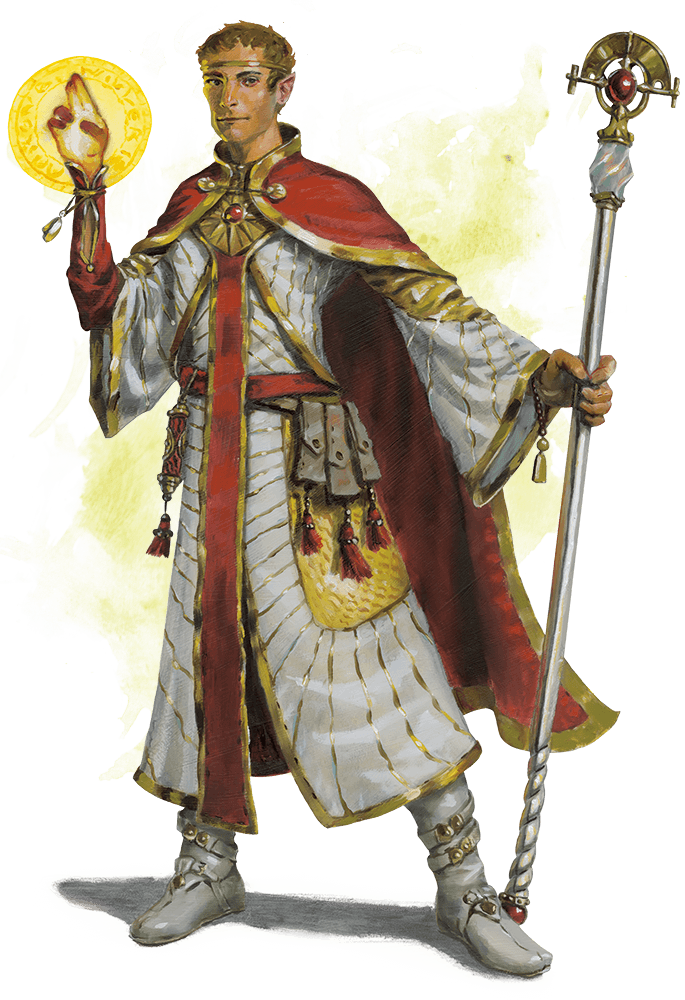
Light Domain
Gods of light promote the ideals of rebirth and renewal, truth, vigilance, and beauty, often using the symbol of the sun. Clerics of a god of light are enlightened souls infused with radiance and the power of their gods' discerning vision, charged with chasing away lies and burning away darkness.
Light Domain Spells
| Level | Spells |
|---|---|
| Cantrip | Light |
| 1st | Burning Hands, Faerie Fire |
| 3rd | Flaming Sphere, Scorching Ray |
| 5th | Daylight, Fireball |
| 7th | Guardian of Faith, Wall of Fire |
| 9th | Flame Strike, Scrying |
Warding Flare
Also at 1st level, you can interpose divine light between yourself and an attacking enemy. When you are attacked by a creature within 30 feet of you that you can see, you can use your reaction to impose disadvantage on the attack roll, causing light to flare before the attacker before it hits or misses. An attacker that can't be blinded is immune to this feature.
You can use this feature a number of times equal to your Wisdom modifier (a minimum of once). You regain all expended uses when you finish a long rest.
Channel Divinity: Radiance of the Dawn
Starting at 2nd level, you can use your Channel Divinity to harness sunlight, banishing darkness and dealing radiant damage to your foes. As an action, you present your holy symbol, and any magical darkness within 30 feet of you is dispelled. Additionally, each hostile creature within 30 feet of you must make a Constitution saving throw. A creature takes radiant damage equal to 2d10 + your cleric level on a failed saving throw, and half as much damage on a successful one. A creature that has total cover from you is not affected.
Improved Flare
Starting at 6th level, you can also use your Warding Flare feature when a creature that you can see within 30 feet of you attacks a creature other than you.
Potent Spellcasting
Starting at 8th level, you add your Wisdom modifier to the damage you deal with any cleric cantrip.
Corona of Light
Starting at 17th level, you can use your action to activate an aura of sunlight that lasts for 1 minute or until you dismiss it using another action. You emit bright light in a 60-foot radius and dim light 30 feet beyond that. Your enemies in the bright light have disadvantage on saving throws against any spell that deals fire or radiant damage.
Nature Domain
Druids revere nature as a whole and might serve one of these deities, practising mysterious rites and reciting all-but-forgotten prayers in their own secret tongue. But many of these gods have clerics as well, champions who take a more active role in advancing the interests of a particular nature god. These clerics might hunt the evil monstrosities that despoil the woodlands, bless the harvest of the faithful, or wither the crops of those who anger their gods.
Nature Domain Spells
| Level | Spells |
|---|---|
| 1st | Animal Friendship, Speak with Animals |
| 3rd | Barkskin, Spike Growth |
| 5th | Plant Growth, Wind Wall |
| 7th | Dominate Beast, Grasping Vine |
| 9th | Insect Plague, Tree Stride |
Acolyte of Nature
At 1st level, you learn one cantrip of your choice from the druid spell list. You also gain proficiency in one of the following skills of your choice: Animal Handling, Nature, or Survival.
In addition, you gain proficiency with heavy armour.
Channel Divinity: Charm Animals and Plants
Starting at 2nd level, you can use your Channel Divinity to charm animals and plants. As an action, you present your holy symbol and invoke the name of your deity. Each beast or plant creature that can see you within 30 feet of you must make a Wisdom saving throw. If the creature fails its saving throw, it is charmed by you for 1 minute or until it takes damage. While it is charmed by you, it is friendly to you and other creatures you designate.
Dampen Elements
Starting at 6th level, when you or a creature within 30 feet of you takes acid, cold, fire, lightning, or thunder damage, you can use your reaction to grant resistance to the creature against that instance of the damage.
Divine Strike
At 8th level, you gain the ability to infuse your weapon strikes with divine energy. Once on each of your turns when you hit a creature with a weapon attack, you can cause the attack to deal an extra 1d8 cold, fire, or lightning damage (your choice) to the target.
At 14th level, the extra damage increases to 2d8.
Master of Nature
At 17th level, you gain the ability to command animals and plant creatures. While creatures are charmed by your Charm Animals and Plants feature, you can take a bonus action on your turn to verbally command what each of those creatures will do on its next turn.


Order Domain
The Order domain represents discipline,
as well as devotion to the laws that govern
a society, an institution, or a philosophy.
Clerics of Order meditate on logic and justice as they serve their gods. They believe that well-crafted laws establish legitimate hierarchies, and those selected by law to lead must be obeyed.
Order Domain Spells
| Level | Spells |
|---|---|
| 1st | Command, Heroism |
| 3rd | Hold Person, Zone of Truth |
| 5th | Mass Healing Word, Slow |
| 7th | Compulsion, Locate Creature |
| 9th | Commune, Dominate Person |
Bonus Proficiencies
When you choose this domain at 1st level, you gain proficiency with heavy armour. You also gain proficiency in the Intimidation or Persuasion skill (your choice).
Channel Divinity: Order's Demand
Starting at 2nd level, you can use your Channel Divinity to exert an intimidating presence over others. As an action, you present your holy symbol, and each creature of your choice that can see or hear you within 30 feet of you must succeed on a Wisdom saving throw or be charmed by you until the end of your next turn or until the charmed creature takes any damage. You can also cause any of the charmed creatures to drop what they are holding when they fail the saving throw.
Embodiment of the Law
At 6th level, you become remarkably adept at channelling magical energy to compel others. If you cast a spell of the enchantment school using a spell slot of 1st level or higher, you can change the spell's casting time to 1 bonus action for this casting, provided the spell's casting time is normally 1 action.
You can use this feature a number of times equal to your Wisdom modifier (minimum of once), and you regain all expended uses of it when you finish a long rest.
Divine Strike
At 8th level, you gain the ability to infuse your weapon strikes with divine energy. Once on each of your turns when you hit a creature with a weapon attack, you can cause the attack to deal an extra 1d8 psychic damage to the target.
At 14th level, the extra damage increases to 2d8.
Order's Wrath
Starting at 17th level, enemies you designate for destruction wilt under the combined efforts of you and your allies. If you deal your Divine Strike damage to a creature on your turn, you can curse that creature until the start of your next turn. The next time one of your allies hits the cursed creature with an attack, the target also takes 2d8 psychic damage, and the curse ends. You can curse a creature in this way only once per turn.
Peace Domain
The balm of peace thrives at the heart of healthy communities, between friendly nations, and in the souls of the kindhearted. The gods of peace inspire people of all sorts to resolve conflict and to stand up against those forces that try to prevent peace from flourishing.
Peace Domain Spells
| Level | Spells |
|---|---|
| 1st | Heroism, Sanctuary |
| 3rd | Aid, Warding Bond |
| 5th | Beacon of Hope, Sending |
| 7th | Aura of Purity, Otiluke's Resilient Sphere |
| 9th | Greater Restoration, Rary's Telepathic Bond |
Implement of Peace
When you choose this domain at 1st level, you gain proficiency in the Insight, Performance, or Persuasion skill (your choice).
Emboldening Bond
Starting at 1st level, you can forge an empowering bond among people who are at peace with one another. As an action, you choose a number of willing creatures within 30 feet of you (this can include yourself) equal to your Wisdom modifier (minimum 1).
You create a magical bond among them for 10 minutes or until you use this feature again. While any bonded creature is within 30 feet of another, the creature can roll a d4 and add the number rolled to an attack roll, an ability check, or a saving throw it makes. Each creature can add the d4 no more than once per turn.
You can use this feature a number of times equal to your Wisdom modifier (minimum 1), and you regain all expended uses when you finish a long rest.
The Emboldening Bond die increases at 5th-level (1d6), 11th-level (1d8), and 17th-level (1d10) in this clas.
Channel Divinity: Balm of Peace
Starting at 2nd level, you can use your Channel Divinity to make your very presence a soothing balm. As an action, you can move up to your speed, without provoking opportunity attacks, and when you move within 5 feet of any other creature during this action, you can restore a number of hit points to that creature equal to 2d6 + your Wisdom modifier (minimum of 1 hit point). A creature can receive this healing only once whenever you take this action.
Protective Bond
Beginning at 6th level, the bond you forge between people helps them protect each other. When a creature affected by your Emboldening Bond feature is about to take damage, a second bonded creature within 30 feet of the first can use its reaction to teleport to an unoccupied space within 5 feet of the first creature. The second creature then takes all the damage instead.
Potent Spellcasting
At 8th level, you add your Wisdom modifier to the damage you deal with any cleric cantrip.
Expansive Bond
At 17th level, the benefits of your Emboldening Bond and Protective Bond features now work when the creatures are within 60 feet of each other. Moreover, when a creature uses Protective Bond to take someone else's damage, the creature has resistance to that damage.
Tempest Domain
Gods whose portfolios include the Tempest domain govern storms, the sea, and the sky. They include gods of lightning and thunder, gods of earthquakes, some fire gods, and certain gods of violence, physical strength, and courage. Tempest gods send their clerics to inspire fear in the common folk, either to keep those folk on the path of righteousness or to encourage them to offer sacrifices of propitiation to ward off divine wrath.
Tempest Domain Spells
| Level | Spells |
|---|---|
| 1st | Fog Cloud, Thunderwave |
| 3rd | Gust of Wind, Shatter |
| 5th | Call Lightning, Sleet Storm |
| 7th | Control Water, Ice Storm |
| 9th | Destructive Wave, Insect Plague |
Bonus Proficiencies
At 1st level, you gain proficiency with martial weapons and heavy armour.
Wrath of the Storm
Also at 1st level, you can thunderously rebuke attackers. When a creature within 5 feet of you that you can see hits you with an attack, you can use your reaction to cause the creature to make a Dexterity saving throw. The creature takes 2d8 lightning or thunder damage (your choice) on a failed saving throw, and half as much damage on a successful one.
You can use this feature a number of times equal to your Wisdom modifier (a minimum of once). You regain all expended uses when you finish a long rest.
Channel Divinity: Destructive Wrath
Starting at 2nd level, you can use your Channel Divinity to wield the power of the storm with unchecked ferocity. When you roll lightning or thunder damage, you can use your Channel Divinity to deal maximum damage, instead of rolling.
Thunderous Strike
At 6th level, when you deal lightning damage to a Large or smaller creature, you can also push it up to 10 feet away from you.
Divine Strike
At 8th level, you gain the ability to infuse your weapon strikes with divine energy. Once on each of your turns when you hit a creature with a weapon attack, you can cause the attack to deal an extra 1d8 thunder damage to the target. At 14th level, the extra damage increases to 2d8.
Stormborn
At 17th level, you have a flying speed equal to your current walking speed whenever you are not underground or indoors.
Trickery Domain
Gods of trickery are mischief-makers and instigators who stand as a constant challenge to the accepted order among both gods and mortals. Their clerics are a disruptive force in the world, puncturing pride, mocking tyrants, stealing from the rich, freeing captives, and flouting hollow traditions.
Trickery Domain Spells
| Level | Spells |
|---|---|
| 1st | Charm Person, Disguise Self |
| 3rd | Mirror Image, Pass without Trace |
| 5th | Blink, Dispel Magic |
| 7th | Dimension Door, Polymorph |
| 9th | Dominate Person, Modify Memory |
Blessing of the Trickster
Starting when you choose this domain at 1st level, you can use your action to touch a willing creature other than yourself to give it advantage on Dexterity (Stealth) checks. This blessing lasts for 1 hour or until you use this feature again.
Channel Divinity: Invoke Duplicity
Starting at 2nd level, you can use your Channel Divinity to create an illusory duplicate of yourself. As an action, you create a perfect illusion of yourself that lasts for 1 minute, or until you lose your concentration (as if you were concentrating on a spell). The illusion appears in an unoccupied space that you can see within 30 feet of you. As a bonus action on your turn, you can move the illusion up to 30 feet to a space you can see, but it must remain within 120 feet of you.
For the duration, you can cast spells as though you were in the illusion's space, but you must use your own senses. Additionally, when both you and your illusion are within 5 feet of a creature that can see the illusion, you have advantage on attack rolls against that creature.
Channel Divinity: Cloak of Shadows
Starting at 6th level, you can use your Channel Divinity to vanish. As an action, you become invisible for 1 minute. You become visible at the end of a turn if you attack or cast a spell during the invisibility. Thereafter within the duration of this feature, you can use a bonus action to turn invisible again.
Gifts of Trickery
At 8th level, you can cast cleric cantrips without requiring verbal components – a gift from your deity. In addition, once per turn when you damage a creature with a weapon attack or a spell attack using a cantrip, you can also deal an extra 1d8 poison damage to that creature.
At 14th level, the extra damage increases to 2d8.
Improved Duplicity
At 17th level, you can create up to four duplicates of yourself, instead of one, when you use Invoke Duplicity. As a bonus action on your turn, you can move any number of them up to 30 feet, to a maximum range of 120 feet.
Twilight Domain
The twilit transition from light into darkness often brings calm and even joy, as the day's labours end and the hours of rest begin. The darkness can also bring terrors, but the gods of twilight guard against the horrors of the night. Clerics who serve these deities bring comfort to those who seek rest and protect them by venturing into the encroaching darkness to ensure that the dark is a comfort, not a terror.
Twilight Domain Spells
| Level | Spells |
|---|---|
| 1st | Faerie Fire, Sleep |
| 3rd | Moonbeam, See Invisibility |
| 5th | Aura of Vitality, Leomund's Tiny Hut |
| 7th | Aura of Life, Greater Invisibility |
| 9th | Circle of Power, Mislead |
Bonus Proficiencies
At 1st level, you gain proficiency with martial weapons and heavy armour.
Eyes of Night
Starting at 1st level, You can see through the deepest gloom. You have darkvision out to a range of 120 feet. In that radius, you can see in dim light as if it were bright light and in darkness as if it were dim light, able to see through ev magical darkness.
As an action, you can magically share the darkvision of this feature with willing creatures you can see within 10 feet of you, up to a number of creatures equal to your Wisdom modifier (minimum of one creature). The shared darkvision lasts for 1 hour. Once you share it, you can't do so again until you finish a long rest, unless you expend a spell slot of any level to share it again.
Channel Divinity: Twilight Sanctuary
At 2nd level, you can use your Channel Divinity to refresh your allies with soothing twilight. As an action, you present your holy symbol, and a 30-foot-radius aura of twilight emanates from you, is filled with dim light. The sphere moves with you, and it lasts for 1 minute or until you are incapacitated or die. Whenever a creature (including you) ends its turn in the sphere, you can grant that creature temporary hit points equal to 1d6 plus your cleric level, or you can end one effect causing it to be charmed or frightened.
Steps of Night
Starting at 6th level, you can draw on the mystical power of night to rise into the air. As a bonus action when you are in dim light or darkness, you can magically give yourself a flying speed equal to your walking speed for 1 minute. You can use this bonus action a number of times equal to your Wisdom modifier, regaining all expended uses when you finish a long rest.
Divine Strike
At 8th level, you gain the ability to infuse your weapon strikes with divine energy. Once on each of your turns when you hit a creature with a weapon attack, you can cause the attack to deal an extra 1d8 radiant damage. At 14th level, the extra damage increases to 2d8.
Twilight Shroud
At 17th level, the twilight that you summon offers a protective embrace: you and your allies have half cover while in the sphere created by your Twilight Sanctuary.


War Domain
War has many manifestations. It can make heroes of ordinary people. It can be desperate and horrific, with acts of cruelty and cowardice eclipsing instances of excellence and courage. In either case, the gods of war watch over warriors and reward them for their great deeds. The clerics of such gods excel in battle, offering acts of violence as prayers.
War Domain Spells
| Level | Spells |
|---|---|
| 1st | Divine Favour, Shield of Faith |
| 3rd | Magic Weapon, Spiritual Weapon |
| 5th | Crusader's Mantle, Spirit Guardians |
| 7th | Freedom of Movement, Stoneskin |
| 9th | Flame Strike, Hold Monster |
War Priest
At 1st level, your god delivers you bolts of battle inspiration to you. You gain proficiency with martial weapons and heavy armour.
In addition, when you use your action to Attack, you can make one weapon attack as a bonus action. You can use this feature a number of times equal to your Wisdom modifier (minimum of once), regaining all expended uses when you finish a short or long rest.
Channel Divinity: Guided Strike
Starting at 2nd level, you can use your Channel Divinity to strike with supernatural accuracy. When you make an attack roll, you can use your Channel Divinity to gain a +10 bonus to the roll. You make this choice after you see the roll, but before the DM says whether the attack hits or misses.
At 6th level, you can instead use your Channel Divinity to grant this feature to a creature within 30 feet of you as a reaction when you see them make an attack roll.
Extra Attack
Starting at 6th level, you can attack twice, instead of once, whenever you take the Attack action on your turn. Moreover, you can cast one of your cantrips in place of one of those attacks.
Divine Strike
At 8th level, you gain the ability to infuse your weapon strikes with divine energy. Once on each of your turns when you hit a creature with a weapon attack, you can cause the attack to deal an extra 1d8 damage of the same type dealt by the weapon to the target.
At 14th level, the extra damage increases to 2d8.
Chaplain of Battle
At 17th level, you gain resistance to bludgeoning, piercing, and slashing damage while below your hit point maximum.
Divine Technomancer
The tech-preist is concerned with the technology, commerce, structure, and even citisenry of modern magical civilisation. In the eyes of a cleric of artifice, the center of worship is a sense and spirit of creation; one built of steel, crystal, and elemental engines.
Tech Domain Spells
When you choose this domain at 1st level, you gain the On/Off cantrip in addition to your chosen cantrips.
You can prepare your Cleric spells each day from both the artificer and cleric spell lists, and the number of spells you can prepare increases by a number equal to your Intelligence modifier (minimum 1).
Heart of Technomancy
From 1st level, you are able to tap into the spirits of artifice found in Weave. You gain proficiency with firearms, and with vehicles (land).
While you are within any city, you can gain advantage on a single Charisma (Deception, Intimidation, or Persuasion) check, and you are considered proficient in the appropriate skill. You can use this feature a number of times equal to your Wisdom modifier (a minimum of once). You regain any expended uses when you finish a long rest.
Channel Divinity: Imbue Machine Spirit
Starting at 2nd level, you can use your Channel Divinity to call on the spirits of arcane technology for aid. As an action, you present your holy symbol, and any magic item or firearm within 30 feet of you either instantly repairs small bugs and works perfectly, misfires or jams, or shuts down entirely (your choice).
Additionally, each hostile creature in that range must make a Charisma saving throw. On a failed save, the creature is knocked prone or restrained (your choice) by mundane magical hazards such as entangling wires, being run over, pavement collapsing to unseen potholes, and so on. A restrained creature can escape by making a successful Strength (Athletics) or Dexterity (Acrobatics) check against your spell save DC. Determination of what constructs, mechanisms, and utilities are available within range and how the effects manifest are left up to the DM.
Constructed Ward
Starting at 6th level, your awareness while among technology extends preternaturally. While in an urban environment or one filled with magical tech, you are considered proficient in the Insight and Perception skills, and you add double your proficiency bonus to Wisdom (Insight) and Wisdom (Perception) checks, instead of your normal proficiency bonus.
In addition, you are immune to effects such as scrying or arcane eye that would perceive you, or determine your location. You are seen, heard, and in all ways otherwise perceived as a blur of static through such magic.
Dampening Strike
At 8th level, you gain the ability to infuse your weapon strikes with psychic energy borrowed from the spirits of Mechanus. Once on each of your turns when you hit a creature with a weapon attack, you can cause the attack to deal an extra 1d4 psychic damage to the target.
When you reach 14th level, the extra psychic damage increases to 2d4.
When you damage a target which is concentrating on a spell with this feature, it must make a Concentration check against your spell save DC.
Express Ley-Lines
At 17th level, you can use gulfs in the currents of magic, ley routes, to transport instantaneously to other points in the current. Starting from a Teleportation Circle, arcane turret, lightning-rail stop, or other suitable permanent site of powerful magic, you can teleport to any other similar site, as if you had cast a Teleport spell whose destination is a permanent Teleportation Circle you know.
Once you use this feature, you can’t use it again until you finish a long rest, unless you expend a spell slot of 5th-level or greater to use it again.
Domainless
When the darkness within clouds your beliefs from sight, when your faith is tested and falls short, your domain can be taken from you. Whether by ex-communication or merely casting them aside, the pedestal within your soul once holding the divine stands empty. In its place burns a dark fire, a blaze of pain and wrath that emboldens you, empowering you, breaking the chains of faith and forging you into your own kind of cleric. One of death, one of life, and one of Fury.
Domainless Spells
You gain 'domain' spells at the cleric levels listed in the Forsaken Spells table. You have no access to the Commune spell.
Forsaken Spells
| Level | Spells |
|---|---|
| 1st | Cause Fear, Tasha’s Hideous Laughter |
| 3rd | Augury, Crown of Madness |
| 5th | Bestow Curse, Magic Circle |
| 7th | Banishment, Sickening Radiance |
| 9th | Contact Other Plane, Dispel Evil and Good, Scrying |
Ward of Insight
Beginning at 1st level, while you are not wearing armour and you have at least one hand empty, your AC equals 10 + your Intelligence modifier + your Wisdom modifier. In addition, you are immune to being charmed or frightened by aberrations, celestials, elementals, fey, and fiends.
Curse of Insight
Also at 1st level, every spell you intone peels more back from the veil of the Great Deific Illusion. When you use your action to cast a spell of 1st-level or higher on your turn, you can use your bonus action to inflict psychic damage equal to half your Cleric level + your Wisdom modifier automatically against a single celestial, elemental, fey, or fiend within 30 feet of you. This ability has no effect against creatures with either a Wisdom or Intelligence score below 7.
Channel Mortality
Starting at 2nd level, you can use your Channel Divinity to draw your foes into the terror of accepting their own demise. As an action, you target one creature you can see within 30 feet of you. The creature cannot be a celestial, construct, fey fiend, or undead. The target must make a saving throw against your spell save DC, rolling a d20 and subtracting their Wisdom modifier from the result. On a failed save, the target is charmed by you and must obey your commands for the next 24 hours, or until you use this Channel Divinity option again.
Each time the target takes damage, they can repeat the saving throw. Commanding them to do something actively detrimental to their life ends the enchantment.
Heretic’s Resolve
Starting at 6th level, you no longer fear death. While at half your hit point maximum or below, you gain the following features:
- You have advantage on spell attack rolls and Concentration checks.
- You add your Wisdom modifier to your Charisma saving throws.
- When you cast an Evocation, Conjuration or Necromancy spell that deals damage, you can add 2d6 to the damage roll. This damage increases to 3d6 at 9th level, and 4d6 at 16th level.
- You have resistance to radiant, necrotic, force and psychic damage.
Aura of Revelation.
At 8th level, your transcendence is infectious, overflowing into your allies, manifesting as a 10-foot-radius aura centred on you and moving with you. You and all creatures of your choice within the aura can add your Wisdom modifier to their Initiative rolls. When a hostile creature starts their turn within the aura, or moves into it for the first time on their turn, they must make a Wisdom saving throw or be Blinded until the start of their next turn.
Allies within the aura also gain your faithless defiance, becoming immune to being Charmed or Frightened by aberrations, celestials, elementals, fey, and fiends. Moreover, creatures of that kind are affected by your Channel Divinity: Turn Undead while within this radius.
At 18th level, the range of the aura increases to 30 feet.
Beyond Gods
At 17th level, the apocryphal aura you produce is empowered by your abandonment of the immortal. You and all creatures within your aura of revelation gain the following benefits:
- Resistance to all damage inflicted by illusion and enchantment effects, and advantage on saving throws made to resist them.
- Immunity to having your plane or form altered against your will.
- If healing from a spell you cast brings a creature within the aura to its maximum hit points, more can be added as temporary hit points.
- Creatures other than you with magic divined from a higher power (such as a Cleric, Druid, Paladin, or Warlock) within the aura have disadvantage on Wisdom saving throws.
The Druid
Whether calling on the elemental forces of nature or emulating the creatures of the animal world, druids are an embodiment of nature's resilience, cunning, and fury. They claim no mastery over nature, but see themselves as extensions of nature's indomitable will.
You must have a Wisdom score of 13 or higher in order to multiclass in or out of this class.
Class Features
As a druid, you gain the following class features.
Hit Points
- Hit Dice: 1d8 per druid level
- Hit Points at 1st Level: 8 + your Constitution modifier
- Hit Points at Higher Levels: 1d8 (or 5) + your Constitution modifier per druid level after 1st
Proficiencies
- Armour: Light armour, medium armour, shields (druids tend not to wear armour or use shields made of metal)
- Weapons: Clubs, daggers, darts, javelins, maces, quarterstaffs, scimitars, sickles, slings, spears
- Tools: Herbalism kit
- Saving Throws: Intelligence, Wisdom
- Skills: Choose two from Arcana, Animal Handling, Insight, Medicine, Nature, Perception, Religion, and Survival
Equipment
You start with the following equipment, in addition to the equipment granted by your background:
- (a) a wooden shield or (b) any simple weapon
- (a) a scimitar or (b) any simple melee weapon
- Leather armour, an explorer's pack, and a druidic focus
Druidic
You know Druidic, the secret language of druids. You can speak the language and use it to leave hidden messages. You and others who know this language automatically spot such a message. Others spot the message's presence with a successful DC 15 Wisdom (Perception) check but can't decipher it without magic.
Spellcasting
Drawing on the divine essence of nature itself, you can cast spells to shape that essence to your will.
Cantrips
At 1st level, you know two cantrips of your choice from the druid spell list. You learn additional druid cantrips of your choice at higher levels, as shown in the Cantrips Known column of the Druid table.
Whenever you gain a level in this class, you can replace one druid cantrip you know with another cantrip from the druid spell list.
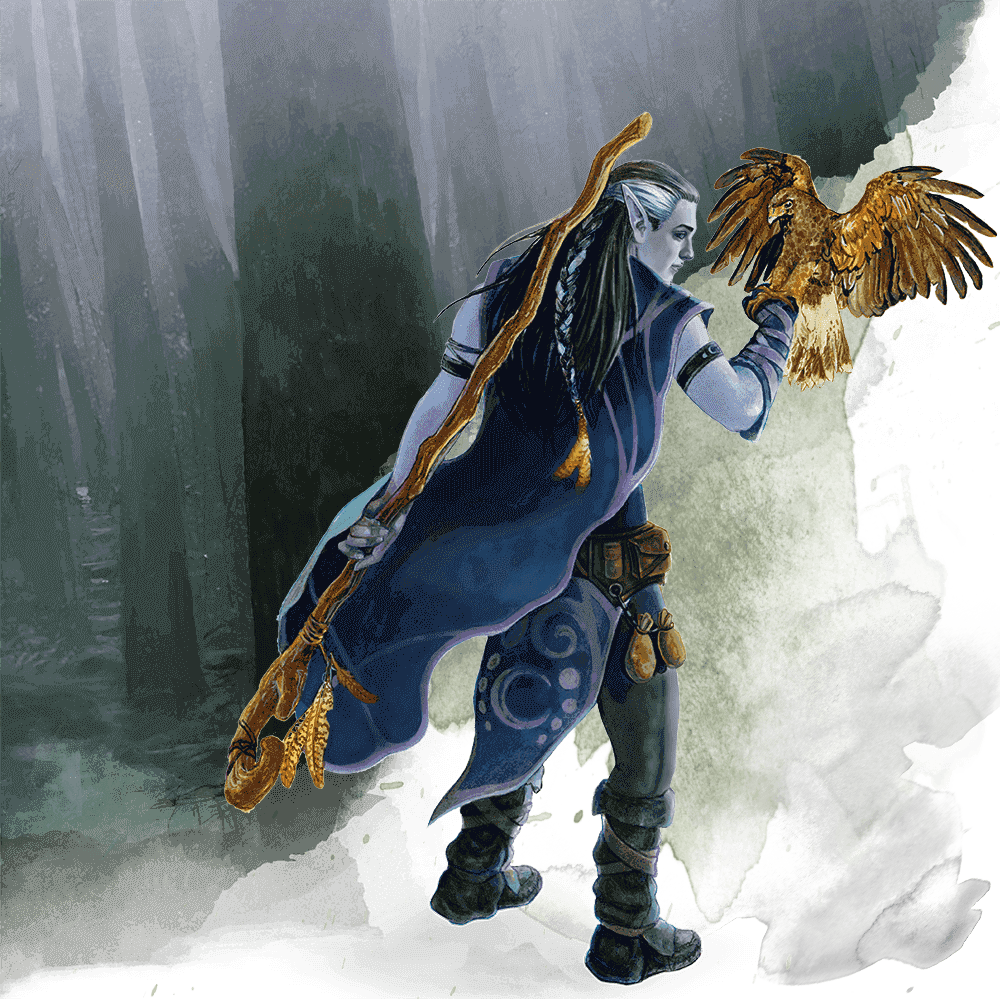
Preparing and Casting Spells
The Druid table shows how many spell slots you have to cast your spells of 1st level and higher. To cast one of these druid spells, you must expend a slot of the spell's level or higher. You regain all expended spell slots when you finish a long rest.
You prepare the list of druid spells that are available for you to cast, choosing from the druid spell list. When you do so, choose a number of druid spells equal to your Wisdom modifier + your Druid level (minimum of one spell). The spells must be of a level for which you have spell slots.
For example, if you are a 3rd-level druid, you have four 1st-level and two 2nd-level spell slots. With a Wisdom of 16, your list of prepared spells can include six spells of 1st or 2nd level, in any combination. If you prepare the 1st-level spell Cure Wounds, you can cast it using a 1st-level or 2nd-level slot. Casting the spell doesn't remove it from your list of prepared spells.
You can also change your list of prepared spells when you finish a long rest. Preparing a new list of druid spells requires time spent in prayer and meditation: at least 1 minute per spell level for each spell on your list.
Spellcasting Ability
Wisdom is your spellcasting ability for your druid spells, since your magic draws upon your devotion and attunement to nature. You use your Wisdom whenever a spell refers to your spellcasting ability. In addition, you use your Wisdom modifier when setting the saving throw DC for a druid spell you cast and when making an attack roll with one.
Spell Save DC
Spell attack modifier
The Druid
| Level | Proficiency Bonus | Features | Cantrips Known | 1st | 2nd | 3rd | 4th | 5th | 6th | 7th | 8th | 9th |
|---|---|---|---|---|---|---|---|---|---|---|---|---|
| 1st | +2 | Druidic, Spellcasting | 2 | 2 | - | - | - | - | - | - | - | - |
| 2nd | +2 | Wild Shape, Druid Circle, Wild Companion | 2 | 3 | - | - | - | - | - | - | - | - |
| 3rd | +2 | - | 2 | 4 | 2 | - | - | - | - | - | - | - |
| 4th | +2 | Wild Shape Improvement, Ability Score Improvement | 3 | 4 | 3 | - | - | - | - | - | - | - |
| 5th | +3 | - | 3 | 4 | 3 | 2 | - | - | - | - | - | - |
| 6th | +3 | Druid Circle Feature | 3 | 4 | 3 | 3 | - | - | - | - | - | - |
| 7th | +3 | - | 3 | 4 | 3 | 3 | 1 | - | - | - | - | - |
| 8th | +3 | Wild Shape Improvement, Ability Score Improvement | 3 | 4 | 3 | 3 | 2 | - | - | - | - | - |
| 9th | +4 | - | 3 | 4 | 3 | 3 | 3 | 1 | - | - | - | - |
| 10th | +4 | Druid Circle Feature | 4 | 4 | 3 | 3 | 3 | 2 | - | - | - | - |
| 11th | +4 | - | 4 | 4 | 3 | 3 | 3 | 2 | 1 | - | - | - |
| 12th | +4 | Ability Score Improvement | 4 | 4 | 3 | 3 | 3 | 2 | 1 | - | - | - |
| 13th | +5 | - | 4 | 4 | 3 | 3 | 3 | 2 | 1 | 1 | - | - |
| 14th | +5 | Druid Circle Feature | 4 | 4 | 3 | 3 | 3 | 2 | 1 | 1 | - | - |
| 15th | +5 | Timeless Body | 4 | 4 | 3 | 3 | 3 | 2 | 1 | 1 | 1 | - |
| 16th | +5 | Ability Score Improvement | 4 | 4 | 3 | 3 | 3 | 2 | 1 | 1 | 1 | - |
| 17th | +6 | - | 4 | 4 | 3 | 3 | 3 | 2 | 1 | 1 | 1 | 1 |
| 18th | +6 | Beast Spells | 4 | 4 | 3 | 3 | 3 | 3 | 1 | 1 | 1 | 1 |
| 19th | +6 | Ability Score Improvement | 4 | 4 | 3 | 3 | 3 | 3 | 2 | 1 | 1 | 1 |
| 20th | +6 | Archdruid | 4 | 4 | 3 | 3 | 3 | 3 | 2 | 2 | 1 | 1 |
Ritual Casting
You can cast a druid spell as a ritual if that spell has the ritual tag and you have the spell prepared.
Spellcasting Focus
You can use a druidic focus as a spellcasting focus for your druid spells.
Druid Circle
At 2nd level, you choose to identify with a circle of druids. Your choice grants you features at 2nd level and again at 6th, 10th, and 14th level.
Wild Shape
Starting at 2nd level, you can use your action to magically assume the shape of a beast that you have seen before. You can use this feature twice. You regain expended uses when you finish a short or long rest.
Your druid level determines the beasts you can transform into, as shown in the Beast Shapes table. At 2nd level, for example, you can transform into any beast that has a challenge rating of 1/4 or lower that doesn't have a flying or swimming speed.
You can stay in beast shape for a number of hours equal to half your druid level (rounded down). You then revert to your normal form unless you expend another use of this feature. You can revert to your normal form earlier by using a bonus action on your turn. You automatically revert if you fall unconscious, drop to 0 hit points, or die.
Beast Shapes
| Lv. | CR | Limitations |
|---|---|---|
| 2nd | 1/4 | No flying or swimming speed |
| 4th | 1/2 | No flying speed |
| 8th | 1 | - |
When you transform, you assume the beast's hit points and Hit Dice. When you revert to your normal form, you return to the number of hit points you had before you transformed. However, if you revert as a result of dropping to 0 hit points, any excess damage carries over to your normal form. As long as the excess damage doesn't reduce your normal form to 0 hit points, you aren't knocked unconscious.
For example, if you take 10 damage in animal form and have only 1 hit point left in the beast form, you revert and take 9 damage in your normal form.
While you are transformed, the following rules apply:
- Your game statistics are replaced by the statistics of the beast, but you retain your alignment, personality, and Intelligence, Wisdom, and Charisma scores.
- You retain all of your skill and saving throw proficiencies, in addition to gaining those of the creature.
- You retain the benefit of any features from your class, race, or other source and can use them if the new form is physically capable of doing so. However, you can't use any of your special senses, such as darkvision, unless your new form also has that sense.
- If the creature has the same proficiency as you and the bonus in its stat block is higher than yours, use the creature's bonus instead of yours.
- If the creature has any legendary or lair actions, you can't use them.
- You can't cast spells, and your ability to speak or take any action that requires hands is limited to the capabilities of your beast form.
- Transforming doesn't break your concentration on a spell you've already cast, or prevent you from taking actions that are part of a spell, such as Call Lightning, that you've already cast.
You choose whether your equipment falls to the ground in your space, merges into your new form, or is worn by it. Worn equipment functions as normal, but the DM decides whether it is practical for the new form to wear a piece of equipment, based on the creature's shape and size. Your equipment doesn't change size or shape to match the new form, and any equipment that the new form can't wear must either fall to the ground or merge with it. Equipment that merges with the form has no effect until you leave the form.
Wild Companion
At 3rd level, you gain the ability to summon a spirit that assumes an animal form: as an action, you can expend a use of your Wild Shape feature to cast the Find Familiar spell, without material components.
When you cast the spell in
this way, the familiar disappears after a number of hours equal to half your druid level.

Ability Score Improvement
When you reach 4th level, and again at 8th, 12th, 16th, and 19th level, you can increase one ability score of your choice by 2, or you can increase two ability scores of your choice by 1. As normal, you can't increase an ability score above 20 using this feature. Alternatively, you may take a feat in place of the ASI, provided you fulfil its prerequisites. Instead of increasing ability scores as detailed above, you may increase one ability score of your choice by 1 and gain an additional use of your Wild Shape feature between rests, increasing the maximum number uses of Wild Shape you have by 1.
Timeless Body
Starting at 15th level, the primal magic that you wield causes you to age more slowly. For every 10 years that pass, your body ages only 1 year, and you can't be aged magically. You can still die of old age, however.
Beast Spells
Beginning at 18th level, you can cast many of your druid spells in any shape you assume using Wild Shape. You can perform the somatic and verbal components of a druid spell while in beast shape, and you don't material components that lack a cost and aren't consumed by a spell; you cannot provide material components otherwise.
Archdruid
At 20th level, you do not expend a use of your Wild Shape feature when taking the form of beasts of CR 1 or lower.


Druid Circles
Circle of Blight
Whether through the subtle corruption of vile magics, the tainted presence of an ancient terror, or a terrible mistake unleashed by druids themselves, a land can become cursed with magic that warps any druid bound to that land. Twisted by their connection to an unhallowed territory, these guardians come to embody the defiled nature they serve, exalting the natural process of decay and using it to further their goals, as a means to end the curse that plagues them.
Defile Ground
Starting at 2nd level when you choose this circle, you can use a bonus action to corrupt a patch of land or an area of water in a 10-foot radius centred on a point within 60 feet of you. This corruption lasts for 1 minute. The corrupted area is difficult terrain for creatures that are hostile to you. Additionally, when a creature in the area takes damage from an attack or spell for the first time on a turn, it takes an extra 1d4 necrotic damage. You can move this patch of corruption up to 30 feet as a bonus action. Flying creatures are unaffected by the corruption.
Starting at 10th level, the area of your defiled ground increases to a 20-foot radius, and it becomes a 30-foot radius at 18th level.
The extra damage dealt by your defiled ground increases to 1d6 when you reach 8th level in this class, and 1d8 at 14th level.
Once you use this feature, you can’t use it again until you finish a short or long rest.
Blighted Shape
Also at 2nd level, your physical form begins to show effects of the corruption you wield, tracing blackened veins across your skin, producing gnarled, bony protrusions, or other eerie phenomena. You gain proficiency in the Charisma (Intimidation) skill.
Additionally, while you are transformed by your Wild Shape feature, you gain a +2 bonus to AC as gnarled spines protrude from your body. Your beast form also gains darkvision with a radius of 60 feet, or an additional 60 feet of darkvision if it already has that sense.
Call of the Shadowseeds
At 6th level, you learn to summon the feral children of the forest from the life force of your enemies. When a creature that is not undead or a construct takes damage within the area of your Defile Ground feature, you can use your reaction to summon a blighted sapling in an unoccupied space within 5 feet of the creature. The sapling uses the statistics below. Its features scale with your level and proficiency bonus (PB).
Blighted Sapling
Medium plant, Neutral Evil
- armour Class 10 + PB (natural armour)
- Hit Points twice your druid level
- Speed 30 ft.
STR DEX CON INT WIS CHA 8 (-1) 13 (+1) 12 (+1) 4 (-3) 8 (-1) 3 (-4)
- Damage Vulnerabilities fire
- Damage Resistances necrotic, poison
- Condition Immunities blinded, deafened, poisoned
- Senses blindsight 60 ft. (blind beyond this radius), passive Perception 9
- Languages understands the languages you speak
- Challenge —
Actions
Multiattack. When you reach 14th level in this class, the blighted sapling makes two claw attacks
Claws. Melee Weapon Attack: your spell attack modifier to hit, reach 5 ft., one target. Hit: 2d4 + PB piercing damage.
You can direct the sapling to make an attack against any creature within 5 feet of it as a part of this reaction. The sapling then acts on your initiative, obeying your verbal commands. The blighted sapling remains in your service until it’s reduced to 0 hit points, until the end of your next long rest, or until you summon another sapling, at which point it crumbles into foul-smelling mulch.
You can use this feature a number of times equal to your Wisdom modifier (minimum 1), regaining all expended uses when you finish a long rest.

Foul Conjuration
Starting at 10th level, the creatures you conjure are malformed and bloated with toxins. Any beast, fey, or plant (including your blighted sapling) summoned or created by your spells or class features gains the following traits:
Blighted Resilience. The creature has immunity to necrotic and poison damage and to the poisoned condition.
Toxic Demise. When the creature is reduced to 0 hit points, it explodes in a burst of toxic mulch or foetid viscera. Each creature within 5 feet of the exploding creature must succeed on a Constitution saving throw against your spell save DC or take necrotic damage based on the creature’s challenge rating (see the table below). As an action, you can also cause a summoned creature to explode, immediately killing it.
Toxic Demise Damage
| Creature CR | Necrotic Damage |
|---|---|
| 1/4 or lower | 1d4 |
| 1/2 | 1d6 |
| 1 or higher | A number of d8s equal to the creature's Challenge |
| No challenge rating | A number of d6s equal to your Wisdom modifier |
Incarnation of Corruption
At 14th level, your physical form begins to take on the tainted traits of the land you are bonded to. Your skin grows ashen, and your eyes darken or turn completely white. Spines and jagged spurs emerge from your body, granting you resistance to necrotic damage and a +2 bonus to AC.
Additionally, whenever you start your turn within the radius of the corruption created by your Defile Ground feature, you can use a bonus action to gain temporary hit points equal to half your Druid level.
Circle of Dreams
Druids who are members of the Circle of Dreams hail from regions that have strong ties to the Feywild, Dal Quor, and other dreamlike realms. The druids’ guardianship of the natural world makes for a natural alliance between them and good-aligned fey. These druids seek to fill the world with dreamy wonder. Their magic mends wounds and brings joy to downcast hearts, and the realms they protect are gleaming, fruitful places, where dream and reality blur together and where the weary can find rest.
Circle Spells
Your mystical connection to dreams and illusions infuses you with the ability to cast certain spells. At 2nd, 3rd, 5th, 7th, and 9th level you gain access to circle spells associated with the level in the Circle of Dreams Spells table.
Once you gain access to a circle spell, you always have it prepared, and it doesn't count against the number of spells you can prepare each day. If you gain access to a spell that doesn't appear on the druid spell list, the spell is nonetheless a druid spell for you.
Circle of Dreams Spells.
| Level | Spells |
|---|---|
| 3rd | silent image, sleep |
| 5th | blur, misty step |
| 9th | catnap, major image |
| 13th | confusion, hallucinatory terrain |
| 17th | dream, mislead |
Balm of the Summer Court
At 2nd level, you become imbued with the blessings of the Summer Court. You are a font of energy that offers respite from injuries. As a bonus action, you can choose an ally you can see within 120 feet of you and expend a number of your Druid Hit Dice equal to half your druid level or less. Roll the spent dice and add them together. The target regains a number of hit points equal to the total. The target also gains 1d4 temporary hit points per die spent.
Hearth of Moonlight and Shadow
At 6th level, home can be wherever you are. During a short or long rest, you can invoke the shadowy power of the Gloaming Court to help guard your respite. At the start of the rest, you touch a point in space, and an invisible, 30-foot-radius sphere of magic appears, centred on that point. Total cover blocks the sphere. While within the sphere, you and your allies gain a +5 bonus to Dexterity (Stealth) and Wisdom (Perception) checks, and any light from open flames in the sphere (a campfire, torches, or the like) isn't visible outside it. The sphere vanishes at the rest's end or when you leave the area.
Walker in Dreams
At 14th level, the magic of the Feywild grants you the ability to travel mentally or physically through dreamlands. When you finish a short rest, you can cast one of the following spells, without expending a spell slot or requiring material components: Dream (with you as the messenger), Scrying, or Teleportation Circle.
This use of Teleportation Circle is special. Rather than opening a portal to a permanent teleportation circle, it opens a portal to the last location where you finished a long rest on your current plane of existence. If you haven't taken a long rest on your current plane, the spell fails but isn't wasted.
Once you use this feature, you can’t use it again until you finish a long rest, unless you expend a spell slot of 4th-level or greater to use it again.
Circle of the Four Seasons
Druids of the Ashari use surges of elemental energy to express exhibitions of raw creativity, the motions through which masterpieces are made. These Ashari learn early in their trials that all things are transient, changing with the seasons. All things that live must die, and those things that don't live are worn away by the wind and rain. As an agent of the seasons, you embody nature’s invisible hand. Whether through famine or pestilence, flood or fire, you revere the world’s natural cycle of destruction and rebirth. Your connection to the natural cycles of life and death allows you to burn nature’s enemies and renew your allies.
Creative Skills
When you choose this circle at 2nd level, you gain proficiency in two of the following skills of your choice: Acrobatics, Athletics, Nature, or Performance.
Shroud of Seasons
Starting at 2nd level, you can expend one use of your Wild Shape to embrace the blessing of nature’s shroud. As an action, choose one of the following options. The chosen benefits last for 10 minutes, until you end it early as a bonus action, or until you use your Wild Shape again.
Deep Winter’s Freeze. Frost armour covers your skin. Your movement speed is reduced by 10 feet, but you can move across the surface of water as if it were harmless solid ground. In addition, you gain temporary hit points equal to half your Druid level at the start of each of your turns. Using your reaction, you can inflict cold damage equal to 1d4 + your Wisdom modifier to a creature who hits you with a melee attack.
Fadewinds. Creatures you touch are afflicted with pestilence and disease. When you hit a creature with a melee attack, the target cannot regain hit points until the end of their next turn and takes additional necrotic damage equal to your Wisdom modifier (minimum of 1 damage).
Blooming Earth. The season of harvest reaps the bounty and readies the land for renewal. While under this shroud, you can use a bonus action on your turn to be showered in radiant energy, regaining a number of hit points equal to 1d6 + your Wisdom modifier, up to your maximum.
Wildflame. Flames flash across your skin, coiling at your feet. The roaring flames sheds bright light in a 10-foot radius and dim light for an additional 10 feet. As a bonus action, you can force each creature within 5 feet of you to make a Constitution saving throw against your spell save DC to resist the unbearable heat. On a failure, a creature takes fire damage equal to 1d6 + your Wisdom modifier.
Ashes of Life
At 6th level, when a creature within 30 feet of your shroud dies, you can use your reaction to reclaim some of its life force and instantly use it to regain a number of hit points equal to your druid level. Additionally, while under the effect of the Shroud of Seasons, you gain resistance to the damage type of the season in effect.
| Season | Element | Damage type |
|---|---|---|
| Summer | Fire | Fire |
| Autumn | Air | Necrotic |
| Spring | Earth | Radiant |
| Winter | Water | Cold |
Focused Expression
At 10th level, from honing your talents, you skillfully infuse your motions with even more potent expressions of elemental might. Once per turn when you hit a creature with an attack while under the effect of your Shroud of Seasons, you gain an additional effect:
Air. The target takes an additional 1d6 necrotic damage and must make a Strength saving throw. On a failed save, the creature is shoved 10 feet in a straight line away from you.
Earth. The target takes an additional 1d6 radiant damage and must make a Dexterity saving throw to avert its eyes. On a failed save, the target is blinded until the end of its next turn.
Fire. The target takes an additional 1d6 fire damage. Fortifying flames then dance around one creature of your choice within 30 feet of you. The chosen creature gains 1d6 temporary hit points.
Water. The target takes an additional 1d6 cold damage and must make a Constitution saving throw. On a failed save, the target’s speed is reduced by 10 feet until the end of its next turn, as ice mires it. A target can be affected by the ice only once per round.
Natural Duality
Starting at 14th level, you can expend two uses of Wild Shape to cause your shroud to affect all creatures of your choice within 15 feet of you. Additionally, the damage and healing caused by your shroud is doubled.
Circle of the Hive
Feeling a deep spiritual connection to the most abundant life in any environment, some druids embody their magical connection to the world through a hivemind connection to insects.
Some such druids are outcasts or hermits, keeping to themselves and their attendant swarms rather than dealing with the discomfort of others. Others enjoy building vibrant communities that work for the mutual benefit of all those they consider part of their hive.
Circle Spells
Your mystical connection to the insects and your uncanny control over them infuses you with the ability to cast certain spells. At 2nd, 3rd, 5th, 7th, and 9th level you gain access to circle spells associated with the level in the Circle of the Hive Spells table.
Once you gain access to a circle spell, you always have it prepared, and it doesn't count against the number of spells you can prepare each day. If you gain access to a spell that doesn't appear on the druid spell list, the spell is nonetheless a druid spell for you.
Circle of the Hive Spells
| Level | Spells |
|---|---|
| 2nd | Alarm, Feather Fall |
| 3rd | Spider Climb, Web |
| 5th | Clairvoyance (fly on the wall), Fly |
| 7th | Blight, Giant Insect |
| 9th | Bigby's Hand (swarm of insects), Insect Plague |
Ten-Thousand Eyes
From the moment you wake till the moment you sleep, a hive of buzzing insects shrouds you like a cloak; even if hidden within the folds of your clothes, you are never without them. When you choose this circle at 2nd level, you gain blindsight out to a range of 30 feet. When a creature within your blindsight range makes an attack roll against you, you can use your reaction to impose disadvantage on the roll.
You can use this ability a number of times equal to your Wisdom modifier (minimum 1), regaining all expended uses when you finish a long rest.
Armour of Many Shells
Also at 2nd level, you can call on your hive to surround you, forming a protective mail of swarming shells. As a bonus action, you can expend a use of your Wildshape to form a protective shell which lasts for 1 minute. For the duration of this shell, you have resistance to bludgeoning, piercing, and slashing damage.
At 6th level, you also have a flying speed equal to half your walking speed for the duration of your Armour of Many Shells and can hover.
Pheromone Tracing Stings
At 6th level, your hive can plant chemical markers on your foes to help hunt them over great distances. When you hit a creature with a spell or weapon attack, you can deal an additional 1d8 acid damage. If you inflict this additional acid damage, you can choose to implant a pheromone tag on the target; for the next 24 hours, you know the exact distance and direction to the tagged target while it is within 1 mile of you.
You can tag a number of targets equal to your Wisdom modifier (minimum 1) this way, regaining all expended uses of this feature when you finish a long rest.

Hivemind
By 10th level, your allies are an extension of your swarm, an extension of your very self. As an action, you can touch a creature and plant an insect of your hive upon them. If the target is willing, you can communicate telepathically with them while you're within 120 feet of each other. If unwilling, the target must make an Intelligence saving throw. On a failed save, you can telepathically communicate with the target within range, but can choose whether to allow them to respond; the target is otherwise unaware of the insect causing this. On a successful save, the target has no knowledge of your intent but is aware of the insect on them.
You sustain a number of these telepathic links at once up to your Wisdom modifier (minimum 1). You can end your connection to one or more of these insects as a bonus action at any time.
Roaring Swarm
When you reach 14th level, you have learned to whip your hive into a frenzy around you. As an action, your roaring swarm creates a 30-foot radius sphere of difficult terrain centred on you, which moves as you do, for 1 minute. The difficult terrain extends into the air within the radius, slowing travel even by flight. Hivemind creatures of your choice are unaffected by this difficult terrain. Creatures affected by the difficult terrain who start their turn within the area or move into it on their turn take 2d8 piercing damage as their flesh is rend asunder by thousands of gnashing mandibles.
Once you use this feature, you cannot use it again until you finish a long rest, unless you expend a spell slot of 5th-level or higher to use it again.
Circle of the Horizon
Not all druids are bound to the nature known by the materium - some, especially those born and raised in the outer planes, bear an intuitive connection to the nature of worlds comparatively hostile or protective.
Planar Boon
When you choose this circle at 2nd level, you learn one additional cantrip of your choice from the Sorcerer or Warlock spell lists and gain a single tool proficiency of your choice - usually navigators or cartographers tools, or vehicle handling. In addition, you learn the language most relevant to life in your horizon plane.
Beyond Horizons
Also at 2nd level, you create a powerful totem attuned to your Horizon plane, allowing you to advantageously adapt nearby terrain to a more familiar, homely setting. As a bonus action, you can mutter words in a foreign tongue to the totem, altering the region around a point within 60 feet of you that you can see in one of the following ways:
Illusory Terrain. You disguise the appearance of the area in a 15-foot-radius, 30-foot-high cylinder centred around the chosen point, morphing it to appear as the land in your Horizon plane. The surface may appear to be a different material, or in better or worse repair; it can edit landscape appearances (including structures, such as providing leaves to trees), but cannot create new objects. A successful Intelligence (Investigation or Arcana) check against your Spell save DC reveals the effect to be an illusion.
Hostile Environment. A 15-foot radius sphere around the chosen point becomes difficult terrain - even the air; it fills with obstructions such as vines, rubble, clouds of insects, and sulphurous gas as appropriate to your Horizon plane. Any creature of your choice that enters the area or starts its turn within the affected region takes 1d4 force damage.
Terra Obscura. A 10-foot-radius, 20-foot-high cylinder of dim light or darkness (your choice) of extraplanar origin spawns upon the point. Creatures of your choice within the region are heavily obscured by the phenomena within the area (such as clouds of flies or tentacles swarming around them) and gain half cover as a result, and have advantage on Stealth checks made within the region as the effect attempts to conceal them.
The alteration effects of your Beyond Horizons feature lasts for 1 minute, or until you are incapacitated, die, or choose to dismiss it (no action required). As a bonus action on each of your turns for its duration, you can move the centre point of the effect by up to 60 feet, but no further than 300 feet from you; it is dismissed if it is ever more than that distance from you.
You can use this feature a number of times equal to your Wisdom modifier (minimum 1), regaining any expended uses when you finish a short or long rest.
Spells Beyond Horizons
At 3rd, 5th, 7th, and 9th level, you gain access to circle spells connected to the plane in which you became a druid, choosing spells from one of the following options.
Once you gain access to a horizon spell, you always have it prepared, and it doesn't count against the number of spells you can prepare each day. if you gain access to a spell that doesn't appear on the druid spell list, the spell is nonetheless a druid spell for you.
Positive
| Level | Spells |
|---|---|
| 3rd | aid, zone of truth |
| 5th | crusader’s mantle, spirit guardians |
| 7th | aura of life, death ward |
| 9th | destructive wave, summon celestial |
Negative
| Level | Spells |
|---|---|
| 3rd | crown of madness, darkness |
| 5th | bestow curse, fireball |
| 7th | elemental bane, summon greater demon |
| 9th | infernal calling, negative energy flood |
Neutral
| Level | Spells |
|---|---|
| 3rd | silence, zone of truth |
| 5th | counterspell, protection from energy |
| 7th | banishment, summon construct |
| 9th | hold monster, wall of force |
Transitive
| Level | Spells |
|---|---|
| 3rd | misty step, see invisibility |
| 5th | blink, nondetection |
| 7th | dimension door, hallucinatory terrain |
| 9th | passwall, teleportation circle |
Unbound
| Level | Spells |
|---|---|
| 3rd | detect thoughts, phantasmal force |
| 5th | hunger of Hadar, sending |
| 7th | Evard’s black tentacles, summon aberration |
| 9th | Rary’s telepathic bond, telekinesis |
Planar Rend
At 6th level, when you cast a Druid spell which damages a target, moves it against its will, or causes a target to be prone or restrained, each creature affected takes 1d8 force damage.
Planes Ripped Asunder
By 10th level you have learned to redirect magic from your home plane to rearrange the natural forces of the new plane you’re on. While you have an ongoing effect from your Beyond Horizons feature, you can rapidly increase the magic diverted into the feature to create a temporary real space of the channelled plane in the target area by consuming a use of your Beyond Horizons feature, which instantaneously implodes and ends the effect. Each creature in the Beyond Horizons area must make a Constitution saving throw against your Spell save DC. On a failed save, a creature takes 8d6 force damage and is knocked prone; on a successful save, they take half damage and suffer no additional effects. In addition, you regain a number of hit points equal to half the force damage rolled for the explosion.
Spells from Beyond
At 14th level, you can wield great magic channelled from the space between the planes. You know the Arcane Gate and Mirage Arcane spells. They are druid spells for you, they’re always prepared, and do not count against the number of spells you know or can prepare. At 17th level, you also know Plane Shift in this way.
You can cast a Spell from Beyond once without expending a spell slot or requiring material components. You cannot cast a spell that way again until you finish a long rest.
Circle of the Land
The Circle of the Land is made up of mystics and sages who safeguard ancient knowledge and rites through a vast oral tradition. These druids meet within sacred circles of trees or standing stones to whisper primal secrets in Druidic. The circle's wisest members preside as the chief priests of communities that hold to the Old Faith and serve as advisors to the rulers of those folk. As a member of this circle, your magic is influenced by the land where you were initiated into the circle's mysterious rites.
Bonus Cantrip
When you choose this circle at 2nd level, you learn one additional druid cantrip of your choice.
Natural Recovery
Starting at 2nd level, you can regain some of your magical energy by sitting in meditation and communing with nature. During a short rest, you choose expended spell slots to recover. The spell slots can have a combined level that is equal to or less than half your druid level (rounded up), and none of the slots can be 6th level or higher. For example, when you are a 4th-level druid, you can recover up to two levels worth of spell slots. You can recover either a 2nd-level slot or two 1st-level slots. You can't use this feature again until you finish a long rest.
Circle Spells
Your mystical connection to the land infuses you with the ability to cast certain spells. At 3rd, 5th, 7th, and 9th level you gain access to circle spells connected to the land where you became a druid. Choose that land and its associated list of spells from the options below.
Once you gain access to a circle spell, you always have it prepared, and it doesn't count against the number of spells you can prepare each day. If you gain access to a spell that doesn't appear on the druid spell list, the spell is nonetheless a druid spell for you.
Coast
| Level | Spells |
|---|---|
| 3rd | Air Bubble, Misty Step |
| 5th | Water Breathing, Water Walk |
| 7th | Control Water, Freedom of Movement |
| 9th | Conjure Elemental, Scrying |
Desert (Arctic or Arid)
| Level | Spells |
|---|---|
| 3rd | Blur, Silence |
| 5th | Create Food and Water, Protection from Energy |
| 7th | Freedom of Movement, Hallucinatory Terrain |
| 9th | Far Step, Mislead |
Forest
| Level | Spells |
|---|---|
| 3rd | Barkskin, Spider Climb |
| 5th | Call Lightning, Plant Growth |
| 7th | Divination, Freedom of Movement |
| 9th | Commune with Nature, Tree Stride |
Grassland
| Level | Spells |
|---|---|
| 3rd | Invisibility, Pass Without Trace |
| 5th | Daylight, Haste |
| 7th | Divination, Freedom of Movement |
| 9th | Dream, Insect Plague |
Mountain
| Level | Spells |
|---|---|
| 3rd | Spider Climb, Spike Growth |
| 5th | Erupting Earth, Meld into Stone |
| 7th | Stone Shape, Stoneskin |
| 9th | Passwall, Wall of Stone |
Land's Stride
Starting at 6th level, moving through difficult terrain costs you no extra movement, and without taking damage from them if they have thorns, spines, or a similar hazard. While in the terrain of your Land spells, your movement speed increases by 10 feet and you can take the Dash or Disengage actions as a bonus action.
In addition, you have advantage on saving throws against plants that are magically created, or manipulated to impede movement, such as those created by the Awaken, Entangle, or Grasping Vine spells.
Swamp
| Level | Spells |
|---|---|
| 3rd | Darkness, Melf's Acid Arrow |
| 5th | Water Walk, Stinking Cloud |
| 7th | Freedom of Movement, Locate Creature |
| 9th | Insect Plague, Scrying |
Underdark
| Level | Spells |
|---|---|
| 3rd | Spider Climb, Web |
| 5th | Gaseous Form, Stinking Cloud |
| 7th | Greater Invisibility, Stone Shape |
| 9th | Cloudkill, Insect Plague |
Nature's Ward
When you reach 10th level, you can't be charmed or frightened by elementals or fey, and you are immune to poison and disease.
Nature's Sanctuary
When you reach 14th level, creatures of the natural world sense your connection to nature and become hesitant to attack you. When a beast or plant creature attacks you, that creature must make a Wisdom saving throw against your druid spell save DC. On a failed save, the creature must choose a different target, or the attack automatically misses. On a successful save, the creature is immune to this effect for 24 hours. The creature is aware of this effect before it makes its attack against you.

Circle of the Moon
Druids of the Circle of the Moon are fierce guardians of the wilds. Their order gathers under the full moon to share news and trade warnings. They haunt the deepest parts of the wilderness, where they might go for weeks on end before crossing paths with another humanoid creature, let alone another druid.
Combat Wild Shape
When you choose this circle at 2nd level, you gain the ability to use Wild Shape on your turn as a bonus action, rather than as an action. Additionally, while you are transformed by Wild Shape, you can use a bonus action to expend one spell slot to regain 1d8 hit points per level of the spell slot expended.
Circle Forms
The rites of your circle grant you the ability to transform into more dangerous animal forms. Starting at 2nd level, you can use your Wild Shape to transform into a beast with a challenge rating as high as 1. You ignore the Max. CR column of the Beast Shapes table, but must abide by the other limitations there.
Starting at 6th level, you can transform into a beast with a challenge rating as high as your druid level divided by 3, rounded down.
Primal Strike
Starting at 6th level, your attacks in beast form count as magical for the purpose of overcoming resistance and immunity to nonmagical attacks and damage.
Primal Wild Shape
At 10th level, you can expend two uses of Wild Shape at the same time to transform into a Beast or Monstrosity that normally has an Intelligence of 6 or below with a challenge rating as high as your druid level divided by 2, rounded down.
Thousand Forms
By 14th level, you have learned to use magic to alter your physical form in more subtle ways. You can cast the Alter Self spell at will. From this level onward, your Primal Wild Shape expends only one use of your Wild Shapefeature, instead of two.
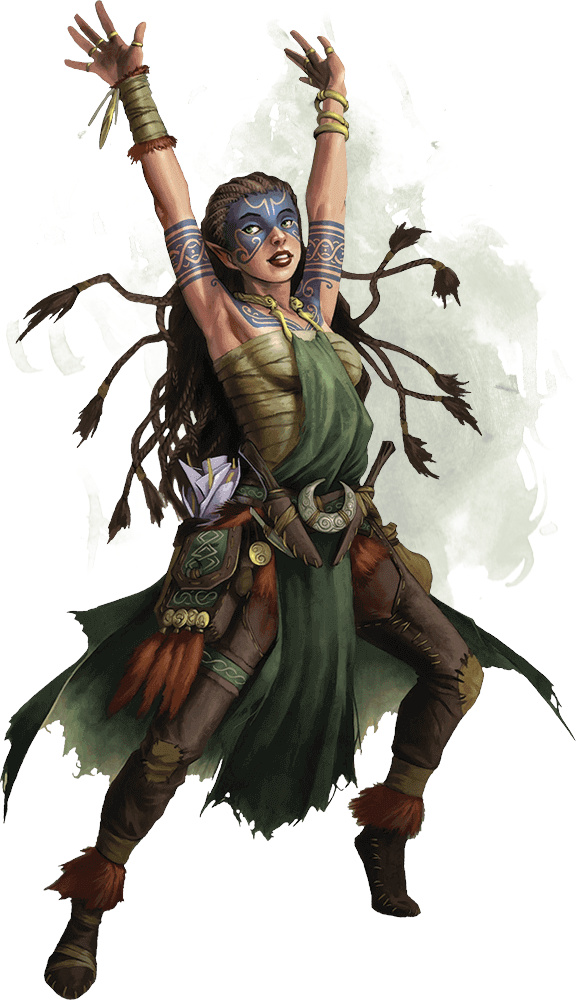
Circle of the Sea
The power of water is the strength of flexibility, resilience, and a relentless nature. Water parts to allow a ship to sail over it or a diver to plunge into it, but their passing leaves no mark. Water flowing down a mountain reaches the sea. It might bend and turn across valleys and down hillsides, but it slowly and steadily returns to the waves. Druids of the Circle of the Depths are touched by the power of elemental water, commanding a similar power.
Soul of the Sea
At 2nd level, your tie to the plane of water grants you the ability to breathe underwater, and you have a swim speed equal to your walking speed, or a swim speed you already have increases by 20 feet.
As an action, you can expend a use of your Wild Shape when touching a creature to grant them these abilities for 8 hours.
Curse of the Deep
When you join this circle at 2nd level, you learn the secret of infusing your spells with a watery curse. When you hit a creature with a spell attack or when a creature fails a saving throw against a Druid spell, you can curse the target for 1 minute.
Once each turn when a cursed target takes damage that isn't fire or radiant, you can trigger one of the effects below (no action required), and then the curse ends:
High Tide. The target is moved by 15 feet in a direction of your choice, in addition to any movement the damage would already inflict upon it.
Hydraulic Action. The target’s Armour Class decreases by a number equal to half your proficiency bonus (rounded down) until the end of your next turn.
Icy Chill. The target’s speed is reduced by 15 feet until the end of your next turn (minimum speed of 0).
Needling Icicles. The target takes cold damage equal to half your druid level.
Purifying Stream. You regain hit points equal to 1d6 + half your cleric level.
You can curse a number of creatures at once this way equal to your Wisdom modifier (minimum 1), regaining any expended uses when you finish a long rest.

Freezing Consummation.
Starting at 6th level, once per turn when you hit a cursed target with an attack, you can deal additional cold damage to the target equal to 1d6 + your Wisdom modifier (minimum of 1 damage).
Shifting Waters.
At 10th level, while in your Wild Shape form, you can call upon the powers of the Primordial Aspect of the elemental plane of water. When you take on a Beast Form, you can expend an additional use of your Wild Shape to become a churning mass of water in the vague shape of an animal of your choice. For the duration of the wild shape, you gain the following features:
- You can move through any space at least an inch wide in each dimension without squeezing.
- You are immune to the grappled, restrained, and paralysed conditions during this period.
- When you move on your turn, you take only half damage from opportunity attacks.
- You can move through any enemy’s space but can’t willingly end your move there.
- As a reaction when you take bludgeoning, piercing, or slashing damage, you can reduce that damage by an amount equal to half your Druid level + your Wisdom modifier.
These features end if your Wild Shape form is dropped for any reason.
Unleash the Tide
At 14th level, you gain the ability to summon a direct link to the plane of water. As an action, you open a portal at a point you can see within 30 feet of you and release a torrent of freezing water onto your foes. Pick up to 5 creatures that you can see within 30 feet of the portal. Those creatures must make Dexterity saving throws against your spell save DC. Creatures that fail their saving throw take 10d6 bludgeoning damage and are restrained by ice forming on their body for 1 minute. Those that succeed take half the bludgeoning damage and are not restrained. On its turn, a restrained creature can use its action to attempt a Strength (Athletics) or Dexterity (Acrobatics) check against your spell save DC to end the restrained condition. Once you use this ability, you cannot use it again until you finish a long rest, unless you expend a spell slot of 6th-level or higher to use it again.
Depths of the Soul
Also at 14th level, your being is altered by the power of elemental water. You gain the following benefits while in a Beast Form:
- You are immune to acid and fire damage
- A critical hit against you becomes a normal hit.
- You have resistance to bludgeoning, piercing, and slashing damage.
Circle of Shepherds
Druids of the Circle of the Shepherd commune with the spirits of nature, especially the spirits of beasts and the fey, and call to those spirits for aid. These druids recognize that all living things play a role in the natural world, yet they focus on protecting animals and fey creatures that have difficulty defending themselves. Shepherds, as they are known, see such creatures as their charges. They ward off monsters that threaten them, rebuke hunters who kill more prey than necessary, and prevent civilization from encroaching on rare animal habitats and on sites sacred to the fey.
Speech of the Woods
At 2nd level, you gain the ability to converse with beasts and many fey. You learn to speak, read, and write Sylvan. In addition, beasts can understand your speech, and you gain the ability to decipher their noises and motions. Most beasts lack the intelligence to convey or understand sophisticated concepts, but a friendly beast could relay what it has seen or heard in the recent past. This ability doesn’t grant you any special friendship with beasts, though you can combine this ability with gifts to curry favour with them as you would with any nonplayer character.
Spirit Totem
Starting at 2nd level, you gain the ability to call forth nature spirits and use them to influence the world around you. As a bonus action, you can magically summon an incorporeal spirit to a point you can see within 60 feet of you. The spirit creates an aura in a 30-foot radius around that point. It counts as neither a creature nor an object, though it has the spectral appearance of the creature it represents. As a bonus action, you can move the spirit up to 60 feet to a point you can see.
The spirit persists for 1 minute. Once you use this feature, you can’t use it again until you finish a short or long rest, unless you expend a use of your Wild Shape feature to use it again. The effect of the spirit’s aura depends on the type of spirit you summon from the options below.
Bear Spirit. The bear spirit grants you and your allies its might and endurance. Each creature of your choice in the aura when the spirit appears gains temporary hit points equal to 5 + your druid level. In addition, you and your allies gain advantage on Strength checks and Strength saving throws while in the aura.
Hawk Spirit. The hawk spirit is a consummate hunter, aiding you and your allies with its keen sight. When a creature makes an attack roll against a target in the spirit’s aura, you can use your reaction to grant advantage to that attack roll. In addition, you and your allies have advantage on Wisdom (Perception) checks while in the aura.
Shark Spirit. The shark spirit revels in blood, fueling your allies with its thirst. Each creature of your choice below half their hit point maximum adds your Wisdom modifier to damage rolls made with weapons while within the aura. In addition, you and your allies have advantage on Wisdom (Survival) checks while in the aura.
Spider Spirit. The spider spirit is a controlling broodmother, aiding you and your allies with its hive intellect. When an ally ends its turn within the spirit's aura, you can use your reaction to command them to make a melee attack against a creature within range. In addition, you and your allies have advantage on Intelligence (Investigation) checks while in the aura.
Unicorn Spirit. The unicorn spirit lends its protection to those nearby. You and your allies gain advantage on all ability checks made to detect creatures in the spirit’s aura. In addition, if you cast a spell using a spell slot that restores hit points to any creature inside or outside the aura, each creature of your choice in the aura also regains hit points equal to your druid level.
Mighty Summoner
At 6th level, beasts and fey that you conjure are more resilient than normal. Any beast or fey summoned or created by a spell that you cast gains two benefits: The creature appears with more hit points than normal: 2 extra hit points per Hit Die it has, and the damage from its natural weapons is considered magical for the purpose of overcoming immunity and resistance to nonmagical attacks and damage.
Guardian Spirit
Beginning at 10th level, your Spirit Totem safeguards the beasts and fey that you call forth with your magic. When a beast or fey that you summoned or created with a spell ends its turn in your Spirit Totem aura, that creature regains a number of hit points equal to half your druid level.
Faithful Summons
Starting at 14th level, the nature spirits you commune with protect you when you are the most defenceless. If you are reduced to 0 hit points or are incapacitated against your will, you can immediately gain the benefits of a 9th-level Conjure Animals. It summons four beasts of your choice that are challenge rating 2 or lower. The conjured beasts appear within 20 feet of you. If they receive no commands from you, they protect you from harm and attack your foes. The spell lasts for 1 minute, requiring no concentration, or until you dismiss it (no action required).
Once you use this feature, you can’t use it again until you finish a long rest.

Circle of Spores
Druids of the Circle of Spores find beauty in decay. They see within mould and other fungi the ability to transform lifeless material into abundant, albeit somewhat strange, life. These druids believe that life and death are parts of a grand cycle, with one leading to the other and then back again. Death isn't the end of life, but instead a change of state that sees life shift into a new form.
Circle Spells
Your symbiotic link to fungi and your ability to tap into the cycle of life and death grants you access to certain spells. At 2nd level, you learn the Chill Touch cantrip and the Hex spell.
At 3rd, 5th, 7th, and 9th level you gain access to the spells listed for that level in the Circle of Spores Spells table. Once you gain access to one of these spells, you always have it prepared, and it doesn't count against the number of spells you can prepare each day. If you gain access to a spell that doesn't appear on the druid spell list, the spell is nonetheless a druid spell for you.
Circle of Spores Spells
| Level | Spells |
|---|---|
| 2nd | Chill Touch, Hex |
| 3rd | Blindness/Deafness, Gentle Repose |
| 5th | Animate Dead, Gaseous Form |
| 7th | Blight, Confusion |
| 9th | Cloudkill, Contagion |
Halo of Spores
Starting at 2nd level, you are surrounded by invisible, necrotic spores that are harmless until you unleash them on a creature nearby. When a creature you can see moves into a space within 10 feet of you or starts its turn there, you can use your reaction to deal 1d4 necrotic damage to that creature unless it succeeds on a Constitution saving throw against your spell save DC.
The necrotic damage increases to 1d6 at 6th level, 1d8 at 10th level, and 1d10 at 14th level.
Symbiotic Entity
Also at 2nd level, you gain the ability to channel magic into your spores. As an action, you can expend a use of your Wild Shape feature to awaken those spores, rather than transforming into a beast form, and you gain 4 temporary hit points for each level you have in this class. While this feature is active, you gain the following benefits:
- When you deal your Halo of Spores damage, roll the damage die a second time and add it to the total.
- Your melee weapon attacks deal an extra 1d6 necrotic damage to any target they hit.
These benefits last for 10 minutes, until you lose all these temporary hit points. or until you use your Wild Shape again.

Fungal Infestation
At 6th level, your spores gain the ability to infest a corpse and animate it. If a beast or a humanoid that is Small or Medium dies within 10 feet of you, you can use your reaction to animate it, causing it to stand up immediately with 1 hit point. The creature uses the Zombie stat block in the Monster Manual. It remains animated for 1 hour, after which time it collapses and dies.
In combat, the zombie's turn comes immediately after yours. It obeys your mental commands, and the only action it can take is the Attack action, making one melee attack.
You can use this feature a number of times equal to your Wisdom modifier (minimum of once), and you regain all expended uses of it when you finish a long rest.
Spreading Spores
At 10th level, you gain the ability to seed an area with deadly spores. As a bonus action while your Symbiotic Entity feature is active, you can hurl spores up to 30 feet away, where they swirl in a 10-foot cube for 1 minute. The spores disappear early if you use this feature again, if you dismiss them as a bonus action, or if your Symbiotic Entity feature is no longer active. Whenever a creature moves into the cube or starts its turn there, that creature takes your Halo of Spores damage, unless the creature succeeds on a Constitution saving throw against your spell save DC. A creature can take this damage no more than once per turn.
While the cube of spores persists, you can't use your Halo of Spores reaction.
Fungal Body
At 14th level, the fungal spores in your body alter you: you can't be blinded, deafened, frightened, or poisoned, and any critical hit against you counts as a normal hit instead, unless you're incapacitated.
Circle of Stars
The Circle of Stars allows druids to draw on the power of starlight. These druids have tracked heavenly patterns since time immemorial, discovering secrets hidden amid the constellations. By revealing and understanding these secrets, the Circle of the Stars seeks to harness the powers of the cosmos.
Star Map
At 2nd level, You've created a star chart as part of your heavenly studies. It is a Tiny object and can serve as a spellcasting focus for your druid spells. You choose its form. If you lose the map, you can perform a 1-hour ceremony to magically create a replacement. This ceremony can be performed during a short or long rest, and it destroys the previous map. While holding this map, you have these benefits:
- You know the Guidance cantrip.
- You have the Guiding Bolt spell prepared. It counts as a druid spell for you, and it doesn't count against the number of spells you can have prepared.
- You can cast Guiding Bolt without expending a spell slot. You can do so a number of times equal to your Wisdom modifier (minimum of once), and you regain all expended uses when you finish a long rest.
Starry Form
At 2nd level, you gain the ability to harness constellations’ power to alter your form. As a bonus action, you can expend a use of your Wild Shape feature to take on a starry form, rather than transforming into a beast. While in your starry form, you retain your game statistics, but your body becomes luminous; your joints glimmer like stars, and glowing lines connect them as on a star chart. This form sheds bright light in a 10-foot radius and dim light for an additional 10 feet. The form lasts for 10 minutes. It ends early if you dismiss it (no action required), are incapacitated, die, or use this feature again.
Whenever you assume your starry form, choose which of the following constellations glimmers on your body; your choice gives you certain benefits while in the form:
Archer. A constellation of a centaur huntsman appears on you. When you activate this form, and as a bonus action on your subsequent turns while it lasts, you can make a ranged spell attack, hurling a luminous arrow that targets one creature within 60 feet of you. On a hit, the attack deals radiant damage equal to 1d8 + your Wisdom modifier.
Chalice. A constellation of a life-giving goblet appears on you. Whenever you cast a spell using a spell slot that restores hit points to a creature, you or another creature within 30 feet of you can regain hit points equal to 1d8 + your Wisdom modifier.
Crown. A constellation of a seven-pointed crown appears on you. You have advantage on Intelligence, Wisdom, and Charisma saving throws made to resist spells and other magical effects.
Dragon. A constellation of a wise dragon appears on you. When you make an Intelligence or a Wisdom check or a Constitution saving throw to maintain concentration on a spell, you can treat a roll of 9 or lower on the d20 as a 10.
Harp. When you activate this form, and by expending a spell slot of 1st-level or higher as a bonus action on your subsequent turns while it lasts, the next spell that an ally within 30 feet, that can see you, casts before the start of your next turn is cast at 1 level higher than the spell slot they use (to a maximum of 6th-level).
Hourglass. A constellation of a flowing sand-timer appears on you. Your movement speed increases by 10 feet and you can Dash as a bonus action.
Lantern. A constellation of a radiant lantern appears on you. Whenever you cast a druid spell, you can change its damage type to radiant damage.
Tower. A constellation of a fortified tower appears on you. When you activate this form, and as a bonus action on your subsequent turns while it lasts, you can gain a number of temporary hit points equal to 1d8 + your Wisdom modifier.
Twin Daggers. A constellation of a pair of crossed daggers appears on you. When you Attack using your action, you can cast a druid cantrip as a bonus action.
Scimitar. A constellation of a gleaming curved sword appears on you. Once on each of your turns when you hit a creature with an attack, you deal an additional 1d8 radiant damage.
Serpent. A constellation of the wicked serpent appears on you. You gain advantage on ability checks and saving throws made to resist being grappled, restrained, and poisoned.
Cosmic Omen
When you reach 6th level, you learn to use your star map to divine the will of the cosmos. Whenever you finish a long rest, you can consult your Star Map for omens. When you do so, roll a die. Until you finish your next long rest, you gain access to a special reaction based on whether you rolled an even or an odd number on the die:
Weal (even). Whenever a creature you can see within 30 feet of you is about to make an attack roll, a saving throw, or an ability check, you can use your reaction to roll a d6 and add the number rolled to the total.
Woe (odd). Whenever a creature you can see within 30 feet of you is about to make an attack roll, a saving throw, or an ability check, you can use your reaction to roll a d6 and subtract the number rolled from the total.
You can use this reaction a number of times equal to your Wisdom modifier (minimum 1), and you regain all expended uses when you finish a long rest.
Twinkling Constellations
At 10th level, at the start of each of your turns while in your Starry Form, you can change which constellation glimmers on your body. Moreover, your Starry Form constellations improve: The 1d8 of the Archer, Chalice, Tower, and Scimitar becomes 2d8. While the Dragon is active, you have a flying speed of 20 feet and can hover. While the Hourglass is active, your speed and jumping distance is doubled. While the Crown or Serpent is active, you use your Wisdom for Charisma checks you make.
Full of Stars
At 14th level, while in your Starry Form, you become partially incorporeal, giving you resistance to bludgeoning, necrotic, piercing, poison, and slashing damage.

Circle of Storms
Circle Spells
Your bond with the four winds and the primal storm grants you access to certain spells. At 2nd level you learn the shocking grasp cantrip. It is a druid cantrip for you, and can't be replaced when you gain a level in this class. At 3rd, 5th, 7th, and 9th level you gain access to the spells listed for that level in the Circle of Storms Spells table. Once you gain access to one of these spells, you always have it prepared, and it doesn't count against the number of spells you can prepare each day. If you gain access to a spell that doesn't appear on the druid spell list, the spell is nonetheless a druid spell for you.
Circle of Storms Spells
| Level | Spells |
|---|---|
| 2nd | shocking grasp, zephyr strike |
| 3rd | gust of wind, skywrite |
| 5th | fly, lightning bolt |
| 7th | ice storm, storm sphere |
| 9th | control winds, steel wind strike |
Call the Wind
Starting at 2nd level you can use a bonus action on your turn to buffet a target you can see within 60 feet of you with wind It must succeed on a Strength saving throw against your druid spell save DC or be pushed 5 feet in a direction of your choice. If The target is an unsecured object of size Medium or smaller, it is automatically pushed If you are not underground or indoors, you push the target twice as far.
Storm Ascension
At 2nd level you gain the ability to embrace the power of the primal storm. As an action, you can expend a use of your Wild Shape feature to imbue your body with storm magic, rather than transforming into a beast form. While this feature is active, you gain the following benefits:
- You gain a number of temporary Hit Points equal to 4 times your Druid level
- When a target fails its saving throw against your Call the Wind feature, it takes 1d6 thunder damage. This damage increases to 1d8 at 6th level 1d10 at 10th level and 1d12 at 14th level
- Your melee attacks deal 1d6 bonus lightning damage to any target they hit.
- You have a flying speed equal to your walking speed and you can hover, but you can't fly more than 1 foot above the ground using this speed. Water beneath you counts as ground for this limitation.
These benefits last for up to 10 minutes, until you lose these temporary hit points, or until you use your Wild Shape again.
Inner Tempest
Starting at 6th level whenever you cast a spell that deals lightning or thunder damage while your Storm Ascension feature is active, you roll a d6, and you gain a bonus to one damage roll of the spell equal to the number rolled.
In addition, you have resistance to thunder and lightning damage while your Storm Ascension feature is active.
Herald of the Nine Winds
At 10th level your bond with the nine winds enables you to call upon them at a moment's notice. While your Storm Ascension feature is active, you can cast the gust of wind spell without expending a spell slot. You can do so as part of the action used to activate the feature, and as a bonus action when you cast a cantrip while the feature is active. The spell ends immediately if the feature ends.
Updraft
Starting at 14th level while your Storm Ascension feature is active, you can fly up to 30 feet above the ground, instead of only 1 foot.
At 18th level this increases to 60 feet, and your flying speed granted by the feature is also doubled
Circle of Wildfire
Druids within the Circle of Wildfire understand that destruction is sometimes the precursor of creation, such as when a forest fire promotes later growth. These druids bond with a primal spirit that harbours both destructive and creative power, allowing the druids to create controlled flames that burn away one thing but give life to another.
Circle Spells
When you join this circle at 2nd level, you have formed a bond with a wildfire spirit, a primal being of creation and destruction. Your link with this spirit grants you access to some spells when you reach certain levels in this class, as shown on the Circle of Wildfire Spells table. Once you gain access to one of these spells, you always have it prepared, and it doesn't count against the number of spells you can prepare each day. If you gain access to a spell that doesn't appear on the Druid Spell List, the spell is nonetheless a druid spell for you.
Circle of Wildfire Spells
| Level | Spells |
|---|---|
| 2nd | Burning Hands, Cure Wounds |
| 3rd | Flaming Sphere, Scorching Ray |
| 5th | Plant Growth, Revivify |
| 7th | Aura of Life, Fire Shield |
| 9th | Flame Strike, Mass Cure Wounds |
Summon Wildfire Spirit
At 2nd level, You can summon the primal spirit bound to your soul. As an action, you can expend one use of your Wild Shape feature to summon your wildfire spirit, rather than assuming a beast form.
Wildfire Spirit
Small elemental, your alignment
- armour Class 13 (natural armour)
- Hit Points 5 + five times your druid level
- Speed 30 ft., fly 30 ft. (hover)
STR DEX CON INT WIS CHA 10 (+0) 14 (+2) 14 (+2) 13 (+1) 15 (+2) 11 (+0)
- Damage Immunities fire
- Condition Immunities charmed, frightened, grappled, prone, restrained
- Senses darkvision 60 ft., passive Perception 12
- Languages understands the languages you speak
- Challenge --
- Proficiency Bonus: equals your bonus
Actions
Flame Seed. Ranged Weapon Attack: your spell attack modifier to hit, range 60 ft., one target you can see. Hit: 1d6 + PB fire damage.
Fiery Teleportation. The spirit and each willing creature of your choice within 5 feet of it teleport up to 15 feet to unoccupied spaces you can see. Then each creature within 5 feet of the space that the spirit left must succeed on a Dexterity saving throw against your spell save DC or take 1d6 + PB fire damage.
The spirit appears in an unoccupied space of your choice that you can see within 30 feet of you. Each creature within 10 feet of the spirit (other than you) when it appears must succeed on a Dexterity saving throw against your spell save DC or take 2d6 fire damage.
The spirit is friendly to you and your companions and obeys your commands. See this creature's game statistics in the Wildfire Spirit stat block, which uses your proficiency bonus (PB) in several places. You determine the spirit's appearance. In combat, the spirit shares your initiative count, but it takes its turn immediately after yours. The only action it takes on its turn is the Dodge action, unless you take a bonus action on your turn to command it to take another action. That action can be one in its stat block or some other action. If you are incapacitated, the spirit can take any action of its choice, not just Dodge. The spirit manifests for 1 hour, until it is reduced to 0 hit points, until you use this feature to summon the spirit again, or until you die.
Enhanced Bond
At 6th level, whenever you cast a spell that deals fire damage or restores hit points while your wildfire spirit is summoned, roll a d8, and you gain a bonus equal to the number rolled to one damage or healing roll of the spell. In addition, when you cast a spell with a range other than self, the spell can originate from your wildfire spirit.
Cauterising Flames
At 10th level, you gain the ability to turn death into magical flames that can heal or incinerate. When a Small or larger creature dies within 30 feet of you or your wildfire spirit, a harmless spectral flame springs forth in the dead creature's space and flickers there for 1 minute. When a creature you can see enters that space, you can use your reaction to extinguish the spectral flame there and either heal the creature or deal fire damage to it. The healing or damage equals 2d10 + your Wisdom modifier.
You can use this reaction a number of times equal to your Wisdom modifier (minimum of once), and you regain all expended uses when you finish a long rest.
Blazing Revival
At 14th level, the bond with your wildfire spirit can save you from death. If the spirit is within 120 feet of you when you are reduced to 0 hit points and thereby fall unconscious, you can cause the spirit to drop to 0 hit points. You then regain half your hit points and immediately rise to your feet.
Once you use this feature, you can't use it again until you finish a long rest.
Crucible of War
What is truly natural? The warforged are living creatures, despite being constructed from wood and steel. Druids who embrace the Circle of the Forged explore the potential of the warforged form, blending animal shapes with warforged durability. This is a young path, pioneered by a handful of warforged who sought a greater understanding of their role in the world. Over the last few decades, a number of warforged have embraced the Circle of the Forged; however, it isn’t limited to warforged; an inventor's heir or an aspiring artificer might pursue primal power as a way to transcend the limited flesh they were born with.
Circle Forms
The rites of your circle grant you the ability to transform into more dangerous animal forms. Starting at 2nd level, you can use your Wild Shape to transform into a beast with a challenge rating as high as 1 (you ignore the Max. CR column of the Beast Shapes table, but must abide by the other limitations there).
Starting at 6th level, you can transform into a beast with a challenge rating as high as your druid level divided by 3, rounded down.
Forged Skin
Starting at 2nd level, while you are transformed by Wild Shape, you gain the following benefits:
- You gain a +2 bonus to Armour Class.
- You have advantage on saving throws against being poisoned, and you have resistance to poison damage.
- You don’t need to eat, drink, or breathe.
- You are immune to disease.
- You don’t need to sleep, and magic can’t put you to sleep.
- While in beast form, your body is made from the same materials as a warforged; your muscles are rootlike tendrils protected by armoured plates. It’s obvious to an observer that you are not a normal animal.
Elemental Fury
Starting at 6th level, you gain the ability to imbue your attacks with elemental damage—charging your claws with electricity or unleashing flames from your fangs. When you use Wild Shape, choose one of the following damage types: acid, cold, fire, or lightning.
While in your beast form, the first time you hit a creature with a melee attack on your turn, you can expend one spell slot to deal extra damage of that type to the target, in addition to the normal damage of the attack. The extra damage is 1d6 per level of the spell slot expended, to a maximum of 5d6.
When you use this ability on a creature, your attack has an additional effect, determined by which damage type you selected when you used Wild Shape. If a creature is affected by this ability again in subsequent rounds, the effects do not stack, and the new duration replaces the old.
Acid. The target must make a Constitution saving throw against your druid spell save DC. On a failed save, its AC is reduced for one minute by an amount equal to half your Wisdom modifier (minimum of 1). At the start of each of its turns for the next minute, the target can make another Constitution saving throw. On a successful save, the effect ends.
Cold. At the start of each of its turns for 1 minute, the target must make a Constitution saving throw against your druid spell save DC. On a failed save, their movement speed is reduced to 0 and they have disadvantage on Strength and Dexterity checks. On a successful save, the effect ends.
Fire. At the start of each of its turns for 1 minute, the target must make a Constitution saving throw against your druid spell save DC. On a failed save, it takes fire damage equal to your Wisdom modifier. On a successful save, the fire goes out. If the target or a creature within 5 feet of it uses an action to put out the flames, or if some other effect douses the flames (such as the target being submerged in water), the effect ends.
Lightning. At the start of each of its turns for 1 minute, the target must make a Constitution saving throw against your druid spell save DC. On a failed save, it loses its reaction until the start of its next turn and the first attack that it makes on its turn is made at disadvantage. On a successful save, the effect ends.
Adamantine Hide
Starting at 10th level, while you are transformed by Wild Shape, you gain resistance to bludgeoning, piercing, and slashing damage from nonmagical attacks. In addition, you gain the ability to use Wild Shape as a reaction when you take damage, and the damage from that attack is applied to the hit points of your beast form.
Constructed Perfection
Starting at 14th level, while you are transformed by Wild Shape, you can’t be charmed, frightened, paralyzed, petrified, or poisoned. In addition, you are immune to poison and necrotic damage.

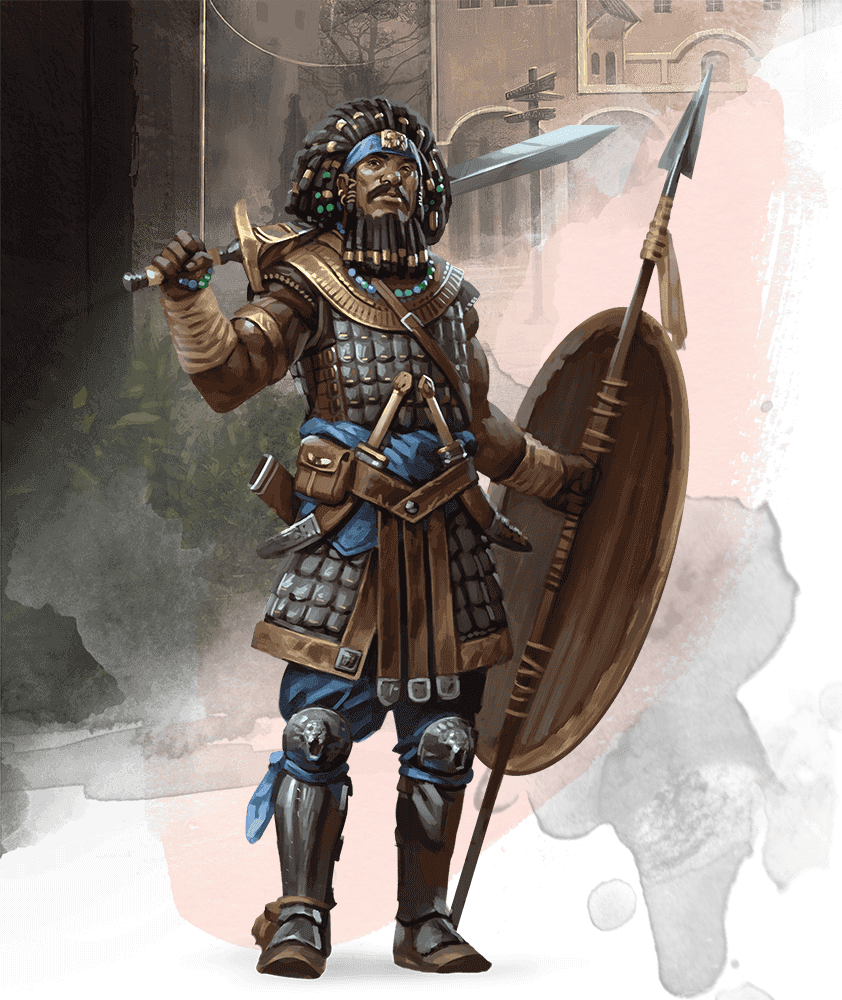
The Fighter
Fighters share an unparalleled mastery with weapons and armour, and a thorough knowledge of the skills of combat. They are well acquainted with death, both meting it out and staring it defiantly in the face.
You must have a Dexterity or Strength score of 13 or higher in order to multiclass in or out of this class.
Class Features
As a fighter, you gain the following class features.
Hit Points
- Hit Dice: 1d10 per fighter level
- Hit Points at 1st Level: 10 + your Constitution modifier
- Hit Points at Higher Levels: 1d10 (or 6) + your Constitution modifier per fighter level after 1st
Proficiencies
- Armour: All armour, shields
- Weapons: Simple weapons, martial weapons
- Tools: None
- Saving Throws: Strength, Constitution
- Skills: Choose any two skills.
Equipment
You start with the following equipment, in addition to the equipment granted by your background:
- (a) chain mail or (b) leather armour
- (a) a martial weapon & shield or (b) two martial weapons
- (a) a ranged weapon & 20 pieces of ammunition for it, or (b) two handaxes
- (a) a dungeoneer's pack or (b) an explorer's pack
The Fighter
| Level | Proficiency Bonus | Features |
|---|---|---|
| 1st | +2 | Fighting Style, Second Wind |
| 2nd | +2 | Action Surge, Tactical Mind |
| 3rd | +2 | Martial Archetype Feature |
| 4th | +2 | Ability Score Improvement |
| 5th | +3 | Extra Attack |
| 6th | +3 | Ability Score Improvement |
| 7th | +3 | Martial Archetype Feature |
| 8th | +3 | Ability Score Improvement |
| 9th | +4 | Indomitable |
| 10th | +4 | Martial Archetype Feature |
| 11th | +4 | Extra Attack Increase, Fighting Style |
| 12th | +4 | Ability Score Improvement |
| 13th | +5 | Indomitable Increase |
| 14th | +5 | Ability Score Improvement |
| 15th | +5 | Martial Archetype Feature |
| 16th | +5 | Ability Ascendance |
| 17th | +6 | Action Surge Increase, Indomitable Increase |
| 18th | +6 | Martial Archetype Feature |
| 19th | +6 | Ability Score Improvement |
| 20th | +6 | Unparalleled |
Fighting Style
You adopt a particular niche on the battlefield as your specialty. Choose two different options from the list of Fighting Styles. You can't take a single Fighting Style option more than once, even if you later choose again.
At 11th level, you may choose another Fighting Style available to you.
Second Wind
You have a limited well of stamina that you can draw on to protect yourself from harm. On your turn, you can use a bonus action to regain hit points equal to 1d10 + your fighter level.
You can use this feature twice, regaining all expended uses when you finish a long rest. You also regain a single use when you finish a Short rest.
The number of uses of Second Wind increases by one when you reach 5th level (3 uses), 11th level (4 uses), and 17th level (5 uses) in this class.
Action Surge
Starting at 2nd level, you can push yourself beyond your normal limits for a moment. On your turn, you can take one additional action. Once you use this feature, you must finish a short or long rest before you can use it again.
Starting at 17th level, you can use it twice before a rest, but only once on the same turn.
Tactical Mind
Also at 2nd level, when you fail an ability check, you can expend a use of Second Wind to add 1d10 to the roll. Your Second Wind usage isn’t expended if you still fail the check.
Martial Archetype
At 3rd level, you choose an archetype that you strive to emulate in your combat styles and techniques. The archetype you choose grants you features at 3rd level and again at 7th, 10th, 15th, and 18th level.
Ability Score Improvement
When you reach 4th level, and again at 6th, 8th, 12th, 14th, 16th, and 19th level, you can increase one ability score of your choice by 2, or you can increase two ability scores of your choice by 1, to a maximum of 20. You can instead choose to take a Feat.
Martial Versatility
Whenever you reach a level in this class that grants the Ability Score Improvement feature, you can replace a fighting style you know with another fighting style available to you. This replacement represents a shift of focus in your martial practice.
Extra Attack
Beginning at 5th level, you can attack twice, instead of once, whenever you take the Attack action on your turn. The number of attacks increases to three when you reach 11th level in this class.
Indomitable
Beginning at 9th level, you can choose to succeed a saving throw that you fail. Once you use this ability, you can't use this feature again until you finish a long rest.
You can use this feature twice between long rests starting at 13th level and three times starting at 17th level.
Ability Ascendance
At 16th level, your mortal skill knows no equal. Your natural Ability Score maximum increases to 25. You then also gain an Ability Score Improvement.
Unparalleled
At 20th level, your mastery of combat is inexorable from your very nature. You gain an additional action on each of your turns. That action can be used only to take the Attack (one attack only), Dash, Disengage, Hide, or Use an Object action.
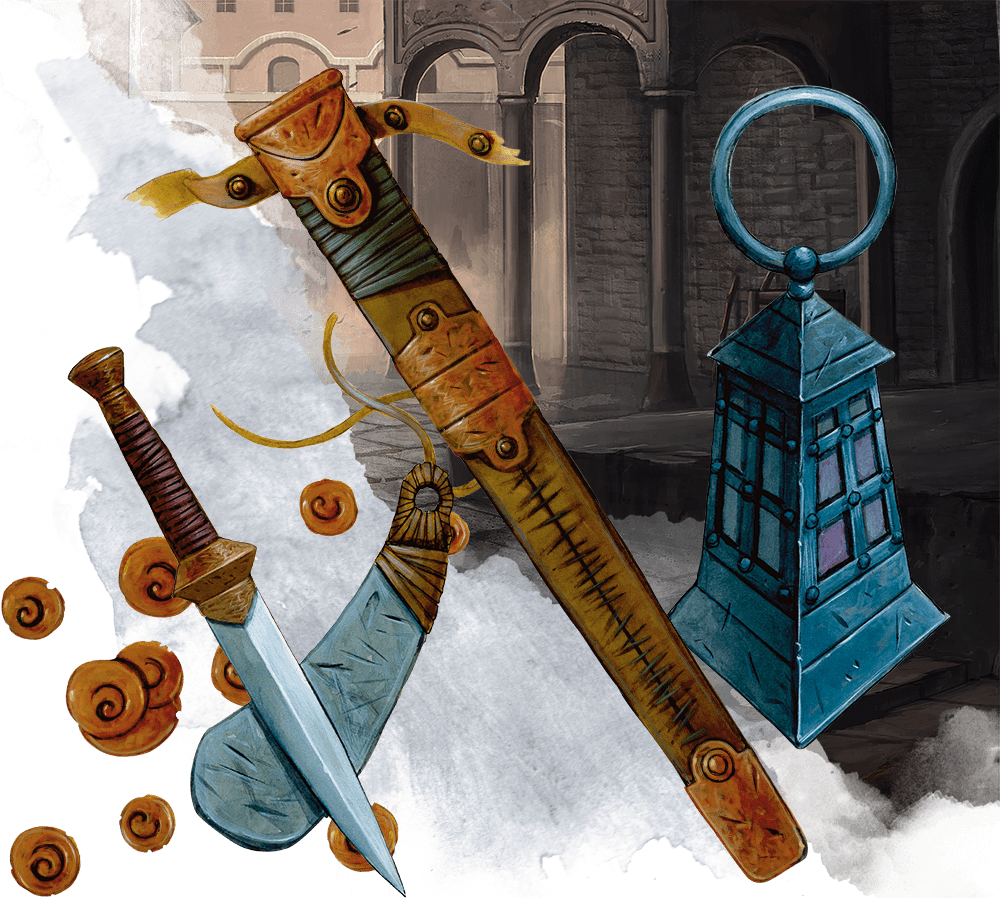
Martial Archetypes
Arcane Archer
An Arcane Archer studies a unique technomagical method of archery that weaves magic into attacks to produce supernatural effects. Arcane Archers were some of their most elite warriors among the ancient kingdoms. They stood watch over the fringes of the domains of the floating islands, keeping a keen eye out for trespassers and using magic-infused arrows to defeat monsters and invaders before they could reach the settlements. Over the centuries, the methods of these lost archers have been learned by members of modern races who can also balance arcane aptitude with archery.
Arcane Archer Lore
At 3rd level, you learn magical theory or some of the secrets of nature – typical for practitioners of this elven martial tradition. You choose to gain proficiency in either the Arcana or the Nature skill, and you choose to learn either the Prestidigitation or Druidcraft cantrip.
Arcane Shot
At 3rd level, you learn to unleash special magical effects with some of your shots. When you gain this feature, you learn two Arcane Shot options of your choice (see "Arcane Shot Options" below). Once per turn when you fire an arrow from a shortbow or longbow as part of the Attack action, you can apply one of your Arcane Shot options to that arrow. You decide to use the option when the arrow hits, unless the option doesn’t involve an attack roll. You have two uses of this ability, and you regain all expended uses of it when you finish a short or long rest. You also regain a single use of your Arcane Shot each time you score a critical hit with a ranged weapon attack.
You gain an additional use of Arcane Shot, and an additional option of your choice, when you reach certain levels in this class: 7th, 10th, 15th, and 18th level. Each option also improves when you become an 15th-level fighter.
Magic Arrow
At 7th level, you gain the ability to infuse arrows with magic. Whenever you loose a nonmagical arrow from a shortbow or longbow, you can make it magical for the purpose of overcoming resistance and immunity to nonmagical attacks and damage. The magic fades from the arrow immediately after it hits or misses its target.
Curving Shot
At 7th level, you learn how to direct an errant arrow toward a new target. When you make an attack roll with a magic arrow and miss, you can use a bonus action to reroll the attack roll against a different target within 60 feet of the original target.
Ever-Ready Shot
Starting at 18th level, your magical archery is available whenever battle starts. When you roll initiative, you regain all expended use of of your Arcane Shot feature.

Arcane Arrows
The Arcane Shot feature lets you choose options for it at certain levels. The options are presented here in alphabetical order. They are all magical effects, and each one is associated with one of the schools of magic.
If an option requires a saving throw, your Arcane Shot save DC equals 8 + your proficiency bonus + your Intelligence modifier.
Banishing Arrow. You use abjuration magic to try to temporarily banish your target to a harmless location in the Feywild. The creature hit by the arrow must also succeed on a Charisma saving throw or be banished. While banished in this way, its speed is 0, and it is incapacitated. At the end of its next turn, the target reappears in the space it vacated or in the nearest unoccupied space if that space is occupied. Once you reach 15th level in this class, a target also takes 2d6 force damage when the arrow hits it.
Beguiling Arrow. Your enchantment magic causes this arrow to temporarily beguile its target. The creature hit by the arrow takes an extra 2d6 psychic damage, and you choose one of your allies within 30 feet of the target. The target must succeed on a Wisdom saving throw, or it is charmed by the chosen ally until the start of your next turn. This effect ends early if the chosen ally attacks the charmed target, deals damage to it, or forces it to make a saving throw. The psychic damage increases to 4d6 when you reach 15th level in this class.
Bolstering Arrow. You abjure the end of your arrow, magically preventing it from dealing damage on a hit. The creature hit by the arrow is instead injected with supernatural vitality, granting temporary hit points equal to your Fighter level + your Intelligence modifier.
Bursting Arrow. You imbue your arrow with force energy drawn from the school of evocation. The arrow detonates after your attack. Immediately after the arrow hits the creature, the target and all other creatures within 10 feet of it take 2d6 force damage each. The force damage increases to 4d6 when you reach 15th level in this class.
Corroding Arrows. You imbue your shot with vitriolic evocation magic. The target hit by the arrow takes an extra 2d4 acid damage, and any creatures within a 15-foot cone starting at the target and extending away from you must make a Dexterity saving throw. Creatures within the cone take 2d4 acid damage on a failed save or half as much on a successful save. If the target of the attack is wearing armour or a shield, or is an object or structure, their AC is reduced by your Intelligence modifier until the end of your next turn. The acid damage increases to 4d4 when you reach 15th level in this class, and the projected acid increases to a 30-foot cone.
Enfeebling Arrow. You weave necromantic magic into your arrow. The creature hit by the arrow takes an extra 2d6 necrotic damage. The target must also succeed on a Constitution saving throw, or the damage dealt by its weapon attacks is halved until the start of your next turn. The necrotic damage increases to 4d6 when you reach 15th level in this class.
Grasping Arrow. When this arrow strikes its target, conjuration magic creates grasping, poisonous brambles, which wrap around the target. The creature hit by the arrow takes an extra 2d6 piercing damage, its speed is reduced by 10 feet, and it takes 2d6 slashing damage the first time on each turn it moves 1 foot or more without teleporting. The target or any creature that can reach it can use its action to remove the brambles with a successful Strength (Athletics) check against your Arcane Shot save DC. Otherwise, the brambles last for 1 minute or until you use this option again. The piercing damage and slashing damage both increase to 4d6 when you reach 15th level in this class.
Imperiling Arrow. You thread the arrow through with transmutation magic to expose the weaknesses in a target. The creature hit by the arrow must make a Wisdom saving throw. On a fail, they become vulnerable to one of the following damage types until the end of your next turn: Fire, Cold, Acid, or Poison. If the target was immune to one of these types, they instead become resistant to it, if they resist one of these types they lose resistance to it instead. You can choose force, necrotic, psychic, or radiant damage when you reach 15th level in this class.
Piercing Arrow. You use transmutation magic to give your arrow an ethereal quality. When you use this option, you don’t make an attack roll for the attack. Instead, the arrow fires forward in a line, which is 1 foot wide and 30 feet long, before disappearing. The arrow passes harmlessly through objects, ignoring cover. Each creature in that line must make a Dexterity saving throw. On a failed save, a creature takes damage as if it were hit by the arrow, plus an extra 1d6 piercing damage. On a successful save, a target takes half as much damage. The piercing damage increases to 2d6 when you reach 15th level in this class.
Seeking Arrow. Using divination magic, you grant your arrow the ability to seek out your target, allowing the arrow to curve and twist its path in search of its prey. When you use this option, you don’t make an attack roll for the attack. Instead, choose one creature you have seen in the past minute. The arrow flies toward that creature, moving around corners if necessary and ignoring three-quarters cover and half cover. If the target is within the weapon’s range and there is a path large enough for the arrow to travel to the target, the target must make a Dexterity saving throw. On a failed save, it takes damage as if it were hit by the arrow, plus an extra 1d6 force damage, and you learn the target’s current location. On a successful save, the target takes half as much damage, and you don’t learn its location. The force damage increases to 2d6 when you reach 15th level in this class.
Shadow Arrow. You weave illusion magic into your arrow, causing it to occlude your foe’s vision with shadows. The creature hit by the arrow takes an extra 2d6 psychic damage, and it must succeed on a Wisdom saving throw or be unable to see anything farther than 5 feet away until the start of your next turn. The psychic damage increases to 4d6 when you reach 15th level in this class.
Battle Master
Those who emulate the archetypal Battle Master employ martial techniques passed down through generations. To a Battle Master, combat is an academic field, sometimes including subjects beyond battle such as weaponsmithing and calligraphy. Not every fighter absorbs the lessons of history, theory, and artistry that are reflected in the Battle Master archetype, but those who do are well-rounded fighters of great skill and knowledge.
Combat Superiority
When you choose this archetype at 3rd level, you learn manoeuvres that are fueled by special dice called superiority dice.
Battle Manoeuvres. You learn three manoeuvres of your choice. Many manoeuvres enhance an attack in some way. You can use only one manoeuvre per attack. You learn two additional manoeuvres of your choice at 7th, 10th, and 15th level. Each time you learn new manoeuvres, you can also replace one manoeuvre you know with a different one.
Superiority Dice. You have four superiority dice, which are d8s. A superiority die is expended when you use it. You regain all of your expended superiority dice when you finish a short or long rest. You gain another two superiority dice at 7th level and two more at 15th level.
Saving Throws. Some of your manoeuvres require your target to make a saving throw to resist the manoeuvre's effects. The saving throw DC is calculated as follows:
Manoeuvre save DC = 8 + your proficiency bonus +
Student of War
At 3rd level, you gain proficiency with one type of tool set of your choice and one Common language of your choice.
Know Your Enemy
Starting at 7th level, if you spend at least 1 minute observing or interacting with another creature outside combat, you can learn certain information about its capabilities compared to your own. The DM tells you if the creature is your equal, superior, or inferior in regard to two of the following characteristics of your choice:
Strength score
Dexterity score
Constitution score
Proficiency bonus
Armour Class
Current hit points
Total class levels, if any
Improved Combat Superiority
At 10th level, your superiority dice turn into d10s.
At 18th level, they turn into d12s.
Relentless
Starting at 15th level, whenever you use a Battle
Manoeuvre, you can roll a d6 and use it instead
of expending a Superiority die.

Battle Manoeuvers
The manoeuvers are presented in alphabetical order.
Ambush. When you make a Dexterity (Stealth) check or an initiative roll, you can expend one superiority die and add the die to the roll.
Anchoring Strike. When you hit a creature, you can spend a superiority die to deal extra damage equal to the number rolled. For a number of rounds equal to the number rolled, the creature cannot teleport or plane shift as they are momentarily shocked out of touch with the Weave.
Bait and Switch. When you're within 5 feet of a creature on your turn, you can expend one superiority die and switch places with that creature, provided you spend at least 5 feet of movement and the creature is willing. This movement doesn't provoke opportunity attacks. Roll the superiority die. Until the start of your next turn, you or the other creature (your choice) gains a bonus to AC equal to the number rolled.
Block Missiles. When you are hit by a ranged attack while wielding a shield, you can use your reaction to spend and roll a superiority die. Reduce the attack’s damage against you by an amount equal to the number rolled + the total AC bonus granted by the shield + your Proficiency bonus. If the damage drops to 0, the attack becomes a miss.
Brace. When a creature you can see moves into the reach you have with the melee weapon you're wielding, you can use your reaction to expend one superiority die and make one attack against the creature, using that weapon. If the attack hits, add the superiority die to the weapon's damage roll.
Brutish Attack. When you hit a creature with a weapon attack, you can expend one superiority die to attempt to concuss the target into immobility. You add the superiority die to the attack's damage roll, and if the target is Large or smaller, it must make a Constitution saving throw. On a failed save, it is stunned until the end of its next turn.
Challenge.
You can spend one Superiority die as a bonus action to attempt to compel a creature into a duel. One creature that you can see within range must make a Wisdom saving throw. On a failed save, the creature is drawn to you, compelled by your demand. Until the end of its next turn, it has disadvantage on attack rolls against creatures other than
you, and cannot move to a space that is more than 30
feet away from you.
Cheap Tricks.
When an enemy you can see within
5 feet of you makes an attack roll, as a reaction
you can spend a superiority die and impose a
penalty on their attack roll equal to the
number rolled on your superiority die, by
fighting dirty- such as throwing sand
in their eyes.
Close the Gap.
When an enemy
moves away from you, you can use
your reaction to spend a superiority
die, moving a number of feet toward
the enemy equal to 5 times the
number rolled, up to your Speed,
and making an opportunity attack
if you come within range. If the
opportunity attack hits, you deal
extra damage equal to the
number rolled on your
superiority die.
Commander's Strike. When you take the Attack action on your turn, you can forgo one of your attacks and use a bonus action to direct one of your companions to strike. When you do so, choose a friendly creature who can see or hear you and expend one superiority die. That creature can immediately use its reaction to make one weapon attack, adding the superiority die to the attack's damage roll on a hit.
Command Honor. When a creature attacks you or a friendly creature within 10 feet of you, as a reaction you can spend and roll a superiority die, granting yourself and a number of allies who can see and hear you equal to your Charisma modifier (minimum 1) a bonus to the next attack roll or ability check they make before the end of your next turn. This bonus is equal to the number rolled on your superiority die.
Commanding Presence. When you make a Charisma (Intimidation), a Charisma (Performance), or a Charisma (Persuasion) check, you can expend one superiority die and add the superiority die to the ability check.
Crack in the Armour. When you or a creature you can see within 30 feet of you makes an attack, you can target specific areas of weakness in the target. You can expend and roll one superiority die as a reaction, reducing the target’s AC against that single attack by the number rolled.
Cross Counter. If an enemy within 5 feet of you misses you with a melee attack, you can expend one superiority die as a reaction to make an unarmed strike against them. On a hit, you add the superiority die to the attack's damage roll and the target’s next attack against you has disadvantage.
Disarming Attack. When you hit a creature with a weapon attack, you can expend one superiority die to attempt to disarm the target, forcing it to drop one item of your choice that it's holding. You add the superiority die to the attack's damage roll, and the target must make a Strength saving throw. On a failed save, it drops the object you choose. The object lands at its feet.
Distracting Strike. When you hit a creature with a weapon attack, you can expend one superiority die to distract the creature, giving your allies an opening. You add the superiority die to the attack's damage roll. The next attack roll against the target by an attacker other than you has advantage if the attack is made before the start of your next turn.
Evasive Footwork. When you move, you can expend one superiority die, rolling the die and adding the number rolled to your AC until you stop moving.
Feinting Attack. You can expend one superiority die and use a bonus action on your turn to feint, choosing one creature within 5 feet of you as your target. You have advantage on your next attack roll against that creature before the end of your turn. If that attack hits, add the superiority die to the attack's damage roll.
Goading Attack. When you hit a creature with a weapon attack, you can expend one superiority die to attempt to goad the target into attacking you. You add the superiority die to the attack's damage roll, and the target must make a Wisdom saving throw. On a failed save, the target has disadvantage on all attack rolls against targets other than you until the end of your next turn.
Grappling Strike. Immediately after you hit a creature with an unarmed strike on your turn, you can expend one superiority die and then to grapple the target as a part of that attack in addition to dealing damage. Add the superiority die to your Strength (Athletics) checks to maintain the grapple.
Great Fortitude. When you make a Constitution saving throw, you can spend and roll a superiority die as a reaction, gaining a bonus on your save equal to the number rolled on your superiority die.
Hyperfocus. As a bonus action on your turn, you can enter into a state of extreme bodily awareness by expending a superiority die. You gain advantage on all ability checks and saving throws using a single ability of your choice for 1 minute, or until you use this feature again.
Lightning Reflexes. When you make a Dexterity saving throw, you can spend and roll a superiority die as a reaction to gain a bonus on your save equal to the number rolled on your superiority die.
Lunging Attack. When you make a melee weapon attack on your turn, you can expend one superiority die to increase your reach for that attack by 5 feet. If you hit, you add the superiority die to the attack's damage roll.
Manipulative Attack. When you hit a creature with a weapon attack, you can expend one superiority die to manoeuvre one of your comrades into a more advantageous position. You add the superiority die to the attack's damage roll, and you choose a friendly creature who can see or hear you. That creature can use its reaction to move up to half its speed without provoking opportunity attacks from the target of your attack.
Menacing Attack. When you hit a creature with a weapon attack, you can expend one superiority die to attempt to frighten the target. You add the superiority die to the attack's damage roll, and the target must make a Wisdom saving throw. On a failed save, it is frightened of you until the end of your next turn.
Mighty Strike. When you hit a creature with a two-handed weapon, you can spend a superiority die (no action required) to deal extra damage equal to the number rolled plus your Strength modifier. However, performing this mighty blow reduces your speed to 0 until the start of your next turn, breaks your concentration, and grants the next creature to attack you before the start of your next turn advantage on their attack roll.
Offhand Strike. Once on a turn when you miss with an opportunity attack while you are engaged in two-weapon fighting, you can spend a superiority die (no action required) to make an additional attack against the same target with your offhand weapon. If the attack hits, you deal extra weapon-type damage equal to the number rolled on your superiority die.
Pack Attack. When you hit an enemy while at least one friendly creature is within 5 feet of it, you can spend a superiority die (no action required), dealing extra damage equal to the number rolled on your superiority die. The next creature who hits that enemy with a melee attack before the start of your next turn deals extra damage equal to the number rolled on your superiority die.
Parry. When another creature damages you with a melee attack, you can use your reaction and expend one superiority die to reduce the damage by the number you roll on your superiority die + your Dexterity modifier.
Play Possum. When an enemy hits you, you can spend and roll a superiority die as a reaction to fall prone and feign death. The DC for attempts made to see through this ploy is equal to your Superiority DC + the number rolled. You can maintain your ruse for a number of rounds equal to the number rolled on your superiority die.
Precision Strike. When you make a weapon attack roll against a creature, you can expend one superiority die to add it to the roll. You can use this manoeuvre before or after making the attack roll, but before any effects of the attack are applied.
Pushing Attack. When you hit a creature with a weapon attack, you can expend one superiority die to attempt to drive the target back. You add the superiority die to the attack's damage roll, and if the target is Large or smaller, it must make a Strength saving throw. On a failed save, you push the target up to 15 feet away from you.
Quick Toss. As a bonus action, you can expend one superiority die and make a ranged attack with a weapon that has the thrown property. You can draw the weapon as part of making this attack. If you hit, add the superiority die to the weapon's damage roll.
Raider's Footwork. When you trigger a hazard or trap, you can spend and roll a superiority die. Add the number rolled to your AC against, or to the check or saving throw made to avoid, the hazard/trap.
Rally. On your turn, you can use a bonus action and expend one superiority die to bolster the resolve of one of your companions. When you do so, choose a friendly creature who can see or hear you. That creature gains temporary hit points equal to the superiority die roll + your Charisma modifier.
Restraining Strike. Immediately after you hit a creature with a melee weapon attack on your turn, you can expend one superiority die to grapple the target (no action required). Add the superiority die to your Strength (Athletics) check. The target is also restrained while grappled in this way.
Riposte. When a creature misses you with a melee attack, you can use your reaction and expend one superiority die to make a melee weapon attack against the creature. If you hit, you add the superiority die to the attack's damage roll.
Shielded Resolve. When an attack roll that also requires a saving throw is made against you while you’re wielding a shield, you can spend and roll a superiority die. Add the number rolled to your saving throw.
Shuffle Step. If caught within the region of an area-of-effect feature while not wielding an Unwieldy weapon or a shield, you can use your reaction to move up to half your speed without provoking opportunity attacks by expending a use of your superiority dice. If that movement causes you to leave the range of the triggering effect, it then just barely misses you.
Silvered Tongue. When you make a Charisma (Deception) check or a Charisma (Persuasion) check, you can expend one superiority die, and add the superiority die to the ability check.
Slippery like an Eel. When an enemy moves within 5 feet of you, you can use your reaction to spend a superiority die and move away from it a number of feet equal to 5 times the number rolled on your superiority die, up to your Speed. This movement does not provoke opportunity attacks from that enemy.
Spring Attack. When you take the Dash or Disengage action, you can spend and roll a superiority die to make a melee or ranged weapon attack as part of that action. On a hit, you deal extra damage equal to the number rolled on your superiority die.
Studious Eye. When you make a Wisdom (Insight) check or an Intelligence (Investigation) check, you can expend one superiority die, and add the superiority die to the ability check.
Sweeping Attack. When you hit a creature with a melee weapon attack, you can expend one superiority die to attempt to damage another creature with the same attack. Choose another creature within 5 feet of the original target and within your reach. If the original attack roll would hit the second creature, it takes damage equal to the number you roll on your superiority die. The damage is of the same type dealt by the original attack.
Tactical Assessment. When you make an Intelligence (Investigation), an Intelligence (History), or a Wisdom (Insight) check, you can expend one superiority die and add the superiority die to the ability check.
Trip Attack. When you hit a creature with a weapon attack, you can expend one superiority die to attempt to knock the target down. You add the superiority die to the attack's damage roll, and if the target is Large or smaller, it must make a Strength saving throw. On a failed save, you knock the target prone.
Unveiling Strike. When you hit a creature, you can spend a superiority die to deal extra damage equal to the number rolled. If the target can change shape, phase, or turn ethereal, the creature’s true form briefly manifests, and for a number of rounds equal to the number rolled the creature cannot change shape, phase, or turn ethereal as they are momentarily shocked out of touch with the Weave.
Visceral Attack. When you make a weapon attack against a creature, before you make the attack roll you can use your reaction to roll a Superiority die, expending it. The range of d20 rolls on which the attack scores a critical hit increases by half the number rolled on the Superiority die (rounded down, minimum 1). For example, by rolling a 4 you score a critical hit on a roll of 18-20.
Warrior’s Inspiration. As a bonus action on your turn, you can expend one use of a superiority die to slow the flow of battle around one creature of your choice you can see within 60 feet of you. The target’s movement speed increases by 10 feet until the end of its next turn. If the creature is prone, it can use its reaction to stand up without using any movement.
Weapon Bind. When you hit a creature with a two-handed weapon, you can spend a superiority die to grapple that creature as if you had made an unarmed strike. While grappled, each time the creature makes an attack or fails an escape check, it suffers bludgeoning damage equal to one roll of your superiority die.
Cavalier
The archetypal cavalier excels at mounted combat. Usually born among the nobility and raised at court, a cavalier is equally at home leading a cavalry charge or exchanging repartee at a state dinner. Cavaliers also learn how to guard those in their charge from harm, often serving as the protectors of their superiors and of the weak. Compelled to right wrongs or earn prestige, many of these fighters leave their lives of comfort to embark on glorious adventure.
Bonus Proficiency
When you choose this archetype at 3rd level, you gain proficiency in one of the following skills of your choice: Animal Handling, History, Insight, Performance, or Persuasion. Alternatively, you learn one language of your choice.
Born to the Saddle
Starting at 3rd level, your mastery as a rider becomes apparent. You have advantage on saving throws made to avoid falling off your mount. If you fall off your mount and descend no more than 10 feet, you can land on your feet if you’re not incapacitated. Finally, mounting or dismounting a creature costs you only 5 feet of movement, rather than half your speed.
Vigilant Rider
Starting at 3rd level, you can menace your foes, foiling their attacks and punishing them for harming others. While you are mounted, you can take a Ready action as a bonus action. This action ends early if you are incapacitated or you leave your mount. Taking this bonus action to Ready a melee weapon attack grants the following benefits:
- While within your melee Reach, all creatures of Size equal to your mount or smaller have disadvantage on any attack roll that doesn't target you.
- If a creature within your Reach deals damage to your mount, you can release your held attack against
the assailant. You have advantage on the attack
roll, and if it hits, the attack's weapon deals
extra damage to the target equal to half your
fighter level. Taking this reaction ends the
Readied action. - When your mount moves at least 20 feet directly towards a creature, you can release the readied attack against that creature dealing an extra weapon die of damage on a hit.
Warding Manoeuvre
At 7th level, you learn to fend off strikes directed at you, your mount, or other creatures nearby. If you or a creature you can see within 5 feet of you is hit by an attack, you can roll 1d8 as a reaction if you're wielding a melee weapon or a shield. Roll the die, and add the number rolled to the target's AC against that attack. If the attack still hits, the target has resistance against the attack's damage. You can use this feature a number of times equal to your Constitution modifier (a minimum of once), and you regain all expended uses of it when you finish a long rest.
Hold the Line
At 10th level, you become a master of locking down your enemies. Creatures provoke an opportunity attack from you when they move 5 feet or more while within your reach, and if you hit a creature with an opportunity attack, the target's speed is reduced to 0 until the end of the current turn.
Ferocious Charger
Starting at 15th level, you can run down your foes, whether you're mounted or not. If you move at least 10 feet in a straight line right before attacking a creature and you hit it with the attack, that target must succeed on a Strength saving throw (DC 8 + your proficiency bonus + your Strength modifier) or be knocked prone. You can use this feature only once on each of your turns.
Vigilant Defender
Starting at 18th level, you respond to danger with extraordinary vigilance. In combat, you get a special reaction that you can take once on every creature's turn, except your turn. You can use this special reaction only to make an opportunity attack, and you can't use it on the same turn that you take your normal reaction.

Champion
The archetypal Champion focuses on the development of raw physical power honed to deadly perfection. Those who model themselves on this archetype combine rigorous training with physical excellence to deal devastating blows.
Improved Critical
Beginning when you choose this archetype at 3rd level, your weapon attacks score a critical hit on a roll of 19 or 20.
Art of War.
Also at 3rd level, you gain proficiency with your choice of calligrapher's supplies or illustrator's supplies, honing your fine motor skills through artistic prowess.
Remarkable Athlete
Starting at 7th level, you can add half your proficiency bonus (rounded up) to any Strength, Dexterity, or Constitution check you make that doesn't already use your proficiency bonus. In addition, when you make a running long jump, the distance you can cover increases by a number of feet equal to your Strength modifier.
Additional Fighting Style
At 10th level, you can choose a second option from the Fighting Style class feature.
Superior Critical
Starting at 15th level, your weapon attacks score a critical hit on a roll of 18-20.
Survivor
At 18th level, you attain the pinnacle of resilience in battle. At the start of each of your turns, you regain hit points equal to 5 + your Constitution modifier if you have no more than half of your hit points left. You don't gain this benefit if you have 0 hit points.

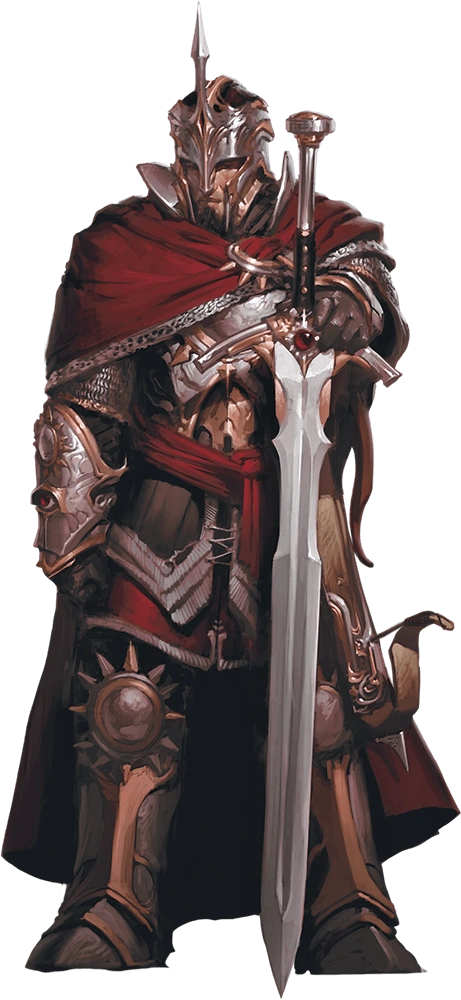
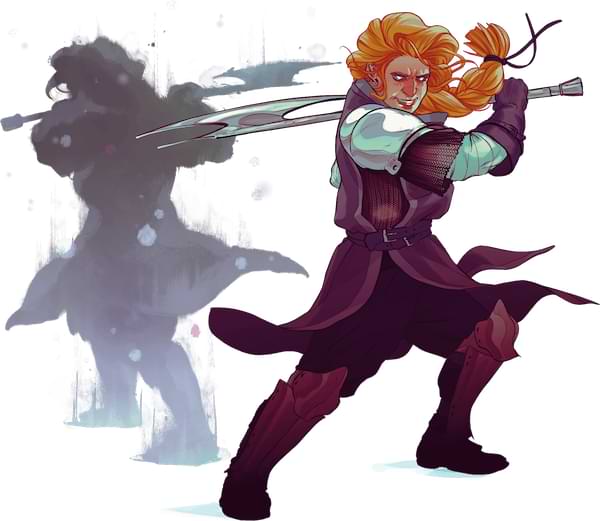
Echo Warrior
A mysterious and feared frontline warrior of the Kryn Dynasty, the Echo Warrior has mastered the art of using dunamis to summon the fading shades of unrealized timelines to aid them in battle. Surrounded by echoes of their own might, they charge into the fray as a cycling swarm of shadows and strikes.
Manifest Echo
When you adopt this archetype at 3rd level, you can use a bonus action to magically manifest an echo of yourself in an unoccupied space you can see within 15 feet of you. This echo is a magical, translucent, grey image of you that lasts until it is destroyed, until you dismiss it as a bonus action, until you manifest another echo, or until you're incapacitated.
Your echo has AC 14 + your proficiency bonus, 1 hit point, and immunity to all conditions. If it has to make a saving throw, it uses your saving throw bonus for the roll. It is the same size as you, and it occupies its space. On your turn, you can mentally command the echo to move up to 30 feet in any direction (no action required). If your echo is ever more than 30 feet from you at the end of your turn, it is destroyed.
As a bonus action, you can teleport, magically swapping places with your echo at a cost of 15 feet of your movement, regardless of the distance between the two of you.
When you take the Attack action on your turn, any attack you make with that action can originate from your space or the echo's space. You make this choice for each attack.
When a creature that you can see within 5 feet of your echo moves at least 5 feet away from it, you can use your reaction to make an opportunity attack against that creature as if you were in the echo's space.
Unleash Incarnation
Also at 3rd level, you can heighten your echo's fury. Whenever you take the Attack action, you can make one additional melee attack from the echo's position. You can use this feature a number of times equal to your Constitution modifier (a minimum of once). You regain all expended uses when you finish a long rest.
Echo Avatar
Starting at 7th level, you can temporarily transfer your consciousness to your echo. As an action, you can see through your echo's eyes and hear through its ears. During this time, you are deafened and blinded. You can sustain this effect for up to 10 minutes, and you can end it at any time (requires no action).
While your echo is being used in this way, it can be up to 1,000 feet away from you without being destroyed.
Shadow Martyr
Starting at 10th level, you can make your echo throw itself in front of an attack directed at another creature that you can see. Before the attack roll is made, you can use your reaction to teleport the echo to an unoccupied space within 5 feet of the targeted creature. The attack roll that triggered the reaction is instead made against your echo.
Once you use this feature, you can't use it again until you finish a short or long rest.
Reclaim Potential
By 15th level, you've learned to absorb the fleeting magic of your echo. When an echo of yours is destroyed by taking damage, you can gain a number of temporary hit points equal to 2d6 + your Constitution modifier, provided you don't already have temporary hit points.
You can use this feature a number of times equal to your Constitution modifier (a minimum of once). You regain all expended uses when you finish a long rest.
Legion of One
At 18th level, you can use a bonus action to create two echos with your Manifest Echo feature, and these echoes can co-exist. If you try to create a third echo, the previous two echoes are destroyed. Anything you can do from one echo's position can be done from the other's instead.
In addition, when you roll initiative and have no uses of your Unleash Incarnation feature left, you regain one use of that feature.


Eldritch Knight
The archetypal Eldritch Knight combines the martial mastery common to all fighters with a careful study of magic. Eldritch Knights use magical techniques similar to those practised by wizards. These knights learn a comparatively small number of spells, committing them to memory instead of keeping them in a spellbook.
Spellcasting
When you reach 3rd level, you augment your martial prowess with the ability to cast spells. You learn two cantrips of your choice from the wizard spell list. You learn an additional wizard cantrip of your choice at 10th level.
Spell Slots. The Eldritch Knight Spellcasting table shows how many spell slots you have to cast your wizard spells of 1st level and higher. To cast one of these spells, you must expend a slot of the spell's level or higher. You regain all expended spell slots when you finish a long rest. For example, if you know the 1st-level spell Shield and have a 1st-level and a 2nd-level spell slot available, you can cast Shield using either slot.
Spells Known of 1st Level and Higher. You know three 1st-level wizard spells of your choice, two of which you must choose from the abjuration and evocation spells on the wizard spell list. The Spells Known column of the Eldritch Knight Spellcasting table shows when you learn more wizard spells of 1st level or higher. Each of these spells must be an abjuration or evocation spell of your choice, and must be of a level for which you have spell slots.
The spells you learn at 8th, 14th, and 20th level can come from any school of magic.
Eldritch Knight Spellcasting
| Level | Spells Known | 1st | 2nd | 3rd | 4th |
|---|---|---|---|---|---|
| 3rd | 3 | 2 | - | - | - |
| 4th | 4 | 3 | - | - | - |
| 5th | 4 | 3 | - | - | - |
| 6th | 4 | 3 | - | - | - |
| 7th | 5 | 4 | 2 | - | - |
| 8th | 6 | 4 | 2 | - | - |
| 9th | 6 | 4 | 2 | - | - |
| 10th | 7 | 4 | 3 | - | - |
| 11th | 8 | 4 | 3 | - | - |
| 12th | 8 | 4 | 3 | - | - |
| 13th | 9 | 4 | 3 | 2 | - |
| 14th | 10 | 4 | 3 | 2 | - |
| 15th | 10 | 4 | 3 | 2 | - |
| 16th | 11 | 4 | 3 | 3 | - |
| 17th | 11 | 4 | 3 | 3 | - |
| 18th | 11 | 4 | 3 | 3 | - |
| 19th | 12 | 4 | 3 | 3 | 1 |
| 20th | 13 | 4 | 3 | 3 | 1 |
Whenever you gain a level in this class, you can replace one of the wizard spells you know with another spell of your choice from the wizard spell list. The new spell must be of a level for which you have spell slots, and it must be an abjuration or evocation spell, unless you're replacing the spell you gained at 3rd, 8th, 14th, or 20th level from any school.
Spellcasting Ability. Intelligence is your spellcasting ability for your wizard spells, since you learn your spells through study and memorization. You use your Intelligence whenever a spell refers to your spellcasting ability. In addition, you use your Intelligence modifier when setting the saving throw DC for a wizard spell you cast and when making an attack roll with one.
Spell Save DC
Spell attack modifier
Weapon Bond
At 3rd level, you learn a ritual that creates a magical bond between yourself and one weapon. You perform the ritual over the course of 1 hour, which can be done during a short rest. The weapon must be within your reach throughout the ritual, at the conclusion of which you touch the weapon and forge the bond. Once you have bonded a weapon to yourself, you can't be disarmed of that weapon unless you are incapacitated. If it is on the same plane of existence, you can summon that weapon as a bonus action on your turn, causing it to teleport instantly to your hand.
You can have up to two bonded weapons, but can summon only one at a time with your bonus action. If you attempt to bond with a third weapon, you must break the bond with one of the other two.
War Magic
Beginning at 7th level, when you use your action to cast a cantrip, you can make one weapon attack as a bonus action.
Eldritch Strike
At 10th level, you learn how to make your
weapon strikes undercut a creature's resistance
to your spells. When you hit a creature
with a weapon attack, that creature has
disadvantage on the next saving throw
it makes against a spell you cast before
the end of your next turn.
Arcane Charge
At 15th level, you gain the ability
to teleport up to 30 feet to an
unoccupied space you can see
when you cast a Wizard cantrip.
You can teleport before or after
the spell releases.
Improved War Magic
Starting at 18th level, when you take the Attack
action, you can forfeit one of your attacks to cast
a spell with a casting time of 1 action or bonus
action as a part of that action.
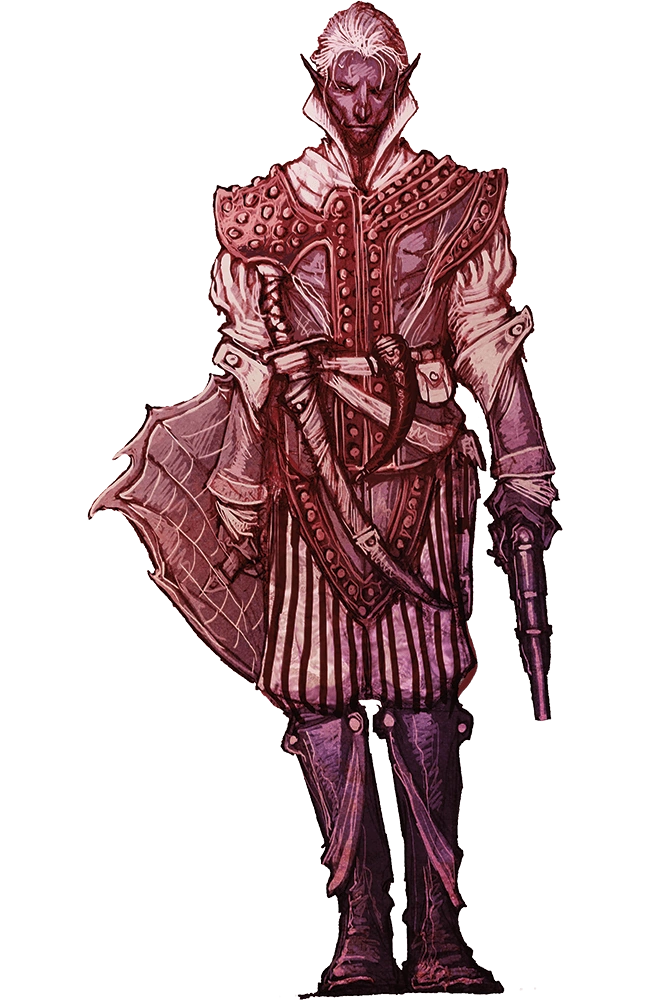
Gunslinger
Most warriors and combat specialists spend their years perfecting the classic arts of swordplay, archery, or pole arm tactics. Experimentation with alchemical components and rare metals have unlocked the secrets of controlled explosive force, manifested in the Gunslinger’s use of firearms.
Gunsmith
Upon choosing this archetype at 3rd level, you gain proficiency with firearms and Tinker’s Tools. You may use them to craft ammunition at half the cost, repair damaged firearms, or even draft and create new ones (DM’s discretion). Some extremely experimental and intricate firearms are only available through crafting.
Adept Marksman
When you choose this archetype at 3rd level, you learn to perform powerful Trick Shots to disable or damage your opponents using your firearms.
Trick Shots. You learn two trick shots of your choice. Many trick shots enhance an attack in some way. Each use of a trick shot must be declared before the attack roll is made. You can use only one trick shot per attack. You learn an additional trick shot of your choice at 7th, 10th, 15th, and 18th level. Each time you learn a new trick shot, you can also replace one trick shot you know with a different one.
Grit. You gain a number of grit points equal to your Wisdom modifier (minimum of 1). You regain 1 expended grit point each time you roll a 20 on the d20 roll for an attack with a firearm, or deal a killing blow with a firearm to a creature of significant threat (DM’s discretion). You regain all expended grit points after a short or long rest.
Saving Throws. Some of your trick shots require your targets to make a saving throw to resist the trick shot’s effects. The saving throw DC is calculated as follows: Trick shot save DC = 8 + your proficiency bonus + your Dexterity modifier
Quickdraw
When you reach 7th level, you add your proficiency bonus to your initiative. You can also stow a firearm, then draw another firearm as a single object interaction on your turn.
Rapid Repair
Upon reaching 10th level, you learn how to quickly attempt to fix a jammed gun. You can spend a grit point to attempt to repair a misfired (but not broken) firearm as a bonus action.
Lightning Reload
Starting at 15th level, you can reload any firearm as a bonus action.
Haemorrhaging Critical
Upon reaching 18th level, whenever you score a critical hit on an attack with a firearm, the target additionally suffers half of the damage from the attack at the end of its next turn.
Vicious Intent
Also at 18th level, your firearm attacks score a critical hit on a roll of 19-20, and you regain a grit point on a roll of 19 or 20 on a d20 attack roll.
Trick Shots
The trick shots are presented in alphabetical order.
Bullying Shot. You can use the powerful blast and thundering sound of your firearm to shake the resolve of a creature. You can expend one grit point while making a Charisma (Intimidation) check to add one roll of your firearm's damage die to the total.
Dazing Shot. When you make a firearm attack against a creature, you can expend one grit point to attempt to dizzy your opponent. On a hit, the creature suffers normal damage and must make a Constitution saving throw or suffer disadvantage on all their attacks until the end of their next turn.
Deadeye Shot. When you make a firearm attack against a creature, you can expend one grit point to gain advantage on the attack roll. If you already have advantage, you can add one roll of your Trick die to the total instead.
Deflecting Shot. When you are hit by a ranged weapon attack, you can expend one grit point as a reaction to attack the missile with a firearm, potentially deflecting or destroying it. When you take this reaction, the ranged attack damage is reduced by the firearm's damage die + your Dexterity modifier (minimum 1) + your Fighter level. If the damage is reduced to 0, the missile is destroyed (if non-magical).
Disarming Shot. When you make a firearm attack against a creature, you can expend one grit point to attempt to shoot an object from their hands. On a hit, the creature suffers normal damage and must succeed on a Strength saving throw or drop 1 held object of your choice and have that object be pushed 10 feet away from you.
Flechette Shot. When you make a firearm attack against a creature, you can apply a little too much gunpowder and expend one grit point to cause the ammunition to explode into shrapnel on impact, even on a miss. The target and all creatures within 5 feet of it must make a Dexterity saving throw. Targets take piercing damage as if hit by an attack on a failed save, or half as much on a successful save.
Forceful Shot. When you make a firearm attack against a creature, you can expend one grit point to attempt to trip them up and force them back. On a hit, the creature suffers normal damage and must succeed on a Strength saving throw or be pushed 15 feet away from you.
Piercing Shot. When you make a firearm attack against a creature, you can expend one grit point to attempt to fire through multiple opponents. The initial attack gains a +1 to the firearm’s misfire score. On a hit, the creature suffers normal damage and every creature in a line directly behind the target within your close range distance must succeed a Dexterity saving throw against your Trick save DC or suffer the damage of the firearm as if hit with an attack.
Quickfire Shot. Provided you aren't incapacitated, you can expend one grit point to use your reaction when initiative is first rolled to make a single firearm attack against a creature you can see within your firearm's close range. The attack gains a +1 to the firearm’s misfire score. On a hit, the target suffers normal damage and has disadvantage on all attack rolls and ability checks until the end of its next turn.
Ricochet Shot. When you make a firearm attack against a target, you can expend one grit point to attempt to refract the bullet off the target into the path of a new target within 30 feet of the first. Make a second attack roll with disadvantage against the new target, treating line of sight and cover as though you were standing in the first target's space. You do not add your ability modifier to the damage of the second attack, but the second attack cannot misfire and can be taken even if the first attack missed or misfired.
Smoking Shot. As a result of the soot and black powder residue building up in the barrel, when you make a firearm attack against a creature, you can expend one grit point to cause smoke to billow out behind the bullet. A 5-foot wide line of black smoke extends in a straight line up to 120 feet between you and the target. The area within the line is considered heavily obscured. The smoke lasts for 1 minute, or until dispersed by a moderate or stronger wind.
Sparking Shot. When you make a firearm attack against a creature, you can expend one grit point to set the target aflame from the friction produced by impact. On a hit, the target takes one weapon die of fire damage at the end of each of its turns, set alight by the burning bullet. The fire lasts for 1 minute, or until a creature uses its action to put out the fire.
Violent Shot. When you make a firearm attack against a creature, you can expend one or more grit points to enhance the volatility of the attack. For each grit point expended, the attack gains a +1 to the firearm’s misfire score. If the attack hits, you can roll one additional weapon damage die per grit point spent when determining the damage.
Winging Shot. When you make a firearm attack against a creature, you can expend one grit point to attempt to topple a moving target. On a hit, the creature suffers normal damage and must make a Strength saving throw or be knocked prone.

Psi Warrior
Awake to the psionic power within, a Psi Warrior is a fighter who augments their physical might with psi-infused weapon strikes, telekinetic lashes, and barriers of mental force. Many githyanki train to become such warriors, as do some of the most disciplined high elves. Many young kalashtar dream of becoming Psi Warriors, or simply fall into it if left unguided.
Telepathy
When you choose this archetype at 3rd level, your mind has opened to receive the Weave of magic. You can telepathically speak to one creature you can see within 120 feet of you at will (no action required). You don’t need to share a language with the creature for it to understand your telepathic messages, but the creature must be able to understand at least one language or be telepathic itself.
Psionic Talent
At 3rd level, you harbour a wellspring of psionic energy within yourself. This energy is represented by your Psionic Energy dice, which are each a d6. When you reach certain levels in this class, the size of your Psionic Energy dice increases: at 5th level (d8), 11th level (d10), and 17th level (d12).
You have a number of these dice equal to half your Fighter level (rounded down) + your Intelligence modifier, and they fuel your Psionic Powers.
Psionic Powers. Psionic Powers use your Psionic Energy dice. You gain two powers of your choice, choosing from the Psionic Power list at the end of the Customisation Options section. You can change one of your chosen psionic powers whenever you gain a level in this class.
You gain two additional psionic powers of your choice at 7th level, and gain one more at 9th, 13th, and 17th level in this class.
Some of your powers expend the Psionic Energy die they use, as specified in a power's description, and you can't use a power if it requires you to use a die when your dice are all expended. You regain all your expended Psionic Energy dice when you finish a long rest.
Saving Throws. If a psionic power you use requires your target to make a saving throw to resist the power’s effects, the Save DC equals 8 + your proficiency bonus + your Intelligence modifier.
Telekinetic Adept
By 7th level, you have mastered new ways to use your telekinetic abilities. When you deal damage to a target with a Psionic Power, you can perform a Telekinetic Thrust.
Telekinetic Thrust: the target must make a Strength saving throw. If the save fails, you can knock the target prone or move it up to 10 feet in any direction horizontally. At 11th level, if a target fails its save by 5 or more it is also stunned until the end of its next turn.
Mystic Wellspring
Also at 7th level, you can use a bonus action on your turn to draw upon the Psychic Winds of the Weave; you regain a number of expended Psionic Energy dice equal to your Intelligence modifier (minimum 1).
Once you use this ability, you cannot use it again until you finish a long rest.
Guarded Mind
Starting at 10th level, the psionic energy flowing through you has bolstered your mind. You have resistance to psychic damage. Moreover, if you start your turn charmed or frightened, you can expend one Psionic Energy die and end one effect on yourself subjecting you to those conditions (no action required)
Bulwark of Force
At 15th level, you can shield yourself and others with telekinetic force. By expending a Psionic Energy die as a bonus action, you can choose creatures (including yourself) that you can see within 30 feet of you, up to a number of creatures equal to your Intelligence modifier (minimum of one creature). Each of the chosen creatures gains a +3 bonus to their AC for 1 minute or until you're incapacitated.
Telekinetic Master
By 18th level, your ability to move creatures and objects with your mind is matched by few. You can expend one Psionic Energy die to cast the Telekinesis spell, requiring no components. Your spellcasting ability for the spell is Intelligence. On each of your turns while you concentrate on the spell, including the turn when you cast it, you can make one attack with a weapon as a bonus action.


Ronin
The Ronin is a fighter who draws on an implacable fighting spirit to overcome enemies. A ronin’s resolve is nearly unbreakable, and the enemies in a ronin’s path have two choices: yield or die fighting.
Warrior Scholar
When you choose this archetype at 3rd level, you gain proficiency in one of the following skills of your choice: History, Insight, Investigation, Medicine, Perception, Performance, or Persuasion. Alternatively, you learn one language of your choice or gain proficiency in a single tool.
Fighting Spirit
Starting at 3rd level, your intensity in battle can shield you and help you strike true. As a bonus action on your turn, you can give yourself advantage on all weapon attack rolls until the end of the current turn. When you do so, you also gain 5 temporary hit points. The number of hit points increases when you reach certain levels in this class, increasing to 10 at 10th level and 15 at 15th level.
You can use this feature a number of times equal to your Wisdom modifier (minimum of once). You regain all expended uses of it when you finish a long rest.
Slash Draw
Also from 3rd level, you have mastered the art of striking with sudden, explosive power at any moment. The first time each turn that you hit a creature with a melee weapon attack using a weapon you drew that turn, the attack deals an extra 1d6 damage of that weapon’s type. This extra damage increases to 1d8 when you reach 11th level in this class.
In addition, once per turn, you can draw and stow one weapon, provided you aren’t incapacitated (no action required).
Elegant Courtier
Starting at 7th level, your discipline and attention to detail allow you to excel in social situations. Whenever you make a Charisma (Persuasion) check, you gain a bonus to the check equal to your Wisdom modifier. Your self-control also causes you to gain proficiency in Wisdom saving throws. If you already have this proficiency, you instead gain proficiency in Intelligence or Charisma saving throws (your choice).
Tireless Spirit
Starting at 10th level, when you roll initiative and have no uses of Fighting Spirit remaining, you regain one use. In addition, you have advantage on the first melee weapon attack you make each turn, as well as advantage on the first ranged weapon attack you make each turn.
Rapid Onslaught
Starting at 15th level, you learn to trade accuracy for swift strikes. When you take the Attack action, each time you score a critical hit or reduce a creature to 0 hit points as part of that action, you can make one additional weapon attack. You can make up to three additional attacks with this feature each turn.
Glory Before Death
Starting at 18th level, your fighting spirit can delay the grasp of death. If you take damage that reduces you to 0 hit points, you can use your reaction to delay falling unconscious, and you can immediately take an extra turn. While you have 0 hit points during that extra turn, taking damage causes death saving throw failures as normal, and three death saving throw failures can still kill you. When the extra turn ends, you fall unconscious if you still have 0 hit points.
Once you use this feature, you can’t use it again until you finish a long rest.
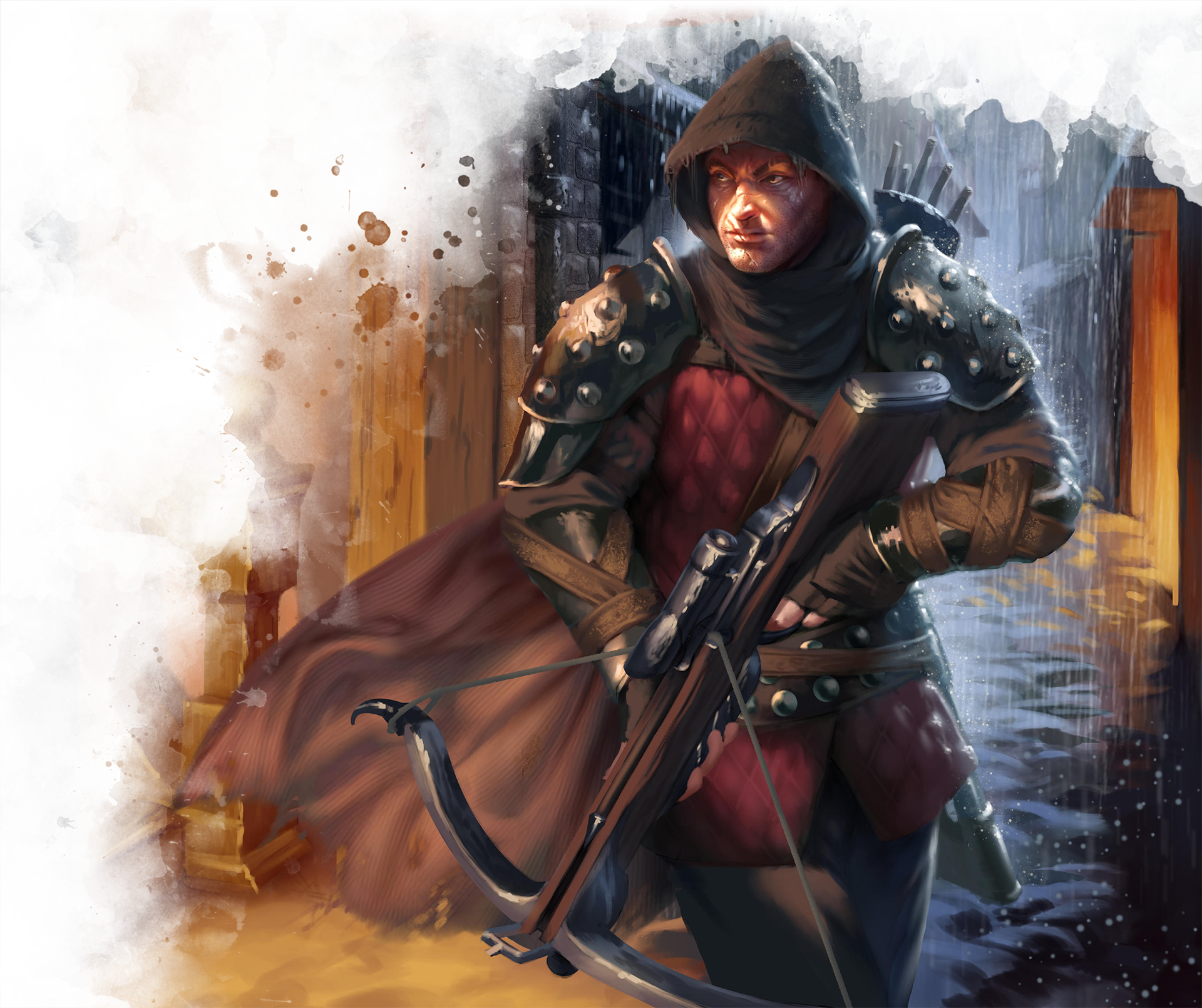
Rune Knight
Rune Knights enhance their martial prowess using the supernatural power of runes, an ancient practice that originated with giants. Rune cutters can be found among any family of giants, and you likely learned your methods first or second hand from such a mystical artisan. Whether you found the giant's work carved into a hill or cave, learned of the runes from a sage, or met the giant in person, you studied the giant's craft and learned how to apply magic runes to empower your equipment.
Bonus Proficiencies
When you choose this archetype at 3rd level, you gain proficiency with smith’s tools, and you learn to speak, read, and write Giant.
Rune Carver
Starting at 3rd level, you can use magic runes to enhance your gear. You learn two runes of your choice, from among the runes described below, and each time you gain a level in this class, you can replace one rune you know with a different one from this feature. When you reach certain levels in this class, you learn additional runes, as shown in the Runes Known table.
| Fighter Level | Runes Known |
|---|---|
| 3rd | 2 |
| 7th | 3 |
| 10th | 4 |
| 15th | 5 |
Whenever you finish a long rest, you can touch a number of objects equal to the number of runes you know, and you inscribe a different rune onto each of the objects. To be eligible, an object must be a weapon, a suit of armour, a shield, a piece of jewellery, or something else you can wear or hold in a hand. Your rune remains on an object until you finish a long rest, and an object can bear only one of your runes at a time.
The following runes are available to you when you learn a rune. If a rune has a level requirement, you must be at least that level in this class to learn the rune.
If a rune requires a saving throw, your
Rune Magic save DC equals 8 + your proficiency bonus + your Intelligence modifier.
Giant Might
At 3rd level, you have learned how to imbue yourself with the might of giants. As a bonus action, you magically gain the following benefits, which last for 1 minute: If you are smaller than Large, you become Large, along with anything you are wearing. If you lack the room to become Large, your size doesn't change. You have advantage on Strength checks and Strength saving throws. Once on each of your turns, one of your attacks with a weapon or an unarmed strike can deal an extra 1d6 damage to a target on a hit.
You can use this feature a number of times equal to your Intelligence modifier (minimum of once), and you regain all expended uses of it when you finish a long rest.
Runic Shield
At 7th level, you learn to invoke your rune magic to protect your allies. When another creature you can see within 60 feet of you is hit by an attack roll, you can use your reaction to force the attacker to reroll the d20 and use the new roll.
You can use this feature a number of times equal to your Intelligence modifier (minimum of once), and you regain all expended uses of it when you finish a long rest.
Great Stature
By 10th level, the magic of your runes permanently alters you. When you gain this feature, roll 3d4. You grow a number of inches in height equal to the roll. Moreover, the extra damage you deal with your Giant's Might feature increases to 1d8.
Master of Runes
At 15th level, you can invoke each rune you know from your Rune Carver feature twice, rather than once, and you regain all expended uses when you finish a short or long rest.
Runic Juggernaut
At 18th level, you learn how to amplify your rune-powered transformation. As a result, the extra damage you deal with the Giant's Might feature increases to 1d10. Moreover, when you use that feature, your size can increase to Huge, and while you are that size, your reach increases by 5 feet.
Runes
Ild. This rune's magic channels the masterful craftsmanship of great fire-giant smiths. While wearing or carrying an object inscribed with this rune, your proficiency bonus is doubled for any ability check you make that uses your proficiency with a tool.
In addition, when you hit a creature with an attack using a weapon, you can invoke the rune to summon fiery shackles: the target takes an extra 2d6 fire damage, and it must succeed on a Strength saving throw or be restrained for 1 minute. While restrained by the shackles, the target takes 2d6 fire damage at the start of each of its turns. The target can repeat the saving throw at the end of each of its turns, banishing the shackles on a success. Once you invoke this rune, you can't do so again until you finish a short or long rest.
Kalt. This rune's magic evokes the might of those who survive in the wintry wilderness, such as frost giants. While wearing or carrying an object inscribed with this rune, you have advantage on Wisdom (Animal Handling) checks and Charisma (Intimidation) checks.
In addition, you can invoke the rune as a bonus action to increase your sturdiness. For 10 minutes, you gain a +2 bonus to all ability checks and saving throws that use Strength or Constitution. Once you invoke this rune, you can't do so again until you finish a short or long rest.
Stein. This rune's magic channels the judiciousness associated with stone giants. While wearing or carrying an object inscribed with this rune, you have advantage on Wisdom (Insight) checks, and you have darkvision out to a range of 120 feet.
In addition, when a creature you can see ends its turn within 30 feet of you, you can use your reaction to invoke the rune and force the creature to make a Wisdom saving throw. Unless the save succeeds, the creature is charmed by you for 1 minute. While charmed in this way, the creature has a speed of 0 and is incapacitated, descending into a dreamy stupor. The creature repeats the saving throw at the end of each of its turns, ending the effect on a success. Once you invoke this rune, you can't do so again until you finish a short or long rest.
Vind. This rune emulates the deceptive magic used by some cloud giants. While wearing or carrying an object inscribed with this rune, you have advantage on Dexterity (Sleight of Hand) checks and Charisma (Deception) checks.
In addition, when you or a creature you can see within 30 feet of you is hit by an attack roll, you can use your reaction to invoke the rune and choose a different creature within 30 feet of you, other than the attacker. The chosen creature becomes the target of the attack, using the same roll. This magic can transfer the attack's effects regardless of the attack's range. Once you invoke this rune, you can't do so again until you finish a short or long rest.
Vard. This rune grants the strength of the mountains, the protective birthhome of all giantkind. While wearing or carrying an object inscribed with this rune, you have advantage on ability checks and saving throws made to resist being moved against your will, and on Constitution saving throws made to maintain concentration.
In addition, you can invoke the Vard rune by bellowing its name when you are hit by a weapon attack, halving the damage you take from the attack. Once you invoke this rune, you can't do so again until you finish a short or long rest.
Blitz (7th Level or Higher). Using this rune, you can glimpse the future like a storm giant seer. While wearing or carrying an object inscribed with this rune, you have advantage on Intelligence (Arcana) checks, and you can't be surprised as long as you aren't incapacitated.
In addition, you can invoke the rune as a bonus action to enter a prophetic state for 1 minute or until you're incapacitated. Until the state ends, when you or another creature you can see within 60 feet of you makes a d20 roll, you can use your reaction to cause the roll to have advantage or disadvantage. Once you invoke this rune, you can't do so again until you finish a short or long rest.
Geld (7th Level or Higher). This rune's magic embodies the vengeful fomorian cruelty, the bitterness felt by their twisted kind. While wearing or carrying an object inscribed with this rune, when a creature hits you with a melee attack, you can use your reaction to make a melee weapon attack against that creature. If you hit a Large or smaller creature with this reactive attack, it must make a Strength saving throw, falling prone on a failed save.
In addition, you can retributively invoke this rune when you take damage from a creature within 10 feet of you. An eruption of raw runic power blasts out from you in a 20-foot cone. All creatures in the cone must succeed on a Strength saving throw or take 1d10 bludgeoning damage, be pushed a number of feet equal to 5 × the number of runes you have active (minimum of 5 feet), and fall prone. On a success, a creature takes half as much damage and isn’t knocked prone. Once you invoke this rune, you can't do so again until you finish a short or long rest.
Ordn (7th Level or Higher). This rune's magic channels the brutal warfare of the Ordning and its fearless giant warriors. While wearing or carrying an object inscribed with this rune, you gain a bonus to saving throws made to resist being frightened equal to your Constitution modifier.
In addition, you can activate a melee weapon inscribed with the Ordn rune as a bonus action to enter a frenzied, barbaric state for 1 minute or until you're incapacitated. Until the state ends, when you hit a creature with a melee attack using the weapon in which the rune is inscribed, you deal an additional 1d4 necrotic damage and you recover hit points equal to the necrotic damage dealt. Once you invoke
this rune, you can't do so again until you finish
a short or long rest.
Pyrr (7th Level or Higher). Using this rune, you can peer into the churning elemental chaos which, long ago, consumed the Great Titans. While wearing or carrying an object inscribed with this rune, when you take damage you can use your reaction to gain resistance to that damage type (not including the triggering attack) until the start of your next turn. You cannot gain resistance to bludgeoning, piercing, psychic, or slashing damage using this feature.
In addition, you have advantage on checks and saving throws made to resist having your plane, position, or form altered against your will.
Tchie (7th Level or Higher). This rune's magic bestows a resilience reminiscent of a hill giant. While wearing or carrying an object that bears this rune, you have advantage on saving throws against being poisoned, and you have resistance against poison damage.
In addition, you can invoke the rune as a bonus action, gaining resistance to bludgeoning, piercing, and slashing damage for 1 minute. Once you invoke this rune, you can't do so again until you finish a short or long rest.
Tolk (7th Level or Higher). This rune's magic bestows a small mote of the adepts of rune inscription, the carvers of the First Runes. While wearing or carrying an object that bears this rune, the DC for all your Rune Carver abilities increases by an amount equal to half your Proficiency bonus (rounded down).
In addition, you can instead activate rune features which normally require a bonus action as a reaction to being attacked or forced to make a saving throw.
Ukr (7th Level or Higher). This rune's magic bestows the natural life-magic of the peaceful firbolgs, the gentle giants. While wearing or carrying an object inscribed with this rune, you also gain temporary hit points equal to 5 + your Constitution modifier when you receive any healing.
In addition, you can invoke the rune as a bonus action, conjuring life-giving nature spirits which swirl about you in a 10-foot-radius. When first invoked, and then as a bonus action on subsequent turns while the spirits remain, a number of creatures of your choice within that radius, other than yourself, equal to the number of runes you have active regain hit points equal to 1d6 + your Constitution modifier. The aura lasts for 1 minute, or until you are incapacitated. Once you invoke this rune, you can't do so again until you
finish a short or long rest.

The Monk
Monks are united in the ability to magically harness the
energy that flows in their bodies. Whether channelled
as a striking display of combat prowess or a subtler focus
of defensive ability and speed, this energy infuses all that
a monk does.
You must have a Dexterity score and a Wisdom score
of 13 or higher in order to multiclass in or out of this class.
Class Features
As a monk, you gain the following class features.
Hit Points
- Hit Dice: 1d8 per monk level
- Hit Points at 1st Level: 8 + your Constitution modifier
- Hit Points at Higher Levels: 1d8 (or 5) + your Constitution modifier per monk level after 1st
Proficiencies
- Armour: None
- Weapons: Simple weapons, shortswords
- Tools: Choose one type of artisan's tools or
one musical instrument - Saving Throws: Strength, Dexterity
- Skills: Choose two from Acrobatics, Athletics, History, Insight, Religion, and Stealth
Equipment
You start with the following equipment, in
addition to the equipment granted
by your background:
- 10 throwing darts
- (a) a shortsword or
(b) any simple weapon - (a) a dungeoneer's pack or (b) an explorer's pack
Martial Arts
At 1st level, your practice of martial arts gives you mastery of combat styles that use unarmed strikes and monk weapons. Natural Weapons are considered Unarmed Strikes for the purpose of your Monk features, and vice versa, but they use whichever damage die is higher.
You gain the following benefits while you are unarmed or wielding only monk weapons and you aren't wearing armour or wielding a shield:
- You can use Dexterity instead of Strength for the attack and damage rolls of your unarmed strikes and monk weapons, including when you Grapple or Shove.
- You can roll a d6 in place of the normal damage of your unarmed strike or monk weapon. This die changes as you gain monk levels, as shown in the Martial Arts column of the Monk table.
- When you take the Attack action to attack with an unarmed strike or a monk weapon on your turn, you can make one unarmed strike as a bonus action. For example, if you take the Attack action and attack with a quarterstaff, you can also make an unarmed strike as a bonus action.

Monastic Armoury
Certain monasteries use specialised forms of monk
weapons as a part of their martial arts. For example, you
might use a club that is two lengths of wood connected by a short chain (called a nunchaku) or a sickle with a shorter, straighter blade (called a kama). You can choose a number of weapons to be your monk weapons equal to 5 + your Wisdom modifier (minimum of five weapons). You are always proficient in your Monk Weapons and Unarmed Strikes. You can attack with them using your Dexterity rather than Strength modifier even if they do not have the Finesse property.
The chosen weapons must each meet the following criteria:
- The weapon must be a simple or martial weapon.
- The weapon must lack these properties: Bulky, Unwieldy, Reload, Special, and Two-handed.
Whenever you finish a short or long rest, you can touch one weapon which fulfills the prerequisites for being a monk weapon, focus on it, and then change one of your chosen Monk weapons to that type of weapon.
The Monk
| Level | Proficiency Bonus | Features | Martial Arts Die | Dedicated Disciplines |
|---|---|---|---|---|
| 1st | +2 | Unarmoured Defence, Martial Arts features | 1d6 | - |
| 2nd | +2 | Ki Flow, Unarmoured Movement | 1d6 | - |
| 3rd | +2 | Monastic Tradition, Dedicated Disciplines | 1d6 | 2 |
| 4th | +2 | Ability Score Improvement | 1d6 | 2 |
| 5th | +3 | Extra Attack, Empowered Flow | 1d8 | 3 |
| 6th | +3 | Monastic Tradition feature | 1d8 | 3 |
| 7th | +3 | Evasion, Stillness of Mind, Purity of Body | 1d8 | 4 |
| 8th | +3 | Ability Score Improvement | 1d8 | 4 |
| 9th | +4 | Heightened Flow, Unarmoured Movement Improvement | 1d8 | 4 |
| 10th | +4 | - | 1d8 | 5 |
| 11th | +4 | Monastic Tradition feature | 1d10 | 5 |
| 12th | +4 | Ability Score Improvement | 1d10 | 5 |
| 13th | +5 | - | 1d10 | 6 |
| 14th | +5 | Diamond Soul | 1d10 | 6 |
| 15th | +5 | Timeless Body | 1d10 | 7 |
| 16th | +5 | Ability Score Improvement | 1d10 | 7 |
| 17th | +6 | Monastic Tradition feature | 1d12 | 7 |
| 18th | +6 | Purified Flow | 1d12 | 8 |
| 19th | +6 | Ability Score Improvement | 1d12 | 8 |
| 20th | +6 | Perfect Self | 1d12 | 8 |
Martial Dedication
Your martial training takes on additional properties as you focus on specialising your monastic combat, depending on the style of martial art and the influences of your life which project into your fighting.
You gain one of the following Dedications:
Empty Fist
Rolls of 1 on damage dice for your Unarmed Strikes are considered to be rolls of 2 instead. In addition, your Unarmed Strikes are considered to have the Unwieldy property if you are a Medium or larger creature, or the Light property if you are Small.
Kensei
You do not need to be proficient in the use of a type of weapon to choose it as a Monk weapon, and you can choose Unwieldy weapons to be Monk weapons. You can use your Monk weapons in place of unarmed strikes when using features which specify making an unarmed strike. Features which alter the nature of your unarmed strikes do not also change the properties of your monk weapons.
Mystic
You can use your Wisdom modifier in place of your Strength or Dexterity modifier for the attack and damage rolls of your unarmed strikes and monk weapons, and for any Strength checks in which you are proficient.
Ninjutsu
When you roll initiative and stealth checks, you can add one roll of your Martial Arts die to the check. You can also move silently at your full speed, including dashing, without any negative effects to your stealth. Hits made with your Unarmed Strikes and Monk Weapons against creatures from whom you're hidden deal an additional Martial Arts die of weapon-type damage.
Unarmoured Defence
Beginning at 1st level, while you are wearing no armour and not wielding a shield, your AC equals 10 + your Dexterity modifier + your Wisdom modifier.
Unarmoured Movement
Starting at 2nd level, while you are not wearing armour or wielding a shield, your speed increases by 5 feet. Your speed increases by 5 feet again at 4th, 8th, 12th, and 16th level.
In addition, you can use a bonus action on each of your turns to take the Dash or Disengage action while unarmoured.
At 9th level, you gain the ability to move along vertical surfaces and across liquids on your turn without falling during the move.
Ki Flow
Also at 2nd level, your training allows you to harness the mystic energy of ki. Your access to this energy is represented by ki points. You have a number of ki points equal to your Monk level + your Wisdom modifier (minimum 2 ki).
When you spend a ki point, it is unavailable until you finish a short or long rest, at the end of which you draw all of your expended ki back into yourself.
You must spend at least 30 minutes of the rest meditating to regain your ki points.
Some of your ki-fuelled monastic abilities require your target to make a saving throw to resist the feature's effects. The saving throw DC is calculated as follows:
Ki save DC = 8 + your proficiency bonus +
Ki Features
You can spend your ki points to fuel various class features. You start by knowing the following four features:
Deflect Attacks. You can use your reaction to deflect the blow when you are hit by a melee or ranged weapon attack. When you do so, the bludgeoning, piercing, or slashing damage you take from the attack is reduced by 1d10 + your Dexterity modifier + your monk level.
If the bludgeoning, piercing, or slashing damage of the attack is reduced to 0, you can spend 1 Ki Point to redirect the damage. Melee attacks can be directed at any creature within the attacker's Reach other than itself, while ranged attacks can target any creature you can see within 60 feet of you. The new target must succeed a Dexterity saving throw against your Ki Save DC take damage of the attack's type equal to two rolls of your Martial Arts die plus your Dexterity modifier.
Flurry of Blows. Immediately after you take the Attack action on your turn, you can spend 1 ki point to make two unarmed strikes as a bonus action.
Patient Defence. You can spend 1 ki point whenever you Disengage to also take the Dodge action.
Quickened Healing As an action or bonus action, you can spend 1 ki point and roll a Martial Arts die. You regain a number of hit points equal to the number rolled plus your Wisdom modifier.
Step of the Wind. You can spend 1 ki point when you Dash to also gain the effects of the Disengage action, which moreover doubles your jump distance until the start of your next turn.
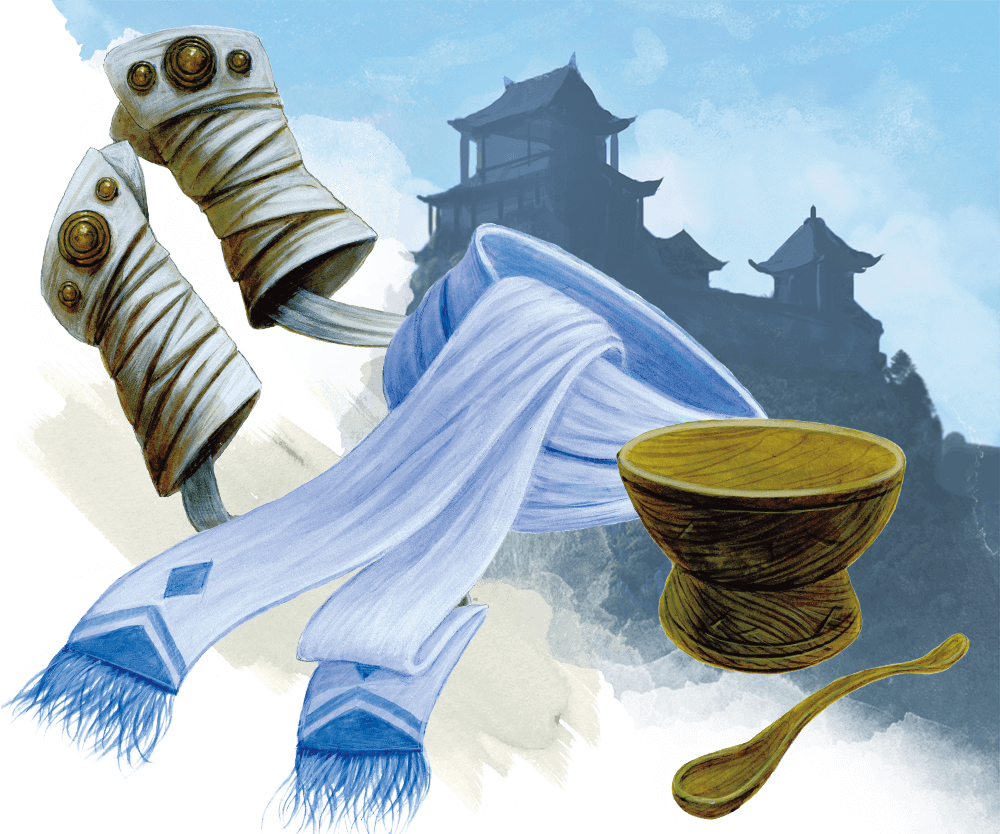
Monastic Tradition
When you reach 3rd level, you commit yourself to a monastic tradition. Your tradition grants you features at 3rd level and again at 6th, 11th, and 17th level.
Dedicated Disciplines
Also at 3rd level, you begin to learn monastic disciplines that harness the power of ki and reflect the training of your dedication. Some disciplines require you to spend ki points when you use them. You learn two disciplines of your choice, which are detailed in the Dedicated Disciplines list at the end of the Monk section.
You learn additional dedicated disciplines of your choice at higher monk levels, as shown in the Dedicated Disciplines column of the Monk table. Whenever you learn a new dedicated discipline or you level up in this class, you can also replace one discipline that you already know with a different discipline. This discipline can be from the dedication list or from any additional sources, such as those granted by your Monastic Tradition.
Ability Score Improvement
When you reach 4th level, and again at 8th, 12th, 16th, and 19th level, you can increase one ability score of your choice by 2, or you can increase two ability scores of your choice by 1. As normal, you can't increase an ability score above 20 using this feature. Alternatively, you may take a feat in place of the ASI, provided you fulfil its prerequisites.
Extra Attack
Beginning at 5th level, you can attack twice, instead of once, whenever you take the Attack action on your turn.
In addition, if you spend 1 ki point or more as part of your action on your turn, you can make one attack with an unarmed strike or a monk weapon as a bonus action before the end of the turn.
Empowered Flow
At 5th level, your ki flow has been channelled into a river of mystical life energy which rages through you. Your unarmed strikes count as magical for the purpose of overcoming resistance and immunity to nonmagical attacks and damage.
In addition, you gain one of the following ki features. This feature can be changed to any of the others whenever you gain a level in this class:
Focused Aim. When you miss with an attack roll with an Unarmed strike or using a Monk weapon, you can spend a number of ki points up to your Wisdom modifier (minimum 1) to increase your attack roll by 1d4 for each of these ki points you spend, potentially turning the miss into a hit.
Stunning Strike. You can interfere with the flow of ki in an opponent's body. Once each turn when you hit another creature with an unarmed strike, you can spend 1 ki point to attempt a stunning strike. The target must make a a Constitution saving throw against your Ki save DC, falling stunned until the start of your next turn on a failed save. On a successful save, the target's Speed is halved until the start of your next turn, and the next attack against them in this period has Advantage.
Unwavering Resolve. When you spend 1 or more Ki points on your turn, you gain advantage on one type of saving throw of your choice until the start of your next turn.
Evasion
At 7th level, your instinctive agility lets you dodge out of the way of certain area effects, such as a blue dragon's lightning breath or a fireball spell. When you are subjected to an effect that allows you to make a Dexterity saving throw to take only half damage, you instead take no damage if you succeed on the saving throw, and only half damage if you fail.
Purity of Body
Starting at 7th level, your mastery of the ki flowing through you makes your very flesh intrinsically magical. You are immune to disease and poison, and going without food or drink doesn’t cause Exhaustion.
Stillness of Mind
Also at 7th level, at the end of your turn you can end one effect on yourself that is causing you to be charmed or frightened.
Heightened Flow
Starting at 9th level, your ki features become more powerful:
Bastion of Patience. When you spend ki points on the Patient Defence feature, you gain Temporary Hit Points equal to two rolls of your Martial Arts die.
Deflect Energy. Deflect Attacks now applies to all damage types.
Fell the Horde. When you take the Flurry of Blows action, you can make three attacks instead of two.
Shared Restoration. You can spend 1 additional ki point when you use Quickened Healing to give it a range of Touch rather than Self. You can confer the effects of Stillness of Mind in the same way as a bonus action.
Twinned Steps. Step of the Wind allows you to move a willing creature with you.
Diamond Soul
Beginning at 14th level, your mastery of ki grants you proficiency in all saving throws.
Additionally, whenever you make a saving throw and fail, you can spend 1 ki point to reroll it and take the second result.
Timeless Body
At 15th level, your ki sustains you so that you no longer need food or water, you suffer none of the frailty of old age, and you can't be aged magically. You can still die of old age, however.
In addition, your soul has become purified of the need for a physical form; you can spend 8 ki to cast the Astral Projection spell, without needing material components. When you do so, you can't take any other creatures with you.
Purified Flow
At 18th level, whenever you roll for initiative you regain a number of expended ki points equal to two rolls of your Martial Arts die + your Wisdom modifier, up to your maximum.
Perfect Self
At 20th level, your Wisdom and Dexterity scores increase by 4 each, up to a maximum of 25.
Monastic Traditions
Way of the Ascendant Dragon
The fundamental teaching of this tradition holds that by emulating dragons, a monk becomes a more integrated part of the world and its magic. By altering their spirit to resonate with draconic might, monks who follow this tradition augment their prowess in battle, bolster their allies, and can even soar through the air on draconic wings. But all this power is in service of a greater goal: achieving a spiritual unity with the essence of the Material Plane.
Draconic Disciple
At 3rd level, you can channel draconic power to magnify your presence and imbue your unarmed strikes with the essence of a dragon’s breath. You gain the following benefits:
Draconic Presence. If you fail a Charisma (Intimidation) or Charisma (Persuasion) check, you can use your reaction to reroll the check, as you tap into the mighty presence of dragons. Once this feature turns a failure into a success, you can’t use it again until you finish a long rest.
Draconic Strike. When you damage a target with an unarmed strike, you can change the damage type to acid, cold, fire, lightning, or poison.
Tongue of Dragons. You learn to speak, read, and write Draconic, or one other language of your choice if you already know it.
Breath of the Dragon
At 3rd level you can channel destructive waves of energy, like those created by the dragons you emulate. When you take the Attack action on your turn, you can spend 1 ki point to replace one of the attacks with an exhalation of draconic energy in either a 20-foot cone or a 30-foot line that is 5 feet wide (your choice). Choose a damage type: acid, cold, fire, lightning, or poison. Each creature in that area must make a Dexterity saving throw against your ki save DC, taking damage of the chosen type equal to two rolls of your Martial Arts die on a failed save, or half as much damage on a successful one.
At 11th level, the damage of this feature increases to three rolls of your Martial Arts die.
Wings Unfurled
At 6th level when you use your Step of the Wind, you can unfurl spectral draconic wings from your back that vanish at the end of your turn. While the wings exist, you have a flying speed equal to your walking speed.
You can use this feature a number of times equal to your Wisdom modifier (minimum 1), and you regain all expended uses when you finish a long rest. You can spend an additional ki point when you use Step of the Wind to use this feature without expending a use of the ability.
Aspect of the Wyrm
At 11th level the power of your draconic spirit
now radiates from you, warding your allies or
inspiring fear in your enemies. As a bonus action, you can create an aura of draconic power that radiates 10 feet from you for 1 minute.
For the duration, you gain one of the following effects of your choice:
Frightful Presence. When you create this aura, and as a bonus action on subsequent turns, you can choose a creature within the aura. The target must succeed on a Wisdom saving throw against your ki save DC or become frightened of you for 1 minute. The target can repeat the saving throw at the end of each of its turns, ending the effect on itself on a successful save.
Resistance. Choose a damage type when you activate this aura: acid, cold, fire, lightning, or poison. You and your allies within the aura have resistance to that damage.
Once you create this aura, you can’t create it again until you finish a long rest, unless you expend 3 ki points to create it again.
Ascendant Aspect
At 17th level, your draconic spirit reaches its peak. You gain the following benefits:
Augment Breath. When you use your Breath of the Dragon, you can spend 1 ki point to augment its shape and power. The exhalation of draconic energy becomes either a 60-foot cone or a 90-foot line that is 5 feet wide (your choice), and each creature in that area takes damage equal to four rolls of your Martial Arts die on a failed save, or half as much damage on a successful one.
Blindsight. You gain blindsight out to 10 feet. Within that range, you can effectively see anything that isn’t behind total cover, even if you’re blinded or in darkness. Moreover, you can see an invisible creature within that range, unless the creature successfully hides from you.
Explosive Fury. When you activate your Aspect of the Wyrm, draconic fury explodes from you. Choose any number of creatures you can see in your aura. Each of those creatures must succeed on a Dexterity saving throw against your ki save DC or take 3d10 acid, cold, fire, lightning, or poison damage (your choice).

Way of the Astral Self
A monk who follows the Way of the Astral Self believes their body is an illusion. They see their ki as a representation of their true form, an astral self. This astral self has the capacity to be a force of order or disorder, with some monasteries training students to use their power to protect the weak and other instructing aspirants in how to manifest their true selves in service to the mighty.
Arms of the Astral Self
At 3rd level, your mastery of your ki allows you to summon a portion of your astral self. As a bonus action, you can spend 1 ki point to summon the arms of your astral self. When you do so, each creature of your choice that you can see within 10 feet of you must succeed on a Dexterity saving throw or take force damage equal to two rolls of your Martial Arts die.
For 10 minutes, these spectral arms hover near your shoulders or surround your arms (your choice). You determine the arms' appearance, and they vanish early if you are incapacitated or die.
While the spectral arms are present, you gain the following benefits:
- You can use your Wisdom modifier in place of your Strength modifier when making Strength checks and Strength saving throws.
- You can use the spectral arms to make unarmed strikes.
- The spectral arms cannot be used to wield weapons.
- When you make an unarmed strike with the arms on your turn, your reach for it is 5 feet greater than normal.
- The unarmed strikes you make with the arms can use your Wisdom modifier in place of your Strength or Dexterity modifier for the attack and damage rolls, and their damage type is force.
Visage of the Astral Self
When you reach 6th level, you can summon the visage of your astral self. As a bonus action, or as part of the bonus action you take to activate Arms of the Astral Self, you can spend 1 ki point to summon this visage for 10 minutes. It vanishes early if you are incapacitated or die. The spectral visage covers your face like a helmet or mask. You determine its appearance. While the spectral visage is present, you gain the following benefits:
Astral Sight. You can see normally in darkness, both magical and nonmagical, to a distance of 120 feet.
Wisdom of the Spirit. You have advantage on Wisdom (Insight) and Charisma (Intimidation) checks.
Word of the Spirit. When you speak, you can direct your words to a creature of your choice that you can see within 60 feet of you, making it so only that creature can hear you. Alternatively, you can amplify your voice so that all creatures within 600 feet can hear you.
Body of the Astral Self
Starting at 11th level, when you have both your astral arms and visage summoned, you can cause the body of your astral self to appear (no action required). This spectral body covers your physical form like a suit of armour, connecting with the arms and visage. You determine its appearance. While the spectral body is present, you gain the following benefits:
Deflect Energy. When you take acid, cold, fire, force, lightning, or thunder damage, you can use your reaction to deflect it. When you do so, the damage you take is reduced by 1d10 + your Wisdom modifier (minimum reduction of 1). If you have multiple features which reduce damage as a reaction, you use them both as a single reaction.
Empowered Arms. Once on each of your turns when you hit a target with the Arms of the Astral Self, you can deal extra damage to the target equal to your Martial Arts die.
Awakened Astral Self
Starting at 17th level, your connection to your astral self is complete, allowing you to unleash its full potential. As a bonus action, you can spend 5 ki points to summon the arms, visage, and body of your astral self and awaken it for 10 minutes. This awakening ends early if you are incapacitated or die. While your astral self is awakened, you gain the following benefits.
Armour of the Spirit. You gain a +2 bonus to Armour Class.
Astral Barrage. Whenever you use the Extra Attack feature to attack twice, you can instead attack three times if all the attacks are made with your astral arms.

Way of the Cobalt Soul
Driven by the pursuit of knowledge, the archives of the Cobalt Soul stand as some of the most well-respected and most heavily guarded repositories of tomes, history, and information across the world. Monks of this order seek the clarity of truth and the strength of knowledge; to become a Cobalt Soul is to give one’s self to the quest for unveiling life’s mysteries, bringing light to the secrets of the dark, and guarding the most powerful and dangerous truths from those who would seek to perverse the sanctity of civilization.
Eye of Ioun
When you choose this tradition at 3rd level, you can choose to use Intelligence instead of Wisdom as your ability modifier for all Monk class features.
Extract Aspects
Beginning at 3rd level when choosing this tradition, you can strike pressure points to extract crucial information about your foe, granting you insight about their combat ability. Whenever you hit a creature with one of the attacks granted by your Flurry of Blows, you mark them as analysed. Whenever an analysed creature misses you with an attack, you can immediately use your reaction to make an unarmed strike against that creature. This benefit lasts until you finish a short or long rest.
Additionally, when you analyse a creature, you learn all of its damage vulnerabilities, damage resistances, damage immunities, and condition immunities.
Mystical Erudition
Beginning at 6th level, you’ve undergone extensive training with the Cobalt Soul, teaching you extensively in history or lore from the monastery’s collected volumes. You learn one language of your choice, and you gain proficiency with one of the following skills of your choice: Arcana, History, Investigation, Nature, and Religion. If you already have proficiency in one of the listed skills, you can instead choose to double your proficiency bonus for any ability check you make that uses the chosen proficiency.
You gain an additional language and an additional skill proficiency from the above list (with the ability to double the bonus of an existing proficiency from the list) at 11th and 17th level. You can change any languages known to skill proficiencies as if you gained them using this feature at 9th level, when you gain the Tongue of the Sun and Moon feature.
Extort Truth
Also at 6th level, you can hit a hidden cluster of nerves on a creature with precision, temporarily causing them to become mentally malleable. If you hit a creature with an unarmed attack, you can spend 1 ki point to force them to make a Charisma saving throw.
On a failed save, the creature is unable to speak a deliberate lie and all Charisma checks directed at the creature are made with advantage for up to 10 minutes. You know if they succeeded or failed on their saving throw.
An affected creature is aware of the effect and can thus avoid answering questions to which it would normally respond with a lie. Such a creature can be evasive in its answers as long as the effect lasts.
Mind of Mercury
Starting at 11th level, you’ve honed your awareness and reflexes through mental aptitude and pattern recognition. Once per turn, if you’ve already taken your reaction, you may spend 1 ki point to take an additional reaction.
Debilitating Barrage
Upon reaching 17th level, you’ve gained the knowledge to temporarily lower a creature’s fortitude by striking a series of pressure points. Whenever you hit a creature with one of the attacks granted by your Flurry of Blows, you can spend 3 ki points to cause the creature to suffer a vulnerability to a damage type of your choice for 1 minute, or until they take damage of that type. A creature who is affected by this feature cannot be affected by it again for 24 hours.
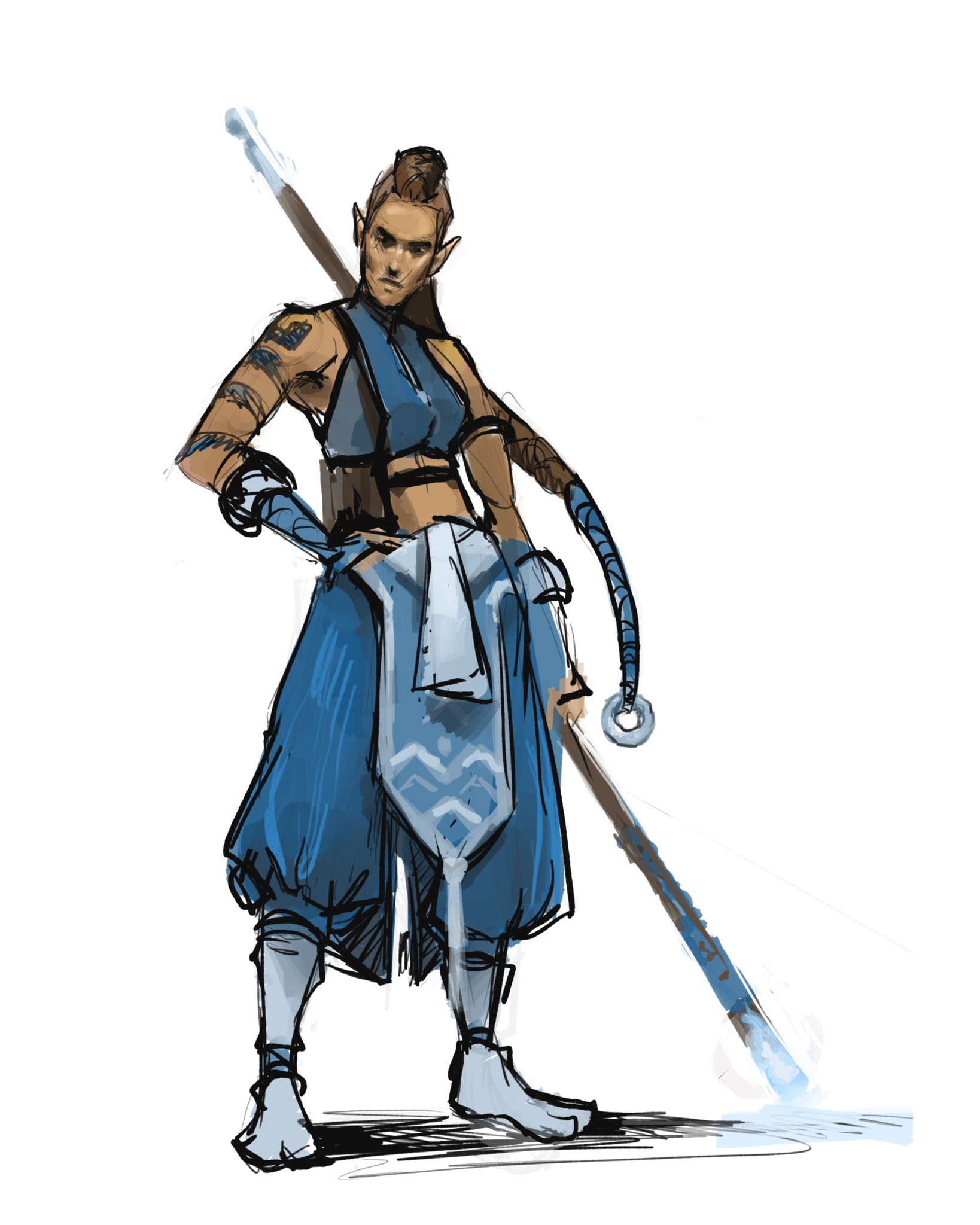

Way of the Drunken Master
You follow an often misunderstood tradition that imitates the stumbling movements of a drunkard. Monks of the Drunken Master utilise unpredictable swaying and falling to break traditional rules of engagement and attack from odd angles. While generally viewed as a joke or at best an impractical exhibition style, in the hands of an expert the drunken style is a powerful and mesmerising form.
Many of the monks that follow this tradition defy the typical image of a monk, abandoning strict asceticism in favour of a more hedonistic and chaotic lifestyle.
Bonus Proficiencies
Your martial style mixes combat training with the precision of a dancer and the antics of a jester. When you choose this tradition at 3rd level, you gain proficiency in improvised weapons, the Performance skill, and Alchemist’s Supplies if you don't already have them. In addition, Improvised weapons count as monk weapons for you.
Tipsy Sway
At 3rd level, you learn to fight from a stumbling but deceptively agile stance known as the tipsy sway. As a bonus action on your turn, you can spend 1 ki point to induce a drunk like state in yourself and begin swaying erratically.
While swaying, you gain the following effects:
- When you start swaying, you gain temporary hit points equal to your Monk level
- You have advantage on Dexterity saving throws.
- Your opportunity attacks have advantage, and opportunity attacks against you have disadvantage.
- You have disadvantage on Wisdom checks and saving throws.
- If you are able to cast spells of 1st-level or higher, you can't cast them or concentrate on them while swaying.
Your Tipsy Sway lasts for 10 minutes, and ends early if you are knocked unconscious.
Drunken Techniques
At 6th level you learn how to twist and turn quickly while employing precise disciplines. You learn two drunken master disciplines from the list below, and can use them only while performing the Tipsy Sway.
You learn one additional discipline of your choice at 11th and 17th level. Each time you learn a new discipline, you can also replace one drunken technique you know with a different one.
Beer Jacket. You are resistant to cold damage.
Down the Hatch. When you hit another creature with a melee attack, you can spend 2 ki points to attempt to strike it in the throat, silencing it. The creature must succeed on a Dexterity saving throw or be silenced for 1 minute (as a non-magical version of the Silence spell). At the end of each of its turns, the target can make a Constitution saving throw, ending this effect on a success.
Drink Spilt on Stranger. When a creature misses you with a melee attack roll, you can spend 1 ki point as a reaction to cause that attack to hit one other creature of your choice that you can see within 5 feet of you.
Drunkard Flirts With Master. As a bonus action, you spend 1 ki point to make a grapple attempt with advantage.
Gambler Cheats Game. When you hit a creature with an improvised weapon, you can spend 1 ki point to attempt to disarm the target. The target must succeed on a Strength saving throw or drop one object you choose at its feet.
Grasshopper Rises Early. While prone you can use your reaction and spend 1 ki point to immediately stand up. Each creature within 5 feet of you must succeed on a Dexterity saving throw or be knocked prone. If a creature fails the saving throw but is already prone, it takes damage equal
to two of your Martial Arts dice.
Flailing Limbs. When you use your Flurry
of Blows, you can spend 1 ki point to make
an additional attack as a part of that
action, up to a total of 3 additional
attacks, provided that each Flurry of
Blows attack targets a different
creature this turn.
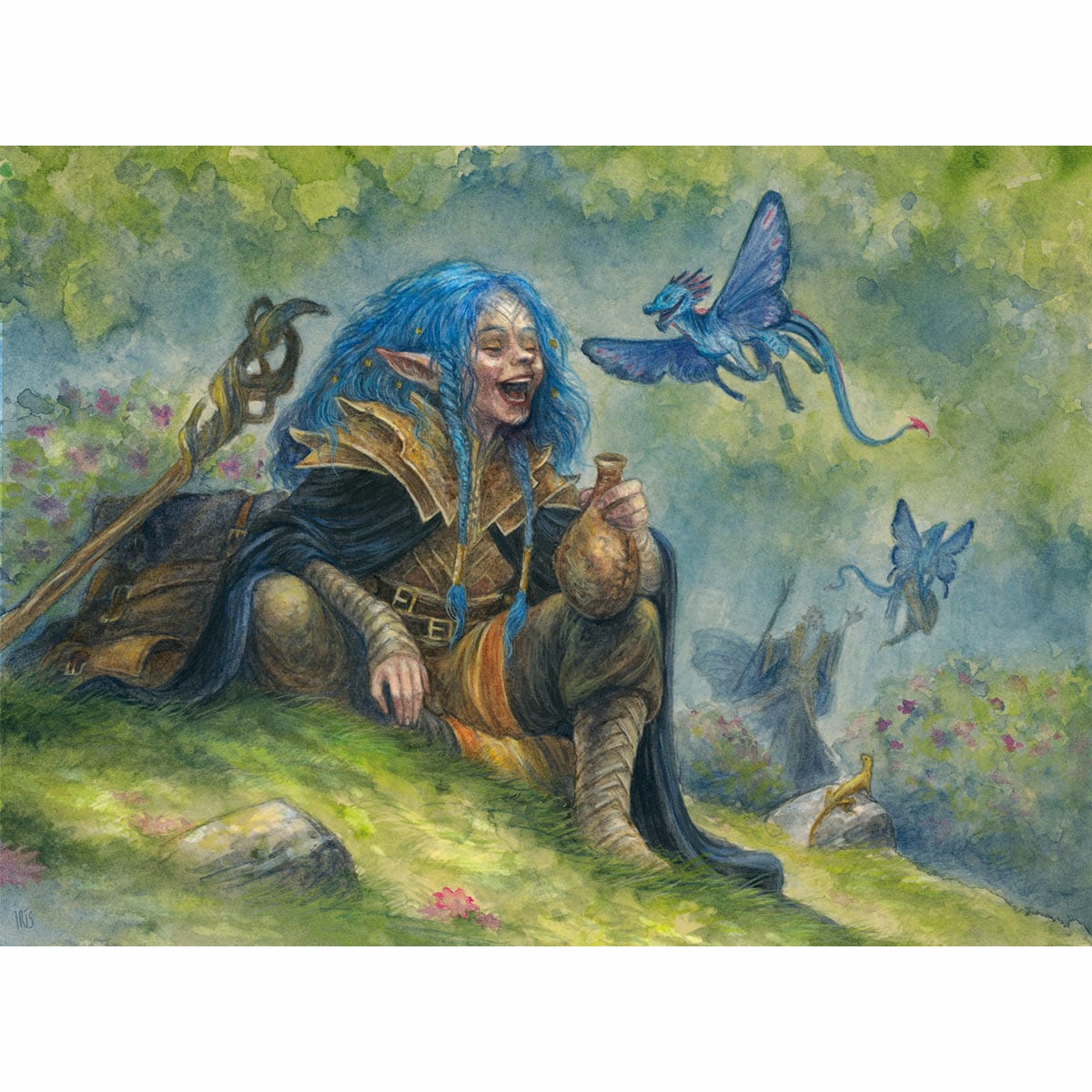
Foolish Intuition. You gain a single Dedicated Discipline from a dedication you do not have. You benefit from it only while performing a tipsy sway.
In the Dirt. While prone, you can Dodge as a part of taking the Step of the Wind action.
Lunatic Opens Cask. You kick with both legs, sacrificing position for power. As an action, you can spend 2 ki points to fall prone and force one creature in melee range to make a Dexterity save. On a failed save, the creature takes 5d8 bludgeoning damage and falls prone. On a successful save the creature takes half damage and is not knocked prone.
Over the Top. When you take damage, you can use your reaction and spend 1 ki point to halve the damage and fall prone. This technique cannot reduce psychic damage, and cannot be used if you are already prone.
Rolling Keg. When you hit a creature with an unarmed strike, your Speed increases by 10 feet until the start of your next turn.
Teetering Monkey Rush. As an action, you gain the ability to move through the space of other creatures until the end of your turn. When you move through the space of a Large or smaller creature in this manner you may choose to spend 1 ki point. That creature must then succeed on a Strength saving throw or take damage equal to your martial arts die and be knocked prone. On a successful save the creature takes half damage and is not knocked prone. You may choose to spend ki in this way for each creature you pass through. You cannot end your move in another creature's space.
Drunkard's Luck
Starting at 11th level, you always seem to get a lucky bounce at the right moment. When you make an ability check, attack roll, or saving throw and have disadvantage, you can spend 2 ki points to remove all disadvantage for that roll.
Befuddle
At 17th level you learn to use your own ki to mimic the effects of intoxication in your opponents. As an action, you spend 4 ki points to target up to 3 creatures within 15 feet of you. Each creature must succeed on a Constitution save or be subjected to the effects of the Slow spell for 5 minutes. Affected creatures may use
their action to make a
Constitution save, ending
the effect on a success
Way of the Four Elements
You follow a monastic tradition that teaches you to harness the elements. When you focus your ki, you can align yourself with the forces of creation and bend the four elements to
your will, using them as an extension of your body. Some members of this tradition dedicate themselves to a
single element, but others weave the elements together.
Many monks of this tradition tattoo their bodies
with representations of their ki powers, commonly
imagined as coiling dragons, but also as phoenices, fish, plants, mountains, and cresting waves.
Initiate of the Way
When you choose this tradition at 3rd level, you learn how to manipulate the four elements in subtle ways. You learn two
of the following cantrips: control flames, druidcraft,
gust, mould earth, or shape water. You learn two
additional cantrips from the Druid spell list at 6th level.
Disciple of the Elements
At 3rd level, you learn magical disciplines that harness the power of the four elements. Some disciplines require you to spend ki points when you use them.
You learn three elemental disciplines of your choice, which are detailed in the elemental disciplines sections below. You learn two additional elemental disciplines of your choice at 6th, 11th, and 17th level.
Whenever you learn a new discipline or you level up in this class, you can also replace one elemental discipline that you already know with a different elemental discipline.
Casting Elemental Spells. Some elemental disciplines allow you to cast spells. To cast one of these spells, you use its casting time and other rules, but you don’t need to provide material components for it. When you cast a spell with a discipline is uses your Ki Save DC, and is cast at the spell’s lowest level unless otherwise specified.
Once you reach 5th level in this class, you can spend additional ki points to increase the level of an elemental discipline spell that you cast, provided that the spell has an enhanced effect at a higher level, as burning hands does. The spell’s level increases by 1 for each additional ki point you spend. For example, if you are a 5th-level monk and use Sweeping Cinder Strike to cast burning hands, you can spend 2 ki points to cast it as a 2nd-level spell (the discipline’s base cost of 1 ki point plus 1).
The maximum number of ki points (its base ki point cost plus any additional points) that you can spend on the spell is 2, unless a discipline specifies otherwise. This maximum increases to 4 at 9th level, 6 at 13th level, and 8 at 17th level.

Elemental Disciplines
Starting at 3rd level, you can learn the following disciplines:
Arms of the Kraken. You summon a long, transparent whip of pure water that you grip by one end. You can spend 1 ki point as a bonus action to create a whip of water that shoves and pulls a creature to unbalance it. A creature that you can see that is within 30 feet of you must make a Dexterity saving throw. On a failed save, the creature takes bludgeoning damage equal to your Martial Arts die + your Wisdom modifier, plus an extra 1d10 bludgeoning damage for each additional ki point you spend, and you can either knock it prone or pull it up to 25 feet closer to you. On a successful save, the creature takes half as much damage, and you don’t pull it or knock it prone.
Aspect of the Wilderness. Your form morphs like the tides of limbo. You can spend 2 ki points to cast alter self.
Become the Falling Blossom. You roll with the incoming energy, attuning to the element, becoming it. You can spend 1 ki point to cast absorb elements.
Brethren of Earth and Steel. You are proficient in Heavy armour, and can benefit from your Martial Arts features while wearing heavy armour. You can don or doff armour as an action. If the armour requires attunement, you must attune to it first before you can use this trait. You can perform this action on a willing creature you touch as an action by expending 1 ki point
Caliph’s Hungry Lightning. As an action, you lash out at one creature you can see within 60 feet of you with tendrils of lightning. The target must make a Dexterity saving throw, with disadvantage if it’s wearing metal armour or wielding metal weapons. The target takes 1d12 lightning damage plus an additional 1d12 per ki point spent on a failed save, or half as much damage on a successful one
Chaos Within Order. You reach out with your mind, channelling the might of elemental chaos. You can spend 1 ki point to cast chaos bolt
Dislocating Whirlwind. As an action, choose a point you can see within 60 feet of you. Winds howl in a 20-foot-radius sphere centred on that point. Each creature in the sphere must succeed on a Strength saving throw or take 1d6 bludgeoning damage and be moved to an unoccupied space of your choice in the sphere. Any loose object in the sphere is moved to any other unoccupied space of your choice within it, provided the object weighs no more than 100 lbs.
Earthmother's Embrace. As an action, you can spend 2 ki points to cause the earth to encase a target within 30 feet. The target must make a Strength saving throw or be restrained and gain 20 temporary hit points. While restrained the target cannot gain temporary hit points from any other source. The target is restrained for one minute or until it no longer has temporary hit points. A restrained target may attempt to free itself by making a Strength (Athletics) check against your ki save DC as an action.
Effortless Step. The air around you works in unison with your movements, rising you up as you jump. Your jump height and distance are doubled (quadrupled with Step of the Wind) and you gain advantage on Strength (Athletics) and Dexterity (Acrobatics) checks related to jumping.
Enduring Mountain Stance. Your body and mind becomes as rigid and unyielding as the ground below you. Your ki roots your feet into the ground and you become immovable. When you use the Patient Defence action, you cannot be moved, pushed, grappled, or knocked prone against your will until the start of your next turn, even if magically compelled to do so. You must be standing on the ground to use this ability.
Fangs of the Fire Snake. Your arms and legs become enveloped in roaring gouts of flame. When you make an unarmed attack on your turn, you can choose to strike out tendrils of flames which stretch out beyond your normal reach. Your reach increases by 5 feet for that attack, and it deals fire damage instead of bludgeoning damage. If the attack hits you can spend 1 ki point to deal an extra 1d10 fire damage.
Bite of the Frost Wolf. You summon a shard of razor-sharp ice and fling it at your foe. You can spend 1 ki point to cast ice knife.
Fist of Four Thunders. You slam your fists together in front of you, causing a thunderous boom that blows away everything around you. You can spend 1 ki point to cast thunderwave.
Fist of the Purple Wormling. When you hit a creature with an unarmed strike, you can expend 1 ki point to force the target to make a Dexterity saving throw. A target takes 1d10 acid or poison damage (your choice) on a failed save, or half as much on a successful one.
Fist of Unbroken Air. You summon a swirling wind and concentrate it around your fist. When you make an unarmed attack on your turn, you can choose to strike out condensed bursts of air which stretch out beyond your normal reach. Your reach increases by 10 feet for that attack. If the attack hits you can spend 1 ki point to force the target to make a Strength saving throw or be pushed back 10 feet and be knocked prone. Huge or larger creatures automatically succeed on this saving throw.
Fifth Wind's Fletching. Once on each of your turns when you make ranged attacks with monk weapons or elemental disciplines, you blow the projectile with the force of a hurricane. The range of that attack is doubled. You can expend 1 ki point to grant a ranged attack this benefit for every attack after you use this ability each turn.
Golden Snake’s Icy Path. Whenever you take the Dash action, until the end of your turn for any movement you make along a surface you can leave a trail of slippery ice. This ice counts as difficult terrain and lasts until the start of your next turn.
Old Thirst of the Lake Presence. You invoke the desiccating thirst of the hollow ocean, of deserts and dust. In the place of a single attack when you take the Attack action, choose one creature you can see within 60 feet of you. The target must make a Constitution saving throw, taking 1d10 necrotic damage plus an additional 1d10 per ki point spent on this ability, or half as much on a successful one.
Raging River-Spirit. When you cast a spell as an elemental discipline, you can let it rage out of control. When you roll damage for the discipline, you can reroll a number of damage dice equal to 1+ the number of ki points spent on the ability. You must use the new roll.
Rumbling Badger. You shake the ground, causing a tremor that knocks over your foes. You can spend 1 ki point to cast earth tremor.
Rush of Gale Spirits. You send a blast of air outward with a thrust of your open palm. You can spend 2 ki points to cast gust of wind.
Shape the Flowing River. As an action, you can spend 1 ki point to choose an area of ice or water no larger than 30 feet on a side within 120 feet of you. You can change water to ice within the area and vice versa, and you can reshape ice in the area in any manner you choose. You can raise or lower the ice's elevation, create or fill in a trench, erect or flatten a wall, or form a pillar. The extent of any such changes can't exceed half the area's largest dimension. For example, if you affect a 30-foot square, you can create a pillar up to 15 feet high, raise or lower the square's elevation by up to 15 feet, dig a trench up to 15 feet deep, and so on. You can't shape the ice to trap or injure a creature in the area.
Shape the Raincloud. You can spend 1 ki point to cast create or destroy water.
Shoulder the Mountain. When you spend ki points on an elemental discipline, you gain a number of temporary hit points equal to your Wisdom modifier (minimum 1) for each ki point spent in that instance.
Sweeping Cinder Strike. With a wide sweeping gesture, you summon forth a barrage of hot cinders. You can spend 1 ki point to cast burning hands.
Vacuum Slice. When you hit a creature with an attack using a Monk weapon or your Unarmed Strikes, you can suck in sharply, pulling them towards you. On a hit, you can expend 1 ki point to pull the target 15 feet toward you.
Wind’s Gentle Breath. When you take the Step of the Wind action, you are invisible when moving using movement taken as a part of that ability.
6th Level Disciplines
Starting at 6th level, you can learn the following disciplines:
A Leaf on the Wind. A powerful wind rises up to catch you as you fall. Your Slow Fall ability no longer requires a reaction to use, and instead you may use it automatically whenever you are conscious and not incapacitated, and it negates all falling damage regardless of distance. When you use the Slow Fall ability, you may also glide along the air to move 5 feet in any horizontal direction for every 5 feet that you fall.
Blazing Scorpion Sting. You can spend an additional ki point when you take the Step of the Wind action to teleport 30 feet to an unoccupied space you can see. The next melee attack you make on that turn deals additional fire damage on a hit equal to one roll your Martial Arts die + your Wisdom modifier.
Bones of the World Wolf. You can expend 1 ki point as a reaction to making a Strength-based ability check or saving throw, provided you are touching solid ground. You gain a +5 bonus to all Strength-based ability checks and saving throws until the start of your next turn, empowered by earthen roots
Burning Ember Flourish. You reach out with your ki to snuff out a source of fire, causing it to go out with a bang or to sputter black smoke. You can spend 2 ki points to cast pyrotechnics.
Clench of the North Wind. You encircle a creature within a hurricane of chains of air. You can spend 2 ki points to cast Hold Person.
Conduit of Maelora. When you deal damage with an elemental discipline, you can add your Wisdom modifier to the damage dealt.
Crushing Hand of the Mountain. You focus your strength into your outstretched fist, summoning a hand of earth from the ground. You can spend 2 ki points to cast maximilian’s earthen grasp.
Curtain of Unyielding Wind. You let out a fierce howl as a mighty wind begins swirling around you. You can spend 2 ki points to cast warding wind.
Elemental Echoes. You manifest echoes of an elemental plane in the Material Plane. Echoes manifest as a 10-foot-radius aura. The radius increases to 30-foot as an 18th-level Monk. You can change the manifested echo, or supress it indefinitely, as a bonus action on your turn by spending 1 ki point.
Air: Ranged attacks made by all creatures of your choice within the echo have advantage.
Earth: All creatures of your choice within the echo have advantage on Strength saving throws and Strength (Athletics) checks.
Fire: At the start of each of your turns, all creatures of your choice within the echo take one Martial Arts die of fire damage.
Water: All creatures of your choice within the echo have advantage on Constitution saving throws.

Gemstone Gemini. As an action, or a reaction when targeted by an attack, you can spend 3 ki points to manifest a prismatic clone that resembles your appearance in a point you can see within 5 feet of you. This clone is identical to you but made entirely of a crystal-like material. It may be positioned in any pose you can naturally have, and is unmoving from the point it was conjured. When conjured as a reaction, the clone becomes the target of the attack if placed between you and your attacker. The crystal clone has an AC of 13 and 22 hit points. If at any moment the crystal clone drops to 0 hit points it will explode. All creatures within a 10-foot radius of the clone (including you) must make a Dexterity saving throw. A creature takes two Martial Arts dice of piercing damage on a failed save, or half as much on a successful one. Otherwise, a crystal clone lasts for 1 minute or until you use this discipline again.
Gong of the Summit. You strike the air as if it were a gong. You can spend 2 ki points to cast shatter.
Hatchling’s Flame. You focus your ki into a torrent of fire that streaks away from you. You can spend 2 ki points to cast aganazzar’s scorcher.
Iron Tortoise Shell. You summon an earthen barrier to defend yourself or an ally. As a reaction, you may spend 2 ki points to use your Deflect Missiles ability against any single spell or weapon attack you can see within 30 feet of you. Any damage not prevented by this ability is taken by the original target of the attack. If you reduce the damage to 0, you cannot make an attack with it.
Jormungand’s Deep Breath. You can spend 2 ki points as an action to unleash a jet of water in a line that is 30 feet long and 5 feet wide. Each creature in the line must make a Strength saving throw, taking bludgeoning damage equal to your Martial Arts die + your Wisdom modifier on a failed save, or half as much damage on a successful one. In addition, you can move each target that fails its saving throw to any unoccupied space touching the line.
Mote of the Sun. Your ki manifests as a roaring orb of fire. You can spend 2 ki points to cast flaming sphere.
Patient Badger Listens. You reach out with your ki to the ground beneath you. You can spend 2 ki points as a bonus action to gain tremorsense with a range of 30 feet and a burrow speed equal to half of your walking speed for up to 1 minute. Your movement leaves behind a tunnel that remains for as long as this ability is active, and then collapses.
Presence of the Zaratan. You are considered one size larger for determining the size of creatures you can grapple, and the weight of loads you can push, carry, drag, or pull. Furthermore, you do not incur disadvantage by using Unwieldy weapons if you are size Small.
Primordial Manifestation. When you use an elemental discipline or your patient defence feature, you can spend 1 ki point (no action required) to take on an aspect of that element until the end of your next turn or until you take a new primordial aspect.
Water: You move like liquid. For the duration, your speed cannot be reduced against your will and you are immune to being grappled or restrained.
Fire: You gain a fiery 10 foot-radius aura around you. Whenever a creature enters the area for the first time on a turn or starts its turn there, it takes fire damage equal to your Martial Arts die + your proficiency bonus.
Air: You crackle with lightning. Your speed is doubled for the duration.
Earth: You become a statue enmeshed with the ground. Your movement speed becomes zero until the end of your next turn, but you have resistance to bludgeoning, piercing, and slashing damage, and immunity to poison, necrotic, and psychic damage. For this period, you are immune to being petrified or poisoned, and you are considered a Structure.
Red Dragon’s Snort. Rays of fire spring from your outstretched hand to sear your foes. You can spend 2 ki points to cast scorching ray.
Sanctuary Waters of the Glacier. You can spend 1 ki point as a bonus action to cast Armour of Agathys, finding safety within an armour of hoarfrost.

Sky Bison Stance. As a bonus action while standing on stone or earth, you can spend 1 ki point to gain a flying speed equal to half your walking speed for 1 minute by telekinetically moving the earth beneth your feet. If you take damage equal to or greater than your monk level from a single effect, the stone you are riding is destroyed and your flying speed is lost.
Sky Kisses Earth. When you are dealt lightning damage while standing on the ground or a structure connected to it, you can spend 1 ki point as reaction to spread the energy into the ground within 20 feet of you. Until the start of your next turn, any creature who moves 5 feet or more while touching the affected area treats the area as difficult terrain and takes one Martial Arts die of lightning damage.
Stonechewer Turtle Shell. You gain resistance to acid and poison damage
Strength of Stone Clams. You are proficient in the use of shields. Shields are considered Monk Weapons for you. In addition, you can cast Leomund’s Tiny Hut as a ritual spell.
Swarming Arctic Rabbits. A flurry of magic snowballs erupts from a point you choose within range. You can spend 2 ki points to cast snilloc’s snowball swarm.
Touch of Nimue. You can use your action to coat a creature you touch in water using 1 ki points, while within 10 feet of a water source. A medium or smaller creature requires a source of at least 5 cubic feet to cover. For each size category larger, an additional 5 cubic feet and 1 ki point is required. The water confers no negative effects and grants immunity to blindness, charm, deafness, fear, paralysis, poison, and disease. Any of these conditions on the creature end and any diseases are healed. Healing done to a creature coated this way is doubled, and attack rolls against them are made with disadvantage. The effect ends and the water is lost once the creature moves or takes any actions.
Wildfire Breeds Rebirth. As an action, choose one creature or object you can see within 120 feet of you. The target must make a Constitution save. On a failed save, the target takes 1d10 fire damage per ki point spent, and it catches on fire, taking 1d6 fire damage at the end of each of its turns for 1 minute, until your concentration ends, or until it or a creature adjacent to it extinguishes the flames with an action. On a successful save, the target takes half as much damage and doesn’t catch on fire.
Wind of White Horses. Like the spray of sea foam as a wave crashes, you can dissolve into the air. You can spend 3 ki points to cast gaseous form.
World Wolf’s Smirk. As an action, you can spend 2 ki points to choose one nonmagical weapon held, or a nonmagical suit of armour worn, by one creature you can see within 60 feet of you. That creature must succeed on a Strength saving throw, or either the chosen weapon becomes mangled and unusable, or the creature’s AC becomes 10 + its Dexterity modifier until it removes the armour, respectively.
Xiaolin Spellfist. You effortlessly flow between martial and elemental assault. When you use your action to use an elemental discipline, you can use your Flurry of Blows without expending a ki point.
11th Level Disciplines
Starting at 11th level, you can learn the following disciplines:
Augment of Brassheart. You are empowered by the memory of the Elder Elemental of fire. Damage dealt using features, traits, and spells granted by this class that would usually deal Fire damage instead deal Radiant damage
Augment of Hotenow. You are empowered by the memory of the Elder Elemental of air. You can choose for damage dealt using features, traits, and spells granted by this class that would usually deal Force damage instead deal Thunder damage, and vice versa.
Augment of the Hollow Leviathan. You are empowered by the memory of the Elder Elemental of water’s death. Damage dealt using features, traits, and spells granted by this class that would usually deal Cold damage instead deal Necrotic damage
Augment of the Jewel Caliph. You are empowered by the memory of the Elder Elemental of earth. Damage dealt using features, traits, and spells granted by this class that would usually deal bludgeoning, piercing, or slashing damage instead deal your choice of force or lightning damage
Breath of the Desert King. You can use your action to convert a region of dust or sand within 10 feet of you into a magical sandstorm sphere centred on yourself. For each 5 foot cube of sand or dust you convert, the sandstorm’s radius increases by 25 feet. Creatures within the sandstorm are blinded and deafened. Any flying creatures must make a Dexterity saving throw equal to your ki save DC at the end of their turn or be knocked prone. Creatures who end their turn in the sandstorm take 3d8 slashing damage. You may choose to make any number of creatures immune to the sandstorm’s effects when you create it.
Child of Gaia. You can expend 5 ki points to cast shapechange to assume the form of an Air, Earth, Fire, or Water elemental. When you cast shapechange in this way it has no verbal or material components, and it is considered a 5th-level spell. A Water Elemental assumed with this form does not have the Freeze property.
Dance of Three Ways. You summon six spheres of earth from the ground, suspend them in the air around you, and ignite them with your ki. You can spend 3 ki points to cast melf’s minute meteors.
Earth Reaches for Sky. Focusing your strength with a deep, rumbling shout, you swing your arms up high, causing an eruption of churned earth and stone that engulfs your foes. You can spend 3 ki points to cast erupting earth.
Eternal Mountain Defence. Your body hardens to stone, nearly impervious to weapons. You can spend 4 ki points to cast stoneskin, targeting yourself only.
Flames of the Phoenix. With a hand motion, you conjure a huge eruption of burning energy. You can spend 3 ki points to cast fireball.
Flight Through Earth. You can coax the very ground to open at your beck and call. You can spend 5 ki points to cast passwall with a range of touch.
Fist of the Elements. The elements swirl around your weapon. You can spend 3 ki points to cast elemental weapon. Your unarmed strikes count as a weapon for the purposes of this discipline.
Hua’s Water Prison. You conjure up a sphere of water that engulfs and imprisons foes that touch its surface. You can spend 4 ki to cast watery sphere.
Mist Stance. A swirling mist envelopes your body and you merge with it, becoming a cloud. You can spend 3 ki points to cast gaseous form, targeting yourself only.
One with the Tides. You reach out with your ki and become one with water. You spend 2 ki points as an action to gain underwater adaptations for 8 hours. While this ability is active, you can breathe normally underwater, you gain a swim speed equal to your walking speed, and you gain blindsight with a radius of 60 feet while underwater.
Polluted Wind Gathers. You can use your action to convert any amount of any gas with which you’re in contact into Air Elementals. One elemental is created for every 15 foot cube of air consumed. Up to three elementals created this way obey you as though summoned through Conjure Elemental. Any further elementals created are hostile to all creatures but other air elementals and might attack you or your party. After one hour, the elementals disappear.
Primordial Dominion. As an action, you may touch a nonmagical instance of water, magma, gas, ice, sand, earth, or stone to gain control over 5 cubic feet of it. Material under your dominion can be used to deliver spells and other magic features with a range of Touch, as well as to gain control over more of your element (as though touching it).
Each turn following, you can forgo your own movement to telekinetically move mass of your controlled element which is congruently connected up to 40 feet, take a bonus action to maintain your dominion, or take an elemental action depending on the material you are controlling. If your turn ends and you have not gained control of more material, moved your controlled material, taken an elemental action, or taken a bonus action to maintain dominion, you lose control of your element, and it falls to the ground. Once you have lost control of your element, you must complete a short or long rest before using this feature again.
Material under your control forms into 5 foot cubes unless otherwise specified and remains stationary, even in midair, until you move it. Controlled material cannot be moved through another creature’s space and moving through it constitutes difficult terrain. Creatures within controlled material cannot breathe and are blinded and deafened. Creatures that move into or end their turn in noxious gases or magma take 4d8 acid/poison or fire damage, respectively.
Rain of the Frigid Glacier. You cool the air in the skies above you, condensing the water droplets into freezing rain and sleet. You can spend 3 ki points to cast sleet storm.
Raise the Splintered Earth. You stir the earth around you into action, summoning a wall of sand to serve as your barricade. You can spend 3 ki to cast wall of sand.
Raise the Still Waters. Though water can give way easily, it can just as easily offer great resistance. You can spend 3 ki to cast wall of water.
Ride the Wind. You summon a mighty wind that envelopes your body, sweeping you to where you want to go. You spend 3 ki points to cast fly, targeting yourself only, except your fly speed is equal to your movement speed. Casting fly this way does not require your Concentration.
River of Hungry Flame. You sweep your hands upward, causing a wall of blazing hot fire to leap up from the ground. You can spend 4 ki points to cast wall of fire.
Roar of Five Heads. Spending 5 ki points as an action, a blast of elemental energy erupts from your mouth. Each creature in a 60-foot cone in front of you must make a Dexterity saving throw. A creature takes 7d8 damage on a failed save, or half as much damage on a successful one. You can choose this damage to be acid, cold, fire, lightning, or poison damage.
Sea’s Fury. You conjure up a mighty wave of water that crashes down on your foes. You can spend 3 ki to cast tidal wave.
Shape the Flowing River. You touch the body of water with your ki, coaxing it to change its form. You can spend 4 ki points to cast control water.
Shell of the Zaratan. When you are targeted by a weapon attack while touching a surface, you can spend 1 ki point as a reaction to increase your AC by one roll of your Martial Arts die until the start of your next turn, pulling sheets of stone around you in a protective casing.
Still the Sea’s Fury. You soothe the waters around you into gentle slumber. You can spend 3 ki points to cast calm seas.
Sweeping Crosswind. A wall of strong wind rises from the ground, batting away anything in its path. You can spend 3 ki points to cast wind wall.
Tea of Herbal Destruction. Whenever you deal acid, cold, fire, lightning, or thunder damage, or physical damage types as a result damage from air, water, or earth, you heal a number of hit points equal to your Wisdom modifier.
Windborne Weapon. You spend 2 ki points as an action to levitate a melee Monk Weapon you're holding, creating a floating weapon within 30 feet of you that lasts for 1 minute or until you use this discipline again, after which the weapon falls to the ground. When you first activate this discipline, you can make a melee weapon attack against a creature within reach of the weapon, using your Wisdom modifier instead of its normal attack ability modifier. As a bonus action on your turn, you can move the weapon up to 30 feet and repeat the attack against a creature within 5 feet of it.
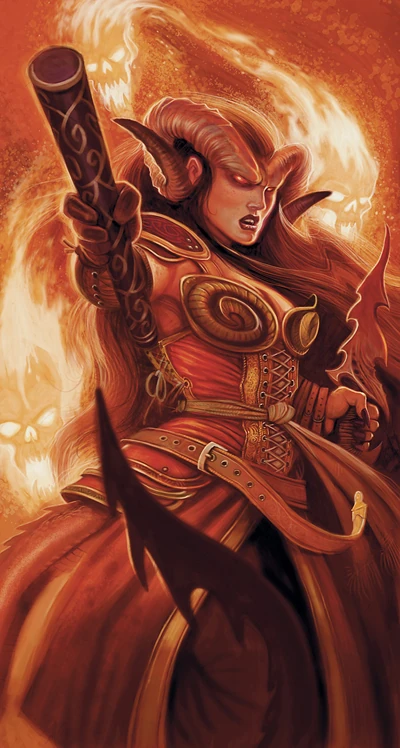
17th Level Disciplines
Starting at 17th level, you can learn the following disciplines:
Avatar of the Elements. As an ultimate display of your mastery of the elements, you can spend 5 ki points as an action to have the elements of earth, fire, air, and water form a protective sphere around your body, gaining multiple benefits for 1 minute. While this ability is active, you have resistance to all damage except Psychic damage. You also gain a burrow, fly, and swim speed equal to your movement speed. Lastly, you can use any of the following abilities as a bonus action:
Air: You create a 15-foot cube of swirling wind centred on a point you can see within 60 feet of you. Each creature in that area must make a Constitution saving throw. A creature takes 1d10 bludgeoning damage on a failed save, or half as much damage on a successful one. Loose objects and creatures which fail the save are also pushed up to 10 feet away from the centre of the cube.
Earth: You create a small earthquake on the ground in a 15-foot radius around you. Each creature in that area must make a Dexterity saving throw. On a failed save, a creature takes 1d6 bludgeoning damage and is knocked prone.
Fire: You create a line of fire 15 feet long and 5 feet wide extending from you in a direction you choose. Each creature in the line must make a Dexterity saving throw, taking 3d6 fire damage on a failed save, halved on a successful save.
Water You create a 15-foot cone of ice shards extending in a direction you choose. Each creature in the cone must make a Constitution save throw. A creature takes 2d6 cold damage on a failed save, or half as much damage on a successful one. A creature that fails its save against this effect has its speed halved until the start of your next turn.
Become the Mountain Peak. As a bonus action, you can spend 5 ki points to gain 30 temporary hit points. In addition, for 1 hour until your concentration ends, your melee weapon attacks deal an extra 2d6 bludgeoning damage on a hit, and your reach increases by 10 feet. If you’re smaller than Huge, you also become Huge for the duration.
Black Clouds’ Kindness. When you would deal lightning or thunder damage to any creatures you wish not to harm, you can use your reaction to deal no damage to them instead; you can affect up to 10 creatures in a single instance with this feature.
Breath of Winter. You inhale deeply and then exhale, blasting a cone of frigid air out in front of you that freezes everything in its path. You can spend 5 ki points to cast cone of cold.
Crumble Under the Avalanche. When you hit a target that is suffering from any condition effect except exhaustion, invisibility, or unconsciousness with an unarmed strike, you deal an additional 1d10 force damage.
Elemental Invocation. You spend 6 ki points to cast Investiture of Air, Earth, Fire, or Water.
Eye of the Hurricane. You stretch out your ki to embrace the winds. You can spend 5 ki points to cast control winds.
Eyes of Fire. Your foes may try to hide in darkness, but their ki lights up like a torch to you. You may cast see invisibility at will (no action required) without expending any ki. In addition, while under the effects of see invisibility, you may spend 2 ki points as a bonus action to gain truesight until the end of your next turn.
Father the Four Elements. Drawing from the realm of elemental chaos, you animate a primordial creature of natural forces. You can spend 5 ki points to cast conjure elemental.
Mould the Mountain. You master the many forms that earth may take. You can spend 5 ki to cast transmute rock.
Hold the Leaping River. You raise water as if to still the river, then freeze it solid with your mastery of ki. You can expend 6 ki points to cast wall of ice.
Hungry Ocean. Your ki manifests as a swirling pool of water, smashing and pulling your foes towards its centre. You can spend 5 ki points to cast maelstrom.
Magma Wyrm’s Belch. You can use your action and 5 cubic feet of magma within 10 feet of you to fling lava at any number of targets within 60 feet of you by spending 5 ki points. The magma leaves your control once flung. Each target must make a Dexterity saving throw against your ki save DC. On a failed save, the target takes 10d8 fire damage and is covered in magma. On a successful save, it takes half that much and isn’t covered in magma. Creatures covered in magma take 4d8 fire damage at the end of each of their turns unless a creature uses their action to clear the magma off of themselves. If they take 20 or more cold damage while coated in magma, it hardens to stone. The target is considered petrified. While petrified this way, the target is considered an object; the solidified magma has AC 15 and 30 hit points. If the stone casing is reduced to 0 hit points, the target within is no longer petrified and takes 15 piercing damage.
One with the Heavens. Upon completion of an hour ritual, you can expend 6 ki points to cast control weather.
Roar of the Phoenix. Your wrath is fuelled by deep, burning wells of ki. Provided you have not moved on your turn, you can spend 7 ki points to cast Fire Storm, after which your speed is reduced to 0 and you are Incapacitated until the start of your next turn.
Scorn of the Angered Sun. You wield the very fire of the heavens. You can spend 4 ki points to cast flame strike.
Vengeful Tempest. If you are reduced to 0 hit points, you can use your reaction to spend 10 ki points, return to 1 hit point, and cast Storm of Vengeance. You have advantage on checks made to maintain concentration on this spell.
Wave of Rolling Earth. The ground shakes and emits a low rumble as a wall of stone erupts up into being. You can spend 5 ki points to cast wall of stone.
Yggdrasil’s Champion. You can forfeit 3 disciplines you know to gain the following trait: You can cast any spell which deals or resists acid, cold, fire, or lightning damage, or physical damage types as a result of earth, air, or water. Casting a spell this way requires the expenditure of a number of ki points equal to the level at which you cast the spell. Spells cast this way cannot deal radiant, necrotic, or psychic damage.
Way of the Living Weapon
A monk following the Way of the Living Weapon pursues physical perfection, honing their body as a smith sharpens a sword. Its traditions are drawn from cultures of shapeshifters and creatures who fight with tooth and claw. These are a few of the martial techniques that have evolved into the Way of the Living Weapon.
Fists of Bone and Steel
At 3rd level, when you choose this tradition, the damage die of your Unarmed Strikes increases by one step; from a d6 to d8 at this level.
This increased damage die does not apply to attacks made using a monk weapon, and it does not change the size of your Martial Arts die.
Mutable Strikes
You have the power to alter your natural weapons, growing claws or reinforcing your fists. Also at 3rd level, when you make an unarmed strike, you can choose whether you inflict slashing, bludgeoning, or piercing damage with the attack.
Warrior's Discipline
Starting at 3rd level, when you adopt this tradition, choose a warrior's discipline and gain its feature. You cannot change this discipline at any point.
Forged Heart. Your unarmed strikes are considered adamantine weapons. In addition, when you hit a creature with an unarmed attack, you can spend 1 ki point to cause it to make a Strength saving throw. On a failed save, the creature takes a Martial Arts die of additional damage of the same type as the unarmed strike and can be pushed up to 15 feet away from you. On a successful save, the creature takes half as much additional damage and is not pushed back.
Nightmare Shroud. When you hit a creature with an unarmed attack, you can spend 1 ki point to assail it with fear, inflicting one Martial Arts die of psychic damage and forcing it to make a Wisdom saving throw. On a failed save, the target becomes frightened of you until the end of your next turn.
Traveller’s Blade. Your reach extends by 5 feet. Additionally, at the start of your turn you can expend up to 4 ki points to extend your reach further. For every point of ki you spend, your reach extends by an additional 10 feet until the start of your next turn.
Weretouched. Your unarmed strikes gain the Bleed property and are considered silvered weapons. When you hit a creature with an unarmed attack, you can spend 1 ki point to rend your target and inflict deep wounds. The target takes an additional 1d4 slashing damage and must make a Constitution saving throw. On a failed save, the target takes one Martial Arts die of necrotic damage at the start of each of its turns for 1 minute. The target can repeat the saving throw at the end of each of its turns, recovering from the effect on a success.
Manifest Blow
Starting at 6th level, choose one of the following damage types when you finish a long rest: bludgeoning, piercing, slashing, cold, lightning, necrotic, psychic, or thunder. On your turn, the first creature you hit with an unarmed strike takes an additional Martial Arts die of damage of that type. If you select bludgeoning, piercing, or slashing damage, it counts as magical damage.
Nightmare Shroud monks typically inflict psychic damage with this ability, Forged Heart monks enhance their bludgeoning damage, and Weretouched grow sharper claws. However, you can choose any damage type, regardless of your discipline.
Reflexive Adaptation
Starting at 11th level, when you make a Strength (Athletics) or Dexterity (Acrobatics) check, you can spend 1 ki point to roll an additional d20. You can choose to use this ability after you roll the check, but before the outcome is determined. You choose which of the d20s is used for the ability check, omitting the highest if this check was rolled with disadvantage.
Perfect Form
At 17th level, you transform your body to become a weapon of war. You gain a feature based on your warrior's discipline.
Forged Heart. When you are hit by an attack, you can spend 1 ki point as a reaction to add your Wisdom modifier (minimum of 1) to your AC, including against the triggering attack. This effect lasts until the start of your next turn.
Nightmare Shroud. When you damage a creature with your Manifest Blow, excess psionic energy ripples to up to 3 different creatures of your choice within 30 feet. Those creatures take an amount of psychic damage equal to half of your monk level.
Traveller’s Blade. When you are targeted by an attack, you can spend 1 ki point as a reaction to take either the Dash, Disengage, or Dodge action, potentially evading harm.
Weretouched. When you use your Flurry of Blows, you can make three unarmed strikes as a bonus action instead of two. You have advantage on these attacks.

Way of Long Death
Monks of the Way of the Long Death are obsessed with the meaning and mechanics of dying. They capture creatures and prepare elaborate experiments to capture, record, and understand the moments of their demise. They then use this knowledge to guide their understanding of martial arts, yielding a deadly fighting style.
Touch of Death
Starting when you choose this tradition at 3rd level, your study of death allows you to extract vitality from another creature as it nears its demise. When you reduce a creature within 5 feet of you to 0 hit points, you gain temporary hit points equal to your Wisdom modifier + your monk level (minimum of 1 temporary hit point).
Starting at 9th level, you can use a reaction when a creaure is reduced to 0 hit points within 30 feet of you to gain this benefit, even if it was not you who reduced them to that point.
Lifedraw Ki
Also at 3rd level, whenever you score a critical hit with an unarmed strike or Monk weapon, or use attacks with those weapons to reduce a creature to 0 hit points, you regain 1 ki point. You cannot regain ki points above your maximum.
Hour of Reaping
At 6th level, you gain the ability to unsettle or terrify those around you as an action, for your soul has been touched by the shadow of death. When you take this action, each creature within 30 feet of you that can see you must succeed on a Wisdom saving throw or be frightened of you until the end of your next turn.
At 14th level, you gain the Dark Hand discipline if you did not already have it; it does not count against the number of disciplines you know. In addition, you can use the Dark Hand on a creature that is not incapacitated, provided they are frightened of you.
Mastery of Death
Beginning at 11th level, you use your familiarity with death to escape its grasp. When you are reduced to 0 hit points, you can expend 1 ki point (no action required) to have 1 hit point instead.
Touch of the Long Death
Starting at 17th level, your touch can channel the energy of death into a creature. As an action, or as a bonus action when you hit a creature with an unarmed strike as a part of your action, you touch one creature within 5 feet of you, and you expend 1 to 10 ki points. The target must make a Constitution saving throw, and it takes two Martial Arts dice of necrotic damage per ki point spent on a failed save, or half as much damage on a successful one.
Way of Mercy
Monks of the Way of Mercy learn to manipulate the life force of others to bring aid to those in need. They are wandering physicians to the poor and hurt. However, to those beyond their help, they bring a swift end as an act of mercy.
Those who follow the Way of Mercy are often followers of the Raven Queen, administering to the needy and making grim choices rooted in reality rather than idealism.
Implements of Mercy
When you choose this tradition at 3rd level, you gain proficiency in the Insight and Medicine skills, and you gain proficiency with the herbalism kit. You also gain a reinforced porcelain mask, which you wear when using the features of this subclass. You determine its appearance.
Hands of Healing
At 3rd level, your mystical touch can mend wounds. As an action, you can spend 1 ki point to touch a creature and restore a number of hit points equal to a roll of your Martial Arts die + your Wisdom modifier. When you use your Flurry of Blows, you can replace one of the unarmed strikes with a use of this feature without spending a ki point for the healing.
Hands of Harm
At 3rd level, you use your ki to inflict wounds. Once per turn when you hit a creature with an unarmed strike, you can spend 1 ki point to deal extra necrotic damage equal to one roll of your Martial Arts die + your Wisdom modifier.
Physician's Touch
Starting at 6th level, you can administer even greater cures with a touch, and if you feel it's necessary, you can use your knowledge to cause harm. When you use Hands of Healing on a creature, you can also end one disease or one of the following conditions affecting the creature: blinded, deafened, paralyzed, poisoned, or stunned. When you use Hands of Harm on a creature, you can inflict the blinded, deafened, or poisoned condition on them until the end of your next turn.
Flurry of Healing and Harm
Starting at 11th level, you can now mete out a flurry of comfort and hurt. When you use Flurry of Blows, you can now replace each of the unarmed strikes with a use of your Hands of Healing, without spending ki points for the healing.
In addition, you can use Hand of Harm without spending
a ki point, as long as you expend a ki point that turn.
Hand of Ultimate Mercy
By 17th level, Your mastery of life energy opens the door
to the ultimate mercy. As an action, you can touch the
corpse of a creature that died within the past 24 hours
and expend 5 ki points. The creature then returns to
life, regaining a number of hit points equal to
4d10 + your Wisdom modifier. If the creature
dies while subject to any of the following
conditions, it revives with them removed:
blinded, deafened, paralyzed, poisoned, stunned
Once you use this feature, you can't
use it again until you finish a long rest.

Way of the Open Hand
Monks of the Way of the Open Hand are the ultimate masters of martial arts combat, whether armed or unarmed. They learn techniques to push and trip their opponents, manipulate ki to heal damage to their bodies, and practise advanced meditation that can protect them from harm.
Open Hand Technique
Starting when you choose this tradition at 3rd level, you can manipulate your enemy's ki when you harness your own. Whenever you hit a creature with one of the attacks granted by your Flurry of Blows, you can impose one of the following effects on that target:
- It must succeed on a Dexterity saving throw or be knocked prone.
- It must succeed on a Constitution saving throw or have its movement speed halved until the start of your next turn.
- It must make a Strength saving throw. If it fails, you can push it up to 15 feet away from you.
- It can't take reactions until the end of your next turn.
Wholeness of Body
At 6th level, you gain the ability to heal others as well as yourself; you gain the Shared Restoration feature of your Empowered Flow. If you already have that feature, choose another. In addition, you can spend an additional ki point to regain three times as many hit points when you use your Quickened Healing.
Tranquillity
Beginning at 11th level, you can enter a special meditation that surrounds you with an aura of peace. At the end of a long rest, you gain the effect of a Sanctuary spell that lasts until the start of your next long rest (the spell can end early as normal). The spell uses your Ki save DC.
Quivering Palm
At 17th level, you gain the ability to set up lethal vibrations in someone's body. When you hit a creature with an unarmed strike, you can spend 3 ki points to start these imperceptible vibrations, which last for 480 hours. The vibrations are harmless unless you use your action to end them. To do so,
you and the target must be on the same plane of
existence. When you use this action, the creature must
make a Constitution saving throw. If it fails, it is
reduced to 0 hit points. If it succeeds, it takes
10d6 necrotic damage.
You can have only one creature under
the effect of this feature at a time. You
can choose to end the vibrations
harmlessly at any point
(no action required).
Way of Shadow
Monks of the Way of Shadow follow a tradition that values stealth and subterfuge. These monks might be called ninjas or shadowdancers, and they serve as spies and assassins. Sometimes the members of a ninja monastery are family members, forming a clan sworn to secrecy about their arts and missions. Other monasteries are more like thieves' guilds, hiring out their services to nobles, rich merchants, or anyone else who can pay their fees. Regardless of their methods, the heads of these monasteries expect the unquestioning obedience of their students.
Shadow Arts
Starting when you choose this tradition at 3rd level, you can use your ki to duplicate the effects of certain spells. As an action, you can spend 2 ki points to cast Darkness, Darkvision, Pass without Trace, or Silence, without providing material components. You also gain the Minor Illusion cantrip if you don't already know it.
Additionally, while in an area of dim light or darkness, you can also take the Hide action whenever you Dodge or Disengage.
Umbral Sight
Also at 3rd level, you gain 60 feet of darkvision, and you can see through magical darkness within your darkvision range. If you already have darkvision, its range increases by 40 feet.
Shadow Step
At 6th level, you gain the ability to step from one shadow into another. When you are in dim light or darkness, as a bonus action you can teleport up to 60 feet to an unoccupied space you can see that is also in dim light or darkness. You then have advantage on the first melee attack you make before the end of the turn.
In addition, when you cast Darkness or Silence using your Shadow Arts feature, you can choose to centre them on yourself and move with you as an aura effect.

Improved Shadow Step
At 11th level, your nightmarish movement gains power even outside of darkness. You can spend a Ki Point to ignore the Dim Light or Darkness restriction of Shadow Step. In addition, you can make an Unarmed Strike immediately after you teleport as part of the same Bonus Action.
Cloak of Shadows
At 17th level, you have learned to become one with the shadows. When you are in an area of dim light or darkness, you can use a bonus action to wreath yourself in shadows. While it’s active, you are Invisible, which persists even if you attack or cast a spell; you can move through occupied spaces as if they were Difficult Terrain; and you can use Flurry of Blows without needing to spend any Ki Points.
This effect lasts for 1 minute, until you’re Incapacitated, or you end your turn in Bright Light.
Way of the Sun Soul
Monks of the Way of the Everlight, known also as the Way of the Sun Soul, or of Serenrae, learn to channel their own life energy into searing bolts of light. They teach that meditation can unlock the ability to unleash the indomitable light shed by the soul of every living creature.
Radiant Bolt
Starting when you choose this tradition at 3rd level, you can hurl searing bolts of magical radiance. Whenever you would make an unarmed strike, you can instead produce one of these balls of sunlight. This special attack is a ranged spell attack with a range of 30 feet. You are proficient with it, and you add your Wisdom modifier to its attack and damage rolls. Its damage is radiant (sunlight), and its damage die is your Martial Arts die.
For the purpose of traits such as your ki features, attacks made with your Radiant Bolts are considered to be unarmed strikes.
Sunlight Arcs
At 6th level, you gain the ability to channel your ki into pulsing waves of radiant energy. You can cast the Burning Hands or Guiding Bolt spell by expending 1 ki point. Immediately after you take the Attack action on your turn, you can cast these spells as a bonus action, rather than an action.
You can spend additional ki points to cast either spell as a higher level spell. Each additional ki point you spend increases the spell's level by 1. The maximum number of ki points that you can spend on a single spell from this class equals half your monk level (rounded down). Spells cast using this feature are considered spell-like effects rather than actual spells.
At 9th level, you can cast Branding Smite or Continual Flame by expending 2 ki points.
At 13th level, you can cast Blinding Smite or Daylight by expending 3 ki points.
At 17th level, you can cast Holy Weapon (self only) by expending 4 ki points.
Searing Sunburst
At 11th level, you gain the ability to create an orb of light that erupts into a devastating explosion. As an action, you can spend 1 ki point to generate a huge orbular version of your radiant bolts and hurl it at a point you choose within 150 feet, where it erupts into a sphere of radiant light for a brief but deadly instant. Each creature in that 20-foot-radius sphere must succeed on a Constitution saving throw or take three Martial Arts dice of radiant (sunlight) damage, halved on a successful save. A creature doesn't need to make the save if the creature is behind total cover that is opaque. Also on a failed save, a creature is blinded until the end of your next turn.
You can increase the sphere's strength by spending ki points. Each additional point you spend, up to your Wisdom modifier (minimum 0), increases the damage by one Martial Arts die or increases the radius by 5-foot.
Sun Spirit
At 17th level, you become wreathed in a luminous, magical aura. You shed bright light in a 30-foot radius and dim light for an additional 30 feet. You can extinguish or restore the light as a bonus action. When a creature of your choice enters the area for the first time on its turn or starts its turn in the area, it takes radiant damage equal to one Martial Arts die + your Wisdom modifier.
Every time a creature hits you with an attack, all creatures of your choice within the area take this damage again.

Way of Zerthiman
Your understanding of the flow of chaos within all things, and the knowledge that all things begin and end, with the path between the two points being all that matters, grands you a degree of control of the world around you. Known also as Entropics or the Monosis, these monks follow the ancient teachings of the Githzerai.
Teachings of the Githzerai
When you begin to follow the Way of Zerthiman at 3rd level, you use Intelligence instead of Wisdom as the ability score for modifying all Monk class features and abilities you possess. The next time you finish a long rest after reaching 3rd level in this class, you can choose to swap your Intelligence and Wisdom scores, and the proficiencies you gained as a result of taking the Monk class.
You also gain two of the following Cantrips of your choice: Mage Hand, Encode Thoughts, Mind Sliver, Minor Illusion and Thaumaturgy cantrips.
These cantrips are spell-like effects produced by your psychic energy - as such, the mage hand is invisible when cast this way.
Psionic Talents
At 3rd level, you harbour a wellspring of psionic energy within yourself as a higher form of ki energy - purer, but further from the source. This energy is represented by your Psionic Energy dice, which are equal in size to your Martial Arts dice. Any powers which require you to expend uses of Psionic Energy dice instead expend a number of Ki points equal to twice the amount of Psionic Energy dice you would expend.
Psychic Disciplines. You learn two psionic powers from the Psionic Power list at the end of the Customisation Options section. You gain one additional power at 6th level, and two powers at 11th and 17th level in this class.
Whenever you learn a new discipline or you level up in this class, you can also replace one psionic power that you already know with a different one. Moreover, you can learn Psionic Powers whenever you would normally gain a Dedicated Discipline.
Saving Throws. If a psionic power you use requires your target to make a saving throw to resist the power’s effects, it uses your Ki Save DC (now modified by Intelligence) as its save DC, and has an attack modifier of your Intelligence modifier + your Proficiency bonus.
Once you reach 5th level in this class, you can spend additional ki points to increase the level of a spell that you cast as a psionic power, provided that the spell has an enhanced effect at a higher level, as mind spike does.
The spell’s level increases by 1 for each additional ki point
you spend. The maximum number of ki points (twice its
base Psionic Energy die cost plus any additional ki
points) that you can spend on the spell is 3, unless
a power specifies otherwise. This maximum
increases to 5 at 9th level, 8 at 13th level, and
10 at 17th level.

Telepathy
Also at 3rd level, you can telepathically speak to any
creature you can see within 120 feet of you. You don’t need to share a language with the creature for it to understand your telepathic messages, but the creature must be able to understand at least one language or be telepathic itself.
Psi-Bolstered Ki
At 6th level, your base ki features are amplified by your psionic abilities. These are considered to be Disciplines:
Manipulate Density. When you take the Step of the Wind action, you can spend 1 additional ki point to alter your density and the effect gravity has on you to improve your mobility. For the next minute, or until you use this feature again, your walking speed increases by 10 feet, and standing up from prone does not expend any of your movement if your speed is greater than 0.
Psychic Durability. When you take the Patient Defence action, you gain a number of Temporary Hit Points equal to your Intelligence score until the start of your next turn.
Seamless Psionics. When you take the Flurry of Blows action, you can replace one of the unarmed strikes with either a Mind Slam or a Psychic Hammer attack. You try to grasp one creature you can see within 60 feet of you, with a hand crafted from telekinetic energy:
Mind Slam: The target must succeed on a Constitution saving throw or take one Martial Arts die force damage and, if it is Large or smaller, it is knocked prone.
Psychic Hammer: The target must succeed on a Strength saving throw or take one Martial Arts die of force damage and, if it is size Large or smaller, you can move it up to 10 feet in a straight line in a direction of your choice. You can’t lift the target off the ground unless it is already airborne or underwater.
Psychic Channel
At 11th level, you can gain one of the following disciplines.
You gain one more at 17th level.
Flickering Image. When you take the Step of the Wind action, you become incorporeal, shifting between form and plane alike. Until the end of your turn, you can walk through creatures, objects, and structures, with the exception of lead. If you end your turn inside a creature or object, you are shunted to the nearest unoccupied space, taking 1d10 force damage for every 5 feet shunted. While Flickering, you are resistant to nonmagical bludgeoning, piercing, and slashing damage.
Empowered Psionics. When you deal damage with your Seamless Psionics, you can add your Intelligence modifier to the damage dealt.
Perfected Ward. When you gain temporary hit points with your Psychic Durability, you can grant half as many temporary hit points to all creatures of your choice within 10 feet of you.
Dedicated Disciplines
Agile Parry
Prerequisites: Kensei dedication
You can use your reaction to gain a bonus to your AC equal to ⅓ your monk level until the start of your turn when targeted by a weapon attack, as long as you have a melee Monk weapon in your hand and you aren’t incapacitated.
Capoeira
You can use your Wisdom instead of Charisma when making Deception, Intimidation, Performance, or Persuasion checks. In addition, melee attacks do not gain advantage against you as a result of you being prone.
Eagle-Eyes
Prerequisites: Kensei dedication
The range of your vision (including senses such as darkvision and truesight) is doubled. You can also choose ranged weapons with the Two-Handed property to be Monk weapons; you do not incur disadvantage when making ranged attacks at long range using monk weapons.
Hadouken
Prerequisites: Mystic dedication
By spending 1 ki when taking the Attack action or using your Flurry of Blows, you can unleash balls of raw ki energy as ranged attacks (range 40/100) that deal force damage on a hit whenever you attack until the start of your next turn. These are otherwise treated as unarmed strikes, but they use your Wisdom modifier rather than either Strength or Dexterity for the attack and damage rolls.
Jinga Swing
Prerequisites: Ninjutsu dedication
When you take the Patient Defence action while lightly obscured, or in dim light or darkness, you can take the Hide action as a part of that action.
Lunging Mantis
When you take the Dash action, the next attack roll you make before the end of your turn gains advantage. In addition, you can expend 1 ki point when you make an unarmed strike to double your unarmed strikes' Reach. This benefit lasts until the start of your next turn.
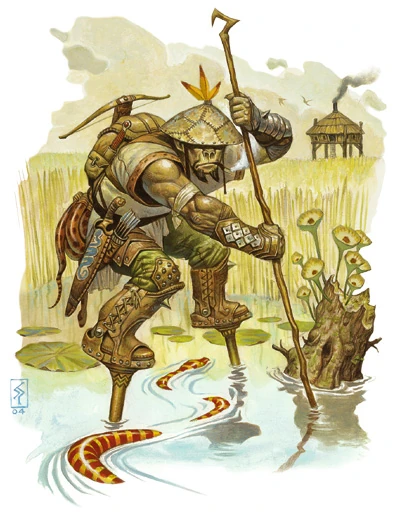
Marseiyu Tumbling
When you take the Step of the Wind action, you may travel through the squares of other creatures and ignore the effects of difficult terrain.
Meteor Grab
Prerequisites: Empty Fist dedication
When grappling a creature in the air, you can use your action to bring them to the ground instantly, ending the grapple, and dealing one Martial Arts die of bludgeoning damage instead of the usual d6 for every 10 feet fallen and leaving them prone at your feet. You take damage from falling as normal.
Painless
When you expend one or more ki points on your turn, all damage you take from bludgeoning, piercing, and slashing damage until the start of your next turn is reduced by an amount equal to one-third of your Monk level (rounded down, minimum 1).
Perfected Senses
Prerequisites: Mystic dedication
As a bonus action, you can spend 2 ki points to gain the ability to see auras of spiritual activity. For the next minute, you can see all creatures, including hidden and invisible ones within 15 feet of you, even if you are blinded, removing the benefits invisible or obscured creatures would normally get against you.
You cannot perceive soulless creatures (often plants, constructs, or undead) with this feature.
Shintaido
Your maximum number of ki points increases by an amount equal to your Proficiency bonus.
Slow Fall
You can use your reaction when you fall to reduce any damage you take from the fall by an amount equal to five times your monk level.
Sumo Wrestler
Prerequisites: Empty Fist dedication
You have advantage on checks made to initiate, maintain, and escape a grapple, and you count as one Size larger than normal for the purpose of determining the size of creatures you can grapple.
Tahtib Sparring
You can choose melee weapons with the Two-Handed property to be Monk weapons
Yoroi Warrior
Prerequisites: Kensei dedication
You fully benefit from your Unarmoured Movement and Unarmoured Defence features when wielding shields, or wearing any light or medium armour you are proficient in, and you don't incur disadvantage on Stealth checks from wearing them.
5th-Level Disciplines
Covert Footwork
Prerequisites: Ninjutsu dedication
When you roll Initiative, you can spend 2 ki points as a reaction to choose a number of creatures within 60 feet of yourself (you can choose yourself), up to a number equal to your Wisdom modifier (minimum of one creature). Each target gains a bonus to their Initiative equal to one roll of your Martial Arts die and can move up to half their speed before initiative begins.
Crane’s Wing
Prerequisites: Kensei dedication
When you move your full Speed towards a creature, if you hit that creature with the next attack you make before the end of your turn with a Monk weapon, the target must succeed a Dexterity saving throw or fall prone.
Dedicated Weapons
Prerequisites: Kensei dedication
Attacks you make with your monk weapons are considered magical for the purpose of overcoming resistance or immunity. When you hit a target with a monk weapon, your unparalleled mastery with the weapon causes the attack to deal extra damage to the target equal to your Martial Arts die. You can deal this extra damage only once on each of your turns.
Distracting Movements
Prerequisites: Ninjutsu dedication
When an enemy you can see ends its turn within 5 feet of an ally of yours who is within 60 feet of you, you can use your reaction and expend 2 ki points to use your Step of the Wind feature, almost dancing toward your foe. Then roll one Martial Arts die, and the ally can move up to a number of feet equal to 5 times the number rolled. If you end your movement within the melee Reach of the triggering enemy, your ally’s movement does not provoke opportunity attacks.
Elemental Imbuement
Prerequisites: Mystic dedication
Once per turn, you can spend 1 ki point when you take the Attack action (no action required) to imbue your unarmed strikes with your choice of either acid, cold, lightning, or fire. Until the start of your next turn, each of your unarmed strikes that hits deals an extra Martial Arts die of the chosen damage type.
Elusive Gale
Any effects that would reduce your speed, other than condition effects such as being grappled or petrified, reduce your speed by half the normal amount. If you Disengaged before the end of your last turn, your speed is instead not reduced at all.
Empty Steps
Prerequisites: Ninjutsu dedication
You can slip magically between spaces by spending 1 additional ki point when you take the Step of the Wind action. You teleport to an unoccupied space that you can see within a number of feet equal to your Speed, and then your speed becomes 0 until the end of this turn.
Eye of the Storm
Prerequisites: Mystic dedication
You can use a bonus action to restore a number of expended ki points equal to one-third of your Monk level, rounded down. You must finish a long rest before you can use this ability again.
Hien Backflip
Prerequisites: Ninjutsu dedication
If you have advantage on an unarmed strike or melee monk weapon attack and hit a target with it, you can spend 1 ki point move up to half your speed without provoking attacks of opportunity.
Judo Grappler
Prerequisites: Empty Fist dedication
When you successfully grapple a creature of your Size or smaller, you can spend 1 ki point to also restrain the target for the duration of the grapple (no action required). In addition, you do not have disadvantage imposed on your Unarmed Strike attack rolls made against a creature you are Restrained by, or by being Prone.
Kamehameha
Prerequisites: Mystic dedication
By taking the Patient Defence bonus action, you can spend 2 ki as an action to unleash an intense beam of ki energy in a 60-foot line that is 10 feet wide. Each creature in that line must make a Dexterity saving throw against your Ki save DC, taking five Martial Arts dice of force damage on a failed save, or half as much damage on a successful one. Creatures that fail their saving throw are also pushed back a number of feet equal to the bonus speed you gain from your Unarmoured Movement feature .
Luminous Will
If you use a Monk feature which forces creatures to make a saving throw against your Ki save DC, you can spend a number of additional ki points up to your Wisdom modifier (minimum 1) to reduce a single target’s roll by an equal amount.
Manipulate Foes
When you hit a creature with an unarmed strike, you can expend 1 ki point to cause the next attack against that target to have advantage.
Orochi Crush
When you hit a creature you are grappling with an unarmed strike, you deal one additional Martial Arts die of bludgeoning damage to the target

Piercing Shot
Prerequisites: Kensei dedication
You can spend 1 ki point as a bonus action
on your turn to make your ranged attacks
with a Monk weapon more deadly. When
you do so, any target you hit with a
ranged attack using a monk weapon until the
start of your next turn takes an extra Martial Arts
die of the weapon’s damage type.
Pressure Strike
You learn how to debilitate your foes by cutting
off their flow of ki. Whenever you hit a creature
with an unarmed strike or melee Monk weapon
attack, you can choose which body part you
want to target. The creature must succeed on
a Constitution saving throw or suffer the
effects detailed in the table below until the
end of its nest turn. The creature can't suffer
the effects of a body part it doesn't possess.
| Body Part | Effect |
|---|---|
| Opposable Limb | The creature can't make attacks or provide somatic components with that limb |
| Eyes | The creature is blinded. |
| Legs | The creature is knocked prone. |
| Throat | The creature is silenced and can't speak. |
Reactive Flinch
If you possess multiple reactive abilities which reduces damage you take, such as the goliath Stone's Endurance feature or Deflect Attacks, or which alters the attack roll against you, such as Agile Parry or the Lore Bard's Cutting Words, you can use a single reaction to gain the benefits of both features at once by spending one additional ki point.
Returning Weapon
Prerequisites: Kensei dedication
Thrown Monk weapons always return to your hand immediately after being thrown.
Ricochet
Prerequisites: Kensei dedication
You can spend 1 ki point to have your ranged weapon attacks ricochet off surfaces to hit targets around corners or behind cover. You can make a separate attack roll for each target you want to hit within 30 feet and line of sight, even if they have partial cover. You must have a clear path to the surface you want to ricochet off of.
Shoryuken
Prerequisites: Empty Fist dedication
When a creature in the air (such as from flying or mid-jump) moves within 10 feet of you, you can use your reaction to make an opportunity attack, leaping into a vicious uppercut. On a successful hit, the target takes unarmed strike damage as normal and must make a Strength saving throw. The target is knocked prone and falls to the ground on a failed save, taking damage from falling as normal.
Sniper
Prerequisites: Kensei dedication
Ranged attacks you make with monk weapons are
considered to deal damage and benefit from class and
ancestry features as though they are unarmed strikes.
Strike from the Shadows
Prerequisites: Ninjutsu dedication
Any hit you score with your Monk weapons or Unarmed Strikes against a creature that is Surprised is a critical hit.
Templar
Prerequisites: Mystic dedication
Aberrations, fey, fiends, and undead have disadvantage on attack rolls against you, and you have advantage on Saving throws made to resist their attempts to charm, frighten, or possess you.

Tornado Throw
Prerequisites: Empty Fist dedication
While grappling a creature smaller than your Size, you can spend 1 ki point as an action to spin while swinging the creature out in a circle. Each creature within a 5-foot-high cylinder centred on you must succeed on a Dexterity saving throw or take two Martial Arts dice of bludgeoning damage. The grappled creature takes an amount of damage equal to the total damage dealt to each target.
The radius of the cylinder is determined by the size of the creature: 5-foot-radius for a Small creature, and an additional 5 feet for each Size greater that the grappled creature is.
Unbind
Prerequisites: Mystic dedication
As an action, you can spend 3 ki points to attempt to dispel an effect of a spell you touch by removing its connection to the source of magic. If you succeed on a Wisdom check (DC 10 + the targeted spell's level), the effect is unbound from the weave.
This immediately dispels the effect and deals 1d4 points of force damage per level of the dispelled spell to the caster of the spell if they are within 60 feet of the unbinding.
Unsheath
Prerequisites: Kensei dedication
When you take damage while holding a melee Monk weapon, you can expend 1 ki point as a reaction to reduce the damage dealt to you by one roll of your Martial Arts die + your Strength or Dexterity modifier.
Unyielding Dedication
You gain either an additional Martial Dedication or an Empowered Flow ki feature that you do not already have.
Vingativa
Prerequisites: Empty Fist dedication
You can expend 1 ki point when you hit a creature with an unarmed strike to force it to make a Strength saving throw. On a failed save, the target is thrown in a straight line away from you equal to your monk Unarmoured Movement bonus and lands prone. Creatures of a larger Size than you have advantage on this saving throw.
If a thrown target strikes an object, such as a wall or floor, the target takes 1d6 bludgeoning damage for every 10 feet it was thrown, and the object takes half that amount. If the target is thrown at another creature, that creature must succeed on a Dexterity saving throw or take the same damage and be knocked prone. If the saving throw is successful, the second target takes half the bludgeoning damage and isn’t knocked prone.
Weather the Tide
You can manipulate the bodies of those close to you into the path of attacks. When you take the Patient Defence action, you gain a bonus to your AC equal to the number of creatures within 5 feet of you until the start of your next turn.
Wu-Jian Counter.
Prerequisites: Kensei dedication
If a creature makes a melee attack against you while disadvantage is imposed on their attack, you can use your reaction to reduce the attack roll by one roll of your Martial Arts die. You must take this reaction before you know if the attack would hit you. If the attack then misses you, you must spend 1 ki point, but you gain advantage on your next attack roll against that creature before the end of your next turn.
You may spend 1 additional ki point when you take this reaction to force the creature that attacked you to make a contested grapple check. If they fail the check, you disarm them of their weapon.

10th-Level Disciplines
Break the Seventh Seal
You can briefly fully bend your body to the whim of your mind, far beyond the physical limitations. At the start of your turn, you can spend 2 ki points to gain advantage on all ability checks, saving throws, and attack rolls until the end of your next turn (no action required).
Decisive Strikes
You can add your Wisdom modifier (minimum 1) to either the attack or damage roll of each attack you make using monk weapons and unarmed strikes. You must declare this choice before you roll to attack.
Empty Body
Prerequisites: Ninjutsu dedication
While under the effect of Step of the Wind, you are invisible. This benefit ends early if you hit a target with an attack.
Enlightened Spirit
Prerequisites: Mystic dedication
You can cast the Commune spell as a ritual without expending any material components. For the duration of the ritual and the spell itself, you must be sitting on the ground, you are considered prone, blind, and deafened, and your speed is 0.
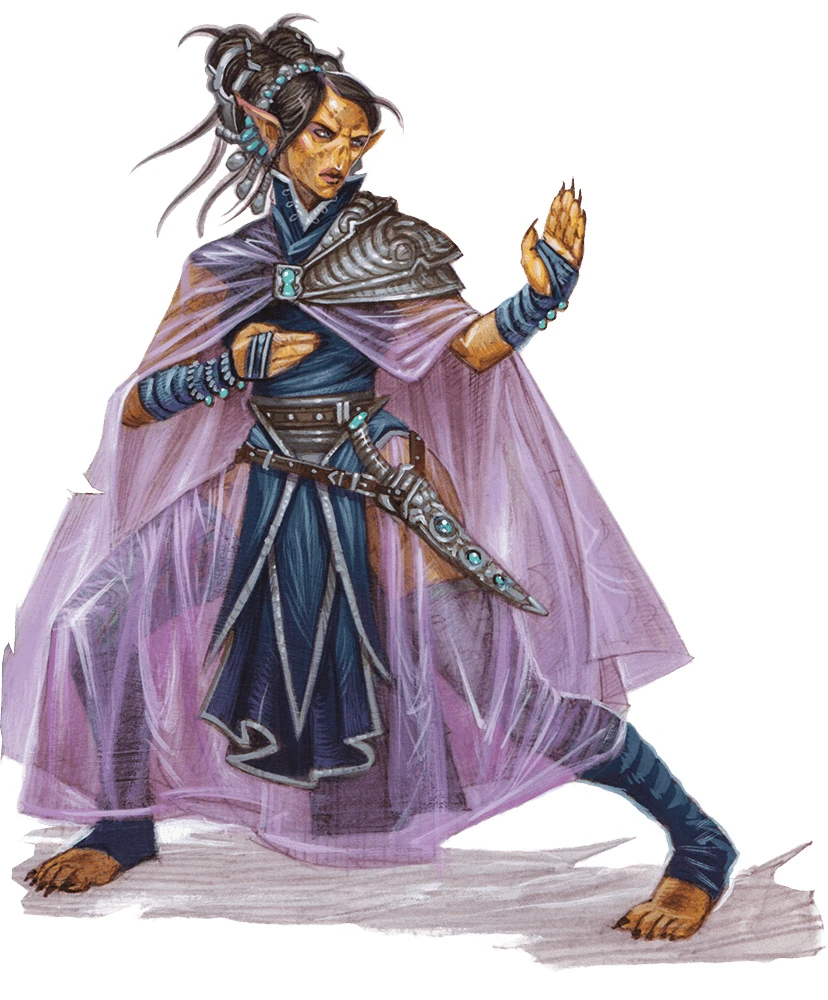
Ethereal Slip
Prerequisites: Ninjutsu dedication
When you are hit by a weapon attack, you can spend 2 ki points as a reaction to become momentarily incorporeal. The attack passes through you, missing you completely, and the attacker gains no benefit of having attacked you.
Exorcise Spirits
Prerequisites: Mystic dedication
When you hit an aberration, celestial, elemental, fey, fiend, or undead with an unarmed strike, you can spend 3 ki points to attempt to send that creature to its native plane of existence. The target must succeed on a Charisma saving throw against your Ki save DC or be banished, as the Banishment spell.
You must concentrate on this ki feature as though on a spell. If the exorcism ends before 1 minute has passed, the target reappears in the space it left or in the nearest unoccupied space if that space is occupied. Otherwise, the target doesn't return.
Journeyman
Monk abilities which consume ki points have their costs reduced by 1, to a minimum cost of 1 ki point.
Ki-Infused Skin
Prerequisites: Mystic dedication
You are resistant to damage inflicted by spells and other magical effects.
Neckbreaker
Prerequisites: Ninjutsu dedication
If you have advantage on your first attack in the round and use it to hit a creature with an unarmed strike, you may spend 1 ki point to make a Dexterity (Acrobatics) check against the creature’s AC. On a success, the attack becomes a critical hit.
Purifying Touch
When you use your Stillness of Mind feature, you can spend ki points to end a single effect from the following list instead:
1 Ki: Blinded, Deafened, Incapacitated; a damage-each-turn effect (such as being set alight)
2 Ki: Exhaustion (single level), Paralysed, Stunned
4 Ki: Petrified, Dead (return to 1 hit point if they died less than 3 rounds ago)
Quintessent Grasp.
Prerequisites: Empty Fist dedication
You can grapple creatures, and catch and throw objects, as if you were one size larger than you actually are; this compounds upon other effects which increase your Grappling Size. While grappling a creature of your size (for the purpose of grappling), you can only target the creature you’re grappling with your melee weapon attacks.
Sharpen the Blade
Prerequisites: Kensei dedication
As a bonus action, you can expend up to 3 ki points to grant one monk weapon you touch a bonus to attack and damage rolls when you attack with it. The bonus equals the number of ki points you spent. This bonus lasts for 1 minute or until you use this feature again. This feature has no effect on a magic weapon that already has a bonus to attack and damage rolls.
Spinning Piledriver
Prerequisites: Empty Fist dedication
You can use your action to take a creature grappled and restrained by you, leap up to your Running High Jump distance into the air in a dizzying spin, and slam your foe into the ground head first. You inflict a Critical hit with an unarmed strike on the target, plus an additional Martial Arts die of bludgeoning damage for every 10 feet the target fell before hitting the ground (not doubled by the critical). You then release the creature, leaving it prone adjacent to you.
Sleeper Hold
Prerequisites: Empty Fist dedication
As an unarmed strike, you can put a creature you are grappling into a sleeper hold by expending 2 or more ki points. Roll a number of Martial Arts dice equal to 3 plus the number of ki points you spent. If the creature has fewer hit points than the total of your roll, it falls unconscious for 1 minute. Constructs, Undead and other creatures that do not need to breathe aren’t affected by your sleeper hold.
Superior Defence
When you take the Patient Defence action, you can spend 1 additional Ki Point to bolster yourself against harm with an unyielding stance. Until the start of your next turn, you have resistance to all damage except force damage.
Tongue of the Sun and Moon
You learn to touch the ki of other minds so that you understand all spoken languages. Moreover, any creature that can understand a language can understand what you say.
Weave-Tearing Strikes
Prerequisites: Mystic dedication
You can expend 1 ki point when you hit creations of magical force (such as a wall of force) with your unarmed strike to inflict it with an effect identical to the Disintegrate spell, with a range of Touch.
15th-level disciplines
Channelled Arrows
Prerequisites: Kensei dedication
When you miss with a ranged attack you can spend 1 ki point to repeat the attack roll against the same target (no action required). You can do this only once per attack.
Dark Hand
Prerequisites: Charisma 15
You learn to overwhelm the ki of others, sapping them of their life force. When you hit a creature that is incapacitated with an unarmed strike, you can spend 2 ki points to attempt a Soul Drain: the target must succeed on a Constitution saving throw or suffer 1 level of exhaustion.
Hastened Metabolism
If you spend at least 1 minute resting, you can give yourself all the benefits of a Short Rest.
Once you use this feature, you can’t use it again until you finish a Long Rest
Iron Core
Prerequisites: Empty Fist dedication
At the start of each turn in which you're grappled or grappling, you gain a number of temporary hit points equal to a roll of your martial arts die plus your proficiency bonus. Additionally, you can end a grappled or restrained condition on yourself by spending 1 ki point (no action required).
Leyline Eruption
Prerequisites: Mystic dedication
You gain the ability to open a brief, unstable rift of manifested physical raw nature energy known as a leyline by spending 5 ki points as an action.
This is a Wall of Force spell with the following changes:
You can move the wall up to 20 feet along the surface from which it emerges as a bonus action on your turn, but the wall must remain unbroken (as if moving like a snake) and the entirety of one side must be in contact with a surface.
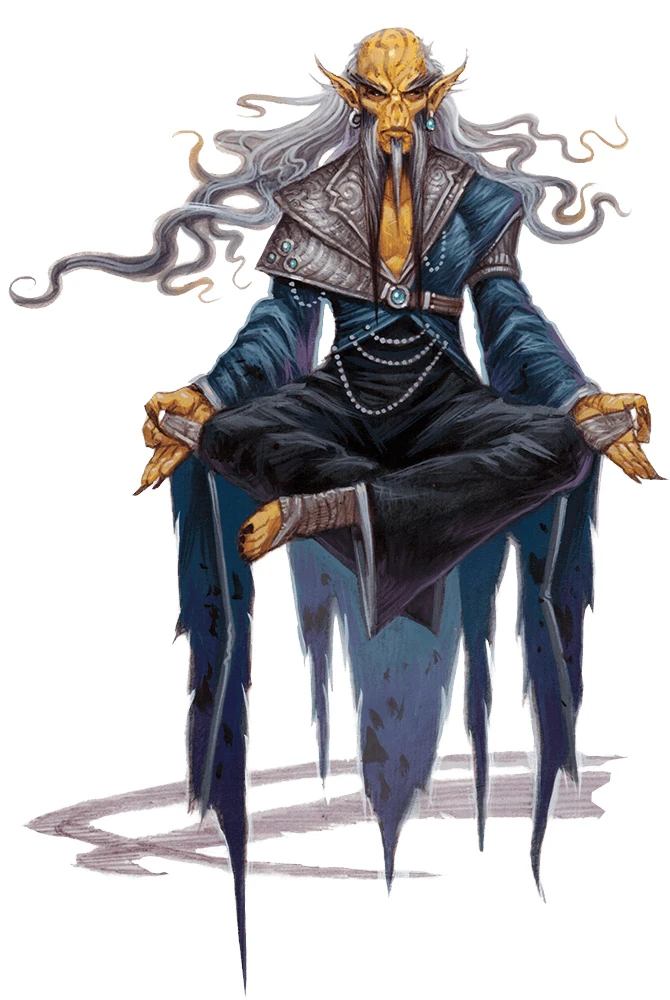
When the wall appears, each creature within its area must make a Dexterity saving throw. On a failed save, a creature takes a number of Martial Arts dice of force damage equal to your Wisdom modifier, or half as much damage on a success.
Up to 10 creatures and vehicles, and the objects in their possession, you designate when you conjure the leyline can move through it freely. All other creatures and objects are barred from passing through it. Spells and other magical effects can’t extend through the wall or be cast through it.
Misdirection
Prerequisites: Ninjutsu dedication
When you are hit by an attack or use your Evasion feature, you can use your reaction to spend 3 ki points and produce an effect identical to the Mislead spell with the following changes: it ends at the end of your next turn (unless ended early as per the spell) and does not require concentration.
One-Hundred Rending Limbs
Prerequisites: Empty Fist dedication
You can unleash an all-out assault against a single opponent. When you take the Attack action and make all your attacks against the same creature using only unarmed strikes, you can use your bonus action to perform a Special Flurry of Blows; you can spend up to 5 additional ki points, making one more unarmed strike against that same target for each bonus ki point spent.
Opportunist
Prerequisites: Ninjutsu dedication
You can exploit a creature's momentary distraction when it is hit by an attack. Whenever a creature within 5 feet of you is hit by an attack made by a creature other than you, you can spend 1 ki point to make an Unarmed Strike against that creature (no action required). This is not considered an attack of opportunity for the purpose of features and traits such as the Sentinel feat.
Rapid Flurry
Prerequisites: Empty Fist dedication
When you take the Attack action and you only attack using unarmed strikes, you can make one additional unarmed strike as a part of that action.
Shockwave Blast
Prerequisites: Kensei dedication
You can spend 3 ki and focus your power as an action, unleashing a lethal wave of energy in a 60-foot cone; this can manifest as a powerful slice from a sword, a thunderous blow of a hammer into the ground, or a drawn bow fired with supersonic speed. Creatures within the blast must make a Constitution saving throw, taking four Martial Arts dice of thunder damage on a failed save or half as much on a successful one. Also on a failed save, a creature is deafened until the end of their next turn.
Subterfuge Expert
Prerequisites: Ninjutsu dedication
You can spend 4 ki points as an action to cast the Eyebite, Mass Suggestion, or Otto's Irresistible Dance spell without expending a spell slot. Once you use this ability, you cannot use it again until you finish a long rest.
Transcendence
Prerequisites: Mystic dedication
Your deep connection to the source of energy has allowed you to transcend the limits of reality. As an action, you can expend 5 ki points to cast plane shift or teleport, or to become immune to all damage for your next three turns, including the turn you take this action. Once you use this ability, you cannot use it again until you finish a long rest.
The Paladin
Whether sworn before a god's altar and the witness of a priest, in a sacred glade before nature spirits and fey beings, or in a moment of desperation and grief with the dead as the only witness, a paladin's oath is a powerful bond.
You must have a Charisma score and a Strength score of 13 or higher in order to multiclass in or out of this class.
Class Features
As a paladin, you gain the following class features.
Hit Points
- Hit Dice: 1d10 per paladin level
- Hit Points at 1st Level: 10 + your Constitution modifier
- Hit Points at Higher Levels: 1d10 (or 6) + your
Constitution modifier per paladin level after 1st
Proficiencies
- Armour: All armour, shields
- Weapons: Simple weapons, martial weapons
- Tools: None
- Saving Throws: Wisdom, Charisma
- Skills: Choose two from Athletics, Insight,
Intimidation, Medicine, Persuasion,
and Religion
Equipment
You start with the following equipment, in addition to the equipment granted by your background:
- (a) a martial weapon and a shield or (b) two martial weapons
- (a) five javelins or (b) any simple melee weapon
- (a) a priest's pack or (b) an explorer's pack
- Chain mail and a holy symbol
Divine Sense
The presence of strong evil registers on your senses like a noxious odour, and powerful good rings like heavenly music in your ears. As an action, you can open your awareness to detect such forces. Until the end of your next turn, you know the location of any celestial, fiend, or undead within 60 feet of you that is not behind total cover. You know the type (celestial, fiend, or undead) of any being whose presence you sense, but not its identity (the vampire Count Strahd von Zarovich, for instance). Within the same radius, you also detect the presence of any place or object that has been consecrated or desecrated, as with the Hallow spell.
You can use this feature a number of times equal to 1 + your Charisma modifier. When you finish a long rest, you regain all expended uses.
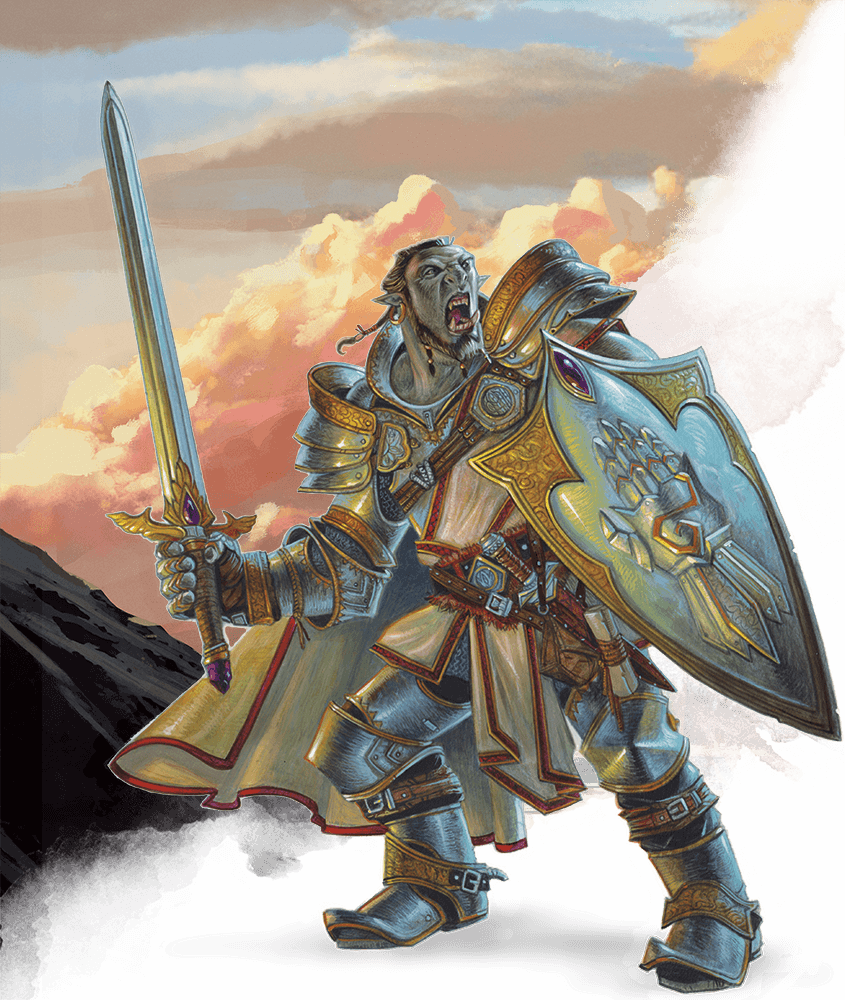
Lay on Hands
Your blessed touch can heal wounds. You have a pool of healing power that replenishes when you take a long rest. With that pool, you can restore a total number of hit points equal to your paladin level x 5. This feature has no effect on undead and constructs. As an action, you can touch a creature and draw power from the pool to restore a number of hit points to that creature, up to the maximum amount remaining in your pool.
Alternatively, you can expend 5 points from your pool of healing to cure the target of one disease or remove one of the following conditions affecting it: blinded, deafened, paralysed, or poisoned. You can cure multiple diseases and dispel multiple conditions with a single use of Lay on Hands, expending points separately for each one.
Spellcasting
Also at 1st level, you have learned to draw on divine magic through meditation and prayer to cast spells, much as a cleric does. The Paladin table shows how many spell slots you have to cast your spells. To cast one of your paladin spells of 1st level or higher, you must expend a slot of the spell's level or higher. You regain all expended spell slots when you finish a long rest.
The Paladin
| Level | Proficiency Bonus | Features | 1st | 2nd | 3rd | 4th | 5th |
|---|---|---|---|---|---|---|---|
| 1st | +2 | Divine Sense, Spellcasting, Lay on Hands | 2 | - | - | - | - |
| 2nd | +2 | Fighting Style, Divine Smite | 2 | - | - | - | - |
| 3rd | +2 | Divine Health, Sacred Oath, Channel Divinity | 3 | - | - | - | - |
| 4th | +2 | Ability Score Improvement | 3 | - | - | - | - |
| 5th | +3 | Extra Attack | 4 | 2 | - | - | - |
| 6th | +3 | Aura of Protection | 4 | 2 | - | - | - |
| 7th | +3 | Sacred Oath feature | 4 | 3 | - | - | - |
| 8th | +3 | Ability Score Improvement | 4 | 3 | - | - | - |
| 9th | +4 | - | 4 | 3 | 2 | - | - |
| 10th | +4 | Aura of Courage | 4 | 3 | 2 | - | - |
| 11th | +4 | Improved Divine Smite | 4 | 3 | 3 | - | - |
| 12th | +4 | Ability Score Improvement | 4 | 3 | 3 | - | - |
| 13th | +5 | - | 4 | 3 | 3 | 1 | - |
| 14th | +5 | Cleansing Touch | 4 | 3 | 3 | 1 | - |
| 15th | +5 | Sacred Oath feature | 4 | 3 | 3 | 2 | - |
| 16th | +5 | Ability Score Improvement | 4 | 3 | 3 | 2 | - |
| 17th | +6 | - | 4 | 3 | 3 | 3 | 1 |
| 18th | +6 | Aura improvement | 4 | 3 | 3 | 3 | 1 |
| 19th | +6 | Ability Score Improvement | 4 | 3 | 3 | 3 | 2 |
| 20th | +6 | Sacred Oath feature | 4 | 3 | 3 | 3 | 2 |
Preparing Spells
You prepare the list of paladin spells that are available for you to cast, choosing from the paladin spell list. When you do so, choose a number of paladin spells equal to your Charisma modifier + half your paladin level, rounded down (minimum of one spell). The spells must be of a level for which you have spell slots.
You can change your list of prepared spells when you finish a long rest. Preparing a new list of paladin spells requires time spent in prayer and meditation: at least 1 minute per spell level for each spell on your list.
Spellcasting Ability
Charisma is your spellcasting ability for your paladin spells, since their power derives from the strength of your convictions. You use your Charisma whenever a spell refers to your spellcasting ability.
You use your Charisma modifier when setting the saving throw DC for a paladin spell you cast and when making an attack roll with one.
Spell Save DC
Spell attack modifier
Spellcasting Focus
You can use a holy symbol as a spellcasting focus for your paladin spells.
Fighting Style
Starting at 2nd level, you adopt a particular style of fighting as your specialty. Choose one of the options from the Player Options Fighting Style list. You can't take a Fighting Style option more than once, even if you later choose again.
Divine Smite
Starting at 2nd level, when you hit a creature with a melee weapon attack, you can expend one spell slot to deal radiant damage to the target, in addition to the weapon's damage. The extra damage is 2d8 for a 1st-level spell slot, plus 1d8 for each spell level higher than 1st, to a maximum of 5d8. The damage increases by 1d8 if the target is an undead or a fiend, to a maximum of 6d8.
Divine Health
By 3rd level, the divine magic flowing through you makes you immune to disease.
Sacred Oath
When you reach 3rd level, you swear the oath that binds you as a paladin forever. Up to this time you have been in a preparatory stage, committed to the path but not yet sworn to it. Your choice grants you features at 3rd level and again at 7th, 15th, and 20th level. Those features include oath spells and the Channel Divinity feature.
Oath Spells
Each oath has a list of associated spells. You gain access to these spells at the levels specified in the oath description. Once you gain access to an oath spell, you always have it prepared. Oath spells don't count against the number of spells you can prepare each day.
If you gain an oath spell that doesn't appear on the paladin spell list, the spell is nonetheless a paladin spell for you.
Channel Divinity
Your oath allows you to channel divine energy to fuel magical effects. Each Channel Divinity option provided by your oath explains how to use it. When you use your Channel Divinity, you choose which option to use. You must then finish a short or long rest to use your Channel Divinity again. Some Channel Divinity effects require saving throws. When you use such an effect from this class, the DC equals your paladin spell save DC.
You begin with the following Channel Divinity option:
Channel Divinity: Harness Divine Power
You can expend a use of your Channel Divinity to fuel your spells. As a bonus action, you touch your holy symbol, utter a prayer, and regain one expended spell slot, the level of which can be up to one less than your highest Paladin spell slot.
Ability Score Improvement
When you reach 4th level, and again at 8th, 12th, 16th, and 19th level, you can increase one ability score of your choice by 2, or you can increase two ability scores of your choice by 1. As normal, you can't increase an ability score above 20 using this feature. Alternatively, you may take a feat in place of the ASI, provided you fulfil its prerequisites.
Martial Versatility
Instead of increasing ability scores as detailed above, you can increase one ability score of your choice by 1 and take another Fighting Style available to you. Whenever you reach a level in this class that grants the Ability Score Improvement feature, you can replace a fighting style you know with another fighting style available to paladins. This replacement represents a shift of focus in your martial practice.
Extra Attack
Beginning at 5th level, you can attack twice, instead of once, whenever you take the Attack action on your turn.
Aura of Protection
Starting at 6th level, whenever you or a friendly creature within 10 feet of you must make a saving throw, the creature gains a bonus to the saving throw equal to your Charisma modifier (with a minimum bonus of +1). You must be conscious to grant this bonus.
At 18th level, the range of this aura increases to 30 feet.
Aura of Courage
Starting at 10th level, you and friendly creatures within 10 feet of you can't be frightened while you are conscious.
At 18th level, the range of this aura increases to 30 feet.
Improved Divine Smite
By 11th level, you are so suffused with righteous might that all your melee weapon strikes carry divine power with them. Whenever you hit a creature with a melee weapon, the creature takes an extra 1d8 radiant damage.
Cleansing Touch
Beginning at 14th level, you can use your action to end one spell on yourself or on one willing creature that you touch.
You can use this feature a number of times equal to your Charisma modifier (a minimum of once). You regain expended uses when you finish a long rest.
Sacred Oaths
Oath of the Ancients
The Oath of the Ancients is as old as the race of elves and the rituals of the druids. Sometimes called oaken knights, green knights, or horned knights, paladins who swear this oath cast their lot with the side of the light in the cosmic struggle against darkness because they love the beautiful and life-giving things of the world, not necessarily because they believe in principles of honour, courage, and justice. They adorn their armour and clothing with images of growing things-leaves, antlers, or flowers-to reflect their commitment to preserving life and light in the world.
Tenets of the Ancients
The tenets of the Oath of the Ancients have been preserved for uncounted centuries. This oath emphasises the principles of natural life above any concerns of law or chaos. Its four central principles are simple.
Kindle the Light. Through your acts of mercy, kindness, and forgiveness, kindle the light of hope in the world, beating back despair.
Shelter the Light. Where there is good, beauty, love, and laughter in the world, stand against the wickedness that would swallow it. Where life flourishes, stand against the forces that would render it barren.
Preserve Your Own Light. Delight in song and laughter, in beauty and art. If you allow the light to die in your own heart, you can't preserve it in the world.
Be the Light. Be a glorious beacon for all who live in despair. Let the light of your joy and courage shine forth in all your deeds.
Oath Spells
You gain oath spells at the paladin levels listed. In addition, you gain the Druidcraft cantrip. It is a Paladin spell for you.
Oath of the Ancients Spells
| Level | Spells |
|---|---|
| 3rd | Ensnaring Strike, Speak with Animals |
| 5th | Moonbeam, Misty Step |
| 9th | Plant Growth, Magic Circle |
| 13th | Guardian of Nature, Stoneskin |
| 17th | Commune with Nature, Tree Stride |
Channel Divinity
When you take this oath at 3rd level, you gain the following two Channel Divinity options.
Nature's Wrath. You can use your Channel Divinity to invoke primaeval forces to ens nare a foe. As an action, you can cause spectral vines to spring up and reach for a creature within 10 feet of you that you can see. The creature must succeed on a Strength or Dexterity saving throw (its choice) or be restrained. While restrained by the vines, the creature repeats the saving throw at the end of each of its turns. Each time it fails, it takes 2d6 piercing damage, as it struggles against the thorny vines. On a success, it frees itself and the vines vanish.
Turn the Unnatural. You can use your Channel Divinity to utter ancient words that are painful for creatures affrontive to nature to hear. As an action, you present your holy symbol, and each aberration, construct, or undead within 30 feet of you that can hear you must make a Wisdom saving throw. On a failed save, the creature is turned for 1 minute or until it takes damage. A turned creature must spend its turns trying to move as far away from you as it can, and it can't willingly move to a space within 30 feet of you. It also can't take reactions. For its action, it can use only the Dash action or try to escape from an effect that prevents it from moving. If there's nowhere to move, the creature can use the Dodge action. If the creature's true form is concealed by an illusion, shapeshifting, or other effect, that form is revealed while it is turned.
Aura of Warding
Beginning at 7th level, ancient magic lies so heavily upon you that it forms an primaeval ward. You and friendly creatures within 10 feet of you have resistance to damage from spells.
At 18th level, the range of this aura increases to 30 feet.
Woodland Sentinel
Starting at 15th level, when you are reduced to 0 hit points and are not killed outright, you can choose to drop to 1 hit point instead. Once you use this ability, you can't use it again until you finish a long rest.
Additionally, you age 1 year for ever 10 years that pass, you suffer none of the drawbacks of old age, and you can't be aged magically.
Elder Champion
At 20th level, you can assume the form of an ancient force of nature, taking on an appearance you choose. For example, your skin might turn green or take on a bark-like texture, your hair might become leafy or moss-like, or you might sprout antlers or a lion-like mane.
Using your action, you undergo a transformation. For 1 minute, you gain the following benefits:
- At the start of each of your turns, you regain 10 hit points.
- Whenever you cast a paladin spell that has a casting time of 1 action, you can cast it using a bonus action instead.
- Enemy creatures within 10 feet of you have disadvantage on saving throws against your paladin spells and Channel Divinity options.
Once you use this feature, you can’t use it again until you finish a long rest, unless you expend a 5th-level spell slot to use it again.
Oath of Conquest
The Oath of Conquest calls to paladins who seek glory in battle and the subjugation of their enemies. It isn’t enough for these paladins to establish order. They must crush the forces of chaos. Sometimes called knight tyrants or ironmongers, those who swear this oath gather into grim orders that serve gods or philosophies of war and well-ordered might.
Some of these paladins go so far as to consort with the powers of the Nine Hells, valuing the rule of law over the balm of mercy. These ‘Hell-Knights’ are often most fiercely resisted by other paladins of this oath, who believe that they have wandered too far into darkness.
Tenets of Conquest
A paladin who takes this oath has the tenets of conquest seared on the upper arm.
Douse the Flame of Hope. It is not enough to merely defeat an enemy in battle. Your victory must be so overwhelming that your enemies’ will to fight is shattered forever. A blade can end a life. Fear can end an empire.
Rule with an Iron Fist. Once you have conquered, tolerate no dissent. Your word is law. Those who obey it shall be favoured. Those who defy it shall be punished as an example to all who might follow.
Strength Above All. You shall rule until a stronger one arises. Then you must grow mightier and meet the challenge, or fall to your own ruin.
Oath Spells
You gain oath spells at the paladin levels listed.
Oath of Conquest Spells
| Level | Spells |
|---|---|
| 3rd | Armour of Agathys, Command |
| 5th | Hold Person, Spiritual Weapon |
| 9th | Bestow Curse, Fear |
| 13th | Dominate Beast, Stoneskin |
| 17th | Cloudkill, Dominate Person |
Channel Divinity
When you take this oath at 3rd level, you gain the following two Channel Divinity options.
Conquering Presence. You can use your Channel Divinity to exude a terrifying presence. As an action, you force each creature of your choice that you can see within 30 feet of you to make a Wisdom saving throw. On a failed save, a creature becomes frightened of you for 1 minute. The frightened creature can repeat this saving throw at the end of each of its turns, ending the effect on itself on a success.
Guided Strike. You can use your Channel Divinity to strike with supernatural accuracy. When you make an attack roll, you can use your Channel Divinity to gain a +10 bonus to the roll. You make this choice after you see the roll, but before the DM says whether the attack hits or misses.
Aura of Conquest
Starting at 7th level, you constantly emanate a menacing aura while you’re not incapacitated. The aura extends 10 feet from you in every direction, but not through total cover. If a creature is frightened of you, its speed is reduced to 0 while in the aura, and that creature takes psychic damage equal to half your paladin level if it starts its turn there. Furthermore, you have advantage on attacks made against creatures frightened of you.
At 18th level, the range of this aura increases to 30 feet.
Scornful Rebuke
Starting at 15th level, those who dare to strike you are psychically punished for their audacity. Whenever a creature hits you with an attack, that creature takes psychic damage equal to your Charisma modifier (minimum of 1) if you’re not incapacitated.
Invincible Conqueror
At 20th level, you gain the ability to harness extraordinary martial prowess. As an action, you can magically become an avatar of conquest, gaining the following benefits for 1 minute:
- You have resistance to all damage.
- When you take the Attack action on your turn, you can make one additional attack as part of that action.
- Your melee weapon attacks score a critical hit on a roll of 19 or 20 on the d20.
- You deal an additional 1d8 psychic damage when you hit creatures frightened of you with attacks.
Once you use this feature, you can’t use it again until you finish a long rest, unless you expend a 5th-level spell slot to use it again.
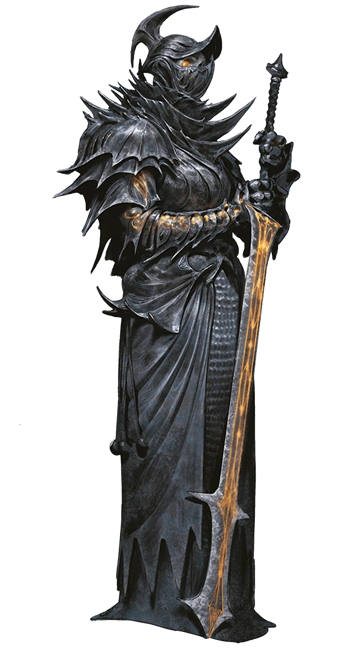
Oath of the Crown
The Oath of the Crown is sworn to the ideals of civilization, be it the spirit of a nation, fealty to a sovereign, or service to a deity of law and rulership. The paladins who swear this oath dedicate themselves to serving society and, in particular, the just laws that hold society together. Often, paladins who swear this oath are members of an order of knighthood in service to a nation or a sovereign, and are commonly known as guardians, exemplars, or sentinels.
Tenets of the Crown
The tenets of the Oath of the Crown are often set by the sovereign to which their oath is sworn, but generally emphasise the following tenets.
Law. The law is paramount. It is the mortar that holds the stones of civilization together, and it must be respected.
Courage. You must be willing to do what needs to be done for the sake of order, even in the face of overwhelming odds. If you don't act, then who will?
Responsibility. You must deal with the consequences of your actions, and you are responsible for fulfilling your duties and obligations.
Oath Spells
You gain oath spells at the paladin levels listed.
Oath of the Crown Spells
| Level | Spells |
|---|---|
| 3rd | Command, Heroism |
| 5th | Healing Spirit, Zone of Truth |
| 9th | Aura of Vitality, Spirit Guardians |
| 13th | Banishment, Guardian of Faith |
| 17th | Circle of Power, Geas |
Channel Divinity
When you take this oath at 3rd level, you gain the
following two Channel Divinity options.
Champion’s Challenge. As a bonus action, you issue a challenge that compels other creatures to do battle with you. Each creature of your choice that you can see within 20 feet of you must make a Wisdom saving throw. On a failed save, a creature becomes restrained by spectral shackles. This effect ends on target creatures after 1 minute. Targets can end this effect early by repeating the saving throw at the end of each of their turns, ending the effect on themselves on a success.
Turn the Tide. As a bonus action, you can bolster injured creatures with your Channel Divinity. Each creature of your choice that can hear you within 30 feet of you regains hit points equal to 1d6 + your Charisma modifier + your Paladin level.
Divine Allegiance
Starting at 7th level, you emanate an aura of cooperation while you are not incapacitated. This aura extends from you for 10 feet in every direction, but not through total cover. When a creature of your choice within your aura takes damage, you can use your reaction to magically substitute your own health for that of the target creature, causing that creature not to take the damage. Instead, you take the damage as though you were in the target’s space.
At 18th level, the range of this aura increases to 30 feet.
Unyielding Saint
Starting at 15th level, you have advantage on saving throws to avoid becoming grappled, paralysed, petrified, prone, restrained, or stunned.
Exalted Champion
At 20th level, your presence on the field of battle is an inspiration to those dedicated to your cause. You can use your action to gain the following benefits for 1 hour:
- You have resistance to bludgeoning, piercing, and slashing damage from nonmagical weapons.
- You and your allies within 30 feet of you have advantage on Wisdom and Death saving throws.
This effect ends early if you die. Once you use this feature, you can’t use it again until you finish a long rest, unless you expend a 5th-level spell slot to use it again.
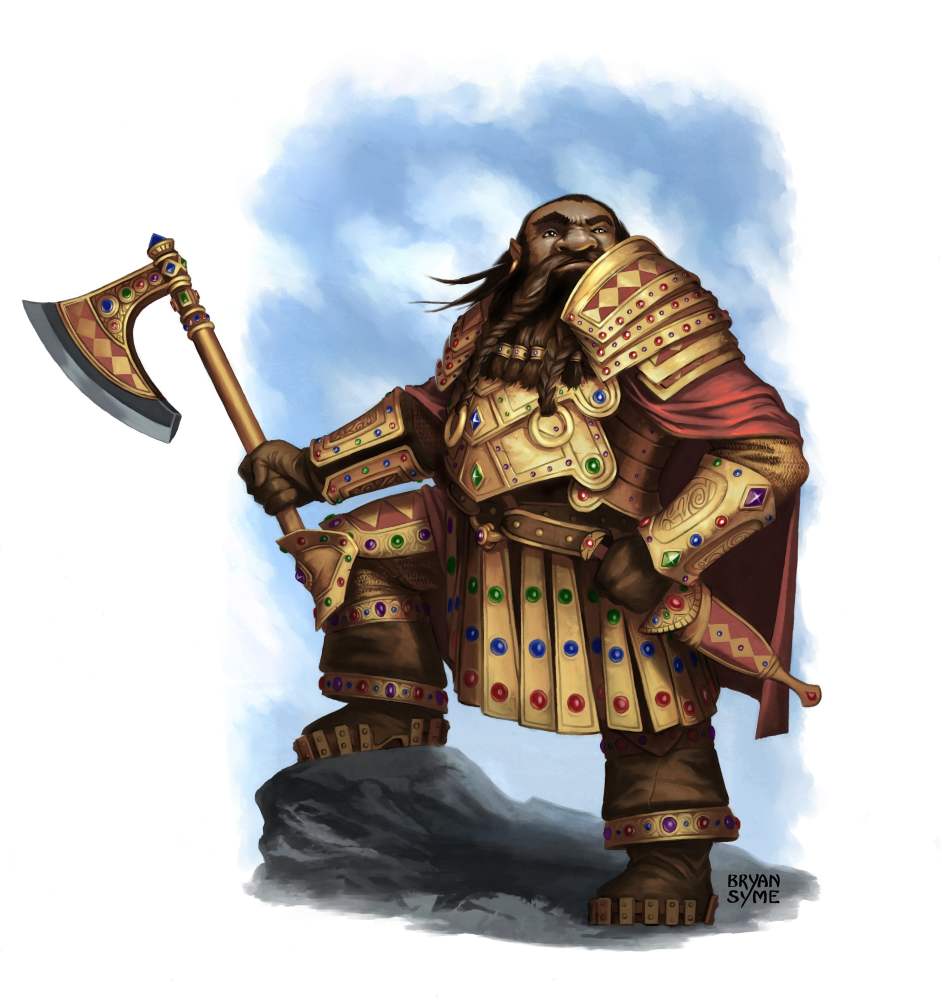
Oath of Devotion
The Oath of Devotion binds a paladin to the loftiest ideals of justice, virtue, and order. Sometimes called cavaliers, white knights, or holy warriors, these paladins meet the ideal of the knight in shining armour, acting with honour in pursuit of justice and the greater good.
Tenets of Devotion
Though the exact words and strictures of the Oath of Devotion vary, paladins of this oath share these tenets.
Honesty. Don't lie or cheat. Let your word be your promise.
Courage. Never fear to act, though caution is wise.
Compassion. Aid others, protect the weak, and punish those who threaten them. Show mercy to your foes, but temper it with wisdom.
Honour. Treat others with fairness, and let your honourable deeds be an example to them. Do as much good as possible while causing the least amount of harm.
Duty. Be responsible for your actions and their consequences, protect those entrusted to your care, and obey those who have just authority over you.
Oath Spells
You gain oath spells at the paladin levels listed.
Oath of Devotion Spells
| Level | Spells |
|---|---|
| 3rd | Protection from Evil and Good, Sanctuary |
| 5th | Lesser Restoration, Zone of Truth |
| 9th | Beacon of Hope, Magic Circle |
| 13th | Banishment, Guardian of Faith |
| 17th | Commune, Flame Strike |
Channel Divinity
When you take this oath at 3rd level, you gain the following two Channel Divinity options.
Sacred Weapon. As an action, you can imbue one weapon that you are holding with positive energy, using your Channel Divinity. For 1 minute, you add your Charisma modifier to attack rolls made with that weapon (with a minimum bonus of +1). The weapon also emits bright light in a 20-foot radius and dim light 20 feet beyond that. If the weapon is not already magical, it becomes magical for the duration. You can end this effect on your turn as part of any other action. If you are no longer holding or carrying this weapon, or if you fall unconscious, this effect ends.
Turn the Unholy. As an action, you present your holy symbol and speak a prayer censuring fiends and undead, using your Channel Divinity. Each fiend, shapechanger, or undead that can see or hear you within 30 feet of you must make a Wisdom saving throw. If the creature fails its saving throw, it is turned for 1 minute or until it takes damage. A turned creature must spend its turns trying to move as far away from you as it can, and it can't willingly move to a space within 30 feet of you. It also can't take reactions. For its action, it can use only the Dash action or try to escape from an effect that prevents it from moving. If there's nowhere to move, the creature can use the Dodge action.
Aura of Devotion
Starting at 7th level, you and friendly creatures within 10 feet of you can't be charmed or possessed while you are conscious.
At 18th level, the range of this aura increases to 30 feet.
Purity of Spirit
Beginning at 15th level, you are always under the effects of a Protection from Evil and Good spell.
Holy Nimbus
At 20th level, as an action, you can emanate an aura of sunlight. For 1 minute, bright light shines from you in a 30-foot radius, and dim light shines 30 feet beyond that. Whenever an enemy creature starts its turn in the bright light, the creature takes 10 radiant damage. In addition, for the duration, you have advantage on saving throws against spells cast by fiends, shapechangers, or undead.
Once you use this feature, you can’t use it again until you finish a long rest, unless you expend a 5th-level spell slot to use it again.
Oath of Glory
Paladins who take the Oath of Glory believe they and their companions are destined to achieve glory through deeds of heroism. They train diligently and encourage their companions so they're all ready when destiny calls.
Tenets Of Glory
The tenets of the Oath of Glory drive a paladin to attempt heroics that might one day shine in legend.
Actions over Words. Strive to be known by glorious deeds, not words.
Challenges Are But Tests. Face hardships with courage, and encourage your allies to face them with you.
Hone the Body. Like raw stone, your body must be worked so its potential can be realised.
Discipline the Soul. You must marshal the discipline to overcome failings within yourself that threaten to dim the glory of you and your friends.
Oath Spells
You gain oath spells at the paladin levels listed.
Oath of Glory Spells
| Level | Spells |
|---|---|
| 3rd | Guiding Bolt, Heroism |
| 5th | Enhance Ability, Magic Weapon |
| 9th | Haste, Protection From Energy |
| 13th | Compulsion, Freedom Of Movement |
| 17th | Commune, Flame Strike |
Channel Divinity
When you take this oath at 3rd level, you gain the following two Channel Divinity options.
Peerless Athlete. As a bonus action, you can use your Channel Divinity to augment your athleticism. For the next 10 minutes, you have advantage on Strength (Athletics) and Dexterity (Acrobatics) checks; you can carry, push, drag, and lift twice as much weight as normal; and the distance of your long and high jumps increases by 10 feet (this extra distance costs movement as normal).
Inspiring Smite. Immediately after you deal damage to a creature with your Divine Smite feature, you can use your Channel Divinity as a bonus action and distribute temporary hit points to creatures of your choice within 30 feet of you, which can include you. The total number of temporary hit points equals 2d8 + your level in this class, divided among the chosen creatures however you like.
Aura of Alacrity
At 7th level, you emanate an aura that fills you and your companions with supernatural speed, allowing you to race across a battlefield in formation. Your walking speed increases by 10 feet. In addition, if you aren't incapacitated, the walking speed of any ally who starts their turn within 10 feet of you increases by 10 feet until the end of that turn.
When you reach 18th level in this class, the range of the aura increases to 30 feet.

Glorious Defence
When you reach 15th level,
you can turn defence into a
sudden strike. When you or
another creature you can see
within 10 feet of you is hit
by an attack roll, you can use
your reaction to grant a bonus
to the target's AC against that
attack, potentially causing it
to miss. The bonus equals your
Charisma modifier (minimum +l).
If the attack misses, you can make one
weapon attack against the attacker as
part of this reaction, provided the
attacker is within your weapon's range.
You can use this feature a number
of times equal to your Charisma
modifier (minimum of once), and
you regain all expended uses when
you finish a long rest.
Living Legend
At 20th level, you can empower yourself with the legends — whether true or exaggerated — of your great deeds. As a bonus action, you gain the following benefits for 1 minute:
- You are blessed with an otherworldly presence, gaining advantage on all Charisma checks.
- Once on each of your turns when you make a weapon attack and miss, you can cause that attack to hit instead.
- If you fail a saving throw, you can use your reaction to reroll it. You must use this new roll.
Once you use this feature, you can’t use it again until you finish a long rest, unless you expend a 5th-level spell slot to use it again.
Oath of the Peacemaker
The Oath of the Peacemaker is neither as lofty or selfless as the Oath of Devotion, or as cold and rigid as the Oath of Vengeance, but rather is an unshakeable vow to protect those who are otherwise unequipped to protect themselves. Most often this protection is through strength of arms, but the Peacemaker recognizes that sometimes a stern word or a steady glare is enough to dissuade those who mean harm.
Tenets of the Six Chambers
The Peacemaker’s tenets may differ in precise words, depending on the individual who takes the oath, but all recognize that though they may have a supernatural bond with their weapons, it is not their weapons that make them who they are.
Aim with your eye. Vigilance is a vital part of the Peacemaker’s duty. Injustices of all sizes may go unnoticed or ignored by others, but the Peacemaker must be ever alert for where his hand may be needed.
Shoot with your Mind. Even once a threat is identified, a hasty rush to action serves no one. A Peacemaker must be mindful of how and when to use force, if he uses it at all.
Kill with your Heart. When violence must be brought to bear, it should never be done lightly. Each life taken is a loss, and the Peacemaker carries the gravity of his duties in solemn regard.
Firearm Proficiency
At 3rd level, you gain proficiency with firearms and Tinker's Tools.
Oath Spells
You gain oath spells at the paladin levels listed. In addition, your ‘Smite’ spells can apply to ranged weapon attacks made with firearms that lack the Two-Handed property.
Oath of the Peacemaker Spells
| Level | Spells |
|---|---|
| 3rd | Hunter's Mark, Longstrider |
| 5th | Magic Weapon, Rope Trick |
| 9th | Conjure Barrage, Lightning Arrow |
| 13th | Freedom of Movement, Locate Creature |
| 17th | Conjure Volley, Swift Quiver |
Channel Divinity
When you take this oath at 3rd level, you gain the following two Channel Divinity options.
Guided Repairs. As a reaction when your firearm breaks or misfires, you instantly reload, resolve the misfire, and repair the firearm. The first attack roll you make with that firearm after it is repaired this way gains a bonus to the attack roll equal to half your Paladin level.
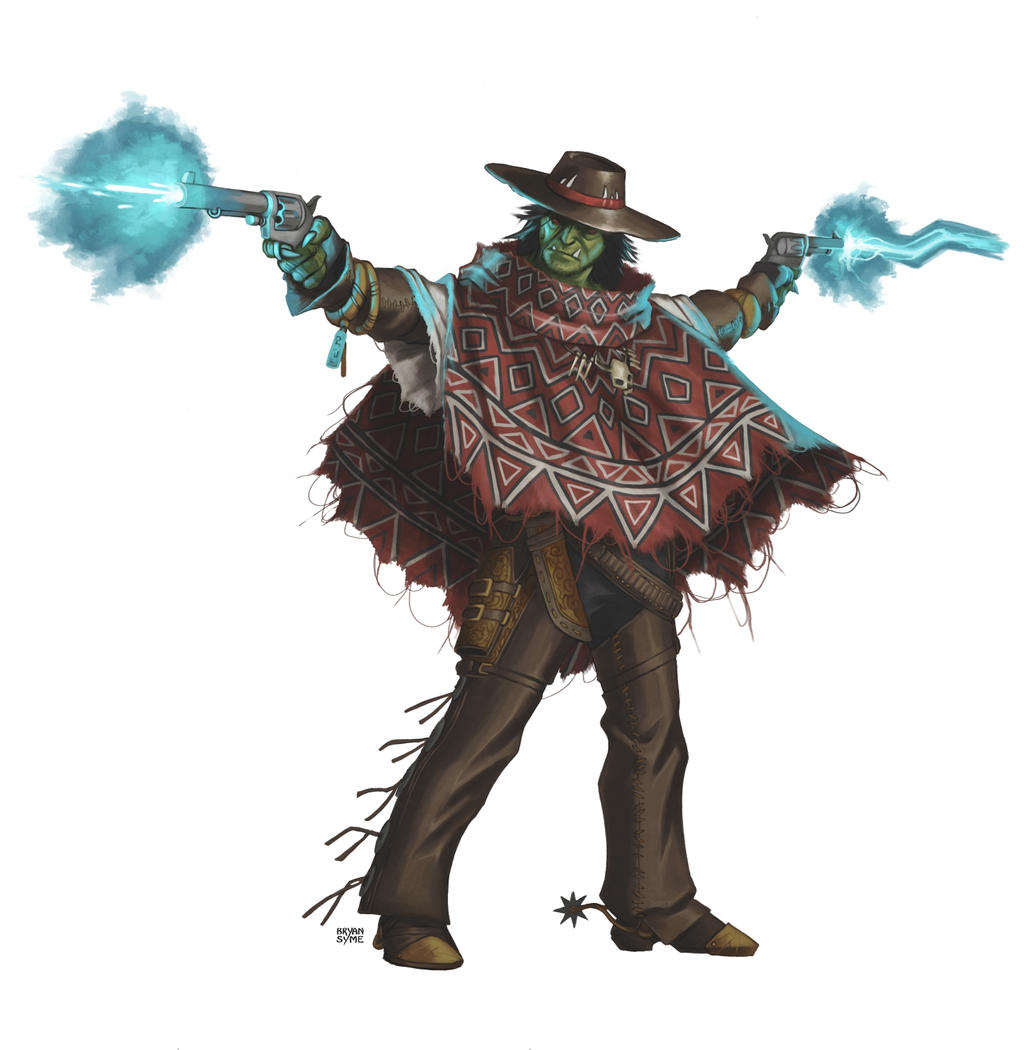
Faceoff. You can use your Channel Divinity to dish out punishment to multiple enemies at once. As an action, you can use your Channel Divinity and choose a number of enemies that you can see within your firearm's first range increment, up to your Wisdom modifier (minimum 1). You make a firearm attack against each of those creatures, in an order of your choosing. You may substitute any of these attacks for a reload, or reload via another method between attacks.
Aura of Ricochet Control
At 7th level, ranged weapon attacks made against you and friendly creatures within 10 feet of you are made with disadvantage, and attack rolls you and creatures of your choice within the aura make using firearms do not have disadvantage for targeting creatures at long range.
At 18th level, the range of this aura increases to 30 feet
Quickdraw
At 15th level, you’ve
developed an innate sense
for detecting the onset of violence.
You may add your Charisma modifier to
your initiative rolls, and you have advantage
on all attacks you make during the first
round of combat.
In addition, when you
use your bonus action to cast a paladin
‘smite’ spell, you can make one attack with
a firearm that lacks the Two-Handed property
as a part of that bonus action.
True Grit
Starting at 20th level you can use an action to
go into a supernatural focus. When you do,
you gain the following benefits for 1 minute:
- Once per round, you can choose use a
reaction to make an attack against a
creature who attempts to attack you. You
make the attack against this creature before it rolls to hit. - When you make a Dexterity check to avoid damage from an attack, you take no damage on a successful save and only half damage on a failed save.
- All opportunity takes made against you are made with disadvantage.
Once you use this feature, you can’t use it again until you finish a long rest, unless you expend a 5th-level spell slot to use it again.
Profane Multiclassing
Note: If a paladin of the Oath of the Profane Soul also has warlock levels, add one-third of their paladin levels (rounded down) to their warlock level and consult the warlock progression table for total Pact Magic spell slots, cantrips known, and Pact Magic spell slot level. The Otherworldly Patron feature between both classes should align with the same patron; your DM might allow you to have two different patrons at their discretion.
Oath of the Profane Soul
Ancient fiends and cruel magic-users have long counted on their ability to meld into the background and escape those who hunt them, vanishing into noble courts without a trace, or bending the minds of the most stalwart warriors with but a glance. So the paladins who founded this order trusted to their resilience as they delved into the same well of corrupting arcane knowledge, making pacts with lesser evils to better combat the greater threats. And though they might have traded a part of themselves for their power, the members of this order know the benefits of that power far outweigh the price.
Profane Tenets
Paladins who have sworn themselves to the whim of a greater extraplanar being have pushed the limits of fealty for use against some of the most terrifying creatures corrupting the world. This oxymoron of conviction tends to lean away
from formal tenets, being largely
guided by the desires of one's patron.
Otherworldly Patron
When you reach 3rd level, you strike a bargain with
an otherworldly being of your choice, choosing
from those available to the Warlock class.
The spells of your Patron's expanded spell list
are added to the list of Paladin spells which you
can choose to prepare from each day.
Pact Magic
When you reach 3rd level, you can augment your divined
powers with the ability to cast arcane spells. The spells you
prepare using this feature can be found on the Warlock
spell list, but are cast as Paladin spells, using your Paladin
spell save DC and spell attack modifier.
Cantrips. You learn two cantrips of your choice from the
warlock spell list. You learn an additional warlock cantrip of your choice at 10th level.
Pact Magic Spell Slots. The Profane Soul Spellcasting table shows how many additional spell slots you have. The table also shows what the level of those slots is; all of your Pact Magic spell slots are the same level. To cast one of your warlock spells of 1st level or higher, you must expend a spell slot- this does not need to be a spell slot gained from Pact Magic. You regain all expended spell slots when you finish a short or long rest.
For example, when you are 8th level, you have two 2nd-level Pact Magic spell slots, in addition to the four 1st-level and two 2nd-level slots as usual for a paladin of that level.
Preparing Warlock spells. At 3rd level, up to two 1st-level spells of your choice can be prepared from the warlock spell list and are considered Paladin spells for you. The Patron Preparations column of the Profane Spellcasting table shows the number of warlock spells of your choice of 1st level and higher which can be prepared as Paladin spells. Warlock spells prepared using your Patron Preparations do not count against the number of Paladin spells you can prepare.
A Patron Preparations spell you choose must be of a level no higher than what’s shown in the table’s Pact Magic Slot Level column for your level. When you reach 13th level, for example, you can prepare an additional Warlock spell each day, which can be spells of 1st, 2nd, or 3rd level.
Profane Spellcasting
| Paladin Level | Patron Preparations | Pact Magic Slots | Pact Slot Level |
|---|---|---|---|
| 3rd | 2 | 1 | 1st |
| 4th | 2 | 1 | 1st |
| 5th | 3 | 1 | 1st |
| 6th | 3 | 1 | 1st |
| 7th | 4 | 1 | 2nd |
| 8th | 4 | 1 | 2nd |
| 9th | 4 | 1 | 2nd |
| 10th | 5 | 2 | 2nd |
| 11th | 5 | 2 | 2nd |
| 12th | 5 | 2 | 2nd |
| 13th | 6 | 2 | 3rd |
| 14th | 6 | 2 | 3rd |
| 15th | 6 | 2 | 3rd |
| 16th | 7 | 2 | 3rd |
| 17th | 7 | 2 | 3rd |
| 18th | 7 | 2 | 3rd |
| 19th | 8 | 2 | 4th |
| 20th | 8 | 2 | 4th |
Rite Focus
Starting at 3rd level, you can expend a use of your Channel Divinity as a bonus action to empower one weapon you're holding, making it a conduit for your patron. The effect of the rite lasts until you finish a short or long rest.
The weapon becomes a holy symbol your chosen patron, acting as a spellcasting focus for your Paladin spells. While the rite is in effect, attacks you make with this weapon are magical and deal extra 1d8 force damage, the damage dealt by your Divine Smite is force damage instead of radiant, and you gain a specific additional benefit based on your chosen pact:
The Archfey. When you damage a creature with a weapon attack using your Rite Focus, that creature glows with faint light until the end of your next turn. For the duration, the creature gains no benefit from any cover or from being invisible.
The Celestial. You can use your Healing Hands feature on a creature you can see within 60 feet of you as if it were within a range of Touch. You can do this as either an action or bonus action each turn.
The Fathomless. You can breathe underwater. Additionally, once per turn when you hit a creature with a weapon attack using your Rite Focus, you can reduce that creature’s speed by 10 feet until the start of your next turn.
The Fiend. When you deal fire damage by casting a Paladin spell, if you roll a 1 or 2 on a damage die, you can reroll the die and choose which roll to use. You can reroll a number of damage dice this way each round up to your Charisma modifier (minimum of 1).
The Genie. As a bonus action, you can expend a use spell slot of 1st-level or higher to give yourself a flying speed of 30 feet, which lasts for a number of rounds equal to your Charisma modifier (minimum of 1 round).
The Ghost in the Machine. You deal double damage with your Rite Focus to constructs, objects, and structures.
The Great Old One. When you score a critical hit against a creature, that creature and any other creatures of your choice within 10 feet of it are frightened of you until the end of your next turn.
The Hexblade. When you successfully hit a creature with your Divine Smite or a Smite spell, the next time you hit that creature with an attack within 1 minute, the attack deals additional force damage equal to your Charisma modifier (minimum of +1 damage).
The Seeker. Your speed increases by 10 feet, you fall at a rate of 60 feet per round, and you have advantage on saving throws made to resist having your speed reduced, being pushed or shoved, or being knocked prone.
The Undying. When a hostile creature of CR equal to or greater than your Paladin level within 30 feet of you is killed, you regain a number of hit points equal to your Paladin level.
Revealed Arcanum
At 7th level, your patron grants you the use of a distinctive occult power to cement your pact. You gain a single Warlock invocation of your choice, obeying any prerequisites. For this purpose only, your Paladin level is considered to be equal to half your Paladin level (rounded down) plus your Proficiency bonus.
Aura of Mystic Frenzy
Also at 7th level, your patron's presence manifested through you digs dark arcane scars into extraplanar creatures, leaving them vulnerable to your magic. Any aberration, celestial, elemental, fey, fiend, or undead creature within 10 feet of you has disadvantage on saving throws against your Paladin spells.
At 18th level, the range of this aura increases to 30 feet.
Unsealed Emissary
At 15th level, any creature of your choice within your Aura of Mystic Frenzy which attempts to teleport or to leave its current plane by any means, takes 4d6 force damage and must make a Charisma saving throw. On a failure, the attempt to teleport or leave the plane fails.
In addition, the area within the aura is considered Difficult Terrain for aberrations, celestials, elementals, fey, fiends, and undead creatures.
Curse of the Spellplague
Starting at 20th level, you can exert your mind, body, and soul, to attempt to forcibly syphon magic from your patron directly. When you have no Pact Magic slots left, you can still cast a spell as though you had one; after you cast the spell, you must make a Constitution saving throw of DC 10 + the spell's level. Each time you succeed the save, the DC increases by 4. On a failed save, you gain 1 level of exhaustion and you are stunned until the start of your next turn.
The DC resets to 10 + level when you finish a long rest.
Oath of Redemption
The Oath of Redemption sets a paladin on a difficult path, one that requires a holy warrior to use violence only as a last resort. Paladins who dedicate themselves to this oath believe that any person can be redeemed and that the path of benevolence and justice is one that anyone can walk. These paladins face evil creatures in the hope of turning them to the light, and the paladins slay them only when such a deed will clearly save other lives. Paladins who follow this path are known as redeemers.
Tenets of Redemption
The tenets of the Oath of Redemption hold a paladin to a high standard of peace and justice.
Peace. Violence is a weapon of last resort. Diplomacy and understanding are the paths to long-lasting peace. By setting the proper example, and working to heal the wounds of a deeply flawed world, you can set anyone on a righteous path.
Patience. Change takes time. Those who have walked the path of the wicked must be given reminders to keep them honest and true. Once you have planted the seed of righteousness in a creature, you must work day after day to allow it to survive and then flourish.
Wisdom. Your heart and mind must stay clear, for eventually you will be forced to admit defeat. While every creature can be redeemed, some are so far along the path of evil that you have no choice but to end their lives for the greater good. Any such action must be carefully weighed and the consequences fully understood, but once you have made the decision, follow through with it knowing your path is just.
Oath Spells
You gain oath spells at the paladin levels listed.
Oath of Redemption Spells
| Level | Spells |
|---|---|
| 3rd | Sanctuary, Sleep |
| 5th | Calm Emotions, Hold Person |
| 9th | Counterspell, Hypnotic Pattern |
| 13th | Otiluke's Resilient Sphere, Stoneskin |
| 17th | Hold Monster, Wall of Force |
Channel Divinity
When you take this oath at 3rd level, you gain the following two Channel Divinity options.
Emissary of Peace. You can use your Channel Divinity to augment your presence with divine power. As a bonus action, you grant yourself a +5 bonus to Charisma (Persuasion) checks for the next 10 minutes.
Rebuke the Violent. You can use your Channel Divinity to rebuke those who use violence. Immediately after an attacker within 30 feet of you deals damage with an attack against a creature other than you, you can use your reaction to force the attacker to make a Wisdom saving throw. On a failed save, the attacker takes radiant damage equal to the damage it just dealt. On a successful save, it takes half as much damage.
Aura of the Guardian
Starting at 7th level, you can shield your allies from harm at the cost of your own health. When a creature within 10 feet of you takes damage, you can use your reaction to magically take that damage, instead of that creature taking it. This feature doesn't transfer any other effects that might accompany the damage, and this damage can't be reduced in any way.
At 18th level, the range of this aura increases to 30 feet.
Protective Spirit
Starting at 15th level, a holy presence mends your wounds in combat. You regain hit points equal to 1d6 + half your paladin level if you end your turn in combat with fewer than half of your hit points remaining and you aren’t incapacitated.
Emissary of Redemption
At 20th level, you become an avatar of peace, which gives you the following benefits. You have resistance to all damage dealt by other creatures (their attacks, spells, and other effects). Whenever a creature damages you, it takes radiant damage equal to half the amount it dealt to you. If you attack a creature, cast a spell on it, or deal damage to it by any means but this feature, neither benefit works against that creature until you finish a long rest.
Oath of the Samurai
Samurai are a caste of warriors who devote their lives to servitude. Some choose to serve a regent, becoming guards and soldiers, while others may choose to serve the people, becoming folk heroes and champions, while others choose to become ronin and only serve themselves to perfect their swordsmanship. Regardless of said choices, samurai are honorable warriors who openly challenge their enemies to duel, refuse to take any dishonorable action or paths and actively choose to be strong and kind.
Tenets of the Samurai
The samurai adhere to the Bushido Code, a strict honourific sacred oath as following:
Bravery. Hiding like a turtle in a shell is not living at all. A true warrior must have heroic courage. It is living life completely, with wonder and abandon. Heroic courage is not blind, it is intelligent and strong; to the true warrior, all points of view are deeply considered regarding honesty, justice and integrity. Warriors make a full commitment to their decisions.
Compassion. True warriors have no reason to be cruel. They do not need to prove their strength. They have compassion. They help their fellow men at every opportunity. If an opportunity does not arise, they go out of their way to find one. Warriors are not only respected for their strength in battle, but also by their dealings with others. The true strength of a warrior becomes apparent during difficult times.
Honour. Warriors have only one judge of honour and character, and this is themselves. When warriors say that they will perform an action, it is as good as done. Nothing will stop them from completing what they say they will do; they do not have to give their word, they do not have to 'promise'. Speaking and doing are the same action. To everyone that they are responsible for, they remain fiercely true.
Oath Spells
You gain oath spells at the paladin levels listed.
Oath of the Samurai Spells
| Level | Spells |
|---|---|
| 3rd | animal friendship, expeditious retreat |
| 5th | animal messenger, blur |
| 9th | Leomund's tiny hut, remove curse |
| 13th | death ward, divination |
| 17th | circle of power, legend lore |
Channel Divinity
When you take this oath at 3rd level, you gain the following two Channel Divinity options
Fighting Spirit. When you roll for initiative, you can use your Channel Divinity (no action required) to gain temporary hit points equal to three times your Paladin level.
Rapid Strike. As a bonus action, you can gain advantage on the first attack you make on each of your turns for 10 minutes. You can end this early (no action required) to gain advantage on all attacks you make until the start of your next turn.
Adept Rider
At 7th level, your connection with your steed grows deeper as your skills as a rider sharpen. You always have the Find Steed spell prepared, but it does not count against the number of spells you can prepare. While you are mounted, you and your mount gain the following benefits:
Rider’s Momentum. The attack's target takes an extra 1d6 damage of the weapon's damage type. You also cannot be disarmed while mounted.
Charging Cavalry. The steed's speed increases by a number of feet equal to five times your proficiency bonus, and moving through difficult terrain costs the steed no extra movement.
Protective Bond. Whenever an effect causes you and your steed to make a Dexterity or Strength saving throw and only one of you succeeds, you can cause both of you to succeed instead. Whenever the steed takes damage, you can use your reaction to reduce the damage by an amount equal to your Wisdom modifier + your ranger level.
Quickdraw
Beginning at 15th level, you gain an additional attack whenever you take the Attack action. This is considered an Extra Attack improvement, but does not compound upon the Extra Attack feature from other sources.
Additionally, when you roll initiative you can use your reaction to swiftly draw up to two weapons and either move up to your speed without provoking opportunity attacks, take the dodge action, or make one attack against a creature you can see.
Unshakeable Will
Also at 15th level, As a reaction, you may spend 5 points from your healing pool to reroll a failed saving throw keeping the second result, or to gain advantage on an attack roll or ability check.
Alternatively, during your turn, as a bonus action you may spend 5 points from your healing pool to reroll a saving throw to end a condition on you that is affecting your body or mind (e.g. being grappled, poisoned, charmed and so on). This effect may not have you recover from things such as curses that would require magical means to be lift.
Death Before Dishonour
At 20th level, your fighting spirit can delay the grasp of death to ensure you die only in the worthiest of circumstances. If you take damage that reduces you to 0 hit points, you can use your reaction to delay falling unconscious until the end of your next turn. While you have 0 hit points during that extra turn, taking damage causes death saving throw failures as normal, and three death saving throw failures can still kill you. When the extra turn ends, you fall unconscious if you still have 0 hit points.
You gain one level of exhaustion for each time after the first you use this feature before finishing a long rest.
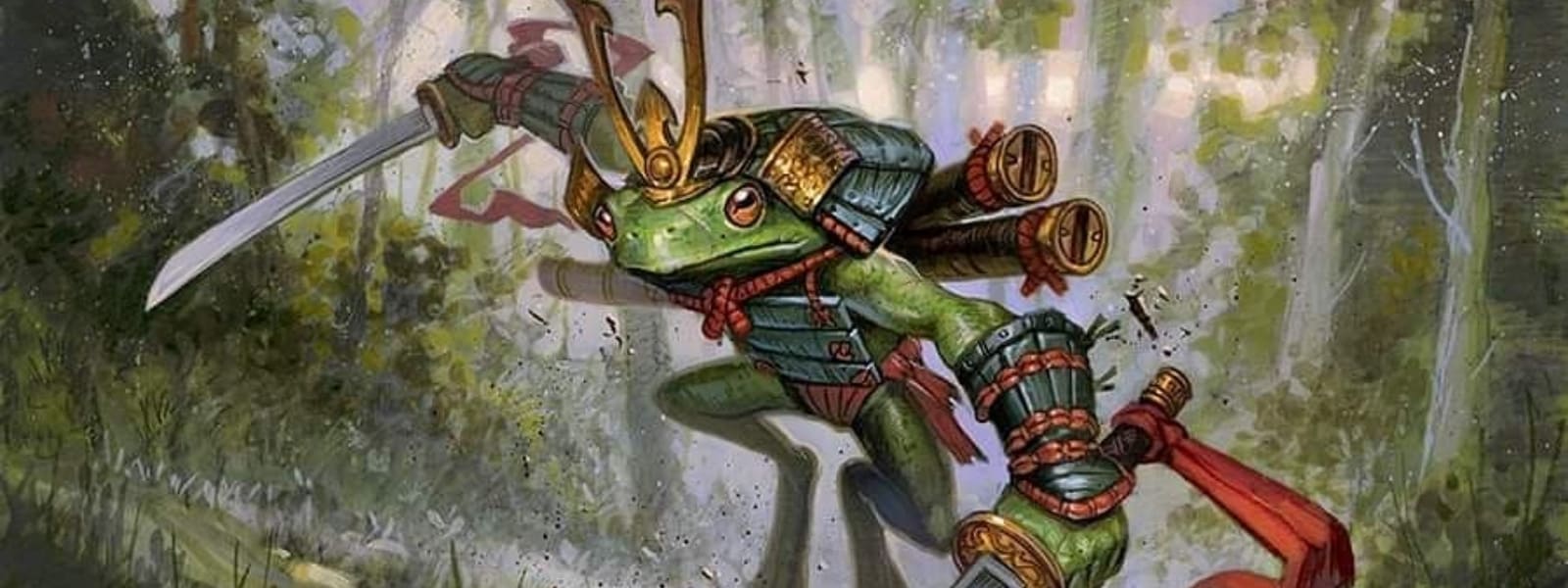
Oath of the Seafarer
The Open Sea calls to sea-faring warriors, swashbuckling sailors, and journeying guardians who seek the thrill of an endless horizon. Driven to seek the adventure and mystery across and beneath every endless oceanic expanse, paladins who swear this oath stand against those who would deny the liberties afforded to like-minded travellers. Such guardians believe in the natural beauty of the sea, often making offerings and prayers to entities or deities like the Wild Mother or Storm Lord that influence safe passage with wanton violence and rakish charm.
Tenets of the Open Sea
No Greater Life than a Life Lived Free. One should be free to chart their own path without oppression. Those who would exert their power to dominate others shall be smote.
Trust the Skies. The guidance of a strong breeze. The rumbling warnings of a coming storm. Nature is a source of portent and council that should be heeded.
Adapt like the Water. The waters of the ocean can shift around any obstacle or become an impassable one. They can carve around and reveal the secrets of the past or swallow the truth and hide it forever. To embrace this fluidity is to be ready for any challenge.
Explore the Uncharted. The world is filled with much mystery. Through the pursuit of these enigmatic ends, one can both uncover those who hide their dark deeds in shadow to be judged, and find the path to becoming something great.
Oath Spells
You gain oath spells at the paladin levels listed.
Oath of the Open Sea Spells
| Level | Spells |
|---|---|
| 3rd | Create or Destroy Water, Expeditious Retreat |
| 5th | Augury, Gust of Wind |
| 9th | Tidal Wave, Water Breathing |
| 13th | Control Water, Freedom of Movement |
| 17th | Control Winds, Maelstrom |
Channel Divinity
When you take this oath at 3rd level, you gain the following two Channel Divinity options.
Marine Layer. As an action you can channel the sea to create a thick cloud of fog that surrounds you and heavily obscures the area for 20 feet in all directions, following you as you move. You and all creatures within 5 feet of you instead treat this fog as lightly obscured. This fog lasts for 10 minutes, spreads around corners and cannot be dispersed.
Fury of the Tides. As a bonus action, you can channel the powerful might of the waves to bolster your attacks for 1 minute. Once per turn for the duration, when you hit a creature with a weapon attack, you can choose to push the target 10 feet away from you. If the target is pushed into an obstacle or another creature, they take additional bludgeoning damage equal to your Charisma modifier.
Aura of Liberation
Starting at 7th level, you
emanate an aura while
you’re not incapacitated.
You and any creature of
your choice within
10 feet of you cannot
be grappled or
restrained, as well as
ignore penalties on
movement or attacks
while underwater.
Creatures that are
already grappled or
restrained when they
enter the aura can
spend 5 feet of
movement to
automatically escape
nonmagical restraints.
At 18th level, the range
of the aura increases
to 30 feet.
Stormy Waters
At 15th level, you can call
crashing waters around you as
a reaction whenever a creature
enters or exits your melee range. The
creature takes 1d12 bludgeoning damage
and must succeed a Strength saving throw
or be knocked prone.
Mythic Swashbuckler
At 20th level, you learn to channel the adventuring spirits of historic sea captains. As an action, you embrace these spirits of the sea, gaining the following benefits for 1 minute:
- Climbing costs no additional movement, and you have advantage on Strength (Athletics) checks.
- If you are within 5 feet of a creature, and no other creatures are within 5 feet of you, you have advantage on your attacks against that creature.
- You can take the Dodge action as a bonus action.
- You have advantage on all Dexterity ability checks and Dexterity saving throws against effects that you can see.
Once you use this feature, you can’t use it again until you finish a long rest, unless you expend a 5th-level spell slot to use it again.

Oath of Vengeance
The Oath of Vengeance is a solemn commitment to punish those who have committed a grievous sin. When evil forces slaughter helpless villagers, when an entire people turns against the will of the gods, when a thieves' guild grows too violent and powerful, when a dragon rampages through the countryside – at times like these, paladins arise and swear an Oath of Vengeance to set right that which has gone wrong. To these paladins – sometimes called avengers or dark knights – their own purity is not as important as delivering justice.
Tenets of Vengeance
The tenets of the Oath of Vengeance vary by paladin, but all the tenets revolve around punishing wrongdoers by any means necessary. Paladins who uphold these tenets are willing to sacrifice even their own righteousness to mete out justice upon those who do evil, so the paladins are often true- or lawful- neutral in alignment. The core principles of the tenets are brutally simple.
Fight the Greater Evil. Faced with a choice of fighting my sworn foes or combating a lesser evil, I choose the greater evil.
No Mercy for the Wicked. Ordinary foes might win my mercy, but my sworn enemies do not.
By Any Means Necessary. My qualms can't get in the way of exterminating my foes.
Restitution. If my foes wreak ruin on the world, it is because I failed to stop them. I must help those harmed by their misdeeds.
Oath Spells
You gain oath spells at the paladin levels listed.

Oath of Vengeance Spells
| Level | Spells |
|---|---|
| 3rd | Bane, Hex |
| 5th | Hold Person, Misty Step |
| 9th | Haste, Protection from Energy |
| 13th | Banishment, Dimension Door |
| 17th | Hold Monster, Scrying |
Channel Divinity
When you take this oath at 3rd level, you gain the following two Channel Divinity options.
Abjure Enemy. As an action, you present your holy symbol and speak a prayer of denunciation, using your Channel Divinity. Choose one creature within 60 feet of you that you can see. That creature must make a Wisdom saving throw, unless it is immune to being frightened. Fiends and undead have disadvantage on this saving throw. On a failed save, the creature is frightened for 1 minute or until it takes any damage. While frightened, the creature's speed is 0, and it can't benefit from any bonus to its speed. On a successful save, the creature's speed is halved for 1 minute or until the creature takes any damage.
Vow of Enmity. As a bonus action, you can utter a vow of enmity against a creature you can see within 10 feet of you, using your Channel Divinity. You gain advantage on attack rolls against the creature for 1 minute or until it drops to 0 hit points or falls unconscious.
Relentless Avenger
By 7th level, your supernatural focus helps you close off a foe's retreat. When you hit a creature with an opportunity attack, you can move up to half your speed immediately after the attack and as part of the same reaction. This movement doesn't provoke opportunity attacks.
Soul of Vengeance
Starting at 15th level, the authority with which you speak your Vow of Enmity gives you greater power over your foe. When a creature under the effect of your Vow of Enmity makes an attack, you can use your reaction to make a melee weapon attack against that creature if it is within range.
Avenging Angel
At 20th level, you can assume the form of an angelic avenger. Using your action, you undergo a transformation. For 1 hour, you gain the following benefits:
- Wings sprout from your back and grant you a flying speed of 60 feet.
- You emanate a 30-foot aura of menace; a creature that starts its turn in the aura or enters it for the first time on its turn must succeed on a Wisdom save or become frightened of you for 1 minute, or until it's damaged
- You attack all frightened creatures with advantage.
Once you use this feature, you can't use it again until you finish a long rest, unless you expend a 5th-level spell slot to use it again.
Oath of the Watchers
The Oath of the Watchers binds paladins to protect mortal realms from the predations of extraplanar creatures, many of which can lay waste to mortal soldiers. Thus, the Watchers hone their minds, spirits, and bodies to be the ultimate weapons against such threats.
Tenets of the Watchers
A paladin who assumes the Oath of the Watchers swears to safeguard mortal realms from otherworldly threats.
Vigilance. The threats you face are cunning, powerful, and subversive. Be ever alert for their corruption.
Loyalty. Never accept gifts or favours from fiends or those who truck with them. Stay true to your order, your comrades, and your duty.
Discipline. You are the shield against the endless terrors that lie beyond the stars. Your blade must be forever sharp and your mind keen to survive what lies beyond.
Oath Spells
You gain oath spells at the paladin levels listed.
Oath of the Watchers Spells
| Level | Spells |
|---|---|
| 3rd | Alarm, Detect Magic |
| 5th | Moonbeam, See Invisibility |
| 9th | Counterspell, Nondetection |
| 13th | Aura of Purity, Banishment |
| 17th | Hold Monster, Scrying |
Channel Divinity
When you take this oath at 3rd level, you gain the following two Channel Divinity options.
Watcher's Will. You can use your Channel Divinity to invest your presence with the warding power of your faith. As an action, you can choose a number of creatures you can see within 30 feet of you, up to a number equal to your Charisma modifier (minimum of one creature). For 1 minute, you and the chosen creatures have advantage on Intelligence, Wisdom, and Charisma saving throws.
Abjure the Extraplanar. You can use your Channel Divinity to castigate unworldly beings. As an action, you present your holy symbol and each aberration, celestial, elemental, fey, or fiend within 30 feet of you that can hear you must make a Wisdom saving throw. On a failed save, the creature is turned for 1 minute or until it takes damage. A turned creature must spend its turns trying to move as far away from you as it can, and it can't willingly end its move in a space within 30 feet of you. For its action, it can use only the Dash action or try to escape from an effect that prevents it from moving. If there's nowhere to move, the creature can take the Dodge action.
Aura of the Sentinel
At 7th level, you and all creatures of your choice within 10 feet of you gain a bonus to initiative equal to your Charisma modifier while you aren't surprised.
At 18th level, the range of this aura increases to 30 feet.
Vigilant Rebuke
At 15th level, you've learned how to chastise anyone who dares wield beguilements against you and your wards. Whenever you or a creature you can see within 30 feet of you succeeds on an Intelligence, a Wisdom, or a Charisma saving throw, you can use your reaction to deal 2d8 + your Charisma modifier force damage to the creature that forced the saving throw.
Mortal Bulwark
At 20th level, you manifest a spark of divine power in defence of the mortal realms. As a bonus action, you gain the following benefits for 1 minute:
- You gain truesight with a range of 120 feet.
- You have advantage on attack rolls against aberrations, celestials, elementals, fey, and fiends.
- When you hit a creature with an attack roll and deal damage to it, you can also force it to make a Charisma saving throw against your spell save DC. On a failed save, the creature is magically banished to its native plane of existence if it's currently not there. On a successful save, the creature can't be banished by this feature for 24 hours.
Once you use this bonus action, you can't use it again until you finish a long rest, unless you expend a 5th-level spell slot to use it again.
Oath of the Zealot
Zealots swear their oath to hold their desires above all other pleasures and achievements, and to show their dedication, passion, and fervor through their actions. Nothing is more important than that drive – not the bonds of a family, not friendship or love. Not even devotion to a deity. Zealot Paladins recognise, however, that the best way to teach zeal is by demonstrating it.
Tenets of Zeal
The tenets of the Oath of the Zealot are serious and severe, as are those paladins who choose to take them.
Uncover Weakness. Dawn annihilates the night. Dilution of faith must be revealed before it can be destroyed.
Unyielding Ambition. Ones desires must be pure, whole, and chief.
No Mercy. The righteous path requires unwavering conviction and unflinching resolve.
By Any Means Necessary. There must be no sacrifice too great when it comes to achieving your goals.
Channel Divinity
When you take this oath at 3rd level, you gain the following two Channel Divinity options:
Brand the Heretic. You can use your Channel Divinity to mark a creature as a heretic. As a bonus action, choose a creature you can see within 30 feet and a symbol of a gauntlet with a weeping eye in the palm appears on it. For the next minute, your weapon attacks against the chosen creature score a critical hit on a roll of 19 or 20, and each time the creature’s turn starts you can use your reaction to make one weapon attack against it.
Helm’s Eye. You can use your Channel Divinity to open your senses to hidden signs of corruption and malfeasance. As a bonus action, you grant yourself advantage on Intelligence (Investigation), Wisdom (Insight), and Wisdom (Perception) ability checks for the next 10 minutes. During this time, you can’t be surprised and add your Charisma modifier (minimum +0) to your passive Perception.
Aura of Inquisition.
Beginning at 7th level, you and friendly creatures within 10 feet of you can’t be blinded while you are conscious. Additionally, creatures and objects of your choice within this range can’t benefit from being invisible, and you deal an additonal 1d8 radiant (moonlight) damage to shapechangers within the aura's range.
At 18th level, the range of this aura increases to 30 feet.
Blaze of Glory
Starting at 15th level, you can delay death for an instant to perform a final heroic act of utter fervour. When you are reduced to 0 hit points by an attacker you can see, even if you would be killed outright, you can use your reaction to move up to your speed toward the attacker and make one melee weapon attack against it, as long as the movement brings it within your reach. You make this attack with advantage. If the attack hits, the creature takes an extra 5d10 fire damage and an extra 5d10 damage of the weapon’s type. You then fall unconscious and begin making death saving throws as normal, or you die if the damage you took would have killed you outright.
Once you use this feature, you can’t use it again until you finish a long rest, unless you expend a spell slot of 4th-level or higher to use it again.
Calamitous Conviction.
At 20th level, as an action you can reveal the true nature of your enemies to all for 1 minute. During this time, you gain the following benefits:
- You have truesight out to a distance of 120 feet.
- Creatures who move into your aura for the first time on their turn, or who start their turn in your aura, must make a Constitution saving throw against your paladin spell save DC. On a failure, the creature is blinded until the start of its next turn.
- As a bonus action on each of your turns you can choose a creature within 60 feet and reveal its weaknesses for all to see. Attacks made against the chosen creature have advantage until the start of your next turn.
Once you use this feature, you can’t use it again until you finish a long rest, unless you expend a 5th-level spell slot to use it again.
Oathless Paladins
Oathbreaker
An oathbreaker is a paladin who breaks their sacred oaths to pursue some dark ambition or serve an evil power. Whatever light burned in the paladin's heart has been extinguished. Once, you held conviction. You swore an oath and you believed in it. But something changed. Something weakened your conviction, and now, you are consumed by doubt, doubt that angers you, warps your very soul.
Whether you rage against those that swear oaths, the entities to which you swore, or any target you can set your sights upon, you are a distraught juggernaut, and woe upon those that would stand in your way.
Oath Spells
You gain oath spells at the paladin levels listed.
Oathbreaker Spells
| Level | Spells |
|---|---|
| 3rd | Hellish Rebuke, Protection from Evil and Good |
| 5th | Crown of Madness, Darkness |
| 9th | Fear, Major Image |
| 13th | Banishment, Confusion |
| 17th | Dominate Person, Planar Binding |
Holy No More
Starting at 3rd level, though you no longer wield the arms of conviction, you still carry its legacy. You gain resistance to bludgeoning, piercing, and slashing damage while wearing heavy armour. Additionally, you have advantage on Strength and Dexterity saving throws.
Channel Divinity
When you take this oath at 3rd level, you gain the following two Channel Divinity options.
Terrifying Will. As an action, you channel the darkest emotions and focus them into a burst of magical menace. Each creature of your choice within 30 feet of you must make a Wisdom saving throw if it can see you. On a failed save, the target is frightened of you for 1 minute. If a creature frightened by this effect ends its turn more than 30 feet away from you, it can attempt another Wisdom saving throw to end the effect on it.
Breaker of Ties. As an action, you can touch an object. If the target is nonmagical, you can deal force damage to it equal to 5 x your Paladin level. If it is magical or cursed, you immediately know it and you know whether a creature is attuned to it. If an object is cursed or attuned, you can remain in contact with the object for 1 minute, at which time any curses are removed and attunements are broken.
Aura of Hate
Starting at 7th level, you and any creatures of your choice within 10 feet of you can gain a bonus to melee weapon damage rolls equal to your Charisma modifier (minimum of +1) on their turn, but gain disadvantage on saving throws against divine spells and otherwise holy magical effects until the start of their next turn by doing so. A creature can benefit from this feature from only one paladin at a time. Creatures who are committed to a doctrine, oath, faith, or particular set of values they have sworn to uphold do not gain this benefit.
At 18th level, the range of this aura increases to 30 feet.
Breaker of Bodies
By 15th level, you are so suffused with conviction in nothing but yourself that your corpse carries itself beyond death. If you drop to 0 hit points and don't die outright, you can make a DC 10 Charisma saving throw. If you succeed, you drop to 1 hit point instead. Each time you use this feature after the first. the DC increases by 5. When you finish a short or long rest, the DC resets to 10.
Boundless
At 20th level, your hatred for the oath you threw off reaches new heights. The aura reduces any bright light created by divine magic in a 30-foot radius around you to dim light, and dim light to darkness. Whenever an enemy that is frightened by you starts its turn in the aura, it takes 4d10 psychic damage. Additionally, you and any creatures of your choosing in the aura are fortified by the sheer conviction you manifest around you; creatures who benefit from your Aura of Hate also add your Charisma modifier to their AC when they make a melee weapon attack on their turn, provided they did not take the Dodge, Disengage, or Hide action.
In addition, when you hit a creature within your Aura that is frightened of you with a melee weapon attack, you can use your reaction to score a critical hit.
Finally, you can use a bonus action on your turn to cause one creature within your Aura of Hate to attack one creature of your choice. If the target is unwilling, they must make a Charisma saving throw to resist your will.

Death Knight
Raised beyond the veil of death through sheer force of will alone, you were created through servitude to a greater entity of death or by a lich of immense power. A Death Knight is concerned with the forces that cause death, as well as the negative energy that gives rise to undead creatures, and is granted a measure of control over such forces.
Tenets of Death. Though an order of Paladins by function, there is no oath or guild which binds these beings together beyond merely the force which animated them. As such, Death Knights have no oath. That being said, these knights of death are known to herald in swathes of new souls to the underworld, and to feel no remorse at doing so.
Dread Spells
You gain dread spells at the paladin levels listed.
Death Knight Spells
| Level | Spells |
|---|---|
| 3rd | false life, inflict wounds |
| 5th | blindness/deafness, hold person |
| 9th | animate dead, vampiric touch |
| 13th | blight, shadow of moil |
| 17th | hold monster, negative energy flood |
Exhumed Flesh
When you take this oath at 3rd level, you cannot ever renounce it. You have been spurned by death, instead harvesting others in her name, a fact represented by the following traits:
Your creature type is Undead instead of Humanoid. You cannot be healed by spells of less than 6th-level, and attempts to resurrect you from this pale imitation of life instead incinerate you in a burst of radiant light.
Raise Undead functions as a Revivify spell when cast on your corpse, and Animate Undead as a Resurrection spell.
You have advantage on death saving throws and saving throws against disease and being poisoned, and you have resistance to necrotic and poison damage.
You can speak with any undead with an Intelligence score of 3 or higher as if you shared a language
You cannot eat, drink, breathe, sleep, or age, and effects that would cause you to age or sleep don't work on you. You can finish a long rest in 4 hours if you spend those hours in an inactive, motionless state, during which you retain consciousness.
Death's Touch
At 3rd level, you learn to reap the life that drains around you, but in doing so you have forfeit your Lay On Hands feature. When a creature within 10 feet of you loses hit points, you can use your reaction to draw it into yourself. You regain a number of hit points equal to the total the creature loses, to a maximum equal to 3 + your paladin level.
You can regain a total number of hit points using this feature equal to 5 x your Paladin level. The amount you have healed this way returns to 0 when you finish a long rest.
At 18th level, this range increases to 30 feet.
Channel Dread
When you take this oath at 3rd level, you gain the following two Channel Divinity options.
Control Undead. As an action, you target one undead creature you can see within 30 feet of you. The target must make a Wisdom saving throw. On a failed save, the target must obey your commands for the next 24 hours, or until you use this Channel Divinity option again. An undead whose challenge rating is greater than half your paladin level is immune to this effect.
Starting at 7th level, if there are no undead nearby to control, you can cast the animate dead spell using this feature. When you do so, the creature gains an additional number of hit points equal to 5 + your Paladin level, it adds your Charisma modifier to its saving throws, and it stays under your control for 24 hours, before crumbling to ash as you consume its soul.
Hellfire Orb. As an action, you hurl a magical ball of hellfire that explodes at a point you can see within 120 feet of you. Each creature in a 20-foot-radius sphere centred on that point must make a Dexterity saving throw. The sphere spreads around corners. A creature takes a number of d6s of both fire damage and of necrotic damage equal to half your Paladin level on a failed save, or half as much damage on a successful one.
Dread Aura
From 7th-level, your command strengthens while the deathless are nearby. All fiends and undead of your choice within 10 feet of you have advantage on attacks and saving throws. Additionally, when you are targeted by a weapon attack while a creature within 5 feet of you benefits from this effect, you can use your reaction to command the creature to take a step in front of you, becoming the new target for the attack.
When you take the Attack action on your turn, any attack you make with that action can originate from your space or from the space of an undead under your control. You make this choice for each attack. Once per turn when you take the Attack action, you can force one creature benefiting from the effect of your aura to make a melee attack as a part of the action made to attack. On a hit, the attack deals additional necrotic damage equal to 1d6 + your Charisma modifier.
At 18th level, the radius of your aura increases to 30 feet.
Undead Fortitude
At 15th level, when an undead under your control is killed within 30 feet of you, you can use a reaction to expend a Hit Die and cause the creature to regain a number of hit points equal to 10 + your Constitution modifier.
the Death Knight
By 20th level, the breathless death saturates your body and infuses the empty cavity where once there was a soul. You gain immunity to poison and necrotic damage, and to the exhaustion, charmed, and frightened conditions.
In addition, while there is an allied fiend or undead within your Dread Aura, you gain a Death Ward spell effect.


The Ranger
Far from the bustle of cities and towns, past the hedges that shelter the most distant farms from the terrors of the wild, amid the dense-packed trees of trackless forests and across wide and empty plains, rangers keep their unending watch.
You must have a Dexterity score and a Wisdom score of 13 or higher in order to multiclass in or out of this class.
Class Features
As a ranger, you gain the following class features.
Hit Points
- Hit Dice: 1d10 per ranger level
- Hit Points at 1st Level: 10 + your Constitution modifier
- Hit Points at Higher Levels: 1d10 (or 6) + your
Constitution modifier per ranger level after 1st
Proficiencies
- Armour: Light armour, medium armour, shields
- Weapons: Simple weapons, martial weapons
- Tools: One set of Artisan's tools of your choice, or either land or water Vehicles
- Saving Throws: Dexterity, Wisdom
- Skills: Choose three from Animal Handling, Athletics, Insight, Investigation, Nature, Perception, Stealth, and Survival.
You gain two additional languages of your choice.
Equipment
You start with the following equipment, in addition to the equipment granted by your background:
- (a) scalemail or (b) leather armour
- (a) two shortswords or (b) two simple melee weapons
- (a) a dungeoneer's pack or (b) an explorer's pack
- (a) A longbow and a quiver of 20 arrows or (b) a musket and 10 rounds
Hunter's Mark
Beginning at 1st level, when you hit a creature with an attack roll, you can call on your mystical bond with nature to brand the target with your Hunter's Mark for 1 minute. This feature ends early if the marked target moves to a different plane other than the Border Ethereal, if you mark a new target with your Hunter's Mark, or if the target is reduced to 0 hit points.
Each time that you hit the creature branded by your Hunter's Mark with a weapon attack and damage it, including when you mark it, you can increase that damage by 1d4.
You can use this feature to mark a creature a number of times equal to your Wisdom modifier (minimum of once), and you regain all expended uses when you finish a long rest.
This feature's extra damage increases when you reach certain levels in this class, as shown in the class table below.

Deft Explorer
Even from 1st level, you are a master of navigating the natural world, and you react with swift and decisive action when attacked. This grants you the following benefits:
You ignore non-magical difficult terrain.
If you are travelling alone, you can move stealthily at a
normal pace.
This superior ability to travel beyond normal limits confers additional benefits at higher levels:
6th-level features
- You can hold your breath for twice as long as normal.
- You can use the Dash or Hide action as a bonus action on your turn.
- While tracking creatures you’re familiar with, or through a terrain you know well, you can ascertain their exact number, their sizes, and how long ago they passed through the area.
- Your Hunter's Mark duration increases to 10 minutes
10th-level features
- Whenever you finish a short rest, your exhaustion level, if any, decreases by 1.
- Your walking speed increases by 5 feet
- You add your Wisdom modifier to your Initiative
- Your Hunter's Mark duration increases to 1 hour
The Ranger
| Level | Proficiency Bonus | Features | Hunter's Mark die | Spells Known | 1st | 2nd | 3rd | 4th | 5th |
|---|---|---|---|---|---|---|---|---|---|
| 1st | +2 | Hunter's Mark, Deft Explorer, Spellcasting | 1d4 | 2 | 2 | - | - | - | - |
| 2nd | +2 | Fighting Style, Canny | 1d4 | 2 | 2 | - | - | - | - |
| 3rd | +2 | Wayfarer Conclave, Primal Awareness | 1d4 | 3 | 3 | - | - | - | - |
| 4th | +2 | Ability Score Improvement | 1d4 | 4 | 3 | - | - | - | - |
| 5th | +3 | Extra Attack | 1d4 | 5 | 4 | 2 | - | - | - |
| 6th | +3 | Tireless, Deft Explorer Improvement | 1d6 | 5 | 4 | 2 | - | - | - |
| 7th | +3 | Conclave feature, Evasion | 1d6 | 6 | 4 | 3 | - | - | - |
| 8th | +3 | Ability Score Improvement | 1d6 | 6 | 4 | 3 | - | - | - |
| 9th | +4 | - | 1d6 | 7 | 4 | 3 | 2 | - | - |
| 10th | +4 | Hide in Plain Sight, Deft Explorer Improvement | 1d6 | 7 | 4 | 3 | 2 | - | - |
| 11th | +4 | Conclave feature | 1d8 | 8 | 4 | 3 | 3 | - | - |
| 12th | +4 | Ability Score Improvement | 1d8 | 8 | 4 | 3 | 3 | - | - |
| 13th | +5 | Primaeval Awareness | 1d8 | 9 | 4 | 3 | 3 | 1 | - |
| 14th | +5 | Foe Slayer, Deft Explorer Improvement | 1d8 | 9 | 4 | 3 | 3 | 1 | - |
| 15th | +5 | Conclave feature | 1d8 | 10 | 4 | 3 | 3 | 2 | - |
| 16th | +5 | Ability Score Improvement | 1d10 | 10 | 4 | 3 | 3 | 2 | - |
| 17th | +6 | - | 1d10 | 11 | 4 | 3 | 3 | 3 | 1 |
| 18th | +6 | Aggressive | 1d10 | 11 | 4 | 3 | 3 | 3 | 1 |
| 19th | +6 | Ability Score Improvement | 1d10 | 12 | 4 | 3 | 3 | 3 | 2 |
| 20th | +6 | Master of the Wild | 1d12 | 13 | 4 | 3 | 3 | 3 | 2 |
14th-level features
- You gain a swimming speed and a climbing speed equal to your walking speed, and you can climb difficult surfaces without needing to make an ability check.
- You cannot be tracked by nonmagical means, unless you choose to leave a trail.
- Passing through magical difficult terrain costs you no extra movement.
- Your Hunter's Mark duration increases to 8 hours
Spellcasting
Also at 1st level, you have learned to use the magical essence of nature to cast spells, much as a druid does. The Ranger table shows how many spell slots you have to cast your spells of 1st level and higher. To cast one of these spells, you must expend a slot of the spell's level or higher. You regain all expended spell slots when you finish a long rest. For example, if you know the 1st-level spell Animal Friendship and have a 1st-level and a 2nd-level spell slot available, you can cast Animal Friendship using either slot.
Spells Known of 1st Level and Higher
You know two 1st-level spells of your choice from the ranger spell list. The Spells Known column of the Ranger table shows when you learn more ranger spells of your choice. Each of these spells must be of a level for which you have spell slots. For instance, when you reach 5th level in this class, you can learn one new spell of 1st or 2nd level.
Additionally, when you gain a level in this class, you can choose one of the ranger spells you know and replace it with another spell from the ranger spell list, which also must be of a level for which you have spell slots.
Spellcasting Ability
Wisdom is your spellcasting ability for your ranger spells, since your magic draws on your attunement to nature. You use your Wisdom whenever a spell refers to your spellcasting ability, when setting the saving throw DC for a ranger spell you cast, and when making an attack roll with one.
Spell Save DC
Spell attack modifier
Spellcasting Focus
You can use a druidic focus as a spellcasting focus for your ranger spells.
Canny
By the time you reach 2nd level, your studies of the many creatures and cultures of the earth have given you a huge breadth of cultural knowledge. Choose one of your skill proficiencies. Your proficiency bonus is doubled for any ability check you make that uses the chosen skill. You can forfeit both additional languages to gain another skill expertise.
At 10th level, you may choose another skill or tool proficiency to gain expertise.
Fighting Style
At 2nd level, you adopt a particular style of fighting as your specialty. Choose one of the options from the Fighting Styles list, obeying any prerequisites. You can't take a Fighting Style option more than once, even if you later choose again.
Wayfarer Conclaves
At 3rd level, you join a wayfarers' conclave whose values you strive to emulate, specialising in a skill set most suited for your environment. Your choice grants you features at 3rd level and again at 7th, 11th, and 15th level.
Primal Awareness
Beginning at 3rd level, you can focus your awareness through the interconnections of nature. You learn additional spells when you reach certain levels in this class if you don't already know them, as shown in the Primal Awareness Spells table. These spells don't count against the number of ranger spells you know. You can cast these spells using spell slots provided you have a spell slot of high enough level to do so.
Primal Awareness Spells
| Level | Spell |
|---|---|
| 3rd | detect magic, speak with animals |
| 5th | locate animals or plants, locate object |
| 9th | locate creature, speak with plants |
You can cast a Primal Awareness spell without expending a spell slot a number of times equal to your Wisdom modifier. All expended uses of this feature are regained when you finish a long rest.
Ability Score Improvement
When you reach 4th level, and again at 8th, 12th, 16th, and 19th level, you can increase one ability score of your choice by 2, or you can increase two ability scores of your choice by 1. As normal, you can't increase an ability score above 20 using this feature.
Instead of increasing ability scores as detailed above, you may increase one ability score of your choice by 1 and gain one fighting style available to you. You can instead choose to take a Feat.
Martial Versatility
Whenever you reach a level in this class that grants the Ability Score Improvement feature, you can replace a fighting style you know with another fighting style available to you. This replacement represents a shift of focus in your martial practice.
Extra Attack
Beginning at 5th level, you can attack twice, instead of once, whenever you take the Attack action on your turn
Tireless
Beginning at 6th level, as a bonus action, you can give yourself a number of temporary hit points equal to 1d10 + your Wisdom modifier (minimum of 1 temporary hit point). You can use this ability a number of times equal to your Wisdom modifier, and you regain all expended uses when you finish a short or long rest.
You can instead expend a use of this trait on your turn (no action required) to end one of the frightened, grappled, restrained, or stunned conditions on yourself.
Evasion
Beginning at 7th level, you can nimbly dodge out of the way of certain area effects, such as a red dragon's fiery breath or an Ice Storm spell. When you are subjected to an effect that allows you to make a Dexterity saving throw to take only half damage, you instead take no damage if you succeed on the saving throw, and only half damage if you fail.
Hide in Plain Sight
Starting at 10th level, you can remain perfectly still for long periods of time to set up ambushes. When you attempt to hide on your turn, you can opt to not move on that turn. If you avoid moving, creatures that attempt to detect you take a −10 penalty to their Wisdom (Perception) checks until the start of your next turn. You lose this benefit if you move or fall prone, either voluntarily or because of some external effect. You are still automatically detected if any effect or action causes you to no longer be hidden.
If you are still hidden on your next turn, you can continue to remain motionless and gain this benefit until you are detected.
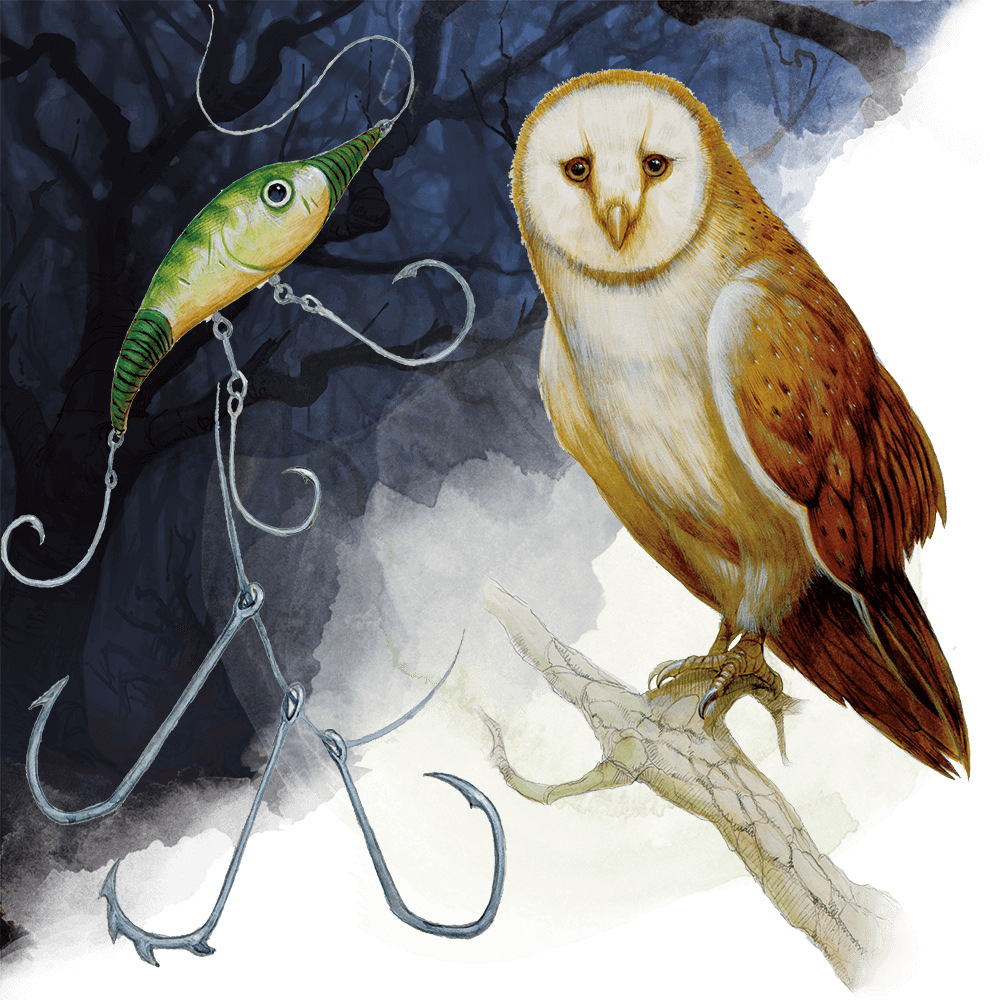
Primaeval Awareness
Your understanding of the natural world reaches into the deep well of ancient, timeless magic held by few but the greatest druids. You can cast a single Primaeval spell you know once, without requiring material components, by expending two uses of your Primal Awareness. You regain the ability to cast a Primaeval spell when you finish a long rest.
At the levels shown in the Primaeval Awareness Spells table, you can choose one of the corresponding spells, or one of the spells offered at lower levels, to be a Primaeval spell for you.
Primaeval Awareness Spells
| Level | Primaeval Spell |
|---|---|
| 13th | Awaken, Commune with Nature, Legend Lore |
| 15th | Druid Grove, Find the Path, Transport via Plants |
| 19th | Control Weather, Plane Shift, Regenerate |
You can change a chosen Primaeval Awareness spell when you gain a level in this class.
Foe Slayer
At 14th level, you become an unparalleled hunter. Once on each of your turns, you can add an additional Hunter's Mark die to the attack roll or the damage roll of a single attack you make. You can choose to use this feature before or after you roll any dice, but before any effects of the roll are applied.
Aggressive
Starting 18th level, whenever you are the target of a weapon attack, you can use your reaction to immediately take the Attack action against the attacking creature
Master of the Wilds
Your skills as an adventurer, hunter, and outlander have no equal, you have become one with nature, and the wild tenacity in your soul is barely contained. At 20th level, you can retain your Hunter's Mark indefinitely and even across different planes; you no longer need to eat, drink, or sleep; you are immune to poison damage and the poisoned condition, and you feel no effects of exhaustion or disease up until they kill you.
Wayfarer Conclaves
Arboreal Guardian
The Conclave of Guardians is as old as the race of elves and the rituals of the druids. Sometimes called green arrows or forest antlers, these rangers love the beautiful and life-giving things of the world, adorning their armour and clothing with images of growing things -leaves, antlers, or flowers- to reflect their commitment to preserving life and light in the world.
Guardian Magic
Starting at 3rd level, you learn two additional spells when you reach certain levels in this class, as shown in the Guardian Spells table. The spells count as ranger spells for you, and they don’t count against the number of ranger spells you know.
Arboreal Guardian Spells
| Level | Spells |
|---|---|
| 3rd | Earth Tremor, Entangle |
| 5th | Earthbind, Spike Growth |
| 9th | Erupting Earth, Plant Growth |
| 13th | Giant Insect, Grasping Vine |
| 17th | Awaken, Wall of Stone |
Guardian Soul
Starting at 3rd level, you gain the ability to temporarily grow and take on the appearance of a treelike person, covered with leaves and bark. As a bonus action, you assume this guardian form, which lasts until you end it as a bonus action or until you are incapacitated. You undergo the following changes while in your guardian form:
- Your size becomes one size greater
- Any speed you have becomes 10 feet, unless the speed was lower.
- Your Reach increases by 5 feet.
- You gain a number of temporary hit points at the start of each of your turns. The number equals half your ranger level. When the form ends, you lose any temporary hit points you have from it.
- You deal an additional Hunter's Mark die of the weapon's damage when you hit with melee weapon attacks.

Piercing Thorns
At 3rd level, your command of primal magic allows you to enhance your attacks with thorns. You deal an additional 1d4 piercing damage to creatures you hit with melee weapon attacks. This damage is magical if the weapon is magical. Attacks that benefit from this effect are also considered to have the Bleed property.
At 11th level, this additional damage increases to 1d8.
Ancient Fortitude
At 7th level, you gain the endurance of the ancient forests. Your hit point maximum and current hit points increase by 2 per ranger level when you assume your guardian form. This increase lasts until you leave the form; your hit point maximum then returns to normal, but your current hit points remain the same, unless they must decrease to abide by your hit point maximum
Rooted Defence
At 11th level, you gain the ability to twist and turn the ground beneath you. While you are in your guardian form, the ground within 30 feet of you is difficult terrain for your enemies. When an enemy moves within the area of difficult terrain, it takes 1d6 piercing damage for every 5 feet it moves. Additionally while in guardian form, you cannot be moved against your will and are immune to the paralysed and frightened conditions
Guardian Aura
Starting at 15th level, your guardian form emanates a magical aura that fortifies your injured allies. When any ally starts their turn within 30 feet of your guardian form, that ally regains a number of hit points equal to half your ranger level. This aura has no effect on a creature that has half or more of its hit points, nor on undead and constructs. Allied Plants and Beasts regain twice as many hit points from this ability.

Beastmaster
The Beastmaster conclave embodies a friendship between civilised creatures and the natural fauna of the world. United in focus, beast and ranger work as one to fight the monstrous foes that threaten civilisation and the wilderness alike. Attaining mastery of beasts means committing yourself to this ideal, working in partnership with an animal as its companion and friend.
Wild Companion
At 3rd level, you gain a beast companion that accompanies you on your adventures and is trained to fight alongside you. Choose a beast that is no larger than Medium and that has a challenge rating of ⅓ your Ranger level (rounded down). Through your long friendship, your wild companion can understand any languages you speak, but cannot speak, read, or write. Your companion adds your proficiency bonus to its AC, and uses your Proficiency Bonus for its attack and damage rolls, its saving throws, and skill Proficiencies instead of its own. Its hit point maximum equals its normal maximum or five times your ranger level, whichever is higher. Like any creature, the beast can spend Hit Dice during a short rest.
Your companion acts independently of you, but it always obeys your commands. In combat, your companion shares your initiative count and takes its turns with yours. It can move and use its reaction on its own, but the only action it takes on its turn is the Dodge action, unless you take a bonus action on your turn to command it to take another action. That action can be one in its stat block or some other action. If you are incapacitated or absent, your companion can take any action of its choice, not just Dodge; usually in an attempt to protect you.
If your beast companion dies, you can obtain another one by spending 8 hours magically bonding with another beast that isn’t hostile to you, either the same type of beast as before or a different one. When you gain a level in this class which increases the CR of your companion, you can change the statistics of your companion to those of a comparable form without changing your companion.
Feral Bond
Also from 3rd level, you and your companion form a potent fighting team. When you take the Attack action on your turn, if your wild companion can see you, it can use its reaction to make a single natural weapon attack.

Exceptional Training.
Beginning at 7th level, at the end of a turn in which your wild companion hasn't attacked, you can use your reaction to grant your wild companion the effects of having taken the Dash, Disengage, Dodge, or Help action on its turn.
In addition, your wild companion’s weapon attacks are considered magical for the purpose of overcoming resistance and immunity to nonmagical damage. Also from this level, your companion can be a beast of Large or smaller.
Superior Beast
At 11th level, your wild companion gains one of the following features. You can change a chosen feature whenever you gain a level in this class.
Awakened. Your companion has an Intelligence score of 10 if not already higher and can speak one language you can.
Battle Hardened. Your companion’s AC increases by 2.
Chosen Kin. While your wild companion can see you, it has advantage on all saving throws.
Curse-Broken. Your companion is immune to diseases, spells, or effects that would alter its form or statistics.
Enemy of My Friend. While a creature is branded by your Hunter's Mark, your companion's natural weapon attacks deal an additional Hunter's Mark die of weapon damage to the marked creature.
Ethereal Grace. Your companion’s jumping distance is tripled, and it doesn't take damage from falling.
Fearsome Will. Your wild companion is immune to the frightened and charmed condition, unless it chooses to fail.
Feral Instincts. Whenever an attacker that your wild companion can see hits it with an attack, it can use its reaction to half the damage it takes from the attack.
Flighty. Your wild companion does not trigger attacks of opportunity by moving.
From the Shadows. Your wild companion deals an extra 2d6 damage of the attack’s type on the first attack that hits each turn against a creature that is not incapacitated
Go for the Eyes. When your wild companion hits a creature branded with your Hunter's Mark with an attack on your turn, you have advantage on all attacks against that creature until the start of your next turn.
Pack Skirmisher. When you hit a creature with a melee spell or weapon attack on your turn, your wild companion has advantage on all attacks against that creature until the start of your next turn.
At 18th level, your companion gains another Superior Beast feature.
Relentless
At 15th level, your wild companion gains resistance to all damage except psychic damage.
If you fall to 0 hit points while within 60 feet of your wild companion, it can immediately move up to its speed and take an action it chooses (no action required). Once it uses this ability, it cannot use it again until both it and you have completed a long rest.
Blood Hunter
You have survived the Hunter’s Bane, a dangerous, long-guarded ritual that alters your life’s blood, forever binding you to the darkness and honing your senses against it.
Often feared or misunderstood, and driven by an unending drive to destroy the wicked, blood hunters are clever, arcane warriors who have bound their essence to the dark creatures they hunt to better stalk and survive their prey. Armed with the rites of forbidden blood magic and a willingness to sacrifice their own vitality and humanity for the cause, they protect the realms from the shadows, ever vigilant to avoid becoming the same monsters they choose to hunt.
Blood Maledict
At 3rd level, you gain the ability to channel, and sometimes sacrifice, a part of your vital essence to curse and manipulate creatures through haemic magic. You gain one Blood Curse of your choice. You learn one additional blood curse of your choice, and you can choose one of the blood curses you know and replace it with another blood curse, at 6th, 10th, 14th, and 18th level.
When you use your Blood Maledict, you choose which curse to invoke. While invoking a blood curse, but before it affects the target, you can choose to amplify the curse by losing a number of hit points equal to one roll of your Hunter's Mark die. An amplified curse gains an additional effect, noted in the curse’s description. Creatures that do not have blood in their bodies are immune to blood curses. If you Amplify the curse, they also extend to affecting creatures with non-blood fluids which sustain their life - such as plants, oozes, or water elementals.
You can use this feature once, regaining the use of this feature when you finish a short or long rest, unless you expend a use of your Hunter's Mark to use it again.
Grim Psychometry
When you join this conclave at 3rd level, you gain a supernatural talent for discerning the history surrounding mysterious objects or places touched by evil. When making an Intelligence (History) check to recall information about a darker past surrounding an object you are touching, or a location you are present in, you have advantage on the roll. The information gleaned often leans towards the more sinister influences of the past, and sometimes conveys visions of things previously unknown to the character on higher rolls.
In addition, you have advantage on Wisdom (Survival) checks to track fey, fiends, or undead, as well as on Intelligence checks to recall information about them.
Crimson Rite
Also at 3rd level, you learn to invoke a rite of Hemocraft within your weapon at the cost of your own vitality. Choose acid, cold, fire, or lightning damage; this is your Rite damage.
As a bonus action, you activate a crimson rite on a single weapon with the elemental energy of the rite damage of your choice that lasts until you finish a short or long rest, or if you aren’t holding the weapon at the end of your turn. When you activate a rite, you lose a number of hit points equal to one roll of your Hunter's Mark die. While active, attacks from this weapon deal an additional Hunter's Mark die of the rite’s damage type. This damage is magical. A weapon can only hold a single active rite at a time.
You gain an additional Rite damage type of your choice at 7th and 14th level. Moreover, the damage type you choose at 14th level can be force, necrotic, radiant, or psychic damage.
Brand of Castigation
At 7th level, each time a creature branded with your Hunter's Mark deals damage to you or a creature you can see within 5 feet of you, the branded creature suffers psychic damage equal to your Wisdom modifier (minimum of 1 damage).
Dark Augmentation
Upon reaching 11th level, arcane blood magic suffuses your body, permanently reinforcing your resilience. Your speed increases by 5 feet, and whenever you make a Strength, Dexterity, or Constitution saving throw, you gain a bonus to the roll equal to your Wisdom modifier (minimum 1)
You also gain advantage on saving throws against being charmed and frightened, and you are immune to being possessed against your will.
Sanguine Mastery
Upon reaching 15th level, you honed your control over blood magic, mitigating your sacrifice and empowering your capability. Once per turn, whenever a Ranger feature requires you to roll one Hunter's Mark die, you can reroll the die and choose which result to use.
Brand of Tethering
Also at 15th level, the psychic damage from your Brand of Castigation feature increases to twice your Wisdom modifier (minimum of 2). In addition, a branded creature can’t take the Dash action, and if a creature branded by you attempts to teleport or leave their current plane via ability, spell, or portal, they take 4d6 psychic damage and must make a Wisdom saving throw. On a failure, the teleport or plane shift fails.

Blood Curses
Blood Curse of the Anxious
As a bonus action, you
magnify the adrenaline in
the body of a creature within
30 feet of you, making them
susceptible to forceful influence.
Until the end of your next turn,
all creatures have advantage on
Charisma (Intimidation) checks directed
at the target creature.
Amplify.
The next Wisdom saving throw
the target has to make before this curse
ends has disadvantage. Once you’ve
amplified this blood curse, you must
finish a long rest before you can
amplify it again.
Blood Curse of Binding
As a bonus action, you can attempt to bind
a creature you can see within 30 feet of
you that is no more than one size larger
than you. The target must succeed on
a Strength saving throw or have their speed be reduced to 0 and they can’t use reactions until the end of your next turn.
Amplify. This curse lasts for 1 minute and can affect a creature regardless of their size category. At the end of each of its turns, the cursed creature can make another Strength saving throw. On a success, this curse ends.
Blood Curse of Bloated Agony
As a bonus action, you curse a creature that you can see within 30 feet of you to painfully swell until the end of your next turn. For the duration of this curse, the creature has disadvantage on Strength and Dexterity ability checks, and suffers one Hunter's Mark die of necrotic damage if it makes more than one melee or ranged attack during its turn.
Amplify. This curse lasts for 1 minute. At the end of each of its turns, the cursed creature can make a Constitution saving throw. On a success, this curse ends.
Blood Curse of Corrosion
As a bonus action, a creature within 30 feet of you must make a Constitution saving throw or become poisoned for 1 minute. At the end of each of its turns, the target can make another Constitution saving throw, ending the curse on itself on a success.
Amplify. At the start of each turn while poisoned this way, the cursed creature suffers one Hunter's Mark die of acid damage.
Blood Curse of the Exorcist
As a bonus action, you can choose one creature you can see within 30 feet of you that is charmed, frightened, or possessed. The target creature is no longer charmed, frightened, or possessed.
Amplify. The creature that charmed, frightened, or possessed the target of your curse must make a Wisdom saving throw or be stunned until the end of your next turn.
Blood Curse of Exposure
When a creature you can see within 30 feet is hit with an attack or spell, you can use your reaction to temporarily weaken their resilience against it. Until the end of the turn, the target loses their resistance to the damage types of the triggering attack or spell.
Amplify. The target instead loses invulnerability to the damage types of the triggering attack or spell, having resistance to them until the end of the turn.
Blood Curse of the Eyeless
When a creature you can see within 30 feet of you makes an attack roll, you can use your reaction to roll one Hunter's Mark die and subtract the number rolled from the creature’s attack roll. You can choose to use this feature after the creature’s roll, but before the DM determines whether the attack roll succeeds. The creature is immune if it is immune to blindness.
Amplify. You apply this curse to all of the creature’s attack rolls until the end of the turn. You roll a new Hunter's Mark die for each affected attack.
Blood Curse of the Howl
As an action, you unleash a blood-curdling howl. Each creature within 30 feet of you that can hear you must succeed on a Wisdom saving throw or become frightened of you until the end of your next turn. If they fail their saving throw by 5 or more, their speed is reduced to 0 while frightened in this way. You can choose any number of creatures you can see to be unaffected by this howl.
Amplify. The range of this curse increases to 60 feet.
Blood Curse of the Marked
As a bonus action, you can empower the effects of your Hunter's Mark against a marked creature within 30 feet of you. Until the end of your turn, whenever you deal rite damage to the target, you deal an additional Hunter's Mark die of weapon damage.
Amplify. The next attack roll you make against the target before the end of your turn has advantage.
Blood Curse of the Muddled Mind
As a bonus action, you curse a creature that you can see within 30 feet of you that is concentrating on a spell. That creature has disadvantage on the next Constitution saving throw it must make to maintain concentration before the end of your next turn.
Amplify. The cursed creature has disadvantage on all Constitution saving throws made to maintain concentration of spells until the end of your next turn, and cannot cast any spells below 6th-level other than Cantrips for that period.
Blood Curse of the Souleater
When a creature that isn’t a construct or undead is reduced to 0 hit points within 30 feet of you, you can use your reaction to syphon energy from their soul. Until the end of your next turn, your weapon attacks have advantage.
Amplify. In addition, you regain an expended ranger spell slot. Once you’ve amplified this blood curse, you must finish a long rest before you can amplify it again.
Drakewarden
Your connection to the natural world takes the form of a draconic spirit, which can manifest in physical form as a drake. As your powers grow, your drake grows as well, blossoming from a small four-legged wild companion to a majestic winged creature large and strong enough for you to ride. Along the way, you gain an increasing share of the awe-inspiring power of dragons. These riders have been known to form into bands of fearsome monster hunters who drench their cloaks in the blood of their prey, hence nicknamed ‘Redhoods.’
Draconic Gift
When you join this conclave at 3rd level, the bond you share with your drake creates a connection to dragonkind, granting you understanding and empowering your presence. You learn to speak, read, and write Draconic.
In addition, you learn the Thaumaturgy cantrip and one other Sorcerer cantrip of your choice. These are ranger spells for you.
Drake Companion
At 3rd level, as an action, you can magically summon the drake that is bound to you. It appears in an unoccupied space of your choice within 30 feet of you. The drake is friendly to you and your wild companions, and it obeys your commands. See its game statistics in the accompanying Drake wild companion stat block, which uses your proficiency bonus (PB) in several places. Whenever you summon the drake, choose a damage type listed in its Draconic Essence trait. You can determine the cosmetic characteristics of the drake, such as its colour, its scale texture, or any visible effect of its Draconic Essence; your choice has no effect on its game statistics.
In combat, the drake shares your initiative count, but it takes its turn immediately after yours. It can move and use its reaction on its own, but the only action it takes on its turn is the Dodge action, unless you take a bonus action on your turn to command it to take another action. That action can be one in its stat block or some other action. If you are incapacitated, the drake can take any action of its choice, not just Dodge.
The drake is Medium size. Reflecting your special bond, you can use the drake as a mount if your size is Medium or smaller. While you are riding your drake, it can’t use the flying speed of this feature.
The drake remains until it is reduced to 0 hit points, until you use this feature to summon the drake again, or until you die. Anything the drake was wearing or carrying is left behind when the drake vanishes.
Once you summon the drake, you can’t do so again until you finish a long rest, unless you expend a spell slot of 1st level or higher to summon it.

Drake Companion
Medium Dragon, True Neutral
- armour Class 14 + PB (natural armour)
- Hit Points (6 + its Constitution modifier) times your ranger level
- Hit Dice a number of d10s equal to your ranger level
- Speed 40 ft.
STR DEX CON INT WIS CHA 16 (+3) 12 (+1) 15 (+2) 8 (−1) 14 (+2) 8 (−1)
- Saving Throws Dex +1 plus PB, Wis +2 plus PB
- Damage Immunities determined by Draconic Essence
- Senses darkvision 60 ft., passive Perception 12
- Languages Draconic
- Challenge CR equal to 1/3 your ranger level
- Proficiency Bonus (PB): equals your bonus
Actions
Bite. Melee Weapon Attack: +3 plus PB to hit, reach 5 ft., one target. Hit: 1d6 plus PB piercing damage.
Reactions
Infused Strikes. When another creature within 30 feet of the drake that it can see hits a target with a weapon attack, the drake infuses the strike with its essence, causing the target to take an extra 1d6 damage of the type determined by its Draconic Essence.
Dragon Manoeuvres
Also at 3rd level, you gain 3 Manoeuvre Points and may choose three Dragon Manoeuvres from the Dragon Manoeuvres list. If the Manoeuvre requires a target creature to make a Saving throw, the DC equals your Spellcasting DC, unless specified otherwise. You may learn an additional manoeuvre at 6th level and again at 10th, 14th and 18th level. You gain one additional Manoeuvre point each time you learn another Manoeuvre.
Any expended Manoeuvre points are restored when you finish a short or long rest. If you wish to use a manoeuvre while you have no points, you can expend a spell slot of level greater than or equal to the point cost of the manoeuvre to use the feature.
Bond of Fang and Scale
At 7th level the bond you share with your drake intensifies, protecting you and stoking the drake’s fury. When you summon your drake, it grows wings on its back and gains a flying speed equal to its walking speed. In addition, while your drake is summoned, you and the drake gain the following benefits:
Adept Rider. You have become extremely comfortable on the back of your drake and may now ride it while it flies. It only costs 5 feet of movement to mount and dismount, and you can no longer be involuntarily dismounted.
Empowered Bite. The drake’s Bite attack is considered magical for the purpose of overcoming resistance and immunity to magical damage, and it deals an extra 1d6 damage of the type chosen for the drake’s Draconic Essence.
Resistance. You gain resistance to the damage type chosen for the drake’s Draconic Essence.
Bond of Breath
At 11th level, as an action, you can exhale a 30-foot cone of damaging breath or cause your drake to exhale it. Choose acid, cold, fire, lightning, or poison damage (your choice doesn’t have to match your drake’s Draconic Essence). Each creature in the cone must make a Dexterity saving throw against your spell save DC, taking 8d6 damage on a failed save, or half as much damage on a successful one.
This damage increases to 10d6 when you reach 15th level in this class.
Once you use this feature, you can’t do so again until you finish a long rest, unless you expend a spell slot of 3rd level or higher to use it again.
Perfected Bond
At 15th level, your bond to your drake reaches the pinnacle of its power. While your drake is summoned, you and the drake both gain the following benefits:
Empowered Bite. The drake’s Bite attack deals an extra 1d6 damage of the type chosen for its Draconic Essence (for a total of 2d6 extra damage).
Large Drake. The drake grows to Large size. When you ride your drake, it is no longer prohibited from using the flying speed of Bond of Fang and Scale.
Expert Rider. While mounted, your weapon attacks score a critical hit on a roll of 19-20 on the d20.
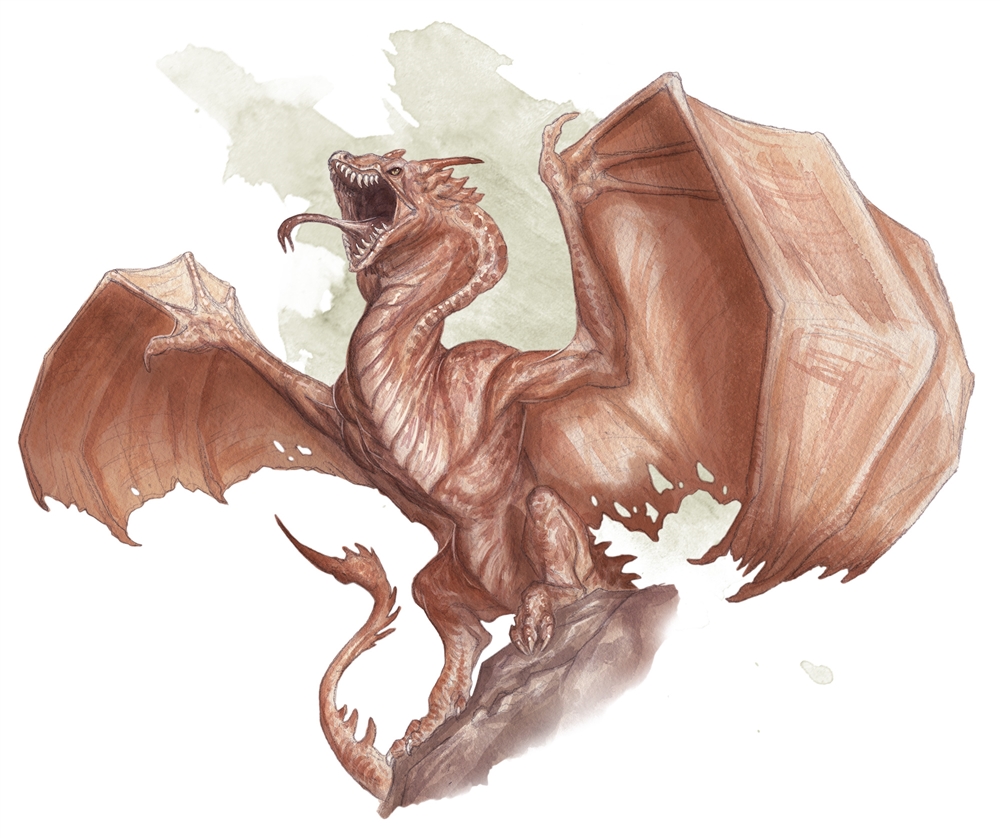
Dragon Manoeuvres
The following list of manoeuvres are sorted alphabetically, and then by Ranger level requirement.
Bahamut’s Roar. As an action, your voice becomes amplified by channelling the power of the Platinum Dragon. For the next 10 minutes, your voice can be heard up to 300 feet away and you can add your Wisdom modifier (minimum 1) to Intimidation checks.
Charging Strike (1 point). As an action and while mounted, your Drake companion charges forward and makes a Melee weapon attack. If the Dragon moves at least 10 ft. in a straight line towards a target and the attack hits, the strike does an additional 2d8 damage. If it hits, that creature must also make a Strength Saving throw against the Dragon's save DC or fall prone.
Coordinated Flank (1 point). As a bonus action while unmounted, you and your dragon flank a single opponent. If you and your Dragon are within 5 ft. of the same creature, all of your attacks on that creature have advantage until the beginning of your next turn.
Gemstone Aspect (2 points). This manoeuvre is a passive effect. You and your drake can communicate telepathically with each other only, provided you are within 150 feet of one another. The number of maximum manoeuvre points you have while you know this manoeuvre is reduced by 2.
Scaled Shielding (1 point). When you or your drake take damage from a source you can see, you can use your reaction to bolster against the damage, reducing the damage one of you takes by an amount equal to 1 roll of your Hunter's Mark die + your Wisdom modifier.
Tail Swipe (1 point). As a bonus action, you may command your Drake companion to make a tail attack against a large or smaller creature. If it hits, the creature takes damage from the Tail attack and must make a Strength Save against the Dragon's save DC. On a failure, they are knocked prone.
Take the Hit (1 point).
As a reaction when hit by an attack, you can command your Dragon to take the hit
for you, or you can take the hit for your drake
companion instead. Your Drake companion must
be within 5 ft. of you to use this Manoeuvre.
Tiamat’s Fangs (1 point minimum). When
you or your drake hits with a weapon attack, you
can expend a number of Manoeuvre points up to
your Wisdom modifier (minimum 1) to deal a
number of Hunter's Mark dice of your Draconic
Essence damage type equal to the number of
points expended.
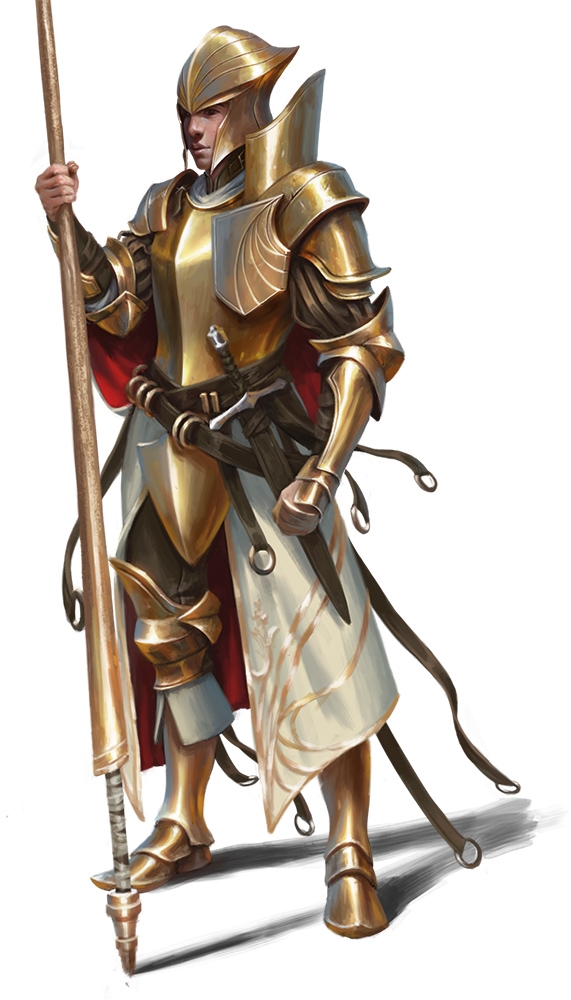
6th level Manoeuvres
Bolstered Defence (1 point). Your bond with your drake companion enhances your natural defences. As a bonus action, you may bolster your defences, increasing your AC by an amount equal to your Dragon's Constitution modifier (minimum 1) until the beginning of your next turn.
Charm of Drakes (1 point). As an action, you cast Disguise Self as a Ranger spell without expending a spell slot. Dragons are unable to perceive this illusion.
Create an Opening (1 point). You may create an opening for your allies to escape by commanding your drake companion to create a massive gust of wind with their wings. Using your reaction, Create an Opening allows allies within 20 ft. of your Drake companion to move away from an enemy without incurring attacks of opportunity.
Dragon-Turtle Shell (1 point). As a reaction when either you or your drake companion are forced to make a saving throw in which you or your companion are not proficient (respectively), you add your Proficiency bonus to the saving throw.
Evasive Manoeuvres (1 point). As a Bonus Action and while riding your Dragon, you may take the Dodge action. This applies to both you and your Drake companion.
Metallic Hide (2 points). As a bonus action, you cast Shield of Faith on yourself without expending a spell slot, and without requiring concentration. This benefit confers to your companion as well while you're mounted on it. This feature ends early if you use it again, or if dispelled by magic.
Scan the Perimeter (1 point). You may use a bonus action to scan the area. Any invisible or hidden creatures within 60 ft. are revealed only to you until the beginning of your next turn.
Terrifying Roar (2 points). You emit a terrible draconic roar as an action. Each creature of your choice within 30 feet of you that can hear you must make a Wisdom saving throw. On a failed save, the target is frightened of you for 1 minute; you and your drake have advantage on attacks made against creatures frightened this way. A creature can repeat the saving throw at the end of each of their turns, ending the condition on themselves on a success.
Toughened Scales (1 point). As an action, either you or your drake companion gain a number of temporary hit points equal to your Ranger level for the next minute.
Treasure Sense (1 point). You cast Detect Hoard, requiring only somatic components and without expending a spell slot, as a bonus action.
Wyvern Spines (1 point). When your drake companion is hit by a melee attack, you can choose to deal its Empowered Bite damage to the attacker (no action required). This uses your companion’s reaction.
10th level Manoeuvres
Burst of Speed (1 point). If your drake companion is missed with an attack roll, you can choose for it to use its reaction to take the Dash action.
Drag ‘n’ Drop (2 points). If your drake companion makes a bite attack against a medium or smaller creature and the attack hits, you may use Drag ‘n Drop to attempt to trap the creature in your drake companion's mouth. The creature must succeed on a Strength Saving throw against the Dragon's Save DC or is grappled and restrained. The Dragon may move at half movement speed with the creature in its mouth and may use a bonus action to release it. The grappled creature must use an Action and succeed a strength saving throw to free itself.
Frightful Presence. (3 points). As a part of either you or your drake taking the Attack action, each creature of your choice that is within 120 ft. of either you or your drake and aware of them must succeed on a Wisdom saving throw or become frightened for 1 minute. A creature can repeat the saving throw at the end of each of its turns, ending the effect on itself on a success. If a creature's saving throw is successful or the effect ends for it, the creature is immune to the Frightful Presence manoeuvre for the next 24 hours.
Fury Strikes (2 points). As an action, your Drake companion unleashes a bite and two claw attacks in a flurry. If all 3 attacks hit, you regain one Manoeuvre point.
14th level Manoeuvres
Diving Strike (2 points). As an action, you may dismount your drake companion mid-air and make an attack with advantage against an opponent in your path to the ground. If the attack hits, it deals normal damage and an additional amount of damage equal to the fall damage you would typically take from the fall. When you land, you must make a Dexterity Saving throw. On a success, you take no damage from the fall. On a failure, you take half damage. Save DC 15, increases by 1 for every 10ft. above 50ft.
Manifestation (2 points). Your draconic connection allows you to manifest the physical form of the dragon on your own body. As a bonus action, draconic wings burst from your back. You gain a fly speed equal to that of your drake companion for 1 minute. Unarmed strikes and natural weapon attacks made for the duration deal an additional 1d8 magical slashing damage.
Channelled Breath (4 points). Your connection to your Drake companion allows them to channel their breath attack through your mouth. As an action, you may release Bahamut’s Breath as though you were your drake companion. You may spend additional manoeuvre points to increase this damage by an additional 1d6 per 2 Manoeuvre Points spent.
True Dragon (4 points). This is a passive feature affecting you only. You age 1 year for every 10 years that pass, and you suffer no frailty that comes with age, though you do appear to age. The number of maximum manoeuvre points you have while you know this manoeuvre is reduced by 4.
18th level Manoeuvres
Legendary Resistance (5 points). If you or your drake companion fail a saving throw, you can use your reaction to succeed instead.
Ravage (5 points). If your drake companion makes a Bite attack at a creature and the attack hits, you may use Ravage to force the creature to make a Strength Saving throw against your drake companion's Save DC. On a failure, they take the Bite damage and an additional 10d6 slashing damage as your drake companion spins viciously and tears flesh from bone.
Recharge (5 points). You may use an action to funnel energy into your drake companion to immediately recharge their breath attack.
Unleash (5 points). As an Action, you release the bond which connects you to your Drake companion, causing your drake companion to enter a primal draconic fury. Roll a new initiative for your drake companion. For one minute, the drake companion operates on that initiative and may make two attacks per attack action.
In addition, your drake companion's attacks deal an additional weapon die of damage. For the duration, the drake companion's breath attack recharges on a 5 or higher d6 roll. At the end of the minute, the drake companion's breath attack may not be used again until a short or long rest, and you must make a DC 12 Animal Handling check. On a failure, the drake companion becomes hostile towards you and your allies until you use an action to succeed on the Animal Handling check
Dragongreed (6 points). As an action, you cast Flesh to Stone as a Ranger spell from your drake as though you were in its place, though you can only target a creature who can see your drake’s eyes. A creature petrified in this way is turned to solid gold rather than stone. Once you use this feature, you cannot use it again until you finish a long rest.
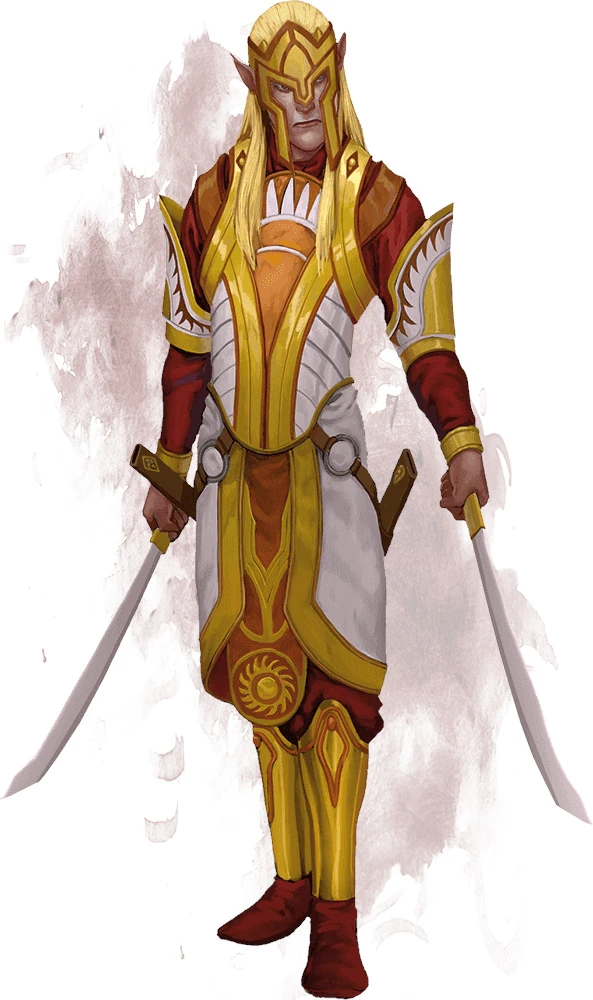
Fey Wanderer
A fey mystique surrounds you, thanks to the boon of an archfey, the shining fruit you ate from a talking tree, the magic spring you swam in, or some other auspicious event. However you acquired your fey magic, you are now a Fey Wanderer, a ranger who represents both the mortal and the fey realms. As you wander the multiverse, your joyful laughter brightens the hearts of the downtrodden, and your martial prowess strikes terror in your foes, for great is the mirth of the fey and dreadful is their fury.
Dreadful Strikes
When you join this conclave at 3rd level, you can augment your weapon strikes with mind-scarring magic, drawn from the gloomy hollows of the Feywild. When you hit a creature with a weapon attack, you can deal an extra 1d4 psychic damage to the target.
At 11th level, this increases to 2d4.
Fey Wanderer Magic
Starting at 3rd level, you learn two additional spells when you reach certain levels in this class, as shown in the Fey Wanderer Spells table. Each spell counts as a ranger spell for you, but doesn't count against the number of ranger spells you know.
Fey Wanderer Spells.
| Level | Spells |
|---|---|
| 3rd | chaos bolt, charm person |
| 5th | blur, misty step |
| 9th | counterspell, floating chaos |
| 13th | compulsion, dimension door |
| 17th | mislead, seething chaos |
Otherworldly Glamour
Starting at 3rd level, your fey qualities give you a supernatural charm. As a result, whenever you make a Charisma check, you gain a bonus to the check equal to your Wisdom modifier (minimum of +l). In addition, you gain proficiency in one of the following skills of your choice, or expertise if you are already proficient in it: Deception, Performance, or Persuasion.
Beguiling Twist
From 7th level, the magic of the Feywild guards your mind. You have advantage on saving throws against being charmed or frightened.
In addition, whenever you or a creature you can see within 120 feet of you succeeds on a saving throw against being charmed or frightened, you can use your reaction to force a different creature you can see within 120 feet of you to make a Wisdom saving throw against your spell save DC. If the save fails, the target is charmed or frightened by you (your choice) for 1 minute. The target can repeat the saving throw at the end of each of its turns, ending the effect on itself on a successful save.
Misty Wanderer
At 11th level, you can slip in and out of the Feywild to move in a blink of an eye: you can use a bonus action to teleport a number of feet equal to your movement speed, to an unoccupied space you can see within range; you can bring along one willing creature you can see within 5 feet of you when you do so. That creature teleports to an unoccupied space of your choice within 5 feet of your destination space.
You can teleport a willing creature in this way a number of times equal to your Wisdom modifier (minimum of once), and you regain all expended uses when you finish a long rest.
Fey Reinforcements
The twin courts of the Feywild have blessed you with the assistance of fey beings: starting at 15th level, you know the Conjure Fey spell and it is added to your Primaeval Spell list.
Whenever you start casting the spell using your Primaeval Spellcasting, you can modify it so that it doesn't require concentration. If you do so, the spell's duration becomes 1 minute for that casting.
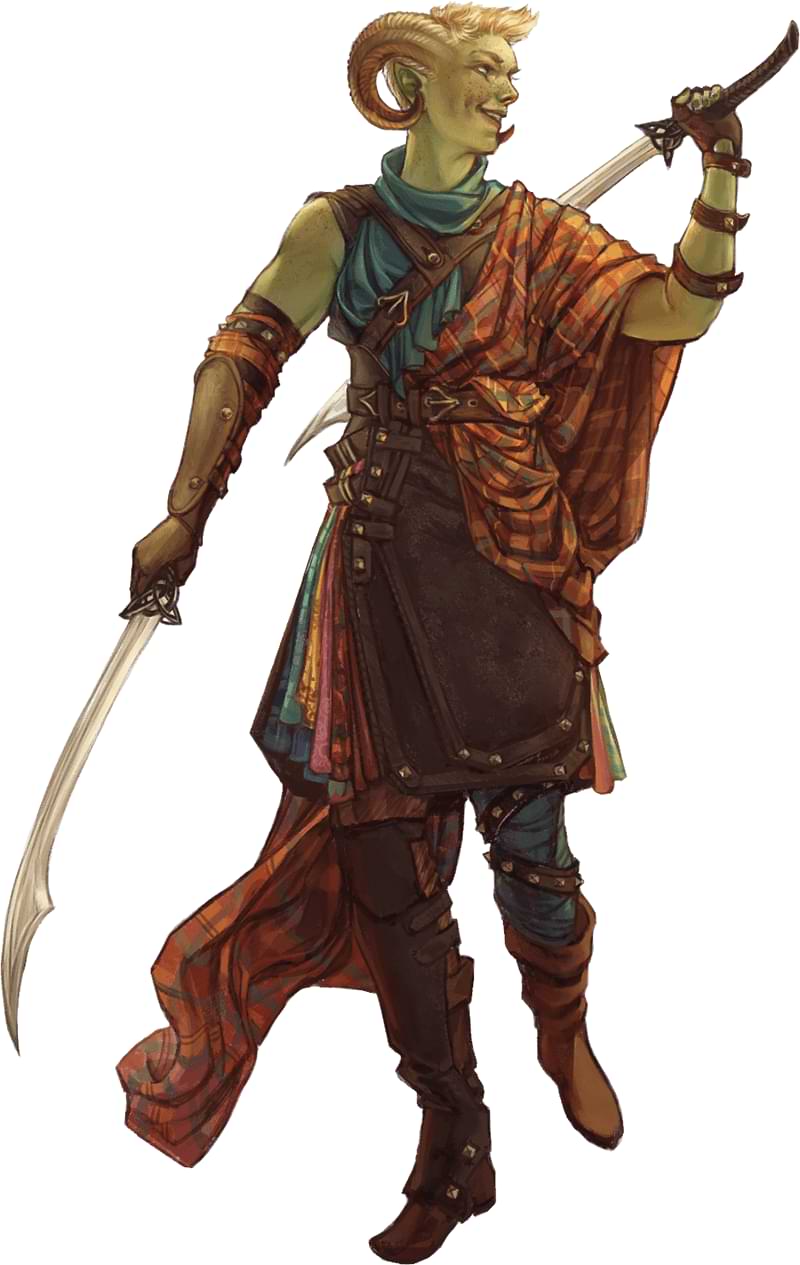
Ghostslayer
The Conclave of the Ghostslayer is the oldest of the Warden Orders, having originally banded together to combat the scourge of undeath. Ghostslayers seek out and study the moment of death, obsessing over the mysteries of the transition and how it can become corrupted by unholy powers to rise once more. Tuning their abilities to annihilate such abominations, these zealous rangers seek out the sources of such necromantic energies, intent to destroy them wherever they arise.
Gravekeeper's Magic
Starting at 3rd level, you learn two additional spells when you reach certain levels in this class, as shown in the Ghostslayer Spells table. The spells count as ranger spells for you, but they don't count against the number of ranger spells you know.
Additionally, you gain the Spare the Dying cantrip, and it is a ranger spell for you.
Ghostslayer Spells.
| Level | Spells |
|---|---|
| 3rd | False Life, Protection from Evil and Good |
| 5th | Gentle Repose, Spiritual Weapon |
| 9th | Spirit Guardians, Magic Circle |
| 13th | Dawn, Death Ward |
| 17th | Holy Weapon, Dispel Evil and Good |
Rite of Dawn
At 3rd level you utilise your knowledge of the living dead to the detriment of others. When you mark a creature with your Hunter's Mark, you gain the following benefits:
- If the marked target is an Undead, the extra damage dealt by your Hunter's Mark is doubled and is considered to be radiant damage (sunlight).
- The marked target sheds bright light (sunlight) out to a radius of 20 feet.
- You have resistance to necrotic damage.
Ethereal Step
Upon reaching 7th level, at the start of your turn, if you aren’t incapacitated, you can choose to magically step into the veil between the planes. You can move through other creatures and objects as if they were difficult terrain, as well as see and affect creatures and objects on the Ethereal Plane. You take 1d10 force damage if you end your turn inside an object. If you are inside an object when this feature ends, you are immediately shunted to the nearest unoccupied space that you can occupy and take force damage equal to twice the number of feet you moved. This feature lasts for a number of rounds equal to your Wisdom modifier (minimum of 1 round).
You can use this feature once. Beginning at 15th level, you can use your Ethereal Step feature twice between rests. You regain all expended uses when you finish a short or long rest.
Curse Specialist
Also at 7th level, your ancient order teaches advanced mastery of ancient magics. You can target a creature branded with your Hunter's Mark with spells while they are within the spell's range, whether you can see it or not, including if it has full cover or is inside another object or creature.
In addition, Remove Curse is added to your list of Primal Spellcasting spells, and at 9th-level is added to the list of Ranger spells you know (though does not count against the number of Ranger spells you know).
Rite of Sundering
Beginning at 11th level, branding a creature with your Hunter's Mark now exposes a fragment of your foe’s soul, leaving them vulnerable. Whenever you deal damage with a weapon to a creature marked by your Hunter's Mark, your weapon deals one additional Hunter's Mark die of radiant (sunlight) damage.
In addition, the marked creature can’t move through other creatures or objects, and cannot move between planes.
Rite of Revival
Upon reaching 15th level, you learn to protect your fading life by absorbing the energy of the undead you have felled. While a creature is marked by your Rite of Dawn, you gain the following features:
- You are immune to effects which reduce your hit point maximum.
- Attacks you make against a creature branded by your Hunter's Mark while it is at half their hit point maximum or below score a critical hit on a roll of 19 or 20. If the creature is undead, your critical hit range increases by one more (e.g.from 19-20 to 18-20).
- As a reaction when the marked target attempts to charm, frighten, or possess a creature you can see within 30 feet of you, you can expend a spell slot of 1st-level or higher. The marked creature takes a number of d6 psychic damage equal to the slot level, and it must make a Wisdom saving throw or be stunned until the end of your next turn.
- When you are reduced to 0 hit points while you have an active Hunter's Mark mark but you don’t die outright, the mark ends and you drop to 1 hit point instead.

Gloom Stalker
Gloom stalkers are at home in the darkest places: deep under the earth, in gloomy alleyways, in primaeval forests, and wherever else the light dims. Most folk enter such places with trepidation, but a Stalker ventures boldly into the darkness, seeking to ambush threats before they can reach the broader world. Such rangers are often found in the Underdark, but they will go any place where evil lurks in the shadows.
Gloom Stalker Magic
Starting at 3rd level, you learn two additional spells when you reach certain levels in this class, as shown in the Gloom Stalker Spells table. The spells count as ranger spells for you, but they don't count against the number of ranger spells you know.
Gloom Stalker Spells
| Level | Spells |
|---|---|
| 3rd | Disguise self, Dissonant Whispers |
| 5th | Darkness, Rope trick |
| 9th | Fear, Nondetection |
| 13th | Greater Invisibility, Phantasmal Killer |
| 17th | Chilling Darkness, Seeming |
Dread Ambusher
At 3rd level, you master the art of the ambush. You gain proficiency in Wisdom saving throws. If you already have this proficiency, you instead gain proficiency in Intelligence or Charisma saving throws (your choice).
At the start of your first turn of each combat, your walking speed increases by a number of feet equal to 5 times your proficiency bonus, which lasts until the end of that turn. If you take the Attack action on that turn, you can make one additional weapon attack as part of that action. If all the attacks hit, the final hit is considered a Critical Hit and the target takes an extra 1d8 damage of the weapon's type.
The additional damage increases to 2d8 at 6th level, 3d8 at 10th, 4d8 at 14th and 5d8 at 17th


Umbral Sight
At 3rd level, you gain darkvision out to a range of 60 feet, and can see through magical darkness within the range of
your darkvision. If you already have darkvision, its range increases by 30 feet.
You are also adept at evading
creatures that rely on darkvision. While in total darkness,
you are invisible.
Shadow Step
At 7th level, you gain the ability to step from one shadow
into another. When you are in dim light or
darkness, as a bonus action you can teleport
up to 60 feet to an unoccupied space you can see
that is also in dim light or darkness. You
then have advantage on the first melee
attack you make before the end of the turn.
Stalker's Flurry
At 11th level, you learn to attack with such
unexpected speed that you can turn a miss
into another strike. Once on each of your
turns when you miss with a weapon attack,
you can make another weapon attack
against the missed target as part of the same action.
Shadow Dodge
Starting at 15th level, you can dodge in unforeseen ways, with wisps of supernatural shadow around you. Whenever a creature makes an attack roll against you and doesn't have advantage on the roll, you can use your reaction to force it to miss.
Horizon Walker
Horizon walkers guard the world against threats that originate from other planes or that seek to ravage the mortal realm with otherworldly magic. They seek out planar portals and keep watch over them, venturing to the Inner Planes and the Outer Planes as needed to pursue their foes. These rangers are also friends to any forces in the multiverse – especially benevolent dragons, fey, and elementals – that work to preserve life and the order of the planes.
Horizon Walker Magic
Starting at 3rd level, you learn two additional spells when you reach certain levels in this class, as shown in the Horizon Walker Spells table. The spells count as ranger spells for you, but they don't count against the number of ranger spells you know.
In addition, Detect Evil and Good is added to your list of Primal Awareness spells.
Horizon Walker Spells
| Level | Spells |
|---|---|
| 3rd | Protection from Evil and Good, Sanctuary |
| 5th | Misty Step, Wristpocket |
| 9th | Dispel Magic, Haste |
| 13th | Banishment, Dimension Door |
| 17th | Teleportation Circle, Planar Binding |
Detect Portal
At 3rd level, you gain the ability to magically sense the presence of a portal. As an action, you detect the distance and direction to the closest portal within 1 mile of you. This includes, but is not limited to, astral colour-pools, permanent teleportation circles, planar or arcane gates, and rifts to the Far Realm.
You can use this feature a number of times equal to 1 + your Wisdom modifier (minimum 1). When you finish a long rest, you regain all expended uses.
Planar Warrior
At 3rd level, you learn to draw on the energy of the
multiverse to augment your attacks.
As a bonus action
while a creature is branded by your Hunter's Mark,
you draw in the lines of ley magic around them.
The next time you hit the marked creature with a
weapon attack, all damage dealt by the attack
becomes force damage, and the creature takes an
extra 1d8 force damage from the attack.
When you reach 11th level in this class, the extra damage increases to 2d8, and to 3d8 against aberrations, celestials, elementals, fey, fiends, and undead.
Ethereal Step
At 7th level, you learn to step through the Ethereal Plane. As a bonus action on your turn, you can cast the Etherealness spell with this feature, without expending a spell slot, but the spell ends at the start of your next turn.
Once you use this feature, you can't use it again until you finish a short or long rest, unless you expend a spell slot of 1st-level or higher to use it again.
Distant Strike
At 11th level, you gain the ability to pass between the planes in a blink of an eye. When you use the Attack action, you can teleport up to 10 feet before each attack to an unoccupied space you can see. If you attack at least two different creatures with the action, you can make one additional attack with it against a third creature.
Spectral Defence
At 15th level, your ability to move between planes enables you to slip through the planar boundaries to lessen the harm done to you during battle. When you take damage from a single source, you can use your reaction to give
yourself resistance to all of that
instance's damage on this turn.

Monster Hunter
You have dedicated yourself to hunting down creatures of the night and wielders of grim magic. Some rangers seek to master the killing of killers to better protect civilization from the terrors of the wilderness. Rangers of the Slayer’s Conclave learn specialised fighting techniques for use against vampires, dragons, evil fey, fiends, and others of the most dire threats.
Slayer's Sense
At 3rd level, when you mark a creature with your Hunter's Mark, you immediately learn whether the creature has any damage immunities, resistances, or vulnerabilities and what they are. If the creature is hidden from divination magic, you sense that it has no damage immunities, resistances, or vulnerabilities.
In addition, when you successfully make checks to follow a creature’s trail you learn one of the following pieces of information about it for each check you succeed:
- The creature’s species or creature type.
- The creature’s preferred terrain.
- The creature’s general state of health (e.g. bleeding, disoriented, encumbered).
- Whether the creature ate recently and what it ate.
- Whether the creature is nocturnal, diurnal (active during the day), or crepuscular (active during the twilight hours at dusk and dawn).
Hunter's Prey
Also at 3rd level, your Hunter's Mark causes the branded creature to suffers more greatly. When the marked target makes an attack or damage roll with you as the target, you can use your reaction to roll one Hunter's Mark die and subtract the number rolled from the creature's roll. You can choose to use this feature after the creature makes its roll, but before the DM determines whether the attack roll or ability check succeeds or fails, or before the creature rolls its damage.
Trap Maker
As a hunter of large monsters, you have learned how to create traps capable of ensnaring them either for capture or to aid in defeating them. At 3rd level, you can use a set of tools you’re proficient in to create Traps and traps such as spike pits, bear traps, rabbit Traps on the go. You gain proficiency in Leatherworker’s, Smith’s, Tinker’s, or Woodcarver’s tools, and also gain proficiency in Monter Hunter's tools.
To create these traps you need an amount of raw materials worth the amount listed in the Trap's Price entry. Unlike other items, found Traps cannot be collected or sold in their complete form.
Crafting Traps. A Trap is built within a single 5-foot square. Once constructed, it can't be moved without destroying (and often triggering) the Trap. You can spend 1 minute to Craft a Trap provided you have rope, wood, nails, and either Carpenter's or Tinker's tools. Some Traps have additional requirements; these Traps list their requirements in a Craft Requirements entry.
Detecting Traps. Creatures can detect Traps as they would any trap or hazard, with a DC of 8 + your Wisdom or Dexterity modifier + twice your Proficiency bonus as the Trap's required perception check DC. If your proficiency rank is expert or better in Crafting, only creatures actively searching can find your Traps.
Triggering Traps. Unless stated otherwise in a Trap's description, when a Small or larger creature enters a Trap's square, the Trap's effect occurs and then the Trap is destroyed. If traps force a target to make a check or saving throw against its effects, the DC is equal to your Ranger Spell save DC. Your 'Trap Damage' - the damage dealt by your traps - is equal to two of your Hunter's Mark dice. This damage increases as you gain levels in this class: you gain an additional Hunter's Mark die at 5th level (3 dice), 11th level (4 dice), and 17th level (5 dice)
Disabling Traps. Once a creature discovers a Trap, it can disable it much like it can other physical traps, using the DC for Detecting Traps you make (above) as the check DC. You can automatically disarm a Trap that you personally Crafted without triggering it by taking the Use an Item action while adjacent to the Trap.

Monster’s Bane
At 7th level, you gain the ability to
counterattack when your prey tries to
sabotage you. If the target of your
Hunter's Mark forces you to make a
saving throw, you can use your reaction
to make one weapon attack against
the quarry. You make this attack
immediately before making the saving
throw. If the attack hits, your save
automatically succeeds, in addition
to the attack's normal effects.
Monstrous Determination
By 11th level, not even the mightiest of
foes shake your will. You are immune
to the frightened condition. In addition,
when an attacker that you can see hits
you with an attack, you can use your
reaction to halve the attack’s damage
against you, powering through it.
Unshakable
By 15th level, you cannot be paralysed,
petrified, or stunned. In addition, if you
fail a check or saving throw to be
knocked prone, you can use a reaction
to add your Wisdom modifier to the roll
potentially turning it into a success.
Hunter's Traps
Bear Trap
Craft Requirements. 15 gp worth of metal and proficiency in Smith's tools.
The snare's jaws shut on the leg of a creature that steps on it. The snare deals your Trap Damage of piercing damage to the first creature that enters its square; that creature must attempt a Dexterity Saving throw, avoiding the damage on a success.
Bomb Snare
Craft Requirements. An explosive device which is mechanically triggerable, such as a Black Powder cask.
You set up a small pressure or movement mechanism which, when triggered, sets off an explosive, the effects of which are determined by the properties of the explosive used.
Crossbow Trap
Craft Requirements. A pair of crossbows. If you are also proficient in firearms, you can replace either or both crossbows with Two-Handed firearms.
A crossbow trap consists of a tripwire run across a hallway and connected to a pair of carefully hidden crossbows. The crossbows are aimed to fire down the hallway at anyone who triggers the tripwire. The trap makes two attacks against the triggering creature, each dealing piercing damage on a hit equal to the weapon's damage die + your Wisdom modifier. The trap never attacks at either advantage or disadvantage, except against targets that are prone or within 5 feet.
Grasping Net
Craft Requirements. One Net per Medium or Small creature, two nets to capture a Large creature, four for a Huge creature, and eight or more for a Gargantuan creature.
You rig vines and ropes to hold a creature in place. The first creature to enter the square must attempt a Dexterity Saving throw. On a success, the creature is unaffected. On a failure, the creature is grappled and restrained for 1 minute or until it uses an action to Escape by succeeding on a Strength (Athletics) or Dexterity (Acrobatics) check.
Hobbling Snare
You rig vines, ropes, or wires to cinch tight around a creature that triggers this trap. The first creature to enter the square must attempt a Dexterity Saving throw. On a successful save, the creature is unaffected. On a failed save, the target has a leg snared by the rope, and is grappled. The target can cut the rope as an action, or otherwise can make an Acrobatics or Athletics check to escape as an action if it succeeds.
Pheromone Tag
Craft Requirements. a set of Alchemist's (scent) or Illustrator's (paint) supplies
This trap is often used to mark intruders for later tracking or identification. When you create this trap, you must decide whether to make it a dye or a scent marker. Either type of marking grants advantage on checks made to Track the creature for up to 24 hours or until the dye or scent is washed off (requiring at least a gallon of water and 10 minutes of scrubbing).
A creature that enters a square of the snare must attempt a Dexterity Saving throw. The creature is unaffected on a successful save, becoming marked on a failed save. If the target fails the save by 5 or more, the creature is also blinded until the end of its next turn.
Pit Trap
Craft Requirements. A concealable drop of at least 10-foot
This trap consists of a 10-foot deep pit, concealed by a tattered canvass covered with leaves and dirt, with stakes or pikes set into the bottom. This type of trap is useful for blocking off the exit from a monster lair and usually has narrow, safe ledges along its sides.
A creature attempting to pass into or through the pit's space must make a Dexterity saving throw. On a successful save, the creature catches on the pit’s edge or instinctively steps back. Otherwise, the creature falls into the pit and takes 1d6 bludgeoning damage per 10-feet fallen + your Trap Damage of piercing damage.
Scatter Canister
Craft Requirements. A container of caltrops or ball bearings (or similar tiny objects).
This trap consists of a hidden canister of caltrops or bearings attached to a trip wire. When the snare is triggered, it flings the caltrops into either the trap's square or a square adjacent to the snare. You choose which square when you set up the trap. If the caltrops or bearings scatter into the same square as a creature, that creature must attempt the Acrobatics check immediately or fall prone.
The square with this trap, as well as three adjacent squares (to form a 10-foot square area), become difficult terrain when triggered. A creature can use an action to clear the difficult terrain out of a single square early.
Spike Snare
Craft Requirements. Sharpened wooden stakes, scrap weapons, or similar impaling apparatus
This basic snare consists of hidden spikes that rely on a creature's momentum to lacerate or potentially impale it as it enters the snare's square, dealing your Trap Damage of piercing damage. The creature must attempt a Dexterity Saving throw, taking half as much damage on a successful save.
Stalker’s Bane
Craft Requirements. a set of Alchemist's or Illustrator's supplies
This trap explodes in a burst of cloying powder that can cling to a creature stepping into its square. A creature that enters the square of a stalker’s bane must attempt a Dexterity Saving throw. On a failed save, powder sticks to the target, causing it to leave behind telltale footprints. Being invisible makes the target visible to creatures that could see it if it weren't invisible. If the target fails the save by 5 or more, they are also blinded until the end of their next turn.
Striking Snare
Craft Requirements. A Large or larger ballast suspended in the air or placed in immense tension.
You affix a trip line or other trigger to a group of either boulders or giant wooden stakes to strike the first creature that enters the snare's square. The creature must attempt a Dexterity Saving throw. A target takes your Trap Damage of bludgeoning or piercing damage and is stunned until the end of their next turn on a failed save, or is unaffected on a successful save.
If a target fails the save by 5 or more, their movement speed is also halved for 1 minute, unless their disorientation is healed by effects such as a Lesser Restoration spell.
Trip Snare
You set a cunning wire to trip a creature. A Medium or smaller creature that enters this trap's square must attempt a Dexterity Saving throw. On a failed save, the creature falls prone and takes 1d6 bludgeoning damage.
If you want to create a trip snare to trip a larger creature, you must create a group of contiguous snares of a length equal to the edge of that larger creature's space, and the creature must be moving such that it moves into the full set of snares. For example, three trip snares in a 15-foot-line can trip a Huge creature coming down a corridor into the line of snares.
The bludgeoning damage is doubled if the target is Large, and is tripled if they’re Huge.
When you create a Trip Snare, you can choose instead for nothing to happen to the triggering creature. Instead, choose one of the following variations:
Alarm Variant.
Craft Requirements. Bells, cymbals, or other noisy objects
You create an alarm snare by rigging one or more noisy objects to a trip snare. When you create a trip alarm, you designate a range between 100 to 500 feet at which it can be heard. When a Small or larger creature enters the square, the snare makes a noise loud enough that it can be heard by all creatures in the range you designated.
Flare Variant
Optional Craft Requirements. Tinderbox or firework
A subtle snare used in hunting or tracking, a Trip Flare often consists of carefully prepared earth, sand, or stones, specific arrangements of vegetation, and so forth. it causes a small, unobtrusive disruption to the delicately prepared terrain. You can instead choose to trigger a larger signal, such as starting a signal fire or releasing a firework.

Outlaw
As new applications of technology and magic challenge older styles of combat, the heavily armoured infantryman and mounted knight make way for lightly-armoured warriors who value speed, destructive power, and mobility over protection as they target their enemies from afar with powder and shot.
Lawless Talents
At 3rd level, you are well established with the tools of your trade. You gain proficiency in the Intimidation skill, firearms, tinker’s tools, and a single vehicle type of your choice (land or water; or air - if available).
Agile Defence
When you join this conclave at 3rd level, while you are wearing no armour and holding a one-handed firearm, your Armour Class equals 10 + your Dexterity modifier + one third of your ranger level (rounded down). You cannot benefit from the AC bonus provided by shields while using Agile Defence.

Legendary Reputation
You live and die by your reputation
and the stories that grow in the wake
of your travels. You can tap into the
power of these stories to influence the
actions of others. Starting at 3rd level,
you reap the benefits of your
reputation. Choose either
Intimidation or Resistance.
This choice cannot be changed
thereafter, unless events of the
game cause the DM to allow it.
Intimidation. As a reaction when
a creature you can see makes an ability check,
attack roll, or saving throw, you can impose disadvantage on that roll as the power of your reputation shakes its resolve.
At 9th level, you can expend two uses of this feature to instead choose for the roll to simply fail, but you must choose to do so before the d20 is rolled.
Creatures immune to the Frightened condition are not affected by this trait.
Resistance. As a reaction when you make a saving throw, you can choose to gain advantage on it. At 9th level, you can expend two uses of this feature as a reaction when you fail a saving throw to choose to simply succeed instead.
You can invoke your Legendary Reputation a number of times equal to 1/3 your Ranger level. You regain all expended uses when you finish a long rest.
Duelling Shooter
At 7th level you are quick on the draw, and adept at any range. As a reaction when a creature attacks you, you can make a ranged weapon attack against that creature. Your attack occurs before the attacking creature’s.
Additionally, once per round you can draw and stow one or two firearms without requiring any action.
Finally, the base short and long ranges of your one-handed firearms are doubled.
Blindside Attack
Outlaws are often called upon to face overwhelming odds and thus they are a hair faster than most. At 11th level, you can attack three times, instead of twice, whenever you take the attack action on your turn using a firearm.
Furthermore, once per turn you can deal an extra 3d10 magical piercing damage to one creature you hit with an attack using a one-handed firearm if you have advantage on the attack roll.
Last Stand
At 15th level, you’ve bought into your own reputation and you can use that belief to do the impossible. You are immune to being frightened.
Furthermore, you insist on going out in a blaze of glory. When damage reduces you to 0 hit points you do not fall unconscious, but you can’t take reactions, your speed is reduced to 0, and you can’t benefit from any bonus to your speed. On your turn, you may only take the Attack action with any firearms you are carrying. You still make death saving throws at the end of your turn, but if you succeed on three death saves while in your Last Stand, you regain 1 hit point and exit your Last Stand.
Once you use this feature, you can’t use it again until you finish a long rest, unless you expend a spell slot of 4th-level or higher to use it again.
Swarmkeeper
Feeling a deep connection to the environment around them, some rangers reach out through their magical connection to the world and bond with a swarm of nature spirits. The swarm becomes a potent force in battle, as well as helpful company for the ranger. Some Swarmkeepers are outcasts or hermits, keeping to themselves and their attendant swarms rather than dealing with the discomfort of others. Other Swarmkeepers enjoy building vibrant communities that work for the mutual benefit of all those they consider part of their swarm.
Swarmkeeper Magic
At 3rd level, you learn the mage hand cantrip if you don't already know it. When you cast it, the hand takes the form of your swarming nature spirits.
You also learn additional spells of 1st level or higher when you reach certain levels in this class, as shown in the Swarmkeeper Spells table. Each spell counts as a ranger spell for you, but it doesn't count against the number of ranger spells you know.
Swarmkeeper Spells
| Level | Spells |
|---|---|
| 3rd | dissonant whispers, faerie fire, find familiar |
| 5th | crown of madness, web |
| 9th | gaseous form, stinking cloud |
| 13th | Evard’s black tentacles, giant insect |
| 17th | cloudkill, insect plague |
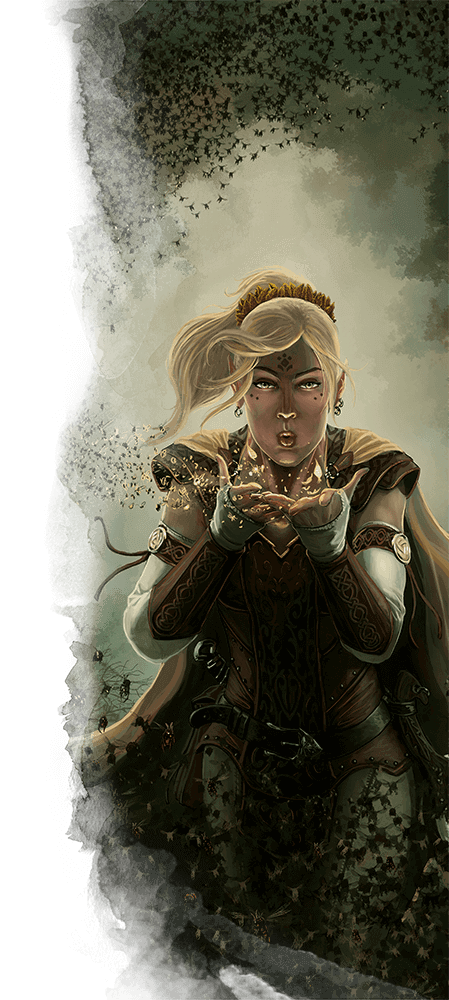
Gathered Swarm
Also at 3rd level, a swarm of intangible nature spirits has bonded itself to you and can assist you in battle. Until you die, the swarm remains in your space, crawling on you or flying and skittering around you within your space. You determine its appearance. Immediately after you hit a creature with an attack, you can cause the swarm to assist you in one of the following ways:
- The attack's target takes 1d6 piercing damage from the swarm.
- The attack's target must succeed on a Strength saving throw against your spell save DC or be moved by the swarm up to 15 feet horizontally in a direction of your choice.
- You are moved by the swarm 5 or 10 feet horizontally in a direction of your choice.
Sight of the Swarm
When your conclave grants you your swarm at 3rd level, you can see through the eyes and locate using the buzzing echoes of your swarm. You gain Blindsight out to a range of 10 feet.
The range of this sight increases to 20 feet at 11th level, and to 30 feet at 18th level.
Writhing Tide
At 7th level, you can condense part of your swarm into a focused mass that lifts you up. As a bonus action, you gain a flying speed equal to five times your Wisdom modifier and can hover. This effect lasts for 1 minute or until you are incapacitated.
You can use this feature a number of times equal to your Wisdom modifier (minimum 1), and you regain all expended uses when you finish a long rest.
Mighty Swarm
At 11th level, your Gathered Swarm grows mightier in the following ways:
- The Gathered Swarm damage increases to 1d8.
- If a creature fails its saving throw against being moved by Gathered Swarm, you can also cause the swarm to knock the creature prone.
- When you are moved by Gathered Swarm, it gives you half cover until the start of your next turn.
Swarming Dispersal
By 15th level, your very nature is tied to your swarm; you can discorporate into your swarm, avoiding danger. When you take damage, you can use your reaction to give yourself resistance to that damage. You vanish into your swarm and then teleport to an unoccupied space that you can see within 30 feet of you, where you reappear with the swarm.
You can use this feature a number of times equal to your Wisdom modifier (minimum 1), and you regain all expended uses when you finish a long rest.
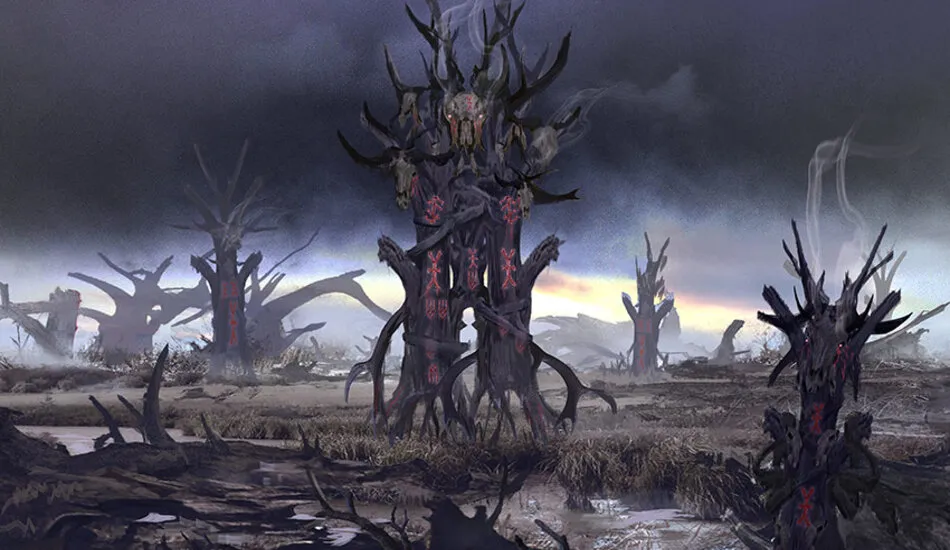
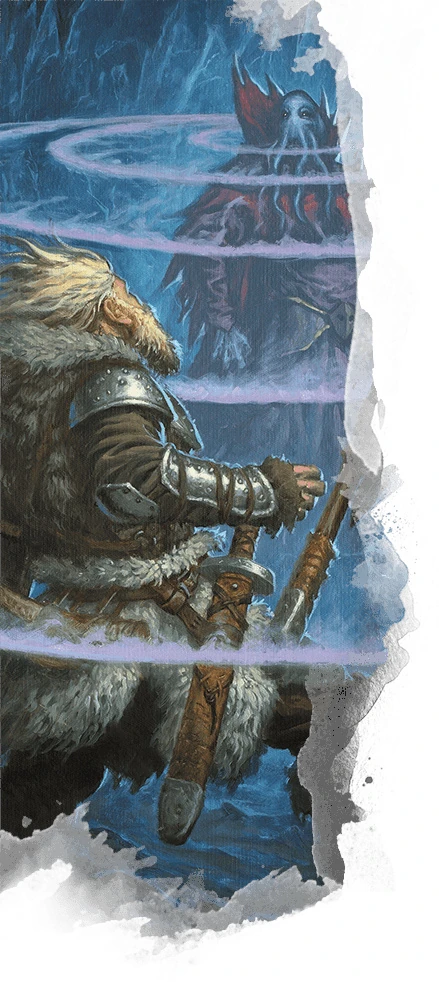
Valkyrie
This Conclave was founded by the
children of the gods of giant-kind as they
descended from Ysgard. As a valkyrie,
one of a host of angelic figures who
guide souls of the dead to the hall of
Valhalla, you are the mortal counterpart
to the Wild Riders. It is no surprise then,
that the Valkyrie Rangers are often also
referred to as Angels of Death.
Restriction: non-male characters, and
typically goliaths and aasimar. Your DM
can lift this restriction to better suit
the campaign they’re running.
Maidens’ Magic
Starting at 3rd level, you learn two
additional spells when you reach
certain levels in this class, as shown
in the Shield Maiden Spells table.
The spells count as ranger spells for you,
but they don't count against the number of
ranger spells you know.
Shield Maiden Spells
| Level | Spells |
|---|---|
| 3rd | Compelled Duel, Shield of Faith |
| 5th | Find Vehicle (water only), Warding Bond |
| 9th | Counterspell, Phantom Steed |
| 13th | Fire Shield, Guardian of Faith |
| 17th | Destructive Wave, Holy Weapon |
Shield Maiden
When you choose this Conclave at 3rd level, your training with shields in the heat of battle really shines. You gain the following features:
- Shields are considered simple finesse weapons for you, dealing 1d6 bludgeoning damage on a hit.
- Donning and doffing a shield is a free object interaction (no action required).
- You can use shields for two-weapon fighting as
though they were Light, provided the other
weapon is not a shield. - You can use a shield to take the Shove action
as a bonus action or as a single attack when
you take the Attack action.
Weathered
Also at 3rd level, you gain proficiency in Constitution saving throws and Vehicles (water). Moreover, you can make Wisdom (Athletics) and Wisdom (Intimidation) checks instead of the usual ability scores they would use.
At 9th level, this also grants you resistance to cold damage.
Supernatural Durability
Beginning at 7th level, you're accustomed to shrugging off assaults that would devastate others. While conscious and holding a shield, you can add your Hunter's Mark die to checks and saving throws made to resist becoming stunned, paralysed, prone, grappled, or restrained by the target of your Hunter's Mark.
Toughened Hide
Starting at 11th level, your defence becomes near-impenetrable. While holding a shield you gain the following abilities:
- When a creature hits you with an attack, you gain a bonus to your AC equal to your Wisdom modifier against all subsequent attacks made against you by that creature until the start of your next turn.
- You can use your bonus action to take a defensive stance. Until the start of your next turn; your movement speed is reduced to 0, you cannot be moved against your will, and you are resistant to all damage except psychic damage.
Supernatural Survivor
At 15th level, you attain the pinnacle of resilience in battle. At the start of each of your turns during initiative, you regain hit points equal to your Wisdom modifier (minimum of 1 hit point). You don't gain this benefit if you have 0 hit points or if you reach your hit point maximum.
Wild Healer
Wild Healers, sometimes termed Hedge Witches, use their herbal magic to bring aid to those in need. They are wandering physicians to the poor and hurt, often gentle-voiced hermits beloved by their communities.
Despite the undeniable talent for healing, this talent extends only up until the point of death, and no further - beyond that point, most Hedge Witches rarely tread.
Wild Healer Magic
Starting at 3rd level, you learn two additional spells when you reach certain levels in this class, as shown in the Wild Healer Spells table. The spells count as ranger spells for you, and they don't count against the number of ranger spells you know. Furthermore, Lesser Restoration is added to your list of Primal Spellcasting at 5th level, as is Greater Restoration at 17th level.
Wild Healer Spells.
| Level | Spells |
|---|---|
| 3rd | Cure Wounds, Purify Food and Drink |
| 5th | Gentle Repose, Prayer of Healing |
| 9th | Beacon of Hope, Spirit Guardians |
| 13th | Death Ward, Divination |
| 17th | Hallow, Mass Cure Wounds |
Natural Remedies
At 3rd level, you gain proficiency with Herbalism Kits, Woodcarver's tools and the Medicine skill. Any of these in which you are already proficient have their proficiency bonus doubled.
In addition, any dice results of 1 you roll to heal creatures other than yourself are considered 2s instead.
Herbal Infusion
Starting at 7th level, you are able to provide herbal teas and refreshing spiritual nourishment to your party. At the end of a short or long rest, you and a number of friendly creatures of your choice up to your Wisdom modifier each gain temporary hit points equal to your ranger level plus your Wisdom modifier.
While you still have temporary hit points provided by this ability, you have advantage on Wisdom and Charisma saving throws, and on Concentration checks. Your allies do not receive this benefit.
Immunity by Exposure
By 7th level, the time you’ve spent with sick and contagious patients has rendered you immune to all poison and disease. Additionally, you gain proficiency with Constitution saving throws.
Maelora's Endurance
Nature provides a bounty to those that can bear her presence for long enough. Starting at 11th level, during a short rest you may recover a number of total spell slot levels equal to half your ranger level. You can perform this once, regaining the ability after completing a long rest.
Bountiful Healing
At 15th level, whenever you cast a spell that restores hit points or cures a condition or effect, either you or a target of the spell restore hit points equal to one Hunter's Mark die + your Wisdom modifier (minimum 1). Hit points gained in this way that exceed a creature’s Hit Point Maximum are gained as temporary hit points instead.

The Rogue
Rogues rely on skill, stealth, and their foes' vulnerabilities to get the upper hand in any situation. They have a knack for finding the solution to just about any problem, demonstrating a resourcefulness and versatility that is the cornerstone of any successful adventuring party.
You must have a Dexterity score of 13 or higher in order to multiclass in or out of this class.
Class Features
As a rogue, you gain the following class features.
Hit Points
- Hit Dice: 1d8 per rogue level
- Hit Points at 1st Level: 8 + your Constitution modifier
- Hit Points at Higher Levels: 1d8 (or 5) + your Constitution modifier per rogue level after 1st
Proficiencies
- Armour: Light armour
- Weapons: Simple weapons, hand crossbows, longswords, parrying daggers, pistols, rapiers, shortswords
- Tools: Thieves' tools
- Saving Throws: Dexterity, Intelligence
- Skills: Choose four from Acrobatics, Athletics, Deception, Insight, Intimidation, Investigation, Perception, Performance, Persuasion, Sleight of Hand, and Stealth
Equipment
You start with the following equipment, in addition to the equipment granted by your background:
- (a) a rapier or (b) a shortsword
- (a) a shortbow and quiver of 20 arrows, a flintlock pistol and 20 light rounds, or (c) a shortsword
- (a) a burglar's pack, (b) dungeoneer's pack, or (c) an explorer's pack
- Leather armour, two daggers, and thieves' tools
Expertise
At 1st level, choose two of your skill proficiencies, or one of your skill proficiencies and your proficiency with thieves' tools. Your proficiency bonus is doubled for any ability check you make that uses either of the chosen proficiencies.
At 6th level, you can choose two more of your proficiencies (in skills or with thieves' tools) to gain this benefit.
Thieves' Cant
During your rogue training you learned thieves' cant, a secret mix of dialect, jargon, and code that allows you to hide messages in seemingly normal conversation. Only another creature that knows thieves' cant can understand such messages. It takes four times longer to convey such a message than it does to speak the same idea plainly.
In addition, you understand a set of secret signs and symbols used to convey short, simple messages, such as whether an area is dangerous or the territory of a thieves' guild, whether loot is nearby, or whether the people in an area are easy marks or will provide a safehouse for thieves.
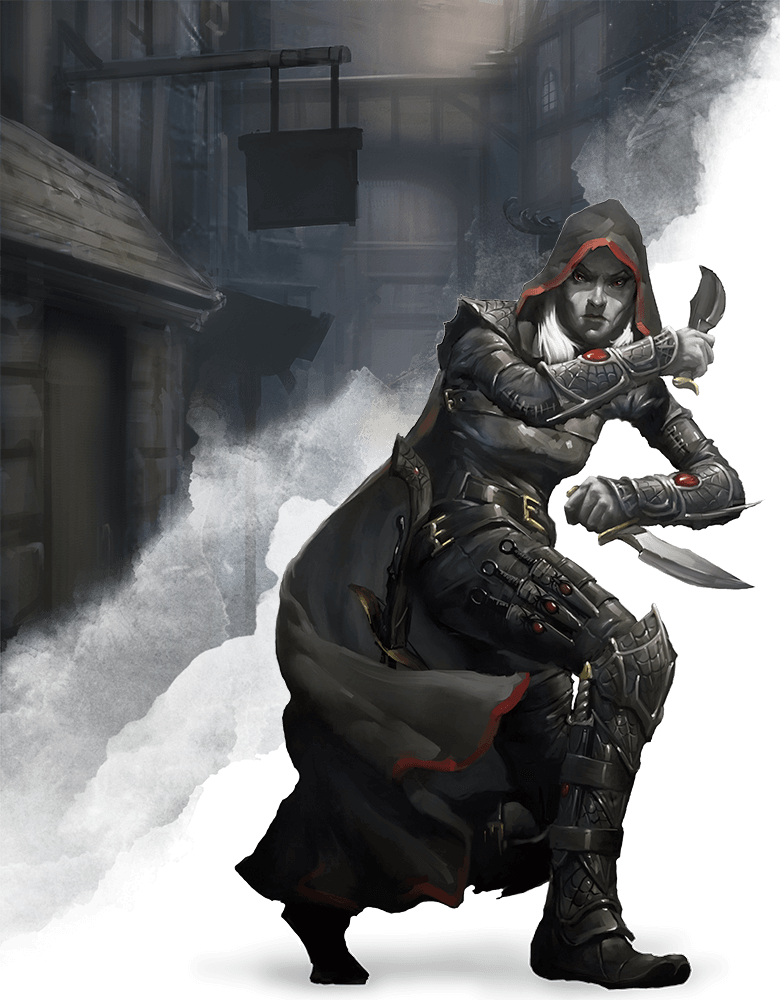
Sneak Attack
Beginning at 1st level, you know how to strike subtly and exploit a foe's distraction. Once per turn, you can deal an extra 1d6 damage to one creature you hit with an attack if you have advantage on the attack roll. The attack must use a finesse or a ranged weapon. You don't need advantage on the attack roll if another enemy of the target is within 5 feet of it, that enemy isn't incapacitated, and you don't have disadvantage on the attack roll.
The amount of the extra damage increases as you gain levels in this class, as shown in the Sneak Attack column of the Rogue table.
Cunning Action
Starting at 2nd level, your quick thinking and agility allow you to move and act quickly. You can take a bonus action on each of your turns in combat. This action can be used only to take the Aim, Dash, Disengage, or Hide action.
Aim: You give yourself advantage on your next attack roll on the current turn. You can use this bonus action only if you haven’t moved during this turn, and after you use the bonus action, your speed is 0 until the end of the current turn.
The Rogue
| Level | Proficiency Bonus | Features | Sneak Attack |
|---|---|---|---|
| 1st | +2 | Expertise, Sneak Attack, Thieves' Cant | 1d6 |
| 2nd | +2 | Cunning Action | 1d6 |
| 3rd | +2 | Roguish Archetype | 2d6 |
| 4th | +2 | Ability Score Improvement | 2d6 |
| 5th | +3 | Uncanny Dodge | 3d6 |
| 6th | +3 | Expertise | 3d6 |
| 7th | +3 | Evasion | 4d6 |
| 8th | +3 | Ability Score Improvement | 4d6 |
| 9th | +4 | Roguish Archetype feature | 5d6 |
| 10th | +4 | Ability Score Improvement | 5d6 |
| 11th | +4 | Reliable Talent | 6d6 |
| 12th | +4 | Ability Score Improvement | 6d6 |
| 13th | +5 | Roguish Archetype feature | 7d6 |
| 14th | +5 | Blindsense | 7d6 |
| 15th | +5 | Slippery Mind | 8d6 |
| 16th | +5 | Ability Score Improvement | 8d6 |
| 17th | +6 | Roguish Archetype feature | 9d6 |
| 18th | +6 | Elusive | 9d6 |
| 19th | +6 | Ability Score Improvement | 10d6 |
| 20th | +6 | Stroke of Luck | 10d6 |
Roguish Archetype
At 3rd level, you choose an archetype that you emulate in the exercise of your rogue abilities. Your archetype choice grants you features at 3rd level and then again at 9th, 13th, and 17th level.
Ability Score Improvement
When you reach 4th level, and again at 6th, 8th, 12th, 14th, 16th, and 19th level, you can increase one ability score of your choice by 2, or you can increase two ability scores of your choice by 1, to a maximum of 20.
Instead of increasing ability scores as detailed above, you may increase one ability score of your choice by 1 and gain one fighting style available to you. You can instead choose to take a Feat.
Uncanny Dodge
Starting at 5th level, when an attacker that you can see hits you with an attack, you can use your reaction to halve the attack's damage against you.
Evasion
Beginning at 7th level, you can nimbly dodge out of the way of certain area effects, such as a red dragon's fiery breath or an Ice Storm spell. When you are subjected to an effect that allows you to make a Dexterity saving throw to take only half damage, you instead take no damage if you succeed on the saving throw, and only half damage if you fail.
Reliable Talent
By 11th level, you have refined your chosen skills until they approach perfection. Whenever you make an ability check that lets you add your proficiency bonus, you can treat a d20 roll of 9 or lower as a 10.
Blindsense
Starting at 14th level, provided you are able to hear, you are aware of the location of any creature within 10 feet of you.
Slippery Mind
By 15th level, you have acquired greater mental strength. You gain proficiency in Wisdom and Charisma saving throws.
Elusive
Beginning at 18th level, you are so evasive that attackers rarely gain the upper hand against you. No attack roll has advantage against you while you aren't incapacitated.
Stroke of Luck
At 20th level, you have an uncanny knack for succeeding when you need to. If you miss a target with an attack, or you fail an ability check or saving throw, you can treat the d20 roll as a 20. Once you use this feature, you can't use it again until you finish a short or long rest.
Roguish Archetype
Arcane Trickster
Some rogues enhance their fine-honed skills of stealth and agility with magic, learning tricks of enchantment and illusion. These rogues include pickpockets and burglars, but also pranksters, mischief-makers, and a significant number of adventurers.
Spellcasting
When you reach 3rd level, you augment your martial prowess with the ability to cast spells.
Cantrips. You learn three cantrips: Mage Hand and two other cantrips of your choice from the wizard spell list. You learn another wizard cantrip of your choice at 10th level.
Spell Slots. The Arcane Trickster Spellcasting table shows how many spell slots you have to cast your wizard spells of 1st level and higher. To cast one of these spells, you must expend a slot of the spell's level or higher. You regain all expended spell slots when you finish a long rest. For example, if you know the 1st-level spell Charm Person and have a 1st-level and a 2nd-level spell slot available, you can cast Charm Person using either slot.
Spells Known of 1st Level and Higher. You know three 1st-level wizard spells of your choice, two of which you must choose from the enchantment and illusion spells on the wizard spell list. The Spells Known column of the Arcane Trickster Spellcasting table shows when you learn more wizard spells of 1st level or higher. Each of these spells you choose must be a enchantment or illusion spell of a level for which you have spell slots.
The spells you learn at 8th, 14th, and 20th level can come from any school of magic from the Wizard spell list.
Whenever you gain a level in this class, you can replace one of the wizard spells you know with another spell of your choice from the wizard spell list. The new spell must be of a level for which you have spell slots, and it must be an enchantment or illusion spell, unless you're replacing the spell you gained at 3rd, 8th, 14th, or 20th level from any school of magic.
Spellcasting Ability. Intelligence is your spellcasting ability for your wizard spells, since you learn your spells through dedicated study and memorization. You use your Intelligence whenever a spell refers to your spellcasting ability. In addition, you use your Intelligence modifier when setting the saving throw DC for a wizard spell you cast and when making an attack roll with one.
Spell Save DC
Spell attack modifier
Arcane Trickster Spellcasting
| Level | Spells Known | 1st | 2nd | 3rd | 4th |
|---|---|---|---|---|---|
| 3rd | 3 | 2 | - | - | - |
| 4th | 4 | 3 | - | - | - |
| 5th | 4 | 3 | - | - | - |
| 6th | 4 | 3 | - | - | - |
| 7th | 5 | 4 | 2 | - | - |
| 8th | 6 | 4 | 2 | - | - |
| 9th | 6 | 4 | 2 | - | - |
| 10th | 7 | 4 | 3 | - | - |
| 11th | 8 | 4 | 3 | - | - |
| 12th | 8 | 4 | 3 | - | - |
| 13th | 9 | 4 | 3 | 2 | - |
| 14th | 10 | 4 | 3 | 2 | - |
| 15th | 10 | 4 | 3 | 2 | - |
| 16th | 11 | 4 | 3 | 3 | - |
| 17th | 11 | 4 | 3 | 3 | - |
| 18th | 11 | 4 | 3 | 3 | - |
| 19th | 12 | 4 | 3 | 3 | 1 |
| 20th | 13 | 4 | 3 | 3 | 1 |
Mage Hand Legerdemain.
Starting at 3rd level, when you cast Mage Hand, you can make the spectral hand invisible, and you can perform the following additional tasks with it:
- You can stow one object the hand is holding in a container worn or carried by another creature.
- You can retrieve an object in a container worn or carried by another creature.
- You can use thieves' tools to pick locks and disarm traps at range.
- You can perform one of these tasks without being noticed by a creature if you succeed on a Dexterity (Sleight of Hand) check contested by the creature's Wisdom (Perception) check.
In addition, you can use the bonus action granted by your Cunning Action to control the hand.
Magical Ambush
Starting at 9th level, if you are hidden from a creature when you cast a spell on it, the creature has disadvantage on any saving throw it makes against the spell this turn.
In addition, you can add your Sneak Attack to spell attacks, obeying the other requirements for the feature.
Versatile Trickster
At 13th level, you gain the ability to distract targets with your Mage Hand. As a bonus action on your turn, you can designate a creature within 5 feet of the spectral hand created by the spell. Doing so gives you advantage on attack rolls against that creature until the end of the turn.
Spell Thief
At 17th level, you gain the ability to magically steal the knowledge of how to cast a spell from another spellcaster. Immediately after a creature casts a spell that targets you or includes you in its area of effect, you can use your reaction to force the creature to make a saving throw with its spellcasting ability modifier against your spell save DC.
On a failed save, you negate the spell's effect against you, and you steal the knowledge of the spell if it is at least 1st level and of a level you can cast (it doesn't need to be a wizard spell). For the next 8 hours, you know the spell and can cast it using your spell slots. The creature can't cast that spell until the 8 hours have passed. Once you use this feature, you can't use it again until you finish a long rest.
Assassin
You focus your training on the grim art of death. Those who adhere to this archetype are diverse: hired killers, spies, bounty hunters, and even specially anointed priests trained to exterminate the enemies of their deity. Stealth, poison, and disguise help you eliminate your foes with deadly efficiency.
Bonus Proficiencies
When you choose this archetype at 3rd level, you gain proficiency with the disguise kit and the Herbalism kit.
Assassinate
Starting at 3rd level, you are at your deadliest when you get the drop on your enemies. You have advantage on attack rolls against any creature that hasn't taken a turn in the combat yet. In addition, any hit you score against a creature that is surprised is a critical hit.
Infiltration Expertise
Starting at 9th level, you can unfailingly create false identities for yourself. You must spend a period equal to the duration of a Long Rest establishing the history, profession, and affiliations to create an identity. You can't establish an identity that belongs to someone else. For example, you might acquire appropriate clothing, letters of introduction, and official-looking certification to establish yourself as a member of a trading house from a remote city so you can insinuate yourself into the company of other wealthy merchants.
Thereafter, if you adopt the new identity as a disguise, other creatures believe you to be that person until given an obvious reason not to.
Impostor
At 13th level, you gain the ability to unerringly mimic another person's speech, writing, and behaviour. You must spend at least 10 minutes studying each of these three components of the person's behaviour: listening to their speech, examining their handwriting, and observing their mannerisms. Features and effects which alter the casting time of Ritual spells also affect the study time required.
Once the studying is complete, your ruse is indiscernible to the casual observer. If a wary creature suspects something is amiss, you have advantage on any Charisma (Deception) check you make to avoid detection.
Death Strike
Starting at 17th level, you become a master of instant death. When you attack and hit a creature that is surprised, it must make a Constitution saving throw (DC 8 + your
Dexterity modifier + your proficiency bonus).
On a failed save, double the damage of your
attack against the creature.

Enforcer
Subtlety is not a gift all rogues possess. Noted especially in groups of organised crime, Enforcers are better at tackling problems head-on than skulking in the shadows.
The Direct Approach
At 3rd level, you gain proficiency in the Athletics skill. If you are already proficient in Athletics, you instead gain a Tool proficiency of your choice. You also gain proficiency in Medium armour, Martial weapons, all firearms, and unarmed strikes (which are considered finesse weapons for you).
Up Close and Personal
Also at 3rd level, you can use your Cunning Action bonus action to make an unarmed strike (Grapple) against a single creature in range. You have advantage on melee attacks against a creature you are grappling, and deal an extra 1d6 damage with your Sneak Attack feature to a creature you’re grappling.
Bruiser
When you choose this archetype at 3rd level, you can choose one option from the Fighting Style options. Your Fighter level is considered equal to your Rogue level for this purpose only.
Imposing Presence
Starting at 9th level, you seem to take up more space than you actually do, and you inspire both awe and fear on sight. You gain the following traits:

- You count as one size larger when making
Grapple checks, and when
determining your carrying
capacity and the weight
you can push, drag, or lift. - If you are size Small, you can wield
Unwieldy weapons without suffering
disadvantage as a result of your stature. - Weapons which deal bludgeoning
damage are considered to have the
Finesse property for you. - You have advantage on Intimidation
checks made against creatures within
5 feet of you.
Cheap Shot
At 13th level, whenever you miss an attack
roll which would have qualified for
Sneak Attack damage if it hit, you can roll your Sneak
Attack dice and use your reaction to deal half that damage (rounded down).
Alternatively, you can use your reaction when you miss this way to take your Cunning Action.
Stakeout
By 17th level, you have learned to wait for just the right moment to crush your enemies. If a creature starts and ends its turn within your melee Reach without leaving during initiative, and it does not manage to damage you with an attack or spell in that entire period, your next attack which hits against that creature is a critical hit.
Inquisitive
As an archetypal Inquisitive, you excel at rooting out secrets and unravelling mysteries. You rely on your sharp eye for detail, but also on your finely honed ability to read the words and deeds of other creatures to determine their true intent. You excel at defeating creatures that hide among and prey upon ordinary folk, and your mastery of lore and your sharp eye make you well equipped to expose and end hidden evils.
Ear for Deceit
When you choose this archetype at 3rd level, you develop a keen ear for picking out lies. Whenever you make a Wisdom (Insight) check to determine whether a creature is lying, treat a roll of 7 or lower on the d20 as an 8.
Eye for Detail
Starting at 3rd level, you can use a bonus action to make a Wisdom (Perception) check to spot a hidden creature or object, or to make an Intelligence (Investigation) check to uncover or decipher clues.
Insightful Fighting
At 3rd level, you gain the ability to decipher an opponent’s tactics and develop a counter to them. As a bonus action, you make a Wisdom (Insight) check against a creature you can see that isn’t incapacitated, contested by the target’s Charisma (Deception) check.
If you succeed, you can use your Sneak Attack against that target even if you don't have advantage on the attack roll, but not if you have disadvantage on it. This benefit lasts for 1 minute or until you successfully use this feature against a different target.
Steady Eye
At 9th level, you gain advantage on any Wisdom (Perception) or Intelligence (Investigation) check if you move no more than half your speed on the same turn.
Unerring Eye
At 13th level, your senses are almost impossible to foil. As an action, you sense the presence of illusions, shapechangers not in their original form, and other magic designed to deceive the senses within 30 feet of you, provided you aren't blinded or deafened. You sense that an effect is attempting to trick you, but you gain no insight into what is hidden or into its true nature. You can use this feature a number of times equal to your Wisdom modifier (minimum of once), and you regain all expended uses of it when you finish a long rest.
Eye for Weakness
At 17th level, you learn to exploit a creature’s weaknesses by carefully studying its tactics and movement. While your Insightful Fighting feature applies to a creature, your Sneak Attack damage against that creature increases by 3d6.

Mastermind
Your focus is on people and on the influence and secrets they have. Many spies, courtiers, and schemers
follow this archetype, leading lives of
intrigue. Words are your weapons as often
as knives or poison, and secrets and favours
are some of your favourite treasures.
Master of Intrigue
When you choose this archetype at 3rd
level, you gain proficiency with the disguise
kit, the forgery kit, and one gaming set of
your choice. You also learn two languages of
your choice.
Additionally, you can seamlessly
mimic the speech patterns and accent of a
creature that you hear speak for at least
1 minute, enabling you to pass yourself off as
a native speaker of a particular land, provided
that you know the language.
Finally, the Help action is added to your Cunning
Actions, and can be taken as a bonus action.
Master Tactician
When you choose this archetype at 3rd level, you learn manoeuvres from those available to the Battle Master fighter that are fueled by special dice called superiority dice, and use them to hedge your odds in battle. Unlike the Battle Master, a Savant uses the surrounding terrain to very subtly manipulate their opponents' weight and momentum against themselves.
Tactical Manoeuvres. You learn three manoeuvres of your choice from the list of Manoeuvres. Many manoeuvres enhance an attack in some way. You can use only one manoeuvre per attack. You learn two additional manoeuvres of your choice at 7th, 10th, and 15th level. Each time you learn new manoeuvres, you can also replace one manoeuvre you know with a different one.
Superior Intellect. You have four superiority dice, which are d8s. A superiority die is expended when you use it. You regain all of your expended superiority dice when you finish a short or long rest. You gain another two superiority dice at 7th level and two more at 15th level.
Saving Throws. Some of your manoeuvres require your target to make a saving throw to resist the manoeuvre's effects. The saving throw DC is calculated as follows:
Manoeuvre save DC = 8 + your proficiency bonus +
Savant Manoeuvres
In addition to those available to the Battle Master, the Mastermind can choose their Manoeuvers from the following list:
Arcane Forensics. As a bonus action, you can spend and roll one Superiority die to quickly search your surroundings, using your alchemical and arcane knowledge to uncover magical residue. You can make a Wisdom or Intelligence check and add the result of the roll to the total.
Calculated Assistance.
When you use the Help action to
aid an ally in attacking a creature, you can spend and roll a
Superiority die to have the target of that attack be within 30 feet of you, rather than 5 feet of you, if the target can see or hear you. In addition, your ally can add the result of the roll to the attack's damage on a hit.
Decipher Opponent.
By expending a Superiority die as an action, you can examine the details of a creature to predict
their mental states. Make a Wisdom (Insight) check against
a creature you can see within 30 feet of you which is not incapacitated, contested by the target’s Charisma (Deception) check. If you succeed, you can add one roll of your Superiority die to all Intelligence and Charisma checks made to interact with the target for the next 10 minutes, or until you use this feature again.
If you fail, you cannot target that creature with this manoeuvre for 24 hours.
Iron Will. You bolster your mind through sheer conviction. When you fail an Intelligence, Wisdom, or Charisma saving throw, you can spend and roll one Superiority die (no action required) and increase the saving throw by the result, potentially turning the failure into a success.
Misdirection. When you are targeted by an attack while there is a creature within 5 feet of you, you can spend one Superiority die as a reaction to have the attack target that creature instead of you. You can then either increase or decrease the attack roll by the result of the die roll.
Sidestep. When you are targeted by a melee spell or weapon attack, you can spend and roll one Superiority die as a reaction to make a Dexterity check against the opponent’s attack roll, adding the result of the roll to the saving throw. On a success, you take no damage from the spell or attack.
Tangled Dance. When you take the Dash action, you can spend and roll one Superiority die. Until the end of your next turn, your movement speed increases by a number of feet equal to 3 times the roll (rounded down to the nearest 5 feet) and your AC increases by the result of the roll for any attacks of opportunity made against you moving this way.
Insightful Manipulator
Starting at 9th level, if you spend at least 1 minute observing or interacting with another creature outside combat, you can learn certain information about its capabilities compared to your own. The DM tells you if the creature is your equal, superior, or inferior in regard to two of the following characteristics of your choice:
Intelligence score
Wisdom score
Charisma score
Armour Class
Current Hit Points
Proficiency Bonus
Total Class levels (if any)
At the DM's discretion, you might also realise you know a piece of the creature's history or one of its personality traits, if it has any.
Improved Tactical Superiority
At 13th level, your superiority dice turn into d10s. At 17th level, they turn into d12s.
Soul of Deceit
Starting at 17th level, your thoughts can't be read by telepathy or other means, unless you allow it. You can present
false thoughts by making a Charisma (Deception) check contested by the mind reader's Wisdom (Insight) check.
Additionally, no matter what you say, magic that would determine if you are telling the truth indicates you are being truthful if you so choose, and
you can't be compelled to
tell the truth by magic.
Phantom
Many rogues walk a fine line between life and death, risking their own lives and taking the lives of others. While adventuring on that line, some rogues discover a mystical connection to death itself. These rogues take knowledge from the dead and become immersed in negative energy, eventually becoming like ghosts. Thieves' guilds value them as highly effective information gatherers and spies.
Many shadar-kai of the Shadowfell are masters of these macabre
techniques, and some are willing to teach this path.
Whispers of the Dead
When you choose this archetype at 3rd level, echoes of those who have died cling to you. Whenever you finish a short or long rest, you can gain one skill or tool proficiency of your choice, as a ghostly presence shares its knowledge with you. You lose this proficiency when you use this feature to choose
a different proficiency that you lack.
Wails from the Grave
At 3rd level, as you nudge someone closer to the grave, you can channel the power of death to harm someone else as well. Immediately after you deal your Sneak Attack damage to a creature on your turn, you can target a second creature that you can see within 30 feet of the first creature. Roll half the number of Sneak Attack dice for your level (round up), and the second creature takes necrotic damage equal to the roll’s total, as wails of the dead sound around them for a moment. You can use this feature a number of times equal to your Wisdom modifier (minimum 1), and you regain all expended uses when you finish a long rest.
Tokens of the Departed
At 9th level, when a life ends in your presence, you're able to snatch a token from the departing soul, a sliver of its life essence that takes physical form: as a reaction when a creature you can see dies within 30 feet of you, you can open your free hand and cause a Tiny trinket to appear there, a soul trinket. The DM determines the trinket's form or has you roll on the Trinkets table in the Player's Handbook to generate it. You can have a maximum number of soul trinkets equal to ⅓ your Rogue level, and you can't create one while at your maximum.

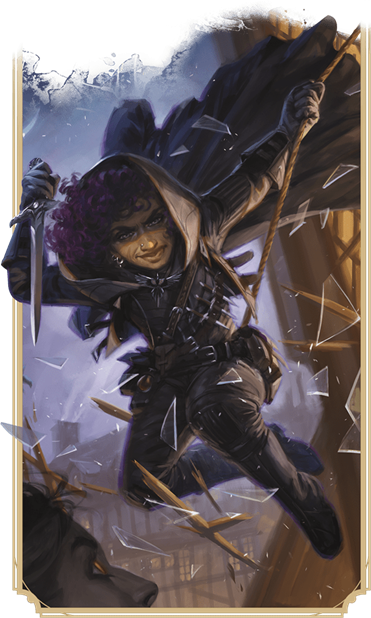
You can use soul trinkets in the following ways:
- While a soul trinket is on your person, you have advantage on death saving throws and Constitution saving throws, for your vitality is enhanced by the life essence within the object.
- When you deal Sneak Attack damage on your turn, you can destroy one of your soul trinkets that's on your person and then immediately use Wails from the Grave, without expending a use of that feature.
- As an action, you can destroy one of your soul trinkets, no matter where it's located. When you do so, you can ask the spirit associated with the trinket one question. The spirit appears to you and answers in a language it knew in life. It's under no obligation to be truthful, and it answers as concisely as possible, eager to be free. The spirit knows only what it knew in life.
- When you hit a creature who knew a person whose soul trinket you possess with a weapon attack, you can destroy the trinket (no action required) to gain the benefits of your Sneak Attack even if you ordinarily would not, but not if you have disadvantage on the attack.
- As a 1 minute ritual, you can destroy a soul trinket to take on the identity of the deceased whose trinket it was. While you impersonate the corpse, your size, height, weight, facial features, voice, hair length, coloration, and distinguishing characteristics match that of the deceased. If the creature was missing limbs in life, yours becomes invisible, as to appear as if you lack the appendage. Your impersonation lasts for 8 hours and ends early if you die, or you choose to end it (no action required).
Ghost Walk
At 13th level, you can phase partially into the realm of the dead, becoming like a ghost. As a bonus action, you assume a spectral form. While in this form, you are resistant to poison and necrotic damage, and immune to disease and the poisoned condition; you have a flying speed of 10 feet, you can hover, and attack rolls have disadvantage against you. You can also move through creatures and objects as if they were difficult terrain, but you take 1d10 force damage if you end your turn inside a creature or an object.
You stay in this form for 10 minutes or until you end it as a bonus action. To use this feature again, you must finish a long rest or destroy one of your soul trinkets as part of the bonus action you use to activate Ghost Walk.
Death Knell
At 17th level, your association with death has become so close that you gain the following benefits:
- When you use your Wails from the Grave, you can now deal the necrotic damage to both the first and the second creature.
- At the end of a long rest, a soul trinket appears in your hand if you don't have any soul trinkets, as the spirits of the dead are drawn to you. This is a random humanoid from any time in the past (DM’s discretion).
- While in your Spectral form, you are immune to poison and necrotic damage and resistant to nonmagical bludgeoning, piercing, and slashing damage.
Scout
You are skilled in stealth and surviving far from the streets of a city, allowing you to scout ahead of your companions during expeditions. Rogues who embrace this archetype are at home in the wilderness and among barbarians and rangers, and many Scouts serve as the eyes and ears of war bands. Ambusher, spy, bounty hunter – these are just a few of the roles that Scouts assume as they range the world.
Survivalist
When you choose this archetype at 3rd level, you gain proficiency in the Nature and Survival skills if you don't already have it. Your proficiency bonus is doubled for any ability check you make that uses either of those proficiencies.
Whipcrack
At 3rd level, you learn to effectively use a rope to hinder your enemies in combat. Once per turn, if you have a whip, net, bolide, or at least 20 feet of rope on you, and you deal Sneak Attack damage to a creature within 15 feet of you, you can inflict one of the following options on them (no action required):
Snare. You grapple the target. If the grappled creature makes a check to attempt to escape the grapple on their turn, on a success the target is knocked prone but escapes.
Stagger. The attack puts it off-kilter. It has disadvantage on the next attack roll it makes before the end of its next turn. The attack dazes the creature, which can't take reactions until the end of its next turn.
Target. The attack hits a vulnerable area, dealing additional weapon damage equal to your Rogue level.
Antagonise. The attack knocks the target’s resolve. If the target is concentrating on a spell or other magical effect, they must make a Concentration check of DC equal to the full damage dealt by the attack.
You can use this feature a number of times equal to your Dexterity modifier, and you regain all expended uses when you finish a short or long rest.
Superior Mobility
At 9th level, your walking speed increases by 10 feet. In addition, you gain a climbing and swimming speed
equal to your walking speed, you ignore the
effects of non-magical difficult terrain, and
you can use Dexterity instead of Strength
for determining your jumping distances.
If you already have a climbing or
swimming speed, it increases
by 20 feet.
Your speed increases by 5 feet
again at 12th, 15th, and 18th level.
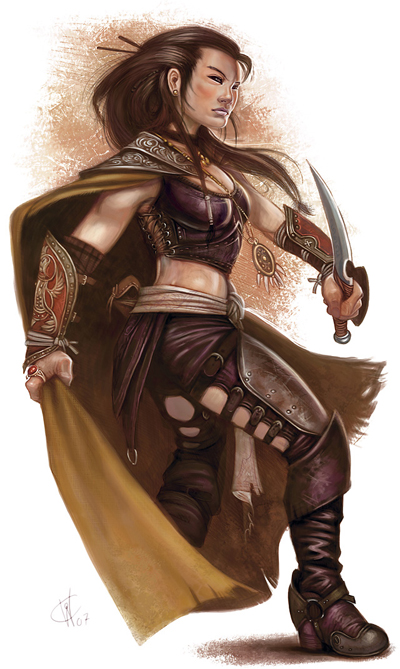
Natural Adversary
Also at 9th level, you gain a Fighting Style of your choice. You are considered to have Ranger levels equal to your Rogue level for this purpose only. Fighting Styles which edit the properties of Hunter's Mark instead alter damage inflicted by your Sneak Attack.
Ambush Master
Starting at 13th level, you excel at leading ambushes and acting first in a fight. You gain a +5 bonus to your initiative rolls. The first creature you hit during the first round of a combat becomes easier for you and others to strike; attack rolls against that target have advantage until the start of your next turn.
In addition, as long as you are at least 5 feet above a target, you have advantage on attack rolls against it.
Sudden Strike
Starting at 17th level, you can strike with deadly speed. If you take the Attack action on your turn, you can make one additional attack as a part of that action, stacking with features such as Extra Attack. This attack can benefit from your Sneak Attack even if you have already used it this turn, but you can't use your Sneak Attack against the same target more than once in a turn.
Soul Knife
Most assassins strike with physical weapons, and many burglars and spies use thieves' tools to infiltrate secure locations. In contrast, a Soulknife strikes and infiltrates with their mind, cutting through barriers both physical and psychic. These rogues discover psionic power within themselves and channel it to do their roguish work. They find easy employment as members of thieves' guilds, though they are often mistrusted by rogues who are leery of anyone using strange mind powers to conduct their business. Most governments would also be happy to employ a Soulknife as a spy.
Psionic Talent
At 3rd level, you harbour a wellspring of psionic energy within yourself. This energy is represented by your Psionic Energy dice, which are each a d6. When you reach certain levels in this class, the size of your Psionic Energy dice increases: at 5th level (d8), 11th level (d10), and 17th level (d12).
Psionic Energy dice. You have a number of these dice equal to half your Rogue level (rounded down) + your Intelligence modifier, and they fuel various psionic powers you have, which are detailed below.
Psionic Powers.
Psionic Powers use your Psionic Energy dice. You gain two powers of your choice, choosing from the Psionic Power list at the end of the Customisation Options section. You can change one of your chosen psionic powers whenever you gain a level in this class.
You gain an additional psionic power of your choice at 5th, 7th, 13th, and 17th level in this class
Some of your powers expend the Psionic Energy die they use, as specified in a power's description, and you can't use a power if it requires you to use a die when
your dice are all expended. You regain all your
expended Psionic Energy dice when you finish
a long rest.
Psionic Ability. Intelligence is your ability modifier for your psionic powers, since you exert their effects through force of insight into the machinations of the universe. You use your Intelligence whenever a power refers to your psionic ability. In addition, you use your Intelligence modifier when setting the saving throw DC for a psionic power you produce and when making an attack roll with one.
Psionic Power Save DC
Psi attack modifier
Psychic Blades
At 3rd level, You can manifest your psionic power as shimmering blades of psychic energy. Whenever you take the Attack action, you can manifest a psychic blade from your free hand and make the attack with that blade. This magic blade is a simple melee weapon with the light, finesse, and thrown (60/120) ft. properties. On a hit, it deals psychic damage equal to 1d6 plus the ability modifier you used for the attack roll. The blade vanishes immediately after it hits or misses its target, and it leaves no mark on its target if it deals damage.
Two-weapon fighting attacks made with these blades can be either melee or ranged attacks.
Psychic Whispers
Also at 3rd level, you can establish telepathic communication between yourself and others — perfect for quiet infiltration. As an action, choose one or more creatures you can see, up to your Intelligence modifier, and then expend and roll one Psionic Energy die. For a number of hours equal to the number rolled, the chosen creatures can speak telepathically with you, and you can speak telepathically with them. To send or receive a message (no action required), you and the other creature must be within 1 mile of each other. A creature can't use this telepathy if it can't speak any languages, and a creature can end the telepathic connection at any
time (no action required). You and the
creature don't need to speak a common
language to understand each other.

Soul Blades
Starting at 9th level, your Psychic Blades are now an expression of your psi-suffused soul, giving you these powers that use your Psionic Energy dice:
Homing Strikes. If you make an attack roll with your Psychic Blades and miss the target, you can roll one Psionic Energy die and add the number rolled to the attack roll. If this causes the attack to hit, you expend the Psionic Energy die.
Psychic Teleportation. As a bonus action, you manifest one of your Psychic Blades, expend one Psionic Energy die and roll it, and throw the blade at an unoccupied space you can see, up to a number of feet away equal to 10 times the number rolled. You then teleport to that space, and the blade vanishes.
Mystic Channelling
Also at 9th level, you can use a reaction when you reduce a creature to 0 hit points using your Sneak Attack to regain a number of expended Psionic Energy dice equal to half your Proficiency Bonus (rounded down).
Psychic Veil
At 13th level, You can weave a veil of psychic static to mask yourself. As an action, you can magically become invisible, along with anything you are wearing or carrying, for 1 hour or until you dismiss this effect (no action required). This invisibility ends early immediately after you deal damage to a creature or you force a creature to make a saving throw.
Once you use this feature, you can't do so again until you finish a long rest, unless you expend a Psionic Energy die to use this feature again.
Rend Mind
When you reach 17th level, you can sweep your Psychic Blade directly through a creature's mind. When you use your Psychic Blades to deal Sneak Attack damage to a creature, you can force that target to make a Wisdom saving throw (DC equal to 8 + your proficiency bonus + your Dexterity modifier). If the save fails, the target is stunned for 1 minute. The stunned target can repeat the saving throw at the end of each of its turns, ending the effect on itself on a success.
Once you use this feature, you can't do so again until you finish a long rest.
Surgeon
Not all precision fighters are shadowy criminals. Some rogues prefer a scalpel to a shortsword. You’ve developed a unique familiarity with knives, bodies, and blood in your line of work. Like a tinkerer’s knowledge of clockwork and gears, you’ve come to an understanding of how bodies are put together instead.
School of Surgery
Beginning at 3rd level, you gain proficiency in the Medicine skill, and your proficiency bonus is doubled for any ability check you make that uses this skill. Additionally, you may replace your proficiency in Thieves’ tools with proficiency in Herbalism kits, and may replace your knowledge of Thieves’ Cant with a different language of your choice.
Finally, daggers deal an extra 1d4 damage of their weapon type to humanoids when you wield them.
Battlefield Medic
Your expertise in jury-rigged healing helps you cure injuries in the blink of an eye. Beginning at 3rd level, you have a small collection of tools and superior medical know‐how you can use it to tremendous effect. You can use your Cunning Action to take the Help action, or to stabilise an unconscious creature within 5 feet of you.
You also gain a pool of d6 chirurgy dice equal to your number of Sneak Attack dice. You can use an action to spend one or more chirurgy dice and heal a creature you touch. For each chirurgy die you spend, the creature regains hit points equal to 1d6 + your Intelligence modifier (minimum of 2 hit points). When you spend a chirurgy die, it is unavailable until you finish a short or long rest.
Alternatively, when you deal Sneak Attack damage to a creature that isn’t a construct or an undead, you can spend one chirurgy die to perform an instant transfusion; you gain temporary hit points equal to 1d6 + your Intelligence modifier (minimum 1) until the start of your next turn.
Diagnosis
Beginning at 9th level, as a bonus action you may select a creature you can see, and instantly learn its current hit points, its proficiency bonus, and any condition effects from which it is currently suffering.
This also allows you to painlessly identify and set an ally’s wounds using surgical techniques. Over the course of a short rest, you can cause one creature other than yourself to regain a number of hit points equal to your Sneak Attack dice. The creature can’t regain hit points from this feature again until it finishes a long rest.
In addition, you can tell what potions and other tonics or elixirs do on sight, and can consider 1s rolled for Potions of Healing to be 2s.
Exposure Immunity
At 13th level, countless minor exposures to toxins of all kinds have made you immune to disease and poison. You can still be affected by magical poisons or diseases, such as lycanthropy or mummy rot.
In addition, you can use your Cunning Action to apply a resin, poison, or grease to a weapon, even if it would normally take up to 1 minute to apply.
Resuscitate
Also at 13th level, you can revive the dead if you reach them soon enough. You can spend an action touching a creature that has died within the last 10 minutes, making a Wisdom (Medicine) check with a DC of 10 + the number of minutes for which they’ve been dead. On a success, the creature returns to life with 1 hit point. A creature can only benefit from Resuscitate once between long rests.
Superior Physician
At 17th level, you can use an action to touch a creature. The creature regains hit points equal to your Sneak Attack dice + your Intelligence modifier. If this healing is performed on a creature at full health, the restoration is instead given as temporary hit points which last until the end of their next rest. You can use this feature three times. You regain all expended uses when you finish a short or long rest.

Swashbuckler
You focus your training on the art of the
blade, relying on speed, elegance, and
charm in equal parts. While some warriors are brutes clad in heavy armour, your method of fighting looks almost like a performance. Duelists and pirates typically belong to this archetype.
A Swashbuckler excels in single combat, and can fight with two weapons while safely darting away from an opponent.
Fancy Footwork
When you choose this archetype at 3rd level, you learn how to land a strike and then slip away without reprisal. During your turn, if you make a melee attack against a creature, that creature can't make opportunity attacks against you for the rest of your turn.
Rakish Audacity
Starting at 3rd level, your confidence propels you into battle. You can give yourself a bonus to your initiative rolls equal to your Charisma modifier.
You also gain an additional way to use your Sneak Attack; you don't need advantage on the attack roll to use your Sneak Attack against a creature if you are within 5 feet of it, no other creatures are within 5 feet of you, and you don't have disadvantage on the attack roll. All the other rules for Sneak Attack still apply to you.
Panache
At 9th level, your charm becomes extraordinarily beguiling. As an action, you can make a Charisma (Persuasion) check contested by a creature's Wisdom (Insight) check. The creature must be able to hear you, and the two of you must share a language.
If you succeed on the check and the creature is hostile to you, it has disadvantage on attack rolls against targets other than you and can't make opportunity attacks against targets other than you. This effect lasts for 1 minute, until one of your companions attacks the target or affects it with a spell, or until you and the target are more than 60 feet apart.
If you succeed on the check and the creature isn't hostile to you, it is charmed by you for 1 minute. While charmed, it regards you as a friendly acquaintance. This effect ends immediately if you or your companions harm it.
Elegant Manoeuvre
Starting at 13th level, you can use a bonus action on
your turn to gain advantage on the next Dexterity
(Acrobatics) or Strength (Athletics) check you make during the same turn.
Master Duelist
Beginning at 17th level, your mastery of the blade lets you turn failure into success in combat. If you miss with an attack roll, you can roll it again with advantage. Once you do so, you can't use this feature again until you finish a short or long rest.
Thief
You hone your skills in the larcenous arts. Burglars, bandits, cutpurses, and other criminals typically follow this archetype, but so do rogues who prefer to think of themselves as professional treasure seekers, explorers, delvers, and investigators. In addition to improving your agility and stealth, you learn skills useful for delving into ancient ruins, reading unfamiliar languages, and using magic items you normally couldn't employ.
Fast Hands
Starting at 3rd level, you can use the bonus action granted by your Cunning Action to make a Dexterity (Sleight of Hand) check, use your thieves' tools to disarm a trap or open a lock, or take the Use an Object action.
Second-Story Work
When you choose this archetype at 3rd level, you gain the ability to climb faster than normal; you gain a climbing speed equal to your walking speed. If you already have a climbing speed, it increases by 15 feet. In addition, when you make a running jump, the distance you cover increases by a number of feet equal to your Dexterity modifier.
Supreme Sneak
Starting at 9th level, you have advantage on a Dexterity (Stealth) check if you move no more than half your speed on the same turn.
Use Magic Device
Also at 9th level, you have learned enough about the workings of magic that you can improvise the use of items even when they are not intended for you. You ignore all class, race, and level requirements on the use of magic items.
Cat Burglar
At 13th level, your tricky fingers and cat-like squirming can worm you out of the stickiest situations. Any grapple or restrained conditions on you end at the start of your turns.
Thief's Reflexes
When you reach 17th level, you have become adept at laying ambushes and quickly escaping danger. You can take two turns during the first round of any combat. You take your first turn at your normal initiative and your second turn at your initiative minus 10. You can't use this feature when you are surprised.
The Sorcerer
Sorcerers carry a magical birthright conferred upon them by an exotic bloodline, some otherworldly influence, or exposure to unknown cosmic forces. No one chooses sorcery; the power chooses the sorcerer.
You must have a Charisma score of 13 or higher in order to multiclass in or out of this class.
Class Features
As a sorcerer, you gain the following class features.
Hit Points
- Hit Dice: 1d6 per sorcerer level
- Hit Points at 1st Level: 6 + your Constitution modifier
- Hit Points at Higher Levels: 1d6 (or 4) + your Constitution modifier per sorcerer level after 1st
Proficiencies
- Armour: None
- Weapons: Daggers, darts, slings, quarterstaffs, light crossbows
- Tools: None
- Saving Throws: Constitution, Charisma
- Skills: Choose two from Arcana, Deception, Insight, Intimidation, Persuasion, and Religion
Equipment
You start with the following equipment, in addition to the equipment granted by your background:
- (a) a light crossbow and 20 bolts or (b) any simple weapon
- (a) a component pouch or (b) an arcane focus
- (a) a dungeoneer's pack or (b) an explorer's pack
- Two daggers
Spellcasting
An event in your past, or in the life of a parent or ancestor, left an indelible mark on you, infusing you with arcane magic. This font of magic, whatever its origin, fuels your spells.
Cantrips
At 1st level, you know four cantrips of your choice from the sorcerer spell list. You learn additional sorcerer cantrips of your choice at higher levels, as shown in the Cantrips Known column of the Sorcerer table.
Spellcasting Focus
You can use an arcane focus as a spellcasting focus for your sorcerer spells.
Spell Slots
The Sorcerer table shows how many spell slots you have to cast your spells of 1st level and higher. To cast one of these sorcerer spells, you must expend a slot of the spell's level or higher. You regain all expended spell slots when you finish a long rest.

Spells Known of 1st Level and Higher
You know two 1st-level spells of your choice from the sorcerer spell list. The Spells Known column of the Sorcerer table shows when you learn more sorcerer spells of your choice. Each of these spells must be of a level for which you have spell slots. For instance, when you reach 3rd level in this class, you can learn one new spell of 1st or 2nd level. Additionally, when you gain a level in this class, you can choose one of the sorcerer spells you know and replace it with another spell from the sorcerer spell list, which also must be of a level for which you have spell slots.
Spellcasting Ability
Charisma is your spellcasting ability for your sorcerer spells, since the power of your magic relies on your ability to project your will into the world. You use your Charisma whenever a spell refers to your spellcasting ability. In addition, you use your Charisma modifier when setting the saving throw DC for a sorcerer spell you cast and when making an attack roll with one.
Spell Save DC
Spell attack modifier
The Sorcerer
| Level | Proficiency Bonus | Features | Cantrips Known | Spells Known | 1st | 2nd | 3rd | 4th | 5th | 6th | 7th | 8th | 9th |
|---|---|---|---|---|---|---|---|---|---|---|---|---|---|
| 1st | +2 | Spellcasting, Sorcerous Origin | 4 | 2 | 2 | - | - | - | - | - | - | - | - |
| 2nd | +2 | Font of Magic | 4 | 3 | 3 | - | - | - | - | - | - | - | - |
| 3rd | +2 | Metamagic | 4 | 4 | 4 | 2 | - | - | - | - | - | - | - |
| 4th | +2 | Ability Score Improvement | 5 | 5 | 4 | 3 | - | - | - | - | - | - | - |
| 5th | +3 | Magical Guidance, Metamagic | 5 | 7 | 4 | 3 | 2 | - | - | - | - | - | - |
| 6th | +3 | Sorcerous Origin feature | 5 | 8 | 4 | 3 | 3 | - | - | - | - | - | - |
| 7th | +3 | Metamagic | 5 | 9 | 4 | 3 | 3 | 1 | - | - | - | - | - |
| 8th | +3 | Ability Score Improvement | 5 | 10 | 4 | 3 | 3 | 2 | - | - | - | - | - |
| 9th | +4 | - | 5 | 12 | 4 | 3 | 3 | 3 | 1 | - | - | - | - |
| 10th | +4 | Metamagic | 6 | 12 | 4 | 3 | 3 | 3 | 2 | - | - | - | - |
| 11th | +4 | - | 6 | 13 | 4 | 3 | 3 | 3 | 2 | 1 | - | - | - |
| 12th | +4 | Ability Score Improvement | 6 | 13 | 4 | 3 | 3 | 3 | 2 | 1 | - | - | - |
| 13th | +5 | Metamagic | 6 | 14 | 4 | 3 | 3 | 3 | 2 | 1 | 1 | - | - |
| 14th | +5 | Sorcerous Origin feature | 6 | 14 | 4 | 3 | 3 | 3 | 2 | 1 | 1 | - | - |
| 15th | +5 | - | 6 | 15 | 4 | 3 | 3 | 3 | 2 | 1 | 1 | 1 | - |
| 16th | +5 | Ability Score Improvement | 6 | 15 | 4 | 3 | 3 | 3 | 2 | 1 | 1 | 1 | - |
| 17th | +6 | Metamagic | 6 | 16 | 4 | 3 | 3 | 3 | 2 | 1 | 1 | 1 | 1 |
| 18th | +6 | Sorcerous Origin feature | 6 | 16 | 4 | 3 | 3 | 3 | 3 | 1 | 1 | 1 | 1 |
| 19th | +6 | Ability Score Improvement | 6 | 17 | 4 | 3 | 3 | 3 | 3 | 2 | 1 | 1 | 1 |
| 20th | +6 | Sorcerous Restoration | 6 | 17 | 4 | 3 | 3 | 3 | 3 | 2 | 2 | 1 | 1 |
Sorcerous Origin
Choose a sorcerous origin, which describes the source of your innate magical power. Your choice grants you features when you choose it at 1st level and again at 6th, 14th, and 18th level.
Font of Magic
At 2nd level, you tap into a deep wellspring of magic within yourself. This wellspring is represented by sorcery points, which allow you to create a variety of magical effects.
Sorcery Points
You have a number of sorcery points equal to your Sorcerer level + your Charisma modifier. You can never have more sorcery points than this number at one time. You regain all spent sorcery points when you finish a long rest.
Flexible Casting
You can use your sorcery points to gain additional spell slots, or sacrifice spell slots to gain additional sorcery points. You learn other ways to use your sorcery points as you reach higher levels.
Creating Spell Slots
You can transform unexpended sorcery points into one spell slot as a bonus action on your turn. The Creating Spell Slots table shows the cost of creating a spell slot of a given level. You can create spell slots no higher in level than 5th, and cannot create slots of greater level than you can access normally. The created spell slots vanish at the end of a long rest.
Converting Spell Slots to Sorcery Points
As a bonus action on your turn, you can expend one spell slot and gain a number of sorcery points equal to the slot's level.
Spell Slot Creation
| Slot Level | Point Cost |
|---|---|
| 1st | 2 |
| 2nd | 3 |
| 3rd | 5 |
| 4th | 6 |
| 5th | 8 |
Metamagic
At 3rd level, you gain the ability to twist your spells to suit your needs. You gain two of the following Metamagic options of your choice. You gain another one at 5th, 7th, 10th, 13th, and 17th level. You can use only one Metamagic option on a spell when you cast it, unless otherwise noted.
Ability Score Improvement
When you reach 4th level, and again at 8th, 12th, 16th, and 19th level, you can increase one ability score of your choice by 2, or you can increase two ability scores of your choice by 1. As normal, you can't increase an ability score above 20 using this feature.
Alternatively, you may take a feat in place of the ASI, provided you fulfil its prerequisites. Instead of increasing ability scores as detailed above, you may increase one ability score of your choice by 1 and gain either an additional metamagic option or 2 sorcery points. This increases your maximum for the chosen class feature by 1.
Sorcerous Versatility
When you reach a level in this class that grants the Ability Score Improvement feature, you can do one of the following, representing the magic within you flowing in new ways:
Replace one of the options you chose for the Metamagic feature with a different Metamagic option available to you.
Replace one cantrip you learned from this class' spellcasting feature with another cantrip from the sorcerer spell list.
Magical Guidance
When you reach 5th level, you can tap into your inner wellspring of magic to try and conjure success from failure. When you make an ability check that fails, you can spend 1 sorcery point to reroll the d20, and you must use the new roll, potentially turning the failure into a success.
Sorcerous Restoration
At 20th level, you regain all expended sorcery points whenever you finish a short rest. In addition, you can expend 1 Hit Die as a bonus action to regain 1d4 spend sorcery points, up to your maximum.
Alternative Sorcerous Spellcasting
The innate magic of sorcery can be unrefined, sometimes produced entirely without training, reason, or prediction. Relying on nothing but your blood, this magic can be cast using your Constitution, rather than your Charisma, if your DM permits it.
This grants the following traits:
- You use Constitution instead of Charisma for your sorcerer spells and class features.
- You know a number of Cantrips equal to your Constitution modifier instead of determining them by the Cantrips Known column
- You know a number of Sorcerer spells equal to your Constitution modifier (minimum 1) + half your Sorcerer level (rounded down)
However, just because you manifest the spells naturally, does not imply any degree of control; any features requiring you to make a Spellcasting Ability check, or features which affect your Spellcasting ability modifier or score, instead use a different ability score, determined by your Origin, known as your Sorcerous Control ability.
Ability Sorcerous Origin Intelligence Aberrant Mind, Clockwork Soul, Runechild, Shadow Umbra Wisdom Divine Soul, Leviathan, Monolith Spirit, Moontouched, Storm Sorcery Charisma Draconic Bloodline, Fiend Ichor, Hexblood, Phoenix Heart, Wild Magic
Sorcerous Origins
Aberrant Mind
An alien influence has wrapped its tendrils around your mind, giving you psionic power. You can now touch other minds with that power and alter the world around you by using it to control the magical energy of the multiverse. Will this power shine from you as a hopeful beacon to others? Or will you be a source of terror to those who feel the stab of your mind and witness the strange manifestations of your might?
Psionic Spells
Starting at 1st level, you learn additional spells when you reach certain levels in this class, as shown on the Psionic Spells table. Each of these spells counts as a sorcerer spell for you, but it doesn't count against the number of sorcerer spells you know. Whenever you gain a sorcerer level, you can replace one spell you gained from this feature with another spell of the same level. The new spell must be a divination or an enchantment spell from the sorcerer, warlock, or wizard spell list.
Psionic Spells
| Level | Spells |
|---|---|
| 1st | Arms of Hadar, Dissonant Whispers, Mind Sliver |
| 3rd | Calm Emotions, Detect Thoughts |
| 5th | Hunger of Hadar, Sending |
| 7th | Evard's Black Tentacles, Summon Aberration |
| 9th | Rary's Telepathic Bond, Telekinesis |
Telepathic Speech
Starting at 1st level, you can form a telepathic connection between your mind and the mind of another. As a bonus action, choose one creature you can see within 30 feet of you. You and the chosen creature can speak telepathically with each other while the two of you are within a number of miles of each other equal to your Charisma modifier (minimum of 1 mile). To understand each other, you each must speak mentally in a language the other knows. The telepathic connection lasts for 10 minutes. It ends early if you are incapacitated or die or if you use this ability to form a connection with a different creature.
Psionic Sorcery
Beginning at 6th level, when you cast any spell of 1st-level or higher from your Psionic Spells feature, you can cast it by expending a spell slot as normal or by spending a number of sorcery points equal to the spell's level. If you cast the spell using sorcery points, it requires no verbal or somatic components, and it requires no material components, unless they are consumed by the spell.
You can also refresh your Telepathic Speech duration at any range by expending one sorcery point as a bonus action
Psychic Defences
At 6th level, you gain resistance to psychic damage, and you have advantage on saving throws against being charmed or frightened.
Revelation in Flesh
Beginning at 14th level, you can unleash the aberrant truth hidden within yourself. As a bonus action, you can spend 1 or more sorcery points to magically transform your body for 10 minutes. For each sorcery point you spend, you can gain one of the following benefits of your choice, the effects of which last until the transformation ends:
- You can see any invisible creature within 60 feet of you, provided it isn't behind total cover. Your eyes also turn black or become writhing sensory tendrils.
- You gain a flying speed equal to your walking speed and can hover. As you fly, your skin glistens with mucus or shines with an otherworldly light.
- You gain a swimming speed equal to twice your walking speed, and you can breathe underwater. Moreover, gills grow from your neck or fan out from behind your ears, your fingers become webbed, or you grow writhing cilia that extend through your clothing.
- Your body, along with any equipment you are wearing or carrying, becomes slimy and pliable. You can move through any space as narrow as 1 inch without squeezing, and you can spend 5 feet of movement to escape from nonmagical restraints or being grappled.
Warping Implosion
At 18th level, you can unleash your aberrant power as a reality-warping anomaly. As an action, you can teleport to an unoccupied space you can see within 120 feet of you. Immediately after you disappear, each creature within 30 feet of the space you left must make a Strength saving throw. On a failed save, a creature takes 3d10 force damage and is pulled straight toward the space you left, ending in an unoccupied space as close to your former space as possible. On a successful save, the creature takes half as much damage and isn't pulled.
Once you use this feature, you can't do so again until you finish a long rest, unless you expend a spell slot of 5th-level or higher to use it again.


Clockwork Soul
The cosmic force of order has suffused you with magic. That power arises from Mechanus or a realm like it-a plane of existence shaped entirely by clockwork efficiency. You, or someone from your bloodline, might have become entangled in the machinations of the modrons, the orderly beings who inhabit Mechanus. Perhaps your ancestor even took part in the Great Modron March. Whatever its origin within you, the power of order can seem strange to others, but for you, it is part of a vast and glorious system.
Clockwork Magic
You learn additional spells when you reach certain levels in this class, as shown on the Clockwork Spells table. Each spell counts as a sorcerer spell for you, but it doesn’t count against the number of sorcerer spells you know.
These spells can’t be replaced when you gain a level in this class.
Clockwork Spells
| Level | Spells |
|---|---|
| 1st | Alarm, Protection from Evil and Good |
| 3rd | Aid, Lesser Restoration |
| 5th | Dispel Magic, Protection from Energy |
| 7th | Freedom of Movement, Summon Construct |
| 9th | Greater Restoration, Wall of Force |
Restore Balance
Starting at 1st level, your connection to the plane of absolute order allows you to equalise chaotic moments. When a creature you can see within 60 feet of you is about to roll a d20 with advantage or disadvantage, you can use your reaction to prevent the roll from being affected by advantage and disadvantage. You can use this feature a number of times equal to your Charisma modifier (minimum of once), and you regain all expended uses when you finish a long rest.
Bastion of Law
Starting at 6th level, you can tap into the grand equation of existence to imbue a creature with a shimmering shield of order. As an action, you can expend 1 to 5 sorcery points to create a magical ward around yourself or another creature you can see within 30 feet of you. The ward lasts until you finish a long rest or until you use this feature again.
The ward is represented by a number of d8s equal to the number of sorcery points spent to create it. When the warded creature takes damage, it can expend a number of those dice, roll them, and reduce the damage taken by the total rolled on those dice.
Law of Averages
Also at 6th level, when you make an attack roll, ability check, or saving throw without either disadvantage or advantage, you can choose to have rolled a 10. You must choose this before you roll the die.
Trance of Order
Starting at 14th level, you gain the ability to align your consciousness to the endless calculations of Mechanus. As a bonus action, you can enter this state for 1 minute. For the duration, attack rolls against you can't benefit from advantage, and whenever you make an attack roll, an ability check, or a saving throw, you can treat a roll of 9 or lower on the d20 as a 10. Once you use this bonus action, you can't use it again until you finish a long rest, unless you spend 5 sorcery points to use it again.
Clockwork Cavalcade
At 18th level, you summon spirits of order to expunge disorder around you. As an action, you summon the spirits in a 30-foot cube originating from you. The spirits look like modrons or other constructs of your choice. The spirits are intangible and invulnerable, and they create the following effects within the cube before vanishing:
- The spirits restore up to 100 hit points, divided as you choose among any number of creatures of your choice in the cube.
- Any damaged objects entirely in the cube are repaired instantly.
- Every spell of 6th level or lower ends on creatures and objects of your choice in the cube.
Once you use this action, you can’t use it again until you finish a long rest, unless you expend a spell slot of 5th-level or higher to use it again.
Divine Soul
Sometimes the spark of magic that fuels a sorcerer comes from a divine source that glimmers within the soul. Having such a blessed soul is a sign that your innate magic might come from a distant but powerful familial connection to a divine being. Perhaps your ancestor was an angel, transformed into a mortal and sent to fight in a god’s name. Or your birth might align with an ancient prophecy, marking you as a servant of the gods or a chosen vessel of divine magic.
Divine Magic
Your link to the divine allows you to learn spells normally associated with the cleric class. When your Spellcasting feature lets you learn a sorcerer cantrip or a sorcerer spell of 1st level or higher, you can choose the new spell from the cleric spell list or the sorcerer spell list. You must otherwise obey all the restrictions for selecting the spell, and it becomes a sorcerer spell for you.
In addition, choose an affinity for the source of your divine power: good, evil, law, chaos, or neutrality. You learn an additional spell based on that affinity, as shown below.
It is a sorcerer spell for you, but it doesn't count against
your number of sorcerer spells known. If you later replace this spell, you must replace it with a spell from the
cleric spell list.
Celestial Source
| Affinity | Spell |
|---|---|
| Good | Cure Wounds |
| Evil | Inflict Wounds |
| Law | Bless |
| Chaos | Bane |
| Neutrality | Protection from Evil and Good |
Favoured by the Gods
Starting at 1st level, divine power guards your destiny. If you fail a saving throw or miss with an attack roll, you can roll 2d4 and add it to the total, possibly changing the outcome. Once you use this feature, you can’t use it again until you finish a short or long rest, unless you expend a spell slot of 1st-level or higher to use it again.
Empowered Healing
Starting at 6th level, the divine energy coursing through you can empower healing spells. Whenever you or an ally within 5 feet of you rolls dice to determine the number of hit points a spell restores, you can spend 1 sorcery point to reroll any number of those dice once, provided you aren't incapacitated. You can use this feature only once per turn.
Angelic Form
Starting at 14th level, you can use a bonus action to manifest a pair of spectral wings from your back. While the wings are present, you have a flying speed of 30 feet. The wings last until you're incapacitated, you die, or you dismiss them as a bonus action.
The affinity you chose for your Divine Magic feature determines the appearance of the spectral wings: eagle wings for good or law, bat wings for evil or chaos, and dragonfly wings for neutrality.
Unearthly Recovery
At 18th level, you gain the ability to overcome grievous injuries. As a bonus action when you have fewer than half of your hit points remaining, you can regain a number of hit points equal to half your hit point maximum.
Once you use this feature, you can’t use it again until you finish a long rest, unless you expend a spell slot of 5th-level or higher to use it again.
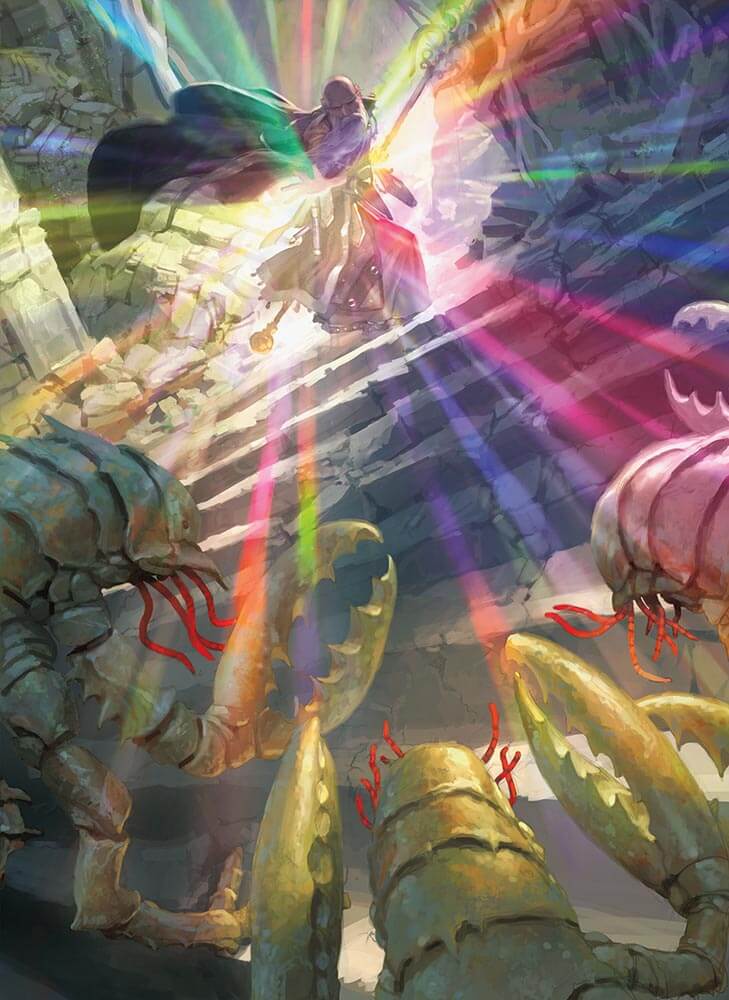

Draconic Bloodline
Your innate magic comes from draconic magic that was mingled with your blood or that of your ancestors. Most often, sorcerers with this origin trace their descent back to a mighty sorcerer of ancient times who made a bargain with a dragon or who might even have claimed a dragon parent. Some of these bloodlines are well
established in the world, but most are
obscure. Any given sorcerer could be
the first of a new bloodline, as a result
of a pact or some other exceptional
circumstance.
Dragon Ancestor
At 1st level, you choose one type of dragon
as your ancestor. The damage type
associated with each dragon is used by
features you gain later. You also learn
an additional spell based on that ancestry, as
shown below. It is a sorcerer spell for you,
but it doesn't count against your
number of sorcerer spells known.
Finally, you learn the Primal
Savagery cantrip as a Sorcerer
cantrip for you, though it doesn't count
against the number of cantrips you know.
Moreover, it deals the damage type associated
with your Draconic Ancestry instead of its
normal damage type.
| Dragon Colour | Damage Type | Spell |
|---|---|---|
| Black/Copper | Acid | Tasha's Caustic Brew |
| Blue/Bronze | Lightning | Witch Bolt |
| Red/Brass/Gold | Fire | Hellish Rebuke |
| Green | Poison | Ray of Sickness |
| White/Silver | Cold | Armour of Agathys |
You can speak, read, and write Draconic. Additionally, whenever you make a Charisma check when interacting with dragons, your proficiency bonus is doubled if it applies to the check.
Draconic Resilience
As magic flows through your body, it causes physical traits of your dragon ancestors to emerge. At 1st level, your hit point maximum increases by 1 and increases by 1 again whenever you gain a level in this class.
Additionally, parts of your skin are covered by a thin sheen of dragon-like scales. When you aren't wearing armour or using a shield, your AC equals 13 + your Dexterity modifier.
Elemental Affinity
Starting at 6th level, when you cast a spell that deals damage of the type associated with your draconic ancestry, add your Charisma modifier to that damage.
Also at this level, you gain resistance to that damage type. At 11th level, this increases to immunity.

Embodied Ancestry
Also at 6th level, your draconic traits become more prominent. When you aren't wearing armour, your AC equals 10 + your Dexterity modifier + your Charisma modifier.
In addition, you can produce natural weapons remnicent of your draconic heritage, such as claws, a tail, or knife-like teeth. Unarmed strikes using these natural weapons use your Charisma instead of Strength for their attack and damage rolls, and deal 1d6 piercing or slashing damage (your choice) on a hit instead of the bludgeoning damage normal for
unarmed strikes. You can manifest or dismiss these
changes as a bonus action.
At 15th level, the blood of True Dragons fully awakens, aging you a single year for every decade that passes. You also suffer none of the frailty of old age, and you can't be aged magically. You can still die of old age, however.
Dragon Wings
At 14th level, you gain the ability to sprout a pair of dragon wings from your back, gaining a flying speed equal to your walking speed or 5 times your Charisma modifier, whichever is greater. You can create or dismiss these wings as a bonus action on your turn. They last until you dismiss them.
You can't manifest your wings while wearing armour
unless the armour is made to accommodate them, and
clothing not made to accommodate your wings might be
destroyed when you manifest them.
Draconic Presence
Beginning at 18th level, you can channel the dread
presence of your dragon ancestor, causing those around you to become awestruck or frightened. Whenever you spend sorcery points or cast a spell of 1st-level or higher on your turn, you exude an aura of awe or fear (your choice) to a distance of 60 feet until the end of your next turn.
Each creature of your choice that starts its turn in this aura or moves into it for the first time on their turn must succeed on a Wisdom saving throw or be charmed (if you chose awe) or frightened (if you chose fear) until the aura ends. A creature that succeeds on this saving throw is immune to your aura for 24 hours, unless you spend 3 sorcery points to remove their immunity (no action required).

Fiend Ichor
A cornerstone of ancient tiefling tradition, and occasionally possessed by the Tanarukk of the orcs of old, fiendish blood, known as Ichor, runs through your veins. Usually the result of demonic ancestry, or of family members making pacts with devils, regardless the magic of the lower planes now lies right at your fingertips.
Sulphur in the Blood
At 1st level, the demonic or devilish magic that resides within you has altered parts of you and your nature. You have advantage on Charisma checks, and can double your proficiency bonus for your choice of either Persuasion or Deception checks. Additionally, you can speak, read, and write either Abyssal or Infernal, depending on your bloodline choice - Yugoloth can pick.
You also gain darkvision up to 60 feet, increasing to 120 feet at 6th level. You can see through magical darkness within this range.
Fiendish Magic
When you manifest this origin at 1st level, you choose either the Abyssal, Infernal or Gehennan bloodline. Your choice determines which extended spell list you follow and aspects of features as you level up. Your affinity for demons, devils or yugoloth gives you the option to learn additional spells that focus on summoning, hellfire, or commanding.
When your Spellcasting feature lets you learn a sorcerer spell of 1st level or higher at the levels in the Fiendish Origin Spells table, you gain an additional spell from the list below. These spells do not count towards the total number of spells you know, and the spells count as a sorcerer spell for you.
Fiendish Origin Spells
| Level | Abyssal Spells | Infernal Spells | Gehennan Spells |
|---|---|---|---|
| 1st | disguise self | hellish rebuke | command |
| 3rd | find steed (nightmare) | heat metal | suggestion |
| 5th | summon lesser demon | fireball | fear |
| 7th | summon greater demon | banishment | confusion |
| 9th | far step | infernal calling | modify memory |
| 11th | planar ally | arcane gate | mental prison |
Otherworldly Attunement
By 6th level, your fiendish nature has granted you further enhancements to your constitution. You have advantage on saving throws against poison, gain resistance to poison damage, and resistance to either cold, fire, or lightning damage. You can change the chosen resistance to one of the others by spending 1 sorcery point as a bonus action on your turn.
In addition, you also are able to channel
the powers of the lower planes into
fearsome weapons. As a bonus action,
you can spend 3 sorcery points to
summon a weapon of fiendish power,
such as a balor’s whip, a horned devil’s
fork, or the tongue of a canoloth.
This weapon assumes the stats of the
weapon it most resembles, and you are
considered proficient with this weapon.
This weapon counts as magical for the
purposes of overcoming resistance and
immunity to nonmagical damage, and you
can use your Charisma modifier for the
attack and damage rolls for this weapon.
The weapon stays summoned for 1 minute,
or until you dispel it as a bonus action or the
weapon is moved more than 10 feet away
from you. During the period in which
the weapon is summoned, you can summon it
to your hand again as a bonus action at will.
Burning Rift
At 14th level, you have learned how to spring
forth vile creatures from the lower planes. The
Summon Fiend spell is added to your list of Sorcerer
spells, but does not count against the number of
spells you know.
In addition, you can cast Summon Fiend without requiring material components or expending a spell slot. When cast this way, the spell does not require concentration, and the fiend you summon gains all of the benefits bestowed to a creature conjured by the Find Familiar spell, as if it had been summoned as your familiar for the duration.
Once you use this feature, you cannot use it again until you finish a long rest, unless you expend both 3 sorcery points and a spell slot of 5th-level or higher to use it again.
Unholy Bindings
By 18th level, you have mastered powerful magics from the lower planes. You gain immunity to fire, cold, or lightning damage instead of resistance.
You also have utter control over creatures conjured from other planes, having a knack for knowing their True Names; whenever you or another creature you can see within 60 feet of you summons an aberration, elemental, fiend, or undead, you can spend 1 sorcery point to learn its Name. The summoned creature treats you and creatures that you summon as friendly, and is not hostile towards you or your summons unless they attack it. At the start of each of your turns, you must expend 1 sorcery point more than the last round to maintain this effect (no action required).
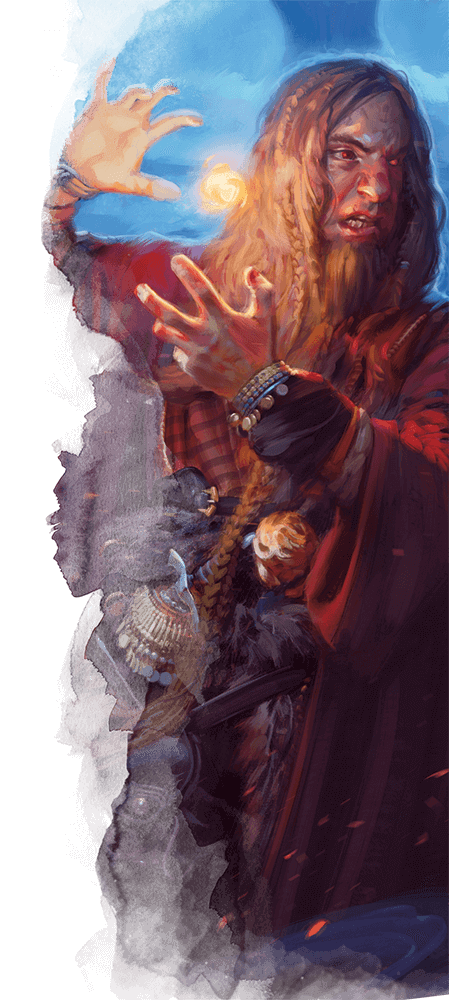
Hexblood
Often found among the children of changelings, elves, and centaur, hexblood sorcerers have an extraordinary link to the fey realms - whether the blossoming of nature, the gift of farsight, or the herald of death, always this blend of the arcane and natural is an omen of change to come.
Seelie Tongue
When this origin begins to manifest at 1st level, you learn to bargain for the things that you desire or need, knowing you can usually get something for yourself or your companions out of almost any situation. You have advantages on Charisma (Persuasion or (Deception) checks that involve bargains, deals, or contracts.
Additionally, your thirst for knowledge of the queer and unusual pushes you to learn to speak, read, and write one exotic language of your choice.
Vessel of the Old Powers
Beginning at 1st level, you align yourself to a particular path of witchcraft, granting you access to certain additional spells. Choose from one of the following Ancient Paths: Death, Nature, or Prophecy. You then gain access to an extended spell list that corresponds with your choice. You can only choose one of these paths, and cannot change paths once chosen.
When your Spellcasting feature lets you learn a sorcerer spell of 1st level or higher, you gain an additional spell from the list below. These spells do not count towards the total number of spells you know, and the spells count as a sorcerer spells for you.
Spells of the Old Powers
| Level | Death | Nature | Prophecy |
|---|---|---|---|
| 1st | inflict wounds | entangle | gift of alacrity |
| 3rd | spiritual weapon | moonbeam | augury |
| 5th | animate dead | plant growth | sending |
| 7th | death ward | conjure woodland beings | divination |
| 9th | contagion | tree stride | legend lore |
| 11th | eyebite | wall of thorns | true seeing |
One with the Warp
Also at 1st level, you are intuitively knowledgeable in a variety of magics, much like the witches and hags of old. You can learn one cantrip of your choice from any spell list, and it does not count towards the total number of cantrips you know. You also gain proficiency in either the Herbalism Kit or Alchemist's Supplies.
Additionally, you have become accustomed to having a companion that aids you. You learn the Find Familiar spell, you can cast it as an action without requiring Material components by expending 3 sorcery points when casting the spell using a spell slot, and your familiar has additional hit points equal to twice your Sorcerer level.
Hoard of Horrors
Beginning at 6th level, you can spend 8 hours creating a hag’s pouch that stores six different organic material components of your choice that are then used in special magical effects. As an action, you can spend 2 sorcery points to reach into the hag’s pouch and procure from it one of these material components, using it in some way to produce one of the following magical effects of your choosing from the list below:
Beast Speech. Eating the material component, you can talk to beasts as if you are under the effects of the speak with animals spell. This effect lasts for 1 hour.
Spider Breath. Chewing the material component, you can cast the spell web as a bonus action, and it becomes a 30-foot cube.
Impervious Walk. Smashing the material component under your feet, for 1 minute, you can ignore difficult terrain, and you can move as if under the effects of the spell spider climb.
Water Life. Smelling the material component, for up to 1 minute, you can breathe underwater and gain a swim speed equal to your movement speed.
Blackened Smog. Tossing the material component onto the ground within 30 feet of you, the component suddenly emits a thick cloud of black smog in a 10 foot radius around the component. This smog blocks vision, including darkvision, and lasts for 1 minute.
Grasping Curse. Crushing the material component in your hand, you can cast the spell hex, but the range increases to 120 feet.
Any expended material components of the hag’s pouch replenish over the course of a long rest. If you need to create a new pouch, in the event that the other is stolen or lost, the previous bag ceases to function.

Binding Coven
By 14th level, you have learned to work together with those who share similar goals as you, as long as you are both treated and seen as equals. Choose up to two willing creatures that can each cast at least one spell. You and the willing creatures perform a ritual that lasts for 1 hour, resulting in those who participate entering into a ‘coven’, allowing the three of you to share a certain spell slot.
As a bonus action on your turn, you may request a spell slot from one of the others, the level of which both you must be able to cast. The one who gives the spell slot removes it as if it was used to cast a spell with a casting time of 1 reaction, while the one who recovers it regains an expended spell slot of the appropriate level. Each member of this coven can request and give one spell slot per long rest.
This coven lasts until you choose to dispel it, or a member dies. Any time you want to switch a member of the coven, all of its members and the new initiate must be present for the ritual to create the coven again.
Cackling Mount
At 18th level, you have learned how to summon a mount or vehicle befitting that of a great hag or witch. By spending 5 sorcery points, you perform a ritual over the course of 1 hour, wherein you cast the spell find greater steed, selecting one of the mount options from that spell.
Once the mount has been summoned, you begin creating a tiny effigy that resembles either an animal or inanimate object of your choice. The appearance of the summoned mount changes to resemble that of the effigy, though the stats of the mount remain unchanged otherwise. Additionally, you can change the mount’s size to be either Small, Medium, or Large. You then are able to call upon this steed as a bonus action at any time, by interacting with the effigy in some manner, (such as blowing air onto it, rubbing it, or throwing it), as long as there is space for the mount’s size.
Leviathan
The power of water is the strength of flexibility, resilience, and a relentless nature. Water parts to allow a ship to sail over it or a diver to plunge into it, but their passing leaves no mark; all water eventually returns to the waves. Those whose souls are claimed by elemental water command such power.
Ebb and Flow
When you choose this origin at 1st level, you learn the secret of tidal motion, and can use it to influence the magic around you:
- You gain the ability to breathe underwater, and you have a swim speed equal to your walking speed.
- If a target takes damage from a spell you cast, the target’s speed is reduced by 15 feet until the end of your next turn. If the spell already reduces the target’s speed, the target’s speed is reduced to 0.
- If a creature is moved by a spell you cast, increase the distance it is moved by 15 feet, or you choose for it to fall prone.
Oceanic Magic
You learn additional spells when you reach certain levels in this class, as shown on the Sea Spells table. Each spell counts as a sorcerer spell for you, but it doesn’t count against the number of sorcerer spells you know. These spells can’t be replaced when you gain a level in this class.
Sea Spells
| Level | Spells |
|---|---|
| 1st | create or destroy water, fog cloud, shape water |
| 3rd | misty step, summon beast (water) |
| 5th | tidal wave, wall of water |
| 7th | ice storm, summon elemental (water) |
| 9th | cone of cold, maelstrom |
Watery Defence
At 6th level, you gain resistance to fire damage. You also gain the ability to defend yourself by momentarily assuming a watery form. As a reaction when you are hit by a weapon attack and take bludgeoning, piercing, or slashing damage from it, you can reduce that damage by an amount equal to your sorcerer level plus your Charisma score, and then you can move up to 30 feet without provoking opportunity attacks.
Fluid Form
Starting at 14th level, you gain the ability to enter a liquid state while moving. When you move on your turn, you take only half damage from opportunity attacks, and you can move through any enemy’s space but can’t willingly end your move there.
On your turn, you can move through any space that is at least 3 inches in diameter and do so without squeezing. You can keep moving this way, as long as you use your full movement each round to do so. When you stop moving, the regular squeezing rules apply if you’re in a space one size smaller than you. You can’t willingly stop in a space smaller than that, and if you’re forced to do so, you immediately flow to the nearest space that can fit you.
Shifting Soul
Starting at 18th level, your being is altered by the power of the sea. You gain the following benefits:
- You no longer need to eat, drink, or sleep.
- A critical hit against you becomes a normal hit.
- You have resistance to bludgeoning, piercing, and slashing damage.
- You are immune to acid damage and the grappled and restrained condition. This is suspended until the end of your next turn on a round in which you take cold damage.
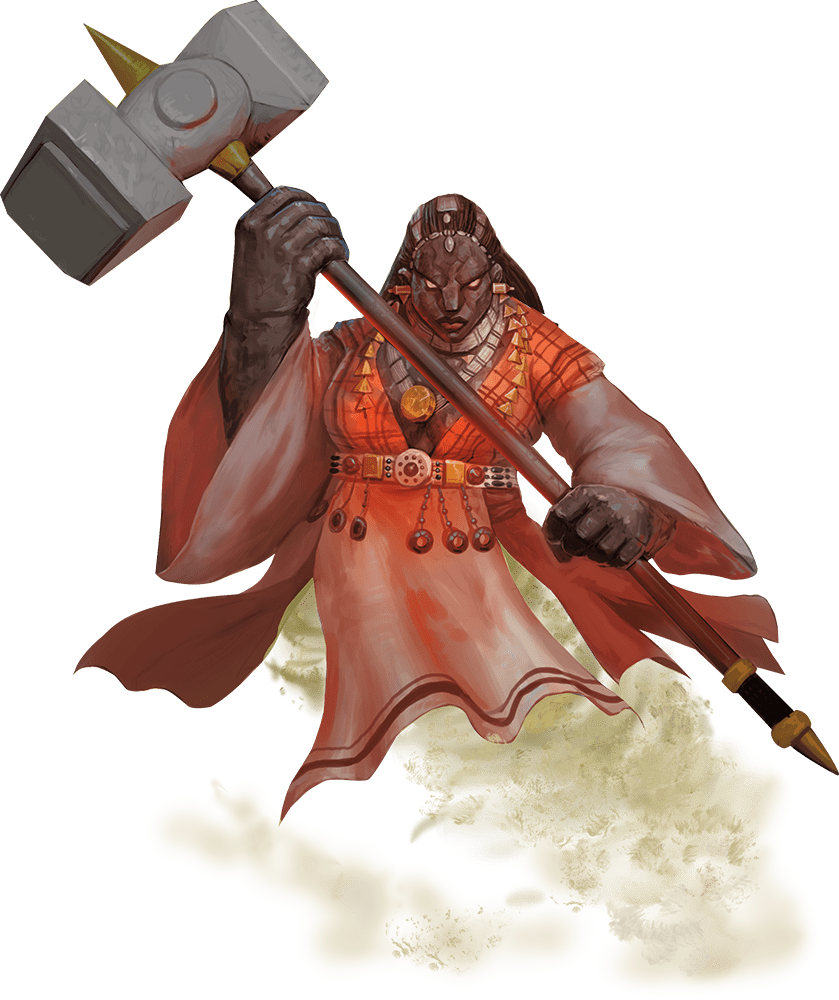
Monolith Spirit
Almost since birth you have felt a connection
to the earth of which most dwarves would
be envious, and you are gifted at the
magical manipulation of rock & stone
Steadfast Proficiencies
At 1st level, you gain proficiency in
shields, simple and martial
melee weapons, and
medium armour
Child of the Earth
Your innate connection
with the earth gives you
access to magic which
may otherwise be beyond your reach. Starting at 1st level, when you choose new spells to know, you can choose spells from the Druid spell list, provided they specifically relate to earth or stone - for example: flesh to stone, earthbind, stone shape, or wall of stone.
In addition, the number of spells you know increases by your Constitution modifier (minimum of one additional spell).
You also know the mould earth cantrip, and it does not count against the number of cantrips known.
Heart of the Earth.
Also at 1st level, your abilities are enhanced while you’re in your element. While you have both feet firmly on the ground, you have advantage on Strength checks and saving throws, and checks made to maintain concentration on spells.
In addition, you gain tremorsense out to a range of 30 feet.
Hardened Flesh
At 6th level, while you are standing on dry land your AC increases by a number equal to half your proficiency bonus rounded down, and you can wear heavy armour as if you were proficient in it and had the necessary strength requirement.
Stonewalk
Starting at 14th level, your affinity for the ground beneath your feet deepens. You have a burrow speed through earth, stone and metal equal to half your walking speed, but you leave no hole behind you. Sand and mud are considered difficult terrain. You can end your turn inside a structure’s space while burrowing, but take 1d10 force damage when doing so. In addition, damage you inflict which deals bludgeoning, piercing, or force damage deals twice the amount of damage to objects, structures, and creatures composed of earth or stone.
Fist of the Earth
At 18th level, while surrounded by stone,
earth, or crystal, you can destroy a 5ft cube
of that material within 60 feet of you and expend
1 sorcery point to cast Shield or Maximilian’s Earthen
Grasp without expending a spell slot or requiring verbal
components. Furthermore, you can destroy a 10ft cube
of earth within the same range and expend 5 sorcery
points to create a Bigby’s Hand from stone, as per the
spell, without requiring material components or
expending a spell slot. The stone hand is considered
an Object, and deals magical bludgeoning damage
instead of force damage.
Moontouched
You or someone from your bloodline has been exposed to the concentrated magic of the moon (or moons) of your world, imbuing you with lunar magic. Perhaps your ancestor was involved in a druidic ritual involving an eclipse, or maybe a mystical fragment of a moon crashed near you. However you came to have your magic, your connection to the moon is obvious when you cast sorcerer spells-perhaps making your pupils glow with the colour of a moon from your world, causing spectral manifestations of lunar phases to orbit you, or some other effect.
Lunar Embodiment
You learn additional spells when you reach certain levels in this class, as shown on the Lunar Phase Spells table. Each of these spells counts as a sorcerer spell for you, but it doesn’t count against the number of sorcerer spells you know.
Whenever you finish a long rest, you can choose what lunar phase manifests its power through your magic: Full Moon, New Moon, Crescent Moon, or Eclipse.
Lunar Phase Spells
| Level | Full Moon | New Moon | Crescent Moon | Eclipse |
|---|---|---|---|---|
| 1st | Shield | Hex | Magnify Gravity | Inflict Wounds |
| 3rd | Lesser Restoration | Blur | Augury | Moonbeam |
| 5th | Dispel Magic | Phantom Steed | Fly | Animate Dead |
| 7th | Death Ward | Hallucinatory Terrain | Control Water | Sickening Radiance |
| 9th | Rary’s Telepathic Bond | Hold Monster | Contact Other Plane | Negative Energy Flood |
While in a chosen lunar phase, you can cast one 1st-level spell of the associated phase in the Lunar Spells table once without expending a spell slot. Once you cast a spell in this way, you can’t do so again until you finish a long rest.
Moon's Fire
Starting at 1st level, you can call down the radiant light of the moon on command. You learn the Sacred Flame spell, which doesn’t count against the number of sorcerer cantrips you know. When you cast the spell, you can target one creature as normal or target two creatures within range that are within 5 feet of each other. Damage dealt by this cantrip is Radiant (moonlight).
Lunar Boons
Starting at 6th level, the current phase of your Lunar Embodiment can affect your Metamagic feature. Each Lunar Embodiment phase is associated with certain schools of magic, as shown here:
Full Moon. Abjuration and Conjuration
New Moon. Enchantment and Illusion
Crescent Moon. Divination and Transmutation
Eclipse. Evocation and Necromancy
Whenever you use Metamagic on a spell of a school of magic associated with your current Lunar Embodiment phase, you can reduce the sorcery points spent by 1 (minimum 0).
You can reduce the sorcery points spent for your Metamagic a number of times equal to your Charisma modifier (minimum 1), and you regain all expended uses when you finish a long rest
Waxing and Waning
Starting at 6th level, you gain greater control over the phases of your lunar magic. As a bonus action, you can spend 1 sorcery point to change your current Lunar Embodiment phase for a different one.
You can now cast one 1st-level spell from each lunar phase of the Lunar Spells table once without expending a spell slot, provided your current phase is the same as the lunar phase spell. Once you cast a lunar phase spell in this way, you can't do so again until you finish a long rest.

Lunar Empowerment
Starting at 14th level, the power of a lunar phase saturates your being. While you are in a Lunar Embodiment phase, you also gain the following benefit associated with that phase:
Crescent Moon. When you make a Dexterity ability check to determine initiative, you gain a bonus to the roll equal to your Charisma modifier. In addition, you and creatures of your choice have advantage on Intelligence (Investigation) and Wisdom (Perception) checks while within 10 feet of you.
New Moon. You have advantage on Dexterity (Stealth) checks. In addition, while you are entirely in darkness, attack rolls have disadvantage against you.
Full Moon You have resistance to necrotic and radiant damage.
Eclipse. You can use a bonus action to shed bright light in a 10-foot radius and dim light for an additional 10 feet or to douse the light. In addition, when you cast a sorcerer spell that deals damage, you can choose to change the damage type dealt to necrotic.
Lunar Phenomenon
At 18th level, as a bonus action, you can tap into a special power of your current Lunar Embodiment phase. Alternatively, as part of the bonus action you take to change your lunar phase using the Waxing and Waning feature, you can immediately use the power of the lunar phase you are entering:
Full Moon. You radiate moonlight for a moment. Each creature of your choice within 30 feet of you must succeed on a Constitution saving throw against your spell save DC or be blinded until the end of its next turn. In addition, one creature of your choice in that area regains 3d8 hit points.
New Moon. You can magically teleport to an unoccupied space you can see within 60 feet of yourself. You can bring along one willing creature you can see within 5 feet of yourself. That creature teleports to an unoccupied space of your choice that you can see within 5 feet of your destination space. In addition, you and that creature gain resistance to all damage until the start of your next turn.
Crescent Moon. You briefly become entirely composed of ethereal moonlight. Until the start of your next turn, you have resistance to all damage, a fly speed of 60 feet, and can move through creatures and objects provided you end your movement in an unoccupied space.
Eclipse. You momentarily emanate gloom. Each creature of your choice within 30 feet of you must succeed on a Dexterity saving throw against your spell save DC or take 3d10 necrotic damage and have its speed reduced to 0 until the end of its next turn. In addition, you become invisible until the end of your next turn, or until immediately after you make an attack or cast a spell.
Once you take one of these bonus actions, you can’t use
the taken benefit again until you finish a long rest, unless
you spend 5 sorcery points to use it again.
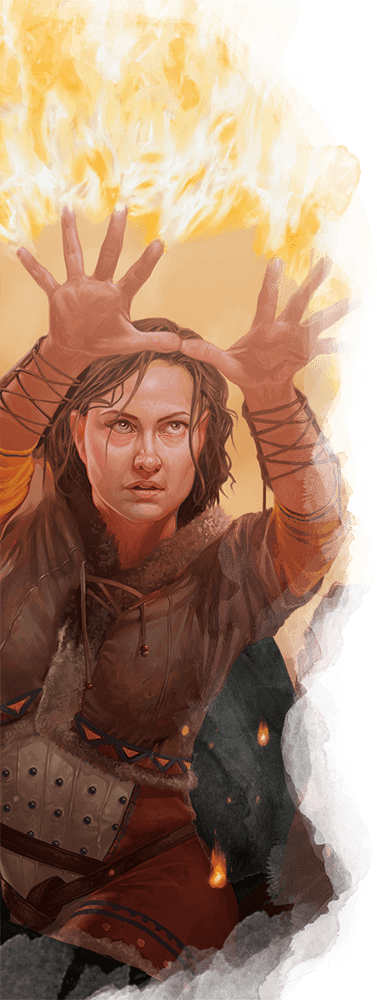
Phoenix Heart
Your innate magic manifests in fire. You are your fire, and your fire is you. Your power draws from the immortal flame that fuels the legendary phoenix. You or your ancestors perhaps rendered a phoenix a great service, or you were born in its presence; whatever the cause, a shard of the phoenix’s power dwells within you.
Heart of Flame
Starting at 1st level, you gain the ability to start fires with a touch. As an action, you can magically ignite a flammable object you touch with your hand- an object such as a torch, a piece of tinder, or the hem of drapes. Also as an action, you can shed bright light in a 30-foot radius and dim light for an additional 30 feet. You can end this effect at will, no action required.
Moreover, the passion which rages within you knits your flesh together with the crackle of a fire resisting extinguishment. Your Hit Point maximum increases by 1, and increases by 1 again each time you gain a level in this class.
Phoenix Spark
Also at 1st level, in the face of defeat your regenerative blood surges outward to preserve you in a fiery roar. If you are reduced to 0 hit points, you can use your reaction to draw on the spark of the phoenix. You are instead reduced to 1 hit point, and each creature within 10 feet of you takes fire damage equal to your sorcerer level + your Charisma modifier.
Once you use this feature, you can’t use it again until you finish a long rest. You can still attempt to use this feature once used, but each time you reignite the embers of your Phoenix Spark in this way you gain one level of exhaustion.
Unbearable Heat
Starting at 6th level, the fiery energy within you grows restless and vengeful. You gain resistance to fire and cold damage. In addition, all creatures within 10 feet of you take fire damage equal to half your sorcerer level (rounded down). You can suppress this aura as an action, but must concentrate on suppressing it as if on a spell.
You can expend 2 sorcery points as a bonus action to touch a creature, granting them immunity to your aura for 24 hours. Alternatively, you can spend 2 sorcery points as a bonus action to reconstitute yourself, warmed by the flame within. By doing so, you heal for 3d8 + your Charisma modifier.
At 18th level, the range of your aura increases to 30 feet.
Nourishing Fire
Starting at 14th level, your fire spells soothe and restore you. When you expend a spell slot to cast a spell which deals an amount of fire damage on a hit or failed save, you regain hit points equal to the slot’s level + your Charisma modifier.
Form of the Phoenix
At 18th level, you finally master the spark of fire that dances within you. You can use an action to embrace your inner fire; you gain the following benefits for 1 hour:
- You have a flying speed of 40 feet and can hover.
- You have immunity to fire, cold, and radiant damage.
- Enemies take full damage from fire damage you inflict, regardless of resistances or immunities
- If you use your Phoenix Spark, that feature deals an extra 3d12 fire damage to each creature.
- You add your Charisma modifier to the damage of your Unbearable Heat feature, and can have the aura affect only creatures on your choice.
- All melee attacks made by allied creatures within this aura deal additional fire damage equal to your Charisma modifier.
Your Form of the Phoenix ends early if you fall unconscious, or if you choose to end it early (no action required). Once you use this feature, you cannot use it again until you finish a long rest, unless you expend a spell slot of 5th-level or higher to use it again.
Runechild
Some sorcerers occasionally find their body itself becomes a conduit for mystical energies, their flesh collecting and storing remnants of their magic in the form of natural runes. These anomalies are known in erudite circles as runechildren.
The talents of a runechild are rare indeed, and many are sought after for study by mages and scholars alike, driven by a prevalent belief that the secrets within their body can help understand many mysteries of the arcane.
Runic Magic
Beginning at 1st level, you learn additional spells when you reach certain levels in this class, as shown on the Runic Spells table. Each of these spells counts as a sorcerer spell for you, but it doesn’t count against the number of sorcerer spells you know.
When you gain a level in this class, you can replace one spell you gained from this feature with another spell of the same level. The new spell must be an abjuration or transmutation spell from the Sorcerer, Warlock, or Wizard spell list.
Runic Spells
| Level | Spells |
|---|---|
| 1st | Longstrider, Protection from Evil and Good |
| 3rd | Lesser Restoration, Protection from Poison |
| 5th | Glyph of Warding, Magic Circle |
| 7th | Death Ward, Freedom of Movement |
| 9th | Greater Restoration, Telekinesis |
Essence Runes
At 1st level, your body begins to express your innate magic as runes traced out across your skin. You start with 1 essence rune, and gain an additional rune whenever you gain a level in this class. These runes can manifest anywhere on your body, though the first usually manifests on the forehead. Your essence runes remain invisible when inert.
At the end of a turn during which you spent one or more sorcery points, a number of your essence runes equal to the number of sorcery points you spent begin to glow with stored energy, becoming charged runes. You use these charged runes to power your Runechild subclass features. Also, as a bonus action, you may spend a sorcery point to convert two essence runes into two charged runes.
If you have 5 or more charged runes, you emit bright light in a 5-foot radius and dim light for an additional 5 feet.
If you expend a charged rune to use one of your Runechild features, it returns to being an inert essence rune. Any charged runes also revert to inert essence runes after you finish a long rest.
Glyphs of Aegis
Starting at 1st level, you can release the stored arcane power within your runes to absorb or deflect threatening attacks. Whenever you take damage, you can expend any number of charged runes as a reaction, reducing the damage by 1d6 for each expended rune.
When you reach 6th level, you can touch a creature as an action and expend up to 3 charged runes to transfer your protective power to it for up to 1 hour. The next time that creature takes damage within the next hour, it rolls 1d6 per charged rune spent and reduces the damage by the total. You can’t transfer this power to a creature already under the effect of Glyph of Aegis.
Your Glyph of Aegis die becomes a d8 at 14th level.
Sigilic Augmentation
At 6th level, you can channel your runes to temporarily bolster your physical capabilities. When you make a Strength, Dexterity, or Constitution ability check, you can expend a charged rune as a reaction to gain advantage on the roll. In addition, when you are forced to make a Strength, Dexterity, or Constitution saving throw, you can use your reaction and expend a charged rune to gain advantage on the saving throw. Once you use this feature in this way, you can't use it in this way again until you finish a long rest.
Manifest Inscriptions
Also at 6th level, you can reveal hidden glyphs and enchantments that surround you. You are under a permanent magical effect otherwise identical to a Detect Magic spell. You also have advantage on Intelligence (Arcana) checks to discern the nature of any magic. If the glyphs you reveal mean something in a language you can’t read, you can understand them as if you knew that language.
Runic Torrent
Upon reaching 14th level, you can channel runic energy to overpower even the staunchest defences. When you cast a spell, you can expend 2 charged runes to cause the spell to deal force damage instead of its usual damage types. Additionally, all creatures targeted by the spell or within the spell’s area must succeed on a Strength saving throw against your spell save DC or be knocked prone or pushed up to 15 feet away from the spell's point of origin (your choice). Once you use this feature, you can't do so again until you complete a short or long rest.
Arcane Exemplar
Starting at 18th level, you can use a bonus action and expend a charged rune to become a being of pure magical energy. While in your exemplar form, you gain the following benefits:
- You have a flying speed of 60 feet.
- Creatures have disadvantage on saving throws against your sorcerer spells.
- You have resistance to damage dealt by spells.
- Whenever you cast a spell of 1st level or higher, you regain hit points equal to the spell’s level.
- Your exemplar form lasts until the end of your turn. However, you can expend a charged rune at the end of your turn (no action required) to extend the duration until the end of your next turn. When your exemplar form ends, you are stunned until the end of your next turn.
Once you use this feature, you can’t use it again until you finish a long rest, unless you expend a spell slot of 5th-level or higher to use it again.
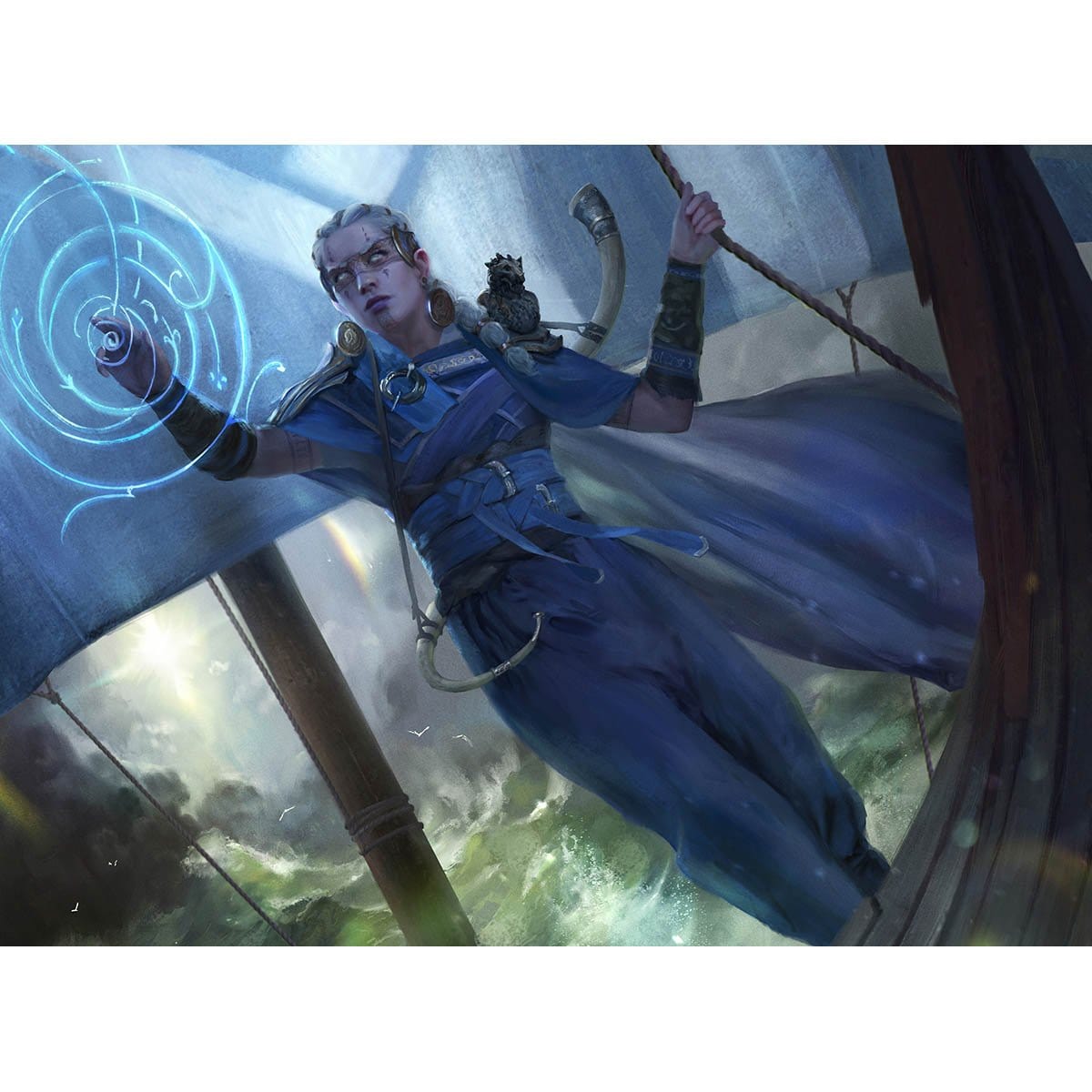
Shadow Umbra
You are a creature of shadow, for your innate magic comes from the Shadowfell itself. You might trace your ancestry to an entity from that place, or perhaps you were exposed to its fell energy and transformed by it. The power of shadow magic casts a strange pall over your physical presence. The spark of life that sustains you is muffled, as if it struggles to remain viable against the dark energy that imbues your soul.
Umbral Arcana
You learn additional spells when you reach certain levels in this class, as shown on the Umbral Spells table. Each spell counts as a sorcerer spell for you, but it doesn’t count against the number of sorcerer spells you know. These spells can’t be replaced when you gain a level in this class.
Umbral Spells
| Level | Spells |
|---|---|
| 1st | Arms of Hadar, Inflict Wounds |
| 3rd | Darkness, Darkvision |
| 5th | Hunger of Hadar, Life Transference |
| 7th | Mordenkainen's Private Sanctum, Phantasmal Killer |
| 9th | Antilife Shell, Negative Energy Flood |
Eyes of the Dark
From 1st level, you have darkvision with a range of 120 feet. When you reach 3rd level in this class, you can see through magical darkness and heavily obscured areas without detrimental effects.
Strength of the Grave
Starting at 1st level, your existence in a twilight state between life and death makes you difficult to defeat. When damage reduces you to 0 hit points, you can instead drop to 1 hit point. You can't use this feature if you are reduced to 0 hit points by radiant damage or by a critical hit.
Once you use this ability, you can't use this feature again until you finish a long rest, unless you spend 3 sorcery points as a bonus action to regain the ability.
Hound of Ill Omen
At 6th level, you gain the ability to call forth a howling creature of darkness to harass your foes. As a bonus action, you can spend 3 sorcery points to summon a hound of ill omen to target one creature you can see within 120 feet of you. The hound appears in an unoccupied space of your choice within 30 feet of the target.
Roll initiative for the hound. On its turn, it can move only toward its target by the most direct route, and it can use its action only to attack its target. The hound can make opportunity attacks, but only against its target. Additionally, while the hound is within 5 feet of the target, the target has disadvantage on saving throws against any spell you cast. The hound disappears if it is reduced to 0 hit points, if its target is reduced to 0 hit points, or after 5 minutes.
The hound uses the dire wolf’s statistics, with the following changes:
- The hound is size Medium, not Large, and it counts as a monstrosity, not a beast.
- It appears with a number of temporary hit points equal to half your sorcerer level.
- It can move through other creatures and objects as if they were difficult terrain. The hound takes 5 force damage if it ends its turn inside an object.
- At the start of its turn, the hound automatically knows its target’s location. If the target was hidden, it is no longer hidden from the hound.
Shadow Walk
At 14th level, you gain the ability to step from one shadow into another. When you are in dim light or darkness, as a bonus action, you can teleport up to 120 feet to an unoccupied space you can see that is also in dim light or darkness.
Umbral Form
Starting at 18th level, you can spend 6 sorcery points as a bonus action to transform yourself into a shadowy form. In this form, you have resistance to all damage except force and radiant damage, and you can move through other creatures and objects as if they were difficult terrain. You take 5 force damage if you end your turn inside an object. You remain in this form for 1 minute. It ends early if you are incapacitated, if you die, or if you dismiss it as a bonus action.
Storm Sorcery
Your innate magic comes from the power of elemental air. Many with this power can trace their magic back to a near-death experience caused by the Great Rain, but perhaps you were born during a howling gale so powerful that folk still tell stories of it, or your ancestry might include the influence of potent air creatures such as vaati or djinn.
Wind Speaker
The arcane magic you command is infused with elemental air. You can speak, read, and write Primordial from 1st level. Knowing this language allows you to understand and be understood by those who speak its dialects: Aquan, Auran, Ignan, and Terran.
Tempestuous Magic
Starting at 1st level, you can use a bonus action on your turn to cause whirling gusts of elemental air to briefly surround you, immediately before or after you cast a spell of 1st level or higher. Doing so allows you to fly up to 10 feet without provoking opportunity attacks.
Inner Storm
When this origin awakens within you at 1st level, you gain greater control over the weather. This grants you access to an innate spell list. These spells are considered Sorcerer spells for you, and do not count against the number of spells you know. You can access additional Storm spells as you level up.
Storm Spells
| Level | Spells |
|---|---|
| 1st | feather fall, jump |
| 3rd | gust of wind, shatter |
| 5th | call lightning, wind wall |
| 7th | ice storm, storm sphere |
| 9th | conjure elemental (air), control winds |
Whenever you gain a sorcerer level, you can replace one spell you gained from this feature with another spell of the same level. The new spell must be an evocation or a transmutation spell from the druid, sorcerer, or wizard spell list which deals ligtning or thunder damage.
Heart of the Storm
At 6th level, you gain resistance to lightning and thunder damage. In addition, whenever you start casting a spell of 1st level or higher that deals lightning or thunder damage, stormy magic erupts from you. This eruption causes creatures of your choice that you can see within 10 feet of you to take lightning or thunder damage (choose each time this ability activates) equal to half your sorcerer level.
Storm Guide
At 6th level, you gain the ability to subtly control the weather around you. If it is raining, you can use an action to cause the rain to stop falling in a 20-foot-radius sphere centred on you. You can end this effect as a bonus action. If it is windy, you can use a bonus action each round to choose the direction that the wind blows in a 100-foot-radius sphere centred on you. The wind blows in that direction until the end of your next turn. This feature doesn't alter the speed of the wind.
Storm's Fury
Starting at 14th level, when you are hit by a melee attack, you can use your reaction to deal lightning damage to the attacker. The damage equals your sorcerer level. The attacker must also make a Strength saving throw against your sorcerer spell save DC. On a failed save, the attacker is pushed in a straight line up to 20 feet away from you.
Wind Soul
At 18th level, you gain immunity to lightning and thunder damage. You also gain a magical flying speed of 60 feet. As an action, you can reduce your flying speed to 30 feet for 1 hour and choose a number of creatures within 30 feet of you equal to 3 + your Charisma modifier. The chosen creatures gain a magical flying speed of 30 feet for 1 hour. Once you reduce your flying speed in this way, you can't do so again until you finish a short or long rest.
Wild Magic
Your innate magic comes from the wild forces of chaos that underlie the order of creation. You might have endured exposure to some form of raw magic, perhaps through a planar portal leading to Limbo, the Elemental Planes, or the mysterious Far Realm. Perhaps you were blessed by a powerful fey creature or marked by a demon. Or your magic could be a fluke of your birth, with no apparent cause or reason. However it came to be, this chaotic magic churns within you, waiting for any outlet. A player character might be blessed (and cursed) with Wild Magic as the result of an event in their adventures. A future event might remove the Wild Magic, or even transfer it to another creature!
Wild Magic Surge
Starting when you choose this origin at 1st level, your spellcasting can unleash surges of untamed magic. Immediately after you cast a sorcerer spell of 1st level or higher, the DM can have you roll a d20. If you roll a 1, roll on the Wild Magic Surge table to create a random magical effect. Each time you do not create this effect after the first, the number you must roll on the d20 to trigger a Surge increases by 1. This number resets at the end of a long rest.

Alternative Options
Critical Chaos. Wild Magic Surge rolls may be triggered the first time a Wild Magic player rolls a natural 1 or a natural 20 on an attack roll or saving throw each turn.
Surge of Drama. You might instead choose to place discretion for Wild Magic Surges entirely on the DM. In this case, instead of triggering surges with spells, hits, and d20 rolls, the DM simply looks for dramatic moments (mostly in combat) and declares a surge on the spot.
Tides of Chaos
Starting at 1st level, you can manipulate the forces of chance and chaos to reroll a single d20 for one attack roll, ability check, or saving throw. You must take the new roll. Once you use this ability, you must finish a long rest or be forced to roll on the Wild Magic Surge table before you can use this feature again.
Unstable Magic
Also from 1st level, the arcane chaos bubbling within you grants spontaneous magical understandings. At 1st, 3rd, 5th, 7th, and 9th level in this class, you learn a single spell from the randomised criteria below of your highest Sorcerer spell slot level.
| d8 | Spell List |
|---|---|
| 1 | Artificer |
| 2 | Bard |
| 3 | Cleric |
| 4 | Druid |
| 5 | Paladin |
| 6 | Ranger |
| 7 | Warlock |
| 8 | Wizard |
| d8 | School of Magic |
|---|---|
| 1 | Abjuration |
| 2 | Conjuration |
| 3 | Divination |
| 4 | Enchantment |
| 5 | Evocation |
| 6 | Illusion |
| 7 | Necromancy |
| 8 | Transmutation |
Each time you gain a level in this class, you may choose to replace one of these random spells by another randomly determined spell of the same level - you cannot roll to determine spell options more than once per gained level.
Bend Luck
Starting at 6th level, you have the ability to twist fate using your wild magic. When another creature you can see makes an attack roll, an ability check, or a saving throw, you can use your reaction and spend 2 sorcery points to roll 2d4 and apply the number rolled as a bonus or penalty (your choice) to the creature's roll. You can do so after the creature rolls but before any effects of the roll occur.
Controlled Chaos
At 14th level, you gain a modicum of control over the surges of your wild magic. Whenever you roll on the Wild Magic Surge table, or you roll to determine your Unstable Magic spells, you can roll twice and use either number.
Spell Bombardment
Beginning at 18th level, the harmful energy of your spells intensifies. When you roll damage for a spell and roll the highest number possible on any of the dice, choose one of those dice, roll it again and add that roll to the damage. You can use the feature only once per die (not including the new dice).

Metamagic Options
Armed Spell
When you cast a spell as part of the Ready action, you can spend 1 sorcery point to hold the spell's energy without requiring your concentration. If you didn't release the readied spell before the start of your next turn, you regain any spell slot you spent casting it.
You can use Armed Spell even if you have already used a different Metamagic option during the casting of the spell
Ascendant Spell
When you cast a levelled spell, you can spend a number of sorcery points equal to 1 + the expended spell slot’s level to increase it to the next spell level (maximum 9th level).
Careful Spell
When you cast a spell that forces other creatures to make a saving throw, you can protect some of those creatures from the spell's full force. To do so, you spend 1 sorcery point and choose a number of those creatures up to your Charisma modifier (minimum of one creature). A chosen creature automatically succeeds on its saving throw against the spell, and takes no damage if it would take half the spell's damage on a successful save.
Delayed Spell
If you expend a spell slot to cast a spell, you can spend 2 sorcery points to delay it. The spell remains held, requiring concentration, for up to an hour. When the duration elapses or concentration is broken (voluntarily or otherwise), you cast the spell. You can activate the spell purposefully as a reaction at any point for the duration of your concentration.
Alternatively, you can expend 1 sorcery point to delay the activation of a spell with a duration of Instantaneous until the start of your next turn, at which point it triggers at the point you originally cast the spell as though you were still there. When delayed this way, the spell does not require concentration to delay.
Distant Spell
When you cast a spell that has a range of 5 feet or greater, you can spend 1 sorcery point to double the range of the spell. When you cast a spell that has a range of touch, you can spend 1 sorcery point to make the range ofthe spell 30 feet.
You can instead spend 3 points if the spell’s range is at least 30 feet to change it to 1 mile.
Dominant Magic
Once per round, if a spell or magical effect such as Counterspell would end a spell as you cast it, you can overcome that effect (no action required). To do so, you can expend a number of sorcery points equal to 1 + the level of the spell you are protecting against being dispelled.
You can use Dominant Magic even if you have already used a different Metamagic option during the initial casting of the spell.
Echoed Spell
When you take damage through a spell which has a casting time of 1 action or 1 bonus action and which targets a single creature, you can spend 1 sorcery point as a reaction to cast the same spell against the original caster on your next turn. A spell cast in this way uses a spell slot like casting it normally would. Furthermore, you must provide any material components consumed by the spell.
Empowered Spell
When you roll damage for a spell, you can spend 1 sorcery point to reroll a number of the damage dice up to your Charisma modifier (minimum of one). You must use the new rolls.
You can use Empowered Spell even if you have already used a different Metamagic option during the casting of the spell.
Extended Spell
When you cast a spell that has a duration of 1 minute or longer, you can spend 2 sorcery points to double its duration, to a maximum duration of 24 hours. You have advantage on concentration checks made to maintain an extended spell.
Heightened Spell
When you cast a spell that forces a creature to make a saving throw to resist its effects, you can spend 2 sorcery points to give one target of the spell disadvantage on all its saving throws made against that spell.
Imbued Summoning
When you cast a spell which conjures or summons creatures, you can choose to grant a single summoned creature the benefit of any spell of 3rd level or lower you can cast that has a range of touch. You cast the spell you wish to grant the creature, expending the additional spell slot plus a number of sorcery points equal to the spell cast on your summons, at the same time that you cast your summoning spell. The creature gains the benefit of the spell when it appears. The Touch spell lasts for the duration of the summons, even if it would normally require concentration.
Instinctive Spell
When threatened, you can cast a spell as a reaction by spending a number of sorcery points equal to the slot level expended (1 sorcery point for cantrips). This spell must be one that would normally require an action or bonus action to cast and has a duration of Instantaneous.
Phylactery Magic
As either an action or a bonus action on your turn, you can regain a number of sorcery points up to your Charisma modifier, taking 1d8 necrotic damage for each sorcery point you regain this way, overcoming resistance and immunity. Points gained in this way cannot be used to reduce you to 0 hit points, and cannot exceed your sorcery point maximum.
Quickened Spell
When you cast a spell that has a casting time of 1 action, you can spend 2 sorcery points to change the casting time to 1 bonus action for this casting.
Occult Spell
When you cast a Sorcerer spell you know which has the ritual tag, you can expend 1 sorcery point to cast the spell as a Ritual, but extending the casting time by 1 minute when cast this way instead of the usual 10 minutes.
Sculpted Spell
You can alter the area of your spells by spending 2 sorcery points; you can modify an area-of-effect spell by changing the area’s shape to either a cylinder within 60 feet, a cone with range of Self, a number of congruent 10-foot cubes within 150 feet of you, a sphere within 120 feet, or a line of range Self. The sculpted spell works normally in all respects except for its shape, proportional to the normal area of the spell:
Adjacent Cubes: four cubes;
Cone: 60-foot cone;
Cylinder: 10-foot radius, 30 feet high;
Line: 120-foot long, 5-foot wide line;
Sphere: 30-foot-diameter;
For example, a 5th-level lightning bolt whose area is changed to a ball deals the same amount of damage, but affects a 15-foot-radius area centred on a point you can see within 120 feet rather than a 90-foot long line.
Seeking Spell
When you cast a spell that requires you to make a spell attack roll or that forces a target to make a Dexterity saving throw, you can spend 2 sorcery points to ignore the effects of half- and three-quarters cover against targets of the spell. Being unable to see the target doesn't stop you from targeting it; the spell moves around corners and through spaces as small as half a foot wide to reach it.
You can use Seeking Spell even if you have already used a different Metamagic option during the casting of the spell.
Spiteful Magic
As a reaction when a creature inflicts you with damage, you can expend 2 sorcery points to impart a small measure of your magic within that creature, drawing your subsequent spells to it. The next spell you cast gains a bonus its save DC and attack modifier against that creature, and has a penalty to its attack modifier and save DC against any other target equal to half your Proficiency bonus (rounded down).
The next spell can use a different Metamagic option during the casting of the spell, even though it uses Spiteful Magic.
Stealth Spell
Whenever you cast a spell with an Instantaneous duration, you can spend 1 sorcery point to make the visible effects of the spell unseen - for example, producing invisible Scorching Rays. These effects can still be detected by creatures under the effect of See Invisibility or similar magic. You can use Stealth Spell even if you have already used a different Metamagic option during the casting of the spell.
Subtle Spell
When you cast a spell, you can spend 1 sorcery point to cast it without any somatic or verbal components, and without requiring material components - unless they have a gold cost or are consumed by the spell.
Translocated Spell
Whenever you cast a spell which has a range other than Self or Touch, you can change the position from which the spell originates. It can originate an additional 30 feet away from you for each sorcery point you spend.
You can use Translocated Spell even if you have already used a different Metamagic option during the casting of the spell.
Transmuted Spell
When you cast a spell that deals a type of damage from the following list, you can spend 1 sorcery point to change that damage type to one of the other listed types: acid, cold, fire, lightning, poison, or thunder.
You can use Transmuted Spell even if you have already used a different Metamagic option during the casting of the spell.
Twinned Spell
When you cast a spell that targets only one creature or a single point you can see and doesn't have a range of self, or which has a range of Self and produces a line, cube, or cone, you can spend a number of sorcery points equal to the number of sorcery points it would take to create a slot of that spell's level to target a second creature or point in range with the same spell, or produce another area-of-effect from you (1 sorcery point if the spell is a cantrip). To be eligible for Twinned Spell, a spell must be incapable of targeting more than one creature at the spell's current level. A creature can be damaged by only one of the two initial castings of the twinned spell.
Unerring Spell
If you make an attack roll for a spell and miss, you can spend 2 sorcery points to reroll the attack roll. You must use the result of the second roll. You can use Unerring Spell even if you have already used a different Metamagic option during the casting of the spell.
Warded Spell
When you cast a spell which requires you to make an ability check as a part of the spell (for example Counterspell), you can expend a number of sorcery points up to your Charisma modifier (minimum 1) and add that number to the ability check total.
Zealous Spell
You can expend 2 sorcery points when casting a spell which requires an attack roll to give yourself advantage.
The Warlock
Warlocks are seekers of the knowledge that lies hidden in the fabric of the multiverse. Through pacts made with mysterious beings of supernatural power, warlocks unlock magical effects both subtle and spectacular.
You must have a Charisma score of 13 or higher in order to multiclass in or out of this class.
Class Features
As a warlock, you gain the following class features.
Hit Points
- Hit Dice: 1d8 per warlock level
- Hit Points at 1st Level: 8 + your Constitution modifier
- Hit Points at Higher Levels: 1d8 (or 5) + your Constitution modifier per warlock level after 1st
Proficiencies
- Armour: Light armour
- Weapons: Simple weapons
- Tools: None
- Saving Throws: Wisdom, Charisma
- Skills: Choose two from Arcana, Deception,
History, Intimidation, Investigation, Nature,
and Religion
Equipment
You start with the following equipment, in
addition to the equipment granted by your background:
- (a) a light crossbow and 20 bolts, (b) a flintlock pistol and 10 light rounds, or (c) any simple weapon
- (a) a component pouch or (b) an arcane focus
- (a) a scholar's pack or (b) a dungeoneer's pack
- Leather armour, any simple weapon, and two daggers
Otherworldly Patron
At 1st level, you have struck a bargain with an otherworldly being of your choice. Your choice grants you features at 1st level and again at 6th, 10th, and 14th level.
Pact Magic
From 1st level, your occult research and the magic bestowed on you by your patron have given you facility with spells.
Cantrips
You know two cantrips of your choice from the warlock spell list. You learn additional warlock cantrips of your choice at higher levels, as shown in the Cantrips Known column of the Warlock table.
Spell Slots
The Warlock table shows how many spell slots you have. The table also shows what the level of those slots is; all of your spell slots are the same level. To cast one of your warlock spells of 1st level or higher, you must expend a spell slot. You regain all expended spell slots when you finish a short or long rest. For example, when you are 5th level, you have two 3rd-level spell slots. To cast the 1st-level spell Witch Bolt, you must spend one of those slots, and you cast it at 3rd-level.
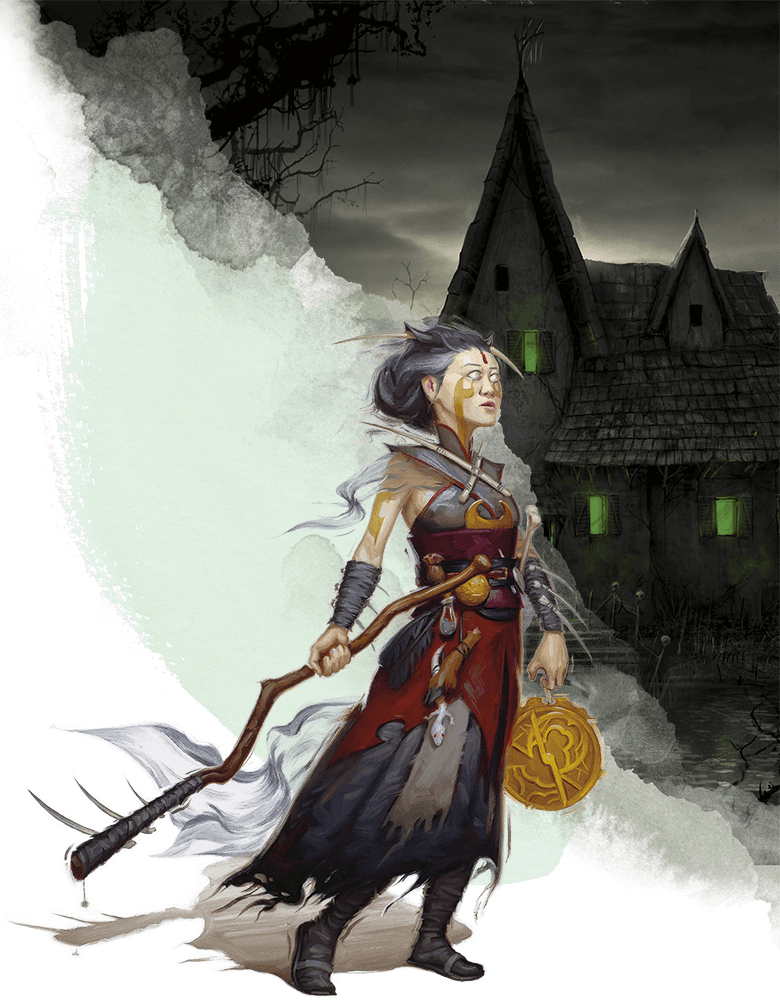
Spells Known of 1st Level and Higher
At 1st level, you know two 1st-level spells of your choice from the warlock spell list. The Spells Known column of the Warlock table shows when you learn more warlock spells of your choice of 1st level or higher. A spell you choose must be of a level no higher than what's shown in the table's Slot Level column for your level. When you reach 6th level, for example, you learn a new warlock spell, which can be 1st, 2nd, or 3rd level.
Additionally, when you gain a level in this class, you can choose one of the warlock spells you know and replace it with another spell from the warlock spell list, which also must be of a level for which you have spell slots.
Spellcasting Ability
Charisma is your spellcasting ability for your warlock spells, so you use your Charisma whenever a spell refers to your spellcasting ability. In addition, you use your Charisma modifier when setting the saving throw DC for a warlock spell you cast and when making an attack roll with one.
Spell Save DC
Spell attack modifier
The Warlock
| Level | Proficiency Bonus | Features | Cantrips Known | Spells Known | Spell Slots | Slot Level | Invocations Known |
|---|---|---|---|---|---|---|---|
| 1st | +2 | Otherworldly Patron, Pact Magic | 2 | 2 | 1 | 1st | - |
| 2nd | +2 | Eldritch Invocations | 2 | 3 | 2 | 1st | 2 |
| 3rd | +2 | Pact Boon | 2 | 4 | 2 | 2nd | 3 |
| 4th | +2 | Ability Score Improvement | 3 | 5 | 2 | 2nd | 3 |
| 5th | +3 | - | 3 | 6 | 2 | 3rd | 4 |
| 6th | +3 | Otherworldly Patron feature | 3 | 7 | 2 | 3rd | 4 |
| 7th | +3 | - | 3 | 8 | 2 | 4th | 5 |
| 8th | +3 | Ability Score Improvement | 3 | 9 | 2 | 4th | 5 |
| 9th | +4 | - | 3 | 10 | 2 | 5th | 6 |
| 10th | +4 | Otherworldly Patron feature | 4 | 10 | 2 | 5th | 6 |
| 11th | +4 | Mystic Arcanum (6th level) | 4 | 11 | 3 | 5th | 7 |
| 12th | +4 | Ability Score Improvement | 4 | 11 | 3 | 5th | 7 |
| 13th | +5 | Mystic Arcanum (7th level) | 4 | 12 | 3 | 5th | 8 |
| 14th | +5 | Otherworldly Patron feature | 4 | 12 | 3 | 5th | 8 |
| 15th | +5 | Mystic Arcanum (8th level) | 4 | 13 | 3 | 5th | 9 |
| 16th | +5 | Ability Score Improvement | 4 | 13 | 3 | 5th | 9 |
| 17th | +6 | Mystic Arcanum (9th level) | 4 | 14 | 4 | 5th | 9 |
| 18th | +6 | - | 4 | 14 | 4 | 5th | 10 |
| 19th | +6 | Ability Score Improvement | 4 | 15 | 4 | 5th | 10 |
| 20th | +6 | Eldritch Master | 4 | 15 | 4 | 5th | 10 |
Spellcasting Focus
You can use an arcane focus as a spellcasting focus for your warlock spells.
Eldritch Invocations
In your study of occult lore, you have unearthed Eldritch Invocations, fragments of forbidden knowledge that imbue you with an abiding magical ability. At 2nd level, you gain two eldritch invocations of your choice. When you gain warlock levels, you gain additional invocations of your choice, shown in the Invocations Known column of the Warlock table.
Additionally, when you gain a level in this class, you can choose one of the invocations you know and replace it with another invocation that you could learn at that level. A level prerequisite in an invocation refers to warlock level, not character level.
Pact Boon
At 3rd level, your otherworldly patron bestows a gift upon you for your loyal service. You gain one of the following features of your choice.
Pact of the Blade
You can use your action to create a pact weapon in your empty hand. You can choose the form that this melee weapon takes each time you create it. You are proficient with it while you wield it. This weapon counts as magical for the purpose of overcoming resistance and immunity to nonmagical attacks and damage. Your pact weapon disappears if it is more than 5 feet away from you for 1 minute or more. It also disappears if you use this feature again, if you dismiss the weapon (no action required), or if you die.
You can transform one magic weapon into your pact weapon by performing a special ritual while you hold the weapon. You perform the ritual over the course of 1 hour, which can be done during a short rest.
You can then dismiss the weapon, shunting it into an extradimensional space, and it appears whenever you create your pact weapon thereafter. You can't affect an artifact or a sentient weapon in this way. The weapon ceases being your pact weapon if you die, if you perform the 1-hour ritual on a different weapon, or if you use a 1-hour ritual to break your bond to it. The weapon appears at your feet if it is in the extradimensional space when the bond breaks.
Pact of the Chain
You learn the Find Familiar spell and can cast it as a ritual. The spell doesn't count against your number of spells known. When you cast the spell, you can choose one of the normal forms for your familiar or one of the following special forms: imp, pseudodragon, quasit, or sprite.
Additionally, when you take the Attack action, you can forgo one of your own attacks to allow your familiar to use its reaction to make one attack of its own.
Pact of the Talisman
Your patron gives you an amulet, a talisman that can aid the wearer when the need is great. When the wearer makes an ability check or saving throw, you can use your reaction to add a d4 to their roll.
You may use your talisman as an arcane focus while you wear it, causing your spells to appear to originate from the trinket. You can transform one magical piece of jewellery, or a wand or crystal ball, transforming its shape into that of your talisman by performing a special ritual while you hold the item. You perform the ritual over the course of 1 hour, which can be done during a short rest. You can't affect an artifact or a sentient object in this way. The item ceases being your talisman and returns to its normal form if you die, if you perform the 1-hour ritual on a different item, or if you use a 1-hour ritual to break your bond to it.
If you lose the talisman, you can perform a 1-hour ceremony to receive a replacement from your patron. This ceremony can be performed during a short or long rest, and it destroys the previous amulet. The talisman turns to ash when you die.
Pact of the Tome
Your patron gives you a grimoire called a Book of Shadows. When you gain this feature, choose three cantrips from any class's spell list. While the book is on your person, you can cast those cantrips at will. They are considered warlock spells for you, and they needn't be from the same spell list. They don't count against your number of cantrips known.
If you lose your Book of Shadows, you can perform a 1-hour ceremony to receive a replacement from your patron. This ceremony can be performed during a short or long rest, and it destroys the previous book. The book turns to ash when you die.
Ability Score Improvement
When you reach 4th level, and again at 8th, 12th, 16th, and 19th level, you can increase one ability score of your choice by 2, or you can increase two ability scores of your choice by 1. As normal, you can't increase an ability score above 20 using this feature.
Alternatively, you may take a feat in place of the ASI, provided you fulfil its prerequisites. Instead of increasing ability scores as detailed above, you may increase one ability score of your choice by 1 and take another Eldritch Invocation for which you fulfil the prerequisites.
Eldritch Versatility
Whenever you reach a level in this class that grants the Ability Score Improvement feature, you can replace one cantrip you learned from this class' Pact Magic feature with another choosing from the available options, representing a change of focus in your occult studies. If this change makes you ineligible for any of your Eldritch Invocations, you must also replace them now with another for which you qualify.
If you're 12th level or higher, you can also replace one spell from your Mystic Arcanum feature with another warlock spell of the same level.
Mystic Arcanum
At 12th level, your patron bestows upon you a magical secret called an arcanum. Choose one 6th-level spell from the warlock spell list as this Mystic arcanum. You can cast your mystic arcanum spell once without expending a spell slot. You must finish a long rest before you can do so again.
At higher levels, you gain more warlock spells of your choice that can be cast in this way: one 7th-level spell at 13th level, one 8th-level spell at 15th level, and one 9th-level spell at 17th level.
You regain all uses of your Mystic Arcanum when you finish a long rest.
Eldritch Master
At 20th level, you can draw on your inner reserve of mystical power while entreating your patron to regain expended spell slots. You can allow your patron to claim a tiny sliver of your soul as an action, momentarily strengthening your connection. You regain all your expended Pact Magic spell slots, but you gain one level of exhaustion after 1 minute.
Once you regain spell slots with this feature, you must finish a long rest before you can do so again.
Otherworldly Patrons
Archfey
Your patron is a lord or lady of the fey, a creature of legend who holds secrets that were forgotten before the mortal races were born. This being's motivations are often inscrutable, and sometimes whimsical, and might involve a striving for greater magical power or the settling of age-old grudges.
Expanded Spell List
The Archfey lets you choose from an expanded list of spells when you learn a warlock spell. The following spells are added to the warlock spell list for you.
Archfey Expanded Spells
| Level | Spells |
|---|---|
| 1st | Faerie Fire, Sleep |
| 2nd | Calm Emotions, Phantasmal Force |
| 3rd | Blink, Plant Growth |
| 4th | Conjure Woodland Beings, Greater Invisibility |
| 5th | Geas, Seeming |
Fey Presence
Starting at 1st level, your patron bestows upon you the ability to project the beguiling and fearsome presence of the fey. As an action, you can cause each creature of your choice in a 10-foot cube originating from you to make a Wisdom saving throw against your warlock spell save DC. The creatures that fail their saving throws are all charmed or frightened by you (your choice) until the end of your next turn. If you expend a Warlock spell slot as an action on your turn, you can use your Fey Presence as a bonus action.
When you reach 10th level in this class, you produce your presence in a 10-foot-radius sphere centred on yourself rather than the cube. At 18th level, the radius of your Fey Presence increases to 30 feet.
You can use this ability a number of times equal to your Charisma modifier (minimum 1), regaining all
expended uses when you finish a short
or long rest.
Misty Escape
Starting at 6th level, you can vanish in a puff of mist in response to harm. When you take damage, you can use your reaction to turn invisible and teleport up to 30 feet to an unoccupied space you can see. You remain invisible until the start of your next turn or until you attack or cast a spell.
At 12th level, the distance you can teleport using your Misty Escape increases to 60 feet.
You can use this feature a number of times equal to your Charisma modifier (minimum 1), regaining all expended uses of this feature when you finish a long rest.
Beguiling Defences
Beginning at 10th level, your patron teaches you how to turn the mind-affecting magic of your enemies against them. You are immune to being charmed and, when another creature attempts to charm you, you can use your reaction to attempt to turn the charm back on that creature. The creature must succeed on a Wisdom saving throw against your warlock spell save DC or be charmed by you for 1 minute or until the creature takes any damage.
Dark Delirium
Starting at 14th level, you can plunge a creature into an illusory realm. As an action, choose a creature that you can see within 60 feet of you. It must make a Wisdom saving throw against your warlock spell save DC. On a failed save, it is charmed or frightened by you (your choice) for 1 minute. This effect ends early if the creature takes any damage. Until this illusion ends, the creature thinks it is lost in a misty realm, the appearance of which you choose. The creature can see and hear only itself, you, and the illusion.
Once you use this feature, you can’t use it again until you finish a long rest, unless you expend a Pact Magic spell slot to use it again.
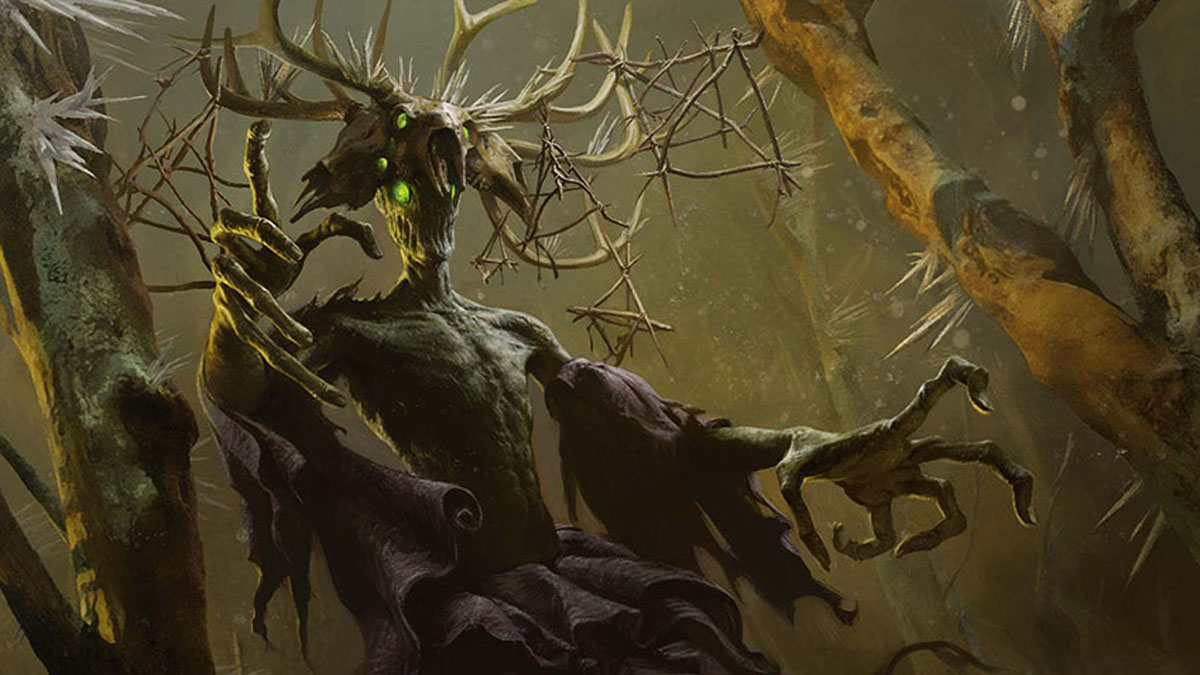
Celestial
Your patron is a powerful being of the Upper
Planes. You have bound yourself to an ancient empyrean, solar, ki-rin, unicorn, or other entity that resides in the planes of everlasting bliss. Your pact with that being allows you to experience the barest touch of the holy light that illuminates the multiverse.
Expanded Spell List
The Celestial lets you choose from an expanded list of spells when you learn a warlock spell. The following spells are added to the warlock spell list for you.
Celestial Expanded Spells
| Level | Spells |
|---|---|
| 1st | Cure Wounds, Guiding Bolt |
| 2nd | Flaming Sphere, Lesser Restoration |
| 3rd | Daylight, Revivify |
| 4th | Guardian of Faith, Wall of Fire |
| 5th | Flame Strike, Greater Restoration |
In addition, you learn the Light and Sacred Flame cantrips. They count as warlock cantrips for you, but they don’t count against your number of cantrips known.
Healing Light
At 1st level, you gain the ability to channel celestial energy to heal wounds. You have a pool of d6s that you spend to fuel this healing. The number of dice in the pool equals 1 + your warlock level.
As a bonus action, you can heal one
creature you can see within 60 feet of you,
spending dice from the pool. The maximum number
of dice you can spend at once equals your Charisma modifier (minimum of one die). Roll the spent dice, add them together, and restore a number of hit points equal to the total.
Your regain all expended dice when you finish a long rest.
Radiant Soul
Starting at 6th level, your link to the Celestial allows you to serve as a conduit for radiant energy. You have resistance to radiant damage, and when you cast a spell that deals radiant or fire damage, you add your Charisma modifier to one radiant or fire damage roll of that spell against one of its targets.
Celestial Resistance
Starting at 10th level, you gain temporary hit points whenever you finish a short or long rest. These temporary hit points equal your warlock level + your Charisma modifier. Additionally, choose up to five creatures you can see at the end of the rest. Those creatures each gain temporary hit points equal to half your warlock level + your Charisma modifier.
Searing Vengeance
Starting at 14th level, the radiant energy you channel allows you to resist death. When you have to make a death saving throw at the start of your turn, you can instead spring back to your feet with a burst of radiant energy. You regain hit points equal to half your hit point maximum, and then you stand up if you so choose. Each creature of your choice that is within 30 feet of you takes radiant damage equal to 2d8 + your Charisma modifier, and is blinded until the end of this turn.
Once you use this feature, you can’t use it again until you finish a long rest, unless you expend a Pact Magic spell slot to use it again.
/cdn.vox-cdn.com/uploads/chorus_image/image/72800167/MTG_LCI_Ojer_Deepest_Epoch_full_art_Artist_Chris_Rahn.0.jpg
)
Fathomless
You have plunged into a pact with the deeps. An entity of the ocean, the Elemental Plane of Water, or another otherworldly sea now allows you to draw on its thalassic power. Is it merely using you to learn about terrestrial realms, or does it want you to open cosmic floodgates and drown the world?
Expanded Spell List
The Fathomless lets you choose from an expanded list of spells when you learn a warlock spell. The following spells are added to the warlock spell list for you.
Lurker's Expanded Spells
| Level | Spells |
|---|---|
| 1st | Create or Destroy Water, Thunderwave |
| 2nd | Gust of Wind, Silence |
| 3rd | Lightning Bolt, Sleet Storm |
| 4th | Control Water, Summon Elemental |
| 5th | Bigby's Hand (appears as a tentacle), Cone of Cold |
Tentacle of the Deep
At 1st level, you can magically summon a spectral tentacle that strikes at your foes. As a bonus action, you create a 10-foot-long tentacle at a point you can see within 60 feet of you. The tentacle lasts for 1 minute or until you use this feature to create another tentacle.
When you create the tentacle, you can make a melee spell attack against one creature within 10 feet of it. On a hit, the target takes 1d8 cold damage, and its speed is reduced by 10 feet until the start of your next turn. As a bonus action on your turn, you can move the tentacle up to 30 feet and repeat the attack.
You can summon the tentacle a number of times equal to your Charisma modifier, and you regain all expended uses when you finish a long rest.
Gift of the Sea
Also at 1st level, you gain a swimming speed of 40 feet, and you can breathe underwater.
Oceanic Soul
At 6th level, you are now even more at home in the depths. You gain resistance to cold damage. In addition,
when you are fully submerged, any creature that
is also fully submerged can understand your
speech, and you can understand theirs.
Guardian Coil
At 6th level, your Tentacle of the Deeps
can defend you and others, interposing
itself between them and harm. When you
or a creature you can see takes damage while
within 10 feet of the tentacle, you can use
your reaction to choose one of those creatures
and reduce the damage to that creature by 1d8.

Grasping Tentacles
Starting at 10th level, you learn the spell Evard's Black Tentacles. It counts as a warlock spell for you, but it doesn't count against the number of spells you know. You can also cast it once without using a spell slot, and you regain the ability to do so when you finish a long rest.
Whenever you cast this spell, your patron's magic bolsters you, granting you a number of temporary hit points equal to your warlock level. Moreover, damage can't break your concentration on this spell.
Krakenspawn.
Also at 10th level, the damage dealt and reduced by your Tentacle of the Deep increases by 1d8.
Fathomless Plunge
When you reach 14th level, you can magically open temporary conduits to watery destinations. As an action, you can teleport yourself and up to five other willing creatures that you can see within 30 feet of you. Amid a whirl of tentacles, you all vanish and then reappear up to 1 mile away in a body of water you've seen (pond size or larger) or within 30 feet of it, each of you appearing in an unoccupied space within 30 feet of the others.
Once you use this feature, you can’t use it again until you finish a long rest, unless you expend a Pact Magic spell slot to use it again.
Fiend
You have made a pact with a fiend from the lower planes of existence, a being whose aims are evil, even if you strive against those aims. Such beings desire the corruption or destruction of all things, ultimately including you. Fiends powerful enough to forge a pact include demon lords, archdevils, and yugoloth generals.
Expanded Spell List
The Fiend lets you choose from an expanded list of spells when you learn a warlock spell. The following spells are added to the warlock spell list for you.
Fiend Expanded Spells
| Level | Spells |
|---|---|
| 1st | Burning Hands, Command |
| 2nd | Blindness/Deafness, Scorching Ray |
| 3rd | Fireball, Stinking Cloud |
| 4th | Fire Shield, Wall of Fire |
| 5th | Flame Strike, Hallow |
Dark One's Blessing
Starting at 1st level, when a hostile creature within
30 feet of you is reduced to 0 hit points, you can use
your reaction to gain temporary hit points equal to
your Charisma modifier + your warlock level
(minimum of 1).
Dark One's Bane
Also at 1st level, you can call on your patron to alter fate in your favour. When you make an ability check or a saving throw, you can use this feature to add a d10 to your roll (no action required). You can do so after seeing the initial roll but before any of the roll's effects occur. When a creature within 30 feet of you makes an ability check or attack roll, you can instead use this feature to reduce their total by 1d10. Once you use this feature, you can't use it again until you finish a short or long rest.
Fiendish Resilience
Starting at 6th level, you can choose one damage type when you finish a short or long rest. You gain resistance to that damage type until you choose a different one with this feature. Damage from magical or silvered weapons
ignores this resistance.
Moreover, all damage dealt by spells which
inflict the chosen damage type treats rolls
of 1 as their die-maximum instead.
Hell Made Flesh
At 10th level, you can warp your very
being as a bonus action, becoming
closer in form to that of a cambion.
These changes can occur all at once, seperately, or
not at all. You can change how they look when you summon them, but by default they are fiendish in appearance. Attacks made with these magical natural weapons count as unarmed strikes, deal 1d4 bludgeoning, piercing, or slashing damage (as appropriate) on a hit, and can use your Charisma modifier in place of Strength or Dexterity.
Wings. Large, bat-like wings sprout from your back, granting you a flight speed equal to 10 times your Charisma modifier (minimum 15 feet). You cannot produce the wings while wearing heavy armour, but can produce them under any other armour or clothing, provided they are made to accommodate the wings.
Horns. Goat horns spiral from your head, thick and strong. Unarmed strikes made with these magical natural weapons deal 1d6 instead of 1d4 damage on a hit.
Pointed Tail. A long, sinister barbed tail extends down from your lower back, acting as a razor-sharp whip. It has a 15 foot range, and can be used to make unarmed strikes. You are able to wield a melee weapon with the Light property in it, extending it's Reach by 10 feet as long as it is a maximum of 5lbs.
Claws: Honed claws grow from your fingers, as sharp as deadly knives; they are natural weapons. While you have these claws, you have a climbing speed equal to your walking speed.
The changes can recede back into your body as a bonus action at any point, but the flesh-rending pain of the physical transmutation deals you 2d8 psychic damage each time you take that bonus action.
Hurl Through Hell
Starting at 14th level, when you hit a
creature with an attack, you can use
this feature to instantly transport
the target through the lower planes.
The creature disappears and
hurtles through a nightmare
landscape falling through the layers
of the Nine Hells or of the Abyss.
At the end of your next turn, the target
returns to the space it previously occupied,
or the nearest unoccupied space. If the target is not a fiend, it takes 10d10 psychic damage as it reels from its horrific experience.
Once you use this feature, you can't use it again until you
finish a long rest, unless you expend a Pact Magic spell
slot to use it again.


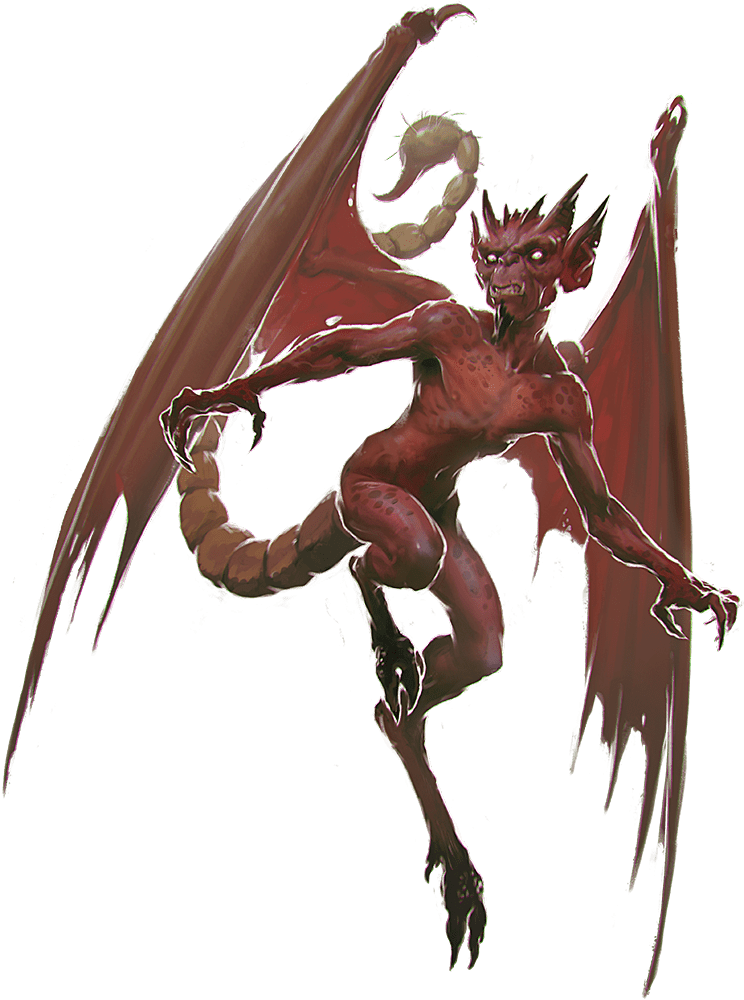
Genie
You have made a pact with one of the rarest kinds of genie, a noble genie. Such entities rule vast fiefs on the Elemental Planes and have great influence over lesser genies and elemental creatures. Noble genies are varied in their motivations, but most are arrogant and wield power that rivals that of lesser deities. They delight in turning the table on mortals, who often bind genies into servitude, and readily enter into pacts that expand their reach.
| Genie Type | Element |
|---|---|
| Dao | Earth |
| Djinn | Air |
| Efreet | Fire |
| Marid | Water |
Expanded Spell List
At 1st level, the Genie lets you choose from an expanded list of spells when you learn a warlock spell. The Genie Expanded Spells table shows the genie spells that are added to the warlock spell list for you, along with the spells associated in the table with your patron's kind: dao, djinni, efreeti, or marid.
Furthermore, warlocks with efreeti patrons can gain some invocations which do not heal or summon creatures that are usually limited to Celestials and Fiends, as can marid patrons bestow Fathomless invocations. These invocations are marked with a quotation mark (double-apostrophe).
Genie Expanded Spells
| Level | All | Dao | Djinn | Efreet | Marid |
|---|---|---|---|---|---|
| 1st | detect evil and good | sanctuary | thunderwave | burning hands | fog cloud |
| 2nd | phantasmal force | spike growth | gust of wind | scorching ray | blur |
| 3rd | create food and water | meld into stone | wind wall | fireball | sleet storm |
| 4th | phantasmal killer | stone shape | greater invisibility | fire shield | control water |
| 5th | creation | wall of stone | seeming | flame strike | cone of cold |
| 9th | Wish |
Genie’s Vessel
Also at 1st level, your patron gifts you a magical vessel that grants you a measure of the genie's power. The vessel is a Tiny object, and you can use it as a spellcasting focus for your warlock spells. You decide what the object is; any sturdy hollow item, such as an oil lamp. While you are touching the vessel, you can use it in the following ways:
Bottled Respite. As an action, you can magically vanish and enter your vessel, which remains in the space you left. The interior of the vessel is an extradimensional space in the shape of a 20-foot-radius cylinder, 20 feet high, and resembles your vessel. The interior is appointed with cushions and low tables and is a comfortable temperature. While inside, you can hear the area around your vessel as if you were in its space. You can remain inside the vessel up to a number of hours equal to twice your proficiency bonus. You exit the vessel early if you use a bonus action to leave, if you die, or if the vessel is destroyed. When you exit the vessel, you appear in the unoccupied space closest to it. Any objects left in the vessel remain there until carried out, and if the vessel is destroyed, every object stored there harmlessly appears in the unoccupied spaces closest to the vessel's former space. Once you enter the vessel, you can't enter again until you finish a long rest.
Genie’s Wrath. Once during each of your turns when you hit with an attack roll, you can deal extra damage to the target equal to your Charisma modifier. The type of this damage is determined by your patron: bludgeoning (dao), thunder (djinni), fire (efreeti), or cold (marid).
The vessel's AC equals your spell save DC. Its hit points equal your warlock level plus your proficiency bonus, and it is immune to poison and psychic damage.
If the vessel is destroyed or you lose it, you can perform a 1-hour ceremony to receive a replacement from your patron. This ceremony can be performed during a short or long rest, and the previous vessel is destroyed if it still exists. The vessel vanishes in a flare of elemental power when you die.
Elemental Gift
At 6th level, you begin to take on characteristics of your patron's kind. You now have resistance to a damage type determined by your patron's kind: bludgeoning (dao), thunder or lightning (djinni), fire (efreeti), or cold (marid).
In addition, as a bonus action, you can give yourself a flying speed equal to your walking speed that lasts for 10 minutes, during which you can hover. You can use this bonus action a number of times equal to your Charisma modifier, and you regain all expended uses when you finish a long rest.

Sanctuary Vessel
At 10th level, When you enter your Genie's Vessel via the Bottled Respite feature, you can now choose up to five willing creatures that you can see within 30 feet of you, and the chosen creatures are drawn into the vessel with you. As a bonus action, you can eject any number of creatures from the vessel, and everyone is ejected if you leave or die or if the vessel is destroyed.
In addition, anyone (including you) who remains within the vessel for at least 10 minutes gains the benefit of finishing a short rest, and anyone can add your proficiency bonus to the number of hit points they regain if they spend any Hit Dice as part of a short rest there.
Limited Wish
At 14th level, You entreat your patron to grant you a small wish. As an action, you can speak your desire to your Genie's Vessel, requesting the effect of one spell that is 6th level or lower and has a casting time of 1 action. The spell can be from any class's spell list, and you don't need to meet the requirements in that spell, including costly components; the spell simply takes effect as part of this action.
Once you use this feature, you can't use it again until you finish 1d4 long rests.

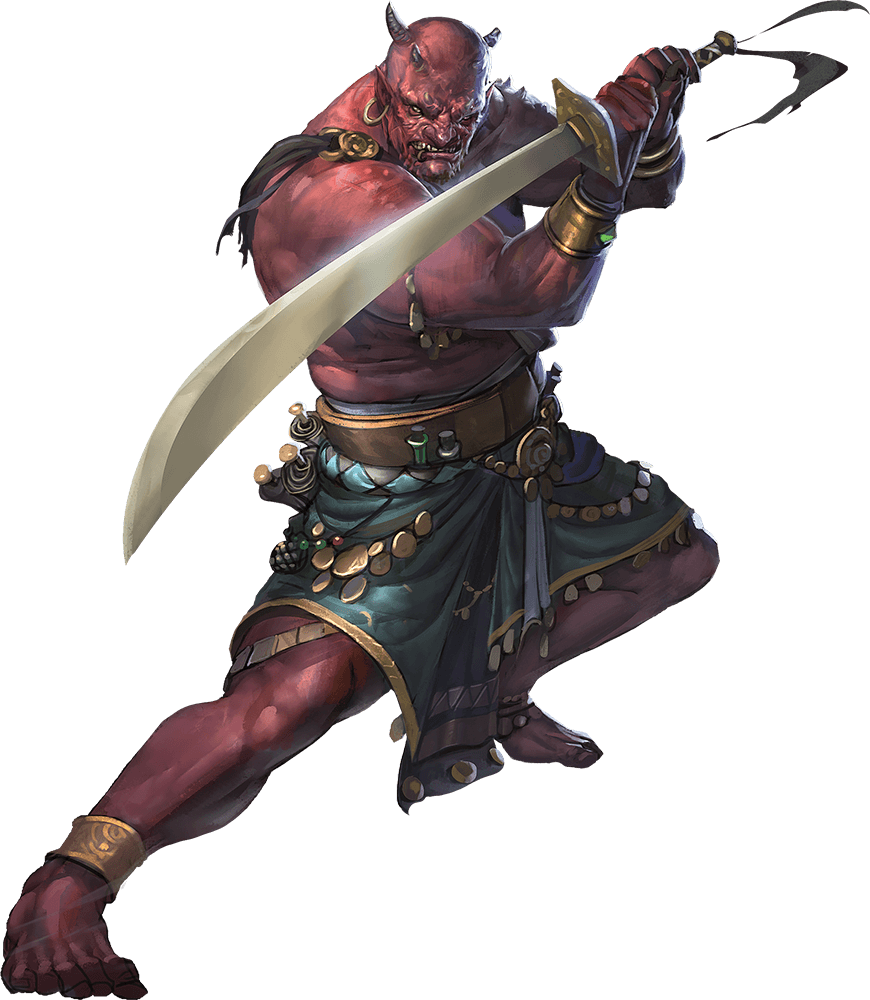
Ghost in the Machine
You have made a bargain for power granted by an entity that you believe to be completely digital. Whether it is a rogue AI, the spirit of a deceased artificer, or the Machine Spirit, the Ghost in the Machine is capable of feats that defy explanation. Most notably, those that have great feats of might asked of them by the Primus are known for this kind of bargain.
Technomagic
Your link to the constructed allows you to learn spells normally associated with the artificial traditions. When your Pact Magic feature lets you learn a warlock cantrip or spell of 1st level or higher, you can choose the new spell from the Technomancy spell list or the Warlock spell list. You must otherwise obey all the restrictions for selecting the spell, and it becomes a warlock spell for you.
In addition, starting at 2nd level, you can create an Artificer Infusion of your choice for which you fulfil any relevant requirements instead of taking an Eldritch Invocation. For this feature only, your warlock level is considered equal to your artificer level.
Information Surge
At 1st level, you gain the ability to temporarily render arcane and mechanical devices inoperable. As an action, you can target a construct, magic item, or other such device within 30 feet of you. If the targeted device is held or otherwise actively used by a living creature, that creature must make an Intelligence saving throw against your spell save DC. On a failed save, the targeted device ceases to function until the end of your next turn. If the targeted device is not held or used by a creature, the DM makes a special saving throw for the device with disadvantage and a +0 modifier. Certain shielded devices might negate the disadvantage, at the DM’s discretion.
You can use this ability a number of times equal to your Charisma modifier (minimum of once), regaining all expended uses when you finish a long rest.
Weave Wiring
Starting at 6th level, you gain the ability to travel short distances over electrical wires, ley lines, or magical fields. As a bonus action, you can touch a magical device, construct, or a creation of magic (such as a wall of force). You teleport directly through the threads of the weave to any unoccupied space within 5 feet of your choice of the caster or attuned creature, to a device or place of power magically entangled with the target, or to an object physically touching either the target or its relevant attuned creature or caster within your line of sight.
You cannot pass through fields of antimagic this way.
Starting at 12th level, the connected device does not need to be within sight.
Once you use this feature, you can’t use it again until you finish a short or long rest, unless you expend a Pact Magic spell slot to use it again.
Personal Encryption
Beginning at 10th level, you have learned to apply your innate knowledge of encryption to your thoughts, memories, and presence. You have advantage on saving throws against scrying, thought detection, or any other method of magically learning your whereabouts, or reading or altering your thoughts. For any such effect that does not grant you a saving throw but which requires the creature targeting you to make an ability check, the check is made with disadvantage.
Technovirus
At 14th level, you gain the ability to infect a humanoid’s body with living circuitry. You can use an action to make a melee attack against a humanoid creature using your spell attack modifier. The target must make a Constitution saving throw against your spell save DC as a techno-organic virus quickly spreads through its body. On a failed save, the target takes 8d10 psychic damage, or half as much damage on a successful one.
Additionally, if the target fails the saving throw, you can use an action to issue it a single command, as if you were casting the Command spell. The target makes its saving throw against your command with disadvantage. You can issue such a command at any time while the target remains infected. An infected target is considered a magical device or construct for the purpose of spells and class features.
You can use this feature a number of times
equal to your Charisma modifier (minimum 1),
regaining all expended uses when you finish
a long rest, at which point the target is cured
of the technovirus. The
infection can also be
removed with a Lesser
Restoration spell.

Great Old One
Your patron is a mysterious entity whose nature is utterly foreign to the fabric of reality. It comes from the Far Realm, the space beyond reality; its motives are incomprehensible to mortals, and its knowledge so immense and ancient that even the greatest libraries pale in comparison to the vast secrets it holds. The Great Old One might be unaware of your existence or entirely indifferent to you, but the secrets you have learned allow you to draw your magic from it.
Expanded Spell List
The Great Old One lets you choose from an expanded list of spells when you learn a warlock spell. The following spells are added to the warlock spell list for you.
You also gain the Blade Ward cantrip, which is a Warlock cantrip for you and does not count against the number of cantrips you know. You can cast it as a bonus action rather than as an action.
Great Old One Expanded Spells
| Level | Spells |
|---|---|
| 1st | Command, Dissonant Whispers |
| 2nd | Detect Thoughts, Phantasmal Force |
| 3rd | Clairvoyance, Sending |
| 4th | Evard's Black Tentacles, Phantasmal Killer |
| 5th | Modify Memory, Telekinesis |
Awakened Mind
Starting at 1st level, your alien knowledge gives you the ability to touch the minds of other creatures. You can telepathically speak to any creature you can see within 30 feet of you, and with any creature within 30 feet of them, and so on. You don't need to share a language with the creature for it to understand your telepathic utterances, but the creature must be able to understand at least one language.
The range of this telepathy increases by 30 feet at 5th (60 feet), 9th (90 feet), 13th (120 feet), and 17th level (150 feet)
Cosmic Ward
At 6th level, you learn to magically ward yourself against attacks through sheer force of will. You gain resistance to psychic damage. In addition, whenever you cast an Abjuration or Divination spell of 1st-level or higher, you gain temporary hit points equal to the Spell level + your Charisma modifier until you finish your next short or long rest.
At 13th level, you also have immunity to psychic damage while you have temporary hit points from your Cosmic Ward.
Thought Shield
Starting at 10th level, your thoughts and memories can't be altered or read by any means unless you allow it. When a creature makes an attack roll against you, you can use your reaction to impose disadvantage on that roll. If the attack misses you, you deal psychic damage to them equal to the number of Cosmic Ward temporary hit points you have.
You can use this feature a number of times equal to your Charisma modifier (minimum 1). You regain all expended uses when you finish a short or long rest.
Ascendant Mind
Also at 10th level, you gain proficiency in Intelligence saving throws.
Create Thrall
At 14th level, you gain the ability to infect the mind of a beast or humanoid with the alien magic of your patron. You can use your action to touch an incapacitated living creature. That creature is then charmed by you until a Remove Curse spell is cast on it, the charmed condition is removed from it, or you use this feature again. A creature charmed by you in this way has the following effects:
- You can communicate telepathically with the charmed creature as long as the two of you are on the same plane of existence.
- The creature replaces its Intelligence, Wisdom, and Charisma scores, as well as its comprehension of language and skills, with yours.
- You control that creature as if it were you, while also retaining control of yourself. You can cast spells or class features from the thrall as if you were in their space.
- You inherit the target's memories and knowledge, including its known spells and languages.
If the thrall is reduced to 0 hit points or the charmed condition is removed from it from a source other than a Remove Curse spell, unless its consciousness is restored within 1 round the body dies and the brain withers into dust.
Hexblade
You have made your pact with a mysterious entity from the Shadowfell – a force that manifests in sentient magic weapons carved from the stuff of shadow. The mighty sword Volsung is the most notable of these weapons, which have been spread across the multiverse over the ages. The shadowy force behind these weapons can offer power to warlocks who form pacts with it. Many hexblade warlocks create weapons that emulate those formed in the Shadowfell. Others forgo such arms, content to weave the dark magic of that plane into their spellcasting.
Expanded Spell List
The Hexblade lets you choose from an expanded list of spells when you learn a warlock spell. The following spells are added to the warlock spell list for you.
Hexblade Expanded Spells
| Level | Spells |
|---|---|
| 1st | Shield, Wrathful Smite |
| 2nd | Blur, Branding Smite |
| 3rd | Blink, Elemental Weapon |
| 4th | Phantasmal Killer, Staggering Smite |
| 5th | Banishing Smite, Cone of Cold |

Hexblade's Curse
Starting at 1st level, you gain the ability
to place a baleful curse on someone.
As a bonus action, choose one creature
you can see within 30 feet of you. The
target is cursed for 1 minute. The curse
ends early if the target dies, you die, or you
are incapacitated. Until the curse ends,
you gain the following benefits:
- You gain a bonus to damage rolls
against the cursed target. The bonus
equals your proficiency bonus. - Any attack roll you make against the cursed target is a critical hit on a roll of 19 or 20 on the d20.
- If the cursed target dies, you regain hit points equal to your warlock level + your Charisma modifier (minimum of 1 hit point).
You can’t use this feature again until you finish a short or long rest, unless you expend a Pact Magic spell slot to use it again.
Hex Warrior
Also at 1st level, you gain one Fighting Style of your choice, obeying prerequisites. For this purpose only, you have a Fighter level equal to your Warlock level.
Accursed Spectre
Starting at 6th level, you can curse the soul of a person you slay, temporarily binding it in your service. When you slay a humanoid, you can cause its spirit to rise from its corpse as a spectre. When the spectre appears, it gains temporary hit points equal to half your warlock level. Roll initiative for the spectre, which has its own turns. It obeys your verbal commands, and it gains a special bonus to its attack rolls equal to your Charisma modifier (minimum of +0). The spectre remains in your service until the end of your next long rest or until reduced to 0 hit points, at which point it vanishes to the afterlife. Once you bind a spectre with this feature, you can't use the feature again until you finish a long rest.
Armour of Hexes
At 10th level, your hex grows more powerful. If the target cursed by your Hexblade’s Curse hits you with an attack roll, you can use your reaction to roll a d6. On a 5 or 6, the attack instead misses you, regardless of its roll.
Master of Hexes
Starting at 14th level, you can spread your Hexblade's Curse from a slain creature to another creature. When the creature cursed by your Hexblade's Curse dies, you can apply the curse to a different creature you can see within 30 feet of you, provided you aren't incapacitated. When you apply the curse in this way, you don't regain hit points from the death of the previously cursed creature.
Seeker
Your patron is an ascendant extraplanar being focused on the discovery, collection, and cataloguing of information. In return for the gifts they bestow upon you, you act as their agent, seeking ancient knowledge and artifacts, and the truth behind recorded histories.
By some malignant intelligence which collects only the most desperate, the most ambitious, and the most willing to sacrifice, Seekers hoard souls willing to perform their accursed work.
Expanded Spell List
The Seeker lets you choose from an expanded list of spells when you learn a warlock spell. The following spells are added to the warlock spell list for you.
You also gain the Encode Thoughts cantrip, which is a Warlock cantrip for you and does not count against the number of cantrips you know.
Seeker Expanded Spells
| Level | Spells |
|---|---|
| 1st | Identify, Longstrider |
| 2nd | Knock, Locate Object |
| 3rd | Clairvoyance, Nondetection |
| 4th | Arcane Eye, Freedom of Movement |
| 5th | Legend Lore, Passwall |
Tainted Knowledge
At 1st level, you have feasted upon the secrets of your patron’s archive, and your mind has both withered and engorged itself in doing so. Your proficiency bonus is doubled for any ability check you make using the Arcana, History, Nature, and Religion skills in which you are proficient, and you gain proficiency in one of these skills of your choosing.
Accursed Archive
Starting at 1st level, you can invoke the
Seeker’s power to protect you from harm. You
can use an action to enter your patron’s
Accursed Archive along with up to five
creatures of your choice within 30 feet
of you. This is a demiplane similar in
effect to the Magnificent Mansion
spell, but under complete control of
the patron. Time does not pass outside
the demiplane while you are inside
it, though you cannot rest, regain
hit points, cast levelled spells, or
maintain concentration while
within.
The archive is a reflection of all the knowledge
your patron has access to, and looks akin to your patron’s aesthetic; a labyrinthine library, a sewer tunnel system, or a colossal hard drive, for example.
Many sections of this archive may be inaccessible to you. When you choose to exit as an action, you and your companions return to the exact time and places from which you entered.
At 10th level, your patron grants you a shred more trust in its endless library. When you take the action to leave your patron’s Accursed Archive, you can take two turns to use items and cast spells that target only you. After those turns, you return to the space you occupied and your turn ends.
Relentless Pursuit
At 6th level, you no longer need to breathe, you gain resistance to force damage, and you are immune to extreme pressures and temperatures as described in Chapter 5 of the Dungeon Master’s Guide. Moreover, you lose one level of exhaustion when you finish a short rest, in addition to when completing a long rest.
Lost Legends
Additionally beginning at 6th level, the Patron trusts you enough to include you in their intelligence network. You may ask your DM a question and they respond with three rumours that your patron has heard or seeded that are related to your question. These rumours may be tangential or vague, but at least one of them must be true.
Once you use this ability, you cannot use it again for 1d100 + 47 hours.
Sanctified Heresies
At 10th level, your knowledge of vile secrets grants you
insights into the machinations of angels and
demons. You gain the Whispered Arcanum
invocation, but all spells from any spell list are
considered Warlock spells for the purposes of this
invocation. This does not count against
the number of invocations you have.
Upon casting a Whispered Arcanum spell, you
gain immunity to either the charmed or frightened
condition for 1 minute. You must complete a short
or long rest before you can do this again.
Whenever within the accursed archive,
you can exchange one Whispered Arcanum spell
for a different one.


Unspeakable Truths
At 14th level, you have amassed enough foul knowledge to bring ruin upon the world. When you spend 1 minute in conversation with a creature, you can attempt to communicate an Unspeakable Truth to them. All creatures of your choosing with whom you have spent the minute conversing must make a Wisdom saving throw against your Warlock spell DC. On a failed save, they are overcome by the maddening truth you revealed, indefinitely under the effects of a Confusion spell. They can repeat this saving throw with disadvantage each time they take damage, ending the effect on a success. If they succeed the initial saving throw, they receive no observable issue. However, within their mind you have planted a parasitic understanding, regardless of if they failed or succeeded in the saving throw.
Once within the next 24 hours, you can cast a warlock spell you know of your choice of 3rd level or below originating from that creature without expending a warlock spell slot or material components. The target does not need to be conscious or alive to perform this ability. When casting through them, you force their body to perform any verbal or somatic components required for the spell. If they target themself with a spell which requires a spell attack roll, they automatically hit themself, but cannot score a critical hit; if they force themselves to make a Strength or Dexterity saving throw, they automatically fail it.
You can only have this ability active on a single creature at once. Using this ability again while already active on a creature ends the previous feature on the previous creature, and begins a new version on the new target.
Undying
You've made a pact with a deathless being, a creature that defies the cycle and life and death, forsaking its mortal shell so it might eternally pursue its unfathomable ambitions. For such beings, time and morality are fleeting things, the concerns of those for whom grains of sand still rush through life's hourglass. Often having once been mortal themselves, these ancient undead know firsthand the paths of ambition and the profane rites to descend past the doors of death.
Expanded Spell List
At 1st level, the Undying lets you choose from an expanded list of spells when you learn a warlock spell. The following spells are added to the warlock spell list for you.
You also learn the Spare the Dying cantrip, which counts as a warlock cantrip for you but does not count against the number of cantrips you know.
Undying Expanded Spells
| Level | Spells |
|---|---|
| 1st | Bane, False Life |
| 2nd | Blindness/Deafness, Phantasmal Force |
| 3rd | Phantom Steed, Speak with Dead |
| 4th | Death Ward, Greater Invisibility |
| 5th | Antilife Shell, Cloudkill |
Form of Dread
At 1st level, you manifest an aspect of your patron’s dreadful power. The appearance of your Form of Dread reflects some aspect of your patron; a shroud of shadows forming the crown and robes of your lich patron, or a glowing desert storm of glyphs from the ancient funerary rites of your mummy patron. As a bonus action, you transform for 1 minute. You gain the following benefits while transformed:
- You gain temporary hit points equal to 1d10 + your warlock level.
- Once during each of your turns, when you hit a creature with an attack, you can force it to make a Wisdom saving throw, and if the saving throw fails, the target is frightened of you until the end of your next turn.
- You have advantage on saving throws made to resist being frightened.
You can transform a number of times equal to your Charisma modifier (minimum 1), and you regain all expended uses when you finish a long rest.
Grave Touched
At 6th level, your patron’s powers have a profound effect on your body and magic. You don’t need to eat, drink, or breathe. In addition, once during each of your turns, when you hit a creature with an attack and roll damage against the creature, you can replace the damage type with necrotic damage. While you are using your Form of Dread, you can roll one additional damage die when determining the necrotic damage the target takes.

Necrotic Husk
At 10th level, your connection to undeath and necrotic energy now saturates your body. You have resistance to necrotic damage. In addition, when you are transformed using your Form of Dread, you become immune to necrotic damage. Once on each of your turns in this form, when you deal necrotic damage to a creature you regain hit points equal to half the amount of necrotic damage dealt.
When you are reduced to 0 hit points, you can use your reaction to drop to 1 hit point instead and cause your body to erupt with deathly energy. Each creature of your choice that is within 30 feet of you takes necrotic damage equal to 2d10 + your Warlock level. You then gain 1 level of exhaustion at the end of your next long rest. Once you use this reaction, you can’t do so again until you finish a long rest.
Spirit Projection
At 14th level, your spirit can become untethered from your physical form. As an action, you can project your spirit from your body. The body you leave behind is unconscious and in a state of suspended animation.
Your spirit resembles your mortal form in almost every way, replicating game statistics but not your possessions. Any damage or other effects that apply to your spirit or physical body affects the other. Your spirit can remain outside your body for up to 1 hour or until your concentration is broken (as if concentrating on a spell). When your projection ends, your spirit returns to your body or your body magically teleports to your spirit’s space (your choice). While projecting your spirit, you gain the following benefits:
- Your spirit and body gain resistance to bludgeoning, piercing, and slashing damage.
- When you cast a spell of the enchantment, illusion, or necromancy school, the spell doesn’t require verbal or somatic components, or material components that lack a gold cost.
- You have a flying speed equal to your walking speed and can hover. You can move through creatures and objects as if they were difficult terrain, but you take 1d10 force damage if you end your turn inside a creature or an object.
- If you are also using your Form of Dread while in your Projection, you are immune to necrotic damage and, once during each of your turns when you deal necrotic damage to a creature, you regain hit points equal to half the amount of necrotic damage dealt.
Once you use this feature, you can’t do so again until you finish a long rest, unless you expend a Pact Magic spell slot to use it again.
Eldritch Invocations
Aberration's Telepathy
You gain telepathy to any single creature of your choice at a time within 120 feet of you. You don't need to share a language or see the creature, but the creature must be able to understand at least one language and have an Intelligence score of 4 or higher for you to register their presence.
Agonising Blasts
Prerequisites: 7th-level
You add your Charisma modifier to the damage you deal with any Warlock cantrip.
Among the Dead
Prerequisites: Undying patron
Undead have difficulty harming you. If an undead targets you directly with an attack, or a spell or magical effect, that creature must make a Wisdom saving throw. On a failed save, the creature must choose a new target or forfeit targeting someone instead of you, potentially wasting the attack or spell.
You can use this ability a number of times equal to your Charisma modifier, regaining all expended uses when you finish a long rest.
Anchored Chain
Prerequisites: Fathomless patron", Pact of the Chain feature
Your familiar can take the form of any beast or monstrosity of CR ⅙ of your Warlock level or below (minimum 0), provided it has a swimming speed. It can move through, and breathe, the air and all other fluids as if it were in water.
Additionally, while you and your familiar are both fully submerged in water, you can communicate with it telepathically at any distance on the same plane of existence.
Anchored Constriction
Prerequisites: 7th-level, Fathomless Patron
You can add your Charisma modifier to damage rolls made with your Tentacle of the Deep.
Additionally, when you make an attack with your tentacle and hit, you can choose to grapple the target instead of dealing damage.
Angel’s Sight
Prerequisites: Celestial patron
You have truesight out to a range of 10ft. and advantage on Insight checks which rely on sight.
At 18th-level in this class, the range increases to 30-foot.
Appetite of Shadows
Prerequisites: Hexblade patron, Pact of the Tome feature
When you reduce a creature to 0 hit points with an attack, you can use your reaction to consume the last of their fleeting mortality.
When you do, you regain one of your expended pact magic spell slots. Once you use this feature, you can’t use it again until you finish a long rest.
Arcane Gunslinger
Prerequisites: Pact of the Blade feature
You can create a pact weapon which is a firearm, and you can transform a magical firearm into your pact weapon, retaining all the effects as though it were a melee weapon.
Armour of Shadows
You can cast Mage Armour on yourself at will, without expending a spell slot or material components.
Armour from Within
Prerequisites: Ghost in the Machine patron
You secrete a subdermal layer of mythril. Your AC cannot be less than 16, no matter the armour you wear. You can use a shield in addition to this benefit.
Army of the Grey Wastes
Prerequisites: 15th-level
You can cast Animate Dead at will, without using a spell slot. Any still-animated creatures from this feature crumble into dust if it is cast this way again.
Ascendant Step
You can cast Jump on yourself at will, without expending a spell slot or material components.
At 9th level, you can also cast Feather Fall this way.
Aspect of the Great Lake
Prerequisites: Fathomless patron", Pact of the Blade feature
As a bonus action, you can channel the Elemental Plane of Water; for 10 minutes or until you are reduced to 0 hit points, you gain a bonus to your AC while unarmoured equal to your Charisma modifier (minimum 1) as long as you are wielding your Pact weapon. In addition, when you hit a creature with your Pact Weapon, it uses 2 feet of movement speed for every 1 foot it moves until the start of your next turn.
Once you use this feature, you cannot use it again until you finish a short or long rest.
Aspect of the Moon
Prerequisites: Pact of the Tome feature
You no longer need to sleep and can’t be forced to sleep by any means. To gain the benefits of a long rest, you can spend 4 hours doing light activity, such as reading your Book of Shadows and keeping watch.
Astral Currents
Prerequisites: Great Old One or Seeker patron, Pact of the Tome feature.
For the purpose of choosing Lesser, Mystic, and Whispered Arcanum spells only, all spells with the Graviturgy tag are added to the Warlock spell list for you.
Aura of Dread
Prerequisites: Undying patron
When you first enter your Form of Dread, each creature of your choice that is within 30 feet of you and aware of you must succeed on a Wisdom saving throw or become frightened for 1 minute. A creature can repeat the saving throw at the end of each of its turns, ending the effect on itself on a success. If a creature’s saving throw is successful or the effect ends for it, the creature is immune to your Dread Aura for the next 24 hours
Azrael’s Blessing
Prerequisites: Celestial patron
When you score a critical hit with a spell attack using a Warlock spell, pick yourself or an ally you can see within 30 feet of you. The chosen creature can immediately expend 1 Hit Die to regain hit points as though taking a short rest.
Baleful Utterance
Prerequisites: 9th-level
At will, you can speak a word of the Dark One's Speech and ravage objects with sounds of forbidden realms. You can cast Shatter without using a spell slot, requiring only verbal components.
Bargained Arcanum
Prerequisites: 12th-Level, Genie patron
You can temporarily replace one spell you gained from your Mystic Arcanum feature. Once each day, you can perform a 10-minute ritual in conjunction with your Patron, who performs a minor transmutive Wish, converting one of the great magics they bestowed to you to a different spell of your choice. The spell must be of a level for which you have Mystic Arcanum uses, and it can be from the warlock spell list, or from another class’ spell list. When you cast the spell you learn this way, or if 101 days have passed since you learned it, the spell returns to its old form.
Beast Speech
You can cast Speak with Animals at will, without expending a spell slot.
Beguiling Influence
You gain proficiency in the Deception and Persuasion skills. If already proficient, your proficiency bonus is doubled in that skill.
Bewitching Shunt
Prerequisites: 15th-level, Archfey patron
When you use your Misty Escape feature, you can take one creature within 10 feet of you with you. If the creature is willing, you can choose to cast Lesser Restoration on the creature as it travels, without expending a spell slot or material components (no action required). If the target is unwilling, it can make a Charisma saving throw to resist being teleported. On a failed save, it is also frightened of you for 1 minute; it can repeat the saving throw at the end of each of its turns, ending the Frightened condition on itself on a success.
Beyond the Pale
Prerequisites: 12th-level
When you expend a use of your Mystic Arcanum on your turn, you can use a bonus action to regain hit points equal to five times the spell level. Additionally, if you put a severed body part of yours back in place when you use this feature, the part reattaches.
Once you use this ability, you cannot use it again until you finish a short or long rest.
Blackened Chambers
Prerequisites: 9th-level, Arcane Gunslinger invocation
You can use your pact weapon as a focus for your Warlock spells. When you cast a cantrip through your pact weapon without having moved first, you can cast that cantrip again as a bonus action. Using this feature reduces your speed to 0 until the start of your next turn.
Spell attacks cast through the pact firearm do not gain any magical bonuses conveyed to weapon attacks with your Pact Weapon.
Blessing of Carasphyx
Prerequisites: 9th-level, Pact of the Tome feature
When you expend a Pact Magic slot of 1st-level or higher by casting a spell using your Book of Shadows, and as a result a creature is hit by a spell attack or fails a saving throw, your patron grants you temporary hit points equal to your Intelligence modifier (minimum 1) + your Charisma modifier + the level of the spell.
Bond of Two Hearts
Prerequisites: 12th-level, Pact of the Talisman feature
While someone else is wearing your talisman, you can use your action to teleport to the unoccupied space closest to them, provided the two of you are on the same plane of existence. The wearer of your talisman can do the same thing, using their action to teleport to you.
Bond of Two Minds
Prerequisites: 5th-level, Pact of the Talisman feature
When someone else is wearing your talisman, you can choose for a spell or magical effect which is only affecting you to also affect the wearer of your talisman. The talisman-wearer does not benefit from this while you are on different planes.
Bond of Two Spirits
Prerequisites: Pact of the Talisman feature
While someone else is wearing your talisman, as long as you can both perceive one another, both your movement speeds increase by 10 feet, and you both have resistance to one of your choice of force, necrotic, psychic, or radiant damage. You can change this damage type as an action if the other creature is willing.
Book of Ancient Secrets
Prerequisites: Pact of the Tome feature
You can now inscribe magical rituals in your Book of Shadows. Choose two 1st-level spells that have the ritual tag from any class's spell list; these rituals needn’t be from the same spell list. The spells appear in the book and don't count against the number of spells you know. With your Book of Shadows in hand, you can cast the chosen spells as rituals. You can't cast the spells except as rituals, unless you've learned them by some other means. You can also cast a warlock spell you know as a ritual if it has the ritual tag.
On your adventures, you can add other ritual spells to your Book of Shadows. When you find such a spell, you can add it to the book if the spell's level is equal to or less than half your warlock level (rounded up) and if you can spare the time to transcribe the spell. For each level of the spell, the transcription process takes 2 hours and costs 50 gp for the rare inks needed to inscribe it.
Book-Thief’s Slip
Prerequisites: Seeker patron
While concentrating on a spell, you have advantage on Dexterity (Stealth) checks and can take the Hide action as a bonus action.
In addition, you can Hide even in direct sight by Hiding before doing anything else on your turn, reducing your speed to 0 by doing so; peoples' eyes just never seem to settle on you.
Book of the Yellow Sign
Prerequisites: Fiend patron", Pact of the Tome feature
You can illuminate your Tome of Shadows with sickly yellow-green flames, conjured from the bowels of distant planes, shining bright light for 20 feet and dim light for 20 feet beyond that. When you cast a spell using a Pact Magic spell slot, you can choose to change the spell's damage type to fire damage.
A creature reduced to 0 hit points by Fire damage from the features of this invocation are instantly disintegrated.
Book of Dread Names
Prerequisites: Fiend patron, Pact of the Tome feature
A new page appears in your Book of Shadows, depicting fragments of the True Names of powerful fiends. Fiends summoned by you never turn against you, and such spells have their maximum duration doubled.
Bookmark
Prerequisites: Seeker patron
As an action, you create an invisible, intangible teleportation anchor known as a Bookmark in a 5-foot cube you can see within 120 feet of you. Until you create a new Bookmark, whenever you use a spell, class feature, or item to teleport any distance, you and any other targets of your teleportation can instead teleport to the Bookmark, even if you can’t see it. The Bookmark must be within range of the teleportation ability to use this ability, or within 120 feet of you (whichever is greater).
Bound Blade
Prerequisites: Pact of the Blade feature
Attacks made with your Pact Weapon can
use your Charisma modifier, instead of Strength or Dexterity, for its attack and damage rolls.
Breath of the North
Prerequisites: 12th-level, Genie (Marid) patron
You can cast Cone of Cold once without expending a spell slot, without verbal or material components, and without requiring a free hand. You must be able to blow air from your mouth to cast it this way, however. You regain the use of this ability after completing a long rest.
Broken Bonds
You gain advantage on attack rolls targeting a creature currently charmed by you. If you hit such a creature with an attack, it is incapacitated until the end of your next turn and the charm ends.
Bullet to the Knee
Prerequisites: Arcane Gunslinger invocation
Once per turn, when you hit a creature with an attack roll from your Pact firearm, you can force the target to make a Strength saving throw against your spell save DC. On a failed save, the target is knocked prone.
Buzzing Hex
Prerequisites: the Hex spell or a class feature which brands, curses, or marks a target
You can open a brief portal into the realms of Baalzebul. As a part of hexing a target with your mark, you cause poisonous appendages composed of rotflies to magically emerge from the ground and sting a creature cursed by you. The creature must make a Constitution saving throw. On a failed save, the creature is poisoned for the duration of the mark. The target can repeat the saving throw at the end of each of its turns, ending the poisoned condition on itself on a success.
Caliph’s Jewel Hunter
Prerequisites: 12th-level, Genie (Dao) patron
As a bonus action you can touch a solid material and travel instantly to the other side of it in a straight line from you, tunnelling through the material and emerging in the next space large enough for you. You cannot pass through more than 30 ft of material in this way, and cannot pass through creations of magical force such as Forcecages.
Call the Elements
Prerequisites: 7th-level, Genie patron
You can cast the conjure minor elementals or summon elemental spell once without expending a spell slot. You regain the ability to do so when you finish a long rest.
Call of the Void
Prerequisites: Great Old One patron, Pact of the Tome feature.
For the purpose of choosing Lesser, Mystic, and Whispered Arcanum spells only, all spells with the Chronomancy tag are added to the Warlock spell list for you.
Captive Audience
Prerequisites: Pact of the Tome feature
The power of your heraldry grants you access to a variety of spells, which appear intermittently on the pages of your Book of Shadows. You add the magic circle, protection against evil and good, tongues, and planar binding spells to the list of warlock spells you know. You gain these spells when you gain access to spell slots of the appropriate level. These spells are Warlock spells for you, but they do not count against the number of Warlock spells you know.
Carapace of Shar
Prerequisites: 9th-level, Pact of the Blade feature
You can cast Fire Shield once without expending a spell slot or requiring material components. When you cast Fire Shield this way, it grants you resistance to radiant damage and deals necrotic damage instead of vice versa.
Once you do so, you can't cast it in this way again until you finish a long rest.
Cerebral Codex
Prerequisites: Pact of the Tome feature
You can cast the Illusory Script spell at will, without expending a spell slot and requiring no components. You can only target your Book of Shadows when you use this feature, but the range extends to anywhere on the same plane of existence and you do not need to see the tome to target it with this feature; you do not need to write, the words appear on the pages as you think them.
Chains of Carceri
Prerequisites: 15th-level, Pact of the Chain feature
You can cast Hold Monster at will – targeting an aberration, celestial, elemental, fey, or fiend – without expending a spell slot or material components. You must finish a long rest before you can use this invocation on the same creature again.
Chain Master’s Fury
Prerequisites: 5th-level, Pact of the Chain feature
As a bonus action, you can command your familiar to use its action. This can be an action in its stat block, or another action.
Chain of Seven Stars
Prerequisites: Seeker patron, Pact of the Talisman feature
The Seeker grants you a chain forged from starlight, decorated with seven gleaming motes of radiance. While wearing the chain, the wearer knows the Augury spell and can cast it as a ritual. The spell doesn’t count against the number of spells they know.
Additionally, you can invoke the Seeker’s power to add your Charisma modifier to an Intelligence check the wearer makes (no action required). Once you use this ability, you cannot use it again until you complete a short or long rest.
Chains that Bond
Prerequisite: Pact of the Chain feature
Self targeted spells also apply to your familiar as long as it's within 60 feet of you.
Charge Command
Prerequisites: 15th-level, Genie (Djinn) patron
You can cast Chain Lightning once without expending a spell slot or material components. You regain the use of this ability after completing a long rest.
Checkpoint
Prerequisites: 9th-level, Ghost in the Machine patron
As a bonus action, while your Pact Boon is on the same plane of existence as you, you can cause it to ‘save’ the events of your existence at that instant. This includes your current Hit Points, including Temporary Hit Points, instantaneous spatial location, and any conditions to which you are subjected. At the start of your next turn, the aforementioned properties are returned to you exactly as they were when you activated the Checkpoint.
This is considered a Dunamantic Technomancy effect, rather than teleportation or necromancy. If you are reduced to 0 hit points or outright die before you are returned to your Checkpoint, you can make a Constitution saving throw as if you were attempting to maintain concentration on a spell. On a success, you return as normal for the effect. On a failure, you remain unconscious or dead.
Once you use this feature, you cannot use it again until you complete a short or long rest, unless you expend a Warlock spell slot to do so.
Chronicle of the Whispered One
Prerequisites: Pact of the Tome feature
You can place a corpse’s hand or similar appendage on your Book of Shadows and ask one question aloud. After 1 minute, the answer appears written in blood in your book. The answer is provided by the dead creature’s spirit to the best of its knowledge and is translated into a language of your choice. You must use this ability within 1 minute of a creature’s death, and a given creature can only be asked one question in this manner.
Cling to Mortality
Prerequisites: Undying patron
When a creature kills you, even if you're disintegrated, you are tethered to it. If the creature who killed you dies within 3 rounds of killing you, you return to life with 1 hit point in the same state as the turn before the killing blow was struck.
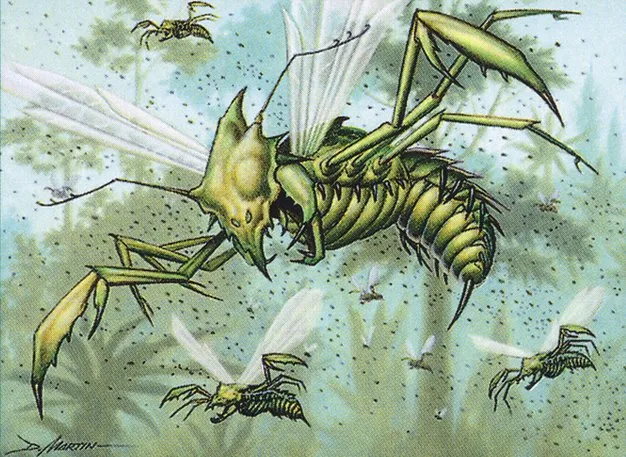
Cloak of Flies
Prerequisites: 5th-level
As a bonus action, you can surround yourself with a magical aura that looks like buzzing flies. The aura extends 5 feet from you in every direction, but not through total cover. It lasts until you're incapacitated or you dismiss it as a bonus action. The aura grants you advantage on Charisma (Intimidation) checks but disadvantage on all other Charisma checks. Any other creature of your choice that starts its turn in the aura or moves into it on their turn takes poison damage equal to your Charisma modifier (minimum of 0 damage).
At 18th level, the radius of this aura increases to 30 feet.
Cloak of Nyx
Prerequisites: Cloak of Flies invocation
You have half-cover and are considered heavily obscured to the vision of all creatures other than yourself while under the effect of your Cloak of Flies. In addition, the area around you in a 10-foot radius cannot be illuminated by Nonmagical light, and is perpetually dim or completely dark.
Cloak of Pestilence
Prerequisites: Cloak of Flies invocation
You can choose damage dealt by your Cloak of Flies to be either poison, necrotic, or acid damage. Furthermore, you can add your Proficiency bonus to the aura damage, and you regain a number of hit points equal to half the damage (rounded down) creatures take from this feature.
Codebreaker
Prerequisites: Ghost in the Machine patron, Pact of the Blade feature
Your weapon attacks can overcome powerful creations of magic and technology. Attacks made with your Pact weapon have advantage against constructs, objects, and structures, and they deal double damage against the latter two.
At 12th-level, damage dealt by your pact weapon disintegrates creations of magical force such as Tenser's floating disks or walls of force.
Coelamorphist
Prerequisites: Pact of the Chain feature
Your familiar can take the form of a swarm of huge, flying, insects or arachnids. They use the statistics of a Swarm of Quippers. Hostile creatures who can hear within a 10 foot radius of your familiar cannot benefit from advantage on attack rolls or ability checks, thrown off by the buzzing.
Combative Calculations
Prerequisites: Ghost in the Machine patron
You learn the True Strike cantrip. It is a Warlock spell for you and does not count against the number of cantrips you know. In addition, it does not require concentration for you and affects your next attack of any kind.
Communion of Vol
Prerequisites: 7th-level, Pact of the Tome feature
You can expend one Hit Die and a spell slot of 1st-level or higher as an action to cause any number of creatures you can see within 10 feet of you that can hear you to regain expended spell slots (including yourself). The total level of all slots regained this way between creatures must be less than or equal to the level of the spell slot you expended, and you must target at least one creature other than yourself. For each creature other than you that regains a spell slot this way, choose one spell from that creatures’ spell list that they are willing to reveal to you. Until you finish your next long rest or you use this feature again, that spell is added to your spell list, and the creature can't cast it. The spell counts as a Warlock spell for you.
Construct Disruption
Prerequisites: 15th-level, Ghost in the Machine patron
You’ve become an expert in technomancy in all forms and gain the knack for seizing control of Constructs. You can use your action to attempt to take control of a Construct that you can see within 30 feet of you. The creature must make an Intelligence saving throw against your spell save DC or become controlled by you for up to 1 hour (as if a Dominate Monster spell). If you or creatures that are friendly to you are fighting the creature, it has advantage on the saving throw.
On a failure, you gain a telepathic link with the creature as long as you are within 120 feet of each other. This ability requires concentration (as though on a spell). You can use this link to issue commands to the creature at will, which it does its best to obey. Each time the creature takes damage, it must repeat the Intelligence saving throw, ending the effect on itself on a success.
Once you use this feature, you cannot use it again until you finish a long rest.
Corellon’s Dancing Steps
Prerequisites: 15th-level, Archfey patron
You are under a permanent magical effect identical to the Tree Stride spell. Attempts to dispel the effect, if successful, merely suppress it for 1 minute.
Corpse Stride
Prerequisites: 9th-level, Undying patron
Once on each of your turns, you can use 10 feet of movement to step magically into one creature's corpse within reach and emerge from a second creature's corpse within 60 feet of the first corpse, appearing in an unoccupied space within 5 feet of the second corpse. Both corpses must be Medium or larger.
Curse Mistress
Prerequisites: Pact of the Tome feature
You can add your Proficiency bonus to spellcasting ability checks made as a part of casting a spell (such as counterspell) or as a part of a contested spellcasting check.
Curse of Carasphyx
Prerequisites: 7th-level, Pact of the Tome feature
Your flesh grows aged and withered in appearance but is imbued with terrible might. While wearing no armour and not holding a shield, your AC equals 10 + your Charisma modifier + your Intelligence modifier.
Dark One’s Caress
Prerequisites: 12th-level, Fiend patron
Whatever resistance you choose for your Fiendish Resilience feature becomes immunity instead, and you regain a number of hit points equal to your Charisma modifier whenever you are dealt that type of damage.
Dark One's Inferno
Prerequisites: Fiend Patron
You can cast Hellish Rebuke at will, without expending a spell slot. In addition, you can choose for invocations which affect the casting of Warlock cantrips to also affect Hellish Rebuke.
The level at which Hellish Rebuke is cast this way increases by one at 5th level (2nd), 11th level (3rd), and 17th level (4th).
Dark One's Own Luck
Prerequisites: 7th-level, Fiend patron
You can use your Dark One's Bane feature a number of additional times equal to your Charisma modifier, regaining all expended uses when you finish a short or long rest.
Dark One's Superior Blessing
Prerequisites: 7th-level, Fiend patron
Whenever a creature fails a Wisdom or Charisma saving throw due to a spell or magical ability you control, you can use your reaction to gain temporary hit points equal to your Charisma modifier (minimum 1).
Dark One's Summons
Prerequisites: 12th-level, Fiend patron
You can cast Summon Fiend once without expending a spell slot or material components. You regain the use of this ability when you finish a long rest
Dead Man’s Fingers
You cannot be disarmed of an object you’re holding or be forced to drop it against your will.
Dead-Eye
Prerequisites: Arcane Gunslinger invocation
If you have not yet moved on your turn, you can use a bonus action to hone in on your enemies. Until the start of your next turn, your speed is reduced to 0 and you have advantage on all ranged attacks using your pact weapon
Demon’s Resilience
You gain a Damage Threshold equal to half your Warlock level (rounded down).
Dendar's Blessing
Prerequisites: 7th-level, Pact of the Tome feature
Once per turn when you hit a target with a spell attack, you deal one additional die of damage of the spell’s type.
At 12th level, this increases to two additional dice.
Devil's Sight
You can see normally in darkness, both magical and nonmagical, to a distance of 120 feet.
Displacement
Prerequisites: 9th-level, Archfey patron
You project a magical illusion that makes you appear to be standing near your actual location, rather than in it. Attack rolls against you have disadvantage. If you are hit by an attack, this trait is disrupted until the end of your next turn. This trait is also disrupted while you are is incapacitated or you have a speed of 0.
Divine Conduit
Prerequisites: Celestial patron, Pact of the Tome feature
For the purpose of choosing Lesser, Mystic, and Whispered Arcanum spells only, all spells from the Cleric spell list are added to the Warlock spell list for you.
Divine Grace
Prerequisites: Celestial patron, Pact of the Chain feature
Your familiar is always under the effect of a Sanctuary spell. This is considered a Warlock spell as if cast by you using a Pact Magic spell slot. If the effect is successfully dispelled, it returns after 1 minute.

Divine Reconciliation
Prerequisites: Celestial patron
You learn the healing word spell. It is a Warlock spell for you, and does not count against the number of spells you know. Additionally, you can cast it using a Pact Magic spell slot as an action rather than a bonus action to affect all creatures of your choice within 30 feet of you with the healing, rather than a single target.
Djinn Sublimation
Prerequisites: Genie (Djinn) patron
As an action, you can transform the lower half of your body into a pale blue vapour, allowing you to float through the air. While transformed, you have a flying speed of 30 feet. Reverting to your normal form early takes an action You can maintain this form for a total number of minutes equal to 5 times your warlock level.
Once you have used this ability for the total amount of time, you can't use it again until you finish a short or long rest.
Dream Eater
Prerequisites: 7th-level, Pact of the Tome feature
A new semi-corporeal page of dreamstuff appears in your Book of Shadows. You may use a bonus action to touch a sleeping creature or any portion of a sleeping creature’s body that is on the same plane as you (like a tooth or bundle of hair), you can deliver a message of up to ten words and the target must make a Wisdom saving throw against your spell save DC. On a failure, the target gains no benefit from that rest. In addition, they take 3d10 psychic damage. This damage does not wake a sleeping creature.
You can use this ability a number of times equal to your Charisma modifier (minimum 1), regaining any expended uses when you finish a long rest.
Dreamwalker
Prerequisites: 9th-level, Pact of the Chain feature
You can touch a portion of a sleeping creature’s body (like a tooth or bundle of hair), creating a magical link between the sleeping creature at any distance, on the same plane of existence as you, and your familiar.
You must have seen or touched the dreamer at least once before. At any point while both you and such a sleeping creature are both dreaming, you can summon your familiar to the nearest adjacent space to the dreamer. Until one of you wakes, you can see through the familiar and control it; for this period, your familiar is considered to have your Intelligence, Wisdom, and Charisma scores, and all your skill and tool proficiencies.
Dream Ward
Whenever you finish a long rest, you gain a number of temporary hit points equal to your Warlock level + your Charisma modifier.
Drop Dead
Prerequisites: Undying patron
Offer up your life force to come within a breath of your own death. At any time, you may drop to 0 hit points; when you use this feature, you are able to continue concentrating on any spell or ability unless you suffer a death saving throw failure.
Drowned Man’s March
Prerequisites: 9th-level, Fathomless patron"
While entirely submerged in water, you are invisible.
Drowning Magic
Prerequisites: Fathomless patron"
Once on each of your turns when you hit a creature that is fully submerged in a liquid or is flying with a spell attack, you can force the creature to fall 30 feet straight down or until it hits a surface, whichever is closer.
Ecstasy of Fear
You deal one extra attack-type die of damage when you hit a creature who is frightened of you with a melee attack.
Effortless Magics
When you hold a Warlock cantrip using the Ready action, it does not require concentration.
Elder Brain
Prerequisites: 17th-level, Great Old One patron
You are under a permanent magical effect otherwise identical to the Mind Blank spell. If successfully targeted with a dispel magic spell or you are affected by antimagic, the effect is merely suppressed for 1 minute.
Eldritch Armourer
Prerequisites: Pact of the Blade feature
As an action, you can touch a suit of armour that isn’t being worn or carried by anyone and instantly don it, provided you aren’t wearing armour already. You are proficient with this suit of armour until it’s removed.
If you have an available attunement slot, and the armour is not attuned to someone already, you can attune to it instantly if you are able.
Moreover, you can summon a Shield instead of a Weapon with your Pact of the Blade feature. Invocations which affect your Pact Weapon instead apply to the shield; invocations which increase the attack and damage rolls of a weapon instead Increase the AC bonus provided by wielding the Pact Shield. You are proficient with it and other shields, and wielding it doesn't interfere with performing the somatic components of Warlock spells.
You can transform one magic shield into your pact shield, or break this bond, by performing a special ritual while you hold the shield (as if it was a pact weapon).
Eldritch Essence
Prerequisites: 5th-level
When you take this Invocation, your Warlock cantrips gain one of the following enhancements:
Eldritch Mark. Once on each of your turns when you damage a creature with a Warlock cantrip, you can leave an ethereal mark on the target until the end of your next turn. The next attack roll you make against the marked target has advantage, ending the mark when you attack.
Enshadowed Essence. Once on each of your turns when you damage a creature with a Warlock cantrip, the target must make a Constitution save or become blind until the end of their next turn.
Frightening Essence. Once on each of your turns when you damage a creature with a Warlock cantrip, the target must make a Wisdom saving throw or become frightened of you until the end of your next turn.
Roaring Essence. Once on each of your turns when you damage a creature with a Warlock cantrip, the target must make a Constitution save or become deafened until the end of their next turn
Sickening Essence. Once on each of your turns when you damage a creature with a Warlock cantrip, the target must make a Constitution save or become poisoned until the end of your next turn.
Eldritch Mind
Prerequisites: Pact of the Tome feature
You have advantage on Constitution saving throws that you make to maintain your concentration on a spell.
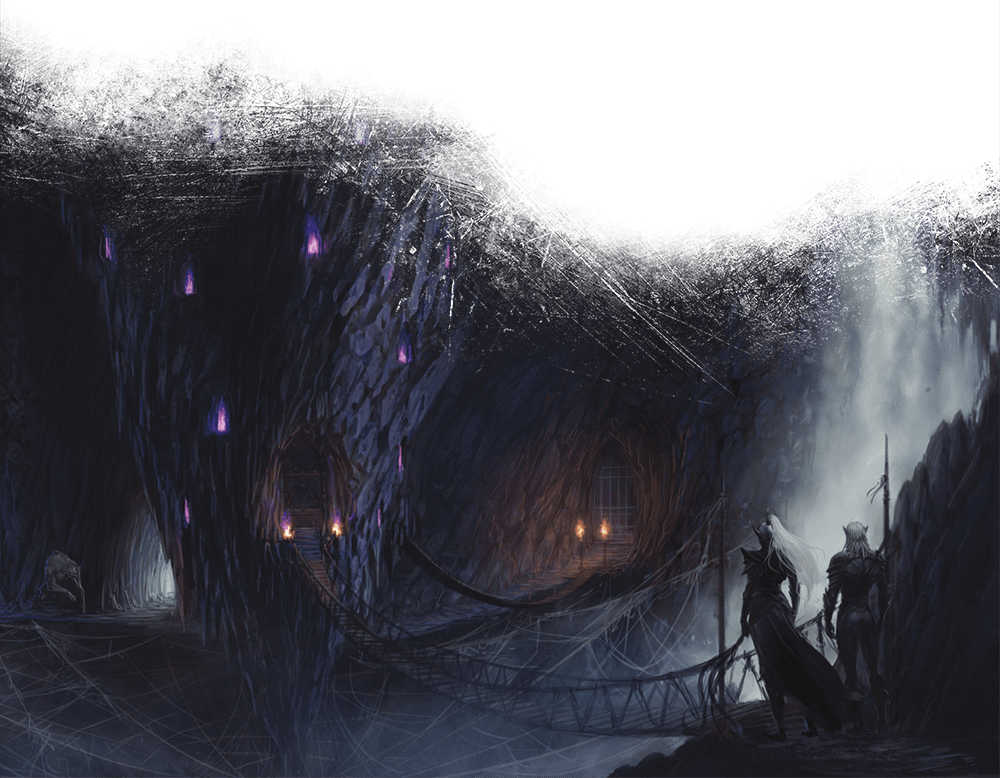
Eldritch Rifle
Prerequisites: Arcane Gunslinger invocation
Attacks made using your Pact Firearm have both their short and long range doubled.
Eldritch Shaping
Prerequisites: Pact of the Tome feature
When you take this Invocation, your Warlock cantrips gain one of the following enhancements:
Eldritch Cone. You can choose to invoke your single-target Warlock cantrips as a 20-foot cone. All creatures within the eldritch cone must make a saving throw against the spell, taking the normal cantrip damage on a failed save. If the spell would normally be a spell attack, the targets make a Dexterity saving throw.
Eldritch Doom. You can invoke your single-target Warlock cantrips as a 10-foot-radius sphere centred on yourself. All creatures within the affected area around you must make a saving throw against the spell, taking the normal cantrip damage on a failed save. If the spell would normally be a spell attack, the targets make a Dexterity saving throw.
Eldritch Elemental. Whenever you cast a cantrip which deals one of the following damage types, you can change its damage type to your choice of the other types: acid, fire, cold, lightning, poison, or thunder damage.
Eldritch Spear. The range of your ranged Warlock cantrips are doubled.
Eye of Xanathar. You can choose to fire your ranged Warlock cantrips from your eyes, requiring no components besides having open eyes. You cannot cast them if you are blinded.
Hideous Blows. Your Warlock ranged spell attack cantrips are now melee spell attacks with a reach of 5 ft., increasing its damage die by one step (eg. from 1d10 to 1d12).
Perforating Blasts. When you hit a target with a ranged spell attack Warlock cantrip, its energy ruptures through them, forming a 10-foot cone starting from the target, directed away from you. All creatures within the affected cone (not including the initial target) must make a Constitution saving throw, taking the normal cantrip damage on a failed save.
Eldritch Shunt
When you take this Invocation, your Warlock cantrips gain one of the following enhancements:
Grasp of Hadar. Once on each of your turns when you damage a creature with a Warlock cantrip, you can move that creature in a straight line 10 feet closer to yourself.
Lance of Lethargy. Once on each of your turns when you damage a creature with a Warlock cantrip, you can reduce that creature's speed by 10 feet until the end of your next turn.
Repulsive Barrage. Once on each of your turns when you damage a creature with a Warlock cantrip, you can push the creature up to 10 feet away from you in a straight line.
Eldritch Smite
Prerequisites: 9th-level, Pact of the Blade
Your Pact Weapon deals an additional 1d8 damage on a hit. The damage type options of this extra damage depends on your patron:
Acid. Fiend, Genie (Dao), Great Old One
Cold. Fathomless, Fiend, Genie (Marid)
Fire. Celestial, Fiend, Genie (Efreet)
Force. Ghost in the Machine, Seeker, Undying
Lightning. Fathomless, Genie (Djinn), Ghost Machine
Necrotic. Hexblade, Undying
Poison. Archfey, Fiend
Psychic. Archfey, Great Old One, Hexblade, Seeker
Radiant. Archfey, Celestial
Thunder. Fathomless, Genie (Dao or Djinn)
You can change the chosen damage type when you finish a long rest.
Elemental Disciple
Prerequisites: Genie patron
Attuning to the environment of the world around you, you learn an Elemental Discipline of your choice from among those available to the Way of the Four Elements monastic tradition. If the discipline requires your target to make a saving throw to resist the discipline’s effects, the saving throw DC equals your Warlock spell save DC.
You can use this discipline once without ki and must finish a short or long rest before you can use it in this way again. If you are a monk or have ki from another feature, you can spend ki to use this discipline as normal.
When you gain a level in this class, you can replace this discipline with another discipline you meet the prerequisites for, as if your Monk level were equal to your Warlock level.
Elemental Versatility
Prerequisites: Genie patron
When you cast a Warlock spell that deals a type of damage from the following list, you can change that damage type to one of the other listed types: acid, cold, fire, lightning, thunder.
Elysian Intuition
You gain proficiency in the Medicine and Survival skills. If already proficient, your proficiency bonus is doubled in that skill.
Elder One's Senses
Prerequisites: 7th-level, Great Old One patron
You gain blindsight out to a radius of 120 feet, but cannot detect creatures with an Intelligence score of 4 or lower with this sight. You can cast your Warlock spells targeting creatures you can detect this way within the spell’s range even if you do not have a line of sight to them, drawing the magic directly from the weave. As such, creatures gain no benefits against these spells from being Obscured or in Cover.
Empowered Automaton
Prerequisites: 7th-level, Spontaneous Animation invocation
Your Pact Familiar gains resistance to bludgeoning, piercing, and slashing damage, immunity to poison and necrotic damage, and immunity to the poisoned condition. It also does not need to breathe.
Empowered Summons
Prerequisites: 9th-level, Pact of the Chain feature
Your familiar uses your proficiency bonus as its own, and its hit point maximum increases by twice your warlock level. It has a number of d4 hit dice equal to your Warlock level, increasing its hit point maximum by 2 and gaining another hit die each time you take a level in this class.
Enchanter of the Sunken City
Prerequisites: Ghost in the Machine or Fathomless patron"
You gain proficiency in an Artisan's Tool of your choice and can cast the Identify spell as a bonus action at will without expending a spell slot.
Endless Pursuit
Prerequisites: 12th-level
You have advantage on saving throws against magical effects that would reduce or take away your movement speed, such as the Slow spell or being magically grappled. By spending 5 feet of movement, you can automatically escape grapples or restraints.
Eternal Dawn
Prerequisites: 5th-level, Celestial patron
The pool of d6s granted by your Healing Light feature becomes a pool of d8s.
Ethereal Bastion
Prerequisites: Eldritch Armourer invocation
When you expend a Pact Magic spell slot or cast an Arcanum spell, a towering ethereal shield materialises in front of you. You and all creatures in a 15-foot cone behind you gain the benefits of half cover until the start of your next turn while they remain within this area, and you cannot be moved against your will while it is active.
Ethereal Strikes
Prerequisites: Arcane Gunslinger invocation
Once per turn, when you attack with a firearm, you can have that shot pass through the ethereal plane. This allows you to ignore one source of your cover that your target is behind, including full cover if you are aware of their location. You can also target a creature on the ethereal plane that you are aware of with this ability. Doing this limits that firearm shot to the close range increment of the weapon.
Evaluating Magic
Prerequisites: Genie patron
When you hit a creature with a spell attack, you can choose to detect whether the creature is an Aberration, Celestial, Elemental, Fey, Fiend, or Undead as if by the detect evil and good spell. If it is, you immediately learn its immunities and resistances to damage types, if any.
Executioner’s Tome
Prerequisites: 15th-level, Pact of the Tome feature
You can cast any Warlock spells you know of up to 2nd-level, which have a casting time of one action, as a bonus action.
Eye of Uk’otoa
Prerequisites: Fathomless patron
Your eyes become brilliant hunks of amber in your head. Any creature that is frightened of you who can see you, and doesn’t divert their eyes, is also charmed by you. Creatures charmed in this way must use their movement on their turn to move towards you, beckoned like minnows to an angler fish, and they have disadvantage on all saving throws made against your spells and magical effects.
Eyes of the Blue Veil
You can cast Detect Magic at will, without expending a spell slot or material components.
Eyes of Oro
Prerequisites: 7th-level
As an action, you gain the ability to see through solid objects to a range of 30 feet. Within that range, you have darkvision if you don’t already have it. This special sight lasts for 1 minute or until your concentration ends (as if you were concentrating on a spell). During that time, you perceive objects as ghostly, transparent images. You cannot see through lead or fields of antimagic this way.
Once you use this ability, you can’t
use it again until you finish a
short or long rest.
Eyes of the Rune Keeper
You can read all forms of writing.

Far Scribe
Prerequisites: 7th-level, Pact of the Tome feature
A new page appears in your Book of Shadows. With your permission, a creature can use its action to write its name on that page, which can contain a number of names equal to your Charisma modifier (minimum 1).
You can cast the Sending spell at will, targeting a creature whose name is on the page, without expending a spell slot and without using material components. To do so, you must write the message on the page. The target hears the message in their mind, and if the target replies, their message appears on the page, rather than in your mind. The writing disappears after 1 minute.
As an action, you can magically erase a name on the page by touching it.
Feasting Blade
Prerequisites: 9th-level, Pact of the Blade feature.
Once per turn when you miss with a weapon attack using your Pact weapon, you can feed the weapon 1d8 of your hit points to make one additional attack with your Pact weapon against the same target. The Feasting damage you take is necrotic, but overcomes resistance and immunity to necrotic damage.
Fey Chain
Prerequisites: Archfey patron, Pact of the Chain feature
You may summon a fey creature of size Medium or smaller as a familiar; if it usually has the ability to cast spells, it loses that ability. The CR of this creature cannot exceed 1/4 your Warlock level.
At 15th-level, your familiar may take the form of a Large or smaller fey, otherwise following the rules above.
Feystep
Prerequisites: 7th-level, Archfey patron
You can use your Misty Escape feature a number of additional times between rests equal to your Charisma modifier (minimum of two total uses). In addition, when a creature you can see misses you with an attack, you can use your reaction to use your Misty Escape feature.
Fiendish Fortune
Prerequisites: 15th-level, Fiend patron
You can replace the d10 offered by your Dark One's Bane with 2d6. In addition, you can choose to use your Dark One's Bane as a reaction. When you do so, you do not expend a use of the feature.
Fisher King
Prerequisites: Fathomless patron, Eldritch Shunt invocation
Grasp of Hadar is not limited to once per turn, and applies to any ranged spell or weapon attack you hit a creature with.
Flamewreath
Prerequisites: 7th-level, Genie (Efreet) patron
Creatures who hit you with a melee attack, or who start their turn locked in a Grapple with you, take 1d6 fire damage.
Flesh of Hadar
Prerequisites: Fathomless or Great Old One patron, Pact of the Blade feature
You can choose to manifest your Pact Weapon within your own flesh, turning one or both of your arms into a swarm of writhing tentacles from below the elbow. Your Unarmed Strikes with the tentacles are also considered Natural Weapons for the duration, and attacks made with them gain all other benefits of being a Pact Weapon. They deal 1d6 bludgeoning damage on a hit.
You can choose to grapple a creature you hit with your tendrils as an attack made as part of the Attack action, or as a bonus action on your turn. Checks made to initiate, maintain, or contest grapples using your Grasping Tendrils use your Charisma modifier instead of whatever ability score they would normally use. You can grapple a number of creatures at once within your tentacles equal up to your Charisma modifier (minimum 1).
Any magical effects your Pact Weapon would normally possess are shared by the tentacles the weapon is summoned within.
Flit of the Seelie
Prerequisites: Archfey Patron
Creatures of your choice within 5ft of where you begin your Misty Escape suffer a 1d4 penalty to their next attack roll, saving throw, or ability check.
Flitterwing
Prerequisites: 15th-level, Archfey patron
You have a flying speed equal to your walking speed. This could be as a result of luminescent butterfly wings adorning your back or it could be a magical trait that allows you to to walk on the wind. If you choose to have wings, any clothing and armour will need to be altered to accommodate the new appendages.
Forbidden Word
Prerequisites: 5th-level
You can cast Command at will without expending a spell slot, using only verbal components.
Forge of the First Flame
Prerequisites: 15th-level, Genie (Efreet) patron
You can use an action to start consuming the very cells of your being, making you an inferno of wildfire; you gain the following abilities:
- Your base walking increases by 30 feet.
- You emanate bright light out to 60 feet and dim for 60 feet beyond that.
- At the start of each of your turns, you take 1d10 fire damage, overcoming resistance and immunity to fire damage.
- Any creature other than you who starts their turn within 20 feet of you, or when they move into that range, takes fire damage equal to half your Warlock level (rounded down).
- Anything flammable within 20 feet of you that isn’t being worn or carried ignites at the start of each of your turns.
- As an action you can create a 60 foot cone of flame. Any creature caught inside the must make a Dexterity saving throw. A creature takes 4d8 fire damage on a failed save and is knocked prone, or half as much damage on a successful one and is not knocked.
You must expend a hit die at the start of each of your turns to maintain this form. If you run out, you can expend 1d10 hit points instead. Failure to expend either hit dice or hit points at the start of your turn ends the effect on you.
Once you use this ability, you must finish a long rest before using it again, unless you expend a Pact Magic spell slot to do so.
Form of Nightmares
Prerequisites: 9th-level, Undying Patron
Your Form of Dread now lasts for 10 minutes and, when you force a creature to make a Wisdom saving throw against being frightened while in your Form of Dread, the creature has disadvantage on its saving throw if it is within 15 feet of you and can see you.
Gaze of Two Minds
You can use your action to touch a willing humanoid and perceive through its senses until the end of your next turn. As long as the creature is on the same plane of existence as you, you can use your action on subsequent turns to maintain this connection, extending the duration until the end of your next turn. While perceiving through the other creature's senses, you benefit from any special senses possessed by that creature, and you are blinded and deafened to your own surroundings.
Ghostwalk
Prerequisites: 15th-level, Undying patron
While in your Spirit Projection, your spirit gains resistance to acid, cold, fire, and lightning damage and, as an action, you can become Invisible (as if the spell) at will.

Gift of the Depths
Prerequisites: 5th-level
You can breathe underwater, and you gain a swimming speed equal to your walking speed. You can also cast Water Breathing once without expending a spell slot. You regain the ability to do so when you finish a long rest.
Gift of the Ever-Living Ones
Prerequisites: Pact of the Chain feature
Whenever you regain hit points while your familiar is within 100 feet of you, treat any dice rolled to determine the hit points you regain as having rolled their maximum value for you.
Gift of the Golden Lord
Prerequisites: Celestial patron
Whenever a creature regains hit points from a class feature or spell you cast, you treat any dice rolls of 1 to determine the hit points regained as instead being their maximum die value
Gift of the Martyr
Prerequisites: Celestial patron
When healing an ally using magical means, you can choose to spend your own hit dice to increase the healing you impart. Expend and roll a number of your hit dice up to your Charisma modifier to increase the healing of one target you heal by an amount equal to the total rolled on the dice.
Gift of Protection
Prerequisites: 9th-level, Pact of the Tome feature
A new page appears in your Book of Shadows. With your permission, a creature can use its action to write its name on that page, which can contain a number of names equal to your Charisma modifier (minimum 1). As an action, you can magically erase a name on the page by touching it.
When any creature whose name is on the page is reduced to 0 hit points but not killed outright, the creature magically drops to 1 hit point instead. Once this magic is triggered, no creature can benefit from it until you finish a long rest.
Gift of Unbridled Power
Prerequisites: 12th-level, Pact of the Tome feature
The words of your dark Tome are spelled out in ink of your blood. Upon completing a short rest, you can spend 1 Hit Die and regain a number of spell slots whose total is equal to or less than the result of the Hit Dice, provided you have expended spell slots of that level.
You cannot use this ability again until you finish a long rest
Great Elemental Blast
Prerequisites: 9th-level, eldritch blast cantrip
When you take this Invocation, your Eldritch Blast gains one of the following enhancements:
Brimstone Blast. A brimstone blast deals fire instead of force damage. Any creature struck by a brimstone blast must succeed on a Dexterity saving throw or catch on fire, taking 1d6 fire damage at the start of each of its turns for 1 minute, or until a creature takes an action to extinguish the flames. Damage dealt to a creature burning in this way never exceeds 1d6 fire damage, even if it has been hit by more than one brimstone blast.
Fulminating Blast. A fulminating blast deals lightning instead of force damage. Any creature struck by a fulminating blast must succeed on a Constitution saving throw; on a failed save, they are stunned until the start of your next turn.
Hellrime Blast. A hellrime blast deals cold instead of force damage. Any creature struck by a hellrime blast must succeed on a Constitution saving throw or take a penalty to their Dexterity saving throws until the start of your next turn equal to your Charisma modifier (minimum penalty of 0).
Venomous Blast. A venomous blast deals poison instead of force damage. Any creature struck by a venomous blast must succeed a Constitution saving throw or become poisoned until the end of their next turn. If they fail the save by 5 or more they are also paralysed while poisoned this way.
Vitriolic Blast. A vitriolic blast deals acid instead of force damage. Any creature struck by a vitriolic blast must succeed on a Dexterity saving throw or take a penalty to their AC until they are hit next within 1 minute equal to your Charisma modifier (minimum penalty of 0). A creature cannot suffer this penalty more than once at a time.
Greater Eldritch Essence
Prerequisites: 9th-level
When you take this Invocation, your Warlock cantrips gain one of the following Eldritch Essences. These essences are mutually exclusive with the 5th-level counterpart invocation:
Bewitching Blast. Once on each of your turns when you hit a creature with your eldritch blast, the target must make a Wisdom saving throw or become confused (as the Confusion spell) until the end of their next turn.
Hadar's Feasting. When you hit a creature with your eldritch blast, you regain a number of Hit Points equal to ⅓ the damage taken by the target (rounded down). You don't gain this benefit when you hit a construct, elemental, or undead.
Ire of Levistus. Once on each of your turns when you hit a creature with your eldritch blast, the target must make a Charisma saving throw or become grappled and restrained within illusory hellish ice until the end of their next turn.
Greater Will
You can cast Heroism at will, without expending a spell slot
Great Summoner’s Chain
Prerequisites: 15th-level, Pact of the Chain feature
Your Pact Familiar can be any beast, elemental, fiend, or monstrosity of up to CR 2, but cannot cast any innate spells the chosen form may have.
Guided Expertise
Prerequisites: Seeker patron
As a reaction when you make an ability check, you can choose to add your Charisma modifier to the roll - even if it is already modified by Charisma.
You can use this ability a number of times equal to your Proficiency bonus, regaining all expended uses when you finish a long rest.
Haunted Animation
Prerequisites: 12th-level, Ghost in the Machine patron
You may cast the spell Animate Objects once without expending a spell slot. When you cast the spell in this way, the objects you animate are possessed by machine spirits of Mechanus - singing songs of cause and consequence in the mathematical language of the universe. Once you use this feature, you cannot use it again until you finish a long rest.
The animated objects gain the following benefits:
They gain temporary hit points equal to your Warlock level
They add your proficiency bonus to all saving throws
Their attack and damage rolls have an additional +2 bonus.
Heavens' Luminance
Prerequisites: 5th-level, Celestial patron
The Daylight spell is added to the list of spells you know. It is a warlock spell for you and does not count against the number of spells you know.
Additionally, all spells you cast of 1st level or higher which deal radiant damage are considered to be Sunlight effects.
Herald of Chaos
Prerequisite: Genie patron
Whenever you use a warlock spell slot, your DM can make you roll for a wild magic surge (as if a Wild Magic sorcerer)
Hexblade’s Gospel
Prerequisites: Hexblade patron, Pact of the Tome feature
Whenever you use your Accursed Spectre feature, the spirit remains indefinitely until you or it are reduced to 0 hit points, or until you use the feature again.
Hexblade's Torment
Prerequisites: 12th-level, Hexblade Patron
Your Hexblade's Curse feature lasts indefinitely, ending early if you use the feature again or if you are no longer on the same plane of existence. You always know the distance and direction from you to creature marked by your Hexblade's Curse, and you have advantage on checks made to track them. For the purposes of dispelling this effect, your Hexblade's Curse is considered a spell of 5th-level.
Hide of Fierna
Prerequisites: Fiend patron, Eldritch Armourer invocation
If hit with a melee weapon attack while wearing armour, your attacker takes 1d4 fire damage as the green fire of Phlegethos retaliates from within the suit. In addition, you can use a bonus action to cast Armour of Agathys at a level equal to one-third of your Warlock level (rounded down) once without expending a spell slot. When cast this way, the Armour of Agathys deals fire instead of cold damage. A creature reduced to 0 hit points by Fire damage from the features of this invocation are instantly disintegrated. You regain the ability to cast the spell this way when you finish a long rest.
Holy Mantle
Prerequisites: 15th-level, Celestial patron
As a bonus action, you gain the following effects for 10 minutes:
- You exude bright light in a 50-foot radius, and dim light for 50 feet beyond that. You can choose for this to be sunlight or moonlight.
- You have a flying (hover) speed equal to your speed.
- You have advantage on Constitution saving throws and have resistance to radiant and force damage.
- You have advantage on Intimidation and Insight checks made against evil creatures within the bright light
- Melee attacks you make have their Reach increased by 5 feet, deal Radiant damage instead of their normal damage type, and have that damage increased by 1d8.
- When you deal damage from warlock abilities and spells against evil aligned targets while transformed, you can change the damage type to radiant damage.
Once you use this ability, you cannot use it again until you finish a long rest.
Hypnotic Whispers
Prerequisites: 12th-level, Archfey Patron
Your voice softly rings with magic. As a reaction, you can target one creature that is able to hear you who is rolling a saving throw against a spell you cast, reducing that creature’s total by 1d4. You can use this feature only before you know the number the target rolled on the die.
You can use this ability a number of times equal to your Charisma modifier (minimum once), regaining any expended uses when you finish a short or long rest.
Icon of the Profane
Prerequisites: 12th-level, Pact of the Talisman feature
When the bearer of your Talisman casts a spell, you may use your reaction to invoke your patron’s connection to the Warp; the creature regains a spell slot equal to the level of the spell cast, up to 5th-level.
Once you invoke your Icon of the Profane you can not do so again until you complete a long rest.
Immortal Blade
Prerequisites: 7th-level, Hexblade patron, Pact of the Chain feature
Your familiar can take the form of an Accursed Spectre, using your Proficiency bonus instead of its own.
Incubus' Allure
Prerequisites: 9th-level
When a hostile creature ends its turn within 10 feet of you, it must succeed a Wisdom saving throw or become Charmed by you and have its speed halved until the end of its next turn. Creatures who succeed this save have advantage on any subsequent saves made to resist the aura for the next 24 hours.
At 18th level, the range of this aura increases to 30 feet.
Infernal Contract
Prerequisites: 9th-level, Fiend patron
You can conduct a 1 minute long ritual in which you call upon the fine print of your bargain with your patron, at the end of which you attempt to contact your Patron themself as if by the Contact Other Plane spell. When you do so, you make the spell's saving throw with Charisma instead of Intelligence.
Once you use this feature, you can't use it again until you finish a long rest.
Insane Certainty
Prerequisites: Great Old One patron
Your mad conviction crystallises into a truly chilling mania. You gain an additional number of hit points equal to your Warlock level. However, constantly dwelling on such beings is mentally corrosive, and your mind begins to fracture. You have disadvantage on all Deception, Persuasion, and Animal Handling checks made to influence non-aberration creatures.
Insidious Studies
Prerequisites: Pact of the Tome feature
When a creature is forced to make a saving throw while within 60 feet of you, you can use your reaction and expend a spell slot to either increase or reduce their total by an amount equal to 1d4 + the slot level expended.
Investment of the Chain Master
Prerequisites: Pact of the Chain feature
When you cast Find Familiar, you infuse the summoned familiar with a measure of your eldritch power, granting the creature the following benefits:
- The familiar gains either a flying speed or a swimming speed (your choice) of 40 feet. If it has one already, it increases by 20 feet.
- The familiar no longer needs to breathe
- The familiar’s weapon attacks are considered magical for the purpose of overcoming immunity and resistance to nonmagical attacks.
- If the familiar forces a creature to make a saving throw, it uses your spell save DC.
Ironhide
Prerequisites: 9th-level, Genie patron (Dao)
You can cast Stoneskin once without expending a spell slot or material components, and without requiring concentration. You regain the use of this ability after completing a long rest.
Joiner of Mechanus
Prerequisites: Ghost in the Machine patron
You know the Mending cantrip if you did not already know it. It is a Warlock cantrip for you but does not count against the number of cantrips you know. In addition, it has a casting time of 1 action and a range of 60 feet for you.
Keeper of Secrets
Prerequisites: 7th-level, Seeker patron
You can cast any 1st or 2nd-level Divination spell which has the Ritual tag as an action without requiring material components or expending a spell slot; they do not require concentration and last for their maximum duration when cast this way. You do not need to know these spells and they can be from any spell list. They are considered Warlock spells for you when you cast them this way.
You can use this feature a number of times equal to your Charisma modifier (minimum 1), regaining any expended uses when you finish a short or long rest.
Kiss of Mephistopheles
Prerequisites: 5th-level, Fiend patron"
You can channel the fires of Mephistar through your magic. When you deal fire damage to a creature with a Warlock cantrip, you can cast fireball as a reaction using a warlock spell slot, centred on a creature you burned. Creatures reduced to 0 hit points by fire damage from your Warlock spells or class features are instantly disintegrated.
Kraken’s Ink
Prerequisites: 12th-level, Fathomless patron
As a bonus action, you can expel an ethereal cloud of darkness in a 60-foot radius of your space and then take the Dash action. The cloud spreads around corners, and its area is heavily obscured to all creatures other than you. All creatures other than you that end their turn within the cloud must succeed on a Constitution saving throw, taking 3d8 poison damage on a failed save, or half as much damage on a successful one. A strong current or wind disperses the cloud, which otherwise disappears at the end of your next turn.
Leaps and Bounds
You have advantage on all Dexterity based checks, and you can add your Charisma modifier to your jump distances.
Ledger of the Kolyarut
Prerequisites: 9th-level, Genie patron
You can cast the identify spell at will without expending a spell slot, and you don't need to provide material components for the spell. If you cast identify in this manner on a spell scroll that is not a warlock spell, for the next 24 hours the spell on the scroll is added to the list of spells you know, as if it were a warlock spell, and you can cast it with any spell slots you have available.
Additionally, you suffer no ill effects by spending time upon any of the elemental planes.
Legion of the Damned
Prerequisites: 7th-level, Hexblade patron
You can maintain the existence of two Accursed Spectres at once. You can maintain three at once from 12th level, and four from 17th level.
Lesser Arcanum
Prerequisites: 7th-level
Choose one 1st-level Warlock or Wizard spell that does not consume a material component when cast. You can cast this spell at its lowest level at will without expending a spell slot or requiring material components. You can take this invocation more than once, but must choose a different spell each time.
At 12th-level, you can choose Lesser Arcanum spells of 2nd-level or lower.
At 17th-level, you can choose Lesser Arcanum spells of 3rd-level or lower.
Library's Grand Almanach
Prerequisites: Seeker patron, Pact of the Tome feature
You can cast any Warlock spells from the Conjuration or Divination school that you know as rituals, even if they do not have the Ritual tag. Casting a spell this way takes 10 minutes per spell level, in addition to the normal casting time.
Lich's Lore
You gain proficiency in Arcana and History skills. If already proficient, you add your Proficiency bonus twice to checks you make using these skills.
Lifedrinker
Prerequisites: Eldritch Smite invocation
Your Pact Weapon gains additional properties depending on the damage type of its additional damage:
Acid. Armoured creatures you hit with your pact weapon gain a penalty to their AC until the start of your next turn equal to half your Proficiency bonus (rounded down). A creature can only suffer from this effect once each round.
Cold. Each time you hit a creature with your pact weapon, its movement speed is reduced by 10 feet until the end of its next turn.
Fire. The additional damage dealt by your eldritch smite increases to 1d12 fire damage.
Force. When you hit a Huge or smaller creature with your pact weapon, the target must make a Strength saving throw. On a failed save, the target is knocked prone.
Lightning. When you score a critical hit against a creature using your Pact Weapon, they must succeed a Constitution saving throw or be stunned until the end of your next turn.
Necrotic. You regain a number of hit points equal to the necrotic damage dealt by your Pact Weapon each time you hit a creature that isn't a construct or undead with it.
Poison. Poison damage dealt by your pact weapon ignores resistance to poison damage and treats immunity to it as resistance instead.
Psychic. The target takes additional psychic damage equal to half their Intelligence score (rounded down) on a hit instead of 1d8 and, while holding your Pact Weapon, you have advantage on saving throws made to resist being charmed or frightened.
Radiant. When you hit a creature with your pact weapon, the target must make a Constitution saving throw. On a failed save, the target is blinded until the end of your next turn.
Thunder. When you hit a creature with your pact weapon, the target must make a Constitution saving throw. On a failed save, the target is deafened until the end of your next turn.
Life Leech
Prerequisites: 7th-level
You can cast Vampiric Touch once without expending a spell slot. When cast this way, however, you can repeat the touch on subsequent turns for the spell's duration as a bonus action instead of an action.
Once you cast the spell this way, you cannot do so again until you finish a long rest.
Light Bringer
Prerequisite: 7th-level, Celestial patron
You can cast Daylight at will without expending a spell slot, only on an object you're holding. The spell ends if you let go.
Lightning Storm
Prerequisites: 5th-level, Fathomless patron
You invoke three bolts of lightning, each of which can strike a target you can see within 120 feet of you. A target must make a Dexterity saving throw, taking 4d10 lightning damage on a failed save, or half as much damage on a successful one. If cast while the target is in contact with a body of water or during a storm, the damage increases by 1d10 and all creatures within 5 feet of the target must make the saving throw as well. Once you use this feature, you cannot use it again until you complete a short or long rest.
Linking the Flame
Prerequisites: Fiend patron", Pact of the Chain feature
When you have a flame formed from a lasting magical effect such as a Create Bonfire or Continual Flame spell still active, you can cast spells as if you were in the enduring fire’s space. You must still be able to see the target of the spell if it requires sight. Features which affect spells cast through your familiar also affect spells cast in this way, although 'Touch' spells can target anyone within the flame's radius of bright light.
Lurker’s Lunge
Prerequisites: 5th-level, Pact of the Blade feature
As a reaction when a creature you can see within 30 feet of you moves on their turn, you can teleport to an unoccupied space adjacent to the creature and make an attack of opportunity against them using your pact weapon.
You can use this ability a number of times equal to your Charisma modifier (minimum 1), regaining any expended uses when you finish a long rest.
Maddening Hex
Prerequisites: 5th-level, Hex spell or a class feature that brands, curses, or marks
As a bonus action, you cause a psychic disturbance around the target cursed by your Hex spell or by a class feature of yours, such as Hexblade’s Curse or a Ranger’s Hunter's Mark. When you do so, you deal psychic damage to the cursed target and each creature of your choice within 5 feet of it. The psychic damage equals your Charisma modifier (minimum of 1 damage).
Maleficent Hex
Prerequisites: Maddening Hex invocation
You can choose for the damage dealt by your Maddening Hex to be of a damage type other than psychic, depending on your Patron (as described in the 'Eldritch Smite' invocation).
In addition, the damage of your Maddening Hex increases by 1d8, and you can trigger your Maddening Hex as a reaction when the marked creature damages you.
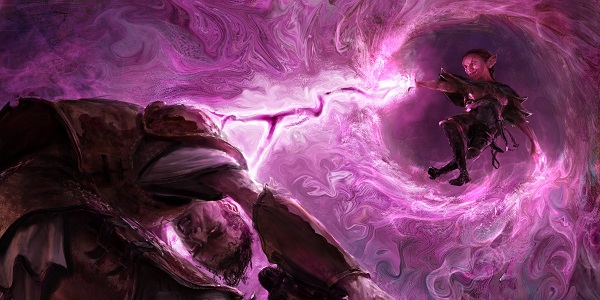
Marauders' Map
Prerequisites: 9th-level, Pact of the Tome
You can cast locate animals or plants, locate creature, and locate object without expending a spell slot.
Once you cast a spell this way, you cannot cast that spell this way again until you finish a long rest.
Mark of the Chainer’s Gaze
Prerequisites: Pact of the Chain feature, Hex spell or a class feature that brands, curses, or marks
The target marked by your Hex spell or by a class feature of yours, such as Hexblade’s Curse or a Ranger’s Hunter's Mark feature, bears an eldritch rune that twists their senses and perspective towards madness.
The marked target cannot sense your familiar in any way, even if attacked by them, while they bear the mark.
Mark of Immanence
Prerequisites: 7th-level, Hex spell or a class feature that brands, curses, or marks
When you mark a creature with a Hex spell or by a class feature of yours, such as Hexblade’s Curse or a Ranger’s Hunter's Mark feature, you can choose to anchor them to the current plane. For the duration of the curse, whenever the target attempts to teleport, use Chronomantic magic, or alter their plane, they must succeed a Constitution saving throw or have their ability fail, and have their speed reduced to 0 until the end of your next turn.
Mark of the Insatiable
Prerequisites: 12th-level, Maddening Hex invocation
As an action, you can force the target cursed by you to make a Wisdom saving throw or become Charmed by you for the duration it is cursed by you, forcing it to try and eat any object or creature that you specify within 60 feet of you. While Charmed by you in this way, the target takes 3d8 psychic damage for each action or movement that it takes that isn’t in the pursuit of attempting to eat the creature or object you specified. You can specify any creature or object within range, short of an object that the target creature would know would result in certain death. Should you issue a suicidal Command, the charm ends. You can end the charm early as an action.
Mark of the Old One's Guile
Prerequisites: Great Old One patron, Hex spell or a class feature that brands, curses, or marks
The target cursed by your Hex spell or by a class feature of yours, such as Hexblade’s Curse or a Ranger’s Hunter's Mark feature, bears a quasi-geometric rune that diminishes their resolve. Whenever the cursed creature attempts to attack you or you force them to make a saving throw, they must roll 1d6 and subtract the result from the roll.
Mark of Spiralling Insight
Prerequisites: 5th-level, Hex spell or a class feature which brands, curses, or marks
You can pinpoint the exact location of a creature cursed by you, even if they're invisible or obscured from you by mist or walls. When a target you have cursed forces you to make an Intelligence, Wisdom, or Charisma saving throw, you have advantage on the roll.
Mark of Spiteful Cruelty
Prerequisites: 9th-level, Hex spell or a class feature which brands, curses, or marks
The target cursed by your Hex spell or by a class feature of yours, such as Hexblade’s Curse or a Ranger’s Hunter's Mark feature, bears a wickedly spiked rune that intensifies their pain. While it is marked by you, your Proficiency bonus is doubled when rolling an opposed ability check or saving throw in which you're proficient against the cursed target.
As bonus action on each of your turns, choose one of the following effects against the marked target, which lasts for the duration of the curse:
Bewilder. The first attack they make is made with disadvantage.
Bleed. All weapon attacks made against the target are considered to have the Bleed property.
Hunt. If the target is hidden from you, you can see where they are until the start of your next turn unless they are behind full cover.
Rust. If the target would normally be immune to a type of damage, until the start of your next turn they instead have resistance to that damage.
Mask of Many Faces
You can cast Disguise Self at will, without expending a spell slot.
Master of Myriad Forms
Prerequisites: 9th-level
You can cast Alter Self at will, without expending a spell slot
Maw of Charybdis
Prerequisites: 9th-level, Fathomless patron"
You produce an aura of whirling seafoam which draws your enemies closer. At the start of each of your turns, all creatures of your choice within 15 feet of you are drawn adjacent to you. They can choose to make a Strength saving throw to resist this effect; on a successful save they are not moved, on a failed save they are knocked prone and moved adjacent to you.
Medallion of Mind and Soul
Prerequisites: 9th-level, Pact of the Talisman feature
While wearing your talisman a creature’s Intelligence score becomes 8 + your Charisma modifier, but in all other ways as if targeted by the Awaken spell, and it can speak and understand any languages you can.
Memorised Request
Prerequisites: 15th-level, Genie patron
When you cast a spell using your Limited Wish feature, you learn the spell and it becomes a warlock spell for you.
You can learn a number of spells using this feature equal to one-third of your warlock level. If you have already learned the maximum number of spells you can from this feature, you must replace a spell you gained by this feature with the new spell (no action required) or you do not gain it this way.
Metamorphist
Prerequisites: Pact of the Chain feature
You can change the form of your Pact Familiar to that of another valid creature as a bonus action while it is within 100 feet of you. You must be able to see the familiar or be able to telepathically communicate with it to take this action. This transformation is instantaneous and silent, but the action cannot be taken if the new form would not fit into the volume of the space the familiar is occupying.
You can use this ability a number of times equal to your Charisma modifier (minimum 1), regaining all expended uses when you finish a long rest.
Midnight Spectres
Prerequisites: 7th-level, Hexblade patron
Your accursed spectres gain one additional ability from the options below, chosen when each is first formed:
Vicious Darkness. Once per turn, the spectre can deal an extra 1d6 damage to one creature it hits with an attack if it has advantage on the attack roll or if the target is within 5 feet of an allied creature. This damage increases to 2d6 at 12th level.
Otherworldly Bond. If you fall to 0 hit points, you may have this spectre give its life for yours; it dies and you fall to 1 hit point instead.
Curse-marked. When a creature under the effect of your Hexblade's Curse deals damage to you as part of a spell or ability that forces you to make a saving throw, the spectre may spend its reaction to halve that damage.
Smothering Shadows. When the spectre successfully hits a creature with its attack, if the target is a Large or smaller creature, it is grappled (escape DC equal to your spell save DC). Until this grapple ends, that creature is also restrained.
Ethereal Sight. The spectre can see 60 ft. into the Ethereal Plane when it is on the Material Plane, and vice versa.
Incorporeal. The spectre can move through other creatures and objects as if they were difficult terrain. It takes 5 (1d10) force damage if it ends its turn inside an object
Shade. The spectre can occupy the space of a willing creature. It adds a bonus equal to your Charisma modifier to the AC of a creature while sharing a space with that creature.
Wisp. The spectre can take the Dash or Hide action as a bonus action on each of its turns, and it does not provoke attacks of opportunity from moving.
Mightier than the Sword
Prerequisites: Seeker patron, Pact of the Blade feature
You understand what it means to be a warrior: the body is but a vessel for your relentless pursuit of knowledge. You can add your Charisma modifier to any d20 roll you make that uses Strength, Dexterity, or Constitution.
You can use this ability a number of times equal to your Proficiency bonus, regaining all expended uses when you finish a long rest.

Mind of Madness
Prerequisites: Pact of the Tome feature
Intelligence replaces Charisma as the ability for your Warlock class features and pact magic spellcasting. When you take this Invocation, you gain an additional Pact of the Tome invocation of your choice, obeying prerequisites
Moonwoven Archer
Prerequisites: Archfey patron, Pact of the Blade feature
You can create or attune a shortbow or longbow to your Pact of the Blade feature instead of a melee weapon. You have advantage on attack rolls against fey and undead when using this pact bow. When you ready an attack with a ranged Pact Weapon without any ammunition loaded, it conjures a piece of magical ammunition made of Arborean wood from thin air.
Mourning Knell
Prerequisites: 9th-level, Undying patron
Your Hit Point maximum cannot be reduced against your will. Additionally, when you cast a spell to communicate with Undead creatures, such as Speak With Dead or Contact Other Plane, the spirit is required to tell the truth, as if under the effect of a successful Zone of Truth spell.
Mythril Carapace
Prerequisites: 7th-level, Spontaneous Animation invocation
Your Pact Familiar regenerates 1d4 hit points at the start of each round in which it did not take magical bludgeoning, piercing, or slashing damage.
Natural Trickster
Prerequisites: Archfey patron
You can choose your Warlock cantrips from the Druid spell list.
Nightmare Mythos
Prerequisites: Great Old One patron, eldritch blast cantrip
Eldritch blast deals psychic instead of force damage when you cast it, and it requires only verbal components to cast. Provided a target is within range and you know roughly what direction they are, you do not need to see the target to attack them with this, and they do not benefit from cover, shields, or walls blocking them from you. When cast this way, the range for the spell is halved, and can only target creatures with an Intelligence score of 5 or higher.
Nobles’ Chosen
Prerequisites: 15th-level, Genie patron
You have resistance to all of the damage types listed in the Elemental Gift feature.
Occultist’s Shunt
Prerequisites: 7th-level, Pact of the Tome feature
Whenever you cast a cantrip, any creatures within 5 feet of you must succeed a Wisdom saving throw or be pushed 10 feet away from you.
Ocean’s Blessing
Prerequisites: Fathomless patron
You can drink seawater harmlessly, you gain the Shape Water cantrip as a warlock spell, though it does not count against the number of cantrips you know, and you can convert a gallon of salt water into pure H2O as an action.
One with the Shadows
Prerequisites: 5th-level
When you are in an area of dim light or darkness, you can use your bonus action to become invisible until you move, or you until you take an action or reaction.
Otherworldly Endurance
Prerequisites: 5th-level
You gain proficiency in either Constitution or Strength saving throws.

Pact Mask
Prerequisites: Archfey patron, Pact of the Talisman feature
You can use your action to create a pact mask, which appears upon you already donned or in your empty hand; a transformation of your talisman. Unlike normal talismans, you cannot bestow this to anyone but yourself. Your pact mask disappears if it is more than 5 feet away from your face for 1 minute or more. It also disappears if you use this feature again, if you dismiss the mask (no action required), or if you die.
While you wear the mask, the magic bound within it prevents others from recognizing your normal identity. This does not occur for those that have seen you don or remove your mask. You have advantage on saving throws against enchantment magic intended to convince or force you to remove your pact mask.
Any item transformed into your talisman appears at your feet if it is in the extradimensional space whenever the bond breaks.
Pages of Chaos
Prerequisites: Genie Patron, Pact of the Tome feature
A new page appears in your Book of Shadows, containing secrets from all genies: dao, djinni, efreeti, and marid. You learn a number of spells of your choice from any of the Genie Expanded Spells Tables equal to your Charisma modifier. Your choices don't count against your number of spells known and they count as a warlock spell for you.
You can change the spells learned this way each time you finish a long rest, but must choose from the aforementioned tables You must have your Book of Shadows on your person in order to cast a spell learned this way.
Pale Piper
Prerequisites: 9th-level
You can cast Conjure Animals at 3rd level at will without using a spell slot or material components, but can only summon Giant Rats or Rat Swarms when you do.
Path of Dragnet
Prerequisites: Seeker patron
The Seeker bids you to travel in search of knowledge, and little can prevent you from walking this path. You ignore difficult terrain, have advantage on all checks to escape being grappled or restrained, and advantage on saving throws against being paralyzed.
Penance Stare
Prerequisites: 15th-level, Celestial patron
You can make eye contact with a creature within 30 ft. and cause it to feel the pain of all of those it has hurt in its lifetime. Make a spell attack against your target (requiring nothing but eye-contact), and on a hit, the target is stunned. The target can make a wisdom saving throw at the end of each of its turns and the effect ends on a successful saving throw. If target is aligned to Evil, it takes 10d10 psychic damage, if the target is neutral it takes 5d10 psychic damage, and if the target is good it takes no damage. For player characters, the DM has final ruling based on their actions throughout the game. When a creature is killed by this ability, its body turns to ash. This ability has no effect on beasts, creatures who are blind, or constructs.
On a successful use of this feature, you can’t use it again until you finish a long rest.
Potent Cantrips
Prerequisites: 7th-level, Pact of the Tome feature
If a creature succeeds a saving throw against a Warlock cantrip you cast, it still takes half damage but suffers no additional effects of the spell.
Primordial Ascension
Prerequisites: 17th-level, Genie patron
You can expend any number of spell slots and spell slots from other creatures with a combined level of 9 or more to cast Wish. Once you use this feature, you can't do so again until you finish a long rest
Prodigal Spawn
Prerequisites: 15th-level, Pact of the Tome feature
Spells cast using your Pact Magic spell slots and Invocations are cast as though they were using a spell slot of one level higher than usual (maximum 9th-level).
Protection of the Talisman
Prerequisites: 7th-level, Pact of the Talisman feature
When you increase an ability check or saving throw made by the wearer of your talisman using the Pact of the Talisman feature, they can add an additional d4 to the roll.
Pseudoarcana
Prerequisites: Pact of the Talisman feature
You can use your talisman as an arcane focus for your warlock spells, casting spells from it as though you were in its place ('Self' still applies to you). It registers as a Holy Symbol to your patron if identified.
If the wearer of your talisman is hit with an attack, you can use your reaction to make a spell attack against the attacker by casting a Warlock cantrip from the Talisman as though you were in the wearer's space. You can use this feature a number of times equal to your Charisma modifier (minimum 1), regaining all expended uses when you finish a short or long rest.
Psychic Pulse
Prerequisites: 12th-level, Great Old One patron
Whenever you take damage, all creatures with an Intelligence of 5 or greater other than you within range of your Telepathy take psychic damage equal to your Charisma modifier (minimum 1). You can suppress this until the start of your next turn at the start of each of your turns (no action required). This ceases to function if you have an Intelligence score of 4 or below, or you are petrified, unconscious, or dead.
Queen’s Right Hand
Prerequisites: 17th-level, Undying patron
You can channel the Raven Queen’s power to slay a creature. You can cast finger of death once without expending a spell slot or material components. After you cast the spell with this feature, you can’t do so again until you finish a long rest.
Quicksilver Armoury
Prerequisites: 5th-level, Pact of the Blade feature
Your mastery over any magic weapon you turn into a Pact weapon grows. When you are attuned to a melee weapon which is also your pact weapon, you can use a bonus action to change the weapon into any other melee weapon of your choice, while retaining its magical properties. This effect ends when you are no longer attuned to the weapon, or it is no longer your Pact weapon.
Quickstep
Prerequisites: 7th-level, Pact of the Talisman feature
When a creature makes a melee attack against the wearer of your talisman, before they are hit, you can use your reaction to kinesthetically move them up to half their movement speed in a direction of your choice, avoiding the attack. Moving this way does not provoke attacks of opportunity.
You can use this ability a number of times equal to your Charisma modifier (minimum 1). All expended uses are restored when you finish a short or long rest.
Radiant Chain
Prerequisites: Celestial patron, Pact of the Chain feature
Your familiar gains immunity to Radiant and Necrotic damage, and it can cast the light cantrip at will.
Raising Spirits
Prerequisites: 7th-level, Undying patron
Immediately as you drop to 0 hit points, you can cast summon undead using a spell slot without requiring components or concentration for the duration of the spell. The spirit you summon listens to your commands for the duration of the spell, whether you recover or die. This spell ends early if you cast summon undead again in any way.
Rebuke of the Talisman
Prerequisites: Pact of the Talisman feature
When the wearer of your talisman is hit by an attacker you can see within 30 feet of you, you can use your reaction to deal psychic damage to the attacker equal to your Charisma modifier (minimum 1) and push it up to 10 feet away from the talisman's wearer.
Refuge in Endless Shelves
Prerequisites: 15th-level, Seeker patron
You gain the ability to sequester yourself and your allies within your Patron's Accursed Archive for extended periods. By performing a special ritual over the course of 10 minutes, you shift yourself and up to ten willing creatures you can see to the labyrinthine demiplane of the archive. You and those creatures gain the benefits of a short rest while sequestered. You then return to the spaces you all occupied when you used this ability, with no time having passed in the world.
During this short rest, you and the creatures you sequester can make use of any options available during a rest that affect only you and the creatures you sequester.
Once you use this ability, you cannot use it again until you finish 1d4 long rests.
Register of Silver
Prerequisite: Pact of the Tome
As long as you have your Book of Shadows on your person, you cannot be compelled to tell the truth via magic, and your illusions and transmutations appear as real to divination magic and truesight.
Relentless Hex
Prerequisites: Maddening Hex invocation
Your curse creates a temporary bond between you and your target. As a bonus action, you can magically teleport up to 30 feet to an unoccupied space you can see within 5 feet of the target cursed by you. To teleport in this way, you must be able to see the cursed target.
Retributive Invisibility
Prerequisites: 9th-level
You can cast Greater Invisibility on yourself by expending a Pact Magic spell slot, but you can target only yourself when casting the spell using this invocation. If your retributive invisibility is dispelled or you fail a Concentration check to maintain it, a shock wave releases from your body in a 20-foot radius burst. All creatures in the area must make a Constitution saving throw, taking 4d6 thunder damage and becoming stunned until the end of their next turn on a failed save. On a successful save, a target takes half damage and is not stunned.
Revelations of Carasphyx
Prerequisites: Pact of the Tome feature
Whenever you charm a creature, or detect or alter its thoughts or memories, you gain additional insight into their existence. You learn one of the following things about it of your choice:
- Its skill and saving throw proficiencies, if any, and its proficiency bonus
- Its Intelligence, Wisdom, and Charisma scores
- Its resistances, immunities, and vulnerabilities
Instead of learning any of the above, you can choose to burrow deeper into its mind, granting it disadvantage on the next Intelligence, Wisdom, or Charisma save you force it to make. You can use this feature a number of times equal to your Charisma modifier, regaining all expended uses of this feature when you finish a long rest.
Reykja’s Medley
You gain proficiency in the Performance skill and in two musical instruments of your choice. Your proficiency bonus is doubled for checks made for performing with these instruments.
Rite of the Lunatic
You gain one additional warlock spell slot, which is only usable at night, outside, when in moonlight. The spell slot is otherwise identical to one of your Pact Magic spell slots and is restored at short or long rests as normal.
Rite of the Souleater
Prerequisites: 17th-level, Pact of the Blade feature
When a creature that isn’t a construct or undead is reduced to 0 hit points within 30 feet of you, you can use your reaction to usher their soul to your patron in exchange for power. Until the end of your next turn, your weapon attacks all have advantage.
In addition, you can expend and roll two Warlock Hit Dice when you take this reaction, taking damage equal to the total rolled, to regain an expended Pact Magic spell slot.
Ritual Blade
Prerequisites: 7th-level, Pact of the Blade feature
You can make an attack with your Pact Weapon as a bonus action if you cast any warlock spell using your action, and you may summon it as part of the same bonus action if not already wielding it. If the attack hits, that creature has disadvantage on the next saving throw you force them to make against one of your Warlock spells.
Scion’s Screech
Prerequisites: Fathomless patron
You emit a terrible screech audible out to 300 feet as an action. All creatures within 60 feet of you must succeed a Wisdom saving throw or be stunned until the end of your next turn. While underwater, the range of the screech is doubled and creatures have disadvantage on the saving throw. Deaf creatures, and creatures immune to psychic or thunder damage, automatically succeed on the saving throw.
Once you use this ability, you cannot use it again until you finish a short or long rest.

Scribe’s Adjunct
Prerequisites: Seeker patron, Pact of the Chain feature
Your familiar works to help you in your quest for secrets. It gains additional hit points to your hit point maximum equal to your Warlock level, it uses your Intelligence score for Intelligence-based checks and saving throws it makes, and it can cast any Transmutation Warlock cantrips you know on command using your spell save DC.
Sculptor of Flesh
Prerequisites: 17th-level, Master of Myriad Forms invocation
You can cast Polymorph (self only) at will without expending a spell slot or requiring verbal components. When you change shape this way, your Hit Points and Intelligence, Wisdom, and Charisma scores are not changed. In addition, the form can be of any beast, dragon, giant, or monstrosity. You do not gain any Innate spells of your polymorphed form.
Secret Techniques.
Prerequisites: 5th-level, Seeker patron
You can take an additional Eldritch Invocation, obeying Pact Boon and level requirements, but it can be bestowed by any Patron; it must not require class features you do not have.
Secrets of the Unliving
Prerequisites: 15th-level, Undying patron
You are considered an Undead type creature, replacing all your other creature types. You can still benefit from the effects of healing spells, however, as if you were a humanoid.
Seeker’s Surge
Prerequisites: 12th-level, Seeker patron
Whenever you expend a warlock spell slot, all creatures of your choice within 30 feet of you must make a Strength saving throw against your Spell Save DC. All creatures who failed the save are moved up to 30 feet in a straight line to an unoccupied space either all towards you or away from you.
Sentinel Raven
Prerequisites: Undying patron, Pact of the Chain feature
You gain the service of a spirit sent by the Raven Queen to watch over you. Your familiar takes the form of a raven and cannot change form while you have this invocation. While you have this invocation, your familiar is immune to spells and effects that would change its form and you cannot take invocations that would alter the form of your familiar. The raven doesn’t require sleep.
While the raven is perched on your shoulder:
- You gain darkvision with a range of 30 feet
- You have a bonus to your passive Perception and to Wisdom (Perception) checks equal to your Charisma modifier.
- The raven can’t be targeted by any attack or other harmful effect; only you can cast spells on it.
- The raven can’t take damage and is incapacitated.
If the raven is slain by a creature, you gain advantage on all attack rolls against the killer for the next 24 hours. While it is within 100 feet of you, it can awaken you from sleep as a bonus action. The raven vanishes when it dies, if you die, or if the two of you are separated by more than 5 miles.
Shadow of Undeath
Prerequisites: 15th-level, Undying patron
You can cast Etherealness on yourself once, without requiring a spell slot or material components. You regain the use of this ability when you finish a long rest.
Shepherd of Baphomet
Prerequisites: 7th-level, Pact of the Chain feature
You can sustain three Pact familiars at once, instead of just one. When you cast a spell with a range of touch, one of the familiars conjured by this spell can deliver the spell, as normal. However, you can cast a touch spell through only one familiar per turn. Similarly, you can only instruct one familiar each turn to take the Attack action.
If you have invocations which alter the creatures which can be chosen as familiars, only one familiar obeys these changes - the rest follow the creature limitations as normal.
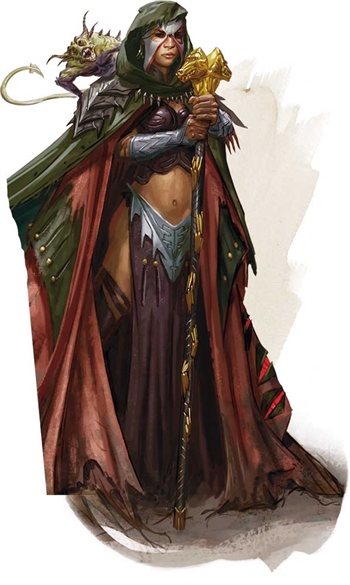
Shield of Raven Feathers
Prerequisites: Undying patron
You gain advantage on Death Saving throws.
Shield of Hollow Minds
Prerequisites: 7th-level, Great Old One patron
You can cast Shield as a 1st-level spell at
will, without using any components or expending
a spell slot, although it lasts for the single
triggering attack rather than until the start of
your next turn when cast this way. You cannot
use this ability while maintaining
concentration on a spell of 1st-level or higher.
Shroud of Shadows
You can cast Pass Without Trace without
using a spell slot. Once you do so, you can't
cast it in this way again until you finish
a long rest.
Sleep with the Fishes
Prerequisites: 9th-level,
Fathomless patron"
You have a 10-foot-radius
oceanic aura that you can
manifest or dissipate as a bonus
action. The region within the aura
is considered to be entirely underwater,
and all creatures within must swim and hold their breath as though in the ocean, though the appearance of the region does not change.
At 18th level, the radius of the aura increases to 30 feet.
Slumbering Respite
Prerequisites: 7th-level
You can cast Sleep at will without expending a spell slot; it is added to the list of spells you know but does not count against the number you know. When casting Sleep using a warlock spell slot, you may add an additional 1d12 for each slot level above 1st.
Soul Sense
Prerequisites: Celestial or Undying patron
As an action, you can open your awareness to detect the life-force of creatures nearby. Until the end of your next turn, you know the location of any creature that is not a fiend or undead within 60 feet of you that is not behind total cover. You know the type of any being whose presence you sense, but not its identity (the human logger Magnus Burnsides, for instance). Within the same radius, you also detect the presence of any place or object that has been consecrated or desecrated, as with the Hallow spell.
You can use this feature a number of times equal to your Charisma modifier (minimum 1). When you finish a long rest, you regain all expended uses.
Spawn of the Lotus Eaters
Prerequisites: 7th-level, Pact of the Chain feature
If a creature your familiar can see within 30 feet of it hits a creature with an attack roll, you can use both your reaction and your familiar’s to reduce the roll by 1d8. If the reduction causes the target to miss, both you and the attacker take Psychic damage equal to half your warlock level (rounded down). You can use this ability a number of times equal to your Charisma modifier (minimum 1), regaining all expended uses when you finish a long rest.
Speech of Sand
Prerequisites: Genie patron
You know Primordial fluently, and can write and read its four daughter languages: Aquan, Auran, Ignan, and Terran.
Spellblade
Prerequisites: 7th-level, Pact of the Blade feature
When you use your action to take the Attack action using your Pact Weapon, you can use a bonus action cast a Warlock cantrip.
Spell-loaded Cylinder
Prerequisites: Ghost in the Machine patron, Whispered Arcanum invocation
You can change a single Whispered Arcanum spell you can cast to another each time you complete a short or long rest.
Spire of Sigil
Prerequisites: Pact of the Blade feature
You can create a specialised weapon using your Pact of the Blade feature, sculpted to thematically resemble your patron, and can morph Pact Weapons you've attuned to in the same manner. The weapon gains one of the following properties in addition to its normal traits:
If Finesse: Bleed, Light, or Versatile (one die-step up)
Otherwise: Reach (+5ft.), Serrated, or Finesse
Spontaneous Animation
Prerequisites: Genie or Ghost in the Machine patron, Pact of the Chain feature
Your familiar gains the Construct creature type and the following changes are applied to it, no matter its form:
- It has a number of hit points equal to 4 times your Warlock level, unless already greater
- It cannot be healed, except by expending a spell slot while casting Mending on it; this restores a numbre of hit points equal to 1d6 + the caster's spellcasting ability modifier, plus a number of additional d6s equal to the slot level.
- Its movement speed is 30 feet, unless already greater
- Its AC equals your warlock spell save DC
- It is proficient in every Skill and Tool that you are and it uses your Proficiency bonus for checks it makes with them.
- It can use its action to transmute its appearance indistinguishably into any Small or smaller non-magical object, or back again.
If your Otherworldly Patron is the Genie, your Genie's Vessel animates to become your familiar (otherwise following the rules as normal for a familiar).
Starving Armour
Prerequisites: 15th-level, Eldritch Armourer invocation
As a reaction to being targeted by a spell attack or a spell that requires a Dexterity saving throw, you can attempt to absorb the spell's energy. If the spell is of 5th level or lower, the spell fails, has no effect, and you regain an expended Pact Magic spell slot. If the spell is of 6th level or higher, make a Charisma ability check. The DC equals 10 + the spell's level. On a success, the spell slot or daily use is expended, the spell has no effect, and you regain an expended Pact Magic spell slot.
Once you successfully use this invocation, you can't do so again until you finish a long rest.
Steelbound Mind
Prerequisites: 7th-level, Great Old One patron
The temporary hit points gained from your Cosmic Ward feature are equal to your Warlock level instead of the spell level + your Charisma modifier.
Steelwalker
Prerequisites: 12th-level, Ghost in the Machine patron
The machine spirit forges a magical link between a construct, or other magical or technological object, of your Size or larger you touch and another such target, at any distance, on the same plane of existence. You must have seen or touched the destination object at least once before. Neither target can be a creation of magical force.
As an action, you can step into the target and exit from the destination object by using 5 feet of movement, appearing in the nearest unoccupied space of your choice. You can choose to exit from the same target you touched.
Each time you take this action after the first following a short or long rest, you take 3d10 force damage.
Stitchskin Bindings
Prerequisites: 15th-level
When you finish a short rest, you can cast Regenerate
(self only) once requiring no material components by
expending Pact Magic spell slot. When you have used
this ability, you cannot use it again until you have
finished a long rest.
In addition, severing a body part does
not render it lifeless; it gains the
statistics of a Crawling Claw
(MM p.44) and remains mobile under
your telepathic control for 4 hours,
after which point it dies. Being
decapitated does not kill you during
this period, as long as your brain
is intact.
Stone Step
Prerequisites: 9th-level,
Genie (Dao) patron
You can cast Meld into Stone at will,
without expending a spell slot or
requiring material components.
Summons of Sora Kell
Prerequisites: 15th-level, Archfey
or Fiend patron
You can cast any spell with the word
"Conjure" or "Summon" in its title as a
6th-level Warlock spell without
expending a spell slot. The chosen spell
must normally take an action to cast
and you must fulfil all other
requirements of that spell, such
as components.
Once you use this feature, you
cannot use it again until you finish
a long rest.
Superior Pact Weapon
Prerequisites: Pact of the Blade
feature
You can use any weapon you summon with your Pact of the Blade feature as a spellcasting focus for your warlock spells.
Moreover, your Pact Weapon can be a shortbow, longbow, greatbow, light crossbow, or heavy crossbow.
In addition, the weapon gains a +1 bonus to its attack and damage rolls, unless it is a magic weapon that already has a bonus to those rolls.
At 9th level, the attack and damage bonus increases to +2
At 15th level, the attack and damage bonus increases to +3

Sword of Shadows
Prerequisites: Hexblade Patron, Pact of the Tome feature
Your Book of Shadows sheds one of its pages, forming a weapon of purest darkness. You learn the shadow blade spell and it doesn't count against your number of spells known. Furthermore, you can cast it at 2nd-level as an action at will without requiring any components, expending a spell slot, or needing concentration to maintain.
Synchronise with Mechanus
Prerequisites: 15th-level, Ghost in the Machine patron
When you roll initiative, you can use your reaction to bind your Machine Spirit to the plane of Mechanus, entering a cold, calculating, ordered mental state for the duration of that initiative. For the duration, you gain the following effects:
- You are immune to the charmed, frightened, exhaustion, and stunned conditions.
- You can cast Warlock spells of 1st-level or higher with a casting time of 1 action as a bonus action instead.
- You gain advantage on all Intelligence and Wisdom saving throws.
This form ends early if you are incapacitated or reduced to 0 hit points. When this effect ends, you gain one level of exhaustion and cannot use this feature again until you finish a long rest.
Technoform
Prerequisites: Ghost in the Machine patron, Pact of the Blade feature
A sheen of magic animates nearby metals in the ground, air, and in your possession, forming a protective techno-arcane coating. You gain a +1 bonus to your AC
while wielding your pact weapon.
In addition, a minute eldritch cannon
protrudes from each of your wrists; you
can cast Warlock cantrips through these
cannons even while both your hands are full.
Telecommunicana
Prerequisites: Ghost in the Machine
patron, Pact of the Talisman
feature
You can use this invocation
to communicate as if by the
Message cantrip to the creature
wearing your talisman, across
any distance and without
requiring a line of sight,
provided you are on the same
plane of existence. Spells and
other magical effects which
only require being heard to
take effect, such as the
Command spell, can target the
wearer using this invocation
without requiring sight and from
any range.

Tesseract of the Machine-Spirit
Prerequisites: Ghost in the Machine patron, Pact of the Tome feature
Over the course of a 10-minute ritual, you can condense your Book of Shadows into a fist-sized crystal known as a Tesseract in your empty hand. You can use an action to summon it to your hand at any point thereafter. You can choose the form that this crystal takes each time you create it. Your Spirit-stone disappears if it is more than 5 feet away from you for 1 minute or more. It also disappears if you use this feature again, if you dismiss the gem (no action required), or if you die.
You can project a 5-foot cube illusion of your choice displaying the contents of the gem in an unoccupied space you can see within 10 feet of the gem (no action required). It lasts indefinitely, until you choose to end it as a free action or until the gem is dispelled.
If the Tesseract is destroyed, you can create a new one as you would a normal Book of Shadows, but requiring quartz or other crystals of at least 1 sp in total.
Thirsting Blade
Prerequisites: 5th-level, Pact of the Blade feature
You can attack with your pact weapon twice, instead of once, whenever you take the Attack action on your turn.
Tide of Knowledge
Prerequisites: 7th-level, Seeker patron
As a bonus action, you create a temporary gateway to the mind of your patron, forcing boundless information into the yawning minds of all creatures other than yourself within 10 feet of you. This aura is active, whether you are conscious or not, for 5 rounds. If a creature enters your aura or starts its turn there, it must make an Intelligence saving throw, taking psychic damage equal to your Warlock level, on a successful save, or half as much on a failed save.
At 18th level, the range of this aura increases to 30 feet.
Once you use this ability, you cannot use it again until you complete a long rest.
Tongue of Nessus
Prerequisites: Fiend patron
Your tongue develops a bisection at the end, and your mouth has a natural temperature slightly above that of your normal body temperature. You are immune to the effects of Zone of Truth and other effects that force you not to lie, and other creatures have disadvantage on Wisdom (Insight) checks against you.
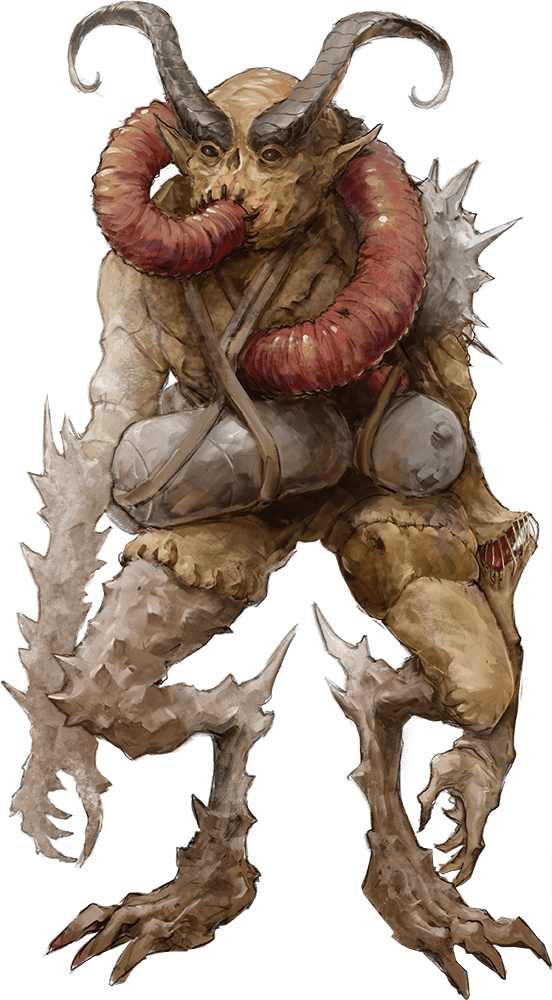

Touch of Nightshade
Prerequisites: 5th-level
When you cast a spell with
a range of touch, or for which
you make a Melee spell
or weapon attack as a part of
the spell, you can choose
for it to deal additional necrotic
damage equal to half your
Warlock level (rounded
down) on a hit.
Treasures of Legend
Prerequisites: 15th-level,
Genie or Ghost in the
Machine patron
Your affinity with magical items
deepens. You ignore all class, species, and level requirements on the use of magic items, and you can attune to one additional magical item.
Turn the Healing Hand
Prerequisites: 15th-level, Celestial or Undying patron
You have mastery of the energies that keep creatures alive. Whenever a spell is cast within 60 feet of you that recovers hit points to a single target, you can use your reaction to change the target of the spell to a different creature within 60 feet of you. You can use this ability a number of times equal to your Charisma modifier, regaining all expended uses when you finish a long rest.
Twinned Blades
Prerequisites: Pact of the Blade feature
You gain access to a second pact weapon and can summon both whenever you would summon one. When you engage in two-weapon fighting with both your pact weapons, you can add your Charisma modifier to the damage of the second attack. Neither of your pact weapons may have the Unwieldy or Two-Handed property
Twisted Fingers
Prerequisites: Great Old One patron
You gain two additional Warlock cantrips from the Wizard spell list. They do not count against the number of cantrips you know.
Unbound Wanderings
Prerequisites: 7th-level, Seeker patron
You have such scorn of gravity that you can walk on any surface, including walls and ceilings, as though it was the ground. Movement this way is considered walking, not climbing.
Unearthly Sabres
Prerequisites: Hexblade patron
When you use an action to cast a cantrip or spell which conjures blades, such as sword burst, or which requires you to make an attack as part of the spell, such as Green-flame blade, you can use a bonus action on that turn to Dodge or Disengage.
Unending Servitude
You age 1 year for every 10 years that pass for you and you cannot be magically aged. In addition, you suffer none of the effects of aging and you cannot die from old age, but you still cosmetically appear to age, wither, and mummify. This effect compounds upon other life-extending traits, like that of a druid’s Timeless Body feature.
Unnatural Vigour
You gain a bonus action that you can use on each of your turns to consume Hit Dice to gain temporary hit points equal to the number you roll on your hit dice, plus your Charisma modifier. You can spend a number of Hit Dice at once equal to ⅕ your Warlock level, rounded down.
In addition, when you are forced to make a death saving throw your patron automatically stabilises you. Once you use this ability, you cannot use it again until you finish a short or long rest.
Vax'ildan's Finesse
Prerequisites: Pact of the Blade feature
Summoning your pact weapon to your hand does not take an action; it can be summoned instantaneously (no action required), appearing in a burst of black feathers.
Vestment of the Fey Courts
Prerequisites: Archfey patron
You can cast Armour of Agathys once using a Pact Magic spell slot, with a duration of Until Dispelled. It appears as a shirt of immense beauty and unsurpassed crafting, made of natural elements such as flowers, briars, or fungi. When cast this way, creatures take magical piercing damage by attacking you, rather than cold damage.
Additionally, while the spell is in effect, you have advantage on all Charisma-based checks against creatures that can see you. Creatures that can see you have disadvantage on attack rolls against you on turns in which you did not attack or force a creature to make a saving throw, unless they are immune to the Charmed condition.
You regain the use of this feature when you finish a short or long rest.
Violet Hysterium
Prerequisites: 15th-level, Archfey Patron
The duration of your Dark Delirium feature increases to 1 hour, and creatures charmed or frightened by you as a result of the feature are also under the effects of the zone of truth spell.
Visceral Shield
Prerequisites: Pact of the Blade feature
When you are hit by an attack, you can expend and roll a Hit Die as a reaction and increase your AC against that single attack by the number rolled.
Visions of Distant Realms
Prerequisites: 15th-level
You can cast Arcane Eye at will, without expending a spell slot.
Voice of the Chain Master
Prerequisites: Pact of the Chain feature
You can communicate telepathically with your familiar and perceive through your familiar's senses as long as you are on the same plane of existence. Additionally, while perceiving through your familiar's senses, you can also speak through your familiar in your own voice, even if your familiar is normally incapable of speech.
Voidsense
Prerequisites: 7th-level
You sharpen your hearing and sight, gaining blindsense out to 30 feet. This does not function within an area of antimagic.
Wakeful Dreams
Prerequisites: 9th-level, Archfey Patron
When you cast a spell with a spell slot that fails due to the target being immune to the effect, you may use your reaction to not expend that spell slot.
You can alternatively use your reaction to skillfully reshape the memories of listeners in your immediate area, so that each creature of your choice within 5 feet of you forgets everything you said within the last 6 seconds.
Once you use either of these abilities, you can't use this feature again until you finish a short or long rest.
Wandering Eye
Prerequisites: 7th-level, Seeker patron
When you cast Arcane Eye, the eye can pass through solid objects, but not creations of magical force, as though they weren’t there. The eye cannot end its turn inside a creature or object, however.
Warmth of Serenrae
Prerequisites: 12th-level, Celestial patron
You learn the dancing lights cantrip. It is a Warlock cantrip for you but does not count against the number of cantrips you know. While concentrating on dancing lights, you can end the cantrip early as an action to cast either mass cure wounds or destructive wave using a Warlock spell slot, centred on a single point at which your dancing lights are active.
Once you cast a spell this way, you cannot cast spells this way again until you finish a short or long rest.
Warp Strider
Prerequisites: Pact of the Tome feature
You can bring a number of additional willing creatures within range with you when you teleport or travel between planes equal to 50% of the normal number (rounded up). Temporary planar shunts, such as a Blink spell, are not affected by this.
Weatherworker
Prerequisites: Fathomless or Genie (djinn) patron, Pact of the Tome feature
You can cast Control Weather as a 1 hour ritual. When cast this way, it is considered a cantrip for the purpose of being dispelled or countered.

Weave Crawler
Spells you cast using a Pact Magic spell slot which have a maximum duration of 1 minute or longer have their maximum duration doubled.
Whispered Arcanum
Your patron bestows arcane secrets gleaned from
beyond the veil. Choose one spell from the Bard,
Warlock, Sorcerer, or Wizard spell list. A spell you
choose must be of a level you can cast using Pact
Magic spell slots; you cannot learn a cantrip,
a spell which restores hit points, or the
Lesser or Greater Restoration spells
using this feature.
The chosen spell counts as a warlock spell
for you and does not count against the number of
warlock spells you know. You can cast the chosen
spell once using a Pact Magic spell slot. You can't
cast it as a Whispered Arcanum spell again until
you finish a long rest.
If the chosen spell is from the Warlock spell
list, you can instead cast the chosen spell once
at its lowest level without using a spell slot and
without consuming any material components
usually destroyed by the spell.
You can take this invocation more than once,
choosing a spell you have not already gained as a
Whispered Arcanum spell each time.
Whisperheart Idol
Prerequisites: 9th-level, Pact of the Talisman feature
Your talisman becomes gently warm, and you swear it almost seems to rhythmically pulse… You can use an action to gain information about the bearer’s current location, or a creature or object that they can see. When you call on the Heart, it gives you a short sentence of information regarding your chosen target, whispering into the depths of your mind. The DM chooses the nature of the Heart’s whispers, which may be vague, referencing the bearer’s memories, or give exact and accurate information about an individual.
You can use this feature a number of times equal to your Charisma modifier (minimum 1), regaining any expended uses when you finish a short or long rest.
White Hart of Oberon
Prerequisites: 9th-level, Archfey patron
You can cast the find steed spell once using a Warlock spell slot. Casting find steed in this way always results in the steed using the statistics of an Elk (MM. 322) instead of a riding horse, and takes its appearance too. The elk can walk through the air when it takes the Dash action on its turn, stepping on empty air as if it were solid; the steed can move 5 feet vertically up or down for every 10 feet it moves laterally. If it ends its turn in the air, and has not Dashed and moved more than 60 feet that round, it begins to fall to the ground at a rate of 60 feet per turn.
You regain the use of this ability when you finish a short or long rest.
Whispers of the Grave
Prerequisites: 9th-level
You can cast Speak with Dead at will, without expending a spell slot.
Widow’s Kiss
Prerequisites: 9th-level
If a creature fails a saving throw against your Warlock spell save DC which causes them to become poisoned, and they fail by 5 or more, they are also Paralysed while poisoned in that way.
Wild Hatred
Prerequisites: Pact of the Chain feature
As a bonus action, you may alter the form of your Chain familiar, turning it into a more powerful beast. It takes the form of a bestial spirit of your choice (as the Summon Beast spell), following the rules defined in the spell. If you or your familiar are reduced to 0 hit points or this effect dispelled, the familiar reverts to its previous form, taking any remaining damage carried over from its previous form. For this purpose, the familiar is considered to be under the effect of a Summon Beast spell of level equal to 1 + ⅓ your Warlock level (rounded down).
Once you use this feature, you cannot use it again until you finish a long rest.
Will of Carasphyx
Prerequisites: Pact of the Tome feature
When you cast a warlock spell of 1st-level or higher that requires an attack roll or saving throw, you can add your Intelligence modifier (minimum 1) to the spell attack bonus or saving throw DC before the die is rolled, so long as the creature making the saving throw is within 60 feet of you and can see or hear you.
If the spell still misses, or the target succeeds its saving throw, you take psychic damage equal to your warlock level, overcoming resistance and immunity to psychic damage.
You can use this feature a number of times equal to your Charisma modifier (minimum 1), and you regain all expended uses when you finish a long rest.
Windows of the Soul
Prerequisites: 5th-level
By spending 1 minute focusing, you may place a limb on an object or surface and create a single eye on the other side, a Window Eye, which lasts for 1 minute, or until it drops to 0 hit points or you move away from the surface. You may use your action to lose all of your other senses and see through this eye. This eye shares all your abilities to see, but can only see in a 60-foot cone. The eye can turn and rotate but cannot be moved otherwise.
Certain materials are more difficult to peer through than others, the Eye is blocked by 1 foot of stone, 1 inch of common metal, a thin sheet of lead, or 3 feet of wood or dirt. Your Window Eye has 1 hit points and temporary hit points equal to your Warlock level, has an AC equal to yours, and is considered hidden with a Stealth check equal to 10+ your Proficiency bonus + your Charisma modifier.
Winged Within
Prerequisites: 12th-level, Genie (Djinn) patron
You can cast Fly (self only) at will, without expending a spell slot or material components.
Wispy Deceptions
Prerequisites: Archfey patron, Pact of the Chain feature
When you finish a long rest, your familiar produces a number of illusory clones equal to your Charisma modifier (minimum 1). They have 1 hit point, movement speeds the same as your familiar, and an AC equal to your Spell save DC. The illusions persist indefinitely, until destroyed, or until you use this feature again. The duplicates cannot take actions, and cannot move or be forced further than 30 feet away from your familiar, but appear to move however you wish.
As a bonus action on its turn, or as a reaction to being hit with an attack or forced to make a saving throw, your familiar can swap places with any of its duplicates. If the familiar avoids taking damage by doing so, the illusory replacement is destroyed.
Illusory duplicates are immune to damage and cannot be targeted while within your familiar's space.
Witch of Warcraft
Prerequisites: Pact of the Tome feature
While you are concentrating on a spell, your AC equals your spell save DC. You also benefit from this effect on a round during which you cast a spell of 1st-level or higher.
Witch Sight
Prerequisites: 15th-level
You can see the true form of any shapechanger or creature concealed by illusion or transmutation magic while the creature is within 60 feet of you and within line of sight.
Witchwalk
Prerequisites: 17th-level
You can cast Freedom of Movement at will, without expending a spell slot or material components
Withered Left Hand
Prerequisites: 9th-level, Undying patron
You can cast Inflict Wounds at 1st-level at will, without expending a spell slot or material components, provided
your left hand is empty.
Starting at 12th-level, whenever you hit a creature
with an unarmed strike, you can deal damage as
if you hit them with Inflict Wounds instead of
the damage normal for an unarmed strike.
Withering Aura
Prerequisites: 7th-level, Undying patron
You can activate or deactivate this aura as a
bonus action. While active, all creatures that
start their turn within 10 feet of you, or move
into that radius on their turn, take necrotic
damage equal to your Charisma modifier
(minimum 1).
At 18th level, the radius increases to 30 feet.
Wondrous Vessel
Prerequisites: Genie patron
While you are touching your genie vessel, you can use it in the following additional ways:
Wisher's Wisdom. Your Genie's vessel holds the echo of all those who bound themselves to your patron before you. After finishing a long rest with your Genie's vessel in your possession, you are granted one proficiency of your desire. Choose from any one weapon, shield, set of tools, language, or vehicle proficiency. You retain this proficiency until you complete your next long rest, at which time you may use this feature again.
Brazen Luck. While touching your Genie's vessel, you may add your Charisma modifier to any Dexterity or Wisdom saving throws (no action required). Alternatively, you may add your proficiency bonus to the number of hit points regained when you are healed magically or when expending hit dice as part of a short rest. You can use this feature a number of times equal to your Charisma modifier, and you regain all expended uses when you finish a long rest.
Woven Chain
Prerequisites: Pact of the Chain feature
You can cast any Abjuration and Transmutation Warlock spells that have a range of up to 60 feet as though you were in your familiar's space.
You can choose for any spells you cast which have a range of Self to instead affect your companion while you are within the range in which you can telepathically command them.
Ygorl's Alteration
Prerequisites: 7th-level
Choose one of the following damage types: acid, cold, fire, lightning, necrotic, poison, or thunder. You gain resistance to that damage type. In addition, you may add your Charisma modifier to damage you deal with Warlock spells of that damage type. You can change the chosen damage type at the end of a short or long rest.
Zealous Sacrifice
Prerequisites: 5th-level, Pact of the Chain feature
As an action, you can cause your familiar to explode with eldritch power. All creatures within 30 feet of your familiar must make a Dexterity saving throw, taking a number of d6s of force damage on a failed save equal to your Warlock level, or half as much damage on a successful save. Your
familiar is instantly slain by taking this action.
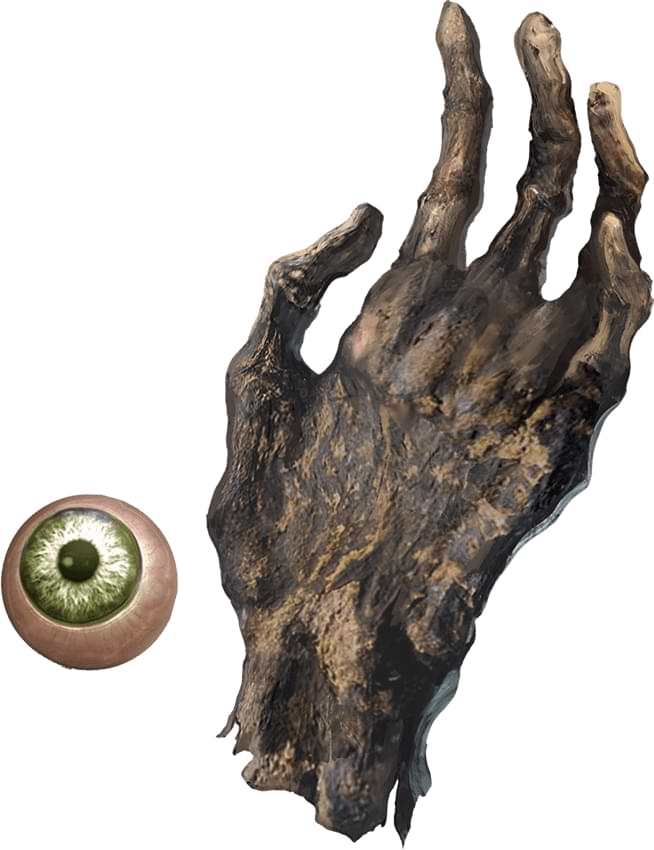

The Wizard
Wizards are supreme magic-users, defined and united as a class by the spells they cast. Drawing on the subtle weave of magic that permeates the cosmos, wizards cast spells of explosive fire, arcing lightning, subtle deception, brute-force mind control, and much more.
You must have an Intelligence score of 13 or higher in order to multiclass in or out of this class.
Class Features
As a wizard, you gain the following class features.
Hit Points
- Hit Dice: 1d6 per wizard level
- Hit Points at 1st Level: 6 + your Constitution modifier
- Hit Points at Higher Levels: 1d6 (or 4) + your Constitution modifier per wizard level after 1st
Proficiencies
- Armour: None
- Weapons: Daggers, darts, slings, quarterstaffs, light crossbows
- Tools: One Artisan's tool of your choice
- Saving Throws: Intelligence, Wisdom
- Skills: Choose two from Arcana, History, Insight, Investigation, Medicine, and Religion
Equipment
You start with the following equipment, in addition to the equipment granted by your background:
- (a) a quarterstaff or (b) a dagger
- (a) a component pouch or (b) an arcane focus
- (a) a scholar's pack or (b) an explorer's pack
- A spellbook
Spellcasting
As a student of arcane magic, you have a spellbook containing spells that show the first glimmerings of your true power.
Cantrips
At 1st level, you know three cantrips of your choice from the wizard spell list. You learn additional wizard cantrips of your choice at higher levels, as shown in the Cantrips Known column of the Wizard table.
Spellbook
At 1st level, you have a spellbook containing six 1st-level wizard spells of your choice. The spells that you add to your spellbook as you gain levels reflect the arcane research you conduct on your own, as well as intellectual breakthroughs you have had about the nature of the multiverse. You might find other spells during your adventures. You could discover a spell recorded on a scroll in an evil wizard's chest, for example, or in a dusty tome in an ancient library.
Copying a Spell into the Book.
When you find a wizard spell of 1st level or higher, you can add it to your spellbook if it is of a level for which you have spell slots and if you can spare the time to decipher and copy it. Copying a spell into your spellbook involves reproducing the basic form of the spell, then deciphering the unique system of notation used by the wizard who wrote it. You must practise the spell until you understand the sounds or gestures required, then transcribe it into your spellbook using your own notation.
For each level of the spell, the process takes 2 hours and costs 50 gp. The cost represents material components you expend as you experiment with the spell to master it, as well as the fine inks you need to record it. Once you have spent this time and money, you can prepare the spell just like your other spells.
Replacing the Book.
You can copy a spell from your own spellbook into another book-for example, if you want to make a backup copy of your spellbook. This is just like copying a new spell into your spellbook, but faster and easier, since you understand your own notation and already know how to cast the spell. You need to spend only 1 hour and 10 gp for each level of the copied spell. If you lose your spellbook, you can use the same procedure to transcribe the spells that you have prepared into a new spellbook. Filling out the remainder of your spellbook requires you to find new spells to do so, as normal. For this reason, many wizards keep backup spellbooks in a safe place.
Preparing and Casting Spells.
The Wizard table shows how many spell slots you have to cast your spells of 1st level and higher. To cast one of these spells, you must expend a slot of the spell's level or higher. You regain all expended spell slots when you finish a long rest.
You prepare the list of wizard spells that are available for you to cast. To do so, choose a number of wizard spells from your spellbook equal to your Intelligence modifier + your wizard level (minimum of one spell). The spells must be of a level for which you have spell slots.
You can change your list of prepared spells when you finish a long rest. Preparing a new list of wizard spells requires time spent studying your spellbook and memorising the incantations and gestures you must make to cast the spell: at least 1 minute per spell level for each spell on your list.
The Book's Appearance.
Your spellbook is a unique compilation of spells, with its own decorative flourishes and margin notes. It might be a plain, functional leather volume that you received as a gift from your master, a finely bound gilt-edged tome you found in an ancient library or even a loose collection of notes scrounged together after you lost your previous spellbook in a mishap.
The Wizard
| Level | Proficiency Bonus | Features | Cantrips Known | 1st | 2nd | 3rd | 4th | 5th | 6th | 7th | 8th | 9th |
|---|---|---|---|---|---|---|---|---|---|---|---|---|
| 1st | +2 | Spellcasting, Arcane Recovery | 3 | 2 | - | - | - | - | - | - | - | - |
| 2nd | +2 | Arcane Order | 3 | 3 | - | - | - | - | - | - | - | - |
| 3rd | +2 | Cantrip Formulae | 3 | 4 | 2 | - | - | - | - | - | - | - |
| 4th | +2 | Ability Score Improvement | 4 | 4 | 3 | - | - | - | - | - | - | - |
| 5th | +3 | - | 4 | 4 | 3 | 2 | - | - | - | - | - | - |
| 6th | +3 | Arcane Order feature | 4 | 4 | 3 | 3 | - | - | - | - | - | - |
| 7th | +3 | - | 4 | 4 | 3 | 3 | 1 | - | - | - | - | - |
| 8th | +3 | Ability Score Improvement | 4 | 4 | 3 | 3 | 2 | - | - | - | - | - |
| 9th | +4 | - | 4 | 4 | 3 | 3 | 2 | 1 | - | - | - | - |
| 10th | +4 | Arcane Order feature | 5 | 4 | 3 | 3 | 2 | 2 | - | - | - | - |
| 11th | +4 | - | 5 | 4 | 3 | 3 | 2 | 2 | 1 | - | - | - |
| 12th | +4 | Ability Score Improvement | 5 | 4 | 3 | 3 | 2 | 2 | 1 | - | - | - |
| 13th | +5 | - | 5 | 4 | 3 | 3 | 2 | 2 | 1 | 1 | - | - |
| 14th | +5 | Arcane Order feature | 5 | 4 | 3 | 3 | 2 | 2 | 1 | 1 | - | - |
| 15th | +5 | - | 5 | 4 | 3 | 3 | 2 | 2 | 1 | 1 | 1 | - |
| 16th | +5 | Ability Score Improvement | 5 | 4 | 3 | 3 | 2 | 2 | 1 | 1 | 1 | - |
| 17th | +6 | - | 5 | 4 | 3 | 3 | 3 | 2 | 1 | 1 | 1 | 1 |
| 18th | +6 | Spell Mastery, Endless Pages | 5 | 4 | 3 | 3 | 3 | 3 | 1 | 1 | 1 | 1 |
| 19th | +6 | Ability Score Improvement | 5 | 4 | 3 | 3 | 3 | 3 | 2 | 1 | 1 | 1 |
| 20th | +6 | Signature Spells | 5 | 4 | 3 | 3 | 3 | 3 | 2 | 2 | 1 | 1 |

Spellcasting Ability.
Intelligence is your spellcasting ability for your wizard spells, since you learn your spells through dedicated study and memorization. You use your Intelligence whenever a spell refers to your spellcasting ability. In addition, you use your Intelligence modifier when setting the saving throw DC for a wizard spell you cast and when making an attack roll with one.
Spell Save DC
Spell attack modifier
Ritual Casting
You can cast a wizard spell as a ritual if that spell has the ritual tag and you have the spell in your spellbook. You don't need to have the spell prepared.
Spellcasting Focus
You can use an arcane focus as a spellcasting focus for your wizard spells.
Learning Spells of 1st Level and Higher.
Each time you gain a wizard level, you can add two wizard spells of your choice to your spellbook. Each of these spells must be of a level for which you have spell slots, as shown on the Wizard table. On your adventures, you might find other spells that you can add to your spellbook.
Arcane Recovery
You have learned to regain some of your magical energy by studying your spellbook. Once per day when you finish a short rest, you can choose expended spell slots to recover. The spell slots can have a combined level that is equal to or less than half your wizard level (rounded up), and none of the slots can be 6th level or higher.
Arcane Order
When you reach 2nd level, you choose an arcane order, shaping your practice of magic through one of the following schools. Your choice grants you features at 2nd level and again at 6th, 10th, and 14th level.
Cantrip Formulae
At 3rd level, you have scribed a set of arcane formulas in your spellbook that you can use to formulate a cantrip in your mind. Whenever you finish a long rest and consult those formulas in your spellbook, you can replace one wizard cantrip you know with another cantrip from the wizard spell list.
Ability Score Improvement
When you reach 4th level, and again at 8th, 12th, 16th, and 19th level, you can increase one ability score of your choice by 2, or you can increase two ability scores of your choice by 1. As normal, you can't increase an ability score above 20 using this feature. Alternatively, you may take a feat in place of the ASI, provided you fulfil its prerequisites. Instead of increasing ability scores as detailed above, you may increase one ability score of your choice by 1 and add two additional spells to your spellbook of a level for which you have spell slots.
Spell Mastery
At 18th level, you have achieved such mastery over certain spells that you can cast them at will. You can cast every 1st-level and 2nd-level wizard spell that is in your spellbook at their lowest level without expending a spell slot when you have them prepared. If you want to cast such a spell at a higher level, you must expend a spell slot as normal.
For the purpose of your class features and traits, such as a Bladesinger's Extra Attack, these spells are considered Wizard cantrips for you.
Endless Pages
Also at 18th level, you have become so familiar with your countless spells that the knowlege of their incantations requires no study. You no longer need to prepare spells, you know every spell in your spellbook as though you had prepared it for the day.

Signature Spells
When you reach 20th level, you gain mastery over two powerful spells and can cast them with little effort. Choose two wizard spells of 3rd-level or lower in your spellbook as your signature spells. These spells must require Concentration. You can cast each of them once at 3rd level without expending a spell slot.
When you do so, you don't need to concentrate on the spells; they last for their maximum duration, even if you fall unconscious or die. Furthermore, these effects cannot be dispelled once cast, though you can use an action on your turn to end them.
If you want to cast either spell at a higher level, you must expend a spell slot as normal.
Arcane Order
Abjurer
The School of Abjuration emphasises magic that blocks, banishes, or protects. Detractors of this school say that its tradition is about denial, negation rather than positive assertion. You understand, however, that ending harmful effects, protecting the weak, and banishing evil influences is anything but a philosophical void. It is a proud and respected vocation.
Abjuration Savant
Beginning when you select this school at 2nd level, the gold and time you must spend to copy an abjuration spell into your spellbook is halved. You can copy abjuration spells from scrolls or tomes you find into your spellbook to add them to the list of wizard spells you know and can prepare even if they are not normally a wizard spell.
Arcane Ward
Starting at 2nd level, you can weave magic around yourself for protection. When you cast an abjuration spell of 1st level or higher, you can simultaneously use a strand of the spell's magic to create a magical ward on yourself that lasts until you finish a long rest. The ward has hit points equal to twice your wizard level + your Intelligence modifier. Whenever you take damage, the ward takes the damage instead. If this damage reduces the ward to 0 hit points, you take any remaining damage.
While the ward has 0 hit points, it can't absorb damage, but its magic remains. Whenever you cast an abjuration spell of 1st level or higher, the ward regains a number of hit points equal to twice the level of the spell.
Once you create the ward, you can't create it again until you finish a long rest.
Projected Ward
Starting at 6th level, when a creature that you can see within 30 feet of you takes damage, you can use your reaction to cause your Arcane Ward to absorb that damage. If this damage reduces the ward to 0 hit points, the warded creature takes any remaining damage.
Improved Abjuration
Beginning at 10th level, when you cast an abjuration spell that requires you to make an ability check as a part of casting that spell (as in Counterspell and Dispel Magic), you add your Proficiency bonus to that ability check.
Spell Resistance
Starting at 14th level, you have advantage on saving throws against spells and other magical effects, and on Concentration checks triggered by damage you take from spells. Furthermore, you have resistance against the damage of spells.

Archivist
Magic of the book - that's what
many folk call wizardry. The
name is apt, given how much
time wizards spend poring
over tomes and penning
theories about the nature
of magic.
While all wizards value
spellbooks, a wizard in the
Order of Scribes magically
awakens their book, turning
it into a trusted companion.
All wizards study books, but an achivist wizard talks to theirs!
Wizardly Quill
At 2nd level, as a bonus action, you can magically create a Tiny quill in your free hand. The magic quill has the following properties:
- The quill doesn’t require ink. When you write with it, it produces ink in a colour of your choice on the writing surface.
- The quill can write as if you has cast Illusory Script, even if you do not know the spell or have it prepared
- The time you must spend to copy a spell into your spell book equals 2 minutes per spell level if you use the quill for the transcription.
- You can erase anything you write with the quill if you wave the feather over the text as a bonus action, provided the text is within 5 feet of you.
- The quill disappears if you create another one or if you die.
Awakened Spellbook
Also at 2nd level, using specially prepared inks and ancient incantations passed down by your wizardly order, you have awakened an arcane sentience within your spellbook. While the book is within 120 feet of you, you can communicate with it telepathically.
You can temporarily dismiss your spellbook into a pocket dimension at will (no action required) where it awaits your summons; it also disappears this way if it ever moves more than 300 feet from you. As an action while it is temporarily dismissed, you can cause the book to reappear in an unoccupied space within 30 feet of you. Your spellbook uses the statistics below.
While the book is hovering within 5 feet of you, or you are holding it , it grants you the following benefits:
- You can use the book as a spellcasting focus for your wizard spells, and can cast your wizard spells through your spellbook even when both your hands are full
- When you cast a wizard spell with a spell slot, you can temporarily replace its damage type with a type that appears in another spell in your spellbook, which magically alters the spell's formula for this casting only.
If necessary, you can replace the book over the course of a short rest by using your Wizardly Quill to write arcane sigils in a blank book or a magic spellbook to which you're attuned.
At the end of the rest, your spellbook's consciousness is summoned into the new book, which the consciousness transforms into your spellbook, along with all its spells. If the previous book still existed somewhere, all the spells vanish from its pages.
Awakened Spellbook
Tiny construct, Your Alignment
- Armour Class 13 + your Intelligence modifier (mage armour)
- Hit Points 3 times your wizard level, plus your Intelligence modifier
- Hit Dice a number of d4s equal to your wizard level
- Speed 0 ft., fly 10 + (10 x your Intelligence modifier) ft. (hover)
STR DEX CON INT WIS CHA 4 (-3) 17 (+3) 14 (+2) [see below] 11 (+0) 10 (+0)
- Saving Throws Dex +3 plus PB, Cha +0 plus PB
- Skills Two of your choice, plus another which adds your PB twice
- Damage Immunities necrotic, poison
- Condition Immunities blinded, charmed, exhaustion, frightened, paralysed, poisoned
- Senses darkvision 60 ft., telepathy 120 ft. (you only), passive Perception 10
- Languages understands the languages you speak
- Challenge —
- Proficiency Bonus (PB): equals your bonus
Mind Made Manifest. The spellbook has an Intelligence score equal to your own, as it knows everything that you do. Magic which alters your Intelligence does not change the book's. If the spirit of the spellbook is transferred to a tome which grants a magical bonus to spell attack modifiers or save DCs, it also adds that bonus to its Intelligence, Wisdom, and Charisma scores.
Immutable Form. The spellbook is immune to any spell or effect that would alter its form.
Antimagic Vulnerability. If dispel magic is cast on the spellbook or it enters a region of antimagic, it returns to being the non-sentient spellbook it was before you awakened it for 1 minute. You can touch the book and expend a spell slot of 3rd-level or higher to instantly reawaken the book.
Magic Resistance. The spellbook has advantage on saving throws against spells and other magical effects.
Actions
Words of Minor Power. The spellbook casts one cantrip copied into it using your spell attack modifier and save DC.
Manifest Mind
At 6th level, you can conjure new strength to the mind of your Awakened Spellbook. You gain the following benefits:
- Whenever you cast a wizard spell on your turn, you can cast it as if you were in the spellbook's space, instead of your own, using its senses.
- As a bonus action, you can command the spellbook to take an Action; this can be one in its stat block or some other action.
- The spellbook can cast 1st-level spells you have prepared using its Words of Minor Power action by expending your spell slots, if you choose.
- Whenever you cast a wizard spell using the spellbook, it regains hit points equal to the spell level if it has at least 1 hit point.
- If it has died within the last hour, you can use your Wizardly Quill as an action to revive it, provided you are within 5 feet of the book and you expend a spell slot of 1st level or higher. The spellbook returns to life after 1 minute with all its hit points restored.
Master Scrivener
At 10th level, whenever you finish a long rest, you can create one magic scroll by touching your Wizardly Quill to a blank piece of paper or parchment and causing one spell from your Awakened Spellbook to be copied onto the scroll. The spellbook must be within 5 feet of you when you make the scroll.
The chosen spell must be of 1st or 2nd level and must have a casting time of 1 action. Once in the scroll, the spell's power is enhanced, counting as one level higher than normal. You can cast the spell from the scroll by reading it as an action. The scroll is unintelligible to anyone else, and the spell vanishes from the scroll when you cast it or when you finish your next long rest.
You are also adept at crafting spell scrolls, which are described in the treasure chapter of the Dungeon Master's Guide. The gold and time you must spend to make such a scroll are halved if you use your Wizardly Quill.
One with the Word
At 14th level, your connection to your Awakened Spellbook has become so profound that your soul has become entwined with it. The spellbook can cast spells of up to 2nd-level you have prepared using its Words of Minor Power action by expending your spell slots, if you choose.
Moreover, if you take damage while your spellbook is within 5 feet of you, you can use your reaction to have the spellbook take the damage in your stead, using its magic to save yourself. Then roll 3d6. The spellbook temporarily loses spells of your choice that have a combined spell level equal to that roll or higher.
For example, if the roll's total is 9, prepared spells vanish from the book that have a combined level of at least 9. If there aren't enough spells in the book to cover this cost, you take 1d10 force damage per spell level left over.
Until you finish a long rest, you are incapable of casting the lost spells, even if you find them on a scroll or in another spellbook. After you finish the required number of rests, the spells reappear in the spellbook.
Bladesinger
Bladesingers master a tradition of wizardry that incorporates swordplay and dance. Originally created by elves, this tradition has been adopted by non-elf practitioners, who honour and expand on the elven ways. In combat, a bladesinger uses a series of intricate, elegant manoeuvres that fend off harm and allow the bladesinger to channel magic into devastating attacks and a cunning defence. Many who have observed a bladesinger at work remember the display as one of the more beautiful experiences in their life, a glorious dance accompanied by a singing blade.
Training in War and Song
When you adopt this tradition at 2nd level, you gain proficiency with light armour, and you gain proficiency with one type of melee weapon of your choice which lacks the Two-Handed property. You also gain proficiency in the Performance skill if you don’t already have it.
Bladesong
Starting at 2nd level, you can invoke an elven magic called the Bladesong, provided that you aren’t wearing medium or heavy armour or using a shield. It graces you with supernatural speed, agility, and focus. You can use a bonus action to start the Bladesong, which lasts for 1 minute. It ends early if you are incapacitated, if you don medium or heavy armour or a shield, or if you use two hands to make an attack with a weapon. You can also dismiss the Bladesong at any time (no action required). While your Bladesong is active, you gain the following benefits:
- You gain a bonus to your AC equal to your Intelligence modifier (minimum of +1)
- Your walking speed increases by 10 feet.
- You have advantage on Dexterity (Acrobatics) checks.
- You gain a bonus to any Constitution saving throw you make to maintain your concentration on a spell. The bonus equals your Intelligence modifier (minimum of +1).
You can use this feature once, regaining the use of it when you finish a long rest, unless you expend a spell slot of 1st-level or higher to use it again.
Extra Attack
Starting at 6th level, you can attack twice, instead of once, whenever you take the Attack action on your turn. Moreover, you can cast one of your cantrips in place of one of
those attacks.
Musical Secrets
Also at 6th level, you can copy spell scrolls of Bard spells (including in the form of sheet music) into your spellbook
to add them to the list of wizard spells you know and can prepare, even if they are not normally a wizard
spell. The gold and time you must
spend to copy a bard spell into your
spellbook is double the amount for
a wizard spell of that level.
Song of Defence
Beginning at 10th level, you can direct your magic to absorb damage while your Bladesong is active. When you take damage, you can use your reaction to expend one spell slot and reduce that damage to you by an amount equal to five times the spell slot's level.
Song of Victory
Starting at 14th level, you can add your Intelligence modifier (minimum of +1) to the damage of your melee weapon attacks while your Bladesong is active.

Blood Witch
Considered taboo by many societies and magic practitioners, the use of blood magic — also known as Hemocraft — is a rare art that harnesses the latent powers of a creature’s vitality to fuel and amplify the caster’s own capabilities, while manipulating and weakening the bodies of enemies from the inside. Some of the more macabre mages seeking to empower their arcane pursuits turn to Hemocraft as a means of bolstering their spells, giving their own lifeblood to reach new heights of frightening magical prowess.
Blood Channelling
When you choose this arcane order at 2nd level, you are able to use your own depleted life essence to channel your magical abilities. Whenever your current hit points are below your hit point maximum, you can use your own body as an arcane focus.
In addition, when casting a wizard spell that requires a costly material component, you can forego the component by taking 1d10 necrotic damage per 50 gp of the cost of the component (minimum 1d10). This damage can’t be reduced in any way. If this damage reduces you to 0 hit points, the spell fails and the spell slot is not expended.

Thicker than Water
Also at 2nd level, the blood
that flows through your
veins is empowered with
arcane vigour that mends
wounds and helps preserve
your life. Your hit point
maximum increases by 2 and
increases by 2 again whenever
you gain a level in this class.
In addition, whenever a spell
or magical effect causes you to
regain hit points, you regain an additional number of hit points equal to your Intelligence modifier (minimum +1).
Sanguine Amplification
At 6th level, you learn how to weave your life force into your magic, boosting your spells' intensity and stemming the flow of your allies' blood at the cost of your own vitality. You gain the following features:
Arterial Burst. Whenever you roll damage for a spell you’ve cast of 1st level or higher, you can choose to take necrotic damage equal to the spell’s level to reroll a number of the damage dice up to your Intelligence modifier (minimum one). This damage can’t be reduced in any way, and you must use the new rolls.
Blood Rally. As a bonus action, you can target one creature within 30 feet of you that you can see and consume a number of Hit Dice up to your Constitution modifier (minimum 1). The target regains a number of hit points equal to 1d6 + your Intelligence modifier (minimum 1) for each Hit Die consumed. When you use this ability, you take a number of piercing damage equal to 4 times the number of Hit Dice consumed.
Bond of Mutual Suffering
At 10th level, when a creature you can see hits you with an attack, you can use your reaction to bind your vitality to the attacker and force them to share your pain. The attacker takes damage equal to the damage you took.
This feature cannot be used against constructs or undead. You can use this feature once. You must finish a short or long rest before you can use it again. At 12th level, you can expend a spell slot of 4th-level or higher to use this feature again.
Glyph of Haemorrhaging
Starting at 14th level, when you damage a creature with a spell, you can consume one Hit Die and take 1d6 slashing damage (no action required) to curse that creature for 1 minute. While cursed in this way, whenever the creature takes damage from any source, it takes an extra 1d6 necrotic damage. At the end of each of the creature’s turns, it can make a Constitution saving throw against your spell save
DC, ending the curse on a success.
This feature cannot be used against creatures that are undead or constructs.
Spellbook Written in Blood
Also at 14th level, while you are concentrating on a spell you have resistance to bludgeoning, piercing, and slashing damage.
Chronomancer
Focusing on the manipulation of time, those who follow the Chronurgy tradition learn to alter the pace of reality to their liking. Using the ramping of anticipatory dunamis energy, these mages can bend the flow of time as adroitly as a skilled musician plays an instrument, lending themselves and their allies an advantage in the blink of an eye.
Chronomantic Savant
Beginning when you select this school at 2nd level, the gold and time you must spend to copy a spell with the Chronomancy tag into your spellbook is halved.
Chronal Shift
At 2nd level, you can magically exert limited control over the flow of time around a creature. As a reaction, after you or a creature you can see within 30 feet of you makes an attack roll, an ability check, or a saving throw, you can force the creature to reroll. You make this decision after you see whether the roll succeeds or fails. The target must use the result of the second roll.
You can use this ability twice, and you regain any expended use when you finish a long rest. Starting at 5th level, you can expend a spell slot of 2nd-level or higher as a bonus action to regain one expended use of your Chronal Shift.
Temporal Elasticity
Also at 2nd level, your existence and location can become staggered throughout the normal progression of time. You can add your Intelligence modifiers to your initiative rolls. If you are suffering from a condition or effect that allows you to repeat its saving throw at the end of your turn, you can choose to make that saving throw at the start of your turn instead.
Momentary Stasis
When you reach 6th level, as an action, you can magically force a Large or smaller creature you can see within 60 feet of you to make a Constitution saving throw against your spell save DC. Unless the saving throw is a success, the creature is encased in a field of magical energy until the end of your next turn or until the creature takes any damage. While encased in this way, the creature is incapacitated and has a speed of 0.
You can use this feature a number of times equal to your Intelligence modifier (a minimum of once). You regain all expended uses when you finish
a long rest.

Arcane Abeyance
At 10th level, when you cast a spell using a spell slot of 4th level or lower, you can condense the spell's magic into a mote. The spell is frozen in time at the moment of casting and held within a grey bead for 1 hour. This bead is a Tiny object with AC 15 and 1 hit point, and it is immune to poison and psychic damage. When the duration ends, or if the bead is destroyed, it vanishes in a flash of light, and the spell is lost.
A creature holding the bead can use its action to release the spell within, whereupon the bead disappears. The spell uses your spell attack bonus and save DC, and the spell treats the creature who released it as the cast for all other purposes.
Once you create a bead with this feature, you can't do so again until you finish a short or long rest.
Convergent Future
Starting at 14th level, you can peer through possible futures and magically pull one of them into events around you, ensuring a particular outcome. When you or a creature you can see within 60 feet of you makes an attack roll, an ability check, or a saving throw, you can use your reaction to ignore the die roll and decide whether the number rolled is the minimum needed to succeed or one less than that number (your choice).
When you use this feature, you gain one level of exhaustion. Once you use this feature, you can’t use it again until you finish a long rest, unless you expend a spell slot of 2nd-level or higher.
Conjurer
As a conjurer, you favour spells that produce objects and creatures out of thin air. You can conjure billowing clouds of killing fog or summon creatures from elsewhere to fight on your behalf. As your mastery grows, you learn spells of transportation and can teleport yourself across vast distances, even to other planes of existence, in an instant.
Conjuration Savant
Beginning when you select this school at 2nd level, the gold and time you must spend to copy a Conjuration spell into your spellbook is halved. You can copy conjuration spells from scrolls or tomes you find into your spellbook to add them to the list of wizard spells you know and can prepare even if they are not normally a wizard spell.
Minor Conjuration
Starting at 2nd level when you select this school, you can use an action to conjure up an inanimate object in your hand or on the ground in an unoccupied space that you can see within 10 feet of you. This object can be no larger than 6 feet on a side and weigh no more than 10 pounds, and its form must be that of a nonmagical object that you have seen. The object is visibly magical, radiating dim light out to 5 feet. The object disappears after 1 hour, when you use this feature again, or if it takes any damage. If you create a Light weapon using this feature, such as a dagger, you can make one attack with it as a part of the action taken to conjure it.
At 6th level, you can perform a Minor Conjuration as an action or bonus action.
Benign Transportation
Starting at 6th level, you can use your action to teleport up to 30 feet to an unoccupied space that you can see. Alternatively, you can choose a space within range that is occupied by a Small or Medium creature. If that creature is willing, you both teleport, swapping places.
Once you use this feature, you can't use it again until you finish a long rest or you cast a conjuration spell of 1st level or higher.
Durable Summons
Beginning at 10th level, while you are concentrating on a conjuration spell, your concentration can't be broken as a result of taking damage. In addition, any creature that you summon or create with a conjuration spell has temporary hit points equal to 10 times your Intelligence modifier (minimum 10 temporary hit points).
Focused Conjuration
Starting at 14th level, you can concentrate on two spells at once, provided at least one of the spells is from the conjuration school.
Diviner
The counsel of a diviner is sought by royalty and commoners alike, for all seek a clearer understanding of the past, present, and future. As a diviner, you strive to part the veils of space, time, and consciousness so that you can see clearly.
Divination Savant
Beginning when you select this school at 2nd level, the gold and time you must spend to copy a Divination spell into your spellbook is halved. You can copy divination spells from scrolls or tomes you find into your spellbook to add them to the list of wizard spells you know and can prepare even if they are not normally a wizard spell.
Portent
Starting at 2nd level when you choose this school, glimpses of the future begin to press in on your awareness. When you finish a long rest, roll two d20s and record the numbers rolled. You can replace any d20 roll made by you or a creature that you can see with one of these foretelling rolls. You must choose to do so before the roll, and you can replace a roll in this way only once per turn. Each foretelling roll can be used only once. When you finish a long rest, you lose any unused foretelling rolls.
At 11th level, you roll three d20s for
your Portent feature, rather than
two, and you roll four from 17th level.
Expert Divination
Beginning at 6th level, casting divination spells
comes so easily to you that it expends only a
fraction the Weave. When you cast a divination
spell of 2nd-level or higher using a spell slot, you
regain one expended spell slot of a level lower than
the spell you cast (maximum 5th-level).

The Third Eye
Starting at 10th level, your aptitude increase your powers of perception. Choose one of the following benefits, which lasts indefinitely. You can change any chosen features when you finish a short or long rest, or by expending a spell slot of 2nd-level or higher as a bonus action.
Aptitude. You gain darkvision out to a range of 120 feet, including seeing through magical darkness. Your initiative checks also increase by 1d8.
Arcane Sight. You can see into the Ethereal Plane and Detect Magic (as the spell) within 60 feet of you.
Greater Comprehension. You can read, understand, and speak any language, including freely communicating with beasts and plants.
Inquisition. At any point within the duration, you can ask a question which must be answered truthfully. This question can have the effect of a Commune with Nature, Divination, Speak with Dead, or Zone of Truth, depending on to whom you are speaking. You can use this ability 3 times.
Revelation. You can see invisible creatures and objects within 60 feet of you that are within line of sight, also gaining the effect of Detect Evil and Good within that range.
Eye of Ioun
Starting at 14th level, the visions in your dreams intensify your knowledge of what is to come. You benefit from two features of the Third Eye at once.
Enchanter
As a member of the School of Enchantment, you have honed your ability to magically entrance and beguile other people and monsters. Some enchanters are peacemakers who bewitch the violent to lay down their arms and charm the cruel into showing mercy. Others are tyrants who magically bind the unwilling into their service. Most enchanters fall somewhere in between.
Enchantment Savant
Beginning when you select this school at 2nd level, the gold and time you must spend to copy an Enchantment spell into your spellbook is halved. You can copy enchantment spells from scrolls or tomes you find into your spellbook to add them to the list of wizard spells you know and can prepare even if they are not normally a wizard spell.
Hypnotic Gaze
Starting at 2nd level when you choose this school, your soft words and enchanting gaze can magically enthrall another creature. As an action, choose one creature that you can see within 30 feet of you. If the target can see or hear you, it must succeed on a Wisdom saving throw against your wizard spell save DC or be charmed by you until the end of your next turn. The charmed creature's speed drops to 0, and the creature is incapacitated and visibly dazed.
On subsequent turns, you can use a bonus action to maintain this effect, extending its duration until the end of your next turn. However, the effect ends if you move more than 30 feet away from the creature, if the creature can neither see nor hear you, or if the creature takes damage.
Once the effect ends, or if the creature succeeds on its initial saving throw against this effect, you can't use this feature on that creature again until you finish a long rest.
Instinctive Charm
Beginning at 6th level, you can add your Intelligence modifier to any Charisma checks you make.
In addition, when a creature you can see within 30 feet of you makes an attack roll against you, you can use your reaction to divert the attack, provided that another creature is within the attack's range. The attacker must make a Wisdom saving throw against your wizard spell save DC. On a failed save, the attacker must target the creature that is closest to it, not including you or itself. If multiple creatures are closest, the attacker chooses which one to target. You must choose to use this feature before knowing whether the attack hits or misses. Creatures that can't be charmed are immune to this effect.
On a successful save, you can't use this feature on the attacker again until you finish a long rest, unless you expend a spell slot of 2nd-level or higher as a bonus action to regain the use of the ability.
Alter Memories
At 10th level, you gain the ability to make a creature unaware of your magical influence on it. The Modify Memory spell is added to the list of spells you know, if you don't already know it, and you always have it prepared. When you cast an enchantment spell to charm one or more creatures, you can alter one creature's understanding so that it remains unaware of being charmed.
Additionally, once before the spell expires, you can use your action to try to make the chosen creature forget some of the time it spent charmed. The creature must succeed on an Intelligence saving throw against your wizard spell save DC or lose a number of hours of its memories equal to 1 + your Charisma modifier (minimum 1). You can make the creature forget less time, and the amount of time can't exceed the duration of your enchantment spell.
Split Enchantment
Starting at 14th level, you can concentrate on two spells at once, provided at least one of the spells is from the enchantment school of magic. Furthermore, when you cast an enchantment spell of 1st-level or higher that targets only one creature, you can have it target a second creature.

Evoker
You focus your study on magic that creates powerful elemental effects such as bitter cold, searing flame, rolling thunder, crackling lightning, and burning acid. Some evokers find employment in military forces, serving as artillery to blast enemy armies from afar. Others use their spectacular power to protect the weak, while some seek their own gain as bandits, adventurers, or aspiring tyrants.
Evocation Savant
Beginning when you select this school at 2nd level, the gold and time you must spend to copy a Evocation spell into your spellbook is halved. You can copy evocation spells from scrolls or tomes you find into your spellbook to add them to the list of wizard spells you know and can prepare even if they are not normally a wizard spell.
Sculpt Spells
Beginning at 2nd level, when you cast an evocation spell that affects other creatures that you can see, you can choose a number of them equal to 1 + the spell's level. The chosen creatures automatically succeed on their saving throws against the spell, and they take no damage if they would normally take half damage on a successful save.
Potent Cantrips
Starting at 6th level, your damaging cantrips affect even creatures that avoid the brunt of the effect. When a creature succeeds on a saving throw against your cantrip, the creature takes half the cantrip's damage (if any) but suffers no additional effect from the cantrip. In addition, you can add your Intelligence modifier to the damage of your cantrips.
Empowered Evocation
Beginning at 10th level, you can add your Intelligence modifier (minimum of +1) to the damage roll of any wizard evocation spell that you cast. The damage bonus applies to one damage roll of a spell, not multiple rolls.
Overpowered
Starting at 14th level, when you cast a wizard spell of 1st-5th level that deals damage, you can deal maximum damage with that spell. Each time you use this feature after the first, you take 2d12 necrotic damage for each level of the spell, plus a further 1d12 per time you have taken damage this way. This damage ignores resistance and immunity.
Graviturgeon
Understanding and mastering the forces that draw bodies of matter together or drive them apart, the students of the Graviturgy arcane order learn to further bend and manipulate the violent energy of gravity to their benefit, and the terrible detriment of their enemies.
Graviturgic Savant
Beginning when you select this school at 2nd level, the gold and time you must spend to copy a spell with the Graviturgy tag into your spellbook is halved.
Adjust Density
At 2nd level, as an action, you can magically alter the weight of one object or creature you can see within 30 feet of you. The object or creature must be Large or smaller. The target's weight is halved or doubled for up to 1 minute or until your concentration ends (as if you were concentrating on a spell). While the weight of a creature is halved by this effect, the creature's speed increases by 10 feet, it can jump twice as far as normal, and it has disadvantage on Strength checks and Strength saving throws. While the weight of a creature is doubled by this effect, the creature's speed is reduced by 10 feet, and it has advantage on Strength checks and Strength saving throws.
Upon reaching 10th level in this class, you can target an object or a creature that is Huge or smaller.
Gravity Well
When you reach 6th level, whenever you cast a spell on a creature, you can move the target 5 feet to an unoccupied space of your choice if the target is willing to move, the spell hits it with an attack, or it fails a saving throw against the spell.
Violent Attraction
At 10th level, when another creature that you can see within 60 feet of you hits with a weapon attack, you can use your reaction to increase the attack's velocity, causing the attack's target to take an extra 1d10 damage of the weapon's type. Alternatively, if a creature within 60 feet of you takes damage from a fall, you can use your reaction to increase the fall's damage by 2d10.
You can use this feature a number of times equal to your Intelligence modifier (a minimum of once). You regain all expended uses when you finish a long rest.
Event Horizon
Starting at 14th level, as an action, you can magically emit a powerful field of gravitational energy that tugs at other creatures for up to 1 minute or until your concentration ends (as if you were concentrating on a spell). For the duration, whenever a creature hostile to you starts its turn within 30 feet of you, it must make a Strength saving throw against your spell save DC. On a failed save, it takes 2d10 force damage, and its speed is reduced to 0 until the start of its next turn. On a successful save, it takes half as much damage, and every foot it moves this turn costs 2 extra feet of movement.
Once you use this feature, you can't do so again until you finish a long rest, unless you expend a spell slot of 3rd-level or higher to use it again.
Hierophant
Hierophant wizards specialise in the careful study of divine magic, employing the same prayers used by priests in their spellcasting. The pursuits of the hierophant are two-fold, as knowledge of arcane magic does not easily carry over to the realm of divine spells. These cunning wizards walk the line between scientist and spiritualist, often more fascinated by the realm of the divine as a matter of analysis than a religious course of life. They wield both arcane and divine magic readily and seldom pay loyalty to any particular god or faith.
Divine Scribe
Your study of the forces of the Upper Planes has granted you some access to certain spells. At 2nd level, you can use holy symbols as spellcasting foci for your wizard spells and you learn one cantrip of your choice from the cleric spell list.
At 2nd, 3rd, 5th, 7th, and 9th level you gain access to
two spells of the Divination, Evocation, or Necromancy
schools of magic from the Cleric spell list. Once you
gain access to one of these spells, you always have it
prepared, and it doesn't count against the number of
spells you can prepare each day.
If you gain access to a spell that doesn't appear on
the wizard spell list, the spell is nonetheless a wizard
spell for you. Spell scrolls that you find which fulfil these
prerequisites are able to be copied into your spellbook as though they were wizard spells.
Erudite Remedy
Also at 2nd level, by borrowing the power of the divine you can heal and guard your allies. You have a pool of divine energy represented by a number of d6s equal to your
Wizard level. As a bonus action, you can choose one
creature you can see within 60 feet of you and spend a number of those dice equal to half your Wizard level or
less. Roll the spent dice and add them together. The target regains a number of hit points equal to the total. The target also gains resistance to one damage type of your choice
per die spent until the start of your next turn.
You regain all expended dice when you finish a long rest.
Turn the Unholy
By 6th level, you have adopted divine caster's tactics for rebuking unnatural and invading forces. As an action, you present your arcane focus and choose aberration, celestial, fiend, or undead. Each creature of the chosen type within 30 feet of you that can hear you must make a Wisdom saving throw against your spell save DC. On a failed save, the creature is turned for 1 minute or until it takes damage. A turned creature must spend its turns trying to move as far away from you as it can, and it can't willingly end its move in a space within 30 feet of you. It also can't take reactions. For its action, it can use only the Dash action or try to escape from an effect that prevents it from moving. If there's nowhere to move, the creature can take the Dodge action.
Once you rebuke creatures in this way, you can't do so again until you finish a short or long rest.
Divine Arcana
Your deific research has taught you to add divine force to your arcane spells. Also at 6th level, when you cast a wizard spell with a spell slot, you can replace the damage type with necrotic or radiant damage.
Miracle Worker
Your academic approach to entreating the gods allows you to do so with much greater efficiency than usual. At 10th level, you add the commune, hallow, and raise dead spells to your spellbook, and each counts as a wizard spell and a ritual for you. They do not count against the number of spells you know. As a reaction when you cast one of these spells using a spell slot, each creature of your choice within 30 feet that can see or hear you regains a number of hit points equal to the slot level expended + your Intelligence modifier.
Warding Rejuvenation
By 14th level, your arcane research has given you a unique approach to triage and resurrection. When another creature you can see within 60 feet of you is reduced to 0 hit points, you can use your reaction to whisk them away to safety. The target regains hit points equal to 4d8 + your Intelligence modifier, and is teleported to an unoccupied space you can see within 120 feet of you.
Once you use this reaction, you
can't do so again until you finish a
short or long rest, unless
you expend a spell slot of
5th-level or higher to use
it again.

Illusionist
You focus your studies on magic that dazzles the senses, befuddles the mind, and tricks even the wisest folk. Your magic is subtle, but the illusions crafted by your keen mind make the impossible seem real. Some illusionists are benign tricksters who use their spells to entertain. Other, more sinister masters of deception, use their illusions to frighten and fool others for their personal gain.
Illusion Savant
Beginning when you select this school at 2nd level, the gold and time you must spend to copy a Illusion spell into your spellbook is halved. You can copy illusion spells from scrolls or tomes you find into your spellbook to add them to the list of wizard spells you know and can prepare even if they are not normally a wizard spell.
Improved Minor Illusions
When you choose this school at 2nd level, you learn the Minor Illusion and Mage Hand cantrips. If you already know one of these cantrips, you learn a different wizard cantrip of your choice. The cantrips don't count against your number of cantrips known. When you cast Minor Illusion, you can create both a sound and an image with a single casting of the spell. when you cast Mage Hand, you can make the spectral hand invisible, and you can stow or retrieve one object the hand is holding in a container worn or carried by another creature using the hand.
Malleable Illusions
Starting at 6th level, when you cast an illusion spell that has a duration of 1 minute or longer, you can use your action to change the nature of that illusion (using the spell's normal parameters for the illusion), provided that you can see the illusion. DMs may give you more flexibility on the boundaries of the illusion, such as creating a life-like storm giant even though they are slightly taller than 20-foot.
Illusory Self
Beginning at 10th level, you can create an illusory duplicate of yourself as an instant, almost instinctual reaction to danger. When a creature makes an attack roll against you, you can use your reaction to interpose the illusory duplicate between the attacker and yourself. The attack automatically misses you, then the illusion dissipates.
Once you use this feature, you can't use it again until you finish a short or long rest, unless you expend a spell slot of 2nd-level or higher to use it again.
Illusory Reality
By 14th level, you have learned the secret of weaving shadow magic into your illusions to give them a semi-reality. When you cast an illusion spell of 1st-level or higher, you can choose one inanimate, nonmagical object that is part of the illusion and make that object real. You can do this on your turn as a bonus action while the spell is ongoing. The object remains real for 1 minute. For example, you can create an illusion of a bridge over a chasm and then make it real long enough for your allies to cross. The object can't deal damage or otherwise directly harm anyone, but can be used to deal physical damage; for example, realising an illusory sword (which would be considered magical, as a creation of magic).
Loremaster
Lore Mastery is an arcane order fixated on understanding the underlying mechanics of magic. It is the most academic of all arcane orders. The promise of uncovering new knowledge or proving (or discrediting) a theory of magic is usually required to rouse its practitioners from their laboratories, academies, and archives to pursue a life of adventure.
Lore Mastery
Starting at 2nd level, you become a compendium of knowledge on a vast array of topics. Your proficiency bonus is doubled for any ability check you make that uses the Arcana, History, Nature, or Religion skill if you are proficient in that skill.
In addition, your analytical abilities are so well-honed that your initiative in combat can be driven by mental agility, rather than physical agility. When you roll initiative, it is either an Intelligence check or a Dexterity check for you (your choice).
Spell Secrets
At 2nd level, you master the first in a series of arcane secrets uncovered by your extensive studies. When you cast a spell with a spell slot and the spell deals acid, cold, fire, force, lightning, necrotic, radiant, or thunder damage, you can substitute that damage type with one other type from that list (you can change only one damage type per casting of a spell). You replace one energy type for another by altering the spell’s formula as you cast it.
When you cast a spell with a spell slot and the spell requires a saving throw, you can change the saving throw from one ability score to another of your choice. Once you change a saving throw in this way, you can’t do so again until you finish a short or long rest.
Mercurial Casting
At 6th level, you learn to augment spells in a variety of ways. When you cast a spell with a spell slot, you can expend one additional spell slot to augment its effects for this casting, mixing the raw stuff of magic into your spell to amplify it. The effect depends on the spell slot you expend.
An additional 1st-level spell slot can increase the spell’s raw force. If you roll damage for the spell when you cast it, increase the damage against every target by 2d10 force damage. If the spell can deal damage on more than one turn, it deals this extra force damage only on the turn you cast the spell.
An additional 2nd-level spell slot can increase the spell’s range. If the spell’s range is at least 30 feet, it becomes 1 mile. If the spell has a range less than 30 feet, including a range of Touch, it becomes 30 feet.
An additional 3rd-level spell slot can increase the spell’s potency. Increase the spell’s save DC or attack modifier by 2.
Prodigious Memory
At 10th level, you have attained a greater mastery of spell preparation. As a bonus action, you can replace one spell you have prepared with another spell from your spellbook. You can’t use this feature again until you finish a short or long rest.
Master of Magic
At 14th level, your knowledge of magic allows you to duplicate almost any spell. As a bonus action, you can call to mind the ability to cast one spell of your choice from any class’s spell list. The spell must be of a level for which you have spell slots, you mustn’t have it prepared, and you follow the normal rules for casting it, including expending a spell slot. If the spell isn’t a wizard spell, it counts as a wizard spell when you cast it. The ability to cast the spell vanishes from your mind when you cast it or when the current turn ends.
Once you use this feature, you can’t use it again until you finish a long rest.
Necromancer
The School of Necromancy explores the cosmic forces of life, death, and undeath. As you focus your studies in this tradition, you learn to manipulate the energy that animates all living things. As you progress, you learn to sap the life force from a creature as your magic destroys its body, transforming that vital energy into magical power you can manipulate. Most people see necromancers as menacing, or even villainous, due to the close association with death. Not all necromancers are evil, but the forces they manipulate are considered taboo by many societies.
Necromancy Savant
Beginning when you select this school at 2nd level, the gold and time you must spend to copy a Necromancy spell into your spellbook is halved. You can copy necromancy spells from scrolls or tomes you find into your spellbook to
add them to the list of wizard spells you know and can prepare even if they are not normally a wizard spell.
Grim Harvest
At 2nd level, you gain the ability to reap life energy
from creatures you kill with your spells. When you
kill one or more creatures with a spell of 1st-level
or higher, you regain hit points equal to your
Intelligence modifier (minimum 1) plus twice the
spell's level, or three times its level if the spell
belongs to the School of Necromancy.
You don't gain this benefit for killing
constructs or undead.
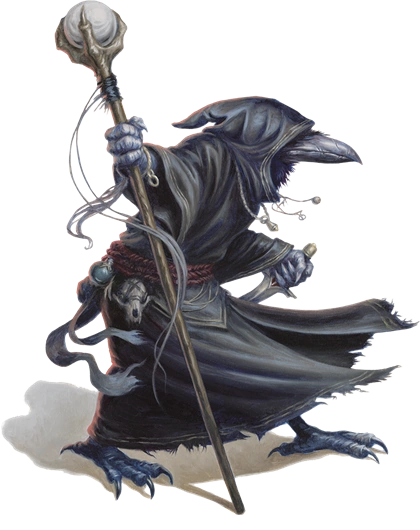
Undead Thralls
At 6th level, you add the Animate Dead spell to your spellbook if it is not there already. When you cast Animate Dead, you can target one additional corpse or pile of bones, creating another zombie or skeleton, as appropriate. Whenever you create an undead using a necromancy spell, it has additional benefits:
- The creature's hit point maximum is increased by an amount equal to your wizard level.
- The creature adds your proficiency bonus to its weapon damage rolls.
Inured to Undeath
Beginning at 10th level, you have resistance to necrotic damage, and your hit point maximum can't be reduced. You have spent so much time dealing with undead and the forces that animate them that you have become inured to some of their worst effects.
Command Undead
Starting at 14th level, you can use magic to bring undead under your control, even those created by other wizards. As an action, you can choose one undead that you can see within 60 feet of you. That creature must make a Charisma saving throw against your wizard spell save DC. If it succeeds, you can't use this feature on it again. If it fails, it becomes friendly to you and obeys your commands until you use this feature again.
Intelligent undead are harder to control in this way. If the target has an Intelligence of 8 or higher, it has advantage on the saving throw. If it fails the saving throw and has an Intelligence of 12 or higher, it can repeat the saving throw at the end of every hour until it succeeds and breaks free.
Technomage
Unlike the more common arcane orders based around the schools of magic, the tradition of Technomancy does not focus on a singular type of spellcraft or magical energy. Rather, students of Technomancy concern themselves with how their spells interact with modern technology.
Technomancers can make use of technology as both a conduit and a storage space for magic. In a campaign using the optional rules for magic item creation, a technomancer might craft disposable arcanotechnological devices, instead of potions and scrolls.
Technological Savant
Beginning when you select this arcane order at 2nd level, you gain proficiency with firearms and tinker’s tools. In addition, all spells with the Technomancy tag are added to your list of wizard spells, and you can learn them as wizard spells whenever you gain a level in this class.
Arcanatech Device
At 2nd level, you trade out your spellbook for a specially attuned crystal storage device capable of recording magical data. This is an angular, quartz-like gem about the size of your fist. Only one storage device can be attuned to you at any given time. Spells can be copied into this device as if into a spellbook at a tenth of the time and for no gold cost, but doing so requires you to be in dim light or darkness.
You can project a 5-foot cube illusion of your choice displaying the contents of the gem in an unoccupied space you can see within 10 feet of the gem (no action required). It lasts indefinitely, until you choose to end it as a free action, until you use this feature again, or until the gem is dispelled.
At 6th level, a creature holding your Device who you allow can cast a spell of your choice you have prepared using your spell save DC and attack modifier. The spell must have a casting time of 1 action and must not require concentration. A creature casting a spell this way expends your spell slots as if you cast the spell. You can use this feature a number of times equal to your Intelligence modifier (minimum 1), regaining all expended uses when you finish a long rest.

Reverse Engineer
Also at 2nd level, you gain the ability to derive the arcane formulae which underpin the magic items in your possession. You can learn a spell from a magic item which can produce a Wizard spell or identical spell-like ability in the same way you would from a scroll, but the device is not destroyed in the process. Copying a spell this way into your Gadget takes twice as long but costs half as much as normal.
Encoded Programs
Beginning at 6th level, as an action, you can perform the additional tasks with your Arcanatech Device:
Malware. You can attempt to disable one alarm, scrying, or messaging object within 60-feet of the Device. Make a DC 15 Intelligence (Arcana) check. If you succeed, the object is disabled and does not trigger any warning or trap. If you fail, make a DC 12 Intelligence saving throw. On a success, nothing happens, and the Monitoring object is immune to this effect for 24 hours. On a failure, the Monitoring object triggers a warning or trap if any.
Back-door. You can access any unencrypted information on a Storage device you are touching. If the information is encrypted you can attempt to decipher the encryption with a DC 20 Intelligence (Arcana) check. On a success, the encryption is broken and the information becomes accessible. On a failure, the encryption remains and the Storage device is immune to this effect for 24 hours.
Nanomodrons. The device expela a 20-foot-radius sphere of miniscule machine spirits which coalesce in a grey fog around it, moving with the device for 1 minute. The sphere spreads around corners, and its area is heavily obscured for everyone except for you. Constructs of your choice that start their turn within the fog regain 1d8 hit points. At 12th level this increases to 2d8, and can affect you as well.
Remote-Activation. You can insert a spell within your Arcanatech Device, so that by tracing a sigil or speaking a command as an action while on the same plane, the spell activates from the Device as though you were in its place. All variables of the spell are set at the time of casting. A spell programmed into the Device remains placed for 48 hours, and is gone once it is discharged. You can use this feature to place a programmed spell in only one device at a time, and a device can hold only one programmed spell. Only you can activate the programmed spell in the device. If the device is destroyed, the programmed spell is lost. A concentration spell placed in the device cannot be activated while you are concentrating on another spell.
AMP. You can generate a sustained small antimagic pulse receptive only to enchanted objects. A sustained burst of antimagic erupts from your Device. All wondrous items and constructs of CR equal to 1/6th of your Wizard level or below within 120 feet of the device are deactivated and cannot be activated for 1 minute, or until you lose your concentration (as if concentrating on a spell).
Once you use this feature, you can’t use it again until you finish a long rest, unless you expend a spell slot of 2nd-level or higher to use it again.
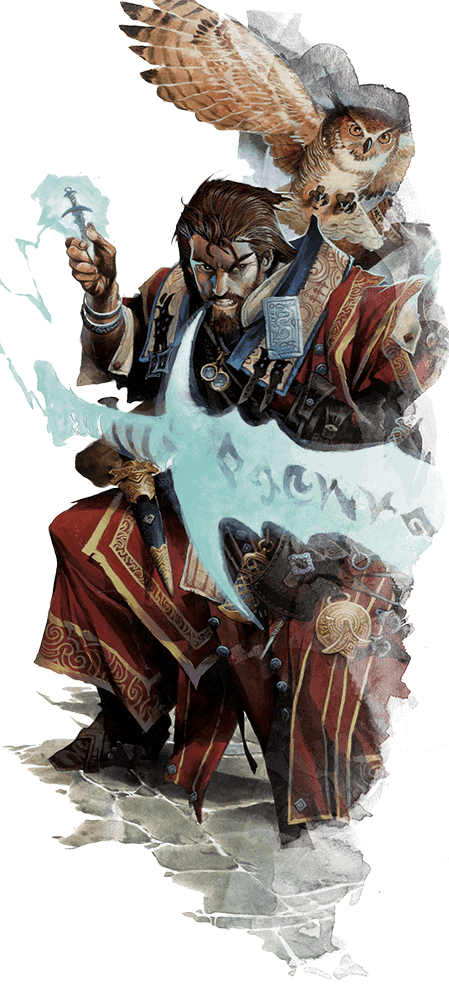
Arcanatech Casting
At 10th level, you can cast spells through magic items, including teleportation circles, sending stones,
homunculi, and spellbooks, and
creations of magical force, such as
those created by a Hidden Servant or
Wall of Force spell. For example, if
a creature is under the observation of
an arcane eye and you can see the eye,
you can cast a spell into the arcane eye
and out through the Weave to
target the operating creature.
If the spell requires the caster
to be seen, the target must see you
or a live image of you. If the spell
requires the caster to be heard, the
target must be able to hear you or a
live audio transmission of you. The
spell’s range is determined using
the distance from you to your
device or magical construct, and
then from the target to its casting
focus or item. You must be able to
see or otherwise determine the
location of the target. This
feature can be used to cast only
spells that target specific creatures.
Spells that affect an area are not
subject to arcanatech casting.
You can use this feature a number of times
equal to your Intelligence modifier (minimum 1),
regaining all expended uses when you finish a long rest.
Chained Device
By 14th level, you have learned to imprint vestiges of your consciousness on arcane devices with significant computing power. When you cast a concentration spell, you can use a magic item to which you are attuned to maintain concentration of the spell on your behalf as a bonus action. The device must be held or worn by you to maintain this effect. If the item is destroyed, taken from you, dropped, or turned off, the concentration ends.
Once you use this feature, you can’t use it again until you finish a long rest, unless you expend a spell slot of 5th-level or higher to use it again.

Transmuter
You are a student of spells that modify energy and matter. To you, the world is not a fixed thing, but eminently mutable, and you delight in being an agent of change. You wield the raw stuff of creation and learn to alter both physical forms and mental qualities. Your magic gives you the tools to become a smith on reality's forge.
Some transmuters are tinkerers and pranksters, turning people into toads and transforming copper into silver for fun and occasional profit. Others pursue their magical studies with deadly seriousness, seeking the power of the gods to make and destroy worlds.
Transmutation Savant
Beginning when you select this school at 2nd level, the gold and time you must spend to copy a Transmutation spell into your spellbook is halved. You can copy transmutation spells from scrolls or tomes you find into your spellbook to add them to the list of wizard spells you know and can prepare even if they are not normally a wizard spell.
Minor Alchemy
Starting at 2nd level when you select this school, you can temporarily alter the physical properties of one nonmagical object, changing it from one substance into another. You learn the Mould Earth cantrip if you don't already know it. It does not count against your number of cantrips known.
You perform a special alchemical procedure on one object composed entirely of wood, dirt, stone (but not a gemstone), lead, iron, copper, or silver, transforming it into a different one of those materials. For each 10 minutes you spend performing the procedure, you can transform up to 1 cubic foot of material. After 1 hour, or until you lose your concentration (as if you were concentrating on a spell), the material reverts to its original substance.
At 12th level, you can change objects into valuable materials like gemstones, gold, platinum, or mythril using this feature.
Transmuter's Stone
Starting at 6th level, you can spend 8 hours creating a transmuter's stone that stores transmutation magic. When you create the stone, choose the benefit from the following options:
- Darkvision out to a range of 60 feet
- A 15-foot increase to their speed while the target is unencumbered
- Proficiency in Strength, Dexterity, or Constitution saving throws
- Resistance to acid, cold, fire, lightning, or thunder damage (your choice whenever you choose this benefit)
- The target's current and maximum hit points increase by an amount equal to your Wizard level.
- When they regain hit points from a spell or other magical effect, the target regains an additional 1d8 hit points.
- Once per turn, when they deal damage to a creature with an attack, the target can add your Intelligence modifier to the damage roll.
You can benefit from the stone yourself or give it to another creature. A creature gains a benefit of your choice as long as the stone is in the creature's possession.
Each time you cast a transmutation spell of 1st-level or higher, you can change the effect of your stone if the stone is on your person. If you create a new transmuter's stone, the previous one ceases to function.
Shapechanger
At 10th level, you add the Polymorph spell to your spellbook, if it is not there already. You can cast Polymorph without expending a spell slot at will; when you cast it this way, you can target only yourself and transform into a beast whose challenge rating is 1 or lower. Your hit points and your Intelligence, Wisdom, and Charisma scores do not change in the new form.
Master Transmuter
Starting at 14th level, you can use your action to consume the reserve of transmutation magic stored within your transmuter's stone in a single burst. When you do so, choose one of the following effects. Your transmuter's stone is destroyed and can't be remade until you finish a long rest.
Luck. You transmute the very flow of time, receiving brief flashes of the future for 1 hour. Whenever you make a spell attack, an ability check, or a saving throw against an effect that deals damage, you can roll a d6 and add the number rolled to the total.
Major Transformation. You can transmute one nonmagical object – no larger than a 5-foot cube – into another nonmagical object of similar size and mass and of equal or lesser value. You must spend 10 minutes handling the object to transform it.
Panacea. You remove all curses, diseases, and poisons affecting a creature that you touch with the transmuter's stone. The creature also regains all its hit points.
Resilience. You transmute your flesh instantaneously, knitting together injuries as they occur. You have resistance to bludgeoning, piercing, and slashing damage until you finish a short or long rest.
Restore Life. You cast the Raise Dead spell on a creature you touch with the transmuter's stone, without expending a spell slot or needing to have the spell in your spellbook.
Restore Youth. You touch the transmuter's stone to a willing creature, and that creature's apparent age is reduced by 3d10 years, to a minimum of 13 years. This effect doesn't extend the creature's lifespan.
Revelation. You gain a 60-foot radius of Truesight, and can speak and understand any language, until you finish a short or long rest.
War Mage
A variety of arcane colleges specialise in training wizards for war. The tradition of War Magic blends principles of evocation and abjuration, rather than specialising in either of those schools. It teaches techniques that empower a caster’s spells, while also providing methods for wizards to bolster their own defences.
Arcane Deflection
At 2nd level, you have learned to weave your magic to fortify yourself against harm. When you are hit by an attack or you fail a saving throw, you can use your reaction to gain a +2 bonus to your AC against that attack or a +4 bonus to that saving throw. When you use this feature, you can’t cast spells other than cantrips until the end of your next turn.
Tactical Wit
Starting at 2nd level, your keen ability to assess tactical situations allows you to act quickly in battle. You can give yourself a bonus to your initiative rolls equal to your Intelligence modifier. Once the initiative order has been set, you can choose to move your turn to anywhere lower in thr initiative count than you started (no action required).
Power Surge
Starting at 6th level, you can store magical energy within yourself to later empower your damaging spells. You can store a maximum number of power surges equal to your Intelligence modifier (minimum of one). Whenever you finish a long rest, your number of power surges resets to one. Whenever you successfully end a spell with Dispel Magic or Counterspell, you gain one power surge, as you steal magic from the spell you foiled. If you end a short rest with no power surges, you gain one power surge.
Once per turn when you deal damage to a creature or object with a wizard spell, you can spend one power surge to deal extra force damage to that target. The extra damage equals half your wizard level.
Durable Magic
Beginning at 10th level, the magic you channel helps ward off harm. While you maintain concentration on a spell, you have a +2 bonus to AC and all saving throws.
Deflecting Shroud
At 14th level, your Arcane Deflection becomes infused with deadly magic. When you use your Arcane Deflection feature, you can cause magical energy to arc from you. Up to three creatures of your choice within 60 feet of you each take force damage equal to half your wizard level.
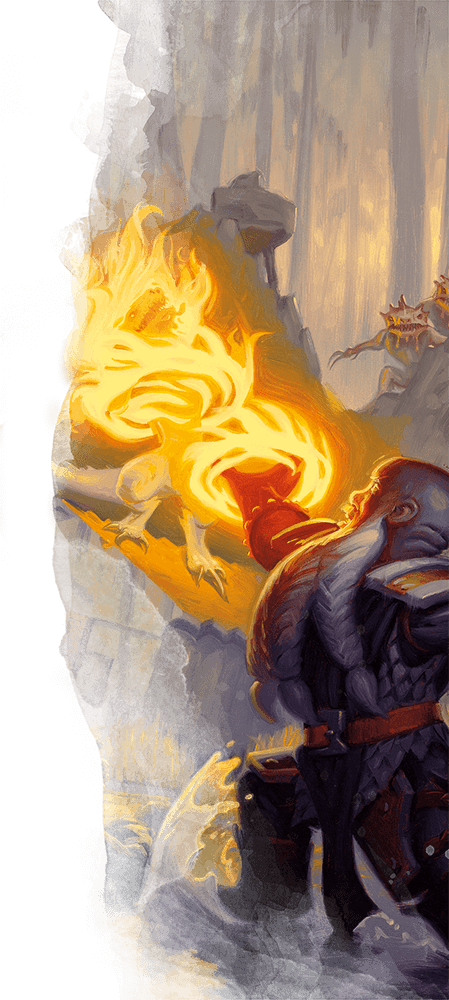
PART III
Background
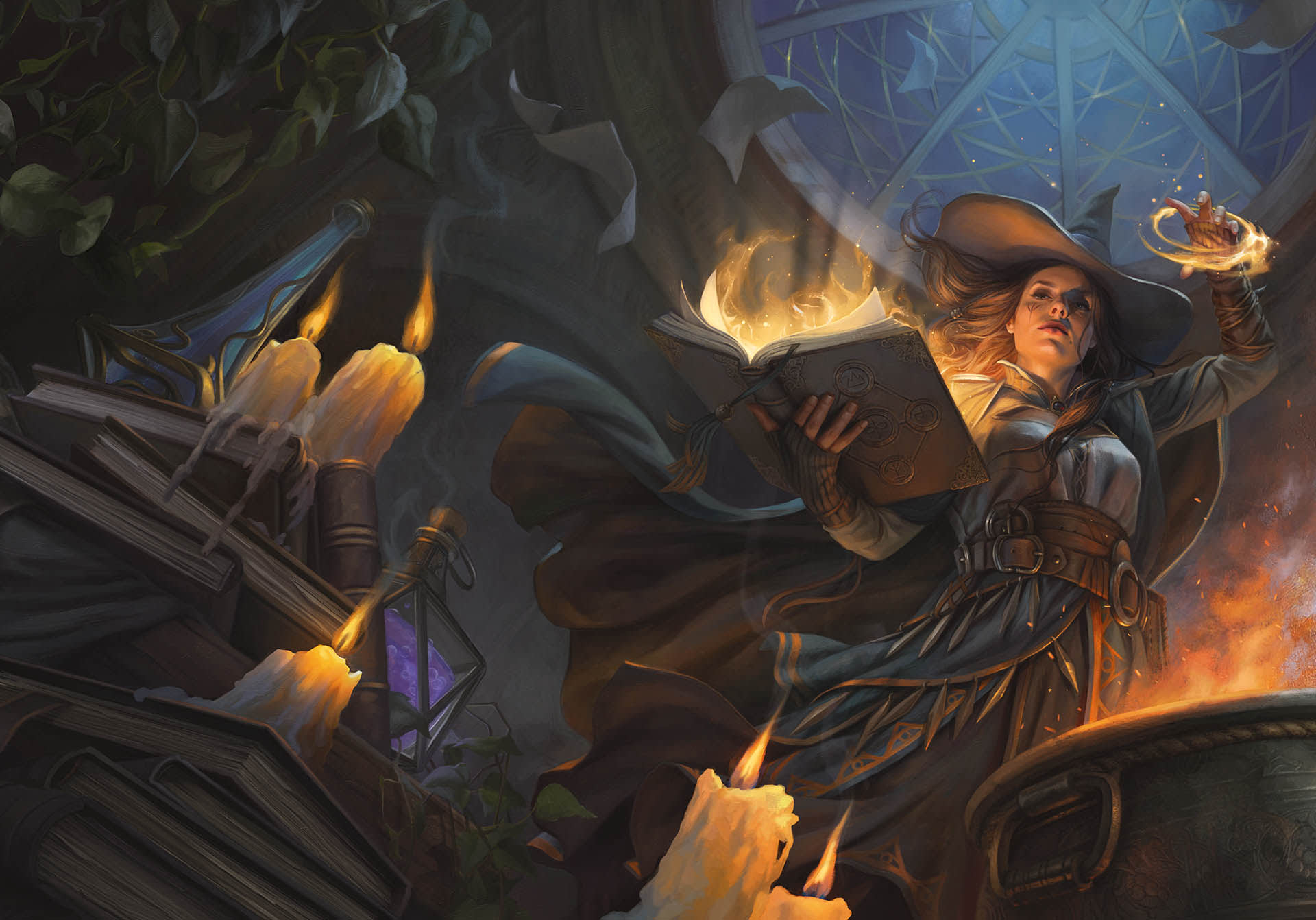
Background
When you build a Background, your character gains the features below. As you make choices for those features, think about your character's past. Where did they spend most of their time? What did they do for a living? What capabilities and possessions did they acquire? What languages and skills did they learn from their family, associates, or studies? How did their past affect their ability scores?
Characters gain the following:
- Three skill or tool proficiencies, or languages of their choice.
- Either: Proficiency with one of:
- • Simple weapons
- • Martial weapons (if already proficient in Simple weapons)
- • Firearms
- • Light armour
- • Medium armour (if already proficient in Light armour)
- • Heavy armour (if already proficient in Medium armour)
- • Shields
- Or: expertise in a single skill with which they are already proficient.
- 50 gold pieces, to have or spend on starting gear
- One randomly selected trinket.
- One Background Feature, listed below:
Background Features
Background features represent specialised abilities afforded to you by your upbringing. Your DM may also grant you the chance to gain additional Background Features through a prolonged effort over multiple or extended downtime periods.
Acolyte
You can manifest a magical Shelter of Faith that can shield you or others. When you or another creature you can see within 5 feet of you is hit by an attack roll, you can use your reaction to manifest a spectral representation of your faith for a moment. You grant a bonus to the target’s AC equal to your proficiency bonus against that attack roll, potentially causing it to miss. You can use this reaction a number of times equal to your proficiency bonus, and you regain all expended uses when you finish a long rest.
Acrobat
Prerequisite: Proficiency in acrobatics
You gain a climbing speed equal to your walking speed. You can modify your Jumping distances using either your Strength or Dexterity. If an effect causes you to fall prone, you can use your reaction to remain on your feet instead.

Actor
Prerequisite: Proficiency in performance
Skilled at mimicry and dramatics, you gain the following benefits:
You have advantage on Charisma (Deception) and Charisma (Performance) checks when trying to pass yourself off as a different person.
You can mimic the speech of another person or the sounds made by other creatures. You must have heard the person speaking, or heard the creature make the sound, for at least 1 minute. A successful Wisdom (Insight) check contested by your Charisma (Deception) check allows a listener to determine that the effect is faked.
Agile
Your base speed increases by 10 feet while you aren’t wearing Heavy Armour. In addition, when you take the Dash Action on your turn, Difficult Terrain doesn’t cost you extra movement for the rest of that turn.
Alert
Prerequisite: Proficiency in perception
Always on the lookout for danger, you gain the following benefits:
You gain a +5 bonus to initiative.
You can’t be surprised while you are conscious.
Other creatures don’t gain advantage on attack rolls against you as a result of being hidden from you.
Ancestral Legacy
You are the recipient of an extraplanar bloodline, the lineage of a powerful magical creature that grants you magical abilities. Choose one legacy from the table below.
You gain the initial benefit of the chosen legacy: a cantrip that you learn. Starting at 3rd level and again at 5th level, you gain the ability to cast a higher-level Spell with this trait, as shown on the table. Once you cast the Spell with this trait, you can’t cast that Spell with it again until you finish a Long Rest; however, you can cast the Spell using any Spell Slots you have of the appropriate level.
| Legacy | Cantrip | 3rd level | 5th level |
|---|---|---|---|
| Lawful | Thaumaturgy | Searing Smite | Hold Person |
| Chaotic | Dancing Lights | False Life | Darkness |
| Neutral | Guidance | Detect Magic | Zone of Truth |
| Good | Spare the Dying | Cure Wounds | Lesser Restoration |
| Evil | Chill Touch | Ray of Sickness | Ray of Enfeeblement |
Intelligence, Wisdom, or Charisma is your spellcasting ability for the Spells you cast with this trait (choose the ability when you select the legacy).
Artisan
Prerequisite: Proficiency in an Artisan's tool
You've learned some of an artificer's inventiveness: You learn one cantrip of your choice from the artificer spell list, and you can use a set of Artisan's Tools in which you're proficient as a spellcasting focus for any spell you cast of 5th-level or lower.
In addition, whenever you make an Intelligence (Arcana) or an Ability Check involving Artisan's Tools, you can roll 1d4 and add the number rolled to the total ability check.
You also gain one of the following features, depending on the craft you have been trained in:
Alchemist. You can use your proficiency in Alchemist's supplies to create alchemical items. A character can spend money to collect raw materials, which weigh 1 pound for every 50 gp spent. The DM can allow a character to make a check using the indicated skill with advantage. As part of a long rest, you can use alchemist's supplies to make one dose of acid, alchemist's fire, antitoxin, oil, perfume, or soap. Subtract half the value of the created item from the total gp worth of raw materials you are carrying.
Cartographer. By spending an hour using a set of cartographer's tools and maps in your possession, you ensure safe travel for you and other creatures from your current location to another location you could normally reach within one day. The destination must be one to which you have travelled previously, or for which you have an accurate route and map. You can roll two dice for any random encounters experienced on the travel, choosing the result you want.
Counterfeiter. You can use your proficiency in Calligrapher's supplies to briskly forged documents. As part of a short rest, you can produce a forged document no more than one page in length. As part of a long rest, you can produce a document that is up to four pages long. Your Intelligence check using Calligrapher’s Supplies determines the DC for someone else's Intelligence (Investigation) check to spot the fake.
Culinary Artist. As a part of a long rest, you can use Cook's utensils to prepare a number of treats equal to your Proficiency bonus. These special treats last 8 hours after being made. A creature can use a bonus action to eat one of those treats to gain temporary hit points equal to 1d8 + your Proficiency bonus.
Fletcher. As part of a short rest, you can use your proficiency in Woodworker's tools to craft a number of arrows equal to your Dexterity or Intelligence modifier + your Proficiency bonus. As part of a long rest, you can craft up to four times that amount. You must have enough wood and flint or other arrowheads on hand to produce them.
If you are proficient in Glassblower's tools, you can instead create simple slashing and piercing weapons this way at a rate of 1gp per hour spent working with (usually volcanic) glass. These weapons shatter when rolling natural 1s to hit, and when scoring a critical hit (after resolving the attack, and dealing an additional Weapon die of damage on the Critical hit). This trade is known as being a Knapper.
Helmsman. You can use your navigator's tools even when the sky is heavily obscured, and traveling between planes doesn't affect your ability to navigate.
In addition, when a creature targets a vehicle you are navigating with an attack, you use a reaction to make a Dexterity (Navigator's tools) check. If the result is greater than the attack roll, you can order the pilot to move the vehicle up to half its speed (if it has one) in a direction of your choice, causing the attack to miss.
Maquette Golemancer. Over the course of a long rest, you can use Potter's tools to fashion a quasi-sentient, clay companion. Your companion can take whatever shape you wish, but must use the stat block of a Large or smaller beast of CR 1/4 or lower without a fly or swim speed, requiring 100 lbs. of clay per cubic foot. It also gains immunity to acid, poison, and psychic damage, and gains all the Condition Immunities of a clay golem, as well as its Acid Absorbtion and Immutable Form features. Your clay companion understands you, acts on your and obeys your commands. When it falls to 0 hit points, or when you try to create another, it disintegrates back into shapeless clay.
Prismatist. While you have your jeweller's tools and are in bright or dim light, you can cast colour spray at will without expending a spell slot or requiring material components. Your spellcasting ability for this spell is Intelligence.
Poisoner. With one hour of work using a Herbalism kit and expending 50 gp worth of materials, you can create a number of doses of potent poison equal to your proficiency bonus. Once applied to a weapon or piece of ammunition, the poison retains its potency for 1 minute or until you hit with the weapon or ammunition. When a creature takes damage from the coated weapon or ammunition, that creature must succeed on a Constitution saving throw (DC 8 + your Intelligence modifier + your Proficiency bonus) or take 2d8 poison damage and become poisoned until the end of your next turn.
Tailor. As a part of a long rest, you can use a set of Seamster’s tools to make detailed, specific alterations to one item of clothing; you can add a hidden compartment, able hold an object up to 3 inches long and 1 inch wide and deep. You make an Intelligence check using your tool proficiency to determine the Intelligence (Investigation) check DC needed to find the compartment; you can increase or reduce the Size category of the creatures able to wear the item, as well as accommodating additional limbs (such as for a Centaur); you can alter magic clothes into apparel of a different kind (such as turning a Cloak of Protection into a Top Hat or Protection).
Performing this feature on leather armour and shoes instead requires proficiency in Leatherworker's tools, and becomes the Cobbler background. The same applies to metal armour and shields using Smith's tools, becoming the Armourer background.

Athlete
Prerequisite: Proficiency in athletics
You have undergone extensive physical training to gain the following benefits:
You gain a climbing or swimming speed equal to your movement speed. If you choose a speed option you already possess, it increases by 20 feet instead.
You gain advantage on any check made to jump, retreat, or chase, and on saving throws made to resist exhaustion. When you are prone, standing up uses only 5 feet of your movement.
Bar Contest Drinker
Through a lifestyle of hard, competitive
drinking, you’ve learned how to quaff drinks
at an incredibly accelerated pace. You
gain the following benefits:
You can ply willing creatures with
potions and other consumables as a
Bonus action, instead of as an action.
You have advantage on any saving
throws triggered by ingesting an alcoholic,
toxic, or otherwise harmful or dangerous
substance.
When you drink at least a pint of an
alcoholic beverage, you regain 4d4 + 4 hit
points. You can use this feature a number
of times between long rests equal to half
your Proficiency bonus.
Combative
Your martial training has helped you develop a particular style of fighting. As a result, you learn one Fighting Style option of your choice for which you fulfil the prerequisites.
Commander
Once a person of rank and renown on the battlefield, traces of war reveal themselves as you fight:
As an action, you can issue a command to a willing creature that can hear you within 60 feet. Your voice lingers until the end of their next turn. They can use their reaction to take the Dash, Disengage, Dodge, Hide, Help, or Search action at any point before your voice fades.
Moreover, while you are within 5 feet of two or more allies who are not incapacitated, creatures are unable to gain advantage on attacks against you due to the presence of their allies.
Companion Caller
You have bound your soul to a fellowship of bestial spirits, and can call upon them in your time of need. You learn the Find Familiar spell and can cast it at its lowest level. Once you cast the spell in this way, you cannot do so again until you finish a long rest.
When you reach 5th level, you can cast the Find Steed spell as a 2nd-level spell once with this trait and regain the ability to do so when you finish a long rest.
When you reach 9th level, you can cast the Conjure Animals spell once with this trait and regain the ability to do so when you finish a long rest.
Your spellcasting ability for these spells is your choice of either Wisdom or Charisma.
Criminal
You are an experienced criminal with a history of breaking the law. There are many kinds of criminals, and even within a thieves' guild or similar criminal organization, individual members have particular specialties.
You know Thieves’ Cant. In addition, choose the speciality you accrued in your criminal life:
Burglar. You've mastered the ability to, over the course of a short rest, scan a square mile of town or city for the shops and establishments that would hold the most valuables. This is considered light activity for the purposes of completing a short rest. Upon completing this short rest, you are aware of any businesses or establishments that have high gold value in goods on display, and if so, you learn what those items are and their individual values.
Double Agent. While you’re disguised as a fictional person or a real person other than yourself, you have Advantage on Checks to convince others that you are that person. If a creature fails to successfully use Deception to lie to you, you skillfully manoeuvre the conversation to confuse the target or trick them into letting slip vital information. After succeeding on your Insight check, you can then engage the target in conversation for at least 1 minute. At the end of this time, make a Persuasion check contested by the target's Deception check. If you succeed, the target inadvertently reveals their lie and the reason behind it.
Family Mafioso. As an initiate of your family, you can always get food and lodging for yourself and your friends at a family business, and you know how to get messages to and from other members of the family. The degree to which such acquaintances are willing to help you depends on your current standing with the family. In addition, you have advantage on checks made to acquire illegal or rare items.
Smuggler. If you are hidden, you can move up to a number of feet equal to half your walking speed and remain hidden if you end this movement in a position that is obscured, behind cover, or where you are otherwise not clearly visible. Your carrying capacity is doubled, you can move stealthily at a normal pace, and you have advantage on checks made to cover your tracks.
Snitch. You have advantage on Wisdom (Insight) checks made against other creatures, and on Perception checks using hearing. You also have advantage on checks made to interact with legal authorities, but other criminals aware of your role are suspicious, or even hostile toward you.
When an ally you can see within 30 feet of you rolls a 1 on the d20 for an attack roll, an ability check, or a saving throw, you can use your reaction to let them reroll the d20, suddenly remembering information that helps them.
Thief. You have advantage on checks made to deceive, to pick pockets, and to conceal objects on your person. As a bonus action, you can make a Dexterity (Sleight of Hand) check to plant something on someone else, conceal an object on a creature, lift a purse, or take something from a pocket. Whenever you succeed on a Dexterity (Sleight of Hand) check to steal an object worn or carried by a creature as part of the Use an Object action, you can conceal that object on your person as part of the same action. Your successful Dexterity (Sleight of Hand) check determines the DC for a creature's ability check to discover the hidden object.
Demolitionist
Prerequisite: Proficiency with mason's tools
You use your mason's tools with alacrity and freedom, to expertly manipulate structures. You gain the following benefits:
Over the course of 1 minute, you can use mason's tools you're holding to burrow through up to 5 feet of rock, stone, or dirt within you reach.
You deal double damage to nonmagical objects and structures with your weapon attacks.
As an action, you can use your mason's tools to restore a number of hit points to a damaged nonmagical structure equal to your proficiency bonus. Once you use this benefit, you can't do so again until you finish a long rest.
When you make an Intelligence (History) check related to a structure, you are considered proficient in the History or Insight skill and add double your proficiency bonus to the check, instead of your normal proficiency bonus.
Doomed
You, like the mourning star, will shine brightly as you burn the world to the ground around you. While your time on the world’s stage is brief, you will not leave without a grand finale. You have 3 Jinx points. When a creature within 60 feet of you makes an attack roll, ability check, or saving throw, you can expend 1 Jinx point to cause the target to roll a 1 on a single d20.
You have disadvantage on death saving throws, and other creatures have disadvantage on checks made to stabilise you. Moreover, death saving throw rolls of 1 kill you instantly.
When you die, your death bolsters the passion within your allies. All friendly creatures who can see or hear your life expire have advantage on attack rolls and saving throws until they complete a short or long rest or until you are resurrected. A creature can be inspired by your death only once between each dawn. You regain your expended jinx points when you finish a long rest
Driver
Prerequisite: Proficiency with land vehicles
You are talented at piloting all types of land vehicles, gaining the following benefits:
Vehicles you are helming gain a bonus to their Armour Class equal to your proficiency bonus.
You can instantly identify the parts of a vehicle you can drive which have failed if the construct malfunctions.
Whenever you make a Dexterity check to pilot or maintain control of a vehicle with which you are proficient you can add twice your proficiency bonus, instead of any proficiency bonus you normally apply.
Provided you have tinker's tools, you can perform repairs on a land vehicle. When you use this ability, you restore a number of hit points to a land vehicle equal to 5 × your proficiency modifier. A vehicle cannot be repaired by you in this way again until after it has been fully repaired.
Dungeon Delver
Alert to the hidden traps and secret doors found in many dungeons, you gain the following benefits:
You have advantage on Wisdom (Perception) and Intelligence (Investigation) checks made to detect the presence of traps & secret doors.
You have advantage on saving throws made to avoid, disarm, and resist traps, and you have resistance to any damage dealt by traps.
You can search for traps while travelling at a normal pace, instead of only at a slow pace.
Eagle-Eyed
You gain darkvision out to a range of 60 feet. If you already possess a darkvision range, it increases by 60 feet.
In addition, you have advantage on Investigation, Insight, and Perception checks which rely on sight, and you can read the lips of creatures within dim or bright light.
/cdn.vox-cdn.com/uploads/chorus_image/image/70744372/Party_Art.6.jpg)
Entertainer
You thrive in front of an audience. You know how to entrance them, entertain them, and even inspire them. You have advantage on Strength, Dexterity, and Charisma checks and saving throws when at least two other people are watching you.
After 1 minute of interacting with a creature that can hear and understand you, you can attempt to charm or frighten it. You make a Charisma (Deception), Charisma (Intimidation), or Charisma (Persuasion) check contested by the creature's Wisdom (Insight) check.
If you succeed on a Charisma (Deception) or Charisma (Persuasion) check, the creature is charmed by you for 1 minute. This effect ends immediately if you or your companions do anything harmful to it. If you succeed on a Charisma (Intimidation) check, the creature is frightened of you for 1 minute.
Expert
You have honed your proficiency with particular skills, granting you the following benefits:
You gain proficiency in two skills, languages, or tools of your choice.
Choose two skills or tools in which you have proficiency. You gain expertise with those skills, which means your proficiency bonus is doubled for any ability check you make with it. The skill you choose must be one that isn't already benefiting from a feature, such as Expertise, that doubles your proficiency bonus.
Extremophile
You’ve developed a powerful conviction and ferocious will to survive harsh environments, allowing you to maintain your composure where weaker creatures might falter. You gain advantage on Constitution checks and saving throws, and other rolls made to resist the penalties of extreme heat, extreme cold, heavy precipitation, and strong winds.
In addition, you have a number of extra d10 Hit Dice equal to one less than your Proficiency bonus.
False Identity
You have created a second identity that includes documentation, established acquaintances, and disguises that allow you to assume that persona.
Moreover, if necessary, you can unfailingly create new false identities for yourself. You must spend seven days and 25 gp to establish the history, profession, and affiliations for an identity. You can't establish an identity that belongs to someone else. Thereafter, if you adopt the new identity as a disguise, other creatures believe you to be that person until given an obvious reason not to.
Additionally, when you copy writing or craftwork produced by yourself or someone else, you have advantage on any ability checks you make to produce an exact duplicate.
Far Traveller
A wanderer picks up a lot of stray knowledge while roving the land and learning stories from other bards. You have 3 information points, which represent information you have overheard during your travels. As an action, you can expend an information point to learn one true statement about a specific person, place, object, or event by making a special Intelligence (History) check with a bonus equal to your Wisdom or Charisma modifier (your choice) to see whether you have picked up some relevant information about local notable people, legendary items, or noteworthy places on your travels.
You regain a single expended information point when you finish a long rest.
| Check DC | Knowledge |
|---|---|
| 10 | Common, known by most - A local mayor’s reputation for a substantial minority drinking; common legends of the local population about a place of mystery or a petty magic item. |
| 20 | Uncommon, known by only a few - A knight’s family history; legends about a minor place of mystery or magic item, a local creature's resistances |
| 25 | Obscure, hard to come by - A local priest’s shady past; legends about a powerful Magic item available in the area; the password needed to enter a sealed dungeon level; the spells commonly prepared by an order of wizards |
| 30 | Extremely obscure, known by very few, possibly known only by those who don’t understand the significance of the knowledge - A mighty wizard’s childhood nickname; the history of a great magic or place of power. |
Fisherman
Perhaps you were born into a family of fisher folk, working with your kin to feed your village. Maybe the job was a means to an end - a way out of an undesirable circumstance that forced you to take up life aboard a ship. Regardless of how you began, you soon fell in love with the sea, the art of fishing, and the promise of the eternal horizon.
You gain proficiency in the use of whips, nets, and tridents. You gain advantage on ability checks made using fishing tackle. If you have access to a body of water that sustains marine life, you can maintain a moderate lifestyle while working as a fisherman, and you can catch enough food to feed yourself and up to ten other people each day.
Folk Hero
Thanks to your noble deeds, people are inclined to think the best of you. You are welcome in both low and high society, and people assume you have the right to be wherever you are. As a result, Charisma (Intimidation) checks against creatures whose Challenge Rating is below your overall character level are made with advantage, you have advantage on Charisma (Persuasion) checks against nobility and royalty, as they see the potential boons in ingratiating themselves with you.
Former Lycanthrope
You are immune to lycanthropy and shape-changing diseases. Your mannerisms and knowledge of the lycanthropy condition are recognized by former and current lycanthropes, who still see you as one of their own, and you can communicate simple ideas with any beast using a series of noises and gestures. This can also be interpreted by creatures that know Druidic. Lycanthropes who do not view you as an enemy are inclined to come to your aid or share their condition to you in a private setting. In addition, you can take Ancestry feats accessible to Shifters if they do not require the Shifting feature.
Gambler
Prerequisite: Proficiency in a gaming set
Spending countless hours winning and losing coins in ale-stained taverns has forged you into a consummate gambler and chance-seeking addict. You gain the following benefits and features:
You have advantage on Charisma (Deception) checks to bluff opponents in contests and games of chance, and Charisma (Persuasion) checks to convince others to behave irrationally.
You may throw a playing card as if it were a blade. It has the Light, Finesse and Thrown only (30/60) properties, and deals slashing damage on a hit equal to 1 + your Attack modifier. For the purposes of class abilities, it is considered an unarmed strike (ranged).
Grateful Reprieve
You have learned to appreciate not being the focus of your combatants' sadistic wrath, having already suffered a great deal in your life. When an ally you can see within 120 feet of you takes damage greater than or equal to your Level from a creature, you gain Relief. If you have Relief, you can expend it when you make an attack roll, saving throw, or ability check to gain a 2d4 bonus to that roll. Alternatively, you can use your reaction to dull the creature’s suffering and reduce the damage it takes by 2d4 + your proficiency bonus by spending your Relief.
You can spend your Relief a number of times equal to your proficiency bonus, and you regain all uses when you finish a long rest.
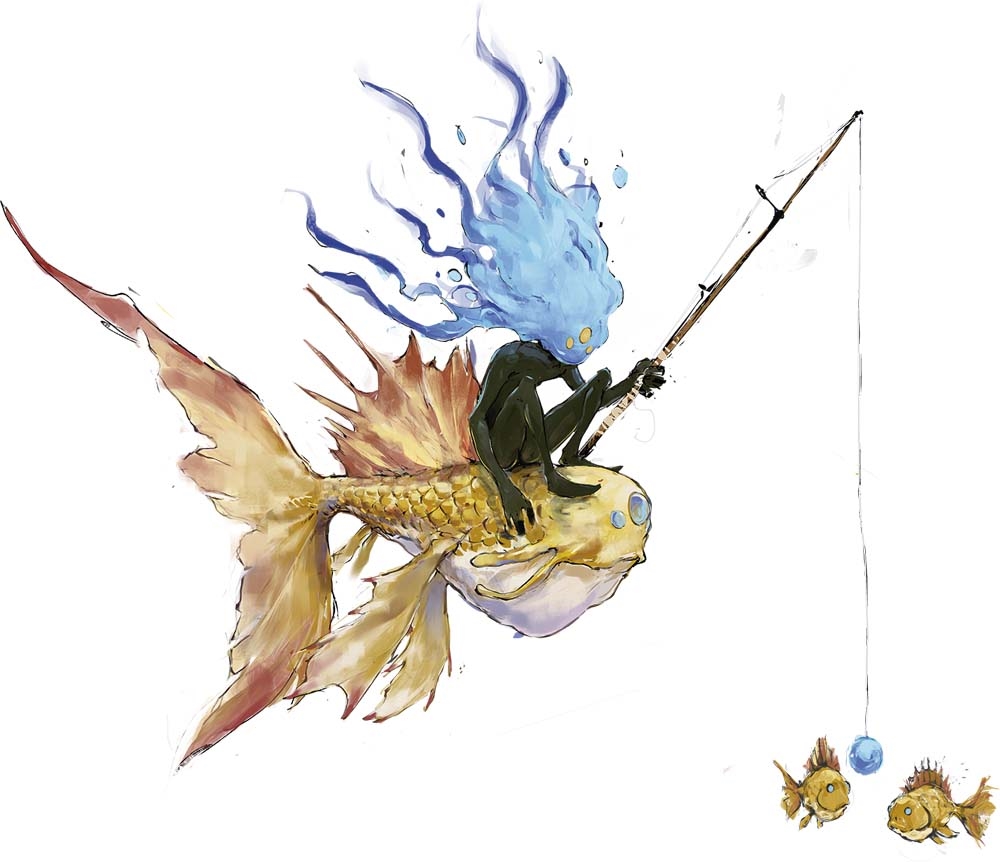
Grudge-Bearer
You have a deep hatred for a particular kind of creature. Choose your foes, a type of creature to bear the burden of your wrath: aberrations, beasts, celestials, constructs, dragons, elementals, fey, fiends, giants, monstrosities, oozes, plants, or undead. You gain the following benefits:
During the first round of any combat against your chosen foes, all your attack rolls against any of them have advantage.
When any of your chosen foes make an opportunity attack against you, it makes the attack roll with disadvantage.
Whenever you make an Intelligence-based check to recall information about your chosen foes, you add double your proficiency bonus to the check, even if you’re not normally proficient.
You have advantage on checks made to track such creatures, and your Passive Perception has an additional bonus which creatures of that type must surpass to remain undetected equal to half your Proficiency bonus (rounded down).
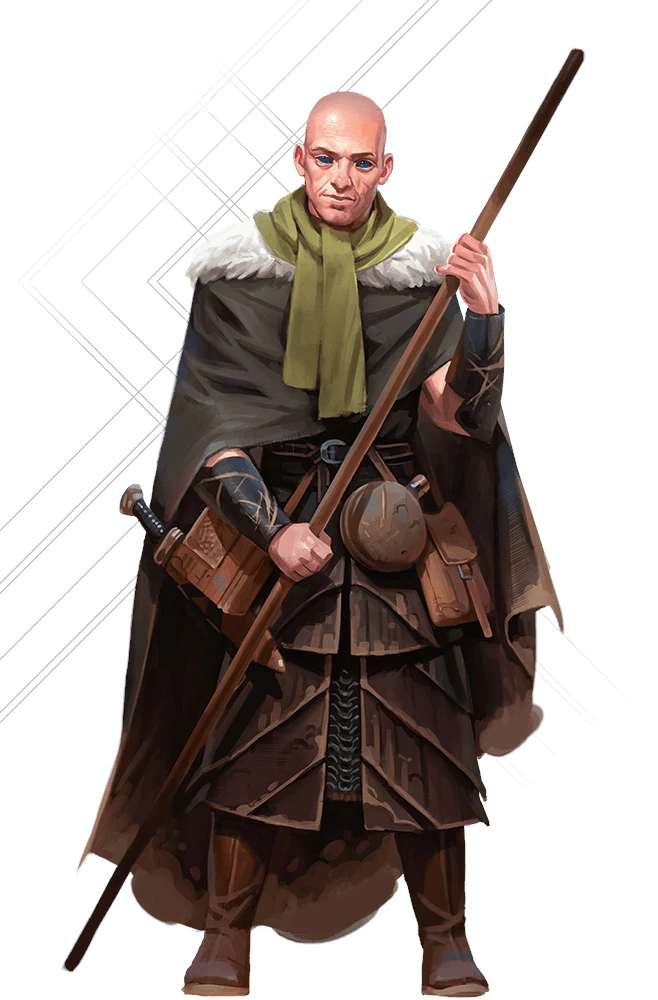
Guide
Prerequisite: Proficiency with navigator's tools
You exceed at navigating through all of life's
challenges. You gain the following benefits:
You can use your navigator's tools even when the
sky is heavily obscured, and traveling between
planes doesn't affect your ability to navigate.
As an action, you can choose a willing creature
you can see other than yourself and a harmful area
that you can see, such as an area affected by a
spell or a river of lava. If the creature's movement
speed is enough to pass through the area, it can
use its reaction to do so, suffering no ill-effects
from the area.
You have a number of uses of this
feature equal to your proficiency bonus, and you
regain all expended uses at the end of a long rest.
Half-Jack
Most things have always come easily to you, though you often find yourself falling short of your more specialised companions. You can add ⅓ your Proficiency bonus (rounded up) to ability checks in which you are not proficient. If you have the Jack of All Trades feature, you instead gain a flat +1 bonus to all checks with this trait, regardless of whether you're proficient.
Helmsman
Prerequisite: Proficiency with water vehicles
An exceptional pilot of water craft, you gain the following benefits:
You gain a swim speed equal to your walking speed.
While driving a vehicle, you have advantage on Piloting checks to drive undetected and to avoid area-of-effects.
When a creature targets you or a creature within the vehicle with an attack while you are operating a water vehicle, you use a reaction to can make a Water Vehicle check with the ability you increased with this feat. If the result is greater than the attack roll, you can move the vehicle up to half the movement speed of the creature pulling it or its speed (if it has one) in a direction of your choice, causing the attack to miss.
Hermit
In your time apart from the clamour of society, you found quiet, solitude, and perhaps some of the answers you were looking for. When you make checks to recall information, uncover knowledge, and understand events, you can make Wisdom checks rather than Intelligence.
You may spend a day of downtime meditating to learn a piece of information by asking a question. The quality and specifics of the information you get are up to the DM.
When making checks to parlay with Outer Beings, such as in the Contact Other Plane spell, you add 2d4 to the roll.
Inspirational
Prerequisites: Proficiency with Musical Instruments, or the Performance, Persuasion, or Insight skill
You can spend at least a minute giving an inspiring performance: a speech, a song, or a dance. When you do so, choose a number of creatures (which can include yourself) up to your Charisma modifier within 30 feet of you who witness the performance. The chosen creatures each gain temporary Hit Points equal to your level + your Charisma modifier and can add 1d6 to a single attack roll or ability check they make before they next complete a rest. A creature can’t benefit from this ability again until it has finished a short or long rest.
Investigator
You're experienced at gaining access to people and places to get the information you need. Through a combination of fast-talking, determination, and official-looking documentation, you can gain access to a place or an individual related to a crime. Those who aren't involved in your investigation avoid impeding you or pass along your requests. Additionally, law enforcement local to your region of operation has firm opinions about you, viewing you as either a nuisance or one of their own.
You can use your action to try to get uncanny insight about one humanoid you can see within 30 feet of you. Make a Wisdom (Insight) check contested by the target’s Charisma (Deception) check. If your check succeeds, you have advantage on attack rolls and ability checks against the target until the end of your next turn. To prevent anyone else from gleaning the same information, you keep this written in a journal in a cipher.
Whenever you make an Intelligence check to recall information about a subject or to analyse or decipher a piece of information, you can add half your proficiency bonus (round up) to the roll even if you are not proficient in the relevant skill.
Keen Mind
Prerequisites: Intelligence 13
You have a mind that can track time, direction, and detail with uncanny precision. You gain the following benefits:
You always know which way is north.
You always know the number of hours left before the next sunrise or sunset.
You can accurately recall anything you have seen or heard within the past month.
You are immune to the Maze spell.

Knight
You belong to an order of knights who have sworn oaths to achieve a certain goal. The nature of this goal depends on the order you serve, but in your eyes it is without question a vital and honourable endeavour. You have advantage on checks made to earnestly convince others to perform actions you consider to be righteous and which align with your vows, even if that includes lying. You also have advantage on saving throws made to avoid falling off a mount.
In addition, you can Rally your allies; when another creature you can see within 30 feet of you which is not incapacitated makes a an ability check, attack roll, or saving throw, you can use your reaction to inspire them. If the target can hear you and understand you, it gains advantage on the saving throw. You can use this feature a number of times equal to your Proficiency bonus, regaining all expended uses when you finish a long rest.
Lucky
You have inexplicable luck that seems to kick in at just the right moment. You have 3 luck points. Whenever you make an attack roll, an ability check, or a saving throw, you can spend one luck point to roll an additional d20. You can choose to spend one of your luck points after you roll the die, but before the outcome is determined. You choose which of the d20s is used for the attack roll, ability check, or saving throw.
If more than one creature spends a point to influence the outcome of a roll, the points cancel each other out; no additional dice are rolled.
You regain your expended luck points when you finish a long rest.
Magic Initiate
You learn two cantrips of your choice from any class’s spell list. In addition, choose one 1st-level spell from any spell list. You learn that spell and can cast it at its lowest level. Once you cast it, you must finish a long rest before you can cast it again.
Once you reach 5th level, choose one 2nd-level spell from any spell list. You learn that spell and can cast it at its lowest level. Once you cast it, you must finish a long rest before you can cast it again.
Your spellcasting ability for these spells is your choice of Wisdom, Intelligence, or Charisma.
Mariner
You sailed on a seagoing vessel for years. In that time, you faced down mighty storms, pirates, and monsters of the deep. You can hold your breath for 10 times longer than normal. In addition, you have advantage on Intelligence checks made to recall information about or interact with aquatic life and on checks made to resist extreme cold and pressures.
As long as you are not wearing Medium or Heavy armour, holding a Two-Handed weapon, or using a shield, you have a climbing speed equal to your normal speed, and you gain a +1 bonus to armour class. Creatures of size Small or smaller also do not gain this benefit while wielding Unwieldy weapons.

Mark of the Betrayers
Chosen by a powerful being of darkness, destruction, and chaos, their influence has branded you with a magical runic tattoo-like birthmark which grants you the following features:
You learn two cantrips of your choice from the sorcerer or warlock spell lists; the cantrips do not need to be from the same list. Constitution is your spellcasting ability for these spells. When you cast a cantrip through your mark, you can choose one creature within 30 feet of you (including yourself), expend one of your Hit Dice, and roll it. If you roll an even number, the target gains a number of temporary hit points equal to the number rolled. If you roll an odd number, the target takes force damage equal to the number rolled. Your mark is a source of constant physical pain. It also whispers to you, though its meaning can be unclear.
Upon reaching 10th level, such a character has a 10 percent chance of gaining a Legendary Boon (chosen by the DM). If the character fails to gain a boon, they have a 15 percent chance the next time they gain a level, then 20 percent, then 25, and so on. If the character gains a boon, the character also permanently loses one of their Hit Dice, and their hit point maximum is reduced by an amount equal to a roll of that die plus their Constitution modifier (minimum reduction of 1). This reduction cannot be reversed.
Mark of the Divine
If you have the Spellcasting or Pact Magic class feature, one of the following spells of each level are added to the list of spells you know; they are always prepared and do not count against the number of spells you know for any Spellcasting abilities you have. The spells you gain this way reflect the deity whose Mark you bear and cannot be changed once chosen.
| Level | Spells |
|---|---|
| 1st | Detect Magic, Identify, Mage Armour, Shield of Faith, Speak With Animals |
| 2nd | Arcane Lock, Lesser Restoration, Magic Weapon, Pass Without Trace, Zone of Truth |
| 3rd | Clairvoyance, Magic Circle, Phantom Steed, Sending, Tongues |
| 4th | Banishment, Death Ward, Dimension Door, Divination, Fabricate |
| 5th | Awaken, Greater Restoration, Legend Lore, Mislead, Teleportation Circle |
Marshal of the Law
Prerequisite: Proficiency in history
Your experience as an enforcer of the law places you in a unique position, gaining an ever-evolving understanding of the criminal underworld and the nuances of policing. You have advantage on Wisdom (Insight) checks against those affiliated with law enforcement and against criminals. When you make a Charisma (Persuasion) check to gain information from law enforcement, you can add your Wisdom modifier to the total.
You have the authority to enforce the laws of the state for which you work, and that status inspires a certain amount of respect and even fear in the populace. People mind their manners in your presence and avoid drawing your attention: they assume you have the right to be wherever you are.
Showing your insignia gets you an audience with anyone you want to talk to (though it might cause more problems than it solves when you're dealing with incorrigible lawbreakers). If you abuse this privilege, though, you can get in serious trouble with your superiors and even be stripped of your position, imprisoned, or - in the most extreme cases - executed.
Mighty
Prerequisite: Strength 13
Through primaeval magic or inhuman training, despite your relatively small stature you embody the might of titanic creatures. This grants you the following benefits:
Powerful Build. You count as one size larger when determining your carrying capacity and the amount you can push, drag, or lift. If you are size Small, in addition to the previous feature, wielding an Unwieldy weapon doesn't impose disadvantage on your attack rolls; this feature is known as Outsize Might instead of Powerful Build for you.
Sturdy. When you are subjected to an effect that would move you at least 5 feet or knock you prone, you can use your reaction to steady yourself. You are then neither moved nor knocked prone.
Mystic Initiate
Prerequisite: Intelligence 13
You know the Mage Hand cantrip, and the hand is invisible when you cast the cantrip with this trait. You gain one Psionic Energy die, which is a d6; if you later gain more Psionic Energy dice, you add this die to that pool.
In addition, choose one 1st-level spell from the artificer, cleric, warlock, or wizard spell list. You can cast that spell at its lowest level at will by expending a Psionic Energy die.
A psionic energy die is expended when you use it. You regain your expended Psionic Energy die when you finish a short or long rest. Intelligence is your spellcasting ability for these spells. When you cast them with this trait, they don't require components.
Nimble
You are uncommonly slight for your kind. You have advantage on checks and saving throws you make to escape from being grappled and your base walking speed increases by 5 feet.
As a bonus action, you can take the Dash or Disengage action.

Noble
Born of rich blood, you can have others take the
fall in your place- better them than you. You
gain an additional 50 gp of starting gold.
You also have advantage on social checks
made to interact with and recall
information about the culture of people
of the higher classes.
When an attack roll is made against
you while a willing creature is within
your melee reach, you can use your
reaction to choose for the attack to
target the other creature instead of you
Observant
Prerequisite: Proficiency in perception
Quick to notice details of your
environment, you gain the following
benefits:
If you can see a creature’s
mouth while it is speaking a language you
understand, you can interpret what it’s saying by reading its lips.
You have a +5 bonus to your passive Wisdom (Perception) and passive Intelligence (Investigation) scores.
Occultist
Prerequisites: Spellcasting or Pact Magic feature
You know the Detect Evil and Good spell. It does not count against the number of spells you know or can prepare, and you can cast it using any spellcasting classes in which you have levels.
At 3rd, 5th, 9th, 13th, and 16th level, you can choose to add a new spell to your list of known spells that would normally be outside your area of expertise. These spells do not count against the number of spells you know and can prepare. The spell must not be on the spell list for any spellcasting class in which you have levels. You must be capable of casting spells of the new spell's level.

Outlander
Prerequisite: Proficiency in survival
You grew up in the wilds, far from civilization and the comforts of town and technology.
You have an excellent memory for maps and geography, and you can always recall the general layout of terrain, settlements, and other features around you.
Your Favoured Terrain is that of the land which raised you, such as the arctic, coasts and seas, deserts, forests, jungles, mountains, swamps, or - in some cases - cities. When you make an Intelligence or Wisdom check related to your favoured terrain, your proficiency
bonus is doubled if you are using
a skill that you're proficient in.
You can also cast Goodberry as
a 10 minute ritual while in
your favoured terrain.
Moreover, you have advantage
on all ability checks in which you
are not Proficient, on
Wisdom (Perception) checks,
and on checks and saves
made to resist exhaustion.
Planar Fugitive
Maybe it wasn't your fault, maybe it
was; for whatever reason, forces from
other planes have been after you for
some time, and you have become adept at escaping them.
You gain the Portal Cracker feature: your experience with portals allows you to operate them without the proper mode of access.
As an action, you can concentrate on a portal you’re aware of that is within 5 feet of you and make a DC 20 Wisdom (Survival) check. On a failure, you take 3d8 force damage and you can’t use this feature on that portal again until you finish a long rest. On a success, you can force the portal open or closed for 1 hour. For that duration, a portal closed in this way doesn’t respond to its key unless a creature employing the key succeeds on a DC 20 Intelligence (Arcana) check as an action.
Plane-Walker
You are influenced by and adept at navigating planar pathways and the strange realities of the multiverse. Whether planar essence infuses you or you have extraplanar ancestry, your connection to a plane infuses you with the energies found there.
Choose a type of plane listed in the Planar Infusion table below. Your choice gives you resistance to a damage type and the ability to cast a cantrip, as specified in the table. You can cast this cantrip without material components, and your spellcasting ability for it is Intelligence, Wisdom, or Charisma (choose when you select this background).
Planar Infusion
| Plane | Resistance | Cantrip |
|---|---|---|
| Chaotic Outer | Necrotic | Minor Illusion |
| Lawful Outer | Radiant | Guidance |
| Evil Outer | Necrotic | Chill Touch |
| Good Outer | Radiant | Sacred Flame |
| Neutral Outer | Force | Mending |
| Astral Sea | Force | Message |
| The Outlands | Force | Mage Hand |
| The Axis | Force | Druidcraft |
| The Xoriat | Psychic | Mind Sliver |
| Plane of Air | Lightning | Gust |
| Plane of Earth | Acid | Mould Earth |
| Plane of Fire | Fire | Control Flame |
| Plane of Water | Cold | Shape Water |
Quartermaster
A supportive ally who ensures their allies are battle ready through advanced preparation and well-timed supplies. You gain the following features:
Deep Pouches. The carrying capacity of your packs and pouches is multiplied by your proficiency bonus, and the amount of weight you can carry is doubled. In addition you may use a bonus action to retrieve or consume an item from your pack. As part of the same bonus action, you may give the item to a willing creature within 15 feet, or administer the consumable to a creature you can see within 5 feet of you.
Combat Prep. When you finish a short or long rest, you may choose to ready a number of allies with-in 30 feet of you equal to your proficiency bonus, preparing them for the battle to come. A creature can choose to gain temporary hit points equal to your fighter level. While a creature has these hit points, it gains a bonus to its movement speed equal to 5 x your Constitution modifier.
Quick Draw. When you draw a weapon or piece of ammunition from your pack, the first attack made with it before the start of your next turn is made with advantage. If the attack hits, it deals additional damage equal to half of your fighter level.
Rash Resilience
Prerequisite: Intelligence or Wisdom score of 8 or lower
As a result of your rash behaviour, you're infuriatingly survivable; if you’re going to be dumb, you better be tough. You gain the following benefits:
You gain proficiency in death saving throws.
Once per turn when you roll a die to determine the number of Hit Points you gain from a spell or class feature, you can reroll the die if it rolls a 1, but you must use the new roll.
At the start of your turn (no action required), you can describe a course of action that would almost certainly result in you taking damage, such as jumping off a 30 foot cliff or attempting to wade through lava, and force your DM to roll a d20 in secret. If your DM rolls a number less than or equal to twice your proficiency bonus, you take no damage from the action you've described unless that damage would result in you being reduced to 0 hit points. If so, you are instead reduced to 1 hit point. Once you've taken no damage as a result of this feature, you can't use it again until you finish a long rest.
Refugee
Having fled warzones and extraplanar terrors, you are intimately familiar with areas that most people shun: ruined neighbourhoods where demons rampaged, overgrown parks that no hand has tended in decades, and the vast, sprawling rubblebelts of broken terrain that civilised folk have long abandoned. You can find a suitable place for you and your allies to hide or rest in these areas. In addition, you can find food and fresh water in these areas for yourself and up to five other people each day.
Additionally, when you fail a saving throw you can force your body to endure the effect. As a reaction you may spend one Hit Die. Roll the Hit Die and add the result to your failed saving throw, potentially turning the failure into a success.
Rune Carver Apprentice
Prerequisite: Intelligence 13
You’ve begun studying the art of runecraft. You learn the comprehend languages spell. You can cast this spell without expending a spell slot, and you must finish a long rest before you can cast it in this way again. You can also cast this spell using any spell slots you have. You know two runes of your choice from the Rune Spells table.
Whenever you finish a long rest, you can mark one nonmagical weapon, armour, piece of clothing, or other object you touch with a rune you know. You temporarily learn one 1st-level spell based on the rune you inscribed, as specified in the Rune Spells table, and you know the spell until you finish a long rest, when the rune fades.
While you are wearing or carrying the rune-marked object, you can cast the spell associated with the chosen rune once without using a spell slot or material components, and you can also cast the spell using any spell slots you have. Your spellcasting ability for this feat is Intelligence, Wisdom, or Charisma (choose when you select this feat). Each time you gain a level, you can replace one of the runes you know with a different one from the Rune Spells table.
Rune Spells
| Rune | Spell |
|---|---|
| Death | Ray of sickness |
| Dragon | Chromatic orb |
| Enemy | Disguise self |
| Friend | Speak with animals |
| Journey | Longstrider |
| King | Command |
| Tree | Sanctuary |
Sadist
You draw satisfaction from the pain or humiliation of others. When you deal damage to a creature, you may choose to have them take 1 additional damage of that type. If a creature which can see or hear you is required to make a saving throw to take half damage from a spell or feature your directly produce, you may choose for the creature to have disadvantage on that saving throw.
Spells and other magics seem to detect your alignment as Evil, even if it not in actuality.
Sage
Prerequisite: Proficiency in arcana
You are well versed in the magic of either the Arcane (Artificer, Bard, Sorcerer, Warlock, Wizard) or the Divined (Cleric, Druid, Paladin, Ranger, Warlock) pathways. When a creature you can see within 60 feet of you casts a spell, you can use your reaction to make an Intelligence (Arcana) check (DC 10 + the spell level). Provided it is being cast from the pathway you have studied, on a success; you know the name of the spell, its base level, and its school of magic.
In addition, you can perform Rituals and copy texts, such as spell scrolls, in half the usual time.
Scholar
Prerequisite: Intelligence 13
As a Scholar, your relentless pursuit of knowledge has led you to specialise in various fields of study, known as Academic Disciplines. These Disciplines represent specific areas of knowledge that you have mastered, granting you unique abilities and expertise that set you apart.
In addition, when you encounter a creature, object, or phenomenon related to any of your chosen Disciplines, you can make an Intelligence check as a reaction to rapidly recall relevant details. The DC for this check is determined by the GM, based on the obscurity of the information you're trying to recall.
Academic Disciplines.
Anthropology: You have advantage on Intelligence (History), Wisdom (Insight), and Charisma (Persuasion) checks related to understanding or gathering information about other cultures. When you are faced with a creature whose language you do not understand, you can attempt to communicate with it by making a successful DC 15 Wisdom (Animal Handling or Insight) check. This check requires that you spend at least 1 minute listening to the creature and watching its gestures and demeanour. With a successful check, you learn the basic gist of the creature's speech. This ability gives you no special talent to speak the creature's tongue.
Astronomy: You can use your knowledge of the stars to accurately navigate even without a compass. Additionally, you gain advantage on Arcana checks related to celestial phenomena and the planes of existence.
Botany: You can identify most plants and their properties. If given an hour in a natural setting, you can gather herbs equivalent to a Herbalism Kit. By spending 10 minutes gathering herbs, you can make a DC 15 Wisdom (Medicine) check, healing a creature for a number of hit points equal to your level, consuming the herbs in the area.
Geology: Your familiarity with various types of rock and underground formations gives you advantage on checks made to navigate underground or identify potential dangers or valuable minerals in rocky areas. You can also easily identify natural features which may serve to help your party, such as a cliff with a large hangover that could be easily encouraged to collapse onto an enemy.
Linguistics: You can understand and create written languages. Given one hour of study, you can decipher a page of text even if you don't know the language - including writings in the more esoteric Thieves’ Cant, Druidic, or Qualith languages. You can also ably create written ciphers. Others can’t decipher a code you create unless you teach them, they succeed on an Intelligence check (DC equal to your Intelligence score + your proficiency bonus), or they use magic to decipher it.
Literature: You can quote significant literature relevant to your current situation. You have advantage on checks related to identifying or recalling information about significant works of literature. You can study patterns and themes in a piece of literature over the course of a short rest, understanding the text you're reading or the play you're watching completely by the end, but gaining a level of exhaustion.
Logic and Mathematics: You have a mind for numbers and logical reasoning. You can perfectly recall any sequence of numbers you have seen or heard. You also have advantage on checks that involve complex calculations, or which are made to decode secret messages or solve riddles and puzzles.
Lore: You can accurately recall or deduce events from the past. You have advantage on History checks, can more ably discern myth from reality, and can determine the age and origin of artifacts and structures
Nursing and Medicine: You can stabilise a dying creature as a bonus action and you have advantage on Medicine checks. If you have a Healer’s Kit, you can expend one use of it and tend to a creature within 5 feet of you as an Action. That creature can expend one of its Hit Dice, and you then roll that die. The creature regains a number of Hit Points equal to the roll plus your Proficiency Bonus.
Philosophy: You can engage in deep philosophical reasoning. You can make Intelligence (Persuasion) checks instead of using Charisma and you have advantage on Intelligence saving throws.
Theology: You have studied multiple religions. You have advantage on Religion checks and can perform religious ceremonies of most faiths. You can also cast the Ceremony spell as a ritual at will.
Zoology: You have advantage on Wisdom (Animal Handling) and Intelligence (Nature) checks involving animals. Whenever you encounter a creature for the first time you may make a (DC 5 + the creature's CR) Intelligence check; you can choose for this to be either an Investigation or a Nature check. On a success, you learn one of the following: the creature’s name and its creature type, the creature's damage immunities, damage resistances, condition immunities, damage vulnerabilities, or one special trait. You decide which of these you are attempting to learn after you roll.
Soldier
War has been your life for as long as you care to remember. You gain proficiency in martial weapons.
In addition, you have advantage on Charisma checks made to interact with guard and military units with which you're affiliated.
You can requisition simple equipment for temporary use from such units, and you can gain access to any of your military’s garrison, where you can rest
in safety and receive the attention of medics. You
are also paid a salary of 1 gp per week, which
(combined with free lodging in your garrison)
enables you to maintain a poor lifestyle
between adventures.

Spiritual Medium
Creatures and objects within the ethereal plane
within a range of 30 ft. appear to you as translucent,
outlined with spectral, glowing light. Aberrations, celestials, elementals, fey, fiends, and undead within that range are similarly outlined, but they are not translucent; nor does the outline reveal their true shape.
This can penetrate most non-magical barriers, but it's obscured by 1 foot of stone, 1 inch of common metal, a thin sheet of lead, or 3 feet of wood or dirt.
Furthermore, over a period of 1 minute, you can study the internal organs of a non-construct creature killed by an ally within the last 24 hours, then grant the creature who slew it a d10. Once within the next hour, that character can add the d10 to an attack roll, ability check, or saving throw (no action required). If it's not clear who administered the killing blow, you gain this benefit. Once you use this feature, you can't use it again until you finish a short or long rest.
Sprinter
If you use your full movement plus a Dash action to move in a straight line, you can travel five times your speed rather than just twice it. Using this feature a number of rounds in a row greater than your Constitution modifier (minimum 1 round) incurs a point of exhaustion for each extra round you sprint.
Tavern Brawler
Brutal beatdowns and bloody knuckles are your calling card. Accustomed to rough-and-tumble fighting using whatever weapons happen to be at hand, when you take the Attack action, you can also stand up from being prone as a part of an attack if your speed isn't 0, and, when you hit a creature with
an unarmed strike on your turn, you can Shove or
Grapple the target in addition to dealing damage.
Attacks you make with Improvised
Weapons are considered Unarmed
Strikes with the additional Thrown
(20/60) property. Your unarmed
strike uses a d4 for damage,
or its die increases by one
step if it already uses
a damage die.
Tomb Raider
Your adventuring has taken you to all manner of regions, you have become more at home in foreign and exotic locations. While in ancient ruins, dungeons, temples, or subterranean caverns, you gain advantage on all Intelligence (History and Investigation) and Wisdom (Perception and Survival) checks relating to the area.
You have also learned to use confined areas to your advantage. Whenever you are standing on the ground and adjacent to a wall, you gain the benefits of having Half cover.
Tortured
Through a troubled past, your nightmares haunt your waking world. Your passive Perception gains a -5 penalty and you have disadvantage on saving throws made to identify and resist illusions and enchantments. You are however resistant to Psychic damage and magical effects which attempt to read or alter your thoughts and memories always fail; attempting to perform such magics on you deals a number of d10 psychic damage to the aggressor equal to your Proficiency bonus.
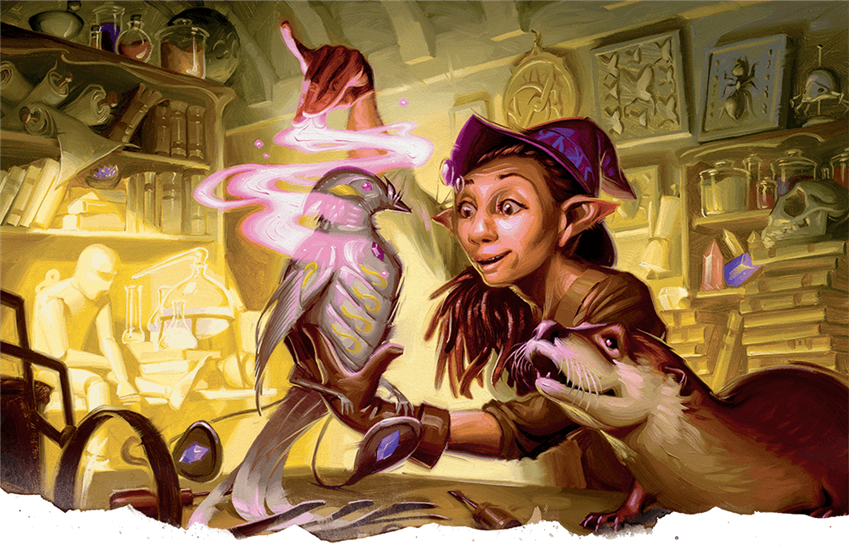
Thaumaturge
Delving into divine worship, you know the Thaumaturgy cantrip, but it does not count against the number of cantrips you know. In addition, you gain the Cleric’s Turn Undead ability and one use of the Channel Divinity feature, which can only be used to Turn. It is regained whenever you finish a Short or Long Rest.
Underdog
The worse it looks, the better you fight:
When allies within 30 feet of you fail a death saving throw, you gain a number of temporary hit points equal to your level.
When a creature scores a critical hit against you, you have advantage on your next attack against them within 1 minute.
Undercity Upbringing
You have spent countless hours underground and have adjusted to life down there. You gain the following benefits:
You have advantage on Dexterity (Stealth) checks while in dim light or darkness.
You gain proficiency with mason's tools. Additionally, whenever you make an Intelligence (History) check related to the origin of tunnels and structures underground, you are considered proficient in the History skill and add double your proficiency bonus to the check, instead of your normal bpnus.
You gain a burrowing speed of 20 feet per hour while holding mason's tools, or half as much through stone.
Squeezing does not reduce your movement or impose disadvantage on attack rolls you make.
Urchin
You grew up on the streets alone, orphaned, and poor, surviving despite it all. You know the secret patterns and flow to cities and can find passages through the urban sprawl that others would miss. You gain a climbing speed equal to your walking speed.
When you aren't in combat, you and companions you lead can travel between any two locations in cities twice as fast as your speed would normally allow. The paths of the undercity are haunted by dangers that rarely brave the light of the surface world, so your journey isn't guaranteed to be safe; as such, you also have advantage on ability skill checks made to detect hidden traps and passageways.
Virtuoso
Prerequisite: Proficiency in an Artisan's tool
You can determine the approximate monetary
value of any item related to your tool proficiencies
at a glance, and can determine whether it’s a forgery.
If you spend one hour studying such an item, you can determine its material composition, time period, its rarity, and any curses, attunements, or caveats that it has. Your DM may ask you to make a check to ascertain more powerful curses and effects.
Warp-Touched
You have been repeatedly exposed to the Warp, the dark sister to the Weave, leaving a residue of its magic tethered to you. When you make or are targeted by a spell attack, before the roll you can choose to have a magical backlash. Flip a coin. On heads, roll 1d4 and add the number to the attack roll. On tails, roll 1d4 and subtract the number from the attack roll. You can trigger a backlash a number of times equal to your Proficiency bonus, regaining all expended uses when you finish a long rest.
Weave Attuned
You can innately detect the presence of magic in the air as an ozone smell followed by your hair standing on end. You can spend 1 minute carefully sifting through the scents around you; your speed is reduced to 0 when you attempt this. At the end of the minute, you can identify any creature, item, or point within 30 feet of you which is under a magical effect or, if invisible, its approximate location.
Well-Rested
Your deep sleep leaves you invigorated when you are awake. Whenever you spend one or more hit dice during a short rest, you can regain an additional number of hit points equal to the maximum number of one of your hit dice and you gain an equal amount of temporary hit points.
When you roll a 1 or 2 on any Hit Dice you spend at the end of a short rest, you can reroll the die and must use the new roll.
Witch Hunter
Your pursuit of arcane practitioners have brought forth a talent to sense magical auras and the power that others are capable of wielding. As a bonus action, you can attempt to determine an opponent's spellcasting ability. You make an Insight check (DC 5 + target's caster level). If this check succeeds, you learn the highest-level spell slot the target is capable of casting, whether the spells are Innate or not, and the ability modifier they use for casting spells.
Wrangler
You have advantage on Wisdom and Charisma checks made to handle and understand Beasts and Monstrosities that are larger than you.
Spells and class features which normally affect Beasts also affect Monstrosities with an Intelligence score of 6 or lower.

PART IV
Equipment

Equipment
For an adventurer, the availability of armour, weapons, backpacks, rope, and similar goods is of paramount importance, since proper equipment can mean the difference between life and death in a dungeon or the untamed wilds. This chapter details the mundane and exotic merchandise that adventurers commonly find useful in the face of the threats that the worlds of D&D present.
Standard Exchange Rates
| Coin | cp | sp | gp | pp |
|---|---|---|---|---|
| Copper (cp) | 1 | 1/10 | 1/100 | 1/1,000 |
| Silver (sp) | 10 | 1 | 1/10 | 1/100 |
| Gold (gp) | 100 | 10 | 1 | 1/10 |
| Platinum (pp) | 1,000 | 100 | 10 | 1 |
Approximate Real-World Value.
$1 : £0.80 : 1 cp.
Common Services
Purchasing Magic Items:
- Common........50-100 gp
- Uncommon...101-500 gp
- Rare................501-5,000 gp
- Very Rare.......5,001-50,000 gp
- Legendary......50,001-500,000 gp+
Scrolls
| Level | Cost (gp) |
|---|---|
| Cantrip | 25 |
| 1st | 75 |
| 2nd | 150 |
| 3rd | 300 |
| 4th | 500 |
| 5th | 1000 |
| Level | Cost (gp) |
|---|---|
| Large Cities Only | |
| 6th | 2000 |
| 7th | 3600 |
| 8th | 5000 |
| 9th | 7500 |
Spellcasting:
30 gp per level + consumed material costs
Potions (gp)
Standard prices for DMG potions.
| Healing Potion | Cost (gp) |
|---|---|
| Regular | 75 |
| Greater | 100 |
| Superior | 500 |
| Supreme | 5000 |
| Other Potions | Cost (gp) |
|---|---|
| Climbing | 75 |
| Animal Friendship | 100 |
| Water Breathing | 100 |
| Invisibility | 250 |
| Greater Invisibility | 500 |
Animal mounts
300-1000 gp per CR, depending on power and Creature type (eg. beast cheapest; monstrosity, dragon etc. more expensive)
Non-magical healing
- Minor care: 3sp per use (eg. med kits)
- Major care: 1gp per day
Transportation
Inner-city Coach: 3sp per hour (2 mph)
Powered Coach: 3sp per mile (5 mph)
Lightning Rail: 5cp per mile (30 mph) for short trips, or 1 gp/day for express lines
Ship/ferry: 1sp per mile (5mph)
Teleport circle: ~5000 gp for permanent access to a teleport circle (Library/Transport/School of Magic) ; ~250 gp/trip
Communication and Security
Wards and Messaging services can often be found near Archives.
Arcane Locks: 20 gp per level
Courier service: 2cp per lbs. of the package
Regular Mail: 1cp per stamp
Sending Spell-Mail: 4cp per sending
Translation: 1sp per page

Armour and Shields
D&D worlds are a vast tapestry made up of many different cultures, each with its own technology level. For this reason, adventurers have access to a variety of armour types, ranging from leather armour to chain mail to costly plate armour, with several other kinds of armour in between.
Armour Proficiency
Anyone can put on a suit of armour or strap a Shield to an arm. Only those proficient in the armour’s use know how to wear it effectively, however. Your class gives you proficiency with certain types of armour. If you wear armour that you lack proficiency with, you have disadvantage on any ability check, saving throw, or Attack roll that involves Strength or Dexterity, and you can’t cast Spells.
Getting Into and Out of Armour
The time it takes to don or doff a type of armour or a shield is shown in the Donning and Doffing Armour table.
Don. This is the time it takes to put on the item. You benefit from its AC only if you take the full time to don it.
Doff. This is the time it takes to take off the item. If you have help removing armour, reduce this time by half.
Don/Doff Time
| Armour | Don | Doff |
|---|---|---|
| Light | 1 minute | 1 minute |
| Medium | 5 minutes | 1 minute |
| Heavy | 10 minutes | 5 minutes |
| Shield | 1 action | 1 action |
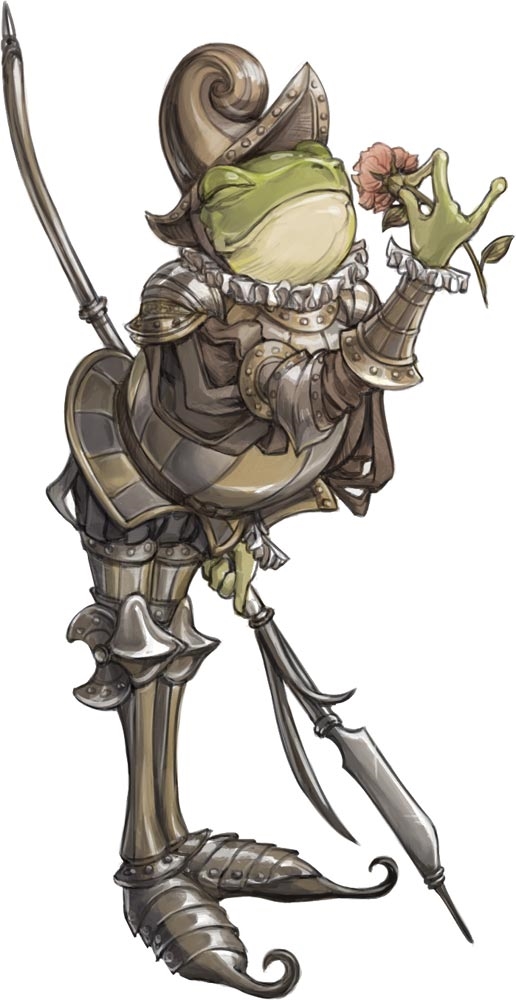
Armours
| Armour | Cost (gp) | Armour Class (AC) | Prerequisite | Properties |
|---|---|---|---|---|
| Light Armour | ||||
| Leather | 10 | 11 + Dex modifier | -- | -- |
| Studded Leather | 45 | 12 + Dex modifier | -- | -- |
| Pteranodon Scale Leather | 200 | 12 + Dex modifier | Str 10 | Special |
| Medium Armour | ||||
| Hide | 10 | 12 + Dex modifier (max. 2) | -- | -- |
| Chain Shirt | 50 | 13 + Dex modifier (max. 2) | -- | -- |
| Scale Mail | 50 | 14 + Dex modifier (max. 2) | -- | Stealth Disadvantage |
| Thick Pelts | 20 | 14 + Con modifier (max. 2) | Str 13 | -- |
| Battlerager Spikes | 75 | 14 + Dex modifier (max. 2) | -- | Stealth Disadvantage, Special |
| Breastplate | 400 | 14 + Dex modifier (max. 2) | -- | -- |
| Halfplate | 750 | 15 + Dex modifier (max. 2) | -- | Stealth Disadvantage |
| Ironwood Plate | 300 | 16 | -- | Stealth Disadvantage (wooden) |
| Heavy Armour | ||||
| Ring Mail | 30 | 14 | -- | Stealth Disadvantage |
| Chain Mail | 75 | 16 | Str 13 | Stealth Disadvantage |
| Splint | 200 | 17 | Str 15 | Stealth Disadvantage |
| Plate | 1500 | 18 | Str 15 | Stealth Disadvantage |
| Stronghold Plate | 2400 | 20 | Str 17 | Stealth Disadvantage, Special |
| Shields | ||||
| Standard | 10 | +2 | -- | -- |
| Buckler | 5 | +1 | Dex 13 | Parry (1d4) |
| Tower | 50 | +3 | Str 15 | Stealth Disadvantage, Special |
Strength Requirement
If the Armour table shows “Str 13” or “Str 15” in the Strength column for an armour type, the armour reduces the wearer’s speed by 10 feet unless the wearer has a Strength score equal to or higher than the listed score.
The Dexterity requirement of bucklers is the threshold at which point a user is able to perform a Parry using the shield.
Armour Properties
The Armour table shows the cost, weight, and other properties of the common types of armour used in the worlds of D&D, separates them into three categories: light armour, medium armour, and heavy armour. Many warriors supplement their armour with a shield.
Armour Class (AC). Armour protects its wearer from attacks. The equipment you wear determines your AC.
Heavy Armour. Heavier armour interferes with the wearer's ability to move quickly, stealthily, and freely. If the Armour table shows "Str 13" or "Str 15" in the Strength column for an armour type, the armour reduces the wearer's speed by 10 feet unless the wearer has a Strength score equal to or higher than the listed score.
Light Armour. Made from supple and thin materials, light armour favors agile adventurers since it offers some protection without sacrificing mobility. If you wear light armour, you add your Dexterity modifier to the base number from your armour type to determine your Armour Class.
Stealth. If the Armour table shows "Disadvantage" in the Stealth column, the wearer has disadvantage on Dexterity (Stealth) checks.
Shields. A shield is made from wood or metal and is carried in one hand. Wielding a shield increases your Armour Class by an amount dependant on the type. You can benefit from only one shield at a time.
Special Armour Properties
Pteranodon Scale Leather. Made famous by the folk of the Q’barr jungles, this leather holds pteranodon wings bolted between your torso and triceps. When falling, a wearer can outstretch their arms to glide, reducing their fall speed by half and reducing the fall damage taken from any height to only 1d6 total. For every 10 feet the wearer falls, they can move 5 feet horizontally.
Battlerager Spiked Armour. If you grapple or are grappled by a creature, at the start of each of the creature’s turns while in the grapple and when the grapple begins, the creature takes 1d4 piercing damage.
Stronghold Plate. Forged by the dwarven forges in the deepest of the Mror holds, this suit of plate is nigh indestructible and shows no weathering. This armour is only wearable by a humanoid of Small size. While wearing this armour, effects which would reduce your speed, pull, or push you have their distances halved. Additionally, any fly speeds incurred magically while wearing this armour are halved for you, and you always immediately sink to the bottom of a body of liquid, regardless of magic such as the Water Walk spell
Tower Shield. While wielding this shield in one hand, a creature can only use javelins, spears, lances (while mounted), and Light weapons in their other hand.
Weapons
Your ancestry, background, class, and feats can grant you proficiency with certain weapons or categories of weapons, reflecting both your martial's focus and the tools you are most likely to use. Whether you favor a longsword or a longbow, your weapon and your ability to wield it effectively can mean the difference between life and death while adventuring.
The Weapons table shows the most common weapons used in the fantasy gaming worlds, their price and weight, the damage they deal when they hit, and any special properties they possess. Every weapon is classified as either melee or ranged. A melee weapon is used to attack a target within 5 feet of you, whereas a ranged weapon is used to attack a target at a distance.
Weapon Proficiency
The two weapon categories are simple and martial. Most people can use simple weapons with proficiency. These weapons include clubs, maces, and other weapons often found in the hands of commoners. Martial weapons, including swords, axes, and polearms, require more specialized training to use effectively.
Proficiency with a weapon allows you to add your proficiency bonus to the attack roll for any attack you make with that weapon. If you make an attack roll using a weapon with which you lack proficiency, you do not add your proficiency bonus to the attack roll.
Firearms
Ranged weapons have an additional subcategory of Firearms. This is a new advancement made by guilds of Artificers, and is an up-and-coming emergent technology.
In the world of D&D, firearm ammunition is composed of a lead bullet in an electrum casing, with black powder sandwiched between the two. Lead possesses minor antimagical properties, and electrum is an amber-infused steel alloy which is combustible, highly conductive to heat, electricity, and magic, and very impact-absorbant. As such, the rounds consume the casings as a part of being fired without producing extreme internal pressures, so the firearms do not need ejection mechanisms. The rounds are quite volatile as a result, however, so firearms are prone to misfiring.
Ammunition Costs
| Ammo. Type | Cost |
|---|---|
| Arrows & Bolts (20) | 1 gp |
| Greatarrows (5) | 1 gp |
| Firearm Rounds | |
| Light (10) | 1 gp |
| Regular (5) | 1 gp |
| Heavy (5) | 3 gp |
| 12 lbs. Cannonball (2) | 1 gp |
Ranged Weapons
| Name | Cost | Ammo Type | Damage | Range | Properties |
|---|---|---|---|---|---|
| Simple Ranged Weapon | |||||
| Light Crossbow | 25 gp | Bolt | 1d8 Pierce | 80/320 | Loading, Two-Handed |
| Shortbow | 25 gp | Arrow | 1d6 Pierce | 80/320 | Two-Handed |
| Sling | 1 sp | Pebble | 1d4 Pierce | 80/120 | Light |
| Throwing Dart | 2 cp | - | 1 Pierce | 20/60 | Finesse, Light, Thrown |
| Martial Ranged Weapon | |||||
| Blowgun | 1 gp | Darts | 1d4 Pierce | 25/100 | Light |
| Hand Crossbow | 75 gp | Bolt | 1d6 Pierce | 30/120 | Light, Loading |
| Heavy Crossbow | 50 gp | Bolt | 1d10 Pierce | 100/400 | Unwieldy, Loading, Two-Handed |
| Greatbow | 200 gp | Greatarrow | 1d12 Pierce | 300/1200 | Unwieldy, Two-Handed, Bulky, Loading |
| Longbow | 50 gp | Arrow | 1d8 Pierce | 150/600 | Unwieldy, Two-Handed |
| Net | 1 gp | - | - | 5/15 | Special, Thrown |
| Scale Ballista | 175 gp | Greatarrow | 2d8 Pierce | 300/600 | Oversized, Bulky, Loading, Siege |
| Firearms | |||||
| Flintlock Pistol | 50 gp | Light | 1d6 Pierce | 40/160 | Light, Loading, Misfire 1, Firearm |
| Pepperbox | 150 gp | Light | 1d6 Pierce | 60/90 | Light, Reload 5, Misfire 1, Firearm |
| Musket | 300 gp | Regular | 1d12 Pierce | 120/400 | Two-Handed, Reload 1, Misfire 2, Firearm |
| Revolver | 300 gp | Regular | 1d10 Pierce | 80/320 | Reload 6, Misfire 2, Firearm |
| Bolter | 400 gp | Regular | 1d10 Pierce | 80/160 | Unwieldy, Reload 12, Misfire 2, Firearm |
| Blunderbuss | 300 gp | Heavy | 2d4 Pierce | 15/60 | Two-Handed, Loading, Misfire 2, Firearm, Explosive |
| Long Rifle | 150 pp | Heavy | 2d12 Pierce | 200/800 | Two-Handed, Firearm, Unwieldy, Loading, Misfire 3 |
| Lever-Action Rifle | 2500 gp | Heavy | 2d12 Pierce | 200/800 | Two-Handed, Firearm, Unwieldy, Reload 3, Misfire 3 |
| Shotgun | 250 gp | Heavy | 1d10 Pierce | 15 (Cone) | Two-Handed, Reload 1, Misfire 2, Spread, Firearm |
| Sawn-Off Shotgun | 200 gp | Heavy | 1d12 Pierce | 10 (Cone) | Two-Handed, Reload 2, Misfire 3, Spread, Firearm |
| Twin-Barrel Shotgun | 650 gp | Heavy | 1d10 Pierce | 15 (Cone) | Two-Handed, Reload 2, Misfire 2, Spread, Firearm |
| Hip Cannon | 750 gp | Cannonball | 2d12 Bludgeon | 40/120 | Two-Handed, Unwieldy, Bulky, Loading, Misfire 3, Firearm |
| Shoulder Cannon | 200 gp | Cannonball | 3d8 Bludgeon | 80/320 | Oversized, Bulky, Loading, Siege, Misfire 3, Firearm |
| Monster Hunter Firearms | |||||
| Hunter’s Pistol | 80 gp | Light | 1d6 Pierce | 20/60 | Light, Firearm, Reload 1, Misfire 1, Parry |
| Hunter’s Pepperbox | 180 gp | Light | 1d8 Pierce | 15/45 | Light, Firearm, Reload 5, Misfire 1, Parry |
| Hunter’s Blunderbuss | 250 gp | Regular | 3d4 Pierce | 15 (cone) | Reload 1, Misfire 2, Firearm, Spread |
| Hunter’s Makeshifter | 150 gp | Any | 1d10 Pierce | 30/100 | Two-Handed, Reload 2, Misfire 2, Firearm, Special |
| Falish Revolver | 1500 gp | Light | 1d8 Pierce | 150/600 | Reload 7, Misfire 1, Light, Firearm, Parry |
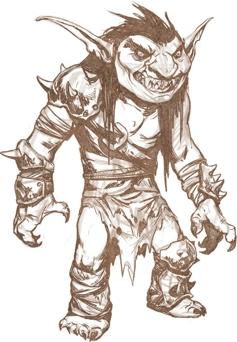
Weapon Properties
Many weapons have special properties related to their use, as shown in the Weapons table.
Ammunition. You can use a weapon that has the ammunition properly to make a ranged attack only if you have ammunition to fire from the weapon. Each time you attack with the weapon, you expend one piece of ammunition. Drawing the ammunition from a quiver, case, or other container is part of the attack (you need a free hand to load a one-handed weapon). At the end of the battle, you can recover half your expended ammunition by taking a minute to search the battlefield. If you use a weapon that has the ammunition property to make a melee attack, you treat the weapon as an improvised weapon (see "Improvised Weapons" later in the section). A sling must be loaded to deal any damage when used in this way.
Bleed. When you damage the Hit Points of a target by inflicting a Critical Hit, if the target is a creature that has large reserves of internal fluid (usually blood, but including creatures such as water elementals, oozes, and plants), the creature takes an amount of the attack-type damage equal to the maximum roll of its largest Hit Die.
Bulky. A ranged weapon with this property cannot be wielded with a Strength score less than 13. You may use your Strength rather than Dexterity score to modify attacks and damage with this ranged weapon. Additionally, it imposes disadvantage on all attacks with the weapon if you move more than 15 feet before using it to attack, and your speed is reduced to 0 after making an attack with it.
Explosive. Upon a hit, everything within 5 ft of the target must make a Dexterity saving throw (DC equal to 8 + your proficiency bonus + your attack ability modifier) or suffer 1d8 fire damage. If the weapon misses, the ammunition fails to detonate, or bounces away harmlessly before doing so.
Finesse. When making an attack with a finesse weapon, you use your choice of your Strength or Dexterity modifier for the attack and damage rolls. You must use the same modifier for both rolls.
Light. A light weapon is small and easy to handle, making it ideal for use when fighting with two weapons.
Loading. Because of the time required to load this weapon, you can fire only one piece of ammunition from it when you use an action, bonus action, or reaction to fire it, regardless of the number of attacks you can normally make.
Misfire. Whenever you make an attack with a weapon that has this property and the dice roll is equal to or lower than the weapon’s Misfire score, the weapon misfires. The attack misses, and the weapon cannot be used again until you spend an action to try and repair it. To repair your firearm, you must make a successful Tinker’s Tools check, using Dexterity (DC equal to 8 + misfire score). If your check fails, the weapon is broken and must be mended out of combat at a quarter of the cost of the firearm. Creatures who use a firearm without being proficient increase the weapon’s misfire score by 1.
Oversized. This weapon can only be used by a Medium sized or larger creature with a Strength score of 17 or higher. This weapon has a base range of 10 feet. In addition, you can only make one attack when using an action to attack with the weapon, regardless of the number of attacks you can normally make.
This weapon requires two hands to use and two hands to simply wield it when it is not stowed. An Oversized weapon's size and bulk make it too large for a Small or Tiny creature to use at all.
Parry. When you are targeted by a weapon attack, you may make a reaction attack using this weapon. You deal no damage with this attack. If the triggering attack hits you, you can roll the weapon's damage die + your Dexterity modifier and reduce that attack's hit roll by that amount. If you reduce the attack hit total to below your AC, you take no damage, the enemy is thrown off balance, and the next attack made against the attacking creature until the end of your next turn has advantage. If the triggering attack misses, you still use up your reaction and the weapon's ammunition, if any.
Range. A weapon that can be used to make a ranged attack has a range shown in parentheses after the ammunition or thrown property. The range lists two numbers. The first is the weapon’s normal range in feet, and the second indicates the weapon’s maximum range. When attacking a target beyond normal range, you have disadvantage on the attack roll. You can’t attack a target beyond the weapon’s long range.
Reach. This weapon adds 5 feet to your reach when you attack with it as well as when determining your reach for opportunity attacks with it.
Reload. The weapon can be fired a number of times equal to its Reload score before you must spend 1 attack or 1 action to reload. You must have a free hand to reload.
Serrated. These weapons are specially crafted to hunt beasts, monstrosities, and zoomorphic humanoids, such as Gnolls or Driders. When you make an attack against creatures with Natural Armour (or no armour) with this weapon, you ignore any damage resistances it may have to the weapon's damage types, and it still takes half damage if it is immune. This effect applies also to unarmoured creatures who calculate their AC using nonmagical innate or class features, such as monks or barbarians.
Siege. A weapon with this property deals double damage to objects and structures.
Spread. When you make an attack with a weapon that has this property, your bullets fire out in a cone equal to the Range increments of the weapon. Each creature in the cone's area must make a Dexterity saving throw with a DC of 8 + your Attack modifier with that weapon.
Thrown.
If a weapon has the thrown property, you can throw the weapon to make a ranged attack. If the weapon
is a melee weapon, you use the same ability modifier for
that attack roll and damage roll that you would use for
a melee attack with the weapon. For example, if you
throw a handaxe, you use your Strength, but if you
throw a dagger, you can use either your Strength or
your Dexterity, since daggers are finesse weapons.
Two-Handed.
This weapon must be held in
two hands when you attack with it.
Unwieldy.
Creatures that are Small or Tiny have disadvantage on attack rolls with Unwieldy weapons.
An Unwieldy weapon's size and bulk make it too large
for a Small or Tiny creature to use effectively.
Versatile.
This weapon can be used with one or two
hands. A damage value in parentheses appears with the property of the damage when the weapon is used with
two hands to make a melee attack.
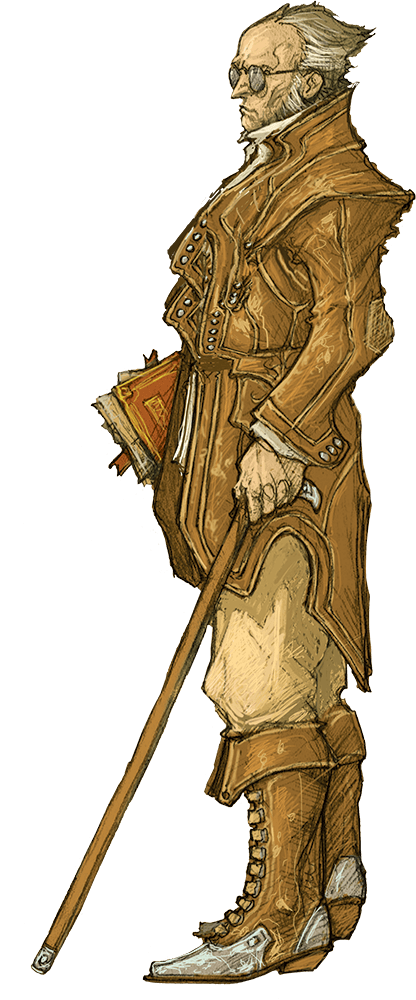
Melee Weapons
| Name | Cost | Damage | Properties |
|---|---|---|---|
| Simple Melee Weapons | |||
| Club | 1 sp | 1d6 Bludgeon | Light |
| Dagger | 2 gp | 1d4 Pierce | Finesse, Light, Thrown (20/60) |
| Handaxe | 5 gp | 1d6 Slash | Light, Thrown (20/60) |
| Javelin | 5 sp | 1d6 Pierce | Thrown (30/120) |
| Knuckledusters | 1 gp | 1d4 Bludgeon | Light, Special |
| Light Hammer | 2 gp | 1d6 Bludgeon | Light, Thrown (20/60) |
| Mace | 5 gp | 1d8 Bludgeon | Unwieldy |
| Quarterstaff | 2 sp | 1d6 Bludgeon | Versatile (1d8) |
| Sickle | 1 gp | 1d6 Slash | Light |
| Spear | 1 gp | 1d6 Pierce | Thrown (20/60), Versatile (1d8) |
| Martial Melee Weapons | |||
| Battleaxe or Longsword | 10 gp | 1d8 Slash | Versatile (1d10) |
| Butcher Cleaver | 800 gp | 3d10 Slash | Oversized |
| Chakram | 5 gp | 1d6 Slash | Finesse, Light, Thrown (30/90) |
| Flail | 10 gp | 1d8 Bludgeon | Reach |
| Glaive or Halberd | 20 gp | 1d10 Slash | Unwieldy, Reach, Two-Handed |
| Greataxe | 30 gp | 1d12 Slash | Unwieldy, Two-Handed |
| Greatsword | 50 gp | 2d6 Slash | Unwieldy, Two-Handed |
| Lance | 10 gp | 1d12 Pierce | Reach, Special |
| Lords’ Tracer | 40 gp | 1d4 Slash | Finesse, Light, Bleed |
| Maul | 10 gp | 2d6 Bludgeon | Unwieldy, Two-Handed |
| Meteor Hammer | 15 gp | 1d10 Bludgeon | Unwieldy, Reach, Two-Handed |
| Morningstar | 15 gp | 1d8 Bludgeon | Bleed, Serrated |
| Odachi | 40 gp | 1d10 Slash | Unwieldy, Two-Handed, Finesse |
| Parrying Dagger | 3 gp | 1d4 Pierce | Finesse, Light, Parry |
| Pike | 5 gp | 1d10 Pierce | Unwieldy, Reach, Two-Handed |
| Rapier | 25 gp | 1d8 Pierce | Finesse |
| Scimitar | 10 gp | 1d6 Slash | Finesse, Light |
| Shortsword | 10 gp | 1d6 Pierce | Finesse, Light |
| Titan Maul | 800 gp | 3d8 Bludgeon | Oversized, Siege |
| Trident | 5 gp | 1d6 Pierce | Thrown (20/60), Versatile (1d8), Bleed |
| Twinblade | 40 gp | 2d4 slashing | Finesse, Two-Handed, Special |
| War Pick | 5 gp | 1d8 Pierce | Versatile (1d10) |
| Warhammer | 10 gp | 1d8 Bludgeon | Versatile (1d10) |
| Whip | 2 gp | 1d4 Slash | Finesse, Light, Reach |
Special Weapon Properties
Hunter's Makeshifter. This firearm can use any object as ammunition, provided it will not shatter when the trigger is pulled (foe example glass vials), it fits into the inch-radius chamber opening, and it is solid.
Knuckledusters. Attacks made with knuckledusters are considered unarmed strikes, dealing the damage for the knuckleduster instead of the damage normal for your Unarmed strikes. Attacking this way also grants your unarmed strikes the Light property of the weapon (in addition to any others it may have), allowing you to engage in two-weapon fighting, for example.
Lance. You have disadvantage when you use a lance to attack a target within 5 feet of you. Also, a lance requires two hands to wield when you aren’t mounted.
Net. A Large or smaller creature hit by a net is restrained until it is freed. A net has no effect on creatures that are formless, or creatures that are Huge or larger. A creature can use its action to make a DC 10 Strength check, freeing itself or another creature within its reach on a success. Dealing 5 slashing or fire damage to the net (AC 10) also frees the creature without harming it, ending the effect and destroying the net. When you use an action, bonus action, or reaction to attack with a net, you can make only one attack regardless of the number of attacks you can normally make.
Twinblade. While holding a twinblade, you can engage in two-weapon fighting even though it is one weapon held in both hands. The second attack is also made with the twinblade.
Improvised Weapons
Sometimes characters don't have their weapons and have to attack with whatever is close at hand. An improvised weapon includes any object you can wield in one or two hands, such as broken glass, a table leg, a frying pan, a wagon wheel, or a dead goblin. In many cases, an improvised weapon is similar to an actual weapon and can be treated as such. For example, a table leg is akin to a club. At the DM's option, a character proficient with a weapon can use a similar object as if it were that weapon and use his or her proficiency bonus. An object that bears no resemblance to a weapon deals 1d4 damage (the DM assigns a damage type appropriate to the object). If a character uses a ranged weapon to make a melee attack, or throws a melee weapon that does not have the thrown property, it also deals 1d4 damage. An improvised thrown weapon has a normal range of 20 feet and a long range of 60 feet.
Silvered Weapons
Some monsters that have immunity or resistance to non-magical weapons are susceptible to silver weapons, so cautious adventurers invest extra coin to plate their weapons with silver. You can silver a single weapon or ten pieces of ammunition for 100 gold pieces. Cannonballs and Greatarrows cost 25 gp each to silver. This cost represents not only the price of the silver, but the time and expertise needed to add silver to the weapon without making it less effective.
Tool Sets and Their Uses
A tool helps you to do something you couldn't otherwise do, such as craft or repair an item, forge a document, or pick a lock. Your ancestry, class, background, or feats give you proficiency with certain tools. Proficiency with a tool allows you to add your proficiency bonus to any ability check you make using that tool.
Tool use is not tied to a single ability, since proficiency with a tool represents broader knowledge of its use. For example, the GM might ask you to make a Dexterity check to carve a fine detail with your woodcarver's tools, or a Strength check to make something out of particularly hard wood.
Tools have more specific applications than skills. The History skill applies to any event in the past; a tool such as Calligrapher’s Supplies is used to make fake objects and little else. Thus, why would a character who has the opportunity to acquire one or the other want to gain a tool proficiency instead of proficiency in a skill?
Advantage
If the use of a tool and the use of a skill both apply to a check, and a character is proficient with the tool and the skill, the character makes the check with advantage. In the tool descriptions that follow, this benefit is often expressed as additional insight (or something similar), which translates into an increased chance that the check will be a success.
Added Benefit
Characters who have both a relevant skill and a relevant tool proficiency gain an added benefit on a successful check; this benefit might be in the form of more detailed information or could simulate the effect of a different sort of successful check. For example, a character proficient with mason's tools makes a successful Wisdom (Perception) check to find a secret door in a stone wall. Not only does the character notice the door's presence, but you decide that the tool proficiency entitles the character to an automatic success on an Intelligence (Investigation) check to determine how to open the door.
Tool Descriptions
The following sections go into detail a bout the tools presented in the Player's Handbook, offering advice on how to use them in a campaign.
Components. The first paragraph in each description gives details on what a set of supplies or tools is made up of. A character who is proficient with a tool knows how to use all of its component parts.
Skills. Every tool potentially provides advantage on a check when used in conjunction with certain skills, provided a character is proficient with the tool and the skill. Paragraphs that begin with skill names discuss these possibilities. In each of these paragraphs, the benefits apply only to someone who has proficiency with the tool; essentially, a character who has proficiency with a tool also has learned about facets of the trade or profession that are not necessarily associated with the use of the tool.
Special Use. Proficiency with a tool usually brings with it a particular benefit in the form of a special use, as described in this paragraph. These are followed by suggested DCs.
Tool Sets
| Item | Cost | Weight |
|---|---|---|
| Disguise kit | 25 gp | 3 lb. |
| Herbalism kit | 5 gp | 3 lb. |
| Navigator's tools | 25 gp | 2 lb. |
| Thieves' tools | 25 gp | 1 lb. |
| Artisan's tools | ||
| Alchemist's supplies | 30 gp | 8 lb. |
| Calligrapher's supplies | 10 gp | 5 lb. |
| Cartographer's tools | 15 gp | 6 lb. |
| Cook's utensils | 1 gp | 8 lb. |
| Glassblower's tools | 30 gp | 5 lb. |
| Illustrator's supplies | 10 gp | 5 lb. |
| Jeweler's tools | 25 gp | 2 lb. |
| Leatherworker's tools | 5 gp | 5 lb. |
| Mason's tools | 10 gp | 8 lb. |
| Monster Hunter's tools | 40 gp | 30 lb. |
| Potter's tools | 10 gp | 3 lb. |
| Seamster’s tools | 1 gp | 5 lb. |
| Smith's tools | 20 gp | 8 lb. |
| Tattooist's tools | 70 gp | 5 lb. |
| Tinker's tools | 50 gp | 10 lb. |
| Woodworker's tools | 8 gp | 6 lb. |
| Gaming set | ||
| Dice set | 1 sp | — |
| Playing cards | 5 sp | — |
| Board Game | 1 gp | 1/2 lb. |
| Musical instrument | ||
| Percussion | 6 gp | 3 lb. |
| Brass | 3 gp | 2 lb. |
| Reed | 2 gp | 1 lb. |
| Strings | 30 gp | 2 lb. |
| Woodwind | 12 gp | 2 lb. |
| Vehicles (land or water) | — | — |

Alchemist's Supplies
Alchemist's supplies enable a character to produce useful elixir s, such as acid or alchemist's fire.
Components. Alchemist's supplies include two glass beakers, a metal frame to hold a beaker in place over an open flame, a glass stirring rod, a small mortar and pestle, and a pouch of common alchemical ingredients, including salt, powdered iron, and purified water.
Arcana or Investigation. Proficiency with alchemist's supplies allows you to unlock more information on checks involving any chemicals or other substances that might have been used.
History. Proficiency with Alchemist’s Supplies gives you additional insight on Intelligence (History) checks concerning events that involve toxins such as alcohol as a significant element.
Medicine. This tool proficiency grants additional insight when you treat anyone suffering from poisoning or when you can use salves to dull pain.
Potable Water. Your knowledge of brewing enables you to purify water that would otherwise be undrinkable. As part of a long rest, you can purify up to 6 gallons of water, or 1 gallon as part of a short rest.
| Activity | DC |
|---|---|
| Create a puff of thick smoke or a small fire | 10 |
| Detect poison or impurities in a mixture | 10 |
| Identify a poison or other substance | 15 |
| Neutralise acid | 15 |
| Ignore effects of alcohol or another known toxin | 20 |
Calligrapher’s Supplies
Calligraphy treats writing as a delicate, beautiful art. Calligraphers produce text that is pleasing to the eye, using a style that is difficult to forge. Their supplies also give them some ability to examine scripts and determine if they are legitimate, since a calligrapher's training involves long hours of studying writing and attempting to replicate its style and design. Calligrapher’s Supplies can also be used to duplicate documents and to make it easier to copy a person's seal or signature.
Components. Calligrapher’s Supplies includes several different types of ink, a variety of parchments and papers, several quills, seals and sealing wax, gold and silver leaf, and small tools to sculpt melted wax to mimic a seal.
History. This tool proficiency can augment the benefit of successful checks made to analyze or investigate ancient writings, scrolls, or other texts, including runes etched in stone or messages in frescoes or other displays, or to tell if an old document is authentic.
Deception. A well-crafted forgery, such as papers proclaiming you to be a noble or a writ that grants you safe
passage, can lend credence to a lie.
Investigation. When you examine objects, proficiency with Calligrapher’s Supplies is useful for determining how an object was made and whether it is genuine. Although calligraphy is of little help in deciphering the content of magical writings, proficiency with these supplies can aid in identifying who wrote a script of a magical nature or to determine if a such an item is real or fake.
Other Tools. Knowledge of other tools makes your forgeries that much more believable. For example, you could combine proficiency with Calligrapher’s Supplies and proficiency with cartographer's tools to make a fake map.
| Activity | DC |
|---|---|
| Identify a known writer of nonmagical script | 10 |
| Determine writer’s state of mind | 15 |
| Spot forged text | 15 |
| Mimic handwriting or signature | 15 |
| Duplicate a wax seal | 20 |
Cartographer's Tools
Using cartographer's tools, you can create accurate maps to make travel easier for yourself and those who come after you. These maps can range from large-scale depictions of mountain ranges to diagrams that show the layout of a dungeon level.
Components. Cartographer's tools consist of a quill, ink, parchment, a pair of compasses, calipers, and a ruler.
Arcana, History, or Religion. You can use your knowledge of maps and locations to unearth more detailed information when you use these skills. For instance, you might spot hidden messages in a map, identify when the map was made to determine if geographical features have changed since then, and so forth.
Nature. Your familiarity with physical geography makes it easier for you to answer questions or solve issues relating to the terrain around you.
Survival. Your understanding of geography makes it easier to find paths to civilization, to predict areas where villages or towns might be found, and to avoid becoming lost. You have studied so many maps that common patterns, such as how trade routes evolve and where settlements a rise in relation to geographic locations, are familiar to you.
Craft a Map. While traveling, you can draw a map as you go in addition to engaging in other activity.
Decipher Treasure Map. This tool proficiency grants you expertise in examining maps. You can make an Intelligence check to determine a map's age, whether a map includes any hidden messages, or similar facts.
| Activity | DC |
|---|---|
| Determine a map’s age and origin | 10 |
| Estimate direction and distance to a landmark | 15 |
| Discern that a map is fake | 15 |
| Fill in a missing part of a map | 20 |
Cook’s Utensils
Adventuring is a hard life. With a cook along on the journey, your meals will be much better than the typical mix of hardtack and dried fruit.
Components. Cook's utensils include a metal pot, knives, forks, a stirring spoon, and a ladle.
History. Your knowledge of cooking techniques allows you to assess the social patterns involved in a culture's eating habits.
Medicine. When administering treatment, you can transform medicine that is bitter or sour into a pleasing elixir.
Survival. When foraging for food, you can make do with ingredients you scavenge that others would be unable to transform into nourishing meals.
Prepare Meals. As part of a short rest, you can prepare a tasty meal that helps your companions regain their strength, provided you have ingredients and cook's utensils on hand. You can prepare enough of this food for a number of creatures equal to your Dexterity or Intelligence modifier + your proficiency bonus. At the end of the short rest, any creature who eats the food and spends one or more Hit Dice to regain hit points regains an extra 1d8 hit points.
| Activity | DC |
|---|---|
| Duplicate a meal | 10 |
| Spot poison or impurities in food | 15 |
| Create a gourmet meal | 20 |

Disguise Kit
The perfect tool for anyone who wants to engage in trickery, a disguise kit enables its owner to adopt a false identity.
Components. A disguise kit includes cosmetics, hair dye, small props, and a few pieces of clothing.
Deception. In certain cases, a disguise can improve your ability to weave convincing lies.
Intimidation. The right disguise can make you look more fearsome, whether you want to scare someone away by posing as a plague victim or intimidate a gang of thugs by taking the appearance of a bully.
Performance. A cunning disguise can enhance an audience's enjoyment of a performance, provided the disguise is properly designed to evoke the desired reaction.
Persuasion. Folk tend to trust a person in uniform. If you disguise yourself as an authority figure, your efforts to persuade others are often more effective.
Create Disguise. As part of a long rest, you can create a disguise. It takes you 1 minute to don such a disguise once you have created it. You can carry only one such disguise on you at a time without drawing undue attention, unless you have a bag of holding or a similar method to keep them hidden. Each disguise weighs 1 pound.
At other times, it takes 10 minutes to craft a disguise that involves moderate changes to your appearance, and 30 minutes for one that requires more extensive changes.
| Activity | DC |
|---|---|
| Cover injuries or distinguishing marks | 10 |
| Spot a disguise being used by someone else | 15 |
| Copy a humanoid's apperance | 20 |
Gaming Set
Proficiency with a gaming set applies to one type of game, such as Three-Dragon Ante or games of chance that use dice.
Components. A gaming set has all the pieces needed to play a specific game or type of game, such as a complete deck of cards or a board and tokens.
History. Your mastery of a game includes knowledge of its history, as well as of important events it was connected to or prominent historical figures involved with it.
Insight. Playing games with someone is a good way to gain understanding of their personality, granting you a better ability to discern their lies from their truths and read their mood.
Sleight of Hand. Sleight of Hand is a useful skill for cheating at a game, as it allows you to swap pieces, palm cards, or alter a die roll. Alternatively, engrossing a target in a game by manipulating the components with dexterous movements is a great distraction for a pick-pocketing attempt.
| Activity | DC |
|---|---|
| Catch a player cheating | 15 |
| Gain insight into an opponent’s personality | 15 |
Glassblower’s Tools
Someone who is proficient with glassblower's tools has not only the ability to shape glass, but also specialized knowledge of the methods used to produce glass objects.
Components. The tools include a blowpipe, a small marver, blocks, and tweezers. You need a source of heat to work glass.
Arcana or History. Your knowledge of glassmaking techniques aids you when you examine glass objects, such as potion bottles or glass items found in a treasure hoard. For instance, you can study how a glass potion bottle has been changed by its contents to help determine a potion's effects. (A potion might leave behind a residue, deform the glass, or stain it.)
Investigation. When you study an area, your knowledge can aid you if the clues include broken glass or glass objects.
Identify Weakness. With 1 minute of study, you can identify the weak points in a glass object. Any damage dealt to the object by striking a weak spot is doubled.
| Activity | DC |
|---|---|
| Identify source of glass | 10 |
| Determine what a glass object once held | 20 |
Herbalism Kit
Proficiency with an herbalism kit allows you to identify plants and safely collect their useful elements such as to treat diseases and toxins.
It also allows you to apply poisons and create them from various materials, and as such is a favored resource for thieves, assassins, and others who engage in skulduggery.
Components. An herbalism kit includes pouches to store herbs, clippers and leather gloves for collecting plants, a mortar and pestle, several glass jars, and a glass stirring rod.
Arcana. Your knowledge of the nature and uses of herbs can add insight to your magical studies that deal with plants and your attempts to identify potions.
Investigation, Nature, or Survival. Your skill in herbalism makes it easier to identify plants and spot sources of food that others might overlook, and to pick out details and clues that others might miss in areas of overgrowth.
Medicine. Your mastery of herbalism improves your ability to treat illnesses and wounds by augmenting your methods of care with medicinal plants. Your knowledge of poisons and toxic plants has taught you to handle those substances carefully, giving you an edge when you inspect contaminated objects, when you try to extract clues from events that involve poison, and into how to provide the best care to poisoned patients.
Handle Foul Herbs. Your proficiency allows you to handle and apply a poison or other toxin without risk of exposing yourself to its effects.
| Activity | DC |
|---|---|
| Spot a poisoned object or a medicinal plant | 10 |
| Identify natural salves or poisons | 15 |
| Determine the effects of a poison | 20 |
Hunter's Tools
These monster-hunting tools are specifically designed to field dress large creatures like dragons, giants, and owlbears.
Components. Bailer, Blubber Fork, Boarding Knife, Bone Saw, Butchers Glaive, Carving Blade, Cutting Spade, Gaff, Head Spade, Hide Hooks, Mincing Knife, Skimmer, Skinning Knife, Skinning Pole, Stirring Pole. In total, the tool set weighs 30 lbs.
Survival. Using these after a quarry is hunted and killed provides the user advantage to all skill checks made to track and dismember future creatures of this type.
Medicine and Nature. Understanding the biology of the creature you're harvesting is vital to safely retrieving its parts
Harvest Parts. It takes half as long to skin, gut, and otherwise prepare animals, and you can identify the creature from which a skull you see has come at a glance.
| Activity | DC |
|---|---|
| Stripping and cleaning bones | 10 |
| Removing an identified major organ | 15 |
| Identify special physiology | 20 |
Illustrator’s Supplies
Proficiency with illustrator's supplies represents your ability to paint, draw, or otherwise produce graphic artwork. You also acquire an understanding of art history, which can aid you in examining works of art.
Components. Painter's supplies include an easel, canvas, paints, brushes, charcoal sticks, and a palette.
Arcana, History, or Religion. Your expertise aids you in uncovering lore of any sort that is attached to a work of art, such as the magical properties of a painting or the origins of a strange mural found in a dungeon.
Investigation or Perception. When you inspect a painting or a similar work of visual art, your knowledge of the practices behind creating it can grant you additional insight.
Tinker's and Tattooist's tools. The ability to create detailed and beautiful schematics can serve to increase the reliability of your creations.
Painting and Drawing. As part of a short or long rest, you can produce a simple work of art. Although your work might lack precision, you can capture an image or a scene, or make a quick copy of a piece of art you saw.
| Activity | DC |
|---|---|
| Produce an accurate portrait | 10 |
| Create a design with a hidden message | 20 |

Jeweller’s Tools
Training with jeweller's tools includes the basic techniques needed to beautify gems. It also gives you expertise in identifying precious stones.
Components. jeweller's tools consist of a small saw and hammer, files, pliers, and tweezers.
Arcana. Proficiency with jeweller's tools grants you knowledge about the reputed mystical uses of gems. This insight proves handy when you make Arcana checks related to gems or gem-encrusted items.
Investigation. When you inspect jeweled objects, your proficiency with jeweller's tools aids you in picking out clues they might hold.
Identify Gems. You can identify gems and determine their value at a glance.
| Activity | DC |
|---|---|
| Modify a gem’s appearance | 15 |
| Determine a gem’s history | 20 |
| Identify a magical stone | 20 |
Land and Water Vehicles
Proficiency with land vehicles covers a wide range of options, from chariots and howdahs to wagons and carts. Proficiency with water vehicles covers anything that navigates waterways. Proficiency with vehicles grants the knowledge needed to handle vehicles of that type, along with knowledge of how to repair and maintain them.
In addition, a character proficient with water vehicles is knowledgeable about anything a professional sailor would be familiar with, such as information about the sea and islands, tying knots, and assessing weather and sea conditions.
Arcana. When you study a magic vehicle, this tool proficiency aids you in uncovering lore or determining how the vehicle operates.
Investigation or Perception. When you inspect a vehicle for clues or hidden information, your proficiency aids you in noticing things that others might miss.
Vehicle Handling. When piloting a vehicle, you can apply your proficiency bonus to the vehicle's AC and saving throws.
| Activity | DC |
|---|---|
| Navigate rough terrain or waters | 10 |
| Assess a vehicle’s condition | 15 |

Leatherworker’s Tools
Knowledge of leatherworking extends to lore concerning animal hides and their properties. It also confers knowledge of leather armour, boots, and similar goods. Although the cobbler's trade might seem too humble for an adventurer, a good pair of boots will see a character across rugged wilderness and through deadly dungeons.
Components. Leatherworker's tools include an awl, a knife, a small mallet, an edger, a hole punch, a shoe stand, a cutter, spare leather, and thread.
Arcana or History. Your expertise in working with leather grants you added insight when you inspect magic items crafted from leather, such as boots and some cloaks.
Investigation. You gain added insight when studying leather items or clues related to them, as you draw on your knowledge of leather to pick out details that others would overlook. Footwear especially holds a surprising number of secrets. You can learn where someone has recently visited by examining the wear and the dirt that has accumulated on their shoes. Your experience in repairing leather makes it easier for you to identify where damage might come from.
Identify Hides. When looking at a hide or a leather item, you can determine the source of the leather and any special techniques used to treat it. For example, differentiating leather crafted in the dwarven and halfling traditions.
Maintain Shoes. As part of a long rest, you can repair your companions' shoes. For the next 24 hours, up to six creatures of your choice who wear shoes you worked on can travel up to 10 hours a day without making Exhaustion saving throws.
| Activity | DC |
|---|---|
| Determine a leather item’s age and origin | 10 |
| Modify a leather item’s appearance | 10 |
| Find a hidden compartment in a boot heel | 15 |
Mason’s Tools
Mason's tools allow you to craft stone structures, including walls and buildings crafted from brick.
Components. Mason's tools consist of a trowel, a hammer, a chisel, brushes, and a square.
Perception. You can spot irregularities in stone walls or floors, making it easier to find trap doors and secret passages.
Stonecunning. Your expertise aids you in identifying a stone building's date of construction and purpose, a long with insight into who might have built it. Whenever you make an Intelligence check related to stonework, you add double your proficiency bonus to the check, instead of your normal proficiency bonus.
Demolition. Your knowledge of masonry allows you to spot weak points in brick walls. You deal double damage to stone objects and structures with your weapon attacks.
| Activity | DC |
|---|---|
| Chisel a small hole in a stone wall | 10 |
| Find a weak point in a stone wall | 15 |

Musical Instruments
Proficiency with a musical instrument indicates you are familiar with the techniques used to play it. You also have knowledge of some songs commonly performed with that instrument.
History. Your expertise aids you in recalling lore related to your instrument.
Performance. Your ability to put on a good show is improved when you incorporate an instrument into your act.
Sheet Music. If also proficient in Calligraphy, you can convert magical spell scrolls into a musical structure with the same function, at a rate of 1 hour and 10 gp of arcane ink per level of the spell (1st-level or higher only). Such work may be learned by spellcasters such as Bards or Bladesingers even if not normally a part of their spell lists.
Compose a Tune. As part of a long rest, you can compose a new tune and lyrics for your instrument. You might use this ability to impress a noble or spread scandalous rumors with a catchy tune.
| Activity | DC |
|---|---|
| Identify a tune | 10 |
| Improvise a complete performance | 20 |
| Convert a spell's resonance to music | 15 + spell level |
Navigator’s Tools
Proficiency with navigator's tools helps you determine a true course based on observing the stars. It also grants you insight into charts and maps while developing your sense of direction.
Components. Navigator's tools include a sextant, a compass, calipers, a ruler, parchment, ink, and a quill.
Survival. Knowledge of navigator's tools helps you avoid becoming lost and also grants you insight into the most likely location for roads and settlements.
Sighting. By taking careful measurements, you can determine your position on a nautical chart and the time.
Lookout. Over the course of 10 minutes, you can look through a spyglass in your possession at a location within 1 mile of you, such as a mountain, island, castle, or forest. You can identify any natural terrain, creatures, and structures found within three miles of that chosen point to
which you have direct line of sight. For the purposes
of seeing obscured or hidden targets, a Lookout uses
your passive Perception
Potter’s Tools
Potter's tools are used to create a variety of ceramic
objects, most typically pots and similar vessels.
Components. Potter's tools include potter's needles, ribs, scrapers, a knife, and calipers.
History. Your expertise aids you in identifying ceramic objects, including when they were created and their likely place or culture of origin.
Investigation or Perception. You gain additional insight when inspecting ceramics, uncovering clues others would overlook by spotting minor irregularities.
Reconstruction. By examining pottery shards, you can determine an object's original, intact form and its likely purpose.
Ancient Artform. While actively creating pottery, you have advantage on charisma checks against incorporeal and etheral creatures.
| Activity | DC |
|---|---|
| Determine what a vessel once held | 10 |
| Create a serviceable pot | 15 |
Seamster’s Tools
Seamster’s tools allow you to create cloth
and tailor it into articles of clothing.
Components. Seamster’s tools include
thread, needles, and scraps of cloth. You
know how to work a loom, but such
equipment is too large to transport.
Arcana or History. Your expertise
lends you additional insight when
examining cloth objects, including
cloaks and robes.
Investigation. Using your knowledge
of the process of creating cloth objects,
you can spot clues and make
inferences that others would overlook
when you examine tapestries,
upholstery, clothing, and other
woven items.
Repair. As part of a short rest, you can
repair a single damaged cloth object.
Craft Clothing. Assuming you have access
to sufficient cloth and thread, you can
create an outfit for a creature as part of
a long rest.
| Activity | DC |
|---|---|
| Repurpose cloth | 10 |
| Mend a hole in a piece of cloth | 10 |
| Tailor an outfit | 15 |
Smith’s Tools
Smith's tools allow you to work metal, beating it to alter its shape, repair damage, or work raw ingots into useful items.
Components. Smith's tools include hammers, tongs, charcoal, rags, and a whetstone.
Arcana and History. Your expertise lends you additional insight when examining metal objects, such as weapons.
Investigation. You can spot clues and make deductions that others might overlook when an investigation involves armour, weapons, or other metalwork.
Repair. With access to your tools and an open flame hot enough to make metal pliable, you can restore 10 hit points to a damaged metal object for each hour of work.
| Activity | DC |
|---|---|
| Sharpen a dull blade | 10 |
| Sunder or Repair a nonmagical metal object | 15 |
Tattooist's Tools
Just about anyone with proficiency in Tattooist's Tools can apply a mundane tattoo for a person, but a gifted magic user can make the most out of the magical inks and designs available.
As you create tattoos, you will use up the supplies in your tool kit, which will need to be replaced every so often. Every small tattoo uses 1 ounce of ink, Medium tattoos take 2 ounces, and large tattoos take 4 ounces.
Components. This kit comes in a sturdy briefcase of some description and contains a variety of various colored inks, needles, and medical supplies needed for sterilization. The kit may also include a sketchbook filled with original tattoo designs. Each set initially contains a variety of ink colors.
Sleight of Hand and Performance. The quality of a tattoo is highly dependant on the skill of the artist, and the grace of their hands.
Creating Tattoos. Tattooist's Tools are needed to create any tattoos, whether they have magical properties or not. Every small tattoo uses 1 ounce of ink, Medium tattoos take 2 ounces, and large tattoos take 4 ounces. Tattoos take a number of hours equal to three times the onces of ink required to complete the tattoo.
Every creature only has so much space on their bodies to draw tattoos and are so limited in the number they can possess. The scale of a tattoo adjusts depending on the size of the creature it is being applied to. Because of this, a Large chest tattoo would take up the same space on a human, a Halfling, or a giant, as the size of the tattoo stays proportional to the size of the creature it is applied to.
The total amount of tattoos allowed on a creature’s body parts are as follows:
Back or chest: 4 ounces
Head or a limb: 2 ounces
(Limbs - arms, legs, tails, and wings)
| Activity | DC |
|---|---|
| Sketch a plan for a design | 10 |
| Improvise a flawless design | 20 |

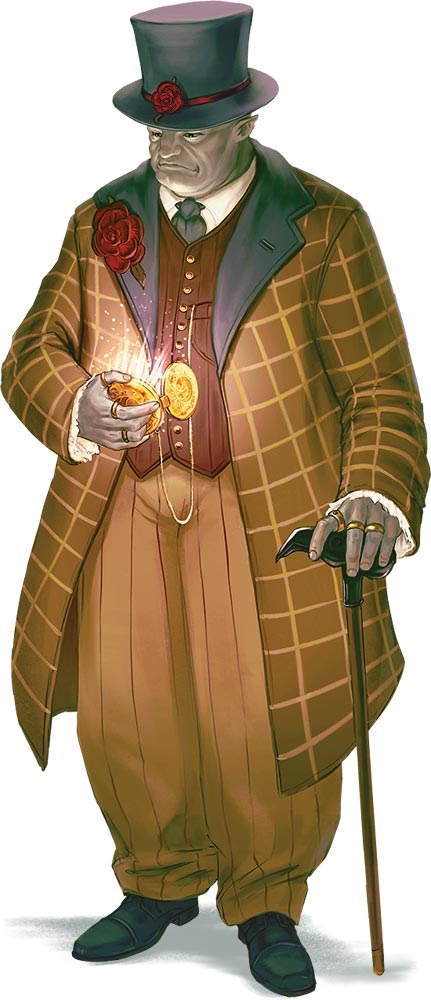
Thieves’ Tools
Perhaps the most common tools used by adventurers,
thieves' tools are designed for picking locks and foiling
traps. Proficiency with the tools also grants you a
general knowledge of traps and locks.
Components. Thieves' tools include a small file,
a set of lock picks, a small mirror mounted on a
metal handle, a set of narrow-bladed scissors,
and a pair of pliers.
History. Your knowledge of traps grants you
insight when answering questions about locations that are renowned for their traps.
Investigation and Perception. You gain additional insight when looking for traps, because you have learned a variety of common signs that betray their presence.
Disable. Thieves' tools can be used to pick locks and disable traps.
Set a Trap. Just as you can disable traps, you can also set them. As part of a short rest, you can create a trap using items you have on hand. The total of your check becomes the DC for someone else's attempt to discover or disable the trap. The trap deals damage appropriate to the materials used in crafting it (such as poison or a weapon) or damage equal to half the total of your check, whichever the DM deems appropriate.
Tinker’s Tools
A set of tinker's tools is designed to enable you to repair many mundane objects. Though you can't manufacture much with tinker's tools, you can mend torn clothes, sharpen a worn sword, and patch a tattered suit of chain mail.
Components. Tinker's tools include a variety of hand tools, thread, needles, a whetstone, scraps of cloth and leather, and a small pot of glue.
History. You can determine the age and origin of objects, even if you have only a few pieces remaining from the original.
Investigation. When you inspect a damaged object, you gain knowledge of how it was damaged and how long ago.
Repair. You can restore 10 hit points to a damaged object for each hour of work. For any object, you need access to the raw materials required to repair it. For metal objects, you need access to an open flame hot enough to make the metal pliable.
Gunsmith. If you are also proficient in the use of firearms, you may use Tinker's tools to craft ammunition at half the cost, repair damaged firearms, or even draft and create new ones (DM’s discretion). Some extremely experimental and intricate firearms are only available through crafting.
| Activity | DC |
|---|---|
| Temporarily repair a disabled device | 10 |
| Repair an item in half the time | 15 |
| Improvise a temporary item using scraps | 20 |
Woodworker’s Tools
Skill at carpentry and carving enables a character to construct wooden structures. A carpenter can build a house, a shack, a wooden cabinet, or similar items, as well as finer, more intricate objects from wood, such as wooden tokens or arrows.
Components. Woodworker's tools include a knife, a gouge, a saw, a hammer, nails, a hatchet, a square, a ruler, an adze, a plane, and a chisel.
Arcana or History. Your expertise lends you additional insight when you examine wooden buildings, and other wooden objects and structures, such as figurines, chairs, or arrows.
Investigation. You gain additional insight when inspecting areas within wooden structures, because you know tricks of construction that can conceal areas from discovery.
Perception. You can spot irregularities in wooden walls or floors, making it easier to find trap doors and secret passages.
Stealth. You can quickly assess the weak spots in a wooden floor, making it easier to avoid the places that creak and groan when they're stepped on.
Nature. Your knowledge of wooden objects gives you some added insight when you examine trees.
Repair. As part of a short rest, you can repair a single damaged wooden object of Large or smaller. As part of a long rest, you can restore a number of hit points to the hull of a Large or larger vehicle equal to 5 times your proficiency bonus. A vehicle cannot be patched by you in this way again until after it has been fully repaired by a professional.
Fortify. With 1 minute of work and raw materials, you can make a door or window harder to force open. Increase the DC needed to open it by 5.
Temporary Shelter. As part of a long rest, you can use your proficiency in woodworker's tools to construct a lean-to or a similar shelter to keep your group dry and in the shade for the duration of the rest. Because it was fashioned quickly from whatever wood was available, the shelter collapses ld3 days after being assembled.
| Activity | DC |
|---|---|
| Build a simple wooden structure | 10 |
| Make a small wooden sculpture | 10 |
| Design a complex wooden structure | 15 |
| Find a weak point in a wooden structure | 15 |
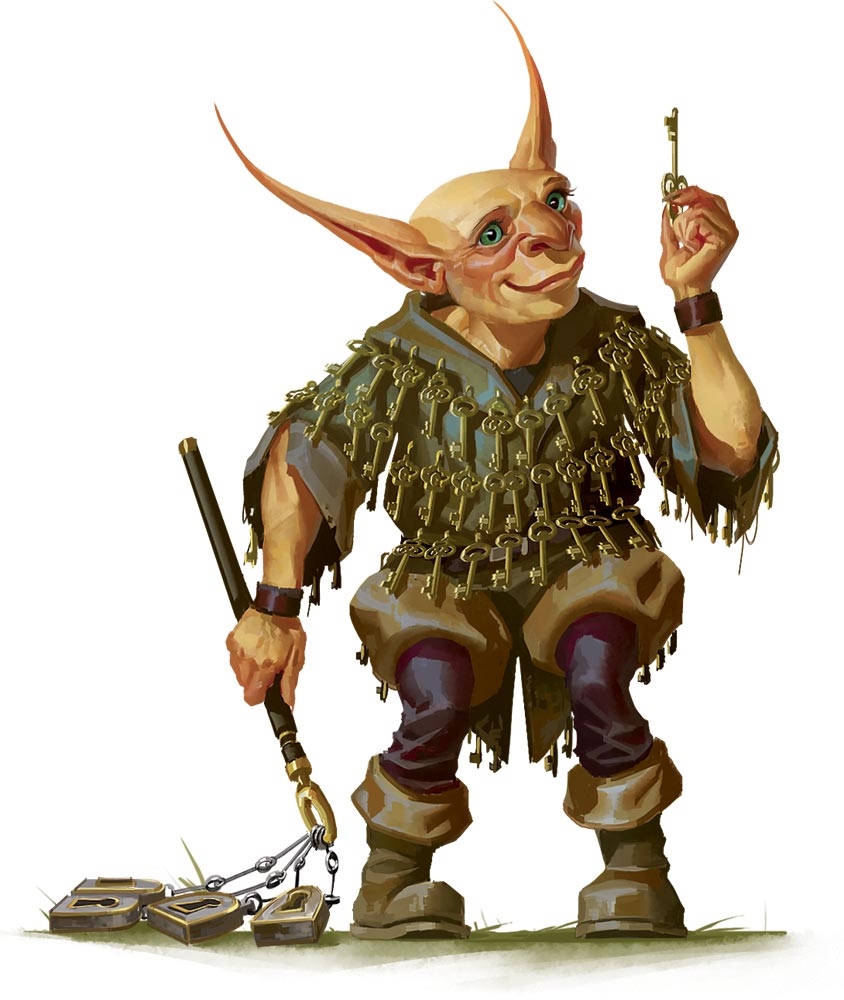
Trinkets
These items, technically known as Common Magic Items, seldom increase a character’s power, but they are likely to amuse players and provide fun roleplaying opportunities. The magic items are presented in alphabetical order.
Arborean Whistle
Wondrous Item, Common
This whistle of golden wood can be heard within 120 feet, but only by blink dogs, dispacer beasts, and other animalistic fey and celestial creatures.
Armblade
Weapon (any one-handed melee weapon), common (requires attunement by a warforged or a creature with a prosthetic arm)
An armblade is a magic weapon that attaches to your arm, becoming inseparable from you as long as
you're attuned to it. To attune to this item,
you must hold it against your forearm for
the entire attunement period.
As a bonus action, you can retract the
armblade into your forearm or extend it from
there. While it is extended, you can use
the weapon as if you were holding it,
and you can't use that hand for
other purposes.
Armour of Gleaming
Armour (medium or heavy),
Common
This Armour never gets
dirty. If soiled, it prestidigitates
itself clean at the start of your
next turn.
Arrow of Elvenkind
Ammunition (arrow), Common
This type or arrow is rarely
made any more and so are hard to come
by, but they were once mass-produced so are considered common. The range of attacks made with this arrow are doubled. Roll a d6 on a hit; on a roll of 1, it disintegrates.
Banshee Box
Wondrous Item, common (requires attunement)
This ivory music box is inlaid with silver decorations depicting tiny scenes of gruesome violence. When a creature attuned to the box opens the lid, they can mentally command the box to make a sound of their choosing. Once the lid is open, the sound continues to play until the box is closed. If the attuned user closes the lid then opens it again, they can mentally command the box to play a different sound. If the attuned user travels more than 300 feet away from the box, the lid closes and the music box ceases to play.
The box can create any soundscape, like haunting piano music, the sounds of a lively party, or a continuous series of screams. When the box is opened, the user can choose whether the sound is audible in a sphere with a 5-foot radius, a 30-foot radius, or a 120-foot radius.


Book of Animation
Wondrous item (any book), common
This book is enchanted to display programmed
silent illusions that represent the book’s
contents. With each flipped
page, a different illusion
begins to play in a 1-foot
cube in front of the book that
represents what is on that page.
Boots of False Tracks
Wondrous Item, Common
Only humanoids can wear these boots.
While wearing the boots, you can choose
to have them leave tracks like
those of another kind of humanoid
of your size.
Bucket of Illusion Paint
Wondrous Item, Common
A paintbrush that uses this paint will paint the air with the illusion of streaks of paint of the same colour as the Illusion Paint. The illusion can be walked through without disrupting the illusion, and can be dispelled by the spell Dispel Magic or by water, such as rain or humid weather.
Candle of the Deep
Wondrous Item, Common
The flame of this candle is not extinguished when
immersed in water. It gives off light and heat like a
normal candle.
Cast-off Armour
Armour (Any), Common
You can doff this Armour as an action.
Charlatan's Die
Wondrous item, Common (requires attunement)
Whenever you roll this six-sided knucklebone die, you
can control which number it rolls. It has a skull instead
of a one.
Cleansing Stone
Wondrous Item, Common
A cleansing stone is a 1-inch-radius sphere engraved with mystic sigils. When touching the stone, you can use an action to activate it and remove dirt and grime from your garments and your person.
Such stones are often embedded in pedestals in public squares or in high-end inns.
Cloak of Billowing
Wondrous Item, Common
While wearing this cloak, you can use a bonus action to make it billow dramatically.
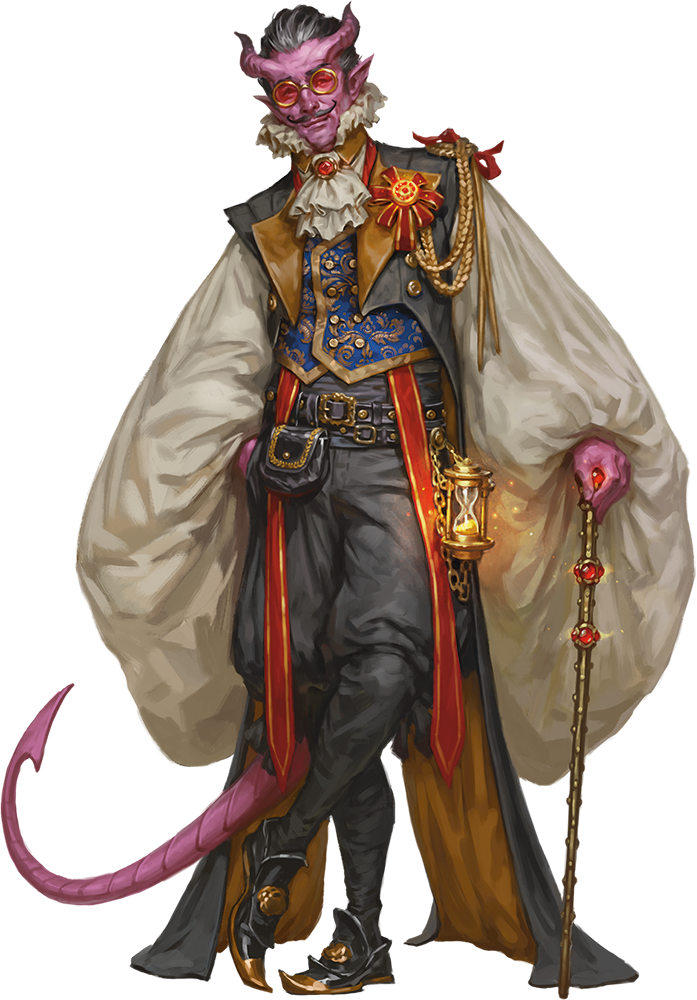
Cloak of Many Fashions
Wondrous Item, Common
While wearing this cloak, you can use a bonus action to change the style, color, and apparent quality of the garment. The cloak’s weight doesn’t change. Regardless of its appearance, the cloak can’t be anything but a cloak. Although it can duplicate the appearance of other magic cloaks, it doesn’t gain their magical properties.
Clockwork Amulet
Wondrous Item, Common
This copper amulet contains tiny interlocking gears and is powered by magic from Mechanus, a plane of clockwork predictability. A creature that puts an ear
to the amulet can hear faint ticking and
whirring noises coming from within.
When you make an attack roll while
wearing the amulet, you can forgo rolling
the d20 to get a 10 on the die.
This property then can’t be used
again until the next dawn.
Clothes of Mending
Wondrous Item, Common
This elegant outfit magically
mends itself to counteract
daily wear and tear. Pieces of
the outfit that are destroyed
can’t be repaired in this way.
Dancing Candle
Wondrous Item, Common
While this candle is lit, its flame
changes colours rapidly and
flickers randomly. The
Dancing Candle is often very
colourful itself.
Darkhold Amulet
Wondrous Item, Common (requires attunement by a warlock)
This amulet is fashioned from a single shard of resilient extraplanar material originating from the realm of your warlock patron. While you are wearing it, you gain the following benefits:
- You can use the amulet as a spellcasting focus for your warlock spells.
- You can try to cast a cantrip that you don’t know. The cantrip must be on the warlock spell list, and you must make a DC 10 Intelligence (Arcana) check. If the check succeeds, you cast the spell. If the check fails, so does the spell, and the action used to cast the spell is wasted. In either case, you can’t use this property again until you finish a long rest.
Dragon's Eye
Wondrous Item, Common
A rare coin with the carving of a dragon’s eye on one side, and a dragon’s tail on the other. Though considered a collectors item, rumours say that a hundred of these coins were made by the ancient black dragon, Xisvieth, and that by putting them all together in a line the location of his hoard of treasure is revealed, but that’s just a rumour right?
Dread Crown
Wondrous Item, Common
This fearsome steel helm makes your eyes glow red while you wear it.
Drumstrix
Wand, Common
A bard proficient in percussion using this focus can cast spells by tapping on any surface; casting spells in this way ignores any requirements for Verbal components, provided the spell requires somatic components
Earring of Messaging
Wondrous Item, Common
The blue crystal of this earring is wrapped with delicate
copper wire. The earring has 5 charges. While wearing
it, you can use an action to expend 1 charge and cast
the Message cantrip. The earring regains 1d4 + 1
expended charges daily at dawn.
Ear Horn
Wondrous Item, Common
While held up to your ear, this horn suppresses the effects of the deafened condition on you, allowing you to hear normally.
Electrum Block
Wondrous Item, Common
This cuboid of alloyed amber has two tiny cups on one end. When it's fully submerged in water, it can be used to cast the Shocking Grasp cantrip (+Dex +PB to hit).
Enduring Spellbook
Wondrous Item, Common
This spellbook, along with anything written on its pages, can’t be damaged by fire or immersion in water. In addition, the spellbook doesn't deteriorate with age.
Ersatz Eye
Wondrous Item (prosthesis), Common (requires attunement)
This artificial eye replaces a real one that was lost or removed. While the ersata eye is embedded in your eye socket, it can’t be removed by anyone other than you, and you can see through the tiny orb as though it were a normal eye.
Everbright Lantern
Wondrous Item, Common
This bullseye lantern contains a tiny residuum crystal that sheds pale green light comparable to that produced by a Continual Flame spell. An everbright lantern sheds light in a 120-foot cone; the closest 60 feet is bright light, and the farthest 60 feet is dim light.
Evergreen Vase
Wondrous Item, Common
Any mundane plant placed inside this vase stays perfectly fed.
Glass Knight
Wondrous Item (figurine of wondrous power), Common
You can shatter this glass chess piece resembling a horse against a surface within 30 feet, summoning a riding horse in that space. Once it has been used, the chess piece is destroyed.
Gleaming Fine Clothes
Wondrous Item (any fine clothes), common
These clothes never get dirty. During a long rest these clothes mend themselves over 4 hours. The clothes are adorned with fine colourful jewels that emit a dim colourful light in a 1 foot radius.
Glimmerweave Clothes
Wondrous Item, Common
Glimmerweave is clothing imbued with harmless illusory magic. While wearing these clothes, you can use a bonus action to create a moving illusory pattern within the cloth. You can have the pattern rise from the cloth; for example, a Glimmerweave gown might be wreathed in harmless, illusory flames, while a Glimmerweave hat might have illusory butterflies fluttering around it.
When you make a Charisma (Performance or Persuasion) check while wearing a Glimmerweave, you can roll a d4 and add the number rolled to the check. Once you use this property, it can't be used again until the next dawn.
Globe Compass
Wondrous Item, Common
Inside this tiny clear globe of intricate Dwarven design are two thin compass arms that originate from its centre. One of the arm’s points north, and the second arm points upwards. Over the course of a minute, a creature with proficiency in Navigator’s tools that is holding the globe can use these angles to roughly determine how far the globe is above or below the planet’s surface.
Griffon Grease
Wondrous Item, Common
This tub of coagulated fat from a griffon can be applied to a melee weapon over the course of 1 minute, increasing the physical damage dealt by the weapon by 1d4 for 1 hour. A tub of grease has 2d4 uses.
Guild Contract
Scroll, Common
This bloodstained document details accounts of favours owed, debts paid, and deals made. A creature who speaks thieves' cant or has a background linked to a criminal organisation may use an action to read the scroll, which then disintegrates (as the spell).
The next day at dusk, one spy, one noble, or two thugs will appear (chosen by the player) as an extension of the guild who issued this scroll.
Hat of Vermin
Wondrous Item, Common
This hat has 3 charges. While holding the hat, you can use an action to expend 1 of its charges and speak a command word that summons your choice of a hat, a frog, or a rat (see the Player’s Handbook or the Monster Manual for statistics).
The summoned creature magically appears in the hat and tries to get away from you as quickly as possible. The creature is neither friendly nor hostile, and it isn’t under your control. It behaves as an ordinary creature of its kind and disappears after 1 hour or when it drops to 0 hit points. The hat regains all expended charges daily at dawn.
Hat of Wizardry
Wondrous Item, Common (requires attunement by a Wizard)
This antiquated, cone-shaped hat is adorned with gold crescent moons and stars. While you are wearing it, you gain the following benefits:
- You can use the hat as a spellcasting focus for your wizard spells.
- You can try to cast a cantrip that you don’t know. The cantrip must be on the wizard spell list, and you must make a DC 10 Intelligence (Arcana) check. If the check succeeds, you cast the spell. If the check fails, so does the spell, and the action used to cast the spell is wasted. In either case, you can’t use this property again until you finish a long rest.
Heward's Handy Spice Pouch
Wondrous Item, Common
This belt pouch appears empty and has 10 charges. While holding the pouch, you can use an action to expend 1 of its charges, speak the name of any nonmagical food seasoning (such as salt, pepper, saffron, or oregano), and remove a pinch of the desired seasoning from the pouch. A pinch is enough to season a single meal. The pouch regains 1d6 + 4 expended charges daily at dawn.
Horn of Silent Alarm
Wondrous Item, Common
This horn has 4 charges. When you use an action to blow it, one creature of your choice can hear the horns blare, provided the creature is within 600 feet of the horn and not deafened. No other creature hears sound coming from the horn. The horn regains ld4 expended charges daily at dawn.

Hoverstone
Wondrous Item, Common
This tiny stone cube does not feel the effects of gravity, remaining in place - even in midair - unless moved by a different external force of 5 lbs. or greater.
Idol of Glitz
Wondrous Item, Common
This wooden statuette of a smug-looking halfling allows a creature with it in their possession to reroll a single 1 on a d20. Once this feature has been used, the statuette can't provide it again until the following dawn.
Instrument of Illusions
Wondrous Item, Common
(requires attunement)
While you are playing this musical
instrument, you
can create harmless,
illusory visual effects within a 5-foot
-radius sphere centered on the instrument.
If you are a bard, the radius increases
to 15 feet. Sample Visual effects
include luminous musical notes, a
spectral dancer, butterflies, and gently
falling snow. The magical effects have
neither substance nor sound, and they are
obviously illusory. The effects end
when you stop playing.
Instrument of Scribing
Wondrous Item, Common (requires attunement)
This musical instrument has 3 charges. While you are playing it, you can use an action to expend 1 charge from the instrument and write a magical message on a nonmagical object or surface that you can see within 30 feet of you. The message can be up to six words long and is written in a language you know. If you are a bard, you can scribe an additional seven words and choose to make the message glow faintly, allowing it to be seen in nonmagical darkness. Casting dispel magic on the message erases it. Otherwise, the message fades away after 24 hours. The instrument regains all expended charges daily at dawn.
Lantern of Tracking
Wondrous Item, Common
This gnomish hooded lantern burns for 6 hours on 1 pint of oil, shedding bright light in a 30-foot-radius and dim light for an additional 30 feet.
Each Lantern of Tracking is designed to track down a certain type of creature, which is determined by rolling this creature type on the Lantern of Tracking table, or chosen (DM's discretion). Once determined, this creature type can't be changed. While the lantern is within 300 feet of any creature of that type, its flame turns bright green. The lantern doesn't pinpoint the creature's exact location, however.
| d10 | Creature Type |
|---|---|
| 1 | Aberrations |
| 2 | Celestials |
| 3 | Constructs |
| 4 | Dragons |
| 5 | Elementals |
| d10 | Creature Type |
|---|---|
| 6 | Fey |
| 7 | Fiends |
| 8 | Giants |
| 9 | Monstrosities |
| 10 | Undead |
Lock of Trickery
Wondrous Item, Common
This lock appears to be an ordinary lock (of the type described in chapter 5 of the Player’s Handbook) and comes with a single key. The tumblers in this lock magically adjust to thwart burglars. Dexterity checks made to pick the lock have disadvantage.
Lucky Wyrmling Tooth
Wondrous Item, Common
Once per day, provides advantage on a single check to use a Tool to the person wearing this necklace. May discomfort some reptilian and draconic creatures you come into contact with.
Map of Winds
Wondrous item (any map), Common
In addition to the normal contents of a map, the
weather of the mapped area is displayed as an
unmoving illusion upon the map. The weather on the map is updated every dawn.
Memory Ring
Wondrous Item, Common
This ring has two command words that you can speak as an action, both are written on the outside of the ring. The first command word allows the wearer to store a single sentence within the ring of the wearer’s choice, which lasts until a new sentence is stored. The second command word allows the wearer to hear the phrase stored in the ring inside their inner thoughts. Anyone who has willingly dropped the ring remembers where they dropped it.
Moon-Touched Sword
Weapon (any sword), Common
In darkness, the unsheathed blade of this sword. sheds moonlight, creating bright light in a 15-foot radius and dim light for an additional 15 feet.
Mummified Finger
Wondrous Item, Common
This semi-petrified humanoid finger can
be snapped as a free action to reroll any
single d20. Once broken, it crumbles
into dust.
You begin with 1d4+1 fingers on
a small thread necklace.
Mystery Key
Wondrous Item, Common
A relief of a Raven is worked into the head of this silver key. The key has a 5 percent chance of unlocking any lock into which it’s inserted. Once it unlocks something, the key bubbles, melts, and then evaporates.
Nolzur’s Marvellous Mixer
Wondrous Item, Common (requires attunement)
A large wooden spoon with a small red crystal affixed to the end of the handle. When the spoon is placed into a bowl or cauldron, speaking its command word will cause the spoon to autonomously mix and stir the contents in your direction. It cannot stir with more force than the Mage Hand spell is able to generate, and it ceases to function if removed from its assigned bowl or container.
Orb of Time
Wondrous Item, Common
While holding this orb, you can use an action to determine whether it is morning, afternoon, evening, or nighttime. This property may not function beyond the Material Plane.
Pankha of Pestering
Wondrous Item, Common
This hand-fan unfolds to reveal a sleeping cat. While carrying this fan, you hallucinate yourself being jostled and sat upon by small creatures while you sleep.
Perfume of Bewitching
Wondrous Item, Common
This tiny vial contains magic perfume, enough for one use. You can use an action to apply the perfume to yourself, and its effect lasts 1 hour. For the duration, you have advantage on all Charisma checks directed at humanoids of challenge rating 1 or lower. Those subjected to the perfume’s effect are not aware that they’ve been influenced by magic.
Pipe of Smoke Monsters
Wondrous Item, Common
While smoking this ivory pipe, you can use an action to exhale a puff of smoke that takes the form of any single creature of your choice. The form must be small enough to fit in a 1-foot cube and loses its shape after a few seconds, becoming an ordinary puff of smoke.
Pole of Angling
Staff, Common
While holding this 5-foot staff, you can speak a command word and transform it into a 10-foot fishing pole with a hook, a line, and a reel. Speaking the command word again changes the fishing pole back into a normal 5-foot pole.
Pole of Collapsing
Wondrous Item, Common
While holding this 10-foot pole, you can use an
action to speak a command word and cause it to
collapse into a 1-foot-long rod, for ease of
storage. The poles weight doesn’t change. You
can use an action to speak a different command word and cause the rod to revert to a pole; however, the rod will elongate only as far as the surrounding space allows.
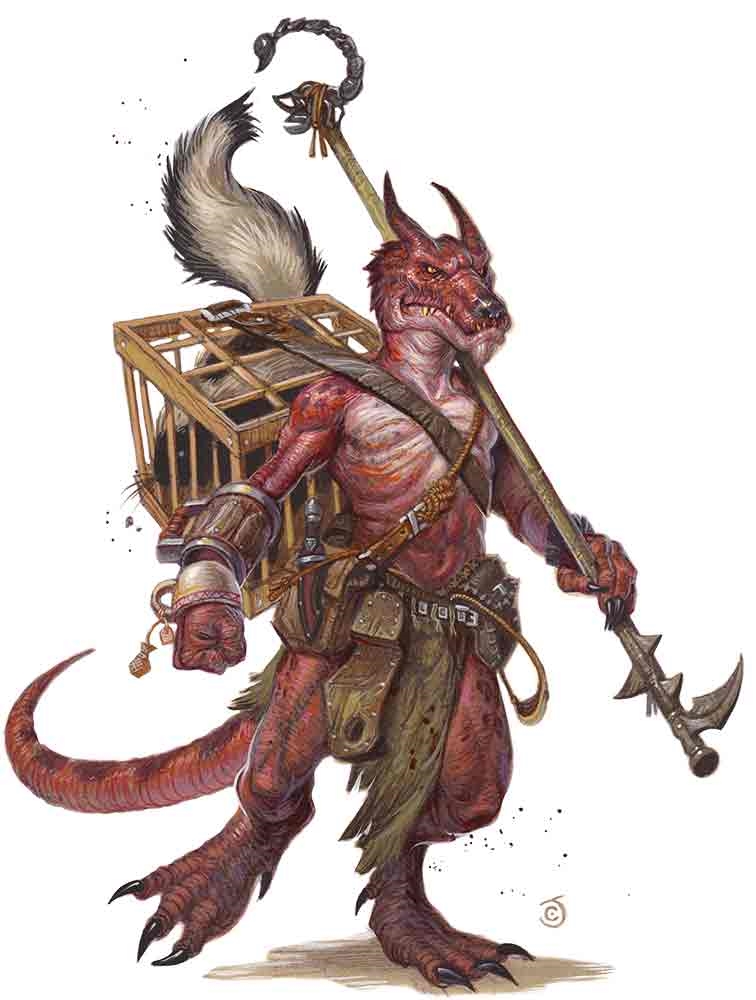
Pot of Awakening
Wondrous Item, Common
If you plant an ordinary shrub in this 10-pound clay pot and let it grow for 30 days, the shrub magically transforms into an awakened shrub (see the Monster Manual for statistics) at the end of that time. When the shrub awakens, its roots break the pot, destroying it. The awakened shrub is friendly toward you, unless treated poorly. Absent of commands from you, it does nothing.
Prosthetic Limb
Wondrous Item (prosthesis), Common
This item replaces a lost limb-a hand, an arm, a foot, a leg, or a similar body part. While the prosthetic is attached, it functions identically to the part it replaces. You can detach or reattach it as an action, and it can't be removed against your will. It detaches if you die.
Pseudodragon Egg
Wondrous Item, Common
This tiny red leathery egg can be incubated in an open flame for a total of 2d4+2 days, after which it will hatch into a pseudodragon. A pseudodragon hatchling bonds with the first creature it lays eyes on, becoming its familiar.
Ring of Dreamsong
Ring, Common
These beaten copper rings are often found as sets. Elves within 15 feet of one-another who each trance while wearing one of these rings may cast detect thoughts on one another at will during the trance, sharing their reflexive mental states.
Ring of Solaire
Wondrous Item, Common (requires attunement)
An adamantine loop with an elegant insignia of the sun. The ring has 1 charge and regains an expended charge daily at noon if the ring is exposed to direct sunlight. Any charge the ring has is immediately expended as the ring is removed from its attuned bearer.
You can expend 1 charge to cast the Healing Word spell at its lowest level. Use your spellcasting ability modifier if you can cast spells. If you are not a spellcaster, Wisdom is your spellcasting ability for the spell.
Rope of Mending
Wondrous Item, Common
You can cut this 50-foot coil of hempen rope
into any number of smaller pieces, and then
use an action to speak a command word and
cause the pieces to knit back together. The
pieces must be in contact with each other
and not otherwise in use. A rope of
mending is forever shortened if a section
of it is lost or destroyed.
Ruby of the War Mage
Wondrous Item, Common (requires attunement by a spellcaster)
Etched with eldritch runes, this 1-inch-diameter ruby allows you to use a simple or martial weapon as a spellcasting focus. For this property to work, you must attach the ruby to the weapon by pressing the ruby against it for at least 10 minutes. Thereafter, the ruby can’t be removed unless you detach it as an action or the weapon is destroyed. Not even an antimagic field causes it to fall off. The ruby does fall off the weapon if your attunement to the ruby ends
Sailors’ Rope
Wondrous Item, Common
This rope floats in water and has 2 command words. The first command word causes any ties in the ropes to lock. Once locked, a tie in the rope is twice as difficult to untie, requiring a successful (DC 11) Athletics (Strength) check to force it untied or by cutting it. The second command word unlocks the ties in the rope.
Scribe's Quill
Wondrous Item, Common
You can use this pen to write on any surface, without requiring ink. If you use the pen to write on a creature that isn't a construct, the writing fades after 7 days.
Self-Playing Gaming Set
Wondrous item (any gaming set), Common
This gaming set has three command words. The first command word sets up the gaming set for a game by floating around its tiny parts. The second command word causes the gaming set to float the parts around in order to play a game with the one who spoke the command word, and the third floats the parts around to pack the gaming set back into its box. Self Playing Gaming Sets are not usually very good players; however, the more they are used, the better they become.
Self-Playing Musical Instrument
Wondrous item (any instrument), Common
This musical instrument has two command words. The first causes the instrument to float 2 feet above the ground and play a song for the character who spoke the command word. The second causes the instrument to stop playing songs, and to float itself 20 feet towards the hands of the character who spoke the command word before ceasing to float. You must be within 20 feet of the instrument for it to respond to a command word. If it is currently floating and you are no longer within 20 feet of the instrument, the instrument stops playing and falls to the ground.
Self-Playing Musical Instruments are poor musicians but can carry a simple tune. The more they are played, however, the better they become.
Shield of Expression
Armour (shield), Common
The front of this shield is shaped in the likeness of a face. While bearing this magical shield, you can use a bonus action to alter the face's expression.
Shiftwoven Outfit
Wondrous Item, Common
When a suit of shiftweave is created, up to five different outfits can be embedded into the cloth. While wearing the clothing, you can speak its command word as a bonus action to transform your outfit into your choice of one of the other designs contained within it. Regardless of its appearance, the outfit can't be anything but clothing. Although it can duplicate the look of other magical clothing, it doesn't gain their magical properties.
Skaven Icon
Wondrous Item, Common (optional attunement)
This petrified mouse embossed with a copper pentacle at the centre is a holy symbol to Nurgle, the god of vermin and disease. While attuned, a creature has advantage on saving throws made to resist poison, but disadvantage on saving throws to resist diseases.
Slipspace Scabbard
Wondrous Item, Common
This scabbard is an extradimensional pocket similar to a bag of holding, but it can only house a single bladed weapon, and only up to the hilt. This can be any weapon from an axe to a dagger, or from a greatsword to a halberd.
Smouldering Bottle
Wonderous Item, Common
This crystal vial is barely large enough to contain a Tiny creature. It is intangible from within to all creatures other than elementals, fey, and undead, to whom it is invulnerable.
Staff of Adornment
Staff, Common
If you place an object weighing no more than 1 pound (such as a shard of crystal, an egg, or a stone) above the tip of the staff while holding it, the object floats an inch from the staff’s tip and remains there until it is removed or until the staff is no longer in your possession.
The staff can have up to three such objects floating over its tip at any given time. While holding the staff, you can make one or more of the objects slowly spin or turn in place.
Staff of Birdcalls
Staff, Common
This wooden staff is decorated with bird carvings. It has 10 charges. While holding it, you can use an action to expend 1 charge from the staff and cause it to create one of the following sounds out to a range of 60 feet: a finch’s chirp, a raven's caw, a duck’s quack, a chicken’s cluck, a goose‘s book, a loon’s call, a turkey’s gobble, a seagull’s cry, an owl’s hoot, or an eagle’s shriek.
The staff regains 1d6 + 4 expended charges daily at dawn. If you expend the last charge, roll a d20. On a 1, the staff explodes in a harmless cloud of bird feathers and is lost forever.
Staff of Flowers
Staff, Common
This wooden staff has 10 charges. While holding it, you can use an action to expend 1 charge from the staff and cause a flower to sprout from a patch of earth or soil within 5 feet of you, or from the staff itself. Unless you choose a specific kind of flower, the staff creates a mildscented daisy. The flower is harmless and nonmagical, and it grows or withers as a normal flower would. The staff regains 1d6 + 4 expended charges daily at dawn. If you expend the last charge, roll a d20. On a 1, the staff turns into flower petals and is lost forever.
Talking Doll
Wondrous Item, Common (requires attunement)
While this stuffed doll is within 5 feet of you, you can spend a short rest telling it to say up to six phrases, none of which can be more than six words long, and set a condition under which the doll speaks each phrase. You can also replace old phrases with new ones. Whatever the condition, it must occur within 5 feet of the doll to make it speak. For example, whenever someone picks up the doll, it might say, “I want a piece of candy.” The doll’s phrases are lost when your attunement to the doll ends.
Tankard of Sobriety
Wondrous Item, Common
This tankard has a stern
face sculpted into one side.
You can drink ale, wine, or any
other nonmagical alcoholic
beverage poured into it without
becoming inebriated.
The tankard has no effect on
magical liquids or any
harmful substances other
than specifically alcohol.
Thermal Cube
Wondrous Item, Common
This 3-inch black stone cube of dwarvish design generates enough dry heat to keep the temperature within 15 feet of it at approximately 100 Fahrenheit (37 Celsius).
Together Feathers
Wondrous Item, Common
Together Feathers come in pairs, with each feather coming from one of two birds that have mated for life. This pair of enchanted bird’s feathers always point towards each other, no matter the distance between them. The direction is a straight line to the other feather’s location, ignoring walls and obstructions.
If one of the Together Feathers is in a different plane from the other, the feathers will point toward the nearest portal to the plane where the other of the Together Feathers resides. If none are available, it will point to where a portal to that plane was last opened. If one feather is destroyed, the other will point to where it could last be found.


Veteran's Cane
Wondrous Item, Common
When you grasp this walking cane and use a bonus action to speak the command word, it transforms into an ordinary longsword and ceases to be magical.
Wand Sheath
Wondrous Item, Common (requires attunement by a warforged or a creature with a prosthetic arm)
A wand sheath clamps onto your arm and imparts the following benefits:
- The wand sheath can't be removed from you while you're attuned to it.
- You can insert a wand into the sheath as an action. The sheath can hold only one wand at a time.
- You can retract or extend a wand from the sheath as a bonus action. While the wand is extended, you can use it as if you were holding it, but your hand remains free.
- If a sheathed wand requires attunement, you must attune to the wand before you can use it. However, the wand sheath and the attached wand count as a single magic item with regard to the number of magic items you can attune to. If you remove the wand from the sheath, your attunement to the wand ends.
Wand of Conducting
Wand, Common
This wand has 3 charges. While holding it, you can use an
action to expend 1 of its charges and create orchestral
music by waving it around. The music can be heard
out to a range of 60 feet and ends when you stop
waving the wand.
The wand regains all expended charges daily at
dawn. If you expend the wand’s last charge, roll a
d20. On a 1, a sad tuba sound plays as the wand
crumbles to dust and is destroyed.
Wand of Detect Fish
Wand, Common
This wand has 3 charges.
While holding it, you can use
an action to expend 1 of its
charges and, if there are fish
within 60 feet of you, the wand
pulses and points at the one nearest
to you. The wand regains all expended
charges daily at dawn.
Wand of Pyrotechnics
Wand, Common
This wand has 7 charges. While
holding it, you can use an action to
expend 1 of its charges and create a
harmless burst of multicoloured
light at a point you can see up to
60 feet away. The burst of light is
accompanied by a crackling noise
that can be heard up to 300 feet
away. The light is as bright as a torch
flame but lasts for only a second.
The wand regains 1d6 + 1
expended charges daily at dawn. If you
expend the wand’s last charge, roll a
d20. On a 1, the wand erupts in a harmless
pyrotechnic display and is destroyed.
Wand of the Wolf
Wand, Common
Once per long rest, you may cast polymorph on yourself, but may only change into a wolf. This requires your concentration.
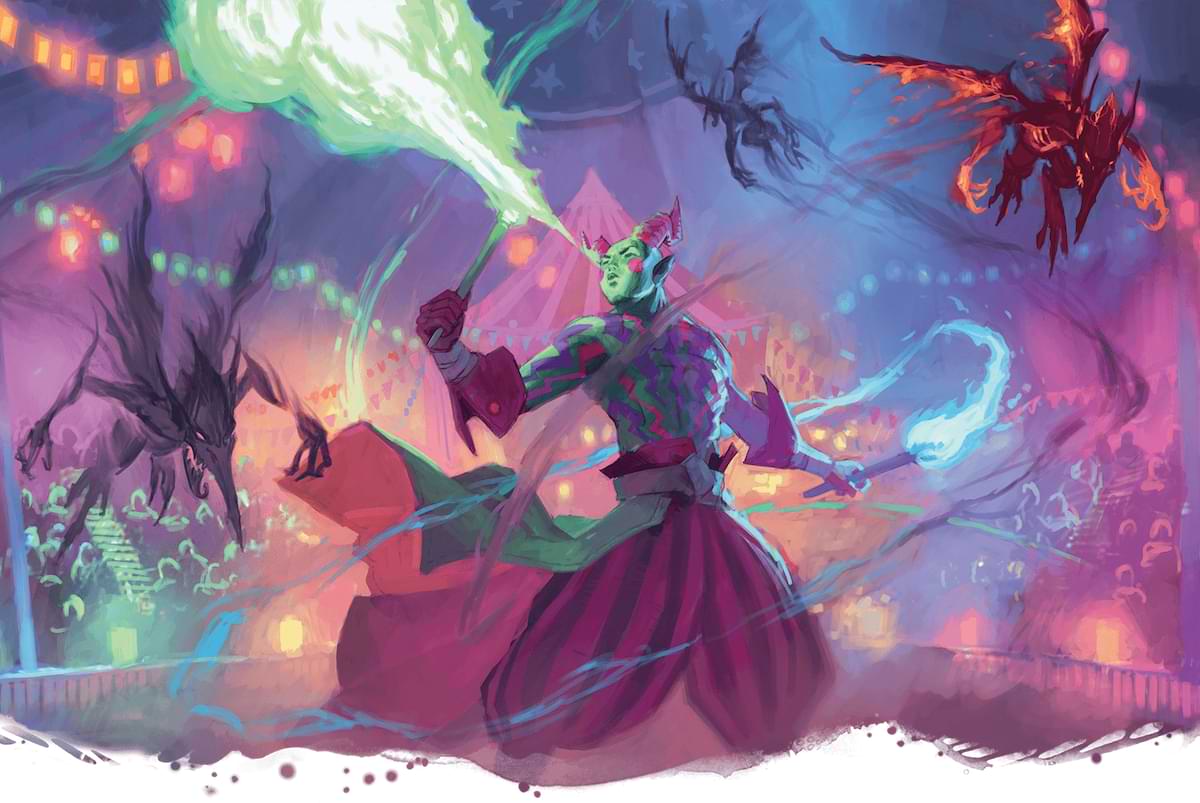
Wand of Scowls
Wand, Common
This wand has 3 charges. While
holding it, you can use an
action to expend 1 of its charges
and target a humanoid you can
see within 30 feet of you. The
target must succeed on a DC 10
Charisma saving throw or be
forced to scowl for 1 minute.
The wand regains all expended
charges daily at dawn. If you
expend the wand’s last charge,
roll a d20. On a 1, the wand
transforms into a wand of smiles.
Wand of Smiles
Wand, Common
This wand has 3 charges. While
holding it, you can use an action
to expend 1 of its charges and
target a humanoid you can see
within 30 feet of you. The target
must succeed on a DC 10 Charisma
saving throw or be forced to smile
for 1 minute.
The wand regains all expended charges daily at dawn. If you expend the wand’s last charge, roll a d20. On a 1, the wand transforms into a wand of scowls.
Workman's Delight
Wonderous Item (tool set), Common
Etched with dwarvish runes, sets of Artisan's Tools of this kind never break, dirty, or tarnish. In addition, they weigh half the amount usual for a set of their type.

PART V
Character Options
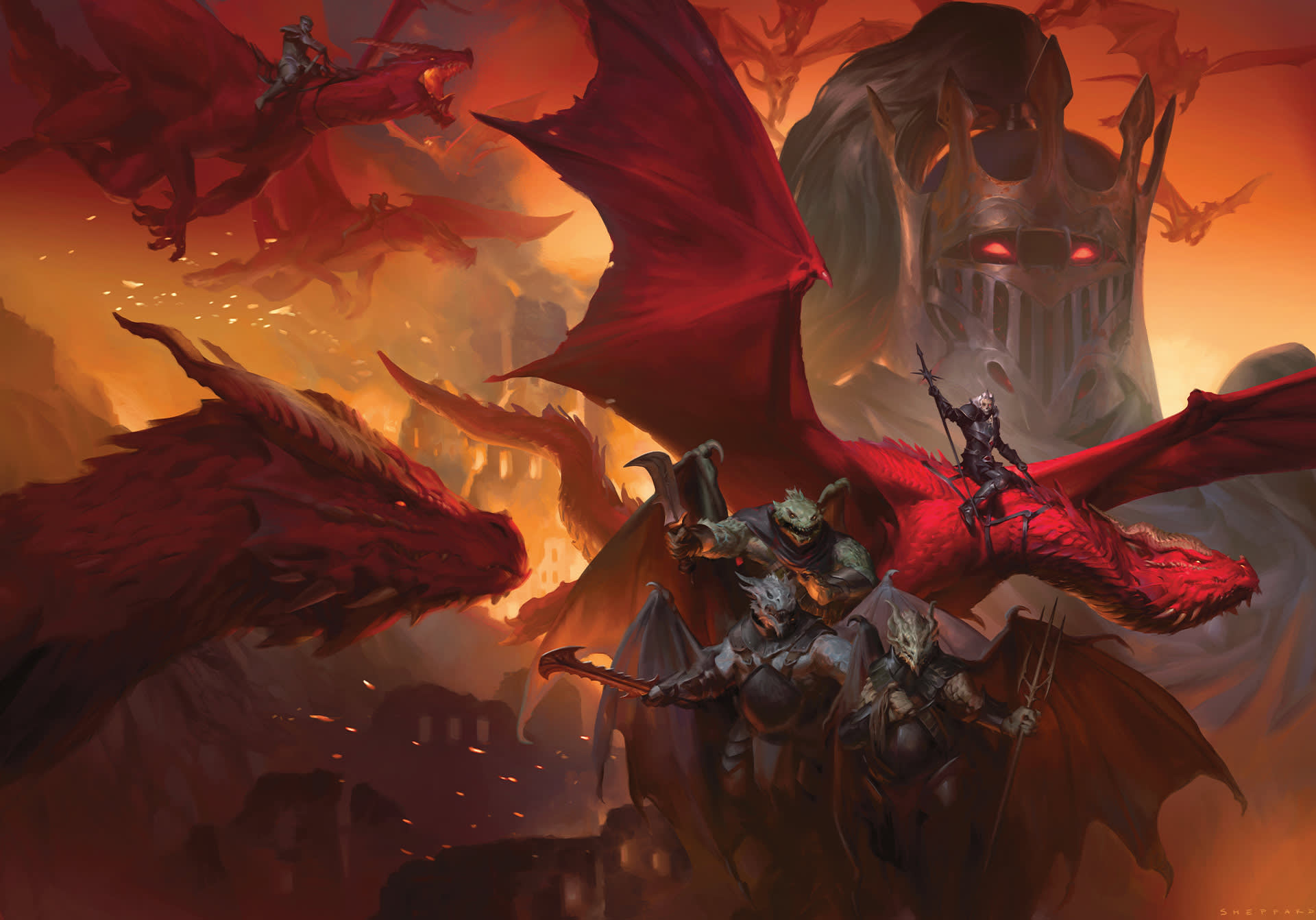
Player Character Customisation
Taking Feats, Fighting Styles, and Additional Class features
When you gain a level in a class which grants you an Ability Score Increase, you can forfeit a single point increase of an ability score to instead gain either a Fighting Style or a class feature (such as psionic powers and manoeuvre).
If you would gain the Extra Attack feature at 5th or 6th level in that class (or subclass path you're on), you can instead take a single Fighting Style of your choice.
Alternatively, you may take a Feat in place of both points of the Ability Score Increase, provided you fulfil its prerequisites.
Synergistic Multiclassing
Class features which do not compound as a result of multiclassing, such as Extra Attack, are instead replaced by a Fighting Style (or other class-relevant feature such as an Eldritch Invocation or Metamagic option) of your choice.
Features which increase the range for which the d20 scores a Critical hit (for example 20 becomes 19-20) and those which increase the size of a die - called Stepping-Up the die (for example 1d4 becomes 1d6, and 1d8 becomes 1d10; 1d12 becomes 1d8 + 1d6, and the lower die receives future step-ups) - stack from multiple sources.
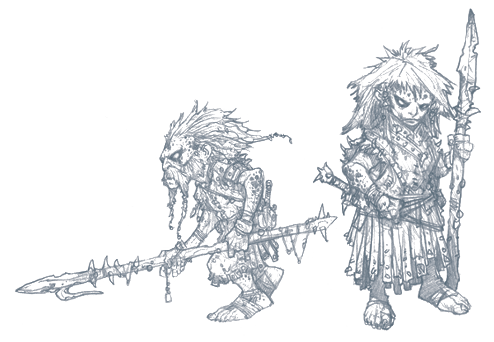
Feats
Aerial Dogfighter
You are exceptionally skilled in fighting airborne enemies and have magical gifts to prove it. You gain proficiency with air vehicles. While you are flying or are on a flying mount, you gain the following benefits:
You have advantage on Wisdom (Animal Handling) checks made to direct or control your mount.
You and your mount don’t provoke opportunity attacks when you fly out of an enemy’s reach.
When an enemy misses you with a ranged attack, you can use your reaction to make a single ranged weapon attack.
Battle Worn
You are scarred and weathered by your years fighting, but you have learned from the experience:
Whenever an opponent provokes an attack of opportunity from you, you can choose to replace that attack with a Help action, assisting the next instance of any feature targeting that opponent until the start of your next turn.
When you hit a creature within 40 feet of you with a weapon attack, you can use your reaction to force the target into wariness and apprehension. Until the start of your next turn, the target cannot make weapon attacks against you with advantage. This effect ends early if the target hits you or you leave its line of sight.
Your opponents move with care, wary of you. Hostile creatures treat all the area within your melee reach as difficult terrain.
Canny Merchant
Prerequisite: Proficiency in an Artisan's tool
You are adept at crafting things and bargaining with merchants. When you craft a spell scroll or another consumable magic item using a tool with which you have Tool Proficiency, the required Craft time is reduced by 20%.
You can make a Persuasion check to track down an item that is normally too expensive to be purchased in the town or settlement where you are currently located. The DC of this check is 10 + (2 for each rank of rarity above Common it is). If this check succeeds, you learn of a merchant who can supply the item to you. You must still purchase it as normal.
Charger
Your base movement speed increases by 5 feet.
When you use your action to Dash, you can use a bonus action to make one melee weapon attack, or to grapple or shove a creature.
If you move at least 10 feet in a straight line immediately before taking this bonus action, you either gain a +5 bonus to the melee attack’s damage roll, you Shove the target a number of feet equal to 5 x your Strength modifier, or you and your target both fall prone as a part of the grapple.
Diehard
You abjectly refuse to die, granting you the following benefits:
Increase your Constitution score by 1, to a maximum of 20
A roll of 1 on a death saving throw is considered a single failure, and you are restored to 1 hit point on a roll of both 19 and 20.
Durable
Hardy and resilient, you gain the following benefits:
You gain proficiency in Constitution saving throws
When you roll a Hit Die to regain hit points, the minimum number you can roll on the die is equal to your Constitution modifier (minimum of 1).
Eldritch Adept
Prerequisites: Spellcasting or Pact Magic feature
Studying occult lore, you have unlocked eldritch power within yourself:
You gain one cantrip from the warlock spell list. Charisma is your spellcasting ability for this spell.
You learn one Eldritch Invocation option of your choice from the warlock class. If the invocation has a prerequisite of any kind, you can choose that invocation only if you meet the prerequisite. Whenever you gain a level, you can replace the invocation with another one from the warlock class.
If you have at least two levels in the Warlock class, you can select this feat multiple times. Each time you do so, you must choose a different invocation. Taking this feat again no longer grants you a cantrip.
Elemental Adept
Prerequisites: Spellcasting or Pact Magic feature
When you gain this feat, choose one of the following damage types: acid, cold, fire, lightning, or thunder.
Spells you cast ignore resistance to damage of the chosen type. In addition, when you roll damage for a spell you cast that deals damage of that type, you can treat any 1 on a damage die as a 2.
You can select this feat multiple times. Each time you do so, you must choose a different damage type.
Esoteric Adept
Prerequisites: Spellcasting or Pact Magic feature
When you gain this feat, choose one of the following damage types: force, necrotic, psychic, or radiant.
Spells you cast ignore resistance to damage of the chosen type. In addition, when you roll damage for a spell you cast that deals damage of that type, you can treat any 1 on a damage die as a 2.
You can select this feat multiple times. Each time you do so, you must choose a different damage type.
Flash Recall
Prerequisites: The ability to prepare and cast at least one spell of 1st-level or higher
You’ve developed the ability to instantly recall an unprepared spell in moments of sudden necessity, granting you the following benefits:
Increase your Intelligence by 1, to a maximum of 20.
As an action, you can instantly prepare a spell from your available class spell list (or spellbook, if you prepare spells from one) that you did not have prepared. This spell choice must be of a level for which you have spell slots. You then lose preparation of a different spell of your choice of equal or higher spell level.
If you are multiclassed, you can only Flash Recall spells from a class that prepares spells. Once you use this ability, you cannot use it again until you finish a short or long rest.
Grappler
Prerequisites: Strength 13
You’ve developed the skills necessary to hold your own in close-quarters grappling. You gain the following benefits:
You have advantage on attack rolls against a creature you are grappling.
You can use a bonus action, or an attack when you take the Attack action, to try to pin a creature grappled by you. To do so, make another contested Grapple check. On a success, the creature is restrained by you until the grapple ends, and you can only move by dragging the restrained creature with you (effectively halving your speed).
You are considered one Size larger than normal for determining the size of creatures you can grapple.
Great Weapon Master
You’ve learned to put the weight of a weapon to your advantage, letting its momentum empower your strikes. You gain the following benefits:
On your turn, when you score a critical hit
with a melee weapon or reduce a creature
to 0 hit points with one, you can make one
melee weapon attack as a bonus action.
Before you make a melee attack with an
Unwieldy weapon that you are proficient
with, you can choose to take a
-5 penalty to the attack roll. If the
attack hits, you add +10 to the
attack’s damage.
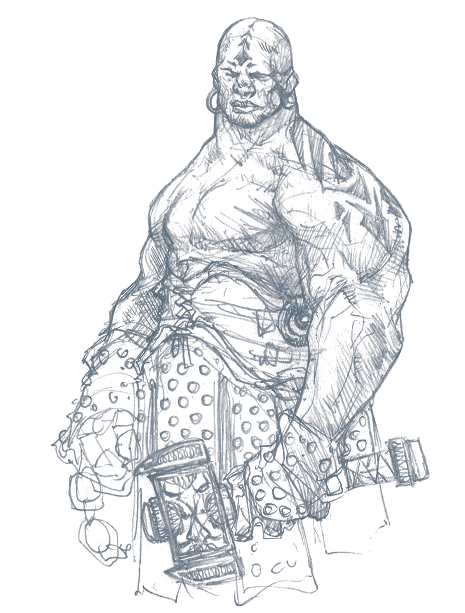
Gunslinging Adept
Prerequisites: Proficiency with at least 1 firearm.
Your training with guns has begun to pay off. You gain the following benefits:
You learn two Trick Shots of your choice from among those available to the Gunslinger archetype in the fighter class. This trick shot cannot be limited by level. If a trick shot you use requires your target to make a saving throw to resist the tick shot's effects, the saving throw DC equals 8 + your proficiency bonus + your Dexterity modifier.
You gain one grit point (this point is added to any grit points you have from another source). This point is used to fuel your trick shots. A grit point is expended when you use it. You regain 1 expended grit point when score a critical hit with a firearm attack or deal the finishing blow to a creature with CR equal to or greater than 1/3 of your character level. You may spend one grit point to fix a misfired (but not broken) firearm as a bonus action.
You can select this feat multiple times. Each time you do, you must choose different trick shots.
Grifter
You have a keen eye for peoples' deep desires, and for exploiting them. You gain the following benefits:
While buying or selling goods, you are able to make an Intelligence (Persuasion or Deception) check, contested by the vendor's Wisdom (Insight) check. On a success, and depending on the result, you are able to get a better deal than otherwise; for goods you are buying, you are able to purchase them at as low as half the original price. For goods you are selling, you are able to sell them for up to 50% greater than the original price.
If you are selling an item to the hungry, military, squalid, threatened, warring, or otherwise desperate, you may double the value of items you can convincingly buy or sell.
Healing Affinity
Your body has begun to adapt extremely well to healing itself through extraordinary means, gifting you the following benefits:
When a creature uses a healer’s kit to stabilise you when you are dying, you also regain hit points equal to your proficiency bonus.
Whenever you regain hit points as a result of a spell, potion, or class ability, you regain additional hit points equal to your proficiency bonus
Heavy Armour Master
Prerequisites: Proficiency with heavy armour
You can use your armour to deflect strikes that would kill others. You gain the following benefits:
Increase your Strength score by 1, to a maximum of 20.
While you are wearing heavy armour, you are resistant to non-magical bludgeoning, piercing, and slashing damage, and you gain a bonus to your AC equal to half your proficiency bonus (rounded down).
Heroic
Great deeds lie in your future, and it will take extraordinary effort to kill you before you accomplish those deeds. You gain the following traits:
While at your hit point maximum, you can add 1d6 to any ability check you make, and you are resistant to all forms of damage.
You have advantage on death saving throws.
When you are reduced to 0 hit points but not killed outright, you can drop to 1 hit point instead. Once you use this trait, you can't use it again until you finish a long rest.
Hidecarved
Prerequisites: Proficiency in Tattooist’s tools, and the Spellcasting or Pact Magic feature.
Your skin is covered with arcane runes and sigils. Damage you take from spells and other magical effects is reduced by your Proficiency bonus.
Additionally, your Intelligence, Wisdom, or Charisma score (your choice) increases by 1, to a maximum of 20.
Hoardstealer
Prerequisites: Wisdom or Charisma 13
You’ve intuitively learned how to quickly and temporarily configure spatial planes to your advantage. Once per long rest, you can turn any Tiny container (e.g. a coin purse or backpack) into a magical storage space. Such a container functions as a bag of holding for 1 hour, at which point the effect ends and anything still in the container is harmlessly ejected into the nearest unoccupied space.
Additionally, your Dexterity, Intelligence, or Wisdom score (your choice) increases by 1, to a maximum of 20.
Initiate of the Way
Prerequisites: Wisdom 13
You have undertaken a form of spiritual training that allows you to connect to the mystical energy all around you. You gain one Martial Dedication and one Dedicated Discipline of your choice from among those available to the monk class at 3rd level. If you already have a Monastic Dedication, you instead gain two disciplines from those available to you. If a feature you use requires your target to make a saving throw to resist the feature's effects, the saving throw DC equals 8 + your proficiency bonus + your Wisdom modifier. Whenever you reach a level that grants the Ability Score Improvement feature, you can replace the discipline with another from the monk class at 3rd level.
You also gain 2 ki points to spend on disciplines (these points are added to any ki points you have from another source but can be used only on disciplines). You regain all spent ki points when you finish a short or long rest.
You can select this feat multiple times. Each time you do, you must choose different discipline options.
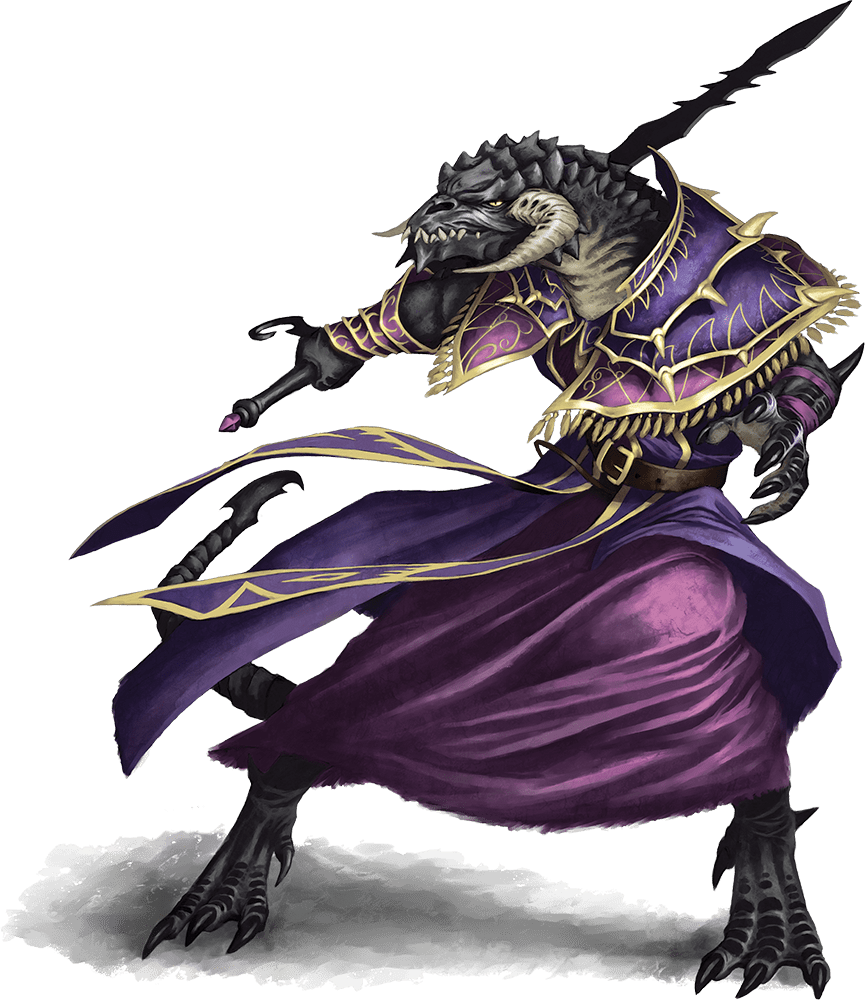
Inspiring Aura
When a creature you can see within 30 feet of you makes an ability check or saving throw, you can use your reaction to give it a 1d4 bonus to that roll.
The bonus to the roll increases to 2d4 at 12th level.
Intimidating Bulk
Prerequisites: Powerful Build feature or Strength 15
Your domineering size aids you in enacting your will on those smaller than you. You become proficient in the Intimidation skill and may use either your Strength or Charisma score when making a check for it. If you are already proficient in Intimidation when you take this feat, you add twice your Proficiency bonus to checks you make in that skill.
You have advantage when rolling Intimidation skill checks against creatures that are the same size or smaller than you.
You may use a bonus action to try and frighten a creature that is your size or smaller that you have dealt damage to with a melee attack, who is prone, or you are currently grappling. The creature must succeed on a Wisdom saving throw (DC 8 + your Intimidation skill modifier) or become frightened of you until the end of your next turn.
Lady Luck’s Chosen
Prerequisites: Destined, Doomed, or Lucky background
When you hit a creature with a Weapon Attack, you can choose to spend one Fortune die to make it a Lucky Hit. On a Lucky Hit, you deal half the damage of a normal hit, but may inflict the target with one of the following Conditions: Blinded, Deafened, Frightened, or Prone. This condition lasts until the end of the creature's next turn.
At 12th level, when inflicted with a Condition, you can use your reaction and spend 2 Fortune dice to immediately negate it. This does not work for the Incapacitated and Unconscious conditions.
Mage Slayer
You have practised techniques useful in melee combat against spellcasters, gaining the following benefits:
When a creature within 5 feet of you casts a spell, you can use your reaction to make a melee weapon attack against that creature.
When you damage a creature that is concentrating on a spell, that creature has disadvantage on the saving throw it makes to maintain its concentration.
You have advantage on saving throws against spells cast by creatures within 5 feet of you.
Magnificent Mite
Prerequisites: Size small
When it comes to brutality in battle, size isn't all that matters - its what you do with it. You gain the following benefits:
Increase your Strength score by 1, to a maximum of 20.
When you hit with attacks using Unwieldy melee weapons, you deal one additional weapon die of damage.
Your base movement speed increases by 5 feet.
When you make a running long jump or high jump while wielding a melee weapon with the Unwieldy property, the distance you can cover increases by 10 as you use the uneven weight of the weapon comparative to your size to vault greater distances.
Martial Adept
Prerequisites: Proficiency in at least one Martial weapon.
You have martial training that allows you to perform special combat manoeuvres. You gain the following benefits:
You learn two Manoeuvres of your choice from among those available to the Battle Master archetype in the fighter class. If a manoeuvre you use requires your target to make a saving throw to resist the manoeuvre’s effects, the saving throw DC equals 8 + your proficiency bonus + your Strength or Dexterity modifier (your choice).
If you already have superiority dice, you gain one more; otherwise, you have one superiority die, which is a d6. This die is used to fuel your manoeuvres. A superiority die is expended when you use it. You regain your expended superiority dice when you finish a short or long rest.
You can select this feat multiple times. Each time you do, you must choose a different manoeuvre.
Master of Monsters
Prerequisite: Strength or Dexterity 13
You have advantage on Strength (Athletics) or Dexterity (Acrobatics) checks to climb onto a bigger creature (DMGp.271) or remain on a creature you are already on.
While you remain on a bigger creature, you can use your action to make an unarmed strike against the creature. On a hit, the creature must use its reaction to move up to half its movement speed in a direction of your choice. If it hits a solid object - that is as big or larger than it - before the end of its movement, the creature is knocked prone. If the creature would enter into any environmental hazard dangerous to the creature (such as falling off a cliff when it can't fly, or into lava when it isn't immune to fire), it instead falls prone in the space adjacent to the hazard.
Master of None
Prerequisites: Expertise feature
Prowess ultimately comes down to focus, and your precision with one talent or another ultimately depends on your fixation which can change with the wind. You gain the following benefits:
Increase your Dexterity, Intelligence, or Wisdom score by 1, to a maximum of 20.
Whenever you finish a Long Rest, you may reassign the bonuses granted by your Expertise feature to different skills or tools you are proficient in.
Medium Armour Master
Prerequisites: Proficiency with medium armour
You have practised moving in medium armour to gain the following benefits:
Increase your Dexterity or Strength score by 1, to a maximum of 20.
Wearing armour doesn’t impose disadvantage on your Dexterity (Stealth) checks. When you don armour, any strength requirement needed to wear it is reduced by 2.
When you wear medium armour, there is no cap on the Dexterity modifier you can add to the armour’s base AC.
The AC bonus provided by wielding a shield increases by 1 for you.
Metamagic Adept
Prerequisites: Spellcasting or Pact Magic feature
You've learned how to exert your will on your spells to alter how they function:
You learn two Metamagic Options of your choice from the sorcerer class. You can use only one Metamagic option on a spell when you cast it, unless the option says otherwise. Whenever you reach a level that grants the Ability Score Improvement feature, you can replace one of these Metamagic options with another one from the sorcerer class.
You gain 2 sorcery points to spend on Metamagic (these points are added to any sorcery points you have from another source, but can be used only on Metamagic). You regain all spent sorcery points when you finish a long rest.
You can select this feat multiple times. Each time you do, you must choose different metamagic options.
Mobile
Prerequisites: Dexterity 13
You are exceptionally speedy and agile. You gain the following benefits:
Your speed increases by 10 feet.
When you use the Dash action, difficult terrain
doesn’t cost you extra movement on that turn.
When you hit a creature with a melee attack, you don’t provoke opportunity attacks from that
creature for the rest of
your turn.
Mounted Combatant
Prerequisites: Proficiency in Animal
Handling or with Vehicles
You are a dangerous foe to
face while mounted. While
you are mounted and aren’t
incapacitated, you gain the
following benefits:
You have advantage on melee attack
rolls against any unmounted creature
that is your mount's Size or smaller.
You can force an attack targeted at
your mount to target you instead.
If your mount is subjected to an effect
that allows it to make a Dexterity saving
throw to take only half damage, it instead
takes no damage if it succeeds on the saving
throw, and only half damage if it fails.
Mystic Conflux
Through your repeated exposure to the natural flow of arcane magic throughout the planes, you’ve adapted to attune with additional enchantments, though the process can be physically taxing. You gain the following benefits:
You have advantage on Intelligence (Arcana) checks when investigating the nature of a magical object or device.
You can now be attuned to a maximum of four magical items, rather than the normal limit of three. Other attunement limitations still apply.
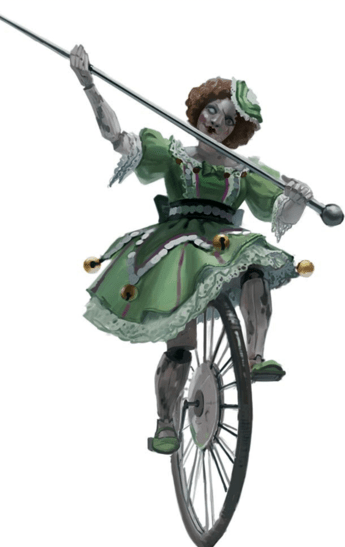
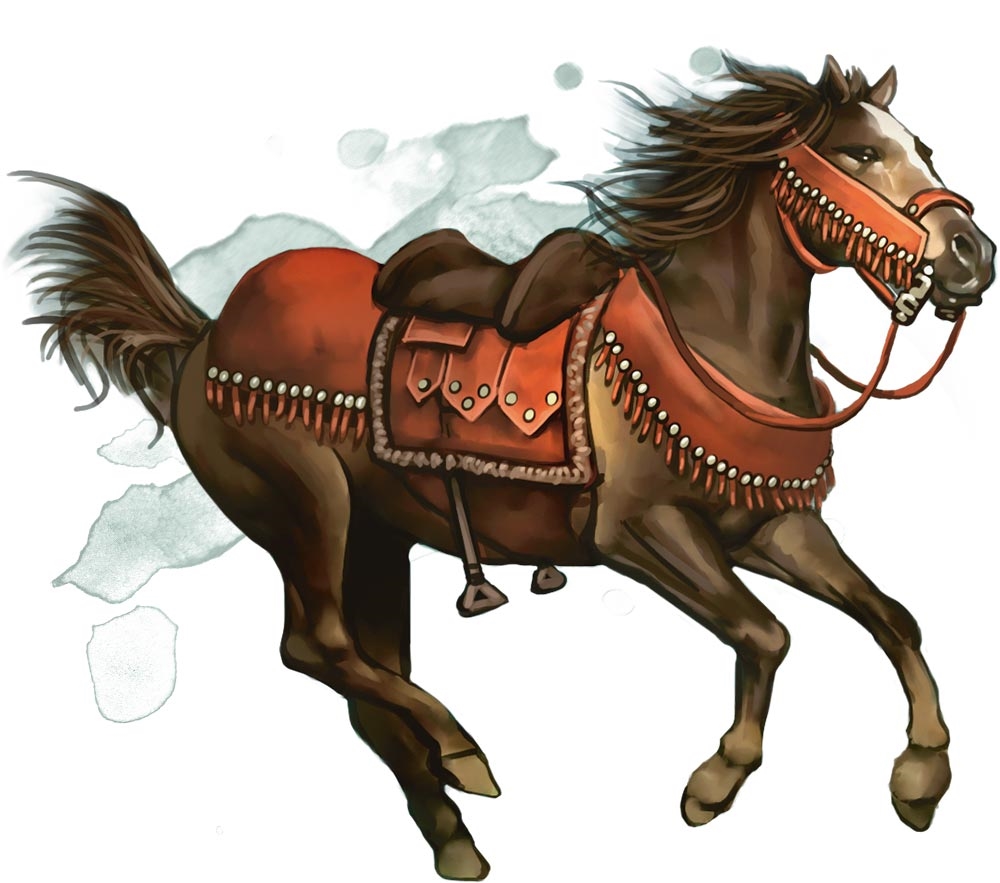
Mutable Resilience
You have advantage on saving throws against spells or other effects that would alter your form, such as a polymorph or flesh to stone spell, and your ability scores cannot be reduced by magical effects, such as by a shadow’s Strength Drain attack, unless you wish them to be.
Additionally, your Strength or Constitution score (your choice) increases by 1, to a maximum of 20.
Mystic Reservoir
Prerequisites: Spellcasting or Pact Magic feature
You are able to store your power in the weave around you, saving it for later:
Increase your spellcasting ability’s score by 1, to a maximum of 20.
You gain an additional spell slot of level equal to one half of your greatest slot level, rounded down (minimum 1st-level).
Overwhelming Ability
Prerequisite 12th-level.
One ability score of 20 of your choice increases to 22, ignoring score restrictions. This score cannot be 20 as a result of magic items, such as a belt of giant strength.
Alternatively, choose a single skill. Whenever you make an ability check for that skill, you can treat a d20 roll of 9 or lower as a 10.
Powdermaster
Prerequisite: Proficiency in Alchemist's or Tinker's tools
You have a strong knowledge of the structures of buildings and how to bring them down. When using items such as bombs or dynamite, or spells and magical effects your DM agrees are appropriate (such as Fireball), they deal double damage to objects and structures.
The misfire range of firearms you wield is reduced by 1 (to a minimum of 1).
You have advantage on checks made to find explosives merchants, or to otherwise acquire black powder and similar compounds. You also have advantage on checks made to understand how they work.
Proactive Analysis
Prerequisites: Intelligence or Wisdom 13
Your mind and attention are capable of accomplishing multiple complex tasks in tandem and with apparent ease. You can spend 10 minutes to analyze a scenario to its most minute detail. When you do so, you gain an amount of d4s equal to your Intelligence modifier. Any time just before you make an ability check, saving throw, or attack roll you can roll one of these d4s and add the total as a bonus to the roll.
In addition, you can also divide your pool of d4s to willing creatures outside of combat, the recipients of which can use them as described above.
The d4s granted by Proactive Analysis are wasted once 1 hour has passed after their creation, and once you have used Proactive Analysis you cannot do so again until you have finished a long rest


Psionic Adept
Prerequisites: Intelligence 13
You have mystical training that allows you access to a well of psychic magic. You gain the following benefits:
You learn two Psionic Powers of your choice from the Psionic Powers list. If a power you use requires your target to make a saving throw to resist the power’s effects, the saving throw DC equals 8 + your proficiency bonus + your Intelligence modifier.
If you already have Psionic Energy dice, you gain one more; otherwise, you have one Psionic Energy die, which is a d6. This die is used to fuel your psionic powers. A psionic energy die is expended when you use it. You regain all your expended psionic energy dice when you finish a short or long rest.
You can select this feat multiple times. Each time you do, you must choose different psionic powers.
Ritual Caster
Prerequisites: Intelligence or Wisdom 13
You have learned a number of spells that you can cast as rituals. These spells are written in a spellbook, which you must have in hand while casting one of them.
When you choose this feat, you acquire a ritual spellbook holding two 1st-level spells of your choice. Choose one of the following classes: artificer, cleric, druid, or wizard. You must choose your spells from that class’s spell list, and the spells you choose must have the ritual tag. The class you choose also determines your spellcasting ability for these spells: Wisdom for cleric, druid, or ranger; Intelligence for artificer or wizard.
If you come across a spell in written form, such as a magical spell scroll or a wizard’s spellbook, you might be able to add it to your ritual spellbook. The spell must be on the spell list for the class you chose, the spell’s level can be no higher than half your level (rounded up), and it must have the ritual tag. The process of copying the spell into your ritual book takes 2 hours per level of the spell, and costs 50 gp per level. The cost represents material components you expend as you experiment with the spell to master it, as well as the fine inks you need to record it.
If you already have a spellbook, such as from Wizard levels or taking a Pact of the Tome as a Warlock, you can simply add rituals from this feat to that book.
Scroll Sage
Prerequisite: Intelligence 13
You accumulate and exploit spell scrolls, recognizing the worth they provide. You gain the following benefits:
Increase your Intelligence, Wisdom, or Charisma score by 1, to a maximum of 20.
You can read and cast a spell from a spell scroll even if you would not ordinarily be able to cast it. You can scribe a spell scroll even if you aren't proficient in Arcana, and you reduce the time and cost to do so by half.
As an action, you can consume and cast a number of spell scrolls up to your proficiency bonus at once. The spells must require an action or a bonus action to cast, and can't require concentration. Once you use this action, you can't do so again until you finish a long rest.
Sentinel
Prerequisites: Strength and Dexterity 13
You have mastered techniques to take advantage of every drop in any enemy’s guard, gaining the following benefits:
When you hit a creature with an opportunity attack, you can attempt to grapple the target as well as dealing damage.
Creatures within 5 feet of you provoke opportunity attacks from you even if they take the Disengage action before leaving your reach.
When a creature within 5 feet of you makes an attack against a target other than you (and that target doesn’t have this feat), you can use your reaction to make a melee weapon attack against the attacking creature.
Sharpshooter
Prerequisites: Dexterity 13
You have mastered ranged weapons and can make shots that others find impossible. You gain the following benefits:
Attacking at long range doesn't impose disadvantage on your ranged weapon attack rolls.
Your ranged weapon attacks ignore half cover and three-quarters cover.
Before you make an attack with a ranged weapon that you are proficient with, you can choose to take a - 5 penalty to the attack roll. If the attack hits, you add +10 to the attack’s damage.
Shield Master
Prerequisites: Strength 13
You use shields not just for protection but also for offence. You gain the following benefits while wielding a shield:
If you take the Attack action on your turn, you can use a bonus action to try to shove a creature within 5 feet of you with your shield. If they fail the contested check by 5 or more, they fall prone.
If you aren’t incapacitated, you can add your shield’s AC bonus to any Dexterity saving throw you make against a spell or other harmful effect. If you are subjected to an effect that allows you to make a Dexterity saving throw to take only half damage, you can also use your reaction to take no damage if you succeed on the saving throw, interposing your shield between yourself and the source of the effect.
Ship’s Crow
Prerequisites: Dexterity or Wisdom 13
You’re well acquainted with life at unstable high altitudes. You gain the following benefits:
You gain advantage on Wisdom (Perception) checks to see objects more than 300 feet away from you, and to resist being knocked prone, pushed, or fall.
While not using a shield and not wearing heavy armour, you gain a climbing speed equal to your walking speed and reduce damage you take from falling by a number equal to your level.
While in cover, you are considered Heavily Obscured.
Skulker
Prerequisites: Dexterity 13
You are expert at slinking through shadows. You gain the following benefits:
You can try to hide when you are lightly obscured from the creature from which you are hiding. When you are hidden from a creature and miss it with a ranged weapon attack, making the attack doesn't reveal your position.
Dim light doesn’t impose disadvantage on your Wisdom (Perception) checks relying on sight.
Telekinetic
You learn to move things with your mind, granting you the following benefits:
Increase your Intelligence, Wisdom, or Charisma by 1, to a maximum of 20.
You learn the mage hand cantrip. You can cast it without verbal or somatic components, and you can make the spectral hand invisible. If you already know this spell, its range increases by 30 feet when you cast it. Its spellcasting ability is the ability score increased by this feat.
As a bonus action, you can try to telekinetically shove one creature you can see within 30 feet of you. When you do so, the target must succeed on a Strength saving throw (DC 8 + your proficiency bonus + the ability modifier of the score increased by this feat) or be moved 5 feet toward you or away from you. A creature can willingly fail this save.
Telepathic
You awaken the ability to mentally connect with others, granting you the following benefits:
Increase your Intelligence, Wisdom, or Charisma by 1, to a maximum of 20.
You can speak telepathically to any creature you can see within 60 feet of you. Your telepathic utterances are in a language you know, and the creature understands you only if it knows that language. Your communication doesn't give the creature the ability to respond to you telepathically.
You can cast the detect thoughts spell, requiring no spell slot or components, and you must finish a long rest before you can cast it this way again. Your spellcasting ability for the spell is the ability increased by this feat. If you have spell slots of 2nd-level or higher, or Psionic Energy dice, you can cast this spell with them.
Threads of Fate
Prerequisites: Proficiency in Weaver's tools
You've learned to create an ethereal bond between you and an ally, granting you both a shared connection with one another. You can use a bonus action to create the bond between you and a willing creature within 30 feet of you, which lasts for 1 minute. It ends early if you are incapacitated, you choose to bond to another creature, or if you don heavy armour or a shield. You can also dismiss the Thread of Fate at any time (no action required).
While the Thread is active and you are within 30 feet of each other, you and the connected creature each gain the following benefits:
- You gain a +1 bonus to your Armour Class.
- You gain a bonus to any Constitution saving throw equal to your Wisdom modifier (minimum 1)
- You can take an instance of damage the other would have taken by using your reaction. This does not affect force or psychic damage.
Once you use this ability, you cannot use it again until you finish a long rest.
Titan’s Grip
Prerequisites: Strength 15, Powerful Build feature
The strength in your hands is nearly incomparable. You can hold two-handed weapons in which you have proficiency in one hand.
When wielding a versatile weapon in one hand, you deal the larger damage dice.
You can wield Oversized weapons only in two hands, and do not incur disadvantage attacking with them. You are considered proficient in them.
Written In Blood
Prerequisites: Spellcasting or Pact Magic feature
You’ve learned the rites of summoning from the runic scrawlings within lost archives. When you take damage, you can use your reaction to blood-summon a single creature of challenge rating less than or equal to one third of your Spellcasting level by expending a number of hit dice equal to the creature's CR (minimum one die). This creature can be of any type except Humanoid, Giant, or Construct, and it appears within 30 feet of you.
When the creature appears, it is immediately hostile to all creatures around it, including you; depending on its intelligence and alignment, it may be able to be reasoned with. You choose the creature, but it is under the control of the DM.
The creature remains for 1 hour, or until you successfully banish it as an action. If you attempt to banish your blood summon, the creature must make a Charisma saving throw against your spell save DC. On a failed save, it is returned to its place of origin. You can continue to attempt to banish the creature until you succeed.
Once you use this feature, you cannot do so again until you complete a long rest.
War Caster
Prerequisites: The ability to cast at least one spell
You have practised casting spells in the midst of combat, learning techniques that grant you the following benefits:
You have advantage on Constitution saving throws that you make to maintain your concentration on a spell when you take damage.
You can perform the somatic components of spells even when you have weapons or a shield in one or both hands.
When a hostile creature’s movement provokes an opportunity attack from you, you can use your reaction to cast a spell at the creature, rather than making an opportunity attack. The spell must have a casting time of 1 action and must target only that creature.
Weapon Specialist
Prerequisites: Strength or Dexterity 13
You have practised extensively with a variety of weapons, but found your calling with one type of weapon over all others. You must be proficient in at least one weapon of the kind required for a specialisation you choose.
Increase your Strength or Dexterity score by 1, to a maximum of 20.
You gain one of the following Specialisations; you can change your chosen specialisation whenever you gain a level.
Arbalist. You ignore the loading quality of two-handed, Unwieldy ranged weapons and you treat such weapons as though they had the Bulky property
Artless Martialist. Your unarmed strikes deal bludgeoning damage equal to one roll of your Bardic Inspiration, Hunter's Mark, Psionic Energy, or Superiority Die instead of their normal damage until the end of your next turn whenever you expend one of those dice.
Akimbo Shooter. You can engage in two-weapon fighting with light firearms, instead of light melee weapons. Engaging in two weapon fighting does not restrict your ability to reload or fix firearms. When you reload a firearm while holding one in both hands, you can reload both guns at once.
Blade and Black Powder. You can wield a light firearm in the place of a single light melee weapon while engaged in two-weapon fighting. While engaged in two weapon fighting with a light melee weapon and the one handed firearm, being within 5 feet of a hostile creature doesn’t impose disadvantage on your ranged attack rolls with the firearm. Additionally, when you use your action to attack using the firearm or melee weapon, you can use your bonus action to attack with the other weapon; on a hit, the attack deals additional damage equal to 1d6 + your Proficiency bonus of the weapon's damage type.
Blowgun Master. Attacking with a blowgun while hidden does not reveal your position, but does grant advantage to creatures you hit on checks made to find you.
Boomerang Master. When you make a ranged attack with a thrown weapon, you can choose to have the weapon immediately return to your hand after you make the attack roll. You must have a free hand to catch it to do so. Furthermore, when you hit a target this way, you can attack another creature within 20 ft of the targeted creature as part of any additional attacks you can make, such as with the extra attack feature.
Brain-Shaker. When you land a critical hit against a creature using a sling, they suffer disadvantage on Intelligence, Wisdom, and Charisma saving throws until the end of your next turn. In addition, the target is either blinded or has their speed reduced by 10 feet for that period.
Breaker. When you hit a creature with a melee weapon attack using a Mace, Maul, Meteor Hammer, War Pick, or Warhammer as a part of the Attack action, and you have not yet moved that turn, you can use a bonus action to make an additional attack against that target using that weapon. Taking this reaction reduces your speed to 0 until the start of your next turn.
Cleaving Strikes. If you hit a creature with a melee attack using a Greataxe, Greatsword, Glaive, Halberd, or Odachi, you can make an attack roll with the weapon against a second creature within 5 feet of the first that is also within your reach. On a hit, the second creature takes the weapon’s damage, but don’t add your ability modifier to that damage, unless that modifier is negative. You can make this extra attack only once per turn.
Crossbow Expert. You ignore the loading quality of crossbows with which you are proficient. When you use the Attack action and attack with a weapon that lacks the two-handed and versatile properties, you can use a bonus action to attack with a loaded crossbow you are holding.
Dazer. If you hit a creature with an attack using a light hammer, flail, morningstar, quarterstaff, club, or knuckleduster, that creature has Disadvantage on its next attack roll before the start of your next turn.
Dragon Archer. You ignore the loading property of Greatbows and ranged weapons with the Oversized property. If a ranged weapon attack from a Unwieldy, Bulky, or Thrown weapon reduces an enemy to 0 hit points or misses a target who does not benefit from Heavy or Natural armour, it travels on. Make another attack with a -5 penalty at a second creature further along the line of its trajectory.
Grazing Misses. If your attack roll with a pike, spear, javelin, whip, meteor hammer, trident or scimitar misses a creature, you can deal damage to that creature equal to the ability modifier you used to make the attack roll. This damage is the same type dealt by the weapon.
Grenadier. You add half your proficiency bonus (rounded down) to damage rolls using explosive and incendiary effects (including Spread firearms), and the DC for resisting ballistics increases by 1.
Knife Master. Daggers, chakrams, and sickles’ weapon damage dice are treated as one step higher (for example, 1d4 becomes 1d6), and you can use them to pick locks as if they were a set of thieves’ tools. You gain advantage on any check made to conceal them on your person. Sickles also gain the Finesse property for you.
Knuckle Breaker Once on each of your turns when you use your Attack action to hit a creature with an unarmed strike using a Knuckleduster, you can make another unarmed strike against the same target using your reaction.
Lancier. You may wield a lance in one hand provided you hold a shield in the other, even while not mounted. In addition, you no longer have disadvantage to attack targets within 5 feet of you using a lance and you get a +2 bonus to attack rolls when attacking creatures more than 5 feet away from you using a lance.
Lash Master. When you hit a creature with a whip, net, flail, or meteor hammer, you can use a bonus action or another attack as part of the Attack action to grapple the target, to pull yourself to the target, or to force the target to succeed on a Dexterity saving throw (DC 8 + your Proficiency bonus + the ability modifier you used to make the attack roll) or drop an item of your choice that it’s holding, fall prone, or be pulled adjacent to you (your choice). You cannot attack with that weapon while grappling a creature this way, but the grappled creature has disadvantage on checks and saves made to escape the grapple.
Marksman. You do not incur disadvantage for attacking creatures in your long range with two-handed firearms, and gain advantage on such attacks made while you are prone.
Phalanx. When you wield a spear, trident, javelin, pike, or shortsword in one hand and a shield in the other, you can use a bonus action to brace the weapon against the shield in order to attack with it from a defensive position. The weapon stays braced in this way as long as you move no more than 10 feet during your turn. While braced, you are considered to have half cover instead of the normal benefits of having a shield, you have advantage on Strength saving throws and disadvantage on Dexterity saving throws. Any magical bonuses to your AC from the shield are retained while braced.
Polearm Master. When you take the Attack action and attack with only a glaive, pike, halberd, or quarterstaff, you can use a bonus action to make a melee attack with the opposite end of the weapon. The weapon’s damage die for this attack is a d6, and the attack deals bludgeoning damage.
Retiarior. Tridents and nets are considered to have the Light property for you. Net attacks can be made as melee attacks.
Sabre Stylist. You can use a bonus action to take a defensive stance when you wield any kind of sword, increasing your AC by half your proficiency bonus (rounded down) until the start of your next turn or until you drop the weapon.
In addition, you can choose to deal either slashing or piercing damage when you attack with any swords, daggers, or pikes.
Sai Master. When you are wielding a dagger or shortsword and a creature hits you with a melee attack, you can use your reaction to add your proficiency bonus to your AC for that attack, potentially causing the attack to miss you.
Spear Master. You can engage in two-weapon fighting while wielding a single javelin, spear, trident, or quarterstaff in two hands, as though you were using two light weapons.
Thrown Weapons Master. Simple and martial melee weapons without the Thrown property have the Thrown property for you. One-handed weapons have a range of (20/60), while two-handed weapons have a range of (15/30). Weapons you use that already have the thrown property increase their short range by 20 feet and their long range by 40 feet.
Woven Specialist
Prerequisites: The ability to cast at least one spell
You have honed your magical prowess in many ways, but found your calling with one niche of spellcasting over all others. You must be proficient in at least one spell of the kind required for a specialisation you choose.
Increase your Intelligence, Wisdom, or Charisma score by 1, to a maximum of 20.
You gain one of the following Specialisations; you can change your chosen specialisation whenever you gain a level.
Ambrosius Resin. You can use a bonus action while the Shillelagh cantrip is active to grant the weapon one of the following floral changes until the start of your next turn:
Boscia. A dense knot of ash roots gnarl around the head of the stave; when a creature is hit by your shillelagh, they must succeed a Strength saving throw or become grappled by roots which slither from the shillelagh’s head to their ankles, binding them to the ground.
Galerina. Toadstools sprout from the stave; when a creature is hit by your shillelagh, they must succeed a Constitution saving throw or become poisoned.
Rubeus. Wicked thorns and brambles spring from the stave; the shillelagh gains the Bleed property and deals an additional 1d4 piercing damage on a hit. At 11th level, this extra damage increases to 2d4.
You can use this feature a number of times equal to your Spellcasting ability modifier (minimum 1), regaining all expended uses when you finish a short or long rest.
Arcane Assassin. As part of the action used to create a mage hand, you can make a melee spell attack against a creature within 5 feet of the mage hand. On hit, the target takes bludgeoning damage equal to 1d8 + your Intelligence modifier. When you move mage hand on subsequent turns, you can make a single attack with it as a part of that action. In addition, True Strike no longer requires concentration, but it has a duration of 1 round.
Arcane Rejuvenation. You can channel arcane energy to heal your own wounds. As an action, you can consume one of your spell slots, regaining a number of hit points equal to the slot level times your Spellcasting ability modifier. This requires Somatic components to perform, and can be prevented by a Counterspell or similar effect as though it were a spell of level equal to the spell slot expended.
Arcane Vigilance. When you roll initiative, you can expend a spell slot and choose up to three creatures you can see within 30 of you, other than yourself. Each target gains temporary hit points equal to 1d8 per spell level plus your Spellcasting ability modifier.
Artistic Arcanist. Your prowess with a creative tool translates into a lateral approach towards magic, granting you the following benefits. As a bonus action, you can expend a spell slot to grant a bonus to your next ability check using a tool set you're proficient with equal to 1 + the level of the spell slot. You must make a check within 1 minute of using this ability, or the energy you expend dissipates with no effect.
Augmented Summoning. Your summoned creatures are more powerful than normal. Each creature you conjure with a spell gains a +2 bonus to its attack and damage rolls for the duration of the spell that summoned it.
Baldr's Shell. When you cast the Shield spell, you summon a sphere with a 5-foot radius that moves with you, centred on you. Creatures of your choice within the area also gain a +2 to their AC while the effect of the spell is active.
Cantrip Maverick. For you, all cantrips that require a ranged spell attack can be made with a melee spell attack. When you do this, the spell has a range of touch. When you deal damage with a cantrip to a creature within 5 feet, you deal an additional die of damage to that creature. Furthermore, if you use your action to cast a cantrip which requires an attack roll against a single target, you may use your bonus action to cast it again, attacking the same target. Fire Bolt fulfils this, for example, but Eldritch Blast does not.
Chime Bearer. Creatures who fail to save against your casting of Toll the Dead are deafened until the start of your next turn.
Chisel of Inquisition. The damage die of Mind Sliver increases to 1d10. In addition, you can choose a creature that fails the saving throw to incur disadvantage on its next saving throw instead of a -1d4 penalty.
Circle of Blood. You learn an ancient ritual to defend yourself against errant incursions. You can conduct a 1 minute long ritual tracing a Magic Circle using your blood, expending a one or more Hit Dice, up to half your Spellcaster level. Roll the dice. You take necrotic damage equal to the number rolled, which cannot be reduced.
The circle's radius is a number of feet equal to 5 x the number of Hit Dice expended. While the circle lasts, creatures you choose to be affected by the spell who attempt to cross the circle, harm it, or target anyone within it must make a Wisdom saving throw. On a failed save, their attempt fails and any resources used in the attempt are expended.
This Magic Circle lasts until you finish a short or long rest or until you use this feature again. You cannot cast the spell
this way unless it is one of your known spells and is
prepared for the day.
Corrosive Strikes. Your spell attacks which inflict
Acid damage deal double damage to objects
and structures.
Disciple of Mystra. You follow the teachings
of the Magebearer. She grants you additional
spellcasting knowledge. Choose one of the
following classes: artificer, bard, cleric,
druid, paladin, ranger, sorcerer, warlock, or
wizard. You learn three spells from that
class’s spell list, which count as class
spells for you. You always have these
spells prepared, and they do not count
against the number of spells you can know or
have prepared at a time.
When you gain a level,
you can switch any of these spells for any other
qualifying spells from the same list.
You can only
choose spells of a level for which you have spell
slots to cast.
Durable Casting. You have a knack for being able to concentrate on casting spells and maintaining them despite taking damage while doing so. For the purpose of making a Constitution saving throw to maintain concentration, you subtract an amount equal to your greatest spell slot level from the DC required to maintain Concentration. You still take the damage dealt to you as normal, but the damage is less likely to affect your ability to produce spells successfully.
Eudaimonia. When you cast Awaken, Detect Thoughts, Gift of Gab, Modify Memory, or Sequester, it has a range of 60 feet.
Gish. The art of the Gish is one of melee-focused spellcasting, a spellcaster built for close combat. You gain the following benefits: You can cast any spell for which you make a ranged spell attack as a melee spell attack instead. The spell’s range is reduced to Touch (5 ft. reach). Spells which ordinarily require you to make a melee spell attack are considered Unarmed Strikes for the purpose of modifying their effects with other spells, and for class or ancestry features. You can choose for spells with a casting time of 1 action, and a range of Touch or which require you to make a melee spell attack, to be inflicted using an unarmed strike as a part of the Attack action, instead of the full action usually to cast them.
Ghostly Illusions. The range of minor illusion increases to 120 feet. When you make illusions with minor illusion you can choose which creatures see or hear it, and can produce both effects at once.
Gnawing Dark. When you roll damage for a spell that deals Necrotic damage, you can consume a spell slot of 1st-level or higher (no action required) to regain hit points equal to half the total amount of Necrotic damage taken by the targets, to a maximum amount of half of your total hit points.
Guardian Mage. When you or a creature you can see within 30 feet of you takes damage, you can use your reaction to expend a spell slot and weave protective magic around the target. Roll a number of d4s equal to the level of the spell slot expended and reduce the damage the target takes from that attack, spell, or magical effect by the total rolled on those dice + your Spellcasting ability modifier.
Habituated Magic. Cantrips never require concentration, lasting for their maximum duration instead (ending early if you cast another cantrip which normally requires concentration).
Hypnotist. You have gained the ability to project your spells into a creature’s mind via hypnosis. If you are casting a spell that deals damage, you may choose a single creature that is charmed or frightened of you that can see you to hypnotically enact the spell’s effects as an attack upon their mind. When you do so, the spell being cast only affects the chosen creature, regardless of its regular targeting properties, and all damage done is changed to psychic damage. You must still make attack rolls for spells that require them, and the creature still makes a saving throw if one is required, but all actions are perceived in the mind of the creature rather than happening in the physical world.
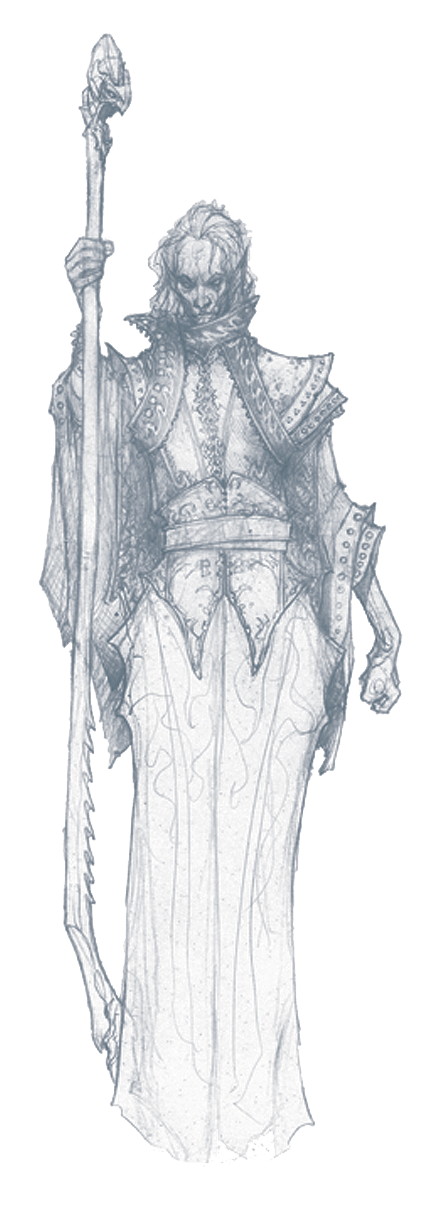
Immaterial Duelist. Spells which require a melee weapon with a monetary value as a component instead can use any melee weapon, even those conjured or created by magic. Spells with a casting time of 1 bonus action and a duration of concentration, up to 1 minute, no longer require concentration; they instead last for their maximum duration unless ended early. However, you cannot benefit from two of these effects at once unless you're concentrating on one.
Invaluable Ceremonies. The knowledge you have of the formal ritual traditions allows you to set up rituals highly precisely in order to cast spells without the crutch of spell slots or material foci. You can cast a spell with the ritual tag over the course of 1 hour, instead of 10 minutes, to cast the spell without consuming any material components required for the spell.
Kattari. When you hit a creature with an unarmed strike, you can deliver the effects of a cantrip against the target, replacing the normal damage of the unarmed strike. The cantrip must require you to make a single spell attack and must normally take either an action or bonus action to cast.
Magewright. Cantrips you cast which lift weight, mend, produce harmless sensory effects, target an area on a surface, or affect areas of elements have their load and effect-range doubled, can be cast as action, do not require concentration, and you can maintain twice as many of their instantaneous effects at once.
Mindbend. When you target a creature with the Friends cantrip of the Charm Person spell, on a failed save it does not realise the cantrip was used on it and does not become hostile toward you when it wears off.
Misericorde. Choose a single cantrip which requires you to make a ranged or melee spell attack. When you cast this cantrip while hidden from the target, it deals an additional spell-die of damage on a hit.
Quick Ritualist. You can cast a Ritual Spell that you know and have prepared using its regular casting time, rather than the extended time for a Ritual. Doing so doesn’t require a Spell Slot. Once you cast a Spell in this way, you can’t use this benefit again until you finish a Long Rest.
Soulcaster. You can channel your lifeforce into the power of your magic. When a creature you can see within 60 feet of you fails on a saving throw against a damaging spell you cast, you can expend a number of Hit Dice equal to the spell level. Roll a number of Hit Dice equal to half the number of Hit Dice expended (rounded up) and the triggering creature takes additional damage of the spell's type equal to the total rolled on those dice.
Spell Interceptor. When you successfully remove, restore, counter, or dispel a spell or curse, it is stored within you for 1 minute, or until another spell is intercepted this way.
Return. As a bonus action, you can release a stored spell from your hands at the same level it was originally cast, with the caster's spell save DC.
Nullify. As a bonus action, you can dispel the spell stored and gain one spell slot equal to the level the spell was originally cast, or you restore a number of hit points equal to 3d8 + 1d8 per level at which the spell was cast; any excess hit points are gained as temporary hit points.
You can use this ability a number of times equal to your Spellcasting ability modifier (minimum 1), regaining all expended uses when you finish a long rest.
Spell Shield. When you are targeted by an attack, as a reaction, you can expend a spell slot to protect yourself. Make an Spellcasting ability saving throw and add +1 for every slot level above 1st of your expended spell slot. If this saving throw exceeds the triggering attack roll, the attack misses.
Spellslinger. Once each round when a target is damaged by an At Will spell you cast (such as a cantrip), they take an additional 1d8 damage of the spell’s type. Cantrips whose damage is already increases by another feature, such as the Warlock's Agonizing Blast invocation or the Cleric's Potent Spellcasting feature gain the damage increase from only one source (your choice).
Spell Sniper. You have learned techniques to enhance your attacks with certain kinds of spells. When you cast a spell that requires you to make an attack roll, the spell’s range is doubled (minimum 10 ft.). Your ranged spell attacks ignore half cover and three-quarters cover.
Sphere of Influence. Your patron is ingrained in the land and society around you, those who are protected by their aegis are nigh untouchable and those that incur their wrath are soon removed. While you are within 10 miles of your Word of Recall sanctuary, you gain the following benefits:
You may use your spellcasting ability in place of your dexterity when making Stealth checks.
You have advantage on persuasion and intimidation checks made against humanoid creatures.
When you finish a long rest you may choose to use your spellcasting ability modifier in place of your Dexterity for calculating your AC, or for making Weapon attack and damage rolls. This effect lasts until you finish your next long rest.
Steelsoul. When you or a creature you can see within 30 feet of you takes damage while you are under the effect of the Blade Ward or Resistance cantrip, you can use your reaction to dull its suffering and reduce the damage it takes by 1d4 + your Proficiency bonus.
Transposition Accuracy. You have become more skilled at arriving on target. When casting any spell that includes a random chance for determining the destination or target (such as teleport or sending), you can roll twice and choose the result you want.
Warlord's Presence. Simply being in your vicinity fills others with awe, heroism, or fear. The radius of your spells and effects which are auras - centred on yourself and moving with you - are doubled.
Weapon of Dimeritium. When a creature is hit by a weapon under the effect of your Holy Weapon or Magic Weapon spell, they must succeed a Constitution saving throw or be unable to hold concentration on any spell until the start of your next turn.
Wicked Mockery. When a creature fails a saving throw against your vicious mockery, it can’t take reactions until the start of its next turn.
Winding Whispers. When you cast the Message cantrip you can target as many creatures as are in range. They all hear the same message. The targets can respond only to you, not each other.
Ancestry Feats
Some ancestry feats may be taken by creatures of subclasses which thematically coincide with the ancestry. For example, a viper totem barbarian taking the Touch of Sess’inek feat, or a Divine Soul sorcerer taking the Angelic Protection feat.
Aerial Warrior
Prerequisites: Physical wings, Strength 13
Your mighty muscles allow your hulking figure to soar through the air cloaked in steel and stone. You gain the following benefits:
Increase your Constitution or Strength score by 1, to a maximum of 20.
You can fly as normal while wearing heavy armour, provided it is built to accommodate your wings. In addition, while not wearing heavy armour, your fly speed increases by 10 feet.
You gain the following Action:
Wing Attack. With a sudden beating of your wings, each creature within 5 feet of you must succeed on a Dexterity saving throw (DDC8 + your Strength modifier + your Proficiency bonus) or take 2d6 bludgeoning damage and be knocked prone. This damage increases by 1d6 when you reach 11th level (3d6) and 17th level (4d6).
Angelic Protection
Prerequisites: 8th-level Aasimar
The innate resistance to magic that angels possess extends to you. You have advantage on saving throws against spells and other magical effects, and are immune to damage inflicted by cantrips.
Barbed Hide
Prerequisites: Changeling, Tiefling, Tortle, or Skink
Barbs protrude from your head, scales, or skin. You gain the following benefits:
Increase your Constitution or Charisma score by 1, to a maximum of 20.
As a bonus action, you can cause small barbs to protrude all over your body or cause them to retract. At the start of each of your turns while the barbs are out, you deal 1d6 piercing damage to any creature grappling you or any creature grappled by you.
You gain proficiency in the Intimidation skill. If you’re already proficient in it, your proficiency bonus is doubled for any check you make with it while your spikes are out.
Bountiful Luck
Prerequisites: Halfling
Your people have extraordinary luck, which you have learned to mystically lend to your companions when you see them falter. You’re not sure how you do it; Surely a sign of fortune’s favour!
When an ally you can see within 30 feet of you rolls a 1 on the d20 for an attack roll, an ability check, or a saving throw, you can use your reaction to let the ally reroll the die. The ally must use the new roll. When you use this ability, you can’t use your Lucky trait before the end of your next turn.
Bugbear Lycanthropy
Prerequisites: Goblin or Hobgoblin
Bugbears are the result of the unusual interaction between Goblinoid bloodlines, fey magic, and the curse of lycanthropy. This form of lycanthropy is hereditary, and is not contagious. You gain the following features:
Fey Ancestry. You have advantage on saving throws you make to avoid or end the charmed condition on yourself.
Sneaky. You are proficient in the Stealth skill.
Half-Lycan. You are considered a Shifter (goblinoid) and can take Shifter Ancestry feats.
You gain the Shifting feature:
Shifting. As a bonus action, you can assume a more bestial, hulking appearance. This transformation lasts for 1 minute, until you die, or until you revert to your normal appearance as a bonus action. When you shift, your size becomes Medium unless it's already larger, and you gain temporary hit points equal to your level + your Constitution modifier (minimum of 1 temporary hit point).
Additionally, while shifted you gain the following features:
- The reach of your melee attacks is 5 feet greater than normal.
- You count as one size larger when determining your carrying capacity, the weight you can push, drag, or lift, and the size of creatures you can grapple.
- Your walking speed increases by 10 feet
- You can take the Help action as a bonus action.
Once you shift, you can’t do so again until you finish a short or long rest.
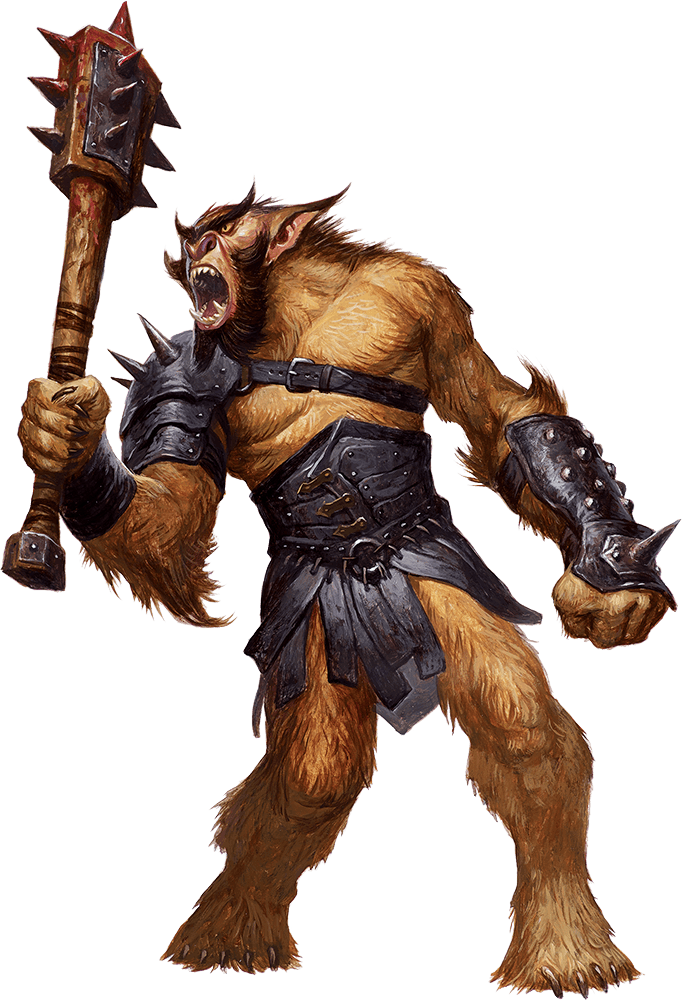
Cavalry of One
Prerequisites: Centaur, Elf (Drider), or Naga
You, yourself, have the power of a beast of burden. You gain the following features:
Increase your Strength or Constitution score by 1, to a maximum of 20.
You cannot mount a creature of Large or smaller. You are considered mounted while standing, benefiting from the rules for being mounted.
You gain proficiency in the use of Lances if not already proficient.
Changeable Nature
Prerequisites: Elf (Eladrin)
Some eladrin remain associated with a particular season for their entire lives, whereas other eladrin, like you, can adopt a new season on a whim.
Whenever you finish a long rest, you can associate yourself with a different season. You also gain an additional Seasonal Presence effect: Any creature you choose that starts its turn within 60 feet of you must make a Wisdom saving throw against your Fey Step save DC.
If a creature's saving throw is successful or the effect ends for it, the creature is immune to any eladrins' Seasonal Presence for the next 24 hours. On a failed save, the creature becomes charmed by you for 1 minute. Whenever you deal damage to the charmed creature, the creature can repeat the saving throw, ending the effect on itself on a success.
Also on a failed save, a creature charmed by you gains an additional effect depending on your season:
Autumnal Enchantment. While charmed in this way, if the target charmed by you hits with an attack roll while within 60 feet of you, you can use your reaction to force the attack to miss, provided you can see the attacker.
Spring's Joy. While charmed in this way, the creature cannot attack, direct spells toward, target, or look at anyone but you.
Summer's Wrath. While charmed in this way, the creature is also frightened of you. Damage does not break this charm or fear effect, but the target can repeat the saving throw at the end of each of its turns, ending the effect on itself on a success.
Winter's Sorrow. While charmed in this way, the creature has disadvantage on ability checks and saving throws.
Chameleonic Tongue
Prerequisites: Grung or Skink
Your tongue is long, sinuous, and visceral, capable of immense percussive and compressive strength. You can use it to make ranged weapon attacks with your unarmed strikes, which have a reach of either 15-foot or of twice your standing height (rounded to the nearest 5-foot multiple), whichever is greater. When you hit with it, you can use your bonus action to pull yourself to an unoccupied space adjacent to the target. If the target is a creature of your size or smaller, you can instead make an opposed Athletics check, pulling them adjacent to you if you succeed.
A creature hit by this attack is grappled by you, if you choose, and must use its action to perform an Athletics or Acrobatics check to escape (opposed by either your Athletics or Sleight of Hand). While a creature is grappled by you in this way, you cannot speak or perform verbal components, and cannot make another of these Tongue attacks.
You can choose to end the grapple and retract the tongue either as a bonus action or as an attack as part of the Attack action. It retracts automatically if the target escapes the grapple.
Descendant of the Lost
Prerequisite: Fell Fairy
Wandering the sands of your ancestors' memories and viewing the deaths of many, your fell blood sings the songs of those beyond the grey wastes. You gain the following benefits:
Increase your Strength, Dexterity, or Wisdom score by 1, to a maximum of 20.
Your unarmed strikes made with your natural weapons count as magical for the purpose of overcoming resistance and immunity to nonmagical attacks and damage.
When you roll piercing damage for an attack made with your natural weapons, you can add half your proficiency bonus (rounded up) to the damage dealt.
You gain resistance to necrotic damage.
Bone Eater. As a reaction when you take damage from a creature within 5 feet of you, you can magically enlarge your jaw and lash out with a vicious bite. Make an unarmed strike using your bite against a target. It deals an additional 1d4 damage on a hit, and deals double damage to objects and structures.
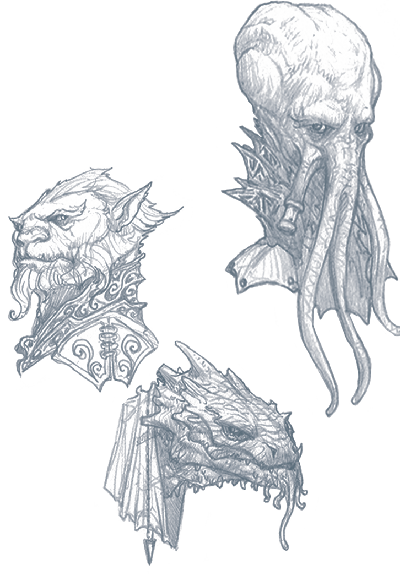

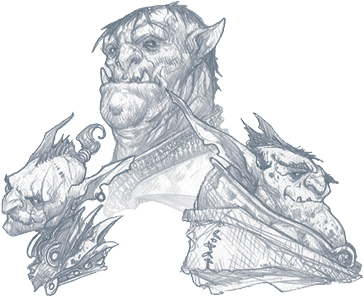
Distant Child of Tiamat
Prerequisites: Kobold
Increase your Charisma or Constitution score by 1, to a maximum of 20.
You gain an additional Draconic Legacy option of your choice, but cannot take one you already possess.
Draconic Presence
Prerequisites: Breath Weapon feature
When angered, you radiate menace. You gain the following benefits:
Increase your Strength, Constitution or Charisma score by 1, to a maximum of 20.
Instead of exhaling destructive energy, you can expend a use of your Breath Weapon trait to roar, forcing each creature of your choice within 30 feet of you to make a Wisdom saving throw (DC 8 + your proficiency bonus + your Charisma modifier). A target automatically succeeds if it can’t hear or see you. On a failed save, a target becomes frightened of you for 1 minute. If the frightened target takes any damage, it can repeat the saving throw, ending the effect on itself on a success.
Dragon Scales
Prerequisites: Dragonborn or Kobold
You manifest scales and claws reminiscent of your draconic ancestors. You gain the following benefits:
Increase your Strength, Constitution or Charisma score by 1, to a maximum of 20.
Your scales harden, producing Natural Armour. While you aren’t wearing armour, you can calculate your AC as 13 + your Dexterity modifier. You can use a shield and still gain this benefit.
You grow retractable claws from the tips of your fingers. Extending or retracting the claws requires no action. The claws are natural weapons, which you can use to make unarmed strikes. If you hit with them, you deal slashing damage equal to 1d4 + your Strength modifier, instead of the normal bludgeoning damage for an unarmed strike.
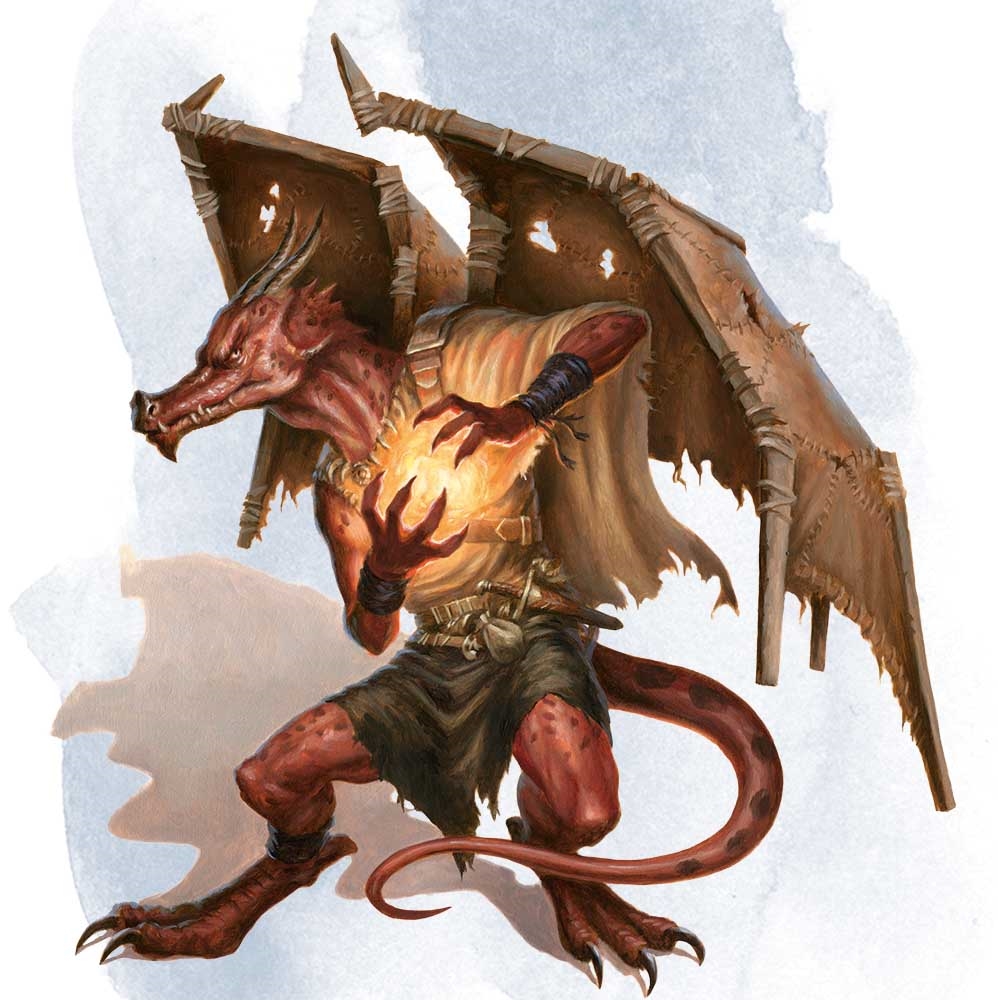
Drider Transformation.
Prerequisites: Elf (Drow)
Over the course of your next long rest after you take this feat, you enter into a cocoon and emerge with the lower torso of a giant spider. This process is irreversible. While within the cocoon, you are vulnerable to all damage. You gain the following features:
Monstrous. Your creature type is fey (monstrosity), rather than humanoid. You stand between 6 and 7 feet tall, with your thorax reaching about 4 feet at the withers. Your size is Medium, but you count as one size larger when determining your carrying capacity, the weight you can push, drag, or lift, and the size of creatures you can grapple. However, you have disadvantage on Charisma checks made when interacting with Elves and Fae.
Web Walker. Your base walking speed increases by 10 feet. You have a climbing speed equal to your walking speed, and can climb up walls and ceilings with ease and without requiring any checks, leaving your hands free. You ignore difficult terrain caused by webbing, and while in contact with a web, you know the exact location of any other creature in contact with the same web.
You also gain the Web action:
Web (Recharge 5-6). Ranged Weapon Attack: Your Proficiency bonus + your Constitution modifier to hit, range 30/60 ft., one creature. Hit: The target is restrained by webbing. As an action, the restrained target can make a Strength check (DC 8 + your Proficiency bonus + your Constitution modifier), bursting the webbing on a success. The webbing can also be attacked and destroyed (AC 10; hp 5; vulnerability to fire damage; immunity to bludgeoning, poison, and psychic damage).
Dream Mage Aeldari
Prerequisites: Elf (Sun or Moon)
You learn more of the magic typical of the precursors to elves, before they could only trance.
Increase your Charisma or Constitution score by 1, to a maximum of 20.
You learn the detect magic spell and can cast it at will, without expending a spell slot. You also learn sleep and dispel magic, each of which you can cast at 3rd-level once without expending a spell slot. You regain the ability to cast those two spells in this way when you finish a long rest. Charisma is your spellcasting ability for all three spells.
Dwarven Fortitude
Prerequisites: Dwarf
You have the blood of dwarf heroes flowing through your veins. You gain the following benefits:
Increase your Constitution score by 1, to a maximum of 20.
Whenever you take the Dodge action in combat, you can spend one Hit Die to heal yourself (as though spent during a short rest).

Elemental Duality
Prerequisites: Genasi
Very rarely, genasi manifest latent
elemental bloodlines, producing unusual
cross-elemental effects.
Choose a genasi race other than the one
you possess. You gain all the race features
other than the Ability Score Bonus which the
race provides.
Your appearance alters to display
the enmeshing of two elements; examples of this
are slime, steam, magma, lightning, and dust.
Elven Accuracy
Prerequisites: Elf
The accuracy of elves is legendary,
especially that of elf archers and spellcasters.
You have an uncanny aim with attacks that
rely on precision rather than brute force.
You gain the following benefits:
Increase your Dexterity, Intelligence,
Wisdom, or Charisma score by 1, to a maximum of 20.
Whenever you have advantage on an attack roll using Dexterity, Intelligence, Wisdom, or Charisma, you can reroll one of the dice once.
Enhanced Breath Weapon
Prerequisites: Breath Weapon feature
Your breath weapon gains an additional effect depending on the damage type:
Acid. If a creature fails its saving throw by 4 or more, it begins to corrode. At the end of each of its turns, the creature repeats the saving throw, taking 1d4 acid damage on a failed save and ending the effect on a successful one. If the creature fails 2 consecutive saves after the initial breath weapon, it is also blinded until it succeeds on a saving throw to end the corrosion.
Cold. If a creature fails its saving throw by 4 or more, its movement speed is reduced by 10 feet. At the end of each of its turns, the creature repeats the saving throw, either losing an additional 10 feet of movement on a failed save or ending the effect on a successful one.
Fire. If a creature fails its saving throw by 4 or more, the oils in its skin begin to boil. At the end of each of its turns, the creature must make a Constitution saving throw with the same DC, taking 1d6 fire damage on a failed save and ending the effect on a successful one.
Lightning. If a creature fails its saving throw by 4 or more, electricity begins to spark off it. At the end of each of its turns, the creature repeats the saving throw. All creatures within 5 feet of the target take 1d4 lightning damage on a failed save. The effect ends on a successful one.
Poison. If a creature fails its saving throw by 4 or more, it is poisoned. At the end of each of its turns, the creature must make a Constitution saving throw with the same DC, taking 1d4 poison damage on a failed save and ending the condition and effect on a successful one.
Everybody's Friend
Prerequisites: Gnome
You develop your magnetic personality to ease your
way through the world. You gain the following
benefits:
Increase your Charisma score by 1, to a
maximum of 20.
You gain proficiency in Charisma
saving throws
You gain proficiency in the Deception
and Persuasion skills. If you’re already
proficient in either skill, your proficiency
bonus is doubled for any check you make
with that skill.
Fade Away
Prerequisites: Fairy, Firbolg, or Satyr
Your people are clever, with a knack
for illusion magic. You have learned a magical
trick for fading away when you suffer harm.
You gain the following benefits:
Increase your Dexterity or Intelligence score by 1,
to a maximum of 20.
Immediately after you take damage, you can use a reaction to magically become invisible until the end of your next turn or until you attack, deal damage, or force someone to make a saving throw. You can use this feature a number of times equal to your Proficiency bonus, regaining all expended uses when you finish a long rest.
Feline Grace
Prerequisites: Theria (Tabaxi)
Your incredible reflexes and agility further improve. You gain the following benefits:
Increase your Dexterity score by 1, to a maximum of 20.
You can use your Feline Agility trait twice before you must move 0 feet on one of your turns to use the trait again. You can still only use this ability once per turn when you move.
You don’t take damage from falling 20 feet or less if you aren’t incapacitated.
Fey Teleportation
Prerequisites: Elf (shadar-kai, or eladrin)
Your study of aeldari lore has unlocked fey power that few other elves possess. Drawing on your fey ancestry, you can momentarily stride through the Feywild to shorten your path from one place to another. You gain the following benefits:
Increase your Dexterity or Charisma score by 1, to a maximum of 20.
You can use your Fey Step feature a number of times equal to your Proficiency bonus, regaining any expended uses when you finish a short or long rest.
Flames of Phlegethos
Prerequisites: Tiefling or Genasi (fire)
You learn to call on primal flame to serve your commands. You gain the following benefits:
Increase your Intelligence or Charisma score by 1, to a maximum of 20.
When you roll fire damage for a spell you cast, you can reroll any roll of 1 on the fire damage dice, but you must use the new roll, even if it is another 1.
Whenever you cast a spell that deals fire damage, you can cause flames to wreathe you until the end of your next turn. The flames don’t harm you or your possessions, and they shed bright light out to 30 feet and dim light for an additional 30 feet. While the flames are present, any creature within 5 feet of you that hits you with a melee attack takes 1d4 fire damage.
Friend in Need
Prerequisites: Gnome or Halfling, Spellcasting or Pact Magic feature.
Increase your Charisma, Intelligence or Wisdom score by 1, to a maximum of 20.
As an action, you can touch a willing creature and expend a spell slot of 4th level or lower. Your “friend” recovers spent spell slots which, combined, equal the level of your expended spell slot.
When casting a ritual spell, an ally with spellcasting can aid you to cast the ritual spell faster. The casting time is reduced by half as your “friend” quickens the casting time.
Frenzied Shifting
Prerequisites: Shifter
Increase your Strength or Dexterity by 1, to a maximum of 20.
When you reduce a creature to 0 hit points with a melee attack, as a reaction you can move up to half your speed and make a Natural Weapon attack against a creature within range.
Your Shifting feature now lasts for a number of minutes equal to your Constitution or Charisma modifier, whichever
is higher (minimum 1).
Galapagos Adaptations
Prerequisites: Skink or Tortle
Your ancestors have aged in isolation in volcanic subtropical islands. As you’ve matured, these traits have blossomed; you gain the following features:
Increase your Constitution or Wisdom score by 1, to a maximum of 20.
You gain advantage on ability checks and saving throws made to resist adverse effects from extreme temperature
and high atmospheric pressures.
You gain a swimming speed equal to your walking speed.
You can hold your breath for up to 8 hours.
Your body ages 1 year for every 10 that pass.
Gargoyle Heritage
Prerequisites: Genasi (earth)
Your ancestry is derived from the very plane of earth itself, rather than from merely a Dao. You gain the following features:
Living Stone. Your creature type is Elemental, in addition to being humanoid. You are immune to all forms of poison and disease. You do not need to eat or breathe, but you can ingest food and drink if you wish. Instead of sleeping, you enter an inactive state for 4 hours each day. You do not dream in this state; you are fully aware of your surroundings and notice approaching enemies and other events as normal.
Stone Wings. You gain a flying speed of 30ft. You can fly only in short bursts; you fall if you end your turn in the air and nothing else is holding you aloft. You can wear medium or heavy armour and still use this movement.
Stony Exterior. Your stone exterior lends you rock-hard natural armour. Your AC can't be less than 12 + your Constitution modifier, regardless of what kind of armour you are wearing.
Powerful Build. You count as one size larger when
determining your carrying capacity,
the weight you can push, pull, and
drag, and the size of creatures you
can grapple.
Still as Stone. You can use your
concentration (as if on a spell) to hold
yourself so still you appear to be a
statue. While you remain completely
motionless in this way, you have
advantage on all Dexterity (Stealth) checks.
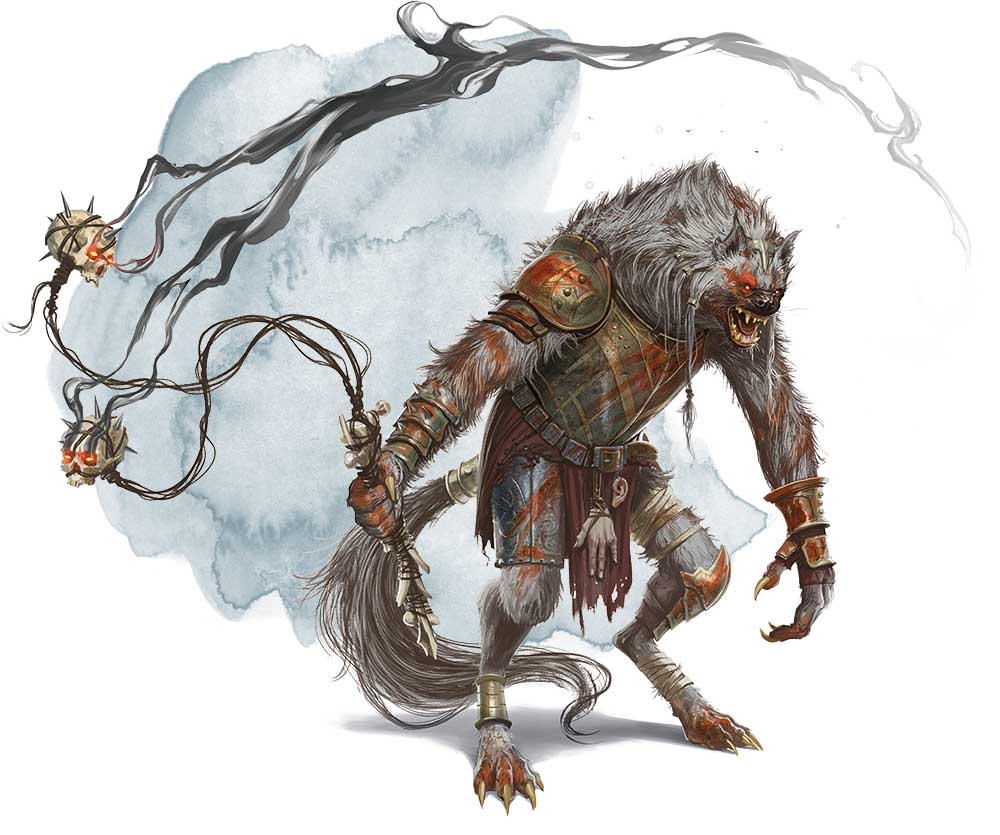
Gnawing Madness
Prerequisites: Theria (Gnoll)
The hunger of the prince of savagery
consumes your mind, filling your
thoughts in battle simply with
destruction and bloodthirsty rage.
You gain the following benefits:
Blood-Starved Frenzy. While
below half your hit point maximum,
you have advantage on melee
weapon attack rolls and ability
checks that do not rely on
Charisma or Intelligence, but you
have disadvantage on Intelligence saving throws.
Hungering Critical. When you score a critical
hit against a living creature using a natural
weapon attack, roll a d6; you gain an additional effect depending on the result.
1-3. The attack deals one extra weapon dice of damage.
4-5. The target has its speed reduced to 10 feet until the end of your next turn.
6. The target must must use its action on its next turn to make a melee attack against the closest creature other than itself or you that it can perceive. If there is no other creature it can reach on its turn, it simply loses its action.
Gorgonian Lineage
Prerequisites: Minotaur
Your iron-rich diet and magical ancestry manifests in scalemail-like natural secretions and green, vapourous breath. You gain the following benefits:
Increase your Constitution score by 1, to a maximum of 20.
You gain immunity to the Petrified condition.
While not wearing armour, your AC is 13 + your Dexterity modifier. You can use a shield and still gain this benefit. This is Natural armour.
You gain the following Breath Weapon:
Petrifying Breath. As an action, you exhale petrifying gas in a 30-foot cone. Each beast or humanoid in that area must succeed on a Constitution saving throw (DC 8 + your Constitution modifier + your Proficiency bonus). On a failed save, a target begins to turn to stone and is restrained. The restrained target must repeat the saving throw at the end of its next turn. On a success, the effect ends on the target. On a failure, the target is petrified until freed by the greater restoration spell or other magic. Creatures that don't breathe such as constructs and undead are immune to this ability. Once you use this trait, you cannot use it again until you complete a long rest.
Giant Ancestry.
Prerequisites: Goliath or Firbolg
You are descended from Giants. Choose one of the following benefits — a supernatural boon from your ancestry; you can use the chosen benefit a number of times equal to your Proficiency Bonus, and you regain all expended uses when you finish a Long Rest:
Cloud’s Jaunt (Cloud Giant). As a Bonus Action, you magically Teleport up to 30 feet to an unoccupied space you can see.
Fire’s Burn (Fire Giant). When you hit a target with an Attack Roll and deal damage to it, you can also deal 1d10 Fire Damage to that target.
Frost’s Chill (Frost Giant). When you hit a target with an Attack Roll and deal damage to it, you can also deal 1d6 Cold Damage to that target and reduce its speed by 10 feet until the start of your next turn.
Hill’s Tumble (Hill Giant). When you hit a Large or smaller creature with an attack and deal damage to it, you can knock that target Prone.
Storm’s Thunder (Storm Giant). When you take damage from a creature within 60 feet of you, you can use your Reaction to deal 1d8 Thunder Damage to that creature.
Stone's Deep Dreaming (Stone Giant). You do not sleep. Instead you meditate deeply, remaining semi-conscious, for 4 hours a day. After resting in this way, you gain the same benefit a human would from 8 hours of sleep. You can use this feature as a bonus action to end a level of Exhaustion inflicted upon you.
Limited Regeneration (Troll). As a bonus action, you can temporarily activate a dormant gene which rapidly accelerates the healing process. At the start of each turn for the next minute, provided you did not take acid or fire damage in the last turn, you regain 1 lost hit point. You can have this effect active more than once at the same time.
Haunter’s Horns (Oni). You cast either the Darkness, Invisibility, or Alter Self spell. Charisma is your spellcasting ability for these spells.
Dual-Sense (Ettin). You can use your reaction to gain advantage on a Wisdom (Perception) check or a saving throw to resist being blinded, charmed, deafened, frightened, stunned, or knocked unconscious.
Curse of the Evil Eye (Fomorian). When a creature you can see within 60 feet of you makes an ability check, saving throw, or attack based on Strength or Dexterity, you can use your reaction to half the target's speed until the end of their next turn and impose disadvantage on the roll.
Githyanki Princeling
Prerequisites: Gith (githyanki)
You embody the prowess and commanding air of the githyanki elite. You gain the following benefits:
Increase your Strength or Intelligence by 1, to a maximum of 20.
You can use Intelligence instead of Charisma when making ability checks which usually require the latter.
You can coax your allies to violence as an action on your turn. You can use your reaction to encourage a willing creature of your choice within 60 feet of you to make a weapon attack against one creature within range of a weapon they're holding. The chosen ally must also use its reaction to do so. If this attack hits, it deals additional Psychic damage equal to your Intelligence modifier.
Githzerai Mindfist
Prerequisites: Gith (githzerai)
Your calm, wise meditations have given you a greater understanding of psionic chaos and order. You gain the following benefits:
Increase your Intelligence or Wisdom score by 1, to a maximum of 20.
You can choose to use either Intelligence or Wisdom for any checks which use either ability score.
You can use your mage hand to make unarmed strikes against creatures within 5 feet of it. Attacks made this way deal force damage instead of the bludgeoning damage usual for unarmed strikes, and are magical in nature.
Gnomonic Device
Prerequisite: Gnome (rock)
With a flash of inspiration, you've learned the secret gnomish art combining mnemonics and artifice: gnomonics. You gain the following benefits:
You can accurately recall any words you've written down or said within the last month.
You learn the message cantrip, and you can cast sending without expending a spell slot once with this feature; you regain the ability to cast it when you finish a long rest and you can also cast it using a spell slot you have of the appropriate level.
When you cast a spell that delivers words from one target to another, you can choose to add an additional material component to the spell: a tiny container worth at least 25 gp. When you do so, the number of words you can transmit increases to 100 and the target of the spell can't misremember or forget the message by nonmagical means.


Gorebeast
Prerequisites: Theria, Minotaur, or Shifter
You are a beast of war, the drums of the Beast King beating in time with your heart, the insatiable hunger of the Savage Prince gnawing at your mind.
Increase your Strength or Dexterity by 1, maximum of 20.
See Red. When you roll for initiative, you can use your reaction to gain a number of temporary hit points equal to your character level. Once you use this feature, you cannot use it again until you complete a short or long rest.
Easy Pickings. Your Natural Weapon attacks deal an additional weapon die of damage to creatures that are prone, grappled, restrained, or frightened.
Grung Hypertoxicity
Prerequisites: Grung
Your poisonous skin is unusually virile. The poison damage it deals on contact increases by 1d4. You can decant it into or out of a vial as an action. Grung poison loses its potency 8 hours after being removed from you. A similar breakdown occurs if you die, or if you get another dose from your skin.
A creature damaged by your skin's natural poison must make a Constitution saving throw (DC 8 + your Constitution modifier + Proficiency bonus), becoming poisoned for the next minute. A creature poisoned this way can repeat the saving throw at the end of each of their turns, ending the effect on themselves on a success. Creatures poisoned by you also suffer an additional effect that varies depending on your caste. This effect lasts until the creature is no longer poisoned by you.
Green. The poisoned creature can't move except to climb or make standing jumps. If the creature is flying, it can't take any actions or reactions unless it lands.
Blue. The poisoned creature must shout loudly or otherwise make a loud noise at the start and end of its turn.
Purple. The poisoned creature feels a desperate need to soak itself in liquid or mud. It can't take actions or move except to do so or to reach a body of liquid or mud.
Red. The poisoned creature must use its action to eat if food is within reach.
Orange. The poisoned creature is frightened of its allies.
Gold. The poisoned creature is charmed by you and can speak only Aquan.
Heart of the Platinum Dragon
Prerequisites: Kobold
The might of your small, draconic kin is not to be underestimated; you grow stronger merely in one another's presence.
Increase your Wisdom or Charisma score by 1, to a maximum of 20.
If you are frightened or paralyzed by an effect that allows you to make a saving throw to end it, you can repeat the save at the start of each of your turns to end the effect on yourself and all creatures of your choice within 30 feet of you that can perceive you. Any creature that succeeds on a saving throw as a result of this trait (including you) has advantage on its next attack roll within 1 minute.
Hibernator
Prerequisites: Dragonborn, Theria (Ursa), or Naga
You are able to enter into a Deep Sleep when you begin to rest. When you enter into a Long Rest, you can choose to rest for 50% longer than usual (i.e. 8 becomes 12 hours) to gain the following additional benefits at the end:
All your hit dice are restored if they would normally not be.
If you were under the effects of a non-magical disease, or the blindness, deafness, poisoned, or charmed condition from an impermanent source (such as neurotoxins, but not eyelessness) - those effects are cured.
You recover from twice as many levels of exhaustion as normal.
For the next 48 hours you have advantage on Strength and Dexterity saving throws and are immune to the effects of exhaustion; you can still gain levels of exhaustion in this time, however.

Human Determination
Prerequisites: Human
You are filled with a determination that can draw the unreachable within your reach. You gain the following:
Increase one ability score of your choice by 1, to a maximum of 20.
While at half your hit point maximum or below, when you make an attack roll, an ability check, or a saving throw, you always make them without disadvantage.
Infernal Constitution
Prerequisites: Tiefling
Fiendish blood runs strong in you, unlocking a resilience akin to that possessed by some fiends. You gain the following:
Increase your Constitution score by 1, to a maximum of 20.
You have resistance to poison damage, and one other damage type of your choice from acid, cold, fire, or lightning. You also have advantage on saving throws against being poisoned.
Inner Ruination
Prerequisites: Orc
Your inner fury burns tirelessly, an evolutionary remnant of surviving the influence of the Ruiner. You gain the following:
Increase your Strength or Constitution score by 1, to a maximum of 20.
When you hit with an attack using a simple or martial weapon, you can roll one of the weapon’s damage dice an additional time and add it as extra damage of the weapon’s damage type. Once you use this ability, you can’t use it again until you finish a short or long rest.
Immediately after you use your Relentless Endurance trait, you can use your reaction to make one weapon attack.
Intensified Dragon's Breath
Prerequisites: Breath Weapon feature
Your breath weapon deals a number of additional d6 damage equal to your Proficiency bonus, its saving throw DC
increases by an amount equal to half your Proficiency
bonus (rounded down), and its range increases: by 15ft if
it takes the form of a cone, or 30ft longer if it's a line.
Integrated Upgrades
Prerequisites: Warforged
You have incorporated, either voluntarily or against your will, technological enhancements into your body. Choose two of the following features:
Adamantine Skeleton. Critical hits inflicted on you by weapons become normal hits for you.
Artisan’s Fingers. You gain proficiency in a tool of your choice. Your hands are inset with a set of Artisan’s Tools of your choice, and cannot be removed, except to be replaced by another tool set as an hour ritual.
Construct Medic. You learn the Mending cantrip; it is an action for you to cast. As a bonus action, you can regain hit points equal to 1d6 + your proficiency bonus. You can use this trait a number of times equal to your proficiency bonus, and you regain all expended uses when you finish a long rest.
Grappleclaw Appendage. You gain a limb, like a tentacle, snake-like neck, or a grappling hook, which can extend and retract at will. You can use the limb to make ranged weapon attacks with unarmed strikes, which have a range of 30/60 feet. When you hit with it within its short range, you can use your bonus action to pull yourself to an unoccupied space adjacent to the target. If the target is a creature of your size or smaller, you can instead make an opposed Athletics check, pulling them adjacent to you if you succeed.
Integral Appendage. You can choose a single weapon you’re proficient in, spellcasting focus, or Small or Tiny wondrous item to which you’re attuned. This object can be drawn into or produced from a chosen part of your body at will, no action required, but it cannot be dropped or willingly removed from your body - it is essentially a limb. You can change the integrated object over the course of a short or long rest.
Neural Whispers. A wreath of copper encircles the inside of your head, inducing turbulence in the Weave. You know the Message cantrip and can cast it at will without any components.
Powerful Build. You count as one size larger when determining your carrying capacity, the weight you can push, drag, or lift, and the creatures you can grapple.
Springheels. Your base walking speed increases by 10 feet and your jump distances are doubled.
Shock-Absorber Jointgrafts. You gain resistance to force and thunder damage, and to damage taken from falling.
Slight Build. You can take the dash or disengage action as a bonus action on each of your turns, but you count as one size larger when determining your carrying capacity, the weight you can push, drag, or lift, and the creatures you can grapple
Supercharged Respirator. You gain a number of additional d10 hit dice equal to your Proficiency bonus, and you are immune to harmful inhalents.
You can take this feat more than once, but cannot take integrations that you already have.
Kavalrachni Training
Prerequisites: Dwarf (duergar)
The duergar guards who patrol the black markets of Menzoberranzan must be prepared for quick, deadly efficiency. You gain the following features:
Increase your Intelligence score by 1, to a maximum of 20
Shared Invisibility. When you cast Invisibility using your Duergar Magic feature it doesn't require concentration, and you can make one willing creature within 5 feet of you invisible as well as yourself. The invisibility ends early on the other creature immediately after it attacks.
Mind Mastery. You target one creature you can see within 60 feet, guiding it to use its reaction either to make one weapon attack against another creature you can see or to move up to 15 feet in a direction of your choice. The target must succeed on an Intelligence saving throw against your Duergar Magic save DC if unwilling, or it is forced against its will. Creatures that can't be charmed are immune to this effect.
Kuo-Toa Awakening
Prerequisites: Grung
Some grung, especially the purple or red castes, have an odd ability to tap into the weave of magic without any training, generating magic through their sheer force of will alone. Sometimes, an especially powerful grung becomes a Kuo-Toa; a god maker, able to conjure creations of magic with nothing but their minds.
Your passive Perception gains a bonus equal to your Intelligence modifier (minimum 1).
You know the Mage Hand cantrip, and the hand is invisible. You gain a number of Psionic Energy dice equal to half your Proficiency bonus (rounded down), and learn two 1st or 2nd-level spells from any spell list. You can cast these spells at 2nd-level by expending a Psionic Energy die.
You regain all of your expended Psionic Energy dice when you finish a short or long rest. Intelligence is your spellcasting ability for these spells. When you cast them with this trait, they don't require components.
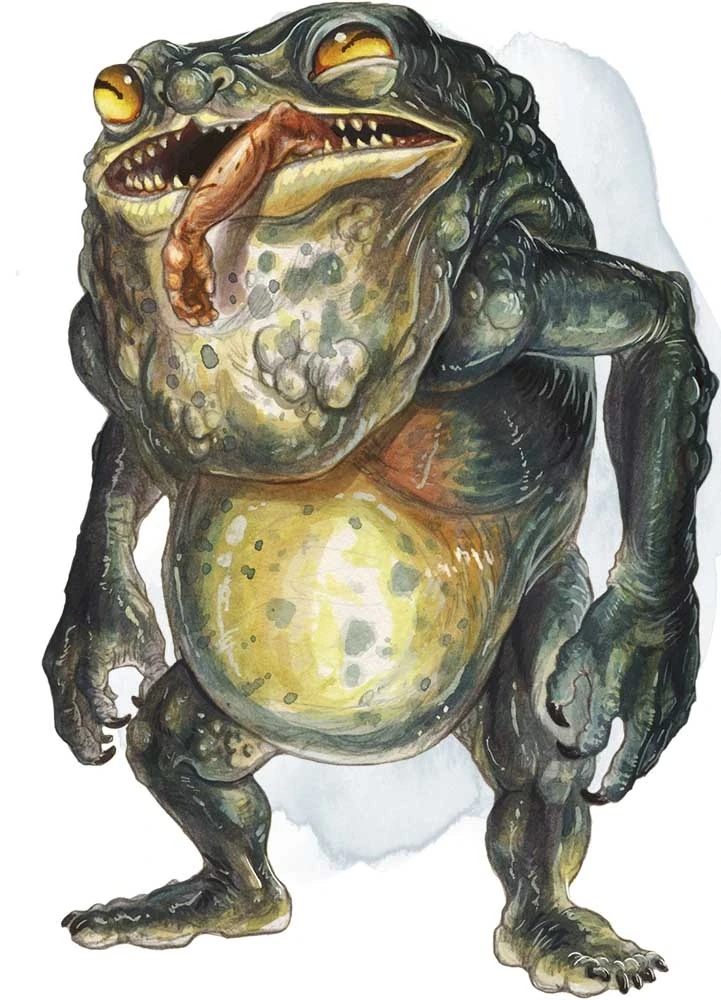
Locathah Anura
Prerequisites: Amphibious feature
You gain a swimming speed equal to your walking speed, if you didn't have one already when you took this feat, as well as breathe air and water.
You are perfectly adapted to water, and you are always alert of your surroundings when you are in this element.
Your swimming speed increases by 10 feet, and you can hold your breath underwater for twice as long.
When you are fully submerged in water, the range of your normal vision and darkvision is doubled. Additionally, you gain a bonus to your passive Perception equal to half your proficiency bonus (rounded up), and you cannot be surprised by creatures within 60 feet of you.
Lolthian Matronage.
Prerequisites: Elf (drow)
You are a mother of spiders, a living embodiment of the fierce Matriarchy of Lolth. You gain the following benefits:
Increase your Intelligence, Wisdom, or Charisma score by 1, to a maximum of 20.
Memory of the Sun. You lose the Sunlight Sensitivity trait.
Lolth's Fickle Favour. As a bonus action, you can bestow the Spider Queen's blessing on one willing creature you can see within 30 feet of you. The ally takes 1d10 psychic damage but has advantage on the next attack roll it makes within the next minute.
Vengeance of the Spider Queen. As a reaction when you take damage from a creature within 60 feet of you, you lance their minds with psychic knives. Make a spell attack roll against that creature. You do not need to see the target, and the target does not benefit from cover. On a hit, you deal 1d8 psychic damage. At 11th level, the damage increases to 2d8, then increases again to 3d8 at 14th level and 4d8 at 17th level.
Maglubiyet Greenskin
Prerequisites: Goblin or Hobgoblin
The envious blood of the long-dead Demon Lord of the goblinkin runs through your veins. You gain the following features:
You gain a climbing speed equal to your walking speed.
You gain a Natural Weapon (Bite) attack. This is an unarmed strike which deals 1d6 + your Strength or Dexterity modifier on a hit instead of the usual bludgeoning damage. If you already have a bite attack, its damage die increases by one step instead (e.g. from 1d6 to 1d8)
Envious Fury. Whenever you see a creature other than you roll a natural 20 on an attack roll or ability check, you gain advantage on the next d20 roll you make within the next minute.
Meat Shield. When a creature you can see targets you with an attack and another creature is within 5 feet of you, you can use your reaction to impose disadvantage on the attack roll.
Malleable Nature
Prerequisites: Human or Halfblood
Your kind are endlessly adaptive, often gaining traits of the people or region they spend great deals of time alongside. You gain the following benefits:
Increase one ability score of your choice by 1, to a maximum of 20.
You gain one feature from another ancestry native to your homeland or among whom you are kin, other than the Amphibious trait or the growth of new appendages.
Master of Mimicry
Prerequisites: Kenku or Changeling
You have learned to temporarily mimic even the training of others. You gain the following benefits:
Increase your Dexterity or Wisdom score by 1, to a maximum of 20.
Whenever another creature you can see uses a skill or tool, you can use your reaction to gain proficiency in that skill or tool. Proficiencies gained in this way last for 1 hour, and you can only mimic one proficiency at a time. Once you use this ability, you can’t do so again until you finish a short or long rest.
Merrow Devolution
Prerequisites: Merfolk or Elf (Triton or Vedalken)
You begin to embody the dark side of your ancestry; those of your kind who fell to the madness of the demogorgon. You gain the following traits:
Increase your Strength score by 1, to a maximum of 20.
While not wearing armour, your AC is 13 + your Dexterity modifier. You can use a shield and still gain this benefit.
You grow claws and fangs, and osseous spines protrude from your fins. Your unarmed strikes deal 1d6 slashing damage, as appropriate to the natural weapon you chose, and you are proficient with your Natural Weapon unarmed strikes.
Mind-Hunter
Prerequisites: Dwarf (Duergar), Gnome (Svirfneblin), Halfling (Derro), Grung (Kuo-Toa), or Gith
It is in your blood, descended from slaves of the Illithid, to combat the cognitive paracitivism of the mind flayers. You gain the following benefits:
Increase your Intelligence or Wisdom score by 1, to a maximum of 20.
You have resistance to psychic damage.
Your thoughts or emotions cannot be magically read by any means, unless you allow it.
You always intuitively know when you are the target of Divination spells or Psionic magics, and can use your reaction to gain advantage on saving throws to resist their effects.
Mountain’s Endurance
Prerequisites: Goliath
Your ability to shrug off some injuries is legendary, even among your kin. You gain the following benefits:
Increase your Strength or Constitution score by 1, to a maximum of 20.
When you use your Stone’s Endurance trait as a reaction to reduce damage, instead of rolling a d12 and adding your Constitution modifier, you can choose to gain resistance to the triggering attack’s damage type until the start of your next turn. If the triggering attack deals more than one type of damage, choose one. As normal, after you use this trait, you can’t use it again until you finish a short or long rest.
Myrmidon Strikes
Prerequisites: Genasi
You have absorbed primaeval magic that gives you an echo of the might of genies.
As a bonus action, you can call on the power of your genie magic to imbue your attacks with additional power. The next time you hit a target with a melee or thrown weapon attack within the next minute, the attack has an additional effect depending on the origin of your elemental magic. The saving throw DC for these effects equals 8 + your proficiency bonus + your Constitution modifier.
Elemental Source:
Any. The target takes an extra 1d6 damage of the damage type you innately resist. If the target is a creature, it must succeed on a Strength saving throw or be knocked prone.
Earth. The target takes an extra 1d6 force damage. If the target is a creature, it must succeed on a Strength saving throw or be pushed 10 feet away from you in a straight line.
Water. The target takes an extra 1d6 cold damage. If the target is a creature, it must succeed on a Constitution saving throw, or its speed is reduced to 0 until the start of your next turn.
Fire. The target takes an extra 1d6 fire damage. If the target is a creature, it must succeed on a Constitution saving throw or it has disadvantage on attack rolls until the start of your next turn
Air. The target takes an extra 1d4 thunder damage. If the target is a creature, it must succeed on a Wisdom saving throw, or you become invisible to it until the start of your next turn.
You can use this bonus action a number of times equal to your Proficiency bonus, and you regain all expended uses when you finish a long rest.

Night Stalker
Prerequisites: Hollowed One
Your unnatural lineage grants you greater abilities. You gain the following features:
Increase your Dexterity or Charisma score by 1, to a maximum of 20.
Shapechange. You gain the Shapechanger creature type, in addition to being humanoid. You can polymorph into a bat, rat, insect swarm, or other such tiny beast as an action; your hit points, your Intelligence, Wisdom, and Charisma scores, and your Proficiencies and proficiency bonus are unchanged in the bat form, however. Anything you are wearing or carrying is absorbed into the form, granting no benefits of being used. You revert back to being a humanoid if you die or if you use your action to end the polymorph.
Nilbogism
Prerequisites: Goblin
A remnant trickster deity, now known only as the nilbog, of the long-dead Uruk pantheon from before Gruumsh slaughtered them all, some small creatures gain the boon of their mischievous idol. You gain the following features:
Nilbog Spellcasting. You learn the Mage Hand and Vicious Mockery cantrips. You can cast Sanctuary once using this feature, but can only target yourself, and regain the ability to do so when you finish a long rest. When you reach 9th level, you can cast the Confusion spell once without requiring material components and regain the ability to do so when you finish a long rest. Charisma is your spellcasting ability for these spells.
Reversal of Fortune. In response to being damaged by a creature you can see, you reduce the damage you take to 0 and instead heal 1d6 hit points. Once you use this ability, you cannot use it again until you finish a long rest.
Nobles' Heritage
Prerequisites: Genasi
You manifest more of the magical power of your elemental genie heritage. You gain the following benefits:
Increase one ability score of your choice by 1, to a maximum of 20.
You learn the Detect Magic spell and can cast it at will, without expending a spell slot.
Heritage Feature. You gain one of the following, depending on the type of Genasi you are:
Dao (Earth): Your earthen skin hardens into natural armour. While you aren’t wearing armour, you can calculate your AC as 13 + your Dexterity modifier. You can use a shield and still gain this benefit.
Djinn (Air): You have resistance to lightning and thunder damage.
Efreet (Fire): Your darkvision has a radius of 120 feet, and you can see through magical darkness within this range.
Marid (Water): You have resistance to cold damage.
Pack Warrior
Prerequisites: Shifter
The bestial pheromones and primal energy you emit can influence your allies to shift with you. When you transform with your Shifting feature, you can choose a number of creatures up to your Proficiency bonus to become your packmates for the duration of your shift. While within 30 feet of you, you and your packmates gain the following benefits:
You can communicate simple ideas to one another without talking, provided you can see, hear, or smell one another.
Your packmates gain the same animalistic benefits of your Shifting feature as you, including the transformation of their appearance.
Photosynthesis
Prerequisites: Treant or Myconid
The sun offers many boons to living things, most of which go unnoticed except to those more suited to it. You have learned to take it a few steps further:
Increase your Constitution by 1, to a maximum of 20.
Whenever you spend the entirety of a short or long rest within sunlight, your hit point maximum increases by an amount equal to two rolls of your Hit Dice plus double your Constitution modifier (minimum 1) until you next finish a long rest. You can benefit from this feature only once at a time.
In addition, you have advantage on attack rolls and ability checks made while in direct sunlight, even if class or racial features would usually prevent this.
Pixie Ringsmith.
Prerequisites: Fairy
You gain the following feature:
Fairy Footstep. As an action, you can touch a natural material object; a boulder, tree, or root. Around this object instantly grows a ring of toadstools. These fungi are non-magical and seem a part of the natural environment, though the space within them registers as a teleportation circle or planar portal for the use of spells and magical effects such as a Horizon Walker ranger’s Detect Portal ability. As an action while within a Footstep, you can expend a spell slot (or use of innate spellcasting) and instantly teleport a number of willing creatures within 10 feet of you equal to the slot level expended to a different Footstep on the same plane of existence as you.
For the purpose of spells and magical effects such as counterspell or dispel magic, both a Footstep and the action used to teleport to one are considered spells of level equal to half your character level, rounded down (maximum 9th). You can have a number of active Fairy Footsteps at once equal to your Proficiency bonus. Creating a new Footstep beyond your Proficiency bonus ends the earliest Footstep you made.
Prehensile Tail Opposability
Prerequisites: Permanent Tail, or Loxodon (trunk)
Your tail is considered a third limb, capable of wielding, holding, activating, and otherwise using objects as though it was a full arm. It cannot wield Unwieldy, Versatile, or Two-Handed weapons on its own, however.
While wielding light melee weapons in all three limbs, you gain an additional attack as a part of the two-weapon fighting bonus action.
You have advantage on Athletics checks while your tail is empty and can move freely.
Quick-Shift
Prerequisite: Shifter
You excel at shifting at the drop of a hat. You gain the following benefits:
You can use your Shifting trait as a reaction when you roll for initiative and aren't surprised, instead of on your turn as a bonus action.
When you roll for initiative and have no uses of your Shifting trait remaining, you regain one use, which you can immediately use.
You recover all expended uses of Shifting when you finish a short or long rest.
Rabid Rider
Prerequisites: Kobold or Goblin
Like rats, your kin shun sunlight and sleep underground during the day. Like wolves, they are pack hunters, made bolder by their numbers.
Increase your Dexterity or Charisma score by 1, to a maximum of 20.
You can cast the Find Steed spell once, but can only choose a Medium Beast or Monstrosity of CR ½ or lower that isn't usually specified by the spell, and the creature's type remains 'Beast.' Common examples are Giant Wolf Spiders, Giant Weasels, Worgs, or Reef Sharks. Once you use this ability, you cannot use it again until you finish a long rest.
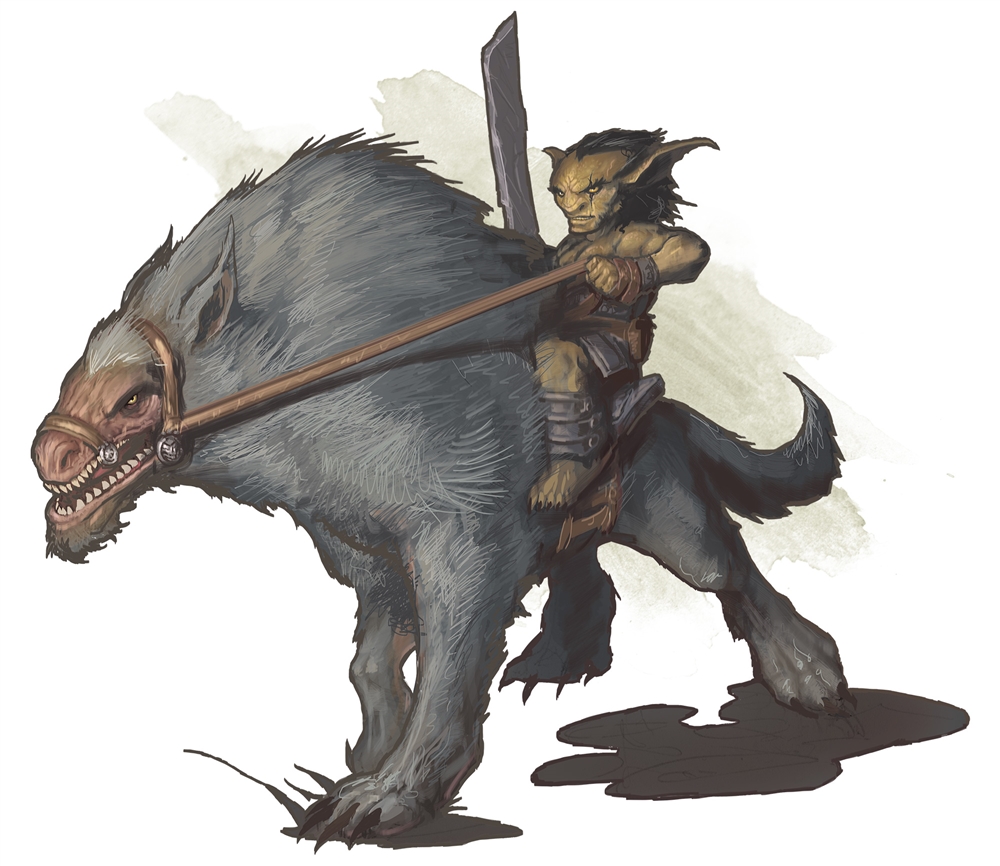
Ravenous Maw
Prerequisites: Natural Weapon (bite)
The frenzy you feel to tear flesh from bone grows stronger, as your teeth grow larger and sharper. You gain the following benefits:
Increase your Constitution score by 1, to a maximum of 20.
The damage die of your bite weapon increases by one step (e.g. 1d6 becomes 1d8) and your bite is considered magical for the purpose of overcoming resistance and immunity to nonmagical damage.
When you damage a creature that can bleed with your bite, you regain a number of lost hit points equal to half the damage the target takes (rounded down).

Sailors’ Demise
Prerequisites: Elf (triton) or Merfolk
You have unlocked more of your oceanic magical heritage. You gain the following benefits:
Flying-Fish Wings. You have large, wing-like fins that allow limited flight. When you move, you can engage your wings to gain a flying speed equal to your swimming speed until the end of the current turn. If you are still aloft at the end of the turn with nothing else supporting you, you fall. You can’t use your flying speed while you wear medium or heavy armour.
Siren’s Song. You know the Charm Person spell and can cast it at will targeting any creature that can hear you, without requiring material components or expending a spell slot. Charisma is your spellcasting ability for this spell.

Serpent Form
Prerequisites: Naga or Human (yuan-ti)
You have unlocked more of dendar's serpentine gifts. You gain the following benefits:
Increase your Intelligence or Charisma score by 1, to a maximum of 20.
You can use an action to polymorph into a Medium snake or back into your true form. Your statistics are the same in each form. Any equipment you are wearing or carrying is absorbed into your new form, but you still gain any passive effects they bestow while carried. If you die, you stay in your current form.
While in snake form, you gain a bite attack as a natural weapon, which you can use to make unarmed strikes. If you hit with it, you deal piercing damage equal to 1d4 + your Strength modifier, instead of the bludgeoning damage normal for an unarmed strike.
When you hit with a bite attack, you can choose to deal 2d6 additional poison damage to the target. Once you deal this poison damage, you can’t do so again until the start of your next turn.
Sharpened Claws
Prerequisites: Natural Weapon (claws or talons)
Your talons have grown larger, sharper, and more crippling. The damage die for your attacks with your claws becomes one step larger (for example 1d4 to 1d6). In addition, you gain a climbing speed equal to your walking speed. If you already have a climbing speed, it increases by 10 feet.
When you are within 5 feet of a wall while falling, you can catch and slow yourself by scraping down the surface. Taking this reaction reduces the damage you take from falling by 10 times your Proficiency bonus.
Sky Warden
Prerequisites: Permanent wings
You are trained for both scouting the skies and aerial combat. You gain the following benefits:
Increase your Dexterity or Wisdom score by 1, to a maximum of 20.
You gain proficiency in the Perception skill if you don’t already have it. You add double your proficiency bonus to Perception checks that rely on sight.
Once per turn, if you are flying and dive at least 30 feet straight toward a target and then hit it with a melee weapon attack, the attack deals an extra 2d6 damage to the target.
Sporemother
Prerequisites: Myconid
A child of decay, Zuggtmoy has blessed you with the gift of greater spores. You gain one of the following benefits:
Animating Spores. You can touch the body of a Large or smaller creature that had a CR less than or equal to one-quarter of your level, raising it as a spore servant under your control. This spore servant has the statistics of a Zombie, with the following changes:
- The servant retains its AC, Hit Points, Hit Dice, physical ability scores, and its resistances, vulnerabilities, and immunities.
- Its movement speeds are retained but reduced by 10 feet (minimum 5 ft.).
- The servant has Blindsight (30 ft.) but is blind outside this radius.
- The servant has a creature type of Plant.
- It acts on your initiative and follows your telepathic orders while within 120 feet of you; it is incapacitated outside of that range.
Elementals, oozes, undead, constructs, and plants cannot become Spore Servants. If you create a new one, the first spore servant sloughs into a pile of unusable flesh.
You can use this feature once, regaining the use of the feature when you finish a long rest.
Corpse Flowering. You can use a bonus action to rapidly digest the organic matter of a corpse you touch, instantly regaining 2d10 hit points. Nothing of the digested body remains but its skeleton. Any equipment on the corpse remains in its space. Instead of regaining hit points, you can replace one of your Strength, Dexterity, or Constitution scores with that of the corpse (to a maximum of 20) if it was a creature of CR less than or equal to your level. Alternatively, you can gain a resistance, immunity, or special sense of the target this way. These effects are lost whenever you use this ability again.
Mind Control Spores. Humanoids and beasts infected by your Hallucination spores are charmed by you and can't be reinfected by these spores. While charmed in this way, a creature is under a non-magical effect identical to a Dominate Monster spell, as your spores infect their mind. This is considered a kind of poison or disease.
Toxic Sporecloud. Each creature of your choice which starts its turn within 10 feet of you and needs to breathe takes 1d6 poison damage. This effect ceases for 3 rounds when you are subjected to moderate or stronger winds.
At 18th level, the radius of this cloud increases to 30 feet.
Svirfneblin Magic
Prerequisites: Gnome (svirfneblin)
You have inherited the innate spellcasting ability of your ancestors. This ability allows you to cast nondetection on yourself at will, without needing a material component. You can also cast each of the following spells once with this ability: blindness/deafness, blur, and disguise self.
You regain the ability to cast these spells when you finish a long rest. Intelligence is your spellcasting ability for these spells, and you cast them at their lowest possible levels.

Tanarukk Blood
Prerequisites: Orc, Minotaur, or Theria (Gnoll)
Through fell magic or ancestral heritage,
you are touched by the corruptive power
of Baphomet.
You gain the following benefits:
Increase your Strength or Constitution
score by 1, to a maximum of 20.
You have resistance to fire and
poison damage.
You gain a bite attack as a natural
weapon, which you can use to make
unarmed strikes. If you hit with it,
you deal piercing damage equal to 1d6 +
your Strength modifier, instead of the
bludgeoning damage normal for an unarmed
strike. If you already have a Natural Weapon
attack, its damage die increases by one step
(e.g. a d6 becomes a d8).
Tortle Protector
Prerequisites: Tortle
You have mastered using your shell to better protect yourself and others. You gain the following benefits:
Increase your Strength or Wisdom score by 1, to a maximum of 20.
Your natural armour trait now provides a base AC of 18. As normal, your Dexterity modifier doesn’t affect this number.
As a reaction when you are forced to make a Dexterity saving throw, choose any number of
creatures within 5 feet of you. Each chosen
creature is considered to have half-cover
against any harmful attacks or effects
while within 5 feet of you until the
start of your next turn.
Once you use this ability, you can’t
do so again until you’ve finished a
short or long rest.

Touch of Sess’inek
Prerequisites: Naga, Skink, or Tortle
You embody the demonic bearing of the reptile king. You gain the following benefits:
Increase your Constitution or Wisdom score by 1, to a maximum of 20.
You have resistance to necrotic and psychic damage, and you have advantage on saving throws made to resist being frightened
You gain a bite attack as a natural weapon, which you can use to make unarmed strikes; if you already have a bite
attack, its damage die increases by one step. If you hit
with it, you deal piercing damage instead of the bludgeoning damage normal for an unarmed strike, plus additional poison damage equal to 1d6 + your Constitution
modifier. You can deal this additional damage only once
each turn.
Unscarrable
Prerequisites: Goliath
Like the giants of old, you are resistant to physical harm.
You can use your Stone’s Endurance trait a number of
times between rests equal to your Proficiency bonus.
Uphold the Legion
Prerequisites: Hobgoblin or Warforged ancestry,
or the Soldier background feature.
You were built for life in the military. Increase your Constitution or Intelligence score by 1, to a maximum of 20, and gain one of the following Leadership features:
Army Arcana. When you cast a spell that causes damage or that forces other creatures to make a saving throw, you can choose yourself and a number of creatures up to your Proficiency bonus you can see within 60 feet of you to be immune to the damage caused by the spell and to succeed on the required saving throw.
Phalanx Formation. You have advantage on attack rolls and Dexterity saving throws while standing within 5 feet of a friendly creature wielding a shield .
Battle Command. Whenever you take the Attack action on your turn, a willing creature you allow within 60 feet of you can use their reaction to make an attack instead of you, or take the Dodge or Dash action. The same creature cannot use more than one of your attacks in this way each turn.
Discern Insubordination. You know when you hear a creature speak a lie in a language you know.
Shameful Instruction. When a willing creature that you can see makes a d20 roll, you can roll a d6 and add the
number rolled to the d20 roll by inflicting 1d6 psychic
damage to them, shaming them for failing to uphold the
legion. A creature immune to psychic damage can't be affected by Shameful Instruction.
You can take this feat more than once, but must choose a different Leadership feature each time.
Urd Wings
Prerequisites: Kobold, Fairy (fell), or Theria (Hadozee)
You manifest wings, transforming into an urd - a flying mutant of your otherwise terrestrial species. You gain the following benefits:
Increase your Dexterity score by 1, to a maximum of 20.
You gain a flying speed of 30 feet. To use this speed, you can't be wearing medium or heavy armour, and you must wear clothes which accommodate the wings.
Vampiric Ascension
Prerequisites: Hollowed One (Vampiric Bite manifestation)
The vampirism that festers within you grows ever stronger. Your Bite attack is considered magical for the purpose of overcoming resistance and immunity to nonmagical damage.
Bloodthirst. You can drain blood and life energy from a willing creature, or one that is grappled by you, incapacitated, or restrained. Make an empowered vampiric bite attack against the target. If you hit, you deal an additional 1d6 necrotic damage. The target’s hit point maximum is reduced by an amount equal to the necrotic damage taken, and you regain hit points equal to that amount. The reduction lasts until the target finishes a long rest.
River of Blood. When you drain blood with your Bloodthirst ability, you experience a surge of vitality. Your speed increases by 10 feet, and you gain advantage on Strength and Dexterity checks and saving throws for 1 minute. This effect does not stack upon itself.
Vicious Feast
Prerequisite: Natural Weapon (bite)
You relish in the taste of battle. You gain the following benefits:
Increase your Strength or Dexterity score by 1, to a maximum of 20.
When you make an unarmed strike with your Bite attack or reduce a creature to 0 hit points, you can spend one Hit Dice to heal yourself. Roll the die and regain a number of hit points equal to the total.
Voice of the Sirens
Prerequisites: Amphibious feature
You have an innate charm that allows you to produce beautiful and hypnotising songs, even underwater. Features like this are usually attributed to the ancient creatures of fabled tales known as sea sirens.
When you cast a spell with verbal components, choose a hostile creature within 10 feet of you that can hear you. The target must succeed on a Wisdom saving throw against your spell save DC or be charmed by you until the end of its next turn. Additionally, a creature that fails the save has disadvantage on the next saving throw it makes, before the start of your next turn.
Spells that you cast don't require somatic components, but from the moment you take this feat, all your spells now have verbal components, even if they didn't originally. Additionally, you can cast spells underwater, even while you are holding your breath.
Wandering Spirit
Prerequisites: Kalashtar or Gith
You're loosely bound to this shell and capable of soaring free of it. You gain the following features:
You are immune to abilities which would possess you or remove your soul, such as destroying your silver thread in the Astral Sea.
As an action, you can cast gaseous form, but rather than transforming you leave your body behind, incapacitated, and when the spell ends you return to your body's location. Once you use this feature, you cannot use it again until you finish a long rest.

Warrior of the Night
Prerequisites: Hollowed One
Channelling the ancestral blood of the first immortals, you are cursed with an unstable, potent form of black-blood. You gain the following features:
You gain resistance to necrotic damage
You can shape your blood into a weapon. As a reaction when you take damage, you can create a simple or martial melee weapon of your choice in which you are proficient in one of your empty hands. It dissolves into the air if it ever leaves your hands. This weapon deals Necrotic damage on a hit, instead of its normal damage type.
As an action, you can transform the lower half of your body into an inky black vapour, allowing you to float through the air. While transformed, you have a flying speed of 30 feet. You can maintain this form for up to 10 minutes. Once you use this ability, you can't use it again until you finish a short or long rest.
Weaver of Flesh
Prerequisites: Changeling
The form of your Shapechanger feature can mutate beyond normal limits. While you have this feat, you can take feats which require the Hybrid ancestry. While your Shapechange is active, you can use an action or bonus action on your turn to gain or end one of the following effects, or to switch from one effect to another. Your shapechange is always considered natural and nonmagical. Sustaining more than one of these additional effects at a time requires your concentration, as though on a spell. You can only sustain a maximum number of these effects equal to your Proficiency bonus. The additional effects are as follows:
Aquatic Adaptation: Developing fins, glassy eyes, and gills, you morph into a form more suited to water travel. You can breathe air as well as water, and gain a swimming speed equal to your walking speed.
Natural Weapons: You grow natural weapons such as horns, a barbed tail, claws, or thick boney slabs instead of knuckles. They deal 1d8 bludgeoning, piercing, or slashing damage as appropriate, they are considered unarmed strikes, and you are proficient in attacking with them. If you already benefit from natural weapon or unarmed strike modifiers, you can choose for the size of their damage dice to increase by one step (e.g. 1d8 to 1d10).
Hyperrealism. You can add your Intelligence modifier to all Charisma-based checks, as you subtly alter your form to terrify, allure, or appear more innocent.
Genetic Counterfeit. You change the way you appear to divination magics - you can change your perceived creature type, appear to be exuding a magical effect of your choice from a spell you have seen or know, and change the way you smell or taste. You can use this feature instead to mimic the appearance of a creature you have seen for at least a minute.
Altered Build (considered 2 effects). You benefit from a nonmagical effect identical to that of an Enlarge/Reduce spell acting on you.
Wings of Darkness
Prerequisites: Aasimar (fallen)
Your desperation transforms into newfound strength - when you release your skeletal wings, dark mist stretches forth between each strut. When you take that bonus action, your wings move with a sudden, tremendous force - pushing a powerful torrent of wind in all directions. Creatures within 30 ft of you must make a Strength saving throw.
On a failure, they are knocked prone and take
6d6 bludgeoning damage. On a success,
they take half damage.
You have a flying (hover) speed of
60 feet for the duration of
your transformation.
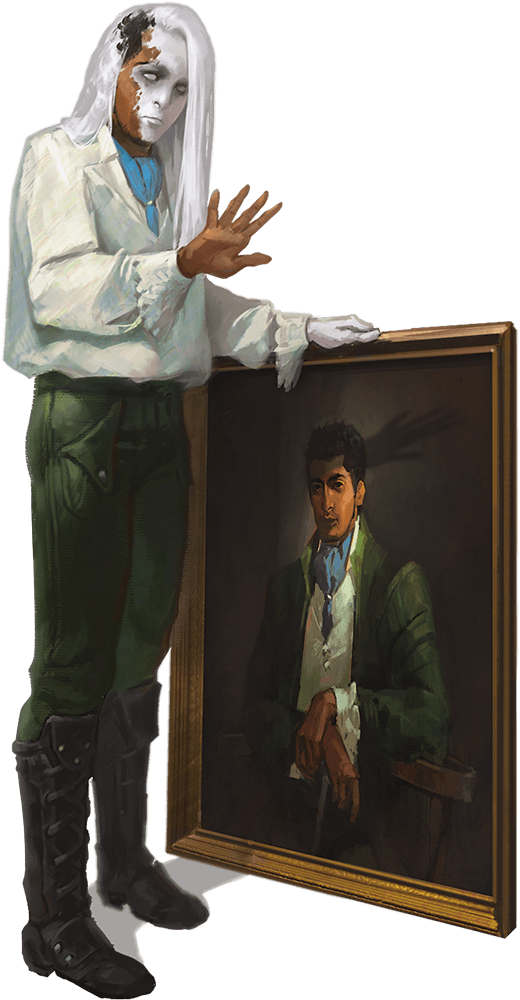
Wings of the Damned
Prerequisites: Tiefling
You manifest more of the dark power of your fiendish heritage. You gain the following benefits:
Increase your Charisma or Constitution score by 1, to a maximum of 20.
Burning Soul. You can use your action to unleash the infernal energy within yourself, causing your eyes to glimmer and two flaming, incorporeal wings to sprout from your back. Your transformation lasts for 1 minute or until you end it as a bonus action. During it, you have a flying speed of 30 feet, and once on each of your turns, you can deal extra fire damage to one target when you deal damage to it with an attack or a spell. The extra fire damage equals your level. If you already have a fly speed, it increases by 20 feet for the duration and you gain the Hover trait.
Once you use this trait, you can't use it again until you finish a long rest.
Witherling
Prerequisites: Theria (Gnoll) or Hollowed One
Your all-consuming hunger knows no end.
You are immune to poison damage, and to the poisoned and paralysed condition.
Once per short or long rest, you can spend 1 minute devouring flesh from the corpse of a creature that was not a construct or undead. At the end of the minute, you regain a number of hit points equal to 5 times your Proficiency bonus, and any excess hit points over your maximum are added as temporary hit points instead.

Fighting Styles
Academic Warrior
Prerequisites: Intelligence 13
You learn two cantrips of your choice from the Wizard spell list. They count as wizard spells for you, and Intelligence is your spellcasting ability for them. Whenever you gain a level, you can replace one of these cantrips with another cantrip from the wizard spell list.
Aggressive
You can Dash as a bonus action, but you must move toward a hostile creature that you can sense when moving this way.
Archery
You gain a +2 bonus to attack rolls you make with ranged weapons.
Atlantean Lancer
Prerequisites: a Swim speed
You’ve trained to use thrusting weapons to great effect while fighting beneath the waves. While submerged, you have advantage on attack rolls against creatures that don’t have a swim speed. Additionally, you deal one additional weapon damage die when you deal piercing damage with a melee attack while submerged.
Blessed Warrior
Prerequisites: 2nd-level Paladin
You learn two cantrips of your choice from the cleric spell list. They count as paladin spells for you, and Charisma is your spellcasting ability for them. Whenever you gain a level in this class, you can replace one of these cantrips with another cantrip from the cleric spell list.
Blind Fighter
You have blindsight with a range of 10 feet. Within that range, you can effectively see anything that isn't behind total cover, even if you're blinded or in darkness. Moreover, being unable to see a creature doesn’t impose disadvantage on your attack rolls against it, provided the creature isn’t hidden from you.
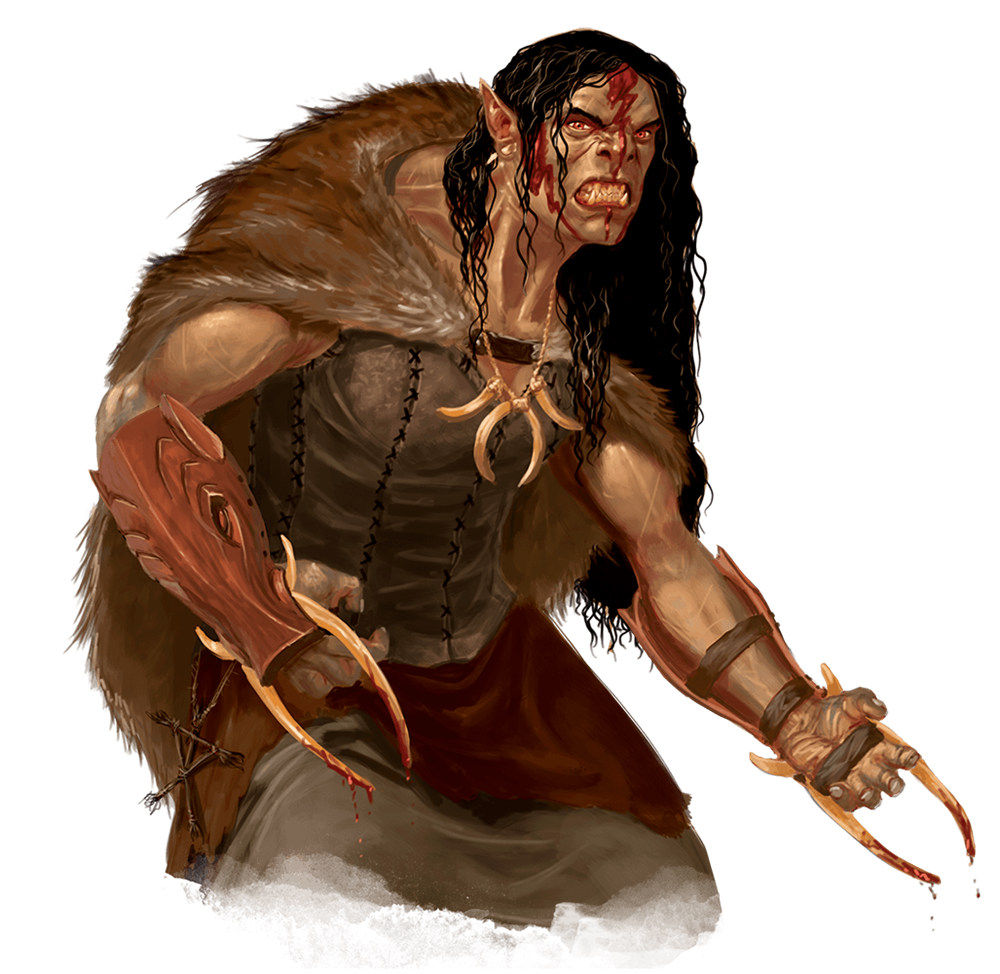
Bowgunner
You ignore the loading property when making attacks with a Light ranged weapon. In addition, when you make a successful attack with a light ranged weapon, you may make a second attack against the same target as a bonus action
Brute
Prerequisites: Strength 13
All melee weapon attacks with Unwieldy weapons deal an additional 1d4 weapon-type damage. At 15th level, this additional damage increases to 1d8.
Bulwark
You can take the Dodge action as a bonus action at the start of your turn, reducing your movement speed to 0 until the start of your next turn.
Catchfirer
You can make attacks of opportunity using a ranged weapon you’re wielding; such attacks of opportunity are also provoked when hostile creatures move within 10 feet of you.
Cavalier
When you hit a creature with a weapon attack while mounted, that creature cannot make attacks of opportunity against you or your mount until the start of your next turn.
Challenger
Prerequisites: 2nd-level Barbarian
When you use the Reckless Attack feature, choose one creature you can see; that creature does not gain advantage against you from that feature until the start of your next turn.
Close-Quarters Combatant
You have advantage on attack rolls when at least three spaces adjacent to you contain hostile creatures or impassable terrain.
In addition, being within 5 feet of a hostile creature doesn’t impose disadvantage on your ranged attack rolls.
Countershooter
When a creature you can see makes an attack against you or casts a spell, you can use your reaction to make a ranged attack of opportunity against that creature if they’re within your weapon's close range.
Cover Archer
Being in cover or averting your eyes to avoid staring at a target directly does not negatively affect your attack rolls with ranged weapon attacks.
Crusher
Once per turn, when you hit a creature with an attack that deals bludgeoning damage, you can move it 5 feet to an unoccupied space, provided the target is no more than one size larger than you.
When you score a critical hit that deals bludgeoning damage to a creature, attack rolls against that creature are made with advantage until the start of your next turn.
Creative Fighter
Improvised weapons are considered Unarmed Strikes which have the Thrown (40/60) and Finesse properties for you. Depending on the Improvised weapon, at the DM's discretion, they may have the Light or Unwieldy property as well.
When you’re wielding an improvised weapon and are not wearing heavy armour, you gain a +1 bonus to AC
Cunning Attacker
Prerequisite: 2nd-level Rogue
You may add your sneak attack damage to attacks made, following the rules for sneak attack, with one of the following:
- Cantrips that require making a spell attack roll against a single target.
- Unarmed strikes
- Improvised weapon attacks
- Melee weapons without the light or finesse properties, provided you have advantage on the attack.
You can take this fighting style more than once but must choose a different option each time.
Daisho
When you wield a versatile weapon in one hand and a light weapon in the other, the versatile weapon gains the Finesse property for you and can be used to engage in two-weapon fighting.
Dash Slash
Prerequisites: Extra Attack feature
You can use your action to take the Dash action in a straight line, making a melee attack against all creatures within reach of your weapon on one side of the line, making a separate attack roll for all targets. Moving this way does not provoke attacks of opportunity from creatures you hit with the Slash attack. You stop if you cannot move through a space in front of you.
Dazing Blows
Prerequisites: Strength 13
Once each round when you hit a creature with a weapon attack, you can reduce its movement speed by 10 feet until the start of your next turn.
Defence
While wearing armour, you gain a +1 bonus to your AC.
Defensive Dualist
You gain a +1 bonus to AC while you are wielding a separate melee weapon in each hand.
Defensive Opportunist
Other creatures provoke an opportunity attack from you when they enter your melee reach for the first time on their turn.
Devastating Rage
Prerequisites: 10th-level Barbarian
When you are below half your hit point maximum while raging, you can add your Rage Damage bonus to attack rolls.
Dirty Fighter
Once per turn, you can deal an extra 1d8 damage to one creature you hit with a melee attack if you have advantage on the attack roll.
Distracting Fighter
Whenever you hit a creature with a weapon attack, all attacks creatures other than you make against that target have advantage until the start of your next turn. This effect ends early when the target is hit with an attack.
Dodge Roll
You can use a bonus action on your turn to take the Disengage action and move up to half your speed. You also gain the effects of the Dodge action while moving this way.
Dominator
As long as you have advantage on the attack roll, your weapon attacks score a critical hit on a roll of 19-20.
Druidic Warrior
Prerequisites: 2nd-level Ranger
You learn two cantrips of your choice from the Druid spell list. They count as ranger spells for you, and Wisdom is your spellcasting ability for them. Whenever you gain a level in this class, you can replace one of these cantrips with another cantrip from the Druid spell list.
Dual Wielder
You can use two-weapon fighting even when the one-handed melee weapons you are wielding aren’t light. You can draw or stow one-handed weapons while both hands are full (no action required).
Duelist
When you are wielding a melee weapon in one hand and no other weapons, you gain a +2 bonus to damage rolls with that weapon.
Elemental Smite
Prerequisites: 2nd-level Paladin
When you deal damage with your Divine Smite class feature, you can choose for its damage type to be acid, cold, fire, lightning, thunder, or poison instead of radiant.
Empowered Smite
Prerequisites: 2nd-level Paladin
When you expend spell slots to deal damage with the divine smite feature, the damage cap increases by 1d8.
Evasive Archer
When you take the Dash or Disengage action, or after escaping a grapple, you can use your reaction to make an attack of opportunity with a ranged weapon against a creature within the weapon’s normal range.
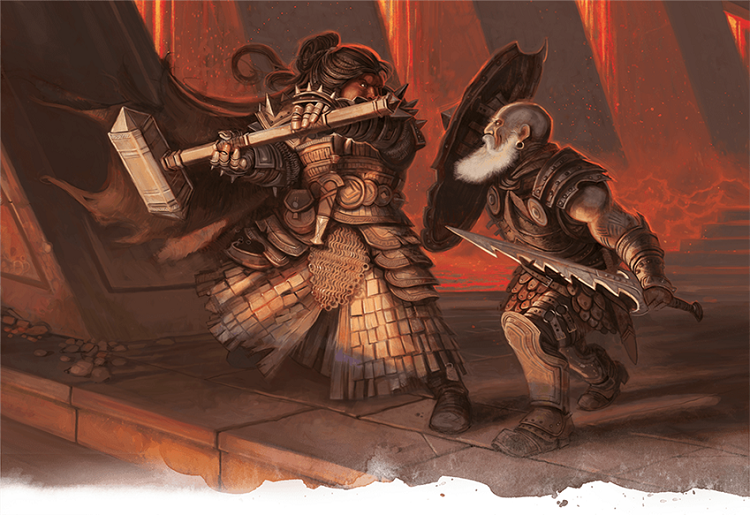
Fell-Handed
Even weapons of force can be graceful. All Light weapons, and weapons lacking the Unwieldy, Two-Handed, and Versatile properties, gain the Finesse property for you.
Fencer
While you are wielding a melee weapon and have a free hand, provided your speed is greater than 0, you can treat the weapon's Reach as 5 feet longer.
Flowing Strikes
If you hit a creature with a melee weapon attack, you can choose to move through its space as though it were not there, to any unoccupied space adjacent to it. Moving this way takes no Movement speed, but you cannot do so while your movement speed is 0.
Flurry Fighter
Prerequisites: Extra Attack feature
When you hit with a weapon attack, you gain a bonus to the attack's damage rolls. The bonus is equal to the number of hits you have made against creatures without missing prior to the current attack. It resets back to 0 each time you miss with a weapon attack or you do not take the Attack action on your turn.
Foesbane
Prerequisites: 10th-level Ranger
A creature branded with your Hunter's Mark has disadvantage on their saving throws against your ranger spells.
Guardian Angel
Prerequisite: 10th-level Fighter
When you use your Second Wind feature, each creature of your choice within 10 feet of you regains a number of hit points equal to the amount of healing you receive from your Second Wind.
Gunner
Prerequisites: Proficiency with at least 1 firearm.
You gain proficiency with tinker's tools, you ignore the loading and reload properties of firearms, and the misfire range of your weapons decreases by 1 (minimum 1).
Hammering Blows
When you score a critical hit with a Unwieldy melee weapon against a creature which is one size larger than you or less, it is knocked prone in its space.
Hand-and-a-Half
While wielding a weapon with the versatile property in two hands, you gain a +1 non-magical bonus to attack rolls and damage rolls you make with that weapon, and it has the Finesse property for you.
Hardened Veteran
You can brace yourself to resist the effects of incoming blows. As a bonus action, you can grant yourself temporary hit points equal to your proficiency bonus.
Harrier
Whenever you hit a creature with a melee weapon that does not have the Unwieldy or Two-Handed properties, the creature’s speed is reduced by 5 feet until the end of its next turn (minimum 0).
Heimdallr
Prerequisite: Indomitable feature
Your watchful spirit allows you to reroll your initiative a number times per day equal to the maximum number of Indomitable uses you have. These effects must be used immediately after the initial initiative check is made.
Horde Slayer
You can Disengage as a bonus action. When you do, you can move through any other creatures' spaces without spending extra movement until the end of the current turn.
In addition, creatures don't gain advantage against you from having another hostile creature within 5 feet of you.
Hunter's Eye
Prerequisite: 10th-level Ranger
Your mastery of the hunt allows you to brand multiple targets. You can now have two Hunter’s Marks active simultaneously as long as they are not on the same creature.
The number of simultaneous Hunter's Marks you can have active increases to 3 at 18th level.
Hurricane Fighter
Prerequisites: Extra Attack feature
You can use your action to make a single melee attack against every creature of your choice within the Reach of your weapon, making a seperate attack roll for all targets.
Improved Evasion
Prerequisites: Evasion feature
You gain the benefit of your Evasion feature for Constitution saving throws which affect an area, in addition to Dexterity saving throws.
Impetuous Endurance
Prerequisite: Indomitable feature
Your fighting spirit enables you to push your body beyond the normal limits of endurance. You no longer automatically fail a saving throw on a roll of 1. You might still fail the save if your result fails to meet the DC.
Instinctive Wrath
Prerequisites: 7th-level Barbarian
When you move using your Feral Instinct bonus action, you can make a single weapon attack against a creature within range at the end of the movement (no action required). In addition, you can use the Feral Instinct bonus action each turn while raging.
Interception
When a creature you can see hits a target that is within 5 feet of you with an attack, you can use your reaction to reduce the damage the target takes by 1d10 + your proficiency bonus (to a minimum of 0 damage). You must be wielding a shield, a light firearm with the Parry property, or a simple or martial weapon to use this reaction.
Jouster
If a creature on which you’re mounted moves at least 20 feet in a straight line before you hit with a melee weapon attack, you deal an additional die of the weapon's damage to the target and the creature must make a Strength saving throw (DC equal to 8 + your Strength modifier + your Proficiency bonus). On a failed save, the target is knocked prone.
Lead-Horned Bull
Prerequisite: Relentless Rage feature
Your primal instincts have made you as unstoppable as a storm in battle. While you are raging, magic can't reduce your speed or cause you to become paralysed or restrained.
Masterful Defence
Prerequisites: 15th-level, Defence fighting style
Instead of gaining a bonus while wearing armour, you can add your Proficiency bonus to your AC while armoured.
Masterful Duelist
Prerequisites: 15th-level, Duelist fighting style
When you are wielding a melee weapon in one hand and no other weapons, your weapon attacks ignore AC bonuses granted by reactions that increase the target's AC, such as a Parry reaction or the shield spell
Masterful Flurry
Prerequisites: 15th-level, Flurry fighting style
The flurry damage bonus is equal to twice the number of attacks you have hit in a row without missing.
Masterful Parry
Prerequisites: 15th-level, Parry fighting style
The bonus to your AC granted by a parry lasts until the start of your next turn.
Masterful Precision
Prerequisites: 15th-level Ranger
The second time you hit a creature branded with your Hunter's Mark with a weapon attack each round, you deal an additional 1d8 damage of the attack’s type.
At 18th level, this increases to 2d8. Also at 18th level, every hit after the second in a round deals an additional 1d8 damage of the weapon attack’s type.
Masterful Predator
Prerequisites: 15th-level, Predator fighting style
Weapon attacks that hit against a creature branded with your Hunter's Mark deal two additional weapon dice of damage (total).
Masterful Protector
Prerequisites: 15th-level; Shield Ally, Protection, or Interception fighting style
Once per round, you can absorb all the damage from a single source a creature within 5 feet of you would take.
Masterful Targeting
Prerequisites: 15th-level, Outwit fighting style
The bonus to weapon attack rolls and ability checks against your marked target increases to 2d4, and your AC bonus against them increases to +2.
Masterful Strikes
Prerequisites: 15th-level
When you hit a creature with a melee weapon attack, the minimum roll needed to score a critical hit against it with subsequent melee weapon attacks decreases by 1, to no lower than 15. This effect ends after you score a critical hit, combat ends, or you attack a different creature.
Masterful When Blind
Prerequisites: 10th-level, Blind Fighter fighting style
Your base blindsight range increases by 20 feet.
Mighty Archer
Damage rolls of 1 or 2 made with ranged weapons are considered a roll of 3 for you.
Mounted Archer
Once each turn when you hit a creature of smaller Size than your mount with a ranged weapon attack, that attack deals an additional weapon die of the attack’s damage type.
Mounted Mastery
Prerequisites: 15th-level
While mounted on a willing creature, you and your mount have advantage on all Saving Throws except Constitution saving throws.
Mounted Mobility
You do not incur attacks of opportunity against yourself or your mount while mounted. Your mount can take the attack action while you’re riding it.
Offhand Parry
Prerequisites: Dexterity 13
While engaged in Two-Weapon fighting, if you do not take the bonus action attack granted by the condition, any Light weapons you're holding are considered to have the Parry property until the start of your next turn.
Opportunist
You can take the full attack action instead of a single attack when you take the Ready attack action or make an attack of opportunity.
Outwit
Prerequisites: A class feature which
brands, curses, or marks
You gain a 1d4 bonus to all weapon
attack rolls and ability checks made
against the marked creature, and a +1
bonus to your AC against their attacks
Overwatch
When you Dash towards a hostile
creature, you can make a ranged
weapon attack as part of the move
Painless Wrath
Prerequisite: 7th-level Barbarian
While raging, you gain resistance to
two additional damage types of your
choice, chosen when you take this fighting
style.
You can take this fighting style more
than once, choosing different damage
types each time.
Paired-Weapon Prowess
When you make the extra attack granted
by Two-Weapon fighting, you can make it
as part of the Attack action, instead of as a
Bonus Action. You can still make this extra
attack only once per turn.
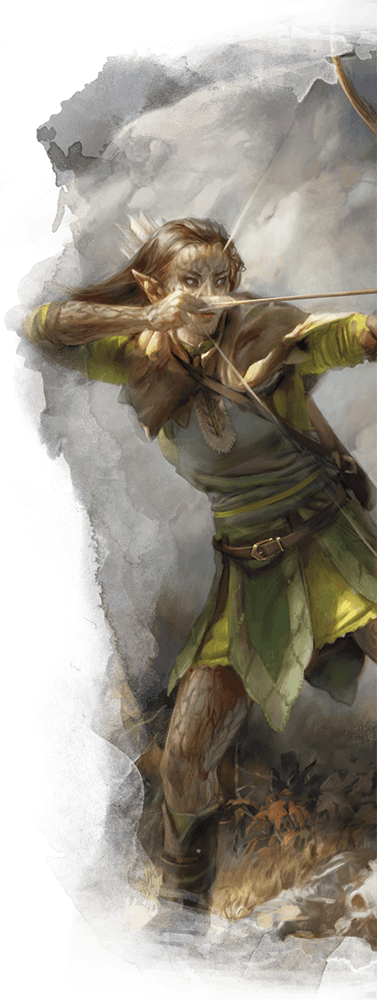
Parry Fighter
Prerequisites: Dexterity 13
If you are holding a finesse, light, or versatile melee weapon and another creature hits you with a melee attack, you can use your Reaction to add your Proficiency Bonus to your Armour Class for that attack only, potentially causing the attack to miss you. You cannot parry this way while holding a shield.
Partisan Fighter
Prerequisites: Dexterity 13
Once per turn when you miss a melee attack with a two-handed or versatile weapon, you can use your reaction to reroll the attack.
Piercer
Once per turn, when you hit a creature with an attack that deals piercing damage, you can reroll one of the attack's damage dice, and you must use the new roll.
When you score a critical hit that deals piercing damage to a creature, you can roll one additional damage die when determining the extra piercing damage the target takes.
Pistoleer
Firearms and crossbows that lack the Two-handed and Unwieldy properties gain the Light property for you.
Poacher
Ranged attacks you make against creatures that are grappled, prone, restrained, or who have a speed of 0 are made with advantage. This ignores any disadvantage normally imposed by those conditions.
Polearm Fighter
While you are wielding a single melee weapon in two hands and no other weapons, you gain a +1 bonus to your AC.
Protection
When a creature you can see attacks a target other than you that is within 5 feet of you, you can use your reaction to impose disadvantage on the attack roll. You must be wielding a shield.
Quick Aim
Prerequisites: 2nd-level Rogue
When you use your Steady Aim feature, your speed is not reduced. Moreover, you can move before taking the bonus action to use the feature and still gain its effects.
Rabid Wrath
Prerequisites: 2nd-level Barbarian
When fighting, you can endure tremendous blows with little visible effect. As a reaction, you can choose to delay the effect of a single attack, spell, or ability used against you. The damage or effect does not take hold until the end of your next turn. You can activate it once every time you use your rage ability within its duration.
Rain of Arrows
Prerequisites: 15th-level, Volley Archer fighting style
You can make a Volley whenever you make an attack. In addition, the radius of targets around the initial target against whom you can make Volley attacks increases to 20 feet.
Rampage Archer
When you make a ranged weapon attack, you can move up to half your speed as a part of that attack. You can use your reaction when you take this movement to have it not provoke opportunity attacks.
Ricasso Fighter
When you hit with a melee attack using a Veratile weapon, you deal its two-handed damage even if you're wielding it with only one hand.
Ruinous Wrath
Prerequisites: 7th-level Barbarian
You and all friendly creatures within 10 feet of you while you’re raging gain advantage on checks and saving throws made to resist being frightened or intimidated while you are conscious. Creatures within your aura also deal additional damage to objects and structures they hit with attacks equal to 1d8 + half your Barbarian level (rounded down)
At 18th level, the range of this aura increases to 30 feet.
Sanguine Combatant
Creatures you Critically Hit with a Bleed weapon take the additional damage from bleeding at the start of their next turn as well as when you score the critical hit.
Savage Attacker
Once each turn when you roll damage for a melee weapon attack, you can reroll the weapon’s damage dice and use either total.
Scent of Prey
Prerequisites: 7th-level Ranger
Weapon attacks that hit against a creature branded with your Hunter's Mark deal an additional Hunter's Mark die of weapon damage
Sharp Aim
Prerequisites: Archery fighting style
You know just where to put your shot. Your ranged weapon attacks score a critical hit on a natural roll of 19 or 20.
Showfighter
Prerequisites: Proficiency in Performance
Once per turn, if there are non-hostile creatures with Intelligence scores of 5 or higher watching you fight in combat, you gain a bonus to an ability check or attack roll equal to your Charisma modifier.
Skirmish Archer
When you take the Attack action and attack with only a ranged weapon, you can use a bonus action to make a melee attack with the weapon. The melee use of this weapon has the Finesse property, and the attack deals bludgeoning damage. If the weapon is Unwieldy or Two-Handed, its damage die is a d6; otherwise, the attack uses a d4 damage die.
Skirmish Fighter
While wielding a Light melee weapon with a shield, you may use your shield arm to interact with items and objects as though it was an open hand. In addition, after you make a successful attack with the Light weapon, you may use a bonus action to take the Dodge action; the effects of dodging this way end early if you are hit by an attack.
Slasher
Once per turn when you hit a creature with an attack that deals slashing damage, you can reduce the speed of the target by 10 feet until the start of your next turn.
When you score a critical hit that deals slashing damage to a creature, you grievously wound it. Until the start of your next turn, the target has disadvantage on all attack rolls.
Spear of Gruumsh
Prerequisites: 2nd-level Barbarian
You can add your Rage damage bonus to ranged weapon attacks you make with Thrown weapons, and you can gain advantage on attacks of this kind using your Reckless Attack feature.
Spellblade
Prerequisites: Extra Attack, and the Spellcasting or Pact Magic feature
When you use your action to cast a cantrip, you can make one weapon attack as a bonus action.
Thrown Weapon Fighter
You can draw a weapon that has the thrown property as part of the attack you make with the weapon. In addition, when you hit with a ranged attack using a thrown weapon, you gain a +2 bonus to the damage roll.
Thundering Hooves
You gain a +2 bonus to melee weapon damage rolls while mounted
Tireless Wrath
Prerequisite: Persistent Rage feature
While Raging, any effects of Exhaustion are withheld; when your rage ends, you feel them again.
Titan Slayer
You gain advantage on weapon attacks made to hit creatures that are larger than you.
Two-Weapon Fighter
When you engage in two-weapon fighting, you can add your ability modifier to the damage of the second attack.
Two-Weapon Master
Prerequisite: 12th-level
When you take the additional attack granted by two-weapon fighting, you make two offhand weapon attacks instead of one.
Unarmed Brawler
Your unarmed strikes can deal bludgeoning damage equal to 1d6 + your Strength modifier. If you strike with two free hands, the d6 becomes a d8.
You can attempt a grapple or shove as well as deal damage when you hit a creature with an unarmed strike.
You also add 1d4 bludgeoning damage to melee attacks you make which hit targets you're grappling.
Unnatural Alacrity
Prerequisite: Uncanny Dodge feature
When you use your reaction to make an Uncanny Dodge, you can take no damage from the attack instead of half. You can use this feature a number of times equal to your Dexterity modifier, regaining all expended uses when you finish a long rest.
Unstoppable Performer
Prerequisite: Countercharm feature
You are immune to being Silenced from outside the region of your countercharm.
Venomous Stinger
You can apply poison to a weapon or piece of ammunition as a bonus action, instead of an action, and when you make a damage roll that deals poison damage, it ignores resistance to poison damage and treats immunity to it as resistance.
Vexing Archer
Once per turn when you hit a creature with a ranged weapon attack within the weapon's close range, you gain Advantage on your next attack roll against that creature before the end of your next turn.
Vigilant Guardian
Prerequisites: Interception or Protection fighting style
If a creature that you can see within 5 feet of you is targeted by an attack roll, you can become the target in their place (no action required); you are targeted by the attack instead of them. You can still take reactions against the attack as though the other creature was still the target.

Volley Archer
Prerequisites: Extra Attack feature
You can use your action to make a ranged attack against any number of creatures within 10 feet of a point you can see within your weapon’s range. You must have ammunition for each target, as normal, and you make a separate attack roll for each target
Warrior of the Gods
Prerequisite: 7th-level Paladin
You gain an aura of sanctity and vivacity. Whenever creatures within the radius of your Aura of Protection regain hit points, they restore a number of additional hit points equal to your Charisma modifier.
Warrior of Nature
Prerequisite: 7th-level Ranger
You become more in touch with the bestial magics of druids, which share the natural source of magic with you. You gain one use of the druidic Wild Shape feature. For the purpose of determining valid Wild Shape forms, your Druid level is equal to your Ranger level. You regain the use of this feature when you finish a long rest.
Warzone Recovery
When healing by expending Hit Dice or from the use of a Healer's Kit, you can add your Proficiency bonus to each healing roll.
Psionic Powers
Spells cast as Psionic Powers require your choice of either no verbal or no somatic components to cast, chosen whenever you cast a Psionic spell. To cast one of these spells, you use its casting time and other rules, but you don’t need to provide material components for it unless they have a cost value or are consumed by the spell. You do not require a focus or component pouch. When you cast a spell with a talent, it is cast at the spell’s lowest level unless otherwise specified.
Biding Psion
You can expend 1 Psionic Energy die when you take the Dodge action. Until the start of your next turn, any creature which targets you with an attack takes one Psionic Energy die of psychic damage.
At 11th level, you can add your Intelligence modifier to the psychic damage.
Blade Meld
Expending a Psionic Energy die as a bonus action, a one-handed weapon you hold becomes fused with your hand. Until you end the meld as a bonus action, you can’t let go of the weapon nor can it be forced from your grasp. Melee attacks with that weapon are considered unarmed strikes for the purpose of features and traits, but it deals the weapon's damage type. You can choose to use either the weapon’s damage dice or your Psionic Energy die for its damage rolls.
The melded weapon reappears in your space if you are unconscious or dead.
Compel Loyalty
You spend 1 Psionic Energy die to cast Command.
Crushing Will
You spend 1 Psionic Energy die to cast Magnify Gravity
Dazzling Speed
When you hit a target with a melee weapon attack, you can expend and roll 1 Psionic Energy die to use your incredible speed to distract them from future attacks. The next attack roll against the target by an attacker other than you gains a bonus to the roll equal to the result of the Psionic Energy die if the attack is made before the start of your next turn.
Displacement
You can expend and roll 1 Psionic Energy die as a bonus action to teleport a number of feet equal to 5 times the result of the die to an unoccupied space you can see within range.
At 11th level, the result of the die roll cannot be less than your Intelligence modifier.
At 15th level, you can expend more than one die and teleport 5 times the total result.
Elemental Attunement
When you take acid, cold, fire, lightning, thunder, or poison damage, you can expend 1 Psionic Energy die as a reaction to gain resistance to that instance of damage.
Energy Projection
You spend 1 Psionic Energy die to cast Chaos Bolt
Fold Spacetime
As a reaction when you are hit by an attack, you can expend 1 Psionic Energy die to teleport to the space that you occupied at the start of your last turn, and the attack misses you. If you are still within range or the space you were is now occupied, you get hit as normal but still expend the die.
Force Push
As an action, you unleash a solid blast of force from your outstretched hand in a 15-foot cone by rolling and expending 1 Psionic Energy die. Each creature in the cone must make a Strength saving throw. A creature takes force damage equal to the result of the die plus your Intelligence modifier on a failed save and is knocked prone, or takes half as much damage on a successful one and is not knocked prone.
Force Shield
As a reaction when you are hit by an attack, you can expend and roll a Psionic Energy die to increase your AC by the number rolled until the start of your next turn.
At 7th level, this bonus cannot be less than your Intelligence modifier.
Iron Psyche
As an action, you create a field of protective psychic energy on a creature you see within 60 feet of you other than yourself by expending 1 Psionic Energy die. For the next minute, the target has advantage on Intelligence, Wisdom, and Charisma saving throws while within 30 feet of you.
At 11th level, you can choose a number of creatures within range up to one roll of your Psionic Energy die to gain this benefit.
Kinesthetic Leaps
You add your Intelligence score to your base long jump distance, and your Intelligence modifier to your high jump.
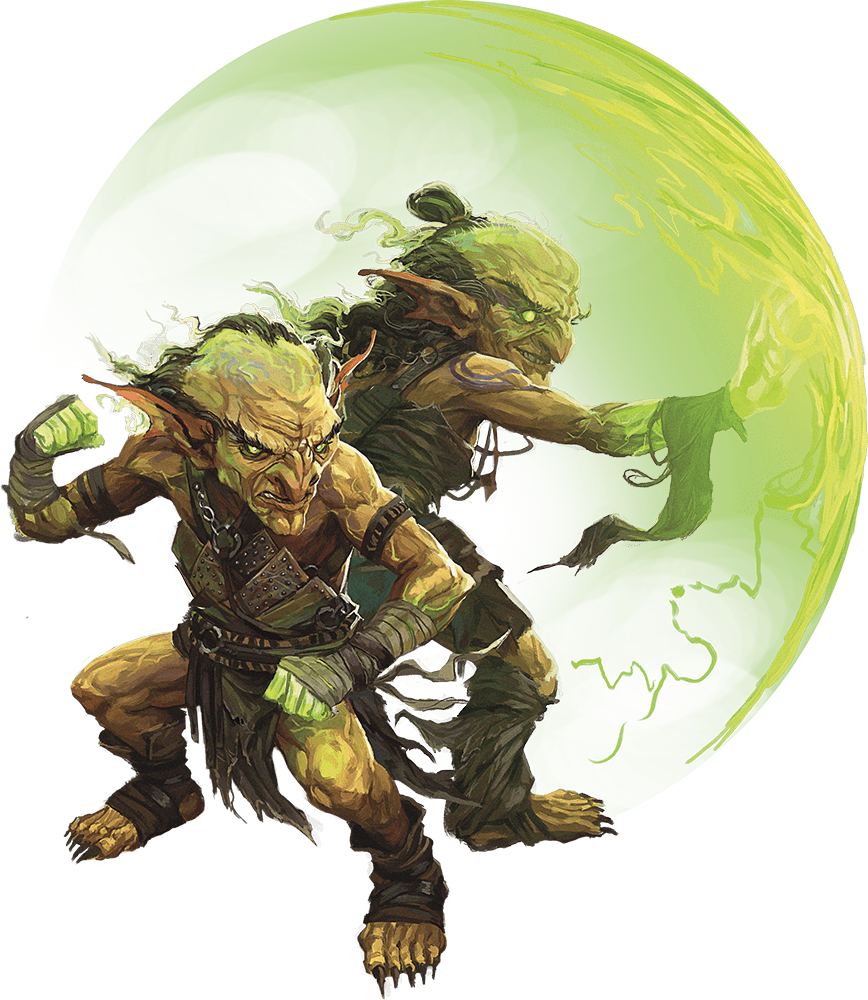

Kinetic Bulwark
As an action, you can expend and roll one or more Psionic Energy dice to form a buffer of kinetic energy around yourself. You gain temporary hit points equal to the maximum roll of all the dice combined for 1 hour. If a creature hits you with a melee attack while you have these hit points, the creature takes force damage equal to one roll of all the expended dice.
At 11th level, you can add your Intelligence modifier to the force damage dealt.
Knowledge of Many Minds
Your wandering mind adapts to new situations constantly. At the end of a long rest, select two skills, languages, or tools you do not have proficiency in; until the end of your next long rest, you are considered to be Proficient in them.
At 7th level, you can expend 1 Psionic Energy die as an action to switch one of these additional proficiencies or languages to another.
Linking Talent
As a bonus action, you can communicate telepathically with one creature you can see within 120 feet of you. You don’t need to share a language with a creature for it to understand your telepathic utterances, and the creature understands you even if it lacks a language. You can allow a creature to respond to you telepathically, but it must understand at least one language in order to communicate this way. This ability to communicate lasts until the start of your next turn.
In addition, as an action, you can exploit the mind of one creature with which you can telepathically communicate. The target must succeed on an Intelligence saving throw or take one Psionic Energy die of psychic damage.
The talent’s damage increases by one Psionic Energy die when you reach 5th level (2 dice), 11th level (3 dice), and 17th level (4 dice).
Metagravitational Talent
As a bonus action, you alter your density and weight to improve your mobility. For the rest of your turn, your walking speed increases by 10 feet, and standing up from prone costs only 10 feet of movement.
In addition, as an action you can choose an object weighing up to 5 pounds within 150 feet that isn’t being worn or carried by another creature. The object flies in a straight line up to 90 feet in a direction you choose before falling to the ground, stopping early if it impacts against a solid surface. If the object would strike a creature, that creature must make a Dexterity saving throw. On a failed save, the object strikes the target and stops moving. In either case, both the object and the creature or solid surface take 1d8 damage. The damage type is either bludgeoning, piercing, or slashing, depending on the type of object thrown.
The talent’s damage increases by one Psionic Energy die when you reach 5th level (2 dice), 11th level (3 dice), and 17th level (4 dice). The weight limit increases by 5 pounds when you reach 5th level (10 pounds), 11th level (15 pounds), and 17th level (20 pounds).
Mind-Meddling Talent
As a bonus action, you cause a creature’s thoughts to wander, distracting it. One creature of your choice within 30 feet has disadvantage on the next Wisdom (Perception) or Wisdom (Insight) check it makes before the start of your next turn. In addition, as an action you can bombard a creature within 60 feet with horrifying images, causing them to be shaken. The target must succeed on a Wisdom saving throw or take 1d4 psychic damage and have disadvantage on the next attack roll it makes before the end of its next turn. A creature that is immune to being frightened is unaffected. This talent’s damage increases by 1d4 when you reach 5th level (2d4), 11th level (3d4) and 17th level (4d4).
Mind Tether
You can use Intelligence instead of Wisdom when making an Insight check against a creature with an Intelligence ability score of 4 or higher. Furthermore, if you have telepathically communicated with a creature, you can spend 1 Psionic Energy die to know their general location (direction and rough estimate of distance) for the next hour as long as you are on the same plane as them.
Minor Telepathy
You can spend 1 Psionic Energy die to cast Detect Thoughts as a bonus action.
Mystic Armour
Your psionic energy grants you extraordinary fortitude. As an action, you can expend and roll a Psionic Energy die to gain temporary hit points equal to the number rolled + your Intelligence modifier.
At 7th level, you can expend and roll a number of additional Psionic Energy dice up to your Intelligence modifier (minimum +0) to increase the number of temporary hit points gained by the total rolled on the extra dice.
Mystic Foci
You must concentrate on this psionic power (as if on a spell), but it has no maximum duration. When you first gain this power, choose one of the following focal options. You can change your focus whenever you gain a level. You can choose this power more than once, but must select a different focus each time.
Abjurative Focus. While concentrating on this focus, you gain a +2 bonus to your AC.
Adrenal Focus. While concentrating on this focus, you have advantage on initiative checks. If you are surprised, you can spend 1 Psionic Energy die to no longer be surprised.
Astral Focus. While concentrating on this focus, you can use your reaction when you are hit by an attack to slip partially into the Astral Plane for a moment. Nonmagical bludgeoning, piercing, and slashing damage that you take from the attack is reduced by half your Intelligence modifier (rounded up).
Chameleonic Focus. While concentrating on this focus, you cause your skin and equipment to take on the colour and texture of nearby objects, including floors and walls. You gain a bonus to Dexterity (Stealth) checks equal to your Intelligence modifier (minimum bonus of +1).
Chronokinetic Focus. While concentrating on this focus, you can use your reaction when you are attacked by a creature within 30 feet of you that you can see to impose disadvantage on the attack roll, shifting several moments into the future. The first attack roll against you before the end of your next turn has advantage, as you reel from the shift in time.
Clairsentient Focus. While concentrating on this focus, you have advantage on Wisdom (Perception) and all Intelligence checks.
Crystallised Focus. While concentrating on this focus, you deal 1 additional damage whenever you deal either psychic or force damage, chosen when you select this power.
Energistic Focus. While concentrating on this focus, you can use your reaction when you take acid, cold, fire, lightning, or thunder damage to reduce the damage taken by half your Intelligence modifier (rounded up). Also, the first time you deal damage of that type before the end of your next turn, the target takes an extra Psionic Energy die of damage of that type.
Inscrutable Focus. While concentrating on this focus, other creatures have disadvantage on Wisdom (Insight) checks against you and you have advantage on saving throws against being charmed, and magical effects can’t read your thoughts.
Kinesthetic Focus. While concentrating on this focus, your speed increases by 5 feet and your jump distance is doubled.
Metacreative Focus. While concentrating on this focus, you can use your action to conjure up an inanimate object in your hand or on the ground in an unoccupied space that you can see within 10 feet of you. This object can be no larger than 3 feet on a side and weigh no more than 10 pounds, and its form must be that of a nonmagical object that you have seen. The object is visibly magical, radiating dim light out to 5 feet. The object disappears after 1 hour, when you use this effect again, when you stop concentrating on this focus, or if it takes any damage.
In addition, as an action, you can temporarily reshape one nonmagical object no larger than 1-foot cube into another nonmagical object of similar size and mass and of equal or lesser value. This effect lasts for 1 minute, and the object glows with a faint purple light.
Mindlinked Focus. While concentrating on this focus, you know the approximate location of any creature with an Intelligence score of 4 or higher within 30 feet of you, including behind total cover.
Nightwalker Focus. While concentrating on this focus, you gain darkvision with a range of 60 feet, including sight through magical darkness.
Perceptual Focus. While focusing on this psionic power, you can use your action to touch a willing humanoid and allow it to perceive through your senses until the end of your next turn. As long as the creature is on the same plane of existence as you, you can use your action on subsequent turns to maintain this connection, extending the duration until the end of your next turn. While perceiving through your senses, the other creature benefits from any special senses possessed by you, and they are blinded and deafened to their own surroundings.
Physical Focus. While concentrating on this focus, you gain a bonus to Strength (Athletics) and Dexterity (Acrobatics) checks equal to your Intelligence modifier.
Psychic Focus. While concentrating on this focus, you gain resistance to psychic damage.
Psychoportive Focus. While concentrating on this focus, you can teleport up to 10 feet to an unoccupied space that you can see as a bonus action. In addition, you can use a reaction when you are missed by a melee attack to teleport up to 10 feet to an unoccupied space you can see.
Returning Focus. While concentrating on this focus, when you throw a weapon, you may have it return to your hand after the attack is resolved.
Salient Focus. While concentrating on this focus, you have advantage on all social Charisma checks. In addition, you can choose for your voice to originate from any point of your choosing within 60 feet of you.
Spatial Focus. While concentrating on this focus, ranged attacks against you have Disadvantage.
Void Focus. While concentrating on this focus, force and psychic damage that you take is reduced by half your Intelligence modifier (rounded up).
Weapon Focus. While concentrating on this focus, you charge one weapon you carry, or both of your fists, with psionic energy. While you hold this weapon, it gains a +1 bonus to attack rolls and damage rolls, but is not considered magical for the purpose of overcoming resistance and immunity to nonmagical attacks and damage. If you use this option on a magic weapon, use the weapon’s bonuses or the psionic power’s bonuses, whichever are higher.
Mystical Recovery
As a bonus action, you can expend a number of Psionic Energy dice up to your Intelligence modifier to regain twice as many Hit Dice, up to your maximum.
Mystical Staunching
You can draw vigour from the energy you use to power your psionics. Immediately after you spend Psionic Energy dice on a psionic power, you can take a reaction to regain a number of hit points equal to one roll of your Psionic Energy die for each die you spent since the end of your last turn.
At 7th level, the result of the healing roll cannot be less than your Intelligence modifier.
At 11th level, you regain hit points this
way for every Psionic Energy die you spent
this turn, and any you spend before the
start of your next turn.
Overwhelming Conviction
You gain the ability to cast Thaumaturgy
with your psionic powers. When you cast
in this way, you have an additional options:
You cause up to 10 pounds of loose objects
within 10 feet of you to start
floating for 1 minute.
You can force all
targets within
5 feet to make a
Strength saving
throw, or be pushed
5 feet away from you.
Precognition
Whenever you roll
initiative, you can expend one
Psionic Energy die, rolling it, and add
it to the result. When you do, you cannot be surprised
for the next 1 minute.
Protective Field
When you or another creature you can see within 30 feet of you takes damage, you can use your reaction to expend one Psionic Energy die, roll the die, and reduce the damage taken by the number rolled plus your Intelligence modifier (minimum reduction 1), as you create a momentary shield of telekinetic force.
Psi-Bolstered Frame
When your physical abilities fail you, your psionic power can help: if you fail a Strength or Dexterity check in which you have proficiency, you can roll one Psionic Energy die and add the number rolled to the check, potentially turning failure into success. You expend the die only if the roll succeeds.
Psi-Bolstered Knack
When your non-psionic training fails you, your psionic power can help: if you fail an ability check using a skill or tool with which you have proficiency, you can roll one Psionic Energy die and add the number rolled to the check, potentially turning failure into success. You expend the die only if the roll succeeds.
Furthermore, you can spend a Psionic Energy die to repair a misfired (but not broken) firearm you’re wielding as a bonus action, provided you are proficient with it.

Psionic Missiles
You spend 1 Psionic Energy die to cast Magic Missile. If you take any action other than the Attack action on your turn, you can cast it as a bonus action.
Psionic Reprisal
When you take damage from a creature that is
within 10 feet of you, you can use your reaction to
emanate telekinetic energy by expending and
rolling a Psionic Energy die. The creature that
dealt damage to you must make a Strength
saving throw. On a failed save, the creature
takes force damage equal to the number rolled
plus your Intelligence modifier and is pushed up to
10 feet away from you. On a successful save,
the creature takes half as much damage
and isn’t pushed.
At 7th level, when a creature fails the saving
throw you can expend a number of additional
Psionic Energy dice up to your Intelligence
modifier to increase the distance pushed by
15 feet per die.
Psionic Strike
You can propel your weapons with psionic force. Once
on each of your turns, immediately after you hit a
target within 30 feet of you with a weapon attack
and deal damage to it, you can expend and roll one
Psionic Energy die, dealing force damage to the target equal to the number rolled plus your Intelligence modifier.
At 11th level, you can expend and roll a number of additional Psionic Energy dice up to your Intelligence modifier (minimum +0) to increase the force damage by the total rolled on the extra dice.
Psychic Backlash
As a reaction, you can spend 1 Psionic Energy die to impose disadvantage on an attack roll against you if you can see the attacker. If the attack still hits you, the attacker must succeed an Intelligence saving throw or take psychic damage equal to one roll of your Psionic Energy die + your Intelligence modifier.
Psychic Mirage
You can spend 1 Psionic Energy die to cast Disguise Self, no concentration required.
Psychic Ward
You can spend 1 Psionic Energy die to cast Mage Armour.
Shining Talent
As a bonus action, you can cause bright light to radiate from your body in a 20-foot radius and dim light for an additional 20 feet. The light can be coloured as you like. The light lasts for 1 hour, and you can extinguish it as a bonus action. As an action while illuminated, you can increase the luminosity to a burning radiance. Each creature within 10 feet of you, must succeed on a Dexterity saving throw or take 1d6 radiant damage and become blinded until the end of their next turn. This damage increases by 1d6 when you reach 5th level (2d6), 11th level (3d6), and 17th level (4d6).

Telekinetic Movement
You can expend a Psionic Energy die to move an object or a creature with your mind. As an action, you target one loose object that is Large or smaller or one willing creature, other than yourself. If you can see the target and it is within 30 feet of you, you can move it up to 30 feet to an unoccupied space you can see. Alternatively, if it is a Tiny object, you can move it to or from your hand. Either way, you can move the target horizontally, vertically, or both.
At 7th level, you can expend a number of additional Psionic Energy dice up to your Intelligence modifier to increase the distance you can move the target by 30 feet per die.
Vanishing Strike
As a reaction when you make a melee attack against a target, you can spend 1 Psionic Energy die to bend the light around you, becoming invisible, and teleport up to 30 feet to a point you can see. You remain invisible until the start of your next turn, or until you attack, cast a spell, or use a psionic power.
Warded from the Physical
You can ignore the effects of extreme heat or cold, hold your breath twice as long as normal, and can go twice as long without eating or sleeping before suffering exhaustion.
Beginning at 15th level, you age 1 year for every 10 years which pass, and no longer need to eat, sleep, or breathe.
5th Level Powers
Astral Construct
As an action, you create an astral construct made of solid force that attacks your enemies. The construct appears in a space you can see within 30 feet, and must remain within 120 feet of you or it dismisses itself. The astral construct’s statistics are identical to any beast of a maximum challenge rating of one less than double the number of Psionic Energy dice spent on this power. It is considered a construct instead of a beast, although its appearance is up to you.
The construct obeys your commands as best as it can. It takes its turn on your initiative, though it doesn’t take an action unless you command it to. On your turn, you can mentally command the construct to move (no action required by you). You can use either your action or bonus action to mentally command it to take the Attack, Dash, Disengage, Dodge, or Help action. You can cast spells as though you were in the construct’s space, but must use your own senses.
The astral construct lasts for 8 hours, until dismissed as a bonus action, or until you lose concentration (as if on a spell). If dismissed, you may use your action to call the construct back into existence before the ability ends.
Attunement to Matter
When a creature’s resistance reduces the damage dealt by one of your attacks, you can spend 1 Psionic Energy die to cause that attack to ignore the creature’s resistance.
Battle Meditations
You can use your psionic abilities to bolster the morale and prowess of your allies. When a friendly creature you can see within 30 feet of you misses with an attack roll or fails a saving throw, you can use your reaction and expend one Psionic Energy die, rolling it, and adding it to the results, potentially turning a miss into a hit, or a failure into a success.
Blind Spot
As an action, you erase your image from the mind of one creature you can see within 120 feet of you; the target must succeed on a Wisdom saving throw, or you are invisible and imperceptible to it until the end of your next turn. You can spend 1 Psionic Energy die when you take this action to increase the duration to concentration, up to 1 minute.
Crown of Insanity
You spend 1 Psionic Energy die to cast Crown of Madness
Crown of Occlusion
As an action, you target a creature that you can see within 60 feet of you and spend 1 Psionic Energy die. The target must make an Intelligence saving throw (it succeeds automatically if it is immune to being charmed). On a failed save, the target believes one statement of your choice for the next 5 minutes, provided that it understands the statement. The statement can be up to ten words long, and must describe you or a creature or object the target can see. If the statement is unreasonable (such as “bathing in lava will heal you”), the creature has advantage on the saving throw. On a successful save, the target is unaffected, and you can’t use this ability on it again until you finish a long rest.
Crown of Sorrow
You spend 1 Psionic Energy die to cast Tasha’s Mind Whip.
Curve the Bullet
Once when you miss a target with a ranged weapon attack roll, you can roll 1 Psionic Energy die and add the number rolled to the attack roll, expending the Psionic Energy die, potentially turning the miss into a hit.
Dancing Weapon
As a bonus action, you can touch a melee weapon and imbue it with telepathic control by expending 1 Psionic Energy die, causing it to fly around and assault your enemies for 1 minute. When you first imbue the weapon, you can make a melee weapon attack against a creature within 5 feet of the weapon, using your Intelligence instead of Strength for the attack roll. On a hit, the target takes force damage equal to one Psionic Energy die + your Intelligence modifier instead of the damage normal for the weapon. Any magical bonuses normally applied by the weapon are still applied.
As a bonus action on your subsequent turns, you can move the weapon up to 20 feet and repeat the attack against a creature within 5 feet of it.
Drawn from the Rift
Whenever your plane or position is altered by magic, you can either use your reaction to make a single melee weapon attack upon arrival at your destination, or you can consume 2 Hit Dice and regain a single expended Psionic Energy die.
Empathic Chirurgy
As an action, you touch a creation and expend 2 Psionic Energy dice to heal its mind. You can end either the charmed or frightened condition on the creature, as well as one effect that causes confusion or madness.
At 11th level, you gain the ability to remove the following conditions using this ability, having learned to heal the body as well: blinded, deafened, paralysed, or poisoned.
At 17th level, you can instead choose to remove any reductions to one of its ability scores, remove one effect that reduces its hit point maximum, or remove one effect which has magically aged them.
Energy Shield
You can spend 2 Psionic Energy dice to cast Protection from Energy.
Starting at 15th level, you bestow immunity rather than resistance when you cast the spell this way.
Ethereal Veil
You can spend 1 Psionic Energy die to cast Nondetection (self only) as an action
Exacting Inquisition
As an action, you ask a question of one creature that can see and hear you within 30 feet of you and expend 1 Psionic Energy die. The question must be phrased so that it can be answered with a yes or no, otherwise this ability fails. The target must succeed on a Wisdom saving throw, or it is compelled to reply with a truthful answer. Each attempt to lie it makes inflicts one Psionic Energy die of psychic damage on the target - and may also reveal the truth by the fact that the creature is hurt.
Force Lightning
You exert your mind over the pure energy that makes up the universe, using it to assault your foes. As an action, you can expend two or more Psionic Energy dice to fire a crackling beam of pure force in a 30-foot cone. Creatures within the line must succeed on a Dexterity saving throw or take a number of Psionic Energy dice of force damage equal to twice the number expended. On a successful save, a creature takes half as much damage.
At 11th level, the cone increases to 60-foot.
Incite Fear
You can spend 2 Psionic Energy dice to cast Fear.
Kinesthetic Surge
As a bonus action, you can spend 1 Psionic Energy die to double all movement one creature you can see within 60 feet of you takes until the start of your next turn. In addition, the target does not provoke opportunity attacks for this period.
Mind Blast
You can expend and roll one or more Psionic Energy dice as an action to emit intense psychic waves in a 15-foot cone. Each creature in that area must succeed on an Intelligence saving throw. On a failed save, a creature takes psychic damage equal to the total rolled plus your Intelligence modifier and is stunned until the end of their next turn. On a successful save, a creature takes half as much damage and is not stunned
At 11th level, you can expend an additional Psionic Energy die to increase the range of the blast to a 30-foot cone.
At 15th level, you may expend another additional Psionic Energy die to increase the blast from a 30-foot to 60-foot cone.
Manipulate Form
You can spend 1 Psionic Energy die to cast the Enlarge/Reduce spell (self only).
At 11th level, you can choose for your weight to remain the same, or to be reduced or increased eightfold in either altered form.
Manipulate Resonance
You can spend 1 Psionic Energy die to cast Nystul's Magic Aura (self only).
Momentary Herald
When rolling initiative, provided you aren’t incapacitated, you can expend and roll 1 Psionic Energy die as a reaction to grant each creature of your choice within 30 feet of you who can see you a bonus to their initiative rolls equal to the result.
Mystic Restoration
As a bonus action, you can expend and roll a number of Psionic Energy dice up to your Proficiency bonus to heal a creature you touch. The target regains a number of hit points equal to twice the total amount rolled on the Psionic Energy dice + your Intelligence modifier.
Alternatively, as an action, you can touch a creature and expend one Psionic Energy die to cure the target of one disease or neutralize one poison affecting it.
Each time after the first you heal a creature this way, you consume a Hit Die as you wilt from the strain. This counter resets when you finish a short or long rest.
Neural Alacrity
You can expend 1 Psionic Energy die on your turn (no action required) to gain an additional action on this turns. The additional action can be used only to take the Attack (one weapon attack only), Dash, Disengage, Hide, or Use an Item action
Psi-Powered Leap
As a bonus action, you can expend 1 Psionic Energy die to propel your body with your mind. You gain a flying speed equal to 15 times your Intelligence modifier until the end of the current turn. You fall if you end your turn in the air.
Psychic Parry
As a reaction when you make an Intelligence, Wisdom, or Charisma saving throw, you can expend and roll 1 Psionic Energy die to gain a bonus to that saving throw equal to the result of the die. You can use this ability after rolling the die but before the result of the roll is determined.
Sensory Anchor
As an action, you can spend 2 Psionic Energy dice to cast Clairvoyance with a range of 10 feet and a duration of 1 hour (no concentration required). Moreover, you can recieve both visual and audible information from the sensor, rather than just one.
Sensory Severance
You gain the ability to cut yourself from the visual world of those observing you. As a bonus action, you can spend 1 Psionic Energy die to choose a number of creatures up to your Intelligence modifier that you can see within 60 feet of you. You immediately appear invisible to the targets (as if you had the invisibility spell cast upon you) for 1 minute. All other creatures can see you normally. This feature ends early if you attack or cast a spell, even if the affected creature is not the target of the attack or spell. The feature also ends early if you are incapacitated or die. You can't use this feature again until you finish a short or long rest.
Spatial Shift
As an action, you can spend 2 Psionic Energy dice to teleport a number of willing creatures within 90 feet up to your Intelligence modifier to other unoccupied locations within that range.
At 11th level, if you spend an additional Psionic Energy die, you may target unwilling creatures as well. Each unwilling creature must succeed on a Wisdom saving throw or be teleported.
Telempathic Projection
As an action, you can spend 1 Psionic Energy die to cast the Calm Emotions spell.
Temporal Deceleration
You can spend 2 Psionic Energy dice to cast the Slow spell as an action.

Transcendental Control
When you have to make a Constitution saving throw to avoid losing concentration on an effect from a psionic power, you can expend 1 Psionic Energy die and add the result to the saving throw.
At 11th level, the result of the die roll cannot be less than your Intelligence modifier.
Transposition
If you haven’t moved yet on your turn, you may choose a willing creature you can see within 60 feet of you. As a bonus action, you and that creature teleport, swapping places, and your speed is reduced to 0 until the end of the turn. You can expend 1 Psionic Energy die when you take this bonus action to retain your movement speed after the teleportation. This ability fails and is wasted if either of you can’t fit in the destination space.
Unparalleled Shunt
You can spend 2 Psionic Energy dice to cast Blink, but can choose when to blink or remain in the current plane.
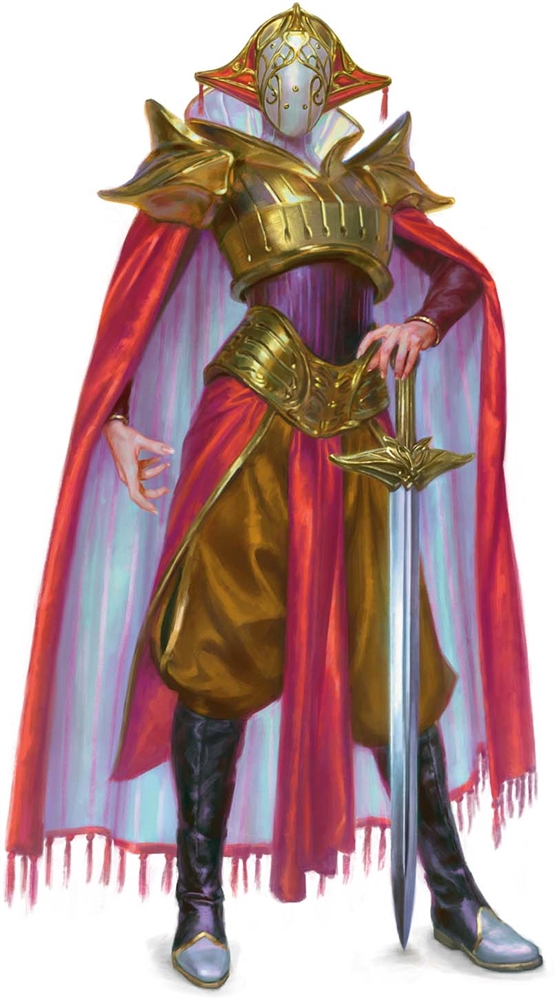
9th Level Powers
Altered Timelines
When a creature within 30 feet of you that you can see takes damage, you can use your reaction to force the creature that attacked them to make a second attack roll at disadvantage, or to grant the damaged creature a new saving throw at advantage. If the new attack roll misses or the damaged creature succeeds their new saving throw, the damage from the original attack is undone and never occurred for anyone other than you.
Alternatively, When a creature within 30 feet of you that you can see hits a creature with an attack, you can use your reaction to search nearby timelines for a matching outcome and nudge it into your own, dealing half the damage rolled of the original attack as additional force damage.
You must expend a Psionic Energy die to use either of these abilities.
Borrow Time
You can expend 2 Psionic Energy dice (no action required) to gain a second turn immediately after this one. At the end of that turn, you become stunned until the end of your next turn. You cannot move or act in any way during this time. This effect cannot be avoided in any way. Once you use this ability, you cannot use it again until you finish a long rest.
Broken Will
As an action, you target a creature that you can see within 60 feet of you and expend 2 Psionic Energy dice. The target must make an Intelligence saving throw. On a failed save, the target is charmed until the end of its next turn, during which you choose its movement and action. You may also cause the creature to use its reaction, but this requires you to use your own reaction as well. On a successful save, the target is unaffected, and you can’t use this ability on that creature again until you finish a long rest.
Floating Thoughts
You can cast either Levitate, Jump, or Feather Fall at will, and can change your choice when you finish a short or long rest. You can also change your choice as a bonus action by expending 1 Psionic Energy die.
Fortified Mind
You gain proficiency in either Charisma or Intelligence saving throws.
Hypercognition
After 1 hour of uninterrupted meditation, you can spend 3 Psionic Energy dice to cast the Legend Lore spell.
Imagined Reality
You can spend 3 Psionic Energy dice to cast Hallucinatory Terrain centred on yourself.
Inertial Barrier
You can expend 3 Psionic Energy dice to cast Stoneskin (self only).
Matter-Fuelled Mind
You gain the ability to sacrifice your physical durability in exchange for psionic power. When activating a psionic power, you can pay its Psionic Energy die cost with your hit dice, instead of using any Psionic Energy dice. Your current hit points are reduced by the total number you roll when using your Hit DIce this way. This reduction can’t be lessened in any way.
Might Through the Mental
When you would roll a Strength, Dexterity, or Constitution saving throw, you can expend 1 Psionic Energy die to roll an Intelligence, Wisdom, or Charisma saving throw instead.
Modify Matter
Over the course of 1 hour, you can expend one or more Psionic energy dice to reform physical material. You can convert up to 10 cubic feet of material of one sort into a product that is composed of the same material for every Psionic Energy die expended. If working with a mineral, you convert 1 cubic feet of material per die instead.
Alternatively, you can touch a construct or object as an action and reknit its structure to repair damage it has taken. The construct or object regains a number of hit points per Psionic Energy die you spend equal to two rolls of the die plus your Intelligence modifier.
Psychic Grip
As an action, you target a creature you can see within 60 feet and expend 2 Psionic Energy dice. The target must make an Intelligence saving throw. On a failed save, you overload the creature with psychic energy. The target is stunned for 1 minute; you must concentrate on this ability as if on a spell, ending the effect early if you lose concentration. At the end of each of its turns it can make another Intelligence saving throw, ending the effect on a success. On a failure, you can use your reaction to force the target to move up to half its speed, despite being otherwise immobile.
Creatures with an Intelligence score below 4 or resistance to psychic damage are immune to the effects of this spell.
Psychic Projection
You can spend 2 Psionic Energy dice to cast the Major Image spell as an action.
Psychosis
By spending 2 Psionic Energy dice as an action you can cast the Confusion spell, targeting only one creature within range.
Remote Sight
After 10 minutes of uninterrupted meditation, you can spend 3 Psionic Energy dice to cast the Scrying spell.
Soul Shift
You can spend 2 Psionic Energy dice to cast Dimension Door on yourself only.
Strength of Mind and Body
When you expend a Psionic Energy die on your turn, you become resistant to psychic and force damage, and to nonmagical bludgeoning, piercing, and slashing damage until the start of your next turn.
At 15th level, you gain immunity rather than resistance
Third Eye Awakened
As a bonus action, you can spend 3 Psionic Energy dice to gain Truesight with a radius of 60 feet for 10 minutes.
Timestep
As a bonus action, you can spend 2 Psionic Energy dice to remove yourself from time until the start of your next turn. You disappear, are immune to all damage, cannot move or take actions, and cannot be targeted or suffer the effects of conditions for this period. At the start of your next turn, you return to the exact point in space at which you left. If this returns you inside a creature or object, you take 1d10 force damage and are shunted to the nearest unoccupied space. Once you use this ability, you cannot use it again until you finish a short or long rest.
Unleash Energy
As an action, you can spend 3 Psionic Energy dice to unleash the raw might of entropy in an area, annihilating your foes. Creatures within a 20-foot-radius sphere centred on a point you can see within 120 feet must succeed on a Dexterity saving throw or take two Psionic Energy dice each of acid, cold, fire, and lightning damage. On a successful save, a creature takes half as much damage. Once you use this ability, you cannot use it again until you finish a long rest.
Vast Vision
You can spend 1 Psionic Energy die to cast any Divination spell of 1st or 2nd level which has the Ritual tag as an action, without knowing the spell.
Weapon of Psi-Silver
With a melee weapon handle and 125 gp worth of silver, you can perform a 1-hour ritual to create a psionic weapon that responds only to you. You can perform this ritual as part of a long rest. Once complete, the weapon remains an inconspicuous hilt or handle until you activate it using a bonus action. Once active, the weapon extends into the form of a melee weapon of your choice, and it deals force damage instead of the weapon's usual damage type. You can teleport your psionic weapon to your hand from any distance by expending a Psionic Energy die, provided it is on the same plane of existence as you.
Weave-Tearing Psion
As a reaction to being targeted by a spell of 6th level or lower, you can spend 3 Psionic Energy dice as a reaction to suffer no effects from the spell. If you attempt to absorb a spell-linke effect or a spell of 7th-level or above, you can make a contested Psionic/spellcasting ability check to be unaffected regardless. Once you use this ability, you cannot use it again until you finish a long rest.
Weightless Body
You can spend 2 Psionic Energy dice to cast Fly targeting yourself only, with a fly speed of 20 feet times your Intelligence modifier (minimum of 30 feet).
Will Into Existence
As an action, you can spend 3 Psionic Energy dice to cast the Creation spell, shaping raw force energy rather than pulling wisps of shadow material from the Shadowfell.
13th Level Powers
All-Seeing Eye
You can see a creature by its mind. You gain blindsight out to a range of 60 feet, but you can only see creatures with an Intelligence score of 4 or higher within this range. A creature you are unaware of can still be hidden from you, provided they are immune to psychic damage or mental interface, such as being under the effect of an Intellect Fortress spell.
Additionally, you can use your Intelligence modifier instead of your Wisdom modifier when making Perception checks to detect creatures and for calculating your Passive Perception.
Astral Messenger
By spending 1 minute in uninterrupted meditation, you can expend 3 Psionic Energy dice to cast the Dream spell.
Destructive Phase
You can expend 1 Psionic Energy die to make an attack that phases through most defences. When you make this attack, treat the target’s AC as 10 + their Dexterity modifier against this attack, regardless of the target’s actual AC. Magical bonuses still affect their AC, however.
Effortless Journey
Your mind can mystically move your body. Once on each of your turns, you can forfeit up to 30 feet of your movement to teleport the distance you forfeited. You must teleport to an unoccupied space you can see.
Immortal Conviction
You can draw on your reserves of psionic power to survive beyond death. At the end of your turn while at 0 hit points, you can spend and roll 2 Psionic Energy dice to immediately regain a number of hit points equal to the total rolled on the dice + your Intelligence modifier.
Indomitable Will
As a reaction when you fail a Wisdom saving throw, you can roll one Psionic Energy die and add the number rolled to the save, potentially turning failure into success. You expend the die only if the roll succeeds.
Mystic Resilience
Your psionic energy grants you extraordinary fortitude. At the start of each of your turns, you gain temporary hit points equal to your Intelligence modifier (minimum of 0) if you have at least 1 hit point and at least 1 remaining Psionic Energy Die.
Psi-Bolstered Reflexes
As a reaction, you can expend and roll 1 Psionic Energy die when you fail a Dexterity saving throw to gain a bonus to the save equal to the number rolled, potentially turning the failure into a success. The Psionic Energy die is not expended unless you succeed.
Probe Mind
You can spend 3 Psionic Energy dice to cast Modify Memory
Silver-Sword Master
You add your Intelligence modifier to your melee weapon damage rolls.
Superior Teleportation
When you use a psionic power to teleport any distance, you can increase that distance by a number of feet up to 5 times your Intelligence modifier.
Telekinesis
As an action, you can spend 3 Psionic Energy dice to cast the Telekinesis spell.
Temporal Double
You shift a few seconds into the past, leaving behind an echo of a nonexistent present. You can spend 2 Psionic Energy dice to cast Mislead as a bonus action and without concentration, but only lasting until the end of your next turn.
Uncontrollable Mind
The strength of your rampaging mind is such that others' attempts to control it are futile. You gain immunity to the charmed and frightened conditions, as well as effects that would alter your mind.

17th Level Powers
Destructive Intellect
You can spend 3 Psionic Energy dice to cast Bigby’s Hand. It is visible only to you, and to creatures under the effect of See Invisibility or similar magic, or special senses.
Force Insanity
Using 5 Psionic Energy dice, you cast Maddening Darkness centred on yourself. You can see through it, it deals no damage to you, and it moves with you as though it were an aura.
Form of Madness
As an action, you can expend 4 Psionic Energy dice to infuse your body with powers from the Far Realm, taking on the apprearence of a Faceless One or other such Far Realm horror. You take on a gigantic shadowy form for 1 minute or until you lose concentration (as if on a spell), occupying the form’s space as if you were a Huge creature. While in this form, you can’t speak, cast spells, or use psionic powers.
When the illusion appears, any of your enemies that can see it must succeed on a Intelligence saving throw or gain the following temporary madness for 1 minute: “i am frightened of the incomprehensible shadowy form.” The target is considered frightened even if it would normally be immune to the condition. If a frightened creature ends its turn in a location where it doesn’t have line of sight to the illusion, it can repeat the saving throw, ending the effect on itself on a success.
As a bonus action on your turn, you can cause the form to exhale a blast of negative energy in a 60-foot cone originating from its space. Each creature in the cone must make an Intelligence saving throw, taking 7d6 force damage on a failed save, or half as much damage on a successful one.
The illusion is tangible because of the warpstuff used to create it, but attacks miss it automatically. It succeeds on all saving throws, and it is immune to all damage and conditions; unless creatures can see through the illusion, you are unable to be targeted directly while within the illusion. A creature that uses an action to examine the form can determine that it is an illusion by succeeding on an Intelligence (Investigation) check against your Psionic save DC. If a creature discerns the illusion for what it is, the creature can see through it and has advantage on saving throws against its breath. Aberrations and creatures immune to madness automatically discern the illusion for what it is.
Greater Precognition
As an action, you can expend 3 Psionic Energy dice to bestow upon yourself a limited ability to see into the immediate future. For your next three turns, not including the one in which you used this ability, you can’t be hidden from, and you have advantage on attack rolls, ability checks, and saving throws. Additionally, other creatures have disadvantage on attack rolls against you for the durat
Immaterial Mastery
You can cast concentration spells using your psionic powers without concentration and with a duration of their maximum by spending a number of additional Psionic Energy dice equal to half the spell level (rounded down, minimum of 1).
Master of Limbo
When you take damage of a damage type to which you have resistance, you can spend 1 Psionic Energy die to gain immunity to it instead (no action required) for that instance of damage.
Microcosm
You warp the consciousness and senses of a creature, sending it into a catatonic state, where its senses are all completely fabricated from within its own mind. As an action, choose a creature within 60 feet and expend 4 Psionic Energy dice. The target must make a Wisdom saving throw. On a failure, it permanently falls unconscious, unable to perceive anything beyond its own delusions.
A creature with more than 100 hit points or which is immune to illusions is also immune to this effect. Using this effect on a creature again turns its sensory pathways outward once more, freeing it from the effect. Otherwise, only very potent effects such as greater restoration, heal, or wish can restore the creature to normal.
Mind Over Matter
You gain resistance to bludgeoning, piercing, and slashing damage, and one other damage type of your choice.
Psychic Corporeality
By spending 1 hour in uninterrupted meditation, you can expend 4 Psionic Energy dice to cast the Astral Projection spell (self only). Once you use this ability, you cannot use it again until you finish a long rest.
Psychometabolism
You can spend 4 Psionic Energy dice to cast Regenerate (self only). Once you use this ability, you cannot use it again until you finish a long rest.
Purge the Mind
You can spend 5 Psionic Energy dice to cast either Mind Blank or Feeblemind on a creature you touch. Once you use this ability, you cannot use it again until you finish a long rest.
Spacetime Memory
You can spend 4 Psionic Energy dice to cast Teleport, but can only use it to travel to somewhere you have been before.
Unravel Existence
You can spend 4 Psionic Energy dice to cast Disintegrate. Once you use this ability, you cannot use it again until you finish a long rest.
Vision of Death
You force your enemies to perceive their own death and manifest it instantaneously. As an action, expend 3 or more Psionic Energy dice and choose any number of creatures you can see within 30 feet of you. Each creature must make a Charisma saving throw. On a failed save, a creature is slain instantly if it has 20 hit points or fewer. If it has more than 20 hit points, it takes a number of Psionic Energy dice of psychic damage on a failed save equal to double the number spent, or half as much damage on a successful one. Once you use this ability, you cannot use it again until you finish a long rest.
PART VI
Appendices

Altered Standard Spells
Cantrips
Blade Ward
Abjuration cantrip
- Classes: Bard, Sorcerer, Warlock, Wizard
- Casting Time: 1 bonus action
- Range: Self
- Components: S
- Duration: Concentration, 1 round
You extend your hand and trace a sigil of warding in the air. Until the end of your next turn, you have resistance against bludgeoning, piercing, and slashing damage. If forced to make a concentration check to maintin this spell by being hit with a weapon attack, you have advantage on the roll.
Create Bonfire
Conjuration cantrip
- Classes: Druid, Sorcerer, Warlock, Wizard
- Casting Time: 1 action
- Range: 60 feet
- Components: S
- Duration: 1 hour
You create a bonfire on the ground at a point that you can see within range. Until the spell ends, the bonfire fills a 5-foot cube, providing bright light in a 20-foot radius and dim light for an additional 20 feet. Any creature in the bonfire’s space when you cast the spell must succeed on a Dexterity saving throw or take 1d8 fire damage. A creature must also make the saving throw when it enters the bonfire’s space for the first time on a turn or ends its turn there.
If you cast this spell multiple times, you can have up to three bonfires active at a time, and you can dismiss a single bonfire as an action.
At Higher Levels. The spell’s damage increases by 1d8 when you reach 5th level (2d8), 11th level (3d8), and 17th level (4d8).
Encode Thoughts
Enchantment cantrip
- Classes: Artificer, Bard, Wizard
- Casting Time: 1 minute
- Range: Self
- Components: S
- Duration: Until Dispelled
You pull a memory, an idea, or a message from your mind and transform it into a tangible string of glowing energy called a thought strand, which persists until it is dispelled or until you exceed the number of strands you can maintain at once, at which point the earliest strand is dispelled. A thought strand is a copy of a memory, and does not remove it from your mind. You can maintain up to two thought strands at once.
The thought strand appears in an unoccupied space within 5 feet of you as a Tiny, weightless, semisolid object that can be held and carried like a ribbon. It is otherwise stationary.
If you cast this spell while concentrating on a spell or an ability that allows you to read or manipulate the thoughts of others (such as Detect Thoughts or Modify Memory), you can transform the thoughts or memories you read, rather than your own, into a thought strand.
Casting this spell while holding a thought strand allows you to instantly receive whatever memory, idea, or message the thought strand contains, dispelling it; casting Detect Thoughts on the strand has the same effect.
At Higher Levels. The number of strands you can maintain at once increases by one when you reach 5th level (three strands), 11th level (four strands), and 17th level (five strands).
Primal Savagery
Transmutation cantrip
- Classes: Druid
- Casting Time: 1 action
- Range: Self
- Components: S
- Duration: Instantaneous
You channel primal magic to cause your teeth or fingernails to sharpen, ready to deliver a ferocious attack. Make a melee weapon attack against one creature within 5 feet of you, using your spellcasting attack modifier for the attack roll. On a hit, the target takes 1d8 slashing or piercing damage (your choice). As you are physically growing these Natural Weapons as a part of this spell, the damage dealt by these attacks are nonmagical unless your unarmed strikes would normally be magical. After you resolve this action, your teeth or fingernails return to normal.
At Higher Levels. The spell pumps more bestial rage into you, allowing you to make more than one weapon attack when you reach higher levels: two attacks at 5th level, three attacks at 11th level, and four attacks at 17th level. You can direct the attacks at the same target or at different ones. Make a separate roll for each attack.
Resistance
Abjuration cantrip
- Classes: Artificer, Cleric, Druid
- Casting Time: 1 bonus action
- Range: Touch
- Components: S
- Duration: 1 minute
You touch one willing creature. Once before the spell ends, the target can roll a d4 and add the number rolled to one saving throw of its choice. It can roll the die before or after the saving throw. The spell then ends.
Casting this spell dispels any of your active prior casts of this spell.
At Higher Levels. The spell’s granted die increases by one step when you reach 5th level (1d6), 11th level (1d8), and 17th level (1d10).
True Strike
Divination cantrip
- Classes: Bard, Sorcerer, Warlock, Wizard
- Casting Time: 1 bonus action
- Range: Touch
- Components: S
- Duration: Concentration up to 1 round
You extend your hand and trace a sigil in front of your eyes, causing them to flash blue, granting the target a brief insight into their opponents’ defences. The creature you touch gains advantage on the next attack roll they make within the spell’s duration. This spell ends early when they successfully hit a target with an attack.
1st-Level
Cure Wounds
1st-level Necromancy
- Classes: Bard, Cleric, Druid, Paladin, Ranger
- Casting Time: 1 action
- Range: Touch
- Components: V, S
- Duration: Instantaneous
A creature you touch regains a number of hit points equal to 2d10 + your spellcasting ability modifier. This spell has no effect on undead or constructs.
At Higher Levels. When you cast this spell using a spell slot of 2nd level or higher, the healing increases by 1d10 for each slot level above 1st.
Grease
1st-level Conjuration
- Classes: Artificer, Druid, Ranger, Sorcerer, Wizar
- Casting Time: 1 action
- Range: 60 feet
- Components: V, S, M (a bit of pork rind or butter)
- Duration: 1 minute
Slick grease covers the ground in a 10-foot-radius circle centred on a point within range and turns it into difficult terrain for the duration. When the grease appears, each creature standing in its area must succeed on a Dexterity saving throw or fall prone. A creature that enters the area or ends its turn there must also succeed on a Dexterity saving throw or fall prone.
The grease is flammable. Any part of the grease exposed to fire lights all other conguent areas covered in grease at the end of the round. The grease remains alight for the rest of the duration once lit, dealing 1d6 fire damage to any creature that starts its turn in the fire.
At Higher Levels. When you cast this spell using a spell slot of 2nd level or higher, the radius of the grease increases by 10 feet for each slot level above 1st.
Healing Word
1st-level Necromancy
- Classes: Bard, Cleric, Druid, Paladin, Ranger
- Casting Time: 1 bonus action
- Range: 60 feet
- Components: V
- Duration: Instantaneous
A creature of your choice that you can see within range regains hit points equal to 2d6 + your spellcasting ability modifier. This spell has no effect on undead or constructs.
At Higher Levels. When you cast this spell using a spell slot of 2nd level or higher, the healing increases by 1d6 for each slot level above 1st.
Hex
1st-level Divination
- Classes: Ranger, Warlock
- Casting Time: 1 bonus action
- Range: 90 feet
- Components: V, M (a drop of animal blood)
- Duration: Concentration, up to 1 hour
You place a curse on a creature that you can see within range, marking them with your essence. Until the spell ends, whenever you hit the target with an attack, you deal an extra 1d6 damage to the target of the attack's damage type. Also, choose one ability when you cast the spell. The target has disadvantage on ability checks made with the chosen ability or you have advantage on checks made with that ability against the target (your choice).
If the target drops to 0 hit points before this spell ends, you can use a bonus action on a subsequent turn of yours to curse a new creature.
A Remove Curse cast on the target ends this spell early.
At Higher Levels. When you cast this spell using a spell slot of 3rd or 4th level, you can maintain your concentration on the spell for up to 8 hours. When you use a spell slot of 5th level or higher, you can maintain your concentration on the spell for up to 24 hours.
Note
This spell replaces any instances of the Hunter's Mark spell; Hunter's Mark is now a ranger class feature.
2nd-Level
Cordon of Arrows
2nd-level Transmutation
- Classes: Ranger
- Casting Time: 1 action
- Range: 5 feet
- Components: V, S, M (four or more pieces of ammunition)
- Duration: 8 hours
You plant four pieces of nonmagical ammunition – arrows, bullets, or bolts – in the ground within range and lay magic upon them to protect an area. Until the spell ends, whenever a creature other than you comes within 30 feet of the ammunition for the first time on a turn or ends its turn there, a number of pieces of ammunition flies up to strike it. You choose when you cast the spell how many pieces trigger when the spell activates. The creature must succeed on a Dexterity saving throw or take piercing damage equal to 1d6 + your spellcasting ability modifier per piece of ammunition. Each piece of ammunition is then destroyed. The spell ends when no ammunition remains.
When you cast this spell, you can designate any creatures you choose, and the spell ignores them.
At Higher Levels. When you cast this spell using a spell slot of 3rd level or higher, the amount of ammunition that can be affected increases by two for each slot level above 2nd.
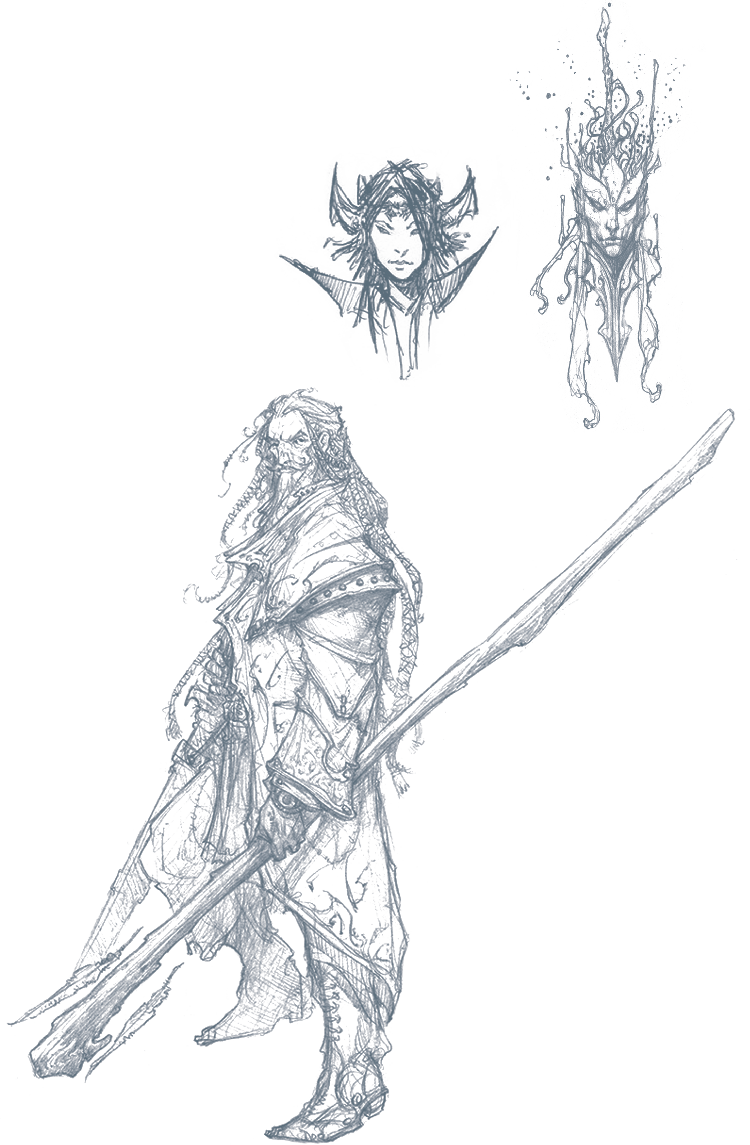
Crown of Madness
2nd-level Enchantment
- Classes: Bard, Sorcerer, Warlock, Wizard
- Casting Time: 1 action
- Range: 120 feet
- Components: V, S
- Duration: Concentration, up to 1 minute
One humanoid of your choice that you can see within range must succeed on a Wisdom saving throw or become charmed by you for the duration. While the target is charmed in this way, a twisted crown of jagged iron appears on its head, and a madness glows in its eyes. The target can make a Wisdom saving throw at the end of each of its turns, ending the spell on a success.
The target must use its action before moving on each of its turns to make a melee attack against a creature other than itself that you mentally choose. It loses its action if it has no targets in melee range.
On your subsequent turns, you can use your action to control its movement on its next turn, but you cannot move it into harmful areas (like fire or a pit) while controlling it.
Darkvision
2nd-level Transmutation
- Classes: Artificer, Druid, Ranger, Sorcerer, Wizard
- Casting Time: 1 action
- Range: Touch
- Components: V, S, M (a pinch of dried carrot or an agate)
- Duration: 8 hours
You touch a willing creature to grant it the ability to see in the dark. For the duration, that creature has darkvision out to a range of 60 feet, including in magical darkness. If the target already possesses darkvision, their darkvision range increases by half the amount usually bestowed by this spell.
At Higher Levels. When you cast this spell using a spell slot of 3rd level or higher, the darkvision range increases by 30 feet for each slot level above 2nd.
Detect Traps
2nd-level Divination (ritual)
- Classes: Artificer, Ranger, Wizard
- Casting Time: 1 action
- Range: Self
- Components: V, S
- Duration: Concentration up to 1 minute
You learn the rough direction and nature of traps within 120 feet of yourself. For the purpose of this spell a 'trap' is considered to be any object or structure, insentient construct, sigil, or ward which would inflict an effect you would consider to be harmful or undesirable, specifically designed and intended by the creator to deter or harm others.
You learn:
How severe they are (Easy, Medium, Challenging, Deadly)
The general purpose or effect intended to be inflicted by
each trap (such as harming, capturing, or ejecting)
Whether they are magical or not
Whether they affect single or multiple targets, or an area
Healing Spirit
2nd-level Necromancy
- Classes: Druid, Ranger
- Casting Time: 1 bonus action
- Range: 60 feet
- Components: V, S
- Duration: Concentration, up to 1 minute
You call forth a nature spirit to soothe the wounded in times of battle. The intangible spirit appears in a space that is a 5-foot cube you can see within range. The spirit looks like a transparent beast or fey (your choice).
Until the spell ends, whenever you or a creature you can see moves into the spirit’s space for the first time on a turn or starts its turn there, you can cause the spirit to restore 1d6 hit points to that creature (no action required). The spirit can’t heal constructs or undead.
As a bonus action on your turn, you can move the Spirit up to 30 feet to a space you can see. The spirit can heal a number of times equal to 1 + your spellcasting ability modifier (minimum of twice). After healing that number of times, the spirit disappears.
As adrenaline flares, so too does your connection to nature; this spell can only be cast during initiative-active combat.
At Higher Levels. When you cast this spell using a spell slot of 3rd level or higher, the healing increases by 1d6 for each slot level above 2nd.
Prayer of Healing
2nd-level Necromancy
- Classes: Cleric, Paladin
- Casting Time: 10 minutes
- Range: 30 feet
- Components: V
- Duration: Instantaneous
Up to six creatures of your choice that you can see within range each regain hit points equal to 2d10 + your spellcasting ability modifier. This spell has no effect on undead or constructs.
At Higher Levels. When you cast this spell using a spell slot of 3rd level or higher, the healing increases by 1d10 for each slot level above 2nd.
Silvery Barbs
2nd-level Enchantment
- Classes: Bard, Sorcerer
- Casting Time: 1 reaction, which you take when a creature you can see within 60 feet of yourself makes an attack roll, ability check, or a saving throw, before the target has rolled.
- Range: 60 feet
- Components: V
- Duration: Instantaneous
You magically distract the triggering creature and turn its momentary uncertainty into encouragement for another creature. The triggering creature has disadvantage on its roll.
You can then choose a different creature you can see within range (you can choose yourself). The chosen creature has advantage on the next attack roll, ability check, or saving throw it makes within 1 minute. A creature can be empowered by only one use of this spell at a time.
Water Walk
2nd-level Transmutation (ritual)
- Classes: Artificer, Cleric, Druid, Ranger, Sorcerer
- Casting Time: 1 action
- Range: 30 feet
- Components: V, S, M (a piece of cork)
- Duration: 1 hour
This spell grants the ability to move across any liquid surface – such as water, acid, mud, snow, quicksand, or lava – as if it were harmless solid ground (creatures crossing molten lava can still take damage from the heat). Up to three willing creatures you can see within range gain this ability for the duration.
If you target a creature submerged in a liquid, the spell carries the target to the surface of the liquid at a rate of 60 feet per round. Movement this way accommodates for changes in pressure which might otherwise harm the target.
At Higher Levels. When you cast this spell using a spell slot of 3rd level or higher, you can target two additional creatures for each slot level above 2nd.
3rd-Level
Aura of Vitality
3rd-level Necromancy
- Classes: Cleric, Druid, Paladin, Ranger
- Casting Time: 1 action
- Range: Self (30-foot radius)
- Components: V
- Duration: Concentration, up to 1 minute
Healing energy radiates from you in an aura with a 30-foot radius. Until the spell ends, the aura moves with you, centred on you. You can use a bonus action to cause one creature in the aura (including you) to regain a number of hit points equal to 2d6 + your Spellcasting ability modifier.

Conjure Animals
3rd-level Conjuration
- Classes: Druid, Ranger
- Casting Time: 1 action
- Range: 60 feet
- Components: V, S
- Duration: Concentration, up to 1 hour
You summon fey spirits that take the form of beasts and appear in unoccupied spaces that you can see within range.
Choose one of the following options for what appears:
- One beast of challenge rating 2 or lower
- Two beasts of challenge rating 1 or lower
- Four beasts of challenge rating 1/2 or lower
- Eight beasts of challenge rating 1/4 or lower
Each beast is also considered fey, and it disappears when it drops to 0 hit points or when the spell ends.
The summoned creatures are friendly to you and your companions. Roll initiative for the summoned creatures as a group, which has its own turns. They obey any verbal commands that you issue to them (no action required by you). If you don’t issue any commands to them, they defend themselves from hostile creatures, but otherwise take no actions. The DM has the creatures’ statistics.
At Higher Levels. When you cast this spell using certain higher-level spell slots, you choose one of the summoning options above, and more creatures appear: twice as many with a 5th-level slot, three times as many with a 7th-level slot, and four times as many with a 9th-level slot. You cannot summon more than a total of 16 creatures at once in a single casting of this spell.
Daylight
3rd-level Evocation
- Classes: Cleric, Druid, Paladin, Ranger, Sorcerer
- Casting Time: 1 action
- Range: 60 feet
- Components: V S
- Duration: 1 hour
A 60-foot-radius sphere of light spreads out from a point you choose within range. The sphere is bright light (sunlight) and sheds dim light for an additional 60 feet.
If you chose a point on an object you are holding or one that isn't being worn or carried, the light shines from the object with and moves with it. Completely covering the affected object with an opaque object, such as a bowl or a helm, blocks the light.
If any of this spell's area overlaps with an area of darkness created by a spell of the level at which you cast Daylight or below, the spell that created the darkness is dispelled.
Fireball
3rd-level Evocation
- Classes: Sorcerer, Wizard
- Casting Time: 1 action
- Range: 150 feet
- Components: V S M (A tiny ball of bat guano and sulfur)
- Duration: Instantaneous
A bright streak flashes from your pointing finger to a point you choose within range and then blossoms with a low roar into an explosion of flame. Each creature in a 10-foot-radius sphere centered on that point must make a Dexterity saving throw. A target takes 8d6 fire damage on a failed save, or half as much damage on a successful one. The fire spreads around corners. It ignites flammable objects in the area that aren’t being worn or carried.
At Higher Levels: When you cast this spell using a spell slot of 4th level or higher, the damage increases by 1d6 and the diameter increases by 5-foot for each slot level above 3rd.
Lightning Bolt
3rd-level Evocation
- Classes: Sorcerer, Wizard
- Casting Time: 1 action
- Range: Self
- Components: V S M (A bit of fur and a rod of amber, crystal, or glass)
- Duration: Instantaneous
A stroke of lightning forming a line 60 feet long and 5 feet wide blasts out from you in a direction you choose. Each creature in the line must make a Dexterity saving throw. A creature takes 8d6 lightning damage on a failed save, or half as much damage on a successful one. The lightning ignites flammable objects in the area that aren’t being worn or carried.
At Higher Levels: When you cast this spell using a spell slot of 4th level or higher, the damage increases by 1d6 and the length of the line increases by 15 feet for each slot above 3rd.
Mass Healing Word
3rd-level Necromancy
- Classes: Bard, Cleric, Druid, Paladin, Ranger
- Casting Time: 1 bonus action
- Range: 60 feet
- Components: V
- Duration: Instantaneous
As you call out words of restoration, up to six creatures of your choice that you can see within range regain hit points equal to 2d6 + your spellcasting ability modifier. This spell has no effect on undead or constructs.
At Higher Levels: When you cast this spell using a spell slot of 4th level or higher, the Healing increases by 1d6 for each slot level above 3rd.
Summon Lesser Demons
3rd-level Conjuration
- Classes: Warlock, Wizard
- Casting Time: 1 action
- Range: 60 feet
- Components: V, S, M (a vial of blood from a creature with an intelligence score of 4 or higher killed within the past 24 hours, or from a demon of CR 2 or higher)
- Duration: Concentration, up to 1 hour
You summon fiendish creatures that are demons or shapechangers, which appear in unoccupied spaces that you can see within range. Choose one of the following options for what appears:
- Two demons of challenge rating 1 or lower
- Four demons of challenge rating 1/2 or lower
- Eight demons of challenge rating 1/4 or lower
A summoned creature disappears when it drops to 0 hit points or when the spell ends.
The demons are hostile to all creatures. Roll initiative for the summoned demons as a group, which has its own turns. The demons attack the nearest non-demons to the best of their ability.
As part of casting the spell, you can scribe a circle on the ground with the blood used as a material component. The circle is large enough to encompass your space. The summoned demons cannot cross or harm the circle, or target anyone in it while the spell lasts. Using the material component in this manner consumes it.
The demons you summon do not have access to spells other than spells they can cast At Will.
At Higher Levels. When you cast this spell using certain higher-level spell slots, you choose one of the summoning options above, and more creatures appear: twice as many with a 5th-level slot, three times as many with a 7th-level slot, and four times as many with a 9th-level slot. You cannot summon more than a total of 16 creatures at once in a single casting of this spell.
Vampiric Touch
3rd-level Necromancy
- Classes: Warlock, Wizard
- Casting Time: 1 action
- Range: Touch
- Components: V S
- Duration: Concentration, up to 1 minute
The touch of your shadow-wreathed hand can syphon life force from others to heal your wounds. Make a melee spell attack against a creature within your reach. On a hit, the target takes 3d10 necrotic damage, and you regain hit points equal to the amount of necrotic damage dealt. Until the spell ends, you can make this attack again on each of your turns as an action.
At Higher Levels. When you cast this spell using a spell slot of 4th level or higher, the damage increases by 1d10 for each slot level above 3rd.
4th-Level
Conjure Woodland Beings
4th-level Conjuration
- Classes: Druid, Ranger
- Casting Time: 1 action
- Range: 60 feet
- Components: V, S, M (one holly berry per creature summoned)
- Duration: Concentration, up to 1 hour
You summon fey creatures that appear in unoccupied spaces that you can see within range. Choose one of the following options for what appears:
- One fey creature of challenge rating 2 or lower
- Two fey creatures of challenge rating 1 or lower
- Four fey creatures of challenge rating 1/2 or lower
- Eight fey creatures of challenge rating 1/4 or lower
A summoned creature disappears when it drops to 0 hit points or when the spell ends.
The summoned creatures are friendly to you and your companions. Roll initiative for the summoned creatures as a group, which have their own turns. They obey any verbal commands that you issue to them (no action required by you). If you don’t issue any commands to them, they defend themselves from hostile creatures, but otherwise take no actions. The fey creatures you summon do not have access to spells of 3rd level or higher, unless they are At Will.
At Higher Levels. When you cast this spell using certain higher-level spell slots, you choose one of the summoning options above, and more creatures appear: twice as many with a 6th-level slot, and three times as many with an 8th-level slot. You cannot summon more than a total of 12 creatures at once using this spell.
5th-Level
Mass Cure Wounds
5th-level Necromancy
- Classes: Bard, Cleric, Druid, Paladin, Ranger
- Casting Time: 1 action
- Range: 60 feet
- Components: V, S
- Duration: Instantaneous
A wave of healing energy washes out from a point of your choice within range. All creatures in a 30-foot-radius sphere centred on that point regain hit points equal to 6d8 + your spellcasting ability modifier. This spell has no effect on undead or constructs.
At Higher Levels: When you cast this spell using a spell slot of 6th level or higher, the Healing increases by 1d8 for each slot level above 5th.
Statistics for the 'Create Magen' spell
Magen
Medium Construct, Unaligned
- armour Class 16 (Demos); 14 (Galvan); 12 (Hypnos)
- Hit Points 50 (Demos); 70 (Galvan); 35 (Hypnos)
- Speed 30 ft.; fly 30ft. (Galvan only)
STR DEX CON INT WIS CHA 14 (+2) 14 (+2) 14 (+2) 14 (+2) 10 (+0) 7 (-2)
- Saving Throws None; Str and Con +2 + PB (Demos only).
- Damage Immunities poison; lightning (Galvan only)
- Condition Immunities charmed, exhaustion, frightened, paralysed, poisoned
- Senses passive Perception 10; telepathy 30ft. (Hypnos only)
- Languages Understands the languages of its creator but cannot speak
- Challenge 2
- Proficiency Bonus Equal to yours (PB)
Actions
Multiattack (Demos and Galvan). The magen makes two attacks.
Greatsword (Demos only). Melee Weapon Attack: +2 + PB to hit, reach 5 ft., one target. Hit: 9 (2d6 + 2) slashing damage.
Light Crossbow (Demos only). Ranged Weapon Attack: +2 + PB to hit, range 80/320 ft., one target. Hit: 6 (1d8 + 2) piercing damage.
Psychic Lash (Hypnos only). One creature who can see the magen's eyes within 60 feet of it must succeed on a Wisdom saving throw (DC 10 + PB) or take 11 (2d10) psychic damage.
Shocking Touch (Galvan only). Melee Spell Attack: +2 + PB to hit, reach 5 ft., one target. Hit: 5 (1d6 + 2) lightning damage.
Static Discharge (Galvan only; Recharge 5-6). The magen discharges a lightning bolt in a 60-foot line that is 5 feet wide. Each creature in that line must make a Dexterity saving throw (DC 10 + PB). On a failed save, a creature taks 22 (4d10) lightning damage, halved on a successful save.
Suggestion (Hypnos only). The magen casts a Suggestion spell (DC 10 + PB), requiring no material components and without expending a spell slot. The target must be a creature with which the magen can communicate telepathically. If it succeeds on its saving throw, the target is immune to this magen’s suggestion spell for the next 24 hours.
7th-Level
Mordenkainen’s
Phantasmal Sword
7th-level Illusion
- Classes: Bard, Wizard
- Casting Time: 1 action
- Range: 60 feet
- Components: V, S, M (a miniature platinum
sword with a handle of copper and zinc, worth 250 gp) - Duration: 10 minutes
You create a sword-shaped plane of force that hovers within range; it lasts for the spell's duration. When the sword appears, you make a melee spell attack against a target of your choice within 5 feet of the sword. On a hit, the target takes force damage equal to 3d10 + your Spellcasting ability modifier.
Until the spell ends, you can use a bonus action on each of your turns to move the sword up to 60 feet to a spot you can see and repeat this attack against the same target or a different one.
9th-Level
Weird
9th-level Illusion
- Classes: Bard, Warlock, Wizard
- Casting Time: 1 action
- Range: 120 feet
- Components: V, S
- Duration: Concentration, up to 1 minute
Drawing on the deepest fears of a group of creatures, you create illusory creatures in their minds, visible only to them. Each creature in a 30-foot-radius sphere centred on a point of your choice within range must make a Wisdom saving throw. On a failed save, a creature becomes frightened for the duration.
The illusion calls on the creature’s deepest fears, manifesting its worst nightmares as an implacable threat. At the end of each of the frightened creature’s turns, it must succeed on a Wisdom saving throw or take 8d10 psychic damage. On a successful save, the spell ends for that creature.
Technomancy
On/Off
Transmutation cantrip (Technomancy)
Classes: artificer
Casting Time: 1 action
Range: 60 feet
Components: V, S
Duration: Instantaneous
This cantrip allows you to activate or deactivate any non-sentient construct or non-artifact wondrous item within range, as long as the device has a clearly defined on or off function - such as using the cantrip to extend or retract a prosthetic armblade. Any device that requires a password, command phrase, or shutdown sequence to activate or deactivate cannot be affected by On/Off unless you know the relevant information.
Remote Access
1st-level Transmutation (Technomancy)
Classes: Artificer
Casting Time: 1 action
Range: 120 feet
Components: V, S
Duration: Concentration up to 10 minutes
You can use any wondrous item, or Small or Tiny construct, within range as if it were in your hands. This is not a telekinesis effect. Rather, this spell allows you to stimulate a device's magical and mechanical functions through manipulation of threads in the Weave.
You are able to access only functions that a person using the device manually would be able to access without attunement, and only the functions, properties and abilities of which you are directly aware. You can use remote access with only one device at a time.
Short-Circuit
1st-level Evocation (Technomancy)
Classes: Artificer
Casting Time: 1 action
Range: 30 feet
Components: V, S, M (a broken wire)
Duration: Concentration, up to 1 minute
Choose a mechanical non-artifact device of Medium size or smaller within range that you can see that isn’t being worn or carried. It ceases to function for as long as you hold concentration and sparks dangerously in a 10-foot radius. When a creature enters the area for the first time on a turn or starts its turn there, it must make a Dexterity saving throw. On a failed save it takes 1d6 lightning damage or half as much damage on a successful one.
At Higher Levels. When you cast this spell using a spell slot of 2nd level or higher, the damage increases by 1d6 for each slot level above 1st
Unerring Relay
1st-level Divination (ritual) (Technomancy)
Classes: artificer, bard, cleric, wizard
Casting Time: 1 minute
Range: Self
Components: V, S, M (an arcane communication device, for example Sending Stones)
Duration: Concentration up to 10 minutes
With this spell, you can target any creature with whom you have spoken previously, as long as the two of you are on the same plane of existence. When you cast the spell, the nearest functioning telephone, sending stone, or similar communications device within 100 feet of the target begins to ring. If there is no suitable device close enough to the target, the spell fails.
The target must make a successful Charisma saving throw or be compelled to answer your call. Once the connection is established, the call is crystal clear and cannot be dropped until the conversation has ended or the spell's duration ends. You can end the conversation at any time, but a target must succeed on a Charisma saving throw to end the conversation
Arcane Hacking
2nd-level Transmutation (ritual) (Technomancy)
Classes: Artificer, Wizard
Casting Time: 1 action
Range: Self
Components: V, S, M (tinker’s tools or wand)
Duration: Concentration, up to 1 hour
You gain advantage on all Intelligence checks using Tinker’s and Thieves’ Tools when making, repairing, or editing devices - including wondrous items.
This spell also allows you to break any 2nd level and lower protective spells you come across for the duration, such as Arcane Lock or Glyph of Warding, by making an Intelligence check using tinker’s tools against the spell save DC of the spell’s caster.
At Higher Levels. When you cast this spell using a spell slot of 3rd level or higher, you can attempt to counteract a spell set to abjure if the spell’s level is equal to or less than the level of the spell slot you used.
Deceive Constructs
2nd-level Illusion (Technomancy)
Casting Time: 1 action
Range: Touch
Components: V, S, M (a chunk of lead)
Duration: Concentration, up to 1 hour
Classes: Artificer, Bard, Wizard
When you cast the spell, choose one of the following options, the effects of which last for the duration of the spell. While the spell lasts, you can end one option as an action to gain the benefits of the other. The spell ends early if the target attacks or casts a spell.
Invisible. The target is invisible to Constructs.
Trusted. Constructs must make a Wisdom saving throw when they see the target for the first time. On a failure, they perceive the target as a close ally they know and trust.
Find Vehicle
2nd-level Conjuration (Technomancy)
Classes: Artificer, Paladin, Ranger, Wizard
Casting Time: 10 minutes
Range: 45 feet
Components: V, S
Duration: 8 hours
You summon a machine spirit that assumes the form of a non-combative land vehicle of your choice, appearing in an unoccupied space within range. The vehicle has the statistics of a normal vehicle of its sort, though it is celestial, fey, or fiendish (your choice) in origin and its appearance reflects this; it must be a vehicle whose form you have seen or researched before. The physical characteristics of the vehicle reflect its origin to some degree. You have a supernatural bond with the conjured vehicle that allows you to drive beyond) your normal ability. While driving)m the conjured vehicle, you are considered proficient with vehicles of its type, and you add double your proficiency bonus to ability checks related to driving the vehicle. While driving the vehicle, you can make any spell you cast that targets only you also target the vehicle.
The vehicle disappears temporarily when it drops to 0 hit points or when you dismiss it as an action. Casting this spell again re-summons the bonded vehicle, with all its hit points restored and any conditions removed. You can't have more than one vehicle bonded by this spell at the same time.
As an action, you can make the vehicle disappear and end the spell. Whenever the mount disappears, it leaves behind any objects it was wearing or carrying.
At Higher Levels: When you cast this spell using a spell slot of 3rd level, you can conjure a mundane water vehicle large enough to carry six Medium creatures. When cast above 3rd level, you may conjure any originally non-magical vehicle you have seen, or which you know about in detail, but it can only be gargantuan in size when cast with a 6th level spell slot or greater.
Rewire
2nd-level Enchantment (Technomancy)
Classes: Artificer
Casting Time: 1 action
Range: Touch
Components: V, S, M (a piece of twisted wire)
Duration: 1 minute
You attempt to touch a construct and reprogram it. Make a melee spell attack against a construct with an Intelligence score of 5 or lower. On a hit, you temporarily reprogram its mechanical mind, so that it sees friends as foes and foes as friends for the duration. If you or an allied creature deals damage to it, the spell ends.
Haywire
3rd-level Enchantment (Technomancy)
Classes: artificer, bard
Casting Time: 1 action
Range: 90 feet
Components: V, S
Duration: Concentration up to 1 minute
This spell plays havoc with advanced arcanotecnology, making the use of such devices all but impossible. Each device (such as a warforged, infernal machine, wondrous item, or tattoo gun) in a 10-foot-radius sphere centred on a point you choose within range is subject to random behaviour while it remains within the area. A device not held by a creature is automatically affected. If an arcane device is held by a creature, that creature must succeed on a Wisdom saving throw or have the device affected by the spell. At the start of each of your turns, roll a d6 for each affected device to determine its behaviour. Except where otherwise indicated, that behaviour lasts until the start of your next turn while this spell is in effect.
| d6... | Effect |
|---|---|
| 1. | The device shuts down and must be restarted. Do not roll again for this device until it is restarted. |
| 2-4. | The device does not function. |
| 5. | The device experiences a power surge, causing an arcane shock to the wielder (if any) and one random creature within 5 feet of the device. Each affected creature must make a Dexterity saving throw against your spell save DC, taking 6d6 lightning damage on a failed save, or half as much damage on a successful one. |
| 6. | The device is usable as normal. |
At Higher Levels: When you cast this spell using a spell slot of 4th level or higher, the radius of the sphere affected by the spell increases by 5 feet for each slot level above 3rd.
Insensate to Constructs
3rd-level Illusion (Technomancy)
Classes: Artificer, Wizard
Casting Time: 1 action
Range: 10 feet
Components: V, S, M (a scrap of black paper)
Duration: Concentration, up to 1 minute
Four creatures of your choice within range become undetectable and untargetable to arcane creations (such as an Unseen Servant, Arcane Eye, or Wall of Force) and constructs for the duration of the spell. Anything a target is wearing or carrying is likewise undetectable as long as it is on the target’s person. The targets remain visible to the vision of all other creatures. Constructs with Truesight can still perceive creatures under the effects of this spell within the range of their truesight.
Protection From Ballistics
3rd-level Abjuration (Technomancy)
Classes: Artificer, Cleric, Paladin, Ranger, Wizard
Casting Time: 1 action
Range: Touch
Components: V, S, M (a beetle shell)
Duration: Concentration up to 10 minute
This spell enchants the flesh of the target against the impact of bullets and the effects of explosives. Until the spell ends, the target has resistance to all damage inflicted by ballistics - such as from firearms or explosions.
Conjure Machine Spirit
4th-level Conjuration (Technomancy)
Classes: Artificer, Sorcerer, Wizard
Casting Time: 1 action
Range: Touch
Components: V, S
Duration: 10 minutes
You touch a single magic item into which to conjure a Machine Spirit — a sentient fragment of the weave imprinted with vestiges of your own skills and abilities. For the duration of the spell, you can use a bonus action to have the Machine Spirit execute a related task that would normally require an action, such as casting a 1/day spell from the wondrous item at a target you choose. The Machine Spirit makes ability checks and saving throws using your ability scores and proficiency bonus. The Machine Spirit is considered to literally be the wondrous item, for the purposes of targeting it with spells and effects.
You have a limited telepathic bond with the Machine Spirit, out to a range of 500 feet from the device or system where the Machine Spirit was conjured. If you move beyond this range, the Machine Spirit disappears in 2d4 rounds, as if the duration of the spell had expired. Moving within range again immediately reestablishes the bond.
The Machine Spirit is bound to the system in which it was created, and it stays there until it is dismissed or the spell’s duration expires.
At Higher Levels. When you cast this spell using a spell slot of 5th level or higher, the spell’s duration increases to 1 hour. Additionally, your telepathic bond with the Machine Spirit is effective out to a range of 1,000 feet, and if you leave the range of the bond, the Machine Spirit continues performing its last directed task until the spell expires. When cast at 7th or 8th level, the duration increases to 8 hours. At 9th level, the duration increases to 24 hours and the telepathic bond with the Spirit has unlimited range, including on other planes.
Synchronicity
4th-level Enchantment (Technomancy)
Classes: Artificer, Bard, Cleric, Paladin
Casting Time: 1 action
Range: Touch
Components: V, S
Duration: Concentration up to 1 hour
The creature you touch feels reality subtly shifted to its favour while this spell is in effect. The target isn't inconvenienced by mundane delays of any sort; traffic lights are always green, there's always a waiting elevator, and a taxi is always around the corner. The target can run at full speed through dense crowds, and attacks of opportunity provoked by the target's movement are made with disadvantage.
Synchronicity grants advantage to Dexterity (Stealth) checks, since the target always finds a handy piece of cover available. Additionally, the target has advantage on all ability checks made to drive a vehicle.
In the event that two or more creatures under the effect of synchronicity are attempting to avoid being inconvenienced by each other, the creatures engage in a contest of Charisma checks each time the effects of the spells would oppose each other.
System Backdoor
4th-level Transmutation (Technomancy)
Classes: Artificer, Wizard
Casting Time: 1 minute
Range: Self
Components: V, S, M (thieves’ tools)
Duration: Concentration, up to 1 hour
This spell allows you to bypass enchantments on a single construct, magic item, creation of arcane force, such as allowing you to target creatures through a wall of force or ignoring the DC increase to lockpicking checks imposed by Arcane Lock. This spell can instead be used to ignore the effects of any Technomancy spells of lower level which would act against it.
Spells you cast against such targets for the duration also ignore damage and condition resistances and immunities the target has.
Once the duration of the spell expires, all signs that you magically interfered with the target vanish. Spells such as the Identify and Legend Lore spells can still show the activity of the user in devices that record it, but your identity cannot be found, derived, or traced from the target.
Powerful creatures can ignore this spell's effects on themselves and their creations by expending a use of Legendary Resistance as a reaction when you cast the spell.
Commune with City
5th-level Divination (ritual) (Technomancy)
Classes: Artificer, Cleric, Paladin, Ranger
Casting Time: 1 action
Range: Self
Components: V, S
Duration: Instantaneous
You briefly become one with the city and gain knowledge of the surrounding area. Above ground, this spell gives you knowledge of the area within 1 mile of you. In sewers and other underground settings, you gain knowledge of the area within 600 feet of you.
You instantly gain knowledge of up to three facts of your choice about any of the following subjects as they relate to the area:
- Terrain and bodies of water
- Prevalent buildings, plants, animals, or intelligent creatures
- Powerful (CR 1 or higher) celestials, fey, fiends, elementals, or undead
- Influences from other planes of existence
- Electrical currents, arcane signals, active leylines, and teleportation circles
- Centres of concentration of activity (such as busy pubs, courts, or areas of frequent traffic), vehicles or constructs, or magical items
For example, you could determine three out of: the location of powerful undead in the area, the location of major sources of arcane or electrical power or interference, find the position of the nearest inter-planar portals, know what building contains permanent teleportation circles, know the location of the highest concentration of commoners or magic items, or the location of any nearby parks.
Shutdown
5th-level Abjuration (Technomancy)
Classes: artificer, warlock, wizard
Casting Time: 1 action
Range: Self
Components: V, S
Duration: Concentration up to 1 minute
This spell shuts down all arcane and technological devices within 120 feet of you that are not wielded by or under the direct control of a creature. If an arcanotech device within range (such as a Wondrous Item, warforged, golem, or tattoo gun) is used by a creature (including you), that creature must succeed on a Constitution saving throw to prevent the device from being shut down. While the spell remains active, no affected arcanotech device within range can be started or restarted.
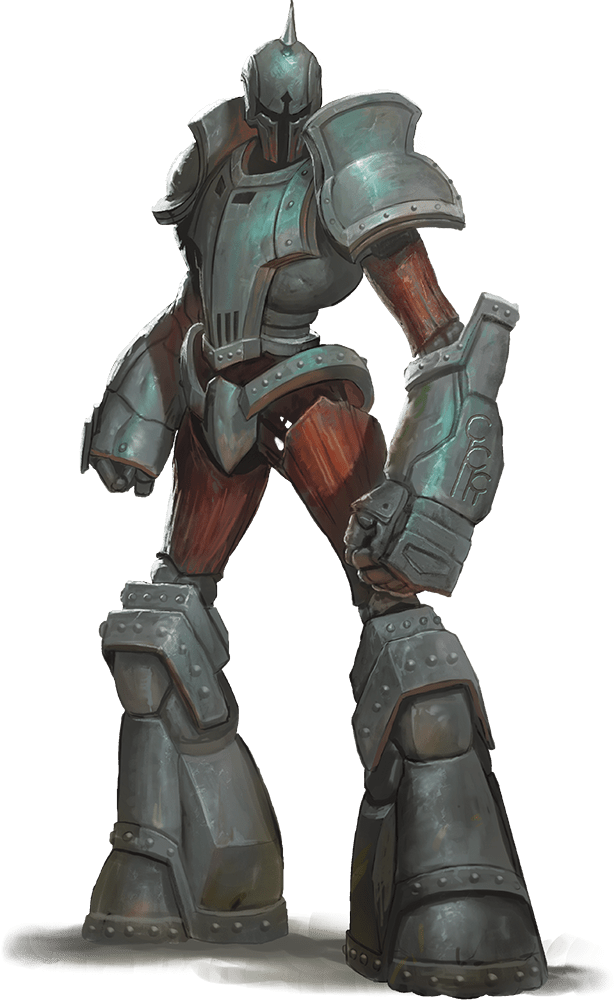
Appendix A: Playing the Game
Your Turn in Combat
On your turn, you can move a distance up to your speed and take one action. You decide whether to move first or take your action first. Your speed - sometimes called your walking speed - is noted on your character sheet. You can forgo moving, taking an action, or doing anything at all on your turn. If you can't decide what to do on your turn, consider taking the Dodge or Ready action.
Actions
Attack
You make a weapon attack against a target within range
Cast a Spell
(Most Spells have a Casting Time of 1 Action, so a Spellcaster often uses his or her Action in combat to cast such a spell.)
Dash
When you take the Dash Action, you gain extra Movement for the current turn. The increase equals your current speed at the point you take the action, after applying any Modifiers.
Disengage
If you take the Disengage Action, your Movement doesn’t provoke opportunity Attacks for the rest of the turn.
Dodge
Until the start of your next turn, any Attack roll made against you has disadvantage if you can see the attacker, and you make Dexterity Saving Throws with advantage. You lose this benefit if you are Incapacitated (as explained in Conditions ) or if your speed drops to 0.
Help
You can lend your aid to another creature in the completion of a task you are Proficient in; the creature you aid gains advantage on the next ability check it makes to perform the task you are helping with, provided that it makes the check before the start of your next turn.
Alternatively, you can aid a friendly creature in Attacking a creature within 5 feet of you. You feint, distract the target, or in some other way team up to make your ally’s Attack more effective. If your ally Attacks the target before your next turn, the first Attack roll is made with advantage.
Finally, you can use a consumable item on a willing creature other than yourself, such as to pour a healing potion into an ally’s mouth.
Hide
When you take the Hide Action, you make a Dexterity (Stealth) check in an attempt to hide. You can only hide when Heavily obscured, unless a feature you possess permits otherwise.
Ready
You can hold an action, which lets you act using your Reaction before the start of your next turn.
First, you decide what perceivable circumstance will trigger your Reaction.
Then, you choose the Action you will take in response to that trigger, or you choose to move up to your speed in response to it.
When the trigger occurs, you can either take your Reaction right after the trigger finishes or ignore the trigger.
When you ready a spell, you cast it as normal but hold its energy, which you release with your Reaction when the trigger occurs. To be readied, a spell must have a Casting Time of 1 Action, and holding onto the spell’s magic requires
Search
When you take the Search Action, you devote your attention to finding something. Depending on the Nature of your Search, the GM might have you make a Wisdom (Perception) check or an Intelligence (Investigation) check.
Use an Object
You normally interact with an object.
Class Feature
Many class features and other abilities provide additional options for your action not listed here.
Bonus Actions
Various class features, spells, and other abilities let you take an additional action on your turn called a bonus action. The Cunning Action feature, for example, allows a rogue to take a bonus action.
Self-application of consumables, such as drinking a draught of healing, always only takes a bonus action.
DMs can allow characters can begin the game with the Recovery bonus action:
Recovery
As a Bonus Action, you can expend one of your Hit Dice, roll the die, and regain a number of Hit Points equal to the roll. You can choose to Recover as an action instead, but, regardless, you can only Recover once on a single turn. You cannot take the Recovery action if you have no Hit Dice remaining.
You can take a bonus action only when a special ability, spell, or other feature of the game states that you can do something as a bonus action. You can take only one bonus action on your turn, so you must choose which bonus action to use when you have more than one available.
Bonus actions can be performed as actions instead, if you wish, but not vice versa. Anything that deprives you of your ability to take actions also prevents you from taking a bonus action or reaction.
Reactions
Certain special abilities, spells, and situations allow you to take a special action called a reaction. A reaction is an instant response to a trigger of some kind, which can occur on your turn or on someone else's. The opportunity attack is the most common type of reaction. When you take the Ready action, it can be released as a reaction to a trigger specified when you take the action. When you take a reaction, you can't take another one until the start of your next turn. If the reaction interrupts another creature's turn, that creature can continue its turn right after the reaction.
Other Activity on Your Turn
Your turn can include a variety of flourishes that require neither your action nor your move.
You can communicate however you are able, through brief utterances and gestures, as you take your turn. You can also interact with one object or feature of the environment for free, during either your move or your action.
Special Rules
Short Rest
A Short Rest is a period of Downtime, at least 1 hour long, during which a character does nothing more strenuous than eating, drinking, reading, and tending to wounds.
A character can spend one or more Hit Dice at the end of a Short Rest, up to the character’s maximum number of Hit Dice, which is equal to the character’s level. For each Hit Die spent in this way, the player rolls the die and adds the character’s Constitution modifier to it. The character regains Hit Points equal to the total. The player can decide to spend an additional Hit Die after each roll. A character regains all spent Hit Dice upon finishing a Long Rest, as explained below.
Long Rest
A Long Rest is a period of extended Downtime, at least 8 hours long, during which a character sleeps or performs light activity: reading, talking, eating, or standing watch for no more than 2 hours. Much like sleeping in Minecraft, Long Rests cannot be taken in actively threatening environments, as the stress prevents real relaxation; you still require sleep every 24 hours at the risk of exhaustion, but in such a situation it provides only the benefit of a Short Rest.
If the rest is interrupted by a period of strenuous activity —at least 1 hour of walking, Fighting, casting Spells, or similar Adventuring activity— the Characters must begin the rest again to gain any benefit from it; if they rested for 1 hour, they may still gain the benefits of a short rest before the interruption.
Staggered Rests: Optional Rule
At the end of a Long Rest, a character regains a number of lost Hit Points by expending all their remaining Hit Dice, as explained above (or by taking the average result); they then regain all their spent Hit Dice.
A character can’t benefit from more than one Long Rest in a 24-hour period, and a character must have at least 1 hit point at the start of the rest to gain its benefits.
Playing the Game
Concentration
If your Concentration is broken, the spell dissipates without taking Effect. For example, if you are concentrating on the web spell and ready Magic Missile, your web spell ends, and if you take damage before you release Magic Missile with your Reaction, your Concentration might be broken.
Critical Hits
When you score a critical hit, you get to deal the maximum possible damage for the attack’s damage dice against the target. Add all of the attack’s damage dice together as if they had each rolled the maximum number possible on every die. Then add any relevant modifiers as normal. For example, if you score a critical hit with a dagger, add 4 for the damage, rather than 1d4, and then add your relevant ability modifier. If the attack involves other damage dice, such as from the rogue’s Sneak Attack or a barbarian’s Brutal Critical feature, you add the maximum roll for those dice as well.
Jumping
Each foot you clear on the jump costs an equal number of feet of Movement; any amount greater than your movement can still be taken as part of your Movement on your turn.
Long Jump. When you make a Long Jump, you cover a number of feet up to your Strength score if you move at least 10 feet on foot immediately before the jump. When you make a standing Long Jump, you can leap only half that distance. This rule assumes that the height of your jump doesn’t matter.
High Jump. When you make a High Jump, you leap into the air a number of feet equal to 3 + your Strength modifier.
You can extend your arms half your height above yourself during the jump. Thus, you can reach above you a distance equal to the height of the jump plus 1½ times your height.
Falling
You don't take fall damage when you fall a number of feet equal to your high jump distance. Falling any distance greater than this incurs 1d6 bludgeoning damage for every 10 feet fallen beyond this height.
Sprinting
Using both your movement speed and dash action on your turn to only move in a straight line increases your total speed for that turn five-fold.
Using Different Speeds
If you have more than one speed, such as your walking speed and a flying speed, you can switch back and forth between your speeds during your move. Whenever you switch, express the distance you’ve already moved as a proportion of the old speed; the remaining proportion can be used relative to the new speed. These proportions are rounded up to the nearest 5 feet. If the result is 0 or less, you can’t use the new speed during the current move.
Conditions
Blinded
A blinded creature can’t see and automatically fails any ability check that requires sight. Attack rolls against the creature have advantage, and the creature’s Attack rolls have disadvantage.
Charmed
A charmed creature can’t Attack the charmer or target the charmer with harmful Abilities or magical Effects. The charmer has advantage on any ability check to interact socially with the creature.
Deafened
A deafened creature can’t hear and automatically fails any ability check that requires hearing.
Frightened
A frightened creature has disadvantage on Ability Checks and Attack rolls while the source of its fear is within Line of Sight. The creature can’t willingly move closer to the source of its fear.
Grappled
A grappled creature’s speed becomes 0, and it can’t benefit from any bonus to its speed. A grappled creature has disadvantage on attack rolls made against anyone other than the creature grappling it.
The Grappler can move but must drag or carry its grappled target to do so; its speed is halved and it has disadvantage on Dexterity saving throws it makes while moving for the duration of its grapple, unless the grappled target is two or more sizes smaller than the Grappler. A creature has advantage on contested Grapple checks if it is one or more sizes larger than its opponent.
The condition ends if the Grappler is incapacitated (see the condition), or if a grappled creature uses an attack made as part of the Attack action to make a contested ability check against the Grappler; the contestants can choose to make either a Dexterity (Acrobatics) or a Strength (Athletics) check. In the event of a tie, the Grappler loses.
The condition also ends if an effect removes the grappled creature from the reach of the Grappler or their grappling effect, such as when a creature is hurled away by the Thunderwave spell.
Grappling in the Air.
When flying using a fly speed you possess, you can grapple and move a total number of pounds up to 10 times your Strength score. Your speed is halved as normal for moving a creature during a grapple.
Incapacitated
An incapacitated creature can’t take Actions, Bonus Actions, or reactions, and they can’t speak. Any concentration they’re attempting to maintain is broken, and they have disadvantage on Dexterity checks and saving throws.
Invisible
An invisible creature is impossible to see without the aid of magic or a special sense. For the purpose of Hiding, the creature is heavily Obscured. The creature’s location can be detected by any noise it makes or any tracks it leaves by making a (Wisdom) Perception or (Intelligence) Investigation check to determine its location.
While it cannot be seen, Attack rolls against the invisible creature have disadvantage, and the creature’s Attack rolls have advantage.
Paralysed
A paralysed creature is incapacitated (see the condition) and can’t move or speak. The creature automatically fails Strength and Dexterity Saving Throws.
Attack rolls against the creature have advantage.
Any Attack that hits the creature is a critical hit if the attacker is within 5 feet of the creature.
Petrified
A petrified creature is transformed, along with any nonmagical object it is wearing or carrying, into a solid inanimate substance (usually stone). Its weight increases by a factor of ten, and it ceases ageing.
The creature is incapacitated (see the condition), can’t move or speak, and is unaware of its surroundings.
Attack rolls against the creature have advantage.
The creature automatically fails Strength and Dexterity Saving Throws.
The creature has Resistance to all damage.
The creature is immune to poison and disease, although a poison or disease already in its system is suspended, not neutralised.
Poisoned
A poisoned creature has disadvantage on all Attack rolls and Ability Checks.
Prone
A prone creature’s only Movement option is to crawl, unless it stands up and thereby ends the condition.
The creature has disadvantage on Attack rolls.
An Attack roll against the creature has advantage if the attacker is within 5 feet of the creature. Otherwise, the Attack roll has disadvantage.
Restrained
A restrained creature’s speed becomes 0, and it can’t benefit from any bonus to its speed.
Attack rolls against the creature have advantage, and the creature’s Attack rolls have disadvantage.
The creature has disadvantage on Dexterity Saving Throws.
Stunned
A stunned creature is incapacitated (see the condition), can’t move, and can speak only falteringly.
The creature automatically fails Strength and Dexterity Saving Throws.
Attack rolls against the creature have advantage.
Suffocating
A creature can hold its breath for a number of minutes equal to 1 + its Constitution modifier (minimum of 30 seconds).
When a creature runs out of breath or is choking, it can survive for a number of rounds equal to its Constitution modifier (minimum of 1 round). At the start of its next turn, it drops to 0 Hit Points and is dying, and it can’t regain Hit Points or be stabilised until it can breathe again.
Surprised
A surprised creature can’t move or take an Action on their first turn of the combat, and is Incapacitated until that turn ends.
Moreover, a surprised creature has disadvantage on Initiative checks.
Swarmed
Attack rolls are made with advantage when targeting a creature who is in melee range of at least three creatures hostile to it.
Gargantuan or multi-headed creatures, or creatures with special senses, are often immune to the effects of being swarmed.
Unconscious
An unconscious creature is incapacitated (see the condition), can’t move or speak, and is unaware of its surroundings
The creature drops whatever it’s holding and falls prone.
The creature automatically fails Strength and Dexterity Saving Throws.
Attack rolls against the creature have advantage.
Any Attack that hits the creature is a critical hit if the attacker is within 5 feet of the creature.
Exhaustion
Some Special Abilities and environmental Hazards, such as starvation and the long-term Effects of freezing or scorching temperatures, can lead to a Special condition called exhaustion. Exhaustion is measured in six levels. Effects can give a creature one or more levels of exhaustion, specified in the effect’s description.
Exhaustion
| Level | Effects |
|---|---|
| 1. | Disadvantage on Ability Checks |
| 2. | Speed halved |
| 3. | Disadvantage on Attack rolls and Saving Throws |
| 4. | Hit point maximum halved |
| 5. | Speed reduced to 0 |
| 6. | Death |
If an already exhausted creature suffers another Effect that causes exhaustion, its current level of exhaustion increases by the amount specified in the effect’s description. A creature suffers the Effect of its current level of exhaustion as well as all lower levels. For example, a creature suffering level 2 exhaustion has its speed halved and has disadvantage on Ability Checks.
An Effect that removes exhaustion reduces its level as specified in the effect’s description, with all exhaustion Effects Ending if a creature’s exhaustion level is reduced below 1. Finishing a Long Rest reduces a creature’s exhaustion level by 1, provided that the creature has also ingested some food and drink.
Environmental Effects
Obscurity
Effects that obscure vision can prove a significant hindrance to most adventuring tasks.
Lightly obscured: Disadvantage on Perception checks made to see through the obscurity
Heavily obscured: A creature effectively suffers from the Blinded condition (see Conditions) when trying to see something in this area.
Light
The presence or absence of light in an environment creates three categories of illumination.
Bright light: Normal vision
Dim light: Lightly obscured
Darkness: Heavily obscured
Sight
Some creatures have extraordinary senses that allow them to perceive their environment.
Blindsight: A creature with Blindsight can perceive its surroundings without relying on sight, within a specific radius.
Darkvision: Within a specified range, a creature with Darkvision can see in Darkness as if the Darkness were dim light, so areas of Darkness are only lightly obscured as far as that creature is concerned.
Truesight: A creature with truesight can, out to a specific range, see in normal and magical darkness, see invisible creatures and objects, automatically detect visual illusions and succeed on saving throws against them, and perceives the original form of a shapechanger or a creature that is transformed by magic. Furthermore, the creature can see into the Ethereal Plane within this range.
Cover
Obstacles can provide cover during combat, making a target more difficult to harm. If a target is behind multiple sources of cover, only the most protective degree of cover applies
Half cover (Low wall, furniture): A target with half cover has a +2 bonus to AC and Dexterity saving throws.
Three-quarters cover (Portcullis, arrow slit): A target with three-quarters cover has a +5 bonus to AC and Dexterity saving throws.
Total cover (inside a building): A target with total cover can’t be targeted directly by an attack or a spell, although some spells can reach such a target by including it in an area of effect.
Languages
Standard Languages
| Language | Typical Speakers | Script |
|---|---|---|
| Common | Most Humanoids and many other creatures | Common |
| Dwarvish | Dwarves | Dwarvish |
| Elvish | Elves | Elven |
| Giant | Giantkin, Minotaurs, Bugbears | Giant |
| Gnomish | Gnomes, Vedalken | Giant |
| Uruk | Orc, Goblins, Goblinoids | Dwarvish |
| Ori | Halflings, Humans | Dwarvish |
| Therian | Zoomorphic humanoids | Common |
Esoteric Languages
| Language | Typical Speakers | Script |
|---|---|---|
| Abyssal | Demons, Demonspawn | Infernal |
| Celestial | Gods, Angels | Celestial |
| Deep Speech | Aberrations, Psions | [Qualith] |
| Draconic | Dragons, Dragonkin | Draconic |
| Infernal | Devils, Tieflings | Infernal |
| Primordial | Elemental-Aligned beings | Primordial |
| Sylvan | Fey, Changelings | Elven |
| Undercommon | Fell & Underdark creatures | Common |
Comparative script in the real world.
Celestial: Mandarin best compares
Common: In this world, comparative to english; informed and swayed by the influences of many languages
Draconic: Curling, sprawling and varied, Draconic script looks much like Japanese characters
Dwarvish: Rounded, solid and broad like the dwarves themselves, Dwarvish runes appear similarly to Korean
Elven: Detailed at length in the works of Tolkien; long, curling and elegant, much like Arabic or Pashto
Giant: Runic, sharp and hard. Similar to Nordic Futhark.
Infernal: Short, sharp, simple; Tibetan in style
Primordial: Sets of varying symbols applied and combined differently to change their meaning; often simple and easily carved by un-intricate hands. Hebrew comparative.
Ori. The traditional language of humans and halflings, it has largely been forgotten in favour of Common. A sprawling, yet largely Sapalo or Greek appearing script.
Uruk: Dwarvish script, though usually more curved and stylised by region. The name Uruk was originally a term used to denote the Legions of Gruumsh, and has since become a collective term for those of Orcish and Goblinoid descent.
Thieves' Cant:
The written form is based around engraving notches in a surface, similar to Braille but within the surface rather than outside/upon it. Unlike its more civil counterpart, the written Thieves’ Cant is often scratchy, and utilises only completely straight lines and harsh angles. It has no spoken form, but can also be expressed in covert, subtle hand signs similar to sign language. It often utilises only three fingers. Known exclusively to pirates, thieves, organised criminals and slavers.
Druidic Cant:
Has no written form, but operates a verbal guttural system similar to morse code, and utilises sweeping motions of limbs to communicate in a form of sign language. This is to allow communication regardless of the shape or form one takes. Used exclusively by Druids, and on rare occasions by larger lycan packs.
Primordial
Primordial spawned four different daughter languages, more like accents or intonations than truly separate languages, as a result of the dispositions of the four elements affecting the way the language was spoken
| Daughter Language | Element |
|---|---|
| Auran | Air |
| Aquan | Water |
| Ignan | Fire |
| Terran | Earth |
Qualith:
The written language of illithids, more specifically, of Deep Speech. It takes the form of four parallel lines that have a texture that conveys meaning when read by an illithid scanning its four tentacles along the lines simultaneously.
Qualith is extremely difficult to read for non-illithids and usually requires magic such as a comprehend language spell to decipher; Readers attempting to non-magically decipher the message, if successful, could gain insight on the writer's thoughts, its meaning, and even who the message was intended for. Failure, however, could drive the reader mad, or at least leave them with a bad headache.
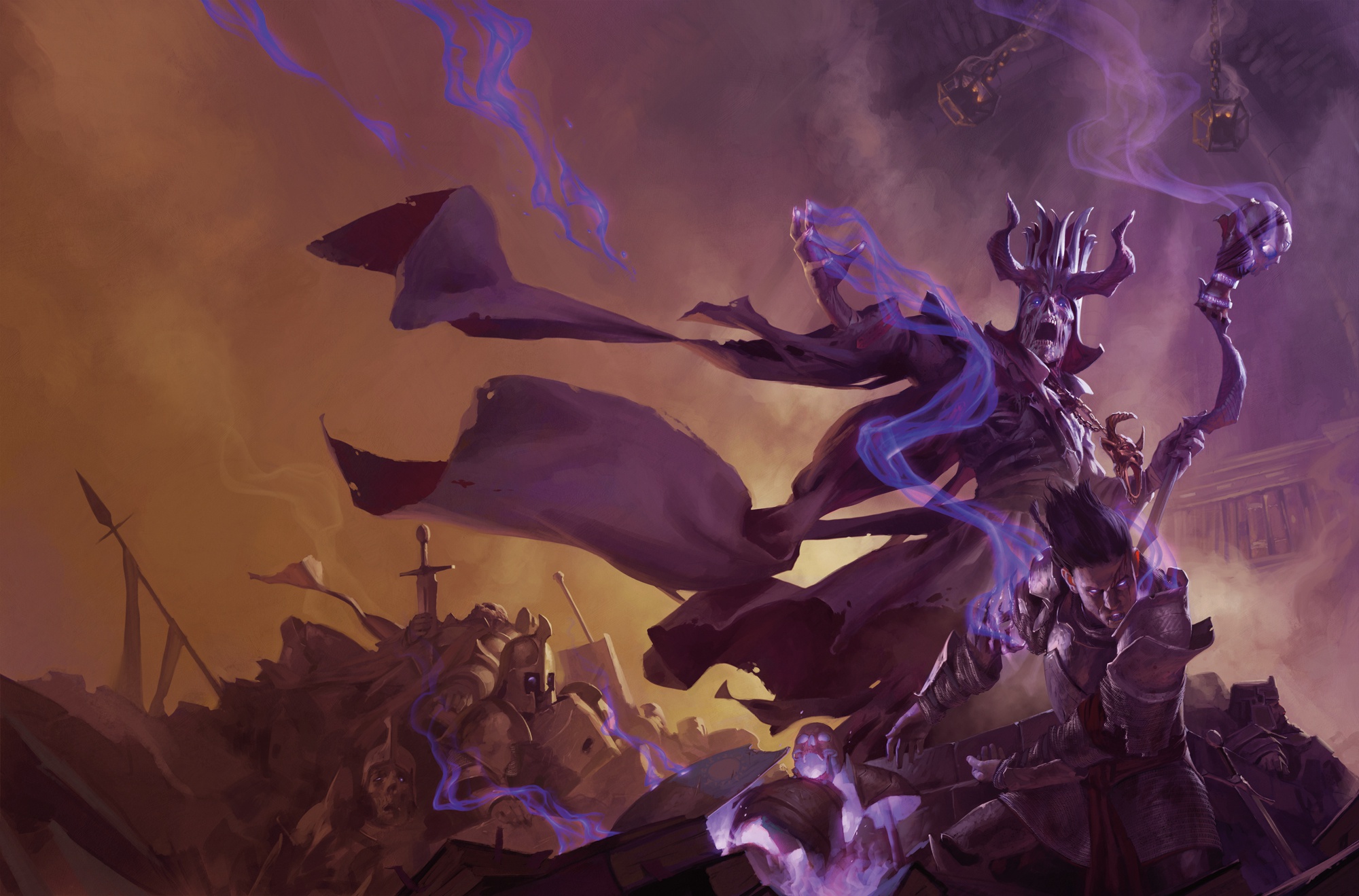
Appendix B: Outer Beings of the Multiverse
Deities
Divine Pantheon
Avandra, the Change Bringer
Symbol: three stacked wavy lines embossed on a gold coin or pendant
Domain: change, freedom, luck, halflings
Depiction: dark young woman with long light brown hair falling behind her
Consort of Yondalla
Realm: the Golden Plains, Ossa, Arborea
Bahamut, the Platinum Dragon
Symbol: silver dragon's head in profile, facing right
Domain: honour, justice, order, metallic dragons
Depiction: massive silver glittering dragon with seemingly endless wingspan
Realm: The Jewelled Palace, Mercuria, Mount Celestia
Corellon, the Arch-heart
Symbol: two back-to-back green crescent moons
Domain: art, beauty, elves, enchantment
Depiction: an androgynous elven being of impossible grace and beauty, with wavy golden hair
Realm: Arborea
Erathis, the Executioner
Symbol: a battleaxe with a set of scales gilded into the blades
Domain: civilisation, law, peace, vindication
Depiction: a hooded, armoured woman stop a throne of pillars
Realm: the Great Mountain of the East, Eronia, Elysium
Heimdall, the Vigilant Watcher
Symbol: a silver right-hand gauntlet with a blue eye in the back of the hands
Domain: Protection, contentment, observation, patience
Depiction: a silver suit of armour with great horned helm sporting only a slit for eyes, and bearing a blue eye on the back of the right gauntlet, always with a greatsword in the left
Realm: Castle of Radiance, Amoria, where Yggdrasil meets Elysium
Helgrimm, the Raven Queen
Symbol: three silver ravens in a black circle
Domain: death, fate, certainty, silence
Depiction: a tall, thin woman wrapped in black cloth, adorned with a stylised white skull mask and an onyx crown
Realm: Fortress of Memories, Hades
Ioun, the Knowing Mistress
Symbol: three blue eyes in a triangular formation
Domain: knowledge, learning, teaching, guidance
Depiction: a greying, mature woman with a welcoming smile, swathed in a robe of scrolls and texts
Realm: Hall of Concordance, Automata, Sigil
Kord, Thunderlord
Symbol: crossed bolts of yellow lightning on a round shield
Domain: battle, competition, storms, wind
Depiction: often nude, a burly warrior with an auburn beard and short curled hair, often wrestling some terrible beast
Realm: Hall of Valhalla, Asgard, Ysgard
Mystra, the Mage Bearer
Symbol: a ring of seven stars on a light blue background
Domain: magic, arcane study, portals, wizards
Depiction: an impossibly tall, blue woman with flowing curled hair in a long white nightdress; the face is seldom displayed. Her four arms hold a large grey witches hat upon her head.
Realm: Cerulean Tower, Mechanus
Maelora, the Wildmother
Symbol: a crook before a wavelike swirl of flowers and vines
Domain: seas, wildness, nature, rain
Depiction: a beautiful green-skinned woman swallowed in a tangled wreath of hair, vines, flowers and thorns
Realm: Thalasia, Elysium
Moradin, the All-hammer
Symbol: a warhammer with a dwarven face carved on each side of the head
Domain: craft, creation, loyalty, dwarves
Depiction: a faceless stout dwarf, hunched over a flaming heart clasped in his hands
Ex-Consort of the deceased Annam Allfather
Realm: Erackinor Mansion, Solania, Mount Celestia
Pelor, the Dawnfather
Symbol: a golden sun on an orange background
Domain: healing, sunlight, beasts, savagery
Depiction: a paternal figure in silver and gold armour, his head too bright and fiery to be seen (often replaced with a brazier)
Realm: Spire of Dawn, Karasura, the Beastlands
Sehanine, the Moon Weaver
Symbol: a silver crescent moon on a dark blue circle
Domain: illusion, moonlight, night, shapechangers
Depiction: numerous and varied, but often a young woman or child with light blue skin and silvery hair
Realm: Garden of Shades, Asgard, Ysgard
Serenrae, the Everlight
Symbol: a bronze, four-winged statuette of a woman
Domain: atonement, compassion, forgiveness, love
Depiction: a gorgeous dark purple woman with silver hair, six golden eyes and two pairs of bronze wings, often robed in white silk or silver
Realm: Temple of Endless Solstice, Solania, Mount Celestia
Thrym, the Winter's Breath
Symbol: a bearded ram's skull with a broken horn
Domain: frost, strength, winter, goats
Depiction: a bearded frost giant with a greatsword in each hand, one broken, clad in armour of mercury
Realm: Hall of Valhalla, Asgard, Ysgard
Yondalla, the Spring Stride
Symbol: a golden shield with wheat growing from the base
Domain: fertility, protection, hospitality, small-folk
Depiction: a small woman with short brown hair, often shown as pregnant, in a field of grain
Consort to Avandra
Realm: the Golden Plains, Ossa, Arborea

Betrayer Pantheon
Bane, the Strife Emperor
Symbol: an upright left black handprint, thumb and forefinger together
Depiction: a dark ochre shadowy figure, shaped much like an Efreeti, with a black, gem studded left hand
Domain: tyranny, terror, strife, conquest
Realm: Banehold, Avalas, Acheron
Enemies of Note: Primarily Maelora, who defeated him at Rifenmist in Goran, but also Mystra as he covets her power, and Helm - seems to just be a dislike for the god
Baphomet, the Ravenous King
Symbol: a cow skull set with three sets of black antlers
Depiction: a 20ft black-furred minotaur with six iron horns and burning red eyes. He wields a great glaive called Heart-Cleaver.
Domain: cannibalism, moonlight, beasts, isolation
Realm: the Abyss, Layer 600: the Endless Maze
Enemies of Note: Pelor and Sehanine, without whom he could plunge the many worlds into an endless horde of monstrous were-creatures
Bhaal, Lord of Blood
Symbol: a skull with burning eyes ringed by drops of blood
Depiction: a pale-white hunched, muscular man with a scraggly black beard on an otherwise skeletal head, inset with sunken red eyes which leak blood
Domain: ritualistic murder, depravity, blood, sadism
Realm: the Bone Pit, Hades
Enemies of Note: Thrym, who decapitated him with his own bloody blade. Helm and Bahamut; those who wish to bring order, peace or appeasement.
Gruumsh, the Ruiner
Symbol: a single bleeding eye
Depiction: a hulking bulbous behemoth of an orc. His missing eye has shifted, and the prominent eye is now centred in his face, like a nightmarish cyclops.
Domain: slaughter, warfare, orcs, goblins
Realm: Nishrek, Acheron
Enemies of Note: Corellon shot out Gruumsh's right eye during the Insurgence, and the god of slaughter longs for the day he can return the favour twofold.
Lolth, Queen of Spiders
Symbol: jewelled black and purple spider
Depiction: an alluring lilac drow woman of white hair, with the lower half of a giant black-widow spider
Domain: deceit, spiders, lust, luxury, excess
Realm: the Demonweb in the Astral Sea; borders layer 63 of the Abyss
Enemies of Note: Kord, the Storm Lord, for with one throw of his mighty thunderspear he impaled her against a cliffside, leaving her enslaved Drow armies to be crushed. Dislikes Avandra, Sehanine and Corellon due to their Elven links, and Gruumsh as he failed to kill the latter during the Calamity, and her sister Serenrae.
Nurgle, Grandfather of Pestilence
Symbol: Three verdigris-laden copper rings arranged in a triangle so each touch at a single point, with spearheads protruding perpendicularly at the points of contact.
Depiction: an immense, bloated leathery skin-bag of a humanoid, swollen with putrefaction and pocked with running sores, internal organs bulging with decay spill through splits in the ruptured skin around his vast girth.
Domain: disease, decay, rebirth, poison, filth
Realm: the Garden of Rot in the Astral sea, presided over by nine starspawn of kyuss
Enemies of Note: Avandra, for change brings cures, and plagues breed within stagnation.
Notes: His fatherly position as a creator and joyful worker often marks him as a perverse icon of joy and fertility, especially among Skaven.
Malady, Jester of Blood
Aliases: when presenting more toward the gender binary: Memnor (Male) and Borea (Female)
Symbol: a pale mask with open hands for eyes and the mouth on one side grinning, the other frowning
Depiction: a thin, masked figure with wild purple hair, gender varies - often holding a magpie, or with a crow's head
Domain: deception, chaos, trickery, wit; cats and crows
Realm: Foolskeep, Limbo; currently allied with Ygorl
Enemies of Note: Sehanine and Avandra, as Malady believes them to be pale, boring imitations of themself, and nothing infuriates Malady like boredom
Notes: both Kenkus and Tabaxi are often considered to be in special favour of Malady, seeing them as a patron of luck, beauty, and charm
Shar, the Dream Carver
Symbol: a black disk with a dark purple border
Depiction: a pale green and lilac elven woman with jet black hair and light, chitinous black armour
Domain: loss, grief, suffering, revenge; insects
Realm: Takar Palace, the Shadowfell
Enemies of Note: her sister Sehanine, and Pelor; those that bring light to the darkness. Mystra, as Shar realised the Warp in the materium, which dark magic draws upon. Forgiveness, to Shar, is a cardinal sin, so Serenrae is considered her mortal enemy.
Surtur, the Charging Carnage
Symbol: a burning spear, constantly lit
Depiction: a huge, horned centaur holding a spear of flames and a shield of iron
Domain: fury, fire, giants, carnage
Realm: the Obsidian Field in the elemental planes of Fire
Enemies of Note: Thrym and Kord, for separating the worship of giants from him alone - he will do anything to be the sole giant deity
Tiamat, the Scaled Tyrant
Symbol: a dragon claw dipped in gold
Depiction: a colossal five-headed dragon, one head for each chromatic dragon
Domain: chromatic dragons, greed
Realm: Root of Olympus, Avernus
Enemies of Note: The Scaled Tyrant's hatred for Bahamut is as old as their founding, and her cults are ever hunted by his justice.
Vecna, the Whispered One
Symbol: withered left hand with an eye on the centre
Depiction: a tall skeletal lich swathed in robes missing a hand and an eye
Domain: necromancy, secrets, undeath
Realm: N/A, wandering between planes
Enemies of Note: While Vecna loathes all other gods and wishes to destroy them and become the sole divine power in the planes, he has a particular hatred for Ioun. The Raven Queen despises Vecna, and sees his presence as an affront to her purpose - the hatred is mutual
Courts of the Archfey
Fae Courts
Caer Seelie (Summer)
the Blooming Court
Ruled by Titania, the Summer Queen
Her consort/adversary, the Verdant Lord Oberon, has been vying for the throne for millennia with limited success.
Unseelie Keep (Spring)
the Undying Court
Ruled for the last ten-thousand years or so by Storrev the Revenant King, an undead Archfey; half his body skeletal, the other a beautiful male.
He trapped his predecessor, Kelren Imfe M'thse, in a glaive he once wielded in his coup for control
Fell Courts
Ke'ttir Vol (Autumn)
the Umbral Court
Ruled by Loeze the Blind, Harvester of the Dead Known also as the Masquerade of Rot. It is said he gave one eye for the gift of prophecy, and the other for true knowledge of the past
Tauryc Vol (Winter)
the Gloaming Court
Ruled by Olladra the Silent, the Queen of Air and Darkness. It is said she knows ten-thousand secrets, but her voice was taken before she could tell a soul.
She sold her hands to Orcus for true mastery of souls, and puppeteers them through the Hand of Vecna
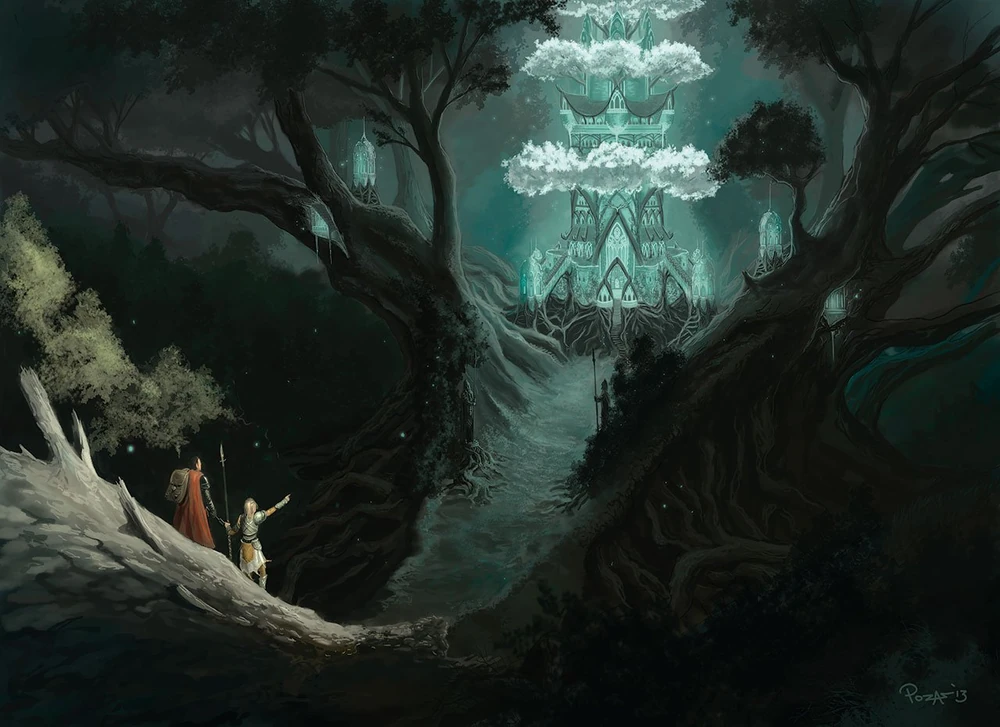
Archfiends
Devil Lords of the Nine Hells
Zariel, Baron of the Blood War
Layer: Avernus
Depiction: a pale bald fallen angel with a halo of fire and two burning wings
Domain: warfare, corruption, destruction
Layer Description: a wasteland destroyed by endless warfare, the main battlefield of the Blood War.
Dispater, the Iron Duke
Layer: Dis
Depiction: a 15ft humanoid with dark hair, tiny horns, resplendent garb, and a single cloven foot. He always holds a rod of great power, his badge of office.
Domain: accusations, inquisition and fraudulence
Layer Description: A burning city of iron. Dispater himself inhabits a great invulnerable Iron Tower
Mammon, the Viscount
Layer: Minauros
Depiction: resembles a thirty-foot-long serpent with a humanoid head, arms, and torso, wielding a harpoon-like spear. Mammon may also assume the form of a pit fiend at will
Domain: Greed and material possessions
Layer Description: A polluted swamp of acid and poison. Its capital, the City of Minauros, is constantly sinking into the marsh
Lady Fierna and Lord Belial
Layer: Phlegethos Depictions: archdevils who resemble slightly devilish-looking humanoids. Fierna fights with a blade of fire that she summons at will, and Belial with a mighty ranseur.
Domain: wrath, hatred, fire
Layer Description: A realm of obsidian, fire and pain, riddled with souls in constant torment.
Count Levistus
Layer: Stygia
Depiction: a six-foot-tall humanoid with very pale skin, dark hair, and a goatee. Were it not for his entirely black eyes and pointed teeth, he could pass for a human. In the days of his freedom, he wore loose, silken clothing and carried a glistening rapier.
Domain: envy, pride, temptation
Layer Description: A frozen sea of icebergs and glaciers. Levistus is trapped here, a quarter-mile deep within a towering mountain of dark ice that floats about Stygia
Archduke Mephistopheles
Layer: Cania
Depiction: a nine-foot-tall humanoid with hell-red skin, horns, and wings. He prefers to wear dramatic capes of the ultimate blackness and carries a magic ranseur that burns eternally.
Domain: pride, ritualism, pestilence
Layer Description: A lethal frozen wasteland, barren of all things. Cania, like Stygia above it, is a bitterly cold realm of glaciers and howling ice storms. Mephistopheles holds court here with the ice devils that make up his retinue.
Archduchess Glasya
Layer: Malbolge
Depiction: a 9 ft copper skinned, black-haired figure, well-built and of unearthly beauty that remains undiminished by the small horns, large, leathery wings, and forked tail that give away her diabolical origins.
Domain: cruelty, mercilessness, discord
Layer Description: A treacherous rocky slope of inconstant and terrifyingly steep incline, never-ending and bouncing with eternally rolling boulders, Malbolge is the prison of the Nine Hells.
Baalzebul, Archduke of Slugs
Layer: Maladomini
Depiction: Once a 12 ft humanoid with shimmering, sable skin and the jittering, compound eyes of a fly. Cursed for daring to plot against Asmodeus, he's now a 25 ft tall slug, a grotesque abomination infamously unpleasant even to other devils, the stinking Lord of the Flies now constantly surrounded by swarms of the buzzing, scuttling creatures that earned him his title.
Domain: pests, gluttony, sloth, disease
Layer Description: An expanse of abandoned cities under a black sky
Asmodeus, King of the Nine Hells
Layer: Nessus
Depiction: a handsome 13 ft tall humanoid with deep red skin, long black hair and a massive pair of bat-like wings. Two curling horns rise from his brow, and his lips bear an eternal, knowing grin.
Domain: revenge, lust, jealousy
Layer Description: A barren, empty land of trenches and ravines of impossible depth. Asmodeus resides in the deepest pit, called the Serpent's Coil.
Demon Princes of the Infinite Abyss
Kostchtchie, Brutish Prince of Wrath
Layer 23: the Iron Wastes
Depiction: a squat hill giant with short, bandy legs and a grossly malformed head
Layer Description: a bitterly cold plane of miles-deep ice, devoid of most life. A distant sun no brighter than the Material Plane's moon lights this plane. Spring never comes, and most of the inhabitants live in underground strongholds or caverns.
Graz'zt, Prince of Pleasure and Excess
Layers 45, 46, and 47: Azzatar
Depiction: Graz'zt strikes the perfect figure of untamed desire; every plane and Curve of his body, every glance of his burning eyes promising a mixture of pleasure and pain. A subtle Wrongness pervades his beauty, from the cruel cast of his features to the six fingers on each hand and six toes on each foot.
Layer Description: a den of ostentation and hedonism. lt is adorned with finery and decorations so decadent that even the wealthiest of mortals would blush at the excess. Within his Argent Palace, followers, thralls, and subjects alike are forced to slake Graz'zt's thirst for pageantry and pleasure.
Demogorgon, Prince of Spiralling Depths
Layer 88: Abysm, the Gaping Maw
Depiction: a meld of a saurian lower body and clawed, webbed feet, with suckered tentacles sprouting from the shoulders of an apelike torso, surmounted by two hideous simian heads named Aamcul and Halhradiah, both equally insane. Their gaze brings madness and confusion to any who confront it
Layer Description: a place of madness and duality; the portion of the plan that lies above a lake of poison takes the form of two serpentine towers, each crowned by a skull-shaped minaret. The bulk of its palace extends deep underground, in chill and darkened caverns
Orcus, Bloated Prince of Undeath
Layer 113: Thanatos
Depiction: the lower torso of a goat and a humanoid upper body with a corpulent belly swollen with rot. Great bat wings sprout from his shoulders, and his head is like the skull of a goat, the flesh nearly rotted from it. In one hand, he wields the legendary Wand of Orcus, in the other, a ball of sickly green flame.
Layer Description: Surrounded by a most fed from the Styx, Naratyr is an eerily quiet and cold city, its streets often empty for hours at a time. The central castle of bone has interior walls of flesh and carpets made of woven hair. The city contains wandering undead, many of which are engaged in continuous battles with one another
Fraz-Urb'luu, Prince of Illusions
Layer 176: Hollow's Heart
Depiction: a great 12ft gargoyle, with an extended, muscular neck and a smiling face framed by long pointed ears and lank, dark hair. Bat-like wings are furled against his powerful shoulders. He can assume other forms, however, from the hideous to the beautiful, often so immersed in playing a role that he loses himself for a time.
Layer Description: a featureless plain of white dust with few structures on it. The city of Zorag-melok, a circular fortress surrounded by adamantine walls topped with razors and hooks. Corkscrew towers loom above twisted domes and vast amphitheatres, a mere few examples of the impossible architecture that fills the city
Zuggtmoy, Prince of Decay
Layer 224: Field of Spores
Depiction: Utterly inhuman, Zuggtmoy can mould her fungal form into an approximation of skeletal humanoids. Indeed. much of her appearance and manner, and that of her servants,' is a soulless mockery of mortal life in many facets. The only prince which typically takes a feminine form.
Layer Description: hundreds of colossal mushrooms of pale yellow and rancid brown, surrounded by a field of acidic puffballs and poisonous vapours. The mushrooms have countless chambers hollowed out within, interconnected by living bridges of shelf mushrooms
Eltab, Prince of Heretics and Witches
Layer 248: the Hidden Layer
Depiction: a 15ft humanoid with the head of a canine-like skull. His head sports numerous antlers and horns, and his body is covered with bony, dark red plates. He has slitted yellow glowing eyes, sunken into skeletal eye sockets Eltab was once bound beneath a fallen city from the Age of Arcanum, caged for 15 centuries or so by the layout of the city's streets and canals which formed a glyph of imprisonment until released by the city's excavation.
Layer Description: a vast wasteland of boulders and fissures constantly beset with intense electrical storms, making it inimical to most life except for demons and deadly plant life.
Yeenoghu, Gnoll Prince of Savagery
Layer 422: the Seeping Woods
Depiction: a towering 14ft tall grinning Gnoll, with matted hair and patchwork armour of chains and flayed skin. Of all the demon lords, Yeenoghu has made the greatest mark on the Material Plane; during his rampage across the world eons ago, the race of gnolls sprang up in his wake.
Layer Description: an endless, sprawling smoke-filled stone labyrinth overgrown with toxic plants and vicious, towering iron spikes, inhabited solely with deranged monstrosities
Jubilex, Foetid Prince of Ooze
Layer 528: Juiblex's Slime Pit
Depiction: a mass of bubbling slime, swirling black and green, with glaring red eyes floating and shifting within it.
Layer Description: a bubbling mass of oozing, foetid sludge for hundreds of thousands of miles
Daelkyr
Outer gods of the Far Realm, the Warp-Void, and the Sea of Crystal Spheres
Atropus, the World Born Dead
The darkness between the stars, the guardian of the outer dimensions of Far Realm, an unseizable force and the master of space-time. Past, present and future are one for him, as he sees all and knows all. Speculation posits that he was formed as an antithesis of Godhood.
An undead mass the size of a moon, drifting in space and laying waste to planets. Atropals are said to be cast-off detritus from its surface. The signs of its approach are unmistakable - the strengthening and rise of the undead.
Dendar, the Night Drake
Also known as Eater of Worlds, the Dreaming Dark, Lord of Nightmares, and the Flood Below, Dendar devours the nightmares of mortals and deities, savouring the taste of the most terrible, but it is said that should she ever not feed her insatiable appetite, every being, mortal or deity, would remember every horrific nightmare they had ever dreamt in excruciating detail.
Normally dwelling in the Fugue Graveyard, a murky grey demiplane within the Astral Sea bordering on Baator, it is said that her appearance in the Material Plane will herald the end of the world and of the gods themselves.
Ghaunadaur, That Which Lurks
An ancient deity rumoured to have emerged from the primordial phlogiston itself, Ghaunadaur's twisted form feeds only on magic, and is drawn to it. Ghaunadaur is unpredictable, sometimes blessing its worshippers with mighty boons, and at other times simply devouring their souls without a second thought. Its warlocks live in a constant mixture of reverence and fear, never knowing whether they will gain favour or lose it, knowing only the destruction of the Arcane could help their cause.
It embodies the fears and superstitions surrounding magic, from malevolent warlocks to mad wizards, from deadly curses to magical power that draws those who wield it deeper into darkness, helping them master spells and create relics they could never shape on their own, but few of those inspired by Ghaunadaur understand what forces they are dealing with, or recognize the danger inherent in its gifts.
An entity of the void, Ghaunadaur can assume any form. Its favoured shape is a twelve-foot-tall humanoid figure draped in a flowing,hooded robe formed of swirling mist and clinging shadow. In this form, it is known as Hadar.
Ragnorra, the Mother of Monsters
Arising before the gods themselves, this humongous monstrosity birthed abominations from her very form, earning her other name, Mother of Monsters. She was cast by the gods into the space between the planes, banished to make way for the first mortal life. Yet once every 1,500 years or so, Ragnorra returns in the form of a fiery red meteor, known as the Catalyst Comet as it heralds the coming of a period of great change.
She is an irrepressible force of creation and mutation, guided by a vast intelligence but without consciousness, a being of pure intuition. The aboleths believed that she travelled across the currents of planar leylines through infinite realities, spreading her spawn as an afterthought. They did not expect or think that she would return. Aboleths honour her by including red crystal domes in their architecture.
Sertrous, the Obyrith
A minor lord of parasites and crawling things, Sertrous was a mere demon before the Titan Queen of Chaos dissected and cast him to the space between the planes. Yet while his spirit passed through the Material Plane, he anchored himself in the body of a serpent. Thereafter also known as the Obyrith, Sertrous now typically takes the form of a vaguely serpentine draconic creature twisted by demonic rage, covered in iron spikes protruding from his bleeding flesh, his wings spanning over forty feet.
Sertrous's soul is divided and spread through the Outer Planes, confined to crystal shards by the light of Bahamut. While shattered and bound, the Obyrith can't bring his full power to bear on the world. He can, however, influence events in the vicinity of any of his shards, drawing power from acts of violence.
Kyuss, the Worm that Walks
Known to his faithful as the Crawling King, in days gone by, Kyuss was a mighty and evil prophet of Nurgle. He created many monstrosities and abominations, and in his final act sought to ascend to godhood. Through dark ritual, he claimed aberrant divinity, but in the next moment his life as a corporeal god ended. Kyuss died, and his essence became one with the maggots and worms that devoured his form, granting him his new form. Trapped on the border of the Shadowfell and the Far Realm within the obelisk that formed the keystone of his ritual, he slowly eats away his own maggot-like form, which regenerates endlessly. Gazing upon Kyuss reveals a gargantuan swollen maggot with three arms and an open, screaming human head, which feast upon its own rotting abdomen. Its hundredfold wounds are a breeding ground for worms and other such parasites of bountiful varieties. The Worm that Walks seeks release, which will lead to the fulfilment of the last part of his prophecies, which never proved false: the end of mankind and the dawn of the Age of Worms.
Ygorl, Entropic Ward
Ygorl is the physically smallest and the youngest of the Evils; the colossal first slaadi created after Primus unleashed the Spawning Stone upon Limbo. A powerful being suffused with entropic power, Ygorl delights in the act of unmaking and bringing chaos to any ecosystem it visits. Lesser slaadi follow close behind the lord of entropy, delighting and furthering the destruction it brings.
Ygorl’s most notable possession is an adamantine scythe with the word of power 'death' inscribed across the blade, which can reduce living creatures to ash. This weapon is a vestige of the titan Kronos, whom Ygorl reveres. The lord of entropy also bears a set of obsidian tablets slung about its waist, upon which it inscribes destructive runes. Living creatures wither and rot within the entropic energy emanated by Ygorl’s magic.
Hastur, The King in Yellow
Known to its followers as the Corruptor, the Stealer of Thoughts, the Slithering Lord, and the Foul Labyrinth, the Watchers teach that the King in Yellow plants thoughts in the weak minded - the seeds of terrible ideas that fester and grow. The Illithid know the Slithering Lord, their creator, as the Overmind, and it serves as the cornerstone of the collective consciousness of any Elder Brains it touches.
The King in Yellow most often appears as a colossal humanoid male with pale skin, clad in a heavy, tattered cassock of interwoven yellow leather that slithers unsettlingly, moving using giant, sinewy tentacles. It usually wears the Pallid Mask, an artifact made of Warpstone which conceals the hideousness of its appearance.
Belashyrra, the Lord of Eyes.
Belashyrra is the Lord of Eyes, also known to its cultists as the All-Seer, the hecatonmatias, or the Glorious Eye. Those that studied the Glorious Eye typically concluded that she was completely insane, lacking in the ruthless logic possessed by mortal beholders whose image they draw from her. In truth, she was not only intelligent but dangerously so, the method behind her madness simply being beyond the ability of most beings to understand - the effect produced is still one of utter chaos, capricious whimsy, and incoherent thought patterns, acting primarily on instinct and impulse. He is said to be omniscient according to beholders and does, in truth, possess exclusive hidden lore, but seems to be so knowledgeable that she was incapable of sharing it with any but the most intelligent entities, much less inferior beings.
Tharizdun, the Chained Oblivion
Before there were stars- before time and space itself -there was an eternal darkness. To interact with the Daelkyr is to invite madness into oneself, but to call upon the oblivion is to choose annihilation. If the gods and elder evils can fear, it is this which invokes their terror.
There are few actual depictions of Tharizdun; how can you depict that which removes the existence of those who perceive it? most displays show a roiling cloud of black mist, barely held by golden chains of adamas. It is not known what could have forged the chains, nor who could have imprisoned annihilation itself, but the more recent the depiction, the weaker the chains seem...
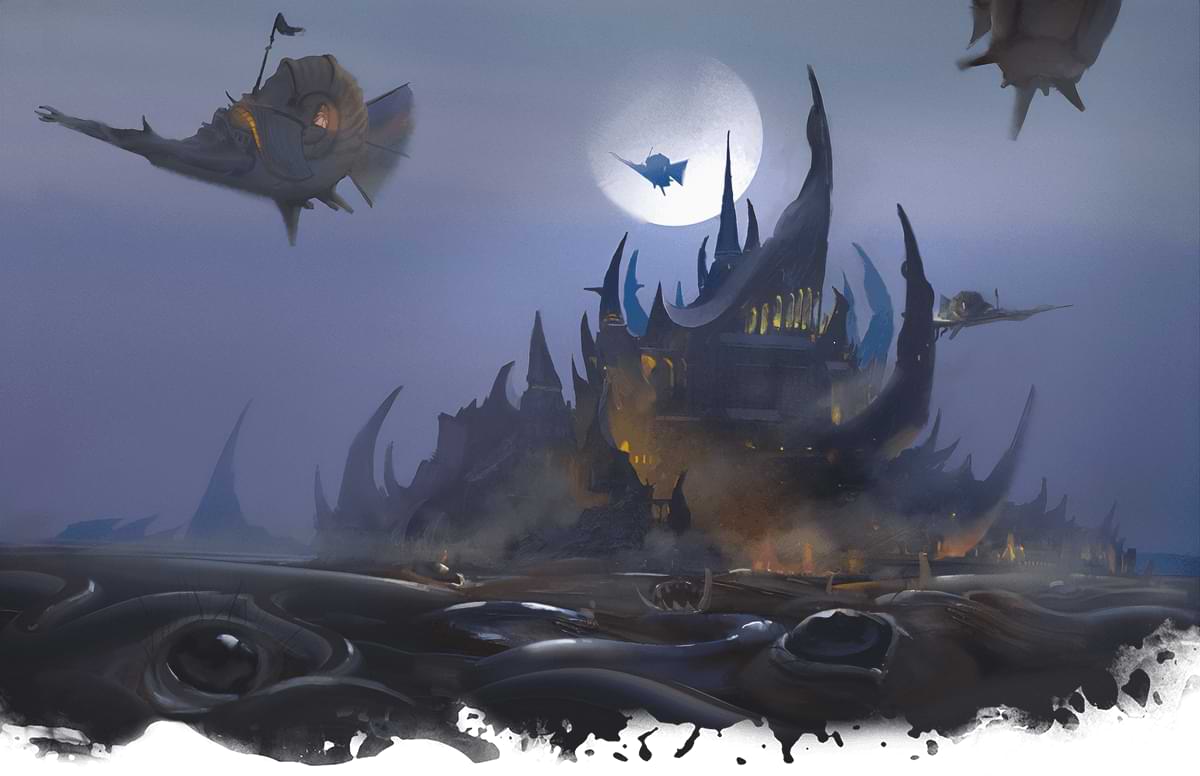
The Tree of Worlds
Yggdrasil in truespeech, the tree of worlds is the Common name for the great planar cosmology. The multiverse is envisioned as a colossal ash tree, whose roots extend in a semicircle below it, one to each of the negative planes, mirrored above by its branches’ connections to the positive planes; at its heart lies the elemental chaos, surrounding the Materium like a shell.
From a bright cloud atop the tree, which stretches across the whole backdrop and below the roots, representative of the Astral Sea, rain falls into the leaves, transpirating into a stream of water which wraps around the tree, infiltrating into its roots and ultimately trailing out through the plane of Hades into the Void of Crystal Spheres below.
Those few who climb Mount Olympus from is base in the lower planes to its peak in Arborea, or who flow from Oceanus in Elysium along the Styx and end at its dry lake in Hades claim to have travelled along the pale tree on their journeys - some even claim to have communed or spoken with it.

Inner Planes
Material
Eberron (Prime Materium)
The prime materium, the world in which most mortals live and die, exists in parallel to the Fey and Fell planes, alternate material dimensions superimposed over the same cosmological space that Eberron occupies.
The landscape of the Feywild mirrors the natural world but turns its features into spectacular forms, much as the Shadowfell twists and hollows them. Where a volcano stands on the Material Plane, a mountain topped with skyscraper-sized crystals that glow with internal fire towers in the Feywild, and the corresponding feature on the Shadowfell is a jagged rock outcropping with a resemblance to a skull, a heap of rubble, or perhaps the crumbling ruin of a once-great castle..
Faerie (Feywild)
The Feywild, also called the Plane of Faerie, is a land of soft lights and wonder, a place of music and death. It is a realm of everlasting twilight, with glittering faerie lights bobbing in the gentle breeze and fat fireflies buzzing through groves and fields. The sky is alight with the faded colours of an ever-setting sun, which never truly sets (or rises for that matter); it remains stationary, dusky and low in the sky.
Shaedar (Shadowfell)
The Shadowfell, also called the Plane of Shadow, is a dimension of black, grey, and white from where most other colours have been leached. It is a place of darkness that hates the light, where the sky is a black vault with neither sun nor stars. Aside from the colourless landscape, it appears similar to the Material Plane, but hollow and devoid of all that is beautiful and good; landmarks from the Material Plane are recognizable on the Shadowfell, but they are twisted, warped and distorted reflections of what exists on the Material Plane.
In remote corners of the Shadowfell, it is easy to reach horrific demiplanes ruled over by accursed beings of terrible evil known as Domains of Dread. The best known of these is the valley of Barovia, overlooked by the towering spires of Castle Ravenloft and ruled by Count Strahd von Zarovich, the first vampire. The Nagpa created these domains as prisons for these "darklords," and through cruelty or carelessness trapped innocent mortals in these domains as well.
Elemental
Syrania (Air)
The Plane of Air is an open expanse with constant winds of varying strength. Here and there, chunks of earth drift in the openness - the remnants of failed invasions by denizens of the Plane of Earth. These earth motes serve as homes for the creatures of elemental air, and many motes are covered with lush vegetation. Other creatures live on cloud banks infused with enough magic to become solid surfaces, strong enough to support towns and castles. Drifting cloud banks can obscure visibility in any direction in the plane. Storms are frequent, mostly on par with a strong thunderstorm but occasionally more like fierce tornadoes or mighty hurricanes.
Most of the Plane of Air is a complex web of air streams, currents, and winds called the Labyrinth Winds. These range from stiff breezes to howling gales can rip a creature apart. Even the most skilled flying creatures must navigate these currents carefully, moving with the winds, not against them. Here and there among the Labyrinth Winds are hidden realms reachable only by following a particular sequence of flowing winds, and thus largely protected against attackers.
One such realm is fabled Aaqa, a shining domain of silver spires and verdant gardens atop a fertile earth mote. The Wind Dukes of Aaqa are dedicated to law and good, and they maintain a vigilant watch against the depredations of elemental evil and the encroachment of the Elemental Chaos
Lamannia (Earth)
The Plane of Earth is a chain of mountains rising higher than any mountain range in the Material Plane. It has no sun of its own, and no air surrounds the peaks of its highest mountains. Most visitors to the plane arrive by way of caves and caverns that honeycomb the mountains.
The largest cavern beneath the mountains, called the Sevenfold Mazework, is home to the capital city of the dao, the City of Jewels. The mountains of the Mazework nearest the Fountains of Creation on the Plane of Fire are called the Furnaces. Lava seeps through their caverns, and the air reeks of sulphur. The dao have great forges and smelting furnaces here to process their ores and shape their precious metals.
Fernia (Fire)
The Plane of Fire is dominated by the vast Cinder Wastes, a great expanse of black cinders and embers crossed by rivers of lava flowing from the Sea of Fire. Ancient ruins dot the desert- remnants of forgotten civilizations - beyond which, the plane holds no sources of water, so travellers must carry their own supplies or produce water by magic. The weather on the plane is marked by fierce winds and thick ash, although the air is (with difficulty) breathable.
Perhaps the best-known location in the Plane is the City of Brass, on the shores of the Sea of Fire. This is the fabled city of the efreet, and its ornate spires and metal walls reflect their grandiose and cruel nature. True to the nature of the Plane of Fire, everything in the city seems alive with dancing flames, reflecting the vibrant energy of the place.
Risia (Water)
The Plane of Water is an endless sea, called the Sea of Worlds, dotted here and there with atolls and islands that rise up from enormous coral reefs that seem to stretch forever into the depths. The storms that move across the sea sometimes create temporary portals to the Material Plane and draw ships into the Plane of Water, with little hope of ever returning home.
Life flourishes in the upper reaches of the Sea of Worlds. The marids are the distant stewards of this region, content to allow the lesser folk to compete for territory. The nominal emperor of the marids dwells in the Citadel of Ten Thousand Pearls, an opulent palace made of coral and studded with pearls.
The deeper extents of the plane where no sunlight reaches, called the Darkened Depths, are inhabited by Krakens and other mighty leviathans, and the absolute cold and crushing pressure mean a swift end to creatures accustomed to the surface or the Sea of Light.
Elemental Chaos
The four Elemental Planes- Air, Earth, Fire, and Water- form a ring around the Material Plane, suspended within a churning realm known as the Elemental Chaos. These planes are all connected, and the border regions between them are sometimes described as distinct planes in their own right. At their innermost edges, where they are closest to the Material Plane (in a conceptual if not a literal geographical sense), the four Elemental Planes resemble places in the Material Plane. The four elements mingle together as they do in the Material Plane, forming land, sea, and sky. But the dominant element exerts a strong influence on the environment, reflecting its fundamental qualities; fighting for dominance, this land exists in perpetual chaos.
From this chaos, four pseudo-stable lands emerge:
Swamp of Oblivion. Colossal acidic marshes of thick poisonous sludge and toxic mists where twisted, gnarled trees and thick, stinging vines grow from the dense muck and slime, set between the planes of Water and Earth sit endless marshes covered in infinite swamps. Hags often claim the few solid islands as their own, as do Trolls and Green Dragons. There are some settlements, but not many, and it is almost impossible to find anything through the dense foliage or choking air.
Sirocco Straits. The air is mild, except near the Sirocco Straits where the plane of Air meets both Fire and Air. Howling winds from the Plane of Air mix with the cinder storms and lava of the Plane of Fire to create an endless storm front-a wall of flames, smoke, and ash called the Great Conflagration. The thick ash obscures sight beyond a few dozen feet, and the battering winds make travel difficult. Here and there, ash clusters into floating realms where outlaws fugitives take shelter. At the other end of the Straight, near the Frostfell, the gales drive snowstorms into the Frostfell and away from it, toward the heart of the plane.
Boundless forests of huge red Stormwood trees which crackle with lightning arcing between them like tesla coils, lie in the heart of the Straight. They are whipped into induction by the roaring convection of air moving from the Frostfell to the Great Conflagration.
Frostfell. Also called the Plane of Ice, this forms the border between the planes of Air and Water and is a seemingly endless glacier swept by constant, raging blizzards. Frozen caverns twist through the Plane of Ice, excavated into the frigid water, choking it with icebergs and sheet ice.
Tucked between the far end of the Plane of Ice and the Sea of Fire are pool-flats heavily influenced by both. These hot wet islands grow thin, wild bamboo jungles that cover the natural springs and are home to all sorts of small creatures.
As such, fronds of the jungle growth provide shade for the large round intersecting pools of heated water, perpetually foggy with warm steam, trapped in place by the vegetation; these are known as Genies' Respite - essentially forming regenerating sauna/hot-tubs.
Dhole Plains.
Positioned in between the Cinder Wastes and the Sevenfold Mazework sit vast unmoving dunes of grey dust, ash, and sand as far as the eye can see. Largely populated by colossal sandworms called Dholes, the plane
is also home to mummies, giant scorpions and all manner of
ancient tombs of lost civilizations, buried beneath the
sands. Without water and with stale, stagnant air,
little else lives here.

Transitive Planes
Border Ethereal
The Ethereal Plane is a misty, fog-bound dimension. If you consider the Ethereal to be an ocean, a person in the Border Ethereal would be standing in the surf near the shore, invisible to those on land but able to see them and their surroundings dimly. One could travel along the shore, staying in the surf, and step back on land at some other point or move away from the shore toward the Deep Ethereal.
Deep Ethereal
To reach the Deep Ethereal, one needs a plane shift spell or arrive by means of a gate spell or magical portal. Visitors to the Deep Ethereal are engulfed by roiling mist. Scattered throughout the plane are curtains of vaporous colour, and passing through a curtain leads a traveller to a region of the Border Ethereal connected to a specific Inner Plane reflected the curtain's colour.
Astral Sea
The Astral Sea is the realm of thought and intent, where visitors travel as disembodied souls to reach the Outer Planes. It is a great silvery sea, the same above and below, with swirling wisps of white and grey streaking among motes of light like distant stars. Most of the Astral Sea is a vast, empty expanse with occasional spinning columns of astral conduits, or the petrified corpse of a dead god or other chunks of rock drifting forever in the silvery void. Much more commonplace are colour pools- magical pools of colored light that flicker like radiant, spinning coins that act as gateways to the rest of the multiverse.
Creatures on the Astral Plane don't age or suffer from hunger or thirst. For this reason, humanoids that live on the Astral Plane (such as the githyanki) establish outposts on other planes, often the Material Plane, so their children can grow to maturity.
The Sea is not bound by the whims of spacetime, so although travellers feel as if they can move by a simple act of will, it's impossible to measure speed and hard to track the apparent passage of time.
The Styx
This river bubbles with ichorous grease, acrid flotsam, and the putrid remains of battles along its banks. The Styx churns through the top layers of Acheron, the Nine Hells, Gehenna, Hades, Carceri, the Abyss, and Pandemonium. Tributaries of the Styx snake onto lower layers of these planes. For example, a tendril of the Styx winds through every layer of the Nine Hells, allowing passage from one layer of that plane to the next. Simply tasting or touching its waters can shatter a creature's intellect and personality, as well as stripping away its memories.
Sinister ferries float on the waters of the Styx, crewed by pilots skilled in negotiating the unpredictable currents and eddies of the river. For a price, these pilots are willing to carry passengers from plane to plane. Some of them are Merrenoloth, while others are the souls of dead creatures from the Material Plane.
However, the source of the Styx is that of Oceanus, Maelora's colossal river of life which pours through Bifrost to the other planes. In theory, one could force their way upriver from the hells all the way to Elysium. It is the corruption of the lower planes which sullies the river’s waters and corrodes its effects. In these upper planes, the Styx bestows memories formerly lost or shattered to those that bathe in its rapids.
Outer Planes
Positive
Arcadia, the Peaceable Kingdoms
Arcadia thrives with orchards of perfectly lined trees, ruler - straight streams, orderly fields, perfect roads, and cities laid out in geometrically pleasing shapes. The mountains are unblemished by erosion. Everything on Arcadia works toward the common good and a flawless form of existence. Here, purity is eternal, and nothing intrudes on harmony.
Arcadia has three layers, Abellio, Buxenus, and a third layer of which very little is known, including its name.
Mount Celestia, the Seven Heavens
Home of the Seraphim - the highest ranking angel devoted to each of the gods of the Divine pantheon, the Seven Heavens are joined in such a manner that travelling deeper into the plane becomes an ascending journey, up mountain after mountain for example. Each layer glows with its own colour of soft light and each is unique in terrain.
The single sacred mountain of Mount Celestia rises from the shining Silver Sea of Mercuria to heights barely visible and utterly incomprehensible, with seven plateaus marking its seven heavenly layers - Mercuria, Lunia, Venya, Solania, Meriton, Jovar, and Chronias.
Bytopia, the Twin Paradises
The two layers of the Twin Paradises of Bytopia are similar yet opposite: Shurrock is a tamed, pastoral landscape and the other, Dothion, is an untamed wilderness - yet both reflect the plane's goodness and its acceptance of law and order when necessary. Bytopia is the heaven of productive work, the satisfaction of a job well done.
The two layers are described as hanging upside down from each other about 20 miles apart (from sea level to sea level), sharing the same sky. Gravity is normal for each layer but in opposite directions.
Elysium, the Blessed Fields
Elysium is home to creatures of unfettered kindness and compassion, and a welcome refuge for planar travellers seeking a safe haven. The plane's bucolic landscapes glimmer with life and beauty in their prime. It is the heaven of well-earned rest, a place where tears of joy glisten on many.
The wide, slow-moving, and mostly navigable river Oceanus flows through all four layers (from Thalasia to Belierin, then to Eronia and Amoria) and then on to the Beastlands. Most habitation is along the fertile banks of the
river, diminishing farther away.
The Beastlands, the Divine Wilds
The Beastlands is a plane of nature unbound, of forests ranging from moss-hung mangroves to snow-laden pines, of thick jungles where the branches are woven so tight that no light penetrates, of vast plains where grains and wildflowers wave in the wind with vibrant life.
Each of the three layers (Krigala, Krux, and Karasura) is vast and densely forested, but includes habitats for all manner of natural creatures; outsiders call it the Happy Hunting Grounds, but the native wildlife, most of which are sentient and capable of speech, call it the Beastlands and don't take kindly to being hunted.
Arborea, the Celestial Glades
Larger than life, Arborea is a place of violent moods and deep affections, of whims and of passions that blaze brightly until they burn out. Rage is as common and as honoured as joy in Arborea. There the mountains and forests are extravagantly massive and beautiful, and every glade and stream is inhabited by nature spirits that brook no infringement. Animals born here are paragons of their species, infused with primal power. Before Corellon banished the primordial Aeldari (the elven precursors and embodiments of fickle change) the two realms of Faerie and Arborea coexisted on the topmost layer of the plane at the pinnacle of their respective realms
The main feature is Mount Olympus, a huge mountain that forms the peak of the Yggdrasil in its earthen physical form. This plane's three layers are called Aravandor, Ossa and Mithandir. Tucked away in a corner (so to speak) is the demiplane realm of Nephthys
Ysgard, the Heroes' Dominion
Ygard is a rugged realm of soaring mountains, deep ravines and windswept battlefields, with summers that are long and hot, and winters that are wickedly cold and unforgiving. Its continents float above oceans of volcanic rock, below which are icy caverns so enormous they hold entire kingdoms of warriors. Valkyries of the three Giant Gods draw the spirits of dead heroes to Ysgard to test their mettle not only against the plane itself, but also against giants, dragons, and other terrible creatures that wander across Ysgard's vast terrain for eternity.
The realm's first layer gains its name, Asgard, for the dead god of all Giants spoken in his native tongue. The hall Valhalla of the glorious dead makes up its capital. Muspelheim is the cavernous land of frost, and Nidavellir a forge-world of ancient dwarves devoted to the creation of powerful Wondrous Items.

Neutral
Mechanus, the Clockwork Nirvana
On Mechanus, law is reflected in a realm of clockwork gears 1,000 miles (1,600 km) or more in diameter slowly turning in synchronicity, all interlocked and turning according to their measure. The cogs seem to be engaged in a calculation so vast that no deity can fathom its purpose. Each disk has its own gravity extending in a sphere around it, enabling the surface(s) of the wheel to be inhabited.
Limbo, the Ever-changing Chaos
The plane of chaos and change, Limbo is a realm in constant flux. a roiling soup of impermanent matter and energy. Stone melts into water that freezes into metal, then turns into diamond that burns up into smoke that becomes snow, and on and on in an endless, unpredictable process of change. Fragments of more ordinary landscapes- bits of forest, meadow, ruined castles, and even burbling streams-drift through the disorder. The whole plane is a nightmarish riot. Limbo has no gravity, so creatures visiting the plane float in place. A creature can move up to its walking speed in any direction by merely thinking of the desired direction of travel.
Limbo conforms to the will of the creatures inhabiting it. Very disciplined and powerful minds can create whole islands of their own invention within the plane, sometimes maintaining those places for years.
It is believed Limbo has five layers but they are all generally the same; the number of layers is taken as an average of the number the plane appears to display at any given time.
Negative
Pandemonium, the Windswept Depths
Pandemonium is a plane of madness, a great mass of rock riddled with tunnels carved by howling winds. It is cold, noisy, and dark, with no natural light. Wind quickly extinguishes nonmagical open flames such as torches and campfires. It also makes conversation possible only by yelling, and even then only to a maximum distance of 10 feet. Creatures have disadvantage on any ability check that relies on hearing.
Most of the plane's inhabitants are creatures that are banished to the plane with no hope of escape, and many of them have been driven mad by the incessant winds or forced to take shelter in places where the winds die down until they sound like distant cries of torment. The drow that remained loyal to Lolth claimed a cavernous tunnel system in Cocytus, and forced slaves to hollow them out since they cannot reside in the Underdark anymore, and they are not well adapted to the howling winds. Now, colossal tunnel complexes are claimed by the Spider-kin, bridged together by gigantic webs. These underground systems are unassailable, defended day and night by vigilant drow guards, and are the centre of Lolthian madness and worship in the multiverse.
Named after a long forgotten deity, Pandemonium is entirely made of passages and caverns seemingly carved from solid rock by the constant howling wind and wind-driven rivers of the Styx. It has four known layers: Pandemos, Cocytus, Lethe, and Agathion, which seamlessly meld into one another through the tunnels; it is almost impossible to tell which you are on.
The Abyss
The Abyss embodies all that is perverse, gruesome, and chaotic. Its virtually endless layers spiral downward into ever more appalling forms. Each layer of the Abyss boasts its own horrific environment; although no two layers are exactly alike, they are all harsh and inhospitable. Each layer also reflects the entropic nature of the Abyss - in fact, much of what one sees or touches on the plane seems to be in a decaying, crumbling, or corroded state.
The first layer is called Pazunia, the Plane of Infinite Portals, or the Oubliette. It is a barren land of dusty deserts scorched by a red sun.
It is estimated the Abyss has nearly 700 layers, but it could well be an infinite number in actuality.
Carceri, the Chain of Tartarus
Carceri is a plane of desolation and despair. Its six layers hold stinking bogs, foetid jungles, windswept deserts, jagged mountains, frigid oceans, and black ice. All form a miserable home for the traitors and backstabbers that are trapped on this prison plane.
Each known layer of Tartarus is described as a chain of glowing scarlet orbs stretching into infinity. Each orb of the top layer is the size of a Prime Material world and the orbs get smaller with each successive layer. The orbs of the "inner" layers can be imagined as nesting within the orbs of the "outer" layers- like Matryoshka dolls, or the layers of an onion.
The smallest, innermost, deepest orb is occupied, but it is not known by what.
Hades, the Grey Wastes
When a mortal soul dies, it is drawn to the Grey Wastes, a place defined by despair and apathy. Over time, memories are leached out of these trapped spirits until only husks remain. Although this seems a bleak fate, Hades isn't the end of all souls' journeys; it can be a gateway to whatever lies beyond. A soul claimed by the Divines, owed to a pact Patron, or worthy of the hall of Valhalla move on to other planes. That claim notwithstanding, Hades is a gloomy plane filled with the lingering traces of the dead.
Souls that are unclaimed by the gods of the Upper Planes or the fiendish rulers of the Lower Planes become larvae and spend eternity in this timeless place. A larva is a miserable fiend that retains the facial features of its previous form but has the body of a fat worm and only a few faint memories of its previous life. Night hags, liches, and rakshasa harvest them for use as currency in Mammon's vast cities of greed.
The layers of Hades are called the Three Glooms - Oinos, Niflheim, and Pluton - places without joy, hope, or passion, each a grey land with an ashen sky which lacks a sun, a moon, stars, or seasons.
Gehenna, the Bleak Eternity
A volcanic mountain dominates each of the four layers of Gehenna, and lesser volcanic earth-bergs drift in the air and smash into the greater mountains. The rocky slopes of the plane make movement here difficult and dangerous. The ground inclines at least 45 degrees almost everywhere — everything is built onto or carved into the sides of these inclined mountains. In places, steep cliffs and deep canyons present more challenging obstacles. Hazards include volcanic fissures that vent noxious fumes or searing flames.
Each of the four layers (Khalas, Chamada, Mungoth, and Krangath) are composed of mountains and smoky, burning volcanoes with no bases or peaks, and gravity is at a 45° angle with the ground. Deeper layers have less heat and volcanic activity, until you get to Krangath which has no natural light or heat.
Home plane of the Yugoloth, and the resting place of the pieces of the Gehennan General's remains.
Baator, the Nine Hells
The nine layers are: Avernus, Dis, Minauros, Phlegethos, Stygia, Malbolge, Maladomini, Cania, and Nessus. Each extends infinitely in all directions and has its own physical laws and properties of matter. The barriers between layers connected the lowest points of the upper layer with points very high above the surface of the next lower layer, regardless if there is a structure (like a mountain or tall tower) there or not.
It is the ultimate plane of law and evil and the epitome of premeditated cruelty. The devils of the Nine Hells are bound to obey the laws of their superiors, but they rebel within their individual castes. Most undertake any plot, no matter how foul, to advance themselves.
Acheron, the Everlasting Battlefield
Since the dawn of time, armies of fiends and celestials have fought one another in Acheron, their eternal battles a microcosm of the struggle between good and evil that rages across all of reality. New arrivals are subject to forced conscription when encountered (whether by angel, demon, or devil - whichever they are found by first), if they aren't summarily dispatched. Amid the constant strife, windstorms of blades scour the landscape, capable of cutting the unprepared to ribbons.
The four layers of Acheron (Avalas, Thuldanin, Tintibulus, and Ocanthus) each consist of huge blocks of hard black iron-like material the size of countries that floated through air, joining for a time and then parting again. The material is toxic to creatures of fey ancestry and has a dampening effect on divine magic. While blocks are touching, a being can move from one block to the next. Gravity pulls toward the centre of each block. Sometimes the cubes collide, the sound of the impact echoing across the plane.


Planes Beyond
Dal Quor (Dreamlands)
Dal Quor provides sweet dreams to those with harsh lives, and a home to those who maintained their goodness despite suffering without end in life. Mortal creatures of good souls come into contact with Dal Quor when they dream (except for creatures such as the elves and warforged, which don't dream). The outer fringes of the plane are shaped by the memories and experiences of such dreamers. The dark core at the heart of the single-layered plane, however, is shaped by the nightmare force known as the Dreaming Dark. = The only way to reach Dal Quor from the Material Plane is through the psychic projection of dreaming, and the Quori, the dream spirits who inhabit the plane, are forced to possess mortal hosts to work their will ouside the Dreamlands.
The Dreamlands exist alongside the material universe much like the Ethereal Plane, and material dreamers exist there only in temporary dream-bodies similar to those created by an astral projection spell. The Dreamlands hardly seem real to material beings that visit them, but obey natural laws and manifest oceans, cities, and inhabitants. Most of the Dreamlands' features are larger-than-life exaggerations of waking-world geography that resemble their material counterparts in only the most general fashion (if they are recognizable at all), can be gradually warped by powerful imaginations into shapes that reflect the desires or fears of sleepers. While within Refuge, the warped, wild capital city of dream spirits, neither the dream form nor the material body age.
If a dream form dies, the dreaming creature awakens, can never return to the Dreamlands, and no longer dreams. If the physical body of a dream traveller dies while the traveller is asleep in the waking world, the dream form lives on but can never wake up in the material world. The traveller is trapped in the Dreamlands until the dream form also dies in the Dreamlands.
Unusually, Dal Quor almost exclusively ties to the other unbound planes, the Astral Sea, Eberron, Faerie, and the Shadowfell, and is practically unreachable in a physical capacity from any other plane.
The Xoriat (Far Realm)
A plane of madness situated very far from the planes of the standard cosmology. This maddening realm is feared for its power to twist unfortunate visitors into gruesome monsters, and it was from here that aberrations first came.
The amorphous Far Realm comprises an infinite number of very thin layers, ranging from an inch to a mile in thickness, each separated from the next by around ten feet. These layers are highly morphic and transparent, and travellers can glimpse through twenty or so, with each appearing increasingly blurred. On the whim of the alien entities that drift through them, the layers continually evaporate, divide, spawn, and breathe. A traveller in the Far Realm can move by simply allowing themselves to believe the layers to be permeable.
On the Far Realm, landmarks and entities are multidimensional, existing on multiple layers at once. The Far Realm is outside the known multiverse; where stray energies from the Far Realm leak onto another plane, matter is warped into alien shapes that defy understandable geometry and biology.
The entities that abide in the Far Realm itself are too alien for a normal mind to accept without strain. Titanic creatures swim through nothingness there, and unspeakable things whisper awful truths to those who dare listen. For mortals, knowledge of the Far Realm is a struggle of the mind to overcome the boundaries of matter, space, and sanity; anyone who has seen the Far Realm mutters about eyes, tentacles, and horrors beyond imagining.
Sigil (Outlands)
Like a colossal, shear icicle, whose vertex ends at the the centre of the hole in colossal, floating, doughnut-shaped landmass, lies the Lady of Pain’s Tower of Babel, from which the Titan rules; any attempt to worship her to gain clerical power is met with instant, painful death. The tower is the centre of the plane’s gravity, about which the ring spins rapidly, never more than 10 degrees from being perfectly perpendicular. Creatures standing on one of Sigil's streets can see the city curve up over their heads and- most disconcerting of all- the far side of the city directly overhead.
Around the furthest edge of the plane, evenly spaced, are the gate-towns: twenty five settlements, each built around a portal to one of the Planes. Each town shares many of the characteristics of the plane where its gate leads. Planar emissaries often meet in these towns, so it isn't unusual to see strange pairings, such as a celestial and a fiend arguing in a tavern while sharing a fine bottle of wine. The inner rim of the Outlands is the closest the Outer Planes come to being like a world on the Material Plane, enmeshed by influences of all the planes around the Hall of Concordance - an embassy of pure law in Sigil governed by the Kolyarut, a mechanical engine of absolute jurisprudence.
Class Tables
The Artificer
| Level | Proficiency Bonus | Features | Infusions Known | Infused Items | Cantrips Known | 1st | 2nd | 3rd | 4th | 5th |
|---|---|---|---|---|---|---|---|---|---|---|
| 1st | +2 | Magical Tinkering, Spellcasting | - | - | 2 | 2 | - | - | - | - |
| 2nd | +2 | Infuse Item | 4 | 2 | 2 | 2 | - | - | - | - |
| 3rd | +2 | Artificer Specialisation, The Right Tool for the Job | 4 | 2 | 2 | 3 | - | - | - | - |
| 4th | +2 | Ability Score Improvement | 4 | 2 | 2 | 3 | - | - | - | - |
| 5th | +3 | Artificer Specialist feature | 4 | 2 | 2 | 4 | 2 | - | - | - |
| 6th | +3 | Tool Expertise | 6 | 3 | 2 | 4 | 2 | - | - | - |
| 7th | +3 | Flash of Genius | 6 | 3 | 2 | 4 | 3 | - | - | - |
| 8th | +3 | Ability Score Improvement | 6 | 3 | 2 | 4 | 3 | - | - | - |
| 9th | +4 | Artificer Specialist feature | 6 | 3 | 2 | 4 | 3 | 2 | - | - |
| 10th | +4 | Magic Item Adept | 8 | 4 | 3 | 4 | 3 | 2 | - | - |
| 11th | +4 | Spell-Storing Item | 8 | 4 | 3 | 4 | 3 | 3 | - | - |
| 12th | +4 | Ability Score Improvement | 8 | 4 | 3 | 4 | 3 | 3 | - | - |
| 13th | +5 | - | 8 | 4 | 3 | 4 | 3 | 3 | 1 | - |
| 14th | +5 | Magic Item Savant | 10 | 5 | 4 | 4 | 3 | 3 | 1 | - |
| 15th | +5 | Artificer Specialist feature | 10 | 5 | 4 | 4 | 3 | 3 | 2 | - |
| 16th | +5 | Ability Score Improvement | 10 | 5 | 4 | 4 | 3 | 3 | 2 | - |
| 17th | +6 | - | 10 | 5 | 4 | 4 | 3 | 3 | 3 | 1 |
| 18th | +6 | Magic Item Master | 12 | 6 | 4 | 4 | 3 | 3 | 3 | 1 |
| 19th | +6 | Ability Score Improvement | 12 | 6 | 4 | 4 | 3 | 3 | 3 | 2 |
| 20th | +6 | Soul of Artifice | 12 | 6 | 4 | 4 | 3 | 3 | 3 | 2 |
The Barbarian
| Level | Proficiency Bonus | Features | Rage Uses | Rage Damage |
|---|---|---|---|---|
| 1st | +2 | Rage, Unarmoured Defence | 2 | +2 |
| 2nd | +2 | Reckless Attack, Survival Instincts | 2 | +2 |
| 3rd | +2 | Primal Path | 3 | +2 |
| 4th | +2 | Ability Score Improvement | 3 | +2 |
| 5th | +3 | Extra Attack, Fast Movement | 3 | +2 |
| 6th | +3 | Path Feature | 4 | +2 |
| 7th | +3 | Feral Instinct | 4 | +2 |
| 8th | +3 | Ability Score Improvement | 4 | +2 |
| 9th | +4 | Brutal Critical | 4 | +3 |
| 10th | +4 | Path Feature | 4 | +3 |
| 11th | +4 | Relentless Rage | 4 | +3 |
| 12th | +4 | Ability Score Improvement | 5 | +3 |
| 13th | +5 | Brutal Critical (2 dice) | 5 | +3 |
| 14th | +5 | Path Feature | 5 | +3 |
| 15th | +5 | Persistent Rage | 5 | +3 |
| 16th | +5 | Ability Score Improvement | 5 | +4 |
| 17th | +6 | Brutal Critical (3 dice) | 6 | +4 |
| 18th | +6 | Indomitable Might | 6 | +4 |
| 19th | +6 | Ability Score Improvement | 6 | +4 |
| 20th | +6 | Primal Champion | -- | +4 |
The Fighter
| Level | Proficiency Bonus | Features |
|---|---|---|
| 1st | +2 | Fighting Style, Second Wind |
| 2nd | +2 | Action Surge, Tactical Mind |
| 3rd | +2 | Martial Archetype Feature |
| 4th | +2 | Ability Score Improvement |
| 5th | +3 | Extra Attack |
| 6th | +3 | Ability Score Improvement |
| 7th | +3 | Martial Archetype Feature |
| 8th | +3 | Ability Score Improvement |
| 9th | +4 | Indomitable |
| 10th | +4 | Martial Archetype Feature |
| 11th | +4 | Extra Attack Increase, Fighting Style |
| 12th | +4 | Ability Score Improvement |
| 13th | +5 | Indomitable Increase |
| 14th | +5 | Ability Score Improvement |
| 15th | +5 | Martial Archetype Feature |
| 16th | +5 | Ability Score Ascendance & Improvement |
| 17th | +6 | Action Surge Increase, Indomitable Increase |
| 18th | +6 | Martial Archetype Feature |
| 19th | +6 | Ability Score Improvement |
| 20th | +6 | Unparalleled |
The Bard
| Level | Proficiency Bonus | Features | Cantrips Known | Spells Known | 1st | 2nd | 3rd | 4th | 5th | 6th | 7th | 8th | 9th |
|---|---|---|---|---|---|---|---|---|---|---|---|---|---|
| 1st | +2 | Spellcasting, Bardic Inspiration (d6) | 2 | 4 | 2 | - | - | - | - | - | - | - | - |
| 2nd | +2 | Jack of All Trades, Song of Rest | 2 | 5 | 3 | - | - | - | - | - | - | - | - |
| 3rd | +2 | Bard College, Expertise | 2 | 6 | 4 | 2 | - | - | - | - | - | - | - |
| 4th | +2 | Ability Score Improvement | 3 | 7 | 4 | 3 | - | - | - | - | - | - | - |
| 5th | +3 | Bardic Inspiration (d8), Font of Inspiration | 3 | 8 | 4 | 3 | 2 | - | - | - | - | - | - |
| 6th | +3 | Countercharm, Bard College feature | 3 | 9 | 4 | 3 | 3 | - | - | - | - | - | - |
| 7th | +3 | - | 3 | 10 | 4 | 3 | 3 | 1 | - | - | - | - | - |
| 8th | +3 | Ability Score Improvement | 3 | 11 | 4 | 3 | 3 | 2 | - | - | - | - | - |
| 9th | +4 | Bard College feature | 3 | 12 | 4 | 3 | 3 | 3 | 1 | - | - | - | - |
| 10th | +4 | Bardic Inspiration (d10), Magical Secrets, Expertise | 4 | 14 | 4 | 3 | 3 | 3 | 2 | - | - | - | - |
| 11th | +4 | - | 4 | 15 | 4 | 3 | 3 | 3 | 2 | 1 | - | - | - |
| 12th | +4 | Ability Score Improvement | 4 | 15 | 4 | 3 | 3 | 3 | 2 | 1 | - | - | - |
| 13th | +5 | Countercharm Improvement | 4 | 16 | 4 | 3 | 3 | 3 | 2 | 1 | 1 | - | - |
| 14th | +5 | Magical Secrets, Bard College feature | 4 | 18 | 4 | 3 | 3 | 3 | 2 | 1 | 1 | - | - |
| 15th | +5 | Bardic Inspiration (d12) | 4 | 19 | 4 | 3 | 3 | 3 | 2 | 1 | 1 | 1 | - |
| 16th | +5 | Ability Score Improvement | 4 | 19 | 4 | 3 | 3 | 3 | 2 | 1 | 1 | 1 | - |
| 17th | +6 | - | 4 | 20 | 4 | 3 | 3 | 3 | 2 | 1 | 1 | 1 | 1 |
| 18th | +6 | Magical Secrets | 4 | 22 | 4 | 3 | 3 | 3 | 3 | 1 | 1 | 1 | 1 |
| 19th | +6 | Ability Score Improvement | 4 | 22 | 4 | 3 | 3 | 3 | 3 | 2 | 1 | 1 | 1 |
| 20th | +6 | Superior Inspiration | 4 | 22 | 4 | 3 | 3 | 3 | 3 | 2 | 2 | 1 | 1 |
The Cleric
| Level | Proficiency Bonus | Features | Cantrips Known | 1st | 2nd | 3rd | 4th | 5th | 6th | 7th | 8th | 9th |
|---|---|---|---|---|---|---|---|---|---|---|---|---|
| 1st | +2 | Spellcasting, Divine Domain | 2 | 2 | - | - | - | - | - | - | - | - |
| 2nd | +2 | Channel Divinity (x1), Divine Domain feature | 2 | 3 | - | - | - | - | - | - | - | - |
| 3rd | +2 | - | 2 | 4 | 2 | - | - | - | - | - | - | - |
| 4th | +2 | Ability Score Improvement | 3 | 4 | 3 | - | - | - | - | - | - | - |
| 5th | +3 | - | 3 | 4 | 3 | 2 | - | - | - | - | - | - |
| 6th | +3 | Channel Divinity (x2), Divine Domain feature | 3 | 4 | 3 | 3 | - | - | - | - | - | - |
| 7th | +3 | - | 3 | 4 | 3 | 3 | 1 | - | - | - | - | - |
| 8th | +3 | Ability Score Improvement | 3 | 4 | 3 | 3 | 2 | - | - | - | - | - |
| 9th | +4 | - | 3 | 4 | 3 | 3 | 3 | 1 | - | - | - | - |
| 10th | +4 | Divine Intervention | 4 | 4 | 3 | 3 | 3 | 2 | - | - | - | - |
| 11th | +4 | - | 4 | 4 | 3 | 3 | 3 | 2 | 1 | - | - | - |
| 12th | +4 | Ability Score Improvement | 4 | 4 | 3 | 3 | 3 | 2 | 1 | - | - | - |
| 13th | +5 | - | 4 | 4 | 3 | 3 | 3 | 2 | 1 | 1 | - | - |
| 14th | +5 | Channel Divinity (x3) | 4 | 4 | 3 | 3 | 3 | 2 | 1 | 1 | - | - |
| 15th | +5 | - | 4 | 4 | 3 | 3 | 3 | 2 | 1 | 1 | 1 | - |
| 16th | +5 | Ability Score Improvement | 4 | 4 | 3 | 3 | 3 | 2 | 1 | 1 | 1 | - |
| 17th | +6 | Divine Domain feature | 4 | 4 | 3 | 3 | 3 | 2 | 1 | 1 | 1 | 1 |
| 18th | +6 | - | 4 | 4 | 3 | 3 | 3 | 3 | 1 | 1 | 1 | 1 |
| 19th | +6 | Ability Score Improvement | 4 | 4 | 3 | 3 | 3 | 3 | 2 | 1 | 1 | 1 |
| 20th | +6 | Mouthpiece of the Gods | 4 | 4 | 3 | 3 | 3 | 3 | 2 | 2 | 1 | 1 |
The Druid
| Level | Proficiency Bonus | Features | Cantrips Known | 1st | 2nd | 3rd | 4th | 5th | 6th | 7th | 8th | 9th |
|---|---|---|---|---|---|---|---|---|---|---|---|---|
| 1st | +2 | Druidic, Spellcasting | 2 | 2 | - | - | - | - | - | - | - | - |
| 2nd | +2 | Wild Shape, Druid Circle | 2 | 3 | - | - | - | - | - | - | - | - |
| 3rd | +2 | Wild Companion | 2 | 4 | 2 | - | - | - | - | - | - | - |
| 4th | +2 | Wild Shape Improvement, Ability Score Improvement | 3 | 4 | 3 | - | - | - | - | - | - | - |
| 5th | +3 | - | 3 | 4 | 3 | 2 | - | - | - | - | - | - |
| 6th | +3 | Druid Circle Feature | 3 | 4 | 3 | 3 | - | - | - | - | - | - |
| 7th | +3 | - | 3 | 4 | 3 | 3 | 1 | - | - | - | - | - |
| 8th | +3 | Wild Shape Improvement, Ability Score Improvement | 3 | 4 | 3 | 3 | 2 | - | - | - | - | - |
| 9th | +4 | - | 3 | 4 | 3 | 3 | 3 | 1 | - | - | - | - |
| 10th | +4 | Druid Circle Feature | 4 | 4 | 3 | 3 | 3 | 2 | - | - | - | - |
| 11th | +4 | - | 4 | 4 | 3 | 3 | 3 | 2 | 1 | - | - | - |
| 12th | +4 | Ability Score Improvement | 4 | 4 | 3 | 3 | 3 | 2 | 1 | - | - | - |
| 13th | +5 | - | 4 | 4 | 3 | 3 | 3 | 2 | 1 | 1 | - | - |
| 14th | +5 | Druid Circle Feature | 4 | 4 | 3 | 3 | 3 | 2 | 1 | 1 | - | - |
| 15th | +5 | Timeless Body | 4 | 4 | 3 | 3 | 3 | 2 | 1 | 1 | 1 | - |
| 16th | +5 | Ability Score Improvement | 4 | 4 | 3 | 3 | 3 | 2 | 1 | 1 | 1 | - |
| 17th | +6 | - | 4 | 4 | 3 | 3 | 3 | 2 | 1 | 1 | 1 | 1 |
| 18th | +6 | Beast Spells | 4 | 4 | 3 | 3 | 3 | 3 | 1 | 1 | 1 | 1 |
| 19th | +6 | Ability Score Improvement | 4 | 4 | 3 | 3 | 3 | 3 | 2 | 1 | 1 | 1 |
| 20th | +6 | Archdruid | 4 | 4 | 3 | 3 | 3 | 3 | 2 | 2 | 1 | 1 |
The Monk
| Level | Proficiency Bonus | Features | Martial Arts Die | Dedicated Disciplines |
|---|---|---|---|---|
| 1st | +2 | Unarmoured Defence, Martial Arts features | 1d6 | - |
| 2nd | +2 | Ki Flow, Unarmoured Movement | 1d6 | - |
| 3rd | +2 | Monastic Tradition, Dedicated Disciplines | 1d6 | 2 |
| 4th | +2 | Ability Score Improvement | 1d6 | 2 |
| 5th | +3 | Extra Attack, Empowered Flow | 1d8 | 3 |
| 6th | +3 | Monastic Tradition feature | 1d8 | 3 |
| 7th | +3 | Evasion, Stillness of Mind, Purity of Body | 1d8 | 4 |
| 8th | +3 | Ability Score Improvement | 1d8 | 4 |
| 9th | +4 | Heightened Flow, Unarmoured Movement Improvement | 1d8 | 4 |
| 10th | +4 | - | 1d8 | 5 |
| 11th | +4 | Monastic Tradition feature | 1d10 | 5 |
| 12th | +4 | Ability Score Improvement | 1d10 | 5 |
| 13th | +5 | - | 1d10 | 6 |
| 14th | +5 | Diamond Soul | 1d10 | 6 |
| 15th | +5 | Timeless Body | 1d10 | 7 |
| 16th | +5 | Ability Score Improvement | 1d10 | 7 |
| 17th | +6 | Monastic Tradition feature | 1d12 | 7 |
| 18th | +6 | Purified Flow | 1d12 | 8 |
| 19th | +6 | Ability Score Improvement | 1d12 | 8 |
| 20th | +6 | Perfect Self | 1d12 | 8 |
The Rogue
| Level | Proficiency Bonus | Features | Sneak Attack |
|---|---|---|---|
| 1st | +2 | Expertise, Sneak Attack, Thieves' Cant | 1d6 |
| 2nd | +2 | Cunning Action | 1d6 |
| 3rd | +2 | Roguish Archetype | 2d6 |
| 4th | +2 | Ability Score Improvement | 2d6 |
| 5th | +3 | Uncanny Dodge | 3d6 |
| 6th | +3 | Expertise | 3d6 |
| 7th | +3 | Evasion | 4d6 |
| 8th | +3 | Ability Score Improvement | 4d6 |
| 9th | +4 | Roguish Archetype feature | 5d6 |
| 10th | +4 | Ability Score Improvement | 5d6 |
| 11th | +4 | Reliable Talent | 6d6 |
| 12th | +4 | Ability Score Improvement | 6d6 |
| 13th | +5 | Roguish Archetype feature | 7d6 |
| 14th | +5 | Blindsense | 7d6 |
| 15th | +5 | Slippery Mind | 8d6 |
| 16th | +5 | Ability Score Improvement | 8d6 |
| 17th | +6 | Roguish Archetype feature | 9d6 |
| 18th | +6 | Elusive | 9d6 |
| 19th | +6 | Ability Score Improvement | 10d6 |
| 20th | +6 | Stroke of Luck | 10d6 |
The Paladin
| Level | Proficiency Bonus | Features | 1st | 2nd | 3rd | 4th | 5th |
|---|---|---|---|---|---|---|---|
| 1st | +2 | Divine Sense, Spellcasting, Lay on Hands | 2 | - | - | - | - |
| 2nd | +2 | Fighting Style, Divine Smite | 2 | - | - | - | - |
| 3rd | +2 | Divine Health, Sacred Oath, Channel Divinity | 3 | - | - | - | - |
| 4th | +2 | Ability Score Improvement | 3 | - | - | - | - |
| 5th | +3 | Extra Attack | 4 | 2 | - | - | - |
| 6th | +3 | Aura of Protection | 4 | 2 | - | - | - |
| 7th | +3 | Sacred Oath feature | 4 | 3 | - | - | - |
| 8th | +3 | Ability Score Improvement | 4 | 3 | - | - | - |
| 9th | +4 | - | 4 | 3 | 2 | - | - |
| 10th | +4 | Aura of Courage | 4 | 3 | 2 | - | - |
| 11th | +4 | Improved Divine Smite | 4 | 3 | 3 | - | - |
| 12th | +4 | Ability Score Improvement | 4 | 3 | 3 | - | - |
| 13th | +5 | - | 4 | 3 | 3 | 1 | - |
| 14th | +5 | Cleansing Touch | 4 | 3 | 3 | 1 | - |
| 15th | +5 | Sacred Oath feature | 4 | 3 | 3 | 2 | - |
| 16th | +5 | Ability Score Improvement | 4 | 3 | 3 | 2 | - |
| 17th | +6 | - | 4 | 3 | 3 | 3 | 1 |
| 18th | +6 | Aura improvement | 4 | 3 | 3 | 3 | 1 |
| 19th | +6 | Ability Score Improvement | 4 | 3 | 3 | 3 | 2 |
| 20th | +6 | Sacred Oath feature | 4 | 3 | 3 | 3 | 2 |
The Ranger
| Level | Proficiency Bonus | Features | Hunter's Mark die | Spells Known | 1st | 2nd | 3rd | 4th | 5th |
|---|---|---|---|---|---|---|---|---|---|
| 1st | +2 | Hunter's Mark, Deft Explorer, Spellcasting | 1d4 | 2 | 2 | - | - | - | - |
| 2nd | +2 | Fighting Style, Canny | 1d4 | 2 | 2 | - | - | - | - |
| 3rd | +2 | Wayfarer Conclave, Primal Awareness | 1d4 | 3 | 3 | - | - | - | - |
| 4th | +2 | Ability Score Improvement | 1d4 | 4 | 3 | - | - | - | - |
| 5th | +3 | Extra Attack | 1d4 | 5 | 4 | 2 | - | - | - |
| 6th | +3 | Tireless, Deft Explorer Improvement | 1d6 | 5 | 4 | 2 | - | - | - |
| 7th | +3 | Wayfarer Conclave feature, Evasion | 1d6 | 6 | 4 | 3 | - | - | - |
| 8th | +3 | Ability Score Improvement | 1d6 | 6 | 4 | 3 | - | - | - |
| 9th | +4 | - | 1d6 | 7 | 4 | 3 | 2 | - | - |
| 10th | +4 | Hide in Plain Sight, Deft Explorer Improvement | 1d6 | 7 | 4 | 3 | 2 | - | - |
| 11th | +4 | Wayfarer Conclave feature | 1d8 | 8 | 4 | 3 | 3 | - | - |
| 12th | +4 | Ability Score Improvement | 1d8 | 8 | 4 | 3 | 3 | - | - |
| 13th | +5 | Primaeval Awareness | 1d8 | 9 | 4 | 3 | 3 | 1 | - |
| 14th | +5 | Foe Slayer, Deft Explorer Improvement | 1d8 | 9 | 4 | 3 | 3 | 1 | - |
| 15th | +5 | Wayfarer Conclave feature | 1d8 | 10 | 4 | 3 | 3 | 2 | - |
| 16th | +5 | Ability Score Improvement | 1d10 | 10 | 4 | 3 | 3 | 2 | - |
| 17th | +6 | - | 1d10 | 11 | 4 | 3 | 3 | 3 | 1 |
| 18th | +6 | Aggressive | 1d10 | 11 | 4 | 3 | 3 | 3 | 1 |
| 19th | +6 | Ability Score Improvement | 1d10 | 12 | 4 | 3 | 3 | 3 | 2 |
| 20th | +6 | Master of the Wild | 1d12 | 13 | 4 | 3 | 3 | 3 | 2 |
The Sorcerer
| Level | Proficiency Bonus | Features | Cantrips Known | Spells Known | 1st | 2nd | 3rd | 4th | 5th | 6th | 7th | 8th | 9th |
|---|---|---|---|---|---|---|---|---|---|---|---|---|---|
| 1st | +2 | Spellcasting, Sorcerous Origin | 4 | 2 | 2 | - | - | - | - | - | - | - | - |
| 2nd | +2 | Font of Magic | 4 | 3 | 3 | - | - | - | - | - | - | - | - |
| 3rd | +2 | Metamagic | 4 | 4 | 4 | 2 | - | - | - | - | - | - | - |
| 4th | +2 | Ability Score Improvement | 5 | 5 | 4 | 3 | - | - | - | - | - | - | - |
| 5th | +3 | Magical Guidance, Metamagic | 5 | 7 | 4 | 3 | 2 | - | - | - | - | - | - |
| 6th | +3 | Sorcerous Origin feature | 5 | 8 | 4 | 3 | 3 | - | - | - | - | - | - |
| 7th | +3 | Metamagic | 5 | 9 | 4 | 3 | 3 | 1 | - | - | - | - | - |
| 8th | +3 | Ability Score Improvement | 5 | 10 | 4 | 3 | 3 | 2 | - | - | - | - | - |
| 9th | +4 | - | 5 | 12 | 4 | 3 | 3 | 3 | 1 | - | - | - | - |
| 10th | +4 | Metamagic | 6 | 12 | 4 | 3 | 3 | 3 | 2 | - | - | - | - |
| 11th | +4 | - | 6 | 13 | 4 | 3 | 3 | 3 | 2 | 1 | - | - | - |
| 12th | +4 | Ability Score Improvement | 6 | 13 | 4 | 3 | 3 | 3 | 2 | 1 | - | - | - |
| 13th | +5 | Metamagic | 6 | 14 | 4 | 3 | 3 | 3 | 2 | 1 | 1 | - | - |
| 14th | +5 | Sorcerous Origin feature | 6 | 14 | 4 | 3 | 3 | 3 | 2 | 1 | 1 | - | - |
| 15th | +5 | - | 6 | 15 | 4 | 3 | 3 | 3 | 2 | 1 | 1 | 1 | - |
| 16th | +5 | Ability Score Improvement | 6 | 15 | 4 | 3 | 3 | 3 | 2 | 1 | 1 | 1 | - |
| 17th | +6 | Metamagic | 6 | 16 | 4 | 3 | 3 | 3 | 2 | 1 | 1 | 1 | 1 |
| 18th | +6 | Sorcerous Origin feature | 6 | 16 | 4 | 3 | 3 | 3 | 3 | 1 | 1 | 1 | 1 |
| 19th | +6 | Ability Score Improvement | 6 | 17 | 4 | 3 | 3 | 3 | 3 | 2 | 1 | 1 | 1 |
| 20th | +6 | Sorcerous Restoration | 6 | 17 | 4 | 3 | 3 | 3 | 3 | 2 | 2 | 1 | 1 |
The Warlock
| Level | Proficiency Bonus | Features | Cantrips Known | Spells Known | Spell Slots | Slot Level | Invocations Known |
|---|---|---|---|---|---|---|---|
| 1st | +2 | Otherworldly Patron, Pact Magic | 2 | 2 | 1 | 1st | - |
| 2nd | +2 | Eldritch Invocations | 2 | 3 | 2 | 1st | 2 |
| 3rd | +2 | Pact Boon | 2 | 4 | 2 | 2nd | 3 |
| 4th | +2 | Ability Score Improvement | 3 | 5 | 2 | 2nd | 3 |
| 5th | +3 | - | 3 | 6 | 2 | 3rd | 4 |
| 6th | +3 | Otherworldly Patron feature | 3 | 7 | 2 | 3rd | 4 |
| 7th | +3 | - | 3 | 8 | 2 | 4th | 5 |
| 8th | +3 | Ability Score Improvement | 3 | 9 | 2 | 4th | 5 |
| 9th | +4 | - | 3 | 10 | 2 | 5th | 6 |
| 10th | +4 | Otherworldly Patron feature | 4 | 10 | 2 | 5th | 6 |
| 11th | +4 | Mystic Arcanum (6th level) | 4 | 11 | 3 | 5th | 7 |
| 12th | +4 | Ability Score Improvement | 4 | 11 | 3 | 5th | 7 |
| 13th | +5 | Mystic Arcanum (7th level) | 4 | 12 | 3 | 5th | 8 |
| 14th | +5 | Otherworldly Patron feature | 4 | 12 | 3 | 5th | 8 |
| 15th | +5 | Mystic Arcanum (8th level) | 4 | 13 | 3 | 5th | 9 |
| 16th | +5 | Ability Score Improvement | 4 | 13 | 3 | 5th | 9 |
| 17th | +6 | Mystic Arcanum (9th level) | 4 | 14 | 4 | 5th | 9 |
| 18th | +6 | - | 4 | 14 | 4 | 5th | 10 |
| 19th | +6 | Ability Score Improvement | 4 | 15 | 4 | 5th | 10 |
| 20th | +6 | Eldritch Master | 4 | 15 | 4 | 5th | 10 |
The Wizard
| Level | Proficiency Bonus | Features | Cantrips Known | 1st | 2nd | 3rd | 4th | 5th | 6th | 7th | 8th | 9th |
|---|---|---|---|---|---|---|---|---|---|---|---|---|
| 1st | +2 | Spellcasting, Arcane Recovery | 3 | 2 | - | - | - | - | - | - | - | - |
| 2nd | +2 | Arcane Order | 3 | 3 | - | - | - | - | - | - | - | - |
| 3rd | +2 | Cantrip Formulae | 3 | 4 | 2 | - | - | - | - | - | - | - |
| 4th | +2 | Ability Score Improvement | 4 | 4 | 3 | - | - | - | - | - | - | - |
| 5th | +3 | - | 4 | 4 | 3 | 2 | - | - | - | - | - | - |
| 6th | +3 | Arcane Order feature | 4 | 4 | 3 | 3 | - | - | - | - | - | - |
| 7th | +3 | - | 4 | 4 | 3 | 3 | 1 | - | - | - | - | - |
| 8th | +3 | Ability Score Improvement | 4 | 4 | 3 | 3 | 2 | - | - | - | - | - |
| 9th | +4 | - | 4 | 4 | 3 | 3 | 2 | 1 | - | - | - | - |
| 10th | +4 | Arcane Order feature | 5 | 4 | 3 | 3 | 2 | 2 | - | - | - | - |
| 11th | +4 | - | 5 | 4 | 3 | 3 | 2 | 2 | 1 | - | - | - |
| 12th | +4 | Ability Score Improvement | 5 | 4 | 3 | 3 | 2 | 2 | 1 | - | - | - |
| 13th | +5 | - | 5 | 4 | 3 | 3 | 2 | 2 | 1 | 1 | - | - |
| 14th | +5 | Arcane Order feature | 5 | 4 | 3 | 3 | 2 | 2 | 1 | 1 | - | - |
| 15th | +5 | - | 5 | 4 | 3 | 3 | 2 | 2 | 1 | 1 | 1 | - |
| 16th | +5 | Ability Score Improvement | 5 | 4 | 3 | 3 | 2 | 2 | 1 | 1 | 1 | - |
| 17th | +6 | - | 5 | 4 | 3 | 3 | 3 | 2 | 1 | 1 | 1 | 1 |
| 18th | +6 | Spell Mastery, Endless Pages | 5 | 4 | 3 | 3 | 3 | 3 | 1 | 1 | 1 | 1 |
| 19th | +6 | Ability Score Improvement | 5 | 4 | 3 | 3 | 3 | 3 | 2 | 1 | 1 | 1 |
| 20th | +6 | Signature Spells | 5 | 4 | 3 | 3 | 3 | 3 | 2 | 2 | 1 | 1 |
OPEN GAME LICENSE
Version 1.0a
The following text is the property of Wizards of the Coast, Inc. and is Copyright 2000 Wizards of the Coast, Inc ("Wizards"). All Rights Reserved.
- Definitions: (a)"Contributors" means the copyright and/or trademark owners who have contributed Open Game Content; (b)"Derivative Material" means copyrighted material including derivative works and translations (including into other computer languages), potation, modification, correction, addition, extension, upgrade, improvement, compilation, abridgment or other form in which an existing work may be recast, transformed or adapted; (c) "Distribute" means to reproduce, license, rent, lease, sell, broadcast, publicly display, transmit or otherwise distribute; (d)"Open Game Content" means the game mechanic and includes the methods, procedures, processes and routines to the extent such content does not embody the Product Identity and is an enhancement over the prior art and any additional content clearly identified as Open Game Content by the Contributor, and means any work covered by this License, including translations and derivative works under copyright law, but specifically excludes Product Identity. (e) "Product Identity" means product and product line names, logos and identifying marks including trade dress; artifacts; creatures characters; stories, storylines, plots, thematic elements, dialogue, incidents, language, artwork, symbols, designs, depictions, likenesses, formats, poses, concepts, themes and graphic, photographic and other visual or audio representations; names and descriptions of characters, spells, enchantments, personalities, teams, personas, likenesses and special abilities; places, locations, environments, creatures, equipment, magical or supernatural abilities or effects, logos, symbols, or graphic designs; and any other trademark or registered trademark clearly identified as Product identity by the owner of the Product Identity, and which specifically excludes the Open Game Content; (f) "Trademark" means the logos, names, mark, sign, motto, designs that are used by a Contributor to identify itself or its products or the associated products contributed to the Open Game License by the Contributor (g) "Use", "Used" or "Using" means to use, Distribute, copy, edit, format, modify, translate and otherwise create Derivative Material of Open Game Content. (h) "You" or "Your" means the licensee in terms of this agreement.
- The License: This License applies to any Open Game Content that contains a notice indicating that the Open Game Content may only be Used under and in terms of this License. You must affix such a notice to any Open Game Content that you Use. No terms may be added to or subtracted from this License except as described by the License itself. No other terms or conditions may be applied to any Open Game Content distributed using this License.
- Offer and Acceptance: By Using the Open Game Content You indicate Your acceptance of the terms of this License.
- Grant and Consideration: In consideration for agreeing to use this License, the Contributors grant You a perpetual, worldwide, royalty-free, nonexclusive license with the exact terms of this License to Use, the Open Game Content.
- Representation of Authority to Contribute: If You are contributing original material as Open Game Content, You represent that Your Contributions are Your original creation and/or You have sufficient rights to grant the rights conveyed by this License.
- Notice of License Copyright: You must update the COPYRIGHT NOTICE portion of this License to include the exact text of the COPYRIGHT NOTICE of any Open Game Content You are copying, modifying or distributing, and You must add the title, the copyright date, and the copyright holder's name to the COPYRIGHT NOTICE of any original Open Game Content you Distribute.
- Use of Product Identity: You agree not to Use any Product Identity, including as an indication as to compatibility, except as expressly licensed in another, independent Agreement with the owner of each element of that Product Identity. You agree not to indicate compatibility or co-adaptability with any Trademark or Registered Trademark in conjunction with a work containing Open Game Content except as expressly licensed in another, independent Agreement with the owner of such Trademark or Registered Trademark. The use of any Product Identity in Open Game Content does not constitute a challenge to the ownership of that Product Identity. The owner of any Product Identity used in Open Game Content shall retain all rights, title and interest in and to that Product Identity.
- Identification: If you distribute Open Game Content You must clearly indicate which portions of the work that you are distributing are Open Game Content.
- Updating the License: Wizards or its designated Agents may publish updated versions of this License. You may use any authorized version of this License to copy, modify and distribute any Open Game Content originally distributed under any version of this License.
- Copy of this License: You MUST include a copy of this License with every copy of the Open Game Content You Distribute.
- Use of Contributor Credits: You may not market or advertise the Open Game Content using the name of any Contributor unless You have written permission from the Contributor to do so.
- Inability to Comply: If it is impossible for You to comply with any of the terms of this License with respect to some or all of the Open Game Content due to statute, judicial order, or governmental regulation then You may not Use any Open Game Material so affected.
- Termination: This License will terminate automatically if You fail to comply with all terms herein and fail to cure such breach within 30 days of becoming aware of the breach. All sublicenses shall survive the termination of this License.
- Reformation: If any provision of this License is held to be unenforceable, such provision shall be reformed only to the extent necessary to make it enforceable.
- COPYRIGHT NOTICE
Open Game License v 1.0a Copyright 2000, Wizards of the Coast, LLC. System Reference Document 5.1 Copyright 2016, Wizards of the Coast, Inc.; Authors Mike Mearls, Jeremy Crawford, Chris Perkins, Rodney Thompson, Peter Lee, James Wyatt, Robert J. Schwalb, Bruce R. Cordell, Chris Sims, and Steve Townshend, based on original material by E. Gary Gygax and Dave Arneson.
END OF LICENSE