


Introduction
Hello to everyone reading this! My name is Tennix and this here is my tome of 5th edition character options. I've always loved games and D&D was a perfect way to combine both gaming and hanging out with my friends, which is why I'm so passionate about it.
Shortly after the Covid lockdowns ended where I live, I found a group of friends to play D&D with, and I've loved the game ever since. After a few years of making dozens of characters that I'd never play, I decided to try my hand at a few subclasses. I started writing my first few Blood Hunter subclasses, since I figured there weren't enough for a class as cool as it was.
After I finished all of my Blood Hunter subclasses, I moved on to making a few classes: Revenant, Escort, and Bastion. I went back and made 2 subclasses for every official class (apart from Artificer, but we don't talk about that).
This process took me a few months, and when I finished I was completely run dry of ideas. I stopped working on it until I gathered enough ideas to start writing the rest of the subclasses for each official class, then I made the Brawler and Chrononaut.
I went into yet another hiatus on writing homebrew until I came up with the idea for the Cartomancer, which I made in about a week and a half. About 4 months later, I scraped together a few new class ideas from some online and in-person friends that I'd been playing D&D with, and started making the Imprinter, Godbinder, Purifier, Mechanist, Exorcist, and more to come!
Thank you for checking out my homebrew, I hope you enjoy!
-Tennix
If you'd like to give me feedback or comment on the book, you can message me on discord: Tennix0
I also have a patreon if you want to check that out or support me! There will be exclusive content for members! Click here to check it out!
How to use this book?
This book gathers many options for players. As you create your character or when you level up, you can unlock the powers and skills that are featured in this book. As this content is homebrew, it's a good idea to always check with your dungeon master if it's okay for you to use the options shown here before adding them to your character sheet. the following paragraphs describe some important notes about the different parts of this book and how to use them:
Subclasses
The subclasses are each linked to a class. When you level up, when your class board tells you that you should gain a subclass, you can choose one of the subclasses presented in this book that matches your class. If you want to use one of these subclasses, make sure to talk it over with your DM. Don't forget about the Blood Hunter's Revised Hemocraft Die system, it is required to use any of my homebrew Blood Hunter subclasses.
Weapons
This section is the home of some weapons that are used in various subclasses such as the Dragon Slayer fighter. You'll need to look at these to learn what weapons you can use and what their stats are.
Feats
This section offers alternate versions of some existing feats. When you gain a feat, you can choose to use the official version or the alternate version of this feat. Once again, talk about it with your DM.
Classes
I have over 10 homebrew classes for you to level up. You can choose to use any of these and level them as you see fit as if they were a normal class. Some of the classes are not fit to every campaign, such as the Chrononaut, so check with your DM to see if the class fits with your setting. Also, check with your DM if they will allow you to play the class.

PART 1
Table of Contents







PART 2
Barbarian


Path of the Bleeding Earth
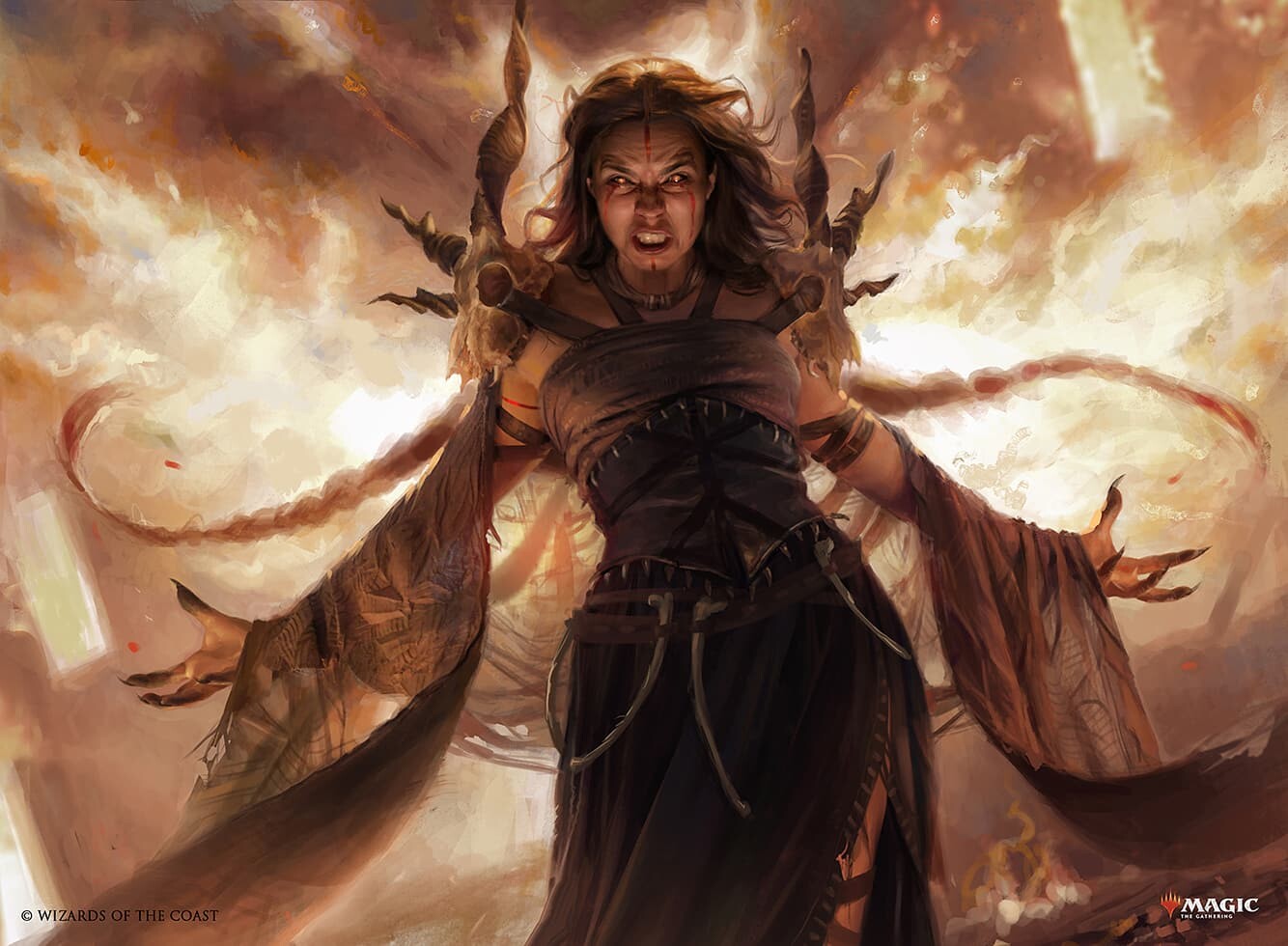
Deep beneath the surface of the water, where the weak-willed fear to tread, the great magma vents bleed heat and life into the otherwise cold depths. Most who reside there are creatures of stealth and cunning ingenuity, such as the Steam Gnomes and their domed cities, but that is not the life for all. For some, they believe these vents are a place to be protected, and revered, for they bleed life back into the ocean, and those who protect them long enough eventually become changed to reflect the primal strength of the magma. The Fetekyerm were the first to master the Path of the Bleeding Earth, but they soon spread the rare power to others throughout the world, causing those who live in tepid waters to tremble at their blazing fury.
In battle, a barbarian of the Bleeding Earth can summon the power of pure heat and and smog to assist them in combat. Even being near a Barbarian of the Bleeding Earth will harm an enemy, as their rage manifests in boiling, blistering heat.
Aura of Fire
Due to your association with the primal magic of magma, your blood boils and glows red when you enter a rage. While raging, you have resistance to fire and cold damage, and any creature who starts their turn within 10 feet of you (apart from you) must make a Constitution saving throw or take fire damage equal to your Rage damage.
Your saving throw DC for this ability is equal to 8 + your proficiency + your Constitution modifier.
Eruption
At 6th level, you learn to manipulate the primal forces of the earth. You can use an action to cause magma to explode from a single, 5 foot square of stone, earth, dirt, silt, or sand, creating a geyser of magma in a cylinder 20 feet high and 5 feet in radius. Any creature within the area must make a Dexterity saving throw or take 3d12 fire damage and
be set on fire (taking an additional 1d6 fire damage
at the beginning of every turn on fire, requiring
an action to put out), or taking half damage
and not being ignited on a successful save.
The DC equals 8 + your Constitution
+ your proficiency bonus.
The magma damage increases at certain levels- 4d12 at 10th level, 5d12 at 14th level, and 6d12 at 18th level.
Once you use this ability, you must wait until you complete a short or long rest to use it again. When you use this ability, it counts as dealing damage with an attack for the purposes of maintaining your rage.
Synthesis
At 10th level, you learn to use heat and smoke to magically fuel your body. You no longer need to eat or sleep, so long as you are nearby a hot fire or another, similar heat source for at least 10 minutes a day. If you do not get this heat, you must sleep and eat as normal.
Blazing Fury
At 14th level, you embody the flames of the earth. While raging, you are immune to fire and cold damage.
Additionally, when you hit with a weapon attack, you choose to make the attack deal fire damage instead of the weapon’s damage type. If you do this, you can choose to instantly end your rage and augment the attack with a powerful fiery explosion. The target takes an additional 3d12 fire damage and must make a Strength saving throw or be knocked back 15 feet away from you.
Your saving throw DC for this ability is equal to 8 + your proficiency bonus + your Constitution modifier.
If you end a rage this way, you cannot move, rage again, or use Eruption until the end of your next turn.


Path of the Darkwraith
Some barbarians see their rage not as a means of destruction, but as tool to bring about absolute Darkness. These invaders of shadow, known as Darkwraiths, fight with a deliberate yet brutal precision, and can siphon the very life force from foes using a forbidden technique known as Lifedrain.
Bonus Proficiencies
When you choose this Subclass at level 3, you gain proficiency with a Dark Hand, a unique, magical shield from the Darkness that allows you to siphon life from your enemies. If you lose your Dark Hand, you can perform a 10 minute ritual in complete darkness to create a new one.
The Dark Hand's statistics are detailed below.
Invader
Beginning at 3rd level, whenever you enter your Rage,
you can use a bonus action to choose select a single creature within 60 feet of you that you can see
as your prey. For as long as your prey is within
60 feet of you, you are engaged in combat
with it, and it is alive, you remain in your Rage
even if you would end your rage for any reason
except falling unconscious.
Additionally, when you make a melee weapon
attack against your prey, you may also use a
Bonus Action on that same turn to make a
Lifedrain attack with your equipped Dark Hand.
Cloak of Shadows
Beginning at 6th level, whenever you enter a rage,
you have resistance to necrotic and radiant damage,
and you can see in non-magical and magical darkness
for 60 feet.
Darkspeaker
At 10th level, you may cast the
Contact Other Plane and Scrying spells as a
ritual, using only your Dark Hand as a material
component that is not consumed. You may
only do so if you are in complete darkness,
and your Scrying spell fails if your target is
not in darkness. Wisdom is your spellcasting
ability modifier for these spells.
You may use each spell once in this way,
regaining all uses after completing a long rest.
Confounding Shadows
At 14th level, whenever you are targeted by an attack
you can see while you are in a rage, you may use
your reaction to create a 30 foot sphere of darkness
centered on yourself. That attack then targets
any creature of your choice that you can see
within the sphere of darkness, using the
original attack roll against you.
Your rage then ends.
This magical darkness remains for 1 minute or until dispelled. If you create another sphere of darkness with this ability, the previous sphere is immediately dispelled.
Dark Hand
This small globe of weightless, red-black energy can be held in your hand, cold yet comforting.
Special. It can be held forwards to cause the energy to expand, acting as a shield.
However, the Dark Hand can also be used to make a special Attack action, called Lifedrain.
Lifedrain. As an Action, you may make a melee weapon attack against a target within 5 feet of you, using your Strength modifier. If this attack hits, it deals 1d4 + your Strength modifier necrotic damage, and you recover hit points equal to the damage dealt. You cannot make more than one Lifedrain attack a turn.

Path of Blood
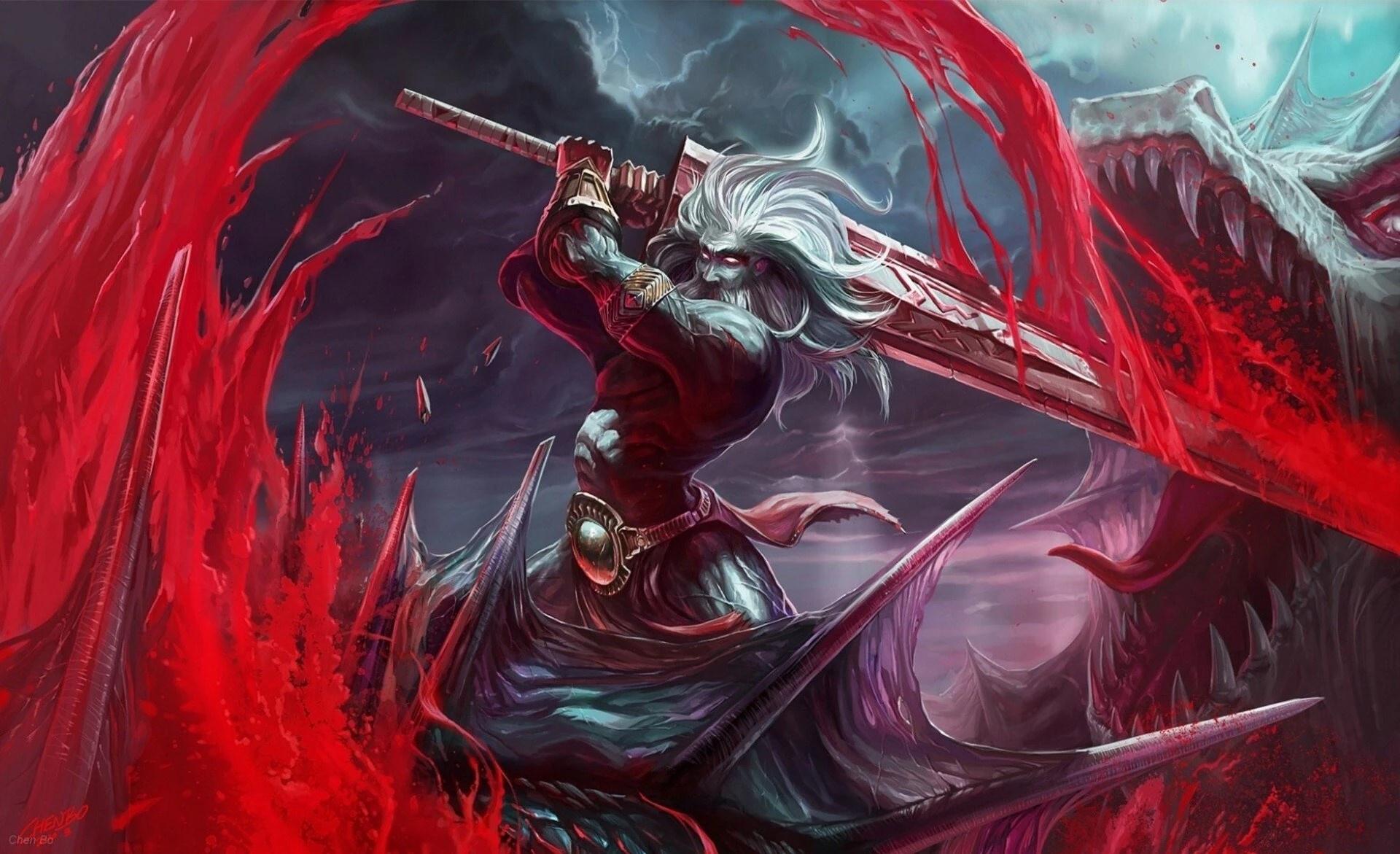
The Path of Blood is a path taken by only the most ruthless and battle-hungry barbarians. Perhaps it is the evil influence of a demon, devil, or a haunting ghost that drives them to delight in bloodshed. Perhaps they are attuned to the joyful brutality of the mad gods of war. These barbarians do not care when they shed their own blood—in fact, they use that energy to empower their rage even farther, using their suffering and sacrifice to inflict wounds upon their foes.
Bloodrage
Starting when you select this path at 3rd level, you learn to channel blood magic through your rage, allowing you to imbue dark power into your weaponry and drain the life of those that dare to strike you. While you rage, your speed is increased by 10 feet, and when a creature within 10 feet of you deals damage to you of a damage type that you have resistance to, you can choose to take that damage as if you had no resistance to it (no action required). If you choose to do so, the creature that damaged you takes necrotic or poison damage (your choice) equal to half the damage you took.
Blood Rush
At 3rd level, on your turn while raging, you may use a bonus action to spend a Hit Dice to heal yourself. If you choose to do so, roll the die, add your Constitution modifier, and regain a number of hit points equal to the total (minimum of 1).
Deathly Resistance
At 6th level, choose poison or necrotic. While you rage, you gain resistance to the chosen damage type, and starting at 10th level you also gain resistance to the other damage type while you rage.
Scent of Death
At 6th level, you gain the ability to smell the scent of the injured from up to a mile away. You know scent's direction and the injured creature's type. Once you get within 1000 feet of the source, you can make a Wisdom (Perception) check against the creature's Dexterity (Stealth) check to pinpoint its location and identity. On a success, while you remain within 1000 feet, you know the exact distance and direction to the injured creature, the severity of its injury, and you determine its identity if you have encountered the creature before. On a failure, you cannot attempt this check again on the same scent for 1 hour.
Red in Tooth and Claw
At 10th level your body takes on a demonic change as your affinity for blood grows stronger. You can survive on meals of rotting meat, blood or bones and suffer no ill effects.
Additionally, your magic also allows you to regenerate more quickly. At the end of each long rest, you regain additional expended Hit Dice equal to your Constitution modifier (minimum of 1).
Blood Drinker
Beginning at 14th level, spilled blood bolsters your strength. Whenever a creature within 15 feet of you is struck by a critical hit or reduced to 0 hit points while you’re raging, you can use your reaction to move up to half your speed without provoking opportunity attacks, and make a single melee weapon attack.
Path of Dread
There are places beyond time, filled with malignant intelligence and ruinous intent. The Far Realm is one such reality beyond the Material Plane, beyond the Elemental Chaos, even beyond the Upper Planes of the gods and the Outer Planes such as the Outlands. The Far Realm is entirely separate from the known multiverse, and it is believed that aberrations such as mind flayers and beholders either originated from this plane or were shaped by its strange influence.
You stepped through the door to nowhere that led to the Far Realms at some point in your past, yet your mind cracked under the horrible vistas of forgotten power that stood just within your feeble mortal grasp. Now you have finally realized that the true source of your furious rage is both defiance and acceptance of the madness that lies in the darkness between the stars.
The Lurking Fear
At 3rd level, in your bouts of rage you ramble about twisted things. You gain resistance to all damage inflicted by frightened creatures while you are raging.
Whenever you are raging, each creature that starts its turn within 10 feet of you must succeed on a Wisdom saving throw with DC equal to 8 + your proficiency bonus + your Charisma modifier or be frightened of you until the end of your next turn. Once a creature fails this saving throw, it can’t be frightened by this feature again for 1 minute.
Additionally, you can use your Charisma modifier in place of your Intelligence modifier when making skill checks and saving throws.
From Beyond
Starting at 6th level, your words seem to cut at the minds of those who listen even more horribly than before.
As an action, you whisper into the mind of a creature within 60 feet of you that can see and hear you. Until the end of your next turn, you have advantage on all ability checks, attack rolls, and saving throws involving your target or actions it has taken. During this time, the target has disadvantage on all ability checks and attack rolls involving you or actions you have taken. Targets that are immune to being frightened are immune to this effect.
You can use this ability once, and you recover your use of this ability whenever you enter a rage.
The Thing on the Doorstep
At 10th level, your hallucinations slowly enter reality. Whenever you enter a rage, you can choose to unleash the horrors that dwell within your mind upon the world.
Choose a number of creatures up to your Charisma modifier within 30 feet of you. Each one that is Large or smaller is pulled to the nearest open space within 5 feet of you, or the nearest available space by massive tendrils that spawn from the air around you.
Until the end of your turn, when the tendrils disappear, you cannot suffer disadvantage from any source on any check made to grapple one of these creatures.
What the Moon Brings
At 14th level, the tendrils of the Old Ones constantly lurk at the corners of your vision. Whenever you reduce a creature to 0 hit points, you can choose to allow an Old One to lash out from within your skin.
Choose a creature within 30 feet of you. The target must make a Strength (Athletics) or Dexterity (Acrobatics) check contested by your own Strength (Athletics) check. If the target fails, the tendril snares them and drags them into the closest open space near you, and the creature gains one level of exhaustion. A creature cannot be affected by this feature more than once per turn.
Path of the Primordials
Barbarians tap into primal powers, and a Barbarian of this path taps into one of the most ancient and primeval of them all. Those that walk the path of the primordials have learned to draw upon the fury of the elemental planes in the heat of battle, becoming one with the elemental chaos. Whether granted a boon of power by a primordial, suffused by the might of the elemental planes, or born with a fiery rage; whatever their origins, these barbarians can bend the very elements themselves to their will.
Ancient Tongues
When choosing this path at 3rd level, you learn to read and write Primordial, and you have advantage on Charisma checks when interacting with elemental creatures.
Elemental Affinity
At 3rd level, you gain magical benefits based on your preferred element. Choose one of the following elemental heritages. If you spend at least 30 minutes meditating during the course of a long rest, you can change your elemental affinity to a different element on the list.
| Element Heritage | Element Type | Cantrip |
|---|---|---|
| Air | Lightning | gust |
| Earth | Acid | mold earth |
| Fire | Fire | control flames |
| Water | Cold | shape water |
You learn a cantrip associated with your chosen heritage, which you can cast even while raging.
In addition, your elemental affinity manifests when you enter a rage. While raging, your melee attacks gain the reach property, you gain resistance to your chosen element type, and your rage damage changes to that type.
Elements Unleashed
Starting at 6th level, once during a rage, you can unleash your rage into pure elemental energy and exhale a blast of elemental power as an action. Creatures within a 15-foot cone must make a Dexterity saving throw with DC of 8 + your proficiency modifier + your Strength modifier. A creature takes 6d6 damage of the Element Type of your Elemental Affinity on a failed save.
This damage increases by 2d6 at 9th level (8d6), 12th level (10d6), 15th level (12d6), and 18th level (14d6).
Primordial Resilience
Starting at 10th level, your primordial might grant you resistance to your Element Type and to bludgeoning, piercing, and slashing damage from nonmagical sources even when you are not raging.
One with the Elements
At 14th level, you have learned to unleash even more power from one of the elemental forces you wield. You gain additional benefits depending on your Elemental Affinity.
Air. Breathtaking wind whirls around you in a vortex. You have a flying speed of 30 feet, but you fall at the end of a turn if you are airborne and the only thing holding you aloft is your flying speed. For the duration of your rage, the area within a 10-foot radius of you is difficult terrain for hostile creatures, and ranged weapon attacks against you have disadvantage.
Earth. Your body becomes encased with a thick crust of elemental earth. You gain a burrowing speed of 30 feet, allowing you to pass through nonmagical earth and stone, leaving no hole behind you. If you would end your turn inside of earth or stone, you are pushed back to where you entered the earth or stone's surface. For the duration of your rage, your AC increases by 2 if you aren't wearing armor, and you have advantage on saving throws against being poisoned, stunned, forcefully moved, or knocked prone.
Fire. You can wreathe your body in a swirl of flame, burning any that would dare get close. Your movement speed is increased by 10 feet. For the duration of your rage, your rage damage becomes equal to your proficiency bonus.
Water. You embody the unstoppable power of a crushing wave. You have a swimming speed of 30 feet, and you can breath in both air and water. For the duration of your rage, you can take the Dash and Disengage actions as bonus actions, and you have advantage on Dexterity (Acrobatics) checks and on saving throws against becoming grappled or restrained. In addition, you can spend 5 feet on your turn when you are grappled or restrained to end that effect.

PART 3
Bard
College of Sirens
Those who look onto the College of Sirens from a superficial glance might see what they are presumed to be- harmless musicians playing dainty tunes in hidden estuaries and lost alcoves. Yet, veteran seafarers and knowledgeable scholars know the college for what it truly is- a cutthroat assassin organization who lures and slays targets by preying on their truest dreams and ideals. Enchanting and deceptive, the College of Sirens is equally skilled in the art of poison and songwriting, which are both required to silence and slay a target they wish. However, not all Sirens are villains- some use their enchanting skills as spies and investigators, looking into a person’s true desires and intentions with naught but a glance.
Bonus Proficiencies
As a Siren Bard, you gain proficiency in the Poisoner’s kit.
Entrancing Words
Additionally at level 3, learning to sing subtly and to entrance others, whenever an enemy within 60 feet that can hear you is forced to make a saving throw against being charmed or poisoned, you can use your reaction and a bardic inspiration die to reduce their result by the amount rolled on the inspiration die. You do not need to use a reaction if they are being charmed or poisoned by your spell or ability.
Lotus Crafting
Additionally at level 3, your training as an expert poisoner has allowed you to craft special poisons using a magically conjured lotus from the Feywild. You learn one Lotus Poison from the list below, and can choose to craft one Lotus Poison when you complete a long rest. You can craft more doses of Lotus Poison as you gain Bard levels- 2 at level 9, 3 at level 14, and 4 at level 19. When you create one of the potions below, you decide whether it is an injury, contact, inhaled, or ingested.
You learn one more Lotus Poison Formula at level 5, 11, 16, and 20. The saving throw for all of these poisons is always your Bard Spellcasting DC. Unused poisons lose potency after you complete a long rest or make a new batch of Lotus Poisons.
Dark Love. This dark purple poison has a red stripe around its side and smells like juniper berries. This poison requires a Charisma Saving Throw. On a failure, the victim is poisoned, and while poisoned they believe they are madly in love and are charmed by the first creature it sees before taking a long rest. At the end of each minute, the creature may make the Charisma Saving Throw again, ending the poison and knowing they were magically charmed on a success. If they fail three times, the poison lasts until they complete a long rest.
Mute Rose. This light pink poison has a floral scent that seems to numb the nose and throat when inhaled. This poison requires a Constitution Saving throw. On a failure, the target is poisoned for 1 minute, and while poisoned in this way, they cannot speak or perform verbal components for spells.
They may attempt this saving throw again at the end of each of their turns, ending the poison on a success.
Feywild Flux. This clear poison smells occasionally like morning dew and at other times like rotting vegetation. This requires a Wisdom Saving Throw. On a failed save, the target is poisoned for 1 minute, and while poisoned in this way, appears to be blinking in and out of time. At the beginning of each turn the creature is poisoned, they magically age 1d10 years. At the end of each of their turns, they may remake the Wisdom Saving Throw, ending the poisoned effect on a success. After the poison is gone, the age of the creature returns to normal at a rate of 1 year per minute. Fey creatures or with the fey ancestry feature are immune to this poison.
Hemlock Ooze. This poison is thick, scent less, and an opaque, black color. This poison requires a Constitution Saving throw. On a failure, the target takes 2d8 + your Charisma Modifier poison damage, or half as much on a failed save. This damage increases as you gain Bard levels, to 3d8 at 6th level, 4d8 at 8th level, 5d8 at 10th level, 6d8 at 12th level, 7d8 at 14th level, and 8d8 at 16th level.
Lost Time. This brown poison has a small black vine floating in it. This requires an Intelligence Saving Throw. On a failure, the target forgets the last minute and is charmed by you until the end of your next turn. While the creature is charmed in this way, you or any ally can use an Action before the end of your next turn to give a succinct explanation that will fill in the gap of their memory. The target makes a Wisdom (Insight) check against the creature who wishes to modify the target’s memory’s Charisma (Deception) check. If the explanation is not logically possible, the target automatically succeeds. If the target fails, they believe the false explanation as real and do everything they can to rationalize it.
Elemental Hunter. This poison is multicolored with a spiced scent. When you create this poison, choose one damage type that is not slashing, bludgeoning, or piercing. This poison requires a Constitution Saving throw. On failure, the target becomes poisoned until the end of the poisoner’s next turn. While poisoned in this way, they lose immunity and any Absorption features and instead gain resistance to the given elemental damage type. If they did not have immunity but rather resistance, they lose that instead.
Witch’s Brew. This purple poison has a black eye floating in it. This requires a Charisma Saving throw. On a failed save, the target is poisoned for 1 minute, and while poisoned in this way, has disadvantage on any saving throws made against curses or effects that would frighten them.
Eye Cloud. This poison has a black top and white bottom, and smells like ocean air. When you create this poison, choose either sunlight or darkness. This requires a Constitution Saving Throw. On a failure, the target is poisoned for 1 minute, and while poisoned in this way, either gains the Sunlight Sensitivity trait if you chose Sunlight or has their dark vision reduced by 120 feet. The target can attempt the saving throw at the end of each of their turns, ending the effect on a successful save.
Poisoned Lyrics
At 6th level, you can use an action to weave a magical song that is imbued with the effects of a single poison you have in your possession, forcing targets to hallucinate the effects of the toxin in their system. Using this ability consumes the poison.
When you sing, the target must make a Charisma Saving Throw equal to the Saving Throw of the poison or your Bard spell DC, whichever is higher. On a failure, they suffer the effects of the poison, with several small alterations- firstly, any damage dealt is considered psychic damage, instead of poison damage. Secondly, the creature is considered charmed instead of poisoned, although they still show the symptoms of the poisoned condition while charmed in this way. Thirdly, a creature who is immune to poison normally is not immune to this ability.
A creature who knows you are trying to charm them automatically saves from this ability, and a creature who is immune to charm is immune to this ability. You cannot have multiple Poisoned Lyrics affecting a single creature at the same time, and you must drop the effects of one poison to attempt to apply the other.
Into the Depths
At 14th level, your song allows complete dominion over others, you may use your reaction to cause a creature within 60 feet of you who can hear you to fail a saving throw made to end a charmed condition.
Additionally, creatures who are charmed by you with spells or abilities that break as soon as you or your allies do anything harmful to it, as with the Charm Person spell, instead make their saving throw again if they are harmed by you or your allies, only ending the condition on a success, instead of breaking the spell entirely
College of Dusk
The ancient city of Oolacile holds many secrets, not the least of which is the secret to Chromatic magic- bardic magics that manipulate a spectrum of light and magical color. These Dusk bards are tricksters and illusionists, and many of their magics are used to confound and reflect the magic of other spellcasters.
Brilliant Inspiration
Beginning at 3rd level, whenever an ally uses your Bardic Inspiration, they become a beacon of light. Any creature within 60 feet of that ally that used your Inspiration that can see your ally must succeed on a Dexterity saving throw or be blinded until the end of that ally's turn. Your ally can choose to suppress this effect. A creature who does not rely on sight to see cannot be blinded in this way. A creature with the Sunlight Sensitivity trait has disadvantage on this Dexterity saving throw.
The ally that uses this ability then emits bright light for 60 feet and dim light for another 60 feet until the beginning of their next turn.
Coordinated Chameleon
Additionally at 3rd level, whenever a creature you can see within 120 feet of you uses your Bardic Inspiration, you may use your reaction to cause yourself to blend into the environment, the light bending around you and allowing yourself to mimic the form of a single object. You may also use this ability immediately after casting any Bard spell of 1st level or higher.
Choose an object that you have seen within 300 feet of your location that is roughly your size. You take the illusory form of that object, allowing you to gain a bonus to all Stealth checks equal to your Charisma modifier. This Chameleon lasts for 1 minute or you take any actions or bonus actions other than Hide, though you can still move stealthily while in your Chameleon form.
This can be used in tandem with your Brilliant Inspiration- if a creature is blinded by that ability, you may make a Dexterity (Stealth) check as you transform into your Chameleon form. If you succeed against their Wisdom (Perception) check, then they do not realize that you have transformed unless you have transformed into a very obviously out of place object.
You may use this ability twice, regaining all uses after completing a long rest.
Twisted Wall of Light
Beginning at level 14, you have learned to bend reality alongside light in order to deflect magic. As an Action, you can bring up a wall of shimmering distortions around you, twisting reality. While you have your Twisted Wall of Light up, and you are targeted by a magical attack or spell that targets only you, roll a d6. On a 6, the spell fails, and any involved spell slots are lost.
If you attempt to cast a spell while inside your wall of light, you must also roll a d6 after casting. On a 6, your spell fails.
This ability lasts until you are incapacitated or until you dismiss it as an Action.
College of Color
Where other bards channel their creativity through an instrument, some choose to express themselves through painting. They attune to the colors of the world, becoming able to shape reality in ways few would think possible. Bards of the College of color also gain different abilities depending on which colors they favor, and as varied as a painter's palette.
Bonus proficiencies
When you join the College of color at 3rd level, you gain proficiency with Painter's supplies. You can use these supplies as your spellcasting focus, and your proficiency bonus is doubled for any ability check you make with it.
Palette
Also at 3rd level, you learn to temporarily attune to a set of colors. Select a number of colors equal to your proficiency bonus. You can expend one use of Bardic Inspiration as an action to target a creature you can see within 10 feet of you, including yourself. An unwilling target must succeed on a Wisdom saving throw against your spell save DC or be affected by one of the colors you selected. You can change your selection after a short or long rest.
- Black. The target is overwhelmed by horror and dread. For 1 minute, the target becomes frightened of you or one creature or object you designate within range that it can see. The target may repeat the saving throw at the end of each of its turns, ending the condition on a success.
- Red: The target is struck by sudden anger. For 10 minutes, they add a roll of your Bardic Inspiration die to all Strength ability checks and saving throws.
- Orange: The target is consumed by a surge of willpower. The target may immediately reroll a saving throw to end an effect causing them to be frightened, adding a roll of your Bardic Inspiration die to the roll and to all saving throws against being frightened for the next 10 minutes.
- Yellow: The target experiences spontaneous feelings of joy. For 10 minutes, the target adds a roll your Bardic Inspiration die to all its Charisma ability checks and saving throws.
- Green: The target is painted with a mixture of greens. For 10 minutes, the target adds a roll of your Bardic Inspiration die to all their Dexterity (Stealth) checks.
- Blue. The target experiences a moment of elucidating clarity. The target may immediately reroll a saving throw to end an effect causing them to be charmed, adding a roll of your Bardic Inspiration die to the roll and to all saving throws against being charmed for the next 10 minutes.
- Purple: The target is consumed by feelings of pride and superiority. They gain temporary hit points equal to your Bard level plus the number you roll on the Bardic Inspiration die until the end of your next turn.
- White: The target is enveloped by feelings of pleasant serenity. For 1 minute, the target cannot be hostile to other creatures. If the target was hostile before you used this feature, they become indifferent for the duration. This effect ends early if the target is attacked or harmed by a spell or if it witnesses its friends being harmed.
Life Imitates Art
At 6th level, your paintings become almost perfect copies of reality. You can cast alter self without expending a spell slot or providing material components. You can use this feature a number of times equal to your Charisma modifier (minimum of once), regaining expended uses on a long rest.
Furthermore, as part of your action when you cast a spell of the Illusion school, you can expend one use of your Bardic Inspiration. The DC of the check to detect it as an illusion is increased by the number you roll on the Bardic Inspiration die.
Chromatic Explosion
Starting at 14th level, as an action you can paint an evershifting cascade of color in the air. All creatures of your choice within 30 feet that can see the shifting colored shapes must make a Wisdom saving throw against your spell save DC. On a failure, a creature becomes stunned for 1 minute. At the end of each of their turns, creatures stunned by this feature can attempt to make the save again, ending the effect on a success. Once you have used this feature you cannot use it again until you have finished a short or long rest.

College of Diplomacy
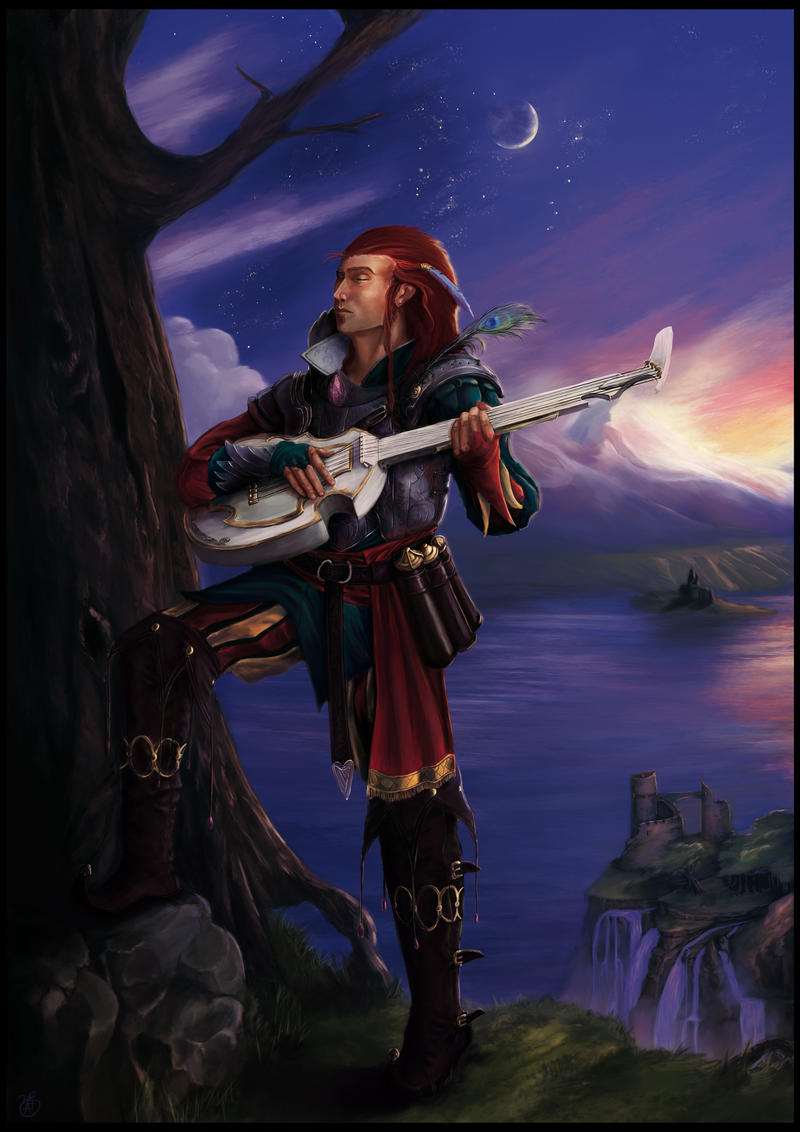
Bards of the College of Diplomacy understand that statecraft, like music or drama, is a complicated artform. Formally trained as couriers, aides, stewards, geishas, and ambassadors, these performers use civility and social protocol to open doors where others cannot. In mastering their craft, these individuals also learn to see the connections between magical and social networks, and recognize how each can influence the other.
Foreign Relations
When you join the College of Diplomacy at 3rd level, you learn the proper etiquette for handling those from other cultures. You learn three languages of your choice.
In addition, whenever you interact socially with a creature in a language other than Common. you have advantage on your Charisma (Deception), Charisma (Persuasion), and Wisdom (Insight) checks against it, but only if the creature can understand that language.
Tactical Alliance
Also at 3rd level, you can utilize your web of personal connections to extend your reach through the Weave. By expending a use of your Bardic Inspiration when you cast a bard spell, you can choose to cast the spell as if you were located in the space of a willing creature within 60 feet of you that can see or hear you. If the spell requires you to see a creature, you must be able to see them when you cast a spell in this way. When you cast a spell in this way, the willing creature also gains an amount of temporary hit points equal to the number rolled on the Bardic Inspiration die + your Charisma modifier (minimum of 1).
Secret Communique
From 6th level, your mastery of statecraft allows you to use a bonus action to communicate with but a meaningful look. Until the end of your next turn, you and any friendly creatures within 60 feet of you have advantage on their Charisma, Intelligence, and Wisdom saving throws, and can also communicate telepathically with any other affected targets they can see, regardless of their language.
After you use this feature, you cant do so again until you finish a short or long rest.
In addition, the ranges of both your Countercharm and Bardic Inspiration features are doubled, and if an ally can see you, it doesn't need to hear you to be affected by either of those features.
Magical Networking
Starting at 14th level, you can magically compel even your enemies to act cordially towards you.
As an action, you can force up to 5 creatures of your choice within 60 feet of you that can see and hear you to make a Wisdom saving throw against your spell save DC. A target automatically succeeds if it can't understand your language, but if it shares more than one language with you, it makes this save with disadvantage.
If a target fails its save, it becomes charmed by you and all of your allies it can see within 60 feet of you. This effect lasts until the end of your next turn if you are fighting the target or if you begin to fight it, or for 1 hour otherwise. This effect ends on a target if it notices you or your allies harm it or a creature it is friendly towards.
While charmed in this way, each affected target is convinced you are representing an individual, group, or power offering them fealty, an alliance, or a trade deal in its best interests. They will treat you hospitably, rationalize any of your hostile behaviors as unusual quirks, and try to persuade their allies to welcome you and your 'entourage.'
Once you use this feature, you can't do so again until you finish a long rest.
College of Marionettes
The College of Marionettes are a guild of puppeteers that turn the movement of wooden dolls into a masterpiece of animation. Using their nimble fingers and magic string, they can even control the bodies of the living and animate the dead to follow their precise instructions.
Bonus Proficiencies
When you join the College of Marionettes at 3rd level, you gain proficiency in weaver's tools and Sleight of Hand.
Puppet Familiar
At 3rd level, you learn find familiar if you didn't already know it. This spell does not count against your number of spells known. The spirit of your familiar summoned with this spell can occupy a puppet or marionette doll, which in turn can move of its own volition as your familiar, using the Living Puppet stats found below.
Additionally, when you take the Attack action, you can forgo one of your own attacks to allow your familiar to make one attack of its own. When your familiar makes an attack, it uses your spell attack bonus instead of its own attack bonus on attack rolls, and you may add your proficiency bonus to its damage rolls.
When you communicate with your familiar telepathically, you can also take precise control of its actions, allowing your puppet to use your ability or skill modifier for an ability check.
Soul Strings
By 6th level, as an action expending a Bardic Inspiration die, you can project from your fingertips barely noticeable strands of energy which can attach to creatures. Choose a living creature you can see within 30 feet to make a Wisdom saving throw against your spell save DC. On a failed save, your strings attach to the creature, bringing it under your complete control for up to 1 minute.
You can use your action each turn to maintain precise control of the target. It takes only the actions you choose, and doesn't do anything that you don't allow it to do. You cannot command an activity that is directly harmful to it.
At the end of each of its turns, an affected creature can make another Wisdom saving throw against this effect, ending it on a success.
While your strings are attached, you can take no other actions or move further than 30 feet from your target without you breaking the strings and ending the effect. A creature that successfully saves against the effect, or if the effect on it ends, is immune to the effects of this feature for the next 24 hours.
Master of Puppets
Beginning at 14th level, as an action, you can cast the irresistible dance or animate objects spell at its lowest level without expending a spell slot. Once you use this feature, you can't use it again until you finish a long rest.
Living Puppet
Tiny construct, neutral
- Armor Class 13 (natural armor)
- Hit Points 10 (4d4)
- Speed 20 ft.
STR DEX CON INT WIS CHA 4 (-3) 15 (+2) 11 (+0) 10 (+0) 10 (+0) 7 (-2)
- Damage Immunities poison
- Condition Immunities charmed, poisoned
- Senses darkvision 60 ft., passive Perception 10
- Languages understands the languages of its creator but can't speak
False Appearance. While the puppet remains motionless, it is indistinguishable from a mundane puppet or doll.
Telepathic Bond. While the puppet is on the same plane of existence as its master, it can magically convey what it senses to its master, and the two can communicate telepathically.
Ventriloquism. While the puppet is on the same plane of existence as its master, the master can telepathically command the puppet to speak, imitating his master's voice.
Actions
Bite. Melee Weapon Attack: +4 to hit, reach 5 ft., one target. Hit: 2 (1d4) slashing damage.
Scare (1/day). One creature of the living puppet's choice within 20 feet of it must succeed on a DC 10 Wisdom saving throw or be frightened for 1 minute. The target can repeat the saving throw at the end of each of its turns, with disadvantage if the living puppet is within line of sight, ending the effect on itself on a success.

College of Rhyme
Bards of the College of Rhyme are experts in the spoken word, able to compose verse and prose almost effortlessly. Some bards of this college compose epic ballads and sonnets, creating masterpieces of epic poetry. Others perform by improvising rhythmic poetry accompanied by music in taverns and mead halls, competing in contests of wit and verbal mastery.
Whether practicing language to capture the splendor of great deeds or to spit out 'sick burns', the bards of this college are prepared for a life of excitement and epic verses.
Student of Diction
When you join the College of Rhyme at 3rd level, you gain proficiency with Deception and Persuasion. You learn the vicious mockery cantrip if you don't already know it, or another bard cantrip of your choice if you do.
Epic Verses
Starting at 3rd level, when you cast vicious mockery, if the target fails their saving throw you can expend a Bardic Inspiration to compose a verse of...
Hubris: You gain temporary hit points equal the number rolled on the Bardic Inspiration die + the damage dealt by vicious mockery.
Tragedy: The target takes additional damage equal to amount rolled on the inspiration die, and has disadvantage for an additional attack from vicious mockery.
Comedy: If the target attempts to attack anyone other than you before the start of their next turn, you can roll a die equal to your inspiration die and subtract it from their attack roll.
Battle Poetry
Starting at 6th level, when you cast a spell that deals Psychic damage, you can add your Charisma modifier to one damage roll of that spell.
Additionally, as a reaction to the end of an incapacitation effect another creature suffered form one of your spells, or to them missing an attack that had disadvantage caused by your vicious mockery, you can deal a verbal follow up dealing Psychic damage equal to your Charisma modifier.
Master Linguist
Additionally at 6th level, your ability to communicate transcends barriers of language. You can communicate basic concepts to creatures that don't share a language with you as long that creature speaks at least one language through intonation, body language, gestures, and attitude.
Using this method you can get information such as how much something should cost, where a notable locations are, what might be edible, and which paths or alleyways should be avoided, as well other things your DM might find appropriate for you to be able to learn from them.
You also gain the ability to read these basic concepts from written thieves' cant.
Rap God
Starting at 14th level, your can deliver verbal components to spells with blinding speed and precision. You can expend a use of Bardic Inspiration to cast a spell with the cast time of one action as a bonus action as long as it only has verbal components.

PART 4
Blood Hunter
Part 4: Blood Hunter
New Blood Hunter Features:
Hemocraft Die (Revised):
This is simply an expansion of the current Hemocraft die, giving you charges. Some of the subclasses will have you expend a Hemocraft die to active certain features. The charges you have will scale as the following:
Hemocraft Die
| Level | Charges |
|---|---|
| 1st-6th | 3 |
| 7th-10th | 4 |
| 11th-14th | 5 |
| 15th-17th | 6 |
| 18th-20th | 7 |
Expending a Hemocraft die means you take damage equal to a roll of the Hemocraft die. The damage from the Hemocraft die still scales with the normal Blood Hunter table. Additionally, rolling a Hemocraft die as part of the Crimson Rite feature does not expend a charge.
This is required to use the following Blood Hunter subclasses


Order of Chains
The Order of Chains is notorious among blood hunters. They've mastered the use of their own blood as weapons, manifesting as chains. They excel at binding their enemies to gain an upper hand in combat. They sacrifice their own blood to fuel their abilities, granting them unmatched versatility.
Members of the Order of Chains are known for their unbreakable wills and their willingness to endure pain and suffering to achieve their goals. They believe that the chains they create are a symbol of their dedication towards their cause.
Hemochains
At 3rd level, your skill in hemocraft allows you to summon chains made of blood. As an action, you expend a Hemocraft die to create a number of chains equal to the amount rolled minus two. Each chain can target a creature within 30 feet of you, and the target must succeed on a Strength saving throw against your Hemocraft save DC.
On a failed save, the creature takes 1d6 damage from each chain and becomes grappled if hit by 2 or more chains. On a success the creature takes half of the damage and is not grappled.While the chains are grappling a creature, you cannot move without them breaking. If you have a crimson rite active, it deals damage of that type, otherwise it deals piercing damage. At 7th level, the chains are considered magical when overcoming resistances. This feature can only be used three times per short or long rest.
Hemochain Shield
At 7th level, you gain the ability to shield yourself with your blood. As a reaction to being attacked, you can roll one or more Hemocraft die to create a shield of Hemochains. The shield reduces the damage from attacks equal to the amount rolled.
This feature can only be used twice per short or long rest.
Leeching Chains
At 11th level, you can use an enemy's blood to heal yourself. When dealing damage to an enemy with your Hemochains, you can use your bonus action to gain hit points equal to half of the damage dealt rounded down.
This feature cannot make you go over your maximum hit points, and can only be used twice per long rest.
Chain Reaction
At 15th level, you've learned to control your chains to a new level. When you attack a creature with your Hemochains, you can choose another target within 30 feet. The creature targeted by this attack must make a Strength saving throw against your Hemocraft save DC.
On a fail, the creature becomes grappled by the chains. If both creatures targeted are grappled, they are pulled 10 feet towards you. This feature can be used three times per short or long rest.
Chain Sacrifice
At 18th level, you've realized that your blood chains can be used for greater effects. As a reaction when dropping to zero hit points, you can attack yourself with your own chains, causing an explosion of your blood. When using this feature, you can expend one Hemocraft die to attack yourself with a number of chains equal to the number rolled. Each creature within 10 feet of you takes 1d10 damage from each chain instead of 1d6.
You gain one failure on your death saving throws when you use this feature. This feature can only be used once per long rest.
Order of the Void
The Order of the Void is one of the most feared and most mysterious orders within the Blood Hunters. They are experts in using their powers to harness and manipulate the void.
Despite their fearsome reputation, most members of the Order of the Void see themselves as guardians of balance within the world. They are not motivated by a desire for power and conquest, and simply seek out the strange and unnerving sights within the world.
Rite of the Void
When you join this order at 3rd level, you learn the Rite of the Void as part of your Crimson Rite feature. When you activate the Rite of the Void, the extra damage dealt by your rite is necrotic damage. Additionally, while that rite is active on your weapon, you gain the following benefits:
-
Your weapon sheds a black smoke-like substance.
-
You have resistance to radiant damage.
-
While in dark or dim light, your speed is increased by 10 feet.
Void Projection
At 3rd level, your blood becomes gaseous when it leaves your body. As an action, you can create a cloud of magical smoke centered on yourself that creates a heavily obscured area. The cloud is 15 feet by 15 feet. If your crimson rite is active, the size is increased to 25 feet by 25 feet.
You are not affected by your own projection, and at 15th level you can choose up to 5 creatures that aren't affected by it.
Shadow Step
At 7th level, you harness the void to move around. While you're in your Void Projection, you may use your bonus action to teleport to any space within it. This feature does not trigger attacks of opportunity.
This feature can only be used twice per short or long rest.
Void Grasp
At 11th level, you've managed to manipulate the void. As an action, you can target a creature within 10 feet of you. The target must make a Constitution saving throw against your Hemocraft save DC. On a failed save, the creature is paralyzed.
At the end of each of the creature's turn, they make another Constitution saving throw. On a successful save, the creature breaks free from Void Grasp. This feature can only be used once per short or long rest.
Void's Embrace
At 15th level, you become vaguely smoke-like. You gain resistance to all non-magical bludgeoning, piercing, and slashing damage. You also gain immunity to poison damage and the Poisoned condition.
Entropic Strike
At 18th level, your blood begins to decay your enemy's equipment. When you hit a creature with an attack while your crimson rite is active, you can use your bonus action to impose a penalty to their armor class and attack rolls. To determine the amount both are reduced by, roll 1d4 and add 1.
This feature can only be used once per long rest.
Order of the Deep
For centuries, the oceans have been a source of mystery and terror for those who dwell on the land. The vast depths of the sea hide untold secrets and unspeakable horrors, but there are those who have chosen to brave the waves and explore the unknown. Among these intrepid souls are the Blood Hunters of the Order of the Deep.
The Order of the Deep is steeped in ancient traditions, passed down from generation to generation through whispered tales and hidden tomes. They believe that the sea is a living entity, with its own will and consciousness, and that by tapping into its power, they can unlock abilities that are beyond the reach of mortal men. They are fierce defenders of the oceans and its creatures, and will stop at nothing to protect them from harm.
Rite of the Tides
At 3rd level, you learn the Rite of the Tides as part of your Crimson Rite feature. When you activate the Rite of the Tides, the extra damage dealt by your rite is cold damage. Additionally, while that rite is active on your weapon, you gain the following benefits:
-
You have resistance to fire damage.
-
You gain a swimming speed equal to your running speed.
Predator of the Deep
At 3rd level, you gain characteristics similar to a marine predator. You gain proficiency in Athletics and Intimidation, and you can breathe underwater. Additionally, you gain proficiency in Survival (Wisdom) checks to track creatures that live in water.
Curse of the Kraken
At 7th level, you summon a tentacle to bind your enemies. As an action, you summon a tentacle to hold a target creature within 30 feet of you. The targeted creature must succeed on a Strength Saving throw against your Hemocraft save DC or be restrained and pulled 10 feet towards you.
Oceanic Defense
At 11th level, you've gained the reflexes of a deep sea monster. When a creatures makes a ranged attack against you, you can use your reaction to deflect the attack with a jet of water. Make a Dexterity saving throw against the Attack roll halved. On a success the attack misses. Additionally, you gain resistance to acid damage.
This feature can only be used twice per long rest.
Oceanic Mastery
At 15th level, you've gained complete control over water. As an action, you can cast the Control Water spell without expending a spell slot. You can only use this feature three times per long rest.
Additionally, you can use an action to unleash a tidal wave that moves any creature in a 30 foot cone away from you. You can only use this feature twice per short or long rest.
Fury of the Deep
At 18th level, the fury of the oceans is channeled through you. As an action, you summon up to 6 tentacles within 30 feet of yourself. Each tentacle will attack a creature within 5 feet of itself, chosen randomly. Make a melee spell attack for each tentacle, with +8 to hit. Each tentacle deals 1d12+4 bludgeoning damage. This damage is considered magical for overcoming resistances.
Order of the Celestial
The Order of the Celestial is an order unlike any other. While many of their brethren seek to harness the power of blood magic for personal gain or to hunt their enemies, the members of this order have a higher purpose. They see their abilities as a gift from the gods, and the use them to aid those in need.
Members of the Order of the Celestial draw their power from good-aligned Gods, and their blood carries a healing touch that can mend the most grievous of wounds. They are akin to clerics in their ability to channel divine power, but their methods are more primal, drawing on the raw power of blood to fuel their abilities.
Though they may be feared and mistrusted by some, the members of the Order of the Celestial are guided by a steadfast commitment to justice and compassion. They are a beacon of hope in dark times, and those who are fortunate enough to be touched by their healing magic are forever grateful for their aid.
Rite of Healing
When you join this order at 3rd level, you learn the Rite of Healing as part of your Crimson Rite feature. When you activate the Rite of Healing, your Crimson Rite does not deal additional damage. Instead, it heals allies hit by your weapon attack while it is active. Any damage that would be dealt normally is instead turned into hit points for your allies, including your Hemocraft damage. Additionally you gain resistance to Radiant and Necrotic damage.
Field Medic
At 3rd level, you're experienced enough to heal people while in the middle of a battle. You gain expertise in Medicine, and can diagnose any injury or illness at a glance.
Additionally, you gain immunity to the Frightened condition.
Divine Resistance
At 7th level, the gods look favorably upon you, granting you strength. You are unable to suffer the effects of curses up to a maximum of 5th level. Additionally, you gain resistance to Poison damage, and are immune to disease and the Poisoned condition.
Atonement
At 11th level, you're affinity with healing has become unmatched. As a bonus action, you can choose to lose hit points equal to your Blood Hunter level plus five to remove one curse, condition, or disease from a creature.
You can only use this feature twice per long rest.
Beacon of Hope
At 15th level, you become a symbol of hope to anyone who sees you. While a non-hostile creature is within 60 feet of you, they gain resistance to Necrotic damage and gain immunity to the Frightened and Charmed conditions.
Additionally, you can use your action to send out a wave of divine energy to give each ally within 10 feet 3d10 temporary hit points. This feature can only be used twice per short or long rest.
Miracle Worker
At 18th level, the power granted to you by the gods passively helps your allies. Upon an ally falling unconscious, if they are within 30 feet of you and you can see them, they will instead drop to one hit point. This feature can only apply to each creature once per long rest.
Additionally, allies that you can see within 10 feet of you gain advantage on Death saving throws.
Order of Plagues
The Order of Plagues is not for the faint of heart. These blood hunters are masters of biological warfare, wielding the power of deadly diseases and poisonous toxins to bring their foes to their knees. They are the ones who walk though the plague-ridden alleys of cities without fear, as they know how to harness the power of illness for their advantage.
Members of the Order of Plagues are not afraid to get their hands dirty, and they are not squeamish about the grotesque nature of their craft. They see the world as a battlefield, and diseases and poisons are their weapons of choise. They are experts at creating custom concoctions to suit any situation, and they know how to administer their deadly mixtures without putting themselves at risk.
Some may view the Order of Plagues as cruel and merciless, but they see themselves as scientists and engineers. They believe that their devices are simply an experiment for the extent of their abilities.
Rite of Toxins
At 3rd level, you learn the Rite of Toxins as part of your Crimson Rite feature. When you activate the Rite of Toxins, the extra damage dealt by your rite is Poison damage. Additionally, while that rite is active on your weapon, you have resistance to Acid damage.
Plague Doctor
At 3rd level, you've gained an excellent understanding of poisons and disease. You gain resistance to Poison damage, and are immune to disease and the Poisoned Condition.
Additionally, when you reach 7th level you gain immunity to Poison damage and resistance to Acid damage.
Plague Ward
At 7th level, you can create a barrier of acid around yourself. As an Action, you can create a barrier of acid around yourself. This barrier will follow you and last for up to 1 minute. While the barrier is active, any attack that hits you is reduced by a roll of your Hemocraft die plus four.
This feature can only be used twice per short or long rest.
Noxious Blood
At 11th level, you've successfully turned your blood into a deadly substance. Whenever an enemy hits you with an attack, they take Poison damage equal to a roll of your Hemocraft die. This feature does not trigger when an enemy deals Bludgeoning damage.
Epidemic
At 18th level, you can unleash biological havoc upon around you. As an action, you can cause a deadly disease to spread rapidly among creatures within 10 feet of you. Each creature hit by this ability must make a Constitution saving throw against your Hemocraft save DC.
If a creature fails the save, they become Poisoned for 1 minute and gain one of the following diseases. To determine the disease spread, roll a d6.
Blinding Sickness. Pain grips the creature’s mind, and its eyes turn milky white. The creature has disadvantage on Wisdom checks and Wisdom saving throws and is blinded.
Filth Fever. A raging fever sweeps through the creature’s body. The creature has disadvantage on Strength checks, Strength saving throws, and attack rolls that use Strength.
Flesh Rot. The creature’s flesh decays. The creature has disadvantage on Charisma checks and vulnerability to all damage.
Mindfire. The creature’s mind becomes feverish. The creature has disadvantage on Intelligence checks and Intelligence saving throws, and the creature behaves as if under the effects of the confusion spell during combat.
Seizure. The creature is overcome with shaking. The creature has disadvantage on Dexterity checks, Dexterity saving throws, and attack rolls that use Dexterity.
Slimy Doom. The creature begins to bleed uncontrollably. The creature has disadvantage on Constitution checks and Constitution saving throws. In addition, whenever the creature takes damage, it is stunned until the end of its next turn.
At the end of each of its turns, a creature affected by this feature makes another Constitution saving throw. On a success, they are no longer affected by the disease. This feature can only be used once per long rest.
Order of Souls
The Order of Souls is a secretive organization of Blood Hunters who have dedicated themselves to mastering the power of the soul. They believe that the soul is the key to unlocking the secrets of life and death, and they seek to harness its power for their own purposes.
Members of the order are often quiet and introspective, spending long hours in deep contemplation of the mysteries of the soul. They are skilled at tracking down and harvesting the souls of their enemies.
Despite their reputation, the members of the Order of Souls are not without compassion. They understand the pain of loss and the desperation of those who seek to cheat death, and they are often willing to help those in need - for a price, of course.
Soul Points
When you join this order at 3rd level, you can use souls to invoke certain abilities. The maximum number of soul points you have is equal to your Blood Hunter level. At the end of a long rest, you gain soul points to get to your maximum number of soul points. At the end of a short rest, you gain soul points equal to a roll of your Hemocraft die.
Soul Harvest
Starting at 3rd level, when a creature that you have damaged with a weapon attack in the last minute is reduced to 0 hit points, you can choose to harvest their soul as a bonus action. This allows you to gain a number of soul points equal to 1d4 minus 1 (minimum 1).
Soul Manipulation
At 3rd level, you gain the ability to manipulate souls you collect. You can spend soul points as an action to inflict the following conditions on a target. The target must make a Wisdom saving throw against your Hemocraft save DC. On a fail, they gain a condition that you choose.
| Soul Point Cost | Condition |
|---|---|
| 1 | Deafened |
| 2 | Charmed |
| 3 | Incapacitated |
| 3 | Frightened |
Soul Fortification
At 7th level, you can use souls to protect yourself. As a reaction, you can spend 2 soul points to give yourself advantage on a saving throw. Additionally, you can use a bonus action to give yourself resistance to a damage type that you choose.
Rite of Souls
At 11th level, you learn the Rite of Souls as part of your Crimson Rite feature. When you activate the Rite of Souls, the extra damage dealt by your rite is Psychic damage. Additionally, while that rite is active on your weapon, you gain the following benefits:
You have resistance to Necrotic damage.
After you take the attack action, you can use a bonus action to activate the Soul Manipulation feature.
Soul Consumption
At 15th level, you can consume souls to gain additional power. You can spend soul points as a bonus action to do the following:
| Soul Point Cost | |
|---|---|
| 2 | You gain temporary hit points equal to your blood hunter level. |
| 3 | You add your proficiency bonus to all damage rolls you make for one minute. |
| 5 | You gain advantage on all attack rolls and saving throws for three rounds. |
You can only have one ability active at a time, and cannot gain more temporary hit points from the first ability.
Soul Mastery
At 18th level, your mastery over souls has grown to a new level. As an action, choose a creature within 60 feet of you that you have damaged with your Rite of Souls and spend soul points equal to the creature's challenge rating halved. The creature must make a Wisdom saving throw against your Hemocraft save DC. If they fail, roll a d4 and gain control of the creature for that many rounds. At the end of the duration, the creature will be hostile with you and focus their attacks at you.
Order of Iron
The Order of Iron is a group of Blood Hunters who have dedicated themselves to becoming the ultimate protectors. They've learned to imbue themselves and their allies with the strength and resilience of iron. They are the first to charge into battle and the last to leave, their unwavering determination and unbreakable wills serving as an inspiration to those around them.
Members of the Order of Iron are often seen clad in heavy armor and wielding massive weapons, their imposing figures striking fear into the hearts of their enemies. Despite their fearsome appearance, they are fiercely loyal to their allies and will do whatever it takes to keep them safe.
Many members of the Order of Iron have a strong sense of honor and duty, and they often see themselves as the guardians of their community. They take their role as protectors very seriously, and some even learn medicine to protect their community. This sense of duty can sometimes put them at odds with authority figures, as they are willing to defy orders if they believe it is in the best interests of their allies.
Iron Will
When you join this Blood Hunter Order at 3rd level, your Hemocraft modifier is equal to your Constitution modifier. Additionally, you can choose one damage type to gain resistance to.
At 7th level, you gain another damage resistance of your choice.
At 11th and 15th level, you gain hit points as if you leveled up in Blood Hunter, but do not gain any other benefits.
Shield of Iron
At 3rd level, you can manipulate the iron in your blood to form a shield. As a bonus action, you can conjure a shield of your blood. While this feature is active, you can use a reaction to protect an ally within 5 feet, granting them half cover against incoming attack.
When you activate this feature, you take Necrotic damage equal to a roll of your Hemocraft die. This damage cannot be reduced in any way.
Blood Pact
At 7th level, you can make a pact with your allies to protect them. During a long rest, you can choose one ally to make a Blood Pact with. Until the next long rest, or until you or the ally fall unconscious, you can choose to take half the damage instead. This reduces the amount of damage the ally would receive.
This feature can only apply to one ally per long rest. At 11th level, you can choose to make a blood pact with one additional ally. At 18th level, if you have a resistance to a damage type, allies affected by Blood Pact gain that resistance as well.
Aura of Protection
At 11th level, you can emit an aura around you to protect your allies. As an action on your turn, you can sacrifice hit points equal to a roll of your Hemocraft die. Upon activating this feature, you radiate an aura of protection with a radius of 10 feet for 1 minute. Allies within this aura cannot be knocked prone, and gain advantage on a saving throw of your choice.
You cannot change the chosen saving throw unless you use the ability again. This feature can only be used twice per short or long rest.
Brand of Resistance
Starting at 15th level, your Brand of Castigation causes your enemies' attacks to be weaker. Whenever a creature targeted by your brand makes an attack against you or an ally, reduce the damage by a roll of your Hemocraft Die plus your Hemocraft modifier and proficiency bonus.
Iron Vengeance
At 18th level, you gain a fervor to protect your teammates. When you fall below 40 hit points, you can use your reaction to activate this feature. While this feature is active, you have resistance to all damage types and gain temporary hit points equal to your Blood Hunter level. Additionally, all allies within 5 feet of you gain the benefits from the Blood Pact feature.
Upon activating this feature, roll 1d4. Iron Vengeance will last for that number of rounds. When Iron Vengeance ends, you drop to 0 hit points and gain one failed death saving throw.
Order of Crystal
Within the dark corners of the world, amidst forgotten caves and ancient ruins, there exists a secretive order of Blood Hunter known as the Order of Crystal. These hunters have formed a unique bond with crystals, harnessing their power to enhance their abilities and protect the world from supernatural threats.
Members of the Order of Crystal are marked by the radiant glow of the crystalline shards that adorn their bodies. These crystals, which gradually grow and change as the blood hunters rise in power, are believed to gifts from the gods. The crystals also seem to provide them and uncanny intuition in most situations, allowing them to navigate the intricate web of the worlds with ease.
The Blood Hunters of the Order of Crystal are known to be solitary, often preferring to live underground instead of on the surface. They are constantly seeking out knowledge about the crystals' true nature, delving into the depths of ancient tomes and forgotten scrolls in pursuit of hidden truths. Some theorize that the crystals themselves whisper back, guiding the Blood Hunters on their path.
Rite of Crystals
When you join this order at 3rd level, you learn the Rite of Crystals as part of your Crimson Rite feature. When you activate the Rite of Crystals, the extra damage dealt by your rite is magical Slashing damage. Additionally, while that rite is active on your weapon, you gain the following benefits:
-
Your weapon grows jagged crystals on the blade.
-
You have resistance to Necrotic damage.
-
While in bright light, you gain 10 feet to your movement speed.
Crystal Carapace
At 7th level, your skin starts to grow crystalline. You gain 2 to your armor class and resistance to nonmagical slashing and piercing damage. Additionally, when an opponent misses you with an attack, they take 1d6 Slashing damage. This damage is considered magical for overcoming resistances.
Mineral Recovery
At 11th level, you gain the ability to absorb minerals to heal yourself. If you're out of combat, you can spend 10 minutes absorbing minerals around you. If you do, you gain hit points equal to 1d10 + your Hemocraft modifier.
This feature can be used twice per short or long rest.
Crystal Eruption
At 15th level, you can shoot crystals from your body. As an action, you can choose to lose hit points equal to your Blood Hunter level. If you do, each creature within 10 feet of you makes a Constitution saving throw or takes 8d8 Slashing damage. This damage is considered magical for overcoming resistances. If a creature fails, it falls prone. On a success the creature takes half the damage and does not fall prone.
You can use this feature once per short or long rest.
Gem Ascension
At 18th level, your connection with crystals reaches its pinnacle. You gain the ability to transform your body into pure crystalline form, granting you resistance to all damage, and immunity to all conditions and magical effects under 6th level. You can maintain this form for up to 3 rounds. After this feature ends, you fall unconscious and make death saving throws with disadvantage.
This feature can only be used once per long rest.
Order of Storms
As the tempest looms on the horizon, the Blood Hunters of the Order of Storms stand ready, their eyes ablaze with crackling lightning. They are masters of the electric current that dance through the skies, wielding the power of storms to smite their enemies.
Members of the Order of Storms are marked by the crackling energy that surrounds them, with sparks dancing along their skin and eyes that shine with the intensity of a thunderbolt. They are skilled warriors, blending their mastery of martial combat with their master of lightning to unleash devastating attacks.
Harnessing the power of storms comes at a cost. The Blood Hunters of the Order of Storms must constantly battle with the lure of the tempest, which threatens to consume them with its raw power. Those who master the storm and maintain their resolve are fearsome opponents, able to strike with the wrath of the sky.
Rite of the Storm
When you join this order at 3rd level, you learn the Rite of the Storm as part of your Crimson Rite feature. When you activate the Rite of the Storm, the extra damage dealt by your rite is Lightning damage. Additionally, while that rite is active on your weapon, you gain the following benefits:
-
Your weapon crackles with electric energy.
-
If you get a critical hit on an enemy, they become Stunned for one round.
Eye of the Tempest
At 3rd level, your connection to storms has sharpened your senses. You gain advantage on Perception checks that require vision. Additionally, you gain Darkvision with a range of 15 feet.
Thunderous Resilience
At 7th level, the storms have strengthened your body, allowing you to harness the force of lightning. You gain resistance to lightning damage, and when you take lightning damage, you can use your reaction to absorb the damage. On your next turn, you can use your bonus action to release the energy at a target. The target makes a Constitution saving throw against your Hemocraft save DC.
On a fail, the target takes damage equal to the amount of damage absorbed. On a success, the creature does not take any damage. This feature can only be used three times per short or long rest.
Storm Lure
At 11th level, you can call upon storms to strike your enemies. You can cast the Call Lightning spell without spending a spell slot. Additionally, if there is a storm already present, the damage increases by 2d10.
The spell save DC is equal to your Hemocraft save DC for the purpose of this feature. This feature can only be used twice per short or long rest.
Lightning Step
At 15th level, your connection to the storm allows you to move with electrifying speed. You gain a bonus of 10 feet to your movement speed, and you gain proficiency in athletics. If you already have proficiency in Athletics, you gain expertise.
Additionally, you can use the Dash or Disengage action as a bonus action twice per short or long rest.
Tempest's Wrath
At 18th level, you have learned to harness the raw power of lightning. As an action while your crimson rite is active, you can activate this feature and gain the following benefits:
- Lightning Focus: Your senses become heightened, allowing you to accurately perceive the flow of energy around you. You gain advantage on attack rolls, and your critical hit range is increased to 19 and 20.
- Storm's Acceleration: Your movements become graceful and fluid, allowing you to easily evade attacks. You gain a bonus of 2 to your AC and Dexterity saving throws.
While using this feature, you take 2d10 lightning damage at the start of your turn as a result of the strength of the storm. This damage cannot be reduced in any way. This feature can only be used once per long rest.
Order of the Infernal
Bound by dark pacts with infernal entities, the Blood Hunters of the Order of the Infernal wield flames as both weapon and curse. Embracing the inferno within, they harness the power of fire to scourge their enemies and leave a trail of smoldering destruction in their wake. Their contracts with demons grant them unmatched prowess in combat, but at a perilous cost, as the flames of the abyss threaten to consume their souls. In the face of evil, they are both hunter and hunted, wielding demonic fire and infernal might in a desperate struggle to maintain control over the hellish powers they wield.
Members of the Order of the Infernal are driven by a deep-seated desire for power, fueled by their inner demons and the infernal pacts they have made. They may have sought out these pacts as a means of gaining strength to protect their loved ones, seeking revenge against those who wronged them, or succumbing to dark temptations in moments of weakness. Regardless of their motivations, blood hunters of this order have learned to wield demonic powers with deadly precision, using them to hunt down and eliminate their enemies with ruthless efficiency.
Infernal Pact
At 3rd level, you forge a pact with a powerful demon, gaining access to their knowledge and abilities. You can choose one of the following Demonic Pacts:
-
Pact of Flames: This pact focuses on harnessing the raw power of flames. Blood Hunters who choose this pact gain Fire damage as part of their Crimson Rite feature. They also gain resistance to fire damage. Additionally, you can cast the Control Flame cantrip with no action.
-
Pact of Ashes: This pact revolves around manipulating the aftermath of fire, wielding the remnants of burned foes to their advantage. When you choose this pact, you can use an action to target a creature. The targeted creature makes a Wisdom saving throw against your Hemocraft save DC. On a fail, the creature is covered in a magical fire for 5 rounds, and at the start of its turns, it takes Fire damage equal to a roll of your Hemocraft die.
-
Pact of Brimstone: This pact delves into the darker aspects of demonic fire, tapping into the destructive and corrupting properties of Brimstone. When you choose this pact, you can use your action to unleash a burst of brimstone flames. Each creature within 10 feet of you makes a Wisdom saving throw against your Hemocraft save DC. On a failed save, the creature takes 1d10 Fire damage plus your Hemocraft modifier.
Rite of Demons
When you join this order at 3rd level, you learn the Rite of Demons as part of your Crimson Rite feature. When you activate the Rite of Demons, the extra damage dealt by your rite is Fire damage. Additionally, while that rite is active on your weapon, you gain the following benefits:
-
Your weapon becomes shrouded in flames.
-
You have resistance to Necrotic damage.
-
When you take Fire damage, reflect half of the damage to the source.
Hellish Resilience
At 7th level, your Infernal Pact grants you resilience against evil forces. You gain immunity to being frightened or charmed. Furthermore, you can use your reaction to resist the effects of a spell or ability 4th level or lower, giving you advantage on any saving throws.
At 11th level, you can resist spells of 5th level or lower, at 15th it improves to 6th level, and at 18th it improves to 7th level. This feature can only be used three times per short or long rest.
Blood Curse of the Inferno
At 11th level, you gain the ability to curse your enemies with infernal power. You gain the Blood Curse of the Inferno as part of your Blood Maledict Feature.
As a bonus action, you choose one creature within 20 feet of yourself. The target creature is covered in magical fire that eats away at their equipment, and increases damage they take. They receive a penalty of 2 to their Armor Class and when the creature is attacked, they take an additional 1d6 damage.
Amplify The penalty to their Armor Class increases to 3 and the additional damage is increased to 1d10.
This doesn't count for your number of Blood Curses known.
Fiendish Resurgence
At 15th level, your Infernal Pact grants you the ability to tap into the demonic essence within you to fuel your resurgence in battle. When you are reduced to 0 hit points, you can use your reaction to trigger Fiendish Resurgence. While Fiendish Resurgence is active, you gain the following benefits:
- Fiery Rebirth: You regain a number of hit points equal to your Blood Hunter level + your Constitution modifier. Additionally, each creature within 10 feet of you must make a Dexterity saving throw. On a failed save, the creature takes fire damage equal to your Blood Hunter level + your Hemocraft modifier, or half as much damage on a successful save.
- Empowered Rite: The damage from your crimson rite increases to 1d12.
Fiendish Resurgence lasts for 3 rounds or until you are incapacitated or killed. This feature can only be used once per long rest.
Infernal Conflagration
At 18th level, your mastery over demonic flames has reached its zenith. As an action, you can summon a massive demonic eruption at a point you can see within 60 feet of you. The eruption covers a 20-foot radius sphere and deals fire damage to all creatures in the area. The damage is equal to 8d10 + your Blood Hunter level. Creatures caught in the area must make a Dexterity saving throw against your Hemocraft save DC, taking full damage on a failed save, or half as much damage on a successful one.
After using this feature, you must complete a long rest before you can use it again.
Order of the Phoenix
The Order of the Phoenix is an order of Blood Hunters whose blood has been blessed by a Phoenix. Renowned throughout the world, it's a legendary Blood Hunter order that has long been revered for their bravery. They believe themselves to be the protectors of the world, either in the dark or the light, and protect anyone they see against evil.
Members of the Order of Phoenix are marked by a unique brand that blazes like a Phoenix in flame on their skin. This mark is usually somewhere visible, such as on their hand or face. Regardless of where the mark is, anyone who sees a Blood Hunter from the Order of the Phoenix either respects them or fears them.
Rite of the Phoenix
When you join this order at 3rd level, you learn the Rite of the Phoenix as part of your Crimson Rite feature. When you activate the Rite of the Phoenix, the extra damage dealt by your rite is fire damage. Additionally, while that rite is active on your weapon, you gain the following benefits:
-
Your weapon emits dim light in a 10 foot radius.
-
You have resistance to fire damage.
-
When you take damage from fire, you can use your reaction to reduce the damage by 1d10.
Phoenix's Vigilance
When you join this order at 3rd level, you gain the vigilance of a Phoenix. You gain advantage on initiative rolls, and you cannot be surprised. Additionally, you have proficiency in Perception if you did not have it before.
Wings of the Phoenix
At 7th level, you can call upon a Phoenix to grant you flight. As a bonus action, you can spend a Hemocraft die to gain a flying speed equal to your walking speed for 1d8 rounds. This feature can only be used twice per short or long rest.
Phoenix Resurrection
At 11th level, you gain the resilience of a Phoenix. When you would drop to 0 hit points, you can expend a Hit Dice to regain that many hit points. Additionally, you gain temporary hit points equal to your Blood Hunter level.
This feature can only be used once per long rest.
Terrifying Scream
At 15th level, you can scream with the power of a Phoenix. As an action on your turn, you can spend a Hemocraft die to let out a blood-curdling scream. This can be heard up to 100 feet, and any creature that hears it must make a Wisdom saving throw against your Hemocraft save DC. If a creature fails, it becomes frightened for 1d6 rounds.
This feature can only be used once per short or long rest.
Phoenix's Immolation
At 18th level, you can call upon the full power of your Phoenix-blessed blood. As an action on your turn, you can lose hit points equal to your Blood Hunter level. If you do so, you become immune to fire damage for one minute, and any creature that starts its turn within 15 feet of you takes 2d8 fire damage. Additionally, you have advantage on attack rolls against creatures that end their turn in this area.
Order of Ruin
The Order of RUin is a feared and notorious group of Blood Hunters, known for their ruthless tactics and their willingness to do whatever it takes to achieve their goals. THey believe that the world is a corrupt and broken place, and that it is their duty to tear it down and rebuild it in their own image.
Members of the Order of Ruin are often feared and reviled by those around them, but they see themselves as necessary agents of change in a world that has become stagnant and corrupt. They are fiercely loyal to their comrades and will sotp at nothing to achieve their goals, even if it means sacrificing their own lives in the process.
Ruinous Aura
When you join this Order at 3rd level, you begin to emanate a dark, deathly aura. You gain advantage on Intimidation checks, and make saves against being frightened with advantage. Additionally, if a creature would make a save to resist being frightened by you, they make it with disadvantage.
Rite of Death
At 7th level, you can empower your equipment with death. You learn the Rite of Death as part of your Crimson Rite feature. When you activate the Rite of Death, the extra damage dealt by your rite is Necrotic damage. Additionally, while that rite is active on your weapon, you gain the following benefits:
-
You gain a +2 bonus to your Armor Class.
-
You have advantage on attacks against enemies Frightened by you.
Cursebreaker
At 11th level, you become impervious to all curses. Once per day as an action, you can cast the spell Remove Curse. Additionally, you become immune to all curses and have advantage on saving throws against being charmed.
Calamity
At 15 level, your presence is terrifying to all. As an action, you can choose a target creature within 20 feet of you to make a Wisdom saving throw. On a fail, the creature becomes Frightened of you for 1 minute and falls prone.
You can use this feature twice per short or long rest.
Harbinger
At 18th level, you become exceedingly spiteful against your enemies. As an action on your turn, you can choose to take damage equal to half your current hit points. If you do, two target creatures within 20 feet of you makes a Wisdom saving throw. On a fail, they take damage equal to the amount of hit points you sacrificed, half as much on a success.
This feature can only be used once per long rest.
Order of Silver
The Order of Silver is a noble and storied organization of blood hunters who have pledged their lives to the eradication of Lycanthropy. They are known for their unrelenting pursuit of justice, often deluding themselves that someone has Lycanthropy. They're experts in the use of silverwork, and their weapons and armor are often completely made of silver.
They see themselves as guardians of the races, and protect the people from the "scourge" that is Lycanthropy. They're often cunning and deceptive, yet they don't use those qualities for harm.
Rite of Silver
When you join this order at 3rd level, you learn the Rite of Silver as part of your Crimson Rite feature. When you activate the Rite of Silver, the extra damage dealt by your rite is your choice of slashing or piercing damage. This damage counts as magical for overcoming resistances. Additionally, while that rite is active on your weapon, you gain the following benefits:
-
You gain advantage on attacks against Lycanthropes.
-
You have resistance to slashing damage.
Hunter's Nose
At 7th level, you can tell if a Lycanthrope is near. You have advantage on Investigation checks to see if a creature is a Lycanthrope. Additionally, you can sense when a Lycanthrope is within 30 feet of you.
Lunar Beacon
At 11th level, you can create a beacon of light to distract Lycanthropes. As a bonus action, you can spend a Hemocraft die to create a beacon of light centered on you. Lycanthropes and other shapeshifters have disadvantage on attack rolls against you, and cannot benefit from invisibility or other forms of concealment.
This feature can only be used once per short or long rest.
Brand of Silver
At 15 level, your Brand of Castigation prevents shapeshifters from changing forms. While a creature is marked by your Brand of Silver, they cannot transform into any other forms. A creature affected by this is not returned to their original form.
Moonbane Smite
At 18th level, you become exceedingly spiteful against your enemies. As an action on your turn, you can choose to take damage equal to half your current hit points. If you do, a target creature within 20 feet of you makes a Wisdom saving throw. On a fail, the creature takes damage equal to the number of hit points you sacrificed, half as much on a success.
This feature can only be used once per long rest.
Order of Redemption
The Order of Redemption is a group of Blood HUnters who seek to balance their own life with the forces of darkness they face. They believe that sacrifice is necessary for true redemption, and they willingly give of themselves to protect others. As they fight, they draw on their own life force, risking their own health to empower their attacks and abilities.
They believe that through sacrifice and selflessness, they can bring light to the darkest corners of the world, and redeem even the most wicked of souls. They also believe that with each battle, members of the Order of Redemption become stronger and more attuned to the forces of life and death, and their sacrifices bring them ever closer to true Redemption.
Sacrificial Strike
When you join this Order at 3rd level, you can sacrifice your blood to empower your attacks. When you take the attack action on your turn, you can sacrifice hit points equal to your Blood Hunter level. If you do, the first two attacks you make this turn deal additional damage equal to half the amount sacrificed (Minimum 2).
This feature can only be used three times per short or long rest.
Blood Transfusion
At 7th level, you can transfuse your blood to heal others. As a bonus action, you can touch a creature and sacrifice up to 20 hit points. If you do, that creature gains hit points equal to the amount sacrificed. Additionally, you gain advantage on your next saving throw.
This feature can only be used twice per long rest.
Blood Frenzy
At 11th level, you become enraged when you're close to death. When your hit points below your Blood Hunter level, you may make an extra attack when you take the attack action. Additionally, this third attack will benefit from Sacrificial Strike.
Martyrdom
At 15 level, your sacrifices benefit your allies. When you fall to 0 hit points, you can use your reaction and give any number of target creatures. Targeted creatures gain resistance to all damage types, and gain temporary hit points equal to your Blood Hunter level for 2 rounds. If you choose to use this feature, you automatically fail one death saving throw.
This feature can only be used once per long rest.
Ascendance
At 18th level, you can ascend to a new level. As an action on your turn, you can sacrifice hit points equal to twice your Blood Hunter level. If you do, you become immune to all physical attacks, and your features improve.
- Sacrificial Strike: The additional damage is your Blood Hunter level minus 5 instead.
- Blood Transfusion: You gain advantage on your next 3 saving throws.
- Blood Frenzy: You can activate this when you drop below half of your hit points instead.
- Martyrdom: Targeted creatures gain those benefits for 4 rounds.
Order of the Workshop
Long before the oldest blood hunter orders were founded, there was a small sect of hunters who met together in dusty workshops filled with the iron scent of monstrous blood. Inspired by ancient Gnomes and Dwarven technology, these hunters forged alchemically-bound weapons of bone and sinew to fight against a great threat.
This great threat has never been revealed, since the Old Hunters dissapeared into the harvest moon not long after setting out to fight it, and any who get too close to finding the answer find themselves lost in the mind-sundering expanse of the far realm, and they must abandon their search for the Workshop's history- or become lost in a terrible Nightmare.
However, some creatures have come to the Material Plane from the terrible Nightmare. These are the founders of the Order of the Workshop, who aim to recover the ancient knowledge of the Old Hunters and make their weapons anew.
Bonus Proficiencies
Beginning at 3rd level, you gain proficiency with Trick Weapons and Tinker's Tools, and you may use your Tinker's Tools to craft and repair your Trick weapons.
You may also use your Alchemy Kit and Tinker's Tools in tandem to craft Quicksilver bullets for Bloodtinge weapons. At the end of a long rest, you may craft 10 Quicksilver bullets by combining rare metals and your own blood. Due to their volatile and mutable nature, you can only carry a maximum 10 Quicksilver bullets safely on your body.
Workshop Crafting
You have learned some functions of the ancient hunters' weapons, and you have gained the insight into how they can be forged.
Beginning at 3rd level, choose one Trick Weapon, choosing from the Hunter's Saif, Saw Cleaver, Hunter's Axe, and Threaded Cane, and one Bloodtinge Weapon, choosing from the Hunter's Pistol or Hunter's Blunderbuss. You must fulfill any prerequisites of a weapon before you can learn a new one.
You learn how to craft one additional Uncanny or Bloodtinge Weapon at level 7 and 15. You may learn how to craft one Lost weapon at level 11, and you may learn how to craft any three Trick or Bloodtinge Weapons or any one Lost weapon at level 18.
It is assumed that you have been working on these designs for a long time, and you have just finished your first prototype. You may craft a Trick weapon by spending the amount of gold, time, and materials described in the weapon's description. The list of Trick weapons in the Trick weapons section of this document.
Trick Weapon Fighting
Beginning at 3rd level, you have learned how to fight like the Old Hunters.
You can wield an Uncanny or Lost Weapon in one hand and a Bloodtinge weapon in the other. While you are fighting in this way, you may use your reaction to make one ranged weapon attack with your Bloodtinge weapon when a creature targets you with an attack. You can only attack enemies in this way if they are within your first range increment. Apart from this reaction, you may only make an attack with your Bloodtinge weapon as an Attack action, unless both your weapons are light or you have the Dual Wielder feat.
As a bonus action, you may transform one of your weapons or to revert one of your weapons back to its original form. When you do so, the weapon changes into its Transformed form, which is techincally a different weapon altogether. If a Weapon does not have the Transformed property, it cannot be transformed. A weapon retains its Rite when you Transform it and when you revert it back to its original form.
Nightmare Rune
Eventually, the mad insight of the Nightmare seeped into the workshop hunters, and a mad genius arose. This hunter, whose name is lost to time, crafted runes which emblazon themselves onto the minds of the wearers.
At 7th level, you inscribe one Nightmare Rune into your mind, choosing from the list below. You can change your Nightmare Rune for another one whenever you gain a level in this class.
Oedon
An ancient rune that is the name of a Great Old One, Oedon was an original patron to the Old Hunters and taught them to craft Quicksilver bullets.
While you have this rune inscribed, you may use a Bonus Action and expend 1 Hit Dice to recover your stock of Quicksilver bullets. Alternatively, you can choose to take damage equal to your Rite damage to gain this effect.
Beast
The mad creatures the Old Hunters fought were terrible abominations, but much can be learned from imbibing their blood. So came about the forbidden rune of the Beast, an evil neccessity to destroy their quarry.
Wile you have this rune inscribed, you know the Primal Savagery cantrip. When you deal damage with this cantrip, you can choose to add either your Strength or Wisdom score to the resulting damage. Your spellcasting ability is your Wisdom.
Lake
The endless expanse of the Nightmare permeates the mind of its hunters, and nothing exemplifies this more than the lake. It is said that one of the Great Old Ones lives at the bottom of the Nightmare lake, an ancient creature of might and madness.
While you have this rune inscribed, you have 1 additional maximum hit point for every Blood Hunter level you have. These maximum hit points are lost if you change this rune.
Hunter
The symbol of the swift hunter, it is said the first of the Blood Hunters bore this rune to their death. The Hunter Rune only manifests in those with great courage and skill, and beasts fear the swift bladesmen who wield it.
While you have inscribed this rune, you become swift and can dodge with a uncanny grace. Whenever you make an attack with your Bloodtinge weapon as a reaction, you may also move up to half your movement in any direction you choose as part of that same reaction. You do not incur attacks of opportunity from creatures you attack in this manner.
Clawmark
An ancient and primal rune, and the first Nightmare rune forged, the Clawmark grants you a boon of savagery to your attacks.
When you deal damage to an enemy on a critical hit, you may reroll any damage die you choose and you must use the second roll.
Fluid Combat
At 11th level, you have learned to fight with your weapons in a swift and fluid manner. Whenever you take the Attack action, you may use your Bonus Action to immediately transform/revert your Trick weapon and make one melee attack with it.
You may use this ability a number of times equal to your Wisdom modifier, to a minimum of 1. You regain all expended uses after a long rest.
Blood Rally
At 15th level, you can imbibe yourself with the blood of your enemies in order to heal your immediate wounds. If you have taken damage since your last turn in combat, you may attempt to steal some health from others. Whenever you deal damage with a weapon attack, you may choose to recover a number of hit points equal to half the damage you dealt.
These drained hit points cannot exceed the amount of damage you took since your last turn. You cannot recover hit points beyond your maximum hit points with this ability. You may only make a Blood Rally once per turn.
Old Hunter
At 18th level, you have become the epitome of the ancient Blood Hunters. You may use your Fluid Combat ability an unlimited number of times.
Insight: Learning to Craft new Trick Weapons
Workshop hunters have a keen sense for those who have knowledge of crafting new Trick weapons. They are unlikely to find any new Trick weapons in the world unless they go to the Nightmare, but a Workshop Hunter can tap into a special item called Madman's Knowledge to learn new blueprints for Trick Weapons.
If a Workshop Hunter can find the skull of a sentient creature touched by the Nightmare, there is a chance that it will be infested with an alien force simply called Insight. By imbibing that force into their veins, a Workshop Hunter can learn secrets of the Nightmare, including a chance to learn a new Weapon blueprint. The DM determines what Insight you obtain from the madman.
You generally cannot learn a Lore blueprint from these creatures unless the skull belonged to a creature of CR 20 or higher.
When you imbibe yourself with Insight, you must make a DC 15 Wisdom saving throw or be afflicted with a Short-Term Madness. If you fail the saving throw by 5 or more, you are afflicted with a Long-Term Madness. If you roll a natural 1 on your saving throw, you are afflicted with a Permanent Madness.
Part 5: Cleric
Dragon Domain
Dragons are amongst the oldest inhabitants of this world, and some clerics find themselves drawn to their worship. Some worship Bahamut, the Platinum Dragon, or Tiamat, the Scaled Tyrant, or any of the colorless, stone dragons of ages past. Clerics of the Dragon domain vary widely on the type of god they embody, but are similar in many ways. They prefer to horde things, albeit knowledge, allies, or gold, and they often find glory in battle fighting against their ancient foes, the Dragon Slayers or Giants. Dragon clerics are rare and often isolated to Dragonborn clans, and their motives can seem strange or cold to outsiders.
Dragon Domain Spells
| Cleric Level | Spells |
|---|---|
| 1st | Absorb Elements, Cause Fear |
| 3rd | Dragon's Breath, Alter Self |
| 5th | Elemental Weapon, Fear |
| 7th | Elemental Bane, Stoneskin |
| 9th | Holy Weapon, Transmute Rock |
Bonus Proficiencies
Beginning at 1st level, you gain proficiency with Martial Weapons. Additionally, you can speak, read, and write Draconic.
Unarmored Defense
Beginning at 1st level, you have become more Draconic, your skin layered with scales or hardening into stone-like hide. These blessings are proportional to your faith, making your Armor Class while wearing no armor 10 + your Dexterity modifier + your Wisdom modifier. You may still wield a shield and gain this benefit.
Dragon's Roar
Beginning at 1st level, you can roar like a dragon to push enemies away and grant yourself a surge of power. As an Bonus Action, you may let out a bellowing roar audible for 300 feet. Any creature within 5 feet of you must succeed on a Strength saving throw or be shoved 5 feet away from you.
Until the beginning of your next turn, whenever you deal damage, you may choose to deal an additional 1d4 thunder damage as well. This thunder damage increases as you gain Cleric levels, increasing to 1d6 at level 5, 1d8 at level 11, and 1d10 at level 17.
You may use this ability a number of times equal to your Wisdom modifier, regaining all uses after completing a long rest.
Channel Divinity: Draconic Power
Beginning at level 2, you can use your Channel Divinity to channel the resilience of the dragons. As an Action, you may use your Channel Divinity to choose a single damage type. You have resistance to that damage type until the end of your next turn.
Dragon's Frenzy
Beginning at level 6, your roar grants you a burst of frenzied speed. Whenever you use your Dragon's Roar, you may take two weapon attacks if you take the Attack action on the same turn.
Divine Strikes
Beginning at level 8, you gain the ability to infuse your weapon strikes with the booming energy of your roar. Once on each of your turns when you hit a creature with a weapon attack, you can cause the attack to deal an extra 1d8 thunder damage (your choice) to the target. When you reach 14th level, the extra damage increases to 2d8.
True Dragon
Beginning at level 17, you can use an Action to become more dragon-like, gaining a draconic head and horns. While in this state, you gain resistance to slashing, bludgeoning, fire, cold, and thunder damage. However, you also gain weakness to piercing and lightning damage. This form remains unti you choose to revert to your normal form as an Action.
Ocean Domain
The gods of the Oceans are many and varied, but they often value the importance of trade and respect amongst civilizations. Many Ocean clerics find themselves as ambassadors and tradesmen, respected people who spend much time on the sea traveling from country to country, coast to coast, bringing peace and goodwill to all before setting back out.
The clerics and gods of the Ocean are generally good and lawful creatures, and oppose the savage gods of the seas, such as Sekolah or Scylla. Almost any Lawful or Good deity worshiped by those in the ocean (such as Eadro or Makara) can serve for the Ocean domain, as well as gods of storms and the seas such as Poseidon and Thor. Some Ocean clerics derive their magic from no god, but simply the massive power of the ocean itself, and its ability to sustain life so purely.
Ocean Domain Spells
| Cleric Level | Spells |
|---|---|
| 1st | Create or Destroy Water, Armor of Agathys |
| 3rd | Misty Step, Shatter |
| 5th | Water Breathing, Water Walk |
| 7th | Ice Storm, Control Water |
| 9th | Cone of Cold, Commune with Nature |
Bonus Proficiencies
You become proficient with Vehicles (Water) if you weren't already.
You also gain proficiency in your choice of two of the following skills: Acrobatics, Athletics, Medicine, Nature, Performance, and Persuasion.
Ocean's Command
Due to your connection with the Ocean, you can use an action to cause one of three Ocean Commands. The saving throw for these is your spell saving throw. You can use this ability a number of times equal to your Wisdom modifier, regaining all uses after completing a long rest.
Ocean Command: Calm Waters
You extend your holy symbol and cause a small burst of energy to come forth, calming rough waters in your sight. A number of 10 foot cubes of water equal to your Wisdom modifier + your level are effected. The squares must be connected by at least one side. The waters stay calm for 1 hour or until you lose concentration (as if concentrating on a spell).
Ocean Command: Anger Waters
You extend your holy symbol and cause a small burst of energy to come forth, roughing calm waters in your sight. A number of 10 foot cubes of water equal to your Wisdom modifier + your level are effected. The squares must be connected by at least one side. The waters stay rough for 1 hour or until you lose concentration (as if concentrating on a spell). Rough water is considered difficult terrain. Any creature in angered waters at the beggining of their turn who does not have a swimming speed must make a Strength saving throw or have its swimming speed reduced to 0 for the duration. They can attempt to remake this saving throw at the end of each of their turns, ending the effect on them for their turn on a success.
Ocean Command: Freeze/Melt Waters
You extend your holy symbol and let out a wave of energy, causing the surface of any water or wet surface to become frozen, or vice versa. You can freeze/melt a number unoccupied of 5 foot squares of surface water equal to your Wisdom modifier + your level. The squares must be connected by at least one side. The waters freeze or melt to a depth of 1 foot, or they affect all the water if it is shallower. A creature who attempts to move on the icy surface Dexterity saving throw or fall prone. A creature who is prone automatically succeeds on this throw. The ice can support up to 200 lbs of weight. This ability melts magical ice created by a spells who's level is lower or equal to half your cleric level (rounded down). You cannot melt magically created ice at level 1.
Channel Divinity: Healing Water
At level 2, when a character is severely injured, you can invoke the blessings of water to heal them. While using this channel divinity, you can using a bonus action and one vial of holy water (which you must be able to touch when using this ability), you can heal a creature within 30 feet of you a number of hit points equal to your cleric level + your wisdom modifier.
Bless Water
Additionally at level 2, you gain proficiency with an alchemist’s kit, if you did not already have it.
During a short rest, you can spend time crafting a single vial of holy water, which costs 10 GP and at least 1 hour to make. You must have fresh water and your holy symbol during the crafting process to make a vial of holy water.
Channel Divinity: Curse of Drowning
At 6th level, you can channel the Ocean's fury into a creature within 60 feet of you that you see. Raising your holy symbol towards a single enemy, you can use your action to invoke a terrible Curse of Drowning. The curse fills the enemy’s lungs with watery brine, causing them to begin to drown if they need to breathe. A creature who is targeted by this ability immediately begin suffocating. While they are suffocating this way, they cannot cast spells with Verbal components, they are restrained, their speed is 0, and they lifted 1 foot off into the air, as if suspended in water.
A conscious target can attempt to weaken the Curse by succeeding on a Constitution saving throw at the end of each their turns, ending its effect once succeeding 3 times. If they fail 3 saving throws, they cannot attempt to save again for a number of minutes equal to your Wisdom modifier.
The Curse ends if you move, take any actions, or cast any spells. This ability requires concentration like a spell, and can be broken by taking damage or by unstable conditions. This ability can suffocate a creature even if it can normally breathe underwater.
Potent Spellcasting
At 8th level, you add your Wisdom modifier to the damage you deal with any cleric cantrip.
Flood
At 17th level, you have become almost elemental in your kinship with the ocean. You gain a swimming speed equal to twice your movement speed.
You have also become able to call the ocean to your aid. As an action, you can magically expand any amount of water you see within 300 feet of you up to 6 times its original volume. This water cannot break past strong walls such as stone or iron, but if it is compressed enough it can explode through glass windows, weak wooden walls, or other weak structures. Water expanded this way is always saltwater, as you pull from the Elemental Plane of Water to create the excess water.
After 1 hour, the flood water magically fades away. Once you use this ability, you cannot use it again until you complete a long rest.
Beauty Domain
Beauty can both bend minds and inspire hearts. It is the force that compels others to lose control and give in to their impulses, but it can also awaken strength and determination to steel a forlorn heart. Aphrodite, Sune, Myhriss, Sheela Peryroyl, Eilistraee, Freya, Hanali Celanil and Branchala all include beauty, love and romance in their portfolios. These gods are patrons of bards, musicians, artists and all who dedicate themselves to instill beauty in the hearts of others.
The Gods of Beauty and their clerics officiate weddings, arrange dates, and counsel those who have lost sight of what made them fall in love in the first place, all in the hopes that more people will be able to experience the wonder of true love and championing the pursuit of beauty itself.
Beauty Domain Spells
| Cleric Level | Spells |
|---|---|
| 1st | charm person, disguise self |
| 3rd | enthrall, lesser restoration |
| 5th | beacon of hope, hypnotic pattern |
| 7th | aura of purity, compulsion |
| 9th | greater restoration, seeming |
Bonus Proficiencies
When you choose this domain at 1st level, you gain proficiency in the Persuasion skill. Additionally, you gain proficiency with the Disguise kit and two musical instruments of your choice.
Graceful
Beginning at 1st level, your inner and outer beauty makes you harder to hit. While you are wearing no armor and not wielding a shield, your AC equals 10 + your Wisdom modifier + your Charisma modifier.
Channel Divinity: Inner Beauty
Starting at 2nd level, you can use your action to change the physical appearance and self-image of a creature you see within 30 feet of you, revealing its true grace or exposing its ugliness for 10 minutes. Choose one of the following effects:
- The creature must succeed on a Charisma saving throw or become insecure and have its body and visage slightly twisted and deformed, gaining disadvantage on Dexterity and Charisma ability checks for the duration.
- The creature is filled with confidence and it becomes lovelier and more elegant, gaining advantage on Dexterity and Charisma ability checks for the duration.
Channel Divinity: Blinding Beauty
Starting at 6th level, you can use your Channel Divinity to take on a form so beautiful that mortal eyes cannot stand. As an action, you present your holy symbol. Choose a number of creatures up to your Wisdom modifier within 30 feet of you that can see you. Each creature must succeed on a Wisdom saving throw or be blinded until the end of your next turn.
Potent Spellcasting
Starting at 8th level, you add your Wisdom modifier to the damage you deal with any cleric cantrip.
Unearthly Beauty
Starting at 17th level, creatures failing their saving throw against your Channel Divinity options take 5d10 psychic damage and have their speed reduced to 0 until the end of their next turn.
Additionally, you can use your action to transform yourself into a vision of perfect beauty for 1 minute or until you dismiss the effect. During that time, creatures that can see you have disadvantage on attack rolls against you. Creatures immune to being charmed are immune to these effects.
Fate Domain
Clerics of the fate domain peer through the corridors of time and manipulate the threads of destiny that bind the lives of mortals. Tyche, Saturn, Chronos, Kali, Urd, and other deities of death, time, luck and prophecy call upon their clerics to act as oracles and seers of the future — and to intervene when the time is right. Oracles of benevolent pantheons often guide heroes to their destinies, while others may lead them astray or foretell prophecies of ruin, destruction, and endless chaos.
Fate Domain Spells
| Cleric Level | Spells |
|---|---|
| 1st | bane, bless |
| 3rd | augury, gentle repose |
| 5th | bestow curse, remove curse |
| 7th | death ward, divination |
| 9th | legend lore, reincarnate |
Bonus Proficiencies
At 1st level, you gain proficiency with heavy armor and the History skill.
Glimpse the Future
From 1st level, you can protect yourself and others by seeing misfortune before it happens. If you or an allied creature you can see within 30 feet is hit by an attack from an attacker you can see, you can use your reaction to add 1d4 to the creature's AC until the end of turn, potentially causing the attack to miss.
You can use this feature a number of times equal to your Wisdom modifier (a minimum of once). You regain all expended uses when you finish a short or long rest.
Channel Divinity: Tip the Scales
Starting at 2nd level, you can use your Channel Divinity to tug on the strings of fate. As an action, you can present your holy symbol and select a creature you can see within 60 feet. Until the end of your next turn, the target makes all attack rolls and saving throws with advantage.
Fortune's Favor
Starting at 6th level, when an attack roll is made against you and misses you, you can choose to gain temporary hit points equal to twice your cleric level. These temporary hit points last until the beginning of your next turn.
Once you use this feature, you cannot do so again until you finish a short or long rest.
Divine Strike
At 8th level, you gain the ability to infuse your weapon strikes with divine energy. Once on each of your turns when you hit a creature with a weapon attack, you can cause the attack to deal an extra 1d8 radiant damage to the target. When you reach 14th level, the extra damage increases to 2d8.
Fate Foretold
Starting at 17th level, when you or an ally you can see within 30 feet of you fails a saving throw, you can replace the roll with a 20, potentially changing the outcome. Once you use this feature, you can’t use it again until you finish a short or long rest.
Judgment Domain
A Judgment Domain cleric is a cleric who oversees the distribution of law and order. They may do so in the name Justice itself, at the behest of an institution of justice in the land, or in service to a particular face of justice. Gods of the judgment Domain exemplify order and lawfulness, and the pursuit of reparations and retributions. This includes Tyr, Forseti, Helm, Torm, or even Asmodeus and Bane for those that dispense the Iron Fist of Tyranny upon the world.
Some judgment clerics are ruthless in their pursuit of the higher ideal of justice, while others are more forgiving. Clerics of this domain often act as judges, lawyers, and investigators.
Judgment Domain Spells
| Cleric Level | Spells |
|---|---|
| 1st | sanctuary, hellish rebuke |
| 3rd | detect thoughts, zone of truth |
| 5th | counterspell, fear |
| 7th | banishment, locate creature |
| 9th | dispel good and evil, geas |
Bonus Cantrip
When you choose this domain at 1st level, you gain the sacred flame cantrip if you don't already know it.
Divine Retribution
Starting at 1st level, when you deal damage to a creature with a cleric spell, you can apply additional damage to a creature equal to your Wisdom modifier if that target has dealt damage to another creature since the end of your last turn.
You use this feature a number of times equal to your Wisdom modifier, regaining all expended uses on a long rest. If a spell effects multiple creatures, you can apply Divine Retribution to multiple targets, but each application counts as a separate use of the ability.
Channel Divinity: Chains of Reckoning
Starting at 2nd level, you can use your Channel Divinity to invoke judgment upon your enemies. As an action, you present your holy symbol, invoking sacred judgment on a creature you can see within 60 feet of you. For 1 minute, you can apply the bonus damage of Divine Retribution to that creature when dealing damage with a cleric spell.
The chosen creature must also make a Wisdom saving throw. On a failed save, the creature is knocked prone and their movement speed becomes 0 for 1 minute as they are restrained by divine chains. The creature can repeat their saving throw at the end of each of their turns. If the creature has dealt damage since the start of their turn, they make this save at disadvantage.
Vengeful Retaliation
Starting at 6th level, when an allied creature within 60 feet of you takes damage from another creature while under the effect of a sanctuary spell you cast, or if they are reduced to 0 hit points, you can cast hellish rebuke against the attacker at its lowest level without expending a spell slot.
You can do this a number of times equal to your Wisdom modifier, and regain all uses on a long rest.
Potent Casting
Starting at 8th level, you may your Wisdom modifier to the damage you deal with any spell. If you use this feature on a spell you cast that is 4th level or higher, you may add twice your Wisdom modifier to the damage. Additionally, when you gain access to this feature, you may choose to learn one spell of a spell level you have spell slots for. This does not count towards your Cleric spells known, and it cannot be changed in the future.
Eternal Judgment
Starting at 17th level, your Divine Retribution can be used an unlimited number of times.
Madness Domain
Clerics who follow the Madness Domain pursue the deities and god-like beings of foreign realms governed by utterly alien and incomprehensible laws of magic and physics that would send most mortal minds spiraling into delusion and hysteria.
Madness Domain Spells
| Cleric Level | Spells |
|---|---|
| 1st | arms of Hadar, cause fear |
| 3rd | crown of madness, phantasmal force |
| 5th | enemies abound, hunger of Hadar |
| 7th | confusion, Evard's black tentacles |
| 9th | enervation, legend lore |
Aberrant Gift
At 1st level, you learn to speak and understand Deep Speech, and you learn the minor illusion cantrip. For you, this cantrip counts as a Cleric cantrip.
Phase Step
Also at 1st level, you gain the ability to move through other creatures as if they were difficult terrain. If you end your turn in another creature's space, you take 1d10 force damage and are pushed to the nearest unoccupied space.
When you move through a hostile creature's space in this way, you can use your bonus action to pierce the creature's mind with imagery of terrifying eyes and inky, black tentacles. If the target is not an aberration, it must make a Wisdom saving throw or take 2d8 psychic damage. Whether your target succeeds or fails on this saving throw, it can't make opportunity attacks against you for the rest of your turn.
You can use this bonus action a number of times equal to your Wisdom modifier (a minimum of once). You regain all expended uses when you finish a long rest.
Channel Divinity: Far Rift
Starting at 2nd level, you can use your Channel Divinity as an action to present your holy symbol and open up a rift in space. Choose a point centered on an unoccupied 10-foot cube within 60 feet of you. The rift appears as a 5-foot radius sphere of blackness with long, lashing tendrils.
Choose a number of creatures you can see up to your Wisdom modifier within 30 feet of the sphere. Each target must succeed on a Dexterity saving throw or be pulled 20 feet toward the sphere. A creature that is pulled into the sphere's space takes psychic damage equal to 2d8 + your cleric level. The rift then closes.
Channel Divinity: Bend Space
When you reach 6th level, you can use your Channel Divinity to manipulate the fabric of space itself. Whenever you or a friendly creature within 30 feet of you would be hit by an attack, you can use your reaction to warp the space between the target of the attack and another willing creature you can see within 30 feet of you. If both chosen creatures are Large or smaller, you teleport the two creatures, exchanging their positions and forcing the attack to target the other creature. The new target of the attack gains a +2 bonus to AC against the attack, as the sudden swap confounds the attacker.
Potent Spellcasting
Starting at 8th level, you add your Wisdom modifier to the damage you deal with any cleric cantrip.
Impart Madness
Starting at 17th level, whenever a creature takes damage from your Phase Step or Far Rift, you can bestow an effect of madness on that creature which lasts for 1 minute or until you lose your concentration (as if you were concentrating on a spell). At the end of each of its turns, and each time it takes damage, it can make an Intelligence saving throw against your cleric spell save DC, ending the effect on a success.
Roll on the table below to determine the effect the madness has on the creature.
Madness Effects
| d10 | Effect |
|---|---|
| 1 | The creature retreats into its mind and becomes paralyzed. |
| 2 | The creature becomes incapacitated, and uses its movement on each of its turns to move in a random direction. |
| 3 | The creature becomes frightened of you and, as long as it has line of sight to you, must take the Dash action and move away from you by the safest available route on each of its turns, unless there is nowhere to move. |
| 4 | The creature begins babbling, can't understand what other creatures say, and is incapable of coherent speech or casting spells with a verbal component. |
| 5 | The creature must use its action each round to attack the nearest creature, using its movement if necessary to do so. If it is incapable of attacking the nearest creature, it wastes its action doing nothing. |
| 6 | The creature experiences vivid hallucinations and has disadvantage on all ability checks. |
| 7 | The creature is charmed by you and, if it can hear and understand you, does whatever you tell it to do that isn't obviously harmful to it. |
| 8 | The creature becomes incapacitated and begins uncontrollably screaming, laughing, or weeping. |
| 9 | The creature falls prone and is stunned. |
| 10 | The creature falls unconscious. |
Pain Domain
The world is filled with pain and torment, and the best that one can do is to endure and deal as much pain back to those who offend. The gods of suffering teach that suffering is a real, inescapable part of life. Pain tests all, but gives strength of spirit to the hardy and the true.
The gods of suffering are patrons of those who undergo great hardship, torment, or persecution. Clerics of these deities can use their magic to take the burdens from others and return agony to the guilty. Deities of this domain include gods of pain such as Iuz the Old, Ilmater the Crying God and Loviatar the Maiden of Pain, as well as gods of vengeance like Nemesis.
Pain Domain Spells
| Cleric Level | Spells |
|---|---|
| 1st | cause fear, compelled duel |
| 3rd | branding smite, warding bond |
| 5th | life transference, vampiric touch |
| 7th | blight, death ward |
| 9th | enervation, modify memory |
Bonus Proficiencies
Starting at 1st level you gain proficiency with martial weapons.
Channel Divinity: Tendrils of Agony
Starting at 2nd level, as an action, you can present your holy symbol and expend a use of your Channel Divinity to unleash a wave of agony that ripples outward from you. Choose a number of creatures up to your Wisdom modifier within 30 feet of you. These creatures must succeed on a Wisdom saving throw against your cleric spell save DC. On a failed save, a creature takes psychic damage equal to 2d6 + your cleric level and the creature is incapacitated for 1 minute. On a successful save, a creature takes half as much damage and suffers no other effects.
An affected creature can repeat the saving throw at the end of each of its turns, ending the effect on itself on a success.
Hardened by Pain
Starting at 6th level your experiences with pain has hardened you against life's misery and stress, granting you the following benefits:
- You gain resistance to psychic damage.
- You have advantage on saving throws against being charmed or frightened as well as against short-term or long-term madness effects.
Divine Strike
Starting at 8th level you gain the ability to infuse your weapon strikes. Once on each of your turns when you hit a creature with a weapon attack, you can cause the attack to deal an extra 1d8 psychic damage to the target. When you reach 14th level the extra damage increases to 2d8.
Decree of Pain
Beginning at 17th level, you may use your Shared Suffering feature an unlimited number of times, including as a reaction when you would take damage.
When you use your Shared Suffering feature to redirect damage, you can redirect the damage to another creature you can see within 30 feet of you instead of yourself. An unwilling creature can resist the effect by making a Wisdom saving throw against your spell save DC, preventing the damage redirection on a successful save.
Shadow Domain
Followers of Shadow worship many gods. Some are gods of twilight and dusk that work in tandem with the forces of the natural world. Others are sinister gods worshiped by those that live deep underground, who fear and despise the light of day above all else. Whether good or evil, clerics of Shadow wield the darkness as an extension of themselves, using its power to sow fear and confusion. They blot out the light and instill terror in any who work against the will of their gods.
Shadow Domain Spells
| Cleric Level | Spells |
|---|---|
| 1st | sleep, cause fear |
| 3rd | darkness, moonbeam |
| 5th | fear, feign death |
| 7th | greater invisibility, shadow of moil |
| 9th | dream, mislead |
Bonus Proficiencies
At 1st level, you gain proficiency with martial weapons and the Stealth skill.
Creeping Death
Also at 1st level, once per turn when you hit a creature with a melee weapon attack, you can call on death to edge ever closer. The next attack roll made against this target before the end of your next turn has advantage, and deals an additional 1d6 necrotic damage on a hit.
You can use this feature a number of times equal to your Wisdom modifier (a minimum of once). You regain all expended uses when you finish a long rest.
Channel Divinity: Cloying Darkness
Starting at 2nd level, you can use your Channel Divinity to conjure a cloud of darkness to billow around you, banishing light and draining the life of your foes. As an action, you present your holy symbol and all light sources within 30 feet are extinguished, and magical lights produced by a spell of a level equal to half your cleric level or lower are dispelled.
In addition, creatures of your choice within 30 feet must make a Constitution saving throw. A creature takes necrotic damage equal to 2d6 + your cleric level on a failed saving throw, and loses any darkvision they have for 1 minute.
On a successful save, they take half as much damage and suffer no other effects. A creature can repeat this saving throw at the start of each of its turns, regaining their darkvision on a success.
Shadow's Scorn
Starting at 6th level, when you deal damage to a creature you may choose to dispel any shadows that conceal it. The affected creature can’t benefit from being invisible, has its speed reduced by 10 feet, and if the creature is a shapeshifter it immediately shifts to its original form and can’t assume a different form for 1 minute.
Divine Strike
At 8th level, you gain the ability to infuse your weapon strikes with divine energy. Once on each of your turns when you hit a creature with a weapon attack, you can cause the attack to deal an extra 1d8 necrotic damage to the target. When you reach 14th level, the extra damage increases to 2d8.
Nightstalker
Beginning at 17th level, when you are in an area of dim light or darkness, you can use your action to become invisible. You remain invisible until you make an attack, cast a spell, or are in an area of bright light.
Sky Domain
The gods that govern the sky are held in high regard by many religions. Deities of the sky include Zeus and Tyr, among various others. Followers of these deities often travel far to sate their wanderlust and feel the beauty of the open sky
Sky Domain Spells
| Cleric Level | Spells |
|---|---|
| 1st | faerie fire, feather fall |
| 3rd | moonbeam, skywriteXGE |
| 5th | fly, wind wall |
| 7th | freedom of movement, storm sphereXGE |
| 9th | control windsXGE, maelstromXGE |
Forceful Gale
At 1st level, you gain the ability to manipulate the winds. You learn the gust cantrip, which doesn't count against the number of cleric cantrips you know. For you, it gains the following changes:
-
One Large or smaller creature that you choose must succeed on a Strength saving throw or be flung up 20 feet directly away from you and knocked prone. If a thrown target strikes an object, such as a wall or floor, the target takes 1d6 bludgeoning damage for every 10 feet it was thrown. If the target is thrown at another creature, that creature must succeed on a Dexterity saving throw or take the same damage and be knocked prone.
-
You create a blast of air capable of moving one object that weighs no more than 100 pounds. If the object is being held or carried, the holder must make a Strength saving throw or lose hold of it. The object is pushed up to 60 feet away from you.
Tailwind
Also at 1st level, the blessing of your god grants you unmatched grace and mobility. Your movement speed increases by 10 feet if you are not wearing medium or heavy armor.
Channel Divinity: Updraft
Starting at 2nd level, you can use your Channel Divinity to create a powerful blast of wind. As an action, you present your holy symbol and invoke the name of your deity. Choose a Large or smaller creature within 60 feet of you. The target must succeed on a Strength saving throw or be blown upwards up to 30 feet. A target can choose to automatically fail this saving throw. If the target doesn't have a hover or fly speed, it immediately falls afterwards, taking fall damage and landing prone.
Channel Divinity: Protection of Wind
At 6th level, the gusts and breezes protect you from harm. As a reaction when you are hit by a ranged weapon attack you can see, you can use your Channel Divinity to create a gust of wind around you, causing the attack to miss.
Potent Spellcasting
Starting at 8th level, you add your Wisdom modifier to the damage you deal with any cleric cantrip.
Blessed Wings
At 17th level, your god places upon you the blessing of true flight. You grow a pair of wings, which grant you a flying speed of 60 feet. If you already have a flying speed, it increases to 90 feet, unless it is already higher. You can't use these wings while wearing medium or heavy armor.
Winter Domain
The gods of winter are powerful forces of nature. Some of these deities, such as Auril and Thrym, use their power to spread icy death and famine across the land and freezing all life in their path. Yet others, like Ulutiu and Rellavar Danuvien, seek champions to protect the cycle of nature and to guide their followers through harsh winters and icy terrain.
Whether to bring destruction or guard the defenseless, clerics of this domain channel the power of the unyielding winter. Where many fear the bite of winter, they embrace the blessings of ice and cold to slow their enemies and protect their allies from harm.
Winter Domain Spells
| Cleric Level | Spells |
|---|---|
| 1st | armor of agathys, frost fingers |
| 3rd | snilloc’s snowball swarm, warding bond |
| 5th | sleet storm, leomond's tiny hut |
| 7th | ice storm, death ward |
| 9th | circle of power, cone of cold |
Bonus Proficiency
When you choose this domain at 1st level, you gain proficiency with heavy armor.
Winter's Protection
Beginning at 1st level, when you cast the armor of agathys spell, it has a range of touch instead of self. Additionally, the temporary hit points granted by the spell increases by a number equal to your Wisdom modifier.
Channel Divinity: Ice Prison
Starting at 2nd level, you can use your Channel Divinity to encase a creature in ice. As an action, you brandish your holy symbol, and force a creature you can see within 30 feet of you to make a Strength saving throw. A willing creature can choose to fail their saving throws against this feature.
On a failed saving throw, the creature is encased in ice for 1 minute, or until you dispel it with an action. While encased in this way, the creature is immune to all damage, is incapacitated, and its speed becomes 0. At the end of each of its turn it can repeat the Strength saving throw, breaking free of the ice on a success.
Glacial Soul
At 6th level, the divine ice shines through you. You gain resistance to cold damage.
Additionally, whenever you deal cold damage to a creature, you can also reduce its movement speed by 10 feet until the start of your next turn.
Divine Strike
At 8th level, you gain the ability to infuse your weapon strikes with divine energy. Once on each of your turns when you hit a creature with a weapon attack, you can cause the attack to deal an extra 1d8 cold damage to the target. When you reach 14th level, the extra damage increases to 2d8.
Wrath of Winter
Upon reaching 17th level, you can momentarily summon a blinding blizzard that obscures you from others. As an action, you summon an icy aura that emanates from you in a 30-foot radius. You become heavily obscured to other creatures, and creatures of your choice within the aura have disadvantage on saving throws against spells that deal cold damage.
This aura of cold lasts for 1 minute, or until you are incapacitated or choose to end it as an action on your turn.
Part 6: Druid
Circle of Chaos
When the Witches of Izalith attempted to recreate the First Flame, it cause a terrible meltdown of intense life that consumed the ancient city of Izalith, turning it into a molten wasteland and its inhabitants into terribly mutated beasts known as Chaos Demons. However, some druids find these Chaos Demons to be the true evolution of things, and strive to bring about similar catastrophes as the catastrophe at Lost Izalith, so that they may recreate the its life-forging flames. These druids use the powers of magma and terrible, Chaos Wild Shapes to instill panic and awe in their foes.
Pyromancy Flame
When you choose this Circle at level 2, you gain access to a unique flame called a Pyromancy Flame. You can use a bonus action to summon this small seed of flame in your hand, and you may use a free action to dismiss it. While holding it, it emits dim light for 10 feet, and you may use it as a Druidic Focus for any Druid spell that has the Pyromancy subtype.
Choose 1 cantrip from any class that has the Pyromancy subtype. While you have this flame equipped, you know that cantrip as a Druid cantrip. This does not count against the amount of Druid cantrips you know.
Molten Chaos
Additionally at level 2, you have a pool of d6s equal to 1 + your Druid level that represent your attunement to the magma of the Bed of Chaos. Whenever you deal damage with a Druid spell that has the Pyromancy subtype while you have your Pyromancy Flame equipped, you may use a Bonus Action to cause a surge of magma to well up under the feet of the creature who was harmed. Choose a creature who was harmed by that spell and set aside a number of available d6s that is no more than half your druid level.
At the beginning of that creature's turn, magma wells up from under their feet or around them. They must succeed on a Dexterity saving throw or take fire damage equal to the amount of d6s set aside earlier. They take no damage on a success.
You recover all expended d6s after completing a short rest.
Advanced Pyromancy
At 6th level, you have learned new techniques for your Pyromancy Flame. Choose two spells that have the Pyromancy subtype that are of a level that you have spell slots for. While you have your Pyromancy Flame equipped, you may cast them as Druid spells. They do not count against your number of Druid spells Prepared.
Additionally, you can use your Molten Chaos die to simulate spell slots when casting a spell of 1st level or higher that has the Pyromancy subtype. To do so, spend a Molten Chaos die per level of the slot that is simulated- for example, if you wanted to cast Flaming Sphere at 2nd level, you would need to spend 2 Molten Chaos die. You cannot simulate spell slots of 6th level or higher, nor can you simulate a spell slot of a higher level than you can cast.
Once you simulate any spell slot in this way, you cannot do so again until you complete a long rest.
Chaos Wild Shape
At 10th level, whenever you enter into a Wild Shape into a creature that is your size or larger, you can choose to instead to take the form of a Chaos Demon. You become a horrible mutation that is spewing superheated lava and blood, with a body of the beast you transformed into and the torso of your humanoid form. While in this form, you have all the regular benefits of a Wild Shape, as well as:
- Your size is always at least Large.
- When you enter into this form, you may expend any number of Molten Chaos die to gain temporary hit points equal to the amount rolled.
- You have resistance to fire, poison, and acid damage.
- Your natural weapons are considered magical, and deal either fire, poison, or acid damage, your choice when you enter your Wild Shape, instead of their usual damage type, and deal an additional 1d8 of your chosen damage type on a hit.
- You may gesture, speak, wield weapons, and otherwise use your upper torso as you normally would with this form. You may only cast spells using you Pyromancy Flame, however, and therefore can only cast spells with the Pyromancy subtype.
Fuel the Fire
At 14th level, whenever you kill a creature with a Druid spell with that has the Pyromancy subtype and you have your Pyromancy Flame equipped, you may use your reaction to siphon its life essence to power your Chaos Form. When you do so, you regain 4 Molten Chaos die.
Once you use this ability, you cannot use it again until you complete a short rest.
Circle of Tides
The Circle of Tides is considered more lax than other druid circles, but many do not see beneath the surface of their laid back attitude. Great wardens of the oceans and tellers of secrets, these druids meet in organized events along the coasts and discuss the natural balance of the world, sending remote members messages through migration patterns and tidal omens, and revealing hidden messages of the world through interpreting the world’s omens to them.
Their network of Druidic messages is intricate and well organized, and they can send messages over long distance using the magic of the tides at their disposal. Connecting the druidic world, the Tide Circle druids work along closely with those of the Circle of the Moon to ensure no monster, marine or land, ever attains full control of an ecosystem, and have adapted a unique, watery mimicry of the Moon Druid's Combat Wild Shapes.
Tidal Omens
So long as you are nearby to a large body of water, you can sit down and magically meditate on a single event. After 1 hour of meditation, you can pass your soul through the leylines of the water, connecting you to a wealth of knowledge other druids or animals have discovered. While connected this way, you can send a magical Omen to any other creature who is connected to a large body of water, so long as they are on the same plane of existence, or you can summon the omen for yourself. Omens manipulate nature in strange ways to help or hinder others on your behalf. Some omens are have certain prerequisites, or larger areas than a single target. You know one omen, learning one more at levels 5 and 13. You can only use one omen every 24 hours. A creature is not immune to Omens even if it is immune to divination magic. When you gain a level in any class, you can choose to switch one omen out for another.
All Omens are listed at the end of the Subclass description.
Watery Duplicate
When you use your Wild Shape, you can use your bonus action to animate a single liter of water within 5 feet of you. The water magically jumps up and forms into the watery duplicate of the same creature you transformed into with your Wild Shape. This creature is considered a Water Elemental for the purposes of spells and abilities. It cannot speak, but has the same statistics as the creature it is based off of. The creature is slightly visible underwater, but due to its blending nature has advantage on stealth checks while underwater.
When you attack or cast a Druid cantrip with a casting time of 1 action, you can immediately command your duplicate to make a single attack as a bonus action. Your duplicate can move whenever you move, and immediately dissipates into mist if it moves more than 120 feet from you. If you drop your Wild Shape for any reason, your duplicate immediately dissipates into mist. If targeted by a Dispel Magic spell, the caster must meet its AC in the spellcasting ability check to dispel it.
Primal Duplicate
At 6th level, your Duplicate becomes more powerful. Your attacks with your Duplicate count as magical for the purposes of overcoming damage resistance and immunities.
Additionally, you can cast cantrips and activate any spell you are concentrating on through your duplicate, even if you are still in beast form. Your range for your duplicate extends to 240 feet.
Empowered Duplicate
At 10th level, you can summon your duplicate as a bonus action without going into Wild Shape. You can summon your Duplicate this way a number of times equal to your Wisdom modifier.
Additionally, your duplicate can use its Multiattack feature when you command it to attack if it has one.
Divination Master
At 14th level, you have become naturally adept at very powerful divination magic through your Circle. Choose one level 5 or lower divination spell from any class. You can cast that spell once without requiring material components, apart than one liter of water, which is consumed in the process.
The spell is considered a Druid spell when you cast it using this feature. Once you use this feature, you cannot use it again until you finish a long rest.
Omens List
Unmask Foe. You attempt to discover a clue about the identity of a creature you have heard about. You learn a single clue about the creature through the forest, usually by cryptic messages determined by the DM (for instance, the identity of a drow enemy might be discovered by a sparrow dropping a live spider at your feet, a clue about Lolth, the patron goddess of the drow). The creature makes a Charisma saving throw, versus your spell save. If they succeed, the water in front of you turns blood-red with a sudden algal bloom that fades away swiftly, and you can no longer glean any more information about that creature with this omen until a year has passed.
Reveal Danger. You attempt to reveal the most immediate danger to you or a creature you know who is the target of your Omen. If the danger is very immediate or very close, such as an assassin hidden in the group or a meteor hurtling towards them as they speak, the water swiftly turns blood-red with an algal bloom. If the danger is more distant, you gain a hint as to when or what might befall you through a cryptic image shimmering in the water. This hint is usually not directly of the danger, but of something pertaining to it (for instance, a character who is being hunted by an archer might be shown an arrow or a bow, but not the archer themselves).
If you use this more than once on the same target before the prophesied danger or 2 weeks have passed, there is a cumulative 25% chance that the clue will be false or misleading. The DM makes this percentile roll and you do not see the result.
Foretell Bounty. You look to a single range of coastal area or water no longer than 5 miles, and wish for the fish and other animals to become bountiful in that area for a number of weeks equal to half your Druid level. If the animals are being driven out by some force, such as an evil creature’s lair, you are given a direct vision of the lair or a direct clue to what the reason might be, but not shown directly the reason. Otherwise, fish and plants thrive along that area. The omen fails if attempted on the same swathe of coast within the same year.
Astral Alignment. You create a map of constellations atop the waves, designating yourself or your target to gain a modicum of protection from the stars. The target of the omen gains advantage on the next saving throw they make of a randomly determined type (d6: 1- Strength; 2- Dexterity; 3- Constitution; 4- Intelligence; 5- Wisdom; 6- Charisma).
Once the character makes that kind of saving throw, or once 3 days have passed, the effect fades. You cannot use this omen again until the effect fades.
Send Omen. Instead of trying to invoke an omen from nature, you attempt to send one to another creature in the form of a natural image, such as having a swarm of ravens appear nearby or having the moon turn red for only that creature. If the creature is within 5 miles of a large body of water, they immediately get the omen. Otherwise, there is a 25% chance the omen will not come through. The DM makes this percentile check in secret.
Sent omens can only last for a minute at most, and can only target a single creature or a single group of creatures who are within 1 mile of each other. The number of creatures who can be affected in a group is equal to your Wisdom modifier + your Druid level. These omens can be sent to creatures in other planes of existence. You do not need to know which plane of existance the target is on to send an omen to them.
Circle of the Hybrid
Druids of the Circle of the Hybrid are natural innovators. They mark the thin line between humanoid and beast, daring to combine the finest qualities of each and striving to push that boundary as far as possible.
Hybrid Shape
Beginning at 2nd level, you learn to measure the influence of the natural world on your body. When you use your Wild Shape, you can partially transform into a beast instead of magically assuming its shape.
While partially transformed, you gain the benefit of the beast's senses, speeds, and special traits, except for any flying speed the beast has. If the beast is larger than you, you grow to its size. Anything you are wearing or carrying grows with you. None of your other statistics change, and you retain the ability to speak, cast spells, and use any features from your class, race, or other source.
For the duration, you can use your action to take one of the actions in the beast's stat block. You are proficient with the beast's natural weapons. You can use your Wisdom, instead of the beast's attack modifier, for the attack and damage rolls of attacks you make with them, and can use your druid spell save DC instead of any of the beast's DCs. In addition, whenever you make an ability check or a saving throw, you can use the beast's statistics or your own (your choice).
Forced Adaptation
At 6th level, you gain the ability to force your body to adapt to new environments. When you finish a short or long rest, you can choose one type of terrain from the Forced Evolution table, adapting to that terrain until you choose a different one with this feature.
You have advantage on Wisdom (Survival) checks you make within the terrain you chose, and you're naturally adapted to the environment associated with it, as described in chapter 5 of the Dungeon Master's Guide.
Forced Evolution
| Terrain | Environment |
|---|---|
| Arctic | Extreme Cold |
| Coast | Frigid Water |
| Desert | Extreme Heat |
| Forest | — |
Forced Evolution
| Terrain | Environment |
|---|---|
| Grassland | — |
| Mountain | High Altitude |
| Swamp | — |
| Underdark | — |
Primal Strike
Starting at 6th level, your attacks with a beast's natural weapons count as magical for the purpose of overcoming resistance and immunity to nonmagical attacks and damage.
Lusus Naturae
Starting at 10th level, you can expend two uses of your Wild Shape at the same time to partially transform into two beasts using your Hybrid Shape.
You gain the benefit of both beast's senses, speeds, and special traits. If both beasts have the same type of speed, use whichever is higher. If both beasts have flying speed, you also gain the faster of the two flying speeds. If either beast is larger than you, you become the size of the largest beast. You can take the actions in either beast's stat block, and you can make ability checks and saving throws using either beast's statistics.
Master of Two Worlds
Beginning at 14th level, you master the balance between humanoid and beast. When you use your action to cast a druid spell while partially transformed by your Hybrid Shape, you can use your bonus action to take one of the actions in the beast's stat block.
Circle of Souls
Druids of the Circle of the Souls, also known as shamans, are mystics who summon forth the spirits of dead mortals to converse with the living. These shamans serve as a link between the living and the dead, and unlike other mystics, commune with forces that are not strictly benevolent.
These druids will gather at sacred sites, often in caves or high on mountain slopes where the walls between the planes wear thin to maintain their traditional ceremonies and channel the power of their elders. Their rituals call on the spirits of ages past to inhabit their bodies, allowing heroes and villains alike thought long dead to exert their influence anew in the waking world. By invoking their magic to part the ethereal veil, these druids draw power from ancient kings, regretful commoners, or even mystical monstrosities.
Circle Spells
At 2nd level, you learn the primal savagery cantrip, and at 3rd 5th, 7th, and 9th level you gain access to spells listed in the following table, which counts as druid spells for you. Once you gain to a certain spell, you always have it prepared and it doesn't count the number of you can prepare each day.
| Druid Level | Circle Spells |
|---|---|
| 3rd | mirror image, shadow blade |
| 5th | speak with dead, spirit guardians |
| 7th | guardian of faith, shadow of moil |
| 9th | contact other plane, steel wind strike |
Soul Shape
When you choose this circle at 2nd level, you gain an alternate use for Wild Shape. As a bonus action, you can expend a use of Wild Shape to harness the will and strength of the spirits to provide you with guidance.
While your body remains unchanged, the magical essence fills you, granting potent abilities for 10 minutes. When you use Soul Shape, chose one of the following Aspects:
- Aspect of the Warrior: You gain supernatural strength and your magic impacts with staggering force. Your Strength ability score becomes equal to your Wisdom ability score (if it was lower), and you can add your Strength modifier to the damage of your melee spell attacks. You gain proficiency in Strength saving throws while manifesting this aspect.
- Aspect of the Trickster: You gain a supernatural agility and cunning weaving your magic and attacks together. When you make a melee spell attack or cast a spell as part of your action, you can make one melee weapon attack as a bonus action. You gain proficiency in Dexterity saving throws while in this manifesting this aspect.
- Aspect of the Pilgrim: You gain supernatural endurance and perseverance. At the start of each of your turns, you gain temporary hit points equal to your Wisdom modifier. You gain proficiency in Constitution saving throws while manifesting this aspect.
Chimeric Soul
Starting at 6th level, you have developed a rapport with denizens of various planes, allowing you to more easily call on them for aid. When you use your Soul shape, you can assume two Aspects at the same time.
Spiritual Conduit
Starting at 10th level, your frequent contacts with the spirit world have gifted you with uncommon fortitude, causing the power of the spirits to rejuvenate you. Whenever you cast a spell while Soul Shaped, you recover hit points equal to twice the spell level of the spell cast.
Spiritual Wings
Starting at 14th level, you can weave wings of the heavenly realms that keep you aloft. When you use your Soul Shape, you can assume three different aspects at the same time and you gain a flying speed of 30 feet.
Circle of the Sun
Druids revere aspects aspects of nature, and none is more central the cycle of life than the sun, origin of light and life. Druids of this circle are not clerics of the god of the sun, but represent it's aspect in the cycle of life, the light and heat and it brings, the fiery radiance with which it reigns over the world. They draw directly from the Elemental Plane of Fire and from the upper planes.
Druids of the Circle often stand in opposition that with crawls through the dark, that which corrupts in the absence of light, and while still inclined to the neutrality many Druids uphold, they tend to swing further the extremes of passion and action. They aren't afraid to leave the wilderness they call home and go on vast journeys to achieve their goals.
Circle Spells
At 2nd level, you learn the light and create bonfire cantrips. At 3rd, 5th, 7th, and 9th level you gain access to the spells listed for that level in the Circle of the Sun Spells table. Once you gain access to a circle spell, you always have it prepared, and it doesn't count against the number of spells you can prepare each day.
| Druid Level | Circle Spells |
|---|---|
| 3rd | flame blade, flaming sphere |
| 5th | daylight, fireball |
| 7th | fire shield, wall of fire |
| 9th | dawn, flame strike |
Unleash Radiance
When you choose this circle at 2nd level, you gain an alternate use for Wild Shape. You absorb sunlight and as a bonus action, you can unleash the radiance within. When you transform with this ability, creatures within 15 feet of you must make a Constitution saving throw or be blinded until the start of your next turn. You gain the following effects for 1 minute:
- You shed bright light in a radius of 15 feet, and dim light for another 15 feet. The bright light is sunlight.
- You gain resistance to fire and radiant damage.
- Once per turn, when you deal fire or radiant damage on your turn, you can deal an addition 1d4 fire or radiant damage to that enemy.
As an action while you are transformed, you can end the effect early, releasing your energy in a beam of light a 60 feet long and 5 wide. Each creature in the line must make a Dexterity saving throw, or take 1d12 radiant damage. You can enhance this damage further by expending a 1st level spell slot (to 2d12), and by an additional 1d12 per level of spell slot spent up to 6d12 for a 5th level spell slot.
Burning Light
Starting at 6th level, once per turn on your turn, when you roll fire or radiant damage against a creature that is in bright light, you can add your Wisdom modifier to one roll of that damage. Additionally some of your fire spells are enhanced in the following ways:
- When make a spell attack with flame blade, you can make a second spell attack as part of the same action.
- You can concentrate on multiple create bonfire spells at the same time, up to your Wisdom modifier spells.
Cleansing Light
Beginning at 10th level, you can cast remove curse or lesser restoration without expending a spell slot. You can do this a number of times equal to your Wisdom modifier, regaining all uses when you complete a long rest.
Emissary of the Sun
Starting at 14th level, when you use Unleash Radiance, you can expend two uses of wildshape to partially become fire itself. You are under the effect of investiture of flame in addition to the rest of the effects.
Circle of the Thickets
While many druids have a kinshape with the deep woods of nature, a Circle of the Thickets Druid has a connection that goes much deeper. Legends say that the first of these druids were trees who took human form, rather than humans that took tree form, but such things are lost to legend.
Frequently, regardless of the nature of their connection, these druids will feel most comfortable deep in nature, and place great value in its unspoiled form, sharing a world view more in common with dyrads and treants than other mortals.
Circle Spells
At 2nd level, you learn the shillelagh cantrip. At 3rd, 5th, 7th, and 9th level you gain access to the spells listed for that level in the Circle of the Wood Spells table. Once you gain access to a circle spell, you always have it prepared, and it doesn't count against the number of spells you can prepare each day.
| Druid Level | Circle Spells |
|---|---|
| 3rd | barkskin, locate animal or plants |
| 5th | erupting earth, plant growth |
| 7th | grasping vine, guardian of nature |
| 9th | tree stride, wrath of nature |
Tree Form
When you choose this circle at 2nd level, you gain an alternate use for Wild Shape. As a bonus action, you assume a treelike form, covered in leaves and bark, which lasts up to one hour, or until you end it as a bonus action or until you are incapacitated.
You gain the following properties when you transform:
- You can make yourself Large and gain reach of 10 feet.
- You gain a natural weapon that is a club under the effect of shillelagh. While in this form, you can cast shillelagh on any weapon you are carrying.
- You can make a Wisdom (Athletics) check to initiate, maintain, or contest a grapple, and have a number of grappling appendages equal to your Wisdom modifier.
- Your AC is 10 + your Constitution modifier + your Wisdom modifier. You cannot benefit from the AC of armor or shields while in this form.
- You gain temporary hit points equal to your Wisdom modifier + twice your Druid level when you transform into tree form. When the form ends, you lose any temporary hit points you have from it.
- Any speed you have becomes 15 feet, unless the speed was lower. If you don't move during your turn, you have advantage on Ability Checks and Saving Throws against effects that would move you or knock you prone.
You choose whether your equipment falls to the ground in your space, merges into your new form, or is worn by it. The DM decides whether it is practical for the new form to wear a piece of equipment. Any equipment that the new form can't wear must either fall to the ground or merge with it. Equipment that merges with the form has no effect until you leave the form.
Extra Attack
Starting at 6th level, you can attack twice, instead of once, whenever you take the Attack action on your turn.
Ancient Fortitude
Beginning at 10th level, you gain the endurance of the of the ancient forests. While in Tree Form, if you have no temporary hit points at the start of your turn, you gain temporary hit points equal to your Wisdom modifier.
Additionally, if you have any temporary hit points when you take damage that forces you to make a Constitution saving throw to maintain Concentration on a spell, you can make the check with advantage.
Guardian's Grasp
Starting at 14th level, any creature grappled or restrained by you (by a grapple or a spell such as entangle) takes 2d6 bludgeoning damage at the start of their turn as your grasp crushes it.
Part 7: Fighter
Corsair
From across the seas, men and women live on their ships, taking to the high seas and learning to fight with what they can. Lightly armored and swift on their feet, Corsairs have adapted to fighting aboard ship and beneath the waves, if need be. They master the use of ships and other seafaring vessels, as well as the uncommon maneuvers to move from ship to ship. Both pirates and privateers, Corsairs are masters on the seas.
Arena Fighter
Your experience fighting in less than suitable environments has allowed you to learn how to use the environment around you to your advantage. You learn two arena abilities, choosing from the list below. These abilities reflect your ability to fight in certain climes, environments, and situations, granting you boons as described in the ability. When an ability calls for you causing an enemy to make a saving throw, the DC is equal to 8 + your proficiency + your Intelligence modifier. All Arena Abilities are detailed at the end of the subclass description.
You gain one more arena ability at level 7, level 10, and at level 15.
All Hands on Deck
Beginning at level 7, you gain proficiency with smith’s tools, and double your proficiency bonus when using them to repair a vehicle.
Additionally, provided you are not in heavy armor or holding something in both hands, you have a climbing speed equal to your walking speed, as you can climb masts and rocky ledges with ease.
Arena Instruction
At level 10, you can instruct your allies to fight similarly to you in rough environments. While you meet the conditions of one of your arena abilities, your allies within 30 feet of you who can see or hear you also gain one of those benefits (you choose which if you are benefitting from more than one at a time).
Reckless Driver
At 15th level, your rash use of vehicles allows you to fight swiftly with them. You gain proficiency with all vehicles. You can take the Dash action with your Vehicle as a bonus action on your turns.
After taking the Dash action with a Vehicle, you may use an Action to make an Improvised attack against a creature or other vehicle by ramming into them. You use your Vehicle proficiency + your Intelligence Modifier to hit. On a hit, both the vehicle you are driving and the creature or other vehicle take 2d8 + your Intelligence modifier bludgeoning damage, plus an additional 2d8 bludgeoning damage for each size category of your vehicle above Medium. You may choose to jump onto the nearest part of the targeted vehicle or next to the targeted creature as part of the ramming action, even if your vehicle would be destroyed as part of the attack.
Smuggler's Cunning
At 18th level, you have become an unpredictable enemy on the battlefield, using your environment to impede, hide, and attack. While you are fighting and you are not incapacitated or surprised, you gain the following traits:
-
If you have cover against an attack, you take half damage on a hit. Additionally, if you have cover against an attack that would force you to make a Dexterity saving throw to halve damage, such as the spell Fireball or a Red Dragon’s Fire Breath, you take no damage on a success and only half damage on a failure.
-
While you are fighting against an enemy and you have one of your Arena Abilities active, you may choose to gain advantage on a single weapon attack. You may only use this ability once per turn, and only if you didn’t have disadvantage on the attack.
-
While you are maneuvering a vehicle, you may use the Hide action with your vehicle so long as you are behind something at least one size larger than your vehicle or you are obscured by mist or shadow.
Arena Abilities
High Ground. While you are at least 10 feet higher than your target, you have learned how to strategically place ranged attacks. You can add your Intelligence modifier to any ranged attack rolls you make against the target.
Low Ground. You have learned how to defend yourself and others from attacks from above. When you or an ally within 5 feet of you is attacked with a ranged attack where the attacker has high ground (at least 10 feet higher than your location), you can use your reaction to impose a penalty to the attack equal to your Intelligence modifier. If you have the Protector fighting style, you can use that as part of the same reaction.
Underwater Combat. While you are fighting underwater, you can use any weapon or armor without penalty. You can hold your breath for twice as long as you normally could, and you can Dash as a bonus action underwater.
Mast Combat. You have learned to use ropes and vines to increase your mobility during combat. As a bonus action, you can use a climber’s kit or rope and a grappling hook to throw and fasten an anchor in a single point within 20 feet of you, and you can use another bonus action or your action to swing along the rope in an arc, either ending on the ground or on an adjacent, elevated platform that is of equal or lower altitude than the initial platform.
If you pass any creature during this swing, they cannot take attacks of opportunity against you, and you may make one melee weapon attack against each of creature you pass, granted you have a one handed weapon equipped. You may make this attack a number of times equal to the number of attacks you can take in the Attack action. You or another creature who is within 5 feet of the rope can use an action to attempt a DC 10 Strength check pull your grappling hook out of a wall.
Don't Tell Me the Odds. When you and your immediate allies are outnumbered by known hostile creatures, or more than half your party is unconscious or dead, you emit an aura of resolve to bolster yourself and your allies to get out of a tough spot. You and a number of creatures within 30 feet of you equal to your Intelligence modifier gain a bonus to damage equal to your Intelligence modifier for as long as the situation remains out of your favor.
Every character loses this bonus if you are knocked unconscious. If a creature is benefiting from this ability from two sources, you only gain the bonus from the creature with the highest Intelligence modifier.
Strength in Numbers. When you and your immediate allies outnumber all known hostile creatures by 2 or more, or when more than half of the enemies are unconscious or dead, you can use a Bonus Action to bolster yourself and your allies to finish the job. Until the beginning of your next turn, whenever you and a number of creatures within 30 feet of you equal to your Intelligence modifier make an attack of opportunity, the enemy must succeed on a Strength saving throw or either be knocked prone or have their speed reduced to 0 (attacker’s choice).
You maintain this ability for so long as the situation is in your favor. Every character loses this bonus if you are knocked unconscious.
Ghost in the Storm. While you are in an area that is naturally lightly or heavily obscured, such as by a sandstorm, mist, or a spell such as a Fog Cloud, you can take the Hide action as a bonus action on your turn, gaining a bonus to your stealth check equal to your Intelligence modifier.
Additionally, you also can see and make Wisdom (Perception) and Intelligence (Investigation) checks normally in these environments.
Ooze Hunter. While you are grappled or restrained, you never have disadvantage on escape checks, and you gain a bonus to those escape checks equal to your Intelligence modifier. Additionally, whenever you take acid damage from a source you can see, you can use your reaction to reduce the damage by 1d12 + your Intelligence modifier.
Furious Stimulants. While you are poisoned, you can choose to instead gain advantage to an attack or ability check instead of the disadvantage normally granted by the poisoned condition. You may gain advantage on an attack in this manner a number of times equal to your Intelligence modifier, regaining expended uses after a short or long rest.
Alternatively, you can expend a use of this ability as a bonus action to attempt the saving throw against the poison with a bonus equal to your Intelligence modifier. On a successful save, the poisoned condition ends.
When you grant this feature to others using Instructional Fighting, they gain a pool of uses of this ability equal to their Intelligence modifier, not yours, and they recover their own uses after their own short or long rest.
Out of Body Traveler. You become adept at fighting in the Transitive planes, specifically the Ethereal and Astral planes. You have advantage on the saves against Ethereal Cyclones and the Silver Wind of the Astral Sea. Additionally, while on the Border Ethereal plane, such as with the Etherealness spell, you can attack or manipulate objects in the Material Plane at disadvantage. While in the Astral Plane through an Astral Projection or similar spell, you can use your reaction to ignore one effect that would cut the PC’s silver cord and kill them instantly.
Planar Adventurer. You are adept at fighting and traveling in other planes of existence. While within a plane other than the Material, you can choose to ignore adverse planar rules while conscious, such as the extreme heat of the Elemental plane of Fire, the Memory Loss of the Feywild, or the Pervasive Evil of the Nine Hella of Baator. This does not apply to Transitive Planes such as the Ethereal or Astral nor does it apply to the Far Realms.
Witch Hunter. You refine your attacks to hunt down spellcasters. If you have seen a creature cast a spell before, you have advantage on any saving throw that spell may require and the spell attacks against you that spell may require are made at disadvantage. This does not apply to Innate Spellcasting or Spellcasting that does not use any components.
Additionally, when your weapon damage forces a creature to make a Concentration check, the DC is increased by an amount equal to your Intelligence modifier.
Dragon Slayer
From the Silver Knights of Anor Londo to the legendary 4 knights of Gwyn, the archetypal Dragon Slayer was brought about from necessity. Wielding massive weapons designed to knock even the biggest drakes from the air, Dragon Slayers each must find themselves a unique weapon and fighting style, known as their Dragonbane, to destroy them. 5 major Dragonbanes have been discovered so far, but many Dragon Slayers dedicate their lives to searching for others...
Dragonbane Training
Beginning at level 3, your intense training to fight massive foes has allowed you to become proficient in 1 Dragonbane weapon, choosing from the Dragonbane weapons section section of this document. When you gain proficiency with a Dragonbane, you are assumed to have forged your own over your own time, finishing it just now.
Special Traits
Dragonbane weapons each have special properties, based on their use in battle.
Turret. The Greatbow does not use arrows to fire- it uses modified javelins. As such, it requires more than a steady hand to launch the weapon, it requires the massive bow to be steadied in the ground first. A fighter must use an Action to set the Greatbow into steady ground before using it to attack. A greatbow can rotate 360° and fire up to 45° upwards from where it is anchored.
Additionally, the Greatbow uses your Strength modifier for its attack and damage rolls, not Dexterity.
Whiff. The Dragon Tooth, the massive stone tooth of a fossilized dragon, is incredibly powerful, yet it requires incredible strength just to lift. If you miss with the Dragon Tooth, you cannot make any more attacks until the beginning of your next turn, as you must attempt to lift it back up onto your back and you are thrown off balance.
Breaker. The Weighted Spear, a stone spear with a large block of granite or similar stone weighted just before the spearpoint, is used to drive a stake through tough draconic scales. When you deal damage with this weapon against a creature, you can use a bonus action on the same turn to force that creature to make a Dexterity saving throw. The DC is 8 + your proficiency bonus + your Strength modifier. If they fail, their AC is lowered by half your proficiency bonus, rounded down, for 1 minute.
This ability can effect Natural AC and AC derived from high Dexterity modifiers, but does not stack with itself.
Leap. A unique, tapered greatsword with a grooved face, the fighting style associated with the Wolf Greatsword is reminiscent of a hero of old. You may forgo your movement on your turn and use your bonus action to make a special long jump up to half your movement speed to a point you can see. When you land there, you may make an attack with this weapon from the place where you landed.
Moving in this manner does not provoke attacks of opportunity.
Assassin. These innocuously glowing scimitars are lined with hollow barbs and serrated edges to assist in delivering poisons. Any creature who makes a save against a poison inflicted by this weapon makes the save at disadvantage.
Magic Barrier
Beginning at level 7, your training against draconic breaths has granted you some resistance to physical spells. You have advantage on all Strength, Dexterity, and Constitution saving throws from magical sources.
Additional Dragonbane
At 10th level, you learn another Dragonbane to train in, and you finish creating a Dragonbane of that type as soon as you gain this ability.
Advanced Dragonbane Trait
Additionally at 10th level, you learn how to use the Dragonbane weapons that you are proficient in more effeciently, mimicking the fighting styles of the knights of old. All Dragonbane weapons you wield that you are proficient with gain the following traits on top of their usual Special Trait.
Massive Shot. When you attack with a Greatbow, you may use two attacks granted in your Extra Attack to make a special Massive Shot attack. When you do so, do not roll an attack roll, but instead choose a line 300 feet long and 5 feet wide. Any creature within that line must succeed on a Dexterity saving throw or take 4d6 + your Strength Modifier piercing damage and be knocked away from you 10 feet and knocked prone. Creatures who succeed take as much damage and are not knocked prone or pushed away. The DC for this ability equals 8 + your Proficiency Bonus + your Strength modifier.
Perseverance. When you are hit by a critical hit while conscious and wielding a Dragon Tooth, you may use your reaction to activate the perseverance of the dragon’s stone scales, changing the critical hit into a normal hit.
If the attack was from a creature within 5 feet of you that you can see, that creature must make a Wisdom Saving Throw of a DC equal to 8 + your proficiency bonus + your Strength modifier. On a failure, the creature is staggered by your force and stunned until the end of your next turn.
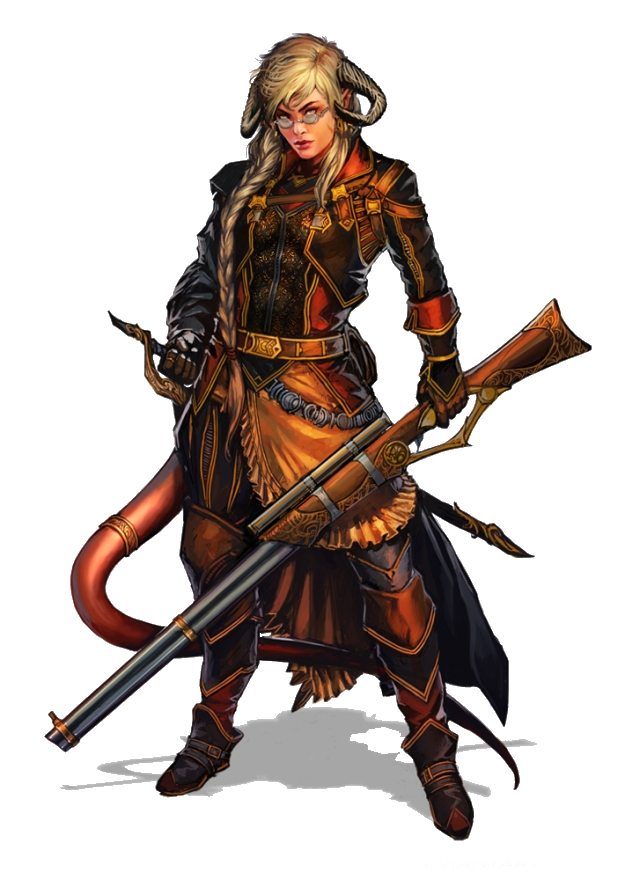
Swift Breaker. As part of the bonus action made to use your Breaker ability with a Weighted Spear, you may also move up to your movement speed in straight line in any direction without provoking attacks of opportunity.
Pack Tactics. You gain advantage on any attack roll against an enemy with a Wolf Greatsword if you have an ally within 5 feet of your target.
Bleed. When you hit a creature at least twice with a Tracer before the end of your turn, they begin to bleed. At the beginning of their next turn, they must succeed on a Constitution Saving Throw against a DC of 8 + your proficiency bonus + your Dexterity modifier. On a failure, they take 1d4 slashing damage plus an additional 1d4 slashing damage equal to the number of times you hit the creature on your turn. A creature who does not bleed is immune to this ability.
Versatile Combat
Beginning at 15th level, you can switch from wielding one Dragonbane weapon to another in the same free action.
Additionally, if you have already dealt damage to a creature with one Dragonbane weapon you are wielding, you have advantage on the first attack on this turn with another Dragonbane weapon. You must be proficient with both weapons to gain this benefit.
Violent Surge
At level 18, you can mark a creature for death when you use your Action Surge. When you use your Action Surge, you may choose a single creature within 30 feet of you that you can see. Any attacks you make against that creature with a Dragonbane weapon you have ignore resistances and immunity. The creature is considered weak to the damage if they weren't already resistant or immune.
Onslaught
Fighters that use this archetype are known for their ferocious fighting style, charging into battle with reckless abandon and swinging their weapons in a wild frenzy. They are impulsive and fearless, never backing down from a fight no matter the odds.
While they may not be the most cunning or strategic fighters, they make up for their lack of brains with brawn. They have an instinctive understanding of the battlefield and an uncanny ability to sense the movements of their enemies, allowing them to strike quickly and decisively. Some might mistake them for being simple-minded, but that would be a mistake. Though they may not be scholars or philosophers, they possess a deep wisdom born from years of experience on the battlefield.
Aura of Onslaught
At 3rd level, you can cause your enemies to falter. As an action, you can spend hit points equal to your Fighter level to emit an aura 10 feet around you. Enemies within that aura that attempt to make an attack must make a Wisdom saving throw with DC 10 + your Wisdom modifier or have disadvantage on the attack roll. This feature does not affect creatures that are immune to being frightened, and it can only be used twice per short or long rest.
Whirlwind
At 7th level, you have an idea on how to deal with multiple enemies. When you take the Attack acton, you may make a Whirlwind Attack. Using this attack allows you to make an attack roll on all creatures within 5 feet of you, up to a maximum of your proficiency bonus. A creature targeted by this attack gains advantage on their next attack against you, and it can only be used when there are at least two enemies in range.
Ricocheting Attacks
At 11th level, your attacks ricochet between enemies. When you take the attack action, you can make one attack against two creatures. On a hit, that creature takes damage as normal, and then additional damage equal to half of the damage dealt to the other.
This feature can only be used twice per long rest, and can only target two creatures.
Unrelenting Assault
At 15 level, you can make an additional attack as a bonus action whenever you use your action to attack. However, if you only attack one creature during your turn, you make the attack with disadvantage and it does not deal bonus damage from your Ability Score.
Rampage
At 18th level, you can enter a rampage against your enemies. As an action, you can spend hit points equal to your Fighter level to fly into a frenzy for 1d4 rounds, gaining the ability to make one attack against each enemy within 5 feet of you. While under the effects of this feature, you cannot use Unrelenting Assault, and you do not gain your Proficiency bonus to your Attack rolls. Additionally, you cannot make Attacks of Opportunity.
This feature can only be used once per long rest.
Fencer
Fencers are highly skilled duelists and swordmasters with a flair for style and panache. For a Fencer, fighting is an art form. Renown comes from fame, and it is a desire for that recognition that drives them to be inventive and resourceful on the battlefield. Though they deal in combat, a true Fencer is a performer at heart. The battlefield is their stage and their enemy is an audience to be beguiled. Some Fencers are rumored to be unsavory scoundrels, while others are featured in songs and chronicles as heroes.
Bonus Proficiency
When you choose this archetype at 3rd level, you gain proficiency in either the Acrobatics or the Performance skill. If you are already proficient in both skills, you instead gain proficiency with one of the following tools: calligrapher's supplies, painter's supplies, disguise kit, or any musical instrument.
Flourishes
At 3rd level, you learn to use a variety of techniques to dance upon the battlefield. You gain the benefits of these flourishes as long as you are not wearing armor and not wielding a shield.
You learn two flourishes of your choice, which are detailed under "Flourishes" below. You learn one additional flourish of your choice at 7th, 10th, and 15th level. Each time you gain a level in this class, you can also replace one flourish you know with a different one.
Unfettered Defense
You can avoid incoming attacks with speed and cunning. Beginning at 3rd level, while you are wearing no armor and not wielding a shield, your AC equals 11 + your Dexterity modifier + your Charisma modifier.
Dramatic Finale
Starting at 7th level, you can end your turn with a dazzling display. You can make an additional attack using any weapon you are holding (no action required). This attack uses your Charisma modifier, instead of Strength or Dexterity, for the attack and damage rolls. After you make this attack, your turn immediately ends.
You can use this feature a number of times equal to your Charisma modifier (minimum of once) and you regain all expended uses of it when you finish a long rest.
Expertise
At 10th level, choose either Acrobatics or Performance. Alternatively, choose one of the tools specified in the Bonus Proficiency feature. Your proficiency bonus is doubled for any ability check you make that uses the chosen proficiency.
Fast Movement
Starting at 10th level, your movement speed increases by 10 feet while you aren't wearing armor.
Precise Parry
Starting at 15th level, when a creature makes an attack against you, you can briefly distract them. Before the attack roll is made, you can use your reaction to impose disadvantage on the attack roll. If the attack still hits, you can reduce the damage by an amount equal to twice your Charisma modifier.
You can use this feature a number of times equal to your Charisma modifier (minimum of once) and you regain all expended uses of it when you finish a long rest.
Audacious
At 18th level, even when you miss your mark, you can quickly shift into a new position and try again.
Once on each of your turns when you miss a creature with a weapon attack, you can immediately move up to 10 feet without provoking opportunity attacks from the creature and choose to make another weapon attack against a different creature as part of the same action.
Flourishes
The flourishes are presented in alphabetical order.
Artful Avoidance. When you use your Second Wind, you can immediately move up to half your speed without provoking opportunity attacks.
Circle Step. When you take the Attack action and hit a creature with a melee weapon attack, you can immediately move up to 5 feet, as long as the creature remains within your reach. You can make this movement for each attack you make using the Attack action.
Crafty Escape. You can use a bonus action to attempt to escape a grapple where it would normally require an action.
Dance of Blades. When you take the Attack action and you have the Extra Attack feature, you can forgo one of your attacks to move up to 10 feet. This can be done for multiple attacks, but not all of them.
Expert Throw. Once on each of your turns, when you make a ranged weapon attack using a weapon with the thrown property, you can immediately move up to 10 feet in a straight line toward or away from the target of the attack. In addition, your range with such weapons is increased by 20 feet.
Flowing Performance. When you use your Action Surge, you can take one additional bonus action.
Fluid Motion. When you are prone, standing up uses only 5 feet of your movement. In addition, mounting or dismounting a creature costs you only 5 feet of movement.
Flying Pirouette. Your jump distance is doubled. In addition, you have resistance to damage from falling and you do not land prone after falling.
Flourishes (Cont.)
Heroic Charge. You can give yourself a bonus to initiative rolls equal to your proficiency bonus. At the start of your first turn of each combat, your walking speed increases by 5 feet, which lasts until the end of that turn.
Interposing Strike. When a creature provokes an opportunity attack from you, you can immediately move up to 10 feet before making the attack, as long as the creature remains within your reach.
Masterful Bladework. You can use Dexterity instead of Strength for the attack and damage rolls of the following weapons when you wield them: glaive, handaxe, javelin, longsword, pike, quarterstaff, and spear.
Perfect Balance. You ignore nonmagical difficult terrain.
Quick Defense. When a creature misses you with an attack, you can immediately use your reaction to move up to 10 feet without provoking opportunity attacks.
Sustained Momentum. You can use a bonus action on your turn to move up to 10 feet.
Leaping Strike. When you use your Action Surge, and you are wielding a melee weapon with both hands, you can increase your reach with that weapon by 5 feet until the end of your next turn.
Thousand Cuts. When you make an opportunity attack and you are using Two-Weapon Fighting, you can make one additional attack with the weapon in the other hand, as per the rules of Two-Weapon Fighting.
Uncanny Accuracy. Being within 5 feet of a hostile creature doesn’t impose disadvantage on your ranged weapon attack rolls.
Templar
An archetypical Knight Templar bears a distinct resemblance to paladins and clerics, particularly in the way they present themselves. While they lack the divine magic offered by these classes, their divine fervor and unshakeable devotion to their gods are far from lacking.
A Templar fights for their deity, commonly acting as crusaders or, less commonly, inquisitors of the faith. These fighters come from all walks of life, united by their zealotry and unbreakable faith. In their training, they become capable combatants, devoted friends, and learned scholars of their faith. A Templar’s way of life is arduous—they are always fighting for something, whether for their god, their companions, or a moral cause.
Bonus Proficiency
At 3rd level, you gain proficiency in the Religion skill. If you already have this proficiency, you instead gain proficiency in another skill of your choice.
Zealot’s Devotion
Also at 3rd level, you can devote yourself to a cause. This uses your zealotry die, which starts as a d6 and increases in size as you level. It becomes a d8 at 7th level, d10 at 10th level, and a d12 at 15th level. Starting at 18th level, you roll your zealotry die twice and take the higher of the two rolls.
As a bonus action, you can devote yourself towards either Defender of Kin or Slayer of Foes. Both choices use your zealotry die as part of their effects, and your choice lasts until you choose a different one or are incapacitated.
Defender of Kin. You devote yourself towards defending your allies. While this feature lasts, you can use your bonus action to rally a creature other than you that is within 5 feet of you. You roll your zealotry die, and the targeted creature gains temporary hit points equal to the number rolled. These temporary hit points last until the start of your next turn.
Slayer of Foes. You devote yourself towards slaying your enemies. If you hit a creature with an attack while this feature lasts, you can use your bonus action to empower that attack. You roll your zealotry die, and add it to the attack’s damage roll.
Scholar of Evil and Good
By 7th level, you have learned much about the creatures of evil and good—aberrations, celestials, elementals, fey, fiends, and undead—granting you advantage on any Charisma checks you make while interacting with them, and allowing you to add your proficiency bonus to any Wisdom, Charisma, or Intelligence save imposed by one of these creatures if you don't add your proficiency to that save already.
Surge of Faith
Starting at 10th level, using your Action Surge also allows you to take an additional bonus action on your turn, and increases your speed by 15 feet until the end of turn.
Endless Fervor
Beginning at 15th level, your Zealot's Devotion feature is significantly enhanced. While Defender of Kin is active, you gain a +2 bonus to your AC, as well as resistance to two damage types of your choice. While Slayer of Foes is active, you gain +2 bonus to your weapon attack rolls, and your attacks score a critical hit on a 19 or 20. Additionally, when you reduce a creature to 0 hit points, you can make an attack against a creature within 5 feet.
Deus Ex Machina
By 18th level, the gods have noticed your ceaseless devotion, and have taken a vested interest in your fate. You have advantage on death saving throws, and once per long rest when you drop to 0 hit points, you can make a Constitution saving throw, with the DC equal to half the damage of the attack that reduced you to 0 hit points (minimum 10). Additionally, can cast the augury spell at will, without requiring any material components, and you can cast the divination spell once per day without using a spell slot or material components.
Part 8: Monk
Way of the Fisherman
Monks of the Way of the Fisherman never strike first, but are determined to strike last. Basing their technique off of the humble fisherman, these monks learn to take a hit and return it with twice the force, along with abilities to ensnare and trap enemies if they can.
Reinforcement
When you choose this tradition at 3rd level, you can use your ki to protect yourself against another’s blow. When you are hit with an attack, you can use your reaction and spend a Ki point to halve the damage of the attack. When you reduce damage this way, you gain resistance to the triggering damage type until the end of your next turn.
If you land an attack while you have a Reinforced resistance type, you can spend 1-3 Ki points to deal an additional 1d10 damage of the same type you were resistant to, plus an additional 1d10 damage for each Ki point over 1 spent, to a maximum of 3d10 total damage. You then lose your resistance once you use this Reinforced Strike. At the end of your turn, when you would lose Reinforced resistance, you can choose to use 1 Ki point to retain your Reinforced resistance for one more round.
Observant
At 6th level, your patient combat style has granted you insight into your less patient foes. You can spend an action to enter a trance and trace the Ki of a single creature you can see within 120 feet of you until the beginning of your next turn. Making an attack breaks this trance.
If the creature makes an attack or casts a spell while you are observing it, you can attempt to learn the action. You must succeed on an Insight check versus the creature’s Deception check. If you succeed, the creature has disadvantage to hit you with that attack, and you have advantage on any saving throws it entails, for the next minute, or until you memorize another action. Attack actions with separate weapons or separate natural weapons (such as a claw and a bite attack) are considered separate attacks for the purposes of this ability. A creature who is unaware of your presence has disadvantage on their Deception check.
Reinforced Maneuvers
At 11th level, you embody your reinforced element. While you are Reinforced with a damage resistance type, you gain a specific trait, as determined below.
Acid. While you are reinforced with Acid, you can use 1 Ki point and a bonus action to attempt to dissolve up to a 5 foot cube of metal you can see within 30 feet. A construct made of metal must make a Dexterity saving throw or take 4d6 acid damage, taking half as much on a failed save. You can also target a creature’s non-magical, metal armor or weapon, instantly lowering its AC by 1 or damage rolls by 1.
If an armor’s AC is reduced to 10 or a shield’s AC bonus is reduced to +0, it is destroyed and dissolves away. A weapon which accrues a -5 penalty to damage is destroyed and dissolves away.
Bludgeoning. While you are reinforced with Bludgeoning, your melee weapon attacks deal double damage to objects and structures.
Cold. While you are reinforced with Cold, you can use a bonus action to levitate your movement speed directly upwards or down, riding a cloud of cold mist. If you lose resistance to Cold damage while in the air, you fall as if affected by the Feather Fall spell.
Fire. While you are reinforced with Fire, you can use an action and 3 Ki points to summon a Fire Elemental, as with the Conjure Elementals spell. The elemental stays even if you are not reinforced by Fire, and does turn hostile if your concentration is broken, as per the spell description. You then lose resistance to Fire damage granted by Reinforcement.
Force. While you are reinforced with Force, you can a bonus action and 1 Ki point to create a small arcane shield around you, granting you a +2 bonus to AC until the beginning of your next turn.
Lightning. While you are reinforced with Lightning, you can use a bonus action and 1 Ki point to move extremely fast in a line to a single point within 120 feet. Attacks of opportunity made against you as a result of this movement are made at disadvantage.
There does not need to be solid ground beneath you during the entire length of the movement, but you need to start and end on solid ground or the ability fails.
Necrotic. If you kill a creature while reinforced with Necrotic damage, you may spend 2 Ki Points to animate the creature as a Shadow under your control. Your Shadow rolls its own Initiative in combat, but you choose its actions and movements on its turn. This shadow fades after 1 hour has passed, until it moves 120 feet away from you, until you create a new Shadow using this ability, or until you use a bonus action to dismiss it.
The shadow you summon in this manner is slightly more powerful due to its reinforced nature. It has temporary hit points equal to 1d8, plus an additional 1d8 for each of your monk levels; its bonus to hit and damage with its Strength Drain ability equals your bonus to hit and damage with your Unarmed Strikes, and its AC equals yours.
Piercing. While you are resistant to piercing damage, any creature who deals damage to you from an attack instantly takes 1d4 + 1 piercing damage, provided you are not knocked unconscious from that attack.
Poison. While you are resistant to poison damage, you can use an action and a Ki point to create a cloud of black, toxic smog centered on yourself, expanding to cover a 20-foot radius. Any creature inside the cloud apart from you cannot breathe, and the area is considered heavily obscured.
A heavy wind can disperse the cloud, while light gusts can move it at 15 feet a round. After creating a cloud with this ability, you lose resistance to Poison damage granted by Reinforcement.
Psychic. While you are resistant to psychic damage, you can use an action and 2 Ki point to cast Detect Thoughts, with your Save DC equaling your Ki Save DC. You then lose resistance to Psychic damage granted by Reinforcement. Your spellcasting modifier for this spell is Wisdom.
Radiant. While you are resistant to radiant damage, you can use your action and 1-3 Ki points to heal yourself or a creature within 30 feet of you a number of hit points equal to 1d6 + your Wisdom modifier, plus an additional 1d6 per Ki point spent. You then lose resistance to Radiant damage granted by Reinforcement.
Slashing. While you are resistant to slashing damage, can spend a bonus action and 2 Ki points to cast Spiritual Weapon as a 2nd level spell, with your Save DC equaling Ki Save DC. You then lose resistance to Slashing damage granted by Reinforcement. Your spellcasting modifier for this spell is Wisdom.
Thunder. While resistant to Thunder damage, you can chose for a creature who takes damage from your unarmed strike to attempt to succeed on a Strength saving throw or be knocked 5 feet away from you.
The targeted creature automatically fails this saving throw if you choose to deal Thunder damage on your unarmed strike and therefore end your Reinforcement.
Perfect Reinforcement
At 17th level, you have perfected the ability to absorb enemy’s blows. When you use your Reinforcement feature, you gain immunity rather than resistance to the type of damage Reinforced, although you still take half damage to the initial blow. Additionally, when you use your Reinforced strikes feature, you ignore any resistances the target might have, and they still take half damage if they are immune.
Way of the Painted World
When a crossbreed monstrosity that held no place in this world was born to the gods, the lord of Sunlight commissioned his master painter to create a magical prison for the creature, so that word of its existence would not escape into his realms. In doing so, the painter created the Painted World of Ariamis, the first of many Aria paintings, and the crossbreed ruled over it for many decades.
Ever since then, Arias have been painted, burnt, and repainted again, transforming from prisons to safe havens for the lost and forlorn. However, these forlorn souls needed protection, for invaders would find their ways into the Arias to torment the lost souls. As such, the Way of the Painted World were born, soldiers who use scythes and frost magic in tandem to peacefully drive away invaders.
Bonus Proficiencies
When you choose this tradition at level 3, your training in the Arias has granted you a unique form of combat, allowing you to gain proficiency in the Scythe, which counts as a Monk weapon for you. You also gain proficiency in Painter's Tools.
Frozen Fist
Additionally at level 3, when you hit a creature with one of the attacks granted by your Flurry of Blows, you may spend 2 Ki to begin to freeze its body. That creature must succeed on a Constitution saving throw or have its body begin to be covered in magical frost. While it is covered in this frost, its movement speed is halved, it cannot take reactions, and it may only make either one Action or Bonus Action per turn.
This effect lasts for 1 minute, until the creature takes any fire damage, or until you lose concentration (as if you were concentrating on a spell). A creature who is immune to cold damage is immune to this ability.
If a creature who is effected by your Frozen Fist takes any damage, they may attempt the Constitution saving throw again, ending the effect on a success.
Additionally, you gain the Frostbite cantrip if you did not already know it. Wisdom is your spellcasting ability for it.
Lifehunt
At level 11, you have mastered a special attack created by the first inhabitant of the Painted Worlds.
When you take the Attack action with a Monk Weapon you are proficient in, you may forgo one of your attacks granted by Extra Attack to turn a remaining attack into special Lifehunt attack. On a hit, you drain the creature's health, and you gain temporary hit points equal to the damage dealt, rounded down.
Painted Master
At level 17, you can create your own painted world to protect yourself in. Using your Painter's Kit, you may spend time and gold painting your own Painted World, which is a demiplane of variable size that is always cold but safe. The Painting costs 1000 gp in rare paints and inks for every 1 square foot for the painting. The size of the demiplane is directly linked to the size of the painting itself, being 100 cubic feet per 1 square foot of painting, in any form you choose. The Painted World always is not populated once created, but has any structures that were painted in the original painting. Once complete, you may step through the painting into a place in the demiplane that would logically have the view the painting provides.
A creature who tries to enter or exit this demiplane through the demiplane or plane shift spells must succeed on an Intelligence Saving Throw against your Ki Save DC or their spells fail, they take 3d12 cold damage, and they cannot cast any other conjuration spells for 1 minute. Casting dispel magic on the Painting ceases its function as a portal for 1 minute.
Whenever you deal damage to a creature with an attack or spell, you may use a bonus action and spend 4 Ki points on the same turn to attempt to banish it into a painting that has a portal intact. The creature must succeed on a Charisma saving throw. On a failure, they are instantly teleported to a place in your Painting that is on solid ground. If they find the portal out of the painted world, they reappear in the space they were banished. If you create another magical painting, the previous painted world's portal is instantly destroyed and any creatures or objects that were inside are scattered across the Astral Sea.
Way of the Force
Monks of the Way of the Force harness the very power of gravity. They have meditated on this natural force to be able to tap their ki into it and alter gravitation around them. They often see gravity not only as a force of nature, but as an extension of their arts.
Gravitational Punches
Starting when you choose this tradition at 3rd level, your blows are so heavy that they reform gravity around them. You gain the following benefits to your Flurry of Blows.
- Whenever hit two different creatures with the unarmed strikes granted by your Flurry of Blows, you can create a gravitational pull between the two creatures. Until the end of your next turn, the creatures can't willingly move while more than 20 feet away from each other.
- Whenever you hit the same creature with both of the unarmed strikes granted by your Flurry of Blows, you can create a vortex of high gravity within it, halving its speed until the end of your next turn.
Light as a Feather
Also at 3rd level, you gain the ability to reduce your own gravity. When you're prone, you can stand up by spending 5 feet of movement, rather than half your speed.
Fluctuate
At 6th level you gain the following abilities:
Catch. You can spend 1 ki point to cast feather fall without providing material components.
Heavy Stance. As a reaction to being forcibly moved, you can increase your gravity and not be moved instead.
Low Gravity
Beginning at 11th level, when you use your Step of the Wind feature, you gain a flying speed equal to your walking speed until the end of your turn.
In addition, when you affect a creature with your Gravitational Punches feature, it takes force damage equal to your Martial Arts die.
Plummet
Beginning at 17th level, once per turn, when you hit a creature with an unarmed strike, you can spend 3 ki points to attempt to change the creature's gravitational pull. If the creature is somehow anchored to the ground or other surface, this ability has no effect on it.
Otherwise, the creature's gravity is changed and it begins to fall in any direction of your choice. The creature must make a Strength saving throw against your Ki save DC. On a failed save, the creature falls up to 60 feet in the chosen direction. On a successful save, it falls up to 30 feet in the chosen direction. In either case, if a solid object is encountered in this fall, the creature strikes it just as it would during a normal downward fall. The creature's gravity returns to normal after the fall or after it collides with anything.
Way of the Iron Fist
One of the oldest monastic traditions, monks of the Way of the Iron Fist focus on the deep and unyielding truths that the ages have carved into stone.
Monks of the Way of the Iron Fist are taught the techniques of the unyielding mountain, harnessing it's resilience. They often train in unrelenting conditions to push their bodies beyond their normal limits. This training allows them to use their ki as a raw weapon in their punches and parries. In battle, these monks launch waves of ki energy at their foes while simultaneously bolstering their own defenses.
Mountainous Resilience
Starting at 3rd level, you become resistant to the harsh conditions of the mountain. You are naturally adapted to cold climates and high altitudes as described in Chapter 5 of the Dungeon Master's Guide.
Fist of Iron
Also at 3rd level, you may expend 1 ki point as a bonus action to surround your fists with a glowing aura of raw energy that sheds bright light in a 5-foot radius and dim light for an additional 5 feet. This energy lasts until you dismiss it as a bonus action, use this feature again, unleash the energy as described below, or until 1 minute has passed.
While you have the aura, your unarmed attacks are considered magical and you can choose to deal force damage with them instead of their normal damage.
When you hit a creature with an unarmed strike you can choose to unleash the energy. If you do so, the creature must succeed on a Strength saving throw with DC equal to 8 + your proficiency modifier + your Wisdom modifier. On a failed save, the target takes 1d10 force damage and you may shove it up to 5 feet away from you. After this attack the energy dissipates and your Fist of Iron effects end.
You can spend 1 Ki Point to add any of the following modifiers to this unleashed attack. The points must be spent when unleashing the energy, before the Strength saving throw is made.
The number of Ki you may spend to modify the unleashed attack increase as you gain levels in this class. You may spend up to 2 ki points at level 5, 3 ki points at level 9, 4 ki points at level 14, and 5 ki points at level 17.
Hammering (1+ ki points)
The target takes an additional 1d10 force damage for each point spent.
Crushing (1 ki point)
The target is also knocked prone.
Hurling (1-3 ki points)
The target is pushed an additional 10 feet for each ki point spent.
Sweeping (2 ki points)
You target all creatures in a 5 foot radius of the original target with your unleashed attack.
Furious Strikes
Starting at 6th level, when you hit and damage a creature with both of your attacks granted by Flurry of Blows, it must make a Constitution saving throw or stagger under the heavy blows. Creatures that are immune to being stunned automatically succeed on this saving throw. A staggering creature's speed is halved, it can't take reactions, and has disadvantage on Dexterity saving throws until the end of your next turn.
Ki Wave
Starting at 11th level, you can punch the ground as an action and release a burst of energy that ripples outwards from you. Each creature on the ground in a 25-foot cube originating from you must make a Dexterity saving throw. On a failed saving throw, a creature takes 2d6 force damage and is knocked prone. Additionally, the ground in the area becomes difficult terrain to all other creatures except you until the start of your next turn.
You can increase the damage of this feature by spending up to 3 ki points as part of the action, increasing the force damage dealt by 2d6 per ki point spent. When you spend ki points in this way, the burst of ki energizes you and you gain temporary hit points equal to your Wisdom modifier plus an extra 1d4 per ki point spent.
Perfect Fists
Starting at 17th level, when you use your Fist of Iron feature you may spend 2 extra ki points. If you do, your fists are enveloped in a powerful, crackling energy for 10 minutes that sheds bright light in a 20-foot radius and dim light for an additional 20 feet.
While this feature is active, you gain all the benefits of your Fist of Iron as well as the following additional effects:
- At the start of your turn, if you have at least 1 hit point remaining, you may choose to gain temporary hit points equal to your Wisdom modifier.
- Your unleashed attack automatically gains the Sweeping modifier, you can apply other modifiers to it as normal.
- Reactions that parry or block to add Armor Class against an attack are ineffective against your unarmed strikes.
Way of the Moon Soul
Monks of the Way of the Moon Soul follow an ancient tradition, one in which adherents study the cycles of the moon. These monks often adorn themselves with tattoos of lunar symbols and moons, and believe that just as the moon changes form, so must they. Sometimes these monks are religious leaders or guardians of the night and all creatures that thrive within it. Other monasteries might focus on understanding the moon's effects on the world such as with madness, lycanthropy, or the shaping of the tides. Some of these monks might even be mad hermits, obsessed with the moon and basking in its glory.
Regardless of what their primary focus is, monks of this tradition learn how to best operate in the dark, develop unique abilities inspired by the phases of the moon, and can see through darkness and illusions.
Moon Soul
When you choose this tradition at 3rd level you gain proficiency in the Nature skill if you don't already have it. You also gain darkvision out to a range of 60 feet. If you already have darkvision, its range increases by 30 feet.
Lunar Arts
Beginning at 3rd level you have unlocked special ki techniques that are influenced by the moon. As an action, you can spend a number of ki points to perform one of the following abilities. If the ability allows you to cast a spell, you cast it without requiring material components.
Full Moon. You can spend 2 ki points to cast the moonbeam spell. This spell ends if you use any other option granted by this feature. You can spend additional ki points to cast moonbeam at a higher level. Each additional ki point you spend increases the spell's level by 1. The maximum number of ki points that you can spend equals half your monk level.
Half Moon. You can spend 1 ki point to make one unarmed strike each against any number of creatures within 5 feet of you. When you hit a creature with one of these unarmed strikes, the attack deals radiant damage instead of the bludgeoning damage.
New Moon. You can spend 2 ki points to cast the invisibility spell. When you do so, the spell has a range of self.
Celestial Resilience
At 6th level the magic of the moon flows through you. You gain resistance to radiant damage.
You can cause others to fall under your lunar spell. As an action, you can force creatures of your choice within 30 feet of you that can see you to succeed on a Wisdom saving throw or be charmed by you until the end of your next turn. Once you use this ability you can't use it again until you finish a short or long rest.
Brilliant Serenity
At 11th level your connection to the moon has made you become a calming presence to allies. When you use your Stillness of Mind feature, you can also choose to end one short- or long-term madness you are suffering from in place of the charmed or frightened conditions. Additionally, you can choose a creature within 5 feet of you that is charmed, frightened or suffering from a madness effect, ending one of those conditions on it instead of yourself.
Lunar Beam
At 17th level you can channel ki into a blast of lunar power. As an action, you can spend 4 ki points to project a beam of light at one creature you can see within 60 feet of you. The target must make a Constitution saving throw. On a failed save, the target takes 6d8 radiant damage and is blinded for 1 minute. On a successful save, it takes half as much damage and is not blinded. A blinded target can repeat the saving throw at the end of each of its turns, ending the effect on itself on a success. Shapechangers have disadvantage on this saving throw.
You can increase this effect's damage by 1d8 per each additional ki point spent on it.
Way of the Mountain
Although many paths of monastic traditions focus on the agility, flexibility and adaptability of the body and spirit, the Way of the Mountain learns to use unconquerable strength to take control of every situation. Through this tradition, monks come to embody the unmovable strength of the mountain, and the unstoppable might of the landslide.
Stout Defense
Starting when you choose this tradition at 3rd level, while you are wearing no armor and not wielding a shield, your AC equals 10 + your Strength modifier + your Wisdom modifier.
Implacable Stance
At 3rd level, you are considered one size larger for the purposes of grappling and have advantage on all your Strength checks.
Additionally, if you move 5 feet or less on your turn, you can anchor your heels into the ground. Until the beginning of your next turn, you can't be moved against your will, and, for the duration, you can spend a ki point whenever you take damage to reduce the damage taken by 1d8.
Huge Presence
By 6th level, your enormous silhouette causes even hardened warriors to take pause. You gain proficiency in the Intimidation skill. If you already had proficiency in this skill, you can add twice your proficiency modifier to ability checks made using it.
Additionally, attacks made against you before you have taken a turn in combat have disadvantage.
Landslide
Beginning at 11th level, you can drop your full weight on a foe like a falling meteorite. Once on each of your turns when you make a unarmed strike, you can deal twice the number of damage dice on a hit, but also knock yourself prone after the attack.
Colossal Majesty
By 17th level, you are an unmovable titan. Whenever you take damage, you can expend any number of ki points to reduce the damage by 1d8 per ki point expended.
Way of the Sphinx
Even now, millennia after their construction, the dusty tombs and forgotten crypts of the god-kings are still sacred locations. The monasteries of the sun have endured, safeguarding the tombs from harmful interlopers, with generation after generation of stalwart guardians, ensuring the pharaohs’ rest is not disturbed. These monks are trained in the Way of the Sphinx, a fluid but aggressive style of martial arts, focused squarely on the use of scimitars, and take a sacred oath to guard the tombs until their deaths. These monks leave the bounds of the desert only if one of their number has failed in their duties, and a sacred artifact from the tombs must be recovered.
Claws of the Sphinx
When you choose this monastic tradition at 3rd level, you gain proficiency with scimitars, which count as monk weapons for you.
In addition, when you engage in two-weapon fighting, you add your ability modifier to the damage of the second attack.
Inscrutable
Also at 3rd level, you are immune to any magical effect that would sense your emotions or read your thoughts. Wisdom (Insight) checks made to ascertain your intentions or sincerity have disadvantage.
Divine Guardian
Starting at 6th level, your monastery teaches divine magic. Some of the spells they practice hamper their enemies, others help the caster survive in their harsh surroundings. You can spend ki points to cast the spells create or destroy water, dust devil, or shield of faith.
When you cast a spell in this way, you must expend a number of ki points equal to the spell's level. If the spell can be cast at higher levels, you can spend additional ki points to cast the spell at a higher level, at a cost of one additional ki point per spell level. You can expend ki points equal to no more than one third of your monk level (rounded down) on any spell granted by this feature.
Flurry of Blades
Also at 6th level, when you use your Flurry of Blows feature while wielding a light monk weapon in each hand, you can use your light weapons for the additional attacks.
Whirling Blades
Starting at 11th level, as an action while you hold a light monk weapon in both hands, you can spend movement equal to your Unarmored Movement bonus to whirl around in a lethal flourish. When you do so, each creature within 10 feet of you must make a Dexterity saving throw. On a failed save, a creature takes damage equal to your Martial Arts die + your Dexterity modifier, and is pushed 5 feet away from you in a straight line. On a successful save, a creature takes half as much damage and isn't pushed away from you.
Pharaoh's judgment
Starting at 17th level, your voice booms with divine authority, causing hostile creatures to freeze when you pass judgment upon them. As an action, you can spend a number of ki points up to your Wisdom modifier. You cast the spell hold person, targeting a number of creatures equal to the number of ki points spent. Once you use this ability, you can't use it again until you finish a short or long rest.
Way of the Void
Monks that follow the traditions of the Way of the Void look to the spaces between the stars for inspiration in their techniques. Their training emphasizes emptiness of mind and body, and monks of this tradition spend long hours in fasting and meditation.
Void Techniques
At 3rd level, you learn the techniques of the void. You gain the following abilities:
Vacuum Pull. When you hit a creature with a melee weapon attack, you can expend one ki point to create a vacuum centered on the target. Each creature other than you within 10 feet of the target must make a Strength saving throw or be pulled 5 feet toward the target and take bludgeoning damage equal to your Martial Arts die.
Deflect Spell. When you take damage from a spell, you can expend one ki point and use your reaction to reduce or nullify the magic. When you do so, the damage you take from the attack is reduced by 1d10 + your Wisdom modifier + your monk level.
Empty Soul
At 6th level, you learn to fight without being weighed down by your own life energy. When you have no ki remaining, your movement speed increases by 10 feet and you gain temporary hit points equal to your Wisdom modifier (minimum of 1) at the start of each of your turns.
Empty Mind
At 11th level, you learn to remove your presence. You are always under the effects of a nondetection spell. Additionally, you are immune to psychic damage.
Nothing
At 17th level, you can become so empty that not even magic can exist around you. You can use your action to spend 6 ki points to cast antimagic field, without material components.
Part 9: Paladin
Oath of the Darkmoon
The dark sun, Gwyndolin, was captain to a loyal company of knights that fought to preserve the age of light. They would travel the world, even to other planes of existence, to destroy places where the Dark would take hold and to hunt down those whose sin bring on the dark. When forces of shadow would take hold in the world, the Blades of the Darkmoon are there to break that hold, and protect those who might be harmed by it.
Tenets of the Darkmoon
The tenets of the Darkmoon are ancient accords revolving around keeping people from straying on the path of light, so that the Dark will not gain hold over them. They care little for law or chaos, only that the people they protect stay kind, and they therefore turn towards Neutral Good more often than not.
Push back the Dark. Through vigilance and steel, I must always prevent the Dark from taking hold in this world.
Protect the Light. I must protect those whose souls are bright and innocent, for they are the true wards against darkness.
Hunt down Sinners. Once given a quarry, I must find the sinner and bring his soul to justice. Leaving a single dark soul will infect this world, and bring about evil.
Kindness. I must always be compassionate, even towards those infected by the Dark. They were once bright souls, too.
Oath of the Darkmoon Spells
You gain oath spells at the Paladin levels listed.
| Paladin Level | Spells |
|---|---|
| 3rd | Hex, Compelled Duel |
| 5th | Moonbeam, Warding Bond |
| 9th | Life Transference, Remove Curse |
| 13th | Death Ward, Shadow of Moil |
| 17th | Wall of Light, Banishing Smite |
Channel Divinity
When you take this Oath at 3rd level, you gain the following two Channel Divinity options.
Darkmoon Blade. As an action, you can imbue your weapon with the mystical power of the moon. For 1 minute, you add your Charisma modifier to damage rolls made with that weapon (with a minimum bonus of +1). The weapon also emits dim light in a 20 foot radius. If the weapon is not already magical, it becomes magical for the duration.
You can end this effect on your turn as part of any other action. If you are no longer holding or carrying this weapon, or if you fall unconscious, this effect ends.
Vow of Protection. As a bonus action, you may designate a single willing creature within 30 feet of you as your Ward. For the next minute, whenever your Ward is within 5 feet of you, they gain a bonus to AC equal to your Charisma modifier. If you are not within 5 feet of you, you may use a bonus action on your turn to teleport up to 60 feet directly towards your Ward, ending this teleportation within 5 feet of it.
If you would teleport into an occupied space, you are knocked prone back into the nearest unoccupied space and the Vow of Protection ends early.
Defender
Beginning at level 15, enemies cannot easily harm your allies near you. Whenever an enemy attempts to attack an ally within 5 feet of you while you are aware of it, it has disadvantage on the attack, as your protective aura confounds its attack.
This effect does not take place if you are incapacitated or if you were not aware of the source of the attack.
Blue Sentinel
At 20th level, you can use an Action to become a beacon of hope and light, a creature to protect the meek- a Blue Sentinel. For 1 minute, your body is covered in a blue, shining aura that emits dim light for 10 feet.
While you are emanating this light, whenever you make an attack against a creature, any number of allies within 30 feet of you who can see you may use their reaction to make an attack as well. Additionally, your attack rolls gain a bonus to hit equal to the number of allies you can see within 30 feet of you.
Once you use this feature, you cannot use it again until you complete a long rest.
Oath of the Deep
The Oath of the Deep is most likely the oldest oath a paladin can swear, predating the days of dragons and giants. These paladins, known as Deepbringers, are bent on protecting their ancient rites- to protect the ocean, to shun the sun, and to bring peace between the land-striders and the deep-dwellers. Pale lanterns in the inky darkness, the Deepbringer will protect the world with a cold vigilance, serving his term until his life expires.
Tenets of the Deep
The tenents of the Deep are ancient words that are only heard in the deepest Triton and Mer communities. Martyrs and knowledge seekers at heart, the tenants of the deep are a selfless sacrifice to protect the sun-lit world.
Knowledge. Knowledge of the enemy is the only way to completely destroy them. Seek knowledge where you can, use it to ensure the terrors of the Deep remain sealed away from both the eyes and memories of the innocent.
Shun the Sun. The Sun is not for you to live in, despite where your travels may take you- that is the price of those who ensure the world’s safety. Always return to the deep sea.
Stomp out Evil. Protect others from evil creatures, regardless of who the evil creature is.
Be their Light. Become a beacon of knowledge and goodness for others to follow. It is only through great acts may others lead great lives.
Oath of the Deep Spells
You gain Oath Spells at the Paladin levels listed.
| Paladin Level | Spells |
|---|---|
| 3rd | Identify, Psychic Null° |
| 5th | Enhance Ability, Mana Leech° |
| 9th | Psyche Drain°, Water Breathing |
| 13th | Control Water, Arcane Eye |
| 17th | Modify Memory, Legend Lore |
Channel Divinity
You gain the following two Channel Divinity options.
Drain Mind. You use your channel divinity to attempt to steal the mental fortitude of a single creature within 5 feet of you. The creature must make an Intelligence saving throw. If the creature fails its saving throw, its intelligence is reduced by 2d6 + your Charisma modifier for 1 hour. If its intelligence is reduced to 0, it falls into a catatonic state for the duration. Your intelligence score temporarily increases by half the drained fortitude, until an hour has passed. This temporary increase can go past the normal limit 20 points.
Turn the Unthinkable. You use your holy symbol to create a pale light that emanates dim light for 30 feet around you, the ancient bane of the Deep Horrors. Any Aberration or Fiend within 30 feet of you must make a Wisdom saving throw. On a failure, the creature is turned for 1 minute.
A turned creature must spend its turns trying to move as far away from you as it can, and it can’t willingly move to a space within 30 feet of you. It also can’t take reactions. For its action, it can use only the Dash action or try to escape from an effect that prevents it from moving. If there’s nowhere to move, the creature can use the Dodge action.
If the creature’s true form is concealed by an illusion, shapeshifting, or other effect, that form is revealed while it is turned.
Aura of Clarity
At 7th level, you and friendly creatures within 10 feet of you are immune to confusing effects, such as by the Confusion spell, are immune to all short term madness, and gain advantage on all saves against other forms of madness.
At 18th level, the range of this aura increases to 30 feet.
Sense Thoughts
At 15th level, you can sense the basic intentions of a creature you have drained. When you attack a creature who is affected by your Drain Mind ability, you have advantage on the attack, since you know their strategies and have some of their knowledge.
Additionally, you gain any saving throw and language proficiencies of the creature you have drained for as long as you have its temporary Intelligence points.
Pale Lantern
Using your Action, you can assume the form of the truest deep sentinel- the Pale Lantern. Your flesh turns a dull grey or blue, a cloak of shadow billows around your feet and arms, and your weapons and armor emanates dim light for 60 feet in any direction.
For one minute you gain the following properties:
-
You gain a swim speed of 60 feet.
-
You know the alignment, true identity, thoughts, and emotions of any creature touched by the pale light. It also reveals the true forms of any creatures or objects it touches. The light dispels any magical illusions, invisibility, or darkness it touches.
-
If a creature tries to target you with an attack or spell, they must succeed on an Intelligence saving throw or become dazed for the remainder of their turn. Spells that are prevented from being cast in this way to not use a spell slot. A creature inside the pale light makes this saving throw at disadvantage.
Once you use this feature, you can't use it again until you finish a long rest.
Oath of Battle
While all paladins are, in one respect or another, the faith militant of their respective traditions, those who swear the Oath of Battle place themselves at the forefront of armed conflict. Crusaders of their faith, paladins that swear this Oath are often born leaders—chieftains, warlords, jarls, and khans—who stand resolute against all aggressors. More than just good in a fight, paladins who swear the Oath of Battle are champions of their people, and their presence inspires their allies to go that extra mile when weapons clash.
Tenets of Battle
- Honor. Seek opponents, not victims. Your weapons should only spill the blood of the strong in honorable battle.
- Courage. Never show cowardice in the face of adversity. There is no honor in waiting behind a barricade.
- Loyalty. Stay loyal to your allies, never let them down, and never let them stand alone. When an ally falls, it is your duty to pick them up and carry them to safety if need be.
- Discipline. Do not let anger, revenge, or despair come between you and your goal. Every battle is fought for a reason—always be prepared and remember your objective.
Oath of Battle Spells
| Paladin Level | Spells |
|---|---|
| 3rd | heroism, longstrider |
| 5th | earthbind, magic weapon |
| 9th | beacon of hope, enemies abound |
| 13th | find greater steed, freedom of movement |
| 17th | destructive wave, mass cure wounds |
Channel Divinity
When you take this oath at 3rd level, you gain the following two Channel Divinity options.
Channel Strength. As an action, you can imbue yourself with strength in the ways of the knight using your Channel Divinity. For 1 minute, or until you fall unconscious, you add your Charisma modifier to all your Strength ability checks and to the damage rolls of weapon attacks you make using Strength (minimum of 1).
Channel Agility. As an action, you can imbue yourself with agility in the ways of the skirmisher using your Channel Divinity. For 1 minute, or until you fall unconscious, your movement speed increases by a number of feet equal to 5 x your Charisma modifier (minimum of 5 feet), your reach increases by 5 feet, and opportunity attacks targeting you are made at disadvantage.
Aura of Action
Beginning at 7th level, your invigorating presence propels your cause forward. While you are conscious, you and friendly creatures within 10 feet of you add your Charisma modifier to initiative checks (minimum of 1).
At 18th level, the range of this aura increases to 30 feet.
Lead the Ranks
Starting at 15th level, you go gallantly and willingly to the front lines, placing yourself in danger to stir the hearts and minds of your companions and make your foes falter. When you succeed on a saving throw while under the effects of a Channel Divinity, you and friendly creatures within 30 feet of you gain temporary hit points equal to your Charisma modifier, and hostile creatures within 30 feet take radiant damage equal to your Charisma modifier (minimum 1).
Exalted Warrior
Starting at 20th level, as an action, you transform for 1 minute into the perfect avatar of battle told of in stories. For 1 minute, you gain the effects of both your Channel Divinity options, along with the following benefits:
- Your size becomes Large, unless you were larger.
- You shed bright light in a 30-foot radius and dim light 30 feet beyond that.
- Each of your ability scores becomes 22, unless it was already higher.
After taking this action, you must finish a long rest before you can do so again.
Oath of Enlightenment
Where most paladins swear Oaths to a divine cause or ideal, some swear an Oath to themselves, vowing to seek learning and growth. These paladins spend years in secluded places bettering themselves and trying to build up others. These warriors constantly seek to learn new things and ponder new discoveries. Some students eventually become teachers, and venture out into the world looking to bring enlightenment to all they meet.
Tenets of Enlightenment
- Prudence. Disaster awaits those who don't look before they leap. Be rational and logical in all your conduct.
- Learning. Knowledge is power. The unknown danger goes unstopped. Enlightenment can only be achieved by a humble willingness to learn.
- Teaching. Knowledge should not be kept to yourself. They ought to be shared with the world so that others might learn as you have.
- Understanding. Understanding others is more important than winning. Once you understand them, then you can teach them.
Oath of Enlightenment Spells
| Paladin Level | Spells |
|---|---|
| 3rd | comprehend languages, detect magic |
| 5th | detect thoughts, see invisibility |
| 9th | clairvoyance, dispel magic |
| 13th | divination, phantasmal killer |
| 17th | awaken, contact other plane |
Channel Divinity
When you take this oath at 3rd level, you gain the following two Channel Divinity options.
Psionic Smite. When you use your Divine Smite, you can invoke this Channel Divinity. The additional damage of Divine Smite becomes psychic damage, and the creature must make an Intelligence saving throw. On a failure, its unable to cast spells or use psionic abilities until the end of it's next turn.
Focus Mind. As a reaction to becoming Frightened, Charmed, or afflicted by negative mental status from failing an Intelligence, Wisdom, or Charisma saving throw, you may expend your Channel Divinity to immediately end the effect.
Mystic Enlightenment
Beginning at 7th level, you make your saves against effects that allow you to save at the end of end of your turn at the start of your turn instead.
Starting at 18th level, you can use your reaction to extend this benefit to another creature you can see that starts their turn within 30 feet of you and are under an effect they can attempt to make a save against at the end of their turn.
Active Mind
Starting at 15th level, you can no longer be surprised, and you can see and hear while unconscious as long as your have at least 1 hit point remaining.
Additionally, when you roll for Initiative, if the total result of your roll is less than your passive Perception, you can replace the result with the value of your passive Perception.
Awoken
At 20th level, as an action, you can fully perceive the world around you for what it is, piecing the veils that hide. You gain the following benefits for 1 minute:
- You gain truesight with a range of 120 feet.
- You are immune to psychic damage.
- You have advantage on saving throws against magical or psionic effects.
- When you strike an enemy with a Divine Smite you can choose to cast dispel magic on the target as a bonus action without expending a spell slot. If the level of the spell slot spent on Divine Smite was higher than 3rd level, you cast dispel magic at the level of spell slot spent.
Once you use this feature, you can't use it again until you finish a long rest.
Oath of Freedom
Most paladins place great emphasis on duty, honesty, order and justice, believing that an orderly approach to life is the best way to keep their tenets and accomplish their objectives. The Paladins of Freedom, however, reject this approach. Instead, they stress that personal liberty is the most important thing an individual can have.
The Oath of Freedom ties paladins to the ideals of liberty and personal agency above all else. Paladins of this oath resemble skirmishers more than they do knights in shining armor. They use their skills to free the oppressed and defend them from oppressors. For this reason, kings, queens, and other rulers are often suspicious of Freedom paladins—for where these paladins go, revolution may soon follow.
Tenets of Freedom
- Liberty. Tyranny must be opposed. Chains imposed by unjust authority are meant to be broken.
- Revolution. Change is only brought through sudden transformational struggle.
- Independence. There shall be no lords over others. Power is best left in the hands of the people.
- Equity. Respect the autonomy and desires of others. Hierarchy only leads to injustice.
Oath of Freedom Spells
| Paladin Level | Spells |
|---|---|
| 3rd | jump, zephyr strike |
| 5th | blur, spider climb |
| 9th | fly, sending |
| 13th | dimension door, freedom of movement |
| 17th | awaken, passwall |
Channel Divinity
When you take this oath at 3rd level, you gain the following two Channel Divinity options.
Freedom from Chains. You can use your Channel Divinity as a bonus action to inspire others to rise against their oppressors. All friendly creatures other than yourself within 30 feet of you can use their reaction to stand if they are prone or to make an ability check or saving throw to attempt to escape from being grappled or restrained.
Chaotic Strike. You can use your Channel Divinity when you hit with a weapon attack to strike with the powers of chaos. The attack inflicts extra damage equal to 1d6 + half your paladin level. The number on the d6 determines the type of the extra damage. A target that takes the damage must make a Constitution saving throw or also experience an additional effect based on the damage type.
Damage Type of Chaotic Strike
| d6 | Damage Type | Extra Effect |
|---|---|---|
| 1 | Acid | The target takes acid damage equal to half your paladin level at the end of its next turn. |
| 2 | Cold | The target's speed is reduced to 0 until the end of its next turn. |
| 3 | Fire | The target is blinded until the end of its next turn. |
| 4 | Lightning | The target is incapacitated until the end of its next turn. |
| 5 | Poison | The target is poisoned until the end of its next turn. |
| 6 | Thunder | The target is knocked prone and 15 feet directly away from you. |
Aura of Mobility
Starting at 7th level, you and friendly creatures within 10 feet of you are unaffected by magical and nonmagical difficult terrain while you are conscious.
At 18th level, the range of this aura increases to 30 feet.
Free Spirited
At 15th level, when you use your action to Dash or Disengage, you can make a single weapon attack as a bonus action.
Limitless
At 20th level, you break free of all bonds and restrictions. Using your action, you undergo a transformation. For 1 minute, you gain the following benefits:
- You gain a flying speed of 90 feet.
- You are under the effects of a freedom of movement spell.
- You are immune to enchantment spells you do not choose to be affected by.
- You can move through creatures and objects. You take 1d10 force damage if you end your turn inside an object.
- When you inflict damage on a creature, you ignore its damage resistances.
Once you use this feature, you can’t use it again until you finish a long rest.
Oath of Friendship
Paladins take on many types of oaths, and not always towards a king or higher power. Some choose to be loyal to the people around them instead, swearing to uphold the force that binds people together in friendship. Those sworn to the Oath of Friendship dedicate themselves to their relationships, friendships, and even lifelong rivalries. These knights understand that sometimes the strongest thing one can do is ask for help. Transcending race and creed, the Oath of Friendship can be upheld as long as people are willing to stand by each other's side.
Tenets of Friendship
- Stand With Your People. Never betray your friends. Stand with them no matter what.
- Defend Your People. Nothing is more important than keeping the ones you swore to protect safe.
- Help Your People. Lend a helping hand when in need to keep your friends feeling strong and ready for battle.
- Die For Your People. If it comes down to it, you must lay your life on the line to keeping your friends safe.
Oath of Friendship Spells
| Paladin Level | Spells |
|---|---|
| 3rd | charm person, sanctuary |
| 5th | calm emotions, find traps |
| 9th | catnap, remove curse |
| 13th | aura of purity, charm monster |
| 17th | dawn, holy weapon |
Channel Divinity
When you take this oath at 3rd level, you gain the following two Channel Divinity options.
Help From Friends. As an action, you speak a message of unity in a loud voice. A hostile creature of your choice within 5 feet of you is considered to be distracted by the Help action from an unseen source at the start of each of your turns for a number of rounds equal to your Charisma modifier (minimum 1).
Turn the Unholy. As an action, you present your holy symbol and speak a prayer censuring fiends and undead, using your Channel Divinity. Each fiend or undead that can see or hear you within 30 feet of you must make a Wisdom saving throw. If the creature fails its saving throw, it is turned for 1 minute or until it takes damage.
A turned creature must spend its turns trying to move as far away from you as it can, and it can't willingly move to a space within 30 feet of you. It also can't take reactions. For its action, it can use only the Dash action or try to escape from an effect that prevents it from moving. If there's nowhere to move, the creature can use the Dodge action.
Supportive Presence
At 7th level, when you use your Lay on Hands feature, you can target a creature up to 10 feet away from you. You can cure the charmed and frightened conditions in addition to diseases and poisons by spending 5 hit points from your pool. The range of this ability increases to 30 feet when you reach 18th level in this class.
Unwavering Loyalty
Starting at 15th level, if you would drop to zero hit points while at least one allied creature is within 60 feet, you can make a Charisma saving throw with a DC equal to the amount of damage taken over your current hit points. On success, you instead drop to 1 hit point.
Each time you use this feature after the first, the DC increases by 5. The DC resets when you finish a long rest.
Best of Friends
At 20th level, whenever an allied creature makes an attack against a creature, you can use your reaction to take the Help action, granting them advantage on the attack.
If an allied creature is reduced to 0 hit points by another creature, you can use your reaction to move up to your movement speed towards them and make an attack against that creature. On this attack, you can use your Divine Smite feature at its lowest level without expending a spell slot.
Oath of Justice
The Oath of Justice is a commitment not the tenets of good or evil but a holy vow sworn to uphold the law. When lawlessness threatens the peace, those who swear the Oath of Justice intervene to maintain order and ensure that criminals are suitably punished. Sometimes called adjudicators, some of these paladins are patriots to a state, while others are sheriffs or vigilantes enforcing law in the absence of any civil authority—or even defying the authorities so as to pay obeisance to some greater governing principle.
Tenets of Justice
- Uphold the Law. Be true to the ideals of law, and yield to legitimate authority. Strike down chaos where it stands. Act with consistency, and be disciplined in your conduct.
- Justice is Fair. Provide all accused with a fair trial. The severity of justice should be in accordance with the severity of a wrongdoer’s transgressions.
- Justice is Impartial. Never let personal prejudices and opinions interfere with the administration of justice.
- Justice is Universal. The lowest begger is as deserving of justice as the greatest king.
Oath of Justice Spells
| Paladin Level | Spells |
|---|---|
| 3rd | alarm, ensnaring strike |
| 5th | hold person, see invisibility |
| 9th | dispel magic, tongues |
| 13th | locate creature, mordenkainen's faithful hound |
| 17th | bigby's hand, planar binding |
Channel Divinity
When you take this oath at 3rd level, you gain the following two Channel Divinity options.
Turn the Lawless. As an action, you can utter a prayer that is painful to creatures of chaos. You display your holy symbol and speak your condemnatory prayer, using your Channel Divinity. Each aberration, demon, or fey that can see or hear you within 30 feet of you must make a Wisdom saving throw. If the creature fails its saving throw, it is turned for 1 minute or until it takes damage.
A turned creature must spend its turns trying to move as far away from you as it can, and it can’t willingly move to a space within 30 feet of you. It also can’t take reactions. For its action, it can use only the Dash action or try to escape from an effect that prevents it from moving. If there’s nowhere to move, the creature can use the Dodge action.
Shackles of Justice. As an action, you can use your Channel Divinity to bind a creature with your divine power. Choose a creature within 60 feet of you. They must succeed on a Wisdom saving throw or have their flying and burrowing speeds reduced to 0, and their movement speed halved for 1 minute. A creature can repeat the saving throw at the end of each of their turns, ending the effect on a success.
Thief Catcher
At 7th level, when an enemy moves within 10 feet of you, you may use a reaction to stop them during the move with an invisible hand. The enemy makes a Charisma saving throw against your spell save DC. On a fail, all of their movement speeds are reduced to 0 until the beginning of their next turn. You may also choose to pull a creature that fails this save up to 10 feet towards you. On a successful save, the creature is immune to this effect for 24 hours.
At 18th level, the range of this ability increases to 30 feet.
Punish the Guilty
Once you reach 15th level, when you are hit by an attack and receive damage, you may use a reaction to take half the triggering damage and cause the attacking creature to take the same amount of damage.
Once you use this ability, you can't use it again until you finish a short or long rest.
Bringer of Justice
At 20th level you can, as an action, become the very embodiment of law and justice itself. Your eyes begin to glow slightly with a dim light, and you are empowered to mete out justice against all criminals who would seek to escape the hands of the law. For 1 minute, you gain the following benefits:
- You have truesight out to 120 feet.
- Attacks against you are made with disadvantage.
- When you take the Attack action, you make all the attacks with advantage.
Once you use this feature, you can't use it again until you finish a long rest.
Oath of Prosperity
A wealthy benefactor can save a civilization, while a wealthy tyrant can turn the world on its head. The Oath of Prosperity merges the spiritual with the materialistic, benevolence with self-interest, and temperance with a hunger for power. No matter their background, those who swear the oath of Prosperity value gold above all else, and view their economic success as a sign of divine favor.
Tenets of Prosperity
- Ownership. The more you have, the more you can do. Belongings are sacred, and should never be given away without greater gain.
- Security. Every individual has the right to secure and protect themselves and their property.
- Investment. All the money in the world does nothing if you cannot spend it. Join with others and invest in their efforts, so that you may reap the rewards.
- Expansion. There is no such thing as having enough, do not become complacent with success. Constantly strive to build yourself, your investments, and your influence.
Oath of Prosperity Spells
| Paladin Level | Spells |
|---|---|
| 3rd | identify, unseen servant |
| 5th | knock, suggestion |
| 9th | glyph of warding, tiny servant |
| 13th | fabricate, leomund's secret chest |
| 17th | infernal calling, geas |
Channel Divinity
When you take this oath at 3rd level, you gain the following two Channel Divinity options.
Golden Suit. As an action, you can use your Channel Divinity to coat yourself in shining gold for 1 hour. You gain temporary hit points equal to twice your paladin level for the duration. Whenever a creature hits you with a melee attack while you have these hit points, gold sprays off your armor, causing the creature to suffer disadvantage on their first attack before the end of their next turn.
Hired Help. As an action, you can use your Channel Divinity to summon a simple magical construct for 1 hour. This construct has the statistics of a commoner, though it is a construct instead of its normal type. It cannot attack, cast spells, or activate magic items. If it dies or the duration expires, it fades into mist.
Aura of Investment
Starting at 7th level, you are surrounded by a 10-foot aura of mutual benefit. You and all friendly creatures within 10 feet of you gain temporary hit points equal to your Charisma modifier (minimum of 1) at the start of each of your turns.
At 18th level, the range of this aura increases to 30 feet.
Hand of Greed
Starting at 15th level, once per turn when you hit a creature with an unarmed strike, you can attempt to steal an object or weapon from the target. The target must succeed on a Strength saving throw against your paladin spell save DC or lose the chosen item. If you lack a free hand to steal the item, the attempt automatically fails.
Gilded Guardian
At 20th level, you call upon the debts that you are owed and empower yourself. For 1 minute, the rustling of your armor sounds strangely like the clinking of coins. You gain the following benefits.
- You gain 20 temporary hit points at the start of each of your turns that last for the duration of this feature.
- Whenever you steal a weapon using your Hand of Greed feature, you can immediately make a weapon attack using it. This does not require an action.
- When you hit a creature with a melee weapon attack, you can choose to unleash a blast of golden light. The target must make a Wisdom saving throw against your paladin spell save DC. If they fail, they are blinded until the end of your next turn.
Once you use this feature, you can’t do so again until you finish a long rest.
Oath of Shadows
The Oath of Shadows is a pledge to serve as the weapon of a dark patron that eschews the light of day. It is said the first paladins to swear this Oath swore it to the night itself, to defend night travelers from those that would prey on them.
Paladins of Shadows universally wear shades of brown, grey, and black, and are equally at home in leathers as they are in plate. Always a foreboding sight, paladins of this Oath sometimes find themselves the target of fear, suspicion, and prejudice from those afraid of who, or what they represent.
Tenets of Shadows
- Obfuscation. Whether your deeds are noble or nefarious, little good comes from drawing undue attention to oneself. Do not let your name or face be known; those that remain unrecognized live to fight another day.
- Calculation. Stumbling into situations is an easy way to die. Plan thoroughly for all contingencies, but do not be afraid to modify your plans should the situation change.
- Silence. Words carry power, and the wrong ones can end a life. Take great care in what you say and, when in doubt, say nothing at all.
- Loyalty. Whether those at your side are allies or assets, their utility and aid cannot be ignored. Look after them, assist them in their struggles, and make sure they profit from your presence just as much as you profit from theirs.
Oath of Shadows Spells
| Paladin Level | Spells |
|---|---|
| 3rd | disguise self, dissonant whispers |
| 5th | darkness, silence |
| 9th | blink, fear |
| 13th | arcane eye, evard's black tentacles |
| 17th | mislead, modify memory |
Channel Divinity
When you take this oath at 3rd level, you gain the following two Channel Divinity options.
Ghostly Blade. When you hit a creature with an attack, you may also use your Channel Divinity, empowering your weapon with dreadful shadow. If you do, the target and each other creature of your choice within 5 feet of it must succeed on a Wisdom saving throw or be blinded until the end of their next turn, and all damage that you deal in this attack becomes either psychic or necrotic damage (your choice).
Night Cloak. As an action you present a holy symbol, begin concentrating and use your Channel Divinity, weaving your power around you to hide yourself from view. For up to 1 hour or until you break concentration, attack, or cast a spell, you are invisible, inaudible, and your armor does not give you disadvantage on Dexterity (Stealth) checks. You are also silent and incapable of speaking for the duration.
Midnight Blessing
Beginning at 7th level, the darkness grants you a boon, which you may pass on to those around you. For you and creatures you choose within 10 feet of you, armor does not impose disadvantage on Dexterity (Stealth) checks, and creatures within this radius gain darkvision out to 60 feet. If they already have darkvision, they increase their current darkvision by 60 feet. Further, any affected creature within the radius may telepathically send a message that can be heard only by other affected creatures within the radius.
At 18th level, the radius of this ability increases to 30 feet.
Umbral Jaunt
Starting at 15th level, you can slide through darkness to strike in retribution at those who threaten your allies. When a creature within 30 feet of you makes an attack against you or a creature friendly to you, you may use your reaction to teleport yourself through your shadow to a point within 5 feet of the attacking creature. You may then make one attack against the creature, resolving it after the creature resolves its attacks. You can teleport up to 60 feet if the attacking creature is standing in an area of dim light or darkness.
Once you use this ability, you require a short or long rest to use it again.
Living Nightmare
At 20th level, you grow ever closer to becoming one with the night. As an action on your turn, you can allow the shadow energy within you to overtake your physical form, turning you into a shifting, pitch dark humanoid horror. For 1 minute, you gain the following benefits:
- Your attacks deal an additional 1d8 psychic damage, and a creature hit by one or more of your attacks on your turn must succeed on a Wisdom saving throw against your spell save DC or become frightened of you until the end of your next turn.
- You are invisible to all creatures except the creature you have most recently attacked. This invisibility persists even after you attack or cast a spell.
- You can move through a space as narrow as one inch in diameter without squeezing.
- You have resistance to bludgeoning, piercing, and slashing damage from nonmagical weapons that are not silver.
Once you use this feature, you cannot use it again until you finish a long rest.
Part 10: Ranger
Abyss Watcher Conclave
When the legendary Wolf Knight entered into the Abyss to fight the Dark, but only his loyal wolf made it out, many saw the dangers the realms of chaos pose. As such, the Wolf Knight's most loyal followers began to train to fight against the horrors of the Abyss, learning in time to fight with swift and coordinated movements, adopting a swift combat style that resembles a pack of predators surrounding their prey.
In more recent years, some Abyss Watchers have begun specializing in fighting creatures that do not hail from the Dark, as the organization has slowly deteriorated.
Legion Combat
When you choose this archetype at 3rd level, you have learned to fight in the ways of the Abyss Watchers. You learn 2 Legion Flourishes, choosing from the list below. You can only use a Legion Flourish as a reaction whenever a creature within the Flourish range is either reduced to 1/2 their maximum hit points or whenever they take damage while they are at half hit points. You learn one more Flourish of your choice when you reach levels 7, 11, and 15.
You may only use your Flourishes a number of times equal to your Wisdom modifier, regaining all expended uses after completing a short or long rest.
For the purposes of these Flourishes, the Bloodied condition is when a creature is at 1/2 or lower hit points. If your DM did not previously tell you when you lower an enemy to 1/2 hit points, you gain the ability to discern whether a creature is bloodied or not due to your training.
Follow-Up Strike. Whenever a creature within 15 feet of you becomes bloodied or takes damage while bloodied, you may use your reaction to move up to 15 feet towards the creature and make a single melee weapon attack against it.
Farron Flashsword. Whenever a creature within 5 feet of you becomes bloodied or takes damage while bloodied, you may use your reaction to swiftly slash outwards with a flurry of ethereal blades. That creature must succeed on a Dexterity saving throw or take 2d6 force damage, taking half as much on a success.
This force damage increases at certain Ranger levels, to 3d6 at level 6, 4d6 at level 11, and 5d6 at level 16
Retreating Strike. Whenever a creature within 5 feet of you becomes bloodied or takes damage while bloodied, you may use your reaction to make a single melee weapon attack against it, and then immediately move 15 feet in a direction you choose. This movement does not provoke attacks of opportunity.
Farron Dart. Whenever a creature within 30 feet of you becomes bloodied or takes damage while bloodied, you may use your reaction to cause a single, spectral dart to swiftly slam into it. Make a ranged spell attack, using Wisdom as your spellcasting ability. This dart deals 1d4 force damage.
This force damage increases at higher levels, to 2d4 at level 6, 3d4 at level 11, and 4d4 at level 16.
Ranged Strike. Whenever a creature within the first range increment of a ranged weapon you are holding becomes bloodied or takes damage while bloodied, you may make a single ranged weapon attack against it using your weapon.
Maneuver. Whenever a creature within 60 feet of you becomes bloodied or takes damage while bloodied, you may move up to your movement speed as a reaction. You ignore difficult terrain while moving in this way.
Reactive Dodge. Whenever a creature within 60 feet of you becomes bloodied or takes damage while bloodied, you may use your reaction to enter a defensive stance, granting all attacks you can see disadvantage against you until the beginning of your next turn.
Tactical Rally. Whenever a creature within 120 feet of you becomes bloodied or takes damage while bloodied, you may use your reaction to cause an ally within 5 feet of the bloodied creature to gain temporary hit points equal to your Wisdom modifier.
Spellbreaker. Whenever a creature within 30 feet of you becomes bloodied or takes damage while bloodied, you may use your reaction to magically interrupt their spellcasting. That creature must succeed on a Wisdom saving throw or immediately lose concentration and be unable to cast spells or use abilities that require concentration until the end of their next turn.
Mental Resolve. Whenever a creature within 30 feet of you becomes bloodied or takes damage while bloodied, you may use your reaction to end any frightened or charmed condition you had upon yourself.
Extra Attack
(This applies to the UA Ranger only- all PHB ranger gain Extra Attack at this level.) Beginning at 5th level, you can attack twice, instead of once, whenever you take the Attack action on your turn.
Defensive Reactions
Beginning at 7th level, whenever you use a reaction, you gain a bonus to AC equal to your Wisdom modifier until the beginning of your next turn.
Inhuman Reflexes
Beginning at level 11, you may react more swiftly to any attacks. As a bonus action on your turn, you may choose to prepare yourself for others to attack. When you do so, you may take two reactions instead of one before the beginning of your next turn.
Legion's Fury
At level 15, you harness the fury of of the Abyss Watchers. Whenever you reduce a creature to 0 hit points or knock a creature unconscious, you can choose to regain all expended uses of your Legion's Flourish.
Once you use this ability, you may not use it again until you have completed a long rest.
Diver Conclave
The Diver archetype is given to the Rangers who dare to explore the unexplored, to plunge into the cloudy depths with sharp wit and sharper blade. They stand at the great precipice of the world, facing the drop-off of the grand continental shelves, and they stare to the bottomless pit of the deep ocean without fear. Stalwart in their defense, Divers learn to navigate careful cave systems and fell lairs to track down lurking monsters, and to charm nearby animals into fighting alongside them.
Diver Spells
Starting at 3rd level, you learn additional spells when you reach certain levels in this class, as shown on the Diver Spells table. The spell counts as a Ranger spell for you, but it doesn't count against the number of Ranger spells you know.
| Ranger Level | Spells |
|---|---|
| 3rd | Find Familiar |
| 5th | Animal Messenger |
| 9th | Water Breathing |
| 13th | Dominate Beast |
| 17th | Hold Monster |
Diving Focus
At 3rd level, you learn the secret of other Divers. You can invoke a magical ritual for one hour, imbuing a single, non-magical gem, pearl, crystal, or other valuable with a unique enchantment. This object, while within 30 feet of you, allows you to breathe and cast verbal components for spells underwater. You can use this object as your Druidic Focus.
If object is destroyed, you can spend 1 hour and 10 GP crafting a new Diving Focus.
Nature's Call
Additionally at 3rd level, you have learned to implore nature to assist you in both combat and in searching for help. You can spend a minute to call forth the surrounding wildlife to assist you, magically summoning some from the Feywild or Feytides if there are none within 5 miles of you. You can only create wildlife that would be native to your environment (e.g, you could summon a swarm of rats in an urban sewers, or a reef shark while underwater).
When you summon a creature in this way, you may give them one command, choosing from the list below, which they follow until completion, until they move more than 300 feet away from you, or until this charm effect ends for them. You have a pool of CR that you can designate the beast or swarm to be, starting at 1 CR, and you can always summon CR 0 creatures. You restore all points of challenge rating after a long rest. For example, you can summon a creature that is Challenge rating ½, then you can summon two challenge rating ¼ creatures, along with any number of CR 0 creatures. CR 0 creatures summoned cannot be used in combat.
Animals immune to charm effects or who have an Intelligence of 4 or higher are immune to this ability. You maintain this charm over the creature(s) for a number of hours equal to your Ranger level. The charm fades if you or one of your allies attacks the creature or until 4 hours have passed since you summoned it, in which case it would act in a manner appropriate for its species.
You can maintain simultaneous charm over a number of creatures equal to your Wisdom modifier. Your CR pool for summoning beasts increases to 1½ at level 6, 2 at level 10, and 3 at level 14.
Commands
Seek Object or Creature. The summoned creature stays in the periphery, searching within the 300 foot radius for a single object or creature who you must describe to it. It gains advantage on this search if you have a piece of the creature or object, such as a lock of hair, or if you can somehow speak and describe the object to it, perhaps with the Speak with Animals and Plants spell. The animal sends you a telepathic location of the object once it finds it, then is freed of the charm and acts as it would naturally.
Protect. The summoned creature stays nearby you, determined to protect you and your party. In combat, it has its own initiative count and attacks any creature who has shown itself to be aggressive towards one of the creatures it is designated to protect. It protects until it dies, the charm ends, or it becomes separated from the caster by more than 300 feet. A CR 0 creature will not obey this command.
Besiege. The summoned creature attacks a sealed structure or container within 300 feet of you that you can see and that you designate to them. They do so until they have busted open a sizable opening large enough for the largest one of your companions or until they bust open a part of the structure you designate that is no larger than a 5 foot radius circle. They then are freed of their charm and act as they would normally.
Extra Attack
(This applies to the UA Ranger only- all PHB ranger gain Extra Attack at this level.) Beginning at 5th level, you can attack twice, instead of once, whenever you take the Attack action on your turn.
Duck and Weave
At 7th level, you have adapted your fighting tactics to allow you to use your Ally to full defensive advantage. When you are within 5 feet of one of your Nature’s Allies, you can use Dodge, Help, or Disengage as a bonus action.
No Escape
At 11th level, when you or one of your Nature’s Allies hits with an attack of opportunity, the target must make a Strength saving throw versus your spell save DC or have their movement speed immediately reduced to 0 until the beginning of your next turn.
Swift Teleportation
At 15th level, when an enemy would hit you with an attack or spell that targets a single creature, you can use your reaction to magically switch places with one of your Nature’s Allies if it is within 30 feet of you. The enemy’s attack automatically hits your ally, regardless of your ally’s AC. The ally makes their spell save at disadvantage.
You can also use this ability to switch yourself if one of your Nature’s Allies is targeted with an attack, with the same conditions applicable to you.
Summoned Creatures
There are many tables that list the amount of creatures in an area, but I would suggest using the list of Known Wild Shapes in Xanathar's Guide to Everything (p. 24), since it isolates common beasts by CR and environment.
Hellwalker Conclave
You are a Hellwalker, a ranger that is cloaked in the magic of the Lower Planes. A Hellwalker specializes in living in harsh, dry conditions of the world. These rangers are accustomed to the extreme temperatures of such environments.
Hellwalker Conclave Magic
| Ranger Level | Spells |
|---|---|
| 3rd | hellish rebuke |
| 5th | scorching ray |
| 9th | stinking cloud |
| 13th | wall of fire |
| 17th | dominate person |
Damning Strike
Starting at 3rd level, you imbue your strikes with the neverending flames of the Lower Planes. When you hit a creature with a weapon attack, you can force it to make a Constitution saving throw against your spell save DC. On a failed save, the target is marked for 1 minute and takes 1d6 fire damage at the start of each of its turns. At the end of each of its turns, it can repeat this saving throw, ending the effect on a success. A creature can only be affected by one instance of this feature at a time.
You can use this feature a number of times equal to your proficiency bonus, and you regain all expended uses when you finish a long rest.
Cursed Tongue
Also at 3rd level, your fiendish affinity allows you to speak, read and write Abyssal and Infernal.
Burning Constitution
At 7th level, you gain the resistance to the environment of the lower planes. You gain resistance to fire damage. If you already have resistance to fire damage, you can instead choose one from the following: cold, necrotic, poison, or psychic.
Mark of the Damned
Starting at 11th level, you are able to use your hellish power to brand a creature. As a bonus action, you can choose a creature that has been marked by your Damning Strike feature. While marked, the chosen creature suffers from the following effects:
- It takes 1d8 fire damage at the start of its turns instead of 1d6
- It becomes frightened of you.
- It loses resistance against your attacks and abilities that deal fire damage.
- You have advantage on saving throws against spells and other magical effects made by it.
You can only have one creature affected by this feature at a time.
Fiendish Spawn
When you reach 15th level, your hellish magic has granted you limited command over the damned creatures that inhabit the Lower Planes. You can cast summon fiend as a 6th-level spell without expending a spell slot or material components. When you cast in this way, the spell's duration becomes 1 minute.
Once you use this feature, you can't do so again until the end of a long rest.
Lightcaller Conclave
Since the dawn of time, mankind has feared the darkness. Ranger belonging to the Lightcaller Conclave draw their power from the positive plane to defend civilization against creatures that lurk in the gloaming. Each nurse a bright ember that burns against the night. What terror lays in the darkest corners of the night are the Lightcaller's quarry, for the night should provide solace and calmness, not fear. These rangers often ally with celestials, and wield their light like extensions of their body.
Lightcaller Conclave Magic
| Ranger Level | Spells |
|---|---|
| 3rd | guiding bolt |
| 5th | skywrite |
| 9th | blinding smite |
| 13th | locate creature |
| 17th | flame strike |
Light Motes
Starting at 3rd level, you learn to conjure motes of light. As a bonus action, you can expend a spell slot to conjure motes of light that encircle you. You conjure two motes with a 1st-level spell slot, creating one additional mote for each spell level higher than 1st. You can have a number of motes equal to half your ranger level. Any additional motes you create disappear. These motes last until they are used or until you finish a long rest.
If you have three or more motes remaining, they shed bright light in a 20-foot radius and dim light for an additional 20 feet. If you have one or two motes remaining, they shed dim light in a 20-foot radius.
You can expend a mote to make a ranged spell attack that you can use with the Attack action. The attack has a range of 120 feet, and on a hit the target takes 2d6 radiant damage and is pushed 10 feet away from you.
Radiant Armaments
At 3rd level, your strikes become imbued with the power of the dawn. You learn the three Radiant techniques.
Guiding Shot. As a bonus action, you can expend a mote to imbue a piece of ammunition with light. The ammunition sheds dim light in a 5-foot radius until the end of your next turn. When you hit a creature with this piece of ammunition, it takes an additional 1d6 radiant damage, sheds dim light in a 5-foot radius until the end of your next turn, and the next attack roll made against it before the end of your next turn has advantage.
Scattered Sparks. As an action, you can expend a mote and launch it at a point within 120 feet of you. Each creature within 10 feet of that point must make a Dexterity saving throw against your ranger spell save DC. A creature takes 2d6 fire damage on a failed save, or half as much damage on a successful one. This damage increases to 3d6 at 7th level, 4d6 at 11th level, and 5d6 at 15th level.
Luminous Redirection. When you miss a ranged weapon attack or ranged spell attack, you can expend a mote to use a bonus action to reroll the attack roll against a different target within 60 feet of the original target. On a hit, the attack deals an additional 1d6 radiant damage.
Luminous Defense
At 7th level, the power of the light comes to your aid in times of need. When a creature moves within 10 feet of you for the first time on a turn, you can use your reaction to make a mote attack at the creature.
Dawnstriker
At 11th level, your attacks become infused with light. Whenever you hit a creature with a weapon attack, it takes an additional 1d6 radiant damage.
Conjure Mote
At 15th level, you learn to create light motes with your own powers. You can use an action while you have no motes to create one mote.
Spellbreaker Conclave
Magic tempts, magic corrupts. Where there is power, there are those who would abuse it. Spellbreakers are a small, but dedicated conclave of ranger who specialize in hunting down evil spellcasters. While others may ignore the dangers of magic or succumb to its siren call of power, these rangers devote their life to rooting out witches and those who would wield magic for sinister and selfish means.
Trained in ways to both track and defend against mages, most spellbreakers operate in the shadows, only revealing themselves when success is a certainty. They know all too well the magical might that burns over the helpless or wrestles control from the mind. When one wrong move could end in disintegration, there is no room for error.
Spellbreaker Conclave Magic
| Ranger Level | Spells |
|---|---|
| 3rd | detect magic |
| 5th | mind spike |
| 9th | counterspell |
| 13th | otiluke's resilient sphere |
| 17th | hold monster |
Bonus Proficiencies
At 3rd level, you become proficient in your choice of two of the following skills: Arcana, History, Nature, or Religion.
Mage Hunter
When you adopt this archetype at 3rd level you gain the skills necessary to hunt spellcasters of all kinds. You can use a bonus action to mark a creature you can see within 30 feet of you as your quarry, heightening your abilities against them. For 1 minute, or until the creature dies, you die, or you are incapacitated, the following conditions apply:
- You learn the target's spellcasting ability (if it has one), and the level of the highest spell it can cast.
- The first time each turn that you hit the target with a weapon attack, you can force the target to make a Wisdom saving throw. On a failed save, the target has disadvantage on the next spell attack that it makes.
- You cannot be frightened or possessed by the target while you are conscious, and you have advantage on saving throws against being charmed by them.
You can use this feature a number of times equal to your Wisdom modifier (minimum of once). You regain all expended uses of it when you finish a long rest.
Arcane Defense
Starting at 7th level, your blood has developed an innate magical ward. When you are forced to make a saving throw for a spell or other magical effect, you gain a bonus to the roll equal to your Wisdom modifier (minimum of 1).
Spellbreaker Technique
At 11th level, you have learned how to render magical effects useless. You gain the following abilities that you can use once per turn to augment your weapon attacks.
Dispelling Strike. When you hit a creature that is under the effects of a spell or other magical effect with a weapon attack, the creature takes an extra 2d8 force damage and you can make a Wisdom check. The DC equals 10 + the spell or magical effect’s level. On a successful check, the spell or magical effect affecting the creature ends.
Disrupting Strike. When you hit a creature that is concentrating on a spell with a weapon attack, you deal an extra 2d8 force damage and force them to have disadvantage on the Constitution saving throw to maintain concentration.
You can use this feature a number of times equal to your Wisdom modifier (minimum of once). You regain all expended uses of it when you finish a long rest.
Inquisitor's Resolve
Upon reaching 15th level, your training as a Spellbreaker has reached its apex. While a creature is marked with your Mage Hunter feature, you get truesight against that creature and you are aware of their exact location as long they are within 300 feet of you.
Additionally, When a spell or other magical effect reduces you to 0 hit points but does not kill you outright, you can instead drop to a number of hit points equal to your ranger level. Until the end of your next turn, you have advantage on saving throws against spells and other magical effects.
Once you use this feature, you cannot do so again until you finish a long rest.
Part 11: Rogue
Ruins Explorer
You have learned the skills to seek out treasure deep beneath the sea. You are at home searching through the reef-encrusted bellies of long-lost galleons, or sneaking through the decks of a barnacle-ridden ghost ship.
Using a combination of natural magic and strong swimming, you find yourself easily able to find these long-lost wrecks- and to survive the dangers within.
Spellcasting
When you reach 3rd level, you gain the ability to cast spells. See chapter 10 of the player's handbook for the general rules of spellcasting and chapter 11 for the druid and ranger spell list.
Cantrips. You learn 3 cantrips of your choice from the Druid spell list. You learn another Druid cantrip of your choice at 10th level.
Spell Slots. The Ruins Explorer table shows how many spell slots you have to cast your spells of first level or higher. To cast one of these spells, you must expend a spell slot of the spell’s level or higher. You regain all expended spell slots when you finish a long rest. For example, if you know the 1st-level spell Detect Magic, and have a 1st-level and a 2nd-level spell slot available, you can cast Detect Magic with either slot.
Spells Known of 1st-Level or Higher. You know three 1st-level druid or ranger spells of your choice, two of which must be from the Divination or Transmutation spells on the druid spell list.
The Spells Known Column of the Ruins Explorer Spellcasting table shows when you learn more druid or ranger spells of 1st level or higher. Each of these spells must be a divination or transmutation spell of your choice, and must be of a level for which you have spell slots. For instance, when you reach 7th level in this class, you can learn one new spell of 1st or second level.
The spells you learn at 8th, 14th, and 20th level can come from any school of magic.
Whenever you gain a level in this class, you can replace one of your druid or ranger spells with another spell of your choice from the druid spell list. The new spell must be of a level for which you have spell slots, and it must be a divination or transmutation spell, unless you are replacing a spell gained at 8th, 14th, or 20th level.
Spellcasting Ability. Wisdom is your spellcasting ability for your druid or ranger spells, since you gain these spells through a connection with the wilds around you. You use your Wisdom modifier whenever a spell refers to your spellcasting ability. In addition, you use your Wisdom modifier when setting the saving throw DC for a druid or ranger spell you cast and when making an attack roll with one.
Spell Save DC = 8 + your proficiency bonus + your Wisdom modifier
Spell Attack Modifier = your proficiency bonus + your Wisdom modifier
Ruins Explorer Spellcasting
| Level | Cantrips | Spells Known | 1st | 2nd | 3rd | 4th |
|---|---|---|---|---|---|---|
| 3rd | 3 | 3 | 2 | – | – | – |
| 4th | 3 | 4 | 3 | – | – | – |
| 5th | 3 | 4 | 3 | – | – | – |
| 6th | 3 | 4 | 3 | – | – | – |
| 7th | 3 | 5 | 4 | 2 | – | – |
| 8th | 3 | 6 | 4 | 2 | – | – |
| 9th | 3 | 6 | 4 | 2 | – | – |
| 10th | 4 | 7 | 4 | 3 | – | – |
| 11th | 4 | 8 | 4 | 3 | – | – |
| 12th | 4 | 8 | 4 | 3 | – | – |
| 13th | 4 | 9 | 4 | 3 | 2 | – |
| 14th | 4 | 10 | 4 | 3 | 2 | – |
| 15th | 4 | 10 | 4 | 3 | 2 | – |
| 16th | 4 | 11 | 4 | 3 | 3 | – |
| 17th | 4 | 11 | 4 | 3 | 3 | – |
| 18th | 4 | 11 | 4 | 3 | 3 | – |
| 19th | 4 | 12 | 4 | 3 | 3 | 1 |
| 20th | 4 | 13 | 4 | 3 | 3 | 1 |
Pilfered Magical Secrets
Due to your crafty mind and ability to manipulate basic magic, you can use Spell Scrolls and magic items from any class, although you still must meet the spellcasting level of a spell scroll or have to make a spellcasting ability check, using your Wisdom modifier as your spellcasting ability.
Additionally, you can use your bonus action granted by your Cunning Action to use a spell scroll or activate a magical item with an activation time of 1 action.
Camouflaged Alterations
At 9th level, due to your manipulation of natural magic, you have learned to change yourself to fit your environment. You know the Alter Self spell, and it does not count against the Ruins Explorer spells you know.
Additionally, when you cast alter self, you become camouflaged, gaining the effect described below.
Camouflage. You blend into the environment around you. While you are not moving, you gain a bonus to your stealth checks equal to your spellcasting ability modifier, and you can attempt hide so long as no creature is actively looking for you, blending into the environment around you.
This does not affect creatures who are not depending on sight to sense you.
Instruction
At 13th level, after training heavily in the magics of foresight, you have learned when a creature will be vulnerable, and how to telepathically communicate that weak spot to an ally. When an ally within 30 feet of you attacks a creature you can see within 120 feet of you, you can use your reaction to grant the attack, if it hits, your sneak attack damage as if they were a rogue of your rogue level. They must have the regular prerequisites to add sneak attack damage (such as being hidden from that enemy or having another hostile creature adjacent to it).
You can use this feature a number of times equal to your Wisdom modifier. You regain all uses of Instruction after a long rest.
Artifact Swiper
At 17th level, due to your extensive experience with finding and stealing magical artifacts, You have advantage on Sleight of Hand checks made to steal or pickpocket a magical item, spell scroll, potion, or other magical object, and can do so as a bonus action granted by your Cunning Action. Additionally, whenever you successfully steal a magical item, you can use your reaction to instantly end the owner’s attunement to the object (if any) and instantly attune yourself to the object (if required).
When you attune to an object in this way, you instantly know how to use the object or artifact, although if it is an object that requires Awakening, it is attuned Dormant to you. If you already have three objects attuned to you, you can designate one to un-attune to once succeeding with this ability. You do not reveal curses in objects by attuning in this way.
Trapmaster
Sen's Fortress is a maze of dart traps and swinging axes that has confounded travelers for centuries. Although most find the place distasteful, some rogues found themselves fascinated with its design and construction. These are the Trapmasters, rogues who use both magical transmutation and ingenious invention to create traps for thier foes on the battlefield. Oftentimes these rogues travel with adventuring parties not just to disarm the traps they might come across, but to study them as well, so that they might advance their craft through them.
Bonus Proficiencies
When you choose this archetype at level 3, you gain proficiency with tinker's tools and alchemist's tools.
Trap Transmutation
You have learned to craft magical traps, and store them in small objects for later use. Whenever you finish a long rest, you may choose to infuse any Trap into an object no larger than a 5 foot cube that is within 5 feet of you at the end of your rest. When it is activated, the object is destroyed and turned into the trap you infused into it. Any unused infused traps fade after completing a Long Rest, making the storage object mundane once again. You may select any of the Traps described below to infuse.
You are able to infuse more objects with traps at higher Rogue levels, gaining one more at levels 6, 11, 15, and 18.
Trap Save DC = 8 + your proficiency bonus + your Intelligence modifier
Trap attack modifier = your proficiency bonus + your Intelligence modifier
Arcing Blades. You infuse the essence of Sen’s famous pendulum blades. As an Action, you may speak a command word and throw the infused object up to a wall, ceiling, or floor within 20 feet of you. Then, arcing blades swing from that point in a 10 foot, 180° arc.
Any creature who is in that arc when it is created, whenever they begin their turn there, or whenever they attempt to pass through it, they must succeed on a Dexterity saving throw or take your sneak attack value in slashing damage. The arcing blades last for 1 hour or until you dismiss them as a bonus action. A creature adjacent to the point of impact may use an action to attempt to disarm the trap with a Thieves' Tools (Dexterity) check against this Trap DC.
Avaricious Beast. You learn an ancient art of creating artificial Mimics to protect your possessions. You infuse a small item with the potential for magically creating a mimic. You may only create one Avaricious Beast trap at a time. As an Action, you may place the item inside of a container or on an object no larger than a 5 foot cube. The trap is expended and, after six seconds have passed, it turns the container into a mimic for the duration.
The mimic does not move or attack until opened or until a creature tries to pick its lock. You may only create one mimic per long rest. If you create a new mimic, any previous ones are dispelled and the container that they were disappear and it’s contents drop to the ground. This mimic has several alterations to its statblock, as follows:
- Its Hit Points equal 6 times your Rogue level.
- Its AC is 10 + your Proficiency bonus.
- Its escape DC equals your Trap Save DC.
- Its damage die for all its attacks is 1d4. This increases to 1d6 at level 6, 1d8 at level 11, 1d10 at level 15, and finally 1d12 at level 18. Its attacks are all considered Trap Attacks, and can use your Trap Attack modifier to hit.
The Mimic immediately folds back into its inanimate form once it cannot sense any living creature nearby. If the Mimic is slain, if 24 hours pass since enchanting the object, or if you dispel the mimic/object as an Action, the object disappears and any contents it may contain are left in its spot. You may only create one Avaricious Beast trap.
Chill Claws. Hidden in the Grand Archives are many secrets the Scholars of Lothric wish hidden away, and they created this enchantment to ensure they do so. As an Action, may speak a command work and throw your stored object at a point within 20 feet of you, which has an indiscernible blue light emanating from the ground at that point. The trap remains for 24 hours there until a creature activates it, which it then remains for 1 minute longer.
Any creature who enters within 10 feet of the point or who starts their turn there must succeed on a Wisdom saving throw as spectral hands shoot through them. On a failure, they take necrotic damage equal to 1/2 your sneak attack die (rounded down) and are cursed. While cursed in this manner, they have disadvantage on any ability checks until the end of their next turn.
Sealed Frostbite. Irithyll of the Boreal Valley was home to a cryomancer of the Painted Worlds who coveted his secrets, creating these traps to freeze those who may attempt to steal from him. As an Action, you can speak a command word on the stored object and throw it at a creature within 20 feet of you. It bursts into a vortex of freezing air around that creature. It must succeed on a Constitution saving throw or take cold damage equal to your sneak attack die and be frostbitten for 1 minute.
While frostbitten in this way, the creature cannot use reactions. A creature can attempt this saving throw at the end of each of their turns, ending the effect on a success. The effect ends if they take any fire damage.
Loaded Arrows. Sen created many arrow traps in his fortress, and they were copied by other trapmakers later. As an Action, while you are within 60 feet of your stored trap, you may speak a command word to activate the trap. The trap launches arrows at creatures within 120 feet of it that you can see.
It fires up to 3 arrows, targeting them at either the same creature or to different creatures in any combination. Make a Ranged Trap Attack or each of them, dealing 1d6 + your Intelligence modifier piercing damage on each arrow hit. If yourself or an ally is within 5 feet of the target or it otherwise fulfills a sneak attack requirement, you can deal sneak attack with this attack.
Creator's Familiarity
Beginning at 9th level, you have mastered your own traps and can assist your allies avoid them. Whenever you or any allies within 30 feet of you are subjected to a saving throw by your own trap, you have advantage on the saving throw.
Additionally, your own Trap Attack Rolls made against you or any allies within 30 feet of you are also made at disadvantage.
Mechanical Mark
Beginning at level 13, if you or any ally within 10 feet of you would take damage from a saving throw caused by a trap, they instead take half damage on a failure and no damage on a success.
Additionally, you can learn certain creator's traps. Whenever you disarm a trap created by someone other than yourself, you learn that creator's mark. Whenever you search for traps, you automatically succeed if the trap is created by that same creator.
Trapmaster's Ambush
At level 17, your traps can instantly destroy some enemies. Whenever a creature who is surprised hit by your Trap Attack roll, that attack roll is a critical hit.
Additionally, whenever a creature who is surprised succeeds against your Trap Attack DC, it still takes half damage.
Acrobat
Trained by circuses, certain temples, and the odd organization of criminals (or vigilantes), the archetypical Acrobat is light on their feet and incredibly agile, able to tumble, somersault, and walk across tightropes with ease. The skills of a gymnast find a myriad of applications in the adventuring world, so whether it be for dungeon diving, cat-burgling, or brawling in a busy tavern, acrobats are always great to have on your side.
Natural Acrobat
Starting at 3rd level, you have proficiency in the Dexterity (Acrobatics) skill if you did not already have it, and you have advantage on ability checks made using this skill on your turn. Additionally, when you are prone, standing up uses only 5 feet of your movement.
Advanced Tumbling
At 3rd level, you can move through the space of any creature without it costing extra movement. Once you have moved through a creature's space, that creature has disadvantage on opportunity attacks against you until the end of your turn.
Death from Above
At 9th level, you have resistance to damage from falls. If you land on a creature's space at the end of a fall and take the Attack action, you have advantage on your attack roll and you deal an additional 1d6 damage for every 10 feet you fell, up to a maximum of 6d6. Only melee weapon attacks can benefit from this feature.
Freerunning
Starting at 13th level, you ignore difficult terrain and climbing no longer halves your movement. You can spend up to half your movement speed on your turn climbing even difficult surfaces (such as vertical walls) without making an ability check.
Peerless Dodge
By 17th level, you are so nimble you can use your reaction to take no falling damage from falling any distance shorter than 100 feet. Additionally, you can dodge almost anything. When a creature you can see damages you with a spell, you can use your Uncanny Dodge to halve the spell's damage against you.
Cut-Throat
You've learned to fight dirty whenever you can, and that villainy—for better or worse—can open more doors than it closes. Yours is a walk of life shared by Thieves’ Guild enforcers, untrained brawlers, highwaymen, and crooked mercenaries. Quick thinking, versatility in action, and utter ruthlessness help you to shine in a skirmish, as well as corral strangers in the social world.
Quick Witted
Starting when you select this archetype at 3rd level, you are always prepared for trouble. You can’t be surprised while conscious, and gain proficiency with improvised weapons. In addition, clubs, light hammers, maces, sickles, and improvised weapons become finesse weapons for you.
Dirty Tactics
Also at 3rd level, whenever you land a Sneak Attack on a creature within 5 feet of you, you can activate a Tactic (listed below) before rolling for damage. To do so, you must forgo rolling a certain number of your Sneak Attack dice (based on the Tactic chosen), after which any remaining d6s are rolled for damage.
When you activate a Tactic, you must execute it on the target of your Sneak Attack and you cannot use more than 1 Tactic per attack. You can only use Tactics with costs that don’t exceed the number of d6s you’d normally roll for a Sneak Attack. For example, at 3rd and 4th level, you can only use Tactics which cost 2d6 or less.
If you wish to use a Tactic when you score a critical hit, double the amount of Sneak Attack dice to be rolled for damage first. Then, subtract the Tactic’s d6 cost from this total.
Your Tactics may force a creature to make a saving throw. If so, the DC is 8 + your proficiency bonus + your Strength modifier or your Dexterity modifier (whichever is higher).
Bully
At 9th level, you develop a flair for exploiting the panicked. Using your Cunning Action, you can make a Charisma (Intimidation) check contested by the Wisdom (Insight) check of a creature within 30 feet of you. On a success, that creature becomes frightened of you until the end of your next turn or until you and the target are more than 30 feet apart. You can use your Sneak Attack against frightened creatures without having advantage on your attack rolls.
You can use this feature a number of times equal to your Charisma modifier (minimum of once). You regain any expended uses each time you finish a long rest.
Adaptive Defense
From 13th level, you more quickly adapt to strategies. After failing a saving throw caused by a creature, you have advantage on the next saving throw caused by that creature that uses the same ability score. You cannot benefit from this feature against the same creature more than once per short or long rest.
Expert Miscreant
By 17th level, you have mastered every dirty trick in the book. If a creature succeeds on its saving throw against one of your Tactics, you can recover the d6s you spent to activate it. When you do so, you can use another Tactic as part of the same action or reaction, or roll the d6s for Sneak Attack damage.
You have two uses of this feature, and you regain any expended uses when you roll for initiative.
Tactics
The tactics are presented in order of sneak attack dice cost.
Throat Chop (costs 1d6). You attempt to crush a creature’s windpipe, forcing it to make a Constitution saving throw. On a failed save, until the start of your next turn, the target’s next saving throw to maintain concentration is made with disadvantage, and it can only speak falteringly.
Wound (costs 1d6). You try to cause a creature greater long-term harm, leaving it bleeding for 1 minute or until it is healed magically. At the start of each of its turns while bleeding, the target’s maximum and current hit points decrease by 1 due to blood loss. By succeeding on a Medicine check against your Tactic DC as an action, the target or one of its allies can stem this bleeding. You can spend additional d6s on this Dirty Tactic beyond its normal cost, increasing the hit point decrease by 1 per d6 spent.
Hobble (costs 2d6). You attempt to hit a creature with a hobbling blow, forcing it to succeed on a Constitution saving throw or have its movement speed reduced by 10 feet until the start of your next turn. During this time, the target cannot use the Dash, Dodge, Help, Search, Ready or Use an Object actions, nor can it take reactions.
Goad (costs 3d6). You attempt to draw a creature’s ire by infuriating it, forcing it to make a Wisdom saving throw. On a failed save, it has disadvantage on its attack rolls against creatures other than you until the start of your next turn.
Trip (costs 4d6). You attempt to trip a creature that is Large or smaller, forcing it to succeed on a Strength saving throw or fall prone.
Maim (costs 5d6). You attempt to cripple a creature, forcing it to succeed on a Constitution saving throw or drop whatever it's holding in an appendage of your choice. The target cannot use that appendage in any way until the end of its next turn.
Eye Gouge (costs 6d6). You attempt to curtail a creature’s vision by any means necessary, forcing it to succeed on a Dexterity saving throw or be blinded until the start of your next turn.
Divine Agent
Not all priests are clerics. Not all problems can be solved by prayer and preaching. Sometimes a more subtle touch is needed to steer the world as the faith dictates, and that is the roll of a Divine Agent. A blade in the night that commits the lesser evil for the greater good, or a quick end to someone that sniffed too close a cult's business, both could be the work of these divinely guided rogues.
Spellcasting
When you reach 3rd level, you gain the ability to cast spells. See chapter 10 of the Player's Handbook for the general rules of spellcasting and chapter 11 for the cleric spell list.
Cantrips. You learn two cantrips of your choice from the cleric spell list. You learn an additional cleric cantrip of your choice at 10th level.
Spell Slots. The Divine Agent Spellcasting table shows how many spell slots you have to cast your spells of 1st level and higher. To cast one of these spells, you must expend a slot of the spell's level or higher. You regain all expended spell slots when you finish a long rest.
For example, if you know the 1st level spell command and have a 1st level and a 2nd level spell slot available, you can cast command using either slot.
Spells Known of 1st-Level and Higher. You know three 1st-level cleric spells of your choice. The Spells Known column of the Divine Agent Spellcasting table shows when you learn more cleric spells of 1st level or higher. Each of these spells must be an abjuration or divination spell of your choice, and must be of a level for which you have spell slots. For instance, when you reach 7th level in this class, you can learn one new spell of 1st or 2nd level.
The spells you learn at 8th, 14th, and 20th level can come from any school of magic.
Whenever you gain a level in this class, you can replace one of the cleric spells you know with another spell of your choice from the cleric spell list. The new spell must be of a level for which you have spell slots, and it must be an abjuration or divination spell, unless you’re replacing the spell you gained at 8th, 14th, or 20th level from any school of magic.
Spellcasting Ability. Wisdom is your spellcasting ability for your cleric spells. You use your Wisdom whenever a spell refers to your spellcasting ability. In addition, you use your Wisdom modifier when setting the saving throw DC for a cleric spell you cast and when making an attack roll with one.
Divine Agent Spells
| Rogue Level | Cantrips Known | Spells Known | 1st Level | 2nd Level | 3rd Level | 4th Level |
|---|---|---|---|---|---|---|
| 3rd | 2 | 3 | 2 | - | - | - |
| 4th | 2 | 4 | 3 | - | - | - |
| 5th | 2 | 4 | 3 | - | - | - |
| 6th | 2 | 4 | 3 | - | - | - |
| 7th | 2 | 5 | 4 | 2 | - | - |
| 8th | 2 | 6 | 4 | 2 | - | - |
| 9th | 2 | 6 | 4 | 2 | - | - |
| 10th | 3 | 7 | 4 | 3 | - | - |
| 11th | 3 | 8 | 4 | 3 | - | - |
| 12th | 3 | 8 | 4 | 3 | - | - |
| 13th | 3 | 9 | 4 | 3 | 2 | - |
| 14th | 3 | 10 | 4 | 3 | 2 | - |
| 15th | 3 | 10 | 4 | 3 | 2 | - |
| 16th | 3 | 11 | 4 | 3 | 3 | - |
| 17th | 3 | 11 | 4 | 3 | 3 | - |
| 18th | 3 | 11 | 4 | 3 | 3 | - |
| 19th | 3 | 12 | 4 | 3 | 3 | 1 |
| 20th | 3 | 13 | 4 | 3 | 3 | 1 |
Consecration
Beginning at 3rd level, at the end of a long rest, you can turn flasks of water into Holy Water through a special ritual. You can create a number of flasks of holy water this way equal to your proficiency bonus. Any flasks created this lose their divine power when you complete your next long rest.
You can throw Holy Water using the bonus action granted by your Cunning Action, and it counts as a ranged weapon you have proficiency with. Alternatively, you can use your Cunning Action to apply Holy Water to a weapon you are carrying. When you do so, your Sneak Attack damage becomes radiant damage for 1 minute.
Benediction
Starting at 9th, if you have no holy water from your Consecration feature when taking a short rest, you can use your Consecration feature to create a flask of Holy Water.
Purification
At 13th level, you can pierce the veil of treachery around your foes. If a creature within 60 feet is shrouded from your sight by a spell or magical effect (such as illusion, magical darkness, or invisibility), as a bonus action, you can make a Wisdom (Perception) check against the caster's spell save DC to see through the effect until the end of your turn.
Conviction
Starting at 17th level, 1st-level cleric spells you cast do not require concentration to maintain.
Medic
A different cut entirely, few things phase a rogue that has spent time seeing the worst that the battle field has to offer - roper bites, dragon burns, acid sprays and worse - and their in depth knowledge of anatomy can cut both ways on the battlefield. It would be unwise to underestimates the deadly precision of a medic, for cutting things open was never the hard part of their job.
Medics tend to be fastidious and educated, but where their moral compass points can vary widely on what brought them to their calling.
Paramedic Procedures
When you choose this archetype at 3rd level, you gain proficiency in the Medicine skill. If you already have proficiency with Medicine, you can choose to gain proficiency in one of History, Nature, or tool proficiency with the Herbalism Kit.
Additionally, you can use the bonus action granted by your Cunning Action to use a make a Wisdom (Medicine) check, administer or consume a Healing Potion, or use a Healer's Kit. When you use a Healer's Kit, the target regains additional hit points equal to your Wisdom modifier.
Anatomical Assessment
Starting at 3rd level, you can use the bonus action granted by your Cunning Action to make a Wisdom (Medicine) check targeting a creature to access its weaknesses. The DC is equal to the target's AC. You have advantage on this roll against humanoid creatures, and disadvantage against constructs and elementals.
If you succeed, you can use your Sneak Attack against that target even if you don't have advantage on the attack roll.
This benefit lasts for 1 minute or until you successfully use this feature against a different target.
Field Care
Starting at 9th level, during a short rest, you can clean and bind the wounds of up to six willing beasts and humanoids. If a creature you choose spends a Hit Dice during this rest, the first Hit Dice it expends is replaced by the maximum value of that die.
Medical Prodigy
Beginning at 13th level, you've incorporated a wider range of solutions to cures, to the point where your ability to cure patients borders on supernatural. You can make a Wisdom (Medicine) check on a creature within 5 feet to cure it of blinded, deafened, paralyzed, or poisoned conditions.
If the condition was the result of failing a saving throw, the DC of the check is equal to the DC of the saving throw. Otherwise the DC is 10.
Anatomical Expertise
When you reach 17th level, when you attack a target that you have succeeded on an Anatomical Assessment of, you can use that knowledge of their weakness to identify where stabbing them would do the most damage.
When you hit with a melee weapon attack against the target, you can inflict one of the following conditions:
- Legs. You cripple the creature's locomotion, reducing its movement speed by half.
- Neck. You open a critical artery, causing it to take 4d4 piercing damage at the start of its turns.
- Eyes. You strike the creature's eyes. The target is blinded.
At the end of a crippled creatures turns, it makes a Constitution saving throw (DC 8 + your Wisdom modifier + your proficiency bonus), ending the condition on a success. Once a creature has saved against a wound type, they are immune to that wound type for 24 hours.
You can do this a number of times equal to your Wisdom modifier and you regain expended all uses when you complete a long rest.
Ninja
Lurking in high mountaintop temples, darting amongst forest foliage, or haunting abandoned streets, a ninja is an elite rogue who has undergone intense training focused on stealth, infiltration, and survival. Some ninjas hire out their skills as mercenaries, but most owe fealty to a clan, and wander the world under specific directives from their leaders.
Ki
When you adopt this archetype at 3rd level, you learn to harness the mystic energy of ki. Your access to this energy is represented by a number of ki points. You have a number of ki points equal to half your rogue level, rounded down, which you can use to fuel special techniques. This pool of ki points is cumulative and adds together with any other ki points from other classes or features.
When you spend a ki point, it is unavailable until you finish a short or long rest, at the end of which you draw all of your expended ki back into yourself. You must spend at least 30 minutes of the rest meditating to regain your ki points.
Ninjutsu
Also at 3rd level, you learn the arts of the ninja. You can use your Cunning Action to make an unarmed strike. Your unarmed strikes deal 1d4 damage and you can use Dexterity instead of Strength for the attack and damage rolls. Furthermore, you can make Sneak Attacks using unarmed strikes in addition to finesse and ranged weapons as long as you meet the other requirements of that feature. You also gain the following Ki abilities:
- Distract. Once on each of your turns, you can spend 1 ki point to distract a creature you can see within 5 feet of you. You have advantage on your next attack roll you make against this creature before the end of your turn.
- Smoke Bomb. As an action, you can expend 1 ki point to cast the spell fog cloud.
Immaculate Footwork
At 9th level, you are supernaturally fast and precise in your movements. When you use the Dash action on your turn, you may expend 1 ki point to increase the movement it provides by 15 feet. For the duration of the turn you may move up, down, and across vertical surfaces without requiring an ability check, and also treat the surface of any fluid as if it were solid for the purposes of movement. Choppy water or similar may be treated as difficult terrain, and fluids that would cause damage (such as acid or lava) will still cause damage on contact.
If you end your movement while standing on a vertical surface or fluid you cannot normally stand on, you begin falling or sinking at the start of your next turn unless you immediately take the Dash action and expend ki on this ability again at the start of that turn, and move at least 10 feet during the turn.
Rooftop Perch
At 13th level, you travel the heights of the world without fear. You have advantage on Dexterity (Acrobatics) checks to balance on any footing, and you can attempt to Hide from creatures more than 10 feet below you even if you are not otherwise in cover. You have advantage on your Dexterity (Stealth) checks when you attempt to Hide in this way.
Additionally, you can use an action and spend 2 ki points to magically become invisible for up to 1 minute. The condition ends early if you attack or cast a spell.
Shadow Warrior
When you reach 17th level, you are almost impossible to detect, even in the middle of combat. If you take an action that would normally cause you to stop being invisible or be revealed from hiding, you can spend 1 ki point to maintain your invisibility or remain hidden.
Part 12: Sorcerer
Hexborn Origin
Sorcerers are magically sensitive people, attuned to the flow of magic around them. Unfortunately, when the Dark begins to take hold in an area, it often comes out in these Sorcerers, known as Hexborn or simply Children of the Abyss, fuel their Sorceries with necromantic, shadowy power. Something about these souls attracts small black sprites known as Humanities, which the Dark Sorcerer can command to curse their foes.
Dark Bringer
When you choose this origin at 1st level, you have become more attuned to the forces of the Dark. You can read, speak, and write Abyssal.
Additionally, you may use a Bonus Action to darken a Sorcerer spell you know, granting it the Dark sub-category until the end of your next turn if it did not already have it. This changes the superficial appearance of any Sorcery spell cast, and changes any damage dealt by the spell to necrotic damage.
Humanity Command
At 1st level, you have control over small, black humanity sprites that nestle into your chest. You have control over humanities equal to 1 + your Charisma modifier. As a bonus action or as part of a bonus action that uses Sorcery Points, you may expend a single humanities to create a certain effect, choosing from the list below.
If you expend another humanity, any lingering effects from the previous humanity ends. You regain all expended humanities after completing a long rest.
Empowered Dark. For the next minute, whenever you deal necrotic damage with a Sorcery spell, you can choose to treat any 1s rolled on the damage die as 2s. The effect then ends.
Shield of Shadow. For the next minute, whenever you are targeted by an attack, you can use your reaction to grant it disadvantage. The effect then ends.
Dark Edge. As part of the bonus action that expends this Humanity, you may strike you with a sword of shadow. Make a melee spell attack, dealing 1d6 + your Charisma Modifier necrotic damage.
Gnawing Humanity
Beginning at level 6, whenever you expend a humanity to activate one of your Humanity Command, you may choose a single creature within 30 feet of you. The expended humanity darts out towards the creature and begins to gnaw at its soul.
The target must succeed on a Constitution saving throw. On a failure, they have disadvantage on the next saving throw they make before the end of your next turn.
Lasting Humanities
At 14th level, your humanities linger for longer, allowing yourself to use them more often. You can use any single use of Empowered Dark or Shield of Shadow twice before the effect ends yourself.
Whenever you use Dark Edge, you may make an extra Dark Edge attack as a bonus action on your next turn.
Consume Soul
At 18th level, you can cause humanities to totally consume a the soul they are gnawing on. When a creature fails on the Constitution Saving Throw from your Gnawing Humanity feature, you can expend up to 5 Sorcery points to deal 1d8 necrotic damage per Sorcery point expended. You then gain temporary hit points equal to the amount of damage dealt.
Saltborn Origin
An organic power runs through your veins, one inexplicably linked with the grand oceans. Your innate magic is directly related to the ocean’s soul in your veins, connecting you with a large network of organisms that can be overwhelming to some. Your body acts as a closed ecosystem, magically inhabited by thousands of coexisting algae and microorganisms who grant unprecedented magical recovery, as well as the ability to manipulate the internal functions of other organic creatures around you.
Magical Ecosystem
Your body is flowing with small, magical microorganisms that constantly keep you in top health, making you immune to disease and resistant to poison damage. You gain one or more physical aspects of your body which betray this fact, such as your skin being a slightly green color, your eyes changing color constantly, or instead of hair, you grow as a plant-like algae on your head.
Additionally, your body regenerates your lifeforce at a surprising rate while resting. When you roll Hit Dice to regain health while taking a short rest, you can reroll any number of die once and you must use the second number.
Infect Life
Your kinship with the smallest form of life allows you to infect and manipulate the bodies of others. When you hit with a spell that requires a melee spell attack, you can use a bonus action to begin to manipulate their internal functions. For the next minute, the designated creature has disadvantage on all Constitution saving throws and any saving throw forced by a spell you cast.
You can only have one creature infected by this ability at a time. This ability has no effect on constructs or undead, and it does not affect creatures who are immune to disease.
Beacon of Life
At 6th level, your body begins to stitch itself back together at an incredible rate. Whenever you end your turn after casting a spell of 1st level or higher on your turn, and you do not have all your hit points, you regain a number of hit points equal to half your Sorcerer level, rounded down. This ability does not occur if you are poisoned or if you unconscious.
When you regain hit points due to this ability, you can spend 2 Sorcery points to have a number of creatures no greater than your Charisma modifier that you choose within 30 feet of you gain temporary hit points equal to the hit points you just recovered.
Aura of Infection
At 14th level, your reach extends to the microorganisms in the air or water around you. If you hit a creature with a ranged spell attack, you can designate them as infected as with your Infect life feature. If a creature would be immune to infection due to immunity to disease, you can spend 2 Sorcery points to infect them anyway.
Additionally, any creature you designate who enters within 10 feet of you or begins their turn within 10 feet of you must make a Constitution saving throw or become poisoned for 1 minute. They can remake this saving throw at the end of each of their turns, the effect ending for them on a successful save. Once they succeed on their saving throw, they are immune to this ability for the next 24 hours. This ability has no effect on constructs or undead, and it does not affect creatures who are immune to disease. You must be conscious for this ability to take effect.
Unstoppable Pandemic
At 18th level, you have learned to manipulate the microorganisms in the air to craft an unstoppable pathogen. You can now designate any creature as a target for your Infection, even if it is immune to disease, or even if they are constructs or undead. When your spell deals damage to a creature who is infected, you can spend 3 Sorcery points to force the creature to make a Constitution Saving throw or take maximum damage on any damage dice rolled against them from the spell.
You may only spend sorcery points in this fashion once per turn.
Arcane Soul Origin
Some people are born inherently magical, recognized from childhood for their unusual nature. With such a potent source of magic imbued within them, strange, unpredictable events occur in their wake. Many paths can lead to such a fate. An alchemical attempt to raise the dead could leave the subject forever changed, implanted with a magical heart overflowing with power. Or, a creature could be born with an elemental spark within them, suffusing them with ceaseless energy.
However it got there, within every arcane soul sorcerer is a pulsing source of neigh boundless power that they struggle to control.
Arcane Soul Origin Spells
| Sorcerer Level | Spells |
|---|---|
| 1st | magic missile |
| 3rd | nystul's magic aura |
| 5th | dispel magic |
| 7th | dimension door |
| 9th | wall of force |
Raw Magic
When you choose this origin at 1st level, you learn the prestidigitation cantrip and you can cast the detect magic spell at will, without expending a spell slot.
Additionally, your soul can serve as your Arcane Focus. You can ignore any material components of your sorcerer spells that lack a cost and aren't consumed by the spell.
Overcharged Magic
Starting at 6th level, you gain resistance to force damage. You also gain the Empowered Spell metamagic option, or another metamagic if you already have it. When you modify a spell that deals damage with your Metamagic options, you can add your Charisma modifier to one damage roll of that spell.
Arcane Fuel
At 14th level, when you cast dispel magic and remove a magical effect, you regain up to two expended sorcery points as you draw in the remnants of the broken magic.
Additionally, you can use a reaction when you would take force damage to absorb the magical energy of the attack. Instead of taking damage, you regain a number of hit points equal to half the damage of the attack, before resistances. Once you regain hit points with this ability a number of times equal to your Charisma modifier, a long rest is needed before you can do so again.
Strength Beneath the Skin
At 18th level, you can tap the power that surges through your blood to replenish your magic. As a bonus action, you can expend a Hit Dice and regain Sorcery Points equal to the number rolled + your Charisma modifier. Once you do this, you cannot do so again until you complete a long rest.
Fey Lineage Origin
Your magic is influenced by the changeable nature of the feywild, and your powers shift with the seasons themselves.
One With Nature
Starting at 1st level, you gain proficiency in the Nature skill and you learn the druidcraft cantrip.
Seasonal Spells
At 1st level, choose a season to attune yourself to. You gain the cantrip from the attuned season. You prepare a number of spells from the associated spell list equal to your proficiency bonus of a level for which you have spell slots. They count as sorcerer spells for you. You can change your prepared spells, and the season you are attuned to when you finish a long rest.
Autumn
| Spell Level | Spells |
|---|---|
| Cantrip | gust |
| 1st | feather fall, zephyr strike |
| 2nd | gust of wind, warding wind |
| 3rd | create food and water, wind wall |
| 4th | blight, death ward |
| 5th | control winds, creation |
Winter
| Spell Level | Spells |
|---|---|
| Cantrip | frostbite |
| 1st | armor of agathys, ice knife |
| 2nd | moonbeam, snilloc's snowball swarm |
| 3rd | sleet storm, slow |
| 4th | control water, ice storm |
| 5th | cone of cold, hold monster |
Spring
| Spell Level | Spells |
|---|---|
| Cantrip | thorn whip |
| 1st | entangle, goodberry |
| 2nd | lesser restoration, spike growth |
| 3rd | speak with plants, plant growth |
| 4th | aura of life, grasping vine |
| 5th | commune with nature, wrath of nature |
Summer
| Spell Level | Spells |
|---|---|
| Cantrip | produce flame |
| 1st | burning hands, searing smite |
| 2nd | scorching ray, heat metal |
| 3rd | blinding smite, daylight |
| 4th | fire shield, wall of fire |
| 5th | dawn, immolation |
Ecological Embodiment
At 6th level, your chosen season grants the following benefits:
Autumn. When you cast gust, you can push a creature that is Huge or smaller, and the distance you can push them increases up to 5 x your proficiency bonus feet. A target knocked prone or pushed by your sorcerer spells takes an extra 1d6 magical bludgeoning damage. This increases by 1d6 when you reach 9th level (2d6) and 17th level (3d6).
Winter. When a creature within 30 feet of you moves at least 10 feet, you can use a reaction to force it to make a Dexterity saving throw against your spell DC or fall prone.
Spring. When you cast a seasonal spell of 1st-level or higher, you regain hit points equal to your Charisma modifier. You can spend 1 sorcery point to also grant this same benefit to one other creature within 30 feet of you.
Summer. When you cast produce flame, you can hurl it up to 60 feet, rather than 30, and produce flame deals extra fire damage equal to your Charisma modifier when you hit.
Season's Zenith
At 14th level your seasonal magic flares with the intensity of the peak of your season.
Blessing of the Equinox (Autumn/Spring). Whenever you finish a short or long rest, you can either grant twice your sorcerer level + your Charisma modifier amount of temporary hit points (Autumn) or restore that number of hit points (Spring), divided as you choose among creatures that you can see within 30 feet of you.
Blessing of the Solstice (Winter/Summer). Whenever you or a creature within 30 feet of you would take cold or fire damage, you can use your reaction grant resistance to that creature against the damage until the end of your next turn. In addition, once on each of your turns when you make an attack or cast a spell that deals cold damage (Winter) or fire damage (Summer), you can add your Charisma modifier to one damage roll of that attack or spell.
Avatar of the Seasons
Starting at 18th level, when you finish a long rest, you can prepare your seasonal spells from any season's spell list. You can spend 6 sorcery points as a bonus action to magically transform. For 1 minute, you gain the benefits of each season's Ecological Embodiment feature, and you can cast 1st or 2nd-level spells from any season's spell list at its lowest level without expending a spell slot.
Haunted Origin
Your innate magic comes from a past encounter with death. Most often, this origin is traced back to surviving an attack from an undead, such as a vampire’s bite, a ghost’s possession, or a specter’s life drain. Or, it could have originated from an imperfect revival or near-death experience. Regardless of the way you attained this dark magic, it now dictates your life and greatly augments your power.
Haunted Origin Spells
| Sorcerer Level | Spells |
|---|---|
| 1st | dissonant whispers |
| 3rd | pass without trace |
| 5th | vampiric touch |
| 7th | death ward |
| 9th | antilife shell |
Necrotic Affinity
Starting when you choose this origin at 1st level, your body becomes imbued with dark power. Your hit point maximum is increased by 1, and increases by 1 again whenever you gain a level in this class.
When your Spellcasting feature lets you learn or replace a sorcerer cantrip or a sorcerer spell of 1st level or higher, you can instead choose a necromancy spell from any classes' spell list, provided the spell is of a level you can cast. You must otherwise obey all the restrictions for selecting the spell, and it becomes a sorcerer spell for you.
Memories of the Fallen
Also at 1st level, you gain the ability to access the memories of the deceased. By performing a 1 minute ritual on a corpse, you can gain insight into how that creature died. If you already witnessed that creature’s death, you instead gain another random memory from that creature, as determined by your DM. This feature can only be used once per corpse.
Ghostly Body
At 6th level, your body can slowly fade into invisibility. If you remain still for 1 minute while in dim light or darkness, you become invisible until you move, enter bright light, or use an action, bonus action, or reaction.
Alternatively, you can use your bonus action and spend 1 sorcery point to activate this feature without waiting a minute, causing you to immediately become invisible.
Incorporeal Figure
Starting at 14th level, you have the ability to become temporarily incorporeal. As a bonus action on your turn, you can spend 2 sorcery points to become incorporeal, gaining the ability to move through objects as if the objects were difficult terrain, and you become immune to the grappled and restrained conditions. For the duration, your movement doesn't provoke opportunity attacks, and your speed is increased by 15 feet.
The incorporeal effect ends at the end of your next turn. If you are inside an object when the effect ends, you are ejected to the nearest empty space and take 1d10 force damage.
Possession
At 18th level, you gain the ability to take control of another creature’s body. As an action, you can spend 5 sorcery points to attempt to possess a creature of size Large or smaller within 5 feet of you. That creature must succeed on a Charisma saving throw against your sorcerer spell save DC or be possessed for up to 1 hour. On a success, you then disappear, and the target is incapacitated and loses control of its body, but not its awareness. While you are possessing a creature, you can't be targeted by any attack, spell, or other effect, and you retain your alignment, Intelligence, Wisdom, and Charisma scores. You otherwise use the possessed target's statistics, but you doesn't gain access to the target's knowledge, class features such as spellcasting and extra attack, or proficiencies such as skills and armor.
The possessed creature can repeat the saving throw whenever it takes damage, ending the effect on a success. You may also end the effect using your bonus action. A target is immune to this feature for 24 hours after succeeding on the saving throw or after the possession ends.
Hellspawn Origin
Somewhere in your bloodline, one of your ancestors made a pact with a powerful spirit of flame and predation. This creature may be an elemental, fiend, fey, or something else primal and otherworldly honored with ritualistic immolation and sacrifices of meat and metal.
With smoke and cinders pouring from your hands with each spell you cast and a layer of ash gradually creeping over your body, you are the incarnation of a smoldering ember thrown upon a dry forest.
Hellspawn Origin Spells
| Sorcerer Level | Spells |
|---|---|
| 1st | hellish rebuke |
| 3rd | heat metal |
| 5th | fireball |
| 7th | dominate beast |
| 9th | infernal calling |
Born of Ember
At 1st level, you can speak, read, and write Infernal, and you learn the produce flame cantrip, which counts as a sorcerer cantrip for you.
Whenever you are below half your hit point maximum, a thin layer of ash and char engulfs your skin and embers erupt from your hands. While you have this layer, you can cast the produce flame cantrip as a bonus action.
Burning Fury
Starting at 6th level, when you reduce a creature to 0 hit points with the produce flame cantrip, the burning fury empowering your attack surges through the creature, turning its vital organs to ash and granting you temporary hit points equal to twice your Charisma modifier.
Additionally, you can spend 1 sorcery point during your turn when you are below half your hit point maximum to cause the ash upon your skin to harden. Until the start of your next turn, you have resistance to fire and necrotic damage and your AC is 17 if it was lower.
At 14th level, you gain immunity instead of resistance.
Wraith of Cinders
At 14th level, your spark has grown to a flame, burning black with dark power. Any time you would inflict fire damage, you can choose to inflict necrotic damage instead, and vice versa.
Additionally, your ashen form allows you to move with unnatural ease, disintegrating and reforming with each step you take. You ignore difficult terrain, and you can move through any space at least 6 inches wide without squeezing.
The Devil’s Bargain
At 18th level, your power over the ancient and primal magics of flame and darkness is without peer.
As an action, you can spend 5 sorcery points to launch yourself skyward in a pillar of fire and smoke before crashing down at a location that you can see within 60 feet of your point of origin, unleashing a hellish blast of fire and cursed power at a creature within 5 feet of you. The target must make a Wisdom saving throw against your sorcerer spell save DC, taking 6d10 fire damage on a failed save or half as much damage on a successful one.
If the target is slain by this attack, it is consumed instantly by flame, and the ashes coalesce into a hell hound (Monster Manual p182). The hell hound obeys your orders without question and acts during your turn. You can't have more than two hell hounds at a time from this feature. Creation of a third hell hound destroys the oldest one still alive. Each hell hound remains in your service until slain or until the third dawn after it was summoned, at which point it disintegrates into ash.
Once you use this feature, you can’t do so again until you finish a long rest.
Imperial Bloodline Origin
There is power in king’s blood. Your innate magic comes from your royal ancestry. Whether you are a far flung cousin of a great house, the child of a deposed prince, a secret bastard denied legitimacy, or the rightful heir to a kingdom, your bloodline is that of kings and emperors. You might be unaware of your lineage and of the source of your power, or perhaps you have always known yourself to be the true inheritor of a throne now held by usurpers.
Imperial Bloodline Origin Spells
| Sorcerer Level | Spells |
|---|---|
| 1st | command |
| 3rd | spiritual weapon |
| 5th | conjure barrage |
| 7th | mordenkainen's private sanctum |
| 9th | geas |
Ancestral Homeland
Starting at 1st level, you gain proficiency in your choice of Intimidation, Performance, or Persuasion. You also learn a language of your choice and gain proficiency with a tool of your choice. You have advantage on Intelligence (History) checks to recall information about culture, people, and politics.
Commanding Voice
Also at 1st level, your bloodline has granted you a voice fit for a ruler, one that makes your enemies tremble and puts fire into the hearts of your allies. Whenever you cast a spell of 1st level or higher that has verbal components, you can grant temporary hit points equal to your Charisma modifier to a friendly creature other than yourself within 30 feet of you, which last for 1 minute.
Majestic Presence
Starting 6th level, you gain an aura of majesty that steels the hearts and minds of those who follow you. When you or a friendly creature within 30 feet of you makes a Charisma or Wisdom saving throw, you can use your reaction to grant them advantage on the saving throw.
You can use this feature a number of times equal to your Charisma modifier, regaining all expended uses when you finish a long rest.
Royal Decree
Also at 6th level, when you cast a spell with verbal components, you can spend 1 sorcery point to imbue your voice with magic. You can perform the verbal components regardless of any obstruction to your ability to speak, such physical restraints or the silence spell. If the spell involves speaking to a creature, that creature being deafened or not sharing a language with you does not prevent the creature from hearing and understanding you.
Bend the Knee
Beginning at 14th level, when one or more creatures fails the initial saving throw imposed by one of your spells, you can choose for them to also become frightened of you until the end of your next turn.
Ancestral Title
At 18th level, you adopt a title befit a legendary monarch, and gain permanent benefits associated with that title. Choose one of the following benefits:
The Great. Increase one ability score of your choice by 2. Your maximum for that score is now 22.
The Kind. You learn the spells sanctuary and protection from evil and good, which count as sorcerer spells for you. You can cast them at will, without expending a spell slot.
The Terrible. You are immune to being frightened and you have advantage on attack rolls against creatures that are frightened of you.
The Wise. Choose four of your skill or tool proficiencies. You gain expertise with them, which means your proficiency bonus is doubled for any ability check you make with them.
Phoenix Spark Origin
Your power draws from the immortal flame that fuels the legendary phoenix. You or your ancestors perhaps rendered a phoenix a great service, or you were born in its presence. Whatever the cause, a shard of the phoenix's power dwells within you. That power is a mixed blessing. Like the mythical creature, you can invoke fiery energy and gain the ability to cheat death itself. This power comes at a cost. The fire within you seethes, demanding to be unleashed. You sometimes find yourself absentmindedly feeding fires. You can't bear to allow a fire to sputter out. You feel most comfortable while holding a lit torch or sitting in front of a campfire.
Phoenix Spark Origin Spells
| Sorcerer Level | Spells |
|---|---|
| 1st | burning hands |
| 3rd | flaming sphere |
| 5th | fireball |
| 7th | fire shield |
| 9th | immolation |
The Spark
When you choose this Origin at 1st level, you have a spark within that burns more brightly when you use your magic. When you cast a spell of 1st level or higher that deals fire or radiant damage, the spark ignites and begins to blaze.
Upon casting the spell, you regain hit points equal to the level of the spell slot you expended. At the start of subsequent turns, you regain that amount minus 1 hit point per turn elapsed until it would restore 0 hit points, at which point the spark becomes dormant. If you are reduced to 0 hit points, the spark immediately goes dormant.
If you cast a spell that sets the spark ablaze while it is already ablaze, you regain hit points equal to the level of the spell you just cast and you can reset the amount of hit points the spark restores to the level of that spell if it is higher than what the spark would otherwise restore at the start of your next turn.
Flames Ablaze
Starting at 6th level, the spark within you strengthens, and you draw more deeply from its power. While the spark within you is ablaze, you gain the following benefits:
- You can add your Charisma modifier to one damage roll of spells that deal fire or radiant damage.
- As a reaction to taking fire or radiant damage, you can gain resistance to that instance of damage, and increase the level of your spark by 1.
In Flames Reborn
Starting at 14th level, when you ignite the spark within or while it is ablaze you can use a bonus action and expend 2 sorcery points to make the fire surge forth from you. Flames consumes your physical body leaving you as a winged shape of fire until the start of your next turn. You can extend the duration of this form for by expending an additional 2 sorcery points each round. In this form, you gain the effect of investiture of flame with following additional benefits:
- You have a flying speed of 30 feet and can hover.
- You become immune to the poisoned condition and to disease.
- The amount of hit points you regain from your Spark feature is doubled, however it still lasts for the same number of rounds.
- Your Spark does not go dormant if you reach 0 hit points.
When you return to your normal form, you gain one level of exhaustion.
Phoenix Unleashed
Starting at 18th level, as an action, you can take the form of a phoenix (MTF p199) for a number of rounds equal to your Charisma modifier. Your game statistics are replaced by the statistics of the phoenix, but you retain your alignment, personality, and Intelligence, Wisdom, and Charisma scores. You do not gain its Legendary Actions or Legendary Resistances. You can't cast spells, speak, nor take any action that requires hands. The equipment you wear merges into your new form and has no effect until you leave the form.
When the duration ends or you are reduced to zero hit points, the phoenix's Fiery Death and Rebirth feature is triggered, leaving behind your normal form instead of an egg. If you revert as a result of dropping to 0 hit points, any excess damage carries over to your normal form.
Once you use this feature, you cannot use it again until you complete a long rest.
Stoneheart Origin
Your blood comes from a steadfast lineage, touched by the elemental forces of the earth itself. Be it the blood of ancient dwarves first formed from stone or from a dao lineage, your heart beats more steadily than others.
Blessed with natural resilience and command over the ground you stand on, most Stoneheart sorcerers are solid and deliberate in both action and thought, slow to anger and often given to taking a long term point of view. However, if stirred to action, they are as stout and unwavering as rock.
Stoneheart Origin Spells
| Sorcerer Level | Spells |
|---|---|
| 1st | earth tremor |
| 3rd | earthbind |
| 5th | erupting earth |
| 7th | stoneskin |
| 9th | wall of stone |
Bonus Proficiencies
At 1st level, you gain proficiency with simple and martial weapons.
Heart of Stone
When you choose this origin at 1st level, you can draw upon the earthen magic within you harden your physical form for a limited time. Starting at 1st level, you can use a bonus action to take on an elemental form, your physical form becomes covered in rock and stone, and you gain the following benefits:
- If you are not wearing armor, you armor class is equal to 13 + your Constitution modifier.
- When you cast a spell, you can use your Strength modifier in place of your Charisma modifier.
- When you make a weapon attack, you can use your Charisma modifier in place of your Strength modifier.
This transformation lasts for one minute, or until you end it as a bonus action or fall unconscious. You can use this ability a number of times equal to your proficiency bonus, and you regain all expended uses when you finish a long rest.
Stone Aegis
Starting at 6th level, as a bonus action, you can expend 2 sorcery points to create a visible aura of protection on yourself or another allied creature you can see within 60 feet on you. The shield lasts for 1 minute, until you use it again, or until you are incapacitated.
Once per turn, when the creature takes bludgeoning, piercing or slashing damage, the aegis absorbs some of the damage from the attack and empowers you with it. The damage the protected creature takes is reduced by 1d6, and you store that power in yourself.
Your next damage roll that deals bludgeoning, piercing or slashing damage is bolstered by the power you stored, and you add your stored number of d6s to the roll. You can store a maximum of two hits (2d6 total), and once the maximum is reached you must expend the stored power before the aegis can absorb more damage.
The maximum number of hits you can reduce the damage of and store energy from before expending it increases to three (3d6) at 11th level, and to four at 17th level (4d6).
Extra Attack
Starting at 6th level, you can attack twice, instead of once, whenever you take the Attack action.
Stonewalk
Starting at 14th level, you gain a burrowing speed of 15 feet, allowing you to travel through the earth. You can pass through nonmagical, unworked earth and stone, leaving no hole behind you. If you would end your turn inside of earth or stone, you are pushed back to where you entered the earth or stone's surface.
Unity of Stone
Starting at 18th level, whenever you transform with your Heart of Stone feature, you gain temporary hit points equal to your sorcerer level. The temporary hit points disappear when your transformation ends.
Additionally, your Stone's Aegis no longer requires sorcery points to use, and when you use it to protect someone other than yourself, you can create another aegis on yourself as part of the same bonus action. The maximum number of hits these shields can store are counted together as part of the same total.
Tideborn Origin
A lineage tethered to the deepest of depths, you trace your powers back to the heartbeat of the ocean. Perhaps your ancestor was born below the waves and ascended in search of the world above, or perhaps they were the survivor of a shipwreck, having struck a bargain with one of the great gods below the disappearing light. Perhaps even you, yourself, were born amidst the aftermath of a devastating tsunami, your feet treading water long before they touched the ground.
Tideborn feel the push and pull of the ocean much akin to their own heartbeat. They understand the incessant, relentless rhythm of their ancestry unlike any other. They may venture inland in search of fame, glory, or an escape from their coastal calling, but conscious or not, they will eventually respond to the pull of a homebound tide.
Tideborn Origin Spells
| Sorcerer Level | Spells |
|---|---|
| 1st | create or destroy water |
| 3rd | misty step |
| 5th | wall of water |
| 7th | control water |
| 9th | maelstrom |
Born of Water
When you choose this origin at 1st level, your natural affinity for the sea grants you several gifts. You gain the ability to breathe underwater, and you have a swim speed of 30 feet. If you already have a swimming speed, your swimming speed is increased by 10 feet.
Ebb And Flow
Starting at 1st level, your body moves in time with the rhythm of the tides, allowing you to imbue your magic with powerful momentum. Whenever you cast a spell of 1st level or higher that successfully affected a creature other than yourself, you gain advantage on your next attack roll made against a different creature. This advantage lasts until the end of your next turn, and if you hit with this attack against a Large or smaller creature, you can choose to knock it up to 10 feet away from you. This distance increases by 5 feet at your 6th and 11th level in this class.
Cascading Torrent
Starting at 6th level, your attunement with the tide improves and your command over its unrelenting force increases. Whenever you forcibly move a creature, that creature takes 1d8 cold damage for every 10 feet it is moved (up to a maximum of 3d8), as a torrent of water bombards it along its trajectory. A creature can take this damage once on a turn.
Additionally, whenever you forcibly move a creature, you can spend 1 sorcery point to instead move them in any horizontal direction of your choosing.
Riptide Core
Starting at 14th level, the tides will answer your call no matter where you may be. As as action, you create a swirling mass of water that violently circles around you in a 30 foot radius for 1 minute. This area is considered difficult terrain. Any creature that starts it's turn in the area must succeed on a Strength saving throw. On a failed save you can force the tides to carry them up to 30 feet in any direction within the area of effect.
Once you use this feature, you cannot do so again until you finish a long rest or you expend 5 sorcery points to use it again.
King of the Tide
At 18th level, you exist in pure harmony with your aquatic heritage; you move as the sea does, fluid and unstoppable. You can use your bonus action to take on a watery form until the end of your turn, or spend 2 sorcery points to use this form as a reaction to taking damage.
While in this watery form, you have resistance to bludgeoning, piercing, and slashing from non-magical attacks. Additionally, you ignore difficult terrain and can move through any enemy's space but can't willingly end your move there. You can move through any space that is at least 3 inches in diameter and do so without squeezing.
If you move in this form while your Riptide Core feature is active, creatures within the area of effect must make a Strength saving throw against your Sorcerer spell save DC or fall prone and be dragged along with your movement.
Part 13: Warlock
The Gravelord
The Gravelord patron is quietly waiting in dark corners of the world, pulling others to their doom slowly, working to bring all life to its inevitable end. Gravelords rarely have a greater motivation than to spread death, but their visions on how and when to do so varies drastically. Some Gravelords wish only to usher in natural deaths, despising those that would end life pointlessly. Others are chaotic and seek only to slay as many as possible, although even these do not order their Warlocks to end any creature's life- they know that killing particularly important individuals will further their agenda than any single Warlock ever could. Possible patrons include Nito, first of the dead; Aldritch, devourer of gods; Kelemvor; Anubis; or particularly powerful Inevitables or Demiliches.
Expanded Spell List
The Gravelord lets you choose from an expanded list of spells when you learn a warlock spell. The following spells are added to the warlock spell list for you.
Gravelord Expanded Spells
| Spell Level | Spells |
|---|---|
| 1st | Compelled Duel, Ray of Sickness |
| 2nd | Protection from Poison, Maximillian's Earthen Grasp |
| 3rd | Spirit Guardians, Stinking Cloud |
| 4th | Confusion, Death Ward |
| 5th | Cloudkill , Antilife Shell |
Eye of Death
At level 1, you can lure enemies to fight you instead of your allies. Whenever you hit a creature with a Warlock spell, you may use a bonus action on that turn to force it to fight you. That creature must succeed on a Charisma saving throw or be cursed until the end of your next turn. While cursed in this way, they have disadvantage on any attack roll against a creature that is not you, and they cannot willingly move further away from you.
You may use this ability a number of times equal to your Charisma modifier. You regain all expended uses after completing a long rest.
Reaper Swiftness
Beginning at level 6, you can tell if a creature within 120 feet of you that you can see has less then half of their maximum hit points, as our patron begins to anticipate their end. You may use a bonus action on your turn to take the Dash action, so long as you end your movement closer than you started to a creature that has half or less of their maximum hit points.
When you Dash in this way, you become pale and ethereal, and you have resistance to all damage until you stop moving.
Fear of the Grave
At level 10, you become immune to the frightened condition.
Additionally, you can instill the fear of death into a creature who damages you. When you take damage from a source you can see within 60 feet of you, you may use your reaction to cause it to make a Wisdom Saving throw or become frightened of you for 1 minute.
Once you use this ability, you cannot use it again until you complete a long rest.
Gravelord Sword Dance
At leve 14, your patron has granted you the ability to summon their blades from the earth. As an Action, you can place your hand on the ground and cause stone blades to erupt from the earth beneath a number of creatures within 30 feet of you up to your Charisma modifier. Each target must succeed on a Dexterity saving throw or take 4d10 slashing damage.
Once you use this ability, you must wait until you complete a short or long rest before you can use it again.
The Leviathan
The dark oceans hold many alien and unnamable creatures who hold sway over much of the world through their gripping, writhing might. These creatures, terrible as they may be, are all considered to be Leviathan, and their motivations are rarely benevolent, although a Leviathan may consider allowing a mortal its strength if it were to spread the call of the tides to the rest of the world.
Beings of this sort include Sekolah; Davy Jones; Scylla, the transformed monster; Ran, the Drowner; particularly powerful Krakens, Sea Dragons, Dagons, and other such entities, and many other creatures who have no name as they have never been seen by mortal eyes.
Expanded Spell List
| Spell Level | Spells |
|---|---|
| 1st | Create or Destroy Water, Command |
| 2nd | Alter Self, Pass without Trace |
| 3rd | Water Breathing, Lightning Bolt |
| 4th | Evard’s Black Tentacles, Control Water |
| 5th | Seeming, Planar Binding |
Presence of the Deep
Your patron has given you the power to make yourself into a terrifying visage of the deep, with your body dripping salt water and your eyes turning to an inky black. As a bonus action, you can activate this ability, providing advantage on all Intimidation checks made against a creature who can see you for 1 minute.
Additionally, one creature of your choice within 60 feet of you who can see you must succeed on a Wisdom saving throw or become frightened of you for 1 minute. If they end their turn after breaking line of sight with you, they can attempt to remake this saving throw, ending the effect on them on a success. If you reduce the creature who is afraid of you to 0 hit points, you can use your reaction to select a new target who can see you within 60 feet of you. The new target must make a Wisdom saving throw or become frightened of you for 1 minute, or until they are reduced to 0 hit points, in which case you can designate yet another target.
Once you use this ability, you cannot use it again until you complete a short or long rest.
Blood Shield
At 6th level, you have learned to use your own blood as a viscous extension of the Deep. When you are hit by an attack, you can use your reaction to cause your blood to turn black and coagulate, reducing the damage dealt by 1d8 + your Charisma modifier. If you reduce the damage to 0, the blood becomes as solid as steel around you, providing a bonus to AC equal to your Charisma modifier until the beginning of your next turn.
You may use this ability a number of times equal to your Charisma modifier, regaining all expended uses after completing a short or long rest.
Slippery Evasion
At 10th level, you become more imbued with the Deep. You are constantly covered with salt water that fades soon after it drips off of you. Due to this, you cannot be grappled or effected by physically restraining spells such as Entangle or Grasping Vine while you are conscious.
You can choose to end or start using this ability as a Free Action on your turn.
Grasp of the Deep
By 14th level, as an Action, you can designate one creature within 60 feet of you that you can see and who is frightened of you. Watery, squid-like tentacles appear out of a portal you conjure within 5 feet of them and drag them down into the darkest part of the Elemental Plane of Water, directly into the lair of your patron.
While there, the creature is suspended in infinite water and cannot breathe unless they can breathe salt water. They are restrained and they take 2d8 bludgeoning damage from the constricting tentacles every time they start their turn there. When they break free of their frightened state, they appear back in the spot where the portal to the plane originated from, prone and drenched in water. You must concentrate on this ability as if you were concentrating on a spell, although you can simultaneously concentrate on this and the ability that keeps the target afraid if you have to.
Once you use this feature, you cannot use it again until you have completed a long rest.
The Greatwyrm
You've made a pact with an extremely ancient and powerful dragon. These dragons likely have hordes equal to kingdoms, and vast amounts of influence, via followers, cults, or lesser dragons. The reason a dragon of this caliber would make a pact with a mortal varies greatly: a metallic dragon may wish to have an extension of themselves who can spread good in the world in their name, while a chromatic dragon may simply wish for more servants to spread their will or to grow their horde.
Expanded Spell List
At 1st level, the Greatwyrm lets you choose from an expanded list of spells when you learn a warlock spell. The Greatwyrm Expanded Spells table shows the draconic spells that are added to the warlock spell list for you, along with the spells associated in the table with your Patron's type:
Greatwyrm Expanded Spells
| Warlock Level | Draconic Spells | Red Spells | Blue Spells | Green Spells | Black Spells | White Spells | Gold Spells | Silver Spells | Bronze Spells | Copper Spells |
|---|---|---|---|---|---|---|---|---|---|---|
| 1st | Command | Burning Hands | Earth Tremor | Ray of Sickness | Tasha's Caustic Brew | Ice Knife | Shield | Identify | Thunderwave | Tasha's Hideous Laughter |
| 2nd | Locate Object | Aganazzar's Scorcher | Dust Devil | Crown of Madness | Melf's Acid Arrow | Snilloc's Snowball Storm | Scorching Ray | Calm Emotions | Gust of Wind | Spike Growth |
| 3rd | Protection from Energy | Fireball | Lightning Bolt | Stinking Cloud | Water Breathing | Sleet Storm | Slow | Leomund's Tiny Hut | Tidal Wave | Slow |
| 4th | Mordenkainen's Private Sanctum | Wall of Fire | Storm Sphere | Compulsion | Vitriolic Sphere | Fire Shield (Chill Shield Only) | Polymorph | Ice Storm | Watery Sphere | Confusion |
| 5th | Dominate Person | Immolation | Wall of Stone | Cloudkill | Insect Plague | Cone of Cold | Flame Strike | Legend Lore | Control Winds | Geas |
| Warlock Level | Brass Spells | Amethyst Spells | Sapphire Spells | Emerald Spells | Topaz Spells | Crystal Spells |
|---|---|---|---|---|---|---|
| 1st | Sleep | Magic Missile | Thunderwave | Dissonant Whispers | Bane | Guiding Bolt |
| 2nd | Calm Emotions | Levitate | Maximillian's Earthen Grasp | Tasha's Mind Whip | Wither & Bloom | Moonbeam |
| 3rd | Wind Wall | Sending | Meld Into Stone | Haste | Life Transference | Daylight |
| 4th | Locate Creature | Control Water | Stone Shape | Greater Invisibility | Control Water | Divination |
| 5th | Rary's Telepathic Bond | Bigby's Hand | Telekinesis | Seeming | Antilife Shell | Greater Restoration |
Draconic Type
At 1st level, you determine which type of dragon your patron is. This choice affects multiple abilities, including the spells you get access to from the Greatwyrm Expanded Spells list.
| Draconic Type | Damage Type | Breath Save and Area |
|---|---|---|
| Red | Fire | Dex Save, 15-foot cone |
| Blue | Lightning | Dex Save, 5 x 30-foot line |
| Green | Poison | Con Save, 15-foot cone |
| Black | Acid | Dex Save, 5 x 30-foot line |
| White | Cold | Con Save, 15-foot Cone |
| Gold | Fire | Dex Save, 15-foot cone |
| Silver | Cold | Con Save, 5 x 30-foot line |
| Bronze | Lightning | Dex Save, 5 x 30-foot line |
| Copper | Acid | Dex Save, 5 x 30-foot line |
| Brass | Fire | Dex Save, 5 x 30-foot line |
| Amethyst | Force | Str Save, 15-foot cone |
| Sapphire | Thunder | Con Save, 15-foot cone |
| Emerald | Psychic | Int Save, 15-coot cone |
| Topaz | Necrotic | Con Save, 15-foot cone |
| Crystal | Radiant | Con Save, 5 x 30-foot line |
Draconic Exhalation
Also at 1st level, you gain the ability to exhale magical energy like a dragon.
When you take the Attack action on your turn, you can replace one of your attacks with a Draconic Exhalation. Each creature in that area must make a saving throw against you warlock spell save DC. On a failed save, the creature takes damage equal to 1d8 + your Charisma modifier (minimum of 1). On a successful save, it takes half as much damage. This damage increases by 1d8 when you reach 5th level (2d8), 11th level (3d8), and 17th level (4d8). You can use your Draconic Exhalation a number of times equal to your proficiency bonus, and you regain all expended uses when you finish a short or long rest.
Your Draconic Exhalation deals damage of the type associated with your patron's Draconic Type, and uses the associated Breath Save and Area when determening the saving throw and who is affected.
Draconic Infusion
At 6th level, you have been imbued with draconic resilience. You gain resistance to the damage type associated with your patron's Draconic Type.
In addition, as a bonus action, you can give yourself immunity to that damage type for 1 minute. Once you've used this feature, you cannot do so again until you finish a long rest.
Grand Exhalation
At 10th level, your Draconic Exhalation has been greatly empowered. The radius increases to a 30-foot cone or a 5 x 60-foot line. Additionally, when you use your Draconic Exhalation, you can choose to double the damage dice rolled. Once you've increased the damage in this way, you cannot do so again until you finish a short or long rest.
Draconic Form
At 14th level, you can take on a dragon-esque form. As a bonus action, you may transform, gaining the following benefits:
- Your size becomes Large, if it isn't already.
- You gain darkvision of 90 feet, and blindsight of 15 feet.
- You gain a flying speed of 60 feet.
- You gain a +2 bonus to AC, and you gain 4 temporary hit points for every warlock level you have, as well as immunity to the damage type of your patron's associated Draconic Type.
- Your Strength score becomes equal to your Charisma score.
- You grow claws, teeth, and a tail, each of which is a magical natural weapon with which you are proficient, and uses your Strength for its attack and damage rolls. Your bite deals 2d10 piercing damage plus 2d6 damage of your patron's Draconic Type, your claws deal 2d6 slashing damage, and your tail deals 2d8 bludgeoning damage and has a reach of 15 feet. When you take the Attack action on your turn, you may make 1 bite attack and either 2 claw attacks or 1 tail attack.
- You can only use your Draconic Exhalation as an action and you cannot empower it with Grand Exhalation, however its radius is either a 90-foot cone or a 5 x 120-foot line, and it deals 10d8 + your Charisma modifier (minimum of 1) damage, using the same saving throw and damage type as your Draconic Exhalation normally does.
While transformed, you cannot cast or concentrate on spells, and any gear you are wearing or carrying melds into your form, though your AC doesn't change because of this. The transformation lasts for 1 minute, but ends early if you die or end it as a bonus action. Once you've transformed using this feature, you cannot do so again until you finish 1d4 long rests.
The Archmage
Your pact is with an extremely powerful spellcaster, a legendary master of the arcane. Perhaps you have come into possession of a relic of theirs that holds a connection to their essence, or perhaps you have fallen under the tutelage of a demilich. Regardless of how you contact them, such spellcasters are immensely powerful, and are directly connected to the Weave. For your service, they can teach you the deepest secrets of arcana.
Archmage Expanded Spell List
| Spell Level | Spells |
|---|---|
| 1st | magic missile, tenser's floating disk |
| 2nd | melf's acid arrow, nystul's magic aura |
| 3rd | fireball, leomund's tiny hut |
| 4th | mordenkainen's faithful hound, otiluke's resilient sphere |
| 5th | bigby's hand, rary's telepathic bond |
Arcane Storage
Starting at 1st level, your pact allows you to prepare a spell for later usage. When you finish a long rest, you can choose one warlock spell you know, to a maximum of 5th level. You can cast that spell once without using a warlock spell slot, but cannot cast it otherwise, until you finish a long rest.
Unbreakable Spell
When you reach 6th level, if a spell you cast is dispelled, or if you would lose your concentration on a spell before its duration ends, you can use your reaction to maintain concentration on the spell or prevent its dispelling.
Once you use this ability, you can't use it again until you finish a short or long rest.
Spell Resistance
Starting at 10th level, your dealings with the arcane give you a measure of protection from spells. You have resistance to damage from spells.
Induce Weakness
At 14th level, as an action, you can weaken a creature you can see within 30 feet and make it more easily influenced and damaged by magic. The creature must make a Charisma saving throw against your warlock spell save DC. On a failure, the creature becomes vulnerable to damage from spells until the end of your next turn, and has disadvantage on saving throws against spells for 1 minute. The creature can repeat the saving throw at the end of each of its turns, ending the effect on a successful save.
Once you use this feature, you can't use it again until you finish a long rest.
The Blood Lord
Your patron is an elusive, mysterious creature who thirsts for blood. Perhaps it is a fiendish creature from the nine hells, or a bloodthirsty abomination from the outer planes, or an elder vampire from Shadowfell.
Blood Lord Expanded Spell List
| Spell Level | Spells |
|---|---|
| 1st | cure wounds, inflict wounds |
| 2nd | lesser restoration, warding bond |
| 3rd | aura of vitality, feign death |
| 4th | death ward, dominate beast |
| 5th | contagion, dominate person |
Village Rites
At 1st level, your connection to your patron saint has granted you additional knowledge and abilities. You gain proficiency in the Medicine skill and you can use a dagger as the spellcasting focus for your warlock spells.
In addition, you learn the spare the dying and thaumaturgy cantrips. They are warlock cantrips for you, and do not count against your number of cantrips known.
Grim Gifts
Beginning at 1st level, as a bonus action, you can call upon the power of your dread patron. For 1 minute, or until you become incapacitated or die, you gain the following benefits:
- You have advantage on saving throws against the frightened condition and against curses and effects that affect your soul or possess your body.
- Whenever you deal damage with a warlock cantrip or a weapon attack, you can choose to deal necrotic damage instead of the normal damage.
- Whenever you regain hit points, you gain additional hit points equal to your Charisma modifier.
You can use this feature a number of times equal to your Charisma modifier, and you regain all expended uses when you finish a long rest.
Blood Curse
Starting at 6th level, you can punish those who would harm you with an unholy curse. When a creature makes an attack roll against you or an ally within 30 feet of you, you can use your reaction to force the creature to make a Constitution saving throw against your warlock spell save DC. On a failed save, the creature takes necrotic damage equal to your warlock level and is blinded. On a successful save, the creature takes half as much damage and is not blinded. A blinded creature can repeat its saving throw at the beginning of each of its turns, ending the effect on a successful save.
Once you use this feature, you can't use it again until you finish a short or long rest.
Tainted Blood
At 10th level, your body becomes altered by the power within your blood. You become immune to disease and the poisoned condition, and you gain resistance to necrotic and poison damage.
Blood Sacrifice
Starting at 14th level, you can use your action to sacrifice your own life force to have the power of your patron explode from your form. When you do so, you immediately drop to 0 hit points, though you are considered stable, and you gain a level of exhaustion. Choose from one of the following effects:
Renewal. Your blood reinvigorates other creatures. You can restore a number of hit points equal to five times your warlock level. Choose any number of creatures within 30 feet of you, not including yourself, and divide those hit points among them. Additionally, any curse, disease, or poison currently affecting the target creatures immediately ends.
Defilement. Your blood bursts outwards. All hostile creatures within 30 feet of you must make a Constitution saving throw against your warlock spell save DC. On a failed save, a creature takes 6d10 necrotic damage and is cursed for 1 minute. While cursed, a creature suffers from the effects of the bane spell. On a successful save, the creature takes half as much damage and isn't cursed.
Once you use an effect granted by this feature, you can't use either effect again until you finish a long rest.
The Great Ooze
You have met with the fate of many an adventurer or dungeon delver; enveloped by a wandering cube of sentient ooze. You might have escaped death, but became forever altered by the hunger that dwells in the darkness. You might have even sought this entity out, seeking the patrons of elder oozes like Ghaunadaur and Juiblex, who have consumed great knowledge and powers beyond your ken over the centuries from their living prey, and from them too, gained desires beyond mere hunger. Or perhaps you were merely an Oblex spawn; a construct with old memories that remained behind after being separated from your tether.
Great Ooze Expanded Spell List
| Spell Level | Spells |
|---|---|
| 1st | grease, tasha's caustic brew |
| 2nd | enlarge/reduce, melf's acid arrow |
| 3rd | meld into stone, water walk |
| 4th | stone shape, vitriolic sphere |
| 5th | cloudkill, contagion* |
Family of Ooze
At 1st level, you gain the ability to speak with oozes and communicate simple concepts, even if they can't speak a language. You do not take acid damage that would be caused by a non-hostile ooze touching you.
Consumed Memories
At 1st level, you learn to absorb the bodies of the dead and learn from their lives. As an action while standing adjacent to a corpse, you can produce an iridescent acid that consumes the corpse over the course of 1 minute. Once the process has finished, you can reabsorb the acid to gain the memories from the creature's last 48 hours alive.
Once you use this feature, you can't use it again until you finish a long rest.
Cellular Division
At 6th level, your body becomes more flexible and fluid. Whenever you suffer damage, you can use your reaction to divide into a Medium swarm of Tiny oozes. Your hit points remain the same, and you function as a single unified swarm that occupies the same space as a Medium creature.
While in this state, you can't take actions other than the Dash action, your movement speed is halved, you gain resistance to bludgeoning, piercing, and slashing damage, immunity to acid and poison damage, you don't provoke opportunity attacks, and you can move through any space as narrow as 1 inch without squeezing. You can return to your normal form at will without using an action, provided there is room to do so.
Once you use this feature, you can’t use it again until you finish a long rest. Starting at 10th level, you can use this feature at will as an action. Using this feature as a reaction is still limited to once per long rest.
Acidic Body
At 10th level, your form is infused with caustic power and you gain resistance to acid damage. Whenever a creature starts its turn in a grapple with you, you can choose to have it take 2d8 acid damage.
Ooze Assimilation
Starting at 14th level, your otherworldly nature grants you advantage on all saving throws against being charmed. You also gain the ability to cast the polymorph spell, but the target can only be turned into an ooze. You can cast this spell using a warlock spell slot or without expending a spell slot. When you cast it without expending a spell slot, the spell is cast at its lowest level and you can’t do so again until you finish a long rest.
The Seer
You have made pact with a being of ancient knowledge and foresight that sees through time and, perhaps, into different realms. Your patron may be a being of fate itself, said to be nigh omniscient and all-powerful. The actual nature of this being can vary greatly, it can be a Pact with an inscrutable sphinx, an ancient spirit, or perhaps even a sentient tome.
You can leverage this pact to forge your own fate, delve the secrets that others do not even know exist, and perhaps even understand the philosophical mechanics of existence.
Seer Expanded Spell List
| Spell Level | Spells |
|---|---|
| 1st | identify, tasha's hideous laughter |
| 2nd | detect thoughts, locate object |
| 3rd | clairvoyance, speak with dead |
| 4th | divination, leomund's secret chest |
| 5th | legend lore, skill empowerment |
Ancient Secrets
When you select this Patron at 1st level, you can access the ancient secrets your patron has granted you. By expending a pact magic spell slot of at least one level higher than the spell you want to cast (or a first level spell slot for a cantrip), you can cast a Divination, Transmutation or Abjuration spell from any classes' spell list. It counts as a Warlock spell for you when you cast it this way.
You can do this a number of times equal to your Charisma modifier, and regain all uses of this feature at the end of a long rest.
Architect of Reality
Starting at 6th level, your understand of the cosmic forces are developed enough that if you see a creature casting a spell, you can use your reaction to know what the spell is. If a spell you identify with this check would force you to make a saving throw, you can make that saving throw with advantage.
Additionally, your comprehension of magic allows you to access magic beyond your own power. You can cast from a Spell Scroll even if the spell isn't on your spell list, and you can add your proficiency bonus to the ability check to successfully cast from a Spell Scroll.
Seer's Mind
Starting at 10th level, when you make a concentration saving throw, if you are concentrating on a Divination school spell, you automatically succeed on the saving throw. If you are concentrating on a spell from another school, you can add your spell casting modifier to the result.
Gifted Sight
Additionally at 10th level, you gain the eldritch invocation Eyes of the Rune Keeper and it does not count against your Invocations Known. If you already have this invocation, you can select either Beast Speech or Eldritch Sight instead.
Fleeting Omniscience
Starting at 14th level, you can bind the knowledge of all magic past and future together into a single cohesive concept. As a bonus action, you can replace your spellcasting ability modifier with the sum of your Intelligence, Wisdom, and Charisma modifiers until the end of your turn.
Once you use this feature, you cannot use it again until you finish a long rest.
The Soul Broker
Hushed whispers fill your mind, informing you that your life is not entirely your own. You are a cog in the machine, with a contract, rules, and powers given and taken. You have bargained away life and soul to some dark dealer to gain some measure of power from the broker with whom you've made your pact. Sin is debt, and absolution is paid in tithes of gold and blood.
Soul Broker Expanded Spell List
| Spell Level | Spells |
|---|---|
| 1st | command, identify |
| 2nd | arcane lock, knock |
| 3rd | glyph of warding, tiny servant |
| 4th | compulsion, fabricate |
| 5th | dominate person, teleportation circle |
Interplanar Trader
When you choose this patron at 1st level, you can conceal currency you possess in a pocket dimension, which you can access using a bonus action. If you die, the currency reappears on your corpse.
As an action, you can open a small portal to purchase items directly from your patron. You may purchase items listed in the Player's Hand Book Weapons, Armor, Shields, Mounts, Vehicles, Adventuring Gear, and Tools section at their listed price. You may also purchase any material components with a gold cost for your warlock spells.
Once you open a portal this way, you cannot do so again until you finish a long rest.
Magic at a Price
Also at 1st level, you can capture souls with gold and with blood. When a humanoid you can see within 60 feet of you dies, you may use your reaction to capture that creature's soul and create a soul coin. Once a soul is captured, the dead creature it came from can't be revived.
As an action, you can sacrifice a soul coin to your patron to purchase magical protection. For 8 hours, if you are wearing no armor and wielding no shield, your base AC becomes 10 + your Charisma modifier + your Dexterity modifier.
You can have a maximum number of soul coins equal to your Charisma modifier at any one time. When you finish a long rest and have no soul coins, you gain one soul coin.
Question the Soul
At 6th level, your mastery over souls allows you to read your servants and adversaries alike. As an action, you can touch a creature and force them to make a Wisdom saving throw against your warlock spell save DC. On a failed saving throw, the target is paralyzed until the start of your next turn as you demand answers of their soul. While the target is paralyzed, you can ask them up to five questions (no action required) and receive brief telepathic answers, which you can understand regardless of the language used. The soul is limited by its knowledge, but must answer you truthfully and to the best of its ability. The answer is no more than a sentence or two and might be cryptic.
Once you use this feature, you cannot use it again until you finish a short or long rest.
Paid in Blood
At 10th level, your captured souls buy even greater magic. While you are protected by your Magic at a Price feature, you may use an action on your turn to partially shift onto the ethereal plane. Until the start of your next turn, you have resistance to all damage and become invisible to creatures more than 10 feet away from you.
Additionally, if you would be reduced to 0 hit points and you are protected by your Magic at a Price feature, you may immediately sacrifice the remnants of the soul (no action required), ending the effects of Magic at a Price to instead drop to 1 hit point. Once you use this ability, you cannot do so again until you finish a long rest.
Soul Puppeteer
At 14th level, as an action, you can attempt to magically ensnare a creature you can see within 60 feet of you. The target must make a Wisdom saving throw against your warlock spell save DC. If they fail, you ensnare the creature. You can see and hear through an ensnared creature's senses, gaining the benefits of any special senses that the target has. As part of the action when you use this feature, and as a bonus action on subsequent turns, you can command it to take the Attack, Dash or Help action. When you do, the creature immediately uses its reaction to take the commanded action targeting a creature or creatures of your choice if applicable.
You must concentrate on this ability as though concentrating on a spell. A creature repeats this saving throw at the end of each of its turns and whenever it takes damage, ending the effect on a success.
Once you attempt to magically ensnare a creature, you can't do so again until you finish a long rest.
The Sovereign
Your patron is a king maker, an emperor-creator, and is the architect behind some of the greatest rulers existence ever has known. Perhaps they were a king of a forgotten line, only appearing before beings considered 'worthy'. Perhaps they were an indescribably ancient sage who has watched over and guided monarchs into the brightest of golden ages and through the blackest of dark ages. Whoever the Sovereign is, this being beckons and yearns for a worthy successor who embodies the chivalric values of their lands.
Sovereign Expanded Spell List
| Spell Level | Spells |
|---|---|
| 1st | command, heroism |
| 2nd | calm emotions, zone of truth |
| 3rd | crusader's mantle, tiny servant |
| 4th | aura of purity, leomund's secret chest |
| 5th | dispel evil and good, dominate person |
Chosen Heir
Beginning at 1st level, you can delve into reserves of might bestowed by your patron to overcome your enemies. As a bonus action or as a reaction when you would become frightened, you become immune to the frightened condition, gain temporary hit points equal to your warlock level, and benefit from the bless spell for 1 minute without requiring your concentration.
Once you use this feature, you cannot do so again until you finish a short or long rest.
Knightly Steed
At 6th level, you gain proficiency in the Animal Handling skill if you do not have it already. Additionally, you can use your action to expend a warlock spell slot to cast the spell find steed, and you can summon the creature beneath you, automatically riding it.
At 13th level, you can cast the spell find greater steed through this feature.
The Lord's Will
At 10th level, you can activate Chosen Heir whenever you fail a saving throw that causes you to be charmed, grappled, poisoned, prone, restrained or stunned. When you do so, you automatically succeed on the saving throw.
You can activate Chosen Heir this way once, and regain the ability to do so after a long rest. This does not stop you from activating Chosen Heir normally.
Long Live the King
At 14th level, your natural lifespan is doubled. Additionally, while under the effects of Chosen Heir, you gain the benefits of the shield of faith spell without requiring concentration and have advantage on Wisdom saving throws.
The Stormbringer
You have made pact with a tempestuous being; born of wind, shrouded in rain, and heralded by thunder. An ancient elemental, powerful storm giant, or perhaps a demigod of disagreeable weather. Most of these patrons are obscure and volatile. What they sought through you may vary, but the magic they grant will prove to be a powerful asset in times of tribulation. Such powers tend to be far better at calling the chaotic power at their disposal than calming it, and many who ride the tempest will find the same is true for them, leaving destruction in their wake.
Stormbringer Expanded Spell List
| Spell Level | Spells |
|---|---|
| 1st | feather fall, thunderwave |
| 2nd | gust of wind, levitate |
| 3rd | lightning bolt, sleet storm |
| 4th | ice storm, storm sphere |
| 5th | control winds, maelstrom |
Building Storm
Starting at 1st level, when you cast a spell of first level or higher on your turn, a storm begins to brew around you. The storm gains Storm Levels equal to the level of the spell slot used.
If you cast a spell while the storm is active, the storm level is increased by the level of the spell slot used. While a storm is active, you gain the effect of the storm's current level as well as all lower levels.
Your Storm Level can never exceed your maximum Storm Level, which is equal to 5 or half your warlock level (minimum of 1), whichever is lower.
| Storm Level | Effect |
|---|---|
| 1 | You can cast gust as a bonus action. |
| 2 | You can use your reaction to impose disadvantage on a ranged weapon attack made against a target within 15 feet of you. |
| 3 | You are under the effect of levitate. |
| 4 | If a creature ends their turn within 10 feet of you or strikes you with a melee attack, you can use your reaction to deal 1d8 lightning damage to them. |
| 5 | You gain flying speed equal to your movement speed. |
The storm loses 1 level each time you end your turn without casting a 1st level or higher spell. You can prevent the decay of storm by concentrating on maintaining the storm as if it were a spell for a duration of up to 1 minute, provided you aren't concentrating on any other spells. If you lose concentration on your Building Storm, you cannot start concentrating again until you cast another spell or take an action that increases Storm Levels.
Rolling Thunder
Starting at 6th level, you learn the spell call lightning. If you cast call lightning by expending a spell slot, your storm level does not decrease while you are concentrating on it. If your Storm Level is 3 or higher, you are considered under "stormy conditions" as per the spell, even if you are indoors.
Heart of Thunder
Also at 6th level, whenever you deal damage with the eldritch blast cantrip or a weapon attack, you can choose to replace the damage type with lightning or thunder damage.
Whispering Winds
Starting at 10th level, you can hear a whisper on the winds that tells you where they go what they do. You can predict the weather accurately up to 8 hours away, and know if any weather effect is natural or magical in nature.
Additionally, you may hear other things on the winds by way of what they hear; you can cast scrying without expending a spell slot or requiring any verbal or material components, but when cast in this way, your sensor can only hear and not see. A target gets a -5 to the save if they are in a place open to the wind (such as outdoors), and a +5 to a place that the wind could not reach (such as the Underdark).
Once you cast scrying in this way, you cannot cast it again until you complete a long rest.
Everstorm
Starting at 14th level, you can spend an action to start building a storm around you, or increase the storm level by one if you already have a storm.
Additionally, while you have a Storm Level of 1 or higher, you can use your action to conjure bolts of lightning as per a 3rd level call lightning spell, treating your Building Storm as the storm cloud.
The World Tree
Your patron is an ancient and powerful tree, its fathomless consciousness dwarfing the minds of most other creatures. Its needs might be simple, or so complex as to be unable to see the forest for the trees. Oftentimes they seek out warlocks as agents to guard them and their home from would be ne'er-do-wells. Beings of this kind include unimaginably old trees in the feywild, particularly powerful treants or dryads, or even beings like Yggdrasil, the world tree.
World Tree Expanded Spell List
| Spell Level | Spells |
|---|---|
| 1st | entangle, longstrider |
| 2nd | barkskin, spike growth |
| 3rd | plant growth, speak with plants |
| 4th | grasping vine, guardian of nature |
| 5th | tree stride, wrath of nature |
Leeching Vine
At 1st level, you may use your action to have a life-stealing vine burst from your chest. Make a melee spell attack against an enemy within 15 feet of you. On a hit, the vine stabs into the creature and drains them of vitality. The creature takes magical piercing damage equal to your warlock level, and you regain hit points equal to the damage dealt.
Additionally, whenever you fail a death saving throw, the vine automatically lashes out and makes this attack against the nearest hostile creature within range.
After you recover hit points using this feature, you cannot make this attack again until you finish a short or long rest.
Mind of Thorns
At 6th level, your mind takes on the unyielding nature of your patron. When you make an Intelligence, Wisdom, or Charisma saving throw, you can use your reaction to gain advantage on the saving throw. The creature that provoked the saving throw must succeed on a Constitution saving throw against your warlock spell save DC or become poisoned until the end of their next turn. While they are poisoned, they are also blinded.
You may use this feature a number of times equal to your Charisma modifier, regaining expended uses after a long rest.
Path to the World Tree
Starting at 10th level, you can create a seed of your patron over the course of a 10 minute ritual. You can place this seed upon a dead creature as an action, consuming the seed. The creature rises as a zombie with 1 hit point.
The zombie will seek a path towards a destination you name when you plant the seed, as if under the effects of the find the path spell. It will ignore any creatures it encounters and will not stop unless it is destroyed. Once the zombie reaches its destination, it will fall to the ground and a sapling will sprout from the corpse. If you create a new seed the previous one ceases to function, and the zombie crumbles to the ground, a lifeless corpse once more.
Force of Nature
At 14th level, as an action, or whenever you are reduced to 0 hit points, you can choose to sprout a growth of thorns around you. The area within a 30-foot radius of you becomes difficult terrain as vines spread from you.
Creatures of your choice within the area at the start of its turn must make a Constitution saving throw against your warlock spell save DC. A creature takes 4d6 magical slashing damage on a failed save, or half as much damage on a successful one.
If created as an action, it lasts until the start of your next turn. If created when you are at 0 hit points, it lasts until you recover 1 hit point, or becomes permanent if you die.
This feature can be used once as an action, and once when you are at 0 hit points, and you recover these uses whenever you finish a long rest.
Invocations
Some invocations listed here are meant to give more viability for damaging Warlock cantrips, and to heighten your Warlock's specializations.
Jagged Ghost Blade
Prerequisite: 5th level, the Chill Touch cantrip.
Whenever cast Chill Touch, you do not have disadvantage if you are within melee range of an enemy creature.
Additionally, you may conjure a ethereal blade and make a melee spell attack against a creature within 5 feet of you as part of the casting of the cantrip. This attack deals 1d4 + your spellcasting ability necrotic damage.
If you hit a creature with the Jagged Ghost Blade, they cannot restore hit points until the beginning of your next turn.
Word of Nyx
Prerequisite: The Chill Touch cantrip.
When you hit an Undead with your Chill Touch or Jagged Ghost Blade, you may use a bonus action on that turn to cast Command without using a spell slot on the creature. A creature who succeeds against this way casting of Command cannot be effected by it again for 1 hour.
Poison Mist
Prerequisite: The Poison Spray cantrip.
When you cast Poison Spray, it lingers in the area for 1 round. When a creature starts its turn or moves into the space occupied by the target of the first casting, they must succeed on a Constitution Saving Throw or become poisoned until the end of your next turn.
Acid Surge
Prerequisite: 5th level, the Poison Spray cantrip.
When you deal damage with your Poison Spray cantrip, you can choose for it to deal acid damage instead of poison.
When you do, if you have the Poison Mist Invocation, they are not poisoned when they enter the mist and fault their saving throw. Instead their metal armor begins to degrade, granting a -1 penalty to AC until they can repair it. This penalty is cumulative, breaking the armor if the AC base reaches 10. You can choose for a metal shield to instead be effected, breaking when its bonus is +0.
Lathos' Gnawing
Prerequisite: The Infestation cantrip.
When you deal damage to a creature with your Infestation cantrip, you may use a bonus action on that turn to expend a Warlock Spell Slot and have the Infestation begin to continuously eat away at beneath their skin. The creature takes 2d6 piercing damage at the beginning of their turn for a number of rounds equal to the level of Spell Slot expended. This ends early if you are reduced to 0 hit points. A creature who cannot bleed cannot be effected by this ability.
Wrath of the Gods
Prerequisite: 5th level, the Sacred Flame cantrip.
When you cast Sacred Flame, you can choose to target every creature within 10 feet of you instead of a single target.
Chill of Solomon
Prerequisite: 5th level, the Frostbite cantrip.
When you cast Frostbite, you still deal half damage on a successful save, but the target suffers no other effect.
Sword Master’s Escape
Prerequisite: The Sword Burst cantrip or a spell that conjure blades, such as Shadow Blade or Cloud of Daggers.
When you deal damage with a spell that conjures blades, you may use a bonus action to disengage in that turn.
Profaned Flame
Prerequisite: The Create Bonfire cantrip.
While you have a Create Bonfire flame in existence, you cast spells as if you were in the bonfire’s space. You still must be able to see the target of your spell.
Enchanted Swordsman
Prerequisite: Any spell that makes a melee weapon attack as part of the spell, such as the Booming Blade cantrip or the Shadow Blade spell.
When you attack with a melee weapon attack as part of a spell or cantrip, you may use your Charisma modifier to hit and damage instead of your Strength or Dexterity.
Deafening Thunder
Prerequisite: The Thunderclap cantrip.
Any creature that takes damage from your Thunderclap cantrip is also Deafened until the end of your next turn.
Bell of Awakening
Prerequisite: 5th level, the Toll the Dead cantrip.
Whenever you kill a creature with your Toll the Dead, you may use a surge of necromantic energy to cause the dying creature to make a single melee attack against a creature within range.
Eldritch Combatant
Prerequisite: 11th level, the Thirsting Blade Invocation, and either the Booming Blade or Green-Flame Blade cantrip, or any cantrip that requires a melee weapon attack.
Whenever you cast a cantrip that requires a melee weapon attack to cast, you may make two melee weapon attacks as part of casting the spell. However, the magical effect only occurs on the first attack that hits.
Part 14: Wizard
School of Crystal
When the Stone Dragons warred against the lords of Flame, they would have succeeded except for the betrayal of Seath the Scaleless. Jealous of the dragon's stone scales, Seath took to studying in his Archives to create crystal scales for himself. Subsequently, the study of Crystal magic has flourished in academies such as Vinheim, a school that creates special forms of magic that pierce through enemies and augment their spells.
Crystallization
Beginning when you select this school at 2nd level, you can change the nature of some spells you know. When you finish a short or long rest, you may choose 3 spells you have prepared to gain the "Crystal" subtype. They retain this subtype until you complete another short or long rest. Spells with the Crystal subtype are superficially changed in appearance.
When you cast a spell with the Crystal subtype that deals damage, you may choose for it to deal either its original damage type or to deal piercing damage.
Piercing Crystals
At level 2, whenever you deal damage to a creature with a spell that has the Crystal tag, you may use a bonus action to cause it to fracture outwards and blast towards another enemy. Choose another target within 20 feet of the creature you just damaged. That target must succeed on a Dexterity saving throw or take half of the damage the previous creature took.
You may use this ability a number of times equal to 1 + your Intelligence modifier. You regain all expended uses on a long rest.
Armor of the Scaleless
Beginning at 6th level, whenever you are concentrating on a spell, protective crystals begin to grow over your body, granting you a bonus to AC equal to your Proficiency bonus. If you cast any non-Concentration spell of 1st-level or higher, you lose this AC bonus until the beginning of your next turn.
Lingering Crystals
At level 10, whenever you cast a Wizard spell with an area of effect, you may use a bonus action to expend one spell slot of 5th level or lower to create lingering crystals in the area until the end of your next turn. The area of the lingering crystals is considered difficult terrain. Additionally, when a creature ends a turn during which they have moved through at least 5 feet of the lingering crystals, they must make a Dexterity saving throw or take 1d4 piercing damage per 5 feet traveled, to a maximum number of damage dice equal to twice the level of the spell cast to produce the area of effect.
The damage dice of this ability increases per spell slot used past 1st- to d6s at 2nd level, d8s at 3rd level, d10s at 4th level, and d12s at 5th level.
If the area of effect spell that created the lingering crystals was a Crystal spell, they still take half damage on a successful save.
When this effect would end at the end of your turn, you may choose to spend the same spell slot you used to create the crystals to maintain it until the end of your next turn. You may create lingering crystals twice, regaining all expended uses on a long rest.
Empowered Crystals
At level 14, you may choose to empower your Piercing Crystals. Whenever you deal damage to a creature using your Piercing Crystals feature, you can choose to deal full damage to the second target if they fail their saving throw, or half if they succeed.
Once you use your Piercing Crystals in this way, you cannot use it again until the end of your next turn.
School of the Elements
The Wizards who live along the coasts realize a simple truth as they study- the elements of this world live and breathe. Water, fire, and air are inexplicably linked, and it is through that link that great power can be achieved. Elementalists learn to specialize in these powerful elements, using one to empower the other, and synergizing their own elemental magics with those of other casters around them.
Elemental Savant
The gold and time that you must spend to copy a spell that deals fire, lightning, or cold damage into your spellbook is halved.
Elemental Imbalance
After learning the strengths that the elements have within them, you can tap into a special pool of magic called Elemental Imbalance. When you hit with a spell attack that deals fire, lightning, or cold damage, you can choose to add 1d4 extra fire, lightning, or cold damage (your choice) to that attack’s damage, plus an additional 1d4 for each Imbalance point you have accrued at that point. The extra damage added on cannot be the same as the damage originally dealt with the attack. When you do so, you gain a point of Imbalance.
From then on, until your next long rest, immediately after you cast a spell of 1st-level or higher that deals fire, lightning, or cold damage, roll a d20. If the roll is equal to or less than your number of Imbalance points, you suffer an overcharge of elemental energy, and take 1d4 points of damage for every Imbalance point you have (of the damage type potentially dealt from the failed spell) after your spell is cast. Your number of Imbalance points is then dropped to 1. If you roll a natural 20 on your Imbalance check, you have advantage on the triggering spell attack, if there is any.
You can add additional damage to a spell using this ability a number of times equal to 1 + your Int modifier, regaining all uses after a short or long rest. You cannot have more Imbalance points than double your level or 20, whichever is lower.
When you complete a long rest, you can choose to drop your Imbalance points to 0.
Shroud of Power
At 6th level, your harnessing the strength of certain elements allows you to gain some defenses against them. When you cast a spell of 1st-level or higher that deals fire, lightning, or cold damage, you can siphon a little bit of that power to stay as a wispy shroud around you. While you have the shroud up, you have resistance to the type of damage you had cast to create the shroud, and when you are hit by an attack where your attacker is within 60 feet of you, you can use your reaction to force the attacker to make a Dexterity saving throw or take 1d8 elemental damage of the type your shroud is made of.
The shroud fades after 1 minute or until after you take damage from Elemental Imbalance. Once you use this ability, you must wait until you complete a long rest to use it again.
Elemental Break
At 10th level, you have learned how to manipulate the inner-workings of a creature’s body to create perfect openings for your elemental spells. When you use your Imbalance feature on a creature, they lose any resistance they might have to fire, lightning, or cold damage for the duration of that attack. If they are immune, they still take half damage, as if they were only resistant.
Elemental Recharge
At 14th level, you can steal the elemental strength from other creature’s attacks through your shroud. When you are hit by an attack that deals fire, lightning, or cold damage while you have your Shroud of Power around you, you can use your reaction to reduce the damage by 2d8 + your spellcasting modifier.
Additionally, if the ability was a spell, make a spellcasting ability check equal to 10 + the spell's level. If you succeed, you regain an expended spell slot equal to the spell’s level, to a maximum of 5th level. Otherwise, you regain a spell slot of first level. You cannot regain spell slots in this way from from cantrips.
When you use this ability, you can choose to change your shroud to the type of Element that you reduced damage from.
Spells with Multiple Elements
Some spells, such as Chromatic Orb or Prismatic Spray, can deal a different form of damage type depending on how the spell was cast. If any those damage types include fire, lightning, or cold damage, it is considered an Elemental Spell for the purposes of Elemental Savant.
However, once cast, it is only considered an Elemental spell if the effect would deal fire, lightning, or cold damage. For example, a Chromatic Orb that deals acid damage cannot be effected by Elemental Imbalance, while a Chromatic Orb that deals lightning damage would.
Generalist
While many wizards focus on mastering a particular school of magic, there are a handful of wizards who want to master as much of the arcane arts as they can. These wizards, often called ‘generalists’, focus on acquiring spells and learning as much as they can regarding the arcane. These wizards learn how to eventually change their prepared spells, cast more spells, and increase their focus with spellcasting.
Arcane Repertoire
Beginning when you select this tradition at 2nd level, your knowledge of magic has increased, as well as your skills at acquiring magic. You gain proficiency in the Arcana skill, and whenever you gain a wizard level, you can increase the number of spells that you add to your spellbook by 1.
Recycle Magic
Also at 2nd level, you have learned how to replenish your magical reservoir. When you cast a wizard spell of 1st level or higher, you can use your bonus action to regain an expended spell slot up to that spell's level (minimum of 1).
Once you use this feature, you cannot use it again until you finish a short or long rest.
Adaptive Spellbook
At 6th level, you have learned how to prepare at a moment's notice. As an action, you can swap out any number of your prepared spells for spells you do not have prepared.
Once you have used this feature, you cannot do so again until you finish a long rest.
Double Spell
By 10th level, you have learned enough about the mechanics behind spells to know how to push your limit with casting them. Whenever you cast a wizard spell of 1st level or higher, as part of the same action, you can cast another wizard spell with a casting time of 1 action provided that both spells do not require concentration and you have the appropriate spell slot necessary for both spells.
Once you have used this feature, you cannot do so again until you finish a short or long rest.
Spell Expert
By 14th level, whenever you lose concentration on a spell, you can use your reaction to instead maintain your concentration by expending a spell slot of the same level, or a number of lower level spell slots with a total number of levels equal to or greater than the level of the spell you are concentrating on.
Pathologist
Curious minds delve in the mysteries of the world, and few hold more morbid fascination than the inner workings of diseases and plagues. Those that understand the nature of disease and pathogens are precious to any society, but are at the same time, they are feared by many for what they might deal in—for some of those that delve into the mysteries of disease do so for their own dark purposes. Appearing during plagues, whether of their own making or not, the reputation of the wizards of this tradition often leaves them as scapegoats for the superstitious.
Study of Medicine
Beginning when you select this school at 2nd level, you gain proficiency with the Medicine skill and the Herbalism kit. You have advantage on Wisdom (Medicine) checks to identify the nature or effects of disease.
Malignant Magic
Starting at 2nd level, your magic can leave a lingering touch behind. When you cast a spell of 1st level or higher that causes one or more creatures to make a saving throw, you can choose to transmit a minor disease to one or more creature that failed their saving throw. Each creature you choose counts as one use of this feature.
Roll a d4 at start of each of the affected creature's turns to determine the symptom for that turn. An affected creature can make a Constitution saving throw at the end of each of their turns, ending the disease on a success. Creatures immune to disease are immune to this feature.
| d4 | Symptom (Effect) |
|---|---|
| 1 | The target immediately spends their reaction sneezing and coughing. |
| 2 | The target feels fatigued, and their movement speed is reduced by 10 ft. until the start of their next turn. |
| 3 | The target feels dizzy and lightheaded. They have disadvantage on ability checks and saving throws until the start of their next turn. |
| 4 | The target suffers the effects of being poisoned until the start of their next turn. |
You can use this feature a number of times equal to your Intelligence modifier, and you regain all expended uses when you finish a long rest.
Inoculation
Starting at 6th level, you add the spell lesser restoration to your spellbook, and it counts as a wizard spell for you.
Additionally, your frequent exposure and intricate knowledge about the subject you study grants you advantage on all Constitution saving throws against being poisoned or affected by diseases, and you are immune to any disease you have contracted or successfully saved from in the past.
Transmission
Beginning at 10th level, you add the contagion spell to your spellbook if it is not there already. You know this spell by heart and it is always prepared, but does not count against your number of prepared spells.
Once per long rest, you may cast contagion once at its lowest level without expending a spell slot.
Pandemic
Starting at 14th level, your extensive experience with the nature and spread of disease allows you manipulate it. When a target within 30 feet is under the effect of a disease or the spell contagion, you can expend a spell slot as an action. All creatures within a range determined by the level of the spell slot expended of the target must make a Constitution saving throw or become affected by the disease or the contagion spell as if it were cast on it.
Once a creature passes this Constitution saving throw or recovers from the disease, they are immune to a Pandemic originating from the same disease or casting of the contagion spell.
| Spell Level | Radius |
|---|---|
| 1st or 2nd | 5 ft. |
| 3rd or 4th | 10 ft. |
| 5th or 6th | 20 ft. |
| 7th or 8th | 40 ft. |
| 9th | 1 mile. |
Spiritualist
Spiritualists have gained a spiritual connection with animals, ancestor spirits, supernatural creatures, and all elements of nature. They are in constantly linked with the spirits of the Spirit World. They call upon the spirits of the lost and ancient to grant them knowledge and power, seeking to gain from them. Spiritualists are obliged and required to offer prayers and services to the spirits in order to receive favors in the form of spells and aid to the natural world.
Spirit Guide
When you choose this tradition at 2nd level, you can call upon the knowledge of spirits to gain insight on a variety of subjects. You add the find familiar spell to your spellbook if you don't already know it.
When you finish a long rest, you choose one skill of your choice from any of the following: Arcana, History, Religion, or Nature. You gain proficiency with that skill, or if you already have proficiency in the skill, your proficiency bonus is doubled for any ability check you make with that skill, until the end of your next long rest.
Spirit Magic
Also, at 2nd level, you can conjure forth spirits to cast spells. These spirits can be in the form of animals, spiritual ancestors, or spectral balls of light. When you cast a spell of 1st level or higher, you choose an unoccupied space within range of the spell, and a spirit appears at the point. The spirit remains there for up to 1 minute and provides bright light in a 10-foot radius and dim light for an additional 10 feet. You can have a number of spirits at once equal to half your wizard level. If a spirit you conjure would make you exceed your maximum, an existing spirit of your choice disappears.
Whenever you cast a spell, you may choose a spirit to deliver that spell instead of you. You treat the spell as if it originated from the spirit's space.
Additionally, you can use your bonus action to cause any number of spirits within 60 feet of yourself dissipate in a burst of magic. Each creature within 5 feet of a spirit must succeed on a Dexterity saving throw against your wizard spell save DC or take 2d6 force damage. A creature in the area of more than one spirit burst is affected only once.
Ghost Touch
At 6th level, as a bonus action on your turn, you can command a spirit within 60 feet of you to move up to 30 feet in any direction. You can have the spirit move into another creature. If you do, the spirit disappears and that creature must make a Dexterity saving throw against your wizard spell save DC. On a failed save, the creature takes 2d6 force damage.
Spiritual Connection
Starting at 10th level, you can channel magic between your spirits and have them echo your spells. When you cast a spell with an area of effect, you can choose an existing spirit within 60 feet of you to also carry the effect. Each creature within 10 feet of the chosen spirit is also affected by your spell. Once a spirit channels a spell this way, it disappears.
Spirit Summoner
At 14th level, you can channel your arcane energy to conjure spirits in an instant. As an action, you can expend a spell slot of 1st level or higher to create a number of spirits equal to the slot level, calling each into an unoccupied space you can see within 60 feet of you.
Part 15: Weapons
Dragonbane Weapons
Ancient humanoids did not have the assistance of arcane or miraculous magic to fight against the threat of dragons. As such, an order of talented knights known only as Dragon Slayers were founded to wield oversized and incredibly specialized weapons called Dragonbanes, to hunt down and slay these dragons. Most Dragonbane weapons are too outlandish or unwieldy to fight with without specialized training.
The descriptions of the last trait in all these weapons' Weapon Properties are in the Dragon Slayer Fighter Subclass. Only those proficient in these weapons can use these properties, although the Turret and Whiff properties are always in effect.
Dragon Tooth
This massive greatclub is traditionally forged from the tooth of an ancient dragon, easily double the size of the wielder. Its incredible damage is balanced by its incredibly slow unwieldy attack speed.
Weighted Spear
The weighted spear is a long spear with a stone block of granite or some other substance that weighs it down just before the tip, allowing some fighters to use the weight of it to pierce the scales of ancient dragons.
Wolf Greatsword
This strange greatsword has a groove down the center and is surprisingly light. It promotes a fighting style that involves leaping attacks and fighting alongside allies, like a pack of wolves.
Tracer
These innocuous glowing scimitars are often found in pairs, and have hollow barbs that can store poison and can tear through the flesh of their victims.
Greatbow
This giant bow uses a hollow branch or highly specialized metal alloy and a chain bowstring, and launches specialized javelins instead of arrows.
Dragonbane Weapons
| Weapon Name | Cost | Damage | Weight | Properties |
|---|---|---|---|---|
| Melee Weapons | ||||
| Dragon Tooth | 100 gp | 2d12 bludgeoning | 40 lbs | Heavy, Two-handed, Whiff |
| Weighted Spear | 80 g | 1d8 piercing | 12 lbs | Versatile (1d10), Thrown (20/60), Breaker |
| Wolf Greatsword | 80 gp | 2d6 slashing | 15 lbs | Two-Handed, Leap |
| Tracer | 40 gp | 1d6 slashing | 1 lbs | Light, Finesse, Assassin |
| Ranged Weapons | ||||
| Greatbow | 100 gp | 2d8 piercing | 20 lbs | Heavy, Two-handed, Ranged (300/1200), Ammunition, Turret |
Trick Weapons
Trick weapons are unique weapons forged by the Workshop hunters. Strange and unwieldy to the uninitiated, Trick weapons are a reflection of the hunter's path.
There are 3 kinds of Trick Weapons. Trick Weapons are generally melee weapons held in your dominant hand, which are the most common form of combat for a Workshop Hunter. Bloodtinge weapons are sidearms which utilize Quicksilver Bullets to grant range and utility to the hunter. Lore weapons are rare and dangerous Trick Weapons, often created from the bodies of very powerful monsters. These weapons are powerful but often come with significant drawbacks.
Traits
Each Trick weapon are unique, specially crafted instruments designed for each individual Workshop Hunter. Interestingly, very few enchantments have ever been known to work on Trick Weapons, making even the most basic enchantment difficult to obtain. For any given enchantment, such as a basic +1 enchantment, the rarity for an Uncanny or Bloodtinge weapon is increased by 1 (for example, uncommon to rare), and the rarity for a Lore weapon is increased by 2 (for example, uncommon to very rare). Additionally, making modifications, such as silvering, a trick weapon costs 4 times the regular cost.
However, to tip the balance back in the weapon's favor, many trick weapons have special traits to distinguish them from other weapons.
Trick. This trait can be applied to several kinds of weapons, not just Trick Weapons. A weapon with this tag can be transformed as a bonus action into its Transformed state, which is detailed below in its description. You must be proficient with the trick weapon to do this, otherwise it takes an Action to transform the weapon.
Serrated. Serrated weapons are specially crafted to hunt beasts, monstrosities, and beast-like humanoids, such as Gnolls or Driders. When you make an attack against such a creature with a Serrated weapon, you ignore any damage resistances it might have to the weapon's damage, and it still takes half damage if it is immune.
Dual-Wield. When a Trick Weapon is in a state that has this tag, it can only be effectively wielded in two hands. When you fight this way, you gain any benefits from Two Weapon Fighting, and you can make an attack as a bonus action. You do not add your ability modifier to this second attack unless you have the "Two-Weapon Fighting" Fighting Style. When you transform a Dual-Wield weapon, you can stow/draw your Bloodtinge weapon just like any other Trick weapon.
Church. An ancient sect of the Old Hunters split off to fight the threat of lycanthropy with fervor. A weapon with the Church tag is considered silvered.
Two-Handed. Two-handed trick weapons function as regular two-handed weapons. However, when a two-handed weapon has the Transform property, you can draw./stow your Bloodtinge weapon as part of that transformation. If you are wielding a shield, you must stow the shield first before Transforming your weapon, or you cannot use the transform bonus action.
Fade. Fade is a tag that is applied to Transformed states of weapons. When you use the Transform action on this weapon, the Fade weapon reverts to its regular form at the end of your turn.
Bloodtinge. This tag is used to apply to any weapon that uses Quicksilver Bullets. The number in the parentheses is the amount of Quicksilver Bullets required to attack with the weapon once. If you do not have the prerequisite bullets, you cannot use the Bloodtinge weapon. Any weapon with the Bloodtinge tag can be used for the reaction attack in the Trick Weapon Fighting feature.
Parry. When you hit a creature with a reaction attack using this Bloodtinge weapon, you can choose to forgo damage to instead reduce the damage of the triggering attack. If the triggering attack hits you, you can roll the weapon's damage die + your Dexterity modifier, and reduce that attacks damage by that amount. If you reduce the amount to 0, the enemy is thrown off balance, and the next attack made against it until the end of your next turn has advantage.
Spread. When you make an attack with this Bloodtinge weapon, your bullets fire out in a cone equal to the Range increments of the weapon. You make an attack roll for each creature in the cone's area of effect. Attacks made against targets inside your second range increment are still made at disadvantage.
Artillery. When you make this attack, you fire the attack upwards in an arc equal to half the distance aimed. If you are blocked by a roof or similar obstacle, the attack is made at disadvantage to make up for the strange angle you must fire the weapon at. If the attack hits, any creature within 5 feet of the target must make a Dexterity saving throw or take half the damage dealt to the target.
Pierce. Ranged attacks made with this weapon are surprisingly powerful. If you make an attack against a creature and there is a creature in a direct line behind it, you may make another attack against that creature with the same shot.
Grapple. When you hit a creature with this weapon, you can choose to instead grapple them with the weapon. If the creature is more than 5 feet from you, you also pull them 5 feet closer to you as part of this grapple, or the grapple attempt fails. In order to escape from this grapple, the creature must use an action to make a Strength (Athletics) check against a DC of 8 + your proficiency bonus + your Strength or Dexterity bonus, whichever is higher. You must be proficient in the weapon to grapple them in this manner, and you release the grapple if you drop the weapon.
Trick Weapons
| Name | Cost | Damage | Weight | Properties |
|---|---|---|---|---|
| Hunter's Saif | 30 gp | 1d6 slashing | 4 lbs | Trick, Light, Finesse |
| Transformed | –– | 1d8 slashing | 4 lbs | Trick, Finesse |
| Jagged Cutter | 45 gp | 1d8 slashing | 8 lbs | Trick, Heavy, Serrated |
| Transformed | –– | 1d4 slashing | 8 lbs | Trick, Heavy, Reach, Serrated |
| Blades of Mercy | 40 gp | 1d4 slashing | 2 lbs | Trick, Finesse |
| Transformed | –– | 1d4 slashing | 4 lbs | Trick, Finesse, Dual-Wield |
| Holy Pick | 40 gp | 1d8 piercing | 5 lbs | Trick, Church |
| Transformed | –– | 1d10 piercing | 5 lbs | Trick, Two-Handed, Church |
| Hunter's Axe | 30 gp | 1d8 slashing | 12 lbs | Trick, Heavy |
| Transformed | –– | 1d10 slashing | 12 lbs | Trick, Heavy, Two-Handed, Reach |
| Kirkhammer | 80 gp | 1d6 slashing | 20 lbs | Trick, Finesse, Church |
| Transformed | –– | 2d6 bludgeoning | 20 lbs | Trick, Heavy, Two-Handed |
| Stone Blade | 80 gp | 1d8 slashing | 15 lbs | Trick, Church |
| Transformed | –– | 2d6 slashing | 15 lbs | Trick, Heavy, Two-Handed |
| Cannon Saber | 100 gp | 1d8 slashing | 12 lbs | Trick |
| Transformed | –– | 2d4 piercing | 12 lbs | Trick, Ranged (30/90), Bloodtinge (2) |
| Rifle Spear | 50 gp | 1d6 piercing | 10 lbs | Trick |
| Transformed | –– | 1d8 piercing | 10 lbs | Trick, Two-Handed, Ranged (60/ 150), Bloodtinge (2) |
| Saw Cleaver | 40 gp | 1d6 slashing | 4 lbs | Trick, Serrated |
| Transformed | –– | 1d10 slashing | 4 lbs | Trick |
| Bowblade | 80 gp | 1d6 slashing | 6 lbs | Trick, Finesse |
| Transformed | –– | 1d8 piercing | 6 lbs | Trick, Ranged (150/600), Two-Handed, Ammunition |
| Thunder Mace | 45 gp | 1d6 bludgeoning | 8 lbs | Trick |
| Transformed | –– | 1d10 lightning | 8 lbs | Trick, Fade |
| Threaded Cane | 30 gp | 1d6 bludgeoning | 2 lbs | Trick, Finesse |
| Transformed | –– | 1d4 slashing | 2 lbs | Trick, Finesse, Reach, Serrated |
Bloodtinge Weapons
Bloodtinge Weapons
| Name | Cost | Damage | Weight | Properties |
|---|---|---|---|---|
| Hunter's Pistol | 25 gp | 1d6 piercing | 3 lbs | Bloodtinge (1), Ranged (20/60), Parry |
| Hunter's Blunderbuss | 25 gp | 1d4 piercing | 4 lbs | Bloodtinge (1), Ranged (10/30), Spread |
| Repeating Pistol | 100 gp | 2d4 piercing | 4 lbs | Bloodtinge (2), Ranged (15/45), Parry |
| Cannon | 75 gp | 1d12 fire | 20 lbs | Bloodtinge (3), Ranged (20/90) |
| Mortar | 150 gp | 1d8 piercing | 28 lbs | Bloodtinge (3), Ranged (60/150), Artillery |
| Gatling Gun | 300 gp | 2d4 piercing | 40 lbs | Bloodtinge (3), Ranged (20/60), Spread |
| Piercing Rifle | 75 gp | 1d8 piercing | 8 lbs | Bloodtinge (2), Ranged (30/90), Pierce |
| Heavy Rifle | 150 gp | 1d12 piercing | 12 lbs | Bloodtinge (2), Ranged (20/60) |
Part 15: Feats
General Feats
Tenacity
Prerequisite: Level 6
You're very tenacious in combat, allowing you to fight on despite severe wounds.
If you are reduced to 0 hit points in combat, you can choose make a Constitution saving throw with disadvantage. The Save DC is equal to half of the damage you took rounded down. On a success, you drop to 1 hit point instead.
This Feat can only be used once per short or long rest.
Blood Hunter Feats
Blood Curse Mastery
Prerequisite: Blood Hunter, Level 11
You've mastered the use of your blood curses, which gives the following benefits:
- You gain another use of your Blood Maledict feature.
- If using a Blood Curse would use an Action, it instead uses a Bonus Action.
- Choose one Blood Curse to learn that you meet the prerequisites for.
Shackling Strike
Prerequisite: Order of Chains
You can use your Hemochains to bind your targets.
When you hit a creature with a melee weapon attack or with your Hemochains feature, you can use your Blood Maledict to Restrain that creature until the end of your next turn. Moving causes this effect to end.
Once you use this feature, you can only use it again after a short or long rest.
Void Walker
Prerequisite: Order of the Void, Level 7
You can envelop your body in Void energy, allowing you to move freely.
As a bonus action, you can cover yourself in void energy. This allows you to move through walls or other creatures as difficult terrain. The duration of this is 1 round. If you end inside of a creature or other obstacle, you are sent to the nearest empty space and take 1d10 force damage.
Ocean's Call
Prerequisite: Order of the Deep
You can call upon the wrath of the oceans to sweep away your enemies.
As an action, you can call forth a surge of ocean water. All creatures in a 15 foot cone in front of you must make a Dexterity saving throw. On a fail, the creature is pushed back 15 feet, and takes 2d6 Cold damage.
Once you use this feature, you cannot use it again until you complete a short or long rest.
Celestial Vessel
Prerequisite: Order of the Celestial
You become a vessel for the deities, and can gain aspects of them.
As a bonus action, you can choose one of the following effects:
- Celestial Wings: You sprout wings from your back, granting you a flying speed of 30 feet for 1 minute.
- Celestial Claws: Your fingers grow into claws, making your unarmed strikes deal 1d6 damage for 1 minute. Attacks with your unarmed strikes benefit from your rite feature.
- Celestial Fins: Your arms form into fins, granting you a 30 foot swimming speed for 1 minute.
Once you have used this Feat twice, you cannot use it again until you complete a short of long rest.
Revenant
Revenants are a unique breed of undead that have returned from the brink, driven by a powerful desire to seek revenge against those who wronged them in life, or to protect those who have done right by them. They are often individuals who were betrayed, murdered, or cursed, and have since been granted a second chance at life - albeit, a one that comes at a steep cost.
Through sheer force of will, a Revenant is able to resist the call of the afterlife, returning to the world as a being of dark energy and unrelenting purpose. Their physical forms are marked by their deathly origins - their eyes glow with an otherworldly light, their skin is ashen and cold to the touch, and their veins pulse with a dark, arcane energy.
Hit Points
Hit Dice: 1d8 per Revenant level
Hit Points at 1st level: 8 + your Constitution modifier
Hit points at higher levels: 1d8 (or 5) + your constitution modifier per level after 1st
Proficiencies
Revenants have the following proficiencies at 1st level.
Armor: Light armor
Weapons: Simple weapons and martial weapons without the heavy property
Tools: Disguise kit
Saving Throws: Constitution, Charisma
Skills: Choose two from Arcana, History, Insight, Stealth, Perception, Religion
Starting Equipment
You start with the following equipment, in addition to the equipment granted by your background.
- A quarterstaff or a handaxe
- A disguise kit
- A simple weapon or martial weapon you are proficient with
- Leather armor
- A scholar's pack or an explorer's pack
Quick Build
You can make a Revenant quickly by following these instructions. First, Constitution should be your highest ability score, followed by Charisma, then Wisdom based on what Mark you choose. Second, choose a background of your choice, preferably one that ties in with your desire.
Revenant
| Level | Proficiency Bonus | Features | Death Die Pool | Death Die |
|---|---|---|---|---|
| 1st | +2 | Hallowed Mark, Mark Feature, Death Die | 2 | 1d4 |
| 2nd | +2 | Undeath's Embrace | 2 | 1d4 |
| 3rd | +2 | Undying Resilience | 2 | 1d4 |
| 4th | +2 | Ability Score Improvement | 2 | 1d4 |
| 5th | +3 | Mark Feature, Extra Attack | 2 | 1d4 |
| 6th | +3 | Unholy Sight | 3 | 1d4 |
| 7th | +3 | - | 3 | 1d4 |
| 8th | +3 | Ability Score Improvement | 3 | 1d6 |
| 9th | +4 | Mark Feature | 3 | 1d6 |
| 10th | +4 | Deathly Presence | 4 | 1d6 |
| 11th | +4 | Undying Resilience Improvement | 4 | 1d6 |
| 12th | +4 | Ability Score Improvement | 4 | 1d6 |
| 13th | +5 | Mark Feature | 4 | 1d8 |
| 14th | +5 | Deathly Presence Improvement | 5 | 1d8 |
| 15th | +5 | Rigor Mortis | 5 | 1d8 |
| 16th | +5 | Ability Score Improvement | 5 | 1d8 |
| 17th | +6 | Mark Feature | 6 | 1d8 |
| 18th | +6 | Revenant's Curse | 6 | 1d10 |
| 19th | +6 | Ability Score Improvement | 6 | 1d10 |
| 20th | +6 | Soul Harvest | 6 | 1d10 |
Multiclassing Revenant
When using the optional rule for multiclassing with a Revenant, the character must have a Constitution and Charisma score of 13 or higher.
Class Features
Hallowed Mark
At 1st level, you gain a unique mark that sets you apart as a creature of undeath. The mark appears as a faint glow on your forehead, symbolizing that you are undead to those with keen sight or other undead. The mark you choose is based on what your desire is. Choose one Hallowed Mark, detailed at the end of the class. Your choice grants you features at 1st, 5th, 9th, 13th, and 17th level.
Death Die
At 1st level, you gain a pool of Death Die, which you can use to augment your attacks or abilities. You start with 2 death die, which are 1d4, and the number of Death Die increases and 6th, 10th, 14th, and 17th level. Additionally, the size of the Death Die increases to 1d6 at 8th, 1d8 at 13th, and 1d10 at 18th level.
As a bonus action on your turn, you can roll one or more Death Die from your pool and add the result to an ability check or saving throw you make. Additionally, when you hit a creature with a weapon attack, you can choose to roll one or more Death Die and add half the result to the damage of your attack. You can also spend one or more Death Die as a reaction when you take damage to reduce the damage by the amount rolled plus your constitution modifier for each die rolled.
Your Death Die pool is restored by half, rounded up, after a short rest, and completely restored on a long rest.
Undeath's Embrace
Revenants are infused with the power of death, granting them several benefits. At 2nd level, you are immune to disease and Poision damage, as well as the Charmed and Poisoned conditions. You also do not need to eat, drink, or breathe, and no longer can be killed by old age. Additionally, you only require half the amount of time for short or long rests.
Undying Resilience
Revenants have the ability to recover from injuries that would kill a mortal creature. At 3rd level, you can use a bonus action to regain hit points equal to your proficiency bonus. This feature can only be used four times per long rest. Additionally, the first time you would be killed by an attack dealing twice your max health, you instead fall unconcious.
At 11th level, your resilience increases to an unmatched level. You gain proficiency in Wisdom saving throws, and have advantage on Constitution and Dexterity saving throws
Ability Score Improvement
At 4th level (and again at 8th, 12th, 16th, and 19th) you can choose to increase one ability score by two or two ability scores by one. (Up to a maximum of 20)
Alternatively, feats can be chosen if allowed by your DM.
Extra Attack
Beginning at 5th level, you can attack twice, instead of once, whenever you take the Attack action on your turn.
Unholy Sight
Revenants often see the world for more than it is due to their nature. At 6th level, you gain Darkvision out to a range of 40 feet, and you can see through magical darkness and fog as if it wasn't there.
Additionally, you can use your action to see through solid objects and barriers within 30 feet of you for 1 minute. This ability doesn't work on lead or magically enchanted barriers. You can only use this feature once per short or long rest.
Deathly Presence
Revenants gain the ability to project their presence in an area when they become powerful enough. At 10th level, you can use an action and expend a use of your Death Die to create an aura of deathly energy in a 10 foot radius centered on you. Creatures within the aura must make a Wisdom savig throw (DC equal to 8 + proficiency bonus + Constitution modifier) or become frightened of you for 4 rounds. Creatures that succeed on the saving throw are immune to Deathly Presence for 24 hours.
At 14th level, your presence becomes even more potent. The radius of the aura increases to 15 feet, and creatures that fail their Wisdom saving throw fall prone in addition to being frightened. Creatures that succeed are still immune to Deathly Presence for 24 hours.
You can use this feature once per short or long rest.
Rigor Mortis
Dead bodies start to stiffen after death, in your case this benefits you. When you reach 15th level, you can add your Constitution modifier to your AC. Additionally, you gain resistance to nonmagical Bludgeoning damage.
Revenant's Curse
When Revenants gain enough power, they're able to curse their enemies, causing them to die slowly. As an action, you can expend two Death Die to curse a target creature you can see within 60 feet of you. The target must make a Constitution saving throw (DC equal to 8 + proficiency bonus + Constitution modifier) or become cursed. Cursed creatures take damage equal to your Constitution modifier + your Charisma modifier at the start of each of their turns for 1 minute. The spell Remove Curse can remove the effects of this feature.
This feature can only be used twice per short or long rest.
Soul Harvest
At 20th level, you gain the power to reap the souls of your fallen enemies. Whenever you reduce a creature to 0 hit points, you can choose to harvest their soul as a bonus action. When you do so, you gain a number of hit points equal to the Challenge Rating of the creature killed. Additionally, if you kill a creature of CR 20 or higher, you replenish all of your Death Die.This feature can only be used three times per long rest.
Hallowed Marks
Mark of the Doomsworn
From the depths of darkness and the embrace of foreboding omens, the Doomsworn Revenant lingers as a harbinger of imminent catastrophe. Bound by a somber pact with the forces of fate and propelled by a relentless drive to deliver inevitable doom upon their enemies, they traverse the realms with an aura of grim determination. They often emit a foreboding air, their presence is permeated by an unshakable aura of fate and the unchangeable future.
Doomsworn Revenants walk a path shrouded in darkness, embracing the auguries of destiny and the relentless pursuit of their desire. They are the bearers of supreme hatred and nearly prophetic insight, deciphering the omens that weave the tapestry of existence to bring down hellfire upon those who wronged them in life. With each step, they move with unwavering resolve, knowing every action is guided by the inevitable.
Siphoning Strike
When you take this mark at 1st level, you gain the ability to siphon life force from your enemies with each strike. When you hit a creature with a melee attack, you can choose to expend one or more death die to deal additional Necrotic damage equal to the amount rolled. If the target is a living creature, you also gain temporary hit points equal to the Necrotic damage dealt.
Vow of Ruin
Revenants often spite those that get in their way. At 5th level, you can expend a Death Die to make a Vow of Ruin against a creature you can see within 30 feet of you as a bonus action. Until the end of your next turn, you deal an extra 2d6 Necrotic damage to the target whenever you hit it with an attack or a spell. Additionally, the target has disadvantage on saving throws against your spells and abilities that deal Necrotic damage.
Necrotic Mastery
Doomsworn Revenants are exceedingly adept at Necrotic magic. At 9th level, you gain resistance to Necrotic damage, and you can choose to deal Necrotic damage with any spell or weapon attack you make. Additionally, when you cast a necromancy spell, you can add your proficiency bonus to the damage it deals.
Revenant's Grasp
Revenants hate when their prey attempts to elude them. At 13th level, you can use a bonus action to target a point within 30 feet of you. Each creature in a 5 foot radius of that point must make a Srength saving throw (DC equal to 8 + proficiency bonus + Constitution modifier) or be pulled up to 20 feet closer to you. If this movement would bring a creature within 5 feet of you, you can make a weapon attack against it as part of this bonus action. This feature can only be used twice per short or long rest.
Doom's Wake
Revenants can harness the true power of Doom at this point. At 17th level, you can use an action to expend a Death Die and create a wave of necrotic energy that emanants from you in a 40-foot radius. Each creature in the area must make a Dexterity saving throw against your spell save DC or take 6d10 Necrotic damage and be knocked prone. On a successful save, the creature takes half as much damage and is not knocked prone.
This feature can only be used once per long rest.
Mark of the Soulkeeper
Amidst the ethereal mists that bridge the realms of the living and the departed, where the essence of souls intertwines, the Soulkeeper Revenant reigns supreme. Touched by the energies of life and the whispers of the beyond, these ethereal guardians embrace a solemn duty to safeguard the delicate equilibrium that binds mortal souls and death. With compassion as their guiding light and spiritual prowess as their arsenal, they navigate the intricate tapestry of existence with unwavering resolve.
The Soulkeeper Revenant bears the weight of countless souls upon their shoulders, their very presence suffused with a gentle luminescence that emanates from them. They walk the delicate path between the material and the ethereal, embracing the sacred bonds that make up existence. With every step, they have a connection to the souls of the departed, which shape their purpose and grant them a profound empathy for the struggles and joys of life.
Soul Ward
Soulkeeper Revanants are able to call upon unholy forces to protect their allies. At 1st level, you can use your bonus action to choose one creature you can see within 30 feet of you. If you do, expend a Death Die and grant that creature hit points equal to the amount rolled.
At 13th level, you may add your constitution and charisma modifiers to the hit points granted. This feature can only be used three times per short or long rest.
Guardian's Step
Soulkeeper Revenants hate when their allies are attacked. At 5th levle, you can use your reaction when a friendly creature is attacked, you can choose that creature. The targeted creature can immediately use its reaction to move up to half its speed without provoking opportunity attacks. Additionally, the targeted creature gains 3 armor class against the attack that you're reacting to.
You can only use this feature twice per short or long rest.
Keeper's Beacon
Soulkeepers like to protect their allies with all their might. At 11th level, you can use your action to mark a willing creature that you can see within 60 feet of you with a beacon of light for 1 minute. While the beacon is active, the marked creature gains resistance to necrotic damage and can't be Frightened or Charmed. Additionally, whenever the marked creature takes damage, you can use your reaction to instantly teleport to their location and take the damage instead.
This feature can only be used twice per long rest.
Soul Anchor
Revenants with the Soulkeeper Mark can manipulate souls to a certain level. At 13th level, an as an action on your turn, you can expend a Death Die to choose one creature within 30 feet of you that you can see. If you do, the target creature either has its speed reduced to 0, or cannot be moved against its will. This lasts until the start of your next turn.
This feature can only be used once per short or long rest.
Soul Rejuvenation
Supremely strong Soulkeeper Revenants can rejuvenate the souls of those around them. At 17th level, and as an action on your turn, you can expend two Death Die and target a number of creatures equal to your proficiency bonus. Each creature chosen regains hit points equal to the amount rolled on the Death Die, gains resistance to two damage types of your choosing, and gains advantage on the next saving throw they would make.
Mark of the Deathlord
In the depths where the line between life and death grows thin, where the forbidden arts of necromancy whisper their secrets, the Deathlord Revenant dwells. Bound to the forces of decay and the dark allure of undeath, these enigmatic sorcerers wield the powers of necromancy with paralleled mastery, weaving the threads of life and death to reshape the very fabric of existence.
Deathlord Revenants stand as an embodiment of the morbid beauty found in the dance between mortality and eternity. They're often seen in a range of attire, whether it be draped in regal robes of ebony, adorned with ancient sigils of power, or black metal armor that is freezing to the touch, they emanate an aura of lingering death.
Undead Army
Deathlord Revenants can heed the call of other undead. At 1st level, you can use your necromantic powers to call upon an undead army to fight by your side. After you finish a rest, you can summon up to 2 undead creatures whose total challenge rating is equal to your level divided by 2 (rounded down, maximum of 7). Summoned creatures have their Armor Class reduced by 2, and they lose 1 point to each ability score. The creatures remain under your control for 24 hours, until they are destroyed, or on your next rest.
Summoned undead creatures go directly after you in combat, and you control everything they would do, including: Actions, Bonus Actions, and Movement. At 13th level, you can summon up to 3 creatures, and at 17th level you can summon up to 4 creatures.
Grim Harvest
Your summons can harvest enemies' corpses for sustenance. At 5th level, after you or your summons reduce a creature to 0 hit points, your summons can use their action to eat the creature's corpse. If they do so, they gain hit points equal to half of the creature's challenge rating (minimum 2).
This feature can only be used twice per summon.
Necrotic Detonation
Deathlord Revenants prefer for their summons to be useful, even in death. At 9th level, when one of your summoned creatures fall to 0 hit points, they can use their reaction to release an explosion of necromantic magic. Creatures in a 5-foot radius circle must make a Constitution saving throw. On a fail, they take Necrotic damage equal to a roll of your Death Die.
Deathly Possession
Deathlord Revenants can exert their will over some undead creatures. At 13th level, as an action, you can expend a Death Die to target an undead creature that you can see within 60 feet of you. Targeted creatures must have a challenge rating less than half of your Revenant level rounded down. The targeted creature must make a Charisma saving throw (DC equal to 8 + your proficiency bonus + your Charisma modifier) or be possessed by you for 1d4 rounds. While a creature is possessed, you make all decisions for it and can end the possession at any time.
This feature can only be used once per short or long rest.
Undead Scourge
You can unleash a deadly wave of necrotic energy to cause your summons to detonate. At 17th level, as an action on your turn, you can tell your summons to explode. Each creature within 5 feet of one of your summons at the time makes a Constitution saving throw. On a fail, they take damage equal to half the summon's current health, rounded down (maximum 20).
This feature can only be used once per long rest.
Mark of the Lifeless
In the hallowed realms of death and decay, where shadows cling to the echoes of lost souls, the Lifeless Revenant emerges. Bound to the essence of mortality, these grim warriors harness the power of the grave to stand as an unyielding guardian. Driven by unquenchable determination, Lifeless Revenants are stoic figures, their steps resound with echoes of eternities that once embraced them.
Their presence is chilling, instilling unease in both enemies and allies alike. Within the cold confines of their stoic facade lies an unwavering dedication to protect and preserve. With each step and motion, they shroud themselves in the ever-present embrace of the grave, drawing upon death to shield their comrades from harm and endure the onslaught of their foes.
Eternal Tenacity
The Mark of the Lifeless grants Revenants unparalleled defense. At 1st level, you gain proficiency in a saving throw of your choice, and you gain resistance to a damage type of your choice except Radiant. Additionally, your hit point maximum benefits from your Charisma modifier as well.
Death's Stand
Lifeless Revenants fear no being, for they have no life to lose. At 5th level, you gain advantage on saving throws against being frightened, and you gain proficiency in the Intimidation skill. Additionally, you can use your reaction to prevent yourself falling prone.
Ephemeral Dominance
Lifeless Revenants radiate an aura that unsettles those around them. At 9th level, when a creature starts its turn within 10 feet of you, it must make a Wisdom saving throw (DC equal to 8 + your proficiency bonus + your Charisma modifier). On a failed save, the creature cannot attack you until the start of its next turn. Additionally, you have advantage on saving throws against being charmed or possessed.
Deathforged Vigor
Lifeless Revenants' undying nature grants them exceptional resilience. At 13th level, you gain resistance to two damage types of your choice, except for Radiant.
Additionally, you can use your action on your turn to enter an undying state for 1 minute. While in this state, you gain temporary hit points equal to your Revenant level at the start of each of your turns. This feature can only be used once per short or long rest.
Last Laugh
Revenants' connection to the realm of death grants them extraordinary endurance. At 17th level, when you would be reduced to 0 hit points, you can take the attack action as your reaction. If both attacks hit a creature, you fall to 1 hit point instead. You gain resistance to the damage type that would've knocked you unconscious for 1 minute.
This feature can only be used once per long rest. Additionally, your maximum hit points increase by an amount equal to your Revenant level.
Mark of the Grimwalker
In the shrouded depths where darkness weaves its intricate dance, where whispers echo through the hollow chambers of forgotten tombs, the Grimwalker Revenant lays. Bound to the shadows and the eternal veil of death, this elusive and enigmatic warrior prowls the realms with a macabre grace. Grimwalker Revenants embrace the ethereal ties that bind them to the realms of shadows and death.
Cloaked in flowing black garments that seem to shift with each step, they move silently, their feet barely making a sound against the ground. Their eyes burn with an eerie luminescence, reflecting the dim glow of moonlight on a desolate night. They are masters of stealth and subterfuge, navigating the boundaries of life and death with uncanny mastery.
Grim Step
Grimwalker Revenants seem to have nearly no weight to their bodies, making them excellent scouts. At 1st level, you gain proficiency in the Stealth skill and Dexterity saving throws. Additionally, as an action, you can magically step into the shadows, becoming invisible until the start of your next turn or until you make an attack or cast a spell. This feature can only be used twice per short or long rest.
Spectral Blades
Their connection to the realm of shadows allows them to conjure ethereal blades. At 5th level, you can use your bonus action to create a pair of spectral daggers that last for 1 minute or until you dismiss them as a bonus action. These daggers count as magical for the purpose of overcoming resistance and immunity to non-magical attacks. You can make melee attacks with these daggers, using your choice of Dexterity or Charisma modifier for the attack rolls. On a hit, the target takes 1d6 + your Dexterity or Charisma modifier Slashing damage.
At 13th level, the blades become empowered and deal Necrotic damage instead.
Shadowmeld
Grimwalkers are nearly invisible in the dark, allowing them to blend seamlessly into the shadows. At 9th level, while you are in dim light or darkness, you have advantage on Dexterity (Stealth) checks and Dexterity saving throws. Additionally, you can use your reaction to impose disadvantage on an attack roll made against you by a creature you can see.
This feature can only be used twice per long rest.
Soul Severance
Grimwalker Revenants strike with the essence of death, severing the connection between body and soul. At 13th level, whenever you hit a creature with a melee attack using your Spectral Blades feature, the target must make a Constitution saving throw (DC equal to 8 + your proficiency bonus + your Charisma modifier) or have disadvantage on saving throws until the start of its next turn.
Shadow Veil
The shadows fully embrace Grimwalker Revenants, allowing them to become one with darkness. As an action on your turn, you can magically transform into an incorporeal shadow for 1 minute. While in this form, you gain resistance to all damage except force damage, creatures make melee attacks against you with disadvantage, you can move through other creatures and objects as if they were difficult terrain, and you automatically succeed all Dexterity Saving throws. Also during this time, you can only make melee attacks with your Spectral Blades, and they deal 1 + your Dexterity or Charisma modifier instead.
This feature can only be used once per long rest.
Mark of the Soulshaper
Deep within the realms of darkness and the ethereal plane, where the boundary between the living and the dead is thick, exists a unique breed of Revenants, Soulshapers. These beings have mastered the intricate art of manipulating souls, tapping into the very essence of life and death itself. Through their mastery, they wield the power to shape and mold the spiritual energy that lingers in the wake of mortality.
Soulshaper Revenants are deeply attuned to the ebb and flow of the soul's journey, their eyes bearing a haunting glow that hints at the depth of their connection to the beyond. Their touch resonates with an almost otherworldy chill, a testament to their ability to interact with the intangible forces that bind the realms and souls.
Soul Infusion
Soulshaper Revenants have mastered the manipulation of souls during their afterlife. At 1st level, you gain the ability to infuse objects with departed souls. During a rest, you can select a number of weapons or armor equal to your proficiency bonus and infuse them with souls. Infused weapons do additional damage equal to your proficiency bonus, and Armor gains a bonus of 1 to their AC. This feature lasts until your next rest, or 24 hours.
Spiritual Allies
Soulshapers learn the draw upon fragmented spirits to aid them in battle. At 5th level, you can use your action to call forth a number of spirit allies equal to your Charisma modifier (minimum of one). These beings have a number of hit points equal to half your Revenant level + your Charisma and Constitution modifiers and remain for up to one hour. They use the statistics of a creature of your choice with a challenge rating of 1/2 or lower. You can command them using a bonus action on your turn, and they go directly after you in combat.
This feature can only be used four times per long rest.
Soulforge
Your connection to the ethereal plane deepens, allowing you to create powerful weapons infused with souls. At 9th level, during a long rest, you can choose a weapon that you are proficient with and lacks the two-handed property. The weapon becomes a magical weapon with a +1 bonus to attack and damage rolls. Additionally, the weapon deals an extra 1d6 Necrotic damage. You can only create one Soulforged weapon at a time, and if you create another one, the previous one loses its magical properties.
Soulweaver's Embrace
Your connection to the realm of souls deepens, allowing you to manipulate the threads of life with greater finesse. At 13th level, as an action, you can target a creature you can see within 30 feet of you and attempt to bind their soul to your will. The target must make a Wisdom saving throw (DC equal to 8 + your proficiency bonus + your Charisma modifier). On a failed save, the creature soul is temporarily tethered to your control.
While tethered, the target's movement speed is reduced by half, and they have disadvantage on all saving throws. Additionally, whenever the target takes damage, you regain hit points equal to half the damage dealt. The creature's soul is tethered to you for up to 1 minute, or until the target succeeds on a saving throw at the end of each of its turns, ending the effect. The saving throws the creature makes to end this effect cannot have disadvantage imposed on it.
This feature can only be used twice per long rest.
Ethereal Mastery
You mastery over souls and the ethereal plane reaches its pinnacle. At 17th level, you can cast the Etherealness spell twice a day without expending a spell slot. Additionally, while under the effects of the Etherealness spell, you can make attacks against creatures with disadvantage.
Escort
In the tapestry of adventurers who traverse the realms, there exists a diverse group of individuals known as Escorts. These captivating souls are masters of charisma, wielding their enchanting presence, wit, and versatile talents to influence the world around them. Whether through words, music, or seductive charm, Escorts have honed their skills to captivate audiences, sway hearts, and navigate the complex web of social interactions.
Escorts are not defined by a singular path or purpose but rather by their ability to adapt to any situation. They possess a natural gift for charming others and possess the knack for knowing what buttons to press to elicit specific responses. They are the ultimate diplomats, negotiators, performers, and companions, their skills sought after in the halls of power, the stages of grand theaters, and the darkest corners of society.
Multiclassing Escort
When using the optional rule for multiclassing with an Escort, the character must have a Charisma score of 13 or higher.
Quick Build
You can make an Escort quickly by following these instructions. First, Charisma should be your highest ability score, followed by Dexterity. Second, choose a background of your choice, preferably one that goes with how your character became an Escort.
Escort Spell Slots per Spell Level
| Level | Proficiency Bonus | Features | Allure Points | Cantrips Known | Spells Known | 1st | 2nd | 3rd | 4th | 5th | 6th | 7th | 8th | 9th |
|---|---|---|---|---|---|---|---|---|---|---|---|---|---|---|
| 1st | +2 | Allure points, Spellcasting | 2 | 2 | 4 | 2 | - | - | - | - | - | - | - | - |
| 2nd | +2 | Escort Specialty | 2 | 2 | 5 | 3 | - | - | - | - | - | - | - | - |
| 3rd | +2 | Alluring Presence | 2 | 2 | 6 | 4 | 2 | - | - | - | - | - | - | - |
| 4th | +2 | Ability Score Improvement | 2 | 3 | 7 | 4 | 3 | - | - | - | - | - | - | - |
| 5th | +3 | Enchanting Whispers | 2 | 3 | 8 | 4 | 3 | 2 | - | - | - | - | - | - |
| 6th | +3 | Specialty Feature | 3 | 3 | 9 | 4 | 3 | 2 | - | - | - | - | - | - |
| 7th | +3 | Beguiling Strike | 3 | 3 | 10 | 4 | 3 | 2 | 1 | - | - | - | - | - |
| 8th | +3 | Ability Score Improvement | 3 | 3 | 11 | 4 | 3 | 2 | 1 | - | - | - | - | - |
| 9th | +4 | Captivating Dance | 3 | 3 | 12 | 4 | 3 | 3 | 2 | 1 | - | - | - | - |
| 10th | +4 | Specialty Feature | 4 | 4 | 13 | 4 | 3 | 3 | 2 | 1 | - | - | - | - |
| 11th | +4 | Bewitching Counter | 4 | 4 | 14 | 4 | 3 | 3 | 2 | 1 | 1 | - | - | - |
| 12th | +4 | Ability Score Improvement | 4 | 4 | 15 | 4 | 3 | 3 | 2 | 1 | 1 | - | - | - |
| 13th | +5 | Seductive Resilience | 4 | 4 | 16 | 4 | 4 | 3 | 2 | 2 | 1 | 1 | - | - |
| 14th | +5 | Specialty Feature | 5 | 4 | 17 | 4 | 4 | 3 | 3 | 2 | 1 | 1 | - | - |
| 15th | +5 | Masterful Enchantment | 5 | 4 | 18 | 5 | 4 | 3 | 3 | 2 | 1 | 1 | 1 | - |
| 16th | +5 | Ability Score Improvement | 5 | 4 | 19 | 5 | 4 | 3 | 3 | 2 | 1 | 1 | 1 | - |
| 17th | +6 | Irresistible Charm | 6 | 4 | 20 | 5 | 4 | 3 | 3 | 3 | 1 | 1 | 1 | 1 |
| 18th | +6 | Specialty Feature | 6 | 4 | 22 | 5 | 4 | 3 | 3 | 3 | 2 | 1 | 1 | 1 |
| 19th | +6 | Ability Score Improvement | 6 | 4 | 22 | 5 | 4 | 3 | 3 | 3 | 2 | 1 | 1 | 1 |
| 20th | +6 | Mesmerizing Trance | 6 | 4 | 22 | 5 | 4 | 3 | 3 | 3 | 2 | 2 | 1 | 1 |
Hit Points
- Hit Dice: 1d8 per Escort level
- Hit Points at 1st Level: 8 + your Constitution modifier
- Hit Points at Higher Levels: 1d8 (or 4) + your Constitution modifier per Escort level after 1st
Proficiencies
- Armor: Light Armor
- Weapons: Simple weapons, martial weapons
- Tools: None
- Saving Throws: Charisma, Wisdom
- Skills: Choose two from Acrobatics, Intimidation, Insight, Persuasion, and Perception
Equipment
You start with the following equipment, in addition to the equipment granted by your background:
- (a) a martial weapon or (b) two simple weapons
- (a) a light crossbow and 20 arrows or (b) any simple weapon
- (a) dungeoneer's pack or (b) an explorer's pack
Class Features
Allure Points
As an Escort, you harness your captivating allure to fuel certain class features. At 1st level, you have a pool of Allure Points, which you can spend to activate various abilities. The number of Allure Points you have is equal to your Escort level.
Using Allure Points:
You can spend Allure Points to fuel the following features:
Alluring Flourish: When you hit a creature with a weapon attack, you can choose to expend an Allure Point to deal additional damage. The additional damage is equal to 1d4 at 1st level, 1d6 at 5th level, 1d8 at 10th level, and 1d10 at 15th level. You can decide to use this feature after making the attack roll but before determining whether it hits or misses.
Enthralling Presence: When you make a Charisma check to charm or enthrall a creature, you can expend an Allure Point to gain advantage on the check.
Captivating Strike: When you use your Beguiling Strike feature, you can spend an Allure Point to enhance the effect. If the target fails the saving throw, it automatically fails the next saving throw it makes to resist the effects.
Recovering Allure Points:
You regain all expended Allure Points when you finish a long rest. You regain half of your expended Allure Points on a short rest (Rounded up).
Whenever you use your class features to charm or enthrall a creature, you regain one expended Allure Point. This feature only allows you to regain one point per creature, regardless of how many times you successfully charm or enthrall them.
At 11th level, you gain the ability to store excess Allure Points beyond your maximum. When you finish a long rest, you can choose to store any number of unspent Allure Points from your pool. These stored points persist until you finish a long rest, at which point any remaining stored points are lost.
Spellcasting
Cantrips You know two cantrips of your choice from the Escort spell list. You learn additional Escort cantrips of your choice at higher levels, as shown in the Cantrips Known column of the Escort table.
Spell Slots The Escort table shows how many spell slots you have to cast your Escort spells of 1st level and higher. To cast one of these spells, you must expend a slot of the spell's level or higher. You regain all expended spell slots when you finish a long rest. For example, if you know the 1st-level spell Cure Wounds and have a 1st-level and a 2nd-level spell slot available, you can cast Cure Wounds using either slot.
Spells Known of 1st Level and Higher You know four 1st-level spells of your choice from the Escort spell list.
The Spells Known column of the Escort table shows when you learn more Escort spells of your choice. Each of these spells must be of a level for which you have spell slots, as shown on the table. For instance, when you reach 3rd level in this class, you can learn one new spell of 1st or 2nd level.
Additionally, when you gain a level in this class, you can choose one of the Escort spells you know and replace it with another spell from the Escort spell list, which also must be of a level for which you have spell slots.
Spellcasting Ability Charisma is your spellcasting ability for your Escort spells. Your magic comes from the desire and allure you generate around you. You use your Charisma whenever a spell refers to your spellcasting ability. In addition, you use your Charisma modifier when setting the saving throw DC for an Escort spell you cast and when making an attack roll with one.
Spell save DC = 8 + your proficiency bonus + your Charisma modifier
Spell attack modifier = your proficiency bonus + your Charisma modifier
Escort Specialty
At 2nd level, you specialize in a Choose one Escort Specialty, detailed below. Your choice grants you features at 1st, 5th, 9th, 13th, and 17th level.
Alluring Presence
At 3rd level, your mere presence exudes an aura of enchantment. You gain proficiency in the Charisma (Persuasion) skill, and if you are already proficient, you double your proficiency bonus for any ability checks you make with it. Additionally, when you make a Charisma (Persuasion) check, you can choose to expend an Allure Point. If you do, the target of your check has disadvantage on its saving throw or contested roll against your Intimidation attempt.
Ability Score Improvement
At 4th level (and again at 8th, 12th, 16th, and 19th) you can choose to increase one ability score by two or two ability scores by one. (Up to a maximum of 20)
Alternatively, feats can be chosen if allowed by your DM.
Enchanting Whispers:
At 5th level, you gain the ability to cast the spell "Charm Person" once without using a spell slot. You regain the ability to cast it in this way when you finish a short or long rest. Additionally, when you cast "Charm Person," you can choose to expend an Allure Point to target one additional creature within range.
Beguiling Strike
At 7th level, you gain the ability to channel your seductive energy into your weapon strikes. Whenever you hit a creature with a weapon attack, you can choose to spend a bonus action to attempt to charm or seduce the target. The target must make a Wisdom saving throw against a DC equal to 8 + your proficiency bonus + your Charisma modifier. On a failed save, the target is charmed and enthralled by you for 1 minute or until they take damage. Enthralled creatures make all attacks against other creatures with disadvantage. The target repeats the saving throw at the end of each of their turns, ending the effect on a successful save.
Captivating Dance
At 9th level, you learn a captivating dance that mesmerizes those who witness it. As an action, you can use this feature, choosing a number of creatures equal to your Charisma modifier within 20 feet of you. Each chosen creature must succeed on a Wisdom saving throw against your spell save DC or be charmed by you for 1 minute. The charmed creature's speed is halved, and it takes 1d6 psychic damage at the start of each of its turns while charmed by this feature. The effect ends if the charmed creature takes any damage or if someone else uses an action to shake the creature out of its stupor. Additionally, you can only use this feature twice per long rest.
Bewitching Counter
At 11th level, your seductive charm allows you to skillfully deflect attacks. When a creature misses you with a melee attack, you can use your reaction to expend an Allure Point and make a Charisma (Performance) check contested by the attacker's Strength or Dexterity (whichever is higher). If you succeed, the attacker becomes charmed by you until the end of its next turn.
Seductive Resilience
At 13th level, your seductive prowess aids you in defending against attacks. You have advantage on saving throws against being charmed or frightened, and you have resistance to damage dealt by charmed or frightened creatures.
Masterful Enchantment
At 15th level, your enchanting abilities reach a new height. Whenever you cast a spell that forces a creature to make a saving throw against being charmed or enchanted, the target has disadvantage on the saving throw. Additionally, if a creature fails its saving throw against your charm or enchantment effect, you gain advantage on your next attack roll against it.
Irresistible Charm
At 17th level, your charm is unmatched. You gain the following benefits:
- Your Charisma score increases by 2, to a maximum of 22.
- You gain immunity to being charmed by others, and if a creature makes a Intimidation (Charisma) or Persuasion (Charisma) check against you, they automatically fail.
Mesmerizing Trance
At 20th level, you gain the ability to enter a mesmerizing trance. As an action, you can spend 5 Allure Points to enter a Mesmerizing Trance for 1 minute. While in the trance, you have advantage on all Charisma checks, Charisma saving throws, and attack rolls. Additionally, any creature that starts its turn within 30 feet of you must make a Wisdom saving throw against your spell save DC or be charmed by you until the end of its next turn.
Escort Specialties
Enchantress/Enchanter
Within the realms of enchantment and beguiling allure, the Enchantress/Enchanter weaves a tapestry of mesmerizing illusions and irresistible charm. Cloaked in an aura of mystique, they captivate all who lay eyes upon them with an enchanting grace that transcends mortal beauty. Their every movement is a seductive dance, luring both friend and foe into their intricate web of illusions.
The Enchantress/Enchanter possesses a deep understanding of the arcane arts, harnessing the power of illusions to manipulate perceptions and control the minds of others. With a flick of the wrist and a whisper of incantations, they can conjure ethereal images that bewilder and deceive, leaving their adversaries vulnerable and entranced by their spellbinding allure.
Arcane Manipulation
When you choose this Specialty at 2nd level, you gain proficiency in the Arcana skill. If you are already proficient, you add double your proficiency bonus to ability checks made with Arcana. Additionally, you learn the "Friends" cantrip if you don't already, which doesn't count against your number of cantrips known. If you already know the "Friends" cantrip, you may choose an additional cantrip to learn.
Beguiling Illusions
At 6th level, you gain the ability to create powerful illusions that bewilder and mesmerize your foes. You learn the spell "Major Image," which doesn't count against your number of spells known. When you cast "Major Image," you can choose to expend an Allure Point to make the illusion appear even more alluring and persuasive, granting disadvantage on saving throws against the illusion to creatures that are attracted to your character's gender or species.
Enchanted Charm
At 10th level, your enchantments become even more potent. When you successfully charm a creature, it has disadvantage on saving throws against your subsequent charm or enchantment effects for the next minute.
Mesmeric Enchantment
At 14th level, your enchanting abilities reach their pinnacle. When you cast a spell that charms or enchants a creature with a duration, the duration of the effect is extended by 1 minute. Additionally, if a creature charmed by you makes a saving throw, you can impose a penalty against the saving throw equal to 1d4 once. You can choose to do so after the number is rolled, but before it is determined if it succeeds or not. This feature can only be used once per charmed creature per long rest.
Alluring Sovereignty
At 18th level, you ascend to the pinnacle of enchanting power, becoming the sovereign of charm and manipulation. You gain advantage on all Charisma (Persuasion) and Charisma (Deception) checks. Additionally, whenever a creature makes a saving throw against your charm or enchantment effect and succeeds, it suffers psychic damage equal to your Charisma modifier.
Courtesan
Born from the realms of elegance and seduction, the Courtesan emerges as a master of alluring charm and manipulative grace. They possess a captivating presence that draws attention like moths to a flame, effortlessly commanding the hearts and minds of those around them. With each step they take, they leave an indelible mark on the tapestry of social interactions, weaving a web of influence that few can resist. Courtesans are masters of forming connections and bonding, oftentimes rising to powerful positions due to their sheer skill at manipulation.
Courtly Etiquette
When you take this Specialty at 2nd level, you become well-versed in the art of courtly etiquette and social graces. You gain proficiency in the Persuasion and Insight skills if you are not already proficient with them. If you are already proficient with those skills, you may add an additional modifier to them equal to half of your proficiency bonus to them. Additionally, when interacting with humanoid creatures of your character's preferred gender, you have advantage on Charisma (Persuasion) checks.
Enticing Performance
At 6th level, your captivating performances leave a lasting impression on those who witness them. Whenever you perform for a group of creatures, you can choose a number of creatures equal to your Charisma modifier (minimum of one creature) to become charmed by your performance for 1 hour. Charmed creatures are friendly towards you and are more willing to provide you with information, favors, or assistance.
Beguiling Aura
At 10th level, your presence exudes an irresistible aura of charm and allure. Whenever you make a Charisma (Persuasion) check, you can choose to emit a beguiling aura. Creatures within 10 feet of you have disadvantage on saving throws against your charm or enchantment effects until the end of your next turn. Once you use this feature, you can't use it again until you finish a short or long rest.
Seductive Whispers
At 14th level, your words possess a mesmerizing power that can sway the thoughts and actions of others. When you make a Charisma (Deception) or Charisma (Intimidation) check against a creature, you can choose to expend an Allure Point. If you do, the target has disadvantage on the saving throw or ability check against your check. Additionally, if the target fails the saving throw or ability check, it is charmed by you until the end of its next turn.
Muse
In the realm of artistic expression and inspiration, there exists a special breed of Escorts known as Muses. These enchanting individuals possess a natural charisma and an otherworldly connection to the creative forces that shape the world. Muses are the embodiment of beauty, grace, and inspiration, using their captivating presence and melodic harmonies to uplift and empower those around them.
Muses understand the transformative power of art and music, and they channel their talents to support and inspire their allies. Through their words, melodies, and movements, they weave a tapestry of emotions, guiding their companions to reach their true potential. Muses are the radiant beacons of hope and encouragement, breathing life into the hearts of the weary and infusing the world with their artistic magic.
Inspiring Presence
When you take this Specialty at 2nd level, you possess an innate ability to inspire and uplift others. Whenever you use the Help action to aid an ally, they gain temporary hit points equal to your Charisma modifier + your Escort level (minimum of 1 temporary hit point). Additionally, your presence grants advantage on all ability checks made by your allies within 10 feet of you.
Melodic Harmonies
Your soothing and captivating melodies have a profound effect on those who hear them. As an action, you can use your Melodic Harmonies to restore hit points to yourself and your allies. Each creature of your choice within 30 feet of you, including yourself, regains hit points equal to 1d8 + your Charisma modifier. The healing increases to 2d8 at 10th level, 3d8 at 14th level, and 4d8 at 18th level. Once you use this feature, you can't use it again until you finish a short or long rest.
Aura of Inspiration
Your presence alone is enough to inspire greatness in those around you. Whenever you or an ally within 30 feet of you rolls a d20 to make an ability check, attack roll, or saving throw and the roll is less than your Charisma modifier, they can add your Charisma modifier to the roll. This feature can be used a number of times equal to your Charisma modifier (minimum of 1), and all expended uses are regained after a long rest.
Empowering Performance
Your performances reach new heights of inspiration and empowerment. As an action, you can choose a number of creatures equal to your Charisma modifier within 60 feet of you. Each chosen creature gains advantage on attack rolls and saving throws for 1 minute. Additionally, whenever a chosen creature deals damage, they regain hit points equal to your Charisma modifier.
Euphoric Encore
At 18th level, your performances become a transcendent experience, filling your allies with unparalleled power and resilience. Whenever you use your Melodic Harmonies feature, the affected creatures gain temporary hit points equal to twice the number rolled for healing. Additionally, your Aura of Inspiration feature extends its range to 60 feet, and you can use it a number of times equal to twice your Charisma modifier (minimum of 2) before requiring a long rest
Succubus/Incubus
Within the realm of forbidden desires and irresistible allure, there exists a unique breed of Escorts known as Succubi/Incubi. These enigmatic beings possess a captivating presence and a seductive charm that transcends gender and strikes at the very core of desire. Succubi/Incubi are the embodiment of temptation, using their enthralling nature and life-draining abilities to ensnare the hearts and souls of their chosen prey.
Succubi/Incubi understand the power of allure and the secrets hidden within the shadows. They draw upon the depths of their mysterious nature to manipulate and seduce those around them, weaving a web of tantalizing enchantment. With their every glance, touch, and whisper, they awaken the deepest passions, feeding off the life force of their victims to sustain their own existence.
Life Leech
When you take this specialty at 2nd level, you gain the ability to drain the life force of your enemies. Whenever you hit a creature with a weapon attack, it takes additional necrotic damage equal to 1d6. Additionally, you regain hit points equal to the necrotic damage dealt by this feature. You can only use this feature three times per short or long rest.
Seductive Vampirism
At 6th level, your seductive nature and draining abilities become even more potent. Whenever you reduce a creature to 0 hit points or score a critical hit against a creature, you regain hit points equal to your Charisma modifier (minimum of 1) plus half of your Escort level (maximum of 12).
Ephemeral Shift
At 10th level, your connection to demonic powers allows you to briefly phase through reality. As a bonus action, you can use Ephemeral Shift to become incorporeal until the start of your next turn. While incorporeal, you have resistance to all damage except for force damage, and you can move through other creatures and objects as if they were difficult terrain.
Demonic Empowerment
At 14th level, you can tap into your demonic power to empower your attacks. Once per turn when you take the attack action, you may impose a penalty against your attack roll equal to your Charisma modifier. If you do so, you can add 2d8 necrotic damage to the attack. Additionally, if the target is reduced to 0 hit points by this attack, you gain temporary hit points equal to your Escort level. This feature cannot be used with Seductive Vampirism, and can only be used twice per long rest.
Soul Devourer
At 18th level, your ability to consume souls becomes truly fearsome. Whenever a creature dies within 30 feet of you, you can use your reaction to devour its departing soul. This grants you a surge of power, granting you advantage on your next attack roll or saving throw within the next minute. You can use this feature a number of times equal to half your Charisma modifier (minimum of 1), and you regain all expended uses after finishing a long rest.
Escort Spells
Cantrips (0 Level)
- Blade Ward
- Dancing Lights
- Friends
- Light
- Mage Hand
- Minor Illusion
- Prestidigitation
- Thunderclap (XGtE)
- True Strike
- Vicious Mockery
1st Level
- Animal Friendship
- Bane
- Charm Person
- Comprehend Languages
- Cure Wounds
- Detect Magic
- Disguise Self
- Dissonant Whispers
- Earth Tremor (XGtE)
- Faerie Fire
- Feather Fall
- Healing Word
- Heroism
- Identify
- Illusory Script
- Longstrider
- Silent Image
- Sleep
- Speak with Animals
- Tasha's Hideous Laughter
- Thunderwave
- Unearthly Chorus (UA)
- Unseen Servant
2nd Level
- Animal Messenger
- Blindness/Deafness
- Calm Emotions
- Cloud of Daggers
- Crown of Madness
- Detect Thoughts
- Enhance Ability
- Enthrall
- Heat Metal
- Hold Person
- Invisibility
- Knock
- Levitate
- Lesser Restoration
- Locate Animals or Plants
- Locate Object
- Magic Mouth
- Phantasmal Force
- Pyrotechnics (XGtE)
- See Invisibility
- Shatter
- Silence
- Skywrite (XGtE)
- Suggestion
- Warding Wind (XGtE)
- Zone of Truth
3rd Level
- Bestow Curse
- Catnap (XGtE)
- Clairvoyance
- Dispel Magic
- Enemies Abound (XGtE)
- Fear
- Feign Death
- Glyph of Warding
- Hypnotic Pattern
- Leomund's Tiny Hut
- Major Image
- Nondetection
- Plant Growth
- Sending
- Speak with Dead
- Speak with Plants
- Stinking Cloud
- Tongues
4th Level
- Charm Monster (XGtE)
- Compulsion
- Confusion
- Dimension Door
- Freedom of Movement
- Greater Invisibility
- Hallucinatory Terrain
- Locate Creature
- Polymorph
5th Level
- Animate Objects
- Awaken
- Dominate Person
- Dream
- Geas
- Greater Restoration
- Hold Monster
- Legend Lore
- Mass Cure Wounds
- Mislead
- Modify Memory
- Planar Binding
- Raise Dead
- Scrying
- Seeming
- Skill Empowerment (XGtE)
- Synaptic Static (XGtE)
- Teleportation Circle
6th Level
- Eyebite
- Find the Path
- Guards and Wards
- Mass Suggestion
- Otto's Irresistible Dance
- Programmed Illusion
- True Seeing
7th Level
- Etherealness
- Forcecage
- Mirage Arcane
- Mordenkainen's Magnificent Mansion
- Mordenkainen's Sword
- Project Image
- Regenerate
- Resurrection
- Symbol
- Teleport
8th Level
- Dominate Monster
- Feeblemind
- Glibness
- Mind Blank
- Power Word Stun
9th Level
- Foresight
- Mass Polymorph (XGtE)
- Power Word Heal
- Power Word Kill
- Psychic Scream (XGtE)
- True Polymorph
Bastion
Within the chaos of battle, where blades clash and spells explode, there exists a stalwart guardian known as the Bastion. Clad in resilient armor and armed with unwavering determination, the Bastion stands as a formidable shield between their allies and the relentless forces that seek to harm them. Whether through sheer physical might, strategic positioning, or unyielding resolve, Bastions are the embodiment of resilience and protection.
The path of the Bastion is one that embraces the art of defense and the ability to absorb and endure punishing blows. Through rigorous training and a deep understanding of the battlefield, they have honed their bodies and minds into impenetrable fortresses. Bastions are not mere tanks; they are the unbreakable walls upon which the hopes and dreams of their allies are secured.
Hit Points
- Hit Dice: 1d12 per Bastion level
- Hit Points at 1st Level: 12 + your Constitution modifier
- Hit Points at Higher Levels: 1d12 (or 7) + your Constitution modifier per Bastion level after 1st
Proficiencies
- Armor: All armor, shields
- Weapons: Simple weapons, martial weapons
- Tools: None
- Saving Throws: Constitution, Charisma
- Skills: Choose two from Athletics, Intimidation, Insight, Investigation, Perception, and Medicine
Equipment
You start with the following equipment, in addition to the equipment granted by your background:
- (a) a martial weapon and a shield or (b) two martial weapons
- (a) a light crossbow and 20 arrows or (b) any simple weapon
- (a) dungeoneer's pack or (b) an explorers pack
Fortitude Save DC = 6 + your proficiency bonus + the result of one Fortitude die
Fortitude Modifier = your constitution modifier + 2
Multiclassing Bastion
When using the optional rule for multiclassing with a Bastion, the character must have a Constitution score of 13 or higher.
Quick Build
You can make a Bastion quickly by following these instructions. First, Constitution should be your highest ability score, followed by Strength. Second, choose a background of your choice, preferably one that ties in with your Defensive Focus.
Bastion
| Level | Proficiency Bonus | Class Features | Fortitude Die |
|---|---|---|---|
| 1st | +2 | Guardian, Immovable, Protector | 1d6 |
| 2nd | +2 | Enraging Taunt, Encourage | 1d6 |
| 3rd | +2 | Defensive Focus, Disrupt, Calculated Strike | 1d6 |
| 4th | +2 | Ability Score Improvement | 1d6 |
| 5th | +3 | Extra Reaction | 1d8 |
| 6th | +3 | Defensive Focus Feature, Defensive Positioning | 1d8 |
| 7th | +3 | Mobile Bastion | 1d8 |
| 8th | +3 | Ability Score Improvement | 1d8 |
| 9th | +4 | Defensive Focus Feature | 1d10 |
| 10th | +4 | Ability Score Improvement | 1d10 |
| 11th | +4 | Unbreakable | 1d10 |
| 12th | +4 | Ability Score Improvement | 1d10 |
| 13th | +5 | Defensive Focus Feature | 1d12 |
| 14th | +5 | Daring Warden | 1d12 |
| 15th | +5 | Defensive Mastery | 1d12 |
| 16th | +5 | Ability Score Improvement | 1d12 |
| 17th | +6 | Extra Reaction (2) | 1d12 |
| 18th | +6 | Defensive Focus Feature | 1d12 |
| 19th | +6 | Ability Score Improvement | 1d12 |
| 20th | +6 | Unyielding Bastion | 1d12 |
Class Features
Guardian
At 1st level, you become adept in the defensive arts. While you are wearing medium or heavy armor and you take bludgeoning, piercing, or slashing damage as the result of an attack, you may use your reaction to reduce that damage by your Fortitude die.
Immovable Object
Also at 1st level, you know how to plant your feet, becoming as durable as a mountain. As a bonus action, You gain hit points equal to your number of levels in Bastion. Additionally, all allies within 5ft behind you benefit from 3/4 cover, and allies within 10ft behind you benefit from 1/4 cover.
Once you use this feature you cannot use it again until you finish a short or long rest.
Protector
At 1st level, you take a more reactive approach to combat than most, favoring blocks and parries over more aggressive maneuvers. You gain access to the Reposition and Retribution reactions:
Reposition. When a creature you see attacks a target other than you that is within 5ft, you can use your reaction to swap positions with the target creature. You become the new target of the attack.
Retribution. When a creature you can see within 10 feet of you damages you or a friendly creature that you can see, you can use your reaction to move up to 5 feet directly towards it then make a melee weapon attack against it. The damage of this attack is halved.
Encourage
Starting at 2nd level, you can encourage an ally as an action, allowing them to move up to half their movement and make a single attack against a creature.
You may use this feature a number of times equal to your proficiency bonus and regain all expended uses on a long rest.
Enraging Taunt
At 2nd level, you make tactical use of taunting words and actions. As an action, you force all creatures of your choice within 15 feet to make a Wisdom saving throw (DC 8 + your proficiency bonus + your Charisma modifier). On a failed save, the creatures have disadvantage on attacks made against targets other than you and suffers the following effects until the end of its next turn:
- It has advantage on attack rolls against you and disadvantage on attack rolls against targets other than you
- When it uses a damaging spell or effect that doesn't require it to make an attack roll, it must make a Wisdom saving throw. On a failure, the effect must include you as a target or include you in its area of effect
You can use this feature once per short or long rest.
Calculated Strike
At 3rd level, you know how to wait for the right moment. When you take the dodge action you have advantage on your next melee weapon attack before the end of your next turn.
Disruption
Also at 3rd level, whenever you make a melee weapon attack, you may choose to attempt to disrupt your target by choosing one of the following benefits:
- The target must succeed on a Dexterity Saving Throw against your Fortitude DC. On a failed save, the targets speed is reduced by half until the start of its next turn. On a success, there is no effect.
- The target must succeed on a Strength Saving Throw against your Fortitude DC. On a failed save, the target suffers disadvantage on its next attack. On a success, there is no effect.
- The target must succeed on a Wisdom Saving Throw against your Fortitude DC. On a failed save, the target loses its reaction and take bonus damage equal to the result of your Fortitude die. On a success, there is no effect.
You can use this feature a number of times equal to half your proficiency bonus rounded up and regain all expended uses on a short or long rest.
Defensive Focus
At 3rd level, you choose an archetype which determines how you will protect your allies from the list of available archetypes. Your archetype choice grants you features at 3rd level and then again at 6th, 13th, and 18th level.
Ability Score Improvement
When you reach 4th level, and again at 8th, 10th, 12th, 16th, and 19th level, you can increase one ability score of your choice by 2, or you can increase two ability scores of your choice by 1. As normal, you can’t increase an ability score above 20 using this feature.
Using the optional feats rule, you can forgo taking this feature to take a feat of your choice instead.
Extra Reaction
Starting at 5th level, Starting at 5th level, when you end your turn without using your action to cast a spell or use a magic item, you can take an additional reaction before the start of your next turn. You can only use one reaction per triggering effect. When you cast a non-cantrip spell as a reaction, you can't do so again until the start of your next turn.
The number of additional reactions granted by this feature increases to two when you reach 17th level in this class.
Defensive Positioning
Also at 5th level, you've learned where to place yourself in the heat of battle. You are immune to non-magical difficult terrain. Additionally, you may roll an additional die whenever you use your Fortitude dice.
Mobile Bastion
At 7th level, you can use your bonus action to move up to half your movement speed. If you end your movement within 5 feet of an ally, they gain temporary hit points equal to your Fortitude dice + their Constitution modifier.
You may use this feature a number of times equal to your Constitution modifier. Regain all expended uses once you finish a long rest.
Unbreakable
At 11th level, when you take damage, you can use your reaction to make a Constitution saving throw where the DC is equal to 10 or half the damage you take, whichever is greater. On a success, you take no damage. On a failure, you halve the damage taken instead.
Once you use this feature, you must finish a long rest before you can use it again.
Daring Warden
When you reach the 14th level, you can use your Enraging Taunt feature when you take the Attack action, without using any action.
Defensive Mastery
Starting at 15th level, you no longer fear being surrounded by enemies, and have actually come to enjoy it. As a bonus action, you may gain a number of temporary hit points equal to one Fortitude die per enemy within 5 ft up to a maximum of 3 enemies + your Constitution modifier (This feature ignores rolling an additional die for Defensive Positioning).
Once you use this feature you cannot use it again until you finish a long rest.
Unyielding Bastion
At 20th level, you become indomitable even in the face of impossible odds continuing to serve as a aegis against the darkness for those in need. When you roll initiative you can choose to roll your Fortitude die three times and gain that many temporary hit points. Additionally, choose any number of allies you can see to gain half that amount (rounded up).
Defensive Focuses
Bulwark
The Bulwark stands tall amidst the chaos of battle, an immovable bastion of defense. Clad in imposing armor, their presence commands respect and instills confidence in allies. Their unwavering resolve and unyielding determination make them the epitome of resilience and fortitude.
Born from a deep sense of duty and a desire to protect, the Bulwark takes on the role of the indomitable guardian, shielding their comrades from harm. They are the shield that absorbs the onslaught of attacks, the unbreakable barrier that stands firm against the tide of enemies. Through discipline and training, they have honed their bodies and minds to endure the harshest trials.
In the heart of battle, the Bulwark becomes an immovable object, weathering blows that would fell lesser warriors. Their defensive techniques are honed to perfection, allowing them to parry, block, and deflect even the most devastating attacks. Their resolute presence inspires confidence in their allies, turning the tide of battle in their favor.
Iron Will
When you take this Focus at 3rd level, your unyielding resolve and unwavering determination make you resistant to mental manipulation. You gain proficiency in Wisdom saving throws. If you already have proficiency in Wisdom saving throws, you gain advantage on them.
Fortified Defense
At 6th level, your defenses become even more formidable, allowing you to endure tremendous punishment. While you are wearing medium or heavy armor, you have resistance to all damage from non-magical attacks. Additionally, when you take the Dodge action, you gain temporary hit points equal to your Constitution modifier + your Bastion level.
Unmatched Endurance
At 9th level, your endurance and resilience reach new heights, allowing you to withstand the most punishing attacks. You gain resistance to two damage types of your choice, excluding magical bludgeoning, piercing, or slashing.
Impenetrable Bulwark
At 13th level, your defensive capabilities become nearly impregnable, rendering you an unyielding bastion on the battlefield. While you are wearing medium or heavy armor, you have resistance to an additional damage type, and you have advantage on saving throws against being stunned, paralyzed, or knocked prone.
Indomitable Resilience
At 18th level, your resilience becomes unmatched, allowing you to endure even the most devastating attacks. When you take damage, you can use your reaction to reduce that damage by an amount equal to your Constitution modifier + twice your Bastion level. Additionally, you have advantage on saving throws against spells and other magical effects.
Warlord
Warlords are born leaders on the battlefield, their presence commanding respect and inspiring their allies to greatness. With a charismatic and authoritative demeanor, they exude confidence and rally their comrades to fight with unwavering determination. Whether leading from the front lines or orchestrating strategic maneuvers from the rear, Warlords are master tacticians who understand that victory is not just achieved through brute force, but also through careful planning and coordination.
These stalwart commanders have honed their skills in the art of warfare, mastering the tactics of the battlefield and instilling unwavering loyalty in their troops. Their words are as powerful as their weapons, capable of rallying their allies to push through the direst of circumstances and strike fear into the hearts of their enemies. Warlords lead by example, inspiring bravery and tenacity in those who fight alongside them.
Commanding Presence
When you take this Focus at 3rd level, your presence on the battlefield is commanding and inspiring. You gain proficiency in the Persuasion skill if you don't already have it. Additionally, when you make a Persuasion (Charisma) or Intimidation (Charisma) check, you can add your
Inspiring Aura
At 6th level, your sheer force of personality inspires and emboldens your allies. As an action, you can emit a powerful aura of inspiration that extends 10 feet from you. While within this aura, your allies gain a bonus to their saving throws equal to your Fortitude modifier. The aura lasts for 1 minute or until you dismiss it as a bonus action.
Tactical Advantage
At 9th level, you have honed your strategic mind and gained a keen understanding of the battlefield. As a bonus action, you can choose a friendly creature within 30 feet of you. That creature gains advantage on its next attack roll against a target within range. Additionally, if the attack hits, the target takes extra damage equal to your Fortitude die.
Crippling Strike
At 13th level your strikes become precise and devastating, capable of crippling your foes. Whenever you hit a creature with a melee weapon attack, you can choose to expend one use of your Disruption feature. The target must make a Constitution saving throw against your Fortitude DC. On a failed save, the target's movement speed is reduced to 0 until the end of its next turn.
Master Tactician
At 18th level, your tactical acumen reaches its pinnacle, allowing you to plan and execute devastating maneuvers. As an action, you can choose a number of creatures equal to your Charisma modifier within 30 feet of you. Each chosen creature gains advantage on all attack rolls and saving throws until the start of your next turn. Additionally, they can move up to half their speed as a reaction without provoking opportunity attacks.
Juggernaut
As a Juggernaut, you are a relentless force on the battlefield, a powerhouse of strength and destruction. Your towering presence and heavy armor command respect and strike fear into the hearts of your enemies. With each thunderous step, the ground trembles beneath you, foretelling the devastation that awaits those who dare stand in your way.
You are the embodiment of sheer might and unwavering determination. Your muscles ripple with power, enabling you to deliver bone-crushing blows that shatter the defenses of your foes. Your heavy armor becomes an extension of your body, providing impenetrable protection as you charge into the heart of battle without fear.
Unstoppable Force
When you take this Focus at 3rd level, the Juggernaut taps into their raw strength, becoming an unstoppable force on the battlefield. When you make a melee weapon attack, you can choose to make it a devastating strike. If the attack hits, you add an additional Fortitude die to the damage roll. You can only use this feature twice per short or long rest.
Additionally, while you are wearing heavy armor, your movement speed increases by 10 feet.
Unyielding Might
At 6th level, your sheer might becomes even more fearsome. Whenever you roll your Fortitude die, you can choose to roll an additional die and use the higher result.
Furthermore, you gain proficiency in Strength saving throws. If you already have proficiency, you can add double your proficiency bonus to the saving throw instead.
Destructive Onslaught
At 9th level, your relentless onslaught gains even more destructive power. When you hit a creature with a melee weapon attack, you can expend one use of your Disruption feature to impose the following effects on the target until the start of your next turn:
- The target has disadvantage on its next saving throw.
- The target's speed is reduced to 0 until the start of your next turn.
- The target takes additional damage equal to your Fortitude die at the start of its next turn.
Once you use this feature, you cannot use it again until you finish a short or long rest.
Unstoppable Momentum
At 13th level, your momentum in combat becomes truly unstoppable. When you take the Dash action, your movement speed increases by an additional 10 feet, and you can move through the space of creatures that are at least two sizes smaller than you without provoking opportunity attacks.
Relentless Assault
At 18th level, you become an unstoppable force of destruction. When you take the Attack action, you can make one additional melee weapon attack. This attack deals additional damage equal to your Fortitude die.
Vanguard
A blur of motion amidst the chaos of battle, the Vanguard surges forward with unwavering bravery. Their feet pound against the earth, driving them closer to the heart of the conflict. With sword in hand and determination in their eyes, they inspire their allies with their indomitable spirit and lead the charge against the encroaching darkness. The Vanguard's presence on the battlefield is a beacon of hope, an embodiment of courage and valor that pushes their comrades to new heights.
Swift and agile, the Vanguard weaves through the fray, always at the forefront of the action. Their movements are a testament to their honed instincts and impeccable timing. They strike swiftly and decisively, exploiting every opening with relentless precision. Their enemies stand little chance against the onslaught of their rapid assaults.
Rapid Assault
At 3rd level, your combat prowess and swift movements allow you to make lightning-fast strikes against your foes. When you use the Attack action on your turn, you can make one additional melee weapon attack as a bonus action.
Tactical Maneuver
At 6th level, your battlefield experience and strategic instincts grant you enhanced mobility and positioning. You gain a climbing speed and a swimming speed equal to your normal movement speed. Additionally, when you take the Dash action, you can move through the space of any enemy creature that is of a size larger than yours.
Warrior's Resilience
At 9th level, you have honed your body and mind to withstand the rigors of combat. You gain the following benefits:
- Your maximum hit points increase by an amount equal to your Bastion level, and you regain hit points equal to your Constitution modifier at the start of each of your turns.
- Whenever you are subjected to an effect that allows you to make a saving throw for half damage, you can use your reaction to take no damage on a successful save, and only half damage on a failed save.
Battlefield Awareness
At 13th level, your senses are honed to perfection, granting you unparalleled awareness of your surroundings. You have advantage on initiative rolls. Additionally, you can't be surprised while you are conscious, and if you are surprised at the beginning of combat, you can act normally on your first turn.
Heroic Charge
At 18th level, your battlefield presence becomes awe-inspiring, striking fear into the hearts of your enemies. When you move at least 20 feet in a straight line toward a hostile creature and hit it with a melee weapon attack on the same turn, you can force the target to make a Strength saving throw (DC 8 + your proficiency bonus + your Strength or Dexterity modifier, your choice). On a failed save, the target is knocked prone and pushed 10 feet away from you. On a successful save, the target is pushed 5 feet away from you.
Brawler
Versatile Combatants
Brawlers are all about versatility. Not as hearty as a barbarian, strong as a fighter, or devout as a monk, Brawlers get by by grit, wit, and moxy. Brawlers will shove, grapple, and fight with their mastery of many and any combat styles to get by and escape danger.
Creating a Brawler
When creating your Brawler, think about how they learned their craft. Are they far travelers who studied under many masters, or braggards who drank with monks to learn their secrets? Are they curious and willing to learn, constantly seeking self improvement, or just ornery and good at fighting?
Quick Build
You can make a Brawler Quickly by making Strength your highest ability score, followed by Intelligence. Second, choose the Urchin background
Brawler
| Level | Proficiency Bonus | Features | Brawling |
|---|---|---|---|
| 1st | +2 | Brawling, Martial Flexibility | 1d6 (1d8) |
| 2nd | +2 | Walks of Life | 1d6 (1d8) |
| 3rd | +2 | Brawler's Flurry, Brawler's Cunning | 1d6 (1d8) |
| 4th | +2 | Ability Score Improvement | 1d6 (1d8) |
| 5th | +3 | Extra Attack, Improved Martial Flexibility | 1d6 (1d8) |
| 6th | +3 | Brawler's Strike, Knockout | 1d6 (1d8) |
| 7th | +3 | Improvised Defense | 1d6 (1d8) |
| 8th | +3 | Ability Score Improvement | 1d6 (1d8) |
| 9th | +4 | Walk of Life Feature | 1d6 (1d8) |
| 10th | +4 | Awesome Blow | 1d8 (1d10) |
| 11th | +4 | Improved Martial Flexibility (2) | 1d8 (1d10) |
| 12th | +4 | Ability Score Improvement | 1d8 (1d10) |
| 13th | +5 | Walk of Life Feature | 1d8 (1d10) |
| 14th | +5 | Improved Awesome Blow | 1d8 (1d10) |
| 15th | +5 | Improved Martial flexibility (3) | 1d8 (1d10) |
| 16th | +5 | Ability Score Improvement | 1d8 (1d10) |
| 17th | +6 | Walk of Life Feature | 1d8 (1d10) |
| 18th | +6 | Mastered Awesome Blow | 1d8 (1d10) |
| 19th | +6 | Ability Score Improvement | 1d8 (1d10) |
| 20th | +6 | Martial Mastery | 1d8 (1d10) |
Class Features
As a Brawler, you gain the following class features
Hit Points
- Hit Dice: 1d10 per Brawler level
- Hit Points at 1st Level: 10 + your Constitution modifier
- Hit Points at Higher Levels: 1d10 (or 6) + your Constitution modifier per Brawler level after 1st
Proficiencies
- Armor: Light armor
- Weapons: Simple Melee Weapons, Scimitar, Hand Crossbows, Improvised Weapons
- Tools: None
- Saving Throws: Constitution, Strength
- Skills: Choose two from Athletics, Acrobatics, Survival, Insight, Animal Handling, Perception
Equipment
You start with the following equipment, in addition to the equipment granted by your background:
- (a) a scimitar or (b) any simple weapon
- (a) dungeoneer's pack or (b) burglar's pack
- two daggers
Brawling
At 1st level, your practice of brawling gives you mastery of combat styles that use unarmed strikes and Brawler weapons, which are simple weapons, scimitars, and improvised weapons.
While you aren’t wearing medium or heavy armor or wielding a shield, Your unarmed strikes and Brawler Weapons can deal bludgeoning damage equal to 1d6 + your Strength modifier. If you strike with two free hands, the d6 becomes a d8. This die changes as you gain Brawler levels, as shown in the Brawling column of the Brawler table.
Additionally, you may calculate your AC as 10 + your Strength modifier + your Intelligence modifier
Martial Flexibility
At 1st level, your mastery of versatility and combat allows you to adapt to any situation on the fly. You may use a bonus action to activate martial flexibility. Each flexibility is active for 1 minute after activation unless otherwise stated. At 1st level, only one flexibility may be active at once. This number increases according to the Flex Max column in the table below. You have a number of uses for this ability equal to 1/2 your Brawler level rounded down + your Intelligence modifier (Minimum 1). These uses recover after a long rest. Additionally, you may recover a number of uses equal to your intelligence modifier after a short rest once per long rest.
As your level increases, the amount of flexibilities you may have active grows, as does the speed of your activation. Each ability consumes one use. Your degree of flexibility is shown in the Degree column in the table below. This indicates the highest degree flexibility you can use. Flexibilities cost an amount of uses equal to their degree. For example, a 6th level Brawler can activate two 1st degree flexibilities or one 2nd degree flexibility. You may activate a new flexibility before an active flexibility expires. If this newly activated flexibility brings you over the maximum simultaneous flexibilities, the previous flexibility or flexibilities immediately end. Activating this ability using a reaction must take place on your turn.
Martial Flexibilities Planned
You plan a number of Martial Flexibilities from the Martial Prowess table equal to half your Brawler level (minimum 1). You can change your flexibilities planned when you finish a long rest. Additionally, you may swap out a number of flexibilities planned equal to 1/2 your Intelligence modifier rounded up (Minimum 1) when you finish a short rest.
Your level indicates what degree of Martial Flexibility you have. When planning a Martial Flexibility from the Martial Prowess Table, it must be of a degree you can plan as shown in the Degree column of the table below. For example, an 8th level Brawler must plan Martial Flexibilities of 1st or 2nd degree.
Saving Throws Some of your flexibilities require your target to make a saving throw to resist their effects. The saving throw DC is calculated as follows:
Brawler Save DC = 8 + your proficiency bonus + your strength modifier
| Brawler Level | Flex Max | Degree |
|---|---|---|
| 1st | 1 | 1 |
| 5th | 2 | 2 |
| 11th | 3 | 3 |
| 15th | 4 | 4 |
| 20th | 5 | 4 |
Walk of Life
When you reach 2nd level, you commit yourself to a Brawler's walk of life. Your walk grants you features at 2nd level and again at 9th, 13th, and 17th level.
Additional Flexibilities
Each walk of like has additional flexibilities noted in the description. You always have these planned and they do not count against your flexibilities planned
Brawler's Cunning
At 3rd level, you gain advantage on any ability checks made to find, craft, or prepare an improvised weapon.
Brawler's Flurry
At 3rd level, When you use the Attack action with an unarmed strike or a Brawler weapon on your turn, you can use your bonus action to grapple, shove, or make an unarmed strike.
Ability Score Improvement
When you reach 4th level, and again at 8th, 12th, 16th, and 19th level, you can increase one ability score of your choice by 2, or you can increase two ability scores of your choice by 1. As normal, you can’t increase an ability score above 20 using this feature.
Using the optional feats rule, you can forgo taking this feature to take a feat of your choice instead.
Extra Attack
Beginning at 5th level, you can attack twice, instead of once, whenever you take the Attack action on your turn.
Brawler's Strike
Starting at 6th level, your unarmed strikes count as magical for the purpose of overcoming resistance and immunity to nonmagical attacks and damage. Additionally, when you land an attack with an unarmed strike or Brawler weapon, you may make a Strength (Athletics) check contested by the target’s Strength (Athletics) or Dexterity (Acrobatics) check (the target chooses the ability to use). If you win, you push the opponent 10 feet away from you. If you succeed by over 5, the opponent is pushed 15 feet. if they hit an object or creature before the end of their movement, both take 1d4 bludgeoning damage per 5 feet left of movement.
Knockout
At 6th level, when you hit a creature with an unarmed strike, you may spend 1 Flexibility to attempt a Knockout blow. The target must succeed a Constitution saving throw or be incapacitated and knocked prone for 1d4 rounds ending on your turn. At the end of each of their turns they may use their action to repeat the saving throw. This ability may only be used once per long rest. Beginning at 11th level, this ability recovers on short rest.
Improvised Defense
Starting at 7th level, when wielding an improvised weapon that can reasonably be used as a shield, such as a chair, body, wok, etc., Your AC is increased by 2 when you do not attack with the weapon, instead using it as a shield. If an incoming attack would hit you without the shield, roll a DC 10 Strength check, on failure, the improvised weapon breaks or is otherwise rendered unusable, causing you to lose the benefit of the shield. On subsequent checks with the same item, increase the DC by 5.
Awesome Blow
Starting at 10th level, you may use your action to attempt an Awesome Blow. The target must succeed a Strength saving throw or take 4d10 bludgeoning damage and be launched 1d6 * 5ft. If it collides with an object, it and the object take 1d4 bludgeoning damage for every 5ft left to travel. On success the target takes half damage and is pushed 5ft. This ability can be used a number of times equal to your Intelligence modifier per long rest. At 14th level, this ability improves. Add 1d10 to the damage and increase the distance die to 1d8. At 18th level, the damage increases another 1d10 and the distance die becomes d10.
Martial Mastery
At 20th level, your mastery of combat and adaptability know no bounds. When you roll for initiative and have no martial flexibilities remaining, you regain 4 uses. Additionally, all flexibilities in the Martial Prowess table are planned for you.
Walks of Life
Every Brawler follows their own path, focusing their mastery on various rough pursuits. Each walk gives you new abilities at 3rd, 7th, 13th, and 17th level as well as new flexibilities to use.
Savage
Savage Brawlers seek thrills and new experiences. They specialize in combat, grappling, and surviving in nature.
Additional Flexibilities
| Degree | Prowess | Effect |
|---|---|---|
| 1st | Brute | Forgo adding the strength bonus to your attacks with Brawler weapons to instead add your strength modifier twice to your damage rolls |
| 1st | Heavyhanded | Increase the damage die of your unarmed strikes and Brawler weapons by 1 (e.g. 1d6 to 1d8) |
| 2nd | Wrestler | Your unarmed strikes deal an additional 1d6 damage against creatures you are grappling |
| 3rd | Spunky | You count as one size larger for the purposes of grappling |
| 4th | Daring | You ignore difficult terrain and gain expertise in Strength (Athletics) and Dexterity (Acrobatics) checks |
Bonus Proficiencies
You gain proficiency in the Nature skill.
Primal Hunting
At 2nd level, you gain advantage on Wisdom (Survival) checks to track creatures you have spend more than a minute observing within the past hour or that you have dealt damage to in the past minute.
Hog Tie
At 9th level, when grappling a creature, You may attempt a special grapple check to Hog Tie the grappled creature. Hog Tied creatures are restrained and have disadvantage on strength checks against being used as an improvised weapon.
Combat Reflexes
At 13th level, when you make an attack of opportunity, you may instead make a grapple attempt.
Supreme Grappling
At 17th level, your ability to grapple is legendary. The size limit on creatures you may grapple is increased by 1 category
Sleuth
Sleuths can be found in the darkest corners of society investigating mysteries and seeking the truth.
Additional Flexibilities
| Degree | Prowess | Effect |
|---|---|---|
| 1st | Savvy | As a bonus action, make a Wisdom (Insight) check contested by a target's Charisma (Deception) check. If you succeed, either your next attack against the creature has advantage or its next attack against you has disadvantage |
| 1st | Suprise! | You may deal an extra 1d6 damage when attacking a creature with the suprised condition or with advantage when using an unarmed strike or Brawler weapon one per turn. This damage increases to 2d6 at 5th level, 3d6 at 11th level, and 4d6 at 17th level |
| 2nd | Sneaky | You gain expertise Dexterity (Stealth) ability checks. |
| 3rd | Sleuth Talents | You may impose 2 effects from your Sleuth Tactics when using the feature |
| 4th | Handy | You add 1d8 to ability checks that you are proficient in |
Bonus Proficiencies
You gain proficiency in the Investigation skill
Investigator's Instincts
at 2nd level, you may use your Intelligence modifier to instead of your Wisdom modifier to make Insight and Perception checks. In addition, you may Hide as a bonus action
Sleuth tactics
At 9th level, you may make an Investigation check against a target creature's Deception check as a bonus action. On success, when you land an unarmed strike or melee attack with a Brawler weapon, you may impose one effect from the table below until the start of your next turn. Only one effect may be active on a creature. The target remains marked for 10 minutes. You may use this feature a number of times equal to your Intelligence modifier (minimum one). These uses refresh on a short rest.
| Effect |
|---|
| Slow 10 feet |
| -1d4 to next attack roll |
| -1d4 to next damage roll |
| Automatically miss next attack of opportunity |
| Disadvantage on next Dexterity or Constitution saving throw |
| Disadvantage on next Wisdom check |
You may also use talents to move up to 10 feet undetected while hidden.
Sweet Talker
at 13th level, you may add your Intelligence modifier to charisma (persuasion) checks for the purpose of gaining information. Once you use this feature, it may not be used again until after you have finished a short or long rest.
Improved Sleuth Tactics
at 17th level, your sleuth talents improve as shown in the table below.
| Effect |
|---|
| Slow 15 ft |
| -1d6 to next attack roll |
| -1d6 to next damage roll |
| Automatically miss attacks of opportunity until the start of your next turn |
| Disadvantage on Dexterity or Constitution saving throws until the start of your next turn |
| Disadvantage on wisdom checks until the start of your next turn |
You may also use talents to move up to 15 feet undetected while hidden.
Arcane Reject
Additional Flexibilities
| Degree | Prowess | Effect |
|---|---|---|
| 1st | Surging | when you take the attack action on your turn, you may make a ranged spell attack with a range of 60 feet that deals force damage equal to your brawling die. You are proficient and use your Intelligence modifier for attack rolls |
| 1st | Overchannel | You may add your intelligence modifier to spell attack damage rolls |
| 2nd | Arcane Brawling | You may add 1d4 fire, cold, poison, lightning or thunder damage to your unarmed strikes |
| 3rd | Arcane Blow | When using your Awesome Blow, you may change the damage type to fire, cold, poison, lightning, force, or thunder damage |
| 4th | Overcharge | You may add your intelligence modifier to the damage done by imbued items |
Bonus Proficiencies
You gain proficiency in the Arcana skill
Amateur Casting
Casting
The Arcane Reject table shows how many spell slots you have to cast your warlock spells of 1st through 5th level. The table also shows what the level of those slots is; all of your spell slots are the same level. To cast one of your arcane reject spells of 1st level or higher, you must expend a spell slot. You regain all expended spell slots when you finish a short or long rest.
For example, when you are 13th level, you have two 3rd-level spell slots. To cast the 1st-level spell witch bolt, you must spend one of those slots, and you cast it as a 3rd-level spell.
Spells Known of 1st Level and Higher
At 2nd level, you know two 1st level spells of your choice from the warlock spell list.
The Spells Known column of the Arcane Reject table shows when you learn more warlock spells of your choice of 1st level and higher. A spell you choose must be of a level no higher than what’s shown in the table’s Slot Level column for your level.
Additionally, when you gain a level in this class, you can +choose one of the warlock spells you know and replace it with another spell from the warlock spell list, which also must be of a level for which you have spell slots
Spellcasting Ability
Intelligence is your spellcasting ability for your arcane reject spells, so you use your Intelligence whenever a spell refers to your spellcasting ability. In addition, you use your Intelligence modifier when setting the saving throw DC for an arcane reject spell you cast and when making an attack roll with one.
Spell Save DC
8 + your proficiency bonus + your Intelligence modifier
Spell Attack Modifier
your proficiency bonus + your Intelligence modifier
Spellcasting Focus
You can use an arcane focus (see the Adventuring Gear section) as a spellcasting focus for your arcane reject spells.
Arcane Reject Table
| Class Level | Spells known | Spell slots | Slot Level |
|---|---|---|---|
| 2 | 2 | 1 | 1st |
| 3 | 3 | 1 | 1st |
| 5 | 4 | 1 | 2nd |
| 7 | 5 | 2 | 2nd |
| 9 | 6 | 2 | 3nd |
| 11 | 7 | 2 | 3nd |
| 13 | 8 | 2 | 4th |
| 15 | 9 | 3 | 4th |
| 17 | 10 | 3 | 5th |
| 19 | 11 | 3 | 5th |
Arcane Infusion
At 2nd level, while you lack finer control over the arcane, you can focus your arcane powers into items. As a bonus action, you may imbue an item, up to 1 cubic foot of material, or weapon with arcane energy for 1 minute a number of times equal to your Intelligence modifier (minimum one) per short rest. Items imbued with energy deal 1d4 of your choice of fire, cold, poison, lightning, or thunder damage when it touches another creature or an additional 1d4 of the chosen type when used as a weapon. This damage increases by 1d4 at 5th level (2d4), 11th level (3d4), and 17th level (4d4).
Arcane Grit
At 9th level, as an action, you may use uses of your Martial Flexibility to recover a spell slot. The number of flexibility uses is equal to the level of the spell, for example, you may expend one use for a 1st level spell, or 3 for a 3rd level spell. The level you recover may not exceed your current slot level as shown in the Arcane Reject table. Once this ability is used you must finish a long rest before using it again.
Arcane Exertion
At 13th level, you gain the ability to draw excess power from the weave at a cost. You may cast a spell at a level higher than you are able. When you do so, make DC 15 arcana check. On failure, your spell surges with Wild Magic - the spell fails and instead you roll for an effect from the Wild Magic table As well, you lose the ability to cast spells until you finish a long rest. Each successive use of this ability adds 3 to the save DC. the DC resets after a long rest.
Mastered Imbuement
At 17th level, when using your Arcane Imbuement feature, the effects last for 8 hours.
Martial Prowess
1st Degree
| Prowess | Effect |
|---|---|
| Defensive | +1 bonus to AC when unarmored |
| Offensive | +2 to damage rolls with melee attacks |
| Ranged | +2 to damage rolls with ranged weapon attacks |
| Eagle Eye | increase the range of ranged attacks by 10 ft |
| Vicious | You may add an extra damage die to critical hits |
| Protective | When a creature you can see attacks a target other than you that is within 5 feet of you, you can use your reaction to impose disadvantage on the attack roll |
| Fierce | Your melee attacks score a critical on a roll of 19 or 20 |
| Quick | You gain +10 ft to your movement speed. |
| Nimble | Your swim and climb speed equals your movement speed |
| Determined | You have advantage on saving throws against being frightened or charmed |
| Agile | When you hit a creature with a melee attack, you do not provoke attacks of opportunity from it for the rest of of the turn |
| Versatile | Choose three martial weapons. These become Brawler weapons that you are proficient in |
| Forceful | Your shove distance is increased by 5 feet |
| Point Blank | Ranged attacks made within 5 ft do not incur disadvantage |
| Quickshooter | You may ignore the loading property on light weapons |
2nd Degree
| Prowess | Effect |
|---|---|
| Kraken | You gain expertise Strength(Athletics) checks when making a grapple attempt. As well, creatures grappled by you take bludgeoning damage equal to your Strength modifier when they start their turn grappled by you and upon being grappled by you |
| Crane | You fight defensively, remove your ability modifier from all attack rolls and gain +2 AC |
| Boar | you may deal slashing or peircing with your unarmed strikes. As well, when you hit a creature two or more times in one round, deal 2d6 extra points of damage with your attack. This may be triggered once per turn |
| Panther | When triggering an attack of opportunity, you may use your reaction to attempt an unarmed strike after the attack of opportunity is resolved |
| Jabbing | when you hit a creature with an unarmed strike and have hit that creature with an unarmed strike the previous round, deal an extra 1d6 damage with your attack |
| Mountain | When you take the Dodge Action, you may use your Brawler's Flurry bonus action |
| Braced | You may use your reaction to deflect or catch a melee or thrown weapon attack. When you do so, the damage you take from the attack is reduced by 1d8 + your Strength modifier + your Brawler level. When you reduce the damage to 0, you may attempt to shove, steal the creature's weapon, or grapple the creature on melee attacks as a part of the same reaction. On thrown attacks, you may catch the weapon and throw it back as a part of the same reaction. |
| Counter puncher | When a creature misses you with a melee weapon attack, you may use your reaction to make an unarmed strike or attempt to disarm the opponent by initiating a contested Strength (Athletics) check |
| Firm | You gain +1 to Strength saving throws |
| Rolling | When you are knocked prone, you may use your reaction to move 5 feet without provoking an attack of opportunity. You remain prone |
| Tough | Add temporary HP equal to 1d10 + your Intelligence modifier |
3rd Degree
| Prowess | Effect |
|---|---|
| Reflexive | You may make one attack of opportunity per round without using your reaction |
| Dervish | Once per turn when you land a melee weapon attack, you may use the same attack roll to strike any number of creatures within 5 feet of you. Damage is dealt without any modifiers |
| Imposing | Upon activation, choose a creature within 20 feet of you. That creature must make a Wisdom saving throw or be frightened of you until the beginning of your next turn. |
| Awesome Burst | When performing your Awesome Blow, instead of a single target, every creature within 5 feet of you must save against your Awesome Blow |
| Awesome Throw | When you land a hit with a thrown weapon, you may expend a use of your Awesome Blow to force the target to make a Strength saving throw or take 4d10 damage of the weapons type, be knocked 10 ft, and fall prone. On a successful save, the opponent takes half damage. If an obstacle prevents the creature from moving, both take 1d6 damage and the target is knocked prone adjacent to the obstacle |
| Grit | All bludgeoning, piercing, and slashing damage is reduced by your Strength modifier |
| Hearty | You gain +1 to Constitution saving throws |
| Meteor | When an enemy creature falls prone next to you, you may use your reaction to make an unarmed strike |
| Lightfoot | You gain +1 to Dexterity saving throws |
| Hawk Eye | You may add your Intelligence modifier to the attack and damage rolls of ranged weapons that you are proficient in |
4th Degree
| Prowess | Effect |
|---|---|
| Horde Defense | When using the Defensive Prowess, you may add +1 AC for every hostile creature within 10 feet of you to a max bonus equal to your Strength modifier. This bonus lasts until the start of your next turn |
| Fortress | While this ability is active, you may take the Dodge Action as a Bonus Action a number of times equal to your Intelligence Modifier (Minimum 1) |
| Ursine | You gain resistance to all damage except Psychic |
| Unflinching | You may reroll a Strength, Dexterity, or Constitution saving throw. When you use this feature, you cannot use it again until you finish a long rest |
Chrononaut
A halfling staggers out of an opaque portal, wearing strange clothes and clutching a bizarre dagger. He looks about the tavern frantically as the rift shuts behind him, scrambling up to the tavernkeeper, asking- "What year is it?"
A human adventurer never made clear the origins of his glowing sword, insisiting that his magic created the beam of energy from the "wand's" hilt. His allies don't complain- it cuts as well as the next blade, despite its strange origin.
An elf catalogues new plant life in this region. Having only seen them in fossil records, her excitement is evident. She turns to the small, hovering drone by her side, dictating her notes to it.
Each of these adventurers are chrononauts, scientists from a time, and possibly another plane, far in the future from your own. Having crossed time and space to get to where they are, chrononauts are singularly focused scientists and researchers who follow strict sets of academic codes when tampering with the past- after all, who knows what their presence here might entail for the future.
Voyagers of Time and Space
Chrononauts have come far to get to where they are, traveling through scientific portals that bend reality and time. Oftentimes, a chrononaut's trip is one way, as they are not in their own past, but rather an alternate time line of their own past. Often, they will use powerful magic found in the world to send information back to their allies or other scientists, or perhaps they will leave files of information buried in what they know will become ruins, so that their research may benefit those in the future.
To solidify themselves in time line that they enter into, chrononauts forge a special scientific weapon called a Time Anchor. This object allows the chrononaut to dip in and out of time without causing potentially devastating paradoxes, and is the focus of a chrononaut's martial prowess.
Scientific Agents
The vast majority of Chrononauts come from far in the future, and their arrival often portends doom or despair, as most come to research important, and often catastrophic events. While some come to prevent ruin of a dystopian future at the source, at least for this time line, others are simply trying to research and observe the world in its state before. Some are refugees and fugitives who are fleeing the future for some purpose.
Regardless of origin, all chrononauts are, at their core, scientists. Holdable to a specific code of academia and ethics called their Prime Directive, each chrononaut draws strength from their resolve in their code and knowledge. Some of their abilities, though technological, may seem like magic, and many people throughout the world where magic is still prominent will assume that their science is nothing but wizardly tricks and charlatan behavior. Some chrononauts don't ever bother to correct those assumptions.
Creating a Chrononaut
Chrononauts are defined by their studies and code. As most of their background will be left in the future, they are all but alien to the new world that they have entered. Do you try to pass yourself off as a traveler from a land you know is far away? Or do you attempt to explain your situation, despite knowing most will not believe it? Some chrononauts might even have been launched through time by magical means, as opposed to scientific ones.
Quick Build
You can make a chrononaut quickly by following these suggestions. First, Intelligence should be your highest ability score, followed by either Dexterity or Constitution. Second, choose the sage or far traveler background.
The Chrononaut
| Level | Proficiency Bonus | Features | Temporal Transistors |
|---|---|---|---|
| 1st | +2 | Prime Directive, Unarmored Defense, Time Anchor | — |
| 2nd | +2 | Temporal Transistors | 2 |
| 3rd | +2 | Directive Feature | 2 |
| 4th | +2 | Ability Score Improvement | 2 |
| 5rd | +3 | Extra Attack | 3 |
| 6th | +3 | Directive Feature | 3 |
| 7th | +3 | Evasion | 3 |
| 8th | +3 | Ability Score Improvement | 3 |
| 9th | +4 | Recall Vitals | 3 |
| 10th | +4 | Ability Score Improvement | 3 |
| 11th | +4 | Temporal Transistors Improvement | 4 |
| 12th | +4 | Ability Score Improvement | 4 |
| 13th | +5 | Quickened Reflexes | 4 |
| 14th | +5 | Directive Feature | 4 |
| 15th | +5 | Scanner | 4 |
| 16th | +5 | Ability Score Improvement | 5 |
| 17th | +6 | Projected Surge | 5 |
| 18th | +6 | Time Travel | 5 |
| 19th | +6 | Ability Score Improvement | 5 |
| 20th | +6 | Startled Halt | 5 |
Class Features
As a Chrononaut, you gain the following class features.
Hit Points
Hit Dice: 1d8 per chrononaut level
Hit Points at 1st Level: 8 + your Constitution modifier
Hit Points at Higher Levels: 1d8 (or 5) + your Constitution modifier per chrononaut level after 1st
Proficiencies
Armors: None
Weapons: Simple weapons, all one-handed firearms
Tools: Tinker's Tools
Saving Throws: Dexterity, Intelligence
Skills: Choose two from Athletics, Acrobatics, History, Medicine, Investigation, Insight or Perception.
Equipment
You start with the following equipment, in addition to the equipment granted by your background:
• (a) 3 daggers or (b) a pistol and 20 bullets
• (a) an explorer's pack or (b) a scholar's pack.
• Your Time Anchor, Tinker's Tools, and a simple weapon.
Prime Directive
Based on your original intention in traveling back or forwards in time and space, you must have a directive that fuels your exploits. Whether you follow your directive or not, the training that you receive before beginning your journey shapes your path from then on.
Choose a Prime Directive from Survival, Research, or Arcanum. Your choice determines the form of your Time Anchor and grants you additional features at levels 3, 6, 14. All choices are listed at the end of the class features.
Unarmored Defense
While not wearing armor or wielding a shield, your armor class equals 10 + your Intelligence modifier + your Dexterity modifier.
Time Anchor
You remain in this time line due to a special item called a Time Anchor. The Time Anchor is a weapon that allows you to apply Transistors and use Resolve abilities at higher levels. You are proficient with your Time Anchor.
Whenever your Time Anchor ability calls for a saving throw, the DC equals 8 + your Intelligence modifier + your Proficiency bonus. If you lose or break your Time Anchor, you may use 10 minute ritual and 10 gp per chrononaut level worth of materials to recreate it.
Temporal Transistors
Beginning at 2nd level, you can modify your Time Anchor in a certain way. You can create two transistors for your Anchor when you learn this feature. You may use an Action to change one transistor to another. You may only have one transistor attached at a time. Beginning at level 11, you may apply one additional transistor at a time. All transistors are listed at the end of the class document.
You learn to create one additional Transistor at levels 5, 11, and 16. During the course of your adventures, you may find other transistors very rarely from other Chrononauts. In a 4 hour period of experimentation that costs 100 gp per your Chrononaut level, you can modify it into a Transistor that you can use. You may not know a number of Transistors greater than half your Chrononaut level, and must forget another if you wish to learn a new one after this limit.
Ability Score Improvement
When you reach 4th level, and again at 8th, 10th, 12th, 16th, and 19th level, you can increase one ability score of your choice by 2, or you can increase two ability scores of your choice by 1. As normal, you can’t increase an ability score above 20 using this feature.
Extra Attack
Beginning at 5th level, you can attack twice, instead of once, whenever you take the Attack action on your turn.
Evasion
Beginning at 7th level, you can nimbly dodge out of the way of certain area effects, such as a red dragon’s fiery breath or an ice storm spell. When you are subjected to an effect that allows you to make a Dexterity saving throw to take only half damage, you instead take no damage if you succeed on the saving throw, and only half damage if you fail.
Recall Vitals
At 9th level, you can recall how you physically were seconds before in combat, jumping your body back in time to its previous state. As a reaction at the end of another creature’s turn, granted you are not unconscious, you can choose to skip back in time to your state before that turn began. Remove any damage, status conditions, and beneficial effects gained during that turn. This reaction is taken before any Legendary Actions. Once you use this feature, you must finish a long rest before you can use it again.
Quickened Reflexes
At 13th level, time slows around you while you are in danger. Whenever you end your turn with less than half your maximum hit points, you can use up to two reactions before the start of your next turn. You can only use one reaction per trigger.
Scanner
At 15th level, you create a special device as part of your Time Anchor which you can use to identify aspects of a creature within 120 feet of you. This scanner emits a dim light out to 120 feet while scanning. As an Action, you select a creature within range. That creature must succeed on a Dexterity Saving throw against your Time Anchor DC or become scanned for 1 minute. While scanned, you can use a bonus action on your turn to determine certain aspects about all scanned creatures, choosing from the list below:
• You learn a chosen ability score.
• Any damage vulnerabilities or special weaknesses (such as a fire elemental's weakness to water)
• Their highest level of spell slot, if any, and their caster level. If they do not have a caster level, it appears as an inherent ability.
• Their highest saving throw.
• Any strange chemical or physical structures, such as acid glands in an ankheg.
• Any condition immunities.
• Their creature type and subtype.
This scanner is considered divination magic for the purposes of prevention and magical obscuring.
Once you determine aspects using this ability 3 times, all creatures lose the scanned effect from this scanner, and you must complete a short or long rest before you can use it again. You regain all uses of the scanner’s determine aspect ability once you complete a short or long rest.
Projected Surge
Beginning at 17th level, you can use your action to bolster an ally within 30 feet of you with a surge of swiftness. When you do so, the ally may take two actions on their next turn, granted you are still conscious when they take the second action.
When you use this ability, make an Intelligence Saving Throw against a DC of 15 at the end of your turn. If you fail, you are paralyzed until the end of your next turn and cannot use this ability again until you complete a short or long rest. Each time you use this ability past the first time between short rests, increase the DC by 4.
Time Travel
Beginning at level 18, you can step back in time. By spending a 1 hour ritual trying to jury rig a time traveling device, you can create a medium sized portal using your Tinker's Tools. At the end of the hour, make an Intelligence (Tinker’s Tools) check. The DC equals 12, and increases by 1 per every 100 years you wish to travel into the past, to a maximum of increased amount of years equal to 100 times your chrononaut level. If you succeed, you create an identical portal in the same space in the past, and it opens a portal to the past. If there is no space to place the portal, the feature fails and is treated as if you failed your Tinker's Tools check.
While in the past, you are in an alternate timeline. Anything you do or change in this timeline will not effect the timeline you return to, and you cannot bring creatures back to this timeline. However, when you return from this timeline, you may bring any number of items with you, so long as they do not exceed your carrying capacity. When the portal closes on either side, any creatures on the alternate timeline are immediately teleported back to their original time, back where they first entered the portal.
If you exceed your carrying capacity when the portal closes, you become stuck in the alternate timeline, with no means of returning to your original time. If you create another portal after one week has passed in the alternate past, it instantly links back to the spot and time when you cast the first created the portal that sent you to that past, which immediately pulls you through and then ends. If you are exceeding your carrying capacity, you may choose to drop any number of items before being pulled through, or you are stuck in the alternate timeline. If a creature in the alternate timeline is targeted by a dispel magic spell (8th level or DC of 18), they are instantly brought back to their own timeline in the time and space from which they were teleported away. You lose all items acquired in the alternate timeline when sent back in this manner.
The portal remains for 1 minute in your timeline, but remains for 1 week on your destination. When a portal is created, traveling each way can only be used once per person. Every time you create a new portal, you enter into a new alternate timeline.
Once you have attempted this ability, you must wait until you complete a long rest before you can attempt it again. If you successfully use this ability, you must wait for 7 days before you can use it again.
Startled Halt
Beginning at 20th level, whenever you roll initiative, you may choose to use your reaction before the round starts to cast Time Stop without using a spell slot. Once you cast Time Stop in this way, you may not do so again until you complete a long rest.
Prime Directives
Reflecting the training and focus of the chrononaut before they left their time, and their pursued objectives once they enter into their new time, Prime Directives are scientific paths that each chrononaut travels down.
Each Directive has a strict code for how they interact with the past. Failing to follow your code restricts you from using any Resolve Abilities or Resolve Powers (features gained at 1st and 6th levels) until 24 hours have passed from the offending case. Particularly severe cases may prevent your resolve for longer, depending on the DM's discretion.
Survival
Your code is that of survival. Perhaps you are a fugitive, or you were tossed through time in an accidental vortex, but the fact remains that you were not fully prepared for what will happen next. Survivalists must focus all of their resources on staying hidden amongst the populace, and can even erase themselves from past memories.
Code
• You must never actively place yourself in history, either in infamy or fame.
• You must not allow others to take or dissect your scientific equipment.
Bonus Proficiencies
When you select this Directive at level 1, you become proficient in two of the following skills- stealth, sleight of hand, survival, or deception.
When you use one of this skills and you have your Blink Knife in existence within 5 feet of you, you may use your Intelligence modifier instead of the regular modifier for the chosen skills.
Time Anchor: Blink Knife
At 1st level, you craft a crude dagger that serves as your Time Anchor, coded with chaotic technology that you don’t fully understand. The Blink Knife is a finesse, light weapon with a thrown range of 20/60. It deals 1d6 force, fire, or radiant damage. You choose the damage type when you gain your Blink Knife.
When your thrown Blink Knife hits an enemy, you can choose for it to return to your open hand or blink out of existence. As a bonus action, you can cause your Blink Knife to either blink out of existence or blink back into existence.
Resolve Ability: Displacement
At 1st level, before you take your move action on your turn, you may focus on your Time Anchor to cause a sudden displacement of space and time around you. As an Action, choose either yourself or a creature within 10 feet of you. You may teleport that creature using your movement speed, moving 5 feet per every 10 feet of movement speed.
When you move a creature this way, you cannot take a move action this turn. The creature must land on solid ground and can only move horizontally. To target an unwilling creature, they may make a Charisma Saving throw against your Time Anchor DC, ignoring the effect on a success.
You may only use this ability once per round, and a creature that resists the effect may choose to resist the effect at will for the next 24 hours.
Expertise
At 3rd level, choose two of your skill proficiencies. Your proficiency bonus is doubled for any ability check you make that uses either of the chosen proficiencies.
Resolve Power: Second Chance
Beginning at level 6, as a reaction whenever you fail a skill challenge against another creature or fail a skill check, you may surge temporal energy to cast yourself back slightly and attempt to succeed. You may make the check again, and you must use the second roll.
Once you use this ability, you cannot use it again until you complete a short or long rest.
Complete Erasure
Beginning at 14th level, whenever you are moving stealthily or attempting to hide, you leave no trace of your presence as you slightly change space where you sneak by. Even people who see you in passing have no memory of you when you are trying to stay hidden, though people who are familiar enough to know your name or are familiar enough to be considered acquaintances or friends are unaffected.
You and allies within 15 feet of you cannot be tracked except by magical means while you are alive. When you die, traces of you return, as tracks, memories, and other indicators of your presence are returned to your rightful time line.
Research
Your code is that of scholarly interest. Perhaps you are a scientist sent to catalogue history as it happened, or perhaps you are searching to change the future and bend it to your will, for good or ill. Researchers are well-equipped to handle any danger, and can create small robotic drones to assist them in their endeavors.
Code
• You must record and seek out knowledge of your chosen subject.
• You must not let your emotions effect your research, and must record things with the utmost objectivity.
Bonus Proficiencies
When you select this directive at 1st level, you become proficient in two of the following skills- history, religion, medicine, or nature.
When you use one of this skills and you have your Blaster in existence within 5 feet of you, you may use your Intelligence modifier instead of the regular modifier for the chosen skills.
Time Anchor: Blaster
At 1st level, you craft a Time Anchor in the form of a laser-firing sidearm called a Blaster. It is a ranged weapon with a short range of 60 feet and a long range of 150 feet. It does not consume ammunition, and deals 1d6 force, fire, or radiant damage, your choice when you gain this Time Anchor.
Resolve Ability: Scarab Drone
At 1st level, by focusing on your Blaster, you may shoot a special projectile towards a creature or object within 60 feet of it as an Action. Make a ranged attack against the object, dealing no damage on a hit. However, once it hits, the projectile becomes a tiny, near-undetectable drone that vaguely resembles a scarab beetle latched onto its surface. A creature hit by the object who suspects it may be on their person may use a Wisdom (Perception) check every minute against your Time Anchor DC. Creatures do not feel when they have been hit by a Scarab Drone.
By using a small panel that opens up on the side of your Blaster, you can see through it’s eye, which can rotate to perceive anything in a 180 degree, 60 foot cone from where it is latched on. The drone resolution is too grainy to make any details out beyond 60 feet. The Scarab Drone has darkvision out to 60 feet. You can access your Scarab Drone so long as you are on the same plane of existence. The Scarab Drone can be destroyed as an action, and deactivates after 3 days, when it’s battery ends. It is destroyed if you shoot a new Scarab Drone.
Upgraded Anchor
Beginning at 3rd level, you can apply one extra transistor to your Time Anchor at a time.
Resolve Power: Remote Detonation
At 6th level, as a bonus action while you have a Scarab Drone attached to a creature or object within 30 feet of you, you may activate a self-destruct sequence within the Scarab Drone, causing it to explode in a 10 foot radius sphere around where it was attached. Any creature within that area must succeed on a Dexterity saving throw or take 2d12 fire damage, or half as much on a successful save. If the Scarab was attached to a creature, that creature had disadvantage on its saving throw.
This damage increases as you gain chrononaut levels, to 3d12 at level 11, and 4d12 at level 17. Once you use this ability, you cannot create another Scarab Drone until you complete a short or long rest.
Research Drone
At 14th level, you create a mechanical ally to assist with combat and research. Choose a beast with a CR of 1/4 or lower to serve as the basis for the Drone’s statistics. Additionally, it gains a number of ability score increases equal to yours, although it cannot learn feats or adjust its Intelligence score. It’s Hit Dice and therefore hit points equal your level, and it uses your proficiency bonus for all skills and attacks. The Drone has the construct type. The construct has an intelligence score equal to yours. It can only recover Hit Dice or use Hit Dice if you are resting alongside it to help repair it. If your Research Drone dies, you may spend 1 workweek and 1000 gp worth of materials to create a new one, identical to the one that was lost.
Your drone can assist you with research and record information for you. When you use any Intelligence check to recall information or synthesis information you have gathered, your drone can always assist you, granting you advantage on the roll. Your drone can record and play back up to 2 hours of audio or visual feedback.
In combat, your drone rolls it’s own initiative, and you decide what the drone does on its turn. Your drone cannot use any multiattack trait it may have. Your drone can make a single Blaster attack on its turn, mimicking all functions of your own Blaster to do so.
Arcanum
Your code is that of future magicians or magic-seekers. Most Arcanists come from timelines in which magic is all but gone, but perhaps they need to rediscover magic and save their time, or they seek to learn magic lost to time. Arcanists seek ancient magic and begin to learn it on their own, alongside their own scientific advancements.
Code
• You must seek out strange and new magic to record or study.
• You must not destroy or ruin arcane texts or scrolls.
Bonus Proficiencies
When you select this Directive at level 1, you become proficient in two of the following skills- arcana, religion, persuasion, or investigation.
When you use one of this skills and you have your Light Blade in existence within 5 feet of you, you may use your Intelligence modifier instead of the regular modifier for the chosen skills.
Time Anchor: Light Blade
At 1st level, you forge your Time Anchor to modeled after magical blades of old. The light blade is a technological sword-hilt that extends into a glowing blade of energy when activated. It is a finesse, one-handed melee weapon that deals 1d8 force, fire, or radiant damage, you choose which type when you create your blade.
You can use a bonus action to retract or summon the blade. While summoned, the light blade emits dim light for 20 feet.
Resolve Ability: Arcane Swordsman
At 1st level, choose any cantrip that requires either a melee weapon attack or a melee spell attack. While you have your Light Blade summoned and on hand, you may cast this cantrip, with Intelligence as your spellcasting modifier.
If you have a spell book or a scroll of an appropriate cantrip at the end of a long rest, you may choose to switch your cantrip to the one in the scroll. You can always change it back to your original chosen cantrip after a long rest, even without a spell book or scroll of the appropriate type.
Specialized School
At 3rd level, select 1 school of magic to be your specialized school. You can cast detect magic and identify at will without requiring material components, but you can only sense or identify magical objects of the same type as your specialized school.
Spellcasting
When you reach 3rd level, you augment your scientific prowess with the arcane ability to cast spells. In the Player's Handbook, see chapter 10 for the general rules of spellcasting and chapter 11 for the wizard spell list.
Cantrips. You learn two cantrips of your choice from the wizard spell list. You learn an additional wizard cantrip of your choice at 10th level.
Spell Slots. The Arcanum Spellcasting table shows how many spell slots you have to cast your spells of 1st level and higher. To cast one of these spells, you must expend a slot of the spell’s level or higher. You regain all expended spell slots when you finish a long rest.
For example, if you know the 1st-level spell shield and have a 1st-level and a 2nd-level spell slot available, you can cast shield using either slot.
Arcanum Spellcasting
| Chrononaut Level | Cantrips Known | Spells Known | 1st | 2nd | 3rd | 4th |
|---|---|---|---|---|---|---|
| 3rd | 2 | 3 | 2 | – | – | – |
| 4th | 2 | 4 | 3 | – | – | – |
| 5th | 2 | 4 | 3 | – | – | – |
| 6th | 2 | 4 | 3 | – | – | – |
| 7th | 2 | 5 | 4 | 2 | – | – |
| 8th | 2 | 6 | 4 | 2 | – | – |
| 9th | 2 | 6 | 4 | 2 | – | – |
| 10th | 3 | 7 | 4 | 3 | – | – |
| 11th | 3 | 8 | 4 | 3 | – | – |
| 12th | 3 | 8 | 4 | 3 | – | – |
| 13th | 3 | 9 | 4 | 3 | 2 | – |
| 14th | 3 | 10 | 4 | 3 | 2 | – |
| 15th | 3 | 10 | 4 | 3 | 2 | – |
| 16th | 3 | 11 | 4 | 3 | 3 | – |
| 17th | 3 | 11 | 4 | 3 | 3 | – |
| 18th | 3 | 11 | 4 | 3 | 3 | – |
| 19th | 3 | 12 | 4 | 3 | 3 | 1 |
| 20th | 3 | 13 | 4 | 3 | 3 | 1 |
Spells Known of 1st-Level and Higher. You know three 1st-level wizard spells of your choice, two of which you must choose from your chosen specialty school of magic on the wizard spell list. The Spells Known column of the Arcanum Spellcasting table shows when you learn more wizard spells of 1st level or higher. Each of these spells must be from your a spell of your choice from your specialty school of magic, and must be of a level for which you have spell slots. For instance, when you reach 7th level in this class, you can learn one new spell o f 1st or 2nd level.
The spells you learn at 8th, 14th, and 20th level can come from any school of magic.
Whenever you gain a level in this class, you can replace one of the wizard spells you know with another spell of your choice from the wizard spell list. The new spell must be of a level for which you have spell slots, and it must be a spell from your specialty school, unless you’re replacing the spell you gained at 8th, 14th, or 20th level.
Spellcasting Ability. Intelligence is your spellcasting ability for your wizard spells, since you learn your spells through study and memorization. You use your Intelligence whenever a spell refers to your spellcasting ability. In addition, you use your Intelligence modifier when setting the saving throw DC for a wizard spell you cast and when making an attack roll with one.
Spell Save DC
Spell attack modifier
Resolve Power: Martial Magic
Beginning at 6th level, whenever you use your action to cast a cantrip, you may use a bonus action to make an attack with your Light Blade.
Magical Sunder
At 14th level, whenever you hit a creature with your Light Blade, they have disadvantage on the next saving throw you force them to make with a spell of yours before the end of your next turn.
Temporal Transistors
Each Transistor listed here can be crafted at certain levels. You must fulfill the prerequisites of the Transistor before you can learn it, either by finding one or by leveling up. You gain 2 transistors at levels 2, and 1 Transistor at levels 6, 11, and 16.
You may apply one extra Transistor at level 11.
Overcharge
You overcharge the power of your Time Anchor. Any damage die it may have increases by one size, for example, from 1d8 to 1d10, to a maximum of 1d12. At 11th level, the die increases by two sizes while using this Transistor.
Taser
Prerequisite: Research Directive, 5th level
When you hit a creature with your Blaster twice on your turn, you can use a bonus action to force that creature to make a Constitution Saving throw against your Time Anchor DC. On a failure, they are stunned until the end of your next turn. Once a creature succeeds against this Saving throw, they are immune to it for the next 24 hours. Beginning at level 11, the target is paralyzed instead of stunned.
Anchor Copy
Your Time Anchor becomes a light weapon, if not one already, its damage die decreases by 1 size, for example, from 1d8 to 1d6, to a minimum of 1d4. As a free action, you can conjure a direct copy of your Time Anchor in your off-hand. This Anchor copy cannot be outfitted with any different Transistors, but retains the transistors applied to your original Time Anchor. If you let go of the Anchor Copy, except while throwing it as an attack, it disappears. If you throw it as an attack, it disappears as soon as it hits or misses.
Beginning at level 11, you may add your ability modifier to the damage of the off-hand attack with your Anchor Copy.
Element Shift
When you use your action to apply this transistor, choose any damage type. Your Time Anchor’s damage type becomes that type for as long as this Transistor is applied.
Beginning at 11th level, you may choose two elements once you apply this Transistor. Whenever you deal damage, you choose which element to use for the damage calculation.
Missile Deflection
Prerequisite: Survival or Arcanum Directive, 5th level
When targeted by a ranged attack from a target you can see, you may use your reaction to attempt to parry one weapon from the air, adding your proficiency bonus to your armor class against all ranged weapon attacks from that target until the end of its turn. You must be holding your Time Anchor to use this reaction.
Shield
While in combat, a small shield of force appears around you. You gain a +1 bonus to armor class and cannot be targeted by magic missile.
Beginning at 11th level, you gain resistance to force damage.
Targeting System
You may use your Intelligence modifier to attack and damage with attacks made using your Time Anchor.
Supernatural
Your attacks with your Time Anchor are considered silvered for the purposes of damage reduction and immunity.
At level 6, your attacks are considered magical for the purposes of damage reduction and immunity.
At level 11, your attacks ignore all resistance the creature may have to them, and still deal half damage of the creature would be immune.
Dopplegänger
Prerequisite: Survival Directive, 5th level
While you have your Time Anchor out, you may use a bonus action directly after using your Displacement to create a clone of the displaced creature. This clone cannot speak or attack, and has none of the informational memories or traits of the target, but is corporeal and will obey orders to the best of its abilities. This dopplegänger is a construct with an AC equal to yours, 1 hit point, and the construct type, but it has all the same ability scores, skills, proficiencies, and saving throws as the displaced creature otherwise had. A doppelgänger can only be summoned once every 10 minutes, and disappears once a new doppelgänger is created or when you un-equip this Transistor.
At level 11, you can use your reaction to cause the doppelgänger to ignore one instance of damage, granted you can see both the doppelgänger and the source of the damage.
Throw Blade
Prerequisite: Arcanum Directive, 5th level
When you attack with your blade, you may throw it towards a creature within 30 feet of you, make both melee weapon attacks, and retrieve it back to your free hand. This is not considered a thrown attack. Additionally, your cantrip that you know from your Arcane Swordsman Resolve Ability has a range out to 30 feet while you have this Transistor active.
At level 11, both ranges increase to 60 feet.
Rifle
Prerequisite: Research Directive, 5th level
Your Time Anchor becomes a long rifle, doubling its ranged attack ranges and all damage die. The weapon also gains the heavy, two-handed, and loading properties. This does not increase damage from Bayonet.
Bayonet
Prerequisite: Research Directive
You affix a blade at the end of your Blaster. This blade is a light, finesse weapon that you may use to make a melee attack that deals 1d4 damage of whatever your Time Anchor’s damage type is.
Blend
Prerequisite: Survival Directive
You can use an Action to cause yourself to become invisible. You remain invisible for as long as you do not move, take damage, or take any actions other than the Hide action. You must have your Blink Knife on hand to do so.
Anatomical Precision
Prerequisite: 15th level
Whenever you successfully scan a creature with your scanner, that creature takes an additional weapon damage die from attacks with this Time Anchor for 1 minute while this Transistor is equipped.
Multiple Possible Futures
Prerequisite: 5th level
You can activate your Time Anchor to search through potential future time lines. As a ritual, you can cast augury without using a spell slot or providing material components. When casting the spell in this way, it is not considered magic, cannot be dispelled or counterspelled, and can be used in places where magic is restricted.
Beginning at level 11, you can cast it as an action. Once cast this spell as an action, you cannot do so again until you complete a long rest.
Cartomancer
The Cartomancer
| Level | Proficiency Bonus | Features | Cantrips Known | Deck Size | 1st | 2nd | 3rd | 4th | 5th | 6th | 7th | 8th | 9th |
|---|---|---|---|---|---|---|---|---|---|---|---|---|---|
| 1st | +2 | Spellcasting, Magical Hand | 3 | 2 | 2 | — | — | — | — | — | — | — | — |
| 2nd | +2 | Card Casting, Deck Style | 3 | 3 | 3 | — | — | — | — | — | — | — | — |
| 3rd | +2 | Influx Power (2nd level) | 3 | 6 | 4 | 2 | — | — | — | — | — | — | — |
| 4th | +2 | Ability Score Improvement | 4 | 7 | 4 | 3 | — | — | — | — | — | — | — |
| 5th | +3 | - | 4 | 9 | 4 | 3 | 2 | — | — | — | — | — | — |
| 6th | +3 | Deck Style Feature | 4 | 10 | 4 | 3 | 3 | — | — | — | — | — | — |
| 7th | +3 | Influx Power (3rd level) | 4 | 11 | 4 | 3 | 3 | 1 | — | — | — | — | — |
| 8th | +3 | Ability Score Improvement | 4 | 12 | 4 | 3 | 3 | 2 | — | — | — | — | — |
| 9th | +4 | - | 4 | 14 | 4 | 3 | 3 | 3 | 1 | — | — | — | — |
| 10th | +4 | Deck Style Feature | 5 | 15 | 4 | 3 | 3 | 3 | 2 | — | — | — | — |
| 11th | +4 | Influx Power (4th level) | 5 | 16 | 4 | 3 | 3 | 3 | 2 | 1 | — | — | — |
| 12th | +4 | Ability Score Improvement | 5 | 16 | 4 | 3 | 3 | 3 | 2 | 1 | — | — | — |
| 13th | +5 | - | 5 | 17 | 4 | 3 | 3 | 3 | 2 | 1 | 1 | — | — |
| 14th | +5 | Deck Style Feature | 5 | 17 | 4 | 3 | 3 | 3 | 2 | 1 | 1 | — | — |
| 15th | +5 | Influx Power (5th level) | 5 | 18 | 4 | 3 | 3 | 3 | 2 | 1 | 1 | 1 | — |
| 16th | +5 | Ability Score Improvement | 5 | 18 | 4 | 3 | 3 | 3 | 2 | 1 | 1 | 1 | — |
| 17th | +6 | - | 5 | 19 | 4 | 3 | 3 | 3 | 2 | 1 | 1 | 1 | 1 |
| 18th | +6 | Niche Play | 5 | 20 | 4 | 3 | 3 | 3 | 3 | 1 | 1 | 1 | 1 |
| 19th | +6 | Ability Score Improvement | 5 | 21 | 4 | 3 | 3 | 3 | 3 | 2 | 1 | 1 | 1 |
| 20th | +6 | God Card | 5 | 22 | 4 | 3 | 3 | 3 | 3 | 2 | 2 | 1 | 1 |
Hit Points
- Hit Dice: 1d6 per Cartomancer level
- Hit Points at First Level: 6 + your Constitution modifier
- Hit Points at Higher Levels: 1d6 (or 4) + your Constitution modifier per Cartomancer level after 1st
Proficiencies
- Armor: Light Armor
- Weapons: Simple Weapons
- Saving Throws: Intelligence, Wisdom
- Tools: Playing card set, Dice set
- Skills: Choose three from the following: Arcana, Deception, History, Insight, Investigation, Perception, Performance, Persuasion, Sleight of Hand
Starting Equipment
You start with the following equipment, in addition to the equipment granted to you by your background
- a tarot deck, a simple weapon, and leather armor
- (a) an Explorer's pack or (b) a Dungeoneer's Pack
- a dice set and playing card set
Quick Build
You can make a Cartomancer quickly by following these suggestions. First, Intelligence should be your highest ability score, followed by either Charisma or Dexterity.
Magical Hand
Starting at 1st level, through esoteric knowledge and guile, you gain the ability to cast your spells through a tarot deck. Your deck starts out with only two cards, 0 - The Fool, and I - The Magician. As you gain levels in this class your deck size increases, adding the next number card to your deck, as per the Cards Added Per Level table.
After finishing a long rest, you may discard any amount of cards you wish from your hand, then shuffle the deck and discarded cards together and draw an amount of cards equal to your proficiency bonus. If you have an amount of cards in your hand less than your proficiency bonus, you may draw a card as a bonus action. After playing a card, it must be discarded, where it can't be used again until after a long rest, where it returns to your deck. You cannot look at your discarded cards.
Your cards are your channel for your spells. They serve as your spell slots, running out of cards effectively depletes your spell slots. Each number a card has determines what level of spell you may cast from it, shown by the table Card Number to Spell Level table.
Cards Added Per Level
| Cartomancer Level | Cards Added |
|---|---|
| 2nd | II - The High Priestess |
| 3rd | III - The Empress, IV - The Emperor, V - The Hierophant |
| 4th | VI - The Lovers |
| 5th | VII - The Chariot, VIII - Strength |
| 6th | IX - The Hermit |
| 7th | X - Wheel of Fortune |
| 8th | XI - Justice |
| 9th | XII - The Hanged Man, XIII - Death |
| 10th | XIV - Temperance |
| 11th | XV - The Devil |
| 13th | XVI - The Tower |
| 15th | XVII - The Star |
| 17th | XVIII - The Moon |
| 18th | XIX - The Sun |
| 19th | XX - judgment |
| 20th | XXI - The World |
Card Number to Spell Level
| Spell Level | Card Number |
|---|---|
| 1st | 0, I, II, III |
| 2nd | IV, V, VI |
| 3rd | VII, VIII, IX |
| 4th | X, XI, XII |
| 5th | XIII, XIV, XV |
| 6th | XVI, XVII |
| 7th | XVIII, XIX |
| 8th | XX |
| 9th | XXI |
Spellcasting
As a harborer of esoteric knowledge gathered through your study of the constellations and divine, you cast your spells through your tarot cards.
Cantrips
At 1st level, you know three cantrips of your choice from the cartomancer spell list. You learn additional cartomancer cantrips of your choice at higher levels, as shown in the cantrips known column of the wizard table.
Tarot Deck
At 1st level, you have a tarot deck containing two cards, which may cast your 1st-level spells. Your tarot deck is the repository of the cartomancer spells you know.
Preparing and Casting Spells
The cartomancer table shows how many cards you get in your deck, and cards you have total. To cast one of these spells, you must play a card from your hand that has a number that correlates with the correct spell level. You discard a card once played. You regain all discarded cards when you finish a long rest. Whenever you add new cards to your deck, you gain a known spell of the level associated with the card's number.
After finishing a long rest, you may discard any amount of cards you wish from your hand, then shuffle the deck and discarded cards together and draw an amount of cards equal to your proficiency bonus. A card you play must cast a spell of its corresponding spell level, as per the card number to spell level table. A card you play may cast any spell of the level associated with its number, and only a spell of that level.
Additionally, when you gain a level in this class, you can choose one of the cartomancer spells you know and replace it with another spell from the cartomancer spell list, which also must be of a level for which your cards allow.
Spellcasting Ability
Intelligence is your spellcasting ability for your cartomancer spells, since you learn your spells through esoteric knowledge of lore and cosmic forces. You use your Intelligence whenever a spell refers to your spellcasting ability. In addition, you use your Intelligence modifier when setting the saving throw DC for a cartomancer spell you cast and when making an attack roll with one.
Spell Save DC = 8 + your proficiency bonus + your Intelligence modifier
Spell Attack Modifier = your proficiency bonus + your Intelligence modifier
Spellcasting Focus
Your tarot deck is your spellcasting focus for your cartomancer spells.
Spells Known of 1st Level and Higher
You know two 1st-level spells of your choice from the cartomancer spell list.
You learn additional cartomancer spells each time your deck size increases. You can never have an amount of cartomancer spells known higher or lower than your deck size. Each cartomancer spell you learn must correlate in level to each one of the cards added to your deck. For instance, when you reach 3rd level in this class, you learn one new spell of 1st level, and two new spells of 2nd level.
Additionally, when you gain a level in this class, you can choose one of the cartomancer spells you know and replace it with another spell from the cartomancer spell list, which must be the same level of the spell you are replacing.
Card Casting
Starting at 2nd level, you've gained a knack for your sleight of hand with cards and casting. When you cast a spell with a range of touch, you can empower your card through magic and sleight of hand, making the range of the spell 30 feet, as the card is thrown to its target. A card thrown in this way returns to you after being thrown.
Deck Style
When you reach 2nd level, you adopt a particular style of card playing, taking the form of your deck style and empowering your card magic. Your deck style takes the form of the Death Dealer Deck, Fortune Deck, Strategist Deck, or Gambler Deck. Your choice grants you features at 2nd level and again at 6th, 10th, and 14th level.
Influx Power
Beginning at 3rd level, you've studied the way of the cards and uncovered hidden power that laid within them. Whenever you cast a 1st level spell with your card, you may cast it at 2nd level instead. When you reach later levels in this class, your lower level spells are able to be cast at a higher level as well.
At 7th level, your 1st and 2nd level spells may be cast at 3rd level.
At 11th level, your 1st, 2nd, and 3rd level spells may be cast at 4th level.
At 15th level, your 1st, 2nd, 3rd, and 4th level spells may be cast at 5th level.
You can only use this feature twice per short or long rest.
Ability Score Improvement
When you reach 4th level, and again at 8th, 12th, 16th, and 19th level, you can increase one ability score of your choice by 2, or you can increase two Ability Scores of your choice by 1. As normal, you can’t increase an ability score above 20 using this feature.
Niche Play
When you reach 18th level, you can make an incredible play after taking a decisive blow to turn the tide of battle with a single stroke of the cards. If you take damage when you are below half your hit point maximum, you can immediately draw a card from your deck. If you have no cards in your deck, draw a random card from those discarded. You may play that card and cast it at 9th level.
Once you use this ability, you must finish a long rest before you can use it again.
God Card
At 20th level, you've reached the pinnacle of card magic, bending the will of the cards to the magic of your draw. When you draw cards for your hand after a long rest, you may draw XXI - The World from your deck, in replacement of a card you would draw. This choice can be made after drawing a card and seeing it.
Deck Style
A cartomancer is nothing without the style of one's deck. It must be carefully chosen, and strategically built to both fit the card caster's personality, and provide cunning strategy able to topple one's enemies. A cartomancer's deck fits the tenets and ideals that he or she upholds in life, projecting one's knowledge of the cards onto the enemies on the chessboard. However many decks have been constructed, four main types stand out above all: Death Dealer Deck, Fortune Deck, Strategist Deck, and Duelist Deck.
Death Dealer Deck
For many the art of cartomancy opens a third eye, allowing one to peer into the future, setting the final goal of one's destiny. For the cartomancer who wields the death dealer deck, this destiny is the death of his enemies, dealing the final hand for the weary foe who stumbles upon its draw.
Paper Cut
Starting at 2nd level, you can project a creeping death into the enemies by magically sharpening your cards to a razor's edge. You become proficient with playing cards, and they now count as ranged spell attacks that deal 1d10 + your Intelligence modifier in slashing damage. Whenever you deal damage with a touch spell, you can choose to add 1d10 slashing damage to the damage done. They have a normal range of 30 feet and a maximum range of 120 feet. Your cards thrown magically return to you after being thrown.
Additionally, you may channel a bloodletting curse into one of your deck cards. As an action, draw a card from the top of your deck, keep note of its number, and target a creature within 60 feet of you. If the card you draw is 0 - The Fool, place it at the bottom of your deck, and draw again. That target must make a Constitution saving throw with a DC equal to your spell save DC, or be cursed by you for 1 minute. While cursed in this way, you may spend a bonus action to have your cursed target lose an amount of hit points equal to the card's number. If the card you draw is the death card, the cursed target takes an additional amount of damage equal to your cartomancer level.
A card cast in this way is discarded after being played. This effect cannot end before the duration is up, except by a remove curse spell being cast on the target.
Cunning Dealer
At 2nd level, you gain proficiency in sleight of hand and deception. If you are already proficient in either skill, you instead gain double proficiency in that skill.
Graveyard Draw
Beginning at 6th level, you've gained the ability to revive the life within your cards, even when discarded. Whenever you have the ability to draw a card on your turn, you may substitute drawing a card from your deck by drawing a card randomly from your discarded cards instead.
Once you use this ability, you cannot use it again until after completing a long rest.
Ricochet
At 6th level, you can ricochet your thrown cards at enemies, causing them to bounce and hit unknowing foes. Whenever you successfully hit a creature with your thrown cards, you may make another attack against a creature with 30 feet of it.
Blood Storm
Starting at 10th level, you can erupt a harrowing display of razor sharp cards from an enemy effected by your bloodletting curse. As an action, you can choose to end the effect of your bloodletting curse. Immediately after the curse is lifted, a whirlwind of sharp cards erupt from the flesh of your previously cursed target. All creatures within 30 feet of the target, and the target, must succeed on a Dexterity saving throw, with a DC equal to your spell save DC. On a failure, a creature takes 10d4 slashing damage, as whipping razor like cards whirl through the air.
For the next 1 minute, the target maintains a 30 foot blood storm aura of razor sharp cards. The area within the aura counts as rough terrain, as blood falls and drizzles from the flying cards. Creatures you designate that start their turns in the aura take 2d4 points of slashing damage.
Death Card
At 14th level, whenever you draw XIII - death, you can choose to set the card aside, and draw another card. At any point in time, you can use your action to show the death card to a creature within 5 feet of you. The target creature must make a Wisdom saving throw. On a failure, the creature takes an amount of necrotic damage equal to the combined card numbers of cards you have discarded. On a success, a creature takes half damage.
When you use the death card in this way, you take an amount of necrotic damage equal to half the damage done to your target. Damage done to you in this way is unaffected by resistance or immunities.
Fortune Deck
The art of reading tarots has been a long lived tradition of fortune telling and truth seeing. The cartomancer who wields the fortune deck becomes incredibly well versed in this art, honing it into the fabric of their hand. The fortune deck reveals acute insight into the world.
Tarot Reading
At 2nd level, you've gained a knack for telling the future with your cards. You may cast the spell Augury at will, except that the course of action you choose to take may be within 24 hours of the casting and each time you cast the spell after the first, the chance that you get a random reading increases by 50 percent.
Fortune Mark
Starting at 2nd level, you use the powers of fate to bestow either good or bad luck upon a creature. As a bonus action, a creature within 30 feet of you becomes either marked with good fortune, or bad luck. A creature affected by good fortune adds a d4 to its attack rolls, saving throws, and ability checks. A creature affected by bad luck subtracts a d4 from its attack rolls and saving throws. No matter which mark you choose, the duration of the mark lasts for 1 minute, or until you end it as a bonus action.
Fool's luck
Beginning at 6th level, whenever you cast a spell that requires you to make an attack roll, or causes a target to make a saving throw through your 0 - The Fool card, if you successfully hit that creature, or the creature fails its saving throw, you can choose to shuffle 0 - The Fool back into your deck, instead of replacing it.
Ominous Foretelling
Starting at 10th level, foretelling your next draw brings forth boons in your favor. Whenever you draw a card, you can attempt to guess the number or name of the card. If you guess the card number or name correctly, your next tarot reading is 100 percent accurate.
Additionally, a target marked by your fortune mark is affected on a successful guess. A target marked with good fortune heals an amount of d8s equal to the spell level associated with the guessed card. A target marked with bad luck takes an amount of d8s in necrotic damage equal to the spell level associated with the guessed card.
Third Eye Open
At 14th level, you can open your third eye, revealing to you the future of the draw. As a bonus action, you can look at the top 5 cards of your deck and arrange them in any order you want.
Once you use this ability, you must finish a long rest before you can use it again.
Strategist Deck
To some cartomancers, their deck is perfected for anything and everything. These strategist serve as leaders both in combat and outside of it, standing stalwart amongst a crowd, analyzing every instance of it. To a strategist, the world is a chess board, and thus forth, simply a game. Their role in it is a player, and the wielder of the strategist deck will be a winner in that game.
Bonus Proficiencies
At 2nd level, your training as a commander has taught you how to wield a weapon and don stronger armor. You become proficient with a martial weapon of your choice. You also gain proficiency with medium armor, and shields.
Stalwart
At 2nd level, you've grown tougher than most of your kind, standing stronger and taking more punches. Your hit point maximum increases by 2. Every time you gain a level in this class, your hit point maximum increases by 1.
Careful Eye
Starting at 2nd level, You gain proficiency in insight and investigation. If you are already proficient in either skill, you instead gain double proficiency in that skill.
Opening Play
Beginning at 6th level, your prowess and steeled mind allows you to strategize before conflict ensues. When you are asked to roll for Initiative, you get a single action before initiative starts.
En Passant
At 6th level, you can give insight into an enemy whenever an ally would pass them. Choose an ally within 30 feet of you that is within 5 feet of a hostile creature. If the ally of your choice moves 5 feet while still being within 5 feet of the hostile creature, you can use your reaction to have the ally make a single weapon attack against the hostile creature. If the attack hits, the hostile creature's speed becomes 0 until the end of your next turn, as magical pawns appear from the air, locking the target creature in place.
You can use this ability three times. You regain all expended uses upon completing a short or long rest.
Castle
Starting at 10th level, your brilliant strategy can aid you in escape, substituting yourself for one of your allies in a pinch. As an action, choose an ally within 20 feet of you. You and that target move towards each other, 5 feet at a time, until you and the target are within 5 feet of each other. You and the target then switch spaces. Creatures you choose that come within 5 feet of you and your ally when both of you move must succeed on a Dexterity saving throw with a DC equal to your spell save DC, or be knocked prone. While moving, an arcane crown appears above your head, and large rooks circle around your target ally.
Once you use this feature, you must finish a short or long rest before you can use it again.
Check Mate
Starting at 14th level, You can end match in a single stroke. Choose a target within 60 feet of you that has two of your allies within 5 feet of it. If both of those allies hit at least one melee weapon attack against the target within the last round, you may use your action to check mate that opponent. An incredibly tall queen piece arises above the head of the target and follows it wherever it moves. At the end of your next turn, the queen finally falls, dealing 10d10 force damage to the target.
Once you use this feature, you must finish a short or long rest before you can use it again.
Gambler Deck
For some, a life of risk drives ambition. Whether it be from the thrill of a bet or a roll of the dice, the gambler deck aims to let the dice fall and decide fate themselves. Mostly seen from sheer luck, gamblers seem to be able to bend fate to their own ways.
Gambler's Hand
Starting at 2nd level, your technique of rolling dice and shuffling cards is unparalleled when supplemented by a magical hand. You learn the mage hand cantrip. You can cast mage hand as a bonus action and the hand lasts until you dismiss it as a bonus action.
Additionally, you can put on quite a display with your mage hand. While using your mage hand to shuffle cards, roll the dice, or attempt any other appealing flourish, you have advantage on Charisma (Performance) checks to do so.
Where the Cards Fall
At 2nd level, a lucky draw can gift you with great reward. If you draw cards after completing a long rest, and draw a straight, you gain the following benefits for the next 24 hours.
- Whenever you make an ability check, saving throw, or attack roll, roll a d4 and it to the roll.
- You have advantage on saving throws against being frightened or charmed.
- You have advantage on any dice roll when gambling or partaking in a game of chance.
Bet Your Life On It
At 2nd level, you can wager with your own fate to gain the upper hand. You gain a chip pool equal to half your cartomancer level. On your turn as a bonus action, you can spend chips to do any of the following.
- By spending 1 chip you can look at the top card of your deck. You then choose to place this card either on top or at the bottom of your deck.
- When you cast a spell with a range of touch this turn, you can spend 2 chips to make the range of the spell 60 feet.
- By spending 3 chips, you can draw up to 3 cards from your deck. You then must return 3 cards to your deck and shuffle it.
Additionally, you can choose to fold as a bonus action on your turn. Discard a card from your hand, you regain 2 chips.
Against the Odds
Beginning at 6th level, you can dismiss your hand for that of a hopefully better one. Whenever you have the ability to draw, you can instead add your hand to your deck, shuffle it, and draw the same amount of cards that you placed into it.
Once you use this ability, you must complete a long rest before you using it again.
Double Down
Starting at 6th level, you can make a bet on turning defeat into failure. Whenever you miss with a spell attack roll or a creature succeeds on a saving throw against a spell you cast, you can double down. Discard a card from your hand. This card must be associated with a spell that could be cast at the previous spell's level. You immediately make the attack again or any affected creature that succeeded its saving throw must make it again.
Card Counter
At 10th level, the combined power of your discarded cards can strike good luck amongst your allies. As an action, you can make a bet with the cards. Check your discard pile. If the combined card numbers in your discard pile equal 21, you and up to three creatures of your choice within 30 feet of you gain 21 temporary hit points. You can then return one of the cards in your discard pile to the bottom of your deck.
If the cards in your discard pile do not add up to 21, you discard your entire hand.
Once you use this ability, you must complete a long rest before using it again.
Destiny Gambler
Starting at 14th level, your relation with your cards has reached a deep bond, which transfers to you an uncanny ability to draw just the right card at just the right time. Whenever you have the ability to draw a card, you can instead draw a card of your choice from the deck in place of drawing a card.
Once you use this feature, you must finish a long rest before you can use it again.
Cartomancer Spell List
Cantrips
- Acid Splash
- Chill Touch
- Dancing Lights
- Friends
- Guidance
- Gust
- Light
- Mage Hand
- Mending
- Message
- Minor Illusion
- Poison Spray
- Prestidigitation
- Shocking Grasp
- Magic Stone
- Lightning Lure
1st Level
- Alarm
- Bane
- Burning Hands
- Charm Person
- Chromatic Orb
- Color Spray
- Command
- Compelled Duel
- Comprehend Languages
- Cure Wounds
- Disguise Self
- Faerie Fire
- Fog Cloud
- Hex
- Inflict Wounds
- Magic Missile
- Ray of Sickness
- Silent Image
- Sleep
- Thunderwave
- Unseen Servant
- Witch Bolt
- Cause Fear
2nd Level
- Aganazzar's Scorcher
- Aid
- Alter Self
- Augury
- Blindness/Deafness
- Cloud of Daggers
- Darkness
- Darkvision
- Detect Thoughts
- Enhance Ability
- Enthrall
- Gust of Wind
- Hold Person
- Invisibility
- Lesser Restoration
- Locate Object
- Mirror Image
- Misty Step
- Moonbeam
- Nystul's Magic Aura
- Ray of Enfeeblement
- Scorching Ray
- See Invisibility
- Shadow Blade
- Shatter
- Silence
- Snilloc's Snowball Swarm
- Suggestion
- Zone of Truth
- Pyrotechnics
- Warding Wind
3rd Level
- Animate Dead
- Bestow Curse
- Clairvoyance
- Counterspell
- Daylight
- Dispel Magic
- Fear
- Fireball
- Fly
- Haste
- Hypnotic Pattern
- Life Transference
- Lightning Bolt
- Major Image
- Nondetection
- Remove Curse
- Sending
- Sleet Storm
- Slow
- Speak with Dead
- Tongues
- Vampiric Touch
4th Level
- Dominate Beast
- Arcane Eye
- Banishment
- Blight
- Charm Monster
- Confusion
- Death Ward
- Dimension Door
- Evard's Black Tentacles
- Freedom of Movement
- Greater Invisibility
- Hallucinatory Terrain
- Ice Storm
- Locate Creature
- Polymorph
- Shadow of Moil
- Sickening Radiance
- Wall of Fire
- Watery Sphere
- Vitriolic Sphere
5th Level
- Animate Objects
- Cone of Cold
- Contact Other Plane
- Contagion
- Danse Macabre
- Dream
- Enervation
- Greater Restoration
- Hold Monster
- Legend Lore
- Mass Cure Wounds
- Mislead
- Modify Memory
- Negative Energy Flood
- Scrying
- Teleportation Circle
- Immolation
6th Level
- Arcane Gate
- Chain Lightning
- Circle of Death
- Create Undead
- Disintegrate
- Eyebite
- Flesh to Stone
- Globe of Invulnerability
- Guards and Wards
- Mass Suggestion
- Otto's Irresistible Dance
- Sunbeam
- True Seeing
- Mental Prison
- Scatter
- Soul Cage
7th Level
- Finger of Death
- Fire Storm
- Mirage Arcane
- Plane Shift
- Prismatic Spray
- Project Image
- Reverse Gravity
- Teleport
- Crown of Stars
8th Level
- Antimagic Field
- Earthquake
- Feeblemind
- Maze
- Sunburst
- Abi-Dalzim's Horrid Wilting
9th Level
- Power Word Kill
- Prismatic Wall
- Time Stop
- Wish
Imprinter
Imprinters dedicate a lot of time to their work, they usually use their Journal as a diary where they write everything that comes to mind. For an Imprinter every detail is important, from a straight line to a serif, as a single mistake can mean their Imprint is no longer going to work.
In order to know when and how to place their Imprints on other people, they usually spend some time observing others, understanding what makes them tick, how they think and act. Imprinters watch for patterns and motifs to then reproduce on their journals.
Their power comes from their memory and precise writing. Imprinters learn to weave and use magic through calligraphy, they develop a personal system of written symbols and markings different from any language, something only known to themselves. They write these markings on their journal and use magic to manifest it on other creatures.
Creating an Imprinter
When creating an imprinter think about what made them become so worried about their own work. Was it because no one believed them and now they want to prove something? Was it because they enjoy the slow and steady work of a long project? What would be the reason for them to be so focused on others, are they jealous of what they have? Are they trying to do everything they can to help others?
Quick Build
You can make an Imprinter quickly by following these suggestions. First, Intelligence should be your highest ability score, followed by Dexterity or Constitution. Second, choose the Sage background.
Hit Points
- Hit Dice: 1d6 per Imprinter level
- Hit Points at First Level: 6 + your Constitution modifier
- Hit Points at Higher Levels: 1d6 (or 4) + your Constitution modifier per Imprinter level after 1st
Proficiencies
- Armor: Light Armor
- Weapons: Simple Weapons
- Saving Throws: Dexterity, Intelligence
- Tools: Calligrapher's supplies, forgery kit
- Skills: Choose three from the following: Acrobatics, Arcana, History, Nature, Persuasion, Perception, Religion, and Sleight of Hand
Starting Equipment
You start with the following equipment, in addition to the equipment granted to you by your background
- Leather armor
- Any simple weapon
- (a) a priest's pack or (b) an explorer's pack
- Calligrapher's supplies and a book
Imprinter
| Level | Proficiency Bonus | Features | Imprint Power | Extra Imprints |
|---|---|---|---|---|
| 1st | +2 | Attentive Reading, Imprint | 1d4 | - |
| 2nd | +2 | Ciphers, Manifest Thought | 1d4 | - |
| 3rd | +2 | Signatures | 1d4 | - |
| 4th | +2 | Ability Score Improvement | 1d4 | - |
| 5rd | +3 | Additional Imprints | 1d6 | 2 |
| 6th | +3 | Expressive Marking | 1d6 | 2 |
| 7th | +3 | Signature Improvement | 1d6 | 2 |
| 8th | +3 | Ability Score Improvement | 1d6 | 3 |
| 9th | +4 | - | 1d6 | 3 |
| 10th | +4 | Layers of Imprinting | 1d6 | 3 |
| 11th | +4 | Vivid Marking | 1d8 | 4 |
| 12th | +4 | Ability Score Improvement | 1d8 | 4 |
| 13th | +5 | - | 1d8 | 4 |
| 14th | +5 | Deeper Understanding | 1d8 | 5 |
| 15th | +5 | Signature Improvement | 1d8 | 5 |
| 16th | +5 | Ability Score Improvement | 1d8 | 5 |
| 17th | +6 | - | 1d10 | 6 |
| 18th | +6 | 1d10 | 6 | |
| 19th | +6 | Ability Score Improvement | 1d10 | 6 |
| 20th | +6 | 1d10 | 6 |
Class Features
As an Imprinter, you gain the following class features.
Attentive Reading
our experience in different types of handwriting has allowed you to understand and recognize small details and mannerisms.
You have advantage on Intelligence checks to decipher codes or similar scripts, compare handwritings, and identify if a written document has been forged.
Imprint
You gain the ability to impose your own writings as marks on other creatures and magically affect them.
As an action, you can imprint a creature that you can see within 30 ft. of you (yourself included) that isn't already imprinted. The imprint is then active while it lasts.
An Imprint lasts for 1 minute, until it is triggered a number of times equal to your Intelligence modifier (minimum of once), or until you choose to end it (no action required).
If an imprinted creature drops to 0 hit points, until the end of your next turn you can use a bonus action to move that Imprint to a new creature within 30 ft. of you.
You can use this feature a number of times equal to your Imprinter level. You regain all expended uses when you finish a long rest.
Later on this class, you will be able to empower your Imprints and utilize the effects under "Expressed".
Some of your Imprints refer to your Imprint Power which is shown in the Imprint Power column of the Imprinter table, some require your target to make a saving throw to resist its effects. The saving throw DC is calculated as follows:
Imprint save DC = 8 + your proficiency bonus + your Intelligence modifier When you imprint a creature you choose one type of Imprint from the list below.
Destruction Imprint
Each time the imprinted creature is hit by an attack this Imprint is triggered and the creature takes additional damage equal to a roll of your Imprint Power + your proficiency bonus. The damage type is the same as the attack that triggered this Imprint.
Expressed: The damage increases to two rolls of your Imprint Power + your Proficiency Bonus.
Recall Imprint
You can only use Recall Imprint on yourself. As a bonus action, you can trigger this Imprint and you teleport to the location you were when you imprinted yourself. If you would arrive in a place already occupied, you teleport to the nearest unoccupied space instead.
Expressed: As a bonus action, instead of yourself, a Large or smaller creature that you can see within 30 ft. of you must make a Constitution saving throw (the target can choose to fail) or be teleported to the location you were when you imprinted yourself. If it would arrive in a place already occupied, the creature is teleported to the nearest unoccupied space instead.
Lethargy Imprint
Each time the imprinted creature is hit by an attack this Imprint is triggered and its speed is reduced by 15 ft. until the start of its next turn. If the creature's movement speed would be reduced below 0 ft., it must make a Strength saving throw, on a failure its movement speed is reduced to 0 and it falls prone.
Expressed: The speed is reduced by 30 ft. instead.
Focus Imprint
While this Imprint is on a creature, at the start of their turn, the target must make a Dexterity Saving Throw or the Imprint is triggered and the next number of attack rolls equal to a roll of your Imprint Power before the end of its next turn made against this target have advantage.
Expressed: The number of affected attack rolls increases to two rolls of your Imprint Power.
Imprint Process
In order to Imprint a creature you must have free use of at least one hand to perform gestures on a book or your Imprinter's Journal as if you were performing the somatic components of a spell. The Imprint is something that can be seen on and by the imprinted creature but can't be interacted with and creatures don't immediately know its effects, it is considered a magical effect and thus can be dispelled by the use of the spell "Dispel Magic" or similar effects. The DC to dispel an Imprint equals your Imprint save DC. A creature can be aware it is being imprinted if it knows at least one language.
Imprinter's Journal
Similar to a Holy Symbol or an Arcane Focus, an Imprinter's Journal is a magical focus, but one that functions for the Imprinter. It is usually a small notebook that weights about 1 lb. that the Imprinter uses to write symbols as part of the imprinting process. You can use an imprinter's journal as a spellcasting focus for your Imprinter spells. Because they are personal objects, usually Imprinter's Journals are not for sale, as Imprinters can make their own. If the Imprinter loses their journal, they can perform a ritual that lasts for 1 hour requiring a book by imbuing magic into it and turning it into an Imprinter's Journal.
Ciphers
At 2nd level, you become knowledgeable in secret texts and writings.
You can cast Illusory Script at will, without requiring or spending material components.
Manifest Thought
At 2nd level, your learn how to scheme and manifest your thoughts into reality. You release power from an active Imprint in a shape of your choice.
As an action, you draw a shape that represents a damage type (a flame for fire, a snowflake for cold, a bolt for lightning, etc), choose a creature that you can see within 120 ft. of you and within 60 ft. of an imprinted creature and make a ranged attack against the target.
The modifier for this attack is equal to your Intelligence modifier + your proficiency bonus and it deals damage equal to two rolls of your Imprint Power dice. The damage type can be acid, cold, fire, lightning, or thunder (your choice when you use this feature).
When you reach 11th level, the damage increases to three rolls of your Imprint Power dice and you can choose force, necrotic, poison, psychic, and radiant as a damage type.
Signatures
At 3rd level, you develop your own signature of your imprints. Choose a signature available to you from the following: Enhancing, Intrinsic, Invasive, Profane. Your choice grants you features at 3rd level and again at 7th, 15th, and 20th level.
Ability Score Improvement
At 4th level, and again at 8th, 12th, 16th, and 19th level, you can increase one ability score of your choice by 2, or you can increase two ability scores of your choice by 1. As normal, you can’t increase an ability score above 20 using this feature.
Using the optional feats rule, you can forgo taking this feature to take a feat of your choice instead.
Additional Imprints
At 5th level, you gain two additional Imprints selecting from the list at the end of the class description. Your imprinter level determines the number of additional imprints you have, as shown in the Extra Imprints column of the Imprinter table. Additionally, when you gain a level in the class, you can choose one of the imprints you know and replace it with another imprint that you could learn.
Expressive Marking
At 6th level, you begin to immerse yourself in your markings and express in different ways than just the symbols you use to Imprint on other creatures. The effects you cause on others are stronger this way.
You can improve the effects of your next Imprint, as a bonus action you begin to vigorously express yourself on your Imprinter's Journal. The next Imprint you activate within 1 minute also includes its "Expressed" effect detailed at the end of each Imprint.
You can use this feature a number of times equal to your proficiency bonus, regaining all expended uses when you finish a long rest.
Layers of Imprinting
At 10th level, you become an experienced Imprinter, you begin to be able to combine effects of different kinds of Imprints creating a vast number of new and unexplored effects.
You can imprint an already imprinted creature with a different kind of Imprint but you can't have more than two imprints simultaneously active on the same creature.
Vivid Marking
At 11th level, when you use your Expressive Marking feature, you can immediately imprint a creature as part of the same bonus action.
Deeper Understanding
At 14th level, when you touch another creature you can learn all its Damage Resistances, Damage Immunities, and Condition Immunities.
Additionally, taking notes and paying attention has become part of your own existence, you can accurately recall anything you have seen or heard within the past month.
Instant Triggering
At 18th level, as a bonus action or reaction (your choice), you can immediately trigger the effect of an active Imprint. You can spend an use of your Expressive Marking feature and include the "Expressed" effects of the triggered Imprint. You can use this feature twice. When you finish a long rest, you regain all expended uses.
Enhancing Signature
Often seen as trustworthy and caring, these Imprinters tend to mark their allies and support them in battle.
Imprint Remains
At 3rd level, whenever you imprint a creature, a creature of your choice (including the imprinted) within 30 ft. of the imprinted creature that you can see gains temporary hit points equal to your Intelligence modifier (minimum of one).
Innate Magic
Additionally when you select this signature at 3rd level, you gain access to several innate magical abilities. You gain the following spells at the listed levels, and can cast each spell once without material components or spell slots. Intelligence is your spellcasting modifier for these spells. Once you cast a spell, you cannot cast that spell again until you complete a long rest.
| Imprinter Level | Innate Spells (1/long rest each) |
|---|---|
| 3 | Bless |
| 5 | Enlarge/Reduce |
| 9 | Aura of Vitality |
| 13 | Magic Circle |
| 17 | Resilient Sphere |
Trustworthy Ally
At 7th level, you can use the Help action as a bonus action. Additionally, when you use the Help action to aid an ally imprinted by you in attacking a creature, the target of that attack can be within 60 ft. of you, rather than within 5 ft. of you.
Near Death Inspiration
At 15th level, whenever a creature imprinted by you is reduced to 0 hit points but not killed outright, you can use your reaction to bring it back to its maximum hit points. At the end of that creature's following turns it takes damage equal to a fourth of its maximum hit points (this damage can't be reduced by any means). When the creature is reduced to 0 hit points it becomes stable.
You can use this feature a number of times equal to your proficiency bonus. You regain all expended uses when you finish a long rest.
Multiple Enhancing
At 20th level, whenever you imprint a creature with an Imprint exclusive to the Enhancing Signature, you can target up to two creatures instead.
Intrinsic Signature
Usually covered in runes and tattoos, these Imprinters learned to mark themselves to enhance their physical abilities, often rivaling trained soldiers in combat.
Improved Warrior
At 3rd level, your base walking speed increases by 5 feet and you gain resistance to bludgeoning damage you take from falling. Additionally, you gain proficiency with medium armor, shields, and martial weapons.
Innate Magic
Additionally when you select this signature at 3rd level, you gain access to several innate magical abilities. You gain the following spells at the listed levels, and can cast each spell once without material components or spell slots. Intelligence is your spellcasting modifier for these spells. Once you cast a spell, you cannot cast that spell again until you complete a long rest.
| Imprinter Level | Innate Spells (1/long rest each) |
|---|---|
| 3 | Absorb Elements |
| 5 | Shadow Blade |
| 9 | Spirit Shroud |
| 13 | Ashardalon’s Stride |
| 17 | Freedom of Movement |
Extra Attack
At 7th level, you can attack twice, instead of once, whenever you take the Attack action on your turn.
Hard Patterns
At 15th level, while you are imprinted, you have resistance to bludgeoning, piercing, and slashing damage.
Soul Markings
At 20th level, if you have at least one active Imprint, when you are reduced to 0 hit points but not killed outright, you can drop to 1 hit point instead and you must end an active Imprint of your choice immediately.
Invasive Signature
Invading the minds of their enemies, these Imprinters understand their reasoning and motivation easily making them work in their favor.
Better Understanding
At 3rd level, you gain proficiency in Wisdom (Insight) ability checks and you can use your Intelligence modifier, instead of your Wisdom, to make Intelligence (Insight) checks.
Innate Magic
Additionally when you select this signature at 3rd level, you gain access to several innate magical abilities. You gain the following spells at the listed levels, and can cast each spell once without material components or spell slots. Intelligence is your spellcasting modifier for these spells. Once you cast a spell, you cannot cast that spell again until you complete a long rest.
| Imprinter Level | Innate Spells (1/long rest each) |
|---|---|
| 3 | Command |
| 5 | Suggestion |
| 9 | Enemies Abound |
| 13 | Fast Friends |
| 17 | Charm Monster |
Runic Decoy
At 7th level, as a bonus action you can choose a point within 60 ft. of you that you can see and manifest a decoy there that lasts for 1 minute or until it is destroyed. When a creature of your choice starts its turn within 10 ft. of the decoy it must make a Wisdom saving throw against your Imprint save DC or regard the decoy as its enemy and spend their turn trying to destroy it. The decoy has a maximum hit points equal to five times your Imprinter level and an AC equal to your Imprinter level. When it reaches 0 hit points it is destroyed.
You can Imprint your decoy as if it was a creature.
You can use this feature a number of times equal to your proficiency bonus. You regain all expended uses when you finish a long rest.
Adept of Emotion
At 15th level, you gain proficiency in Persuasion or Deception (your choice when you get this feature). If you already had proficiency in the skill of your choice, you gain Expertise instead.
Additionally when you reach this level, you and friendly creatures within 15 ft. of you can't be charmed while you are conscious.
Meaning of Treason
At 20th level, whenever you cause a hostile creature to attack one of its allies, the attack is made with advantage.
Profane Signature
Masters of illusion and decaying, these Imprinters can make others question reality and stop functioning in a proper way.
Unholy Imprints
At 3rd level, whenever you imprint a creature, another creature of your choice within 30 ft of the imprinted creature that you can see takes necrotic damage equal to your Intelligence modifier (minimum of one).
Innate Magic
Additionally when you select this signature at 3rd level, you gain access to several innate magical abilities. You gain the following spells at the listed levels, and can cast each spell once without material components or spell slots. Intelligence is your spellcasting modifier for these spells. Once you cast a spell, you cannot cast that spell again until you complete a long rest.
| Imprinter Level | Innate Spells (1/long rest each) |
|---|---|
| 3 | Hideous Laughter |
| 5 | Nathair’s Mischief |
| 9 | Bestow Curse |
| 13 | Major Image |
| 17 | Hallucinatory Terrain |
Essence Imprinting
At 7th level, if you are holding a body part from a creature, such as a lock of hair or a drop of blood, there is no longer a distance requirement for you to Imprint that creature.
Revealing Markings
At 15th level, you can see everything within 30 ft. of a creature imprinted by you, as if you had truesight.
Collective Madness
At 20th level, as an action, you create up to two perfect illusions of yourself that last for 1 minute, or until you dismiss them (no action required). The illusions appear in an unoccupied space that you can see within 30 ft. of you and they must stay within 120 ft. of you at all times.
For the duration, as a bonus action, you can move any number of them up to 30 ft. in any direction (including upwards). You can Imprint creatures, trigger Imprints, and cast spells as though you were in the illusion's space, but you must still see the target.
Additionally, as a bonus action, you can switch places with one of your illusions.
You can use this feature a number of times equal to your proficiency bonus. When you finish a long rest, you regain all expended uses.
Extra Imprints
The following can be selected as Imprints. If it lists a subclass requirement, you must have chosen that subclass in order to learn that Imprint.
Aerial Imprint
At the start of the imprinted creature's turn, this Imprint is triggered. While the creature is imprinted by this, it has a flying speed of 30 ft..
Expressed: The flying speed is 60 ft. instead.
Distraction Imprint
At the start of the imprinted creature's turn, it must make a Intelligence saving throw or this Imprint is triggered and the target can't use it's reaction until the start of it's next turn.
Expressed: The target can't also use it's bonus action until the start of it's next turn.
Exposure Imprint
When the imprinted creature is hit by an attack you can use your reaction to trigger this Imprint and, immediately before the attack deals damage, the target loses resistance to all the damage types dealt by the triggering attack until the start of it's next turn.
Expressed: The target loses Invulnerability, but has resistance to those damage types.
Erosion Imprint
If the imprinted creature has willingly moved since the start of its last turn, this Imprint is triggered and the Armor Class of the targeted creature is reduced by 2 until the start of its next turn.
Expressed: The Armor Class is reduced by 3 instead.
Gravitational Imprint
This imprint can only be used in large or smaller creatures. At the start of the imprinted creature's turn if it is in contact with the ground, the target creature must make a Constitution saving throw (the target can choose to fail) or this Imprint is triggered and the target can be moved up to 10 ft. in any direction of your choice (including upwards) and remains suspended there until the start of its next turn, and then it floats gently to the ground if it is still aloft (taking no falling damage).
Expressed: The target doesn't need to be in contact with the ground for it to make the saving throw and you can move it up to 20 ft. instead.
Hindering Imprint
This Imprint is invisible until it is triggered for the first time and it can last up to 10 minutes. At the start of your turn, you can trigger this Imprint and each creature within 15 ft. of the imprinted creature must make a Strength saving throw or take piercing damage equal to a roll of your Imprint Power dice and become restrained until the start of their next turn.
Expressed: If a creature fails the saving throw its movement is reduced by 15 ft. until the end of its next turn.
Lessening Imprint
Choose one ability score when you imprint a creature, if that creature makes an ability check using that ability score this Imprint is triggered, roll and Imprint Power dice and the target must subtract the number rolled from that ability check.
Expressed: The Imprint is also triggered if the creature makes a saving throw using the chosen ability score. The number rolled on your Imprint Power die is subtracted from that saving throw.
Bonding Imprint (Prerequisite: Enhancing Signature)
You can only use Bonding Imprint on a willing creature. At the end of your turn, if the imprinted creature is within 30 ft. of you, this Imprint is triggered and you and that creature gain the following benefits until the end of your next turn:
Whenever you make an ability check, you can roll a d4 and add the number rolled to the ability check You have advantage on saving throws against being frightened Your movement speed is increased by 5 ft. Whenever you take damage, the Imprinter can use its reaction and distribute that damage evenly by themselves and all the creatures imprinted by a Bonding Imprint
Expressed: At the end of your turn, you can choose to trigger this Imprint if the imprinted creature is within 90 ft. of you if it wasn't already triggered this turn.
Resistance Imprint (Prerequisite: Enhancing Signature)
Choose a damage type when you imprint a creature, if that creature is damaged by that damage type and doesn't already have resistance to it, this Imprint is triggered and the creature has resistance to the triggering damage type for that instance.
Expressed: The creature has resistance to the triggering damage type until the start of its next turn.
Siphoning Imprint (Prerequisite: Enhancing Signature)
When the imprinted creature dies this Imprint is triggered and the creature that killed it regains hit points equal to a roll of your Imprint Power + twice your Proficiency Bonus. If the creature's hit points would exceed it's maximum hit points, the value rolled is added as temporary hit points instead.
Expressed: The hit points gained increase to two rolls of your Imprint Power + twice your Proficiency Bonus.
Cumulative Imprint (Prerequisite: Intrinsic Signature)
You can only use Cumulative Imprint on yourself. You have a special pool of charged power that starts with a value of a roll of your Imprint Power dice. At the start of your turn this Imprint is triggered and you roll two Imprint Power dice and store the rolled value in the pool.
At any point during your turn, you can choose to release this power ending this Imprint immediately and each creature other than you within 20 ft. of you must make a Dexterity saving throw. On a failed save they take force damage equal to the value of your charged power. On a successful save, they take half as much damage. If this Imprint ends without you releasing its power, you take force damage equal to a roll of your Imprint Power dice.
Expressed: When releasing the charged power, you can choose a number of creatures within range equal to your Intelligence modifier and they don't need to make the save and take no damage from the release.
Regeneration Imprint (Prerequisite: Intrinsic Signature)
You can only use Regeneration Imprint on yourself. At the start of your turn, you can use your bonus action to trigger this Imprint and you regain hit points equal to your Imprinter level.
Expressed: You regain hit points equal to twice your Imprinter level instead.
Shielding Imprint (Prerequisite: Intrinsic Signature)
You can only use Shielding Imprint on yourself. You immediately roll an Imprint Power dice as buffer, if you are hit by an attack and the attack roll value is equal or greater than your AC, but less than your AC + your Imprint Power roll, you can use your reaction to trigger this Imprint and the attack misses. While you are imprinted by this, at the end of your turns you roll an Imprint Power dice as buffer for the next round.
Expressed: Whenever you roll an Imprint Power dice, you roll two instead.
Controlling Imprint (Prerequisite: Invasive Signature)
This Imprint is invisible until it is triggered for the first time and it can last up to 10 minutes. Whenever the target is about to cast a spell of 4th level or lower that requires at least a target creature, you become aware of it and you can use your reaction to trigger this Imprint, the imprinted creature must make a Charisma saving throw or target a creature of your choice that you can see with the spell.
Expressed: This Imprint can also be triggered for spells of 5th level.
Puppet Imprint (Prerequisite: Invasive Signature)
You can only use this Imprint on a creature that is hostile to you or your companions. At the start of the imprinted creature's turn, it must make a Charisma saving throw or this Imprint is triggered and the creature immediately makes a single melee weapon attack (with a weapon of your choice it's currently holding, and without spending an action) to another creature of your choice that you can see within range unless you choose no creature or if none are within its reach.
Expressed: The creature can also make a ranged weapon attack instead.
Urgency Imprint (Prerequisite: Invasive Signature)
At the start of the imprinted creature's turn, it must make a Charisma saving throw or this Imprint is triggered and the creature must use all its movement to move in a random direction. To determine the direction, roll a d8 and assign a direction to each die face.
Expressed: Immediately after using its movement, the creature falls prone.
Fumble Imprint (Prerequisite: Profane Signature)
Each time the imprinted creature makes an attack, it must subtract half your Intelligence modifier (rounded down and minimum of one) from the attack roll, if the attack misses this Imprint is triggered and the creature takes necrotic damage equal to a roll of your Imprint Power dice.
Expressed: The creature can't use reactions until the start of its next turn.
Impairing Imprint (Prerequisite: Profane Signature)
At the start of the imprinted creature's turn, it must make a Constitution saving throw or this Imprint is triggered and the creature becomes blinded until the end of its turn.
Expressed: The creature also becomes deafened if it fails the saving throw.
Sorrow Imprint (Prerequisite: Profane Signature)
At the start of the imprinted creature's turn, it must make a Constitution saving throw. On a failure, this Imprint is triggered and the creature suffers one level of exhaustion (to a maximum of level 3). On a success, the creature's exhaustion level is reduced by 1.
When this Imprint ends, the creature's exhaustion level is changed back to the level it was before the creature was imprinted.
Expressed: The Constitution saving throw is made with disadvantage.
Imprinter Spell List
Illusory Script
1st-level illusion
- Casting Time: 1 minute
- Range: Touch
- Components: S, M (a lead-based ink worth at least 10 gp, which the spell consumes)
- Duration: 10 Days
You write on parchment, paper, or some other suitable writing material and imbue it with a potent illusion that lasts for the duration.
To you and any creatures you designate when you cast the spell, the writing appears normal, written in your hand, and conveys whatever meaning you intended when you wrote the text. To all others, the writing appears as if it were written in an unknown or magical script that is unintelligible. Alternatively, you can cause the writing to appear to be an entirely different message, written in a different hand and language, though the language must be one you know.
Should the spell be dispelled, the original script and the illusion both disappear.
A creature with truesight can read the hidden message.
Enhancing Signature
Bless
1st-level enchantment
- Casting Time: 1 action
- Range: 30 ft
- Components: V, S, M (a sprinkling of holy water)
- Duration: Concentration, up to 1 minute
You bless up to three creatures of your choice within range. Whenever a target makes an attack roll or a saving throw before the spell ends, the target can roll a d4 and add the number rolled to the attack roll or saving throw.
At Higher Levels. When you cast this spell using a spell slot of 2nd level or higher, you can target one additional creature for each slot level above 1st.
Enlarge/Reduce
2nd-level transmutation
- Casting Time: 1 action
- Range: 30 feet
- Components: V, S, M (a pinch of powdered iron)
- Duration: Concentration, up to 1 minute
You cause a creature or an object you can see within range to grow larger or smaller for the duration. Choose either a creature or an object that is neither worn nor carried. If the target is unwilling, it can make a Constitution saving throw. On a success, the spell has no effect.
If the target is a creature, everything it is wearing and carrying changes size with it. Any item dropped by an affected creature returns to normal size at once.
Enlarge. The target's size doubles in all dimensions, and its weight is multiplied by eight. This growth increases its size by one category-- from Medium to Large, for example. If there isn't enough room for the target to double its size, the creature or object attains the maximum possible size in the space available. Until the spell ends, the target also has advantage on Strength checks and Strength saving throws. The target's weapons also grow to match its new size. While these weapons are enlarged, the target's attacks with them deal 1d4 extra damage.
Reduce. The target's size is halved in all dimensions, and its weight is reduced to one-eighth of normal. This reduction decreases its size by one category from Medium to Small, for example. Until the spell ends, the target also has disadvantage on Strength checks and Strength saving throws. The target's weapons also shrink to match its new size. While these weapons are reduced, the target's attacks with them deal 1d4 less damage (this can't reduce the damage below 1).
Aura of Vitality
3rd-level evocation
- Casting Time: 1 action
- Range: Self (30 feet sphere)
- Components: V
- Duration: Concentration, up to 1 minute
Healing energy radiates from you in an aura with a 30-foot radius. Until the spell ends, the aura moves with you, centered on you. You can use a bonus action to cause one creature in the aura (including you) to regain 2d6 hit points.
Magic Circle
3rd-level abjuration
- Casting Time: 1 minute
- Range: 10 ft (10 feet cylinder)
- Components: V, S, M (holy water or powdered silver and iron worth at least 100 gp, which the spell consumes)
- Duration: 1 hour
You create a 10-foot-radius, 20-foot-tall cylinder of magical energy centered on a point on the ground that you can see within range. Glowing runes appear wherever the cylinder intersects with the floor or other surface.
Choose one or more of the following types of creatures: celestials, elementals, fey, fiends, or undead. The circle affects a creature of the chosen type in the following ways:
The creature can’t willingly enter the cylinder by nonmagical means. If the creature tries to use teleportation or interplanar travel to do so, it must first succeed on a Charisma saving throw.
The creature has disadvantage on attack rolls against targets within the cylinder. Targets within the cylinder can’t be charmed, frightened, or possessed by the creature. When you cast this spell, you can elect to cause its magic to operate in the reverse direction, preventing a creature of the specified type from leaving the cylinder and protecting targets outside it. At Higher Levels. When you cast this spell using a spell slot of 4th level or higher, the duration increases by 1 hour for each slot level above 3rd.
Resilient Sphere
4th-level evocation
- Casting Time: 1 action
- Range: 30 ft sphere
- Components: V, S, M (a hemispherical piece of clear crystal and a matching hemispherical piece of gum arabic)
- Duration: Concentration, up to 1 minute
A sphere of shimmering force encloses a creature or object of Large size or smaller within range. An unwilling creature must make a Dexterity saving throw. On a failed save, the creature is enclosed for the duration.
Nothing not physical objects, energy, or other spell effects can pass through the barrier, in or out, though a creature in the sphere can breathe there. The sphere is immune to all damage, and a creature or object inside can't be damaged by attacks or effects originating from outside, nor can a creature inside the sphere damage anything outside it.
The sphere is weightless and just large enough to contain the creature or object inside. An enclosed creature can use its action to push against the sphere's walls and thus roll the sphere at up to half the creature's speed. Similarly, the globe can be picked up and moved by other creatures.
A disintegrate spell targeting the globe destroys it without harming anything inside it.
Intrinsic Signature
Absorb Elements
1st-level abjuration
- Casting Time: 1 reaction, which you take when you take acid, cold, fire, lightning, or thunder damage
- Range: Self
- Components: S
- Duration: 1 Round
The spell captures some of the incoming energy, lessening its effect on you and storing it for your next melee attack. You have resistance to the triggering damage type until the start of your next turn. Also, the first time you hit with a melee attack on your next turn, the target takes an extra 1d6 damage of the triggering type, and the spell ends.
At Higher Levels. When you cast this spell using a spell slot of 2nd level or higher, the extra damage increases by 1d6 for each slot level above 1st.
Shadow Blade
2nd-level illusion
- Casting Time: 1 bonus action
- Range: Self
- Components: V, S
- Duration: Concentration, up to 1 minute
You weave together threads of shadow to create a sword of solidified gloom in your hand. This magic sword lasts until the spell ends. It counts as a simple melee weapon with which you are proficient. It deals 2d8 psychic damage on a hit and has the finesse, light, and thrown properties (range 20/60). In addition, when you use the sword to attack a target that is in dim light or darkness, you make the attack roll with advantage.
If you drop the weapon or throw it, it dissipates at the end of the turn. Thereafter, while the spell persists, you can use a bonus action to cause the sword to reappear in your hand.
At Higher Levels. When you cast this spell using a 3rd- or 4th-level spell slot, the damage increases to 3d8. When you cast it using a 5th- or 6th-level spell slot, the damage increases to 4d8. When you cast it using a spell slot of 7th level or higher, the damage increases to 5d8.
Spirit Shroud
3rd-level necromancy
- Casting Time: 1 bonus action
- Range: Self
- Components: V, S
- Duration: Concentration, up to 1 minute
You call forth spirits of the dead, which flit around you for the spell’s duration. The spirits are intangible and invulnerable.
Until the spell ends, any attack you make deals 1d8 extra damage when you hit a creature within 10 feet of you. This damage is radiant, necrotic, or cold (your choice when you cast the spell). Any creature that takes this damage can’t regain hit points until the start of your next turn.
In addition, any creature of your choice that you can see that starts its turn within 10 feet of you has its speed reduced by 10 feet until the start of your next turn.
At Higher Levels. When you cast this spell using a spell slot of 4th level or higher, the damage increases by 1d8 for every two slot levels above 3rd.
Ashardalon's Stride
3rd-level transmutation
- Casting Time: 1 bonus action
- Range: Self
- Components: V, S
- Duration: Concentration, up to 1 minute
The billowing flames of a dragon blast from your feet, granting you explosive speed. For the duration, your speed increases by 20 feet and moving doesn’t provoke opportunity attacks.
When you move within 5 feet of a creature or an object that isn’t being worn or carried, it takes 1d6 fire damage from your trail of heat. A creature or object can take this damage only once during a turn.
At Higher Levels. When you cast this spell using a spell slot of 4th level or higher, increase your speed by 5 feet for each spell slot level above 3rd. The spell deals an additional 1d6 fire damage for each slot level above 3rd.
Freedom of Movement
4th-level abjuration
- Casting Time: 1 action
- Range: Touch
- Components: V, S, M (a leather strap, bound around the arm or a similar appendage)
- Duration: 1 hour
You touch a willing creature. For the duration, the target's movement is unaffected by difficult terrain, and spells and other magical effects can neither reduce the target's speed nor cause the target to be paralyzed or restrained.
The target can also spend 5 feet of movement to automatically escape from nonmagical restraints, such as manacles or a creature that has it grappled. Finally, being underwater imposes no penalties on the target's movement or attacks.
Invasive Signature
Command
1st-level enchantment
- Casting Time: 1 action
- Range: 60 ft
- Components: V
- Duration: 1 Round
You speak a one-word command to a creature you can see within range. The target must succeed on a Wisdom saving throw or follow the command on its next turn. The spell has no effect if the target is undead, if it doesn't understand your language, or if your command is directly harmful to it.
Some typical commands and their effects follow. You might issue a command other than one described here. If you do so, the DM determines how the target behaves. If the target can't follow your command, the spell ends.
Approach. The target moves toward you by the shortest and most direct route, ending its turn if it moves within 5 feet of you.
Drop. The target drops whatever it is holding and then ends its turn.
Flee. The target spends its turn moving away from you by the fastest available means.
Grovel. The target falls prone and then ends its turn.
Halt. The target doesn't move and takes no actions. A flying creature stays aloft, provided that it is able to do so. If it must move to stay aloft, it flies the minimum distance needed to remain in the air.
At Higher Levels. When you cast this spell using a spell slot of 2nd level or higher, you can affect one additional creature for each slot level above 1st. The creatures must be within 30 feet of each other when you target them.
Suggestion
2nd-level enchantment
- Casting Time: 1 action
- Range: 30 ft
- Components: V, M (a snake's tongue and either a bit of honeycomb or a drop of sweet oil)
- Duration: Concentration, up to 8 hours
You suggest a course of activity (limited to a sentence or two) and magically influence a creature you can see within range that can hear and understand you. Creatures that can't be charmed are immune to this effect. The suggestion must be worded in such a manner as to make the course of action sound reasonable. Asking the creature to stab itself, throw itself onto a spear, immolate itself, or do some other obviously harmful act ends the spell.
The target must make a Wisdom saving throw. On a failed save, it pursues the course of action you described to the best of its ability. The suggested course of action can continue for the entire duration. If the suggested activity can be completed in a shorter time, the spell ends when the subject finishes what it was asked to do.
You can also specify conditions that will trigger a special activity during the duration. For example, you might suggest that a knight give her warhorse to the first beggar she meets. If the condition isn't met before the spell expires, the activity isn't performed.
If you or any of your companions damage the target, the spell ends.
Enemies Abound
3rd-level enchantment
- Casting Time: 1 action
- Range: 120 ft
- Components: V, S
- Duration: Concentration, up to 1 minute
You reach into the mind of one creature you can see and force it to make an Intelligence saving throw. A creature automatically succeeds if it is immune to being frightened. On a failed save, the target loses the ability to distinguish friend from foe, regarding all creatures it can see as enemies until the spell ends. Each time the target takes damage, it can repeat the saving throw, ending the effect on itself on a success.
Whenever the affected creature chooses another creature as a target, it must choose the target at random from among the creatures it can see within range of the attack, spell, or other ability it’s using. If an enemy provokes an opportunity attack from the affected creature, the creature must make that attack if it is able to.
Fast Friends
3rd-level enchantment
- Casting Time: 1 action
- Range: 30 ft
- Components: V
- Duration: Concentration, up to 1 hour
When you need to make sure something gets done, you can’t rely on vague promises, sworn oaths, or binding contracts of employment. When you cast this spell, choose one humanoid within range that can see and hear you, and that can understand you. The creature must succeed on a Wisdom saving throw or become charmed by you for the duration. While the creature is charmed in this way, it undertakes to perform any services or activities you ask of it in a friendly manner, to the best of its ability.
You can set the creature new tasks when a previous task is completed, or if you decide to end its current task. If the service or activity might cause harm to the creature, or if it conflicts with the creature’s normal activities and desires, the creature can make another Wisdom saving throw to try to end the effect. This save is made with advantage if you or your companions are fighting the creature. If the activity would result in certain death for the creature, the spell ends.
When the spell ends, the creature knows it was charmed by you.
At Higher Levels. When you cast this spell using a spell slot of 4th level or higher, you can target one additional creature for each slot level above 3rd.
Charm Monster
4th-level enchantment
- Casting Time: 1 action
- Range: 30 ft
- Components: V, S
- Duration: 1 hour
You attempt to charm a creature you can see within range. It must make a Wisdom saving throw, and it does so with advantage if you or your companions are fighting it. If it fails the saving throw, it is charmed by you until the spell ends or until you or your companions do anything harmful to it. The charmed creature is friendly to you. When the spell ends, the creature knows it was charmed by you.
At Higher Levels. When you cast this spell using a spell slot of 5th level or higher, you can target one additional creature for each slot level above 4th. The creatures must be within 30 feet of each other when you target them.
Profane Signature
Hideous Laughter
1st-level enchantment
- Casting Time: 1 action
- Range: 30 ft
- Components: V, S, M (tiny tarts and a feather that is waved in the air)
- Duration: Concentration, up to 1 minute
A creature of your choice that you can see within range perceives everything as hilariously funny and falls into fits of laughter if this spell affects it. The target must succeed on a Wisdom saving throw or fall prone, becoming incapacitated and unable to stand up for the duration. A creature with an Intelligence score of 4 or less isn't affected.
At the end of each of its turns, and each time it takes damage, the target can make another Wisdom saving throw. The target has advantage on the saving throw if it's triggered by damage. On a success, the spell ends.
Nathair's Mischief
2nd-level illusion
- Casting Time: 1 action
- Range: 60 ft (20 ft cube)
- Components: S, M (a piece of crust from an apple pie)
- Duration: Concentration, up to 1 minute
You fill a 20-foot cube you can see within range with fey and draconic magic. Roll on the Mischievous Surge table to determine the magical effect produced, and roll again at the start of each of your turns until the spell ends. You can move the cube up to 10 feet before you roll.
Mischievous Surge
| d4 | Effect |
|---|---|
| 1 | The smell of apple pie fills the air, and each creature in the cube must succeed on a Wisdom saving throw or become charmed by you until the start of your next turn. |
| 2 | Bouquets of flowers appear all around, and each creature in the cube must succeed on a Dexterity saving throw or be blinded until the start of your next turn as the flowers spray water in their faces. |
| 3 | Each creature in the cube must succeed on a Wisdom saving throw or begin giggling until the start of your next turn. A giggling creature is incapacitated and uses all its movement to move in a random direction. |
| 4 | Drops of molasses hover in the cube, making it difficult terrain until the start of your next turn. |
Bestow Curse
3rd-level necromancy
- Casting Time: 1 action
- Range: Touch
- Components: V, S
- Duration: Concentration, up to 1 minute
You touch a creature, and that creature must succeed on a Wisdom saving throw or become cursed for the duration of the spell. When you cast this spell, choose the nature of the curse from the following options:
Choose one ability score. While cursed, the target has disadvantage on ability checks and saving throws made with that ability score. While cursed, the target has disadvantage on attack rolls against you. While cursed, the target must make a Wisdom saving throw at the start of each of its turns. If it fails, it wastes its action that turn doing nothing. While the target is cursed, your attacks and spells deal an extra 1d8 necrotic damage to the target. A remove curse spell ends this effect. At the DM's option, you may choose an alternative curse effect, but it should be no more powerful than those described above. The DM has final say on such a curse's effect. At Higher Levels. If you cast this spell using a spell slot of 4th level or higher, the duration is concentration, up to 10 minutes. If you use a spell slot of 5th level or higher, the duration is 8 hours. If you use a spell slot of 7th level or higher, the duration is 24 hours. If you use a 9th level spell slot, the spell lasts until it is dispelled. Using a spell slot of 5th level or higher grants a duration that doesn't require concentration.
Major Image
3rd-level illusion
- Casting Time: 1 action
- Range: 120 ft (20 ft cube)
- Components: V, S, M (a bit of fleece)
- Duration: Concentration, up to 10 minutes
You create the image of an object, a creature, or some other visible phenomenon that is no larger than a 20-foot cube. The image appears at a spot that you can see within range and lasts for the duration. It seems completely real, including sounds, smells, and temperature appropriate to the thing depicted. You can't create sufficient heat or cold to cause damage, a sound loud enough to deal thunder damage or deafen a creature, or a smell that might sicken a creature (like a troglodyte's stench).
As long as you are within range of the illusion, you can use your action to cause the image to move to any other spot within range. As the image changes location, you can alter its appearance so that its movements appear natural for the image. For example, if you create an image of a creature and move it, you can alter the image so that it appears to be walking. Similarly, you can cause the illusion to make different sounds at different times, even making it carry on a conversation, for example.
Physical interaction with the image reveals it to be an illusion, because things can pass through it. A creature that uses its action to examine the image can determine that it is an illusion with a successful Intelligence (Investigation) check against your spell save DC. If a creature discerns the illusion for what it is, the creature can see through the image, and its other sensory qualities become faint to the creature.
At Higher Levels. When you cast this spell using a spell slot of 6th level or higher, the spell lasts until dispelled, without requiring your concentration.
Hallucinatory Terrain
4th-level illusion
- Casting Time: 10 minutes
- Range: 300 ft (150 ft cube)
- Components: V, S, M (a stone, a twig, and a bit of green plant)
- Duration: 24 hours
You make natural terrain in a 150-foot cube in range look, sound, and smell like some other sort of natural terrain. Thus, open fields or a road can be made to resemble a swamp, hill, crevasse, or some other difficult or impassable terrain. A pond can be made to seem like a grassy meadow, a precipice like a gentle slope, or a rock-strewn gully like a wide and smooth road. Manufactured structures, equipment, and creatures within the area aren't changed in appearance.
The tactile characteristics of the terrain are unchanged, so creatures entering the area are likely to see through the illusion. If the difference isn't obvious by touch, a creature carefully examining the illusion can attempt an Intelligence (Investigation) check against your spell save DC to disbelieve it. A creature who discerns the illusion for what it is, sees it as a vague image superimposed on the terrain.
Godbinder
The Godbinder
| Level | Proficiency Bonus | Features | Cantrips Known | Spells Known | Spell Slots | Slot Level | Miracles Known |
|---|---|---|---|---|---|---|---|
| 1st | +2 | Divine Binding, Bound Magic | 1 | 1 | 1 | 1st | — |
| 2nd | +2 | Miracles | 1 | 1 | 1 | 1st | 1 |
| 3rd | +2 | Divine Conduit | 1 | 2 | 2 | 1st | 1 |
| 4th | +2 | Ability Score Improvement | 2 | 2 | 2 | 2nd | 1 |
| 5th | +3 | - | 2 | 3 | 2 | 2nd | 2 |
| 6th | +3 | Divine Binding | 2 | 3 | 2 | 2nd | 2 |
| 7th | +3 | - | 2 | 4 | 3 | 3rd | 2 |
| 8th | +3 | Ability Score Improvement | 2 | 4 | 3 | 3rd | 2 |
| 9th | +4 | - | 2 | 4 | 3 | 3rd | 3 |
| 10th | +4 | Divine Binding | 3 | 5 | 3 | 4th | 3 |
| 11th | +4 | Miracle Worker | 3 | 6 | 3 | 4th | 3 |
| 12th | +4 | Ability Score Improvement | 3 | 6 | 3 | 4th | 3 |
| 13th | +5 | Godly Aura | 3 | 7 | 4 | 5th | 3 |
| 14th | +5 | Divine Binding | 3 | 7 | 4 | 5th | 4 |
| 15th | +5 | Book of Hallowed Rites | 3 | 8 | 4 | 5th | 4 |
| 16th | +5 | Ability Score Improvement | 3 | 8 | 4 | 5th | 4 |
| 17th | +6 | - | 3 | 9 | 4 | 6th | 4 |
| 18th | +6 | Favored Aspect | 3 | 9 | 4 | 6th | 5 |
| 19th | +6 | Ability Score Improvement | 3 | 10 | 4 | 6th | 5 |
| 20th | +6 | Master of Gods | 3 | 10 | 4 | 6th | 5 |
Divine magic, as the name suggests, is the power of the gods, flowing from them into the world. Godbinders, while they may not be like Clerics in their devotion, carry an unwavering will to parley with the gods. Clerics of these gods might find what Godbinders do to be blasphemous, others might consider it holy - interpreting it as will of their god, choosing to work through them. To some Godbinders, they are making themselves vessels for divine power. To others, the gods are like demons - if one can summon demons and control them, what is so different of a god? Godbinders are often driven by a purpose greater than themselves, whether that be knowledge, power, or faith in their divine powers.
Godbinders, as indicated by their name, are known for binding the aspects of gods. Aspects are like the sparks of divinity that radiates from the divine domain of a god, and Godbinders channel those sparks to commune with gods. However, this is not all - they place a part of that divine spark within themselves to be able to call upon that god whenever they so wish. The relationship in a sense is like taking advantage of the belongings someone left behind, since these sparks are only the residual energy left behind in the material plane. Although, they really are communing with a shard of a gods consciousness. This is their power, to call forth divine power and ask for Miracles to sway the tides of battle or cure the dying. They will not beg or pray to the gods, they demand answers.
Creating a Godbinder
As you are creating your Godbinder character, ask yourself why your character has chosen to capture the essence of these deities? What caused your character to seek them out? Did you seek to prove your power, or perhaps you felt helpless and after tireless work have dedicated yourself to never feeling that again - choosing to capture the sparks of divinity? Or perhaps you are host for your gods to influence the world, working through your body?
How did you bind your first aspect of a god? How do your aspects communicate with you? You might see a ghostly visage at the corner of your eyes speaking with you. Some Godbinders find messages from their aspects etched on trees, mingled among tea leaves, or adrift in the clouds; messages that only they can see. Others converse with their aspects in dreams or waking visions
Work with your DM to determine how big a part your divine bindings will play in your character’s adventuring career. Your demands of your aspects might drive you into Adventures, or they might consist entirely of small favors they grant you in between adventures.
Quick Build
You can make a Godbinder quickly by following these suggestions. First, Wisdom should be your highest ability score, followed by Strength or Constitution. Second, choose the Noble or Sage background.
Hit Points
- Hit Dice: 1d8 per Godbinder level
- Hit Points at 1st Level: 8 + Constitution modifier
- Hit Points at Higher Levels: 1d8 (or 5) + Constitution modifier per Godbinder level after 1st
Proficiencies
- Armor: Medium armor, shields
- Weapons: Simple and martial melee weapons.
- Tools: None
- Saving Throws: Wisdom, Charisma
- Skills: Choose two from Arcana, History, Insight, Intimidation, Perception, Persuasion and Religion
Equipment
You start with the following equipment, in addition to the equipment granted by your background:
- (a) a Warhammer or (b) a Maul or (c) two simple weapons
- (a) Scale mail or (b) Padded armor
- (a) a priest's pack or (b) a scholar's pack
- A shield, a holy symbol, and vial of holy water
Class Features
As a Godbinder, you gain the following class features.
Divine Binding
At 1st level, choose a divine aspect of a god you have bound: Aspect of Death, Aspect of Fate, Aspect of Life, Aspect of Nature, Aspect of Peace, Aspect of Tempest, Aspect of Trickery, or the Aspect of War. Each aspect is detailed at the end of the class description, and each one provides examples of gods associated with it.
Your choice grants you Aspect Spells and other features when you choose it at 1st level. You bind another aspect at 6th, 10th, and 14th level; each aspect grants one feature. It also grants you additional options with Miracles when you gain that feature at 2nd level.
Aspect Spells
Each aspect has two spells — its aspect spells — that you gain at the Godbinder levels noted in the Divine Binding description. Once you gain an aspect spell, you always have it prepared, and it doesn’t count against the number of Spells Known.
If you have an aspect spell that doesn’t appear on the Cleric spell list, the spell is nonetheless a Cleric spell for you.
Bound Magic
Your research into the divine and the magic bound to you by your aspect have given you facility with spells. See the general rules of Spellcasting and the Cleric spell list.
Cantrips
You know one cantrip of your choice from the Cleric spell list. You learn additional Cleric cantrips of your choice at higher levels, as shown in the Cantrips Known column of the Godbinder table
Spell Slots
The Godbinder table shows how many spell slots you have to cast your spells of 1st through 7th level. The table also shows what the level of those slots is; all of your Spell Slots are the same level. To cast one of your spells of 1st level or higher, you must expend a spell slot. You regain all expended Spell Slots when you finish a short or long rest.
For example, when you are 5th level, you have three 2nd-level Spell Slots. To cast the 1st-level spell Inflict Wounds, you must spend one of those slots, and you cast it as a 2nd-level spell.
Spells Known of 1st Level and Higher
At 1st level, you know one 1st-level spell of your choice from the Cleric spell list.
The Spells Known column of the Godbinder table shows when you learn more Cleric spells of your choice of 1st level and higher. A spell you choose must be of a level no higher than what’s shown in the table’s Slot Level column for your level. When you reach 7th level, for example, you learn a new Cleric spell, which can be 1st, 2nd, or 3rd level.
Additionally, when you gain a level in this class, you can choose one of the Cleric Spells you know and replace it with another spell from the Cleric spell list, which also must be of a level for which you have Spell Slots.
Spellcasting Ability
Wisdom is your spellcasting ability for your cleric spells. The power of your spells comes from the divine power bonded by you. You use your Wisdom whenever a spell refers to your spellcasting ability. In addition, you use your Wisdom modifier when setting the saving throw DC for a cleric spell you cast and when making an attack roll with one.
- Spell Save DC = 8 + your proficiency bonus + your Wisdom modifier
- Spell Attack Modifier = your proficiency bonus + your Wisdom modifier
Ritual Casting
You can cast a Cleric spell as a ritual if that spell has the ritual tag and you have the spell prepared.
Spellcasting Focus
You can use a holy symbol as a Spellcasting focus for your Cleric Spells.
Miracles
In your study and binding of deities, you can call forth Miracles, you gain the ability to channel divine energy directly from your aspects, using that energy to fuel magical effects.
At 2nd level, you gain one Miracle. Your Miracle options are detailed at the end of the class description. When you gain certain Godbinder levels, you gain additional miracles of your choice, as shown in the Miracles Known column of the Godbinder table.
You can use any Miracle a number of times equal to Miracles Known (ex. At 5th level, you know two Miracles and can use Miracle two times), then you need to finish a long rest before you can use your full number of Miracles again. Using a Miracle is a full action, unless specified otherwise.
For each Miracle you use before a long rest, mark a debt, for each debt you must sacrifice 10 lbs. of any trade good to the gods. If you fail to do so over a long period of time, roll a d20. If you roll a number equal to or higher than your Godbinder level, your Miracles will not work until sacrifice is given. If you wish to sacrifice something other than trade goods, work with your DM to determine the details of your sacrifice.
Additionally, when you gain a level in this class or take a long rest, you can choose one of the miracles you know and replace it with another miracle you have available.
Divine Conduit
At 3rd level, your command and control the divine forces intervening in the world has grown. You imbue an object to channel the deities you've bound to your will. You gain one of the following features of your choice.
Conduit of Chains.
Choose a holy symbol in your possession. Chains of divine fire fall from it, with a suitable length to where it can be wrapped and bound to a part of your body. You can create 50 feet of divine, unbreakable chains at will.
These chains dissipate twenty-four hours after they are created. As an action you can break off two chain links, you can choose to keep them or hand them out. You can use this feature twice. You regain expended uses when you finish a short or long rest.
As an action, you can consume a link to cast the hold person or augury spells. The hold person spell is always cast as though it were 2nd-level spell.
If you lose possession of this holy symbol, the power fades from it until it returns to your hands. The symbol ceases being your conduit symbol if you die or if you perform the 1-hour ritual on a different holy symbol.
Conduit of Power.
Choose a weapon in your possession. Divine power flows through it and now deals radiant damage in addition to its other damage types. This weapon counts as magical for the purpose of overcoming resistance and immunity to nonmagical attacks and damage.
Portents of doom, danger, and victory echo through your veins when you carry this weapon. As long as you wield this weapon you can use it to perform a reaction when you are targeted by a melee attack to cause the attack to miss. You can use this feature twice. You regain expended uses when you finish a short or long rest.
If you lose possession of this weapon, the power fades from it until it returns to your hands. The weapon ceases being your conduit weapon if you die or if you perform the 1-hour ritual on a different weapon.
Conduit of Protection.
Choose armor in your possession. It becomes wreathed in divine energy. If you so choose it can provide a bright light in a 10-foot radius and dim light for an additional 5 feet.
As long as you wear this armor you can use it to take a bonus action to gain resistance to one damage type of your choice, then gain 1d12 temporary hit points; the damage resistance lasts until you take a short rest. You can use this feature twice. You regain expended uses when you finish a short or long rest.
If you lose possession of this armor, the power fades from it until it returns to you and wear it. The armor ceases being your conduit armor if you die or if you perform the 1-hour ritual on different armor.
Ability Score Improvement
At 4th level, and again at 8th, 12th, 16th, and 19th level, you can increase one ability score of your choice by 2, or you can increase two ability scores of your choice by 1. As normal, you can’t increase an ability score above 20 using this feature.
Using the optional feats rule, you can forgo taking this feature to take a feat of your choice instead.
Miracle Worker
At 11th level, your routine parleying with capricious divinities has become ingrained in your muscles, you now only need to take a short rest to restore your Miracles.
Godly Aura
At 13th level, while you are awake you appear to have a subtle aura of celestial vim and vigor, as long as you have your divine conduit you gain expertise with Charisma (Persausion) and Charisma (Intimidation); when you make a check using the aforementioned skills towards a celestial, you roll with advantage.
Book of Hallowed Rites
At 15th level, you procure a Book of Hallowed Rites from the many divine aspects you have bonded with, and you roll with advantage when you ever make a Intelligence (Arcana) or Intelligence (Religion) check concerning the divine.
You can write five aspect spells you know in this book, when you cast these spells they will not expended a spell slot. If you wish to change these spells, the process takes 2 hours and cost 10 gp per spell, which is the cost of the components to write them.
If you lose your Book of Hallowed Rites, you can perform a 1-hour ceremony to receive a replacement. This ceremony can be performed during a short or long rest, and it destroys the previous book. The book turns to ash when you die.
The Good Book
Your Divine Binding choices reflect on the its appearance.
If you bind the Aspects of Death, Fate, Life and Nature - your tome would appear to be alive with foliage and fungi, held by bones, and pages made of webs glowing with runes. Or perhaps you bound Fate, Peace, Trickery, and War - it would appear to be the weighty ledger of a diplomat with iron hinges scarred by war, the parchment brimming with an irresistible glow.
Favored Aspect
When you reach 18th level, choose one of your Divine Binding Aspects. You gain a spectral avatar representing the aspect of the deity, it does not have any statistics and cannot take any actions or reactions. Only those you choose or those with true sight can see the avatar. You can speak to it and ask it for advice; it is up to the DM and you to decide the avatar's demeanor and personality.
Once a day, you can absorb its divine essence and gouts of divine fire pour from your body after you make a successful attack roll. You add 2d6 fire damage, 2d6 lightning damage, and 2d6 radiant damage to the damage roll.
Presence of Divinity
The domain of the Divine Aspect reflects your avatar's appearance. For example - If you choose the Aspect of Nature, a Nature God would take the shape of a great bear or wolf. Alternatively, an Aspect of Fate might personify as their preferred mortal form, a clockwork automaton, or perhaps as a ghostly lynx.
Master of Gods
At 20th level, you can push your mastery over the divine to the brink. The number of times you can use your Miracles is now equal to a number of times double your Miracles Known (ex. At 20th level, you know five Miracles and can now use a Miracle up to ten times).
Divine Aspects
Aspects are how the divine influence the material plane. Every nature god resides in their ancient, weathered glade or overgrown forest as every war god is at home on the fresh battlefields and campaigns of yore. You have learned to bind the essence of these divine beings and bend them to your will, with varying effect.
Aspect of Death
These deities watch over the dying. To these deities, death and the afterlife are a foundational part of the multiverse. To desecrate the peace of the dead is an abomination.
Deities of Death include the Morrigan, Kelemvor, Wee Jas, the ancestral spirits of the Undying Court, Hades, Anubis, and Osiris. Those who bound the essence of these kind of gods peer deeper into the afterlife to unlock its secrets and know the burden that weighs upon these gods. When you gain control of this aspect, you gain the following:
Touch of the Psychopomp
When you gain this Aspect, you become a minor arbiter of death. You can force the undead to truly recognize the abominations they are.
As an action, you can touch an undead creature and restore part of it to life, it must make a Wisdom saving throw. If the creature rolls less than or equal to its CR (CR 1/2 counts as equal to 1) it is destroyed and passes on; if its CR is 10 or above, the DC is 10. If it succeeds it is paralyzed until the start of its next turn.
You can use this feature a number of times equal to your Wisdom modifier (a minimum of once). You regain all expended uses when you finish a long rest.
You also learn the Spare the Dying cantrip, which doesn’t count against the number of Cleric cantrips you know.
Aspect of Death Spells
When you gain this Aspect, you also gain access to the False Life and Ray of Sickness spells. These spells are cast as they normally would.
Aspect of the Depths
Gods whose portfolios include the Depths aspect —including Poseidon, Umberlee, and Rán — govern the restless sea and all that dwells in it. They include gods of the depths are often merciless, cold and cruel in their actions towards. Containing their aspect allows you to feel that in your heart as well. When you gain control of this aspect, you gain the following:
Drown
When you gain this Aspect you can cause your enemies to gasp for air as they sink into the depths of your aspect's domain. As an action, roll a spell attack against a number of creatures equal to half your Godbinder level (minimum of one). Make a separate attack roll for each creature. On a successful attack, their lungs begin to fill with water and begins to suffocate (see pg. 183 of the Player's Handbook). A creature can end this effect by making a Constitution saving throw against your spell save DC at the end of its turn.
You can use this feature a number of times equal to your Wisdom modifier (a minimum of once). You regain all expended uses when you finish a long rest.
Aspect of Depths Spells
When you gain this Aspect, you also gain access to the Armor of Agathys and Create or Destroy Water spells. These spells are cast as they normally would.
Aspect of Fate
Divine Lords, Ladies, and Caretakers of Fate. They are independent, at the helm of necessity, directed fate, and watch that the fate assigned to every being by eternal laws might take its course. Both gods and men had to submit to them. Whether it is a well, a web, or a river - these gods watch and craft the fates of everyone, including themselves.
Deities of Fate include the Moirai, the Norns, Thoth, Janus, Jergal, and Istus. Binding fate is like staring into an abyss who knew this would come and it always would. When you gain control of this aspect, you gain:
Mercurial Forewarnings
When you gain this aspect, the whispers of fate readily enter your ear, but be warned fate is fickle.
At the start of each day, consult with your bound Aspect of Fate and roll 1d12. The outcome of the die determines how many warnings they give you about the upcoming day. The DM offers these warnings, and they are always truthful. The warning might be a short phrase, a cryptic rhyme, or an omen. These warnings are often vague and unspecified, but contain perhaps an important clue.
The Aspect can choose to withhold warnings, but must say them before the end of the day. You can demand any untold warnings at any point in the day. The Aspect doesn't take into account any possible circumstances that might change the outcome, such as the casting of additional spells or the loss or gain of a companion.
Aspect of Fate Spells
When you gain this Aspect, you also gain access to the Unseen Servant and Identify spells. These spells are cast as they normally would.
Aspect of Life
The Aspect of Life focuses on the vibrant positive energy—one of the fundamental forces of the universe—that sustains all life. The gods of life promote vitality and health through healing the sick and wounded, caring for those in need, and driving away the forces of death and undeath.
Almost any non-evil deity can claim influence over this domain, particularly agricultural deities (such as Chauntea, Arawai, and Demeter), sun gods (such as Lathander, Pelor, and Re-Horakhty), gods of Healing or endurance (such as Ilmater, Mishakal, Apollo, and Diancecht), and gods of home and community (such as Hestia, Hathor, and Boldrei). Godbinders who contain any aspect of these gods recognize the power they hold over this fragile world. When you gain control of this aspect, you gain:
Celestial Vitality
When you gain this aspect, you become filled with vitality and vigor. Your maximum hit points are increased by your Godbinder level + your Wisdom modifier; this adjusts as you gains levels or increase your Wisdom.
Whenever you are reduced to 0 hit points, and have to roll Death Saving Throws, you now only need two successful saves to become stable and four unsuccessful saves to succumb to death.
Aspect of Life Spells
When you gain this Aspect, you also gain the Cure Wounds and Purify Food and Drink spells. These spells are cast as they normally would.
Aspect of Nature
Gods of Nature are as varied as the natural world itself, from inscrutable gods of the deep forests (such as Silvanus and Pan), or insurmountable gods of mountains and the earth (Skadi and Dunatis) to friendly deities associated with particular springs and groves (such as Eldath).
Many Godbinders seek the power of the world and to feel it flow in their veins, they might have many reasons to infuse themselves with these deities. When you gain control of this aspect, you gain:
Call of the Wild
When you are in a natural area (open desert, deep forest, unsettled mountains), you can summon one beast to be your mount: a Bear (Cave Bear, Monster Manual pg. 334), a giant snake (Giant Constrictor Snake, Monster Manual pg. 324), or a moose (equivalent to a Giant Elk, Monster Manual pg. 325). The beast doesn’t fight for you, unless you have magic or another ability that can control a beast. The creature returns to its natural habit when you dismount it.
Aspect of Nature Spells
When you gain this Aspect, you also gain the Entangle and Speak with Animals spells. These spells are cast as they normally would.
Aspect of Peace
Gods of justice, protection, and peace (such as Tyr, Rao, Kol Korran, Boldrei). They seek to protect the balance that protects the weak. Whomever binds these aspects seek to protect the fine balance that protects the world. Sometimes, these gods and as well their servants and binders value peace more than the methods to bring it. When you gain control of this aspect, you gain:
Divine Diplomacy
When you gain this aspect your words can sow peace and bind oaths. When you communicate with a creature who can understand you, and vice versa, you can ask them to make an oath on your divine power. If they agree, work out the terms of the oath and both sides must cease physical conflict upon agreement of the terms.
If either oath-taker breaks it, divine power smites them down. The DM determines the consequence of breaking the oath. You also gain proficiency in one of the following sszxgbfkills of your choice: Deception, Perception, or Insight.
Aspect of Nature Spells
When you gain this Aspect, you also gain the Sanctuary and Protection from Evil and Good spells. These spells are cast as they normally would.
Aspect of Madness
The essence of these divinities are oft too terrible, too eldritch to be known or captured. Gods like Ghaunadaur, Tharizdun, and the Shadow - are all unknowable and depart their "gifts" unto the world. Many Godbinders make dark choices in their efforts to bind these beings incomprehensible to mortal minds. When you gain control of this aspect, you gain the following:
Horrific Gaze
Your eyes become pools of eldritch knowledge. As an action, you can make eye contact with a creature you can see and force them to make a Wisdom saving throw against your spell save DC. On a failure, they roll a short term madness. At the end of the creature's turn they may repeat the saving throw to remove the madness. On a success, nothing happens.
You can use this feature a number of times equal to your Wisdom modifier (a minimum of once). You regain all expended uses when you finish a long rest.
Aspect of Madness Spells
When you gain this Aspect, you also gain the Bane and Tasha's Hideous Laughter spells. These spells are cast as they normally would.
Aspect of Tempest
Gods whose portfolios include the Tempest domain—including Talos, Umberlee, Kord, Zeboim, the Devourer, Zeus, and Thor—govern storms, sea, and sky. They include gods of lightning and thunder, gods of earthquakes, some fire gods, and certain gods of violence, physical Strength, and courage. Godbinders would wield the tempest hold the heat of a divine storm in their hands. When you gain control of this aspect, you gain the following:
Lightning Strike
When you gain this aspect you can strike your foes down with a swift rod of lightning. As an action, you can create a burst of lightning forming a line 20 feet long and 5 feet wide that blasts out from you in a direction you choose. Each creature in the line must make a Dexterity saving throw. A creature takes 2d6 lightning damage on a failed save, or half as much damage on a successful one.
You can use this feature a number of times equal to your Wisdom modifier (a minimum of once). You regain all expended uses when you finish a long rest.
Aspect of Tempest Spells
When you gain this Aspect, you also gain the Thunderous Smite and Fog Cloud spells. These spells are cast as they normally would.
Aspect of Trickery
Gods of trickery—such as Tymora, Beshaba, Olidammara, the Traveler, Garl Glittergold, and Loki—are mischief-makers and instigators who stand as a constant challenge to the accepted order among both gods and mortals. They’re patrons of thieves, scoundrels, gamblers, rebels, and liberators. Their essence is often harder to be bound, only those of cunning and wit can truly grasp these divine beings. When you gain control of this aspect, you gain:
Dominion of Deceit
When you gain this aspect, you gains tools of trickery, subterfuge, and duplicity.
As an action, you can enter a 5 by 5 foot extra-dimensional space that only you can enter. Attacks and spells can’t cross into or out of the extra-dimensional space, but you can see the material plane outside of it. You cannot store any items in this space. You exit on the same space you entered the extra-dimensional space, anything not on your person inside the extra-dimensional space drops out when you exit.
You also learn the prestidigitation and thaumaturgy cantrips, which doesn’t count against the number of Cleric cantrips you know, and the prestidigitation cantrip is nonetheless a Cleric cantrip for you.
Aspect of Trickery Spells
When you gain this Aspect, you also gain the Dissonant Whispers and Disguise Self spells. These spells are cast as they normally would.
Aspect of War
War is the roar of courage, the red mist hovering over a battlefield, and crucible of heroes. Gods of war include champions of honor and chivalry (such as Torm, Heimdall, and Hercules) as well as gods of destruction and pillage (such as Bast, Thrym, Gruumsh, and Ares) and gods of conquest and domination (such as Bane, Athena, and Odin).
Other war gods (such as Tempus, Nike, and Nuada) take a more neutral stance, promoting war in all its manifestations and supporting warriors in any circumstance. Godbinders who seek the essence of war become infused with raw power of battle and become avatars of battle. When you gain control of this aspect, you gain:
War Trance
As an action, you can enter a battle trance and begin to chant in the tongue of the gods. Your face contorts into one worn by battle, war, and rage. The trance can be a frothing, bestial rage, a focus, honed fury, or a quiet, simmering wrath.
While in this trance, your damage rolls have +2 and deal double damage to objects and structures. Additionally, you gain resistance to one damage type of your choice. Your trance lasts for 1 hour, until your next short rest, or until you dismiss it using an action.
You must take a short or long rest before you can enter this battle trance again. At 6th level, you can enter this trance twice before a rest. At 10th level, you can enter a third trance before you rest, but after you finish you fall unconscious and cannot be roused until you complete a short or long rest.
Aspect of War Spells
When you gain this Aspect, you also gain the Compelled Duel and Command spells. These spells are cast as they normally would.
Miracles
At 2nd level, you gain access to variety of Miracles. You can choose one, and gradually acquire more as you gain levels. You can call upon a Miracle and it grants you a temporary blessing.
Miracle I: Gift from the Gods
A magic item from one of your deities appears in your hands; or in your belongings if your hands are full. Roll a magic item from Magic Item Table A in the Dungeon Master's Guide; or alternatively, have the DM choose an appropriate common magic item. Depending on the DM's discretion, the magic item may not work as you expect and may or may not lose its magical properties after an indeterminate amount of time.
Miracle II: Celestial Imprisonment
Prerequisites. Conduit of Chains
You command ethereal chains of divine power to wrap around a creature you can see within feet. The creature must roll a Strength save throwing against your spell save DC or become restrained. The restrained creature may repeat the saving throw at the end of their turn. These chains last until you take a short rest.
Miracle III: Wield Divinity
Prerequisites. Conduit of Power
You run your hands over your weapon lighting it ablaze. Choose whether your weapon crackles with divine lightning, holy fire, or a radiant light and your weapon replaces its damage type with lightning, fire, or radiant damage. You gain +1 to damage rolls. This effect last until you take a short rest.
Miracle IV: Shield of Light
Prerequisites. Conduit of Protection
You stomp on the ground and raise a wall of divine light within 30 feet of you which faces a direction of your choice, this counts as three-quarters cover. This wall stays until it is destroyed by damage or until you take a short rest.
Miracle V: Restore the Dying
Prerequisites. Death Aspect
The next time you cast the spare the dying cantrip it has a more potent effect. You touch a creature that has 0 hit points. They become stable. The target's severed body members (fingers, legs, tails, and so on), if any, are restored after 2 minutes. If you have the severed part and hold it to the stump, the spell instantaneously causes the limb to knit to the stump and you end all effects on them described in the lesser restoration spell.
Miracle VI: Demand Destiny
Prerequisites. Fate Aspect
When you demand an answer from your Mercurial Forewarnings feature, you can choose to declare "Speak my destiny..." to your Aspect of Fate.
Whether this warning is related to an event about to happen (an ambush, a surprise siege, etc.), a return of an old rival, or information concerning your personal motivation - you can roll with +1d6 when you roll checks or saves that you think directly interact with details of that warning. Discuss with your DM what that may entail. You also gain some celestial glow such as a halo, strange eyes, or glowing skin that gives +1d6 to ability checks involving Charisma.
These bonuses are not additive. These effects last until your next Mercurial Forewarning.
Miracle VII: Summon Tree of Life
Prerequisites. Life Aspect
You summon a large sized tree of life within 30 feet from the earth, and it restores a total of 2d8 hit points to any creatures within 10 feet of the tree. The healing effect ceases at the end of your turn. The healing is increased by 1d8 for each Godbinder level you have.
Miracle VIII: Earthshake
Prerequisites. Nature Aspect
You command the earth to cause a tremor in the ground in a 20-foot radius centered on you. Each creature other than you in that area must make a Dexterity saving throw with a DC of 10. On a failed save, a creature takes 2d6 bludgeoning damage and is knocked prone. On a successful save, they are still knocked prone. If the ground in that area is loose earth or stone, it becomes difficult terrain until cleared.
The DC increases to 12, 14, and 16 at 6th, 9th, and 14th level respectively.
Miracle IX: Peaceful Presence
Prerequisites. Peace Aspect
You briefly gain one use of the calm emotions spell. It now has the added bonus of effecting non-humanoid creatures. Casting this spell does not expend a spell slot.
Miracle X: Lightning Prowess
Prerequisites. 3rd level and Tempest Aspect
Temporarily increase the damage of your next Lightning Strike by 1d6 for each Godbinder level you have.
Miracle XI: Tale of the Copycat
Prerequisites. Trickery Aspect
When you cast Disguise Self, you can choose up to four creatures you can see to also assume the disguise you've taken. They cannot dismiss the disguise until you do.
Miracle XII: Spear of War
Prerequisites. War Aspect
A spear of divine energy appears and hovers by your side. Whenever you land a successful attack, as a bonus action you can attack again with the spear dealing 1d8 radiant damage on a successful attack. It disappears after a successful attack. At 6th, 10th, and 14th levels this creates an extra 1, 2, 3 spears respectively.
Miracle XIII: Healing Aura
Prerequisites. 5th level and Life Aspect
Up to five creatures that you can see to regain 1d12 hit points, and you end all effects on them described in the greater restoration spell.
Miracle XIV: Godly Vessel
Prerequisites. 5th level
Your body becomes temporarily subsumed by one of your aspects. You have advantage on your next roll and can re-roll it with advantage. If the roll fails, you suffer no ill consequences. This miracle can be used as a bonus action or as reaction to effect that causes you to make a saving throw. Afterwards, you have level 2 exhaustion due to the aftereffects of being a minor divine avatar.
Miracle XV: Awesome Roar
Prerequisites. 9th level and War, Nature or Trickery Aspect
Shout a rallying cry imbued with power of one of your aspects. Each enemy within 30 feet must roll a Wisdom saving throw with a DC equal to your spell save DC. On a failure, the DM flips a coin and that enemy becomes either frightened or charmed. Each ally who hears the cry has +2 on their next roll.
Miracle XVI: Fate Unwavered
Prerequisites. 14th level and Fate, Life, or Death Aspect
You briefly gain one use of the resurrection spell. If you die with this spell having not been used, it is automatically cast upon yourself. You need to finish a long rest before you can use this miracle again. Casting this spell does not expend a spell slot.
Miracle XVII: Power of the Depths
Prerequisites. 6th level and Depths, Nature or Tempest
You can breathe underwater, and you gain a swimming speed equal to your walking speed.
You can also cast Wall of Water once without expending a spell slot. You regain the ability to do so when you finish a long rest.
Miracle XVII: Divine Tongue
When you speak all creatures with Intelligence scores of at least 1 understand you. If you wish, you can ensure only creatures of your choosing can comprehend you when you speak. If you do so, you sound incomprehensible and ancient to other creatures.
Purifier
In the country of Averlock, magic is viewed with distaste. The creations and users of such energy are hunted down like game and their heads are treated as trophies. But sadly, not all individuals are able to execute such tasks. The Purifiers are feared but respected individuals among the civilian populations. The ideal hunter achieved through rigorous exercise and physical manipulation by magical means, it is debatable if they can be considered non-magical creatures. At one point, every kingdom had hundreds of Purifiers working either for the government or in the shadows, but due to the internal instability, feuds and outright wars between Purifier schools, their numbers have dwindled over the centuries.
The Purifiers carry a strong disgust with magic, making their lives difficult among magical civilizations, who may also view them with disgust in return.
The Purifiers believe in a world without magic. They have been indoctrinated into this belief. Those who find themselves outside Averlock alienate and radicalize easily, making them commit horrendous crimes to achieve this goal. But some of them have seen that this fight would be useless and have decided to make their talents useful as a mercenary to the local baron or the duke.
Creating a purifier
When you are creating a Purifier, look at your party's build. Purifiers do not work well with wizards, sorcerers and druids. But if you pick a Purifier regardless, try not to ruin the fun by directly insulting their characters every moment. No one likes an asshole.
As a Purifier, your backstory is a gold mine! Try to think why your character became a Purifier, why he chose to go through the torturous process. Did your family die during a goblin raid? Did a corrupt cleric extort money to heal your broken arm? This amount forcing your family to move to a ghetto? For a Purifier, their quest is personal.
Quick build
You can make a Purifier quickly by following these suggestions. First, your highest ability score should be Strength, followed by Wisdom. As a background, consider the Outlander or Soldier backgrounds, and choose a fighting style in correlation with the starting weapon you chose.
Hit Points
- Hit Dice: 1d8 per Purifier level
- Hit Points at 1st: 8 + your constitution modifier
- Hit Points at Higher Levels: 1d8 (or 5) + your constitution modifier per Purifier level after 1st
Proficiencies
- Armor: Light armor, Medium armor and Shields
- Weapons: Simple Weapons and Martial Weapons
- Tools: None
- Saving Throws: Constitution, Wisdom
- Skills: Choose three from Arcana, Athletics, Acrobatics, Animal Handling, Insight, Intimidation, Investigation Nature, Survival and Perception.
Equipment
You start with the following equipment, in addition to the equipment granted by your background:
- • (a) Scale mail or (b) leather armor
- • (a) a martial weapon and a shield or (b) two martial weapons
- • (a) a light crossbow and 20 bolts or (b) two handaxes
- • (a) a dungeoneer's pack or (b) an explorer's pack
Purifier
| Level | Proficiency Bonus | Features |
|---|---|---|
| 1st | +2 | Fighting style, An Eye For Magic |
| 2nd | +2 | Tracker, Purity Trait |
| 3rd | +2 | Purification Style |
| 4th | +2 | Ability Score Improvement |
| 5th | +3 | Extra Attack |
| 6th | +3 | Purity Trait Improvement |
| 7th | +3 | Purification Style Feature |
| 8th | +3 | Ability Score Improvement |
| 9th | +4 | Purity Trait Improvement, Purging Aura |
| 10th | +4 | Purification Style Feature |
| 11th | +4 | Extra Attack (2) |
| 12th | +4 | Ability Score Improvement |
| 13th | +5 | Spellbane |
| 14th | +5 | Purification Style Feature |
| 15th | +5 | Purity Trait Improvement |
| 16th | +5 | Ability Score Improvement |
| 17th | +6 | Purifying Presence |
| 18th | +6 | Purification Style Feature |
| 19th | +6 | ─ |
| 20th | +6 | Ability Score Improvement |
Class Features
As a Purifier, you gain the following features.
Fighting Style
You adopt a particular style of fighting as your specialty. Choose a fighting style from the list of optional features. You can't take the same Fighting Style option more than once, even if you get to choose again.
Archery
You gain a +2 bonus to Attack rolls you make with Ranged Weapons.
Defense
While you are wearing armor, you gain a +1 bonus to AC.
Dueling
When you are wielding a melee weapon in one hand and no other Weapons, you gain a +2 bonus to Damage Rolls with that weapon.
Great Weapon Fighting
When you roll a 1 or 2 on a damage die for an Attack you make with a melee weapon that you are wielding with two hands, you can reroll the die and must use the new roll, even if the new roll is a 1 or a 2. The weapon must have the Two-Handed or Versatile property for you to gain this benefit.
Two-Weapon Fighting
When you engage in two-weapon fighting, you can add your ability modifier to the damage of the second Attack.
Eye for Magic
At 1st level, you have an eye for detecting magic. Once per long rest, you can use your action to gain the benefit of the Detect Magic spell as if you had cast it. The effects of this ability last for 1 minute.
Purity Trait
At 2nd level, your talent in hunting magical beasts is evident, giving rise to one of your talents. You can choose only one, and this ability is improved at higher levels.
Repugnant Alchemy.
If you choose this Purity Trait, you gain proficiency in alchemist's tools. You also gain the ability to create concoctions to enhance the abilities of a creature who uses them. To create concoctions, you must have a set of alchemist's tools, and must make a check using your Wisdom modifier + your Dexterity modifier. The DC for this check is 14 at 2nd level, 15 at 6th level, 16 at 9th level, and 18 at 15th level.
-
Concoction of savagery. This concoction gives you a +1 bonus to your attack and damage rolls for 1 minute. This is increased to a +2 bonus at 6th level, a +3 bonus at 9th level, and a +4 bonus at 15th level.
-
Concoction of constitution. This concoction gives you resistance against being poisoned for one minute, and restores 1d4+1 hit points at 2nd level, 1d6+2 hit points at 6th level, 1d8+3 hit points at 9th level, and 1d12+4 hit points at 15th level.
-
Concoction of the viper. This concoction can be applied to a melee weapon or ranged weapon. When applied to a melee weapon, this concoction increases the damage by 1d6 at 2nd level, 1d8 at 6th level, 1d10 at 9th level, and 1d12 at 15th level. If this concoction was applied to a ranged weapon, it increases the damage by 1d8 at 2nd level, 1d10 at 6th level, 1d12 at 9th level, and 2d12 at 15th level. Additionally, if a target is hit by a weapon with this concoction, they must make a DC 16 Constitution saving throw or become poisoned for 5 rounds. The concoction is a one-time use on a ranged weapon, and lasts for 4 attacks on a melee weapon.
Bear’s constitution.
This Purity Trait gives you an additional bonus to your Constitution modifier, up to a maximum of 20 at 2nd level, 22 at 9th level, and 24 at 15th level. It gives you a +1 bonus to Constitution at 2nd level, a +2 bonus at 6th level, a +3 bonus at 9th level, and a +5 bonus at 15th level.
Nimble
This Purity Trait gives you bonuses to your movement. You gain +10 feet to your walking speed at 2nd level, +15 feet at 6th level, +20 feet at 9th level, and +25 feet at 15th level.
At 6th level, all attack of opportunity made against you have disadvantage. At 9th level, your movement doesn't trigger attacks of opportunity. At 15th level, you ignore difficult terrain, and your climbing speed is half of your walking speed.
Predatory Senses
This Purity Trait makes you even more perceptive. When you take this Purity Trait at 2nd level, you gain advantage on Perception (Wisdom) checks that rely on sound and smell. You gain 15 feet of Darkvision at 6th level, increased to 30 feet of Darkvision at 9th level. At 15th level, you gain 10 feet of Tremorsense.
Purification Style
At 3rd level, you gain benefits stemming from your beliefs on how to purify the world. Choose a Purification Style from among the following: Marauder, Warder, Exploiter, and Channeler. Your choice grants you benefits at 3rd level, 7th level, 10th level, 14th level, and 18th level.
Ability Score Improvement
At 4th level, and again at 8th, 12th, 16th, and 20th level, you can increase one ability score of your choice by 2, or you can increase two ability scores of your choice by 1. As normal, you can’t increase an ability score above 20 using this feature.
Using the optional feats rule, you can forgo taking this feature to take a feat of your choice instead.
Extra Attack
Beginning at 5th level, you can attack twice, instead of once, whenever you take the Attack action on your turn.
The number of attacks increases to three when you reach 11th level in this class.
Purging Aura
At 9th level, you emanate an aura of anti-magic. As an action, you can create an aura in a 10 foot radius around you for 1d4 rounds. This aura suppresses magical effects and spells of 3rd level or lower for creatures within it. Allies gain advantage on saving throws against hostile spells cast by creatures within the aura. This feature can only be used once per long rest.
Spellbane
Starting at 13th level, your attacks become infused with the power to disrupt magic. When you hit a creature with a weapon attack, you can use your bonus action to impose disadvantage on the target's next saving throw against a spell cast by you or your allies. This feature can only be used three times per short or long rest.
Purifying Presence
At 17th level, your unwavering commitment to purging magic infuses your presence with an aura of purity. As an action, you can activate Purifying Presence. For the next minute, hostile creatures within 30 feet of you have disadvantage on saving throws against being frightened or charmed.
Additionally, you and your allies gain advantage on saving throws against spells and magical effects while within this aura. This effect persists for 1 minute or until you choose to end it as a bonus action.
Purification Styles
Marauder
Purifiers using this style of purification believe that the most efficient way of ridding magic from the world is by force. They use pure strength to kill or exorcise those with magic. Purifiers associated with this style are often overconfident and aggresive against those who use magic.
Transformation of Vitality
At 3rd level, you learn how to transform your life energy into pure elemental energy. As a bonus action, you can roll up to two of your Hit Dice and add half the result to your next attack's damage. These Hit Dice are lost whether you hit an enemy or not. You can choose the following damage types for your Hit Dice:
- Fire
- Lightning
- Cold
Killing Spree
When you reach 7th level. If you have a you have a number of Hit Dice less than your Constitution Modifier, you regain one Hit Dice for every enemy you slay in combat. This feature cannot cause you to go over your max Hit Dice.
You also gain following damage types for your Transformation of Vitality feature:
- Necrotic
- Acid
Poisonous Blade
At 10th level, your strikes are infused with the poisonous quality of lead. When you hit a creature with an attack using a weapon, the creature's max hit points are reduced by your Proficiency Bonus for 10 minutes.
Slaughter
At 14th level, you may use your reaction to make an attack on a creature within melee range of you if an enemy dies or goes unconscious within 20 feet of you.
Regeneration
When you reach 18th level, as a reaction, when you take damage, you can spend up to two of your Hit Dice, regaining health equal to the amount rolled + your Constitution modifier. If you expend two Hit Dice, you regain health equal to the amount rolled + twice your Constitution modifier.
Warder
Purifiers using this style of purification believe that the most efficient way of ridding the world of magic is to defend the people from it. They believe that magic can never truly be destroyed, but instead people must be protected from magic. Purifiers associated with this style are often caring but unfeeling when it comes to fighting magic casters.
Resilience
At 3rd level, your training as a Warder has honed your body and mind to resist magical effects. You gain advantage on saving throws against spells and other magical effects.
Additionally, when you succeed on a saving throw against a spell that deals damage, you can use your reaction to reduce the damage by an amount equal to your Constitution modifier + your Warder level. This feature can only be used three times per short or long rest.
Disruption
At 7th level, your mere presence disrupts magical energies around you. As a reaction when a spell is cast within 30 feet of you, you can use your reaction to force the caster to make a concentration check regardless of if the spell requires concentration. The caster must succeed on a DC of 13 or their spell is countered. This feature can only be used twice per short or long rest.
Aegis
At 14th level, your Warder training allows you to create an invisible shield that surrounds you and your allies. As a bonus action, you can create a protective ward that grants up to three creatures of your choice within 10 feet of you temporary hit points equal to your Purifier level + your Constitution modifier. This ward lasts for 1 minute or until the temporary hit points are depleted. You can only use this feature once per short or long rest.
Counter "Spell"
At 14th level, your mastery over anti-magic techniques allows you to turn the tables on spellcasters who attempt to harm you. When you are targeted by a spell or magical effect within reach, you can use your reaction to make a counter attack. Make a melee weapon attack against the spellcaster, and if the attack hits, the spellcaster must make a Constitution saving throw with a DC equal to 8 + your proficiency bonus + your Constitution modifier. On a failed save, the spellcaster loses concentration on the spell, and the spell slot is wasted. If the spellcaster is not concentrating on a spell, they take additional force damage equal to your Purifier level. This feature can only be used twice per long rest.
Balls of Steel
When you reach 18th level, your resilience reaches new heights, no longer limited to magic. If an attack against you hits because of a critical hit, extra damage die are not rolled as part of that critical hit.
Exploiter
Purifiers using this style of purification believe the most efficient way of ridding the world of magic is to exploit it to harm the caster. They often turn spells back on the caster and find the best way to manipulate magic without directly using it. Purifiers associated with this style are often clever and manipulative, never truly trusting of anyone.
Reversal
At 3rd level, you gain the ability to turn a portion of the magical energy directed at you back towards its caster. When you are targeted by a spell or magical effect that requires a saving throw, you can use your reaction to attempt to reverse the magic. Make a saving throw with the same ability score and DC as the original spell. If you succeed, the spell is turned back on the caster, making a save against their own save DC. This feature can only be used three times per long rest.
Nullification
At 7th level, your presence becomes a constant threat to nearby magic, making it harder for spellcasters to maintain their concentration. While you are within 10 feet of a creature of your choice that is concentrating on a spell, that creature has disadvantage on concentration checks.
Manipulation
At 10th level, you have honed your ability to manipulate magical forces to a point where you can temporarily alter the effects of ongoing spells. As an action, you can choose a creature or object affected by a spell within 30 feet of you. You can suppress the effects of the spell for a number of rounds equal to your Intelligence modifier (minimum of 1). The creature or object appears unchanged, but its magical properties are suspended during this time. If the creature is under the effect of a spell that changes their physical appearance, such as the Enlarge/Reduce or Disguise Self spells, their physical appearance returns to normal for the duration. This feature can only be used twice per long rest.
Absorption
Your understanding of magic allows you to absorb and repurpose its energy. When you successfully reverse a spell using your Arcane Reversal feature, you gain temporary hit points equal to the spell's level + your Intelligence modifier. Additionally, your next attack gains an additional 1d6 damage of any type the attack would normally deal. This feature can only be used twice per short or long rest.
Infusion
At 18th level, you've mastered the art of exploiting magic to enhance your physical abilities. As a bonus action, you can harness the magic of the environment or any casters around you to gain a 1d8 bonus to any of your attack rolls, ability checks, or saving throws for one minute. This feature can only be used once per short or long rest.
Channeler
Purifiers using this style of purification believe the most efficient way of ridding the world of magic is to utilize it themselves. They use their magic adhering to a strict code so they don't cause harm to those they're trying to save from magic. Purifiers associated with this style are often intelligent but
Spellcasting
When you choose this Purification Style, you gain the ability to cast Wizard spells. In the Player's Handbook, see chapter 10 for the general rules of spellcasting and chapter 11 for the wizard spell list.
Cantrips
You learn two cantrips of your choice from the wizard spell list. You learn an additional wizard cantrip of your choice at 10th level.
Spell Slots
The Channeler Spellcasting table shows how many spell slots you have to cast your spells of 1st level and higher. To cast one of these spells, you must expend a slot of the spell’s level or higher. You regain all expended spell slots when you finish a long rest.
For example, if you know the 1st-level spell shield and have a 1st-level and a 2nd-level spell slot available, you can cast shield using either slot.
Spells Known of 1st-Level and Higher
You know two 1st-level wizard spells of your choice. The Spells Known column of the Channeler Spellcasting table shows when you learn more wizard spells of 1st level or higher. Each of these spells must be of a level for which you have spell slots. For instance, when you reach 7th level in this class, you can learn one new spell of 1st or 2nd level.
Whenever you gain a level in this class, you can replace one of the wizard spells you know with another spell of your choice from the wizard spell list. The new spell must be of a level for which you have spell slots.
Spellcasting Ability
Intelligence is your spellcasting ability for your wizard spells, since you learn your spells through study and memorization. You use your Intelligence whenever a spell refers to your spellcasting ability. In addition, you use your Intelligence modifier when setting the saving throw DC for a wizard spell you cast and when making an attack roll with one.
Spell Save DC = 8 + your proficiency bonus + your Intelligence modifier
Spell Attack Bonus = your proficiency bonus + your Intelligence modifier
Channeler Spellcasting
| Level | Cantrips | Spells Known | 1st | 2nd | 3rd | 4th |
|---|---|---|---|---|---|---|
| 3rd | 2 | 2 | 1 | 1 | ─ | ─ |
| 7th | 2 | 4 | 2 | 2 | ─ | ─ |
| 10th | 3 | 5 | 4 | 3 | 2 | ─ |
| 14th | 3 | 7 | 4 | 3 | 3 | 2 |
| 18th | 4 | 9 | 4 | 4 | 3 | 3 |
Adaptation
At 7th level, your exposure to magic has granted you an instinctual understanding of the arcane. You gain proficiency in the Arcana skill if you didn't already have it. Additionally, you can choose one spell from any class's spell list. You can cast this spell once without expending a spell slot. You regain the ability to do so after finishing a short or long rest. The chosen spell must be of a level for which you have spell slots.
Redirection
At 10th level, you gain the ability to absorb and redirect magical energy directed at you. When you are targeted by a spell or magical effect, you can use your reaction to absorb the magic. Roll a d10 and reduce the spell's damage by the number rolled plus your Intelligence modifier. If the damage is reduced to zero, you can redirect the absorbed energy on your next turn as a bonus action, dealing it back to a creature within 30 feet of you.
Penetration
At 14th level, your connection to magic deepens, allowing you to manipulate it in ways that disrupt and neutralize its effects. When you hit a creature with a weapon attack, you can expend a use of this feature to disrupt the target's magical defenses. Until the end of your next turn, the target has disadvantage on saving throws against your spells and abilities. This feature can only be used twice per long rest.
Resonance
At 18th level, you have mastered the art of channeling and manipulating the very magic you seek to eliminate. You gain the ability to harness the residual arcane energy from your enemies' spells and abilities, converting it into a powerful force for good.
Whenever you successfully make a saving throw against a spell or magical effect, or if you resist damage from a magical source, you can absorb a portion of the magical energy. For the next minute, your attacks are infused with this stored magical power. Your weapon attacks deal an additional 1d6 force damage, and you gain advantage on saving throws against spells and magical effects. This feature can only be used once per long rest.
Additionally, as a reaction, you can expend this stored energy to create a protective barrier. When you or a friendly creature within 30 feet of you is targeted by a spell, you can use your reaction to grant advantage on the saving throw or impose disadvantage on the attack roll. This feature can only be used once per short or long rest.
Mechanist
A mechanist is a person who has a great knowledge in the various ways you can use the materials that make up the world to their advantage. Their ability to shape metal and create new mechanisms is unmatched by even the most experienced blacksmiths and artisans. Despite their lack of arcane knowledge, their knowledge in other subjects should not be underestimated. The mechanists are known for travelling in their great mechanical suits known as 'The Opus'. Each Opus personal to the mechanist which created it, will have the tools and devices integrated into them to help make that Mechanist's life easier. A mechanist's source of power comes from their martial knowledge of mechanical devices.
Creating a Mechanist
When creating a mechanist, think about how your character managed to aquire the components needed to build such a complicated piece of engineering. Discuss with your DM how your character managed to come into the large sum of money to make your Opus. Are you part of a guild of tinkerers or blacksmiths? Are you from nobility so were able to easily fund your research? Have you accrued a large debt to someone so you can make your invention? What led you to go on this adventure? To pay back what money you owe? Do you want to test your machine on the field? Are you on a dangerous mission for a someone your character knows? Also consider if being a mechanist is appropriate for your DMs campaign. Opuses are expensive machines. In world where coin and supplies are in short supply, it won't make sense.
Quick Build
You can make a mechanist quickly by following these suggestions. First, put your highest ability score in Intelligence, followed by Constitution. Second, choose either the Guild Artisan or Noble background.
Hit Points
Hit Dice: 1d8 per Mechanist level Hit Points at 1st Level: 8 + your Constitution modifier Hit Points at Higher Levels: 1d8 (or 5) + your Constitution modifier per mechanist level after 1st
Proficiencies
Armor: None Weapons: Simple Weapons Tools: Alchemist's Supplies, Blacksmith's Tools, Leatherworker's Tools, Tinker's Tools Saving Throws: Intelligence, Strength Skills: Choose two skills from Arcana, History, Insight, Investigation, Medicine, Nature, and Survival
Equipment
You start with the following equipment, in addition to the equipment granted by your background.
- Alchemist Supplies, Tinker's Tools
- (a) a dungeoneers pack or (b) an explorers pack or (c) a scholar's pack
You gain additional equipment based on the Opus Archetype you choose.
The Mechanist
| Level | Proficiency Bonus | Features |
|---|---|---|
| 1st | +2 | Smart Fighting, Work Smarter Not Harder, Opus Archetype |
| 2nd | +2 | Enchantment Integration, Overclock |
| 3rd | +2 | Opus Archetype Feature |
| 4th | +2 | Ability Score Improvement |
| 5th | +3 | Extra Attack |
| 6th | +3 | Opus Archetype Feature |
| 7th | +3 | Shock Absorbers |
| 8th | +3 | Ability Score Improvement |
| 9th | +4 | Opus Archetype Feature |
| 10th | +4 | Protective Coating, Shock Paddles |
| 11th | +4 | Opus Archetype Feature |
| 12th | +4 | Ability Score Improvement |
| 13th | +5 | Air Tanks |
| 14th | +5 | Reliable Overclocking |
| 15th | +5 | Opus Archetype Feature |
| 16th | +5 | Ability Score Improvement |
| 17th | +6 | Unstoppable Force Immovable Object |
| 18th | +6 | More Machine Than Man |
| 19th | +6 | Ability Score Improvement |
| 20th | +6 | Ultimate Overclocking, Opus Archetype Feature |
Opus Frames and Their Mechanics
An Opus is unique to a normal set of armor, and thus has its own unique mechanics and properties.
An Opus takes 3 actions over 3 consecutive turns to don. It also takes 3 actions over consecutive 3 turns to doff too. While donning or doffing an Opus, you may still take bonus actions, however any movement taken over the 3 turns will reset the donning or doffing.
If you go unconscious while wearing an Opus, any creature that tries to perform a medicine check to stabilize you will have disadvantage.
While wearing an Opus, your size is considered medium, even if you are a small race. Wearing an Opus adds 3 feet onto your character's height.
You can not don an Opus if you are wearing another set of armor.
The Opus does not count towards your max carrying capacity while wearing it.
While wearing an Opus, you count as one size larger when determining your carrying capacity and the weight you can push, drag, or lift.
While wearing an Opus, your swimming speed is 0 (outside of magic that changes your swimming speed) and you will sink 60ft per round until you hit solid ground.
Constructing Opuses
Since only Mechanists are capable of constructing Opuses, you will be unable to get a new Opus at regular Blacksmiths. Potentially you could buy one off a fellow Mechanist, however the Opus would need to be refitted to allow you to fit in it correctly. This refitting costs 500gp for the new form fitting subframe and reshaping. This must be done over the course of 24 hours total of work with access to a forge and workshop.
To construct a new Opus requires you to obtain the costs worth in metals, leather, cloth and hydraulic liquids. Once you have obtained all the materials, you must have access to both a forge, workshop and alchemist supplies to actually construct the Opus. It requires a total of 72 hours of time spent constructing the Opus.
You can choose to upgrade your current Opus instead of constructing a new one. Doing so will allow you to subtract the cost of your current Opus from the total amount required to achieve the MK you wish to upgrade to (Example: If you have a MK1 Strider, instead of paying 2,500gp to construct a MK2 Strider, you can instead pay 1,000gp to upgrade your MK1 to the MK2). The length of time required to upgrade an Opus is equivalent to half the time required to construct a new Opus (36 hours).
Opus Frames
| Opus | Cost | Armor Class (AC) | Stealth | Weight |
|---|---|---|---|---|
| Opus Subframe | 750gp | 13 | Disadvantage | 65lbs |
| Strider MK1 | 1,500gp | 12 + Dexterity | Disadvantage | 80lbs |
| Strider MK2 | 2.500gp | 13 + Dexterity | - | 70lbs |
| Strider MK3 | 5,000gp | 14 + Dexterity | - | 60lbs |
| Catalyst MK1 | 1,500gp | 14 + Dexterity (Max 2) | Disadvantage | 150lbs |
| Catalyst MK2 | 3,000gp | 15 + Dexterity (Max 2) | Disadvantage | 180lbs |
| Catalyst MK3 | 6,000gp | 16 + Dexterity (Max 2) | Disadvantage | 200lbs |
| Barracks MK1 | 1,500gp | 17 | Disadvantage | 250lbs |
| Barracks MK2 | 4,000gp | 18 | Disadvantage | 400lbs |
| Barracks MK3 | 7,000gp | 19 | Disadvantage | 800lbs |
(Variant Rule) Opus Maintenance
Although a force to be reckoned with, an Opus is a high maintenance weapon. Regular checks must be made to make sure it is in top condition. If left unchecked for too long, the Opus will start to underperform and seize up.
Maintenance must be performed every 15 days in which an Opus has been active (this allows you to not count days in which you are not wielding your Opus). To perform this maintenance, you require the use of Tinker’s Tools and Alchemist Supplies. You must spend 5gp of oil, metal and leather to perform this maintenance. Once maintenance has been performed, another maintenance check will not have to be done for the next 15 days.
On the 16th day where a check still hasn't been made will mean you start to accrue penalties until a check is made. For every 5 days over 15 day where a maintenance check still hasn't been made, you will have a -1 to all Strength and Dexterity ability checks, attack rolls and Strength and Dexterity saving throws while wearing the Opus. This can stack up to a total of a -5 penalty at 40 days without maintenance.
Smart Fighting
Starting at Level 1, you can use your Intelligence modifier instead of Dexterity or Strength for the attack and damage rolls with all weapons. This feature can only be used while wearing an Opus.
Work Smarter Not Harder
Starting at Level 1, when making a Strength (Athletics) check or a Strength Saving Throw, you can use your Intelligence modifier instead of your Strength Modifier.
Opus Archetype
At level 1, you must choose what type of Opus you want to construct. Choose an Opus from the following: Strider, Catalyst or Barracks. Your choice grants you new features at level 3, 6, 9, 11, 15 and 20.
Enchantment Integration
Starting at 2nd level, you can now integrate magical armor into your Opus, at the expense of the armor itself. Over the course of 3 long rests you spend on the integration of the item. You can attach the magical properties of magical armor, boots, helms or gloves to the Opus itself, allowing you to benefit from their abilities.
If you wish to integrate a piece of magical armor when you already have integrated an armor piece of that type into your Opus, you can still choose to integrate the new piece, at the expense of losing the magical ability of the previous piece.
You may have, boots, armor, gauntlet and helm enchantments all at once (Abiding by the attunement rulings).
You do not need to be proficient with the armour pieces to integrate them into the Opus. The integration process removes the required proficiencies.
Overclock
Starting at 2nd level, you can now make your Opus perform beyond what it is normally capable of. Once per long rest, you can Overclock. This will allow you to perform 3 actions on one turn, however for the next 2 following turns, you cannot perform actions or bonus actions. Movement and reactions are still usable for the cooldown duration.
Ability Score Improvement
At 4th level, and again at 8th, 12th, 16th, and 19th level, you can increase one ability score of your choice by 2, or you can increase two ability scores of your choice by 1. As normal, you can’t increase an ability score above 20 using this feature.
Using the optional feats rule, you can forgo taking this feature to take a feat of your choice instead.
Extra Attack
Beginning at 5th level, you can attack twice, instead of once, whenever you take the Attack action on your turn.
Shock Absorbers
Starting at 7th level, you have perfected a method to absorb the damage normally received when falling from a great height. You do not take damage from falls up to 100 feet and half damage from falls greater than 100 feet. You also do not fall prone from falls up to 100 feet if you are the one willingly falling.
Protective Coating
Starting at 10th level, you have coated your Opus in a protective hydrophobic substance that will protect you from the nasty poisons and diseases found on adventures. While wearing your Opus, you are immune to poison damage and diseases, and are resistant to acid damage.
Shock Paddles
Starting at 10th level, while you are wearing an Opus and you are required to make a death saving throw on your turn, you can make a free medicine check once a turn to stabilise yourself before making the death saving throw.
Air Tanks
Starting at 13th level, you have fitted your Opus with air tanks and waterproofed it. You can now breathe underwater when wearing an Opus.
Reliable Overclocking
Starting at 14th level, you have worked out some kinks with your feature to Overclock. You no longer lose your next two turns actions when you use your Overclock feature. Additionally, you Overclock feature recharges when you finish a short or long rest.
Unstoppable Force Immovable Object
Starting at 17th level, you are now proficient with all Saving Throws and you now have advantage on all Athletics checks.
More Machine Than Man
Starting at 18th level, you have now started work on replacing organic material with your mechanist creations. You no longer need to eat or sleep, and you also no longer age. Additionally, you can now use your Smart Fighting and Overclock features when you are not wearing an Opus.
Ultimate Overclocking
You can now take your Opus to its utmost limits. You can now use your Overclock feature once per encounter.
Opus Archetypes
You may choose to specialize in one of three forms of Opus, the Strider, Catalyst or Barracks.
Strider
The Strider specializes in getting around the battlefield with increased mobility and agility. They are the lightest and fastest of the Opus Archetypes. Their Opus is very mobile, allowing a mechanist to perform actions stealthily which is normally impossible. They are capable of climbing sheer walls via grappling hook, and later will be capable of producing a propulsion system.
Proficiencies
At 1st level you gain proficiency with Strider Opus frames, Opus Subframes and martial weapons.
Equipment
You start with the following equipment, in addition to the equipment provided by your background and the general starting equipment.
Choose one martial melee weapon and one shortbow or light crossbow with 20 bolts or arrows. You also have MK1 Strider Opus.
Reflex Functions
Starting at 1st level, you are inhumanly quick due to your Strider Opus. While wearing a Strider Opus, you can use your bonus action to Dash or Disengage.
Grappling Hook
Starting at 3rd level, the Strider has perfected an attachment which can fire a grappling hook to reach unreachable heights.
While wearing your strider Opus, you can fire the grappling hook as an action (You can pull yourself to the grappling hook's location as part of the same action). The grappling hook is attached to a steel wire with a HP of 20 and an AC of 14. The wire is 40 feet in length. The hook is capable of penetrating stonework and wood, but not metal and hard gemstone.
If fired at an enemy, it is counted as a martial ranged weapon. Upon a hit, the hook deals 1d4 piercing damage and allows you to perform a contested athletic check to pull the creature hit 10 feet towards you. If the cable is cut, it can be restored over a short rest and 10gp worth of fresh steel wire.
Additionally, while you are wearing a Strider Opus, your climbing speed is equal to half your walk speed.
Uncanny Dodge
Starting at 6th, when an attacker that you can see hits you with an attack, you can use your reaction to halve the attack's damage against you.
Evasion
Starting at 9th level you have increased the speed in which your Opus allows you to dodge. When you are wearing a Strider Opus and are subjected to an effect that allows you to make a Dexterity saving throw to take only half damage, you instead take no damage if you succeed on the saving throw, and only half damage if you fail.
Overdrive
Starting at 11th Level, you are now unaffected by difficult terrain. Additionally, your movement speed is increased by 10 feet.
Propulsion System
At 15th level, you have fitted your Opus with an experimental propulsion system that will give you unmatched mobility on the field. You can now spend your bonus action to give yourself a 20ft Fly Speed. Also on the turn this feature is activated, all attacks have disadvantage against you. This features lasts a number of rounds equal to your Intelligence modifier.
You cannot use this feature again until after a short or long rest.
Renewable Cells
At 20th level, you can now use your propulsion system multiple times. You may activate the propulsion systems 3 rounds after the propulsion system has finished.
Catalyst
The Catalyst is for those who are the most daring (or psychotic). Adding dangerous doodads and untested and experimental weaponry to their Opus to harness the elements just as the arcane wielders can, but in a cooler way.
Proficiencies
At 1st level, you gain proficiency with the Catalyst Opus frames, Opus Subframes and one melee martial weapon of your choice.
Equipment
You start with the following equipment, in addition to the equipment provided by your background and the general starting equipment.
Choose one simple or martial melee weapon of your choice. You also have a MK1 Catalyst Opus.
Elemental Charge
The Catalyst is focused around infusing their Opus with various chemicals and materials that allow them to imbue their attacks with an elemental edge. At 1st level you choose one of the elements listed below.
The Catalyst will use a resource called Charge to perform powerful elemental attacks. The amount of charge points you have is equal to your mechanist level. Each feature will have its required charge next to it. All charge is restored on a long rest.
Cantrips do not need Charge to use and benefit from the damage increases the gain at 5th, 11th and 17th level.
Spells cast via Charge do not require verbal or material components (unless there is a gold cost required), but all spells require somatic components, even if they previously didn't. Concentration rules still apply to spells cast via Charge.
While you are not technically a spellcaster and do not have spellcasting, if in the context of a spell it calls upon you to use your spellcasting ability modifier or spell save DC, you will use your Intelligence modifier and follow these formulas for calculating your attack bonus and save DC.
Ability save DC = 8 + your proficiency bonus + your Intelligence modifier
Ability Attack Modifier = your proficiency bonus + your Intelligence modifier
Alchemist Fire Tanks
Picking the fire tanks will allow you to integrate burning flames into your combat scenarios. You can cast the Firebolt cantrip.
Cone of Fire: You can spend 1 Charge to cast Burning Hands.
(5th level required) Focused Flame: You can spend 2 Charge to cast Agnazzar's Scorcher.
(9th level required) Fireball: You can spend 3 Charge to cast Fireball.
(13th level required) Wall of Fire: You can spend 4 Charge to cast Wall of Fire.
(17th level required) Napalm: You can spend 5 Charge to cast Immolation.
White Dragon Gizzard
Using the gizzard from a white dragon, you can harness the cold they can spew forth to your benefit. You can cast the Ray of Frost cantrip.
Ice Shard Projectile: You can 1 spend Charge to cast Ice Knife.
(5th level required) Hail Mortar: You can spend 2 Charge to cast Snilloc's Snowball Swarm.
(9th level required) Cold Feet: You can spend 3 Charge to cast Water Walk.
(13th level required) Hail Storm: You can spend 4 Charge to cast Ice Storm.
(17th level required) White Dragon: You can spend 5 Charge to cast Cone of Cold.
Acid Projector
The projector is a container strapped around the neck which will project acid from a valve near the mouth. You can cast the Acid Splash cantrip.
Slick Surface: You can 1 spend Charge to cast Grease.
(5th level required) Acid Spit: You can 2 spend Charge to cast Melf's Acid Arrow.
(9th level required) Fertilizer: You can 3 spend Charge to cast Plant Growth.
(13th level required) Acid Bomb: You can spend 4 Charge to cast Vitriolic Sphere.
(17th level required) Shock The Senses: You can spend 5 Charge to cast Contagion.
Poison Injectors
You have constructed sets of injectors into your Opus' bracers that hold potent poisons. You can cast the Poison Spray cantrip.
Stream of Death: You can 1 spend Charge to cast Ray of Sickness.
(5th level required) The Antidote: You can 2 spend Charge to cast Protection from Poison.
(9th level required) IT'S ALIVE: You can 3 spend Charge to cast Animate Dead.
(13th level required) Black Veins: You can spend 4 Charge to cast Blight.
(17th level required) Cloud of Death: You can spend 5 Charge to cast Cloudkill.
Voltaic Coils
You are now a walking power generator. You have arcs of lightning dangerously snaking across the metal plates of your Opus. You can cast the Shocking Grasp cantrip.
Arc Leap: You can 1 use Charge to cast Witchbolt.
(5th level required) Blue Dragon Imitation: You can 2 spend Charge to cast Dragon Breath but can only deal Lightning damage, and it has a casting range of 'self'.
(9th level required) Lightning Bolt: You can 3 spend Charge to cast Lightning Bolt.
(13th level required) Storm Sphere: You can spend 4 Charge to cast Storm Sphere.
(17th level required) Voltaic Fallout: You can spend 5 Charge to cast Destructive Wave. The damage you deal will be 5d6 thunder damage and 5d6 lightning damage.
Jackhammer
You have created pneumatic devices on each limb that are capable of sending forward concussive blasts. You can cast the Thunderclap cantrip.
Shockwave: You can spend 1 Charge to cast Thunderwave.
(5th level required) Concussive Blast: You can spend 2 charge to cast Charge to cast Gust of Wind.
(9th level required) Thunder Step: You can 3 spend Charge to cast Thunder Step.
(13th level required) Containment: You can spend 4 Charge to cast Otiluke's Resilient Sphere.
(17th level required) Bubble Shield: You can spend 5 Charge to cast Antilife Shell.
Additional Element
At 3rd level, you can choose an additional element. You can choose another element at 6th, 11th and 15th level.
Weapon Infuse
Starting at 6th level, you have developed a method to infuse the elements you've attached to your Opus into the weaponry you carry as well. When in your Opus, you can now spend a bonus action and 2 Charge to infuse a weapon you have drawn with an element you have infused in your Opus. Your infused weapon will now deal an additional 1d6 in the damage you choose to infuse for the next minute.
Potent Mixture
Starting at 11th level, You can now add your Intelligence modifier to one damage roll of a Charge Ability. Additionally you can spend 2 extra charge when using a Charge based ability to ignore an enemy's resistance to the damage type. Enemies who are immune to the damage are unaffected.
Oppressive Atmosphere
Starting at 20th level, you have figured out how to tactically allow your instruments that hold your raw concoctions emit the substances straight into the air and seriously harm anyone other than yourself who is near to you.
As an action, you can spend 5 Charge to allow one of your elements you have mastered to emit from you in a 15 foot radius for 1d4 rounds. Anyone who is within 15 feet of you for the next minute will take 3d8 of the chosen elements damage at the start of their turn. Additionally, anyone who is not either resistant or immune to the type of damage you chose will become vulnerable to the type of damage you choose while within 5 feet of you.
Picking another element will cause the previous element to stop, so you are unable to stack this feature.
Barracks
The Barracks specializes in becoming a walking tank and arsenal. They are capable of directly integrating weapons into their Opus, allowing the user to perform unique weapon attack combinations not normally viable.
Proficiencies
At 1st level, you gain proficiency with the Barracks Opus, Subframe and martial weapons.
Equipment
You start with the following equipment, in addition to the equipment provided by your background and the general starting equipment.
Choose 2 martial weapons of your choice. If a ranged weapon is chosen, you also get 20 of that specific weapons ammunition. You also have a MK1 Barracks Opus.
Heavy Duty
Due to the Barracks Opus large size, it takes a bit longer to move about. This does not come without some benefit. While wearing your Barracks Opus, your speed cannot go above 25ft outside of magic. You are able to grapple with a creature of Huge size.
Integrated Weaponry
Starting at 1st level, you can integrate a manner of weapons into your Opus, making it a part of the armor. To integrate a weapon into your armor or remove one, you must spend at least an hour tinkering with your Opus to slot it in the right place.
Once a weapon is integrated into the Opus, you can draw and stow them as many times as you want as free actions. You also cannot be disarmed of the weapons. If a weapon has the loading property, you do not need a free hand to load it.
You can have 4 weapons integrated at once. When a weapon is detached from the opus, you must pass a DC10 Intelligence saving throw. A fail results in the weapon breaking (magic weapons cannot break thus you do not need to make the check with them.
You can integrate a 5th weapon when you reach 6th level.
Fighting Style
At 3rd level, you adopt a particular style of fighting as your specialty. Choose a fighting style from the list of optional features. You can't take the same Fighting Style option more than once, even if you get to choose again. If you are wearing an Opus, you do not gain the benefit of the Mariner fighting style.
Archery: You gain a +2 bonus to attack rolls you make with ranged weapons.
Defence: While you are wearing your Opus, you gain a +1 bonus to AC.
Dueling: When you are wielding a melee weapon in one hand and no other weapons, you gain a +2 bonus to damage rolls with that weapon.
Great Weapon Fighting: When you roll a 1 or 2 on a damage die for an attack you make with a melee weapon that you are wielding with two hands, you can reroll the die and must use the new roll, even if the new roll is a 1 or a 2. The weapon must have the two-handed or versatile property for you to gain this benefit.
Protection: When a creature you can see attacks a target other than you that is within 5 feet of you, you can use your reaction to impose disadvantage on the attack roll. You do not need a shield to use this feature.
Tunnel Fighter: You excel at defending narrow passages, doorways, and other tight spaces. As a bonus action, you can enter a defensive stance that lasts until the start of your next turn. While in your defensive stance, you can make opportunity attacks without using your reaction, and you can use your reaction to make a melee attack against a creature that moves more than 5 feet while within your reach.
Fluid Fighter
Starting at 3rd level, you have spent enough time switching up your integrated weapons that you can now seamlessly combine unorthodox weapons together in on attack string. You can now use your bonus action to make a secondary attack with any weapon that does not have the two-handed property, including ranged weapons. Additionally, you can add your Intelligence modifier to the damage of this attack, similar to an attack made with your action.
Pop-out Shield
Starting at 6th level, You have constructed a pop-out shield in your Barracks' bracers that can help defend against one attack every round of action. When you are in your Opus and are targeted by an attack you can use your reaction to increase your AC by an amount equal to your intelligence modifier. You may activate this feature after finding out the attack roll. This AC increase only applies to the triggering attack and will not be taken into account for any additional attacks you take this round.
Brutal Critical
Starting at 9th level, you can roll an additional weapon damage die when determining extra damage from a critical hit with a melee attack.
Siege Engine
Starting at 11th level, you have developed a way of making your own entrances. If you hit a structure with a melee weapon, you roll twice as many dice when determining the damage.
Lockdown
Starting at 15th level, you can now fortify your Opus giving you brilliant survivability. You can use your bonus action to use Lockdown. When in Lockdown, you have resistance to all damage until your next turn. This can only be used once per short or long rest.
Extra Attack
Starting at 20th level, you can now make 3 attacks as part of your Attack action.
Exorcist
When a creature dies, its soul leaves its body and is send to the Outer Planes. However, some souls never make it there. For various reasons, some souls remain in the Material Plane and become known as spirits. A spirit is an undead without a physical body. The most common type of spirits are ghosts.
When a soul becomes a spirit, the memories of its life remain, but they can no longer be change. It is forced to live with the remorse and desire of its past. Over time, spirits can develop hatred towards the livings. Hateful spirits will haunt other living creatures, searching for ways to torture them.
The Tradition of Exorcism dates to ages ago. Before the first civilizations even learn to use magic, they knew of the existence of spirits. They knew the danger that spirits represented and had to find a way to fight them. This is how to first exorcists came to be. Exorcists became the protector of the old world. With the power they develop, the fought spirits, but also dragons, giants and other ancient creatures.
To use its power, an exorcist must bear the Mark of the Spirits. The Mark of the Spirits is a tattoo, similar in function to a magical glyph, that allow an exorcist to use its spiritual energy.
The shape and form of the Mark of the Spirits is unique to every exorcist. It’s a visual representation of their soul, of who they are. Each clan, however, has general symbolism that are common to all of its exorcists. A clan might have marks that have the shape of animal, for example.
When an apprentice is ready to become an exorcist, a ceremony is conducted by its masters. During the ceremony, the young exorcist receives its Mark of the Spirits.
Creating an Exorcist
When creating an exorcist, consider the origin of your character. Exorcists generally live into small families closed to the outside world. Consider why you have left your family. Were you sent on a mission? Have you been rejected by your family? Did you run away from them? If you character doesn’t come from a family of exorcists, consider how he become one, and why.
Quick Build
You can make an exorcist quickly by following these suggestions. First, make Wisdom your highest ability score, followed by Dexterity or Constitution. Second, choose the acolyte background.
Hit Points
- Hit Dice: 1d8 per exorcist level
- Hit Points at 1st Level: 8 + your Constitution modifier
- Hit Points at Higher Levels: 1d8 (or 5) + your Constitution modifier per exorcist level after 1st
Proficiencies
- Armor: light armor
- Weapons: simple weapons, shortswords, scimitars
- Tools: none
- Saving Throws: Constitution, Wisdom
- Skills: Choose two from skills from Arcana, Deception, History, Insight, Investigation, Perception, Persuasion, Religion
Equipment
You start with the following equipment, in addition to the equipment granted by your background:
- (a) 2 daggers or (b) a shortbow and a quiver of 20 arrows
- (a) a shortsword or (b) a scimitar
- (a) an explorer's pack or (b) a dungeoneer's pack
- Leather armor, any simple weapon
Alternatively, you can ignore the equipment here and in your background and buy 5d4 x 10gp worth of equipment from chapter 5 in the Player’s Handbook.
The Exorcist
| Level | Proficiency Bonus | Features | Infusion Dice | Spirit Points | Spiritual Armaments |
|---|---|---|---|---|---|
| 1st | +2 | Spiritual Energy, Spiritual Armaments | 1d4 | 2 | 2 |
| 2nd | +2 | Magical Disciplines, Meditation | 1d4 | 3 | 2 |
| 3rd | +2 | Exorcist Tradition | 1d4 | 4 | 2 |
| 4th | +2 | Ability Score Improvement | 1d4 | 5 | 2 |
| 5th | +3 | Extra Attack | 1d6 | 5 | 3 |
| 6th | +3 | Reveal Aura, Infusion improvement | 1d6 | 6 | 3 |
| 7th | +3 | Tradition feature | 1d6 | 6 | 3 |
| 8th | +3 | Ability Score Improvement | 1d6 | 7 | 3 |
| 9th | +4 | Talisman of Exorcism | 1d8 | 7 | 3 |
| 10th | +4 | Spiritual Armaments improvement | 1d8 | 8 | 4 |
| 11th | +4 | Tradition feature | 1d8 | 8 | 4 |
| 12th | +4 | Ability Score Improvement | 1d8 | 9 | 4 |
| 13th | +5 | Extract Soul | 1d8 | 9 | 4 |
| 14th | +5 | Commune with Spirits | 1d10 | 10 | 4 |
| 15th | +5 | Infusion improvement | 1d10 | 10 | 5 |
| 16th | +5 | Ability Score Improvement | 1d10 | 11 | 5 |
| 17th | +6 | Tradition feature | 1d10 | 11 | 5 |
| 18th | +6 | Realm Walk | 1d10 | 12 | 5 |
| 19th | +6 | Ability Score Improvement | 1d12 | 12 | 5 |
| 20th | +6 | Spirit Form | 1d12 | 13 | 5 |
Class Features
Spiritual Energy
Exorcists use the essence of their soul, known as spiritual energy, to fight. Your ability to use spiritual energy is represented by spirit points. At 1st level, you have 2 spirits points. At higher level, you gain additional spirit points, as shown in the Spirit Points column of the Exorcist table.
You can spend spirit points to fuel some of your features. You regain all expended spirit points when you finish a long rest.
Some of your exorcist features require attack roll or saving throw. The attack bonus and the save DC for those features are calculated as follows:
Spirit Attack bonus = your proficiency bonus + your Wisdom modifier
Spirit Save DC = 8 + your proficiency bonus + your Wisdom modifier
Infusion
As an exorcist, you can use spiritual energy to enhance your attacks. When you make a weapon attack, you can spend 1 spirit point to add 1d4 force damage to the damage roll. At higher level, the dice will increase, as shown in the Infusion Dice column of the Exorcist table.
When you reach 6th level, your infused weapon attacks count as magical for the purpose of overcoming resistance and immunity to nonmagical attacks and damage. You can also use Infusion on ability checks.
At 15th level, you can use Infusion on attack rolls and saving throws.
Spiritual Armaments
Starting at 1st level, you can use special enchantments on your body known as spiritual armaments. A spiritual armament can make you stronger, faster, more resistant, etc. At 1st level, you know 2 spiritual armaments of your choice. Your spiritual armament options are detailed at the end of this class description. At higher levels, you learn additional spiritual armaments, as shown in the Spiritual Armaments column of the Exorcist table.
Additionally, when you gain a level in this class, you can replace one of the spiritual armaments you know with a new one.
On your turn, you can activate a spiritual armament as a bonus action. Maintaining a spiritual armament requires concentration (works like spell concentration), and you can only have one active at the same time. You can maintain spiritual armaments for up to 10 minutes, after which you must complete a short rest. You can deactivate or change your spiritual armament as a bonus action on your turn.
When you reach 10th level, your spiritual armaments gain new effects.
Magical Disciplines
Starting at 2nd level, you can use your spiritual energy as a form of magic. This use of magic is limited to only a few spells, known as magical disciplines. As an action, you can spend spirit points to use one of these disciplines:
Cleanse
You spend 1 spirit point to heal a creature you touch for 1d6 hit points. The healing doesn't work on constructs or undead creatures and does not cure injuries.
Exorcise
You spend 1 spirit points to allow one creature within 60 feet of you to reroll a saving throw, if possible, against an effect that is causing it to be charmed, frightened or possessed.
Unleash
You spend up to 3 spirit points to fire a blast of spiritual energy at target within 60 feet of you. Make a ranged attack against the target. On hit, it takes 1d8 psychic damage for each spirit point spent.
Meditation
Starting at 2nd level, you can meditate to restore your soul and regain your power. While doing so, you are in a state of full concentration and are completely unaware of your surroundings. After every 10 minutes of meditation, you gain one of the following benefits:
- You regain 1 spirit point
- You roll one Hit Dice and regain health equal to the amount rolled
Exorcist Tradition
At 3rd level, you choose a tradition that represent your way of using your exorcist power. Choose between Casting, Consuming, or Summoning, all detailed in the Exorcist Traditions section below. Your tradition choice grants you feature at 3rd, 7th, 11th and 17th level.
Ability Score Improvement
When you reach 4th level, and again at 8th, 12th, 16th, and 19th level, you can increase one ability score of your choice by 2, or you can increase two ability scores of your choice by 1. As normal, you can’t increase an ability score above 20 using this feature.
Extra Attack
Starting at 5th level, you can attack twice, instead of once, whenever you take the attack action on your turn.
Reveal Aura
Starting at 6th level, you can use your action to reveal the aura of creatures around you. For the next minute, every living creature within 60 feet of you is outlined by spectral shape known as an aura.
The aura of a creature represents its soul, and you can learn the type of a creature by looking at its aura. Invisible creatures no longer benefit from invisibility if their aura has been revealed.
Once you have used this feature, you must finish a short or long rest before using it again.
Talisman of Exorcism
Starting at 9th level, you fabricate talismans of exorcism. A talisman is small object, generally a stone or a piece of paper, on which are written glyphs, runes or other magical symbols. Making a talisman of exorcism requires 10 minutes and 10gp worth of materials.
Talismans of exorcism are used to protect areas against celestials, fey, fiends, and undead. A single talisman can protect an area of up to 500 cubic feet (5-foot-radius sphere), and multiple talismans can be used to protect larger area. Talismans are placed in the ground or on immobile surfaces. If they are moved, they lose their magic.
Talisman of Cleansing. Effects from celestials, fey, fiends, and undead that are causing creatures to be charmed, frightened or possessed are suppress within the area protected by the talisman.
Talisman of Forbiddance. Celestials, fey, fiends, and undead cannot enter the area protected by the talisman, and they cannot open portals, such as those created by the gate spell, inside it.
Talisman of Warding. Celestials, fey, fiends, and undead cannot cast spell inside the area protected by the talisman, and they cannot target creatures that are inside it with their spells.
When you fabricate a talisman of exorcism you choose which type, from the ones mentioned above, you wish to create. You can combine multiple effect on a single talisman, though it will cost the amount of a talisman for each effect.
Extract Soul
Starting at 13th level, you can dissociate the body and the soul of a creature. As an action, you can force one creature within 10 feet of you to make a Charisma saving throw. On a failed save, you extract the soul of the creature, sending it to the Ethereal Plane for up to 1 minute. The body of the creature is left unconscious behind.
At the start of each turn, the creature can choose to remake the saving throw. On a successful save, it returns to its body.
While in the Ethereal Plane, the creature can see and hear the Material Plane, which is cast in shades of gray, but only up to 60 feet away. The creature can also move freely, ignoring physics and passing through walls. However, it can only affect and be affected by other creatures in the Ethereal Plane. Creatures in the Material Plane cannot perceive or interact with the creature.
A willing creature can choose to fail the initial saving throw. If it does so, it can return to its body at any time.
Once you have used this feature, you must finish a short or long rest before using it again.
Commune with Spirits
When you reach 14th level, you gain the ability to communicate with spirits. You can talk with spectral-like undead (specters, ghost, etc.) even if you don’t share a language with them or if they don’t have the ability to talk.
Using this feature, you can also sense the presence of undead within 30 feet of you, even if they are invisible.
Realm Walk
Starting at 18th level, you can freely move through the Ethereal Plane. Once per turn, as part of your movement, you can teleport to an empty space within a range equal to your walking speed. The distance you travel is subtracted to your walking speed for the turn.
Spirit Form
When you reach 20th level, you gain the ability to transform into a spirit for a short moment. On your turn, you can activate your spirit form as a bonus action.
While in spirit form, you have resistance to every type of damage, and your concentration cannot be broken as a result of taking damage. Additionally, you can move through other creatures and objects as if they were difficult terrain. You take 1d10 Force damage if you end your turn inside an object.
Your spirit form lasts for up to 1 minute, but you can end it early as a bonus action. After using your spiritual form, you cannot use it again until you finish a long rest.
Exorcist Traditions
All exorcists draw their power from spiritual energy, but what they do with this power is up to them. Even for the best of them, it is impossible to master everything. So, they specialize in different techniques and usages of spiritual energy.
Casting
Knowledge is what drive the action of the Caster. While most exorcists consider magic as a separate and different thing from their own art, Casters think otherwise. To them, magic and spiritual energy are linked. By using one, an exorcist can control the other. This is the principle behind the art of Casting.
Spellcasting
Starting at 3rd level, you extend your mastery of spiritual energy toward magic, allowing you to cast spells. See chapter 10 of the Player’s Handbook for the general rules of spellcasting and chapter 11 for the sorcerer spell list.
Cantrips
You learn three cantrips of your choice from the sorcerer spell list. You learn an additional cantrip of your choice at 10th level.
Spell Slots
The Casting Spellcasting table shows how many spell slots you have to cast your spells of 1st level and higher. To cast one of these spells, you must expend a slot of the spell’s level or higher. You regain all expended spell slots when you complete a long rest.
For example, if you know the 1st-level spell shield and have a 1st-level and a 2nd-level spell slot available, you can cast shield using either slot.
Spells Known of 1st-Level and Higher
You know three 1st-level sorcerer spells of your choice.
The Spells Known of the Casting Spellcasting table shows when you learn more sorcerer spells of 1st level or higher. Each of these spells must be of a level for which you have spell slots. For instance, when you reach 7th level in this class, you can learn one new spell of 1st or 2th level.
Whenever you gain a level in this class, you can replace one of the sorcerer spells you know with another spell of your choice from the sorcerer spell list. The new spell must be of a level for which you have spell slots.
Spellcasting Ability
Wisdom is your spellcasting ability, since your magic come from spiritual energy. See Spiritual Energy for your spell attack bonus and spell save DC.
Spellcasting Focus
Your Mark of the Spirits is your spellcasting focus.
Casting Spellcasting
| Exorcist Level | Cantrip Known | Spell Known | 1st | 2nd | 3rd | 4th |
|---|---|---|---|---|---|---|
| 3rd | 3 | 3 | 2 | — | — | — |
| 4th | 3 | 4 | 3 | — | — | — |
| 5th | 3 | 4 | 3 | — | — | — |
| 6th | 3 | 4 | 3 | — | — | — |
| 7th | 3 | 5 | 4 | 2 | — | — |
| 8th | 3 | 6 | 4 | 2 | — | — |
| 9th | 3 | 6 | 4 | 2 | — | — |
| 10th | 4 | 7 | 4 | 3 | — | — |
| 11th | 4 | 8 | 4 | 3 | — | — |
| 12th | 4 | 8 | 4 | 3 | — | — |
| 13th | 4 | 9 | 4 | 3 | 2 | — |
| 14th | 4 | 10 | 4 | 3 | 2 | — |
| 15th | 4 | 10 | 4 | 3 | 2 | — |
| 16th | 4 | 11 | 4 | 3 | 3 | — |
| 17th | 4 | 11 | 4 | 3 | 3 | — |
| 18th | 4 | 11 | 4 | 3 | 3 | — |
| 19th | 4 | 12 | 4 | 3 | 3 | 1 |
| 20th | 4 | 13 | 4 | 3 | 3 | 1 |
Equivalent Exchange
Starting at 3rd level, you know how to convert spiritual energy into magic, and magic into spiritual energy. As a bonus action, you can spend spirit points to create one spell slot. The Equivalent Exchange table shows the cost of creating a spell slot of a given level.
Spell slots created using this feature vanish after finishing a long rest.
Alternatively, you can expend one spell slot and regain spirit points equal to its cost, given in the table above.
Equivalent Exchange
| Spell Slot Level | Spirit Point Cost |
|---|---|
| 1st | 3 |
| 2nd | 4 |
| 3rd | 5 |
| 4th | 6 |
Absolute Focus
Starting at 7th level, you can divide your concentration on multiple things. While maintaining a spiritual armament, you can still concentrate on a spell.
When you take damage, you make only one concentration saving throw. If you fail the save, you lose concentration on both the spell and the spiritual armament.
Additionally, if you focus your concentration only on a spiritual armament or only on a spell, you have advantage on the saving throws made to maintain your concentration.
Soul Shackles
Starting at 11th level, you can bind the soul of the creatures you attack. When you cast a spell, you can spend spirit points to shackle the creatures hit. You can target one creature for each spirit point spent.
The creatures must succeed on a Wisdom saving throw or be restrained for 1 minute. At the end of each of their turns, they can remake the saving throw. On a successful save, they are free from the binding.
Once you have used soul shackles on a creature, you must finish a long rest before being able to use it on the same creature again.
Magical Surge
Starting at 17th level, when you use Equivalent Exchange, you can surge yourself with magic, gaining spell slots over 4th level. The Magical Surge table shows the cost of creating a spell slot of 5th or higher level.
Spell slots created using this feature vanish after finishing a long rest.
Magical Surge
| Spell Slot Level | Spirit Point Cost |
|---|---|
| 5th | 7 |
| 6th | 9 |
| 7th | 10 |
| 8th | 12 |
| 9th | 13 |
Consuming
There exist, for the exorcist, some practices that are taboo. The greatest of them is known as Consuming. Consuming is a technique in which the exorcist feeds on the soul of its targets. Eating a soul can bring an exorcist a lot of power, but it comes at the cost of a life.
To prevent exorcists from taking the lives they are supposed to protect, most clans have banned this technique. Some clans, however, keep the tradition alive, perpetuating the forbidden art of Consuming.
Soul Stealing
Starting when you take this option at 3rd level, you can absorb fragments of the soul of other creatures. You collect soul fragments into a small empty object that serves as a container. The most common objects use as container by consumers are bags and lanterns.
You can only hold a limited amount of soul fragments at a time. This amount is equal to your exorcist level.
Steal
As an action, you can attack a creature to steal a fragment of its soul. Make a melee attack with a weapon against a creature in range. On hit, the target suffers the normal effect of the attack and must succeed on a Constitution saving throw or lose 1d8 maximum hit points as you steal a fragment of its soul.
You cannot steal the soul of every type of creature. Creatures like constructs, oozes, plants, and undead (except for spectral-like undead like specters) do not have a soul.
Consume
You can consume the soul fragments you have stolen to regain hit points or spirit points. As a bonus action, you can take one fragment out of your container and consume it, regaining 8 hit points or 2 spirit points.
Reaper Strike
Starting at 7th level, you can empower your attacks with the soul fragments you have stolen. As an action, you expend up to 5 soul fragments and make a melee attack with a weapon against a creature in range.
On hit, the target takes the damage from your weapon attack plus an additional 1d8 psychic damage for each soul fragment you consumed.
Insatiable Hunger
When you reach 11th level, stealing soul fragments makes you frenetic. Whenever you steal a soul fragment from a creature, you can gain the benefits of a haste spell until the end of your next turn.
While under the effect of haste, you can use the additional action to steal a soul fragment, use reaper strike or soul siphon, or use a magical discipline.
During your next turn, if you manage to steal a soul fragment, the duration of haste is extended by an additional turn. You can keep extending the duration of haste until you fail to steal a soul fragment, at which point the spell end.
Soul Siphon
Starting at 17th level, you can siphon the entire soul of a creature at once. As an action, you target one creature within 30 feet of you and start siphoning its soul. The creature must make Constitution saving throws until it succeeds one. For every failed save, the target loses 8 hit points as you steal a fragment of its soul.
Once you have used this feature, you must finish a short or long rest before using it again.
Summoning
The Tradition of Summoning is probably the most ancient and iconic of all exorcist traditions. Its principles are at the core of the tradition of exorcism and its techniques have been taught for millennia.
To become a summoner, an exorcist must form a bond with a greater spirit, called a spirit guardian. Using the power of its spirit guardian, an exorcist can than conjure lesser spirits to fight. No matter where it goes, a summoner is never alone.
Spirit Guardian
When you choose this tradition at 3rd level, you gain the protection of a spirit guardian. Your spirit guardian will help you in battle and you can use its power with the features of this tradition. The aspect of your spirit guardian can be whatever you want, though spirit guardians generally take the shape of animals.
Call of the Spirit Beast
Starting at 3rd level, you can call on your spirit guardian to help you during battle. You gain access to 3 additional magical disciplines, each one requiring 2 spirit points to use.
Scout
You send your spirit guardian scouting a targeted area within 500 feet of you. Until the start of your next turn, you see everything in a 60-foot-radius sphere around the point you chose, as if you were looking at it through your own eyes.
Strike
You command your spirit guardian to attack a creature within 30 feet of you. Make a melee attack against the target. On hit, the target takes 2d8 force damage. Use Wisdom as your attack and damage modifiers.
Guard
You invoke your spirit guardian to protect an ally within 30 feet of you. Until the start of your next turn, the target gains a +3 bonus to its AC.
Dance of the Spirit Beast
Starting at 7th level, you can spend additional spirit points when using one of the disciplines of Call of the Spirit Beast to increase its effect.
Scout
Your spirit guardian remains at the location for 1 minute for each additional spirit point spent, giving you vision of the location for the duration. However, it will move if you use this discipline again.
Strike
Your spirit guardian deals an additional 1d8 Force damage for each additional spirit point spent.
Guard
The creature protected by your spirit guardian receive an additional +1 bonus to its AC for each additional spirit points spent.
The maximum number of spirit points you can spend to use one of the disciplines above (including its base spirit point cost of and any additional spirit points you spend to increase its effect) is determined by your exorcist level, as shown in the Disciplines and Spirit Points table.
| Exorcist Level | Maximum Spirit Point for a Discipline |
|---|---|
| 5th - 9th | 4 |
| 10th - 14th | 5 |
| 15th - 20th | 6 |
Conjure Spirits
Starting at 11th level, you cast the spell conjure animal as an action. You do not need to provide components for the spell, and you don’t have to concentrate on it. The beasts are considered undead (spirit).
Once you have this feature, you must finish a long rest before using it again.
Minions of the Spirit Beast
Starting at 17th level, you can summon lesser versions of your spirit guardian as familiars. As a bonus action, you can spend 3 spirit points and summon a spirit familiar on an empty space within 30 feet of you.
Spirit familiars are like an extension of yourself. Their senses are you own, and you can control them in combat. Roll initiative for the familiars, which have their own turn. All the familiars act during the same turn.
A spirit familiar will disappear after an hour or if it moves more than a mile away from you. If the familiar drops below 0 hit points, it dies and disappears instantly.
Spirit Familiar
Medium undead (spirit), unaligned
- Armor Class 14
- Hit Points 27 (6d8)
- Speed 40 ft. (hover)
STR DEX CON INT WIS CHA 9 (-1) 18 (+4) 10 (+0) 11 (+0) 16 (+3) 5 (-3)
- Damage Resistances poison
- Damage Immunities necrotic, bludgeoning, piercing and slashing damage from nonmagical weapons
- Condition Immunities charmed, exhaustion, fightened, poisoned, prone
- Senses darkvision 60 ft., passive Perception 13
- Languages -
- Challenge 2 (450 XP)
Incoporeal Movement. The spirit familiar can move through other creatures and objects as if they were difficult terrain. It takes 5 (1d10) force damage if it ends its turn inside an object.
Actions
Multiattack. The Creature Name makes Number and type of attacks
Ability Description. Attack Style: Attack Bonus to hit, Reach/Range, one target. Hit: Damage Damage Type damage
General Ability Description. General Attack Description
Spiritual Armaments
The spiritual armaments are presented in alphabetical order.
Armor of the Immortal
Whenever you take damage, you can roll an Infusion Dice and subtract the result to the amount of damage you have taken.
At 10th level, you can choose one damage type at the start of your turn. Until the start of your next turn, you are resistant to that damage type. You cannot choose bludgeoning, slashing, or piercing as the damage type.
Blade of the Spirit Knight
When you make a weapon attack, you can use your Wisdom modifier for the attack and damage rolls, instead of your Strength or Dexterity modifier.
At 10th level, when you activate this spiritual armament, you gain the effect of one fighting style of your choice. See the fighter’s fighting style feature for the list of fighting styles. You can change your fighting style as a bonus action on following turns.
Blessing of the Gemini
Attack rolls are made at disadvantage against you. When you are hit by an attack, this effect is disabled until the start of your next turn.
At 10th level, when you miss an attack, you can use your bonus action to remake the attack against the same creature. Any effect that your first attack had are transferred to the second one.
Cloak of the Unseen
While you are hidden from a creature, no reaction can be taken by that creature as a result of your actions.
At 10th level, you can use a bonus action to become invisible until the end of your turn. Making an attack or casting a spell will end the invisibility.
Crown of the Powerful
When a creature, other than you, within 30 feet of you makes an attack roll, a saving throw or an ability check, you can use your reaction to roll an Infusion Dice and add or subtract the result to the roll of the creature.
At 10th level, you can use your reaction to cancel an advantage or a disadvantage that a creature within 30 feet of you has on a roll.
Eyes of the Watcher
You know the location of any creature within 60 feet of you, provided that you are aware of its existence and it is not hidden by any magical means. Your vision, for a range of 60 feet, is also unaffected by heavily obscured area.
At 10th level, you can see in magical and non-magical darkness for a range of 120 feet. You cannot be blinded.
Hands of the Prodigy
When you have advantage on an attack roll, you can roll three dice, instead of two, and take the highest result.
At 10th level, your attacks score a critical hit on roll of 19 to 20.
Hide of the Trickster
You have advantage on Dexterity saving throws made to evade attacks, spells, or traps.
At 10th level, you can use your reaction to automatically succeed on a saving throw against being grappled, restrained, or knocked prone.
Ring of the Awakened
You have advantage on saving throw against being charmed, frightened, or force to act against your will.
At 10th level, you automatically detect illusions and succeed on saving throws against them.
Shield of the Fallen
When a creature misses an attack roll against you, or if you succeed on a saving throw against one of its attack, you can use your reaction to frighten the creature until the start of its next turn.
At 10th level, you gain a bonus to your AC equal to the number of hostile creatures within 5 feet of you.
Blademage
A Blademage combines their natural fighting abilities with long, intensive studies of the arcane. Unlike traditional magic users, Blademages use their powers to augment their weapons, armor, and bodies to push themselves beyond their limit in combat.
Scholars and swordsmen alike, replaces spend much of their time studying their trade. They spend hours in the daylight perfecting their swordsmanship, and equally long nights engrossed in tomes, learning and creating beautifully intricate runes to fuel their magic. This leaves little free time, so most replaces devote their entire lives to the craft.
Creating a Blademage
As you build your Blademage, think about two aspects of your character's background: Where did they learn the way of the arcane arts, and why did they choose to make it their life? Were they trained by a veteran Blademage, perhaps from a royal knight? Or did you research these powers of your own volition, thirsting for a higher form of combat?
You may have been trained by a wise old noble, searching for his successor among the commoners. Maybe you were sent to a knight's academy as a young adult, being taught the ancient history of magic alongside the art of war. Or perhaps you simply heard tell of legendary warriors who can channel the weave, and worked incessantly to become one yourself. Why did you choose the life of a Blademage over that of a normal soldier?
Hit Points
Hit Dice: 1d10 per Blademage level
Hit Points at 1st Level: 10 + your Constitution modifier
Hit Points at Higher Levels: 1d10 (or 6) + your Constitution modifier per Blademage level after 1st
Proficiences
Armor: Light armor, medium armor, shields
Weapons: Simple weapons, martial weapons
Tools: Calligrapher's Supplies
Saving Throws: Dexterity, Intelligence
Skills: Choose two from Acrobatics, Arcana, Athletics,
History, Nature, and Stealth
Equipment
You start with the following equipment, in addition to the equipment granted by your background:
- (a) scale mail or (b) leather armor
- (a) a shortsword and a shield or (b) two martial weapons
- (a) a dungeoneer's pack or (b) an explorer's pack
- Calligrapher's supplies
Quick Build
You can make a Blademage quickly by following these suggestions. First, make Strength or Dexterity your highest ability score, depending on whether you want to focus on heavy or finesse weapons. Your next highest score should be Intelligence. Second, choose the Noble background.
The Blademage
| Level | Proficiency Bonus | Features | Arcane Arts Known |
|---|---|---|---|
| 1 | +2 | Spellbound Blade, Scholar's Sense | - |
| 2 | +2 | Fighting Style, Imbued Combat | 2 |
| 3 | +2 | Esoteric Order | 2 |
| 4 | +2 | Ability Score Improvement | 2 |
| 5 | +3 | Extra Attack | 3 |
| 6 | +3 | Arcane Exchange | 3 |
| 7 | +3 | Esoteric Order Feature | 4 |
| 8 | +3 | Ability Score Improvement | 4 |
| 9 | +4 | -- | 5 |
| 10 | +4 | Esoteric Order Feature | 5 |
| 11 | +4 | Mindful Mana | 5 |
| 12 | +4 | Ability Score Improvement | 6 |
| 13 | +5 | Arcane Influence | 6 |
| 14 | +5 | Embodied Attunement | 7 |
| 15 | +5 | Esoteric Order Feature | 7 |
| 16 | +5 | Ability Score Improvement | 7 |
| 17 | +6 | -- | 8 |
| 18 | +6 | Esoteric Order Feature | 8 |
| 19 | +6 | Ability Score Improvement | 8 |
| 20 | +6 | Spellbound Savant | 8 |
Class Features
As a Blademage, you gain the following class features.
Spellbound Blade
At 1st level, your arcane knowledge allows you to imbue your weapon with magical qualities. Over the course of a long rest, you can assign a single melee weapon that you're proficient in as your spellbound blade. The weapon gains the following benefits:
- Your attacks made with your spellbound blade count as magical for the purpose of overcoming resistance and immunity to nonmagical attacks and damage.
- You can't be disarmed of your spellbound blade unless you are incapacitated.
- You can dismiss the weapon, shunting it into an extradimensional space, and it can be recalled as a bonus action.
If you assign a new weapon as your spellbound blade, the old weapon loses its magic, returning to normal.
Your Personal Blade
Your spellbound blade is a very personal weapon. Think about how it might appear. Perhaps it crackles with arcane sparks, glows softly with a mystical radiance, or lets off ethereal wisps of energy.
Scholar's Sense
Also at 1st level, you’ve become attuned to the presence of magic and can recognize it instantly. As an action, you can open your awareness to detect it. Until the end of your next turn, you know the location of any magical item, effect, or magic user within 60 feet of you that is not behind total cover. You know the type (item, effect, or user) of anything you sense, as well as its school of magic (if any). Once you are aware of a magical object, you can expend another use of this feature to learn its properties and how to use them, as with the Identify spell.
You can use this feature a number of times equal to 1 + your Intelligence modifier. When you finish a long rest, you regain all expended uses.
Fighting Style
At 2nd level, you adopt a particular style of fighting as your specialty. Choose one of the following options. You can't take a Fighting Style option more than once, even if you later get to choose again.
Defense
While you are wearing armor, you gain a +1 bonus to AC.
Dueling
When you are wielding a melee weapon in one hand and no other weapons, you gain a +2 bonus to damage rolls with that weapon.
Protection
When a creature you can see attacks a target other than you that is within 5 feet of you, you can use your reaction to impose disadvantage on the attack roll. You must be wielding a shield.
Two-Weapon Fighting
When you engage in two-weapon fighting, you can add your ability modifier to the damage of the second attack.
Imbued Combat
At 2nd level, your arcane knowledge advances, allowing you to perform special magical effects with your spellbound blade, known as arcane arts.
Arcane Arts
You learn the Arcane Smite arcane art (found below), as well as two arcane arts of your choice, which are detailed under "Arcane Arts" below. Many arcane arts enhance an attack in some way. You can only use one arcane art per turn. You cannot use an arcane art if you are under any effect that prevents you from concentrating (like the Barbarian's Rage feature).
When you gain certain Blademage levels, you gain additional arcane arts of your choice, as shown in the Arcane Arts Known column of the Blademage table. Your arcane arts increase in damage when you reach certain levels in this class, as noted below their description.
Mana Pool
You have a pool of arcane power that replenishes when you take a long rest. Your total number of mana points equals your Intelligence modifier + half your Blademage level, rounded down.
Mana Ability
Intelligence is your ability for your arcane arts, since you learn your arts through dedicated study and training. You use your Intelligence whenever a feature refers to your mana ability.
Arcane Art Save DC = 8 + your proficiency bonus + your Intelligence modifier
Arcane Art attack modifier = your proficiency bonus + your Intelligence modifier
Arcane Smite
When you hit a creature with a melee weapon attack using your spellbound blade, you can spend 1 mana point to deal an additional 2d6 force damage to the target. This damage increases by 1d6 when you reach 5th level (3d6), 11th level (4d6), and 17th level (5d6).
Esoteric Order
When you reach 3rd level, you commit yourself to an Esoteric Order: the Order of the Pawn, the Order of the Queen, the Order of the Rook, the Order of the Knight, or the Order of the Bishop, all detailed at the end of the class description. Your order grants you additional features at 3rd level and again at 7th, 10th, 15th, and 18th level.
Extra Attack
Beginning at 5th level, you can attack twice, instead of once, whenever you take the Attack action on your turn.
Arcane Exchange
Beginning at 6th level, your knowledge of the arcane allows you to intertwine its energy with your own. As an action you can spend a number of mana points up to half your Blademage level, regaining 1d6 hit points per mana point spent.
Inversely, you can call on your own energy to fuel your magic. As a bonus action, you can regain a number of mana points up to half your Blademage level, taking 1d8 damage per mana point recovered. This damage cannot be reduced in any way.
Mindful Mana
Beginning at 11th level, whenever you complete a short rest, you can replenish a number of mana points equal to your Intelligence modifier. Once you have restored mana points this way, you must complete a long rest before you can do so again.
Arcane Influence
Starting at 13th level, your connection with the weave even bends luck to your favor in combat. Whenever you make an attack roll or a saving throw, you can spend 1 mana point to reroll the die and must use the new roll. You can choose to spend 1 of your mana points after you roll the die, but before the outcome is determined.
Embodied Attunement
Starting at 14th level, you can use your action to end one spell on yourself. You can use this feature a number of times equal to your Intelligence modifier (minimum of once). You regain all expended uses when you finish a long rest.
Spellbound Savant
At 20th level, your union between martial prowess and the arcane has been perfected. As an action, you can enter a trance-like state, guided and propelled by the energy around you. For 1 minute, you gain the following benefits:
- You gain a bonus to attack rolls equal to your Intelligence modifier.
- Whenever you take the Attack action on your turn, you can make one additional attack as part of that action.
- You may use your arcane exchange feature as a bonus action. If you use this feature to regain mana, you take half damage from the conversion. If you use this feature to regain hit points, you heal the maximum amount, rather than rolling.
Once you use this feature you can't use it again until you finish a long rest.
Esoteric Orders
Order of the Pawn
While often seen as the weakest of orders, Pawns make their impact through their sheer number. A Pawn focuses less on new techniques, and more on perfecting their existing ones.
Strength in Numbers
Starting when you choose this order at 3rd level, you gain an upper hand when fighting alongside your allies. You gain advantage on attack rolls against a creature if at least one of your allies is within 5 feet of the creature and not incapacitated. At 10th level, your allies within 5 feet of that creature also gain this benefit.
Additional Arts
At 3rd level, you learn 2 additional arcane arts of your choice. You learn 1 more at 7th level, then again at 10th, and 15th level.
En Passant
Starting at 7th level, whenever you hit a creature with an opportunity attack, you can attack twice, rather than only once.
Additional Fighting Style
At 10th level, you learn one fighting style option of your choice from the Fighter class.
Fighting Edge
At 15th level, whenever you take the Attack action and have advantage on one of those attacks, you can make one additional attack as a bonus action.
Proud Promotion
Starting at 18th level, you learn 2 additional arcane arts of your choice. When choosing these arcane arts, you can ignore all prerequisites, including order requirements.
Order of the Queen
Queens make fearsome opponents. Focusing heavily on mobility, a Queen acts fast, and with force. Queens make use of their second spellbound blade to cut through the enemy line, letting no one escape.
Spellbound Sidearm
Starting when you choose this order at 3rd level, you can assign a second spellbound blade, gaining the same benefits as your first. You may recall or dismiss both spellbound blades as the same bonus action. All the rules for two-weapon fighting apply as normal.
Crown Privilege
At 3rd level, when you take the Attack action on your turn, you can spend 1 mana point to gain advantage on attack rolls until the end of that turn.
Arcane Agility
Starting at 7th level, your speed increases by 10 feet while you aren’t wearing heavy armor. At 18th level, this bonus increases to 20 feet. Additionally, you can give yourself a bonus to your initiative rolls equal to your Intelligence modifier.
Empowered Initiative
Starting at 10th level, you can give yourself an edge when a battle begins. At the start of your first turn of each combat, your walking speed increases by 10 feet, which lasts until the end of that turn. If you take the Attack action on that turn, you deal an additional 2d6 force damage on the first attack.
Moving Target
At 15th level, you gain the ability to pass between the planes in a blink of an eye. When you use the Attack action, you can teleport up to 10 feet before each attack to an unoccupied space you can see. If you use this feature, the next attack made against you has disadvantage.
Killer Queen
Starting at 18th level, your time on the battlefield has heightened your natural abilities. Your weapon attacks score a critical hit on a roll of 19 or 20. Additionally, when you move on your turn in combat, you can spend 2 mana points to double your speed until the end of the turn.
Order of the Rook
Rooks are the strong backbone of the battlefield. Their arcane armor makes them a nearly unkillable foe, and an unstoppable force. While other orders might focus on dealing damage, Rooks focus on soaking it up, staying alive to fight more.
Bonus Proficiency
When you choose this order at 3rd level, you gain proficiency in heavy armor.
Spellbound Shell
Starting when you choose this order at 3rd level, you can imbue a set of armor with magical qualities similar to that of your spellbound blade. You may recall or dismiss both your spellbound blade and your spellbound shell as the same bonus action.
Titan's Vim
At 3rd level, when you are targeted by an attack while you are wearing your spellbound shell, you can use your reaction and spend 1 mana point to gain a bonus to your AC equal to your Intelligence modifier until the start of your next turn.
Magical Might
Starting at 7th level, you have advantage on Strength and Constitution saving throws while wearing your spellbound shell.
Arcane Armor
Starting at 10th level, you can summon a powerful outer layer to strengthen your armor. As a bonus action you create this armor, which appears as a spectral layer above your spellbound shell. You gain temporary hit points equal to 5 times your Intelligence modifier, and a bonus to your AC equal to your Intelligence modifier. For every 5 damage done to this armor, your AC decreases by 1, until both are reduced to 0. You can use this ability twice, and you regain all uses of it after a long rest.
Hardened Shell
At 15th level, your spellbound shell makes you more difficult to kill. Whenever you take damage, other than psychic damage, you can reduce it by 2.
Castle's Strength
Starting at 18th level, you gain the ability to bolster your spellbound shell. On your turn, you can spend 2 mana points as a bonus action to reinforce your spellbound shell with arcane energy. While reinforced, you have resistance to all damage except psychic damage. This effect lasts for 1 minute. It ends early if you are knocked unconscious.
Order of the Knight
Noble and strong, Knights bring a strong balance to the battlefield. Armed with their spellbound shield, a Knight focuses on both defending themselves and their comrades and returning damage to their foes.
Spellbound Shield
Starting when you choose this order at 3rd level, you can imbue a shield with magical qualities similar to that of your spellbound blade. You may recall or dismiss both your spellbound blade and your spellbound shield as the same bonus action.
Knight's Parry
At 3rd level, when a creature within 5 feet of you hits you with a melee attack while you are wielding your spellbound shield, you can use your reaction and spend 1 mana point to attempt a parry. When you do so, the damage you take from the attack is reduced by 1d10 + your Blademage level. If you reduce the damage below 0, the attacking creature takes damage of the same type equal to the difference.
Heroic Defense
Starting at 7th level, when a creature hits you with an attack while you’re wielding your spellbound shield, you gain a +4 bonus to AC against all subsequent attacks made by that creature for the rest of the turn.
Retaliatory Shield
Starting at 10th level, you can project a magical buffer onto your spellbound shield. As a bonus action, you conjure this barrier, which lasts for 10 minutes. Once per turn when a creature within 5 feet of you hits you with a melee attack, the barrier bursts back, dealing force damage equal to your Intelligence modifier. You can use this ability twice, and you regain all uses of it after a long rest.
Invigorating Counter
At 15th level, when a creature misses you with a spell attack or you succeed on a spell’s saving throw, you can use your reaction to absorb some of the spell’s power. You gain a bonus to damage rolls made with your spellbound blade equal to the level of the spell cast (minimum of 1) until the end of your next turn.
Runic Redirection
Starting at 18th level, whenever a creature within 60 feet of you casts a spell or makes an attack that would affect you, you can use your reaction and spend 2 mana points in an attempt to deflect it with your spellbound shield. The creature must make an Intelligence saving throw against your arcane art save DC. On a failed save, you can redirect the attack or spell to another location within its range.
Order of the Bishop
Bishops combine the arcane fighting of the Blademage with traditional spellcasting of the wizard. Their versatility on the battlefield make them an irreplacable addition to any adventuring party.
Arcane Adept
Starting when you choose this order at 3rd level, when you attack with your spellbound blade, you can use your Intelligence modifier, instead of Strength or Dexterity modifier, for the attack and damage rolls. Additionally, your mana pool increases by a number of points equal to your Intelligence modifier.
Diverse Arsenal
At 3rd level, you can learn two cantrips and two first level spells from the wizard spell list. You can cast these spells by spending 1 mana point per spell level. You learn two additional spells at 5th, 9th, 13th, and 17th level. The level of the spells you can learn is equal to your Blademage level divided by 4, rounded up, which is also the maximum level you can cast your spells at. You can use your spellbound blade as a focus for casting these spells.
Protective Boundary
Starting at 7th level, you project a magical aura that shields your allies from arcane attacks. You and friendly creatures within 10 feet of you have resistance to damage from spells. Additionally, when you use your Arcane Exchange feature to heal, you can target one additional creature within 10 feet of you to regain the same amount of health.
Empowering Aid
Starting at 10th level, you can spend 1 mana point to empower one of your allies. As a bonus action, you can choose a willing creature within 10 feet of you. Once within the next 10 minutes, that creature can use an arcane art of your choice, using your level and mana ability. Once the creature uses the arcane art, it loses this benefit. A creature can only possess one of your arcane arts at a time.
Astral Conduit
At 15th level, you learn to channel your magic through the weave itself. When you cast a spell with the range of touch or take the Attack action and use an arcane art, you can spend a bonus action to target a creature up to 60 feet away. If you attack in this way, your weapon does not deal any damage, you only deal the arcane art’s damage.
Mystic Medium
At 18th level, whenever you score a critical hit or reduce a creature to 0 hit points with an arcane art or spell, you regain 1 mana point. Additionally, you learn one 6th level spell from the wizard spell list.
Arcane Arts
Ally's Aid
Prerequisite: 5th level, Order of the Pawn
As a bonus action, you can spend 2 mana points to cast Aid. When you cast this spell using this arcane art, the spell’s level equals your Blademage level divided by 4, rounded up. Once you use this art, you can’t use it again until you finish a long rest.
Arcane Instinct
Prerequisite: 17th level
You gain blindsight to a distance of 120ft.
Arcane Intellect
Prerequisite: Order of the Bishop
Whenever you make an Intelligence check with a skill that you are proficient in and you do not have disadvantage on that roll, you can add double your proficiency bonus to that check.
Astral Aviation
Prerequisite: 17th level
As a bonus action, you can blur the line between the material and astral planes. You gain a flying speed equal to 10 times your Intelligence modifier. Additionally, you gain resistance to force damage. This benefit lasts until you end it as a bonus action.
Bounding Blade
As an action, you can spend 1 mana point to propel a blade of arcane energy from your spellbound blade at a creature within 15 feet of you. Make an arcane art attack roll against the creature. On a hit, the creature takes 1d8 force damage. The blade then leaps to a different creature of your choice within 15 feet of the original target. Make a new attack roll against the new target, and make a new damage roll. On a hit, the blade can continue leaping to another target, spending 1 mana point per additional jump. A creature can only be targeted once by each use of this art. This art's damage increases by 1d8 when you reach 5th level (2d8), 11th level (3d8), and 17th level (4d8).
Castling
Prerequisite: Order of the Rook
As a bonus action on your turn, you can spend 1 mana point to magically switch places with a willing creature within 30 feet of you.
Checkmate
Prerequisite: Order of the Queen
If a creature ends its turn no more than 30 feet from you in a direct line, you can use your reaction and spend 1 mana point to move your movement speed towards it and make a single melee weapon attack.
Crippling Blow
Prerequisite: Order of the Queen
When you take the Attack action on your turn using your spellbound blade, you can forego one of your attacks and spend 1 mana point to attempt to cripple your enemy with a low blow. Make an arcane art attack roll against the creature. On a hit, the creature takes 1d6 force damage and must make a Strength saving throw. On a failed save, the creature’s speed is halved and it can’t take opportunity attacks until the end of its next turn. This art's damage increases by 1d6 when you reach 5th level (2d6), 11th level (3d6), and 17th level (4d6).
Crushing Grasp
When you hit a creature with a melee weapon attack with your spellbound blade, you can spend 1 mana point to deal an additional 1d4 force damage, and the target must make a Strength saving throw or be restrained by a magical force for 1 minute. While restrained by the art, the target takes 1d4 force damage at the start of each of its turns. At the end of each of its turns, the target can make another Strength saving throw. On a success, the effect ends on the target. This art's initial damage increases by 1d4 when you reach 5th level (2d4), 11th level (3d4), and 17th level (4d4).
Delayed Touch
As an action you can spend 1 mana point to magically feign a strike against a creature using your spellbound blade. Make an arcane art attack roll against the creature. On a hit, the creature must make a Wisdom saving throw. On a successful save, the creature takes the normal weapon damage. On a failed save, the creature takes no damage and you mark the creature for 1 hour, or until you end it as a bonus action. When the mark ends, the creature takes the weapon damage and an additional 1d6 force damage. This art's damage increases by 1d6 when you reach 5th level (2d6), 11th level (3d6), and 17th level (4d6).
Deliberate Speech
Prerequisite: Order of the Knight
Whenever you roll a Charisma check against a creature of the same type as you, you can use your Intelligence modifier instead of your Charisma modifier.
Elemental Arts
Prerequisite: Order of the Bishop
Whenever you use an arcane art and deal damage, you can change that damage type to fire, cold, or lightning, rather than force.
Eyes of the Oracle
You can read all languages, and reading takes you half as much time.
Forceful Grip
Prerequisite: Order of the Rook
When you take the Attack action on your turn with your spellbound blade, you can forego one of your attacks and spend 1 mana point to attempt to loosen the grip of your enemy’s weapon. Make an arcane art attack roll against the creature. On a hit, the creature takes 1d6 force damage and must make a Dexterity saving throw. On a failed save, the creature has disadvantage on melee weapon attacks until the end of its next turn. This art's damage increases by 1d6 when you reach 5th level (2d6), 11th level (3d6), and 17th level (4d6).
Frontliner
Prerequisite: Order of the Pawn
Whenever you roll for initiative and are not surprised, you can treat a d20 roll of 9 or lower as a 10 instead.
Improved Arts
Prerequisite: 17th level
Once per turn, whenever you use an arcane art or make an attack with your spellbound blade, you can add your Intelligence modifier to the attack roll. You can use this ability before or after the roll, but before the outcome is determined. Additionally, whenever you hit a creature with your spellbound blade, the creature takes an extra 1d6 force damage.
Magic Mantle
Prerequisite: Order of the Queen
While you are wearing no armor and wielding both your spellbound blade and spellbound sidearm, your armor class equals 10 + your Intelligence modifier + your Dexterity modifier.
Mana Pulse
As an action you can spend 1 mana point to cause a burst of magical energy around you, originating from your spellbound blade. Each creature other than you within a 10 foot radius around you must make a Constitution saving throw. On a failed save, the creature takes 1d6 force damage and is pushed 10 feet away from you. This art's damage increases by 1d6 when you reach 5th level (2d6), 11th level (3d6), and 17th level (4d6).
Mindful Motion
Prerequisite: Order of the Pawn
You are incredibly adept at maneuvering yourself, even outside of battle. If you spend at least 1 minute plotting out your course of action to climb, jump, or sneak along a certain path, you gain advantage on all Strength (Athletics), Dexterity (Acrobatics), and Dexterity (Stealth) checks made to execute that motion.
Minority Attack
Prerequisite: Order of the Pawn
When you take the Attack action on your turn, you can forego one of your attacks and spend 1 mana point to attempt to maneuver your enemy. Make an arcane art attack roll against the creature. On a hit, the creature takes 1d6 force damage and must make a Strength saving throw. On a failed save, you can move the creature up to 10 feet in a direction of your choice. This art's damage increases by 1d6 when you reach 5th level (2d6), 11th level (3d6), and 17th level (4d6).
Noble Steed
Prerequisite: 5th level, Order of the Knight
As an action, you can spend 2 mana points to cast Find Steed. When you cast this spell using this arcane art, the steed conjured gains a bonus to its hit points equal to your Blademage level, as well as resistance to force damage. Once you use this art, you can’t use it again until you finish a long rest.
Petrifying Strike
Prerequisite: 5th level
As an action you can spend 1 mana point to magically launch your spellbound blade at a creature you can see within 30 feet of you. Make an arcane art attack roll against the creature. On a hit, the creature takes your normal weapon damage and must make a constitution saving throw. On a successful save, the blade falls to the ground at its feet. On a failed save, the blade embeds itself in the creature and it is stunned for 1 minute or until the blade is removed. At the end of each of its turns the creature can repeat the constitution saving throw to remove the blade. Once the blade is removed, the creature takes an additional 2d6 force damage. This art's damage increases by 1d6 when you reach 11th level (3d6), and 17th level (4d6).
Potent Arts
Prerequisite: 17th level
Whenever you use an arcane art that forces the target to make a saving throw, you can spend 1 mana point to give the target disadvantage on its first saving throw made against that art.
Royal Guard
Prerequisite: 5th level, Order of the Queen
As an action, you can spend 2 mana points to cast Mirror Image. When you cast this spell using this arcane art, you can create one additional duplicate. You must roll an 15 or higher to redirect an attack to this additional duplicate, which is counted separately from the spell’s description. Once you use this art, you can’t use it again until you finish a long rest.
Seer's Reach
Before an attack, you can spend 1 mana point to increase your spellbound blade’s reach by 5 feet for this attack, as well as dealing an additional 1d6 force damage. This art's damage increases by 1d6 when you reach 5th level (2d6), 11th level (3d6), and 17th level (4d6).
Shield of the Weave
Prerequisite: 9th level
Once per round, when a creature hits you with a weapon attack, you can roll a d6. If you roll a 6, the attack misses you instead. If the creature had disadvantage on its attack, it misses you on a roll of 5 or 6.
Soldier's Study
You no longer need to sleep and can’t be forced to sleep by any means. To gain the benefits of a long rest, you can spend all 8 hours in deep study or training with your spellbound blade.
Spectral Sword
Prerequisite: 5th level, Order of the Bishop
As a bonus action, you can spend 2 mana points to cast Spiritual Weapon. When you cast this spell using this arcane art, the spell’s level equals your Blademage level divided by 4, rounded up. Once you use this art, you can’t use it again until you finish a long rest.
Splintered Blade
As an action you can spend 1 mana point to magically split your spellbound blade into many smaller blades. Each creature in a 10 foot cone must make a Dexterity saving throw. A creature takes 1d8 force damage on a failed save, or half as much damage on a successful one. This art's damage increases by 1d8 when you reach 5th level (2d8), 11th level (3d8), and 17th level (4d8).
Staggering Smash
Prerequisite: Order of the Knight
When you take the Attack action on your turn, you can forego one of your attacks and spend 1 mana point to attempt to disorient your enemy with your spellbound shield. Make an arcane art attack roll against the creature. On a hit, the creature takes 1d6 force damage and must make a Constitution saving throw. On a failed save, the creature is stunned until the start of its next turn. This art's damage increases by 1d6 when you reach 5th level (2d6), 11th level (3d6), and 17th level (4d6).
Streamlined Shell
Prerequisite: Order of the Rook
If your spellbound shell normally has a Strength requirement, it lacks it for you. Additionally, your spellbound shell doesn’t impose disadvantage on Dexterity (Stealth) checks.
Superior Spellbinding
Prerequisite: 9th level
Your spellbound blade gains a +1 bonus to attack and damage rolls. A spellbound sidearm also gains this benefit. If you have a spellbound shell or spellbound shield, it gains a +1 bonus to AC.
Swift Summons
Rather than spending your bonus action, you can summon your spellbound blade as well as your spellbound sidearm, spellbound shell, or spellbound shield in tandem with your movement and action.
Tactical Maneuvers
Prerequisite: Order of the Knight
You can move through the space of any creature. Additionally, your movement does not provoke opportunity attacks if you make an attack or use an arcane art against that creature on your turn.
Towering Fortress
Prerequisite: 5th level, Order of the Rook
As an action, you can spend 2 mana points to cast Enlarge/Reduce on yourself, using only the “Enlarge” option. While this spell is active, you can add your Intelligence modifier to concentration checks made to maintain it. Once you use this art, you can’t use it again until you finish a long rest.
Traitor's Touch
Prerequisite: Order of the Bishop
When you take the Attack action on your turn, you can forego one of your attacks and spend 1 mana point to attempt to confuse your enemy. Make an arcane art attack roll against the creature. On a hit, the creature takes 1d6 force damage and must make a Wisdom saving throw. On a failed save, the creature must use its reaction to make a single melee weapon attack against a creature within its range other than you. This art's damage increases by 1d6 when you reach 5th level (2d6), 11th level (3d6), and 17th level (4d6).