


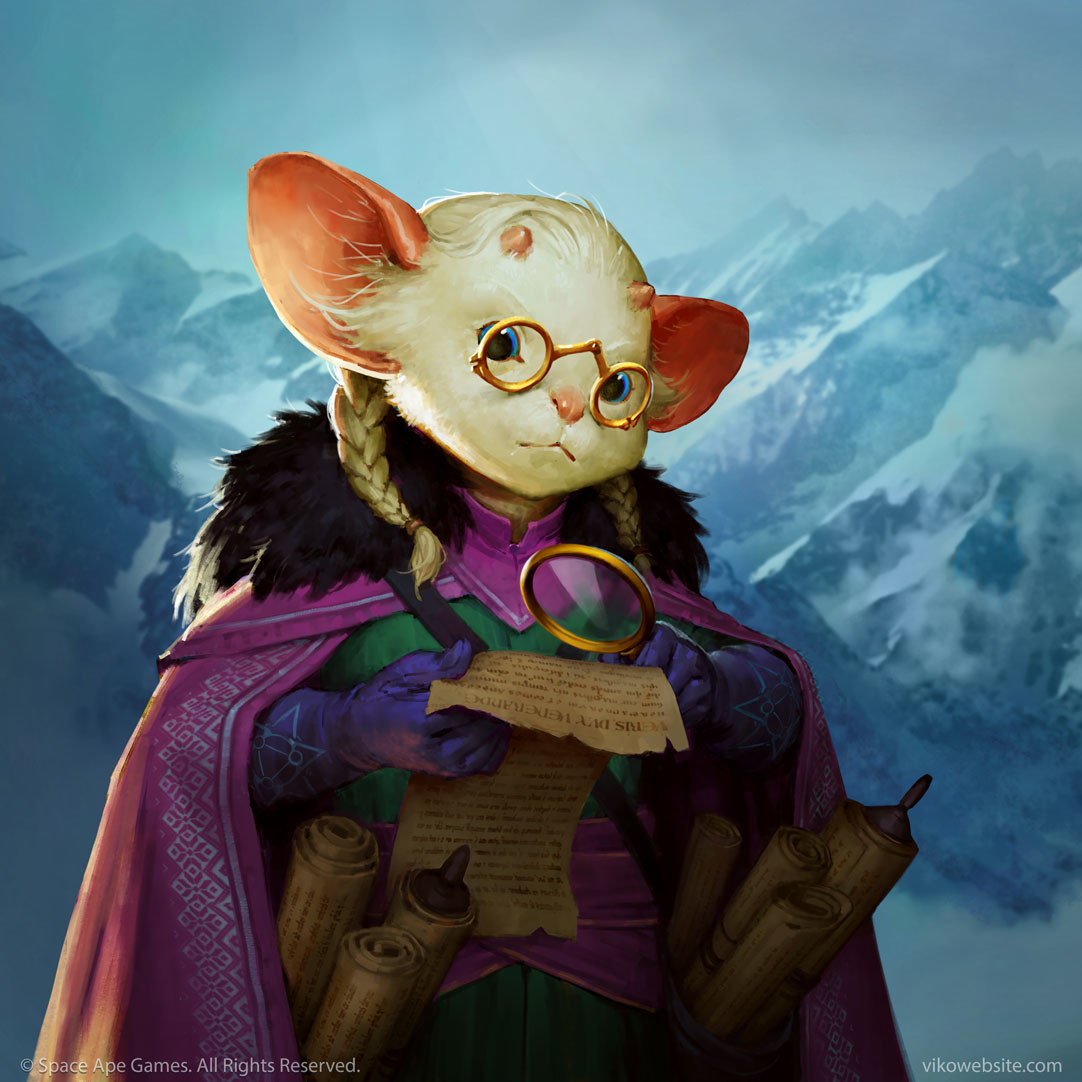
Murine
"Ooh, ooh, and this! This one for sure... um... and maybe this one too? Do we need this? I need this." A small mouse-like Murine scuttles about in a cluttered shop, becoming distracted by every new thing she notices on the various shelves and tables surrounding her.
"Nissa, there's no way we can afford all of this stuff," her companion complains, struggling to speak past an ever-growing mountain of items in her arms. "Half this stuff is useless, anyway. Why in the Hells do we need three different sets of spoons? Weren't we supposed to be finding you new shoes?"
Nissa spins around, her small mouth hanging open briefly in confusion. "Oh, is that why we're out here? I forgot... Ooh! Look at these dolls, aren't they cute? We should get them."
Scrappy Survivors
The Murine are a race of small, rodent-like humanoids renowned for their resourcefulness and adaptability. Living in the shadows of larger civilizations, they often live off the scraps of society, scrounging for food and materials wherever they can be found. While nothing prevents Murine from finding honest work, most prefer an anchor-free lifestyle. Such a life lends itself towards discovering countless secrets and curiosities, all of which would be far too known and documented were they under the careful jurisdiction of some official or properly maintained by some company.
Driven by Curiosity
Curiosity defines the Murine as much as their small stature. They are naturally drawn to puzzles, mysteries, and new experiences, always seeking to understand and uncover whatever lies just around the corner. This insatiable curiosity often earns them the reputation of being trouble-seekers, though their actions are rarely fueled by ill intent. Their curiosity is less about selfish greed and more about an innocent excitement for all things novel.
Chaotic but Loyal
Despite their reputation as mischevious or unpredictable, Murine loyalty is fierce once earned - often through a shared interest in exploration or novelty. They live by a loose philosophy that chaos breeds opportunity, and their chaotic natures frequently manifest as impulsive behaviors and decisions. However, a Murine is unlikely to seek opportunity at the expense of a friendship. Opportunities lie in wait beyond every corner, but trustworthy friends are harder to find.
Nomadic by Nature
Murine are inherently restless creatures, rarely content to stay in one place for very long. Their wanderlust and curiosity often drive them to uproot their lives in search of new experiences, making it difficult for them to form lasting relationships, even with their own kind. When Murine have children, it is common for those children to be left in the care of a trusted other should the parents feel the horizon calling them before the child has grown.
Despite their proclivity for packing up and running off, Murine rarely travel alone. They typically join with other groups of travelers while on the road, conscious that the roads are dangerous, especially for small folk like them. This danger is why they prefer to leave children behind in the relative safety of a city or town.
Murine Names
Murine have many children, and as such, it is exhausting to come up with a large swath of unique names. As such, most Murine names are short and peppy, or descriptive of their behavior in some way.
Male names: Rixel, Nibbin, Scurry, Vixel, Bristle, Pipkin, Fennick, Scritch, Tiven, Jikkin.
Female names: Serri, Nimble, Pippa, Fira, Tilla, Squeela, Vitta, Reni, Minna, Nissa.
Murine Language
The native language of the Murine is called Skrit. This language is composed of complex arrangements of clicks, squeaks, clacking of teeth, and hissing. It has many auditory similarities to noises that ordinary rodents might make, and those unfamiliar with the language could easily mistake it for such, but Murine have no special ability to communicate with their smaller cousins. Other races can learn to understand Skrit, but learning to speak it is much more difficult, as Murine mouths and throats are shaped slightly differently from most humanoids to allow for these special noises.
When Murins choose to write in Skrit, they often prefer to scratch their markings into a solid surface rather than write with ink. The language shares no common symbols or letters with other languages, being composed primarily of scratches of varying depths (or markings of varying thicknesses, when written with ink).

Murine Traits
Murine may resemble any type of rodent, but all share certain characteristics in common.
Ability Score Increase. Increase one ability score by 2 and increase a different one by 1, or increase three different ability scores by 1.
Age. Murine live relatively short lives, rarely living past the age of 30. They grow quickly in their early years, reaching their full size around age 5, and are considered to be adults by the time they turn 7.
Alignment. Murine are crafty and curious creatures, often falling into chaotic alignments, but few are driven by malice.
Size. Murine, though much larger than ordinary rodents, are still rather small, typically standing within a few inches of 3 feet. Your size is small.
Speed. Your base walking speed is 30 feet.
Adaptable. You gain proficiency in one skill of your choice.
Fangs. You have fangs that you can use to make unarmed strikes. When you hit with them, the strike deals 1d6 + your Strength modifier piercing damage, instead of the bludgeoning damage normal for an unarmed strike.
Odor Hypersensitivity. Thanks to your sensitive nose, you have advantage on Wisdom (Perception), Wisdom (Survival), and Intelligence (Investigation) checks that involve smell, and you know the location of all creatures and poisonous substances within 10 feet of you. You cannot use this feature to sense the presence of creatures or substances known for being odorless.
You also have disadvantage on saving throws made against airborne effects such as the Cloudkill spell.
Scurry. Your movement is not reduced while you are prone, attacking while you are prone does not impose disadvantage on your attack rolls, and you can rise to your feet by spending 5 feet of movement. Furthermore, you have a climb speed equal to your movement speed.
Skitter. You can move through spaces occupied by hostile creatures, but you can't end your turn in them.
Languages. You can read and write Common and Skrit.
Art: 'Alchemy' by Viko Menezes on artstation.com
Artificer Specialist
At 3rd level, an artificer gains the Artificer Specialist feature, which offers you the choice of a subclass. The Confectioner and the Ghost Buster are options available to an artificer making that choice.
Confectioner
Everybody loves tasty sweets. Summer or winter, good days or bad, candy always makes your day better. To this end, some artificers take it upon themselves to share this happiness with the world. These individuals are known as Confectioners, and they make it their mission to brighten everyone's day with a little bit of sugary goodness. But making chocolates isn't their only talent - Confectioners learn to blend their magic with their knowledge of sweets to create sentient candy! Whether it be a giant gingerbread man, an oversized gummy bear, or just a massive blob of pudding, these adorable golems help to draw in customers and keep spirits high. Not to mention, they are delicious!
Confectioners are often well-received by society, especially ones facing hard times and especially around holidays, when gift-giving and the exchange of sweets is more common. Some open candy shops, and some work primarily as entertainers, capitalizing on the novelty of their creations to put on shows, and some do a bit of both.
Tool Proficiency
3rd-level Confectioner feature
When you adopt this specialization at 3rd level, you gain proficiency with cook's utensils. If you already have this proficiency, you gain proficiency with one other type of artisan's tools of your choice.
Confectioner Spells
Starting at 3rd level, you always have certain spells prepared after you reach particular levels in this class, as shown in the Confectioner Spells table. These spells count as artificer spells for you, but they don’t count against the number of artificer spells you prepare.
| Artificer Level | Spells |
|---|---|
| 3rd | Charm Person, Flaming Hands |
| 5th | Calm Emotions, Enthrall |
| 9th | Aura of Vitality, Haste |
| 13th | Charm Monster, Wall of Fire |
| 17th | Dominate Person, Mass Cure Wounds |
Candy Companion
3rd-level Confectioner feature
You have learned to mix your magic with your candy-making to produce a candy companion. It's friendly to you and your companions, and it obeys your commands. See its game statistics in the Candy Companion stat block, which uses your proficiency bonus (PB) in several places. You determine the creature's appearance and what type of sweets it is composed of; your choice has no effect on its game statistics.
In combat, the companion shares your initiative count, but it takes its turn immediately after yours. It can move and use its reaction on its own, but the only action it takes on its turn is the Dodge action, unless you take a bonus action on your turn to command it to take another action. That action can be one in its stat block or some other action. If you are incapacitated, the companion can take any action of its choice, not just Dodge.
If the Mending spell is cast on it, it regains 2d6 hit points. If it has died within the last hour, you can use your cook's utensils as an action to revive it, provided you are within 5 feet of it and you expend a spell slot of 1st level or higher. The candy companion returns to life after 1 minute with all its hit points restored.
At the end of a long rest, you can create a new candy companion if you have cook's utensils with you. If you already have a companion from this feature, the first one immediately perishes. The companion also perishes if you die.
Sour Patch
5th-level Confectioner feature
Your Candy Companion is sweet on the outside, but sour on the inside. Whenever a creature within 5 feet of your Candy Companion hits it with a melee attack, you can use your reaction to cause that creature to take acid damage equal to your proficiency bonus.
Jaw Breaker
9th-level Confectioner feature
Your Candy Companion can deliver extra-powerful attacks at the cost of its own integrity. When your Candy Companion uses its Candy Crush attack and hits, your Candy Companion can deal 1d10 bludgeoning damage to itself. The target takes twice that much additional bludgeoning damage.
Sugar Rush
15th-level Confectioner feature
Whenever your Candy Companion uses its Magically Delicious, it can cast Haste on the same creature as a part of the same action using your spellcasting ability modifier, without requiring a spell slot or spell components. The spell does not require concentration when it is cast in this way.
Candy Companion
Small construct
- Armor Class 14 (16 in Burnt form)
- Hit Points 3 + your Intelligence modifier + 6 times your Artificer level
- Speed 40 feet (30 feet in Burnt form)
STR DEX CON INT WIS CHA 15 (+2) 12 (+1) 16 (+3) 5 (-3) 8 (-1) 12 (+1)
- Saving Throws Str +2 plus PB, Con +3 plus PB
- Skills Athletics +2 plus PB, Performance +1 plus (PB x2)
- Damage Vulnerabilities fire
- Damage Immunities poison, fire (Burnt form only)
- Condition Immunities charmed, exhausted, poisoned
- Senses Darkvision 60 ft., Passive Perception (9)
- Languages Understands the languages you speak
- Challenge --
Burnt Form Whenever Candy Companion takes fire damage, it transforms into its Burnt form and gains temporary hit points equal to the fire damage it took. Candy Companion remains in its Burnt form until it loses its temporary hit points, it takes any cold damage, or you complete a short or long rest.
Sweet Charm While Candy Companion is not in its Burnt form, creatures within 5 feet of it have disadvantage on saving throws made against enchantment spells cast by you.
Actions
Candy Crush. Melee Weapon Attack: your spell attack modifier to hit, reach 5 ft., one target you can see. Hit: 1d10 + PB bludgeoning damage + PB fire damage (Burnt form only).
Magically Delicious (3/day). Candy Companion offers a piece of itself as a snack to heal and fortify your allies. Candy Companion takes damage equal to half your level. One creature Candy Companion can reach regains hit points equal to your level. If Candy Companion is in its Burnt form, the creature gains temporary hit points equal to your level instead.
Art: 'Bernard, Ginger Sculptor' by Marta Nael on inprnt.com




Ghost Buster
Priests and other clergy are highly skilled at the removal of the undead, but ghosts and poltergeists are not the only entities which might be harrassing residents of the material plane. Recognizing the need for analagous services targeting creatures other than the undead, some artificers group together to develop cutting-edge tools designed for just that. These artificers have come to be known as Ghost Busters, as even though their expertise extends to many other forms of hauntings as well, hauntings caused by ghosts are still by far the most common form they are commissioned to address.
Paranormal Savant
3rd-level Ghost Buster feature
Your studies have granted you special awareness of the paranormal. You can cast Detect Evil and Good as an action.
You can use this feature a number of times equal to your Intelligence modifier. You regain all expended uses when you finish a long rest.
Ghost Buster Spells
Starting at 3rd level, you always have certain spells prepared after you reach particular levels in this class, as shown in the Ghost Buster Spells table. These spells count as artificer spells for you, but they don’t count against the number of artificer spells you prepare.
| Artificer Level | Spells |
|---|---|
| 3rd | Protection from Evil and Good, Unseen Servant |
| 5th | Augury, See Invisibility |
| 9th | Magic Circle, Speak with Dead |
| 13th | Banishment, Phantasmal Killer |
| 17th | Contact Other Plane, Dispel Evil and Good |
Art: 'Ghostbusters Fan Art' by Nathaniel Himawan on inprnt.com
Proton Pack
3rd-level Ghost Buster feature
You learn to construct a Proton Pack, a special device designed to combat paranormal entities. You can use your Proton Pack as a spellcasting focus for your artificer spells.
You gain a new attack option that you can use with the Attack action. This special attack is a spell with a range of 120 feet. Choose one creature you can see within range. That creature must make a Dexterity saving throw or take 1d8 plus your Intelligence modifier force damage and be moved up to 5 feet in any direction if it is Large or smaller. If the target is an aberration, celestial, elemental, fey, fiend, or undead, you can move it up to 10 feet if it is Huge or smaller, and it is also restrained until the end of your next turn or until you make this special attack against a different creature. The target is restrained in this way even if it is normally immune to being restrained.
Extra Attack
5th-level Ghost Buster feature
You can attack twice, instead of once, whenever you take the Attack action on your turn.
A Definite Very Slim Chance
9th-level Ghost Buster feature
When you are reduced to 0 hit points as a result of taking damage, or subjected to an effect which would kill you instantaneously without dealing any damage, you can drop to 1 hit point instead.
Once you use this feature, you can't use it again until you finish a long rest.
Total Protonic Reversal
15th-level Ghost Buster feature
You can cast Disintegrate as an action. If you cast this spell two or more times before finishing your next long rest, you must make a Constitution saving throw. The DC for this save is equal to 10 plus 5 times the number of times you have used this feature since your last long rest. On a fail, the spell also targets you, and you automatically fail your saving throw against its effects.
Primal Path
At 3rd level, a barbarian gains the Primal Path feature, which offers you the choice of a subclass. The X and the X are options available to a barbarian making that choice.
X
X
Bardic College
At 3rd level, a bard gains the Bardic College feature, which offers you the choice of a subclass. The College of Caroling and the College of Cuisine are options available to a bard making that choice.
College of Caroling
While all bards worth their salt are lyrically gifted, some are more tenacious with their singing than others. These individuals belong to the College of Caroling - an unorganized, emergent subset of bards who staunchly believe that the best way to spread joy and cheer is by singing loud for all to hear. They sing loudly and proudly, matching their carols to the season, hoping that their music reaches the ears of someone who needs to hear it.
Unfortunately, their regular singing eventually renders even the catchiest of melodies dull and repetitive given enough time, and they gradually come to be seen as a nuisance should they linger in one spot for too long. Consequently, many take to traveling abroad, forming annual circuits where their appearance is associated with a particular season or holiday in order to keep their performances feeling fresh.

Art: 'Tales of Adventure' by Andy-Aslamov on deviantart.com
Spread the Cheer
3rd-level College of Caroling feature
You learn the Thaumaturgy cantrip. This cantrip counts as a bard spell for you, and it doesn’t count against the number of bard cantrips you know.
Crescendo
3rd-level College of Caroling feature
Any time you roll thunder damage, you can expend a use of your Bardic Inspiration and cause the noise to swell into a great crescendo. Roll your Bardic Inspiration die. The thunder damage increases by an amount equal to the roll.
Improved Song of Rest
6th-level College of Caroling feature
Your singing is more soothing than that of your peers. When you use your Song of Rest during a short rest, you can choose a number of creatures up to your proficiency bonus to gain the following additional benefits:
- The creature gains temporary hit points equal to your proficiency bonus
- The creature has advantage on the next ability check, attack roll, or saving throw it makes within the next hour.
A creature must have rolled at least 1 hit die during its short rest in order to benefit from this feature.
Refrain
14th-level College of Caroling feature
Your caroling allows you to repeat your spells when you wouldn't normally be able to. If you used your action on your last turn to cast a spell of 5th level or lower which wasn't a cantrip, you can use your action to expend a use of your Bardic Inspiration and cast the same spell again at the same level without expending a spell slot. If you roll thunder damage as a part of casting this spell, you can use your Crescendo without expending another use of your Bardic Inspiration.
Once you use this feature, you can't use it again until you finish a long rest.
College of Requiem
It is all too common to hear the news that some young and ambitious adventurer bit off more than they could handle and wound up dead in a dungeon. It is somber news to receive, and friends and families will mourn them and celebrate their lives according to their customs.
However, some unfortunate or lonely souls go unnoticed and uncelebrated when they fall. Those who have no family or friends to speak of, or those who disappeared without first telling anyone where they went, even those slain by a terrible False Hydra. Some bards take it upon themselves to sing praises for these faceless and forgotten people, searching for and returning the bodies of the forgotten and the lost. Many of these bards are motivated by knowledge or suspicion that someone they know has died without a proper burial or celebration.
These bards often wear bright colors and decorated skull masks, both satirizing and normalizing the necromancy they rely on for their work. While many people still view them with suspicion due to the nature of their magic, members of the College of Requiem can usually establish a positive reputation in communities where they live and work.
Songs of Life and Death
3rd-level College of Requiem feature
You learn the Spare the Dying cantrip, and one necromancy cantrip of your choice from any spell list. These count as bard spells for you, and don't count against the number of cantrips you know.
Grave Inspiration
3rd-level College of Requiem feature
When a creature with your Bardic Inspiration die kills a creature which is not a construct or undead, it can roll that die to gain temporary hit points equal to the number rolled plus the CR of the creature that was killed (minimum of 1).
Dance of the Dead
6th-level College of Requiem feature
As an action, you can expend 1 use of your Bardic Inspiration to cast Animate Dead, targeting a single corpse. The undead then gains your Bardic Inspiration die.
Undead created using this feature revert to ordinary corpses when they are killed or when you finish a long rest.
Art: 'Calavera and skadi, wolf, pink, hat, calavera, dia de los muertos, caine, skadi, ilse gort, fantasy, girl, blue, dog, HD wallpaper' by Ilse Gort on peakpx.com
Perish Song
14th-level College of Requiem feature
As an action, you can begin singing a chilling melody. All creatures of your choice within 30 feet of you that can hear you and understand you must make a Wisdom saving throw. On a fail, a creature becomes frightened of you.
A frightened creature must make another Wisdom saving throw at the end of each of its turns. If it successfully saves against this feature three times, the effect ends. If it fails its save three times, it dies and becomes a zombie under your control permanently. The successes and failures don't need to e consecutive; keep track of both until the target collects three of a kind.
The effect ends early on a creature if you lose concentration (as if you were concentrating on a spell), or if the Remove Curse, Greater Restoration, or Wish spell is used to end it.
Once you use this feature, you can't use it again until you finish a long rest.

Divine Domain
At 1st level, a cleric gains the Divine Domain feature, which offers you the choice of a subclass. The Fortune Domain and the X are options available to a cleric making that choice.
Fortune Domain
The gods of fortune are patrons of the bold, the ambitious, and the risk-takers, from a humble halfling willing to stand her ground against her fears to a legendary hero doing battle against a mighty Demon Lord. Clerics of such deities as Tymora teach that one should constantly pursue their goals, even when the path ahead is unclear, as the gods of fortune favor the bold and the brave. Followers of these deities enjoy taking risks and causing mischief to demonstrate the truth of their words, and often find themselves seeking the thrill of adventure rather than an idle life serving in a temple... and many find themselves quickly banned from casinos along the way.
Domain Spells
1st-level Fortune Domain feature
You gain domain spells at the cleric levels listed in the Fortune Domain Spells table. See the Divine Domain class feature in the Player's Handbook for how domain spells work.
Fortune Domain Spells
| Cleric Level | Spells |
|---|---|
| 1st | Hex, Silvery Barbs |
| 3rd | Enhance Ability, Nathair's Mischief |
| 5th | Bestow Curse, Sumon Fey |
| 7th | Freedom of Movement, Guardian of Nature |
| 9th | Mislead, Skill Empowerment |
Mischievous
1st-level Fortune Domain feature
You learn the Prestidigitation cantrip. This cantrip counts as a cleric spell for you, and it doesn’t count against the number of cleric cantrips you know.
Additionally, whenever you make a Charisma check, you gain a bonus to the check equal to your Wisdom modifier (minimum of +1).
Reflexive Luck
1st-level Fortune Domain feature
Whenever you or a creature you can see within 30 feet of you makes an ability check, attack roll, or saving throw, you can use your reaction to give that roll advantage or disadvantage (your choice).
You can use this feature a number of times equal to your Wisdom modifier. You regain all expended uses when you finish a long rest.


Art: 'Old dwarf in epic forest' generated by Roberto Feick on playgroundai.com
Channel Divinity: Lucky Break
2nd-level Fortune Domain feature
Immediately before a creature you can see within 30 feet of you takes damage or receives healing, you can use your reaction to brandish your holy symbol and turn the tides of fortune to your favor. That damage or healing increases or decreases (your choice) by a number of d4's equal to your proficiency bonus.
Fortunate
6th-level Fortune Domain feature
Your fortune is more noticeable than that of others. Whenever you make an ability check or attack roll and have advantage on the roll, you can re-roll one of the dice once.
Potent Spellcasting
8th-level Fortune Domain feature
You add your Wisdom modifier to the damage you deal with any cleric cantrip.
End of the Rainbow
17th-level Fortune Domain feature
You learn the Prismatic Spray and Prismatic Wall spells. These spells count as cleric spells for you, and don't count against the number of spells you can prepare each day.
X
Druid Circle
At 2nd level, a druid gains the Druid Circle feature, which offers you the choice of a subclass. The Circle of the Harvest and the X are options available to a druid making that choice.
Circle of the Harvest
COMING SOON...
Reaper's Bounty
2nd-level Circle of the Harvest feature
You are proficient with scythes.
When you kill a creature that isn't a construct or undead, you gain temporary hit points equal to 3 times the creature's CR (minimum of 1). If the creature is a beast or a plant, you gain temporary hit points equal to 5 times the creature's CR (minimum of 1) instead.
Harvest Form
2nd-level Circle of the Harvest feature
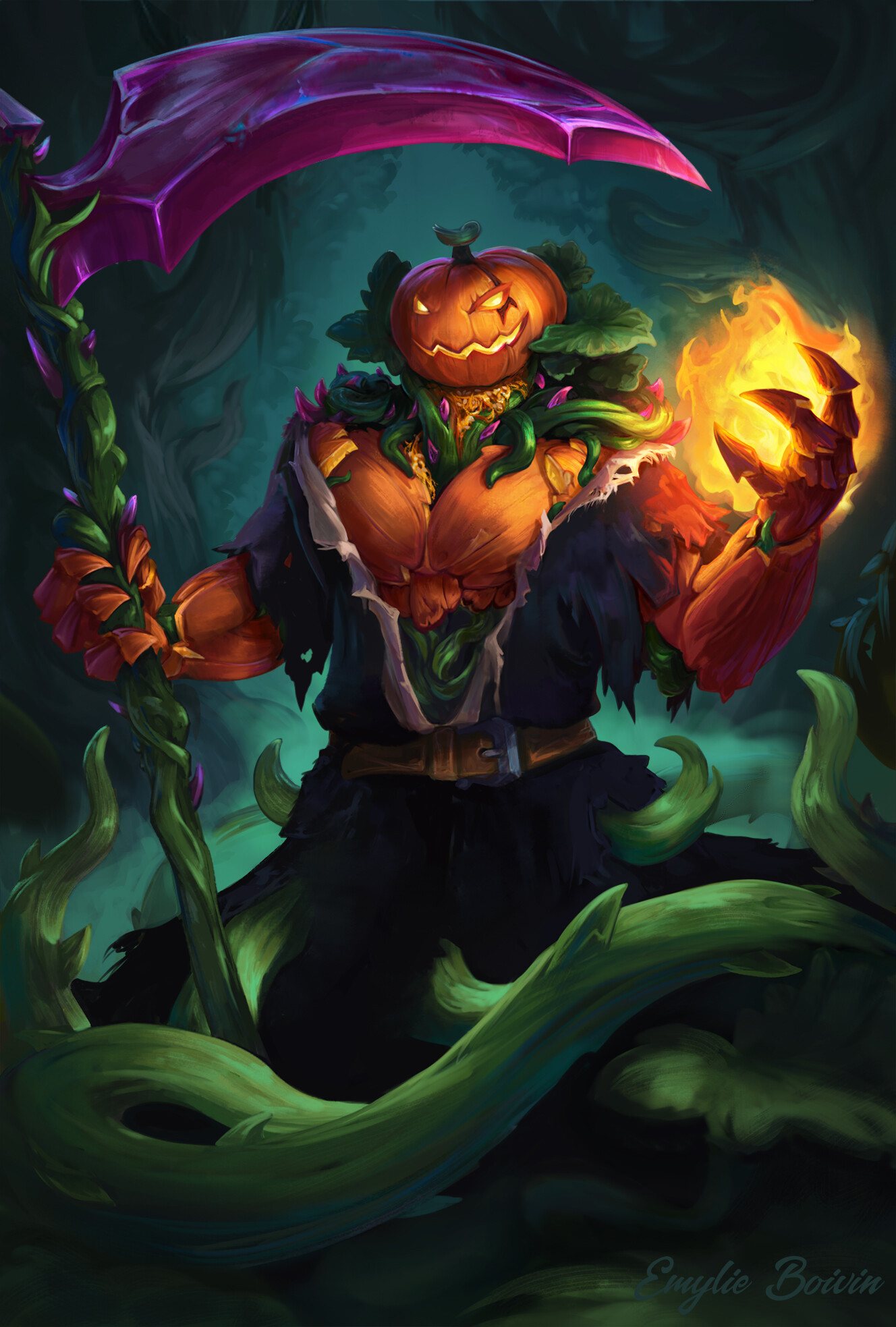
You gain the ability to harness the magic of the harvest to empower yourself. As a bonus action, you can expend one use of your Wild Shape feature to transform into an avatar of the harvest, rather than transforming into a beast.
While in your harvest form, you retain your game statistics, but your body transforms to become reminiscent of plant matter; you might become wrapped in vines with a pumpkin growing around your head, or you might become stuffed with straw and hay, taking on the appearance of a scarecrow.
Regardless of what appearance you choose to adopt, when you use this feature, and as a bonus action thereafter, you can manifest a magical scythe. This scythe disappears when your transformation ends or when you release it from your grasp.
This transformation lasts for 10 minutes. It ends early if you dismiss it (no action required), are incapacitated, die, or use this feature again.
Whenever you assume your harvest form, you gain the following benefits:
- You can use Wisdom instead of Strength or Dexterity for the attack and damage rolls of your melee weapon attacks.
- Your AC is equal to 13 + your Dexterity modifier.
- You are immune to the frightened condition.
Extra Attack
6th-level Circle of the Harvest feature
You can attack twice, instead of once, whenever you take the Attack action on your turn. Moreover, you can cast one of your cantrips in place of one of those attacks.
Light of Harvest
10th-level Circle of the Harvest feature
The light of the harvest moon empowers your transformations. Whenever you assume your harvest form, you gain darkvision out to a distance of 120 feet.
When you hit a creature with an attack using the scythe from your harvest form, you can expend a spell slot to deal an extra 1d8 radiant damage, plus an additional 1d8 radiant damage per level of the spell slot. If the target of the attack is a beast or a plant, it takes a further 1d8 radiant damage.
Bountiful Magic
14th-level Circle of the Harvest feature
Your magic is plentiful and potent. When you cast a spell of 1st level or higher that normally targets only one creature, the spell can instead target two creatures within range.
Art: 'Werepumpkin' by Emylie Boivin on twitter.com
X
Martial Archetype
At 3rd level, a fighter gains the Martial Archetype feature, which offers you the choice of a subclass. The X and the X are options available to a fighter making that choice.
X
X
Monastic Tradition
At 3rd level, a monk gains the Monastic Tradition feature, which offers you the choice of a subclass. The X and the X are options available to a monk making that choice.
X
X
Sacred Oath
At 3rd level, a paladin gains the Sacred Oath feature, which offers you the choice of a subclass. The X and the Oath of Yule are options available to a paladin making that choice.
X

Art: 'Great Father Winter' by Dmitry Prozorov on artstation.com
Oath of Yule
COMING SOON...
Tenets of Yule
In order to take on this oath, a paladin must adhere to the following carefully crafted tenets set out by Saint Nicholas,. the oath's founder and first member.
Mirth. Be merry and lighthearted; never take things too seriously, and do what you can to lighten the hearts of others.
Wonder. Preserve the wonders of the world, and inspire wonder in those around you.
Generosity. Be liberal in your generosity and tokens of appreciation; don't be selfish or stingy.
Guardianship. Protect those around you, especially children, and punish those who would do them harm.
Oath Spells
You gain oath spells at the paladin levels listed.
Oath of Yule Spells
| Paladin Level | Spells |
|---|---|
| 3rd | Armor of Agathys, Detect Evil and Good |
| 5th | Find Steed, Pass Without Trace |
| 9th | Fly, Sleet Storm |
| 13th | Fabricate, Ice Storm |
| 17th | Creation, Scrying |
Channel Divinity: Dash Away All
3rd-level Oath of Yule feature
You can spend your action to brandish your holy symbol and magically teleport yourself and up to seven willing creatures within 10 feet of you up to 90 feet to an empty space you can see. If the destination does not have enough room to fit all of the creatures targeted by this feature, the teleport fails.
Channel Divinity: Sack of Stashing
3rd-level Oath of Yule feature
As an action, you can touch any bag, sack, or similar item and transform it into a Sack of Stashing. A Sack of Stashing is identical in function to a Bag of Holding, with a few notable differences:
- Only the creator of a Sack of Stashing can deposit items into or withdraw items from it.
- All Sacks of Stashing created by the same creature have access to a common extradimensional space where their contents are stored. This extradimensional space is shielded from teleportation and divination magic, and even if the Sack of Stashing is destroyed (such as by attempting to place a Bag of Holding inside of it, or vice versa), the contents of this space remain safe, and can be accessed again using a new Sack of Stashing.
- A Sack of Stashing magically prevents living creatures from being placed inside of it.
A Sack of Stashing reverts to normal after 8 hours, if you use this feature again, or if Dispel Magic is cast on it.
Aura of Borealis
7th-level Oath of Yule feature
You extend an aura of dim multicolored light out to a distance of 10 feet. You and friendly creatures inside this aura have resistance to cold and radiant damage.
You can dismiss or summon the light of this aura as a bonus action. While the light is present, hostile creatures inside your aura can't benefit from being invisiible.
At 18th level, the range of this aura increases to 30 feet.
Frigid Strikes
15th-level Oath of Yule feature
When you hit a creature with a melee weapon attack, you deal extra cold damage equal to your Charisma modifier.
Lights of the North
20th-level Oath of Yule feature
As a bonus action, you can unleash the full power of your Aura of Borealis. You summon the light of your aura, if it is not already summoned, and for the next minute, while the light of your aura is present, your aura gains the following features:
- The area within your aura is brightly illuminated with multicolored light.
- Magical darkness which overlaps with your aura is dispelled.
- Whenever a friendly creature (including you) starts its turn in your aura, it gains 10 temporary hit points.
- Whenever a hostile creature starts its turn in your aura, it must make a Constitution saving throw or take 2d10 radiant damage and be blinded until the start of its next turn. On a successful save, the target takes half as much damage and isn't blinded. Creatures have disadvantage on their savingthrow against this feature if they have the Sunlight Sensitivity or the Sunlight Hypersensitivity traits, or if they are outside at night.
Ranger Conclave
At 3rd level, a ranger gains the Ranger Conclave feature, which offers you the choice of a subclass. The X and the X are options available to a ranger making that choice.
X
X
Roguish Archetype
At 3rd level, a rogue gains the Roguish Archetype feature, which offers you the choice of a subclass. The X and the X are options available to a rogue making that choice.
X
X
Sorcerous Origin
At 1st level, a sorcerer gains the Sorcerous Origin feature, which offers you the choice of a subclass. The X and the X are options available to a sorcerer making that choice.
X
X

Art: 'Heartseeker Varus' by Zarory on deviantart.com
Warlock Patron
At 1st level, a warlock gains the Warlock Patron feature, which offers the choice of a subclass. The Cupid and the Jolly One is an option available to a warlock making that choice.
The Cupid
Few gods take it upon themselves to play matchmaker. Those who do often employ the services of cherubs, or cupids, to assist in this task. These beings are known for their ability to manipulate the emotions of mortal beings and for their affinity with bows, though their celestial perspective sometimes distorts their understanding of mortal emotions. On occasion, cupids will form pacts with romantic mortals, sharing their powers in order to gain a better understanding of mortal relationships and ultimately kickstart more of them. Warlocks who form a pact with a cupid are known for being remarkably beautiful and for being able to tell when love is in the air.
Expanded Spell List
The Cupid lets you choose from an expanded list of spells when you learn a warlock spell. The following spells are added to the warlock spell list for you.
Cupid Expanded Spells
| Spell Level | Spells |
|---|---|
| 1st | Heroism, Magic Missile |
| 2nd | Cordon of Arrows, Skywrite |
| 3rd | Conjure Barrage, Sending |
| 4th | Compulsion, Guardian of Faith |
| 5th | Swift Quiver, Modify Memory |
Bonus Proficiencies
1st-level Cupid feature
You are proficient with blowguns, hand crossbows, heavy crossbows, longbows, and lyres.
Supernatural Charm
1st-level Cupid feature
The magic of your patron makes others perceive you as supernaturally beautiful. You are proficient in the Persuasion skill.
Additionally, you can use your action to attempt to charm other creatures with your beauty. Choose a number of creatures up to your proficiency bonus within 60 feet of you that can see you. Those creatures must make a Wisdom saving throw or be charmed by you for 1 minute. If a frightened target takes any damage, it can repeat the saving throw, ending the effect on itself on a success.
Once you use this feature, you can't use it again until you finish a short or long rest.
Heart Sense
1st-level Cupid feature
Your patron grants you the ability to sense the presence of hearts near to you. You can use your bonus action to divine the location and alignment of all humanoids within 30 feet of you, and which if any of those creatures are in love.
You can use this feature a number of times equal to your proficiency bonus. You regain all expended uses when you finish a long rest.
Evoke Empathy
6th-level Cupid feature
When a humanoid within 60 feet of you deals damage from an attack, you can use your reaction to evoke within it a profound sense of empathy. The creature must make a Wisdom saving throw or take psychic damage equal to the damage dealt by the attack and become charmed by the target of the attack until the end of its next turn. If the triggering damage killed the target of the attack, the creature is stunned until the end of its next turn instead of charmed. On a successful save, the creature takes half as much damage and is not charmed or stunned.
Once you use this feature, you can't use it again until you finish a short or long rest.
Matchmaker
10th-level Cupid feature
As an action, you can magically bond two willing creatures, connecting them at a deep emotional level. While creatures bonded in this way are on the same plane of existence, they know whether the other creature is alive and what their emotional state is. While the bonded creatures are within 30 feet of each other, they have advantage on Strength checks and on saving throws against being charmed or frightened, and they gain a +2 bonus to their AC.
This feature cannot be used to bond two creatures if one or both creatures are not humanoids or if one or both creatures harbor negative emotions toward the other.
This effect lasts until you use this feature again or you die.
Cherub
14th-level Cupid feature
You can manifest a beautiful pair of wings as an action on your turn. They last until you dismiss them as an action or you are incapacitated. While these wings are manifested, you gain the following benefits:
- You gain a flying speed equal to your movement speed.
- You have advantage on Charisma checks.
- Creatures have disadvantage on saving throws made against your Supernatural Charm.
You can't manifest your wings while wearing armor unless the armor is made to accommodate them, and clothing not made to accommodate your wings might be destroyed when you manifest them.
???
COMING SOON...
Arcane Tradition
At 3rd level, a wizard gains the Arcane Tradition feature, which offers you the choice of a subclass. The X and the X are options available to a wizard making that choice.
X
X
| Weapon | Cost | Damage | Weight | Properties |
|---|---|---|---|---|
| Scythe | 20gp | 1d10 slashing | 7 lb. | heavy, 2-handed |
| Bastard Sword | 15gp | 2d4 slashing | 4 lb. | |
| X | XXgp | XdX type | X lb. | props |
Fulfill the
prophecy of the
Foreverking!
People love to flex their creative muscles while composing new homebrew content. More often than not, the inspiration for you homebrew comes from another source. Sometimes significantly. Other times just as a spark.
What is important for the community is that you share your sources of inspiration. This back cover can serve as an easy to find, easy to read place for you to do just that.
So go ahead, remove this chunk of copy and tell everyone who inspired you.
Cover Art: 'Fantasy christmas tree with gifts celebrating merry christmas. christmas card background' by Ilugram on freepik.com
When you're ready to share with the community, don't forget to mark your document as public so people can find it in the GM Binder Search
TEXT
TEXT