
Table of Contents
Campaign Preface
As the lockstep legions of Hell were defeated in the Crimson War, a spectacle of breathtaking proportions erupted from Wessel's Ankara Island —the Wellspring of Avandra. It was as if the very earth had gifted riches and precious gems, as gold ore surfaced across a sprawling field spanning over a mile wide. Whispers of this newfound wealth spread across the land like wildfire.
The world's unwavering gaze fixated on Wessel, an island republic brimming with newfound wealth and boundless potential. People from every corner of the globe hastily assembled their trading companies, yearning to partake in the prosperity that beckoned. However, the true powerhouses of this thriving market emerged from the formidable Elemental Domains.
Once denied entry into Ogun, the Elemental Domains were secluded in their realms. But with news of the Wellspring, they managed to negotiate treaties through millennia-old portals guarded by the Genasi. Individually, their wealth and might surpassed any Ogun nation. The Agnikhandas Mercenary Company, born from the scorching fires of the Fire Domain of Iris. The Ministry of Steel, rising from the subterranean depths of the Earth Domain in the depths of Ogun. The Zhelezo Navy, nurtured by the serene Water Domain of Lys. The Shantivayu, soaring above in the boundless skies of the Air Domain Aelur. These four titans of commerce, simply known as "the Domains," now dominate Wessel's market.
This crucible of cutthroat competition has fueled a wave of ingenious inventions, launching the world of Ogun into a new era – the Age of Enlightenment. Within this age, the sprawling cities and bustling markets echo with the resounding footsteps of progress, as technological marvels and arcane wonders are discovered every day in a dance of innovation. Schools and institutions have sprouted like intellectual oases, quenching the thirst of a new generation eager to unravel the world's secrets. Here, art, architecture, education, philosophy, and technology flourish, and the populace marvels at the boundless opportunities this age unfolds. As the world awoke to the wonders of the Age of Enlightenment, the Isles of Wessel stood poised on the precipice of uncharted horizons, beckoning everyone to carve their own path to wealth and power.
The transition from this age of prosperity has also revealed the harsh realities of the Isles of Wessel, a land brimming with promise and corrupted by gold. Here, wealth begets power, and power stokes an unquenchable greed. The elite vie for supremacy, while the less fortunate grapple for mere survival.
Wessel's islands are incessantly assailed by unrelenting tempests, the notorious Aetherstorms. These tempests form a continuous wall of hurricane-like ferocity that sweeps relentlessly from east to west, leaving behind a swath of desolation in their relentless path. These tempests not only bring destruction but also unleash a mysterious and volatile energy known as Aether, saturating the Isles of Wessel with an otherworldly power. Creatures infused with this energy grow to colossal proportions, becoming Leviathans that continually grow larger as long as they live —the eldest reaching sizes comparable to entire islands.
The Shardbearer Houses, comprising Wessel's fifteen most influential families, distinguish themselves through their possession of Aetherblade, Aetherplate, or both – powerful magical artifacts that descend unpredictably from the tumultuous Aetherstorms. Exceptionally rare and exorbitantly priced, these items bestow unparalleled power and influence upon their owners. Each of these prestigious houses commands vast wealth and holds a monopoly over a specific industry, solidifying its economic dominion. The constant inter-house conflicts are marked by intense infighting as they vie for control over the wealth emanating from the Wellspring of Avandra.
These tempests can be tamed through magical means, a device known as the Stormspire, but often only those with wealth can afford such protection. For those who cannot, life becomes a turbulent dance of survival, leading to the emergence of Drifters. Drifters are people who mine the corpses of Leviathans and cling to survival in the unforgiving waters of Wessel. The Drifters, a majority comprised of the native fish people, the Locathah, have formed countless secret floating cities free from Wessel -the most notable is Freeport a city built of hundreds of ship wrecks connected together to create a floating island. The gaping disparity in wealth and power steers many towards a life of piracy, with many swearing allegiance to the formidable Maelstrom Alliance of Pirates.
Although peace flourished throughout the world, not all was peaceful. The newfound Church of the Silver Flame grappled with a schism that eventually sparked the War of the Roses, a conflict between the Holy Kingdom of Archera and the Kingdom of Estium. The Rose Orders are the militant arm of the Church Silver Flame, six orders each trained to slay a different extraplanar threat: the Red Rose fights fiends, the Grey Rose battles Lycans, the Black Rose contends with Undead, the White Rose confronts Dragons, the Green Rose combats Fey, and the Blue Rose opposes evil Mages. The schism arose from the Order of the Red Roses's use of blood magic to slay fiends, seen as blasphemy by some orders but deemed a necessary evil by others. The Pontifex of the Silver Flame's decision to allow blood magic led to the excommunication of opposing orders, culminating in war.
Chapter 1: Nations of Ogun
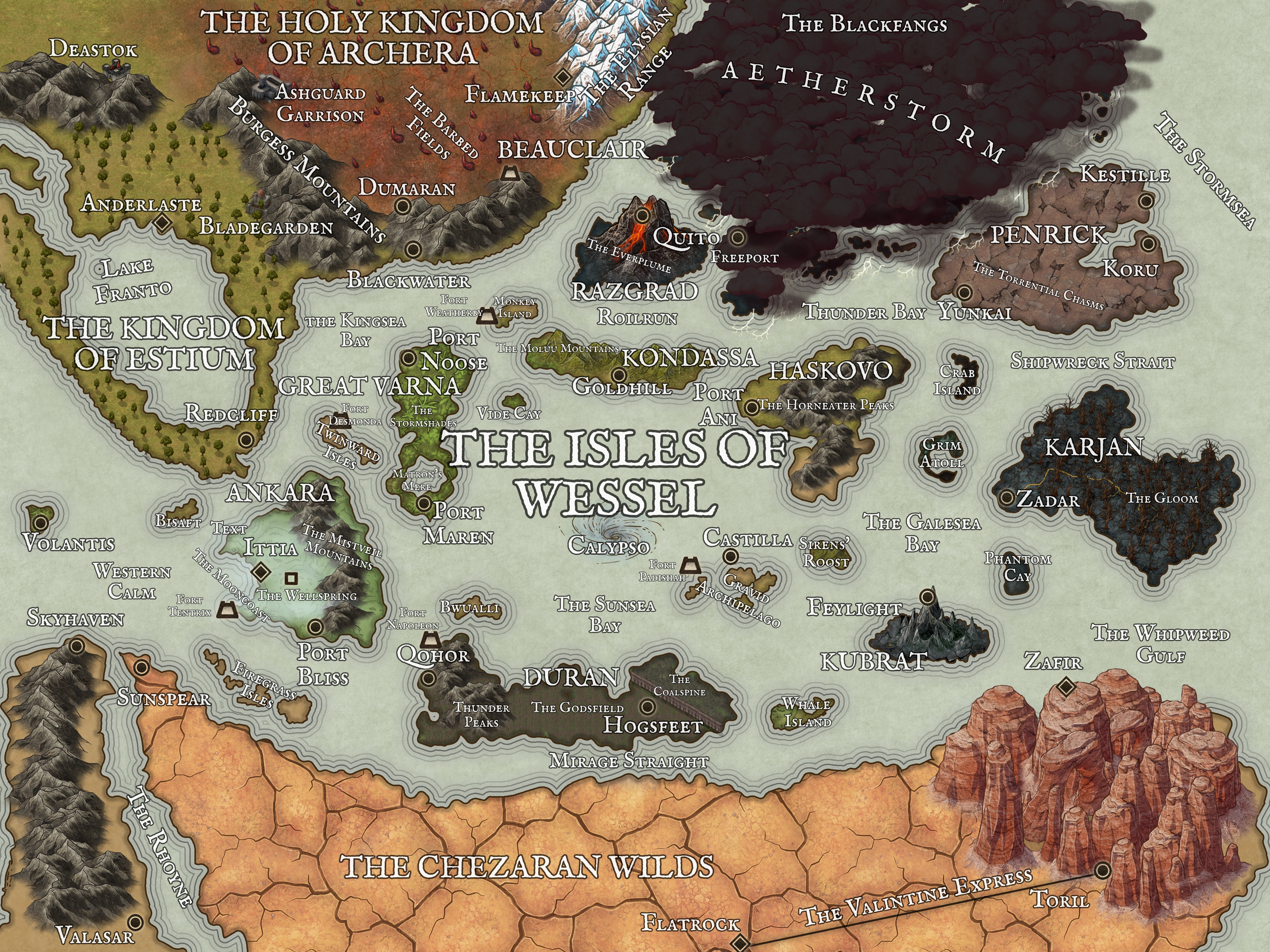
Map of Wessel
The Republic of Wessel
The Republic of Wessel is a vast island nation composed of ten major city-states and hundreds of smaller islands, each maintaining its own unique identity while functioning under a unified economic and political system. The republic is ruled by the Quorum, a council of ten representatives, though only one—the President—is publicly known. The remaining nine members operate in secrecy, their identities closely guarded to prevent political manipulation. Membership is determined by majority vote, and those removed from power are bound to secrecy under penalty of death. Political maneuvering in Wessel often revolves around discovering the identities of these hidden rulers, as securing their favor grants immense influence over trade, governance, and the nation’s vast wealth. Justice in Wessel is overseen by the Tribunal, a legal institution that turns criminal trials into highly publicized events. The Tribunal’s most famous cases involve the capture and prosecution of pirates, a spectacle that draws massive crowds. Wessel places bounties on notorious criminals, hiring mercenary guilds such as the Iron Company and the feared Zhelezo pirate hunters to track them down. Those caught are sent to the Bastille, an infamous island prison designed to be inescapable.
To maintain order in its cities, Wessel employs Sentinels, towering magitech constructs programmed to enforce the law. These artificial enforcers work alongside Wardens, the republic’s human city guards, though corruption among the Wardens is widespread, with many accepting bribes in exchange for overlooking crimes.
Nearly every public sector position, from the President to local leaders called Marquis, is won by who can pay the most to run the department for that cycle. Elections are a simple matter – candidates wager an amount they believe is enough to win, and then they run a campaign to encourage the public to "vote" by donating to their election pot. All donations and totals are kept secret until the election is over and the vaults, magically warded against theft and tampering, are inventoried. The winner is the candidate who has amassed the most money. This system also allows for a tax-free society, as all of the "votes" are gathered to form the budget for that department over the next five years.
Unlike other nations where devotion to a single god is common, Wessel’s religious practices are transactional. Worshippers do not dedicate themselves to a singular deity but instead offer tithes to gods whose domains align with their immediate needs. In times of stormy seas, sailors pray to the Mourning Storm for safe passage, while gamblers make offerings to the Grinning Sailor before trying their luck at the tables. Every major city has a Reliquary, a large temple that houses statues and effigies of numerous gods, allowing worshippers to make offerings to whichever deity they believe will benefit them most.
Despite their economic and political unity, each island maintains distinct cultures and laws, creating a mosaic of diversity within the overarching identity of Wessel. Wessel is a place where the wealthy rule, openly and without pretense. Shrewd traders and ruthless in business, Wesselians believe the end of a successful transaction is justified by any means, ethical or otherwise. The isles are plagued with tremendous Aetherstorms, horrific monsoons that sweep across the islands from east to west in a wall of destruction.
Art of Wessel:
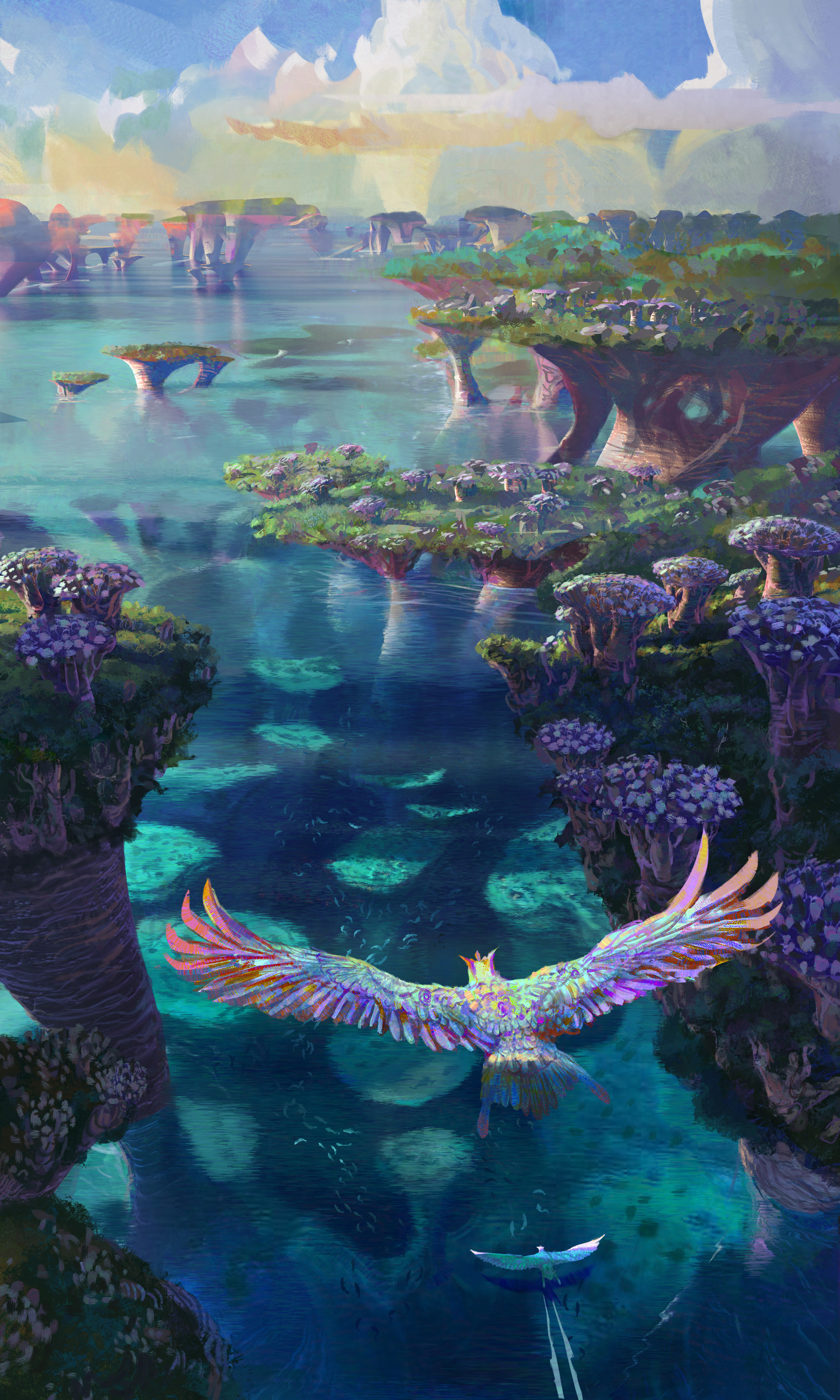
Me E Reencarnado En Un Dragon by JairoFlores706
The Major Islands of Wessel
-
Ankara - Nestled behind the towering peaks of the Mistveil Mountains, Ankara is one of the most sheltered and stable islands in Wessel. Its lush jungles and mist-covered shores are shielded from the relentless Aetherstorms, allowing for a flourishing ecosystem and an air of prosperity unseen in other regions. At its heart lies Ittia, the "City of Bells," named for the numerous bells scattered throughout its streets, which faintly chime when weakened Aetherstorms sweep over the island. As Wessel’s capital, Ittia is home to the Quorum, the Tribunal, and the Wellspring Casino, the latter serving as a hub for commerce and high-stakes gambling. Many in Ittia revere Canaloux, a colossal water elemental that looms in the Mooncoast, an enigmatic figure woven into the island’s mythology. Meanwhile, Port Bliss is Wessel’s artistic and cultural center, influencing fashion trends across Wessel with extravagant styles such as high heels, powdered wigs, lace collars, ruffs, and the uniquely Wesselian tradition of stylized long eyebrows tucked behind the ear.
-
Great Varna - Great Varna is a storm-ravaged jungle island where nature has adapted to the elements. The island is home to Stormcloak trees, unique flora that retract their branches into hardened shells to withstand the region’s frequent tempests. Two cities, Port Maren and Port Noose, once struggled to survive but were revitalized by the invention of Stormspires, massive structures that mitigate Aetherstorm damage. Despite their economic resurgence, both cities contend with high crime rates and widespread poverty. Port Maren retains its ancient Keldiharian architecture, while Port Noose, once a lawless pirate haven, has reinvented itself as the center of Wessel’s Infirmaries, alchemical healing centers known for cutting-edge but costly treatments.
-
Kondossa - Once the economic jewel of Wessel, Kondossa was prized for its Moluu Mountains, rich in valuable ore deposits. The island’s primary city, Goldhill, flourished as a major mining hub, but its prosperity was built on the backs of enslaved Locathah miners. The discovery of Aetherium in Ankara led to the collapse of Kondossa’s mining industry, and Goldhill now stands as a hollow remnant of its former self, a city of abandoned shafts and dwindling fortunes.
-
Duran - Duran is home to the Godsfield Valley, a fertile region where rockbuds, a unique plant that retracts into a hardened shell, thrive. These plants produce some of the finest fruits and vegetables in Wessel, making agriculture the backbone of Duran’s economy. The village of Hogsfeet is a key farming settlement, protected from storms by the Coalspine, a long, man-made stone wall. Meanwhile, the city of Qohor, a relic of Keldiharian rule, is best known as the birthplace of the Omniport, the first teleportation device capable of moving entire ships across vast distances, revolutionizing trade and travel in Wessel.
-
Haskovo - Originally inhabited by the Aldani, a people with crab-like features, the island of Haskovo has long been a contested land. Aldani, or nicknamed Horneaters, are said to be the best cooks in the world. After Wessel’s independence, a treaty was struck, allowing the Aldani to retain sovereignty over their mountain strongholds, while Port Ani remained under Wesselian control. Today, Port Ani is famed for the Spectroshow Hall, a grand theater where performances blend traditional storytelling with enchanting illusions. It also serves as Wessel’s closest point of contact with the water genasi city of Castilla, making it an essential diplomatic and trade hub.
-
Penrick - The island of Penrick endures the full force of the Aetherstorms, making it one of the most inhospitable regions of Wessel. Its landscape is defined by jagged plateaus and deep chasms, which become violent torrents during storms, earning the name Torrential Chasms. The island’s western city, Yunkai, was once home to the legendary Stormcaster, an ancient arcane method of controlling Aetherstorms. Though the Stormcaster has been lost to time, Yunkai remains relevant as the site of the Miva Institute of Arcane Knowledge, a prestigious but infamously dangerous magical academy. Further west, the isolated settlements of Keslte and Koru are home to scavengers who risk their lives hunting for Aetherblades and Aetherplate, rare magical relics that sometimes fall from the sky during storms. However, they must also contend with Chasm Fiends, massive crustacean-like predators lurking in the depths.
-
Kubrat - Hidden beneath the jagged peaks of isle of Kubrat, Feylight is a city unlike any other in Wessel. The island's surface is a barren, storm-lashed wasteland of razor-sharp cliffs, forcing its people to carve their home into the mountainside and within vast underground tunnels. Here, they harness the raw energy of the Aetherstorms, using it to power magitech innovations that fuel much of Wessel’s advancement. Feylight is best known for producing Luminary Lanterns, a vital source of stable light, and for its role in recharging Aether Crystals, a trade openly controlled by the Lamplighters Mafia. Despite its harsh conditions and the secrecy surrounding its operations, Feylight is a crucial piece of Wessel’s technological progress—a city built on ingenuity, survival, and the unpredictable power of the storms.
-
Razgrad - The isle of Razgrad holds the Everplume Volcano, a dormant volcano that constantly spews a pillar of black smoke into the sky. The toxic smoke has charred all the trees that once took this mountain as a home now called the Cindergrove. The Cindergrove trees are long dead, blackened from being charred. On the floor of the forest are piles of burnt-away brush, ash, and whatever else once was considered life amongst the boughs of the fauna that grew there. On the outskirts of Everplume lies the fire genasi city called Quito.
- Blackfangs - Scattered across the eastern horizon, the Blackfang Isles are a chaotic and storm-ravaged expanse, known as the birthplace of the Aetherstorms that sweep across Wessel. These islands, perpetually battered by unrelenting tempests, are largely uninhabitable, with sheer cliffs, jagged reefs, and violent weather making survival nearly impossible. Yet, amid this fury, a defiant force thrives—the Maelstrom Alliance, a powerful confederation of pirates who have mastered the treacherous currents and volatile winds. The Maelstrom Alliance is more than a band of raiders; they are the sworn enemies of Wessel’s aristocracy, waging a relentless campaign known as the Storm’s Rebellion. Their infamous Storm’s Judgment is a chilling form of execution, where captured nobles are tied to posts and left to face the wrath of an approaching Aetherstorm. At the helm of this rebellion stands the mysterious Dread Lord Stormbeard, a figure so steeped in legend that some claim he is not a man, but the living embodiment of the storm itself. To evade the relentless pursuit of the Zhelezo, the Maelstrom Alliance retreats to Freeport, a lawless floating city built from the wreckage of sunken ships. Hidden deep within the storm’s grasp, Freeport serves as both a sanctuary and an operational hub for pirates, smugglers, and those who seek refuge beyond the reach of Wessel’s rule. Flying the iconic black sails of their fleet, the Maelstrom Alliance has become both a symbol of defiance and a force of terror on the high seas. While they fight for freedom from Wessel’s aristocracy, their ranks are rife with internal power struggles, shifting allegiances, and violent purges. Like many revolutionary movements, their cause is as much about survival and dominance as it is about ideology, making their rule over the stormy waters as unpredictable as the tempests that shield them.
- Karjan - Zadar, the capital of Karjan, is a city of eerie grandeur and whispered secrets. Built on the ruins of an ancient yuan-ti empire, its dark stone pyramids and towering ziggurats stand as remnants of a civilization long lost to time. The city’s architecture is made of an unusual black stone that absorbs light, casting an ever-present gloom over its narrow streets. The Ash River, which flows through its center, appears dark during the day but glows an unsettling pale green at night, further adding to Zadar’s mysterious aura. Though the city stretches for miles, much of it remains abandoned, leaving vast districts empty and crumbling. Despite its ominous atmosphere, Zadar is a thriving hub of trade—albeit of a more illicit nature. Merchants from across the world come here to buy and sell rare and dangerous goods, including cursed artifacts, stolen Aether crystals, and forbidden magical texts. The city's infamous Echo Bazaar, housed within the ruins of a yuan-ti temple, serves as the heart of this underground economy. Overseeing much of Zadar’s dealings is the Lamplighters Mafia, a powerful criminal syndicate with deep connections to the Hells. While they exert considerable influence over the city, their operations remain carefully hidden, particularly from the Church of the Silver Flame, whose agents would eagerly see them purged. Despite the Lamplighters' iron grip on the city, Zadar is perilous. Visitors risk being robbed, murdered, or even waking up in some dark corner with their organs missing.
Common Races: human, genasi, half-elf, Sea Elf, halfing, gnome, half-orc, tiefling, elf, dwarf, yuan-ti, tortle, lizardman, kenku, rat folk, aasimar, warforged, triton, dragonborn, every other race.

Smaller Islands
- Bisaft - Bisaft is a tropical haven renowned for its leisure and entertainment, drawing visitors from across Wessel. At its heart lies the famous Bisaft Water Park, a sprawling oasis of winding lazy rivers, towering slides, and crystal-clear pools that shimmer under the sun. By day, families and travelers bask in the island’s warm waters, while at night, the park transforms into a spectacle of dazzling lights and magical displays. Known as Wessel’s premier resort destination, Bisaft offers endless relaxation and revelry, where the worries of the outside world seem to melt away.
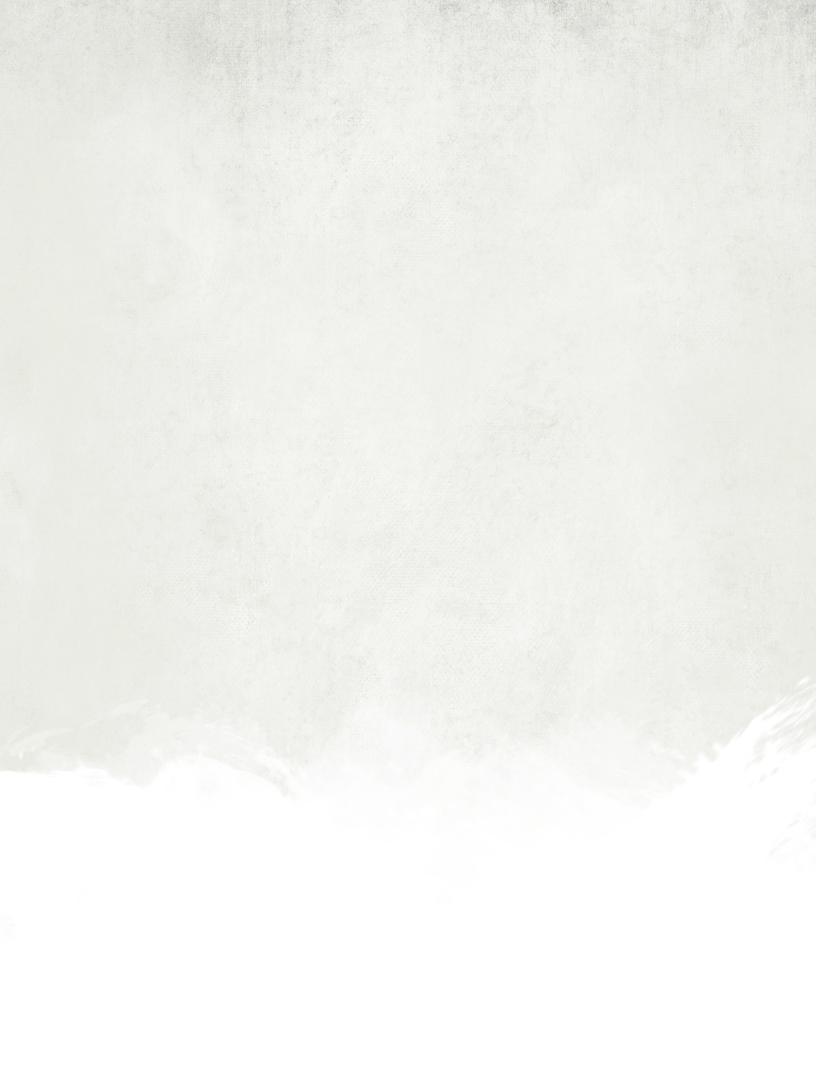
- Fort Tentrix - Hidden beneath the waves, Fort Tentrix is an impressive Zhelezo outpost, a feat of underwater engineering concealed beneath shimmering blue waters. Its coral-covered walls hum with arcane wards, ensuring its secrecy and security. Within its depths, elite Zhelezo operatives train in maritime combat, surveillance, and stealth, mastering the art of striking from the shadows. Few outside the Zhelezo know the full extent of Fort Tentrix’s purpose, and those who do are careful not to speak of it.
- Twinward Isles - Thick jungle canopies drape over the islands, creating a lush, untamed wilderness teeming with life. However, much of that life is hostile, from venomous predators lurking in the underbrush to carnivorous plants with dazzling, toxic blooms. The islands have become a proving ground for explorers and thrill-seekers, but few who step into the jungle escape unscathed.
- Fort Desmonda - Named after the legendary Sea Princess Desmonda, this Zhelezo stronghold is a hub of alchemical research and experimentation. Behind its fortified walls, alchemists work in secret to brew Cortexephan, a powerful elixir with properties shrouded in mystery. Chimneys constantly spew multicolored smoke into the sky, a telltale sign of the strange concoctions being developed within.
- Firegrass Isles - The Firegrass Isles rise above a dormant volcano, their soil enriched by volcanic minerals. Geysers, called spice-cannons, periodically erupt, spraying glittering powder known as firegrass. Prized for its medicinal and recreational uses, firegrass is highly coveted but fiercely regulated. The Kara Kara harvest and sell the drug to the rest of the world.
- Bwuali - Bwuali is a drifter settlement built upon the titanic corpse of a gargantuan chull leviathan. This Drifter colony of Bwuali thrives by mining the creature’s three gemhearts and its flesh.
- Fort Napoleon - The largest of the Zhelezo strongholds, Fort Napoleon is the beating heart of their maritime might. This sprawling fortress trains new mariners with grueling discipline and unrelenting drills. Its dockyards are abuzz with the clamor of hammering and shouting as the next wave of Zhelezo ships and soldiers prepare for the high seas.
- Vide Cay - A playground for the ultra-wealthy, Vide Cay is a lush tropical paradise where luxury knows no bounds. Gilded mansions and private resorts overlook shimmering beaches, and the waters are dotted with extravagant yachts. Every indulgence imaginable can be found here, though the cay’s exclusivity ensures that commoners never catch more than a distant glimpse of its opulence.
- Monkey Island - Monkey Island is a wild, overgrown expanse, its trees and cliffs alive with the antics of mischievous boggles. Once a pirate hideout, the island’s tunnels and caves are now playgrounds for these supernatural tricksters. Though most boggles stick to harmless pranks, their unpredictable nature keeps visitors wary of their quick fingers and slippery shenanigans.
- Fort Weatherby - Built atop the infamous Monkey Island, once a notorious pirate stronghold, Fort Weatherby is the Zhelezo's boldest statement against piracy. This is the newest of the Zhelezo forts, established only one year ago as part of their campaign to eradicate pirate activity in Wessel. The fort was constructed as both a symbol of authority and a strategic foothold in the treacherous waters.
- Whale Island- A Drifter colony built atop the rotting corpse of a colossal whale leviathan. Within its massive ribcage, Bone City thrives, a Drifter colony where traders barter for rare goods harvested from the decaying beast. The air is thick with the mingling scents of brine and death, and lanterns flicker across streets lined with bone and sinew, casting eerie shadows. Currently, the infamous Captain Eyebeard has claimed the island as his stronghold, making it both a trade hub and a den of piracy.
- Gavid Archipelago - A cluster of serene isles, the Gavid Archipelago boasts crystal-clear lagoons and calm waters perfect for fishing and sailing. However, it’s also home to treacherous reefs and sudden whirlpools that make navigation tricky for the unprepared. The archipelago’s peaceful veneer hides the occasional wrecked ship—and its secrets. Home to the capital of the Karlaka merfolk, Seros and the water genasi city of Castilla.
- Fort Padishah - The crown jewel of Zhelezo fortifications, Fort Padishah is an impenetrable bulwark standing watch over a key trade route. Its walls glisten with enchanted coral, and its soldiers are armed with advanced magitech weaponry. Known as the Zhelezo’s first line of defense, Fort Padishah is as much a symbol of their dominance as it is a stronghold.
- Siren's Roost - Siren’s Roost is a place of haunting beauty, where jagged cliffs loom over the sea and eerie melodies drift on the wind. The sirens who dwell here lure sailors to their doom, leaving shipwrecks strewn along the coast—a stark warning to those who dare sail too close.
- Phantom Cay - An island that flickers in and out of existence like a mirage. Shrouded in thick mist, it’s inhabited by spectral Mist Wraiths that haunt its shores. Brave sailors tell of hearing whispers and seeing phantoms in the fog—but few live to confirm the tales.
- Grim Atoll - A place of ill omen, Grim Atoll is shrouded in an unnatural green mist, its shores littered with the skeletal remains of those who never escaped. Legends tell of a powerful curse that binds the souls of the living to the island, ensuring that anyone who sets foot here is doomed to remain forever.
- Crab Island – A floating island formed from the corpse of a gargantuan crab leviathan, Crab Island is home to Shell City, a bustling Drifter colony. The leviathan’s decaying shell provides a wealth of rare, chitinous materials, which Drifters painstakingly mine and sell to the powerful Shardbearer Houses.
The Stormsea
The Stormsea, stretching across the waters that cradle the Isles of Wessel, is a region notorious for its violent Aetherstorms and unpredictable tides. Sailors brave enough to navigate these treacherous waters must contend with sudden squalls capable of tearing ships apart, hidden reefs, and the ever-present threat of sea raiders. Beneath the waves, the ocean is no less dangerous, teeming with creatures both wondrous and deadly.
The Karakala, wise merfolk, have adapted to the sea's chaos. They reside in underwater cities, where they act as neutral mediators between warring factions, preserving ancient lore, and pushing the boundaries of science. Their deep understanding of the ocean's rhythms makes them invaluable allies.
The Parshumak, also called Sahuagin or sea devils, worship the god Netherdeep and follow a brutal survival-of-the-fittest creed. They form ruthless war bands, raiding coastal villages and ships to capture slaves and expand their power. These sea devils often inhabit the Teeth, towering spires of stone and demonglass in the Storm Sea that can destroy ships. The most infamous area, Sharagon's Teeth, is perilous but promises unique marine encounters and hidden treasures.
The Moluu, also called the Locathah, are native fish-people who have endured enslavement by Wessel, the Zhelezo and the Sahuagin. Despite their suffering, they remain resilient, forming tight-knit communities and striving to reclaim their freedom and heritage.
The Underdeep
Below the depths of the Stormsea lies the Underdeep, a vast network of oceanic caves interconnected by massive tunnels. This mysterious realm harbors a trove of bizarre flora and fauna, yet its extreme darkness and pressure pose formidable challenges to exploration. Aquanauts, equipped with specially designed hadal diving suits, bravely navigate this treacherous terrain. These suits withstand immense pressure and cold, enabling aquanauts to delve into deep trenches littered with ancient shipwrecks. These underwater graveyards not only preserve relics of lost vessels but potentially hold secrets of bygone societies and civilizations. Legends and occasional discoveries hint at a rich history submerged beneath the waves.
Aetherstorms
Aetherstorms are colossal hurricanes that sweep across Wessel's skies unpredictably, originating from the Blackfang Isles in the east and moving westward. The leading edge, or stormwall, is the most dangerous part of the storm. Immensely powerful winds generate a wall of dust, water and larger debris. It is shown that it is powerful enough to carry large trees long distances. The falling edge of the storm, known as the riddens, consists of light rain mixed with relatively mild gusts of wind. As they traverse Wessel, their force gradually diminishes, finally dissipating near the eastern mountains of Ittia.
Aetherstorms start in the Everstorm above The Blackfang Isles. These islands are incessantly assailed by unrelenting tempests that hangs over the islands. Each storm emerges from the main storm cloud, which then moves across the Isles of Wessel. One seemingly random day a year, on one seemingly random hour of that day, the Everstorm that hangs above The Blackfangs parts in an instant revealing the true nature of the islands. All that has been seen is thousands of destroyed islands of bare black rock. No one has dared travel too far into the Blackfangs, as the Everstorm comes back exactly an hour after it left.
Wessel's flora and fauna have adapted uniquely to these harsh conditions. Lavis polyps and other resilient plants seal themselves against the storm's fury, while creatures like axehounds, whitespines, and greatshells sport protective carapaces and gemhearts that glow with Aether. The eastern slopes bear the brunt of the Aetherstorms, resulting in barren landscapes, while life flourishes on the sheltered western slopes and valleys.
People in Wessel live in cities or settlements that are protected by the Aetherstorms by natural or manmade structures. Qohor has its windblades – large stone formations that divert the Aetherstorm's force – and Port Noose has troughs that prevent the city from flooding. These structures are often city-wide and become an integral part of the cities culture.
Conduits are magical devices created using gemstones that harness Aether. They perform various functions like heating, cooling, or providing light. By manipulating the type of gemstone and the Aether within, conduits can be customized for a range of uses, blending art, science, and magic.
Map of Aebernys, Estium, Archera and Wessel
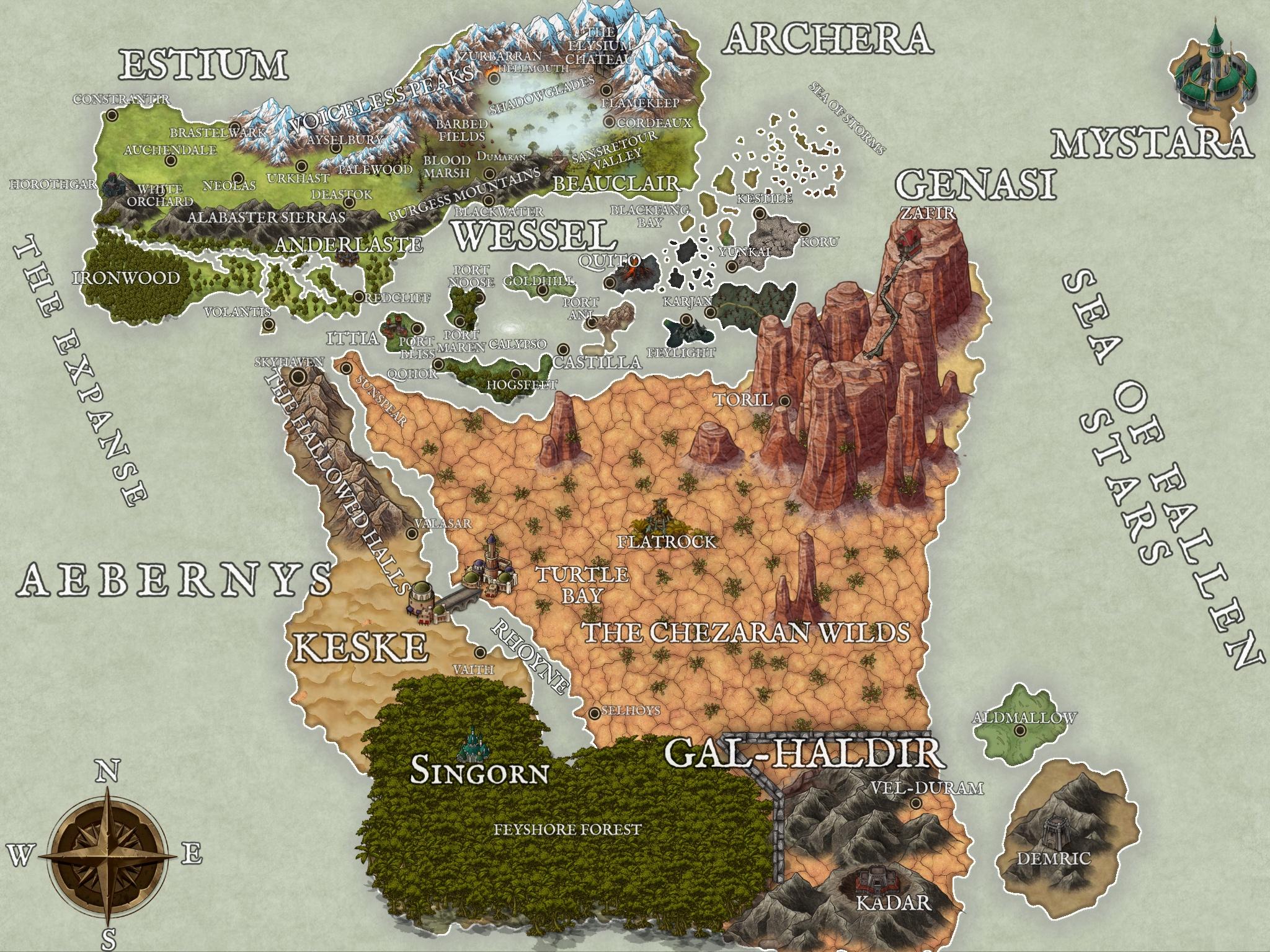
The Genasi Covenant
he Genasi Covenant stands as a living testament to the deep ties between Ogun and the chaotic forces of the elemental domains. Formed in the aftermath of the catastrophic Rift Events, which tore open the veil between planes, the Covenant was established to safeguard and oversee these unstable rifts. Each of its four orders is tasked with protecting a major elemental gateway: the Fire Genasi guard the Everplume volcano in Quito, the Earth Genasi tend to the Bellows in Toril, the Water Genasi watch over the Calypso Whirlpool in Castilla, and the Air Genasi maintain the Whipweed Gulf in Zafir.
1. Castilla - Sprawling across both land and water, Castilla is a breathtaking city nestled along the shallow shores of the Gavid Archipelago, with much of its architecture extending beneath the waves. Here, life revolves around the ocean, with its denizens as comfortable in the water as on land. During Aetherstorms, the city submerges entirely, with homes and businesses shifting below the surface, reinforcing the deep connection between its people and the sea.
Constructed from white and green marble, Castilla’s streets shimmer under the glow of ethereal green lanterns, giving the city an otherworldly beauty that attracts visitors from across Ogun. However, its greatest asset is its proximity to Calypso, a massive, ever-churning whirlpool at the heart of Sunsea Bay. This vortex, feared by sailors, serves as a portal to Lys, the Elemental Domain of Water. Castilla has forged a lucrative pact with the Parsisha of Lys, granting them maritime dominance and ensuring their position as a major naval power.
But in Castilla, beauty is more than vanity—it is power. The city operates under a Calistocracy, a system where governance is reserved for the most aesthetically perfect individuals. Political influence is determined not by wealth or birthright, but by the Pageant Mirrors, sentient artifacts that rank citizens based on their physical appearance. These mystical judges consider the elegance of attire, the vibrancy of color, and the clarity of skin when determining who may hold office. To be chosen by the mirrors is to be divinely favored, a symbol of status, leadership, and influence.
Born from the Elemental Domain of Water, the Zhelezo are a formidable mercenary fleet led by the Tricrown, a council of three powerful Sea Princes, Sea Prince Napoleon, Sea Prince Tentrix and Sea Princess Desmonda. They are relentless in their pursuit of justice—once they set their sights on a target, they will track them for months, ensuring that no fugitive escapes their grasp.
The Zhelezo Protectoriate is the largest and most formidable fleet in the world, operating under royal charter. Their elite warships, known as Tidekeepers, are heavily armed vessels capable of traveling beneath the waves, allowing them to strike from unexpected angles. They also possess letters of marque, giving them legal authority to engage in piracy against their enemies. The Tricrown symbol, a three-crowned emblem representing the Sea Princes, can be seen emblazoned on every Zhelezo flag, ship, and piece of property—even the sails of their trade vessels. With both military strength and economic influence, the Zhelezo have cemented their place as one of the most powerful forces on the seas.
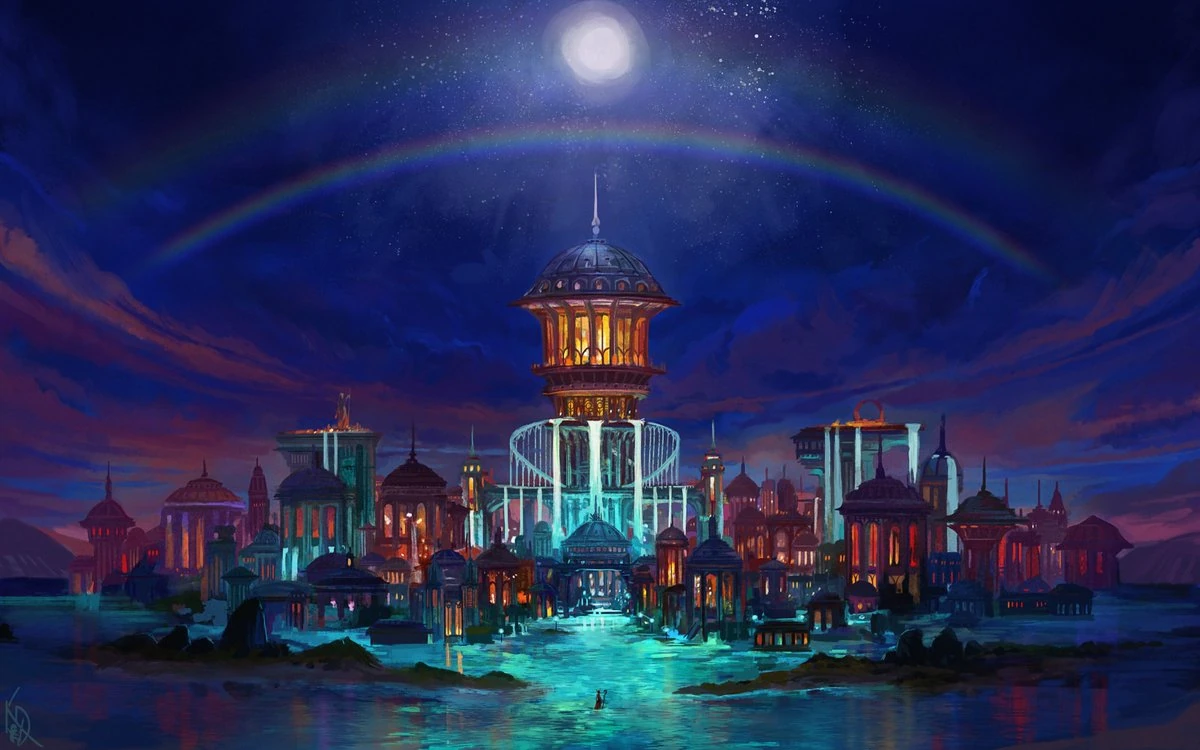
2. Zafir - Perched atop the vast Glassea, a shimmering salt flat that reflects the sky like a mirror, Zafir is a city of breathtaking beauty and innovation. Its grand balconies extend over towering cliffs, dropping nearly two thousand feet to the tumultuous Whipweed Gulf below. Every year in early Avana, the gulf becomes the stage for a stunning natural phenomenon—the Whipweed Bloom. Millions of luminous seeds rise from the waters, burst open midair, and release delicate feathery stems that drift on the wind, scattering across the North. Birds, bats, and sea creatures participate in this radiant ballet, carrying the seeds to distant shores.
Once, the Air Genasi of Zafir were the sole guardians of the Whipweed Gulf, protecting it as a sacred gateway to the Elemental Plane of Air. However, recent economic alliances with the Caliph of Aluer, the Air Domain, have transformed Zafir into a bustling airship port, surrounded by floating islands that drift in synchronized orbits around the elemental portal. These islands, called the Arie Steps, house serene gardens, open-air markets, and stages for aerial performances.
The advanced clockwork technology of Aluer has left its mark, with intricate gears, automata, and mechanical wonders woven seamlessly into the city's design.
Zafir’s governance is as fluid as the winds that shape it. The Silken Squall Debate Hall serves as the city’s heart—a space where citizens gather to discuss philosophy, morality, and the future of their home. Anyone may speak, and any proposal that wins the support of more than half the attendees is swiftly enacted. This participatory democracy fosters a sense of collective responsibility, where every voice has the power to shape policy.
Age and wisdom are deeply respected in Zafir. The older one is, the more authority they command, and elders play a crucial role in city decisions. While the governance system itself is democratic, the cultural reverence for experience ensures that the voices of the aged hold significant weight in shaping Zafir’s policies and future.
More than just priests, the Shantivayu, or Tranquiline Winds, serve as both a religious order and a powerful trading company. These wandering minstrels travel Wessel aboard sky sails, elegant flying vessels powered by brumstone, trading rare goods from Aluer’s floating isles while filling the air with hymns of devotion to the Caliph of Aelur. Though their ships are well-armed and sanctioned by the Quorum through a letter of marque, they avoid piracy and bloodshed, believing violence disrupts their sacred mission.
When confronted by would-be attackers, the Shantivayu offer an unusual choice—redemption as minstrels, joining them in spreading the Caliph’s blessings, or disarmament, where the aggressors are stripped of their weapons and left to their fate. In this way, the Shantivayu navigate the dangerous waters of Wessel, bringing both commerce and faith to those willing to listen.
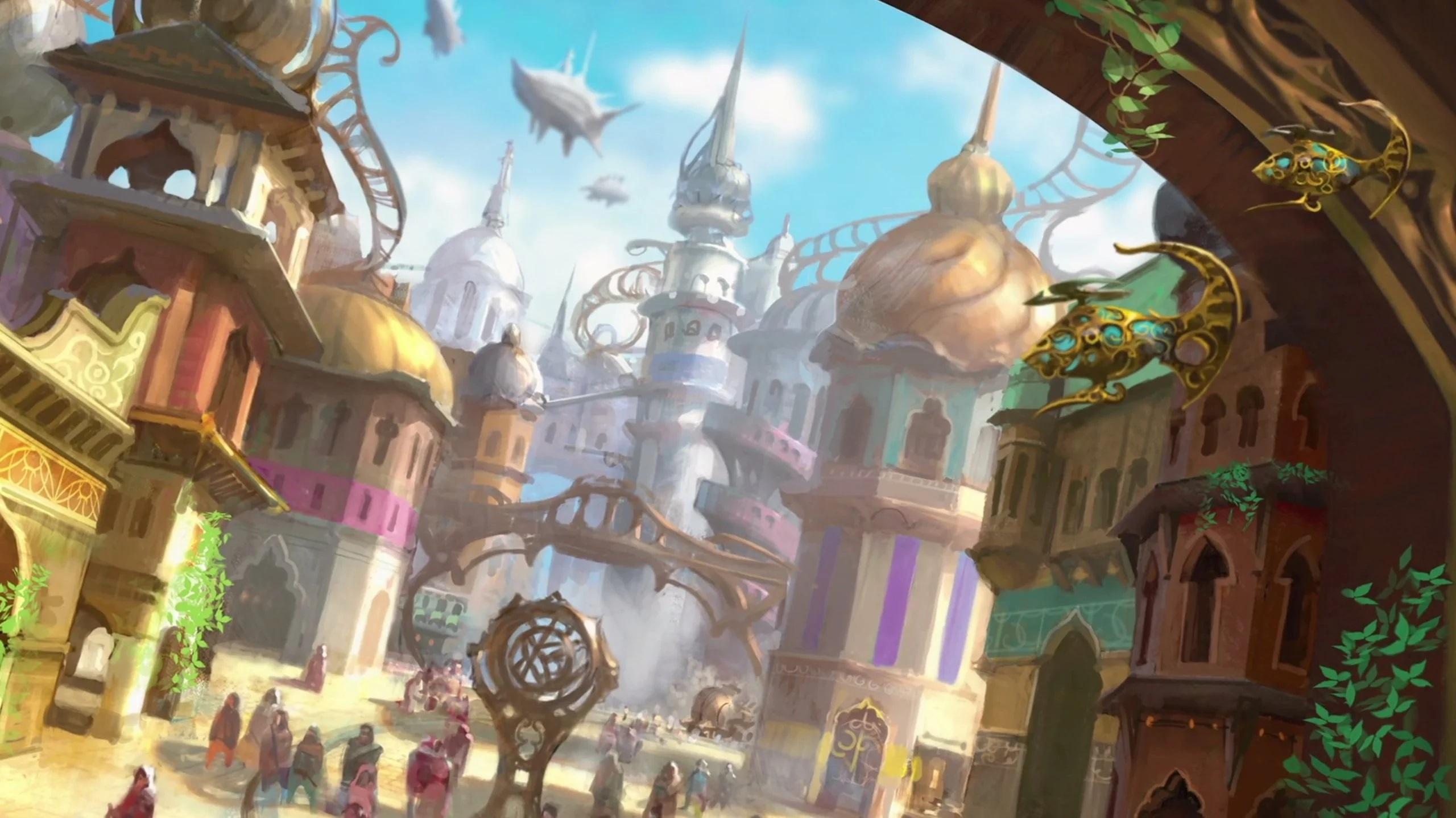
3. Quito - Once the proud guardian of the Everplume, a portal to the Elemental Plane of Fire, Quito stood as a beacon of strength, its people renowned for their mastery over flame and steel. The Fire Genasi thrived in a society built on power and ambition, where the strongest ruled and the weak were tempered like molten metal. Governance was determined through the Crucible, a brutal contest of might where the victor claimed leadership for a year. Nobles, warriors, and champions all took part, ensuring that only the most formidable individuals shaped the city's future. But all of that changed when the Fire Domain attacked. The Sultan invaded through the Everplume with his elite warriors, the Agnikhandas, and seized the city by force.
The city’s noble houses were scattered, and its warriors executed or enslaved. The Sultan declared himself Quito’s eternal ruler, turning the city into a fortress of tyranny, where smokestacks belched fire, streets lay buried under soot and ash, and the air reeked of scorched metal. But the Fire Genasi do not bow. Instead of surrendering, they rebelled.
From the ruins of their once-glorious city, the Crawler Gangs emerged—roving bands of outlaws who transformed the wreckage into something new: Crawlers, ramshackle war machines built from scrap and defiance. Fueled by Ignisine—a volatile, high-energy liquid extracted from the Elemental Domain of Fire—these rugged, gas-powered vehicles are monstrous constructs of spiked wheels, flame-spewing engines, and crude aether-tech salvaged from Quito’s fallen foundries. Each gang has its own war cries, customs, and philosophy. The Inferno Blades embrace destruction, leaving trails of fire in their wake. The Blazewardens see themselves as Quito’s last defenders, their Crawlers adorned with melted statues of the fallen Cinder Queen. The Red Tempest rely on speed, their lightweight Crawlers capable of outpacing the Sultan’s warbands, while the Cinder Jaws outfit their machines with massive grinders, tearing apart anything in their path.
The gangs rule the ruins by night, striking at the Sultan’s supply lines, ambushing his patrols, and making the city’s broken streets a battleground where only the fastest and fiercest survive. The Carmine Curtain, a long stretch of road that runs along Quito’s perimeter, has become both a proving ground and a warzone. Here, the gangs hold the Ash Derby, a deadly no-holds-barred race where Crawlers smash, burn, and crash their way toward dominance. Spiked wheels rip through cracked pavement, fire-cannons light up the night, and engines scream as combatants fight for the ultimate prize—the Ember Crown, a molten sigil marking them as one of Quito’s most feared warriors.
Yet even as the rebellion burns hot, the Sultan’s grip remains unyielding, enforced by his most terrifying warriors—the Fire Boys. These fanatics live only to die, believing that by immolating themselves in the Sultan’s name, they will ascend to his fiery court in the afterlife. They charge into battle chanting prayers, their bodies painted in soot and ash, their weapons rigged to explode upon impact. Their suicide attacks have become a relentless threat to the Crawler Gangs, forcing them to fight with both speed and strategy.
Still, the fight rages on. The streets shake with the roar of Crawlers, plumes of dust and fire spiral into the sky, and Quito refuses to be tamed. The Fire Genasi may have lost their city, but as long as they have fuel to burn and roads to ride, the Sultan will never know peace.
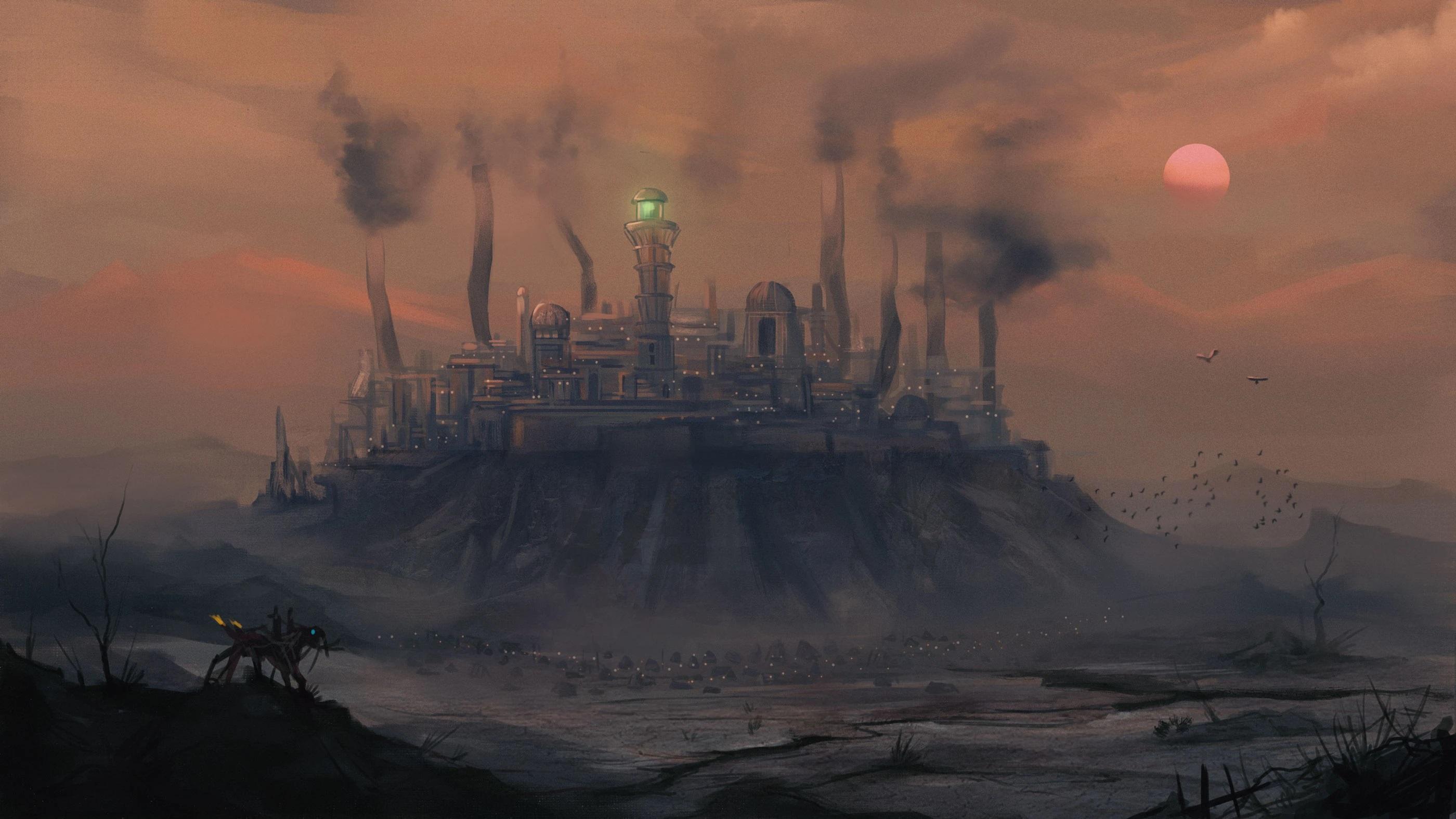
4. Toril - Deep within the treacherous Bellows, a canyon choked with brackish seawater and sulfuric emissions, lies Toril, known as the City of Salt. The canyon walls are streaked with crimson mineral deposits, a byproduct of the region’s rich salt reserves. These resources fuel Wessel’s booming airship industry, but their extraction comes at a steep cost. Workers navigate toxic fumes, unstable cliffs, and relentless Aetherstorms, their bodies scarred and bleached by years of exposure to the harsh environment. Yet despite these dangers, Toril remains a vital center of trade—though one built on the suffering of its people.
Once a free city where Earth Genasi safeguarded a portal to the Elemental Plane of Earth, Toril fell under the rule of the Khan of the Earth Domain long before the Age of Enlightenment. What was once a thriving stronghold of elemental scholars and artisans became an iron-fisted theocracy, ruled by the Selikite Ministry, also known as the Ministry of Steel. The Ministry enforces the Khan’s will with absolute authority, preaching that suffering is sacred and law is unbreakable.
The city's rigid structure is built on the Code of Tempering, a doctrine that teaches that every soul, like raw ore, must endure hardship to be reforged into something stronger. This philosophy permeates all aspects of daily life. The Doctrine of Immutable Order declares that laws are divinely inspired and unchangeable, making even minor infractions acts of sacrilege. Public prayers to the Khan are mandatory, and those who fail to attend face harsh punishments, from public branding to execution.
The Ministry’s enforcers, known as Adjudicators, ensure compliance with these strict laws. Dressed in heavy iron-plated robes, they patrol the cavernous streets, acting as judge, jury, and executioner. Their authority extends beyond Toril—aboard trading ships, they enforce foreign laws with the same unyielding devotion, making them a feared presence among merchants and travelers. To be judged by an Adjudicator is to accept one’s fate, for their rulings are absolute.
Toril’s economy is built on forced labor, with the majority of its population made up of enslaved individuals known as Mulhorandi. Owned by the temples and leased to wealthy patrons, they are conditioned for complete obedience, their entire lives dictated by contracts that can only be broken by death. Surveillance is constant—Pillars of Reflection, enchanted obelisks scattered throughout the city, emit an aura that compels confession, ensuring that even private thoughts are not safe from the Ministry’s watchful eye.
Cultural expression is strictly controlled, with all art, music, and literature serving as propaganda for the Ministry of Steel. The Hours of Tempering, daily public rituals, reinforce obedience through sermons, ritual labor, and displays of devotion. Dissent is swiftly silenced, and resistance is met with absolute force.
Despite its oppressive nature, Toril remains a hub of industry and trade. The city's two most significant landmarks are the Bellows Cradle, an underground temple that houses the portal to the Elemental Plane of Earth, and the Ember Vaults, a hidden treasury of salt, gemstones, and rare minerals, known only to the highest-ranking priests. Though the streets hum with industry, they are lined with scrying orbs that watch every movement, ensuring that control is never lost.
Kingdom of Estium
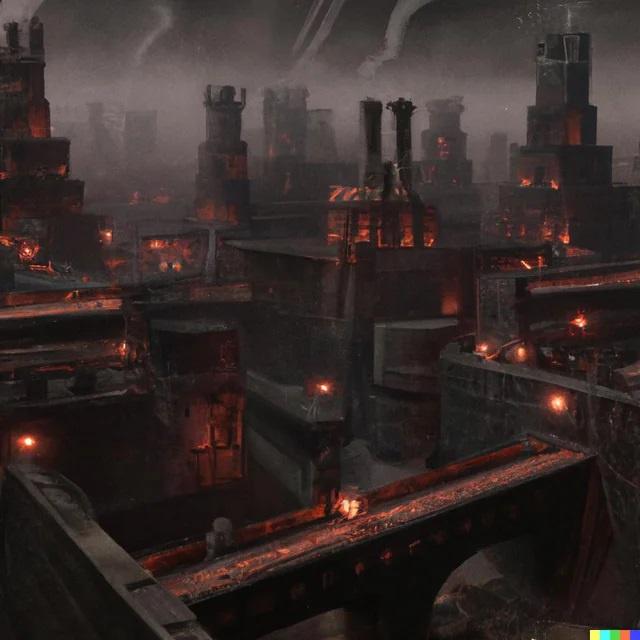
Estium is a nation built on military tradition and unwavering discipline, where combat is considered both a necessity and a sacred duty. Ruled by King Cornelius Cromwell and his ten children, the kingdom holds martial skill in the highest regard. From a young age, Estians are trained in the art of the duel, with swordplay woven into daily life. The streets ring with the clash of steel, as citizens challenge one another in formal dueling schools or impromptu brawls outside alehouses. Estium's history is defined by warfare, most notably the War of the Roses against the Archeran Dominion, a conflict still immortalized in song and legend.
At the heart of the kingdom lies Anderlaste, the sprawling capital perched atop a sheer cliff overlooking Lake Franto. The city cascades down the rocky face, with districts carved into the cliffside, leading to the bustling waterfront at the lake’s edge. At the summit, the royal palace and senate sit high above, safeguarded by centuries-old fortifications, while the lower districts hum with commerce, governance, and industry. Once an impenetrable stronghold, Anderlaste’s cliffs repelled countless sieges before the advent of airships reshaped warfare. Today, the city thrives as one of Estium’s most vital trade hubs, second only to the rival city of Mystara. At its base, a vast dockyard on the shores of Lake Franto serves as a gateway for goods, ferrying shipments across the water to Redcliff, to be traded to the rest of the world.
Despite its economic and military power, Estium faces internal strife. In the Ironwood Forest, a fierce non-human rebellion threatens the kingdom’s authority. The Scoia’tael, a guerilla force of elves, halflings, and dwarves, fights against the kingdom’s treatment of non-humans. Derisively called "Squirrels" for the tails they wear on their clothing, these rebels are descendants of the Ironwood Elves, whose ancestral lands were seized by Estium.
South of the kingdom’s core, the city of Constrantir clings precariously to the massive stone statue of Borrivick Faergar, a landmark that looms over its chaotic streets. This shantytown of outcasts is dominated by the Spice Street Marauders, a goblin-controlled criminal syndicate that controls trade within its labyrinthine alleys. Here, lawlessness reigns, and Estian influence is weak at best.
To the west, Auchendale serves as the kingdom’s largest trade crossroads, a city where diplomats, merchants, and scholars pass through its winding streets. It is home to the Hall of Erudition, an extension of the prestigious Tenwaria Academy, making it a center for higher learning. However, behind its scholarly reputation lies a deep undercurrent of corruption. The Clocks Thieves’ Guild, an elusive network of criminals, has embedded itself into every aspect of business, politics, and trade, making Auchendale a city where coin and cunning matter as much as steel.
One of the city’s most renowned landmarks is the Starpeak Observatory, perched atop one of Auchendale’s highest points. Run by the Circle of the Stars, a druidic order devoted to astronomy, the observatory serves as a beacon of knowledge and discovery. The druids chart celestial movements, preserve ancient star lore, and provide counsel to rulers and navigators alike, their insights shaping both scientific and spiritual understanding.

The Holy Kingdom of Archera
Archera, a nation born from the survivors of the divine conflict of Elysium and the Crimson War, grapples with a landscape marred by the echoes of the fiendish invasion through the Hellmouth.
The Church of the Silver Flame governs Archera as both its religious and political authority, dictating every aspect of life through the doctrine of divine reincarnation. According to its teachings, souls that bond with the Silver Flame are reforged through an eternal cycle of rebirth and purification, with each life bringing them closer to enlightenment. The most righteous and faithful are reborn time and again, climbing the sacred hierarchy toward ultimate transcendence. At the bottom of this rigid caste system are the Pilgrims, those experiencing their first life, considered spiritually untested and lacking divine favor. Higher reincarnations grant greater status, and at the pinnacle of the hierarchy sits the Pontifex, known as the Pure Soul—the individual who has undergone the most reincarnations and achieved the closest connection to the Silver Flame. The Pontifex is regarded as the Keeper of the Flame, the chosen interpreter of its will, residing in Flamekeep, the capital of Archera. From here, they guide the faithful, directing them in the church’s eternal mission to seek out and destroy evil wherever it festers.
The Church of the Silver Flame rejects magitech, believing it corrupts the soul and weakens the path to spiritual purification. While they do not persecute those who use it elsewhere, they forbid its presence in Archera, choosing to preserve a way of life they consider pure and untainted. As a result, Archera’s cities have remained largely unchanged for centuries. Streets are lit by torchlight, goods are crafted by hand, and labor is done without the aid of magitech or automation. Modern conveniences, from Aether-powered transportation to industrial machinery, are absent, replaced by traditional methods that emphasize self-discipline and devotion. To the faithful, this way of life is not a burden but a sacred duty—a testament to their unwavering commitment to the Silver Flame.
One of the most influential arms of the church is its militant order, the Rose Orders, each dedicated to combating a different extraplanar threat. The Red Rose battles fiends, the Grey Rose hunts lycanthropes, the Black Rose eradicates the undead, the White Rose opposes dragons, the Green Rose fights the Fey, and the Blue Rose pursues rogue mages. However, a schism within the orders led to a defining moment in Archeran history. The Red Rose introduced blood magic as a weapon against fiends, a practice embraced by the Grey and Black Roses but condemned by the White, Green, and Blue Roses as heretical. When the Pontifex sanctioned blood magic, the opposing orders were excommunicated, igniting the War of the Roses, a brutal conflict between Archera, which sided with the Red, Grey, and Black Roses, and Estium, which supported the exiled orders.
Mystara
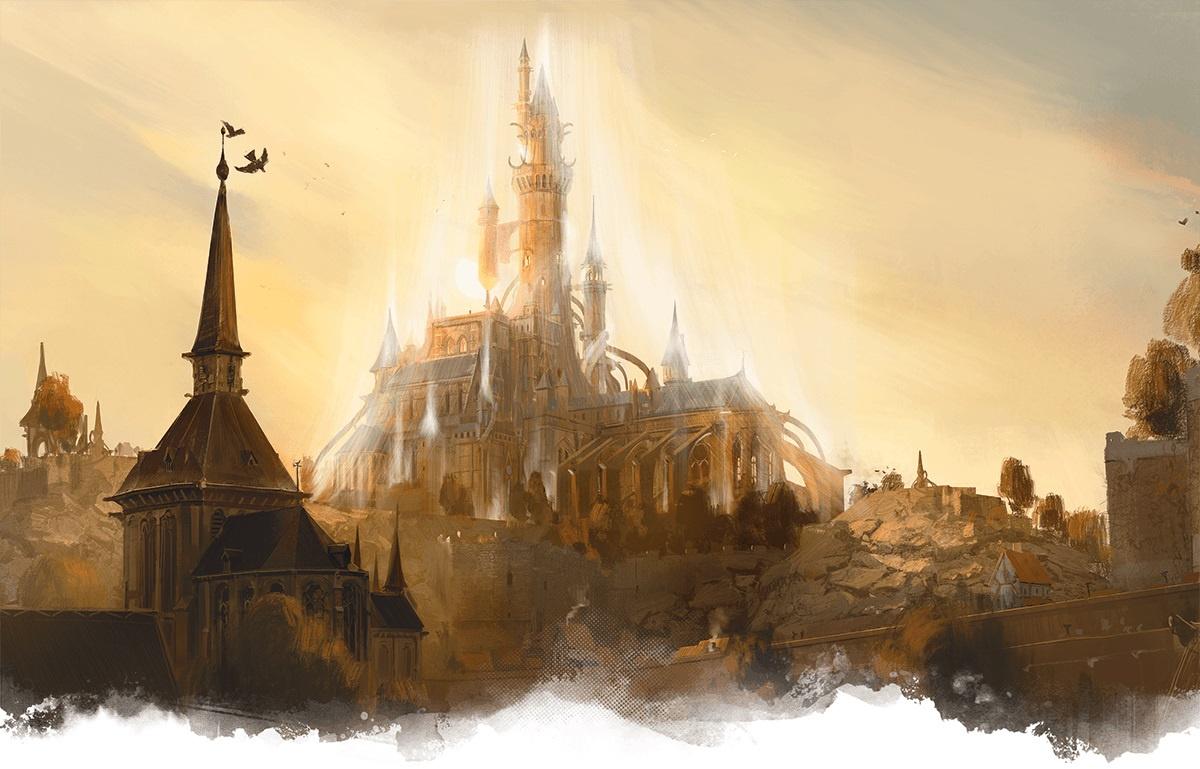
An island kingdom created by the god of their own creation, Zavan the god of inspiration. The thriving metropolis stands as a beacon of progress where art, science, trade, and innovation intertwine. The city's shimmering towers radiate a magical glow, reflecting the prosperity born from Zavan's creation. Its enchanted waters, purifying and fertile, sustain a populace often characterized by its haughtiness and wealth. Mystarans, sometimes pretentious, view themselves as divine beings, and in a way they are correct. Zavan embedded fragments of his divine essence within them, elevating their status. The Council of Mystara, guided by elected officials and Archmages oversees the city's affairs while the Godking commands the military. The Godking Jakub Kladivo is an immortal being chosen by Zavan himself to rule the city, an angel of the imprisoned god who walks the mortal realm, bringing miracles to the people of Mystara. The Whitechapel Church of Zavan, dubbed "Wallites" venerates the city's walls as sacred extensions of their god.
At the heart of Mystara’s magical and intellectual supremacy stands Snowspire Academy, a grand institution renowned for its architectural beauty and its eight specialized schools of magic. The College of Abjuration focuses on historical knowledge and protective magics. The College of Evocation transforms elemental energy into breathtaking artistic displays. The College of Illusion uses mathematical formulas to create complex, layered illusions. The College of Enchantment specializes in the power of linguistics and literature, mastering the spoken and written word to influence the world. The College of Necromancy is divided into two branches—the science of Growth, which studies the biology of life, and the study of Decay, which examines the inevitable cycle of death. The College of Transmutation delves into organic and physical transformation, pioneering Chronurgy, the study of time manipulation. The College of Conjuration merges planar physics with classical and modern mechanics, exploring new biological applications of summoning magic. Finally, the College of Divination, also known as the College of Philosophy, seeks the fundamental truths of knowledge, reality, and existence.
Yet beneath Mystara’s polished brilliance lies Undermoor, a city of shadow and anarchy. Built beneath Mystara’s gleaming streets, Undermoor is a sprawling, smog-choked undercity, its industrial skyline defined by corroded pipework, stained glass, and flickering gaslights. It was founded in the aftermath of the Warforged rebellion, when Mystara exiled the artificial beings from their society. Rather than perish, the Warforged carved out their own existence below, and over time, Undermoor became a reflection of Mystara itself—twisted, darker, but undeniably alive. While the upper city flourishes in wealth and enlightenment, Undermoor thrives in crime, invention, and unregulated magic. Many of the goods flowing into Mystara inevitably find their way into Undermoor’s black markets, and the most dangerous magical research, too volatile for the laws of the surface, is welcomed below without restriction. However, reckless industry has taken its toll—entire districts are choked by toxic runoff, their air thick with poisonous fumes. Despite the dangers, Undermoor’s people endure, thriving in the very shadows of the world that cast them aside.
Keske
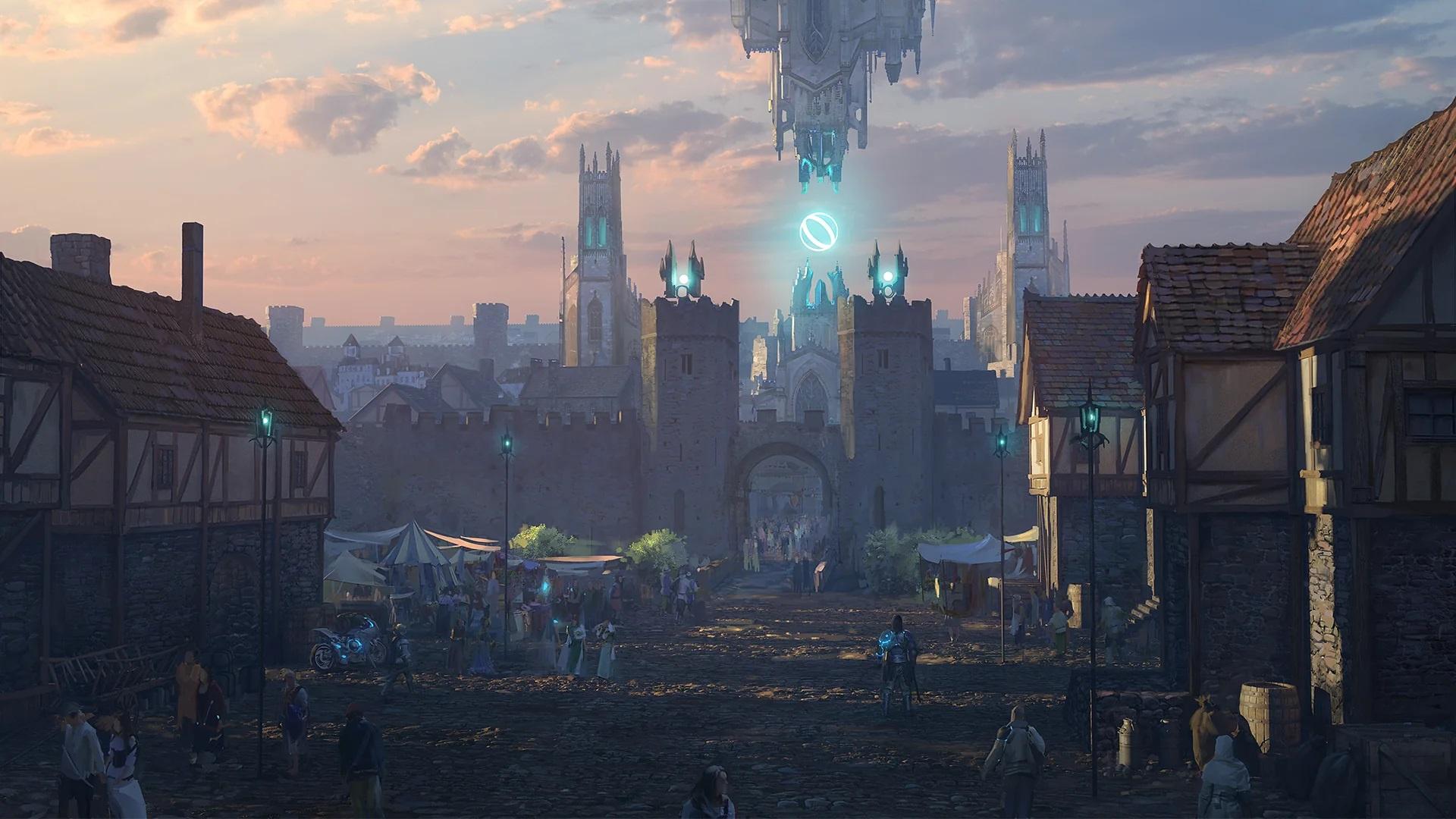
Nestled along the life-giving banks of the River Rhoyne, Keske is a land of stark contrasts—a lush oasis surrounded by an unforgiving desert. The capital, Turtle Bay, is the busiest trading hub in the region, serving as the primary trading post between the Material Plane and the Feywild via the river’s winding path to the Feyshore Forest. This bustling port city is a melting pot of cultures and races, where merchants, sailors, and adventurers from across the world converge. Keskish people are renowned seafarers and fishermen, their deep connection to the Rhoyne shaping their traditions. Most Keskish are olive-skinned, black-haired, and lithe, their swimming prowess legendary, as it is said they learn to swim before they can walk. This natural affinity for the water has helped Keske build the strongest navy in the world.
Keskish society is fiercely independent and egalitarian, practicing equal primogeniture, ensuring inheritance rights are granted to the eldest child regardless of gender. Their cultural attitudes are remarkably open-minded, particularly regarding romantic and sexual relationships—polyamory is not just accepted but widely embraced, fostering a rich and diverse social structure. At the heart of Turtle Bay, the famed Houses of Pleasure stand as testaments to this openness, offering the world’s most skilled courtesans and celebrating the art of intimacy.
Every year, Turtle Bay bursts into life during the Turtle Festival, a beloved tradition that draws visitors from far and wide. Locals and travelers alike participate in games, competitions, and turtle-themed festivities, with the highlight being the symbolic battle between the Mother of the Rhoyne and the Crab King—a theatrical performance led by priests dressed in emerald-green suits wielding tortoise-shell canes. Children help baby turtles reach the river, while adults carve tunnels in the sand, ensuring the young creatures’ safe passage.
The people of Keske do not follow the traditional pantheon but worship a pantheon of demigods, each playing a vital role in their nation's salvation. Chief among them is the Mother of the Rhoyne, a turtle-woman said to have revived the river and brought life to the region. Other deities include the Monkey King, the Lady of Law, the Crabman, the Drunken Sailor, and the Commodore, each reflecting an aspect of Keskish history and seafaring culture.
Keskish cuisine is as fiery and bold as its people, featuring spicy peppers and exotic spices that mirror the region’s warmth and vibrancy. Their clothing is light and flowing, designed for the desert heat, and often bursts with bright colors and intricate patterns, a reflection of their passionate and expressive culture. Whether through their rich traditions, their mastery of the sea, or their unyielding devotion to the Rhoyne, the Keskish people stand as a testament to resilience, freedom, and celebration of life.

Chezaran Wilds
Stretching across the northern continent, the Chezaran Wilds is a vast and mostly lawless expanse of arid plains, rolling mesas, and desolate badlands. This rugged landscape is home to outlaw bandits known as Freeriders, who roam the land on swift-feathered velociraptors, striking at travelers with gunpowder weaponry and vanishing into the dust before law can catch up with them. The Freeriders live by their own rules, forming scattered bands that scavenge, raid, and plunder the unguarded wealth of the frontier. Some are driven by desperation, others by greed, but all view the open plains as their rightful domain, answering to no authority but their own.
Amidst the chaos of the Wilds, Flatrock stands as its lone bastion of stability. Built around a rare and life-giving oasis, the town is an unexpected pocket of greenery, rich with lush flora, cool springs, and thriving wildlife—a stark contrast to the merciless desert beyond. Flatrock has earned a reputation as a refuge for the outcast and the weary, welcoming those who have been turned away from other lands, particularly orcs and goblins who struggle to find acceptance elsewhere. Here, all are given food, water, and shelter, provided they contribute to the town’s survival.
At the heart of Flatrock’s governance is Sheriff Valentine "Snake Eyes" Flatrock, an orc woman whose deadly accuracy and unyielding sense of justice have made her a legend in the Wilds. Fiercely protective of her people, she ensures law and order with a firm but fair hand, holding regular Town Hall meetings where the citizens collectively decide on matters of trade, security, and the distribution of resources. The town operates on a system of mutual aid, where survival is a shared responsibility.
Flatrock is also a deeply spiritual community, dominated by the worship of the Archeart, the goddess of peace. The town is home to the Mercy Monks of the House of Compassion, an order of healers, scholars, and pacifists who provide aid to those in need, regardless of their past. Their presence has helped turn Flatrock into a sanctuary, a place where even the most hardened wanderers find respite.
Recently, a monumental achievement has connected Flatrock to the outside world—the Valentine Railway, a steam-powered train line linking the town to Turtle Bay and Toril. While this railway has brought an influx of trade and opportunity, it has also become a prime target for Freerider raids, as the lawless gangs see the wealth of the locomotive as ripe for the taking.

Gal-Haldir
The reclusive empire of Gal-Haldir consists of interconnected subterranean dwarven cities called Thaigs, governed by a dichromacy shared between the religious order, the Congregation of the Devoted, and the financial powerhouse, the Galgolir Trust. The capital, Kadar, stands on the divine punishment site of Moradin, known as the Castigation, marked by a meteorite impact. Gal-Haldir is renowned for its strict stance against magic and non-dwarves, especially within its borders.
The Congregation of the Devoted upholds a rigid doctrine that magic is a divine punishment, given and taken away at Moradin’s will. According to their teachings, mortals brought about their own suffering by creating Zavan, the god of inspiration, an act of arrogance that led Moradin to curse them with magic. To the Congregation, all souls are born as Reprobates, burdened with sin, and must earn their way to Absolution through devotion and discipline. The Elect, dwarves who are closest to purity, are honored in the faith, while non-dwarves who seek redemption are tolerated as second-class citizens. The most sacred relic of Gal-Haldir, the Book of Absolute Law, dictates Moradin’s commandments, and those who defy them are cast into Demric, an anti-magic prison where spellcasters are stripped of their powers forever.
One of the most significant sites in Gal-Haldir is Skyhaven, once known as the Consecration, where magical artifacts were ritually destroyed to cleanse the world of their corruption. Today, it is home to the legendary Skyforge, where master blacksmiths craft weapons of unparalleled power. Beyond Skyhaven lies Kraghammer, a Thaig that broke away from Gal-Haldir’s strict religious rule. Now independent, it is best known for Kragbrew Ale, a potent dwarven drink famed across Ogun for its rich flavor and intoxicating strength. Meanwhile, the exiled dwarven mages, long persecuted by the Congregation, established the remote settlement of Aldmallow, where they practice their craft in safety, far from the watchful eyes of the theocracy.
While the Congregation governs the spirit, the Galgolir Trust controls Gal-Haldir’s vast financial empire. Headquartered in Horthghar, known as the Conglomeration, this global banking powerhouse is responsible for minting and distributing the majority of currency in Ogun. Every coin stamped with the GT insignia originates from the vaulted halls of Horthghar, carried to the farthest reaches of the world through Gal-Haldir’s sprawling underground tunnel networks. The standardized currency system includes Platinum Pieces (pp), Gold Pieces (gp), Silver Pieces (sp), and Copper Pieces (cp), ensuring the Trust’s influence extends far beyond dwarven lands.
Daily life in Gal-Haldir is austere and regimented. Within the empire’s heart, most dwarves wear plain, functional clothing, embracing a utilitarian lifestyle that reflects their devotion to self-discipline and atonement. However, times are changing. Recently, Gal-Haldir has begun to open its borders, joining the League of the Seven and allowing distant Thaigs like Kraghammer, Skyhaven, and Aldmallow to declare independence from the Congregation. These free cities now follow Ulaa, the Lonesome Melody, a goddess of music and artistry, whose worship offers a new path for those who reject the strict rule of Moradin.

Signorn
In the southwest of Aebernyis, the Feyshore Forest stands as a lush and untamed jungle, a stark contrast to the arid desert that surrounds it. Considered one of the most dangerous places in Ogun, the forest is alive with threats both natural and supernatural. Its vegetation is not merely dense but predatory, with intelligent plants lying in wait for unsuspecting travelers. The beasts that roam its depths are equally fearsome, armed with massive teeth and claws, while disease-carrying insects fill the air with an unrelenting buzz. The humidity is thick and oppressive, making the forest as inhospitable as it is enchanting. Yet, despite these dangers, the great city of Singorn thrives within its borders.
Singorn, known as the Emissary City, stands at the boundary between the Material Plane and the Feywild, a place where the two realms blend seamlessly. This unique position has shaped its culture, which is deeply infused with fey magic and tradition. The city is home to a diverse population of elves, firbolgs, and other Fey-touched beings, many of whom live by a philosophy that embraces art, music, and storytelling as integral to daily life. Unlike the rigid hierarchies of other nations, Singorn’s social structure is fluid, reflecting the ever-shifting nature of the Feywild. Traditions are respected, but change is embraced, making the city a place of creativity and transformation.
At the heart of Singorn’s influence is the Accord of Singorn, an alliance of seven druidic circles devoted to maintaining the balance between the Feywild and the Material Plane. Their efforts are anchored by the Tree of Names, a sacred conduit believed to guide souls to the Wildmother, the goddess of life. Each circle possesses its own Tree of Names, with the bark carved with the names of the departed, ensuring their spirits find peace in the Wildmother’s embrace. These trees serve as powerful links between the mortal world and the Fey, preventing one from overtaking the other.
The Accord’s influence extends far beyond Singorn, with druidic circles spread across Ogun. The Starpeak Observatory in Estium studies celestial magic, while the Firelink Shrine in Wessel’s Cindergrove Forest embraces destruction and renewal. The Willow Wood in Karjan’s Gloom Forest safeguards nature’s ever-changing cycles, while the Menagerie in the Crispvale Thicket protects the bond between animals and people. Singorn itself serves as the heart of the Circle of the Land, standing as the bridge between the Feywild and the Material Plane. Deep beneath the surface, the Neverlight Grove in the Underdark oversees decay and rebirth, while the Cult of Danu in Archera’s Shadowglades guards the realm of dreams.
Map of Oerth
Draconia
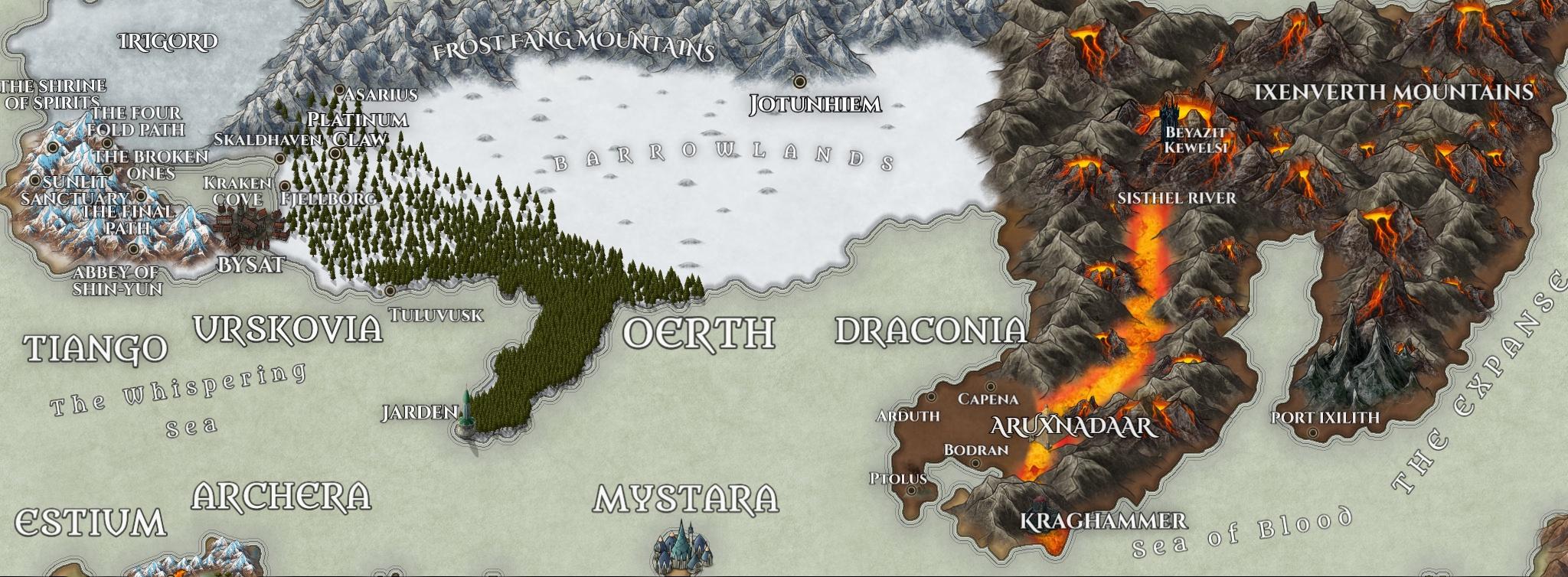
Once known as Keldihar, the kingdom of Draconia has become a land where dragons and humanoids coexist as equals, fostering a society built on mutual respect and shared purpose. Unlike the oppressive rule of the ancient dragonlords, Draconia is now governed by a unique dual leadership: a metallic dragon and a humanoid ruler, both chosen by an elected council. This system reflects the kingdom’s core belief that neither dragons nor mortals should rule alone, but instead, they must govern together in harmony.
From an early age, children and young dragon wyrmlings are raised side by side, attending the same schools and growing up as lifelong companions. The streets of Draconia are filled with both dragons and dragonborn, as well as humans, elves, and other races, forming a society where friendships between mortals and dragons are commonplace. While the metallic dragons have fully integrated into this new order, the chromatic dragons abandoned Draconia long ago, retreating into the wider world to pursue their own ambitions.
To maintain peace beyond its borders, Draconia trains elite diplomats known as Seekers—highly skilled metallic dragons and their riders who travel the world in search of rogue chromatic dragons. These emissaries are tasked with either pacifying or convincing these wayward dragons to return to Draconia, preserving the kingdom’s legacy of coexistence and preventing destructive draconic conflicts from arising elsewhere.
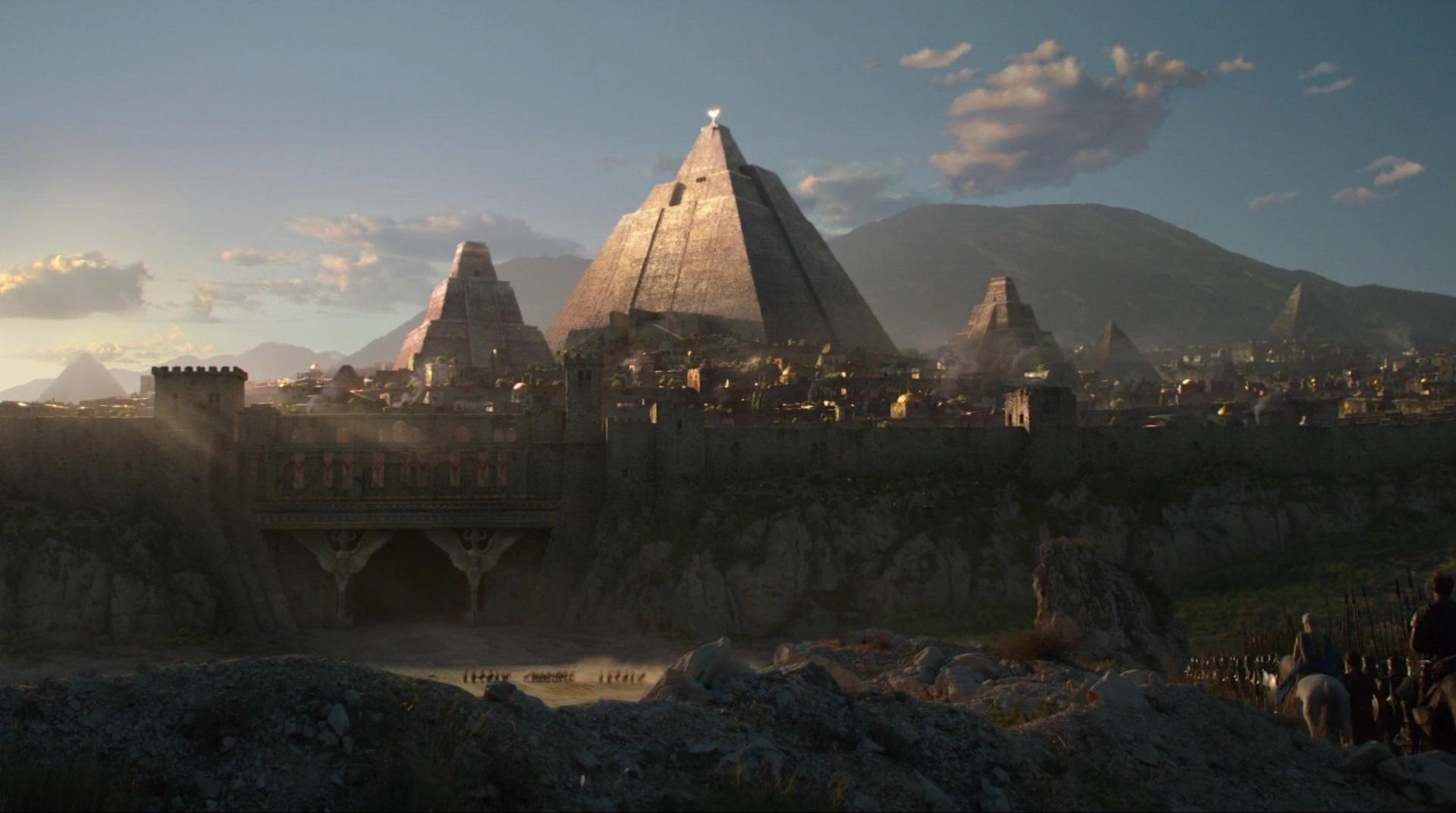
The capital of Draconia, Aruxnadaar, is a breathtaking city of towering pyramids, vast plazas, and intricately carved dragon statues that symbolize the unity between dragons and mortals. At the city's heart flows the lava river Sisthel, its molten currents illuminating deep underground chambers where Draconia’s oldest secrets lie. Among these relics is the ruined palace of Beyazit Kewelsi, a solemn reminder of the fall of Keldihar and the end of the dragonlords' reign.
The city's vibrant commercial hub, the Bazaar of Scales, is renowned across Ogun as a center of trade for treasures from dragon hoards, rare magical artifacts, and enchanted crafts. Traders from across the world gather here, drawn by the promise of goods found nowhere else—from wyrm-forged weapons to relics imbued with the essence of draconic magic.
In the ancient days of Keldihar, the dragonlords ruled with unmatched greed and power, believing their wealth would secure them favor in the afterlife. Upon death, they were buried in lavish tombs filled with their amassed fortunes, alongside the enslaved subjects who served them in life. These tombs, scattered across the world, remain untouched by time—guarded by cunning traps, powerful enchantments, and the restless spirits of the dragonlords themselves.
With the collapse of Keldihar and the rise of Draconia, the systematic breeding of dragons came to an end, allowing metallic and chromatic dragons alike to spread freely across the world. As a result, the once carefully controlled lineage of draconic bloodlines has given way to a more diverse and unpredictable dragon population, each with unique abilities and traits.
Urskovia
The Urskovians are a hardy and resilient people, shaped by the harsh northern tundras of Oerth. Their connection to the land runs deep, as they share ancestral ties with giants, granting them impressive stature and resilience against the unforgiving cold. Organized into tight-knit familial clans, Urskovians emphasize strength, endurance, and self-sufficiency, traits that define their way of life. Hunting and fishing sustain them, and their culture revolves around the constant battle against the elements and the fearsome creatures of the frozen wilds. Mounted on polar bears, Urskovian hunting parties venture into the tundra to track their most coveted prey—the Remorhaz, a massive, heat-producing creature whose hide is prized for its insulating properties. Towering over most other mortals, Urskovians are distinguished by bald heads, gray skin, and piercing white eyes, often marked with intricate tattoos that tell the stories of their battles and lineage. Strength and physical prowess hold great significance in their society, with contests of strength, endurance, and skill playing a central role in festivals and rites of passage. These competitions are not just entertainment but a way to prove one’s worthiness, resilience, and place within the clan.
Urskovia maintains strong ties with its southern neighbors, the Tiango people, forming the Kraken Concord, an alliance that binds their cultures and economies together. The city of Bysat, positioned between their lands, serves as a thriving trade hub where Urskovian warriors and Tiango monks meet to exchange goods, stories, and traditions. Despite their rugged way of life, Urskovians hold grand celebrations marked by storytelling, music, and feats of endurance, reinforcing the bonds within their clans and across their borders.
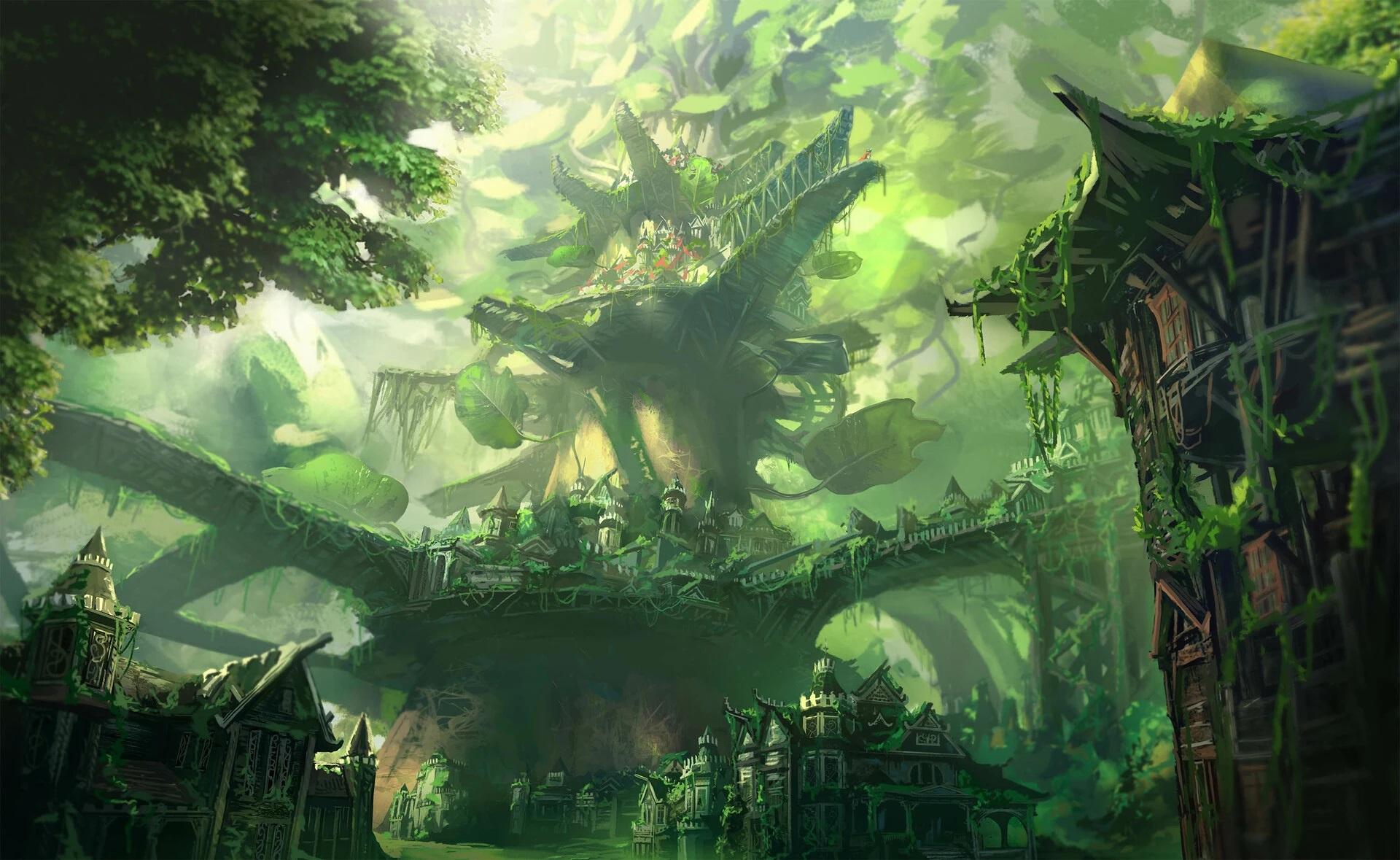
At the heart of Urskovia stands the Platinum Claw, an independent city-state that has grown from a humble Urskovian village into a legendary adventurer’s sanctuary. Built amid the colossal trees of the northern forests, the city boasts a unique treehouse-style architecture, its towering guildhall carved with intricate symbols of heroism and unity. The Platinum Claw is home to the Vanguard Adventurers' Guild, one of the most renowned organizations in the world, dedicated to training, equipping, and uniting heroes from across Ogun. Inside the grand hall, statues of legendary figures—including The Hell’s Angels—stand as testaments to the guild’s long history, while a tribute to the Crew of the Rising Sun, the guild’s founders, reminds all who enter of the legacy they now carry forward. The guild is divided into five specialized branches: Magi, Hunters, Seekers, Artificers, and Titans, each focusing on different aspects of combat, exploration, and magical expertise. A massive job board dominates the main hall, offering contracts ranging from escort missions to high-risk monster hunts, ensuring that every adventurer finds a purpose suited to their skills.
The Vanguard Adventurers' Guild extends far beyond Urskovia, with guildhalls in Anderlaste, Aruxnadaar, Port Bliss, Turtle Bay, and Kagonesti, creating a network that allows heroes to travel and take on challenges across the world. In a land as unforgiving as Urskovia, the Vanguard stands as a beacon of unity, strength, and purpose, drawing those who seek adventure, glory, and the thrill of the unknown.
Jotunhiem
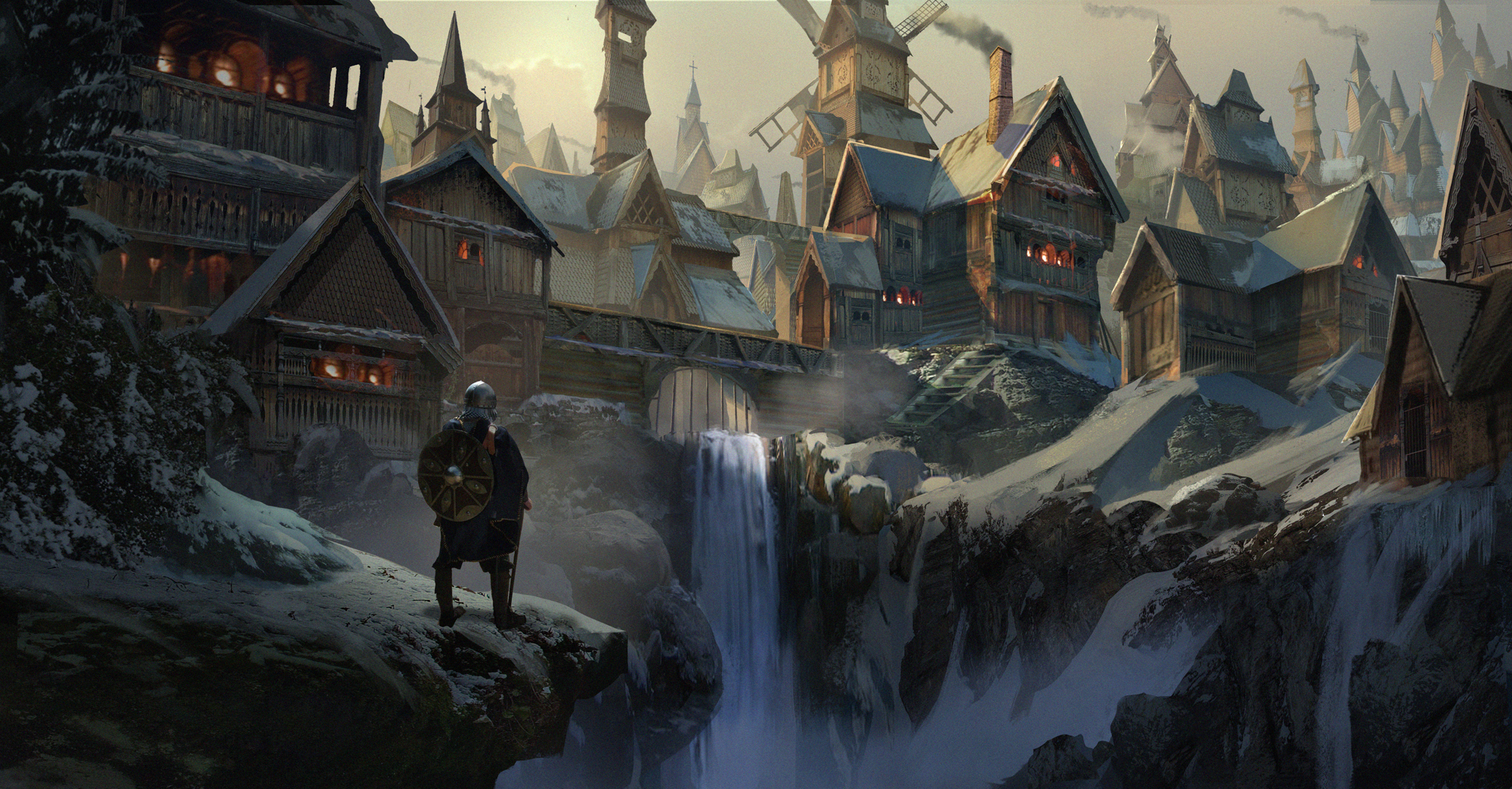
North of the Barrowlands, where rolling plains are dotted with ancient burial mounds of fallen giantss, Jotunhiem is built atop the towering mountain of Midgard. Jotunhiem is a majestic city of giants, built atop a series of massive, disk-shaped platforms. Each disk reflects a different caste of giant society, upheld by the sacred doctrine of the Ordining. Once closed to outsiders, the city only recently opened its gates following the Fall of Keldihar.
At the top lies the Tempest Disk, realm of storm giants. Here, the watery citadel Maelstrom —a swirling palace of coral and current—houses Forgekeeper Hekton, who guards the distant Forge of the All-Father. Beneath the palace is the Squall Line, a high-security prison. Storm giants uphold Jotunhiem’s three core laws: obey the Ordining, pass a trial to enter, and never approach the Forge without permission.
Below is the Nimbus Disk, where cloud giants dwell in floating mansions. Its center, Stratisgate, is an arena for the Contest of Jotun, and nearby, the partially ruined Azure Firmament library stands as a reminder of past betrayals. Nimbus is represented by Ogmar the Burly, a flamboyant warrior known for both his strength and flair.
The Ivory Disk is home to frost giants living in icy, contemplative communities. Its heart is the House of Deliberation, a massive ice courthouse. After the retirement of Jarl Storvald, leadership passed to Eira, his former nurse, who now serves with quiet wisdom and calm resolve.
The Cinder Disk is a blazing hub of blacksmithing and trade. Its representative, Surtur the Ashen Wyrm, is a fearsome fire giant with scorched skin, a face-splitting scar, and a flaming beard and the ability to turn into an ancient red dragon. Once a war criminal in the Dragon Wars who sided with Keldihar, Surtur’s flame-wreathed body and molten chains mark his brutal past. Recently freed from the Squall Line, he now claims redemption and a place on the council—though his ability to transform into a red dragon leaves many uneasy. Still, he speaks with unexpected clarity, insisting that fire, though destructive, can forge new paths.
Next is the Cobble Disk, the bustling artisan center dominated by stone giants and the Stoneshapers’ Guild. Highlights include The Platinum Claw forge-temple, Hook, Line, and Sinker tavern, and the eternally bickering ettin butchers of Head, Shoulders, Knees, and Toes. The disk’s representative, Yauln Daulyn, a former cobbler, was chosen by chance and serves with eager humility.
At the base lies the Mud Disk, a cold, snow-dusted sprawl of hill giants, ettins, and cyclopes. Known for its hard labor and pumpkin farming, it remains essential to the city's food supply despite being culturally overlooked by the higher tiers.
The House of Deliberation unites all disks through its council of representatives: Hekton of Tempest, Ogmar of Nimbus, Eira of Ivory, Yauln of Cobble, Surtur of Cinder, and Realmscribe Nerri, a pixie archmage from the Feywild city of Mithrendain.

Tiango
Nestled among towering peaks, cascading waterfalls, and mist-shrouded valleys, Tiango is a land of breathtaking beauty and deep spiritual traditions. Divided into six city-states, Tiango is governed by monastic lineages, each tied to an ancient order that shapes both daily life and political affairs. The region’s people live in tight-knit communities, emphasizing meditation, discipline, and collective harmony. Tiangans believe in balance between mind, body, and spirit, and their society reflects this philosophy in everything from their governance to their pastimes.
Tiango’s Six Sacred Paths are monastic city-states, each devoted to a distinct philosophy of martial arts and spiritual enlightenment. Rooted in their connection to mysterious spirits, these monasteries shape Tiango’s culture, blending discipline, meditation, and combat mastery.
The Final Path, in the City of Echoing Footsteps, follows the Way of the Long Death, studying mortality and the transition between life and the afterlife. The city's Bone Chime Towers line the streets, filling the air with eerie melodies that guide souls to the afterlife.
The Sunlit Sanctuary, in the City of Eternal Dawn, practices the Way of the Sun Soul, harnessing inner light as energy. The city is built of white-gold stone, upon a high plateau where the sun never fully sets.
The Shrine of Spirits, in the City of Shifting Winds, follows the Way of the Drunken Fist, embracing fluidity, spontaneity, and unpredictability, blending erratic movement, feigned weakness, and effortless counterattacks into their fighting style. Built on floating platforms that shift with the wind, the city is alive with acrobats, revelers, and alchemists.
The Fourfold Path, in the City of Balance, teaches the Way of the Four Elements, blending endurance (earth), freedom (air), passion (fire), and adaptability (water). The city is positioned at the convergence of roaring rivers, eternal flames, towering cliffs, and swirling winds.
The Abbey of Shin-Yun, in the City of the Silent Palm, follows the Way of the Open Hand, rejecting weapons in favor of pure, unarmed combat. Surrounded by cherry blossoms, the valley city thrives on meditation, calligraphy, and martial arts, enforcing a strict no-weapon policy in its pursuit of inner peace.
The Broken Ones, in the City of Weeping Stones, practice the Way of Mercy, walking the line between salvation and mercy killings. Their plague-doctor attire symbolizes their dual roles as healers and reapers. The mist-covered city, marked by solemn shrines and white lily gardens, tolls bells for each passing soul, reinforcing its role as a sanctuary of both life and death.
The most popular sport in Tiango is Squallball, a fast-paced sport played on a raised circular platform. Teams of three monks, each representing a different monastery, compete to score goals or knock opponents out of the ring, testing their agility and strategic thinking.
Tiango is known for its pacifist tendencies. They prefer diplomacy and non-violent resolutions to conflicts, seeking to maintain a tranquil existence away from the political turmoil that engulfs other regions.

Jarden
The imposing Spear of Jarden, a monumental observatory and symbol of arcane prowess, houses the Orrery —an otherworldly creation by Archmage of Divination and Headmaster of The Snowspire Academy Sevens. Nestled at Jarden's core is the Divination Annex, a marvel by the Snowspire Academy of Mages from Mystara. With Sevens' additions, Jarden rose to a Sigil Gate-Town, bustling with interplanar travelers. Ogunland, the main attraction, pioneered the world's first rollercoaster rides. Nestled within the captivating park is a carefully crafted homage to the World of Ogun. As visitors embark on the rollercoaster journey, they are not only treated to heart-pounding excitement but also immersed in the history and landscapes of Ogun. The park's meticulous design ensures that each twist and turn unfolds a visual narrative, offering an unforgettable adventure that captivates visitors from across the multiverse with its unprecedented and exhilarating attractions.


Map of Krynn
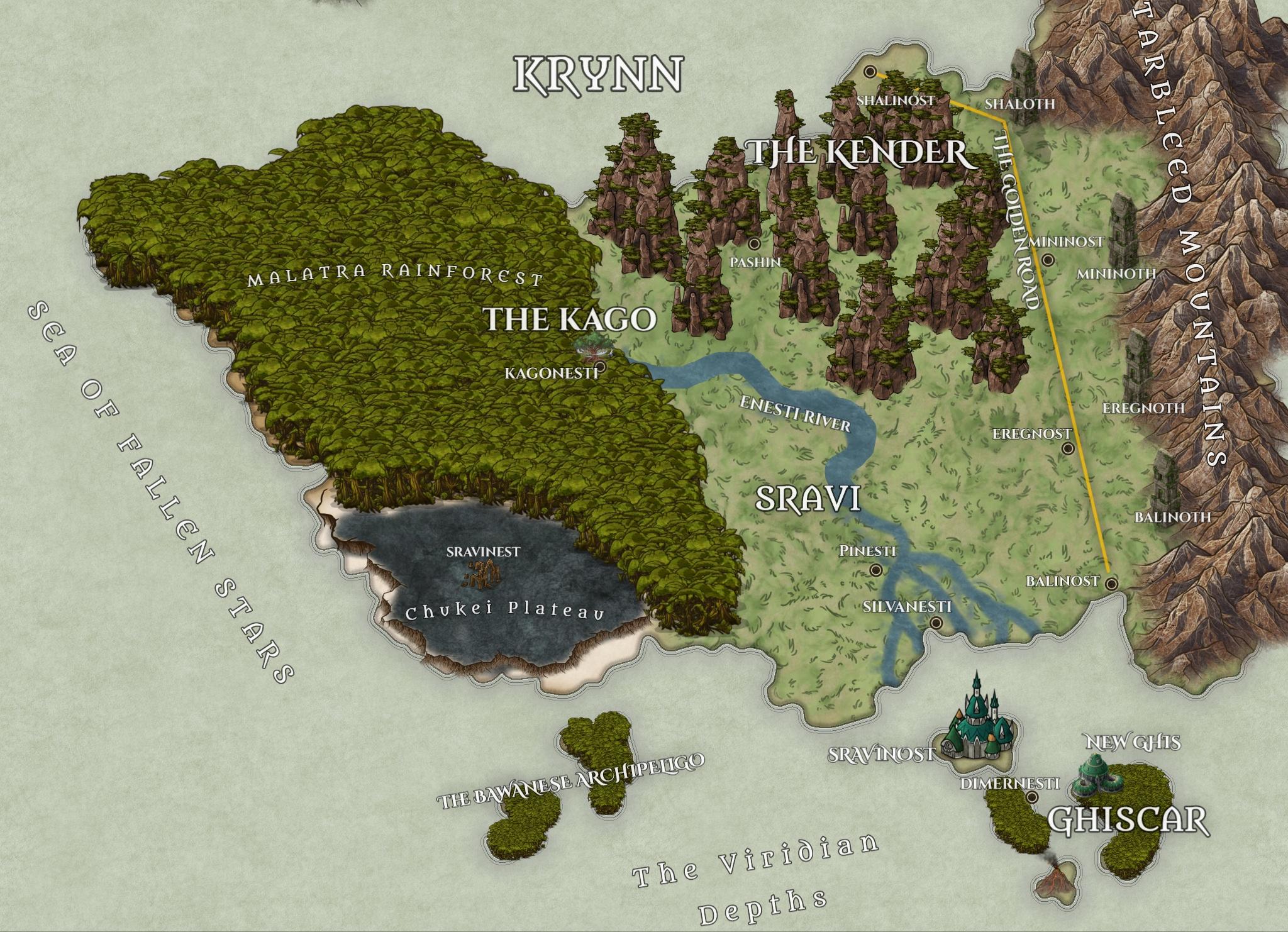
The Golden Empire of Sravi
The empire of Sravi was decimated by the Sravish Massacre orchestrated by Keldihar six hundred years ago. This merciless act of violence resulted in the near-extinction of the Sravish lineage, a once-thriving Elven dynasty now decimated, its population reduced to a mere fraction of its former strength. As most of the population was elves, the people of Sravi are slow to recover from such a devastation to their population and their old capital of Sravinest. Though since the massacre its people have rebuilt their lives. Sravinost, the City of a Thousand Towers, the new capital stands as a testament to their resilience. The Mithral Emperor ushered in a era of rebuilding, and has fostered unity with the other nations of the world by joining the League of the Seven.
The Mithral Throne, a symbol of hereditary authority, graces the capital city of Sravinost. This imposing seat of power stands an imposing twenty feet tall, carved meticulously from a single colossal block of Mithral. Adorned with intricate engravings that chronicle the reigns of each Emperor, its surface awaits the touch of future generations. Legend speaks of a prophetic event—that when the Mithral Throne is entirely adorned, the Empire shall meet its end.
Historically, the Sravish people pledged their unwavering allegiance to the Mithril Emperor Elorian Sravi, recognized as the Son of the Heaven and the Divine Gate to the Celestial Sphere. A symbol of eternal authority, the Emperor epitomized wisdom, justice, and mercy, even in the face of opposition. With an astonishing lifespan exceeding three millennia, Emperor Elorian Sravi was the architect of the Sravish rebuilding from it's near decimation.
The once powerful warrior, known as the Wu Jen, has become much less common. The Wu Jen's art of bladesinging has been dying since the massacre, only a few keeping the tradition passed down through generation. The people of Sravi were peacefully rebuilding until a new threat washed up on their shores, the Thri Kreen Invasion. These bug like people with four arms nearly finished what Keldihar set out to do. With the aid of the League of Seven the Thri-Kreen invasion attempt was halted, but now the Sravish people sit in uneasy anticipation for what might come from the shores once again. The population of elves in Sravi are still few in number, but with peaceful unions with the League of the Seven and the nearby people of the Kender, Ghiscari and Kago - the cities of Sravi bustle with activity once again.
The invasion of the Thri-Kreen caused an unlikely alliance between the Golden Empire of Sravi and the Drow Empire of Sharath. Within Sharath, a starkly authoritarian dictatorship enshrined absolute matriarchal rule and devout worship of Vistrix, their enigmatic goddess of chaos, deceit, and shadow, revered as the Savior Queen. This regime relegated men to subservient roles within oppressive labor camps. The looming Thri-Kreen threat overshadowed these ideological differences, forcing the drow of Sharath and the Sravish empire into a pragmatic alliance forged by necessity rather than shared beliefs
Common Races: Elf, Half Elf, Hadozee, Kender, Tabaxi, any other race.
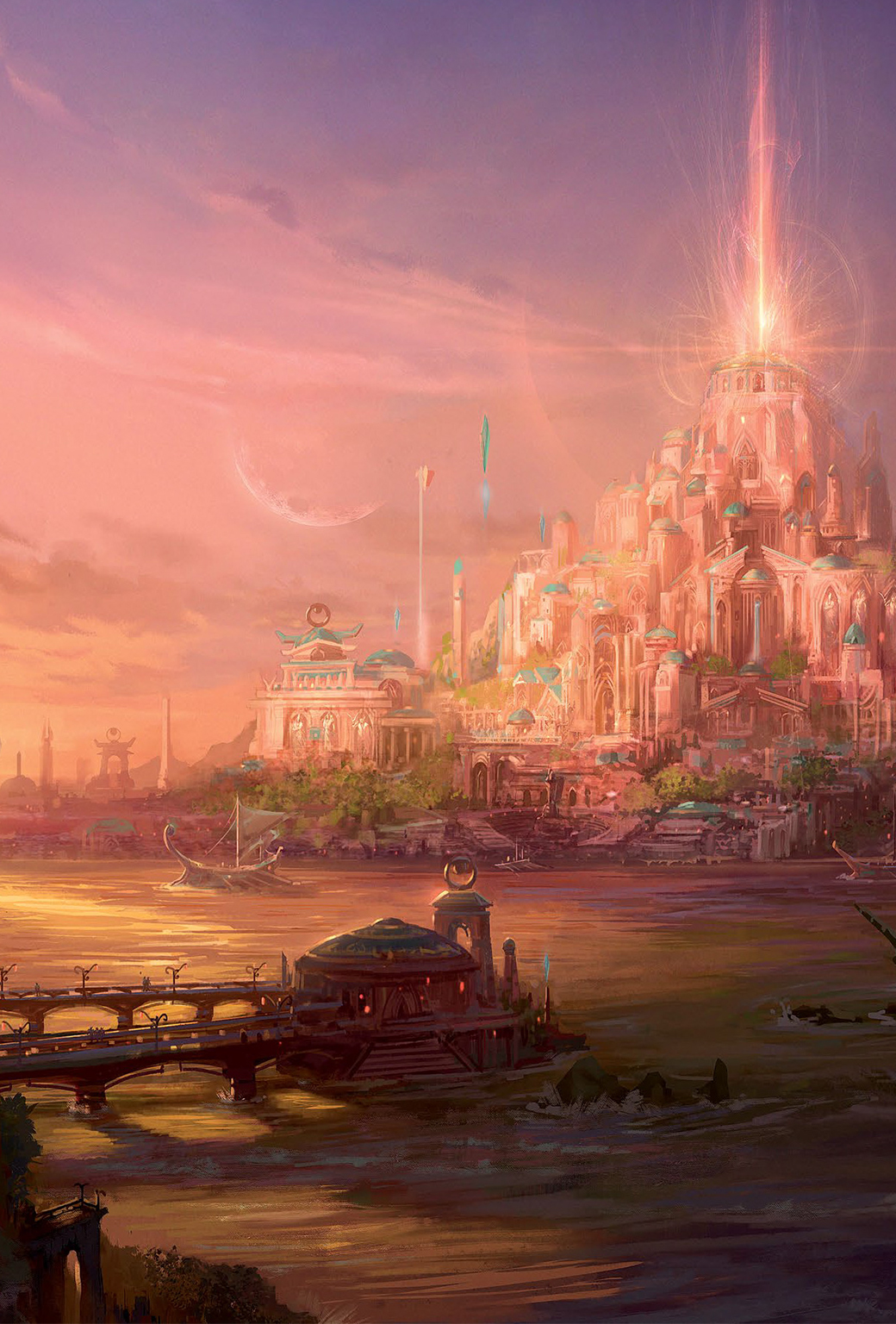
Ghiscar
The ghiscari social hierarchy is unusual to the rest of Ogun, one's status is based on level of education and elevation through their bureaucratic governmental system. Viziers and scribes are amongst the highest ranking members of society. Scribes are stratified by level and then circle, with the person's particular rank being indicated by patterns on their clothing. Regular citizens who are not members of the government are known as discrete. Order in the country is kept by traveling law keepers called constables. Constables typically wear black uniforms with a double row of silver buttons in the front, and thick gloves with long collars. They have the authority to capture, try, and even execute criminals.
One may join the public servant caste by passing a difficult written exam. Though the test ins nominally open to all citizens, it is difficult and usually requires an expensive formal education; most government officials are therefore people whose social status was already high.
The leader of Ghsicar is known as the Prime Aqasix. The Prime is considered to belong to the public. Citizens can enter a lottery to watch the Prime eat, sleep and perform other daily tasks. They can also collect and keep relics from the Prime such as a nail clipping or strand of hair. When the Prime issues a mandate to the public, citizens have one month to make their grievances known before being forced to comply. These grievances are often displayed as logical arguments or protests.
Ghiscari people are described as being short and having dark skin. They have a smooth accent and often prefer education to war, and adore their bureaucracy and paperwork. The Ghiscari themselves consider the latter a point of pride, as the structure of their government has for many centuries prevented any major internal crisis. In Ghiscar one should not raise their voice when talking, and should always remain calm, even when angry. Particular care is taken to never offend a guest, though this does not mean the Ghiscari can be pushed around. As a result, they are known for talking around the matter a lot when disagreeing with something, and never saying "no" outright.
Ghiscar also is home to the invention of the Printing Press, a device which has allowed for the knowledge to be spread quickly. The Ogun Chronicle has appeared on the world stage as the prime news source for all of Ogun, the Chronicle's Journalists are spread around the world to get the latest information to be printed on the next edition of the newspaper.
Common Races: Gnome, Human, Autognome, Elf, any other race.
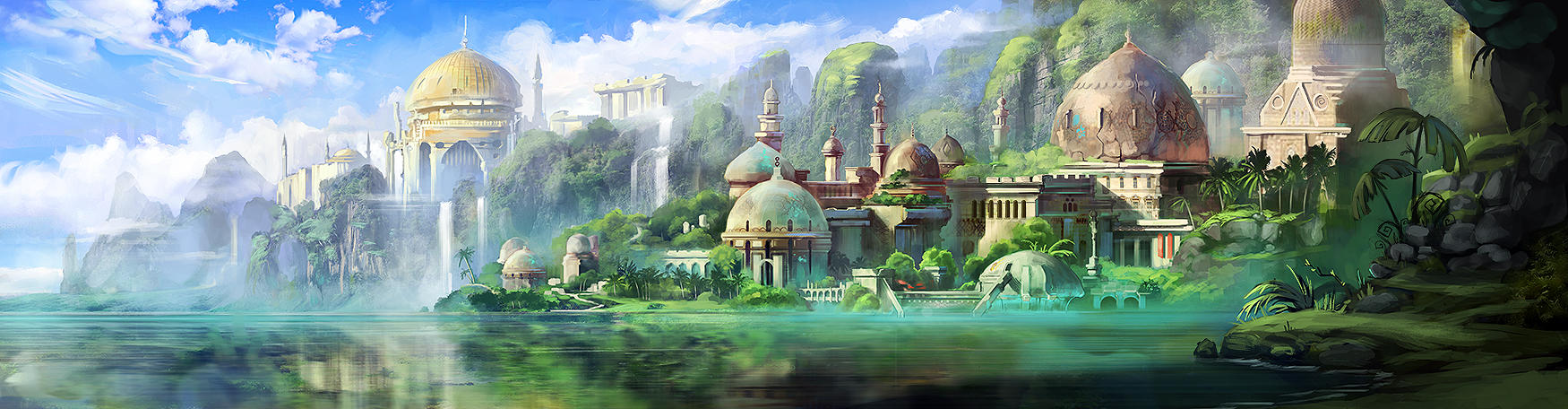
Kender
The Kender people are distinctive with stout builds, large heads, small faces, furry noses, and charmingly floppy ears. They adopt a nomadic lifestyle, dwelling in yurts, tents, and saddles, fostering a culture deeply rooted in pride and curiosity. Here, the concept of freedom outweighs material possession to the extent that they lack a term for ownership. Living in communal societies, everything is shared, and exploration is encouraged, although their cultural ideals clash with urban commerce and ownership rules.
Family and community are paramount for Kender, and while lacking formal governance, elders and storytellers are revered as guides. With expansive families, often numbering in the hundreds, every Kender is essentially surrounded by family, even outside Kenderhome.
Following the philosophy of the Passions, Kender fully embrace their emotions and desires, believing that passionate engagement with life leads to richer experiences. Each person is influenced by the Passions, and obstructing someone else's passion is deemed a bad omen. Omens, considered emotional manifestations, significantly impact Kender morale. Tradition dictates turning bad omens into positive outcomes, affirming that fate is on their side. Winning the internal struggle to be optimistic resonates in their world.
Kago
In the dense jungles of Malatra in the continent of Kyrnn lives the Kago tree and the Hadozee. The Hadozee's progenitors were apes no bigger than house cats. Hunted by larger natural predators, they took to the trees and evolved wing-like flaps that enabled them to glide from branch to branch. Thanks to the fruit of the mysterious Kago Tree hadozees became sapient, bipedal beings eager to leave behind the fearsome predators the Malatra Rainforest. They built their own society around the Kago tree, worshiping the tree for its powers. Most Hadozee spend their time living amongst the elves in Sravi, or exploring the world.
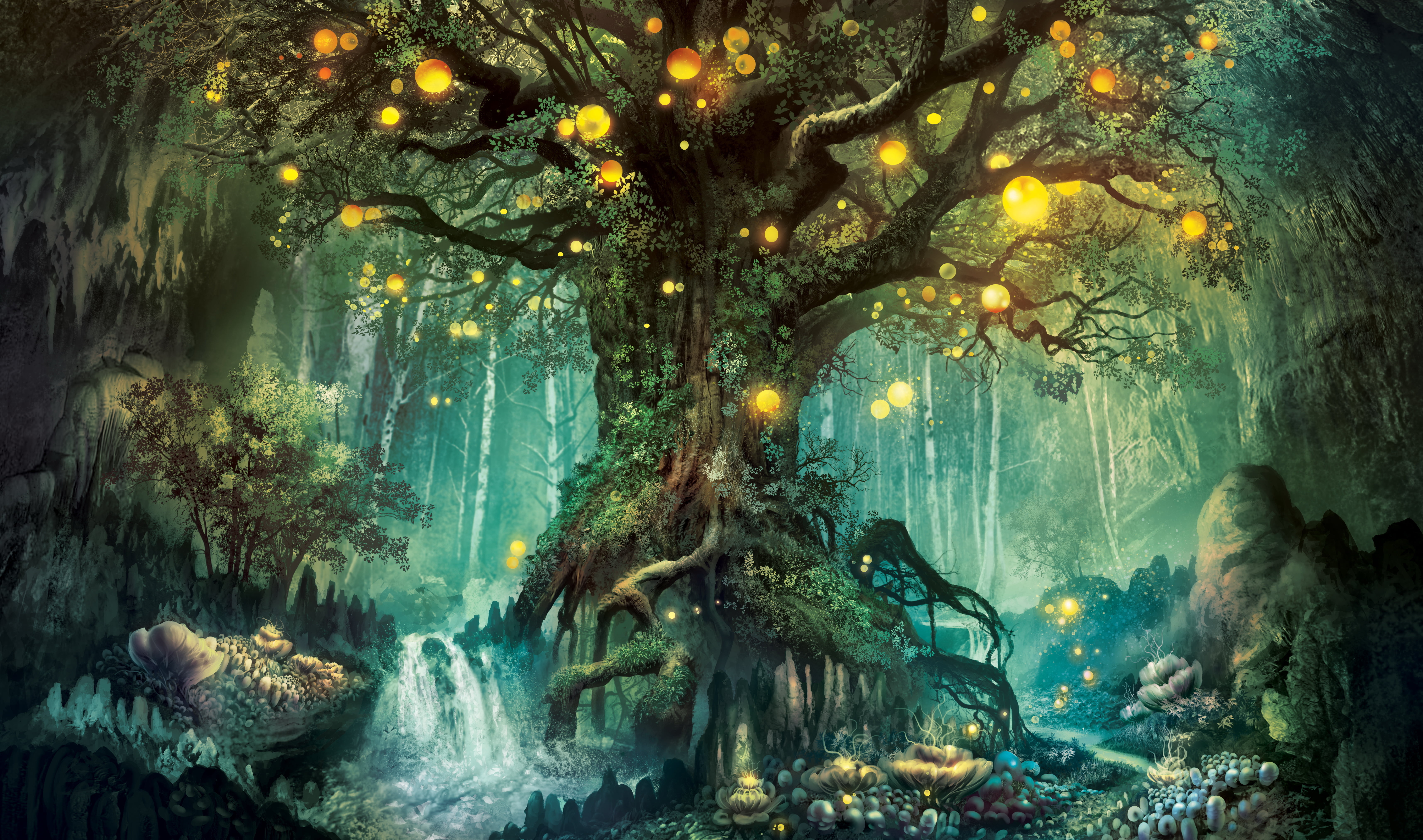

The Bawenese Archipelago
Southwest of Krynn this island chain boast lush rainforests, pristine beaches, and vibrant coral reefs. In the heart of the islands lies the Whispering Pool, a crystalline pool fed by underground springs that are said to possess a unique connection to the Ethereal Plane, where one can communicate with ancestral spirits and tap into the wisdom of the natural world. The water's surface is alive with whispers, carrying messages from the dead. The Bawenese people hold sacred ceremonies around the Whispering Pool, seeking guidance and visions that guide their communal decisions. The Bawenese teach that warriors of the past linger in the world as mighty spirits, who can guide and protect the living. They cover themselves in elaborate tattoos that celebrate their ancestors' deeds. The Bawenese also adorn their coastal villages with intricately carved coral totems called Tidecallers, which bind the benevolent spirits of aquatic animals that ward off the evil spirits that would look to harm the people.
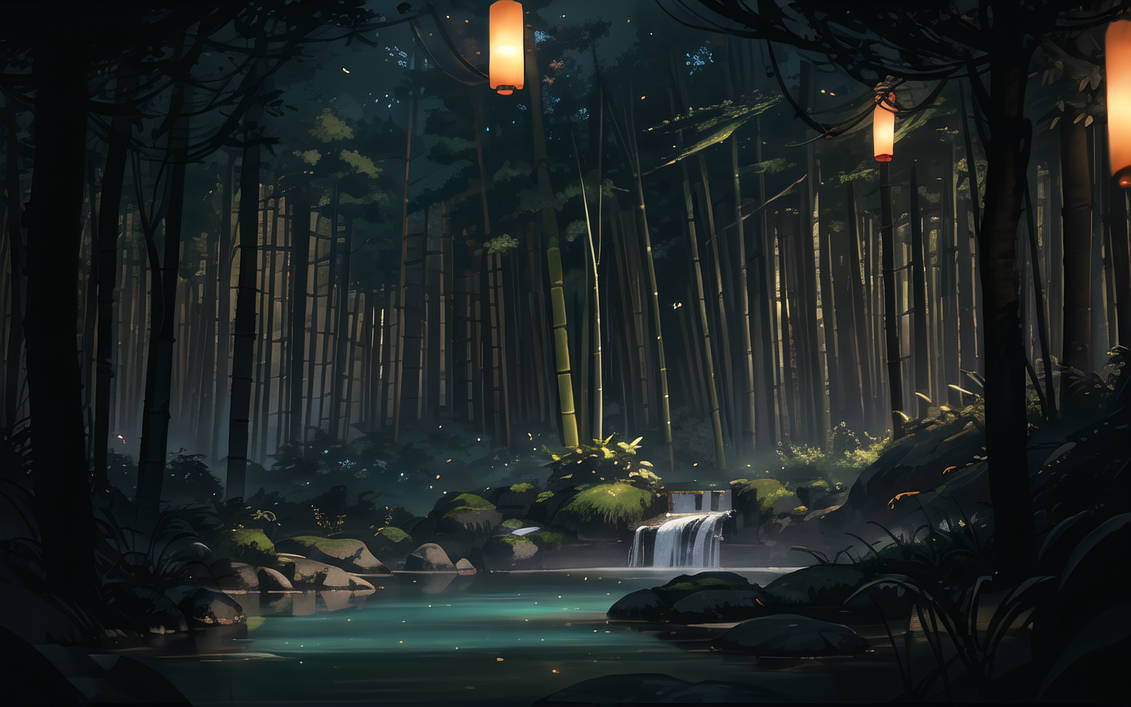
Chapter 2: History of Ogun
The Beginning
At first, the sea was calm. A moment later, the chaos of magic was released. In the great cataclysms of creation the First Five were born: Iris (Goddess of Fire), Aelur (God of Air). Lys (Goddess of Water), Ogun (God of Earth), and Boccob (God of Magic). For a thousand years, they would dance across its vast silver ocean, creating all the cosmic beauty and devastation within it.
As they danced with each other, they birthed new deities. Iris and Aelur had Pelor (God of the Sun), while Ogun and Lys brought forth Selune (God of the Moon). Boccob, not caring for the others, desired creations as well. So he closed his eyes and blanked his mind. In his infinite wisdom, he created Ashtar (Goddess of Life) and Nerull (God of Death). This abomination shattered their divine house, sending the First Five into the edges of the universe, as far from each other as they each could manage. It was here they would remain, upon the agreement with Boccob that no more Gods would be created.
Nerull (God of Death) was more than happy to oblige this decree, but his sister Ashtar (Goddess of Life) would not be so restrained.
She danced with Pelor and summoned the sisters Radia (Goddess of Will), Miva (Goddess of Time) and Savaras (Goddess of Fate). She danced with Selune and conjured the brothers Olidammara (God of Knowledge), Sah (God of Dreams), Pelios (God of Emotion). Because she was Life, she loved the lives of her children. Because she was their mother, she taught them to love and to dance.
Radia (Goddess of Will) was then seduced by Olidammara (God of Knowledge), calling forth Lliria (Goddess of the Astral Plane) and Eldath (Goddess of Peace). Savaras (Goddess of Fate) and Pelios (God of Emotion) brought forth Vistrix (Goddess of Chaos) and Avandra (Goddess of Luck).
Selune (God of the Moon) and Pelor (God of the Sun) lay with many of their grandchildren. Selune and Savaras (Goddess of Fate) summoned Obad Hai (God of Nature). Miva (Goddess of Time) and Pelor created Talia (Goddess of Weather).
Pelor became immediately infatuated with his new daughter Talia (Goddess of Weather); their dance filled with love and passion. To their surprise, they created the quiet Ulaa (Goddess of Music). Ulaa (Goddess of music) was a beautiful, innocent child, spending most of her days roaming the hills of Ogun. She sang and skipped and all the animals would follow her to listen.
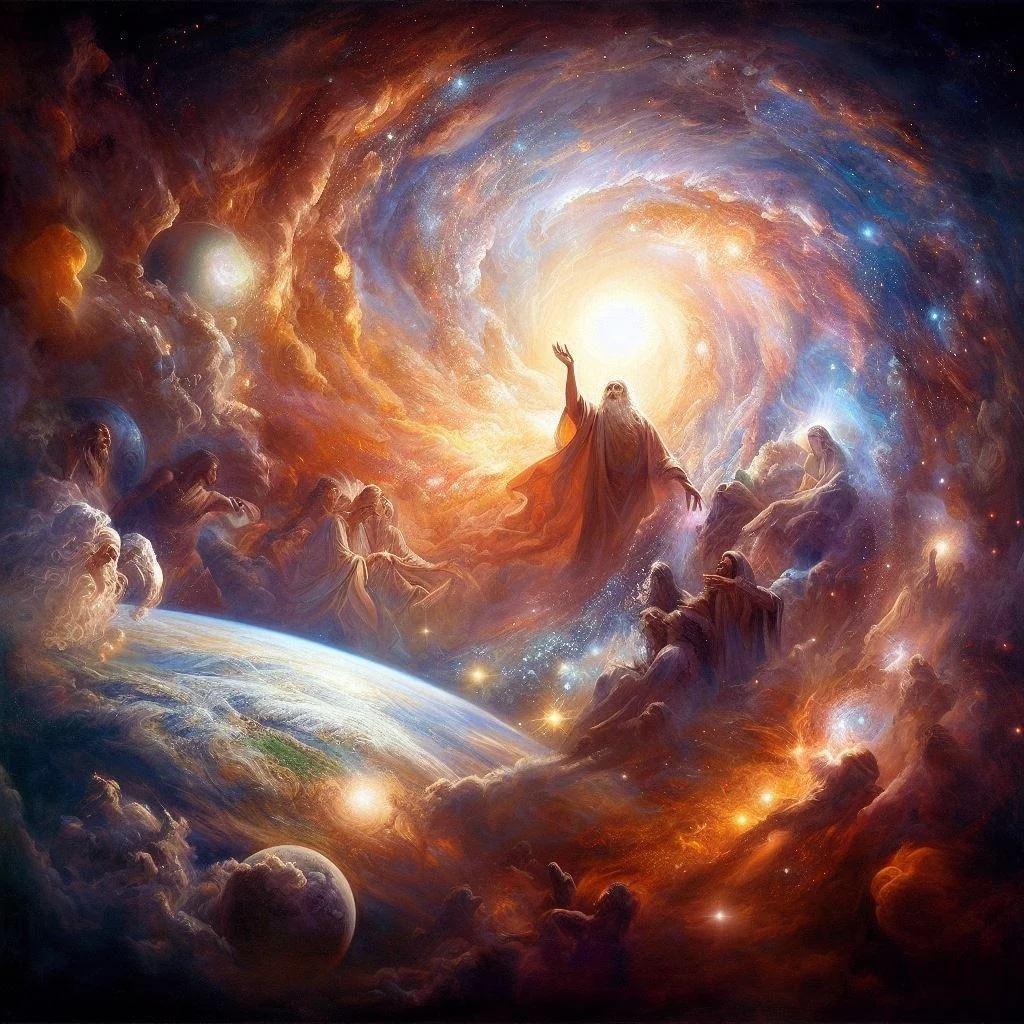
Vistrix (Goddess of Chaos) was wild, and the children of Pelor were seduced by her life made flesh. Vistrix and Obad-Hai (God of Nature) allowed for Fharlanghn (God of Travel). Vistrix and Pelios (God of Emotion) shook the heavens with their love, calling forth eleven children; Helm (God of Protection), Bane (God of War), Tiamat (Goddess of Greed), Bahamut (God of the Forge), Gaidir (God of Sport), twin brothers Kord (God of Strength) and Illhys (God of Cunning), Cenos (God of Speed), Hextor (God of Vitality), and finally Tharizdun (God of Curiosity).
Ogun and Aelur sought to give their children a home, together raising a colossal mountain rose from the depths of the Astral Sea and named it Mount Celestia. They willed this mountain to be the embodiment of shining perfection, and so it was.
Bahamut sought to use his natural talents to provide weapons and armor for his brothers and sisters. Upon the mountain of Celestia, he created his domain, the Thessel Forge, to allow each god to request an artifact of their liking to be made in the forge, called a Vestige. Bahamut's first project on his new forge was that of creating life. He took off a single scale off of his hide and melted it down in the fires of his forge, creating Annam, the first demigod, to tend to his forge for him.
The Age of Fey
~10,000 BR - ~2,000 BR (Before Rifts)
In a selfless gesture of sacrifice, the cosmic beings Aelur, Iris, Ogun, and Lys voluntarily entered a divine slumber, leaving behind luminous spheres adorning the Astral Sea. The gods decided to honor their sleeping parents by decorating them in a grand ceremony.
Pelor, the god of the Sun, was the first to claim his domain. His ambition shone bright and hot, forcing the other gods to shield their eyes. He seized the opportunity to steal a flame from his mother's corpse, and claimed it for himself. He stored the flame in his axe, forged by Bahamut, the Sunforger, and used it to drag his mother up the mountain of Celestia, holding her aloft for all the world to see. And thus, the sun was born. His ambition and power outshone all the other gods, so he was appointed their king.
Talia, the goddess of weather, sought to decorate the planet in a brilliant display of her power. She wove a net of clouds and lightning around Ogun, summoning a year of storms that drowned the rock and stone beneath miles of ocean. This act of power impressed Selune, the god of the moon, who danced in the rain as Talia wove her storm. Together, they formed three new gods made from the elements themselves: Zys, the god of the sky, Leviathan, the god of the sea, and Behemoth, the god of the underdark.
Bahamut, the god of the forge, and Ulaa, the goddess of Song, longed to reach the minerals that their father had stowed away. So, they rose great mountains and hills out of the water to access all that they desired.
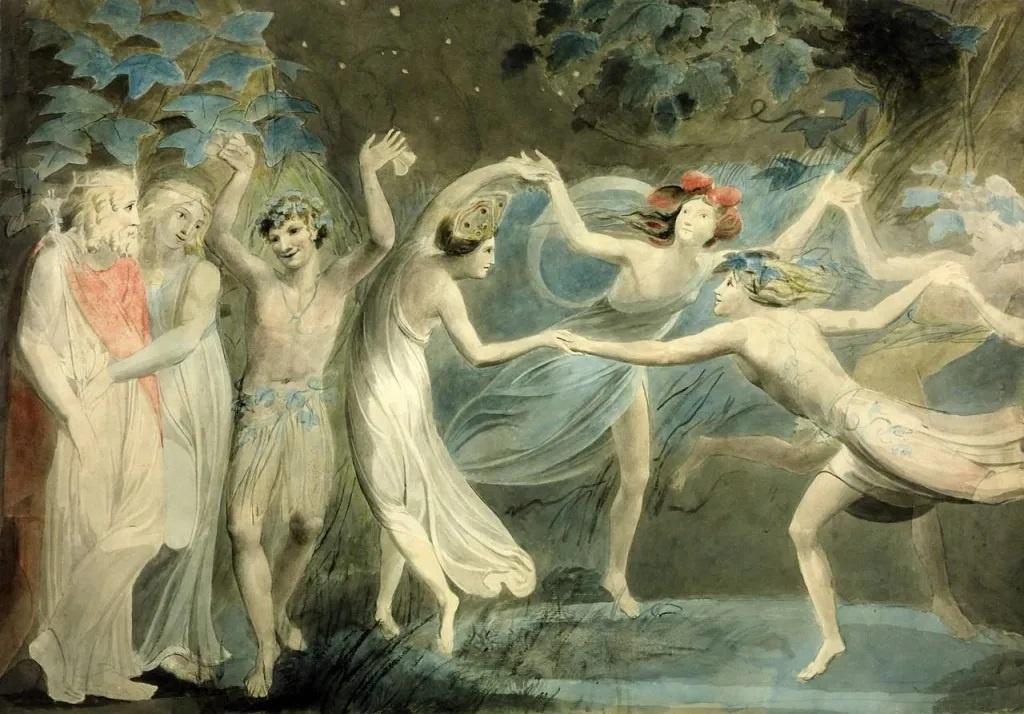
However, most of Ogun remained water, and Selune danced on these oceans, his ivory skin gleaming in the sun's brilliance. His dancing was nearly as beautiful as himself, and he entranced the other gods long enough for him to siphon off a bit of each of their powers. He used this stolen power to draw an alien body, dense and obscure, far from beyond the sun's watchful light. Selune choked the skies with clouds, concealing the meteor's approach, and sent the twisted mass of ore and rock crashing into the planet. The catastrophic impact evaporated the oceans and toppled mountains as the meteor carried straight through the earth, exploding from the opposite side in a raging mass as white and hot as the sun. When the ball cooled, it formed the moon.
When the gods asked why he had done this, he only replied "For them". Ashtar, the goddess of life, was the first to realize what Selune had meant, and set about bringing life to the planet in wild, reckless abundance. Every kind of flower, plant, and tree took root. Every type of fish, whale, and serpent splashed into the sea. Every creature that walked upon and flew above the land now poured over it.
As the gods marveled at the chaotic wonder that Ashtar had brought to the world, they too set about creating life from the new world. Obad-Hai, the god of nature, went to Ogun and grew trees so tall that their skin turned hard as iron, trapping divinity within the branches, called Ironwood. The trees filtered this power into their roots, which in turn brought forth the Fae to tend to his new garden. The Fae thrived in the new environment, shaping nature itself into beautiful works of art. In recognition of their work, Obad-Hai gifted the race with life everlasting. This reward was met with much celebration, as the Fae danced into the night.
Across the universe, the Abyss formed. On its first layer lay the corpse of Tharizdun, a young god. His blood flowed towards the shard he had planted, creating the River Styx. Upon contact with the shard, the blood exploded with chaotic energy, forming a boiling ocean that birthed demons. These demons overflowed the Abyss and spread into the surrounding elemental chaos.
This chaos caught the attention of the gods. To combat the Abyssal horrors, they created Archons, beings designed to defeat the demons. They formed three factions of Archons: the Sphinx, also known as the Heavenly Host, were created to guard Celestia from demon invasions; the Couatl, the fallen watchers of Ogun, were guardians of mortals, ensuring they did not destroy themselves by opening demon portals; and the Seraphim, nine beautiful winged warriors created to wield divine magic in the war against demons in their home plane. The Seraphim, adorned in gleaming armor made of pure stability and armed with weapons forged from ideal thought, were known to mortals as angels. They were Keter (the Crown), Raziel (the Wisdom), Binah (the Understanding), Chesed (the Kindness), Asmodeous (the Strength), Belial (the Beauty), Dispater (the Eternity), Triel (the Perfection), Yesor (the Foundation), and Geryon (the Kingship).
Asmodeus, the fiercest Seraphim, argued before Pelor, king of the gods, that he upheld the law by fighting chaos. Despite his effectiveness, his growing darkness worried the gods. Unable to counter his arguments, the gods reluctantly tolerated him. As the Seraphim grew more terrifying, the gods built new citadels to escape them, but Asmodeus and his followers penetrated these as well, demanding privileges as champions of order.
The gods focused on creating worlds for mortals, but demons invaded these worlds. The Seraphim were called upon to stop them. To protect these worlds, gods and angels built barriers: walls, mountain ranges, icy wastes, and oceans. However, mortals kept dismantling these barriers, allowing demons to return.
Frustrated, the gods turned to Asmodeus, who explained that mortals' free will led them to make destructive choices. He proposed the Pact Primeval, where all evil souls would be sent to his captured levels of the Abyss as punishment, keeping the demons at bay and maintaining order. The gods agreed, and Asmodeus established his domain in the Abyss, enforcing the Pact and ensuring the stability of the universe.

The Age of Mortals
~2,000 BR - 1 BR
Ashtar and Nerull realized that immortality was not the correct way to create life. They needed to create a circle of life and death for mortals to exist. Ashtar froze the time of the Age of Fae, and created a plane of her own, called the Faewild, where all newborn souls could originate. Nerull froze the End of the Universe, a time called The Age of Shadowfell, where all dying souls would travel for his judgment and created a plane of his own called Shadowfell. Nerull grabbed a small stone and casted Light upon it. Calling it The Dying Light, he placed it in the shadowfell to draw all dying souls towards it. Upon doing this, they removed the gift of immortality from the Elves, an act that is still remembered to this day.
Radia and Helm forged the first mortals, Dwarves, granting them arcane magic. The Dwarves, architects and technologists, were rejected by other races, fostering bitterness. Olidammara and Savaras created Gnomes, corrupted by Savaras's twisted mind. Ashtar and Nerull being brother and sister, often fought. Through their fighting, they created a race of mortal beings, Humans. Nerull became instantly and utterly fascinated with them, because “In a world so rich, they managed to invent boredom, they managed to wish for death”. He became obsessed with the humans, and studied them for millennia.
Talia's daughter, Ulaa, was abducted by Behemoth, causing anguish for Talia who flooded the world with storms until her daughter was returned. Hextor, nearly indestructible, marched to challenge the gods. Avandra's arrow, guided by luck, shattered Hextor's invulnerable armor. Radia took control of Hextor, punishing him for his actions. These divine events shaped the destinies of mortal races and the gods' relationships.
The Rift Events
1 BR
The clan of Dwarves known as the Murdin embarked on a quest for precious ores and jewels within the depths of Ogun. Their insatiable curiosity led them to a remarkable discovery —a concealed door adorned with intricate symbols that emitted a shimmering silver light when touched. Ignoring the warnings of the unknown, the Murdin opened the door, unleashing a devastating force that shook Ogun to its core. The consequences were dire, as massive rifts erupted across the world, connecting it to other realms. Tragically, the remains of the Murdin Dwarves were never found, forever lost to the annals of history.
The Elemental Rifts
The Rifts' opening caused elemental chaos on Ogun, with wildfires, tsunamis, hurricanes, and earthquakes devastating the lands. Elemental beings surged forth, threatening the mortals. In response the Genasi Covenant was formed, realizing the need to control elemental energies.
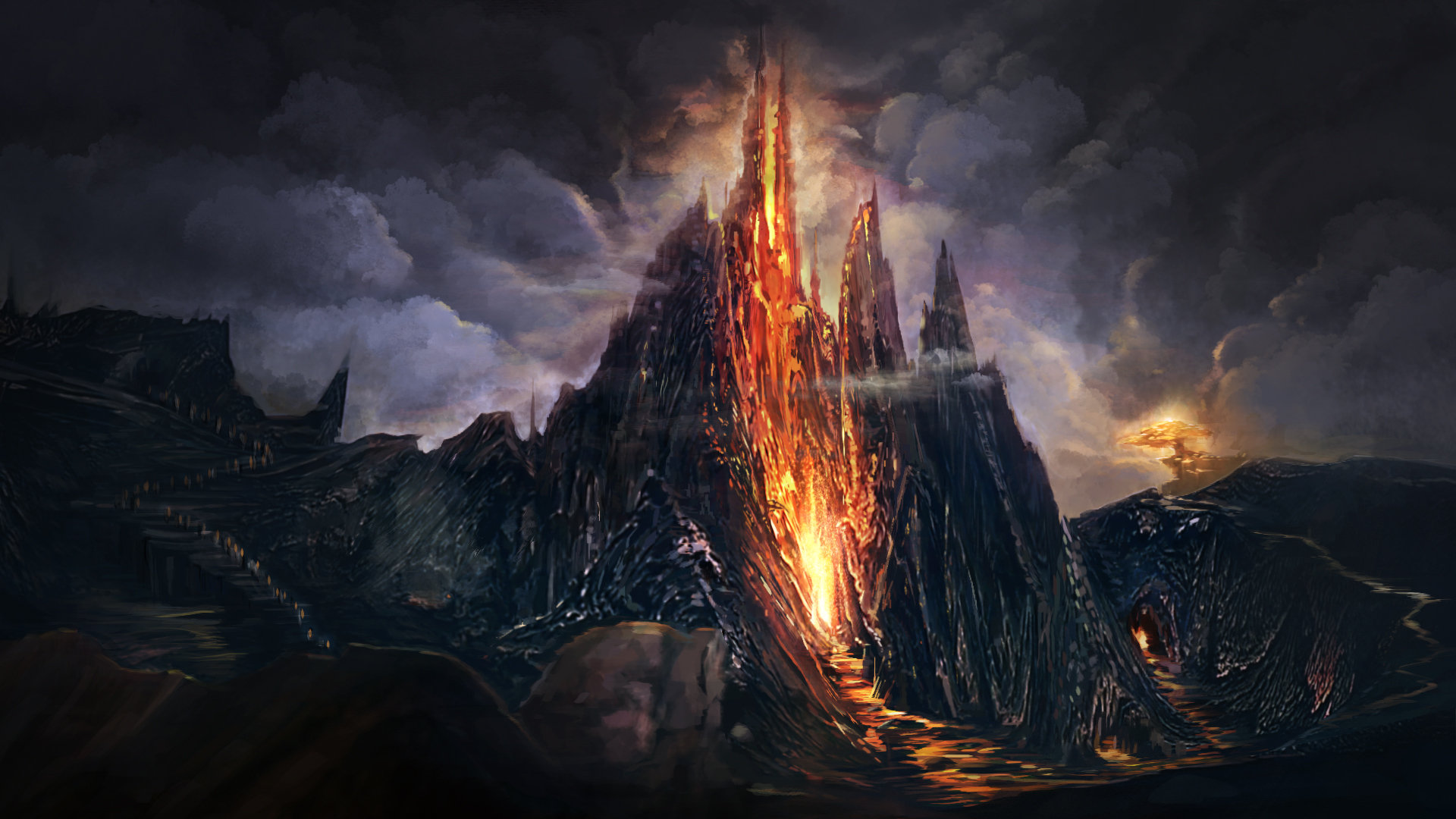
They divided into four orders, tasked with sealing the elemental Rifts. While smaller Rifts were healed, four significant ones representing the Four Elemental planes remained. The Genasi Covenant settled near these Rifts, becoming guardians, ensuring stability across generations.
The Starbleed Rift
In Krynn's Starbleed mountains, the catastrophic Breach occurred as High Elves studied Rifts, unintentionally weakening reality. The ensuing explosion unleashed abominations through portals to other planes. To protect Elves, the sun goddess Vistrix absorbed part of the destructive power, transforming into a half-spider entity. Elves touched by her shadow sought refuge underground, forever changed by the cataclysmic events.
The Shadowfell Rift
The Shadowfell, shrouded in perpetual darkness and echoing with spectral whispers, set the stage for the grand drama of the Shadowfell Rift. From its mysterious depths emerged alien vessels carrying the ominous Illithids, also known as Mindflayers.
The proud and independent Gith, once free, found themselves ensnared by the unspeakable horrors and mind-controlling tyranny of the Illithids. Generations languished under oppression until a spark of resistance ignited in the hearts of a few. Led by the courageous Githara, the Gith rebelled against the Mindflayers, engaging in a relentless war across planes with unmatched valor.
In a pivotal moment, Githara shattered the Illithid Empire of Oryndoll, dismantling its oppressive regime. The triumph resonated through the cosmos, marking the indomitable spirit of a long-oppressed people. Githara, now a warrior-queen, vowed to eradicate every Illithid, fueled by the collective desire for justice among the Gith.
Yet, dissent simmered among the victorious rebels. Zerthimon, a wise figure, advocated for healing over vengeance, recognizing the deep scars of enslavement. The schism, known as the "Pronouncement of Two Skies," divided the Gith into Githyanki, driven by Githara's determination for dominance, and Githzerai, guided by Zerthimon's pursuit of enlightenment.
The Shadowfell Rift, a harrowing gateway that bore witness to the Gith's valiant struggle, served not only as a symbol of their liberation but also as a grim reminder of the lurking threat that still haunted the cosmos. The Mindflayers, shattered and humiliated by the Gith's uprising, retreated to the desolate corners and abyssal chasms of the universe, nursing their wounds and plotting a clandestine vengeance against those who had torn their once-mighty empire asunder.
Deep within the darkest recesses of distant realms, the Illithids bided their time, their sinister intellects honed to a razor's edge. As the Gith forged their separate paths, the Mindflayers seethed with a burning desire for retribution, their insidious machinations hidden beneath layers of secrecy. In the shadowy depths of their concealed enclaves, they delved into forbidden knowledge, honing forbidden arts, and summoning unspeakable powers.

The Feywild Rift
In the heart of the Feywild's Verdant Expanse, near the Eladrin town of Zloln, a mysterious Rift manifested, concealed by a colossal stone arch draped in dense, waxy vines. The Eladrin community, captivated by this enigma, embarked on an unwavering quest to unravel its arcane secrets. Despite their inability to decipher the intricate glyphs adorning the arch, their fascination led them to infuse magical energy into it, hoping to activate its latent powers.
As their efforts bore fruit, the stone arch radiated with blinding hues of pink and purple, unveiling a shimmering gateway to realms beyond Ogun. This discovery prompted the people of Zloln to organize a daring expedition, with courageous volunteers venturing through the portal. However, the return of these explorers marked a grim turn of events; they emerged as victims of colossal dragon creatures whose destructive energy laid waste to the splendid Fey cities. This devastation fueled the fury of the Fey, stirring a resolve to retaliate against the formidable dragons.
As the Feywild descended into chaos, the deities Bahamut and Tiamat became entwined in the conflict. Tiamat, aiming for fairness among dragons, granted them intelligence and declared herself their ruler, turning them into a formidable force that wreaked havoc across Ogun. In response, Bahamut forged metallic dragons of pure goodness, but witnessing the Fae's suffering, he sent his son Annam, the Demigod of the Forge, to defend them. Annam created the Forge of the All Father and shaped Nephilim beings to guard it. In desperation, the Fae pleaded with Annam to craft an army to face the dragons. Answering their plea, Annam and the Nephilim infused life into the elements, giving rise to the five giant types—Storm, Cloud, Fire, Frost, and Stone—each wielding Maekir Dreki, legendary weapons tailored to slay dragons, as the Fae prepared for an impending war.
As Annam prepared for war, a vision from Pelor in his dreams revealed a way to defeat Tiamat in her palace in Hell. Pelor spoke of the need for the heaviest metal in the world, which had to be brought to the tallest mountain. Annam embarked on a search, eventually reaching the very center of the world, where he discovered the earth's core as the heaviest metal. Returning to Jotunhiem, Annam used his power over the earth to raise the Forge as high as possible, creating the towering mountain called Gladshiem.
Upon reaching the summit of Gladshiem, Annam encountered Pelor, who entrusted him with a fragment of his Sunforger axe. Pelor instructed Annam to forge a weapon, a small dagger, using the metal from the earth's core as the handle and the chipped piece of the Sunforger axe as the blade. Empowered by this divine gift, Annam led a coalition consisting of giants, Nephilim, metallic dragons, and Fey casters in a long and arduous war against Tiamat.
In a climactic moment, Annam drove the divine dagger into the Scaled Tyrant, turning her to stone and bringing an end to the conflict. With the war finally over, the giants returned to their forge to await Annam's return. Recognizing the immense contributions and sacrifices of the giants, the Fey granted them freedom and played an active role in the establishment of a grand city, Jotunhiem, which became the giants' new celestial home—a lasting testament to their celestial kinship and the triumph over the forces of darkness.

The Age of the Demigods
1 BR - 572 AR (After Rifts)
When the gods saw what the mortals had done to the world, they decided that they no longer deserved to rule themselves. They each sought to bolster their claim to Ogun by siring demigod offspring to rule it. Their divine children laid waste to whole continents in their names, and many mortals in the realm grew to despise them. Centuries of dominance made many of the demigods as selfish and petty as their parents.
One demigod rose above the rest, Agustus Elysium the demigod of Magic. He quickly united the warring clans of demigods under one banner, the Holy Kingdom of Elysium . The kingdom consisted of less than a thousand demigods that stayed in Agustus's sprawling manor called The Chateau, located in what is now Northern Estium. He subjugated all mortals who wouldn’t submit to his rule, and soon had amassed one of the largest empires known to date. In secret he began to develop and experiment upon newborn demigods, in an attempt to make them perfect mortal killing machines called the horsemen. They would undergo tremendous physical and mental torture as they were experimented upon, only twenty five horsemen made it through the process, the rest died. The top four horsemen quickly rose through the ranks, nicknamed “Death”, “War”, “Conquest” and “Plague”.
The mortals tried to rebel against their oppressors, and fought to drive the Demigod presence out of the city of Besa. They anticipated a retaliation from Agustus, but not one aimed at the innocent civilians. Agustus ordered his new Horsemen upon the innocents of Besa, slaughtering them by the thousands.
As death and turmoil spread across the land without intervention, mankind grew distant from the Gods. A hidden society of human rebels formed a secret city of Mystara that rapidly expanded as more and more people fled from Agustus’s armies to seek reprieve from the unending violence. The city prospered, a shining light in the darkness that threatened to consume all. Man began to idolize his own creations over the Divinity of the Gods.
When the millionth person was born inside Mystara’s sprawling slums, humanity also birthed its first god; a brave and noble human warrior known as Zavan. As he was now an omnipotent being blessed with the practicality and impatience of a mortal human, Zavan immediately set about improving Mystara, raising towering walls that carried magically purified water along the tops of its ivory embattlements. He dug a great canal that surrounded the city, protecting its inhabitants from an invasion of Elysium's forces. He also merged his divinity with that of his people, forming a new race of divine touched humans– called Mystarans. Zavan set about putting the great city of Mystara in order. He established a standing military to combat the physical force of Elysium and collected the best wizards in the world to create the College of The Snowspire to combat the Elysium's magical forces.
The speed at which the God of Man worked, combined with the ease at which he wielded his powers within his own realm, terrified the demigods and goaded them into action, sparking the Hundred Years War. Many gods also grew wary of man's increasing power. A pact was formed from an unlikely cabal of Pelor, Bane, Gladir, Ashtar, Olidammara and Sune who decided that Zavan was a monstrosity and that mortals should not be allowed to create gods themselves. They opened the divine gate and marched on Mystara, to arrest the new god and execute him in Celestia.
Other gods saw Zavan in a different light, instead of fearful of their own position they saw it as a possibility for a greater future. Another pact formed between Selune, Helm ,Nerull , Pelios, Eldath and Avandra who came to the material plane to defend the newly born god.
A battle between the gods nearly ensued as one immortal being argued with the other. Until Zavan came and turned himself in, only so that he would not be executed. The gods decided to compromise and bring him to jail in Celestia. Zavan agreed to comply but before left he desperately searched for an heir, and found Jakub Kladivo, a simple farmer from southern Mystara. Zavan willed his divinity into his arms, armor, and equipment then bestowed these artifacts to Jakub, anointing him as the Godking of Mystara.
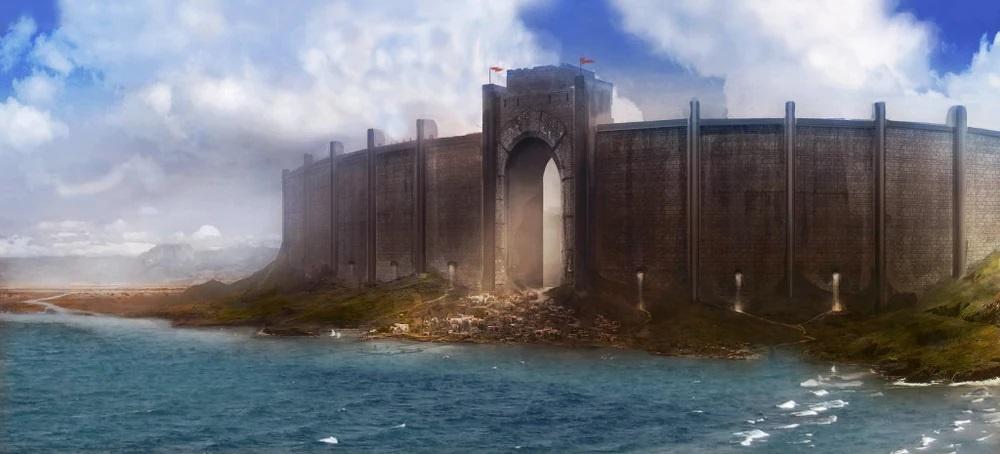
Desperate to halt this chaos, the gods called a council to deal with the demigod issue once and for all. It was decreed that each god is allowed to claim one demigod offspring. Those who are born unclaimed must prove their worth in the divine forest and valleys of the Gia’s Cradle, named after the first demigod to be claimed, Gia the demigoddess of Beasts and daughter of Obad-Hai god of nature. Under these conditions, Zavan would leave the material plane and join the gods in the Celestial plane where he belongs.
The gods sent Seraphim down to Ogun to scour the land in search of the Unclaimed; children of gods and those illegally sired by a pair of demigod parents. The magical forest of the Gia’s Cradle was filled with monstrosities and magics from every divine house and a handful of true horrors not native to Ogun.
Looking upon the aftermath of the war, Boccob was displeased. He sent a new god to maintain order of Celestia in his absence, Primus (god of Order). Primus’s first decree was that no gods shall stay in or enter the material plane, and those that do are subject to death. The gods followed these orders and shut the divine gates so that none may visit Ogun.
The Age of Empires
573 AR – 1,022 AR
In an era marked by geographical isolation, Mystara found itself separated from the broader world by an expansive sea. The populace, ensconced within their impregnable city walls, pledged unwavering allegiance to their godking, fostering an environment of seclusion.
Meanwhile, on the southeastern shores of the Bashar River (later named the Rhoyne), refugees fleeing the Yuan-Ti Kingdom laid the foundations of Parsantium. This fledgling town, despite flourishing under the rule of Hulieman and his successors, faced the relentless expansionism of the Rhoynar Empire led by the formidable Phrayni Kesk.
Phrayni Kesk set her sights on Parsantium, leading a formidable military campaign. Ignoring counsel, Sultan Yazid al-Kabir took the ill-fated decision to confront the Rhoynar forces. The forces of Parsantium were no match for Keske's naval might, which culminated in Parsantium's surrender and its renaming as Keske.
The Keskite reign, however, was marred by misfortune. A prolonged drought plagued the region, bringing about dust storms and plagues. Despite desperate prayers, the Keskites found no respite. Across the world, in the continent of Krynn, The Golden Empire of Sravi was invaded by the technologically advanced Gnomes of the nearby jungle island of Ghiscari. The Ghisian Gnomes had invented a new warrior- a mechanical construct made of iron. This iron warrior was fierce and thought to be indestructible. The Sravi, however, were prepared. The advanced techniques of the Wu Jen warrior allowed them to imbue pure magical energy into their attacks, effectively circumventing the indestructibility of the golems. The war fought between the two nations was as bloody as it was quick. After a heavy loss of Sravi, they were able to defeat the iron army- and turned towards enslaving their invaders.
These fierce mechanical constructs were the first to be made of a newly forged mineral, iron, and therefore almost undefeatable. They required no sleep, no food, and followed every order given to them. Under the new rule of The Golden Emperor Tenel Sravi “The Conqueror” amassed a massive army of 90,000 Ghisian Golems. He then ordered his army, later called “The Iron Wall” to conquer the warring nations of Krynn.


These empires ruled most of Ogun until the arrival of a new power. Amidst the great volcanic mountains known as The Helm, rose the Keldiharans, who learned to tame dragons and make them the most fearsome weapon of war that the world has ever seen. The tales that the Keldiharans told of themselves claimed that they were descended from dragons and were kin to the ones they now controlled. The great beauty of the Keldiharans, with their hair of palest silver or gold and eyes in shades of purple not found amongst any other people in the world, is well-known.
The first Empire was rooted in Keldiharian capital Marthgast: a city built upon slavery. The legendary founder of the city, the Dragonpharoah Ahmonket, remains so revered that the men of the slaver families are still often given his name. It was he who, according to the oldest histories of the Keldiharians, founded the lockstep legions with their army of slaves equipped with two longswords, which were the first to fight as disciplined bodies, and their immensely powerful dragons. Keldihar and its army proceeded to colonize its surroundings, then, pressing on, to subjugate its neighbors.
Within one year, the Keldiharian Empire held the largest amount of land of any empire to date. They had no kings but instead installed Dragonlords into each place they conquered, to take care of taxes and run the city.
In the far eastern continent of Krynn, the Golden Empire of Sravi had fully conquered the entire continent with the immense force of the iron wall. The Keldiharian spies took note of The Golden Empire's rise to power- so they planned an attack. They sent two of their strongest dragonlords in the night to assassinate the Golden Emperor Tenel Sravi. This was declared as an act of war by the Sravi, so they started a full-scale invasion of Marthgast with their iron wall. This marked the beginning of the Keldiharian War.
There were five great battles between Keldihar and Sravi. Although, it was during the fifth and final battle that Keldihar chose to make sure there would be no sixth. The ancient brick walls of Sravinost and most of the Wu Jen warriors were destroyed in one explosive attack by the Dragonpharoah himself. Now called the Sravish massacre, witnesses declared it to be the most infamous display of power in history. The fields were sown with salt, lime and skulls. Many of the Sravi were slain, and still others were enslaved and died laboring for their conquerors. The Sravi then surrendered to the Keldiharians.
As Keldihar expanded its reach across new lands, it eventually turned its gaze toward the Wesselian Isles, where Keskish settlers had already established a foothold. The Isles, first discovered by the Keskish explorer Captain Santiago de Vega, were named "Wessel" after the relentless western storms that defined the region. Vega had mistakenly believed the ritual dances of the native locathah summoned the storms, prompting a tragic campaign to exterminate them. Keskish settlers built cities like Port Noose, Hogsfeet, Feylight, Zadar, Port Bliss, and Goldhill, but these settlements were diverse and sparse. When Keldihar’s forces arrived, they swiftly conquered the Keskish territory, raising their own cities and transforming the Isles into the thriving Free Cities we know today.
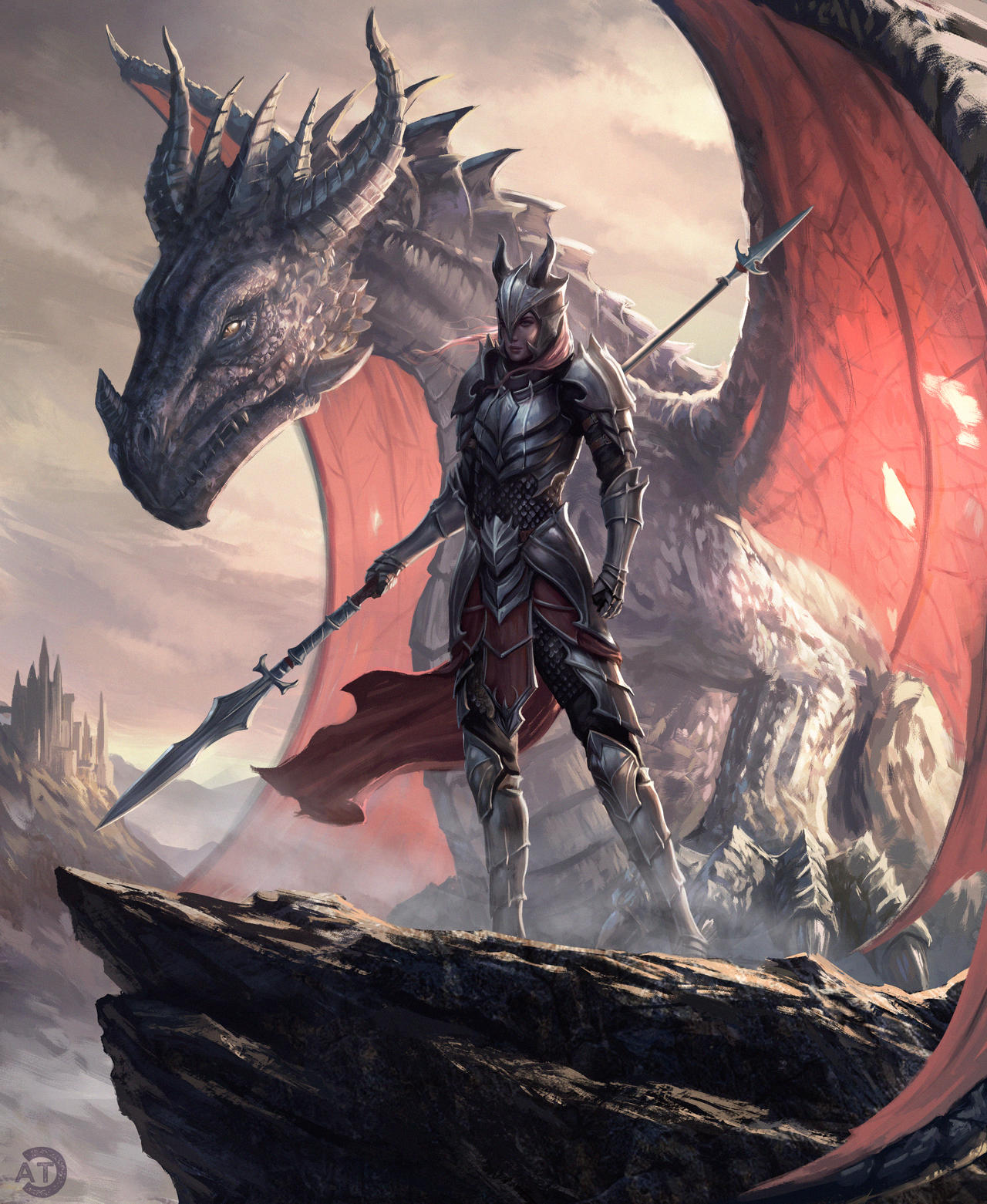
Recliff and Volantis were trading colonies first and foremost, founded by wealthy merchants and nobles who purchased the right to rule themselves as clients of Keldihar rather than subjects. These cities chose their own leaders, rather than receiving dragonlords dispatched from Keldihar (often on dragon back) to oversee them.
It is claimed in some histories that Goldhill and Port Bliss were a third type of city. Cities already extant before Keldiharians came whose rulers paid homage to Keldihar and thus retained their right to native rule. In these cities, what influx of Keldiharian blood there was came from migrants from Keldihar, or political marriages used to better bind these cities to Keldihar.
Port Maren, Port Ani and Qohor were built for one purpose only, slave trade. The native people in those areas did not bow down to Keldiahr's invasion, and instead attempted to fight back. Quickly the area now known as Wessel became a hub for slave trade through the Keldiharian Empire.
However, it is clear that Ittia is unique among all the Free Cities, as it was founded not by the will of Keldihar, nor by its citizens, but instead by its slaves. According to the tales of the Ittiasi, a huge slaver fleet that had been out collecting tributes in flesh from the Athas straights became victim to a slave uprising instead; the success of this uprising was doubtless depended on the fact that the Keldiharians were wont to use slaves as oarsmen and even sailors, and that these men then joined the uprising. Seizing control of the fleet but realizing there was no nearby place to hide from the Empire, the slaves instead elected to seek out some land far from Keldih and its subjects, and founded their own city in hiding. Legend says that the moon singers prophesied that the fleet must travel far south west, a place of mudflats and brackish water and fogs. There, the slaves first laid the foundation of their city.
For centuries, the Ittiasi remained hidden from the world in their remote lagoon. The Ittiasi were a melting pot of a population: scores of races, hundreds of tongues and hundreds of gods. All they had in common was the Keldiharian common trade language, now known as Thieves Cant', and the fact that they were once slaves and now they are free.
The Keldiharians decided that they would allow their conquered territories to have a figure head emperor to lower the risk of revolt. So after the Golden Emperor of Sravi’s, Tenel's, death by the Keldiharian empire, “the crown” was passed to new chosen Emperor Arlen, The Jade Emperor, Tenel's firstborn son came to the throne at the age of thirty. Tenel had begun life as a weak and sickly infant and remained so throughout his earliest years. Rumors abounded that this could be no true successor of Tenel the Conqueror, who had been a warrior without peer. Still, Arlen remained a dreamer, a dabbler in alchemy, a patron of singers and mummers. He was a weak king, and did not gain any respect from the populace.
One day, the Keskites were saved from their horrific drought. Called the “Arrival of the Mother”, the Rhoynish River suddenly sprang to life. Its banks filled with abundant water and vegetation out of nowhere. With this surge of life came thousands and thousands of turtles, and leading them was the savior of Keske itself, the Mother of the Rhoyne, an old tortle woman who sprang abundant life wherever she stepped. Singlehandedly rejuvenating the Keskish Empire.
All that was left for Keldihar to conquer in Ogun was the Keskish Empire in the south. The Keldiharian Empire took note of this falter in the once glorious Keskish Empire. So, they took advantage, and took their full force out. What they did not expect was the Keskites to be able to fight back, and with such ferocity as they defended their land. The Keskites lasted against the tide for centuries, leading to the slow, inexorable collapse of the remnants of the Keskish Empire.
At first, the Keskish navy, served as a buffer between the Keldhiharians and the Bluffs, a rich source of minerals. By the time the Keldiharians reached the great river, they found it difficult to make a crossing in force. The dragonlords might not be troubled, but the foot soldiers and horsemen found it daunting in the face of Keskish resistance, given that the Keske was by now as powerful as Keldihar. On the banks of the Rhoyne during a solar eclipse, the Keldiharians made a surprise attack, but Keske had been warned of their invasion and was prepared. The Battle of Keske was the most fearsome battle the world had ever seen. The Keskish people were not only holding their own, but they were gaining ground on the most powerful empire in the world.
During the battle, just as the moon began to eclipse the sun, the sun disappeared from the sky. Suddenly the world was dark, and the Keldiharians lost control of their dragons. This unprecedented event was seemingly by the High Alchemist of Keldihar Sseth Yarsseth. As their dragons were fleeing the keldiharians pulled out small red crystals created by Sseth that gave them control once again. The Keskish defence faltered and Parsantium was taken by Keldihar, for them to rename it to Ashport. It is rumored that some of the Keskish people managed to escape off in the first few hours of the Long Night.
In the sky above Ashport the eclipse burned into the sky, like a wound carved into the face of the world. Leaving an image in the sky as a last reminder of the sun that was.
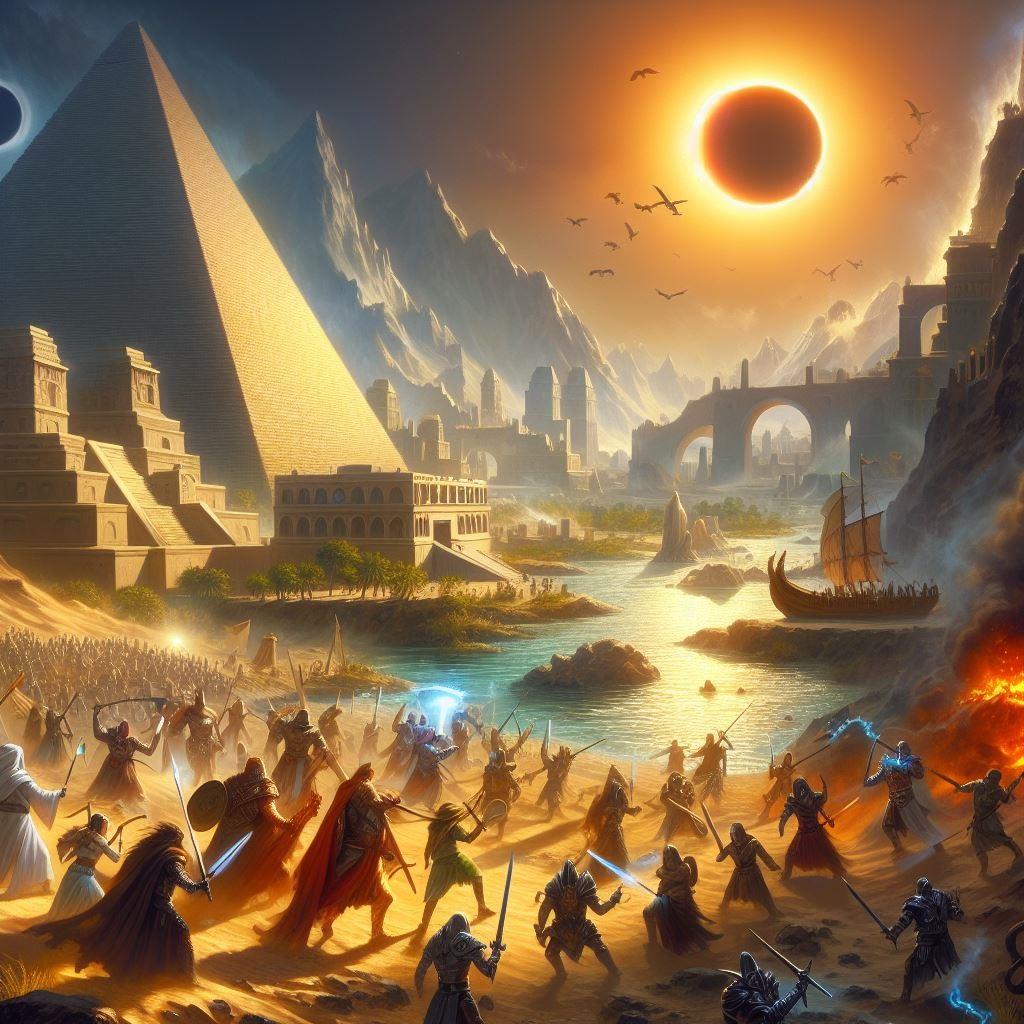
The Long Night
1023 AR – 1033 AR
Ogun underwent a catastrophic ice age after the sun's mysterious disappearance. Blizzards devastated the land, crops perished, and oceans froze. Societal divisions emerged, with the affluent seeking refuge underground, while the less fortunate faced exposure and famine. Amidst this chaos, the Windegos, insatiable cannibals driven by hunger, formed packs, heralding a descent into primal savagery. The once-vibrant Ogun now echoed with their haunting howls, bearing witness to a desolate transformation.
The Drow empire, led by the infamous Spider Queen, was wreaking havoc on the surface world. Armed with the severed hand of the sun god, which she claimed to have killed, she was leading a devastating war against Keldihar on their own turf. Her armies attacked the center of Keldiharian military training, Ptolus, and emerged victorious with minimal casualties.
A small group of heroes known as the Crew of the Rising Sun rose to the challenge, infiltrating the Drow empire and successfully assassinating the Spider Queen. As a reward for their bravery, they were knighted by Mystara.
But the conflict was far from over. In the Keldiharian-controlled city of Bysat, a shocking event occurred. During a grand gala celebrating the arrival of the new prince of Keldihar, the High Alchemist of Keldihar orchestrated a coup by resurrecting Tiamat into a homunculus body, causing widespread destruction throughout the city. He declared himself the new Dragpharoah of Keldihar, solidifying his power by destroying any churches that did not align with the dragon church.
On the eve of Godsday, the warforged of Mystara led a rebellion, revealing their sentience to the world. The Crew of the Rising Sun intervened and helped negotiate a peaceful resolution, but the warforged were exiled from Mystara for the damage they caused and relocated to the city beneath Mystara, now known as Undermoor.
With the help of Gal-Haldir, Mystara, the Iron Company mercenary crew, the remnants of Keske, and the fabled giants of Jotunhiem, the Crew of the Rising Sun launched a final assault on Ashport, the last bastion of Keldihar. Using the power of Yggdrasil, they teleported in simultaneously and succeeded in sieging the city. Sseth, Ahmonket and Tiamat the Homunculus Tiamat were killed, and Ariska Tayne was appointed leader of Keldihar to dismantle the oppressive power structure.
The Crew of the Rising Sun, Sevens "The Luckiest Kobold Alive", Tjorr Grymstad "The Guardian", Azzwer "Morningstar", Nedaar "The Protector of the Scales", and Yanou "The Cloaked Serpent" were hailed as heroes of the realm, but their work was not yet done. They set out to the Gia's Cradle, where they defeated the false god of the moon Sylhorn Silvermoon and brought back the god of the sun, Pelor, to Celestia. With their mission accomplished, the sun rose once again in the sky and the world was saved from a frozen end.

The Age of Renewal
1033 AR – 1622AR
After the Long Night, the world was forever changed. Two new moons, Sel and Lune, rose in the sky, each with their own godly assignments. Yanou became the god of chromatic dragons and greed, now known as the Cloaked Serpent. Azzwer became an immortal watcher of the divine, known as Morningstar, and Nedar became a defender of mortals, reincarnated in future generations as the Protector of the Scales. Tjorr created the world's first adventuring organization, the Vanguard, and Sevens became the Archmagi of Divination and Headmaster of the Snowspire Academy.
With the world thawing and a new era of peace on the horizon, seven kingdoms formed the League of the Seven - a treaty of peace and free trade. These kingdoms were the Kingdom of Estium, Mystara, the Republic of Wessel, Draconia, Keske, the Golden Empire of Sravi, and Gal-Haldir. Additionally, the kingdoms of Tiango and Urskovia formed an alliance called the Concord of the Kraken. Jotunhiem, the fabled and hidden city of Giants, even opened its borders for trade and tourism.
Draconia, once known as Keldihar, dismantled its power structure, but kept its land in the northeast of Oerth. In this new kingdom, dragons and humanoids live together in harmony. The rulers of Draconia are always a pair - a metallic dragon and a humanoid - chosen by an elected council. Each warrior in Draconia is bonded with a metallic dragon wyrmling at an early age, forming a partnership that lasts a lifetime. The chromatic dragons have fled the country to pursue their own interests.
The Platinum Claw, once a small village of rogue goliath people, has flourished into a grand city and home of the Vanguard. The Vanguard, the world's first adventuring guild, is split into three classes of warriors - The Magi, The Hunters, and the Titans.
Dragonlord Borrivick Faergar led a rebellion called The Brotherhood after witnessing the atrocities of Keldihar. After the fall of Keldihar, the Kingdom of Estium asked Borrivick to choose the new royal family line. Borrivick chose his trusted ally in battle, Percival Cromwell, who went on to create the Tenwaria school of magic named after his daughter.
The Long Night also caused many previously closed kingdoms to open up to trade. One such kingdom was the secluded Genasi Covenant. In the wake of the Planar disturbance of the Rift Events, a society of genie-touched people called the Genasi made a covenant to divide and form four separate orders to seal and watch over the sources of these unleashed energies. The four orders of the Genasi Covenant settled near these rifts, watching over them and soothing them when they grow volatile. The Air Genasi of Zafir watches over the portal to Aether in the Whipweed Gulf, the Fire Genasi of Quito watches over the portal to Iris in the Everplume Volcano, the water genasi of Castilla watches over the portal to Lys in the Callypso whirlpool, and the earth genasi of Toril watches the entrance to deepest recesses of Ogun in the Bellows Canyon.
The people of Keske and Sravi were among the most devastated by the Keldiharian empire's reign. The people of Keske were able to rebuild quickly, thanks to the Mother of Rhoyne's arrival once again. The Mother became the new ruler of Keske and brought plants and creatures to flock down the Rhoyne in joyous celebration. The capital was renamed Turtle Bay and now, once a year, the people of Turtle Bay welcome the yearly migration of turtles down the river in a celebration called Turtlefest.
After the Long Night, the people of Sravi found themselves struggling to rebuild their once lush land, which had been left barren and desolate. Historically, the Golden Empire of Sravi had been a secluded people, but in the wake of their struggles, they were forced to open their borders to trade. To facilitate this, they created the Golden Road of Sravi, a grand trade route that spans across the entire continent of Krynn, connecting Sravi to the rest of the world. They joined the League of Seven with one condition, the Ghiscari gnomes be freed from their control. The Kingdom of Ghiscar was declared a free nation. As slaves of Keldihar, the gnomes had
been secretly working on a weapon to fight against the empire, called The Clockwork Apocalypse Machine "TCAM", but after their liberation, they decided to disable the machine and instead focused on the arts. The Ghiscarian gnomes developed the world's first national newspaper, the Ghisicari Chronicle, and became renowned for their artistic and literary achievements.
The dwarven empire of Gal-Haldir underwent a significant change in leadership. Power was returned to the hands of Archon Yosef Haldir, leader of the Chapel of the Devoted, and Geroldt Galmgolir, patriarch of the Galgolir Trust. Despite their initial reluctance, Gal-Haldir joined the League to stabilize their economy. However, this also meant they had to adhere to new moral guidelines. Non-dwarves would be allowed within their city walls, but magic still banned within them. A community of dwarven mages was given sanctuary and formed a community called Aldmallow. Here, they would not be prosecuted for being dwarves who are magically inclined.
The Chezaran wilds of Aebernyis were once a chaotic and violent place, plagued by warring clans of orcs and goblins. But all that changed with the arrival of Valentine Flatrock, a young orc woman who would come to be known as the demigod of Peace. Through her tireless efforts, she was able to unite the warring factions and establish a city of shelter and hospitality in the harsh desert. This city, fittingly named Flatrock, was built on a large plateau in the middle of the inhospitable arid landscape, providing a safe haven for those who called it home. However, not all were willing to accept Valentine's rule, and a group of outlaws, known as the Freeriders, refused to be tamed. They instead roam the land, riding fierce feathered velociraptors and wielding stolen rifles, striking fear into the hearts of those who dare to cross their path. Despite this, Valentine's legacy lives on in Flatrock, where peace and unity prevail.
In Northern Estium, the ancient city of Beauclair bore witness to a momentous religious transformation. Guided by The Morningstar, a conduit to the divine, every individual gained the opportunity to commune directly with their chosen deity. This unprecedented connection drew the devout from all corners of the world on a grand pilgrimage to Beauclair. The city swiftly transformed into a majestic confluence of the divine, attracting worshipers eager for the opportunity to engage in a conversation with their gods. Amidst this fervor, grand temples dedicated to various prime deities adorned the cityscape, standing as magnificent expressions of unwavering faith and devotion.
A fascinating new religion emerged in the lands of Northern Estium, captivating the hearts and minds of the people with its promise of an eternal silver flame. Known as the Church of the Silver Flame, this enigmatic faith taught that the flame was a divine beacon of the one true god of light, with all other deities being but mere fragments of its radiance.
Believers of the Silver Flame held steadfast in their conviction that even those who had strayed from the path of righteousness could be redeemed by the flame's purifying power. The downtrodden denizens of Northern Estium, longing for hope and solace in their sorrowful surroundings, eagerly embraced this new faith. The church's influence quickly spread, its ranks swelling with each passing day until it became the foremost religious power in the region.
However, the church's newfound power and popularity threatened the existing religious institutions of Estium. King Tenwris Cromwell, in a bid to quell the rising tide of heresy, issued a decree banning the worship of the Silver Flame and imprisoning those caught with its iconography. This sparked a fierce conflict between the worshipers and the Crown, escalating into a full-blown battle.
As tensions continued to escalate, the warring factions found themselves at an impasse. That is, until the arrival of the Hell's Angels, a group of intrepid adventurers who sought to bring peace to the troubled region. With their diplomatic aid, the Church of the Silver Flame and the Crown were finally able to put aside their differences and forge a path towards reconciliation.
With the collapse of the Keldihar Empire, Wessel found itself facing an uncertain future. The once-glorious empire had provided stability and order, but with its fall, the islands were left to govern themselves. In the absence of Keldihar’s rule, a new political structure emerged, but it was not one of equality or unity. Instead, the leadership of the new republic was shaped by the families that had been the most loyal to the fallen empire: the Shardbearer Houses. These powerful families, who had thrived under Keldihar’s patronage, formed the Quorum, a ruling body that would dominate the political landscape of Wessel for the next 900 years.
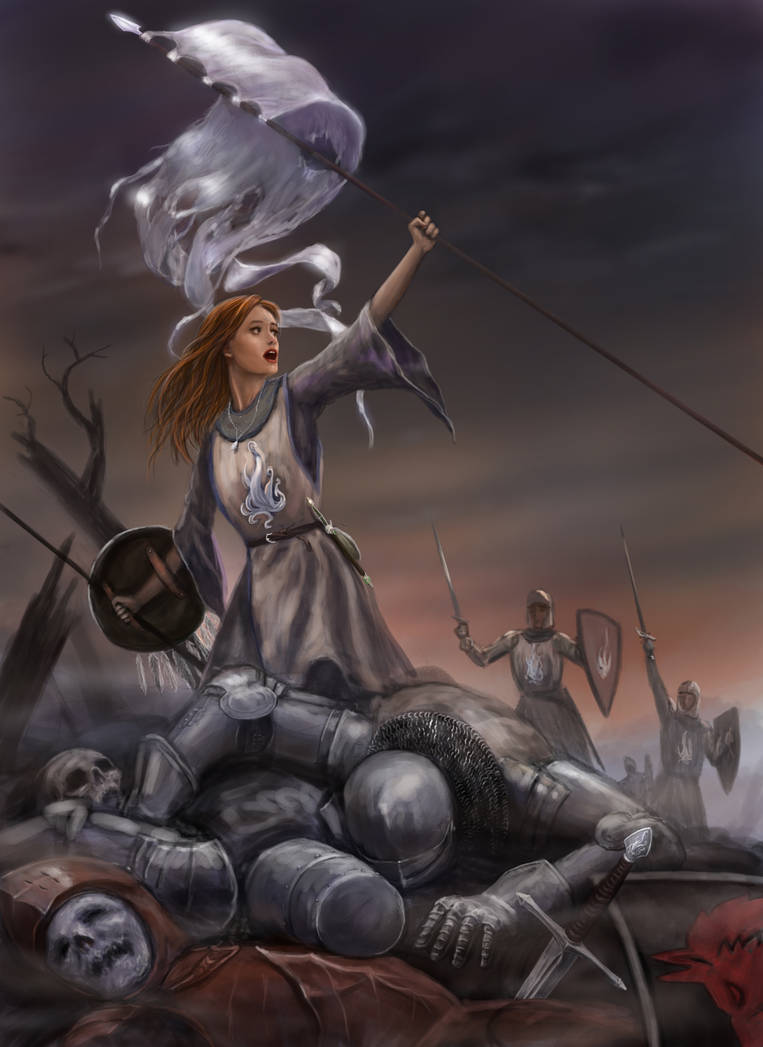
The Quorum wielded control over Wessel with a firm hand, establishing a system that prioritized their own wealth and influence. The Iron Company, once a military force, became a central figure in this new order, amassing vast resources and securing its dominance over the islands. Despite the growing influence of the republic, the transition from chaos to order was far from smooth. Laws shifted unpredictably from city to city, creating an unstable patchwork of governance. A minor misunderstanding could spiral into violence or imprisonment, and the ruling Shardbearer Houses were locked in an endless struggle for dominance over the isles.
This fragile equilibrium eventually shattered in the all-encompassing conflict known as the Aetherium Wars. At the heart of the Shardbearer Houses’ power were the Inspired, champions wielded aethershards and were guided by celestial spirits. These figures, venerated and feared in equal measure, wielded near-divine authority, leading their houses with unyielding resolve. Yet, even among these godlike leaders, cracks began to show as the war ground on.
Amid the chaos of the Aetherium Wars, defections became increasingly common. Disillusioned by the endless bloodshed or spurred by personal ambitions, many of the Inspired’s closest allies abandoned their banners. These defectors, taking their ships and skills, found refuge on remote islands that had long been home to the Locathah, a semi-aquatic people who had thrived on Wessel’s peripheries. Here, defectors and Locathah forged alliances, blending their knowledge of the seas to form formidable pirate crews.
These bands of renegades proved a thorn in the side of the Shardbearer fleets, harrying trade ships and military vessels alike. Among them, none struck greater fear into the hearts of Wessel’s elite than Captain Danton the Drake. With his legendary ship, The Drake, Danton carved a name for himself as a peerless tactician and fearsome raider. His banner united a coalition of pirate crews, including The Black Anvil, the enigmatic Children of Moluu, and the brutal Shipwreckers. From the city of Port Noose, Danton declared his territory a sanctuary for all pirates, a lawless haven beyond the reach of the Shardbearer Houses.
Danton was not the only pirate lord to rise in this age of rebellion. The fearsome Captain Eyebeard, a beholder of monstrous cruelty, led the Cloudreavers in campaigns of unrelenting brutality, leaving towns in smoldering ruins. Pirate Lord Zheng Yang Shi, a cunning strategist, amassed an unimaginable hoard of wealth with her crew, the Sparrows, whose exploits were legendary for their daring and precision. Lastly, there was Pirate Lord Shaen Tasil, leader of the vampiric Bloodsails, whose rune-marked red sails were said to be stained with the blood of their victims. Each of these pirate lords contributed to the destabilization of Wessel, challenging the authority of the Quorum and the Shardbearer Houses alike.
The conflict between the Quorum and the Pirate Lords, known as the Pirate War, lasted for a decade. The war began over the theft of a priceless gemstone heirloom, a symbol of power that became the focal point of the pirates' resistance. Despite the intensity of the conflict, the war ended in a stalemate, with no decisive victory. The prolonged struggle drained Wessel’s resources, and the Quorum, weakened by years of war, found itself in a vulnerable position.
The conclusion of the Pirate War left the republic in a state of disarray. The once-wealthy Quorum had seen its coffers emptied, and the five ruling merchant families, each responsible for a different trade, were now in competition with one another for control. The republic’s economy, once thriving, was now teetering on the brink of collapse. The military, exhausted by years of conflict, was in no position to defend Wessel from further threats.
As the republic’s situation grew increasingly dire, the question of Wessel’s future remained unresolved. The Quorum, once an unshakable pillar of power, now found itself struggling to maintain its grip on the islands. With no clear solution in sight, Wessel’s future seemed uncertain, awaiting a leader or force capable of restoring stability to the fractured republic.
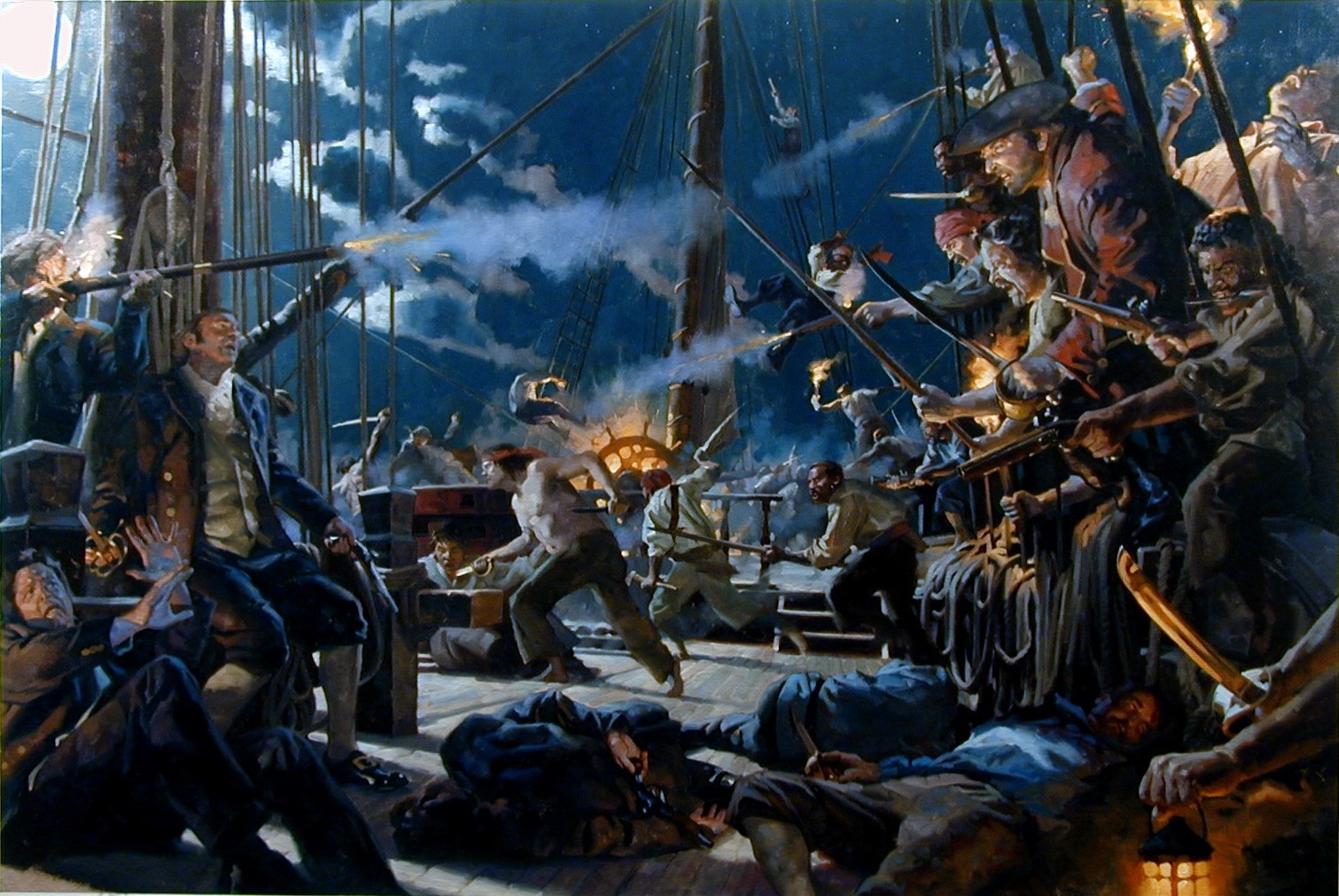
The Crimson War
1623AR – 1625AR
The Planar Resonance was rapidly approaching, and the world was on the brink of destruction as the Ashmadai, a cult of fanatical worshippers of the devil lord Asmodeus, were performing horrific acts of murder and sacrifice in a desperate bid to open a portal to the Nine Hells. The Ashmadai were led by Garrick the Archmagi of Necromancy, a powerful sorcerer who had infiltrated the prestigious Snowspire Academy of Magic and used his position to gain access to forbidden knowledge and powerful artifacts.
The Hell's Angels, a legendary group of adventurers consisting of Marrath the halfling assassin, Adrik the dwarf cleric, Joel Naiel the half-elf sorcerer, Jakal the elven monk, Nimeria the tiefling bard, Alwea the human warlock and Gigas Mori the feywild druid, had been working tirelessly to uncover the Ashmadai's plans and put a stop to their nefarious activities. They battled through hordes of the cult's followers, and finally, they uncovered the truth about the Archmagi's true allegiance. A fierce battle ensued, but the Hell's Angels failed to stop Garrick's ritual. In the northern lands of Estium, a horrifying chasm of pure hellfire broke open, called the Hellmouth. The lockstep legions of Hell poured out of the Hellmouth and began their invasion of the land. They burned down villages, destroyed crops and annihilated whole armies.
The Hell's Angels pleaded to League of Seven to finally take this matter seriously. Their plea succeeded and the League sent all of their armies at the imposing invasion. With the help of the Hell's Angels, the invasion force was destroyed and Garrick killed on the battlefield.
But their work was not done yet, as the Hell's Angels had to enter the Nine Hells and face Asmodeus himself. They battled through each layer, facing unimaginable horrors and powerful fiends. But their determination and skill proved to be too much for the Archdevil, and they finally emerged victorious. Marrath became the Queen of Hell, and closed the Hellmouth herself. The gods rewarded the Hell's Angels for their defeat. Adrik was ascended to godhood and became the new god of protection. Joel was also ascended to godhoood and became the new god of emotion.
The Hell's Angels had saved the world from certain doom and had become legendary heroes, their deeds forever remembered in the annals of history. This was a pivotal moment in the history of the world, as the Hell's Angels had changed the balance of power in the planes and had ushered in a new age of peace and prosperity. But the Hell's Angels knew that their work was never truly done, as there would always be new threats and dangers that needed to be faced. So the Hell's Angels created the Templar, a trained monster hunting force of knights to hunt down and destroy any evil creatures from unchecked magic. Six orders were created, the Order of the White Rose hunted dragons, the Order of the Black Rose hunted undead, the Order of the Grey Rose hunted Lycans, the order of the Red Rose hunted fiends, the order of the green rose hunted fey, and the order of the blue rose hunted mages.
The Age of Enlightenment
1626AR – Present Day (1648 AR)
Amidst the Crimson War, a breathtaking spectacle erupted from Wessel’s Ankara Island: the Wellspring of Avandra, spilling gold ore and precious gems across a vast field. News of this marvel spread quickly, sparking a rush for its treasures.
As the war ended, the world focused on Wessel, now a land of immense wealth. Nations formed trading companies, but it was the powerful Elemental Domains that dominated the burgeoning market.
First to arrive was the Zhelezo Navy, emerging from the Calypso portal, arrived with unmatched strength, quickly overpowering the pirates who had long controlled the Stormsea. Their mission was clear: eliminate piracy and secure Wessel’s waters. Within weeks, the pirates were driven into hiding as the Zhelezo imposed strict anti-piracy laws, establishing elite factions dedicated to hunting and executing pirates.
This power shift led to a major trade alliance between the Zhelezo and the Quorum about twenty years ago. The agreement opened trade routes but also granted the Zhelezo control over Wessel’s waters, with a mandate to eradicate piracy by any means necessary.
With the Zhelezo’s increasing influence, other powerful forces began to take notice. The Khan of the Earth Domain, seeking to expand his own power, demanded similar privileges and privileges of trade and military protection. His creation of the Ministry of Steel led to the rise of Adjudicators—agents tasked with maintaining order across the isles in exchange for a trade and military alliance with the Quorum.
Not long after, the Air Domain, led by the Shantivayu, forged a treaty with the city of Zafir, securing open trade with the Quorum. While they made no demands for military involvement, preferring to avoid mercenary engagements, their treaty cemented their presence in Wessel's economy.
Then came the Agnikhandas, an army of mercenaries from the Fire Domain, who invaded the city of Quito under the orders of the Sultan. The Quorum responded swiftly, sending an ambassador to formalize a military and economic treaty with the Agnikhandas, thus endorsing their actions under the League of the Seven.
The Age of Enlightenment ushered in a wave of innovation, with cities thriving and new technologies, arcane wonders, and intellectual pursuits flourishing. Schools, art, architecture, and philosophy blossomed, offering boundless opportunities for advancement. The Isles of Wessel stood at the forefront, ready to embrace uncharted potential for wealth and power.
However, not all was peaceful. A schism within the Church of the Silver Flame sparked the War of the Roses, a conflict between the Holy Kingdom of Archera and the Kingdom of Estium. The dispute centered around the Order of the Red Roses' use of blood magic to slay fiends, a practice deemed blasphemous by some and necessary by others. The Pontifex's endorsement of blood magic led to the excommunication of opposing factions, igniting war.
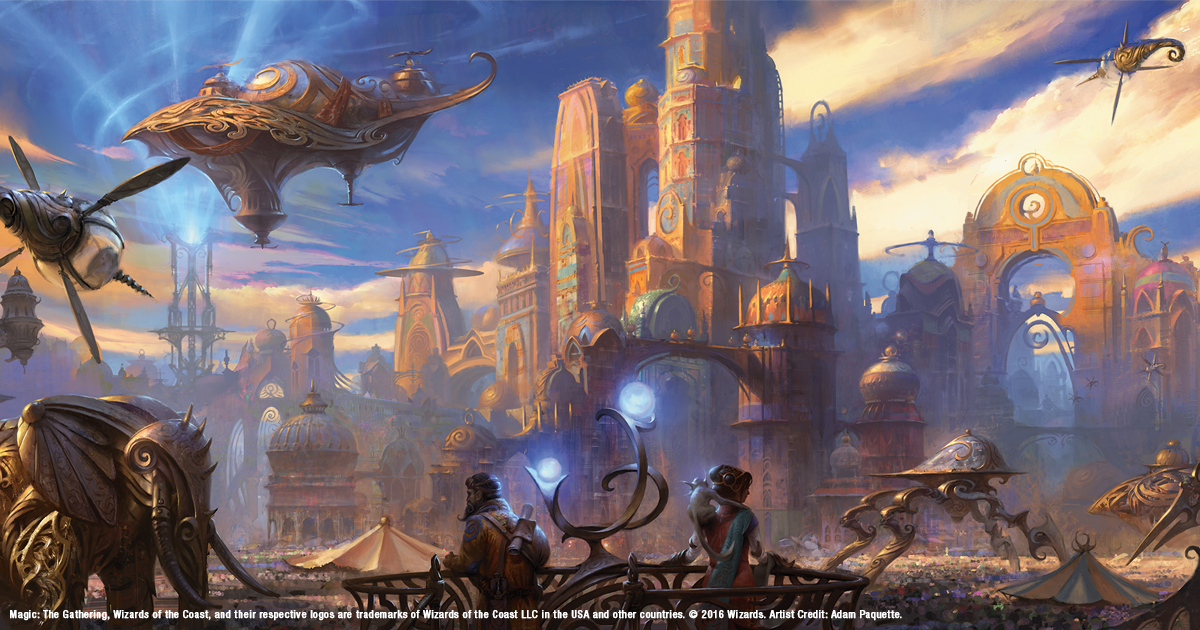
Chapter 3: Cosmology of Ogun
The Ogun Calender
The Ogun year consists of 360 days over the course of 12 months. Each month has 30 days, and weeks contain 10 days, each named after a constellation: Maskday (The Lover), Towerday (The Castle), Wineday (The Chalice), Thornsday, (The Rose), Fireday (The Dragon), Stoneday (The Mountain), Crownsday (The King), Feastday (The Cornucopia), Arrowday (The Archer), and Swordsday (The Warrior). Crownsday, Feastday, Arrowday, and Swordsday are considered the weekend for many people in Ogun. Established by the demigods of Elysium, this calendar, now in the year 1648 AR (After Rifts), is widely used by civilizations worldwide.
| Month | Events and Holidays |
|---|---|
| Nerulis | New Dawn (1st) |
| Olamis | Artisan's Cry (7th) |
| Correlan | Heaven's Flare (18th), Elvendawn (30th) |
| Talian | Fool's Day (3rd), Tides Mercy (21st) |
| Ashtara | Wild's Grandeur (20th) |
| Peloria | Sunrise Vigil (1st), Zenith (16th) |
| Avana | Sea's Bounty (9th & 10th) , Fairy's Blessing (12th) |
| Lirian | The Day without Evil (13th), Dragon's Slumber (30th) |
| Kordon | Champion's Day (16th) |
| Mivaras | Night of the Pumpkin King (13th) |
| Savas | Fate's Eve (2nd) |
| Sellan | Godsday (17th) |
Seasons
Spring begins early in the month of Talian, officially starting on the 3rd with the Fool's Day.
Summer begins in the middle of Peloria, officially starting at noon on the 16th day known as the Zenith.
Autumn begins in Mivaras marked by the Night of the Pumpkin King on the 13th day.
Winter begins on the 2nd day of Savas, Fate's Eve.
Holidays
The people of Ogun are mostly proud folk. They enjoy celebrations in most places, and choose to honor the past where they can. There are many other holidays celebrated by the different cultures and nations of the world, but the main holidays in Ogun are:
- New Dawn celebrates the lunar new year. It is typically celebrated with family and used to wind down from the Godsday festivals the week before. In Estium it is a day of mourning for causalities in war, and many light candles to commemorate those lost.
- Artisan's Cry is a celebration of crafters and artists. The highlight of the festivities is a bustling fair where their diverse talents and imaginative works come alive, captivating all who attend.
- Heaven's Flare marks the passing of a wild and colorful meteor storm across Ogun' skies. It is believed by many to bring good luck and fortune.
- Elvendawn marks the first emergence of the Elves into Ogun from the Feywild.
- Fool's Day is the first day of spring celebrated with fresh food, music and dance. It marks the first day of the Feylight Carnival arriving in the material plane.
- Wild's Grandeur is a day to celebrate the natural beauty of nature by journeying to a place of great natural beauty.
- Tide's Mercy is a day used to pray for safe tides and the quelling of storms. Traditionally people burn written prayers to the Mourning Storm for mercy.
- Sunrise Vigil, people rise early to welcome the sunrise, honoring those who fell during the Long Night.
- Zenith starts at noon on the first day of summer, honoring Pelor, the sun god, with a week of gift-giving, feasting, and ending with fireworks on the 16th of Pelos.
- Sea's Bounty is celebrated by the pirates of the Isles of Wessel in honor of the legendary pirate the Plank King. It is celebrated by excessive drinking and dancing.
- Fairy's Blessing is a joyful holiday honoring Queen Titania, the benevolent Tooth Fairy Queen of the Feywild. Children place their lost baby teeth in decorated boxes under pillows for Queen Titania, who leaves gifts or blessings in return.
- Dragon's Slumber marks the day that Keldihar fell. Traditions include public parades, and airing of grievances.
- Night of the Pumpkin King is a harvest feast where villagers carve eerie faces into pumpkins to ward off undead. They wear disguises to evade the Pumpkin King and his minions, fearing capture into the fey realm.
- Champion's Day is the holy day of Kord the god of strength. Often it is celebrated with a tournament.
- Fate's Eve is the first day of winter, and it is a solemn yet celebratory holiday dedicated to honoring Savaras Goddess of Fate. People gather for feasts and weave colorful threads together creating a communal tapestry. It is a time of reflection, gratitude, and community.
- Godsday celebration in honor of the Zavan's sacrifice to end the rein of Elysium. It is celebrated by giving gifts to those you love.
The Gods
The Prime Deities
| Deity | Epithet | Alignment | Province | Suggested Domains | Symbol |
|---|---|---|---|---|---|
| Zavan Cutheburt | The Savior | LG | Inspiration | Life, Peace, War | Two lions facing outward |
| Correllean | The Arch Heart | LG | Peace | Peace | Dove with outstretched wings |
| Adrik Aldmallow | The Righteous Guardian | LG | Protection | Life, Peace, Order | A shield with a long beard on it |
| Bahamut | The Platinum Dragon | NG | The Forge | Forge, Redemption | A silver dragon head on a blue field |
| Ulaa | The Lonesome Melody | NG | Music | Life, Peace, War | A tower with notes next to it |
| Pelor | The Dawn Father | NG | The Sun | Light, Life, War | Four pointed star |
| Olidammara | The Enlightened Hermit | NG | Knowledge | Knowledge | An empty scroll |
| Lune | The Moon Maiden | NG | The Moon | Twilight , Peace, Knowledge | A snowflake |
| Avandra | The Grinning Sailor | CG | Luck | Trickery | A coin with a smirking woman's face |
| Ashtar | The Wild Mother | CG | Life | Life, Nature, Tempest | A sunflower |
| Cenos | The North Star | CG | Adventure | War, Life, Nature | A green cap with a red feather in it |
| Joel Nael | The Wayward Poet | CG | Stories | Life, Tempest, Twilight, Peace | A lit candle over a book |
| Nerull | The Raven Lord | LN | Death | Death, Grave | A bronze set of scales in balance |
| Moradin | The Law Bearer | LN | Order | Order | Two sided hammer |
| Radia | The Loyal Pupetmaster | LN | Will | Order | Five concentric circles |
| Savaras | The Cursed Seamstress | N | Fate | Grave | A white feather falling from the sky |
| Miva | The Ephemeral Sands | N | Time | Nature, Tempest | An hourglass with sand falling upwards |
| Boccob | The Enigmatic Architect | N | Magic | Arcana | An eye balanced on a pedestal within a pentagram |
| Obad-Hai | The Ever Light | N | Nature | Nature, Grave, Life, Tempest | A large oak tree with a wolf at its base |
| Sel | The Night Song | CN | The Moon | Trickery, Twilight | A silver sickle |
| Llira | The Starlit Visionary | CN | Astral Plane | Peace, Freedom | Three stars in a triangle formation |
| Yanou | The Cloaked Serpent | CN | Greed | Trickery | A jeweled dagger with a snake around the hilt |
| Kord | The Steelclaw Lancer | CN | Strength | War, Tempest | A silver lance |
| Talia | The Mourning Storm | CN | Storms | Tempest | A raindrop |
"The Savior"
In a world plagued by death and turmoil spread without intervention, mortals grew distant from the gods. A secret city of refugees, Mystara, emerged as a refuge for those fleeing the relentless armies of Agustus Elysium. The city prospered, a shining light in the darkness that threatened to consume all. Man began to idolize his own creations over the divinity of the gods. Suddenly, Zavan, an ordinary man working in a field, ascended to divinity upon the birth of the millionth human in Mystara. Assuming the mantle of king, Zavan, with incredible speed and mortal-like efficiency, created Mystara with towering walls and a protective canal, blending his divine essence with his people to create a new race known as Mystarans. Recognizing the growing power of mortals, a coalition of gods, including Pelor, Bane, Gladir, Ashtar, Olidammara, and Sune, deemed Zavan a threat and sought to arrest and execute him. Simultaneously, another group of gods, led by Selune, Helm, Nerull, Pelios, Cenos, Eldath, and Avandra, defended Zavan. Tensions escalated toward divine warfare, but a diplomatic resolution emerged when Nerull persuaded Pelor to peacefully apprehend Zavan. The new god, convinced by his lover Nerull, entrusted his divinity to his weapons, passing them on to the God King of Mystara, Jakub Kladivo, as he willingly surrendered to face judgment in Celestia.
"The Arch Heart"
Manifesting in a form of ethereal grace and beauty, the goddess of peace assumes an otherworldly semblance, often depicted as an elegant elven entity adorned with wings that seemingly stretch beyond the conceivable. Adherents of the archeart are individuals who eschew conflict in favor of the pursuit of art. Esteemed as the custodian of the spring season, with dominion over the realms of Light and Arcana, this divine being commands a substantial following, particularly among the Elves and, more recently, the denizens of Flatrock. The archeart stands as the vigilant overseer of the spheres of spring, beauty, and the arts, as well as the embodiment of peace.
"The Righteous Guardian"
Elevated to the divine for his triumphant vanquishing of Asmodeus, Adrik, once a dwarven cleric and a prominent member of the Hell's Angels, ascended to the esteemed status of a deity. Renowned as the guardian of the weak and the defenseless, Adrik epitomizes the archetype of the virtuous and altruistic deity. Often portrayed as a dwarf with a gorgeous beard, he eschews conventional weaponry, instead bearing a towering shield affixed to his back. His divine endeavors are devoted to shielding those less fortunate and incapable of fending for themselves.
"The Platinum Dragon"
He is depicted as a long snaking platinum dragon with huge whiskers and a bright white beard and mustache. He is also known to wander the material plane in search of paladins to smite out evil within the world, while wandering he would keep multiple bright yellow canaries flying around him that would actually be his ancient golden dragons. Bahamut serves as a natural teacher, imparting knowledge on metal manipulation through blacksmithing. Esteemed by blacksmiths worldwide, he bestows rewards upon exceptional craftsmanship. Revered as the pillar of justice, valor, redemption, and honor, Bahamut serves as a guiding light for paladins devoted to order and goodness. Adorning numerous halls of high leadership and justice, the platinum dragon's influence is ubiquitous in all righteous judgments, advocating the protection of those who cannot fend for themselves.
"The Dawn Father"
Pelor, the king of gods, is described as a muscular man with blonde hair, blue eyes, and a light tan complexion. Clad in shining gold armor, he wields the radiant Sunforger axe. As the lord overseeing the sun, summer, and harvest, Pelor's benevolent vigil spans the ages. He holds dominion over agriculture and the harvest, making him a revered figure among farmers and common folk. A champion of the needy and a vanquisher of evil, Pelor is often the patron deity of paladins and rangers who share his creed, as well as those who hunt aberrations. One of the earliest gods, Pelor, crafted the sun from his fallen mother's power. Initially fixed in place, Pelor expanded his astral influence to encroach upon his brother's domain, resulting in a celestial equilibrium. The holiday of Highsummer, celebrated on the 15th day of the 7th month, is marked by gift-giving and feasting in Pelor's honor.
"The Lonesome Melody"
Depicted as a young dwarven women with short brown hair and big puffy cheeks. She is imprisoned in Behemoth's domain, a travesty that her mother Talia the Weeping Widow will forever mourn. She is worshiped by singers and performers and those who feel trapped. She is often depicted atop a great tower singing lovely songs in the underdark to no one.
"The Enlightened Hermit"
Olidammara's realm consists of a vast library, in which a copy of each piece of recorded knowledge ever made. This is not limited to books and scrolls, but even the recorded memories of each creature, called the Archive. Acolytes of Olidamamara are said to have been granted access in their dreams to the library. Gaining a fleeting glance at the endless knowledge available to them. Only one rule is ironclad, no mortal or god is able to view the memory of another individual. Such a transgression is penalized with their memories erased. He often takes the form as a large barn owl, the wisest of the creatures of Ogun.
"The Grinning Sailor"
Avandra, also known as The Fortune's Favor, The Grinning Sailor, Lady Luck, the Lady of Smiles, The Laughing Pirate, The Sly Grin is the goddess of luck, trade, and travel, was known for spending much of her time among mortals, intrigued by their struggles. Legends spoke of her assuming various disguises, often portraying some of the wealthiest individuals in history, with rumors suggesting she might have been the renowned pirate Avantica in one of her incarnations. Encouraging her followers to embrace the unknown and embark on journeys of exploration, Avandra's influence was particularly strong among gamblers and thieves. She was credited with founding the first thieves' guild, The Grinners, its origins now known only to the most senior members. Many criminals continued to seek the favor of the goddess of luck for their illicit endeavors. Notably, Avandra held a special fondness for halflings, blessing the entire race with a fragment of her power to shield them from misfortune when faced with adversity.
"The Moon Maiden"
Lune the Twin Goddess of the Moon, has dominion over Prophecy, Twilight and Dance. She and her twin brother, Sel, were formed when the previous god of the moon, Selune, was turned to stone by Sylhorn Silvermoon. Lune is known to take the form of a short blue skinned woman with white hair that covers her single eye, she wears a beautiful blue dress and gloves over her hands. Her followers look to the Moon Maiden as a guiding path through the unkowns of life. The most devout of the Moon Maiden have been blessed with her ability to predict the future.
"The Wild Mother"
The Wild Mother, often portrayed as a maternal figure adorned in a flowing sundress, exuding warmth through her loving smile. Every living being carries a fragment of the Wild Mother within them. Legends tell of her walking among the lands of Ogun, dedicating herself to the service of the impoverished and the ailing. As the patron of life everlasting, her divine influence powers both the inception of life and the phenomena of resurrection. Revered as the matron of the Fey and the embodiment of Spring, the Wild Mother's essence is closely associated with the blooming of flowers. The celebration of Blessings Day in the fourth month involves joyous feasts under the blossoms and the warm sunlight, honoring the life-infusing and nurturing qualities of the Wild Mother.
"The North Star"
Cenos the god of adventure embodies the spirit of courage, empathy and heroism. He advocates for resistance against oppressive laws, and the defense of the innate rights and dignity of every individual. His ethos inspires mortals to defend those who cannot defend themselves and to defy unjust authority. Prayers to Cenos often come at times of great rebellion or by the adventuring parties of Ogun. Legends say that Cenos once walked amongst the mortals, leading a rebellion against dwarven aristocrats and distributed their ill-gotten wealth amongst the masses. He would often take the form of a wandering halfling man wearing a green hat with a feather in it and carrying a bow and arrow. A saying is spread throughout the land, "If you are in need, look to the North Star"
"The Wayward Poet"
Elevated to the divine for his triumphant vanquishing of Asmodeus, Joel Nael, once a half elf sorcerer and a prominent member of the Hell's Angels, ascended to the esteemed status of a deity. His domain is the art of the storyteller, the weaver of legends, the teller of tales. His worshipers are the bards who weave stories together to inspire the world. Whether by spoken or written word, the followers of The Wayward Poet will bring joy to us all.
"The Raven Lord"
Nerull, known as the Raven Lord, is described as a tall, slender figure adorned with flowing black hair and a pallid visage concealed by a blank porcelain mask depicting a skull. A deity characterized by a profound neutrality, his stance takes a vehement turn against the scourge of undeath. Devotees beseech his favor to guide them through the delicate passage of death and shield them from the cursed grip of undeath. The Raven Lord's dominion extends over the realm of winter and death, marking the conclusion of each mortal's journey and safeguarding the sanctity of their transition. His enmity with Hextor, rooted in their opposing views on undeath. Additionally the legends say that Nerull had a particular fondness and perhaps a relationship with Zavan the Savior. Many funerals invoke his blessings in the hope of a peaceful afterlife and protection against the blight of undeath. He makes the ultimate decision to way the worth of a mortal soul upon death. Only the Raven Lord decides which afterlife a mortal's soul will be placed, involving the amount of good deeds weighed against the amount of evil deeds. How the Raven Lord decides what is good and what is evil is unknown.
"The Loyal Pupetmaster"
Known to take the guise of one of her high elf devotees, adorned with the characteristic features of pale skin and black hair, Radia is revered for her emphasis on reason and creativity. Worshipers align with the ideals of determination, crafting their destinies through sheer willpower. Positioned as the favored daughter of Pelor, the sun god, she harbors ambitions of ascending to the role of Queen of the gods, a goal meticulously planned since her birth. Acquiring the moniker "puppetmaster" after Hextor's assault on Celestia, she seized control over the god of vitality, manipulating his thoughts with a deft touch akin to puppet strings. Among the Sisters of the Weave — deities from the weave and bound by a curse prohibiting action against it. Radia received a temporary reprieve from her constraints to intervene during Hextor's Celestia attack. Now, she takes delight in toying with the tortured psyche of Hextor, the sole god upon whom she can exert her will.
"The Law Bearer"
Upon the declaration echoing across the planes that no new gods would be allowed, Moradin, a deity of unwavering conviction, codified this decree into the foundational law of the emerging world. Defying attempts to create new divinities, Moradin firmly ensured that the essence of godhood would remain the exclusive domain of the existing pantheon. Over millennia, driven by his vision of a universally applicable moral code, Moradin meticulously crafted the Book of Absolute Law—a sacred text kept veiled in secrecy, coveted by many of Moradin's devout followers. Displeased with Zavan's audacity in the divine realm, Moradin, distinct from Pelor's stance, sought retribution not against the god but against the mortals who dared to birth a deity. As Pelor and his cabal marched toward Mystara, Moradin, in a moment of divine judgment, hurled a distant mass of orichalchium toward Ogun, prompting Pelor's intervention to deflect the celestial threat and apprehend Moradin. The deflected mass or orichalchium instead hit the land of what is now Gal-Haldir. The Covenant of the Devoted in Gal-Haldir believe that the Law Bearer will to punish mortals for the creation of mortal gods (Zavan, Adrik, Joel and Yanou), a mockery of everything the gods hold. They believe that magic is a gift from the gods that should be taken away. They believe that all mortals, even those born before or after the bastardized ascension of Zavan are born as Reprobate and are destined for damnation after they die. Those who wish to redeem their sinful condition must join the Covenant of the Devoted and atone for their transgressions.
The Lawbearer, Moradin, epitomizes retribution, strict law, and the punishment for transgressions. He is the creator of the dwarves alongside Radia, the goddess of Will. Adhering to a dogma that denounces the worship of other gods and forbids arcane magic, Moradin demands a life of repentance and simplicity from his followers. His depiction is that of a hooded, armored dwarven figure seated on a throne, face obscured, with a silver mechanical right hand and a metal warhammer leaning against the throne. The symbol associated with him is a metal hammer. He commands fervent worship among the dwarves of Kadar/Gal-Haldir, earning the title "The Punisher." The coveted Book of Absolute Law, created by Moradin, was entrusted to Pelor, the god of the Sun, who, as the king of the gods, made amendments to it, including the prohibition of gods passing the divine gates and allowing each god to claim one demigod child.
"The Cursed Seamstress"
Savaras, the venerable goddess of fate, often appearing as an elderly woman with infinitely long silver hair, weathered skin, and purple irises, dons blue and white robes. Her divine plane, referred to as the Weave, intricately weaves the destinies of mortals and gods through multidimensional threads. Seeking to alter one's fate by petitioning Savaras in exchange for eternal servitude has been a futile endeavor, as she steadfastly adheres to her duty, refusing to intervene in the fate of any being. Savaras, alongside Radia and Miva, constitutes the Sisters of the Weave, believed to be created of the Weave, are designed to safeguard the it from any disturbance. Bound by a strict law, they cannot act against the weave. However, Savaras broke this law when she foretold Pelor's impending attack on Zavan, warning Selune of the impending transgression. The consequence of this violation is said to afflict Savaras with constant and excruciating pain.
"The Ephemeral Sands"
No one has visited Miva's realm, known as the Tumbling Sands. But devout worshipers of the goddess of time , found amongst very select wizards and those looking to change the past, have found visions of a woman shaped form in the sand that will speak cryptic riddles to those who ask the right questions. Miva is an ancient and endless being that not many worship as there is no need. She is not a part of any politics amongst the gods and never interferes with the plights of mortals, that we know of. Miva, Radia and Savaras are known as the Sisters of the Weave. They are made of the weave and thereby must uphold its rules. Miva is unable to change the past, and has upheld that rule until this day. As far as the gods know at least. Even they woudn't know if she changed time as long as she hid her tracks enough.
"The Enigmatic Architect"
Boccob, often depicted as a wizard adorned with a long white beard and intricate blue tattoos snaking across his body, is an enigmatic figure. Donned in a moth-ridden grey wizard's hat and a tattered cloak, he remains elusive and is often the subject of worship and prayers that seemingly go unanswered. Despite his uncaring attitude, Boccob bestows power upon those who dedicate themselves to him. Myths surrounding him paint a complex picture —a uncaring recluse, living in isolation somewhere in the vast expanse of the universe with machinations that no one could understand. Yet, in tales recounting the dawn of the universe, Boccob assumes a central role. One such legend suggests a bygone era when magic flowed without the constraints imposed by Boccob, lost to the annals of memory.
"The Ever Light"
Often depicted as a lean, withered old man with dark black skin and deep grey eyes, the god of nature manifests with a strange double-reed woodwind instrument called a shalm. Obad-Hai is revered as the deity of nature, healing, and temperance. His influence extends over the ever-shifting seas and burgeoning lands, embodying the wild aspects of nature —from the vibrant life of the wilderness to the tumultuous rush of angry rapids and the contemplative stillness of the desert. Worship of the Ever Light is embraced by elves and natural land hunters, as they seek his guidance to coexist harmoniously within the untamed realms. Sailors navigating perilous waters also offer prayers to the Ever Light, acknowledging him as the god of all in nature. His ethos revolves around neutrality, and in an effort to quell conflict on the material plane, he crafted the demiplane known as Gia's Cradle where all demigods would fight to be claimed.
"The Night Song"
Sel the twin god of the moon has domain over Trickery and Illusions. He has often been depicted as a young man with dark black hair, gray eyes, pale skin and frail physic. He normally wears formal silver robes and carries a silver staff with a blue crystal atop it. Him and his sister are twin gods of the moon, and were created when Sylhorn petrified the old god of the moon Selune. Him and his sister hold the domain of the season of Autumn. He is the patron of illusions and misdirections. Considered to be the deity of love and protector of the trysts of lovers. Those who work in secrecy and trickery often ask for his blessing.
"The Starlit Visionary"
Not much is known of Llira, as she never took form - be it mortal or divine. The very select few who worship her have seen a field of stars as far as the eye can see, twinkling as she speaks to them as if she is the stars themselves. Her domain is that of the boundary between the planes, and the space of the universe. She acts as a conduit for all travel between the planes, and without her help planar travel of any kind would be impossible. Her dogma is that of liberty and removal of societal constraints.
"The Cloaked Serpent"
Yanou, once a yuan-ti bard/rogue and a celebrated member of the Crew of the Rising Sun, achieved godhood through rather unconventional means — by forcibly seizing the power of Tiamat with the infamous Godstealer Dagger. In contrast to his ascended peers, Yanou chose not to adopt the responsibilities of his predecessor but instead assumed the role of the patron deity of thieves, embodying principles of theft and greed. Upon ascending, he liberated the Chromatic dragons from Tiamat's dominion, granting them freedom. Yanou's followers consist of people who prioritize their own personal gain. He is the patron of thieves guilds and the open flow of commerce in a marketplace. Due to the illicit nature of his worship, devotees of Yanou often conduct their rituals in the shadows.
"The Steelclaw Lancer"
Kord is normally depicted as a human man, barrel chested and with massive muscles. In one hand he carries a huge silver lance crackling with red electricity, in the other a metal claw hand. He is worshiped by those who want victory in battle and those who want the strength to survive an obstacle. Fighters, bodyguards and bruisers of all kinds worship him in hopes of gaining some fraction of his divinity. He abhors the weak, as well as those who impose limits on their natural abilities. His followers all revel in tests of strength, and his blessings find those who prove themselves on the battlefield. He has sired the most demigod offspring out of all of the gods, many of them wander Ogun to this day.
"The Mourning Storm"
Talia, also known as The Bereaved, the Weeping Sky, and the Torrential Anguish, is the goddess of storms. A spectral visage, her eyes heavy with sorrow, and a cascade of disheveled grey hair that mirrors the tempests she commands, Talia's divine realm is one of perpetual lamentation. Her tears flow for a daughter lost to the deity Behemoth, Ulaa, the goddess of Music. This inconsolable grief has enshrouded her mind in madness, resulting in sporadic fits of destructive rage that manifest as tumultuous storms upon the surface of Ogun. Each tempest that surges upon Ogun resounds with the laments of a mother bereft of her child. Sailors, navigating the ever-restless seas, extend prayers to assuage the Mourning Storm, seeking mercy in their maritime pursuits. Beyond the billowing clouds and raging winds, a tragic saga unfolds —an immortal narrative of love lost and the tumultuous forces within a grieving goddess, orchestrating destinies for mortals beneath the watchful gaze of the heavens.
The Betrayer Gods
| Deity | Epithet | Alignment | Province | Suggested Domains | Common Symbol |
|---|---|---|---|---|---|
| Bane | The Strife Emperor | LE | War | War | Sword stabbed into the ground |
| Behemoth | The Dreaded King | LE | Tyranny | Order, War | A throne of skulls |
| Hextor | The Armored Puppet | LE | Vitality | Death, Life | A spartan helmet |
| Galdir | The Wild Hunt | NE | The Hunt | War | A clawed paw |
| Umberlee | The Netherdeep | CE | The Sea | Tempest, Death | A yellow eye with black pupil |
| Sah | The Umbra Witness | NE | Dreams | Twilight, Trickery | A spiral of white, grey and black |
| Vistrix | The Hive Mother | CE | Chaos | Twilight, Death | A three headed spider |
| Farlanghan | The Roving Trickster | CE | Travel | Trickery | A bridge with a figure underneath it |
| Zys | The Thunder Scourge | CE | Sky | Nature, Tempest | A lightning bolt |
"The Strife Emperor"
The Strife Emperor manifests as a menacing figure, a brutish ogre-like man draped in jagged black armor. Adorned with grisly trophies—heads that dangle ominously from his belt—the visage beneath his helmet remains obscured, except for the unblinking, piercing yellow eyes that peer through the shadows.
Worship of the Strife Emperor finds resonance among goblinkin, orcs, and those harboring fervent aspirations for conquest. In the name of this malevolent patron of war and conquest, blood-drenched armies, composed of brutal warriors, mercilessly crush their foes. To heed his call is to embrace conflict, to subjugate the lesser, and to impose dominance over the vanquished.
Nations fueled by warmongering zeal and goblinoid tribes fervently worship the Strife Emperor, embarking on campaigns to assert their supremacy over the world. His influence extends beyond mortal realms, compelling even nature itself to bow to his insatiable whims. The Strife Emperor, in his relentless pursuit of domination, twists all living things to bend to his iron will.
"The Dreaded King"
Behemoth, the dark god ruling the boundless tunnels and caverns beneath Ogun, assumes the role of a patron for slavers and jailers across the realm. Legend tells that his tears, forged in pain and anger, carved the intricate labyrinth beneath the surface, forming his sinister realm of imprisonment—a network of perilous caves where few return. In the depths of subterranean domains, slavers and jailers offer prayers to Behemoth, seeking his guidance and blessing in their nefarious pursuits. Creatures dwelling in the shadows below also worship him as their deity.Manifesting as a colossal humanoid figure, Behemoth towers thousands of feet tall, distinguished by massive brown horns protruding from the sides of his gigantic maw. In an attempt to cease Behemoth's malevolent influence on mortals, Pelor and Selune endeavored to persuade him. The dark god demanded a price, and in an ominous turn of events, he stole Ulaa from her wanderings upon the material plane. Strangely, Behemoth's focus on harming mortals waned after this act. Pelor, interpreting this as a victory, allowed Ulaa to remain imprisoned in the foreboding Underdark.
"The Armored Puppet"
Hextor is often pictured as a towering figure wearing dark black armor that is invulnerable. He exuding an air of self-centeredness with a disdain for perceived weakness. Rather than fostering life, he chose to create afflictions like diseases and undead beings, earning him the title of the patron of Liches. In a legendary attempt to conquer Celestia, his impervious armor met an unexpected end when Avandra, goddess of luck, accidentally shot an arrow that found a vulnerable spot. Exploiting this opening, Radia, goddess of Will, took control of his mind, rendering him a servant under her dominion.
"The Wild Hunt"
The Wild Hunt often appears as as an ethereal phenomenon, a haunting spectacle of green mist enveloping spectral hounds and archers, accompanied by the mournful echo of a soul-crushing horn reverberating across vast distances. The lore weaves tales of those who heed the horn's call, destined to become part of the ghostly retinue upon their mortal demise. At the helm of this spectral procession stands Galdir, the god of the hunt, an imposing figure whose lion's mane vest and shirtless visage accentuate a powerful physique. Adorned with tribal markings that bespeak a primal and savage essence, Galdir embodies the very spirit of the predator, emitting an aura of primal terror. His divine pursuit knows no bounds, as he, with relentless determination, seeks the cosmos for the most elusive and challenging quarry, an everlasting testament to the ceaseless Hunt that echoes through the ages. He now roams with his ghostly retinue across the Feywild as the Archfey of Winter.
"The Netherdeep"
The Netherdeep, an eldritch terror dwelling in the ocean's lightless abyss, commands a colossal eye that gleams with an eerie yellow luminescence. Its form, a blend of leviathan and nightmare, moves with unnatural grace in the dark currents. Sailors speak of its inscrutable intelligence and the doom it brings to unwitting ships. When the abyssal eye fixates on a vessel, the Netherdeep rises, ensnaring it in an inky grasp. The ocean transforms into an eldritch vortex, pulling ship and crew into fathomless depths, leaving no trace behind. A harbinger of apocalypse, the Netherdeep sinks ships on a whim, a testament to the eldritch mysteries hidden in the ocean's abyss. When the Netherdeep's destruction grew to be too much, the gods shackled his soul in a demiplane and spread the shackles across Ogun. He is often worshiped by serpent creatures such as sahugin and Yuan-Ti. The Yuan-ti have congregated around one of the shackles that has been found in the city of Karjan. There they slash away at the shackle, unable to remove its bindings.
"The Umbra Witness"
Sah never took human form, preferring to lure creatures into his realm while they slept, and appearing to them as a man covered in wispy black shadows with no face. He secretly spies on the mortals, and fiddles with their dreams and places he does not belong. He holds almost no worshipers. Legend is that he sometimes takes mortals souls who died in their sleep and keeps them as his playthings in his nightmare realm. Followers of these legends often place gold coins over the eyes of their dead to offer bribe to not take the recently departed's soul. Sah appears to be a gaunt figure cloaked in ragged robes and a collection of golden masks. What little can be seen of his body is unsettling, its gray flesh stretched thin over a barely human skeleton.
"The Hivemother"
The Hivemother, a figure revered by the drow as their savior, emerged in the aftermath of the cataclysmic events triggered by the Starbleed mountains' rift. Demonstrating selflessness, Vistrix positioned herself between a population of elves and the encroaching wave of Far Realm energy, resulting in a transformation that rendered her spider-like and unrecognizable. Those cast in her shadow underwent a metamorphosis into the drow, marked by purple and grey skin, and an increased sensitivity to sunlight. Vistrix's form is ever shifting and changing. Her form vibrates with the total energy of the Elemental Chaos known as Limbo. The air around her hums and crackles with chaotic energy. Everything that views Vistrix in any form she takes immediately recognizes that she is insane. In her mortal guise, she assumes a spider-like structure with countless eyes and legs protruding in all directions.
Vistrix famously attempted to assassinate Pelor god of the sun, and nearly succeeded. When the time was right she struck at the sun god, but did not expect how quick the King of gods would react. He parried her attack and counter attacked with the force of the entire sun. Vistrix however, was clever. She deflected his attack into Mount Celestia’s peak, which caused a tremendous explosion that echoed through the divine plane. With the cover of the rubble she attempted her escape. Yet nothing gets past Selune, for he sees all that touches moonlight. After removing the drawing he noticed Vistrix attempting her escape, and sent a single meteor directly at her. For her attempt at assassination of the King she was imprisoned in the center of Ogun’s core. Her screams of anguish echo the twisting tunnels that form Ogun’s interior, giving rise to the area known as Pandemonium. It is still not known to this day why the Screaming Goddess chose to attempt an assassination on the king of gods, some say she went mad but others insist that her reasons were justified.
"The Roving Trickster"
Seen mostly as a goblin looking creature with short stubby legs, and in the garb of a jester with jingling bells on his hat that’s bright pink along with his puffy bright pink shirt. Farlanghan is usually found blocking passage across bridges or waiting in crossroads. He is known to be conniving, evil and profoundly cunning when he attempts to trick the unlucky person who crosses his path. His "tricks" are often brutal and bloody, but no god can keep him in one place long enough to stop him.
"The Thunder Scourge"
Zys, the Thunder Scourge, manifests as a colossal bird with brilliant blue plumage, surrounded by a tremendous hurricane. During the primordial formation of these gods, Pelor, foreseeing the potential menace Zys posed to the material plane, collaborated with the Moonweaver to outsmart the Elemental gods. Exploiting Zys's chaotic and destructive tendencies, they deceived him into believing that the Domain Aleur, a neighboring planet composed entirely of air, held great appeal. Instead, upon reaching Aleur, he found himself ensnared within an inescapable prison of air.
Arakocrans, devout followers of Zys, perceive Rocs as manifestations of his power on Ogun, anticipating his eventual return to bring salvation to them while unleashing destruction upon the world. Zys commands roving hordes of barbaric marauders, comprised of orcs, arakocrans, and other malevolent entities, driven solely by the joy of wanton destruction. Operating without order or honor, the creeds of the evil Thunder Scourge compel these savage creatures to voraciously consume the world, succumbing to their chaotic and selfish predator nature. Among Zys's most fervent worshipers are a band of arakocran zealots known as the Ravagers.
Lesser Idols
Powerful entities who may not rival the gods in power, but can amass a modest following of their own. Some exist only in whispers, stories used to scare children or inspire heroes. Most have never heard these names, those who have only heard them in whispers or stories. Stories to scare children to not wander off, stories of heroes from long since past, stories that terrify the adults.
| Idol | Alignment | Suggested Pact |
|---|---|---|
| The Profane Heart * | N | Hexblade, Great Old One |
| The Death Horseman * | CE | Hexblade, Undying |
| The Conquest Horseman * | LE | Hexblade, Fiend |
| The Plague Horseman * | CG | Hexblade, Archfey |
| The War Horseman * | LN | Hexblade, The Great Machine |
| Agustus Elysium | LE | Hexblade, Celestial |
| Fenrir the Nullbeast | LN | Undying |
| Isildor the Undying | LN | Undying |
| Yggdrasil the World Tree | N | Celestial, Great Old One |
| A.T.O.M the Lord of Blades | N | The Great Machine |
| Zariel the Fallen | LE | Fiend |
| Dispater the Iron Duke | LE | Fiend |
| Mammon the Viscount | LE | Fiend |
| Fierna the Duchess of Pleasure | LE | Fiend |
| Belial the Duke of Pain | LE | Fiend |
| Levistus the Ice Prince | LE | Fiend |
| The Hag Countess | LE | Fiend |
| Baelzelbub the Slug Lord | LE | Fiend |
| Grand Viceroy Malloch | LE | Fiend |
| Marrath the Slayer of Asmodeus | LE | Fiend |
| Demogorgon The Prince of Demons | CE | Fiend |
| Orcus the Lord of Undead | CE | Fiend |
| Graz'tch'ar the Prince of Indulgence | CE | Fiend |
| Baphomet the Prince of Beasts | CE | Fiend |
| Yeenoghu the Lord of Savagery | CE | Fiend |
| Jubilex the Faceless Lord | CE | Fiend |
| Zuggtmoy the Spore Queen | CE | Fiend |
| Vesh the Bloody Siren | NE | Fiend |
| The Netherdeep | NE | Great Old One, Fathomless |
| The Sightless | CE | Great Old One |
| Ceratos | CN | Great Old One |
| Qorgeth | CE | Great Old One |
| That Which Calls From the Stars | LE | Great Old One |
| Xalicas | N | Great Old One |
| Dullahan | LN | Undying |
| The Morningstar * | NG | Celestial |
| The Protector of the Scales * | LG | Celestial |
| Idol | Alignment | Suggested Pact |
|---|---|---|
| The Godking | CG | Celestial |
| Annam the All Father | CG | Celestial |
| The Old Coot of Undermoor | CN | Great Old One |
| Tylenol with Codine | CG | Celestial |
| The Silver Flame * | LG | Celestial |
| The Kago Tree * | NG | Celestial, Archfey |
| Tooth Fairy Titania | CG | Archfey |
| The Green Knight | CG | Archfey |
| Little Red Riding Hood | LG | Archfey |
| The Wild Hunt | CN | Archfey, Undying |
| The Pumpkin King | LE | Archfey |
| The Blight Lord | CE | Archfey |
| Baba Yaga | LE | Archfey |
| The Goblin King | NE | Archfey |
| Mr. Perposterous | CG | Archfey |
| The Commodore | LN | Archfey |
| The Plank King | CN | Archfey |
| Juniper the Garden | NG | Archfey |
| Saint Nicholas | LG | Archfey |
| The Snow Queen | NG | Archfey |
| Primus Lord of Mechanus | LN | The Great Machine |
| The Great Caliph of the Djinn Husam al-Balil ben Nafhat al-Yugayyim | CG | Genie |
| The Grand Sultan of the Efreet Marrake al-Sidan al-Hariq ben Lazan | LE | Genie |
| The Azure Padishah of the Marid Kalbari al-Durrat al-Alwaj ibn Jari | CN | Genie |
| The Mighty Khan of the Dao Kabril Ali al-Sara al-Zalazil | NE | Genie |
| Istishia the Leviathan | N | Genie, Fathomless |
| Verdobba the Magma Queen | N | Genie |
| Zaratan the Emperor of Earth | N | Genie |
| Ydris the Carmine Vortex | CN | Genie |
| Errevon the Rimelord | N | Genie |
The Silver Flame
The Silver Flame is a mysterious ever-burning entity of silver fire. It doesn't appear to have an active consciousness or personality. The worship of it is largely a system of pure faith. The Keeper of the Flame, known as the Pontifex, interprets the Flame's will. The Silver Flame allows anyone, be it noble or peasant, who has touched its fires to be reincarnated. Many who worship the Silver Flame have also found the same divine gifts that other gods provide. The Flame's singular directive is clear: cleanse Ogun of evil's corruption.
The Kago Tree
Deep within the lush Malatra Rainforest stands the majestic Kago Tree, known for bearing fruit imbued with divine power. The indigenous inhabitants of Malatra, the Hadozee, were once mere creatures driven solely by instinct. However, everything changed when they consumed the fruit of the enigmatic Kago Tree, awakening their intelligence. In reverence to this transformative tree, they established their own society centered around it, worshiping its extraordinary abilities. The fruit of the Kago Tree is believed to harbor numerous mystical powers, guarded closely by the Clerics devoted to its service.
The Profane Heart
Long ago in the Holy Kingdom of Elysium, Agustus forged sentient weapons using the life force of demigods called Hexpact Weapons. The Damnation flung these weapons across Ogun, burying them in mountains, forests, fields, and underground. Several of these weapons have been recovered, but a few have never been found and are highly sought -after. The weapons — or more properly, the demigods bound inside them — attract their own followings of mortal worshipers. When an Hexpact Weapon is found, it grants its wielder some of the power of the demigod and the wisdom of the being within. The bound demigods know that their war was lost long ago, but they still desire to be used in battle, win victories, and spill blood in the hands of skilled warriors. As a weapon’s wielder becomes more powerful, so too does the weapon, which in turn is able to lend even more magic to the wielder. Whenever a weapon’s wielder dies, the weapon disappears and reappears elsewhere. Legend speaks of the Profane Heart, an ever - present heartbeat heard by those who wield Hexpact Weapons.
The Death Horseman
Graz'zt, the demigod of shadows, once appeared as a dark purple tiefling with a cloth over his eyes. Known for his terrifying shadow assassination abilities, he served Agustus Elysium as a deadly hitman. Upon his death, he transformed into a scythe, an artifact of lethal precision.
The Conquest Horseman
Ahmonket Keldih, the demigod of pride, was a red dragonborn with bright golden eyes. Master of fire, he burned cities and fields for Agustus Elysium. When he died, he became twin blades, embodying his destructive power and unyielding pride.
The War Horseman
Hilda Rockhammer, the demigod of invention, was a red-haired dwarf always covered in grease. She created entire armies in hours, causing mass destruction. In death, she transformed into a revolver, embodying her relentless ingenuity and power.
The Plague Horseman
Ino Wildtongue, the demigod of plants, appeared as a tortle woman with moss-covered shell. She unleashed deadly plagues that starved and decimated populations. Upon her death, she became a wooden staff, an artifact of disease and decay.
The Morningstar
Azzwer the Firehand, the Morningstar, was a legendary adventurer and a revered member of the Crew of the Rising Sun. After defeating Keldihar and restoring the Sun, Azzwer transcended his mortal form to become a divine conduit, facilitating clearer and more direct communication between the gods and mortals. This gave every individual the opportunity to commune directly with their chosen deity. This unprecedented connection drew the devout from all corners of the world on a grand pilgrimage to Beauclair. The city swiftly transformed into a majestic confluence of the divine, attracting worshipers eager for the opportunity to engage in a conversation with their gods. Amidst this fervor, grand temples dedicated to various prime deities adorned the cityscape, standing as magnificent expressions of unwavering faith and devotion.
The Protector of the Scales
Nadar Mystain, the Protector of the Scales, was a legendary adventurer and esteemed member of the Crew of the Rising Sun. After vanquishing Keldihar and restoring the Sun, Nadar transcended mortality, becoming a recurring figure through future generations. Known as the Protector of the Scales or the Apotheon, this revered entity emerged as a symbol of redemption and righteousness, continually championing the cause of good in the world.
The Domains
The Domains are four astral bodies that exist in the same Material Plane, in a solar system called Realmspace. Iris is in the center of this solar system, heating the rest of the other domains. Ogun orbits closest to Iris, while Aelur and Lys orbit further away. Until recently, scholars thought the Domains to be Elemental Planes, but a planar explorer named Volo Bismark discovered the true nature of the Domains. Natural portals between these domains exist all around the surface of Ogun. Teleportation between Domains is possible, although quite dangerous.
Aelur the Domain of Air
Aelur, the distant gas giant orbiting furthest from Iris, boasts an awe-inspiring expanse where its thick clouds provide an unconventional surface, allowing one to stand upon them. This colossal planet eclipses the size of both Lys and Ogun combined. Scattered amidst the clouds are floating islands, creating a surreal landscape suspended in the heavens. However, Aelur is not a tranquil realm, as tremendous storms, culminating in the monstrous megastorm Ruidius, wreak havoc with winds reaching an astonishing 400,000 miles per hour, causing horrifying natural disasters.
At the zenith of Aelur's skies resides the City of Sapphire, the paramount among djinni cloud cities. Home to the esteemed Azure Padishah Kalbari al-Durrat al-Alwaj ibn, this soaring metropolis navigates Aelur through ingenious clockwork contraptions, utilizing lighter-than-air crystals known as Brumstones. Interconnected by sky rails, the city, devoid of slaves, fervently worships the Padishah for her extraordinary wish-granting abilities.
The Air Domain finds itself entangled in a thousand-year war with the Fire Domain. The military might of the Fire Domain contends fiercely with the ingenious creations and unparalleled air superiority of the City of Sapphire, resulting in a perpetual clash between these elemental forces.
Aelur's Moons
- Aruun
- Inivar
- Dykon
Ogun the Domain of Earth
A rocky planet that orbits closest to Iris. The continents of Ogun have formed on its surface, and the Underdark has formed just below. But below the Underdark is seemingly endless stone and rock.
The City of Diamonds has more wealth than all of the surface of Ogun combined. Under the brutal thumb Mighty Khan of the Dao, Kabril Ali al-Sara al-Zalazil, the people of the city of diamonds have their every move monitored and controlled. They are forced to work until they die, mining gems and precious resources from the labyrinth like tunnels called the Sevenfold Mazework. The City of Diamonds has master earth manipulation, diamond tipped drilling machines tunnel through the thick stone, while their walls and weapons are built with a nearly indestructible adamantine.
The Earth Domain is embroiled in a thousand-year war with the Water Domain. The relentless clash between the Earth Domain's unyielding steel and advanced drills and the Water Domain's aquatic armada of steam-powered submarines rages on with unbridled fervor.
Ogun's Moons
- Sel
- Lune
- Oryndoll
Iris the Domain of Fire
Iris, or the Sun, is a ball of flame and lava large enough to fit Ogun four hundred times. Most of its surface is desolate Magma Sea, miles and miles of lava only interrupted by the flares that erupt from the surface or the meteorites that fall from the sky. The atmosphere of Iris burned away, leaving nothing for one visiting to breath.
The City of Brass is the only safe haven in all of Iris. Ruled by the Grand Sultan of the Efreet, Marrake al-Sidan al-Hariq ben Lazan, the city is a hot bed for slave trade and corruption. The Efreet have invented new technology based on the discovery of phlogiston. A liquid found in the core of Iris that combusts with tremendous power, enough to fuel their entire city.
While the Fire Domain is militarily powerful, it faces internal struggles. Rival industrial conglomerates often clash, each vying for supremacy. The city's leaders, known as the "Flame Wardens," have immense political power, and their fiery duels are legendary. The pursuit of wealth, technology, and power is a double-edged sword, as it fuels their impressive progress but also internal strife. Fire Domain is in a thousand year war with the Air Domain.
Iris's Moons
- Melos
Lys the Domain of Water
A planet that orbits further from Iris than Ogun and equal in size, but its surface is comprised only of ocean. The poles are covered in packed ice thousands of miles wide and its equator is covered in a ring of thick mounds of seaweed.
Nestled within the embrace of the Water Domain lies an entrancing underwater realm, featuring the heart of its majesty, the City of Pearl. This submerged city captivates with its awe-inspiring coral palaces, an intricate blend of steampunk technology, and a mesmerizing display of luminescent sea life. The intricate sculptures crafted through the mastery of water magic further enhance the ethereal ambiance. Delving into groundbreaking genetic modification within these aquatic depths, the residents pioneered the creation of Cortexiphan—a revolutionary serum designed to unlock and amplify psychic abilities in its users.
Despite their immense wealth, the Water Domain inhabitants are reclusive and harbor an aversion to the outside world. They are cautious about engaging in trade, fearing that their underwater paradise could be tainted by contact with the other Elemental Domains. The Water Domain is in a thousand year war with Earth Domain.
Lys's Moons
- Himurg
Inner Planes
The Ethereal Plane
The Ethereal Plane, an elusive dimension existing in tandem with the Prime Material, unfolds as an ethereal mist that transcends the boundaries of reality. This ghostly realm is an enigmatic intermediary, a parallel dimension that mirrors the material world yet remains unseen to those grounded in tangible existence. Time and distance warp within its ephemeral embrace, and it serves as a conduit through which creatures can traverse the material plane while remaining unseen. Ghostly apparitions, spectral entities, and intangible echoes of the material world inhabit this shifting domain.
The Divine Gate
The Divine Gate, a transcendent and celestial barrier, stands as a mystical threshold between the realms of Ogun and the Planes. Woven into existence by the deities themselves, this ethereal barrier prevents direct interference from divine entities in mortal affairs. Its shimmering presence, both radiant and imposing, manifests as a dazzling, interconnected lattice that spans the heavens. The Divine Gate is a testament to the delicate balance between the mortal and divine planes, a guardian against unfettered divine influence, and a symbol of the intricate relationship between the gods and the denizens of Ogun.
The Feywild
The Feywild, a realm intertwined with the Material Plane, is a mirror back in time to the Age of Fey when life flourished abundantly during the plane's inception. This vibrant and untamed reflection of the material world bursts with primal energy, where nature thrives in its most fantastical and enchanting forms. It is a realm of ever-shifting landscapes, where the beauty of the untamed wilderness is only matched by the capricious nature of the fey creatures that inhabit it. The Feywild exists as the plane of the Wild Mother the goddess of life. She created this plane as the origin of all new life.
Within the Feywild, the intricate politics of the Fey Courts weave tales of both whimsy and intrigue. The Summer Court, ruled by the enigmatic Tooth Fairy Titania, stands as a realm of stern but loving governance, with an unusual fascination for collecting the teeth of children, the reason for which remains a perplexing mystery. In contrast, the rebellious Court of Coral, governed by the Plank King aboard the ship the Roccinate, constantly eludes the pursuit of the Summer Court. The Spring Court, under the whimsical rule of Mr. Preposterous a jester orchestrating the Feylight Carnvial - a planar traveling carnival of merriment and pranks. The bitter Pumpkin King presides over the Fall Court, harboring resentment after being cast out from the Summer Court. Lastly, the once serene Winter Court, once under Saint Nicholas's rule, now grapples with the ominous presence of The Wild Hunt, a mysterious god who slaughtered much of the Winter Court and roams the land in search of the most dangerous game to hunt.
The Shadowfell
The Shadowfell, a grim reflection of the material plane, stands as a desolate and haunting mirror of the universe's end, echoing a timeline marred by profound death. In this shadowed realm, the Illithid Empire once burgeoned to subjugate and enslave the world, orchestrating a dominion that spanned millennia. Those oppressed by the Illithids eventually rose as the Gith, a race borne from the crucible of servitude and rebellion. The Gith's rebellion drove the Illithids to flee the Shadowfell, leaving behind a desolate expanse cloaked in death and darkness.
Now, the Shadowfell exists as a barren wasteland, a realm where life has been extinguished, leaving only a skeletal silhouette of existence. The once-lush flora and fauna have withered away, leaving behind an eerie silence. The skies, devoid of stars, cast an impenetrable gloom, while the sun itself has morphed into a feeble red dwarf, barely illuminating the bleak expanse. The legacy of the Illithid Empire lingers in the lifeless corridors of the Shadowfell, where the Gith's triumphant rebellion has left an indelible mark on a realm that now stands as a haunting testament to the relentless advance of entropy and death. The Shadowfell was created by The Raven Lord god of death as a void of life, recently dead souls are drawn to this realm to be sorted by the Raven Lord to their afterlife chosen by the god of death.
Demiplanes
The Crucible
In the scorching crucible, a fiery realm forged by Kord, the god of Strength, daring contenders confront a dynamic array of trials and adversaries. Beyond the pursuit of glory, the coveted prize is Illhystear, the Lance of Kord, renowned as the mightiest weapon in the world. Only those who triumph over the searing challenges of the Crucible are deemed worthy to wield this unparalleled symbol of strength.
Gia's Cradle
The Gia's Cradle was created as a punishment for the demigods after they had conquered the material plane led by Agustus Elysium the demigod of magic. This twisted demiplane of shadowy trees is an arena where the demigods fight each other endlessly, to be claimed by their god parent. Only one demigod is allowed to be claimed per parent, the others must fight for eternity in the Cradle.
Sigil
At the heart of this demiplane is the towering Spire, a needle-shaped mountain, beneath which floats the ring-shaped city of Sigil. The city's structures adorn the inner rim, creating a surreal environment where creatures on Sigil's streets can see the city curving overhead and even directly above them. Known as the City of Doors, Sigil is a bustling metropolis with countless portals to other planes and worlds, making it a trader's paradise for goods, merchandise, and information from across the planes. The city sustains brisk commerce in portal-related knowledge and keys. The city is the domain of the inscrutable Lady of Pain, being as old as the gods and with purposes unknown even to the sages of her city.
The Outer Planes
The various planes of existence are realms steeped in myth and mystery. They transcend mere alternate worlds, instead constituting dimensions shaped and governed by spiritual principles. These planes are represented as a spectrum of reality frequencies, with the highest being the Plane of Positive Energy and the lowest being the Plane of Negative Energy.
Access to these dimensions is possible through natural portals known as Rifts scattered across Ogun. Notable Rifts include the Feywild Rift in the Feyshore Forest, the Shadowfell Rift in Irigord, and the Abyssal Rift in the Hellmouth.
Curiously, personal planar travel using spells exacts a distinct cost, the reasons for which remain unknown. Those who dare to traverse these dimensions through magical means find themselves pursued and eventually eliminated by unidentified adversaries.
The natural portals are created by one of two naturally occurring ways - the Yggdrasil World Tree and the River Styx. The World Tree grows out of the Astral Plane, as a physically manifested tree that transcends dimensions. It connects the Material Plane to Mount Celestia, Bytopia and Arborea. The River Styx is a physically manifested river of blood that flows through the lower planes. It connects the Material Plane to Limbo, and the Umbral Realm.
The Astral Sea
The Astral sea is what overtakes half of the universe, stretches across the cosmos as a cosmic ocean that transcends the material and elemental planes. This vast and ethereal realm is a conduit for the souls of the departed, a celestial tapestry where the forces of order and chaos, light and darkness, collide and intermingle. Navigated by planar travelers and astral vessels, the Astral Sea is a timeless space that connects the diverse realms of existence. Amidst the radiant constellations and swirling silvery mists, astral dominions and divine realms manifest, reflecting the cosmic balance that governs this celestial ocean. It serves as both a bridge and a barrier between the myriad planes, an ever-shifting expanse that echoes with the whispers of destiny and the transcendent journey of souls across the boundless sea of the multiverse.
Mount Celestia
Mount Celestia, a celestial haven of unparalleled beauty and virtue, encompasses the Seven Heavens, each embodying virtues like Purity, Temperance, Charity, Diligence, Patience, Faith, and Humility. It stands as a beacon for souls that aspire to goodness and selflessness, where the path up the mountain reveals breathtaking landscapes and celestial wisdom. The mountain's vastness is often underestimated, as ascending each layer necessitates overcoming Trials of Union. This challenging journey leads to enlightenment, with the Seventh Heaven believed to hold true enlightenment amid blinding radiance. Celestial Archons, reborn souls of lawful good people, populate the Mount Celestia. On the 6th layer, many of the pantheon of gods find their home in the Heavenly City of Polis.
Candlekeep
A vast library, in which a copy of each piece of recorded knowledge ever made. This is not limited to books and scrolls, but even the recorded memories of each creature. Acolytes of Olidamamara god of knowledge are said to have been granted access in their dreams to the library, gaining a fleeting glance at the endless knowledge available to them. Only one rule is ironclad, no mortal or god is able to view the memory of another individual. Such a transgression is penalized with their memories erased.
The Painted World of Bytopia
In this planar paradise manifests as an awe-inspiring painted masterpiece where every facet of its reality is a living artwork. The landscape, an expanse of rolling hills and towering peaks, looks as if brushed with strokes of vibrant paints that seem to dance with life. The two layers of the Painted World of Bytopia are similar yet opposite: one is a tamed, pastoral landscape and the other an untamed wilderness, yet both reflect the plane’s goodness and its acceptance of law and order when necessary. Bytopia is the heaven of productive work, the satisfaction of a job well done. The goodness flowing through the plane creates feelings of goodwill and happiness in creatures dwelling there.
The Crystaline Glades of Aborea
The plane of light and hope, the wellspring of positive energy which is the foundation of light, and life. A brilliant white sun hangs in a beautiful blue sky, while rivers of liquid glass flow down from a central mountain made of quartz. Deserts made of pure white sand and forests of crystalline growth cover the landscape. Larger than life, Arborea is a place of violent moods and deep affections, of whim backed by steel, and of passions that blaze brightly until they burn out. Its good-natured inhabitants are dedicated to fighting evil, but their reckless emotions sometimes break free with devastating consequences. Rage is as common and as honored as joy in Arborea. There the mountains and forests are extravagantly massive and beautiful, and every glade and stream is inhabited by nature spirits that brook no infringement. Travelers must tread lightly. Arborea is home to many elves and elven deities. Elves born on this plane have the celestial type and are wild at heart, ready to battle evil in a heartbeat. Otherwise, they look and behave like normal elves.
Mechanus the Great Machine
On Mechanus, law is reflected in a realm of clockwork gears, all interlocked and turning according to their measure. The cogs seem to be engaged in a calculation so vast that no deity can fathom its purpose. Mechanus embodies absolute order, and its influence can be felt on those who spend time here.
Modrons are the primary inhabitants of Mechanus. The plane is also home to the creator of the modrons: a godlike being called Primus.
The Cercerai Prisons
The model for all other prisons in existence, Carceri is a plane of desolation and despair. Its six layers hold vast bogs, fetid jungles, windswept deserts, jagged mountains, frigid oceans, and black ice. All form a miserable home for the traitors and backstabbers that are trapped on this prison plane.
The Tumbling Sands
The Tumbling Sands, the plane of Miva goddess of time, manifests as an expansive, desert-like plane, stretching into eternity beneath a sky painted in hues of shifting temporal energies. The landscape, composed of seemingly endless dunes, undulates like the flowing currents of time itself. Veils of translucent mist rise from the ground, creating an ethereal mirage that distorts the perception of space and distance. Occasionally, visions of ephemeral figures flicker amidst the grains, embodying the elusive presence of Miva, the goddess of time. The air crackles with the palpable resonance of temporal magic, casting a surreal glow over the undulating dunes. Mysterious whispers ride the winds, conveying echoes of moments past, present, and future.
The Eternal Battlefield of Archeron
Acheron has four layers, each made of enormous iron cubes floating in an airy void. Sometimes the cubes collide. Echoes of past collisions linger throughout the plane, mingling with the sounds of armies colliding. That’s the nature of Acheron: strife and war, as the spirits of fallen soldiers join in endless battle against orcs and goblinoids loyal to Bane, and legions assembled by other warmongering gods.
Pandemonium
Pandemonium is a plane of overwhelming chaos, a great mass of rock riddled with tunnels carved by howling winds. It is cold, noisy, and dark, with no natural light. Wind quickly extinguishes nonmagical open flames such as torches and campfires. It also makes conversation possible only by yelling, and even then only to a maximum distance of 10 feet. Creatures have disadvantage on any ability check that relies on hearing.
Most of the plane’s inhabitants are creatures that were banished to the plane with no hope of escape, and the incessant winds have driven many to delirium and forced others to take shelter in places where the winds die down until they sound like distant cries of torment.
The Elemental Chaos of Limbo
Limbo is what overtakes one half of the universe, and it is pure chaos, a roiling soup of impermanent matter and energy. Stone melts into water that freezes into metal, then turns into diamond that burns up into smoke that becomes snow, and on and on in an endless, unpredictable process of change. Fragments of more ordinary landscapes — bits of forest, meadow, ruined castles, and even burbling streams — drift through the disorder. Limbo has no gravity, so creatures visiting the plane float in place. A creature can move up to its walking speed in any direction by merely thinking of the desired direction of travel.
The Umbral Realm
The Umbral Realm is both impossibly distant and remarkably close. It has always been permanently remote, and no naturally occurring manifest zone to the Umbral Realm has been discovered. Not even planar gate or astral travel can allow direct contact with the Realm of Dreams. And yet, it’s also the closest of the planes—to visit, just close your eyes. Dreaming is a form of spiritual travel, as your mortal consciousness is drawn to the Umbral Realm. The Umbral Realm is the realm of dreams, a place of imagination where memory and emotion can shape reality. The dreams of the Umbral Realm are unique, individual, and fleeting. They’re defined by each individual's experiences and desires, and we rarely remember them when they’re over. Dreams allow us to sift through our subconscious, and they are ours alone —or at least, they should be... if they aren’t manipulated by an outside force.
Null Space
Null Space, a realm shrouded in perpetual darkness, stands as a harrowing abode, antithetical to life itself. Its airless void hungers insatiably for life and soul. Ominous voidstones, tangible echoes of the plane's essence, dominate this desolate realm. Those who venture into Null Space find departure elusive. A sinister pact binds entrants, for each arrival unleashes a nightwalker, a relentless harbinger of extinction. Escape hinges on a perilous ritual, luring the nightwalker back with offerings of life. Destroying the nightwalker seals the fate of the entrapped, leaving them hopeless within the inescapable confines of Null Space.
The Radiance
The Plane of Positive Energy, often referred to as The Radiance, is a realm suffused with vibrant life and radiant energy. It is a plane of pure positivity, representing the force of creation and vitality in the multiverse. The Radiance is characterized by an eternal brilliance, with an absence of darkness or shadows. The atmosphere is charged with rejuvenating power, and everything within the plane is infused with an overwhelming sense of well-being. It is a realm that fosters growth, healing, and the flourishing of life. However, similar to its counterpart, the Plane of Negative Energy, traversing into The Radiance can have profound consequences for mortal beings, as the intense positivity may prove overwhelming and even perilous to those unprepared for its boundless life force.
The Abyss
The Abyss, a vast realm of unending evil, stretches across countless layers. The first nine, known as the Nine Hells, bear the mark of triumph by archdevils – once heavenly seraphim who succumbed to darkness. The invasion was led by the now fallen Asmodeus the Lord of Hell. The River Styx, a blood soaked river, flows from the Abyss's peak to its infinite depths. In this malevolent tapestry, the blood war rages on—the eternal clash between devils and demons. The 10th layer, The Crucible, is the epicenter of this cosmic conflict.
The Nine Hells
The Nine Hells are the first nine layers of the infinite Abyss. The Nine Hells inflame the imaginations of travelers, the greed of treasure seekers, and the battle fury of all moral creatures. It is the ultimate plane of law and evil and the epitome of premeditated cruelty. The devils of the Nine Hells are bound to obey the laws of their superiors, but they rebel within their individual castes. Most undertake any plot, no matter how foul, to advance themselves. At the very top of the hierarchy is Marrath Queen of Hell, who bested the previous King of Hell Asmodeus. When Asmodeus was vanquished, Marrath gained the right to rule the plane in turn. Such is the law of the Nine Hells.
Avernus - The First Layer: A barren wasteland resembling a vast battlefield, Avernus is the gateway to the Nine Hells. Rivers of blood flow across the plains, where demonic war machines clash in ceaseless conflict. This layer is ruled by Zariel the fallen angel, an archduchess who enforces strict order amidst the chaotic brutality.
Dis - The Second Layer: An infernal cityscape with iron towers stretching into the oppressive sky, Dis is a realm of industry and oppression. The city is a hub for devilish commerce, with countless forges and workshops where souls are transformed into infernal weaponry. Dispater, the Iron Duke, rules this layer with a calculating and authoritarian grip.
Minauros - The Third Layer: A putrid swamp laden with foul rivers of slime and pools of toxic filth, Minauros is a realm of decay and corruption. The layer is ruled by Mammon, the Archduke of Greed, who hoards vast treasures in his great casino called the Gilded Cage.
Phlegethos - The Fourth Layer: A fiery wasteland with rivers of molten lava and scorching plains, Phlegethos is a realm of prison, punishment and pleasure of the flesh. The layer is home to the infernal city of Abriymoch, where the powerful pit fiends reside. Belial and his daughter Fierna jointly rule over Phlegethos, blending elements of fire and political intrigue.
Stygia - The Fifth Layer: An icy realm shrouded in eternal winter, Stygia is a desolate landscape where freezing rivers wind through ice-choked caverns. The layer is ruled by Levistus the Ice Prince who was released from his icy imprisonment by Marrath the Slayer of Asmodeus.
Malbolge - The Sixth Layer: A grotesque, ever-shifting landscape of twisted canyons and vile mountains, Malbolge is a chaotic realm where treachery thrives. The layer is ruled by the Hag Countess, a gargantuan and grotesque hag who lures mortals to the 9 hells to collect their souls before death.
Maldomimi - The Seventh Layer: A land of arid sandstorms and blistering heat, Maldomimi was obliterated by Asmodeus after their failed rebellion called the Recknoning. The layer is ruled by Baazelbul the Slug Lord who was turned into a slug creature by Asmodeus, an act that even Marrath the Queen of Hell cannot reverse.
Cania - The Eighth Layer: An inhospitable expanse of molten lava, Cania is a realm of heat beyond that of the Domain of Fire. The layer is ruled by The Grand Viceroy Malloch, a once imprisoned advisor to Asmodeus who was released and placed into rule by Marrath Queen of Hell.
Nessus - The Ninth Layer: A cavernous realm of towering spires and caverns filled with treacherous pitfalls, Nessus is the heart of the Nine Hells. The layer was once ruled by the infamous Asmodeus, the Lord of the Nine, who was assassinated by Marrath the Slayer of Asmodeus and her adventuring party called the Hell's Angels.
The Unconquered Abyss
The remaining infinite levels of the abyss that have not been conquored by the devils. The Abyss embodies all that is perverse, gruesome, and chaotic. Its virtually endless layers spiral downward into ever more appalling forms. Each layer of the Abyss boasts its own horrific environment. Although no two layers are alike, they are all harsh and inhospitable. Each layer also reflects the entropic nature of the Abyss. In fact, much of what one sees or touches on the plane seems to be in a decaying, crumbling, or corroded state.
The Blood Rift - 45th Layer: A nightmarish landscape of rivers of blood and boiling seas, the Blood Rift serves as a battleground where demons engage in ceaseless warfare. The layer is a chaotic expanse of violence, with demonic legions clashing in an unending struggle for dominance. The layer is home to powerful demon lords and is a breeding ground for new and terrifying demonic forms.
The Gaping Maw - 88th Layer: A realm of constant hunger and insatiable craving, the Gaping Maw is a monstrous entity that devours other layers of the Abyss. This layer is a moving, living maw with layers of demonic realms within its fleshy interior. It hungers for destruction and chaos, consuming everything in its path.
The Wasting Tower - 113th Layer: A desolate and ruined tower that stretches endlessly into the Abyssal sky, the Wasting Tower is a symbol of desolation and decay. This layer is home to the demon lord Orcus, the Prince of the Undead, who sits atop his accursed throne, surrounded by legions of undead minions and dark rituals.
The Endless Maze - 600th Layer: An impossibly intricate labyrinth with ever-shifting walls and corridors, the Endless Maze is a realm of confusion and madness. This layer is ruled by Baphomet, the Horned King, and his consort, the demon queen of darkness, Labyrinthia. The maze is a reflection of Baphomet's chaotic mind and serves as a prison for those who dare to enter.
The Abyssal Sea - 357th Layer: A vast and chaotic ocean with swirling currents and tumultuous waves, the Abyssal Sea is a realm of aquatic horror. This layer is ruled by the demon lord Demogorgon, the Prince of Demons, who dwells in a dark citadel beneath the waves. The sea is teeming with monstrous sea creatures and serves as a gateway to other aquatic layers of the Abyss.
Practice
Safe
Homebrewing
When you're ready to share with the community, don't forget to mark your document as public so people can find it in the GM Binder Search
More Credits
Maybe you have so many people to give credit to that you need a bit more space. Well, you can use this column to do exactly that!