




The Barbarian
A tall human tribesman strides through a blizzard, draped in furs and leathers. He hefts his axe, and laughs as he charges towards the frost giants who dared poach his people's livestock.
A young woman laughs as she surveys her opponent in the ring. As the bell rings to signal the start of the fight, he lasts barely ten seconds before being knocked out by a solid, unstoppable hook.
Roaring with anger, a dwarven soldier slams his helmet into the face of his drow foe, then turns to drive his armored elbow into the gut of another.
Barbarians are primal warriors, making up for a lack of formal training with brute strength, natural talent, and unbridled enthusiasm. While some tap into inner anger, others commune with spirits of nature, and still more simply drape themselves in armor, all are unified under the title of the Barbarian.
Primal Instincts
Not all warriors learn to fight from expert soldiers or formal schools of war. Those known as Barbarians are born with a lust for battle in their blood. They are able to wield weapons of war with deadly force based on pure instinct. What they lack in technique, these wild warriors make up for with pure brute force. Like an animal backed into a corner, a Barbarian will fight with near-supernatural strength and ferocity.
A Life of Danger
The life of a barbarian is fraught with danger. Whether the protector of a tribal village, a member of a mercenary company, or a wandering hero, a barbarian will scarcely find a time where they can simply relax.
However, this frequent danger makes them perfect for adventuring. Already inured to the terror that comes with danger, and instilled with the will to fight against impossible odds, many an adventuring party will find a barbarian a welcome addition.
Creating a Barbarian
When creating a barbarian character, think about where your character comes from and his or her place in the world. Talk with your DM about an appropriate origin for your barbarian. Did you come from a distant land, making you a stranger in the area of the campaign? Or are you from a more civilized area, your wild demeanor and tactics an anomaly in a world otherwise filled with gentlefolk?
What led you to take up the adventuring life? Were you lured into dungeons and dragons' dens by the promise of unending riches riches? Did you join forces with other adventurers to defeat a common threat? Or did you join simply to quench an unending thirst for battle?
Quick Build
You can make a barbarian quickly by following these suggestions. First, put your highest ability score in Strength, followed by Constitution. Second, choose the outlander background.
Class Features
As a barbarian, you gain the following class features:
Hit Points
- Hit Dice: 1d12 per barbarian level
- Hit Points at 1st Level: 14 + your Constitution modifier
- Hit Points at Higher Levels: 1d12 + 2 + your Constitution modifier
Proficiencies
- Armor: Light and medium armor, shields
- Weapons: Simple and martial weapons
- Tools: One musical instrument or game set of your choice
- Saving Throws: Strength, Constitution
- Skills: Choose two from Animal Handling, Athletics, Intimidation, Nature, Perception, and Survival
Equipment
You start with the following equipment, in addition to the equipment granted by your background:
- (a) two martial weapons or (b) one martial weapon and a shield
- (a) two simple weapons or (b) a longbow and 20 arrows
- Hide armor, an explorer's pack, and four javelins
Unarmored Defense
While you are not wearing any armor, your AC is equal to 10 + your Dexterity modifier + your Constitution modifier. You can use a shield and still gain this benefit.
Steely Resolve
Additionally, your supreme dedication and intense focus allow you to temporarily set aside the pain and hindering effects of injuries, allowing you to ward off their effects for a short time.
You have a delayed damage pool that can store a maximum of 5 points of damage. Whenever you take damage, instead of suffering it normally, you add the damage to your delayed damage pool. At the end of each of your turns, you take damage equal to the total amount stored in your delayed damage pool, and it is reset to 0.
Whenever you receive any healing, you can choose whether to restore your hit points or reduce the damage in your delayed damage pol by the same amount. You can also split the healing between the two as you wish.
You apply any abilities that reduce or increase damage taken, including resistances or vulnerabilities, before storing the damage, and any effects applied to you other than damage, such as conditions like stunned or poisoned, are applied normally.
The maximum damage that can be held by your delayed damage pool increases as you gain levels, as shown in the Delayed Damage column of the Barbarian table.
Fighting Style
At 2nd level, you have adopted a particular style of fighting as your main specialty. Choose one of the following options. You can’t take a Fighting Style option more than once, even if you later get to choose again.
Blind Fighting
You have blindsight with a range of 10 feet. Within that range, you can effectively see anything that isn’t behind total cover, even if you’re blinded or in darkness. Moreover, you can see an invisible creature within that range, unless the creature successfully hides from you.
Defense
While you are wearing armor, you gain a +1 bonus to AC.
Dueling
When you are wielding a melee weapon in one hand and no other weapons, you gain a +2 bonus to damage rolls with that weapon.
Great Weapon Fighting
When you roll a 1 or 2 on a damage die for an attack you make with a melee weapon that you are wielding with two hands, you can reroll the die and must use the new roll, even if the new roll is a 1 or a 2. The weapon must have the two-handed or versatile property for you to gain this benefit.
Interception
When a creature you can see hits a target, other than you, within 5 feet of you with an attack, you can use your reaction to reduce the damage the target takes by 1d10 + your proficiency bonus (to a minimum of 0 damage). You must be wielding a shield or a simple or martial weapon to use this reaction.
Protection
When a creature you can see attacks a target other than you that is within 5 feet of you, you can use your reaction to impose disadvantage on the attack roll. You must be wielding a shield.
Two-Weapon Fighting
When you engage in two-weapon fighting, you can add your ability modifier to the damage of the second attack.
Unarmed Fighting
Your unarmed strikes can deal bludgeoning damage equal to 1d6 + your Strength modifier on a hit. If you aren't wielding any weapons or a shield when you make the attack roll, the d6 becomes a d8.
Also, at the start of each of your turns, you can deal 1d4 bludgeoning damage to one creature grappled by you.
The Barbarian
| Level | Proficiency Bonus | Features | Delayed Damage |
|---|---|---|---|
| 1st | +2 | Unarmored Defense, Steely Resolve | 5 |
| 2nd | +2 | Fighting Style, Furious Counterstrike | 5 |
| 3rd | +2 | Primal Path | 10 |
| 4th | +2 | Ability Score Improvement | 10 |
| 5th | +3 | Extra Attack (x2) | 10 |
| 6th | +3 | Primal Path Feature, Swift Movement | 15 |
| 7th | +3 | Instinctive Reaction | 15 |
| 8th | +3 | Ability Score Improvement | 15 |
| 9th | +4 | Improved Critical (19-20) | 20 |
| 10th | +4 | Primal Path Feature | 20 |
| 11th | +4 | Relentless Smite | 20 |
| 12th | +4 | Ability Score Improvement | 20 |
| 13th | +5 | Brutal Critical, Extra Attack (x3) | 25 |
| 14th | +5 | Primal Path Feature | 25 |
| 15th | +5 | Immortal | 25 |
| 16th | +5 | Ability Score Improvement | 25 |
| 17th | +6 | Improved Critical (18-20) | 30 |
| 18th | +6 | Indomitable Might | 30 |
| 19th | +6 | Ability Score Improvement | 30 |
| 20th | +6 | Adamant Resolve | 30 |
Furious Counterstrike
Also at 2nd level, you can channel the pain of your injuries into a boiling rage that lets you lash out at your enemies with renewed vigor and power. Whenever you make a weapon attack on your turn, you gain a bonus to both the attack and damage roll equal to the damage stored in your delayed damage pool, divided by 5.
Primal Path
At 3rd level, you choose a path that shapes the nature of your abilities. Your choice grants you features at 3rd level and again at 6th, 10th, and 14th levels.
Ability Score Improvement
When you reach 4th level, and again at 8th, 12th, 16th, and 19th level, you can increase one ability score of your choice by 2, or you can increase two ability scores of your choice by 1. As normal, you can’t increase an ability score above 20 using this feature.
Extra Attack
Beginning at 5th level, you can attack twice, instead of once, whenever you take the Attack action on your turn. At 13th level, you can attack three times.
Swift Movement
Starting at 6th level, your speed increases by 10 feet.
Instinctive Reaction
By 7th level, your instincts have been honed to an extreme degree. You add your proficiency bonus to initiative rolls, and if you are surprised at the start of combat, you can still move up to half your speed and take a bonus action.
Improved Critical
Beginning at 9th level, whenever you make an attack with a weapon, you score a critical hit on a roll of 19 or 20 on the d20.
At 17th level, you score a critical hit on a roll of 18-20.
Relentless Smite
Starting at 11th level, your attacks can help you recover from your growing wounds. Whenever you deal damage on your turn, you reduce the damage in your delayed damage pool by 5. Additionally, when you score a critical hit, your delayed damage pool is reset to 0.
Brutal Critical
Once you reach 13th level, when you land a strike particularly well, your enemies feel the effects. When you score a critical hit with a weapon attack, you deal damage equal to the maximum possible roll of your weapon damage dice in addition to the damage you normally roll.
Immortal
By 15th level, you can fight past ordinarily fatal wounds. If you drop to 0 hit points and don’t die outright, you can instead fall to 1 hit point.
After you use this once, you can use it again but you must succeed on a DC 10 Constitution saving throw to do so. Each time you use this feature again, the DC increases by 5. When you finish a short or long rest, you regain the free use of this feature, and the DC of the saving throw resets to 10.
Indomitable Might
Beginning at 18th level, if your total for a Strength or Constitution check is less than your Strength score, you can use that score in place of the total.
Adamant Resolve
At 20th level, your resolve allows you to power through even lethal injuries. When you would be reduced to 0 hit points by the damage in your delayed damage pool, you are instead reduced to 1 hit point.
Primal Paths

The Path of the Ancestral Guardian
Some barbarians hail from cultures that revere their ancestors. These people teach that the warriors of the past linger in the world as mighty spirits, who can guide and protect the living. Barbarians who follow this path contact the spirit world, calling on these spirits for protection and aid in battle.
Barbarians who draw on their ancestral guardians can better fight to protect their people and their allies. In order to cement ties to their ancestral guardians, some followers of this path cover themselves in elaborate tattoos that celebrate their ancestors’ deeds. These tattoos tell sagas of victories against terrible monsters and other fearsome rivals.
Spirit Warriors
Starting when you choose this path at 3rd level, spectral warriors appear to aid you in battle.
When you take the Attack action on your turn, as a bonus action, you can direct one of the spirits to attack a creature within 30 feet of you. This attack uses your normal attack modifier, including proficiency bonus, and on a hit, deals 2d6 force damage. Your Furious Counterstrike bonus applies to this attack as normal.
Any creature hit by your spirit warriors takes a penalty equal to your proficiency bonus + your Furious Counterstrike bonus to all attack rolls against creatures other than you, and all creatures other than you gain the same number as a bonus to all saving throws imposed by the target. This effect lasts until the end of your next turn.
You can use this feature a number of times equal to your proficiency bonus, and regain all expended uses when you finish a short or long rest.
Ancestral Protection
Once you reach 6th level, the guardian spirits that aid you can provide supernatural protection to those you defend. When a creature within 30 feet of you (including you) takes damage, you can use your reaction to reduce that damage by 2d6.
When you reach 10th level, you instead reduce the damage by 3d6, and at 14th level, by 4d6.
Spectral Power
At 10th level, your spirit warriors become more powerful. You may add your proficiency bonus to damage rolls for your Spirit Warriors' attacks.
Vengeful Ancestors
Beginning at 14th level, your ancestral spirits grow powerful enough to retaliate on your allies' behalf. When you use your Ancestral Protection to reduce the damage of an attack, the attacker takes an amount of force damage equal to the damage your Ancestral Protection prevents.
The Path of the Berserker
For some barbarians, rage is a means to an end – that end being violence. The Path of the Berserker is a path of unabated fury, slick with blood and full of lust for battle. As you enter the berserker's rage, you thrill in the chaos of battle, heedless of your own health or well-being.
Frenzy
Starting when you choose this path at 3rd level, you can whip yourself into a frenzy in battle. As a bonus action, you can enter a frenzy, gaining the following benefits:
- You have advantage on all Strength ability checks and saving throws.
- When you hit with a weapon attack, you may add your proficiency bonus to the damage dealt.
- You are immune to the frightened and charmed conditions, and have resistance to psychic damage.
Your frenzy ends if you are knocked unconscious or if your turn ends and you haven't attacked a hostile creature, been attacked, or forced to make a saving throw since the start of your last turn. You can also end it on your turn as a bonus action. Once your frenzy ends, you can't enter it again until you finish a short or long rest.
Reckless Attack
Also at 3rd level, you can throw aside all concern for defense to attack with fierce desperation. When you make your first attack on your turn, you can decide to attack recklessly. Doing so gives you advantage on all weapon attack rolls during this turn, but attack rolls against you have advantage until the start of your next turn.
Reckless Abandon
Once you reach 6th level, when you use Reckless Attack, you can make one additional weapon attack as a bonus action.
Additionally, when you use Reckless Attack while frenzied, you gain temporary hit points equal to your Constitution modifier. You lose these hit points when your frenzy ends.
Retribution
Starting at 10th level, when you take damage from a creature that is within 5 feet of you, you can use your reaction to make a melee weapon attack against that creature.
Invulnerable Rage
At 14th level, your anger allows you to shrug off most injuries. While you are frenzied, you have resistance to bludgeoning, piercing, and slashing damage. Also, if you are resistant to any damage types not granted by your frenzy, while frenzied, you reduce the damage you take from those types by three-quarters, instead of half.
The Path of the Juggernaut
Barbarians of the Path of the Juggernaut are unstoppable colossi in battle, exchanging the natural toughness of other barbarians for heavy plated armor, able to use the steel covering their body as a weapon in itself.
While a juggernaut's opponents may laugh at their lesser offensive abilities and slower advances, they quickly find themselves losing their smile when their powerful attacks fail to leave so much as a scratch on their opponent's armor.
Armor Training
When you choose this primal path at 3rd level, you have learned to wear heavier armor with greater effectiveness. You gain proficiency in heavy armor, and while you are wearing heavy armor and not wielding a shield, you may add your Constitution modifier to your Armor Class.
Living Mountain
Also at 3rd level, your constantly wearing heavy steel has enhanced your strength. You count as one size larger when determining your carrying capacity and the weight you can push, drag, or lift. Additionally, you have advantage on saving throws against being knocked prone or moved against your will.
Additionally, you can make the most of your armored fists in combat. When you make an unarmed attack while wearing heavy armor, you deal additional damage equal to half your Armor Class, minus 5.
Just a Flesh Wound
Starting at 6th level, you have learned to maximize the damage your armor absorbs, rendering potentially lethal blows into mere scratches. Whenever you roll initiative, you gain temporary hit points equal to your Armor Class.
Iron Curtain
By 10th level, your armor has shed any former weak points, becoming a solid barrier against all harm. While you are wearing heavy armor, any critical hit against you becomes a normal hit. Additionally, you may subtract your Constitution modifier from any damage you take.
Steel Behemoth
At 14th level, your armor has become truly invincible, preventing weaker attacks from leaving so much as a dent. While wearing heavy armor, if the damage dealt by an attack or effect is less than your Armor Class, you take no damage. If the damage is equal to or greater than your Armor Class, you take the damage as normal. You apply Steely Resolve and all other damage-reducing effects after this, and do not prevent the damage if they reduce it below your Armor Class.
Additionally, you may apply the additional damage from Living Mountain to all melee weapon attacks, not just unarmed attacks.
The Path of the Totem Champion
The Path of the Totem Champion, as the name implies, connects the barbarian to a spiritual being, accepting it as their guide, protector, and inspiration. In battle, your totem spirit fills you with supernatural might, allowing you to supplement your martial abilities with powerful magics.
Guardian Spirit
At 3rd level, when you adopt this path, you choose a totem spirit to act as your guide and protector. Choose one of the following spirits: Bear, Cat, Eagle, Elk, and Wolf. You gain a feature based on your choice:
- Bear. You gain proficiency in Intimidation. Additionally, your carrying capacity (including maximum load and maximum lift) is doubled, and you have advantage on Strength checks made to push, pull, lift, or break objects.
- Cat. You gain proficiency in Stealth. Also, your long jump distance is increased by 10 feet, and your high jump distance is increased by 3 feet.
- Eagle. You gain proficiency in Perception, and you suffer no penalties to Perception from dim light or distance, out to a maximum range of 1 mile.
- Elk. You gain proficiency in Athletics. Also, your travel pace is doubled, whether you are mounted or on foot. You may grant this increased travel pace to all allies within 60 feet of you.
- Wolf. You gain proficiency in Survival. Also, you can track other creatures while traveling at a fast pace, and you can move stealthily while traveling at a normal pace.
Spellcasting
Starting when you choose this path at 3rd level, you augment your natural combat abilities with the ability to channel primal magic.
Cantrips. You learn two cantrips of your choice from the druid spell list, and can choose a third at 10th level.
Spell Slots. The Totem Champion spellcasting table shows shows how many spell slots you have to cast your druid spells of 1st level and higher. To cast one of these spells, you must expend a slot of the spell's level or higher. You regain all expended spell slots when you finish a long rest.
Spells Known of 1st Level and Higher. You know three 1st-level druid spells of your choice, two of which you must choose from the abjuration and evocation spells on the druid spell list.
The Spells Known column of the Totem Champion Spellcasting table shows when you learn more druid spells of 1st level or higher. Each of these spells must be of a level for which you have spell slots, and must be an abjuration or evocation spell of your choice, except the spells you learn at 8th, 14th, and 20th level, which can come from any school of magic.
Whenever you gain a level in this class, you can replace one of the druid spells you know with another druid spell of your choice. The new spell must be of a level for which you have spell slots, and it must be an abjuration or evocation spell, unless you're replacing a spell you learned from any school of magic.
Spellcasting Ability. Wisdom is your spellcasting ability for your druid spells, since your magic draws upon your attunement to nature. You use your Wisdom whenever a spell refers to your spellcasting ability, including when setting the saving throw DC for a druid spell you cast and when making an attack roll with one.
Spell Save DC = 8 + your proficiency bonus +
Spell attack modifier = your proficiency bonus +
Totem Champion Spellcasting
| Level | Cantrips | Spells Known | 1st | 2nd | 3rd | 4th |
|---|---|---|---|---|---|---|
| 3rd | 2 | 3 | 2 | — | — | — |
| 4th | 2 | 4 | 3 | — | — | — |
| 5th | 2 | 4 | 3 | — | — | — |
| 6th | 2 | 4 | 3 | — | — | — |
| 7th | 2 | 5 | 4 | 2 | — | — |
| 8th | 2 | 6 | 4 | 2 | — | — |
| 9th | 2 | 6 | 4 | 2 | — | — |
| 10th | 3 | 7 | 4 | 3 | — | — |
| 11th | 3 | 8 | 4 | 3 | — | — |
| 12th | 3 | 8 | 4 | 3 | — | — |
| 13th | 3 | 9 | 4 | 3 | 2 | — |
| 14th | 3 | 10 | 4 | 3 | 2 | — |
| 15th | 3 | 10 | 4 | 3 | 2 | — |
| 16th | 3 | 11 | 4 | 3 | 3 | — |
| 17th | 3 | 11 | 4 | 3 | 3 | — |
| 18th | 3 | 11 | 4 | 3 | 3 | — |
| 19th | 3 | 12 | 4 | 3 | 3 | 1 |
| 20th | 3 | 12 | 4 | 3 | 3 | 1 |
Infuriated Magic
At 6th level, the power lent to you by your resolute anger can pour into your spells. You may add your Furious Counterstrike bonus to spell attack rolls, your spell save DC, and any rolls made to deal damage or restore hit points as part of a spell.
Critical Spellcraft
Starting when you reach 10th level, you find it easier to deal extreme damage with your spells. When you make a spell attack roll, you score a critical hit on a roll of 19 or 20 on the d20.
Additionally, if you cast a spell that deals damage and requires a saving throw, if the target rolls a 1 on the d20 for their saving throw, you double the damage dice of the spell as if it were a critical hit. If you can already do this, you also double the damage dice if the target rolls a 2.
Force of Nature
Finally, at 14th level, you can rapidly transition between magical and physical attacks. Whenever you use your action to cast a spell (including cantrips), you can make one weapon attack as a bonus action.
The Path of the Warrior
Barbarians of the Path of the Warrior are preternaturally skilled combatants. While their anger may not be as formidable as a berserker, and their defense may not be as formidable as a juggernaut, warriors are still a terrifying force on any battlefield, with their toughness and natural combative abilities only being made stronger by their skills with advanced combat techniques.
Combat Superiority
Starting when you choose this path at 3rd level, you learn maneuvers that are fueled by special dice called superiority dice.
- Maneuvers. You learn three maneuvers of your choice. Many maneuvers enhance an attack in some way. You can use only one maneuver per attack. You learn two additional maneuvers of your choice at 7th, 10th, and 15th level. Each time you learn new maneuvers, you can also replace one maneuver you know with a different one. Maneuvers are listed at the end of this primal path.
- Superiority Dice. You have four superiority dice, which are d8s. A superiority die is expended when you use it. You regain all of your expended superiority dice when you finish a short or long rest. You gain another superiority die at 7th level and one more at 15th level.
- Saving Throws. Some of your maneuvers require your target to make a saving throw to resist the maneuver's effects. The saving throw DC is equal to 8 + your proficiency bonus + your Strength or Dexterity modifier (your choice) + your Furious Counterstrike bonus.
Follow Through
Once you reach 6th level, you can quickly transition from a killing strike into another blow. When you reduce a creature to 0 hit points on your turn, you can make one additional attack against another creature (no additional action required).
Improved Combat Superiority
At 10th level, your superiority dice turn into d10s.
Relentless
Once you reach 14th level, whenever you roll initiative and have no superiority dice remaining, you regain one superiority die.
Maneuvers
Below are the maneuvers available to followers of the Path of the Warrior. These are presented in alphabetical order.
Brace
When a creature you can see moves into the reach you have with the melee weapon you’re wielding, you can use your reaction to expend one superiority die and make one attack against the creature, using that weapon. If the attack hits, add the superiority die to the weapon’s damage roll.
Disarming Attack
When you hit a creature with a weapon attack, you can expend one superiority die to attempt to disarm the target, forcing it to drop one item of your choice that it’s holding. You add the superiority die to the attack’s damage roll, and the target must make a Strength saving throw. On a failed save, it drops the object you choose. The object lands at its feet.
Goading Attack
When you hit a creature with a weapon attack, you can expend one superiority die to attempt to goad the target into attacking you. You add the superiority die to the attack’s damage roll, and the target must make a Wisdom saving throw. On a failed save, the target has disadvantage on all attack rolls against targets other than you until the end of your next turn.
Grappling Strike
Immediately after you hit a creature with a melee attack on your turn, you can expend one superiority die and then try to grapple the target as a bonus action (see the Player’s Handbook for rules on grappling). Add the superiority die to your Strength (Athletics) check.
Lunging Attack
When you make a melee weapon attack on your turn, you can expend one superiority die to increase your reach for that attack by 5 feet. If you hit, you add the superiority die to the attack’s damage roll.
Menacing Attack
When you hit a creature with a weapon attack, you can expend one superiority die to attempt to frighten the target. You add the superiority die to the attack’s damage roll, and the target must make a Wisdom saving throw. On a failed save, it is frightened of you until the end of your next turn.
Parry
When another creature damages you with a melee attack, you can use your reaction and expend one superiority die to reduce the damage by the number you roll on your superiority die + your Dexterity modifier.
Pushing Attack
When you hit a creature with a weapon attack, you can expend one superiority die to attempt to drive the target back. You add the superiority die to the attack’s damage roll, and if the target is Large or smaller, it must make a Strength saving throw. On a failed save, you push the target up to 15 feet away from you.
Quick Toss
As a bonus action, you can expend one superiority die and make a ranged attack with a weapon that has the thrown property. You can draw the weapon as part of making this attack. If you hit, add the superiority die to the weapon’s damage roll.
Sweeping Attack
When you hit a creature with a melee weapon attack, you can expend one superiority die to attempt to damage another creature with the same attack. Choose another creature within 5 feet of the original target and within your reach. If the original attack roll would hit the second creature, it takes damage equal to the number you roll on your superiority die. The damage is of the same type dealt by the original attack.

Chill Out, Barbarians
All the same unstoppable power of the Barbarian, with none of the dependence on Rage.
Made by /u/OmNomOU81
ART CREDITS
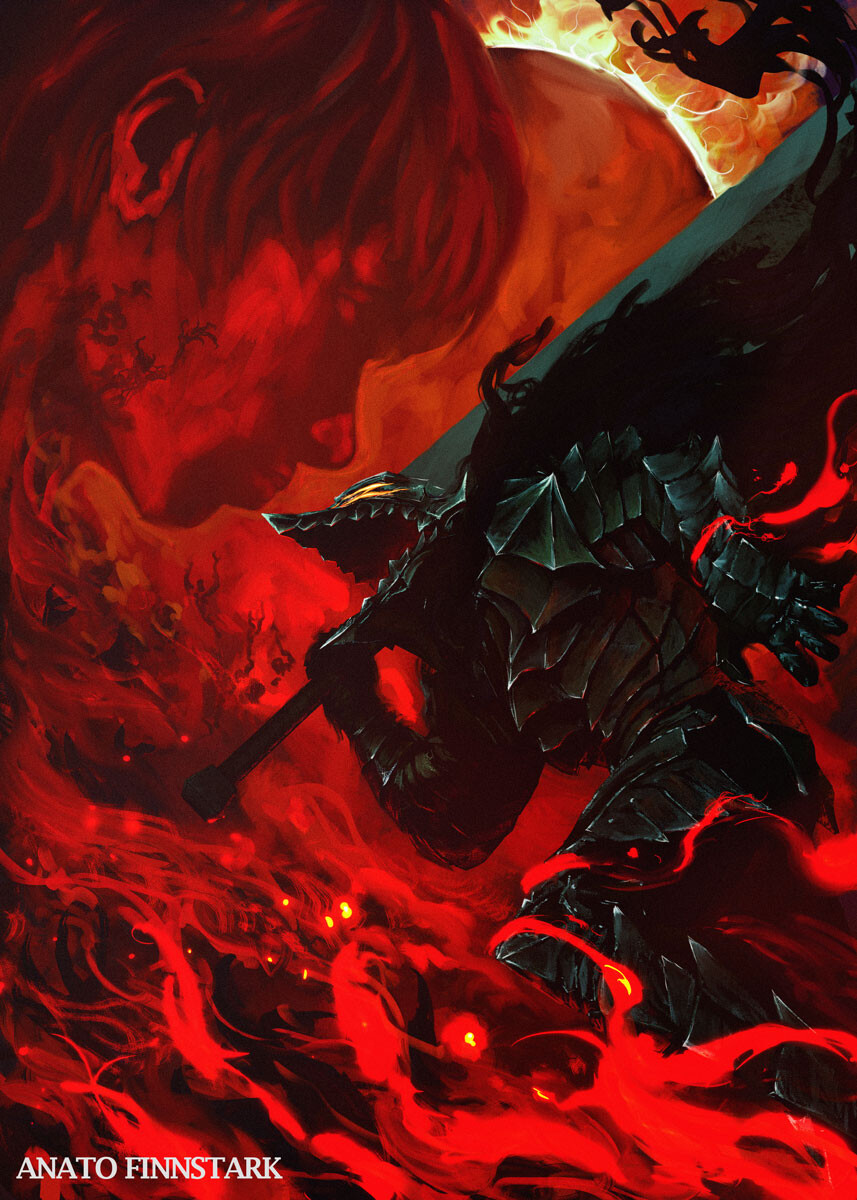
Front Cover: Broken survivors by Anato Finnstark
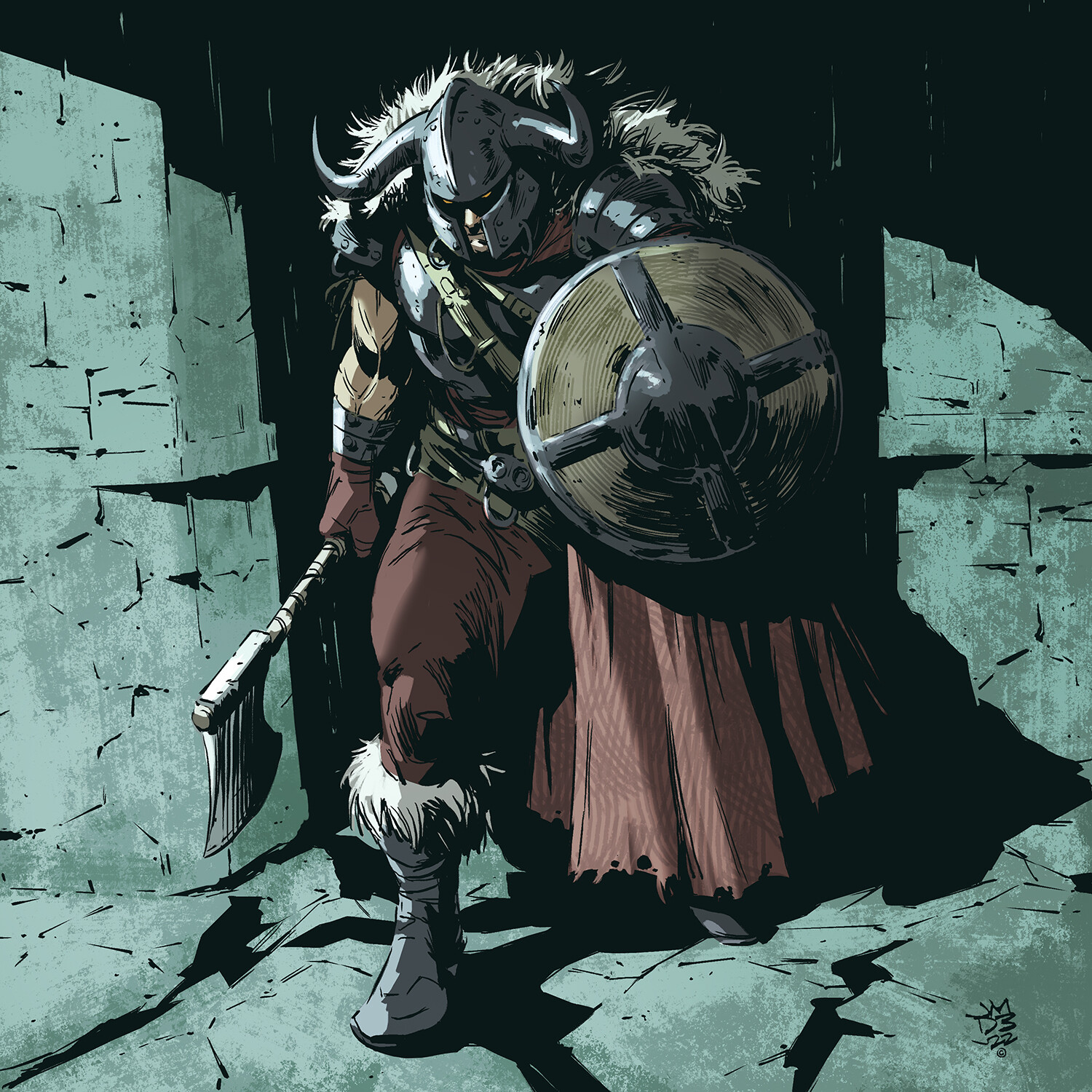
Page 1: Fighter by James Daly III
Page 4: Berserker by Dominik Mayer
Page 5: Space Marine Knight by StoryKillinger
Back Cover: The Black Swordsman by grey_ziere
Inspired by the Crusader class from the D&D 3.5 Edition Tome of Battle
Original class made by Wizards of the Coast