
NOTA DO AUTOR
No começo, eram apenas anotações para uma campanha de D&D que estava narrando. Tudo começou como algumas regras para fazer com que a campanha não fosse apenas ir do ponto A para o ponto B e que coisas pequenas também tivessem alguma relevância.
À medida que mais e mais coisas eram adicionadas para atender às necessidades de minha campanha, percebi que as regras que estava usando eram basicamente um livro, foi nesse ponto em que resolvi tirar a mentalidade de que eram apenas "regras da casa" e começar a ver o material como uma setting. Decidi tentar fazer um livro de verdade, com formatação, arte, etc.
Obviamente eu saiba que meu livro nunca poderia estar à altura de um artigo oficial publicado como o Xanathar's Guide to Everything ou Tasha's Cauldron of Everything, mas não significa que eu não poderia criar algo sério, e aqui está o resultado.
AVISO LEGAL
Não tenho nada a ver com o Wizard's of the Coast. Eu sou apenas uma pessoa entusiasmada por D&D e homebrew. Moderm Myths é gratuito e não há Patreon ou qualquer outro método de pagamento por ele. A arte usada neste livro foi usada sem a permissão explícita de quem a fez e, portanto, o livro não pode ser vendido.
Além disso, este livro contém uma linguagem rude e palavrões, e tem referências a trabalho sexual, uso de drogas e violência, bem como um pouco de sangue na arte. Considere-se avisado.
BALANCEAMENTO
Passei muito tempo considerando o equilíbrio dos recursos apresentados neste livro, de subclasses de talentos. Eu sinto que eles representam opções que são poderosas, desejáveis, mas dentro dos parâmetros do cenário. Você pode ver algo e achar "quebrado" mas os padrões são diferentes do D&D comum.
Dito isso, não sou um QA tester, nem tenho uma equipe especializada para testar este material.
Embora eu não possa prometer que todas as opções neste livro sejam 100% bem equilibradas, este é um documento vivo que será atualizado no futuro. Se você encontrar um recurso deste livro que acaba sendo desequilibrado, sem graça ou excessivamente complicado em jogar, por favor, faça uma postagem construtiva no canal de sugestões em Modern Myths, para que eu possa reavaliar e potencialmente atualizá-lo na próxima versão.
PORQUE ESCREVER EM INGLÊS?
Simples, já que a maioria do material que conheço e utilizo esta em inglês eu teria que traduzir e localizar todo esse material e eu simplesmente não tenho tempo/interesse de ter mais esse trabalho.
TRANSIÇÃO DE SISTEMA
Na mudança do medieval classico para uma ambientação mais moderna, alguns ajustes precisaram ser feitos.
Dinheiro
Carregar sacos pesados cheios de moedas brilhantes de ouro é impraticável. Em vez disso, o padrão mundial para moeda é o new yen.
Você pode esconder seu dinheiro suado em pequenos cartões de crédito, ou mesmo contas bancárias, se você se sentir civilizado. Em termos de Poder de compra de D&D, 1 moeda de cobre é igual a 1 new yen.
| Coin | New Yen | |
|---|---|---|
| Copper (cp) | 1 new yen | |
| Silver (sp) | 10 new yen | |
| Electrum (ep) | 50 new yen | |
| Gold (gp) | 100 new yen | |
| Platinum (pp) | 1,000 new yen |
Ao calcular os custos de suprimentos e mercadorias que não especificados neste livro, como uma pizza, um café com leite, um táxi, aluguel ou outros itens, você pode usar a moeda da vida real como referência. Por exemplo, você poderia medir 1 new yen para ser aproximadamente igual a 1 dólar americano, ou seu equivalente local.
Leve em consideração que o salário minimo é de N¥ 7,25 por hora ou N¥ 1,218 por mês.
Wealth
Cada personagem tem um bônus de Riqueza que reflete seu ou dela poder de compra. O bônus de Riqueza de um personagem serve como base para o teste de Riqueza do personagem, que é usado para obter acesso a bens de maior valor. Também atua como uma espécie de reputação para o jogadoras.
Perdendo Wealth
Sempre que um personagem compra um objeto ou serviço com um comprar DC maior do que seu bônus de Riqueza atual, ou um com uma D de compra de 15 ou superior, a Riqueza bônus do personagem diminui. Quanto o bônus de riqueza é reduzido depende de quão caro é o objeto.
| Purchase DC | Change | |
|---|---|---|
| 15 or higher | 1+ | |
| 1-10 points higher than current wealth bonus | 1 point | |
| 11-15 points higher than current wealth bonus | 1d6 points | |
| 16 or more points higher than current wealth bonus | 2d6 points |
Recuperando Wealth
Cada vez que um personagem ganha um novo nível, faça um teste de Wisdom. A DC é igual ao bônus de Riqueza atual do personagem. Se o personagem é bem-sucedido ou falha, seu bônus de Riqueza atual aumenta em +1. Para cada 5 pontos pelos quais o personagem excede a DC, ele ou ela ganha um adicional de +1 ao seu Bônus de riqueza.
Objetos Restritos
Alguns objetos exigem licenças para possuir ou operar, ou são de uso restrito a organizações ou indivíduos qualificados. No nesses casos, um personagem deve comprar uma licença ou pagar uma taxa para possuir legalmente o objeto. Uma licença ou taxa é um item separado, adquirido além (e geralmente antes) do objeto para qual se aplica. Os quatro níveis de restrição são os seguintes.
Licenciado: o proprietário deve obter uma licença para possuir ou operar o objeto legalmente. Geralmente, a licença não é cara, e sua obtenção tem poucos ou nenhuns requisitos legais adicionais.
Restrito:: Apenas indivíduos especialmente qualificados ou as organizações estão tecnicamente autorizadas a possuir o objeto. No entanto, os verdadeiros obstáculos à propriedade são tempo e dinheiro; qualquer pessoa com paciência suficiente e dinheiro pode, eventualmente, adquirir a licença necessária.
Militar: o objeto é vendido principalmente para policiais legítimos e organizações militares. Uma classificação militar é essencialmente a mesma como restrito (veja acima), exceto que fabricantes e revendedores estão geralmente sob rígido escrutínio do governo e, portanto, especialmente cauteloso ao vender para particulares.
Ilegal: o objeto é ilegal em tudo, exceto em circunstâncias especíicas, altamente regulamentadas.
| Registration Rating | Cost | License or Fee Purchase DC | Black Market Purchase DC | Time Required | |
|---|---|---|---|---|---|
| Licensed | 5,000¥ | 10 | +1 | 1 dia | |
| Restricted | 25,000¥ | 15 | +2 | 2 days | |
| Military | 75,000¥ | 10 | +3 | 3 dias | |
| Illegal | 150,000¥ | 25 | +4 | 4 dias |
Comprando Licenças
A character must meet the DC for a license to be applicable for purchasing one. Some licenses must be found in specific sources and may be much harder to acquire than others. A general license can be purchased during character creation if a player wishes to do so. As a general rule, a character must obtain the appropriate license before buying a restricted object. Legitimate dealers will not sell restricted objects to a character who does not have the necessary license. However, a character may be able to turn to the black market (see below) to obtain restricted objects without a license.
The Black Market
Sometimes a character wants to obtain an object without going through the hassle of getting a license first. Almost anything is available on the black market. Survival checks can be used to locate a black market merchant. The DC is generally based on the location in question: 10 to find a black market merchant in a big city, or 15, 20, or higher in small towns and rural areas.
Objects purchased on the black market are more expensive than those purchased legally. Add the black market purchase DC modifier from Table: Restricted Objects to the object’s purchase DC. Obtaining an object on the black market takes a number of days according to the Time Required column on Table: Restricted Objects. The process can be hurried, but each day cut out of the process (to a minimum of one day) increases the purchase DC by an additional +1.
Objetivos Financeiros
Seguindo as orientações do Dungeon Master’s Guide para distribuir dinheiro levam a personagens com milhares de ouro, e pouco para gastar além de itens mágicos.
A intenção deste livro é fornecer uma ampla gama de modificações, veículos, equipamentos, explosivos, consumíveis, e outros itens que os personagens podem gastar seu suado dinheiro.
Table of Contents
-
4Chapter 1: Lineages
- 4Bio-organic Life-form
- 5Dhampir
- 7Dvati
- 8Fairy
- 10Gnome
- 12Half-Dragon
- 14Half-Dwarf
- 15Half-Elf
- 16Half-Orc
- 17Lesser Celestial
- 18Lesser Fiend
- 19Lesser Giant
- 21Mimiga
- 22Nymph
- 23Raceless
- 24Replicant
- 25Vect
-
26Chapter 2: Classes
- 26Accursed
- 53Artificer
- 76Channeler
- 96Gunslinger
- 106Investigator
- 116Hunter
- 132Lycanthrope
- 144Occultist
- 171Psion
- 184Pugilist
- 196Rogue
- 209Shapeshifter
- 226Warden
-
233Chapter 3: Character Options
- 233Attributes
- 244Backgrounds
- 250Culture
- 261Destiny
Chapter 1
Lineages of Nyos
| A variety of cultures and societies populate the the world of Nyos. In ages past, the elder races spread over Nyos and carved out separate kingdoms for themselves. Then the humans came, and all but annihilated the other races in their relentless drive to multiply and expand.
Today, humans are still the most numerous and powerful race in Nyos. The elder races survive either in isolated remnants of their own domains, or incorporated into larger human kingdoms. But it is an age of crisis, and some see the opportunity to claw back what their ancestors lost. Though they are reduced in number, members of the elder races are a common sight anywhere in Nyos. Perhaps because they so often live on the fringes of human civilization, they also make up a disproportionate number of its adventurers. |
Bio-organic Life-form
"When the mad doctor told me of his creation and his plans to put a human mind in it I thought he had finally lost that small bit of sanity he had left. I attempted to make the call to the authorities and one moment later.... I was looking through a window... NO it was no window i was in the doctors lab staring at him from one of his capsules. I felt odd, but good. I looked at my hands and saw not my hands but this mad mans creation. I learned he had put me inside of his creation in an attempt to make me the ultimate life-form. I am a monster, a hideous beast. I am the ultimate killer."
A Bio-Organic Life-Form is a creature who at some point may have been a person or simply made up of organic parts and modified to be made stronger.
Not so Different
A Bio-Organic Life-Form can take on many different shapes allowing it to be made with several different species or with only one in mind. All have the same basic features.
Nothing is truly known about the Bio-Organic Life-Forms other than they are created not born, whether by a desire for power, eternal youth, or simply for science. Many Bio-Organic Life-Forms are indistinguishable from most of the races and can usually hide among the pubic with ease.
Those who are considered abominations are outcasts in most of society though there are very few places that they may find more welcoming than others. They tend to stay away from the public eye but some have been known to start small encampments where they live peacefully.
Driving Question
Bio-Organic Life-Forms or Bio-Forms have unique personalities and experience anger, pain, fear, and hatred, just like their human creators.
But Bio-forms naturally seem reserved, stoic, and pensive, hiding an array of emotions behind their minorly inexpressive faces.
Their faces were not designed to fully display facial expressions, merely to replicate the functions, so at times they appear to be distant to the conversation. Despite their lack of complex facial expressions, they're not completely without them.
Some Bio-Forms can be incredibly naive and lack a sense of introspection. However, many others are the opposite and question their existence, they wonder if, as "constructs", they have souls, and ask what becomes of them in the afterlife. Some Bio-Forms create complex philosophies about what they perceive and learn. Though they can show loyalty to religions and organizations, typically they become loyal to a small group of comrades.
Bio-Forms built for war understand duty, the chain of command, and conflict. But aside from this, many Bio-Forms often have little life experience as they have spent most of their time working towards one specific duty. If there is one interest all Bio-Forms share it is their love of working and the satisfaction of a job well done. Many create endless lists of goals and chores to feed that feeling. They take pride in their work and can work incredibly hard, both traits that make them dislike idleness and failure.
Bio-Forms can excel at most tasks, having a multi-minded efficiency, especially in intelligence related roles.
Bio-Organic Life-Forms Names
Most Bio-Forms are given new names when created, some however choose to keep the name they were given at birth instead of upon creation.
Bio-Organic Life-Forms Traits
Bio-Organic Life-Forms have the following traits in common:
Size. Your size is Medium.
Speed. Your base speed is 40 feet.
Life Absorption. As an action you can make a grapple check against the target, if you successfully grapple them, or you already have the target grappled, they must make a Constitution saving throw (DC 8 + your proficiency + Constitution modifier). On a failure, the target takes 2d6 necrotic damage and you gain the same amount as temporary HP. The damage increases to 3d6 at 6th level, 4d6 at 11th level, and 5d6 at 16th level.
You can use this trait once, and regain the ability to do so when you finish a long rest. This trait does not work on non-living creatures.
Genetic Appendages. You gain the Jumping and Water Speed Attributes. In addition, you gain the Wall-Crawling Special Movement.
Finally, you can deform your hands to the point where you now have sharp shards of bone growing from your knuckles, which you can use to make unarmed strikes. If you hit with your claws, you deal 2d4 slashing damage.
Dhampir
Tall and slender and with well-defined musculature, dhampirs look like statuesque humans of unearthly beauty. Their hair, eye, and skin colors resemble unnerving versions of their mothers; many possess a ghastly pallor.
The half-living children of vampires and human mothers, dhampirs are born into a world that rejects them. Stigma and suspicion follow them regardless of whether the truth of a dhampir child’s nature is known.
Society
Dhampirs have no culture of their own, nor do they have any known lands or even communities. Often born in secret and abandoned at orphanages or left to die on the outskirts of town, they tend to live solitary lives as exiles and outcasts. Individuals acquire the cultural beliefs and teachings of the regions in which they grew up, and adopt additional philosophies over the course of their complex lives.


This ability to adapt to a verity of circumstances provides dhampirs with a social camouflage that hides them from both predators and prey. In rare instances, dhampirs might gather to form small groups or cabals dedicated to resolving their joint issues. Even so, the philosophies of such groups reflect the interests of the individuals involved, not any common dhampir culture.
Relations
As dhampirs are scions of evil, few races view them favorably. They share an affinity for those half-breeds whose sinister ancestry also sets them apart from human society. Humans view them with a combination of fear and pity, though such feelings often devolve into hatred and violence.
Other humanoid races, such as fairies, descendents, and gnomes, simply shun them. Similarly, dhampirs bear a deep-seeded loathing for living creatures, their hatred planted by jealousy and fed by frustration.
Alignment & Religions
Most dhampirs succumb to the evil within their blood. They are unnatural creatures, and the foul influence of their undead heritage makes an evil outlook difficult to overcome. Those who struggle against their wicked natures rarely progress beyond a neutral outlook.
Dhampir Names
Lacking a culture and unified traditions, dhampirs share humans’ predilection for a diversity of names, and most keep their human birth names. Many dhampirs take their mother’s surname, while others take the surname of the towns or regions in which they were born, or use a surname derived from a significant event.
Dhampir Traits
Dhampir have the following traits in common:
Size. Dhampir have the same range of height and weight as humans. Your size is Medium.
Speed. Your base speed is 30 feet.
Low-light Vision. For 30 feet around you, you can see in dim light as if it were bright light. You can not see in darkness.
Vampiric Resistance. You have resistance to necrotic damage.
Subrace. This race has multiple subraces, as listed below.
House Ashur
Predatory Charm. As an action, you can magically beguile the mind of a creature that you can see within 30 feet. For 1 hour, you have advantage on Charisma checks made against the target. If you or any of your allies attack or damage the target, this effect ends. When the effect ends, the target feels repulsed by you and becomes hostile toward you until the next dawn, during which time it becomes immune to this effect.
A hostile creature won't necessarily attack outright, but it won't deal with you in any way and might actively try to hinder you. A creature immune to being charmed is immune to your predatory charm.
Spell-Like Ability. You know the Friends cantrip. Once you reach 3rd level, you can cast the Undetectable Charm spell once with this trait, and you regain the ability to do so when you finish a short rest. Once you reach 5th level, you can cast the Fast Friends spell once with this trait, and you regain the ability to do so when you finish a long rest. Charisma is your spellcasting ability for these spells.
House Senet
Bloodthirst. You can drain blood and life energy from a willing creature, or one that is incapacitated, restrained, or grappled by you.
As an action, make a melee attack against the target. If you hit, you deal 1 piercing damage and 2d6 necrotic damage. The target's hit point maximum is reduced by an amount equal to the necrotic damage taken, and you regain hit points equal to that amount. The reduction lasts until the target finishes a long rest. The target dies if this effect reduces its hit point maximum to 0.
The necrotic damage increases to 3d6 at 5th level, 4d6 at 11th level, and 5d6 17th level.


For every day that you do not successfully deal 1 or more points of necrotic damage with this attack, you suffer one level of exhaustion, to a maximum of 4 levels from this effect. Levels of exhaustion gained this way cannot be removed by rest or magic; they can only be removed by dealing necrotic damage with this attack. Doing so instantly removes one level of exhaustion gained from this trait for every point of necrotic damage it deals (but not levels of exhaustion gained from other effects).
Spell-Like Ability. You know the Bloodlink cantrip. Once you reach 3rd level, you can cast the Sense Lifeblood spell once with this trait, and you regain the ability to do so when you finish a short rest. Once you reach 5th level, you can cast the Tides of Blood spell once with this trait, and you regain the ability to do so when you finish a long rest. Constitution is your spellcasting ability for these spells.
House Thamyre
Misty Escape. When you drop to 0 hit points outside of your coffinlike structure, you transform into a cloud of mist instead of falling unconscious, provided you are not in an area of sunlight, running water or has being struck with a silver weapon. If you can't transform, you are destroyed.
While in mist form, you can't take any actions, speak, or manipulate objects. You are weightless, have a flying speed of 20 feet, can hover, and can enter a hostile creature's space and stop there. In addition, if air can pass through a space, the mist can do so without squeezing, and it can't pass through water. It has advantage on Strength, Dexterity, and Constitution saving throws, and is immune to all nonmagical damage, except the damage it takes from sunlight.
While you have 0 hit points in mist form, you can't revert to your vampire form. If you do not reach your coffinlike structure within 2 hours, you are destroyed.
Once in you coffinlike structure, you revert to your vampire form. You are then paralyzed until you regain at least 1 hit point. After spending 1 hour in your coffinlike structure with 0 hit points, you regain 1 hit point.
Dvati
"It was like looking at a reflection in a mirror, except both of them could swing a sword at me. Before I knew it, I was outflanked and trying to duel the same person twice. I was on my back foot, and then I was just on my back. When they sheathed their identical rapiers and helped me up, I couldn't even tell which one I had offended."
A perfect pair, entwined for life, dvati are at once two beings and a single creature, a single soul living in two separate bodies.
Identical Twins
Twins being born is by no means an uncommon occurrence, but sometimes they may have more in common than just appearances. Dvati are born as identical twins throughout the planes with a single identical soul shared between them. The twins act like a single paired organism, with two bodies and two minds acting with a single purpose. Ancient folklore claims that dvati are born with souls too large for one body, and therefore must house them in two.
Dvati twins are skilled combatants, capable of strategizing in unison, and versatile spellcasters, able to conduct spells through one another. The benefits of having two bodies, however, is certainly balanced by its risks. Dvati twins cannot exist separately, and if one is killed or injured, it endangers the lives of both.
Birds of a Feather
Dvati twins always travel together and tend to seek out other pairs of twins. When enough twins congregate, dvati are known to form towns and villages of their own. These are tightly-knit communities, for close cooperation is second nature to dvati, who view their settlements as a bastion of unity in an otherwise disconnected world.
Cooperative Spirit
Working in perfect synchronicity is a dvati's usual state. As such, these twins find the relative discord of other creatures to be confusing, or at worst, distressing. They often spin parables about ants, wolves, and other cooperative creatures to illustrate how people should behave in harmony to better themselves. Such stories usually fall on deaf ears, for most creatures cannot relate to the close association that dvati
share, but neither can dvati understand how it is to be alone.
Dvati Names
Dvati twins are born into normal human families, and are therefore named as other humans. However, if a diviner foretells the birth of dvati twins, it is often customary to give them similar, rhyming names, so that the twins can feel more whole.
Male Dvati Twin Names: Amrod and Amras, Corin and Corvin, Giles and Files, Jovan and Joran, Landon and London, Zane and Zost.
Female Dvati Twin Names: Bree and Ski, Cilia and Hilia, Dora and Kora, Kara and Mera, Mello and Yellow, Tellia and Talia.


Dvati Traits
Dvati have the following traits in common:
Ability Score Increase. Two different ability score of your choice increase by 1 and you gain proficiency in one skill of your choice.
Size. Dvati twins are always exactly the same height and build. Your twins are both Medium size.
Speed. Your base speed for a pair of dvati is 45 feet, which is divided up among the twins each turn as you choose.
Twins. A 'single' dvati is a pair of creatures that share a single soul. They are inextricably linked, and can no more exist separately than a human can exist without his heart. In spite of having two bodies, dvati twins perform as a single character, with the following differences:
-
Actions. Dvati twins have a single action, bonus action, and reaction, between them, each of which can be taken only once by one of the twins on your turn. If you take the Dash, Disengage, Dodge, Help, Hide, Ready, or Search actions, both twins perform and gain its benefits.
-
Attacks. If you take the attack Action to attack with one twin, the other twin can attack as a bonus action. You don’t add your ability modifier to the damage of the bonus attack, unless that modifier is negative.
If you're able to make multiple attacks, you can divide these attacks between the twins. -
Hit Points. Dvati twins have separate hit points, which are divided between them. At 1st level, each twin has the normal hit points of the class. At higher levels, each dvati twin's hit point maximum increases by your Constitution modifier + half the class's Hit Die.
Your Hit Dice are also divided up amongst the dvati twins. You choose how many of these dice each twin receives when you take a long rest. -
Spellcasting. A pair of dvati twins can only concentrate on one spell at a time, however, only one of the twins needs to concentrate on a spell to maintain it. When you cast a spell which requires concentration, you choose which twin is concentrating on it.
When casting a spell, either dvati can provide the spell components, and the spell can originate from the twin of your choice. -
Magical Effects. If a spell or magical ability affects one dvati twin, it affects them both, unless that spell or ability affects hit points or if the two twins are further than 100 feet apart, in which case, it affects each twin separately.
-
Conditions. A condition, such as being poisoned or grappled, affects only one twin, even if imposed by a spell.
-
Death. When a dvati twin is reduced to 0 hit points and begins to make death saving throws, its twin becomes incapacitated, and able to move at only half speed. If a dvati twin dies, the other twin quickly begins to deteriorate and perishes 24 hours later if his partner does not return to life.
Empathic Link. As long as both twins are on the same plane, they can empathetically sense the other's emotional state. Each twin knows when the other takes damage.
Additionally, though communication between the twins is not telepathic, it is highly nonverbal and intuitive. Dvati twins can communicate with half the words and twice the speed of other creatures, even in combat.
Transference. If one of your dvati twins is affected by a curse, disease, or is blinded, deafened, paralyzed, or poisoned, and the other is not, you can use your action to transfer that condition to the other twin.
Fairy
"There was another light in the room now, a thousand times brighter than the night-lights, and in the time we have taken to say this, it had been in all the drawers in the nursery, looking for Peter's shadow, rummaged the wardrobe and turned every pocket inside out. It was not really a light; it made this light by flashing about so quickly, but when it came to rest for a second you saw it was a fairy, no longer than your hand, but still growing. It was a girl called Tinker Bell exquisitely gowned in a skeleton leaf..."
In the secluded glades and shrouded hollows of the wild world, if you search hard enough, you can find the races of tiny flying fey collectively known as fairies.
The term fairy refers to a few races of tiny fey with wings, such as pixies and sprites. Often ranked among the weakest of fey and rarely involved in great conflicts of history, these tiny people live their exceptionally long lives in the quiet of forest groves and other wild places. They are all imbued with an innate magic that is sought after by monsters and mortal mages alike, but most use this magic for little more than tricks and games when it isn't needed to keep them hidden.
Fairies generally do what they can to avoid being discovered, so it is quite rare for them to want to adventure in the dangerous outside world. Some of them inevitably have wanderlust stronger than their caution, and find a reason to leave their community.
Others are cast out or even exiled, perhaps for a crime, or perhaps simply for their unusual and unfairy-like similarity to humanoids. Whatever their reason for traveling, the fairy adventurer is an incredibly rare sight. Adventurers of all races swap hopeful tales of what questing with such strange and fantastic companions might be like.
In some worlds, the wee folk have to fend off not only those that seek to harvest their innate magic, but even the natural predators who will hunt anything fairy-sized. One common example is the long-time nemesis of all wee folk and little animals—the cat. In other worlds, the magic of the fairies wards off such mundane threats, but fairies still face predation at the paws of the cunning magical cats that lurk in the Feywild.
Wee Winged Fey
Fairies resemble very small elves, ranging from 5 to 10 inches tan with wings on their backs like the wings of butterflies, moths, or dragonflies. Like elves, they are slender and lithe, and they even have the same pointed ears. With their slight frame and tiny size, they usually weigh no more than 2 or 3 pounds. Fairies have skin colors mostly similar to elves, encompassing the range of human tones along with more amber, bronze, green, or blue shades. Their hair sometimes passes for human colorations, but can often be bright blue, green, or any other color. Some clans of pixies and scamps have even stranger colorations more befitting a fey.
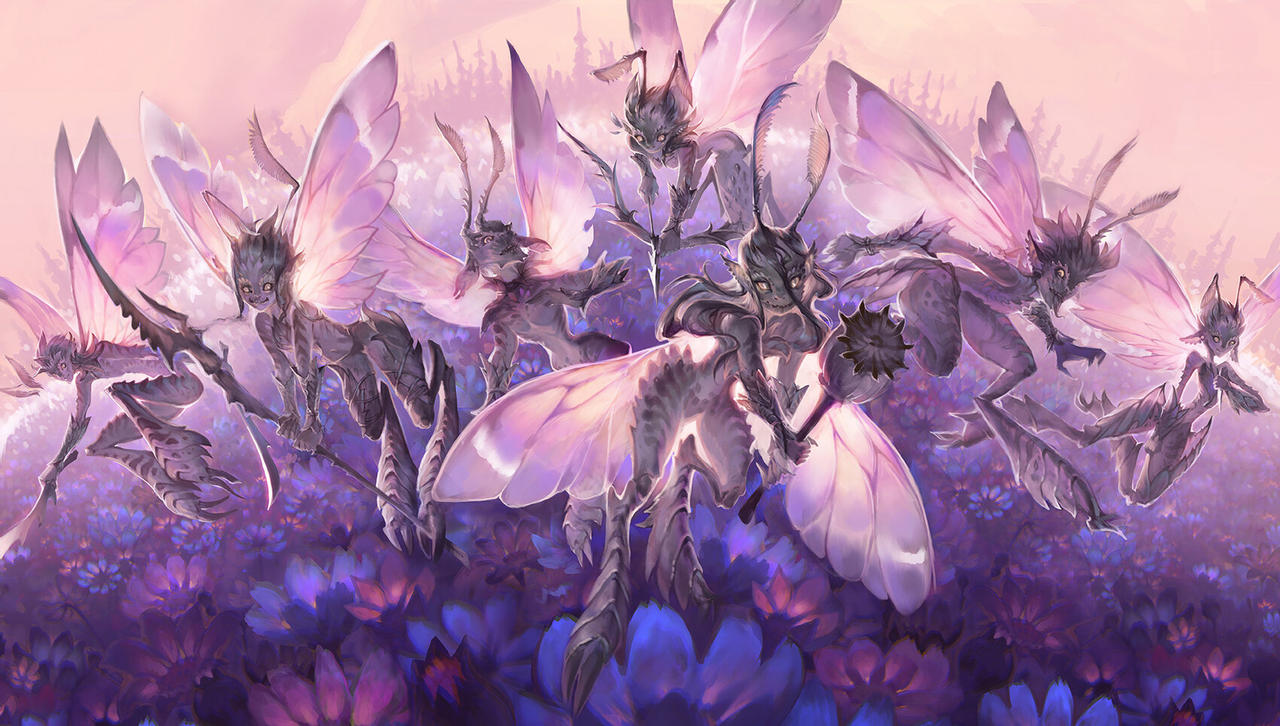

Male Names: Beetle, Blade, CymbaL Cinnamon, Cobweb, Darter, Elvinn, Fiddle, Finn, Garlic, Gelsey, Hornet,Jay, King, Lark, Locust, Marin, Oberon, Orin, Pan, Puck, Regin, Robin, Timpani, WeeviL Wren, Zephyr
Female Names: Amber, Aurora, Ariel, Bell, Dove, Dawn, Faye, Ginger, Harp, Holly, Isla, Jasmine, KestreL Lily, Lorelei, MabeL Marigold, Maven, Melody, Nutmeg, Odette, Rosalia, Shea, Tiana, Titannia, Viola, Wanda
Gender-Neutral Names: Basil, Cilantro, Coriander, Dancer, Gossamer, Lute, Mantis, Moth, Mustardseed, Peaseblossom, Pepper, Rivergleam, Thorn, Tootie
Fairy Traits
Fairy have the following traits in common:
Size. Fairies are a diminutive race. They range in height from 1 foot to 2 feet tall. Your size is Tiny.
Speed. Your base speed is 10 feet.
Fairy Flight. You gain the Flight Attribute, to use this speed, you can't be wearing medium or heavy armor.
Fey Ancestry. You have two creature types: humanoid and fey. You can be affected by a spell or ability if it works on either of your creature types.
Subrace. This race has multiple subraces, as listed below.
Butterfly
Spell-Like Ability. You know the Wind Slash cantrip. Once you reach 3rd level, you can cast the Levitate spell once with this trait, and you regain the ability to do so when you finish a short rest. Once you reach 5th level, you can cast the Fly spell once with this trait, and you regain the ability to do so when you finish a long rest. Your spellcasting ability for these spells is your choice of Intelligence, Wisdom, or Charisma.
Dragonfly
Agile Flight. You ignore the armor restriction on your Flight Attribute. In addition, your Flight Attribute is now at rank 2.
Tiny Fury. The damage dice for attacks you make with tiny weapons increase by one size.
Moth
Low-light Vision. For 30 feet around you, you can see in dim light as if it were bright light. You can not see in darkness.
Hidden Step. As a bonus action, you can magically turn invisible until the start of your next turn or until you attack, make a damage roll, or force someone to make a saving throw.
You can use this trait once, and you regain the ability to do so when you finish a short rest.
Beetle
Beetle's Carapace. While you are not wearing any armor, your Armor Class equals 13 + your Constitution modifier. You can use a Shield and still gain this benefit.
Powerful Build. You count as one size larger when determining your carrying capacity and the weight you can push, drag, or lift.
Rules for Tiny Characters
Races as presented in the Player's Handbook and similar sources have been sized Medium or Small.
Characters of Tiny size have additional rules, which are presented here:
-
Armor. Tiny characters add their proficiency bonus to their Armor Class.
-
Proficiency. You are proficient in Dexterity (Stealth) checks.
-
Strength Check Dice. Disadvantage on Strength-related checks.
-
Strength Damage Inflicted Modifier. -4 Strength-related damage modifier.
-
Strength Damage Received Modifier. +4 vulnerability modifier to Standard type damage.
-
Weapons. You have disadvantage on attack rolls with normal-sized weapons, unless they have the light property. These weapons gain the two-handed property and lose the light property. Per the Heavy weapon property giving Small creatures disadvantage on attack rolls with heavy weapons. Normal-sized weapons, without the light property, can be considered as heavy weapons for a Tiny creature. Light weapons are reasonably wieldable, but due to their size and bulk require two hands to use effectively.
-
Heavy Weapons Restriction. You are unable to use normal-sized weapons with the heavy property. Per the Heavy weapon property giving Small creatures disadvantage on attack rolls with heavy weapons. It is reasonable that a Tiny creature would be unable to wield a heavy normal-sized weapon.
Gnome
A constant hum of busy activity pervades the warrens and neighborhoods where gnomes form their close-knit communities. Louder sounds punctuate the hum: a crunch of grinding gears here, a minor explosion there, a yelp of surprise or triumph, and especially bursts of laughter. Gnomes take delight in life, enjoying every moment of invention, exploration, investigation, creation, and play.
Vibrant Expression
A gnome's energy and enthusiasm for living shines through every inch his or her tiny body. Gnomes average slightly over 3 feet tall and weigh 40 to 45 pounds. Their tan or brown faces are usually adorned with broad smiles (beneath their prodigious noses), and their bright eyes shine with excitement. Their fair hair has a tendency to stick out in every direction, as if expressing the gnome's insatiable interest in everything around.
A gnome's personality is writ large in his or her appearance. A male gnome's beard, in contrast to his wild hair, is kept carefully trimmed but often styled into curious forks or neat points. A gnome's clothing, though usually made in modest earth tones, is elaborately decorated with embroidery, embossing, or gleaming jewels.
Delighted Dedication
As far as gnomes are concerned, being alive is a wonderful thing, and they squeeze every ounce of enjoyment out of their three to five centuries of life. Humans might wonder about getting bored over the course of such a long life, and elves take plenty of time to savor the beauties of the world in their long years, but gnomes seem to worry that even with all that time, they can't get in enough of the things they want to do and see.
Gnomes speak as if they can't get the thoughts out of their heads fast enough. Even as they offer ideas and opinions on a range of subjects, they manage to listen carefully to others, adding the appropriate exclamations of surprise and appreciation along the way.
Though gnomes love jokes of all kinds, particularly puns and pranks, they're just as dedicated to the more serious tasks they undertake. Many gnomes are skilled engineers, alchemists, tinkerers, and inventors. They're willing to make mistakes and laugh at themselves in the process of perfecting what they do, taking bold (sometimes foolhardy) risks and dreaming large.
Bright Burrows
Gnomes makes their homes in hilly, wooded lands. They live underground but get more fresh air than dwarves do, enjoying the natural, living world on the surface where ever they can. Their homes are well hidden by both clever construction and simple illusions. Welcome visitors are quickly ushered into the bright, warm burrows. Those who are not welcome are unlikely to find the burrows in the first place.
Gnomes who settle in human lands are commonly gemcutters, engineers, sages, or tinkerers. Some human families retained gnome tutors, ensuring that their pupils enjoy a mix of serious learning and delighted enjoyment. A gnome might tutor several generations of a single human family over the course of his or her long life.
Gnome Names
Gnomes love names, and most have half a dozen or so. A gnome's mother, father, clan elder, aunts, and uncles each give the gnome a name, and various nicknames from just about everyone else might or might not stick over time.
Gnome names are typically variants on the names of ancestors or distant relatives, though some are truly new inventions. When dealing with humans and others who are "Stuffy" about names, a gnome learns to use no more than three names; A personal name, a clan name, and a nickname, choosing the one in each category that's the most fun to say.
Male Names: Alston, Alvyn, Boddynock, Brocc, Ettrgell, Dimble, Eldon, Erky, Fonkin, Frug, Gerbo, Gimble, Glim, Jebeddo, Kellen, Namfoodle. Orryn, Roondar, Seebo, Warryn, Wrenn, Zook
Female Names: Bimpnottin, Breena, Caramip, Carlin, Donella, Duvamil, Ella, Ellyjobell, Ellywick, Lilli, Loopmottin, Lorilla, Mardnab, Nissa, Nyx, Oda, Orla, Roywyn, Shamil, Tana, Waywocket, Zanna
Clan Names: Beren, Daergel, Folkor, Garrick, Nackle, Murnig, Ningcl, Raulnor, Seheppen, Timbers, Turen
Nicknames: Aleslosh, Aslthearth, Badger, Cloak, Doublelock, Filchbatter, Fnipper, Ku


Gnome Traits
Gnome have the following traits in common:
Size. Gnomes are between 3 and 4 feet tall and average about 40 pounds. Your size is Small.
Speed. Your base speed is 25 feet.
Low-light Vision. For 30 feet around you, you can see in dim light as if it were bright light. You can not see in darkness.
Gnome Cunning. You have advantage on all Intelligence, Wisdom, and Charisma saving throws against technological devices.
Reverse Engineering. Whenever you make an Intelligence (Technology) check to identify mechanical devices, you can add twice your proficiency bonus, instead of any proficiency bonus you normally apply.
Engineer. You gain proficiency with circuitry kits. Using this kit, you can spend 1 hour and materials to construct an improvised device. You can build a flashlight, a comm set, or an igniter. The device ceases to function after 24 hours (unless you spend 1 hour repairing it to keep the device functioning), or when you use your action to dismantle it; at that time, you can reclaim the materials used to create it. You can have one improvised device at a time.
Subrace. This race has multiple subraces, as listed below.
Cosmic
Astronomical Knowledge. Whenever you make a check pertaining to the stars or other cosmic bodies, you can add twice your proficiency bonus, instead of any proficiency bonus you normally apply.
Spell-Like Ability. You know the Guidance cantrip. Once you reach 3rd level, you can cast the Augury spell once with this trait, and you regain the ability to do so when you finish a short rest. Once you reach 5th level, you can cast the Guiding Light spell once with this trait, and you regain the ability to do so when you finish a long rest. Your spellcasting ability for these spells is your choice of Intelligence or Wisdom.
You can only cast these spells outside and at night, with a clear view of the sky.
Svirfneblin
Darkvision. For 30 feet around you, you can see in dim light as if it were bright light and in darkness as if it were dim light. You can't dicern color in darkness, only shades of grey. Beyond 30 feet, you cannot see in darkness.
Shadow Camouflage. You have advantage on Dexterity (Stealth) checks to hide in dim light or darkness.
Leprechaun
Lucky. When you roll a 1 on an attack roll, ability check, or saving throw, you can reroll the die and must use the new roll.
Guile. You have proficiency in the Deception and Insight skills.
Half-Dragon
"Half dragons? Yeah, total freaks, those guys. Imagine dragonborn but then more human. I guess some people will sleep around with just about anyone these days, even dragons. Still, I had a few in my party, and I can't argue with their results."
Many dragons are not only fearsome beasts, but renowned masters of magic as well. As such, it is not uncommon for one to change shape and walk among the masses, or even take a mortal lover. The children of such unions are known as half dragons. Not quite as monstrous looking as the dragonborn, but still very much recognizable due to its draconic traits
Proud Dragon Heritage
Half dragons look very similar to their mortal parent, except for the horns and partial scales that cover their bodies, as well as their draconic legs and long tails. However, half dragons are more known for their dangerous elemental breaths, as well as the gift of transformation. While only a few half dragons eventually ascend to true dragonhood, some have been gifted with a "lesser" form that allows them a burst of power as well as the gift of flight for a short period of time.
Half dragons' color patterns are similar to their draconic parent, and in the case of two half-dragons having children, the child is often born in the color scheme of either parent, though occasionally they instead look like one of the other draconic ancestors of the parents, as half dragons are strongly drawn to one another and known to quickly make families and communities.
They are tall and strongly built, with males often standing close to six and a half feet and being taller and heavier than females. They also gain an advantage based on which draconic heritage is more dominant for them.
Challenging Upbringing
Half dragons share much of their draconic parent's strength, but they are also vulnerable in the early stages of their long lives. The lucky ones are raised by two half dragon parents, who raise them into protected communities.
Others are abandoned by the draconic parent or both parents and forced to survive alone or hope they get adopted by other half dragons or by dragonborn. Though those with a metallic dragon parent are, more often than not, properly raised and cared for.
Those adopted by dragonborn are brought in as part of the clan and are raised to show strong loyalty to their clan. A continual drive for self-improvement reflects the selfsufficiency of the dragonborn race as a whole, which is then reflected upon the half dragon. These half dragons value skill and excellence in all endeavors. They hate to fail, and they push themselves to extreme efforts before they give up on something.
These dragonborn-raised half dragons hold mastery of a particular skill as a lifetime goal, alongside the desire to ascend to dragonhood. Members of other races who share the same commitment find it easy to earn their respect. Eventually, all half dragons have a universal drive to become stronger. By gaining strength in a multitude of ways, they find that they become more in touch with their draconic heritage, which comes forward in the forms of mastering their elemental breath, or even transforming into a dragon outright. This form is often not as strong as that of true dragons, except for those who are truly devoted and powerful.
Such half dragons have "ascended to dragonhood," and become true dragons with all their terrifying might. This true dragon form, however, is not easy to attain and requires great devotion and resolve. But those who succeed are held in very high regard by half dragon society.
A Growing People
In the most recent years, half dragons have been forming communities at an increasing rate. This has created many half dragon families, and in turn, many adventurers as well due to their drive to ascend to dragonhood. Usually, however, many half dragons start a family and have children, with the mother being encouraged to take care of the children while the father goes out and provides for his family. Should the mother choose to become an adventurer, then the grandparents or one of the extended family will often take care of the children. While they are few in number, half dragons are rapidly increasing their numbers due to a high fertility rate and big families. These communities are protected by their elders, some of whom have already ascended to dragonhood and make for formidable opponents.
Half-Dragon Names
Half dragon names are usually based on the language of its mortal parent, as Draconic names are often much harder to pronounce. Some half dragons who are adopted within dragonborn clans will instead be given a dragonborn name:
Male Names: Arjhan, Balasar, Bharash, Donaar, Ghesh, Heskan, Kriv, Medrash, Mehen, Nadarr, Pandjed, Patrin, Rhogar, Shamash, Shedinn, Tarhun, Torinn
Female Names: Akra, Biri, Daar, Farideh, Harann, Havilar, Jheri, Kava, Korinn, Mishann, Nala, Perra, Raiann, Sora, Surina, Thava, Uadjit
Childhood Names: Climber, Earbender, Leaper, Pious, Shieldbiter, Zealous
Clan Names: Clethtinthiallor, Daardendrian, Delmirev, Drachedandion, Fenkenkabradon, Kepeshkmolik, Kerrhylon, Kimbatuul, Linxakasendalor, Myastan, Nemmonis, Norixius, Ophinshtalajiir, Prexijandilin, Shestendeliath, Turnuroth, Verthisathurgiesh, Yarjerit
Half-Dragon Traits
Half-Dragon have the following traits in common:
Size. Half-dragons are often taller and heavier than humans, standing well over 6 feet tall, with males being noticeably bigger than females. Your size is Medium.
Speed. Your base speed is 30 feet.
Breath Weapon. You can use your action to exhale destructive energy. Your draconic ancestry determines the size, shape, and damage type of the exhalation.
When you use your breath weapon, each creature in the area of exhalation must make a saving throw, the type of which is determined by your draconic ancestry. The DC for this saving throw equals 8 + your Constitution modifier + your proficiency bonus.


A creature takes 2d6 damage on a failed save, and half as much damage on a successful one. The damage increases by an additional 1d6 at 5th level, 8th level, 11th level, and 17th level.
After you use your breath weapon, you can't use it again until it's recharged. At the start of each of your turns, provided you already used your breath weapon, you can roll a d6. On a 6, you regain the use of your breath weapon. Otherwise, your breath weapon recharges 1 minute after you used it.
Subrace. This race has multiple subraces, as listed below.
Black
Draconic Ancestry. Your breath weapon deals acid damage in a line 30 feet long and 5 feet wide. Your breath weapon imposes a Dexterity saving throw. You add your Constitution modifier to the damage of your breath weapon. You have resistance to acid damage.
Darkvision. For 30 feet around you, you can see in dim light as if it were bright light and in darkness as if it were dim light. You can't dicern color in darkness, only shades of grey. Beyond 30 feet, you cannot see in darkness.
Bronze
Draconic Ancestry. Your breath weapon deals lightning damage in a line 30 feet long and 5 feet wide. Your breath weapon imposes a Dexterity saving throw. You have resistance to lightning damage.
Dragon of the Coast. You gain the Water Speed Attribute. In addition, you can breathe air and water.
Finally, when using your breath weapon, you can instead choose to use repulsion gas with the same range and DC. This gas doesn't deal damage but instead imposes a Strength saving throw. Those who fail it are pushed back 15 feet from you. This special DC increases by 1 for each additional 1d6 damage on your breath weapon.
Gold
Draconic Ancestry. Your breath weapon deals fire damage in a 15-foot cone. Your breath weapon imposes a Dexterity saving throw. You have resistance to fire damage.
Reserved Companion. You gain proficiency in the Insight skill. Whenever you would deal fire damage to fiends and undead creatures, you deal radiant damage instead.
Green
Draconic Ancestry. Your breath weapon deals poison damage in a 15-foot cone. Your breath weapon imposes a Constitution saving throw. You have resistance to poison damage and advantage on saving throws against being poisoned.
Spell-Like Ability. You know the Minor Illusion cantrip. Once you reach 3rd level, you can cast the Blur spell once with this trait, and you regain the ability to do so when you finish a short rest. Once you reach 5th level, you can cast the Sphere of Deceit spell once with this trait, and you regain the ability to do so when you finish a long rest. Charisma is your spellcasting ability for these spells.
In addition, you gain proficiency in the Deception skill.
White
Draconic Ancestry. Your breath weapon deals cold damage in a 15-foot cone. Your breath weapon imposes a Constitution saving throw. You have resistance to cold damage.
Skilled Hunter. You gain proficiency in the Survival skill. As a bonus action, you can move up to your speed toward an enemy of your choice that you can see or hear. You must end this move closer to the enemy than you started.
Half-Darf
Also known as silver dwarves as they're not fully dwarven, they can be insulted by being called a tarnished dwarf. Muchlike the other half-blooded counterparts, the half-dwarves walk in two worlds. Unlike the half-elves, the half-dwarves may belong to either one, and show the best qualities of each parent: human curiosity, and ambition for greatness enhanced by the ability to create and sturdiness of the dwarves.
Some half-dwarves live among humans, set apart by their gruffness and being stout, outliving their friends and loved ones. Others live with the dwarves, growing restless with time and doing their tasks, day in and day out. Many half-dwarves may explore outside of these civilizations, exploring the unkept wilderness and hoping to start a kingdom of their own.
Short and Stout
Bold and hardy, half-dwarves are known as skilled workers of stone and metal. Their skin ranges from deep brown to a paler hue tinged with red, but the most common shades are light brown or deep tan, like certain tones of earth.
Their hair, worn long but in simple styles, is usually black, gray, or brown, though paler half-dwarves often have red hair.


Half-Darf Names
A half-dwarves name is granted by a elder, in accordance with tradition. A half-dwarves who misuses or brings shame to its elder is stripped of the name and is disinherited from the family.
Male Names: Adrik, Alberich, Baern, Barendd, Brottor, Bruenor, Dain, Darrak, Delg, Eberk, Einkil, Fargrim, Flint, Gardain, Harbek, Kildrak, Morgran, Orsik, Oskar, Rangrim, Rurik, Taklinn, Thoradin, Thorin, Tordek, Traubon, Travok, Ulfgar, Veit, Vondal
Female Names: Amber, Artin, Audhild, Bardryn, Dagnal, Diesa, Eldeth, Falkrunn, Finellen, Gunnloda, Gurdis, Helja, Hlin, Kathra, Kristryd, Ilde, Liftrasa, Mardred, Riswynn, Sannl, Torbera, Torgga, Vistra
Half-Darf Traits
Half-Darf have the following traits in common:
Size. Half-dwarves are about the same size as humans, if a little shorter and stockier. You are between 4 1/2 and 5 1/2 feet tall, and weigh over 200 pounds. Your size is medium.
Speed. Your base speed is 30 feet.
Low-light Vision. For 30 feet around you, you can see in dim light as if it were bright light. You can not see in darkness.
Resilience. You have advantage on saving throws against poison, and you have resistance against poison damage.
Natural Craftsman. You either gain proficiency with two types of artisan's tools, or proficiency and expertise with one set of artisan's tools of your choice.
Half-Elf
Walking in two worlds but truly belonging to neither, half-elves combine what some say are the best qualities of their elf and human parents: human curiosity, inventiveness, and ambition tempered by the refined senses, love of nature, and artistic tastes of the elves. Some half-elves live among humans, set apart by their emotional and physical differences, watching friends and loved ones age while time barely touches them. Others live with the elves, growing to adulthood while their peers continue to live as children, growing restless in the timeless elven realms. Many half-elves, unable to fit into either society, choose lives of solitary wandering or join with other misfits and outcasts in the adventuring life.
Of Two Worlds
To humans, half-elves look like elves, and to elves, they look human. In height, they're on par with both parents, though they're neither as slender as elves nor as broad as humans. They range from under 5 feet to about 6 feet tall, and from 100 to 180 pounds, with men only slightly taller and heavier than women. Half-elf men do have facial hair, and sometimes grow beards to mask their elven ancestry. Half-elven coloration and features lie, somewhere between their human and elf parents, and thus show a variety even more pronounced than that found among either race. They tend to have the eyes of their elven parents.

Half-Elf Names
Half-elves use either human or elven naming conventions. As if to emphasize that they don't really fit in to either society, half-elves raised among humans are often given elven names, and those raised among elves often take human names.
Half-Elf Traits
Half-Elf have the following traits in common:
Size. Half-elves are about the same size as humans, ranging from 5 to 6 feet tall. Your size is Medium.
Speed. Your base speed is 30 feet.
Low-light Vision. For 30 feet around you, you can see in dim light as if it were bright light. You can not see in darkness.
Fey Ancestry. You have two creature types: humanoid and fey. You can be affected by a spell or ability if it works on either of your creature types.
In addition, you have advantage on saving throws against being charmed, and magic can't put you to sleep.
Skill Versatility. You gain proficiency in two skills of your choice.
Mask of the Urbane. You can attempt to hide even when you are only lightly obscured by crowds, smoke, structures, and other urban features.
Half-orc
While the blood of humans moderates the impact of their orcish heritage, many half-orc still tend to be aggressive and brash. Short-tempered and sometimes sullen, half-orc are generally more inclined to action than contemplation and to fighting than arguing. Half-orc have a strength uncommon to most humans, and a durability associated strongly with their powerful progenitor.
Scarred and Strong
Half-orcs' grayish pigmentation, sloping foreheads, jutting jaws, prominent teeth, and towering builds make their orcish heritage plain for all to see. Half-orcs stand between 6 and 7 feet tall and usually weigh between 180 and 250 pounds.
Orcs regard battle scars as tokens or pride and ornamental scars as things of beauty. Other scars, though, mark an Orc, or half-orc as a former slave or a disgraced exile. Any half-orc who has lived among or near orcs has scars, whether they are marks of humiliation or of pride, recounting their past exploits and injuries. Such a half-orc living among humans might display these scars proudly or hide them in shame.
Half-Orc Names
Half-orcs usually have names appropriate to the culture in which they were raised. A half-orc who wants to fit in among humans might trade an orc name for a human name. Some half-orcs with human names decide to adopt a guttural orc name because they think it makes them more intimidating.
Male Orc Names: Dench, Feng, Gell, Henk, Holg, Imsh, Keth, Krusk, Mhurren, Ront, Shump, Thokk
Female Orc Names: Baggi, Emen, Engong, Kansif, Myev, Neega, Ovak, Ownka, Shautha, Vola, Volen, Yevelda
Half-Orc Traits
Half-Orc have the following traits in common:
Size. Half-orcs are somewhat larger and bulkier than humans, and they range from 5 to well over 6 feet tall. Your size is Medium.
Speed. Your base speed is 30 feet.
Low-light Vision. For 30 feet around you, you can see in dim light as if it were bright light. You can not see in darkness.
Menacing. You gain proficiency in the Intimidation skill.
Relentless Endurance. When you are reduced to 0 hit points but not killed outright, you can drop to 1 hit point instead. You can't use this feature again until you finish a long rest.
Savage Attacks. When you score a critical hit with a melee weapon attack, you can roll one of the weapon's damage dice one additional time and add it to the extra damage of the critical hit.


Lesser Celestial
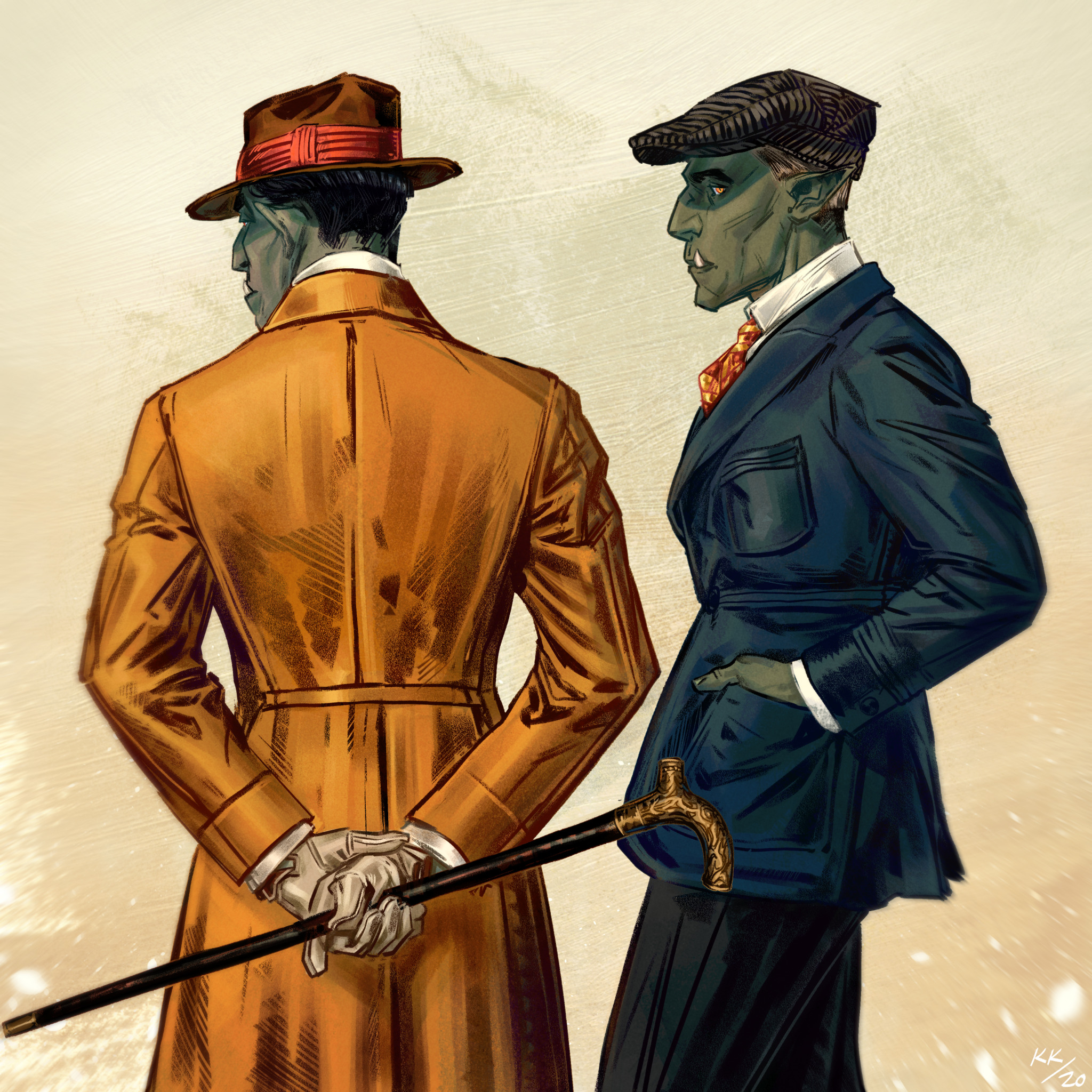
With the end of the God-War, the Arch Seraphs of each deity descended upon the world, each taking upon their own shoulders the burden of imposing order on a world cast into disarray. These Arch Seraphs were the most powerful lieutenants among the angelic hosts, strong enough to retain a semblance of their power following the tragedy. The lesser angels were not so lucky. Many found themselves wholly bereft of their powers, cast down to Nyos to live out their now mortal lives amidst the lesser races.
Over time, the lesser celestials have learned to tap into the small shreds of divine power that lie sleeping within their blood. That power still remembers the lesser celestial's former purpose and can be harnessed in times of great need to aid those who once called upon the gods for their power. This ability is as dangerous as it is powerful, for there are many who would seek to take it by force.
Fallen clergy who seek to drain the lesser celestials in order to restore their own failing powers, vampires seeking to drink from a fountain of the tainted divine, even those who treat with powerful entities alien to this world, are all potential predators to a fallen angel. Indeed, there are some who have already discovered this secret and are willing to go to any lengths in order to obtain it.
Protectors of the Innocent
Lesser celestials tend to embrace the lighter aspects of this world, becoming nurses, philanthropists, first-responders, and everyday saints. Regardless of the reason, it is in their nature to defend the innocent and battle evil wherever they venture.
Lesser celestial Names
Lesser celestials, like most angels, have majestic names borrowed from the most ancient of languages in the existence, celestial. Because their names are unique to themselves, lesser celestials have only one name.
Male Lesser celestial Names: Arioch, Barbiel, Hadraniel, Kasbiel, Malockel, Nisarriah, Samuel, Semalion, Tatryon, Vohamodnoch.
Female Lesser celestial Names: Anaphiel, Rehael, Serapha, Viretel, Oriash, Zarall, Hemah Sansavi, Piradah, Hadariel.
Lesser celestial Traits
Lesser celestial have the following traits in common:
Size. Lesser celestials are built like well-proportioned humans. Your size is Medium.
Speed. Your base speed is 30 feet.
Divine Learning. You gain proficiency in the Religion skill and you know the Guidance cantrip.
Darkvision. For 30 feet around you, you can see in dim light as if it were bright light and in darkness as if it were dim light. You can't dicern color in darkness, only shades of grey. Beyond 30 feet, you cannot see in darkness.
Lingering Divinity. You have resistance to necrotic damage.
Subrace. This race has multiple subraces, as listed below.
Archon
Celestial Legacy. You carry a sacred item with you at all times. As a bonus action on your turn, you can transform your sacred item into a shield or a melee weapon with which you have proficiency or return it to its original form. If it is on the same plane of existence, you can summon your sacred item as a bonus action on your turn, causing it to teleport instantly to your hand.
Spell-Like Ability. You may use your sacred item as a spellcasting focus original form. You know the Cheerful Song cantrip. Once you reach 3rd level, you can cast the Prayer of Healing spell once with this trait, and you regain the ability to do so when you finish a short rest. Once you reach 5th level, you can cast the Holy Rain spell once with this trait, and you regain the ability to do so when you finish a long rest. Charisma is your spellcasting ability for these spells.
Fallen Angel
Celestial Wings. You have a pair of white feathered wings that grant you the Flight Attribute. These wings are extensions of your celestial soul and as such can be made incorporeal, or invisible to most senses at will. To use this speed, you can't be wearing medium or heavy armor.
Communion. You don't need to sleep. Instead, they enter a state of prayer, remaining semiconscious, for 4 hours a day. After resting in this way, you gain the same benefit that a human does from 8 hours of sleep.

Solari
Radiant Consumption. Starting at 3rd level, you can use your action to unleash the divine energy within yourself, causing a searing light to radiate from you, pour out of your eyes and mouth, and threaten to char you.
Your transformation lasts for 1 minute or until you end it as a bonus action. During it, you shed bright light in a 10-foot radius and dim light for an additional 10 feet, and at the end of each of your turns, you and each creature within 10 feet of you take radiant damage equal to half your level (rounded up). In addition, once on each of your turns, you can deal extra radiant damage to one target when you deal damage to it with an attack or a spell. The extra radiant damage equals your level.
You can use this trait once, and you regain the ability to do so when you finish a long rest.
Celestial Awareness. You were trained to use all your senses to avoid surprise attacks and assassinations. You gain blindsight to a range of 10 feet.
Lesser Fiend
"Oh dear god GET OFF OF ME, WOMEN!"
Embodiment of Evil
Incarnate of evil, fiends delight in cruelty. Their tools of choice are deception and diplomatic. However, this sadism is tempered by the cool intelligence which makes a fiend far more deadly than a mundane monster. Their cunning and treachery allow fiends to plan clever traps, playing on mortal fears and striking dangerous bargains to solidify power.
A fiend's ambition is always tyranny. Fiends seek to manipulate humanoid rulers with whispered words and evil thoughts into abusing their power and causing strife. Whether through conquering, enslaving, or oppressing, fiends take a perverse delight in exercising power over the weak.
Infernal Hierarchy
The Hell has a rigid hierarchy that defines every aspect of its society. All fiends have a place in the hierarchy, from the lowliest dretch to the godlike Archfiends. Fiends who are fail grossly or are found to be lacking are demoted to lesser forms of fiends, and those who demonstrate exceptional cruelty are promoted to greater fiends.
Pacts and Deals
Fiends love forming pacts with mortals who seek some benefit or prize, but those making those deals should be wary. Though a fiend always honors the word of his contract, they are ruthless negotiators and rarely miss a loophole in a contract. Any mortal creature that breaks such a contract instantly forfeits its soul, which is spirited away to Hell.
To own a creature's soul is to have absolute control over that creature, and most fiends accept no other currency in exchange for the fiendish power and boons they can provide.
Fiends Names
Though each fiend has a common name in their language of Infernal, it also has a true name it keeps secret. A mortal who learns a fiend's true name can use powerful summoning magic to call the fiend from Hell and bind it into service.
Fiend Names: Azazel, Barabas, Balthazar, Diorum, Dogreth, Gargoth, Meritos, Nodroc, Ylvirron, Zakthara, Zammasir.
Fiend Traits
Fiend have the following traits in common:
Size. Your size depends on your subrace.
Speed. Your speed depends on your subrace.
Darkvision. For 30 feet around you, you can see in dim light as if it were bright light and in darkness as if it were dim light. You can't dicern color in darkness, only shades of grey. Beyond 30 feet, you cannot see in darkness.
Hellish Resistance. You have resistance to fire damage.
Subrace. This race has multiple subraces, as listed below.
Imp
Size. Your size is Small.
Speed. Your base speed is 25 feet.
Spell-Like Ability. You know the Burn cantrip. Once you reach 3rd level, you can cast the Cloak of Fiendish Menace spell once with this trait, and you regain the ability to do so when you finish a short rest. Once you reach 5th level, you can cast the Demon Within spell once with this trait, and you regain the ability to do so when you finish a long rest. Charisma is your spellcasting ability for these spells.
Flight. You gain the Flight Attribute, to use this speed, you can't be wearing medium or heavy armor.
Succubi/Incubi
Size. Your size is Medium.
Speed. Your base speed is 30 feet.
Silver Tongue. You have expertise with the Persuasion skill. If you spend 1 minute talking to someone who can understand what you say, you can make a Charisma (Persuasion) check contested by the creature's Wisdom (Insight) check. If you or your companions are fighting the creature, your check automatically fails. If your check succeeds, the target is magically charmed by you as long as it remains within 10 feet of you and for 1 minute thereafter.
Draining Kiss. As an action, you may kiss a creature that is willing, grappled, incapacitated, restrained, or charmed by you. The creature must succeed on a DC (8 + your Charisma modifier + your Proficiency bonus) Constitution saving throw, or take psychic damage equal to 1d8 plus your Charisma modifier. The psychic damage increases to 2d8 at 6th level, 3d8 at 11th level, and 4d8 at 16th level.
Tiefling
Size. Your size is Medium.
Speed. Your base speed is 30 feet.
Savage Predator. Whenever you make a melee attack against a creature you have surprised or you are chasing, you have advantage on that attack roll. In addition, you have advantage on Wisdom (Perception) checks that use hearing.
Claws. You have long, sharp claws on your fingers that can slash as well as any blade. Your unarmed strikes deal 2d4 piercing plus 1d6 poison damage on a hit, and you add your Strength modifier to the damage roll.
Lesser Giant
Lesser giants tribes cloister in remote forest strongholds, preferring to spend their days in quiet harmony with the woods. When provoked, lesser giants demonstrate formidable skills with weapons and druidic magic.
Humble Guardians
Lesser giants love nothing more than a peaceful day spent among the trees of an old forest. They see forests as sacred places, representing the heart of the world and monuments to the durability of life.
In their role as caretakers, lesser giants live off the land while striving to remain in balance with nature. Their methods reflect common sense and remarkable resourcefulness. During a bountiful summer, they store away excess nuts, fruit, and berries. When winter arrives, they scatter everything they can spare to ensure the animals of the wood survive until springtime.
In a lesser giant's eyes, there is no greater fault than greed. The lesser giants believe that the world remains healthiest
when each creature takes only what it needs. Material goods, especially precious gems and gold, have little appeal to them. What use are such things when winter lingers and food runs short?
Natural Druids
Lesser giants have a talent for druidic magic. Their cultural reverence for nature, combined with their strong and insightful minds, makes learning such magic an instinctive part of their development.
Almost every lesser giants learns a few spells, typically those used to mask their presence, and many go on to master nature magic. Lesser giants who become druids serve as stronghold leaders. With every action the tribe takes, the druids weigh not only the group's needs, but the effect each action will have on the forest and the rest of the natural world. Lesser giants tribes would rather go hungry than strain the land during a famine.

Lesser giants use their magic to keep their presence in a forest secret. This approach allows them to avoid the politics and struggles of elves, humans, and orcs. Such events concern the lesser giants only when the events affect the forest.
Even in the face of an intrusion, lesser giants prefer a subtle, gentle approach to prevent damage to their territory. They employ their magic to make the forest an unappealing place to explore by temporarily diverting springs, driving away game, stealing critical tools, and altering trails to leave hunting or lumber parties hopelessly lost. The lesser giants' presence is marked by an absence of animals and a strange quiet, as if the forest wishes to avoid attracting attention to itself. The faster travelers decide to move on, the better.
If these tactics fail, the lesser giants take more direct action. Their observations of a settlement determine what happens next. If the outsiders seem peaceful, the lesser giants approach and gently ask them to leave, even offering food and other supplies to aid their departure. If those who insist on remaining respect nature, take only what they need, and live in harmony with the wood, lesser giants explore the possibility of friendship with them, as long as the outsiders vow to safeguard the forest. If the settlers clearly display evil intentions, however, the lesser giants martial their strength and magic for a single overwhelming attack.
Lesser giant Names
Lesser giants adopt elven names when they must deal with outsiders, although the concept of names strikes them as strange. They know the animals and plants of the forest without formal names, and instead identify the forest's children by their deeds, habits, and other actions.
By the same token, their tribe names merely refer to their homes. When dealing with other races, sasquatch refer to their lands by whatever name the surrounding folk use, as a matter of tact and hospitality, but among their own kind they simply call it "home." Sometimes lesser giants adopt the nicknames or titles outsiders give them under the assumption that those who need names can call them whatever they wish.
Lesser giant Traits
Lesser giants have the following traits in common:
Size. Even the smallest half-giant stand 10 feet tall, and many are larger. Your size is Large.
Speed. Your base speed is 40 feet.
Powerful Build. You count as one size larger when determining your carrying capacity and the weight you can push, drag, or lift.
Giantkin. You have two creature types: humanoid and giant. You can be affected by a spell or ability if it works on either of your creature types.
Boulder-Tosser. You are able to throw rocks and other similar objects, like weapons. You treat improvised weapons as having the thrown (30/120) property, and when thrown they deal 1d8 damage.
Subrace. This race has multiple subraces, as listed below.
Firbolg
Hidden Step. As a bonus action, you can magically turn invisible until the start of your next turn or until you attack, make a damage roll, or force someone to make a saving throw.
You can use this trait once, and you regain the ability to do so when you finish a short rest.
Speech of Beast and Leaf. You have the ability to communicate in a limited manner with beasts and plants. They can understand the meaning of your words, though you have no special ability to understand them in return. You have advantage on all Charisma checks you make to influence them.
Goliath
Mountain Born. You have resistance to cold damage. You're also acclimated to high altitude, including elevations above 20,000 feet.
Northern Heart. Starting at 3rd level, you can use your action to call upon the inner strength that lies into every sons and daughters of the north. Your strength lasts for 1 minute or until you end it as a bonus action. During it, you have advantage on all Strength and Constitution saving throws, and you gain temporary hit points at the start of each of your turns. The temporary hit points equal half your level (rounded up) + your Constitution modifier.
You can use this trait once, and you regain the ability to do so when you finish a short rest.
Oni
Spell-Like Ability. You know the Metamorphose cantrip. When you reach 3rd level, you can cast the Spiritual Consultation spell once with this trait and regain the ability to do so when you finish a short rest. When you reach 5th level, you can cast the Spirit Echo spell once with this trait and regain the ability to do so when you finish a long rest. Wisdom is your spellcasting ability for these spells.
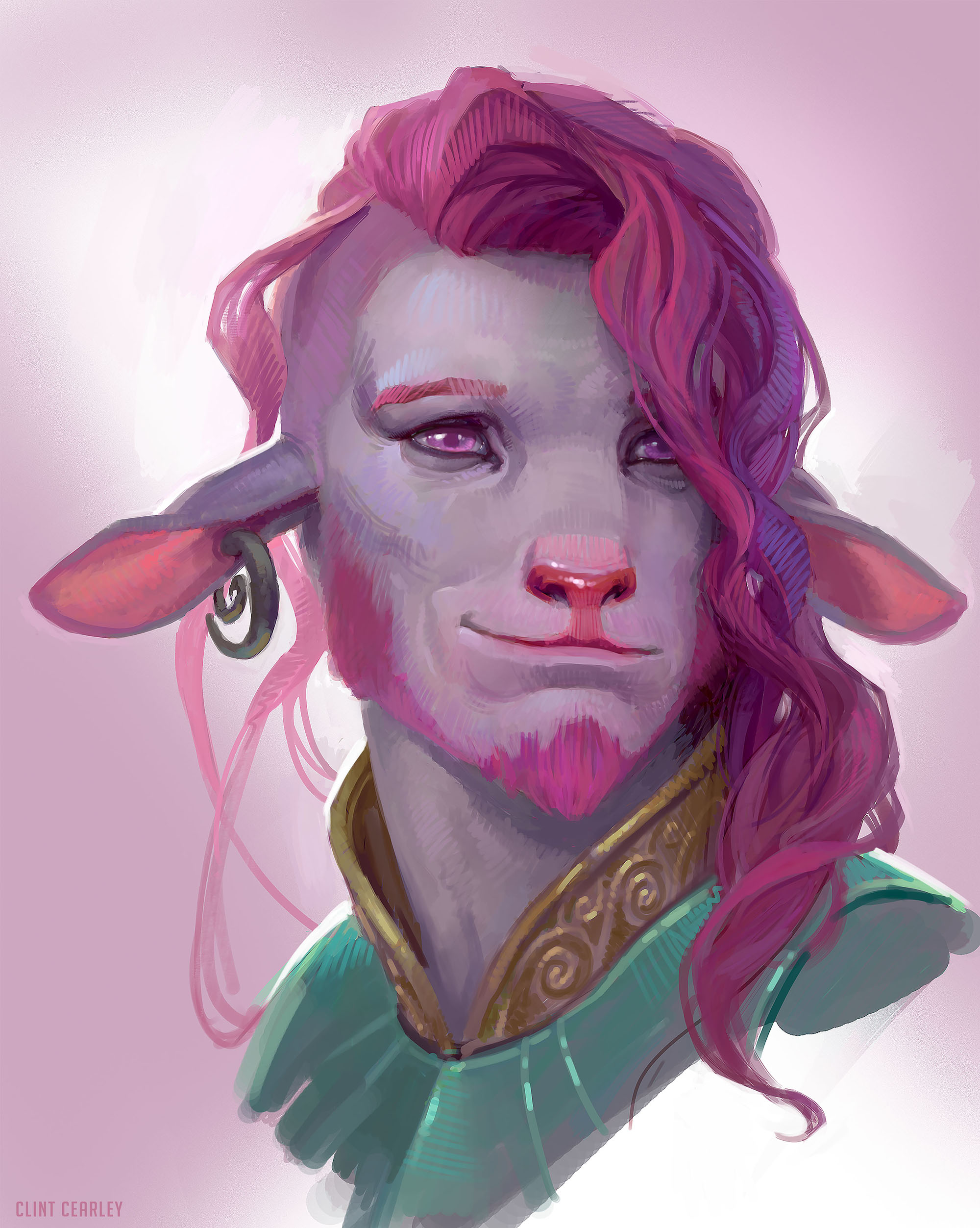

Spirit Walk. As an action, you can magically teleport up to 30 feet to an unoccupied space of darkness that you can see.
You can use this trait once, and you regain the ability to do so when you finish a short rest.
Troll
Natural Weapons. You have large fangs and sharp claws instead of fingernails and toenails. You can use your claws or fangs to make unarmed strikes. If you hit with them, claws deal 1d6 slashing damage, and fangs deal 1d6 piercing damage.
Inhuman Vigor. You concentrate regenerative power in your blood to swiftly recover from wounds. As a bonus action, you can expend one hit die to regain hit points as if you finished a short rest.
The number of hit dice you can expend increases by one when you reach 6th level (2 hit dice), 12th level (3 hit dice), and 18th level (4 hit dice).
You can use this trait once, and you regain the ability to do so when you finish a short rest. If you take acid or fire damage in the last 4 hours, you lose access to this ability until you finish a long rest.
Mimiga
"Cold tea and cold rice are bearable, but cold looks and cold words are not."
Hailing from a distant land, the mimiga are a race who distinguish themselves from other humanoids with their animal-like ears and tails. The mimiga value tradition, nature, and magic - somewhat like their elven cousins.
Perplexingly, certain human males are often attracted by mimiga females, much to their displeasure.
Children of the Forest
Mimiga think of nature as family and live alongside other animals and the forest. They are also taught at a young age to use whatever resources the forest provides, as long as they are not abused. Even in the interests of development, the effects on nature are considered first. To pollute or desecrate the forest is considered an act of grave offense.
Tradition and Technology
The mimiga of Ur have a rich and diverse culture, which has begun to evolve due to influence from other nations and races. The mimiga worship Amaterasu, their Goddess of Light, the Sun, and the Heavens, and are led by a Miko; the representative of the Goddess on the Material Plane. Mimiga hold their ancestors in high regard, using their words to guide their actions and respect family traditions.
Despite coming across as conservative, the mimiga of Ur are remarkable innovators. They have harnessed arcane magic as a foundation for their technology, which rivals the mechanical constructions of the dwarves and gnomes. Mimiga cities often glow with a magical light.
Mimiga Names
Mimiga names consist of a family name followed by a given name. Given names may have simple meanings behind them and are often two to three syllables long, while family names usually consist of four syllables.
Male Names: Akito, Banri, Daisuke, Fuyuki, Hasumito, Ieyasu, Jun, Kazuto, Musashi, Naofumi, Reki, Satoshi, Yoshiya.
Female Names: Ayu, Chieru, Eriko, Hiromi, Izuna, Kiruya, Kokoro, Mujina, Riamu, Sumika, Syuko, Tae, Umi, Yuna.
Family Names: Akizuki, Kanzaki, Kobayakawa, Mujiyono, Okamura, Sato, Suzuki, Tatsuya, Umakoshi, Yuwono.
Mimiga Traits
Mimiga have the following traits in common:
Size: Mimiga are slightly shorter than humans but have similar proportions; usually standing about 5 to 6 feet tall and weighing around 110 pounds. Your size is Medium.
Speed: Your base speed is 30 feet.
Low-light Vision. For 30 feet around you, you can see in dim light as if it were bright light. You can not see in darkness.
Animal Whisperer. You can communicate in a limited manner with mammalian beasts of Small and Tiny sizes. They can understand the meaning of your words, though you can only understand them by interpreting their gestures, body language, and movement.
Claws. You can use your claws to make unarmed strikes. If you hit with them, claws deal 1d6 slashing damage.
You are proficient with your unarmed strikes, which deal 1d6 slashing damage on a hit.
Subraces. This race has multiple subraces, as listed below.
Kitsune
Fox's Cunning. You have proficiency in Insight.
Spell-Like Ability. You know the Minor Illusion cantrip. When you reach 3rd level, you can cast the Disguise Self spell once with this trait, and you regain the ability to do so when you finish a short rest. When you reach 5th level, you can cast the Fox's Fangs spell once with this trait, and you regain the ability to do so when you finish a long rest. Charisma is your spellcasting ability for these spells.
Koumori
Fangs. You can use your fangs to make unarmed strikes. If you hit with them, fangs deal 1d6 piercing damage.
Bat's Wings. You gain the Flight Attribute, to use this speed, you can't be wearing medium or heavy armor.
While you use this flying speed, you cannot make attack rolls and ability checks that require particular hand and arm movements, and you cannot perform the somatic components of spells.
***Echolocation. ***You can perceive your surroundings without relying on sight. While you aren't deafened, you have blindsight up to a range of 15 feet.
This trait replaces the Low-light Vision trait listed in The Mimiga Race.
Sunlight Sensitivity. You have disadvantage on attack rolls and Wisdom (Perception) checks that rely on sight when you, the target of the attack, or whatever you are trying to perceive is in direct sunlight.
Reclusive. While you are in dim light or darkness, you have advantage on Dexterity (Stealth) checks when you take the Hide action.
This trait replaces the Animal Whisperer trait listed in The Mimiga Race.
Neko
Cat’s Talent. You have proficiency in Acrobatics.
Nine Lives. You have the uncanny ability to survive deadly blows. When you are reduced to 0 hit points but not killed outright, you can roll 1d20. On a roll of 10 or higher, you drop to 1 hit point instead. You can use this trait a number of times equal to your proficiency bonus, and when you expend one use of it, you can't do so again until the start of your next turn. You regain all expended uses of it when you finish a long rest.
Tanuki
Raccoon’s Trickery. You have proficiency in Persuasion.
Witty Escape. You can use your friends as a distraction in an act of, not cowardice, but strategy. Once per turn, when you move out of a creature's reach, you do not provoke opportunity attacks from it if one of your allies is within 5 feet of it. You can use this trait a number of times equal to your proficiency bonus, and you regain all expended uses of it when you finish a long rest.
Usagi
Rabbit’s Instincts. You have proficiency in Perception.
Lucky Feet. You have strong feet which carry you quickly across the ground. When you
move on your turn in combat, you can
double your walking speed, long jump
distance, and high jump height until the end of
the turn. You can use this trait a number of times
equal to your proficiency bonus, and when you expend
one use of it, you can't do so again until you move 0 feet
on one of your turns. You regain all expended uses of it
when you finish a long rest.
Yagi
Horns. You can use your horns to make unarmed
strikes. If you hit with them, horns deal 1d6
bludgeoning damage.
Goat's Tenacity. You gain the Wall-Crawling Special Movement.
Battering Ram. If you move at least 30 feet straight toward a creature and then hit it with an unarmed strike on the same turn, you can immediately follow that attack with a bonus action, making one melee attack against the target. On a hit, you can attempt to shove the creature, and it can only make a Strength saving throw against a DC equal to 8 + your proficiency bonus + your Strength modifier.
Nymph
“I once loved a man who had eyes like jewels, and tresses like the sun, and lips like a flower. He claimed to have been born within a crag at the peak of the mountain near my village, but I did not believe him, for how could anything so delicate be born from hard, pitted rock?”
Legend of the Nymphs
There was once a river running through the mountains. None can say which river or which mountains, for this was so long ago that the land has rolled and shifted so as to become unrecognizable in the time since. The mountains were blanketed in a soft powder of white snow, and as the snow melted, it crept along the ground and joined together into streams of water, which trickled along the rocks and formed a river.



And the river coursed down through a forest, emptying into the ocean. So it went for eons. But then one day, the snow on the mountains had a thought. "Am I alike to the water in the streams?" And so also did the water in the river begin to wonder, "Am I alike to the roots of the trees?" They were curious, but it seemed that they would never know the answer, for just as the snow went to inspect the streams, it became the water, and just as the water went to inspect the trees, it became the roots. And so it went for eons.
Eventually, the Great Mother herself became aware of these questions. Holding the world in her embrace, she felt the curiosity of the elements rippling and vibrating across its surface, anxious for answers. And so, she loosened her grip—just slightly. The rippling thoughts of the snow and the waters and the rocks and the trees took shape, and their shapes were beautiful, for they were curiosity made manifest. These were the first nymphs.
Beautiful and Diverse
Nymphs are famed for their feminine charms, but they are not
exclusively female. Some are awakened from the elements with a mix of masculine and feminine features, and others are quintessential specimens of male splendor. As fey creatures, nymphs like little less than to be nailed down by the crude shackles of mortal language. They come in as many shapes and forms as the earth itself. The only physical trait that all of them have in common is an awe-inspiring beauty.
Curious and Possessive
Nymphs have an insatiable desire to learn as much as possible about both the natural and the civilized world. Because most have had eons to discover the splendor of nature, it is the civilized world that interests them the most. However, they are not usually very accustomed to mortal culture, and so they may think of men and women as interesting baubles to be collected and admired. Even civilized nymphs tend to cherish their friends and acquaintances as ‘pets' to be manicured and proudly exhibited. They are not above bragging about their collection or fighting with one another over their favorites.
Nymph Names
Nymphs have names that sound beautiful and elemental.
Male Names: Celano, Elion, Eratheis, Hyllis, Limnade, Linos, Myrmex, Olbia, Pega, Potameid, Pyron, Taygete
Female Names: Aegle, Alcyone, Arethusa, Asterope, Brettia, Brisa, Calybe, Crinae, Crimisa, Dodone, Electra, Erythia, Hesperia, Himalia, Oeneis, Laodice, Maia, Merope, Polydora, Rhene, Semestra
Nymph Traits
Nymph have the following traits in common:
Size. Nymph are as varied as their mortal parents but are generally built like humans, standing anywhere from 5 feet to over 6 feet tall. Your size is Medium.
Speed. Your base speed is 30 feet.
Enthralling Beauty. You possess unearthly grace and beauty, which allows you to dazzle and charm those who are susceptible to such things. You have proficiency in the Persuasion skill. Additionally, you can cast the Charm Person spell once with this trait and regain the ability to do so when you finish a short rest. Charisma is your spellcasting ability for this spell.
Subrace. This race has multiple subraces, as listed below.
Aurae
Unending Breath. You can hold your breath indefinitely while you're not incapacitated.
Windwalker. As a bonus action your turn you can fly up to 40 feet to an unoccupied space you can see.
You can use this trait once and regain the ability to do so when you finish a short.
Dryad
Boulder Tough Skin. When you aren't wearing armor, your AC is 15. You cannot add your Dexterity modifier to your natural AC. You can use your natural armor to determine your AC if the armor you wear would leave you with a lower AC. A shield's benefits apply as normal while you use your natural armor.
One With The Earth. You can move across difficult terrain made of earth or stone without expending extra movement.
Lampad
Radiant Resistance. You have resistance to radiant damage.
Spell-Like Ability. You know the Twinkle cantrip. Once you reach 3rd level, you can cast the Starlight Spear spell once with this trait, and you regain the ability to do so when you finish a short rest. Once you reach 5th level, you can cast the Voidwind spell once with this trait, and you regain the ability to do so when you finish a long rest. Constitution is your spellcasting ability for these spells.
Naiad
Amphibious. You can breathe air and water and you have the Water Speed Attribute.
River Traveler. You have proficiency with water vehicles, and you have advantage on ability checks made to forage or navigate near a natural body of water. You ignore any drawbacks caused by an underwater environment.
Oread
Darkvision. For 30 feet around you, you can see in dim light as if it were bright light and in darkness as if it were dim light. You can't dicern color in darkness, only shades of grey. Beyond 30 feet, you cannot see in darkness.
Heated Body. When a creature starts its turn while it is grappling you or you are grappling it, you may choose to deal it fire damage equal to two times your proficiency bonus.
Raceless
Selecting a pre-existing Race is a simple way to get started with species-specific abilities, but sometimes the package of Race features doesn’t match with the vision for your character.
In these instances, you can either craft a new set of features and assign them to a Race template of your own design (with DM input), or designate your character as “Raceless”.
Of course, Raceless characters still identify with a Race (even if it’s unique), but that identity is not associated with a specific set of Attributes acquired giving you full control over how your character's origin shaped them.¨
Raceless Traits
Raceless have the following traits in common:
Ability Score Increase. None.
Size. Your size is either Medium or Small.
Speed. Your base speed is 30 feet.
Creature Type. You are a humanoid. You determine your appearance and whether you resemble any of your kin.
Unrestricted Bonus Points. You gain 5 unrestricted bonus points. You must spend these extra Points immediately to acquire Attributes for yourself.
O que é um Raceless?
O mundo não é feito apenas das raças contidas nesse compendium, as possibilidades são infinitas e por mais que eu adore a ideia de listar 30 raças ou mais utilizar uma Custom Lineage é uma solução mais elegante e pratica.
Replicant
"Long ago there was a woman named Jes, and she had one hundred children. Her rivals conspired against her and swore to kill her children. Jes begged the Sovereigns for help, but their only answer was the wind and rain. In the depths of her despair, a lonely traveler took her hand. "I will protect your children if they follow my path. Let them wander the world. They may be shunned and feared, but they will never be destroyed." Jes agreed, and the traveler gave her his cloak. When she draped it over her children, their old faces melted away and they could be whoever they wanted to be. And so it remains. Though the children are shunned by all, the gift of the Traveler protects them still."
Replicants can shift their forms with a thought. Many replicants use this gift as a form of artistic and emotional expression. It's also an invaluable tool for grifters, spies, and others who wish to deceive. This leads many people to treat replicants with suspicion.
Replicant Names
A replicant might use a different name for each mask and persona and adopt new names as easily as they change faces. The true name of a replicant tends to be simple and monosyllabic; however, there are often accents to a replicant's name that are expressed through shapeshifting, something single-skins will likely miss. So, two replicants might have the name Jin, but one is Jin-with-vivid-blue-eyes and one is Jin-with-golden-nails.
Replicants have a fluid relationship with gender, seeing it as one characteristic to change among many.
Replicant Names: Aunn, Bin, Cas, Dox, Fie, Hars, Jin, Lam, Mas, Nix, Ot, Paik, Ruz, Sim, Toox, Vil, Yug
Replicant Traits
Replicant have the following traits in common:
Size. Replicants range from 3 to 5 feet tall. Your size is Medium.
Speed. Your base speed is 30 feet.
Unsettling Visage. When a creature you can see makes an attack roll against you and you are disguised, you can use your reaction to impose disadvantage on the roll. You must use this feature before knowing whether the attack hits or misses. Using this trait reveals your shape shifting nature to any creature within 30 feet that can see you.
You can use this trait once and regain the ability to do so when you finish a short.
Change Appearance. As an action, you can transform your appearance or revert to your natural form. You can't duplicate the appearance of a creature you've never seen, and you revert to your natural form if you die. You decide what you look like, including your height, weight, facial features, the sound of your voice, coloration, hair length, sex, and any other distinguishing characteristics.
You can make yourself appear as a member of another race, though none of your game statistics change. You also can't appear as a creature of a different size than you, and your basic shape stays the same. Even to the most astute observers, your ruse is usually indiscernible.
If you rouse suspicion, or if a wary creature suspects something is amiss, you have advantage on any Charisma (Deception) check you make to avoid detection.
While using this ability it makes it makes a 20 feet crackling sound.
Vect
“Very gradually, by degrees, pale blue hues invade the quiet of night, and Hammerer knows that only a few hours remain until dawn. Throughout the afternoon, evening, and night, he has meticulously inspected his tools, a wide array of mallets, sledges, and, of course, hammers, cleaning them, performing repairs, and organizing them by size and by color, only powering down for a few hours in the middle of the night.
Evolved Golems
The vect were preceded by unthinking golems of various designs; unlike their predecessors, however, the vect are fully living beings. Underneath their armored exteriors lies an organically-influenced anatomy, with a circulatory system and a network of magical nerves. At the heart of each vect unit is an everlasting construct core, tinged with the influence of the Spark that awoke them.
Mechanical Minds
Although vect units experience the same fear, anger, pain, loss, and other emotions that humanoids do, their expression of them is muted. A vect’s mechanical face and harsh, metallic voice does little to endear it to others, driving a wedge between vect and most other living things. Many vect, therefore, seek refuge in logical thinking. Some become emotionally distant and lack introspection, whereas others plumb the philosophies of existence and consider what it means to be alive. These become the two extremes, between vect who seek to embrace their status as living things, and those who wish to banish all within themselves that is not construct.
The vast majority of vect exist between these extremes. Vect are most comfortable existing within a small group of some kind, as long as it is dedicated to a purpose. Temples, adventuring parties, and voyages of exploration are deeply attractive to the vect.
Vect Names
The original vect were divided into working groups and given numbers by their dwarven keepers; nothing more was necessary. Now, however, all vect choose their own names, usually designations reflecting some function or purpose, though some vect choose to be identified by their serial number, or a nickname given to them by others.
Vect Names. 176, Armory, Bolts, Clunk, Crusher, Glitch, Hammerer, Keeper, Lifter, Null, Phong, Scarce, ThreeFour-Three, Titan, Unit Seventeen, Watcher
Vect Traits
Vect have the following traits in common:
Ability Score Increase. You can increase any score by 2.
Reconfigurable Ability Score Increase. One ability score of your choice increases by 1, and you can change this selection whenever you finish a long rest. You can't increase Constitution using this trait and you can't increase any ability score above 20.
Size. Vect units stand between 5 and 7 feet tall and average about 150 to 300 pounds. Your size is either Small, Medium or Large.
Speed. Your base speed is 30 feet.
Thermalsight. You gain thermalsight, which means you can see living creatures through darkness and heavily obscured conditions, such as fog, out to a range of 30 feet. You can also determine if a creature is living or dead though its body heat. However, you can't discern color, nor use this sense to see through illusions, invisibility, or magical darkness. This sense is blocked by one-inch of any solid barrier.
Construct Anatomy. You have two creature types: humanoid and construct. You can be affected by a spell or ability if it works on either of your creature types.
In addition, you have advantage on saving throws you make against exhaustion. Instead of sleeping, you enter an inactive state for 4 hours each day. You don't dream in this state; you are fully aware of your surroundings and notice approaching enemies and other events as normal. You can still be placed into a torpor by sleep-inducing magic.
Inflexible Mind. You have advantage on saving throws against being charmed.
Embedded Armor. You can install special armor plating directly onto your body. This embedded armor counts as a construct graft installed in the External slot.
At 1st level, you choose one of the following types of embedded armor, though you can install other types if you acquire them in the world.
- Velocity Plating. Your movement speed increases by 5 feet and your long jump distance increases by 5 feet.
- Composite Plating. Your Armor Class equals 13 + your Dexterity modifier.
- Juggernaut Plating. Your Armor Class equals 16. You can't wear conventional armor while you have this graft installed. You can only install this graft if you are proficient with heavy armor.
Chapter 2
Classes of Nyos
| There are no Lineage or Class prerequisites that preclude specific combinations. Players can select any Lineage and Class they desire from this book, provided the DM approves their choices. Of course, some Race/Class combinations are more common than others for a variety of reasons.
|
Accursed
Bones and flesh churning and cracking as they shift, a dragonborn assumes his hybrid form, choosing the guise of a wolf, his favorite. Readying dark, crackling energy in his hand, he begins his hunt.
A drow enters a tavern, hitting his head on the door frame and tripping on a chair leg. As he rises back to his feet, a brawl begins amongst a couple other patrons. With a look, a sigh, and flick of his wrist, the brawlers both slip on an errant puddle of grog, hit their heads on tabletops, and fall unconscious. Finally arriving at the bar, the drow can enjoy his drinks. An elf argues with herself as she engages an orc raiding party in combat. Recalcitrantly, a spirit exits the elf’s body, a thin cord of Ethereal energy connecting the two, and fights alongside her, unleashing a terrible scream that causes the bandits all to drop dead of fright.
Wielding a terrible blade, a human engages the palace guards, slicing her adversaries in twain as if they were cloth.
An archer comes around the corner, and she throws her sword, impaling the guard before he can even nock an arrow. As the vile weapon reappears in her outstretched hand, she saunters into the throne room, staring at the quivering king with death in her eyes. At last, the crown is hers.
A dwarf is thirsty, so terribly thirsty, but refuses to drink. Yes, he could have glamored and drank deeply from that barmaid last night, but she was a good girl and he couldn’t bear to do it. Walking down the alley as the sun rises overhead, the dwarf spies a well-garbed man with a knife approaching an unsuspecting would-be victim. Finally, a drink he won’t have to feel guilty about.
Accurseds are afflicted with a permanent magic that is inconvenient at best and debilitating at worst. But magic is still magic, and accurseds have found a way to harness the power of their curse to their own ends, while managing some of the worst symptoms of their condition. Either way, their curse is now theirs to use however they see fit.
Unending Affliction
Most curses used by mortals, such as the hex and bestow curse spells, are temporary, a simple inconvenience until the magic expires. For each accursed, though, the affliction is permanent, a powerful magic that never fades. These curses can be received through many means: gaining the ire of a deity, a large coven of hags, or a powerful extraplanar entity; inheriting it by being born into a cursed family line; touching a cursed object; being hit by a volatile spell that was incorrectly cast; or receiving the curse from the bite or scratch of another cursed creature, among a slew of other possibilities.
Curse’s Conqueror
The vast majority of people who receive a permanent curse consign themselves to their fate, either finding a way to live with their curse’s adverse effects or giving themselves fully to the curse’s compulsions. A creature becomes an accursed by following a different path. Accurseds are rare, not due to lack of people becoming cursed, but because those who suffer these curses often lack the conviction to resist them.
The Accursed
| Level | Proficiency Bonus | Features | Malediction Metamorphoses | Spells Known | Spell Points | Spell Circle | |
|---|---|---|---|---|---|---|---|
| 1st | +2 | Conquered Curse, Jinx | — | — | — | — | |
| 2nd | +2 | Spellcasting, Ailment Control, Malediction Metamorphosis | 1 | 2 | 4 | 1st | |
| 3rd | +2 | Conquered Curse feature, Jealous Blight | 1 | 3 | 6 | 1st | |
| 4th | +2 | Adventuring Boon, Malediction Versatility | 1 | 3 | 6 | 1st | |
| 5th | +3 | Conquered Curse feature | 1 | 5 | 14 | 2nd | |
| 6th | +3 | — | 2 | 5 | 14 | 2nd | |
| 7th | +3 | — | 2 | 6 | 17 | 2nd | |
| 8th | +3 | Adventuring Boon, Malediction Versatility | 2 | 6 | 17 | 2nd | |
| 9th | +4 | — | 2 | 8 | 27 | 3rd | |
| 10th | +4 | — | 3 | 8 | 27 | 3rd | |
| 11th | +4 | Conquered Curse feature | 3 | 9 | 32 | 3rd | |
| 12th | +4 | Adventuring Boon, Malediction Versatility | 3 | 9 | 32 | 3rd | |
| 13th | +5 | — | 3 | 11 | 38 | 4th | |
| 14th | +5 | — | 4 | 11 | 38 | 4th | |
| 15th | +5 | Conquered Curse feature | 4 | 12 | 44 | 4th | |
| 16th | +5 | Adventuring Boon, Malediction Versatility | 4 | 12 | 44 | 4th | |
| 17th | +6 | — | 4 | 14 | 57 | 5th | |
| 18th | +6 | — | 5 | 14 | 57 | 5th | |
| 19th | +6 | Adventuring Boon, Malediction Versatility | 5 | 15 | 64 | 5th | |
| 20th | +6 | Conquered Curse feature | 5 | 15 | 64 | 5th |
An accursed dedicates their time and willpower to finding a way to make the magic of their curse work for them, though each in their own way. Some accurseds experiment in a lab or scour the world for forgotten lore, trying to find a ritual or alchemical concoction. Others turn to nature or faith, using prayer, meditation, or mindfulness to synthesize the curse’s magic into their own being. And others still use sheer stubbornness to bend the curse to their will.
Regardless of method, an accursed is one who has conquered their curse, drawing on its magic while managing its remaining side effects.
Creating Your Accursed
When creating an accursed, the most important aspect to consider is your curse itself. What is your curse’s nature, and how did you receive it? As a starting character, you’ll choose the nature of your curse - lycanthropy, chronic bad luck, possession by a spirit, a cursed weapon, or vampirism - but exactly how you received your curse is up to you. Did you or one of your ancestors anger a god or other powerful entity? Was the curse transferred to you by another afflicted individual? Or did some magical ritual go awry with you in proximity?
Another important aspect of creating an accursed is how you came to be in control of your curse’s power. Did you study and experiment? Did you harmonize with it? Or did you stubbornly refuse to let it control you?
What do you plan to do with this power you’ve attained? A curse is a magic of vile energies created to inflict suffering. Do you use this magic for its intended purpose, conquering and slaying for your own gain? Or do you resist the magic’s nature and use it to become a champion of the downtrodden, a hero who can empathize with great suffering? It’s your power now, so only you can decide what to do with it.
Class Features
As an accursed, you gain the following class features.
Hit Points
Hit Dice: 1d10 per accursed level
Hit Points at 1st Level: 10 + your Constitution modifier
Hit Points at Higher Levels: 1d10 + your Constitution modifier per accursed level after 1st
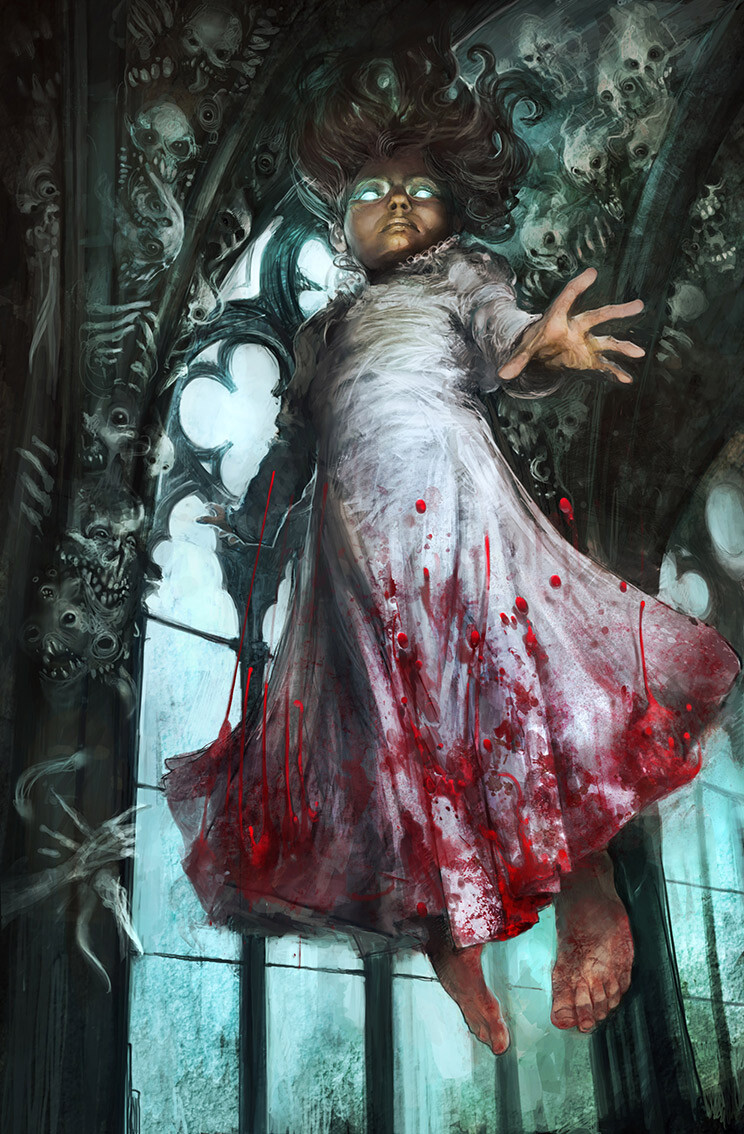
Proficiencies
Armor: light armor, medium armor
Weapons: simple weapons, hand crossbows, simple firearms
Tools: None
Saving Throws: Wisdom, and your choice of Intelligence or Charisma
Skills: Choose two from Arcana, Deception, Insight, Intimidation, Investigation, Piloting and Survival
Equipment
You start with 5d4 x 100 New Yen to buy your own equipment, in addition to the equipment granted by your profession.
Accursed Affliction
Through unfortunate circumstances, you were stricken with a curse that would have broken most other people. However, whether by sheer willpower, introspective meditation, or arcane study, you not only overcame the challenges your curse presented, but learned to harness its power.
Your curse has become as much a part of you as your own heart. The Remove Curse spell, as well as any similar effect, has no effect on your curse when it is cast on you. If your curse takes the form of a magical disease, you can’t be cured of it by any means. Your choice grants you features at 1st level, and again at 3rd, 5th, 11th, 15th, and 20th level.
Accursed Ailments
Each affliction has ailments caused by the curse’s lingering effects. These ailments are referred to by features you gain later in this class.
Curse Save DC
Some of your accursed features require your target to make a saving throw to resist the feature’s effects. Due to the varying ways that an accursed can overcome their affliction, though, not all use the same ability score. Choose Intelligence, Wisdom, or Charisma as your curse ability.
You should choose Intelligence if you scoured the multiverse for secrets that allow you to manage your curse using rituals or minor magical practices, Wisdom if you used introspective meditation techniques to harmonize with your curse and make it a part of you, or Charisma if you conquered your curse through sheer force of will or by bargaining with it. Depending on the curse ability you chose, the saving throw DC of your curse effects is calculated as follows:
Curse save DC
Jinx
As an action, you can touch a creature within your reach and magically imbue it with a small amount of curse energy. When you do, choose an ability, and that creature makes a Wisdom saving throw. On a failure, it has disadvantage on the next ability check it makes using the chosen ability within the next minute.
When you use this feature, you can also choose to make a Dexterity (Sleight of Hand) check against the target’s Passive Perception. If you succeed, the creature isn’t aware that you are the source of this feature.
The effect ends early on a creature if you use this feature again, if you lose concentration (as though concentrating on a spell), or if either of the Dispel Magic or Remove Curse spells is cast on the target.
Spellcasting
When you reach 2nd level, you learn to harness your curse’s power to cast spells.
Spell Points
The Accursed table shows how many spell points you have to cast your spells of 1st circle and higher. You expend a number of spell points to cast a spell of a given circle. You can’t reduce your spell point total to less than 0, and you regain all spent spell points when you finish a long rest.
Spells of 6th circle and higher are particularly taxing to cast. You can use spell points to cast one spell 6th circle or higher. You can’t cast another spell of the same circle until you finish a long rest.
The number of spell points you have to spend is based on your level as a spellcaster, as shown in the Spell Points by Level table. Your level also determines the maximum spell circle you can create.
Curse Spells
Each Accursed Affliction has a list of spells – its curse spells – that you learn when you reach certain levels in this class, as shown in the affliction description. These spells count as accursed spells for you and are included in the number in the Spells Known column of the Accursed table.
Spells Known of 1st Circle and Higher
You know the curse spell you gain at 2nd level from your Accursed Affliction, and two 1st-circle spells of your choice from the accursed spell list, for a total of three spells known.
The Spells Known column of the Accursed table shows when you learn more spells of your choice from the accursed spell list. Each of these spells must be of a circle for which you can cast. For example, when you reach 5th level in this class, you learn one new spell of 1st or 2nd circle, in addition to the curse spell you gain at 5th level from your Accursed Affliction.
Additionally, when you gain a level in this class, you can choose one of the accursed spells you know and replace it with another spell from the accursed spell list, which must also be of a circle for which you are allowed.
Spellcasting Ability
Your curse ability is your spellcasting ability for your accursed spells, since your ability to cast spells comes from the control you have over your curse’s power. You your curse ability whenever a spell refers to your spellcasting ability. In addition, you use your curse ability modifier when setting the saving throw DC for an accursed spell you cast and when making an attack roll with one.
Spell save DC
Spell attack modifier
Spellcasting Focus
When you gain this feature, choose arcane foci, druidic foci, or holy symbols, depending on how you discovered to channel your curse. You can use the chosen type of implement as a spellcasting focus for your accursed spells.
Curse Control
Also starting at 2nd level, you can control the ailments of your curse by expending spell points. You can do so in the following ways:
Afflict. As an action, you can expend 2 spell points to attempt to afflict a creature you can see within 30 feet of you with your choice of one of your ailments. The creature must succeed on a Wisdom saving throw or suffer the chosen ailment for the duration. An afflicted creature can repeat the saving throw as an action during each of its turns, ending its affliction on a successful save.
Suppress. As a bonus action, you can expend 2 spell points to suppress your ailments’ effects. For the duration, you can choose not to suffer the effects of any number of your affliction’s ailments.
The duration of the effect depends on the number of spell points you expended to use it. The effect lasts for 1 minute if you spend 2 spell points, 10 minutes if you spend 3 spell points, 1 hour if you spend 5 spell points, 8 hours if you spend 6 spell points, or 24 hours if you spend 7 spell points or more.
Malediction Metamorphosis
At 2nd level, your curse begins evolving within you. You can guide this change to create effects that are beneficial to you. Choose one of the following metamorphosis options. You can’t take a metamorphosis more than once, even if you later get to choose again.
Enshrouding Imprecation
Your curse’s energy covers you like a dark cloak when it isn’t held back by bright light. You have advantage on Dexterity (Stealth) checks you make while in dim light or darkness.
Facile Suppression
Once, you can use your Suppress without expending spell points. Its duration is 10 minutes. You can use this trait once and regain the ability to do so when you finish a short rest.
Fecund Affliction
Once, you can use your Afflict without expending spell points. Its duration is 1 minute. You can use this trait once and regain the ability to do so when you finish a short rest.
Hostile Bane
Once during each of your turns when you hit a creature with an attack, you can cause the attack to deal additional necrotic damage equal to your curse ability modifier (minimum 1).
Protective Hex
When you’re wearing light, medium, or no armor, you can use your curse ability modifier, instead of your Dexterity modifier, to determine your Armor Class. Your curse ability modifier is otherwise treated as though it were your Dexterity modifier for the purpose of determining your AC this way.
Selfish Anathema
As an action, you can attempt to free yourself from a shell's effects. Make an ability check using your curse ability against a DC equal to 10 + twice the spell’s circle. On a success, you end the effects of the spell on yourself. This has no effect on any of the spell’s other targets.
Swift Jinx
You can use your Jinx as a bonus action on your turn.
Fell Attunement
Starting at 3rd level, your familiarity with the nature of curses and other dark magics allows you to detect them. As an action, you can send invisible tendrils of your curse to scout for these fell energies.
Until the end of your next turn, you know the location of any aberration, fiend, shapechanger, or undead within 60 feet of you that isn’t behind total cover. You know the type (aberration, fiend, shapechanger, or undead) of any being whose presence you sense, but not its identity. Within the same radius, you also detect the presence of any cursed objects, as well as spells on the accursed or witch spell lists that are currently active or have been cast in the radius within the last hour. You don’t know what the specific objects or spell effects are, only where they are located.
You can use this feature a number of times equal to 1 + your curse ability modifier. You regain the ability to do so when you finish a long.
Adventuring Boon
When you reach 4th level, and again at 8th, 12th, 16th, and 19th level, you gain 2 unrestricted bonus points. Players can spend these extra Points immediately to acquire Attributes for their characters or save them for future use.
You cannot increase one of your ability scores above 20 using this feature.
Possessive Curse
Starting at 6th level, your curse jealously guards you from others of its ilk, refusing to share its host. You are immune to curses other than your Accursed Affliction, such as the Hex and Bestow Curse spells. Additionally, your hit point maximum can’t be reduced against your will, you are immune to being possessed against your will, and when you touch or attune to a cursed object, it doesn’t stop being cursed, but the curse doesn’t affect you.
Blundering Jinx
Beginning at 7th level, when a creature fails its saving throw against your Jinx, you can choose instead to give it disadvantage on the next attack roll it makes using the chosen ability within the next minute.
Malediction Malignance
At 10th level, your curse evolves again. You can choose a second metamorphosis from the options in the Malediction Metamorphosis class feature, or from the following options if you meet the metamorphosis’ prerequisites.
Consolidating Jinx
Prerequisite: Swift Jinx
When a creature makes a Wisdom saving throw against your Jinx, it has disadvantage on the saving throw if it was previously the target of your Jinx this turn.
Deadly Bane
Prerequisite: Hostile Bane
You lose the benefits of your Hostile Bane. Instead, whenever you hit a creature with an attack during your turn, you can cause the attack to deal additional necrotic damage equal to your curse ability modifier (minimum 1).
Hex Armor
Prerequisite: Protective Hex
While you’re wearing light, medium, or no armor, any damage you take is reduced by an amount equal to half your proficiency bonus.
Instinctual Suppression
Prerequisite: Facile Suppression
When you roll initiative, you can use your reaction to use your Suppress. You can take this reaction even if you are surprised.
Muffling Imprecation
Prerequisite: Enshrouding Imprecation
While you’re in dim light or darkness, you can ignore the verbal components of your accursed spells.
Obstinate Anathema
Prerequisite: Selfish Anathema
When you are incapacitated, paralyzed, petrified, or stunned by a spell’s effects, you are still able to use your action, provided that you are not unconscious and the only action you take is to use your Selfish Anathema.
Transferring Affliction
Prerequisite: Fecund Affliction
When a creature fails its saving throw against your Afflict, you can choose not to suffer the chosen ailment’s effects for the duration.
Anathema Arcane
Starting at 14th level, the vile magics of your curse become too powerful to be solely contained in your body. This overflowing curse energy invisibly extends from you in a 15-foot radius aura, and can interfere with other magical effects. If a creature has truesight or is under the effects of the Detect Magic spell or similar magic, it can see this aura as a noxious smoke. You can use this aura to disrupt magic in the following ways:
Negate. When you see a creature within the aura cast a spell that includes you as a target, you can use your reaction to attempt to negate the effects of the spell on yourself. When you do, make an ability check using your curse ability. The DC equals 10 + twice the spell’s circle. On a success, you suffer none of the spell’s effects. This has no effect on the spell’s other targets.
Stifle. As an action, you can attempt to stifle the magic of an object or spell effect you can see within your aura. When you do, make an ability check using your curse ability. If the target is a spell effect, the DC equals 10 + twice the spell’s circle. If the target is a magic item, the DC depends on the item’s rarity, as shown in the Anathema Arcane table. On a success, the magical properties of the object or spell effect are stifled for 1 minute; a spell effect you target this way ceases to function for the duration, and a magic object you target this way becomes its mundane equivalent for the duration.
Anathema Arcane
| Item Rarity | Ability Check DC | Example Items | |
|---|---|---|---|
| Common | 12 | cloak of billowing, potion of healing | |
| Uncommon | 15 | immovable rod, weapon +1 | |
| Rare | 18 | necklace of fireballs, weapon +2 | |
| Very Rare | 21 | staff of thunder and lightning, weapon +3 | |
| Legendary/Sentient | 24 | cloak of invisibility, Moonblade | |
| Artifact | 30 | Eye and Hand of Vecna, Orb of Dragonkind |
You can use this feature a number of times equal to your curse ability modifier (minimum once). You regain all of your expended uses when you finish a long rest.
At 20th level, the range of this aura increases to 30 feet, and you regain all of your expended uses of this feature whenever you finish a short rest.
Malediction Metastasis
At 18th level, your curse evolves into its ultimate form. You can choose a third metamorphosis from the options in the Malediction Metamorphosis and Malediction Malignance class features, or from the following options. If a metamorphosis has prerequisites, you must meet them to choose it.
Bolstering Suppression
Prerequisite: Instinctual Suppression
When you use your Suppress, you gain temporary hit points equal to five times the expended spell points, and you gain resistance to a damage type of your choice for the duration. When the Suppress ends, you lose any remaining temporary hit points from this feature.
Capacious Anathema
Prerequisite: Obstinate Anathema
The range of your Anathema Arcane aura doubles. Additionally, when you use your Selfish Anathema and succeed on the ability check, you can choose up to five other creatures you can see within the aura that are also affected by the spell. You end the spell’s effects on each of the chosen creatures.
You can use this trait once and regain the ability to do so when you finish a short rest.
Clandestine Imprecation
Prerequisite: Muffling Imprecation
While you’re in dim light or darkness, you can Hide as a bonus action on your turn.
Additionally, if you’re hidden from a creature when you cast a spell on it, the creature has disadvantage on any saving throw it makes against the spell this turn.
Crippling Jinx
Prerequisite: Consolidating Jinx
When a creature fails its saving throw against your Jinx, you can choose instead to give it disadvantage on the next saving throw it makes using the chosen ability within the next minute.
You can use this trait once and regain the ability to do so when you finish a long rest.
Doubling Jinx
Prerequisite: Consolidating Jinx
When you use your Jinx, you can target a second creature within range. You can choose a different ability for each target.
Effortless Suppression
Prerequisite: Instinctual Suppression
You can use your Suppress at will, without expending spell points. When you do, it doesn’t end until you die or until you use a bonus action on your turn to end it.
Explosive Bane
Prerequisite: Deadly Bane
Once during each of your turns when you hit a creature with an attack, you can cause the attack to deal an additional 1d10 necrotic damage. When you use this metamorphosis, you can also choose to expend 2 spell points to cause the attack to deal an additional 1d10 necrotic damage, 2d10 if you spend 3 spell points, 3d10 if you spend 5 spell points, 4d10 if you spend 6 spell points, or 5d10 if you spend 7 spell points or more.
Hex Aura
Prerequisite: Hex Armor
While you’re wearing light, medium, or no armor, when an attacker you can see within 30 feet of you hits you with an attack, you can use your reaction to cast Hex on that creature, without expending spell points. When you cast the spell this way, the spell ends early if the target drops to 0 hit points, or if you use this ability again.
Mutating Malediction
When you finish a short rest, you can choose to replace any number of your other metamorphoses with different metamorphoses. To choose a metamorphosis, you must meet its prerequisites. If you no longer meet a metamorphosis’ prerequisites, you must replace that metamorphosis as well.
For example, you can replace both of your other metamorphoses with the Hostile Bane and Deadly Bane options, since, by choosing Hostile Bane, you meet Deadly Bane’s prerequisites. However, if you then later replace Hostile Bane with another metamorphosis, you must also replace Deadly Bane, since you no longer meet the latter’s prerequisites.
Philistine Anathema
Prerequisite: Obstinate Anathema
You learn the Counterspell and Dispel Magic spells. They don’t count against the number of accursed spells you know. You can cast each spell once without expending spell points, and regain the ability to do so when you finish a long rest.
Prolific Affliction
Prerequisite: Transferring Affliction
When you spend 3 spell points or more to use your Afflict, instead of increasing the effect’s duration, you can choose an additional target for each spell circle above 1st.
Shielding Hex
Prerequisite: Hex Armor
While you’re wearing light, medium, or no armor, when an attacker you can see hits you with an attack, you can use your reaction to halve the attack’s damage against you.
Umbral Imprecation
Prerequisite: Muffling Imprecation
You have darkvision. If you already have darkvision, its range instead increases by 15 feet. Magical darkness doesn’t impede your darkvision.
Additionally, you can cast Darkness spell once, without expending spell points, and regain the ability to do so when you finish a long rest.
Vengeful Bane
Prerequisite: Deadly Bane
When a creature you can see within the range of a weapon you’re holding causes you to take damage, you can use your reaction to make a weapon attack against that creature. If the attack hits, it deals additional necrotic damage equal to your curse ability modifier.
Vile Affliction
Prerequisite: Transferring Affliction
You can use your Afflict as a bonus action on your turn.
Additionally, when you use your Afflict, you can choose any number of your ailments. If the creature fails its saving throw, it suffers each of your chosen ailments for the duration, and you can choose not to suffer any number of the chosen ailments’ effects for the duration.
Accursed Afflictions
Accurseds, once they take control of the magic of their curse, find themselves in a rather unique situation: they are able to view the malediction in ways that few other creatures can, learning the true makeup of its magics. Most are surprised to find that the common beliefs held about the nature of their particular affliction are actually misconceptions, though this isn’t the case for all imprecations. Learning to utilize the true nature of their curse’s magic is at the heart of an accursed’s progression of power.
Curse of the Armament
One of the most common curses suffered by adventurers and explorers is attuning to a cursed object. Many suffer the inconvenience only so long as it takes to get remove curse cast on the object, but, for some reason, you chose to remain attuned to a cursed weapon. Perhaps you didn’t have the connections or money to have the spell cast, or maybe there was something compelling about the weapon’s history that made you reluctant to part with it. Regardless of your reasons, you’ve embraced your connection with the weapon, despite its annoying tendency to never leave you alone, and have dedicated yourself to mastering it. You may have become a bit obsessed with the combination of magic and martial might the weapon contains, and want to explore just how far you can go with it...
Armament Ailments
As a creature afflicted with attuning to a cursed weapon, you suffer the following ailments:
- You can't use any weapons other than your curse weapon.
- You are permanently attuned to your curse weapon and can’t become unattuned from it by any means, even if another creature attempts to attune to it. Such a creature’s attempts to attune to your curse weapon automatically fail.
Curse Spells
You gain curse spells at the accursed levels listed in the Armament Curse Spells table. See the Spellcasting class feature for how curse spells work.
Armament Curse Spells
| Accursed Level | Spells | |
|---|---|---|
| 2nd | Bleed | |
| 5th | Magic Weapon | |
| 9th | Blade Song | |
| 13th | Bladelust | |
| 17th | Steel Wind Strike |
Acolyte of Arms
By 1st level, you’ve dedicated yourself to a mastery of melee weapons in an attempt to better understand the artifact that just won’t leave you alone. You gain proficiency with martial melee weapons.
Choose a melee weapon without the heavy property. This weapon becomes your curse weapon. Due to its cursed nature, it counts as magical for the purpose of overcoming resistance and immunity to nonmagical attacks and damage, but not for the purpose of spells.
If your curse weapon ever becomes destroyed, its curse instantly transfers to the nearest nonmagical melee weapon in your possession, or that isn’t being worn or carried if you don’t have any other melee weapons.
Clinging Curse
Also starting at 1st level, if your curse weapon ever becomes further than 20 feet from you, it instantly reappears in your space, whether in your hand, in its scabbard, or on the ground (your choice each time it reappears this way).
You’ve learned to use this unique property to your advantage. Your curse weapon gains the thrown (range 20/60) property. When you throw your curse weapon as part of an attack, it reappears in your space immediately following the attack. If you throw it 20 or more feet this way, it doesn’t reappear in your space until after the turn is completed.
Blade Bond
Starting at 3rd level, you’ve formed a greater bond with your curse weapon. You can use it as a spellcasting focus for your accursed spells.
Additionally, this bond allows you to coax it into other forms. Over the course of a short rest, you can alter your curse weapon’s form and statistics into those of a different melee weapon, even one with the heavy property.
Extra Attack
Beginning at 5th level, you can attack twice, instead of once, whenever you take the Attack action on your turn.
Voracious Weapon
Also at 5th level, your curse weapon begins to hunger for additional power, jealous of the advances you’ve made by siphoning its curse energy. When you attune to a magic melee weapon, you can choose to feed it to your curse weapon, causing your curse weapon to gain its magical properties. For example, if you feed a flame tongue to your curse weapon, it gains the flame tongue’s ability to ignite by speaking a command word, shedding light and dealing the additional fire damage while it is ignited. While your curse weapon has a magic item consumed this way, it counts as magical for the purpose of spells.
When you feed a magic weapon to your curse weapon this way, you still count as being attuned to the consumed weapon. Your curse weapon regurgitates the consumed weapon, losing the weapon’s properties, if you feed it a different magic melee weapon, if you become unattuned from the consumed weapon, or if you use your action to cause it to regurgitate the weapon.
Fighting Style
At 11th level, your expertise with your curse weapon allows you to adopt a style of fighting as your specialty. Choose one of the following options. You can’t take a Fighting Style option more than once, even if you later get to choose again.
Defense. While you’re holding your curse weapon, you gain a +1 bonus to your AC. This bonus increases to +2 if you aren’t wielding another weapon or shield.
Dueling. While you’re wielding or throwing your curse weapon with one hand and no other weapons, you gain a +2 bonus to damage rolls with it.
Great Weapon Fighting. When you roll a 1 or 2 on a damage die for an attack you make with your curse weapon while you’re wielding or throwing it with two hands, you can reroll the die and must use the new roll, even if the new roll is a 1 or 2.
Protection. When a creature you can see attacks a target other than you within 20 feet of you, you can use your reaction to impose disadvantage on the attack roll, throwing your curse weapon to intercept the attack. You must be wielding your curse weapon, and it reappears in your space immediately afterward.
Throwing. You gain a +2 bonus to ranged attack rolls you make with your curse weapon. Additionally, when making a ranged attack with your curse weapon, being within 5 feet of a hostile creature doesn’t impose disadvantage on the attack roll.
Reciprocal Relationship
Also starting at 11th level, when you hit a creature or object with an attack using your curse weapon, you can use your reaction to teleport to the nearest unoccupied space to the target.
You can use this feature a number of times equal to your curse ability modifier (minimum once). You regain all of your expended uses when you finish a long rest.
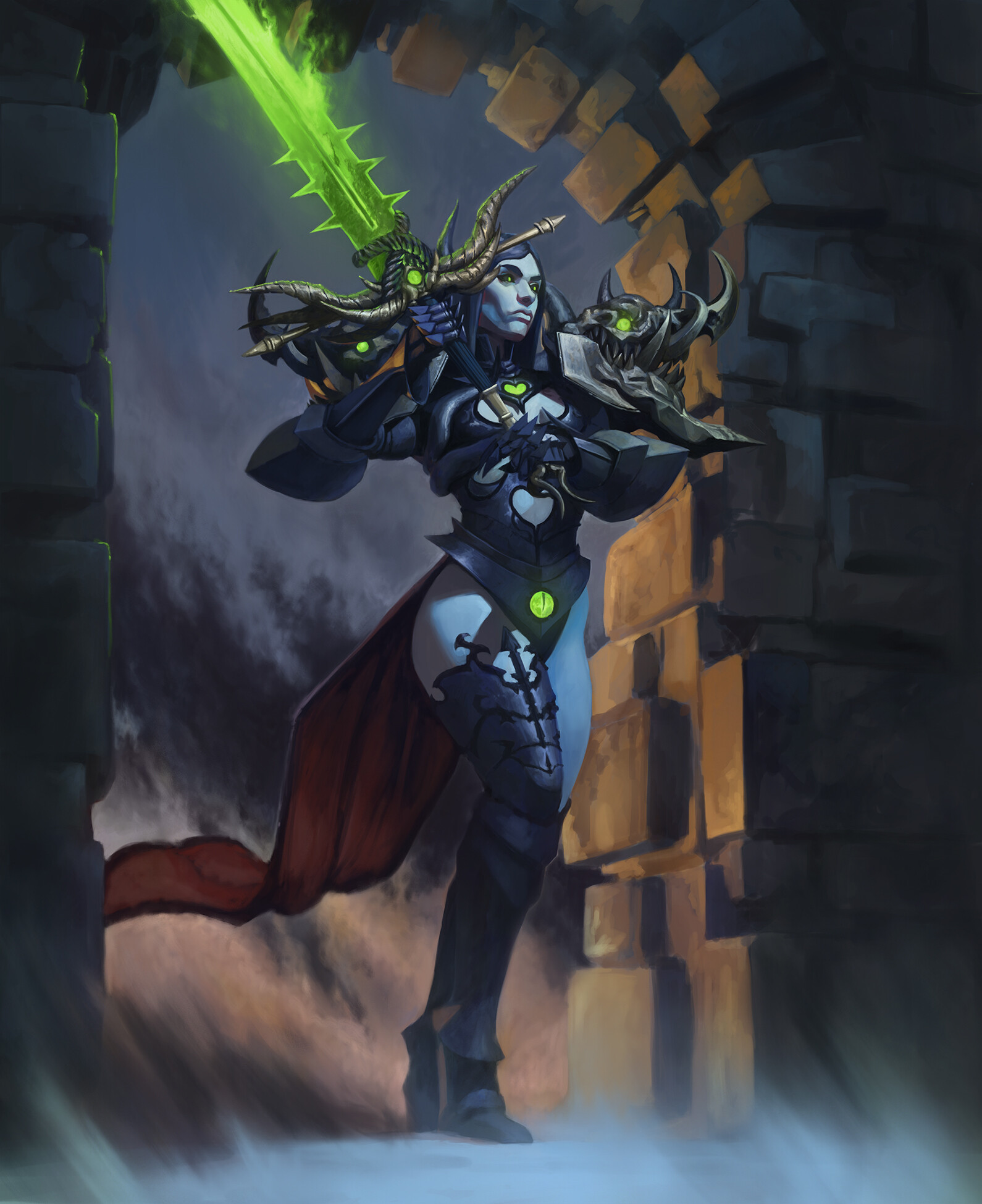

Curse Combination
Beginning at 15th level, when you take the Attack or Cast a Spell action, you can make an attack with your curse weapon as a bonus action this turn.
Bloodthirsty Blade
At 20th level, when you use your curse weapon to score a critical hit or reduce a creature to 0 hit points on your turn, you can make an additional attack with your curse weapon as part of the same action.
Ravenous Weapon
Also at 20th level, your curse weapon can have up to two magic melee weapons consumed at the same time. If you attempt to feed it a third, it regurgitates your choice of the two weapons it currently has consumed. If both of the consumed weapons grant a bonus to attack and damage rolls using the weapon, you use the higher of the two bonuses, not the combination. For example, if your curse weapon has consumed a weapon +2 and a weapon +3, you will receive a +3 bonus to your attack and damage rolls using your curse weapon, not a +5 bonus.
Curse of Combustion
Your body is an explosive with a fuse of unknown length. Perhaps you angered a powerful fire entity, such as a fire elemental lord like Imix, an archpriest of the Cult of Eternal Flame, an efreeti, or a god of fire such as Kothuss. You never knew when it would finally be time for the fire to burst out of you, annihilating you and everything in the immediate vicinity, but you always felt the flames crescendoing within, like it was using your body as kindling. By some means, though, you learned to harness this inferno, and can now use it to your own ends. After all, fire is so beautiful to behold, and you cannot help but to wonder how gorgeous the world would look covered in your glorious fire...
Combustion Ailments
As a creature afflicted with spontaneous combustion, you suffer the following ailments:
- The flames trying to burst from within you give you a subdermal glow. You magically shed dim light to a range of 10 feet, and have disadvantage on Dexterity (Stealth) checks you make to avoid being seen or to disguise yourself while this light is visible.
- Whenever you lose concentration (as though concentrating on a spell), you and each creature within 10 feet take fire damage equal to your level. Fire damage you take from this ailment can’t be reduced or prevented in any way.
Curse Spells
You gain curse spells at the accursed levels listed in the Combustion Curse Spells table. See the Spellcasting class feature for how curse spells work.
Combustion Curse Spells
| Accursed Level | Spells | |
|---|---|---|
| 2nd | Pyrokinesis | |
| 5th | Flame of Chaos | |
| 9th | Minute Meteors | |
| 13th | Flames of Purification | |
| 17th | Ruin |
Humanoid Torch
Starting at 1st level, you can brighten your inner flames. As an action, you can magically cause yourself to shed bright light in a 20-foot radius and dim light for an additional 20 feet until you dismiss as a bonus action on your turn or you lose your concentration (as if you were concentrating on a spell).
Flame Burst
Also starting at 1st level, as an action, you can cause the magical flames burning within you to explode out. Each creature other than you within 5 feet of you must succeed on a Dexterity saving throw or take 1d8 fire damage.
The damage increases when you reach certain levels in this class: 5th level (2d8), 11th level (3d8), and 17th level (4d8).
Igniting Touch
At 3rd level, you learn to concentrate the heat of your flame into your palm. As an action, you magically ignite a flammable object you touch with your hand, provided it isn’t being worn or carried by another creature.
You can also use this feature to attack your enemies. As an action, make a melee attack roll with proficiency against a creature within your reach. You use your choice of Strength or Dexterity for the attack roll. On a hit, the creature takes fire damage equal to 1d8 + your curse ability modifier.
The damage increases when you reach certain levels in this class: 5th level (2d8), 11th level (3d8), and 17th level (4d8).
Blast Wave
Also beginning at 3rd level, when you use your Flame Burst, you can expend spell points to increase its radius. The radius increases to 10 feet if you spend 2 spell points, 20 feet if you spend 3 spell points, 30 feet if you spend 5 spell points, 60 feet if you spend 6 spell points, and 90 feet if you spend 7 spell points.
Additionally, when you expend spell points this way, if a creature succeeds on its saving throw against the Flame Burst, it takes half the damage.
Overheat
Starting at 5th level, you can cause your flames to burn so hot that you scorch yourself. Once during each of your turns when you deal fire damage to a creature or object with an accursed class feature or spell, you can choose to take an amount of fire damage up to your accursed level (minimum 1).
Fire damage you take from this feature can’t be reduced or prevented in any way, but doesn’t require you to make a Constitution saving throw to maintain concentration. The target takes additional fire damage equal to twice the fire damage you chose to take.
If you use this feature to affect a target of an accursed feature or spell that affects an area, it counts as you hitting the target with an attack for the purpose of your accursed spells.
Calculated Combustion
At 11th level, you gain enough control over your flames that you can create pockets of safety for your allies. When you use an accursed class feature or spell that deals fire damage, you can choose a number of creatures you can see equal to your accursed level. The creatures automatically succeed on their saving throws against the effect, and they take no damage if they would normally take half damage on a successful save.
White Hot
Starting at 15th level, your accursed class features and spells ignore resistance to fire damage.
Blazing Inferno
At 20th level, whenever you deal fire damage with an accursed class feature or spell to a creature or object other than yourself, it takes an additional 2d8 fire damage.
Additionally, when you use your Overheat on a creature or object, your accursed class features and spells ignore any immunity to fire damage the target may have this turn.
Curse of the Hunted
You were cursed to be hunted by the beasts and monsters of the multiverse, never to know a moment’s peace or rest before your grisly demise. You may have escaped the Wild Hunt, offended a hunting deity like Artemis, or slew a powerful monster’s favorite pet.
No matter how you received it, the entity that cursed you wanted you to feel like hopeless prey, as though you were always moments away from being mauled, ripped apart, or trampled. But somehow, you figured out that your curse simply enhances and focuses aggression, and have learned to use it to direct the bloodlust of those that would hunt you elsewhere. You are proof that the hunted can indeed become the hunter, and now it feels like revenge could easily be within your grasp...
Hunted Ailments
As a creature afflicted with being forever hunted by beasts and monsters, you suffer the following ailments:
- Your foes and other creatures that are hostile toward you have a +10 bonus on Intelligence (Investigation), Wisdom (Perception), and Wisdom (Survival) checks they make to track or find you, your curse helping to guide them to your location.
- When you start your turn within 30 feet of at least one creature with Intelligence 5 or less, make a curse ability check against a DC of 10. On a failure, each such creature within range becomes irrationally hostile toward you and attacks you, prioritizing attacking and killing you over all other possible targets. On a success, the DC increases by 1, and, unless you’re in combat or roll for initiative, you don’t have to make the curse ability check again for 10 minutes. The DC resets to 10 when you fail the ability check.

Curse Spells
You gain curse spells at the accursed levels listed in the Hunted Curse Spells table. See the Spellcasting class feature for how curse spells work.
Hunted Curse Spells
| Accursed Level | Spells | |
|---|---|---|
| 2nd | Conjure Critters | |
| 5th | Summon Beast | |
| 9th | Conjure Animals | |
| 13th | Conjure Woodland Beings | |
| 17th | Conjure Minor Voidborn |
Woah
At 1st level, your experience dealing with beasts constantly attacking you has granted you greater insight into how to calm them. You have proficiency in the Animal Handling skill.
Additionally, when you make a Wisdom (Animal Handling) check you make to calm a creature that is hostile toward you, you can magically give yourself a bonus to the check equal to your curse ability modifier (minimum 1), applying your curse’s magic opposite its usual purpose to quell the target’s aggression.
Limitations of Summoning
When you use your Call the Hunt, you are able to summon a particular type of creature that uses a specific stat block, not a specific character. For example, you can summon a hamster using the rat stat block, not Boo of Minsc and Boo fame.
Call the Hunt
Also starting at 1st level, you can use your curse to call creatures to fight in battle, directing their animosity at your foes. As an action, you summon a type of beast you have seen before with a CR no greater than 1/8 and an Intelligence score no greater than 3.
The beast comes from around a hill, behind a tree, within a cloud, beneath the ground, or an otherwise obscured aspect of the terrain as is appropriate to your surroundings and its nature, appearing in an unoccupied space of your choice that you can see within 30 feet of you. If the DM determines that it isn’t feasible for the chosen creature to appear, such as a shark when the only nearby source of water is a sink, the feature fails.
Roll initiative for the summoned creature, which has its own turns. It ignores any commands you or others attempt to give it, though it remains friendly to you until there are no longer any conscious hostile targets engaged in combat with you, until you or your companions harm it, until you lose concentration (as though concentrating on a spell), or until you use this feature again.
Once the summoned creature is no longer friendly to you, it becomes hostile toward you and begins to attack you until either you or it is dead, prioritizing attacking and killing you over all other possible targets. Defeating the summoned creature doesn’t grant any experience points.
When you summon the creature, you choose a target you can see within 30 feet of you, directing the summoned creature’s aggression at the target. Until you use your action to direct the summoned creature at a different target or it becomes hostile to you, it prioritizes attacking and killing the target over all other possible targets.
When the target dies, the summoned creature will defend itself from hostile creatures, but otherwise take no actions until you direct its aggression at a different target or it becomes hostile toward you.
Once you reach certain levels in this class, you can summon beasts with a higher CR using this feature: up to CR 1/4 at 3rd level, up to CR 1/2 at 5th level, up to CR 1 at 7th level, up to CR 2 at 9th level, up to CR 3 at 11th level, up to CR 4 at 13th level, up to CR 5 at 15th level, and up to CR 6 at 17th level. It must still have an Intelligence score of 3 or less.


Call Help
At 3rd level, you learn to use your curse to aid your allies in finding you if you are in trouble. As an action, you choose any creature you are familiar with. If that creature is within 1 mile of you, it senses your location for the next minute, and for the duration is aware of the direction of your movement if you are moving.
You can use this feature a number of times equal to your curse ability modifier (minimum once). You regain all expended uses when you finish a long rest.
Aggravated Assault
Also starting at 3rd level, you can increase the aggression of other creatures, possibly causing them to reactively attack. As an action, you can cause a creature you can see within 30 feet of you to make a Wisdom saving throw. On a failed save, the creature uses its reaction to make a weapon attack at another target of your choice within the weapon’s range. If the attack hits, it counts as you hitting the creature with an attack for the purpose of your accursed spells.
Hunt Down
Beginning at 5th level, when you take the Attack action, you can have one of your summoned creatures use its reaction to move up to its speed toward its target and make a weapon attack against it if it’s within range. The summoned creature must be friendly to you, or this feature fails.
Bigger Game
Starting at 11th level, when you use your Call the Hunt, the summoned creature can be of any creature type other than humanoid, provided that it meets the other restrictions of the feature.
Most Dangerous Game
Beginning at 15th level, when you use your Call the Hunt, there is no longer any restriction on the summoned creature’s possible Intelligence score, and the summoned creature’s type can be humanoid, provided that it meets the other restrictions of the feature.
Wild Hunt
At 20th level, when you use your Call the Hunt, you can summon up to three creatures, provided they all use the same stat block. When they are summoned or you use your action to direct their aggression, you can choose the same or different targets for each summoned creature.
Additionally, your summoned creatures’ attacks now count as magical for the purpose of overcoming resistance and immunity to nonmagical attacks and damage.
Curse of Immortality
Whether it was a poorly worded wish from a djinn, an ill-advised deal with a devil or fae, or an ancient ritual you may not have studied carefully enough, you managed to attain the boon coveted by archmages everywhere: true immortality. While you can still die, you always come back, and you will never grow older or lose your beauty.
For the first few generations, maybe even for the first few millennia, it was everything you ever dreamed of: no permanent consequences, no more living in fear of death, never having to worry about the seconds ticking away. Eventually, though, you came to see immortality for what it is: a curse.
You could do nothing but watch as all those you cared about withered and died, you ran out of new things to discover and explore, and you began to grow apathetic and withdrawn as the world around you changed so much you could no longer recognize or relate to it. You’re an artifact of a long gone era, and now there’s nothing else for you to do but find a way to permanently see what is on the other side...
Immortality Ailments
As a creature afflicted with immortality, you suffer the following ailments:
- Your curse actively resists magic of a similar restorative nature. You can’t regain hit points from spells cast by other creatures, and when you fall to 0 hit points you die, you can’t be returned to life by any means other than your accursed class features.
- Whenever you die roll on the Indefinite Madness table to see which new mental affliction you develop. If you roll a duplicate, roll again until you get a new result.
Curse Spells
You gain curse spells at the accursed levels listed in the Immortality Curse Spells table. See the Spellcasting class feature for how curse spells work.
Immortality Curse Spells
| Accursed Level | Spells | |
|---|---|---|
| 2nd | Cursed with Undeath | |
| 5th | As You Were | |
| 9th | Delay Death | |
| 13th | Death Ward | |
| 17th | Little Death |
Ageless
Starting at 1st level, time seems to have ceased for your biological form. You don’t age and are immune to effects that would age you. You must still breathe, eat, drink, and sleep as is normal for a member of your race.
Additionally, you have forgotten more in your years than most will ever learn, and can delve into your memories to recall old talents. Whenever you finish a long rest, you can choose to gain proficiency in a skill or tool of your choice or to learn a language of your choice until you use this feature again.
Undying
Also at 1st level, dying is merely an inconvenience for you. At dawn each day, if you are dead, you magically return to life. When you are revived this way, you gain the benefits of having taken a long rest, and neutralize any nonmagical poisons and cure any nonmagical diseases that were affecting you at the time of your death. Your wounds close and you regrow any lost limbs or other body parts, resetting your body to the way it was at the moment you were cursed.
No matter how many times you have endured this process, it remains extremely painful and traumatic. All your ability scores are reduced by 1.
Once you reach 20th level in this class, when you die, you can choose for this feature not to function until you are otherwise returned to life.
Wisdom of the Ages
At 3rd level, you have dabbled in nearly every discipline, even if only for the purpose of alleviating your boredom. You can add half your proficiency bonus, rounded down, to any ability check you make that doesn’t already include your proficiency bonus.
Adventuring Discipline
Also at 3rd level, your life of adventuring has forced you to focus your pursuits, mastering combat skills that you may previously have only dabbled in. Choose one of the following disciplines.
Magical. You learn two cantrips and one 1st-circle spell of your choice from one of the following class’s spell lists: channeler, or occultist. The chosen spells count as accursed spells for you, and don’t count against the number of accursed spells you know. Once during each of your turns when you make a damage roll for an accursed cantrip, you can choose to add your curse ability modifier to the damage roll.
Martial. You gain proficiency with martial weapons and heavy armor. As a bonus action, you can focus on a creature you can see within 30 feet of you, aiming for a weakness in its defenses. The next time you hit the target with a weapon attack this turn, it takes an additional 1d6 damage. The damage increases by 1d6 when you reach certain levels in this class: 11th level (2d6), and 17th level (3d6).
Disciplinary Adept
At 5th level, you become a master of the discipline you chose as your Disciplinary Focus.
Magical. You learn two more cantrips and one 2nd circle spell of your choice from the spell list you chose for your Disciplinary Focus. They count as accursed spells for you, and don’t count against the number of accursed spells you know.
Martial. You can attack twice, instead of once, whenever you take the Attack action on your turn.
Shared Immortality
Starting at 11th level, you can temporarily share the restorative magic of your curse with another creature. When you finish a full rest, you can choose a willing creature within 30 feet of you.

That creature gains the effects of your Undying feature until you finish your next long rest.
When you reach 20th level in this class, you can choose two willing creatures within range. The chosen creatures both gain the effects of your Undying feature until you finish your next long rest.
Revert
At 15th level, you learn to tap into your curse’s magic to revert damage you have sustained. As an action when you have fewer than half your hit points remaining, you can regain a number of hit points equal to half your hit point maximum.
You can use this trait once and regain the ability to do so when you finish a long rest.
Malediction Magnificent
At 20th level, you have lived for so long with your curse that it evolves one final time. You can choose a fourth metamorphosis from the options in the Malediction Metamorphosis, Malediction Malignance, and Malediction Metastasis class features. If a metamorphosis has prerequisites, you must meet them to choose it.
Curse of Invisibility
You were made to be entirely unseen. Maybe you were so beautiful and vain that you inspired the jealousy of a hag matron, archfey, or god, or perhaps so unsightly that you offended one, or maybe you were the subject of an experimental potion or spell gone wrong.
No matter how you were afflicted with your curse, your visage was stripped from you and everything you touched while you held it, not even allowing you to see yourself. Seeing nothing when you looked in the mirror or down at your hands, having people literally look straight through you as though you weren’t there, not even being able to see your fingers or objects as you attempted to manipulate them, all of it was torture. Somehow through all of the psychological agony, you managed to learn that your curse manipulated light away from you.
Taking control of this light direction magic, you managed to restore most of your core visage, though you are still partially translucent and your extremities even more so. Despite the return of most of your appearance, you still have an incredible yearning to be seen, to be recognized, and might be willing to do anything to get it...
Invisibility Ailments
As a creature afflicted with permanent invisibility, you suffer the following ailments:
- The ends of your limbs, especially your fingers and toes, are still mostly invisible, making it difficult for you to finely manipulate them. You have disadvantage on any ability check you make that requires deft hand and foot movements, such as Dexterity checks you make using thieves' tools and the Acrobatics and Sleight of Hand skills.
- You and the objects you wear and carry are partially translucent. You don’t obscure objects or creatures on the other side of you from observers, nor do you provide any sort of cover to those creatures from attackers.
Curse Spells
You gain curse spells at the accursed levels listed in the Invisibility Curse Spells table. See the Spellcasting class feature for how curse spells work.
Invisibility Curse Spells
| Accursed Level | Spells | |
|---|---|---|
| 2nd | Unseen Servant | |
| 5th | Invisibility | |
| 9th | Unseen Strangler | |
| 13th | Greater Invisibility | |
| 17th | Mislead |
Blend In
Starting at 1st level, you can bend the light around you to literally blend into the background. When you make a Dexterity (Stealth) check to avoid being seen, you can magically give yourself a bonus to the roll equal to your curse ability modifier. A creature with the ability to perceive invisible targets has advantage on any ability check it makes to find you when you become hidden as a result of this feature.
A creature can perceive invisible targets if it has blindsight or truesight, or if it is under the effects of the See Invisibility spell or a similar effect.
Disappearing Duelist
Also at 1st level, you have learned to take advantage of your partial invisibility in combat. You have proficiency with martial melee weapons.
Additionally, when you become the target of an attack, you can use your reaction to magically make yourself harder to see, imposing disadvantage on the attack roll. You must use this feature before the roll. A creature with the ability to perceive invisible targets ignores the disadvantage.
Vanish
Starting at 3rd level, you can temporarily direct all light away from yourself. As a bonus action, you can magically turn invisible until the start of your next turn or until you attack, make a damage roll, or force a creature to make a saving throw.
You can use this feature a number of times equal to your curse ability modifier (minimum once), regain the ability to do so when you finish a long rest. As an action, you can expend 2 spell points to regain one of your expended Vanish uses, two uses if you spend 3 spell points, three uses if you spend 5 spell points, four uses if you spend 6 spell points, or five uses if you spend 7 spell points or more.
Unseen Assault
Also at 3rd level, you learn to use your unseen status as a way to find your foes’ weaknesses. Once during each of your turns when you hit a creature you are hidden from or that can’t see you with a weapon attack, you can cause the attack to deal an additional 2d4 damage.
The damage increases by 2d4 when you reach certain levels in this class: 5th level (4d4), 11th level (6d4), and 17th level (8d4).
Concealed Combatant
Starting at 5th level, whenever you use your Disappearing Duelist, attack rolls made against you by creatures that can't perceive invisible targets have disadvantage for the remainder of the turn.
Evanescent
Beginning at 11th level, you regain all of your expended uses of Vanish whenever you finish a short rest.
Guerrilla Tactics
Starting at 15th level, when you Vanish, you can choose a number of other willing creatures you can see within 30 feet of you equal to your curse ability modifier (minimum 1). Each chosen creature turns invisible until the end of its next turn, or until it attacks, makes a damage roll, or forces a creature to make a saving throw.
You can use this trait once and regain the ability to do so when you finish a short rest.
Invisible Stalker
At 20th level, you can use Vanish an unlimited number of times. When you Vanish, its duration increases to 1 minute, or until you attack, make a damage roll, or force a creature to make a saving throw.
Additionally, when you use your Disappearing Duelist, attack rolls made against you by creatures that can't perceive invisible targets have disadvantage until the start of your next turn. For the duration, you also have advantage on saving throws against spells that require the caster to be able to see you. You don't gain advantage on the saving throw if the creature has the ability to perceive invisible targets.
Curse of Lycanthropy
Lycanthropy is one of the most ancient and feared curses, one that transforms civilized humanoids into ravenous, raging beasts. Once bitten by a lycanthrope, the instinct to eat and destroy consumes most of the afflicted, even those who do their utmost to resist it. However, unlike so many others, you’ve found a way to manage these instincts, and unlocked the quintessential nature of lycanthropy: the ability to sculpt your body into mammalian forms. You’ve learned to harness this gift, transcending the singular beast form of the lycanthrope who turned you and accessing the shapes of any mammal you’ve seen. You can only imagine the possibilities if you attain complete mastery of your shape...
Lycanthropy Ailments
As a creature afflicted with lycanthropy, you suffer the following ailments:
- You have vulnerability to damage from silvered weapons.
- Due to the enhanced metabolism caused by lycanthropy, you have to consume much more food than a normal creature. At the end of each day that you don’t consume double the amount of food a creature of your size usually consumes, you automatically suffer one level of exhaustion.
Curse Spells
You gain curse spells at the accursed levels listed in the Lycanthropy Curse Spells table. See the Spellcasting class feature for how curse spells work.
Lycanthropy Curse Spells
| Accursed Level | Spells | |
|---|---|---|
| 2nd | Wolfsong | |
| 5th | Track | |
| 9th | Walk in the Moonlight | |
| 13th | Winter's Pack | |
| 17th | Violent Scream |

Enhanced Senses
At 1st level, you gain proficiency in the Perception skill. Additionally, you have advantage on Wisdom (Perception) checks that rely on hearing or smell.
Minor Shift
Also starting at 1st level, you learn to control your lycanthropy enough to shift small parts of your body for short periods without giving in to your feral instincts. You count as a shapechanger, in addition to your other types. Your original form is your fully humanoid form for the purpose of the Moonbeam spell and similar effects.
As you attack, you can shift your teeth into fangs or tusks or your hands into hooves or claws, allowing you to create a natural weapon. You are proficient with your natural weapon, which is a melee weapon that deals 2d4 bludgeoning, piercing, or slashing damage (your choice each time you make an attack with it).
Immediately after you take the Attack action on your turn using your natural weapon, you can make an additional natural weapon attack as a bonus action.
Your natural weapon’s damage increases to 2d6 at 5th level, to 2d8 at 11th level, and to 2d10 at 17th level.
Additionally, starting when you reach 6th level in this class, your natural weapon counts as magical for the purpose of overcoming resistance and immunity to nonmagical attacks and damage.
Scent Memory
By 3rd level, your enhanced senses have allowed you to create a mental catalogue of scents. Whenever you succeed on a Wisdom (Perception or Survival) check using smell to find or track a creature, you know if you’ve scented that creature before, and can accurately place the scent to a creature you know if you’ve smelled it in the last year. This feature has no effect on a creature if it is transformed into a form you don’t recognize.
Hybrid Shift
Also starting at 3rd level, you can assume a form that is a mix between humanoid and beast. This hybrid form is unstable, though, and can’t be maintained for long. You can assume your hybrid form as an action. While you’re in your hybrid form, you gain the following benefits:
- You can make a natural weapon attack as a bonus action on your turn.
- Your lycanthropy constantly reknits your wounds to maintain the form. At the start of each of your turns, you regain a number of hit points equal to half your accursed level. If you take damage from a silvered weapon, this benefit doesn’t function at the start of your next turn.
Your hybrid form lasts for 1 minute. It ends early if you choose to end it (no action required by you), or if you drop to 0 hit points or die.
You can use this trait once and regain the ability to do so when you finish a short rest. If you have no remaining uses of this feature, you can instead expend 5 spell points to use it again.
Extra Attack
Beginning at 5th level, you can attack twice, instead of once, whenever you take the Attack action on your turn.
Sustained Shift
At 11th level, you gain the ability to sustain minor shifts of your form without losing yourself to your animal instincts. As an action, you can magically assume one of the following traits, or return to your normal form. If you assume one of these traits while you already have one assumed, you lose the previous trait.
Digitigrade Legs. Your femurs shorten while your metatarsals lengthen, giving you the appearance of having reversed knees and making your strides more powerful. Your speed increases by 10 feet, and you gain the Jumping and Fast Attributes.
Echolocation. Your vocal cords become more elastic, allowing you to create sounds inaudible to most creatures. As a bonus action on your turn, you can emit a noise inaudible to creatures without the echolocation or tremorsense traits. Until the beginning of your next turn, you have blindsight to a range of 30 feet as long as you aren’t deafened and are able to speak.
Hooked Claws. Hooked claws appear at the ends of your fingers and toes. You gain the Wall-Crawling Special Movement.
Powerful Lungs. Your lungs grow larger within your chest cavity, giving you a greater capacity for air. You can hold your breath for up to 15 minutes at a time.
Vertical Pupils. Your pupils thin until they become vertical slits, much like a cat’s. You have darkvision, if you don’t already have darkvision. Additionally, you have advantage on Wisdom (Perception) checks that rely on sight.
Webbed Phalanges. The joints of your fingers and toes becomes bridged by flexible webbing. You gain the Water Speed Attribute.
Major Shift
At 15th level, you can cast the Alter Self spell at will, without expending spell points. When you cast the spell using this feature, it doesn’t require concentration.
Additionally, when you use the Change Appearance option, in addition to the normal ways you can use that option, you can change your basic shape, though you can only change your basic shape into that of mammals. You still can’t appear as a creature of a different size to you.
For example, you can use the Change Appearance option to change your form from bipedal to quadrupedal, but only into a pony, tiger, dog, or other mammal of your size, not into a crocodile, griffin, or other non-mammalian creature.
Master of Form
At 20th level, as a bonus action on your turn, you can use your Hybrid Shift, Sustained Shift, or Major Shift feature.
Additionally, you can use your Hybrid Shift an unlimited number of times. While in your hybrid form, you have resistance to bludgeoning, piercing, and slashing damage from nonmagical weapons that aren’t silvered.
Curse of Misfortune
You, or one of your ancestors, managed to earn the ire of a powerful magical entity, whether it be a hag, deity, or archmage, that cursed your family line with poor luck. You’re constantly losing things as though they’ve vanished into the aether, you injure yourself in the most improbable of ways, and it always rains if you’ve forgotten your cloak. You’ve learned, however, that the magic that surrounds you simply alters probability, and have discovered that you can manipulate it. Perhaps, if you gain enough control over this ability, you may even be able to alter fate...
Misfortune Ailments
As a creature afflicted with extraordinary unluck, you suffer the following ailments:
- Immediately after you finish a rest or roll initiative, a shroud of unluck settles around you. You can choose for the shroud to be invisible, though it appears as a cloak of smoke if you don’t or to a creature that has truesight or is under the effects of the Detect Magic spell or similar magic. While the shroud surrounds you, you have disadvantage on ability checks and saving throws that use Strength, Dexterity, and Constitution, as well as on attack rolls. The next time you make one of these rolls, the shroud automatically disappears or reappear depending if the effects are active or not.
- Whenever a creature scores a critical hit against you, it can roll one of the weapon or effect’s damage dice one additional time and add it to the extra damage of the critical hit.
Curse Spells
You gain curse spells at the accursed levels listed in the Misfortune Curse Spells table. See the Spellcasting class feature for how curse spells work.
Misfortune Curse Spells
| Accursed Level | Spells | |
|---|---|---|
| 2nd | Unluck On That | |
| 5th | Shifting the Odds | |
| 9th | Bad Luck | |
| 13th | Cursed Gift | |
| 17th | Curse of Ill-Fated Fortune |
Jinxing Shroud
At 1st level, while you have your shroud of unluck, the range of your Jinx increases to 30 feet. Additionally the target is unaware that you are the source of this feature, even if you don’t make a Dexterity (Sleight of Hand) check, unless it has truesight or is under the effects of the Detect Magic spell or similar magic, in which case you make the ability check as normal.
Fortune Twist
Also at 1st level, you learn to manipulate your luck. When you fail an attack roll, ability check, or saving throw, you can use your reaction to reroll, potentially changing the failure to a success. You can use this trait once and regain the ability to do so when you fail another roll of the same type.
For example, if you used this feature to reroll an attack roll, you can’t use this feature again until you miss with a different attack roll.
Unfortunate Accident
Starting at 3rd level, once during each of your turns when you use your Jinx, you can choose to imbue the jinx with additional bad luck. If the target of the jinx fails of its saving throw, it takes 1d8 force damage, the extra bad luck causing a random event to injure it. When a creature fails its saving throw against this feature, it counts as you hitting the creature with an attack for the purpose of your accursed spells. You must use this feature before the target rolls its saving throw.
The damage increases by 1d8 when you reach certain levels in this class: 5th level (2d8), 11th level (3d8) and 17th level (4d8).



Cheating Shroud
Also at 3rd level, you learn to utilize your shroud of unluck to cause games of chance to go in your favor. While you have your shroud of unluck, when a creature you can see within 30 feet makes an ability check involving a game of chance, such as using a dice set or playing card set, you can use your reaction to give the creature advantage or disadvantage on the ability check. The target doesn’t know you manipulated its luck this way.
Luck Twist
Beginning at 15th level, you gain a finer control over luck, allowing you to grant good luck to others. While you have your shroud of unluck, when you see a creature within 30 feet of you make an attack roll or saving throw, you can use your reaction to grant the creature advantage on the roll. You must use this feature before the creature makes the roll.
Sovereign of Fate
At 20th level, you can bend the fate of all around you. In combat, you get a special reaction that you can take once on every creature’s turn, except your turn.
You can use this special reaction only to use either your Shared Misfortune or Luck Twist feature, and you can’t use it on the same turn that you take your normal reaction.
Curse of Petrification
You spent unknown years, maybe even decades or centuries, as a statue, a literal stone shell of your former self. You may have angered a vengeful god or powerful spellcaster, fell victim to a gorgon's breath, or looked at a medusa the wrong way. No matter how you were petrified, you eventually regained conscious awareness, though not the ability to move or to access your senses.
This total denial of stimulus drove you to near madness, if it didn’t tear your sanity apart, before you somehow realized that the nature of your curse is the ability to change between flesh and stone at will. You managed to return yourself to flesh, freeing yourself from your stony prison, but carry the knowledge that you can convert parts of yourself back into rock.
Despite relishing your escape and the return of everything the outside world has to offer, a part of you misses the durability and permanence of stone...
Petrification Ailments
As a creature afflicted with petrification, you suffer the following ailments:
- Due to your body’s unnatural density, your weight doubles. Additionally, since you carry so much more weight than an average member of your race, your carrying capacity and the weight you can push, drag, and lift are each halved.
- Your movements bear a large amount of inertia. When you use any of your movement in combat, you must use your full movement before you can end your turn.
Curse Spells
You gain curse spells at the accursed levels listed in the Petrification Curse Spells table. See the Spellcasting class feature for how curse spells work.
Petrification Curse Spells
| Accursed Level | Spells | |
|---|---|---|
| 2nd | Fists of Stone | |
| 5th | Immovable Object | |
| 9th | Petrify | |
| 13th | Stoneskin | |
| 17th | Unyielding Durability |
Stone Form
Starting at 1st level, you can magically transform your skin into mobile rock, protecting yourself against harm. As an action, you can enter this stone form, or transform from your stone form back into your original form. While in your stone form, your AC can’t be less than 13 + your Dexterity modifier, regardless of what kind of armor you are wearing. You can use your curse ability, instead of your Dexterity, to calculate your AC with this feature if you have the Protective Hex metamorphosis.
Additionally while in your stone form, you can slam yourself into enemies to harm them. You are proficient with your slam, which is a melee weapon that deals bludgeoning damage equal to 1d10 + your Strength modifier on a hit.
There are also risks to being in your stone form. While in it, any swimming speed you have is 0 and can’t increase, and you automatically fail any ability checks and saving throws you make to swim. If the water is deeper than your height, you sink to the bottom at a rate of 60 feet per round, and can move at your normal walking speed along the bottom of the body of water once your feet touch it.
Starting when you reach 6th level in this class, your slam counts as magical for the purpose of overcoming resistance and immunity to nonmagical attacks and damage.
Living Statue
Also beginning at 1st level, you can use your stone form to attempt to fool others. While you remain motionless in your stone form, you are indistinguishable from an inanimate statue. To remain motionless enough to maintain this effect, you must hold your breath, following the rules for Suffocating found in Chapter 8 of the Player’s Handbook.
Mountain’s Endurance
At 3rd level, all of the time you’ve spent holding your breath grants you greater lung capacity. You can hold your breath for twice as long before you start suffocating.
Rolling Boulder
Also starting at 3rd level, you can use your weight and momentum to empower your slams. Once during each of your turns when you move at least 15 feet straight toward a target and then hit it with your slam, the attack deals an extra 1d10 damage to the target. If the target is no more than one size larger than you, it must succeed on a Strength saving throw or be knocked prone.
If the target is two or more sizes larger than you when you use this feature, any speed you have becomes 0 for the rest of the turn, and you gain a +1 bonus to the slam’s damage for every 5 feet of movement you lost.
The damage increases by 1d10 when you reach certain levels in this class: 11th level (2d10), and 17th level (3d10).
Extra Attack
Beginning at 5th level, you can attack twice, instead of once, whenever you take the Attack action on your turn.
Return to Flesh
Also at 5th level, when you become petrified, you can choose to return to your original flesh form after 10 minutes, provided the effect causing the condition would normally have a longer duration.
The time you must spend before you can revert to your flesh form decreases when you reach certain levels in this class: 1 minute at 11th level, and 1 round at 20th level.
Quartz Form
Starting at 11th level, when you enter your stone form, you can choose to transform your entire body into hardened stone, instead of just your skin. While in this quartz form, you are subject to all the rules of being in your stone form, but your weight doubles, and you have advantage on ability checks and saving throws you make against being pushed, shoved, or knocked prone.
Additionally, your AC can’t be less than 16 + your Dexterity modifier while in your quartz form, regardless of what kind of armor you are wearing. You can use your curse ability, instead of your Dexterity, to calculate your AC with this feature if you have the Protective Hex metamorphosis.
There are also further risks to your quartz form. You have vulnerability to adamantine weapons and to bludgeoning damage you take due to falling, and any flying speed you have becomes 0 and can’t increase, causing you to fall.
Rolling Avalanche
Beginning at 15th level, you can move through the space of any creature that is prone. If you successfully knock a creature prone with your Rolling Boulder, you can use the feature again this turn, provided it targets a different creature.
Additionally, when you use your Rolling Boulder on an object or structure, the attack deals double the damage to the target.



Diamond Form
At 20th level, the rock that makes up your stone form becomes harder than diamonds, and just as eternal. While in your stone form, you have resistance to all damage except psychic damage, you don’t age, and you no longer need to breathe.
Curse of Plague
You contracted a magical disease that ravaged your body and mind. It might have been a blight called down by an angry god to punish your village for its sins, or an illness brought forth by a demon lord as a way to soften your city’s defenses, or maybe you were infected by an explorer who had just arrived from another plane. No matter how it happened, the infection nearly killed you and may have even permanently disfigured you, but you managed somehow to stop its progression and harness its magic. Going suddenly from death’s door to obtaining a grand new power, becoming the carrier of a disease that could wipe out entire nations if you set it loose, it was addictive. Now you find yourself wanting even more of this power, influencing the growth of the contagion inside you to create new strains, and trying to contract even greater afflictions. And if you unleash one or two, maybe someone else can experience this joy as well...
Plague Ailments
As a creature afflicted with magical disease, you suffer an ailment from each of your contracted diseases, as described in the Infection Vector feature.
Curse Spells
You gain curse spells at the accursed levels listed in the Plague Curse Spells table. See the Spellcasting class feature for how curse spells work.
Plague Curse Spells
| Accursed Level | Spells | |
|---|---|---|
| 2nd | Rot | |
| 5th | Plaguebearer | |
| 9th | Poisoned Heart | |
| 13th | Plague | |
| 17th | Contagion |
Experiential Knowledge
At 1st level, your first-hand experience with magical diseases makes you a foremost expert on them and their mundane counterparts. Whenever you make an ability check related to the properties or treatment of a disease, you are considered proficient in the skill and add double your proficiency bonus to the check, instead of your normal proficiency bonus.
Infection Vector
Also at 1st level, you become able to intentionally infect others with your diseases. You contract two magical diseases of your choice, which are detailed under “Diseases” below. Each disease has an ailment that you suffer once you contract it. You do not suffer the disease’s infection. Additionally, you are immune to the normal effects of diseases with the same name as one of your contracted diseases.
As an action, you can touch a creature and attempt to infect it with one of your contracted diseases. The target must succeed on a Constitution saving throw or suffer the disease’s infection, though not its ailment, until the start of your next turn. A creature failing this saving throw counts as you hitting it with an attack for the purpose of your accursed spells.
You contract one additional disease of your choice when you reach 5th level, 11th level, 15th level, and 20th level. Additionally, when you gain a level in this class, you can replace one of your contracted diseases with a different disease of your choice.
Sickness Sense
Starting at 3rd level, the magical diseases within you seem to resonate with others of their ilk. As an action, you can cause yourself to sense the location, though not the type, of each magical disease within 60 feet of you for 1 minute. You also know the location, though not the identity, of the original source of the disease if it’s within the radius.
You can use this feature a number of times equal to your curse ability modifier (minimum once). You regain all of your expended uses when you finish a long rest.
Malicious Malady
Also beginning at 3rd level, you can ravage the bodies of those who become infected with your diseases. Once during each of your turns when a creature fails its saving throw against your Infection Vector, you can cause the creature to take 1d8 necrotic damage.
The damage increases by 1d8 when you reach certain levels in this class: 5th level (2d8), 11th level (3d8), and 17th level (4d8).
Extended Illness
Starting at 5th level, you can cause creatures to suffer your infections for greater periods of time. When a creature fails its saving throw against your Infection Vector, you can expend spell points to increase its duration, instead of the infection ending at the start of your next turn: to 1 minute for 2 spell points, 10 minutes for 3 spell points, 1 hour for 5 spell points, 8 hours for 6 spell points, and 24 hours for 7 spell points.
If you extend the infection’s duration this way, the target can repeat the Constitution saving throw as an action during each of its turns, ending the infection on a successful save.
Airborne Contagion
Beginning at 11th level, your diseases become infectious at a greater range. The range of your Infection Vector increases to 30 feet, instead of requiring you to touch the target. To attempt to infect a creature greater than 5 feet from you, you must be able to see it.
Malevolent Malady
Starting at 15th level, your accursed class features and spells ignore immunity to disease. If a creature is normally immune to disease, it instead makes its saving throw against the feature or spell with advantage.
Resistant Pathogen
At 20th level, your contracted diseases become much more difficult for infected hosts to combat. When a creature casts a spell or uses an ability that would cure the target of one of your infections, the effect’s user must succeed on a spellcasting ability check against your spell save DC of the effect fails to cure the target of the infection. If the user doesn’t have a spellcasting ability for the effect, it uses its Constitution.
Additionally, when you use your Extended Illness, the target must succeed on the repeated Constitution saving throw three times to end its infection.
Diseases
The diseases are presented in alphabetical order.
Abyssal Affliction
Most often caused by exposure to demons, especially bulezau, the infected creature sports festering boils, coughs up flies, and sheds rotting skin.
Ailment. Your hit point maximum is reduced by an amount equal to your level.
Infection. The target becomes poisoned.
Contracting Additional Diseases
The diseases you contract as you gain levels are a result of you intentionally mutating the diseases within your body to create new strains. You might also come into contact with other magical diseases during your adventures. At your DM’s option, you might be able to contract such a disease as though you gained it through your Infection Vector class feature. If you do, work with your DM to determine its ailment and infection.
Contracting and gaining control of an outside disease takes a toll on your body. You suffer the disease’s full effects for a number of days equal to twice your number of contracted diseases. To survive the experience requires that you expend 1,000 New Yen for each day to afford the care; otherwise, your curse expels the disease from your system to keep you alive, though you remain incapacitated for the full duration as your body recovers from the trauma.
Blinding Sickness
The infected creature's eyes become clouded by an aggressive cataract.
Ailment. Your vision always counts as being at least lightly obscured. If you are in an area that is normally only lightly obscured, it counts as being heavily obscured for you.
Infection. The target has a much more difficult time seeing, causing it to have disadvantage on attack rolls and Wisdom (Perception) checks it makes using sight.
Bone Rot
Most often transmitted by the corpses littering battlefields and graveyards, the infected creature’s bones become brittle, causing clumsiness and fragility.
Ailment. Your base walking speed is reduced by 10 feet.
Infection. Each time the target takes bludgeoning, piercing, or slashing damage, its speed is reduced by 5 feet until the end of its next turn. If all of the target’s speeds are 0 when it takes this damage, it instead takes additional damage equal to half your accursed level, rounded up, and it can’t suffer this extra damage again until the end of its next turn. This infection ignores any immunity to disease an undead may have, provided that it has bones.
Cackle Fever
Also called “the shrieks,” this disease causes sudden and uncontrollable fits of laughter if the infected creature experiences stress.
Ailment. When you roll for initiative, take damage for the first time since the beginning of your last turn, become frightened, or have a nightmare, you must succeed on a Constitution saving throw or take psychic damage equal to half your accursed level, rounded up.
Infection. The target laughs uncontrollably. It can’t speak, and can use either an action or bonus action on its turn, not both.


Corruption of Yurtrus
The infected creature grows horrifically large cysts and boils filled with poisonous pus.
Ailment. When you take damage for the first time since the start of your last turn, you must succeed on a Constitution saving throw or become poisoned until the end of your next turn.
Infection. If the target is reduced to 0 hit points or dies, it explodes, forcing each creature other than you within 10 feet of it to make a Constitution saving throw. A creature takes 1d6 poison damage and becomes poisoned on a failed saving throw, or half as much damage and isn’t poisoned on a successful one.
A creature poisoned this way can repeat the saving throw at the end of each of its turns, ending the effects on itself on a success.
The damage increases by 1d6 when you reach certain levels in this class: 5th level (2d6), 11th level (3d6), and 17th level (4d6).
Filth Fever
A fever sweeps through the infected creature’s body, causing muscle weakness.
Ailment. You have disadvantage on Strength ability checks, and your Strength score counts as being 2 lower for the purpose of calculating your carrying capacity and the weight you can push, drag, or lift.
Infection. The target has disadvantage on ability checks and attack rolls using Strength.
Flesh Rot
The infected creature’s flesh begins to rot and slough off.
Ailment. Your horrifying visage and your putrid smell cause you to have disadvantage on Charisma checks you make to convince creatures to be friendly to you or not to be hostile toward you.
Infection. The target has disadvantage on Charisma ability checks, and once per turn when it takes damage from a creature other than you, it takes additional damage equal to half your curse ability modifier (minimum 1).
Mindfire
The infected creature’s mind becomes feverish, making it difficult for it to form thoughts.
Ailment. On your turn, you can use either an action or a bonus action, not both.
Infection. The target has disadvantage on Intelligence checks and at the start of its turn rolls a d20. On a 5 or less, the creature ends its turn without moving or taking any actions.
Mucous Suffocation
Most often caused by exposure to an aboleth’s mucous cloud, the infected creature’s lungs are sealed by the mucous, which acts as a replacement organ that can process the oxygen from water and causes the target to be able to breathe only underwater.
Ailment. If you don’t fully submerge yourself in water for at least 1 hour each day, you suffer a level of exhaustion that can only be removed once you take a long rest after submerging yourself this way.
Infection. The target loses the ability to breathe air and gains the ability to breathe water. For the duration, it is unable to speak, and it immediately begins to suffocate whenever it isn’t underwater. This infection has no effect on a creature that doesn’t need to breathe.
Rust Blight
While this disease has no effect on creatures made of organic matter, it is catastrophic to metal, causing rapid oxidization and brittleness.
Ailment. While you wield a nonmagical weapon made of metal, it takes a permanent and cumulative -1 penalty to its attack and damage rolls at the end of each minute. If its penalty drops to -5, the weapon is destroyed, crumbling away into rust-colored dust.
Infection. If the target is a construct or object, it suffers a -2 penalty to its AC, and until the end of the turn loses any resistance or immunity it has to necrotic damage. This infection ignores any immunity to disease a construct or object may have, though it has no effect on creatures that aren’t constructs.
Seizure
The infected creature is overcome with shaking due to muscle spasms.
Ailment. When you make a Dexterity ability check, you subtract you curse ability modifier (minimum 1) from the result.
Infection. The target has disadvantage on ability checks and attack rolls using Dexterity.
Sewer Plague
Most often transmitted by denizens of the sewers, such as rats and otyughs, the infected creature suffers various bodily symptoms, including fatigue and cramps.
Ailment. You regain only half the normal number of hit points from spending Hit Dice.
Infection. The creature suffers two levels of exhaustion, to a maximum of 5. It removes any levels of exhaustion it gained from this effect when the infection ends.
Slimy Doom
The infected creature begins gushing blood uncontrollably from its eyes, ears, and nose.
Ailment. When you lose concentration (as though concentrating on a spell), you become incapacitated until the end of your next turn.
Infection. The target has disadvantage on Constitution checks, and whenever it takes damage, the next attack roll made against it has advantage.
Spores of Madness
The infected creature’s mind is assaulted by spores, leading to confusion, aggression, and reduced higher functions.
Ailment. You have disadvantage on Intelligence checks you make to recall information.
Infection. The target has difficulty distinguishing friend from foe. At the start of each of its turns, it must succeed on an Intelligence saving throw or the only action it can take this turn is the Attack action, choosing the target of the action at random from among other creatures it can see within range of its movement combined with the range of its possible attacks.
Curse of Possession
Your body is inhabited by a spirit of the deceased, and for some time it had complete control, forcing you to be a silent passenger in your own flesh. Whether it is a vengeful ghost, a sorrowful shade, or a lovelorn specter, this apparition has unfinished business that prevents it from passing into the afterlife. Somehow, you’ve wrested control of your body back from the spirit, and have made an accord with it, working together to help it pass on while you accomplish your own goals. Whether this accord is true friendship between the living and the dead or a tenuous partnership between unwilling parties, you both know that you’re much more powerful working together than apart...
Possession Ailments
As a creature afflicted with possession by a spirit, you suffer the following ailments:
- Due to the spirit sharing your body, spells and effects that detect the presence of undead, such as the Detect evil and good spell, detect you as if you are an undead. In addition, effects that affects undead, such as turn undead, also affects you.
- The spirit sharing your body makes you feel unnaturally cold, almost more than your mortal body can handle in normal environments. If you’re in a cold climate, as described in Chapter 5 of the Dungeon Master’s Guide, or have suffered cold damage since the end of your last turn, you have disadvantage on attack rolls and ability checks using Strength, Dexterity, or Constitution.
Curse Spells
You gain curse spells at the accursed levels listed in the Possession Curse Spells table. See the Spellcasting class feature for how curse spells work.
Possession Curse Spells
| Accursed Level | Spells | |
|---|---|---|
| 2nd | Ghost Light | |
| 5th | Bind Spirit | |
| 9th | Speak with Dead | |
| 13th | Shroud of Death | |
| 17th | Banshee's Grievance |
Spirit Companion
By 1st level, you’ve befriended, or at least made a deal with, the spirit that possessed you, agreeing to share your body to mutual benefit. Choose an appearance and alignment for your spirit companion. Your spirit companion knows Common and one additional language of your choice. It has the following statistics and features:
- Its size is Small or Medium, your choice when you take this feature or gain a new spirit companion.
- You determine its statistics as though creating a new character. After you assign its ability scores, you increase one of its ability scores by 2, and another of its ability scores by 1.
- It has 1 hit point, and can’t gain more. If it would be dealt damage, instead prevent that damage and it instantly retreats to your body for protection. It also retreats this way if you order it to on your turn (no action required by you), if you become unconscious or die, or if it is ever on a different plane than you.
- It has darkvision and Sixth Sense Attribute.
- It is immune to cold, necrotic, and poison damage.
- It is immune to the charmed, exhaustion, frightened, grappled, paralyzed, petrified, poisoned, prone, and restrained conditions. However, due to sharing your body, if you are subject to the charmed, exhaustion, frightened, incapacitated, paralyzed, petrified, poisoned, or unconscious conditions, your spirit companion suffers the same effects.
- It is proficient with its withering touch, which is a melee weapon that deals 1d6 necrotic damage. It uses Charisma, instead of Strength, for the attack and damage rolls of its withering touch. While it’s within your body, it can make withering touch attacks against creatures within your reach. When your spirit companion hits a creature with its withering touch, it counts as you hitting the target with an attack for the purpose of your accursed spells.
- It is proficient in any saving throws in which you’re proficient.
- It is proficient in two skills of your choice.
- Its Armor Class is equal to 10 + your curse ability modifier.
- It has a flying speed of 10 feet, and no other speed. It can move through other creatures and objects as if they were difficult terrain. It takes 1 force damage if it ends its turn inside an object.
Your spirit companion obeys your commands as best it can. It has its own opinions, attitudes, and so on, but will defer to your judgment when it comes to taking actions. It takes its turn on your initiative, though it doesn’t take an action unless you command it to. On your turn, you can verbally command your spirit companion where to move (no action required by you). You can use your action to verbally command it to take the Attack, Dash, Disengage, Dodge, or Help action.
Your spirit companion uses your proficiency bonus. Whenever you gain the Adventuring Boon class feature, your spirit companion’s abilities also improve. You can increase one of its ability scores by 2, or you can increase two of its ability scores by 1. As normal, you can’t increase one of its ability scores above 20 using this feature.
If you ever manage to complete the task or resolve the emotion tying your spirit companion to the Material Plane, allowing it to move into the afterlife, you can spend 1 hour conducting a ritual to call another spirit companion to share your body. Create a new spirit companion using the guidelines in this feature.
Chill of the Afterlife
Starting at 3rd level, once during each of your turns when either you or your spirit companion hits with a melee weapon attack, you can cause the attack to deal an additional 1d6 cold damage. The damage increases by 1d6 when you reach certain levels in this class: 11th level (2d6), and 17th level (3d6).
Apparition Alacrity
Also beginning at 3rd level, you can use your bonus action to verbally command your spirit companion to take the Dash, Disengage, or Dodge action.
Body & Spirit
Starting at 5th level, when you take the Attack action, you can verbally command your spirit companion to make a withering touch attack as part of the same action.
Additionally, when you cast a spell, you can do so as if you were casting the spell from your spirit companion’s position.
Wail of the Grave
At 11th level, your spirit companion gains the ability to unleash a horrifying wail that has the potential to literally scare the life out of those who hear it. As an action, you can have your spirit companion unleash this wail. Each creature of your choice within 30 feet of your spirit companion that can hear it must make a Constitution saving throw. A target takes 4d8 psychic damage on a failed save, or half as much on a successful one. Then, if the creature has a number of hit points less than or equal to your accursed level, it drops to 0 hit points.
This wail has no effect on undead or constructs, or creatures immune to being frightened.
You can use this trait once and regain the ability to do so when you finish a short rest.
Mutual Possession
Starting at 15th level, your spirit companion can inhabit and control the bodies of other humanoids while maintaining its connection to you. As an action, you can have your spirit attempt to possess a humanoid within 5 feet of it. That creature must make a Charisma saving throw or be possessed by your spirit companion for 1 minute. When your spirit companion possesses a creature this way, it disappears into the target’s body. While in the target’s body, your spirit companion can’t be targeted by any attack, spell, or other effect, except ones that turn undead.
While possessing a creature, your spirit companion retains its alignment, Intelligence, Wisdom, Charisma, and immunity to being charmed and frightened.
It still counts as your spirit companion for the purpose of your class features and abilities, and takes its turns and uses its actions as normal. Otherwise, it uses the target’s statistics, but doesn’t gain access to the target’s knowledge, class features, or proficiencies.
The possession ends early if the body drops to 0 hit points, you choose to end it on your turn as a bonus action, or your spirit companion is forced out by an effect like the Dispel evil and good spell. When the possession ends, your spirit companion reappears in an unoccupied space within 5 feet of the body.
After it succeeds on the saving throw or after the possession ends, the target is immune to this feature until you complete a long rest.
You can use this trait once and regain the ability to do so when you finish a long rest.
Spectral Champion
At 20th level, you become an ideal host for spirits, your body so infused with ectoplasmic energy that you empower any spirit that shares it. Your spirit companion’s flying speed increases to 30 feet. When you use your Mutual Possession, the target can be any creature that isn’t a construct or undead within 5 feet of your spirit companion, and the possession lasts indefinitely.
Additionally, once when you would drop to 0 hit points or be killed outright, you can use your reaction to have your spirit companion retreat into your body and return you to life with 1 hit point. You regain your use of this ability when you finish a short rest.
Curse of Vampirism
At some long past point in your life, you were taken by a vampire and turned. You spent countless years as a mindless vampire spawn, destroying and drinking at your master’s behest. By a certain point, you’d earned your master’s regard, and they made you a vampire scion, granting you a small measure of free will and returning your mind, and began training you to be a true vampire.
Dissatisfied with being a gilded slave, you found a way to break your master’s control over you, and managed to beat back the curse in your blood, returning yourself to a measure of life that isn’t exactly undeath. However, vampiric properties remain in your body, and a part of you thirsts to experiment with the depth of your abilities...
Vampirism Ailments
As a creature afflicted with vampirism, you suffer the following ailments:
- You have the following flaws: You can't enter a residence without an clear invitation from one of the occupants, you take 1/4 of your max hp as acid damage if you end your turn in running water and you take 1/4 of your max hp as radiant damage when you start your turn in sunlight.
- Due to your partially undead nature, if a spell or effect would cause you to regain hit points, you regain only half as many hit points if the spell or effect would normally have no effect on undead.
Curse Spells
You gain curse spells at the accursed levels listed in the Vampirism Curse Spells table. See the Spellcasting class feature for how curse spells work.
Vampirism Curse Spells
| Accursed Level | Spells | |
|---|---|---|
| 2nd | Find Familiar | |
| 5th | Vampire's Kiss | |
| 9th | Vampiric Touch | |
| 13th | Night Terrors | |
| 17th | Blood Purge |
Vampiric Physiology
At 1st level, you retain some of the physiological advantages of being a vampire scion. You have darkvision, if you already have darkvision, its range instead increases by 15 feet. You also aren’t visible in mirrors, and you have resistance to necrotic damage.
Additionally, you still have elongated canine fangs and supernatural jaw strength, allowing you to use your bite as a natural weapon. You are proficient with your bite, which is a melee weapon that deals 2d6 piercing damage. You can use Dexterity, instead of Strength, for the attack and damage rolls of your bite.
Scion’s Education
Also at 1st level, you benefit from the formal training you received at your vampire progenitor’s decree. You gain proficiency with longswords, rapiers, and longbows.

Additionally, you gain proficiency in your choice of one of the following skills or tools: Athletics, History, Insight, Intimidation, Persuasion, calligrapher’s supplies, dragonchess sets, or two instruments of your choice. Alternatively, you can learn a language of your choice.
Draining Bite
Starting at 3rd level, when you hit a creature with your bite that you have grappled or that is willing, incapacitated, or restrained, your bite deals an additional 1d6 necrotic damage, draining blood and life force from the victim. The target’s hit point maximum is reduced by an amount equal to the necrotic damage taken this way, and you regain half that many hit points (minimum 1). The reduction lasts until the creature finishes a long rest. The target dies if this effect reduces its hit point maximum to 0. Undead and constructs are immune to this feature.
The necrotic damage increases by 1d6 when you reach certain levels in this class: 5th level (2d6), 11th level (3d6), and 17th level (4d6).
Sanguine Glamour
Also at 3rd level, you learn to tap into the vampiric ability to charm. As an action, you can attempt to charm a humanoid within 5 feet of you that you can see and that can see you, as long as it isn’t hostile to you or any of your companions. The target must succeed on a Wisdom saving throw or become charmed by you until the end of your next turn, until you lose concentration (as though concentrating on a spell), or until you or your companions do anything harmful to it. You can use your action on subsequent turns to maintain this effect for an additional round, up to a maximum duration of 1 hour. The charmed creature regards you as a friendly acquaintance for the duration.
Once the condition ends on a creature, or if it succeeds on its saving throw against the effect, it knows you attempted to charm it, potentially becoming hostile, and becomes immune to this feature until you finish a long rest.
Vampiric Strike
Beginning at 5th level, when you take the Attack action on your turn and successfully grapple a creature, you can make a bite attack against that creature this turn as part of the same action.
Additionally, when you take the Attack action on your turn and make only non-bite weapon attacks, you can make an additional non-bite weapon attack as part of the same action.
Crimson Strength
At 11th level, the power you’ve accumulated from all the blood you’ve drunk manifests as physical strength. You have advantage on Strength (Athletics) checks you make to grapple.
Additionally, you gain the Wall-Crawling Special Movement.
Caller of Beasts
At 15th level, you learn the Conjure Animals spell. It counts as an accursed spell for you, and doesn’t count against the number of accursed spells you know.
Once, you can cast Conjure Animals without expending spell points. When you cast the spell this way, it doesn’t require concentration, and only swarms of bats, swarms of rats, and wolves can be summoned.
You can use this trait once and regain the ability to do so when you finish a short rest.
Sanguine Ascension
At 20th level, you gain the Flight Attribute, and whenever you deal necrotic damage to a creature that isn’t an undead or construct, you regain hit points equal to half the damage dealt, stealing the target’s life force.
Additionally, when you use your Sanguine Glamour, the target can be any creature that isn’t a construct or undead within 5 feet of you that can see or hear you, and you can maintain the effect for an indefinite period.

Artificer
A graying gnome hunched over his workbench, carefully adjusting the clockwork mechanism that would power his creation. Before him laid an automaton of intricate iron gears within a suit of plate armor, built to resemble a large gnome. As the tiny inventor affixed his signature mithril mustache to the face plate, a jolt of electric-blue magic flashed from the automaton. With a sharp motion, the Steel Defender sat upright and awaited the first command of its creator.
The goblin delicately made his way down the tunnel that he had booby-trapped with vials of noxious fumes and acids. This was the third time this year his clan had moved burrows to avoid being raided by adventuring parties, and the inventive goblin was determined to protect the newest home burrow. He was confident that this time he would stop the adventurers that always seemed to find their way to his home.
A young human woman, wearing a leather apron over her fine clothes, flexed the steel gauntlet she had just enchanted. As she closed her fist the gauntlet let forth a blinding arc of lavender lightning, destroying the table on the opposite side of the room. As the dust settled, she affixed the gauntlet to her now complete suit of Arcane Armor. When she reveled this, her latest creation, to her father, he would have no choice but to finally show her his approval.
Masters of Innovation
Relentless in their pursuit of innovation, artificers are defined by their insatiable curiosity and willingness to push the limits of arcane invention, even at great risk to themselves. For most artificers, they stake their personal value on the fruits of their experimentation, and they see mastering the basics of their chosen craft as the first step toward true greatness.
Deep down, the goal of every artificer is the discovery of a new groundbreaking invention, magical or otherwise. Some artificers are engineers, students of science and warfare, who bring their considerable intellect to bear to construct deadly weapons augmented with magic.
Others view themselves as artists, combining the rigid formulas of arcane magic with the artisanal touch of their own specialized tools and.
Fierce Rivalries
Almost every artificer has a rival, most often another artificer who they seek to outdo at every turn. These intense rivalries are the sole motivation of some artificers, and outdoing their rival is more valuable then any fame or riches they could gain from their discoveries. Many are willing to risk everything they have to achieve at a new breakthrough before their rival.
By the same token, artificers with similar philosophies and aims often band together in loose artisan's guilds. They share insights and discoveries, hoping to keep ahead of rival guilds by pooling resources and working as a team. However, even when working together, most artificers are protective of any insights they think could lead to a groundbreaking discovery.
Creating Your Artificer
When creating an artificer, think about their background and drive for adventure. Who is their rival and what event started their feud? What is your artificer's relationship with the artisan who taught them the basics of their craft? Are they part of a guild? What role do artificers play in the campaign world? Do artificer guilds exist in all the major cities, or are you the first person to pursue the path of arcane invention?
Class Features
As an artificer, you gain the following class features.
Hit Points
Hit Dice: 1d8 per artificer level
Hit Points at 1st Level: 8 + your Constitution modifier
Hit Points at Higher Levels: 1d8 + your Constitution modifier per artificer level after 1st
Proficiencies
Armor: light armor, medium armor, shields
Weapons: simple weapons, hand crossbows, all firearms
Tools: thieves' tools, tinker's tools, one type of artisan's tools.
Saving Throws: Constitution, Intelligence
Skills: Choose two from Arcana, Data, History, Insight, Investigation, Medicine, Nature, Perception, Piloting, Sleight of Hand and Technology
Equipment
You start with 5d4 x 100 New Yen to buy your own equipment, in addition to the equipment granted by your profession.
Artificer Specialty
At 1st level, choose one of the following Artificer Specialties. Your Artificer Specialty grants features at 1st level, and again when you reach 3rd, 5th, 9th, and 15th level in this class.
Specialty Spells
Each Specialty has a list of spells that you gain at the artificer levels noted in its description. These count as artificer spells for you, but they don't count against your total Spells Known.
Infusions
You have learned to infuse objects with your signature brand of magic. At 1st level, you learn two Infusions of your choice from the list at the end of this class. As you gain levels in this class, you learn additional Infusions, as shown in the Infusions Known column of the Artificer table.
At the end of a long rest, if you have access to your tinker's tools, or a set of artisan's tools that you are proficient with, you can replace one of your Infusions Known with another Infusion of your choice that you meet the prerequisites for.
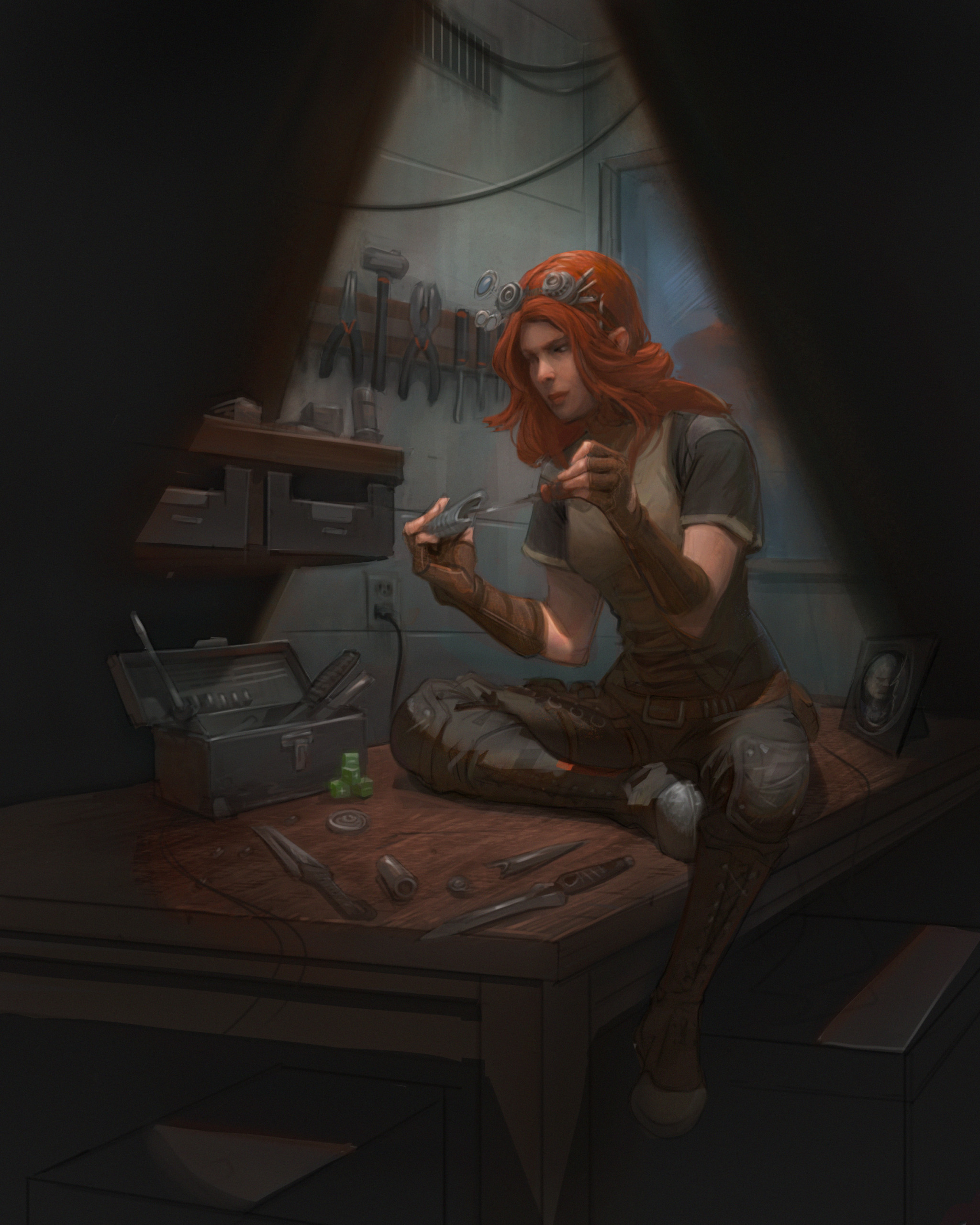
The Artificer
| Level | Proficiency Bonus | Features | Infusions Known | Spells Known | Spell Points | Spell Circle | |
|---|---|---|---|---|---|---|---|
| 1st | +2 | Artificer Specialty, Infusions | 2 | 2 | — | — | |
| 2nd | +2 | Spellcasting | 3 | 3 | 4 | 1st | |
| 3rd | +2 | Artificer Specialty feature | 3 | 3 | 6 | 1st | |
| 4th | +2 | Adventuring Boon | 4 | 4 | 6 | 1st | |
| 5th | +3 | Artificer Specialty feature | 4 | 4 | 14 | 2nd | |
| 6th | +3 | Adjustable Inventions, Tool Expertise | 5 | 5 | 14 | 2nd | |
| 7th | +3 | Flash of Genius | 5 | 5 | 17 | 2nd | |
| 8th | +3 | Adventuring Boon | 6 | 6 | 17 | 2nd | |
| 9th | +4 | Artificer Specialty feature | 6 | 6 | 27 | 3rd | |
| 10th | +4 | Magic Item Master | 7 | 7 | 27 | 3rd | |
| 11th | +4 | Wondrous Item | 7 | 7 | 32 | 3rd | |
| 12th | +4 | Adventuring Boon | 8 | 8 | 32 | 3rd | |
| 13th | +5 | — | 8 | 8 | 38 | 4th | |
| 14th | +5 | Arcane Breakthrough | 8 | 8 | 38 | 4th | |
| 15th | +5 | Artificer Specialty feature | 9 | 9 | 44 | 4th | |
| 16th | +5 | Adventuring Boon | 9 | 9 | 44 | 4th | |
| 17th | +6 | — | 9 | 9 | 57 | 5th | |
| 18th | +6 | — | 10 | 10 | 57 | 5th | |
| 19th | +6 | Adventuring Boon | 10 | 10 | 64 | 5th | |
| 20th | +6 | Soul of Artifice | 10 | 10 | 64 | 5th |
Infusing an Object
At the end of a long rest, you can use your tinker's tools, or a set of artisan's tools that you are proficient with, to touch a nonmagical object, imbuing it with one Infusion you know. If the Infusion requires attunement, you can attune the instant you infuse the item, or you can forgo attunement so another creature can attune to it. If you decide to attune to the item later, you must follow the normal attunement process.
The Infusion remains in an item indefinitely. If you die, the Infusion vanishes after a number of days have passed equal to your Intelligence modifier (minimum of 1 day). Infusions vanish immediately if you give up your knowledge of one to learn another, or imbue the Infusion into another object.
You can infuse more than one nonmagical object at the end of each long rest, up to one for each Infusion you know. You must touch each of the objects, and each Infusion can be in only one object at a time, but, no object can bear more than one Infusion at a time. If you transfer an Infusion to a new object, the previous instance of that Infusion immediately ends, and then the Infusion applies to the new object.
Spellcasting
Using your signature tools and your own special brand of arcane magic, you can produce spell effects from strange and wondrous objects.
Spell Points
The Artificer table shows how many spell points you have to cast your spells of 1st circle and higher. You expend a number of spell points to cast a spell slot of a given circle. You can’t reduce your spell point total to less than 0, and you regain all spent spell points when you finish a long rest.
Spells of 6th circle and higher are particularly taxing to cast. You can use spell points to cast one spell 6th circle or higher. You can’t cast another spell of the same circle until you finish a long rest.
The number of spell points you have to spend is based on your level as a spellcaster, as shown in the Spell Points by Level table. Your level also determines the maximum spell circle you can create.
Spells Known of 1st Circle and Higher
You know two 1st-level spells of your choice from the artificer spell list.
The Spells Known column of the Artificer table shows when you learn more spells of your choice from the artificer spell list. Each of these spells must be of a circle for which you can cast. For example, when you reach 5th level in this class, you can learn one new artificer spell of either 1st or 2nd-circle.
When you gain a level, you can choose one artificer spell you know and replace it with another spell from the artificer spell list that is of a circle for which you are allowed.
Spellcasting Ability
Intelligence is your spellcasting ability for artificer spells, as your understanding of the theory behind magic to produce spells. You use Intelligence whenever an artificer spell refers to your spellcasting ability, and you use your Intelligence modifier when setting the saving throw DC for an artificer spell you cast and when making an attack roll with one.
Spell save DC
Spell attack modifier
Spellcasting Focus
You must use either your tinker's tools, a set of artisan's tools with which you are proficient, or an item bearing one of your Infusions as spellcasting focus for your artificer spells.
While you have access to your tinker's tools or a set of artisan's tools with which you are proficient, you know the Mending cantrip and the Identify spell, but they don't count against your total number of Spells Known. You can cast Identify normally by expending spell points, or as a ritual.
Adventuring Boon
When you reach 4th level, and again at 8th, 12th, 16th, and 19th level, you gain 2 unrestricted bonus points. Players can spend these extra Points immediately to acquire Attributes for their characters or save them for future use.
You cannot increase one of your ability scores above 20 using this feature.
Adjustable Inventions
Starting at 6th level, you can alter and adjust your Infusions in order to better meet the challenges at hand. At the end of a short rest, so long as you have access to your tinker's tools, or a set of artisan's tools with which you are proficient, you can replace one of your Infusions Known with another Infusion of your choice, immediately imbuing it into an object you touch.
If the Infusion requires attunement, it follows the normal rules for attuning to an Infused item. If the Infused item has charges, it has zero charges until you complete a long rest.
You can use this trait once and regain the ability to do so when you finish a long rest.
Tool Expertise
There are few who can match an artificer's raw skill with their tools. Beginning at 6th level, whenever you make an ability check that uses a tool with which you are proficient, you can add double your proficiency bonus to your roll.
Flash of Genius
Beginning at 7th level, your analytical mind can offer insights and suggestions at a moments notice. As a reaction, when you, or another creature you can see within 30 feet, makes an ability check or a saving throw, you can add your Intelligence modifier (minimum of +1) to the result of the roll.
You can use this feature a number of times equal to your Intelligence modifier (minimum of once), and you regain all expended uses when you finish a long rest.
Magic Item Master
You have gained a deep understanding of the inner workings and creation of magic items. Beginning at 10th level, you can attune to up to four magic items at once, and for you, crafting a magic item with a rarity of Common or Uncommon takes a quarter of the normal time and costs half the normal monetary cost.
The number of magic items you can attune to at one time increases at 14th level (5 items) and 18th level (6 items).
Wondrous Item
Starting at 11th level, you master the storing of magic within the mundane. At the end of each long rest, you can touch one weapon or item and imbue it with an artificer spell of 1st or 2nd-circle of your choice, that has a casting time of 1 action.
While holding the item, any creature can use an action to cast the imbued spell using your spellcasting ability modifier. If it requires concentration, they must concentrate on it.
The spell stays imbued in the object until it has been used a number of times equal to twice your Intelligence modifier (minimum of twice) or until you use this feature again.
Arcane Breakthrough
Beginning at 14th level, your expert understanding of magic items allows you to attune to any magic item regardless of any alignment, class, race, spell, or level requirements.
Soul of Artifice
You imbue a spark of your own essence in the magic items you bear. At 20th level, you gain a +1 bonus to all saving throws for each magic item you are attuned to. In addition, if you are reduced to 0 hit points but not killed out-right, you can choose to to end your attunement to one magic item or Infusion, causing you to drop to 1 hit point instead of 0.
Artificer Infusions
Below are the Infusions available to an artificer. Some have a level prerequisite. Any level refers to your artificer level, and you must meet the prerequisite level in order to learn the Infusion or gain its increased benefits. You can learn an Infusion at the same time you meet its prerequisites. Your Infusions use your Spellcasting ability and Spell Save DC.
Adjustable Tool Set
Item: a set of artisan's tools (requires attunement)
The wielder is considered proficient with this magical set of tools, and as an action, they can transform this set of tools into another set of artisan's tools of their choice.
Arcane Firearm
Item: A rod or wand
This tiny length of wood is infused with a cantrip of your choice from the wizard spell list. As an action, a creature can produce the imbued cantrip from the object.
Arm Launcher
Item: A glove or gauntlet
This tiny magical launcher can be loaded with a Tiny object, including but not limited to; ball bearings, a vial of acid, or holy water. As a bonus action the wearer can activate the launcher and make a ranged attack at a target up to 20 feet away. The launcher can be reloaded as an action.
Armor of Magical Strength
Prerequisite: 9th level artificer
Item: a suit of armor (requires attunement)
The wearer of this magical armor can use their Intelligence, in place of their Strength, for any ability checks or saving throws they make that are based on their Strength.
In addition, this armor has 4 charges. As a reaction when the wearer would be knocked prone or moved against their will, they can expend 1 charge to remain standing or not move. The armor regains all charges at the end of a long rest.
Boots of the Winding Path
Prerequisite: 9th level artificer
Item: A pair of boots (requires attunement)
The wearer of these magical boots can use a bonus action to teleport up to 15 feet to an unoccupied space they can see.
Chameleon Armor
Prerequisite: 9th level artificer
Item: a suit of armor (requires attunement)
This armor has 4 charges. While wearing this magical armor the wearer can use an action to expend charges and cast one of the following spells, targeting only themselves: Invisibility (2 charges) or Greater Invisibility (4 charges). This armor regains all expended charges daily at dawn.
Collar of Taming
Prerequisite: 9th level artificer
Item: a metal circlet or collar
The magic of this collar can tame even the wildest of animals. You, and only you, can control any beast wearing this collar as if it were a trained mount. This collar does not work on beasts with an Intelligence score greater than your own.
At 15th level, this magic collar allows you to control any monstrosity with an Intelligence score lower than your own.
Elemental Weapon
Prerequisite: 9th level artificer
Item: A melee weapon (requires attunement)
You infuse a weapon with elemental energy. Upon infusion, choose a command word and one of the following damage types: acid, cold, fire, poison, or lightning.
As a bonus action, the wielder can speak the command word and cause elemental energy to burst forth from the weapon until the command word is spoken again. On hit, the weapon deals an additional 1d4 of the elemental damage.
The additional damage becomes 1d6 at 15th level.
Enhanced Arcane Focus
Item: A rod, staff, or wand (requires attunement)
This item grants the user +1 bonus to spell attack rolls, and they can ignore half cover when making a spell attack.
This bonus increases at 9th level (+2) and 15th level (+3).
Enhanced Defense
Item: A suit of armor or a shield
This item grants the user +1 bonus to their armor class while wearing (armor) or wielding (shield) the infused item.
This bonus increases at 9th level (+2) and 15th level (+3).
Enhanced Instrument
Item: a musical instrument (requires attunement)
This instrument has been magically enhanced by artifice. The wielder is considered proficient with this instrument and can use it as a spellcasting focus. Whenever they make an ability check using this instrument, they gain a bonus to the roll equal to your Intelligence modifier (minimum of +1).
At 9th level this magic instrument grants a +1 bonus to spell attack rolls. This bonus increases to +2 at 15th level.
Enhanced Tool Set
Item: a set of tools
These magical tools grant the user a +1 bonus to any ability check they make that uses this tool set.
This bonus increases at 9th level (+2) and 15th level (+3).
Enhanced Weapon
Item: A simple or martial weapon
This magic weapon grants the user a +1 bonus to any attack and damage rolls they make with it.
This bonus increases at 9th level (+2) and 15th level (+3).
Featherweight Belt
Item: A belt or cloak (requires attunement)
When worn, this magic belt reduces the user to one-tenth of their weight without decreasing their physical abilities.
Starting at 9th level it reduces the wearer to one-hundredth of their weight without decreasing their physical abilities.
Featherweight Weapon
Item: A heavy or two-handed weapon (requries attunement)
This magic weapon no longer has either the heavy or two-handed property (your choice upon infusion).
At 9th level this magic weapon grants a +1 bonus to attack and damage rolls. This bonus increases to +2 at 15th level.
Gauntlets of the Guardian
Prerequisite: 15th level artificer
Item: A pair of gauntlets (requires attunement)
These magic gauntlets are infused with an arcane pulling force. When the wielder has a free hand, and a Huge or smaller creature ends its turn within 30 feet, they can use their reaction and force it to make a Strength saving throw.
On a failed save, the creature is pulled 30 feet toward them, to an unoccupied space of their choice. If they pull the target within 5 feet, they can make one weapon attack against it.
Goggles of Clearsight
Item: A pair of goggles or glasses
While wearing these goggles, the wearer can see through lightly obscured areas without disadvantage on Wisdom (Perception) checks. In addition, the wearer no longer suffers the negative effects from the Sunlight Sensativity trait, and they have advantage on saving throws to resist being blinded.
Helm of Mind Shielding
Prerequisite: 15th level artificer
Item: A helm, hat, or diadem (requires attunement)
The wearer of this magic helm is resistant to psychic damage, immune to the charmed and frightened conditions, and any magic that allows another creature to read their thoughts or telepathically communicate with them.
Homing Weapon
Prerequisite: 5th level artificer
Item: A ranged or thrown weapon
The wielder of this magic weapon ignores the disadvantage imposed when attacking at the weapon's long range.
At 9th level this magic weapon grants a +1 bonus to attack and damage rolls. This bonus increases to +2 at 15th level.
Immovable Boots
Prerequisite: 5th level artificer
Item: A pair of boots (requires attunement)
When the user is standing on a flat surface, they can use an action to activate the boots, magically fixing the user in place. Until you use an action to deactivate the boots, you do not move, even if you are defying gravity.
A creature can use an action to make a DC 30 Strength check, separating your boots from the surface on a success.
Infiltrator Armor
Prerequisite: 5th level artificer
Item: A suit of armor (requires attunement)
This magic suit of armor retains its weight, but is formfitting, wearable under clothing, and virtually weightless. The wearer of htis armor has advantage on Dexterity (Stealth) checks.
If the armor normally imposes disadvantage on such checks, the advantage and disadvantage cancel each other.
Light Blade
Prerequisite: 5th level artificer
Item: A sword hilt or wand (requires attunement)
While grasping the item, the wielder can use a bonus action to cause a blade of pure radiance to spring into existence, or dissapear, from the end of the item. While the blade exists, this magic item is a simple weapon with the finesse property. The luminous blade emits bright light in a 15-foot radius and dim light for an additional 15 feet. The light is sunlight.
The wielder gains a +1 bonus to attack and damage rolls made with this weapon, which deals 1d8 radiant damage on hit. Undead take an additional 1d8 radiant damage. The bonus to attack and damage rolls becomes +2 at 15th level.
Many-Handed Pouch
Prerequisite: 5th level artificer
Item: pouches equal to your Intelligence modifier
These magic pouches all share one interdimensional space with the capacity of a single pouch. Reaching into an infused pouch allows access to this shared storage space. A pouch operates as long as it is within 100 miles of another pouch; the pouch is otherwise empty and won't accept contents.
If the Infusion ends, the items stored in the shared space all move into one of the pouches, determined at random.
Masterwork Homunculus
Prerequisite: 15th level artificer
You have discovered the secrets to the creation of life. You learn the Clone spell. It counts as an artificer spell for you, but it doesn't count against your number of Spells Known. You can cast Clone without expending spell points as long as you have the material components available.
If you replace this Infusion with another at any point during the incubation period, the spell immediately fails.
Metamorphosis Armor
Prerequisite: 9th level artificer
Item: a suit of armor (requires attunement)
This magic suit of armor has 4 charges. As an action, the wearer can expend a charge to cast the Enlarge/reduce spell, targeting only themselves, without expending spell points or requiring concentration. Expend a charge to cast the spell again ends the effect. This armor regains all charges at dawn.
At 15th level, the user can expend two charges at one time to reduce or grow their size by two size categories.
Mystic Armament
Prerequisite: 15th level artificer
Item: a melee weapon (requires attunement)
This item has 4 charges. While wielding this magic weapon, the user can use their action to cast the Steel wind strike spell, using the Infused weapon as the spellcasting focus, without expending spell points. The weapon regains all expended charges at the end of a long rest.
Mystic Shot
Prerequisite: 15th level artificer
Item: a ranged weapon (requires attunement)
While wielding this magic weapon, the user can use their action to cast Swift quiver, using the Infused weapon as the spellcasting focus, without expending spell points.
Once activated, the wielder must finish a short rest before they can cast Swift quiver with this weapon again.
Power Whip
Item: A whip or chain
This magic weapon grants a +1 bonus to attack and damage rolls made with it, and it's damage die increases to 1d8.
This bonus increases at 9th level (+2) and 15th level (+3).
Radiant Weapon
Prerequisite: 5th level artificer
Item: A melee weapon (requires attunement)
As a bonus action, the wielder can cause this weapon to emit bright light in a 30-foot radius, and dim light 30 feet beyond that. The wielder can extinguish the light as a bonus action.
The weapon has 4 charges. When the wielder hits a creature with a melee attack, they can expend 1 charge and force the target to make a Constitution saving throw against your artificer spell save DC. On a failed save, the creature is blinded until the start of your next turn. The weapon regains all expended charges at dawn.
At 9th level this magic weapon grants a +1 bonus to attack and damage rolls. This bonus increases to +2 at 15th level.
Repeating Shot
Item: A ranged weapon (requires attunement)
This magic weapon ignores the loading property if it has it. If you load no ammunition into the weapon it produces its own, creating one piece of magical ammunition when you make a ranged attack with it. This magical ammunition vanishes the instant after it hits or misses the target.
At 9th level this magic weapon grants a +1 bonus to attack and damage rolls. This bonus increases to +2 at 15th level.
Replicating Magic Items
The various Replicate Magic Item Infusions cannot be used to replicate single use magic items of any kind. This includes any spell scrolls, all potions, and the needles used for spellwrought tattoos.
Replicate Advanced Magic Item
Prerequisite: 9th level artificer
Using this Infusion, you can replicate any uncommon magic item that requires attunement, or a magic item from the list below. You can learn this Infusion multiple times, but you must choose a different magic item each time.
| Advanced Item | Advanced Item | |
|---|---|---|
| Boots of Striding & Springing | Helm of Telepathy | |
| Boots of the Winterlands | Medallion of Thoughts | |
| Bracers of Archery | Necklace of Adaptation | |
| Cloak of Protection | Periapt of Wound Closure | |
| Gauntlets of Ogre Power | Pipes of the Sewer | |
| Gloves of Missile Snaring | Portable Hole | |
| Gloves of Swimming & Climbing | Ring of Mind Shielding | |
| Headband of Intellect | Winged Boots |
Replicate Greater Magic Item
Prerequisite: 5th level artificer
Using this Infusion, you can replicate any uncommon magic item that doesn't require attunement, or a magic item from the list below. You can learn this Infusion multiple times, but you must choose a different magic item each time.
| Greater Item | Greater Item | |
|---|---|---|
| Boots of Elvenkind | Eyes of the Eagle | |
| Brooch of Shielding | Hat of Disguise | |
| Cloak of Elvenkind | Lantern of Revealing | |
| Cloak of the Manta Ray | Ring of Jumping | |
| Eyes of Charming | Slippers of Spider Climbing |
Replicate Masterwork Magic Item
Prerequisite: 15th level artificer
Using this Infusion, you can replicate any rare magic item that doesn't require attunement, or a magic item from the list below. You can learn this Infusion multiple times, but you must choose a different magic item each time.
| Advanced Item | Advanced Item | |
|---|---|---|
| Amulet of Health | Folding Boat | |
| Belt of Hill Giant Strength | Gem of Seeing | |
| Boots of Levitation | Horn of Blasting | |
| Boots of Speed | Ring of Evasion | |
| Bracers of Defense | Ring of Free Action | |
| Cape of the Mountebank | Ring of Protection | |
| Cloak of Displacement | Ring of the Ram | |
| Cloak of the Bat | Robe of Eyes | |
| Dimensional Shackles | Rope of Entanglement |
Replicate Minor Magic Item
Using this Infusion, you can replicate any common magic item, or a magic item from the list below. You can learn this infusion multiple times, choosing a different item each time.
| Minor Item | Minor Item | |
|---|---|---|
| Alchemy Jug | Rope of Climbing | |
| Bag of Holding | Sending Stones | |
| Cap of Water Breathing | Wand of Magic Detection | |
| Goggles of Night | Wand of Secrets |
Repulsion Gauntlets
Prerequisite: 5th level artificer
Item: A pair of gloves or gauntlets (requires attunement)
These magical gauntlets have 4 charges. When the wearer hits a creature with an unarmed strike they can expend 1 charge and force the target to make a Strength saving throw. On a failed save, the creature is knocked back 15 feet. The gauntlets regain all expended charges at dawn.
At 9th level this magic weapon grants a +1 bonus to attack and damage rolls. This bonus increases to +2 at 15th level.
Repulsion Shield
Prerequisite: 5th level artificer
Item: A shield (requires attunement)
This magic shield has 4 charges. When the wielder is hit by a melee attack, they can force the attacker to make a Strength saving throw. On a failed save, the attacker is knocked back 15 feet. The shield regains all expended charges at dawn.
At 9th level this magic weapon grants a +1 bonus to attack and damage rolls. This bonus increases to +2 at 15th level.
Resistant Armor
Prerequisite: 9th level artificer
Item: A suit of armor (requires attunement)
The wearer of this magical armor has resistance to one of the following damage types; acid, cold, fire, lightning, necrotic, poison, radiant, or thunder (your choice upon Infusion).
At 15th level you can choose force or psychic damage.
Returning Weapon
Item: A weapon with the thrown property
After making a ranged attack this magic weapon, whether you hit or miss, it immediately returns to the wielders hand.
At 9th level this magic weapon grants a +1 bonus to attack and damage rolls. This bonus increases to +2 at 15th level.
Ring of Proficiency
Prerequisite: 5th level artificer
Item: A ring
The wearer gains proficiency with in skill, tool, or weapon, or they learn one language (your choice upon Infusion). It must be a proficiency or language that you know.
Ring of the Elements
Prerequisite: 9th level artificer
Item: A ring (requires attunement)
Upon infusing this magic ring you select one of the following damage types: acid, cold, fire, poison, lightning, or thunder.
When the wearer casts a spell that deals the damage type that you selected, they can activate this ring to deal maximum damage to one target of the spell instead of rolling.
Once this ring is activated it cannot be used again until the wearer completes a short rest.
Skyfall Harness
Prerequisite: 5th level artificer
Item: a cloak, vest, or harness
This magic harness automatically sizes to fit the wearer, and can be worn over clothing or light armor. It has wing-like fins between your limbs that can slow your fall or allow you to glide. When you fall, and aren't incapacitated, you subtract up to 100 feet from your fall when calculating falling damage, and can move 2 feet horizontally every 1 foot you fall.
Vampiric Weapon
Prerequisite: 9th level artificer
Item: A melee weapon (requires attunement)
You enchant a weapon to drain life from enemies. When the wielder scores a critical hit with this weapon, the target takes an additional 2d6 necrotic damage, so long as the target is not a construct or undead. The wielder gains temporary hit points equal to the extra necrotic damage dealt.
When you reach 15th level, the additional necrotic damage from this Infusion increases to 4d6.
War Gauntlet
Prerequisite: 5th level artificer
Item: An armored gauntlet and a martial weapon or shield
You attach either a martial weapon lacking the heavy or two handed properties, or a shield to the gauntlet. The wearer gains proficiency with the attached item, and it cannot be removed from the gauntlet while this Infusion is active.
Artificer Specialty
At 1st level, an artificer chooses their Artificer Specialty, each of which is detailed below.
Alchemist
Alchemy is a delicate art, tip the ratio of ingredients too far out of line and the effects could be disastrous. Those that study the magic of arcane potions and brews are known as Alchemists. They are experts at combining exotic reagents to produce a variety of materials and effects. From healing droughts that can mend a wound in moments, to sticky goo that explodes when it comes in contact with open flame. With careful preparation, and a bit of luck, Alchemists are masters of both giving life and leeching it away.
Specialty Spells
You gain specialty spells at the artificer levels listed in the Alchemist Spells table. See the Spellcasting class feature for how spells work.
Alchemist Spells
| Artificer Level | Spells | |
|---|---|---|
| 2nd | Cure Wounds, Inflict Wounds | |
| 5th | Enhance Ability, Lesser Restoration | |
| 9th | Freeze Blood, Spyworm | |
| 13th | Death Ward, Electrocute | |
| 17th | Bottled Arcana, Clot |
Tools of the Trade
When you adopt the Alchemist Specialty at 1st level, you gain proficiency with alchemist's supplies. If you are already proficient with alchemist's supplies, you gain proficiency with another set of artisan's tools of your choice.
Alchemical Elixirs
Your skills allow you to create Elixirs that mimic spell effects. At 1st level, your total number of Infusions Known increases by one, but this additional Infusion must be an Elixir.
You gain a second bonus Infusion at 9th level, and a third at 15th level, both of which must be Elixirs. Your Elixirs and their effects are detailed at the end of this Specialty.
Homunculus Servant
At 3rd level, your alchemical experiments have yielded you a tiny Homunculus Servant. You determine your Homunculus' appearance, it is friendly to you and your companions, and it obeys your commands to the best of its ability. See its game statistics in the Homunculus Servant stat block, which uses your proficiency bonus (PB) in several places.
Homunculus Servant
Tiny construct, neutral
- Armor Class 11 + PB (natural armor)
- Hit Points 1 + two times your artificer level. (the homunculus has a number of hit dice [d4s] equal to your artificer level)
- Speed 50 feet, fly
STR DEX CON INT WIS CHA 4 (-3) 15 (+2) 12 (+1) 10 (+0) 10 (+0) 7 (-2)
- Saving Throws Dexterity
- Skills Perception, Stealth
- Damage Immunities Poison
- Condition Immunities exhaustion, poisoned
- Senses darkvision, passive Perception 10
- Languages understands the languages you speak
Evasion. If the Homunculus makes a Dexterity saving throw to take only half damage, it instead takes no damage if it succeeds on the saving throw, and only half damage if it fails.
Channel Magic. *When the Homunculus is within 120 feet of you, it can deliver any spell you can cast that has a range of touch.
Actions
Force Strike. Ranged Weapon Attack: your spell attack modifier to hit, range 30 ft., one target you can see. Hit: 1d4 + PB force damage.
Administer Elixir. The Homunculus can administer an Elixir they are carrying to a creature within 5 feet.

Homunculus Servant
At 3rd level, your alchemical experiments have yielded you a tiny Homunculus Servant. You determine your Homunculus' appearance, it is friendly to you and your companions, and it obeys your commands to the best of its ability. See its game statistics in the Homunculus Servant stat block, which uses your proficiency bonus (PB) in several places.
In combat, the Homunculus shares your initiative count, but it takes its turn immediately after yours. It can move and use its reaction on its own, but the only action it takes on its turn is the Dodge action, unless you use a bonus action to command it to take another action, or an action from its stat block. If you are incapacitated, the Homunculus can take any action of its choice. If you die, the Homunculus turns to ash.
If it has died within the last hour, you can use an action to revive it by touching it and expending 2 spell points or more. It returns to life with its maximum hit points.
At the end of a long rest, you can make a new Homunculus Servant using your alchemist's supplies. If you already have a Homunculus from this feature, the first one turns to ash.
Potent Potions
Starting at 5th level, when one of your spells or Elixirs deals acid, fire, necrotic, or poison damage, or restores hit points to a creature, you gain a bonus to the damage, or healing roll equal to your Intelligence modifier (minimum of +1).
Restorative Reagents
Beginning at 9th level, whenever a creature drinks one of your Elixirs, they immediately gain temporary hit points equal to 2d6 + your Intelligence modifier.
Master Alchemist
You have become a master among Alchemist artificers. Upon reaching 15th level, you gain resistance to acid and poison damage, and immunity to the poisoned condition.
Alchemical Elixir Infusions
At the end of each long rest, you use alchemist's supplies to prepare one Tiny sized vial of each Elixir you know, without expending spell points. Your Elixirs always produce their spell's effect at its lowest circle. Any unused Elixirs become inert and unusable at the end of your next long rest.
As an action, a creature can drink an Elixir, administer an Elixir to a willing creature within 5 feet, or throw an Elixir at a point within 30 feet. If thrown, the Elixir produces the spell's effect at the point of impact.
If an Elixir's spell effect requires concentration, the creature that drinks the Elixir must concentrate on the effect as if concentrating on a spell. All Elixirs use your spell save DC and spellcasting modifier.
For example, if you chose the Create Minor Elixir Infusion and selected the spells Cure Wounds and Grease, then at the end of each long rest you prepare one vial of Cure Wounds Elixir, and one vial of Grease Elixir. You can then use these Elixirs at any point during the adventuring day to produce those spell effects without expending spell points.
As an action, you can create an additional copy of an Elixir you know by expending spell points required in the Elixir's Infusion description. Elixirs can be used as part of the same action you expended the spell points to create them.
Create Minor Elixir
Prerequisite: 1st level Alchemist artificer
Each time you select this Infusion, choose two Elixir effects to learn from the table below. To produce additional minor Elixirs, you must expend 2 or more spell points.
| Minor Elixir Effects | Minor Elixir Effects | |
|---|---|---|
| armor of arcane ice | heroism | |
| detect poison and disease | jump | |
| disguise self | longstrider | |
| fog cloud | sanctuary | |
| grease | sleep |
Create Greater Elixir
Prerequisite: 5th level Alchemist artificer
Each time you select this Infusion, choose one Elixir effect to learn from the table below. To produce additional greater Elixirs, you must expend 3 or more spell points.
| Greater Elixir Effects | Greater Elixir Effects | |
|---|---|---|
| barkskin | flame blade | |
| blindness/deafness | invisibility | |
| dragon's breath | slur | |
| prayer of Healing | mirror image | |
| enlarge/reduce | spider climb |
Create Advanced Elixir
Prerequisite: 9th level Alchemist artificer
Each time you select this Infusion, choose one Elixir effect to learn from the table below. To produce additional advanced Elixirs, you must expend 5 or more spell points.
| Advanced Elixir Effects | Advanced Elixir Effects | |
|---|---|---|
| animate dead | haste | |
| blink | meld into stone | |
| daylight | remove curse | |
| fireball | stinking cloud | |
| gaseous form | water breathing |
Create Masterwork Elixir
Prerequisite: 15th level Alchemist artificer
Each time you select this Infusion, choose one Elixir effect to learn from the table below. To produce more masterwork Elixirs, you must expend 6 spell points or more.
| Masterwork Elixir Effects | Masterwork Elixir Effects | |
|---|---|---|
| blight | Locate Creature | |
| greater restoration | heal | |
| freedom of movement | polymorph (self only) | |
| globe of invulnerability | true seeing | |
| greater invisibility | vitriolic sphere |
Archivist
For centuries chroniclers have sought the best way to store vast amounts of information. Where most are satisfied with scrolls, Archivists strove for something greater. They have learned to store libraries worth of information in a single object, awakening the first Artificial Minds. Working in tandem with these wondrous Minds, Archivists wield the potentially limitless power of these arcane intelligences. How will you use your ability to create artificial intelligence?
Specialty Spells
You gain specialty spells at the artificer levels listed in the Archivist Spells table. See the Spellcasting class feature for how spells work.
Archivist Spells
| Artificer Level | Spells | |
|---|---|---|
| 2nd | Comprehend Languages, Dissonant Whispers | |
| 5th | Detect Thoughts, Mind Spike | |
| 9th | Mind Exchange, Mind Link | |
| 13th | Mind Carve, Piercing Vision | |
| 17th | Modify Memory, Synaptic Static |
Tools of the Trade
When you adopt the Archivist Specialty at 1st level, you gain proficiency with calligrapher's supplies. If you already have proficiency with calligrapher's supplies you gain proficiency with another set of artisan's tools of your choice.

Artificial Mind
Beginning at 1st level, you learn to awaken Artificial Minds within objects. At the end of a long rest, you can touch a Tiny, non-magical object, and use your calligrapher's supplies to awaken an Artificial Mind within it. While the Artificial Mind is awakened within an object, it is considered a magic item that requires attunement, and it can be used as a spellcasting focus for your artificer spells. If you attempt to rouse a second Artificial Mind while you already have one from this feature, the first Artificial Mind ceases to exist. While attuned to your Artificial Mind, you gain the following abilities:
Magical Telephony. You can communicate telepathically with any creature carrying one of your infused items within a 1-mile radius. The creature can respond telepathically.
Skill Proficiencies. You gain proficiency in two skills of your choice from the column on the Artificial Mind table. The material of the object determines the skills you choose from, as the object's nature affects the mind's knowledge.
Artificial Mind
| Material | Examples | Skill Proficiencies | |
|---|---|---|---|
| Animal | parchment, leather, bone | Animal Handling, Insight, Perception, Survival | |
| Mineral | gems, glass, metal, stone | Deception, Intimidation, Performance, Persuasion | |
| Plant | paper, wood, vegetable | Arcana, History, Nature, Religion |
Information Overload
Starting at 3rd level, you can cause your Artificial Mind to overload the mind's of your foes by channeling information at them. As an action, you can force a creature that you can see within 30 feet to make an Intelligence saving throw. On a failed save, it takes 1d8 psychic damage and disadvantage on the next attack roll it makes before the start of your next turn.
The damage of your Information Overload ability increases when you reach certain levels in this class, at 5th level (2d8), 11th level (3d8), and 17th level (4d8).
Acute Overload
Starting at 5th level, you can expend spell points to increase the psychic damage of Information Overload. The damage increases by 2d8 if you spend 2 spell points, 3d8 if you spend 3 spell points, 4d8 if you spend 5 spell points, 5d8 if you spend 6 spell points, or 6d8 if you spend 7 spell points or more.
Also, when you deal psychic damage using your Artificial Mind as a spellcasting focus, you gain a bonus to the damage roll equal to your Intelligence modifier (minimum of +1).
Improved Consciousness
The cognitive abilities of your Artificial Mind are powerful enough to aid your spellcasting. Starting at 9th level, when you are forced to make a Constitution saving throw to maintain concentration on a spell, you gain a bonus to your roll equal to your Intelligence modifier (minimum of +1).
Master Archivist
You are a master of Archivist artifice. Starting at 15th level, you can an action on your to transform into pure information and teleport to an unoccupied space that you can see within 60 feet, or an unoccupied space within 5 feet of a creature or object bearing one of your artificer Infusions.
Battle Smith
Armies require protection, and someone has to put things back together if defenses fail. A combination of protector and medic, Battle Smith artificers are experts at defending others and repairing both material and personnel. To aid in their work, Battle Smiths are usually accompanied by a Steel Defender, a protective companion of their own creation.
Specialty Spells
You gain specialty spells at the artificer levels listed in the Battle Smith Spells table. See the Spellcasting class feature for how spells work.
Battle Smith Spells
| Artificer Level | Spells | |
|---|---|---|
| 2nd | Shield, Tireless | |
| 5th | Greater Analyze Device, Lock Armor | |
| 9th | Speak with Objects, Summon Vehicle | |
| 13th | Deconstruct, Summon Construct | |
| 17th | Animated Object Swarm, Clockwork Bodyguard |
Battle Ready
Starting at 1st level, you can use your Intelligence, in place of Strength or Dexterity, for your attack and damage rolls with magic weapons, or a weapon bearing one of your Infusions.
In addition, when a creature you can see attacks a target other than you that is within 5 feet of you, you can use your reaction to impose disadvantage on the creature's attack roll. You must be wielding a shield or weapon to use this reaction.
Steel Defender
At 3rd level, your tinkering bears you a faithful construct, a Steel Defender. It is friendly to you and your companions, and it obeys your commands to the best of its ability. See the creature's game statistics in the Steel Defender stat block, which uses your proficiency bonus (PB) in multiple places.
In combat, your Steel Defender shares your initiative count, but takes its turn immediately after yours. It can move and use its reaction on it's own, but the only action it takes on its turn is the Dodge action, unless you take a bonus action on your turn to command it to take the action in its stat block or the Dash, Disengage, Help, Hide or Search action. If you are incapacitated, the Defender takes an action of its choice.
If the Steel Defender has died within the last hour, you can use your action to touch it with your smith's tools and expend 2 spell points or more to revive it. The Defender then returns to life with its maximum hit points.
At the end of a long rest, you can create a new Defender using your smith's tools. If you already have a Steel Defender from this feature, the first one immediately perishes.
Upon creation, choose the shape of your Steel Defender from the options below. Its shape determines its abilities.
Humanoid. Your Steel Defender resembles a Medium humanoid creature of your choice, but is clearly a construct. It has opposable fingers and is proficient with shields. It can use its digits to perform basic tasks, and it can equip or wear any items that are appropriate for its anatomy.
Quadruped. Your Steel Defender resembles a Large beast of your choice, but is clearly a construct. Its movement speed increases by 10 feet, and it is trained to be ridden as a mount, but only by you. When used as a mount, your Steel Defender retains its place in initiative order, but can use its movement speed as part of your turn.
Steel Defender
construct, neutral
- Armor Class 12 + PB (natural armor)
- Hit Points 5 + five times your artificer level (the steel defender has a number of hit dice [d10s] equal to your artificer level)
- Speed 30 feet
STR DEX CON INT WIS CHA 16 (+3) 12 (+1) 14 (+2) 4 (-3) 10 (+0) 6 (-2)
- Damage Immunities Poison
- Condition Immunities charmed, exhaustion, poisoned
- Senses darkvision, passive Perception 10
- Languages understands the languages you speak
Might of the Master. You add your PB to any ability check, attack roll, or saving throw that the Steel Defender makes.
Vigilant. *The Steel Defender can't be surprised.
Actions
Rend. Melee Weapon Attack: your spell attack modifier to hit, reach 5 ft., one target you can see. Hit: 1d8 + PB force damage.
Repair. The Steel Defender can expend one of its Hit Dice to restore 1d10 +PB hit points to itself or to one construct or object within 5 feet of it.

Offensive Upgrade
At 5th level, you upgrade your Steel Defender with one of the following offensive features. At the end of each long rest, you can touch your Steel Defender with your smith's tools and replace this upgrade with another from the list below.
Minor Arcane Core. Your Steel Defender is imbued with a 1st-circle artificer spell of your choice. As a bonus action, you can command your Steel Defender to cast the spell at 1st-circle, using your Intelligence as the spellcasting modifier.
You can command it to cast this spell a number of times equal to your Intelligence modifier (minimum of once), and it regains all expended uses when you finish a long rest.
Martial Offense. The damage of your Steel Defender's Rend becomes 1d10, and when you command it to take the Rend action it can makes two Rend attacks instead of one. The Steel Defender can replace either Rend attack with a grapple or shove attack if you command it to.
Improved Defender
At 9th level, you upgrade your Steel Defender with one of the following improvements. At the end of each long rest, you can touch your Steel Defender with your smith's tools and replace this improvement with another from the list below.
Limited Sentience. You improve the cognitive abilities of your Steel Defender. It's Intelligence score becomes a 10, it gains proficiency in the Arcana, History, or Investigation skill, or with one set of artisan's tools of your choice. It also learns to speak, read, and write one language you know.
Reinforced Plating. You improve the structure of your Steel Defender. It is resistant to bludgeoning, piercing, and slashing damage from non-magical attacks.
Restorative Touch. You imbue your Steel Defender with a pool of healing magic. The pool has a number of points equal to four times your artificer level. As a bonus action, you can command your Steel Defender to touch a creature and draw power from the pool to restore a number of hit points to that creature, up to the maximum amount remaining in its pool.
Master Battle Smith
At 15th level, you upgrade your Steel Defender with one of the following masterwork upgrades. At the end of each long rest, you can touch your Steel Defender with your smith's tools and replace its masterwork upgrade with another masterwork upgrade from the list below:
Arcane Defensive Field. Your Steel Defender emits an arcane ward. Creatures within 15 feet of your Steel Defender are resistant to damage from spells and other magic effects.
Self Destruct. You embed a powerful arcane explosive within the body of your Steel Defender. As a bonus action, you can command your Steel Defender to self destruct, completely destroying itself and forcing every creature within 20 feet of it to make a Dexterity saving throw. A target takes 10d6 force damage on a failed save, or half as much damage on a success. Once your Steel Defender uses this ability it cannot be revived until the end of your next long rest.
Greater Arcane Core. Your Steel Defender is imbued with a 3rd-circle artificer spell of your choice. As a bonus action, you can command your Steel Defender to cast the spell at 3rd-circle, using your Intelligence as the spellcasting modifier.
You can command it to cast this spell a number of times equal to your Intelligence modifier (minimum of once), and it regains all expended uses when you finish a long rest.
Biomancer
While most artificers are content with mechanical innovation, some see biology, the science of living things, as an area rife with potential. Biomancers are those who use their talents to supplement their own anatomy and create life. Combining necromancy and transmutation magic, Biomancers see all living things as prototypes that can be magically evolved.
Specialty Spells
You gain specialty spells at the artificer levels listed in the Biomancer Spells table. See the Spellcasting class feature for how spells work.
Biomancer Spells
| Artificer Level | Spells | |
|---|---|---|
| 2nd | Extract Essence, Shed Skin | |
| 5th | Poisonous Flesh, Pullulate | |
| 9th | Animal Polymorph, Scaleskin | |
| 13th | Enhance Body, Serpentine Ward | |
| 17th | Amphibious, Transfer of Vigor |
Tools of the Trade
When you adopt the Biomancer Specialty at 1st level, you gain proficiency with leatherworker's tools. If you already have proficiency with leatherworker's tools, you gain proficiency with another set of artisan's tools of your choice.
Biomancer Golem
You can use the magic of your artifice to create a facsimile of life. At 1st level, you learn the Find Familiar spell, and can cast it as a ritual. When you cast find familiar with this feature, the spell has the following changes:
- The material component is 1 pound of organic matter.
- It is a monstrosity (instead of a celestial, fey, or fiend).
- It has additional hit points equal to your artificer level.
In addition, your familiar can heal others by grafting its own flesh onto the creature's wounds. As an action, your familiar can sacrifice any amount of its hit points, touching a willing creature and healing them for the same amount.
Modular Biology
Beginning at 3rd level, you use your knowledge of arcane biology to enhance your physical form. At the end of each long rest, choose one of the body modifications listed below, the benefits of which last until the end of your next long rest.
- Amphibious Physiology. You develop gills and webbing between your digits. You can breathe both air and water, and you gain a swimming speed equal to your movement speed.
- Resilient Hide. Your flesh becomes thick and knotted. While not wearing any armor, your Armor Class is equal to 10 + your Intelligence modifier + your Constitution modifier.
- Vestigial Limb. You grow an additional limb resembling a smaller version of your other limbs. It has a reach of 5 feet, and it can lift a number of pounds equal to your Intelligence score. The limb cannot use weapons or shields nor can it do anything that requires manual precision, such as using tools.
Augmented Flesh
Starting at 5th level, you can merge with your Biomancer Golem to enhance your abilities. As an action, you can touch your Golem and merge with it, gaining the following benefits:
- You gain temporary hit points equal to your Fleshwright Golem's remaining hit points + your Intelligence modifier.
- Your movement speed increases by 10 feet.
- You can use Intelligence, in place of Strength, for Strength attack rolls, damage rolls, ability checks, or saving throws.
- You can attack twice, rather than once, whenever you take the Attack action on your turn.
You remain merged with your Golem until your temporary hit points from this feature are depleted, at which point your Golem is destroyed and you return to your normal form.
Strange Evolution
You have permanently improved your own physiology. At 9th level, your movement speed increases by 10 feet, and you can have two of your Modular Biology features at one time.
When you reach 15th level in this class, you are always under the effects of all three Modular Biology features.
Master Biomancer
You are a master amongst Biomancer artificers. Starting at 15th level, whenever you target a creature with one of your Biomancer Spells, you can choose to grant one target of the spell temporary hit points equal to your artificer level.
In addition, when merged with your Biomancer Golem, you are resistant to bludgeoning, piercing, and slashing damage.
Chronothief
For those that pursue the magic of artifice, no area of study is too dangerous. Perhaps against their better judgment, some artificers choose to experiment with Chronomancy, the magic of time. Known as Chronothieves, these bold artificers are marked by their signature Chronometers, a wondrous object which they use to steal moments and adjust the flow of time.
Specialty Spells
You gain specialty spells at the artificer levels listed in the Composer Spells table. See the Spellcasting class feature for how spells work.
Chronothief Spells
| Artificer Level | Spells | |
|---|---|---|
| 2nd | Stunning Reversal, Spacetime Distortion | |
| 5th | Short Circuit, Time Trap | |
| 9th | Slow, Haste | |
| 13th | Time Vortex, Split Timeline | |
| 17th | Lesser Time Stop, Alter Time Flow |
Tools of the Trade
When you adopt the Chronothief specialty at 1st level, you gain proficiency with jeweler's tools and one language of your choice. If you already proficient with jeweler's tools, you gain proficiency with another set of artisan's tools of your choice.

Chronometer
At 1st level, can create a Chronometer, marking you as a true Chronothief. At the end of a long rest, you can use your jeweler's tools to construct a Tiny timekeeping device, like a watch, hourglass, or small sun dial, which can be used as a spellcasting focus by you for your artificer spells.
You can only have one Chronometer at a time, and creating another causes the magic within the first to dissipate.
Your Chronometer has a number of charges equal to twice your Intelligence modifier. It regains all expended charges when you finish a long rest. While your Chronometer is in hand, you can expend a charge to use the following abilities:
Accelerate. As an action, you increase the speed of a creature within 60 feet by a number feet equal to 5 times your Intelligence modifier until the end of their next turn.
Slip. As a reaction when a creature within 60 feet makes an attack roll, ability check, or saving throw, you can force them to re-roll. You must use this reaction before you know if the triggering attack, check, or saving throw succeed.
Time Dilation
Starting at 3rd level, your Chronometer gain two additional options:
Decelerate. You can spend an additional charge to double the movement speed reduction. If this feature reduces a target's speed to 0, it must succeed on a Constitution saving throw or be stunned until the end of its next turn.
Warp. You can spend additional charges to increase the range by an additional 30 feet for each charge you expend.
Stolen Moments
You have improved your Chronometer so that you can literally save moments in time for later. Beginning at 5th level, when you successfully paralyze, stun, or reduce a creature's movement speed to 0 with a spell or Chronothief ability, your Chronometer regains one of its expended charges.
Also, any of your Chronometer abilities that require an action to use can also be used as a bonus action on your turn.
Empowered Chronomancy
Your understanding and control over the magic of time has greatly increased. Upon reaching 9th level in this class, the magic of your Chronometer improves in the following ways:
Accelerate. Opportunity attacks against the target creature have disadvantage until the end of their next turn.
Decelerate. You can spend an additional charge to double the movement speed reduction. If this feature reduces a target's speed to 0, it must succeed on a Constitution saving throw or be stunned until the end of its next turn.
Slip. You can spend two charges to use this reaction after you know if the triggering attack roll, ability check, or saving throw succeeded or failed.
Warp. You can spend additional charges to increase the range by an additional 30 feet for each charge you expend.
Master Chronothief
Starting at 15th level, you can overload your Chronometer, expending any remaining charges, to cast Time stop spell.
You can use this trait once and regain the ability to do so when you finish a long rest.


Composer
Behind every great musician, every standing ovation, every sold out concert, there is most often Composer who put quill to parchment and penned the notes. These great minds are unlike other artists and entertainers, Composers take a more cerebral approach to music. They are masters of patterns and repetition, and when they apply their analytical minds to a problem it is only a matter of time before they find a solution.
The signature invention of every Composer is their Musical Apparatus, a totally unique invention of their own design that allows them to produce wondrous musical effects.
Specialty Spells
You gain specialty spells at the artificer levels listed in the Composer Spells table. See the Spellcasting class feature for how spells work.
Composer Spells
| Artificer Level | Spells | |
|---|---|---|
| 2nd | Earworm Melody, Shrill Whistle | |
| 5th | Dome of Silence, Heartache | |
| 9th | Distressing Melody, Player Instrument | |
| 13th | Distressing Resonance, Vibration Wave | |
| 17th | Moonlight Charm, Song of Vengeance |
Tools of the Trade
When you adopt the Composer specialty at 1st level, you gain proficiency with smith's tools and one instrument of your choice. If you already proficient with smith's tools, you gain proficiency with another set of artisan's tools of your choice.
Musical Apparatus
At 1st level, you create a signature musical instrument. At the end of a long rest, you can use your smith's tools to create a Musical Apparatus. You are proficient with this Apparatus and it can be used as a spellcasting focus by you. When you make an ability check with your Musical Apparatus, you can add double your proficiency bonus to the result of your roll.
You can only maintain one Apparatus at a time. If you create a second, the previous Apparatus becomes unusable.
Musical Savant
Starting at 3rd level, if you spend at least 1 minute practicing with a musical instrument, you are considered proficient with that instrument until the end of your next long rest.
When you reach 9th level, you add double your proficiency bonus to any ability check you make with an instrument.
Weaponized Apparatus
Starting at 3rd level, you weaponize your Musical Apparatus. At the end of a long rest, choose one of the following options:
- Raucous Blast. Your Apparatus can assault creatures with a blast of sound. As an action, make a spell attack against a creature within 60 feet that can hear you. On hit, the creature takes 1d8 thunder damage and is deafened until the start of your next turn. The damage increases by 1d8 at 5th level (2d8), and again at 11th level (3d8), and 17th level (4d8).
- Ringing Strike. Your Apparatus is a simple weapon with the versatile property, and it deals 1d8 (1d10) bludgeoning damage on hit. You are considered proficient with it, and you can use your Intelligence, in place of Strength, for attack and damage rolls. In addition, you can cast the booming blade cantrip as long as your Apparatus is the material component.### Thunderous Note Beginning at 5th level, when you hit a creature with an attack from your Musical Apparatus, you can expend 2 spell points to knock a Large or smaller target back with a thunderous burst of sound. The creature is knocked back 10 feet for a 1st-circle spell, and an additional 10 feet for each spell circle higher than 1st.
Also, when you deal thunder damage you add your Intelligence modifier (minimum of 1) to the damage.
Resonant Frequency
Starting at 9th level, you can use your action to play a note with your Musical Apparatus that causes creature of your choice within 10 feet resonates with undetectable vibrations for 1 hour. The next time that creature is hit with a melee attack, the attacker must make a Constitution saving throw. On a failed save, it takes 2d8 thunder damage and can't take reactions until the start of their next turn. On a successful save, the attacker takes half damage.
You may use this feature a number of times equal to your Intelligence modifier (minimum of once), and you regain all expended uses when you finish a long rest.
Master Composer
You have mastered the theory and applications of musical. Beginning at 15th level, you gain the following benefits:
- You are immune to thunder damage and being deafened.
- Your Musical Apparatus gains both Weaponized effects.
- Your Thunderous Note feature effects Huge or smaller creatures. Large or smaller creatures that fail the saving throw fall prone at the end of their forced movement.
- The damage of Resonant Frequency becomes to 4d8.
Forgewright
While most artificers are primarily inventors that take up a life of adventure to test experiments in the field, those known as Forgewrights seek out battle for its own sake. Reveling in the thrill of combat, they combine their innovation with their skill as warriors to forge their signature Arcane Armament.
Forgewright Spells
| Artificer Level | Spells | |
|---|---|---|
| 2nd | Meteor Strike, Zephyr Strike | |
| 5th | Precision of Arms, Tormented Flurry | |
| 9th | Divine Armament, Life Leech Weapon | |
| 13th | Bladelust, Ringing Weapon | |
| 17th | Blessing of the Forge, Disrupting Weapon |
Specialty Spells
You gain specialty spells at the artificer levels listed in the Forgewright Spells table. See the Spellcasting class feature for how spells work.
Tools of the Trade
When you adopt the Forgewright specialty at 1st level, you gain proficiency with smith's tools and martial weapons. If you are already proficient with smith's tools, you gain proficiency in another set of artisan's tools of your choice.
Arcane Armament
Beginning at 1st level, when you finish a long rest, you can transform one melee weapon you touch into your Arcane Armament. While wielding it, you gain the following benefits:
- You can use your Intelligence, in place of Strength or Dexterity, for attack and damage rolls with the weapon.
- The weapon is considered magical if it was not already, and you gain a +1 bonus to attack and damage rolls with it, unless the base weapon granted a higher bonus. This bonus increases at 9th level (+2) and 15th level (+3)
You can only have one Arcane Armament at a time, and enchanting a second causes the magic of the first to end.
Forge of War
Upon reaching 3rd level, your Arcane Armament gains the thrown property with a normal range of 20 feet, and a long range of 60 feet. It also gains the returning property, and returns to your hand immediately after every ranged attack.
Your Armament can also bear one Infusion, unless it was already a magic item before becoming your Armament.
Extra Attack
Starting at 5th level, you can attack twice, rather than once, whenever you take the Attack action on your turn.
Arcane Jolt
You can channel powerful magic into your strikes. Starting at 9th level, when you hit a target with your Arcane Armament you can deal an additional 2d6 force damage to the target. You can expend 2 spell points to increase this damage by 1d6, 3d6 if you spend 3 spell points, 4d6 if you spend 5 spell points, 5d6 if you spend 6 spell points, or 6d6 if you spend 7 spell points or more.
You can use this feature a number of times equal to your Intelligence modifier (minimum of once), and you regain all expended uses when you finish a long rest.
Master Forgewright
You have become a master among Forgewright artificers. Starting at 15th level, you can extend the power within your Arcane Armament to your allies. As an action, choose a number of weapons equal to your Intelligence modifier (minimum of 1) within 30 feet. For the next minute these weapons deal an additional 1d6 force damage on hit.
You can use this trait once and regain the ability to do so when you finish a long rest, unless you spend 5 spell points or more to use it again.
Hardlight Architect
A Hardlight Architect learns how to harness magical, radiant energy and put it to use in their weaponry. These artificers create complex machines that channel and focus light, turning that energy into powerful beams that can sear their foes. These machines come in multiple varieties, each with a distinct purpose and common name. The aurum blaster is the generalist weapon, and also the most defensive weapon, considering its common pairing with a shield. The bolt shooter is a long range weapon, capable of outranging longbows and taking out targets with powerful, focused blasts. The lux cannon is a short ranged weapon, capable of hitting multiple foes at once.
Though Hardlight Architect were relatively uncommon in the time of the Last War, those that did exist made versatile combatants that were an asset to any army. Capable both as front-line soldiers and back-line artillery, these artificers are well respected warriors.
Specialty Spells
You gain specialty spells at the artificer levels listed in the Hardlight Architect Spells table. See the Spellcasting class feature for how spells work.
Hardlight Architect Spells
| Artificer Level | Spells | |
|---|---|---|
| 2nd | Laser Barrage, Hardlight Blaster | |
| 5th | Hardlight Nails, Incandescent Chain | |
| 9th | Light-Particle Laser, Hardlight Construction | |
| 13th | Crown of Light, Radiant Prisons | |
| 17th | Hardlight Frame, Telekinesis |
Tools of the Trade
When you adopt the Hardlight Architect Specialty at 1st level, you gain proficiency with glassblower's tools. If you are already proficient with glassblower's tools, you gain proficiency with another set of artisan's tools of your choice.


Lightsmith
At 1st level, whenever you finish a short rest, you can magically construct one of the following weapons: an aurum blaster, a lux cannon, or a bolt shooter. If you already have a weapon constructed, you must transform that weapon into a new type rather than constructing a new one. After you gain this subclass, the first weapon you construct is free. If you lose your weapon, however, replacing it requires 5,000 New Yen of materials. Transforming your weapon is always free. You are proficient with these weapons, and you use your Intelligence modifier for their attack and damage rolls. They function by channelling your inner magic, and thus cannot be wielded by other creatures. Each of these weapons have the following special property:
Recharge (X). Only X attacks can be made with a weapon that has the recharge property before it needs to be recharged. A weapon can be recharged as a bonus action (even if it still has charges left), but it cannot be recharged on the same turn it is used to make an attack.
The weapons' other properties are detailed in the following table:
| Weapon | Damage | Properties | |
|---|---|---|---|
| Aurum Blaster | 1d8 radiant | Ranged (60/240), recharge (4) | |
| Bolt Shooter | 1d12 radiant | Ranged (300/1200), recharge (2), two-handed | |
| Lux Cannon | 1d8 radiant | Special, recharge (2), two-handed |
The lux cannon's special property is described below:
Special. You do not make attack rolls with this weapon. Instead, your attacks with it shoot blasts of radiant energy that fill a line 5-feet wide and 10-feet long extending from you. Each creature in the area must succeed on a Dexterity saving throw against your Artificer spell save DC or take the damage of this weapon.
Empowered Ammunition
At 3rd level, you can temporarily empower the shots of your Lightsmith weapons. When you recharge one of these weapons, you can use this feature by expending spell points. Also, once per long rest you can use this feature without expending spell points, and gain the same effects as if you had used 2 spell points. When you use this feature, the weapon gains one of the following enhanced effects (based on the weapon's type) until it is next recharged:
Aurum Blaster. Attacks made with the weapon deal an extra 2d4 radiant damage if you spend 2 spell points, 3d4 if you spend 3 spell points, 4d4 if you spend 5 spell points, 5d4 if you spend 6 spell points, or 6d4 if you spend 7 spell points or more.
Bolt Shooter. Attacks made with the weapon explode in a burst of light. Hit or miss, the target and each creature within 5 feet of it must succeed on a Dexterity saving throw against your artificer spell save DC or take 2d6 radiant damage if you spend 2 spell points, 3d6 if you spend 3 spell points, 4d6 if you spend 5 spell points, 5d6 if you spend 6 spell points, or 6d6 if you spend 7 spell points or more.
Lux Cannon. The area of effect of attacks made with the weapon become cones, rather than lines, and any creature that fails its save against this weapon is pushed up to 5 feet away from you, knocked prone, and dealt 1d4 additional radiant damage. The cone's size is equal to the line's length. The damage increases to 2d4 if you spend 3 spell points, 3d4 if you spend 5 spell points, 4d4 if you spend 6 spell points, or 5d4 if you spend 7 spell points or more.
Augmented Armaments
At 5th level, all of your weapons are improved. None of these improvements can be combined with the Extra Attack feature.
Aurum Blaster. The aurum blaster's recharge (4) property is replaced with the recharge (8) property, and you can attack twice, instead of once, whenever you take the Attack action on your turn and attack only with your aurum blaster.
Bolt Shooter. When you take the Attack action on your turn, you can make a single attack with your bolt shooter. This attack is made with advantage, and unless this advantage is cancelled out by disadvantage, it deals an additional 1d12 radiant damage on a hit if the lower of the two rolls would also hit the target.
Lux Cannon. The lines created by this weapon have a length of 20 feet, rather than 10 feet, and a creature that succeeds on the save imposed by this weapon takes half damage, rather than none.
Aurum Bombs
At 9th level, you learn how to craft magical explosives, called aurum bombs, that create bursts of blinding light. Whenever you finish a long rest, you can create a number of aurum bombs equal to your Intelligence modifier (minimum 1). Unused bombs disappear when you take your next long rest.
As an action, you can throw an aurum bomb at a point you can see within 60 feet of you. The bomb explodes at that point, forcing each creature within a 10-foot radius area to make Dexterity saving throws against your Artificer spell save DC. On a failed save, a creature takes 2d10 radiant damage and is blinded until the end of your next turn. On a successful save, a creature takes half as much damage and is not blinded.
Radiant Mastery
Starting at 15th level, your Aurum Bombs and Lightsmith Weapons are both improved.
- The damage of your aurum bombs is increased to 4d10.
- Each of your Lightsmith Weapons have an additional damage die, for a total of 2d8 for the Aurum Blaster and Lux Cannon and 2d12 for the Bolt Shooter.
- Whenever you use your Empowered Ammunition feature, you can transform your Lightsmith weapon into another type immediately before recharging it.
Mech Pilot
Mastery of the modern battlefield requires a hybrid approach of technology and magic, and no combat specialist epitomizes this approach better than the Mech Pilot. Armed and armored in an enchanted mobile suit, the battle mech isa flexible weapons platform built to be reconfigurable. This allows it to fit into any tactical situation on evolving battlefields.
The Mech Pilot's bond to their battle mech is critical to their success. The battle mech is attuned to their pilot's magic, and strong fluctuations of that power source can cause instability, desynchronization, and mission failure. However, a Mech Pilot with mind and mech united can become an unstoppable force.
Specialty Spells
You gain specialty spells at the artificer levels listed in the Mech Pilot Spells table. See the Spellcasting class feature for how spells work.
Mech Pilot Spells
| Artificer Level | Spells | |
|---|---|---|
| 2nd | Autopilot, Antivirus | |
| 5th | Hard Landing, Conjure Turret | |
| 9th | Call Society, Camouflage Vehicle | |
| 13th | Situational Awareness, Logic Bomb | |
| 17th | Evacuation, Animate Objects |
Tools of the Trade
When you adopt the Mech Pilot Specialty at 1st level, you gain proficiency with smith's tools and heavy armor. If you are already proficient with smith's tools, you gain proficiency with another set of artisan's tools of your choice.
Battle Mech
At 1st level, your knowledge of arcane mechanics has allowed you to develop a sophisticated mechanical suit that you pilot into battle. Over the course of a long rest, you can touch your smith's tools to create a battle mech, which functions as a magical suit of medium armor. The armor weighs 200 pounds, which you can ignore while you wear it. This battle mech is only usable by you, and while wearing it you gain the following benefits:
- When you attack with a weapon, you can use your Intelligence modifier, instead of Strength or Dexterity modifier, for the attack and damage rolls.
- You can use your Battle Mech as a spellcasting focus.
- You count as one size larger when determining your carrying capacity and the weight you can push, drag, or lift.
- You can don or doff your Battle Mech as an action, and can retract or deploy the helmet as a bonus action.


Tactical Assault Array
Starting at 3rd level, you can adjust your armor for a given combat situation. When you create your battle mech, choose one of the following modes: hellion, valkyrie, or titan. The mode you choose gives you special benefits while you wear the battle mech, and determines its properties as armor per the Battle Mech Armor table.
You can change your battle mech's mode whenever you finish a long rest, provided you have tinker's tools in hand.
| Mode | Armor Class | Stealth | |
|---|---|---|---|
| Hellion | 12 + Dex modifier | - | |
| Valkyrie | 14 + Dex modifier (max 2) | - | |
| Titan | 16 | Disadvantage |
Hellion. This battle mech mode sacrifices armor and mobility, preferring instead to rain destruction on foes from long range with heavy weaponry. It has the following features:
- You can ignore the massive property on firearms.
- Bombardment. As a bonus action, you can assume a braced firing stance if you are standing on a solid surface. While in this stance, you can use a bonus action to make a ranged weapon attack. Additionally, attacking at long range doesn't impose disadvantage on your ranged weapon attack rolls, your speed becomes 0, you can't be knocked prone, and you cannot be pushed or pulled by any effect. As a bonus action, you can exit this stance.
Valkyrie. This battle mech mode is adept at skirmishing in mobile battlefronts. It has the following feature:
- Blitz. You can Dash or Disengage as a bonus action. When you Dash, you gain the effects of the jump spell until the end of your turn, and if you move at least 10 feet in a straight line straight toward a target before hitting it with a weapon attack, it takes an extra 1d8 lightning damage. You can deal this extra damage only once on each of your turns. This extra damage increases to 2d8 at level 9.
Titan. This battle mech mode is focused on close quarters combat with its ironclad defense. It has the following features:
- You can ignore the two-handed property on a single melee weapon you're holding. Your current and maximum hit points increase by an amount equal to your artificer level.
- Rebuff. When you hit a creature that is no more than two sizes larger than you with a melee weapon attack, you can immediately use a bonus action to force it to make a Strength saving throw against your spell save DC. On a failed save, you can push the creature up to 15 feet away from you.
- Bulwark. When a creature you can see attacks a target other than you, you can use your reaction to move up to half your movement speed. At the end of this movement, if you are within 5 feet of the target of the attack, you can force the attack to target you instead. This movement doesn't provoke opportunity attacks.
This mode's AC increases by 1 when you reach 5th level, and again when you reach 9th level.
Extra Attack
Starting at 5th level, you can attack twice, rather than once, whenever you take the Attack action on your turn.
Overdrive
Beginning at 9th level, you can push your battle mech to its limits. As an action, you can activate your battle mech's Overdrive ability, which grants you effects based on its mode, as shown below. This ability requires a loud vocal component. Once you have used a mode's Overdrive ability, you cannot use that mode's Overdrive ability again until you have finished a long rest.
- Hellion. You gain advantage on your ranged weapon attacks for 1 minute.
- Valkyrie. You cast the Haste spell on yourself without verbal, somatic, or material components and without requiring your concentration.
- Titan. You cast the Enlarge/reduce spell on yourself without verbal, somatic, or material components and without requiring your concentration. While you are under the effect of the spell, you gain temporary hit points equal to your artificer level at the end of each turn. When you use your Rebuff feature against a target, you can deal 1d6 thunder damage to every target of your choice within 10 feet of it.
Air Supremacy
Beginning at 15th level, your battle mech can take to the skies and unleash its full potential. You have a flying speed equal to your current walking speed.
Additionally, your battle mech gains benefits based on its mode, as shown below.
- Hellion. When you hit a target with a ranged weapon attack, you can deal an extra 1d4 cold, fire, lightning or thunder damage (your choice) to that target.
- Valkyrie. When you use your Blitz feature, you instead deal an extra 1d8 lightning damage for every 10 feet you move in a straight line straight toward a target before hitting it with a weapon attack, to a maximum of 4d8.
- Titan. When you use your Rebuff feature to push a creature away from you, you can instead choose to knock them prone.
Wandslinger
For some artificers, magic is simply a means to an end, a way to increase their raw power. Those known as Wandslingers use their ingenuity and insightful minds to craft weapons of wondrous arcane potential. What they lack in flexibility and subtlety, they make up for in overwhelming arcane firepower. Often, Wandslingers are obsessed with dueling other mages, constantly seeking to prove their power in the arcane arts.
Though Wandslingers vary in appearance and motivation, they are marked by their signature Arcane Sidearms. For some, these sidearms are intricately carved wooden wands or staffs, for others they are expertly crafted iron cannons.
Specialty Spells
You gain specialty spells at the artificer levels listed in the Wandslinger Spells table. See the Spellcasting class feature for how spells work.
Wandslinger Spells
| Artificer Level | Spells | |
|---|---|---|
| 2nd | Hex, Magic Missile | |
| 5th | Levitate, Spell Flux | |
| 9th | Counterspell, Rune of Imprisonment | |
| 13th | Enduring Missiles, Imbue with Spell Ability | |
| 17th | Lower Spell Resistance, Magic Mirror |
Tools of the Trade
When you adopt the Wandslinger Specialty at 1st level, you gain proficiency with woodcarver's tools. If you are already proficient with woodcarver's tools, you gain proficiency with another set of artisan's tools of your choice.
Arcane Sidearm
At 1st level, you learn to construct the trademark weapon of a Wandslinger, the Arcane Sidearm. At the end of a long rest, you can use your woodcarver's tools, or a set of artisan's tools that you are proficient with, to craft your Arcane Sidearm. It is a Tiny object, though you determine its appearance, and you can use it as a spellcasting focus for your artificer spells.
You can only have one Arcane Sidearm at a time. Creating a second Sidearm renders first Sidearm unusable.
As an action, you can use your Arcane Sidearm to make a spell attack against a creature that you can see within 120 feet. You are considered proficient with your Sidearm, and you use your Intelligence for the attack roll. On hit, it takes force damage equal to 1d10 + your Intelligence modifier.
Spellcraft Runes
Beginning at 3rd level, you can enhance your Arcane Sidearm with powerful Spellcraft Runes. At the end of each long rest, you inscribe your Sidearm with one of the Spellcraft Runes below. As a bonus action on your turn, while you are wielding your Sidearm, you can produce the effect of the Rune.
Rune of Blasting. Your Sidearm emits a blast of magic in an adjacent 15-foot cone, forcing creatures in that area to make a Dexterity saving throw. On a failed save, creatures take 2d6 thunder damage and are knocked back 5 feet.
Rune of Destruction. Your Sidearm conjures a burst of lightning at a point you can see within 60 feet. Creatures within 5 feet must make a Dexterity saving throw, taking 2d6 lightning damage on a failure, and half as much on a success.
Rune of Protection. Your Sidearm produces a wave of positive energy that immediately grants you, and creatures of your choice within 10 feet of you, a number of temporary hit points equal to 1d6 + your Intelligence modifier.
Arcane Duelist
You wield your Sidearm with deadly skill. Starting at 5th level, when you use your action to make an attack with your Arcane Sidearm, you make two spell attacks, instead of one. Each of these attacks can target the same or separate creatures, but you must make a separate attack roll for each spell attack.
The number of spell attacks you make with your Arcane Sidearm increases at 11th level (3), and 17th level (4).
Empowered Runes
When you reach 9th level, your Spellcraft Runes increase in power. The rolls of all three of your Runes increase by 1d6.
In addition, you can inscribe your Arcane Sidearm with a new Spellcraft Rune at the end of a short rest.
Master Wandslinger
You have become a master Wandslinger. Starting at 15th level, your Arcane Sidearm improves in the following ways:
- When you use your action to cast a spell, you can make an attack with your Arcane Sidearm as a bonus action.
- Your Sidearm gains the benefits of all three Spellcraft Runes, but you can only activate one per bonus action.
- Once per short rest when you cast a spell using your Sidearm as your spellcasting focus, you can change the damage dealt by the spell to force damage.

The Channeler
| Level | Proficiency Bonus | Features | Cantrips Known | Spell Known | Sorcery Points | Spell Limit | Manifestations Known | |
|---|---|---|---|---|---|---|---|---|
| 1st | +2 | Channeler Aspect, Sorcery | 4 | 2 | 4 | 1st | — | |
| 2nd | +2 | Arcane Manifestations | 4 | 3 | 6 | 1st | 2 | |
| 3rd | +2 | Spell Channeling | 4 | 4 | 14 | 2nd | 2 | |
| 4th | +2 | Adventuring Boon | 5 | 5 | 17 | 2nd | 2 | |
| 5th | +3 | — | 5 | 6 | 27 | 3rd | 3 | |
| 6th | +3 | Channeler Aspect Feature | 5 | 6 | 32 | 3rd | 3 | |
| 7th | +3 | — | 5 | 7 | 38 | 4th | 3 | |
| 8th | +3 | Adventuring Boon | 5 | 7 | 44 | 4th | 3 | |
| 9th | +4 | — | 5 | 8 | 57 | 5th | 4 | |
| 10th | +4 | Font of Magic | 6 | 8 | 64 | 5th | 4 | |
| 11th | +4 | Nexus Arcanum | 6 | 8 | 64 | 5th | 4 | |
| 12th | +4 | Adventuring Boon | 6 | 9 | 66 | 5th | 4 | |
| 13th | +5 | — | 6 | 9 | 66 | 5th | 5 | |
| 14th | +5 | Channeler Aspect Feature | 6 | 9 | 68 | 5th | 5 | |
| 15th | +5 | — | 6 | 10 | 68 | 5th | 5 | |
| 16th | +5 | Adventuring Boon | 6 | 10 | 70 | 5th | 5 | |
| 17th | +6 | — | 6 | 10 | 70 | 5th | 6 | |
| 18th | +6 | Channeler Aspect Feature | 6 | 11 | 72 | 5th | 6 | |
| 19th | +6 | Adventuring Boon | 6 | 11 | 72 | 5th | 6 | |
| 20th | +6 | Arcane Mastery | 6 | 11 | 75 | 5th | 6 |
Channeler
The pallid half-elf muttered an incantation under his breath, and his shadow came alive, taking the form of a massive wolf. The dark beast pounced on the foolish bandit that had attacked them, and pinned him to the ground. The half-elf chanted another incantation, and orbs of pulsing acidic energy formed in his hands. The bandit let out a piercing cry, filled with regret, as he struggled in vain to break free from the shadow wolf. The scream would be his last, as the blast of arcane acid washed over him. As the grass and trees smoldered from the great dragon's fiery blast, the smoke cleared to reveal a young human man.
His clothes had been scorched away and revealed patches of golden scales across his body. His eyes flashed with a glint of gold and white jets of flame burst forth from his fingertips.
The great wyrm reeled from the unexpected impact, and as it fell from the sky, the terrible beast wondered how this pathetic mortal had come to wield power that rivaled that of a true dragon.
The young halfling ducked into an alleyway, tucking the stolen loaf of bread under her cloak. Back in the market, chaos had broken out. She had attempted a simple enchantment, just enough to convince the baker to give her a loaf for free, but her magic had other plans.

Magic Made Manifest
Whether born with a spark of innate arcane potential within them, or gifted their inner spark of magic by a powerful entity, channelers at their core are walking incarnations of magical potential. Channelers are a rare occurrence amongst mortals, and their innate power often leads to them being the center of attention. However, this power does have its downsides, and when not used, it finds ways to spill out into the world.
Often, the magic within a channeler is what motivates them to adventure. Some are seeking out others who also wield these powers, and others look to master their innate ability.
Innate Arcane Power
Magic is an integral part of the life of any channeler, suffusing their body, mind, and soul. For some, this power is inherited from a bloodline that carries the magic of a powerful being. Others manifest their power randomly, having it burst forth in unexpected ways. The appearance of power is unpredictable, some bloodlines producing a channeler once a generation, and in others, each descendant has channeling potential.
Whatever their origins, channelers have no use for the spellbooks. They themselves are the source of their power, and they can harness their power to produce overwhelming feats of magic.
Creating Your Channeler
The most important question to consider when creating your channeler is the origin of your power. As a starting character, you'll choose a channeler aspect from the options detailed in the class description, but the exact source of your power is up to you to decide. Is it a family curse, passed down to you from distant ancestors? Or did some extraordinary event leave you blessed with inherent magic but perhaps scarred as well?
Class Features
As an channeler, you gain the following class features.
Hit Points
Hit Dice: 1d6 per channeler level
Hit Points at 1st Level: 6 + your Constitution modifier
Hit Points at Higher Levels: 1d6 + your Constitution modifier per channeler level after 1st
Proficiencies
Armor: none
Weapons: dagger, simple firearms that do not have the Two-Handed property
Tools: none
Saving Throws: Constitution, Charisma
Skills: Choose two from Arcana, Data, Deception, Insight, Intimidation, Persuasion, Piloting, Religion and Technology
Equipment
You start with 3d4 x 100 New Yen to buy your own equipment, in addition to the equipment granted by your profession.
Channeler Aspect
At 1st level, choose one of the following Channeler Aspects. Your Channeler Aspect grants features at 1st level, and again when you reach 6th, 14th, and 18th level in this class.
Aspect Spells
Each Aspect has a list of spells that you gain at the channeler levels noted in its description. These count as channeler spells for you, but they don't count against your total Spells Known.
Sorcery
You have been infused with a spark of arcane power that lets you spontaneously from within yourself. Starting at 1st level, this innate spark fuels your spells.
Cantrips
At 1st level, you know four cantrips of your choice from the channeler spell list. You learn an additional channeler cantrip of your choice at 4th level and another at 10th level.
Sorcery Points
The Channeler table shows how many sorcery points you have to cast your spells of 1st-circle and higher. To cast one of these channeler spells, you must expend the amount of sorcery points indicated in the table below. You regain all expended sorcery points when you finish a long rest.
For example, as a 3rd level channeler, you can cast the spell burning hands at 2nd-circle by spending 3 sorcery points.
| Spell Level | Point Cost | |
|---|---|---|
| Cantrip | 0 | |
| 1st | 2 | |
| 2nd | 3 | |
| 3rd | 5 | |
| 4th | 6 | |
| 5th | 7 |
Spell Limit
Your channeler level limits the potency of spells that you can cast. This is reflected in the Spell Limit column of the Channeler Table. For example, as a 5th level channeler, you are limited to casting spells of 3rd-circle or lower.
Spells Known of 1st-circle and Higher
You know two 1st-circle spells of your choice from the channeler spell list. The Spells Known column of the Channeler table shows when you learn more channeler spells of your choice. Each of these spells must be of a circle equal to your Spell Limit or lower. For instance, when you reach 3rd level, you can learn one new channeler spell of 1st or 2nd-circle.
Additionally, when you gain a level in this class, you can choose one of the channeler spells you know and replace it with another spell from the channeler spell list, which also must be of a circle equal to your Spell Limit or lower.
Spellcasting Ability
Charisma is your spellcasting ability for your channeler spells, so you use Charisma when a spell refers to your spellcasting ability, when setting the saving throw DC for a spell, or when you make a spell attack roll for one of your channeler spells.
Spell save DC
Spell attack modifier
Spellcasting Focus
Your body itself is a spellcasting focus. You must have at least one free hand to cast spells that require somatic or material components, and you must provide material components that are consumed by the spell or have a required monetary cost.
Arcane Manifestations
Your innate spark of magic allows you to produce wondrous effects. At 2nd level, you learn two Arcane Manifestations of your choice from the list at the end of this class description. You gain additional Manifestations at higher levels, as shown in the Manifestations Known column of the Channeler table.
Spell Channeling
Starting at 3rd level, when you finish a short rest you can choose to regain expended sorcery points equal to your channeler level.
You can use this feature once and regain the ability to do so when you finish a long rest.
Adventuring Boon
When you reach 4th level, and again at 8th, 12th, 16th, and 19th level, you gain 2 unrestricted bonus points. Players can spend these extra Points immediately to acquire Attributes for their characters or save them for future use.
You cannot increase one of your ability scores above 20 using this feature.
Font of Magic
Beginning at 10th level, you can draw on your innate arcane power to cast spells currently unknown to you. Once per long rest, you can cast one spell of your choice from the channeler spell list, equal to your Spell Limit or lower. You must expend Sorcery Points as normal to cast this spell. You can apply any Arcane Manifestations you know to the spell as normal.
Nexus Arcanum
At 11th level, your power manifests as a Nexus Arcanum. Choose one channeler spell of 6th-circle or lower to be your Arcanum spell. You can cast this Arcanum spell once, at 6th-circle, without expending sorcery points. You regain all expended uses of your Arcaums when you finish a long rest.
Each time you gain a level in this class, you can replace one of your Arcanums with another spell of your choice.
As you gain levels in this class, you manifest more powerful Nexus Arcanums: one 7th-circle Arcanum at 13th level, one 8th-circle Arcanum at 15th level, and finally, one 9th-circle Arcanum at 17th level.
Your Arcanums don't count against your total number of Spells Known. If you select a spell of 5th-circle or lower to upcast as a Sorcerous Arcanum, it must also be one of your Spells Known in order to cast it with your Sorcery feature.
You can apply Manifestations to your Arcanums as you would for any spell, expending the usual sorcery points.
Arcane Mastery
You can bend the arcane magic to your will. Upon reaching 20th level in this class, your Arcane Manifestations each have their sorcery point cost reduced by 1 (to a minimum of 1).
In addition, you can apply an unlimited number of Arcane Manifestations you know to each spell you cast, provided that you have the sorcery points, and the spell you cast meets the requirements for the Manifestations you wish to apply.
Arcane Manifestations
Listed below are the Manifestations available to a channeler. When you gain a level in this class, you can choose one of the arcane Manifestations you know and replace it with another of your choice that you meet the prerequisites for.
You can only apply one Manifestation to each spell you cast, unless the Manifestation itself says otherwise.
Adjacent Spell
When you cast a spell that requires you to make a ranged spell attack while there is an enemy creature within 5 feet of you, you can spend 1 additional sorcery point to make your ranged spell attack without disadvantage.
Arcane Tenacity
When you are forced to make a Constitution saving throw to maintain concentration on a spell, you can use your reaction to expend 3 sorcery points and add your Charisma modifier (minimum of 1) to the result of the saving throw.
Careful Spell
When you cast a spell that forces targets to make a saving throw, you can spend 1 sorcery point to protect a number of creatures equal to your Charisma modifier (minimum of 1). These creatures automatically succeed on their saving throw.
Cerebral Spell
When you cast a spell that forces an Intelligence or Charisma saving throw, you can spend 3 sorcery points to have the saving throw target the other ability score instead.
This ability only changes the initial saving throw. Any subsequent saving throws target the original ability score.
Distant Spell
When you cast a spell that has a range of 5 feet or greater, you can spend 1 sorcery point to double the range of the spell. When you use this ability on a spell that has a range of touch, its range becomes 30 feet.
Dynamic Presence
Your power manifests through your personality. You gain proficiency in either Deception, Intimidation, or Persuasion. If you are already proficient in that skill, you gain proficiency in another skill of your choice from the channeler skill list. Whenever you make an ability check with that skill, you can spend 1 sorcery point to grant yourself advantage on the roll.
You can select this manifestation more than once, but you must select a different skill proficiency each time.
Elemental Spell
When you cast a spell that deals acid, cold, fire, lightning, poison, or thunder damage, you can spend 1 sorcery point to change the spell's damage to another type from the list above.
Empowered Cantrip
When you cast a channeler cantrip you can expend 1 sorcery point to increase the power of that cantrip. For example, if you are a 1st level channeler, you can expend 1 sorcery point to cast firebolt as if you were a 5th level channeler.
Empowered Spell
After you roll the damage for a spell, you can spend 1 sorcery point to re-roll a number of the damage dice up to your Charisma modifier (minimum of 1), and use the new rolls. You can use this ability even if you have already used a different manifestation ability during the casting of the spell.
Esoteric Spell
When you cast a spell that deals force, necrotic, psychic, or radiant damage, you can spend 1 sorcery point to change the spell's damage to another type from the list above.
Extended Spell
When you cast a spell that has a duration of 1 minute or longer, you can spend 1 sorcery point to double its duration, to a maximum duration of 24 hours.
Heightened Spell
When you cast a spell that forces a creature to make a saving throw to resist its effects, you can spend 3 sorcery points to give one target of the spell disadvantage on the first saving throw it makes against that spell.
Imbuing Touch
As a bonus action, you can touch one nonmagical weapon and spend 1 sorcery point to imbue it with a portion of your magic for 1 minute. For the duration, the weapon counts as magical for the purpose of overcoming resistances and immunity to nonmagical attacks.
Immutable Will
Your innate arcane will makes you more resistant to effects that would debilitate others. When you fail an Intelligence, Wisdom, or Charisma saving throw, you can use your reaction to spend 3 sorcery points to re-roll. You must use the new d20 roll, potentially turning it into a success.
Kinetic Spell
When you cast a spell that forces a target to make a Strength or Dexterity saving throw, you can spend 2 sorcery points to have the saving throw target the other ability score instead.
This ability only changes the initial saving throw. Any subsequent saving throws target the original ability score.
Magical Guidance
You can tap into your arcane spark to try and turn failure into success. When you fail an ability check, you can use your reaction to spend 2 sorcery points to re-roll the d20. You must use the new d20 roll, potentially turning it into a success.
Misdirected Spell
When you cast a spell that originates from you, you can expend 3 additional sorcery points to cause the spell to appear as if it had originated from a point of your choice within 30 feet of you that you can see.
Overcharged Spell
When you cast a spell has one target, and requires you to make a ranged spell attack, you can expend 2 additional sorcery points to increase the critical hit range, allowing you to score a critical hit on a roll of 19 or 20 on the d20.
Potent Spell
When you cast a spell that deals damage, you can expend 1 additional sorcery point to cause the spell to ignore any resistances to one of the spell's damage types.
Quickened Spell
When you cast a spell that has a casting time of 1 action, you can spend 2 sorcery points to cast it as a bonus action.
Resolute Spell
When you cast a spell that forces a target to make a Wisdom or Constitution saving throw, you can spend 2 sorcery points to have the saving throw target the other ability score instead.
This ability only changes the initial saving throw. Any subsequent saving throws target the original ability score.
Seeking Spell
When you make an attack roll for a spell and miss, you can spend 2 sorcery points to re-roll the d20. You must use the new d20 roll, potentially turning it into a hit.
You can use Seeking Spell if you have already used a different manifestation ability during the casting of the spell.
Shielded Spell
When you cast a spell while you are within the area of effect of that spell, you can expend 2 additional sorcery points to ignore the effects of that spell.
Silent Spell
When you cast a spell, you can expend 1 additional sorcery point to cast a version of the spell that produces no sound. You must still speak the verbal components of the spell aloud, this manifestation only removes the sound of the spell itself.
Sorcerous Fortitude
As an action, you can spend a number of sorcery points to fortify your physical form. For each sorcery point you expend you gain 1d4 temporary hit points. The maximum number of sorcery points you can spend as part of this ability is equal to your proficiency bonus.
Subtle Spell
When you cast a spell, you can spend 1 sorcery point to cast it without providing any of the somatic or verbal components.
Twinned Spell
When you cast a spell with only one target, that doesn't have a range of self, you can spend sorcery points equal to the spell's level (minimum of 1) to target a second target within range. To be eligible, the spell must be incapable of hitting more than one target at the spell level you are casting it.
Unerring Spell
When you cast a spell that requires an attack roll or a Dexterity saving throw, you can spend 1 sorcery point to ignore the effects of half and three-quarters cover.
Unstable Spell
When you cast a spell that forces a creature to make a saving throw, you can spend 2 sorcery points to have the initial saving throw target an ability score determined by chance. Roll a d12. The spell's initial saving throw is changed to target the ability score from the list below.
If you roll a 1, the spell fails to manifest. However, only the 3 sorcery points you spent to use this ability are wasted.
| Roll | Saving Throw | |
|---|---|---|
| 1 | Failure | |
| 2-3 | Strength | |
| 4-5 | Dexterity | |
| 6-7 | Constitution | |
| 8-9 | Wisdom | |
| 10 | Intelligence | |
| 11 | Charisma | |
| 12 | Your Choice |
Channeler Aspect
At 1st level, an channeler chooses their Channeler Aspect, each of which is detailed below.
Arcane Prodigy
From your first attempt at casting a spell, you displayed an exceptional aptitude for magic. Since that time, the more you tried to learn magic through rote memorization and practiced study, the less your innate talent shone through. Channelers who are arcane prodigies eventually discover it's better to let their natural genius guide their magic than relying on an academic understanding.
Arcane prodigies don’t abandon the attempt to understand magic on a methodical level, but their prodigious talent for spellcasting relies on their unconscious grasp of the mystic laws that underpin all of existence.
Arcane Extrapolation
Starting at 1st level, you can extrapolate from your understanding of the mystic to cast a spell you don’t know. The spell must be of a circle you can cast and you must expend sorcery points to cast the spell. If the spell isn't from the channeler list, it counts as a channeler spell for you for this casting.
You can use this feature once and regain the ability to do so when you finish a short rest.
Rare Genius
At 1st level, you gain proficiency in the Arcana skill and Intelligence saving throws.
In addition, you can choose to use Intelligence, instead of Charisma, as your channeler spellcasting ability. If you choose to use Intelligence, all channeler features and Arcane Manifestations options that reference your Charisma ability modifier use your Intelligence modifier instead. You must make this choice when you gain this feature.
Manifestation Prodigy
At 6th level, you gain a pool of prodigy points equal to half your level in this class. You can spend prodigy points instead of sorcery points to activate Arcane Manifestations options. You regain all expended prodigy points when you finish a long rest.
Dynamic Manifestations
At 14th level, you learn an additional Arcane Manifestations option.
In addition, when you finish a long rest, you can choose one of your Arcane Manifestations options and replace it with another Arcane Manifestations option.
Stroke of Genius
Starting at 18th level, you experience moments of magical clarity that bring solutions just when you were out of options. You can use a bonus action on your turn to have a flash of magical genius. When you do, you regain all expended prodigy points, and the use of your Arcane Extrapolation if you’ve already used it.
You can use this feature once and regain the ability to do so when you finish a long rest.
Divine Right
Once a generation a divinely chosen ruler is born amongst the people. Some cults and countries seek out these blessed
rulers, trusting the gods to select their leader. However, these channelers pose a threat to those currently in power and are often persecuted by less scrupulous monarchs and rulers.
As a channeler of Divine Right, you have been granted great power, but with that power comes responsibility. Will you lead the your people to destruction or into a new golden age?
Aspect Spells
You gain aspect spells at the channeler levels listed in the Royal Spells table. They count as channeler spells for you, but they don't count against your total number of Spells Known. See the Spellcasting class feature for how spells work.
Whenever you gain a level, you can replace one spell from this feature with another conjuration or enchantment spell of the same level from the justiciar, occultist, or accursed spell list.
Royal Spells
| Channeler Level | Spells | |
|---|---|---|
| 1st | Command, Heroism | |
| 3th | Power Word Kneel, Zone of Truth | |
| 5th | Holy Rain, Holy Vow | |
| 7th | Hand of Judgment, Inspiring Speech | |
| 9th | Aura of Power, Vehement Inquiry |
Divine Mark
At 1st level, a Divine Mark appears somewhere one your body signifying the type of ruler you are to become. Select one of the Divine Marks below. Once chosen, your Mark cannot be changed short of a direct divine intervention.
Mark of Elegance. Your rule will be marked by diplomacy. You gain proficiency in Persuasion, and you add double your proficiency bonus to any Charisma (Persuasion) checks.
Mark of Guile. Your rule will be marked by cunning. You gain proficiency in Deception, and you add double your proficiency bonus to any Charisma (Deception) checks.
Mark of Might. Your rule will be marked by strength. You gain proficiency in Intimidation, and you add double your proficiency bonus to any Charisma (Intimidation) checks.
Words of Vigor
Your voice uplifts the weary. Starting at 6th level, when you target a friendly creature with a spell of 1st-circle or higher, they gain temporary hit points equal to your Charisma modifier (minimum of 1), in addition to the spell's effects.
Regal Presence
Your presence inspires confidence in those who follow you. Beginning at 14th level, when a friendly creature within 60 feet that can see you, is forced to make a saving throw, you can use your reaction to grant them advantage on the roll.

Divine Command
Upon reaching 18th level, you become a legendary figure of authority for your people, and your god blesses you with increased divine power. As an action, you can cast divine word without expending any sorcery points.
Once you use this feature you must finish a long rest before you can use it again, unless you spend 10 sorcery points to cast it again.
Elemental Essence
Your innate magic arises from elemental power suffused into your being. You might have an elemental creature, such as genie, in your ancestry. Perhaps you lived most of your life near a portal to one of the Elemental Planes, and the ambient magic of the plane saturated everything you ate and drank. Perhaps a magical conjuring went awry, and the essence of an elemental merged with your own. Whatever the ultimate source, you are a walking conduit to an elemental plane.
Elemental Magic
At 1st level, choose one heritage from the Elemental Heritage table. You can speak, read, and write the language associated with your heritage, and its damage type is used by features you gain later.
You learn certain spells at the channeler levels noted in the Heritage Spells table. They count as channeler spells for you, but they don't count against your total number of Spells Known.
Whenever you gain a level, you can replace one spell from this feature with another spell of your choice with the same damage type as your heritage from any spell list.
| Heritage | Damage Type | |
|---|---|---|
| Emberheart | Fire | |
| Stoneblood | Bludgeoning | |
| Stormsoul | Lightning or thunder (choose one) | |
| Waveborn | Cold |
Emberheart Heritage Spells
| Channeler Level | Spells | |
|---|---|---|
| 1st | Armor of Ashes, Inner FIre | |
| 3th | Azure Blaze, Solitary Fireball | |
| 5th | Fire Whip, Slow-Burn Fireball | |
| 7th | Heat Wave, Torrent of Fire | |
| 9th | Destructive Impact, Molten Upheaval |
Stoneblood Heritage Spells
| Channeler Level | Spells | |
|---|---|---|
| 1st | Fists of Stone, Stone Blast | |
| 3th | Earth Launch, Stone Sap | |
| 5th | Erupting Earth, Meld into Stone | |
| 7th | Transform Boulder to Pebble, Transform Pebble to Boulder | |
| 9th | Earth Shift, Earth Wave |
Stormsoul Heritage Spells
| Channeler Level | Spells | |
|---|---|---|
| 1st | Forked Lightning, Guiding Thunderbolt | |
| 3th | Redirect Lightning, Storm Blade | |
| 5th | Call Lightning, Storm Nimbus | |
| 7th | Electrocute, Wall of Lightning | |
| 9th | Sonic Boom, Tempestuous Armor |
Waveborn Heritage Spells
| Channeler Level | Spells | |
|---|---|---|
| 1st | Tidal Barrier, Water Whip | |
| 3th | Dive, Drown | |
| 5th | Inundate, Water Double | |
| 7th | Control Water, Fluid Form | |
| 9th | Downpour, Maelstrom |
Manisfest Aura
Starting when you choose this aspect at 1st level, you are able to channel your elemental power into a swirling aura. As a bonus action, you can surround yourself in a magical aura of elemental material or energy appropriate to your heritage element for 1 minute. While the aura persists, you gain the following benefits:
- When you are attacked, you can use your reaction to impose disadvantage on the attack roll.
- When you cast a spell of 1st circle or higher, the aura around you intensifies until the start of your next turn. During this time, any creature that ends its turn within 5 feet of you or that enters that area takes 1d6 damage of the type associated with your heritage element. This damage increases to 2d6 when you reach 7th level.
You can use this feature twice. You regain all expended uses when you finish a long rest.
Infuse Elements
Starting at 6th level, you gain resistance to the damage type associated with your heritage.
Additionally, when you damage a creature with a spell, you can spend 1 sorcery point to enhance it with the power of your heritage element. The spell takes on a visual cast that reflects the elemental infusion (fire and embers dance in the area, wind swirls around a bolt of energy, and so forth) and delivers the following additional effects depending on your heritage:
- Emberheart. The creature is seared by your fiery magic. It is frightened until the end of its next turn. Creatures that are immune to fire are unaffected.
- Stoneblood. The creature is restrained until the start of your next turn.
- Stormsoul. The creature is buffeted by strong winds, arcs of lighting, and claps of thunder. It can’t take reactions until the start of its next turn.
- Waveborn. The creature is disoriented as the world seems to roll and pitch in waves. It is poisoned until the end of its next turn.
Elemental Jaunt
At 14th level, as a bonus action, you can magically teleport up to 60 feet to an unoccupied space you can see. When you appear, you can create one of the following effects, depending on your heritage element:
- Emberheart. When you appear within 5 feet of a fire at least the size of a campfire, you create a burst of flame around yourself. Each creature within 10 feet must succeed on a Dexterity saving throw or take 2d6 fire damage and catch on fire. Until a creature takes an action to douse the fire, a creature on fire takes 1d6 fire damage at the start of each of its turns.
- Stoneblood. When you appear within 5 feet of nonmagical, unworked stone filling at least one 5-foot square, you create tremors in the earth that ripple outward from you. Each creature within 10 feet of you that is touching the ground must succeed on a Strength saving throw or take 4d6 bludgeoning damage and fall prone.
- Stormsoul. When you appear within 5 feet of an area of wind (whether natural or magical), you create a cyclonic burst of wind. All creatures within 10 feet of you must succeed on a Constitution saving throw or take 2d6 slashing damage and be blinded by dust and debris until the start of your next turn.
- Waveborn. When you appear within 5 feet of at least 50 gallons of water, you create a torrent of water that assails the creatures around you. Each creature within 10 feet of you must succeed on a Constitution saving throw or take 2d6 bludgeoning damage and choke on the water that forces its way into the creature’s throat. A choking creature can’t speak and has disadvantage on attack rolls and ability checks until the start of your next turn. Creatures that don’t have to breathe or that can breathe water aren't subject to choking.
Saving throws against these effects are made against your spell save DC. You can use this feature twice. You regain all expended uses when you finish a short rest.
Elemental Soul
At 18th level, you gain immunity to the damage type associated with your heritage element. Depending on your elemental heritage, you also gain one of the following benefits:
- Emberheart. Your speed increases by 10 feet. Additionally, during your turn you can spend 1 sorcery point to become fiery and insubstantial. Until the start of your next turn, you can move through a hostile creature’s space. The first time you enter a creature’s space on a turn, that creature takes 1d10 fire damage and catches on fire. Until a creature takes an action to douse the fire, a creature on fire takes 1d10 fire damage at the start of each of its turns.
- Stoneblood. You gain a burrowing speed equal to your current walking speed, and you can burrow through nonmagical, unworked earth and stone. While doing so, you don’t disturb the material you move through. Additionally, you can spend 1 sorcery point to become stony and unyielding until the start of your next turn. During this time, you have resistance to piercing and slashing damage, you are immune to poison damage, and you can’t be petrified or poisoned.
- Stormsoul. You gain a magical flying speed equal to your current walking speed. Additionally, during your turn you can spend 1 sorcery point to become insubstantial wind and mist. Until the start of your next turn, you can enter a hostile creature’s space, you can move through a space as narrow as 1 inch without squeezing, you are immune to the effects of strong wind, and you have resistance to bludgeoning, piercing, and slashing damage from nonmagical attacks.
- Waveborn. You gain a swimming speed equal to your current walking speed, and you can breathe both water and air. Additionally, during your turn you can spend 1 sorcery point to take on a watery form. Until the start of your next turn, you can enter a hostile creature’s space and move through a space as narrow as 1 inch wide without squeezing. When you enter a hostile creature’s space, the creature must succeed on a Strength saving throw against your spell save DC or fall prone.
Faeblood
Every so often, a mortal catches the attention of a powerful lord or lady of the Fey. Often the object of affection or the offspring of this relationship is gifted arcane power beyond that of most mortal beings. However, these infatuations are often short-lived, and the mortals are left to learn to use their power with little supervision or instruction. Weather you were born of such a relationship, grew up near a Crossroads, or were chosen by a powerful Fey creature, you have been blessed with the changing and chaotic power of the Feywild.
Heartsight
Starting at 1st level, your magic heightens your empathic abilities. You gain proficiency in Insight, and you add double your proficiency bonus to any Wisdom (Insight) checks.
In addition, you can use an action to touch a creature and make a Wisdom (Insight) check, contested by the target’s Charisma (Deception) check. If you succeed, you learn the creatures alignment. You automatically succeed on this check when targeting a celestial, fiend, or undead. Creatures are unaware that you attempted to read their heart.
Aspect Spells
You gain aspect spells at the channeler levels listed in the Faeblood Spells table. They count as channeler spells for you, but they don't count against your total number of Spells Known. See the Spellcasting class feature for how spells work.
Whenever you gain a level, you can replace one spell from this feature with another enchantement spell of the same circle from the any spell list.

Faeblood Spells
| Channeler Level | Spells | |
|---|---|---|
| 1st | Charm Person, Faerie Fire | |
| 3th | Calm Emotions, Enthrall | |
| 5th | Hypnotic Pattern, Summon Fey | |
| 7th | Conjure Woodland Beings, Hallucinatory Terrain | |
| 9th | Conjure Fey Hound, Fey Crown |
Seasonal Attunement
Beginning at 6th level, you can align yourself with one of the four seasons, like the denizens of the Feywild. At the end of a full rest, choose one of the four seasons, gaining the benefits from the Seasonal Attunement table. Each season grants you a damage resistance and advantage on certain rolls.
| Season | Resistance | Roll with Advantage | |
|---|---|---|---|
| Spring | Lightning | Hit Dice | |
| Summer | Fire | Initiative | |
| Autumn | Poison | Concentration Checks | |
| Winter | Cold | Death Saving Throws |
Gateway Magic
Starting at 14th level, immediately after casting a spell of 1st-circle or higher, can choose to teleport to an unoccupied space within 30 feet that you can see.
When you use this feature to teleport, you can expend sorcery points to increase the range. For each sorcery point you expend, you can teleport an additional 10 feet.
Intoxicating Presence
You have the presence of an Archfey. Upon reaching 18th level, you emanate an aura of intoxicating charm in a 15-foot radius. Creatures of your choice within the aura are immune to the charmed condition, and when you force a creature within the aura to make a saving throw to resist the effects of an enchantment spell, they have disadvantage on their roll.
Greenheart
Born to a dryad parent, infused with the eldritch power of an enchanted forest you were raised in, or influenced by a primal enchantment in your mother’s womb, the magic of the natural world runs through you. Unlike druids, you did not choose your connection to the natural world; the natural world chose its connection to you.
Greenheart channelers often have dark brown and bright green features and smell of the native flora of their homelands. Channelers of this aspect are exceptionally resilient and observant of their surroundings.
Aspect Spells
You gain aspect spells at the channeler levels listed in the Greenheart Spells table. They count as channeler spells for you, but they don't count against your total number of Spells Known. See the Spellcasting class feature for how spells work.
Whenever you gain a level, you can replace one spell from this feature with another spell of your choice of the same circle from the hunter spell list.
Greenheart Spells
| Channeler Level | Spells | |
|---|---|---|
| 1st | Healing Word, Nature's Aegis | |
| 3th | Healing Spirit, Locate Animals or Plants | |
| 5th | Conjure Plants, Healing Wave | |
| 7th | Forest Home, Healing Stone | |
| 9th | Sun's Bounty, Sun Flower |
Verdant Soul
Starting at 1st level, your hit point maximum increases by 2 and increases by 2 again whenever you gain a level in this class. Whenever you spend one or more sorcery points, you regain 2 hit points for every sorcery point you spent.
Strength of Oak
At 6th level, you can tap the endless resilience of the natural world to shake off debilitating effects. After you make a saving throw, but before the DM declares whether it's successful or not, you can use your reaction and spend 1 sorcery point to roll 1d4 and add it to the result.
Root & Leaf Speech
At 14th level, you learn the Speak with plants spell. It is a channeler spell for you, but it doesn’t count against your number of channeler spells known.
Additionally, you can use an action and spend 3 sorcery points to cast the Speak with plants spell. When you cast the spell in this way, moving through difficult terrain does not cost you extra movement for the duration of the spell.
Greenblood
Starting at 18th level, you can use a bonus action on each of your turns to convert vitality into sorcery points. When you do, reduce your current hit points by 6 and regain 1 expended sorcery point.
Hellspawn
Most mortals who wield the powers of the hells do so under strict contracts with devils and Archdevils. However, some cultists and other mortals draw upon more chaotic infernal power become Hellspawn. Though not always evil, Hellspawn fueled by the chaotic and dangerous magic of the Abyss.
How did you come to be the bearer of this hellish power?
Were your parents cultists that dedicated you at birth, or did you acquire this sinister power through your own choices?
Aspect Spells
You gain aspect spells at the channeler levels listed in the Hellspawn Spells table. They count as channeler spells for you, but they don't count against your total number of Spells Known. See the Spellcasting class feature for how spells work.
Whenever you gain a level, you can replace one spell from this feature with another conjuration or evocation spell of the same circle from the channeler, occultist, or accursed spell list.
Hellspawn Spells
| Channeler Level | Spells | |
|---|---|---|
| 1st | Hellfire Lash, Hellish Rebuke | |
| 3th | Devilish Hunt, Whispers of Hellfire | |
| 5th | Demon Within, Summon Lesser Demons | |
| 7th | Demon Flesh, Summon Greater Demon | |
| 9th | Fiendish Brand, Infernal Calling |
Demonic Form
Starting at 1st level, as a bonus action, you can take on a demonic form. While in this form, you retain your game statistics, but your body becomes demonic in appearance. While in your demonic form you gain the following benefits:
- Your hands become natural weapons that deal 1d8 slashing damage on hit, and you use your Charisma, in place of Strength, for the attack and damage rolls.
- If you are not wearing armor, you gain a bonus to your AC equal to your Charisma modifier (minimum of 1).
- As a bonus action, you can grant yourself temporary hit points equal to your Charisma modifier (minimum of 1).
This form lasts for 1 minute, unless you are incapacitated, or you end it as a bonus action. You can transform a number of times equal to your Charisma modifier (minimum of once), and regain all expended uses when you finish a long rest.
Extra Attack
Starting at 6th level, you can attack twice, instead of once, when you take the Attack action on your turn. Moreover, you can cast one of your cantrips in place of one of those attacks.
Infernal Strikes
Also starting at 6th level, your natural weapon attacks while in your demonic form count as magical for the purposes of overcoming resistances and immunity.

Fiendish Resistance
Beginning at 14th level, your hellish power can shield you from harm. As a reaction, when you take damage while in your demonic form, you can expend sorcery points to reduce the incoming damage. For each sorcery point you expend as part of this reaction, you reduce the incoming damage by 2.
Archdemonic Form
You have mastered the fiendish power that dwells within you. Starting at 18th level, your demonic form lasts until you choose to end it. Also, while in your demonic form, you gain the following additional benefits:
- You can take the Dash action as a bonus action.
- You are immune to bludgeoning, piercing, and slashing damage from non-magical attacks.
- When you hit a creature with a natural weapon attack it takes an additional 1d8 magical slashing damage.
Ironmonger
Often born during times of great war and strife, Ironmonger channelers have an affinity for all things forged for use in war. They thrive in the midst of battle, wielding potent war magic on the front lines. Ironmongers are formidable foes, and are sought after by captains and conquerers for their ability to turn the tide of any battle, no matter how hopeless.
How do you wield your magic? Are you discerning in your use of force, or do you decimate those who stand against you?
Aspect Spells
You gain aspect spells at the channeler levels listed in the Hellspawn Spells table. They count as channeler spells for you, but they don't count against your total number of Spells Known. See the Spellcasting class feature for how spells work.
Whenever you gain a level, you can replace one spell from this feature with another abjuration or conjuration spell of the same circle from the channeler or justiciar spell list.
Armaments of War
When you choose this aspect at 1st level, you gain mastery with the armaments of war. You gain proficiency with light and medium armor, shields, and all simple and martial weapons that lack the heavy or two-handed properties.
Blade of Strife
Beginning at 1st level, you can summon a the Ironmonger's signature weapon, a Blade of Strife. As a bonus action, you create this mystical Blade at a point you can see within 60 feet. It lasts for 1 minute or until you use this feature again.
When you create the Blade, you can make a melee spell attack against one creature within 10 feet of it. On a hit, the target takes 1d8 magical slashing damage. As a bonus action, you can move the Blade up to 30 feet and repeat the attack.
You can use this feature a number of times equal to your Charisma modifier (minimum of once), and you regain all expended uses when you finish a long rest.
Iron Spells
| Channeler Level | Spells | |
|---|---|---|
| 1st | Compelled Duel, Zephyr Strike | |
| 3th | Precision of Arms, Sanctified Reverie of Arms | |
| 5th | Haste, Infuse Weapon | |
| 7th | Envenomed Weapon, March of Blades | |
| 9th | Blood Blade, Sword of Fate |
Extra Attack
Starting at 6th level, you can attack twice, instead of once, when you take the Attack action. Moreover, you can cast one of your channeler cantrips in place of one of those attacks.
Dancing Blade
Upon reaching 14th level, you gain increased mastery with your Blade of Strife. As a reaction, when a creature within 10 feet of your blade is hit by an attack, you can deflect the blow with your Blade, granting them a bonus to their Armor Class equal to your Charisma modifier (minimum of 1).
In addition, your Blade now deals 2d8 damage on hit.

Storm of Blades
You are a god of destruction in battle. Starting at 18th level, you can use your action to destroy your Blade of Strife in an explosion of arcane iron shards. Creatures within 20 feet must make a Dexterity saving throw, taking 6d8 magical slashing damage on a failure, and half as much on a success.
Nanite Host
Whether by accident or design, your body is host to a colony of magical nanobots, called nanites. By drawing on their energy, you can command your power and compel the nanite swarm to do your bidding. Your relationship to the nanites is symbiotic: as you grow in strength, your connection to the nanites grows, until they become part of you on a fundamental level, influencing not only your body, but also your mind.
Aspect Spells
You gain aspect spells at the channeler levels listed in the Nano Spells table. They count as channeler spells for you, but they don't count against your total number of Spells Known. See the Spellcasting class feature for how spells work.
Whenever you gain a level, you can replace one spell from this feature with another technomancy spell of the same circle from any spell list.
Nano-Repair
At 1st level, you learn the Mending cantrip if you don't already know it, and can cast it as an action. This spell doesn't count against your number of cantrips known.
Nano Spells
| Channeler Level | Spells | |
|---|---|---|
| 1st | Degauss, Flawed Reconstruction | |
| 3th | Dataread, Geodesic Shield | |
| 5th | Jam Signals, Greater Mending | |
| 7th | Reconstruct Vehicle, Repair | |
| 9th | Synchronicity, Simulation |
In addition, whenever you take bludgeoning, piercing, or slashing damage from a nonmagical weapon and don't drop to 0 hit points, you can use your reaction to immediately regain 1d4 hit points, up to a maximum of the amount of damage taken.
The healing increases by 1d4 when you reach 5th level (2d4), 11th level (3d4), and 17th level (4d4).
Nano-Machine Clone
By 6th level, you can expend 22 sorcery points as an action to create a duplicate of yourself made from nanites. If you spend an additional 10 sorcery points, you imbue this clone duplicate with illusory magic, causing it to be indistinguishable from any humanoid you choose. The duplicate has the statistics of a commoner, but is an construct instead of a humanoid. Additionally, it is formed with simulated clothing and equipment; this equipment is nonfunctional and melts if it is not worn or carried by the clone.
The clone is friendly to you and creatures you designate. It obeys your spoken commands, moving and acting in accordance with your wishes, acting on your turn in combat.
The clone lasts for 24 hours or until it drops to 0 hit points, at which point it collapses into a large puddle.
Mind-Machine Interface
At 14th level, you develop a neural interface through which you can communicate with, and, to some extent, control your nanite symbiotes. You can speak the native code-language of machines, which you can use to interact with arcane terminals and ship computers from up to 60 feet away and to communicate with constructs, even if you don't share a language. Additionally, you can instantly decipher any encrypted messages you encounter.
Lastly, you can use your action to lock a machine or magical device that you touch, so that only you can access it. Any other creature that attempts to use the device finds that it doesn't activate for them or respond to their commands. Devices remain locked for up to 1 day, and you can have up to 3 locked devices at one time.


Reboot
When you reach 18th level, your nanites enable you to reset yourself quickly after being knocked unconscious, and help you to store your memories so they can't be tampered with. When you regain consciousness after dropping to 0 hit points, you immediately regain all of your hit points. You can use this feature once and regain the ability to do so when you finish a long rest.
Furthermore, you are immune to any spell or ability that would alter your memory or personality.
Nuclear
The atom is the building block of the universe. Locked inside is a limitless font of power, waiting to be unleashed. Many who have bathed in the deadly embrace of radiation have crumbled, but some select few of the survivors may find themselves irrevocably altered. A channeler tainted by radiation can become a nuclear powerhouse, so long as they can avoid melting down.
Aspect Spells
You gain aspect spells at the channeler levels listed in the Nuclear Spells table. They count as channeler spells for you, but they don't count against your total number of Spells Known. See the Spellcasting class feature for how spells work.
Whenever you gain a level, you can replace one spell from this feature with another spell of your choice that deals radiant damage from any spell list.
Radiation Spells
| Channeler Level | Spells | |
|---|---|---|
| 1st | Flash, Starlight Shroud | |
| 3th | Soulstrike, Ultraviolet Pulse | |
| 5th | Daylight, Radiant Beam | |
| 7th | Field of Stars, Radiant Deathflare | |
| 9th | Halo, Nullifying Cloak |
Reactor
At 1st level, whenever you deal cold, fire, lightning, or poison damage, you can replace the damage type with radiant damage.
In addition, you gain resistance to radiant damage and have advantage on saving throws against being irradiated.
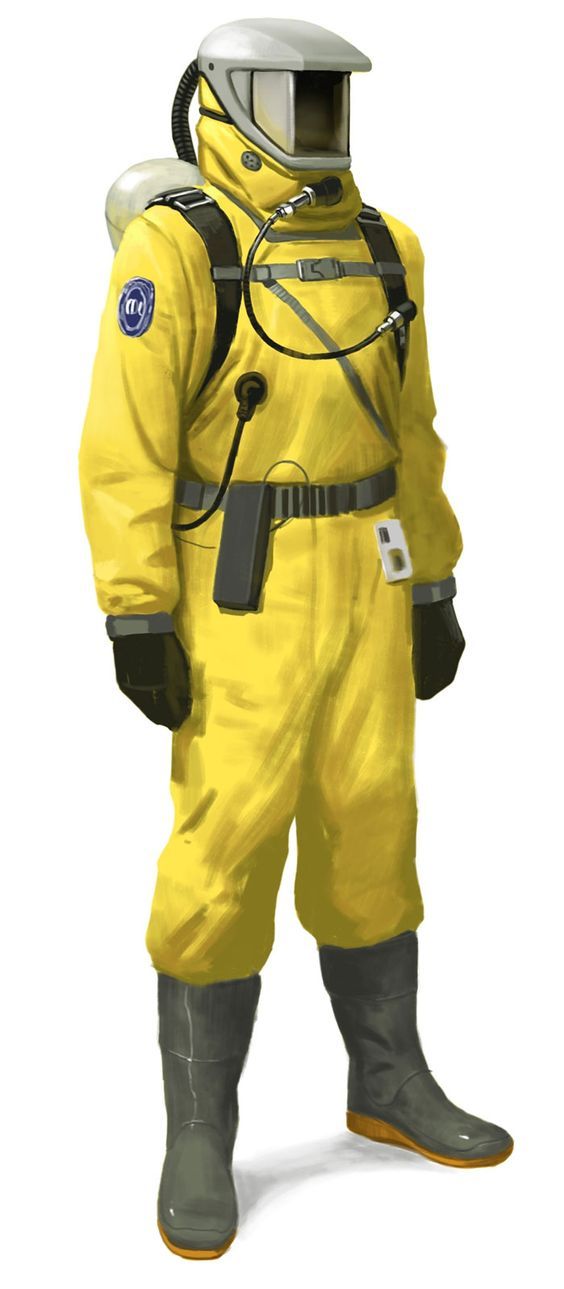
Radioactive
Starting at 1st level, your body is saturated with harmful residual radiation. You can use your action to activate or suppress a radioactive aura. While active, your body glows with a bright light in a 10-foot radius and dim light for an additional 10 feet.
Additionally, each creature which comes within 5 feet of you or starts its turn in that area takes 1d6 radiant damage. At 6th level, this damage increases to 1d8, and at 14th level, this damage increases to 1d10.
Fallout
At 6th level, your magic carries traces of withering radiation. Once per turn, when you cast a spell of 1st-circle or higher on your turn, you can cause one creature targeted by the spell to make a Constitution saving throw against your spell save DC. On a failed save, the target suffers one level of irradiated, to a maximum of level 3.
Quantum Jump
At 14th level, as a bonus action, you can magically teleport up to 60 feet to an unoccupied space you can see. Immediately after you disappear, a wave of radiation spreads within a 10-foot-radius sphere centered on the space you left for 1 minute. When a creature moves into the area for the first time on a turn or starts its turn there, that creature must make a Constitution saving throw against your spell save DC, taking 2d10 radiant damage on a failed save, or half as much damage on a successful one.
You can use this feature a number of times equal to your Charisma modifier (minimum of once). You regain all expended uses when you finish a long rest.
Isotope Poisoning
At 18th level, as an action, you can spend 3 sorcery points to bombard a creature you touch with a near lethal amount of radioactivity. At the beginning of each of the target’s turns, it must make a Constitution saving throw. On a failed save, the target is poisoned until the beginning of its next turn and takes 4d10 radiant damage. If a target fails three times, it remains poisoned for one hour, and takes 1d10 radiant damage at the beginning of each of its turns. If it succeeds three times, this effect ends.
Riftwalker
Riftwalkers are the living embodiment of wanderlust. The yearn to travel and witness unseen vistas burns in them and manifests in their ability to move nearly at the speed of thought. The origin of the Riftwalkers' powers remains a mystery, as they refuse to stay in one place long enough to be studied extensively. Given the lack of empirical evidence, many scholars have hypothesized that Riftwalkers absorb energy from the world itself, typically through an innate connection with ley lines or with areas where the borders between planes are thin, and can use it to alter their own magic.
Adventuring Riftwalkers often concern themselves with investigating mysterious portals to unknown locations, researching ley lines and other mystic phenomena, or seeking out and stopping spatial and temporal disturbances.
Aspect Spells
You gain aspect spells at the channeler levels listed in the Riftwalker Spells table. They count as channeler spells for you, but they don't count against your total number of Spells Known. See the Spellcasting class feature for how spells work.
Whenever you gain a level, you can replace one spell from this feature with another conjuration spell of the same circle from any spell list.
Riftwalker Spells
| Channeler Level | Spells | |
|---|---|---|
| 1st | Adjust Position, Gravity Pulse | |
| 3th | Portal Trap, Instant Counter | |
| 5th | Inexorable Summons, Reciprocating Portal | |
| 7th | Wire Walk, Dimension Door | |
| 9th | Instant Connectivity, Teleportation Circle |
Teleport Object
Starting at 1st level, you can use an action to teleport a small object that isn't being worn or carried and that you can see within 30 feet of you into your hand. Alternatively, you can teleport an object from your hand to a space you can see within 30 feet of you. The object can weigh no more than 5 pounds and must be able to fit into a 1-foot cube.
The weight of the object you can teleport increases when you reach certain levels in this class: at 6th (10 pounds), 14th level (15 pounds), and 18th level (20 pounds).
Shift Space
At 1st level, once on each of your turns, you can spend an amount of movement equal to up to half your speed and teleport to an unoccupied space you can see within a number of feet equal to the movement you spent. If your speed is 0, such as from being grappled or restrained, you can't use this feature.
When you reach 3rd level in this class, you can spend movement equal to your full speed, reducing your speed to 0 for the turn, and expend 3 Sorcery Points or more to teleport yourself to a destination within range. The range you can travel is dependent on the amount of Sorcery Points expended as detailed in the Riftwalker Teleportation Distance table.
You bring any objects you are wearing or carrying with you when you teleport, as long as their weight doesn't exceed your carrying capacity. If you teleport into an occupied space, you take 4d6 force damage and are pushed to the nearest unoccupied space.
| Sorcery Points | Distance Teleported | |
|---|---|---|
| 3 | 30 feet | |
| 5 | 60 feet | |
| 6 | 120 feet | |
| 7 or more | 240 feet |
Tactical Swap
At 6th level, when a creature you can see within 60 feet of you starts its turn or when you or a creature you can see within 60 feet of you is attacked, you can use your reaction to swap positions with the creature. The target must be willing.
If you use this feature when you or another creature is attacked, the attack's target becomes the creature that now
occupies the space being attacked, not the original target.
You can use this feature a number of times equal to your proficiency bonus. You regain all expended uses when you finish a long rest.
Familiar Locations
Starting at 14th level, if you spend an short rest in a location, familiarizing yourself with its features and noting its peculiarities, you can use an action to teleport yourself and a number of willing creatures that rested with you equal to your Charisma modifier (minimum of 1) within 30 feet of you and that you can see to the location.
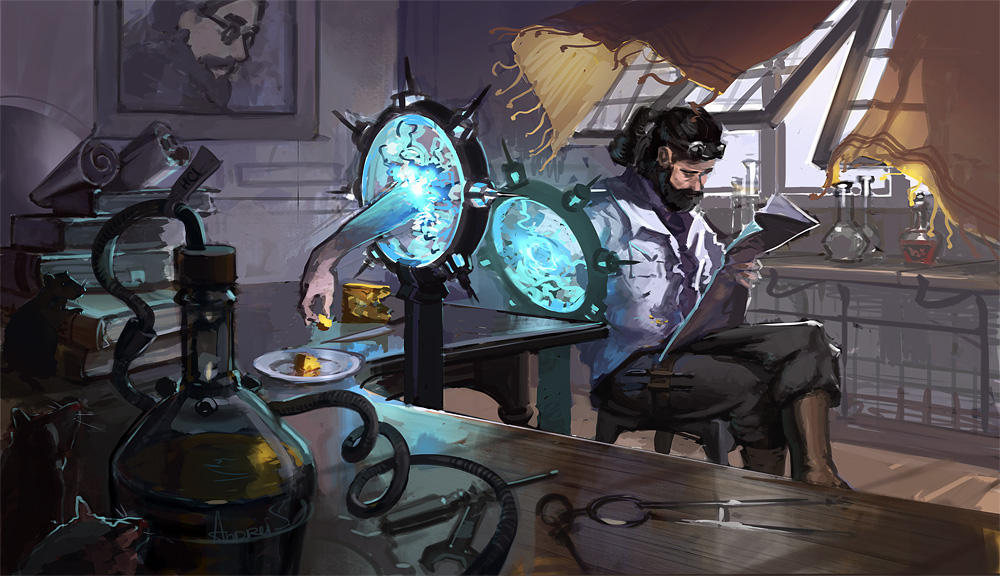

You can teleport to this location over any distance as long as both you and it are on the same plane of existence. If the location is mobile, such as a boat or wagon, you can't familiarize yourself with it enough to use this feature.
You can be familiar with a number of locations equal to your Charisma modifier (minimum of 1). You can choose to forget a location (no action required) to make room for familiarizing yourself with a new location.
You can teleport creatures with this feature a number of times per day equal to your proficiency bonus. You regain all expended uses when you finish a long rest.
Dimensional Ambler
Starting at 18th level, you can use an action to transport yourself and a number of willing creatures equal to your Charisma modifier (minimum of 1) within 30 feet of you and that you can see to the Astral Plane or to the Ethereal Plane. While you are on these planes, you and the creatures you transported can move normally, but each transported creature must stay within 60 feet of you. You can choose to return all of you to the Material Plane at any time as a bonus action.
You can use this trait once and regain the ability to do so when you finish a long rest.
True Vampirism
The dark magic of undeath is a path to great power for those who are willing to pay the price. Many of the most powerful undead creatures will grant their followers a portion of their dark sorcery in return for their service. Evil vampires, long dead mummy lords, and sinister liches have all been known to curse their most loyal followers with sorcerous abilities.
What have you sacrificed to gain this sinister sorcery? Are you sworn in service to a dark lord or a creature of undeath?
Aspect Spells
You gain aspect spells at the channeler levels listed in the True Vampirism Spells table. They count as channeler spells for you, but they don't count against your total number of Spells Known. See the Spellcasting class feature for how spells work.
Whenever you gain a level, you can replace one spell from this feature with another necromancy or blood magic spell of the same circle from the any spell list.
True Vampirism Spells
| Channeler Level | Spells | |
|---|---|---|
| 1st | Blood Rush, Crimson Lash | |
| 3th | Sanguine Shield, Theft of Vitae | |
| 5th | Blood Bond, Reanimate | |
| 7th | Circle of Scarlet, Dark Sacrament | |
| 9th | Mortality, Escape to True Sanctuary |

Blood Magic
Starting at 1st level, whenever you cast a Channeler spell or use a Channeler class feature, you can expend your own hit points in place of Sorcery Points by expending two hit points for each Sorcery Point you would have spent. When you do so, your current and your maximum hit points are reduced by the number of hit points you spend. This hit point reduction cannot be lessened in any way. Any reduction to your maximum hit points from this feature lasts until the end of your next long rest, at which point it returns to normal.
Moreover, when you slay a creature with a Channeler spell of 1st-circle or higher, you gain temporary hit points equal to the level at which the spell was cast. Any temporary hit points can be used in place of your current hit points (but not your maximum hit points) for your Blood Magic spellcasting.
Vampiric Nature
Also at 1st level, your vampiric power comes at significant cost, you gain the following strengths:
- Darkvision. For 30 ft around you, you can see in dim light as if it were bright light and in darkness as if it were dim light. You can't discern color in darkness, only shades of grey. Beyond 30 ft, you can't see in darkness.
- Imperfect Undeath. You transitioned into undeath, but your transition was imperfect. Though you are a humanoid, you are susceptible to effects that target undead. You can regain hit points from spells like cure wounds, but you can also be affected by game effects that specifically target undead, such as a cleric's Turn Undead feature. Also, you no longer age, cast shadows, or reflections, and you don't need to eat, drink or breathe.
Finally, Unlike most undead however, you do need to sleep. When you take a long rest, you must spend at least two hours in an inactive, motionless state, rather than sleeping. Some vampires prefer to stand up straight or to hang vertically. In this state, you appear asleep, but it doesn't render you unconscious, and you can perceive as normal. Additionally if any part of your body has been severed it regrows after 2 minutes in this state. - Night Stalker. You gain the Wall-Crawling Special Movement.
And the following weakness:
- Forbiddance. You can't enter a residence without an verbal invitation from one of the occupants.
- Harmed by Running Water. You take acid damage equal to a third of your maximum hit points if you end your turn in running water.
- Stake to the Heart. If a piercing weapon made of wood is driven into your heart while you are incapacitated, you are paralyzed until the stake is removed. If it driven while you are paralyzed you die instantly.
- Sunlight Hypersensitivity. You take radiant damage, which can't be reduced in any way, equal to a third of your maximum health when you start your turn in direct sunlight. While in direct sunlight, you have disadvantage on attack rolls and ability checks.
Undead Resilience
At 6th level, you gain resistance to both necrotic and poison damage, and you immune to the poisoned condition.
Also, when you have temporary hit points from your Blood Magic feature, you gain resistance to bludgeoning, piercing, and slashing damage from non-magical, non-silvered, attacks.
Misty Escape
At 14th level, as a reaction to when you are reduced to 0 hit points, but not killed outright, you can turn into a cloud of mist, reappearing with 1 hit point in an unoccupied space within 30 feet.
You can use this feature once and regain the ability to do so when you finish a short rest.
Vampiric Mastery
At 18th level, you have mastered the sinister blood magic within your soul. When you deal necrotic damage to a target with a Channeler spell of 1st-circle or higher, you gain temporary hit points equal to the necrotic damage.
These temporary hit points can also be used in place of your current hit points for your Blood Magic Spellcasting.
Voidwielder
Before the creation of the world, there was only the Void. This formless, lightless, writhing chaos desires that all creation should return to it. Voidwielders are channelers who wield the entropic power of the Void, working to undo the very acts of creation. They are often nihilistic in their outlook on life, resigned to the fact that all will eventually dissolve into the nothingness of the great primordial Void.
Aspect Spells
You gain aspect spells at the channeler levels listed in the Voidwielder Spells table. They count as channeler spells for you, but they don't count against your total number of Spells Known. See the Spellcasting class feature for how spells work.
Whenever you gain a level, you can replace one spell from this feature with another void spell of the same circle from the any spell list.
Voidwielder Spells
| Channeler Level | Spells | |
|---|---|---|
| 1st | Arms of Hadar, Protection from the Void | |
| 3th | Destructive Resonance, Maddening Whispers | |
| 5th | Hunger of Hadar, Void Strike | |
| 7th | Nether Weapon, Wall of Void | |
| 9th | Conjure Minor Voidborn, Living Shadows |
Entropic Touch
Starting at 1st level, you can draw upon the power of the void and destroy one Tiny or smaller object that you touch. The item must be non-magical in nature, and cannot be on object that is being worn or carried by another creature.
The item remains destroyed for as long as you concentrate on this ability, as if concentrating on a spell. If you maintain concentration for 1 hour, the object is permanently destroyed. If you loose your concentration, the object reappears in an unoccupied space as close as possible to its last location.
You can use this feature once without expending sorcery points, and cannot do so again until you finish a long rest unless you expend 3 sorcery points to use this feature again.
The size of the non-magical item you can destroy with this feature increases as you gain levels in this class: at 6th level (Medium), 11th level (Large), and 17th level (Huge).
Negate Spell
Your connection to the Void allows you to undo arcane magic. Beginning at 6th level, when you cast counterspell or dispel magic you can spend 2 sorcery points to grant yourself advantage on any roll the spell requires you to make.
Disciple of the Void
Starting at 14th level, when you use Entropic Touch, you can destroy a number of objects equal to your Charisma modifier (minimum of two) at one time. If you destroy another object, you choose which destroyed objects reappears. Only one object can be the maximum size you can destroy; the rest must be Small or Tiny.
Ray of Annihilation
The overwhelming power you draw from the Void allows you to unmake creation itself. Starting at 18th level, you expend one of your Nexus Arcanums to cast disinitgrate at the same spell level of the Arcanum you choose to expend.

The Gunslinger
| Level | Proficiency Bonus | Features | Risk Dice | |
|---|---|---|---|---|
| 1st | +2 | Gunslinger's Creed, Fighting Style, Quick Draw | — | |
| 2nd | +2 | Poker Face, Risk | 4d8 | |
| 3rd | +2 | Gunslinger's Creed feature, Critical Shot | 4d8 | |
| 4th | +2 | Adventuring Boon | 4d8 | |
| 5th | +3 | Extra Attack | 4d8 | |
| 6th | +3 | Gut Shot | 5d8 | |
| 7th | +3 | Gunslinger's Creed feature, Evasion | 5d8 | |
| 8th | +3 | Adventuring Boon | 5d8 | |
| 9th | +4 | — | 5d8 | |
| 10th | +4 | Gunslinger's Creed feature | 5d10 | |
| 11th | +4 | Mankiller | 5d10 | |
| 12th | +4 | Adventuring Boon | 5d10 | |
| 13th | +5 | Dire Gambit | 5d10 | |
| 14th | +5 | Gunslinger's Creed feature | 6d10 | |
| 15th | +5 | Cheat Death | 6d10 | |
| 16th | +5 | Adventuring Boon | 6d10 | |
| 17th | +6 | — | 6d10 | |
| 18th | +6 | Maverick | 6d12 | |
| 19th | +6 | Adventuring Boon | 6d12 | |
| 20th | +6 | Head Shot | 6d12 |
Gunslinger
A glass falls, clattering to the floor, and the tavern grows silent. A dwarf with a deep scowl, dripping with freshly spilled beer, leers at a drunken nearby orc and fingers for a pair of revolvers at his waist.
High on a hillside, carefully concealed beneath foliage and stones, a rifleman steadies her breathing and adjusts her scope, acquiring her target and patiently awaiting the moment to strike.
Risk is in a gunslinger's blood. They are bold renegades, bucking tradition and forging a new path with dangerous and inelegant firearms. Gunslingers are infamous for surviving by their wits, relying on split-second timing and a considerable amount of luck to survive.
Guts and Gunpowder
Black powder is not for the faint of heart. Its thunderous applause is volatile and imprecise—a barely controlled explosion directed at an enemy. Only the truly fearless seek to master it, for one must be mad or have nerves of steel to weather the risk of its use. But those who call themselves gunslingers are fearless combatants, hurling death from their guns in a roaring cacophony. Adapted for shootouts, gunslingers are mobile and daring, knowing that life or death hangs on snap decision-making and one's own mettle.
Dangerous Outsiders
A gunslinger's explosive lifestyle lends well to wandering and adventuring. Gunslingers will often shoot first and ask questions later, an attitude which earns them few friends and bountiful enemies. In their travels, most gunslingers are secretive and take great lengths to go unnoticed, lest they be spotted by old foes with scores to settle.

Creating Your Gunslinger
When creating your gunslinger, consider where firearms fit in the campaign's world and what the common perceptions are of those who use them. If firearms are the norm, your gunslinger might be a mercenary or militia fighter. If firearms are rare, your gunslinger might be one of a kind, a trailblazer in new types of warfare.
It's also not unusual for a gunslinger to be haunted by their past. Did some event drive you to the gun and motivate you to travel? Is there a bounty on your head in one or more areas? Do you have any old enemies that seek you for revenge?
Class Features
As an Gunslinger, you gain the following class features.
Hit Points
Hit Dice: 1d8 per gunslinger level
Hit Points at 1st Level: 8 + your Constitution modifier
Hit Points at Higher Levels: 1d8 + your Constitution modifier per gunslinger level after 1st
Proficiencies
Armor: light armor
Weapons: simple weapons, simple firearms, martial firearms
Tools: one type of gaming set of your choice
Saving Throws: Dexterity, Charisma
Skills: Choose two from Acrobatics, Animal Handling, Athletics, Deception, Insight, Intimidation, Perception, Persuasion, Piloting, Sleight of Hand and Technology
Equipment
You start with 5d4 x 100 New Yen to buy your own equipment, in addition to the equipment granted by your profession.
Gunslinger's Creed
At 1st level, choose one of the following Gunslinger's Creed that best represents your skills and training.
The Gunslinger's Creed you choose grants you features at 1st level, 3rd, 7th, 10th, and 14th level.
Fighting Style
At 1st level you choose a Fighting Style that best reflects your training. You cannot select a Fighting Style more than once, even if a feature allows you to select another Fighting Style.
Akimbo
When you engage in two-weapon fighting with firearms, you don't take a penalty to the damage of the second attack.
Bullseye
You gain a +2 bonus to ranged attack rolls you make using firearms. The weapon must have the Sighted property or have a normal range of 80 feet or longer to gain this effect. This effect does not stack with the Archery fighting style
Duelist
While you are wielding a firearm in one hand and nothing in the other, if you make a ranged weapon attack and exceed the target's AC by 5 or more, you deal one extra die of weapon damage. You can only use this ability once per round.
Shotgunner
When you hit with a ranged weapon attack using a firearm that has the Scatter property, you can reroll the lowest damage die, and you must use the new roll, even if the new roll is worse than the original.
Suppression
When you attack a creature with a firearm on your turn, it becomes suppressed until the start of your next turn. If the suppressed target willingly moves 5 feet or more, you can use your reaction to make a weapon attack against it with a firearm.
Quick Draw
Starting at 1st level, you have advantage on initiative rolls. Additionally, you can draw or stow up to two weapons when you roll initiative and whenever you take an action on your turn.
Poker Face
Starting at 2nd level, you have advantage on ability checks and saving throws made to prevent others from sensing your motives, perceiving your emotions, or reading your thoughts.
Risk
By 2nd level, you can perform incredible feats of daring that are fueled by special dice called risk dice.
Risk Dice
You have four risk dice, which are d8s. You gain additional risk dice, and your risk dice change as you gain levels in this class, as shown in the Risk Dice column of the Gunslinger table. You regain all expended risk dice when you finish a long rest.
Using Risk Dice
Once per turn, you can expend a risk die to perform a deed of your choice. Your deed options are detailed at the end of the class description.
Saving Throws
Some of your deeds require your target to make a saving throw to resist your deed's effects. The saving throw DC is calculated as follows:
Deed save DC
Critical Shot
At 3rd level, your ranged firearm attacks score a critical hit on a roll of 19 or 20.
Starting at 9th level, your ranged firearm attacks score a critical hit on a roll of 18–20, and at 17th level your ranged firearm attacks score a critical hit on a roll of 17–20.
Adventuring Boon
When you reach 4th level, and again at 8th, 12th, 16th, and 19th level, you gain 2 unrestricted bonus points. Players can spend these extra Points immediately to acquire Attributes for their characters or save them for future use.
You cannot increase one of your ability scores above 20 using this feature.
Extra Attack
Beginning at 5th level, you can attack twice, instead of once, whenever you take the Attack action on your turn.
Gut Shot
Starting at 6th level, whenever you score a critical hit against a Large or smaller creature with a firearm, the bullet lodges itself in the target. Until the creature uses its action to dislodge the bullet, it moves at half speed and has disadvantage on attack rolls and ability checks. Elementals, oozes, and undead are immune to this effect.
Evasion
Beginning at 7th level, you can nimbly dodge out of the way of certain area effects, such as a red dragon's fiery breath or an ice storm spell. When you are subjected to an effect that allows you to make a Dexterity saving throw to take only half damage, you instead take no damage if you succeed on the saving throw, and only half damage if you fail.
Mankiller
Starting at 11th level, when you make one or more firearm attacks as part of an action, you can add your ability modifier to the firearm's damage rolls. Note that firearms do not normally add your ability modifier to their damage rolls.
Dire Gambit
Beginning at 13th level, whenever you score a critical hit, you regain one expended risk die.
Cheat Death
By 15th level, you have a knack for evading the grave. When you drop to 0 hit points and don't die outright, you can use your reaction and expend one risk die to remain standing. You instead drop to a number of hit points equal to the number rolled on the die.
You can use this feature once and regain the ability to do so when you finish a short rest.
Maverick
By 18th level, you have become unshakable. You have advantage on Constitution checks and saving throws.
Head Shot
At 20th level, when you score a critical hit against a creature with a firearm, you can choose for the shot to be a head shot. If the creature has less than 100 hit points, it dies. Otherwise, it takes an extra 10d10 damage from the hit. Elementals, oozes, undead, and creatures that lack nervous systems or vital organs take no extra damage from this feature.
You can use this feature once and regain the ability to do so when you finish a short rest.
Gunslinger's Creed
At 1st level, a gunslinger chooses their Gunslinger's Creed, each of which is detailed below.
Covert Operative
They say, "the pen is mightier than the sowrd", and you believe that knowledge is power: the best way to defeat your enemies is by stealing what they know and replacing it with misinformation. To that end, you have been trained in the ways of covert warfare, giving you a broad range of abilities to complement your fearsome gunnery skills.
Secret Agent Training
Starting at 1st level, you gain proficiency in two sets of tools from the following list: disguise kit, thieves' tools, vehicles (land), vehicles (water) and two skills from the following list: Investigation, Sleight of Hand, Stealth, Survival. You can apply double your proficiency bonus to any check you make that uses one of those tools or skills.
Sneaky Shot
At 3rd level, your training allows you to make attacks on the hoof, even in the most intense operations. When you take the Dash or Disengage action on your turn, you can make a single attack with a firearm as a bonus action.
Fieldcraft
Starting from 7th level, your experience in the field gives you a number of advantages. You cannot be surprised while you are conscious. Additionally, you can use a bonus action to make a Wisdom (Perception) check to spot hidden creatures.
Concealed Gear
Also at 7th level, you gain access to specialized gear that can be hidden about your person, either by being unusually small or by being disguised as something else. Any gear that you are carrying, except for weapons and armor that are not light, is undetectable by any casual observer. A creature that attempts to conduct a thorough search of you must make a Intelligence (Investigation) check with a DC equal to 13 + your Intelligence modifier + twice your proficiency bonus.
Risky Mission
At 10th level, you know which risks to take and which to leave alone. You can now spend two risk die and add it to the damage roll.
License to Kill
Starting at 14th level, whenever you hit with an attak using a firearm, you can spend a risk die and add it to the damage roll.
Gun Tank
Restriction: Strength score 15 or Higher
Be bigger, be badder, and be tougher, and no man will stand in your way. You are a living siege engine, a titan of muscle, brandishing weapons most men are incapable of lifting. Armed with these devastating firearms, you wade into the field of battle, bombarding and destroying those foolish enough to approach you.
Tough As Nails
When you choose this archetype at 1st level, your hit point maximum increases by 1 and increases by 1 again whenever you gain a level in this class.
You also gain proficiency with medium and heavy armor.
Heavy Gunner
At 3rd level, you can also carry heavy firearms regardless of their weight. Additionally, you can use Strength, rather than Dexterity, for attack and damage rolls using heavy firearms, and you can use your Strength, instead of your Dexterity, when calculating your Deed save DC.
Thick-Headed
Starting at 7th level, you have advantage on saving throws made against being charmed.
Strong as an Ox
At 10th level, your carrying capacity and the weight you can push, drag, and lift are doubled, and you have advantage on Strength checks and Strength saving throws. Additionally, you can ignore the Two-Handed property on firearms with which you are proficient.
Gun Rage
At 14th level, as a bonus action, you can explode into a fury to destroy lesser men. For the next minute, you have resistance to bludgeoning, piercing, and slashing damage and can make one additional attack whenever you take the Attack action on your turn. However, for the duration, your speed is halved and you have disadvantage on Dexterity checks and saving throws.
Your gun rage ends if you take cover, finish your turn without attacking, or use your bonus action to end it early.
You can use this feature once and regain the ability to do so when you finish a short rest.
Gun-Ko Master
The ancient art of gun-ko is passed through generations of gunslingers who study the gun as a perfect weapon and meditate on its intricacies.
This path is not for the impatient or the faint of heart, but those who practice it diligently make their guns an extension of themselves, learning to strike with the speed of a rifle and catch bullets out of the air.
Point-Blank Shot
When you choose this archetype at 1st level, being within 5 feet of a hostile creature doesn't impose disadvantage on your ranged weapon attack rolls made with firearms.

Gun-Ko
At 3rd level, you learn the immortal art of gun-ko, which sees the gun as a total weapon, as devastating used as a melee weapon in close quarters as it is fired at range. You can treat firearms as melee weapons with the Finesse property that deal 1d6 bludgeoning damage on a hit, or 1d8 damage if the firearm has the Two-Handed property.
Additionally, when you make a ranged weapon attack with a firearm against a creature within 5 feet of you, you can make a melee weapon attack using that firearm as a bonus action.
Lightning Disarm
Starting at 7th level, if a creature within 5 feet of you is holding a firearm, you can use your bonus action and expend a risk die to attempt to disarm that creature. The target must make a Dexterity saving throw against your Deed save DC. On a failed save, you take the firearm from the creature's hands after a series of rapid movements. You must have at least one empty hand to use this ability.
Bullet-Catch
Also at 7th level, you can use your reaction to deflect or catch the projectile when you are hit by a ranged weapon attack. When you do so, the damage you take from the attack is reduced by 1d10 + your Dexterity modifier + proficiency bonus.
Predictive Dodge
At 10th level, your reflexes are so honed that you can dodge incoming bullets. You can use your bonus action to choose one creature that you can see within 30 feet of you. You gain the benefits of the Dodge action against the target's ranged attacks and effects until the start of your next turn. You lose this benefit if you take damage from the target.
Gatling Strikes
By 14th level, you have mastered the most advanced techniques of gun-ko. You can use your bonus action to make two melee weapon attacks and one ranged weapon attack with a firearm against targets within 15 feet of you.
You can use this feature once and regain the ability to do so when you finish a short rest.
Grenadier
You believe that virtually all problems can be solved with the careful application of high-explosives, and will go to great lenghts to prove this thesis. Demolitions are your expertise, and anything that acn cause explosions at long range is your instrument. If you must, you can make do with an ordinary gun, but its simple not as satisfying as blowing your enemies into smithereens.
Heavy Ordinance
Starting at 1st level, weapons with the Explosive property use you Deed save DC, if it would be higher.
Additionally, starting at 5th level, once per turn when you hit a target with an attack from a firearm that has the Explosive property, yo can deal an additional 1d8 damage to that target.
High Explosive
At 3rd level, whenever you make an attack with a weapon that has the Explosive property, you can use your bonus action to souble the projectile's blast radius.
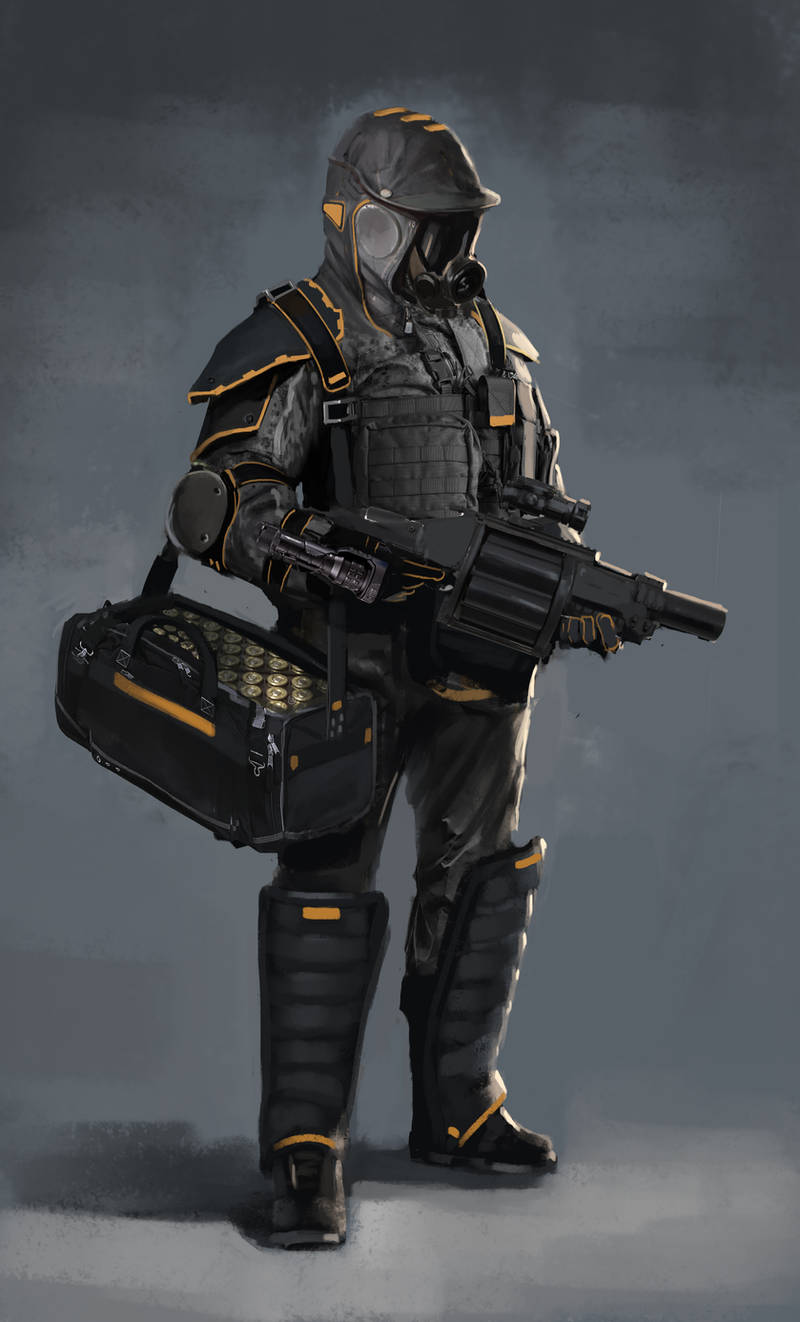
Lock and Load
By 7th level, you hurriedly and safely load even the heaviest weapons. As a bonus action at the end of your turn, you can reload any weapon you are holding that has the Reload property and requires more than 1 action to reload.
Mortar Shot
Starting at 10th level, when you make an attack with a weapon that has the Explosive property, you can fire it in a parabolic arc. This attack ignores half and three-quarters cover, as long as the target does not have cover from above.
Clusterbomb
By 14th level, you can load and fire a special projectile that is packed tight with smaller explosives which scatter on impact. You can load and fire this projectile as an action; the projectile's range is determined by the weapon that fires it. When the clusterbomb lands, it explodes in a 20-foot radius. Each creature within the blast radius must make a Dexterity saving throw with disadvantage against your Deed save DC, or take 10d6 fire damage on a failed save, or half as much on a successful one.
You can use this feature once and regain the ability to do so when you finish a long rest.
High Roller
Fortune is a fickle thing—unless you're a high roller. These gunslingers are master card sharps and dice throwers that mix their love of risk with their talent for gunplay. High rollers push their luck until it runs out, then push harder. Why settle for just a win when you could bet it all and win big?
All In
Starting at 1st level, you can use your bonus action when you make an ability check or attack roll, or your reaction when you make a saving throw to expend and roll one of your risk dice. You choose to do this after you roll the d20 but before the GM says whether the roll succeeds or fails
If you roll a 1 on your risk die, you fail the ability check, attack roll, or saving throw, regardless of the result. Otherwise, you add the number rolled on your risk die to the result.
Liar's Dice
At 3rd level, when you make an ability check, attack roll, or saving throw, you can roll the d20 in secret and declare any result you wish. If the GM chooses to call your bluff, reveal the number rolled on the d20. If you were telling the truth, treat the result as if you rolled a 20. If you were telling a lie, roll the d20 again and use the lower of the two rolls. If the GM chooses not to call your bluff, you use the result you declared regardless of what you rolled.
You can choose to roll in secret a number of times equal to 1 + your Charisma modifier (a minimum of once), and you regain all expended uses when you finish a long rest.
Risky Business
At 7th level, when you make an attack roll against a hostile creature or a hostile creature forces you to make a saving throw, you can choose to make the roll with disadvantage. When you do, you regain an expended risk die.
Boom and Bust
Starting at 10th level, when you score a critical hit on a ranged firearm attack, you can roll the damage twice and use the higher of the two results. When you roll a 1 on a ranged firearm attack roll, you can choose to take psychic damage equal to your proficiency bonus or lose this feature's critical hit benefit for the next minute.
Double or Nothing
At 14th level, when you score a critical hit with a firearm, you can roll two additional d20s. Treat these d20s as if they were ranged attack rolls you made against the target with a firearm. If they both miss, your critical hit becomes a normal hit. If either of these d20s would score a critical hit, roll all of the attack's damage dice three times and add them together, instead of only two times as normal for a critical hit. Otherwise, the critical hit happens as normal.
Pistolero
Bullets are power, and you have long believed that more bullets equal more power. Your expertise is in delivering a hail of deadly fire to pulverize your enemies. Not every bullet needs to be accurate to make a difference.


Point-Blank Shot
When you choose this archetype at 1st level, being within 5 feet of a hostile creature doesn't impose disadvantage on your ranged weapon attack rolls made with firearms.
Fan The Hammer
At 3rd level, when you take the Attack action on your turn to attack with a firearm, you can expend a risk die as a bonus
action to make two additional ranged firearm attacks with that weapon. These additional attacks always have disadvantage, regardless of circumstance. This weapon can't have the Automatic or Two-Handed property, and you must have a free hand to use this feature.
At 14th level, you can make three additional attacks with disadvantage, instead of two, when you use this feature.
Speed Loader
Starting at 7th level, you have mastered the art of quickly reloading your weapon. On your turn, you can reload a single one-handed firearm without using an action or bonus action.
Bullet Time
At 10th level, when you make a ranged firearm attack with a one-handed firearm on your turn, you can use your bonus action to gain advantage on the attack roll.
You can use this feature once and regain the ability to do so when you finish a short rest.
Swift Vengeance
At 14th level, as a reaction when you take damage from a creature within 15 feet of you, you can make a firearm attack targeting that creature.
Sharpshooter
A well-placed bullet is more powerful than a sword, arrow, or spell. Indeed, you believe that every violent conflict should sound like a single loud crack followed by a long silence. Such shots need to be delivered perfectly, even at range, for when they are done right, they are as deadly for the target as they are stupendous for the audience.
Sniper's Stance
When you choose this archetype at 1st level, you don't have disadvantage on ranged firearm attacks as a result of being prone. Additionally, when you're prone, you can stand up by spending 5 feet of movement, rather than half your speed.
Eagle Eye
Starting at 3rd level, when you make an attack with a firearm you are holding in two hands, you can use a bonus action to expend a risk die and add it to the attack roll. This attack doesn't have disadvantage due to being at long range.
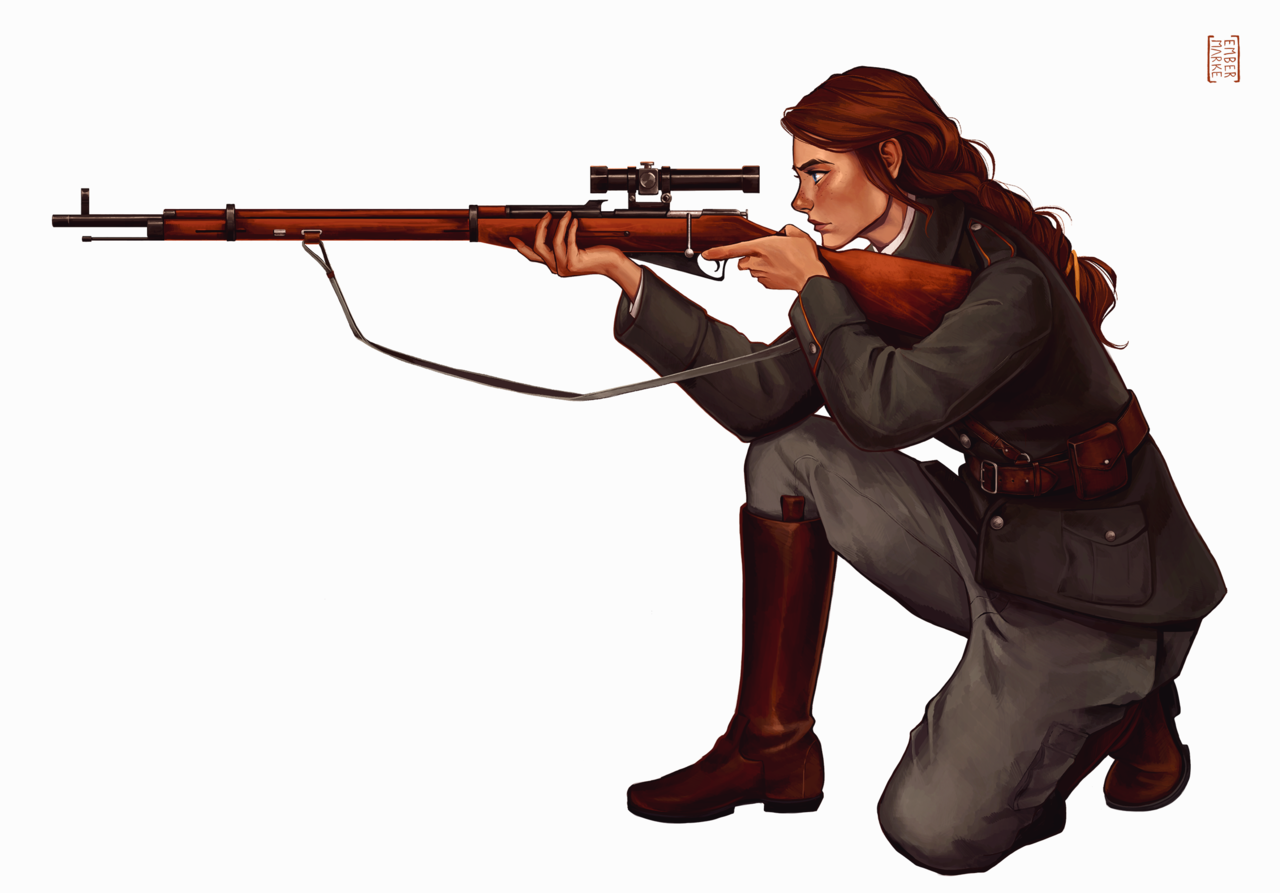
Camouflage
By 7th level, you've learned to expertly conceal yourself in a sniper's nest. You can spend 1 minute preparing camouflage for yourself. Until you move, you gain the following benefits:
- You have advantage on Dexterity (Stealth) checks you make to hide
- Attacks you make while hidden don't automatically reveal your location
- Creatures have disadvantage on ability checks they make to discern the origin of your firearm attacks.
Eye For Movement
By 10th level, your vision is keen enough to place invisible targets in your sights. As a bonus action, you can gain darkvision and the effects of the see see invisibility spell against targets that are 30 feet or further from you until the end of your next turn. You can use this bonus action only if you haven't moved during this turn, and after you use the bonus action, your speed is 0 until the end of the current turn.
Focused Shot
Starting at 14th level, when you use your Attack action to make only one ranged attack with a firearm and do not have disadvantage, you can gain advantage on the attack roll and deal damage on a hit as if you scored a critical hit.
Storm Gunner
Overkill is a silly notion. You believe that holding down the trigger until your opponent resembles a fine cheese isn't just effective, it's the optimal way to begin and end any engagement. Like other storm gunners, you can rain bullets down on your foes with deadly precision, and favor tactics that involve sprinting around with a machine gun above all others.
Concentrated Fire
When you choose this archetype at 1st level, you are surprisingly accurate, even when delivering a hail of gunfire. Whenever you use a firearm with the Automatic property to attack with disadvantage, you gain a +2 bonus to your attack rolls.
Bullet Hell
At 3rd level, once per turn when you use a firearm with the Automatic property to attack twice with disadvantage, you can instead choose to make an attack roll with disadvantage against each target with the weapon's normal range, to a maximum number of targets equal to your Dexterity modifier (minimum 1).
Ammunition Belt
By 7th level, you can use your action to load each firearm that has the Automatic property that you are holding with an extended belt of ammunition. While you are holding it, this weapon no longer needs to be reloaded, though it expends ammunition as normal.
Running Riot
Starting at 10th level, your base movement speed increases by 10 feet.
Riddle with Holes
By 14th level, you can shape your cloud of bullets any way you wish. When you use a firearm with the Automatic property to attack automatically, you can choose to make the attacks without disadvantage. However, if a feature such as Mankiller would let you add an ability score to the damage roll, you don't add it to these attacks.
Additionally, if you possess an ability, such as the Spray and Pray feat, that allows you to target an area with weapon attacks, you can exclude any creature you choose in the area of effect from making saving throws or taking damage.
Trick Shot
Accuracy means different things to different people. For you, true accuracy isn't necessarily in hitting a target on the first shot, but might include hitting the mark after the bullet bounces around a dozen times. Your attacks are just as dangerous if they miss, or even after hitting their mark, as others' are while they're still in the air.

Creative Trajectory
When you choose this archetype at 1st level, you begin to learn how to make your bullets travel in unexpected ways. Your firearm attacks ignore half cover.
Ricochet
At 3rd level, when you miss with an attack using a firearm and you don't have disadvantage on the roll, you can use your bonus action to reroll the attack roll and you must use the new roll. If this causes the attack to hit, the attack only deals only half damage.
Light-Footed
By 7th level, you're just as good at escaping from trouble as you are at getting into it. Difficult terrain costs you no extra movement.
Deft Deflectionist
Starting at 10th level, as a reaction when an attacker you can see makes a ranged weapon attack against you, you can make an attack with a firearm you are holding to attempt to deflect the projectile. If your attack roll is higher than the attacker's, the attack targeting you has disadvantage. You must use this feature before you know the outcome of the attacker's attack roll.
Pinball Shot
Starting at 14th level, once per turn when you hit a creature with a ranged firearm attack, you can ricochet the bullet to hit an additional target. The second target must be within half the firearm's range of the first target. Make a separate attack roll for the second target. You can use this feature a number of times equal to your Dexterity modifier (a minimum of once), and you regain all expended uses when you finish a long rest.


The Investigator
| Level | Proficiency Bonus | Features | Ritual Circle | |
|---|---|---|---|---|
| 1st | +2 | Occult Specialization, Expertise, Ritualist | — | |
| 2nd | +2 | Myths and Legends | 1st | |
| 3rd | +2 | Occult Specialization feature, Rushed Incantation | 1st | |
| 4th | +2 | Adventuring Boon | 2nd | |
| 5th | +3 | Exploit Vulnerability | 2nd | |
| 6th | +3 | Occult Specialization feature | 3rd | |
| 7th | +3 | Opportunistic Piety | 3rd | |
| 8th | +3 | Adventuring Boon | 4th | |
| 9th | +4 | Supernatural Resolve | 4th | |
| 10th | +4 | Occult Specialization feature | 5th | |
| 11th | +4 | Finisher | 5th | |
| 12th | +4 | Adventuring Boon | 6th | |
| 13th | +5 | Enigma Arcane | 6th | |
| 14th | +5 | Occult Specialization feature | 6th | |
| 15th | +5 | — | 6th | |
| 16th | +5 | Adventuring Boon | 6th | |
| 17th | +6 | — | 6th | |
| 18th | +6 | Exorcist | 6th | |
| 19th | +6 | Adventuring Boon | 6th | |
| 20th | +6 | Spellbinder | 6th |
Investigator
A collage of diagrams, maps, and small items litters the wall, pinned with nails and connected by a spiderweb of colorful strings. An elf stands nearby, contemplating the mystery splayed out in front of her and readying her crossbow for work.
A half-orc wearing a wide-brimmed hat leafs through a thick tome, double-checking the preparations: a sturdy net trap, holy symbols on the doors, cloves of garlic, and several dozen wooden stakes. The preparations made, the half-orc slinks into the shadows and readies himself for the bloodshed.
Hastily tracing symbols in chalk, a human wearing a long coat whirls about in a wide arc, completing a rough magic circle in mere seconds. A monstrously fat demon, blood dripping with its drool, lunges at him, but instead impacts off an invisible magical barrier, a cylinder raised from the circle's edge. The fiend howls with rage, and the inquisitor breathes a sigh of relief.
Supernatural detectives and monster slayers, investigators are always on the hunt for malevolent outsiders. Whenever evil seeps into the world—be it fiends, undead, or strange abominations from beyond the stars—investigators will be the first to locate them and banish their foul corruption from the mortal plane.
Paranormal Investigators
There are forces more ancient than time, foes more sinister than the foulest men, and beings more titanic than gods. The world stands at a precipice of woe and terror, being threatened nightly by dark agents and hordes of monsters. At risk to their own lives and sanities, investigators penetrate the evil that creeps in the shadows and banish it from the world. Their battles are never-ending, for victory only delays doomsday another night.
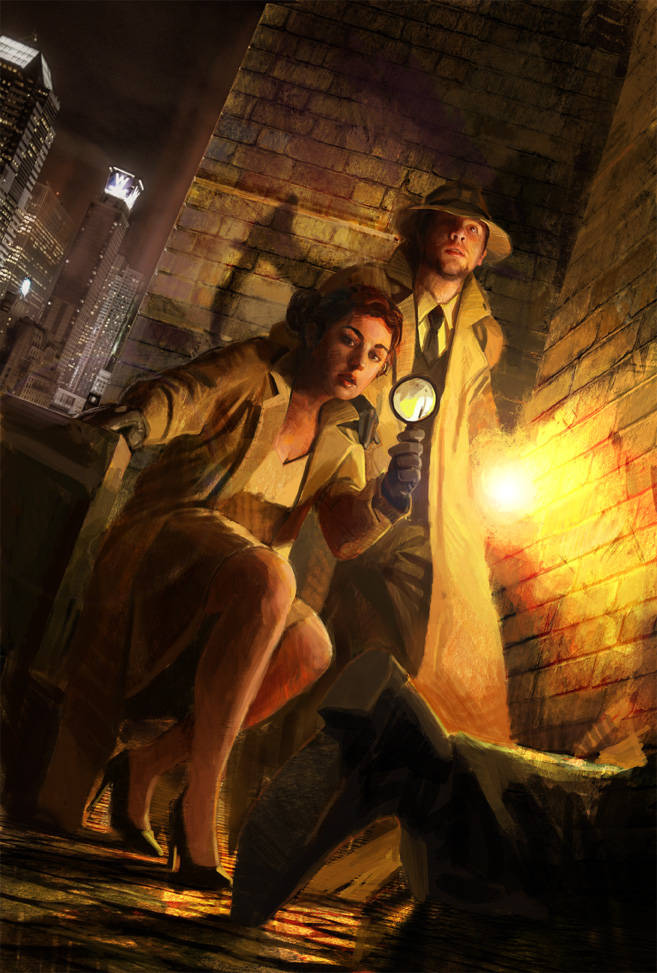
Investigators track supernatural threats ranging from incorporeal spirits, to nefarious vampires and lycanthropes, to incursions of demons and devils. Often in their investigations, they often uncover secret cults and maligned individuals who bring these supernatural threats to bear. It is always their goal to impede these evildoers by any means necessary, resorting to trickery, guile, magic, and bloodshed when necessary. To an investigator, no tactic is unthinkable when the world is at stake.
Exorcists and Occultists
Even as they strive to contain its influence from the world at large, investigators dabble in forbidden magic to give themselves an edge against supernatural threats. Prepared investigators keep a well-stocked grimoire of magical secrets, containing rituals, incantations, notes on monsters' powers and weaknesses, recipes for poisons, and arcane diagrams—everything needed to confront their foes on an even footing. Even so, an investigator's occupation is perilous. A grimoire might spell out a vampire's fear of sunlight and aversion to silver, but it does little to hinder their fangs.
Creating Your Investigator
As you build your investigator, consider what sort of supernatural threat first drove you to investigating and combating the occult. Did one of your family members strike a bargain with a fiend? Were you kidnapped by a cabal of vampires or a pack of lycanthropes? Did you stumble across evidence of an eldritch abomination, such as a Great Old One? The type of creature you first did battle with likely shaped your tools and methods later on.
Did you apprentice under a seasoned monster hunter, learning the ropes of tracking a threat, uncovering its weaknesses, and setting a trap for it? Or did you strike out on your own, compiling your own grimoire from hard-earned research? Perhaps you learned everything about monster hunting from someone else's grimoire, a masterwork containing an abridged library of occult knowledge and a lifetime of experience. It's even possible that you signed a contract with a minor fiend and turned to supernatural investigation in a last-ditch effort to save your soul.
Class Features
As an Investigator, you gain the following class features.
Hit Points
Hit Dice: 1d8 per investigator level
Hit Points at 1st Level: 8 + your Constitution modifier
Hit Points at Higher Levels: 1d8 + your Constitution modifier per investigator level after 1st
Proficiencies
Armor: light armor
Weapons: simple weapons, hand crossbows, heavy crossbows, longswords, rapiers, shortswords, simple firearms, martial firearms that do not have the explosive, heat, heavy or overheat properties
Tools: one type of gaming set of your choice
\columnbreak
Saving Throws: Dexterity, Intelligence
Skills: Choose three from Arcana, Athletics, Data, Deception, History, Insight, Intimidation, Investigation, Medicine, Nature, Perception, Persuasion, Piloting, Stealth, Slieght of Hand, Religion and Technology.
Equipment
You start with 4d4 x 100 New Yen to buy your own equipment, in addition to the equipment granted by your profession.
Occult Specialization
At 1st level, choose one of the following Occult Specialization that best represents your skills and training.
The Occult Specialization you choose grants you features at 1st level, 3rd, 6th, 10th, and 14th level.
Trinkets
Investigators of each specialization also collect a number of supernatural trinkets. Once you use one of your trinkets, you can't this feature again until you finish a short rest. As you gain higher levels in this class, you can use your trinkets additional times: You can use them once more at 5th level (2 uses), 11th level (3 uses), and 17th level (4 uses).
Expertise
At 1st level, choose two of your skill proficiencies; your proficiency bonus is doubled for any ability check you make that uses either of the chosen proficiencies.
At 6th level, you can choose two more of your proficiencies to gain this benefit.
Ritualist
You maintain a grimoire brimming with magical rituals, your most potent tools to defeat supernatural threats.
Grimoire
At 1st level, you have a grimoire containing four 1st-circle spells of your choice that have the ritual tag from any class's spell list (the spells needn't be from the same list). You can't cast spells in your grimoire except as rituals, unless you've learned them by some other means.
Whenever you gain a level in this class, you can add an additional ritual spell from the Investigator Rituals list to your grimoire at no cost. The Ritual Circle column on the Investigator table shows the maximum spell circle you can add to your grimoire.
Additionally, whenever you find a ritual spell on your adventures, you can add it to your grimoire if it is on the Investigator Rituals list of a level you can add to your grimoire. For each circle of the spell, the transcription process takes 2 hours and costs 5,000 New Yen for the rare inks needed to inscribe it.
Bonus Rituals
As an investigator, you can treat specific spells as if they had the ritual tag, allowing you to add them to your grimoire and cast them as rituals. These spells are listed on the Investigator Rituals table to the right.
Spellcasting Ability
Intelligence is your spellcasting ability for your ritual spells, so you use Intelligence when a spell refers to your spellcasting ability, when setting the saving throw DC for a spell, or when you make a spell attack roll for one of your ritual spells.
Spell save DC
Spell attack modifier
Myths and Legends
At 2nd level, you are extremely adept at uncovering knowledge which pertains to eldritch threats and forgotten legends. You have advantage on Intelligence checks related to researching creatures, spells, and other ancient or secret lore.
Rushed Incantation
Beginning at 3rd level, you can hastily perform any ritual spell in your grimoire that has a casting time of 1 action, completing the ritual as a bonus action. If the ritual requires spell components worth 1,000 New Ywn or less, you cast it without using spell components. You can use this feature a number of times equal to your Intelligence modifier (minimum once), and regain the ability to do so when you finish a long rest.
As you gain higher levels in this class, you can use this feature additional times. You can use it once more at 5th level (Intelligence modifier + 1), 9th level (Intelligence modifier + 2), 13th level (Intelligence modifier + 3), and 17th level (Intelligence modifier + 4).
Adventuring Boon
When you reach 4th level, and again at 8th, 12th, 16th, and 19th level, you gain 2 unrestricted bonus points. Players can spend these extra Points immediately to acquire Attributes for their characters or save them for future use.
You cannot increase one of your ability scores above 20 using this feature.
Exploit Vulnerability
Starting at 5th level, once on each of your turns when you hit a creature with a weapon attack, it is treated as if it has vulnerability to the weapon's damage. Vulnerability from this feature only doubles your weapon damage dice and your ability modifier; do not double additional sources of damage, such as spells and other class features.
Additionally, the attack, as well as all other attacks made against the creature until the start of your next turn, are considered magical for the purposes of bypassing damage resistance and immunity.
Opportunistic Piety
By 7th level, you always keep a wide array of holy symbols and blessed items on your person, even if you aren't particularly pious. When you use your Opportunistic Piety, you choose which effect to create from the list below. You must then finish a short rest to use your Opportunistic Piety again.
Banish
You cast the spell Banishment. If the target is a fey, fiend, or undead and fails its saving throw against this spell, it also takes radiant damage equal to your level.
Miracle Healing
As an action, divine light from your hands knit the wounds of a willing creature you touch. That creature regains a number of hit points equal to twice your investigator level. This ability has no effect on undead or constructs.
Warding
As an action, you trace a holy symbol on a creature within 5 feet of you, warding it from harm. For the next minute, aberrations, celestials, fey, fiends, and undead which touch the target creature or hit it with a melee attack take 1d12 radiant damage.
Supernatural Resolve
At 9th level, you gain an extreme resilience to the attacks and effects of the creatures you regularly investigate. You can't be possessed or charmed, and you gain resistance to both psychic and necrotic damage.
Finisher
Beginning at 11th level, you know exactly how to bring a monster down. When you take the Attack action and hit a creature with a weapon attack, you can deal an extra 2d8 damage to the creature. If the creature has less than half its hit points remaining, you can instead deal an extra 4d8 damage to the creature.
Enigma Arcane
At 13th level, you uncover a magical secret connected to a wellspring of potent magic. You can cast one of the following spells once: mirage arcane, plane shift, reverse gravity, sequester, or teleport.
At 15th level, you add the following spell options to your Enigma Arcane feature: antimagic field, glibness, maze, and mind blank.
At 17th level, you add the following spell options to your Enigma Arcane feature: astral projection, gate, or weird. You can use this feature once and regain the ability to do so when you finish a long rest.
Exorcist
Beginning at 18th level, you can cast the spell protection from evil and good without using a spell points or spell components.
Spellbinder
By 20th level, many rituals you perform have become second nature to you. Select five ritual spells in your grimoire with a casting time of 1 action. You can cast these spells as a bonus action without using a use of Rushed Incantation, and you can do so without your grimoire on hand. If the ritual requires spell components worth 1,000 New Ywn or less, you cast it without using spell components.
Occult Specialization
At 1st level, an investigator chooses their Occult Specialization, each of which is detailed below.
Antiquarian
Festooned with magical trinkets from every corner of the globe, antiquarians have a tool for every occasion: silver arrowheads for lycanthropes, heartwood stakes for vampires, blessed relics for fiends, and so on. As they expand their collections from piles of trinkets to veritable museums, they become adept historians and arcanists, familiar with the story of every magic item their care, as well how to use them in dire situations.
Artifact Historian
Starting at 1st level, you add the spell Identify to your grimoire and never require material components to cast it.
Trinkets
By 3rd level, you've collected a number of magical trinkets to help you collect and unravel profound arcane secrets. You can use the following trinkets:
Hateful Arrowhead. You can cast the spell Scorching ray or Ray of enfeeblement once without using spell points or spell components.
Mirrored Prism. You can cast the spell Blur or Mirror image, targeting yourself only, once without using spell points or spell components.
Razortooth Bandages. You can cast the spell Cure wounds or Inflict wounds once without using spell points or spell components. This spell is cast as if using spell points of the circle shown in the Ritual Circle column of the Investigator table.
Relics
By 6th level, you've secured a handful of priceless relics with rare and delicate enchantments. You can use one of the following relics, and regain the ability to use this feature when you finish a short rest.
Antediluvian Dynamo. You can cast the spell Fireball or Lightning bolt once without using spell points or spell components.
Lich's Deathmask. You can cast the spell Counterspell or Dispel magic once without using spell points or spell components.
Mortal Coil. You can cast the spell Animate dead or Revivify once without using spell points or spell components. Casting Animate dead using this trinket causes all undead servants created by previous castings of the spell to revert to lifeless corpses.
Magical Item Collection
Starting at 10th level, you maintain a vault of magic items, secured in an extradimensional space with an elaborate locking mechanism. You can produce one of these items, and change your selection each day when you finish a long rest.
The item is your choice of the following: a carpet of flying, a cloak of the bat, a flame tongue, gauntlets of ogre power, an instant fortress, a ring of regeneration, a ring of telekinesis, a sun blade, or a wand of wonder.
Phylactery
By 14th level, you've secured the crown jewel of your collection: a lich's phylactery. Though the original owner's soul has been expelled from this accursed artifact, it retains many of its unique properties.
This magic item is always attuned to you and doesn't count against your total number of attuned magic items. It has 5 charges, and regains 1d4 + 1 expended charges daily at dawn. You can expend one or more of these charges to use the following abilities:
1 Charge: You can cast the spell False life as a second circle spell without expending spell points or spell components.
1 Charge: You can use your bonus action to regain an expended use of your Trinkets.
2 Charges: As a reaction when you drop to 0 hit points, you can drop to 1 hit point instead.
3 Charges: Make a melee spell attack against creature within your reach. On a hit, the target takes 5d6 necrotic damage and you regain hit points equal to the total amount of necrotic damage dealt.

Archivist
Though most investigators fill their grimoires with hard-won knowledge borne from encounters with the supernatural threats, some prefer to do bookkeeping instead. Such archivists accrue knowledge, not trinkets, by spending untold hours digging through disparate tomes of occult knowledge and compiling them into encyclopedic texts on the supernatural. Through their research, archivists become academic masters of the arcane, and priceless reservoirs of obscure knowledge.
Thesis
Starting at 1st level, you gain access to certain spells associated with your thesis. Pick one of the following subject areas for your thesis: Corpus, Ignis, Mortis, or Regis. You gain a list of associated thesis spells. Once you gain access to a thesis spell, it is added to your grimoire. If you gain access to a spell that doesn't appear on the investigator ritual list, the spell is nonetheless an investigator spell for you. You can use your action and expend a use of your Rushed Incantation feature to cast one of your thesis spells.
Corpus
| Investigator Level | Spells | |
|---|---|---|
| 1st | jump, longstrider | |
| 2nd | alter self, heat metal | |
| 3rd | gaseous form, meld into stone |
Ignis
| Investigator Level | Spells | |
|---|---|---|
| 1st | burning hands, shatter | |
| 2nd | gust of wind, scorching ray | |
| 3rd | call lightning, wind wall |
Mortis
| Investigator Level | Spells | |
|---|---|---|
| 1st | bane, false life | |
| 2nd | blindness/deafness, darkness | |
| 3rd | revivify, vampiric touch |
Regis
| Investigator Level | Spells | |
|---|---|---|
| 1st | charm person, hideous laughter | |
| 2nd | enthrall, suggestion | |
| 3rd | dispel magic, hypnotic pattern |
Trinkets
By 3rd level, you've collected a powerful trinket to enhance your ritual magic:
Archaic Scroll. You can perform a ritual spell with your Rushed Incantation feature without expending one of the feature's uses.
Erudite Spell
By 6th level, you've mastered the difficult theory behind arcane propagation. When you cast a spell which forces a creature to make a saving throw to resist its effects, you can give one target of the spell disadvantage on its first saving throw against the spell.
You can use this feature once and regain the ability to do so when you finish a short rest.
Encyclopedic Expertise
Starting at 10th level, you can identify any arcane effect from memory. Whenever you witness a spell being cast or investigate a magical effect, you can always identify the spell that was cast, the magic item responsible, or the monster which produced the effect. However, this ability fails to identify spells, magic items, and monsters which are utterly unique or are otherwise not recorded in arcane texts.
Eidetic Memory
At 14th level, you can effortlessly duplicate spells you see in the world. You can copy any ritual spell you see being cast into your grimoire.
Moreover, you can precisely copy the exact motions of a spell's casting to duplicate its effect. When you see a spell of 5th circle or lower being cast, you can use your action and spend 1 use of your Rushed Incantation feature as an action to cast the spell yourself without spending spell points. The spell must have a casting time of 1 action, must not have expensive spell components, and must have taken place within the last minute to use this ability.
Once you duplicate a spell in this way, you can't duplicate it again until you finish a long rest.
Detective
Prowling at the edge of darkness, detectives chase down clues and pull on threads to unravel conspiracies which bring darkness into the world. Sometimes, this requires that you infiltrate a cult's secret meetings, other times it calls on you to reconstruct a man's last moments at a murder scene, but no matter what the mystery, you know that there is always an explanation.
Investigator's Hunch
Starting at 1st level, you can unravel even the toughest of mysteries. If you spend at least 10 minutes combing through documents and arranging clues, you can make an Intelligence check with advantage.
Trinkets
By 3rd level, you've collected a number of magical trinkets to help you collect and unravel profound arcane secrets. You can use the following trinkets:
Glass Medalion. As a bonus action, you can cast the spell Invisibility, targeting yourself only, once without using spell points or spell components.
Fogstone Periapt. As a bonus action, you can cast the spell Misty step once without using spell points or spell components.
Skeleton's Key. As a bonus action, you can cast the spell Knock once without using spell points or spell components.
Predictive Intuition
By 6th level, you can turn your skills at reconstructing events towards anticipating the next likely moment of a fight. As a bonus action, you can examine the movements of a creature you can see within 30 feet. You can choose to add 1d4 to your next attack roll targeting that creature before the start of your next turn, or you can choose to subtract 1d4 from the creature's next attack roll against you before the start of your next turn.
Interrogator's Instinct
Starting at 10th level, you are so accustomed to uncovering the truth that you can sense the intents behind someone's voice. You can tell if a creature that you can hear speaking is charmed, possessed, or otherwise enchanted to speak against their will, and you have advantage on any ability check you make to determine if you hear a lie.
Power of Deduction
By 14th level, you can use your action to examine a creature you can see within 30 feet, taking note of innumerable details and making a lengthy string of logical deductions. For the next minute, you have advantage on Intelligence and Charisma checks you make to interact with this creature, and you have advantage on attack rolls against them.
You can use this feature once and regain the ability to do so when you finish a short rest.

Exterminator
An exterminator suffers no monster to live. Trained in the art of slaying aberrations, fiends, and undead, you stand against evil where others falter, and draw your blade before others recognize a threat. Grand schemes and plots are less important than retribution against those monsters which stalk the night, and your thirst for such retribution is unquenchable. There is always another werewolf to be slain, another vampire to be staked, another demon to be banished; people rarely thank you, but you find satisfaction enough in your work.
Combat Training
Starting at 1st level, you gain proficiency with martial weapons and medium armor.
Trinkets
By 3rd level, you've collected a number of magical trinkets to help you collect and unravel profound arcane secrets. You can use the following trinkets:
Concecrated Whetstone. As a bonus action, you can cast the spell Magic weapon once without using spell points or spell components.
Gilded Dragon Scale. As a bonus action, you gain resistance to one damage type of your choice for a minute.
Wyverntooth Necklace. When you hit a creature with a melee weapon attack, you can use your bonus action to activate this trinket, dealing an additional 2d6 acid damage to the creature.
Monster Slayer
Beginning at 6th level, when you use the Attack action, you can make one weapon attack as a bonus action. You can use this feature a number of times equal to your Intelligence modifier (a minimum of once) and regain all expended uses when you finish a short rest.
Silvered Edge
Starting at 10th level, whenever you deal damage to a creature with a weapon attack, it can't regain hit points until the start of your next turn. Additionally, when you reduce a creature to 0 hit points, it can't be raised as an undead creature nor be returned to life for 7 days.
Killer Instinct
Starting at 14th level, you can use your Exploit Vulnerability feature twice on your turn, but can't use it against the same target more than once.
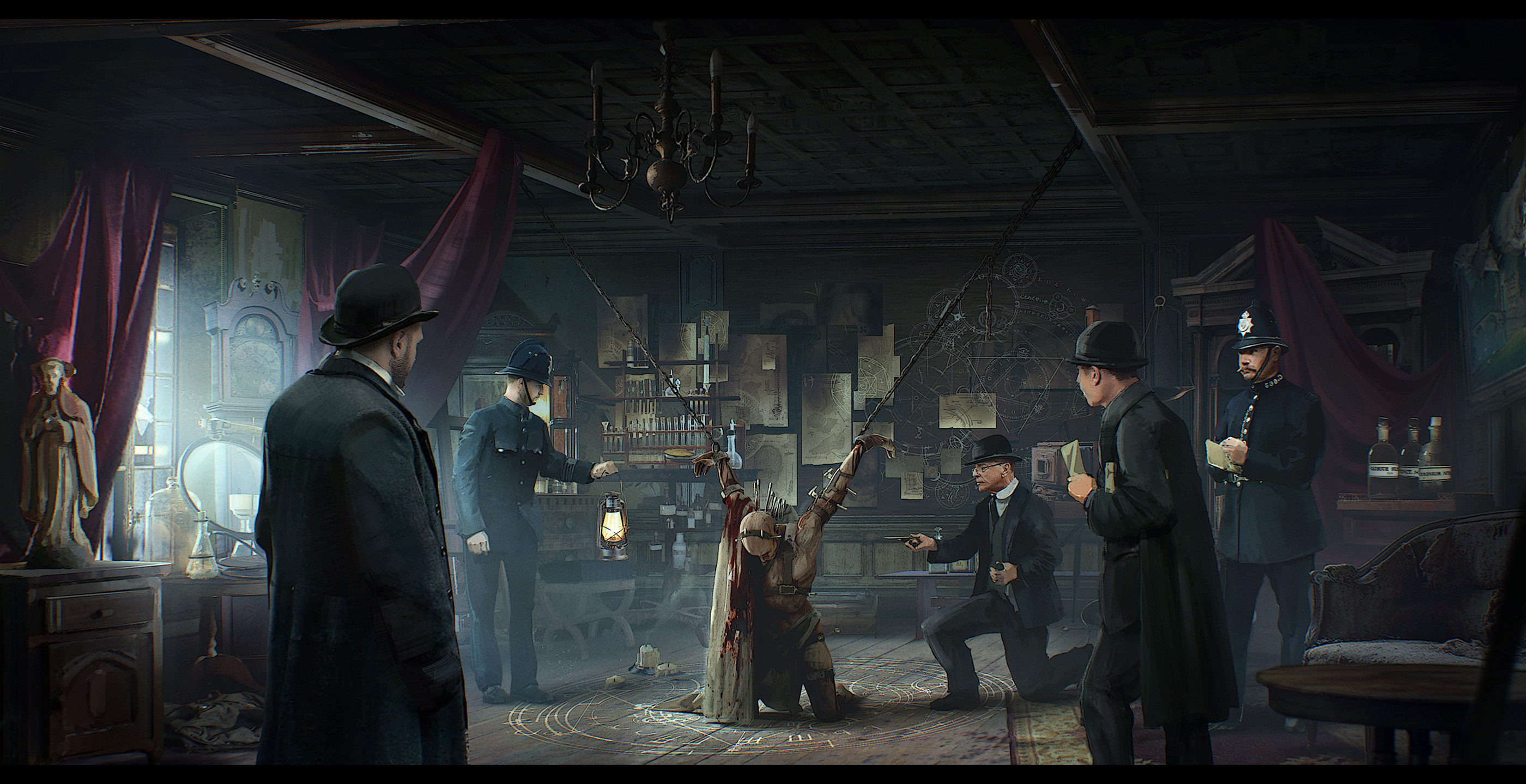

Inquisitor
The church has long been the first line of defense against the tide of impending darkness. Yet, the clergy's stubborn devotion to righteousness impedes them where it counts: you must sometimes be willing to do evil to counter evil. That's where the inquisition comes in.
As a righteous inquisitor of the faith, you are tasked with rooting out heresy, exorcising demons, and stamping out any sign of the occult, and are offered clemency for any action you take in the defense of the greater good. You may investigate anyone or anything you deem to be in line with the forces of evil, for you alone are a holy blade in the dark, the arbiter of your church.
Exorcist's Doctrines
Starting at 1st level, you gain proficiency in the Religion skill and add double your proficiency bonus to checks you make with it.
Additionally, you gain proficiency with medium armor.
Trinkets
By 3rd level, you've collected a number of magical trinkets to help you collect and unravel profound arcane secrets. You can use the following trinkets:
Alabaster Balm. As a bonus action, you can cast the spell lesser restoration once without using spell points or spell components.
Hallowed Chalice. As a bonus action, you can utter a prayer and produce a volume of holy water from this cup sufficient to fill one flask. After 24 hours, this holy water becomes ordinary water. You can use this trinket 5 times before its power is expended.
Reliquary of Doubt. As a bonus action, you can cast the spell Detect thoughts once without using spell points or spell components. When casting the spell in this way, it can only detect thoughts which are associated with negative emotions, such as guilt, apprehension, regret, or melancholy.
Divine Strike
By 6th level, you gain the ability to infuse your weapon strikes with divine energy. Once on each of your turns when you hit a creature with a weapon attack, you can cause the attack to deal an extra 1d6 radiant damage to the target.
Rote Piety
Starting at 10th level, you command a mastery of divine magic seldom seen among the clergy. You can use your Opportunistic Piety feature three times, and regain all expended uses when you finish a short rest.
Excommunication
By 14th level, as an action, you can emblazon a creature you can see within 60 feet with a mark of religious condemnation. The target must succeed on your choice of a Constitution or Wisdom saving throw or be marked for the next minute. While marked, the creature can't regain hit points or have advantage on any attack roll or ability check. Additionally, whenever the creature takes an action, it takes 2d6 radiant damage as the mark burns with radiant light.
You can use this feature once and regain the ability to do so when you finish a long rest.
Medium
As conduits between the living and dead, mediums offer an essential glimpse past the veil of mortality. Using their auguries, seances, and divinations, mediums can retrieve morsels of information from the afterlife to settle debts with the living or and assist ongoing investigations. This information, however cryptic, can point an interested party toward clues or evidence which only the deceased might be able to provide.
Fortelling
Starting at 1st level, when you finish a long rest, roll two d20s and record the number rolled. You can replace any attack roll, saving throw, or ability check made by you or a creature that you can see with this foretold roll. You must choose to do so before the roll, and you can replace a roll in this way only once per turn.
As an action, you can use a use of your Rushed Incantation ability to make an additional fortelling roll. You can have up to 3 foretold rolls at one time. Each foretelling roll can be used only once. When you finish a long rest, you lose any unused foretelling rolls.

Trinkets
By 3rd level, you've collected a number of magical trinkets to help you collect and unravel profound arcane secrets. You can use the following trinkets:
Dead Ringer. As an action, you can ring this bell to cast the spell Speak with dead once without using spell points or spell components. When you cast this spell using this trinket, you can ask only one question of the corpse.
Heptagonal Spectacles. As a bonus action, you can cast the spell See invisibility once without using spell points or spell components.
Lucent Mirror. You can use your bonus action to activate this trinket, causing you to phase partially into the Ethereal Plane for up to 1 minute. For the duration, you can move through other creatures and objects as if they were difficult terrain, but you take 1d10 force damage if you end your movement inside a creature or object. Additionally, you have resistance to all damage. This effect ends early after you take damage.
Forewarning Presence
By 6th level, the spirits of the dead guide your hand when you would falter. You can reroll an attack roll or ability check you make, and must use the new roll.
You can use this feature once and regain the ability to do so when you finish a short rest.
Whispers From Beyond
Starting at 10th level, you can open your perceptions to receive a hint from beyond the pale. The GM answers with a one-word hint pertaining to your best course of action, a fruitful line of inquiry, or some other useful direction.
You can use this feature once and regain the ability to do so when you finish a long rest.
Third Eye
By 14th level, your connection to the afterlife allows you to see all. You can use your bonus action to cast the spell true seeing without using a spell slot or spell components.
You can use this feature once and regain the ability to do so when you finish a long rest.
Spy
Infiltration, disguise, and lying through their teeth: these are the principle skills of a spy. A talented spy rarely ever needs to draw a dagger to silence someone, for their honeyed words and agreeable disposition are all that is needed to draw out someone's secrets. Of course, when they do strike, it is decisively and without warning. Such skills are invaluable for governments and organizations of all varieties, for stealing confidential information, sabotage, monitoring persons of interest, and everything in between.
Bravado
Starting at 1st level, You gain proficiency in the Deception skill and add double your proficiency bonus to checks you make with it.
Additionally, you gain proficiency with medium armor.
Trinkets
By 3rd level, By 3rd level, you have a collection of trinkets which aid your espionage. You can use the following trinkets:
Glass Dust. As a bonus action, you can throw this dust in the air, becoming invisible until the beginning of your next turn. This effect ends early if you take damage.
Horn-Rimmed Glasses. As a bonus action, you can cast the spell Disguise self once without using spell points or spell components.
Martini Glass. As a bonus action, you can cast the spell Charm person once without using spell points or spell components.
Cloak and Dagger
By 6th level, you always endeavor to kill your target in one strike. When you make an attack roll against a creature that is surprised or hasn't taken a turn in combat yet, you can maximize your weapon's damage die.
Shaken Not Stirred
Starting at 10th level, your roguish smile grants you incredible leeway. Whenever you fail a Charisma (Deception) or Charisma (Persuasion) check, you can reroll the check, and must use the results of the new roll.
You can use this feature once and regain the ability to do so when you finish a long rest.
Body Double
By 14th level, you can rapidly exchange identities with a corpse. When you reduce a humanoid creature to 0 hit points, you can assume the creature's appearance, as per the disguise self spell. The creature's body, as well as its blood, clothing, and other physical evidence of its death, become invisible for 8 hours. You can also use this ability as an action to touch the corpse of a humanoid creature which has been dead no longer than 1 day, assuming its appearance and causing the body to become invisible.
You can use this feature once and regain the ability to do so when you finish a long rest.


Hunter
Rough and wild looking, a grizzled man silently moves through the forest. He'd been tracking the band of orcish raiders that had crossed into the farmland he protected. Clutching a shortsword in each hand, he leapt out from the cover of the forest, preying on the orcs when they topped to rest. In a flash, he became a whirl of steel.
After tumbling away from a blast of freezing air, the thin female elf found her feet and drew her bow, and let loose another arrow at the white dragon. She shrugged off the wave of fear that emanated from the beast, and released her final arrow. With a piercing roar the terrible monster plummeted to the ground and laid motionless.
Holding his hand high, a young dwarf whistled, and the hawk circling high above returned to the side of its master. The dwarf whispered instructions and pointed to the owlbear they'd been tracking. In a blur, the dwarf and hawk moved as one, and before the owlbear could react to the assault, it lay dead at the feet of the warrior.
Far from the bustle of cities and villages, past the hedges that shelter the most distant farms from the terrors of the wild, amid the densely packed trees of trackless forests and across empty plains, hunters keep their unending, and often thankless, watch.
Deadly Predators
Warriors of the wilderness, hunters specialize in tracking and hunting the monsters that threaten the edges of civilization; groups of raiders, rampaging beasts, terrible giants, and deadly dragons. They track their quarry as a predator does, moving stealthily through the wilds and hiding themselves in brush and rubble. Hunters focus on mastering devastating techniques and styles of combat.
They often focus these abilities on one creature, aiming to slay their foe before they have a chance to retaliate. Hunters learn to draw upon the power of the natural world to produce minor spells that enhance their tracking and hunting skills and provide aid and respite to their allies.
Wild Adventurers
Though a hunter might make a living as a ranger, a guide, or a tracker, their true calling is to defend the outskirts of civilization from the ravages of the wild. In some places, hunters gather in secretive orders or join forces with druidic circles. Many hunters, though, are independent almost to a fault, knowing that, when a dragon or a band of orcs attacks, they may be the first, and possibly last, line of defense.
Their fierce dedication makes hunters well suited to adventuring. Accustomed to life far from the comforts of a dry bed and a hot bath, they make excellent guides for adventuring parties that have no experience in the wild.
Creating Your Hunter
Consider the nature of your training. Did you train with a mentor, wandering the wilds together, or did you forge a magical connection to nature in your own way? No matter their background, most hunters choose to adventure to impart their knowledge of the wilds on to the next generation, securing the safety of civilization for years to come.
Class Features
As a hunter, you gain the following class features.
Hit Points
Hit Dice: 1d10 per hunter level
Hit Points at 1st Level: 10 + your Constitution modifier
Hit Points at Higher Levels: 1d10 + your Constitution modifier per hunter level after 1st
Proficiencies
Armor: light armor, medium armor, shields
Weapons: simple weapons, martial weapons, simple firearms, martial firearms
Tools: none
Saving Throws: Strength, Dexterity
Skills: Choose three from Animal Handling, Athletics, History, Insight, Investigation, Medicine, Nature, Perception, Piloting, Stealth, Survival and Technology
Equipment
You start with 4d4 x 100 New Yen to buy your own equipment, in addition to the equipment granted by your profession.
Hunter's Path
At 1st level, choose one of the following Hunter's Path. Your Hunter's Path grants features at 1st level, and again when you reach 3rd, 7th, 11th, and 15th level in this class.
Path Spells
Each path has a list of associated spells. You gain access to these spells at the levels specified in the path description. Once you gain access to an path spell, you always have it prepared. Path spells don't count against the number of spells you can prepare each day.
If you gain an path spell that doesn't appear on the hunter spell list, the spell is nonetheless a hunter spell for you.
Survivalist Knacks
During your time in the wild you have gathered bits of primal knowledge, known as Survivalist Knacks. These Knacks bolster your exploration, hunting, and tracking skills.
At 1st level, you learn two Knacks of your choice from the list at the end of this class description. As you gain levels in this class, you learn additional Knacks, as shown in the Knacks Known column of the Hunter table. Each time you gain a level in this class, you can choose one of the Knacks you know and replace it with another Knack of your choice.

The Hunter
| Level | Proficiency Bonus | Features | Knacks Known | Spell Points | Spell Circle | |
|---|---|---|---|---|---|---|
| 1st | +2 | Hunter's Path, Survivalist Knacks, Wilderness Expert | 2 | — | — | |
| 2nd | +2 | Favored Foe, Spellcasting | 2 | 4 | 1st | |
| 3rd | +2 | Fighting Style, Hunter's Path Feature | 3 | 6 | 1st | |
| 4th | +2 | Adventuring Boon | 3 | 6 | 1st | |
| 5th | +3 | Extra Attack | 3 | 14 | 2nd | |
| 6th | +3 | — | 4 | 14 | 2nd | |
| 7th | +3 | Hunter's Path Feature | 4 | 17 | 2nd | |
| 8th | +3 | Adventuring Boon | 4 | 17 | 2nd | |
| 9th | +4 | — | 5 | 27 | 3rd | |
| 10th | +4 | — | 5 | 27 | 3rd | |
| 11th | +4 | — | 5 | 32 | 3rd | |
| 12th | +4 | Adventuring Boon | 6 | 32 | 3rd | |
| 13th | +5 | — | 6 | 38 | 4th | |
| 14th | +5 | — | 7 | 38 | 4th | |
| 15th | +5 | Hunter's Path Feature | 7 | 44 | 4th | |
| 16th | +5 | Adventuring Boon | 8 | 44 | 4th | |
| 17th | +6 | — | 8 | 57 | 5th | |
| 18th | +6 | Feral Senses | 9 | 57 | 5th | |
| 19th | +6 | Adventuring Boon | 9 | 64 | 5th | |
| 20th | +6 | Foe Slayer | 10 | 64 | 5th |
Wilderness Expert
Your skill as an explorer and survivor are unsurpassed. At 1st level, choose one of the skill proficiencies you gained from the hunter class skill list. Your proficiency bonus is doubled for any ability check you make that uses this proficiency. You also learn to speak, read, and write one additional language of your choice. Most hunters choose to learn a language that is spoken by the enemies they specialize in hunting.
When you reach 10th level in this class, you select another skill you are proficient in from the hunter class skill list to gain the benefits of this feature, and you learn to speak, read, and write one additional language of your choice.
Favored Foe
Your bond with nature allows you to place a mystical mark on a creature, designating them as your favored foe. Beginning at 2nd level, when you hit a creature with a weapon attack, you can expend spell points to mark the creature as your favored foe. Each time you hit your favored foe with a weapon attack (including the attack used to mark it as a favored foe) you deal additional damage of the attack's damage type.
The extra damage you deal on hit to your favored foe is dependent on the spell points you expend to mark the target, as indicated in the table below.
The creature remains your favored foe for one hour, or until it is dead. If you mark another creature as your favored foe, the effect immediately ends for the previous creature.
When you reach certain levels in this class, the duration of this ability increases. It becomes 8 hours at 6th level, 24 hours at 14th level, and finally at 18th level, its duration lasts until you mark another creature or the target dies.
| Spell Points | Damage | |
|---|---|---|
| 2 | 1d6 | |
| 3 | 1d8 | |
| 5 | 1d10 | |
| 6 | 1d12 |
Spellcasting
You have learned to draw upon the magical essence present in nature to cast spells, much as a druid or shaman does.
Preparing and Casting Spells
The Hunter table shows how many spell points you have to cast your spells. You regain all spell points when you finish a long rest.
You prepare the list of hunter spells that are available for you to cast, choosing from the hunter spell list. When you do so, choose a number of hunter spells equal to your Wisdom modifier + half your hunter level, rounded down.
Casting the spell doesn't remove it from your list of prepared spells. You can change your list of prepared spells when you finish a long rest.
Spellcasting Ability
Wisdom is your spellcasting ability for your hunter spells, since your magic draws on your intimate relationship with nature. You use your Wisdom whenever a spell refers to your spellcasting ability. In addition, you use your Wisdom modifier when setting the saving throw DC for a hunter spell you cast and when making an attack roll with one.
Spell save DC
Spell attack modifier
Spellcasting Focus
You can use a druidic focus as a spellcasting focus for your hunter spells.
Fighting Style
At 3rd level, you gain a Fighting Style from the options below. You cannot take the same Fighting Style more than once.
Archery
You are a master marksman, striking from afar. You gain a +2 bonus to attack rolls you make with ranged weapons.
Blind Fighting
You can fight even when you can't see. You have blindsight with a range of 10 feet. Within that range, you can see anything that isn't behind total cover, even if you're blinded or in darkness. You can see invisible creatures within that range, unless the creature successfully hides from you.
Defense
Your training focused on defending yourself. While you are wearing armor, you gain a +1 bonus to your Armor Class.
Dueling
You have mastered the art of fighting with a single weapon. When you are wielding a melee weapon in one hand and no other weapons, you gain a +2 bonus to weapon damage rolls.
Mariner
You have trained to fight on, around, and in the water. As long as you are not wearing medium or heavy armor or using a shield, you have a swimming speed equal to your movement speed, and you gain a +1 bonus to your Armor Class.
Thrown Weapon Fighting
You can draw a weapon that has the thrown property as part of the attack you make with the weapon.
In addition, when you hit with a ranged attack using a thrown weapon, you gain a +2 bonus to the damage roll.
Two Weapon Fighting
When engaging in two-weapon fighting, you make your additional attack with your off hand weapon as part of your Attack action, adding your ability modifier to the damage.
Unarmed Fighting
Your unarmed strikes can deal bludgeoning damage equal to 1d6 + your Strength modifier. If you aren't wielding a weapon or shield when you make the attack, the d6 becomes a d8.
In addition, at the start of each of your turns, you can deal 1d4 bludgeoning damage to one creature grappled by you.
Versatile Fighting
When wielding a versatile weapon, you gain a +1 bonus to attack rolls when wielding it one-handed, and a +1 bonus to damage rolls when wielding it two-handed.
In addition, as a bonus action you can use your free hand to make an unarmed strike, shove attack, or don or doff a shield.
Adventuring Boon
When you reach 4th level, and again at 8th, 12th, 16th, and 19th level, you gain 2 unrestricted bonus points. Players can spend these extra Points immediately to acquire Attributes for their characters or save them for future use.
You cannot increase one of your ability scores above 20 using this feature.
Extra Attack
Beginning at 5th level, you can attack twice, instead of once, whenever you take the Attack action on your turn.
Feral Senses
Your enhanced senses allow you to strike with perfect accuracy. Starting at 18th level, your attack rolls against creatures within 30 feet cannot be made at disadvantage.
Foe Slayer
You have become an unparalleled hunter of your enemies. At 20th level, when you hit a creature marked as your favored foe with a weapon attack you gain a bonus to the damage roll equal to your Wisdom modifier (minimum of 1).
Survivalist Knacks
Below are the Knacks available to a hunter. If a Knack has a prerequisite, like your hunter level or another Knack, you can learn it at the same time that you meet the prerequisites.
Alpine Adept
Prerequisite: 6th level hunter
You are amazingly surefooted. You gain a 30 foot climbing speed, and you can use your reaction to reduce any falling damage you take by an amount equal to your hunter level.
If you already have a climbing speed from another feature, your climbing speed increases by 10 feet.
Aquatic Adept
Prerequisite: 6th level hunter
You have learned to move through the water like the swiftest creatures of the sea. You gain a 30 foot swimming speed, and you can hold your breath for up to 1 hour while underwater.
If you already have a swimming speed from another feature, your swimming speed increases by 10 feet.
Arctic Adept
Prerequisite: 6th level hunter
You have learned to survive and thrive in frozen tundra. You, and a number of friendly creatures of your choice equal to your proficiency bonus, have advantage on saving throws to resist the negative effects of arctic environments.
In addition, you have advantage on Wisdom (Survival) checks to find food and water in arctic environments.
Desert Adept
Prerequisite: 6th level hunter
You have learned to survive in scorching desert wastelands. You, and a number of friendly creatures of your choice equal to your proficiency bonus, have advantage on saving throws to resist the negative effects of arid desert environments
In addition, you have advantage on Wisdom (Survival) checks to find food and water in arid deserts.
Explorer I
You have spent your life learning the ways of the wilderness. You have advantage on Wisdom (Survival) checks to navigate the wilderness, forage for food and water, identify plants and animals, and avoid getting lost.
Explorer II
Prerequisite: 6th level hunter, Explorer I
At the end of each long rest, you can attune to your present environment. Examples include, but are not limited to: arctic, coast, desert, forest, grassland, mountain, or swamp. While in your attuned environment you gain the following benefits:
- You have advantage on Intelligence and Wisdom checks related to the native plants, animals, or ecosystem.
- You find twice as much food when foraging or hunting.
- You cannot be surprised unless you are incapacitated.
- You gain a bonus to your initiative rolls equal to your Wisdom modifier (minimum of 1).
Fell Handed I
Prerequisite: 6th level hunter
You are especially deadly in martial combat. When you score a critical hit with a weapon attack against a creature, you have advantage on the next attack you make against that creature before the end of your next turn.
Fell Handed II
Prerequisite: 14th level hunter, Fell Handed I
When you score a critical hit against a creature, your critical hit range against that creature expands by 1.
For example, after you score a critical hit against a creature for the first time, you now score a critical hit against that creature on a roll of 19 or 20 on the d20.
Herbalist I
You have a deep knowledge of plants and their healing properties. You have advantage on Intelligence (Nature) checks to identify the medicinal properties of plants, and Wisdom (Medicine) checks made to stabilize creatures.
Herbalist II
Prerequisite: 3rd level hunter, Herbalist I
You have learned to use the fruits of the earth to create healing poultices. You gain proficiency with the herbalism kit.
At the end of a long rest, you can use a herbalism kit and local plants to create one potion of healing. This potion retains its potency for a number of days equal to your proficiency bonus, after which it spoils and becomes inert.
Herbalist III
Prerequisite: 6th level hunter, Herbalist I, II
You can use your knowledge of local plant life to soothe your allies. If you, and up to five creatures who you touch, spend at least one Hit Die to regain hit points at the end of the short rest, each of those creatures regains an extra 1d8 hit points.
Natural Regeneration
Prerequisite: 14th level hunter
You can draw on the surrounding environment to replenish your mystical power. At the end of a short rest, you can choose to recover expended spell points of a combined circle equal to or less than your Wisdom modifier (minimum of 1).
You can use this feature once and regain the ability to do so when you finish a long rest.
Rider I
You have trained to ride animals that will take a rider. You have advantage on Wisdom (Animal Handling) checks to control your mount, and mounting or dismounting only costs you 5 feet of your movement, in place of half.
Rider II
Prerequisite: 3rd level hunter, Rder I
You have special skill at training and riding animals, both wild and domestic. You have advantage on Wisdom (Animal Handling) checks to domesticate wild animals, and you can teach a beast to be a trained mount in half the normal time.
Rider III
Prerequisite: 6th level hunter, Rider I, II
You are a master of mounted combat. When you are riding your mount and it is hit by an attack, you can use your reaction to become the target of that attack instead.
In addition, when you or your mount are forced to make a Dexterity saving throw, you can use your reaction to grant both you and your mount advantage on the saving throw.
Slayer I
Prerequisite: 3rd level hunter
Once you have a quarry in your sights it is rare that they escape. You have advantage on any Wisdom (Perception) and Wisdom (Survival) checks to track your favored foe.
Slayer II
Prerequisite: 6th level hunter, Slayer I
Your tracking abilities have become supernaturally accurate. You always know the exact direction of your favored foe while you are on the same plane of existence.
Slayer III
Prerequisite: 14th level hunter, Slayer I, II
Once per turn, when you hit your favored foe with a weapon attack, you can force it to make a Constitution saving throw in addition to the normal damage of the attack. On a failed save, it is blinded, deafened, frightened, poisoned, or restrained (your choice) until the start of your next turn.
Stalker I
You are a master at covering your tracks. While moving at a normal pace you, and up to five other creatures you are traveling with, produce no tracks or scent, and you cannot be tracked by mundane means unless you wish to be.
Stalker II
Prerequisite: 3rd level hunter, Stalker I
You have learned to hunt your prey while remaining unseen. You can take the Hide action as a bonus action on your turn.
Stalker III
Prerequisite: 9th level hunter, Stalker I, II
You can conceal yourself from even the most advanced magic. You are always under the effects of the nondetection spell, and you cannot be tracked divination magic or other magical means unless you wish to be.
Stalker IV
Prerequisite: 14th level hunter, Stalker I, II, III
You can ward yourself with nature magic to briefly disappear from sight. When you take the Hide action on your turn, you, along with anything you are wearing, carrying, or have equipped, becomes invisible until the start of your next turn.
This invisibility ends early if you attack or cast a spell.
Strider I
There are few natural obstacles that you cannot overcome, or guide others through safely. You ignore the effects of difficult terrain imposed by natural environments, such as forest undergrowth, snow drifts, swamp, or marshlands.
Also, you, and up to five other creatures you are traveling with, do not have your travel slowed by difficult terrain.
Strider II
Prerequisite: 3rd level hunter, Strider I
Once in your sights, you pursue your quarries relentlessly. You can take the Dash action as a bonus action on your turn.
Strider III
Prerequisite: 6th level hunter, Strider I, II
You can surmount almost any obstacle that would block your path. Your base movement speed increases by 10 feet, and you ignore the effects of difficult terrain imposed by spells, magical phenomena, and any other magical effects.
Strider IV
Prerequisite: 14th level hunter, Strider I, II, III
You move through the world unhindered by even the most powerful magic and restraints. You are always under the effects of the freedom of movement spell while conscious.
Survivor I
Prerequisite: 6th level hunter
Your time in the wilds has hardened your body, and you can brace yourself to absorb incoming blows. As a bonus action on your turn, you can grant yourself temporary hit points equal to your Constitution modifier (minimum of 1).
Survivor II
Prerequisite: 9th level hunter, Survivor I
You have trained your body to recover more rapidly than most. When you expend Hit Dice to regain hit points at the end of a short rest, you gain a bonus to each Hit Die roll equal to your Wisdom modifier (minimum of 1).
Survivor III
Prerequisite: 14th level hunter, Survivor I, II
You persevere even in the face of death. When you make a death saving throw you gain a bonus to the roll equal to your Wisdom modifier (minimum of 1). If this increases the total to 20 or higher, you gain the benefits of rolling a 20 on the d20.
Trapper
You are a master of laying unseen traps. You learn the snare spell, and it becomes a ritual spell for you. You always have it prepared, but it doesn't count against the total number of spells you can prepare each day. You can have a number of active snares equal to your proficiency bonus. Setting an additional snare causes the oldest snare to disappear.
Underground Adept
Prerequisite: 6th level hunter
You are especially skilled at navigating the winding tunnels under the earth. You gain darkvision out to a radius of 60 feet. If you already have darkvision its range increases by 60 feet.
In addition, you can use an action on your turn close your eyes and gain tremmorsense in a 60 foot radius, allowing you to sense anything touching the ground within that radius. This special sense lasts for 1 minute, or until you open your eyes. Once you use this action you must finish a short or long rest before you can use it again.
Wild Insights I
You have a natural way with the wild animals of the world. You can communicate simple ideas to beasts using sounds and gestures, and you have advantage on any Wisdom (Animal Handling) checks you make that target animals or beasts that are already friendly towards you.
Wild Insights II
Prerequisite: 3rd level hunter, Wild Insights I
Your familiarity with the natural world has allowed you to bond you with a minor spirit of nature. You learn the find familiar spell. It counts as a hunter spell for you and you always have it prepared, but it doesn't count against the total number of spells you prepare each day. When you cast this spell your familiar is a fey creature.
Woodsman I
You are familiar with forests, trees, and timber of all kinds. You gain proficiency with woodcarver's tools, and you have advantage on any Intelligence (Nature) checks to identify, recall information, and construct things from wood.
In addition, when you hit a tree or raw timber with a melee weapon attack, it becomes an automatic critical hit.
Woodsman II
Prerequisite: 3rd level hunter, Woodsman I
You are adept at identifying the strongest trees and timber from which to construct solid objects. You gain proficiency with carpenter's tools, and anything you construct from wood has twice as many hit points, and is twice as durable.
In addition, at the end of each long rest, if you have timber available, you can craft a total number of clubs, greatclubs, javelins, and quarterstaffs equal to your proficiency bonus.
Hunter's Path
At 1st level, a hunter chooses their Hunter's Path, each of which is detailed below.
Deadeye Sniper
The distant cough of a concussion rifle, the wet thud of an impact, and an extremely recent widow screaming in terror: these are usually the only sounds indicating that a deadeye sniper has paid a visit. Such hunters are infamous for their uncanny accuracy at all ranges, but prefer to be far away from their targets, carefully lining up crosshairs before pulling the trigger.
If at all possible, a sniper is an unseen foe, using range and stealth in equal measure to pick off their foes.
Path Spells
You gain path spells at the hunter levels listed in the Deadeye Spells table. See the Spellcasting class feature for how spells work.
No-Scope
When you choose this archetype at 1st level, you ignore the Sighted property of weapons you wield.
One Shot, One Kill
At 3rd level, you begin to practice a style of combat that promotes precision over volume of attacks. Once per turn when you hit a creature with a weapon attack, you can deal an additional 1d8 damage to the target if you haven't moved since the beginning of your last turn.
Deadeye Spells
| Hunter Level | Spells | |
|---|---|---|
| 3rd | Bewilderment | |
| 5th | Spider Climb | |
| 9th | Tracer | |
| 13th | Private Sanctum | |
| 17th | Conjure Volley |

Concealed Position
At 7th level, given enough time, you can prepare hidden sniper nests. A sniper nest takes 10 minutes to construct and occupies a 10-foot square area. While inside the nest, you have three-quarters cover and can see out of it unhindered. Neither you nor the nest can be seen by any creature or sensor more than 30 feet away, even if you make an attack from inside, though you can still be heard and detected by divination spells that penetrate more than one inch of solid material.
A creature within 10 feet of the nest can detect its presence with an Intelligence (Investigation) check against your spell save DC. Once you leave a nest, you can't benefit from it again.
Overwatch
Beginning at 11th level, if you are wielding a ranged weapon, and a hostile creature that you can see moves into or within the normal range of that weapon, you can use your reaction to make an opportunity attack against that creature using your ranged weapon.
Disappear
By 15th level, you are a true master of stealth, capable of fading into thin air. As a reaction when you take damage, you can use this ability to move up to 5 feet without provoking opportunity attacks and become invisible until the beginning of your next turn.
You can use this ability a number of times equal to your Wisdom modifier (minimum 1), and regain all expended uses when you finish a long rest.
Drone Master
For some, the lure of high-tech gadgetry, mechanized limbs, and shiny chrome is too much to avoid. Drones are a part of most modern corporate security systems, and for good reason. Drones don’t complain, they don’t get sick, and they don’t betray you to your business rivals. In a firefight, the best companion to have at your back is the one who will listen to and obey your orders unquestioningly.
The Drone Master is a different sort of breed. While they can produce cold, pitiless killing machines as effectively as any megacorp, some have opted for something more. Using a form of magically implanted artificial intelligence, they can instill consciousness in their drones, and some have even developed personalities. It’s a brave new world, one where the people may soon find themselves outdated by machinery.
Path Spells
You gain path spells at the hunter levels listed in the Drone Master table. See the Spellcasting class feature for how spells work.
Drone Master Spells
| Hunter Level | Spells | |
|---|---|---|
| 3rd | Analyze Device | |
| 5th | Conjure Turret | |
| 9th | Camouflage Vehicle | |
| 13th | Deconstruct | |
| 17th | Animate Construct |
Chimera Drone
At 1st level, you have engineered a robot with synthetic materials. It is friendly to you and your companions, and it obeys your commands. See this creature’s game statistics in the chimera drone stat block. You determine the build and style of the drone and whether it moves on legs, wheels, or treads; your choice has no effect on its game statistics.
In combat, the chimera drone shares your initiative count, but takes its turn immediately after yours. If it has died within the last hour, you can use your tinker's tools as an action to revive it, provided you are within 5 feet of it and you expend 2 spell points or more. The chimera drone returns to life after 1 minute with all its hit points restored.
At the end of a long rest, you can create a new chimera drone if you have your tinker’s tools with you. If you already have a chimera drone from this feature, the first one immediately perishes.
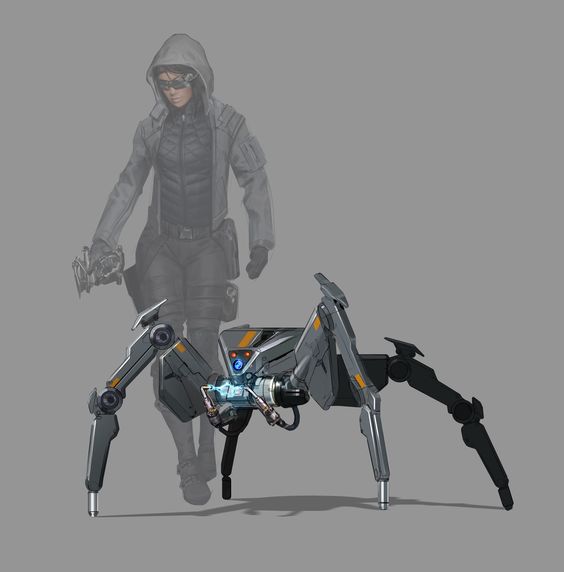
Loadout
By 3rd level, you have developed combat and utility attachments for your drone. Choose two of the following attachments to modify your chimera drone:
- Hacker-Bot. The drone gains proficiency with electrician’s tools, hacking tools, and it gains the benefits of having the hacking tools augment installed. It can launch a built in universal cable up to 30 feet to connect itself to a port it can see.
- Primed Shot. The drone can use its primed shot attack.
- Razor Claws. The drone can use its razor claws attack.
- Serum Shot. You can use your bonus action to cause a creature of your choice within 30 feet of the drone that it can see to regain hit points equal to 1d6 + your Wisdom modifier. You can use this feature a number of times equal to your Wisdom modifier (minimum of 1). When you finish a long rest, you regain all expended uses.
- Shock Prod. The drone can use its shock prod attack.
Over the course of a long rest, you can replace your chimera drone’s attachments with two attachments of your choice.
Upgrade
At 7th level, you have refined your engineering to improve your drone’s attachments. Each attachment gains its respective additional abilities or effects.
- Hacker-Bot. As an action, the drone can cause an EMP at a point it can see within 60 feet of it. Machines, constructs, and vehicles within 30-foot-radius of that point are subjected to EMP.
Machines in the area cease to function for 1 minute. Constructs in the area with the Electronics feature must succeed on a Constitution saving throw against your spell save DC or they are stunned until the end of your next turn. Vehicles in the area must succeed on a Constitution saving throw against your spell save DC or its movement speed is reduced to 0 and can’t take actions or reactions until the end of the drone’s next turn.
Additionally, wireless and radio connections within a 100-foot-radius radius of the point are suppressed for 1 minute.
Once the drone uses this ability, it must finish a short rest before it can use it again. - Primed Shot. A target hit by this attack begins burning for 1 minute, so long as it is not already burning from this attack, and takes 1d6 fire damage at the start of each of its turns.
- Razor Claws. The drone can grapple a creature up to one size larger than it hit by this attack. Until this grapple ends, the chimera drone can’t use its razor claws against another target.
- Serum Shot. Instead of regaining hit points, this ability can end either one disease or one condition for the creature. The condition can be blinded, deafened, paralyzed, poisoned, or stunned.
- Shock Prod. A creature hit by this attack can’t take reactions until the start of its next turn and its speed is reduced by 10 feet.
Additionally, the drone's attacks count as magical for the purpose of overcoming resistance and immunity to nonmagical attacks and damage.
Chimera Drone
Small construct, neutral
- Armor Class 13
- Hit Points 5+ five times your hunter level (the drone has a number of Hit Dice [d8s] equal to your hunter level)
- Speed 40 feet, climb 30 feet
STR DEX CON INT WIS CHA 15 (+2) 14 (+2) 17 (+3) 15 (+2) 13 (+1) 5 (-3)
- Saving Throws Dex +4, Con +5, Wis +3
- Skills athletics +4, perception +3
- Damage Immunities poison
- Condition Immunities charmed, frightened, paralyzed, petrified, poisoned
- Senses darkvision, passive Perception 13
- Languages understands the languages you speak
Advanced Engineering. The following numbers increase by 1 when your proficiency bonus increases by 1: the drone’s armor class, skill, and saving throw bonuses (above), and the bonuses to hit and damage of its attacks.
Electronics. The drone is susceptible to the effects of EMP and similar effects.
Actions
Slam. Melee Weapon Attack: +4 to hit, reach 5 ft., one target. Hit: 1d4 + 2 bludgeoning damage.
Razor Claws. Melee Weapon Attack: +4 to hit, reach 5 ft., one target. Hit: 1d8 + 2 slashing damage. Requires the razor claws attachment.
Shock Prod. Melee Weapon Attack: +4 to hit, reach 5 ft., one target. Hit: 1d8 + 2 lightning damage. Requires the shock prod attachment.
Primed Shot. Ranged Weapon Attack: +4 to hit, range 50/200 ft., one target. Hit: 1d6 + 2 piercing damage. Requires the primed shot attachment.
Cyberdemon
At 11th level, through a combination of magic and machinery, your chimera drone has achieved the cutting edge of technological superiority. You can choose one of the following advanced attachments to modify your chimera drone.
- Anti-Grav Boosters. Your drone gains a flying speed of 80 feet and the ability to hover. It gains a +2 bonus to its AC.
- Hijack Module. Your drone can cast commandeer vehicle using your spell save DC and requiring no components. Once this ability has been used, it cannot be used again until it finishes a long rest.
If the drone is proficient with hacking tools, it can add your proficiency bonus to ability checks made with its hacking tools. - Mobile Unit. Your drone becomes a Medium size sentient vehicle that can hold 1 rider. Its walking speed changes to 120 feet and its climbing speed changes to 60 feet. Its hit point maximum increases by an amount equal to your hunter level.
Over the course of a long rest, you can replace your chimera drone’s advanced attachment with one attachment of your choice.
Master's Call
At 15th level, the bond between you and your chimera drone has become second-nature and you can call your drone to defend you in your moments of need.
When a creature you can see attacks you, you can use your reaction to have your drone move up to half its movement speed. At the end of this movement, if the drone is within 5 feet of you, you can force the attack to target the drone instead. This movement doesn’t provoke opportunity attacks.
Grim Warden
Sometimes it takes a monster to destroy a monster. Hunters that take up the mantle of Grim Warden undergo a dark alchemical ritual, known as the Warden's Rite, to enhance their physical abilities. They sacrifice any chance they have at a normal life, mingling their blood with that of monsters, in order to gain dark, unnatural power to destroy their foes.
Warden's Rite
At 1st level, you undergo the Warden's Rite, an alchemical ritual that suffuses your blood with sinister magic. You gain proficiency with alchemist's supplies and in the Religion skill. Whenever you make an Intelligence (Religion) check related to fiends, undead creatures, or necromancy magic you can add double your proficiency bonus to the roll.
Path Spells
You gain path spells at the hunter levels listed in the Grim Warden table. See the Spellcasting class feature for how spells work.
Grim Warden Spells
| Hunter Level | Spells | |
|---|---|---|
| 3rd | Hex | |
| 5th | Shadow Blade | |
| 9th | Vampiric Touch | |
| 13th | Hallowing Curse | |
| 17th | Defile |
Crimson Brand
Starting at 3rd-level, you can draw upon the dark magic in your blood, empowering your weapon attacks with your own life force. When you hit a creature with a melee weapon attack, you can expend your Hit Dice as part of the attack to deal and additional necrotic damage to the target, on top of the normal damage of the weapon.
The additional necrotic damage is 2d10 for one Hit Die, plus 1d10 for each additional Hit Die you expend as part of the attack. The additional necrotic damage from this feature increases by 1d10 if the target is a fiend or undead creature.
Dark Augmentation
You have learned to exert greater control over the sinister magic that flows in your veins, enhancing your physical abilities. Starting at 7th level, when you make a Strength, Dexterity, or Constitution ability check, you gain a bonus to your roll equal to your Wisdom modifier (minimum of 1).
In addition, your movement speed increases by 10 feet.
Improved Crimson Brand
Beginning at 11th level, the dark magic in your blood seeps into your weapon strikes. Once per turn, when you hit a creature with a melee weapon attack, you can deal an additional 1d10 necrotic damage to the target.
Sanguine Mastery
Your Warden's Rite manifests its full potential. Beginning at 15th level, you have advantage on saving throws to resist the frightened condition, and you are always under the effects of the protection from good and evil spell while conscious.
Lightcaller
Hunters that walk the path of the Lightcaller draw their power from the positive plane, and use that power to defend the wildlands and hunt down the evils that dwell there. These hunters wield their radiant weapons like extensions of their body, and learn combat techniques that make them highly varied in their combat styles.
To them, every weapon holds a distinct purpose when hunting down prey. Fiends and undead are often these hunter’s favored enemies, and many of them ally with celestials.
Path Spells
You gain path spells at the hunter levels listed in the Lightcaller table. See the Spellcasting class feature for how spells work.
Lightcaller Spells
| Hunter Level | Spells | |
|---|---|---|
| 3rd | Touch of Dawn | |
| 5th | Incandescent Chain | |
| 9th | Bonds of Light | |
| 13th | Sunwhip | |
| 17th | Ambrosia |
Radiant Armaments
Starting at 1st level, you learn to draw from the radiant energy of the positive plane, and craft that energy into weaponry. Immediately before you would make a weapon attack, you can choose to conjure a radiant weapon to attack with. The weapon appears in your free hand, lasts until you attack with it, and takes the form of any weapon that you’re proficient with. It is identical to a normal weapon, except its damage type is radiant.
If the weapon requires ammunition, radiant ammunition that lasts until you attack with it is conjured alongside the weapon itself.
Dawnstriker
At 3rd level, your strikes become imbued with the power of the dawn. Once per turn when you hit a creature with a weapon attack, you can cause the target to take 1d6 bonus radiant damage.
When you use this feature, you can expend spell points to increase its power. The attack gains an additional effect based on the properties of the weapon used for the attack, and if the spell points used is 3 or more, the bonus radiant damage is increased by 1d6 for each spell circle higher than 1st.
The effects are described below, with the associated property in bold. You can only choose one of the additional effects, even if the weapon has multiple applicable properties. If an effect requires a saving throw, the DC equals your hunter spell save DC.

Finesse. After the attack, you can choose to teleport up to 15 feet to an unoccupied space that you can see. You then gain advantage on attack rolls until the end of your next turn.
Heavy. The target and each creature of your choice within 5 feet of it must each make Strength saving throws. On a failed save, a creature falls prone.
Melee. Until the start of your next turn, attacks made against you are made with disadvantage.
Ranged. The target must succeed on a Constitution saving throw. On a failed save, it is blinded until the end of your next turn, and its speed is halved for the same duration.
Reach. Each creature in a 30-foot long, 5-foot wide line extending away from the target, not including the target, must make a Dexterity saving throw. With 2 spell points spend, a creature takes 2d6 radiant damage on a failed save, or half as much damage on a successful one. With 3 or more spell points spend, the damage increases by 1d6 for each spell circle higher than 1st.
Thrown. The target must make a Strength saving throw. On a failed save, it is pulled up to 15 feet closer to you, and is restrained until the end of your next turn.
Dawnlight Distortion
At 7th level, you can magically distort the light around you, making your exact location difficult to pinpoint from a distance. You gain a +3 bonus to AC against attacks originating more than 15 feet away from you. An attacker is immune to this effect if it doesn't rely on sight, as with blindsight.
Twin Suns
Starting at 11th level, you can use your Dawnstriker feature twice per turn, instead of only once per turn, and the damage dice of that feature turn into d8s.
Also, weapons conjured by your Radiant Armaments feature gain a +1 bonus to attack and damage rolls.
Luminescent Armor
At 15th level, whenever you finish a short rest, a shimmering aura begins to surround you, granting you temporary hit points equal to your Hunter level. When you lose all these temporary hit points, the aura dissipates in a final burst of light. Each creature of your choice within 10 feet of you must succeed on a Constitution saving throw against your hunter spell save DC or be blinded until the end of your next turn.
Nightstalker
The Nightstalker archetype emulates a unique form of shadow magic, used to create shadowy familiars to accompany you in battle. By walking this path, you learn to use your shadow familiar like an extension of yourself, using them like a weapon as you stalk through the dim forests and vast plains of the world, searching for your prey. Your choice of familiar defines your style of fighting, with each familiar playing a different role on the hunt and on the battlefield.
Shadow Familiar
At 1st level, you gain the ability to summon a creature of shadow to serve you. As a bonus action on your turn, you can conjure or dismiss your shadow familiar, which takes the form of a spectral creature that cannot be targeted or damaged. You choose the form you can create when you select this subclass.
When you conjure your shadow familiar, it appears in an unoccupied space within 30 feet of you. As long as it is conjured, you can forgo one or more of your attacks when you use the Attack action to have your shadow familiar make attacks of its own, which use your Huntr spell attack modifier for their attack rolls, have a reach of 5 feet, and trigger any spells or features that would trigger from your own weapon attacks. The familiar makes one melee weapon attack for each attack you forgo. While within 120 ft of your familiar, you can command it to move (no action required). The speeds and attacks of the three forms are listed below.
Cat. This form has a walking speed of 30 feet. On a hit, its attack deals 1d4 + your Wisdom modifier slashing damage, and causes the next attack made against the target by a creature other than you or the cat before the end of your next turn to be made at advantage.
Raven. This form has a flying speed of 90 feet, and a walking speed of 10 feet. On a hit, its attack deals 1d10 + your Wisdom modifier piercing damage.
Wolf. This form has a walking speed of 40 feet. On a hit, its attack deals 1d6 + your Wisdom modifier piercing damage, and causes its target to have disadvantage on the next attack roll it makes before the end of its next turn.
Nightstalker Magic
At 3rd level, you learn an additional spell when you reach certain levels in this class, based on the form you chose above, as shown in the Nightstalker Spells table. The spell counts as a hunter spell for you, but doesn’t count against your spells known.
Nightstalker Spells
| Hunter Level | Cat Spells | Raven Spells | Wolf Spells | |
|---|---|---|---|---|
| 3rd | Camouflage | Black Ribbons | Shadow Hands | |
| 5th | Invisibility | Spy My Shadow | Shadow Puppets | |
| 9th | Umbral Form | Fear | Shadow Bolt | |
| 13th | Greater Invisibility | Shadowbind | Umbral Touch | |
| 17th | Shadow Gateway | Mystic Negation | Umbral Weapon |
Shadowy Transposition
Starting at 7th level, whenever you cast a hunter spell of 1st circle or higher, you can choose to swap locations with your familiar immediately before or after casting the spell.
Dark Sentinel
At 11th level, whenever a creature leaves the reach of your shadow familiar, you can use your reaction to have it make an attack against that creature. The disengage action and other effects that prevent opportunity attacks prevent this reaction.
Midnight Bulwark
Beginning at 15th level, whenever a creature within reach of your shadow familiar makes an attack against you, you can use your reaction to have the familiar make an attack against that creature.
Additionally, whenever you command your familiar to make an attack using your reaction and the attack hits, the target’s speed is reduced to 0 until the end of the target’s current turn.
Ranger
With their varied skills, rangers can take up many roles; guide, naturalist, tracker, or guardian, but at their core rangers are all hunters. These warriors accept their place as a bulwark between civilization and the terrors of the wilderness.
Walking this path, they master specialized techniques to better combat the threats they face. True rangers will face any foe; marauding gnolls, grotesque trolls, or terrible dragons.
Path Spells
You gain path spells at the hunter levels listed in the Ranger table. See the Spellcasting class feature for how spells work.
Ranger Spells
| Hunter Level | Spells | |
|---|---|---|
| 3rd | Snare | |
| 5th | Cordon of Arrows | |
| 9th | Conjure Barrage | |
| 13th | Locate Creature | |
| 17th | Conjure Volley |
Retrocognitive Tracking
At 1st level, you can track a creature by looking into the past. When you make a Survival (Wisdom) to track a creature, the DC increases by 5 for every three days since the creature has passed, rather than each day.
Ranger's Prey
At 3rd level, you gain one of the following features:
Colossus Slayer. You can wear down the most potent foes. When you hit a creature with a weapon attack, it takes an extra 1d8 damage if it’s below its hit point maximum. You can deal this extra damage only once per turn.
Giant Killer. When a Large or larger creature within 5 feet of you hits or misses you with an attack, you can use your reaction to attack that creature immediately after its attack, provided that you can see the creature.
Harrying Strikes. Each time you hit a creature with a weapon attack, you wound it in such a way that its movement speed is reduced by 5 feet until the start of your next turn.
Horde Breaker. Once on each of your turns when you make a weapon attack, you can make another attack with the same weapon against a different creature that is within 5 feet of the original target and within range of your weapon.
Defensive Tactics
At 7th level, you gain one of the following features:
Escape the Horde. When a creature targets you with an opportunity attack they have disadvantage on their attack roll.
Multiattack Defense. When a creature hits you with an attack, you gain a +4 bonus to AC against all subsequent attacks made by that creature for the rest of the turn.
Steel Will. You have advantage on saving throws to resist the charmed and frightened conditions.
Stout Frame. When you are hit by an attack that deals bludgeoning, piercing, or slashing damage you can use your reaction to reduce the damage by an amount equal to your Constitution modifier (minimum of 1).
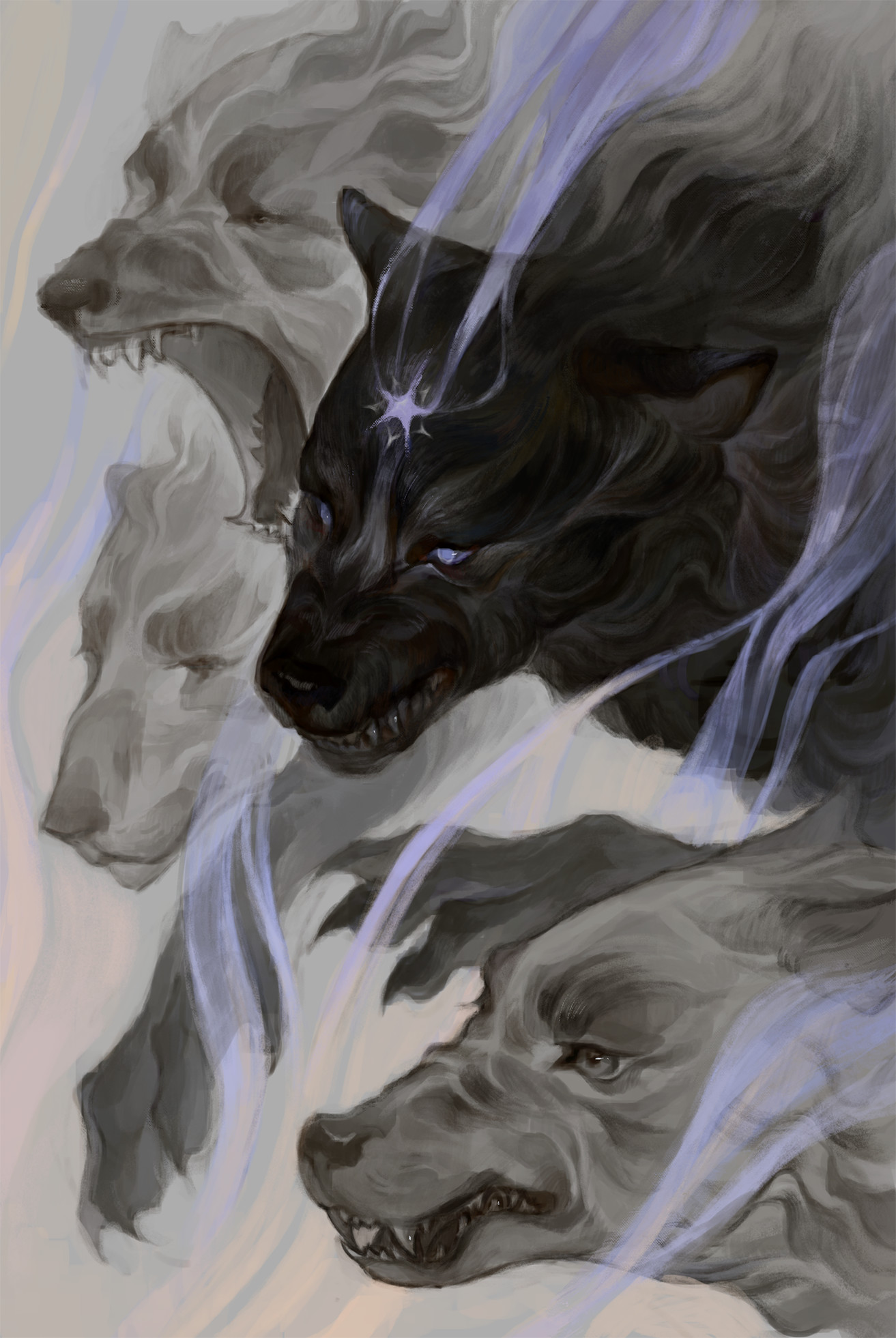
Multiattack
At 11th level, you gain one of the following features:
Rapid Strike. If you take the Attack action on your turn and have advantage on an attack roll against against one of the targets, you can forgo the advantage for that roll to make an additional weapon attack against that target, as part of the same action. You can do so no more than once per turn.
Volley. You can use your action to make a ranged attack against any number of creatures within 10 feet of a point you can see within your weapon’s range. You must have ammunition for each target, as normal, and you make a separate attack roll for each target
Whirlwind Attack. You can use your action to make melee attacks against any number of creatures within 5 feet of you, with a separate attack roll for each target.
Superior Hunter's Defense
At 15th level, you gain one of the following features:
Evasion. When you are subjected to an effect, such as a red dragon’s fiery breath or a lightning bolt spell, that allows you to make a Dexterity saving throw to take only half damage, you instead take no damage if you succeed on a saving throw, and only half damage if you fail.
Stand Against the Tide. When a hostile creature misses you with a melee attack, you can use your reaction to force that creature to repeat the same attack against another creature (other than itself) of your choice.
Uncanny Dodge. When an attacker that you can see hits you with an attack, you can use your reaction to halve the attack’s damage against you.
Spellbreaker
Spellbreakers are a small, but dedicated, fraternity of hunters who specialize in hunting spellcasters that use their arcane abilities to bring harm to others. While most pursue the life of a Spellbreaker for noble reasons, there are some who seek to destroy any who wield the weave. Most Spellbreakers operate in the shadows, only revealing themselves when the time is right and their success is a certainty. When one wrong move could end in disintegration, there is no room for error.
Path Spells
You gain path spells at the hunter levels listed in the Spellbreaker table. See the Spellcasting class feature for how spells work.
Spellbreaker Spells
| Hunter Level | Spells | |
|---|---|---|
| 3rd | Detect Magic | |
| 5th | Silence | |
| 9th | Counterspell | |
| 13th | Spellsteal | |
| 17th | Spellcaster's Refusal |
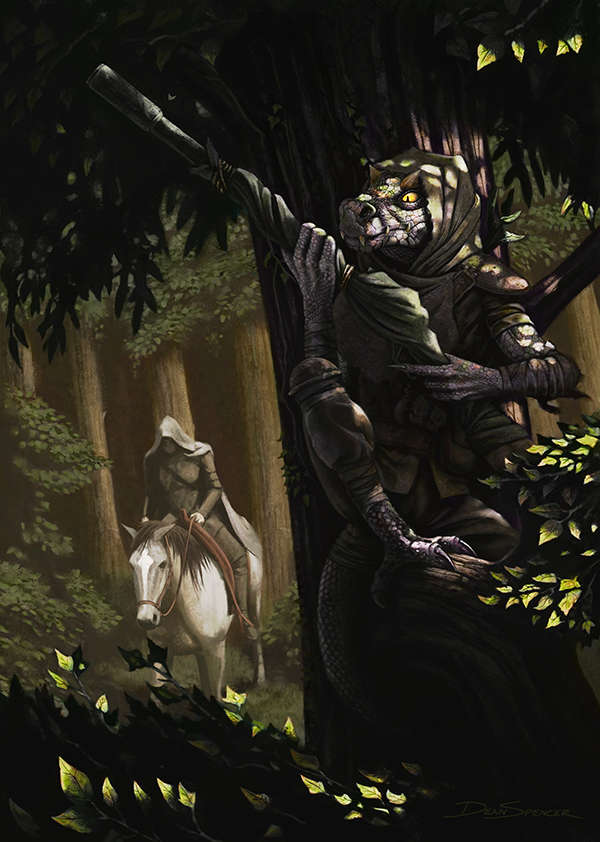
Spellsight
At 1st level, you gain the ability to detect the innate magic of others. As an action on your turn, choose a creature that you can see, within 60 feet. You immediately learn the creature's spellcasting ability (if it has one) and the circle of the highest spell it can cast.
Once you use this feature you must complete a short rest before you can use it again, unless you expend 2 spell points or more to use it again.
Mage Hunter
At 3rd level, you gain proficiency in the Arcana skill. Any time you make an Intelligence (Arcana) check to related to spellcasting or spells, you add double your proficiency bonus to your roll.
In addition, you can cast the Absorb elements spell as a 1st-circle spell, without expending spell points. You can cast absorb elements in this way a number of times equal to your Wisdom modifier (minimum of once), and you regain all expended uses when you finish a long rest.
When you cast absorb elements, and the first melee weapon attack you make on your next turn is against the creature whose spell you absorbed, you treat the additional damage from absorb elements as it's maximum roll.
Arcane Defense
You have learned to steel your mind and body to defend yourself from hostile magic. Starting at 7th level, when you are forced to make a saving throw to resist the effects of a spell or another magical effect, you gain a bonus to your saving throw equal to your Wisdom modifier (minimum of 1).
Mage Breaker
Starting at 11th level, you learn to utilize the signature mage slaying techniques of a master spellbreaker. When you mark a creature as your favored foe, you can empower the mark with primal magic.
While that creature remains your favored foe, any damage from your weapon attacks, and the additional damage from favored foe becomes force damage.
If you hit a creature that is concentrating on a spell, you can end your favored foe mark as part of the attack, causing the attack to deal maximum damage in place of rolling. The target then has disadvantage on its Constitution saving throw to maintain concentration on their spell.
You can empower your favored foe mark in this way a number of times equal to your Wisdom modifier (minimum of once), and you regain all uses when you finish a long rest.
Mantle of the Master
Your training has reached its apex, and you are considered a master Spellbreaker. Starting at 15th level, your blood has developed an innate magical ward that grants you resistance to all damage from spells and other magical effects.


The Lycanthrope
| Level | Proficiency Bonus | Features | Predatory Strikes | Totem Powers | |
|---|---|---|---|---|---|
| 1st | +2 | Hybrid Form, Lycanthrope Origin | 1d4 | — | |
| 2nd | +2 | Natural Armor, Totem Powers | 1d4 | 2 | |
| 3rd | +2 | Heightened Senses | 1d4 | 2 | |
| 4th | +2 | Adventuring Boon | 1d4 | 2 | |
| 5th | +3 | Extra Attack | 1d6 | 2 | |
| 6th | +3 | Lycanthrope Origin Feature | 1d6 | 2 | |
| 7th | +3 | Stalker's Prowess | 1d6 | 2 | |
| 8th | +3 | Adventuring Boon | 1d6 | 3 | |
| 9th | +4 | Bleeding Slash | 1d6 | 3 | |
| 10th | +4 | Lycanthrope Origin Feature | 1d6 | 3 | |
| 11th | +4 | Advanced Hybrid Form | 1d8 | 3 | |
| 12th | +4 | Adventuring Boon | 1d8 | 3 | |
| 13th | +5 | — | 1d8 | 3 | |
| 14th | +5 | Lycanthrope Origin Feature | 1d8 | 4 | |
| 15th | +5 | Iron Volition | 1d8 | 4 | |
| 16th | +5 | Adventuring Boon | 1d8 | 4 | |
| 17th | +6 | — | 1d10 | 4 | |
| 18th | +6 | Lycanthrope Origin Feature | 1d10 | 4 | |
| 19th | +6 | Adventuring Boon | 1d10 | 4 | |
| 20th | +6 | Hybrid Form Mastery | 1d10 | 5 |
Lycanthrope
Lycanthropy is an ancient and feared curse, able to turn the most stalwart of men into slavering and savage beasts. They are rightfully feared by a lot of common folk and are able to tear creatures to pieces with their hands alone. Because of this, lycanthropes are a force to be reckoned with.
However, not all lycanthropes are evil beasts enslaved to their vicious nature. Those who take their time to train themselves and focus their minds can unlock their bestial power and use it for their own desires. Able to shift into animalistic hybrids and shrug off wounds that would fell mortal men, lycanthropes that follow this path become the ultimate predators; however should their focus fail, grave peril will befall those around them.
Creating Your Lycanthrope
All lycanthropes get their curse from somewhere. Were you born with it, transferred from the blood of your parents? Were you bitten by another lycanthrope during an adventure or attack on your home? Did you get cursed by some craven mage who sought to punish you? Was it a life you chose to accept, being granted such power by a deity?
Class Features
As an Lycanthrope, you gain the following class features.
Hit Points
Hit Dice: 1d10 per Lycanthrope level
Hit Points at 1st Level: 10 + your Constitution modifier
Hit Points at Higher Levels: 1d10 + your Constitution modifier per Lycanthrope level after 1st
Proficiencies
Armor: light armor, medium armor, shields
Weapons: simple weapons, martial weapons, simple firearms, martial firearms
Tools: none
Saving Throws: Strength, Constitution
Skills: Choose two from Animal Handling, Athletics, Deception, Intimidation, Nature, Perception, Piloting, Stealth, and Survival
Equipment
You start with 2d4 x 100 New Yen to buy your own equipment, in addition to the equipment granted by your profession.
Lycanthrope Origin
At 1st level, you choose a origin that describes where your lycanthropic curse came from. The origin you choose grants you features at the 1st level and again at the 6th, 10th, 14th, and 18th levels.
Hybrid Form
At 1st level, you begin to control the lycanthropic curse that now flows through your blood. As an action, you can transform into your Hybrid form as determined by your Lycanthrope Origin feature. This form lasts for 10 minutes.
You can speak, use equipment, and wear armor in this form. You can revert to your normal form earlier by using an action on your turn. You automatically revert to your normal form if you fall unconscious, drop to 0 Hit Points, or die. You can use this feature twice. You regain expended uses when you finish a short rest.
While you are transformed, you gain the following benefits:
Feral Might. You gain a bonus to melee damage rolls equal to half your proficiency bonus, rounded down. You also have advantage on Strength checks and Strength saving throws.
Resilient Hide. You have resistance to bludgeoning, piercing, and slashing damage from nonmagical attacks that aren't silvered. While you are not wearing heavy armor or wielding a shield, you gain a +1 bonus to your AC.
Predatory Strikes. Your unarmed strikes are considered a melee weapon. When you transform into your hybrid form and whenever you make an unarmed strike as part of the Attack action, you can make another unarmed strike as a bonus action.
Your unarmed strikes deal 1d4 slashing damage. The damage of your unarmed strikes increases as you gain lycanthrope levels, as shown in the Predatory Strikes column of the Lycanthrope Table.
Cursed Weakness. Your have vulnerability to damage from silvered weapons.
Bloodlust. If you've taken damage since the start of your last turn, you must make a Wisdom saving throw to maintain control of your humanity at the start of your turn. The DC equals 5, or 1/4 of the total damage you've taken since the start of your previous turn, whichever number is higher. On a failed save, you must move directly towards the nearest creature to you and use the Attack action against that creature. If there is more than one possible target, the DM chooses between the targets. You then regain control of your character for the remainder of your turn.
If you are under an effect that prevents you from concentrating (like the Barbarian's rage feature), you automatically fail this saving throw.
The benefits of this feature replace the rules for Lycanthropy within the Monster Manual.
Natural Armor
Starting at the 2nd Level, while you are not wearing any armor nor wielding a shield, your Armor Class equals 11 + your Dexterity modifier + your Constitution modifier.
Totem Powers
At 2nd level, you gain two totem powers of your choice. Your totem power options are detailed at the end of the class description. When you gain certain lycanthrope levels, you gain additional powers of your choice, as shown in the Totem Powers column of the Lycanthrope Table.
Additionally, when you gain a level in this class, you can choose one of the powers you know and replace it with another power that you could learn at that level.
A level prerequisite in a totem power refers to your lycanthrope level, not character level
Heightened Senses
Starting at 3rd level, you begin to adopt the improved senses of a natural predator. You gain advantage on any Wisdom (Perception) checks that rely on hearing or smell.
Adventuring Boon
When you reach 4th level, and again at 8th, 12th, 16th, and 19th level, you gain 2 unrestricted bonus points. Players can spend these extra Points immediately to acquire Attributes for their characters or save them for future use.
You cannot increase one of your ability scores above 20 using this feature.
Extra Attack
Beginning at 5th level you can attack twice, instead of once, whenever you take the Attack action on your turn.
Stalker's Prowess
At 7th level, your speed increases by 10 feet. You also can add 10 feet to your long jump distance and 3 feet to your high jump distance.
In addition, unarmed strikes made using your predatory strikes feature and attacks with your hybrid form's natural weapons are considered magical for the purpose of overcoming resistance and immunity to nonmagical attacks and damage.
Bleeding Slash
Beginning at 9th level, you can tear deep into your enemies' flesh, leaving gaping wounds. When you make an unarmed strike using your predatory strikes feature you can attempt a bleeding slash.
On a hit the target takes the attack's normal damage and must succeed a Constitution saving throw with a DC equal to 8 + your proficiency bonus + your Strength or Dexterity modifier (your choice) or take 1d10 slashing damage at the start of their next turn. This increases to 2d10 at 13th level and 3d10 at 17th level.
This feature has no effect on inorganic creatures or objects. You can use this feature a number of times equal to your Strength or Dexterity modifier (whichever is higher, minimum of 1). You regain expended uses of this feature when you finish a short rest.
Advanced Hybrid Form
Starting at 11th level, you learn to unleash and control more of the beast within you. You can now transform into your hybrid form as a bonus action, and your hybrid form now lasts for up to 30 minutes.
In addition, at the start of each of your turns, while you are in your hybrid or animal form and have no more than half of your hit points left, you regain hit points equal to your Constitution modifier + 1 (minimum of 1). You don't gain this benefit if you have 0 hit points.
Iron Volition
Beginning at 15th level, you've honed your willpower to better resist the violent urges of your lycanthropic curse. Whenever you make a Wisdom saving throw to maintain control of your hybrid form, you do so with advantage.
Additionally in the event of a more than one possible nearest target after a failed save you, not the DM, now chooses between the targets.
Hybrid Form Mastery
At 20th level, you have wrestled with your inner predator and mastered it. You can now use your hybrid form feature three times instead of two, and your hybrid form now lasts for up to an hour.
Additionally when you roll initiative and have no uses of your hybrid form left, you regain one use.
Totem Powers
If a totem power has prerequisites, you must meet them to gain it. You can gain a totem power at the same time that you meet its prerequisites. The Bear, Boar, Rabbit, Rat, Raven, Tiger, and Wolf Form features are referred to collectively as "Animal Form" in this section.
Adept Climber
Prerequisite: 8th level, Werebear Lycanthrope Origin
You gain proficiency in the Athletics skill. You also gain a climbing speed of 30 feet while you aren't wearing heavy armor.
Bestial Mask
Prerequisite: 10th level
While you are in your animal form, you have advantage on Charisma (Deception) checks made to disguise yourself as a normal version of that creature.
Bestial Speech
Prerequisite: 10th level
While in your hybrid or animal form you gain the ability to comprehend and verbally communicate with beasts.
The knowledge and awareness of many beasts is limited by their intelligence, but at minimum, beasts can give you information about nearby locations and monsters, including whatever they can perceive or have perceived within the past day. You might be able to persuade a beast to perform a small favor for you, at the DM's discretion.
Boar Rush
Prerequisite: 8th level, Wereboar Lycanthrope Origin
When you successfully hit a creature with your tusks on your turn you may use your bonus action to attempt to push the creature back. The creature must succeed on a Strength saving throw with a DC equal to 8 + your proficiency + your Strength modifier or be pushed 10 feet away from you.
Breath of the Winter Wolf
Prerequisite: 8th level, Werewolf Lycanthrope Origin
Whilst in your hybrid or animal form you can exhale a blast of freezing wind in a 15 foot cone as an action. Each creature in that area must make a Dexterity saving throw with a DC equal to 8 + your proficiency + your Constitution modifier, taking 4d8 cold damage on a failed save or half as much on a successful one. At 14th level the cold damage increases to 5d8, and it increases to 6d8 at 18th level. You must finish a long rest before you can use this feature again.
Bruin Grip
Prerequisite: Werebear Lycanthrope Origin
You count as one size larger for the purposes of determining which creatures you can grapple.
Additionally you can use your action to try to pin a creature grappled by you. To do so, make another grapple check. If you succeed, the creature is restrained and your movement speed is reduced to 0 until the grapple ends.
Call Animal Allies
Prerequisite: 10th level
As a bonus action you can attempt to call animal allies to your side provided you are in the correct environment. At the DM's discretion and depending on your Lycanthrope origin the following animals appear to aid you for up to 1 hour:
- Werebear: two black bears
- Wereboar: four boars
- Wererabbit: sixteen rabbits
- Wererat: eight giant rats
- Wereraven: four swarms of ravens
- Weretiger: one tiger
- Werewolf: four wolves
The summoned creatures are friendly to you and your allies. Roll initiative for the summoned creatures as a group. The summoned creatures share a place in initiative and take their turn at the same time.
They obey any verbal command given to them by you that isn't outright suicidal. Giving verbal commands to the summoned creatures is a free action. If you don't issue any commands to them, they defend themselves from hostile creatures, but otherwise take no actions.
You can use this feature once and regain the ability to do so when you finish a long rest.
Cannibalistic Regeneration
While you are in your hybrid or animal form you can use your action to consume the flesh and blood of a dead organic creature within 5 feet of you, gaining hit points equal to 1d10 + your lycanthrope level.
After doing so your turn ends. At the start of your next turn, you must make a DC 10 Wisdom saving throw or move directly towards the nearest creature to you and use the Attack action against that creature.
You can use this feature once and regain the ability to do so when you finish a short rest.
Cat-Like Reflexes
Prerequisite: 15th level, Weretiger Lycanthrope Origin
While you are in your hybrid or animal form and an attacker that you can see hits you with an attack, you can use your reaction to halve the attack's damage against you.
Disease Carrier
Prerequisite: 10th level, Wererat Lycanthrope Origin
When you successfully hit a creature with your bite attack, it must succeed on a Constitution saving throw with a DC of 8 + your proficiency bonus + your Constitution modifier or become poisoned. The creature is poisoned until they are cured of this condition. Each minute, the creature must repeat the saving throw, reducing its hit point maximum by 1d10 on a failure. This reduction lasts until the poisoned condition is cured. The creature dies if this feature reduces its hit point maximum to zero.
A creature immune to disease or the poisoned condition is immune to this effect.
Disease Immunity
Prerequisite: 10th level
The lycanthropic curse in your blood makes you immune to all diseases, poison damage, and the poisoned condition.
Fast-Flyer
Prerequisite: Wereraven Lycanthrope Origin
You've become adept at using your wings to maneuver through the air at blinding speeds. When you move using your flying speed on your turn, you can double your flying speed until the end of your turn. Once you use this feature, you can't use it again until you move 0 feet on one of your turns.
Fearless
Prerequisite: 8th level
You are immune to the frightened condition and any effect that would cause you to flee from a creature.
Feline Balance
Prerequisite: Weretiger Lycanthrope Origin
You can use your reaction when you fall to reduce any falling damage you take by an amount equal to your Dexterity score.
Feral Lope
Prerequisite: 10th level
While you are in your hybrid or animal form and you aren't holding anything in your hands your movement speed increases by 20 feet.
Hunt the Prey
Prerequisite: 8th level
As a bonus action choose one creature you can see. For the next hour you have advantage on Wisdom (Perception) and Wisdom (Survival) checks to find or track it.
You can use this feature once and regain the ability to do so when you finish a short rest.
Immovable Beast
Prerequisite: Werebear Lycanthrope Origin
You cannot be knocked prone by non-magical means. You also have advantage on saving throws against spells or other effects that would force you to move or knock you prone.
Keen-Feathered
Prerequisite: 8th level, Wereraven Lycanthrope Origin
Your feathers become razor sharp, able to cut like daggers. While in your hybrid form you can use a bonus action to throw your feathers at a creature. Choose a creature within 30 feet of you and make a ranged attack roll. You add your proficiency bonus to this ranged attack roll. On a hit, you deal 2d4 + your Dexterity modifier piercing damage, which is considered magical, to the creature. You can use this feature a number of times equal to your Constitution modifier (minimum of once). You regain any expended uses of this feature when you finish a short rest.
Kin to Beasts
You gain proficiency in the Animal Handling skill. If you are already proficient in this skill, you may double your proficiency bonus for Animal Handling skill checks you make.
Leporine Escape
Prerequisite: Wererabbit Lycanthrope Origin
You gain advantage on ability checks and saving throws made against being restrained or grappled.
Additionally you may move through the space of a hostile creature if it is at least one size larger than you, and moving through another creature's space no longer counts as difficult terrain.
Lunar Transformation
You are able to use the light of the full moon to transform but the beast within threatens to break loose. During a full moon you may use your hybrid or animal form feature without expending a use, however if you do then whenever you make a Wisdom saving throw due to bloodlust, you do so with disadvantage.
Night Vision
You gain darkvision. You can see in dim light within 60 feet of you as if it were bright light, and in darkness as if it were dim light. You can't discern color in darkness, only shades of gray. Additionally, dim light doesn't impose disadvantage on your Wisdom (Perception) checks.
Other Foot's Lucky Too
Prerequisite: 20th level, Wererabbit Lycanthrope Origin
You gain a second use of your Lucky Rabbit's Foot feature. You regain all expended uses when you finish a short rest.
Pack Master
Prerequisite: 15th level, Werewolf Lycanthrope Origin
While in your hybrid or animal form, allied creatures have advantage on melee attack rolls against any creature within 5 feet of you that is hostile to you and you aren't incapacitated.
Plague Rat
Prerequisite: Wererat Lycanthrope Origin
When you successfully hit a creature with your bite attack you deal an additional 2d4 poison damage to the target.
Predator's Patience
Prerequisite: Weretiger Lycanthrope Origin
While in your hybrid or animal form, if you do not move on your turn you can attempt to hide even when you are only lightly obscured by foliage, heavy rain, falling snow, mist, and other natural phenomena.
Quickrunner
Prerequisite: 8th level
Your movement is unaffected by difficult terrain, and you have advantage on saving throws against spells and magical effects that reduce your speed or cause you to be restrained.
Rampager
When you are in your hybrid or animal form and reduce a creature to 0 hit points with a melee attack on your turn, you can use your bonus action to move up to half your speed and make a natural weapon attack or unarmed strike against another creature.
Rending Claws
Prerequisite: 20th level
Your hybrid and animal form's claws elongate to terrifying length. Your predatory strikes die increases to 1d12. However, you cannot hold any objects in your hands while in your hybrid or animal form.
Signs of the Curse
Even in your humanoid form your curse changes your body, as your teeth and nails elongate and sharpen. You gain the benefit of your predatory strikes feature when not in your hybrid or animal form.
Spirit of the Beast
Prerequisite: 10th level
You can cast the commune with nature spell, but only as a ritual. When you do so, a spiritual version of the animal you chose for your Lycanthrope Origin appears to you to convey the information you seek.
Terror of the Night
While in your hybrid or animal form you gain advantage on Charisma (Intimidation) checks.
Thrash
Prerequisite: 15th level, Wereboar Lycanthrope Origin
While you are in your hybrid or animal form you can use an action to make a melee attack with your tusks against any number of creatures within 5 feet of you, making a separate attack roll for each target.
If there isn't enough room for you to double in size, you attain the maximum possible size in the space available. Armor and clothing not made to accommodate your new size might be destroyed when you enter your hybrid form.
While in your hybrid form your breath weapon, natural weapons, and predatory strikes roll twice the normal number of damage dice.
Vigorous Shifting
When you use your hybrid or animal form features you gain a number of temporary hit points equal to your lycanthrope level.
You can use this feature once and regain the ability to do so when you finish a short rest.
Wounded Fury
When you roll a 1 or 2 on a damage die for an attack you make with a natural weapon or an unarmed strike, you can reroll the die and must use the new roll, even if the new roll is a 1 or a 2. You must have no more than half of your hit points left to receive this benefit.
Lycanthrope Origin
At 1st level, a Lycanthrope chooses their Lycanthrope Origin, each of which is detailed below.
Lupus Virtute
Sacramentum. Nocturnarum. Nefarious. Oremus. Deus Sanctus, Deum Filium. Dominum. Martyrum. Oremus. Convertere Apostolicus. Cedere. Animus. Debitus. Et Catholicus. Debere. Deum Animalum. Dominum. Et imperitum. Here We Are. E Nomine. Sanctus Dominus. Halleluja! Christus Animus. Halleluja! Et Sanctus Spiritus. Call me in the Night. Sanctus Dominus. Amen.
Lupi Nothus Forma
When choosing this origin at 1st level your hybrid form takes the shape of a wolf-humanoid and your bite becomes a natural weapon you are proficient with whilst in that form.
When making a melee attack with your bite, you have a reach of 5 feet and deal 1d8 piercing damage on a hit. You add your Strength modifier to the attack and damage rolls.
A creature hit by your bite must succeed on a Constitution saving throw with a DC of 8 + your proficiency bonus + your Constitution modifier or be cursed with werewolf lycanthropy.
Sacerdotales Artes
Also at 1st level you gain proficiency in the Persuasion skill. If you are already proficient in the skill, you add double your proficiency bonus to checks you make with it. Additionally you gain a holy symbol, a prayer book, and vestments alongside your starting equipment.
Deus Virtutum
At 6th level you gain the power to channel divine wrath into your weapons. You can cast the spell searing smite at 2nd level a number of times equal to your Charisma Modifier (minimum of 1). Charisma is your spellcasting ability for this spell. You regain expended uses when you finish a long rest.
Indolis Vigor
Starting at 10th level, you and friendly creatures within 15 feet of you can't be charmed or frightened while you are conscious.
Exercitus Immortuorum
At 14th level as an action you may command a number of humanoid corpses or piles of bones within 30 feet of you, up to your Charisma modifier (minimum of 1), to rise and become zombies or skeletons under your control.
The undead creatures are under your control for 1 minute or until the this effect ends, at which point they become dead once again. While they are under your control and within 30 feet of you, you can continue this effect and command them on your turn as a bonus action.
A single command can be issued to as many of your undead minions as you wish and can be specific, like directing their movement and what action they will take, or be more general, as in guarding a person or place. They will continue to follow your orders until they are complete or the effect ends, but if you don't command them at all, they will do nothing except defend themselves against attack.
This feature requires concentration, as if concentrating on a spell; the effect ends if this concentration is broken.
You can use this feature once and regain the ability to do so when you finish a short rest.
Massa Metallum
At 18th level you can use your action to read aloud holy litanies to inspire your allies and strike fear into your enemies. Choose a number of creatures up to your Charisma modifier (minimum of 1) that are within 30 feet of you. The chosen creatures may add your Charisma modifier (minimum of 1) to one ability check, attack roll, damage roll or saving throw on their turn. A creature that is deafened or otherwise can't hear you is unaffected by this feature. If a creature moves further than 30 feet away from you on their turn they no longer receive this bonus unless they are once again within 30 feet of you at the start of their next turn whilst this feature is still active.
Once started, you can continue this effect on each of your turns as a bonus action for up to 1 minute. The effects of this feature end either after 1 minute or at the end of one of your turns where you do not continue it with your bonus action.
You can use this feature once and regain the ability to do so when you finish a short rest.
Were-Hell Hound
Whilst they may look similar to werewolves at first glance, there's no mistaking their long horns and glowing red eyes. Much like their quadruped counterparts these monstrous fire-breathing fiends are fierce foes and are often seen stalking the lower planes for their infernal masters.
Hell Hound-Hybrid Form
When choosing this origin at 1st level your hybrid form takes the shape of a hell hound-humanoid, you have resistance to fire damage and your bite becomes a natural weapon you are proficient with whilst in that form.
When making a melee attack with your bite, you have a reach of 5 feet and deal 1d8 piercing damage plus 1d6 fire damage on a hit. You add your Strength modifier to the attack and damage rolls.
A creature hit by your bite must succeed on a Constitution saving throw with a DC of 8 + your proficiency bonus + your Constitution modifier or be cursed with were-hell hound lycanthropy.
Additionally you can speak, read and write Infernal, and can be affected by effects that affect fiends whilst in your hybrid form.
Infernal Combustion
At 6th level, whilst in your hybrid or animal form you can exhale a cone of searing flame in a 15 foot cone as an action. Each creature in that area must make a Dexterity saving throw with a DC equal to 8 + your proficiency + your Constitution modifier, taking 4d6 Fire Damage on a failed save or half as much on a successful one. At 14th level the fire damage increases to 5d6, and it increases to 6d6 at 18th level.
You may use this feature a number of times equal to your Constitution modifier (minimum of 1) and you regain all expended uses when you finish a long rest.
Hell Hound Form
Starting at 10th level you can transform into a hell hound instead of your hybrid form when using your Hybrid Form feature. You retain the benefits granted by the hybrid form feature. Any equipment you are wearing or carrying isn't transformed and you can't wear any armor unless it is made to fit your animal form. You have disadvantage when using equipment meant for humanoids and cannot cast spells that require material components while in this form.
Your statistics other than your AC and size remain the same in your animal form. Your AC when in your animal form is 12 + your Dexterity modifier + your Constitution modifier (you still get the bonus AC from your Resilient Hide feature in situations when it would apply) and your size becomes Medium. Additionally you gain immunity to fire damage instead of resistance when in this form.
To discern that you aren't a normal animal of your type, a creature can use its action to inspect your appearance and must make an Intelligence (Investigation) check contested by your Charisma (deception) check.
Transforming this way counts as a use of your hybrid form feature.
Pack Hunter
At 14th level while you are in your hybrid or hell hound form you have advantage on attack rolls against a creature if at least one of your allies is within 5 feet of the creature and the ally isn't incapacitated.
Hell's Hunt
At 18th level you can, as an action let out an infernal hunting cry, calling other hell hounds into the frey. Choose 4 unoccupied spaces you can see within 30 feet of you, a hell hound appears in each. A summoned creature disappears when it drops to 0 hit points or after 1 hour has passed.
The summoned creatures are friendly to you and your allies. Roll initiative for the summoned creatures as a group. The summoned creatures share a place in initiative and take their turn at the same time. They obey any verbal command given to them by you that isn't outright suicidal. Giving verbal commands to the summoned creatures is a free action. If you don't issue any commands to them, they defend themselves from hostile creatures, but otherwise take no actions. If a hell hound has not taken the Attack action in the last minute it turns hostile to all creatures around it until it drops to 0 hit points or disappears.
You can use this feature once and regain the ability to do so when you finish a long rest.
Werebear
Werebears are powerful lycanthropes with the ability to temper their monstrous natures and reject their violent impulses. In humanoid form, they are large, muscular, and covered in hair matching the color of their ursine form's fur provided they can grow hair. When a werebear transforms, it grows to enormous size, lashing out with weapons or claws and fighting with the ferocity of a bear.
Bear-Hybrid Form
When choosing this origin at 1st level your hybrid form takes the shape of a bear-humanoid and your bite becomes a natural weapon you are proficient with whilst in that form.
When making a melee attack with your bite, you have a reach of 5 feet and deal 3d4 piercing damage on a hit. You add your Strength modifier to the attack and damage rolls.
A creature hit by your bite must succeed on a Constitution saving throw with a DC of 8 + your proficiency bonus + your Constitution modifier or be cursed with werebear lycanthropy.
Formidable Strength
At 6th level you gain the might of a bear. Your carrying capacity (including maximum load and maximum lift) is doubled, and you have advantage on Strength checks made to push, pull, lift, or break objects.


Bear Form
Starting at 10th level you can transform into a bear instead of your hybrid form when using your Hybrid Form feature. You retain the benefits granted by the hybrid form feature. Any equipment you are wearing or carrying isn't transformed and you can't wear any armor unless it is made to fit your animal form. You have disadvantage when using equipment meant for humanoids and cannot cast spells that require material components whilst in this form.
Your statistics other than your AC and size remain the same in your animal form. Your AC when in your animal form is 12 +
your Dexterity modifier + your Constitution modifier (you still get the bonus AC from your Resilient Hide feature in situations when it would apply) and your size becomes Large.
To discern that you aren't a normal animal of your type, a creature can use its action to inspect your appearance and must make an Intelligence (Investigation) check contested by your Charisma (deception) check.
Transforming this way expends a use of your hybrid form feature.
Ursine Toughness
At 14th level, while you are in your hybrid or bear form, not wearing armor and not wielding a shield, you gain a +2 bonus to your AC (cumulative with the bonus from resilient hide).
Terrifying Roar
At 18th level you can use your action to roar at any number of creatures within 30 feet, chilling their blood and stunning them with fear. Any of the targeted creatures that can hear you must succeed on a Wisdom saving throw with a DC equal to 8 + your proficiency bonus + your Charisma modifier or become frightened of you until the end of your next turn.
If a creature fails this saving throw by 5 or more, they are instead stunned until the end of your next turn. A creature that succeeds on this saving throw is immune to this feature for the next 24 hours.
You may use this feature a number of times equal to your Charisma modifier (minimum of 1) and you regain all expended uses when you finish a long rest.
Wereboar
Wereboars are ill-tempered and vulgar brutes. As humanoids, they are stocky and muscular, with short, stiff hair. In their humanoid and hybrid forms, they use heavy weapons, while in hybrid or animal form, they gain a devastating goring attack through which their curse is spread.
Boar-Hybrid Form
When choosing this origin at 1st level your hybrid form takes the shape of a boar-humanoid and you gain tusks that become a natural weapon you are proficient with whilst in that form.
When making a melee attack with your tusks, you have a reach of 5 feet and deal 2d6 slashing damage on a hit. You add your Strength modifier to the attack and damage rolls.
A creature hit by your tusks must succeed on a Constitution saving throw with a DC of 8 + your proficiency bonus + your Constitution modifier or be cursed with wereboar lycanthropy.
Brutish Swine
At 6th level you gain proficiency with improvised weapons. In addition, weapons with the Heavy property no longer impose disadvantage on attack rolls if your size is Small.
Bear Form
Starting at 10th level you can transform into a boar instead of your hybrid form when using your Hybrid Form feature. You retain the benefits granted by the hybrid form feature. Any equipment you are wearing or carrying isn't transformed and you can't wear any armor unless it is made to fit your animal form. You have disadvantage when using equipment meant for humanoids and cannot cast spells that require material components while in this form.
Your statistics other than your AC and size remain the same in your animal form. Your AC when in your animal form is 12 + your Dexterity modifier + your Constitution modifier (you still get the bonus AC from your Resilient Hide feature in situations when it would apply) and your size becomes Medium.
To discern that you aren't a normal animal of your type, a creature can use its action to inspect your appearance and must make an Intelligence (Investigation) check contested by your Charisma (deception) check.
Transforming this way counts as a use of your hybrid form feature.
Charge
Starting at 14th level, while you are in your hybrid or boar form, move at least 15 feet straight towards a target and then make an attack against it with your tusks on the same turn, the target takes an extra 2d6 piercing damage on a hit. If the target is a creature, it must succeed on a Strength saving throw with a DC equal to 8 + your proficiency bonus + your Strength modifier or be knocked prone.
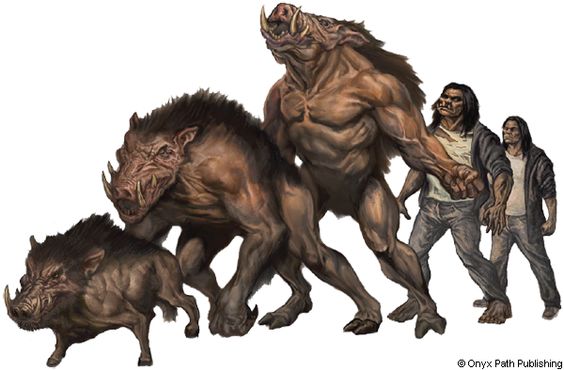
Relentless
When you reach the 18th Level, if you drop to 0 hit points while in your hybrid or animal form and don't die outright, you can drop to 1 hit point instead. Once you use this feature, you can't use it again until you finish a long rest.
Wererabbit
Wererabbits, occasionally called werehares, are a rare breed of lycanthropes and somewhat of an anomaly amongst their brethren. Whereas other lycanthropes are born of more predatory species, wererabbits evoke a lot of traits typically found in prey animals; however this only disguises their deadly potential. Extremely agile, wererabbits can move with blinding speed and deliver kicks that can snap bones like twigs.
Rabbit-Hybrid Form
When choosing this origin at 1st level your hybrid form takes the shape of a rabbit-humanoid and your bite becomes a natural weapon you are proficient with whilst in that form.
When making a melee attack with your bite, you have a reach of 5 feet and deal 1d4 piercing damage on a hit. You may add your Strength or Dexterity modifier to the attack and damage rolls.
A creature hit by your bite must succeed on a Constitution saving throw with a DC of 8 + your proficiency bonus + your Constitution modifier or be cursed with wererabbit lycanthropy.
Additionally you can use Dexterity instead of Strength for the attack and damage rolls of your unarmed strikes made using your predatory strikes feature.
Powerful Kick
Starting at 6th level you are able to make use of your strong legs to strike your foes. Whilst in your hybrid form you become proficient with your kicks.
When making a melee attack with your kick, you have a reach of 5 feet and deal 1d8 bludgeoning damage on a hit. You add your Strength or Dexterity modifier (your choice) to the attack and damage rolls.
Additionally on a hit, the creature must succeed a Strength saving throw with a DC of 8 + your proficiency bonus + your Strength or Dexterity modifier (your choice) or be pushed 10 feet away from you and incapacitated until the start of their next turn.
Rabbit Form
Starting at 10th level you can transform into a rabbit instead of your hybrid form when using that feature. You retain the same features granted by your hybrid form. Any equipment you are wearing or carrying isn't transformed and you can't wear any armour unless it is made to fit your animal form. You have disadvantage when using equipment meant for humanoids and cannot cast spells that require material components whilst in this form.
Your statistics other than your AC and size remain the same in your animal form. Your AC when in your animal form is 12 + your Dexterity modifier + your Constitution modifier (you still get the bonus AC from your Resilient Hide feature in situations when it would apply) and your size becomes Tiny.
To discern that you aren't a normal animal of your type, a creature can use its action to inspect your appearance and must make an Intelligence (Investigation) check contested by your Charisma (deception) check.
Transforming this way counts as a use of your hybrid form feature.
El-ahrairah's Blessing
Starting at 14th level if you take the Dash action on your turn you can Dash or Dodge as a bonus action.
Additionally when in your hybrid form you gain a burrowing speed equal to your movement speed.
Finally you can add 10 feet to your long jump distance and 3 feet to your high jump distance.
Lucky Rabbit's Foot
At 18th level you're able to make almost near-miraculous escapes from danger. You may choose to make one melee, ranged, or spell attack that would hit you, miss instead. This is done after you know you have been hit, but before the damage is rolled.
You can use this feature once and regain the ability to do so when you finish a short rest.
Wererat
Wererats are cunning lycanthropes with sly, avaricious personalities. They are wiry and twitchy in humanoid form, with thin hair and darting eyes. In their humanoid and hybrid forms, wererats prefer light weapons and use ambush tactics rather than fighting as a pack. Although a wererat can deliver a nasty bite in its rat form, it favors that form for stealthy infiltration and escape rather than combat.
Rat-Hybrid Form
When choosing this origin at 1st level your hybrid form takes the shape of a rat-humanoid and your bite becomes a natural weapon you are proficient with whilst in that form.
When making a melee attack with your bite, you have a reach of 5 feet and deal 1d4 piercing damage on a hit. You may add your Strength or Dexterity modifier to the attack and damage rolls.
A creature hit by your bite must succeed on a Constitution saving throw with a DC of 8 + your proficiency bonus + your Constitution modifier or be cursed with wererat lycanthropy.
Additionally you can use Dexterity instead of Strength for the attack and damage rolls of your unarmed strikes made using your predatory strikes feature.
Scurry
Starting at 6th level if you take the Disengage action on your turn you can Dash as a bonus action. Additionally if you take the Attack action on your turn, you can Disengage as a bonus action.
Rat Form
Starting at 10th level you can transform into a giant rat instead of your hybrid form when using that feature. You retain the same features granted by your hybrid form. Any equipment you are wearing or carrying isn't transformed and you can't wear any armour unless it is made to fit your animal form. You have disadvantage when using equipment meant for humanoids and cannot cast spells that require material components whilst in this form.
Your statistics other than your AC and size remain the same in your animal form. Your AC when in your animal form is 12 + your Dexterity modifier + your Constitution modifier (you still get the bonus AC from your Resilient Hide feature in situations when it would apply) and your size becomes Small. To discern that you aren't a normal animal of your type, a creature can use its action to inspect your appearance and must make an Intelligence (Investigation) check contested by your Charisma (deception) check.
Transforming this way counts as a use of your hybrid form feature.
Skulk
At 14th level you gain advantage on Dexterity (Stealth) checks made to hide. You also gain a climbing and swimming speed equal to your movement speed.
Surprise
At 18th level if you hit a surprised creature with an attack on your first turn in combat, the attack deals an extra 3d6 damage to it. The extra damage is of the same type as the attack itself.
Wereraven
Wereravens are secretive and extraordinarily cautious lycanthropes that trust one another but are wary of just about everyone else. Although skilled at blending into society they keep mostly to themselves, respect local laws, and strive to do good whenever possible. In their human and hybrid forms, wereravens tend to favour light weapons.
Raven-Hybrid Form
When choosing this origin at 1st level your hybrid form takes the shape of a raven-humanoid and you gain a beak that becomes a natural weapon you are proficient with whilst in that form.
When making a melee attack with your beak, you have a reach of 5 feet and deal 1d4 piercing damage on a hit. You may add your Strength or Dexterity modifier to the attack and damage rolls.
A creature hit by your beak must succeed on a Constitution saving throw with a DC of 8 + your proficiency bonus + your Constitution modifier or be cursed with wereraven lycanthropy.
Additionally, while in your hybrid form you gain a flying speed equal to your movement speed. To use this speed, you can't be wearing medium or heavy armor. You can also use Dexterity instead of Strength for the attack and damage rolls of your unarmed strikes made using your predatory strikes feature.
Mimicry
Starting at 6th level you can mimic sounds you have heard, including voices. A creature that hears the sounds you make can tell they are imitations with a successful Wisdom (Insight) check opposed by your Charisma (Deception) check.
Raven Form
Starting at 10th level you can transform into a raven instead of your hybrid form when using your Hybrid Form feature. You retain the benefits granted by the hybrid form feature. Any equipment you are wearing or carrying isn't transformed and you can't wear any armor unless it is made to fit your animal form.
You have disadvantage when using equipment meant for humanoids and cannot cast spells that require material components while in this form.
Your statistics other than your AC and size remain the same in your animal form. Your AC when in your animal form is 12 + your Dexterity modifier + your Constitution modifier (you still get the bonus AC from your Resilient Hide feature in situations when it would apply) and your size becomes Tiny.
To discern that you aren't a normal animal of your type, a creature can use its action to inspect your appearance and must make an Intelligence (Investigation) check contested by your Charisma (deception) check.
Transforming this way counts as a use of your hybrid form feature.
Swooping Blow
At 14th level, if you fly at least 15 feet straight towards a target while you are in your hybrid or raven form and then hit it with a melee attack on the same turn, the target takes an extra 2d6 damage of the type done by that attack. If the target is a creature and you move out of its reach after doing so, the creature has disadvantage on attacks of opportunity made against you.
Keen Sight
At 18th level you can see up to 1 mile away without difficulty, able to discern even fine details as though looking at something no more than 100 feet away from you.
Additionally, dim light doesn't impose disadvantage on your Wisdom (Perception) checks and you have advantage on (Perception) checks made to spot items.
Weretiger
Weretigers are ferocious hunters and warriors with a haughty and fastidious nature. Lithe and sleekly muscular in humanoid form, they are taller than average and meticulously groomed. Weretigers grow to enormous size in animal and hybrid form, but they fight in their more refined humanoid form when they can.
Tiger-Hybrid Form
When choosing this origin at 1st level your hybrid form takes the shape of a tiger-humanoid and your bite becomes a natural weapon you are proficient with whilst in that form.
When making a melee attack with your bite, you have a reach of 5 feet and deal 1d10 piercing damage on a hit. You add your Strength modifier to the attack and damage rolls.
A creature hit by your bite must succeed on a Constitution saving throw with a DC of 8 + your proficiency bonus + your Constitution modifier or be cursed with weretiger lycanthropy.
Feline Agility
Starting at 6th level, you have advantage on Dexterity (Acrobatics) checks. Additionally if you take the Dodge action on your turn you may use your bonus action to make a single attack with your unarmed strikes.
Tiger Form
Starting at 10th level you can transform into a tiger instead of your hybrid form when using your Hybrid Form feature. You retain the benefits granted by the hybrid form feature. Any equipment you are wearing or carrying isn't transformed and you can't wear any armor unless it is made to fit your animal form. You have disadvantage when using equipment meant for humanoids and cannot cast spells that require material components while in this form.
Your statistics other than your AC and size remain the same in your animal form. Your AC when in your animal form is 12 + your Dexterity modifier + your Constitution modifier (you still get the bonus AC from your Resilient Hide feature in situations when it would apply) and your size becomes Large.

To discern that you aren't a normal animal of your type, a creature can use its action to inspect your appearance and must make an Intelligence (Investigation) check contested by your Charisma (deception) check.
Transforming this way counts as a use of your hybrid form feature.
Eye of the Tiger
At 14th level you gain 120 feet of darkvision if you don't already have it and you gain advantage on any Wisdom (Perception) checks that rely on sight.
Pounce
Starting at 18th level whilst you are in your hybrid or tiger form, move at least 15 feet straight towards a creature and then hit it with an unarmed strike on the same turn, that target must succeed on a Strength saving throw with a DC equal to 8 + your proficiency bonus + your Strength modifier or be knocked prone. If the target is knocked prone, you can make one bite attack against it as a bonus action.
Werewolf
A werewolf is a savage predator. In its humanoid form, a werewolf has heightened senses, a fiery temper, and a tenqency to eat rare meat. Its wolf form is a fearsome predator, but its hybrid form is more terrifying by far - a furred and well-muscled humanoid body topped by a ravening wolf's head. A werewolf can wield weapons in hybrid form, though it prefers to tear foes apart with its powerful claws and bite.
Wolf-Hybrid Form
When choosing this origin at 1st level your hybrid form takes the shape of a wolf-humanoid and your bite becomes a natural weapon you are proficient with whilst in that form.
When making a melee attack with your bite, you have a reach of 5 feet and deal 1d8 piercing damage on a hit. You add your Strength modifier to the attack and damage rolls.
A creature hit by your bite must succeed on a Constitution saving throw with a DC of 8 + your proficiency bonus + your Constitution modifier or be cursed with werewolf lycanthropy.
Silent Tracker
At 6th Level You gain the hunting sensibilities of a wolf. You can track other creatures while traveling at a fast pace, and you can move stealthily while traveling at a normal pace (see Chapter 8 of the Player's Handbook for rules on travel pace).
Wolf Form
Starting at 10th level you can transform into a wolf instead of your hybrid form when using your Hybrid Form feature. You retain the benefits granted by the hybrid form feature. Any equipment you are wearing or carrying isn't transformed and you can't wear any armor unless it is made to fit your animal form. You have disadvantage when using equipment meant for humanoids and cannot cast spells that require material components while in this form.
Your statistics other than your AC and size remain the same in your animal form. Your AC when in your animal form is 12 + your Dexterity modifier + your Constitution modifier (you still get the bonus AC from your Resilient Hide feature in situations when it would apply) and your size becomes Medium.
To discern that you aren't a normal animal of your type, a creature can use its action to inspect your appearance and must make an Intelligence (Investigation) check contested by your Charisma (deception) check.
Transforming this way counts as a use of your hybrid form feature.
Pack Hunter
At 14th level while you are in your hybrid or wolf form you have advantage on attack rolls against a creature if at least one of your allies is within 5 feet of the creature and the ally isn't incapacitated.
Inspiring Howl
At 18th level as a action any friendly creature within 30 feet that can hear you when you howl has advantage on their next attack roll and is no longer charmed nor frightened. Hostile creatures within 30 feet of you that can hear you must succeed on a Wisdom saving throw (DC equal to 8 + your proficiency bonus + your Charisma modifier) or have disadvantage on their next attack roll or saving throw. A creature that succeeds on this saving throw is immune to this feature for the next 24 hours.
You can use this feature once and regain the ability to do so when you finish a short rest.

Occultist
With a pseudodragon curled on his shoulder, a young elf in golden robes smiles warmly, weaving a magical charm into his honeyed words and bending the palace sentinel to his will.
As flames spring to life in her hands, a wizened human whispers the secret name of her demonic patron, infusing her spell with fiendish magic. Shifting his gaze between a battered tome and the odd alignment of the stars overhead, a wild-eyed tiefling chants the mystic ritual that will open a doorway to a distant world.
Occultists are seekers of the knowledge that lies hidden in the fabric of the multiverse. Through pacts made with mysterious beings of supernatural power, occultists unlock magical effects both subtle and spectacular. Drawing on the ancient knowledge of beings such as fey nobles, demons, devils, hags, and alien entities of the Far Realm, occultists piece together arcane secrets to bolster their own power.
Sworn and Beholden
A occultist is defined by a pact with an otherworldly being. Sometimes the relationship between occultist and patron is like that of a justiciar and a deity, though the beings that serve as patrons for occultists are not gods. A occultist might lead a cult dedicated to a demon prince, an archdevil, or an utterly alien entity-beings not typically served by justiciars. More often, though, the arrangement is similar to that between a master and an apprentice. The occultist learns and grows in power, at the cost of occasional services performed on the patron's behalf.
The magic bestowed on a occultist ranges from minor but lasting alterations to the occultist's being (such as the ability to see in darkness or to read any language) to access to powerful spells.
Delvers Into Secrets
Occultists are driven by an insatiable need for knowledge and power, which compels them into their pacts and shapes their lives. This thirst drives occultists into their pacts and shapes their later careers as well.
Stories of occultists binding themselves to fiends are widely known. But many occultists serve patrons that are not fiendish. Sometimes a traveler in the wilds comes to a strangely beautiful tower, meets its fey lord or lady, and stumbles into a pact without being fully aware of it.
And sometimes, while poring over tomes of forbidden lore, a brilliant but crazed student's mind is opened to realities beyond the material world and to the alien beings that dwell in the outer void.
Once a pact is made, a occultist's thirst for knowledge and power can't be slaked with mere study and research. No one makes a pact with such a mighty patron if he or she doesn't intend to use the power thus gained. Rather, the vast majority of occultists spend their days in active pursuit of their goals, which typically means some kind of adventuring. Furthermore, the demands of their patrons drive occultists toward adventure.
Creating Your Occultist
As you make your occultist character, spend some time thinking about your patron and the obligations that your pact imposes upon you. What led you to make the pact, and how did you make contact with your patron? Were you seduced into summoning a devil, or did you seek out the ritual that would allow you to make contact with an alien elder god? Did you search for your patron, or did your patron find and choose you? Do you chafe under the obligations of your pact or serve joyfully in anticipation of the rewards promised to you?
Class Features
As an Occultist, you gain the following class features.
Hit Points
Hit Dice: 1d8 per Occultist level
Hit Points at 1st Level: 8 + your Constitution modifier
Hit Points at Higher Levels: 1d8 + your Constitution modifier per Occultist level after 1st
Proficiencies
Armor: light armor
Weapons: simple weapons, simple firearms
Tools: none
Saving Throws: Wisdom, Intelligence
Skills: Choose two from Arcana, Data, Deception, History, Intimidation, Investigation, Nature, Piloting, Religion and Technology
Equipment
You start with 4d4 x 100 New Yen to buy your own equipment, in addition to the equipment granted by your profession.
Pact Magic
Your arcane research and the magic bestowed on you by your patron have given you facility with spells. See chapter 10 for the general rules of spellcasting and chapter 11 for the occultist spell list.
Cantrips
You know two cantrips of your choice from the occultist spell list. You learn additional occultist cantrips of your choice at higher levels, as shown in the Cantrips Known column of the Occultist table.
Spell Slots
The Occultist table shows how many spell slots you have to cast your occultist spells of 1st through 5th level. The table also shows what the level of those slots is; all of your spell slots are the same level. To cast one of your occultist spells of 1st level or higher, you must expend a spell slot. You regain all expended spell slots when you finish a short or long rest.
For example, when you are 5th level, you have two 3rd-level spell slots. To cast the 1st-level spell witch bolt, you must spend one of those slots, and you cast it as a 3rd-level spell.
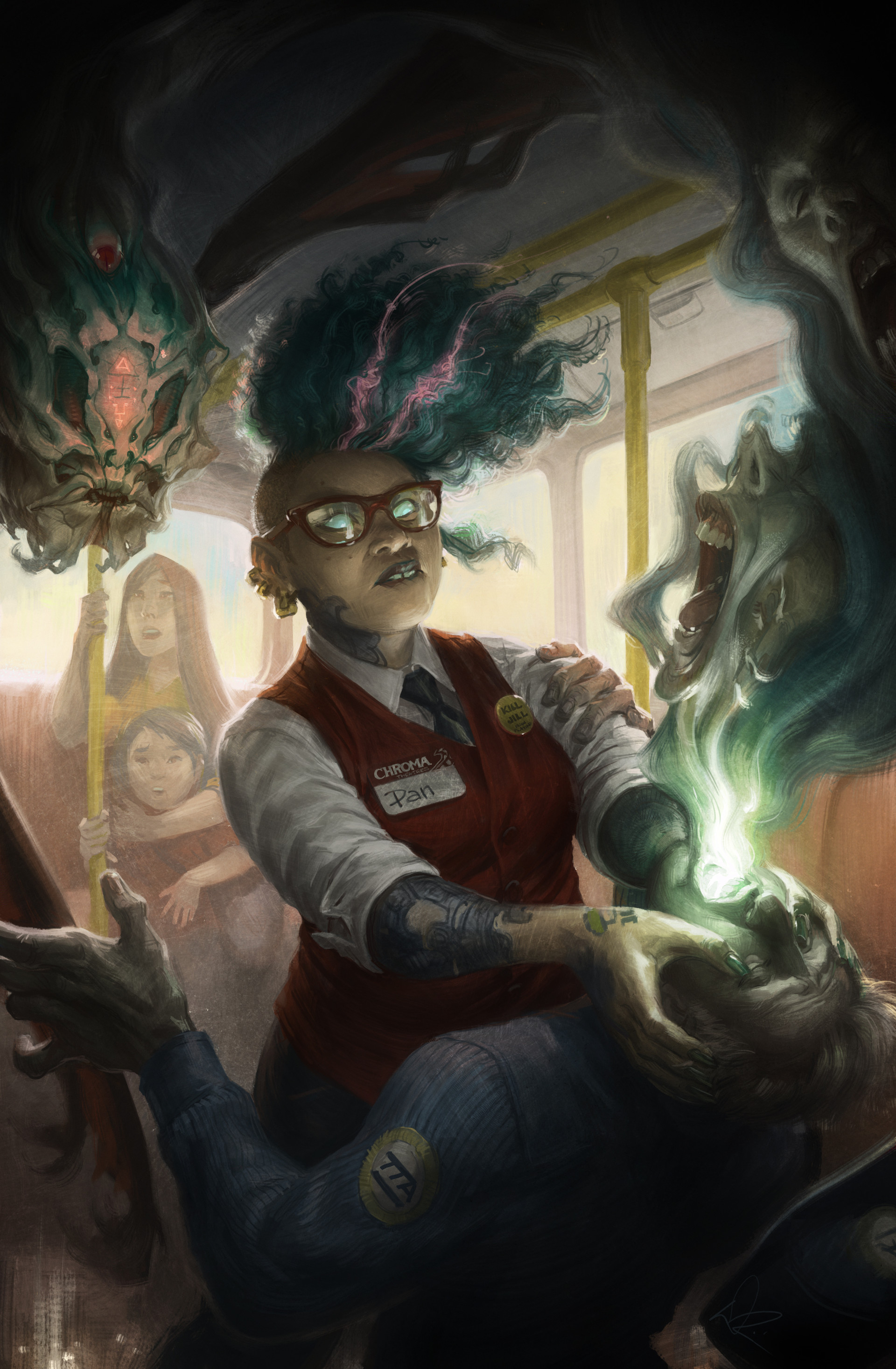
The Occultist
| Level | Proficiency Bonus | Features | Cantrips Known | Spells Known | Spell Slots | Slot Level | Invocations Known | |
|---|---|---|---|---|---|---|---|---|
| 1st | +2 | Pact Magic, Otherworldly Patron, Mystic Arcanum | 2 | 2 | 1 | 1st | — | |
| 2nd | +2 | Eldritch Invocations, Sacrificial Bargain | 2 | 3 | 2 | 1st | 2 | |
| 3rd | +2 | Pact Boon | 2 | 4 | 2 | 2nd | 2 | |
| 4th | +2 | Adventuring Boon | 3 | 5 | 2 | 2nd | 2 | |
| 5th | +3 | — | 3 | 6 | 2 | 3rd | 3 | |
| 6th | +3 | Otherworldly Patron feature | 3 | 7 | 2 | 3rd | 3 | |
| 7th | +3 | — | 3 | 8 | 2 | 4th | 4 | |
| 8th | +3 | Adventuring Boon | 3 | 9 | 2 | 4th | 4 | |
| 9th | +4 | — | 3 | 10 | 2 | 5th | 5 | |
| 10th | +4 | Otherworldly Patron feature | 4 | 10 | 3 | 5th | 5 | |
| 11th | +4 | — | 4 | 11 | 3 | 5th | 5 | |
| 12th | +4 | Adventuring Boon | 4 | 11 | 3 | 5th | 6 | |
| 13th | +5 | — | 4 | 12 | 3 | 5th | 6 | |
| 14th | +5 | Otherworldly Patron feature | 4 | 12 | 3 | 5th | 6 | |
| 15th | +5 | — | 4 | 13 | 3 | 5th | 7 | |
| 16th | +5 | Adventuring Boon | 4 | 13 | 3 | 5th | 7 | |
| 17th | +6 | — | 4 | 14 | 4 | 5th | 7 | |
| 18th | +6 | — | 4 | 14 | 4 | 5th | 8 | |
| 19th | +6 | Adventuring Boon | 4 | 15 | 4 | 5th | 8 | |
| 20th | +6 | Eldritch Master | 4 | 15 | 4 | 5th | 8 |
Spells Known of 1st Level and Higher
At 1st level, you know two 1st-level spells of your choice from the occultist spell list.
The Spells Known column of the Occultist table shows when you learn more occultist spells of your choice of 1st level and higher. A spell you choose must be of a level no higher than what's shown in the table's Slot Level column for your level. When you reach 6th level, for example, you learn a new occultist spell, which can be 1st, 2nd, or 3rd level.
Whenever you finish a long rest, you can replace one spell you learned from this Pact Magic feature with another spell from the occultist spell list. The new spell must be the same level as the spell you replace.
Spellcasting Ability
Intelligence is your spellcasting ability for your occultist spells, so you use your Intelligence whenever a spell refers to your spellcasting ability. In addition, you use your Intelligence modifier when setting the saving throw DC for a occultist spell you cast and when making an attack roll with one.
Spell save DC
Spell attack modifier
Otherworldly Patron
At 1st level, you have struck a bargain with an otherworldly being chosen from the list of available patrons. The patron you choose grants you features at the 1st level and again at the 6th, 10th, and 14th levels.
Patron Spells
Each Patron has a list of spells that you gain at the occultist levels noted in its description. These count as occultist spells for you, but they don't count against your total Spells Known.
Mystic Arcanum
At 1st level, your patron bestows upon you a magical secret called an arcanum. Choose one 1st-level spell from the occultist spell list as this arcanum. You can cast your arcanum spell once without expending a spell slot. You must finish a long rest before you can do so again.
At higher levels, you gain more occultist spells of your choice that can be cast in this way: one 2nd-level spell at 3rd level, one 3rd-level spell at 5th level, one 4th-level spell at 7th level, one 5th-level spell at 9th level, one 6th-level spell at 11th level, one 7th-level spell at 13th level, one 8th-level spell at 15th level, and one 9th-level spell at 17th level.
You regain all uses of your Mystic Arcanum when you finish a long rest.
Eldritch Invocations
In your study of occult lore, you have unearthed eldritch invocations, fragments of forbidden knowledge that imbue you with an abiding magical ability.
At 2nd level, you gain two eldritch invocations of your choice. Your invocation options are detailed at the end of the class description. When you gain certain occultist levels, you gain additional invocations of your choice, as shown in the Invocations Known column of the Occultist table.
Additionally, when you gain a level in this class, you can choose one of the invocations you know and replace it with another invocation that you could learn at that level.
Sacrificial Bargain
At 2nd-level, you gain the Sacrificial Bargain feature. With a sacrifice of health, your patron grants you power.
Once per short rest, when you cast a occultist spell of 1st-level or higher, you may spend a number of hit die equal to your occultist spell level to cast the spell without expending a spell slot.
If the spell can't be cast at a higher level, you may instead spend a number of hit die equal to the spell level.
Pact Boon
At 3rd level, your otherworldly patron bestows a gift upon you for your loyal service. You may choose one boon from the list of Pact Boons.
Spellcasting Focus: For as long as you are holding or wearing it, your pact boon acts as a spellcasting focus for your occultist spells.
Adventuring Boon
When you reach 4th level, and again at 8th, 12th, 16th, and 19th level, you gain 2 unrestricted bonus points. Players can spend these extra Points immediately to acquire Attributes for their characters or save them for future use.
You cannot increase one of your ability scores above 20 using this feature.
Eldritch Master
At 20th level, you can draw on your inner reserve of mystical power while entreating your patron to regain expended spell slots.
You can spend 1 minute entreating your patron for aid to regain all your expended spell slots from your Pact Magic feature.
Once you regain spell slots with this feature, you must finish a long rest before you can do so again.
Pact Boons
Listed here are the Pact Boons available to occultists, each of which is detailed below.
Pact of the Blade
You ask your patron for physical power, and you are rewarded with an eldritch weapon.
Pact Weapon
At 3rd level, you gain a unique eldritch weapon from your patron. This weapon is honed and shaped by your own mind—the stronger your intellect, the sharper your blade.
In addition, you gain proficiency with medium armor, shields, and martial weapons.
Pact Weapon
You can spend one action to summon your pact weapon into your empty hand. You can choose the form that this weapon takes each time you summon it—a dagger, a sword, a bow, etc—though it must be a form of weapon that you are proficient with.
Your weapon bears the unmistakable mark of your eldritch patron—fiendish red veins, fey vines and flowers, aberrant runes and etchings, etc.
- Eldritch Strike: When you attack with this weapon, you can use your Intelligence modifier (instead of Strength or Dexterity) for the attack and damage rolls.
- Magical Origin: This weapon counts as magical for the purpose of overcoming resistance and immunity to nonmagical attacks and damage.
- Ephemeral: This weapon disappears if you use this feature again, if you dismiss the weapon (no action required), or if you die.
- Greater Pact Weapon: Starting at 5th-level, you can attack with your pact weapon twice—instead of once—whenever you take the Attack action on your turn.
Assimilate
At 5th level, you can transform a magic weapon into your pact weapon by performing a special, eldritch ritual.
The ritual takes 1 hour, during which you must be holding the weapon. You can then dismiss the weapon, shunting it into an extradimensional space—the weapon appears whenever you summon your pact weapon thereafter. You can't affect an artifact or a sentient weapon in this way.
Breaking the Bond: The weapon ceases to be your pact weapon if either (a) you die, (b) you assimilate a different weapon, or (c) you use a 1-hour ritual to break your bond to it. The weapon appears at your feet if it is in the extradimensional space when the bond breaks.
Eldritch Brand
At 7th level, you are able to mark a creature with your Eldritch Brand.
Eldritch Brand
- Casting Time: No action
- Range: Self
- Components: V
- Duration: Concentration, up to 1 minute
When you hit a creature with your pact weapon, you may choose to brand the creature and deal an extra 1d6 force damage per your spell slot level.
While the creature is branded, attacks with your pact weapon deal extra force damage to that creature equal to your Intelligence modifier (minimum of 1). The creature also can't benefit from the Invisible condition until the mark expires.
You may use this feature a number of times equal to your intelligence modifier, and you recover expended uses when you finish a long rest.
Translocate
At 9th level, if your pact weapon is within 300 feet of you, you can spend a bonus action to teleport to its location—or to the nearest unoccupied space if that location is occupied.
You can use this feature a number of times equal to your Intelligence modifier (minimum of 1), and you regain expended uses when you finish a long rest.
Banish
At 11th level, you are able to Banish a creature to the realm of your patron. You can use this feature once, and you regain expended uses when you finish a long rest.
Pact of the Chain
You ask your patron for the ability to control others, and are rewarded with a bound familiar.
Chained Familiar
At 3rd level, you gain a special trinket from your patron which allows you to summon a familiar and bind it to your will.
Your familiar is shaped by your eldritch whims. At 1st level, choose one of the Favored Familiar options. Your familiar may take the form of any tiny creature that has (a) your chosen creature type and (b) a maximum CR of 1/8.
As you gain occultist levels, your familiar can take on more substantial—and powerful—forms.
Banish
- Casting Time: No action
- Range: Self
- Components: V
- Duration: Concentration, up to 1 minute
When you hit a creature with your pact weapon, you deal an extra 5d10 force damage to the creature. If the creature is reduced to 50 hit points or fewer, it is banished to a demiplane controlled by your patron.
While it is banished, the creature must make a Charisma saving throw at the end of each of its turns. If it succeeds—or the duration expires—the creature reappears in the space it left (or in the nearest unoccupied space if that space is occupied). If it fails, the creature instead suffers 1d10 force damage.
If the creature is reduced to 0 hit points while it is banished, it does not return and you regain 1 expended spell slot.
Chain Trinket
An eldritch trinket—such as a ring, bracelet, earring, or a diadem. While you are wearing this trinket, you can cast the Find Familiar spell as a ritual without spending material components.
Your trinket bears the unmistakable mark of your patron—fiendish red veins, fey vines and flowers, aberrant runes and etchings, etc.
- Chain Master: When you take the Attack action, you can forgo one of your own attacks to allow your familiar to spend its reaction and make one attack of its own.
- I Remember: This trinket always summons the same familiar—same name, memories, personality, etc—but you may choose its form each time it is summoned.
- I Serve: Your familiar has a personality of its own—it may or may not be happy to serve you. But whatever its attitude, the familiar must obey the command of whomever wears the trinket.
Favored Familiars
- Aberrations and Beasts
- Beasts and Fey
- Beasts and Fiends
- Beasts and Undead
Familiar Forms
| Level | Max. Size | Max. CR |
|---|---|---|
| 3rd | Tiny | 1/8 |
| 5th | Small | 1/4 |
| 7th | Small | 1/2 |
| 9th | Medium | 1 |
| 11th | Medium | 2 |
Mutations
At 5th level, whenever you summon your familiar, you may choose one of the following mutations:
- Air is for the living: Your familiar does not need to breathe.
- Bound by blood: Whenever your familiar is reduced to 0 hit points, you can spend one hit die to reduce your familiar to 1 hit point instead.
- Fly my pretty: Your familiar gains a flying speed of 40 feet.
- Shared power: If your familiar forces a creature to make a saving throw, it uses your spell save DC.
- Silver claws: Your familiar's weapon attacks are considered magical for the purpose of overcoming immunity and resistance to nonmagical attacks.
- Under the sea: Your familiar gains a swimming speed of 40 feet.
Familiar Telepath
At 7th level, you can communicate telepathically with your familiar and perceive through your familiar's senses as long as you are on the same plane of existence.
While perceiving through your familiar's senses, you can speak through your familiar in your own voice—even if your familiar is normally incapable of speech.
Mutation Master
At 9th level, whenever you summon your familiar, you can choose two mutations to apply to it.
Chain Tyrant
At 11th level, you can spend your bonus action to command your familiar to make one attack.
Familiars Powers
Some familiars may have extremely powerful abilities that can be problematic if left unchecked—gibbering mouthers, nothic insight, sea hag death glares, etc.
A familiar can't cast spells nor spawn copies of itself. In addition, the GM may—at their discretion—choose to fuel, limit, or void any ability they consider game-breaking:
- Fuel: The familiar's summoner must spend one spell slot each time this ability is used.
- Limit: This ability can be used only once, regaining expended uses when the familiar is re-summoned.
- Void: The familiar can't use this ability.
Pact of the Tome
You ask your patron for forbidden knowledge, and are rewarded with a tome of eldritch secrets.
Book of Shadows
At 3rd level, You gain a book of forbidden knowledge from your patron, granting you more power over the arcane.
Adding Rituals: When you find a ritual spell, you can add it to the book if the spell's level is equal to or less than half your occultist level (rounded up).
For each level of the spell, you must spend 2 hours and 500 New Yen for the rare inks needed to inscribe it.
Forbidden Knowledge
At 5th level, add two additional cantrips and one additional 1st-level spell that has the ritual tag to your Book of Shadows. These spells can be from any class spell list (and needn't be from the same list).
Page of Eldritch Power
At 7th level, a new page appears in your Book of Shadows—a page of eldritch power. Choose a power from the options below.
Adding Names: A creature may spend an action to write its true name on the page. The page can contain a number of names equal to your Intelligence modifier (minimum of 1)—additional names (or false names) written on the page will fade after one minute.
Removing Names: When you finish a long rest, you may touch one page of power from your Book of Shadows and magically erase any names of your choice.
Destroying the Page: The page naturally heals any damage to it. If the page is torn out of the book, that page turns to ash and a new one appears in the book—exactly as it was.
- Mind Palace: You can cast the Sending spell, targeting a creature whose name is on the page, without using a spell slot and without using material components. To do so, you must write the message on the page. The target hears the message in their mind, and—if the target replies—their message appears on the page rather than in your mind. The writing disappears after 1 minute.
The Patron Knows All: Your patron is fully aware of any message sent or received by your Book of Shadows. - Deathly Note: When any creature whose name is on the page is reduced to 0 hit points but not killed outright, the creature magically drops to 1 hit point instead. Once this magic is triggered, no creature can benefit from it until you finish a long rest.
The Patron's Price: If a creature dies while their name is written on the page, their soul is claimed by your patron and you regain one expended spell slot.
Focused Mind
At 9th level, while you are holding your Book of Shadows, you have advantage on Constitution saving throws that you make to maintain your concentration on a spell.
Archivist
At 11th level, your Book of Shadows gains another page of eldritch power. Choose a power—you may take the same option multiple times if you wish.
Book of Shadows
An eldritch book of forbidden knowledge. While you are holding your Book of Shadows, you can cast your occultist spells as a ritual if they have the ritual tag.
Your book bears the unmistakable mark of your patron—fiendish red veins, fey vines and flowers, aberrant runes and etchings, etc.
- Chain Master: When you take the Attack action, you can forgo one of your own attacks to allow your familiar to spend its reaction and make one attack of its own.
- I Remember: This trinket always summons the same familiar—same name, memories, personality, etc—but you may choose its form each time it is summoned.
- I Serve: Your familiar has a personality of its own—it may or may not be happy to serve you. But whatever its attitude, the familiar must obey the command of whomever wears the trinket.
Pact of the Wand
You ask your patron for the power to destroy, and are rewarded with an eldritch wand of devastation.
Wand of Devastation
At 3rd level, You gain a sinister wand from your patron through which you can harness their limitless, destructive power.
While you are holding your pact wand, you can cast the Eldritch Blast cantrip at will.
Wand of Devastation
A wand of eldritch power. This wand crackles with strange energy and is unmistakably otherworldly in origin, bearing all the hallmarks of your patron—fiendish red veins, fey vines and flowers, aberrant runes and etchings, etc
Wand Powers
At 5th level, you choose one of the following wand powers. Whenever you finish a long rest, you may change your wand powers.
- Chilling Blast: Once per turn, when you hit a creature with eldritch blast, you can chill it. That creature's speed is reduced by 10 feet to a minimum of 5 feet) until the end of its next turn.
- Decaying Blast: Once per turn, when you hit a creature with eldritch blast, you can leave a lingering decay. That creature can't regain hit points until the end of your next turn.
- Grasping Blast: Once per turn, when you hit a creature with eldritch blast, you can pull the creature 10 feet towards you in a straight line.
- Marking Blast: Once per turn, when you hit a creature with eldritch blast, you can mark it with glowing energy. Until the end of your next turn, that creature can't benefit from the invisible condition.
- Repelling Blast: Once per turn, when you hit a creature with eldritch blast, you can push the creature up to 10 feet away from you in a straight line.
- Seeking Blast: Once per turn, when you attack a creature with eldritch blast, you can ignore the effects of half and three-quarters cover.
- Shocking Blast: Once per turn, when you hit a creature with eldritch blast, you can shock it. That creature can't take reactions until the end of its next turn.
Eldritch Blast
- Casting Time: 1 action
- Range: 120 feet
- Components: V, S
- Duration: Instantaneous
A beam of crackling energy streaks toward a creature within range. Make a ranged spell attack against the target. On a hit, the target takes 1d10 force damage.
- Greater Eldritch Blast: Starting at 5th-level, once per turn when you hit a creature with eldritch blast, you can add your Intelligence modifier to the damage.
- Superior Eldritch Blast: Starting at 9th-level, you can choose to attack two separate targets. Make a separate attack roll for each target.
Greater Devastation
At 7th level, you choose one additional wand power.
Destruction
At 9th level, while you are holding the wand, you can spend an actionto cast Destruction as a 5th-level spell.
You can use this feature once, and you regain expended uses when you finish a long rest.
Destruction
- Casting Time: 1 action
- Range: Self
- Components: V, S
- Duration: Instantaneous
Scattering beams of destructive force erupt from your wand. Each creature in a 60 foot cone must make a Dexterity saving throw. A creature takes 8d6 force damage on a failed save, or half as much damage on a successful one.
Any creature that is reduced to 0 hit points by this spell is disintegrated.
Disintegration
At 11th level, while you are holding the wand, you can spend an action to cast Disintegrate as a 6th-level spell.
You can use this feature once, and you regain expended uses when you finish a long rest.
Eldritch Invocations
Listed here are the Eldritch Invocations available to occultists. If an Eldritch Invocation has prerequisites, you must meet them to learn it, and you can learn an Eldritch Invocation at the same time that you meet its prerequisites.
Aetheric Armory
Prerequisite: Pact of the Blade
Instead of one magic weapon, you can transform up to 4 weapons into your pact weapons. You can use a bonus action to create up to 2 of these weapons in your empty hands, and you cannot change the form of these weapons.
Finally, the weapon you conjure can be any firearm from the simple and martial firearms tables. Only weapons you have transformed into your pact weapons are created with their accessories and modifications intact.
Armor of Shadows
You can cast mage armor on yourself at will, without expending a spell slot or material components.
Ascendant Step
Prerequisite: 9th level
You can cast levitate on yourself at will, without expending a spell slot or material components.
Awakened Insight
Whenever you cast a spell using a occultist spell slot, you gain advantage on the first ability check you make before the end of your next turn.
Beast Speech
You can cast speak with animals at will, without expending a spell slot.
Beguiling Influence
You gain proficiency in the Deception and Persuasion skills.
Bewitching Substances
As a bonus action, you can summon and consume a magical dose of drugs from the common drug list. No other creature can consume the drug dose, and the dose disappears at the end of your turn. You have advantage on saving throws against addiction.
Bewitching Whispers
Prerequisite: 7th level
You can cast compulsion once without expending a spell slot or material components. You can't do so again until you finish a long rest.
Bind to inexistence
Prerequisite: The Void patron
You can spend 1 hour in meditation with an object no larger than 5 feet in any dimension to bestow some of your patron's nature to it. Once you're bonded to it, you can use an action to make the object disappear into nothingness no matter how far away from you it is. You can then at any point use an action to make it materialize on your person, or within 5 feet of you. If that object is armor, you can equip it in this way, or equip it to another willing creature within 5 feet of you.
You can be bonded to a number of objects in this way equal to half your proficiency modifier (rounded up).
Blade Empowerment
Prerequisite: Pact of the Blade
As a bonus action, you can empower your pact weapon with eldritch energy. The first time you hit a creature with an empowered pact weapon before the start of your next turn, it takes additional force damage equal to half your occultist level and if the attack was a critical hit, the target is knocked prone.
Bond of the Chain Master
Prerequisite: Pact of the Chain
Whenever you cast a occultist spell that targets you or has a range of self, you can have the spell also target your familiar if it is within 100 feet of you. Additionally, you can cast warding bond once on your familiar without expending a spell slot. You regain the ability to do so when you finish a long rest.
Bound Surrogate
Prerequisite: Pact of the Chain
Your familiar is no longer limited to touch spells for the spells it can deliver.
Broken Dreams
Prerequisite: 18th level
Once during a rest, you can cast dream without expending a spell slot. Casting this spell does not interfere with your rest.
Broker's Blade
Prerequisite: Pact of the Blade, The Currency Conspiracy patron
You can choose to create a weapon from pure golden metal covered in precious gemstones using your Pact of the Blade feature. While you are wielding this weapon, you can choose to make an exchanging strike in place of a normal attack. Make a Charisma persuasion check opposed by the target's Wisdom insight. If you succeed, you trade the pact weapon in your hand for one object the target is currently holding, passing your blade to them and taking the item in one smooth motion. Creatures that are immune to the charmed condition are immune to this feature.
Butcher's Quill
Prerequisite: Pact of the Blade, The Accursed Archive patron
Using your Pact of the Blade feature, you can create a weapon wrapped in raven feathers and the hide of abominations that drips and bleeds black ink. When you hit a creature with this weapon, you can cast a single 1st level spell you know with a casting time of one bonus action without expending a spell slot. Once you cast a spell in this way, you can't do so again until you finish a short or long rest.
Captain's Parrot
Prerequisite: Pact of the Chain
Your familiar gains the ability to speak, read, and write two languages of your choice. It also learns the vicious mockery cantrip, which it casts using your occultist spell save DC. When determining the spell's damage, your familiar is considered a spellcaster of the same level as you.
Captured Heart
You gain advantage on attack rolls targeting creatures that you have charmed. If you attack a creature you have charmed, it can't take reactions until the end of your next turn.
Cast from Nothing
Prerequisite: The Void patron
When you cast a occultist spell, you can choose to cast it without requiring any components. Once you've used this ability, you need to complete a short or long rest before you can use it again.
Chains of Carceri
Prerequisite: 15th level, Pact of the Chain
You can cast hold monster at will—targeting a celestial, fiend, or elemental—without expending a spell slot or material components. You must finish a long rest before you can use this invocation on the same creature again.
Cloak of Flies
Prerequisite: 5th level
As a bonus action, you can surround yourself with a magical aura that looks like buzzing flies. The aura extends 5 feet from you in every direction, but not through total cover. It lasts until you're incapacitated or you dismiss it as a bonus action.
The aura grants you advantage on Intimidation checks but disadvantage on all other Charisma checks. Any other creature that starts its turn in the aura takes poison damage equal to your Intelligence modifier (minimum of 0 damage).
Once you use this invocation, you can't use it again until you finish a short or long rest.
Collector of Curses
Prerequisite: 5th level
Cursed magic items don't count against the total number of items that you can attune to.
Contract Killer
Prerequisite: Pact of the Tome, The Currency Conspiracy patron
During a short or long rest, you can summon a contract detailing any agreement filled with your exact stipulations and requests. Any creature that signs the contract is bound by an obligation to fulfill the terms of the agreement for as long as the contract exists or until the terms are completed. If you break the agreement, you lose Gilt equal to three times your character level. If the amount lost is higher than your current total, you suffer force damage equal to twice the difference. If a creature other than you breaks the agreement, you can choose to expend an amount of Gilt less than or equal to five times your occultist level, inflicting force damage to all offending parties equal to the amount spent. Once you either break the contract or inflict damage using this feature, the contract is destroyed and can no longer be enforced. You can have a maximum number of contracts created using this invocation equal to your Intelligence modifier at one time.
Creature of Carrion
Prerequisite: Pact of the Chain, The Forbidden Graveyard patron
If you have a haunted crow as your familiar, it gains additional hit points equal to your occultist level. While you have this familiar, it recovers a single use of its Shriek action whenever either of you reduces a creature to 0 hit points, and the saving throw DC of this action equals your occultist spell save DC.
Cruel Mockery
Prerequisite: vicious mockery
When you cast vicious mockery, add your Intelligence modifier to the damage it deals on a failed saving throw.
Additionally, instead of dealing additional damage, vicious mockery consists of multiple insults when you reach higher levels: two insults at 5th level, three insults at 11th level, and four insults at 17th level. You can direct the insults at the same target or at different ones. A creature makes a separate save for each insult directed at it.
Dark Speech
As an action, you can create a 5-foot cube of magical darkness at a point that you can see within 60 feet of you by speaking a phrase from a forgotten tongue. The cube lasts until the start of your next turn unless you use your action to sustain it.
Dead Man Walking
Prerequisite: Pact of the Tome
Whenever you are controlling a creature that is unconscious and at 0 hit points, it is automatically stabilized. While you are controlling such a creature, both you and your bearer have advantage on all saving throws except death saving throws.
Deathly Chills
When you deal cold damage to a creature using a occultist spell or feature, you ignore resistance to cold damage unless the creature also has resistance or immunity to necrotic damage, and you treat vulnerability to necrotic damage as vulnerability to both damage types.
Denial of the Arcane
Prerequisite: 15th level, The Void patron
You can cast antimagic field once without expending a spell slot. You regain the ability to do so when you finish a long rest.
Devil's Sight
You can see normally in darkness, both magical and nonmagical, to a distance of 120 feet.
Discorporate
Prerequisite: 17th level, The Void patron
You have learned to discorporate your body while still maintaining control over your mind. After a time of 1 minute spent in focus or meditation, your body phases out, disappearing from the material realm. You can remain nonexistent for up to 1 hour, at which point you return to the space you last occupied. Once you've used this ability, you need to complete a short or long rest before being able to use it again.
Alternatively, while meditating you can focus on a location that you have visited before, and as your body discorporates, your mind is transported there. For 10 minutes, you can navigate towards any direction you like, but you can only observe what is happening around you in this form, without being able to interact with it in any way. You can only be perceived by a creature that has truesight, which would see a ghostly featureless body floating in the air. At the end of the duration, you return to the space you last occupied before discorporating.
Dismiss Magic
Prerequisite: 5th level, The Void patron
You can cast dispel magic once at the highest level available to you without expending a spell slot. You regain the ability to do so when you finish a long rest.
Additionally, you can select one of the following benefits when you learn this invocation. You can only use these benefits when you cast the spell using this invocation:
Cleanse: You can use a bonus action to cast the spell if you are targeting yourself with it.
Potency: If you make a spellcasting ability check to determine the outcome of the spell's casting, you can do so with advantage.
Once you've used this ability, you need to complete a long rest before you can use it again.
Dreadful Word
Prerequisite: 7th level
You can cast confusion without spending a occultist spell slot. You can't do so again until you finish a long rest.
Eldritch Annhilation
Prerequisite: 18th level, Pact of the Blade
When you kill a creature with your pact weapon, you siphon a fragment of their essence. The next time you hit with your pact weapon, you deal extra force damage equal to your occultist level.
Eldritch Digestion
When you deal acid damage to a creature using a occultist spell or feature, you ignore resistance to acid damage unless the creature also has resistance or immunity to force damage, and you treat vulnerability to force damage as vulnerability to both damage types.
Eldritch Mind
You have advantage on Constitution saving throws that you make to maintain your concentration on a spell.
Eldritch Sight
You can cast detect magic at will, without expending a spell slot.
Emergency Fund
Prerequisite: 7th level, The Currency Conspiracy patron
Whenever you have zero occultist spell slots remaining, you can use a bonus action to expend Gilt equal to four times your occultist level. When you do, you regain one occultist spell slot. Once you do this, you can't do so again until you finish a long rest.
Evil Eye
As an action, you imbue your eyes with eldritch magic and glare darkly at a creature. If the target can see you, it suffers disadvantage on its next attack roll or ability check made within 1 minute.
Eyes of the Lost
Prerequisite: The Forbidden Graveyard patron
As an action, you can choose to perceive through the senses of an undead creature within 120 feet until the start of your next turn. While you do so, you are considered deaf and blind to your own senses.
Eyes of the Rune Keeper
You can read all writing.
Familial Connection
Prerequisite: Dependant patron, Pact of the Chain
Your child acts as if it were your familiar gaining the benefits as if it were conjured via the find familiar spell.
Fiendish Vigor
You can cast false life on yourself at will as a 1st-level spell, without expending a spell slot or material components.
Gaze of the Witch
You can cast detect evil and good once without expending a spell slot. You regain the ability to do so when you finish a short or long rest.
Ghost-Iron Chains
Prerequisite: 5th level, Pact of the Chain
Your familiar becomes ghostly in appearance, and gains the ability to become incorporeal. Your familiar can move through other creatures and objects as if they were difficult terrain, but if it ends its turn inside an object it is immediately dismissed to its pocket dimension.
Ghostly Gaze
Prerequisite: 7th level
As an action, you gain the ability to see through solid objects to a range of 30 feet. Within that range, you have darkvision if you don't already have it. This special sight lasts for 1 minute or until your concentration ends (as if you were concentrating on a spell). During that time, you perceive objects as ghostly, transparent images.
Once you use this invocation, you can't use it again until you finish a short or long rest.
Gift of the Ever-Living Ones
Prerequisite: Pact of the Chain
Whenever you regain hit points while your familiar is within 100 feet of you, treat any dice rolled to determine the hit points you regain as having rolled their maximum value for you.
Gift of the Undying Warden
Prerequisite: 15th level
You are always under the effects of a protection from evil and good spell.
Heavenly Bolts
When you deal lightning damage to a creature using a occultist spell or feature, you ignore resistance to lightning damage unless the creature also has resistance or immunity to radiant damage, and you treat vulnerability to radiant damage as vulnerability to both damage types.
Impose the Void
Prerequisite: The Void patron
When a creature deals damage to a target you can see within 60 feet of you, you can use your reaction to turn that damage into nulling damage. Once you've used this ability, you need to complete a short or long rest before using it again.
Indescribable Form
Prerequisite: 18th level
Your form is no longer bound by the laws of reality. As an action, you can choose to appear as any creature or object that is Small or Medium, such as a dog, a mass of floating lights, an idealized version of yourself, or a simple wooden crate. No matter what appearance you choose, your statistics and capacity for action are the same.
This appearance is a physical change, but magic that allows others to discern the true form of shapeshifters will reveal your normal appearance. This appearance lasts until you choose to change it again.
March of the Restless
Prerequisite: 5th level
You can cast animate dead without spending a occultist spell slot. You can do so twice, and regain both uses when you complete a long rest.
Mask of Many Faces
You can cast disguise self at will, without expending a spell slot.
Open Eyes
Prerequisite: 7th level, The Currency Conspiracy patron
Whenever you make an attack with a weapon or cast a cantrip that inflicts damage, you can use a bonus action to expend an amount of Gilt less than or equal to your occultist level, overwhelming the mind of your target with the truth of the Conspiracy. When you do so, the target must make a Charisma saving throw against your occultist spell save DC. If they fail, they take psychic damage equal to half the amount of Gilt you expended and they cannot take reactions until the start of your next turn.
Open Source
You gain proficiency with hacking tools and immediately gain the benefits of having the hacking tools augment installed without requiring surgery or counting against your total number of augments installed. You can open a magical port on your body to accept connections from universal cables.
Parent Sense
Prerequisite: Dependant patron
While you are on the same plane as your child you know there current emotional state and the general direction they are in comparison to you at all times.
Perfect Appraisal
Prerequisite: The Currency Conspiracy patron
You can correctly judge the value of any object, compared to any currency, and can tell the price that any person would be willing and able to pay for an object in your possession simply by looking at the person or thinking about a person you know well. You are also aware of the current net worth and liquid assets of any person you have met and greeted formally.
Phase
Prerequisite: 5th level, The Void patron
You can cast blink once without expending a spell slot. You regain the ability to do so when you finish a long rest. When you cast the spell in this way instead of rolling a d20, you can decide at will whether you vanish from your current plane of existence or not at the end of your turn.
Rearrange Existence
Prerequisite: 11th level, The Void patron
You can cast scatter once without expending a spell slot. You regain the ability to do so when you finish a long rest.
Scorching Radiance
When you deal radiant damage to a creature using a occultist spell or feature, you ignore resistance to radiant damage unless the creature also has resistance or immunity to fire damage, and you treat vulnerability to fire damage as vulnerability to both damage types.
Scribe's Adjunct
Pact of the Chain, The Accursed Archive patron
While you have a record-hunter as your familiar, it gains additional maximum hit points equal to your occultist level, and you gain the ability to cast the mending cantrip.
Scythe of the Lifetaker
Prerequisite: Pact of the Blade, The Forbidden Graveyard patron
You can create a two-handed weapon of polished bone and golden metal using your Pact of the Blade feature. This weapon deals radiant damage. Whenever you hit a creature with this weapon, you can choose to cast healing word using a occultist spell slot as a bonus action. You can use your Intelligence modifier for attack and damage rolls with this weapon.
Secretive Speech
You can choose to speak in an otherworldly tongue. When you do, the only people who can understand you are those you choose, even if they speak a different language. To others, this speech sounds like the ramblings of a lunatic, a chittering beast, or undiscernable whispers, depending on the volume.
Soul-Burning Incantation
Prerequisite: The Forbidden Graveyard patron
Whenever you cast a cantrip that deals damage or make a weapon attack, you can use a bonus action to empower it with cruel energy. Each creature struck has disadvantage on ability checks until the start of their next turn, and if this attack kills them or is used on their corpse, they cannot be resurrected or raised as undead by a spell cast using a spell slot lower than 6th level.
Spirit Rider
Prerequisite: 3rd level
You can cast find ride once using a occultist spell slot. You can't do so again until you finish a long rest.
Taboo Livestream
Prerequisite: 9th level
You can cast scrying once without expending a spell slot, replacing the material component with any smartphone screen, computer monitor, or similar display. You can't do so again until you finish a long rest.
Tentacle Growth
You have an additional extremely flexible arm (a tentacle) that has reach 10 feet. Melee weapons wielded using this arm and no other arms have an additional 5 feet of reach, but the arm cannot wear shields. You also have advantage on ability checks made to grapple using this arm. If the arm is cut off or destroyed, it regrows with no apparent damage when you finish a long rest.
You can take this invocation multiple times.
Terrifying Voice
Prerequisite: 18th level
Whenever you speak, you can use an action to project your will toward a creature you can see who can hear you. The target must make a Wisdom saving throw against your occultist spell save DC. If they fail, they are frightened of you until the end of your next turn.
Tome of the Anima
Prerequisite: 7th level, Pact of the Tome
Your book of shadows becomes a sentient object with an Intelligence score of 15 + your proficiency bonus, a Wisdom score of 12 + your Proficiency bonus, and a Charisma score of 14 + your Proficiency bonus. Also, it is imbued with some of the knowledge of your patron, and shares its alignment. It is also proficient in two skills from the following list: Arcana, History, Insight, Investigation, Nature, Perception, and Religion.
While it is capable of seeing and hearing its surroundings, it is not capable of speech nor moving on its own. It communicates by writing within the book's pages, and through its writing it can make or help with mental ability checks.
For example, the book could make an Intelligence (History) check to recall lore, and then write down whatever it recalls.
Two of a Kind
Prerequisite: Pact of the Chain, The Currency Conspiracy patron
If you have a wealth mimic as your familiar, it gains additional hit points equal to your occultist level. While you have a wealth mimic as your familiar and you are attuned to an object, you can have your familiar become a perfect duplicate of the object. It loses its normal statistics and gains any magical features of the object until it changes form.
Umbra Flame
When you deal fire damage to a creature using a occultist spell or feature, you ignore resistance to fire damage unless the creature also has resistance or immunity to necrotic damage, and you treat vulnerability to necrotic damage as vulnerability to both damage types.
Voice from Beyond
When you deal thunder damage to a creature using a occultist spell or feature, you ignore resistance to thunder damage unless the creature also has resistance or immunity to psychic damage, and you treat vulnerability to psychic damage as vulnerability to both damage types.
Void's Assurance
Prerequisite: 5th level, The Void patron
You can cast protection from energy on yourself once without expending a spell slot. You regain the ability to do so when you finish a long rest.
Additionally, you can select one of the following benefits when you learn this invocation. You can only use these benefits when you cast the spell using this invocation:
Shifting: While the spell is active, you can use an action to change your choice of the element you gain resistance to.
Second: Nature This spell doesn't require concentration for you.
Wave Caller
You can cast control water at will, expending no spell slots and requiring only verbal components.
Weightlessness
You can cast feather fall targeting only yourself at will without expending a spell slot or requiring components.
Whisper the Dread Wind
When you deal thunder damage to a creature using a occultist spell or feature, you can force the target to make a Wisdom saving throw. On a failed save, the target is frightened of you until the end of its next turn.
Once you use this invocation, you must finish a long rest before you can use it again.
Withering Lightning
When you deal lightning damage to a creature using a occultist spell or feature, you can force the target to make a Constitution saving throw. On a failed save, the target's hit point maximum is reduced for 1 minute by an amount equal to the lightning damage it took. Any effect that removes a disease allows the target's hit point maximum to return to normal before that time passes.
Once you use this invocation, you must finish a long rest before you can use it again.
Otherworldly Patron
At 1st level, a Occultist chooses their Otherworldly Patron, each of which is detailed below.
Ghost in the Machine
You have made a bargain for power granted by an entity that you believe to be completely digital. Whether it is a rogue AI or the spirit of a deceased hacker, the Ghost in the Machine is capable of feats that defy explanation.
Patron Spells
You gain patron spells at the occultist levels listed in the Ghost in the Machine Spells table. See the Pact Magic class feature for how spells work.
Ghost in the Machine Spells
| Spell Level | Spells | |
|---|---|---|
| 1st | Infallible Relay, Remote Access | |
| 2nd | Arcane Hacking, Digital Phantom | |
| 3rd | Haywire, Invisibility to Cameras | |
| 4th | Conjure Knowbot, System Backdoor | |
| 5th | Shutdown, Synchronicity |
Information Surge
At 1st level, you gain proficiency with hacking tools.
In addition, you gain the ability to temporarily render computerized devices inoperable. As an action, you can target a computerized device within 30 feet of you. If the targeted device is held or otherwise actively used by a living creature, that creature must make an Intelligence saving throw against your spell save DC. On a failed save, the targeted device ceases to function until the end of your next turn. If the targeted device is not held or used by a creature, the DM makes a special saving throw for the device with disadvantage and a +0 modifier. Certain shielded devices might negate the disadvantage, at the DM's determination.
You can use this feature once and regain the ability to do so when you finish a short rest.
Wire Walk
Starting at 6th level, you gain the ability to travel short distances over electrical wires, data lines, or telephone cables. As a bonus action, you can touch a device or socket connected to a hardwired network and teleport along this network to another device or socket within your line of sight.
You can use this feature once and regain the ability to do so when you finish a short rest.
Personal Encryption
Beginning at 10th level, you have learned to apply your innate knowledge of encryption to your thoughts, memories, and presence.
You have advantage on saving throws against scrying, thought detection, or any other method of magically learning your whereabouts or reading your thoughts. For any such effect that does not grant you a saving throw but which requires the creature targeting you to make an ability check, the check is made with disadvantage.
Technovirus
At 14th level, you gain the ability to infect a humanoid's body with living circuitry. You can use an action to make a melee attack against a humanoid creature using your spell attack modifier. The target must make a Constitution saving throw against your spell save DC as a techno-organic virus quickly spreads through its body. On a failed save, the target takes 8d10 psychic damage, or half as much damage on a successful one.
Additionally, if the target fails the saving throw, you can use an action to issue it a single command, as if you were casting the command spell. The target makes its saving throw against your command with disadvantage. You can issue this command at any time while the target remains infected.
You can use this feature once and regain the ability to do so when you finish a long rest, at which point the target is cured of the technovirus. The infection can also be removed with a Lesser restoration spell.
The Accursed Archive
In every library there is a book that has never been read, a section that has never been seen, and a hallway that leads to nowhere–yet, you have managed to read that tome of unspoken secrets, find that shelf of unholy blasphemies, and step beyond the dead-end corridor into the Accursed Archive, where you have become bound to the nightmareinducing writings within. Demonology, blood magic, and the summoning of things from beyond are among the most mundane of topics here, but draw the eye and call to the hand nonetheless. By some malignant intelligence that selects only the most desperate, the most ambitious, and the most willing to sacrifice, the Accursed Archive collects souls to do its ruinous work.
Patron Spells
You gain patron spells at the occultist levels listed in the Accursed Archive Spells table. See the Pact Magic class feature for how spells work.
Tainted Knowledge
At 1st level, you have feasted your eyes upon the books of the Archive, and your mind has both withered and grown. Choose two of the following: Arcana, History, Nature, or Religion. Your proficiency bonus is doubled for any ability check you make that uses a chosen skill if you are proficient in that skill, and you gain proficiency in any one skill of your choosing. You can use an action to enter the Accursed Archive along with up to ten willing companions of your choosing that you can see.
Accursed Archive Spells
| Spell Level | Spells | |
|---|---|---|
| 1st | Alacritous Interpretation, Detect Evil and Good | |
| 2nd | Accursed Wish, Dark Secret | |
| 3rd | Blackened Heart, Blasphemy | |
| 4th | Black Tentacles, Forbidden Obelisk | |
| 5th | Conjure Minor Voidborn, Summon Eldritch Servitor |
Time does not pass outside the Archive while you are within, and you cannot rest, recover hit points, or maintain concentration while inside. For more information on the Archive, see the "Inside the Archive" section. When you choose to depart, you and your companions return instantly to the point from which you entered.
Once you use this feature, you cannot do so again until you finish a long rest.
Written in Blood
At 6th level, you've learned to read your servants and adversaries as easily as the scrolls located within the darkest places of the Accursed Archive and can twist them to serve your cruel whims.
As an action, touch a creature within reach. The target must make a Charisma saving throw with a DC equal to your occultist spell save DC. If they fail, they are paralyzed until the end of your next turn, and their flesh peels back into the pages of a book bound underneath their skin. The words within describe who they are and what they have done, and you can read up to six different sentences from them, prioritizing details you wish to learn. While the creature is paralyzed, you have advantage on Charisma and Intelligence checks relating to the creature and it has disadvantage on Charisma and Wisdom checks.
Once you use this feature, you cannot do so again until you finish a short rest.
Vile Heresies
At 10th level, you uncover secrets that could shatter the balance of the heavens and hells. Choose any spell of 4th level or lower that is not a cantrip. You can cast this spell once using a occultist spell slot.
Once you use this feature, you cannot do so again until you finish a long rest.
Whenever you are within the Archive, you can exchange this spell for a different one, but cannot use it until you finish a long rest. Whenever you cast your chosen spell, you gain immunity to the frightened condition. This immunity lasts until you finish a short rest.
Unspeakable Truths
At 14th level, you discover the real purpose of the Accursed Archive–the spread of information that will bring ruin to the world. As an action, you can share an unspeakable truth with all creatures that can hear you within 60 feet of you. All hostile creatures who can hear and understand your words must make a Wisdom saving throw against your occultist spell save DC. If they fail, they are driven mad and suffer confusion as though affected by the confusion spell for one minute. They can repeat this saving throw each time they suffer damage, ending the effect on a success.
When you do this, choose up to four creatures within 60 feet of you that you can see. These creatures are infused with dark power that distorts the fabric of reality. Choose one spell you can cast of 2nd level or lower that inflicts damage and has a casting time of one action or bonus action. Each infused creature can use their reaction to cast this spell immediately without using verbal, somatic, or material components. Charisma is their spellcasting modifier for this spell.
Once you use this feature, you cannot do so again until you finish a long rest.
Inside the Archive
While few venture into the Accursed Archive, those who do cannot help but be drawn through the great hall to gaze upon the tome in the center of the room – the Index Incarnatus, a singular, endless book that contains the location and description of every single scrap of forbidden lore within the Archive. Even gazing upon it for mere moments can cause discomfort, and reading from it can cause agony to both the body and the soul.
Any creature that attempts to read from the Index must make a Intelligence saving throw with a DC equal to the skill check DC that would be required to gain the knowledge they seek through ordinary means. If they fail, they gain a level of exhaustion, but might still find the location of the correct tome or scroll at the discretion of the Index.
All levels of exhaustion gained while within the Archive are removed whenever the subject finishes a long rest.
The Silent One
Each time a person speaks or makes noise within the Archive, roll a d20. If the result is a 1, the person has attracted the attention of the Silent One: a terrifying, tentacled nightmare of unspeakable strength that exists with the sole purpose of curating and protecting the knowledge hidden here. The Silent One is blind, but has keen hearing and long tendrils that cannot be truly harmed by ordinary magic or metal, only driven back for mere moments.
Leaving the Archive
The party can depart from the Archive by returning to the great hall and striking the small bell located beside the Index as an action. Each person striking the bell instantly departs and returns to the location from which they entered the Archive, with no time having passed from the moment they left.
The Currency Conspiracy
Hushed whispers fill your mind, informing you that your memories are your own. You don't quite understand what that means, but it seems that the Cabal may have a grand plan that requires your action and needs you to be aware of the reality behind your deeds. Perhaps you were knowledgeable and unscrupulous, willing to bargain away the life of another, or perhaps more powerful entities, intervened on your behalf and restored your memory. Nevertheless, now you know the truth behind the Currency Conspiracy. Along with this knowledge comes the ability to manifest the unusual power of Gilt and to wield a measure of control over the karensee. Will you use it to further the dark goals of the Conspiracy, or will you bite the hand that feeds and turn against the dark masterminds of the Cabal?
The choice is yours, but the price must be paid in blood.
Patron Spells
You gain patron spells at the occultist levels listed in the Currency Conspiracy Spells table. See the Pact Magic class feature for how spells work.
Currency Conspiracy Spells
| Spell Level | Spells | |
|---|---|---|
| 1st | Assassin's Coin, Mammon's Avarice | |
| 2nd | Arcane Lock, Knock | |
| 3rd | Clairvoyance, Glyph of Warding | |
| 4th | Skin of Flint, Unspoken Agreement | |
| 5th | Curse of Insatiable Greed, Dominate Person |
Weight of Gilt
When you choose this patron at 1st level, you gain a single coin that acts as a manifestation of your soul, known as a Gilded Coin. You can summon the coin to your hand or dismiss this coin as a bonus action regardless of its location. Other creatures see this coin as 10 New Yen or other appropriate currency of equivalent value. You are always aware of who is in possession of your Gilded Coin.
As an action, you can choose to convert all currency you have in your possession into an equivalent value in any other denomination or currency. Additionally, you can choose to conceal currency you possess in a pocket dimension, which you can access using a bonus action. If you die, the currency reappears on your corpse.
Also, whenever you reduce a Small or larger creature to 0 hit points using a cantrip or a spell cast using a occultist spell slot or when a creature swears a binding oath of loyalty to you, you can choose to capture a fraction of their soul, granting you an amount of Gilt equal to the creature's hit point maximum. Once you've acquired Gilt from a creature, you can't acquire more from that creature until their Gilt has been spent in full. Whenever you cast a spell using a occultist spell slot that has a material component worth more than 10 New Yen, you can choose to pay an equal amount of Gilt in place of the material components. The material components appear and exist for the duration of the spell if not consumed by the spell.
Gilded Shadow
At 6th level, you can choose to spend an amount of Gilt equal to your occultist level as a bonus action to conceal your movements for 1 hour. When you take the Hide action, you become invisible and inaudible to creatures until the start of your next turn so long as they are more than 10 feet away from you. This can allow you to Hide even when you lack cover or concealment.
Once you use this feature, you cannot do so again until you finish a short rest.
Grand Design
At 10th level, your connection to wealth allows you to manipulate events in your favor in subtle yet surprising ways. Whenever a creature is touching your Gilded Coin, you gain a measure of control over them. As a bonus action while you can see this creature, you can manipulate them in a subtle way that can't be detected. The target must make a Wisdom saving throw against your occultist spell save DC. If they fail, the target uses its reaction to move up to its speed then takes the Use an Object action, performing an activity of your choice. The action can't cause direct harm to them or anyone that they are aware of, but can have unforeseen consequences. Once you target a creature with this feature, you can't target them again for the next 24 hours.
Conspirator's Veil
At 14th level, your connection to the Conspiracy enables you to erase the memories of others at a whim. As an action, choose any number of creatures that you can see within 60 feet of you, and expend an amount of Gilt less than or equal to three times your occultist level. Each target must succeed on a Wisdom saving throw against your occultist spell save DC or have their memories erased, forgetting about actions you've taken and events that directly involved you for the previous number of minutes equal to the amount of Gilt spent.
Once you use this feature, you can't do so again until you finish a long rest.
The Dependant
Parenthood is the strongest and most divine bond that two creatures can share. However for the unearthly powerful such pursuits are seen as undesirable so they seek a surrogate. Those who in exchange for raising a child of a primordial creature receive great power to help guide and raise the next generation.
Patron Spells
You gain patron spells at the occultist levels listed in the Dependant Spells table. See the Pact Magic class feature for how spells work.
Dependant Spells
| Spell Level | Spells | |
|---|---|---|
| 1st | Protection from Evil and Good, Sanctuary | |
| 2nd | Charm of Protection, Shield Other | |
| 3rd | Relocate, Tiny Hut | |
| 4th | Death Ward, Resilient Sphere | |
| 5th | Aegis, Knowledge Transferal |
Dependents Heritage
Starting at 1st level, you have been binded to the child of a primordial being. This child remains with you as you raise it and takes the form of a child version of a patron.
Your patron remains beside you and shares your level, languages, and proficiency bonus. In combat, the child is a small creature and shares your initiative count, but it takes its turn immediately after yours. It can move and use its reaction on its own, but the only action it takes on its turn is the Dodge action, unless you take a bonus action on your turn to command it to take another action such as the Dash, Disengage, Help, Hide, Search, or use an object. If you are incapacitated, the child can take any action of its choice, not just Dodge.
Your child has hit points equal to 3 times your occultist level and 15 AC. If your child were to be reduced to 0 hit points they remain in the material plane for 3 turn. If they are not healed within this time they disappear back to their home plane and return to you after you finish a short rest.
| Patron | Affinity | |
|---|---|---|
| Ancient Beast | force | |
| Archfey | psychic | |
| Celestial | radiant | |
| Fathomless | cold | |
| Fiend | fire | |
| Gem Dragon | acid, fire, cold, force, thunder, raidiant, necrotic | |
| Great Old One | psychic | |
| The Genie | fire, cold, force, thunder | |
| Undying | necrotic |

Union of Souls
Additionally, at 1st level, though your child is young they are still fundamentally a powerful creature and as their guardian you can tap into a small portion of their latent abilities.
As a bonus action, you can enter a state where you are sharing power with your child for 1 minute. You begin to take on aspects of your child's heritage such as horns for a fiend or halo and marble skin for a celestial, these features become more pronounced as you gain levels in this class. While in this sate you gain the following benefits;
- Your child acts as if it has the spell warding bond cast on it with you as the caster.
- Once on each of your turns you can use your bonus action add your Intelligence modifier to a single damage roll you make.
You can use this feature twice per long rest.
Magical Creature
At 6th level, Your child begins to unlock their latent potential gaining access to their magical heritage.
Your child gains 1 spell slot with a spell level equal to your own and gains the spells from the expanded spell list from the patron chosen from the Dependents Heritage feature.
Your child regains its spell slot after finishing a short rest.
Parental Guardian
At 10th level, If you are within 10ft of your child and are subjected to an effect that allows you to make Dexterity saving throw to take only half damage, you both instead takes no damage if you succeed on the saving throw, and only half damage if you fail.
Additionally, you gain resistance to your child's elemental affinity.
True Bond
At 14th level, your child has grown both physically and mentally under your parentage and mentorship. The Child now has the physic of an adolescent of their species. This new growth allows them to cast any cantrip that you know and now have hit points equal to 4 times your occultist level.
Additionally, while in your Union of Souls form you are immune to your child's elemental affinity.
The Fandom
A fandom is a capricious force, a collection of people with whom you have a connection. Perhaps you were an entertaining jokester, a serious force of personality, or a hateable asshole. Regardless, you have become the center of attention. If deities gain their power through worship, then you gain yours through viewership.
Whether through ritual or pact, you forged this connection, and now your fate is intertwined with your audience. Of course, fandoms are a fickle force, and are quick to abandon those that fail to fascinate them. So, be a rowdy game streamer, a flirtatious hottie, a righteous reporter, a director of Internet drama.
Be anything, except boring.
Patron Spells
You gain patron spells at the occultist levels listed in the Fandom Spells table. See the Pact Magic class feature for how spells work.
Fandom Spells
| Spell Level | Spells | |
|---|---|---|
| 1st | Antivirus, Technical Difficulties | |
| 2nd | Mind Spike, Perception Hack | |
| 3rd | Sending, Summon Vehicle | |
| 4th | Conjure Knowbot, Resilient Sphere | |
| 5th | Dominate Person, Modify Memory |

Always Online
Starting at 1st level, you gain the benefits of having a senselog augment installed without requiring surgery or counting against your total number of augments installed. The data you record can be magically uploaded in real-time to the internet and broadcasted online to viewers on your streaming platform of choice.
Additionally, you learn the vicious mockery cantrip. It counts as a occultist cantrip for you, but it doesn’t count against your number of cantrips known.
Fandom's Favor
At 1st level, you can attempt to sway your fickle fandom into granting you aid. As a bonus action, you can choose a Favor from the Fandom’s Favor table. Make a Charisma (Deception), Charisma (Performance), or Charisma (Persuasion) check against the Favor’s DC. On a successful check, the effects of that Favor occur.
You can use this feature a number of times equal to your Charisma modifier (minimum of once). You regain all expended uses when you finish a long rest.
| Favor | DC | Effect | |
|---|---|---|---|
| Cheer | 10 | You gain temporary hit points equal to your Charisma modifier + your occultist level (minimum of 1) | |
| Chat | 12 | You instantly cast the augury spell without material components. | |
| Troll | 15 | You instantly cast the hex spell at 1st level without material components, and without expending a spell slot, on a creature within 90 feet of you. If the target drops to 0 hit points, the spell ends. | |
| Dox | 18 | Choose a creature within 60 feet of you. You learn the creature’s damage vulnerabilities, damage resistances, damage immunities, and condition immunities. | |
| Boost | 20 | One creature you can see other than yourself within 60 feet of you gains advantage on its attacks until the end of its next turn. | |
| Donate | 22 | You magically create a nonliving object you’ve seen before in an empty space within 5 feet of you. The object can be no larger than a 1-foot cube and its credit value can’t be worth more than 3,000 times your occultist level. The DM decides if a specific item can be created in this manner, and its value. It vanishes after 1 hour. | |
| Subscribe | 25 | You regain an expended spell slot from your Pact Magic feature. Once you regain a spell slot with this effect, you must finish a long rest before you can do so again. |
Swarm of Fandom
Large swarm of tiny creatures, chaotic neutral
- Armor Class 16
- Hit Points equal to seven times your occultist level
- Speed fly 40 feet
STR DEX CON INT WIS CHA 19 (+4) 17 (+3) 18 (+4) 7 (-2) 6 (-2) 19 (+4)
- Saving Throws Str +9, Con +9
- Damage Immunities fire, poison, bludgeoning, piercing, slashing
- Condition Immunities charmed, frightened, grappled, paralyzed, petrified, prone, restrained, stunned
- Senses darkvision, passive Perception 14
- Languages understands the languages you speak
Swarm. The swarm can occupy another creature's space and vice versa, and the swarm can move through any opening large enough for a Tiny creature. The swarm can't regain hit points or gain temporary hit points
Spam. The swarm babbles nonsensically. Each creature within 10 feet of the swarm has disadvantage on the saving throw it makes to maintain its concentration and can’t take reactions.
Actions
Multiattack. The swarm makes two Rabid Fury attacks.
Rabid Fury (swarm has more than half HP). Melee Weapon Attack: +9 to hit, reach 0 ft., one target in the swarm’s space. Hit: (4d8 + your occultist level) psychic damage.
Rabid Fury (swarm has half HP or less). Melee Weapon Attack: +9 to hit, reach 0 ft., one target in the swarm’s space. Hit: (2d8 + half your occultist level) psychic damage.
Vitriolic Bile (swarm has more than half HP). The swarm shoots acid in a 60-foot line that is 5 feet wide. Each creature in that line must make a DC 17 Dexterity saving throw, taking 6d6 + your occultist level acid damage on a failed save, or half as much damage on a successful one.
Vitriolic Bile (swarm has half HP or less ). The swarm shoots acid in a 60-foot line that is 5 feet wide. Each creature in that line must make a DC 17 Dexterity saving throw, taking 3d6 + half your occultist level acid damage on a failed save, or half as much damage on a successful one.
Larger Than Life
At 6th level, you can exaggerate or accentuate your personality while surrendering your dignity or sanity. When you make a Charisma ability check you can choose to roll an additional d20 after you roll the die, but before the outcome is determined. You choose which of the d20s is used for the ability check, and you take psychic damage equal to half your occultist level.
You can use this feature once and regain the ability to do so when you finish a short rest.
Marathoner
At 10th level, you can ignore the effects of the exhaustion condition until you suffer level 6 exhaustion. At level 6 exhaustion, you die.
Additionally, you gain proficiency in Constitution saving throws.
Cult of Personality
At 14th level, you can harness the unpredictable and dangerous passion your fandom has for you into a physical manifestation. As an action, you summon a Swarm of Fandom in an unoccupied space you can see within 60 feet of you. It is a swarm of tiny celestial, fey, or fiend creatures (your choice). The swarm disappears when it drops to 0 hit points, or after 1 minute.
Roll initiative for the swarm, which has its own turns. When you summon it and on each of your turns thereafter until your concentration ends (as if you were concentrating on a spell), you can issue a verbal command to it as a bonus action, telling it what it must do on its next turn. If you issue no command, it spends its turn pursuing and attacking the nearest creature that has damaged it.
If you lose concentration, your control of the swarm ends for the rest of the duration, and the swarm spends its turns pursuing and attacking the nearest creatures to the best of its ability. As an action, you can dismiss the swarm, causing it to disappear.
You can use this feature once and regain the ability to do so when you finish a long rest.
The First Vampire
You have made a pact with a powerful vampire cursed by the gods or born as a creature of the night. Hundreds of haunted beings serve this vampire, so why enter a pact with you? Because you can act in the light of day unhindered? To cull weaker vampires?
Patron Spells
You gain patron spells at the occultist levels listed in the First Vampire Spells table. See the Pact Magic class feature for how spells work.
First Vampire Spells
| Spell Level | Spells | |
|---|---|---|
| 1st | False Life, Bane | |
| 2nd | Alter Self, Levitate | |
| 3rd | Conjure Animals (bats, rats or wolves only), Gaseous Form | |
| 4th | Dominate Beast, Greater Invisibility | |
| 5th | Dominate Person, Seeming |
Nocturnal Predator
At 1st level, as a predator of the night you have been blessed with enhanced vision in darkness. You have darkvision out to a range of 60 feet. If you already have darkvision, increase the range by 60 feet.
Drain Life
Starting at 1st level, you gain an innate power to drain life from the living. When you use the Attack action or cast a spell, you can use a bonus action on the same turn to make a melee spell attack against a creature within 5 feet of you. Your attack deals necrotic damage equal to 1d6 + your Intelligence ability modifier on a hit.
When you hit a creature with this feature, you can expend a occultist spell slot to deal an extra 1d8 necrotic damage to the target, plus another 1d8 per level of the spell slot. When you expend a spell slot to enhance the attack in this way, you regain hit points equal to the total damage dealt.
Creature of the Night
At 6th level, you can use your action to cast polymorph on yourself, transforming into a bat or wolf. While you are in either of these forms, you retain your Intelligence, Wisdom, and Charisma scores.
You can use this feature a number of times equal to your Intelligence modifier, regaining all spent uses upon completion of a long rest.
Eldritch Appetite
Starting at 10th level, when you reduce a creature to 0 hit points with your Life Drain feature, you can use your reaction to consume the last of their fleeting mortality. When you do, you regain one of your expended pact spell slots.
Once you use this feature, you can't use it again until you finish a long rest.
Eternal Night
At 14th level, your vampire patron grants you a taste of true immortality. You no longer age, and you gain resistance to necrotic damage.
Additionally, once per long rest, you can use a bonus action to gain the following effects for one minute:
You regain 1d6 hit points at the start of your turn if you have at least 1 hit point and aren't in direct sunlight or running water. If you take radiant damage or damage from holy water, this trait doesn't function at the start of your next turn.
When using your Drain Life feature, you can use it as if you were expending a 1st-level spell slot.
The Forbidden Graveyard
You've stepped into the Forbidden Graveyard, a sanctuary found on the boundary between life and death, where the rare few whose minds are attuned to this place come to wander as their bodies heal or slip away into the cold clutches of the night. Those who embrace the experience and seal shut the Gate of Souls within find themselves gifted with an understanding of both the living and the dead. Unknown to all but those like you, the Gate requires repayment for this mercy, and only the souls of others will do. Choose wisely, for all who cross your path are marked for collection by the Graveyard. It is up to you to safeguard them from that dark plane or to send them there to take your place in the cold embrace of death.
Patron Spells
You gain patron spells at the occultist levels listed in the Forbidden Graveyard Spells table. See the Pact Magic class feature for how spells work.
Forbidden Graveyard Spells
| Spell Level | Spells | |
|---|---|---|
| 1st | Grip of the Dead, Mend Flesh | |
| 2nd | Dead Walking, Suffer | |
| 3rd | Phantom Steed, Speak with Dead | |
| 4th | Dark Empowerment, Phantasmal Killer | |
| 5th | Greater Animate Dead, Hallow |

Rejection of the Crypt
At 1st level, your refusal to travel through the Gate of Souls has left a mark upon you that cannot be denied. You can add your Intelligence modifier to death saving throws, and you gain immunity to effects that would reduce your hit point maximum. While you are at 0 hit points, you can still move, but you can't take actions, reactions, or bonus actions.
Ghoulish Constitution
Starting at 6th level, your flesh is filled with the icy chill of the grave. You can choose to allow attacks against you to hit. Whenever you are hit with a melee attack, you can use your reaction to steal life's precious warmth from your attacker. When you do so, you gain resistance to the damage dealt, and the attacker takes cold damage equal to your occultist level. If the attacker is reduced to 0 hit points by this damage, you gain temporary hit points equal to your occultist level. If you already have temporary hit points, increase those temporary hit points by this amount instead.
You can use this feature twice, and you regain all expended uses when you finish a short rest.
Keeper of Souls
Starting at 10th level, your gain a measure of control over the spirits that dwell in the Graveyard. Whenever a hostile undead within 60 feet of you is reduced to 0 hit points, you gain temporary hit points equal to your occultist level. Also, you gain resistance to necrotic damage and immunity to effects that would kill you instantly without dealing damage.
Fear the Reaper
At 14th level, you are as implacable as the specter of death itself. You no longer age and cannot be magically aged. You gain immunity to the charmed and frightened conditions. As an action, you can mark a creature you can see within 30 feet of you with a terrible curse.
When the creature takes damage, you can use your reaction to delay that damage and store it within a pool. At the end of each minute after the curse was cast, the target takes twice as much necrotic damage as is stored in the pool and the pool is emptied. This curse lasts for one hour or until the target dies.
The IRS Patron
You have found employment with the Internal Revenue Service, the patron agency responsible for your government’s revenue intake. You may be an active field auditor, serving agency’s eyes and ears, or a reluctant arcane accountant thrust into action. With the gifts of the IRS, you scour your domain in search of violators of financial crimes.
Patron Spells
You gain patron spells at the occultist levels listed in the IRS Spells table. See the Pact Magic class feature for how spells work.
IRS Spells
| Spell Level | Spells | |
|---|---|---|
| 1st | Command, Insightful Maneuver | |
| 2nd | Hold Person, Zone of Truth | |
| 3rd | Counterspell, Protection from Ballistics | |
| 4th | Conjure Knowbot, Locate Creature | |
| 5th | Dominate Person, Evasiveness |
Repossess Property
Starting at 1st level, you have the authority to seize belongings from a taxpayer. As a bonus action, you can speak a command word to force a single creature you have frightened to drop one object it is holding. If the creature is within 5 feet of you, you can force it to hand the object to you instead.
Agent's Card
At 6th level, you receive a card from the IRS that details your membership as an agent of the IRS. While the card is on your person, you know the Locate Object and Identift spell and can cast it as a ritual. These spells doesn’t counts against your number of spells known.
You gain proficiency in the Investigation skill. If your investigation involves records, fraud, or money, you have advantage on the Intelligence (Investigation) check.
When you interact with others, you can present the card to confirm your authority. You gain advantage on a single Charisma (Deception, Intimidation, or Persuasion) check. Once you use this ability, you cannot use it again until you complete a short rest.
If you lose your card, you can perform a 1-hour ceremony to receive a replacement from the IRS. The ceremony can be performed during a short or long rest, and it destroys the previous card. When you die, your status on the card magically changes to “DECEASED.”
Relentless Auditor
Beginning at 10th level, your steadfast position with the IRS has made you impossible to influence. You are immune to being frightened or charmed. Additionally, you don't require food, water, or sleep, although you still require rest to reduce exhaustion and still benefit from finishing short and long rests.
The Collector
Starting at 14th level, your patron authorizes repossession by any means. As an action, you emanate a taxing aura in a 30-foot radius, which lasts for 1 minute or until you are incapacitated. An enemy creature that starts its turn in the aura must succeed on a Wisdom saving throw or it takes 4d8 psychic damage and becomes frightened until the start of its next turn.
Once you use this feature, you can’t use it again until you finish a long rest.
The Parasite
Your patron is a cosmic parasite, draining the vitality out of whole peoples and worlds. Upon forging a pact with such a patron, you become host to one of its nascent offspring. As you grow in power, the boundary between your identity and the parasitic larva within you blurs.
Spell Siphon
Your patron has taught you to siphon magic from your enemies and make it your own. When a creature you can see within 60 feet casts a spell of a level you can cast with your pact magic spell slots, you can use your reaction to force them to make a Charisma saving throw using your occultist spell save DC. On a failure, the spell is cast as normal and you siphon the knowledge of the spell. While the spell is siphoned, the creature cannot cast the spell again and you can cast it as if it was a occultist spell you know by spending a pact spell slot as normal. Once you cast it, the spell is no longer siphoned and you no longer know the spell.
You can siphon a number of spells up to 1 + your Intelligence modifier (minimum 1). If you exceed this maximum, a spell of your choice that you have previously siphoned is no longer siphoned. A spell is no longer siphoned if you go unconscious or die.
Physical Specimen
Starting at 1st level, your patron has enhanced your physical form to improve your utility as a host and pawn. When you finish a long rest, choose a number of the following benefits up to your Intelligence modifier (minimum 1). You gain these benefits until your next long rest.
- Your maximum hit points increase by 1 for each level you have in this class.
- You gain darkvision out to a distance of 60 feet. If you already have darkvision, its range increases by 30 feet.
- Each of your movement speeds increase by 5.
- You have advantage on saving throws against disease and poison.
- Your jump distances are tripled and you gain a climb speed equal to your walking speed.
- When you make a Strength (Athletics) or Dexterity (Acrobatics) ability check you can use your reaction to add a bonus to the roll. This bonus is equal to your Intelligence modifier.
Symbiotic Sentinel
Starting at 6th level, your patron remains alert to all threats to its host at all times. You cannot be surprised and you have advantage on Dexterity ability checks made to determine initiative. You also gain advantage on saving throws against being charmed and frightened.
Spawn Pawn
At 10th level, you learn the dominate person spell. It counts as a occultist spell for you, but it doesn't count against the number of spells you know. You can also cast it once without a spell slot, and you regain the ability to do so when you finish a long rest.
When you cast this spell, your patron enhances the magic, dealing psychic damage equal to your occultist level if the creature succeeds on a saving throw to end the spell. In addition, damage can't break your concentration on this spell.
Larval Regeneration
Starting when you reach 14th level, when you die, a larval parasite bursts from your corpse the next turn on your initiative.

You control the parasite, which disappears after 24 hours. The parasite is a Tiny creature, has an AC of 14, maximum hit points equal to half your maximum hit points, and a walking speed of 30 feet. It otherwise uses your statistics but cannot cast spells.
As an action, the parasite can cause a creature within 5 feet of it to make a Strength or Dexterity saving throw (your choice) against your occultist spell save DC. On a failure, the parasite burrows into the creature dealing piercing damage equal to your occultist level. While burrowed inside a creature, the parasite cannot take any actions, cannot be targeted by attacks, and is immune to all damage except psychic damage.
On each of the creature's subsequent turns it can use its action to make a Constitution saving throw against your occultist spell save DC. If the creature succeeds, the parasite is ejected from its body and into an unoccupied space of the creature's choice within 5 feet of it. If the parasite is still burrowed inside the creature when its turn ends, the creature takes necrotic damage equal to twice your occultist level. If this damage reduces the creature to 0 hit points, it immediately dies, the parasite disappears, and you take over the body of the humanoid as if you had been targeted by the reincarnate spell and rolled the race the humanoid had been.
If you are returned to life, such as by the revivify spell, your parasite immediately disappears. Once you use this feature, you can't use it again until you finish a long rest.
The Primeval Growth
Not all who serve the wild seek balance as Druidic Circles do. Older, and oftentimes more sinister forces are at work in the ancient forests of the world. Eldest of all plant life, ancient trees, sacred groves, and sentient forests can remember an age when plants, not mortals or beasts, dominated the land. These ancient beings are known as Primeval Growths, the power limited only by the roots that hold them in place.
Able to channel elder nature magic, these ancient beings lend their power to mortals who have the ability to move about the world, and can work to enact their primal will.
Patron Spells
You gain patron spells at the occultist levels listed in the Primeval Growth Spells table. See the Pact Magic class feature for how spells work.
Primeval Growth Spells
| Spell Level | Spells | |
|---|---|---|
| 1st | Overgrowth, Slicing Leaves | |
| 2nd | Arm of the Wild, Explosive Seed | |
| 3rd | Engulfing Thorns, Skewering Branch | |
| 4th | Conjure Minor Plant Creature, Guardian of Nature | |
| 5th | Conjure Plant Creature, Tree Stride |
Grasping Vines
When you enter your pact with the Primeval Growth you are imbued with a seed of natural magic. At 1st level, you learn the thorn whip cantrip. It counts as a occultist cantrip for you, but it doesn't count against your number of Cantrips Known.
When you hit a creature with thorn whip, or when you damage or restrain a creature with one of your Primeval Growth spells, you can use a bonus action to drain the life force from one target of the spell. The creature takes necrotic damage equal to your occultist level, and you immediately gain temporary hit points equal to the necrotic damage dealt.
You can use this bonus action a number of times equal to your Intelligence modifier (minimum of once), and you regain all expended uses when you finish a long rest.
Primeval Resilience
The magic of the Primeval Growth has begun to change your body. Starting at 6th level, your skin becomes rough and treelike, and your Armor Class cannot be less than 16.
In addition, when you cast thorn whip, you can target up to two creatures that are within the range of the spell.
Arboreal Guardian
Upon reaching 10th level, your bark-like skin grants you resistance to all non-magical bludgeoning, piercing, and slashing damage, and you no longer require food or drink, so long as you spend at least one hour in sunlight each day.
Wrath of the Forest
Starting at 14th level, you can use an action to lash out with grasping roots at number of creatures within 30 feet, equal to your proficiency bonus. They must make a Strength saving throw, or be restrained for 1 minute. As an action, creatures can make a Strength (Athletics) check against your occultist save DC, escaping from the primeval growth on a success.
You can use this feature once and regain the ability to do so when you finish a short rest.
The Star
It is impossible to comprehend the unbridled power contained within a star: an infinity of nuclear reactions, a constant explosion, unceasing for millennia—the ultimate inferno. It's no surprise that someone would seek to harness some of this power for their own.
With the right words of forgotten lore, occultists can do just that, drawing some small fraction of the howling flames into themselves. The Star is not a sentient patron, it doesn't demand sacrifices or worship from its occultists; it is a beacon in a sea of black, a force of nature that will long outlive any living thing.
Though the annals of history do not recount their battles, occultists of The Star have waged endless war with those of The Singularity, who seek to plunge the galaxy into perfect darkness.
Patron Spells
You gain patron spells at the occultist levels listed in the Star Spells table. See the Pact Magic class feature for how spells work.
Star Spells
| Spell Level | Spells | |
|---|---|---|
| 1st | Flash of Light, Starlight Shroud | |
| 2nd | Continual Flame, Scorcher | |
| 3rd | Bonds of Light, Daylight | |
| 4th | Scorching Roller, Seeking Sunfire | |
| 5th | Dawn, Wall of Light |
Nova
You know the light and produce flame cantrips. These cantrips count as occultist spells for you, and don't count against your number of cantrips known.
In addition, you can unleash your Star's fury in earnest. However, if you channel its energy for too long, it will consume your mortal body. You can use your bonus action to enter a Nova. When you enter a Nova, and each subsequent turn you begin while your Nova is active, you take special radiant damage called Nova damage. This damage begins at 1d6 when you enter your Nova, and increases to 2d6 the following turn, 3d6 the turn after, and so on. This damage can't be reduced or avoided. You don't make Constitution saving throws to maintain your concentration as a result of taking this damage. Your Nova ends if you drop to 0 hit points or if you use your bonus action to end it.
While your Nova is active, you can add bonus d6s of damage, up to a maximum of twice the number of Nova damage dice you have taken on your turn, when you damage a creature with an attack on your turn. You can choose to add all the damage dice to the roll of a single attack, or divide up the damage among multiple attacks.
For example, if you take 3d6 Nova damage, you have 6d6 bonus damage to add to your attacks on your turn.
Solar Flare
Starting at 6th level, if you drop to 0 hit points while your Nova is active, you can choose to instead drop to 1 hit point and cause each hostile creature within 30 feet of you to take radiant damage equal to your Intelligence modifier + your occultist level. Your Nova ends.
You can use this feature once and regain the ability to do so when you finish a short rest.
Healing Rays
At 10th level, the Star's soothing rays can mend even your severest of wounds. When you begin your turn in direct sunlight and your Nova isn't active, you can use your action to regain 1d6 hit points.
You can heal yourself a number of times using this ability equal to your Intelligence modifier and regain all expended uses when you finish a short rest. At 14th level, this healing increases to 1d10.
Supernova
Starting at 14th level, when you enter a Nova, you can choose for your Nova damage dice and the additional damage you deal to other creatures to be d10s, instead of d6s.
The Void
Your inexplicable powers come from the vast, endless expanse of space, incomprehensible in its inhumanity, and grander than anything a humanoid could ever fit in its mind. This link between you and it might have been created in various ways.
Some sentient creatures are more sensitive to the underlying methods of the cosmos, and find the concept of inexistence just as beautiful as existence. It is always there, by necessity of definition, and you felt a kinship with it when you were looking up at an empty patch in an otherwise starry night. This kinship could have either allowed you to form an innate connection to the void, thus drawing power from it, or you decided to study and research it, thus coming across obscure knowledge that opened new vistas of reality to you—and new capabilities.
On the other hand, if you'd like your patron to be a conscious creature rather than a force of nature, your patron could be an individual—such as Navilid—that has uncovered great knowledge about the void, has put that knowledge into practice. They have come to be in tune enough with the void that they can bestow that power into others as well, and have selected you as their protege—or perhaps just another minion.
What will you think of their agenda and their plans? Do they line up with how you see the world, and the force behind both your powers? Will you follow their cause, or create your own path?
Patron Spells
You gain patron spells at the occultist levels listed in the Void Spells table. See the Pact Magic class feature for how spells work.
Void Spells
| Spell Level | Spells | |
|---|---|---|
| 1st | Protection from the Void, Silent Image | |
| 2nd | Blindness/deafness, Nullifying Smite | |
| 3rd | Blink, Energy Dissipator Sphere | |
| 4th | Null Harm, Wall of Void | |
| 5th | Conjure Minor Voidborn, Teleportation Circle |
Born from Nothing
Starting at 1st level, you have started merging your existence with the concept of nothing. You cannot be detected by divination magic, and are immune to effects that sense your emotions or read your thoughts. It's as if you're not even there.
This partial detachment also makes you harder to read. Creatures have a -5 penalty to their passive Wisdom (Insight) score when trying to gauge you. If a creature rolls a natural 1 on an Wisdom (Insight) check regarding you, they start having doubts about whether you are even there, or if you are some kind of illusion or projection of their mind.
Additionally, when you are reduced to 0 hit points, this nothingness inside you expands to strike every creature within 5 feet of you. They take damage equal to your occultist level + your intelligence modifier.
You can use this feature once and regain the ability to do so when you finish a short rest.
Fickle Existence
Starting at 6th level, space is nothing but an illusion. You can use your bonus action to teleport to a point you can see within 120 feet of you. You must then complete a short or long rest before you can use this ability again. Additionally, you can't be banished from the plane you are on or teleported in any way against your will.
Return to the Cosmos
Starting at 10th level, you can transform into your natural state in order to avoid harm. When you are hit with an attack from an attacker you can see, you can use your reaction to disperse your body into nothingness and negate the damage. You disappear, without having any awareness of what is transpiring while you are gone. This effect lasts until the start of your next turn, at which point you return to the space you occupied.
You can use this feature once and regain the ability to do so when you finish a short rest.

Nothing But a Step
Starting at 14th level, even long distances are nothing but a step away when you realize the emptiness that suffuses the universe... So easily traversable. As an action, you can cast teleport without expending spell points. Once you've used this ability, you have to complete a short rest before being able to do so again.
Each time a creature travels in this way small parts of it, little by little, are lost in the void realm, as it receives a point of null corruption. Whenever a creature does so, its current and maximum hitpoints are reduced by an amount equal to the total corruption points it has. This reduction cannot be cured by any effect other than a wish spell. If a creature's current or maximum hitpoints are reduced to 0 in this way, its body dematerializes into nothing during the teleportation, becoming one with the void realm.


Psion
An elderly human watched as his young apprentice struggle to lift the small stone with his mind. He couldn't help but think back to his own youth, and the years of training it had taken to hone the strange power within himself. For years he worked to manifest his psionic abilities, and once he had mastered the basic mental disciplines, he set out on a life of adventure. After many moons, he came to realize that true enlightenment could only be found within, and he retreated to the remote cave he now called home. His remaining years were growing fewer in number, and it was now his duty to pass on what he had learned to another with the potential for psionic enlightenment.
Selected at birth due to her psionic potential, and raised in solitude to be the perfect warrior, the young elf had been given her first mission. Using her mystical power, she had shrunk down to the size of a mouse and slipped through the gate and past the baron's guards with ease. The baron now struggled beneath her, his knife unable to find purchase in her psionically hardened skin. The baron let out a soft cry as the elf's hand became a blade that pierced his heart. The next morning, his guards would find the baron dead, though his body bore no signs of trauma. His cause of death would forever remain a mystery.
The young grey dwarf fled into the forest, filled with the terror of what he had done. For as long as he could remember, there was something inside him that he had struggled to keep from escaping. As the years passed, it became harder and harder to prevent this alien force from overwhelming him. That morning, in a brief moment of weakness, his control slipped, and a torrent of wild psionic power erupted from within his mind. He had awoken in the rubble of his clan’s ancestral home to find his family buried in the wreckage. Somewhere, deep down, he had always known that this power would break free, and now he had paid the price. He would live out his remaining years in the wild, where his power couldn’t harm anyone else.
Wondrous Power
Whether through years of practice, or a once in a generation innate talent, psions learn to manipulate the world with the wondrous power of their minds. Drawing on the mystical power within themselves, they can communicate without speaking, move objects, alter their physical bodies, and even manifest spells, all with their psionic power. Relying solely on their mastery of their mind, psions can perform feats considered impossible, even by the most erudite wizards and devout clerics. For psions, it is a point of great pride that they can produce wonders without the help of external power.
The way psions learn to channel this strange talent affects the nature of their abilities. For some, they hone their gift to a fine point through years of practice, determination, and meditation. Others use their mystic potential to morph their bodies into deadly weapons. And for the rare few who attempt to stifle their power, they risk outbursts of wild psionic energy that can have devastating consequences.
Reclusive Mystics
Due to their frightening potential, psions are often misunderstood and feared by the common folk. If they don’t learn to control their power, their strange abilities can leave them shunned, and even hated, by the people around them. Looking to avoid judgment and fear, psions rarely reveal their abilities unless absolutely necessary, and are hesitant to place their trust in others. If they are lucky, potential psions will be discovered by a master and taken away from their home to hone their mind in seclusion. No matter their philosophy on life, all psions hold it as their sacred duty to eventually take on an apprentice with the gift, and teach them to control their power, passing on everything they themselves have learned.
Creating Your Psion
When you create your psion, consider when you first discovered your psionic potential. Did another psion take you under their wing, teaching you to control your wondrous power as their apprentice? Were you forced to learn to wield your mysterious power on your own? Were you born with psionic potential, or did you have a mystical experience that awoke something previously dormant inside you?
Class Features
As an Psion, you gain the following class features.
Hit Points
Hit Dice: 1d8 per Psion level
Hit Points at 1st Level: 8 + your Constitution modifier
Hit Points at Higher Levels: 1d8 + your Constitution modifier per Psion level after 1st
Proficiencies
Armor: light armor
Weapons: simple weapons, simple firearms
Tools: none
Saving Throws: Wisdom, Intelligence
Skills: Choose two from Arcana, Data, History, Insight, Investigation, Medicine, Nature, Perception, Piloting, Religion and Technology
Equipment
You start with 4d4 x 100 New Yen to buy your own equipment, in addition to the equipment granted by your profession.
Esoteric Order
At 1st level, choose one of the following Esoteric Order. Your Esoteric Order grants features at 1st level, and again when you reach 3rd, 6th, 14th, and 18th level in this class.

The Psion
| Level | Proficiency Bonus | Features | Cantrips Known | Spells Known | Psi Points | Mental Limit | Disciplines Known | |
|---|---|---|---|---|---|---|---|---|
| 1st | +2 | Esoteric Order, Psionics | 2 | 2 | 1 | 1st | — | |
| 2nd | +2 | Mental Disciplines | 2 | 3 | 2 | 1st | 1 | |
| 3rd | +2 | Esoteric Order Feature | 2 | 4 | 3 | 2nd | 2 | |
| 4th | +2 | Adventuring Boon | 3 | 5 | 4 | 2nd | 2 | |
| 5th | +3 | — | 3 | 6 | 5 | 3rd | 3 | |
| 6th | +3 | Esoteric Order Feature | 3 | 7 | 6 | 3rd | 3 | |
| 7th | +3 | — | 3 | 8 | 7 | 4th | 4 | |
| 8th | +3 | Adventuring Boon | 3 | 9 | 8 | 4th | 4 | |
| 9th | +4 | — | 3 | 10 | 9 | 5th | 5 | |
| 10th | +4 | Consumptive Power | 4 | 10 | 10 | 5th | 5 | |
| 11th | +4 | Mystic Devotion | 4 | 11 | 10 | 5th | 6 | |
| 12th | +4 | Adventuring Boon | 4 | 11 | 11 | 5th | 6 | |
| 13th | +5 | — | 4 | 12 | 11 | 5th | 7 | |
| 14th | +5 | Esoteric Order Feature | 4 | 12 | 12 | 5th | 7 | |
| 15th | +5 | — | 4 | 13 | 12 | 5th | 8 | |
| 16th | +5 | Adventuring Boon | 4 | 13 | 13 | 5th | 8 | |
| 17th | +6 | — | 4 | 14 | 13 | 5th | 8 | |
| 18th | +6 | Esoteric Order Feature | 4 | 14 | 14 | 5th | 9 | |
| 19th | +6 | Adventuring Boon | 4 | 15 | 14 | 5th | 9 | |
| 20th | +6 | Psionic Ascension | 4 | 15 | 15 | 5th | 10 |
Order Disciplines
Your Esoteric Order predisposes you to certain psionic powers known as Mental Disciplines. You gain one of the disciplines presented in your subclass description. When you gain the Mental Discipline feature at 2nd level, this discipline doesn't count against your number of Disciplines Known.
Order Spells
Each esoteric order has a list of Order Spells that you gain at the levels noted in your esoteric order description. These spells don't count against your number of Spells Known, and spells you learn from this feature cannot be replaced.
Psionics
You have awakened the wondrous psionic power of your mind. Starting at 1st level, this innate psionic power allows you to manifest spells into the world. See chapter 10 of the Player's Handbook for the general rules of Spellcasting, and the end of this class description for the psion spell list.
Cantrips
At 1st level, you know two psion cantrips of your choice. You learn an additional psion cantrip at 4th level and 10th level.
Psi Points
The Psion table shows how many psi points you have to manifest your psion spells of 1st-circle and higher. To cast one of these psion spells, you must expend the amount of psi points indicated in the table below. Your psi points are a representation of your mental stamina, and you restore your psionic ability through rest and meditation. You regain all expended psi points when you finish a short rest.
| Spell Level | Point Cost | |
|---|---|---|
| Cantrip | 0 | |
| 1st | 1 | |
| 2nd | 2 | |
| 3rd | 3 | |
| 4th | 4 | |
| 5th | 5 |
Mental Limit
Your psion level limits the potency of spells that you can manifest with your psionics. This is reflected in the Mental Limit column of the Psion Table. For example, as a 5th level psion, you are limited to casting spells of 3rd-circle or lower.
Spells Known of 1st-Circle and Higher
You know two 1st-circle spells of your choice from the psion spell list. The Spells Known column of the psion table shows when you learn more psion spells of your choice. Each of these spells must be of a circle equal to your Mental Limit or lower. For instance, when you reach 3rd level, you can learn one new psion spell of 1st or 2nd-circle.
When you gain a psion level, you can choose one psion spell you know and replace it with another spell from the psion spell list, equal to, or lower than, your Mental Limit.
Spellcasting Ability
Intelligence is your spellcasting ability for any spells you cast with psionics, so you use your Intelligence whenever a spell refers to your spellcasting ability. In addition, you use your Intelligence modifier when setting the saving throw DC for a psion spell you cast and when making an attack roll with one.
Spell save DC
Spell attack modifier
Spellcasting Focus
The power of your mind produces your spells, and serves as your spellcasting focus. Though, you must have at least one free hand to satisfy the material and somatic components of a spell, as long as those components do not have a gold cost. Components with a gold cost must still be provided.
When you cast a spell using psionics, you manifest noticeable changes. Whether your eyes glow with the strange light of the far realm, or your physical form phases into the astral plane, creatures are aware that you are wielding some sort of power, unless one of your features says otherwise.
Mental Disciplines
In the solace of your training, you have honed wonderful and strange psionic abilities beyond the grasp of most mortals. At 2nd level, you learn one mental discipline of your choice from the list at the end of this class description. As you gain levels in this class, you learn additional mental disciplines, as shown in the Disciplines Known column of the Psion Table.
When you gain a level in this class, you can choose one of the mental disciplines you have mastered and replace it with another discipline for which you meet the prerequisites. You cannot replace a mental discipline that is a prerequisite for another discipline that you currently know.
For example, when you reach 6th level in this class, you cannot choose to replace the Celerity I discipline if you also know the Celerity II discipline, as you would be removing a prerequisite mental discipline for Celerity II.
Adventuring Boon
When you reach 4th level, and again at 8th, 12th, 16th, and 19th level, you gain 2 unrestricted bonus points. Players can spend these extra Points immediately to acquire Attributes for their characters or save them for future use.
You cannot increase one of your ability scores above 20 using this feature.
Consumptive Power
In times of great need, you can sap the life from your own physical form to manifest psionic spells. Beginning at 10th level, when you cast a psion spell, you can choose to expend your own hit points in place of psi points. Your current hit points and maximum hit points are both reduced by the number of hit points you expend. This hit point reduction cannot be lessened in any way, and the reduction to your hit point maximum lasts until the end of your next long rest.
You can use this feature once and regain the ability to do so when you finish a long rest.
Mystic Devotion
As you unlock the latent power within yourself, you learn to manifest feats of overwhelming mystical power from deep within your psyche. At 11th level, one such powerful ability manifests as a mystic devotion, a psionic spell of wondrous power. Choose one spell of 6th-circle or lower from the psion spell list to be your 6th-circle mystic devotion spell.
You can psionically manifest this spell once, at 6th-circle, without expending psi points, and you regain the use of that mystic devotion spell when you finish a long rest.
Your mystic devotion spells do not count against your total number of Spells Known. In order to select a psion spell of 5th-circle or lower as a mystic devotion spell, it must be able to be up-cast at the level of that mystic devotion slot, and you cannot manifest that spell with your psi points unless you also select it as one of your psion Spells Known.
As you gain levels as a psion, you unlock more powerful mystic devotion spells as detailed in the Psion Table.: one 7th-circle psion spell at 13th level, one 8th-circle psion spell at 15th level, and finally, one 9th-circle psion spell at 17th level.
When you gain a level, you can replace one of your mystic devotion spells with another spell from the psion spell list.
Psionic Ascension
Your physical body is nothing more then an earthly vessel for your ascended consciousness. Upon reaching 20th level in this class, you gain resistance to bludgeoning, piercing, and slashing damage, you no longer age, and you are immune to all disease, poison damage, and the poisoned condition.
If you die, immediately roll a d20. On a roll of 10 or higher, you discorporate with 0 hit points in place of dying, and fall unconscious. Your physical body disappears, but anything you were wearing or carrying falls to the ground in the space in which you died. 1d4 days later, you appear at a place of your choice that you have been before, on the plane of existence where you died, having gained all the benefits of a long rest.
Mental Disciplines
Listed below are the mental disciplines available to a psion. Each time you learn a discipline you choose one listed below, for which you meet the prerequisites, and you gain the lowest level feature that you do not already have. For example, if you select the Celerity discipline at 2nd level, you gain the features of Celerity I. If you then select the Celerity discipline again at 5th level, you'd gain the benefits of Celerity II.
No matter the mental discipline, the tiers all have the same psion level prerequisites. You must be at lest a 5th level psion to gain the benefits of a Tier II discipline feature, an 11th level psion for a Tier III discipline, and a 16th level psion for a Tier IV discipline. You can learn a mental discipline feature at the same time you meet its psion level prerequisite.
Celerity
Psions who master Celerity discipline use the mystical power of their mind to move at blinding speeds and overcome any obstacles in may stand in their way. Those who master Celerity have otherworldly reflexes fueled by psionic power.
Celerity I. Your movement speed increases by 10 feet, and you can take the Dash action as a bonus action on your turn.
Celerity II. Your base movement speed increases by an additional 5 feet, and when you take the Dash action, opportunity attacks targeting you are made at disadvantage.
Celerity III. Your base movement speed increases by an additional 5 feet. Also, when you take the Dash action, you ignore the effects of both magical and mundane difficult terrain, and you can move along vertical surfaces and across liquids without falling during your movement on that turn.
Celerity IV. When you are subjected to a spell or effect that allows you to make a Dexterity saving throw to take only half damage, you instead take no damage if you succeed on the saving throw, and only half damage if you fail.
In addition, when you make a Dexterity check or saving throw, you can spend 1 psi point to use your Intelligence score, in place of your Dexterity, for that saving throw.
Metamorphosis
Some psions can use the power of their mind to radically change both the size of their body and the shape of their limbs with a strange technique known as Metamorphosis.
Transformations from this Mental Discipline last for 10 minutes, and you must concentrate on them as if you were concentrating on a spell. They end early if your concentration breaks, you are incapacitated, or you end it as a bonus action.
Metamorphosis I. You learn the psionic strike cantrip, but it doesn't count against your total number of psion Cantrips Known. If you already know this cantrip you learn another psion cantrip of your choice. When you manifest psionic strike, you can use your Intelligence modifier, in place of Strength or Dexterity, for the attack and damage rolls.
Metamorphosis II. As a bonus action, you can expend 2 psi points to become Large or Tiny in size. When you transform, you gain the respective benefits listed below:
When you become Large, you gain temporary hit points equal to your psion level, your reach increases by 5 feet, and your melee attacks deal an extra 1d4 damage.
When you become Tiny, you have advantage on any Dexterity (Stealth) checks you make, and you can fit through gaps as narrow as 6 inches without having to squeeze.
Metamorphosis III. When you hit with a psionic strike attack, you can expend psi points to empower the attack. For each psi point you expend, your psionic strike attack deals an additional 1d6 psychic damage, up to a maximum of 6d6.
Metamorphosis IV. As a bonus action, you can expend 5 psi points to become Huge or Diminutive (smaller than Tiny) in size. When transformed, you gain the benefits listed below:
When you become Huge, you gain temporary hit points equal to twice your psion level, your reach increases by 10 feet, and your melee attacks deal an extra 2d6 damage.
When you become Diminutive, you gain a +10 bonus to any Dexterity (Stealth) checks you make, a +5 bonus to your Armor Class, and you can squeeze through gaps as narrow as 1 inch without squeezing. While you are Diminutive in size, you are too small to make weapon attacks of any kind.
Precognition
The wondrous power within your mind grants you insights into the near future. Some psions, through dedicated training and talent, can use these insights to defend themselves.
Precognition I. You gain a bonus to your initiative rolls equal to your Intelligence modifier (minimum of 1), and you cannot be surprised unless you are unconscious.
Precognition II. When you are hit by an attack, you can use your reaction to roll a d4 and subtract it from the triggering attack roll, potentially turning a hit into a miss.
Precognition III. As a bonus action, you can expend 3 psi points to enter a heightened state where attacks targeting you cannot be made with advantage. While in this state, any critical hit against you becomes a normal hit. You must concentrate on this ability as if you were concentrating on a spell, and it lasts for 1 minute, or until you are incapacitated.
Precognition IV. While in your heightened precognitive state, all attacks targeting you are made with disadvantage.
Psionic Body
Psions can learn to use the mystical power of their mind to enhance and harden their physical form, making them incredibly resilient. While these psions may appear normal, their bodies are as durable and resilient as steel.
Psionic Body I. While you are not wearing any armor or using a shield, your Armor Class is equal to 10 + your Dexterity modifier + your Intelligence modifier.
Psionic Body II. As a bonus action, you can expend 1 psi points to gain resistance to bludgeoning, piercing, and slashing damage until the beginning of your next turn.
Psionic Body III. As a reaction, when you take damage, you can expend 3 psi points to grant yourself resistance to the triggering damage type until the start of your next turn.
Psionic Body IV. You gain proficiency in all saving throws.
Restoration
A rare talent, even amongst psions, is the power to heal yourself and others with pure force of will. Using their mind, these psions can use their mystical powers to stimulate natural healing within the bodies themselves and others.
Restoration I. You learn the spare the dying cantrip, but it doesn't count against your total number of Cantrips Known. If you already know this cantrip you learn another psion cantrip of your choice. When you psionically manifest the spare the dying cantrip, its range becomes to 30 feet.
Restoration II. Your psionic touch can stimulate healing. You have a pool of healing power that replenishes when you take a long rest. With that pool, you can restore a total number of hit points equal to five times your psion level. As an action, you can touch a creature and draw power from the pool to restore a number of hit points to that creature. up to the maximum amount remaining in your pool. This feature has no effect on undead creatures or constructs.
Restoration III. As an action, you can expend 2 psi points to touch a creature and end one of the following conditions: blinded, deafened, paralyzed, poisoned, or stunned.
Restoration IV. As an action, you expend 3 psi points and touch one creature that has died within the last minute. The creature immediately returns to life with 1 hit point. This ability can’t return to life a creature that has died of old age.
Telekinesis
Often considered the most purest discipline, Telekinesis allows a psion to move objects with their mystical willpower. A psion who masters this discipline can unleash their fury upon the world in wild torrents of psionic destruction.
Telekinesis I. You learn the mind thrust cantrip, but it doesn't count against your total number of Cantrips Known. When you hit a creature with mind thrust, you can force the creature to make a Strength saving throw in addition to the normal damage. On a failed save, the creature is knocked prone or pushed back 10 feet (your choice on hit).
Telekinesis II. When you psionically manifest the mind thrust cantrip, you target can target two separate creatures with the spell, provided they are both within 30 feet of you. You must target two separate creatures, and you make a separate attack roll for each target of the spell.
Telekinesis III. You learn the telekinesis spell, but it doesn't count against your total number of Spells Known. If you already know telekinesis from another psion feature you learn another psion spell of your choice. For you, the casting time of the spell can either be one action or one bonus action, and you can use your bonus action on following turns to activate the additional effects of telekinesis.
Telekinesis IV. For you, telekinesis no longer requires concentration, and you can expend 1 psi points to impose disadvantage on saves against this spell. You can only have one instance of telekinesis active at a single time.
Telepathy
As psions hone their power, they can reach out and touch the minds of other creatures, both to communicate and attack. Psions who master the disipline of Telepathy make for useful allies and incredibly deadly, and unpredictable, foes.
Telepathy I. You can telepathically speak to any creature you can see within 60 feet. You don’t need to share a language with the creature, but the creature must be able to understand at least one language for it to respond to you. You can only be telepathically linked to one creature at a time.
In addition, you learn the mind sliver cantrip, but it doesn't count against your total number of Cantrips Known. When a creature fails the saving throw against your mind sliver, you can reduce it's movement speed by an amount of feet equal to five times your Intelligence modifier (minimum of 5 feet), instead of imposing the penalty on their next saving throw.
Telepathy II. The range of your telepathy increases to include creatures within 120 feet, and you can communicate with up to six creatures at once. As an action, you can expend additional psi points to add additional creatures into your telepathy for 1 hour, adding 1 creature per psi point spent.
Telepathy III. The range of your telepathy increases to a range of 1 mile, but you must be familiar with a creature in order to initiate a connection with them if you cannot see them. You can also use your telepathy to fulfill the verbal component of any spell you psionically manifest. The target of the spell hears the verbal component inside their head.
Telepathy IV. As an action, you can expend 5 psi points and force a creature within 60 feet to make an Intelligence saving throw. On a failure, you control that creature for 1 minute. You can use your bonus action to issue a telepathic command to the creature. The creature can repeat the save each time they take damage, ending it on a success.
Esoteric Orders
At 1st level, a Psion chooses their Esoteric Order, each of which is detailed below.
Order of the Empath
One thing that sets mortals above the beasts of the earth is their ability to experience genuine emotion. A rare few mortals are so in tune with to their own emotions, and the emotional lives of others, that they can draw out their psionic potential with intense feeling. Known as Empaths, these particular psions revel in intense emotions, overwhelming joy, intense sorrow, and terrible fear allow them to access their wondrous psionic potential.
Order Disciplines
At 1st level, you gain either the Restoration I or Telepathy I mental discipline. When you gain the Mental Discipline feature at 2nd level, this discipline does not count against your total number of Disciplines Known.
Order Spells
You gain certain spells at the psion levels noted in the Empath Psionics table. Spells gained from this feature don't count against your total number of Spells Known.
Empath Spells
| Psion Level | Spells | |
|---|---|---|
| 1st | Charm Person | |
| 3rd | Calm Emotions | |
| 5th | Fear | |
| 7th | Charm Monster | |
| 9th | Dominate Person |
Aura Sight
As an Empath, your psionic connection to your own emotions allows you to view the emotional auras of other creatures. These auras manifest as shimmering colors that surround each creature, and can be read to gain insight into their current emotional state. At 1st level, you gain proficiency in the Insight skill. As an action on your turn, you can make an Intelligence (Insight) check against the Charisma score of a creature that you can see within 30 feet. On a success, you decipher the target's aura and learn whether it is currently friendly, indifferent, or hostile towards you.
The target creature is unaware that you are making this check unless they also possess psionic power of some form.
Mystic Balance
The psionic control that you exert over your own emotional life makes it very difficult for other creatures to manipulate your mental state. Starting at 3rd level, whenever you are forced to make a saving throw to resist being charmed or frightened, you gain a bonus to that roll equal to your Intelligence modifier (minimum of 1).
Potent Enchantments
You can use your heightened insight into the emotional state of others to manipulate their feelings on a greater scale. Starting at 6th level, when you manifest a psion spell of 1st-level or higher that causes a creature to be charmed or frightened, you can expend additional psi points to impose disadvantage on their saving throw. For each psi point you expend, up to your mental limit, you can impose disadvantage on the saving throw of one target of the spell.
In addition, when you manifest a psionic spell that charms a creature, the creature is not aware that they were charmed by you unless they were hostile prior to being charmed.
Crippling Control
Your own potent emotions, empowered by your inner psionic talent, can totally overwhelm the minds of your foes. Beginning at 14th level, when a creature fails a saving throw against a spell manifested by you and becomes charmed or frightened, you can choose enhance that effect. For the duration of that charm or fear effect, the creature is incapacitated and its movement speed is reduced to 0.
Empathic Domination
Your psionic manipulations completely break the minds of your foes. Fear becomes crippling terror, and enchantment becomes utter devotion. Starting at 18th level, creatures charmed by you will use any abilities within their power to attack the last creature that attacked you, regardless of any previous loyalties they held before being charmed. Creatures frightened by you are stunned for the duration of their fear.
Order of the Enlightened
Enlightened psions are those who have meticulously honed their power through practice and dedication. Whether they studied under a great master, or honed their power on their own, these psions possess a fine degree of control over their power. As they unlocked their potential slowly, sometimes over a period of years, enlightened psions are people of unrivaled dedication, patience, and sense of self.
Enlightened psions who must work to unlock their power have a great respect for the wondrous potential of their mind. Usually, these psions they have powerful motivation of goal that drives them to honed their psionic abilities.
Order Disciplines
At 1st level, you gain either the Telepathy I or Telekinesis I mental discipline. When you gain the Mental Discipline feature at 2nd level, this discipline does not count against your total number of Disciplines Known.

Order Spells
You gain certain spells at the psion levels noted in the Enlightened Psionics table. Spells gained from this feature don't count against your total number of Spells Known.
Enlightened Spells
| Psion Level | Spells | |
|---|---|---|
| 1st | Catapult | |
| 3rd | Levitate | |
| 5th | Slow | |
| 7th | Resilient Sphere | |
| 9th | Wall of Force |
Mental Precision
Through intense dedication and practice, you have learned to utilize your psionic power in subtle ways. Starting at 1st level, when you manifest a spell using your psionics, you can expend 1 additional psi point to manifest that spell without providing any somatic or verbal components, and the normal visible signs of your psionic power do not manifest.
In addition, you learn the mage hand cantrip, but it doesn't count against your total number of Cantrips Known. You can psionically manifest mage hand without providing the verbal or somatic component, and the hand is invisible. Your mage hand can push, pull, or lift a number of pound equal to ten times your Intelligence modifier.
Astral Sight
Your intense and dedicated psionic training has unlocked your sight beyond sight, your third eye. Upon reaching 3rd level, you gain proficiency in the Perception skill, and it becomes an Intelligence-based skill for you.
In addition, you gain blindsight out to a radius of 10 feet. Within the radius of your blindsight you can see into the astral plane. As an action on your turn, you can expend psi points to increase the radius of your blindsight. For each psi point you expend, up to your Mental Limit, the radius of your blindsight increases by 10 feet. This enhanced blindsight lasts for 1 minute, and only ends early if you choose to end it as an action or you are incapacitated.
Empowered Psionics
The control you exercise over your psionic abilities empowers the spells you manifest with your mind. Starting at 6th level, when you manifest a spell that deals bludgeoning, force, or psychic damage, you can add your Intelligence modifier (minimum of 1) to the damage dealt to each target.

Telekinetic Movement
The psionic power of your mind has suffused your physical form, allowing you to subvert the laws of the natural world. Upon reaching 14th level, you gain a flying speed equal to your movement speed, and you can hover in place.
While you fly in this way, the air immediately around you shimmers with your psionic power, and rocks, dirt, and other small loose objects rise from the ground to float around you.
Enlightened Form
The limitless potential of your mind allows you to briefly take on a form of luminous psionic energy. Staring at 18th level, you can use a bonus action to transform your physical body into pure psionic energy. You becomes translucent and emit a strange and otherworldly ultraviolet light. While in this form, you have resistance to all damage, and you can move through other creatures and objects as if they were difficult terrain.
If you end your movement, or return to your normal form, while inside another object or creature, you are immediately shunted to the nearest unoccupied space, taking 1d10 force damage for every 5 feet you were forced to travel.
You can remain in this form for up to 1 minute. It only ends early if you are incapacitated or you choose to end it as a bonus action. Once you use this feature, you cannot use it again until you finish a long rest or expend 5 psi points.
Order of the Immortal
Raised from birth to mastery body and mind, psions known as Immortals are extremely difficult to kill. Enhancing their physical form with the power of their mind, they can perform great feats of athleticism and martial skill. Immortals spend years honing their psionic combat abilities, and when brought to bear in battle, they are frightening to behold.
Their unquestioning loyalty, when paired with their enhanced physical abilities, make them ideal insurgents, assassins, and body guards, for those that can afford them. How did you gain the elite skills of an Immortal? Were you trained to hone your psionic abilities from birth, or did you master the way of the Immortal warrior on your own?
Order Disciplines
At 1st level, you gain either the Celerity I or Metamorphosis I mental discipline. When you gain the Mental Discipline feature at 2nd level, this discipline does not count against your total number of Disciplines Known.
Order Spells
You gain certain spells at the psion levels noted in the Immortal Psionics table below. Spells gained from this feature don't count against your number of Spells Known.

Immortal Spells
| Psion Level | Spells | |
|---|---|---|
| 1st | Expeditious Retreat | |
| 3rd | Blur | |
| 5th | Haste | |
| 7th | Freedom of Movement | |
| 9th | Mislead |
Esoteric Proficiency
When you join the Order of the Immortal at 1st level, you learn to enhance your physical abilities with psionic power. You gain proficiency in one of the following skills of your choice: Acrobatics, Athletics, Perception, Sleight of Hand, or Stealth. At the end of each long rest, you can switch the skill from this ability for another from the list above.
When you make an ability check with the skill from this feature, you can expend 1 psi point to use your Intelligence, in place of the normal ability modifier, for that check.
Immortal Training
Whether mastered in a monastery or honed in solitude, all Immortal warriors have the skill to survive in combat. At 1st level, you gain proficiency with all martial weapons, and your hit point maximum increases by 1 and increases by 1 again whenever you gain a level in this class.
Psionic Resilience
You can reinforce your psionic defenses, even in the midst of battle. Starting at 3rd level, you can use a bonus action on your turn to grant yourself temporary hit points equal to your Intelligence modifier (minimum of 1).
Temporary hit points from this ability replace any current temporary hit points you may have, and last for 1 minute.
Extra Attack
The psionic power of your mind propels your weapon strikes. Starting at 6th level, you can attack twice, instead of once, whenever you take the Attack action on your turn.
Immortal Will
You have mastered the mystic technique from which Immortals draw their name. Beginning at 14th level, you can use your psionic power to survive blows that would normally kill you. When you end your turn with 0 hit points, you can expend 5 psi points to immediately regain hit points equal to your psion level + your Intelligence modifier.
Phase Walk
You have achieved mastery over both body and mind, to the point where you can briefly move through solid objects. Starting at 18th level, whenever you take the Dash action, you can expend 1 psi point to enter an ethereal state which lasts until the end of your movement. Any equipment you are wearing or carrying becomes ethereal as well.
While in this ethereal state, you can move through solid objects and creatures as if they were difficult terrain. If you end your movement inside an object, you are shunted to the nearest unoccupied space, taking 1d10 force damage for every 5 feet you were forced to travel.
Order of the Outsider
Your psionic power may not have been awoken of your own volition. Psions known as Outsiders are those whose minds have been twisted by the strange and otherworldly powers. Some of these aberrant psions were touched by the incomprehensible Far Realm, shattering their mind. Others are the result of the cruel experiments of a Beholder, or a lone survivor of the Illithid's ceremorphosis ritual.
Whatever the source of their psionic awakening, Outsiders possess great power, often at the cost of their sanity. Drawing upon this strange power they can take on terrible forms reminiscent of the aberrant powers that spawned them.
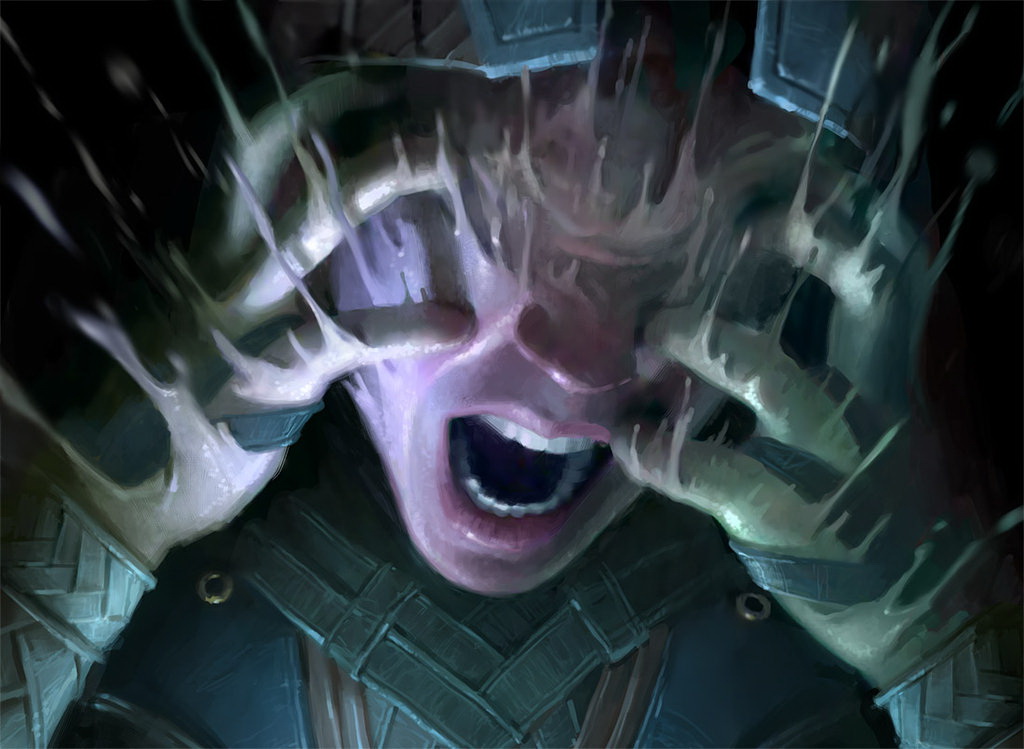
Order Disciplines
At 1st level, your choice of either the Metamorphosis I or Psionic Body I mental discipline. When you gain the Mental Discipline feature at 2nd level, this discipline does not count against your total number of Disciplines Known.
Order Spells
You gain certain spells at the psion levels noted in the Outsider Psionics table. Spells gained from this feature don't count against your total number of Spells Known.
Outsider Spells
| Psion Level | Spells | |
|---|---|---|
| 1st | Dissonant Whispers | |
| 3rd | Detect Thoughts | |
| 5th | Enemies Abound | |
| 7th | Phantasmal Killer | |
| 9th | Modify Memory |
Aberrant Evolution
The unknowable power that resides within your mind threatens to overtake you when your will is weak. Starting at 1st level, when you have 0 psi points remaining, your power overwhelms you, and you mutate into an Outsider. While in your this form you gain the following features:
- You can no longer concentrate on spells or other features that require your concentration.
- Your skin glistens with mucus and you gain a bonus to your Armor Class equal to half of your proficiency bonus.
- Your body bloats and hardens, you gain temporary hit points equal to your psion level.
- Your hands mutate into a writhing mass of tentacles. You can no longer wield weapons, but the tentacles coun as simple melee weapons, in which you are proficient. On hit, they deal 1d6 psychic damage, and you use your Intelligence modifier for the attack and damage rolls.
- If you hit a creature that is your size or smaller with a tentacle attack, you can choose to grapple the creature. The escape DC is equal to your psion spell save DC.
You remain in your Outsider form until you complete a short or long rest and regain your expended psi points.
Alien Adaptation
Your exposure to aberrant energies continues to change your body in strange and unnatural ways. At 3rd level, you gain one of the following features of your choice. You gain another feature of your choice from this list at 6th level.
Amphibious Adaptation. You grow gills and webbing between your digits. You can breath in air and water, and you gain a swimming speed equal to your movement speed.
Viscous Grip. Your hands and feet sprout tiny suckers. You gain a climbing speed equal to your movement speed, and you can climb on difficult surfaces, including upside down on ceilings, without needing to make an ability check.
Controlled Mutation
Your psionic willpower can contend with, and exert control over otherworldly power within your mind. Starting at 6th level, you can transform into your Outsider form as an action on your turn. As long as you have psi points remaining, you can concentrate on spells and other class abilities.
When you take the Attack action while in your Outsider form you can attack twice, instead of once.
As long as you still have psi points remaining, you can use an action on your turn to revert to your normal form.
Psionic Rift
Your aberrant power allows you to slip through cracks in reality. Starting at 14th level, immediately after you manifest a spell of 1st-level or higher, can choose to teleport to an unoccupied space within 30 feet that you can see.
Glimpse Beyond the Veil
Upon reaching 18th level, you can reveal the horrors beyond this reality to other creatures. As an action, you can expend 3 psi points and force a creature within 60 feet to make an Intelligence saving throw. On a failed save, the creature is paralyzed for 1 minute as they reel from the shock.
A creature can repeat the Intelligence saving throw at the end of each of its turns, ending the stun on a success. A creature that succeeds on its saving throw is immune to the effects of this ability for the next 24 hours.
Order of the Wilder
By far the most dangerous psions, Wilders are those who exhibit little to no control over their gift. Often manifesting their powers unexpectedly as a result of a mystical event, or attempting to contain their psionic potential, Wilders are as unpredictable as they are powerful, and they rarely have psionic masters. By the time their overwhelming psionic abilities develop, it is too late to teach them another path.
Order Disciplines
At 1st level, you gain either the Precognition I or Telekinesis I mental discipline. When you gain the Mental Discipline feature at 2nd level, this discipline does not count against your total number of Disciplines Known.
Order Spells
You gain certain spells at the psion levels noted in the Wilder Psionics table below. Spells gained from this feature don't count against your number of Spells Known.
Psionic Surge Table
| d20 Roll | Psionic Effect | d20 Roll | Psionic Effect | |
|---|---|---|---|---|
| 01-02 | Roll on this table at the start of each of your turns for the next minute, ignoring this result on subsequent rolls | 51-52 | You cast grease centered on yourself | |
| 03-04 | You cast magic missile at 5th-circle | 53-54 | For the next minute, you can teleport up to 20 feet as a bonus action | |
| 05-06 | You float 1d10 inches off the ground for the next hour | 55-56 | You can't speak for the next minute. Whenever you try, a piercing scream comes out of your mouth | |
| 07-08 | You teleport to a random space within 60 feet | 57-58 | You cast sleep targeting yourself | |
| 09-10 | You speak only in Deep Speech for 1 minute | 59-60 | You cast confusion targeting yourself | |
| 11-12 | You gain 1d20 temporary hit points | 61-62 | Up to three creatures you choose within 30 feet of you take 4d10 psychic damage | |
| 13-14 | You leave footprints that glow with an otherworldly light for the next hour | 63-64 | You are frightened by the nearest creature until the end of your next turn | |
| 15-16 | Roll twice and take the result of your choice | 64-66 | You resist to all damage for the next minute | |
| 17-18 | You cast disguse self, taking on the appearance of the nearest humanoid | 67-68 | You cast hallucinatory terrain targeting yourself | |
| 19-20 | You cast levitate on yourself | 69-70 | For the next minute, you regain 5 psi points at the start of each of your turns | |
| 21-22 | Your skin becomes translucent for 1 minute | 71-72 | You can immediately take one extra action | |
| 23-24 | Your next spell deals an extra 1d10 damage | 73-74 | You cast blur targeting yourself | |
| 25-26 | You are blinded for 1 minute | 75-76 | You cast fly on a random creature within 60 feet | |
| 27-28 | You emit light in a 10-foot radius for 1 minute | 77-78 | You grow a third spectral arm, which lasts for one hour and is capable of anything your normal arms can do | |
| 29-30 | You briefly see a fond childhood memory of a random creature within 60 feet | 79-80 | You regain all expended Hit Dice | |
| 31-32 | You are proficient in all skills for 1 minute | 81-82 | You cast invisibility targeting yourself. This spell doesn't require your concentration | |
| 33-34 | You switch places with the nearest creature | 83-84 | You cannot tell a lie for the next hour | |
| 35-36 | You understand all language for the next hour | 85-86 | You understand no language for the next hour | |
| 37-38 | You cast blink on a random creature within 60 feet that you can see | 87-88 | For the next hour, you sprout a third eye in the center of your forehead | |
| 39-40 | For the next minute, you can see into the Astral Plane out to a 30-foot radius | 89-90 | Anytime you deal damage for the next minute, you deal an additional 1d6 psychic damage | |
| 41-42 | Your jump distance is tripled for one minute | 91-92 | You are deafened for the next minute | |
| 43-44 | Your teeth fall out and grow back at the end of your next long rest | 93-94 | You loose all distinctive features and appear as an average person of your race | |
| 45-46 | Maximize the damage of the next damaging spell you cast within the next minute | 95-96 | Your movement speed is doubled for the next minute | |
| 47-48 | You regain 2d10 hit points | 97-98 | Your Strength score becomes 4 for one minute | |
| 49-50 | You regain expended psi points equal to your Intelligence modifier | 99-00 | You regain all expended psi points |
Wilder Spells
| Psion Level | Spells | |
|---|---|---|
| 1st | Hideous Laughter | |
| 3rd | Crown of Madness | |
| 5th | Psionic Blast | |
| 7th | Confusion | |
| 9th | Synaptic Static |
Inscrutable Mind
The unpredictable psionic quagmire that is your mind makes it difficult for other creatures to mentally dominate you. Starting at 1st level, when you are forced to make a saving throw to resist the charmed or frightened conditions, or having your thoughts read, you have advantage on the roll.
In addition, when you succeed on an Intelligence or Wisdom saving throw to resist the effects of a spell, you can use your reaction to expend psi points and force the creature that cast the spell to make an Intelligence saving throw. It takes 1d8 psychic damage per psi point you expend (up to your mental limit), and half as much on a successful save. You must be able to see the creature to use this reaction.
Rampant Psionics
Starting at 1st level, when you draw on your power, you risk unpredictable effects. Immediately after you psionically manifest a spell of 1st-circle or higher, roll a d10.
If your roll is equal to the the spell slot level at which you manifested the spell, roll a d100, and the corresponding effect from the Psionic Surge table immediately takes effect.
Starting at 14th level, you gain limited control over your Wilder power. When you trigger a Psionic Surge, you roll twice on the table and choose which effect takes place.
Psychic Assault
Beginning at 3rd level, when you psionically manifest a spell, you can expend additional psi points, up to your mental limit, to unleash wild psionic energy. Creatures within 10 feet must make an Intelligence saving throw. On a failed save, they take 1d8 psychic damage per additional psi point you spent.
Wild Power
You can draw upon the unbridled psionic power within you to empower your spells. Starting at 6th level, when you manifest a spell that deals bludgeoning, force, or psychic damage, roll a d8, and you gain a bonus to one of the spell's damage rolls equal to the number rolled.
Overwhelming Aura
You have learned to vent your wild psionic power in a controlled area around you. Starting at 14th level, you can use an action to unleash psionic power in a 15-foot radius around you for 1 minute. Creatures within the radius have their speed halved, and when a creature enters the area for the first time on a turn, or starts its turn there, it must make a Intelligence saving throw. The creature takes 3d8 psychic damage on a failed save, and half as much on a success.
The aura only ends early if you are incapacitated or you use your action to end it. Once you use this feature, you can't use it again until you finish a long rest, unless you expend 3 psi points to use it again.
Psionic Bombardment
The overwhelming potential of your psionic abilities empowers your spells even further. Beginning at 18th level, when you roll damage for a spell and roll the highest number possible on any of the dice, choose one of those dice, roll it again, and add that roll to the damage.
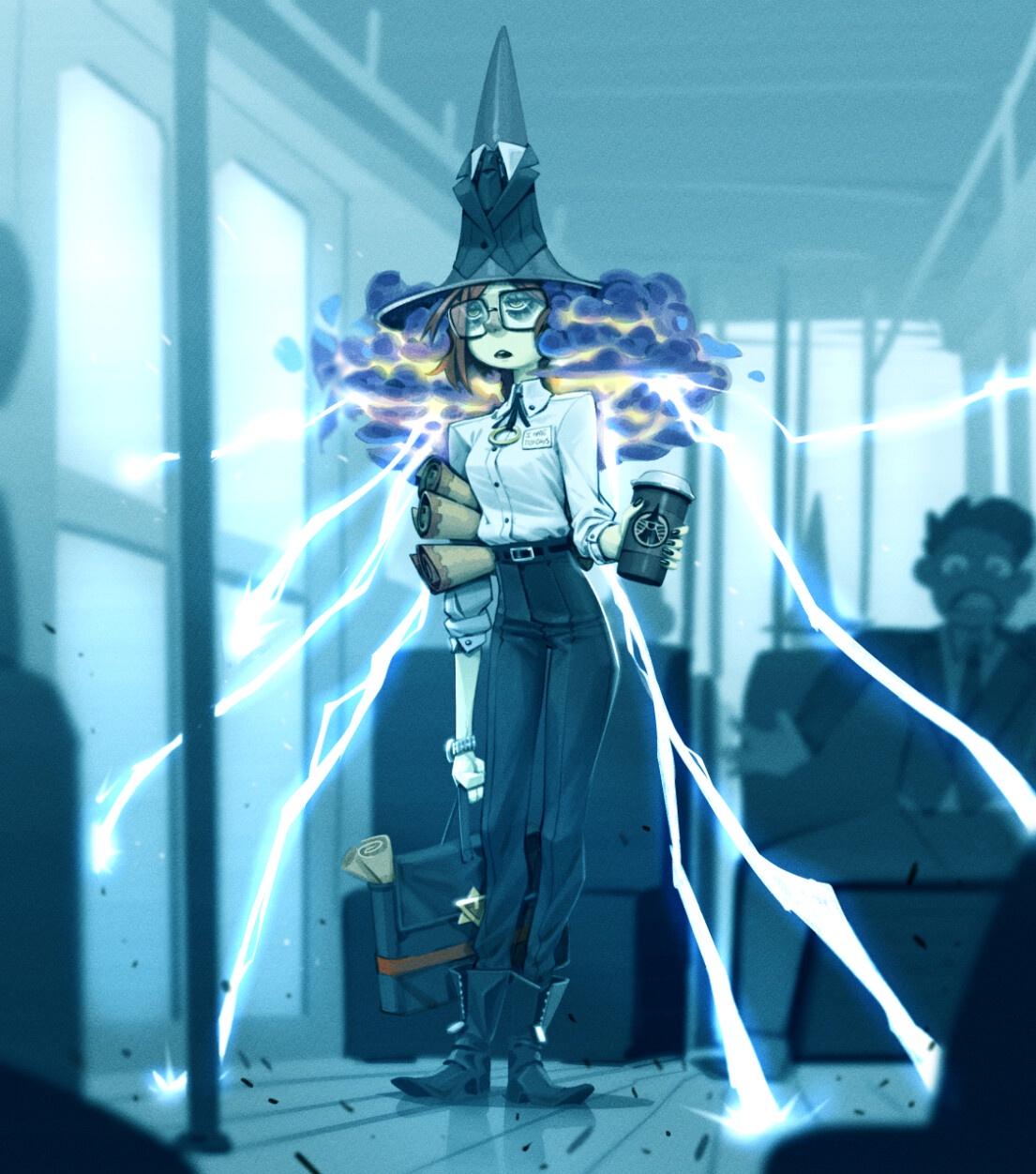
Pugilist
Arrows rain down around her as she runs towards the hobgoblins. Desperate to close the distance, the half-orc fights through the sting of a dozen cuts to reach her foes. The pain only makes her stronger. As she descends on the snarling pack she swings wildly, knocking several hobgoblins off their feet and sending the rest scattering before her.
The human braces himself for the impact as the orc rushes him. Then the monster makes a mistake, telegraphing its next move, and that's all the opening the human needs. He ducks beneath the orc's wide swing then raises both hands high above his head and brings them down on the orc's back, forcing the brute to the ground. The dwarf smiles broadly and chuckles as the petty noble raises his hand to strike him for the impudent remark.
Quick as a flash, the dwarf shatters the bottle in his hand against the bar and brandishes it before the noble. The young dandy flinches, stumbles backward, and runs away as the dwarf turns back to the bar to order another round.
Wherever they come from, pugilists live a rough and tumble life that leaves them full of determination and reckless, either from overconfidence or desperation. In a fight they can channel this strength of character to dig deep and fight off foes with greater strength of numbers, arms, or armor than anyone else would think possible.
Swagger for Days
Pugilists unconsciously tap into their own inner strength in the form of moxie. This is not an esoteric or mystical energy that flows through the multiverse, but the result of determination forged over a lifetime of hardship with a never-say-die attitude. You can teach someone how to fight but you could never teach someone how to be a pugilist. The secret of mastering moxie doesn't come from disciplined study or rigorous training, it comes from years of wanting and needing.
Life on the Street
Every city in the worlds of D&D has its back alleys, its underground fighting rackets, its ghettos. The pugilists who live in these places don't have time to consider the lofty ideals of philosophy or ponder the mysteries of the universe. The pugilists, growing up on the wrong side of the tracks, spend all their time chasing down their next meal or, if they're fortunate enough to have that, their next drink, bedfellow, or flophouse.
For pugilists, becoming an adventurer might be the only way out of whatever miserable situation they've been stuck in since infancy. For others, getting lost out in the world is an escape from the tangled web of debt or enemies they've piled up. Other pugilists fight because it's the only thing they know how to do. Whatever the reason for their adventuring, pugilists are as excited by the prospect of throwing punches as they are spending every last gold coin they earn.
Creating Your Pugilist
As you build your pugilist, consider how you came to be a bare knuckle brawler. Did you learn to fight to defend yourself? Was scraping the natural result of your nose for trouble? Or did you learn to fight as a way of intimidating and controlling others? Were you fighting for the entertainment, or did you fight because you had to? Did you try to become a more traditional martial artist but just couldn't hack it? Pugilists are a rowdy bunch that like to brag about how they learned to fight, so you better have a good story to tell.
What events in your life gave you the sheer determination and will that pugilists call on? Did you spend every day hustling on the street to make ends meet? Were you forgotten and ignored by your family? Were you an outsider in your community who had to constantly struggle against the ignorant stereotypes the people there had of you? The most important element of the pugilist is that they are driven. Once you have decided what events made you into the pugilist you are today, decide how that may shape the actions you take in the future.
Class Features
As an Pugilist, you gain the following class features.
Hit Points
Hit Dice: 1d8 per Pugilist level
Hit Points at 1st Level: 8 + your Constitution modifier
Hit Points at Higher Levels: 1d8 + your Constitution modifier per Pugilist level after 1st
Proficiencies
Armor: light armor
Weapons: simple weapons, improvised weapons, simple firearms
Tools: your choice of one artisan's tools, gaming set, or thieves' tools
Saving Throws: Strength, Constitution
Skills: Choose two from Acrobatics, Athletics, Deception, Intimidation, Perception, Piloting, Sleight of Hand, and Stealth
Equipment
You start with 2d4 x 100 New Yen to buy your own equipment, in addition to the equipment granted by your profession.
Fight Club
Starting at 1st level, you choose a fight club that best exemplifies your style, all detailed at the end of the class description. Your fight club grants you features at 1st level and again at 3rd, 6th, 11th, and 17th level.

The Pugilist
| Level | Proficiency Bonus | Features | Fisticuffs | Moxie Points | |
|---|---|---|---|---|---|
| 1st | +2 | Fight Club, Fisticuffs, Iron Chin | 1d6 | — | |
| 2nd | +2 | Moxie, Street Smart | 1d6 | 2 | |
| 3rd | +2 | Bloodied but Unbowed | 1d6 | 2 | |
| 4th | +2 | Adventuring Boon, Dig Deep | 1d6 | 3 | |
| 5th | +3 | Extra Attack, Haymaker | 1d8 | 3 | |
| 6th | +3 | Moxie-Fueled Fists, Fight Club Feature | 1d8 | 4 | |
| 7th | +3 | Fancy Footwork, Shake it Off | 1d8 | 4 | |
| 8th | +3 | Adventuring Boon | 1d8 | 5 | |
| 9th | +4 | Down but Not Out | 1d8 | 5 | |
| 10th | +4 | School of Hard Knocks | 1d8 | 6 | |
| 11th | +4 | Fight Club Feature | 1d10 | 6 | |
| 12th | +4 | Adventuring Boon | 1d10 | 7 | |
| 13th | +5 | Rabble Rouser | 1d10 | 7 | |
| 14th | +5 | Unbreakable | 1d10 | 8 | |
| 15th | +5 | Herculean | 1d10 | 8 | |
| 16th | +5 | Adventuring Boon | 1d10 | 9 | |
| 17th | +6 | Fight Club Feature | 1d12 | 9 | |
| 18th | +6 | Fighting Spirit | 1d12 | 10 | |
| 19th | +6 | Adventuring Boon | 1d12 | 10 | |
| 20th | +6 | Peak Physical Condition | 1d12 | 12 |
Fisticuffs
At 1st level, your years of fighting in back alleys and taverns have given you mastery over combat styles that use unarmed strikes and pugilist weapons, which are simple melee weapons without the two-handed property, whips, and improvised weapons. You may not use the finesse property of a weapon while using it as a pugilist weapon.
You gain the following benefits while you are unarmed or using only pugilist weapons and you are wearing light or no armor and not using a shield:
- You can roll a d6 in place of the normal damage of your unarmed strike or pugilist weapon. This die changes as you gain pugilist levels, as shown in the Fisticuffs column on the Pugilist table.
- When you use the Attack action with an unarmed strike or a pugilist weapon on your turn, you can make one unarmed strike or grapple as a bonus action.
Iron Chin
Beginning at 1st level, while you are wearing light or no armor and not wielding a shield, your AC equals 12 + your Constitution modifier.
Moxie
Starting at 2nd level, your experience laying the beatdown on others has given you a moxie you can channel in the midst of battle. This swagger is represented by a number of moxie points. Your pugilist level determines the maximum number of points you have, as shown in the Moxie Points column of the Pugilist table.
You can spend these points to fuel various moxie features. You start knowing three such features: Brace Up, The Old One-Two, and Stick and Move. You learn more moxie features as you gain levels in this class. You regain all expended moxie points when you complete a short rest.
Brace Up
You can use a bonus action and spend 1 moxie point to brace for attacks. Roll your fisticuffs die + your pugilist level + your Constitution modifier and gain that many temporary hit points.
The Old One-Two
Immediately after you take the Attack action on your turn, you can spend 1 moxie point to make two unarmed strikes as a bonus action.
Stick and Move
You can use a bonus action and expend 1 moxie point to make a Shove attack or the Dash action.
Street Smart
Beginning at 2nd level, carousing, shadowboxing, and sparring all count as light activity for the purposes of resting for you. Additionally, once you have caroused in a settlement for 8 hours or more, you know all public locations in the city as if you were born and raised there and you cannot be lost by non-magical means while within the city.
Bloodied but Unbowed
Starting at 3rd level, when you take damage that reduces you to half your maximum hit points or less, you can use your reaction to gain temporary hit points equal to your pugilist level + your Constitution modifier and you regain all expended moxie points.
You can use this feature once and regain the ability to do so when you finish a short rest.
Adventuring Boon
When you reach 4th level, and again at 8th, 12th, 16th, and 19th level, you gain 2 unrestricted bonus points. Players can spend these extra Points immediately to acquire Attributes for their characters or save them for future use.
You cannot increase one of your ability scores above 20 using this feature.
Dig Deep
Beginning at 4th level, you discover a strength inside you that can't be broken. As a bonus action you gain resistance to bludgeoning, piercing, and slashing damage for one minute. At the end of that minute you gain a level of exhaustion.
Extra Attack
Beginning at 5th level, you can attack twice, instead of once, whenever you take the Attack action on your turn.
Haymaker
Starting at 5th level, before you make an attack roll with an unarmed strike or pugilist melee weapon attack that does not already have disadvantage you can declare you are swinging wild haymakers. You make all attack rolls until the end of this turn with disadvantage and when you deal damage you do not roll for damage but use the maximum die result instead.
Moxie-Fueled Fists
Starting at 6th level, your unarmed strikes count as magical for the purpose of overcoming resistance and immunity to non-magical attacks and damage.
Fancy Footwork
At 7th level, you gain proficiency in Dexterity saving throws.
Shake it Off
Starting at 7th level, you can use your action to end one effect on yourself that is causing you to be charmed or frightened.
Down but Not Out
At 9th level, when you use your Bloodied but Unbowed feature you can choose to also use this feature. If you do, you add your proficiency bonus to your damage with unarmed attacks and pugilist weapons for the next minute. You can use this feature again after you complete a long rest.
School of Hard Knocks
By 10th level, you've graduated top of the class at the school of hard knocks and you took most of them on the head. You have resistance to psychic damage and gain advantage on saving throws against effects that would make you stunned or unconscious.
Rabble Rouser
Starting at 13th level, word of your exploits travels quickly in cities and other settlements. Once you have taken a long rest by carousing in a settlement you gain advantage on all Charisma (Persuasion) and Charisma (Intimidation) rolls made against the people who live there.
Unbreakable
Starting at 14th level, you gain advantage on Strength, Dexterity, and Constitution saving throws. Additionally, whenever you make a saving throw and fail, you can spend 1 moxie point to reroll it and take the second result.
Herculean
At 15th level, your carrying capacity is doubled, and when you deal damage with a melee weapon or unarmed strike to an inanimate object that damage is doubled. Your standing jump distance is the same as your running start jump distance.
Fighting Spirit
Starting at 18th level, when you have 4 levels of exhaustion or fewer and are reduced to 0 hit points, you regain half of your maximum hit points, half of your maximum moxie points, and gain a level of exhaustion.
You can use this feature once and regain the ability to do so when you finish a long rest.
Peak Physical Condition
At 20th level, your Strength and Constitution ability scores increase by 2 to a maximum of 22. Additionally, when you take a long rest you recover 2 levels of exhaustion instead of 1 and you regain all your expended hit dice instead of half your expended hit dice.
Fight Club
At 1st level, a pugilist chooses their Fight Club, each of which is detailed below.
Arena Royale
Pugilists in the Arena Royale fight club travel the world earning their keep as equal parts performer and gladiator. Whether performing in staged physical competitions, or fighting it out in unscripted brawls, pugilists in the Arena Royale care as much about the theatrics of a fight as they do its outcome. Pugilists in this fight club also care deeply about their reputation and work to build up local and regional legends about their performing personas.
Performer
Starting when you choose this Fight Club at 1st level, you gain proficiency in the Performance skill, if you don't have it already. If you do, you gain proficiency in your choice of the Intimidation or Persuasion skill.
Persona Libre
At 3rd level, you create an alternate persona that you can adopt or discard as a bonus action on your turn. When you create an alternate persona you should give the persona a striking name as well as some physical signifier (such as a mask, colorful cape, or another prominent idiosyncratic feature). Unless you tell a creature, or the creature sees you adopt your persona, they do not know you and the adopted persona are the same person.
Additionally, you have a pool of persona points equal to 3 + your Charisma modifier (minimum 1). When you use an ability that costs moxie points, you can spend persona points instead. In addition, before you make a Charisma ability check you can spend a persona point to add your Strength modifier to the result. You can only use persona points while you have adopted your persona. You regain all expended persona points when you finish a long rest.
Work the Crowd
At 6th level, while you have adopted your alternate persona, you can use your action to inspire your choice of fear or adoration in those nearby.
When you do, all creatures within 30 feet who can see you must succeed on a Wisdom saving throw (DC 8 + your proficiency bonus + your Strength modifier) or be charmed, if you chose adoration, or frightened if you chose fear. This effect lasts for one minute. Each time a creature takes damage from you or one of your allies it can repeat the saving throw, ending the effect on a success.
You can use this feature once and regain the ability to do so when you finish a long rest.
High Flyer
Starting at 11th level, your base movement increases by 10 feet, your jump distance is doubled, and you can use a bonus action on your turn to take the Dash action.
Signature Move
Starting at 17th level, you create a signature move that you can use while you have adopted your alternate persona. Give your signature move a name and a description. You can replace one of your unarmed attacks or attacks with a pugilist weapon on your turn with this signature move.
When you use your signature move, you can jump in any direction up to your movement speed, make an attack roll with advantage against a creature in your reach and, if you hit, the attack is a critical and the creature is stunned until the end of your next turn.
If you hit with your signature move, you must finish a long rest before you can use it again. If you miss with your signature move, you regain the use of it after 1 minute.
Bloodhound Bruisers
Pugilists in the Bloodhound Bruisers fight club are notorious for looking for trouble and finding it every time. Members of this fight club are highly observant of character traits and physical evidence and can form an almost supernatural connection to the cities they live in. Most use these abilities to become urban defenders of the downtrodden but others lend their talents to less savory organizations.
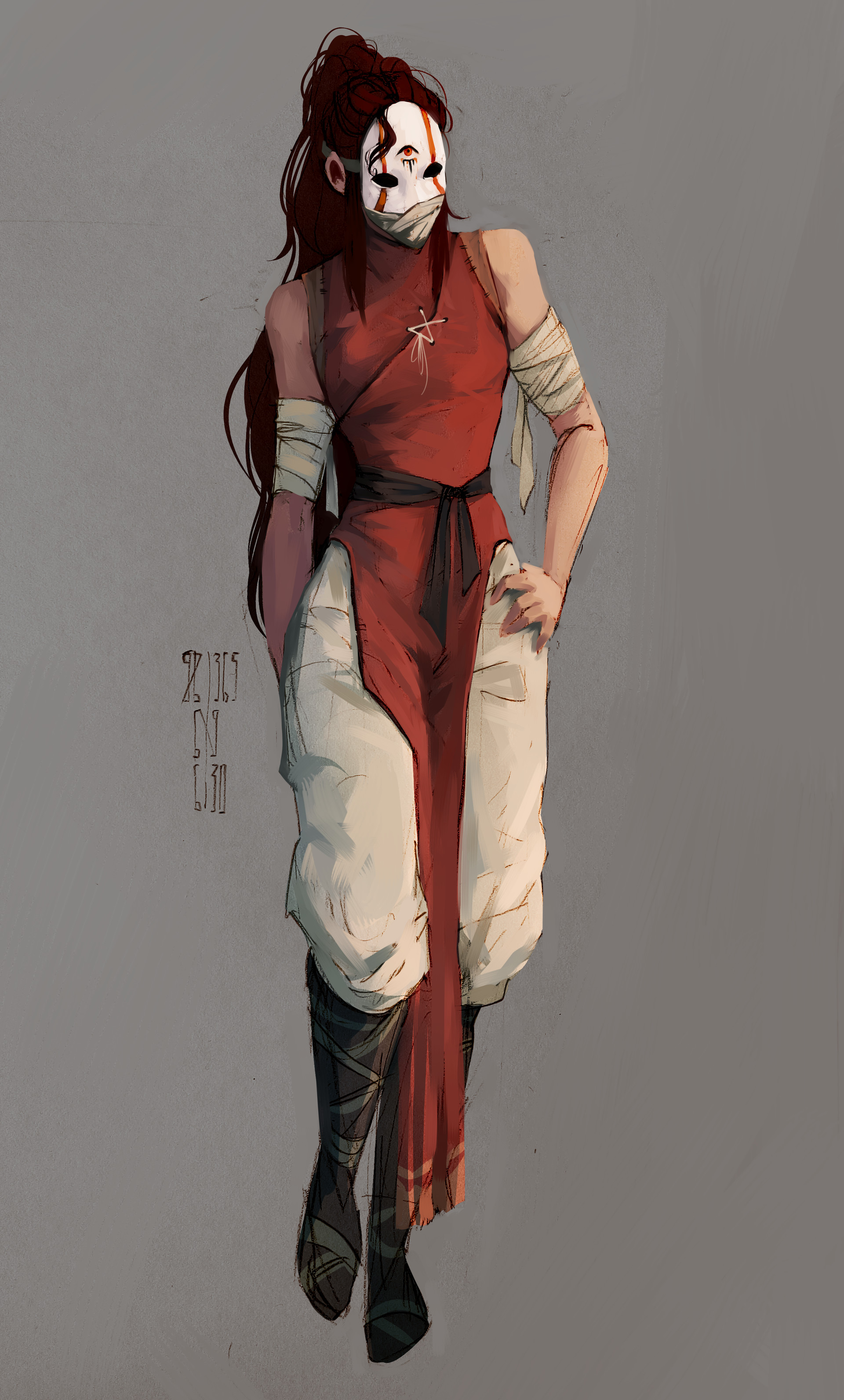
Detective Work
Starting when you choose this Fight Club at 1st level, you gain proficiency with two of the following skills of your choice: Insight, Investigation, or Perception. In addition, when you make an Insight (Wisdom), Perception (Wisdom), or Investigation (Intelligence) ability check you can spend 1 moxie point to gain advantage on that ability check.
Ever Vigilant
At 3rd level, you have advantage on initiative rolls. During the first round of combat, you have advantage on attack rolls against creatures who haven't acted yet.
Scrap Like a Sleuth
At 6th level, you can use a bonus action and expend 2 moxie points to hone in on the idiosyncrasies and bad habits of an enemy you can see within 30 feet. When you do, you have advantage on weapon attacks against the creature and you add your proficiency bonus to your AC against attacks made by that creature. These effects continue for 1 minute or until you use this feature again.
Heart of the City
Starting at 11th level, when you take a long rest in a settlement, you can choose to become familiar with the settlement. When you use this feature again, you replace your previous familiar settlement with the current one. You gain the following benefits while in a familiar settlement:
- You cannot be surprised and you add your proficiency bonus to your initiative.
- You have darkvision to a range of 120 feet.
- When you make an ability check using the Insight, Investigation, or Perception skills that adds your proficiency bonus, add twice your proficiency bonus instead.
Eyes Wide Open
Starting at 17th level, you can use a bonus action and spend 1 moxie point to open your senses to your surroundings for 1 minute. During this time, you have advantage on saving throws against being blinded or deafened and have truesight out to a distance of 30 feet.
Dog & Hound
You've never had a friend you could rely on that walked on two legs. Lucky for you, you've got the best fourlegged friend a body could ask for. Pugilists in the Dog & Hound fight club are as faithful to their canine companions as their canine companions are to them.
Dog Training
When you choose this fight club at 1st level, you gain proficiency with the Animal Handling skill if you don't already have it. If you do, you gain proficiency in your choice of the Perception or Survival skill.

Brawler's Best Friend
At 3rd level, you gain a hound that accompanies you on your adventures and fights alongside you. Your hound can be any breed of dog or similar canine creature, but uses the statistics of a wolf. You add your proficiency bonus to your hound's AC, saving throws, attack rolls, and damage rolls.
For each level you gain after 3rd, your hound gains an additional d8 hit die and increases its hit points accordingly
You can use a bonus action on each of your turns to verbally command your hound to take the Attack, Dash, Disengage, Dodge, or Help action that turn. It does not have its own turn unless you are incapacitated or absent.
If you are incapacitated or absent, the hound acts on its own (continuing to act on your turn, if you are incapacitated), focusing on protecting you and itself. The hound never requires your command to use its reaction, such as when making an opportunity attack.
If your hound dies, you can obtain a new one by spending 8 hours bonding with a canine animal that isn't hostile to you.
Mutt With Moxie
Also 3rd level, you share everything with your faithful hound: food, shelter, even moxie. When you use certain moxie abilities, your hound gains a benefit as well.
Brace Up. When you gain temporary hit points as a result of using your Brace Up moxie ability, your hound gains the same number of temporary hit points.
The Old One-Two. When you use your The Old One-Two moxie ability, your hound can make one or both attacks instead of you.
Stick and Move. When you use your Stick and Move moxie ability, your hound can take the Dash action.
Arcanine Bite
At 6th level, your hound's attacks count as magical for the purpose of overcoming resistance and immunity to non-magical attacks and damage.
Coordinated Attack
Also at 6th level, you and your canine companion form a more potent fighting team. When you use the Attack action on your turn, if your hound can see you, it can use its reaction to make a melee attack.
Hound's Best Friend
At 11th level, when a creature deals damage to your hound with an attack, you can use your reaction to make an opportunity attack against that creature if you are within range.
Dire Hound
Beginning at 17th level, you use the statistics for a dire wolf, instead of a wolf, for your hound, except that its size remains Medium. These statistics are modified as described in your Brawler's Best Friend feature.
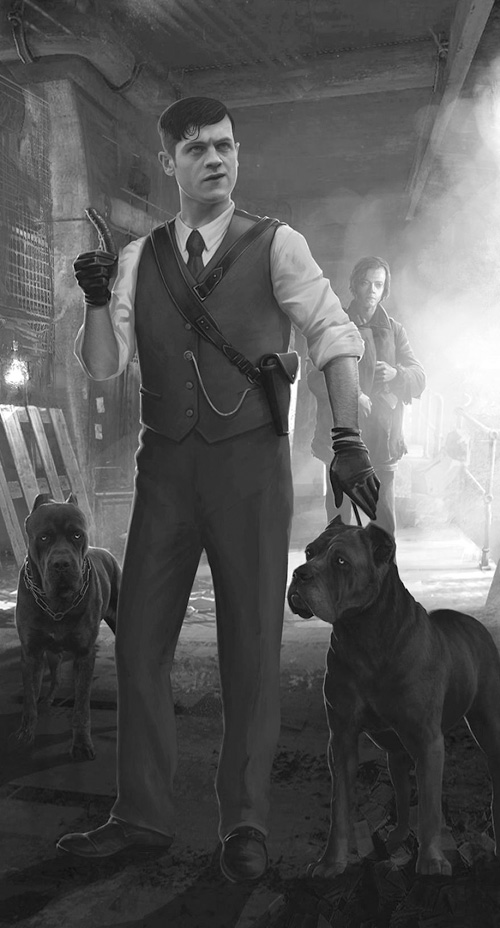

Dragonheart
Long ago, a half-dragon trained a group of warriors to aid in her efforts to carve out an empire for herself. She failed but the esoteric techniques she taught these soldiers has been passed down from mentor to student ever since. Unlike joining other fight clubs, pugilists do not become discover these abilities due to temperament or inclination alone. Instead, dragonhearts, as these pugilists are known, dedicate themselves to learning the ancient combat techniques taught by the half-dragon would-be conqueror.
Draconic Mien
When you choose this fight club at 1st level, you carry yourself with the menacing confidence of dragons. You gain proficiency in the Intimidation skill if you don't have it already. Your proficiency bonus is doubled for any ability check you make that uses this proficiency.
In addition, you can read, speak, and write Draconic.
Scales of War
At 3rd level, you can use a bonus action on your turn to cause your skin to slough off, temporarily revealing hard scales underneath. When you do, you have resistance to bludgeoning, piercing, and slashing damage for 1 minute.
You can use this feature once and regain the ability to do so when you finish a short rest.
Elemental Rebuke
At 6th level, when use your Bloodied but Unbowed feature you can choose to exhale a 30-foot cone of elemental energy as part of the same reaction. When you do, you can choose the nature of your breath weapon which determines the type of damage dealt: acid, cold, fire, or lightning.
Each creature in the area of exhalation must make a Dexterity saving throw with a DC equal to 8 + your Constitution modifier + your proficiency bonus. Creatures who fail this saving throw take 1d12 + your pugilist level damage, and half as much on a successful one.
Wings of War
At 11th level, when you use your Scales of War feature you also sprout wings, giving you a fly speed of 60 feet for 1 minute.
Frightful Presence
At 17th level, as an action you can exude terror to each creature of your choice within 60 feet. Chosen creatures must make a Wisdom saving throw with a DC equal to 8 + your Constitution modifier + your proficiency bonus. On a failed saving throw, the creature becomes frightened for 1 minute. A creature can repeat the saving throw at the end of each of its turns, ending the effect on a success.
You can use this feature once and regain the ability to do so when you finish a long rest.
Hand of Dread
In your darkest hour you pleaded for the strength to take what you wanted from the world and a dread power took notice. At first, you may have relished the cathartic rush that came with channeling your dread power to claim what you felt you deserved. This pact, however, came with strings attached. In times of distress you hear the entity whispering in the back of your mind, encouraging you to indulge your most base impulses.
Black Magic
When you choose this fight club at 1st level, you learn the blade ward, eldritch blast, and prestidigitation cantrips. Constitution is your spellcasting modifier for these spells since you channel the magic of dread powers through your body when you cast them.
In addition, you learn to speak, read, and write one of the following languages of your choice: Abyssal, Infernal, or Sylvan. At the DM's discretion, you may choose another language more appropriate to your dread power.
Dread Hand
At 3rd level, you can use a bonus action on your turn to manifest the evidence of your foul pledge. When you do, one of your limbs (often an arm) transmogrifies into a monstrous appearance reminiscent of your dread power for 1 minute.
- When you roll a 1 on a damage die for an unarmed strike attack you made, you can reroll the die and must use the new roll, even if the new roll is a 1.
- The first time you miss with an unarmed strike attack each turn you can make an additional unarmed strike attack as part of the same action.
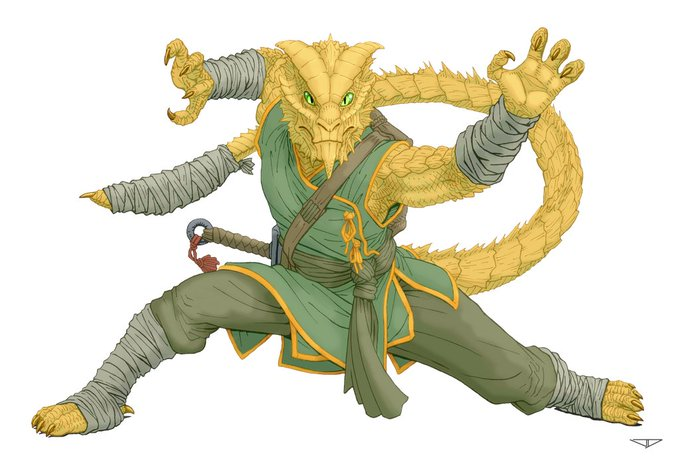
- Immediately after you take the Attack action on your turn, you can spend 2 moxie points to make three unarmed strikes as a bonus action.
You can use this feature once and regain the ability to do so when you finish a short rest.
Deal with the Devil
Starting at 6th level, you gain two eldritch invocations of your choice from among those available to the occultist class. When you gain a level in this class, you can choose one of the invocations you know and replace it with another invocation in which you meet the prerequisites.
Grotesque Growth
At 11th Level, when you use your Dread Hand feature you can choose to grow into a towering misshapen form for one minute. When you do, your size increases by one category—from Medium to Large, for example. If there isn't enough room for you to grow to that size, you grow to the maximum possible size the space will allow. While enlarged in this way, you have advantage on Strength checks and Strength saving throws, your reach becomes 10 feet, and your melee weapon attacks deal 1d4 extra damage. When the minute is over, you suffer one level of exhaustion.
Fountain of Viscera
At 17th level, you can use an action and expend 6 moxie points to attempt to execute a creature of your choice within reach by burrowing your hand into its body and extracting its innards. The creature must make a Dexterity saving throw (DC equal to 8 + your proficiency bonus + your Strength modifier). On a failure, the creature takes 100 piercing damage. On a success, the creature takes 50 piercing damage instead.
If this damage reduces the target to 0 hit points or less, it immediately dies as you rip a hole through it, creating a stomach-turning fountain of viscera. When this happens, each creature within 30 feet of you who can see you must succeed on a Wisdom saving throw (DC equal to 8 + your proficiency bonus + your Strength modifier) or be frightened of you for 1 minute. A creature who fails the saving throw can make the Wisdom saving throw again at the end of each of its turns, ending the frightened condition early on a success.
Once you use this feature, you must finish a long rest before you can use it again.
Mailed Fist
Most pugilists are armored as heavily as they are armed—which is to say, they're not. But those of certain backgrounds, or from cultures with a heavy emphasis on metalworking such as dwarves, find they brawl better encased in armor. Pugilists in this fight club blend their metallurgical skills with their innate talent for fisticuffs, a combination that grants them scorching strikes and an ironclad resilience.
Heavy Fighter
Starting when you choose this Fight Club at 1st level, you gain proficiency with smith's tools and medium and heavy armor.
Additionally, wearing medium and heavy armor does not prevent you from gaining the benefits of your Fisticuffs feature.
Fist of Embers
At 3rd level, you can use a bonus action and spend 2 moxie points to ignite your fists for 1 minute.

While your fists are ignited, you take 1d6 fire damage at the start of each of your turns and your unarmed strikes deal an additional 1d6 fire damage. You can choose to end this feature early with no action required by you.
Adamant Will
At 6th level, when a critical hit is made against you while you are wearing medium or heavy armor, you can use your reaction to gain resistance to the damage of the attack.
Forged in Fire
Starting at 11th level, you have resistance to fire damage.
In addition, when you take fire damage you can use your reaction to gain temporary hit points equal to the damage taken. You lose all temporary hit points gained from this feature at the end of your next turn.
Adamant Body
At 17th level, when you are reduced to 0 hit points but not killed outright, you can use your reaction to drop to 1 hit point instead. When you do, you gain temporary hit points equal to twice your pugilist level + your Constitution score and you regain all expended moxie points. You cannot use this feature again until you finish a long rest.
The Squared Circle
Pugilists who fight in the Squared Circle know you don't have to knock an opponent senseless to get them to submit. Of course, members of the squared circle do beat their opponents senseless, they just know they don't have to.
Fighting Spirit
Starting when you choose this Fight Club at 1st level, you gain proficiency with the Intimidation skill if you don't have it already.
Groundwork
Starting when you choose this fight club at 3rd level, you gain the following additional moxie features.
Compression Lock. When a creature attempts to break a grapple with you and succeeds, you can use your reaction and spend 1 moxie point to force the creature to roll again. The creature must use the second result.
Quick Pin. When a hostile creature's movement provokes an opportunity attack from you, you can use your reaction and spend 1 moxie point to make a grapple attack instead of an opportunity attack.
To the Mat. You can use a bonus action and spend 1 moxie point to make a grapple attack against a creature within range. If successful, the creature is also knocked prone.
Meat Shield
At 6th level, when you have an enemy creature grappled you gain half cover against all attacks made against you by a creature you are not grappling.
When a weapon attack made by a creature you are not grappling misses you, you may use your reaction and spend 1 moxie point to have that creature make the same attack with a new roll against an enemy creature you are grappling.
Heavyweight
At 11th level, you count as one size larger than you are for the purposes of grappling. In addition, you can move your full movement speed when you are dragging or carrying a grappled creature your size or smaller.
Clean Finish
At 17th level, your mastery of grappling reaches its peak. While you have a creature grappled you gain advantage on all attacks against it. Additionally, when you make an unarmed strike or pugilist weapon attack against a creature you have grappled you score a critical hit on a roll of 19 or 20.
Street Saint
Pugilists rise above the adversity they face. Those known as Street Saints do so with the aid of their deep and abiding faith in the gods. These pugilists have had their convictions tested and come out the other side with their righteous resolve only strengthened. They fight to make the world a better place. They fight because they believe their god has called them to. They fight because wherever corruption is allowed to exist, justice cannot flourish.
Lay on Hands
Starting when you choose this Fight Club at 1st level, your blessed touch can heal wounds. You have a pool of healing power that replenishes when you take a long rest. With that pool, you can restore a total number of hit points equal to your pugilist level x 5.
As an action, you can touch a creature and draw power from the pool to restore a number of hit points to that creature, up to the maximum amount remaining in your pool.
Alternatively, you can expend 5 hit points from your pool of healing to cure the target of one disease or neutralize one poison affecting it. You can cure multiple diseases and neutralize poisons with a single use of Lay on Hands, expending hit points separately for each one.
This feature has no effect on undead and constructs.
Channel Divinity
At 3rd level, you gain the ability to channel divine energy directly from your deity, using that energy to fuel magical effects. You start with two such effects: Channel Divinity: Fists of Faith and Channel Divinity: Grace of the Gods.
When you use your Channel Divinity, you choose which effect to create. You must then finish a short or long rest to use your Channel Divinity again. Some Channel Divinity effects require saving throws. When you use such an effect from this class, the DC equals 8 + your proficiency bonus + your Wisdom modifier.
Beginning at 11th level, you can use your Channel Divinity twice between rests. When you finish a short or long rest, you regain your expended uses.
Channel Divinity: Fists of Faith
You use a bonus action and offer up your hands to the will of the divine. For the next minute, your unarmed strikes score a critical hit on a result of 19 or 20.
Channel Divinity: Grace of the
Gods
As a bonus action, you offer a prayer up to the gods and their divine protection surrounds you. You gain 1d10 + your pugilist level in temporary hit points. While you have any temporary hit points from this ability, you have resistance to all damage. You lose all temporary hit points granted by this ability after 1 minute.
Hallowed Hands
At 6th level, when you deal damage to a creature with an unarmed strike you can expend a number of hit points from your Lay on Hands feature up to your level in this class to deal additional radiant damage equal to the hit points expended. This damage is doubled if the creature is a fiend or undead. Once you use this feature, you can't use it again until the start of your next turn.
Ravaged but Resolute
At 11th level, when you use your Bloodied but Unbowed feature you can choose to also use this feature. If you do, the pool of hit points your Lay on Hands feature grants you is refilled to its maximum.
You can use this trait once and regain the ability to do so when you finish a long rest.
Aura of Resilience
Starting at 17th level, as a bonus action on your turn you can lend your spiritual mettle to your allies. For the next minute, you and each friendly creature within 30 feet gain resistance to all damage.
You can use this trait once and regain the ability to do so when you finish a long rest.
The Sweet Science
Pugilists who practice the Sweet Science hit hard, fast, and often. This style is sometimes used by fighters who battle for the entertainment of the upper classes, but is just as often practiced in the backalleys and the bars by those whose next breath depends on a knockout.
Bestial Vigor
Starting when you choose this Fight Club at 1st level, your hit point maximum increases by 6. Whenever you gain a level in this class, your hit point maximum increases by 2.
Cross Counter
At 3rd level, you can block the brunt of an attack and launch one of your own in the same fluid motion. You can use your reaction and spend 2 moxie points to reduce the damage of a melee weapon attack made against you by 1d10 + your Strength modifier + your pugilist level.
If you reduce the damage to 0, you can make an unarmed strike or pugilist weapon attack against a creature within range as part of the same reaction.
One, Two, Three, Floor
At 6th level, when you use your bonus action to use the Old One-Two and hit the same creature with both attacks, you can immediately spend 1 moxie point to make an additional attack with an unarmed strike as part of that bonus action. If you hit, the creature is knocked prone in addition to taking damage as normal for your unarmed strike.
Float Like a Butterfly, Sting Like a Bee
At 11th level, when you reduce damage from an attack to 0 and successfully hit an enemy creature using your Cross Counter feature you regain 1 moxie point (up to your maximum).
Knock Out
At 17th level, when you hit with an unarmed strike or pugilist weapon you can spend 1 or more moxie points to try to knock out the opponent instead of dealing damage. Roll 3d12 + 1d12 for every moxie point spent after the first and add your pugilist level to the result; if the total is equal to or greater than the creature's remaining hit points, it is unconscious for 10 minutes.

Whiskey Fist
Pugilists in the Whiskey Fist fight club are the bane of tavern owners throughout the land. There is nothing a Whiskey Fist pugilist likes more than to get a few drinks in his belly and throw down with anyone who dares to give him side eye. Even when wandering ancient ruins or traveling through the wilderness these pugilist always keep a few bottles "just in case".
Fish In Water
Starting when you choose this Fight Club at 1st level, when you drink an alcoholic beverage you can use your reaction to gain 1 moxie point. You can use this feature a number of times equal to your Constitution modifier and regain all expended uses when you finish a long rest.
Also at 1st level, you gain proficiency with brewer's supplies. When you finish a rest you can use whatever plant materials and water are at hand and brewer's supplies to create alcoholic beverages. You create 1d3 when you finish a short rest and 2d6 when you finish a long rest.
Drink Like a Demon
At 3rd level, you can use a bonus action on each of your turns to consume a potion or other beverage.
Additionally, when you drink an alcoholic beverage you can use your reaction to trigger your Bloodied but Unbowed feature.
Hair of the Dog
Starting at 6th level, when you drink an alcoholic beverage you can use your reaction to lose a level of exhaustion. Once you use this feature, you can't use it again until you finish a long rest.
Mean Drunk
Starting at 11th level, when you consume an alcoholic beverage you can use your reaction and spend 5 moxie points to enter a drunken frenzy for 1 minute. While in a drunken frenzy, you gain the following benefits:
- When you use your Haymaker feature, you do not gain disadvantage on your weapon attack rolls.
- You gain a special reaction you can use each turn to make an opportunity attack. You cannot use your reaction on the same turn you use one of your special reactions.
- You ignore the effects of exhaustion.
Minotaur in a Glassworker's Shop
Starting at 17th level, add the following benefits to your drunken frenzy.
- You have resistance to bludgeoning, piercing, and slashing damage.
- You have advantage on ability checks that add your Strength modifier.
- You can move through other creatures. You can use your reaction when you move through a creature one size larger than you or smaller to make a Shove attack against that creature.
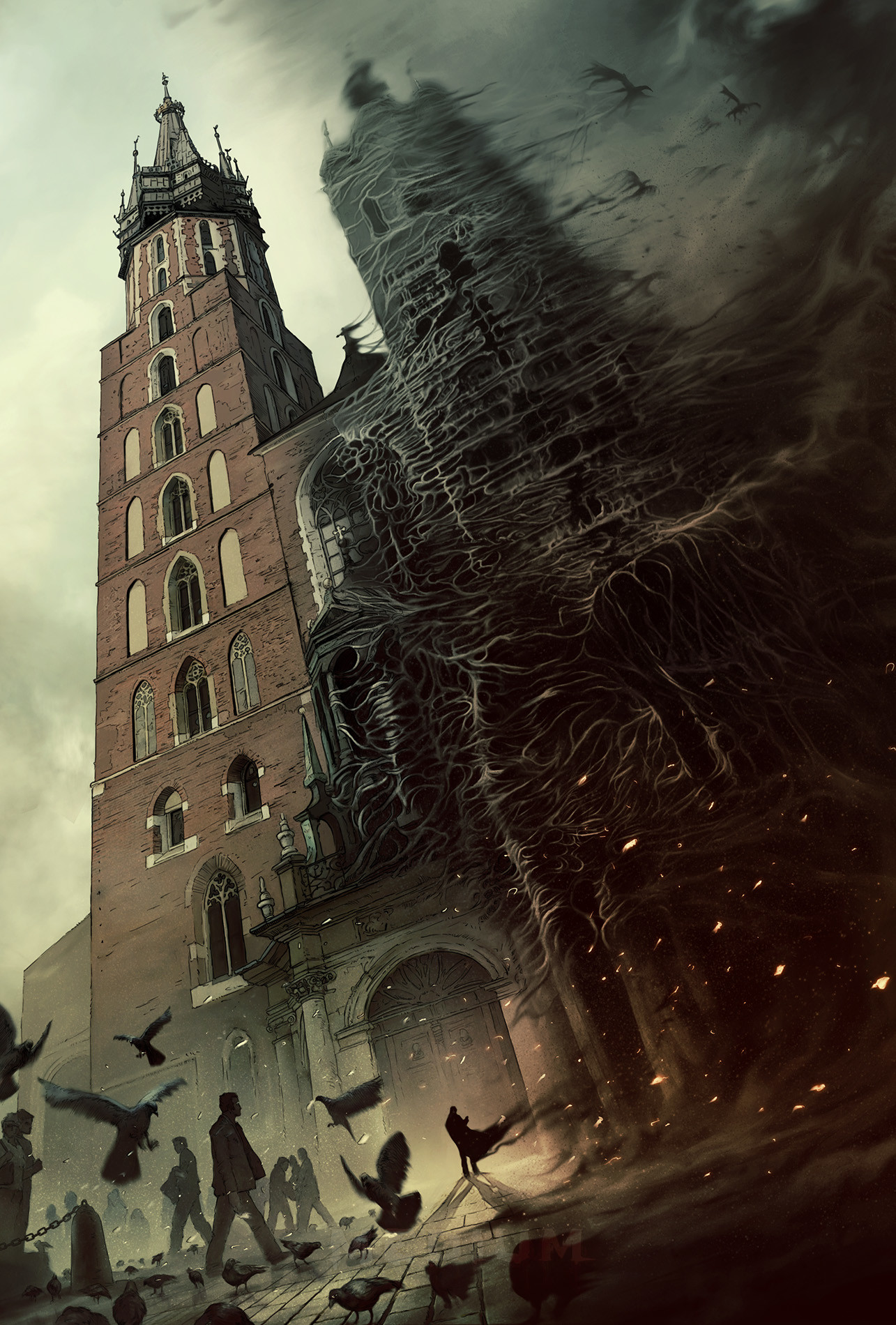
Rogue
Signaling for her companions to wait, a halfling creeps forward through the dungeon hall. She presses an ear to the door, then pulls out a set of tools and picks the lock in the blink of an eye. Then she disappears into the shadows as her fighter friend moves forward to kick the door open.
A human lurks in the shadows of an alley while his accomplice prepares for her part in the ambush. When their target—a notorious slaver—passes the alleyway, the accomplice cries out, the slaver comes to investigate, and the assassin's blade cuts his throat before he can make a sound.
Suppressing a giggle, a gnome waggles her fingers and magically lifts the key ring from the guard's belt. In a moment, the keys are in her hand, the cell door is open, and she and her companions are free to make their escape.
Rogues rely on skill, stealth, and their foes' vulnerabilities to get the upper hand in any situation. They have a knack for finding the solution to just about any problem, demonstrating a resourcefulness and versatility that is the cornerstone of any successful adventuring party.
Skill and Precision
Rogues devote as much effort to mastering the use of a variety of skills as they do to perfecting their combat abilities, giving them a broad expertise that few other characters can match. Many rogues focus on stealth and deception, while others refine the skills that help them in a dungeon environment, such as climbing, finding and disarming traps, and opening locks.
When it comes to combat, rogues prioritize cunning over brute strength. A rogue would rather make one precise strike, placing it exactly where the attack will hurt the target most, than wear an opponent down with a barrage of attacks. Rogues have an almost supernatural knack for avoiding danger, and a few learn magical tricks to supplement their other abilities.
A Shady Living
Every town and city has its share of rogues. Most of them live up to the worst stereotypes of the class, making a living as burglars, assassins, cutpurses, and con artists. Often, these scoundrels are organized into thieves' guilds or crime families.
Plenty of rogues operate independently, but even they sometimes recruit apprentices to help them in their scams and heists. A few rogues make an honest living as locksmiths, investigators, or exterminators, which can be a dangerous job in a world where dire rats—and wererats—haunt the sewers.
As adventurers, rogues fall on both sides of the law. Some are hardened criminals who decide to seek their fortune in treasure hoards, while others take up a life of adventure to escape from the law. Some have learned and perfected their skills with the explicit purpose of infiltrating ancient ruins and hidden crypts in search of treasure.
Creating Your Rogue
As you create your rogue character, consider the character's relationship to the law. Do you have a criminal past—or present? Are you on the run from the law or from an angry thieves' guild master? Or did you leave your guild in search of bigger risks and bigger rewards? Is it greed that drives you in your adventures, or some other desire or ideal?
What was the trigger that led you away from your previous life? Did a great con or heist gone terribly wrong cause you to reevaluate your career? Maybe you were lucky and a successful robbery gave you the coin you needed to escape the squalor of your life. Did wanderlust finally call you away from your home? Or maybe you made a new friend—another member of your adventuring party—who showed you new possibilities for earning a living and employing your particular talents.
Class Features
As an rogue, you gain the following class features.
Hit Points
Hit Dice: 1d8 per rogue level
Hit Points at 1st Level: 8 + your Constitution modifier
Hit Points at Higher Levels: 1d8 + your Constitution modifier per rogue level after 1st
Proficiencies
Armor: light armor
Weapons: simple weapons, simple firearms, martial firearms that do not have the Explosive, Heavy, or Overheat properties
Tools: hacking tools, thieves' tools
Saving Throws: Dexterity, Intelligence
Skills: Choose two from Acrobatics, Athletics, Data, Deception, Insight, Intimidation, Investigation, Perception, Piloting, Performance, Persuasion, Sleight of Hand, Stealth and Technology
Equipment
You start with 4d4 x 100 New Yen to buy your own equipment, in addition to the equipment granted by your profession.
Expertise
You have come to master a specific set of skills and abilities. Also at 1st level, choose any two skill proficiencies, any two tool proficiencies, or one skill and one tool proficiency. If you were not already proficient, you gain proficiency with the two chosen skills or tools. If you were already proficient in those skills or tools, you can add double your proficiency bonus to any check you make with the chosen skills or tools.
As you gain levels in this class, you are able to specialize with additional skills. Another skill or tool proficiency of your choice gains this benefit at 6th, 11th, 15th, and 20th level.
If you already add double your proficiency bonus to a skill or tool, you cannot select it again for this feature.

The Rogue
| Level | Proficiency Bonus | Features | Sneak Attack | Exploits Known | Exploit Dice | |
|---|---|---|---|---|---|---|
| 1st | +2 | Expertise, Sneak Attack, Roguish Archetype | 1d6 | — | — | |
| 2nd | +2 | Devious Exploits, Underworld Chatter | 1d6 | 2 | 2d4 | |
| 3rd | +2 | Cunning Action, Roguish Archetype Feature | 2d6 | 2 | 2d4 | |
| 4th | +2 | Adventuring Boon | 2d6 | 3 | 2d4 | |
| 5th | +3 | Uncanny Dodge | 3d6 | 3 | 3d6 | |
| 6th | +3 | — | 3d6 | 4 | 3d6 | |
| 7th | +3 | Roguish Archetype Feature | 4d6 | 4 | 3d6 | |
| 8th | +3 | Adventuring Boon | 4d6 | 5 | 3d6 | |
| 9th | +4 | Evasion | 5d6 | 5 | 3d6 | |
| 10th | +4 | Reliable Talent | 5d6 | 6 | 3d6 | |
| 11th | +4 | Cunning Strike | 6d6 | 6 | 4d8 | |
| 12th | +4 | Adventuring Boon | 6d6 | 6 | 4d8 | |
| 13th | +5 | Roguish Archetype Feature | 7d6 | 7 | 4d8 | |
| 14th | +5 | Blindsense | 7d6 | 7 | 4d8 | |
| 15th | +5 | Slippery Mind | 8d6 | 7 | 4d8 | |
| 16th | +5 | Adventuring Boon | 8d6 | 7 | 4d8 | |
| 17th | +6 | Roguish Archetype Feature | 9d6 | 8 | 5d10 | |
| 18th | +6 | Elusive | 9d6 | 8 | 5d10 | |
| 19th | +6 | Adventuring Boon | 10d6 | 8 | 5d10 | |
| 20th | +6 | Stroke of Luck | 10d6 | 8 | 5d10 |
Sneak Attack
Beginning at 1st level, you learn to exploit the weak points of your enemies. Once per turn when you hit a creature with an attack with a finesse or ranged weapon, you deal a bonus 1d6 damage, so long as one of the following conditions is met:
- You have advantage on your attack roll.
- An enemy of your target (other than you) is within 5 feet of your target, and the other enemy isn't incapacitated.
You don't gain the benefits feature if you have disadvantage on your attack roll, even if the other conditions are met.
The bonus damage of your Sneak Attack increases as you gain levels in this class, as shown in the Sneak Attack column of the Rogue table above.
Roguish Archetype
At 1st level, choose one of the following Roguish Archetype. Your Roguish Archetype grants features at 1st level, and again when you reach 3rd, 7th, 13th and 17th level in this class.
Underworld Chatter
At 2nd level, during your rogue training you learned how to decipher cryptic and often hidden messages used by other rogues and denizens of the underworld. This knowledge also extends to the Neuralnet, allowing you to more easily access the more unsavory corners of the net.
In addition, you understand a set of secret signs and symbols used to convey short, simple messages, such as whether an area is dangerous or the territory of a thieves’ guild, whether loot is nearby, or whether the people in an area are easy marks or will provide a safe house for thieves on the run.
Devious Exploits
At 2nd level, you learn to utilize various tricks which enhance your particular set of skills, both on and off the field of battle.
Exploit Dice
The Rogue table shows how many Exploit Dice you have to perform the Exploits you know. To use an Exploit, you must expend one of these Dice. You can only use one Exploit per attack, ability check, or saving throw, and you regain your expended Exploit Dice when you finish a short rest.
Your Exploit Dice begin as d4s, and increase in size as you gain levels in this class, as indicated in the Rogue table.
Exploits Known
At 2nd level, you know two Exploits of your choice from the list at the end of this class. The Exploits Known column of the Rogue table shows when you learn more Exploits of your choice. In order to learn an Exploit you must meet any prerequisites it may have.
When you gain a rogue level, you can replace one Devious Exploit you know with another Exploit of your choice.
Saving Throws
If one of your Exploits requires a creature to make a saving throw, the Exploit saving throw DC is calculated as follows:
Exploit save DC
Cunning Action
Beginning at 3rd level, your reflexes allow to you to move and adapt quicker than most. Choose two of the following combat actions: dash, disengage, hide, or use an object. You can use either of these actions as a bonus action on each turn.
Upon reaching 6th level in this class, you can use any four of the actions above as a bonus action on each of your turns.
Adventuring Boon
When you reach 4th level, and again at 8th, 12th, 16th, and 19th level, you gain 2 unrestricted bonus points. Players can spend these extra Points immediately to acquire Attributes for their characters or save them for future use.
You cannot increase one of your ability scores above 20 using this feature.
Uncanny Dodge
Beginning at 5th level, your finely honed reflexes allow you to dodge, minimize, and absorb the damage of blows that would devastate a normal warrior. When a creature that you can see hits you with an attack, you can use your reaction to halve the damage you would take from that attack.
Evasion
Starting at 9th level, your instinctive agility lets you dodge out of the way of certain area effects, such as the acid breath of a black dragon or a lightning bolt spell. When you are subjected to an effect that allows you to make a Dexterity saving throw to take only half damage, you instead take no damage if you succeed on the saving throw, and only half damage if you fail.
Reliable Talent
Your skills are beyond reproach. Beginning at 10th level, when you make an ability check that uses a skill or tool that you are proficient with, or a check that adds an Exploit Die to the result, you treat a roll of 9 or lower on the d20 as a 10.
Cunning Strike
You can exploit even the smallest weaknesses to great effect. Starting at 11th level, whenever you add your Sneak Attack bonus damage to a weapon attack, you can choose to reduce that bonus damage and use one Devious Exploit you know, without expending an Exploit Die, with the following rules:
- It must be an Exploit that can be used as part of an attack.
- You reduce your Sneak Attack damage by a number of d6s equal to the degree of the Devious Exploit you use.
- If the Devious Exploit you use deals additional damage on hit, it does not deal its normal bonus damage.
- Whenever you use an Exploit in this way, you roll a d6 in place of any Exploit Dice you would normally roll.
For example, if you use this feature to use dirty hit, as part of a Sneak Attack, you would reduce the bonus damage of Sneak Attack by 2d6 since dirty hit is a 2nd-degree Exploit
Blindsense
Your senses have been honed to supernatural levels. Starting at 14th level, if you can hear, you are aware of the location of any invisible or hidden creature within 10 feet of you.
At 20th level the radius of this feature becomes 30 feet.
Slippery Mind
You have acquired immense mental strength, rivaling that of extraplanar beings. Starting at 15th level, whenever you are forced to make an Intelligence, Wisdom, or Charisma saving throw, you gain a bonus to your roll equal to your Exploit Die.
Elusive
It is nearly impossible for your foes to gain the upper hand. Beginning at 18th level, so long as you are not incapacitated, no attack rolls against you can be made with advantage.
Stroke of Luck
You have a supernatural knack for finding success when you need it most. Upon reaching 20th level, when you miss with an attack roll within range of your weapon, you can turn that attack into a hit. Alternatively, if you fail an ability check you are proficient in, you can choose to treat the d20 roll as a 20.
You can use this feature once and regain the ability to do so when you finish a short rest.
Roguish Archetypes
At 1st level, a Rogue chooses their Roguish Archetype, each of which is detailed below.
Bouncer
Most rogues focus on the elegant arts of infiltration, trickery, and mind games, but as a Bouncer, you prefer the simple but effective techniques of the back alleys - using anything within your reach as a weapon, even your foes themselves. You rely more on brute strength and an ability to tie your opponents in knots than cunning, though you know better than to discard any natural advantages. Other rogues may think you lack guile, but you’d rather have a reputation for an iron fist than a silver tongue.
Back Alley Training
When you choose this archetype at 1st level, you augment your clandestine skills with the rough and tumble practices of the back alleys, learning to utilize everything around you to your advantage. You gain proficiency with the Athletics skill, medium armor, and improvised weapons.
You also gain an additional way to use your Sneak Attack; you can use your Sneak Attack against a creature when you make an attack with a melee weapon, even if it doesn’t have the finesse property. All other rules of Sneak Attack still apply to you.
Anything at Hand
At 3rd level, while you have a creature of your size or smaller grappled, you can use it as a melee improvised weapon. If the creature is the same size as you, you treat it as though it’s a weapon with the two-handed property; otherwise, you can make the attack with only the hand you used to grapple the creature. When you do, you deal bludgeoning damage depending on the creature’s size category, as shown in the Improvised Creature Weapons table. When you deal damage with a creature used as an improvised weapon, the target of the attack and the creature used for the attack each take half the damage you rolled, instead of the normal damage for the attack.
Barroom Brawler
At 7th level, when you take the Attack action and make only grapple attempts, you can make a weapon attack as a bonus action this turn.
Menacing Glare
Starting at 13th level, you have a look in your eye that implies you can tie your opponents into knots. As a bonus action on your turn, you stare into the eyes of a creature you can see, and who can see you, within 30 feet of you, promising violence. Make a Strength (Intimidation) check contested by the target’s Wisdom (Insight) check. If you succeed, the creature is frightened of you for 1 minute, or until you use this feature on a different target.
If a creature frightened this way ends its turn in a location where it doesn’t have a direct line of sight to you, it regains its composure and is no longer frightened.
You can use this feature once and regain the ability to do so when you finish a long rest.
Improvised Creature Weapons
| Size | Damage Dice | |
|---|---|---|
| Tiny | 1d4 | |
| Small | 1d6 | |
| Medium | 1d8 | |
| Large* | 1d10 | |
| Huge* | 2d6 | |
| Gargantuan* | 3d6 |
Improvised Creature Weapons of Larger Categories
Per the normal grappling rules, you can only grapple a creature that is no more than one size category larger than you. Since players may be able to increase their size beyond Medium through the use of spells and magic items, the table includes size categories that they won’t be able to grapple under normal circumstances.
Ballroom Blitzer
Beginning at 17th level, when you make an attack using a creature you have grappled, you can use your Sneak Attack even if you don’t have advantage on the attack roll, but not if you have disadvantage on it.
Daredevil
Most rogues focus on the elegant arts of infiltration, trickery, and mind games, but as a Bouncer, you prefer the simple but effective techniques of the back alleys - using anything within your reach as a weapon, even your foes themselves. You rely more on brute strength and an ability to tie your opponents in knots than cunning, though you know better than to discard any natural advantages. Other rogues may think you lack guile, but you’d rather have a reputation for an iron fist than a silver tongue.
Aerialist
When you leap through the air you appear to be flying to all but the most potent observers. Starting at 1st level, you have a climbing speed equal to your movement speed.
In addition, you use your reflexes and acrobatic skill to propel yourself through the air. When you make a running or standing long or high jump, you use your Dexterity score, in place of Strength, to calculate the distance of your jump.
Death From Above
When you adopt this archetype at 3rd level, you can use your maneuverability and momentum to turn your airborne body into a projectile.
If you move at least 10 feet through the air, and land within 5 feet of a Large or smaller creature, you can use your action to force the creature to make a Strength saving throw. The save DC is equal to 8 + your proficiency bonus + your Dexterity modifier. On a failed save, it is knocked prone and takes 2d6 bludgeoning damage.
This special attack can apply your Sneak Attack damage, even if it doesn't meet the requirements for Sneak Attack.
Slow Fall
Beginning at 7th level, your experience falling from heights has made you an expert in landing without hurting yourself. As a reaction while falling, you can reduce any falling damage you take by an amount equal to five times your rogue level.
If you manage to land on something soft that breaks your fall, like a wagon full of hay, you take no damage from the fall.
Defy Death
Your Daredevil lifestyle has been cause for many near-death experiences, any you've gained an unfortunate familiarity with death. Starting at 13th level, you have advantage on death saving throws.
Airborne Strikes
Starting at 17th level, you can maneuver yourself while airborne to strike at your enemies in unexpected ways. You have advantage on any attack roll you make while you are in the air, and at least 5 feet off the ground.
Divine Hand
As a Divine Hand, you focus your training on the arts of
death and execution. However, unlike an assassin you do not employ yourself in the service of mortals.
You have a higher calling, and have devoted yourself into the service of a deity. With this deity you have formed a personal connection—they speak with you directly, ordering you to dispose of their enemies and giving you other such tasks. To assist you in your endeavors, your deity has granted you divine powers. These powers can help you slay any foe, but are especially effective against the enemies of your deity.
Divine Hands are often members of a clergy, working directly for the church of their deity. But others work outside of any organization, and perform their duties independently—working only for themselves and their deity.
Right Hand of God
When you choose this archetype at 1st level, you develop a closer relationship with your deity. You gain proficiency in the Religion skill. If you already have this proficiency, you instead gain proficiency in another skill of your choice.
Also, you gain the duty to hunt down the enemies of your deity. When you gain this archetype, determine with your DM what the enemies of your deity might be. They could be creature types (such as fiends and undead), specific types of humanoids, or even members of specific organizations. These enemies are considered your divine quarries. If your deity has many enemies, then only their most important ones might be considered your divine quarries, at the DM's discretion.
You have advantage on Wisdom (Survival) checks to track your divine quarries.
Judgement
At 3rd level, as a bonus action, you can choose one creature you can see within 120 feet of you. Until the end of the turn, you can use your Sneak Attack against that target even if you don't have advantage on the attack roll, but not if you have disadvantage on it.
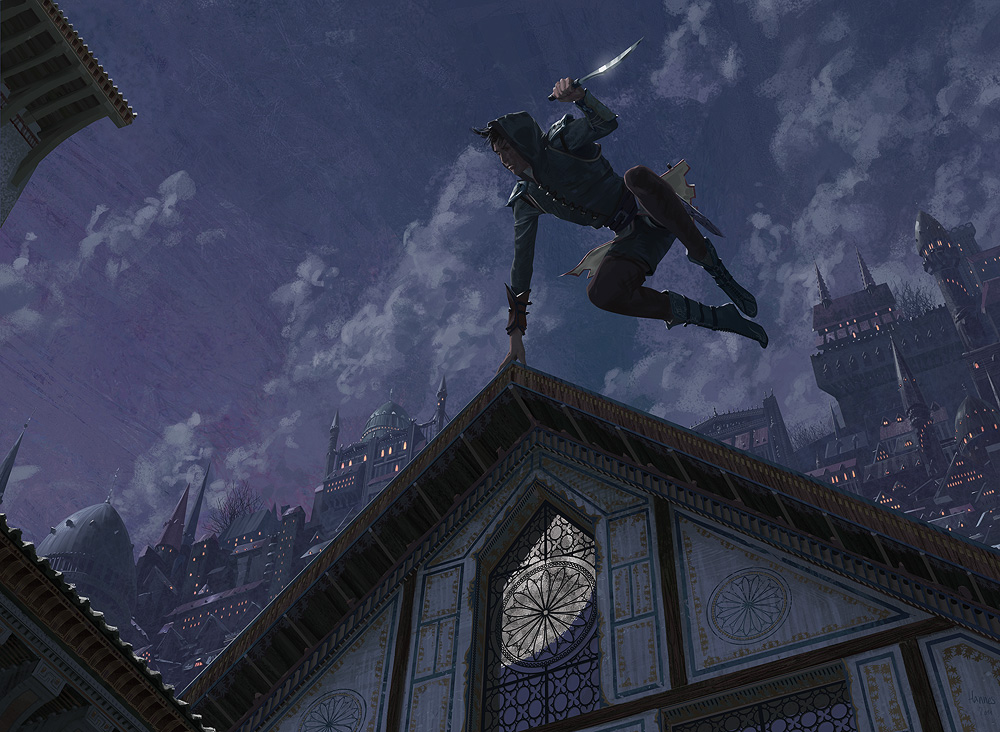
If you use your Sneak Attack against the marked target during the duration, you can expend a use of this feature to empower your strike. The attack's damage type becomes radiant, and it gains one of the following bonus effects:
- The target's speed is reduced by 10 feet.
- The target can't take reactions.
- The target can't regain hit points.
The effect you choose lasts until the start of your next turn. You can empower your attack a number of times equal to your Wisdom modifier (a minimum of once), and you regain all expended uses when you finish a long rest. If the target is one of your divine quarries, you can empower your strike against it without expending a use of this feature, even if this feature has no uses remaining.
Divine Gift
At 7th level, your deity bestows divine magic upon you. You learn the guidance and thaumaturgy cantrips. Also, you can cast detect magic, detect poison and disease, and augury, but only as rituals. Your spellcasting ability for these spells is Wisdom.
Hunter of the Unholy
Starting at 13th level, your deity grants you knowledge to assist you in tracking and slaying your foes. When you mark a creature with your Judgment feature, you learn of any damage resistances and/or immunities that the creature possesses.
Also, you can call upon your deity as a bonus action, and have them reveal their enemies to you. Until the end of your next turn, you know the location of any of your divine quarries within 120 feet of you that are not behind total cover. You know the creature type of any being you sense, but not its specific identity.
You can take this bonus action a number of times equal to 1 + your Wisdom modifier. When you finish a long rest, you regain all expended uses.
Holy Executioner
Beginning at 17th level, your divine judgment becomes especially harsh. Whenever you use your Judgment feature against a creature and choose to empower your strike, your attack deals an additional 4d6 radiant damage to your target.
Highway Rider
Runners are masterful drivers. Able to navigate the city streets with unmatched speed and handling. They make excellent get away drivers, or leaders of convoys through dangerous parts of the city.
Drive By
Starting at 1st level, you still able to engage in a fight even when driving at top speeds. When you take a Drive action on your turn, you can make one additional attack as a bonus action.
Born to Drive
At 3rd level, you gain proficiency with Vehicles (Land) and Mechanic's Tools. Additionally, when you take a Drive action and are in control of your vehicle, you can perform one of the following maneuvers.
Burn Rubber: You push the vehicle to its limit to go as fast as possible. Your vehicle’s speed is doubled until the end of your turn.
Dodge and Weave: Your ability to duck through traffic in cities and on busy highways is unparalleled. Your vehicle can travel through heavy traffic without a movement penalty this turn.
Tight Squeeze: Even when the road in front of you is blocked off, you always seem to make it to your destination. Until the end of your turn, your vehicle is capable of the most astonishing stunts in order to traverse obstacles. You gain advantage on any roll associated with the stunt.
Defensive Maneuvers
At 7th level, you are able to keep you vehicles out of harms way while still driving at breakneck speeds. When you perform one of the maneuvers granted by your Born to Drive feature, the vehicle you are driving gains a +2 bonus to its AC.
Mobile Assault
At 13th level, you have learned how to inflict devastating damage with vehicles you drive. Attacks you make with your vehicle can benefit from your Sneak Attack as long as they are not made at disadvantage.

King of the Road
At 17th level, you have become an unmatched master of the road. If you lose control of a vehicle you are driving, you can regain control of that vehicle using a Bonus Action and expending 5 feet of the vehicle's movement.
Additionally, when you take a Drive action on your turn, you can take one additional action. You can use this feature a number of times equal to your Dexterity modifier (minimum of 1). You regain all expended uses when you finish a long rest.
Infiltrator
Trained in infiltration, espionage, and covert operations by the Firm, infiltrators excel at being completely untraceable agents of intrigue and subterfuge. Despite their vast array of skills, Infiltrators are primarily known for their proprietary Infiltration Rigs, nonmagical devices derived from gnomish tech, capable of an array of illusory, transformative, and technical effects.
Espionage
Starting at 1st level, you gain proficiency in the Data and Deception skills.
Infiltration Rig
At 3rd level, you build your own infiltration rig, which is an interface rig extended with gloves, a visor, and a range of additional functions. While you wear it, you gain the following benefits:
- You can access arcane terminals, datapads, and ship computers from up to 30 feet away.
- You have darkvision out to a range of 60 feet. If you already have darkvision from your race, its range increases by 30 feet.
- You can use your action to detect the location of surveillance devices within 30 feet.
- You can cast the spell disguise self once, and regain the ability to do so when you finish a long rest. At 9th level, you can cast the spell invisibility once, targeting only yourself, and regain the ability to do so when you finish a long rest. At 13th level, you regain the ability to cast these spells when you take a short or a long rest.
Your infiltration rig can only be used by you, and you can only have one rig at a time. Should your rig be lost or destroyed, you can create a new one with 24 hours of work and 1,000 New Yen worth of materials.
Spider Module
At 7th level, while wearing your infiltration rig, you can move up, down, and across vertical surfaces and upside down along ceilings, while leaving your hands free. You also gain a climbing speed equal to your walking speed.

Hacking Spike
Starting at 13th level, while wearing your infiltration rig, you gain advantage on all Intelligence (Data) checks made to disable security systems or to acquire sensitive data. Additionally, when you hit a construct with a Sneak Attack using a melee weapon, it must make a Wisdom saving throw (DC equals 8 + your proficiency modifier + your Intelligence modifier). On a failed save, the construct is stunned until the beginning of your next turn, even if it would otherwise be immune to being stunned.
Predator Module
Starting at 17th level, when you use your infiltration rig to cast invisibility, you can choose to cast greater invisibility instead.
Mastermind
Your focus is on people and on the influence and secrets they have. Many spies, courtiers, and schemers follow this archetype, leading lives of intrigue. Words are your weapons as often as knives or poison, and secrets and favors are some of your favorite treasures.
Master of Intrigue
When you choose this archetype at 1st level, you gain proficiency with the disguise Kit, the forgery kit, and one gaming set of your choice. You also learn two languages of your choice.
Additionally, you can unerringly mimic the speech patterns and accent of a creature that you hear speak for at least 1 minute, enabling you to pass yourself off as a native speaker of a particular land, provided that you know the language.
Master of Tactics
Starting at 3rd level, you can use the Help action as a bonus action. Additionally, when you use the Help action to aid an ally in attacking a creature, the target of that attack can be within 30 feet of you, rather than within 5 feet of you, if the target can see or hear you.
Insightful Manipulator
Starting at 7th level, if you spend at least 1 minute observing or interacting with another creature outside combat, you can learn certain information about its capabilities compared to your own. The DM tells you if the creature is your equal, superior, or inferior in regard to two of the following characteristics of your choice:
- Intelligence score
- Wisdom score
- Charisma score
- Class levels (if any)
At the DM's option, you might also realize you know a piece of the creature's history or one of its personality traits, if it has any.
Misdirection
Beginning at 13th level, you can sometimes cause another creature to suffer an attack meant for you. When you are targeted by an attack while a creature within 5 feet of you is granting you cover against that attack, you can use your reaction to have the attack target that creature instead of you.
Soul of Deceit
Starting at 17th level, your thoughts can't be read by telepathy or other means, unless you allow it. You can present false thoughts by succeeding on a Charisma (Deception) check contested by the mind reader's Wisdom (Insight) check.
Additionally, no matter what you say, magic that would determine if you are telling the truth indicates you are being truthful if you so choose, and you can't be compelled to tell the truth by magic.
Paramour
You’re more interested in stealing hearts than gold pieces. Paramours wander from town to town and port to port having great love affairs and boisterous all-nighters, leaving a river of ex-lover’s tears in their wake. The charms of these rogues are so great they verge on supernatural.
Romantic
When you choose this archetype at 1st level, you gain proficiency in the Insight and Persuasion skills if you don’t already have them.

Your proficiency bonus is doubled for any ability check you make that uses either of those proficiencies.
Thief of Hearts
Starting at 3rd level, you can cast the charm person spell as a 1st-level spell. When you do, the duration increases to a number of hours equal to your rogue level, the saving throw DC is equal to 8 + your proficiency bonus + your Charisma modifier, and the creature may regard you as a romantic interest, in addition to a friendly acquaintance, at the DM’s discretion.
You can use this feature a number of times equal to your Charisma modifier (a minimum of once). You regain any expended uses when you finish a long rest.
Token of Affection
Also 3rd level, you can give a token of affection to a creature charmed by you. This token of affection can be any physical gift. The duration of the charmed effect on the creature becomes indefinite, ending early if you or your companions do anything harmful to it or you use this feature again.
Language of Love
Starting at 7th level, you can communicate non-verbally, using body language, eye contact, and gestures, with any humanoid who speaks at least one language and can see you.
In addition, if you share a language with a humanoid who can hear you, you can use a bonus action to shower the creature with flattery and honeyed words. That creature has disadvantage on saving throws it makes to resist being charmed by you until the end of its next turn.
Inspire Harem
Starting at 13th level, when you use your Thief of Hearts, you can target a number of humanoids up to your rogue level.
You can use this feature once and regain the ability to do so when you finish a long rest.
Jaded Jilter
Starting at 17th level, you can use your bonus action to jilt a creature who is charmed by you. This spurn wounds them so deeply that you deal psychic damage to the creature equal to your Sneak Attack damage and the charmed effect ends.
In addition, your years of heartbreaks and heartbreaking have left you jaded. You are immune to being charmed.
Saboteur
There are countless situations where sabotage, terrorism, catastrophic failure, and bombings have changed the course of history. A true Saboteur knows that any goal is achievable with enough explosives. If a job has a car that needs stopping, a skyscraper that needs dropping, or a person that needs popping, then look no further.
The real challenge for the Saboteur is knowing when to stop. Some saboteurs let the force multipliers at their fingertips go to their head, becoming a mad bomber. In these cases, self-destruction is inevitable, but at least it's always one hell of a fireworks show.
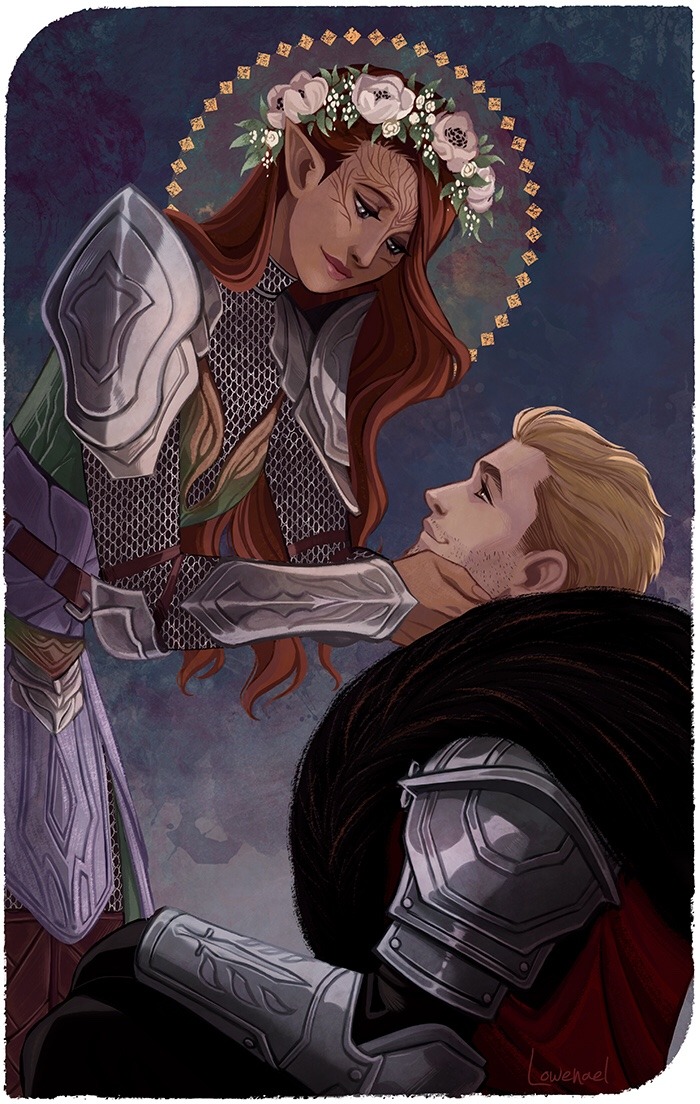
Ordnance Points
| Explosive | Point Cost | |
|---|---|---|
| Tier 1 | ||
| Flashbang | 1 | |
| Fragmentation grenade | 1 | |
| Napalm grenade | 1 | |
| Pipe bomb | 1 | |
| Smoke grenade | 1 | |
| Plastic Explosive | 2 | |
| Tear gas | 2 | |
| Tier 2 | ||
| Flashbang | 2 | |
| Fragmentation grenade | 2 | |
| Napalm grenade | 2 | |
| Pipe bomb | 2 | |
| Smoke grenade | 2 | |
| Plastic Explosive | 3 | |
| Tear gas | 3 |
Bombardier
When you choose this archetype at 1st level, you gain proficiency with the grenade launcher, rocket launcher, thumper, and demolitionist's tools. When you make an attack with a blast weapon with which you are proficient, you can choose which targets other than the primary target are affected by the weapon's blast property.
You also gain an additional way to use your Sneak Attack; you can use Sneak Attack against objects and vehicles as long as you don't have disadvantage on the attack roll.
Hair Trigger
At 3rd level, you can use the bonus action granted by your Cunning Action to use any explosive that can be used as an action, or to use your demolitionist's tools to disarm explosives.
Blastjumper
At 7th level, you can give yourself a blast-propelled boost of speed. You can use the bonus action granted by your Cunning Action to expend one ammunition from a weapon with the blast property you are holding. You immediately fly up to 40 feet in a straight line in any direction. If you are not on the ground at the end of the movement, you fall.
Additionally, you gain resistance to thunder damage and can fall up to 40 feet without taking damage.
Emergent Ordnance
Beginning at 13th level, using your demolitionist's tools, you can create special improvised explosive devices (IED) with supplies you carry and gather from the environment around you. Each IED functions similarly to an explosive but is unstable, and falls apart after 24 hours unless maintained. Over the course of a long rest, you can expend a number ordnance points equal to your twice proficiency bonus to create or maintain IEDS. The Ordnance Points table shows the cost of creating or maintaining each type and tier of explosive.
Mad Bomber
At 17th level, you gain the ability to unleash a hail of charges on groups of foes. As an action, you can make up to 5 attacks with weapons with the blast property, provided that each attack targets a different creature. As part of each attack, you can draw a weapon. Once you use this feature, you must finish a short or long rest before you can use it again.
Spidertouched
There are many assassins, spies, and tricksters throughout the endless planes who take on the motif of a spider as their symbol, but you are one of the few for whom this symbol is truly accurate. You've learned your craft from the Weaver of Lies itself, an ancient creature spawned when the gods first deceived one another and the mortals they surveyed.
Deities that hold sway over the crawling creatures of the dark and guilds of assassins and spies may grant powers such as these, but no matter the origin, you will take these forbidden techniques to your grave. Cloaked in the faces of others and bearing the deadly toxins of your teacher, you crawl along the shadows at the edges of the world, hunting for secrets and spinning webs of treachery.
Tools of the Traitor
When you choose this archetype at 1st level, you discover the secrets hidden in truth and falsehood. You gain proficiency in the Deception skill and with nets.
You can weave webs from your fingertips at will, crafting a false face from magical spider silk. This acts as a disguise kit that you have proficiency in.
Additionally, you can use your bonus action to weave your webbing into a sticky 50-foot silk rope with adhesive grapple or into a net. This web net has a range of 15/30 and has additional hit points equal to your rogue level. You can only have one such rope or net, called a web construct, at a time. Creating a second web construct destroys the first one.
Arachnid's Fang
At 3rd level, your blades whisper with toxins and lies. When you would deal Sneak Attack damage, you can have the damage dealt be poison instead of its normal damage type.
When you hit a creature that is restrained and change the damage type using this feature, the target suffers disadvantage on Strength checks until the start of your next turn.
Subtle Stride
At 7th level, you learn the talents of your mentor's small arachnid slaves and take their hidden power for your own.
You gain a climbing speed equal to your walking speed and can move along vertical and horizontal surfaces, including ceilings, while leaving your hands free. You are also immune to natural webbing and webs created by the web spell.
Twitch on the Web
Starting at 13th level, your words and deeds ensnare others, dragging them into your dark parlor. You can now throw a net as a bonus action, and this does not prevent you from making additional attacks. Invisibly thin strands of spider silk connect your web construct nets to your body, allowing you to drag a creature restrained by your net up to 30 feet directly towards you, possibly holding them suspended in the air, by using an action to make a Strength (Athletics) check contested by the target's Strength (Athletics) check. If you succeed, the target is dragged and either knocked prone or held suspended in the air below you. If you fail, your web construct net is destroyed and the target is freed.
Your movement speed is halved while suspending a creature, and when you move horizontally while holding it, you can have it move with you or fall to the ground. If you teleport, the target automatically falls to the ground and is no longer suspended.
You can now have a number of rope or net web constructs equal to your Charisma modifier (minimum 1). You also count as one size larger when determining how much you can lift and carry and for the purposes of grappling.
Skittering Nightmare
At 17th level, your body has finally adapted to enable you to move with the eerie grace of the webbed ones. You can't be knocked prone against your will. While you are prone, you can move at full speed as though standing, you do not have disadvantage on attack rolls, and attackers that are within 5 feet of you do not gain advantage on attacks against you.
Temporal Agent
Some thieves prize jewels, others, works of art or antiquities. A rare few, however, value nothing more than time itself. These magically talented ne’er-do-wells possess the ability to siphon from other creatures’ timelines and manipulate their own. Many seek immortality.
Lend Time
At 1st level, on your turn, you can lend yourself time. You can choose any combination of your action, bonus action, reaction, and any amount of your movement. You can also choose the additional action allowed by Haste if you are affected by it. On this round, you forgo using what you chose. On your next turn, you can use what you chose in addition to your normal action, bonus action, reaction, and movement.
For example, on one turn, a temporal agent with a movement speed of 30 feet uses a bonus action and moves 20 feet. She can lend herself an action and 10 feet of movement. She can also forgo using her reaction this round. On her next turn, she can use two actions, a bonus action, and move 10 feet more than usual. Starting on her next turn, she could also use two reactions that round.
You cannot infinitely lend yourself time. For example, if you lend yourself an action, you cannot on your next turn lend yourself both actions, thereby giving you a total of three actions on the turn after.
If you lend or borrow an action, you cannot hold an action. Therefore, a temporal agent could not make a sneak attack, borrow an action, and hold that action to make an attack on her flanking ally’s turn and get an additional sneak attack.
Borrow Time
At 3rd level, you can borrow time from yourself. On your turn, you gain any combination of an additional action, bonus action, reaction, and additional movement up to your movement speed unaltered by temporary effects such as Haste and Slow. On your next turn, you forgo using what you chose.
For example, a temporal agent with a movement speed of 30 feet can move an additional 25 feet and take an additional action. On her next turn, she can only move 5 feet and take a bonus action.
If it is not your turn, you can also borrow a reaction. This gives you an additional reaction this round at the cost of forgoing your reaction for the next round.
You cannot infinitely borrow time from yourself. For example, if you borrow a bonus action, on your next turn, you cannot again borrow a bonus action.
By simultaneously lending and borrowing time, a temporal agent could on a single turn take three actions, three bonus actions, move three times, and have three reactions that round. However, she would not be able to do anything on the prior and subsequent turns.
Swipe Hourglass
By 7th level, you have learned how to pilfer time. When you roll initiative, you can choose one creature you see within 100 feet of you that is also rolling initiative. If you do so, it rolls a d6 and subtracts the number rolled from its initiative, while you add that number to your initiative.
Chrono Leech
Beginning at 13th level, your skill with temporal larceny reaches new heights. When you use your Sneak Attack, you can force the target to make a Wisdom saving throw against a DC of 8 + your proficiency bonus + your Intelligence modifier. If it fails, until the start of your next turn, it is affected by the Slow spell while you gain the benefits of the Haste spell. This ability does not require concentration.
If a creature succeeds on its saving throw against Chrono Leech, it is immune for the next 24 hours.
In addition, you better stabilize your own timeline. When Haste ends on you, you suffer no wave of lethargy. You have advantage on saving throws against Slow and similar effects.
Split Timeline
Starting at 17th level, you can effectively undo harm by sending it off to an alternate timeline. When you take damage or fail a saving throw, you can choose to nullify the consequences. For you, the harmful event simply did not happen. This feature does not require your reaction.
You can use this trait once and regain the ability to do so when you finish a long rest.

Shapeshifter
An unassuming mouse skitters down a castle corridor. It seems to have a clear destination in mind: the castle's forbidden library. The guards pay it no mind as it scampers past. It squeezes underneath the door to the library. The lights are out; the library empty. The mouse begins to grow, its features shifting. Quickly, it takes the form of a curious halfling. The halfling smiles, looking around at their treasure. The halfling chooses a tome on extinct creatures, and begins to read...
An older elf sits on a log, unperturbed by the family of apes cavorting around them. The elf smiles wistfully, experiencing behavior and interactions that have never been documented before. They make sketches of the apes, noting their personalities, their likes and dislikes. Suddenly, one of the largest apes decides he doesn't like the elf's presence. He rushes over, puffing his chest out in intimidation. Never losing their smile, the elf concentrates for a moment, and shifts their form into that of a small, unthreatening ape child. The silverback, satisfied, walks away...
A group of thugs are terrorizing a village. The village has no one to stand up to these villains. That is, until a young half-orc steps forward. The half-orc tells them to leave the village, and never return. The thugs look at one another, and then begin to laugh. In their revelry, they don't notice that the half-orc's skin has begun to turn into scales. Sharp teeth emerge from their gums; their head and jaws begin to grow. In no more than a moment, an extinct king of beasts stands before the interlopers. They hesitate briefly before screaming and running from the apparition, never to return...
A shapeshifter is a person solely dedicated to the practice of shapechanging magic. Many spells and abilities exist to change one's form, but the shapeshifter takes these abilities further, allowing them to access secrets unknown to other practitioners of magic. A shapeshifter studies living creatures like a wizard studies magic, dedicated to perfecting its art.
Biological Imperative
A shapeshifter is one who studies life and evolution, documenting nature and researching its change. To most shapeshifters, if one studies a creature's form, habits, and biological impulses, one can then tap into the shapechanging magic required to become that creature. A shapeshifter is a scientist first and foremost, a student of nature and researcher of animals and creatures of all kinds.
Call of the Wild
The impulse to study nature and fauna forces shapeshifters at some point to leave behind the dusty scrolls and forgotten tomes of those who have come before them, and add to the knowledge of the world. Shapeshifters seek to discover things about life that were previously unknown, using their power to study creatures well enough to walk among them, unnoticed. While shapeshifters constantly add to their notes and research, they mostly strive to uncover new discoveries, or disprove what was thought to be fact.
Creating Your Shapeshifter
As you make your shapeshifter character, think about the science you plan to conduct. Did you study under a master shapeshifter, looking to build on the foundations of their research? Are you from a small community, only finding the magic of shapechanging through experimentation on your own? Did you find its power through a particularly close association with certain creatures, discovering the ability accidentally?
Also think about the type of research you plan to conduct. Are you interested in insects and bugs, those creatures which others would find abhorrent? Will you research plants, or oozes? Or will you study those creatures which some consider to be the most powerful of all, dragons?
Class Features
As an Shapeshifter, you gain the following class features.
Hit Points
Hit Dice: 1d8 per Shapeshifter level
Hit Points at 1st Level: 8 + your Constitution modifier
Hit Points at Higher Levels: 1d8 + your Constitution modifier per Shapeshifter level after 1st
Proficiencies
Armor: light armor
Weapons: simple weapons, simple firearms that do not have the Two-Handed or Scatter properties
Tools: none
Saving Throws: Intelligence, Wisdom
Skills: Choose two from from Animal Handling, Athletics, History, Investigation, Nature, and Survival
Equipment
You start with 4d4 x 100 New Yen to buy your own equipment, in addition to the equipment granted by your profession.
Research Focus
Starting at 1st level, you begin to hone your studies on particular areas of research, all detailed at the end of the class description. Your research focus grants you features at 1st level and again at 3rd, 7th, 10th, and 14th level.
Ki
Your dedicated research into the life force of all living beings—called ki—allows you to use this mysterial energy to change your shape into those of ferocious beasts.
Ki Ppoints
Your access to ki is represented by ki points. Your shapeshifter level determines the number of points you have, as shown in the Ki Points column of the Shapeshifter table.
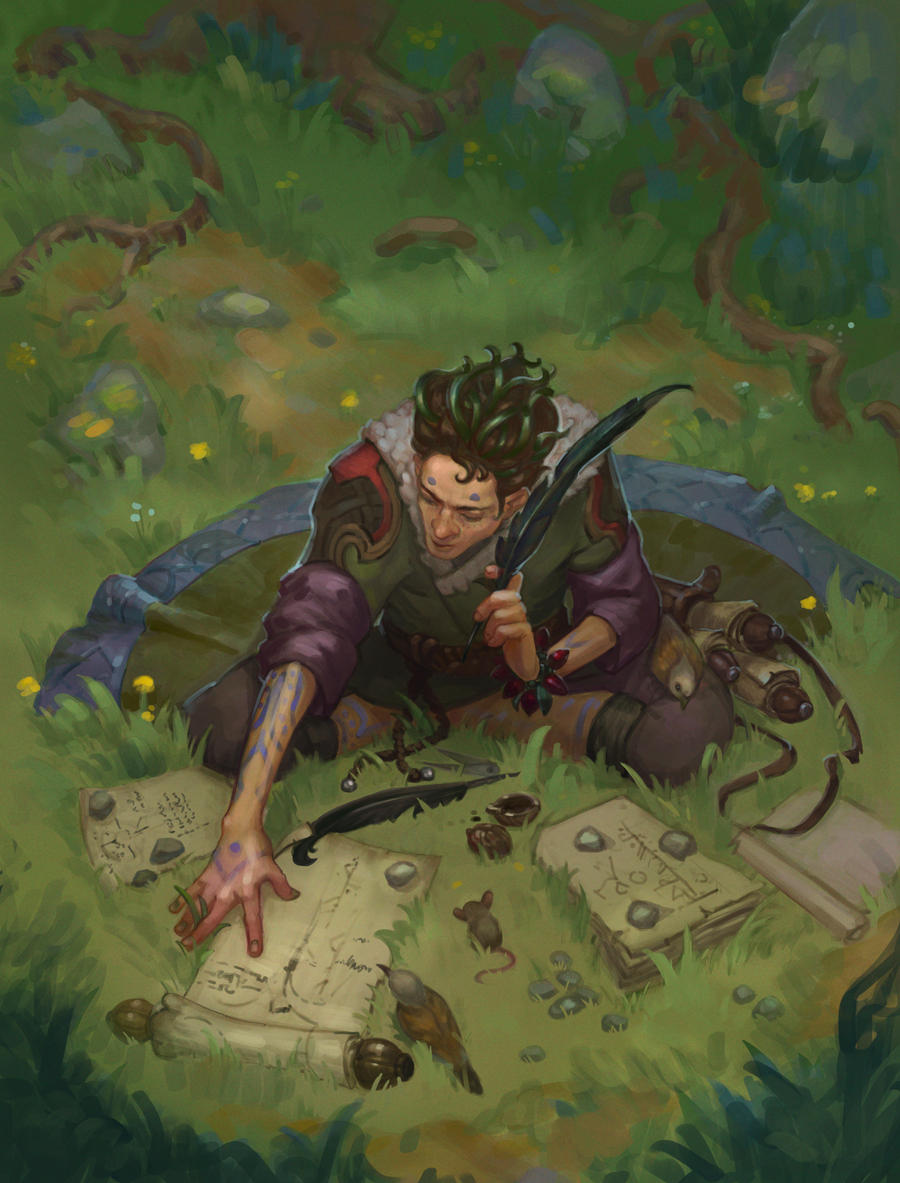
The Shapeshifter
| Level | Proficiency Bonus | Features | Ki Points | Max CR | Edges Known | |
|---|---|---|---|---|---|---|
| 1st | +2 | Ki, Savage Attack, Research Focus | 1 | 1/4 | — | |
| 2nd | +2 | Bestial Edges | 2 | 1/2 | 2 | |
| 3rd | +2 | Research Focus Feature | 3 | 1 | 2 | |
| 4th | +2 | Adventuring Boon | 4 | 1 | 2 | |
| 5th | +3 | Benign Form | 5 | 2 | 3 | |
| 6th | +3 | Primal Strikes | 6 | 2 | 3 | |
| 7th | +3 | Research Focus Feature | 7 | 3 | 4 | |
| 8th | +3 | Adventuring Boon | 8 | 3 | 4 | |
| 9th | +4 | Wild Speech | 9 | 4 | 5 | |
| 10th | +4 | Research Focus Feature | 10 | 4 | 5 | |
| 11th | +4 | — | 11 | 5 | 5 | |
| 12th | +4 | Adventuring Boon | 12 | 5 | 6 | |
| 13th | +5 | Ten Thousand Faces | 13 | 6 | 6 | |
| 14th | +5 | Research Focus Feature | 14 | 6 | 6 | |
| 15th | +5 | — | 15 | 7 | 7 | |
| 16th | +5 | Adventuring Boon | 16 | 7 | 7 | |
| 17th | +6 | — | 17 | 8 | 7 | |
| 18th | +6 | Quick Study | 18 | 8 | 8 | |
| 19th | +6 | Adventuring Boon | 19 | 9 | 8 | |
| 20th | +6 | Signature Form | 20 | 10 | 8 |
You can expend these ki points to transform your body into those of beasts you have studied (see Morphing, below). When you expend a ki point, it is unavailable to you until you finish a short or long rest, at the end of which you draw all of your expended ki back into yourself. You must spend at least 30 minutes of the rest meditating to regain your ki points.
Field Journal
At 1st level, you have a field journal containing information on six beasts of your choice that have a challenge rating of 1/4 or lower. Your journal is the repository of creatures you have discovered.
Preparing Forms
You prepare the list of beasts that are available for you to morph into. To do so, choose a number of beasts from your field journal that you have discovered equal to your Intelligence modifier + your shapeshifter level (a minimum of one creature). The beasts must be of a challenge rating no higher than the maximum CR of creatures you can morph into, as shown in the Max CR column of the Shapeshifter table.
You are also subject to the limitations shown on the Animal Morphs table. For example, at 1st level, you can morph into any beast that has a challenge rating of 1/4 or lower that doesn't have a flying or a swimming speed.
Animal Morphs
| Level | Limitations | Example | |
|---|---|---|---|
| 1st | No flying or swimming speed | Wolf | |
| 4th | No flying speed | Giant octopus | |
| 8th | — | Giant eagle |
Morphing
You can use a bonus action to expend a number of ki points equal to a prepared beast's challenge rating (a minimum of 1 ki point) to assume the shape of that creature. You can stay in a beast's shape for a number of hours equal to half your shapeshifter level, rounded down (a minimum of one hour). You then revert to your normal form unless you expend additional ki points. You can revert to your normal form earlier by using a bonus action on your turn.
You automatically revert if you fall unconscious, drop to 0 hit points, or die. When you morph into a creature, the following rules apply:
- Your game statistics are replaced by the statistics of the beast, but you retain your alignment, personality, hit points and Hit Dice, and Intelligence, Wisdom, and Charisma scores. You also retain all of your skill and saving throw proficiencies, in addition to gaining those of the beast. If the beast has the same proficiency as you and the bonus in its stat block is higher than yours, use the beast's bonus instead of yours.
- When you morph into a creature of challenge rating 1/8 or higher, you gain a number of temporary hit points equal to five times the challenge rating of the beast (a minimum of 5) + your Intelligence modifier.
- You can't cast spells, and your ability to take any action that requires hands is limited to the capabilities of your beast form. Morphing does not break your concentration if you are already concentrating when you morph.
- You retain the benefit of any features from your class, race, or other source and can use them if the new form is physically capable of doing so. However, you can't use any of your special senses, such as darkvision, unless your new form also has that sense.
- You choose whether your equipment falls to the ground in your space, merges into your new form, or is worn by it. Worn equipment functions as normal, but the GM decides whether it is practical for the new form to wear a piece of equipment, based on the creature's shape and size. Your equipment doesn't change size or shape to match the new form, and any equipment that the new form can't wear must either fall to the ground or merge with it. Equipment that merges with the form has no effect until you leave the form.
- If the beast has any lair or legendary actions, you can't use them. You do not gain any languages or equipment.
- You can continue to speak aloud in your normal voice during your transformation.
Ki Ability
Intelligence is your ki ability for your ki features. The power of your ki is determined by your study of the mysterious force that gives life to all creatures. When you are morphed into a creature, you use your Intelligence modifier when setting the saving throw DC for any of the creature's traits or actions. In addition, you use your Intelligence modifier when making an attack roll as a beast.
In addition, any spell you learn as an shapeshifter is considered a ki feature for you, so you use your ki ability whenever a spell mentions your spellcasting ability.
Ki save DC
Ki attack modifier
Your Field Journal
The creatures you study and add to your field journal as you gain levels reflect the research you conduct on your own, as well as intellectual breakthroughs you have had about the energy of life. You can spend time studying creatures in the wild to add to your journal, as well as copying accounts of beasts you've never seen before written and sketched by others.
There are two types of recordings you can make into your field journal: sketches and discoveries.
Sketches. These are quick pictures and notes you can jot down when you have seen a creature. You can make sketches of any creature, not just those you can morph into. To make a sketch of a creature, you must have seen it for at least 10 minutes within the past 24 hours (if the subject is dead or decomposed, it is up to your GM's discretion as to whether the body is too decomposed to study). It takes 1 hour to make sketches of a creature, which can be done during a short or long rest.
Simply having sketches of a creature is not enough to be able to morph into it. Sketches are used to remember creatures which you come across, but which you are not ready to morph into yet.
Discoveries. When you are ready to attempt to morph into a creature, you must spend time drawing its form with special magic inks into your journal. You can only attempt to turn your sketches into a discovery if the creature is one that you could currently morph into.
This process takes 2 hours and costs 500 New Yen per challenge rating of the creature (a minimum of 2 hours and 500 New Yen). The cost represents parchment and enough of the magic inks necessary to bring the creature's image to life. Once you have spent this time and money, you have discovered the creature and can prepare its form for morphing.
You can also use sketches or discoveries created by other creatures (such as those that might be found in another explorer's field journal or sketches in old books) to transcribe creatures into your journal, so long as the creature is sufficiently described and sketched (subject to your GM's discretion).
Replacing the Journal. You can copy a discovered creature's form from your own journal into another book using the process described above. This is just like copying a new creature into your journal, but faster and easier, since you understand your own notes and have already discovered the creature. You need spend only 1 hour and 100 New Yen for each challenge rating of the copied beast (a minimum of 1 hour and 100 New Yen).
If you lose your field journal, you can use the same procedure to transcribe the creatures that you currently have prepared into a new journal. Filling out the remainder of your field journal requires you to study new creatures as normal.
The Journal's Appearance. Your field journal is a unique compilation of drawings, notes, and moving images. It might be a finely-bound tome of creatures you discovered in a forgotten library and added to, or even just a loose collection of sheets of parchment barely held together with frayed strapping.
Learning Beasts of Higher CR
Each time you gain an shapeshifter level, you can add two beasts of your choice as discoveries to your field journal. Each of these creatures must be of a challenge rating which you can morph into, as shown in the Max CR column of the Shapeshifter table. On your adventures, you might find more creatures that you can add to your field journal (see the Your Field Journal sidebar).
Savage Attack
At 1st level, you have the ability to mimic an attack from a beast, even if you have not morphed into that creature. Your body momentarily shifts to make this attack, such as growing large claws, long fangs, or even new body parts like horns or a tail. When you finish a long rest and prepare forms for morphing, you can choose one melee attack from your prepared forms.
When you take the Attack action, you can replace any of your attacks with a savage attack. You make this attack as if you were morphed into the creature you chose. You can make your savage attack even while morphed into another creature.
The maximum challenge rating of creature you can choose a savage attack from increases to CR 1 when you reach 5th level, CR 2 when you reach 11th level, and CR 3 when you reach 17th level.
Bestial Edges
In your study of life, you have uncovered the ability to channel the abilities of animals at all times.
At 2nd level, you gain two bestial edges of your choice. Your bestial edge options are detailed at the end of the class description. If an edge requires a target to make a saving throw, the saving throw DC is equal to your ki save DC.
When you gain certain shapeshifter levels, you gain additional edges of your choice, as shown in the Edges Known column of the Shapeshifter table. Additionally, when you gain a level in this class, you can choose one of the edges you know and replace it with another edge that you could learn at that level.
Street Smart
Beginning at 2nd level, carousing, shadowboxing, and sparring all count as light activity for the purposes of resting for you. Additionally, once you have caroused in a settlement for 8 hours or more, you know all public locations in the city as if you were born and raised there and you cannot be lost by non-magical means while within the city.
Adventuring Boon
When you reach 4th level, and again at 8th, 12th, 16th, and 19th level, you gain 2 unrestricted bonus points. Players can spend these extra Points immediately to acquire Attributes for their characters or save them for future use.
You cannot increase one of your ability scores above 20 using this feature.
Benign Form
Starting at 5th level, you gain the ability to morph into small and unassuming creatures easily. You can take 10 minutes to meditate, taking no actions and expending no movement. At the end of this time, you morph into a creature of challenge rating 0 of your choice that you have prepared. This ability acts as morphing, except you do not expend any ki points.
At 15th level, any willing humanoid creatures that you designate that remain within 10 feet of you while you meditate are also morphed into the creature you choose. A creature morphed in this way makes its own choice as to what happens with its equipment, and it can choose to end the effect on itself as a bonus action.
Primal Strikes
Beginning at 6th level, your weapon attacks while morphed as well as your savage attack count as magical for the purpose of overcoming resistance and immunity to nonmagical attacks and damage.
Wild Speech
Starting at 9th level, you can use an action to cast the speak with animals spell without expending ki points. When you cast the spell in this way, you only gain the ability to comprehend and verbally communicate with creatures that you have currently prepared for morphing.
Ten Thousand Faces
Beginning at 13th level, you can add specific humanoid creatures into your journal as discoveries as you add other creatures. When you prepare and morph into one of these creatures, you change into a physical duplicate of the creature.
Quick Study
Starting at 18th level, you can take 1 minute of study with your field journal to change any or all creatures you currently have prepared for morphing. Once you use this feature, you can't use it again until you finish a long rest.
Signature Form
When you reach 20th level, you gain mastery over two forms and can morph into them with little effort. Choose two creatures of challenge rating 4 or lower that you have discovered as your signature forms. You always have these forms prepared, and they don't count against the number of forms you have prepared. You can morph into each of these creatures once without expending ki points. When you morph into a signature form in this way, you can't do so again until you finish a short or long rest.
By spending 8 hours in study, you can exchange one or both of the signature forms you chose for different forms.
Bestial Edges
If a bestial edge has prerequisites, you must meet them to learn it. You can learn the edge at the same time that you meet its prerequisites. Edges are presented alphabetically.
Acidic Touch
Prerequisite: 5th level, Oozology research focus
You can choose for your melee weapon attacks to deal acid damage instead of their normal damage.
Adhesive
Prerequisite: 9th level, Oozology research focus
You can choose to adhere to anything that touches you. A Huge or smaller target adhered to you is also grappled by you (escape DC equal to your ki save DC).
Ape's Strength
Prerequisite: 7th level
You have advantage on ability checks made to grapple or shove other creatures.
Armordillo
When you aren't wearing armor, your AC equals 10 + your Intelligence modifier.
Assassinate
Prerequisite: 15th level, Zoology research focus
You have advantage on attack rolls against any creature that hasn't taken a turn in a combat yet. In addition, any hit you score against such a creature is a critical hit.
Avoidance
Prerequisite: 15th level, Dracology research focus
If you are subjected to an effect that allows you to make a saving throw to take only half damage, you instead take no damage if you succeed on the saving throw, and only half damage if you fail.
Battle Formation
Prerequisite: 7th level, Ecology research focus
You have advantage on Dexterity saving throws while within 5 feet of your familiar.
Beast of Burden
You count as one size larger when determining your carrying capacity and the weight you can push, drag, or lift.
Bestial Power
Choose one of the following skills: Athletics, Acrobatics, Intimidation, Perception, or Stealth. You gain proficiency with the chosen skill.
You can select this edge multiple times. Each time you do so, you must choose a different skill.
Blood Frenzy
Prerequisite: 15th level
You have advantage on attack rolls against any creature that doesn't have all of its hit points.
Bombardier
Prerequisite: 12th level, Entomology research focus
You can use an action to spray a 30-foot cone of acid. Each creature in the area must make a Dexterity saving throw, taking half as much damage on a success.
The damage of this spray is equal to 1d6 + a number of d6s equal to your shapeshifter level divided by four (rounded down).
Brave
Prerequisite: 7th level, Dracology research focus
You have advantage on saving throws against being frightened.
Chameleon
Prerequisite: 9th level
You have advantage on Stealth checks made to hide. If you remain motionless for 1 minute, you are invisible until you use an action or move.
Constrictor
Prerequisite: 7th level
When you successfully grapple a creature, the target is restrained until the grapple ends. You cannot constrict more than one target in this way at once.
Corrode Metal
Prerequisite: 15th level, Oozology research focus
Any nonmagical weapon made of metal that hits you corrodes. After dealing damage, the weapon takes a permanent and cummulative -1 penalty to damage rolls. If it's penalty drops to -5, the weapon is destroyed. Nonmagical ammunition made of metal that hits you is destroyed after dealing damage.
Additionally, you can eat through 2-inch-thick, nonmagical metal in 1 round.
Cowering Prey
Prerequisite: 5th level
After you are hit with an attack and take damage, you can use your reaction to move up to half your speed. This movement does not provoke opportunity attacks.
Crag Hide
Prerequisite: 15th level
You have advantage on saving throws against any spell that targets only you (not an area).
Damage Immunity
Prerequisite: 12th level, Dracology research focus
You have immunity to the type of damage you choose for your Draconic Hallmark.
Dark Camouflage
Prerequisite: 5th level
While you are in dim light or darkness, you can use a bonus action to take the Hide action.
Darkvision
You can see in dim light within 60 feet of you as if it were bright light, and in darkness as if it were dim light. You can't discern color in darkness, only shades of gray.
If you already have darkvision, its range increases by 60 feet.
Death Burst
Prerequisite: 15th level, Primordiology research focus
When you are reduced to 0 hit points, you release a powerful burst of elemental energy. Each other target within 15 feet of you must make a Dexterity saving throw or take an amount of acid, cold, fire, lightning, or thunder damage (your choice) equal to 1d6 + a number of d6s equal to your shapeshifter level divided by three (rounded down) on a failed saving throw, or half as much damage on a successful one.
Defensive Curl
Prerequisite: 12th level
When an attacker you can see hits you with an attack, you can use your reaction to halve the attack's damage against you.
Detect Sentience
Prerequisite: 12th level, Monstrology research focus
You can sense the presence and location of any target within 60 feet of you that has an Intelligence score of 3 or higher, regardless of interposing barriers, unless the target is protected by a mind blank spell.
Earthborne
Prerequisite: 12th level
You gain tremorsense to a range of 30 feet, and a burrowing speed of 30 feet. You can burrow through nonmagical, unworked earth and stone. While doing so, you don't disturb the material you move through. If you already have a burrowing speed, the speed increases by 30 feet.
Echolocation
Prerequisite: 9th level
You can use a bonus action to focus your senses. Until the beginning of your next turn, you have blindsight to a range of 60 feet. You cannot use this edge if you are deafened.
Electric Shock
Prerequisite: 5th level, Oceanography research focus
When a creature you can see hits you with a melee attack, you can use your reactino to deliver an electric shock to the attacker, which takes an amount of lightning damage equal to your Intelligence modifier.
Elemental Absorption
Prerequisite: 12th level, Primordiology research focus
When you are subjected to acid, cold, fire, lightning, or thunder damage, you can choose to take no damage and instead regain a number of hit points equal to your shapeshifter level.
You can use this edge once and regain the ability to do so when you finish a short rest.
Elemental Aura
Prerequisite: 7th level, Primordiology research focus
At the start of each of your turns, each creature within 5 feet of you takes 1d4 acid, cold, fire, lightning, or thunder damage (your choice).
Elemental Movement
Prerequisite: Primordiology research focus
You can move through nonmagical difficult terrain without expending extra movement.
Elephant Stance
Prerequisite: 7th level
When you fail an ability check or saving throw which would cause you to be knocked prone or moved from your space, you can use your reaction to reroll the check or saving throw. You must keep the second roll.
Far Shape
Prerequisite: 9th level, Ecology research focus
You can use ki points to morph your familiar's form so long as it is within range of your telepathic link.
Fear Aura
Prerequisite: 15th level
Any hostile target to you that starts its turn within 30 feet of you must make a Wisdom saving throw, unless you are incapacitated. On a failed save, the target is frightened until the start of its next turn. If the target's saving throw is successful, the target is immune to your Fear Aura for the next 24 hours.
Foul Stench
Prerequisite: 7th level, Monstrology research focus
Any creature that starts its turn within 5 feet of you must make a Constitution saving throw or be poisoned until the start of its next turn. If a target's saving throw is successful, the target is immune to your Foul Stench for the next 24 hours.
Frog Legs
Prerequisite: 5th level
Your long jump is up to 20 feet and your high jump is up to 10 feet, with or without a running start.
Frog Slime
Prerequisite: 7th level
You have advantage on ability checks and saving throws made to resist becoming grappled or restrained.
Horns of the Ram
Prerequisite: 5th level
When you use your action to Dash, you can use a bonus action to make one melee weapon attack or to make a shove attack against a creature.
Immutable Form
Prerequisite: 9th level, Monstrology research focus
You can choose to be immune to any spell or effect that would alter your form.
Inscrutable
Prerequisite: 12th level, Oozology research focus
You are immune to any effect that would sense your emotions or read your thoughts, as well as any divination spell that you refuse. Wisdom (insight) checks made to ascertain your intentions or sincerity have disadvantage.
Invisible in Water
Prerequisite: 9th level, Oceanography research focus
You are invisible while fully immersed in water.
Iron Stomach
Prerequisite: 12th level, Zoology research focus
You have immunity to disease and poison.
Jet Propulsion
Prerequisite: 7th level, Oceanography research focus
You grow small siphons that allow you to quickly move around. You can take the Dash action as a bonus action.
Keen Senses
You have advantage on Wisdom (Perception) checks that rely on hearing or smell.
Kestrel Switftness
Prerequisite: 9th level
Your speed increases by 10 feet. This applies to all forms of movement.
Labyrinthine Recall
Prerequisite: Monstrology research focus
You can perfectly recall any path you have traveled within the past 30 days.
Lightning Bug
You can use an action to begin or cease shedding bright light in a 30-foot radius and dim light for an additional 30 feet.
Limited Telepathy
Prerequisite: Dracology research focus
You can magically communicate simple ideas, emotions, and images telepathically with any creature within 120 feet of you that can understand a language.
Magnetic Sense
Prerequisite: Oceanography research focus
You always know which way is north, and you can't become lost when traveling to a place you have been before except through magical means.
Mimicry
You can mimic sounds you have heard, including voices. A creature that hears the sounds you make can tell they are imitations with a successful Wisdom (Insight) check opposed by your Charisma (Deception) check.
Morph Dancing
Prerequisite: 15th level, Ecology research focus
Whenever your familiar would be reduced to 0 hit points while it is morphed within 30 feet of you, you can use your reaction and expend additional ki points to morph your familiar into a new form. Any excess damage your familiar takes carries over to its new form.
Mounted Combat
Prerequisite: 5th level, Ecology research focus
You cannot be knocked off of a mount unless both you and your mount are incapacitated.
Nature's Bounty
Prerequisite: 5th level, Botany research focus
You can cast either the entangle or the goodberry spell, and regain the ability to do so when you finish a short rest. You can cast this spells while in your Plant Shape.
Nondetection
Prerequisite: 15th level, Oceanography research focus
You can't be targeted or detected by any divination magic or perceived through magical scrying sensors.
Ooze Friendship
Prerequisite: Oozology research focus
Oozes regard you and your allies as a friendly and non-threatening presence. Oozes do not regard you as hostile unless they have been specifically ordered or compelled to attack, or if you or your companions have done anything harmful to the ooze in the past 24 hours.
Photosynthesis
Prerequisite: 9th level, Botany research focus
Whenever you are in bright light and Take Root, you regain the maximum number of hit points possible from any healing.
Poison Sense
Prerequisite: 5th level, Entomology research focus
You can detect whether a substance is poisonous by taste, touch, or smell.
Poison Spores
Prerequisite: 12th level, Botany research focus
Whenever you take damage from a creature within 5 feet of you, you release a cloud of spores towards the creature that damaged you. The target must succeed on a Constitution saving throw or be poisoned until the end of its next turn.
Pollen Cloud
Prerequisite: 7th level, Botany research focus
You release a cloud of pollen each time you take damage. Each other target within 5 feet of you must succeed on a Constitution saving throw or be blinded until the end of its next turn. If a target's saving throw is successful, the target is immune to your Pollen Cloud for the next 24 hours.
Power of the Elements
Prerequisite: 5th level, Primordiology research focus
When you gain this bestial edge, choose one of the following spells: fire bolt, hydro blast, skyward fling, or stoneguard. You can cast the spell you chose even while morphed.
You can choose this edge multiple times. Each time you do so, you must choose a different spell.
Prehensile Tail
Prerequisite: Zoology research focus
You grow a tail that can be finely manipulated. You can interact with one additional object or feature of the environment for free during your turn using your tail. You can use your tail to manipulate an object, open an unlocked door or container, stow or retrieve an item from an open container, pour the contents out of a vial, or other, similar actions. Your tail can't attack, use a shield or weapon, activate magical items, or carry more than 5 pounds.
Rampage
Prerequisite: 5th level, Dracology research focus
When you reduce a target to 0 hit points with a melee attack on your turn, you can take a bonus action to move up to half your speed and make a melee weapon attack.
Reckless
Prerequisite: 5th level, Zoology research focus
At the start of your turn, you can gain advantage on all melee weapon attack rolls you make during that turn, but attack rolls against you have advantage until the start of your next turn.
Regenerate
Prerequisite: 12th level, Oceanography research focus
If you lose a body part, the missing part regrows and returns to full functionality after 1d6 + 1 days if you have at least 1 hit point for the entire duration.
Relentless
Prerequisite: 7th level, Zoology research focus
When you are reduced to 0 hit points in any form, you can choose to be reduced to 1 hit point instead.
You can use this edge once and regain the ability to do so when you finish a short rest.
Shimmering
Prerequisite: 15th level, Entomology research focus
You can expend 4 ki points as an action to cast the confusion spell. You can cast this spell while morphed.
Slippery Escape
Prerequisite: 9th level, Zoology research focus
You don't provoke opportunity attacks when you move out of an enemy's reach.
Spider Climb
Prerequisite: 9th level, Entomology research focus
You can climb difficult surfaces, including upside down on ceilings, without needing to make an ability check.
Spider Silk
Prerequisite: 7th level, Entomology research focus
You can expend 2 ki points as an action to cast the web spell. You can cast this spell while morphed.
Steadfast
Prerequisite: 12th level, Ecology research focus
You can't be frightened while you can see an allied creature within 30 feet of you.
Telepathic Bond
Prerequisite: Ecology research focus
The range of your telepathic link to your familiar increases to 1 mile.
Tendril
Prerequisite: 5th level, Monstrology research focus
You can have up to four tendrils at a time which grow from you and can be used to make attacks. When you take the Attack action, you can replace any of your attacks with a tendril attack. A tendril attack is a melee weapon attack with a reach of 10 feet which deals 1d6 bludgeoning damage on a hit. You can use your Intelligence for the attack and damage rolls.
Thorned Hide
Prerequisite: Botany research focus
At the start of each of your turns, you deal 1d4 piercing damage to any creature you are grappled or any creature which is grappled you.
Tiger Pounce
Prerequisite: 5th level
If you move at least 20 feet straight toward a creature and then hit it with a melee attack on the same turn, the target takes an additional 1d6 damage from the attack. If the target is a creature, it must succeed on a Strength saving throw or be knocked prone.
Timeless Body
Prerequisite: 15th level, Botany research focus
For every 10 years that pass, your body ages only 1 year, and you can't be magically aged.
Transparent
Prerequisite: 7th level, Oozology research focus
Even when you are in plain sight, it takes a successful Wisdom (Perception) check (DC equal to your morph save DC) to spot you if you have neither moved nor attacked.
Two Heads
Prerequisite: 15th level, Monstrology research focus
You grow a second head. You have advantage on Wisdom (Perception) checks and on saving throws against being blinded, charmed, deafened, frightened, stunned, and knocked unconscious.
Water Walk
Prerequisite: 9th level, Primordiology research focus
You can stand and move on liquid surfaces as if they were solid ground.
Waterborne
Prerequisite: 5th level
You can breathe both air and water. You gain a swimming speed of 25 feet and a walking speed of 25 feet if your walking speed is not already faster. If you already have a swimming speed, the speed increases by 25 feet.
Web Walker
Prerequisite: Entomology research focus
While in contact with a web, you know the exact location of any other creature in contact with the same web. You ignore movement restrictions caused by webbing.
Wolf Pack
Prerequisite: 12th level
You have advantage on an attack roll against a creature if at least one of your allies are within 5 feet of the creature and the ally isn't incapacitated.
Research Focus
At 1st level, a shapeshifter chooses their Research Focus, each of which is detailed below.
Botany
Botanists study not only those living plants that grow across the world's surface, but also those plants which have taken on moving forms. Plants which can think and act on their own. Botanists sometimes feel more at home among leaves, trees, and foliage than they do amongst people.
Phytological Expertise
Beginning at 1st level when you choose this research focus, you gain an affinity with plant creatures. Whenever you make an Intelligence ability check related to these creatures, you add your proficiency bonus to the check if you are not already proficient. If you are proficient, your proficiency bonus for any such ability check is doubled.
Additionally, you can prepare and morph into plant creatures as though they were beasts.
Plant Form
At 3rd level, when you morph into a beast, you can choose to become a plant creature in the shape of that beast. While in your Plant Form, the following rules apply:
- Your type is changed to plant.
- Once per turn when a creature within 5 feet of you hits you with a melee attack, the attacker takes 1d4 piercing damage.
- While you remain motionless, you are indistinguishable from a normal plant.
Take Root
Starting at 7th level, whenever you are morphed into a plant, you can use an action to plant roots into the ground or uproot yourself. While rooted, you gain the following properties:
- Your movement is reduced to 0, your are immune to the prone condition, and you have advantage on Strength checks and Strength saving throws.
- You can use your action to make a grapple or shove attack against a creature within 15 feet of you. Once on each of your turns, you can move a target grappled by you in this way anywhere within 15 feet of you (no action required).
- You can spend 1 minute pulling nutrients from the ground, taking no actions. At the end of this time, you can expend Hit Dice to regain hit points as though you had completed a short rest.
Soft Thistles
Beginning at 10th level, you can spend 10 minutes weaving a comfortable bed out of plants which ensures a peaceful rest of a Medium or smaller creature. A creature which finishes a short or long rest in such a bed within the next 24 hours recovers from any blindness, deafness, disease, or poison affecting it, and if the creature expends Hit Dice to regain hit points, it recovers an additional 1d6 hit points.
Living with the Land
Starting at 14th level, you can cast any combination of the plant growth, speak with plants, and transport via plants spells a number of times equal to 1 + your Intelligence modifier (a minimum of one spell) without expending ki points, and regain all expended uses when you finish a long rest. You can cast these spells while in your Plant Form.
Dracology
Dragons are some of the most fearsome and magical creatures in existence. Their incredible power inspires some of the most dangerous research in an effort to understand these powerful monsters. Dragons are known to be more intelligence than most subjects of shapeshifters research, so dracologists must learn to forge relationships with these creatures even as they study them.

Draconic Expertise
Beginning at 1st level when you choose this research focus, you gain an affinity with dragons. Whenever you make an Intelligence ability check related to these creatures, you add your proficiency bonus to the check if you are not already proficient. If you are proficient, your proficiency bonus for any such ability check is doubled.
Additionally, you can prepare and morph into dragons as though they were beasts. However, as highly magical creatures, it requires more of your energy to morph into them. You must expend one additional ki point to morph into a dragon of challenge rating 4 or lower, and two additional ki points to morph into a dragon of CR 5 or higher. The draconic forms you take do not have fly or swim speeds until you reach the appropriate level of the Animal Morphs table.
When you use a trait or take an action that can only be used a limited number of times each day (such as an adult black dragon's Legendary Resistance trait), you can only use that feature the number of times per day listed as part of the feature, even if you morph into the creature multiple times or you morph into a different creature with the same feature.
Finally, you can speak, read, and write Draconic.
Draconic Hallmarks
At 3rd level, you begin to take on some of the traits of dragons. You can choose one of the following damage types: acid, cold, fire, lightning, or thunder. You gain resistance to that type of damage. You can change the type of damage when you finish a short or long rest.
In addition, you can cast the identify spell without expending ki points and without needing to provide material components.
Legendary Reptile
Starting at 7th level, you can take a bonus action on each of your turns in combat. This action can be used only to take the Dash or Search actions.
Magical Sight
Beginning at 10th level, you have blindsight to a range of 15 feet.
Awe-Inspiring
Starting at 14th level, you can use an action to morph into a dragon with a maximum challenge rating equal to your shapeshifter level for 10 minutes. When you do so, you must expend a number of ki points equal to the dragon's challenge rating.
You can use this feature once and regain the ability to do so when you finish a short rest.

Ecology
Shapeshifters typically focus their research on certain types of creatures, learning how they live out in the wilderness, away from civilization. Ecologists take this a step further, finding themselves on the edges of society, away from other peoples for long periods of time, researching the interactions between organisms and their environment. These shapeshifters study the unique interactions between wild creatures and their environments that are rarely, if ever, seen by others.
Hardy Explorer
Living on the fringes of society has honed your body to be more durable than most. At 1st level when you choose this research focus, you have advantage on Constitution saving throws made against exhaustion.
In addition, you gain proficiency with medium armor, shields, and martial weapons.
Pet Partner
At 3rd level, you can cast the find familiar spell, but only as a ritual. When you cast this spell, your familiar is a beast instead of a celestial, fey, or fiend, and you can choose its form from your prepared forms of challenge rating 1/8 or lower in addition to the spell's normal options. Your familiar can take the Attack action, but cannot take the Multiattack action.
In addition, you can touch your familiar and use a bonus action to expend ki points, morphing your familiar's body instead of your own into a beast you have prepared. Morphing functions the same way for your familiar that it would function for you, except that instead of gaining temporary hit points, your familiar assume's the beast's hit points and Hit Dice. When it reverts to its normal form, it returns to the number of hit points it had before it morphed. However, if it reverts as a result of dropping to 0 hit points, any excess damage carries over to its normal form.
When you gain the Primal Strikes feature at 6th level, that feature applies to your familiar's attacks while morphed.
Team Attack
Starting at 7th level, if you take the Attack action or Multiattack action and your familiar can see you, your familiar can use its reaction to make a melee attack.
Companion Growth
Beginning at 10th level, your familiar gains two bestial edges that you are qualified to take. When you gain a level in this class, you can choose one of your familiar's edges and replace it with another edge you could learn at that level.
Coordinated Save
Starting at 14th level, whenever your familiar makes a saving throw while it is within 30 feet of you, it gains a bonus to the saving throw equal to your Intelligence modifier (a minimum bonus of +1). You must be conscious to grant this bonus.
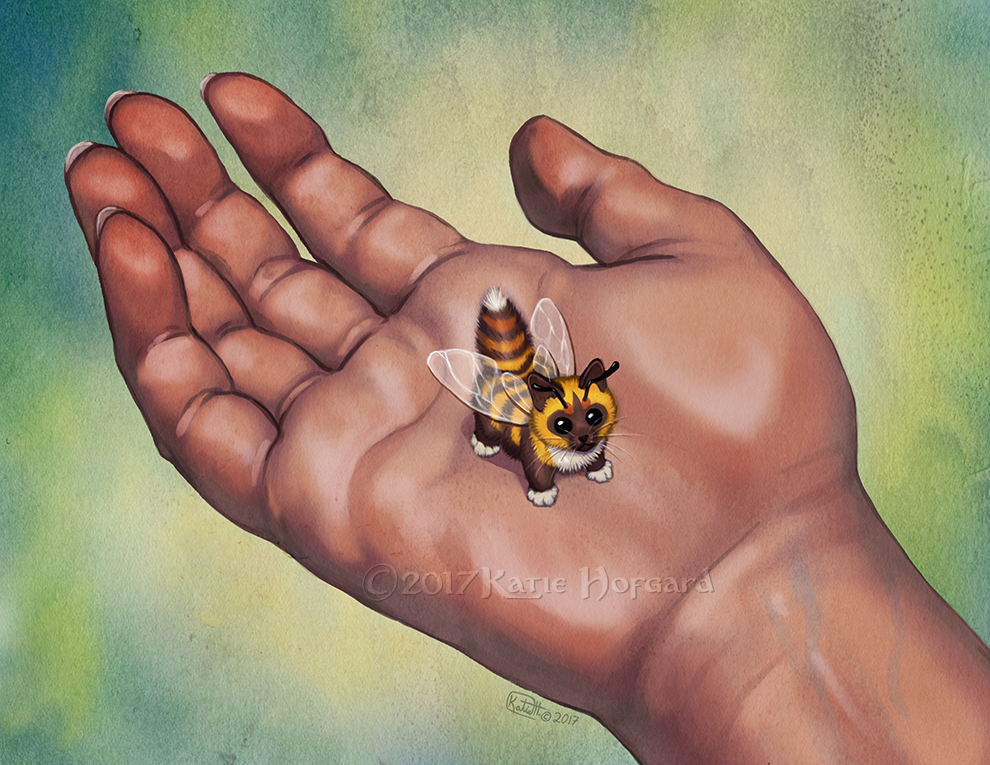
Entomology
An entomologist is an shapeshifter which studies bugs and insects. While others might feel these creatures are creepy or strange, an entomologist knows that they are animals just like any other, worthy of study and research.
Bug Expertise
Beginning at 1st level when you choose this research focus, you gain an affinity with bugs, arachnids, and insect-like creatures.
Whenever you make an Intelligence ability check related to these creatures, you add your proficiency bonus to the check if you are not already proficient. If you are proficient, your proficiency bonus for any such ability check is doubled.
Additionally, you can morph into a swarm of insects, a form which is always prepared for you and which does not count against the number of forms you have prepared. Your swarm form deals its normal damage while you have any temporary hit points remaining from morphing into it, and its reduced damage if you do not have any of these temporary hit points remaining.
Dark Skittering
At 3rd level, you gain the ability to move through any other creature's space, no matter its size.
Swarm Form
Starting at 7th level, you can morph into a swarm of insects that is a higher challenge rating than your normal swarm of insects form, expending ki points for higher forms as normal.
An empowered swarm has the following changes to its stat block:
Animal Morphs
| CR | Size | Speeds | Bonus to Hit | Number of Bite Attacks | |
|---|---|---|---|---|---|
| 1 | Medium | +5 ft. | +3 | 1 | |
| 2 | Medium | +5 ft. | +3 | 1 | |
| 3 | Medium | +5 ft. | +3 | 1 | |
| 4 | Large | +10 ft. | +4 | 2 | |
| 5 | Large | +10 ft. | +4 | 2 | |
| 6 | Large | +10 ft. | +4 | 2 | |
| 7 | Huge | +15 ft. | +5 | 3 | |
| 8 | Huge | +15 ft. | +5 | 3 | |
| 9 | Gargantuan | +20 ft. | +6 | 4 | |
| 10 | Gargantuan | +20 ft. | +6 | 4 |
Cocoon
Beginning at 10th level, you can spend 10 minutes weaving a cocoon, which completely covers your body. While in your cocoon, you are restrained and unaware of your surroundings unless a creature takes an action to get your attention or you take any damage. You can emerge from your cocoon using half of your movement.
While in your cocoon, you finish a long rest in only 4 hours, and you recover all expended Hit Dice.
If you are at 0 hit points but are stable, you begin a slow process of exuding silk over your body, creating a cocoon over the course of 10 minutes. Spending 4 hours in this cocoon grants you the benefits of a long rest.
Hive Mind
Starting at 14th level, you can use an action and expend 1 ki point to summon a cloud of buzzing, angry insects in a 10-foot radius around you for 1 minute. Until the insects leave, the area is difficult terrain, and when a creature moves into or within the area, it takes 1d4 piercing damage for every 5 feet it travels.
If you are in your swarm of insects form during this time, your swarm of insects form also gains these properties.
Monstrology
Shapeshifters who make monstrosities their focus go outside of the natural world in their research, studying creatures which have been classified as unnatural horrors. While shapeshifters pursuing this study might be seen as eccentric at best, their research is invaluable in investigating those creatures which many would say are magical accidents that should be destroyed.

Monster Expertise
Beginning at 1st level when you choose this research focus, you gain an affinity with monstrosities. Whenever you make an Intelligence ability check related to these creatures, you add your proficiency bonus to the check if you are not already proficient. If you are proficient, your proficiency bonus for any such ability check is doubled.
Additionally, you can prepare and morph into some monstrosities as though they were beasts. However, as highly magical creatures, it requires more of your energy to morph into them. You must expend one additional ki point to morph into a monstrosity of challenge rating 4 or lower, and two additional ki points to morph into a monstrosity of CR 5 or higher. The monstrous forms you take do not have fly or swim speeds until you reach the appropriate level of the Animal Morphs table.
When you use a trait or take an action that can only be used a limited number of times each day (such as a darkmantle's Darkness Aura trait), you can only use that feature the number of times listed as part of the feature, even if you morph into the creature multiple times or you morph into a different creature with the same feature.
Sudden Mutation
At 3rd level, whenever you finish a long rest, you can choose one of your bestial edges and replace it with another edge.
Changing Bodies
Starting at 7th level, you gain the ability to share some of your bestial edges with other creatures. You can spend 10 minutes concentrating, taking no actions and expending no movement. At the end of this time, you can choose two willing creatures within 10 feet of you and one of your bestial edges. The creatures gain the benefits of that bestial edge until you finish your next long rest. Once you share a bestial edge in this way, you can't do so again until you finish a long rest.
Shifting Form
Beginning at 10th level, you can expend 2 ki points as an action to cast the alter self spell. You can cast this spell while morphed.
Baleful Morph
Starting at 14th level, you can attempt to trap a creature's mind in a new body. As an action, you can touch a creature and expend 4 ki points to cast the polymorph spell on that creature. The target can only be transformed into a beast you have prepared for morphing.
Oceanography
Oceanographers study in the most inhospitable places in the world—the depths of the ocean. Marine life encompasses a multitude of different animals, and oceanographers travel to some of the most difficult-to-reach locations in order to study and research these creatures.
Aquatic Expertise
Beginning at 1st level when you choose this research focus, you gain an affinity with creatures that have innate swimming speeds. Whenever you make an Intelligence ability check related to these creatures, you add your proficiency bonus to the check if you are not already proficient. If you are proficient, your proficiency bonus for any such ability check is doubled.
Additionally, you can ignore the swimming speed limitation of the Animal Morphs table.
Finally, you gain proficiency with navigator's tools and vehicles (water).
Lesser Kraken
Huge Monstrosity, chaotic evil
- Armor Class 16 (natural armor)
- Hit Points 14d12 + 70
- Speed 15 feet, swim 60 ft.
STR DEX CON INT WIS CHA 22 (+6) 9 (-1) 20 (+5) 18 (+4) 14 (+2) 16 (+3)
- Damage Immunities lightning
- Condition Immunities frightened, paralyzed
- Senses blindsight 30 ft., passive Perception 12
- Languages understands the languages you speak
Amphibious. The kraken can breathe air and water.
Siege Monster. The kraken deals double damage to objects and structures.
Actions
Multiattack. The kraken makes three tentacle attacks, each of which it can replace with one use of Fling.
Bite. Melee Weapon Attack: +10 to hit, reach 5 ft., one target. Hit: 2d8 + 6 piercing damage.
Tentacle. Melee Weapon Attack: +10 to hit, reach 20 ft., one target. Hit: 3d6 + 6 bludgeoning damage and the target is grappled (escape DC 16). Until the grapple ends, the target is restrained. The kraken has eight tentacles, each of which can grapple one target.
Fling. One Medium or smaller object held or creature grappled by the kraken is thrown up to 30 feet in a random direction and knocked prone. If a thrown target strikes a solid surface, the target takes 1d6 bludgeoning damage for every 10 feet it was thrown. If the target is thrown at another creature, that creature must succeed on a DC 16 Dexterity saving throw or take the same damage and be knocked prone.
Sea Legs
At 3rd level, you gain the Darkvision and Waterborne bestial edges (ignoring prerequisites), which do not count against your normal number of bestial edges. You cannot replace either of these edges when you gain a level in this class.
Aqueous Adaptations
Beginning at 7th level, your body changes further to allow you to visit the deepest depths of the ocean. You are immune to damage caused by the pressure of being in deep water.
Additionally, you have blindsight to a range of 5 feet. While underwater, the range of this blindsight increases to 30 feet.
Finally, you can expend 1 ki point as an action to cast the fog cloud spell. You can cast this spell while morphed.
Call of the Sea
Starting at 10th level, you can cast the locate animals or plants and water breathing spells, but only as rituals.
Sea Monster
Beginning at 14th level, you can expend 10 ki points to morph into a hydra or a lesser kraken for 10 minutes.
You can use this feature once and regain the ability to do so when you finish a long rest.
Oozology
Some researchers seek to understand the strangest of lifeforms: oozes. There is serious debate amongst shapeshifters as to whether oozes are even truly alive in the traditional sense, or whether they are simply magically animated slime which work towards a mysterious purpose.
Goo Expertise
Beginning at 1st level when you choose this research focus, you gain an affinity with oozes. Whenever you make an Intelligence ability check related to these creatures, you add your proficiency bonus to the check if you are not already proficient. If you are proficient, your proficiency bonus for any such ability check is doubled.
Additionally, you can prepare and morph into oozes as though they were beasts.
Ooze Form
At 3rd level, when you morph into a beast, you can choose to become an ooze in the shape of that beast. While in your Ooze Form, the following rules apply:
- Your type is changed to ooze.
- You can move through a space as narrow as 1 inch wide without squeezing.
- You are immune to acid damage and have immunity to the grappled condition.
Oozologist's Oozeling
Tiny ooze, unaligned
- Armor Class 8
- Hit Points 1d4 + 1
- Speed 15 feet, climb 15 ft.
STR DEX CON INT WIS CHA 12 (+1) 6 (-2) 12 (+1) 6 (-2) 6 (-2) 4 (-3)
- Damage Immunities acid, poison
- Condition Immunities blinded, charmed, deafened, exhaustion, frightened, poisoned, prone
- Senses blindsight 60 ft. (blind beyond this radius), passive Perception 8
- Languages —
Amorphous. The oozeling can move through a space as narrow as 1 inch wide without squeezing.
Spider Climb. The oozeling can climb difficult surfaces, including upside down on ceilings, without needing to make an ability check.
Actions
Pseudopod. Melee Weapon Attack: attack bonus equal to your ki attack bonus, reach 5 ft., one target. Hit: 1d4 + 1 bludgeoning damage plus 1d6 acid damage.
Duplicate
Beginning at 7th level, the bits of ooze that fall off of you in battle gain their own life. When you are morphed into an ooze and you take damage, you can use your reaction to split an oozeling off of yourself. See this creature's statistics in the Oozologist's Oozeling stat block.
An oozeling shares your initiative count, but it takes its turn immediately after yours. It can move and use its reaction on its own, but the only action it takes on its turn is the Dodge action, unless you take a bonus action on your turn to command it to take the action in its stat block or to take the Dash, Disengage, or Help action. When you command the oozeling to attack, it uses your ki attack modifier for its attack roll.
An oozeling disappears if you dismiss it as an action, its hit points drop to 0, or when you are no longer an ooze.
Beware the Blob
Starting at 10th level, whenever you are morphed into an ooze, you gain the following properties:
Engulf. Once on each of your turns you can attempt to enter the space of a creature that is your size or smaller. The target must make a Dexterity saving throw.
On a successful save, the target can choose to be pushed 5 feet back or to the side of you. A target that chooses not to be pushed suffers the consequences of a failed saving throw. On a failed save, you enter the target's space, and the target takes 3d6 acid damage and is engulfed. The engulfed creature can't breathe, is restrained, and takes 6d6 acid damage at the start of each of your turns. When you move, the engulfed creature moves with you.
An engulfed creature can try to escape by taking an action to make a Strength check (DC equal to your ki save DC). On a success, the creature escapes and enters a space of its choice within 5 feet of you.
Ooze Cube. Creatures engulfed by you can be seen but have total cover. A creature within 5 feet of you can use an action to pull a creature or object out of you. Doing so requires a successful Strength check (DC equal to your ki save DC), and the creature making the attempt takes 3d6 acid damage. You can have one creature of your size or four creatures that are smaller than you engulfed at a time.
Slime Horde
Beginning at 14th level, you can command up to three oozelings under your control with your bonus action. You must command the oozelings to take the same action.
Primordiology
Some shapeshifters seek to understand the creatures that existed before all others: elementals. There is contention as to whether elementals should truly be included in taxonomies with other creatures, as their forms can often be alien and unlike any other creatures which exist. Nevertheless, shapeshifters who study these creatures see how their primal forms gave rise to the land, seas, and sky, and seek to emulate their power.
Elemental Expertise
Beginning at 1st level when you choose this research focus, you gain an affinity with elementals. Whenever you make an Intelligence ability check related to these creatures, you add your proficiency bonus to the check if you are not already proficient. If you are proficient, your proficiency bonus for any such ability check is doubled.
Additionally, you can prepare and morph into elementals as though they were beasts. However, as highly magical creatures, it requires more of your energy to morph into them. You must expend one additional ki point to morph into an elemental of challenge rating 4 or lower, and two additional ki points to morph into an elemental of CR 5 or higher. The elemental forms you take do not have fly or swim speeds until you reach the appropriate level of the Animal Morphs table.
Elemental Form
At 3rd level, when you morph into a beast, you can choose to become an air, earth, fire, or water elemental (your choice) in the shape of that beast. While in your Elemental Form, the following rules apply:
- Your type is changed to elemental.
- You are immune to the prone condition.
- You can move through a space as narrow as 1 inch wide without squeezing.
Primal Protection
Beginning at 7th level, whenever you are morphed into an elemental, you gain an additional ability determined by your elemental type:
Air. When you are subject to a ranged weapon attack from a creature you can see, you can use your reaction to impose disadvantage on the attack roll.
Earth. You deal double damage to objects and structures, and while you are standing on earth or stone, your walking speed increases by 10 feet.
Fire. Once per turn when a creature within 5 feet of you hits you with a melee attack, the attacker takes 1d4 fire damage.
Water. You can use your action to make a grapple or shove attack against a creature within 15 feet of you. Once on each of your turns, you can move a target grappled by you in this way anywhere within 15 feet of you (no action required).
If you morph into an elemental but which does not have an explicit type (such as a magmin), you gain the ability described above which best fits your form (subject to your GM's discretion).
Grove of the Ancients
Starting at 10th level, you can cast the elemental grove spell, but only as a ritual. When you do so, you can choose air, earth, fire, or water versions of any of the spell's effects.
Primordial Ally
Beginning at 14th level, when you morph into an elemental, you can summon mephits to aid you. You summon one mephit if your form is of challenge rating 4 or lower, or two mephits if your form is of CR 5 or higher. You choose the mephits that appear based on your elemental type:
- Air. Dust or ice mephits.
- Earth. Dust or magma mephits.
- Fire. Magma or steam mephits.
- Water. Ice or steam mephits.
Each mephit shares your initiative count, but takes its turn immediately after yours. It can move and use its reaction on its own, but the only action it takes on its turn is the Dodge action, unless you take a bonus action on your turn to command it to take an action from its stat block or to take the Dash, Disengage, or Help action. When you command the mephit to attack, it uses your ki attack modifier for its attack roll instead of the bonus to hit in its stat block.
A mephit disappears if you dismiss it as an action, its hit points drop to 0, or when you are no longer an elemental.
Zoology
While other shapeshifters study fantastical and rare creatures, zoologists know the value of beasts and their many incredible forms. Zoologists come to know beast both great and small, and even those creatures which have gone extinct.
Biological Expertise
Beginning at 1st level when you choose this research focus, you gain an affinity with beasts. Whenever you make an Intelligence ability check related to these creatures, you add your proficiency bonus to the check if you are not already proficient. If you are proficient, your proficiency bonus for any such ability check is doubled.
Additionally, you can add sketches of beasts to your field journal even if the body of the creature is heavily decomposed or only a skeleton remains.
Thick Hide
At 3rd level, when you morph into a beast of challenge rating 1/8 or higher, you gain a number of temporary hit points equal to six times the challenge rating of the beast (a minimum of 6) + your Intelligence modifier.
Natural Talents
Beginning at 7th level, you gain two additional bestial edges of your choice.
Blessings of the Wild
Starting at 10th level, your animal adaptations take root. You only require half the normal amount of food and water a creature of your size would require.
In addition, you have advantage on any Constitution check or saving throw you make to survive or move through areas with severe natural environments such as extreme cold, extreme heat, high winds, heavy precipitation, high altitudes, and other, similar environments.
King of Beasts
Beginning at 14th level, you can share your ability to morph with other creatures. When you expend ki points to morph into a beast's form, you can expend additional ki points.
For every two additional ki points you expend, you can choose one willing creature within 15 feet of you. You and all chosen creatures are morphed into the chosen beast. For other creatures, the morph lasts for 10 minutes. A creature morphed in this way makes its own choice as to what happens with its equipment, and it can choose to end the effect on itself as a bonus action.
You can use this feature once and regain the ability to do so when you finish a long rest.
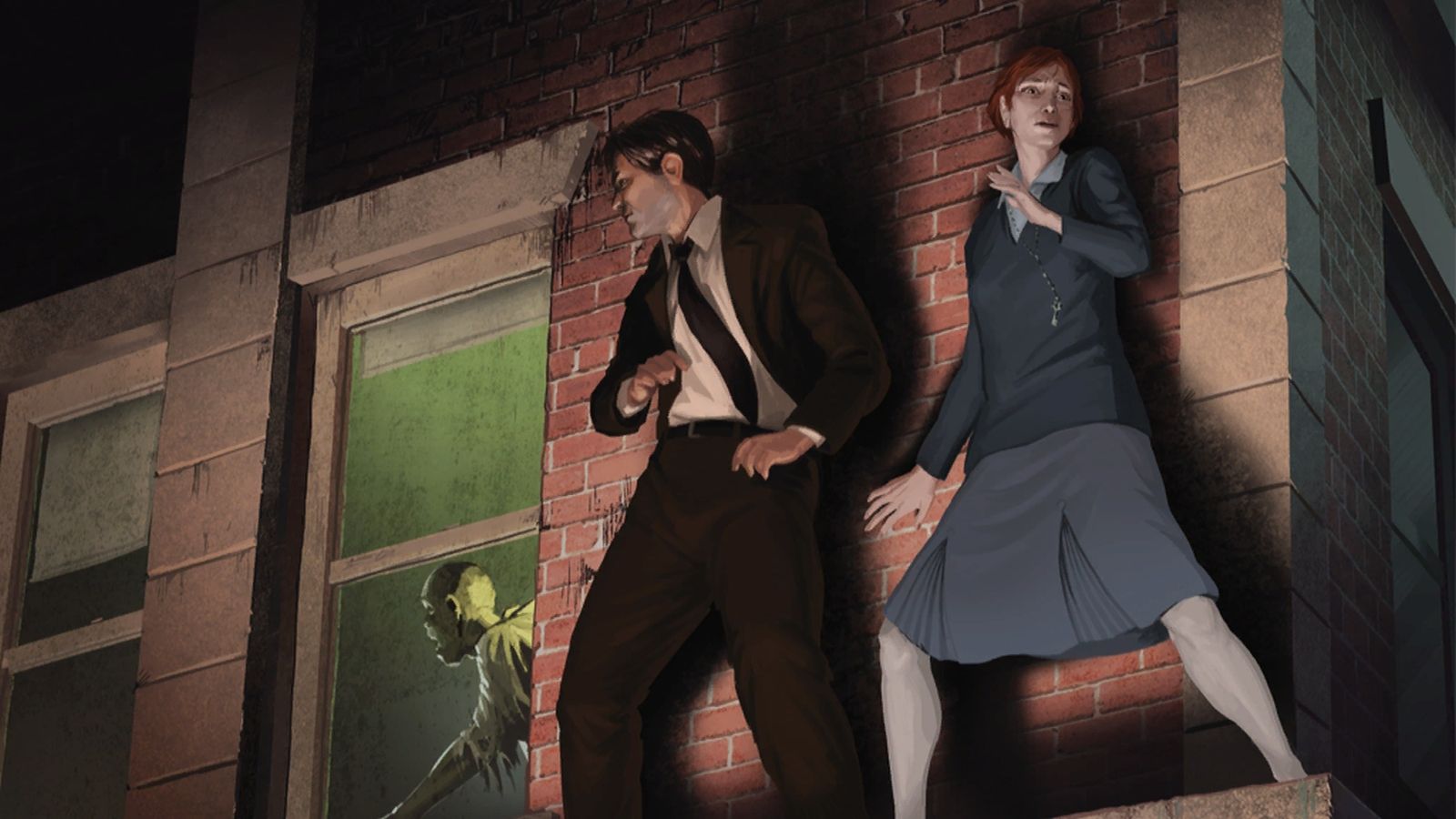
Warden
An immense goblinoid army stretches from the horizon to the castle walls. In the breach, a single knight holds back the horde, eviscerating all comers, and allowing none to pass.
Blood dripping from his blade, a scarred half orc gets down on all fours and breaks into a sprint, his eyes alight with bestial fury.
Advancing slowly, an elf brandishing a green scimitar emerges from the foliage before two poachers. Startled, they turn to run, but find their feet bound fast by leaves and vines.
Wardens are vigilant guardians, and unbreakable defenders of the weak. They are nature's shield, and the watchers of the realms of men. When the world cries out for a champion, wardens heed the call.
Mighty Guardians
Ever-vigilant, wardens are the staunch defenders of nature and the chosen champions of people. A warden might be selected by his tribe to defend them from their enemies, or be visited by the spirits of a sacred grove and beckoned to watch over the forest. Where a warden is not directly called to defend others, he feels the constant pull to take up a charge of his own, to use his strength as a bastion for the weak.
Wherever a warden travels, his strength travels with him, and new causes make themselves known. There is never a shortage on those who need protection, for the strong always seem to stand above the weak.
Primal Strength
Wardens are like mighty trees in a gale storm, or the rocks along shore, constantly battered by waves. Though they may experience extraordinary hardship, a warden cannot be easily moved, and seldom can be broken.
Wardens draw their extraordinary toughness from the wild itself. They can feel the strength of the earth beneath their feet, the vitality of the air in their lungs, and the fury of the blazing sun overhead. They channel this power intuitively, without ever considering it. Indeed, some wardens believe that their power comes from within, and that nature does nothing to empower them, but even these wardens feel nature's pull to defend the powerless and take up a cause.
Creating Your Warden
When creating a warden, consider what drives your character. What brought you to raise up your shield for others? Do you fight to protect anyone or anywhere in particular? A threat to your homeland, or loved ones, might have been your catalyst, but you also might have risen to combat a menace to the natural world. What was your call, and how do you honor it? What motivates you to keep fighting, even when you're at death's door?
Most wardens have been recognized as exemplary defenders. Perhaps, you are known as a wandering knight of the northern provinces, or perhaps you were beckoned by spirits of the forest to protect them from invaders. Who has called you, and how did you respond?
Class Features
As an Warden, you gain the following class features.
Hit Points
Hit Dice: 1d10 per Warden level
Hit Points at 1st Level: 10 + your Constitution modifier
Hit Points at Higher Levels: 1d10 + your Constitution modifier per Warden level after 1st
Proficiencies
Armor: light armor, medium armor, shields
Weapons: simple weapons, martial weapons, simple firearms, martial firearms that do not have the Sighted property
Tools: none
Saving Throws: Strength, Constitution
Skills: Choose four from Animal Handling, Athletics, Nature, Perception, and Survival
Equipment
You start with 5d4 x 100 New Yen to buy your own equipment, in addition to the equipment granted by your profession.
Special Force
At 1st level, you feel the inexorable pull of an important duty or task that you assume as your own. The special force you choose grants you features at 1st level, and again at 3rd, 6th, 13th, and 20th level.
Sentinel's Stand
Wardens are towers that cannot easily be felled. At 1st level, choose one of the following features.
Armor Proficiency. Wardens are towers that cannot easily be felled. At 1st level, choose one of the following features.
Primal Toughness. Your hit point maximum increases by 1 + your Constitution modifier, and it increases by 1 every time you gain a level in this class.
Stalwart Spirit. You gain proficiency in one saving throw of your choice.
Warden's Grasp
At 1st level, as a bonus action, you can use the force of your daunting presence to ensnare nearby enemies into combat. Until the beginning of your next turn, you can't move, and each Large or smaller creature you choose within 5 feet can't willingly move away from you unless it first takes the Disengage action.
Fighting Style
At 2nd level, you adopt a style of fighting as your specialty. Choose one of the following options. You can't take a Fighting Style option more than once, even if you later get to choose again.
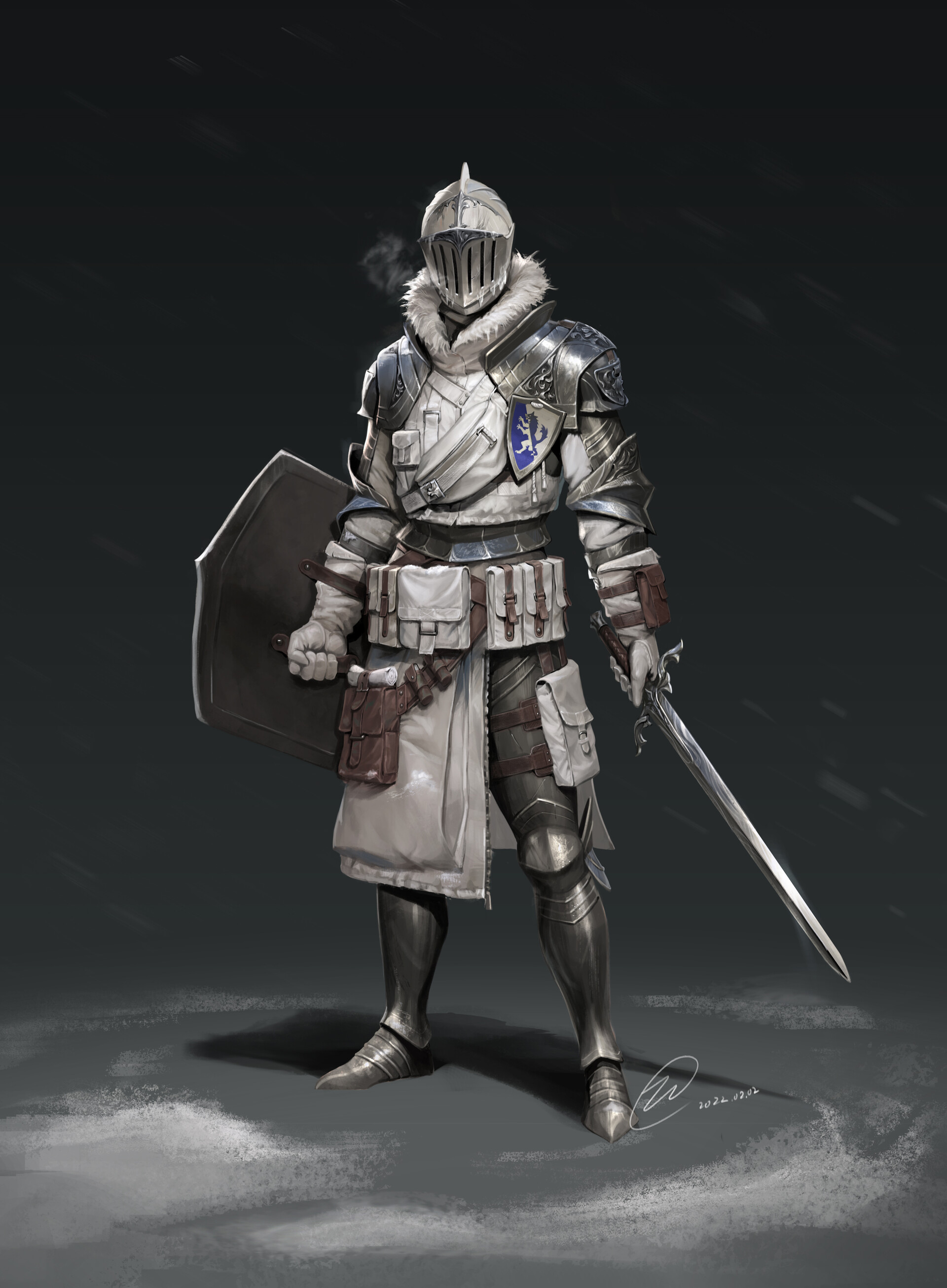
The Warden
| Level | Proficiency Bonus | Features | |
|---|---|---|---|
| 1st | +2 | Special Force, Sentinel's Stand, Warden's Grasp | |
| 2nd | +2 | Fighting Style, Warden's Mark | |
| 3rd | +2 | Special Force Feature, Warden's Resolve | |
| 4th | +2 | Adventuring Boon, Font of Life | |
| 5th | +3 | Extra Attack | |
| 6th | +3 | Special Force Feature | |
| 7th | +3 | Sentinel's Step | |
| 8th | +3 | Adventuring Boon | |
| 9th | +4 | Undying | |
| 10th | +4 | Interrupt | |
| 11th | +4 | — | |
| 12th | +4 | Adventuring Boon | |
| 13th | +5 | Special Force Feature | |
| 14th | +5 | — | |
| 15th | +5 | — | |
| 16th | +5 | Adventuring Boon | |
| 17th | +6 | — | |
| 18th | +6 | Sentinel's Soul | |
| 19th | +6 | Adventuring Boon | |
| 20th | +6 | Special Force Feature |
Crippling. When you hit a creature with a melee weapon attack, its speed is reduced by 10 feet, to a minimum of 0, until the end of its next turn, and it can't take the Dash action until the end of its turn.
Great Weapon Fighting. When you roll a 1 or 2 on a damage die for an attack you make with a melee weapon that you are wielding with two hands, you can reroll the die and must use the new roll. The weapon must have the two-handed or versatile property for you to gain this benefit.
Protection. When a creature you can see attacks a target other than you that is within 5 feet of you, you can use your reaction to impose disadvantage on the attack roll. You must be wielding a weapon or shield.
Titan Fighting. You gain a +2 bonus to melee weapon attack rolls you make against Large or larger creatures.
Warden's Mark
At 2nd level, you can use your bonus action to mark a creature you can see within 30 feet. While a marked creature is within 5 feet of you, it has disadvantage on any attack roll that doesn't target you. The mark lasts for 1 minute, or until you mark another creature, become incapacitated, or die.
At 11th level, whenever you take the Attack action on your turn, you can make an additional attack against a creature you have marked.
Warden's Resolve
Starting at 3rd level, whenever your hit points are less than half your maximum, you have resistance to bludgeoning, piercing, and slashing damage.
Starting at 17th level, when your hit points are less than half your maximum, you have resistance to all damage except psychic.
Adventuring Boon
When you reach 4th level, and again at 8th, 12th, 16th, and 19th level, you gain 2 unrestricted bonus points. Players can spend these extra Points immediately to acquire Attributes for their characters or save them for future use.
You cannot increase one of your ability scores above 20 using this feature.
Font of Life
By 4th level, you can use your action to end either one disease or one condition afflicting you. The condition can be blinded, charmed, deafened, frightened, paralyzed, or poisoned. You can use this action even if the condition you end would otherwise prevent it.
You can use this feature once and regain the ability to do so when you finish a short rest.
Extra Attack
Beginning at 5th level, you can attack twice, instead of once, whenever you take the Attack action on your turn.
Sentinel's Step
Wardens are faultless trackers, which can navigate hazardous terrain with ease. At 7th level, select one of the following features.
Earthstrength. You possess the might of the earth itself. Your carrying capacity doubles, and you have advantage on ability checks and saving throws against being pushed against your will or knocked prone.
Thundering Charge. On your first round of combat, your speed increases by 30 feet and you have advantage on the first melee weapon attack you make.
Wildblood. Your reflexes have been honed by the perils of nature. You can't be surprised while you are conscious. Additionally, you have a +5 bonus to your passive Wisdom (Perception) and passive Intelligence (Investigation) scores.
Undying
At 9th level, when you are reduced to 0 hit points and are not killed outright, you can choose to drop to 1 hit point instead.
You can use this feature once and regain the ability to do so when you finish a long rest.
Interrupt
Starting at 10th level, as a reaction when a creature within 5 feet of you makes a melee attack against you, you can punctuate its strikes. After that attack, the creature can make one fewer attack than normal on this turn.
Sentinel's Soul
Wardens are unshakable guardians that cannot be bowed. At 18th level, choose one of the following features:
Ageless Guardian. You are immune to poison and disease, no longer need food or water, suffer none of the frailty of old age, and can't be aged magically. You can still die of old age, however.
Additionally, you have advantage on Dexterity saving throws.
Eyes of the Mountain. You gain tremorsense with a range of 15 feet, and can detect the presence of hidden or invisible creatures within 30 feet.
Additionally, you have advantage on Constitution saving throws.
Impenetrable Mind. Your thoughts can't be read, and you can't be charmed or frightened.
Additionally, you have advantage on Wisdom saving throws.
Special Forces
At 1st level, a warden joins their Special Forces, each of which is detailed below.
Bloodwrath Guardian
The primal power you wield has formed an intrinsic bond with the creatures of the wild, and you have taken up the task of defending them. Because you share in the beast's ferocity, tenacity, and animal instinct, you can summon a beast's primal strength from within yourself, and slay your enemies in an animalistic trance.
While entranced, you can sense a connection to a greater being, the Primal Beast, the first predator, from which all hunters are descended. As your commitment to defending the wilds from corruption grows, you grow closer to the Primal Beast, until you can at last adopt its ancient form yourself, and allow it to hunt once again.
Ruthless
Starting at 1st level, your Shove attacks deal bludgeoning damage equal to your Strength modifier.
Additionally, when you successfully start a grapple and at the start of each of your turns, any creature you have grappled takes bludgeoning damage equal to your Strength modifier.
Feral Trance
At 3rd level, you can fall into a primal battle trance as a bonus action. While in your trance, you gain the following benefits:
- You have advantage on Strength checks and Strength saving throws.
- Your base movement speed increases by 10 feet.
- You have advantage on all melee weapon attack rolls using Strength against a creature you have marked.
- Attacks against you have advantage.
Your trance lasts for 1 minute. It ends early if you are knocked unconscious or if your turn ends and you haven't attacked a hostile creature since your last turn or taken damage since then. You can also end your trance on your turn as a bonus action.
You can use this feature once and regain the ability to do so when you finish a short rest.
Predator's Scent
At 6th level, a creature you have marked can remain marked for up to 24 hours, even if it moves out of your sight. Additionally, while this creature is marked, you can track it effortlessly; you know the direction and distance to the creature while it remains on the same plane of existence.
Evasion
At 13th level, when you are subjected to an effect that allows you to make a Dexterity saving throw to take only half damage, you instead take no damage if you succeed on the saving throw, and only half damage if you fail.
Form of the Primal Beast
At 20th level, as an action, you can transform into a hunched thing of fur and shadow, an echo of the Primal Beast. For 1 minute, you gain the following features:
- You gain all the benefits of Feral Trance.
- You gain temporary HP equal to twice your level.
- When you hit a creature with a melee weapon attack, you can give the target a bleeding wound. Constructs, oozes, and undead can't get bleeding wounds. A creature loses 1d8 hit points at the start of each of its turns for each of its bleeding wounds unless it uses an action to staunch the bleeding. While a target is bleeding, it can't regain lost hit points. A creature can have a number of bleeding wounds up to your proficiency bonus.
You can use this feature once and regain the ability to do so when you finish a long rest.
Grey Watchman
Ever vigilant and unceasing in your duties, you are a watcher of the realms of men, called to keep vigil over a keep or wall. As a grey watchman, trained in the arts of combat, you have honed your skills to a razor's edge to repel any invaders that might challenge your land. You need not keep watch over the same keep your entire life, but, wherever you travel, you are dedicated to keeping your land safe from invading armies, marauding monsters, and other external threats.
Battle Tactics
Starting at 1st level, you learn maneuvers that are fueled by special dice called battle dice.
Battle Dice. You have two battle dice, which are d8s. A battle die is expended when you use it. You regain all of your battle dice when you take a short or long rest, or when you roll initiative.
Your battle die changes and more battle dice become available when you reach certain levels in this class, as shown on the table below.
| Warden Level | Battle Dice | |
|---|---|---|
| 1st | 1d8 | |
| 3rd | 2d8 | |
| 7th | 3d8 | |
| 13th | 3d10 | |
| 19th | 4d10 |
Using Battle Dice. Once per turn, you can expend a battle die to perform a maneuver of your choice.
Saving Throws. Some of your maneuvers require your target to make a saving throw to resist the maneuver's effects. The saving throw DC is calculated as follows:
Maneuver save DC
Hold the Line
At 3rd level, when you use your Warden's Grasp, any creature you choose other than yourself within the effect's area gains a +1 bonus to Armor Class and saving throws until the beginning of your next turn while it remains in the effect's area.
Fortification Expert
By 6th level, your experience manning battlements and blockades has given you insight in how to raise and reinforce them. You have advantage on any ability check you make to erect defensive fortifications, examine walls and other defenses for weak points and entryways, or climb constructed walls. Additionally, you can treat three-quarters cover as full cover.
Mettle
Also at 13th level, your determination allows you to shrug off effects that would otherwise harm you. When you are subjected to an effect that allows you to make a Constitution saving throw to take only half damage, you instead take no damage if you succeed on the saving throw, and only half damage if you fail.
Unbreakable Sentinel
Starting at 20th level, you can use your action to transform into a paragon of battle, an unstoppable sentinel, channeling the strength of every man, woman, and child beneath your charge. For the next minute, you gain the following benefits:
- You have a +2 bonus to Armor Class.
- Whenever you hit a creature you have marked, you regain an expended battle die.
- You can take an additional reaction during each round of combat. You can only take one reaction during each turn.
You can use this feature once and regain the ability to do so when you finish a long rest.
Nightgaunt
Blood-drinkers, undead, and other creatures of the night are often feared and hunted, and few stand in their defense; except, of course, the grim and terrible nightgaunt. Tales of the nightgaunt are whispered of in fairy tales, casting them as a things to be feared: hunters of clerics and goodly vampire slayers. Their appearance always presages long nights and great rises in hungry undead.
You felt the calling of the moon bringing you to the graveside of living corpses. Though vampires, zombies, and skeletons are mighty, they are always outnumbered, hunted, and turned by clerics; never given a fair chance to live peacefully. They require an ally among the living to continue their ceaseless lives, and you have risen by moonlight to the task.
Darkvision
Starting at 1st level, you can see in dim light within 60 feet of you as if it were bright light, and in darkness as if it were dim light. You can't discern color in darkness, only shades of gray. If you already possess darkvision, its range increases by 30 feet.
Starting at 13th level, you can see through magical, as well as nonmagical, darkness.
Marked for Death
At 3rd level, your mark leaves a shadow of undeath on your target, beckoning it to die. If you deal damage to a creature you have marked with a melee weapon attack and its remaining hit points are lower than the damage you dealt to it with that attack, the marked creature instead drops to 0 hit points.
Undead Empathy
By 6th level, you are a friend even to mindless undead. Whenever an undead tries to attack you, it must make a Wisdom saving throw (DC equals 8 + your proficiency bonus + your Constitution modifier.) On a failed save, its attack misses and, if its Intelligence is 4 or lower, it becomes friendly to you and your allies.
Evasion
Beginning at 13th level. When you are subjected to an effect that allows you to make a Dexterity saving throw to take only half damage, you instead take no damage if you succeed on the saving throw, and only half damage if you fail.
Gravelord
At 20th level, you can use your action to invite the necromantic energies of true undead into your body, divorcing yourself from life for the next minute and gaining the following benefits:
- You are immune to poison damage and being poisoned.
- You can use your Undying feature up to three times, even if you have already used it today.
- Once per turn, when you deal damage with a melee weapon attack, you can deal an extra 4d6 necrotic damage and gain temporary hit points, which last until the beginning of your next turn, equal to the necrotic damage dealt.
You can use this feature once and regain the ability to do so when you finish a long rest.
Stoneheart Defender
You heard the steadfast, unyielding call from the mountains, which dwarves and gnomes have felt for generations. The stones called to you, beckoning for a protector to defend the mountains from those that would despoil them, from both within and without.
You might be a watchman of old dwarven walls, or a sentinel, patrolling the lookouts of high mountain peaks; regardless of where you stand, you are unmovable: a mountain in the shape of a man. You draw your power from the earth beneath your feet and can crush your enemies with the strength of stone.
Mountain Formation
Starting at 1st level, all allies within 5 feet of you gain half cover, and when a creature you can see attacks a target other than you that is within 5 feet of you, you can use your reaction to impose disadvantage on the attack roll. If the attack hits, you can deal bludgeoning damage equal to your Strength modifier to the attacker.
Your speed is halved and cannot be increased by any means.
Roots of Rock
At 3rd level, when you use your Warden's Grasp ability, rocky roots sprout from your feet, anchoring you securely. Until the beginning of your next turn, you have a +2 bonus to your Armor Class.
Additionally, until you move, you can't be shoved or pushed from wherever you are standing by hostile actions, spells, or effects, unless you choose to be. You have advantage on Strength saving throws against being knocked down, cannot slip or fall from ledges, and are immune to the spells fly, levitate, and telekinesis.
Earthshatter
Starting at 6th level, you can choose to use Warden's Grasp as an action, rather than a bonus action. When you do so, each creature affected must make a Strength saving throw (DC equals 8 + your proficiency bonus + your Strength modifier) or be knocked prone.
You can use this ability a number of times equal to your Strength modifier, and regain all uses when you finish a long rest.
Mettle
Beginning at 13th level. When you are subjected to an effect that allows you to make a Constitution saving throw to take only half damage, you instead take no damage if you succeed on the saving throw, and only half damage if you fail.
Immortal Mountain
By 20th level, you can summon the power of true earth as an action, protecting yourself in an encasement of stone. For the next minute, you gain the following benefits:
- Bludgeoning, piercing, and slashing damage you take is reduced by 5.
- You gain the effects of your Roots of Rock ability for the entire duration.
- As you move, you can choose to upend the earth at your feet, leaving behind a 5-foot wide trail of difficult terrain behind you wherever you move.
You can use this feature once and regain the ability to do so when you finish a long rest.
Storm Sentinel
Your strength originates among furious storm clouds and flashes of lightning. As a storm sentinel, you are called to protect wayward sailors and coastal villages from the wrath of the tempests and the arrival of great waves that threaten them. You despise pirates and other enemies of coastal peoples, and will oppose them wherever they strike.
From your fingertips, you can deliver the awe of lightning and the roar of thunder to devastate your foes. With practice and patience, you can harness the power of the storm itself to fly and rain thunderbolts from above.
Flash from Above
Starting at 1st level, whenever you are standing under the open sky, you can use your action to conjure a harmless, but impressive, bolt of lightning or peal of thunder. You can use this ability even when there are no clouds above you.
Thunderblast
At 3rd level, whenever you hit a creature you have marked with a melee weapon attack, each creature you choose within 5 feet of the target takes 1d8 lightning damage.
Static Burst
Starting at 6th level, when you use Warden's Grasp as a bonus action, each creature affected can't take reactions until the beginning of your next turn.
Evasion
Beginning at 13th level. When you are subjected to an effect that allows you to make a Dexterity saving throw to take only half damage, you instead take no damage if you succeed on the saving throw, and only half damage if you fail.
Stormlord
By 20th level, you have a flight speed equal to your movement speed.
Additionally, you can use your action to summon a bolt of lightning to strike you, imbuing your body with the storm's fury. For 1 minute, you gain the following benefits:
- Your flight speed is doubled.
- You can cast the spell call lightning as a bonus action (DC equals 8 + your proficiency bonus + your Constitution modifier) without using a spell slot. You can call a bolt of lightning on subsequent turns as a bonus action.
You can use this feature once and regain the ability to do so when you finish a long rest.
Verdant Protector
You draw your strength from the trees of the forest and the loamy earth beneath your feet. As a Verdant Protector, you are the champion of the green things in nature, and defend them against those who would despoil the wilds. You easily find allies among druids, and others that understand the forest's sacred trees and ancient spirits.
At your command, the plants of the earth sprout up to assist you in your duty. At the pinnacle of your power, you can assume the form of an elder tree guardian, which looks much like a treant, with tough, bark skin, and long, branchlike arms.
Tree Sap
Starting at 1st level, as a bonus action, you can grant yourself temporary hit points equal to your Constitution modifier + your warden level. These temporary hit points disappear after 1 minute.
You can use this feature once and regain the ability to do so when you finish a short rest.
Green Mark
At 3rd level, when you mark a creature, the plants of the earth come alive to hinder its progress. While this creature is within 30 feet of you, the ground it walks on is difficult terrain.
Verdant Skin
At 6th level, you gain proficiency in the Stealth skill, if you did not have it before. Additionally, you can use your action to draw a thick mass of vines and leaves to conceal you. Until you move, you have advantage on Dexterity (Stealth) checks you make to hide among vegetation.
Mettle
Beginning at 13th level. When you are subjected to an effect that allows you to make a Constitution saving throw to take only half damage, you instead take no damage if you succeed on the saving throw, and only half damage if you fail.
Form of the Oak Sentinel
By 20th level, you can use your action to transform into an oak sentinel, a bark-covered titan of the forest. For 1 minute, you gain the following features:
- Your AC becomes 20, if it was lower.
- Your attacks have Reach, if they did not have it before.
- You can use Warden's Grasp as an action, rather than a bonus action. When you do so, you can make an attack against each creature affected, with a separate attack roll for each target.
You can use this feature once and regain the ability to do so when you finish a long rest.
Chapter 3
Character Options
| The six Abilities represent your character’s baseline fundamentals. Then you gave your
creation additional competencies once you selected your character’s Race and Class. More specialised and diverse character aspects are known as Attributes, which can represent innate talents, learned skills, magical evocations, psionic powers, supernatural elements, and more. Most Classes also provide Bonus Points at some (or all) Levels, which can be spent to acquire Attributes of choice for your character – unrestricted, unless your DM indicates otherwise.
|
Adding Attributes
There are dozens of different Attributes, each representing a particular talent or special ability. Think carefully about the balance between a few high-Rank Attributes and a large number of low-Rank Attributes. Some Attributes have a fixed number of Ranks, while many others do not have a fixed number of Ranks or a Rank ceiling. The DM and players should consider the guidance with an eye on maintaining balance for the game.
Progressing Ranks
Whenever adding Attribute Ranks to a character, they are combined with Ranks previously gained from Race and Class features. If the Attribute was not previously assigned by a Race or Class, then the newly acquired Ranks begin from Rank 0.
AC Bonus
Attribute Cost: 1 Point/Rank
Relevant Ability: –
Attribute Scope: Self only; Permanent
Progression: +1 Armor Class/Rank
Each Rank grants the character a +1 bonus to their Armor Class. This bonus may result from tougher skin (harder to damage), quick reflexes (harder to hit), an innate or supernatural ability that reduces an enemy’s chance of landing a successful attack (harder to target), or a combination of such elements.
Armor Proficiency
Attribute Cost: 1 Point/Rank
Relevant Ability: –
Attribute Scope: Self only; Permanent
Progression: +1 Armor Proficiency/Rank
If a character does not have proficiency with the armor category they are wearing, they suffer disadvantages on Ability checks, Saving Throws, and attack rolls that involve Strength or Dexterity; they also cannot cast spells. An Armor Proficiency eliminates these disadvantages.
Armor is divided into four categories: shields, light armor, medium armor, and heavy armor. Consequently, this Attribute has a maximum of four Ranks. Proficiency in light armor is a prerequisite before assigning proficiency in medium armor. Similarly, proficiency in medium armor is a prerequisite before assigning proficiency in heavy armor. Light armor and shields have no prerequisites.
Augmented
Attribute Cost: 1 Point/Rank
Relevant Ability: –
Attribute Scope: Self only; Permanent
Progression: +1 Ability Score/Rank
When this Attribute is assigned, the player must specify which of the six Ability Scores is Augmented. The Attribute can be assigned more than once for multiple heightened Ability Scores. In most instances, assigning Points to the Augmented Attribute or to an Ability Score directly results in the same benefit.
For example, a character with a Strength of 15 and a character with a Strength of 12 plus the Augmented (Strength) Attribute at Rank 3 both have an effective Strength of 15.
Combat Mastery
Attribute Cost: 1 Point/Rank
Relevant Ability: –
Attribute Scope: Self only; Permanent
Progression: +1 Attack Bonus/Rank
Each Rank grants the character a +1 bonus to each of their attack rolls. This bonus may result from combat training (knowing where to hit), fighting speed (acting faster than the defender), forceful attacks (to overwhelm a target’s defences), or a combination of such elements.
Connected
Attribute Cost: 1 Point/Rank
Relevant Ability: Charisma
Attribute Scope: Self only; Ongoing
Progression: Descriptive
The Connected Attribute represents a character’s close relationship with a hierarchy of some sort that grants them access to resources, respect, and privileges. Examples of such organisations include governments, military units, feudal systems, organised crime rings, secret guilds and societies, and some religions.
The organisation selected should have moderate power within the game setting, and the DM and player should discuss the proposed organisation before gameplay begins to ensure they are both on the same page regarding the organisation’s scope and importance. Connected should not be assigned if the selected organisation will not have a meaningful impact on the game or only makes appearances infrequently.
Connected is a relatively inexpensive Attribute because the benefits the connection provides always come with strings attached. The character must follow the goals of the organisation in order to gain the use of its resources. The other members are assumed to be loyal to the organisation itself, not the Connected character.
For campaigns in which all players belong to the same organisation that is central to the game (such as a family unit, secret society, or adventuring guild), the DM may decide that the Connected Attribute is not required. Consequently, this Attribute is optional; the DM may prefer to treat organisation membership as a background detail instead.
Since Connected measures the absolute power that a particular position grants, many smaller organisations will only have a few Ranks. A club or small business, for example, will usually have no more than a few Ranks (1-3).
Rank 1 Associated. Examples include a private or corporal in the army, a peace officer in the city guard, or a junior guild member.
Rank 2 Respected. Examples include the boss of a small business, a sergeant in the army, a knight’s squire, or priest of a small town.
Rank 3 Modest Authority. Examples include a lieutenant in the army, a council member in a big city, a poor knight, an abbot of a monastery, or a division leader of a large city watch.
Rank 4 Local Authority. Examples include a knight with lands and followers, a significant guild representative, or a middle-ranking army officer, such as a company commander (captain or major).
Rank 5 Regional Authority. Examples include an army colonel in command of a regiment-sized force, a big-city mayor, a county baron, or a popular regional religious leader – all of which can exercise power over a sizeable area.
Rank 6 Provincial Authority. Examples include a high-ranking army officer (such as the commander of an army brigade or division), the leader of a regional guild or priesthood, or the major nobles or courtiers in a small kingdom.
Rank 7 National Authority. Examples include the king of a medieval kingdom, a senior member of the government in a powerful nation (such as the grand vizier or governor of an imperial province).
Rank 8 International Authority. Examples include the emperor of a powerful kingdom alliance, or the head of a major religion.
Enhanced Proficiency
Attribute Cost: 2 Point/Rank
Relevant Ability: –
Attribute Scope: Self only; Permanent
Progression: +1 Proficiency Bonus/Rank
The character is adept at sharply focussing their knowledge and training to enhance their capabilities across multiple areas. For each Attribute Rank, the character gains a +1 bonus to their Proficiency Bonus – which normally starts at +2 at 1st-4th Levels and increases to +6 at 17th-20th Levels. Since modifying a character’s standardised Proficiency Bonus can have dramatic impacts on game balance, players must have their DM’s permission before selecting this Attribute.
Extra Actions - Lesser
Attribute cost changes to 2 Points/Rank. This more focused variation only applies to actions other than attacking or spellcasting. Each round, the character gains one Extra Action/Rank that cannot be used to attack or cast a spell, but instead can be used to initiate one or more other general or tactical actions. This often includes the use of Attributes that only require casual, non-aggressive contact with a target. All such Extra Actions occur on the character’s Initiative.
Extra Actions
Attribute Cost: 4 Point/Rank [Lesser = 2/Rank]
Relevant Ability: –
Attribute Scope: Self only; Permanent
Progression: +1 Extra Action/Rank
This Attribute reflects the character’s ability to act extremely rapidly. Each round, the character gains one unrestricted Extra Action/Rank that can be used to attack, cast a spell, or perform other general activities such as using an Attribute or Skill. All such Extra Actions occur on the character’s Initiative.
When considering integration with other rules and Classes, note that these Extra Actions are not stackable/multiplicative with other Class features (such as a Fighter’s extra attack feature), nor do they provide extra Bonus Actions.
Flight
Attribute Cost: 3 Point/Rank
Relevant Ability: Dexterity
Attribute Scope: Self only; Ongoing
Progression: Descriptive
A character with this Attribute can achieve Flight through one (or possibly more) methods, including: wings, paranormal power, magic, anti-gravity, psionic levitation, or some other technique.
Rank 1 Fly at speeds up to 30 feet/round
Rank 2 Fly at speeds up to 50 feet/round
Rank 3 Fly at speeds up to 80 feet/round
Rank 4 Fly at speeds up to 100 mph
Rank 5 Fly at speeds up to 300 mph
Rank 6 Fly at speeds up to 500 mph
Forced Disadvantage
Attribute Cost: 1 Point/Rank
Relevant Ability: –
Attribute Scope: Self only; Ongoing
Progression: Descriptive
Enemies suffer a disadvantage when making certain types of dice rolls that directly oppose the character or their efforts, depending on the Forced Disadvantage Rank. These dice rolls may be a contest with the character (such as an opposed Skill check) or an independent dice roll (such as attack rolls or Ability checks).
Rank 1 Moderate Disadvantage – One type of Skill contest; contest rolls when defending against the character’s Attribute use
Rank 2 Significant Disadvantage – Ability and Skill contests that use one specific Ability Score; Saving Throws against the character’s Attributes or use of magic; one type of attack roll against the character
Rank 3 Major Disadvantage – Many types of attack rolls against the character; all Skill contests; all dice roll contests relating to one Ability Score (i.e. both Ability contest checks and Saving Throws made due to the character’s actions for one Ability)
Rank 4 Exceptional Disadvantage – All attack rolls against the character; all Saving Throws made due to the character’s actions
Rank 5 Extreme Disadvantage – Many types of dice rolls that directly opposed the character or their efforts
Rank 6 Legendary Disadvantage – All dice rolls that directly opposed the character or their efforts
Heightened Senses
Attribute Cost: 1 Point/Rank
Relevant Ability: Wisdom
Attribute Scope: Self only; Ongoing
Progression: 1 Sense/Rank
A character with Heightened Senses has one or more senses that have been sharpened to an extreme degree of acuity.

It can represent the preternatural sharpening of a specific sense honed by special training or racial heritage, or the enhanced senses of a paranormally, magically, or psychically augmented character. For each Rank of the Heightened Senses Attribute, one of the character’s five physical senses – hearing, sight, smell, taste, or touch – is enhanced in scope, range, and precision. A character using a Heightened Sense usually gains an advantage on checks that relate to using that sense to perceive things that someone with normal senses might conceivably notice.
Inspire
Attribute Cost: 1 Point/Rank [Greater = 3/Rank]
Relevant Ability: Charisma
Attribute Scope: Nearby targets; One dramatic scene
Progression: +1 Check Bonus/Rank
This ability can represent oratorical talents, innate charisma, supernatural awe, or even a beautiful or resonant voice. The character’s very presence inspires their friends, followers, or fans, filling them with energy and determination to transcend their own normal limitations in pursuit of a goal. Its nature depends on the character: a military commander inspires through leadership and strategic prowess; an evil dictator might whip minions into a frenzy through hatred; a minstrel inspires through song; or a magical girl or mystical unicorn through the sheer power of love. It is also common for certain Items such as religious relics, holy shrines, or revered army standards to possess this ability.
Inspire takes a general action to initiate, during which the character must act appropriately – give an impassioned speech, start singing, threaten minions with destruction, or however their inspiration usually functions. Successful use of the Attribute requires succeeding with DC 15 Charisma check. If it fails, the character can take another action and try again, but they are limited in the number of attempts per game session equal to the Attribute Rank. Each successful use gives an effect that lasts for an entire dramatic scene. During that scene, every friend or ally who shares the character’s goals – and can reasonably be moved by the character’s actions – will be inspired.
Inspired characters (both player characters and story characters under the DM’s control, as well as the inspiring character themselves) receive a bonus equal to the Inspire Rank to any appropriate Ability check and Skill checks during the scene. This inspire bonus does not apply to attack rolls or Saving Throws (see the Greater variant, below).
The Inspire Attribute does not have a cumulative effect with the concurrent use of other characters’ Inspire Attribute.
Inspire - Greater
Attribute cost changes to 3 Point/Rank. This variation also adds the Inspire Rank bonus to attack rolls and Saving Throws for all influenced characters.
Item
Attribute Cost: 4 Point/Rank
Relevant Ability: –
Attribute Scope: External; Permanent
Progression: Item(s) with +5 Points/Rank
Items are devices that enhance a character in some way or that serve as a useful tool or weapon. Items can represent powerful relics, magical artefacts, or even experimental technology; characters can obtain regular or mundane objects such as standard weapons, armor, and adventuring equipment without this Attribute as determined by the DM. A device or object that cannot be lost or stolen (such as something implanted in or fused to the character’s body) is not an Item. Any such device is considered part of the character, and thus the player should use Points to acquire the relevant Attributes directly instead of assigning them through the Item Attribute.
Each Rank of the Item Attribute grants the character 5 Points that can either be allocated to a single Item, or divided amongst multiple Items as the player desires.
Assign the Item any Attributes appropriate to its normal function that will benefit the character while using it. For example, a magic sword would have Weapon, a ring of invisibility would have Undetectable, and winged boots would have Flight. A complex artefact, such as a 100-foot-tall flying transformable clockwork golem, could have a multitude of Attributes, such as Change State, Features, Flight, Resilient, Supersense, Weapon, etc.
Attributes that an Item has do not usually stack with those of a character. If an Fairy character (who has Flight Rank 1) is riding on a magic carpet that also has Flight Rank 1, the character does not gain access to Flight Rank 2. The DM may make exceptions where it seems appropriate (such as magical armor with the AC Bonus Attribute stacking with the character’s AC Bonus).
Items can also be assigned Defects (page 132) provided they directly impact the utility of the Item or affect the user. Defects that are usually inappropriate for Items unless approved by the DM include Accountability, Ism, Marked, Nemesis, Obligated, Significant Other, Secret, and Wanted. Nevertheless, the DM may make exceptions where this seems reasonable, such as a stolen Item coming with the Wanted Defect if it is the Item (rather than the character) that particular foes are after. In the same manner, a great artefact such as a Ring of Power might be Hounded and even have a Nemesis attached to it.
Items usually have no Ability Scores (but may be given Augmented if they boost their user’s Ability Scores), but they may have Armor, Skill, or Tool proficiencies to represent bonuses to appropriate dice checks (such as a Ring of Detection Item adding to a Perception Skill check).
Items are assumed to be lifeless objects, so no special Attributes or Defects are required to represent this status. For example, even though one cannot affect an Item by poisoning it, there is no need to assign the Immunity Attribute to avoid this unless the Item protects the people wearing it from the poison. Similarly, an Item is immune to threats like disease or lack of food, and they cannot normally be affected by mental or spiritual attacks. Note that an Item has no ability to heal any damage that it suffers, though, and must be repaired as usual instead (as determined by the adventure narrative).
Jumping
Attribute Cost: 1 Point/Rank
Relevant Ability: Dexterity
Attribute Scope: Self only; Ongoing
Progression: Descriptive
With a running start, a character can normally jump forward a distance in feet approximately equal to their Strength score, or up to a height in feet equal to 3 + their Strength modifier (1 foot minimum). With this Attribute, the character can jump great distances (and land without injury), but cannot actually fly.
Rank 1 Jump up to 2 times normal distance
Rank 2 Jump up to 3 times normal distance
Rank 3 Jump up to 5 times normal distance
Rank 4 Jump up to 10 times normal distance
Rank 5 Jump up to 15 times normal distance
Rank 6 Jump up to 20 times normal distance
Language
Attribute Cost: 1 Point/Rank
Relevant Ability: Intelligence
Attribute Scope: Self only; Ongoing
Progression: 1 Language/Rank
Unless indicated by a Defect or otherwise decided by the DM, all characters can speak and write the near-universal language known as Common.
This Attribute indicates that the character can also speak and write one other language/Rank associated either with other Races (such as Draconic, Dwarvish, Elvish, Giant, Goblin, Gnomish, Halfling, Orc, etc.) or with creature origins (such as Abyssal, Celestial, Deep Speech, Infernal, Primordial, Sylvan, Undercommon, etc.).
Alternatively, a language can be defined as simple sounds and gestures that can be perceived and understood by a category of mildly intelligent creatures that do not possess a formal language. Example categories include: small beasts, aquatic animals, primitive creatures, artificial constructs, etc.
Mulligan
Attribute Cost: 1 Point/Rank
Relevant Ability: –
Attribute Scope: Self only; Ongoing
Progression: +2 Dice Re-rolls/Rank Each Session
A character possessing the Mulligan Attribute may have powerful forces acting as their guardian, which can beneficially influence the outcome of important events. Alternatively, the character may be really lucky or have great karma, or perhaps can subtly influence their surroundings with thought alone. This relationship with fortune is represented through the re-rolling of up to two undesirable dice rolls per Rank – this includes undesirable re-rolls as well – each gaming session (or each adventuring day, at the DM’s discretion). This includes attack rolls, Ability or Skill checks, Saving Throw, damage rolls, Initiative rolls, etc. All associated dice are rolled at the same time when using one Mulligan for a specific roll, whether that’s one die or multiple dice. The player may choose to use the original roll, or any of the re-rolls, when determining the success of the action.

Pocket Dimension
Attribute Cost: 2 Point/Rank
Relevant Ability: Intelligence
Attribute Scope: External; Ongoing
Progression: Descriptive
This Attribute allows the character to have control over a small dimension or plane of existence of their own. A Pocket Dimension is a self-contained universe; it could be a dream world, a created reality, an astral construct, or even an object that is bigger inside than it is outside (such as a Bag of Holding). A dimension could even be partially unexplored or dangerous territory, providing adventuring opportunities to characters who visit. Such a dimension provides a secure storage area and (if large enough) could be a private sanctum or prison. Pocket Dimensions are often used to store all manner of objects, from swords and battle costumes to legions of Minions. They also represent a method of making objects seem to suddenly appear.
The Attribute Rank determines the maximum size of the extraplanar space. The environment and furnishings of the dimension are up to the player within the DM’s limitations; extensive furnishings should be purchased or acquired with the Item Attribute. The character can access their Pocket Dimension through the creation of a portal, hole, doorway, or rift that is typically 1-10 feet in diameter. This portal can usually be held open as long as a character desires. The Duration Enhancement must also be assigned to forcibly hold unwilling targets inside the Pocket Dimension.
Rank 1 Tiny dimension (1-foot radius)
Rank 2 Small dimension (10-foot radius)
Rank 3 Moderately sized dimension (100-foot radius)
Rank 4 District-sized dimension (1,000-foot radius)
Rank 5 Village-sized dimension (1-mile radius)
Rank 6 City-sized dimension (10-mile radius)
Sixth Sense
Attribute Cost: 1 Point/Rank
Relevant Ability: Wisdom
Attribute Scope: 15-foot radius; Ongoing
Progression: 1 Sense/Rank
Some characters have the ability to detect things that may be hidden to normal senses, while others have affinities for specific objects or people. Sixth Sense typically represents psychic or magical ability, but can also reflect trained and acute senses, or divine intervention.
The character may sense one particular category of phenomenon per Attribute Rank. The player should define the category with the DM’s approval. Examples of phenomena to which the character may be sensitive include: astral or ethereal beings, danger, pocket dimensions, elements, emotions, evil, illusions, interpersonal dynamics, magic, magnetic fields, paranormal nexus points, particular objects, places of power, psionic powers, spirits, telepathy, truth, virtue, or the use of specific Attributes or Defects.
As a guideline, the character makes a DC 10 Perception Skill check when something their Sixth Sense detects is in close proximity (within 15 feet). The character receives an advantage to the check if they are touching the source of the phenomenon. A check success indicates the character will gain vague information concerning the detected phenomenon, such as its proximity, direction, etc.
Skill Proficiency
Attribute Cost: 1 Point/Rank
Relevant Ability: Variable
Attribute Scope: Self only; Permanent
Progression: 1 Skill Proficiency/Rank
Proficiency with a Skill represents training or natural talent in a particular broad field. Characters add their Level-related Proficiency Bonus to relevant Skill checks. A list of Skills and the Abilities that are most often associated with their use is listed in the table below, which is significantly longer than the options available in the traditional Fifth Edition game. When appropriate, the DM may allow alternate Abilities to be used for Skill checks instead, such as Strength applying to an Acrobatics check instead of Dexterity when power is more important than agility for the specific Acrobatics application. Player groups are encouraged to add additional Skill proficiencies as desired.
Skill Proficiencies
| Skill | Associated Ability | |
|---|---|---|
| Academia | Intelligence | |
| Acrobatics | Dexterity | |
| Agriculture | Wisdom | |
| Alchemy | Intelligence | |
| Animal Handling | Wisdom | |
| Arcana | Intelligence | |
| Architecture | Intelligence | |
| Area Knowledge | Intelligence | |
| Artisan | Dexterity | |
| Athletics | Charisma | |
| Business | Intelligence | |
| Climbing | Dexterity | |
| Controlled Breathing | Constitution | |
| Culture | Intelligence | |
| Deception | Charisma | |
| Disguise | Charisma | |
| Domestic Arts | Wisdom | |
| Empathy | Charisma | |
| Engineering | Intelligence | |
| Etiquette | Charisma | |
| Focus | Wisdom | |
| Forgery | Dexterity | |
| Gaming | Wisdom | |
| Helming | Dexterity | |
| History | Intelligence | |
| Insight | Wisdom | |
| Interrogation | Wisdom | |
| Intimidation | Charisma |
Skill Proficiencies
| Skill | Associated Ability | |
|---|---|---|
| Investigation | Intelligence | |
| Law | Intelligence | |
| Leadership | Charisma | |
| Medicine | Wisdom | |
| Mining | Intelligence | |
| Nature | Intelligence | |
| Navigation | Intelligence | |
| Perception | Wisdom | |
| Performance | Charisma | |
| Persuasion | Charisma | |
| Physics | Intelligence | |
| Religion | Intelligence | |
| Riding | Dexterity | |
| Seduction | Charisma | |
| Sleight of Hand | Dexterity | |
| Stealth | Dexterity | |
| Street Sense | Charisma | |
| Survival | Wisdom | |
| Swimming | Constitution | |
| Traps | Dexterity | |
| Visual Arts | Wisdom | |
| Warfare | Wisdom |
Academia
Talents that are rooted in higher learning – communications, language, research, and critical thinking – plus an understanding of institutions of knowledge (schools, magic academies, etc.)
Acrobatics
The ability to perform feats of agility with minimal chance for injury. Includes balancing, jumping, flipping, contorting, and reacting quickly.
Agriculture
The practice of farming, which includes soil treatments for growing crops and the raising and breeding of livestock.
Alchemy
The knowledge of chemical formulae and processes to manipulate and transform liquids, solids, and gasses.
Animal Handling
The ability to calm down a domesticated animal, know an animal’s natural inclinations, and intuit its intentions.
Arcana
The ability to recall lore about spells, magic items, eldritch symbols, magical traditions, the planes of existence, and the inhabitants of those planes.
Architecture
Knowledge of construction methods, architectural drafting, and more. A successful use of this Skill can also find weak points in constructions.
Area Knowledge
Knowledge of the geography and people of a single area (choose one area) and a specific locale within it. The smaller the area, the more detailed and extensive the character’s knowledge.
Artisan
This Skill represents a character’s ability to work with a variety of materials to repair or produce useful or aesthetically pleasing objects.
Athletics
The ability to perform feats of strength with minimal chance for injury. Includes lifting or pushing heavy objects, stopping objects in motion, and supporting large weights.
Business
The ability to organise, run, and understand part or all of a business organisation (including governments and associations). This Skill is also useful for recruiting and retaining employees.
Climbing
The ability to traverse vertical surfaces with or without the use of dedicated climbing equipment, both natural (such as trees and cliffs) and artificial (such as buildings and defences).
Controlled Breathing
The ability to control respiratory functions in order to maximise breathing efficiency or to perform tricks such as “playing dead”.
Culture
This reflects knowledge of the origins, ethics, social structure, and lifestyles of different cultures and populations.
Deception
The ability to convincingly hide the truth, either verbally or through actions. This deception can encompass everything from misleading others through ambiguity and fast-talking, to telling outright lies.
Disguise
The ability to change one’s personal appearance in n attempt to deceive others.
Domestic Arts
The ability to efficiently and effectively organise and run a domestic household, including cooking and cleaning.
Empathy
The ability to understand, detect, and interpret the emotional state of people nearby, without having their experiences communicated explicitly.
Engineering
The use of scientific principals and experimental data to design and build equipment, structures, and useful devices.
Etiquette
The knowledge of the customary codes for polite, proper, and inoffensive behaviour in social settings.
Focus
The ability to concentrate in stressful situations, and the knowledge of techniques to centre the mind and spirit.
Forgery
The ability to realistically counterfeit documents and papers, whether hand-written or printed on a press.
Gaming
The ability to comprehend and play various games and simulations well, including both games of chance and of luck. Also covers knowledge of gambling strategies.
Helming
The ability to safely operate land, air, and water vehicles, including boats, fantasy mecha, steam trains, sky galleons, etc.
History
The ability to recall lore about historical events, legendary people, ancient kingdoms, past disputes, and recent wars.
Insight
The ability to determine the true intentions of a creature from body language, speech habits, and changes in mannerisms. This includes a talent for searching out a lie or predicting someone’s next move.
Interrogation
The ability to convince someone to provide specific information against their will. Interrogation can also be used to help withhold information when being forcefully questioned.
Intimidation
The talent for influencing someone through overt threats, hostile actions, and physical violence. A successful check means someone witnessing your performance is convinced you mean any threats you make. How they react will depend on how tough they are themselves in relation to the kind of threat you present – they may respond with respect, fear, hatred, or amusement.
Investigation
The talent for detective work – searching around for clues and making deductions based on those clues. Includes spotting the location of a hidden object and discerning from the appearance of a wound what kind of weapon dealt it.
Law
Knowledge of legal procedure and practice. In addition to lawyers, many nobles, politicians, and organisation leaders will have this Skill proficiency.
Leadership
The talent of having inspirational visions and goals, and communicating them effectively to others. The objective is to motivate and rally others to adopt and work towards those objectives as well.
Medicine
Knowledge of how to diagnose and heal the body using a variety of techniques.
Mining
The knowledge of the processes and techniques to extract minerals and gemstones from dense rock formations.
Nature
The ability to recall lore about terrain, plants and animals, the weather, and natural cycles.
Perception
The talent for spotting, hearing, or otherwise detecting the presence of something. It measures your general awareness of your surroundings and the keenness of your senses.
Performance
The ability to perform well before an audience of any size and composition – with music, dance, acting, or storytelling – and to evoke an emotional response through the art form.
Persuasion
The ability to convince people to see new perspectives, consider other alternatives, change their minds, make different decisions, and even modify their actions.
Physics
An understanding of natural world sciences that focuses on movement, universal forces (such as gravity and magnetism), and energy (such as sound and light).
Religion
The ability to recall lore about deities, rites and prayers, religious hierarchies, ethical standards, holy symbols, and the practices of secret cults.
Riding
This is the knowledge of how to care for a riding beast, how to saddle, mount, and dismount the animal, how to get it to perform difficult or dangerous manoeuvres safely.
Seduction
A character with this Skill is adept at exploiting their sex appeal. A successful Skill check will convince another person that the character is genuinely interested in them. Whether or not the subject responds will depend on their own romantic inclinations and sexual preferences.
Sleight of Hand
A character with this Skill (also known as “prestidigitation”) has superior manual dexterity. This includes the ability to perform “magic” tricks, palm small objects, cheat at cards, plant an item on someone, etc.
Stealth
The ability to disguise objects or people so that they blend into their surroundings. This also includes the ability to conceal small objects on one’s person and the ability to move silently.
Street Sense
The ability to navigate street culture within cities and larger urban areas, and how to survive and thrive in such settings.
Survival
The ability to find food and shelter in the outdoors, to avoid natural hazards, and to identify edible and useful wild plants and animals. This Skill is often a learned area of expertise for more advanced cultures, but a natural way of life for more primitive ones.
Swimming
The knowledge of efficient body movement in liquids, including surface swimming and deeper diving.
Traps
The ability to create and place traps in both natural and constructed settings. Also covers disarming of discovered traps.
Visual Arts
The ability to produce a work of fine or commercial art in one or more visual fields (carving, painting, sculpting, etc.).
Warfare
The knowledge of large-scale military combat techniques, including troop movement, siege warfare, and army morale.
Special Movement
Attribute Cost: 1 Point/Rank
Relevant Ability: Dexterity
Attribute Scope: Self only; Ongoing
Progression: 1 Movement/Rank
The character may select one Special Movement type for each Rank of this Attribute. The movement abilities may be the result of racial traits, mystical forces, supernatural talents, or intense training. Several examples are given below, but the DM and players are encouraged to develop additional abilities as well. Many other Attributes provide alternate methods of movement, including Flight, Jumping, Teleport, Tunnelling, and Water Speed.

Balance
The character never loses their balance, even when running on a narrow rope or beam.
Cat-Like
The character will take half damage (round down) from most falls and always lands on their feet.
Light-Footed
The character can skim over sand, snow, or ice at full speed.
Quiet
When traversing most terrain, the character can move at normal walking speeds without making environmental sounds.
Speedburst
The character’s top sprinting speed (150 feet/round for a normal Medium-sized person) is greatly enhanced over extremely short distances: x2 for one Rank or x5 for two Ranks.
Swinging
The character can swing through forests and cities (areas with natural or artificial structures above swinging height) using vines, ropes, webbing, or simply their arms.
Untrackable
The character never leaves footprints or tracks when they walk or run.
Wall-Bouncing
For the duration of a dramatic scene, the character can move at regular walking speed without touching the ground by bounding back and forth between nearby vertical surfaces (walls). For example, they can proceed down hallways or climb an alleyway between two nearby buildings (bouncing from wall to wall).
Wall-Crawling
Counts as two Special Movement abilities. The character can cling to walls or ceilings as though they were on the ground or floor.
Zen Direction
When the character opens their mind to the natural world, they will always move in the right direction. The right direction is not always the direction the character wants, but it is the direction the character needs.
Spell Amplification
Attribute Cost: 1 Point/Rank
Relevant Ability: –
Attribute Scope: Self only; Situational use
Progression: 1 Spell Modification Each Session/Rank
The character is adept at dynamically modifying the scope of their cast spells. They can alter the parameters of a number of cast spells equal to their Attribute Rank each gaming session (or each adventuring day, at the DM’s discretion). The exact details of such Spell Amplifications are up to the player and DM, with some suggestions included below:
- Enlarge the spell’s area of effect
- Increase the spell’s range
- Extend the spell’s duration
- Shorten the spell’s casting time
- Remove one (or perhaps all) of the spell’s components
- Alter the number of spell targets
- Boost the damage that the spell inflicts or heals
Tool Proficiency
Attribute Cost: 1 Point/Rank
Relevant Ability: Variable
Attribute Scope: Self only; Permanent
Progression: 1 Tool Proficiency/Rank
This proficiency allows the character to add their Level-related Proficiency Bonus to any Ability checks and Skill checks related to using specific tools. This may result in a character’s Proficiency Bonus added twice to a check roll that uses both a Skill Proficiency and Tool Proficiency. A non-exhaustive list of tool examples includes: artisan equipment (for alchemy, brewing, carpentry, cobbling, cooking, leatherworking, painting, smithing, tattooing, weaving, etc.), disguise kit, forgery kit, gaming set, herbalism kit, musical instruments (talent with multiple instruments counts as a single tool proficiency), navigation equipment, poisoners’ kit, thieving tools, or a vehicle/boat.
Tough
Attribute Cost: 1 Point/Rank
Relevant Ability: –
Attribute Scope: Self only; Permanent
Progression: Hit Point Maximum Increased By +5%/Rank
Possessing this Attribute increases the character’s Hit Points maximum by +5% for each Rank (round up), allowing them to withstand more damage from injuries. If Tough is assigned to an Item, the Attribute instead grants 10 Hit Points/Rank.
Unknown Power
Attribute Cost: Variable
Relevant Ability: Variable
Attribute Scope: Variable
Progression: Special
In some games, the characters may be unaware of their paranormal or mystical Attributes until they manifest at crucial moments – which is often the case in traditional Isekai anime series. To represent this, the player can allocate some Points to the Unknown Power Attribute when creating their character. The player does not purchase a Rank in this Attribute as normal, but rather simply allocates a selected amount of Points to the Unknown Power. The DM takes those allocated Points, adds a bonus of 50% (rounding up), and then uses them to assign other Attributes to the character. The DM does not tell the player which Attributes have been assigned; they are revealed to the player (and character) as the game unfolds and the Attributes manifest. DMs are encouraged to reveal the character’s Attributes slowly and when it is appropriate for the campaign’s story. The DM should never feel pressured to tell the player what their character’s unknown Attributes are before the time is right.
Water Speed
Attribute Cost: 1 Point/Rank
Relevant Ability: Dexterity
Attribute Scope: Self only; Ongoing
Progression: Descriptive
Most characters and animals can swim at speeds equal to one-half their normal ground movement rate over short distances. A character with Water Speed, though, can float and travel both on and under water at even faster speeds for longer periods. The character can swim on the surface at high speeds and dive underwater for brief periods by holding their breath.
Rank 1 Swim at speeds up to 30 feet/round
Rank 2 Swim at speeds up to 50 feet/round
Rank 3 Swim at speeds up to 80 feet/round
Rank 4 Swim at speeds up to 100 mph
Rank 5 Swim at speeds up to 300 mph
Rank 6 Swim at speeds up to 500 mph
Wealth
Attribute Cost: 3 Point/Rank
Relevant Ability: –
Attribute Scope: Self only; Ongoing
Progression: Descriptive
The character is more financially stable than an average adventurer and usually has valuable assets (such as equipment, Items, and dwellings) commensurate with their Wealth as well. The character can easily acquire commercially available goods, as well as bribe or hire people. Note that hirelings that are intensely loyal to the character should still be acquired through the Companion Attribute. In order to have access to things that are illegal or difficult to acquire without special networks, the DM can request that the character assign the Item or Connected Attributes, too.
Rank 1 Minor wealth (~300,000 new yen)
Rank 2 Moderate wealth (~1,000,000 new yen)
Rank 3 Significant wealth (~3,000,000 new yen)
Rank 4 Major wealth (~10,000,000 new yen)
Rank 5 Dramatic wealth (~30,000,000 new yen)
Rank 6 Exceptional wealth (~100,000,000 new yen)


Background
These advanced backgrounds are a tool for giving some added flavor, flexibility, and power to a normal background. These are meant to provide deeper immersion into the setting as well. Unlike regular backgrounds, advanced backgrounds allow characters to advance in their chosen background as they also advance in their class.
Anthropologist
You have always been fascinated by other cultures, from the most ancient and primeval lost lands to the most modern civilizations. By studying other cultures' customs, philosophies, laws, rituals, religious beliefs, languages, and art, you have learned how tribes, empires, and all forms of society in between craft their own destinies and doom. This knowledge came to you not only through books and scrolls, but also through firsthand observation—by visiting far-flung settlements and exploring local histories and customs.
Ability Score Increases: +1 to Intelligence and one other ability score.
Skill Proficiencies: Religion, and either Insight or Persuasion.
Languages: Two of your choice
Feature: Adept Linguist. You can communicate with humanoids who don't speak any language you know. You must observe the humanoids interacting with one another for at least 1 day, after which you learn a handful of important words, expressions, and gestures - enough to communicate on a rudimentary level.
Archaeologist
An archaeologist learns about the long-lost and fallen cultures of the past by studying their remains-their bones, their ruins, their surviving masterworks, and their tombs. Those who practice archaeology travel to the far corners of the world to root through crumbled cities and lost dungeons, digging in search of artifacts that might tell the stories of monarchs and high priests, wars and cataclysms.
Ability Score Increase: +1 to Intelligence and one other ability score.
Skill Proficiencies: History, and either Architecture or Area Knowledge.
Tool Proficiencies: Cartographer’s tools or navigator’s tools.
Languages: One modern language and one historical language of your choice.
Feature: Historical Knowledge. You can easily assess the monetary value of art objects that are more than a century old, and when you see ruins you can accurately ascertain who built them and for what purpose. Sometimes when you sleep near ruins, you faintly recall dreams of the people who lived there, which might guide you to where to search or dig.
Athlete
You strive to perfect yourself physically and in execution of everything you do. The thrill of competition lights fire in your blood, and the roar of the crowd drives you forward. Tales of your exploits precede you and might open doors or loosen tongues.
Ability Score Increase: +1 to Constitution and one other ability score.
Skill Proficiencies: Athletics, and either Acrobatics, Climbing or Swimming.
Tool Proficiencies: Vehicles (land).
Feature: Echoes of Victory. You have attracted admiration among spectators, fellow athletes, and trainers in the region that hosted your past athletic victories. When visiting any settlement within 100 miles of where you grew up, there is a 50 percent chance you can find someone there who admires you and is willing to provide information or temporary shelter.
Between adventures, you might compete in athletic events sufficient enough to maintain a comfortable lifestyle.
Celebrity
Fame waxes and wanes, and those who get a taste for it find it sweet, and addictive. You have drunk deeply, finding yourself at the center of attention. Whether it was a lasting fame, or a swift rise to stardom followed by a hasty descent, your status as a celebrity has come to define your life, at least to you.
Of course, all fame is fickle, and your descent from stardom defines you as much as your ascent. Do you quietly shuffle into obscurity, or do you cling to relevance with the death grip of a drowning man. For the latter, you may decide that there's ultimately no difference between fame and infamy.

Ability Score Increase: +1 to Charisma and one other ability score.
Skill Proficiencies: Performance, and either Empathy or Etiquette.
Tool Proficiencies: One type of musical instrument.
Feature: Claim to Fame. In a world where wanna-be socialites, influencers, and the endless tide of advertisements are constantly vying for attention, you managed to stand out. Choose one to three claims to fame or roll on the table below to define your path to the limelight.
| d10 | Claim to Fame | |
|---|---|---|
| 1 | Movie Star | |
| 2 | Singer/Musician | |
| 3 | E-Sports Player | |
| 4 | Influencer | |
| 5 | Politician | |
| 6 | TV Personality | |
| 7 | Teen Idol | |
| 8 | Kid Actor | |
| 9 | Humanitarian | |
| 10 | Revolutionary |
Feature: Conspicuous. People may recognize you if they have interest in topics related to your claim to fame, though they may react positively or negatively. You can always pull strings to get invitations to parties, conferences, and other social events. You have a following on various social media platforms that will help broadcast gossip, rumors, or scandals.
Cop
The buildings dress themselves in neon advertisements for criminals big and small, the drugs get more addictive year by year, the weapons get bigger and badder, but the streets, they never change. Scum prey on the weaknesses of others, only to be crushed beneath the heel from someone higher up the food chain.
From atop their steel towers, the suits run a similar game, but they posture and pretend like it's somehow more sophisticated when the result is the same: broken people and shattered dreams. In this urban jungle, between glittering skyscrapers and lawless slums, you rode the edge with a gun and a badge.
You may have been a beat cop, a detective, a SWAT officer, or a humble desk jockey. At some point in your career, the time came to look toward justice and the law, or the other way. Perhaps you were offered a bribe, or were pressured by others, but you knew it was time to decide: do you serve the people, or yourself?
Ability Score Increase: +1 to Wisdom and one other ability score.
Skill Proficiencies: Law, and either Interrogation, Leadership or Street Sense.
Tool Proficiencies: Vehicles (land).
Feature: Lawman. You've been a part of the force, and the force will always be a part of you. You know how to cut through the bureaucracy of the local precincts and you know how to work the legal system in your favor. Other cops will ignore your minor crimes and misdemeanors. You have an easier time negotiating with security forces to question witnesses, access crime scenes, bail out the jailed, or avoid consequences.
Doctor
Between fast cars, big guns, powerful drugs, and the steep decline in the value of life, society has no shortage of casualties. Doctors will always be in heavy demand, their skills and tools allowing them to make the difference between life and death for their patients. They are often respected for saving the lives of family members, or blamed and despised for their perceived failures.
Modern medicine has advanced to the point of completely restructuring a person's face and body, replacing limbs and organs with vat grown tissue, enhancing individuals past their natural limits with cybernetics, and more. Of course, a person's access to healthcare may depend heavily on their financial situation. The same limits apply to medical professionals, who hold positions that range from underfunded community clinic nurses to the personal physicians of corporate senior executives. A doctor can rise as high as their ambitions, skill, and ruthlessness allow.
Ability Score Increase: +1 to Wisdom and one other ability score.
Skill Proficiencies: Medicine, and either Controlled Breathing or Focus.
Tool Proficiencies: One from among herbalism kit, or alchemist's supplies.
Feature: Doctor Specialty. No doctor is familiar with all fields of medicine. There's simply too much for an individual to learn, and it gets harder every year as medical science continues to progress. Instead, a doctor specializes in a certain field of medicine. You can select your specialty from the table below or roll to select it randomly.

| d12 | Specialty | |
|---|---|---|
| 1 | Pediatrics | |
| 2 | Plastic Surgery | |
| 3 | Veterinarian | |
| 4 | Pathology | |
| 5 | Paramedic | |
| 6 | Battlefield Medicine | |
| 7 | Family Medicine | |
| 8 | Medical Genetics | |
| 9 | Surgeon | |
| 10 | Nursing | |
| 11 | Radiologist | |
| 12 | Neurology |
Feature: Primary Care You can always find a back alley clinic or hospital willing to treat you and your companions' wounds without asking too many awkward questions. You also have an easier time acquiring pharmaceutical chemicals and drugs, as well as other medical supplies. Additionally, you know where you can gain access to a medical lab for research and experimental purposes.
Drug Dealer
Business is business, from the fanciest strip malls, to the dirtiest alleyways and street corners. Some people might disagree that you run a real business, but you provide goods that the customers demand.
Of course, it doesn't hurt that your product creates a captive audience, that's just good business strategy. Better you than some soulless megacorp that wants to stamp out the competition by outlawing your drugs and peddling their own addictive substances.
Ability Score Increase: +1 to Charisma and one other ability score.
Skill Proficiencies: Alchemy, and either Medicine, Sleight of Hand or Street Sense.
Tool Proficiencies: Alchemist's supplies.
Feature: Street Pharmacist. In places of high and low society, you can always find someone to buy drugs from. Given access to a lab and a few minimal supplies, you can feed any drug addictions you and your companions have. When you spend time in someone's presence, you can tell if they're currently high on any common street drugs.
Executive
When the international megacorporations expanded until they became more powerful than governments and nations, corporate executives rose above politicians and royalty as the true ruling class. On the world stage, these executives wield the power to shape the future to their own designs. The highest executives and company shareholders hold such great wealth that it is measured more in orders of magnitude than simple numbers.
Like any form of organization, corporate hierarchies take many forms. For some corporations, the corporation is a family business. The sons and daughters of executives are bred and trained for succession, the money passed down the bloodline. For other corporations, promotions are merit- based. Of course, in many cases, 'merit' is defined by the most cunning, ruthless, and vicious individuals willing to ascend a staircase of bodies and broken dreams.
Ability Score Increase: +1 to Charisma and one other ability score.
Skill Proficiencies: Business, and either Culture or Persuasion.
Languages: One of your choice
Feature: Corporate Etiquette. You know how to speak with corporate employees, speaking to managers and wage slaves each in a manner befitting their station. You know how to communicate with corporate bureaucrats in an effective manner to get what you desire with minimal delay. When negotiating a transaction with a corporation, you can always at least get a fair market price.
Freelancer
There are numerous specialists looking for work on a contractual or contingent basis, often without the more official aspects of work, like documentation or benefits. They go by many names: freelancers, mercenaries, consultants, and other, less reputable titles.
Freelancers can find work by many means. A smart freelancer will have fixers looking to setup jobs for a small cut, while others may have to advertise their services on digital or physical black markets. It can be dirty, dehumanizing, and often dangerous work, but someone has to do it. Well, maybe some of the crimes you've committed didn't have to be done, but you gotta make a living somehow.
Ability Score Increase: +1 to Dexterity and one other ability score.
Skill Proficiencies: Any two skills.
Tool Proficiencies: One of your choice.
Languages: One of your choice.
Feature: Freelancer Specialty For one reason or another, people tend to avoid doing the kind of work that you specialize in. Perhaps they think that it's too dangerous, or too difficult, or maybe they think they're above getting their hands dirty, but that doesn't stop them from hiring an expert to do it instead. Choose your specialization as a freelancer, or roll on the table below.
| d8 | Specialty | |
|---|---|---|
| 1 | Smuggler | |
| 2 | Fixer | |
| 3 | Saboteur | |
| 4 | Burglar | |
| 5 | Spy | |
| 6 | Bodyguard | |
| 7 | Mercenary | |
| 8 | Assassin |
Feature: Criminal Element. You're familiar with various black markets, able to find potential fixers who can hook you up with jobs. However, it isn't guaranteed that the jobs are good and the clients are trustworthy. You are also familiar with other freelancers, able to identify the names and specialties of any given freelancer with at least a little bit of history in the scene.
Gangster
The streets of the slums are stained with blood, night after night. The cycle of violence grinds down the local populace with endless turf wars, blood feuds, and revenge hits. Sometimes the only way to survive is to be tougher and meaner than you thought you ever could be. You have survived, or perhaps even thrived under these savage conditions.
For people without family, friends, or hope, a gang can come to take their place. It's a swift transition from you being recruited into a gang and taught their ways, to you recruiting others and brutally upholding the gang's code. While you might not have a long life expectancy, there's nothing quite like riding a motorcycle down a road at full speed with your gang at your back.
Ability Score Increase: +1 to Strength and one other ability score.
Skill Proficiencies: Intimidation, and either Piloting or Street Sense.
Tool Proficiencies: Vehicles (land) or vehicles (water).
Feature: Scum Sticks Together. When it comes to violent thugs and criminals, you feel right at home. You know the lingo, slang, and signs that lets you speak to the members of street gangs. They will recognize you, and have some amount of respect for you, though enemy gang members may still be hostile. Additionally, you can find someplace to buy a stolen vehicle on short notice.
Hacker
A figure huddles in the corner of a filthy room littered with empty noodle pouches and energy drink bottles. The moldy, sagging ceiling drips into a series of overflowing buckets, water pooling before it leaks down into the room below. A dog shouldn't be made to live in such squalor. The figure doesn't seem to mind.
After all, they're in the middle of grabbing a list of some mid-level manager's account credentials after he was stupid enough to leave it in plaintext in a barely hidden file in some directory labeled 'Documentation'. Their immaculate avatar, a gleaming humanoid figure made of color shifting crystals, takes hold of the golden key to a treasure trove and holds it high.
The huddling figure, its head held upright by a cable running from a port in the back of their neck to a wall socket, lets a thin smile cross their face.
Ability Score Increase: +1 to Intelligence and one other ability score.
Skill Proficiencies: Technology, and either Engineering or Gaming.
Tool Proficiencies: Hacking tools.
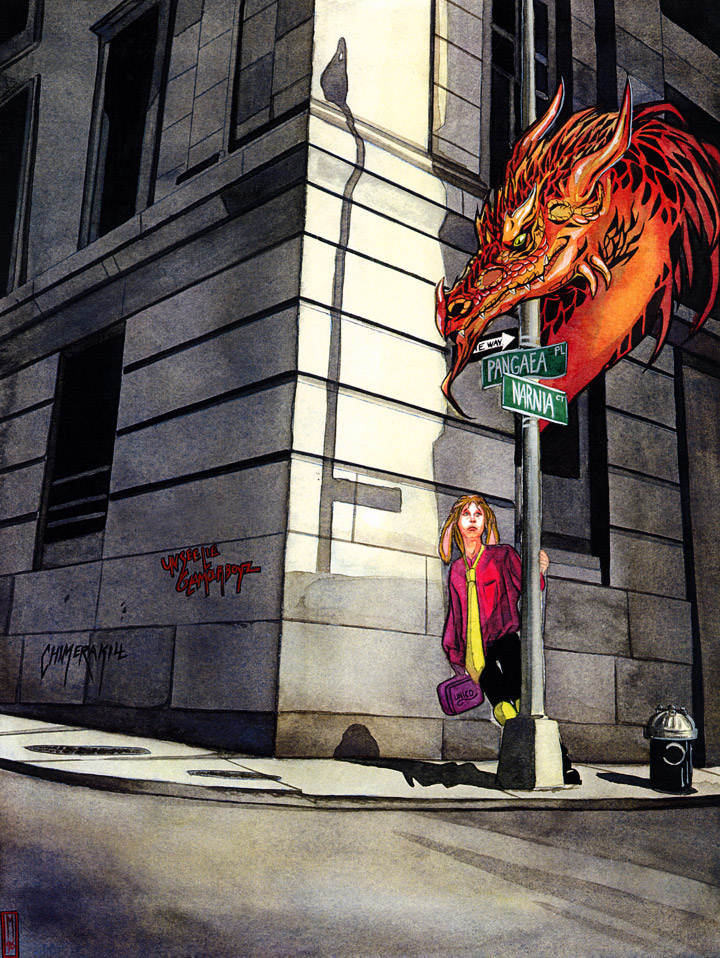
Feature: Hacker Etiquette. You know the hacker lingo and slang, and you fit right into hacker culture. You know a well-informed hacker group that you can contact for help, though it might not be cheap. You also know online marketplaces where you can buy and sell valuable and potentially illegal data.
Mechanic
The world is built and run by machines, and the machines are run by you. You are the grease in the vast clockwork that keeps modern society functioning smoothly. Without you, society crumbles to dust. Or someone just hires your replacement. After all, you're just as replaceable as any piece of equipment.
Ability Score Increase: +1 to Wisdom and one other ability score.
Skill Proficiencies: Engineering, and either Insight or Perception.
Tool Proficiencies: Mechanist's tools and one type of vehicle
Feature: Mechanic Specialty While you're pretty familiar with a variety of machinery and technologies, you specialize in a certain tradecraft. You may be a member of a union for your trade. You can select your specialty from the table below or roll to select it randomly.
| d8 | Specialty | |
|---|---|---|
| 1 | Automotive | |
| 2 | Aircraft | |
| 3 | Robotics | |
| 4 | Manufacturing | |
| 5 | Explosives | |
| 6 | Electronics | |
| 7 | Plumber | |
| 8 | Weapons |
Feature: Grease Monkey. You always know where you can get access to a car garage, a machinist shop, a robotics lab, or other similar facilities. When you work on a machine or vehicle with other mechanics nearby, they will speculate about what's broken, tell you about mistakes you're making, and assist you with the project. You always know where to find the parts needed for vehicle modifications, weapon accessories, and other equipment, no matter how obscure.
Scientist
As a scientist, you are responsible for pursuing knowledge, testing hypotheses, and advancing civilization one step at a time. While the various fields of science have come far in recent times, for every new discovery, and for every new piece of evidence that supports a theory, additional questions arise. For the modern scientist, this creates an endless supply of possibilities.
Of course, with the pursuit of knowledge comes the rise of ethical dilemmas. Are your experiments legal? Will your work be used as a weapon to harm others? Are you willing to perform dangerous experiments on animals? Or people? Are you willing to 'play god'? How do you decide where to draw the line?
Ability Score Increase: +1 to Intelligence and one other ability score.
Skill Proficiencies: Physics, and either Academia or Focus.
Tool Proficiencies: Dissection Tools.
Feature: Scientist Field A scientist's research can be a broad, multi-disciplinary effort, or it may be limited to an extremely specific body of scientific knowledge which has only a handful of experts in the world. Due to the vast breadth of knowledge available to an advanced civilization, scientists must specialize in specific fields if they hope to advance that field further. Choose one to three fields or roll on the table below to define your areas of expertise.
| d12 | Specialty | |
|---|---|---|
| 1 | Data | |
| 2 | Geology | |
| 3 | Biology | |
| 4 | Chemistry | |
| 5 | Astronomy | |
| 6 | Mathematics | |
| 7 | Computer Science | |
| 8 | Physics | |
| 9 | Artificial intelligence | |
| 10 | Engineering | |
| 11 | Psychology | |
| 12 | Archaeology |
Feature: Lab Rat. You always know where to find a relevant laboratory when you need one, and fellow scientists are more inclined to let you utilize it. When you need to research esoteric topics that aren't available via search engine, you know where to find relevant repositories and archives, even if you can't access them due to certain restrictions.
Sex Worker
On neon-lit street corners, in dimly lit brothels, in noisy strip clubs, and in high society lounges, people practice their profession in the carnal arts. You count yourself among their number. In the sleepless cities, there's always clients in need of comfort, and willing to pay for it. Some might find your line of work shameful, demeaning, or disgusting. Others see it as necessary and beneficial for society. However, many in your position just see it as another job.
Ability Score Increase: +1 to Charisma and one other ability score.
Skill Proficiencies: Domestic Arts, and either Persuasion or Performance.
Tool Proficiencies: One type of gaming set
Languages: One of your choice.
Feature: Sex Worker Profession There is a wide variety of professions related to sex work.
They range from streetwalkers calling out to passing strangers, to highly paid escorts who are hired to accompany executives to corporate events, and everyone in between. With modern technology, virtual reality porn stars create realistic (or unrealistic) simulations and distribute them across the internet.
| d8 | Profession | |
|---|---|---|
| 1 | Dom | |
| 2 | Porn Star | |
| 3 | Streetwalker | |
| 4 | Stripper | |
| 5 | Escort | |
| 6 | Webcam model | |
| 7 | Brothel worker | |
| 8 | Phone sex operator |
Feature: Solidarity. You share a common bond with other sex workers, and will usually find assistance in your times of need. You can find shelter or lay low at brothels, strip clubs, and other similar locations. Your previous clients will typically be friendly to you, and may be willing to help you out with information or support.
Street Shaman
Shrouded in the mysterious depths of dark alleyways, abandoned subways, and fetid sewer tunnels, there exist underground societies which practice the mystical arts. Street shamans come in many forms. You may be a psychic, a fortune teller, a healer, a witch, or any manner of practitioner of the enigmatic and arcane. While some may find your services dubious at best, and profane at worst, there's no denying the demand for them exists.
Ability Score Increase: +1 to Wisdom and one other ability score.
Skill Proficiencies: Religion, and either Arcana or Survival.
Tool Proficiencies: Woodcarver's tools
Languages: One of your choice.
Feature: Cultish Connoisseur. You can recognize and identify the signs of mystical cults, cabals, orders, and other shadowy groups and their members. You're familiar with several places of power and ritual sites where the border between worlds wears thin. You can always find a dealer of spell components and other arcane goods.
Wage Slave
Observe the modern wage slave. Packed into cubicles, offices, and behind service desks, they engage in a life-or-death struggle with boredom, impossible deadlines, impatient customers, and sadistic supervisors. They trek home on sketchy subways and vandalized buses to their coffin apartments, spending their meager paychecks on garbage instant noodles, barraged with endless attention-grabbing advertisements along the way.
They devote their precious free hours to watching comfortingly bland sitcoms and playing whatever game is most popular before passing out well after they should have gone to bed. They dream of success, of wealth, of fame, and other things they can never have.
The next day, the cycle begins again.
Ability Score Increase: +1 to Constitution and one other ability score.
Skill Proficiencies: Any three skills.
Tool Proficiencies: One type of artisan's tools
Languages: One of your choice.
Feature: Wage Slave Job Hey, at least you aren't homeless on the mean streets. Love it, hate it, or just tolerate it, you require income from your job in order to live. You may have even been forced to take on multiple jobs. Choose one to three wage slave jobs or roll on the table below to define your 'career'.
| d12 | Job | |
|---|---|---|
| 1 | Janitor | |
| 2 | Teacher | |
| 3 | Secretary | |
| 4 | Store clerk | |
| 5 | Software developer | |
| 6 | Transportation | |
| 7 | Data analyst | |
| 8 | Accountant | |
| 9 | Factory worker | |
| 10 | Office clerk | |
| 11 | Fast food worker | |
| 12 | Customer service |
Feature: Urban Survivor. You share a common bond with other sex workers, and will usually find assistance in your times of need. You can find shelter or lay low at brothels, strip clubs, and other similar locations. Your previous clients will typically be friendly to you, and may be willing to help you out with information or support.
Culture
Your character’s culture is were they grew in, or that of their parents, and does not need to be related to their heritage; a character’s culture can be used to represent their past as a refugee, adoption into a new family, or being raised outside of their heritage for any other reason. The culture you choose provides your character with a number of proficiencies and traits that they would have learned through living amongst that culture, or that members of that culture are often trained in.
Bloodmarked
Bloodmarked gnolls are by far the more likely to be seen in the outside world. They still emphasize a feral menace, but form bonds with allies that are almost as fierce as with family.
These gnolls and others who reject modern Beran society live in a patchwork of unincorporated tribes which all share the adulthood tradition of “blooding.” To become an adult, one must kill an animal with one’s teeth, which once had to be done on a hunt. Today, though, all but the most severe tribes have made this into a formalized ceremony with domesticated animals, sometimes drugged, presented for youths to slay.
Bond of Blood. You and allies within 5 feet of you have advantage on death saving throws.
Harrying Barks. When you deal damage to a creature you can bark, chortle, howl, or make other unnerving vocalizations. The target you damaged must make a Wisdom saving throw (DC 8 + your proficiency bonus + your Charisma bonus). If it fails, it is frightened of you until the end of your next turn.
You can use this trait once and regain the ability to do so when you finish a short rest.
Speak with Hunting Beasts. Through sounds and gestures, you can communicate with carnivorous mammalian hunting beasts, such as bears, hyenas, and wolves. These animals have no special fondness for you.
Unyielding. When you fail a saving throw, you may reroll it.
You can use this trait once and regain the ability to do so when you finish a long rest.
Languages. You know Common, Gnoll, and one Monster language such as Draconic, Goblin, Minotaur, etc.
Blood Pack
Blood packs are self-sufficient bands of nomadic hunters led by the lycanthropes. They subsist by tracking game across a wide territory, all while avoiding monsters, gathering medicinal and diet-supplementary herbs, and raising the next generation. The bands’ traditional methods are finely honed, taking only as much as they need and practicing “nose to tail” methods with the game they hunt. Even large packs rarely risk over-hunting the land, and the emergence of political strife in their number means it is time for their factions to respectfully part ways.
Cooperation among the pack is paramount for surviving the wilds and maintaining political independence from the forces of “civilization.” One of the blood pack’s most important rites—one which is not lightly undertaken—is the declaration of a “blood hunt,” a combined effort by the pack’s best hunters to eradicate a threat to the community. A blood hunt can be declared against any predatory creature, and the victors are rightfully bestowed honor. Lethal confrontations against particularly powerful monsters—like vampires, lycanthropes, or even dragons—are only declared when other means of keeping the peace are exhausted. The packs have a long history of victory in the blood hunts, and the names of the heroes are howled to the full moon for generations to come.
Conscientious Culling. While you are outdoors in a forested or mountainous area, you can spend 4 hours to find enough Supply for yourself and one other creature.
Hunter-Gatherer. You gain proficiency with shortbows, longbows, the Survival skill, and with the herbalism kit.
Prey Drive. When you attack a bloodied creature, you gain an expertise die on the attack roll. Once you have used this trait a number of times equal to your proficiency bonus, you cannot use it again until you finish a short rest.
Wilderness Awareness. While you are outdoors in a forested or mountainous area, you can spend 1 minute focusing on your surroundings to deduce the natural weather over the next 24 hours.
Languages. You can speak, read, write, and sign Common and one other language of your choice.
Caravanner
Sometimes societies are overturned by war and conflict, and there isn’t always a homeland to return to once the war is over. Refugees with nowhere to go often go nowhere together, forming great roaming caravans. They travel along the migratory routes of wild animal herds, or from city to city as travelling merchants, or to cities unafraid of a few hundred or a few thousand travelers suddenly arriving on their doorsteps.
With no land to call their own the caravans make the roads their home. Wagons and carts are loaded up with everything that made their homeland theirs, songs herald their arrival, and colorful pennants wave behind them as they go. It can be an appealing lifestyle, and quite often runaways escape on caravans. Caravan life can be harsh, but it is still a life of adventure on the open road.
Caravanner. Long hauls require steady handling of a wagon and a good rapport with the pack animals. You are proficient with the Animal Handling skill and with land vehicles.
Long Hauler. Sometimes riding in a caravan means enduring long hours and harsh weather. You have proficiency in the Survival skill. In addition, you have advantage on saving throws made to avoid fatigue from a forced march.
Mobile Living. You can create a ramshackle version of a cart or wagon with 30 minutes of work if you have access to raw or reclaimed materials. Ramshackle vehicles created in this way function identically to their normal counterparts, except their gold piece value is always 0, they have half as many hit points as their normal counterparts, and they break and become useless if they are hit by any attack roll with a result of natural 20.
Trampling Charge. Caravanners have learned to bowl down obstacles in their way. When you or a mount you’re riding uses the Dash action or a vehicle you’re driving uses the Ahead Full action, you can move through spaces occupied by creatures with a size category smaller than you, or your mount, or the vehicle. Creatures moved through in this way must make a Dexterity saving throw (DC equal to 8 + your Dexterity modifier + your proficiency bonus). On a failed save, creatures are knocked prone and take an amount of bludgeoning damage equal to your level. Creatures cannot be damaged twice from the same trampling charge.
You can use this trait once and regain the ability to do so when you finish a short rest.
Languages. You can speak, read, sign, and write Common and one other language.
Cavemen
The mind of a caveman can’t help but wander to the question of what they are and where they came from. As patient appreciators of time, cavemen know well the value of coordinated effort, so it’s only natural for them to join together into a community. Cavemen societies dedicate themselves to carving the legends of their people into underground natural formations. Anyone with a passion for history or an appreciation for stonework is welcomed into their fold, as the more hands they have to carve the rock, the closer they come to the truth. Cavemen communities hold different beliefs about the origins of the humanity, each vying for more adherents and more evidence to support their claims. Some think they are elementals born from errant magic, others that they are the literal children of the planet. Still others believe that they are statues bestowed with life by the Forge God or the creations of forgotten dwarven empires from eons ago.
Rock Training. You gain proficiency with rocks as improvised weapons, and in your hands a Tiny rock deals 1d6 + your Strength modifier bludgeoning damage and has the thrown property (40/80 feet).
Stonecarver. You are proficient with mason’s tools and gain an expertise die on checks made to carve stone.
Stonecunning. Whenever you make a History check related to the origin of stonework, you are considered proficient in the History skill and gain an expertise die.
Tough. Your hit point maximum increases by 1, and it increases by 1 every time you gain a level.
Languages. You can speak, read, write, and sign Common and Terran.
Children of Stars
Across the space sail the ships of the Children of Stars. Pirates of the most joyous order, the Children of Stars fly their black flag with the symbol of Zev (resembling a sharp, barbed V with looping arms) emblazoned in gold at its heart. For while they are pirates, it is certainly true, they are among the more noble.
Boarding Action. Rushing into combat is as much an art as a necessity for a pirate. You learn the Bounding Strike combat maneuver and gain a pool of exertion points equal to half your proficiency bonus that can only be used for this maneuver.

Brainwave Rider. You gain an expertise die on saving throws against effects that would knock you prone, and on saving throws made to resist being shoved.
Move as One. A sharp noise can end a successful raid before it begins. When making a Stealth check you may allow one ally within 15 feet to benefit from your roll. Once you have used this feature a number of times equal to your Charisma modifier (minimum 1), you cannot use it again until you have finished a long rest.
Additionally, once per long rest, you can use your reaction to enter a state of focus for up to 1 minute that enables you to take the Help action as a bonus action. This requires concentration like a spell.
Languages. You know how to read, sign, and speak Common and one other language of your choice.
Cinder Chaser
Fire has fascinated creatures since time immemorial, and fire elementaari in particular delight in the exciting and volatile nature of their inborn element. Raised near active volcanos or other such fiery hazards, where danger is a constant companion, individuals from this culture often seek out danger and thrills when venturing forth into the world.
Cinder Chaser Weapon Training. Your people specialize in weaponry that evokes the flashing, crackling flames. You have proficiency with scimitars and whips.
Fire Crafter. You are proficient with glassblower’s tools and smith’s tools.
Heat Tolerance. You have resistance to fire damage; if you already have fire resistance, you are instead immune to the effects of environments of extreme heat and gain a expertise die to Survival checks in such environments.
Thrillseeker. Your tendency to take risks has given you great skill and nerves of steel. You have proficiency in Acrobatics and Athletics, as well as an expertise die on saving throws to resist being frightened.
Languages. You can speak, read, write, and sign Common and Ignan.
Circusfolk
Circusfolk value wit, surprise, and daring which they display in both their lifestyle and their folktales. While some communities are found in villages and insular neighborhoods, they are most famous for their traveling carnivals. These troupes often began as just a handful of entrepreneuring entertainers but blossomed into big top circuses with caravans complete with support staff, spouses, and new family members. Orphans, runaways, and misfits of all heritages find a new family among circusfolk.
The circusfolk oral tradition is exceedingly rich and best known for its trickster characters. These mythological trickster-heroes are numerous and diverse—some never fail, others undermine their successes through their own folly. They all turn the world upside down. A circusfolk storyteller’s excellence is judged not by their perfect recall but by their improvisation and engagement with the audience. All this reveals the unspoken message of circusfolk stories: anything can change.
Rapid Escape. You can use the Disengage action as a bonus action.
Slapstick. You are proficient with improvised weapons, and improvised weapons you use can deal 1d6 damage rather than the damage they normally deal. You can use Dexterity instead of Strength for the attack and damage rolls of your improvised weapons.
Trickster’s Veil. You can cast disguise self once per long rest. Your spellcasting ability for this spell is Intelligence, Wisdom, or Charisma (whichever is highest).
Languages. You can speak, read, write, and sign Common.
Collegiate
Sometimes a village, farm, or city becomes a hub of new ideas and innovations in knowledge and technology. Other times, great institutes of learning arise, universities and colleges where one can spend their entire life in study. Those from these learned communities are renowned for their ability to apply their intellect to their field of expertise.
Philosophic Mind. Your rationale shields your psyche occasionally. Once between long rests, at the start of your turn you can suppress the effects of an enchantment spell you are under for 1 round as your logic overrides it.
Practiced Artisan. You are proficient with calligrapher’s supplies and two other artisan's tools.
Studied Discipline. You have extensive knowledge in certain fields. For all skill proficiencies gained through this trait, you always choose which ability score to use for these rolls (Intelligence, Wisdom, or Charisma). Choose one of the following:
- Architecture: You gain proficiency in Engineering. You can use a bonus action to intuitively identify the weight-bearing wall or pillars of a structure, dealing double damage against it with your next weapon attack. Alternatively, you can double the hit points a structure regains from the next action you or an ally take to repair it.
- Engineering: You gain proficiency in Engineering, and you gain an expertise die on checks made to fix or take apart mechanical mechanisms. You also gain an expertise die on checks and saving throws made against environmental damage from structural changes and collapse.
- Fine Arts: You gain proficiency in Performance. In addition, choose one artisan's tool you are proficient with. You gain an expertise die on checks made using that tool.
- Magic: You gain proficiency in Arcana. In addition, at 3rd level, you can cast detect magic once per long rest. Your spellcasting ability for this spell is Intelligence, Wisdom, or Charisma (whichever is highest).
- Mathematics: You gain proficiency in Engineering. In addition, once between rests, you can spend a full uninterrupted minute observing an environment, at the end of which you can use the Ricochet combat maneuver without spending exertion.
- Medicine: You gain proficiency in Medicine. You gain an expertise die when identifying disease and poison, or doing small field surgeries and triage.
- Sciences: Pick two skills from Arcana, History, Nature, and Religion. You gain proficiency with the two skills.
Languages. You can speak, read, write, and sign Common and three additional languages.
Cosmopolitan
Cosmopolitans grew up in one of the world’s largest, most diverse cities. People of every heritage and way of life brush shoulders, speaking any tongue that can be imagined. Any faith can find a place of worship—even if it is in a home and not a proper temple. The main roads are active all through the night, and there are shadowy alleys where any good might be procured no matter the hour.
Folks tend to have polarized opinions on the city—you either love it or hate it. For some people the big city is a cesspool of corruption and debauchery, but for others the cosmopolitan lifestyle represents what could be: a peaceful global society. The ideal of creating a culture where everyone can fit in fills some folks with hope.
Discreetly Armed. Even while armed, you know how to keep the fact discreet and nonthreatening. You gain an expertise die on checks made to persuade others to let you remain armed or to conceal weapons or items about your person.
Fashion Sense. You know how to read people through their clothes and bearing. After you spend at least 1 minute observing a creature within 60 feet, you can use an action to make either an Insight or History check against a DC equal to the creature’s passive Deception check score. On a success, you learn the following information about that creature:
- Whether the creature has a lower Charisma score than yourself.
- The creature’s culture and national origin (if any).
- The creature’s social standing in the local majority culture.
Skill Versatility. In the big city, you never know what skills you’ll need to get by. You gain proficiency in Culture and one other skill of your choice.
Urban Denizen. You know your way around big cities, and know how to find people in urban locations. You can make an Investigation check to learn the location of (or at the Narrator’s discretion gain a helpful clue to the trail of) a person by discreetly asking around in the right places. The difficulty of the check is DC 15 if the individual is not hiding, or DC 20 if they are trying to conceal their location.
Well-Connected. You gain an extra connection, selected from a background of your choice. This person is of a different heritage or national origin than yourself.
Languages. You can speak, read, write, and sign in Common and two additional languages.
Cubero
Among the varied peoples that call the Underland home, there are those that live their lives alongside gelatinous cubes and other oozes, using them for food, trade, and industry. Typical friendly and mercantile, the Cuberos are nonetheless very keenly aware of the dangers lurking out in the dark and make it common practice to be both well-armed and well-spoken.
Cube Harvester. You are proficient in Animal Handling and with a poisoner’s kit. In addition, you can spend an hour with your poisoner’s kit to harvest special enzymes from the remains of an ooze as though you were harvesting poisons from flora.
While working with ooze remains, you can instead refine a vial of acid in place of a basic poison. You can refine 2 vials of acid in place of an advanced poison and 3 in place of a potent poison.
Polite but Armed. You are proficient with maces, warhammers, and war picks. You are also proficient in Culture and gain a speciality in etiquette.
Darkvision. For 30 ft around you, you can see in dim light as if it were bright light and in darkness as if it were dim light. You can't discern color in darkness, only shades of grey. Beyond 30 ft, you can't see in darkness. If you already had darkvision, its range increases to 60 feet instead.
Languages. You can speak, read, write, and sign Common and Undercommon and one other language of your choice.
Deep Dwarf
Deep dwarves make their homes underground, far from most other creatures and from the sun. Their communities are the most isolated of all dwarven cultures. Some of them refuse trade even with other dwarves. Those that do trade, however, quickly realize that some goods they grow underground cannot live on the surface, and vice versa. Deep dwarf beer is unique, prized across all other dwarven cultures and many other peoples.
Living so isolated and surrounded by dangerous monsters makes these people extremely cautious and calls for specialized training. While hammers and axes are similar to tools dwarves use, they are not much use in the cramped environments deep dwarves navigate.
Mountain dwarves are adapted to underground living but the deep dwarves even more so, with the ability to see clearly in the darkest depths. They are a pessimistic culture, distrustful and often cruel, with a society that emphasizes adversarial relationships even amongst kin. Most deep dwarf adventurers are exiles, cast out for breaking a cynical code of behavior.
Darkvision. For 30 ft around you, you can see in dim light as if it were bright light and in darkness as if it were dim light. You can't discern color in darkness, only shades of grey. Beyond 30 ft, you can't see in darkness. If you already had darkvision, its range increases to 60 feet instead.
Deep Magic. You know the resistance cantrip. Once you reach 3rd level, you can cast jump once per long rest. At 5th level, you can cast enlarge/reduce once per long rest. You don’t need material components for these spells, but you can’t cast them while you’re in direct sunlight (although sunlight has no effect on them once cast). Intelligence is your spellcasting ability for these spells.
Deep Suspicion. Your lack of trust protects you from some magic. You have advantage on saving throws against illusions and to resist being charmed or paralyzed.
Underground Combat Training. You are proficient with hand crossbows, short swords, and war picks.
Languages. You can speak, read, write, and sign Common, Dwarvish, and Undercommon.
De Guerra
De Guerra orcs are more common in the mountains and highlands of Ber, with their strongest core on the northeast coast, along the shore of the Marrajado del Oro, where orcish sailors long raided Risuri lands. They take their name from the de Guerra family, whose matriarch Corta Nariz de Guerra is the current Bruse and ruler of Ber.
Since the establishment of modern Ber, many non-orcs have adopted de Guerra ways, especially those in the military, which often shuffles citizens around the country to train with those descended from other tribes, the better to foster national unity and pride in cultural heterogeneity.
Aggressive. As a bonus action, you can move your speed toward an enemy of your choice that you can see or hear. You must end this move closer to the enemy than you started.
Punch Above Your Weight. You are accustomed to dealing with peoples and creatures much larger than normal. Add half your proficiency bonus on damage rolls for attacks against creatures Large or larger.
Reliable and Vigilant. When you would make an ability or skill check or saving throw, you can ignore one source of disadvantage. After you use this ability, you cannot use it again until you complete a short rest.
Steady Legs. Whether climbing mountains or crewing a ship, you’ve learned how to keep yourself and your allies from becoming unbalanced. When you or an ally within reach would fall prone or be pushed, you can grant them an expertise die on the saving throw or check to resist. (An expertise die is an extra 1d4 that you roll and add to your main d20 roll.)
Languages. You know Common, Orc, and one Monstrous language such as Draconic, Gnoll, Goblin, or Minotaur.
Dragonbound
Dragonbound clans live under the direct rule of a dragon; in the case of dragonborn characters, that dragon will usually be their progenitor dragon. Whether that dragon is malevolent or benign, the clan exists to serve it. Living under a kind and wise dragon can be a safe and joyful upbringing, though one of strict control. Life under a cruel dragon can be fraught with the uncertainty of survival, scrounging off what a dragonic overlord deems a servant worthy of. Dragonbound living can often be comfortable or even enjoyable, but it is not living for oneself. Whether their chains are literal or metaphorical, dragonbound live at their master’s whims. Thankfully those whims often involve directives and missions that range far and wide, endeavors that expose dragonbound to countless viewpoints and quite often plant the seeds of sedition.
Draconic Diplomacy. You’ve been well trained in the sometimes difficult art of draconic etiquette and protocols. You gain an expertise die on Charisma checks made to influence dragon creatures.
Dragonbound Teachings. You know one cantrip of your choice from any spell source. Your spellcasting ability for this cantrip is Intelligence or Wisdom (whichever is highest).
Progenitor’s Boon. Members of dragonbound clans overseen by their progenitors usually enjoy the benefits of their progenitor’s boon. Choose one of the following:
- Chromatic Dragon’s Boon: Chromatic dragons raise their warriors to shock and terrify their enemies. You can cast fear without the need for material components once per long rest. Your spellcasting ability for this spell is Charisma. Until you reach 5th level, the area of this casting of the spell is limited to a 15-foot cone.
- Essence Dragon’s Boon: Essence Dragons ensure that their guardians can easily commune with the land and the spirits within. You know the druidcraft cantrip. In addition, your diplomatic understanding extends towards the creatures of the land and the spirits within it. You gain an expertise die on Charisma checks made to influence beast and celestial creatures.
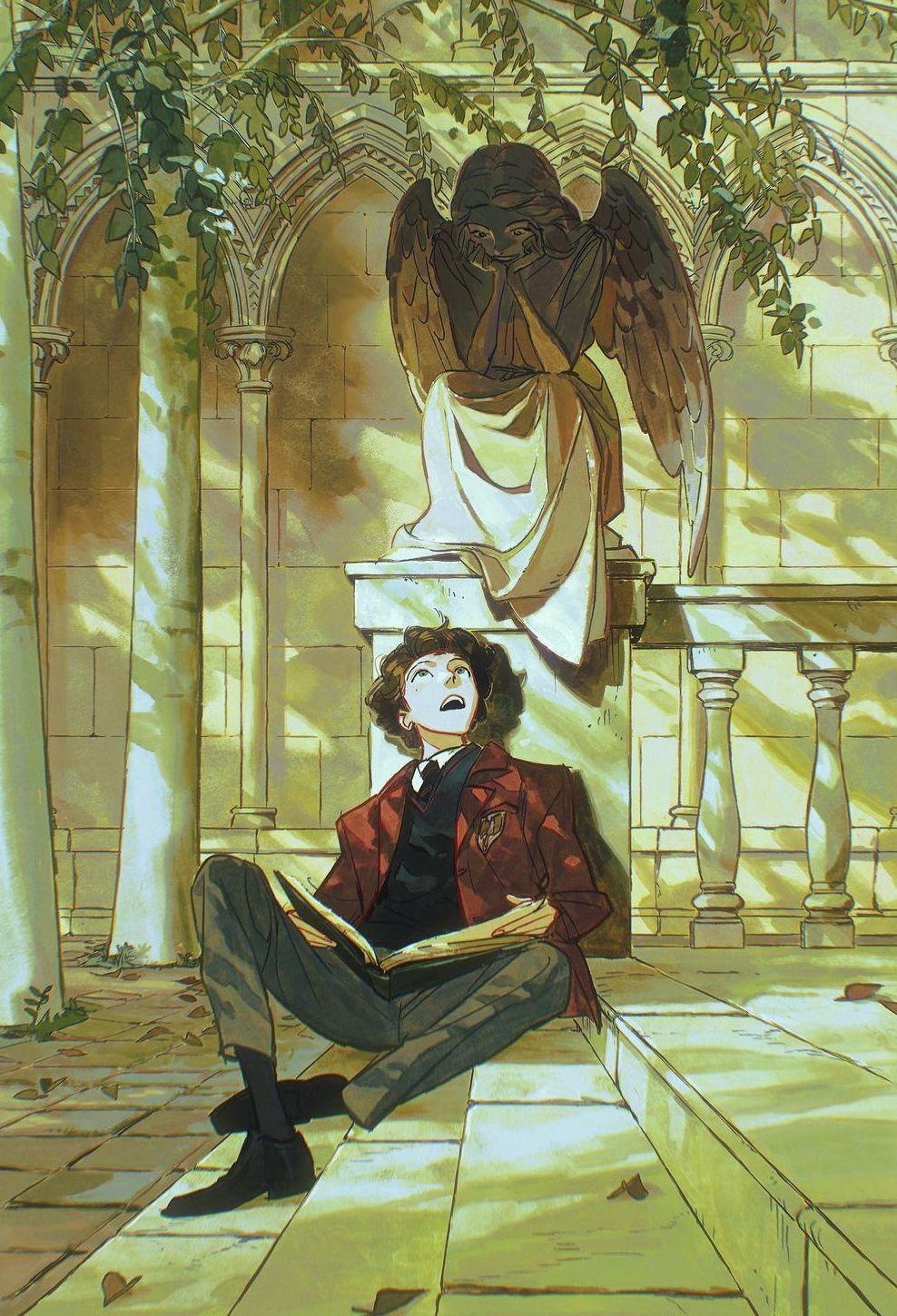
- Gem Dragon’s Boon: Gem dragons ensure their agents’ missions go undetected by bestowing upon them subterfuge magic. You know the message cantrip. Once you reach 3rd level, you can cast illusory script once per long rest. At 5th level, you can cast invisibility once per long rest. You don’t need material components for these spells, and when casting them your spellcasting ability is Intelligence or Charisma (whichever is highest).
- Metallic Dragon’s Boon: Metallic dragons let their pupils study vast repositories of knowledge. Choose a skill from among Arcana, History, Medicine, Nature, or Religion. You have proficiency with the chosen skill and you gain an expertise die on ability checks you make that uses that skill.
Languages. You can speak, read, write, and sign Common and Draconic.
Dreaming Wilds
Far from cities, the wilds of the Dreaming are lush with the weird and beautiful. Fey here easily live in harmony with nature, making their homes in flower bulbs or riding friendly tortoises across painted deserts. Some take offense to the folk of the Waking, perhaps simply sabotaging their tools and wagons, but occasionally luring children with sweets and then over time turning them into gremlins.
Home on the Range. Choose a region: Feywood, Flowing River, Frozen Wastes, Lofty Mountains, Parched Sands, Rolling Grasslands, Tangled Forest, Unrelenting Marsh. You can move normally through non-magical difficult terrain in your chosen region. Additionally, you gain proficiency in one of the following: Animal Handling, Nature, Survival. You gain an expertise die on checks with the chosen skill in your chosen region.
Music of the Wilds. You gain proficiency with one musical instrument.
Nature Provides. In nearly any natural landscape, you do not require Supply each day of a journey. You always find just enough food and drink to sustain you, so your only real concern is dying of boredom. This benefit can never provide Supply for others.
Likewise, once per day you can turn a rock, plant, or animal part into a mundane piece of survival gear or a tool kit worth up to 100 new yen, though this does not grant proficiency with the tool kit. It reverts to its original form after 24 hours or 10 minutes after the item leaves your possession, whichever comes first. You cannot produce Supply using this trait and must still provide the raw materials to craft an item.
Wilds as Weapon. You know one of the following cantrips: acid splash, pestilence, produce flame, ray of frost, shillelagh, shocking grasp.
Your spellcasting ability for these spells is Intelligence, Wisdom, or Charisma (whichever is highest).
Languages. You can speak, read, write, and sign Common and Sylvan.
Faceless
The Faceless is a collective of doppelgangers and other shapechangers who share information and defend each other from harm.
The Faceless come from all walks of life, counting among their number thieves, adventurers, merchants, and even royalty. Each knows the true identities of those in their immediate circle, as well as the names of a few far-flung Faceless. Every Faceless swears to never knowingly hurt or expose their fellows. Beyond that, they share no common goals, and indeed their aims may even be opposed. A Faceless conclave that shelters doppelganger con artists may also include a skinchanger druid that disapproves of their deceptions, even as they protect the doppelgangers’ lives and false identities.
With each member able to adopt many guises, a Faceless enclave naturally becomes a storehouse of secrets. Members of a Faceless community often share these secrets, as well as the magical tricks they use to protect their identities.
Quick Change. You can change clothes, assume a disguise, or doff armor as an action.
Secret Lives. By asking around, you can learn the identities of any Faceless operating in a community, and whether the activities of a non-Faceless shapechanger are suspected. Furthermore, you make Investigation checks to gather rumors with advantage.
Stealthy Enchantment. You know the friends cantrip. Once you reach 3rd level, you can cast charm person once per long rest. You can cast these spells without components, and when casting them your spellcasting ability is your choice of Intelligence, Wisdom, or Charisma.
Subtlety. You are proficient with your choice of either Deception, Insight, Sleight of Hand, or Stealth.
Languages. You can speak, read, write, and sign Common and three other languages.
Forsaken
In world-shaking catastrophes where magic, disasters, and monsters ran rampant, there were those that gritted their teeth and adapted to survive rather than flee their homes. Such cataclysms are now stories of a distant past, and descendants of the survivors continue to channel and embrace the unpredictability of the magical energies surrounding their ruined lands.
Despite having lost most everything—sometimes more than once—these people remain optimistic. They are not bound by tradition and are the culture least likely to be obsessed with the glory of past kingdoms.
Forsaken characters are forced to grow up quickly. They often get married after short courtships and form big families—most of them are nonmonogamous. However, they are still relatively suspicious of outsiders. After all, no matter how bright the future might be the bitter sting of grief lasts a lifetime.
Fleet of Foot. Your Speed increases by 5 feet.
Eat Like a Bird. You grew used to eating very little. You can go a number of days equal to half your Constitution modifier without suffering any fatigue from lack of Supply.
Improvised Tools. During a long rest, when you have access to raw materials you can jury-rig an improvised tool kit. If you roll a 1 while making a check using the improvised tools or the next time you take a long rest, they break.
Pack Rat. You can carry your whole house on your back. You count as one size larger when determining your carrying capacity.
Roll With the Punches. After you fail an ability check, you have advantage on your next ability check. You can’t use this trait again until after you finish a short rest.
Languages. You can speak, read, write, and sign Common, and two additional languages.
Godbound
The godbound were raised among the faithful. Such communities vary from temples and monasteries to massive theocracies that span entire continents, their rulers either divine or the anointed representatives of greater entities.
The nature of your faith community can vary by theology, structure, and goodwill, and the environment might be egalitarian or hierarchical. Most religious peoples strive towards virtue, but even they pose the risk of abuse, and at the heart of certain communities lies a dark secret or conspiracy the likes of which might shatter the faith of any follower.
One’s religion of birth need not always be their religious identity. People leave their religious communities for reasons both good and ill—some faiths send trusted envoys on missions, and others are destroyed by stronger forces. Communities also exile or punish members who commit sins, though some are nurturing, caring cultures which emphasize the wellbeing of all.
Bonus Connection. You have one additional connection, selected from the Acolyte background.
Detect Faith. You are trained to detect even the most subtle indications of a person’s religious perspective. After you speak with a person for at least 1 minute, you can use an action to make either an Insight or Religion check opposed by their Deception check. On a success, you learn the following information about them:
- Whether they have a lower Wisdom score than yourself.
- Whether they are religious; if so, you also learn their faith.
- Whether they have class levels in any religious class.
Devotion. You gain an expertise die on saving throws made to resist being charmed or frightened.
Arts of Worship. You are proficient with your choice of either Performance, two musical instruments, or two artisan’s tools.
Religious Education. Your community is steeped in scripture, song, and storytelling. You are proficient in the Religion skill and know one cantrip of your choice from the life manipulation spell list. Your spellcasting ability score for this cantrip is Intelligence, Wisdom, or Charisma (whichever is highest).
Siblings in Faith. You have advantage on checks made to socially interact with members of your current or former faith, such as when requesting services or gathering information.
Languages. You can speak, read, write, and sign in Common and one other language.
Itinerant
Some wanderers may not have grown up with a single place to call home. Their culture is a mix of many, allowing them to see things from different angles and perspectives. Always outsiders yet able to blend in with ease, such folks benefit from the wisdom of a wide range of peoples, customs, and places.
Blending In. You are used to blending into a new culture. You gain proficiency with the disguise kit.

Conscientious Socializer. The first time you interact with strangers in an unfamiliar land or region, you gain an expertise die to the first Charisma check you make. This trait does not work on groups if at least one person in a group knows you.
I Know Someone. You gain one additional connection, which you can choose from any background other than your own.
Many Cultures. You gain proficiency in Culture. In addition, choose Intelligence or Wisdom. Choose Intelligence or Wisdom. You gain an expertise die on ability checks using the chosen ability score that are made to understand the social customs of, interact with, or recall knowledge about individuals, objects, or environments associated with any culture or society you have been surrounded by for a month or longer.
Motive and Reason. The reason why you have a home away from home tells a unique life story. Choose one of the following:
- Homeland Seeker: Stories of a lost magical homeland are constantly on the minds of your community. Like many others, you have joined the effort to locate this place of legends. You gain proficiency in Arcana and History.
- Labor Migrant: You, or your ancestors, came in search of honest work or because your skills were in demand. You are proficient with a set of artisan’s tools and one skill of your choice.
- Shadow Exile: You left your country under mysterious circumstances. Are you a wanted criminal, a spy, or a self-exile? Only you know your motivation. You are proficient in
Deception or Stealth. If you pick Stealth, once between rests you can make a Stealth check to replace a Perception check. If you pick Deception, once between rests you can make a Deception check to replace an Insight check.
- Refugee: By great misfortune, you and many others left your homeland so that you might survive. You are proficient in Survival, and when in an urban environment can roll Survival checks when using Intimidation or Persuasion.
Languages. You can speak, read, write, and sign Common and three additional languages.
Lone Wanderer
Even with the myriad of cultures present to choose from, there will always be those who prefer to march to the beat of their own drum. A lone wanderer shirks all connection to the cultures and communities around them in favor of making their own path. No two lone wanderers are alike, even those that might share a heritage—they all have their own personal goals, superstitions, and traditions. Because of this, lone wanderer culture is the most diverse as well as the most disjointed. You will never find communities that share this culture, but occasionally, when forced together, lone wanderers who can manage to get along can form nomadic groups.
Choosing this culture does not mean you forego having any personal connections, however. Lone wanderers can have families, former mentors, or old friends which may have influenced their decision to stake it out on their own, or that may make them regret it.
Culture of My Own. You have rejected other cultures in favor of building your own. You gain four skill or tool proficiencies of your choice.
Heirloom. You carry a family or cultural heirloom. Choose one weapon at your Narrator discretion. You begin play with a masterwork version of that weapon.
Languages. You can speak, read, write, and sign Common and two additional languages.
Lunar Chrysalian
Often painted as quiet observers, lunar chrysalians hold a particular affinity for nighttime and the moon. Because they are typically found in the darker reaches of the Dreaming, they have mastered the ability to move silently to avoid detection by the realm’s more unsavory folk. And, as they are often surrounded by hags or agents of the Unseen Court, they have a particular interest in occultism. Lunar chrysalians tend to adopt muted clothing and patterns, preferring to melt into a crowd or blend in with their surroundings rather than make a scene. While they can be shy, there are some who forge out into the realms beyond in search of knowledge or adventure.
Low-light Vision. For 30 ft around you, you can see in dim light as if it were bright light. You can't see in darkness. If you already have Low-light Vision, it increases by 30 feet.
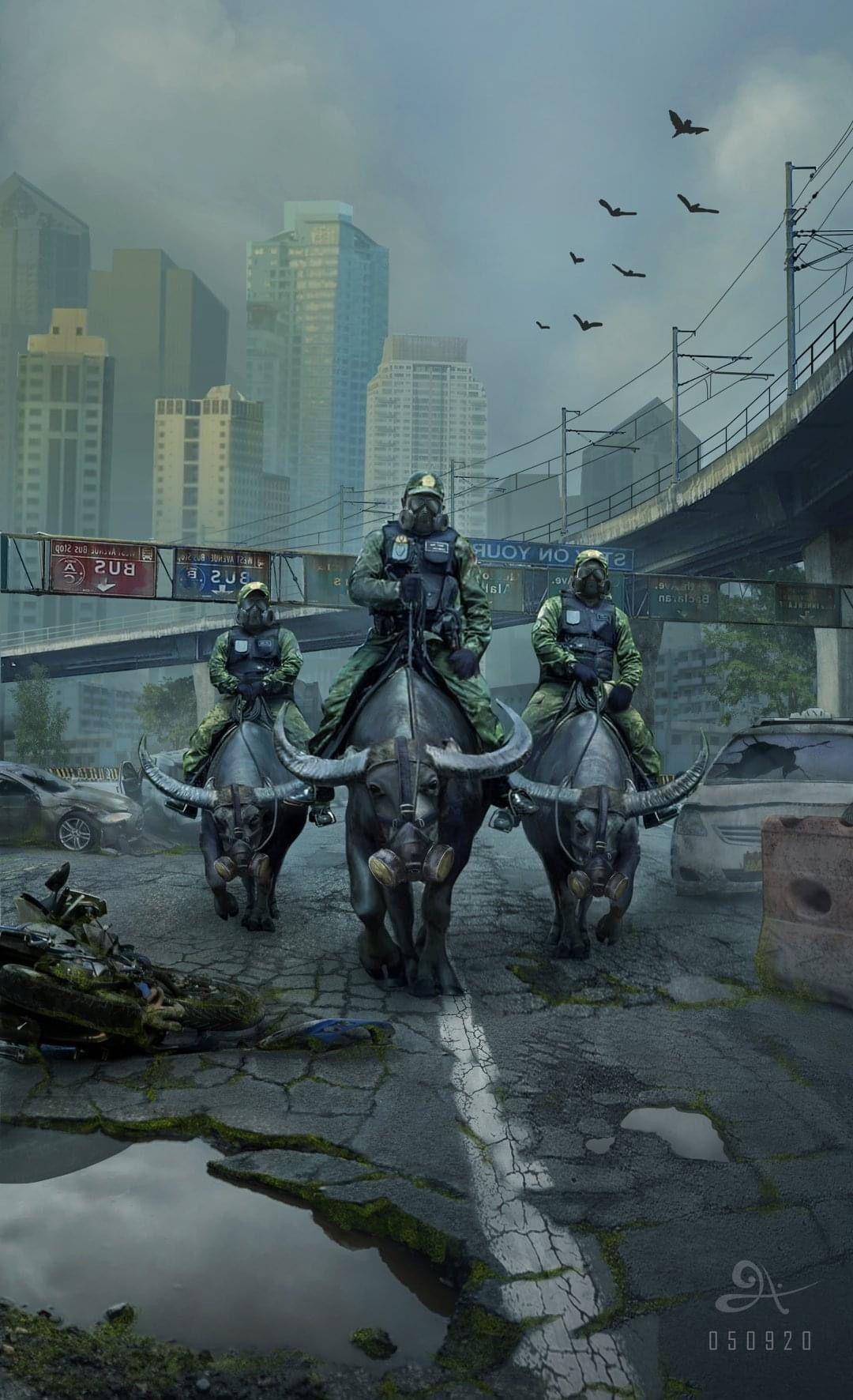
Moonlit Magic. You know the dancing lights cantrip. Once you reach 3rd level, you can cast faerie fire once per long rest. At 5th level, you can cast pass without trace once per long rest. You don’t need material components for these spells, and when casting them our spellcasting ability for this spell is Intelligence, Wisdom, or Charisma, whichever is highest.
Student of the Occult. You have a cultural affinity for secrets and the unknown. You gain proficiency in two of the following skills: Arcana, History, Medicine, Nature, or Survival.
Languages. You can speak, read, write, and sign Common and Sylvan.
Mischief Maker
A group of ratlings is called a “mischief”—for good reason, as many hapless victims of ratling pranks will tell you. Mischiefs of ratlings travel from place to place, mocking the mighty, shocking the stuffy, thwarting the wicked, and helping themselves to food and luxuries along the way.
A mischief often has a reason for traveling besides pleasure-seeking. Some ratling clans are skilled musicians or troupes of actors. Others are tinkers or traders, wicked pirates, or even altruistic outlaws who protect the downtrodden. What every mischief shares is a communal social structure and mutual trust. Mischief ratlings constantly improvise, taking cues from each other as they engage in elaborate hijinks, with little thought for the long-term consequences.
Mischief makers lead thrill-seeking, exuberant lives and leave chaos in their wake. Discontent members of more staid communities, especially teens, often envy their freedom and impudence. A traveling mischief can collect humans, elves, gnomes, and other folks unsatisfied with their lives.
Follow My Lead. When you are involved in a group skill check, you are treated as proficient in the skill if anyone in the group is proficient in the skill.
Sudden Retreat. When a creature makes an opportunity attack against you, it does so with disadvantage.
Table for One. If you are Small, you can make a Deception check or use a disguise kit to appear to be Medium while standing on another Small humanoid’s shoulders.
Tricks of the Trade. You are proficient in Deception, Performance, or Sleight of Hand, or with disguise kits (your choice).
Languages. You can speak, read, write, and sign Common and two other languages.
Moonkeeper
Moonkeepers are a separatist religious sect who worship the moon, though there is disagreement as to how the moon is to be understood—whether it is merely a catalyst for blessings and curses, or if it is to be worshiped as the shadow elves’ moon goddess, a primordial nature spirit, or some other being entirely. Their traditions also vary depending on the outside influences a given sect has interacted with—some moonkeeper beliefs are ancient, but the influence of contemporary religious and druidic movements are undeniable. mNot all Moonkeeper adherents are religious experts, but even lay followers are deeply spiritual people who seamlessly weave ritual observances into ordinary life.
This does not mean they are a dour group, however; moonkeepers are well known for their elaborate storytelling style, with honors and bragging rights going to those who can tell the most frightening, elaborate, or amusing tales.
A nearly universal moonkeeper tenet is to lead a largely nocturnal lifestyle. Members will make exceptions for vital needs, but for them the light of the moon is more hallowed than that of the sun, and all worthwhile endeavors should be done under its gaze. This way of life has many impacts on cultural values and practices, which are too many to list here. For one example, the night teaches not just the value of darkness but of quiet, and Moonkeepers often prefer to speak in whispers and murmurs (saving shouts and howls for appropriate, usually religious, moments). This tendency, which Moonkeepers find so practical, is often misunderstood by outsiders as weakness, subversion, or even aggression.
Child of Night. You gain an expertise die on Stealth checks.
Ritualistic Focus. Many of the moonkeeper observances you’ve internalized have broader magical applications. You know two 1st-level spells of your choice. These spells must have the ritual tag and you may only cast them as rituals. Wisdom is your spellcasting ability for these spells. In addition, you may cast other spells you learn as rituals if those spells have the ritual tag.
Storyteller. Your people are especially known for their evocative, often chilling tales. Choose a skill from among Arcana, Deception, History, Intimidation, Performance, or Religion. You gain proficiency in the chosen skill.
Darkvision. For 30 ft around you, you can see in dim light as if it were bright light and in darkness as if it were dim light. You can't discern color in darkness, only shades of grey. Beyond 30 ft, you can't see in darkness. If you already had darkvision, its range increases to 60 feet instead.
Languages. You can speak, read, write, and sign Common and one other language of your choice.
Ostinad Horselord
The wide sweeping plains and grasslands of Ostinad are home to the horse lords of Elissar, but this place southeast of Endora is a region and not a nation—there is no capital or king or even an army, only the swords pledged to each horse lord. Ostinads lead free and semi-nomadic lives that are as harsh as they are rewarding, any disputes between different groups won out with contests that demand the best of all participants. Within the meadhalls of the few small towns scattered across the gentle hills and flatlands however, the camaraderie, mirth, and trust encouraged by this rigorous equestrian way of life are all too clear to see.
Wherever they roam the people of the horse lords are accompanied by their beloved mounts. In Ostinad a horse is more than a beast of burden or means of travel, it is as much a member of the family as a sibling or parent. Ostinad equestrians cherish their horses and the bonds they forge are extraordinary, likened to that of a mother and child—and bore out in many legends of steeds that proved to be just as courageous and noble as the Ostinad warriors that rode them.
Animal Handling. You gain proficiency in Animal Handling and an expertise die on Animal Handling checks.
Mount. You gain a draft horse or riding horse.
Rider’s Bond. Once you have spent a week with a creature trained to be a mount, at the end of a long rest you may forge a special bond with it. This bond lasts until your mount dies or you use this trait on a different creature. While you have this special bond, you know what direction your mount is as long as you are on the same plane, your mount has advantage on saving throws against fear, at the end of each short rest your mount heals an additional 2d8 hit points, and as long as it is not fatigued at the end of a long rest your mount regains all of its hit dice.
Spirited Soul. Riding horseback is in your very soul. Choose one of the following:
- Bonding Soul: When you first learn spells, you gain one 1st-level spell from the Beasts spell school in addition to the spells you normally gain. The spell may be from any class' spell list, and becomes a class spell for you. You may cast this spell by expending a hit die; this does not cost you a spell slot. Once you have cast this spell in this way, you cannot do so again until you have finished a long rest.
- Striding Soul: If you learn combat maneuvers, you may always choose from the Spirited Steed tradition. In addition, it costs 1 less exertion point for you to activate Spirited Steed combat maneuvers (minimum 1 exertion point).
Languages. You can speak, read, write, and sign Common and one additional language.
Rover
A free-spirited and inquisitive lot, rover bands are ever on the move, and usually accompanied by their famously well-trained canine companions. Often mistaken for being feckless and flighty, the truth is merely that rovers instead value their freedom and a zest for life over great works and grinding industry. They do, however, value more transitory works, such as unique, sensory-based art. Individual bands are usually made up of multiple families, with a loose hierarchy and an inclination towards mutual cooperation.
Dog Lover. You have a pet mastiff (or similar big dog) that follows you and is loyal to you. The mastiff is capable of independent action and excellently trained. Using verbal and non-verbal cues you can make simple requests of your mastiff (such as delivering or retrieving small objects, opening doors, activating simple switches or buttons, or even administering an opened potion vial to an incapacitated creature) as a bonus action. In combat, the mastiff rolls its own initiative and acts on its own turn. The mastiff won’t attack except as a reaction to being attacked, but it can take other actions as normal, and makes death saving throws. Over the course of a long rest , you can train another mastiff to follow your commands, but you cannot keep more than one dog at such a high level of training. Additionally, people from outside your culture are incapable of keeping up with the constant training that such a dog needs and cannot command it as you do.
Dog Sled Riders. As a rover you are expected to be proficient in Animal Handling and are also proficient in the use of land vehicles.
Life’s a Game. You have proficiency with a gaming set of your choice.
Sharp Eyes, Sharp Ears. Rovers need to keep their wits about them and be aware of their surroundings. You are proficient in Survival and Perception.
Languages. You can speak, read, write, and sign Common and another language of your choice.
Settler
Settlers live at the farthest reaches of their empire, upon shores their nation’s tendrils have not quite fully grasped. They live alone or in communities on the frontier, land that not long ago was merely empty space on the map—though those already living there rarely see it that way.
Though settlers may claim uninhabited land, it’s rare for any region even remotely livable to be truly unclaimed. Armies or disasters may have swept those previous inhabitants away, or they might be right across the hastily crafted walls, wondering what these strange newcomers are up to. It’s a life of conflict, either fighting against the elements or rival claims on the same patch of land. But they shoulder their burdens and fight their fights anyway, always working towards a promise of a brighter future. A settler has the chance to carve out a piece of the world to call their own. Often the opportunities are slim back home, and the chance to forge one’s own destiny is all it takes.
Ambition often drives settlers towards colonization. Settlers of all shapes and sizes can leave their homeland in search of fortune and independence, to varying degrees of success. Some settlers thrive while whole colonies go quiet and disappear. While this is a life uncertain and fraught with danger, the drive to build a future lures numerous people into the unknown.
Claim Staker. A tall fence and the grit to defend it is often all it takes to stake a claim out on the frontier. Whenever you begin a long rest, you can choose to spend the first hour of that rest making the area into a fortified position for the duration. While resting in a fortified position, the ground in a 60-foot radius area around you is considered difficult terrain for any creatures other than those you consider allies. In addition, the first time a hidden creature enters the fortified area, it must make a Dexterity saving throw (DC 8 + your Wisdom modifier + your proficiency bonus). On a failed save, the creature inadvertently makes loud noises and is no longer hidden.
Frontier Survival. You are proficient in the Insight and Survival skills.
Strange Forager. You gain an expertise die on any check made to determine if something is poisonous.
Languages. You can speak, read, sign, and write Common, and two additional languages.
Tyrannized
Many people live in fear of a tyrannical ruler and of the militant minions that punish dissent and disobedience. Performative loyalty becomes necessary for survival, until even those who oppose the ruler will sometimes betray their neighbors lest they be dragged away to torture and enslavement. Those who resist the tyrant learn to feign the role of faithful soldier, and the cruel irony is that they often profit from the violent conquests of the regime they loathe.
All Hail the Tyrant. With true freedom denied them many learn to feign deference, while some resign themselves to collaborating with the tyrant’s minions so as not to be suspected of disloyalty. You gain proficiency in either Deception or Intimidation.
Defiant Will. Whether out of fearful devotion to the tyrant or a stalwart resistance, you refuse to be subdued. You gain an expertise die on saving throws made to resist being charmed, frightened, paralyzed, poisoned, stunned, or put to sleep.
Saving Face. You are careful not to show weakness in front of others for fear of losing status. If you miss with an attack roll or fail an ability check, you can gain a bonus to the roll equal to the number of allies you can see within 30 feet of you (maximum +3), possibly changing a failure into a success. You can use this feature once and regain the ability to do so when you finish a short rest.
Scars of the Scourge. The tyrant’s minions invariably have some preferred method of torment and you have either learned to survive it or chosen to use the weapon of your oppressors against them. Choose either scars or scourge, and then choose one of the following damage types: acid, cold, fire, force, lightning, necrotic, poison, psychic, radiant, or thunder.
- Scars: You have resistance to the chosen damage type.
- Scourge: As a bonus action, you can enhance the next attack you make this turn. If that attack hits, it deals extra damage of the chosen type equal to your proficiency bonus. However, the sting of the scourge lessens after the initial strike, so after you deal this extra damage to a creature, this trait cannot deal extra damage to it during the same combat.
Languages. You can speak, read, write, and sign Common and one other language.
Underlander
Underlanders are survivors through and through, having known the leanest of times in tunnels home to monsters and deadly traps alike. The harshness of subterranean life makes Underlanders extremely cautious about whom they trust, but once they form a bond with someone, their loyalty is ironclad. At the same time, Underlanders can be incredibly patient when danger is near—but when the moment to strike is at hand, theirs is sure.
Ear for Echoes. You have blindsight out to a range of 10 feet. If you already had blindsight, its range increases by 10 feet.
Eat Like a Bird. You grew used to eating very little. You can go a number of days equal to half your Constitution modifier without suffering any fatigue from lack of Supply.
Tunnel Finder. You have advantage on checks made to navigate underground.
Darkvision. For 30 ft around you, you can see in dim light as if it were bright light and in darkness as if it were dim light. You can't discern color in darkness, only shades of grey. Beyond 30 ft, you can't see in darkness. If you already had darkvision, its range increases to 60 feet instead.
Underlander. You gain an expertise die on checks made for journey activities while in Underland.
Languages. You can speak, read, write, and sign Common and Undercommon.

Destiny
Every hero has something that drives them forward, an inner spark or outward goal that compels them to risk everything for a life of adventure. Choosing a destiny provides important roleplaying cues and features that help shape your character’s identity. Why are they an adventurer? What drives them into a life of danger? Is destiny thrust upon them by circumstance, or do they have a burning desire for a future they wish to claim for their own?
Chaos
Those destined for Chaos don’t live by the rules binding ordinary folk. They clash with authority and tradition all their lives, either in minor acts of subversion or outright rebellion. Tricksters are rarely mere rulebreakers—their ideology signals change for both the meek and mighty.
Source of Inspiration: Chaos
You sow disorder, play tricks, and subvert tradition. You gain inspiration whenever you successfully subvert law and order, so long as it benefits your allies or moves the story forward.
Successfully lie to or humiliate an authority figure, commit a
punishable crime, indulge in base pleasures to ill-advised
extremes.
Inspiration Feature: Ingenious Doubletalk
Undaunted by momentary setbacks, you twist conversations in any direction with an inspired turn of phrase and confusing doubletalk that plays off bold lies and impertinent proposals as jokes, obfuscates or redirects accidentally slipped information, or quells outrage with diffusing flattery. Whenever you or a friendly creature you can hear fails a Deception or a Persuasion check, you can use your reaction to spend your inspiration and undo any consequences of that failed check.
Fulfilling Your Destiny
You fulfill your destiny of Chaos when you overturn a world or cosmic order.
Greatly destabilize a nation or extremely large organization,
subvert or trick a deity-level entity, upset the status quo for a
vast number of people.
Fulfillment Feature: Agent of Chaos
The whims of chaos flow through you and everything you do. Whenever you roll one or more dice to determine the damage of an attack or spell or the random effects of a spell or feature, you may choose to reroll those dice; if you do you must use the new rolls.
In addition, you emit a strong chaotic aura for the purposes of any feature, spell, or trait that detects or affects Chaotic creatures.
Coming of Age
Not all heroes have a clear path ahead of them. Some are still finding their footing and are dreaming big all the same: of adventure, the open road, a chance to prove one’s worth, and having a life worth living.
Special Feature: Finding Yourself
Sometimes it takes a journey to find yourself. You may exchange this destiny for another destiny at any time.
Source of Inspiration: Yes to Adventure
You draw inspiration from setting out with adventure in front of you. You gain inspiration whenever you achieve a personal milestone.
Join a new guild or organization, travel somewhere new and far from home, accept a new major quest or mission, change worldviews and grow as a person.
Inspiration Feature: Ready to Learn
You haven’t had training in everything but you’re determined to give it your all anyway. As a bonus action you may spend your inspiration to gain proficiency with a weapon, armor, skill, or tool for the next hour.
Fulfilling Your Destiny
You fulfill your Coming of Age destiny when you complete the hero’s journey.
Return to your homeland after defeating an immense threat,
become the leader of an organization you were lowly in, learn
the truth of life through great hardship.
Fulfillment Feature: Returned
With the journey complete, you finally know who you are—or rather who you became along the way. When you gain this feature, you immediately choose the fulfillment feature from another destiny. You gain the chosen fulfillment feature, which replaces this one.
Darkness
Darkness is not good or evil, it is that which obscures. Darkness is the unknown and the fear of discovery. Darkness is a veil, a barrier that can mask the predator or guard the innocent from what they can’t understand. Those with a destiny of darkness tend to be mysterious, shifty, and are only comfortable behind multiple layers of lies and manipulations. They are often arrogant, but not cruel—after all, only they know what lies behind the veil and it is their duty to guard such knowledge from prying eyes and unprepared minds.
Source of Inspiration: Obfuscation
You draw inspiration from learning and keeping secrets or using those secrets for your own ends. You gain inspiration whenever you learn hidden or forbidden information and when you manipulate others.
Learn a hidden truth, manipulate someone into doing
something to your benefit they wouldn’t normally do, keep
something hidden against harsh scrutiny to your betterment or the betterment of others.
Inspiration Feature: Misdirection
You know how to twist eyes and ears away from the truth. Whenever you or an ally you can see fails a Deception check, you can use your reaction to spend your inspiration and undo any consequences of that failed check.
Fulfilling Your Destiny
You fulfill your destiny of Darkness when you succeed in a convoluted scheme.
Play multiple groups against each other and come out on top,
manipulate several people into unwittingly aiding a grand
scheme, seal away a horrible truth that would cause turmoil if
discovered.
Fulfillment Feature: Shadowy Figure
Prying eyes find you obscured by shifting shadows. You gain an expertise die on Stealth checks. In addition, you are considered lightly obscured by dim light while in areas of bright light. While in areas of dim light you are considered heavily obscured, as if you were in an area of darkness.
Death
All things end. This is right, this is nature. Death is a part of life, defending others often requires death, and unnaturally extended lives often require ending. Those with a destiny of death are deliverers of finality. There may be a specific person or type of creature they are devoted to ending, or it may be life in general.
Source of Inspiration: Endings
You draw inspiration from the ending of lives, specifically lives of greater import whose ending is felt by others. You gain inspiration whenever you are directly responsible for ending the life of something meaningful, whether it’s that of a particularly powerful monster or a more abstract “life”, such as the practice of a time-honored tradition.
Kill or participate in killing a creature with CR equal to or higher than your class level, end an established organization, stop a
long-standing tradition, break something ancient.
Inspiration Feature: Death-Scent
You are intricately familiar with the cycle of life and death and its many interruptions. As a bonus action, you can spend your inspiration to detect the location of either undead creatures or inanimate corpses within 60 feet of yourself. You learn the CR of any undead you detect in this way, as well as two of the following for a single undead (chosen after learning their location and CR): resistances, immunities, vulnerabilities, what languages it speaks, or its Armor Class. You learn the general cause of death for any corpse you detect with this ability (for example, you know a creature died of poison, but not what kind or how it was administered), its CR in life, and its creature type. You also gain advantage on all Medicine checks to examine a corpse you have detected in this way if you choose to exhume and study it.
Fulfilling Your Destiny
You fulfill your destiny of Death when you end a life of pivotal importance to the world.
Participate in the slaying of something immensely powerful or meaningful, such as a monarch, an empire, the last member of a species or culture, an immortal creature, or a god.
Fulfillment Feature: Deathly Aura
You are an end-bringer, a frightful harbinger of the inevitable when you want to be. As an action, you can spend your inspiration to emit a deathly aura in a 30 foot radius around yourself that remains for a number of rounds equal to your proficiency bonus.
Whenever a creature enters your deathly aura for the first time on their turn or starts their turn there they must make a Wisdom saving throw with a DC equal to 10 + your Constitution bonus + your proficiency bonus. On a failed save, creatures are frightened of you until your deathly aura ends.
In addition, all creatures that enter your deathly aura or start their turn there make death saving throws and Constitution saving throws at disadvantage. When you activate this ability, you can choose a number of creatures equal to your proficiency modifier to exclude from this effect.
Dominion
An impostor seated on your throne, a land divided by civil strife, a feckless bureaucracy waiting to be gamed. Those with the Dominion destiny look at chaos and see opportunity. Some seek to return to their hand what is rightfully theirs, but others start with nothing and wish to accumulate influence and power however they may. Through shield and steel or cloak and dagger you reach out to claim your rightful seat of power—or a place in its shadows. The Dominion destiny is as varied as politics itself. Consult with the Narrator to come up with ideas for an ambition suitable to the setting and campaign.
Source of Inspiration: Leadership
You draw inspiration from taking charge and directing what needs to be done. You gain inspiration whenever you lead by example or convince a group of NPCs to act against their own interests in order to complete a difficult task.
Settle a vitriolic argument, direct a large number of nonplayer
characters to participate in the completion of a task, rally a
multitude of people to a cause.
Inspiration Feature: Studied Deliberation
With a level head and measured logic, you objectively determine the best path forward. You may spend your inspiration and a minute’s deliberation to determine the results of an upcoming plan of action (as the augury spell).
Fulfilling Your Destiny
You fulfill your destiny of Dominion when you gain a dominion of your own.
Become the ruler of a nation, large city, or other sizable
population, become a divine figure with numerous followers,
reach the top of a massive organization.
Fulfillment Feature: Absolute Power
Either through respect or fear you have become an uncontested ruler, and most simple orders you give are followed without question. You have advantage on checks made to influence your subjects.
In addition, you emit a strong lawful aura for the purposes of any feature, spell, or trait that detects or affects Lawful creatures.
Excellence
Some are fated to be the best, the apex, the pinnacle of their craft that all others aspire to. Such perfection demands single-minded determination, unending resolve and focus, and the luck of innate talent. Those destined for Excellence impact the world—often at the cost of countless sacrifices along the way.
Source of Inspiration: Failure
Every failed attempt is a chance for growth and each time you fall you stand up stronger. You gain inspiration whenever the Narrator calls for you to make an ability check, attack roll, or saving throw and the final result of the d20 roll is a natural 1.
Inspiration Feature: Practiced Edge
A perfected technique is often the difference between victory and defeat. After you roll an ability check, attack roll, or saving throw but before you know the outcome, you may spend your inspiration to add a +5 bonus to that roll.
Fulfilling Your Destiny
You fulfill your destiny of Excellence when you perform a crowning achievement in your field.
Create a masterpiece, defeat the master of your martial art,
become famous for a glorious act of heroism, or become
renowned as the best in your field.
Fulfillment Feature: A Technique Perfected
You have achieved the apex in at least some small area of mortal ability. Choose an ability score, combat tradition, or school of magic.
Ability Score: When you make an ability check using the chosen ability score and can add your proficiency bonus, you gain an expertise die.
Combat Tradition: Attacks you make using combat maneuvers from this tradition gain a +2 bonus to attack and damage rolls.
School of Magic: When you cast a spell from this school of magic, your spell save DC is treated as 2 higher and you gain a +2 bonus on any spell attack roll it requires.
Fire
Fire can be put to work, but it has no goal in mind, no plans for the future beyond spreading and burning bright. Fire is impulsive, destructive, and beautiful. Those with a destiny of fire tend to be rabble rousers and instigators, brash and bold. They take up causes as burning beacons, only to abandon them once passions have cooled. They are beings of passion and wrath, and they often love and care deeply while leaving nought but ashes in their wakes.
Source of Inspiration: Passion
You draw inspiration from ignited passions in yourself and others. You gain inspiration whenever you passionately adopt a new love, cause, or interest, and whenever you rally others to do the same.
Devote yourself to a new cause, become passionately enraged
at something new, rally a large number of NPCs to fight, fall
deeply in love.
Inspiration Feature: Ignite
Your passions ignite and your current obsession possesses you. You may spend your inspiration as a reaction to ignite a skill, spell school, or combat tradition of your choice for a number of rounds equal to your proficiency modifier. Any check made in an ignited skill, and any spell attack roll made for an ignited spell school or attack roll made as part of a combat maneuver from an ignited combat tradition gains an expertise die. You can end this effect early without spending an action.
Fulfilling Your Destiny
You fulfill your destiny of Fire when you let it all burn for the sake of someone or something you’re passionate about.
Save someone you love at the cost of vast destruction,
destabilize a nation or the world, unleash a great power you
have no control over.
Fulfillment Feature: Blazing Soul
You are the heart of the inferno, a cackling spark that sets the world ablaze. You are immune to fire damage. When you activate your Ignite feature, you can choose to literally cloak yourself in flame for the same duration. Unattended objects within 5 feet catch fire, you shed light as a torch, and any weapon or spell attack you make during this time deals an additional 2d4 fire damage.
Ice
The ice is quiet, a still and solemn thing content to merely be. Ice is uncaring, stubborn, and somber. Those with a destiny of ice are harsh and calculating, slow and purposeful. They tend towards the distant and the calm, unnerved by the bustle of activity and reassured by isolation and stillness. They are beings of cold calculation and unwavering ideals, bulwarks against change who work to keep the world as it is.
Source of Inspiration: Frigid Stillness
You draw inspiration from contemplation and stillness. You gain inspiration whenever you spend extended time alone tending to your own quiet interests.
Complete a complicated or difficult task on your own, finish
crafting a complex item, spend at least 24 hours in relative
isolation and silence.
Inspiration Feature: Chill Emotions
Your mind is set and steady and you can easily center yourself even amidst chaos. As an action, you may spend your inspiration to immediately end the charmed, confused and frightened conditions on yourself.
Fulfilling Your Destiny
You fulfill your destiny of Ice when you keep the status of the world preserved and prevent change.
Preserve a people, monarchy, or way of life that was threatened, stabilize a nation or the world, kill or imprison a powerful wild
force that was previously unchecked.
Fulfillment Feature: Glacial Soul
You are the core of the glacier, an unshiftable constant chill. You are immune to cold damage. Whenever you use your Chill Emotions inspiration feature you can choose to become encased in impervious ice until the beginning of your next turn. While this feature is active, you are immune to all damage but cannot take any actions, bonus actions, or reactions.
Knowledge
You seek the philosopher’s stone, universal truths too vast and terrible for mortal minds to comprehend, or untold secrets hidden away from inquiring minds. Scholars and seekers of Knowledge research and pry, chipping away at their own ignorance until they reveal some fundamental truths of reality.
Source of Inspiration: Learning
You draw inspiration from research, understanding, and gaining new insights and data. You gain inspiration whenever you make an arcane, divine, scholastic, or scientific discovery.
Closely examine a previously unknown or rare creature or
phenomenon, discover something thought to be a myth or
impossible, learn new information after at least 8 hours
studying from a source of knowledge such as a library, book, or
powerful artifact.
Inspiration Feature: Critical Evaluation
Drawing upon a lifetime of study, you leap to accurate conclusions with only preliminary findings. As a bonus action you may spend your inspiration to quickly evaluate a creature or item you can see and accurately determine one objective attribute of your choice.
When evaluating a creature in this way, you may determine its resistances, immunities, vulnerabilities, what languages it speaks, or its Armor Class.
When evaluating an item in this way, you may determine if it is magical, poisonous, cursed, trapped, or its approximate value.
Fulfilling Your Destiny
You fulfill your destiny of Knowledge when you have a true epiphany.
Learn the methods to do something thought impossible,
discover a fundamental cosmic truth, learn the truth behind an ultimate secret.
Fulfillment Feature: Converging Theories
Your understanding has bridged the gaps and you join what once was disparate into a unified scientific and spiritual theory. Your Intelligence, Wisdom, and Charisma scores each increase by 2 and their maximums each become 22.
Metamorphosis
The trappings of daily life stifle you and the shackles of this mortal coil cannot contain you. People whose destiny is Metamorphosis seek to attain a higher mode of being. Some search for enlightenment but others turn their ambitions even higher, daring to pursue eternal life in the form of a vampire, a lich, a demon, or even a god. What will you sacrifice to walk this path?
Source of Inspiration: Unburdening
When you gain this feature, inform your Narrator of the new form you desire (such as enlightenment, vampirism, or godhood). You gain inspiration whenever you make sacrifices to attain new lore, contacts, or items to aid your transformation.
Sever earthly attachments such as wealth or comfort, behave
appropriately akin to your pursued form, spend inordinate time in your transformation’s pursuit.
Inspiration Feature: Unearthly Diplomacy
Your unearthly aspirations grant you insights into the minds of even utterly alien beings. As an action, you may spend your inspiration to form a connection with a non-humanoid creature you can see that has a CR equal to or less than your level. You communicate freely, even if you do not share a language or the creature would be normally unable to speak. You have no control over a creature you connect with in this way but you gain an expertise die on checks made to influence it. The knowledge and awareness of a creature is limited by its intellect or perceptions, but most give you information about nearby locations, monsters in the area, and knowledge of whatever it perceived within the past day.
This connection lasts for up to 1 hour or until you use an action to end it.
Fulfilling Your Destiny
You fulfill your destiny of Metamorphosis when you fully change into your desired form. Unlike other destinies, you may choose not to gain your fulfillment feature until after 16th level.
Achieve a level of divinity, become immortal, access primal
knowledge, permanently transcend your natural state.
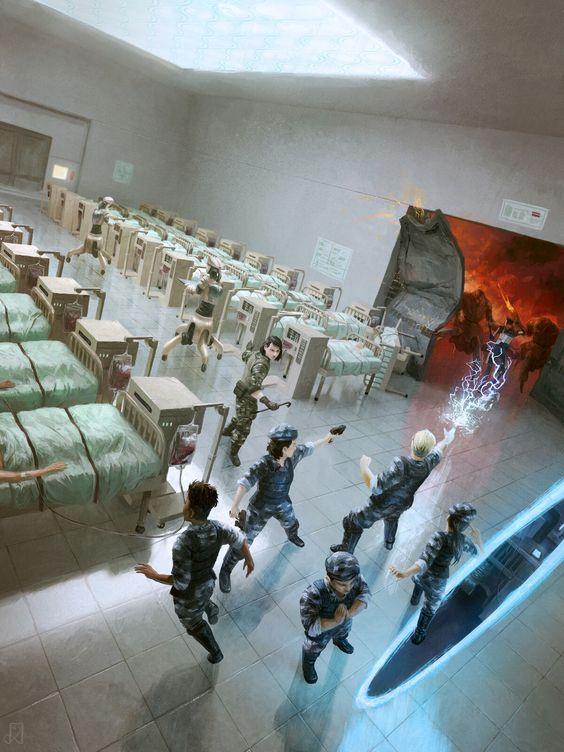
Fulfillment Feature: Forever Changed
You have finally reached the apex and have become something greater than your previous self could imagine. When you gain this feature, consult with the Narrator about the exact nature of your metamorphosis and if your adventurer would still choose to remain adventuring after transformation.
If your character would remain an adventurer, you may choose and become an appropriate creature with a CR equal to or lower than your class level –2 (as per the spell true polymorph, except that this transformation is permanent and cannot be dispelled.)
If your character would not remain an adventurer, you may use a portion of your new power however you see fit (as the wish spell) before ascending.
Preservation
The last remaining guardian of a sacred location, the keeper of an important relic, the only practitioner of an endangered tradition. Those with the Preservation destiny are the last bastion against something significant disappearing from the world. The reason and nature of what they are protecting can take many shapes, but one thing is certain: without them, it will be lost forever. Some through strength and endurance, others through cunning and subterfuge, they all strive to protect what few even know about from the constant threat of destruction and obscurity.
Work with your Narrator to define the nature of what you are trying to protect, as it can affect the campaign very differently if it is an object, a place, or something more conceptual like a tradition or lore.
Source of Inspiration: Save and Protect
You understand the importance of protecting the knowledge of those who came before you, their traditions and their creations. You gain inspiration whenever you help preserve something ancient.
Recover a scroll of lost knowledge, practice an endangered
language, protect an important historic or religious site,
preserve an ancient relic, learn a custom or technique of an old
society.
Inspiration Feature: Preserved Lore
Your experience with maintaining ancient traditions and customs can help you remember the strangest bits of knowledge. Whenever you or an ally you can see fails an Arcana, Culture, History, Nature, or Religion roll, you can use a reaction to learn any information that would have been gained from a successful check.
Fulfilling Your Destiny
You fulfill your destiny when you ensure the existence of what you were protecting beyond the need of your watch.
Amass a large number of practitioners of your tradition,
guarantee an endangered location or item is protected from
outsiders and enemies, found an institution dedicated to the
study and preservation of ancient language or tradition.
Fulfillment Feature: It Will Remain
Your efforts have been rewarded with a place of strength and followers to maintain it and carry on your legacy. You gain a grade 5 stronghold (at no cost, but which you are unable to sell) that is appropriate to your preservation efforts, such as a library, menagerie, sacred grove, temple, or training hall. Work with the narrator to establish the location and particulars of this stronghold. Your stronghold also has a garrison, which has a number of solider equal to your stronghold’s staff level instead of half that number.
Finally, you can grant the benefits of your stronghold feat to one ally that has spent at least a week at your stronghold. You can change this choice to any qualifying ally once per long rest.
Return to Glory
Some adventurers hang up their swords and put away their spellbooks, only to find that they have to take them up again. This may be a story of fulfilling one’s true potential, achieving a glory always longed for, or even one of redemption and penance for a past life of violence or treachery.
Special Feature: Former Self
Upon character creation, also create a version of your character that represents who they once were, up to 10 levels higher than whatever your adventure starts at.
Source of Inspiration: Memory
You are both haunted and driven by who you once were. You gain inspiration whenever you score a critical with an ability check your former self had proficiency in, or overcome something that you could not in your past adventures.
Defeat a foe who you had previously lost to, face a fear you
developed from your previous life adventuring, restore (or
destroy) an item, relationship, or group that was iconic of your
old adventures, subvert or fulfill the expectations of someone
who knew you before.
Inspiration Feature: Things Remembered
As a reaction, you may spend your inspiration to use the proficiency bonus and ability score of your former self to make a single attack roll, ability check, or saving throw.
Fulfilling Your Destiny
You fulfill your destiny when you either become who you once were again, or diverge markedly from that path but still find glory.
Defeat a major foe from your past or their modern day heir or
analog, restore a settlement or large organization that suffered
in your absence, take revenge on whatever entity drove you
from adventuring before or destroyed your peaceful retirement, found an institution with numerous members that is in line
with or antithetical to your old values.
Fulfillment Feature: Reborn
You have either found your stride again, or decided who you once were is not who you will be again. Either way, you are the stuff of legends. You gain a +1 bonus on all attack rolls, ability checks, and saving throws.
In addition, you may use Things Remembered twice per long rest without using inspiration. If you reach a level equal to or surpassing your Former Self, you can use that feature to instead gain a +5 to the roll before you know the outcome as your excellence shines through.
Revenge
Someone or something has wronged you, and even the gods cannot shield them from your retribution. Your burning desire for Revenge fuels your plans and kindles your destiny. Was your ire sparked by a grave misunderstanding, a callous uncaring cruelty, or a wicked and personal transgression?
Source of Inspiration: Served Cold
You draw inspiration from the wails of those who have wronged you. You gain inspiration whenever you outwit a foe without the use of Deception or Persuasion checks.
Successfully attack a surprised opponent, lead a foe into a
prepared trap, trick an enemy into harming themselves or
greatly benefiting you.
Inspiration Feature: Cloak and Dagger
You know how to avert suspicion when danger closes in. Whenever you or an ally you can see fail a Sleight of Hand or Stealth check, you can use your reaction to spend your inspiration and undo any consequences of that failed check.
Fulfilling Your Destiny
You fulfill your destiny of Revenge when you achieve vengeance.
Kill, imprison, or dethrone whatever entity that you believe
wronged you, come to terms with the focus of your wrath
meaningfully and sate your desire for vengeance.
Fulfillment Feature: Retaliatory Reputation
It has become apparent that wronging you is decidedly unwise and those without a death wish instinctively fear you. While you are not incapacitated, you can use a bonus action to direct a threatening stare at any hostile creature within 20 feet of you. The creature must make a Wisdom saving throw with a DC equal to your passive Intimidation score. On a failure, the creature is frightened until the end of its next turn. A creature that succeeds on its saving throw is immune to your Retaliatory Reputation for the next 24 hours.
Wealth
Glittering gold holds the promise of luxuries and freedom from want, all wrapped with the exhilarating rush of acquisition. Of the countless people who spend their lives in pursuit of Wealth some are just shrewd, clever, or brave enough to achieve their destiny.
Source of Inspiration: Profits
You draw inspiration from spoils both easily gained and hard fought. You gain inspiration whenever you acquire substantial wealth.
Gain currency or property worth at least 1,000 times your
character level in cash, receive a magic item that is uncommon
or rarer without purchasing it.
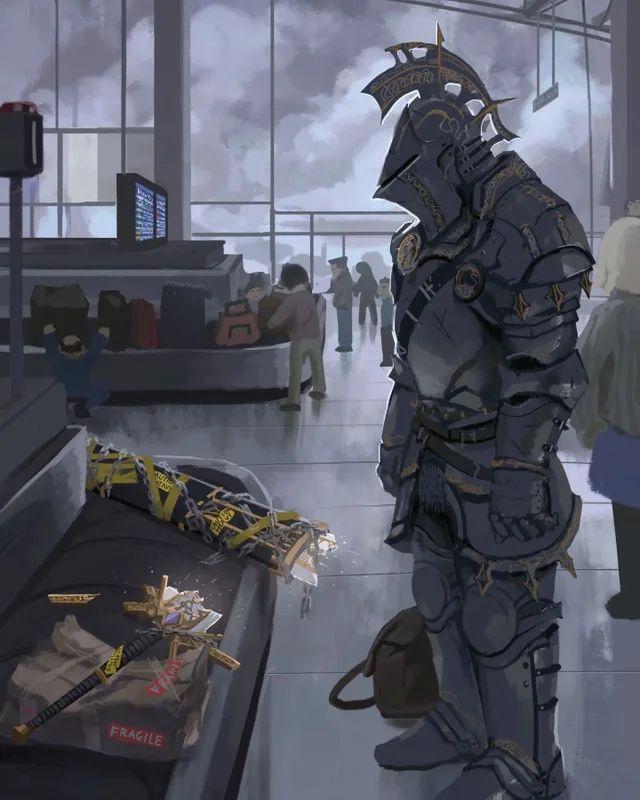
Inspiration Feature: Everyone Has a Price
You can see the glint in people’s hungry eyes as they watch money change hands and can perfectly name their price. As a bonus action you may spend your inspiration to accurately determine if a creature you see will take a bribe and what price they’ll accept.
Fulfilling Your Destiny
You fulfill your destiny of Wealth when you become obscenely wealthy.
Become the head of a large and successful business, amass at
least 1,000,000 new yen, obtain a legendary magic item, acquire a priceless treasure.
Fulfillment Feature: Wise Investments
The fabulously wealthy stay wealthy by creating businesses or investing wisely—then the engine of industry works tirelessly to keep the vaults full. You have a rich lifestyle (see lifestyle expenses).
In addition, living lavishly can be reinvigorating. You can lavish yourself and any number of other creatures with luxuries whenever you start a long rest at the cost of 1,000 new yen per creature. Each creature lavished in this way is cured of all diseases and poison, becomes immune to poison and being frightened, and makes all Wisdom saving throws with advantage. A creature’s hit point maximum also increases by 2d10, and it gains the same number of hit points. These benefits last for 24 hours.