Ninja
The orc stood up, satisfied with her work. She tossed her origami owl into the air, where it grew to giant size. She mounted her creation and soared into the night sky.
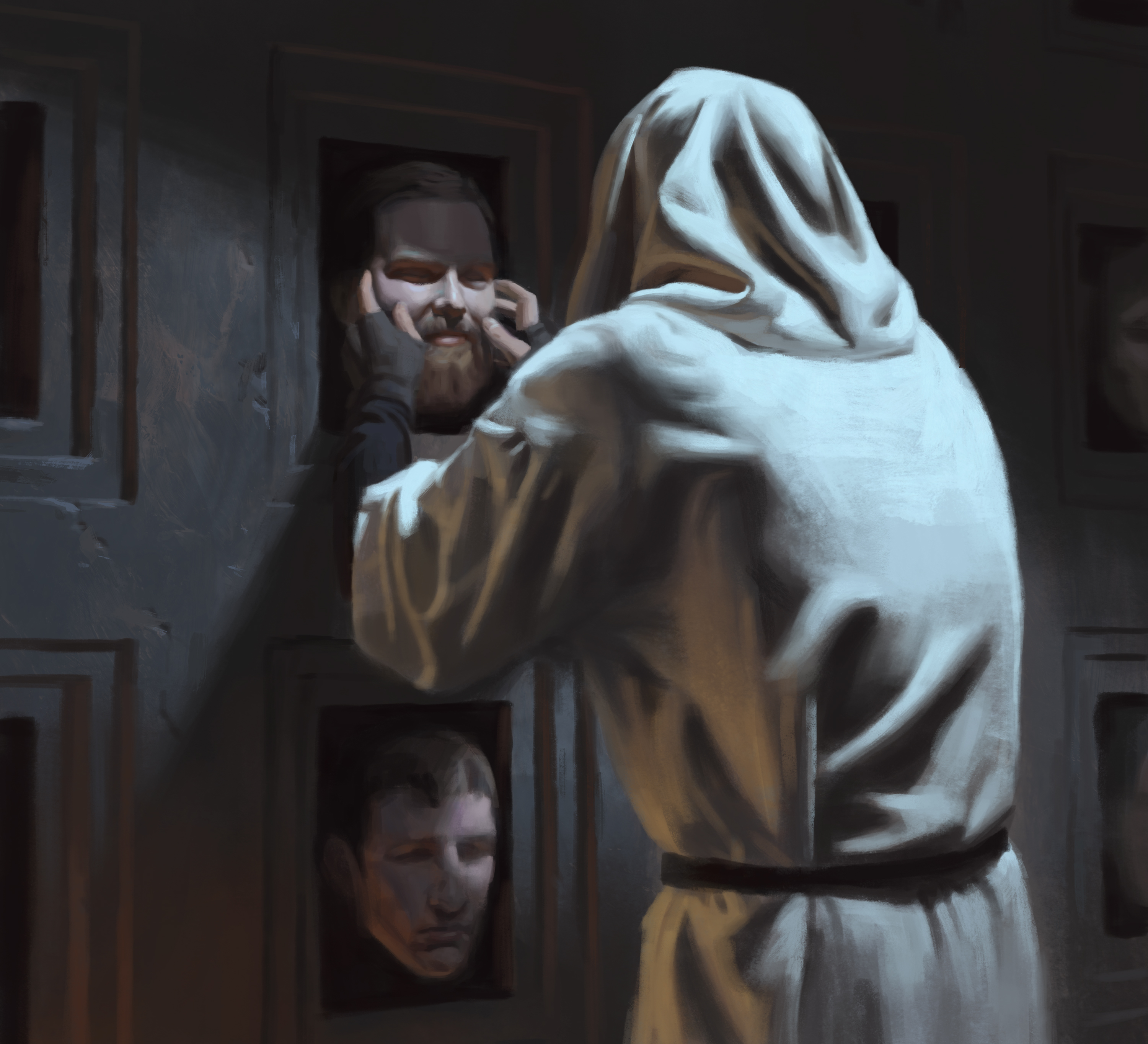
The king lay bleeding on the floor as his dwarf assailant methodically stripped him of all identifying objects, starting with his finely-crafted shoes and ending with his handsome face.
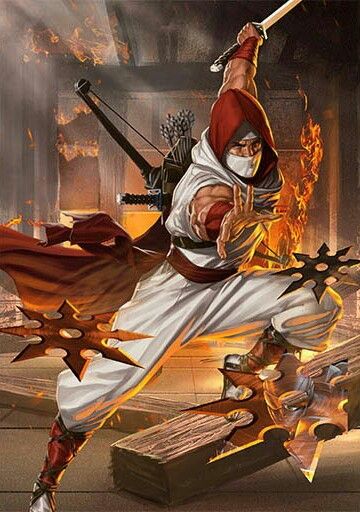
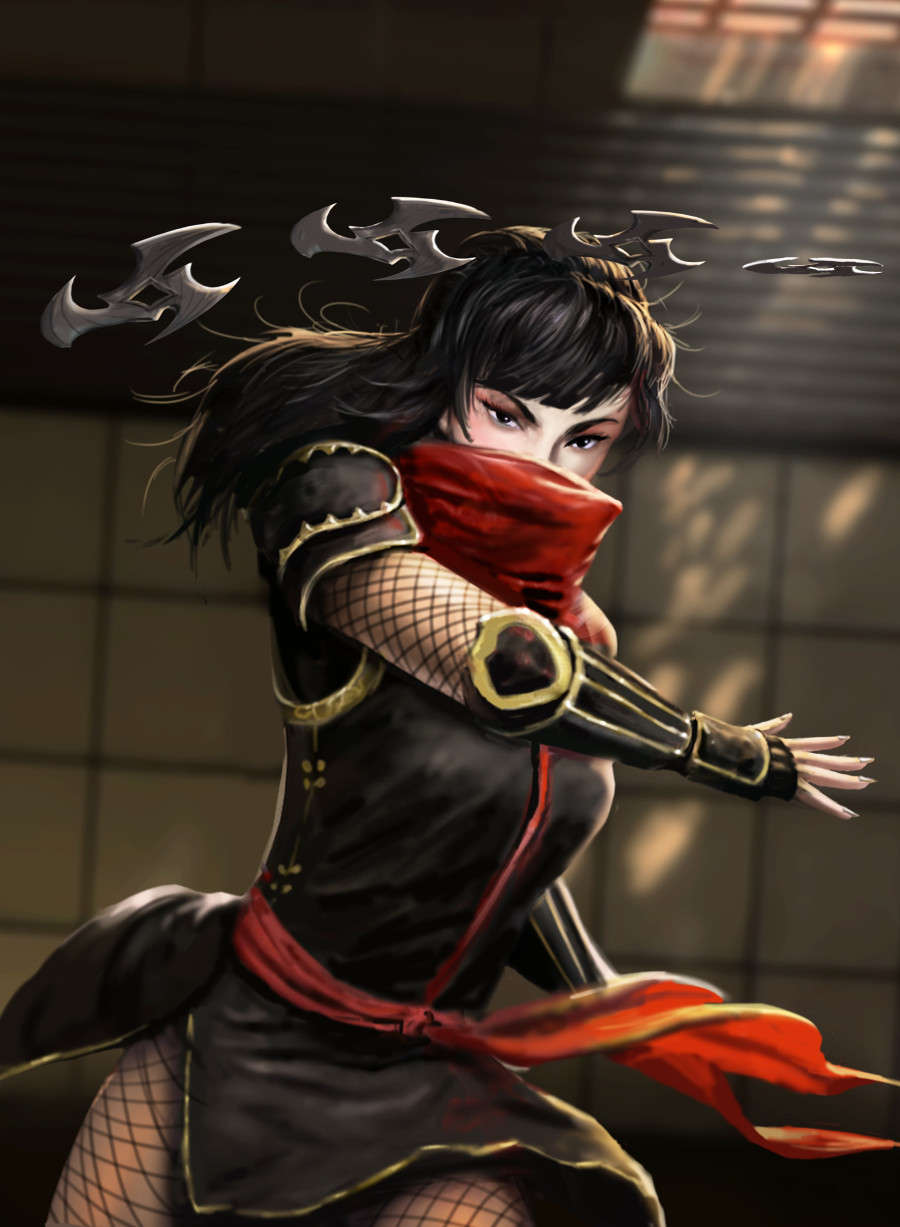
Outnumbered five to one, the halfling didn't flinch. In a split-second move, she threw a storm of shuriken, dashed up the wall, and ran through the ceiling.
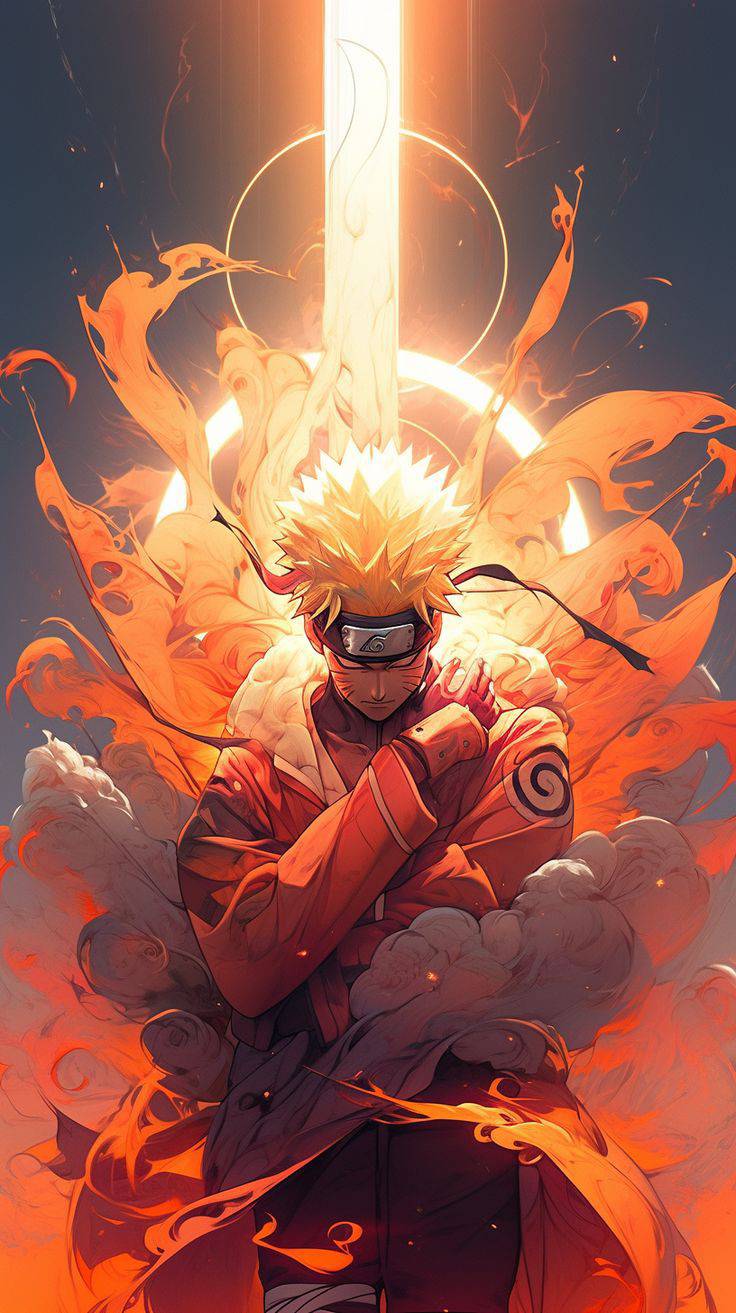
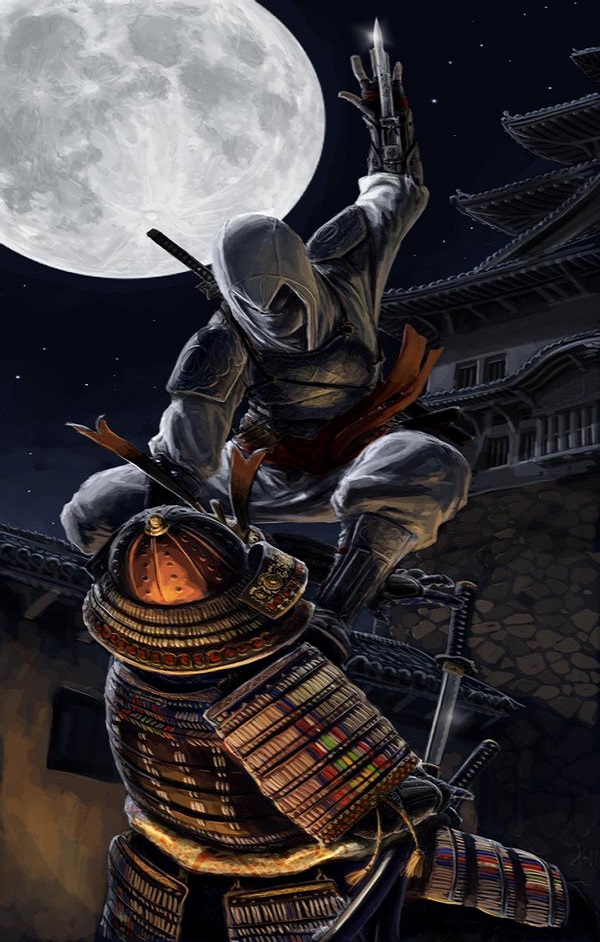
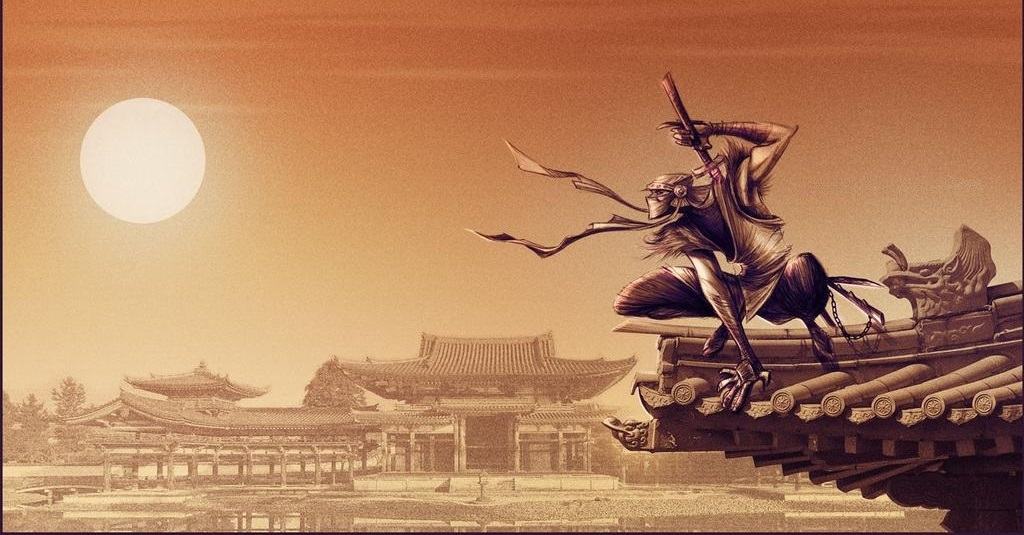
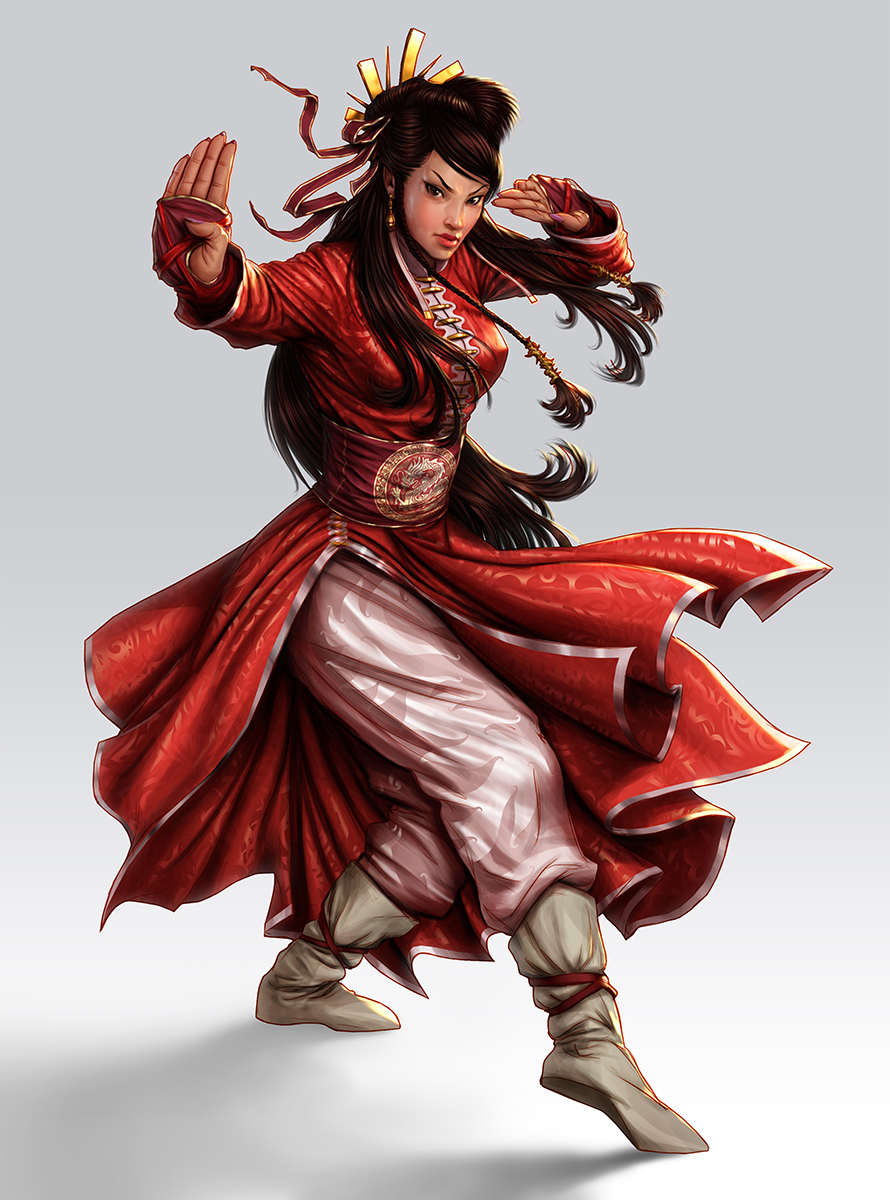
Whatever their specialty, ninjas are supernaturally-talented agents of stealth, espionage, and assassination. They are united in their ability to magically harness the energy that flows from the spirit realm. Whether channeled as a flashing display of martial prowess or a subtler focus of agility and speed, this energy infuses all that a ninja does.
Spirit and Precision
Whereas monks gain power through mastering themselves, ninjas rely on an external source of energy - the spirit realm. Overlapping with the physical multiverse is a spiritual counterpart filled with marvelous and terrible beings. Ninjas tap into the spirit realm to create magical effects and exceed their bodies’ physical capabilities. Using this spirit energy, ninjas can perform incredible feats like teleportation and ripping out their enemy's heart with their bare hands.
When it comes to combat, ninjas prioritize cunning over brute strength. A ninja would rather make one precise strike, placing it exactly where the attack will hurt the target most, than wear an opponent down with a barrage of attacks. Ninjas have an iron will which lets them overcome even the fiercest challenges.
Shadowy Asceticism
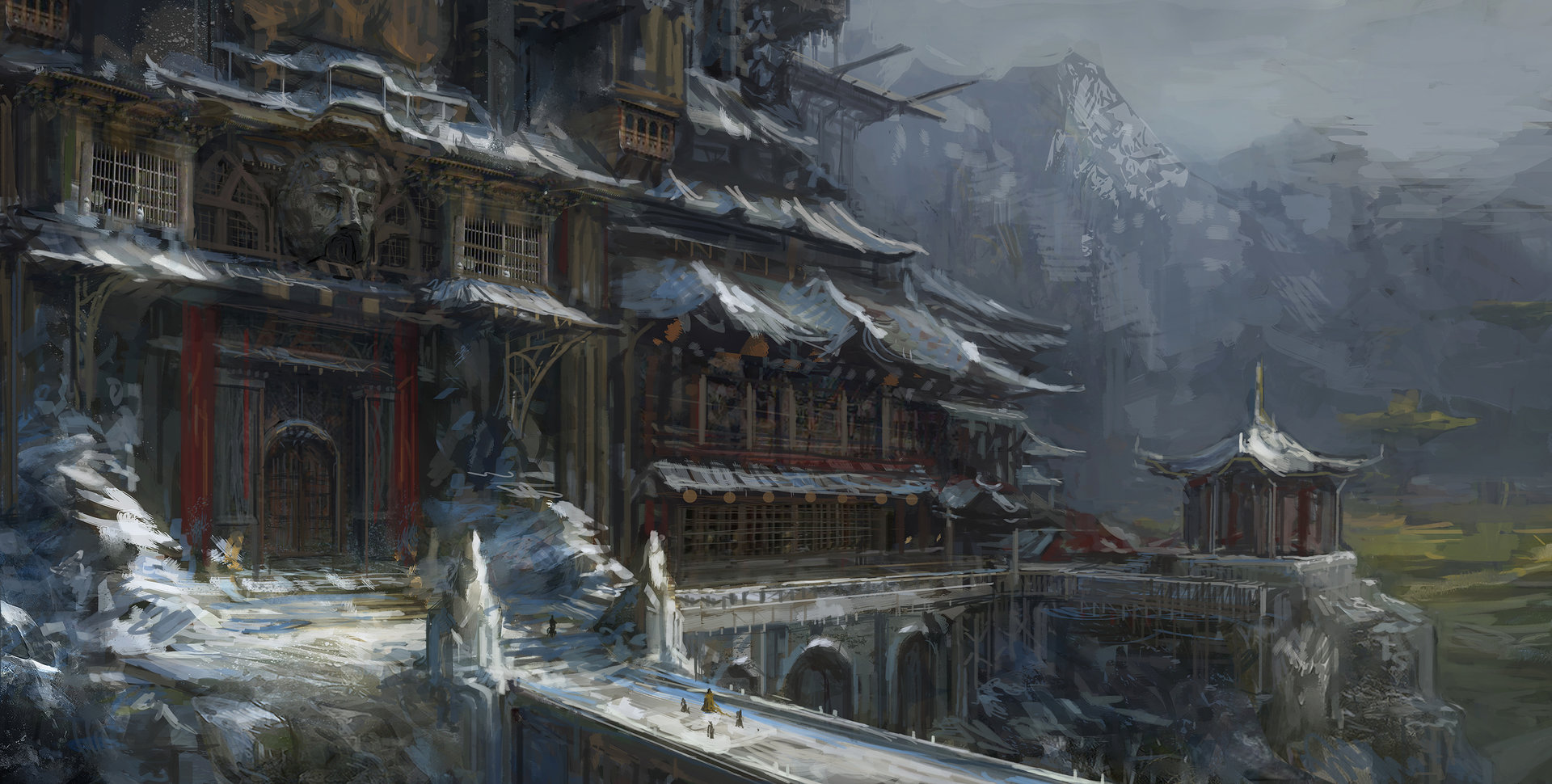
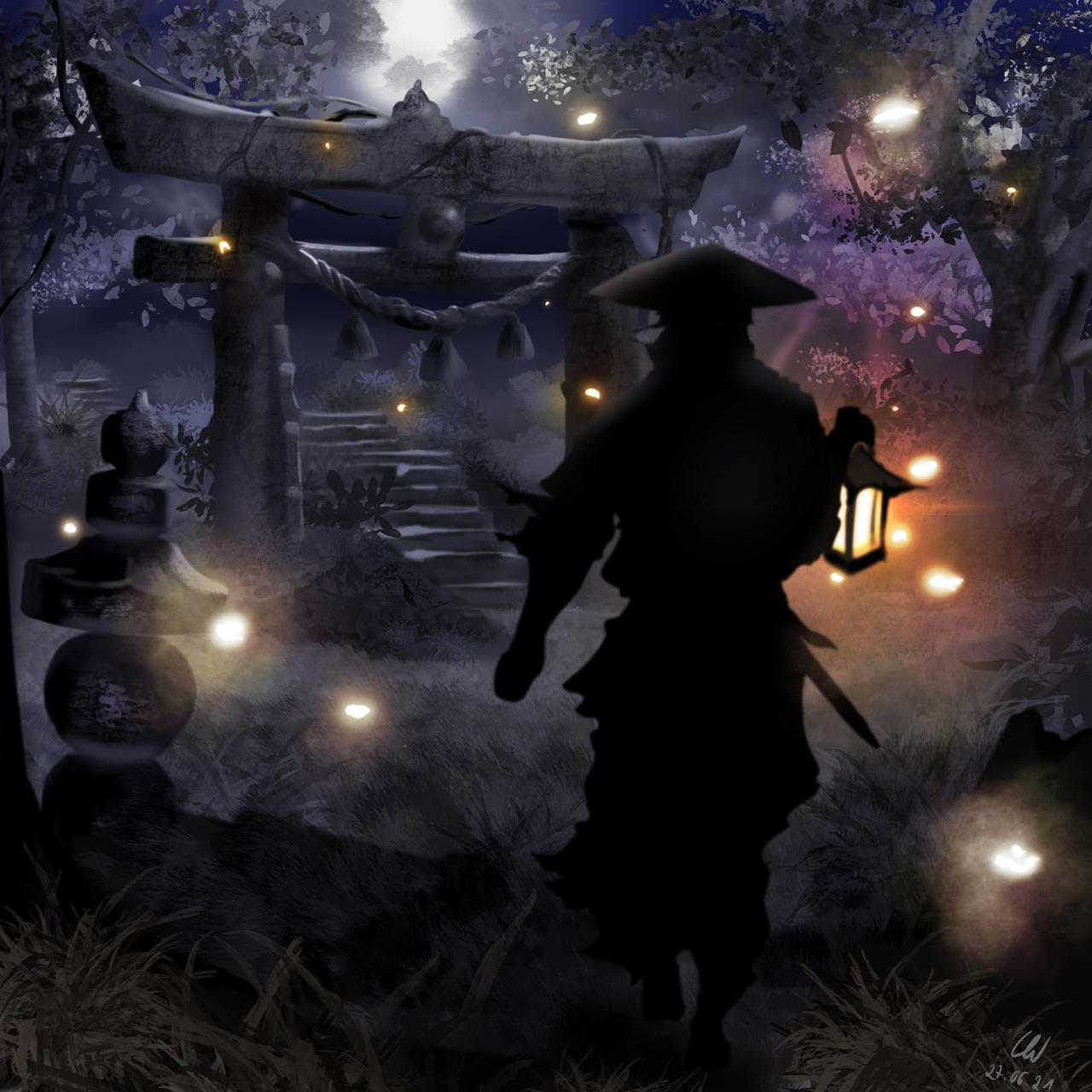
A majority of ninjas belong to (or at one point, belonged to) a clan. Clans offer tutelage in the hidden arts, safe haven, and allies to complete missions. Some are found in remote areas, while others exist in the heart of thriving cities under the guise of institutions such as a temple. Clans often operate like thieves' guilds or provide services such as killing for hire, but a few have more noble goals like protecting the weak or uprooting corruption.
While many monks are happy to remain in their cloister, ninjas are a different breed, since nearly all clans have a desire to influence the outside world, whether for good or for evil. A ninja's training is designed to make her ready to face any obstacle. To be a ninja is to be always prepared for adventure.
Creating a Ninja
As you make your ninja character, think about your connection to your clan, where you learned your skills and spent your formative years.
.
Were you an orphan or a child that the clan saw potential in? Did your parents promise you to the clan in payment for a service performed by the ninjas? Did you enter this secluded life to hide from a crime you committed? Or did you choose the ninja life for yourself? If you never had a clan, how did you learn your ninja skills? Perhaps you learned them after you stumbled upon ancient scrolls, or you could have been adopted by a ninja.
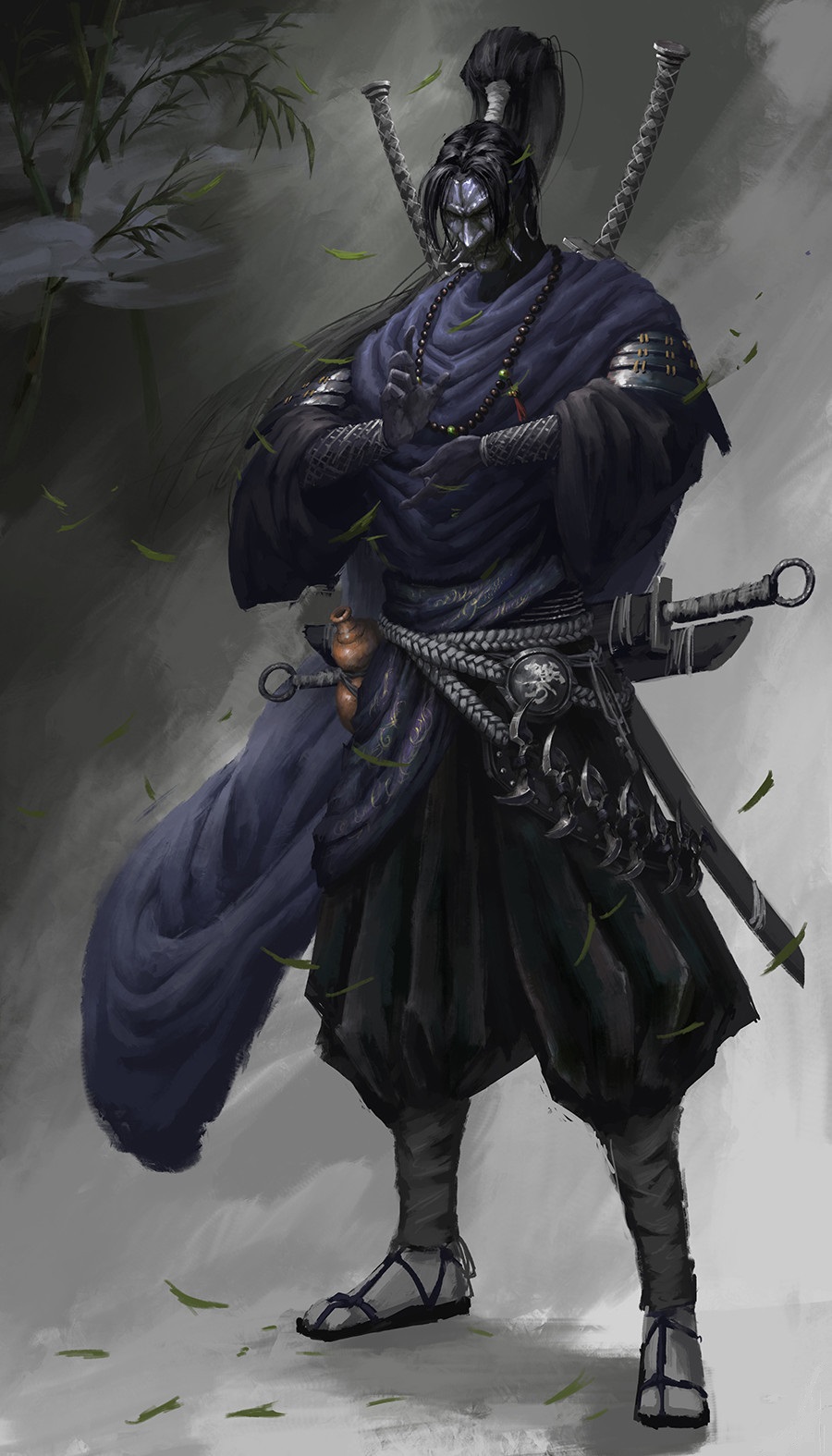

If you had a clan but left it, why? Were you banished because of a transgression or did you disagree with the leadership? Are you hunted by your former comrades? If you remain a clan member, what do you seek from the relationship? Is the clan just a means to gaining greater personal power, or do you really see yourself as part of a close-knit group? Do you fear leaving?
As a result of the structured life of a ninja clan and the discipline required to reach the spirit realm, ninjas are typically lawful in alignment. Ninjas without a clan are more likely to be neutral or chaotic.
Class Features
As a ninja, you gain the following class features.
Hit Points
- Hit Dice: 1d8 per ninja level
- Hit Points at 1st Level: 8 + your Constitution modifier
- Hit Points at Higher Levels: 1d8 (or 5) + your Constitution modifier per ninja level after 1st
Proficiencies
- Armor: Light armor
- Weapons: Simple weapons, blowguns, hand crossbows, nets, scimitars, shortswords
- Tools: Choose one from Disguise Kit, Forgery Kit, Poisoner's Kit, and Thieves' Tools
- Saving Throws: Intelligence, Wisdom
- Skills: Choose two from Acrobatics, Athletics, Deception, Insight, Intimidation, Investigation, Perception, Persuasion, Religion, Sleight of Hand, and Stealth
Equipment
You start with the following equipment, in addition to the equipment granted by your background:
- (a) a shortsword or (b) any simple weapon
- (a) a shortbow and quiver of 20 arrows or (b) a shortsword
- (a) a burglar's pack, (b) dungeoneer's pack, or (c) an explorer's pack
- Leather armor, 10 darts, and thieves' tools
Quick Build
You can make a ninja quickly by following these suggestions. First, Dexterity should be your highest ability score. Make Wisdom your second-highest so your abilities are more difficult to resist. Second, choose the spy background.
Multiclassing and the Ninja
If your group uses the optional multiclassing rule, here's what you need to know if you choose to take your first level as a ninja.
Ability Score Minimum. You must have a Dexterity score of at least 13 and a Wisdom score of at least 13 to take a level in this class or to take a level in another class if you are already a ninja.
Proficiencies. If you multiclass into ninja, you gain proficiency with all weapons ninjas are proficient in, light armor, and one skill or tool available to ninjas.
Ninja
| Level | Proficiency Bonus | Spirit Points | Sneak Attack | Features |
|---|---|---|---|---|
| 1st | +2 | — | 1d6 | Martial Artist, Sneak Attack, Traditional Art |
| 2nd | +2 | 2 | 1d6 | Endure Pain, Spirit |
| 3rd | +2 | 3 | 2d6 | Focus, Hidden Technique |
| 4th | +2 | 3 | 2d6 | Ability Score Improvement |
| 5th | +3 | 4 | 3d6 | Infiltrator, Inner Spirit |
| 6th | +3 | 5 | 3d6 | Instinctive Operative |
| 7th | +3 | 6 | 4d6 | Talent, Way of the Ninja |
| 8th | +3 | 6 | 4d6 | Ability Score Improvement |
| 9th | +4 | 7 | 5d6 | Traditional Art feature |
| 10th | +4 | 8 | 5d6 | Quick as Thought |
| 11th | +4 | 9 | 6d6 | Hidden Technique Feature |
| 12th | +4 | 9 | 6d6 | Ability Score Improvement |
| 13th | +5 | 10 | 7d6 | Mystic Movement |
| 14th | +5 | 11 | 7d6 | Traditional Art feature |
| 15th | +5 | 12 | 8d6 | Ghost Steps |
| 16th | +5 | 12 | 8d6 | Ability Score Improvement |
| 17th | +6 | 13 | 9d6 | Hidden Technique Feature |
| 18th | +6 | 14 | 9d6 | Penumbral Presence |
| 19th | +6 | 14 | 10d6 | Ability Score Improvement |
| 20th | +6 | 15 | 10d6 | Master Ninja |
Ninja Feature Saving Throw DC
Some of your features require your target to make a saving throw to resist the feature's effects. The saving throw DC is calculated as follows:
DC = 8 + your proficiency bonus + your Wisdom modifier
Some ninjas can cast spells. If you can, Wisdom is your spellcasting ability.
Martial Artist
At 1st level, your practice of martial arts gives you mastery of combat styles that use unarmed strikes and ninja weapons, which are simple melee weapons and nets.
You can use Dexterity instead of Strength for the attack and damage rolls of your unarmed strikes and ninja weapons.
Certain ninja clans use specialized forms of weapons. For example, you might use a club that is two lengths of wood connected by a short chain (called a nunchaku), a long scimitar (called a katana), or shuriken (darts). Whatever name you use, use the weapon's official statistics.
Sneak Attack
Beginning at 1st level, you know how to strike subtly and exploit a foe's distraction. Once per turn, you can deal an extra 1d6 damage to one creature you hit with an attack if you have advantage on the attack roll. The attack must use either a finesse, ranged, or ninja weapon.
You don't need advantage on the attack roll if another enemy of the target is within 5 feet of it, that enemy isn't incapacitated, and you don't have disadvantage on the attack roll.
The amount of the extra damage increases as you gain levels in this class, as shown in the Sneak Attack column of the Ninja table.
Traditional Art
At 1st level, choose a traditional art to study. Choose from the following arts described below: Calligraphy; Dance; Drama; Origami; or Tea Ceremony. Your choice grants you features at 1st level and again at 9th and 14th levels.
Endure Pain
Starting at 2nd level, your training lets you overcome injuries which would fell most warriors. When you take damage, you can use your reaction to reduce the damage by 1d4 + half your ninja level (round down). You can use this feature a number of times equal to your proficiency bonus, and you regain all expended uses when you finish a long rest.
Spirit
At 2nd level, you can harness mystical spirit energy. Your access to this energy is represented by a number of spirit points. Your ninja level determines the number of points you have, as shown in the Spirit Points column of the Ninja table.
You can spend these points to fuel various spirit features. You start knowing three such features: Burst of Agility, See the Unseen, and Shadowmeld. You learn more spirit features as you gain levels in this class.
When you spend a spirit point, it is unavailable until you finish a short or long rest, at the end of which you draw all of your expended spirit back into yourself.
You must spend at least 30 minutes of the rest communing with the spirit realm to regain your spirit points.
Burst of Agility. You can spend 1 spirit point as a bonus action to take the Dash or Disengage action or 2 spirit points to do both.
See the Unseen. You can spend 1 spirit point as a bonus action to take the Search action or to gain the ability to see invisible creatures and objects until the start of your next turn or 2 spirit points to do both.
Shadowmeld. You can spend 1 spirit point as a bonus action to take the Hide action or add a d6 to the next Dexterity (Stealth) check you make before the end of your turn or 2 spirit points to do both.
Focus
At 3rd level, you can as a bonus action find clarity amid conflict. Until the end of your turn, you can use Sneak Attack even if you don't have advantage on the attack roll, but not if you have disadvantage on it.
Ability Score Improvement
When you reach 4th level, and again at 8th, 12th, 16th, and 19th level, you can increase one ability score of your choice by 2, or you can increase two ability scores of your choice by 1. As normal, you can't increase an ability score above 20 using this feature.
Infiltrator
At 5th level, you unlock two new mystical methods. Both require you to spend 1 spirit point as an action. When their duration would expire, you can spend 1 spirit point (no action required) to restart their duration as long as you are not incapacitated.
Shadow Mask. You gain the benefits of the Disguise Self spell with the following improvements. You can change the sound of your voice and seem up to 3 feet shorter or taller, and any illusionary outfit sounds real.
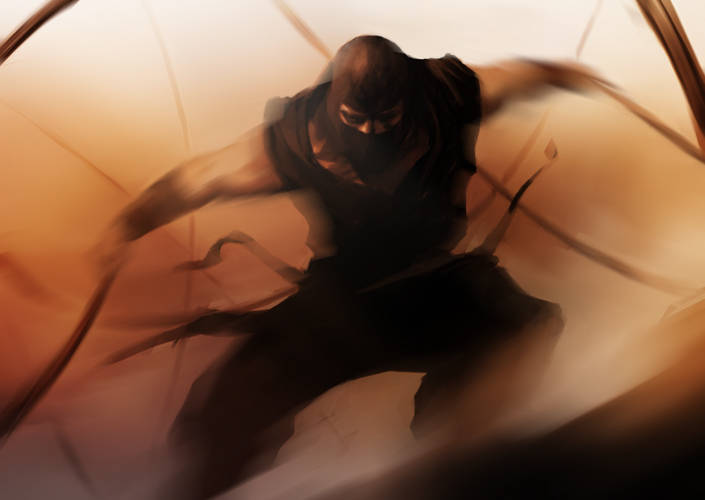
Vanish. You become invisible for 1 minute and can take the Hide action. The invisibility ends if you attack, cast a spell, or force a creature to make a saving throw.
Inner Spirit
Starting at 5th level, you can draw on your reserves of power in moments of peril. You can gain one of the following benefits when you start your turn with under half your normal hit point maximum.
-
Once in the next minute, when you miss with an attack roll, you can add your Wisdom modifier to the roll.
-
Once in the next minute, when you fail a saving throw, you can add your Wisdom modifier to the roll.
You can gain one of the following benefits when you start your turn with under a quarter of your normal hit point maximum.
-
For 1 minute, you gain temporary hit points equal to your ninja level, and your hit point maximum increases by your ninja level.
-
Once in the next minute, you can deal extra damage equal to your ninja level with an attack roll, spell, trait, or feature which can have only one target or half your ninja level (round up) with a spell, trait, or feature which affects an area or multiple targets.
Once you gain a benefit, you can't gain it or the other benefit in that pair until you finish a short or long rest. As an exception to this rule, at the start of your turn, you can choose to go all out regardless of your hit points, gaining each of the four benefits above which you haven't gained in the last minute. If you do, you cannot use Inner Spirit this way again until you finish a long rest.
Instinctive Operative
At 6th level, you can draw on your extensive experience to guide you in pressing circumstances. When you make an ability check, you can add to your roll either the result on a d8 or your Wisdom modifier, whichever is greater. You can use this feature before or after rolling the d20, but must decide before the DM says whether the roll succeeds or fails.
You can use this feature three times. When you finish a long rest, you regain all expended uses.
Talent
When you reach 7th level, you develop a particular skill. Choose one of the options listed below.
Bloodhound. When you make a Wisdom (Perception), Wisdom (Survival), or Intelligence (Investigation) check that involves smell, you have advantage and treat a roll of 9 or lower on the d20 as a 10.
Diamond Lungs. You have advantage on saving throws against harmful gases, can hold your breath for up to 1 hour, even if you are unconscious, and are acclimated to high altitude, including elevations above 20,000 feet.
Professional Polyglot. You learn three languages of your choice. When you speak a language which is not your native tongue, you sound as if you are a native speaker.
You also know what language you are hearing spoken or seeing in writing, even if you can't understand it. This feature does not apply to secret or extremely obscure languages (DM's discretion).
Sense Spirit. As an action, you can open your soul to detect spiritual forces. For 1 minute, you know the location of any celestial, elemental, fey, fiend, or undead within 30 feet of you. You know the type of any being whose presence you sense, but not its identity.
Within the same radius, you also detect the presence of any place or object that has been consecrated or desecrated, as with the Hallow spell, and similar places or objects related to the types of creatures you can sense (DM's discretion). This feature ends if you are incapacitated.
You can use this feature a number of times equal to your Wisdom modifier. When you finish a long rest, you regain all expended uses.
Slow Fall. You can use your reaction when you fall to reduce any falling damage you take by an amount equal to five times your ninja level.
Way of the Ninja
At 7th level, your dedication to your creed as a ninja not only allows you to push through when others would falter, but perform great deeds. You gain the following benefits when you roll a 20 on the d20 on an attack roll, ability check, or saving throw.
-
Attack Roll. You expose a weakness, imposing a penalty to the target's AC equal to your Wisdom modifier. The penalty lasts until it turns a miss into a hit or 1 minute passes, whichever happens sooner.
-
Initiative Roll. You react with such speed that you go first in initiative regardless of any other rolls and gain a bonus to the first attack roll you make on your first turn equal to your Wisdom modifier, dealing extra damage equal to your ninja level on a hit.
-
Other Ability Check. You gain a bonus to the result equal to your Wisdom modifier.
-
Death Saving Throw. Instead of regaining 1 hit point, you regain a number of hit points equal to your ninja level and a number of spirit points equal to your Wisdom modifier.
-
Saving Throw to Take Half Damage. You succeed. The damage is halved again, and if you would drop to 0 hit points as a result of the damage, you instead drop to 1 hit point.
-
Other Saving Throw. You succeed, and for 1 minute, you have advantage on saving throws against other occurrences or uses of the event, item, ability, or spell which triggered the saving throw.
Quick as Thought
At 10th level, you can once on your turn gain an additional action which you can use to take the Dash, Disengage, Hide, or Use an Object action. You can use this feature a number of times equal to your Wisdom modifier. You regain all expended uses when you finish a long rest.
In addition, you gain proficiency in Dexterity saving throws. If you already have this proficiency, you instead gain proficiency in any one saving throw of your choice.
Mystic Movement
At 13th level, you can move up, down, and across vertical surfaces, upside down along ceilings, and across liquids while leaving your hands free as long as you aren't incapacitated. You also gain a climbing speed equal to your walking speed.
Ghost Steps
Beginning at 15th level, you can step into the spirit realm, enhancing your defenses, mobility, and senses. You can spend either 2 or 4 spirit points as a bonus action to gain blindsight with a range of 30 feet, ignore difficult terrain, and be able to move through creatures and objects, even barriers of magical force. While affected, you also become immune to being grappled and restrained and have resistance to all damage. These benefits last until the end of your turn if you spend 2 spirit points or until the start of your next turn if you spend 4 spirit points.
At the start or end of your turn, if you are in the same spot as a solid object or creature, you are immediately shunted to the nearest unoccupied space and take force damage equal to twice the number of feet you are moved.
Penumbral Presence
At 18th level, you are supernaturally shrouded. Divination magic, including scrying sensors, cannot detect you, items on your person, or magic auras around you or items on your person, unless you so choose. You are aware of any such magic and know whether the source is an ally, hostile, or neither. You also don't set off the Alarm spell.
In addition, while invisible due to a ninja class feature, you cannot be seen, even if magic such as the Faerie Fire spell or abilities such as truesight would normally let you be seen. Blindsight and tremorsense can still perceive you.
Master Ninja
At 20th level, you have reached the pinnacle of your craft, learning one of the following supreme techniques.
Hyper Focus. Using Focus gives you advantage on the next attack roll you make before the end of your turn regardless of any sources of disadvantage.
Perfect Phantom. Vanish costs no spirit points to use, and while invisible due to a ninja class feature, blindsight cannot perceive you and your steps make no sound.
Walk With The Gods. As long as you aren't prone or incapacitated, you are treated as if you are not on the surface you are on. For example, any solid object supports your weight without issue, you don't leave tracks, don't trigger traps by stepping on a particular surface, are unaffected by caltrops and spells such as Earth Tremor, Grease, and Spike Growth, cannot be perceived by tremorsense, can be on top of lava without harm, and ignore difficult terrain caused by the surface, such as sand, slippery ice, swamp, or uneven ground, but not dense foliage. This feature doesn't affect fall damage.
Traditional Arts
Calligraphy
Combat Artist
At 1st level, you gain proficiency with calligrapher's supplies.
While wielding a calligraphy brush, you gain a new attack option that you can use with the Attack action. This special attack is a ranged spell attack with a range of 90 feet. You are proficient with it, and you add your Dexterity modifier to its attack roll. On a hit, the target takes damage equal to 1d8 + your Wisdom modifier + your ninja level.
The damage type depends on which character you magically draw. Choose from the list below. You know a number of characters equal to your proficiency bonus.
Acid (酸) (acid), Death (死) (necrotic), Fang (牙) (piercing), Fire (火) (fire), Force (力) (force), Hammer (槌) (bludgeoning), Ice (氷) (cold), Light (光) (radiant), Lightning (雷) (lightning), Madness (狂) (psychic), Poison (毒) (poison), Sound (音) (thunder), Sword (剣) (slashing).
Open and Close
At 9th level, you learn two new empowered characters, Open (開) and Close (閉). While wielding a calligraphy brush, you can as an action magically draw one in the air to affect an object you can see within 60 feet of you. If you draw Open, the object opens as if you had cast the Knock spell on it, except that it creates no noise. If you draw Close, the object becomes more difficult to open as if you had cast the Arcane Lock spell on it. You can draw each character once, after which you cannot draw them again until you finish a long rest.
Secret
At 14th level, you learn a new empowered character, Secret (秘). While wielding a calligraphy brush, you can as an action magically draw it in the air to affect creatures of your choice you can see within 60 feet of you. They become invisible for 10 minutes or until they attack, cast a spell, or force a creature to make a saving throw. For 10 minutes, affected creatures of your choice can see creatures invisible due to this feature. Once you use this feature, you must finish a long rest before you can use it again.
Dance
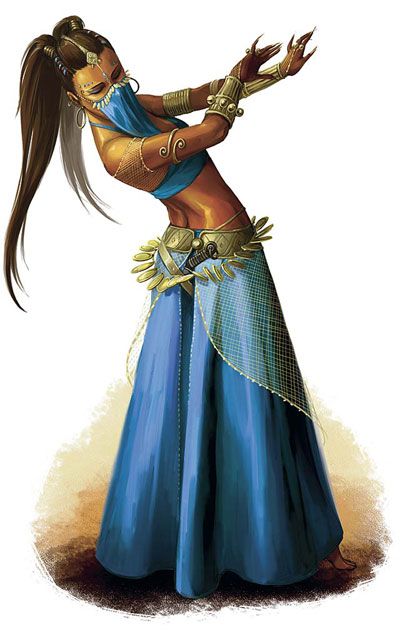
Shadowdancer
At 1st level, you gain proficiency in the Performance skill, and when you make a Performance check, you can add your Wisdom modifier instead of your Charisma modifier.
When you make a Dexterity (Stealth) check, after rolling the d20, you can either gain a bonus equal to your Wisdom modifier or treat a d20 roll of 7 or lower as an 8.
Beguiling Dance
Starting at 9th level, as an action, you can perform a beguiling dance. Choose any number of creatures within 30 feet of you that can see you. They must succeed on a Wisdom saving throw or be charmed by you. If they are in combat, they have advantage on the saving throw. While charmed by this feature, creatures are incapacitated and have a speed of 0. Creatures that succeed don't know you tried to charm it.
A creature that fails can be charmed by you for up to 10 minutes. However, it stops being charmed at the end of your turn if you don't use your action to dance within 30 feet of that target and it can see you. When you use your action this way, you can also make one attack with a melee weapon or unarmed strike. If this attack is made against a creature you have charmed with this feature, it has advantage.
An affected target stops being charmed if it takes damage, is forced to make a saving throw, or if someone else uses their action to shake it from its stupor. The dance requires your concentration as if you were concentrating on a spell. Once you use this feature, you must finish a short or long rest before you can use it again.
Battle Dance
Starting at 14th level, whenever an attack hits you while you are not incapacitated, roll a d20. If you roll a 20, the attack misses instead. If the attack still hits, you can as a reaction add your Wisdom modifier to your AC against the triggering attack. Once you use this feature to increase your AC, you can't use it that way again until you finish a short or long rest.
Drama
Dramatist
At 1st level, you gain proficiency in the Performance skill, and when you make a Performance check, you can add your Wisdom modifier instead of your Charisma modifier.
Conjure Mask
Also at 1st level, you can gain supernatural power by wearing a traditional drama mask. As a bonus action, you can summon and don one of the masks described below. This does not require a free hand. With the same bonus action, you can remove and unsummon a mask you were wearing. You gain certain powers depending on what type of mask you wear. You can wear only one at a time. A mask cannot be removed against your will unless you are incapacitated. You can remove and unsummon your mask as a bonus action.
You can summon and don a mask number of times equal to your Wisdom modifier. You regain all expended uses when you finish a short or long rest.
Mask Options
Elder. The Elder offers the knowledge that a lifetime brings. When you make an Intelligence (History) check or an Intelligence saving throw, add a d4.
Goddess. The Goddess is most wise. When you make a Wisdom (Insight) check or a saving throw against being charmed, add a d4.
Lion. The dazzling Lion gives you a noble and fearless bearing. When you make a Charisma (Persuasion) check or a saving throw against being frightened, add a d4.
Oni. The Oni is fearsome and mighty. When you make a Charisma (Intimidation) check or a Strength saving throw, add a d4.
Tengu. The red-faced, long-nosed Tengu is a famed trickster. When you make a Charisma (Deception) check or a Charisma saving throw, add a d4.
Mask Magic
At 9th level, wearing a mask lets you cast a spell without material, verbal, or somatic components. The spell depends on the type of mask you wear as described below. Once you cast a spell using this feature, you cannot cast another one until you finish a long rest.
Elder. Comprehend Languages
Goddess. Bless
Lion. Thunderwave
Oni. Bane
Tengu. Fog Cloud
Instant Mask
Starting at 14th level, you can use Conjure Mask as a reaction when you make a saving throw or ability check and the mask you don would affect it.

Origami
Animate Origami
Starting at 1st level, you can magically manipulate paper, bringing your creations to life. As an action, you can touch one of your origami creations in the shape of a beast with a CR of 0 to make it grow to the size that is normal for such a creature and animate. The creature's type is construct, and it is immune to poison and the exhausted condition. It otherwise has the statistics typical for such a creature. It is clearly made of paper.
Your creation obeys any commands that you issue to it (no action required by you). If you don’t issue any commands to it, it defends itself from hostile creatures, but otherwise takes no actions. It is destroyed if it falls to 0 hit points.
As an action, you can see through your creation's eyes and hear what it hears until the start of your next turn, gaining the benefits of any special senses that the creation has. During this time, you are deaf and blind with regard to your own senses. Additionally, while your animated creation is within 100 feet of you, you can communicate with it telepathically.
You can have only a single creature animated at a time. Animating a second origami makes the first return to its original form. As an action, you can make an animated origami return to its original form.
You can use this feature a number of times up to your proficiency bonus -1. You regain all expended uses when you finish a long rest.
Intermediate Origami
Starting at 9th level, when you use Animate Origami, you can animate a beast with a CR of 1/8. In addition, you can have two beasts animated at a time. With the same action, you can animate multiple beasts or make them return to their original form.
Advanced Origami
At 14th level, when you use Animate Origami, you can animate a beast with a CR of 1/4. In addition, you can have three beasts animated at a time.

Tea Ceremony
Simple Blends
Starting at 1st level, you can serve tea to up to 8 creatures. This takes around 30 minutes and can be done during a short rest or at the end of a long rest. Creatures that drink the tea gain a special benefit depending on what type of blend it is. You can make only one type of blend at a time.
At 1st level, you know how to make the following two blends. Their effects fade when a drinker finishes a short or long rest, not including the rest when the tea is served.
Calming. A calming blend helps drinkers maintain peace of mind. Once, when a drinker fails a Wisdom saving throw, they can add a d4 to the result.
Invigorating. An invigorating blend lets drinkers perform a single burst of speed. Once, when they move, they can move up to an additional 15 feet.
New Blend
At 9th level, you become more adept at preparing the blends you already know and learn a third one.
Calming. The d4 becomes a d6.
Invigorating. When a creature performs the burst of speed, their movement does not provoke opportunity attacks until the end of their turn.
Charming. A charming blend, by incorporating some of your spirit, makes drinkers more easily influenced by you. Drinkers must succeed on a Constitution saving throw or be charmed by you for 1 hour. Regardless of whether they failed or succeeded, they don't know you charmed or tried to charm them. Creatures that succeed are immune to this feature for 24 hours.
Best Blend
At 14th level, you learn a fourth blend. Once you make it, you can't make it again until you finish a long rest.
Refreshing. A drinker removes one level of exhaustion.

Scorch and Salve. You know the Produce Flame cantrip. Instead of rolling to hit to deal damage, you can use it to stabilize a creature you can see within range at 0 hit points. In addition, you can make a Wisdom (Medicine) check to stabilize a creature as a bonus action. If a creature you stabilize takes no damage until the start of your next turn, it regains 1 hit point. The same benefit also applies to an already stabilized creature you target with Produce Flame or aid with a successful Wisdom (Medicine) check as if you were trying to stabilize it.