
D&D R:E - The Fighter


The Fighter
A human in clanging plate armor holds her shield before her as she runs toward the massed goblins. An elf behind her, clad in studded leather armor, peppers the goblins with arrows loosed from his exquisite bow. The half-orc nearby shouts orders, helping the two combatants coordinate their assault to the best advantage.
A dwarf in chain mail interposes his shield between the ogre’s club and his companion, knocking the deadly blow aside. His companion, a half-elf in scale armor, swings two scimitars in a blinding whirl as she circles the ogre, looking for a blind spot in its defenses.
A gladiator fights for sport in an arena, a master with his trident and net, skilled at toppling foes and moving them around for the crowd’s delight—and his own tactical advantage. His opponent’s sword flares with blue light an instant before she sends lightning flashing forth to smite him.
All of these heroes are fighters, perhaps the most diverse class of characters in the worlds of Dungeons & Dragons. Questing knights, conquering overlords, royal champions, elite foot soldiers, hardened mercenaries, and bandit kings—as fighters, they all share an unparalleled mastery with weapons and armor, and a thorough knowledge of the skills of combat. And they are well acquainted with death, both eting it out and staring it defiantly in the face.
Well-Rounded Specialists
Fighters learn the basics of all combat styles. Every fighter can swing an axe, fence with a rapier, wield a longsword or a greatsword, use a bow, and even trap foes in a net with some degree of skill. Likewise, a fighter is adept with shields and every form of armor. Beyond that basic degree of familiarity, each fighter specializes in a certain style of combat. Some concentrate on archery, some on fighting with two weapons at once, and some on augmenting their martial skills with magic. This combination of broad general ability and extensive specialization makes fighters superior combatants on battlefields and in dungeons alike.
Trained for Danger
Not every member of the city watch, the village militia, or the queen’s army is a fighter. Most of these troops are relatively untrained soldiers with only the most basic combat knowledge. Veteran soldiers, military officers, trained bodyguards, dedicated knights, and similar figures are fighters.
Some fighters feel drawn to use their training as adventurers. The dungeon delving, monster slaying, and other dangerous work common among adventurers is second nature for a fighter, not all that different from the life he or she left behind. There are greater risks, perhaps, but also much greater rewards—few fighters in the city watch have the opportunity to discover a magic flame tongue sword, for example.
Fighter Rework
The Fighter
| Level | Proficiency Bonus | Features | Combat Prowess | Second Wind | Maneuvers Known | Superiority Die |
|---|---|---|---|---|---|---|
| 1st | +2 | Fighting Style, Combat Prowess, Second Wind | 1 | 1d10 | - | - |
| 2nd | +2 | Martial Superiority, Art of War | 1 | 1d10 | 2 | 1d4 |
| 3rd | +2 | Martial Archetype | 2 | 2d10 | 3 | 1d4 |
| 4th | +2 | Ability Score Improvement | 2 | 2d10 | 4 | 1d4 |
| 5th | +3 | Action Surge, Weapon Mastery | 3 | 2d10 | 4 | 1d6 |
| 6th | +3 | Ability Score Improvement | 3 | 2d10 | 4 | 1d6 |
| 7th | +3 | Martial Archetype Feature, Remarkable Athlete | 3 | 3d10 | 5 | 1d6 |
| 8th | +3 | Ability Score Improvement | 3 | 3d10 | 5 | 1d6 |
| 9th | +4 | Indomitable | 4 | 3d10 | 5 | 1d8 |
| 10th | +4 | Martial Archetype Feature | 4 | 3d10 | 6 | 1d8 |
| 11th | +4 | Accelerated Mind | 4 | 4d10 | 6 | 1d8 |
| 12th | +4 | Ability Score Improvement | 4 | 4d10 | 6 | 1d8 |
| 13th | +5 | Unbreakable | 5 | 4d10 | 7 | 1d10 |
| 14th | +5 | Ability Score Improvement | 5 | 4d10 | 7 | 1d10 |
| 15th | +5 | Martial Archetype Feature, Unyielding | 5 | 5d10 | 7 | 1d10 |
| 16th | +5 | Ability Score Improvement | 5 | 5d10 | 8 | 1d10 |
| 17th | +6 | Limit Breaker | 6 | 5d10 | 8 | 1d12 |
| 18th | +6 | Martial Archetype Feature | 6 | 5d10 | 8 | 1d12 |
| 19th | +6 | Ability Score Improvement | 6 | 6d10 | 9 | 1d12 |
| 20th | +6 | Combat Legend | 6 | 6d10 | 9 | 1d12 |
Class Features
As a Fighter, you gain the following class features
Hit Points
- Hit Dice: 1d10 per Fighter level
- Hit Points at 1st Level: 10 + your Constitution modifier
- Hit Points at Higher Levels: 1d10 (or 6) + your Constitution modifier per Fighter level after 1st.
Proficiencies
- Armor: All Armor, All Shields
- Weapons: All Weapons
- Tools: One type of artisan's tools of your choice.
- Saving Throws: Strength, Dexterity
- Skills: Choose two from skills from Acrobatics, Animal Handling, Athletics, History, Insight and Intimidation
Equipment
You start with the following equipment, in addition to the equipment granted by your background:
- (a) chain mail and a medium shield or (b) studded leather, longbow, and 20 arrows
- any two simple or martial weapons
- (a) a light crossbow and 20 bolts or (b) two handaxes
- (a) a dungeoneer's pack or (b) an explorer's pack
Martial Multiattack Scaling
When you take the Attack action, you gain one additional attack at 5th level in this class, one more at 11th level, and one more at 17th level.
Multiclassing
Prerequisites. You must have a Strength (or Dexterity) score of 13 or higher
Proficiencies. You gain proficiency with all weapons, with Light and Medium armor and with shields.
Fighting Style
You adopt a particular style of fighting as your specialty. Choose one of the options available to Fighters in the Fighting Styles document. You can't take a Fighting Style option more than once, even if you later get to choose again.
Whenever you reach a new level in this class, you may replace a fighting style you know with another fighting style available to Fighters.
When you reach 5th level in this class, and again at 10th, 15th level and 20th level, you gain one additional fighting style available to Fighters of your choice.
Combat Prowess
Your training in combat lets you exert your prowess onto your enemies. You gain a +1 bonus to ability checks made to perform Skill Actions with a use time of Attack Replacement.
This bonus increases as you gain levels in this class, as shown in the Combat Prowess column of the Fighter table.
Second Wind
You have a limited well of stamina that you can draw on to protect yourself from harm. On your turn, you can use a bonus action to regain hit points equal to 1d10 + twice your Fighter level.
Once you use this feature, you cannot do so again until you roll Initiative at the beginning of combat.
The number of dice you roll with this feature increases as you gain levels in this class, as shown on the Second Wind column of the Fighter table.
Martial Superiority
Starting at 2nd, you learn Combat Maneuvers that are fueled by special dice called Superiority Dice.
Maneuvers. You learn two Combat Maneuvers of your choice. Many Combat Maneuvers enhance an attack in some way. You can use only one Combat Maneuver that affects an attack each turn.
You learn more Combat Maneuvers as you gain levels in this class, as shown in the Maneuvers known column of the Fighter table.
Each time you learn new Combat Maneuvers, you can also replace any number of Combat Maneuvers you know with different ones you don't know.
Superiority Dice. You have a number of Superiority Dice, which are d4s, equal to your Combat Prowess +1. These dice are used to perform Combat Maneuvers. A Superiority Die is spent when you use it.
You regain all of your spent Superiority Dice when you roll Initiative at the beginning of combat.
The size of your Superiority Dice increase as you gain levels in this class, as shown in the Superiority Dice column of the Fighter table.
Art of War
At 2nd level, you master the fundamental arts of combat. Whenever you would make an ability check as part of an action during combat, that uses an ability score other than Strength or Dexterity, you may change the ability score used with that check to Strength or Dexterity (your choice).
Martial Archetype
At 3rd level, you choose an archetype that you strive to emulate in your combat styles and techniques. The archetype you choose grants you features at 3rd level and again at 7th, 10th, 15th, and 18th level.
Ability Score Improvement
When you reach 4th level, and again at 6th, 8th, 12th, 14th, 16th, and 19th level, you can increase one ability score of your choice by 2, or you can increase two ability scores of your choice by 1. As normal, you can't increase an ability score above 20 using this feature.
Action Surge
Starting at 5th level, you can push yourself beyond your normal limits for a moment. Once per turn, on your turn, you may take one additional action.
Once you use this feature, you cannot do so again until you roll Initiative at the beginning of combat.
Weapon Mastery
Also at 5th level, your military experience allows you use weapons more effectively. You gain a +1 bonus to your weapon attack rolls.
When you reach 10th level in this class, and again at 15th level, this value increases by 1.
Remarkable Athlete
Starting a 7th level, your martial training allows you to easily traverse the battlefield . You gain the following benefits:
- Your speed increases by 10 feet.
- Your jumping speed increases by an amount equal to your Strength score.
Indomitable
Beginning at 9th level, you can reroll a saving throw that you fail. If you do so, you must use the new roll, which gains a bonus to its total which equals your Combat Prowess.
Once you use this feature, you cannot do so again until you roll Initiative at the beginning of combat or 1 minute has passed.
Accelerated Mind
At 11th level, your combat training has sharpened your mind, allowing you more instant action in combat. You gain an additional reaction. When you regain your reaction at the start of your turn, or lose your reaction due an effect, you regain or lose this additional reaction alongside it.
Unbreakable
At 13th level, you always get up after being knocked down. You gain an additional use of your Second Wind feature each combat.
In addition, you may spend both uses of your Second Wind feature as part of the same Bonus Action.
Unyielding
Starting at 15th level, you won't fall for cheap tricks. You gain an additional use of your Indomitable feature each combat.
In addition, your Indomitable feature rerolls the failed saving throw twice, allowing you to choose either result.
Limit Breaker
Starting at 17th level, you can go beyond. At the start of your turn, you may regain each of your spent Fighter features, other than this one, as if you had rolled Initiative at the beginning of combat.
Once you use this feature, you cannot do so again until you finish a long rest.
Combat Legend
Starting at 20th level, your strength and skill reach the realm of myths. You gain one Legendary Action, which you can use to move up to your speed and take one action. If you take the Attack action with this feature, you can only make up to two attacks with it.
Martial Archetypes
The Champion Archetype
Those that embody the Champion archetype dedicate themselves to self improvement and training in all available areas, wishing to become the most competent possible combatants by mastering all areas of the art of war. Be them spearheading a cavalry charge, standing in the front lines of an adventuring party or leading as a general from afar, a Champion can excel at any task.
Generalist Training
Starting when you choose this archetype at 3rd level, you work on your flaws to develop yourself into a well rounded combatant. When you gain this feature, each of your ability scores are increased by 1, up to a maximum of 20.
In addition, you learn two additional Combat Maneuvers of your choice. These do not count against your total number of Combat Maneuvers known.
Improved Critical
Also at 3rd level, your expertise in using weapons allows you land critical strikes more often and more effectively. The critical hit threshold of your weapon attacks is reduced by 1, and your critical hits with your weapon attacks deal 1 additional die of weapon damage.
When you reach 7th level in this class, and again at 10th, 15th and 18th level, these values increase by 1.
Martial Advancement
At 7th level, your training is brought to a new level, allowing you to surpass your limits. Your Strength, Dexterity and Constitution scores increase by 2, up to a maximum of 20.
If one of those ability scores was already 20, or would become higher than 20 due to another feature or rule, you instead gain one of the following benefits, depending on which ability score it was:
- Strength. You count as two sizes larger for the sake of features, effects and rules.
- Dexterity. Your speed increases by 10 feet, and your Jump Height and Jump Distance become equal to your Walking Speed.
- Constitution. Your Absorptive value is increased by 5.
Mental Advancement
Starting at 10th level, your mental training pays dividends, increasing your faculties. Your Intelligence, Wisdom and Charisma scores are increased by 2, up to a maximum of 20.
If one of those ability scores was already 20, or would become higher than 20 due to another feature or rule, you instead gain one of the following benefits, depending on which ability score it was:
- Intelligence. You may add your Combat Prowess to all ability checks you perform which you could not already add it to.
- Wisdom. Your Passive Perception, Insight and Investigation scores cannot be lower than 25.
- Charisma. You become immune to the Charmed and Frightened conditions, and have advantage on saving throws against effects which would impose them.
Decisive Strike
Beginning at 15th level, you reach a new level of wholeness in your abilities. Once per turn, on your turn, when you would make a weapon attack, you may turn the d20 roll for that weapon attack into a 20.
Once you use this feature, you cannot do so again until you roll Initiative at the beginning of combat.
Absolute Form
At 18th level, you reach the peak of your development. Your ability scores increase by 4. Your new maximum your ability scores scores is 24.
The Warlord Archetype
Warlords stand at the peak of military tactics and battlefield prowess alike. Leading from the frontlines, Warlords study for years on end to master each aspect of military combat, being able to assess a battlefield and determine the ideal tactic for each situation in a matter of seconds. They lead warriors and mages alike with tactical commands that allow their allies to perform the optimal move in each scenario.
A lone Warlord is a skilled warrior, but a Warlord leading a band of allies can transform even the most poorly equipped militia into a ferocious war band.
Warlord's Tactics
Starting when you choose this archetype at 3rd level, you learn the Command to Strike, Rally and Reposition Combat Maneuvers if you did not already know them. If you already knew one or more of these Maneuvers, learn an additional Combat Maneuver of your choice instead of learning that Combat Maneuver. Combat Maneuvers learned through this feature do not count against the total number of Combat Maneuvers you know.
Whenever you use one of the Combat Maneuvers listed above, that Combat Maneuver gains a benefit, as listed below:
- Command to Strike. You may take this Combat Maneuver as a bonus action on each of your turns. When you use this Combat Maneuver, the creature you targeted with it gains advantage on it's attack roll made with it, and you are considered to have taken the Help action to give that creature advantage on an attack roll.
- Rally. When you take this Combat Maneuver, you may give the creatures who it granted temporary hit points to a bonus to their weapon damage rolls until the end of their next turn which equals your Combat Prowess.
- Reposition. You may use this Combat Maneuver by instead targeting two willing allied creatures of your choice within 60 feet of you, and applying the effect to both of them as if you were one of them.
Martial Commander
Also at 3rd level, you gain the Command Fighting Style if you did not already have it.
If you already had the Command Fighting Style, when you take the Help action as your action to give an ally advantage on an attack roll, you may now choose a number of allies up to your twice your Combat Prowess to benefit from it, and its range increases to 60 feet.
Commander's Warcry
Starting at 7th level, when you roll Initiative at the beginning of combat, you may spend your reaction to choose one of the following effects. That effect is applied to all allied creatures within 60 feet of you that can see and hear you. The effect only lasts for the first round of combat.
- Break Them!. Affected creatures gain a bonus to their weapon damage rolls which equals your Combat Prowess.
- Charge!. Affected creatures spend only 1 foot of movement for each 2 feet they move while moving at least 10 feet in a straight line directly towards a hostile creature
- Fire!. Affected creatures may immediately spend their reaction to either make a ranged weapon attack against a creature of their choice or load, aim or fire a Siege Weapon such as a cannon, trebuchet or ballista.
- Shields Up!. Affected creatures gain a bonus to their AC against the first attack made against them and a bonus to the first Dexterity saving throw they are forced to make which equals your Combat Prowess while they are wearing a shield with which they are proficient.
Inspiring Command
Beginning at 10th level, you can inspire your allies to fight beyond their limits. When you use your Action Surge feature, you may target any number of allied creature that can see and hear you within 60 feet of you. Those allies may take an additional Attack action during their next turn, but can only make one Attack with it.
Commanding Presence
At 15th level, your presence on the battlefield steels the resolve of your companions. During combat, allied creatures that can see and hear you within 60 feet of you are immune to the Charmed and Frightened conditions.
In addition, allied creatures within 10 feet of you have advantage their Death Saving Throws, and gain a bonus to them which equals your Combat Prowess.
Heroic Command
Starting at 18th level, your allies are driven by you to fight with unparalleled vigor. When you use your Inspiring Command feature, allies chosen are no longer limited to attacking only once with their additional Attack action. Furthermore, creatures may forgo the additional Attack action granted to them by it to instead cast a spell with a casting time of "1 action" as a Free Action during their next turn.
The Vanguard Archetype
Vanguard are fierce champions of power and resilience, who master the art of protecting their allies and hindering their foes. They specialize in holding defensive positions, striking down hordes of approaching enemies and disrupting the movements of stronger enemies all at once. While they aren't flashy, they stand out with effectiveness alone as unbreachable bastions.
Guardian's Tactics
Starting when you choose this archetype at 3rd level, you learn the Bait and Switch, Brace and Riposte Combat Maneuvers if you did not already know them. If you already knew one or more of these Maneuvers, learn an additional Combat Maneuver of your choice instead of learning that Combat Maneuver. Combat Maneuvers learned through this feature do not count against the total number of Combat Maneuvers you know.
Furthermore, any attack you hit which was made as a reaction is treated as an Opportunity Attack.
Reactive Combat
Beginning at 3rd level, your quick wit and strong positional awareness give you greater control of the battlefield. You gain Reflexive Fighting Fighting Style if you didn't already have it. If you already had this Fighting Style, you gain one other Fighting Style of your choice available to Fighter instead.
When you assume a defensive stance with the Reflexive Fighting Fighting Style, your speed is reduced by 10 feet instead of being reduced to 0.
Guardian's Taunt
Also at 3rd level, through words and actions alike, you can menace foes into seeing you as a primary threat, or infuriate them into choosing you as their target. As a bonus action on your turn, you may choose a number of creatures that can see and hear you within 60 feet of equal to your Combat Prowess.
Until the start of your next turn, such creatures have disadvantage on their attack rolls against targets other than you.
Hold the Line
At 7th level, you become a master of locking down your enemies. You gain the Sentinel feat. If you already had it, you instead gain the following benefits:
- Your reach increases by 5 feet for the sake of triggering and performing Opportunity Attacks.
- Enemies also trigger Opportunity Attacks from you when entering your weapon's reach with their movement.
Vigilant Bastion
Starting at 10th level, you respond to danger with extraordinary speed. In combat, you get a special reaction that you can take once on every creature's turn, except your turn. You can use this special reaction only to make an Opportunity Attack.
Iron Counter
Starting at 15th level, you learn to punish aggression with weight and speed. Once per round, when you hit a creature with an Opportunity Attack, you can deal an additional four die of weapon damage to that creature and apply two of the following effects to it:
- It becomes Dazed until the start of its next turn.
- It is knocked Prone if it's no more than one size larger than you.
- It is pushed up to 15 feet in a direction of your choice, horizontally.
Absolute Denial
Starting at 18th level, you may deny an opponent’s moves with fierce offense. Enemies also trigger Opportunity Attacks from you when taking Actions within the reach of a melee weapon which you are wielding.
If you hit such an Opportunity Attack, you may force the target to make a Dexterity Saving Throw of DC 8 + your Strength or Dexterity modifier (your choice) + your Combat Prowess. On a failure, their action is interrupted and its effects are nullified. They are then Stunned until the end of the current turn.
Once you use this feature, you cannot do so again until you roll Initiative at the beginning of combat.


The Samurai Archetype
Samurai are fast, adaptable combatants that switch in between different stances in combat. Often hailing from cultures which emphasize speed and agility as core tenants of combat, they master their skills with their weapon of choice diligently, mastering the most minute aspects of their form to ensure their techniques are properly executed even in the most tense situations.
Battle Stances
Starting when you choose this archetype at 3rd level, you can adapt to different situations on the battlefield with speed and precision. At the start of each of your turns in combat, you may choose one of the stances listed below to enter, provided you are not wielding a shield. You remain in the chosen stance until the start of your next turn. You may not enter a stance two turns in a row. While in a stance, you gain the benefits and downsides associated with it, as listed below:
- Stance of the Flashing Flame. You spend only 1 foot of movement for each 2 feet you move while moving in a straight line towards an enemy, and attacks of opportunity against you are made at disadvantage. You cannot willingly move away from creatures you have not made a melee weapon attack against that turn.
- Stance of the Shifting Mountain. Your AC increases by an amount which equals your Combat Prowess -1. This bonus increases by 2 if you are wearing Light or Medium armor and not wielding a shield. Your speed becomes 0, and you cannot make ranged weapon attacks. Whenever a creature misses you with a melee weapon attack, you may spend your reaction to make a melee weapon attack against them. If this attack hits, you immediately regain your reaction.
- Stance of the Raging Tide. When you take the Attack action this turn, you may perform an additional attack with it. Whenever you hit a creature with a melee weapon attack, you gain a +1 bonus to the attack and damage rolls of your melee weapon attacks for the rest of this turn. This bonus stacks additively, up to a maximum of +5. You are vulnerable to all damage.
- Stance of the Striking Gale. The reach of your Melee Weapon Attacks increases by an amount of feet equal to your Combat Prowess x5 during your turn. Your Absorptive value is reduced to 0 if it was any higher.
Elegant Courtier
Also at 3rd level, your discipline and attention to detail allow you to excel in social situations. You become proficient with two skills of your choice from among History, Insight, Performance, or Persuasion.
Furthermore, whenever you make an Intelligence or Charisma skill check while not in combat, you gain a bonus to that check which equals your Wisdom modifier.
Speed of the Radiant Flame
At 7th level, your practice with the stance of the flashing flame has made you more fast and agile than ever before. Your speed increases by 5 feet, and you gain a bonus to your Dexterity saving throws which equals your Combat Prowess. Furthermore, while in the Stance of the Flashing Flame, you gain access to the following special action:
Flashing Comet Strike
All creatures of your choice within a 60 foot long, 15 foot wide line projected from you must succeed on a Dexterity saving throw of DC 8 + your PB + your Strength or Dexterity modifier (your choice) or take an amount of force damage which equals (an amount of d10 equal to your Combat Prowess) + your Fighter level, taking half as much damage on a success. This line is blocked by three quarters and full cover, not proceeding past that point. After using this action, you must immediately teleport to the furthest point from you within the line.
Once you take this special action, you cannot do so again until you roll Initiative at the beginning of combat.
Defense of the Ancient Mountain
At 10th level, your practice with the stance of the shifting mountain has made you more perceptive and resilient than ever before. You gain a +1 bonus to your AC.
In addition, while in the Stance of the Shifting Mountain you gain the Avoidant property if you did not already have it. If you were already wearing armor that has the Avoidant property, the AC bonus granted to you by that Avoidant property is increased by 1.
Strength of the Superior Tide
At 15th level, your practice with the stance of the raging tide hones the power and accuracy of your weapon techniques. Your melee weapon attacks gain a +2 bonus to their damage rolls. Furthermore, while in the Stance of the Raging Tide, you gain the following benefits:
- Your melee weapon attacks ignore the target's Absorptive value.
- Your melee weapon attacks ignore the target's damage resistances.
- Your melee weapon attacks ignore the AC bonus granted by shields, the Parry property and the Avoidant property.

Spirit of the Ascendant Gale
At 18th level, you have understood the depths the most complex stance, reaching a level of mastery greater than ever before. The reach of your melee weapon attacks increases by 10 feet. Furthermore, you gain the following bonuses in combat depending on your current stance:
- Stance of the Flashing Fire. Whenever you hit a creature with a melee weapon attack, that creature loses their Reaction and has their speed reduced by half until the end of their next turn. Each creature may only be affected by this feature once each turn.
- Stance of the Shifting Mountain. Your melee weapon attacks made as a Reaction gain a bonus to their damage rolls which equals twice the difference between your AC at the start of that turn, and your AC currently.
- Stance of the Raging Tide. The damage dealt by your melee weapon attacks cannot be reduced or ignored in any way.
- Stance of the Striking Gale. When you take the Attack action, you may forego all attacks you could make with it this turn. If you do, make one melee weapon attack at advantage. On a hit, its damage is multiplied by 5 at the end of its damage calculation.
The Bulwark Archetype
The Bulwark Archetype describes Fighters imbued with unbreakable will, overwhelming confidence, and unbreachable defenses. Equipmed with mighty shields, these Fighters train in the art of defense as offense, parrying blows and dishing out slams and strikes in equal measure. They Fight with unbridled confidence, challenging enemies to try their best against their unbreakable defense, and shielding allies from danger with their sharpened instinct. These combatatants act as moving fortresses on the battlefield, shielding their allies while drawing the attention of every enemy. So long as a Bulwark stands, their allies will not fall.
Shielded Wall
Starting when you choose this archetype at 3rd level, you master a unique combat style centered on unbreakable defense. You may wield two Shields you are proficient with, and gain both of their benefits at the same time. When wielding two Shields this way, their Strength Requirement is increased by 2 (If there was one), and your speed is reduced by 10 feet if those Shields are not Light Shields.
Furthermore, at the start of each of your turns, if you are wearing a Shield, you may enter a Fortress Stance until the start of your next turn, or until you become Incapacitated. While in a Fortress Stance, the following effects apply:
- Your Walking speed is halved and your other speeds are reduced to 0
- You cannot take the Dash action, nor can you Sprint.
- You gain a bonus to your Absorptive value which equals your Combat Prowess.
- You have advantage on your checks and saves made against being moved against your will, Grappled, Restrained or knocked Prone.
Fortress Techniques
Also at 3rd level, you have developed several techniques to aid in your unique fighting style. While in a Fortress Stance due to your Shielded Wall feature, you gain the following special actions:
- Bulwark's Challenge. As an action on your turn, you may choose any number of creatures you can see and which can hear you within 60 feet of you. You may take the Taunt action against all of those creatures, with them rolling against a DC of 8 + your Strength, Dexterity or Charisma modifier (your choice) + your PB + your Combat Prowess instead of you contesting them in a check. Creatures successfully Taunted this way remain Taunted until they end two turns while Taunted.
- Defend the Fragile. As a reaction when an allied creature or object within 5 feet of you is hit by an attack or fails a Saving Throw against an effect that would deal damage to it, you may grant that ally a bonus to its AC or saving throw which equals your Combat Prowess, potentially turning that attack into a miss or saving throw into a success. If you turn a Saving Throw into a success this way, and that ally would still take half as much damage from that effect, they take no damage instead.
- Charging Wall. When you take the Attack action on your turn, you may choose to forego any number of attacks you could make with it. If you do, choose one target you can see within a number of feet of you equal to the number of attacks foregone x30. You move in a straight line towards that target until you are within 5 feet of it, and then make a melee weapon attack against it. You have proficiency in this attack, and it uses your Strength modifier for its attack and damage roll if you are wearing a Heavy or Medium shield, and your Dexterity modifier for its attack and damage roll if you are wearing a Light shield. On a hit, it deals 1d10 bludgeoning damage, plus an additional 2d10 bludgeoning damage for each attack foregone over 1, and its target is pushed back 15 feet and/or knocked Prone (your choice).
Walking Fortress
At 7th level, you use your defenses to protect those less resilient than yourself. While in your Fortress Stance, you get a special reaction that you can take once on every creature's turn, except your turn. You can use this special reaction only to use your Defend the Fragile feature.
In addition, the range of your Defend the Fragile feature increases to 15 feet. When you use it to protect a creature more than 5 feet away from you, you first move up to 10 feet in a straight line towards that creature. If you could not end your movement within 5 feet of the protected creature, the effect of your Defend the Fragile feature fails.
Unbreakable Will
Starting at 10th level, your desire to fight keeps you going no matter what. When you use your Second Wind feature to regain Hit Points, you may choose to gain an amount of Temporary Hit Points equal to the amount of Hit Points you regained with it this turn.
Furthermore, when you would be reduced to 0 hit points, you may choose to immediately use your Second Wind feature as a Free Action if you have a use of it remaining.
Heart of Iron
Beginning at 15th level, after much training and experience, you learn to shield your mind from offense. You gain a bonus to your Intelligence, Wisdom and Charisma saving throws which equals your Combat Prowess.
Furthermore, you cannot be made to take any type of action or movement against your will, unless you allow it to be.
Perfect Defense
At 18th level, you learn to momentarily access the perfect form of defense. As a reaction when you or a creature or object within 5 feet of you would take damage, you may choose to reduce that damage to 0. Until the end of the turn, all other damage dealt to that target is also reduced to 0.
Once you use this feature twice, you cannot do so again until you roll Initiative at the beginning of combat.
The Spellblade Archetype
The archetypal Spellblade combines the martial mastery common to all fighters with a careful study of magic. Spellblades use magical techniques similar to those practiced by Wizards, but employ greater focus on memorizing and mastering a few select spells. Though limited in their traditional casting due to relying on their memory over a spellbook, these warriors excel at infusing their strikes with arcane magic.
Spellcasting
When you reach 3rd level, you augment your martial prowess with the ability to cast spells.
Cantrips.
You learn four cantrips of your choice from the Wizard spell list. You learn another cantrip of your choice from the Arcane Knight spell list at 9th level, and one more at 15th level.
Spell Slots. The Arcane Knight Spellcasting table shows how many spell slots you have to cast your Arcane Knight spells of 1st level and higher. To cast one of these spells, you must spend a slot of the spell's level or higher. You regain all spent spell slots when you finish a long rest. For example, if you know the 1st-level spell Shield and have a 1st-level and a 2nd-level spell slot available, you can cast Shield using either slot.
Spells Known of 1st Level and Higher.
You know three 1st-level spells of your choice from the Wizard spell list.
The Spells Known column of the Arcane Knight Spellcasting table shows when you learn more Arcane Knight spells of 1st level or higher.
Each of these spells must be of a level for which you have spell slots. For instance, when you reach 7th level in this class, you can learn one new spell of 1st or 2nd level.
Whenever you gain a level in this class, you can replace one of the Arcane Knight spells you know with another spell of your choice from the Arcane Knight spell list. The new spell must be of a level for which you have spell slots.
Spellcasting Ability.
Intelligence is your spellcasting ability for your Arcane Knight spells, since you learn your spells through dedicated study and memorization. You use your Intelligence whenever a spell refers to your spellcasting ability. In addition, you use your Intelligence modifier when setting the saving throw DC for a Arcane Knight spell you cast and when making an attack roll with one.
Spell save DC = 8 + your proficiency bonus + your Intelligence modifier
Spell attack modifier = your proficiency bonus + your Intelligence modifier
Spellcasting Focus.
You can use an arcan focus, any non-improvised weapon with which you are proficient, or any shield with which you are proficient as a spellcasting focus for your Arcane Knight spells.
Arcane Knight Spellcasting
| Fighter Level | Cantrips Known | Spells Known | 1st | 2nd | 3rd | 4th |
|---|---|---|---|---|---|---|
| 3rd | 4 | 3 | 2 | — | — | — |
| 4th | 4 | 4 | 3 | — | — | — |
| 5th | 4 | 4 | 3 | ─ | ─ | — |
| 6th | 4 | 4 | 3 | ─ | ─ | — |
| 7th | 4 | 5 | 4 | 2 | ─ | — |
| 8th | 4 | 6 | 4 | 2 | ─ | — |
| 9th | 5 | 6 | 4 | 2 | ─ | — |
| 10th | 5 | 7 | 4 | 3 | ─ | — |
| 11th | 5 | 8 | 4 | 3 | ─ | — |
| 12th | 5 | 8 | 4 | 3 | ─ | — |
| 13th | 5 | 9 | 4 | 3 | 2 | — |
| 14th | 5 | 10 | 4 | 3 | 2 | — |
| 15th | 6 | 10 | 4 | 3 | 2 | ─ |
| 16th | 6 | 11 | 4 | 3 | 3 | ─ |
| 17th | 6 | 11 | 4 | 3 | 3 | ─ |
| 18th | 6 | 11 | 4 | 3 | 3 | ─ |
| 19th | 6 | 12 | 4 | 3 | 3 | 1 |
| 20th | 6 | 13 | 4 | 3 | 3 | 1 |
Spellstrike
Also at 3rd level, you learn to channel arcane energies onto your weapons, delivering physical and magical damage simultaneously through your blows. Once per turn, when you hit a creature with a weapon attack, you may infuse that attack with an Arcane Knight spell of your choice.
War Magic
Starting at 7th level, you can flawlessly weave your spells and attacks together. When you take the Attack action, you may immediately cast an Arcane Knight spell with a casting time of "1 action" as a bonus action.
Once you cast a cantrip with this feature, you cannot do so again until you roll Initiative at the beginning of combat.

Arcane Strike
At 10th level, you learn how to make your weapon strikes undercut a creature's resistance to the arcane. When you hit a creature with a weapon attack, that creature has disadvantage on the next saving throw it makes against a spell before the start of your next turn. (If the attack was infused with a spell that causes a saving throw, this disadvantage is applied to the saving throw caused by the infused spell)
Arcane Recharge
At 15th level, your learn to recharge your well of Arcane Magic by using your physical resilience. When you use your Second Wind feature, you may regain all of your expended 1st level spell slots.
Once you use this feature, you can't do so again until you roll Initiative at the beginning of combat.
Ultimate Spellstrike
Starting at 18th level, you reach the perfect combination between blade and sorcery. Whenever you hit a creature with a weapon attack, you may infuse that attack with an Arcane Knight spell of your choice of 1st level or higher.
The Brawler Archetype
Brawlers are masters of physical martial arts. Trained in overwhelming power paired with flawless unarmed techniques, they are specialists of rough and tumble, using anything in their surroundings to gain an advantage, and being especially adept at tavern brawls and fight pits.
Brawlers are sometimes looked on by other fighters due to their lack of applied expertise with weapons, but that could not be a bigger mistake, for the Brawler is the weapon itself.
Martial Arts
At 3rd level, your fighting style relies on mixing and matching techniques, making use of all available tools on the battlefield. You gain the Tavern Brawler feat, and your Unarmed Strikes count as a type of weapon for the sake of your Weapon Adept feat.
In addition, if you have the Unarmed Fighting Fighting Style, you regain a reaction spent to use the Pummeling property of an Unarmed Strike at the end of each turn.
Brawling Techniques
At 3rd level, your fighting style can incorporate a multitude of techniques into it, leading to many ways to hinder and disorientate your enemies. When you succeed on an ability check made to grapple, trip, shove, demoralize or disarm a creature, your next ability check this turn made with one of the listed purposes has advantage.
In addition, once per turn, when you hit a creature with an Unarmed Strike while both of your hands are free, you may take the Grapple, Trip, Shove, Demoralize or Disarm action against that creature as a free action.
Haymaker
At 7th level, you learn to strike with sense-shattering power. Creatures have disadvantage on their saving throws against the Pummeling property applied by your Unarmed Strike.
In addition, when a creature fails its saving throw against the Pummeling property applied by your Unarmed Strike, that creature takes an amount of extra damage from that attack which equals two rolls of your Superiority Die.
Trained Footwork
Also at 10th level, your superb mastery of your footwork makes you faster and more agile. Your walking speed increases by 10 feet.
In addition, you have advantage to your Dexterity checks and saving throws made to avoid damage or negative effects, and may add your Combat Prowess to such checks and saves.
Mind and Matter
At 15th level, your honed body and technique come into perfect synchrony. Whenever you succeed on an ability check made to Grapple, Trip, Shove, Demoralize or Disarm a creature, if that creature is within your reach, it takes Bludgeoning damage equal to half your Fighter level.
If your ability check succeeded by 10 or more, that creature takes bludgeoning damage equal to your Fighter level instead.
Absolute Impact
At 18th level, you can channel all of your power and technique into a single point, creating the perfect strike. As an action on your turn, you may perform one Unarmed Strike against a creature within your reach. This Unarmed Strike is made at advantage, and if it hits, the creature in question immediately dies if it does not possess Legendary Actions or Legendary Resistances. If it does, that creature instead takes an additional 10d10 force damage from that Unarmed Strike.
Once you use this feature, you cannot do so again until you finish a long rest, unless you spend 6 Hit Dice to do so again.


The Arsenal Archetype
The Arsenal Archetype is comprised of Fighters that believe in the absolute power of versatility on the battlefield. They are not content with learning and using one single weapon, instead branching out into a vast array of different armaments from melee, to ranged, to everything in between. They excel at incorporating a vast variety of fighting styles into single combined assault, overwhelming their enemies with rapid variations between angle, range and speed of attack.
Army of One
Starting when you choose this archetype at 3rd level, you incorporate a multiple weapons into a single barrage of attacks. You may draw and/or stow a weapon(s) as part of making a weapon attack on your turn. Whenever you hit a creature with a weapon attack, you gain one of the following applicable benefits to the next attack you make against that creature this turn, depending on the type of weapon used to make that attack:
- One-Handed Weapon. Your next attack with a two-handed against that creature this turn is made at advantage.
- Two-Handed Weapon. Your next attack made against that creature this turn with a weapon wielded in one hand is made at advantage.
- Ranged Weapon. Your next attack with a melee weapon with a melee weapon against that creature this turn deals an additional die of weapon damage.
- Melee Weapon. Your next attack with a ranged weapon against that creature this turn deals an additional die of weapon damage.
Each of these bonuses can only be gained once per turn.
Adaptive Assault
Also at 3rd level, you can seamlessly shift tactics at a moment's notice, gaining the following benefits:
- Drawing Step. Immediately after you hit a creature with a melee weapon attack, you may move 5 feet back, away from that creature. This movement does not provoke an attack of opportunity.
Once per turn, immediately after performing this movement, you may make a ranged weapon attack as a Free Action. This attack has a -3 penalty to its attack roll. - Shooting Rush. Immediately after you hit a creature with a ranged weapon attack, you may move up to 10 feet towards that creature.
Once per turn, immediately after performing this movement, you may make a melee weapon attack as a Free Action. This attack has a -3 penalty to its attack roll.
Guard Breaker
At 7th level, your combined attacks overwhelm your enemy's defenses, chipping away at their guard until it breaks. When you hit a creature with three consecutive weapon attacks in a turn, if you have not attacked it twice in a row with the same weapon this turn, that creature has it's guard broken until the end of its next turn. While a creature's guard is broken, it's AC and Absorptive value are reduced by an amount which equals your Combat Prowess -1. Furthermore, while a creature's guard is broken, it's AC and Absorptive value cannot be increased (except by magical means) and it cannot take Reactions.
Steelstorm
Starting at 10th level, you learn to unleash the sheer speed of your attacks, in exchange for individual power. When you take the Attack action, you may forego all attacks you could make with it. If you do, you may make twice that many attacks with it. The damage of your weapon attacks is then halved until the end of this turn.
Whenever you hit a creature with a weapon attack, your next weapon attack against it gains a +1 bonus to its damage roll for each time you've hit it with a weapon attack this turn. This benefit lasts until the end of this turn.
Flashing Steel
Beginning at 15th level, you learn to incorporate even more strikes into your destructive assaults. You may perform the Free Action attacks granted by your Adaptive Assault feature any number of times per turn, but each Free Action attack performed with it after the second in a turn gains a -1 penalty to it's attack roll, which stacks additively each time such an attack is performed.
Legion of One
At 18th level, during combat, you enter a state flow where each of your weapons combines into the other effortlessly in a display of absolute skill. The bonuses granted by your Army of One feature may be gained any number of times per turn, and gain the following benefits:
- One-Handed Weapon. Your next attack with a two-handed against that creature this turn deals an additional die of weapon damage.
- Two-Handed Weapon. Your next attack made against that creature this turn with a weapon wielded in one hand deals an additional die of weapon damage.
- Ranged Weapon. Your next attack with a melee weapon with a melee weapon against that creature this turn is made at advantage.
- Melee Weapon. Your next attack with a ranged weapon against that creature this turn is made at advantage.
Furthermore, the movement granted to you by your Adaptive Assault feature is doubled.
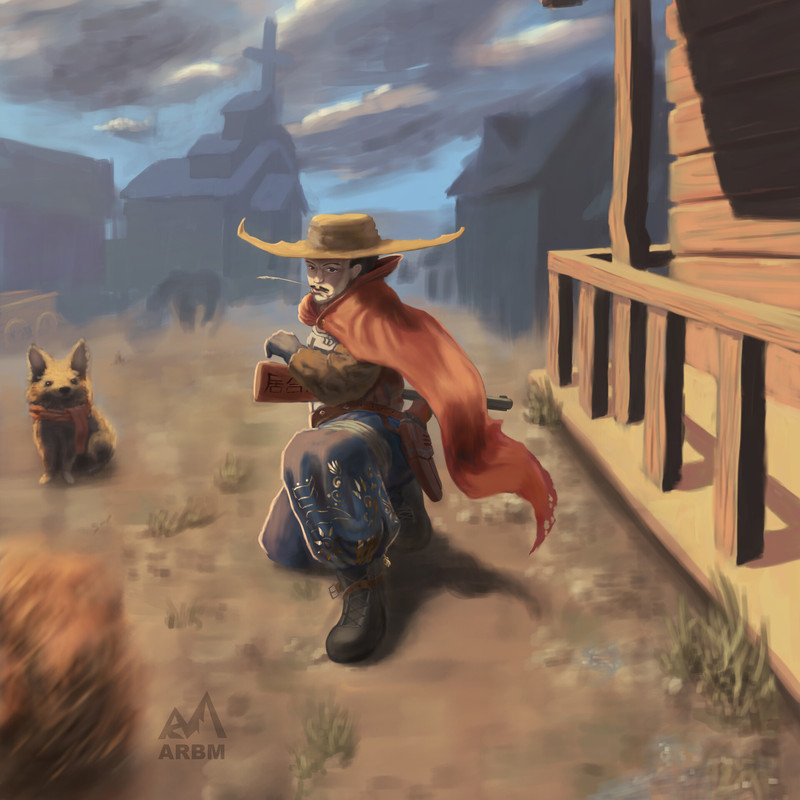
The Quickdraw Archetype
The Quickdraw Archetype encompasses Fighters who specialize in immediate action in combat, moving and striking with unfathomable speed to take down enemies before they ever get the chance to retaliate. Those that fall under this archetype are often highly specialized for duels, being very prevalent in cultures with distinct concepts of honorable fights to prove one's valor or values. They can use a vast array of weapons, but are most often seen with small, easy to carry weapons such as small swords and firearms.
Art of the Quickdraw
Starting when you choose this archetype at 3rd level, you can strike before an opponent blinks. When you roll Initiative at the beginning of combat, you may immediately spend your reaction to draw a seethed or holstered weapon which does not have Two-Handed property. When you do, you perform one of the following abilities, depending on if that weapon was a melee weapon or a ranged weapon.
Some of the abilities will force creature to make a saving throw. When they do, the DC for that saving throw is determined as follows:
Quickdraw Save DC = 8 + your PB + your Strength or Dexterity modifier (your choice).
Melee
- Quickdraw Strike. You move up your speed, then perform a melee weapon attack with that weapon against a creature of your choice within your weapon's reach. This attack is made at advantage, and if it hits, it does additional weapon damage which equals two rolls of your Superiority Die.
- Flashing Strike. All creatures of your choice within a 10 feet radius of you must succeed on a Dexterity saving throw against your Quickdraw Save DC or take damage equal to three rolls of your Superiority Die + your Fighter level. The type of this damage equals that of the weapon drawn to activate your Art of the Quickdraw feature. Whenever you reach a level in this class in which the size of your Superiority Die increases, the range of this feature's area of effect increases by 10 feet.
Ranged
- Quickdraw Shot. You perform a ranged weapon attack against a creature of your choice within that weapon's normal range. This attack is made at advantage, and if it hits, it does additional weapon damage which equals one roll of your Superiority Die.
- Shot Barrage. All creatures of your choice within a 15-foot cone projected from you must succeed on a Dexterity saving throw against your Quickdraw Save DC or take damage equal to three rolls of your Superiority Die + your Fighter level. The type of this damage equals that of the weapon drawn to activate your Art of the Quickdraw feature. Whenever you reach a level in this class in which the size of your Superiority Die increases, the range of this feature's area of effect increases by 15 feet.
All or Nothing
Also at 3rd level, you can place your power and skill onto a single strike, gambling it all on a crucial blow. Once per turn, when you make a weapon attack, you may choose to spend any number of Superiority Die to reduce the critical hit threshold for that attack by 2 for each die spent. If you have spent at least 3 Superiority Die, and the attack lands as a critical hit, you regain all Superiority Die spent with this ability.
Singular Strike
At 7th level, you may attack with great power and precision at the expense of speed. When you take the Attack action on your turn, you may choose to forgo all attacks you could normally make with it. If you do, you may instead perform one focused strike with it. This focused strike has advantage, and gains a bonus to its attack roll which equals twice the amount of attacks foregone. Furthermore, this focused strike does two additional die of weapon damage for each attack foregone.
Draw or Delay
Starting at 10th level, your fighting style is further developed onto a more versatile frame. When you roll Initiative at the beginning of combat, you may immediately choose to enter an Accelerated Stance or a Patient Stance. These stances grant you special effects, listed as follows:
- Accelerated Stance. When you use your Art of the Quickdraw feature to perform an ability, you may immediately teleport to an unoccupied space within 5 feet of a creature who was damaged with that ability, so long as there is a viable path between you and that space. Immediately after you teleport this way, you may perform a weapon attack against the damaged creature as part of that same reaction. This stance then ends.
- Patient Stance. When you would use your Art of the Quickdraw feature to perform an ability, you may choose to hold onto to that ability instead. If you do, you do not regain your reaction at the start of your turn, and must hold concentration of this stance as if you were concentrating on a spell, losing this stance if your concentration is broken. While concentrating on this stance, your AC is increased by an amount which equals your Combat Prowess. At the end of the first round of combat, you release the held ability if you are still concentrating on this stance. Once the held ability is released this way, all damage dealt by it, or any attack made with it, is doubled at the end of the damage calculation. This stance then ends.
Instant Action
Beginning at 15th level, your reactions drastically accelerate you in combat. You gain a +5 to your Initiative checks, and whenever you roll a 9 or lower on the d20 roll for an Initiative check, that roll becomes a 10 instead.
Furthermore, when you roll Initiative at the beginning of each combat, you may choose one Skill Action with a Use Time of "Attack Replacement" and take that action as a Free Action.
Absolute Speed
At 18th level, your reach peak of reaction speed. You gain two additional special Reactions, which you can only use with your Art of the Quickdraw feature.
The Magnum Archetype
Some Fighters choose to dedicate their training to the most unusual of arts. Be it for fun, function or both, those Fighters that embody the Magnum Archetype choose to study the art of massively oversized weapons wielded with might and finesse alike. These pioneers on the field of weaponry use only the finest crafts they can get their hands on, only purchasing or creating their own specialty oversized weapons to use in combat. Though their art may be unusual, and to some, even comical, seeing them in combat leaves no doubt about their effectiveness.
Oversized Beating
Starting when you choose this archetype at 3rd level, you may wield melee weapons suited for creatures up to two size categories larger than you, so long as have the Two-handed or Versatile property. When you do, these weapons' damage dice are doubled and they gain the Heavy property if they did not already have it. Furthermore, your reach with these weapons increases by 5 feet, and you may add your relevant Ability Score to their damage roll twice.
You must wield these weapons with two hands if they have the Versatile property, and have disadvantage on your attack rolls with these weapons.
(Ex. A Greatsword suited for a creature two sizes larger than you would deal 4d6 damage on a hit, and a Warhammer would deal 2d10 damage on a hit.)
Momentous Swing
Also at 3rd level, you may channel the strength of your muscles into a devastating blow with your oversized weapon. When you take the Attack action while the only weapons you are wielding are suited for a creature two size categories larger than you, you may forgo all attacks made as part of that action to instead of the following effects, depending on the primary damage type of the wielded weapon:
-
Piercing. You thrust your weapon. Make an attack roll, which does not suffer disadvantage from your Oversized Beating feature. All creatures in a 30-foot line that is 5-foot wide projected from you must make a Dexterity saving throw against the result of your attack roll. They do not benefit from Half or Three-Quarters cover when making this saving throw. On a failure, these creatures are take damage equal to the damage roll for that attack, as if they had been hit with it.
-
Bludgeoning. You slam your weapon. Make an attack roll, which does not suffer disadvantage from your Oversized Beating feature. All creatures in a 15-foot cube projected from you must make a Dexterity saving throw against the result of your attack roll. On a failure, these creatures are take damage equal to the damage roll for that attack, as if they had been hit with it, and are knocked prone if they are no more than two sizes larger than you.
-
Slashing. You swing your weapon. Make an attack roll, which does not suffer disadvantage from your Oversized Beating feature. All creatures in a 15-foot cone projected from you must make a Dexterity saving throw against the result of your attack roll. On a failure, these creatures are take damage equal to the damage roll for that attack, as if they had been hit with it, and begin to bleed.
-
Other. You detonate your weapon. Make an attack roll, which does not suffer disadvantage from your Oversized Beating feature. All other creatures in a 10-foot radius from you must make a Dexterity saving throw against the result of your attack roll. On a failure, these creatures are take damage equal to the damage roll for that attack, as if they had been hit with it.
Once you use this feature, you cannot do so again until you roll Initiative at the beginning of combat.
Reckless Momentum
At 7th level, you can launch yourself around the battlefield with the weight of your weapon. When you take the Attack action on your turn, you may forgo one attack you could make with it in order to launch yourself with the weight of your weapon. You are pulled 20 feet in a direction of your choice. If this movement would be interrupted by a hostile creature occupying its space, you may take the Shove action against that creature as a Free Action. When you successfully Shove a creature this way, it is knocked prone and you may move through its space with the pulling movement of this feature, so long as that movement does not end within that creature's space.
Explosive Power
Starting at 10th level, your bursts of strength project forth their energy in explosive fashion. When you use your Momentous Swing feature, the range of its effects is doubled. Furthermore, the base dice for your weapon are doubled a second time during its use.
(Ex. A Greatsword suited for a creature two sizes larger than you would deal 8d6 damage on a hit, and a Warhammer would deal 4d10 damage on a hit.)
Crushing Momentum
Beginning at 15th level, your ability to carry yourself with your weapon's momentum increases further. When you use your Reckless Momentum feature, the distance you are pulled is doubled. Furthermore, whenever you successfully Shove a creature with it, that creature is Dazed until the end of its next turn, and takes force damage equal to your Fighter level.
Devastating Detonation
At 18th level, you can unleash all of your stored strength at once. When you would make an attack roll with your Momentous Swing feature, you can instead choose to make the result of that d20 roll become a 20.
Once you use this feature, you cannot do so again until you finish a short or long rest.
The Apex Archetype
Fighters who embody the Apex archetype are those who seek to perfect themselves with equipment, reaching a whole new level of integration between weapon and combatant. Through refined craftsmanship, personalized designs and even biological integration, they transform into deadly fusions between wielder and blade. Forging even their armor into themselves, they are savage warriors of optimized carnage on the field of battle.
Apex of Weaponry
Starting when you choose this archetype at 3rd level, you learn to forge your own customized weapons, and integrate them into your body through craftsmanship or biological grafting. You become proficient with Smith's Tools. If you were already proficient with them, you become an expert in them instead.
Over the course of 8 hours of work, you may forge yourself one of the Apex Weapons listed bellow, which are Natural Weapons, and begin wielding it. You can only ever wield up to 3 Apex Weapons at a time. A wielded Apex Weapon cannot be disarmed, nor can you drop them as a Free Action, and any hands they may occupy count as Free Hands, but you cannot wield weapons or wear shields with such hands. You may drop a wielded Apex Weapon over the course of 10 minutes, which can be performed as part of a Short Rest.
This weapon is made out of metal, bone or wood (you choose when you forge it).
Apex Bite
These metallic jaws deal 1d12 piercing damage and have the Brutal, Finesse and Vicious properties. They require no hands to use, instead occupying your mouth. While this weapon is equipped, you gain the following special Skill Action:
- Tear Off. As an action, you may take the Spot Weakness Skill Action against a creature you can see within this weapon's reach which has taken damage since the end of your last turn, and then, immediately afterwards, make an attack against it with this weapon. If you succeed on the contest made with Spot Weakness, your attack with this weapon does amount of additional die of weapon damage which equals your Combat Prowess, and makes its target starting Bleeding on a hit.
Apex Claws
These serrated claws deal 1d8 slashing damage and have the Light, Finesse and Vicious properties. They are forged and equiped to both of your hands, but leave those hands free for any purpose other than wielding shields or other weapons. While this is weapon equipped, you gain the following special Skill Action:
- Savage Pursuit. As a bonus action, you may take the Feint Skill Action against a creature you can see within 30 feet of you, and then, immediately afterwards, move up to half your speed in a straight line towards that creature. If you succeed on the contest made with Feint, your attacks with this weapon deal an additional +3 damage until the end this turn.
Apex Tail
This flexible tail deals 1d10 bludgeoning damage and has the Reach, Finesse and Pummeling properties. They require no hands to use, instead occupying your back. While having this weapon equipped, you gain the following special Skill Action:
- Concussive Swap. As an Attack Replacement, you may take the Roll Through action against a creature you can see within this weapon's reach. If you succeed on the contest made with Roll Through, you swap places with the target, each of you being forcefully moved through the other's space in a straight line so that you occupy each other's spaces. A creature affected by this effect is Dazed and has their AC reduced by an amount which equals your Combat Prowess. Both of these effects last until the start of your next turn.
Apex Horns
These metallic horns deal 1d12 piercing damage and have the Impact, Finesse and Keen properties. They require no hands to use, instead occupying your head. While having this weapon equipped, you gain the following special Skill Action:
- Impaling Charge. As an action after moving at least 20 feet in a straight line towards a creature, you may take the Grapple action against it, and then, immediately afterwards, make an attack against it with this weapon. If you succeed on the contest made with Grapple, your attack with this weapon does amount of additional die weapon damage which equals your Combat Prowess, and Impales its target for as long as the creature is grappled. Impaled creatures lose an amount of Hit Points equal to your Combat Prowess whenever they take an Action or Skill Action, and lose that many hit points again whenever they end their turn while Impaled.
Apex of Armor
Also at 3rd level, you may forge yourself new skin, creating intricate overlapping armor through either expert craftsmanship or biological integration. Over the course of 8 hours of work, you may forge yourself one of the Apex Suits listed bellow. You may don or doff a worn Apex Suit over the course of 1 hour. This armor imposes no penalties to resting with it.
- Shadowed Skin. This is a Light Armor whose AC calculation is 13 + your Dexterity Modifier. It has the Avoidant property, and grants you advantage on Stealth checks while wearing it.
- Sturdy Hide. This is Medium Armor whose AC calculation is 15 + your Dexterity Modifier (max. +2). It has the Absorptive property, with an Absorptive value of 3, and the Avoidant property. It has a Strength requirement of 13.
- Stalwart Shell. This is Heavy Armor whose AC calculation is 18. It has the Absorptive property, with an Absorptive Value of 6. It has a Strength requirement of 15.
This armor is made out of metal, bone or wood (you choose when you forge it). This armor makes no significant noise, and does not impair your ability to move in any way.
Improved Perfection
At 7th level, you learn to forge regular weapons and armor into your Apex Weapons and Apex Suits, and enhance your capabilities with them. When forging an Apex Weapon or Apex Suit, you may choose one weapon or armor, respectively, magical or otherwise, and forge it into that Apex Weapon or Apex Suit. When you do, that Apex Weapon or Apex Suit gains any magical properties the original item may have had. In the case of an Apex Weapon, it also inherits one weapon property of your choice the original weapon had.
An Apex Weapon or Apex Suit that had another item forged into it gains an additional +1 bonus to its Magic Item Modifier.
Additionally, you may forge a weapon or armor, respectively, magical or not, into one of your existing Apex Weapons or Apex Suits over the course of 4 hours, which can be performed during a long rest. When you do, apply the above effects as normal.
Each Apex Weapon and Apex Suit may only have one other item forged onto it.
(Apex Weapons and Apex Suits cannot be forged into other Apex Weapons or Apex Suits with this feature.)
Apex of Technique
Starting at 10th level, you further master the unique qualities of your Apex Weapons, tapping into more of their potential. You gain the following benefits to the special Skill Actions obtained while an Apex Weapon is equipped:
- Tear Off. When you make a creature Bleed with this feature, the amount of Hit Points it loses due to Bleeding is doubled.
- Savage Pursuit. The movement you perform with this Skill Action is doubled, and can be made in any direction as if you had a Hovering speed.
- Concussive Swap. This weapon's reach increases by 20 feet for the sake of using this Skill Action.
- Impaling Charge. Immediately before attempting a Grapple with this Skill Action, you may move 30 feet in a straight line towards a creature you can see. This movement does not provoke Opportunity Attacks.
Defense Beyond Perfection
Beginning at 15th level, you learn to bring out the full potential of your Apex Suits. When you roll Initiative at the beginning of combat, you may choose to activate the Unleashed State of an Apex Suit you are wearing. While in its Unleashed State your Apex Suit gains the respective benefits:
- Shadowed Skin. You become Invisible during your turn. If you end your turn without attacking, this Invisibility extends itself until the start of your next turn.
- Sturdy Hide. As a reaction at the start or end of another creature's turn, you may take one Skill Action of your choice with a Use Time of Attack Replacement.
- Stalwart Shell. Your Absorptive value increases by 3 and now applies to all damage you take, except Psychic damage.
Once you use this feature, you cannot do so again until you finish a Short or Long Rest.
Agression Beyond Perfection
At 18th level, you learn to unleash of your Apex Weaponry in a burst of power. As an action on your turn, you may perform one of the following effects, granted you are equipped with the appropriate Apex Weapon:
- Apex Bite. Choose one creature you can see within your reach whose current Hit Points is equal to or less than 100. If the target does not have Legendary Actions or Legendary Resistances, it dies. If the target has Legendary Actions or Legendary Resistances, it instead takes an amount of piercing damage equal to 12d12, or one fourth of its maximum hit points, whichever is higher instead.
- Apex Claws. Choose one creature within your reach. You make eight attacks with this weapon against that target.
- Apex Tail. Choose up six creatures within 60 feet of you. You may move each of those creatures up to 60 feet in any direction of your choice. When moving this way, creatures may move through each other's spaces, but may not end their movement in such spaces.
- Apex Horns. Choose one creature you can see within 120 feet of you. You may move in a straight line as if you had a Hovering Speed, so that you end your movement within 5 feet of that creature. At the end of this movement, you may make an attack with this weapon against that target, which deals an additional die of weapon damage for each 30 feet you moved with it. If you moved at least 60 feet towards that target, this attack automatically becomes a hit. If you moved at least 120 feet towards that target, this attack automatically becomes a critical hit.
Combat Maneuvers
Bait and Switch
As a reaction when a willing creature within 5 feet of you is hit with an attack whose source is a creature you can see, you may spend a Superiority Die to switch places with that creature. This movement does not provoke opportunity attacks. After switching places this way, you become the new target for that attack, potentially causing it to miss if it does not meet or surpass your AC.
Brace
As a reaction when a creature enters the range of a melee weapon you are wielding, you may perform an attack against it. If this attack hits, you may add the Superiority Die to its damage roll, and you gain a bonus to your AC against the attacks of the hit creature until the end of this turn which equals the result of the Superiority Die.
Cleaving Attack
When you hit a creature with a melee weapon attack, you may spend a Superiority Die to attempt to damage a second creature within reach of your melee weapon. If your attack roll for the first creature would hit this second creature, roll damage against it as if you had hit it with that same attack.
Command to Strike
When you would make an attack on your turn, you can forgo that attack to command a companion to strike. When you do so, choose a friendly creature within 60 feet of you who can see or hear you and spend one Superiority Die. That creature can immediately use its reaction to make one weapon attack, adding the Superiority Die to the attack's damage roll.
Disarming Attack
Immediately after you hit a creature with a melee attack, you can spend one Superiority Die and to immediately take the Disarm action against the target as a Free Action. Add the Superiority Die to your ability check made to disarm.
Distracting Attack
When you hit a creature with a weapon, you may spend one Superiority Die to create an opening for an ally. The next attack made by an allied creature other than yourself against that target is made at advantage and adds the Superiority Die to the attack's damage roll.
Evasive Footwork
When you move, you may spend one Superiority Die to not provoke opportunity atacks until the end of the turn.
Feint Assault
When you attack a creature within your reach, immediately before making your attack roll, you may spend two Superiority Dice to take the Feint action against that creature as a free action. If you successfully feint the creature, your following attacks against it until the end of this turn deals additional weapon damage equal to one roll of your Superiority Die.
Goading Attack
When you hit a creature with a weapon attack, you can spend one Superiority Die to goad the target into attacking you. You add the Superiority Die to the attack's damage roll, and the target has disadvantage on all attack rolls against targets other than you until the end of your next turn.
Grapple Attack
Immediately after you hit a creature with a melee attack, you can spend one Superiority Die and to immediately take the Grapple action against the target as a Free Action. Add the Superiority Die to your ability check made to grapple.
Guard Breach
As a reaction when you miss an attack roll against a creature, you can spend one Superiority Die to attempt to course correct your strike. You add the Superiority Die to your attack roll, potentially turning it in to a hit. If it becomes a hit, that attack deals an amount of additional damage which equals your Combat Prowess.
Lunge
On your turn, you may spend a Superiority Die to move up to 10 feet in a straight line towards a creature. If you do, your next melee attack against that creature this turn may add your Superiority Die to its attack and damage roll.
Maneuvering Attack
When you hit a creature with a weapon attack, you can spend one Superiority Die to maneuver one of your comrades into a more advantageous position. You add the Superiority Die to the attack's damage roll, and you choose a friendly creature who can see or hear you and is within 30 feet of the target of your attack. That friendly creature can move up to half its speed without provoking opportunity attacks from the target of your attack.
Menacing Attack
When you hit a creature with a weapon attack, you can expend two Superiority Dice to frighten the target into backing away. You add the Superiority Die to the attack's damage roll, and during the target's next turn, it cannot willing move towards you. A creature is unaffected by this effect if it is immune to the Frightened condition.
Parry
As a reaction when a source you can see hits you with a weapon attack, you can spend one Superiority Die to attempt to parry that blow. You add the Superiority Die + your Combat Prowess to your AC against that attack, potentially turning it into a miss.
Pushing Attack
When you hit a creature with a weapon attack, you can spend one Superiority Die to drive the target back. You add the Superiority Die to the attacks damage roll, and if the target is no more than one size larger than you, you push the target up to 10 feet in a direction of your choice horizontally.
Quick Toss
As a bonus action, you can spend one Superiority Die and make a ranged attack with a weapon that has the thrown property. You can draw the weapon as part of making this attack. If you hit, add the Superiority Die to the weapon's damage roll.
Rally
On your turn, you can use a bonus action and spend one Superiority Die to bolster the resolve of your companions. When you do so, all allied creatures that can hear you within 60 feet of you gain temporary hit points equal to the roll of the Superiority Die + your Combat Prowess. These temporary hit points last 1 minute.
Reposition
As a bonus action when you're within 15 feet of an allied creature on your turn, you can spend one Superiority Die and switch places with that creature, provided the creature is willing and isn't incapacitated, and that such a movement would be physically possible for both of you to accomplish. This movement doesn't provoke opportunity attacks.
Retreat
As a reaction when a creature moves within 10 feet of you, you may spend one Superiority Die to move up to half your speed without provoking opportunity attacks.
Riposte
When a creature misses you with a melee attack, you can use your reaction and spend one Superiority Die to make a melee weapon attack with advantage against the creature. If you hit, you add the Superiority Die to the attack's damage roll.
Trick Shot
When you hit a creature with a ranged weapon attack, you may spend one Superiority Die to force that creature to make a Dexterity saving throw, whose DC is the attack's attack roll - 5. On a failure, you choose to either Daze it, make it start Bleeding or knock it Prone.
Trip Attack
Immediately after you hit a creature with a melee attack, you can spend one Superiority Die and to immediately take the Trip action against the target as a Free Action. Add the Superiority Die to your ability check made to trip.
Tactical Assessment
When you are forced to make an Intelligence, Wisdom or Charisma check during combat, you may spend one Superiority Die and add it to the result.
Who the Art Belongs To (I Think)
Please Don't Sue Me
Page 1
Unknown Artist / Could Not Find Source
Page 2
Wizards of the Coast - Player's Handbook Page 70
Page 7
Andrew Mironov on Artstation
Page 9
Krassimir Mercier on Artstation
Page 11
Artem Kurenov on Artstation
Page 13
Denis Pospelov on Artstation
Page 16
Mounty on Artstation