Echoes of Light
A collection of magical artifacts for D&D 5e, based on the iconic weapons of the Final Fantasy series.
Author's Note: for the most part, this collection of weapons are designed to be very powerful. They're all artifacts for a reason. I'd only recommend handing them out in an especially high-power game, and even then, doing so very sparingly. I've also taken more than a few liberties in an attempt to capture the feel of the weapons, their wielders and the games they came from, so don't be surprised that they're not 100% lore accurate.
Rebellion
Weapon (greatsword), artifact (requires attunement by a creature of non-good alignment)
Only a warrior of great strength could feasibly wield this gigantic black greatsword. Rebellion actively rejects goodness, only bestowing its power upon those unbound by the fetters of morality.
Magic Weapon. Rebellion is a magic greatsword that grants a +3 bonus to attack and damage rolls made with it. The wielder cannot be moved against their will and is immune to being knocked prone or grappled by any creature of size Large or smaller. When dealing damage from any source, you may instead choose to change the damage type to necrotic.
Echoes of the Heretic. Within the darksteel core of this greatsword echoes the spirit of the previous wielder, once a proud and stalwart knight serving a just ruler, who lost himself to the corrupting influence of chaos.
While wielding Rebellion, you gain advantage on any checks made to grapple, shove, or knock a creature prone, and can grapple as a bonus action. While grappling a creature, you gain the following actions:
- Earthquake. As an action, you can slam your victim down onto the ground with earth-shattering force. The victim takes 2d10 bludgeoning damage and is released from the grapple. Any creature within 5 feet of the point of impact, except you, takes half the damage dealt as the shockwave staggers them.
- Twin Swords. When attacking your grappled victim with Rebellion, you have advantage on your attack rolls, and can make one extra attack. At the end of these attacks, the victim is launched 15 feet in a direction of your choice.
- Highbringer. As an action, you throw your victim up to 30 feet in a direction of your choice. The victim takes 2d8 bludgeoning damage on impact, plus an extra 1d6 bludgeoning damage for every 10 feet travelled. If the victim collides with another creature, the damage is shared evenly across both creatures.
- Deranged Soul. As an action, you can drain the soul from a grappled creature, using it to bolster your own. The victim must succeed on a DC 17 Constitution saving throw, or take 3d12 necrotic damage, healing you for half the damage dealt.
Crimson Sword
Weapon (longsword), artifact (requires attunement)
What material this curved, scarlet blade is comprised of remains a mystery to all that have seen it. All that is known is that the immaculate craftsmanship make it a force to be reckoned with.
Magic Weapon. The Crimson Sword is a magic longsword that grants a +3 bonus to attack and damage rolls made with it. While attuned to the Crimson Sword, your movement speed increases by 15 feet, and you can dash as a bonus action.
Echoes of the Rebel. Within the blood-red metal that the Crimson Sword is made of echoes the spirit of the previous wielder, a passionate and driven idealist who became a champion of the resistance when imperial soldiers destroyed his home.
The Crimson Sword becomes more effective as you successfully attack with it. After striking an enemy with the Crimson Sword, your next attack deals an additional 1d8 slashing damage. Each successive successful attack adds another 1d8 to the damage, up to a maximum of 5d8 bonus damage. The damage bonus fades upon missing an attack, or if one turn passes without making an attack.
Blood Weapon. The Crimson Sword holds 3 charges, all of which are restored at the end of a long rest. You may use a bonus action to spend one charge and bestow vampiric properties to your next successful attack. You instantly regain hit points equal to the damage dealt by the attack, including any stacked bonus damage.
Riposte. When you successfully use the dodge action to evade an enemy attack, you may use your reaction to counterattack, as long as the aggressor is within range. As part of the reaction, move up to half your movement speed towards the creature that attacked you and then make one attack roll against them. This movement does not provoke opportunity attacks.
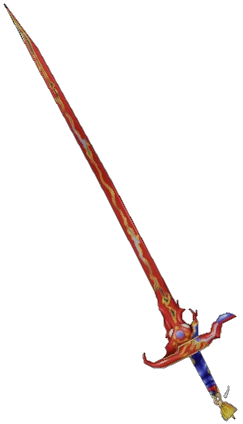
The Crimson Sword.
Onion Sword
Weapon (shortsword), artifact (requires attunement)
The strange name of this sword is derived from the equally strange name of the Onion Knights - a band of heroes granted versatility and strength by the power of elemental crystals.
Magic Weapon. The Onion Sword is a magic shortsword that grants a +3 bonus to attack and damage rolls made with it. A 17th level character or higher deals an additional 3d6 damage when attacking with the Onion Sword.
Echoes of the Crystalbearer. Within the yellow tassel that hangs from the Onion Sword's pommel echoes the spirit of the previous wielder, a precocious youth with a reluctance for direct combat, yet a willingness to lay his life on the line when it truly mattered.
The Onion Sword is a transforming weapon, one that changes form and power based on the current elemental crystal it is imbued with. You may change the weapon's elemental imbuement, and subsequently its form, over the course of a long rest. The available imbuements are as follows:
- Wind Crystal. While imbued with the wind crystal, the Onion Sword takes the form of a shortsword, and the wielder gains resistance to slashing damage. As a bonus action, you may lower your own AC by up to 3, adding the number to your attack and damage rolls made with the Onion Sword. This effect lasts until the start of your next turn.
- Fire Crystal. While imbued with the fire crystal, the Onion Sword takes the form of a shortbow, and the wielder gains resistance to fire damage. You can cast the conjure volley spell (DC 17) a number of times equal to your proficiency bonus per long rest.
- Water Crystal. While imbued with the water crystal, the Onion Sword takes the form of a battleaxe, and the wielder gains resistance to cold damage. You can cast the compelled duel spell (DC 18) at will.
- Earth Crystal. While imbued with the earth crystal, the Onion Sword takes the form of a quarterstaff, and the wielder gains resistance to bludgeoning damage. When an enemy makes a saving throw against a spell, you may spend your reaction to impose disadvantage upon the save. You can do this a number of times equal to half your proficiency bonus per long rest.
Eureka. As an action, you can temporarily enter a state of enhanced elemental conductivity, the secrets of which are known only to the ancients. For one minute, you gain the effects of all four crystal imbuements at the same time. At the start of your turn, you may choose which form the Onion Sword takes as a free action. When the effect of Eureka ends, the Onion Sword reverts to the form it was in before Eureka was used.
Once Eureka has been used, it cannot be used again for another 1d6 days.
Mythgraven Blade
Weapon (longsword), artifact (requires attunement)
The Mythgraven Blade is, as the name suggests, engraved with the words of a myth - specifically, a prophecy that speaks of a chosen warrior, one who will rid their world of all evil.
Magic Weapon. The Mythgraven Blade is a magic longsword that grants a +3 bonus to attack and damage rolls made with it. The Mythgraven Blade deals an additional 1d8 radiant damage, and has advantage on attack rolls made against undead.
Echoes of the Penitant. Within the etchings that mark the length of the Mythgraven Blade echoes the spirit of the previous wielder, a brave and skilled knight that abandoned his service to an immoral king when his morals would no longer allow him to remain complicit in his cruelty.
The Mythgraven Blade has the ability to harness the wielder's own dark impulses and use them to damage foes. As a bonus action, you may spend one of your hit die and roll it, adding double the result as necrotic damage to your next successful attack. If no successful attacks are made within 1 minute of using this effect, it fades.
Ordeal of the Mountain. At the end of a long rest, you may prove your commitment to the cause of good by facing your own demons. Roll initiative and begin combat with a DM-controlled opponent that uses your own character sheet as its statblock. This opponent represents your dark side. This battle occurs within your own mind, your party cannot assist you during it, and any resources spent and hit points lost are restored at the end of the fight.
If you are good-aligned, you gain +3 to all attack and damage rolls during this fight. If you are evil-aligned, you gain -3 to all attack and damage rolls during this fight. The encounter lasts for three rounds, or until one of the combatants is reduced to 0 hit points, with your dark side using all of the tools at its disposal to win.
When the fight ends, if you have more hit points remaining than your dark side, you emerge triumphant and emboldened - a fact recognised by the Mythgraven Blade, as it unlocks its full power for you. If you have fewer hit points remaining than your dark side, you have not managed to tame it, and are not granted any additional boons. Win or lose, you cannot rechallenge your dark side for one week afterwards.
If you win, you gain the following boons for one week:
- Your Strength and Wisdom scores are increased by 2.
- The Mythgraven Blade's radiant damage increases by an additional 2d8.
- You gain immunity to necrotic damage.
- When a creature you can see within 30 feet of you takes damage, you can spend your reaction to magically take that damage in their place. This feature fails if taking the damage would reduce you to 0 hit points.
- You can cast the shield of faith spell at will, and the cure wounds spell at 3rd level three times a day.
Excalipoor
Weapon (longsword), uncommon (requires attunement)
The unbridled majesty of this legendary weapon is enough to bring one to tears - especially once they realise that it's not actually any good.
Magic Weapon. Excalipoor is a magic longsword. Attacks made with Excalipoor have -1 to attack and damage rolls.
Curse. This weapon is cursed. Attuning to Excalipoor curses you until you are targeted by a remove curse spell or similar magic. While attuned to Excalipoor, you become unshakably convinced that the weapon is actually a Holy Avenger, complete with all of the properties that go along with it.
Echoes of the Wanderer. The Excalipoor's original owner, a travelling duelist by the name of Gilgamesh who collects only the rarest of weapons, is also under the effect of Excalipoor's curse, and he wants it back.
Gilgamesh becomes aware that Excalipoor has a new owner upon a character's attunement, as well as a vague idea of where they may be, but not any exact details about location or appearance. He will relentlessly search for Excalipoor's new wielder, with the intent of challenging them to a duel over possession of the blade. He can be persuaded to postpone his proposed duels, but he will not take no for an answer.
Gilgamesh uses the champion statblock, and will only fight Excalipoor's wielder one-on-one. If the wielder's party do not honour the one-on-one nature of the duel, he will retreat. The next time he appears, he will cast the hold person spell (DC 18) on all party members that aren't Excalipoor's wielder and resume the duel. If Gilgamesh wins the duel, he will stabilise his opponent before taking Excalipoor and leaving.
If Gilgamesh is reduced to 0 hit points, instead of falling unconscious, he will throw a smoke bomb down at his feet and vanish from sight, swearing to return. The only way to permanently pacify Gilgamesh is to relinquish the sword to him, lose against him in a duel, or cast the remove curse spell on him so that he realises that Excalipoor is not what he believes it to be.
Casting remove curse on Gilgamesh or giving him Excalipoor will ally him with your party, and he will be glad to assist in combat where available. If he is given Excalipoor without having his curse lifted, he will exclusively fight using Excalipoor in place of the greatsword on the champion statblock.
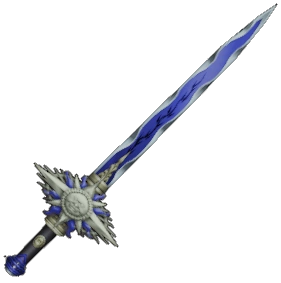
Excalipoor.
Enhancer
Weapon (scimitar), artifact (requires attunement by a spellcaster)
An unusually thin, curved edge and a vivid magenta hilt set this scimitar apart from its peers. It is so named for its intent - it enhances the arcane abilities of anyone magically-inclined enough to wield it.
Magic Weapon. The Enhancer is a magic scimitar that grants a +3 bonus to attack and damage rolls made with it. While attuned, the damage of any cantrip you cast that hits only one target and doesn't hit multiple times is increased by one die of the cantrip's damage type - for example, the poison spray cantrip would gain an extra 1d12 poison damage, while the lightning lure cantrip would gain an extra 1d8 lightning damage.
Echoes of the Esper. Within the ruby pommel of the Enhancer echoes the spirit of the previous wielder, a former slave brainwashed into serving as a living weapon for a ruthless empire, who broke free from her programming to pursue a deeper calling.
When you reduce an enemy to 0 hit points with the Enhancer or with a spell, the Enhancer stores a Trance charge. Only one Trance charge may be stored at a time, and any unused Trance charges are lost at the end of a short or long rest. You may spend a Trance charge to channel one of the following espers as a bonus action:
- Zona Seeker. You cast the tenser's transformation spell.
- Maduin. You cast the tasha's otherworldly guise spell.
- Crusader. You cast the investiture of flame spell.
- Bismarck. You cast the investiture of ice spell.
- Golem. You cast the investiture of stone spell.
- Valigarmanda. You cast the investiture of wind spell.
You can use Trance charges a total of three times a day, and all three uses are restored at dawn.
Riot Blade. The Enhancer grants you additional strength in the direst of circumstances, allowing you to launch bladed projectiles of raw magic. When you are below half of your maximum hit points, the Enhancer's melee attack range increases to 15 feet and the damage increases to 2d6. When you are below 10 hit points, the melee attack range increases to 30 feet and the damage increases to 4d6.
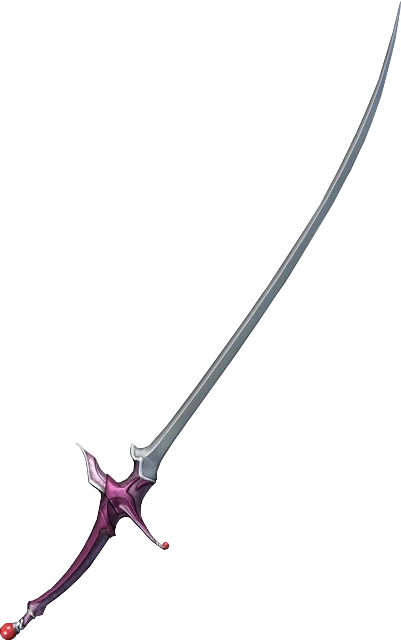
Enhancer.
Buster Sword
Weapon (greatsword), artifact (requires attunement)
While this greatsword appears to be naught more than a hulking slab of dense steel, it belies a strong magical versatility and unexpected swiftness. The Buster Sword was passed from soldier to soldier, as a symbol of remembrance, before finding its way into the hands of a troubled mercenary.
Magic Weapon. The Buster Sword is a magic greatsword that grants a +3 bonus to attack and damage rolls made with it. Attack rolls made using the Buster Sword score a critical hit on a roll of 18, 19 or 20.
Echoes of the Soldier. Within the steel of the Buster Sword echoes of the spirit of the previous wielder, an emotionally distant sellsword who found himself falling in with an eco-terrorist group embroiled in a secret war against a planet-killing corporation.
The Buster Sword comes complete with a set of materia, a collection of small gemstones that can be slotted into the blade's fuller. Over the course of a short rest, you may choose two materia to insert into the sockets - one summon materia and one support materia. The save DC for every summon spell is 17. The following materia are available:
- Shiva (summon). Once per long rest, you can cast the Otiluke's freezing sphere spell at 7th level. A creature that fails the saving throw has their speed reduced to 0 until the end of their next turn.
- Hades (summon). Once per long rest, you can cast the circle of death spell at 7th level without material components. A creature that fails the saving throw is poisoned for 1 minute.
- Phoenix (summon). Once per long rest, you can cast the fire storm spell at 7th level, and then distribute half the damage dealt as healing across any creatures of your choice within 60 feet of you.
- Knights of the Round (summon). Once per long rest, you can cast the spirit guardians spell at 7th level. This spell deals radiant damage regardless of your alignment. A creature that fails the saving throw has disadvantage on weapon attacks for as long as it remains in the radius of the spell's effect.
- Elemental Armor (support). You gain immunity to the damage type inflicted by the currently-slotted summon materia.
- Elemental Weapon (support). Your melee attacks deal an additional 2d6 damage of the same type as that inflicted by the currently-slotted summon materia.
- Sneak Attack (support). If you roll a natural 20 on an initiative roll, you may cast the spell linked to your currently-slotted summon materia on your first turn. This usage does not count against your one use per long rest.
- HP Absorb (support). When casting the spell linked to your currently-slotted summon materia, you can distribute half the damage dealt by the spell as healing across any creatures of your choice within 60 feet of you. When slotted alongside the Phoenix summon materia, the effects combine, allowing you to heal nearby creatures for the full damage dealt by the spell.
Lion Heart
Weapon (longsword), artifact (requires attunement)
The business end of this gunblade is made of a powerful alloy that resembles a blue-burning flame, while the grip bears a lionhead crest that is said to symbolise the values and virtues of the young pragmatist that once carried the blade.
Magic Weapon. Lion Heart is a magic longsword that grants a +3 bonus to attack and damage rolls made with it. After a successful attack with Lion Heart, you may use your reaction to pull the trigger and discharge a cartridge, the resulting explosion dealing an additional 1d8 thunder damage.
Echoes of the Mercenary. Within the lionhead crest of Lion Heart echoes the spirit of the previous wielder, an aloof and introverted young man who found himself thrust into a leadership role in the face of impending war.
Lion Heart possesses the unique ability to draw upon the power of enemies, temporarily harnessing it for the wielder's own benefit. When a hostile creature that you can see casts a spell or makes an attack roll, you may use your reaction to draw that ability from the creature, and then either Cast or Junction as part as the same reaction.
- Cast. You instantly release the power drawn from the enemy in the same way it was originally used. When drawing an attack roll, you instantly make an attack roll against a creature within range, using the same damage die as the attack you drew from. When drawing a cast spell, you instantly cast the same spell at the spell's minimum level, using your attack stat as your spellcasting ability.
- Junction. You absorb the properties of an incoming attack, using it to boost your performance for a short period of time. The boost you gain is determined by the damage type of the attack or spell that you drew from, as shown on the table below:
Junction Effects
| Damage Type | Effect |
|---|---|
| Bludgeoning, Piercing, Slashing | Your AC increases by 2. |
| Acid, Poison | You have +2 to weapon attack rolls. |
| Fire, Cold | Your weapon attacks deal an additional 1d8 damage of the weapon's type. |
| Force, Psychic | You gain a +2 bonus to all saving throws. |
| Lightning, Thunder | Your movement speed increases by 10 feet. |
| Necrotic, Radiant | You gain a +2 bonus to spell attack rolls and a +1 bonus to your spell save DC. |
A Junction effect lasts for 10 minutes. Only one Junction effect may be active at a time, and applying a new Junction effect replaces the previous one. If a drawn spell or attack would deal multiple damage types, you may choose which of the damage types you gain the Junction effect of.
You may Cast or Junction a number of times equal to your proficiency bonus, and all uses are restored at the end of a long rest.
Mage Mashers
Weapons (dagger), artifact (requires attunement)
Rather than resembling a standard dagger, these two matching weapons are closer in appearance to a pair of burgundy-bladed, miniature khopeshes. They were designed to combat mages, but they will cut through physical warriors all the same.
Magic Weapon. The Mage Mashers are a pair of magic daggers that grant a +3 bonus to attack and damage rolls made with them. Attuning to both Mage Mashers requires only one attunement slot. Once attuned, you gain the effect of the dual wielder feat. Additionally, a creature that is concentrating on a spell when damaged with the Mage Mashers has disadvantage on their concentration saving throw.
Echoes of the Thief. Within the tassels attached to the Mage Mashers' grips echoes the spirit of the previous wielder, a charismatic member of a travelling theatre troupe - although their shows are truthfully elaborate distractions while their "understudies" perform dramatic heists.
While wielding the Mage Mashers, you gain the following benefits:
- You have advantage on all Dexterity (Sleight of Hand) skill checks, and Dexterity (Stealth) checks made to hide in combat.
- You automatically detect the presence of any size Small or smaller items worth 50gp or more within 30 feet of you.
- Your jump distance triples, and you become immune to fall damage.
Lucky Seven. The capricious spirit within the two blades smiles upon you, but only under certain circumstances. When you roll a 7 on an attack roll with the Mage Mashers, you can choose to replace the attack with one of the following Dyne techniques:
- Free Energy. You summon five runic orbs that seek your foes and explode on impact. Each orb hits a creature you can see within 60 feet of you. One orb deals 1d6+1 force damage, and the orbs can be directed to all strike one creature or to strike different ones. These orbs cannot be blocked by any means.
- Shift Break. You create a whirling vortex of magical energy around your enemies. Choose a point within 60 feet of you. The vortex appears centered on that point with a radius of 15 feet. Any creature within the vortex must make a Dexterity saving throw with a DC of 16, taking 6d6 force damage on a failure and half as much on a success. A creature that fails the saving throw has their speed halved until the end of their next turn.
- Tidal Flame. You conjure a body of arcane fire that flows as though it was an ocean wave. This fire flows in a 30-foot cone centered on you. Any creature within this cone must make a DC 16 Constitution saving throw, taking 6d8 fire damage on a failure and half as much on a success. If a creature that fails the saving throw is under the effect of any spell of 4th-level or lower, that spell effect ends.
You may only use a Dyne technique once per turn, no matter how many attack rolls you roll a 7 on.
Brotherhood
Weapon (shortsword), artifact (requires attunement)
The blade of this hooked shortsword shimmers like the ocean surface. Once intended as a gift for a fallen crusader, but ultimately bestowed upon a playful traveller from another time and place, Brotherhood now thrums with the resonance of unbreakable bonds.
Magic Weapon. Brotherhood is a magic shortsword that grants a +3 bonus to attack and damage rolls made with it. Successful attacks deal an additional 1d6 cold damage. Additionally, when attuned to Brotherhood, you gain a +5 bonus to your initiative rolls, a swimming speed of 30 feet, and the ability to breathe underwater.
Echoes of the Athlete. Within the blade of Brotherhood echoes the spirit of the previous wielder, a cheerful and supportive sportsman who could nevertheless strike with blinding speed and strength. Brotherhood holds 6 charges, all of which are fully restored daily at dawn. The wielder may spend 1 or more of its charges to cast one of the following spells (save DC 17):
- Cheer (1 charge). You cast the bless spell as an action.
- Flee (1 charge). You cast the expeditious retreat spell as a bonus action.
- Provoke (1 charge). You cast the compelled duel spell as an action.
- Haste (3 charges). You cast the haste spell as an action.
- Slow (3 charges). You cast the slow spell as an action.
Blitz Ace. Brotherhood's latent celerity surges through you, allowing you to perform Blitz Ace as an action. Make eight attack rolls against one creature within 5 feet of you, but do not roll any damage dice yet. First, count how many of these attack rolls successfully hit, and then subtract that number from your critical hit threshold for this use of Blitz Ace. Then roll your damage dice, applying the new critical hit threshold to the attack rolls.
Immediately upon using Blitz Ace, you gain one level of exhaustion, and cannot use Blitz Ace again until after completing a long rest.

Brotherhood.
Iridal Staff
Weapon (staff), artifact (requires attunement by a full spellcaster)
The straight-forward, unpretentious appearance of the Iridal Staff masks the sheer, apocalyptic potential of this arcane conduit.
Magic Weapon. The Iridal Staff is a magic quarterstaff that grants a +2 bonus to attack and damage rolls made with it. While you hold it, you gain a +2 bonus to spell attack rolls and a +1 bonus to your spell save DC.
The staff has 50 charges. It regains 3d6+4 expended charges daily at dawn.
Spells. While holding the Iridal Staff, you can use an action to expend some of its charges to cast one of the following spells from it, using your spell save DC and spellcasting ability: earthquake (8 charges), tsunami (8 charges), fire storm (7 charges), whirlwind (7 charges), chain lightning (6 charges), cone of cold (5 charges), gravity sinkhole (4 charges), fireball (3 charges), lightning bolt (3 charges), sleet storm (3 charges), or tidal wave (3 charges).
You can also use an action to cast one of the following spells from the staff without using any charges: enlarge/reduce, chaos bolt, detect magic, poison spray, or mage hand.
Echoes of the Sorceress. Within the head with an opal upon it, echoes the spirit of one versed in sonnet - a black mage so tiny yet so dominating that one has to wonder if she's compensating.
While under the effects of the enlarge property of the enlarge/reduce spell, your spell attack bonus increases by an additional +2, and your spell save DC bonus increases by an additional +1. When you cast a spell while enlarged, you cast it as though using a spell slot one level higher.
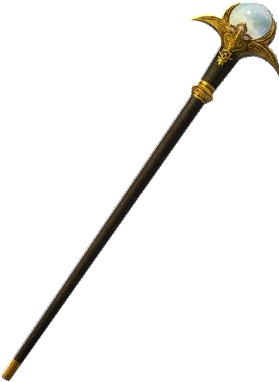
The Iridal Staff.
Zodiac Spear
Weapon (spear), artifact (requires attunement)
Though this weapon appears to be a simple ornate spear, closer inspection reveals thirteen emblems inscribed along the shaft, each representing one of Ivalice's scions of darkness.
Magic Weapon. The Zodiac Spear is a magic spear that grants a +3 bonus to attack and damage rolls made with it. The Zodiac Spear holds three charges, all of which are restored on a short rest. When you hit a creature with the Zodiac Spear, you may use your reaction, spending up to three charges to disable your opponent. The effects vary as follows, based on the number of charges spent:
Disable Charges
| Charges Spent | Effect |
|---|---|
| 1 | The target creature cannot use reactions until the start of your next turn. |
| 2 | The target creature is incapacitated until the start of your next turn. |
| 3 | The target creature is stunned until the start of your next turn. |
Echoes of the Uhlan. Uniquely, within the spearhead of the Zodiac Spear rests not the echoes of a single spirit, but of six - a band of vagabonds, runaways and urchins, brought together by chance and united in their scorn for the iron-fisted empire that stole so much from them.
As a bonus action, you can call upon one of four espers, channelling their strength for 1 minute. The effects gained are as follows:
- Hashmal, Bringer of Order. While channelling Hashmal, you gain immunity to bludgeoning damage and cannot be moved or knocked prone against your will. Additionally, when you hit a creature with the Zodiac Spear, you can spend one hit die, rolling it and adding double the number rolled to the attack's damage. You may end the channelling early to cast the erupting earth spell at 6th level.
- Cuchulainn, the Impure. While channelling Cuchulainn, you gain immunity to poison and acid damage. Additionally, when you are hit with a physical attack, you can reduce the damage by 1d8. You may end the channelling early to cast the cloudkill spell at 6th level.
- Chaos, Walker of the Wheel. While channelling Chaos, you gain immunity to thunder damage, as well as a flight speed of 30ft (hover). Additionally, your walking speed increases by 15ft and your movement does not provoke opportunity attacks. You may end the channelling early to cast the dust devil spell at 6th level.
- Ultima, the High Seraph. While channelling Ultima, you gain immunity to radiant damage. Additionally, you gain +2 to all saving throws and +2 to hit with all attack rolls. You may end the channelling early to cast the destructive wave spell at 6th level.
After channeling an esper, you cannot channel again until after a short rest.
Blazefire Saber
Weapon (longsword), artifact (requires attunement)
Embedded within the grip of this technological marvel is a series of mechanisms that allow the saber to transform from an effective melee weapon to a powerful ranged weapon - standard issue for the most talented soldiers of the Guardian Corps.
Magic Weapon. The Blazefire Saber is a magic longsword that grants a +3 bonus to attack and damage rolls made with it. As a bonus action, the Blazefire Saber can be transformed into a gun, or back into a sword. While in gun form, the Blazefire Saber deals magical piercing damage and has a range of 80/320.
Echoes of the Renegade. Within the shifting servos of the Blazefire Saber echoes the spirit of the previous wielder, a former sergeant that fought to free her sister from the clutches of the demigod that branded her, as well as the regime that would see her purged.
While wielding the Blazefire Saber, you gain the ability to embody one of three Paradigms - ideologies that you may focus on, allowing you to alter your methods in battle. As an action, you may perform a Paradigm Shift, changing from one Paradigm to another. The available Paradigms are as follows:
- Commando Paradigm. Your weapon attacks with the Blazefire Saber gain an additional +1 to attack and damage rolls. When you hit a creature with the Blazefire Saber and another creature is within 5ft of the first creature, you can choose to deal the damage to the second creature as well. You can only hit one additional creature with this feature, regardless of how many creatures are within range.
- Ravager Paradigm. You can cast the chromatic orb spell at will, without material components. Upon casting chromatic orb, your melee attacks deal an additional 1d8 damage of the type chosen for the spell. This effect lasts until chromatic orb is cast again with a different damage type, or until a Paradigm Shift is performed.
- Medic Paradigm. The Medic Paradigm holds three charges. You may spend one charge to cast the healing word spell at 3rd level, healing for the maximum amount. You regain one charge upon reducing an enemy to 0 hit points with the Blazefire Saber, and all charges at the end of a long rest.
Army of One. As an action, Odin's might courses through you, filling you with unrivalled fury. Make six attack rolls against one creature, each of which deals an additional 1d8 damage on a success. These attacks ignore all resistance and immunity, but do not benefit from the bonus damage provided by the Ravager Paradigm. At the end of Army of One, you gain temporary hit points equal to five times the number of attacks that successfully hit, and the target must succeed on a DC 20 Strength save or be knocked prone. Once Army of One has been used, it cannot be used again for 1d4 days.
Bravura
Weapon (greataxe), artifact (requires attunement)
The heavy, blood-soaked steel of this greataxe weighs heavy on the wielder, as did the guilt and torment of being tricked into starting an apocalypse weigh heavy on the warrior who first bore it.
Magic Weapon. Bravura is a magic greataxe that grants a +3 bonus to attack and damage rolls made with it. While wielding Bravura, you gain +2 to your armor class.
Echoes of the Survivor. Within the blood that trickles down Bravura's axehead echoes the spirit of the previous wielder, a jaded man, fiercely dedicated to his friends, who was cursed to wander the world he nearly drove to ruin. While wielding Bravura, you gain the following actions in combat:
- Decimate. You can imbue Bravura with the force of earth, fracturing the ground beneath your opponent. After successfully hitting a creature with a melee weapon attack, you can use your bonus action to drive the axe into the ground as part of the swing. The ground directly below the hit creature becomes the centerpoint of the effects of an erupting earth spell cast at 4th level. The DC for this saving throw is 17. Decimate can be used once, before needing to be recharged over a long rest.
- Fell Cleave. Bravura cleaves through an enemy like a knife through butter. Before making an attack roll, you can use a bonus action to channel Bravura's fury. If the attack hits, the weapon deals an automatic critical hit for maximum damage. If it misses, another bonus action is required to try again. Once Fell Cleave has been successfully used to enhance one attack, it must be recharged over a long rest.
- Holmgang. You summon unbreakable chains to bind your opponents with. As an action, you cast the hold person spell at 5th level. Additionally, for one minute after casting hold person in this manner, if you are reduced to 0 hit points but not killed outright, you can choose to drop to 1 hit point instead. Holmgang can be used once, before needing to be recharged over a long rest.
Land Waker. The desire to protect all that is dear to you burns brighter than ever thanks to Bravura's influence. As an action, you can slam Bravura down onto the ground beneath you. Every creature of your choice within a 30 feet radius instantly gains a +5 bonus to their armor class for three rounds. Once Land Waker has been used, it cannot be used again for 1d6 days.
Engine Blade
Weapon (shortsword), artifact (requires attunement)
This weapon is so named for the elemental machinery grafted to the sword's hilt. The Engine Blade was handed down by a king to his son, a present that the prince carried with him for the entirety of his ill-fated journey to meet his betrothed.
Magic Weapon. The Engine Blade is a magic shortsword that grants a +3 bonus to attack and damage rolls made with it. While attuned to the Engine Blade, you may cast the absorb elements spell at will, without expending a spell slot.
Echoes of the Prince. Within the mechanisms of the Engine Blade echoes the spirit of the previous wielder, a young man with a cold and aloof exterior that hid a warm heart and an unparalleled devotion to those closest to him. You gain the following actions in combat:
- Warp-Strike. You may make a melee weapon attack against a creature you can see within 30 feet of you. Doing so teleports you to an unoccupied space of your choice within 5 feet of your target. You are teleported whether the attack successfully hits or not.
- Link-Strike. When you and an ally are flanking a creature, you may use your action to coordinate a strike with them. Make a melee weapon attack. Immediately after this attack, your ally can use their reaction to make a melee weapon attack of their own.
- Cross Chain. You gain great skill at exploiting the opening made by knocking a creature down. As an action, you may call for a Cross Chain attack against a prone opponent. All creatures of your choice that are within attack range of the creature (including yourself) may use their reaction to make one weapon attack against the prone creature.
Armiger Unleashed. Deep within the Engine Blade lies the undying will of the thirteen kings of Lucis. As an action, you may tap into this power, instantly granting you an extra turn immediately after the current one. This power automatically triggers when you are reduced to 0 hit points while Armiger Unleashed is charged.
On this extra turn, you may make a melee weapon attack against every creature of your choice within 60 feet of you that you can see, fluidly warping around the battlefield as you attack. These weapon attacks ignore any and all resistances as the Armiger grants you the ideal weapon for each foe.
At the end of this flurry of attacks, you may choose to warp back to your original position, or remain within melee range of the last creature targeted. Once Armiger Unleashed has been used, it cannot be used again for 1d4 days.
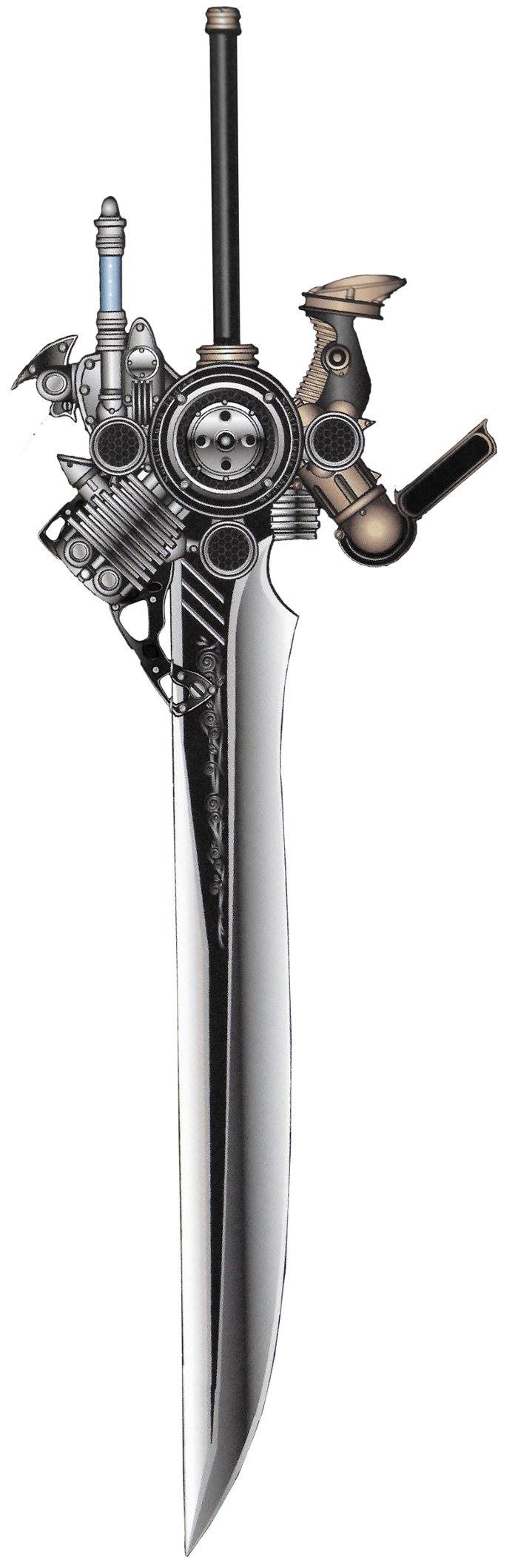
The Engine Blade.