
Fun and Mayhem with Swarms
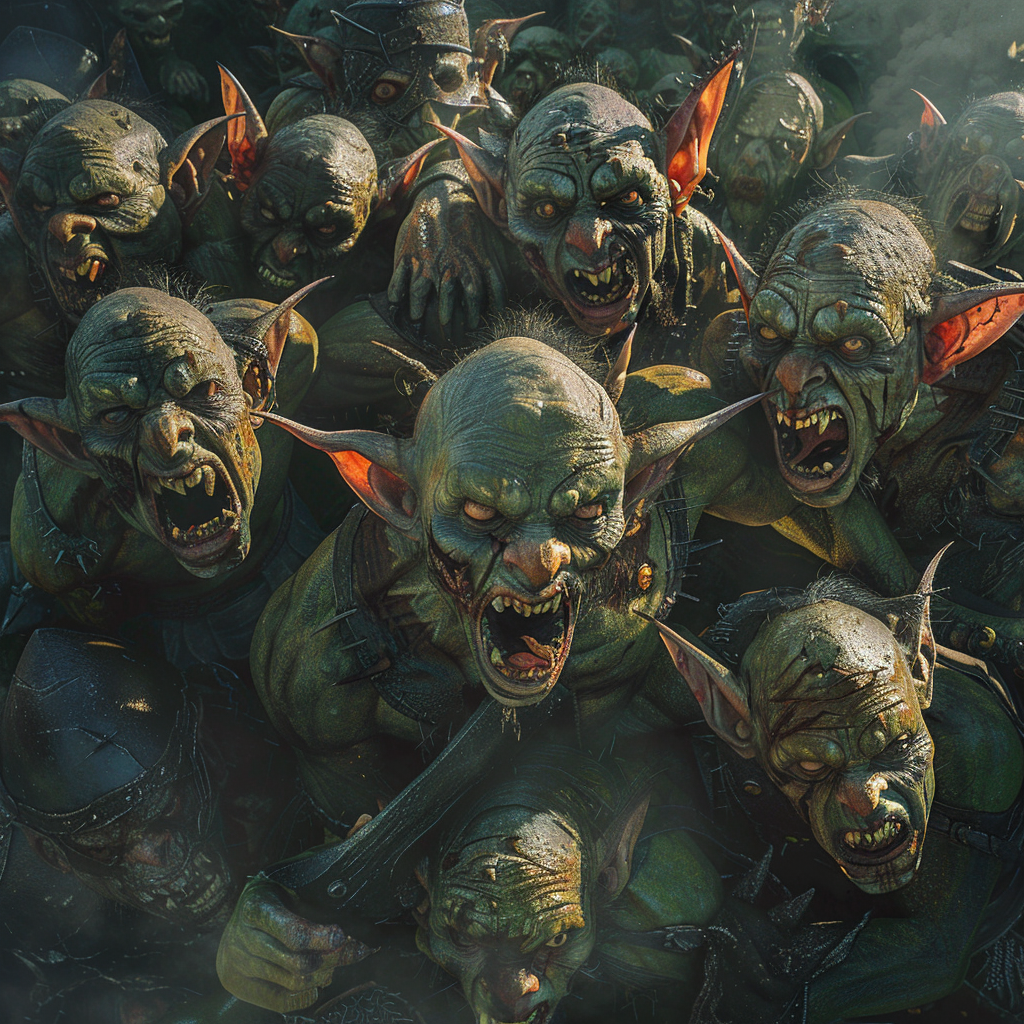
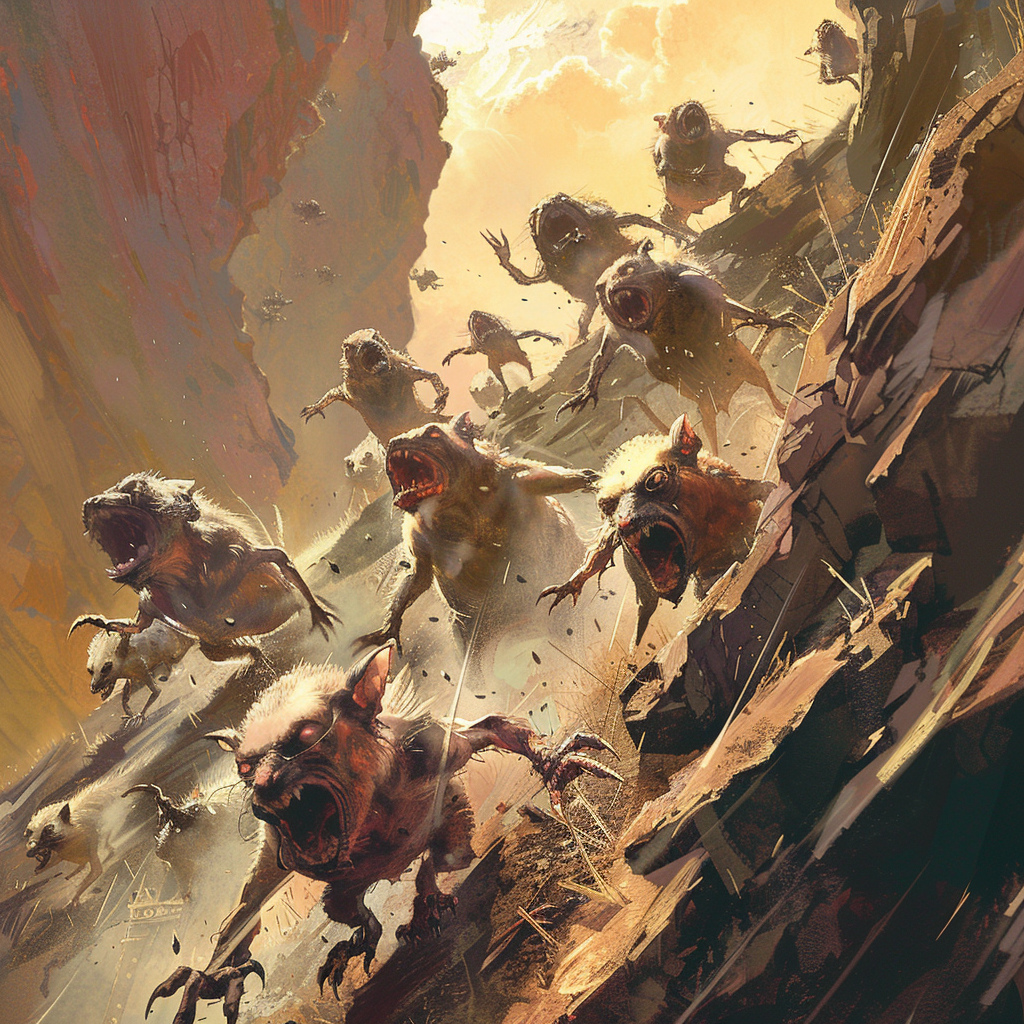
Swarms offer the chance to interact with large numbers of foes and allies, giving a sense of scale and grandeur to a combat, but without increasing the complexity.
But we can do so much better than a swarm of rats!
Add tension, terror, and exhilaration to your combats using these additional swarm actions and features. Where possible, the features scale with the chosen CR for the swarm. (Note, some of these features work as well for allies as they do for enemies.)
Pair relevant features together for best effect, like entrancing and stinging for a swarm of glowing, flying jellies.
For an example of some of the fun and mayhem you can have with a tricked-out swarm, see the Mob of Angry Villagers stat block at the end of this supplement, which includes entertaining legendary actions like “raise effigy” and “distracting chant” as well as battlefield control features like “burning barricade” and “cutoff retreat.”
Realism Swarm Features
These features help to differentiate swarms from single monsters and bring a touch of realism and suspended disbelief to the game mechanics of the encounter.
Swarm Movement. The swarm can move through and occupy the space of other creatures. (Where applicable: the swarm treats occupied spaces as difficult terrain.)
Swarm Damage. Damage dealt by the swarm is reduced by half when the swarm is below half of max HP.
Swarm Vulnerability. The swarm has vulnerability to area affect damage. (The represents the effectiveness of damaging many creatures in the swarm at once.)
Swarm Resistance. The swarm has resistance to bludgeoning, piercing, and slashing damage. (This represents the difficulty of wielding melee attacks against a large number of targets.)
Siege Monster. The swarm deals double damage to structures.
Dwindling. The size of the swarm depends on its HP. Each time the swarm HP halves (1/2, 1/4, 1/8, etc.) the swarm’s size decreases by 1, down to the size of the creature making up the swarm. The swarm size recovers when the swarm’s HP increases above the size change threshold.
Cacophonous. The noise of the swarm overwhelms other sounds. While the swarm occupies the same space as a creature, that creature cannot hear other sounds and they are inaudible to creatures outside the swarm.
Jostling. The swarm’s hectic and jarring motions cause any creature with size equal to or smaller than the swarm that is sharing a space with the swarm to have disadvantage on attack rolls.
Dense. The swarm heavily obscures the space it occupies. Creatures that share a space with the swarm are heavily obscured and are blinded to objects outside their space.

Ally Swarm Features
These features assist allies sharing a space with the swarm. Use them to buff enemies or aid PCs.
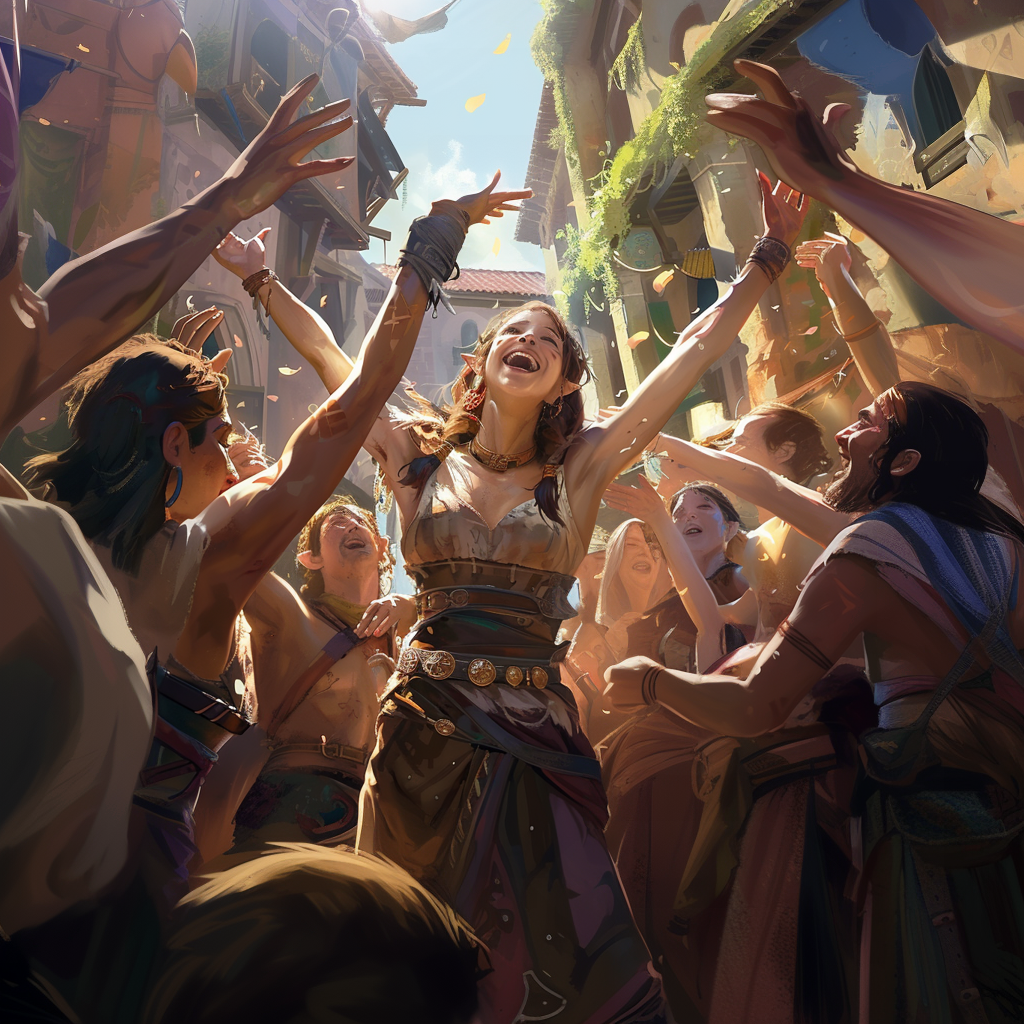
Jubilant. The swarm grants advantage to any non-hostile creature sharing a space with swarm on saving throws to end or avoid the Frightened condition.
Got your back. Allied creatures sharing a space with the swarm have advantage on Strength saving throws to avoid forced movement.
Rallying. When an allied creature sharing a space with the swarm advances to attack a foe and calls for the swarm to follow, the swarm can use its reaction to move up to its speed to follow the ally. Subsequently, on its turn the swarm does not take movement, but can dash to close the distance to the ally. The creature sharing a space with the swarm has advantage on Strength (Athletics) checks to shove creatures up to one size larger and the ally can shove a foe up two sizes larger it with the assistance of the swarm. The ally can request the swarm to stop following at any time.
Brace. When an ally calls to the swarm to brace. On its next turn, the swarm takes the dodge action or seeks cover and has advantage on Strength saving throws to avoid forced movement, and Dexterity saving throws until the start of the ally’s next turn.
Nasty Swarm Features
These save-or-suck effects make swarms a problem for PCs.
Devouring. The swarm nips, scratches, and bites constantly. Creatures sharing a space with swarm suffer CRx6 piercing damage at the start of their turn (1 damage for CR1/8 and 1/4 , 2 damage for CR ½), or half damage if they succeed on a Con save of DC 11+CR/2 for half damage.)
Impeding. Any creature sharing a space with the swarm must succeed on a Strength saving throw of DC 11+CR/2 in order to take movement.
Filthy. When a creature starts its turn sharing the same space as the swarm it must succeed on a Constitution saving throw of DC 11+CR/2 or else it gains the poisoned condition until the start of its next turn.
Freaky. The swarm’s frenetic, incessant activity and relentless terrorizing drives creatures into a panic. A creature that starts its turn in a space shared by the swarm must succeed on a Wisdom saving throw of DC 11+CR/2 or spend its action dashing in a random direction, attempting to get free of the swarm.
Slippery. The swarm is slimy, grimy, goopy, or slick. When the swarm enters the space of a creature or a creature enters the space of the swarm, the creature must succeed on a Dexterity saving throw of DC 11+CR/2 or fall prone.

Stinging. The swarm stings with unrelenting ferocity. When a creature starts its turn sharing a space with the swarm, the creature takes CRd6 piercing damage (1 damage for CR1/8 and 1/4 , 2 damage for CR ½), and must succeed on a Constitution saving throw of DC 11+CR/2 or suffering the poisoned condition (CR<1) until the start of their next turn, (CR1-10) until the next minute or until they succeed on a Constitution saving throw at the end each of their turns, or (CR >11) for the next hour.
Greedy. When a creature starts its turn sharing a space with the swarm, the creature must succeed on a Strength saving throw of DC 11+CR/2 or lose an equipped weapon, shield, or item in hand to the swarm. If the creature does not have an item in hand, the creature loses a random item from a pack or bag to the swarm.
Tip: Villagers, beggars, children, and small-sized creatures such as goblins or kobolds make great greedy swarms.
Entrancing. The eerie and enchanting movements and sounds of the swarm transfix creatures, lulling them into a mindless calm. A creature that starts its turn within a 15 radius of the swarm that can see or hear the swarm must succeed on a Wisdom saving throw of DC 11+CR/2 or become charmed by the swarm until the start of its next turn.
Tip: floating fairies, pixies, flumphs, and jellies make great entrancing swarms.
Quirky Swarm Features
These features are just shameless fun, because players love funny encounters.
Befuddling. To any creature that starts its turn sharing a space with the swarm, the swarm presents a confusing array of suggestions and options, conflicting logic, random facts, partial truths, outright lies, blasphemy, lewd suggestions, gallant declarations, and moral arguments. If the creature can hear and understand the swarm, it must succeed on an Intelligence saving throw of DC 11+CR/2 or spend its turn arguing with the swarm (no movement, actions, or bonus actions).
Offensive. The swarm engages in vulgar, lewd, blasphemous, or other offensive behaviors that offend the sensitivities of most creatures. A creature that starts its turn sharing a space with the swarm star must succeed on a Charisma saving throw of DC 11+CR/2 or suffer disadvantage on attack rolls and skill checks until the start of their next turn.
Heckling. The swarm harasses any hostile creature that fails. If a creature within 30 feet of the swarm that can see and hear the swarm visibly fails an ability check, saving throw, or attack roll, that creature has disadvantage on their next d20 roll due to heckling from the crowd.
Buoyant. Any creature the swarm designates that starts it turn sharing a space with the swarm must succeed on a DC 11+CR/2 strength saving throw or be lifted to the top of the swarm. The creature is considered prone and grappled, and it moves with swarm. The creature can use an action on its turn to repeat the saving throw in order to end the grappled and prone conditions.
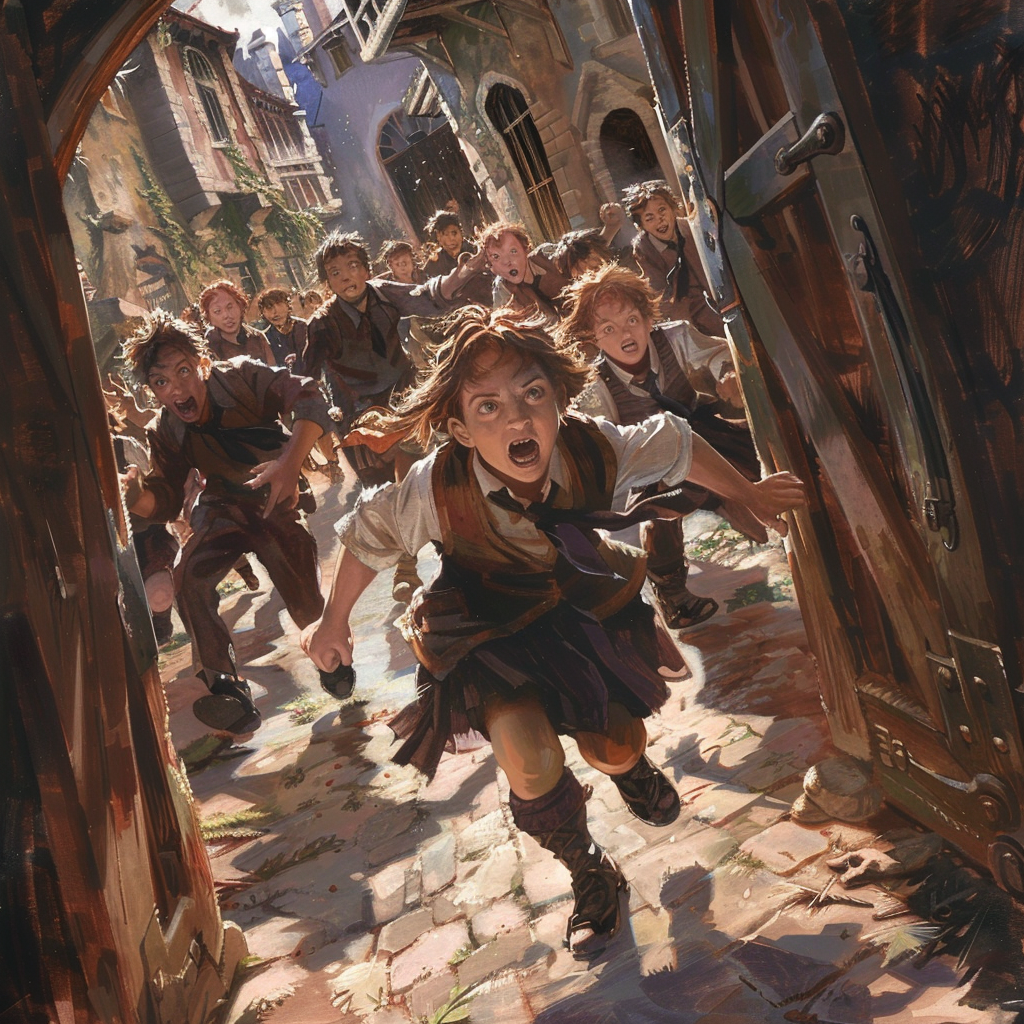

Swelling. If the swarm took damage last turn, at the start of its turn it calls for allies to rally. If allied NPCs are within range, they join the swarm. The swarm gains 10*CR hit points, and the swarm’s maximum HP increases to accommodate the HP gained, if necessary. Each time the HP doubles relative the original HP, the swarm’s size increases by 1, it’s Str and Con modifiers increase by 1 and its damage doubles. For example, a large swarm with 50 HP increases to huge at 100 HP and gargantuan at 200 HP.
Disbanding. As an action after having their demand or appetite satisfied, or on a failed save against a pacifying spell such as calm emotions or mass suggestion, the swarm disbands. When it does so, it can no longer be targeted by attacks. The swarm can band together again if an incident occurs that would cause the individuals comprising the swarm to become agitated.
Enraging. The swarm’s presence stirs feelings of anger, vengeance, and violence. A creature that starts its turn sharing a space with the swarm has advantage on saving throws to avoid or end the charmed condition and disadvantage on other Intelligence, Wisdom and Charisma saving throws. As a bonus action a non-hostile creature sharing a space with the swarm that can speak and be understood by the swarm can declare a hostile target. The swarm can use its reaction to move up to half its speed toward that target and, if in range, make an attack against that target.
Mob Mentality. While the cause of the mob's agitation is visible or audible, the mob deals additional +CR/2 damage to melee weapon attacks and has advantage on saving throws to avoid or end the Charmed or Frightened condition.
Pacifying. The swarm’s pitiful begging, pleading, groveling, crying, sobbing, and contrite and humble pleas for mercy can pierce even the hardest hearts. The swarm may include children and infants, mothers, cripples, beautiful innocents, or cute animals. The swarm may petition for their own lives, or their allies, such as a boss or villain the PCs are pursuing. A creature that starts its turn sharing a space with the swarm must succeed on a Charisma saving throw of DC 11+CR/2 to take movement towards whatever it is the swarm is trying to protect, or to take hostile actions. Also, on a failed save, the creature loses concentration on any damage-dealing spell. Evil alignment creatures have advantage on the saving throw and good-aligned creatures have disadvantage.
Ravenous. A creature sharing a space with the swarm at the start of its turn must succeed on a Strength saving throw of DC 11+CR/2 of all of the foodstuffs, water, and potions on their person are devoured by the swarm.


Swarm Actions
Consider adding actions for swarms that allow for ranged attacks and battlefield control, in addition to regular attacks.
Pitchforks and Staves. Melee weapon attack: +6 (4+CR/2) to hit, range 5 ft., one target. Hit: 2d6+5 (CR/2 d6+CR) piercing damage on a hit.
**Nab 'Em. **Melee weapon attack: +6 (4+CR/2) to hit, range 5 ft., one target. Hit: the creature is restrained.
Lob Stones. All hostile creatures within 30 ft. of the mob must attempt a Dexterity saving throw of DC 13 (11+CR/2) or suffer 2d6+5 (CR/2 d6+5) bludgeoning damage, or half on a successful save.
Burning Barricade (1/Day). The mob places gathered objects and lights them on fire. The barricade is 5ft. high and up to 15ft. wide and the flames rise to 10ft. The barricade is difficult terrain and deals 3d6 fire damage to any creature that passes through it, or half damage on a successful DC 13 (11+CR/2) Dexterity saving throw.
Pile. The swarm attempts to climb and pile onto a creature up to one size larger. The creature is grappled and falls prone unless it succeeds on a DC 11+CR/2 Strength saving throw.
Murmuring. The swarm grumbles, complains, and criticizes a creature that can hear and see them. The creature has disadvantage on its next Charisma check in the next minute. That creature cannot be affected by this feature again until it completes a long rest.
Legendary Actions
Give swarms legendary actions to make the encounter revolve more around the swarm and to make for more interesting combats with larger parties. Also, these can be funny and flavorful since they don’t have to use the swarm’s action.
The swarm can take a number of legendary actions equal to the party size divided by 3. Only one legendary action option can be used at a time and only at the end of another creature's turn. The mob regains spent legendary actions at the start of its turn.
Trample. Range 5 ft., one creature. Target must succeed on a DC 13 (11+CR/2) Strength saving throw or falls prone and suffer 2d6+5 (CR/2 d6+CR) bludgeoning damage and the mob may move up to half its movement through the creature's space.
Raise effigy. The swarm raises a crude, mocking representation of a hostile creature it can see within 60 ft. The swarm has advantage on attack rolls against that creature until the end of its next turn.
Loot. One creature, 5ft. range. Target must succeed on a DC 13 (11+CR/2) Dexterity or Strength saving throw or the mob takes possession of one of the target's unequipped weapons, a potion, backpack, or 1d4 x 10% of the coins they are bearing.
Tip: Don't use the Loot feature if it would make a particular player freak out and ruin the fun for them. Choose your resilient targets judiciously with the legendary action.
Pillage. The mob attacks a structure within 20 ft., breaking windows, stealing furniture or merchandise, and dealing 4d6+10 (CR d6+CR/2) damage (already doubled for siege monster). Vicious Mockery. The mob casts the cantrip vicious mockery with a spell DC of 13 (11+CR/2). Use the mob CR as the level for determining the damage.
Cutoff Retreat (1/Day). The mob may immediately move up to their speed and spread out into a line occupying a number of adjacent 5x5ft. spaces. Maximum number of spaces is equal to the Mob CR. To move through the mob, a creature must either pass 10 ft overhead, or succeed on a Strength check (Athletics) of DC 13 (11+CR/2) and spend 2 extra foot of movement for each foot moved while in the mob's space.
Distracting Chant. A hostile creature within 60 ft. becomes the target of the mob's ire. A distracting chant causes the creature to have disadvantage on a spell concentration check before the end of the mob's next turn.
Shout Praise. The swarm bellows their approval of their benefactor. The benefactor gains advantage on their next Charisma check in the next minute. A creature cannot benefit from this again until it finishes a long rest.
Provoke. The swarm antagonizes a creature that can see, hear, and understand it with insults of the worst kind. The creature must succeed on a Charisma saving throw of DC 11+CR/2 of have disadvantage to attack creatures or objects other than swarm until the end of its next turn. If a creature succeeds on the save it is immune to this effect for the next minute.
Reactions
Use interesting reaction to capture the realism of a swarm or mob responding to threats or to their quarry trying to get away.
Subdue. If a restrained creature attempts to escape and fails, the mob makes a pitchfork and staves attack at the restrained creature.
Defend the Boss. When a "boss" creature the mob reveres takes damage, the mob can move up to its speed and attempt to pull creatures away from the boss. Each hostile creature within 10 ft. of the boss must succeed on a DC 13 (11+CR/2) Strength saving throw or be moved back 10 ft. and fall prone.
Mob of Angry Villagers
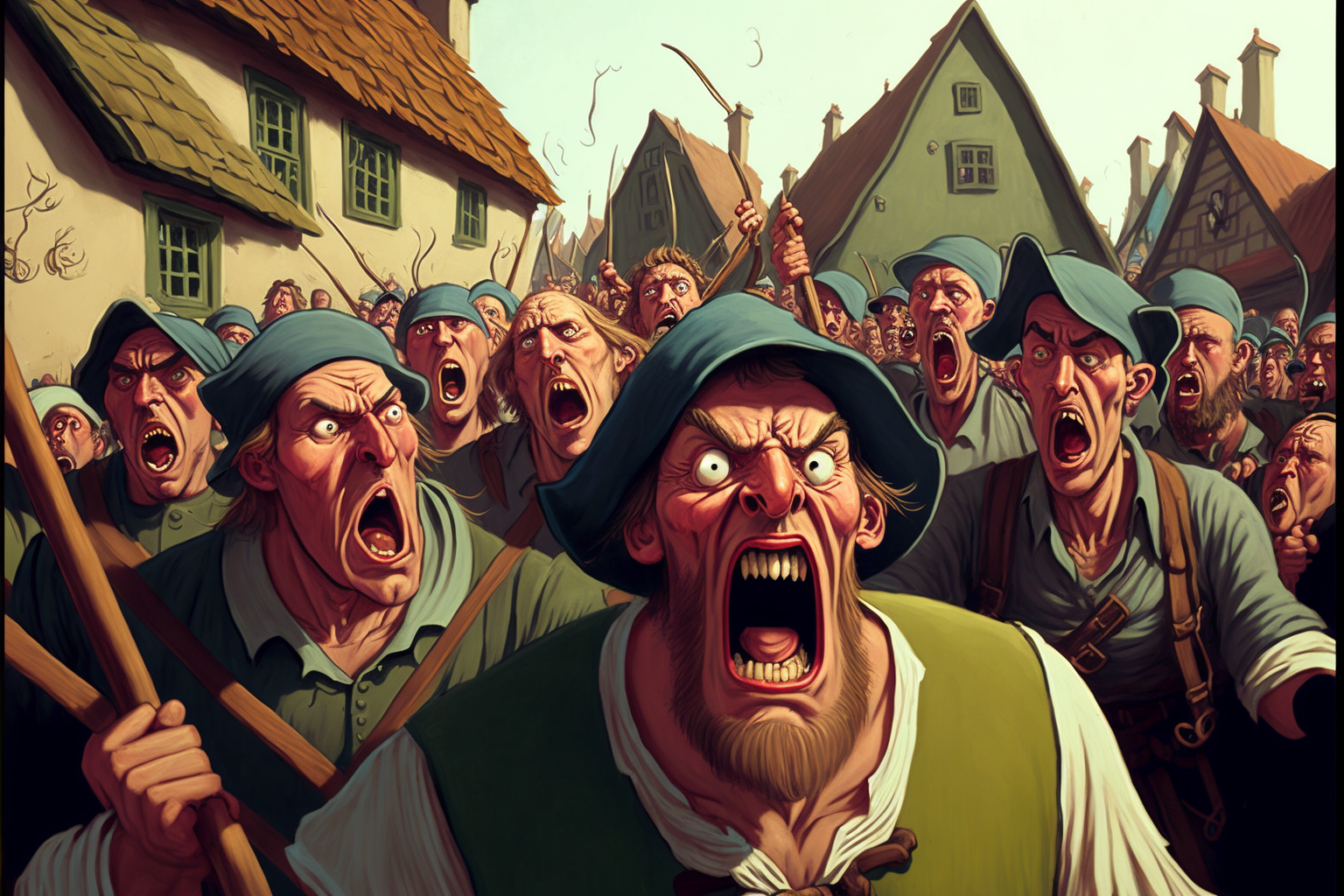
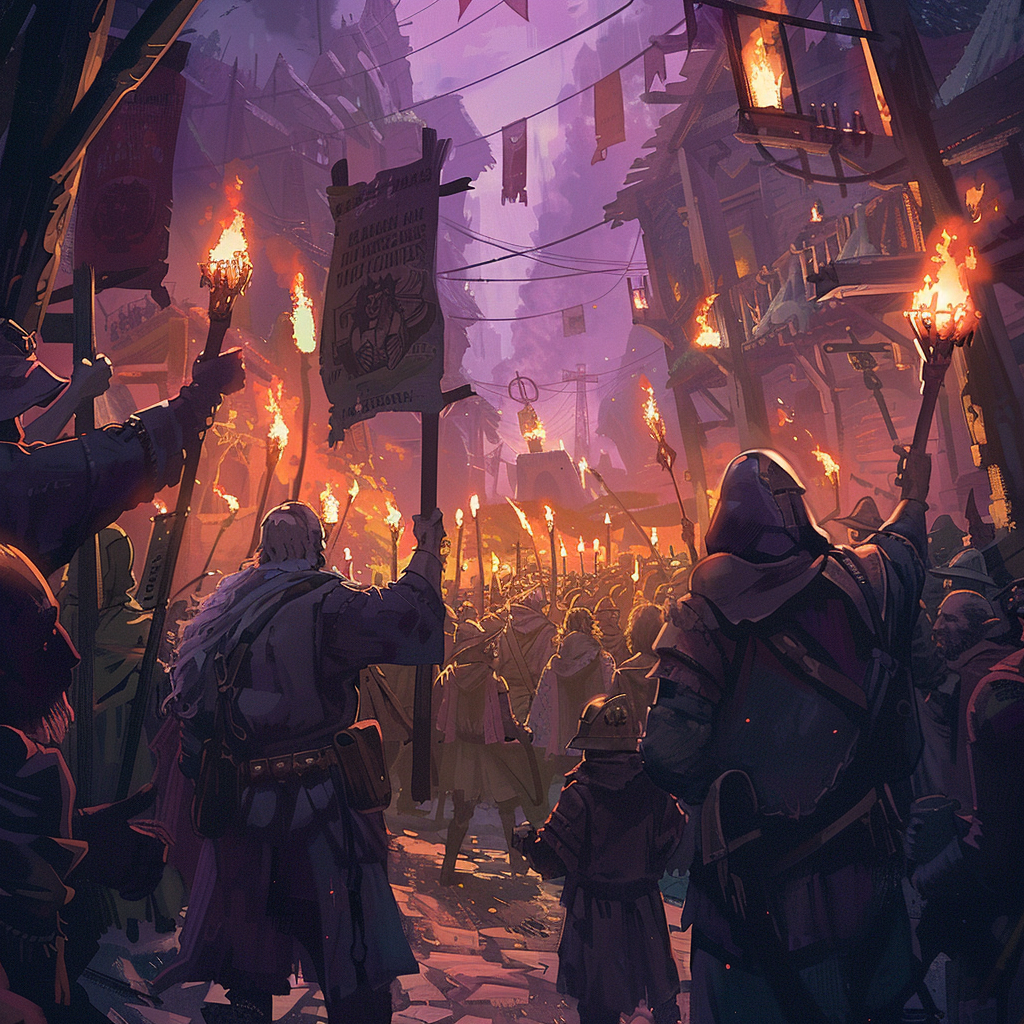
When it seems that the heroes can easily overpower a simple baddie, suddenly a mob of angry villagers appears and things get quickly out of hand.
The mob of angry villagers makes for a nuanced foe because if the heroes simply attack without restraint, they are more-or-less attacking ordinary people, and they will have to deal with the moral consequences if they murder all these villagers. On the other hand, the mob destroys property, steals from player characters, and deals damage.
The mob also makes for a fun enemy with hilarious legendary actions.
Or, use the mob when players do ridiculous things with seeming impunity to bring a dose of reality to the game, such as when a simple disagreement or altercation in a tavern gets out of hand or a thief player fails a sleight of hand check.
Mobs form of unpaid bills, rumors, superstitions, the machinations of local religious and civic authorities, sinister spells or mysterious arcane artifacts. If players discover and deal with the cause of a mob, it may simply disperse.
The mob is also a great way to kick off an adventure, where PCs are sitting around campfire and soon end up in jail.
Tip: The mob's stats can be scaled to any challenge rating (CR).
Mob of Angry Villagers
Huge Humanoid Swarm, Chaotic Evil
- Armor Class 12
- Hit Points 75 (15xCR+15)
- Speed 30 ft.
STR DEX CON INT WIS CHA 16 (+3) 10 (0) 12 (+2) 8 (-1) 14 (+2) 12 (+2)
Saving Throws Str +5, Chr +5 (+3+CR/2)
Skills Perception +5, Insight +5 (+3+CR/2)
Damage Resistances bludgeoning, piercing, slashing Condition Immunities prone, grappled, restrained
Senses Darkvision to 60 ft., Passive Perception: 15
Languages Common, or per region
Challenge Rating 4 (or choose)
Mob Mentality. While the cause of the mob's agitation is visible or audible, the mob deals +2 damage to melee weapon attacks (included in attack total) and has advantage on saving throws to avoid or end the charmed or frightened condition.
Swarm. Damage dealt by the mob is reduced by half when the mob is below half of max HP.
Siege Monster. The mob deals double damage to structures.
Legendary Resistance (CR/7 /Day). If the mob fails a saving throw, it can choose to succeed instead.
Actions
Multiattack. The mob makes two pitchforks and staves attacks and one nab 'em attack, or else one lob stones or burning barricade attack instead of the melee options.
Pitchforks and Staves. Melee weapon attack: +6 (4+CR/2) to hit, range 5 ft., one target. Hit: 2d6+5 (CR/2 d6+CR) piercing damage on a hit.
Nab 'Em Melee weapon attack: +6 (4+CR/2) to hit, range 5 ft., one target. Hit: the creature is restrained. Lob Stones All hostile creatures within 30 ft. of the mob must attempt a Dexterity saving throw of DC 13 (11+CR/2) or suffer 2d6+5 (CR/2 d6+5) bludgeoning damage, or half on a successful save.
Burning Barricade (1/Day). The mob places gathered objects and lights them on fire. The barricade is 5ft. high and up to 15ft. wide and the flames rise to 10ft. The barricade is difficult terrain and deals 3d6 fire damage to any creature that passes through it, or half damage on a successful DC 13 (11+CR/2) Dexterity saving throw.
Reactions
Subdue. If a restrained creature attempts to escape and fails, the mob makes a pitchfork and staves attack at the restrained creature.
Defend the Boss. When a "boss" creature the mob reveres takes damage, the mob can move up to its speed and attempt to pull creatures away from the boss. Each hostile creature within 10 ft. of the boss must succeed on a DC 13 (11+CR/2) Strength saving throw or be moved back 10 ft. and fall prone.Legendary Actions
The mob can take a number of legendary actions equal to the party size divided by 3. Only one legendary action option can be used at a time and only at the end of another creature's turn. The mob regains spent legendary actions at the start of its turn.
Trample. Range 5 ft., one creature. Target must succeed on a DC 13 (11+CR/2) Strength saving throw or falls prone and suffer 2d6+5 (CR/2 d6+CR) bludgeoning damage and the mob may move up to half its movement through the creature's space.
Raise effigy. The mob raises a crude, mocking representation of a hostile creature it can see within 60 ft. The mob has advantage on attack rolls against that creature until the end of its next turn.
Loot. One creature, 5ft. range. Target must succeed on a DC 13 (11+CR/2) Dexterity or Strength saving throw or the mob takes possession of one of the target's unequipped weapons, a potion, backpack, or 1d4 x 10% of the coins they are bearing.
Pillage. The mob attacks a structure within 20 ft., breaking windows, stealing furniture or merchandise, and dealing 4d6+10 (CR d6+CR/2) damage (already doubled for siege monster).
Vicious Mockery. The mob casts the cantrip vicious mockery with a spell DC of 13 (11+CR/2). Use the mob CR as the level for determining the damage.
Cutoff Retreat (1/Day). The mob may immediately move up to their speed and spread out into a line occupying a number of adjacent 5x5ft. spaces. Maximum number of spaces is equal to the Mob CR. To move through the mob, a creature must either pass 10 ft overhead, or succeed on a Strength check (Athletics) of DC 13 (11+CR/2) and spend 2 extra foot of movement for each foot moved while in the mob's space.
Distracting Chant. A hostile creature within 60 ft. becomes the target of the mob's ire. A distracting chant causes the creature to have disadvantage on a spell concentration check before the end of the mob's next turn.
Credits
All artwork is via the Midjourney tool (v6).
Version History
| Date | Version | Change |
|---|---|---|
| 2024.06.27 | 1.0 | Initial release. Mob of Angry Villagers was previously released as a standalone stat block on gmbinder. https://editor.gmbinder.com/documents/edit/-NG3ONy6vF41aUSIBJzD |