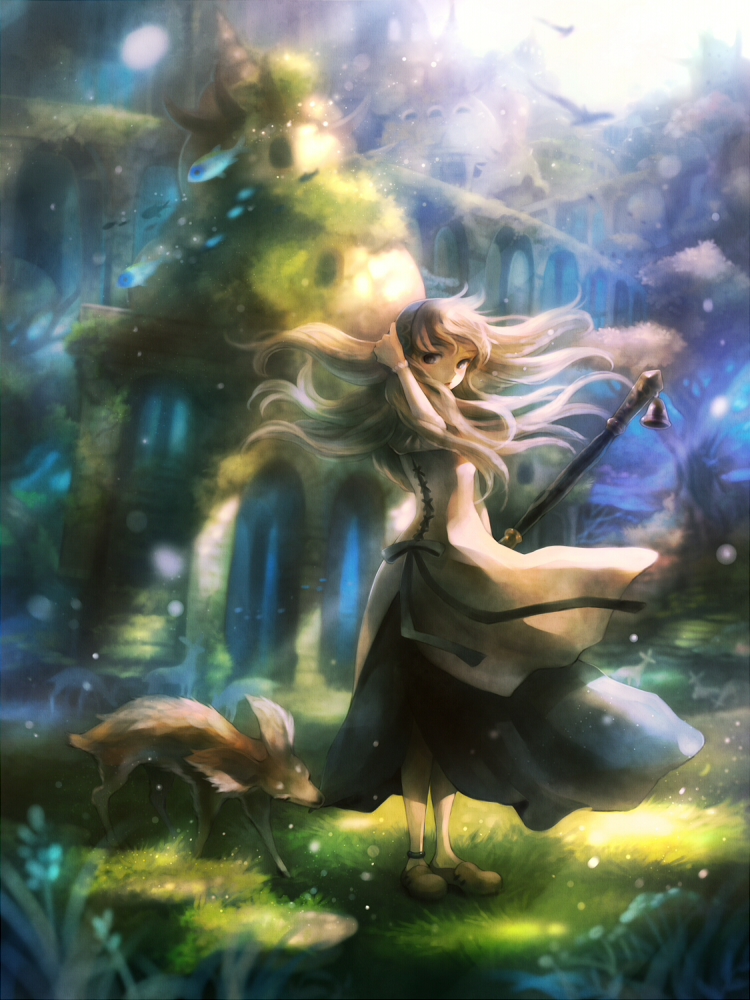
Druid
Druids belong to ancient orders that call on the forces of nature. Harnessing the magic of animals, plants, and the four elements, Druids heal, transform into animals, and wield elemental destruction.
Revering nature above all, individual Druids gain their magic from nature, a nature deity, or both, and they typically unite with other Druids to perform rites that mark the passage of the seasons and other natural cycles.
Druids are concerned with the delicate ecological balance that sustains plant and animal life and with the need for people to live in harmony with nature. Druids often guard sacred sites or watch over regions of unspoiled nature, but when a significant danger arises, Druids take a more active role as adventurers who combat the threat.
Power of Nature
Druids revere nature above all, gaining their spells and other magical powers either from the force of nature itself or from a nature deity. Many druids pursue a mystic spirituality of transcendent union with nature rather than devotion to a divine entity, while others serve gods of wild nature, animals, or elemental forces. The ancient druidic traditions are sometimes called the Old Faith, in contrast to the worship of gods in temples and shrines.
Druid spells are oriented toward nature and animals—the power of tooth and claw, of sun and moon, of fire and storm. Druids also gain the ability to take on animal forms, and some druids make a particular study of this practice, even to the point where they prefer animal form to their natural form.
Preserve the Balance
For druids, nature exists in a precarious balance. The four elements that make up a world—air, earth, fire, and water—must remain in equilibrium. If one element were to gain power over the others, the world could be destroyed, drawn into one of the elemental planes and broken apart into its component elements. Thus, druids oppose cults of Elemental Evil and others who promote one element to the exclusion of others.
Druids are also concerned with the delicate ecological balance that sustains plant and animal life, and the need for civilized folk to live in harmony with nature, not in opposition to it. Druids accept that which is cruel in nature, and they hate that which is unnatural, including aberrations (such as beholders and mind flayers) and undead (such as zombies and vampires). Druids sometimes lead raids against such creatures, especially when the monsters encroach on the druids' territory.
Druids are often found guarding sacred sites or watching over regions of unspoiled nature. But when a significant danger arises, threatening nature's balance or the lands they protect, druids take on a more active role in combating the threat, as adventurers.
Nature's Caretakers
Druids are the caretakers of the natural world, and it is said that in time a druid becomes the voice of nature, speaking the truth that is too subtle for the general populace to hear. Many who become druids find that they naturally gravitate toward nature; its forces, cycles, and movements fill their minds and spirits with wonder and insight. Many sages and wise folk have studied nature, writing volumes about its mystery and power, but druids are a special kind of being: at some point, they begin to embody these natural forces, producing magical phenomena that link them to the spirit of nature and the flow of life. Because of their strange and mysterious power, druids are often revered, shunned, or considered dangerous by the people
“Even in death, each creature plays its part in maintaining the Great Balance. But now an imbalance grows, a force that seeks to hold sway over nature. This is the destructive behavior of the mortal races. The farther away from nature their actions take them, the more corrupting their influence becomes. As druids, we seek mainly to protect and educate, to preserve the Great Balance, but there are times when we must rise up against danger and eradicate it.” — Safhran, archdruid
Treasured Item
Some druids carry one or more items that are sacred to them or have deep personal significance. Such items are not necessarily magical, but every one is an object whose meaning connects the druid's mind and heart to a profound concept or spiritual outlook.
When you decide what your character's treasured item is, think about giving it an origin story: how did you come by the item, and why is it important to you?
| d6 | Treasured Item |
|---|---|
| 1 | A twig from the meeting tree that stands in the center of your village |
| 2 | A vial of water from the source of a sacred river |
| 3 | Special herbs tied together in a bundle |
| 4 | A small bronze bowl engraved with animal images |
| 5 | A rattle made from a dried gourd and holly berries |
| 6 | A miniature golden sickle handed down to you by your mentor |
Guiding Aspects
Many druids feel a strong link to a specific aspect of the natural world, such as a body of water, an animal, a type of tree, or some other sort of plant. You identify with your chosen aspect; by its behavior or its very nature, it sets an example that you seek to emulate.
| d6 | Guiding Aspects |
|---|---|
| 1 | Yew trees remind you of renewing your mind and spirit, letting the old die and the new spring forth. |
| 2 | Oak trees represent strength and vitality. Meditating under an oak fills your body and mind with resolve and fortitude. |
| 3 | The river's endless flow reminds you of the great span of the world. You seek to act with the long-term interests of nature in mind. |
| 4 | The sea is a constant, churning cauldron of power and chaos. It reminds you that accepting change is necessary to sustain yourself in the world. |
| 5 | The birds in the sky are evidence that even the smallest creatures can survive if they remain above the fray. |
| 6 | As demonstrated by the actions of the wolf, an individual's strength is nothing compared to the power of the pack. |
Mentors
It's not unusual for would-be druids to seek out (or be sought out by) instructors or elders who teach them the basics of their magical arts. Most druids who learn from a mentor begin their training at a young age, and the mentor has a vital role in shaping a student's attitudes and beliefs.
If your character received training from someone else, who or what was that individual, and what was the nature of your relationship? Did your mentor imbue you with a particular outlook or otherwise influence your approach to achieving the goals of your chosen path?
| d6 | Mentors |
|---|---|
| 1 | Your mentor was a wise treant who taught you to think in terms of years and decades rather than days or months. |
| 2 | You were tutored by a dryad who watched over a slumbering portal to the Abyss. During your training, you were tasked with watching for hidden threats to the world. |
| 3 | Your tutor always interacted with you in the form of a falcon. You never saw the tutor's humanoid form. |
| 4 | You were one of several youngsters who were mentored by an old druid, until one of your fellow pupils betrayed your group and killed your master. |
| 5 | Your mentor has appeared to you only in visions. You have yet to meet this person, and you are not sure such a person exists in mortal form. |
| 6 | Your mentor was a werebear who taught you to treat all living things with equal regard. |
Wildshape Options
The Wild Shape feature lets you transform into a beast that you've seen. That rule gives you a tremendous amount of flexibility, making it easy to amass an array of beast form options for yourself, but you must abide by the limitations in the Beast Shapes table in this document.
When you gain Wild Shape as a 2nd-level druid, you might wonder which beasts you've already seen. Consider the environment your druid grew up in, then consult your GM for a list of animals that your druid has probably seen by 2nd level.
The Revised Druid
| Level | Proficiency Bonus | Features | Wild Shape | Cantrips | Prepared Spells | 1st | 2nd | 3rd | 4th | 5th | 6th | 7th | 8th | 9th |
|---|---|---|---|---|---|---|---|---|---|---|---|---|---|---|
| 1st | +2 | Druidic, Primal Order, Spellcasting | - | 2 | 4 | 2 | - | - | - | - | - | - | - | - |
| 2nd | +2 | Wild Companion, Wild Shape | 2 | 2 | 5 | 3 | - | - | - | - | - | - | - | - |
| 3rd | +2 | Druid Subclass | 2 | 2 | 6 | 4 | 2 | - | - | - | - | - | - | - |
| 4th | +2 | Ability Score Improvement | 2 | 3 | 7 | 4 | 3 | - | - | - | - | - | - | - |
| 5th | +3 | Wild Resurgence | 2 | 3 | 8 | 4 | 3 | 1 | - | - | - | - | - | - |
| 6th | +3 | Subclass Feature | 3 | 3 | 9 | 4 | 3 | 2 | - | - | - | - | - | - |
| 7th | +3 | Elemental Fury | 3 | 3 | 10 | 4 | 3 | 3 | 1 | - | - | - | - | - |
| 8th | +3 | Ability Score Improvement | 3 | 3 | 11 | 4 | 3 | 3 | 2 | - | - | - | - | - |
| 9th | +4 | - | 3 | 4 | 12 | 4 | 3 | 3 | 3 | 1 | - | - | - | - |
| 10th | +4 | Subclass Feature | 3 | 4 | 13 | 4 | 3 | 3 | 3 | 2 | - | - | - | - |
| 11th | +4 | - | 3 | 4 | 14 | 4 | 3 | 3 | 3 | 2 | 1 | - | - | - |
| 12th | +4 | Ability Score Improvement | 3 | 5 | 15 | 4 | 3 | 3 | 3 | 2 | 1 | - | - | - |
| 13th | +5 | - | 3 | 4 | 16 | 4 | 3 | 3 | 3 | 2 | 1 | 1 | - | - |
| 14th | +5 | Subclass Feature | 3 | 4 | 17 | 4 | 3 | 3 | 3 | 2 | 1 | 1 | - | - |
| 15th | +5 | Improved Elemental Fury, Longevity | 3 | 4 | 18 | 4 | 3 | 3 | 3 | 2 | 1 | 1 | 1 | - |
| 16th | +5 | Ability Score Improvement | 3 | 4 | 19 | 4 | 3 | 3 | 3 | 2 | 1 | 1 | 1 | - |
| 17th | +6 | - | 4 | 4 | 20 | 4 | 3 | 3 | 3 | 2 | 1 | 1 | 1 | 1 |
| 18th | +6 | Beast Spells | 4 | 4 | 21 | 4 | 3 | 3 | 3 | 3 | 1 | 1 | 1 | 1 |
| 19th | +6 | Epic Boon | 4 | 4 | 22 | 4 | 3 | 3 | 3 | 3 | 2 | 1 | 1 | 1 |
| 20th | +6 | Archdruid, One With Nature | 4 | 4 | 22 | 4 | 3 | 3 | 3 | 3 | 2 | 2 | 1 | 1 |
Multiclassing
Ability Score Minimum(s): Wisdom 13
When you gain a level in a class other than your first, you gain only some of that class's starting proficiencies.
Armor: light armor, shields
Creating a Druid
When making a druid, consider why your character has such a close bond with nature. Perhaps your character lives in a society where the Old Faith still thrives, or was raised by a druid after being abandoned in the depths of a forest. Perhaps your character had a dramatic encounter with the spirits of nature, coming face to face with a giant eagle or dire wolf and surviving the experience. Maybe your character was born during an epic storm or a volcanic eruption, which was interpreted as a sign that becoming a druid was part of your character's destiny.
Have you always been an adventurer as part of your druidic calling, or did you first spend time as a caretaker of a sacred grove or spring? Perhaps your homeland was befouled by evil, and you took up an adventuring life in hopes of finding a new home or purpose.
Quick Build
You can make a druid quickly by following these suggestions. First, Wisdom should be your highest ability score, followed by Constitution. Second, choose the hermit background.
Class Features
- Hit dice: 1d8 per Druid level.
- Hit Points at 1st Level: 8 + your Constitution modifier
- Hit Points at Higher Levels: 1d8 (or 5) + your Constitution modifier per druid level after 1st.
Proficiencies
Armor: light armor, shields
Weapons: simple weapons
Tools: Herbalism Kit
Saving Throws: Intelligence, Wisdom
Skills: Any two of your choice.
Equipment
You start with the following equipment, in addition to the equipment granted by your background:
- (a) Leather Armor, a Shield, a Sickle, a Quarterstaff, an Explorer's Pack, an Herbalism Kit, and 9 GP
- (b) 50 GP
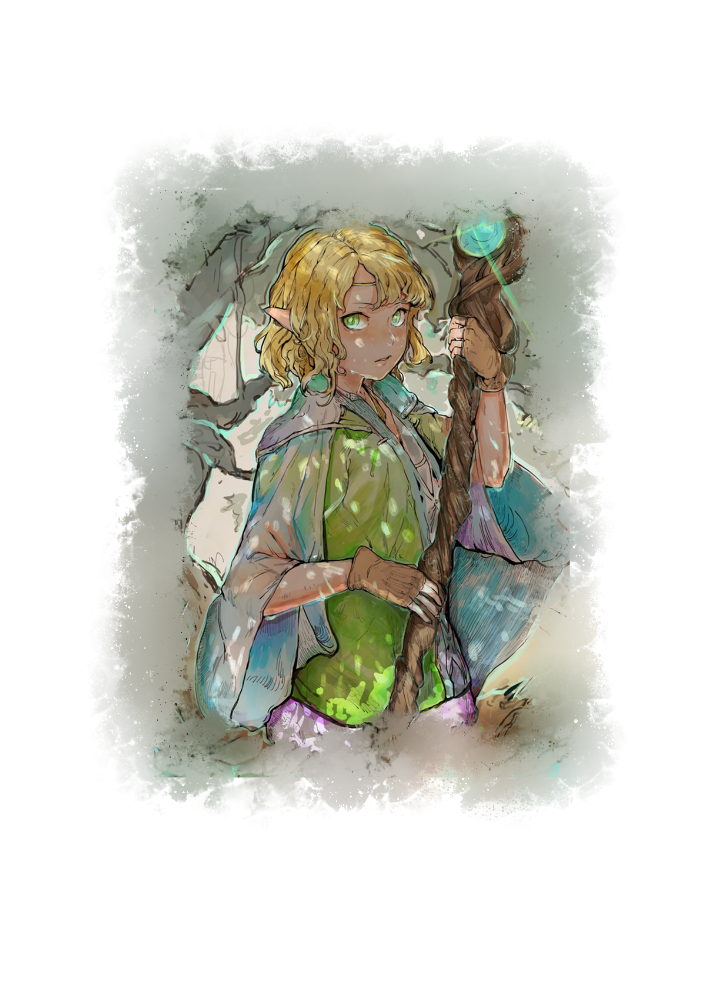
Druidic
At 1st level, you know Druidic, the secret language of Druids. While learning this ancient tongue, you also unlocked the magic of communicating with animals; you always have the Speak with Animals spell prepared.
You can use Druidic to leave hidden messages. You and others who know Druidic automatically spot such a message. Others spot the message's presence with a successful DC 15 Intelligence (Investigation) check but can't decipher it without magic.
Primal Order
At 1st level, you have dedicated yourself to one of the following sacred roles of your choice.
Magician
You know one extra cantrip from the Druid spell list. In addition, your mystical connection to nature gives you a bonus to your Intelligence (Arcana or Nature) checks. The bonus equals your Wisdom modifier (minimum bonus of +1).
Warden
Trained for battle, you gain proficiency with Martial weapons and training with Medium armor.
Spellcasting
At 1st level, You have learned to cast spells through studying the mystical forces of nature. See chapter 7 of the 2024 Player's Handbook for the rules on spellcasting. The information below details how you use those rules with Druid spells, which appear on the Druid spell list in the 2024 Player's Handbook.
Cantrips. You know three cantrips of your choice from the Druid spell list. Guidance, Sacred Flame, and Thaumaturgy are recommended.
Whenever you gain a Druid level, you can replace one of your cantrips with another cantrip of your choice from the Druid spell list.
When you reach Druid levels 4 and 10, you learn another cantrip of your choice from the Druid spell list, as shown in the Cantrips column of the Revised Druid Features table.
Spell Slots. The Revised Druid Features table shows how many spell slots you have to cast your level 1+ spells. You regain all expended slots when you finish a Long Rest.
Prepared Spells of Level 1+. You prepare the list of level 1+ spells that are available for you to cast with this feature. To start, choose four level 1 spells from the Druid spell list. Bless, Cure Wounds, Guiding Bolt, and Shield of Faith are recommended.
The number of spells on your list increases as you gain Druid levels, as shown in the Prepared Spells column of the Revised Druid Features Table. Whenever that number increases, choose additional spells from the Druid spell list until the number of spells on your list matches the number on the table. The chosen spells must be of a level for which you have spell slots. For example, if you're a level 3 Druid, your list of prepared spells can include six spells of levels 1 and 2 in any combination.
Ritual Casting. You can cast a Druid spell as a ritual if that spell has the ritual tag and you have the spell prepared.
If another Druid feature gives you spells that you always have prepared, those spells don't count against the number of spells you can prepare with this feature, but those spells otherwise count as Druid spells for you.
Changing Your Prepared Spells. Whenever you finish a Long Rest, you can change your list of prepared spells, replacing any of the spells there with other Druid spells for which you have spell slots.
Spellcasting Ability. Wisdom is your spellcasting ability for your Druid spells.
Spellcasting Focus. You can use a Druidic Focus as a Spellcasting Focus for your Druid spells.
Wild Companion
At 2nd level, you can summon a nature spirit that assumes an animal form to aid you. As a Magic action, you can expend a spell slot or a use of Wild Shape to cast the Find Familiar spell without Material components.
When you cast the spell in this way, the familiar is Fey and disappears when you finish a Long Rest.
Wild Shape
At 2nd level, the power of nature allows you to assume the form of an animal. As a Bonus Action, you shape-shift into a Beast form that you have learned for this feature (see "Known Forms" below). You stay in that form for a number of hours equal to half your Druid level or until you use Wild Shape again, have the Incapacitated condition, or die. You can also leave the form early as a Bonus Action.
Number of Uses. You can use Wild Shape twice. You regain one expended use when you finish a Short Rest, and you regain all expended uses when you finish a Long Rest.
You gain additional uses when you reach certain Druid levels, as shown in the Wild Shape column of the Druid Features table.
Known Forms. You know four Beast forms for this feature, chosen from among Beast stat blocks that have a maximum Challenge Rating equal to your Druid Level/4 (rounded down, minimum 1/2) and that lack a Fly Speed. The Rat, Riding Horse, Spider, and Wolf are recommended. Whenever you finish a Long Rest, you can replace one of your known forms with another eligible form.
When you reach certain Druid levels, your number of known forms increases, as shown in the Beast Shapes table. In addition, starting at level 8, you can adopt a form that has a Fly Speed.
When choosing known forms, you may look in the Monster Manual or elsewhere for eligible Beasts if the Dungeon Master permits you to do so.
Rules While Transformed. While in a form, you retain your personality, memories, and ability to speak, and the following rules apply:
Temporary Hit Points. When you assume a Wild Shape form, you gain a number of Temporary Hit Points equal to your Druid level.
Game Statistics. Your game statistics are replaced by the Beast's stat block, but you retain your creature type; Hit Points; Hit Point Dice; Intelligence, Wisdom, and Charisma scores; class features; languages; and feats. You also retain your skill and saving throw proficiencies and use your Proficiency Bonus for them, in addition to gaining the proficiencies of the creature. If a skill or saving throw modifier in the Beast's stat block is higher than yours, use the one in the stat block.
No Spellcasting. You can't cast spells, but shape-shifting doesn't break your Concentration or otherwise interfere with a spell you've already cast.
Objects. Your ability to handle objects is determined by the form's limbs rather than your own. In addition, you choose whether your equipment falls in your space, merges into your new form, or is worn by it. Worn equipment functions as normal, but the DM decides whether it's practical for the new form to wear a piece of equipment based on the creature's size and shape. Your equipment doesn't change size or shape to match the new form, and any equipment that the new form can't wear must either fall to the ground or merge with the form. Equipment that merges with the form has no effect while you're in that form.
Beast Shapes Table
| Druid Level | Known Forms | Max CR | Fly Speed |
|---|---|---|---|
| 2 | 4 | 1/2 | No |
| 3 | 4 | 1/2 | No |
| 4 | 6 | 1 | No |
| 5 | 6 | 1 | No |
| 6 | 6 | 1 | No |
| 7 | 6 | 1 | No |
| 8 | 8 | 2 | Yes |
| 9 | 8 | 2 | Yes |
| 10 | 8 | 2 | Yes |
| 11 | 8 | 2 | Yes |
| 12 | 8 | 3 | Yes |
| 13 | 8 | 3 | Yes |
| 14 | 8 | 3 | Yes |
| 15 | 8 | 3 | Yes |
| 16 | 8 | 4 | Yes |
| 17 | 8 | 4 | Yes |
| 18 | 8 | 4 | Yes |
| 19 | 8 | 4 | Yes |
| 20 | 8 | 5 | Yes |
Druid Subclass
At 3rd level, You gain a Druid subclass of your choice. A subclass is a specialization that grants you features at certain Druid levels. For the rest of your career, you gain each of your subclass's features that are of your Druid level or lower.
Ability Score Improvement
When you reach Druid Level 4, and again at Druid Levels 8, 12, and 16, you gain the Ability Score Improvement Feat as well as one other feat of your choice for which you qualify.
Wild Resurgence
At 5th level, Once on each of your turns, if you have no uses of Wild Shape left, you can give yourself one use by expending a spell slot (no action required).
In addition, you can expend one use of Wild Shape (no action required) to give yourself a level 1 spell slot, but you can't do so again until you finish a Long Rest.
Elemental Fury
At 7th level, the might of the elements flows through you. You gain one of the following options of your choice.
Potent Spellcasting. Add your Wisdom modifier to the damage you deal with any Druid cantrip.
Primal Strike. Once on each of your turns when you hit a creature with an attack roll using a weapon or a Beast form's attack in Wild Shape, you can cause the target to take an extra 1d8 Cold, Fire, Lightning, or Thunder damage (choose when you hit).
Improved Elemental Fury
At 15th level, the option you chose for Elemental Fury grows more powerful, as detailed below.
Potent Spellcasting. When you cast a Druid cantrip with a range of 10 feet or greater, the spell's range increases by 300 feet.
Primal Strike. The extra damage of your Primal Strike increases to 2d8.
Longevity
At 15th level, the primal magic that you wield causes you to age more slowly. For every 10 years that pass, your body ages only 1 year.
Beast Spells
Beginning at 18th level, you can cast many of your druid spells in any shape you assume using Wild Shape. You can perform the somatic and verbal components of a druid spell while in a beast shape, but you aren't able to provide material components.
Epic Boon
At 19th level, you gain an Epic Boon feat or another feat of your choice for which you qualify. Boon of Dimensional Travel is recommended.
Archdruid
At 20th level, the vitality of nature constantly blooms within you, granting you the following benefits.
Evergreen Wild Shape. Whenever you roll Initiative and have no uses of Wild Shape left, you regain one expended use of it.
Nature Magician. You can convert uses of Wild Shape into a spell slot (no action required). Choose a number of your unexpended uses of Wild Shape and convert them into a single spell slot, with each use contributing 2 spell levels. For example, if you convert two uses of Wild Shape, you produce a level 4 spell slot. Once you use this benefit, you can't do so again until you finish a Long Rest.
One With Nature
At 20th level, you become fully attuned with nature. Your Wisdom score increases by 4, to a maximum of 26.
Circle of Land
The Circle of the Land comprises mystics and sages who safeguard ancient knowledge and rites. These Druids meet within sacred circles of trees or standing stones to whisper primal secrets in Druidic. The circle's wisest members preside as the chief priests of their communities.
Circle of the Land Spells
At 3rd level,and again whenever you finish a Long Rest, choose one type of land: arid, polar, temperate, or tropical. Consult the table below that corresponds to the chosen type; you have the spells listed for your Druid level and lower prepared.
Arid Land
| Druid Level | Spells |
|---|---|
| 3rd | Blur, Burning Hands, Fire Bolt |
| 5th | Fireball |
| 7th | Blight |
| 9th | Wall of Stone |
Polar Land
| Druid Level | Spells |
|---|---|
| 3rd | Fog Cloud, Hold Person, Ray of Frost |
| 5th | Sleet Storm |
| 7th | Ice Storm |
| 9th | Cone of Cold |
Temperate Land
| Druid Level | Spells |
|---|---|
| 3rd | Misty Step, Shocking Grasp, Sleep |
| 5th | Lightning Bolt |
| 7th | Freedom of Movement |
| 9th | Tree Stride |
Tropical Land
| Druid Level | Spells |
|---|---|
| 3rd | Acid Splash, Ray of Sickness, Web |
| 5th | Stinking Cloud |
| 7th | Polymorph |
| 9th | Insect Plague |
Land's Aid
At 3rd level, As a Magic action, you can expend a use of your Wild Shape and choose a point within 60 feet of yourself. Vitality-giving flowers and life-draining thorns appear for a moment in a 10-foot-radius Sphere centered on that point. Each creature of your choice in the Sphere must make a Constitution saving throw against your spell save DC, taking 2d6 Necrotic damage on a failed save or half as much damage on a successful one. One creature of your choice in that area regains 2d6 Hit Points.
The damage and healing increase by 1d6 when you reach Druid levels 10 (3d6) and 14 (4d6).
Additionally, you gain proficiency in the Nature Skill. If you already have proficiency in the Nature Skill, you gain proficiency in another skill of your choice instead.
Natural Recovery
At 6th level, you can cast one of the level 1+ spells that you have prepared from your Circle Spells feature without expending a spell slot, and you must finish a Long Rest before you do so again.
In addition, when you finish a Short Rest, you can choose expended spell slots to recover. The spell slots can have a combined level that is equal to or less than half your Druid level (round up), and none of them can be level 6+. For example, if you're a level 6 Druid, you can recover up to three levels' worth of spell slots. You can recover a level 3 spell slot, a level 2 and a level 1 spell slot, or three level 1 spell slots. Once you recover spell slots with this feature, you can't do so again until you finish a Long Rest.
Nature's Ward
At 10th level, You are immune to the Poisoned condition, and you have Resistance to a damage type associated with your current land choice in the Circle Spells feature, as shown in the Nature's Ward table.
Nature's Ward
| Land Type | Resistance |
|---|---|
| Arid | Fire |
| Polar | Cold |
| Temperate | Lightning |
| Tropical | Poison |
Nature's Sanctuary
At 14th level, As a Magic action, you can expend a use of your Wild Shape and cause spectral trees and vines to appear in a 15-foot Cube on the ground within 120 feet of yourself. They last there for 1 minute or until you have the Incapacitated condition or die. You and your allies have Half Cover while in that area, and your allies gain the current Resistance of your Nature's Ward.
As a Bonus Action, you can move the Cube up to 60 feet to ground within 120 feet of yourself.
Circle of the Moon
Druids of the Circle of the Moon draw on lunar magic to transform themselves. Their order gathers under the moon to share news and perform rituals.
Changeable as the moon, a Druid of this circle might prowl as a great cat one night, soar over the treetops as an eagle the next day, and then crash through undergrowth as a bear to drive off a trespassing monster. The wild is in the Druid's blood.
Circle of the Moon Spells
At 3rd level, when you reach a Druid level specified in the Circle of the Moon Spells table, you thereafter always have the listed spells prepared.
In addition, you can cast the spells from this feature while you're in a Wild Shape form.
| Druid Level | Spells |
|---|---|
| 3rd | Cure Wounds, Moonbeam, Starry Wisp |
| 5th | Conjure Animals |
| 7th | Fount of Moonlight |
| 9th | Mass Cure Wounds |
Circle Forms
At 3rd level, you can channel lunar magic when you assume a Wild Shape form, granting you the benefits below.
Challenge Rating. The maximum Challenge Rating for the form equals your Druid level divided by 2 (round down).
Armor Class. Until you leave the form, your AC equals 13 plus your Wisdom modifier if that total is higher than the Beast's AC.
Temporary Hit Points. You gain a number of Temporary Hit Points equal to three times your Druid level.
Improved Circle Forms
Starting at 6th level, While in a Wild Shape form, you gain the following benefits.
Lunar Radiance. Each of your attacks in a Wild Shape form can deal its normal damage type or Radiant damage. You make this choice each time you hit with those attacks.
Increased Toughness. You can add your Wisdom modifier to your Constitution saving throws.
Moonlight Step
At 10th level, You magically transport yourself, reappearing amid a burst of moonlight. As a Bonus Action, you teleport up to 30 feet to an unoccupied space you can see, and you have Advantage on the next attack roll you make before the end of this turn.
You can use this feature a number of times equal to your Wisdom modifier (minimum of once), and you regain all expended uses when you finish a Long Rest. You can also regain uses by expending a level 2+ spell slot for each use you want to restore (no action required).
Monstrous Wild Shape
At 10th level, you can now choose any creature with the Monstrosity Creature Type that is of a CR you can normally Wild Shape into as a Beast Form. You must abide by all other restrictions for the Wild Shape Feature however.
Thousand Forms
At 14th level, the power of the moon suffuses you, granting you the following benefits.
Improved Lunar Radiance. Once per turn, you can deal an extra 2d10 Radiant damage to a target you hit with a Wild Shape form's attack.
Shared Moonlight. Whenever you use Moonlight Step, you can also teleport one willing creature. That creature must be within 10 feet of you, and you teleport it to an unoccupied space you can see within 10 feet of your destination space.
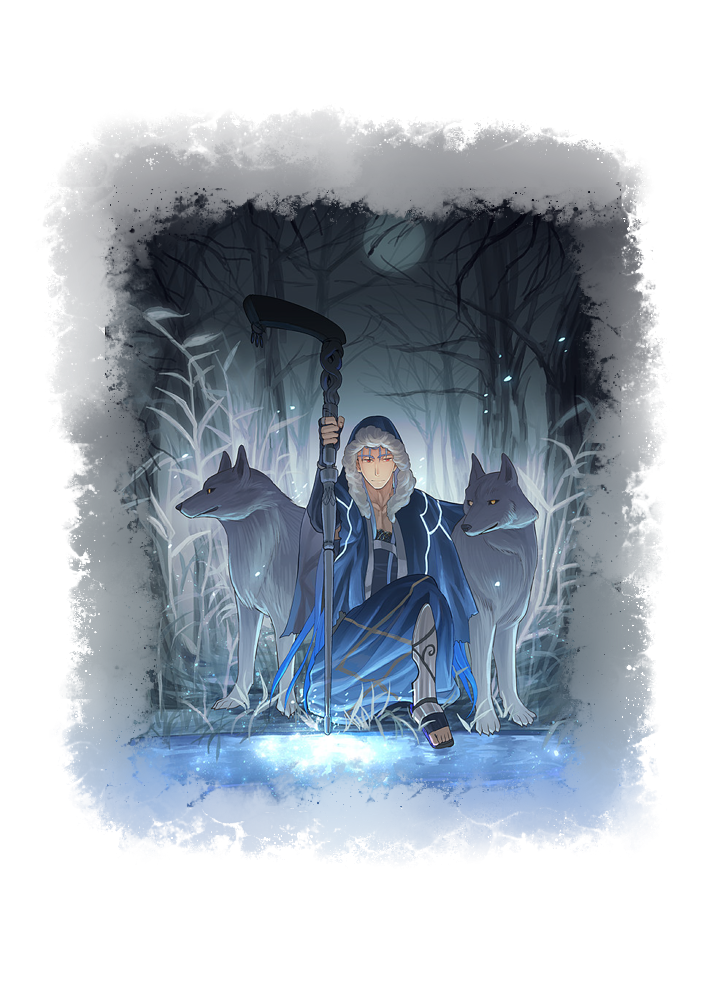
Circle of the Sea
Druids of the Circle of the Sea draw on the tempestuous forces of oceans and storms. Some view themselves as embodiments of nature's wrath, seeking vengeance against those who despoil nature. Others seek mystical unity with nature by attuning themselves to the ebb and flow of the tides, following the rush of currents and waves and listening to the inscrutable whispers and roars of the winds.
Circle of the Sea Spells
At 3rd level, when you reach a Druid level specified in the Circle of the Sea Spells table, you thereafter always have the listed spells prepared.
| Druid Level | Spells |
|---|---|
| 3rd | Fog Cloud, Gust of Wind, Ray of Frost, Shatter, Thunderwave |
| 5th | Lightning Bolt, Water Breathing |
| 7th | Control Water, Ice Storm |
| 9th | Conjure Elemental, Hold Monster |
Wrath of the Sea
At 3rd level, As a Bonus Action, you can expend a use of your Wild Shape to manifest a 5-foot Emanation that takes the form of ocean spray that surrounds you for 10 minutes. It ends early if you dismiss it (no action required), manifest it again, or have the Incapacitated condition.
When you manifest the Emanation and as a Bonus Action on your subsequent turns, you can choose another creature you can see in the Emanation. The target must succeed on a Constitution saving throw against your spell save DC or take Cold damage and, if the creature is Large or smaller, be pushed up to 15 feet away from you. To determine this damage, roll a number of d6s equal to your Wisdom modifier (minimum of one die).
Aquatic Affinity
At 6th level, The size of the Emanation created by your Wrath of the Sea increases to 10 feet.
In addition, you gain a Swim Speed equal to your Speed.
Stormborn
At 10th level, Your Wrath of the Sea confers two more benefits while active, as detailed below.
Flight. You gain a Fly Speed equal to your Speed.
Resistance. You have Resistance to Cold, Lightning, and Thunder damage.
Oceanic Gift
At 14th level, instead of manifesting the Emanation of Wrath of the Sea around yourself, you can manifest it around one willing creature within 60 feet of yourself. That creature gains all the benefits of the Emanation and uses your spell save DC and Wisdom modifier for it.
In addition, you can manifest the Emanation around both the other creature and yourself if you expend two uses of your Wild Shape instead of one when manifesting it.
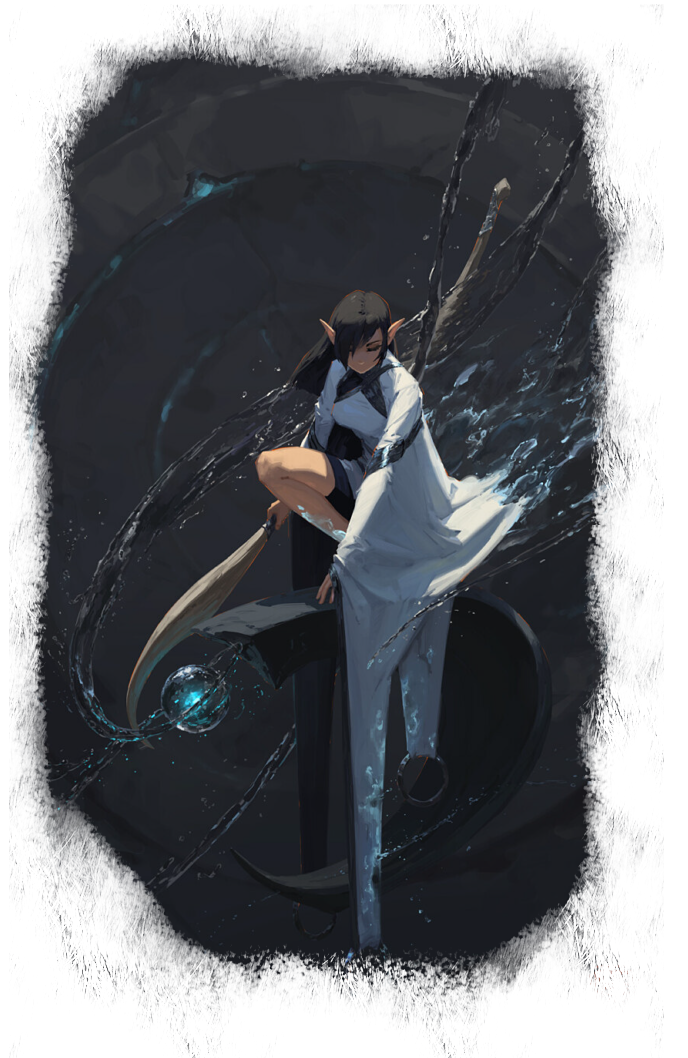
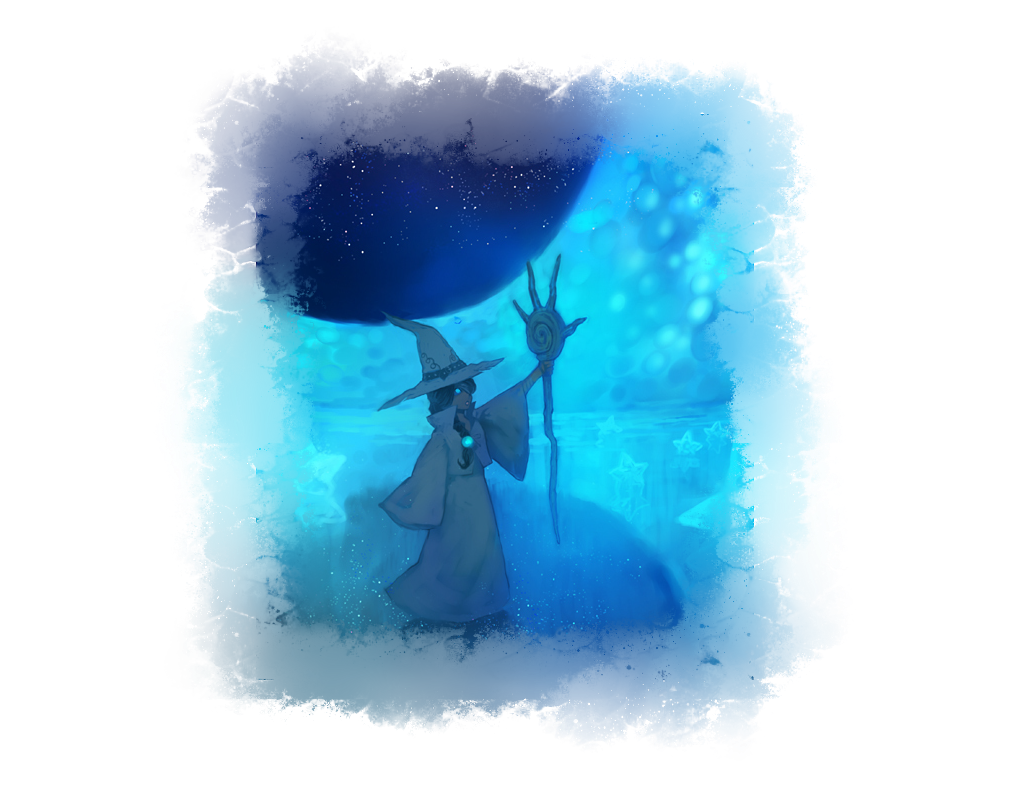
Circle of Stars
The Circle of the Stars has tracked heavenly patterns since time immemorial, discovering secrets hidden amid the constellations. By understanding these secrets, the Druids of this circle seek to harness the powers of the cosmos.
Circle of the Stars Spells
At 3rd level, when you reach a Druid level specified in the Circle of the Stars Spells table, you thereafter always have the listed spells prepared.
| Druid Level | Spells |
|---|---|
| 3rd | Dancing Lights, Darkness, Faerie Fire, Starry Wisp |
| 5th | Clairvoyance |
| 7th | Fount of Moonlight |
| 9th | Legend Lore |
Star Map
At 3rd level, You've created a star chart as part of your heavenly studies. It is a Tiny object, and you can use it as a Spellcasting Focus for your Druid spells. You determine its form by rolling on the Star Map table or by choosing one.
While holding the map, you have the Guidance and Guiding Bolt spells prepared, and you can cast Guiding Bolt without expending a spell slot. You can cast it in that way a number of times equal to your Wisdom modifier (minimum of once), and you regain all expended uses when you finish a Long Rest.
If you lose the map, you can perform a 1-hour ceremony to magically create a replacement. This ceremony can be performed during a Short or Long Rest, and it destroys the previous map.
| d6 | Map Form |
|---|---|
| 1 | A scroll bearing depictions of constellations |
| 2 | A stone tablet with fine holes drilled through it |
| 3 | An owlbear hide tooled with stellar symbols |
| 4 | A collection of maps bound in an ebony cover |
| 5 | A crystal engraved with starry patterns |
| 6 | A glass disk etched with constellations |
Starry Form
At 3rd level, as a Bonus Action, you can expend a use of your Wild Shape feature to take on a starry form rather than shape-shifting.
While in your starry form, you retain your game statistics, but your body becomes luminous, your joints glimmer like stars, and glowing lines connect them as on a star chart. This form sheds Bright Light in a 10-foot radius and Dim Light for an additional 10 feet. The form lasts for 10 minutes. It ends early if you dismiss it (no action required), have the Incapacitated condition, or use this feature again.
Whenever you assume your starry form, choose which of the following constellations glimmers on your body; your choice gives you certain benefits while in the form.
Archer. A constellation of an archer appears on you. When you activate this form and as a Bonus Action on your subsequent turns while it lasts, you can make a ranged spell attack, hurling a luminous arrow that targets one creature within 60 feet of yourself. On a hit, the attack deals Radiant damage equal to 1d8 plus your Wisdom modifier.
Chalice. A constellation of a life-giving goblet appears on you. Whenever you cast a spell using a spell slot that restores Hit Points to a creature, you or another creature within 30 feet of you can regain Hit Points equal to 1d8 plus your Wisdom modifier.
Dragon. A constellation of a wise dragon appears on you. When you make an Intelligence or a Wisdom check or a Constitution saving throw to maintain Concentration, you can treat a roll of 9 or lower on the d20 as a 10.
Cosmic Omen
At 6th level, Whenever you finish a Long Rest, you can consult your Star Map for omens and roll a die. Until you finish your next Long Rest, you gain access to a special Reaction based on whether you rolled an even or an odd number on the die:
Weal (even). Whenever a creature you can see within 30 feet of you is about to make a D20 Test, you can take a Reaction to roll 1d6 and add the number rolled to the total.
Woe (odd). Whenever a creature you can see within 30 feet of you is about to make a D20 Test, you can take a Reaction to roll 1d6 and subtract the number rolled from the total.
You can use this Reaction a number of times equal to your Wisdom modifier (minimum of once), and you regain all expended uses when you finish a Long Rest.
Twinkling Constellations
At 10th level, The constellations of your Starry Form improve. The 1d8 of the Archer and the Chalice becomes 2d8, and while the Dragon is active, you have a Fly Speed of 20 feet and can hover.
Moreover, at the start of each of your turns while in your Starry Form, you can change which constellation glimmers on your body.
Full of Stars
At 14th level, while in your Starry Form, you become partially incorporeal, giving you Resistance to Bludgeoning, Piercing, and Slashing damage.
Credits
Art (In Order)
- Sui (Petit comet) (Dead Source)
- hiranko
- XX
- kan lui
- lack
Other
Changes: Me, SmugCoffeeMan
Fan Content Policy
This work is unofficial Fan Content permitted under the Fan Content Policy. Not approved/endorsed by Wizards. Portions of the materials used are property of Wizards of the Coast. ©Wizards of the Coast LLC.
If you enjoy my content, feel free to buy me a coffee over on Ko-Fi! It ensures I can focus on putting out content instead of worrying about paying my bills.
Feel free to follow me on social media!
Youtube
Twitter
Twitch
Changelog
1.0
- Altered wildshape to scale with level, Moon Druid just scales harder (max CR of 5 vs max CR of 10 for Moon)
- Ensured all Subclasses get spells.
- Tweaked a few subclass features.
- Made the Longevity 20th level feature a 15th level one because it's stupid as a capstone.