
Rogue
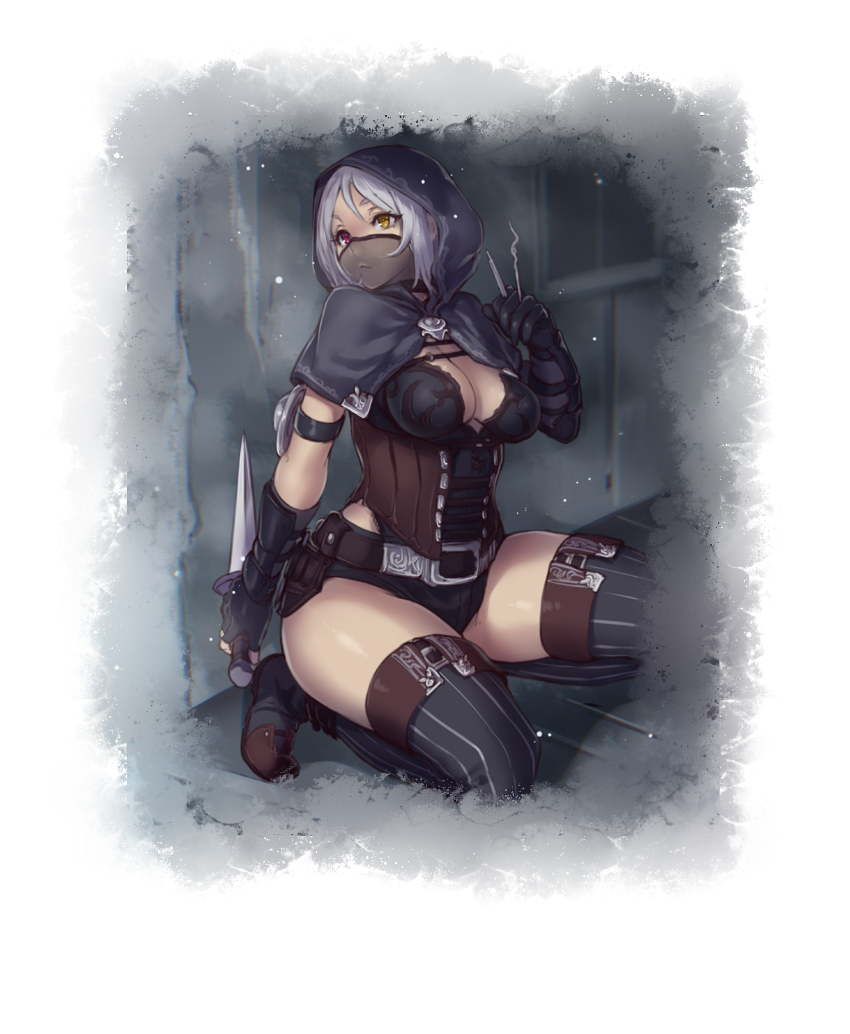
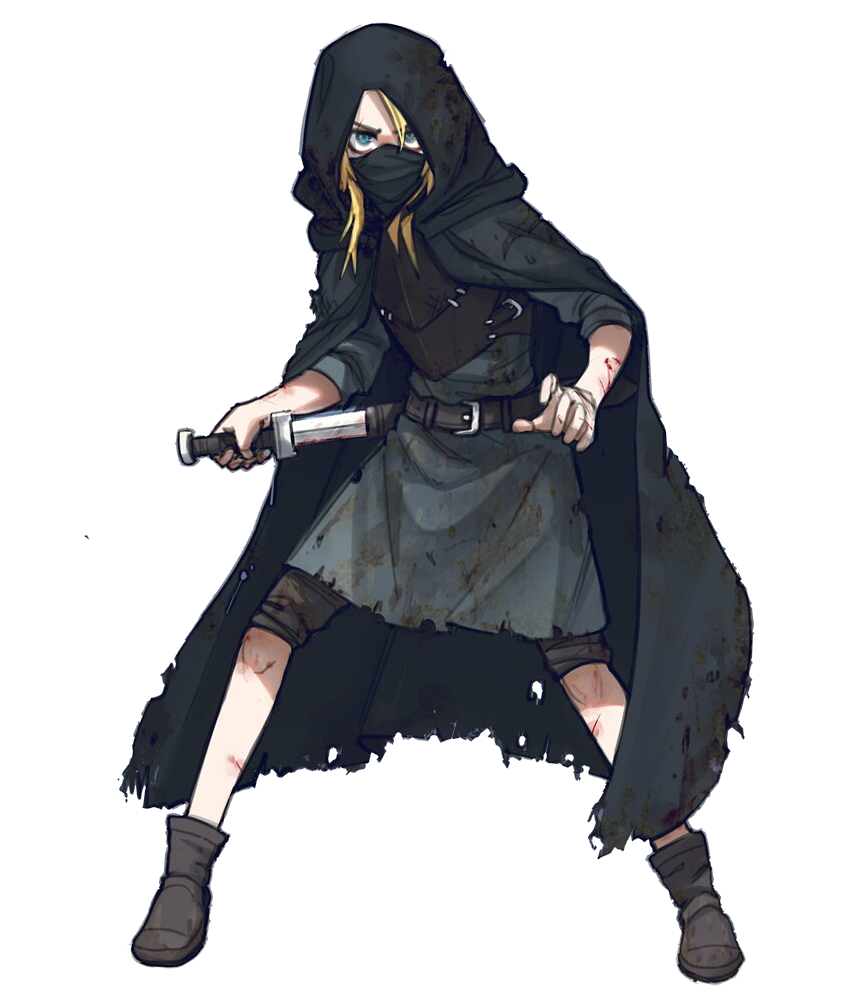
Rogues rely on cunning, stealth, and their foes' vulnerabilities to get the upper hand in any situation. They have a knack for finding the solution to just about any problem. A few even learn magical tricks to supplement their other abilities. Many Rogues focus on stealth and deception, while others refine skills that help them in a dungeon environment, such as climbing, finding and disarming traps, and opening locks.
In combat, Rogues prioritize subtle strikes over brute strength. They would rather make one precise strike than wear an opponent down with a barrage of blows.
Some Rogues began their careers as criminals, while others used their cunning to fight crime. Whatever a Rogue's relation to the law, no common criminal or officer of the law can match the subtle brilliance of the greatest Rogues.
Skill and Precision
Rogues devote as much effort to mastering the use of a variety of skills as they do to perfecting their combat abilities, giving them a broad expertise that few other characters can match. Many rogues focus on stealth and deception, while others refine the skills that help them in a dungeon environment, such as climbing, finding and disarming traps, and opening locks.
When it comes to combat, rogues prioritize cunning over brute strength. A rogue would rather make one precise strike, placing it exactly where the attack will hurt the target most, than wear an opponent down with a barrage of attacks. Rogues have an almost supernatural knack for avoiding danger, and a few learn magical tricks to supplement their other abilities.
A Shady Living
Every town and city has its share of rogues. Most of them live up to the worst stereotypes of the class, making a living as burglars, assassins, cutpurses, and con artists. Often, these scoundrels are organized into thieves' guilds or crime families. Plenty of rogues operate independently, but even they sometimes recruit apprentices to help them in their scams and heists. A few rogues make an honest living as locksmiths, investigators, or exterminators, which can be a dangerous job in a world where dire rats — and wererats — haunt the sewers.
As adventurers, rogues fall on both sides of the law. Some are hardened criminals who decide to seek their fortune in treasure hoards, while others take up a life of adventure to escape from the law. Some have learned and perfected their skills with the explicit purpose of infiltrating ancient ruins and hidden crypts in search of treasure.
The majority of monks don't shun their neighbors, making frequent visits to nearby towns or villages and exchanging their service for food and other goods. As versatile warriors, monks often end up protecting their neighbors from monsters or tyrants.
The Power of Subterfuge
When brute force won't get the job done, or when magic isn't available or appropriate, the rogue rises to the fore. With skills tied to stealth, subterfuge, and trickery, rogues can get into and out of trouble in ways that few other characters can emulate.
Some rogues who turn to adventuring are former criminals who have decided that dodging monsters is preferable to remaining one step ahead of the law. Others are professional killers in search of a profitable application of their talents between contracts. Some simply love the thrill of overcoming any challenge that stands in their way.
On adventures, a rogue is likely to mix an outwardly cautious approach—few rogues enjoy combat—with a ravenous hunger for loot. Most of the time, in a rogue's mind, taking up arms against a creature is not about killing the creature but about becoming the new owner of its treasure.
“People forget that the entire point of venturing down into a dusty tomb is to bring back the prizes hidden away there. Fighting is for fools. Dead men can't spend their fortunes.” — Barnabas Bladecutter
Guilty Pleasures
Most of what rogues do revolves around obtaining treasure and preventing others from doing the same. Little gets in the way of attaining those goals, except that many rogues are enticed away from that path by a compulsion that clouds their thinking—an irresistible need that must be satisfied, even if doing so is risky.
A rogue's guilty pleasure could be the acquisition of a physical item, something to be experienced, or a way of conducting oneself at certain times. One rogue might not be able to pass up any loot made of silver, for instance, even if said loot is hanging around the neck of a castle guard. Another one can't go through a day in the city without lifting a purse or two, just to keep in practice.
What's the one form of temptation that your rogue character can't resist when the opportunity presents itself, even if giving into it might mean trouble for you and your companions?
| d6 | Pleasure |
|---|---|
| 1 | Large gems |
| 2 | A smile from a pretty face |
| 3 | A new ring for your finger |
| 4 | The chance to deflate someone's ego |
| 5 | The finest food and drink |
| 6 | Adding to your collection of exotic coins |
Adversaries
Naturally, those who enforce the law are bound to come up against those who break it, and it's the rare rogue who isn't featured on at least one wanted poster. Beyond that, it's in the nature of their profession that rogues often come into contact with criminal elements, whether out of choice or necessity. Some of those people can be adversaries too, and they're likely to be harder to deal with than the average member of the city watch.
If your character's backstory doesn't already include a personage of this sort, you could work with your DM to come up with a reason why an adversary has appeared in your life. Perhaps you've been the subject of scrutiny for a while from someone who wants to use you for nefarious purposes and has just now become known to you. Such an incident could be the basis for an upcoming adventure.
Does your rogue character have an adversary who also happens to be a criminal? If so, how is this relationship affecting your life?
| d6 | Adversary |
|---|---|
| 1 | The pirate captain on whose ship you once served; what you call moving on, the captain calls mutiny |
| 2 | A master spy to whom you unwittingly fed bad information, which led to the assassination of the wrong target |
| 3 | The master of the local thieves' guild, who wants you to join the organization or leave town |
| 4 | An art collector who uses illegal means to acquire masterpieces |
| 5 | A fence who uses you as a messenger to set up illicit meetings |
| 6 | The proprietor of an illegal pit fighting arena where you once took bets |
Bennifactor
Few rogues make it far in life before needing someone's help, which means thereafter owing that benefactor a significant debt.
If your character's backstory doesn't already include a personage of this sort, you could work with your DM to determine why a benefactor has appeared in your life. Perhaps you benefited from something your benefactor did for you without realizing who was responsible, and that person has now just become known to you. Who helped you in the past, whether or not you knew it at the time, and what do you owe that person as recompense?
| d6 | Master |
|---|---|
| 1 | Your master was a tyrant whom you had to defeat in single combat to complete your instruction. |
| 2 | Your master was kindly and taught you to pursue the cause of peace. |
| 3 | Your master was merciless in pushing you to your limits. You nearly lost an eye during one especially brutal practice session. |
| 4 | Your master seemed goodhearted while tutoring you, but betrayed your monastery in the end. |
| 5 | Your master was cold and distant. You suspect that the two of you might be related. |
| 6 | Your master was kind and generous, never critical of your progress. Nevertheless, you feel you never fully lived up to the expectations placed on you. |

The Revised Rogue
| Level | Proficiency Bonus | Features | Maneuvers Known | Superiority Dice | Sneak Attack | Talents Known |
|---|---|---|---|---|---|---|
| 1st | +2 | Battle Maneuvers, Expertise, Fighting Style, Sneak Attack, Thieves' Cant, Weapon Mastery | 2 | 2 | 1d6 | - |
| 2nd | +2 | Cunning Action, Jack of All Trades, Martial Talents | 2 | 2 | 1d6 | 2 |
| 3rd | +2 | Rogue Subclass, Steady Aim | 2 | 2 | 2d6 | 2 |
| 4th | +2 | Ability Score Improvement | 2 | 2 | 2d6 | 2 |
| 5th | +3 | Cunning Strike, Power Attack, Uncanny Dodge | 2 | 2 | 3d6 | 3 |
| 6th | +3 | Expertise | 2 | 2 | 3d6 | 3 |
| 7th | +3 | Evasion, Reliable Talent | 4 | 4 | 4d6 | 3 |
| 8th | +3 | Ability Score Improvement | 4 | 4 | 4d6 | 4 |
| 9th | +4 | Subclass Feature | 4 | 4 | 5d6 | 4 |
| 10th | +4 | Ability Score Improvement | 6 | 6 | 5d6 | 4 |
| 11th | +4 | Improved Cunning Strike, Second Strike | 6 | 6 | 6d6 | 5 |
| 12th | +4 | Ability Score Improvement | 6 | 6 | 6d6 | 5 |
| 13th | +5 | Subclass Feature | 6 | 6 | 7d6 | 5 |
| 14th | +5 | Blindsense, Devious Strikes | 6 | 6 | 7d6 | 6 |
| 15th | +5 | Slippery Mind | 8 | 8 | 8d6 | 6 |
| 16th | +5 | Ability Score Improvement | 8 | 8 | 8d6 | 6 |
| 17th | +6 | Subclass Feature | 8 | 8 | 9d6 | 7 |
| 18th | +6 | Elusive | 8 | 8 | 9d6 | 7 |
| 19th | +6 | Epic Boon | 8 | 8 | 10d6 | 7 |
| 20th | +6 | Mastermind, Stroke of Luck | 8 | 8 | 10d6 | 8 |
Multiclassing
Ability Score Minimum: Dexterity 13
When you gain a level in a class other than your first, you gain only some of that class's starting proficiencies.
Armor: light armor
Tools: thieves' tools
Skills: Any 1 Skill.
Creating a Rogue
As you create your rogue character, consider the character's relationship to the law. Do you have a criminal past—or present? Are you on the run from the law or from an angry thieves' guild master? Or did you leave your guild in search of bigger risks and bigger rewards? Is it greed that drives you in your adventures, or some other desire or ideal?
What was the trigger that led you away from your previous life? Did a great con or heist gone terribly wrong cause you to reevaluate your career? Maybe you were lucky and a successful robbery gave you the coin you needed to escape the squalor of your life. Did wanderlust finally call you away from your home? Perhaps you suddenly found yourself cut off from your family or your mentor, and you had to find a new means of support. Or maybe you made a new friend—another member of your adventuring party—who showed you new possibilities for earning a living and employing your particular talents.
Quick Build
You can make a rogue quickly by following these suggestions. First, Dexterity should be your highest ability score. Make Intelligence your next-highest if you want to excel at Investigation or plan to take up the Arcane Trickster archetype. Choose Charisma instead if you plan to emphasize deception and social interaction. Second, choose the charlatan background.
Class Features
- Hit dice: 1d8 per Rogue level.
- Hit Points at 1st Level: 8 + your Constitution modifier
- Hit Points at Higher Levels: 1d8 (or 5) + your Constitution modifier per rogue level after 1st.
Proficiencies
Armor: light armor
Weapons: Simple Weapons, Martial Weapons that have the Finesse or Light Property.
Tools: thieves' tools, two of your choice.
Saving Throws: Dexterity, Intelligence
Skills: Any six of your choice.
Starting Equipment
You start with the following items, plus anything provided by your background.
- (a) Leather Armor, 2 Daggers, a Shortsword, a Shortbow, 20 Arrows, a Quiver, Thieves' Tools, a Burglar's Pack, and 8 GP.
- (b) 100 GP
Battle Maneuvers
At 1st level, your experience on the battlefield has refined your fighting techniques. You learn maneuvers that are fueled by special dice called Superiority Dice.
Maneuvers. You learn two maneuvers of your choice from the "Maneuver Options" section later in this feature's description. Many maneuvers enhance an attack in some way. You can use only one maneuver per attack.
You learn two additional maneuvers of your choice when you reach Rogue levels 7, 10, and 15. Each time you learn new maneuvers, you can also replace one maneuver you know with a different one.
Superiority Dice. You have two Superiority Dice, which are d6s. A Superiority Die is expended when you use it. You regain all expended Superiority Dice when you finish a Short or Long Rest.
You gain two additional Superiority Dice when you reach Rogue levels 7 (four dice total), 10 (six dice total), and 15 (eight dice total).
Saving Throws. If a maneuver requires a saving throw, the DC equals 8 plus your Dexterity modifier and Proficiency Bonus.
Maneuver Options
The Battle Maneuvers are presented here in Alphabetical order.
Ambush. When you make a Dexterity (Stealth) check or an Initiative roll, you can expend one Superiority Die and add the die to the roll, unless you have the Incapacitated condition.
Bait and Switch. When you're within 5 feet of a creature on your turn, you can expend one Superiority Die and switch places with that creature, provided you spend at least 5 feet of movement and the creature is willing and doesn't have the Incapacitated condition. This movement doesn't provoke Opportunity Attacks. Roll the Superiority Die. Until the start of your next turn, you or the other creature (your choice) gains a bonus to AC equal to the number rolled.
Commander's Strike. When you take the Attack action on your turn, you can replace one of your attacks to direct one of your companions to strike. When you do so, choose a willing creature who can see or hear you and expend one Superiority Die. That creature can immediately use its Reaction to make one attack with a weapon or an Unarmed Strike, adding the Superiority Die to the attack's damage roll on a hit.
Commanding Presence. When you make a Charisma (Intimidation, Performance, or Persuasion) check, you can expend one Superiority Die and add that die to the roll.
Disarming Attack. When you hit a creature with an attack roll, you can expend one Superiority Die to attempt to disarm the target. Add the Superiority Die roll to the attack's damage roll. The target must succeed on a Strength saving throw or drop one object of your choice that it's holding, with the object landing in its space.
Distracting Strike. When you hit a creature with an attack roll, you can expend one Superiority Die to distract the target. Add the Superiority Die roll to the attack's damage roll. The next attack roll against the target by an attacker other than you has Advantage if the attack is made before the start of your next turn.
Evasive Footwork. As a Bonus Action, you can expend one Superiority Die and take the Disengage action. You also roll the die and add the number rolled to your AC until the start of your next turn.
Feinting Attack. As a Bonus Action, you can expend one Superiority Die to feint, choosing one creature within 5 feet of yourself as your target. You have Advantage on your next attack roll against that target this turn. If that attack hits, add the Superiority Die to the attack's damage roll.
Goading Attack. When you hit a creature with an attack roll, you can expend one Superiority Die to attempt to goad the target into attacking you. Add the Superiority Die to the attack's damage roll. The target must succeed on a Wisdom saving throw or have Disadvantage on attack rolls against targets other than you until the end of your next turn.
Lunging Attack. As a Bonus Action, you can expend one Superiority Die and take the Dash action. If you move at least 5 feet in a straight line immediately before hitting with a melee attack as part of the Attack action on this turn, you can add the Superiority Die to the attack's damage roll.
Maneuvering Attack. When you hit a creature with an attack roll, you can expend one Superiority Die to maneuver one of your comrades into another position. Add the Superiority Die roll to the attack's damage roll, and choose a willing creature who can see or hear you. That creature can use its Reaction to move up to half its Speed without provoking an Opportunity Attack from the target of your attack.
Menacing Attack. When you hit a creature with an attack roll, you can expend one Superiority Die to attempt to frighten the target. Add the Superiority Die to the attack's damage roll. The target must succeed on a Wisdom saving throw or have the Frightened condition until the end of your next turn.
Parry. When another creature damages you with a melee attack roll, you can take a Reaction and expend one Superiority Die to reduce the damage by the number you roll on your Superiority Die plus your Strength or Dexterity modifier (your choice).
Precision Attack. When you miss with an attack roll, you can expend one Superiority Die, roll that die, and add it to the attack roll, potentially causing the attack to hit.
Pushing Attack. When you hit a creature with an attack roll using a weapon or an Unarmed Strike, you can expend one Superiority Die to attempt to drive the target back. Add the Superiority Die to the attack's damage roll. If the target is Large or smaller, it must succeed on a Strength saving throw or be pushed up to 15 feet directly away from you.
Rally. As a Bonus Action, you can expend one Superiority Die to bolster the resolve of a companion. Choose an ally of yours within 30 feet of yourself who can see or hear you. That creature gains Temporary Hit Points equal to the Superiority Die roll plus half your Fighter level (round down).
Riposte. When a creature misses you with a melee attack roll, you can take a Reaction and expend one Superiority Die to make a melee attack roll with a weapon or an Unarmed Strike against the creature. If you hit, add the Superiority Die to the attack's damage.
Sweeping Attack. When you hit a creature with a melee attack roll using a weapon or an Unarmed Strike, you can expend one Superiority Die to attempt to damage another creature. Choose another creature within 5 feet of the original target and within your reach. If the original attack roll would hit the second creature, it takes damage equal to the number you roll on your Superiority Die. The damage is of the same type dealt by the original attack.
Tactical Assessment. When you make an Intelligence (History or Investigation) check or a Wisdom (Insight) check, you can expend one Superiority Die and add that die to the ability check.
Trip Attack. When you hit a creature with an attack roll using a weapon or an Unarmed Strike, you can expend one Superiority Die and add the die to the attack's damage roll. If the target is Large or smaller, it must succeed on a Strength saving throw or have the Prone condition.
Expertise
At 1st level, choose three of your skill proficiencies, or one of your skill proficiencies and your proficiency with thieves' tools. Your proficiency bonus is doubled for any ability check you make that uses either of the chosen proficiencies.
At 6th level, you can choose two more of your proficiencies (in skills or with thieves' tools) to gain this benefit.
Fighting Style
At 1st level, you have honed your martial prowess and gain a Fighting Style feat of your choice. Two-Weapon Fighting is recommended.
Whenever you gain a Rogue level, you can replace the feat you chose with a different Fighting Style feat.
Sneak Attack
At 1st level, You know how to strike subtly and exploit a foe's distraction. Once per turn, you can deal an extra 1d6 damage to one creature you hit with an attack roll if you have Advantage on the roll and the attack uses a Finesse or a Ranged weapon. The extra damage's type is the same as the weapon's type.
You don't need Advantage on the attack roll if at least one of your allies is within 5 feet of the target, the ally doesn't have the Incapacitated condition, and you don't have Disadvantage on the attack roll.
The extra damage increases as you gain Rogue levels, as shown in the Sneak Attack column of the Revised Rogue Features table.
Thieves' Cant
At 1st level, you picked up various languages in the communities where you plied your roguish talents. You know Thieves' Cant and one other language of your choice, which you choose from the language tables in chapter 2 of the 2024 Player's Handbook.
Weapon Mastery
At 1st level, your training with weapons allows you to use the mastery properties of two kinds of weapons of your choice with which you have proficiency, such as Daggers and Shortbows.
Whenever you finish a Long Rest, you can change the kinds of weapons you chose. For example, you could switch to using the mastery properties of Scimitars and Shortswords.
Cunning Action
At 2nd level, your quick thinking and agility allow you to move and act quickly. On your turn, you can take one of the following actions as a Bonus Action: Dash, Disengage, or Hide.
Jack of All Trades
At 2nd level, you can add half your Proficiency Bonus (round down) to any ability check you make that uses a skill proficiency you lack and that doesn't otherwise use your Proficiency Bonus.
For example, if you make a Strength (Athletics) check and lack Athletics proficiency, you can add half your Proficiency Bonus to the check.
Martial Talents
At 2nd level, you gain access to Martial Talents. Refer to the list on page 14 for a list of options. At Rogue Level 2, you learn 2 Martial Talents. You learn an additional Martial Talent at Rogue Levels 5, 8, 11, 14, 17, and 20.
When you gain a Rogue Level, you may substitute one Martial Talent for a different one for which you meet the prerequisites.
Rogue Subclass
At 3rd level, you gain a Rogue subclass of your choice. A subclass is a specialization that grants you features at certain Rogue levels. For the rest of your career, you gain each of your subclass's features that are of your Rogue level or lower.
Steady Aim
At 3rd level, as a Bonus Action, you give yourself Advantage on your next attack roll on the current turn. You can use this feature only if you haven't moved during this turn, and after you use it, your Speed is 0 until the end of the current turn.
Ability Score Improvement
When you reach Rogue Level 4, and again at Rogue Levels 8, 10, 12, and 16, you gain the Ability Score Improvement Feat as well as one other feat of your choice for which you qualify.
Cunning Strike
You've developed cunning ways to use your Sneak Attack. When you deal Sneak Attack damage, you can add one of the following Cunning Strike effects. Each effect has a die cost, which is the number of Sneak Attack damage dice you must forgo to add the effect. You remove the die before rolling, and the effect occurs immediately after the attack's damage is dealt. For example, if you add the Poison effect, remove 1d6 from the Sneak Attack's damage before rolling.
If a Cunning Strike effect requires a saving throw, the DC equals 8 plus your Dexterity modifier and Proficiency Bonus.
Poison (Cost: 1d6). You add a toxin to your strike, forcing the target to make a Constitution saving throw. On a failed save, the target has the Poisoned condition for 1 minute. At the end of each of its turns, the Poisoned target repeats the save, ending the effect on itself on a success.
To use this effect, you must have a Poisoner's Kit on your person.
Trip (Cost: 1d6). If the target is Large or smaller, it must succeed on a Dexterity saving throw or have the Prone condition.
Withdraw (Cost: 1d6). Immediately after the attack, you move up to half your Speed without provoking Opportunity Attacks.
Power Attack
At 5th level, When you make Weapon Attack or Unarmed Strike, you can take a penalty equal to your proficiency bonus to that attack roll. If you do and the attack hits, you gain a bonus to your damage with that attack equal to 2 x your proficiency bonus. You can only use Power Attack Once per Round. You cannot use Power Attack and Steady Aim on the same Attack.
Uncanny Dodge
At 5th level, when an attacker that you can see hits you with an attack roll, you can take a Reaction to halve the attack's damage against you (round down).
Evasion
At 7th level, you can nimbly dodge out of the way of certain dangers. When you're subjected to an effect that allows you to make a Dexterity saving throw to take only half damage, you instead take no damage if you succeed on the saving throw and only half damage if you fail. You can't use this feature if you have the Incapacitated condition.
Reliable Talent
At 7th level, whenever you make an ability check that uses one of your skill or tool proficiencies, you can treat a d20 roll of 9 or lower as a 10.
Improved Cunning Strike
At 11th level, you can use up to two Cunning Strike effects when you deal Sneak Attack damage, paying the die cost for each effect.
Second Strike
At 11th level, you can make two Weapon or Unarmed Strike attacks when you take the Attack Action instead of one.
Blindsense
At 14th level, you gain 10 feet of Blindsight.
Devious Strikes
At 14th level, You've practiced new ways to use your Sneak Attack deviously. The following effects are now among your Cunning Strike options.
Daze (Cost: 2d6). The target must succeed on a Constitution saving throw, or on its next turn, it can do only one of the following: move or take an action or a Bonus Action.
Knock Out (Cost: 6d6). The target must succeed on a Constitution saving throw, or it has the Unconscious condition for 1 minute or until it takes any damage. The Unconscious target repeats the save at the end of each of its turns, ending the effect on itself on a success.
Obscure (Cost: 3d6). The target must succeed on a Dexterity saving throw, or it has the Blinded condition until the end of its next turn.
Slippery Mind
At 15th level, your cunning mind is exceptionally difficult to control. You gain proficiency in Wisdom and Charisma saving throws.
Elusive
At 18th level, you're so evasive that attackers rarely gain the upper hand against you. No attack roll can have Advantage against you unless you have the Incapacitated condition.
Epic Boon
At 19th level, You gain an Epic Boon feat or another feat of your choice for which you qualify. Boon of the Night Spirit is recommended.
Mastermind
At 20th level, you become a roguish mastermind. Your Dexterity and Intelligence scores increase by 4, to a maximum of 26.
Stroke of Luck
At 20th level, you have a marvelous knack for succeeding when you need to. If you fail a D20 Test, you can turn the roll into a 20.
Once you use this feature, you can't use it again until you finish a Short or Long Rest.
Arcane Trickster
Some Rogues enhance their fine-honed skills of stealth and agility with spells, learning magical tricks to aid them in their trade. Some Arcane Tricksters use their talents as pickpockets and burglars, while others are pranksters.
Spellcasting
You have learned to cast spells. See chapter 7 of the 2024 Player's Handbook for the rules on spellcasting. The information below details how you use those rules as an Arcane Trickster.
Cantrips. You know three cantrips: Mage Hand and two other cantrips of your choice from the Wizard spell list (see that class's section for its list). Mind Sliver and Minor Illusion are recommended.
Whenever you gain a Rogue level, you can replace one of your cantrips, except Mage Hand, with another Wizard cantrip of your choice.
When you reach Rogue level 10, you learn another Wizard cantrip of your choice.
Spell Slots. The Arcane Trickster Spellcasting table shows how many spell slots you have to cast your level 1+ spells. You regain all expended spell slots when you finish a Long Rest.
Prepared Spells of 1st+ Level. You prepare the list of level 1+ spells that are available for you to cast with this feature. To start, choose four level 1 Wizard spells. Charm Person, Disguise Self, and Fog Cloud are recommended.
The number of spells on your list increases as you gain Rogue levels, as shown in the Prepared Spells column of the Arcane Trickster Spellcasting table. Whenever that number increases, choose additional Wizard spells until the number of spells on your list matches the number in the Arcane Trickster Spellcasting table. The chosen spells must be of a level for which you have spell slots. For example, if you're a level 7 Rogue, your list of prepared spells can include five Wizard spells of level 1 or 2 in any combination.
Changing Your Prepared Spells. Whenever you gain a Rogue level, you can replace one spell on your list with another Wizard spell for which you have spell slots.
Spellcasting Ability. Intelligence is your spellcasting ability for your Wizard spells.
Spellcasting Focus. You can use an Arcane Focus as a Spellcasting Focus for your Wizard spells.
Mage Hand Legerdemain
At 3rd level, When you cast Mage Hand, you can cast it as a Bonus Action, and you can make the spectral hand Invisible. You can control the hand as a Bonus Action, and through it, you can make Dexterity (Sleight of Hand) checks.
Magical Ambush
At 9th level, if you have the Invisible condition when you cast a spell on a creature, it has Disadvantage on any saving throw it makes against the spell on the same turn.
Versatile Trickster
At 13th level, You gain the ability to distract targets with your Mage Hand. When you use the Trip option of your Cunning Strike on a creature, you can also use that option on another creature within 5 feet of the spectral hand.
Spell Thief
At 17th level, You gain the ability to magically steal the knowledge of how to cast a spell from another spellcaster.
Immediately after a creature casts a spell that targets you or includes you in its area of effect, you can take a Reaction to force the creature to make an Intelligence saving throw. The DC equals your spell save DC. On a failed save, you negate the spell's effect against you, and you steal the knowledge of the spell if it is at least level 1 and of a level you can cast (it doesn't need to be a Wizard spell). For the next 8 hours, you have the spell prepared. The creature can't cast it until the 8 hours have passed.
Once you steal a spell with this feature, you can't use this feature again until you finish a Long Rest.
Arcane Trickster Spellcasting Table
| Level | Cantrips | Prepared Spells | 1st | 2nd | 3rd | 4th | 5th |
|---|---|---|---|---|---|---|---|
| 1st | — | — | — | — | — | — | — |
| 2nd | — | — | — | — | — | — | — |
| 3rd | 2 | 4 | 3 | — | — | — | — |
| 4th | 2 | 5 | 3 | — | — | — | — |
| 5th | 2 | 6 | 4 | 2 | — | — | — |
| 6th | 2 | 7 | 4 | 2 | — | — | — |
| 7th | 2 | 8 | 4 | 3 | — | — | — |
| 8th | 2 | 9 | 4 | 3 | — | — | — |
| 9th | 2 | 10 | 4 | 3 | 2 | — | — |
| 10th | 3 | 10 | 4 | 3 | 2 | — | — |
| 11th | 3 | 11 | 4 | 3 | 3 | — | — |
| 12th | 3 | 11 | 4 | 3 | 3 | — | — |
| 13th | 3 | 12 | 4 | 3 | 3 | 1 | — |
| 14th | 3 | 12 | 4 | 3 | 3 | 1 | — |
| 15th | 3 | 13 | 4 | 3 | 3 | 2 | — |
| 16th | 3 | 13 | 4 | 3 | 3 | 2 | — |
| 17th | 3 | 14 | 4 | 3 | 3 | 3 | 1 |
| 18th | 3 | 14 | 4 | 3 | 3 | 3 | 1 |
| 19th | 3 | 15 | 4 | 3 | 3 | 3 | 2 |
| 20th | 3 | 15 | 4 | 3 | 3 | 3 | 2 |
Assassin
An Assassin's training focuses on using stealth, poison, and disguise to eliminate foes with deadly efficiency. While some Rogues who follow this path are hired killers, spies, or bounty hunters, the capabilities of this subclass are equally useful for adventurers facing a variety of monstrous enemies.
Assassinate
At 3rd level, You're adept at ambushing a target, granting you the following benefits.
Initiative. You have Advantage on Initiative rolls.
Surprising Strikes. During the first round of each combat, you have Advantage on attack rolls against any creature that hasn't taken a turn. If your Sneak Attack hits any target during that round, the target takes extra damage of the weapon's type equal to your Rogue level.
Assassin's Tools
At 3rd level, you gain a Disguise Kit and a Poisoner's Kit, and you have proficiency with them.
Infiltration Expertise
At 9th level, you are expert at the following techniques that aid your infiltrations.
Masterful Mimicry. You can unerringly mimic another person's speech, handwriting, or both if you have spent at least 1 hour studying them.
Roving Aim. Your Speed isn't reduced to 0 by using Steady Aim.
Envenom Weapons
At 13th level, when you use the Poison option of your Cunning Strike, the target also takes 2d6 Poison damage whenever it fails the saving throw. This damage ignores Resistance to Poison damage.
Death Strike
At 17th level, when you hit with your Sneak Attack on the first round of a combat, the target must succeed on a Constitution saving throw (DC 8 plus your Dexterity modifier and Proficiency Bonus), or the attack's damage is doubled against the target.
Phantom
Some Rogues walk along the veil between life and death, shepherding opponents to the grave and slipping through the world as undetectable as a spirit. In these pursuits, a Rogue might discover a mystical connection to death itself. Such an individual becomes immersed in negative energy, infusing their strikes with deathly energy and stealing knowledge from souls who have passed on. Thieves’ guilds value Rogues of this persuasion as highly effective information gatherers and spies.
Wails From the Grave
At 3rd level, you can cause your Sneak Attack Dice to deal Necrotic Damage instead of the normal Damage they would deal.
Additionally, Immediately after you deal your Sneak Attack damage to a creature on your turn, you can target a second creature that you can see within 30 feet of the first creature. Roll half the number of Sneak Attack dice for your level (round up), and the second creature takes Necrotic damage equal to the roll’s total as wails of the dead momentarily sound around them.
You can target a second creature in this way a number of times equal to your Dexterity modifier (minimum of once), and you regain all expended uses when you finish a Short Long Rest.
Whispers of the Dead
At 3rd level, Whenever you finish a Short or Long Rest, you can choose one skill or tool proficiency that you lack and gain it, as a ghostly presence shares its knowledge with you. You lose this proficiency when you use this benefit again to choose a different proficiency.
Voice of Death
At 9th level, you can cast Speak with Dead once without a spell slot, requiring no spell components and using Dexterity as the spellcasting modifier.
You regain the ability to cast it this way when you finish a Short or Long Rest.
Tokens of the Departed
At 9th level, the spirits of the dead are drawn to you, and echoes of their past lives magically manifest as strange curios with resonant power.
Whenever you finish a Long Rest, you gain soul trinkets equal to your Proficiency Bonus minus one; each soul trinket is a Tiny object (the DM determines the trinket’s form or has you roll on the Trinkets table in the Player’s Handbook to generate it). These trinkets last until you finish another Long Rest, at which point they disintegrate. If you ever move more than 30 feet from a trinket, the trinket immediately teleports to you, appearing somewhere on your person.
Using Soul Trinkets. You can use soul trinkets in the following ways:
Death’s Knell. When you deal Sneak Attack damage on your turn, you can expend one soul trinket and immediately use Wails from the Grave without expending a use of that feature. The expended trinket is destroyed.
Life Essence. While you have at least one soul trinket, you have Advantage on Death Saving Throws and Constitution saving throws.
Spirit Query. You can take a Magic action to expend one soul trinket and immediately cast the Augury spell, requiring no spell components and using Dexterity as the spellcasting modifier. The expended trinket is destroyed.
Regaining Soul Trinkets. When a creature you can see within 30 feet of you dies, you can take a Reaction to regain one expended soul trinket.
Ghost Walk
At 13th level, as a Bonus Action, you assume a spectral form, gaining the benefits below for 1 minute or until you end them (no action required). Once you use this feature, you can’t use it again until you finish a Short or Long Rest unless you expend and destroy one of your soul trinkets from Tokens of the Departed (no action required) to restore your use of it.
Flight. You gain a Fly Speed equal to your Speed and can hover.
Hazy Form. Attack rolls have Disadvantage against you and you gain Resistance against Non-magical Bludgeoning, Piercing, and Slashing Damage.
Incorporeal Movement. You can move through occupied spaces as if they were Difficult Terrain and phase through solid objects. If you end your turn in such a space or object, you take 1d10 Force damage and are shunted to the nearest unoccupied space.
Death's Friend
At 17th level, your association with death has become so close that you gain the following benefits.
Death’s Lament. When you use your Wails from the Grave feature, you can deal the Necrotic damage to up to two additional creatures instead of just one additional creature.
Draw of Death. When you roll Initiative, you regain one soul trinket for your Tokens of the Departed if you have none remaining and add the number of Soul Trinkets you have after this to your Initiative Roll.
Scion of the Three
A Scion of the Three draws power from a group of malevolent gods known as the Dead Three: Bane, deity of tyranny; Bhaal, deity of violence and murder; and Myrkul, deity of death. While some Rogues of this subclass pledge themselves ardently to those three macabre gods, others find themselves thrust on this path by a curse. Either way, a scion's power manifests as various occult gifts, as well as an uncanny talent for striking and terrifying foes.
Scions of the Three are most common in Baldur's Gate, where the Dead Three have long competed for influence over mortal hearts. Underground cults to Bane, Bhaal, and Myrkul often count Scions of the Three among their most useful agents. Outside Baldur's Gate, secular thieves' guilds such as the Shadow Thieves of Amn or Xanathar's guild in Waterdeep might cautiously call on a Scion of the Three to undertake an especially violent contract.
Bloodthirst
At 3rd level, If your Sneak Attack hits a Bloodied creature, the target takes extra damage of the weapon's type equal to half your Rogue level (round up).
In addition, when an enemy you can see is reduced to 0 Hit Points, you can take a Reaction and teleport to an unoccupied space you can see within 30 feet of yourself. You can then make one melee attack. You can use this Reaction a number of times equal to your Dexterity modifier (minimum of once), and you regain all expended uses when you finish a Long Rest.
Dread Allegiance
At 3rd level, Choose one of the Dead Three: Bane, Bhaal, or Myrkul. You gain Resistance to one type of damage and the ability to cast a cantrip, as detailed in the table below; Intelligence, Wisdom or Charisma is your spellcasting ability for this cantrip (you choose which when you gain this feature and may not change your choice later). When you finish a Long Rest, you can change your choice.
| God | Damage Resistance | Cantrip |
|---|---|---|
| Bane | Psychic | Minor Illusion |
| Bhaal | Poison | Blade Ward |
| Myrkul | Necrotic | Chill Touch |
Strike Fear
At 9th level, You gain the following Cunning Strike option.
Terrify (Cost: 1d6). The target must succeed on a Wisdom saving throw, or it has the Frightened condition for 1 minute. The Frightened target repeats the save at the end of each of its turns, ending the effect on itself on a success.
Aura of Malevolence
At 13th level, You radiate malignant power associated with one of the Dead Three. At the start of each of your turns, each creature of your choice within a 10-foot Emanation originating from you takes damage equal to your Dexterity modifier (minimum of 1); the damage type is the same as the damage Resistance granted by your choice in the Dread Allegiance feature.
Damage dealt by this aura ignores Resistance. The aura is inactive while you have the Incapacitated condition.
Dread Incarnate
At 17th level, You gain the following benefits.
Battle Tyrant. You have Advantage on attack rolls against any creature with the Frightened condition.
Embodiment of Fear. You are Immune to the Frightened condition.
Murderous Intent. When you roll for your Sneak Attack damage, you can treat a roll of a 1 or 2 on the die as a 3.
Soulknife
A Soulknife strikes with the mind, cutting through barriers both physical and psychic. These Rogues discover psionic power within themselves and channel it to do their roguish work. As a Soulknife, your psionic abilities might have haunted you since childhood, revealing their full potential only as you experienced the stress of adventure. Or you might have sought out an order of psychic adepts and spent years learning how to manifest your power.
Psionic Power
At 3rd level, You harbor a wellspring of psionic energy within yourself. It is represented by your Psionic Energy Dice, which fuel certain powers you have from this subclass. The Soulknife Energy Dice table shows the number of these dice you have when you reach certain Rogue levels, and the table shows the die size.
| Rogue Level | Die Size | Number |
|---|---|---|
| 3 | D6 | 4 |
| 5 | D8 | 6 |
| 9 | D8 | 8 |
| 11 | D10 | 8 |
| 13 | D10 | 10 |
| 17 | D12 | 12 |
Any features in this subclass that use a Psionic Energy Die use only the dice from this subclass. Some of your powers expend a Psionic Energy Die, as specified in a power's description, and you can't use a power if it requires you to use a die when your Psionic Energy Dice are all expended.
You regain one of your expended Psionic Energy Dice when you finish a Short Rest, and you regain all of them when you finish a Long Rest.
Psi-Bolstered Knack. If you fail an ability check using a skill or tool with which you have proficiency, you can roll one Psionic Energy Die and add the number rolled to the check, potentially turning failure into success. The die is expended only if the roll then succeeds.
Psychic Whispers. You can establish telepathic communication between yourself and others. As a Magic action, choose one or more creatures you can see, up to a number of creatures equal to your Proficiency Bonus, and then roll one Psionic Energy Die. For a number of hours equal to the number rolled, the chosen creatures can speak telepathically with you, and you can speak telepathically with them. To send or receive a message (no action required), you and the other creature must be within 1 mile of each other. A creature can end the telepathic connection at any time (no action required).
The first time you use this power after each Long Rest, you don't expend the Psionic Energy Die. All other times you use the power, you expend the die.
Psychic Blades
At 3rd level, you can manifest shimmering blades of psychic energy. Whenever you take the Attack action or make an Opportunity Attack, you can manifest a Psychic Blade in your free hand and make the attack with that blade. The magic blade has the following traits:
Psychic Blade
Weapon
Simple weapon, melee weapon
1d6 psychic
Finesse, Thrown (60/120 ft.)
Mastery: Vex (you can use this property, and it doesn't count against the number of properties you can use with Weapon Mastery)
Finesse. When making an attack with a Finesse weapon, use your choice of your Strength or Dexterity modifier for the attack and damage rolls. You must use the same modifier for both rolls.
Thrown. If a weapon has the Thrown property, you can throw the weapon to make a ranged attack, and you can draw that weapon as part of the attack. If the weapon is a Melee weapon, use the same ability modifier for the attack and damage rolls that you use for a melee attack with that weapon.
Mastery: Vex. If you hit a creature with this weapon and deal damage to the creature, you have Advantage on your next attack roll against that creature before the end of your next turn.
The blade vanishes immediately after it hits or misses its target, and it leaves no mark if it deals damage.
After you attack with the blade on your turn, you can make a melee or ranged attack with a second psychic blade as a Bonus Action on the same turn if your other hand is free to create it. The damage die of this bonus attack is 1d4 instead of 1d6.
Soul Blades
At level 9, you can now use the following powers with your Psychic Blades.
Homing Strikes. If you make an attack roll with your Psychic Blade and miss the target, you can roll one Psionic Energy Die and add the number rolled to the attack roll. If this causes the attack to hit, the die is expended.
Psychic Teleportation. As a Bonus Action, you manifest a Psychic Blade, expend one Psionic Energy Die and roll it, and throw the blade at an unoccupied space you can see up to a number of feet away equal to 10 times the number rolled. You then teleport to that space, and the blade vanishes.
Psychic veil
At 13th level, you can weave a veil of psychic static to mask yourself. As a Magic action, you gain the Invisible condition for 1 hour or until you dismiss this effect (no action required). This invisibility ends early immediately after you deal damage to a creature or you force a creature to make a saving throw.
Once you use this feature, you can't do so again until you finish a Long Rest unless you expend a Psionic Energy Die (no action required) to restore your use of it.
Rend Mind
At 17th level, you can sweep your Psychic Blades through a creature's mind. When you use your Psychic Blades to deal Sneak Attack damage to a creature, you can force that target to make a Wisdom saving throw (DC 8 plus your Dexterity modifier and Proficiency Bonus). If the save fails, the target has the Stunned condition for 1 minute. The Stunned target repeats the save at the end of each of its turns, ending the effect on itself on a success.
Once you use this feature, you can't do so again until you finish a Long Rest unless you expend three Psionic Energy Dice (no action required) to restore your use of it.
Thief
A mix of burglar, treasure hunter, and explorer, you are the epitome of an adventurer. In addition to improving your agility and stealth, you gain abilities useful for delving into ruins and getting maximum benefit from the magic items you find there.
Fast Hands
At 3rd level, As a Bonus Action, you can do one of the following.
Sleight of Hand. Make a Dexterity (Sleight of Hand) check to pick a lock or disarm a trap with Thieves' Tools or to pick a pocket.
Use an Object. Take the Utilize action, or take the Magic action to use a magic item that requires that action.
Additionally, you gain a second Bonus Action.
Second-Story Work
At 3rd level, you've trained to get into especially hard-to-reach places, granting you these benefits.
Climber. You gain a Climb Speed equal to your Speed.
Jumper. You can determine your jump distance using your Dexterity rather than your Strength.
Supreme Sneak
Starting at 9th level, You gain the following Cunning Strike option.
Stealth Attack (Cost: 1d6). If you have the Hide action's Invisible condition, this attack doesn't end that condition on you if you end the turn behind Three-Quarters Cover or Total Cover.
Use Magic Device
At 13th level, You've learned how to maximize use of magic items, granting you the following benefits.
Attunement. You can attune to up to four magic items at once.
Charges. Whenever you use a magic item property that expends charges, roll 1d6. On a roll of 6, you use the property without expending the charges.
Scrolls. You can use any Spell Scroll, using Intelligence as your spellcasting ability for the spell. If the spell is a cantrip or a level 1 spell, you can cast it reliably. If the scroll contains a higher-level spell, you must first succeed on an Intelligence (Arcana) check (DC 10 plus the spell's level). On a successful check, you cast the spell from the scroll. On a failed check, the scroll disintegrates.
Thief's Reflexes
At 17th level, you are adept at laying ambushes and quickly escaping danger. You can take two turns during the first round of any combat. You take your first turn at your normal Initiative and your second turn at your Initiative minus 10.
Rogue Martial Talents
Arcane Greed
Prerequisites(s): 3rd level, Arcane Trickster Subclass.
You can cast identify at will, without expending a spell slot.
Arcane Sight
Prerequisites(s): Proficient in the Arcana skill
You can cast detect magic at will, without expending a spell slot.
Blademaster
Prerequisites(s): 5th level, Proficiency with at least one Martial Weapon.
Select one type of martial weapon with which you are proficient. While you are wielding this weapon, it counts as magical for the purpose of piercing resistance and immunity. You also gain one additional Weapon Mastery.
Carnie
Prerequisites(s): Thrown Weapon Fighting Feat.
The ranges of any weapon you use with the Thrown property are doubled when you throw that weapon.
Deathstroke
Prerequisites(s): 3rd Level, Assassin Subclass.
You treat a roll of a 1 on any Sneak Attack Die as a 2 instead.
Duel of Honor
Prerequisites(s): Proficient in the Deception or Intimidation Skill. Intelligence, Wisdom, or Charisma 14 or higher.
You can cast compelled duel at 1st level once without using a spell slot. You can't do so again until you finish a short or long rest. Intelligence, Wisdom, or Charisma is your Spellcasting modifier for this spell (you choose which when you take this talent).
Expert
Prerequisites(s): N/A
You choose one Skill or Tool with which you are Proficient. You gain Expertise with that Skill or Tool. This talent can be taken up to two times, and you must choose a different skill or tool to benefit from this Talent for each.
Giantslayer
Prerequisites(s): N/A
You gain a climbing speed equal to your walking speed if you don't already have one. If you already have a climbing speed, your movement is increased by 30 feet while using it. You can use your climbing speed to scale creatures that are at least one size larger than you. At the start of each of your turns while you are climbing this creature, you must make a Strength (Athletics) skill check contested by a Strength (Athletics) skill check from the creature you are climbing.
While you are climbing a creature in this way, you have advantage on your melee attack rolls against it while that creature has disadvantage on attacks against you. The creature you are climbing has advantage on a Strength (Athletics) Skill Check made to grapple you while you are climbing it.
Hard Landing
Prerequisite(s): Constitution 14 or higher.
You halve any falling damage you take. At 10th level, you reduce any damage you would take from falling to 0.
Mighty Blows
Prerequisites(s): 10th level, Strength or Dexterity 18
Once per turn, when you deal damage with a Melee Weapon Attack or Unarmed Strike, you can deal extra damage equal to your Proficiency Bonus.
Mythical Charm
Prerequisites(s): Proficient in the Persuasion Skill. Intelligence, Wisdom, or Charisma 14 or higher.
You can cast charm person at 1st level once without using a spell slot. You can't do so again until you finish a short or long rest. Intelligence, Wisdom, or Charisma is your Spellcasting modifier for this spell (you choose which when you take this talent).
Pincer Strike
Prerequisites(s): 10th level, Strength 18 or higher, Two-Weapon Fighting Feat, Twin Strikes Martial talent
When you engage in two-weapon fighting using two of the same type of weapon and make a Power Attack with the weapon in your primary hand, you can use your Reaction to strike with your offhand weapon as if it gained the bonus from Power Attack. You must finish a Long Rest to use this talent again.
Precision Shot
Prerequisites(s): Archery Feat.
When you use your Power Attack feature with a weapon that benefits from the Archery fighting style, you can take a penalty to damage equal to your proficiency bonus to gain a bonus to your attack roll equal to your proficiency bonus instead of the normal penalty and bonus, and you score a critical hit on a 19 or 20.
Psychic Surge
Prerequisites(s): 3rd level, Soulknife Subclass.
If you roll the maximum value on a Psionic Energy die, you do not expend that die. You may use this talent a number of times equal to your Proficiency Bonus, and regain all expended uses when you finish a Long Rest.
Reliable Maneuvers
Prerequisites(s): N/A
If you roll a 1 on your Superiority Die, you may re-roll that die once and must take the new result.
Silent Hands
Prerequisites(s): 3rd level, Thief Subclass
When you make a Skill Check that benefits from your Fast Hands feature, you have advantage on that Skill Check.
Silver Fists
Prerequisites(s): 5th level, Unarmed Fighting Feat.
Your Unarmed Strikes count as magical for the purpose of piercing resistance and immunity.
Superhuman Leap
Prerequisites(s): Proficient in the Athletics skill.
Your jumping distance and height are tripled, and if you would land within 5 feet of a creature you can force that creature to make a Dexterity saving throw against 8 + your Strength modifier + your proficiency bonus or take 1d6 Bludgeoning damage for every 10 feet you fell vertically onto them.
Superhuman Strength
Prerequisites(s): Proficient in the Athletics skill.
The amount of weight you can carry, push, pull, and lift is doubled.
Superhuman Swimmer
Prerequisites(s): Proficient in the Athletics skill.
You can hold your breath for three times as long, and you gain a swimming speed equal to your walking speed if you do not already have one.
Thrown Weapon Mastery
Prerequisites(s): 10th level, 18 Strength or Dexterity, Thrown Weapon Fighting Fighting Style, Carnie talent
When you throw a weapon with the Thrown property, you can throw another Weapon with the Thrown property at the same creature as a reaction provided you have one on your person.
Twin Strikes
Prerequisites(s): Two-Weapon Fighting Feat.
When you engage in two-weapon fighting using two of the same type of weapon, you deal +1 damage with both weapons. For example, if you were wielding two Shortswords, you would gain this bonus but if you were wielding a Shortsword and a Dagger you would not.
Unarmored Defense
Prerequisite(s): Do not have the Pact Magic Feature. Do not have the Spellcasting Feature except from the Arcane Trickster Subclass.
When you aren't wearing any armor, your base Armor Class equals 10 plus your Dexterity and Intelligence modifiers.
Worldly Warrior
Prerequisite(s): Intelligence 14 or higher.
You can read all writing. Additionally, you learn three additional languages which you can speak, read, and write.
Credits
Art (In Order)
- yukako_(toyoyuki)
- lizchief (Dead Source)
- Houtengeki
- hella p
- drogod
- muju
- popopoka
Other
Changes: Me, SmugCoffeeMan
Fan Content Policy
This work is unofficial Fan Content permitted under the Fan Content Policy. Not approved/endorsed by Wizards. Portions of the materials used are property of Wizards of the Coast. ©Wizards of the Coast LLC.
If you enjoy my content, feel free to buy me a coffee over on [Ko-Fi](https://ko-fi.com/smugcoffeeman "title")! It ensures I can focus on putting out content instead of worrying about paying my bills.
Feel free to follow me on social media!
Youtube
Twitter
Twitch
Changelog
1.0
- Expertise gives 3 skills for a total of 6.
- Added Battle Maneuvers.
- Added Second Strike, an extra attack for Rogues at 11th to bring their damage up during the mid-late game.
- Ported basically all my stuff from 2014 revised rogue.
1.1
- Added a Revised version of the UA Scion of the Three Rogue Subclass.
- Bloodthirst's uses per rest are now Dex modifier instead of INT modifier.
- Dread Allegiance lets you pick your casting stat.
- Aura of Malevolence now has DEX Mod uses instead of INT mod.
- Dread Incarnate makes you Immune to Frightened.
1.2
- Added Fast Hands' Bauldur's Gate 3 extra Bonus Action.
1.3
- Added a revised version of the Phantom Sucblass from the newest UA. This includes Wails from the Grave restoring on Short Rest and Long Rest, Sneak Attack Dice being able to do Necrotic Damage, Trinkets scaling with Proficiency Bonus, Ghost walk's features now offering Speed in flight, resistance to Non-magical Bludgeoning, Piercing, and Slashing damage, Incorporeal movement allowing for the user to pass through solid objects and detailing what happens if you end a turn in that space (being shunted to the nearest unoccupied space), Death's Lament letting Wails from the Grave affect two other creatures at once, and Draw of Death adding the trinkets you have to your Initiative.