


Foreword:
The Unchained Wizard has access to new features with a talent system that expands player options, which may allow a character to punch above its weight class. Check with your GM before bringing an Unchained Wizard to your table! This class design references rules available in the Unchained Action Economy. It is otherwise compatible with the default combat system of 1st edition. The terminology listed below is used to define respective class features, as well as highlight key differences in functionality:
Arcane School
Each school of magic has an Arcane School associated with it (Abjuration, Conjuration, Divination, Enchantment, Evocation, Illusion, Necromancy, Transmutation, and Universal). These schools each have a Specialization Power, a Minor School Power, and a Major School Power associated with them.
Spellbound Breakthrough:
The Unchained Wizard's new class features, adding further customization.
Specialization Power
An Arcane School's first granted ability (i.e. Summoner's Charm or Power over Undead).
Minor School Power:
An Arcane School's second granted ability, often listed as usable a number of times per day equal to 3 + the wizard's Intelligence modifier.
Major School Power:
An Arcane School's third granted ability, often gained at either 6th or 8th level.
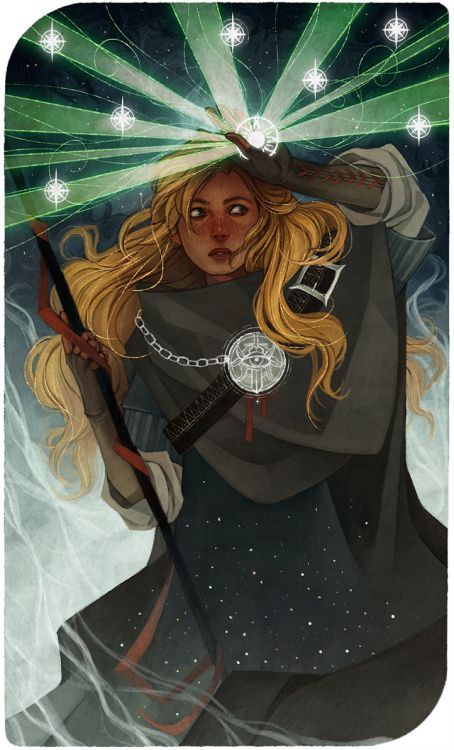
Images provided by Pathfinder Wiki and Pinterest. None of the images are mine, but they are otherwise incredible!


Unchained Wizard
Table: Unchained Wizard Spells per Day 1
| Level | Base Attack Bonus | Fort Save | Ref Save | Will Save | Special | Cantrips | 1st | 2nd | 3rd | 4th | 5th | 6th | 7th | 8th | 9th |
|---|---|---|---|---|---|---|---|---|---|---|---|---|---|---|---|
| 1st | +0 | +0 | +0 | +2 | Spellbook, Cantrips, Arcane Bond, School Specialization, Spellbound Breakthrough | 3 | 1 | — | — | — | — | — | — | — | — |
| 2nd | +1 | +0 | +0 | +3 | Spellbound Breakthrough | 4 | 2 | — | — | — | — | — | — | — | — |
| 3rd | +1 | +1 | +1 | +3 | 4 | 2 | 1 | — | — | — | — | — | — | — | |
| 4th | +2 | +1 | +1 | +4 | Spellbound Breakthrough | 4 | 3 | 2 | — | — | — | — | — | — | — |
| 5th | +2 | +1 | +1 | +4 | 4 | 3 | 2 | 1 | — | — | — | — | — | — | |
| 6th | +3 | +2 | +2 | +5 | Spellbound Breakthrough | 4 | 3 | 3 | 2 | — | — | — | — | — | — |
| 7th | +3 | +2 | +2 | +5 | 4 | 4 | 3 | 2 | 1 | — | — | — | — | — | |
| 8th | +4 | +2 | +2 | +6 | Spellbound Breakthrough | 4 | 4 | 3 | 3 | 2 | — | — | — | — | — |
| 9th | +4 | +3 | +3 | +6 | 4 | 4 | 4 | 3 | 2 | 1 | — | — | — | — | |
| 10th | +5 | +3 | +3 | +7 | Spellbound Breakthrough | 4 | 4 | 4 | 3 | 3 | 2 | — | — | — | — |
| 11th | +5 | +3 | +3 | +7 | 4 | 4 | 4 | 4 | 3 | 2 | 1 | — | — | — | |
| 12th | +6/+1 | +4 | +4 | +8 | Spellbound Breakthrough | 4 | 4 | 4 | 4 | 3 | 3 | 2 | — | — | — |
| 13th | +6/+1 | +4 | +4 | +8 | 4 | 4 | 4 | 4 | 4 | 3 | 2 | 1 | — | — | |
| 14th | +7/+2 | +4 | +4 | +9 | Spellbound Breakthrough | 4 | 4 | 4 | 4 | 4 | 3 | 3 | 2 | — | — |
| 15th | +7/+2 | +5 | +5 | +9 | 4 | 4 | 4 | 4 | 4 | 4 | 3 | 2 | 1 | — | |
| 16th | +8/+3 | +5 | +5 | +10 | Spellbound Breakthrough | 4 | 4 | 4 | 4 | 4 | 4 | 3 | 3 | 2 | — |
| 17th | +8/+3 | +5 | +5 | +10 | 4 | 4 | 4 | 4 | 4 | 4 | 4 | 3 | 2 | 1 | |
| 18th | +9/+4 | +6 | +6 | +11 | Spellbound Breakthrough | 4 | 4 | 4 | 4 | 4 | 4 | 4 | 3 | 3 | 2 |
| 19th | +9/+4 | +6 | +6 | +11 | 4 | 4 | 4 | 4 | 4 | 4 | 4 | 4 | 3 | 3 | |
| 20th | +10/+5 | +6 | +6 | +12 | Arcane Thesis | 4 | 4 | 4 | 4 | 4 | 4 | 4 | 4 | 4 | 4 |
- Specialist Wizards receive School Slots. See School Specialization.



Beyond the veil of the mundane hide the secrets of absolute power. The works of beings beyond mortals, the legends of realms where gods and spirits tread, the lore of creations both wondrous and terrible—such mysteries call to those with the ambition and the intellect to rise above the common folk to grasp true might. Such is the path of the wizard. These shrewd magic-users seek, collect, and covet esoteric knowledge, drawing on cultic arts to work wonders beyond the abilities of mere mortals. While some might choose a particular field of magical study and become masters of such powers, others embrace versatility, reveling in the unbounded wonders of all magic. In either case, wizards prove a cunning and potent lot, capable of smiting their foes, empowering their allies, and shaping the world to their every desire.
Alignment
Any
Hit Die:
d6
Starting Wealth
2d6 × 10 gp (average 70 gp, maximum 120 gp.) In addition, each character begins play with an outfit worth 10 gp or less
Class Skills
The Wizard's class skills are Appraise (Int), Craft (Int), Fly (Dex), Knowledge (all) (Int), Linguistics (Int), Profession (Wis), and Spellcraft (Int).
Skill Ranks Per Level
2 + Int modifier.
Bonus Languages
A wizard may substitute Draconic for one of the bonus languages available to the character because of his race.

Class Features
The following are class features of the Unchained Wizard.
Weapon and Armor Proficiency
Wizards are proficient with the club, dagger, heavy crossbow, light crossbow, and quarterstaff, but not with any type of armor or shield. Armor interferes with a wizard's movements, which can cause his spells with somatic components to fail. (see Arcane Spells and Armor).
Spell Casting
A wizard casts arcane spells drawn from the sorcerer/wizard spell list. A wizard must prepare her spells ahead of time.
To learn, prepare, or cast a spell, the wizard must have an Intelligence score equal to at least 10 + the spell level. The Difficulty Class for a saving throw against a wizard's spell is 10 + the spell level + the wizard's Intelligence modifier.
A wizard can cast only a certain number of spells of each spell level per day. His base daily spell allotment is given on Table: Unchained Wizard. In addition, he receives bonus spells per day if he has a high Intelligence score (see Ability Modifiers and Bonus Spells).
A wizard may know any number of spells. He must choose and prepare his spells ahead of time by getting 8 hours of sleep and spending 1 hour studying his spellbook. While studying, the wizard decides which spells to prepare.
Starting Spells (See Spellbooks below): A wizard begins play with a spellbook containing all 0-level wizard spells (except those from his opposed schools, if any; see School Specialization) plus three 1st-level spells of his choice. The wizard also selects a number of additional 1st-level spells equal to his Intelligence modifier to add to the spellbook. At each new wizard level, he gains two new spells of any spell level or levels that he can cast (based on his new wizard level) for his spellbook. At any time, a wizard can also add spells found in other wizards’ spellbooks to his own.
Spells Gained at a New Level: Wizards perform a certain amount of spell research between adventures. Each time a character attains a new wizard level, he gains two spells of his choice to add to his spellbook. The two free spells must be of spell levels he can cast.
Spellbook
A wizard must study his spellbook each day to prepare his spells. He cannot prepare any spell not recorded in his spellbook, except for read magic, which all wizards can prepare from memory.
A wizard begins play with a spellbook containing all 0-level wizard spells (except those from his opposition schools, if any; see School Specialization) plus three 1st-level spells of his choice. The wizard also selects a number of additional 1st-level spells equal to his Intelligence modifier to add to the spellbook. At each new wizard level, he gains two new spells of any spell level or levels that he can cast (based on his new wizard level) for his spellbook. At any time, a wizard can also add spells found in other wizards' spellbooks to his own.
Cantrips
Wizards can prepare a number of cantrips, or 0-level spells, each day, as noted on Table: Unchained Wizard under “Spells per Day.” These spells are cast like any other spell, but they are not expended when cast and may be used again. A wizard can prepare a cantrip from an opposition school, but it uses up two of his available slots.
Arcane Bond
At 1st level, wizards form a powerful bond with an object or a creature. This bond can take one of two forms: a familiar or a bonded object. A familiar is a magical pet that enhances the wizard’s skills and senses and can aid him in magic, while a bonded object is an item a wizard can use to cast additional spells or to serve as a magical item. Once a wizard makes this choice, it is permanent and cannot be changed.
Rules for bonded items are given below, while rules for familiars are located here: Familiars.
Wizards who select a bonded object begin play with one at no cost. Objects that are the subject of an arcane bond must fall into one of the following categories: amulet, ring, staff, wand, or weapon. These objects are always masterwork quality. Weapons acquired at 1st level are not made of any special material. If the object is an amulet or ring, it must be worn to have effect, while staves, wands, and weapons must be held in one hand. If a wizard attempts to cast a spell without his bonded object worn or in hand, he must make a concentration check or lose the spell. The DC for this check is equal to 20 + the spell’s level. If the object is a ring or amulet, it occupies the ring or neck slot accordingly.
A bonded object can be used once per day to cast any one spell that the wizard has in his spellbook and is capable of casting, even if the spell is not prepared. This spell is treated like any other spell cast by the wizard, including casting time, duration, and other effects dependent on the wizard’s level. This spell cannot be modified by metamagic feats or other abilities. The bonded object cannot be used to cast spells from the wizard’s opposition schools (see School Specialization below).
A wizard can add additional magic abilities to his bonded object as if he has the required Item Creation Feats and if he meets the level prerequisites of the feat. For example, a wizard with a bonded dagger must be at least 5th level to add magic abilities to the dagger (see Craft Magic Arms and Armor feat). If the bonded object is a wand, it loses its wand abilities when its last charge is consumed, but it is not destroyed and it retains all of its bonded object properties and can be used to craft a new wand. The magic properties of a bonded object, including any magic abilities added to the object, only function for the wizard who owns it. If a bonded object’s owner dies, or the item is replaced, the object reverts to being an ordinary masterwork item of the appropriate type.
If a bonded object is damaged, it is restored to full hit points the next time the wizard prepares his spells. If the object of an arcane bond is lost or destroyed, it can be replaced after 1 week in a special ritual that costs 200 gp per wizard level plus the cost of the masterwork item. This ritual takes 8 hours to complete. Items replaced in this way do not possess any of the additional enchantments of the previous bonded item. A wizard can designate an existing magic item as his bonded item. This functions in the same way as replacing a lost or destroyed item except that the new magic item retains its abilities while gaining the benefits and drawbacks of becoming a bonded item.

School Specialization
A wizard can choose to specialize in one Arcane School, gaining additional spells and powers based on his selection. This choice must be made at 1st level, and once made, it cannot be changed. A wizard that does not select a school receives the universalist school instead.
A wizard that chooses to specialize in one school of magic must select two other schools as his opposition schools, representing knowledge sacrificed in one area of arcane lore to gain mastery in another. A wizard who prepares spells from his opposition schools must use two spell slots of that level to prepare the spell. For example, a wizard with evocation as an opposition school must expend two of his available 3rd-level spell slots to prepare a fireball. In addition, a specialist takes a –4 penalty on any skill checks made when crafting a magic item that has a spell from one of his opposition schools as a prerequisite. A universalist wizard can prepare spells from any school without restriction.
Choosing an Arcane School gives the wizard the school's Specialization Power (i.e. Resistance or Forewarned) as well as the Minor School Power. In addition, specialist wizards receive an additional spell slot of each spell level he can cast, from 1st on up. Each day, a wizard can prepare a spell from his specialty school in that slot. This spell must be in the wizard’s spellbook. A wizard can select a spell modified by a metamagic feat to prepare in his school slot, but it uses up a higher-level spell slot. Wizards with the universalist school do not receive a school slot.
Spellbound Breakthrough
As a wizard gains experience, his study and deep analysis of the arcane arts begins to yield impressive results. Starting at 1st level, 2nd level, and every 2 levels thereafter (last at 18th), a wizard gains one Spellbound Breakthrough. Unless otherwise noted, activating a Spellbound Breakthrough is a standard action (2 acts)., and a wizard cannot select an individual Spellbound Breakthrough more than once.
Arcane Discovery: The wizard gains an Arcane Discovery. The wizard must have a minimum wizard level the Arcane Discovery requires. The wizard can select this Spellbound Breakthrough more than once.
Arcane Reach: The wizard can use spells with a range of touch on a target within Close range. The wizard must make a ranged touch attack to deliver a spell with this ability. The wizard must be at least 6th level to select this Spellbound Breakthrough.
Beguiling Pedagogy (Ex): The wizard adds Disable Device, Disguise, Stealth, and Sleight of Hand to his list of class skills.
Ranged Legerdemain (Sp): The wizard can use Disable Device and Sleight of Hand at a range of 30 feet. Working at a distance increases the normal skill check DC by 5, and the wizard cannot take 10 on this check. Any object to be manipulated must weigh 5 pounds or less. The wizard must have mage hand prepared to use this ability. The wizard must have Beguiling Pedagogy to select this Spellbound Breakthrough.

Cloaked Casting (Ex): The wizard adds +1 to a spell’s save DC when cast against an opponent who is denied his Dexterity bonus to AC or flat-footed. At 4th level, the wizard gains a +2 bonus on caster level checks made to overcome an opponent’s spell resistance who is denied his Dexterity bonus to AC or flat-footed.
Improved Cloaked Casting (Ex): The wizard’s bonuses from Cloaked Casting are doubled. The wizard must have Cloaked Casting and be 10th level to select this Spellbound Breakthrough.
Constructive Breakthrough: The wizard gains an item creation as a bonus feat. The wizard must meet all prerequisites for the chosen feat. The wizard can select this Spellbound Breakthrough more than once.
Counterspell Adept: The wizard gains Improved Counterspell as a bonus feat. In addition, he can attempt to counter a spell as it is being cast as an immediate action (reaction), and may use a spell of the same school of equal level or higher.
Counterspell Master: The wizard gains Parry Spell as a bonus feat, even if he does not have the normal prerequisites. In addition, he adds his Intelligence modifier to his caster level check when using dispel magic or greater dispel magic as a counterspell. The wizard must be at least 6th level and have the Counterspell Adept ability to select this Spellbound Breakthrough.
Eldritch Knowledge: The wizard can draw upon his expansive knowledge of monsters as a move action (1 act), granting his allies benefits of a single Eldritch Knowledge against the creatures they face. The secrets of eldritch knowledge pertain only to aberrations, constructs, dragons, magical beasts, outsiders, or undead.
The wizard's eldritch knowledge can affect a single creature or all creatures of the same type, depending on the effect used. The target creature must be within 60 feet, and the wizard must be aware of the creature's presence, although he need not have a line of sight to it. The effects of eldritch knowledge last for 1 minute, unless stated otherwise, and is an audible effect.
The wizard can use Eldritch Knowledge a number of times per day equal to 3 + his Intelligence modifier. He can select this Spellbound Breakthrough more than once, choosing a different Eldritch Knowledge to gain access to.
- Adversary (Ex): The wizard can direct his allies to attack vital spots of his enemies. On a successful Knowledge check, he grants them a bonus to weapon damage rolls made against the target creatures equal to 1d6 points of damage. If the wizard succeeds on his Knowledge check by 10 or more, then this bonus increases to 2d6. If the wizard succeeds on his Knowledge check by 20 or more, then this bonus increases to 3d6. The wizard must be at least 8th level to select this Spellbound Breakthrough.
-
Dark Truth (Su): Unlike other eldritch knowledge, this ability can be used only against a single creature. By speaking aloud a dark truth of the target creature, the wizard can stagger a target creature for 1 round. If the wizard succeeds on his Knowledge check by 10 or more, then the target is dazed for 1 round. If the wizard succeeds on his Knowledge check by 20 or more, then the target is stunned for 1 round (if the target is immune to being stunned but not immune to being dazed, such as most undead, then the wizard can choose to daze the target instead of stunning it). The wizard must be at least 12th level to select this Spellbound Breakthrough.
-
Prescience (Ex): The wizard can better prepare his allies for the attacks of the affected creature. Allies within 30 feet of the wizard gain a +1 insight bonus to Armor Class that applies to attacks by the affected creature only. If the wizard succeeds on his Knowledge check by 10 or more, this bonus increases to +2. If the wizard succeeds on his Knowledge check by 20 or more, this bonus increases to +3. The wizard must be at least 2nd level to select this Spellbound Breakthrough.
-
Resolve (Ex): The wizard can use his eldritch knowledge to help his allies fight off the corrupting influence of other creatures. Allies within 60 feet of the wizard gain a +1 bonus on saving throws against the creature's abilities. If the wizard succeeds on his Knowledge check by 10 or more, this bonus increases to +2. If the wizard succeeds on his Knowledge check by 20 or more, this bonus increases to +3. The wizard must be at least 4th level to select this Spellbound Breakthrough.
-
Strategy (Ex): The wizard knows the general combat behaviors of creatures of that type, granting his allies a +1 bonus to attack rolls made against them. If the wizard succeeds on his Knowledge check by 10 or more, then this bonus increases to +2. If the wizard succeeds on his Knowledge check by 20 or more, then this bonus increases to +3. The wizard must be at least 2nd level to select this Spellbound Breakthrough.
Enduring Magic: Dispel attempts made against the wizard's arcane spells are made with a -4 penalty. The wizard must be at least 6th level to select this Spellbound Breakthrough.
Expanded Study: The wizard gains use of a school’s Minor School Power. The wizard cannot select an Arcane School that is one of his opposition schools. The wizard can select this Spellbound Breakthrough more than once.
Higher Education: The wizard gains access to an Arcane School’s Major School Power. The wizard must have access to the Arcane School’s Minor School Power, and have a minimum wizard level to use the Arcane School’s Major School Power to select this Spellbound Breakthrough. The wizard can select this Spellbound Breakthrough more than once.
Lore (Ex): The wizard adds half his class level to all Knowledge skill checks and may make such checks untrained.
Mastery of Elements (Su): When casting a spell with an elemental descriptor, the wizard can alter the spell so that it utilizes a different element. The wizard chooses acid, cold, electricity, or fire and replaces the spell's damage with the chosen element. The wizard must be at least 10th level to select this Spellbound Breakthrough.
Mastery of Shaping: When casting a spell with an area or effect of burst, cone, cylinder, emanation, line, or spread, the wizard can alter the area of effect with a different type from those listed. The dimensions of the effect remain the same (for instance, a 30-foot line becomes a 30-foot cone). In addition, the wizard can select an empty space within 30 feet of his position to be the spell’s point of origin. The wizard must be at least 10th level to select this Spellbound Breakthrough.
Metamagic Breakthrough: The wizard gains a metamagic feat as a bonus feat. The wizard must meet all prerequisites for the chosen feat. The wizard can select this Spellbound Breakthrough more than once.
Pursuit of Knowledge (Ex): The wizard selects an Arcane School and no longer treats it as an opposition school. The wizard can select this Spellbound Breakthrough more than once.
Secret (Ex): The wizard gains a Secret, using his wizard level as his Loremaster level. The wizard can select this Spellbound Breakthrough more than once, but can’t choose the same Secret twice.
Secret of Magical Discipline: The wizard gains Secret of Magical Discipline as a bonus feat. The wizard must have the Secret ability to select this Spellbound Breakthrough.
Spell Breakthrough: The wizard gains Arcane Blast, Spell Focus, Spell Penetration, or Spell Mastery, as a bonus feat, even if he does not have the normal prerequisites. The wizard can select this Spellbound Breakthrough more than once.
Spell Power (Ex): The wizard increases his effective caster level by 1. The wizard can select this ability up to 3 times, and must be at least 10th level to select this Spellbound Breakthrough.
Wizardry: The wizard gains a single ability from any available Wizard Archetype (except Exploiter Wizard). The wizard must have a minimum Wizard Level that the ability requires (i.e. 5th level for Secrets Revealed). Selecting this Spellbound Breakthrough does not replace other abilities. The wizard can select this Arcane Breakthrough more than once.
At 20th level, the wizard has demonstrated his mastery of the arcane arts, unlocking new abilities within given his newfound understanding. He may choose one of the following as her Arcane Thesis:
Headmaster: The wizard may use his School Powers any number of times each day. In addition, he gains the Specialization Power of each Arcane School he has selected for Higher Education. Indomitable Magic: The wizard automatically succeeds on concentration checks and caster level checks to overcome spell resistance. If a spell requires an attack, the wizard may forgo the attack roll and have the spell strike its target. Dispel attempts against spells cast by the wizard automatically fail. Relic of Legend: The wizard learns how to create a minor artifact of his choice at no cost. Creating a minor artifact takes 1 month of work. The wizard can only create an artifact with this ability once. Total Comprehension: The wizard adds all sorcerer/wizard spells to her spellbook and gains a +4 insight bonus on all Knowledge and Spellcraft checks. At the GM’s discretion, a character can be allowed to select Extra Spellbound Breakthrough as a general feat. Prerequisite: Spellbound Breakthrough class feature
Arcane Thesis
Further Considerations
Extra Spellbound Breakthrough
Benefit You gain one additional Spellbound Breakthrough. You must meet the prerequisites for this Spellbound Breakthrough.
Special: You can take this feat multiple times. Each time you do, you gain another Spellbound Breakthrough.

About the GM
Hello! I am Insidious - a player and Game Master with over 25 years of experience with Tabletop Roleplaying Games. Check out my content for great additions for your games. These include optional rulesets, additional classes, and solid reading material for inspiration otherwise.
Like what you see and want to see more? See my links for additional content below:
GM Binder
https://www.gmbinder.com/profile/Insidious
Ko-Fi
https://ko-fi.com/insidiousgm
Patreon
https://www.patreon.com/InsidiousGM
https://www.instagram.com/insidiousgamemaster/
https://www.facebook.com/profile.php?id=61563245126594
X
@GMInsidiou31020
Discord
Insidious5676
u/InsidiousGM