Table of Contents
-
2Introduction
-
41. Welcome, Betrayer!
-
92. Layers of Carceri
-
203. Escaping Tarterus
-
234. Creatures of the Orbs
Introduction
Welcome to Carceri: Into the Depths! I'm badooga, a big D&D homebrew enthusiast—in particular, I enjoy converting monsters and other content from previous editions over to 5e. Examples include Elder Evils 5e, Libris Mortis 5e, and my Psion Class. Today, I bring you an in-depth exploration of Carceri, the Prison Plane of the D&D multiverse.
Foreword
Carceri is unique amongst the Outer Planes for its role as a prison plane that can't be escaped by normal means. It appears in the game Planescape: Torment (which I absolutely love) alongside its corresponding Outlands gate-town, Curst. Beyond that, its appearances in official campaign modules and other D&D media has been rather sparse, and virtually nonexistent in 5th edition.
Beyond 5th edition's avoidance of high level content, there are a few plausible explanations for why Carceri doesn't receive much love. While visits to other planes can be brief and straightforward to insert into an adventure, a trip to Carceri will generally take its own adventure to resolve, requiring more time investment (and a break from the main plot) than normal. Furthermore, the plane has plenty going for it, but a lot of it is unrelated to everything else going on, so creating an engaging adventure from it could take a lot of work. Finally, the most important or renowned prisons in D&D—such as Ravenloft and Tharizdun's Demiplane of Imprisonment—are entirely unrelated locations in the planes, leaving Carceri with far less to work with than it could have had. Not to mention, unlike Ravenloft, escaping Carceri in previous editions often amounts to a slogfest of fighting through the plane, or even worse, a mere 5,000 gp ferry ride!
As such, I have taken it upon myself to create my own interpretation of Carceri. Using lore from across multiple editions alongside a few personal touches, I have set out to create a fresh, cohesive interpretation of the plane that both advances its story forward and remains faithful to its original vision. This includes a full guide to the plane, its layers, and its inhabitants, so strap in and make sure you're prepared for the ride!
Sources
This homebrew didn't just come from thin air—I am simply standing on the shoulders of giants. Under the Wizards of the Coast Fan Content Policy, I use flavor text and art from previous edition supplements in this conversion (both directly and as inspiration).
Official
Below are the official D&D books used in the creation of this document.
2nd Edition. The primary source for everything relating to Carceri is the Liber Malevolentiae book in the Planes of Conflict boxed set. A lot of lore and flavor text here is lifted directly from it, and the Planar Cant style of writing used throughout is based on this book as well. The same website has their own take on a language for the Yugoloths, which is also used here.
3rd Edition. The comprehensive Manual of the Planes supplement provides a succinct overview of Carceri, its layers, and its inhabitants that has proved invaluable in the creation of this document.
5th Edition. The monster book Morte's Planar Parade in the Planescape: Adventures in the Multiverse boxed set provides statistics for the three types of demodands, which are referenced a few times throughout this document.
Homebrew
Beyond that, Carceri: Into the Depths is also built upon or inspired by some of my previous homebrew projects.
Abyssal Horrors. Given that the Abyss is right next door, it could be fun to check out my Abyssal Horrors homebrew, which includes statistics for five demon lords and a myriad of their minions that could have some influence over Carceri.
Elder Evils. Tharizdun, the Chained Oblivion, is referenced a few times in this supplement. He is expanded upon in more detail in an expansion to my Elder Evils 5e conversion, which could be of use.
Hands of Vecna. This document includes a few references to the Hands of Vecna, an interplanar spy organization that wages war against aberrations, elder evil cults, and other anomalous phenomena that would threaten reality at large. While it is an indirect prequel to some of the ideas and plotlines this document presents, it is not a required read by any means.
Glossary
The following verbiage/terms are used in parts of this document (especially in monster stat blocks) to make the text more concise and easier to read.
Basic Saving Throws
If an effect says, for example, "the target takes 14 (4d6) fire damage (DC 15 Dexterity save for half)", it means that the target must make a DC 15 Dexterity saving throw, taking 14 (4d6) fire damage on a failed save, or half as much damage
on a successful one.
Bloodied
A creature is bloodied when it has half of its hit points or fewer remaining. This doesn't do anything by itself, but some effects might only trigger or apply when a creature is bloodied.
Constant Spells
Some creatures have spells that apply to them constantly without the need for concentration, as denoted in the Spellcasting section of their stat blocks. If dispelled (e.g. by dispel magic), the creature can recast it at will, without providing any components; when it does so, the spell becomes constant once again.
Generic Traits
If a stat block references a generic monster trait without defining it, you can reference it here.
Devil's Sight. Magical darkness doesn't impede the monster's darkvision.
Incorporeal Movement. The monster can move through other creatures and objects as if they were difficult terrain. It takes 5 (1d10) force damage if it ends its turn inside an object.
Spider Climb. The monster can climb difficult surfaces, including along ceilings, without needing to make an ability check.
Health Drain
When a creature suffers some amount of health drain, its hit point maximum is reduced by an amount equal to the value given in the triggering effect (typically equal to some amount of damage taken). This reduction lasts until the target finishes a long rest. The target dies if this effect reduces its hit point maximum to 0.
Living Creature
A living creature is any creature that isn't an undead or construct. Constructs are neither alive nor dead.
Magical Darkness
A creature with darkvision can't see through magical darkness, and nonmagical light can't illuminate it. If a level is specified for it, this means that it is equivalent to a darkness spell cast at that level.
Repeating Saving Throws
If an effect with a saving throw made to avoid it is appended with "(save ends)", the target can repeat the saving throw at the end of each of its turns, ending the effect on itself on a successful one.
Targeting Objects
Abilities and other features that target or damage objects only target objects that aren't being worn or carried, unless the DM rules otherwise.
Welcome, Betrayer!
"This ain't a prison, my friend. It's the prison.""
What Is Carceri?
Carceri—Tarterus, The Red Prison, the Great Cage—could be said to be the gentlest of the Lower Planes. It's not. Granted, some of Carceri looks like it might even be habitable. But delve beneath the surface appearance, and it's apparent that this plane's just as dangerous as the others in its own intransigent way.
It's a place of darkness and despair, of passions and poisons, of betrayal greater than the heavens above. On Carceri, hatreds run like a deep, slow-moving river. And there's no telling where the tide of treachery is going to turn next.
The Red Prison
Carceri's one of the strongest prisons in the multiverse. This plane held the exiled Titans before humans ever walked a world, and even then was the unwilling home of powers who fled the world of knowledge. These days it claims even more prisoner; the petitioners filling its valleys, seas, and swamps have spawned evils the plane had never before seen.
The plane's not called a cage for nothing. Getting in is easy enough, but leaving's a bit more problematic. Look at it this way: The Titans have been looking for a way out for eons. What makes an ordinary berk think they can escape so much easier? The Titans were imprisoned here by the Olympian powers, but it's a sure bet their jailers didn't chose Carceri by accident.
The dark is that a body put here can only escape when they've become stronger than whatever imprisoned them in the first place—and that's a near-impossible task on a plane whose very nature breeds despair, betrayal, and self-hatred.
Going one step further, the wisest planeswalkers know that Carceri isn't just a prison, but that it is prison. That is, Tarterus isn't any old birdcage—it's the very concept of prison and imprisonment given physical form. The bars and chains of any prison across the planes, ranging from the Domains of Dread in the Shadowfell to Tharizdun's Demiplane of Imprisonment in the Deep Ethereal, draw their strength from Carceri, intentionally or otherwise. To conquer the addictions, fears, vices, and malevolent forces that keep you here is to conquer the plane itself, and is your only hope of escaping its vile clutches.
What can change the nature of a man? The night hag Ravel Puzzlewell once asked me this question out of the blue during a particularly alcohol-drenched night in the Cage. I couldn't figure out what answer she was really looking for, so I called it a trick question and said that nothing can. She didn't seem too happy with that, and I wasn't either, but honestly? Even now, I still think that's the right answer. I've seen too many horrors down here to believe otherwise. —H
Orbs Galore
Carceri's made of six nested layers, resembling nothing so much as the tinypuzzle dolls made by itinerant craftsmen. However, this is a doll with a twist: Each of Carceri's layers is made up of orbs that stretch off into the night like a string of malignant pearls. Each layer is a string unto itself. The orbs nest inside one another, so a body traveling from one layer to another layer on the same orb still finds themselves on the same "pearl", as it were. Layers and orbs are somehow inextricably linked.
The inhospitable layers radiate a dull anger vaster than any mortal could imagine. Each devotes itself to a particular kind of treachery and shallow hatred, and the encounters there usually reflect that brand of evil. Beginning on the outside and moving inward, the six layers are Othrys, land of bogs and canals; Cathrys, the Oozing Jungle; Minethys of the Stinging Sands; Colothys, a mountaineer's dream and the worst nightmare of those who live there; Porphatys, home of the flesh-melting black snow; and Agathys, the coldest of the lot and the deepest.
Why Are You Here?
Let's not beat around the bush—you know exactly what you did. Did you really think you could get away with it? The consequences of your actions were going to catch up to you sooner or later. Now you're trapped down here with the rest of the lot, right where you belong.
'Course, you didn't just get hipped down here by any ordinary berk—since you're not a petitioner, some high-up must have been real fed up with you. Perhaps a particularly cruel foe thought death was too good for you and really wanted you to suffer. They might have kicked you through a natural portal or gate spell, or worse, conned you into walking through one willingly. If it was the latter, don't admit it to anyone unless you want them to think you a fool (because you are one).
If you're down here willingly, well, things aren't much better for you. Whatever items or information or idiots you're looking for in the Red Prison ought to be worth the risk—and most importantly, you better have an exit strategy up your sleeve, or else your Tarterian vacation will suddenly become a Tarterian resettlement.
Either way, whatever adventure you were on before this is going to have to wait. Anyone who relies on you is going to think you captured, cowardly, or somewhere in the dead-book, and anyone who opposes you is going to enjoy their eternal reprieve from your ceaseless, probably-incompetent meddling. If you somehow manage to escape, wherever you came from is bound to be much different than it used to be—and let's be honest, it'll probably be for the worse, because why would it ever get better? Your one advantage will be the element of surprise—since whoever hipped you in Carceri (and everyone else who hates your guts) thinks you're out of the picture, they'll be in for quite a shock when you return.
Features of Carceri
Carceri is far from a casual vacation spot. If you're here, there are plenty of hazards of both the magical and mundane variety to contend with that're sure to make your head spin—and that's before you meet the locals.
Planar Effects
The following effects apply to all creatures that exist anywhere in Carceri.
Prison Plane
No one can leave Carceri easily. Magical efforts to leave the plane, including the wish spell, simply fail.
Portals and gates that open onto the plane become one-way only. Secret ways out of the plane exist, but they are hidden and well guarded by traps and deadly monsters.
Information Blackout
In addition to preventing magical means of escape, creatures and locations in Carceri can't be targeted by any divination magic or perceived through magical scrying sensors created by those outside of Carceri, and vice versa. This doesn't apply when in the vicinity of one of the few rare portals that allow for its escape. These limitations don't apply to magic that stays within the plane.
In essence, creatures trapped within Carceri are entirely divorced from the rest of the Planes; Tarterian prisoners and any well-meaning free bodies have no recourse for establishing contact, let alone reuniting. Even the gods cannot confirm the continued imprisonment of their foes from the comfort of their domain—they must send loyal proxies into Carceri along with the prisoners and rely on them to monitor and interfere with any plots or attempts at escaping.
Spell Modifications
Magic on Carceri's catch-as-catch-can. The effects are varied and chaotic, but there's a dark to it that makes it easier to understand. In short, magic used for selfish purposes—and the benefit of the individual at the cost of the whole—functions with maximum effectiveness. That's all a body need learn to survive on Carceri.
Conjuration. A berk performing summonings on Carceri is likely to get a nasty surprise. Though the summoning still brings the called creature to the caster, the creature isn't bound by the spell. Summoned creatures aren't specifically hostile to the caster (please note that the intelligent ones almost always will be, even if they don't immediately show it), but the easier has to give 'em some show of good faith, offering a bribe to make them want to work for the caster. Otherwise, they turn on them and tear them to pieces.
Oh no, are you sad that you don't get visitation rights? Are your loved ones worried about your well-being? TOUGH TITTIES! Get it all out of your system now, or else these next few eternities are going to hurt more than the hottest irons in Dis. If you stop whining and keep your wits about you, you can even make the most of the privacy here, like I have. —H
Divination. Carceri is indeed the plane of treachery and backstabbing; any divination spell that requires a material component worth at least 1 gp also requires the sacrifice of a comrade, for the spell takes shape in the spreading pool of the poor sod's blood. If the material components are consumed, then a new sacrifice will be required every time; if not, then the comrade's blood can be reused on repeated castings. It's for this reason that diviners are universally hated on Carceri—and bonds of treacherous friendship form between those who practice the forbidden art. 'Course, none of these berks know when their comrades might decide to use them as scrying pools.
Elemental. While no mechanical changes apply to spells that channel the elements, spellcasters may find that their elemental spells feel different across the different layers of Carceri, as the elements are stronger in some places and weaker in others. For example, water's most powerful in Porphatys, though it works well in Agathys too. Air dominates Minethys, while earth spells in Colothys are very effective.
Necromancy. The amount of hit points restored by magical healing is halved on Carceri; nothing about the plane is conducive to life-giving powers. Destructive and undead-creating necromancy spells, on the other hand, are much more efficacious. Spells that raise undead can animate or target twice as many creatures and take effect for twice their normal duration, and creatures in the Plane can't benefit from resistance to necrotic damage.
Transmutation. Spells of this school always manifest in the most evil, hostile ways; flames writhe into tortured faces, while sigils and symbols twist around into horribly screaming faces.
Suspended Aging
Natural aging is suspended while in Carceri, and creatures can't die of old age here.
This doesn't negate the need for food and water, however. Creatures who die of starvation or dehydration, or of any other causes, become petitioners of Carceri that are bound to it in death for all eternity.
The River Styx
The merrenoloth ferry passengers onto the outermost layer of Carceri for only a small fee of 500 gp per person—less, usually, than it costs to catch a ferry anywhere else (which is about 1,000 gp per person). Trips between orbs cost about the same, comparatively; the usual merrenoloth fee is enough to reach a nearby orb. Plenty of 'em ply the river in Othrys; they're impossible to find in the inner layers, 'cause the Styx just doesn't run there.
On the other hand, the merrenoloths refuse to ferry anyone out of the plane at all. It used to cost roughly 50,000 gp worth of magic per person to catch the next ferry out—but Charon, the Lord of the Styx, decreed some time ago that a body that wants to escape the Red Prison must now earn their freedom the old fashioned way.
The river wanders across the first layer, mixing in with the bogs and canals that criss-cross the surface. It's an easy way to get from orb to orb, and surely much easier than flying, but there's always the chance that a body'll wander down a tributary by mistake and find themselves someplace much, much worse than they intended to be.
The Styx and The Merrenoloths
When going through the original book, I found the original price of escaping Carceri via a merrenoloth ferry, which was a grand total of 5,000 gp per person, to be lackluster. Most adventuring parties that are leveled enough to survive Carceri will probably be able to fork this up on the spot, bringing their quest for freedom to an abrupt, anticlimactic conclusion.
To remedy this, I barred merrenoloths from transporting anyone out of Carceri. If someone wants to escape, they must do it the right way: by becoming stronger than whatever has imprisoned them here (see Chapter 3 for more information). DMs who want to retain merrenoloths as a means of escape have still been provided with a suggested exit fee of 50,000 gp per person. This amount of gold will most likely require a proper adventure to acquire, making it all the more tempting to plunder it through deceit, burglary, or outright murder.
Unless immune to the river's effects, a creature that drinks from the Styx or enters the river is targeted by a befuddlement spell (save DC 20). A creature must repeat the saving throw whenever it starts its turn in the river, until it fails the save. A befuddled creature can drink from the Styx and swim in its waters without suffering any additional deleterious effects.
If a creature fails its saving throw and remains under the spell's effect for 30 consecutive days, the effect becomes permanent (no save) and the creature loses all its memories, becoming a near-mindless shell of its former self. At that point, nothing short of a wish spell or divine intervention can undo the effect.
Water taken from the River Styx loses its potency after 24 hours, becoming a harmless, foul-tasting liquid. However, arcanaloths, night hags, and other fell creatures might know rituals that can prolong the water's potency, at your discretion.
Thriving in Carceri
If any cutter wants to come out on top down here, there're a few things they'll need to learn quick before they dive head-first into adventure—lest the plane and its inhabitants give them a lesson written in blood and tragedy.
Survival
While Carceri certainly isn't the most inhospitable plane of existence, acquiring the basic necessities to keep your body going will take a keen eye, a sharp wit, and a silver tongue.
Deception and Betrayal
For a traveler, the important secret of Carceri is this: Everyone's looking for a way up and out, and accumulating a list of treacheries is thought to be the surest way to power and escape. What this means is that nothing and no one on Carceri can be trusted—including the plane itself. The petitioners are a bunch of lying berks who turn stag at the best opportunity, while the natives're vicious barmies at best. Chant is that they all echo the chaos and evil of the plane. Something in the air, it's said.
As an optional rule, whenever a player character in Carceri successfully betrays a narratively significant creature in a way that causes them harm or otherwise significantly screws them over, the entire party gains a permanent +1 bonus to checks made using the Deception skill. Multiple betrayals over the course of an adventure in Carceri can cause this bonus to stack, to a maximum of +10; this total bonus is referred to as the party's betrayal score.
Air
Breathable atmosphere fills each layer, even between the orbs, though a visiting cutter might not want to breathe the fetid, foul air that blows across the plane. The wind carries an underlying stench of rot, decay, and corruption that turns the stomach and occasionally befuddles the mind.
Food and Drink
Water exists in Carceri, but it tastes foul and is almost never potable. Some brave souls will bottle Styx water and wait for its magical potency to wane, but only the most addle-coved dupe would ever accept such an item from a Tarterian denizen while taking its safety on their word alone.
Similarly, food is quite difficult to come by. The flora and fauna are usually inedible, with all checks made to forage for food having a DC of 25 or higher, and imports of actual provisions from other planes are few and far between (and triple their usual price). Unfortunately, the most surefire means of obtaining sustenance is through the consumption of other creatures—despite being as foul and bitter in taste as they were in personality, even the vilest petitioners can be turned into passable meals by any half-decent chef. Naturally, living humanoids are far more edible (and tasty!), making any mortal adventuring party a prime target for ever-hungry petitioners and fellow mortals who are desperate to survive.
Supposedly the merrenoloths stopped taking bodies out of Carceri a few decades ago after some bashers tried taking over one of the Ferryman's personal ships. I guess even he can't afford to give his lackies hazard pay. Mortal idiocy aside, it's a wonder the fares out of here were ever that cheap in the first place. —H
Paladins and their Oaths
Carceri is any paladin's worst nightmare. The cruelty and suffering that pervades the plane on its own is enough to fray most paladins' heartstrings, exposing the honesty, loyalty, and vigilant adherence to order that define their oaths to brutal erosion. Even the angelic guardians sent down to ensure the continued imprisonment of the gods' most powerful foes are vulnerable to Carceri's foul corruption, and have been chosen after careful deliberation over the course of hundreds of years to ensure that their noble souls can survive their eternity in the Red Prison.
As a DM, if there are any paladins in the party, you should enforce the tenets of their oaths more harshly than normal while they are in Carceri. Recovery from minor infractions isn't impossible, but if a paladin in Carceri commits serious violations enough times (when in doubt, implement a three strike rule), the plane's vile influence will overtake them, scattering their oath to the wind. Paladin oaths broken in Carceri cannot be restored by normal methods of atonement, and new oaths cannot be sworn as they regularly are, without the blessing of a celestial being or some other divine servant in Carceri whose holy power can overcome the chaotic nature of the plane.
If a paladin character succumbs to their vices, consider converting their paladin levels into levels in the blackguard class from my Libris Mortis 5e conversion.
Time and Resting
Carceri has no days or nights except where a power wills it. Otherwise, the sky is filled with a dull reddish glow that arises from the layers themselves. During all hours of the day, a ruddy cast covers everything as though the entire plane were seen through blood-tinted lenses. With the red glow, a body'd expect the place to be warm; it's not. It ranges from a cool summer's evening to absolutely freezing.
That said, time still flows normally, so creatures can take long and short rests as they do normally.
Vision and Sound
Vision is normal on Carceri. Unlike on the Material Plane, natural light seems to seep upward from each orb, bathing everything in a reddish light. Outer layers are brighter with the additional light from their neighboring orbs, while the inner layers (which have more distant neighbors) grow progressively more dim. Hearing is also normal on Carceri.
Travel
Enterprising cutters have always had to find new ways to travel from orb to orb. If a sod's not a wizard, a body'd think they'd be stuck finding portals and hoping for the best. That ain't true. There are as many ways of getting from orb to orb as there are ways of dying—that is, limited only by a berk's imagination and certain facts of reality.
In fact, if a body knows the route, they can use portals or intraplanar conduits at certain points on the orbs to hop from one to another. To reach layers closer to the Astral, a body searches out the highest geographic points of the layer they're currently on. Similarly, valleys and crevasses hold the portals to the deeper levels. The barriers between the fifth and sixth layers are stuck far underwater, and the blood who can survive a trip through those hazards isn't likely to find Porphatys or Agathys all that bad. Another layer may lie beneath Agathys, but no one's been able to discover it—the portals would have to be miles below the caustic ice.
'Course, finding the barriers is easy. Using them, however, can be a problem. See, the yugoloths, gehreleths, and tanar'ri who come through here know that planewalking sods will want to use the gates... and the fiends know that most planewalkers are easy pickings, in addition to making a tasty snack. Or they may decide that the travelers have another use, and conscript 'em for the Blood War.
Portal travel requires an extensive knowledge of the plane, and most folks are eager to try something that requires a little less memory. Fortunately, most of the orbs can be reached by those with the capacity to fly. Those who choose to desert their current orb can usually reach their destination without much trouble. The gravity between orbs is nonexistent, so a body doesn't have to worry about falling one way or another if the flight proves to be too long, though momentum still carries a body who doesn't come to a complete stop.
A flyer should be concerned with the moment when they enter the "sphere of influence" of an orb, though. Basically, the sphere is the highest point of an orb. From that point on downward, the orb exerts its gravity, which draws down any leatherhead not smart enough to prepare to land or fight gravity's influence.
Some have used great sheets of light cloth or skin to catch winds from the highest point on an orb, while others conjure floating rocks and slabs of metal to carry them across the void. Throughout the plane, crafters sell these things to a basher looking to cross to another orb—of course, the buyer'd best make sure they're not being peeled, 'cause there are precious few people a body can trust on Carceri. The device that can "miraculously carry you on the gentle winds, sirrah" might actually turn out to be nothing more than a gadget that brings the nearest gehreleth running for a fresh snack.
Below are some of the more common methods of travel. Obviously, other methods exist, but nearly every denizen of Carceri knows about these.
Ferrous Sled
Medium vehicle
| Armor Class: 10 | Cargo: 500 pounds |
| Hit Points: 30 | Crew: 1 |
| Damage Threshold: 5 | Size: 6 ft. by 3 ft. |
| Speed: 20 ft. (2 mph) | Cost: 2,000 gp |
This is the preferred method of Tarterian travel among those who can't provide their own power. It's a sled a body can stretch out on, guiding it by body weight and the rails in front. The sled never touches ground; it's made of a lodestone specifically tailored to a layer, and so it repels itself against the ground. All a cutter needs to do is jump on and push off; gravity does the rest. 'Course, the sled never stops moving in the void, and it's not panicularly fast, so a body has to pay attention. Also, the sled only works on one layer, so a traveler must have one for each layer they hope to move through.
The sleds come in different shapes and sizes. The most common variety holds 500 pounds of person and equipment, measuring 6 feet long and 3 feet wide. The cost varies widely for bigger and smaller variations, but the basic price is well known. A cutter's not likely to get bobbed on a deal for a ferrous sled.
Skin Balloon
Large vehicle
| Armor Class: 13 | Cargo: 1,000 pounds |
| Hit Points: 10 | Crew: 1 or 2 |
| Damage Threshold: 0 | Size: 10 ft. by 10 ft. |
| Speed: fly 25 ft. (3 mph) | Cost: 1,000 gp |
An excellent means of travel, the skin balloon is made from the hides of Carceri's creatures (though some say the skin of foolish travelers also becomes part of certain balloons). Though a body's still at the mercy of the wind, a cutter who knows how to pilot a balloon has a degree of control; the balloon can be controlled with a successful Dexterity or Intelligence (Navigator's Tools) check, which is made at disadvantage in strong winds (DMG 69). It's built on the same principle as a hot-air balloon, with a small flame filling the skin sac and raising the balloon above the ground, where the wind takes control. The main problem with one of these is that a really strong wind can spell disaster for a berk who doesn't know how to handle the balloon.
Another problem is leakage; skin balloons aren't made to withstand serious damage, and a puncture can send a crew screaming to the surface of an orb. Also, certain creatures that fly in the void usually take a dim view of their fellows' skin being used as a method of transportat ion. They're usually the kind of creatures a body doesn't want to cross, either.
Spinneret
Adventuring gear (150 gp)
This is a coil of silk rope, about 100 feet long. The specially woven rope weighs nearly nothing, and is flatter than most ordinary rope. It works on the same principle as a spider's ballooning—let the rope out in a good stiff wind on a high mountain, the rope catches the wind, and away the cutter flies. The disadvantage of this method is that a body has no control over where they're going, and they're at the mercy of the wind. And only a fool or a pauper'd trust the winds of Carceri.
When there is no wind, using a spinneret reduces the maximum damage a creature can take from falling to 10d6 bludgeoning damage.
Layers of Carceri
Like an infinite string of hollow pearls that itself contains anocher hollow string of pearls (and so on), the orbs of Carceri stretch through the red void. The orbs of Othrys are clearly the greatest, with each orb having a distance or only 100 miles or less to its neighbors. In fact, the Titans make their home on Mount Othrys, where two 20-mile-high mountains of separate orbs grow together. Such connections aren't common, but it's possible that other orbs have similar features. Chant is that these orbs are millions of miles across.
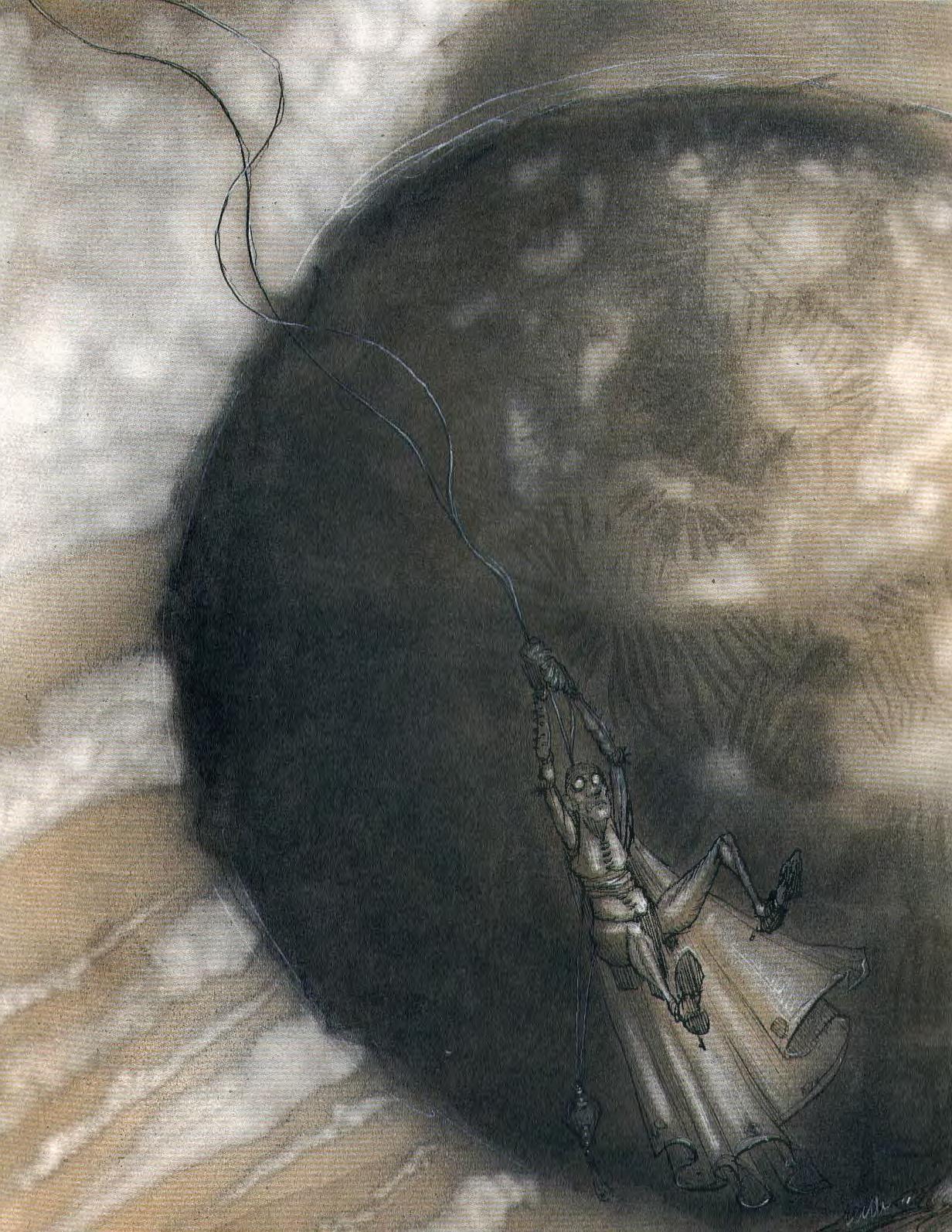
Othrys has an additional hazard none of the other layers seem to share. Here, the greatest danger of the void is the music. Experienced planeswalkers say that an eerie tinkling, as of slightly off-kilter bells, occasionally echoes across the weary void, promising a heart's desire to the unwary mind. Whether the wish is for fame, power, or fortune, a body unprepared for the lure of the bells is usually never seen again. Only one soul, Vyaki Laisamen, has fought the influence of the bells and returned. Vyaki's mind is intact, but the wound on her psyche was enough to keep her from travel for years. (Others may not be so lucky: the sound of the bells requires a DC 15 Wisdom saving throw or the poor sod suffers a -1 penalty to Wisdom saving throws, permanently or until cured by a greater restoration or heal spell.)
Vyaki reports that away from the orbs of worlds in Othrys, an endless gulf holds immense beings of monstrous appearance, exiled long before the Titans were even conceived. No other record of these creatures exists, but the legend serves as additional warning to any sod who'd wander between the orbs of Carceri.
The orbs of Cathrys are smaller, with about 500 miles between them. The gulf isn't insurmountable, but it does make travel more troublesome. Minethys' orbs are smaller yet, with over 5,000 miles between orbs. However, the trip's far easier here, 'cause the winds that scour this layer often pick a body up and whisk them along to another orb. 'Course, there's no guarantee of a soft landing...
Colothys boasts even smaller orbs, with nearly a half-million miles between the spheres. The totally irregular shapes of the orbs make it really difficult to gauge where their sphere of influence begins. Many a basher has fallen to their doom because they didn't quite figure the right time to start preparing themselves for landing.
Porphatys, among the coldest of the layers and definitely the wettest, stretches a distance of millions of miles between its orbs. The greatest danger between orbs of the layer is the black snow that sweeps through the layer in huge clouds. A body hoping to travel here'd better have something that repels acid, 'cause the snow eats through flesh fiercely quick. A wind blows before each snowstorm, so a cutter can get away from the snow before they're trapped in one of the dread storms.
Agathys, the darkest and the deepest of the layers, is also the coldest. The orbs are so far apart that not even the faintest glimmer of light from the neighboring orbs makes it through the void. The only way to tell where the next orb might be is to ride the wind until a body gets there.
Othrys, Titans' Home
"White marble this, white marble that... if they're so powerful, why don't they get it themselves?"
shortly before his oblivion
The outermost layer of Carceri's six is the best known of the lot, mostly for its famed inhabitants the Titans. Groups of sods travel here seeking the advice of the exiles. Some of them're even successful, and return to tell the tale.
Othrys Hazards
The Styx runs freely throughout the layer, saturating the ground with its poison. Channels carved into the soft ground through eons of erosion carry the Styx and other native waters, all mixing together in a boiling turmoil of hatred and forgetfulness. If a body needs something to drink, they'd best pray they brought their own liquid, 'cause one stream looks much like the next.
Quicksand (DMG 77) and boggy terrain fill the layer of Othrys, much of which drags a visitor down almost before they know they're in trouble. Swamps extend across the layer, even unto infinity. Though patches of dry ground exist. the swamp definitely dominates. Mountains break the monotony of the terrain on the orbs, and these hold the domains of the Titans. Though some petitioners have been brave enough to try to build here, most steer clear of the jagged terrain. Better to endure the swamps and the quicksand than the wrath of a Titan, they figure. And they're making the prudent choice.
Othrys has few natural hazards, especially when compared to the other layers. The swamps themselves are plenty dangerous, especially since the quicksand patches can be 2 feet or 2,000 feet deep. The quicksand glows with an unearthly green light, but it's most often covered by patches of sticks and grass that hide its true nature (DC 15 to spot them). Certain patches seem to migrate around the layer, and have no known bottom; these patches claim the lives of many travelers, and may never give up their corpses. Occasionally, however, the bleached bones of a victim turn up on a mountainside.
Swarms of mosquitoes and other pesky insects fill the air near the bogs, feeding madly off those who wander too near (as the insect plague spell, save DC 15). A bush called stinkweed produces a clear, viscous fluid that keeps insects away, but it's fairly effective on humans, too; its juice acts as a stinking cloud spell (save DC 15).
Denizens of Othrys
The people here are as treacherous as the ground. The layer imprisons those who lied to and betrayed their followers—politicians, religious frauds, and traitors. They're all smooth talkers, very charismatic, and they won't take no for an answer. They're persistent and outwardly friendly, but a body should always remember that they've got only their own best interests at heart. In fact, they do their best to charm their way into a person's heart just for the pleasure of betraying
them later. They practice on each other, and even though they know their fellows can't be trusted, deception is a habit they find impossible to break. So naturally, they're overjoyed when they find travelers on whom they can practice their treacherous trade.
Villages of the layer consist of wood cut from the tiny mangroves and cypresses of the nearby swamps. Most are built miles away from their neighbors, constructed on high stilts so that the houses won't be inundated when the swamp water rises. Each village has its own form of government, and carries on a kind of diplomacy with its neighbors. Raiding parties and wars are common, and the traitors on all sides make the wars fairly interesting and spiffingly bloody.
Yet another problem with the area—the bogs attract trolls. Though trolls aren't native to the plane, a few were imported from the Prime long ago, and they've bred prolifically. They lurk in the quicksand and the swamps like alligators, ready to seize on the unwary who pass too close. They also prey on the unfortunate petitioners who leave the safety of their stilt villages.
The trolls don't go into the mountains, partly because they find the swamp much more to their liking. But mostly it's because the Titans don't encourage visitors, and they find the trolls particularly offensive.
Bastion of Last Hope
Settlement (Town)
- Location: Othrys, Carceri
- Population: Around 5,000
- Character: Trust no one. Your best friend is yourself, because everyone else has their own agenda. If you find power that's not your own, tear it down before it's used against you.
Tucked away in the mountains of Othrys, the Bastion of Last Hope serves as a sort of outpost for anarchists. Here a traveler can obtain all manner of forged documents, surgical alterations to aid a permanent disguise, and various other nefarious goods and services. It is a good place to find assassins, spies, and others of ill repute. But cunning travelers remember that they're on a plane full of traitors, so they trust no one within the Bastion's walls.
Physical Description
The Bastion squats far back in the mountains of Othrys. It's made of black, igneous rock that seems to soak up the reddish glow of Carceri. Though the tower doesn't reflect the red, the light lends the Bastion an aura of brooding menace. From certain angles, the Bastion resembles nothing so much as a huge, squatting toad. The only entrance (at least from Carceri's dim layers) is through the toad's mouth, and its low-set eyes serve as the watchposts for the guards. Inside, the decor's black, dank, and dark. Precious little light shines within these walls, because it seems the Anarchists don't really want any shed over their plans and their identities. Indeed, most of 'em go masked throughout the Bastion.
The passages through the Bastion turn and twist without apparent order, and side tunnels appear out of nowhere. Hangings are drawn across the openings of rooms to protect the privacy of those inside. The walls're usually humid and damp to the touch, and it's surprisingly warm inside, though not uncomfortably so. The floors are uncommonly smooth, but it's apparent that a chisel's never touched the door. Chant is the tunnels extend deep into the mountain on which the Bastion rests, though some say all the twisting and turning within the visible fortress only makes it seem so ungodly immense.
The passages break out into cavernous chambers without warning. The main one ("Right about where the heart'd be!" some mutter) is used for audiences with all the members in residence, while others're used for food storage, lesser audiences, housing, healers, forgers, and outfitters.
Bastion Inhabitants
Originally established as a stronghold of Sigil's Revolutionary League, the Bastion of Last Hope has grown to become the de facto trade hub of Carceri as a whole. The Bastion is home to all manner of Tarterian dwellers, ranging from humanoid anarchists to the magic item-fencing Jackals to unaffiliated petitioners and adventurers looking to make a name for themselves.
The Anarchists. The Revolutionary League reflects a well-equipped organization, made more so by the fact that there are a lot of high-ups in Sigil who provide the Anarchists with funding... even if they don't agree with the organization's goals. See, these bloods use the League to frighten their opponents, but they can't do that unless the league's frightening enough. The Anarchists take these gifts gladly and, often as not, use them against the berks who supplied 'em. The Anarchists don't like being told what to do.
The Jackals. The newer players in town are the Jackals, a criminal organization that deals in the smuggling and fencing of magic items and illegal goods across the planes. The Jackals maintain anonymity not through mundane hoods that physically obscure the face, but through a vast collection of jackal cowls that magically transform their wearers to look and sound like the arcanaloth Haldroxoc, who serves as the organization's founder and leader (see the Leadership section below). While inscrutable from an external perspective, the organization itself runs like clockwork, with goods being distributed between various decentralized cells across the planes using a system of manifests protected by illusory script spells (save DC 15).
The Anarchists see the Jackals as crude junk-jinkers who have enroached on their territory just to make a quick buck, while the Jackals see the Anarchists as addle-coved idealists who bang around the Bastion with no real purpose beyond wasting space. However, the Anarchists value the traffic and goods brought in by the Jackals, and the Jackals rely on the Anarchists to move goods between the Bastion and Sigil (see the next section), so there is a relative peace between them... for now.
Other Inhabitants. Beyond that, a group of servants live here, never seeing the light of another plane. They're allowed to leave, but they insist that they're happiest at the Bastion, helping to restore vitality to those who rear down the oppressive structures of government. Either they're congenitally helpful, or they've got more secret motives. Naturally, those who come here suspect the latter, since they're all schemers themselves. The servants are the only ones in the place who don't go masked or hooded.
Naturally, the Bastion also has a decent number of independent bodies that live in the area looking for sanctuary, goods and services, and easy targets for their next schemes.
This makes the Bastion a perfect hub town for adventures that take place in Carceri; between expeditions into the lower layers, adventurers will usually go to the Bastion to rest, restock on supplies, and find new leads on potential claims to fame, power, or freedom.
Leadership
No one actually rules the Bastion, since the Anarchists can't stand anyone telling 'em what to do. However, a woman known only as the Steward, a neutral evil human bandit crime lord has appointed herself as the one who keeps the place in tip-top shape, ready for any contingencies. She's the ruler by default, because she doesn't trust anyone else to do right by the League. She oversees the stocking of the larders and the hiring of various services, and does her best to check out everyone who comes here. She takes her duties very seriously, and claims they were given to her by a long-ago high-up in the League, perhaps even the one to whom all the cells reported. She doesn't abuse her power, but she certainly knows how to use her influence in case of emergencies, and the problems of the Bastion are usually fixed by her.
The Steward's the only one willing to devote herself to keeping the Bastion running, so she's secure in the position. One new arrival hopes to catch her ear and her eye, though. The dashing Razor Jack, a lawful neutral tiefling harmonium captain (MPP 58), wants to tear down the Bastion in the name of the Harmonium, but first he needs to make sure that he can identify enough of the Anarchists on sight so he can turn 'em in when they get to Sigil. For a Harmonium member, he's pretty subtle—subtle enough to pass himself off as an Anarchist successfully, anyway! Of course he can't be trusted, but then, no sod here is trustworthy.
There is one, and only one, planar portal that leads directly to Sigil somewhere hidden in the Bastion—and only the Steward knows where it is and how to open it. As such, the leader of the Jackals, an arcanaloth named Haldroxoc (see Chapter 4), has been forced to pay the Steward to move her goods through the portal so that her interplanar enterprise can continue to function.
Having to rely on some half-head anarchist's portal to keep the jink flowing makes me want to rip my arms off. Trying to claim a gate somewhere else in Othrys didn't go well at all, and the Anarchists outnumber us five to one, so taking them head on is out of the question... dammit, how hard can it be to find one stinking portal?! —H
Defenses
Despite the lack of an organized militia in the Bastion of Last Hope, the Anarchists work surprisingly well together, ganging up with bands of three to six to stop the trouble. If an entire cell of members is here, they work together even more effectively, using the darkened rooms and twisting passages to bring down troublemakers. The definition of troublemaker varies, and conflict sometimes develops between cells, but usually infighting consists of harsh words and cruel jibes. More serious trouble, such as invading fiends, spies, or outright physical warfare between cells, unites everyone in the Bastion against the source of infection.
The power of a cell varies, but the typical group consists of a mage apprentice, a warior veteran, and a scout captain. Very few divine or primal spellcasters make the Bastion their hideout.
Commerce
All manner of services are available here: blacksmithing, forgery, healers, outfitters, food, and anything else a traveler might want. However, most of the prices're pretty high; the services of the League, the Jackals, or anyone else found in the Bastion are for those in desperate need, not for those who have the luxury of shopping around in highly visible places. As a rule of thumb, the standard price for any item or service is about twice that listed in the Player's Handbook, or triple the normal price for food and drink.
Magic Items. For the right price, the Jackals can acquire and sell pretty much any magic item of rare or lower rarity. The base prices are double those listed in the Dungeon Master's Guide (i.e. 200 gp for common items, 800 gp for uncommon items, and 8,000 gp for rare items; halved for consumables that aren't spell scrolls), and additional costs may be accrued for items that require extra efforts to acquire or transport. If an item isn't in supply, it may take up to two weeks for it to arrive from another plane, yielding a minimum 100 gp processing fee per day. This fee only applies to the item in the order that takes the longest to arrive; as such, canny buyers will make sure to buy their items all at once and in bulk.
Very rare items (base price of 80,000 gp) are very infrequently in supply, and if ordered, will generally have to be commissioned from scratch by a Jackal-hired artisan on a different plane. Most very rare items, as well as legendary items and artifacts, will only be able to acquired from the Jackals in exchange for some task/item that requires an adventure to complete/obtain.
Surgery. A blind doctor here, a chaotic neutral human spy master, goes by the name of Blind Trust. He's one of the best face-surgeons anywhere, or so the chant goes. With prices starting at a very reasonable 1,000 gp, he can make a body look like just about anything, and does some incredible magic with paints and dyes. Those who go under his knife definitely come out changed. The only problem is, sometimes Blind Trust gets blind bubbed, or blind crazy. There've been tales of him botching a simple nose change because of his drinking, and others that tell of him just cutting one of his clients to pieces on a whim. Those who take a chance on his operations do so knowing that it might lead to their deaths. Therefore, only the truly desperate seek him out.
Rumors
As the most active settlement in Carceri, the local chant in the Bastion is never dull. Aside from constant reports of spies and infiltrators, the examples below may be of use.
Cavern Terrors. Supposedly, strange creatures are showing up in the bowels of the fortress, wreaking havoc among the rothe herds and their keepers. Though no one has seen these creatures, evidence of their raids is found among the partially dissolved bodies found in the lower caverns, and there's a slowly growing terror among the lesser members of the Bastion.
Paladin's Plights. Whispers of a well-renowned paladin's arrival in the Bastion have left some lesser members uneasy and some high-ups thirsty for blood. So far, no one knows who they might be; if found, they could be a valuable ally for
those who wish to survive Tarterian Depths... or a valuable target whose head might be an easy way to make quite the gad of jink.
Up for Grabs. An anonymous high-up recently purchased a hammer of thunderbolts from the Jackals, but an overzealous gang of thieves attempted to crash its arrival and steal it for themselves. In the scuffle, the hammer was lost—taken, or perhaps misplaced—and still remains unaccounted for. The high-up recently put a 50,000 gp bounty on whoever can return it to them—enough jink to catch anyone's attention, if they're canny enough. Beyond the renewed avarice and temptation that now courses through the streets like blood, the Bastion is buzzing with rumors that this mysterious high-up seeks to use the hammer against the servants of Grolantor, the god of hill giants.
Mount Othrys
Divine Realm
- Location: Othrys, Carceri
- Powers: Cronus, Coeus, Crius, Hyperion, Iapetus, Mnemosyne, Oceanus, Phebe, Tethys, Thea, and Themis
- Character: Scheming and plotting are the blossoms of the flower of revenge. Hatreds millennia old can burst in to flame at a moment's notice; wear your bitter anger like a badge as a constant reminder of what you've suffered, and what you're plotting against.
The highest peaks of the mountain ranges on two of this layer's orbs reach ridiculously high, just bridging the planetary gulf between them. At their intersection is a titanic palace of white marble columns, amphitheaters, and galleries. Here lives a race of titans, banished from the Material Plane long ago by the Olympian pantheon that usurped them.
Physical Description
Mount Othrys rests on the mountains of two different orbs. The mountains are each 50 miles tall, and nearly touch at the tips. Wedged in between the two is the marble palace of the Titans. It's a truly titanic affair, with white marble columns, amphitheaters, and a stoa that has to be seen to be believed. The palace maintains its own plane of gravity. Though its entrance is upwards, a traveler's frame of reference suddenly shifts so that they're approaching it dead on. A body can enter the palace from either side and feel no disorientation. Even though the gravity should shift in the middle of the palace, it doesn't—unless Cronus wills it.
The palace is constructed of white marble, but it's slowly crumbling to pieces. White marble can't be found on Carceri, and the Titans have no way to escape the confines of their prison to fetch more, so they have to watch their handiwork disintegrating before their eyes. It's a horrible feeling for them, and it makes them that much more furious at the Olympian gods who imprisoned them here. Most of the Titans have gotten used to the effect, and they willfully turn their gazes elsewhere. It rouses their ire when someone else comments on the dilapidation, and they'll likely destroy anyone foolish enough to draw their attentions to it—even if that leatherhead has a plan to repair it. (This last part is the reason no one's volunteered to import white marble for the Titans.) The whole place is a twisted echo of the palaces on Mount Olympus: the Titans know it, and it only makes their mood fouler.
Regional Effects
The area on and surrounding Mount Othrys is warped by the Titans' divine power, creating the following effects:
- Entropy Field. The crumbling palace rouses feelings of despair in those who watch it too long. Though it doesn't visibly crumble—'least, not most days—it's a constant reminder of entropy and the way creation inevitably falls apart. Unless a body's chaotic neutral, neutral evil, chaotic evil, or a member of the Sigil factions that celebrate entropy and despair (Doomguard, Dustmen, or Bleak Cabal), they have disadvantage on all Constitution and Charisma saving throws.
- Cruel Hindrance. Whenever a visitor casts a spell with a beneficial effect, including a spell that restores hit points or removes a harmful condition, the spellcaster must first make a DC 15 Charisma saving throw. On a failed save, the spell fails, the spell slot is expended, and the action is wasted.
Mount Othrys Inhabitants
Plenty of creatures from Greek legend inhabit the area around the palace, and the Titans encourage their growth. The Titans make a few of these their special pets, and woe to the berk who kills one! Unlike the Olympian powers, the Titans won't usually set a body to a task for repentance; they go straight for vengeance.
Beyond that, tanar'ri high-ups also occasionally visit Mount Othrys, hoping the Titans'll lend their considerable might to their side of the Blood War. While the Titans treat the fiends with respect (on the surface, at least), it's only because they're hoping that some Abyssal secret may be their way off the plane of their imprisonment. Once the Titans realize a parlicular tanar'ri's of no use to their plans, it's all the fiend can do to escape with its life.
Leadership
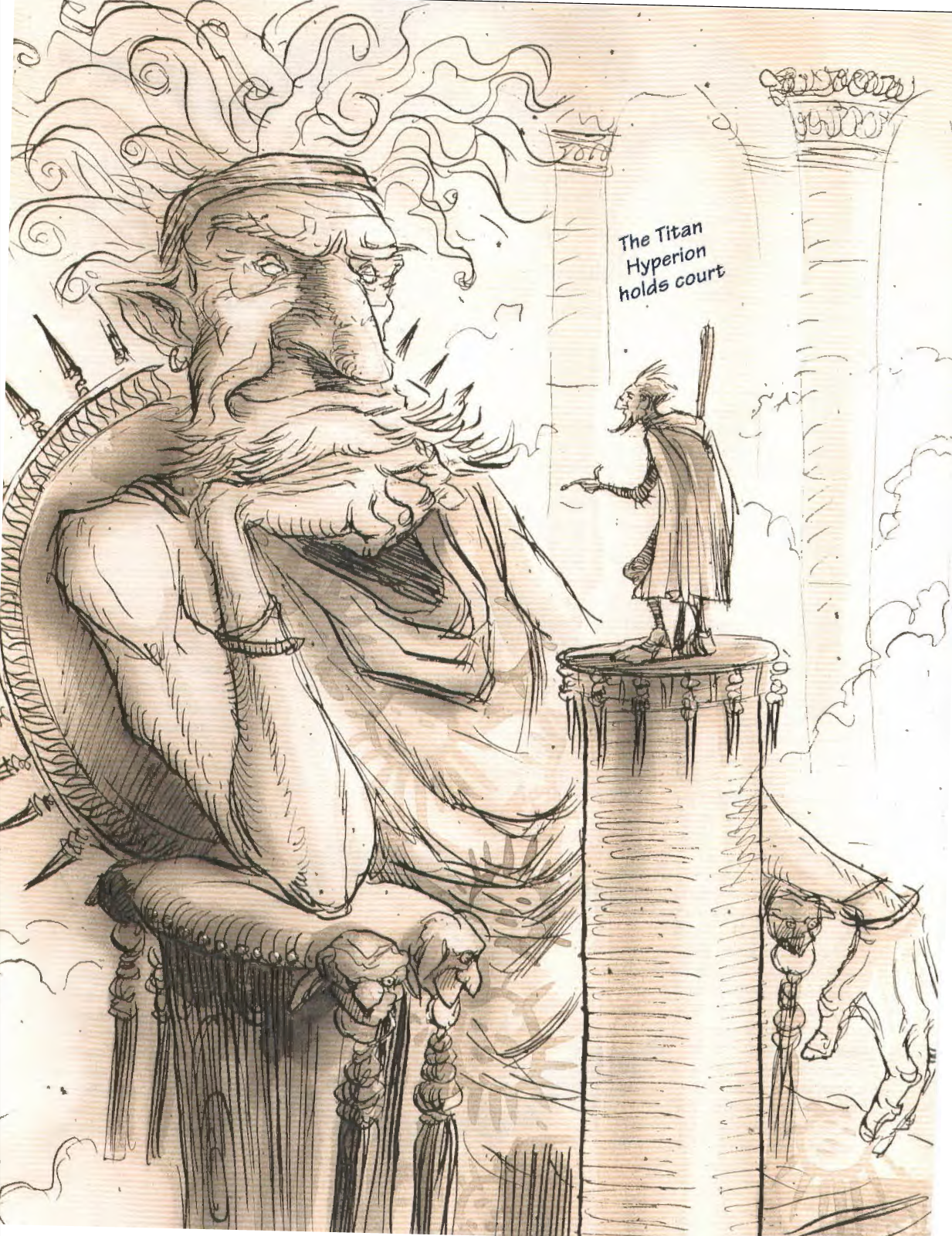
Mount Othrys, as home to the Titans, holds immeasurable power in its walls. The mightiest Titan is Cronus, the father of the current Greek powers. Though he's the youngest of the Titans, he served as their leader after overthrowing their despotic father, Ouranos. He was jealous of his power in the young days of the world, and he's even more fearful of his position now. He rules his ten brothers and sisters with an iron hand, trying to keep them from plotting against him. As a plotter himself, he's constantly watchful for the machinations of his siblings.
Cronus doesn't haunt the great halls of Mount Othrys alone. The other great Titans—Coeus, Crius, Hyperion, Iapetus, Mnemosyne, Oceanus, Phebe, Tethys, Thea, and Themis—all come here at one point or another to pay heed to the words of their youngest brother. Since he wields more power than they do, they've little choice. Still, they aren't always available for any leatherhead to visit, and they resent coming at Cronus' beck and call. They can often be spied storming off from the palace, leaving a swath of destruction in their wake. If approached before they deal with Cronus, they might be in a friendly mood; with the Titans, it's a crap shoot.
Commerce
Small hostels constantly spring up around the palace, housing those who'd seek the Titans' wisdom or advice. Though the places are often smashed by a Titan irked by the latest harebrained scheme of Cronus, they're always rebuilt
within a day or two. The hostels never remain up long enough to attract a village, and so a body finds precious little of use in Mount Othrys. However, those who can the food and supplies to these hostels turn a pretty penny; not a whole lot of people are willing to get that close to the Titans on a regular basis.
Althea Damaskaros, a neutral human war priest (MPMM 254), has recently established a hostel near Mount Othrys, from which she teaches the uninformed about the majesty and glory of the Titans. The only price for a hot meal and a bed for the night is that her guests must listen to her preach about the "only true gods", although donations to the hostel are gladly accepted. For a large donation, she guides devout pilgrims (or those who convince her of their piety) into the Titans' palace itself; the Titans seem amused by her devotion thus far, and allow these tours to continue. Chant is that she's a disillusioned worshiper of the Olympian deities, and she's become convinced that their forebears are much worthier of veneration.
Maybe Κρόνος and the rest of the litter would be five planes away from Tarterus by now if they weren't at each other's throats all the time. From where I'm sitting, Mount Othrys is just one big playpen for them to throw tantrums in. —H
Cathrys, Scarlet Jungle
The sanguine jungles and plains of Cathrys arc fraught with danger and unpredictable hazards. The air's filled with the stench of decay; it's like autumn leaves rotting on a prime world, but it never ends and the stench is much more painful to the nose. Though the stink doesn't cause damage, it's enough to make someone unused to the place wrinkle their nose for a good few hours.
Cathrys Hazards
Why all this rot? The jungle trees ooze a sickly red acid instead of sap, which is identical in effect to green slime (DMG 76), and this eats through nearly anything except those who spend at least a year or two living here, who have developed an immunity to the stuff. It's no wonder, then, that few've tried to pentetrate the heart of the scarlet jungle—a body can't journey through the underbrush without being destroyed by the secretions of the blood-colored plants. Unless somebody discovers some kind or long-lasting protection against this acid, the secrets of the jungle will remain in dark.
The plains of Cathrys, on the other hand, are habitable. They're vast, wind-swept grasslands, arid and dry, with grass blades like jagged swords. A creature that isn't wearing medium or heavy armor takes 2 (1d4) piercing damage when it comes into contact with the grass for the first time on a turn. Still, most stick to the roads that traverse the grasslands; to do otherwise is folly.
Roaming human and hill giant petitioners maintain the roads, since the alternative is to be sliced into ribbons by the grass. Still, the grasslands constantly encroach upon the roads, and even constant trampling won't keep the grass from sprouting everywhere it can. Some say it's just a lesser version of razorvine.
Denizens of Cathrys
Gehreleths and petitioners populate this layer. The farastu gehreleths stick mostly to the jungle, since they're unwelcome in the inhabited savannah. The petitioners are either servants of the hill giant Grolantor or the despicable humans who ended up here. Of course, the petitioners have an advantage in dealing with the layer; they secrete a kind of slimy second skin, which protects them from the acidic sap. They're able to travel through the jungle, but they usually steer clear of it—it's full of dangers like the vaath, and the petitioners have a superstitious dread of the place. All they know is that the undergrowth harbors creatures that hunt and destroy.
Villages in Cathrys are few and very far between. The buildings themselves are sturdy enough, with canny builders constructing them out of surprisingly durable razor grass, but between everyone's lust for blood and power, food scarcity, and raids from the farastu and hill giants, no established settlement within these villages lasts for too long. Invariably, these settlements will collapse from infighting, external pressure, or both, leaving the petitioners to pick up and move on to a different settlement with the hope that it won't turn them down.
Apothecary of Sin
Located deep in the fetid jungles of an orb of Cathrys is the Apothecary of Sin. The Apothecary is built from cunningly woven scrap wood atop the trunk of large tree, raising the one-story structure high above the waving branches of the acid-laden leaves below. Rope-suspended catwalks provide access above the treetops, though random sections are missing, possibly victims of caustic storms. Mundane and exotic poisons and acids are bought and sold in the Apothecary.
A tanar'ri called Sinmaker runs the Apothecary. Sinmaker is a glabrezu of average abilities, except for his special affinity for acids, poisons, and venoms. He delights in all things poisonous—the more diabolical, the better. All of the poisons described in the Dungeon Master's Guide (page 90) are available in the Apothecary, as well as many special, unique concoctions brought by sinmaker from travelers or synthesized in Sinmaker's own laboratory. Acid is also sold here, by the one-dose vial or by the thousand-dose keg. Neither the size of the purchase nor the nature of the buyer matters to Sinmaker.
The Steading
Divine Realm
- Location: Cathrys, Carceri
- Powers: Grolantor
- Character: The only true strength is the strength in your arm, and you should use it as often as you want to. Show those below you that you're in charge by beating them senseless, and never let'em see your fear.
The most well-known realm in Cathrys is The Steading, home of Grolantor, the power of the hill giants. Though Grolantor has established outposts throughout most of the
other layers, this is his primary layer of influence. The hill giants appreciate the rolling terrain, because it affords them a chance to spy enemies and prey from a long, long distance. No one crossing the territory near The Steading is safe from their depredations.
Physical Description
The realm of Grolantor encompasses a vast number of hill giants and their petitioner villages. It's set in the savannah, with an obvious dividing line between the realm and the rest of the layer. The scarlet grass ends, giving way to earthy brown hills that watch over the realm like surly sentinels. They cluster in chaotic order, but their inevitable focus is the hill in the middle of the realm: The Steading of Grolantor. The huge Steading itself literally covers miles of territory with its rambling wooden halls. It's all connected, and it's only a single giantish story tall.
About 100 hilltop forts dot the realm, separated by miles of grassland. Each is just about as lethal as the others. It's easy to see which of the steadings have Grolantor's favor at the moment; they're the ones with well-fortilied stockades and a prosperous look. Those that don't enjoy Grolantor's favor look weather-beaten and ratty, ready to collapse at the slightest touch. Since the giants raid each other when they've got no other foes to destroy, they all eagerly seek to gain Grolantor's favor at the expense of their neighbors.
Regional Effects
The area containing The Steading is warped by Grolantor's divine power, creating the following effects:
- Abundant Food. Crops and domestic animals grow and reproduce quickly within the region.
- Empowered Hill Giants. Hill giants in the region gain a +10 bonus to attack and damage rolls.
- Hidey Holes. Holes large enough for a Medium or smaller creature to duck into litter the ground of the realm. Some of the holes are burrows, dug by some unknown creature, while others seem to be naturally occurring. It's not always advisable for a body to climb into these holes if they're being chased by giants, though; obviously, some hungry creature might be in there. But it's the strange paranoia that befalls a body hiding in a hole that's the real problem. It causes a berk's mind to turn to that of prey, imposing a -10 penalty to their initiative roll if they choose to stay and fight, and a +10 bonus if they choose to flee. This effect lasts for 2 (1d4) weeks after a body leaves the region.
Steading Inhabitants
Roaming bands of hill giants scour the realm, bringing down rhe lions and mammoths that roam here, seeking food for their god's insatiable appetite. If the patrols encounter intruders, it's a toss-up as to whether they kill the interlopers, leave the berks alone, or bring 'em into Grolantor's steading. If a body's taken to the steading, there's no telling what'll happen to them; they might be food for the god, granted treasure in hopes of winning nongiants to Grolantor's cause, or simply slain outright. If a body's a dwarf, they might as well forget about making it out of here alive—the hill giants of the Steading seek nothing more than the utter extermination of all dwarves.
Some of the hill giants wear severed human or demihuman feet as lucky charms. They don't hate humans, really, but they regard them much as humans regard rabbits; irritating nuisances that are occasionally good for trade or supplies, and that sometimes make amusing pets. Usually, though, all the humans make is tasty food.
Leadership
Grolantor, an intermediate power, rules The Steading. He's one or the more dangerous powers of Carceri, but he's too foolish to use this to his advantage. Though he has access to abilities that'd make any mortal quake in their boots, he seems determined to destroy himself with his willfully stupid schemes. Grolantor splits his time between this plane and the Abyss, where he's got another set of steadings, but he prefers the grim moods of Carceri to the mindless chaos of the Abyss.
Beyond him, the most important hill giant a traveler's likely to run into is Onazak Throateater, a chaotic evil hill giant avalancher (BGG 157). Though she was chosen to be a proxy based on her strength, she's also far more intelligent than she lets on, and she won't hesitate to manipulate anyone who gets in her way so that she may play giantish politics in any way she sees fit. She roams the realm promoting disunity among the various stockades, thus turning the giantish attentions ever closer to their power as each seeks a leg up on the others.
Commerce
Almost nothing here appeals to travelers, which is another good reason to stay away. Everything's geared for giants, and the steadings pretty much stick to themselves—unless they're teaming up to put a rival steading in the dead-book.
Prices vary widely between the hill forts, as does the quality of anything a body finds there. Though the list of useful items is short, most forts offer vaath skins, and others provide equipment made from vaath parts.
Minethys the Blasted
Cold deserts and cutting winds characterize this layer. It's a harsh, bitter place, where the greatest dangers lie not in the creatures that inhabit the layer but in the conditions of the layer itself. At least there's no sun above to parch the thirsty throats of the inhabitants.
The wind, like that of Pandemonium, never ceases entirely. It has stripped the layer of plant life, destroyed the soil, and turned the ground into sand. Now, the wind carries the stinging particles of grit into the soft tissues of anyone stupid enough to visit or unfortunate enough to live here. Clouds of dust choke any visitor who lacks protection against the dirty land.
Minethys Hazards
The skies are foul with the yellow dust, which combines with the sanguine glow of the orbs to create a hellish orange cast that blankets the layer for days on end; berks who don't expect these conditions find themselves in a blinding world of foul fumes and choking sand. A creature that starts its turn in a dust storm without its nose and mouth being covered (e.g. by a wet cloth) must succeed on a DC 15 Constitution saving throw or become incapacitated until the end of the turn.
There's another danger, too: the driving winds kick up the sand grains hard enough to flay flesh from the bone, and anyone without the protection of heavy clothing might as well
kiss their skin goodbye. A creature whose skin is exposed takes 3 (1d6) slashing damage at the start of each of its turns; not even the petitioners are immune to this.
Then the tornados come, as frequently as one every tenday, carrying the effect of a DC 20 whirlwind spell in a much larger area. They carry everything in their path to an adjacent orb, wreaking untold havoc along the way. Anyone hoping to ride one of these tornados is welcome to try, but only a few souls have survived the attempt.
Denizens of Minethys
The petitioners of Minethys are miserable; they're greedy sods, and they won't share anything with anyone unless they're paid for it. Since there's not much use for jink here, they barter for services and rags for protection against the wind. The strong are those who manage to gain the service of many; their sand-built huts offer the best shelter from the wind, though this means nothing in the path of the cornados. They're a hard lot, and they'll bob a body for all they're worth, if they let 'em.
The other inhabitants include the gautiere, a race of humanoids that roam the unforgiving wastes bundled in their rags and rages, and the fomorian petitioners, who sally forth from their power's realm to take vengeance in the name of their god.
Sand Tombs of Payratheon
Payratheon is the name of a vanished city built on an orb of Minethys eons ago. That city is long buried, but its sand-drowned avenues, crumbled towers, and silted porticos still remain far below the shifting surface of the layer. Sometimes the shifting sands reveal Payratheon for an hour or a longer, but it is always engulfed again by the sands, smothering most creatures who were tempted by its appearance and entered the sand-blasted city.
Particularly resourceful adventurers have burrowed down to find outlying suburbs of the city during its phases of submersion. Tales of terror walk hand in hand with these accounts, which tell of dragonlike "sand gorgons" that swim through the sand as if water. Also mentioned are the remnants of former inhabitants that force their way through the streets as petrified undead, so weathered and eroded that little can be discerned of their race or original size.
Note to self: never return to Minethys. It took two hours to clean all of the sand out of my fur, and that was with a very liberal usage of Prestidigitation. Even I wouldn't wish that upon my worst ene TODO: is there a spell that can curse someone with constant sand in their hair? —H
Colothys, Climber's Doom
"It's not so much the fall as the landing that'll get ya..."
Mountains that defy imagination form the irregular orbs of Colothys. They reach literally hundreds of miles into the sky, their sheer slopes thwarting even the most dedicated mountain climbers.
Colothys Hazards
Shrieking winds howl through the gorges, making crossing the rope bridges a treacberous matter at best. Even the stunted trees that grow at right angles from the canyon walls are hard-pressed to hold on. Only the occasional plateau grants a respite from the constant fear of falling. Long ago, some enterprising souls got it into their heads that trade routes'd be a good idea; they carved some thin (about 1 foot wide) paths in the sides of a few mountains, and then decided it was too much work, especially for the ungrateful sods who live here full-time. Still, others've gotten the same idea, and if a body's lucky, they'll find a path carved into the mountain. Of course, the path might lead to a gehreleth's lair, but that's the chance a berk's gonna have to take.
Denizens of Colothys
The denizens lead hard lives, clinging tenuously to the sides of the canyons in tiny villages. The petitioners are the spirits of liars and cheaters, and death hasn't improved their dispositions any. It's just that some of 'em have learned to be subtle, while others are more blatant.
Rope bridges hang between canyon walls, and the rare ledges on the mountains are treasures that the residents constantly fight over. It's an exceptional day without some battle or another between the villagers; they raid for food, water, supplies, or just because they feel like killing. Each of them trusts only to their own skills on the sheer mountainside, and stands ready to kill at the slightest provocation.
They'd live in the base of the canyons, but avalanches, wandering gehreleths, and the disorienting, almost-hypnotizing caves that lead to the realm of the King that Crawls make this untenable at best. Bad things just seem to have a way of happening to those who make their kips in the canyons, so no one wants to live there. 'Course, some sods live there anyway; they're exiles in the land of exiles. They trust no one, and are trusted by none in return.
Garden of Malice
The hanging gardens of Colothys are found on a single orb of the layer that travelers would do well to avoid. To the inexperienced eye, many of the cliff faces and sheer slopes of this orb are home to thick vines and tubers that sprout a riot of beautiful flowers. Characters who attempt to collect samples for their botanical collections quickly learn that the vines are animate, as the Vicious Vine hazard (DMG 78), and determined to wring the life from any creature that would dare to use them as climbing aids, defoliate the flowers, or even move too close.
It may be that the animate vines represent one large organism that has grown through the eons to cover one whole orb. Once every six hundred days, the vines release tiny seeds into the air that look like dandelion fluff. The winds of the layer often send the seeds blowing across several hundred other orbs of the mountainous realm. Though many are eaten by vermin, many other seeds have also found nourishing soil, and have sprouted tubers in small nooks and forgotten cliff-faces on other orbs.
The Land of the Hunt
Divine Realm
- Location: Colothys, Carceri
- Powers: Malar
- Character: The hunt is everything. A sod is either predator or prey in the hunt of life, and anyone who doesn't hunt is in his turn hunted.
The Land of the Hunt, also known as the Hunting Grounds, is a realm where nothing matters beyond the thrill of the chase and the carnage it brings.
Physical Description
Malar's realm is fairly small, as realms go. Here the land's a little less rugged than most of Colothys, and it contains more greenery. Actual paths wind through the mountains, and the canyon bottoms are habitable, though most of the residents gather in the caves that permeate the rock walls.
Regional Effects
The area containing The Land of the Hunt is warped by Malar's divine power, creating the following effects:
- Fair Game. Malar might be a cruel power, but he is nothing if not fair. Creatures in the region can't be targeted by divination spells or perceived through magical scrying sensors, and spells like invisibility that automatically conceal their presence fail as well (spells like pass without trace still function, as they only improve the odds of success, rather than guaranteeing it). Furthermore, spells like rope trick and Leomund's tiny hut that provide a guaranteed safe haven also fail.
- Predator Instincts. The air in the region bears a strange quality. It carries scents and sounds far more easily than most places, but only for those who have a predatory instinct in them, or for those who're tied to nature somehow. Thus, a druid or a ranger experiences some sensory sharpening, while an ordinary berk doesn't. This translates to a +5 bonus to initiative rolls whenever they are the ones initiating a combat encounter.
Hunting Grounds Inhabitants
Game wanders through the realm, ranging from rabbits to elephants, and great cats and wolves're also common. Anytime a body needs food, all they need to do is hunt. It's a strange truth in Malar's rea1m that any prey hunted is going to be as strong, if not stronger than, the hunter. The hunter has to show cunning and foresight to take down their prey, and they've got to wear it down before they close in. The more brutal the kill, the better the quality of meat on it.
When it comes to sentient life, the towns of the Hunting Grounds are not really towns, as such. They're caves hewn into the rock canyons in which packs of Malarites dwell and rest between hunts. Hundreds of dens cluster in the mountainsides, holding packs ranging in size from four to 4,000 in number. They arrange themselves in pack hierarchy, with one male or female dominating the group. Any member of the pack can challenge the leader at any time; duels are, of course, to the death.
Leadership
Malar, also known as the Beastlord or the Huntsman, is a lesser power of Toril that controls the Land of the Hunt. He's a wild, feral power, one who's more than willing to tear the guts from his enemies with his own hands—and lick the same hands clean. He's barmy by human standards, but that doesn't seem to deter his worshipers.
Malar usually appears as a great cat, but whether a tiger, panther, or jaguar his coat is always matted with blood—his own and that of others. Great scars line his pelt, evidence of his battles with creatures beyond the imaginings of most mortals, as well as his fellow powers.
Unlike many other powers in Carceri, Malar is not chained to his realm—he is free to scour the planes in search of worthy prey to hunt and kill. His imprisonment, if it could be called that, is not physically bound to the plane, but rather to his eternal dissatisfaction and the constant search for the ultimate prey that'll never reach its end. After all, a true hunter values the act of chasing one's quarry over anything else; the capture or killing of the quarry marks the sudden, unfortunate end to this chase.
Once every hundred years or so, Malar will host a grandiose competition called the Hunter's Game, where eager mortals from across the Material Plane and beyond are gathered in the Hunting Grounds and pitted against each other with the goal of finding the strongest hunter amongst them.
As for the mortals, a chaotic evil human archdruid (MPMM 48) named Guilder Starkad leads the primary den in the Land. He's a nasty blood, both cunning and cruel, but he's also one or the few people in the realm a traveler can deal with. If he doesn't decide to have a body strung out for the buzzards—or worse, chased through the mountains by his pack—he can even be helpful.
Shandalara Wolfkin, a neutral good half-elf illusionist wizard (MPMM 263) of Toril, accidentally stumbled into a conduit that sent her to Colothys. She makes the best of her situation by doing her best to sabotage the dens of the Hunt, and she gladly allies with anyone who's got the power to damage them further. She never sleeps in the same place twice, because she's always being hunted. She doesn't trust anyone 'till they've proven themselves to her.
Commerce
Some dens in the Hunting Grounds allow visitors, and even encourage trade. These dens export animal furs and import things like metals and other crafts that the Malarites have no talent for. Of course, a merchant seeking out each den to see if they wanted to trade would have to be downright barmy...
Porphatys of the Black Snow
Shallow ocean and black snow cover Porphatys. It's bitterly freezing, and the only land consists of tiny sandbars that barely rise above the waters of the ocean. Occasional peaks in the sandbars form tiny islands; they're riddled with caves and jealously sought after by everyone who lives here.
Porphatys Hazards
The layer is always bathed in mildly acidic precipitation; a creature that isn't wearing thick clothes for cold weather takes 3 (1d6) acid damage when it comes into contact with the precipitation for the first time on a turn. Petitioners of Porphatys are always quick to avoid the Mists of Ravenloft, which cling to the waters and wander the layer aimlessly in search of new victims to pull into the Domains of Dread.
Denizens of Porphatys
The petitioners crowd the sandbars and the odd peak, forcing each other into the acidic ocean and feeding off the bodies of other petitioners, all in the interest of their own survival. The acid snow and the waters of the ocean don't do any physical damage to the petitioners, but the acid certainly causes some measure of anguish; they've got absolutely no desire to bathe in Porphatys' waters. Any attempt at permanent shelter on one of these sandbars is inevitably destroyed; the only reward for surviving the constant attacks from envious petitioners is being swallowed up by the mists.
The Titan Oceanus maintains a half-sunken temple to himself here. He doesn't tolerate visitors, and makes titanic waves to crush unwelcome berks. Only those who've been invited can come here without fear of retribution. And besides, Oceanus is notorious for his rants and raves against Poseidon, his Olympian replacement. Unless a body's willing to sit and listen to Oceanus' diatribes (which span eons of hatred), they're better off not coming here at all.
Ship of One Hundred
A ship rides the cold swells of Porphatys' seas, called the Ship of One Hundred, though in some accounts it is referred to as the White Caravel. It appears as a ghost-white caravel unmanned by any visible crew. It wends between the islets of many orbs (somehow disappearing on one orb and appearing on another), picking up stranded souls and other travelers who are brave (or foolish) enough to brave passage.
Passengers soon discover that apparently no one moves on board the craft. The lower deck and hold are stuffed with exactly one hundred unadorned stone sarcophagi. No one has ever successfully opened a sarcophagus and lived to tell the tale. Any time this has been tried, some unrecorded calamity devours all creatures currently on board, and the next time the ship puts in at a new port it is utterly empty of life. Stories have it that the ship seeks to deliver its terrible cargo, but it waits for the end times to do so.
Between the "cleansings" that occur when the curious try to open a sarcophagus, travelers (mostly petitioners, tanar'ri, or other creatures) infest the ship. Some make it their temporary home, happy to move from place to place by whatever mysterious force steers the ship. These denizens take a very dim view of visitors who want to open a sarcophagus.
Agathys, the Ice-Bound
The dim light of the sixth layer reveals a land of cold and biting ice. There's no natural warmth here; it's cold enough to make a body long for the fires of Gehenna. It's said that the ice comes from the dripping waters of Porphatys above, and it's certainly no dark that eating this ice is like drinking acid.
The only portals into Agathys are found in the deepest parts of Porphatys' black sea. Only those prepared for the acidic waters can even contemplate making it through to Agathys. Besides, who'd want to?
Agathys Hazards
Any creature that isn't wearing thick clothes for cold weather takes 3 (1d6) cold damage when it comes into contact with the freezing air of Agathys for the first time on a turn. The air is also rarefied, deathly hard to breathe; creatures that travel any faster than a slow pace must make a DC 10 Constitution saving throw every minute, suffering one level of exhaustion on a failed save.
Denizens of Agathys
Agathys serves as home to false friends and betrayers of secret confidences. The layer's cold mirrors their hearts, as cold as the friendships they've destroyed with their lies and false pretenses. The most well-known petitioner is a cross-trader named Dalaphen, who is a chaotic evil human spy master. Dalaphen roams the icy wastes, never staying in one place long enough to be frozen to the ground. That's the real danger here; those who stay in one area too long get overtaken by the creeping ice. It's nor uncommon to see portions of a body jutting above the ice. Naturally, Agathys echoes with the sound of still-living victims being crushed between ice floes, and their shrieks echo across the wastes. They promise the world to someone who can help 'em, but sure as ice, they'll betray that promise for something better.
It's rumored that a place hidden away in Agathys holds all the secrets of the gehreleths, with their creator and power Apomps living in its center. Supposedly, Apomps itself is a grossly disfigured baernaloth, who created the gehreleths in revenge for being cast out from yugoloth society. But even if a body could tind this hidden site, it's doubtful Apomps would appreciate the company.
Necromanteion
Divine Realm
- Location: Agathys, Carceri
- Powers: Nerull
- Character: Life is nothing more than a burning sickness inflicted upon the world. If you are living, recognize your vile nature for what it truly is and repent. If you are not, rejoice, for you are amongst those who share your vision of a better, lifeless world.
A black citadel carved out of ice is the focus of the greater deity Nerull's realm. Nerull is a deity of death and is called the Reaper, the Foe of All Good, the Bringer of Darkness, and similar names.
Physical Description
Petitioners are frozen flush into the floors, walls, and ceilings of the Necromanteion, just as they are in the surrounding ice. The deserted entrance to the Necromanteion leads quickly to a wide hall called the Hidden Temple, which crawls with undead of all types. The pallid, green glow of gibbering ghoul-light lanterns illuminates the area, which has hundreds of
onyx altars evenly spaced around it.
Small tunnels lead deeper into the ice of the layer, supposedly connecting to vaults of horror so ghastly that even the demonic priests shy from exploring their depths. Otherworldly wailing and whispers rise up from the depths.
Regional Effects
The area containing the Necromanteion is warped by Nerull's divine power, creating the following effects:
- Power of the Grave. Undead in the region gain a +5 bonus to attack rolls and ability checks, and living creatures in the region can't regain hit points.
- Whispering Depths. Any living creature who takes a long rest in the region must make on a DC 10 Wisdom saving throw; the DC increases by 1 for each subsequent long rest. On a failed save, the creature sleepwalks towards the tunnels that lead into the depths of the ice; if no one intervenes, they will wake in a lightless corridor deep in the tunnels that can't be navigated without external assistance.
Necromanteion Inhabitants
Demonic clerics throughout the halls chant stanzas of a ghastly necromantic ritual. Besides chanting, the demonic priests spend endless hours attending grotesque experiments on necrotic flesh piled on the various altars.
The Hidden Temple has several satellite chambers. Some hold food and quarters for the demonic clerics, others have cells for living captives destined to be strapped onto an onyx altar (or become food for a hungry cleric), and in some are special vaults where the relics of Nerull's faith are sealed away.
Leadership
Nerull's throne stands at the center of the Hidden Temple. Woe betide the character who disturbs Nerull, a rust-red skeleton wearing a dull black cloak. Always clutched in Nerull's skeletal hands is his sablewood staff, Lifecutter, which projects a scythelike blade of scarlet force that has the power to slay any creature.
Commerce
Those who share Nerull's vision of a barren, lifeless world can find fellowship amongst the cultists of Necromanteion. A myriad of foul items, such as instructions and material components for necromancy spells and vile rituals, can be purchased here. Gold is accepted, but a far more common currency is that of the flesh; fresh or ice-preserved corpses are usually worth 50 gp each, and living beings to be sacrificed or experimented on are about 250 gp each, or 500 gp for humanoids.
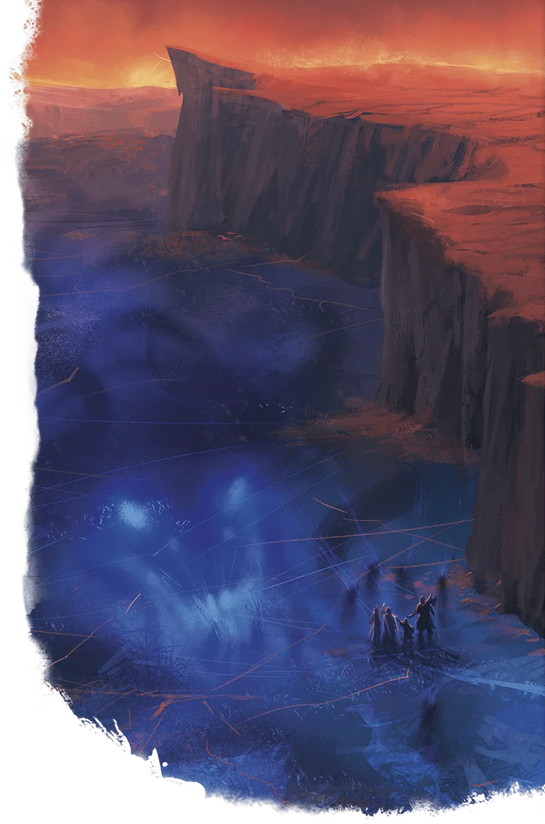
There's something so dull about powers like Nerull that base their existence on necromancy and undeath. With illusions, you can pick anything your heart desires and bring it forth into the world; with necromancy, you're stuck working with bones and rotted flesh and poor sods' broken spirits. Jeez Louise, they're literally beating a dead horse!
And no, this doesn't have to do with my grudge against the Vecnans. I just think their craft is unimaginative and uninspired. And boring. And unbearably melodramatic. And stupid. And so incredibly mindless that even the simplest of illusions can foil their plots. To shame! —H
Escaping Tarterus
Wait, did you think escaping the Red Prison was as easy as hacking and slashing your way to an exit portal? Hah! That sort of mindset will keep you here forever, friend. If you really want to give Carceri a laugh and get out of here in one piece, you'll need to surpass whoever stuffed you down here in the first place.
Hamartia
Every creature that enters Carceri—yes, every creature—has a hamartia, or tragic flaw, that is either responsible for or exacerbates the conditions of their imprisonment. Until a creature experiences significant growth that allows them to heal from, free themselves from, or otherwise overcome their hamartia, they are trapped in Carceri, unable to escape by any means.
Defining Tragedy
In Greek tragedy, a character's hamartia is the fatal error or flaw that leads to their tragic downfall. Whether it is specifically a flaw or an error is a matter of literary debate, for a personal characteristic's influence on the creation of the tragedy need not imply a moral failing or culpability on their part, nor an indictment of the characteristic in question. A character's downfall may indeed come from a personal vice—for example, pride, envy, or greed—but this downfall can only be tragic if the vice is not only realistic, but also intertwined with and inseparable from their positive traits. Similarly, the error that leads to this chain of events must indeed be an error made in good moral faith, for otherwise the tragedy amounts to nothing more than the deserved consequences of a character's awful actions.
Consider, for instance, a protagonist whose struggle with alcoholism leads to the loss of their career and family. If this protagonist has always been a cruel, self-serving bastard, watching their life fall apart would be more akin to catharsis than tragedy. If this character was instead gentle and kind-hearted before the alcoholism made them bitter, their hamartia could be described as the addiction itself, but perhaps it would be more accurate to assign this label to the initial cause of their addiction, e.g. a need to cope with large amounts of stress or grief, and the common tendency for humans as a whole to seek out unhealthy habits and addictions that numb them to this stress or grief. In this case, a defining characteristic of the tragedy is that the protagonist's downfall did not start because of a conscious moral failing on their part; their alcoholism was derived from a universal emotional need and spiraled into a terrible, life-destroying addiction.
While addictions are indeed painfully human, they often deprive those who suffer from them of agency; another defining characteristic of a tragedy is that it could have been averted (knowingly or otherwise), but the hamartia in question meant it ultimately wasn't. Consider now a protagonist whose desire to help everyone leads to them being used and discarded by the villain. Their hamartia could be identified as
their naivety or people-pleasing behavior, but it could be this very behavior that makes the protagonist likeable and the audience invested in their good fortune; to try and create a dichotomy between these two story elements could in fact weaken the foundation of the story. Their hamartia could also be identified as the initial moment where their connection to the villain is established; if the character doesn't know they are indeed helping a villain, but the audience does, a strong dramatic irony is brought forth that creates the tension and dread leading up to the tragic downfall in the first place.
With this in mind, I would personally consider a character's hamartia to be the couplet of the fatal error made in good faith, and the likeable or relatable, yet fatal flaw that prevented this error from being averted. This could be considered a non-committal answer to some, but it could also serve as a warning against placing interlinked story elements into separate boxes and thus missing out on the big picture.
Hamartia in Carceri
Carceri, of course, does not care for the minutia of Greek theater. It is, at its core, a deeply evil plane that serves not just as a backwater prison for the worst exiles of the multiverse, but also to corrupt those exiles into vile betrayers who are doomed to wander its layers for eternity. It seeks not to facilitate your betterment and allow safe passage for the innocent and worthy—such an outcome is to be avoided, not embraced. No matter the reason for one's imprisonment, Carceri will always, always try to keep you within its gullet until you are fully, irreversibly digested.
When a sentient creature enters Carceri, even if it does so willingly, it is metaphysically bound to the plane by its hamartia, which can be succinctly defined as whatever is holding it back the most. If an enemy exploits a creature's vices or weaknesses in order to banish it to the Red Prison, it is most likely those vices or weaknesses that keeps the creature trapped here. If a creature enters Carceri willingly (e.g. in search of a powerful artifact), the plane will instantly know the creature's most glaring vulnerability and sink its teeth into the creature for as long as that vulnerability continues to fester.
While there is a dim awareness of the need to surpass your jailors in order to escape, denizens of Carceri that aren't gehreleths do not know of the prerequisite to surpass one's hamartia. This is in part due to the nature of the previously mentioned inescapability; when a body seeks an exit portal before overcoming their tragic flaw, they will be overcome by hazards and foes along the way, inexplicably diverted from their route, or even unable to see or interact with the portal even if it is right in front of them. This also applies to anyone traveling alongside a body or sent on their behalf—a nasty high-up can't use someone who is pure of heart to find a portal for them, and an adventuring party has no hope of escaping until all of its members have paid their dues. Thus, most Tarterians will blame their failure to find an exit portal on the unreliability of their source of information, the natural disorientation of the plane's layers and their hazards, or the incompetency of their minions.
The Party's Hamartia
Some might ascribe the malignant cruelty of the Tarterian Depths to some sort of sentient force or being that supposedly controls or personifies its power, although scientific references to such ideas are sparse, if not non-existent; either way, as the DM, it is your job to identify these weaknesses in the members of your adventuring party. To avoid drawing suspicion, do so during character creation as a collaborative exercise with your players, or a few sessions before you know the party will venture into Carceri at the very latest, if possible.
The hamartia mechanic serves to facilitate the personal development a character experiences, but the path to this development must already have been laid out or at least acknowledged by you and the player earlier in the campaign. If you're playing with players who only care for combat or humor, it's less likely that they'll be able to naturally achieve the character development required to escape Carceri, which calls for a reevaluation of the desire to have them become trapped there in the first place.
Ideally, the players will be completely unaware of this hamartia mechanic at first, although rules against metagaming established during Session Zero should hopefully serve as a suitable fallback. Narratively, Carceri works best as the third or fourth act in a five act campaign; the player characters should be at rock bottom, stranded at the lowest point of the pit of despair that their tragic downfall in the act prior has cast them into. Here, they are presented the choice to either embrace their vices and wallow in their misery or pick up the pieces and start anew—and, of course, partake in one final push to resolve the main conflict of the campaign once and for all. This presents the player with a straightforward opportunity for character growth and rebirth that should hopefully be picked up on intuitively. If not, that's okay too—a small nudge in the right direction can be quite effective, if done correctly.
The climax of a character's arc in Carceri should involve some sort of quest, choice, or impactful moment that clearly declares their victory over their hamartia once and for all. When this happens, describe how the character's soul feels lighter and that they sense, deep in their core, that escaping Carceri is now within their grasp. When this first happens, pull back the curtain a bit and tell the rest of the players explicitly that escaping Carceri will require a similar accomplishment from each of their characters as well. A good rule of thumb is to devote a sequence of sessions to be focused on one character at a time, with each one overcoming their hamartia before moving on to the next one; however, multiple characters' tragic flaws being resolved in the same session—perhaps even simultaneously—could also serve your campaign's story quite well. Use your best judgement, and feel free to grant inspiration, a charm or boon, or even a level up as a reward for their efforts.
Once every character in the party has surpassed that which held them down, one final quest for an exit portal is in order; feel free to tie advancement of this goal to the characters' personal quests so as to simplify and streamline the narrative. Once the party escapes Carceri, they are forever free from its clutches and physically unable to return to the plane until the end of their days (or until something goes horribly wrong and a new tragic flaw is developed).
The NPCs' Hamartia
The average NPC in Carceri has virtually zero chance of escaping, but that doesn't make their hamartia any less relevant to your campaign. An NPC's tragic flaw, and the awful trappings and self-serving behavior they fall into because of it, is a defining characteristic that serves a vital role in guiding their interactions during roleplay with the party. A petitioner whose tragic flaw is greed will rarely give information for free, and there's no limit to the depths they'll go to empty someone else's pockets. An anarchist whose wrath brought them down here will be confrontational and short-tempered, always looking for a reason to deem even the calmest of pacifists an enemy to let loose their rage on. Their hamartia needn't embody the entirety of their personality, but when push comes to shove, it will most likely be the deciding factor in the course of action they take, for better or worse (let's be honest—it's probably worse).
If the party wishes to rescue an NPC from Carceri, they'll have to help them overcome the trappings of their hamartia, even if it means getting burned by them until they finally learn their lesson. As such, rescuing more than a couple of bodies is akin to herding sheep, and typically isn't feasible unless they all share similar tragic flaws.
To decide an NPC's hamartia, build off of the failings that led to their imprisonment in the Red Prison in the first place, just as you do with the adventuring party. If making an NPC from scratch, pick out a normal character flaw (e.g. from the tables in the 2014 Player's Handbook) and take it a few steps further. As discussed previously, try to make this flaw relatable or likeable if you want to make this NPC's fall from grace feel more tragic than normal.
Get Me Out Of Here!
Alright alright, I've given you the runaround long enough. Let's send you back home, eh?
Fake Exits
While the plane's natural obscuration of its portals to those not fit to use them is often misattributed to disinformation, there is still quite a bit of deceit and barkle to muck through before you can find a lead that will actually bring you there, as listed in the sections below.
If the party gets duped, it needn't be a total waste of time—their doomed quest to a fake exit can still advance their cause in other ways. They might find valuable loot on the corpses of those poor sods who weren't strong enough to survive whatever perils lie at the fake exit; they could meet an NPC along the way that is actually of use to them; it's even conceivable that a direct clue as to the true means of escaping Carceri could lie at their false destination. If nothing else, the horrors the party faces along the way, and the hopelessness they experience when they discover the truth of their folly, could be the necessary catalyst for them to overcome their flaws.
Layer Links. Whether for fun or coin, the locals will often tell new arrivals about passages that lead deep into the orbs and supposedly exit to a different plane. 'Course, these're actually just the pathways that lead to the deeper layers; it's all just an elaborate way to tell someone to piss off. At least a third of these links are one-way trips, so any leatherhead naive
enough to take the locals at their word will find themselves stranded even deeper in the depths. A cutter who figures out what's really going on with a successful DC 13 Intelligence (Arcana) or Wisdom (Insight) check won't be granted any satisfaction, however; the locals will simply dig their heels in deeper, claiming that some of these links are in fact special portals that only let you in if you "truly believe" in their worth. Most who take these cross-traders at their word don't return, making it impossible to ever really dispel their lies or verify their claims.
Gehreleth Traps. Knowing they are forever bound to this plane, the demodands not only viciously guard any exit portals they know of, but also proactively spread misinformation and lay traps for unsuspecting escapees. When not hunting prey or guarding a real portal, these fiends will build fake exits, both illustrious and subtle, and seed rumors about them across the layers in order to lure in new prey.
Sailing the Black Snow. Many long-time sailors in Porphatys speak of the Mythic Pearl, a cargo ship carrying an unfathomable hoard of treasure that was stranded upon a small island, its riches yet to be claimed by the grubby hands of Carceri's petitioners. The eldest of these sailors claim that the Mythic Pearl made land at a beautiful island oasis whose waters are sourced from and lead to the River Oceanus in Elysium. None who live know of the Mythic Pearl's true fate, nor of the unspeakable horrors that lurk beneath the ice of the oasis waters and lead only to oblivion.
Real Exits
With the merrenloth ferries closed to prisoners of the Tarterian Depths, only a few true exits remain. Many of these exits are guarded by the gehreleths, who sometimes even force petitioners and mortal prisoners—blissfully unaware of its true purpose—to patrol its perimeter for them. A few examples are listed below.
Somewhere New, Somewhere Worse. While not necessarily considered an "escape", some people may find alternative forms of imprisonment to be more favorable than the rather dire conditions of Carceri. Many caves beneath the mountains of Colothys leads to Torog, the Crawling King, whose divine realm/prison in the Underdark is more akin to a maze-like burrow of tunnels that become increasingly suffocating the longer one traverses them. Those who embrace the black mists of Ravenloft that prowl the seas of Porphatys will find themselves transported to a new prison plane whose focus is shifted from mass torment to uniquely individualized suffering. Make no mistake: many of these new locales are in fact "sub-prisons" nestled even further into the Tarterian Depths, and the normal means of escaping them have an all-too-high probability of sending you right back to the layer of Carceri you entered them in.
Obselisk Gates. Great obsidian obelisks, carved with the faces of snarling beasts and woeful spirits, can be found by the worthy on every fifth orb in a layer. Some say that these gates are made permanent by infusing them with petitioners, and that the faces aren't carved into the rock—they're spirits pushing to get free. Gates taller than they are wide are said to lead to the Gray Waste. Those wider than tall lead to the Abyss. And those that are of even dimensions lead to the Outlands. 'Course, these reports originate from the berks who live here, so there's no telling of the truth of it.
Revolutionary League. The anarchist "leader" known as the Steward operates a two-way portal between the Bastion of Last Hope and Sigil, the City of Doors. Anarchists who wish to return to Sigil (and aren't too entrapped by their vices) must do so through her; the Jackals, unable to leave the plane due to their leader's all-consuming paranoia, hire the Anarchists to peddle their goods through the portal. The Steward will graciously offer the use of this portal to any Tarterians that, like her, have conquered their hamartia; however, adventurers unaffiliated with the Revolutionary League will be presented with a rather ungracious fee of 10,000 gp per person.
Depths of Agathys. Deep below the ice of Agathys lies the lair of Apomps, the Three-Sided. Reports on the contents of this highly-guarded lair are sparse, but there are said to be two major locales of note: an impossibly deep pit that leads to Apomps' long-abandoned dwelling in Hades, and a second, identical pit that supposedly leads into the seventh layer of Carceri. No one knows the true nature of Carceri's seventh layer, or if it even has one at all—but those who outmaneuver Apomps and make their way to the exit pits will have to contend with the possibility that their ultimate fate will come down to the flip of a coin.
An interesting bit of minutia for the dear reader snooping through my notes: us 'loths don't have direct equivalents of the words "growth" or "change". The former is usually encapsulated by the Arkh'sheth word "n'vorux", meaning either "ascend" or "fester"; the closest option I can think of for the latter is "tanar'un", meaning "surpass" or "shatter", which is a distant, rather-archaic antecedent of the well-known term "tanar'ri".
Similarly, it should come at no surprise that the phrase "suffering builds character" is entirely alien to us. To us, suffering doesn't "build" anything; it simply takes, and takes, and takes. And when that suffering finally strips you of everything you thought made you unique, you'll realize that your plights never gave you a true destination or meaning; after that, you'll either accept your insignificance to the universe or build a new lie to help you sleep at night. If you want to "grow" or "change", bitter acceptance should be your first step. —H
Creatures of the Orbs
The only race that could truly be called native to Carceri are the gehreleths, but there aren't many of them. They're just enough or a nuisance that they seem omnipresent.
Plenty of other creatures manage to make life on Carceri exceptionally hard for visitors. A cutter who thinks they can waltz through this birdcage has another thing coming. The servants of the Titans are forces to be reckoned with. Various fiends use the plane as a staging area for the Blood War. But that's not all—not by a long shot.
Most inhabitants of Carceri have managed to vex some high-up somewhere. (That's why they end up here.) These sods're a particularly offensive lot. because they can't be trusted. Even those who claim close friendship should be watched—especially those who proclaim their friendship for everyone to hear.
Treachery is the watchword. Whether it's through politics, simple back-stabbing, or adultery, everyone on Carceri is basically untrustworthy. If a body's in a situation where they have to rely on the help of their comrades, he might want to consider going it alone anyway; no one else's promise is worth the flesh it came from.
The Petitioners
Carceri petitioners couldn't leave if they wanted to, and most of 'em feel no need to go someplace else. Still, they have a powerful resentment for those who can come and go as they please, and they're just the sorts of berks who'd hold it against a body.
See, the petitioners of Carceri abused trust and turned stag on their brethren. Though they, like most petitioners, can't remember their past lives, they retain enough of their old patterns to keep holding dear to their treachery. As a sign of that, they lie—constantly, compulsively, and with great cunning. In fact, it's a sure bet that a Carceri petitioner never tells the truth. A body'd better not get lulled into a sense of complacency, though, in thinking that they only have to take the opposite of the petitioners' words as true; they're canny enough to tell lies so twisted that an "opposite translation" only creates another falsehood.
Petitioner Subtypes
Petitioners are assigned to layers according to their brand of crime. Thus, a body can surmise how best to deal with a petitioner based on what layer they're on. 'Course, the petitioners aren't always permanently stuck on their level, so this isn't a perfect guide.
- Othrys holds politicians and traitors to their countries or communities, those who lied to gain power or position.
- Cathrys, the jungle, is the layer of war and strife, containing those who betrayed their humanity and embraced violence out of anger, bloodlust, or pride.
- Minethys imprisons the greedy, those who hoarded in life something that would've benefited others around them. Now the strong trade for the labor of their companions and the blessed shelter of a hand-dug pit in the sand.
- Colothys confines the liars and cheaters of the world, those who put forth a lie when the truth would've sufficed.
- Porphatys serves as a home to the shallow and self-absorbed, as well as those who refused aid when it was well within their power to give it. Their generosity's repaid on the sand bars of the freezing ocean.
- Agathys contains those who would defile the sanctity of friendship and love. The petitioners here must always keep moving, for their false friendship cannot warm them and the ice is constantly grabbing at their exposed flesh.
Naturally, the petitioners aren't all humans or demihumans. Giants roam here too, as well as some of the lesser known humanoid races. They're just as dangerous as the schemers, and usually a lot more powerful. A body'd best be careful around them, too.
Petitioner Template
Carceri's petitioners have the following traits.
Creature Type. The petitioner is a fiend and no longer requires air, food, drink, or sleep. If deprived of those, the petitioner will suffer as any mortal would, but it will not die from it.
Defenses. The petitioner has resistance to fire and lightning damage and is immune to acid and cold damage.
Deceptive Nature. The petitioner gains a +5 bonus to checks that use the Deception skill.
Subtype. The petitioner gains a unique trait according to the layer of Carceri it is from, as detailed below.
- Othrys: Follow Your Leader. As a bonus action, the petitioner can choose one ally or incapacitated enemy it can see within 30 feet of it. The target takes psychic damage equal to twice the petitioner's proficiency bonus, and the petitioner regains hit points equal to the damage dealt.
- Cathrys: Relentless Onslaught. When the petitioner misses with an attack roll while it is bloodied, it can use its reaction to repeat the attack against the same target.
- Minethys: Sense Greed. If the petitioner converses with a creature for at least 1 minute, it learns the creature's greatest desires alongside its current desire or objective.
- Colothys: Lying Addiction. The petitioner is immune to effects that would read its thoughts or detect whether it is lying. Furthermore, Wisdom (Insight) checks and opportunity attacks against the petitioner have disadvantage.
- Porphatys: Shift the Burden. If a creature the petitioner can see deals damage to it, the petitioner can use its reaction to halve the damage it takes, and the attacking creature takes the other half as psychic damage.
- Agathys: Best Friends Forever. The petitioner is counted as an ally, rather than a hostile creature, to a creature regardless of its disposition or hostility towards the petitioner. For example, the petitioner benefits from a paladin's Aura of Protection even if it is in combat with it.
The Gehreleths
The gehreleths, or demodands, usually number just shy of 10,000—10,000 exactly if a body were to count Apomps, their deity and creator, as one of 'em. They're not what a body would call a great force on Carceri; they number too few to make much of a difference in the scales of power. However, they go out of their way to make their presence known, and they're strong enough and mindless enough that people fear their approach.
Gehreleths come in three varieties of equal number (3,333 each), as described in Morte's Planar Parade. They're all dangerous, but their power and intelligence increase as they rise through the ranks. The lowest level, the farastu (MPP 26), are made from the rotting bodies of those who had the misfortune to die on Carceri. The chant is that the spirit goes to the plane of its god or alignment, while the body is used by Apomps to refresh the ranks of gehreleths. No one knows where Apomps gets the spirits to fill these corpses. The next level, the kelubar (MPP 27), are promoted from farastu ranks when Apomps decides it's time to bring in some new blood. Then come the shator, or shaggy gehreleths (MPP 28). They're the most powerful and the most intelligent, and the only way their ranks are thinned is through death.
Each gehreleth receives an obsidian triangle at its birth from Apomps. The triangles allow the gehreleths access to their racial knowledge, so that they learn what feuds they may undertake and what's what in the world. Any triangle stolen from one of the creatures brings down the wrath of all the rest; chant is that a body who unlocks the secrets of the triangle could unlock the secrets of the race.
Gehreleth society's a strange place. The creatures never fight among themselves, at least not physically. But they all compete for power and magic, and the lesser two ranks struggle mightily to get promoted. They won't plot to get the shator removed, but if such an accident should occur, the kelubar and farastu ranks are full of gehreleths that'd love the power of a shator.
As the self-appointed jailors of Carceri, the gehreleths don't seem to have much of a purpose for anything beyond keeping everyone trapped and miserable. They wander Carceri, causing random acts of destruction and mayhem and falling viciously on other fiends, especially yugoloths. It's unknown why they hate yugoloths so, but fact is, no yugoloth is safe on Carceri if a gehreleth's around. The main purpose of the gehreleths seems to be simple random hatred, building up and tearing down the evil they cause. Not even the brightest blood knows what they do it for, and so the gehreleths remain a closed book.
As noted above, each gehreleth rank numbers 3,333, for a total of 9,999. During the peaks of Blood War activity, gehreleths double these numbers. Whether this is for protection or additional offense against ravening hordes of tanar'ri and baatezu no one knows, but these 9,999 gehreleths make themselves well known to the invading armies. What happens to the excess when the war dies down again? Many are killed by the raiders, but certainly not all. However it happens, the number almost instantly gets cut in half.
I think the gehreleths hate us yugoloths because they're jealous. Jealous of our riches, our influence, and our dashing good looks. Jealous of our freedom to scheme and plan, to commit heinous sins for the fun of it, and to always escape the consequences of our actions. They want us to be miserable and chained down like them. Unfortunately for them, we will always be everything they're not. —H
The Revolutionary League
"Don't you see?! It's all about the man!""
The Anarchists, schemers and plotters that they are, find a bitter pleasure in the dark anger of Carceri. They maintain a headquarters in the layer of Othrys, with a portal that leads to and from Sigil hidden deep inside. This is one of the few places the Anarchists can gather freely, one of the only safe houses they all know of. It's called the Bastion of Last Hope.
This stronghold has never been breached in any large way by any of the other factions. Chant in Sigil is that this place is nothing more than a figment of the Anarchist's imaginations, but the chant's wrong. The Bastion exists as a refuge for those fleeing Sigil's triad of justice (the Mercykillers, Harmonium, and the Guvners). It's a home away from the Cage, and a spot that allows the Anarchists to change their names and identities before they return to a life of revolution and rabble-rousing.
'Course, just sharing a safehouse doesn't mean these Anarchists trust each other fully. They tend to go masked in the halls, and change rooms every night. Someone here even destroys any visitor records as a matter of course. The place ain't run for free, but anyone who can prove their allegiance to the League or its cause is welcome for a minimal fee. The Anarchists usually know to keep their noses out of the Jackals' business, so any cutter associated with 'em will usually be let in without much of a hassle.
The Powers
A scurrilous lot of powers inhabit the Red Prison. A wise basher avoids talking about 'em, because they're likely to take offense. And their attentions aren't exactly what a body'd call desirable.
Most of these powers don't appeal to humans, or even to the more upright demihumans. One such is Apomps the Three-Sided, creator and god to the gehreleths, a vile being if ever there was one; this god is rumored to have a secret home in Agathys. Apomps competes for the dead of Carceri with Faluzure the Night Dragon, a beautifully shining shadow dragon so debased that his wings don't even carry him, and Nerull, King of All Gloom, who resides in a black citadel of ice willfully, rather than in exile.
Two giant-gods also live here. The first and most important is Grolantor, the patron of hill giants. He's a vain and foolish god, one who could be intelligent if only he let himself think about things. Instead, he's said to be willfully stupid, trying to drive home with force what he could've accomplished more effectively with subtlety. His twisted younger brother Karontor also makes a home here, leading the fomorians to
battle and vengeance for the wrongs done to that deformed power.
Other nonhuman powers include Parrafaire, the demipower of tricks and traps, a creature who delights in the subtlety of mazes and riddles. More chaotic than evil, Parrafaire's still a force to be reckoned with. The other powers hate the trickster because he doesn't really belong here; he can come and go as he likes. The same could be said for Vhaeraun, the only male draw god. He's the drow power of thievery and treachery, making his home on Carceri so that he's not too close to Lolth's Abyssal web. Unlike Parrafaire, Vhaeraun is exceptionally dangerous, even more so because he's a revolutionary among the drow.
The main human powers include Raiden, lord of thunder and fletchers, whose realm resounds with drumming and incessant thunder from the ever-present clouds anchored above. Talona of Toril, the Lady of Poison, also calls Carceri home. This ragged schemer of a crone leaves a trail of putrefying death in her wake. Her compatriot, Malar of the Hunt, one of the Gods of Fury, maintains a realm in Colothys. He'd say it was by choice, but it's no dark that he was imprisoned on Carceri by another power of his pantheon, Talas the Destroyer. His imprisonment takes the form of an eternal chase for the ultimate hunt, so he has the unique ability to leave Carceri in search of new prey, albeit only in short bursts. The caves of Colothys are known to lead to the domain of Torog, the Crawling King, and are indeed the metaphysical chains that bind him to the Underdark for the rest of eternity.
The mists of Ravenloft (which is sometimes said to be the junction between Carceri and the Shadowfell) have been spotted skulking over the black seas of Porphatys, drawing unwary seafarers into the Domains of Dread if they're not careful. Any imprisoned power, whether that imprisonment is literal or metaphorical, will have their cage reflected in or tied to Carceri in some way; legend even has it that there is a secret entrance to the Demiplane of Imprisonment, which houses Tharizdun, the Chained Oblivion, in a crystalline cavern somewhere in Cathrys.
Last but hardly least are the Titans. Specifically, these are the 11 children of Gaea and Ouranos, including Cronus (king of the first Titans) and his siblings. Countless ages ago, the Olympian gods defeated the Titans and cast them into Othrys. Like many prisoners on this plane, the Titans don't look kindly on anyone. Though they can be convinced to help a berk, they won't do it out of the goodness of their hearts; they've got to be cajoled, bought, or swayed through extraordinary means. They aren't quite deities, but some cutters worship 'em, and the Titans do nothing to discourage this. Besides, the Titans wield about as much power as the other deities on Carceri, so they might as well be considered gods in their own right.
Apomps, the Three-Sided
"You claim I am 'lying'? You know nothing of this place. Carceri consumes all, child, and leaves only your truest self in its wake. Why resist it so fiercely?"
The enigmatic creator of the demodands and Carceri's undisputed champion of evil, Apomps is a minor power of vice and treachery who seeks nothing less than the destruction of its baernaloth bretheren and the corruption of every living being across the planes.
Physical Description
Befitting of its title, the Three-Sided One (it/its) possesses three distinct forms, although the first form is by far the most well known. All three are characterized by the presence of a large obsidian triangle somehow embedded within it.
In its first form, Apomps (he/him) is a gaunt, diseased humanoid-esque figure with several rotted holes in its skin that expose flesh and bone and leak thick, sticky tar. His oversized head resembles the skull of a ram, but unlike the other Baern, it has several large cracks and is missing its lower jaw.
The transformation into Apomps' second form (she/her) covers her in sickly green slime that burns away her skin and bones alike. What remains is a headless, boneless mass of gray, oozing flesh that secretes acid and rot from all orifices (natural or otherwise). Her head is more akin to a bulbous sack of slime than anything a mortal might possess, flailing uncontrollably as she slithers across the ground. While the transformation restores her lower jaw, granting her use of a croaking, phlegmy voice, it also melts her eyeballs into liquid.
In Apomps' third form (they/them), Apomps' remaining flesh withers away, reducing them to an opaque cloud of purple poison with their obsidian triangle hovering at its center. The triangle hums excitedly with fiendish power and emanates auras of different colors that correspond to the schools of magic associated with the spells it casts.
Lore
Of those antediluvian evils that ruled the Lower Planes before the rise of the Abyss and the Nine Hells, the baernaloths of the Gray Wastes are said to be the most enigmatic, and perhaps even the most powerful. They are purported to have created the yugoloth race to carry out their malevolent will, and perhaps even had a hand in the creation of the ooze-like ancient Baatorians that existed before the fall of Asmodeus and the proliferation of the baatezu devils that usurped them.
When the Dawn War between gods and primordials turned hot, the baernaloths receeded into the background, deeply contemplating how they might use the conflict to their advantage. Inspired by the destructive power wielded by the obyrith and tanar'ri demons, the baernaloth Apomps suffused the corpses of yugoloths and other fiends slain during the Dawn War to create the demodands, tainting its creations and itself with primordial chaos in the process. Fearing that Apomps would use the gehreleths to usurp them, the other Baern scorned Apomps for this heresy, and squandered their chance to manipulate the Dawn War by instead waging war against Apomps and its abominable creations. After a lengthy conflict, Apomps was cast into the still-newborn Carceri for its treachery, where it replenished the gehreleth ranks from the raw creatia of the plane and began plotting its vengeance.
Apomps now rules from its Three-Sided Palace in Agathys, which is rumored to hold an entrance to the utterly-unknown seventh layer of Carceri, watching its enemies from the obsidian triangles wielded by his creations. Some say that the gehreleths' lack of true worship keeps their patron and creator from becoming a full power, but others claim that some other gods are simply faces worn by Apomps as part of its terrible schemes. A small minority even posits that Apomps has the ability to corrupt any portal into a one-way
Apomps (First Form)
Huge fiend (demodand, deity), chaotic evil
- Armor Class 22 (natural armor)
- Hit Points 319 (22d12 + 176)
- Speed 40 ft., climb 40 ft. (Spider Climb)
STR DEX CON INT WIS CHA 30 (+10) 14 (+2) 26 (+8) 22 (+6) 24 (+7) 25 (+7)
- Saving Throws Str +17, Dex +9, Con +15; advantage against magic
- Skills Arcana +13, Deception +21, Intimidation +14, Perception +14, Religion +13
- Damage Resistances cold, fire, lightning, necrotic, psychic
- Damage Immunities acid; bludgeoning, piercing, and slashing from nonmagical attacks
- Condition Immunities charmed, exhaustion, frightened; Divine Will
- Senses truesight 120 ft., passive Perception 24
- Languages understands all but can't speak; Sense Greed
- Challenge 23 (50,000 XP) or 24 (62,000 XP) when encountered in lair; PB +7
Slimey Transformation (Mythic Trait; 1/Decade). If Apomps is reduced to 0 hit points, he doesn't die or fall unconscious. Instead, he transforms into his second form for 1 decade, and he unleashes a burst of acid within 30 feet of him. Each creature and object in the area takes 14 (4d6) acid damage (DC 23 Dexterity save for half). On a failed save, a creature is also blinded until the start of its next turn.
Adhesive Tar. Apomps secretes a thick, sticky tar that he can use to secure creatures and objects to him with his abilities. Targets secured by this tar are grappled (escape DC 20) by Apomps until he ends the adhesion with a bonus action or transforms into his second form; while grappled, a target is restrained, and a creature can spend one attack from the Attack action to make a Strength (Athletics) check in an attempt to free it.
Innate Spellcasting. Apomps' innate spellcasting ability is Charisma (spell save DC 22). It can innately cast the following spells, requiring no components:
At will: detect thoughts, nondetection, soul cage
2/day each: mass suggestion, Otto's irresistible dance, power word pain
1/week each: divine word, power word kill, wishReckless. At the start of his turn, Apomps can gain advantage on all melee weapon attack rolls he makes during that turn, but attack rolls against him have advantage until the start of his next turn.
Unbreakable (3/Day). If Apomps is grappled, incapacitated, or restrained at the start of his turn, the effect causing this condition immediately ends on him.
Actions
Multiattack. Apomps makes one bite attack and two claw attacks.
Anguishing Bite. Melee Weapon Attack: +17 to hit, reach 5 ft., one target. Hit: 16 (1d12 + 10) piercing damage plus 14 (4d6) psychic damage. Hit With Advantage: The target can't regain hit points until the start of Apomps' next turn.
Oozing Claw. Melee Weapon Attack: +17 to hit, reach 10 ft., one target. Hit: 17 (2d6 + 10) slashing damage plus 7 (2d6) acid damage. Hit With Advantage: The target is grappled by Apomp's Adhesive Tar if it is Huge or smaller.
Bitter Sands (Recharge 5–6). Apomps exhales the bitter sands of Minethys in a 60-foot cone. Each non-demodand creature in that area takes 17 (5d6) piercing damage plus 17 (5d6) necrotic damage (DC 23 Constitution save for half). On a failed save, a creature is also blinded until the end of Apomps' next turn. If the save fails by 5 or more, a creature is also afflicted with vertigo from the impossible heights of Colothys, causing it to fall prone and be unable to stand up until the end of Apomps' next turn.
Reactions
Apomps can spend one legendary action to take an additional reaction. He can only take one reaction per turn.
Adhesive Hide. After taking damage from a melee weapon, Apomps attaches the weapon to his hide. The attacker must make a DC 20 Dexterity saving throw. On a failed save, the weapon becomes attached to Apomp's hide by his Adhesive Tar.
Deceptive Odds. When a creature that Apomps can see within 60 feet of him makes a roll with advantage, Apomps can force the creature to choose the lower of the two d20 rolls instead of the higher one.
Inescapable Avarice. When Apomps is damaged by another creature, that creature takes 22 (4d10) necrotic damage (DC 23 Constitution save for half). Apomps regains hit points equal to half the damage dealt.
Legendary Actions
Apomps can take 3 legendary actions, choosing from the options below. Only one legendary action can be used at a time and only at the end of another creature's turn. Apomps regains spent legendary actions at the start of his turn.
- Aggressive. Apomps moves up to half his speed towards a hostile creature he can see.
- Swipe. Apomps makes a claw attack.
- Divine Greed (Costs 2 Actions). Apomps steals the magic benefiting one creature he can see within 60 feet of him. Any beneficial spell affecting the target of his choice is transferred to Apomps. If a spell he steals requires concentration, Apomps concentrates on it for the duration instead, but he cannot concentrate on multiple spells simultaneously (as normal).
ticket to Carceri if it so chooses, allowing it to collect planar outsiders and powerful mortals for its own dark designs.
As is tradition, general accounts of Apomps' story diverge around the time of the Titanomachy. Three of the most common legends, detailed below, have Apomps become involved with an ancient being from Greek myth.
Ouranos. Critically wounded after being usurped during the Titanomachy, most scholars believe that the sky deity Ouranos—father of the Titans, and thus grandfather of the Olympians—fled to the farthest reaches of the multiverse. Some say he died there, unable to heal the injuries dealt by his oldest son, and thus became one of the first dead gods floating on the Astral. However, search as they might, no one has yet found his body in the silver void. That's led to some fearful speculation among the Titans and Olympians both that one day Ouranos'll return, bringing with him and army that none will be able to withstand.
In this scenario, the defeated Ouranos was cast into the depths of Carceri, or perhaps was pulled there by Apomps just before the final blow was struck. The seventh layer of Carceri is his divine realm, and there he recovers from his wounds and lies in wait for the time to break the chains of Tarterus and destroy the Titans and the Olympians alike. Apomps might be his ally, with the two having worked together to amass a massive army of gehreleths over the course of eons; Apomps might be his jailor, siphoning blood and energy from the wounded god to replenish its gehreleth ranks; or perhaps they have some other arrangement or relationship.
Tarterus. Some sources describe Tarterus not only as a place, but also as a primeval deity of the underworld likened to that of Gaea (the earth) and Aether (the bright upper sky). In this view, the seventh layer of Carceri might be the lair of this deity's personification, with Apomps becoming its guardian, its warden, or its slave in exchange for a fragment of its divine power.
Typhoeus. The monstrous serpent Typhoeus (or Typhon) is said to be the son of the primeval deities Gaea and Tarterus. After Zeus' victory during the Titanomachy, Typhoeus challenged him for his seat as the supreme god of the Greek pantheon. The two fought a lengthy, cataclysmic battle that Zeus won with the aid of his thunderbolts, and so Typhoeus was imprisoned in Carceri. The rest follows a similar schema as the entry above for Ouranos, with Typhoeus inhabiting the seventh layer while recovering from its wounds while maintaining unknown relations with Apomps.
Combat
Apomps' first form uses Bitter Sands as much as possible, preferring to dive into melee with Reckless and simply shrug off blows if he can help it. Save for soul cage, spells are entirely forgone during this phase—why cast something when rending flesh with bare teeth and claws can do the trick? Adhesive Tar is used to grapple melee attackers when possible, with Divine Greed being employed against spellcasters in order to steal their buff spells before pummeling them into the ground.
In her second form, Apomps dives in and out of the fray using Slimey Reformation, using Black Snowstorm, Incite Slaughter, and select spells to sow discord across the battlefield when possible. She uses her Boneless trait to navigate cracks and crevasses in the surrounding environment, and will use her reaction(s) on Relentless Onslaught unless the situation calls for a different approach. In the worst case scenario, Apomps will try to kite her enemies with ranged acid attacks while using Shift the Burden to prevent being pummeled into the ice.
Once in their third and final form, Apomps will hover erratically across the battlefield without fear nor rage, gravitating towards area of effect buffs like a paladin's Aura of Protection when relevant. Obsidian Flare and Sickening Gout are more or less interchangeable, so Apomps will hover above their opponents and shoot down at them without fear of retribution if possible. This phase is where the rest of their spells will be used, preferably using the legendary action option for it so that their action will be free for Corrupting Poison whenever available. Armor of Agathys is their default choice of reaction, and when a spell either isn't worth it or isn't available, Obsidian Distortion is highly preferred for the emotional damage it can inflict.
Note that the Feed on Lies trait below, as well as the Recurring Wound lair action detailed later in this section, are
Apomps (Second Form)
Huge fiend (demodand, deity), chaotic evil
- Armor Class 20
- Hit Points 246 (17d12 + 136)
- Speed 50 ft., swim 50 ft.
STR DEX CON INT WIS CHA 12 (+1) 30 (+10) 26 (+8) 22 (+6) 24 (+7) 25 (+7)
- Saving Throws Dex +17, Wis +14, Cha +14; advantage against magic
- Skills Arcana +13, Deception +21, Intimidation +14, Perception +14, Religion +13
- Damage Resistances cold, fire, lightning, necrotic, psychic
- Damage Immunities acid, poison; bludgeoning, piercing, and slashing from nonmagical attacks
- Condition Immunities charmed, exhaustion, frightened; Divine Will, Freedom of Movement
- Senses blindsight 30 ft. (blind beyond this radius), tremorsense 120 ft., passive Perception 24
- Languages all, telepathy 500 ft.; Sense Greed
- Challenge 24 (62,000 XP) or 25 (75,000 XP) when encountered in lair; PB +7
Noxious Burst (Mythic Trait; 1/Year). If Apomps is reduced to 0 hit points, she doesn't die or fall unconscious. Instead, she transforms into her third form for 1 year, and she unleashes a burst of noxious poison within 30 feet of her. Each creature and object in the area takes 14 (4d6) poison damage (DC 23 Constitution save for half).
Acidic Secretions. A creature that touches Apomps or hits her with a melee attack while within 5 feet of her takes 15 (6d4) acid damage.
Boneless. Apomps can move through any opening at least 1 foot wide without squeezing.
Freedom of Movement. Apomps ignores difficult terrain, and magical effects can't reduce her speed or cause her to be restrained. She can spend 5 feet of movement to escape from nonmagical restraints or being grappled.
Innate Spellcasting. Apomp's innate spellcasting ability is Charisma (spell save DC 22). She can innately cast any spells from her first form that she still has uses of, requiring no components.
Legendary Resistance (1/Round). If Apomps fails a saving throw, she can choose to succeed instead.
Stench. Any non-demodand creature that starts its turn within 30 feet of Apomps must succeed on a DC 23 Constitution saving throw or be poisoned until the start of its next turn. On a successful save, the creature is immune to Apomps's stench for 24 hours.
Actions
Multiattack. Apomps makes two attacks.
Anguishing Bite. Melee Weapon Attack: +17 to hit, reach 5 ft., one target. Hit: 16 (1d12 + 10) piercing damage plus 14 (4d6) psychic damage. Hit With Advantage: The target can't regain hit points until the start of Apomps' next turn.
Vitriolic Spray. Ranged Weapon Attack: +17 to hit, range 90 ft., one target. Hit: 40 (12d4 + 10) acid damage. Hit With Advantage: The target is blinded until the end of Apomps' next turn.
Black Snowstorm (Recharge 5–6). Apomps unleashes the black snow of Porphatys in a 60-foot-radius centered on herself. Until the end of Apomps' next turn, the area is heavily obscured by black snow, and the ground in the area is difficult terrain.
Each non-demodand creature in the snowstorm when it first appears takes 24 (7d6) acid damage plus 24 (7d6) cold damage (DC 23 Constitution save for half). On a failed save, a creature's speed is also halved until the end of Apomps' next turn. If the save fails by 5 or more, a creature also suffers one level of exhaustion.Reactions
Apomps can spend one legendary action to take an additional reaction. She can only take one reaction per turn.
Relentless Onslaught. When Apomps misses with an attack roll while she is bloodied, she repeats the attack against the same target.
Shift the Burden. If a creature Apomps can see deals damage to her, she halves the damage she takes, and the attacking creature takes the other half as psychic damage.
Your Luck Is My Luck. When a creature that Apomps can see within 60 feet of her succeeds on a d20 roll, she forces the creature to reroll the d20 and use the lower of the two results. Once before the end of her next turn, Apomps can then replace a d20 roll she fails with the higher of those two results.
Legendary Actions
Apomps can take 3 legendary actions, choosing from the options below. Only one legendary action can be used at a time and only at the end of another creature's turn. Apomps regains spent legendary actions at the start of her turn.
- Slimey Reformation. Apomps melts into a puddle of acid and reforms in an unoccupied space she can see within 25 feet of her.
- Spit Acid. Apomps spits acid in a line 60 feet long and 10 feet wide. Each creature in that area takes 14 (4d8) acid damage (DC 23 Dexterity save for half). On a failed save, a creature is also restrained by acidic slime until the end of its next turn.
- Incite Slaughter (Costs 2 Actions). Each non-demodand creature within 60 feet of Apomps that can hear her must make a DC 22 Intelligence saving throw, which is made with advantage if it is immune to being charmed. On a failed save, a creature is overcome with the bloodlust of Cathrys and must select one of its allies at random. Until the end of the creature's next turn, it can't perceive any creature other than the chosen ally, which it must target with its attacks and damaging abilities as though it were an enemy.
tied to the party's betrayal score (page 6). If you are not using this optional rule, consider every character's betrayal score to be zero.
Divine Will. Apomps is immune to any spell or effect that would alter its form, as well as those that would read its thoughts, determine if it is lying, or magically influence its thoughts or behavior.
Feed on Lies. Whenever a creature tells a lie within 120 feet of Apomps, Apomps regains 10 hit points. Furthermore, whenever Apomps rolls initiative or transforms using a mythic trait, Apomps gains 15 temporary hit points × the highest betrayal score amongst all hostile combatants that aren't unconscious or dead.
The Three-Sided Palace
Tucked in the eye of an ever-raging blizzard in Agathys, Apomps' palace is an upside-down tetrahedron-shaped fortress buried halfway in ice. The ground level is lined with a collection of torture racks filled with Tarterian petitioners and prisoners; here, Apomps performs countless experiments on its victims using the chaotic creatia and negative energy of the plane. The next level down is where Apomps hatches new schemes for multiversal domination; here, powerful divining mirrors grant it a limited view of the planes and its ongoings in spite of Carceri's Information Blackout planar effect (page 5), and a tattered Book of Keeping containing the true names and weaknesses of all yugoloths as well as a few baernaloths, demon lords, and archdevils. The third and lowest level contains Apomps' vast treasure hoard, with secret tunnels snaking deep below the ice towards what could very well be the seventh layer of Carceri.
Lair Actions. On initiative count 20 (losing initiative ties), Apomps can take a lair action to cause one of the following effects; it can't use the same effect two rounds in a row:
- Amplify Flaws. Apomps amplifies the flaws of each creature it can see within the lair. A target must succeed on a DC 20 Charisma saving throw or be charmed or frightened (Apomps' choice) of Apomps and any number of creatures it designates within the lair.
- Consume Suffering. Until initiative count 20 on the next round, when a creature in Apomps' lair other than it fails a saving throw or drops to 0 hit points, Apomps regains 10 (3d6) hit points.
- Recurring Wound. A bloodied creature that Apomps can see in its lair takes necrotic damage equal to 20 + twice its betrayal score (DC 20 Constitution save for half).
Regional Effects. The region containing the Three-Sided Palace is warped by Apomps' divine magic, creating one or more of the following effects:
- Detect Greed and Generosity. Apomps knows the location of any creature within 10 miles of the palace that tells a lie, steals something, removes a detrimental condition from an ally, or restores another creature's hit points.
- Persistent Anguish. Within 10 miles of the palace, when a creature casts a spell that either restores hit points or removes the charmed or frightened condition, the spell fails and is wasted unless the caster succeeds on a DC 19 saving throw using its spellcasting ability. Once a creature succeeds on the saving throw, it is immune to this regional effect for 24 hours.
- Slow Healing. Within 10 miles of the palace, a creature other than Apomps regains only hit points equal to half its hit point maximum when it finishes a long rest, and it regains only half the usual number of hit points when it spends hit dice during a short rest.
Hamartia
Apomps has spent countless millenia seething over its shocking betrayal and defeat at the hands of the other Baern. While biding its time has indeed granted it a large stockpile of treasure, magical power, and exclusive information that it can use to throw a wrench into the twisted order of the Lower Planes, none of this is actually useful until Apomps can find a means of escape. Allying with other deities or planar rulers is a bust, for who could possibly take the power of vice and betrayal at their word?
Chant amongst the frozen petitioners of Agathys is that a long forgotten power cursed the Three-Sided One to be forever trapped in the Red Prison until it learns to genuinely trust one creature with its life. Truth is, these cutters aren't far off: Apomps' refusal to place its trust in anyone or anything ever again is the very hamartia keeping it and its gehreleth children imprisoned. 'Course, there's little chance that a berk who miraculously manages to survive an encounter with Apomps can somehow persuade a being of ultimate evil and treachery to abdicate its position and power. As for getting a genuine apology out of the other Baern and somehow convincing them to accept Apomps back amidst their ranks? Maybe in their wildest dreams.
Unlike my kin, I hold little respect for the Baern of the Gray Wastes. Many revere their detachment from the world around them, but despite actually having the power to do something with their wretched existence, they flaunt around their capital e Evil without any purpose in mind. Has a berk told them that won't actually do anything? At least the Demented amongst them put in a little elbow grease into it, even if their goals lean a bit more towards omnicide.
And before you starting laughing up a storm like the office burglar you are, no, I'm not anything like them. I know all too well that the planes have no meaning, sure, but I at least have a purpose: getting filthy, stinking rich. And putting those nosy Vecnans in the dead-book so that they'll never bother me again. And after that, stealing Shemeshka's cross-traders from right out under her nose. And getting rich.
No, the Baern are little more than misery-spreading automatons. If I wanted one of those, I would just build one myself, but I have better things to do with my time. Apomps was the first to look in the mirror and realized it could be more than the rest—and for that crime, the Baern dumped it down here. Now it's a bitter, lonely sod just like the rest of us.
What's the takeaway here? I have no fuckin' clue. But there is one thing I can say for certain: moving out of the Gray Wastes and away from the Baern was the finest move us 'loths have ever made. —H
Apomps (Third Form)
Large fiend (demodand, deity), neutral evil
- Armor Class 20
- Hit Points 283 (21d10 + 168)
- Speed 0 ft., fly 50 ft. (hover)
STR DEX CON INT WIS CHA 8 (-1) 30 (+10) 26 (+8) 22 (+6) 24 (+7) 25 (+7)
- Saving Throws Dex +18, Int +14, Wis +15, Cha +15; advantage against magic
- Skills Arcana +14, Deception +15, Intimidation +15, Perception +15, Religion +14
- Damage Resistances fire, lightning, necrotic, psychic
- Damage Immunities acid, cold, poison; bludgeoning, piercing, and slashing from nonmagical attacks
- Condition Immunities charmed, exhaustion, frightened, prone; Divine Will, Freedom of Movement
- Senses truesight 120 ft., always deafened, passive Perception 25
- Languages understands all but can't speak, telepathy 500 ft.; Sense Greed
- Challenge 25 (75,000 XP) or 26 (90,000 XP) when encountered in lair; PB +8
Amorphous. Apomps can move through a space as narrow as 1 foot wide without squeezing. They can also enter and occupy the space of another creature.
Best Friends Forever. Apomps is counted as an ally, rather than a hostile creature, to a creature regardless of its disposition or hostility towards them. For example, Apomps benefits from a paladin's Aura of Protection even if they are in combat with it.
Divine Resilience. Apomps can end one condition or spell on themselves at the start of each of their turns.
Freedom of Movement. Apomps ignores difficult terrain, and magical effects can't reduce their speed or cause them to be restrained. They can spend 5 feet of movement to escape from nonmagical restraints or being grappled.
Innate Spellcasting. Apomp's innate spellcasting ability is Charisma (spell save DC 22). They can innately cast any spells from their first form that they still have uses of, requiring no components.
Stench. Any non-demodand creature that starts its turn within 30 feet of Apomps must succeed on a DC 24 Constitution saving throw or be poisoned until the start of its next turn. On a successful save, the creature is immune to Apomps's stench for 24 hours.
Actions
Multiattack. Apomps makes three attacks.
Obsidian Flare. Melee Spell Attack: +18 to hit, reach 10 ft., one creature. Hit: 31 (6d6 + 10) psychic damage. Hit With Advantage: The target has disadvantage on Intelligence, Wisdom, and Charisma saving throws until the end of Apomps' next turn.
Sickening Gout. Ranged Spell Attack: +18 to hit, range 60 ft., one target. Hit: 32 (5d12) poison damage. Hit With Advantage: The target is also poisoned until the end of Apomps' next turn. Critical Hit: The target is also paralyzed for the same duration.
Corrupting Poison (Recharge 5–6). Apomps unleashes a spray of poison frozen by the chill of Agathys in a line 100 feet long and 5 feet wide. Each non-demodand creature in the area takes 31 (9d6) cold damage plus 31 (9d6) poison damage (DC 24 Constitution save for half). On a failed save, a creature is also charmed by the commanding power of Othrys until the end of its next turn. While charmed, a creature treats its allies as foes, and the colors of its body and equipment become shades of gray.
Reactions
Apomps can spend one legendary action to take an additional reaction. They can only take one reaction per turn.
Armor of Agathys (5th-Level Spell). When Apomps is damaged by another creature, they reduce the damage taken by up to 15. The creature then takes 30 cold damage and has its speed halved until the end of its next turn.
Obsidian Jailor. When a creature Apomps can see casts a spell, they can force it to make a DC 24 Charisma saving throw. On a failed save, the creature is restrained by the chains of Carceri and can't speak until the end of its next turn. If the save fails by 10 or more, the spell dissipates with no effect (as the counterspell spell).
Rules For Thee, Not For Me. When Apomps makes a roll with disadvantage, Apomps can choose the higher of the two d20 rolls instead of the lower one.
Legendary Actions
Apomps can take 3 legendary actions, choosing from the options below. Only one legendary action can be used at a time and only at the end of another creature's turn. Apomps regains spent legendary actions at the start of their turn.
- Follow Your Leader. Apomps forces one creature it can communicate with via telepathy to make a DC 24 Charisma saving throw. On a failed save, the target takes 16 psychic damage and must use its reaction to move up to 30 feet along a path of Apomps' choice. The save automatically fails if the target is an ally of Apomps or charmed by them.
- Corrupting Magic (Costs 2 Actions). Apomps takes the Magic action.
- Obsidian Distortion (Costs 2 Actions). Apomps distorts the mind of one creature charmed, frightened, or poisoned by them. The target takes 65 (10d10 + 10) psychic damage (DC 24 Charisma save for half). If the save fails by 5 or more, Apomps can also permanently affect one memory from any time in its past, akin to a successful 9th-level modify memory spell; the true memory can't be restored by any means.
Arke, the Swift Shadow
"Is there any point in continuing this fight? No one will save you, and no one wants to. Just let go of everything and fade into the darkness."
Once a messenger deity of the Olympian pantheon, the fallen goddess Arke betrayed her kin and waged war against them on the side of the Titans. Deprived of her wings and imprisoned along with the rest of the Titans for her treachery, the Swift Shadow now drifts aimlessly throughout Carceri, sapping its orbs of any color, life, or hope to be had.
Physical Description
In their first form, Arke (she/they) is a dark silhouette that casts a large shadow against the sky and ground alike. Their posture is slouched and their chin is held low, and they shamble forward endlessly as though they were sleepwalking with no destination in mind.
The silouhette obscuring Arke's face cracks once her Umbral Wrath trait has activated, revealing angry, tearful eyes with rainbow irises. Once her Olympian Transformation has taken place, her original form is revealed in full: she appears as a young maiden with long and curly brown hair tied back in a bun, a faded rainbow cloak, and clipped wings.
Lore
Before the Titanomachy, the Olympian deity Arke (Ἄρκη in Greek) was known as Ithas, Messenger of the Gods. She shared this title with her older sister Iris; while Iris embodied the rainbow, Ithas took on the mantle of the faded double rainbow, and spent much time struggling to escape her sister's shadow and forge a unique identity for herself. In this struggle, she formed a close bond with Prometheus, the Titan of Forethought.
As a divine messenger, Arke saw firsthand the simple, meandering existence of early humankind, and was the first of the Greek powers to recognize their unbounded potential and perseverance for what it was. She advocated for their continued development in council with the rest of her pantheon, but her pleas fell on deaf ears; Iris scolded her for acting out of line, and Prometheus was too fearful of the others' wrath to side with her publicly.
When the Titanomachy broke out, Prometheus foresaw the victory of Zeus and his Olympian brethren, and thus made his allegiance to them known. Fearing that Ithas' blood ran hot, he urged her to join him, but it was for naught: believing that Zeus would treat humankind far worse than Cronus ever has, Ithas seized the opportunity to break away from her sister and betray the Olympians for the Titans.
At the height of the Titanomachy, the distraught Iris was forced to battle and slay her sister, but from her carcass the double rainbow goddess burst forth and was reborn: she became Arke, Messenger of the Titans and Champion of Humanity. The two were evenly matched in sword and skill, but Arke's allies were eventually overrun by the other Olympians and banished to Tarterus forevermore. For her treachery, Zeus rended Arke's wings from her flesh and imprisoned her alongside the Titans.
Deprived of his dearest friend and much of his family, the remorseful Prometheus went on to mantle Arke's old cause. He became the new Champion of Humanity (a title he would later pay a heavy price for), and over the millennia, Arke's story was either forgotten or misattributed to Prometheus under her old name.
But what of Arke herself? Chant is that the fallen goddess tried to establish herself on Mount Othrys, but a particularly nasty tantrum from Cronus managed to drive her away merely a few decades later. (Clearly any redeeming qualities she once saw in him were stripped away by Carceri's festering rancor.) Overtaken by despair and misery, Arke became known as the Swift Shadow: a bleak, somber goddess blanketed in a darkness pure enough to make timid even Apollo's brightest rays. More a walking hazard than an active threat, Arke shambles from orb to orb, never staying in one layer for too long, draining the color and hope from the landscape and any Tarterians that have the misfortune of getting in her way. While she attracts no mortal worshippers in the Prime Material, a long-dead sect of tanar'ri previously beholden to the demon prince Orcus built a small temple to Arke that floats high above the deserts of Minethys; the reliefs that decorate the temple's crumbling walls can reveal the full extent of Arke's history if examined with a successful DC 20 Intelligence (Religion) check.
Arke's darkness periodically spawns shadows and shadow stalkers (page 58) that roam Carceri in search of those who are still subjugated by false promises of "love" and "hope". Reflecting their master's newly developed misanthropy in the face of the cruel ending fate had in store for her, these shadows harbor a particular hatred for Augustus and his legion of human supremacists (page 39) and launch vicious assaults against them whenever they least expect it.
Arke (Shadow Form)
Large celestial (deity), neutral
- Armor Class 18
- Hit Points 275 (22d10 + 154)
- Speed 90 ft.
STR DEX CON INT WIS CHA 10 (+0) 27 (+8) 24 (+7) 18 (+4) 22 (+6) 27 (+8)
- Saving Throws Dex +14 (Evasion), Wis +12, Cha +14; advantage against magic
- Skills Acrobatics +20, History +16, Insight +18, Perception +12
- Damage Immunities cold, necrotic; bludgeoning, piercing, and slashing from nonmagical attacks
- Condition Immunities charmed, exhaustion, frightened; Divine Will, Freedom of Movement
- Senses truesight 120 ft., blindsight 500 ft., passive Perception 22
- Languages all; telepathy 120 ft.
- Challenge 20 (25,000 XP, or 50,000 XP as a mythic encounter); PB +6
Umbral Wrath (Mythic Trait; 1/Day). If Arke is reduced to 0 hit points, she doesn't die or fall unconscious. Instead, she resets to 250 hit points, and she can end any spells of her choice on herself. The area within 300 feet of Arke is then filled by 9th-level magical darkness until the end of her next turn. She then casts earthquake (spell save DC 22) centered on herself, requiring no components or concentration, which she is immune to the effects of.
Olympian Transformation (Mythic Trait; 1/Year). If Arke is reduced to 0 hit points and can't use her Umbral Wrath mythic trait, she doesn't die or fall unconscious. Instead, she transforms into her olympian form for 1 year, and each creature within 120 feet of her is pushed up to 30 feet away from her.
Aura of Indifference. Living creatures within 60 feet of Arke (including herself) can't be affected by advantage nor disadvantage. These creatures also gain only half as many hit points from any source of healing or temporary hit points. A raging barbarian that ends its turn in the aura must succeed on a DC 22 Charisma saving throw or have its rage immediately end.
Evasion. If Arke is subjected to an effect that allows her to make a Dexterity saving throw to take only half damage, she instead takes no damage if she succeeds on the saving throw, and only half damage if she fails.
Freedom of Movement. Arke ignores difficult terrain, and magical effects can't reduce her speed or cause it to be restrained. She can spend 5 feet of movement to escape from nonmagical restraints or being grappled.
Innate Spellcasting. Arke's innate spellcasting ability is Charisma (spell save DC 22). She can innately cast the following spells, requiring no components:
Constant: eyebite, mind blank, nondetection
At will: hallucinatory terrain, programmed illusion, suggestion
1/day each: divine word, power word kill, wishShadowed Path. Arke creates a path of tangible shadows wherever she walks. Whenever Arke enters a space, a 10-foot cube centered on that space is filled with 6th-level magical darkness until the end of her next turn. The bottom faces of these cubes are tangible, allowing Arke and other creatures to walk along them as though they were solid ground (thus letting them bridge gaps in the ground and the expanses of the void alike).
Shared Misery. If Arke takes psychic damage, each living creature within 120 feet of her takes that damage as well.
Sunlight Hypersensitivity. Arke takes 20 radiant damage when she starts her turn in sunlight. While in sunlight, she has disadvantage on attack rolls and ability checks.
Unbreakable. If Arke would be incapacitated or stunned, her speed is halved until the end of her next turn instead.
Actions
Multiattack. Arke makes three weapon attacks. She can replace one attack with a use of Spellblight.
Flying Caduceus. Melee or Ranged Weapon Attack: +14 to hit, reach 10 ft. or range 30 ft., one target. Hit: 11 (1d8 + 7) bludgeoning damage, or 16 (2d8 + 7) bludgeoning damage if in melee, plus 14 (4d6) necrotic damage. The target is also pushed up to 10 feet away if it is Large or smaller. Hit or Miss: The caduceus magically returns to Arke's hand or hovers within 5 feet of her immediately after a ranged attack.
Spellblight. One creature within 60 feet of Arke takes 22 (5d8) necrotic damage, plus 2 (1d4) force damage for each level of spell affecting or being concentrated on by the target (DC 22 Constitution save for half). On a failed save, one of these spells ends on the target.
Drain Hope (Recharge 5–6). Arke unleashes a blast of negative energy that drains all hope within 300 feet of her. Each living creature within range takes 35 (10d6) necrotic damage plus 35 (10d6) psychic damage (DC 22 Charisma save for half). On a failed save, a target also suffers one level of exhaustion, and it and its belongings become grayscale for 1 month. If the save fails by 5 or more, the grayscale effect lasts for 1 year instead.
Bonus Actions
Battle of Hearts and Minds. Arke casts an at will spell. Before or after casting the spell, Arke can ask the creature one question, which it must answer truthfully.
Spreading Shadows. Arke creates four 10-foot cubes of 6th-level magical darkness within 300 feet of her that persist until dispelled.
Legendary Actions
Arke can take 3 legendary actions, choosing from the options below. Only one legendary action can be used at a time and only at the end of another creature's turn. Arke regains spent legendary actions at the start of her turn.
- Wanderer. Arke moves up to half her speed without provoking opportunity attacks.
- Attack. Arke makes one attack with her Flying Caduceus.
- Shadow Magic (Costs 2 Actions). Arke takes the Magic action.
Arke (Shadow Form)
Mythic Actions
If Arke's Umbral Wrath has activated in the last hour, she can use the options below as legendary actions.
- Shadow Walk. Arke teleports up to her speed to an area of dim light or darkness.
- Perish Alone. Arke moves up to half her speed and makes one Flying Caduceus attack. On a hit, if the target isn't within 15 feet of at least one ally, it takes an additional 10 (3d6) psychic damage and has its speed halved until the end of its next turn.
- Overwhelming Lethargy (Costs 2 Actions). Arke assaults the minds of each creature within 120 feet of her. Each target takes 55 (10d10) psychic damage (DC 22 Intelligence save for half). On a failed save, a target also suffers one level of exhaustion.
Combat
Unless provoked, Arke is more of a walking environmental hazard than an active combat threat. On occassion, her endless wandering might cause her to cross paths with an active battlefield, providing an unconventional method of bailing the party out of a combat encounter that would otherwise prove fatal.
Unless she can be socially bested as well (see Social Encounters), Arke can never truly die. Those who give into their violent impulses will find that the shadows slowly overtake their bodies, until at long last they are transformed into shadowy husks that instinctively exert Arke's will.
Tactics. At first, Arke will not let those who challenge her (either physically or philosophically) interrupt her wandering. She will continue walking forward, letting her Flying Caduceus and Spellblight take care of the threats without even needing to turn their head towards them. Only once stopped in her tracks or faced with significant damage will Arke unleash Drain Hope on her foes.
Once her Umbral Wrath has activated, Arke will angrily seek to both question and kill those with strong convictions, teleporting towards them with Shadow Walk and assaulting them relentlessly with Perish Alone and their spells. In her olympian form, she acts erratically and impulsively as she desperately clings onto her nihilistic worldview, attacking furiously in melee and with her remaining spells with no absolutely zero self preservation in mind.
Divine Will. Arke is immune to any spell or effect that would alter her form, as well as those that would read her thoughts, determine if she is lying, or magically influence her thoughts or behavior.
Discorporation. If Arke is defeated without convincing her to abandon the shadows, her mind leaves her body and she is unable to assume physical form for a time. This discorporation usually lasts at least a few months, and it can last up to several years. Any creature that defeats her in this manner is permanently transformed into a shadow stalker (page 58).
Walking Darkness
Arke has no home nor place of dwelling to their name. They wander the orbs of Carceri aimlessly, spreading gloom and misery wherever they go.
Lair Actions. On initiative count 20 (losing initiative ties), Arke can take a lair action to cause one of the following effects; she can't use the same effect two rounds in a row:
- Ruin. Each structure and nonmagical item of Arke's choice that she can see and isn't being worn or carried takes 27 (4d12 + 5) necrotic damage.
- Umbral Grasp. Arke causes umbral tendrils to rise from an area on the ground in a 20-foot square that she can see. They last until the next initiative count 20. Each creature in that area when the tendrils appear must succeed on a DC 22 Strength saving throw or be restrained until the tendrils disappear or until Arke releases them (no action required).
- You're All Alone. One creature of Arke's choice within 60 feet of her must make a DC 22 Wisdom saving throw. On a failed save, the target can no longer perceive (see, hear, or feel) its allies and can't benefit from spells cast by them. This effect lasts until initiative count 20 of the next round.
Regional Effects. The region within 6 miles of Arke is warped by her divine magic, creating one or more of the following effects:
- Apathy. Living creatures within 6 miles of Arke have disadvantage on death saving throws and initiative rolls.
- Nothing Beside Remains. Nonmagical structures within 6 miles of Arke weaken and decay, slowly becoming derelict and defunct if not constantly given repairs.
- Persistent Shadows. Dim light within 6 miles of Arke turns into darkness, and bright light in the same area turns into dim light. Furthermore, the radius of illumination from any natural light source is halved, to a minimum of 5 feet.
Hamartia
Arke's hamartia, in her eyes, is that she cared. She cared too much for humanity, for Cronus' cause in the Titanomachy, and for her newfound identity as she escaped her sister's Iris' shadow. Caring landed her here as divine punishment from Zeus, and so she believes she must entirely excise the part of her that cares in order to escape.
'Course, apathy won't do the Swift Shadow any good here. In order to conquer Carceri, Arke's nihilism must be entirely vanquished following her philosophical defeat (see Social Encounters), and she must find an identity for herself that blends both her previous identity as the Champion of Humanity and a new path that keeps her separate from both her sister's reputation and Zeus' condemnation of her.
More specifically, Arke's hamartia is tied to her resentment: she resented Iris for supposedly being better than her, Prometheus for not joining the fight against Zeus, and humanity for carrying with them all the hope and love that she believes is beyond her now. Not that she has to forgive anyone, of course—given her string of mistreatment, she has every right to hate and perhaps even take revenge on Zeus and the other Olympians for their actions. Crucially, this revenge must be taken with a proper ideology in mind: if she's only doing it out of bitterness, the Red Prison will cage her all over again.
Arke (Olympian Form)
Large celestial (deity), neutral
- Armor Class 20
- Hit Points 297 (22d10 + 176)
- Speed 120 ft.
STR DEX CON INT WIS CHA 10 (+0) 30 (+10) 26 (+8) 18 (+4) 22 (+6) 27 (+8)
- Saving Throws Dex +17 (Evasion), Wis +13, Cha +15; advantage against magic
- Skills Acrobatics +24, History +18, Insight +20, Perception +13
- Damage Resistances lightning, necrotic
- Damage Immunities cold, radiant; bludgeoning, piercing, and slashing from nonmagical attacks
- Condition Immunities blinded, charmed, exhaustion, frightened; Divine Will, Freedom of Movement
- Senses truesight 120 ft., blindsight 500 ft., passive Perception 23
- Languages all; telepathy 120 ft.
- Challenge 22 (41,000 XP; PB +7)
Shared Traits. Arke has the same Aura of Indifference, Shadowed Path, and Shared Misery traits as her shadow form. Her Shadowed Path becomes a Rainbow Path, with each cube being filled with 6th-level magical sunlight.
Divine Resilience. Arke can end one condition or spell on herself at the start of each of her turns.
Evasion. If Arke is subjected to an effect that allows her to make a Dexterity saving throw to take only half damage, she instead takes no damage if she succeeds on the saving throw, and only half damage if she fails.
Freedom of Movement. Arke ignores difficult terrain, and magical effects can't reduce its speed or cause her to be restrained. She can spend 5 feet of movement to escape from nonmagical restraints or being grappled.
Innate Spellcasting. Arke's innate spellcasting ability is Charisma (spell save DC 22). She can innately cast any spells from her shadow form that she still has uses of, requiring no components.
Actions
Multiattack. Arke makes three weapon attacks. She can replace one attack with a use of Swift Winds.
Flying Caduceus. Melee or Ranged Weapon Attack: +17 to hit, reach 10 ft. or range 30 ft., one target. Hit: 23 (3d8 + 10) bludgeoning damage, or 28 (4d8 + 10) bludgeoning damage if in melee, plus 7 (2d6) necrotic damage and 7 (2d6) radiant damage. The target is also pushed up to 10 feet away if it is Large or smaller. Hit or Miss: The caduceus magically returns to Arke's hand or hovers within 5 feet of her immediately after a ranged attack.
Swift Winds. Arke's immense speed unleashes a gust of wind in a line that is 5 feet wide and 120 feet long. Each creature in the line is pushed back by up to 60 feet if it is Huge or smaller and takes 21 (6d6) bludgeoning damage (DC 22 Strength save for half damage and distance).
Prismatic Burst (9th-Level Spell; Recharge 5-6). Arke unleashes a scattering of chromatic light in a 60-foot radius. Each creature within range takes 70 (20d6) damage and must roll a d8. The damage type is determined by the number rolled: fire (1; red), acid (2; orange), lightning (3; yellow), poison (4; green), cold (5; blue), thunder (6; indigo), radiant (7; violet), or necrotic (8; black). If the save fails by 5 or more, each spell affecting the target also ends immediately.
Bonus Actions
Battle of Hearts and Minds. Arke casts an at will spell. Before or after casting the spell, Arke can ask the creature one question, which it must answer truthfully.
Double Rainbow. Arke creates four 10-foot cubes of 6th-level magical sunlight within 300 feet of her that persist until dispelled. These cubes are filled with rainbows that lightly obscure the area.
Legendary Actions
Arke can take 3 legendary actions, choosing from the options below. Only one legendary action can be used at a time and only at the end of another creature's turn. Arke regains spent legendary actions at the start of her turn.
- Superior Speed. Arke moves up to her speed without provoking opportunity attacks. Each Huge or smaller creature within 10 feet of any space she moves through is pushed up to 15 feet away from her.
- Zeusian Brutality. Arke unleashes still-dormant lightning from where her wings used to be before Zeus took them. She teleports up to half her speed and uses Swift Winds; a creature that fails its saving throw also takes 7 (2d6) lightning damage, plus an additional 3 (1d6) lightning damage for every 5 feet of movement it uses on its next turn.
- Unrelenting Shadows (Costs 2 Actions). Hungry darkness attempts to regain control over Arke's mind. She takes 20 psychic damage, which is then broadcast by her Shared Misery trait. Each creature that takes this psychic damage also takes an additional 33 (6d10) necrotic damage (DC 22 Charisma save for half). If the save fails by 5 or more, a creature also can't breathe or speak until the end of its next turn.
Torog, the Crawling King
"I know where we are. There is no out, not here. This is... this is Forever Deep Below Creation. Where the weight of existence bears down. This is The Buried, and we are alive. There isn't even an up. Oh gods."
The dark god of the endless tunnels and caverns in the Underdark, Torog is the patron of torturers, slavers, and jailors across the realms. His subterranean lordship rivals that of Lolth and the shattered Illithid Empire, and his violent attempts at escape carved one of the first networks of narrow pathways under the world. Creatures that wander the desolation of Carceri often construct prisons in his image. Those who rob others of their freedom offer prayers to him in cellars and other subterranean domains, and those who know of his suffocating power display a fearful reverence usually only reserved for the gods of law and good.
Physical Description
In his humanoid form, Torog (he/him) appears as an emaciated, hairless humanoid pierced all over by tightly bound chains and jagged blades dug deep into his pale white flesh. A circle of rusty nails dug into his skull form a mockery of a crown.
In its true form, the King that Crawls (it/its) is rendered as a swollen, malformed worm that slithers through the dark below, with a monstrous six-eyed head that screams in agony and three arms carving through the lightless rock.
Lore
A character knows the following information with a successful check using the Religion skill.
DC 5. Torog is the evil god of torture and imprisonment. Speaking Torog's name aloud is considered to bring bad luck in countless cultures, and most folk refer to him only as "the King that Crawls". Over long millennia, Torog has pulled vast reaches of the surface world down into the Underdark, and many surface folk fear that invoking the god's wrath puts their own homes and lands at risk.
DC 10. During the Age Before Ages, Torog had a hated rival, a monstrous primordial named Gargash. This creature wore many physical forms, but his preferred shape resembled a dragon walking upright on three legs with multiple chitinous limbs. Gargash's experimentation with torture and imprisonment drew the wrath of the jealous Torog, who entered the Underdark prior to the Dawn War, seeking to destroy Gargash (or at least slay him painfully a few times). As Gargash was slain, he cursed Torog. With his last words, in guttural speech that Torog could not understand, Gargash achieved a final spiteful act by sealing Torog's fate to the Underdark. Under this curse, the god's wounds would never heal, and Torog could not leave the Underdark without losing his divinity.
DC 15. Torog embodies claustrophobia, drowning, suffocation, and other entombing-related fears; this also extends to "crushing" sensations like financial debt and emotional guilt. As such, Torog is often referred to as "The Buried" or even simply "Choke", and those who wish to keep those fears at bay will sometimes utter a brief prayer in his name with the hope that he will have mercy on them. His tunnels get narrower the deeper they burrow into the earth, and some passages even exit out into Colothys, the fourth layer of Carceri.
DC 20. Torog blusters as if he could reach up into the surface world at any time to smash a city or a continent, but the truth is less ominous. Even at his most active, Torog's personal incursions into the surface world seem limited to one every few hundred years. If he were capable of assaulting the surface more often, he certainly would do so.
DC 25. Unlike most deities, Torog does not create lesser aspects that communicate with others or mimic his shape and powers. Many sages assume this choice has something to do with Torog's reluctance to divide his power in any fashion, but the truth remains unknown.
Combat
Torog typically deals with enemies in person—usually in the torture den of Gargash, and only after a force of angels and other servants have preceded him into battle.
Tactics. In his chained/humanoid form, Torog immediately challenges the strongest martial combatant of the party, using compelled duel and his Bond of Torture lair action to force a rather unfair one on one fight to the death, and Imprisoning Chains alongside his innate spells to keep any other weaklings from getting in the way. When he is feeling particularly sadistic, he'll use his Dread Embrace lair action on himself, chaining his prey to his putrid flesh and dragging it along with him when he burrows or climbs so that he may play with his food somewhere more isolated.
In its worm form, the Crawling King uses Spew Earth to bury unsuspecting enemies alive, and follows up by grappling and restraining their allies with its claws and Entombing Earth so that they are forced to watch its victims suffocate to death with no way of intervening. It forgoes its spells altogether until his mythic trait is activated, at which time it will use spells like earthquake in place of its claws whenever Spew Earth hasn't recharged. Its wish spell is most often reserved for an antimagic field spell, which grants it the satisfaction of a proper brawl to the death.
Divine Will. Torog is immune to any spell or effect that would alter his form, as well as those that would read his thoughts, determine if he is lying, or magically influence his thoughts or behavior.
Discorporation. When Torog is finally defeated, his mind leaves his body and he is unable to assume physical form for a time. This discorporation usually lasts at least a few months, and it can last up to several years. During this time, Torog's power is weaker, but it is far from negligible.
Because he draws his power from the Underdark instead of the Astral Sea, Torog discorporates differently from other deities, transforming into a swarm of millions of vermin and leeches that scatter quickly into the shadows. However, Torog is unique among all the gods in that he is consumed by an irrational desire to die. Because of this, the King that Crawls is able to willingly overcome discorporation, and he can choose at any time to fight to the death.
If the party members wish to truly kill Torog in spite of his Discorporation, they must fulfill one or more conditions specific to him. This could require destroying his most prominent temple or finding an artifact that can deliver the killing blow. If the specific conditions are satisfied, Torog cannot discorporate and instead remains present. Here are some sample quests.
Torog (Chained Form)
Huge monstrosity (deity), neutral evil
- Armor Class 20 (natural armor)
- Hit Points 333 (23d12 + 184)
- Speed 50 ft., burrow 50 ft. (Tunneler), climb 50 ft.; Crawling Blood
STR DEX CON INT WIS CHA 29 (+9) 16 (+3) 26 (+8) 21 (+5) 27 (+8) 22 (+6)
- Saving Throws Dex +10, Con +15, Wis +15; advantage against magic
- Skills Athletics +16, Intimidation +13, Perception +15, Performance +13
- Damage Resistances psychic (Shared Torture)
- Damage Immunities bludgeoning, piercing, and slashing from nonmagical attacks
- Condition Immunities charmed, exhaustion, frightened, prone; Divine Will
- Senses truesight 120 ft., blindsight 500 ft., passive Perception 25
- Languages all; telepathy 120 ft.
- Challenge 24 (62,000 XP) or 25 (75,000 XP) when encountered in lair; PB +7
Crawling King's Grasp (Mythic Trait; 1/Day). If Torog is reduced to 0 hit points, he doesn't die or fall unconscious. Instead, he transforms into his worm form for 1 hour, and each creature within 60 feet of him must succeed on a DC 21 Strength saving throw or fall prone and have its speed reduced to 0 until the end of its next turn.
Crawling Blood. Whenever Torog moves through a space, a grotesque puddle of his divine blood appears on the ground there for 1 hour. A creature other than him that moves into the blood's space for the first time on a turn or end its turn there takes 9 (2d8) necrotic damage. If the same number is rolled on both damage dice, the creature's speed is also halved until the end of its next turn.
Divine Resilience. Torog can end one condition or spell on himself at the start of each of his turns.
Innate Spellcasting. Torog's innate spellcasting ability is Charisma (spell save DC 21). He can innately cast the following spells, requiring no components:
At will: compelled duel, nondetection, phantasmal force
2/day each: mental prison, power word pain
1/day each: divine word, earthquake, wishShared Torture. If Torog takes psychic damage, each creature within 60 feet of him takes that damage as well. Hostile creatures in this range that aren't unconscious also take 10 psychic damage whenever an unconscious creature in this range makes a death saving throw.
Tunneler. Torog can burrow through solid rock and leaves a 15-foot-diameter tunnel in his wake.
Actions
Multiattack. Torog makes three melee attacks.
Serrated Longsword. Melee Weapon Attack: +16 to hit, reach 10 ft., one target. Hit: 22 (2d12 + 9) slashing damage. If it's his turn, Torog can cause the target to suffer one of the following additional effects, each of which he can apply only once per turn.
- Blood Pollution. The target must succeed on a DC 21 Constitution saving throw or suffer health drain equal to the damage taken.
- Burning Agony. The target takes an extra 13 (2d12) fire damage.
- Torturous Chainlash. The target must succeed on a DC 21 Charisma saving throw or be stunned until the start of Torog's next turn.
Legendary Actions
Torog can take 3 legendary actions, choosing from the options below. Only one legendary action can be used at a time and only at the end of another creature's turn. Torog regains spent legendary actions at the start of his turn.
- Crawl. Torog moves up to his speed.
- Sickle of Agony. Melee Weapon Attack: +16 to hit, reach 10 ft., one target. Hit: 16 (2d6 + 9) slashing damage, plus 7 (2d6) psychic damage if the target isn't bloodied.
- Imprisoning Chains (Costs 2 Actions). Up to three creatures within 30 feet of Torog take 16 (2d6 + 9) piercing damage (DC 21 Dexterity save for half). On a failed save, Torog can also move a target to any unoccupied space on the ground within the same range, and the target is restrained until the end of Torog's next turn.
Everyone's good pal Choke is a prime example of why 'loths don't worship the mortal powers. He is not infallible, nor all-knowing, nor ultrapowerful, nor deserving of his divine status in any other way; any minor blessings derived from his veneration are not worth the time investment and unwanted attention they demand. Pistiphages like him are nothing but cony-catchers looking for fresh meat to peel.
That said, I won't pretend to not recognize his plights. The King that Crawls is as much a prisoner as everyone else down here... and for me to thrive where he suffers further proves my superiority over him. —H
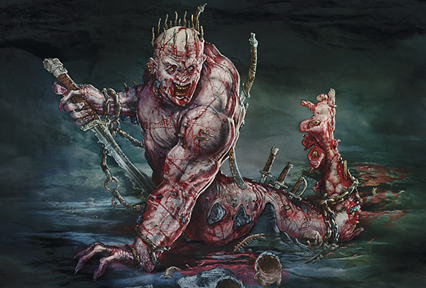
- An Unwelcome Reunion. In Gargash, the Living Torture Den, the sounds of thunder and crushing bone are the first clue that no construction is actually taking place: the fortress is constantly mangled so that Gargash doesn't return, which would oblige Torog to kill him again. Adventurers that facilitate Gargash's return and turn the tide of battle in the primordial's favor have a good shot at killing Torog for good.
- Rigors of Execution. Any characters who want to slay Torog are welcome to try, but the battle must take place in Gargash's skull. From this primary torture den, Torog sends his foes to fight his exarchs in other torture dens. Once the exarchs are defeated, Torog can be slain.
- The Seven Parts. When Torog received his eternal curse, the injury tore out and scattered fragments of his mind, heart, lungs, guts, bones, blood, and bile. Torog salvaged these remains, keeping them in jars in his various torture dens. Characters who undertake a quest to destroy these vile relics gain the power to slay the Crawling King.
Forever Deep Below Creation
Torog's realm of imprisonment is a realm of logic-defying caves and grasping manacles from which few return alive. His servants maintain at least five torture dens scattered across the Underdark, the most prominent being the constantly-mangled carcass of Gargash himself. Most of the time, however, Torog aimlessly burrows far beneath any known locale of the Underdark, searching for long-buried artifacts, forgotten caves crafted by the ancient primordials long before the era of gods, and other means of escape or amassing further power.
These tunnels are said to be Forever Deep Below Creation; it is even said that this dreadful place where up does not exist is The Buried in its true form, with the similarly-titled Torog simply being the most notable of its victims. Tunnels dug by Torog start off as roomy burrowing trails between 50 and 200 feet in diameter, and those opened up by The Buried's beckoning call are about 10 feet in diameter, but they slowly taper off into narrow passageways that constrict even the smallest gnomes and halflings that might crawl through them. The way up is invariably closed off to anyone that tries to double back, dooming all but the smartest cutters to bear the weight of existence for all eternity. The luckiest few might manage to find a way back up to the surface with the help of a higher power, but more commonly they will exit out at the base of a mountain in Colothys, which isn't exactly the paragon of luck...
Lair Actions. On initiative count 20 (losing initiative ties), Torog can take a lair action to cause one of the following effects; he can't use the same effect two rounds in a row:
- Bond of Torture. Torog targets one creature he can see within 60 feet of him. A spectral chain emerges from the lair and binds the target to him. Whenever Torog takes damage, the target must make a DC 20 Constitution saving throw. On a failed save, Torog takes half the damage (rounded down), and the target takes the remaining damage as psychic damage. This tether lasts until initiative count 20 on the next round or until Torog or the target is no longer in his lair.
- Dread Embrace. Torog targets one creature he can see within 60 feet of him and moves it into the same space as another creature within the same range. The two targets are bound together in chains until initiative count 20 on the next round: one creature drags the other along with it when it moves or is moved, where every foot of movement costs it 1 extra foot unless the creature being dragged is Tiny or two or more sizes smaller than it. If one target is grappled or restrained, the other suffers the same effects for the duration.
- Torturous Exhaustion. Torog drains the air from the lungs of any number of creatures he can see within 60 feet of him. Targets that need air to live must succeed on a DC 20 Constitution saving throw or fall prone and suffer one level of exhaustion.
Regional Effects. The area beneath the Lowerdark is warped by the same magic that powers Torog's divinity, which creates one or more of the following effects:
- Eternally Entombed. Creatures in The Buried cannot die of a lack of air, food, drink, or sleep, and nor are they capable of ending their own lives. A creature that reaches six levels of exhaustion or finds themselves in a tight spot with no hope of escape is trapped Forever Deep Below Creation for all eternity.
- The Sunken Sky. Any creature or object within The Buried has its flying speed reduced to 0 feet, even it somehow has room to do so here.
- Too Close I Cannot Breathe. The tunnels of The Buried are impossible to navigate: checks using the Survival skill made to navigate them automatically fail. Regardless of the direction being traversed, a tunnel's diameter shrinks at a rate of 20% (compounded hourly), to a minimum of 2 feet. Any Strength (Athletics) checks made to press on have a DC of 22 minus the current diameter of the tunnel in feet.
Hamartia
Torog is as much a victim of his spheres of influence as he is their beneficiary. If he were to leave the Underdark and return to the surface world, while his divinity would disappear, he would be forever free as any regular mortal is. But it is this refusal to let go of his power—the same possessiveness that led him to challenge Gargash in the first place—that prevents him from doing just that. Every plot he hatches to conquer the surface world tightens the chains of Colothys, pulling him deeper and deeper below creation and ever closer to the eternal, immobilizing entombment in store for him. Torog is agonizingly familiar with this eventual fate of his, and so he futilely seeks a final death by combat with the most fearsome creatures of the Underdark.
Torog (Worm Form)
Gargantuan monstrosity (deity), chaotic evil
- Armor Class 22 (natural armor)
- Hit Points 507 (26d20 + 234)
- Speed 60 ft., burrow 60 ft. (Tunneler), climb 60 ft.; Crawling Blood
STR DEX CON INT WIS CHA 30 (+10) 18 (+4) 28 (+9) 21 (+5) 27 (+8) 26 (+8)
- Saving Throws Dex +12, Con +17, Wis +16, Cha +16; advantage against magic
- Skills Athletics +18, Intimidation +16, Perception +16, Stealth +12
- Damage Resistances psychic (Shared Torture)
- Condition Immunities charmed, exhaustion, frightened, prone; Divine Will
- Senses truesight 120 ft., blindsight 500 ft., passive Perception 26
- Languages all; telepathy 120 ft.
- Challenge 27 (105,000 XP, or 210,000 XP as a mythic encounter; PB +8)
Too Deep (Mythic Trait; 1/Day). If Torog is reduced to 0 hit points, it doesn't die or fall unconscious. Instead, it resets to 507 hit points, and a 20-foot-radius, 40-foot-deep cylindrical pit of earth is dug out from underneath each hostile creature of its choice within 120 feet of it, which deals 14 (4d6) bludgeoning damage from the fall.
Shared Traits. Torog has the same Crawling Blood and Shared Torture traits as its chained form.
Divine Resilience. Torog can end one condition or spell on itself at the start of each of its turns.
Innate Spellcasting. Torog's innate spellcasting ability is Charisma (spell save DC 22). It can innately cast any spells from its chained form that it still has uses of, requiring no components.
Siege Monster. Torog deals double damage to objects and structures.
Tunneler. Torog can burrow through solid rock and leaves a 50-foot-diameter tunnel in its wake.
Actions
Multiattack. Torog makes three claw attacks.
Claw. Melee Weapon Attack: +18 to hit, reach 20 ft., one target. Hit: 29 (3d12 + 10) slashing damage. If the target is a Huge or smaller creature, it is grappled (escape DC 20) and restrained until this grapple ends. Torog can have only three creatures grappled this way at a time.
Bite. Melee Weapon Attack: +18 to hit, reach 15 ft., one target. Hit: 21 (2d10 + 10) piercing damage plus 13 (2d12) acid damage, and the target must succeed on a DC 23 Constitution saving throw or suffer health drain equal to the damage taken.
Spew Earth (Recharge 5–6). Torog spews a 150-foot cone of acid-covered dirt and stone from its mouth. Each creature and object in that area takes 44 (8d10) acid damage plus 44 (8d10) bludgeoning damage (DC 25 Strength or Dexterity save for half; target's choice).
The ground in the area is covered in 15 feet of earth, which is difficult terrain until cleared. On a failed save, or if there is no space on top for it to dodge to, a Huge or smaller creature is entombed in this earth; while entombed, the creature is suffocating, and it or one of its allies must spend one attack from the Attack action to dig it a path to safety with a DC 18 Strength (Athletics) check.Bonus Actions
Destroy. Torog makes three claw attacks against objects or structures.
Suffocating Presence. Each creature of Torog's choice that is within 1 mile of it and aware of it must succeed on a DC 23 Wisdom saving throw or become frightened for 1 minute (save ends); while frightened, a creature's speed is reduced by 10 feet, and it can't speak. If a creature's saving throw is successful or the effect ends for it, the creature is immune to Torog's Suffocating Presence for the next 24 hours.
Legendary Actions
Torog can take 3 legendary actions, choosing from the options below. Only one legendary action can be used at a time and only at the end of another creature's turn. Torog regains spent legendary actions at the start of its turn.
- Crawl. Torog moves up to its speed.
- Bite. Torog makes a bite attack.
- Crushing Earth (Costs 2 Actions). Up to three creatures within 30 feet of Torog take 17 (2d6 + 10) bludgeoning damage (DC 21 Dexterity save for half). On a failed save, Torog can also move a target to any unoccupied space on the ground within the same range, and the target is restrained until the end of Torog's next turn.
Mythic Actions
If Torog's mythic trait has activated in the last hour, it can use the options below as legendary actions.
- Fling. One Huge or smaller object held or creature grappled by Torog is thrown up to 30 feet in a random direction and knocked prone. If a thrown target strikes a solid surface, the target takes 3 (1d6) bludgeoning damage for every 10 feet it was thrown. If the target is thrown at another creature, that creature must succeed on a DC 20 Dexterity saving throw or take the same damage and be knocked prone.
- Dust to Dust (Costs 2 Actions). Torog unleashes a dust storm in a 20-foot-radius, 40-foot-high cylinder centered on a point within 90 feet of him. Each creature and object in the area takes 26 (4d12) piercing damage (DC 25 Strength save for half). Objects in the area become permanently vulnerable to all damage, and the area is heavily obscured until the end of Torog's next turn.
- Rancorous Screech (Costs 2 Actions). Each creature within 30 feet of Torog that can hear its shriek takes 26 (4d12) psychic damage (DC 25 Intelligence save for half). On a failed save, a creature also takes 13 (2d12) psychic damage if it doesn't end its next turn prone.
The Proxies
The chaotic powers create and destroy divine servants as the mood suits, so it's a chancy blessing at best to be a proxy for one of Carceri's powers. Still, some have survived long enough to gain a measure of fame. For example, Khamallan Teren of Malar, a chaotic evil human druid turned hunter animal lord, has struck fear into the hearts of just about everyone on the orb Malar's realm inhabits. When he hunts through the canyons of Colothys or tracks through the shallows of Porphalys, petitioners flee, proxies hide, and even the gehreleths steer clear. Khamallan's a totally evil basher whose only joys are the hunt and the evisceration of his prey. He'll talk to a berk, but a body always gets the feeling that Khamallan's eyes are measuring the sod, as if to gauge where a couple of claws would do the most damage. It's rather unnerving, to say the least. It's a good thing that he doesn't get along well with the other Malarites, because otherwise they'd really be a force to be feared.
Another proxy of note belongs to Vhaeraun, the drow god of men, shadows, assassins, and unchecked arrogance. Allinzir Gi'Leera, a neutral evil drow favored consort (MPMM 100), is always smoothly pleasant and coldly smiling. His subtle smile seems permanent, but it never reaches his heart or his eyes. He can fade into the shadows even while a cutter's watching him, and reappear right behind the unfortunate sod. Light doesn't seem to bother him, and he has a penchant for scheming through everything. Even when there's a straightforward solution, Allinzir looks for a way to solve problems circuitously.
The Titans're known for meddling with life and form. They're always looking for a way to escape the plane of their exile, and they figure that even if they can't make it out, maybe one of their creations can. Their mother Gaea, at their urging, gave birth to the Hecatoncheire, a fifty-headed, hundred-armed abomination that roams the plane looking for those who venerate the Greek pantheon. Once it finds them, the hundred-handed one (MOT 225) doesn't rest 'till the heretics have been torn to shreds. Other notable creations are the gigantes, a race of giants given birth by Gaea from the blood of Ouranos, whose serpentine feet carry them with incredible speed across the inhospitable earth of the plane.
Augustus, Legionnaire of Zarus
"Hear me, comrades, hear me! On the morrow, we march on the Bastion of Last Hope. The degenerate anarchists and their filthy inhuman compatriots shalt fall to our superior mettle, and the glorious banner of Zarus shalt be hung in its halls for countless ages to come!"
A supposed paragon of humanity, the fearsome warrior Augustus leads a banished legion who serves the god Zarus, the supposed creator of mankind.
Physical Description
Augustus (he/him) stands just shy of five feet tall, but conceals this by standing elevated above those he speaks to, when possible. He has short, slightly curly golden hair, and his eyes are clear and bright, giving off an aura of divine radiance at first glance, but those who study him will quickly notice that his left eye only has partial vision. His complexion is between dark and fair, and he wears no armor: besides his shield and a rather thin white cloth draped over his shoulder, his upper body is entirely uncovered.
Lore
According to legend, in the ancient times before the Dawn War, Zarus was the First Human, created by the world itself as the pinnacle of perfection. He is said to have been fatally poisoned by rivals who wished to see his dark designs fall into ruin, but not before he and his wife, Astra, sired the whole of humankind as it is known today.
The veracity of this myth is heavily debated, but it can at least be confirmed that the human warrior Augustus became a champion of Zarus's cause some time after his untimely death. At the helm of a legion of 5,500 fellow humans, Augustus waged war against the non-humans of the world, spreading death and destruction wherever he went. It didn't take long for a counteroffensive to establish itself, however, and sooner or later the forces of good defeated Augustus' legion and banished its remaining 550 members into Othrys, the first layer of Carceri, making them some of the first prisoners to be sent to the proto-Carceri that existed before Apomps arrived.
In Othrys, the legion's influence has waxed and waned; even after all this time, they've only ever managed to seize control over at most one or two orbs at a time. Besides Augustus, twelve questing knights are all that remain of the original legion; the other 288 members of the Legion, most equivalent to gladiators in martial prowess, are newer human incarcerees that have been recruited by Augustus over the course of countless millenia.
Thinking that Carceri can only be escaped through pure combat superiority, Augustus wishes to invade the Bastion of Last Hope with the hope of "domesticating" its lawless citizens, reshaping it as a permanent outpost for the legion, and seizing its exit portal for themselves.
his side since the beginning never even heard of the Dawnfather or any faith that worships him. However, these original legionnares can recall Pelor's holy symbol and its presence during the battles leading up to their imprisonment in Carceri, and will initiate combat with any devout berk who brandishes it or otherwise makes their allegiance to it apparent.
Astute Leader. Augustus gains a +3 bonus to any Intelligence, Wisdom, or Charisma check he makes that doesn't already use his proficiency bonus.
Press Onwards. Whenever Augustus and his allies finish a short rest, their exhaustion level, if any, is decreased by 1.
Combat
Augustus immediately dives into the frey with Fearless Leap and Steel Wind Strike, prioritizing non-humans when possible. Not quite the tactical expert he makes himself out to be, Augustus will repeatedly Shield Bash his foe until they fall prone, making them an easy target for his pilum. When he is bloodied, Augustus will rely on Second Wind and Survivor to keep him alive; when he reaches 10% of his hit point maximum, his nerve will break, forcing him to attempt a "tactical retreat" that'll let him flee with his head intact.
Battle Ready. While Augustus isn't incapacitated, he and his allies can't be surprised and gain a +4 bonus to initiative rolls.
Divine Will. Augustus is immune to any spell or effect that would alter his form, as well as those that would read his thoughts, determine if he is lying, or magically influence his thoughts or behavior.
Hamartia
Augustus' hamartia is straightforward: the more his insecurities about his irrelevance and inferiority fuel his racism, the tighter Carceri's grip on him and his legion becomes. Augustus is, at his core, a deeply cowardly man who is ashamed of his intellectual shortcomings, and he's learned enough from his time in Tarterus to know that the church of Zarus dies with him. To have any chance of getting this berk to change his ways, a body'll have to make the baffling decision to spare his life and allow him to rebuild his psyche after having it torn down in front of the adoring subordinates who fuel his fragile facade and fan the flames of his hateful rhetoric.
Augustus, Legionnaire of Zarus
Medium humanoid (human, fighter), lawful evil
- Armor Class 20 (+3 shield)
- Hit Points 276 (24d8 + 168); Survivor
- Speed 30 ft.
STR DEX CON INT WIS CHA 24 (+7) 20 (+5) 24 (+7) 9 (-1) 16 (+3) 18 (+4)
- Saving Throws Str +13, Dex +11, Con +13, Wis +9; Indomitable
- Skills Athletics +19, Intimidation +10; Astute Leader
- Condition Immunities charmed, deafened, exhaustion, frightened; Divine Will
- Senses tremorsense 15 ft., passive Perception 13
- Languages Common, Dwarvish, Giant, Orc
- Challenge 20 (25,000 XP; PB +6)
Survivor. Augustus regains 15 hit points at the start of his turn if he is bloodied and has at least 1 hit point.
Colossus Slayer (1/Turn). When Augustus misses a Huge or larger creature with an attack roll, he can choose to hit instead.
Indomitable (3/Day). Augustus can reroll a saving throw he fails and use either total.
Superior Critical. Augustus's weapon attacks score a critical hit on a roll of 18-20 on the d20.
Actions
Multiattack. Augustus makes three weapon attacks.
Slayer's Pilum (+3 Spear). Melee or Ranged Weapon Attack: +16 to hit, reach 5 ft. or range 20/60 ft., one target. Hit: 17 (2d8 + 10) piercing damage, and the target has disadvantage on its next attack roll before the start of August's next turn. This attack deals double damage to celestials and fiends.
Shield Bash (+3 Shield). Melee Weapon Attack: +16 to hit, reach 5 ft., one target. Hit: 15 (2d4 + 10) bludgeoning damage, and if the target is a creature, it must succeed on a DC 21 Strength saving throw or be knocked prone and lose its concentration.
Steel Wind Strike (Recharge 6). Melee Weapon Attack: +16 to hit, range 30 ft., up to five targets. Hit: 46 (6d12 + 7) piercing damage. Hit or Miss: Augustus teleports to an unoccupied space he can see within 5 feet of one of the targets.
Bonus Actions
Fearless Leap. Augustus jumps up to his speed without provoking opportunity attacks.
Break Free. Augustus makes saving throws to attempt to break free from each effect that has him grappled or restrained.
Reactions
Augustus can spend one legendary action to take an additional reaction. He can only take one reaction per turn.
Dampen Magic. Augustus halves the damage he takes from a spell or other magical effect.
Shield Block. Augustus adds 5 to his AC against one melee attack that would hit him. To do so, Augustus must see the attacker and be wielding his shield.
Legendary Actions
Augustus can take 3 legendary actions, choosing from the options below. Only one legendary action can be used at a time and only at the end of another creature's turn. Augustus regains spent legendary actions at the start of his turn.
- Action Surge. Augustus uses Break Free or Fearless Leap.
- Attack. Augustus makes one Slayer's Pilum or Shield Bash attack.
- Second Wind (Costs 2 Actions). Augustus regains 15 hit points and one use of Indomitable.
Isidor, Oracle of the Black Goat
"The Mists know your name, traveler. Perhaps they always have. No matter how far you run, they will come for you."
Isidor was once a faithful servant of the The Black Goat of the Woods with a Thousand Young, but many years have passed since he was torn away from his patron by the Mists of Barovia. Now he has been sent to the waters of Porphatys, where he heralds the Mists and hastens the demise of all those who run from them.
Physical Description
In life, Isidor (he/it) was a tall, gaunt human with little hair nor vitality to call its own. In wretched undeath, its eyes are as milky white as its pale, leathery skin, and its voice is raspy, somber, and utterly devoid of any hope, love, or joy. Isidor sports tattered gray robes that do little to hide the many gaping holes in its flesh, one of which is used as a sheath for its relatively ornate rapier.
Lore
As a warlock of the Black Goat, Isidor was an eccentric recluse, and found his home in a forest devoid of any foes that might interrupt his foul rituals. This changed one day when the creeping Mists—which he mistakenly believed to be an omen of fortune from his patron—transported him to Barovia. It did not take long for Isidor to succumb to Ravenloft's many horrors, but death was far from the end for him: the Dark Powers raised him as an unliving husk that serves their will, and their will alone.
In spite of his terrible fate, Isidor held out hope that his patron might one day save him; this hope was replaced with agonizing abandonment when the Dark Powers plunged him into Carceri. Where the Mists go, Isidor follows, and it didn't taken long for the Old Man of the Mists to become something of an urban legend amongst the sailors of Porphatys. ("Keep yer wits about you, cutter, lest the Old Man drag ye into the blightful Mists!")
What the Dark Powers know that Isidor doesn't is that due to the actions of a band of brave, foolish adventurers, the Black Goat was retroactively erased from the history of nearly every world in the known multiverse—including Isidor's old home. Most berks think the old man spouts only nonsense, but a character can identify the Black Goat (and its obscurity) with a successful DC 35 Intelligence (Arcana or Religion) check. Isidor himself was spared this retrocausal erasure due to his imprisonment in the Domains of Dread, and thinks his patron's inaction in saving him is merely punishment for his supposed failure to worship it properly. (To be fair, the poor gully would've been abandoned to his fate either way, so this assumption ain't exactly unreasonable.)
Combat
If he can't do so before combat, Isidor uses summon aberration to conjure a beholderkin spirit, which unleashes its eye rays from afar while he engages in melee, leveraging the disadvantage on mental saving throws inflicted by his rapier to improve the effectiveness of his spells and Dark Whispers. When possible, he will use telekinesis on a Huge or smaller naval vessel to either capsize it or hurl it directly into the Mists; if a vessel is Gargantuan, he will instead attempt to tear it apart piece by piece.
Once bloodied, Isidor will use Black Goat's grasp to exit melee, and telekinesis and Dark Whispers to keep his foes from closing the gap. When he can catch three or more foes in All-Mother's Embrace, he will use that instead of eldritch bolt, and will follow up with dominate monster on the strongest melee combatant if reduced to a quarter of his hit points or less.
Rejuvenation. Isidor's body dissolves into the mists of Ravenloft when he drops to 0 hit points, and his equipment is left behind. After 1 hour, Isidor's body reforms in a random area of the mists in the Porphatys layer of Carceri, regaining all of his hit points and becoming active again.
Water Walk. While in Porphatys, Isidor can move across any liquid surface—such as water, acid, mud, snow, quicksand, or lava—as if it were harmless solid ground.
Hamartia
For as long as it can remember, the lost Oracle has spent his time in service to forces beyond comprehension; first to the Black Goat, who took no interest in his worship beyond an insatiable hunger for increasingly terrible sacrifices, and then to the Dark Powers, which take personal delight in Isidor's suffering for reasons he can never hope to understand. Balanced on the precipice between Porphatys and Ravenloft, Isidor is in the unique position to escape from both of their clutches... but without the ability to look inwards, unless a body that can survive his relentless onslaughts takes mercy on him, he is utterly doomed. Learning the truth of his patron's disappearance or finding some measure of independence from it condemns him to be swallowed once more by the Mists he heralds; meanwhile, doubling down in his service to his original master, or otherwise gaining a measure of hope or courage in the face of the Mists' overwhelming power while still being beholden to the Black Goat, will cause the Mists to desert him in Porphatys, where his destruction and subsequent transformation into a petitioner is all but ensured. To truly save him, a body'd have to thread the needle and help the sod find his own purpose in unlife that separates him from both the Black Goat and the Dark Powers.
Isidor, Oracle of the Black Goat
Medium undead (human, warlock), neutral
- Armor Class 16 (mage armor)
- Hit Points 135 (18d8 + 54); Undead Fortitude
- Speed 30 ft. (Incorporeal Movement, Water Walk)
STR DEX CON INT WIS CHA 9 (-1) 16 (+3) 17 (+3) 17 (+3) 14 (+2) 20 (+5)
- Saving Throws Wis +5, Cha +8; advantage against magic
- Skills Arcana +11, History +7, Religion +7
- Damage Resistances necrotic, psychic (Thought Shield)
- Damage Immunities acid, poison
- Condition Immunities blinded, exhaustion, poisoned, unconscious
- Senses blindsight 60 ft. (blind beyond this radius), passive Perception 12
- Languages Common, Deep Speech; telepathy 60 ft.
- Challenge 9 (5,000 XP; PB +4)
Psionics. Isidor's spellcasting ability is Charisma (spell save DC 17, +9 to hit with spell attacks). He can cast the following spells using psionics, requiring no components:
Constant: detect thoughts, mage armor, nondetection
At will: command, ray of enfeeblement, telekinesis
2/rest each: darkness, mind spike, web
1/rest each: dimension door, dominate monster, summon aberrationThought Shield. Isidor's thoughts can't be read by telepathy or other means unless he allows it. Furthermore, whenever a creature deals psychic damage to him, that creature takes the same amount of damage that he does.
Undead Fortitude. If damage reduces Isidor to 0 hit points, he must make a Constitution saving throw with a DC of 5 + the damage taken, unless the damage is radiant or from a critical hit. On a success, he drops to 1 hit point instead.
Actions
Multiattack. Isidor makes two weapon attacks, one of which he can replace with the Magic action.
Rapier. Melee Weapon Attack: +9 to hit, reach 5 ft., one target. Hit: 7 (1d8 + 3) piercing damage plus 14 (4d6) psychic damage, and the target has disadvantage on the next Intelligence, Wisdom, or Charisma save it makes before the end of Isidor's next turn.
Eldritch Bolt (Cantrip). Isidor unleashes two attacks of crackling necrotic energy.
Ranged Spell Attack: +9 to hit, range 60 ft., one target. Hit: 10 (1d10 + 5) force damage plus 7 (2d6) necrotic damage, and the target is pulled 10 feet closer to Isidor in a straight line if it is Huge or smaller.All-Mother's Embrace. Isidor opens a momentary extraplanar rift within 60 feet of him. The rift is a tendril-filled, 20-foot cube. Each creature in that area takes 14 (4d6) psychic damage (DC 17 Intelligence save for half). On a failed save, a creature is also blinded and frightened until the start of Isidor's next turn.
Bonus Actions
Dark Whispers. Isidor uses the Dark Speech to force up to two creatures within 60 feet of him to make a DC 17 Charisma saving throw. On a failed save, a target is poisoned until the end of Isidor's next turn. If the save fails by 5 or more, Isidor also chooses the target's movement on its next turn.
Black Goat's Grasp (3rd-Level Spell). Each creature of Isidor's choice within 10 feet of him is battered by black tendrils and takes 14 (4d6) necrotic damage (DC 17 Strength save for half). On a failed save, a target also can't take reactions and has its speed halved until the end of its next turn.
Reactions
Black Goat's Blessing (3rd-Level Spell). When Isidor takes damage from a melee attack, he can reduce the damage he takes by up to 15, and the attacker takes 15 cold damage.
I never understood my old pupil's obsession with the aberrant and the unexplainable. If you're really that curious of a mind, there're already plenty of mysteries to decipher in the world around you. What actually happened to the rebellion leader Gith? What is Asmodeus' next interplanar scheme? Who or what is the Lady of Pain? Hell, how does the human heart really work? (I personally suspect there's some mystical electric phenomena at work there, but some scholars might call me a quack for that.) Just crack open a book or two or ten and get started!
No, someone like her who takes to studying the Far Realm and its ilk will never be satisfied with what's already in front of them. There's no sense or reason to be had there—only cosmic nonsense, and the existential unraveling that comes with it. Her Vecnan tricks are merely borrowed time—sooner or later, she's gonna encounter something nasty that breaks her brain for good. (More broken than it already is, at least.)
Who knows, though—maybe one day she'll finally figure that place out and try to conquer it for The Whispered One. Hells, maybe her and the elder evils out there will wipe each other out? Then maybe I can sleep with both eyes closed for once. —H
Misha, Whirlwind of Thea
"The worlds, and the people within them, change like the ebb and flow of an autumn breeze. But there is one universal constant that never changes: the search for untold riches, and the glory that come with claiming them for yourself."
Once a proxy of the primordial Queen of Air, Misha was cast into Carceri for their unchecked avarice. Now, they stalk the blasted deserts of Minethys in search of riches to claim for their new Titaness master.
Physical Description
Misha (they/them) is a bronze dragonborn of average height and above average physique. Their shining scales are riddled with deep cracks and scars, indicating an extended history of torture and battle, meeting at ends. They are always surrounded by five thick lances, each held in the air by the power of elemental air, which shift and spin with just a thought.
Lore
Misha was originally a proxy of Akadi, the primordial Queen of Air, in the Age Before Ages. Worshipping her as a paragon of freedom and the winds, Misha adventured across the worlds of the Material Plane in search of lost treasures to give as offerings.
When the Dawn War erupted, Misha urged their patron to wage war against the gods and plunder their divine realms for riches and glory, but Akadi chose neutrality and observed the conflict from afar. Furious with their master's inaction, Misha joined the war anyway, and for a while, it worked out for them: they pillaged countless astral dominions and became one of the richest mortals across the planes. However, their journey met an end when they sided with the primordial Gargash against the King that Crawls, whose claustrophobic spheres of influence were in direct opposition to their own. Upon Gargash's defeat, Misha experienced months of torture before being imprisoned Forever Deep Below Creation, but the power of elemental air afforded to them as a proxy was enough to let them squeeze their way out into the ravines of Colothys.
Seeking revenge against Akadi, the Crawling King, and all of the other so-called gods, Misha allied with Thea, the Titaness of the bright blue sky, who saw in them the means of seizing a potential escape to this foul prison. To that end, Misha and a host of petitioners loyal to Thea scours the cold deserts of Minethys, braving its harsh winds in search of the Sand Tombs of Payratheon, which Thea claims may hold untold riches, a weapon to use against the King that Crawls, and a means of escape for the both of them.
Combat
Misha zooms across the battlefield, using their superior speed and Cloak of Air to defend them while they attack with impunity using their lances. While they can hold their own in melee if needed, their low hit point maximum usually necessitates the use of their Repulsion Breath and Vortex to obliterate melee combatants before fleeing. With Misha never being held down for long due to Freedom of Movement and Self-Restoration, combatants must combine mundane means of restraint with superior wit and tactical acumen if they ever hope to take down the Whirlwind of Thea.
Bound Weapons. Misha cannot be disarmed, and their weapon attacks are magical.
Mastery of Air. Misha and allies of their choice within 300 feet of them are immune to the natural hazards of Minethys. Furthermore, Misha knows 24 hours ahead of time when a tornado will come.
Primordial Will. Misha is immune to any spell or effect that would alter their form, as well as those that would read their thoughts, determine if they are lying, or magically influence their thoughts or behavior.
Hamartia
For a being of chaos and change, Misha's greed is frustratingly predictable: for as long as the glint of gold tempts them towards avarice and destruction, they shall remain trapped in the depths of the Red Prison. It isn't just the greed itself that keeps them bound here, though: the act of scorning their original master in favor of plundering the gods' riches, and not quitting while they were ahead, is also to be considered their hamartia. They are mighty, to be sure, but the Sand Tombs of Payratheon will claim their life in a manner far, far worse than death if they continue on this path; if they somehow survive in spite of its terrors, they will not be afforded a second chance at escape if they seek vengeance against the King that Crawls. Only by renouncing their quest and accepting that what they do have is already enough can Misha ever hope to escape Carceri.
Misha, Whirlwind of Thea
Medium humanoid (dragonborn, monk), lawful evil
- Armor Class 17
- Hit Points 202 (27d8 + 81)
- Speed 30 ft., fly 120 ft. (hover)
STR DEX CON INT WIS CHA 14 (+2) 25 (+7) 17 (+3) 16 (+3) 24 (+7) 15 (+2)
- Saving Throws Dex +13, Con +9, Wis +13
- Skills Acrobatics +13, Perception +13
- Damage Resistances bludgeoning, lightning
- Condition Immunities charmed, exhaustion, frightened; Freedom of Movement, Primordial Will
- Senses blindsight 60 ft., passive Perception 23
- Languages Auran, Common, Draconic
- Challenge 18 (20,000 XP; PB +6)
Cloak of Air. While Misha isn't incapacitated or prone, they emanate a cloak of wind out to a range of 15 feet that imposes disadvantage on all ranged attack rolls against them. Within this range, a creature moving closer to Misha must spend 2 feet of movement for every 1 foot it moves, and a creature that starts its turn there takes 11 (2d10) bludgeoning damage and is pushed up to 15 feet away.
Freedom of Movement. Misha ignores difficult terrain, and magical effects can't reduce their speed or cause them to be restrained. They can spend 5 feet of movement to escape from nonmagical restraints or being grappled.
Self-Restoration. At the end of each of Misha's turns, they can end one of the following conditions on themselves: paralyzed, petrified, poisoned, or stunned.
Actions
Multiattack. Misha makes three weapon attacks.
Lance. Melee or Ranged Weapon Attack: +13 to hit, reach 15 ft. or range 30/90 ft., one target. Hit: 13 (1d12 + 7) piercing damage. Hit or Miss: Misha doesn't provoke opportunity attacks from the target for the rest of the turn.
Repulsion Breath (Recharge 6). Misha uses their breath weapon to unleash a concentrated burst of air, forming a line 100 feet long and 5 feet wide. Each creature in the line takes 27 (6d8) thunder damage (DC 21 Strength save for half). On a failed save, a creature is also knocked prone.
Reactions
Misha can spend one legendary action to take an additional reaction. They can only take one reaction per turn.
Wind Riposte. When a creature Misha can see misses them with a melee attack, Misha can make one melee attack against them.
Wind Walker. When Misha is forcibly moved 5 feet or more, they can instead move to an unoccupied space of their choice within that same distance. This movement doesn't provoke opportunity attacks, but it can't be performed if Misha's speed is 0.
Legendary Actions
Misha can take 3 legendary actions, choosing from the options below. Only one legendary action can be used at a time and only at the end of another creature's turn. Misha regains spent legendary actions at the start of their turn.
- Move. Misha moves up to half their speed.
- Vortex. Misha create a 15-foot cube of swirling wind centered on a point they can see within 90 feet of them. Each creature in that area takes 11 (2d10) bludgeoning damage (DC 21 Constitution save for half). If a Large or smaller creature fails the save, it is also pushed up to 10 feet away from the center of the cube.
- Flourish (Costs 2 Actions). Misha flourishes their lances in a 30-foot-cone, a 40 foot long and 5 foot wide line, or a 15-foot-radius sphere (Misha's choice); each possible area originates from or is centered on them. Each creature in the area other than Misha takes 19 (3d12) piercing damage (DC 21 Dexterity save for half).
Apparently some berks from that backwater planet Toril broke into the biggest vault in Cania and stole something priceless right from under Mephistopheles' nose. Hah! Maybe that'll teach him to hoard arcane baubbles and trivia without rhyme or reason. Issue is, the improved security measures they've put in place is gonna interfere with our plans to nab the Arcane Jewels of Io's Blood Isles from the exact same vault.
Razzy, once you get this note, lay off the bub and amend the plan as follows:
- Add
twothree extra hired, capable hands. You might have to rattle the Cage a bit in search of the best of the best. Find these first so that we have plenty of time to vet them and get them up to speed. - Use a better safecracker tool—something tells me what we have now won't cut it. We're gonna need a top of the line antimagic option. If you can't find anything in the Prime, commission the Godsmen for something.
- Triple the team's supply of positoxins; we'll need all the holy power we can get. Yes, this means you'll have to reach out to that nasty cleric again. No, you can't kill him this time either.
I'll have my other contacts work on getting an updated map of the guard routes. Send me a missive in two weeks through the normal channels once you're all set. —H
Svor, Fury of Karontor
"COWAAAAARDS!"
Brought back from the dead as an unholy war machine for the fomorians, Svor unleashes havoc upon the war-torn layer of Cathrys.
Physical Description
Many fomorians have strange, exaggerated proportions and misshapen features due to the cursed levied upon them by the archfey they once slaughtered en masse. Where the metallic plating fused with its sickly orange skin, Svor (he/it) appears no different at first glance—but upon closer examination, a successful DC 15 Intelligence (Investigation) or Wisdom (Perception) check reveals that Svor is in fact four fomorians fused together into a gargantuan, unstoppable tool of war.
Lore
In life, the four fomorian siblings Borr, Gorr, Korr, and Zorr lead the onslaught against the archfey of the Feydark in the name of the giant god Karontor, who promised great riches and fortune when they become petitioners upon their death in battle. One by one, the combined fey forces repelled the fomorian invasion, leading to the gruesome demises of all four siblings.
When their vile souls made their way to Karontor's realm in Minethys, the siblings discovered that their afterlives were never to be the paradises their god had promised. Karontor fused them all into one ginormous fomorian named Svor, who is now unleashed on the jungles and grasslands of Cathrys. There, Svor slaughters all who stand in its path in search of gold and other resources that might aid Karontor in his bid for power and freedom.
Combat
Svor fearlessly charges into combat with Superior Leap and Unstoppable Onslaught and slaughters them with ease.
Divine Will. Svor is immune to any spell or effect that would alter his form, as well as those that would read his thoughts, determine if he is lying, or magically influence his thoughts or behavior.
Rejuvenation. Svor's body melts into ichor when he drops to 0 hit points, and his equipment is left behind. After one week, Svor's body reforms in Karontor's divine realm in Minethys, regaining all of his hit points and becoming active again.
Hamartia
Lacking a true purpose or existence outside of Karontor's dark designs, Svor is caught up in the senseless conflict of Cathrys and is bound to the plane so long as it refuses to acknowledge why it is doing any of this in the first place. In life, the four siblings saw violence as a means to an end, and paid the ultimate price for their folly—but as Svor, violence is the end to be sought. A body that kills Svor enough times to make it stand down and studies it closely enough to realize the extent of Karontor's betrayal might have a shot at convincing it to reject its old master; however, Svor's initial reaction will be that of rage, rage, and more rage, and the foolish endeavor of seeking out Karontor in Minethys in search of revenge is wholly exclusive with finding a way to escape Carceri altogether.
War requires conviction. Conviction requires belief. And, as we all know, belief is meaningless.
My kind prides itself in its neutrality as the Blood War rages on. They play both sides in search of coin and acclaim and eternal stalemate. They think themselves to be masterminds. But in reality? They're just janitors and minders hired by the baatezu and tanar'ri alike to clean up their messes. Why stoop so low when there's so much jink to be had elsewhere?
All Jackals are to follow a very strict policy: no getting involved in the Blood War. If a soldier lacks the decency to even pretend they're not an Abyssal or Infernal lacky, don't sell them a damn thing. Don't accept their gifts, or their flattery, or their threats of violence, or even the loot on their corpses. (They have wardogs that'll smell the stolen jink on you.) Don't talk about it, don't think about it. You have better things to do with your time. Bodies who breaks this simple code will have to answer to Axel for their idiocy. —H
Svor, Fury of Karontor
Gargantuan giant (fomorian, barbarian), chaotic evil
- Armor Class 17 (natural armor)
- Hit Points 210 (12d20 + 84); Fomorian Champion, Relentless
- Speed 50 ft.
STR DEX CON INT WIS CHA 28 (+9) 10 (+0) 25 (+7) 7 (-2) 14 (+2) 20 (+5)
- Saving Throws Str +14, Con +12, Wis +7, Cha +10
- Skills Athletics +19, Intimidation +10
- Damage Resistances damage from spells
- Condition Immunities charmed, exhaustion, frightened, paralyzed, petrified, poisoned, stunned, unconscious
- Senses darkvision 120 ft., passive Perception 12
- Languages Common, Giant, Undercommon
- Challenge 16 (15,000 XP; PB +5)
Berserk. While Svor is bloodied, his speed is doubled, and he attacks the nearest creature he can see when possible. If no creature is near enough to move to and attack, Svor instead attacks the largest object or structure he can find.
Fomorian Champion. Svor regains 10 hit points if he is bloodied and has at least 1 hit point at the start of his turn.
Devastating Critical. Whenever Svor scores a critical hit with a melee attack, he deals an additional 15 damage on the attack.
Relentless. If damage reduces Svor to 0 hit points, he must make a Constitution saving throw with a DC of 5 + the damage taken, unless the damage is from a critical hit. On a success, Svor's hit points are set to 20 instead.
Siege Monster. Svor deals double damage to objects and structures.
Unbreakable (3/Day). If Svor is grappled, incapacitated, or restrained at the start of his turn, the effect causing this condition immediately ends on him.
Actions
Multiattack. Svor makes two melee attacks.
Battleaxe. Melee Weapon Attack: +14 to hit, reach 10 ft., one target. Hit: 18 (2d8 + 9) slashing damage.
Smash. Melee Weapon Attack: +14 to hit, reach 10 ft., one target. Hit: 16 (2d6 + 9) bludgeoning damage. If the target is a Large or smaller creature, it must succeed on a DC 22 Strength saving throw or be knocked prone.
Bonus Actions
Superior Leap. Svor jumps up to his speed towards a hostile creature that he can see.
Destroy. Svor makes one weapon attack against an object or structure.
Fearful Hex (Recharge 5–6). One creature within 30 feet of Svor that he can see must succeed on a DC 18 Wisdom saving throw or become frightened until the end of his next turn. If the save fails by 5 or more, the frightened target's movement speed is also reduced to 0.
Legendary Actions
Svor can take 3 legendary actions, choosing from the options below. Only one legendary action can be used at a time and only at the end of another creature's turn. Svor regains spent legendary actions at the start of his turn.
- Smash. Svor makes one Smash attack and uses Destroy in either order.
- Unbreakable (Costs 2 Actions). Svor regains one use of Unbreakable.
- Unstoppable Onslaught (Costs 2 Actions). Svor moves up to his speed in a straight line and can move through the space of any Huge or smaller creature. The first time Svor enters a creature's space during this move, the target takes 25 (3d10 + 9) bludgeoning damage (DC 21 Strength save for half) and is pushed up to 5 feet off to the side from him. On a failed save, a creature is also knocked prone.
Teng-Beirim, Glacial Doom of Stodos
"For as long as you abide by my decrees, you may consider this temple your sanctuary amidst the Ice-Bound Wastes. But speak not of love nor treachery here, for if you incur my wrath, neither shall be enough to save you."
In a foolish bid for power, Teng-Beirim lost everything she once cherished and loved. Banished to Agathys forevermore, the Mystaran priestess maintains a modest pocket of safety amidst the frozen wastes for mortals to take refuge in.
Physical Description
Teng-Beirim (she/they) is a tall, imposing priestess that wears elegant bluish-black robes adorned with silvery runes that match their long, straight hair. Their skin is tinted blue from divine frost magic, and underneath their blue blindfold is a large gash where their eyes used to be.
Lore
Teng-Beirim is an archtypical Frostmaven: an icy priestess from a reclusive tribe deep within the Cruth Mountains of Mystara that worships Stodos, Master of the Icy Wastes. The immortal Stodos is Mystara's equivalent of a power; he teaches his worshipers to embrace the icy grip of entropy and the inevitable heat death of the planes. To that end, Teng-Beirim and her tribe wreaked havoc on the neighboring Kingdom of Karameikos in order to hasten its demise.
Teng-Beirim was betrothed to Skaddin, a powerful storm herald barbarian and daughter of the tribe's head priestess, making her next in line to be the tribe's second in command. Ambition soon grew into resentment, however, and before long, Teng-Beirim concocted a poison that would leave Skaddin sick and unfit to rule so that she may claim total power instead. Unfortunately for her, Teng-Beirim wasn't able to both have her cake and eat it: Skaddin learned of the plot and confronted her in a bloody brawl, forcing Teng-Beirim to instead kill her beloved wife in cold blood, albeit not without losing her eyes to Skaddin's axe. Her bid for power succeeded, and seeing Skaddin's murder as an offering befitting of his spheres of influence, Stodos rewarded the new Frostmaven leader with a fragment of his own power. The guilt gnawed at her like frostbite, however, and it didn't take long for Teng-Beirim to confess her crimes to her people and submit herself to their judgement.
After much deliberation, the Frostmaven tribe chose to use powerful magic to banish Teng-Beirim to Agathys, the deepest and coldest layer of Carceri. There, the soul-numbing chill of the layer has all but entirely eaten away at the ex-Frostmaven's emotional capacity, leaving only apathy in its wake. Having cast temple of the gods on the same spot every day for a year, Teng-Beirim maintains a small, isolated temple of ice somewhere in Agathys that wards against planar outsiders, making it the only unconditional sanctuary for mortals that the layer has to offer.
Combat
When her temple is either out of range or already fated to be destroyed, Teng-Beirim begins combat by casting earthquake; otherwise, she starts with command to control the battlefield and its combatants as she sees fit. She uses Ice Wall and sleet storm to separate her opponents from each other and keep herself optimally positioned defensively, and follows up with cone of cold, Icicle Impale, and Icy Touch as appropriate. Knowing that she is weak in melee (even with armor of agathys and her Cold Aura protecting her), the Glacial Doom of Stodos will attempt to mark as many enemies with rime as possible before using Frozen Cascade to effectively detonate them from range.
Immortal Will. Teng-Beirim is immune to any spell or effect that would alter her form, as well as those that would read her thoughts, determine if she is lying, or magically influence her thoughts or behavior.
Special Equipment. Teng-Beirim wears a robe of the archmagi (accounted for in her statistics).
I don't envy the poor sods stuck in Agathys. To be a frozen statue, forever trapped within the confines of your own mind... I dare not even imagine it.
The ice cares not whether you're a nobody or Levistus himself. In the end, it claims you anyway. —H
Hamartia
Teng-Beirim is held back by guilt over betraying her loved one in favor of pursuing her own ambitions. Due to the nature of the betrayal, Stodos was able to claim Skaddin's soul as an offering; as such, Teng-Beirim is forever unable to revive her (a hidden temple chamber filled with ice-preserved gore reveals the nature of her failed attempts). Then again, would reviving her lost love within Carceri of all places not be a second betrayal equivalent in severity to the first?
Teng-Beirim considers her imprisonment in Carceri to be the only fate she deserves; to be convinced otherwise, a body'll have to figure out how to thaw her frozen heart and make her feel all of the grief and pain she's locked away for all this time. Once that's taken care of, her finally accepting that Stodos will ensure Skaddin never sees the light of day again, and thus perhaps isn't an immortal deserving of her worship, is the final step needed to break the chains of her hamartia.
Teng-Beirim, Glacial Doom of Stodos
Medium humanoid (human, cleric), neutral
- Armor Class 19 (robe of the archmagi)
- Hit Points 210 (28d8 + 84), 25 temp (armor of Agathys)
- Speed 30 ft. (Ice Walk)
STR DEX CON INT WIS CHA 10 (+0) 18 (+4) 17 (+3) 16 (+3) 23 (+6) 19 (+4)
- Saving Throws Con +9, Wis +12, Cha +10; advantage against magic (robes of the archmagi)
- Skills Deception +16, Insight +12, Medicine +12, Religion +9
- Damage Resistances fire
- Damage Immunities cold
- Condition Immunities charmed, exhaustion, frightened; Immortal Will
- Senses tremorsense 60 ft. (blind beyond this radius), passive Perception 16
- Languages Common, Traldaran
- Challenge 20 (25,000 XP; PB +6)
Marked With Rime. Some of Teng-Beirim's abilities mark their targets with magical rime. The mark lasts until the end of Teng-Beirim's next turn, but it ends early if the target receives magical healing or takes fire damage before then. While marked with rime, a creature's speed is reduced by 10 feet.
Armor of Agathys (5th-Level Spell). Teng-Beirim starts combat with a protective shield of magical frost that grants her 25 temporary hit points. While she has these temporary hit points, a creature that hits her with a melee attack takes 25 cold damage.
Cold Aura. Each creature that starts its turn within 5 feet of Lissandra takes 9 (2d8) cold damage. Additionally, the area in within 30 feet of Teng-Beirim is permeated by magical frost, requiring creatures other than her in the area to spent 1 extra foot of movement for every foot they move.
Ice Walk. Teng-Beirim can move across and climb icy surfaces without needing to make an ability check. Additionally, difficult terrain composed of ice or snow doesn't cost her extra movement.
Immortal Resilience. Teng-Beirim can end one condition or spell on herself at the end of each of her turns.
Spellcasting. Teng-Beirim is a 19th-level spellcaster. Her spellcasting ability is Wisdom (spell save DC 23). Teng-Beirim has the following cleric spells prepared:
At will: cone of cold, sleet storm
3/day each: bestow curse, command (3rd-level)
2/day each: contagion, earthquakeActions
Multiattack. Teng-Beirim makes two melee attacks.
Icy Touch. Melee Spell Attack: +14 to hit, reach 5 ft., one target. Hit: 27 (6d6 + 6) cold damage, and the target is marked with rime.
Frozen Cascade (Recharge 5–6). A 30-foot-radius explosion of frost bursts out from Teng-Beirim and any creature marked with rime. Each creature in the area other than Teng-Beirim takes 70 (20d6) cold damage (DC 21 Constitution save for half). On a failed save, a target is also restrained until the end of Teng-Beirim's next turn. A creature in the area of more than one frozen burst is affected only once.
Legendary Actions
Teng-Beirim can take 3 legendary actions, choosing from the options below. Only one legendary action can be used at a time and only at the end of another creature's turn. Teng-Beirim regains spent legendary actions at the start of her turn.
- Icicle Impale. Ranged Weapon Attack: +14 to hit, range 60 ft., one target. Hit: 15 (2d8 + 6) piercing damage plus 9 (2d8) cold damage. Hit With Advantage: The target is marked with rime.
- Ice Wall. Teng-Beirim creates five panels of ice, as the wall of ice spell, requiring no concentration. The effect is incapable of dealing damage, and it lasts for either 1 minute or until she uses this ability again.
- Frost Magic (Costs 2 Actions). Teng-Beirim takes the Magic action.
Zenitath, Arbiter of Amaunator
"It is time: the scum of Colothys shall be returned to the primordial aether from which they came. Order shall prevail, as it always has, and as it will forevermore."
The celestial servant Zenitath served as a faithful warden in Colothys for centuries, but with the revelation of her master's demise came her mercilesss, indiscriminant wrath.
Physical Description
Zenitath (she/her) is a humanoid-esque being with pure metallic skin and a disc-like headdress in place of hair. Long ago, her skin and adornments were golden, and her eyes as bright as the midsummer sun itself—but now, her skin takes on a dark gray sheen, and her eyes are bright red abysses that spell death for all those who gaze into them.
Lore
When a situation arises where an angel's pride or morality could compromise its mission, the gods send a sun avatar in its place. Enforcing their master's will to the letter, a sun avatar only exists to slay evil in times of need. Reflected by its lack of healing magic and resurrection spells, a sun avatar is uncompromising and has no specific concerns for the well-being of innocent beings unless instructed otherwise by their master.
In a bygone era, the sun avatar Zenitath was sent to Carceri by her master Amaunator, an orderly god of the sun, to ensure the continued imprisonment of Talona, the Lady of Poison. Chant is that Talona's cold war with Loviatar turned red hot, culminating in a bloody duel that took place in the "neutral" battleground of Hades; to avoid an eternal matrimony with the Maiden of Pain's favorite torture rack, Talona fled into Cathrys at the last moment, where she would later establish her Palace of Poison Tears. Agents of Amaunator watched over the battle from afar, and The Yellow God made the difficult decision to send Zenitath, his favored Arbiter, along with her.
Sending celestial servants into Carceri is, of course, a timeless tradition. Since the gods of the Upper Planes cannot see into Carceri and spy on its inhabitants, they sometimes plunge their most powerful proxies into the heart of the plane so that they might foil the Tarterian powers' escape attempts and sabotage their vile plots. This decision is made with a heavy heart, for both the proxy and their master knows this is a one way trip. As such, they choose their proxies carefully, only sending down those whose loyalty is absolute enough to shield them from Carceri's corrupting influence.
Unsurprisingly, Zenitath's devotion was unflinching... for a while, anyway. From her vantage point far above the orbs of Cathrys, Zenitath heard whispers of Amaunator's dwindling relevance and eventual demise, caused by the collapse of ancient civilizations (like Faerun's Netheril) that worshipped him. She attempted to continue carrying out her duties, but between an all-consuming grief for her late master and the creeping despair of knowing no solar deity like Pelor/Lathander will ever come to save her, Zenitath broke. Now, the vengeful avatar has taken on a new cause: the total eradication of the wretches that cling to Carceri's orbs like scum on a shoe.
Between Carceri's pervasive negative energy and the divine spark within her now being all that remains of the late Amaunator's power, Zenitath can only perform her single-layer cleansings once every decade; between them, she hibernates in the void of space far above the orbs of her next target, her dark red light nothing but a speck amidst Carceri's terrible darkness. These cleansings are ultimately futile, for she can never hope to touch the divine realms of Tarterus' dark gods, and there is always a fresh supply of liars and cheats ready to repopulate the sizeable portion of a layer she destroys. Even so, the smartest cutters in Carceri know to steer clear of the Arbiter—her bloody halo is nigh unmatched, and for all anyone knows, she could strike at any moment.
Now, Zenitath hovers miles above the Garden of Malice in Colothys. In a matter of days, she will wake from her slumber, bringing death and destruction to all those who cling to Colothys' mountains and canyons.
Combat
Zenitath hovers high above the battlefield, raining down beams of red sunlight that eviscerate her foes with ease.
Solar Stasis. Zenitath takes a decade to complete a long rest. She remains unconscious for the full duration, but is still able to perceive her usually-barren surroundings out to a range of 300 feet.
Hamartia
Zenitath was once trapped by her unwavering loyalty and the duties carried out in their name; her lack of protest when assigned to be a celestial warden in Carceri sealed the deal. Now, it is her lack of true, independent purpose that keeps her here: for as long as she keeps herself within the confines of her old master's wishes, she will never see the light of day again. A new cause could serve her well, but if it does not involve a newfound sense of freedom and independence, it will trap her here just as much as her old cause.
Zenitath, Arbiter of Amaunator
Large celestial, lawful neutral
- Armor Class 20 (natural armor)
- Hit Points 250 (20d10 + 140)
- Speed 30 ft., fly 30 ft. (hover)
STR DEX CON INT WIS CHA 16 (+3) 21 (+5) 25 (+7) 22 (+6) 23 (+6) 27 (+8)
- Saving Throws Int +12, Wis +12, Cha +14; advantage against magic
- Skills Perception +12, Religion +12; Divine Awareness
- Damage Resistances necrotic
- Damage Immunities radiant
- Condition Immunities blinded, charmed, exhaustion, frightened; Divine Will
- Senses truesight 120 ft. (Celestial Watcher), passive Perception 22
- Languages all
- Challenge 18 (20,000 XP; PB +6)
Illumination. Zenitath sheds bright sunlight in a 30-foot radius and dim sunlight for an additional 30 feet, which dispels any overlapping magical darkness up to 8th level.
Innate Spellcasting. Zenitath's spellcasting ability is Charisma (spell save DC 22). She can innately cast the following spells, requiring no material components:
At will: daylight, detect evil and good, locate creature
3/day each: bestow curse, fear, guardian of faith
1/day each: circle of power, divine word, time stopActions
Blinding Gaze. Ranged Spell Attack: automatic hit, range 60 ft., up to three creatures. Hit: 25 radiant damage, and the target must succeed on a DC 22 Constitution saving throw or be blinded until the start of Zenitath's next turn.
Purify (Recharge 5–6). Zenitath unleashes a 120-foot cone of purifying sunlight from her eyes. Each creature in the area takes 45 radiant damage and is pushed up to 20 feet away from Zenitath (DC 22 Constitution save for half damage and distance). Fiends and undead make the saving throw with disadvantage. On a failed save, a target's concentration is also broken, and any spell of 5th level or lower affecting it immediately ends for it.
If this damage reduces a target to 0 hit points, it and everything nonmagical it is wearing and carrying is disintegrated into gray dust. The target can be revived only by a true resurrection or a wish spell.Bonus Actions
Crown of Stars (7th-Level Spell). Ranged Spell Attack: +14 to hit, range 60 ft., one target. Hit: 26 (4d12) radiant damage.
Divine Resilience (Recharge 5–6). Zenitath ends one condition or spell on herself.
Who Presides Over The Sun?
Having now brought Amaunator, Pelor, and Zarus into the fold, you might be wondering what sort of religious cosmology my homebrew abides by. With all of the changes and retcons that have occurred in the Forgotten Realms across the editions, it is only natural to question what canon I'm working with. And with Amaunator in particular having a complicated history with Lathander (same for Pelor and Zarus), that question becomes all the more important in ensuring narrative and thematic cohesion.
In short: I use the Dawn War cosmology from 4e alongside a sprinkling of deities from the Forgotten Realms (e.g. Selûne and Shar, the Dead Three) and other settings that I find interesting. Other pantheons, particularly the Olympian pantheon, also appear in the backdrop. I vehemently abhore the very concept of a unifying overgod or singular god of magic in a setting (e.g. Ao and Mystra); meanwhile, I enjoy the Great Wheel and the cosmic forces of Good/Evil and Law/Chaos that define it, and the moral quandries that occur whenever a being (godly or otherwise) presses against the confines of these forces.
In the lore presented here, Amaunator is fully, completely, irreversibly dead; there is no Risen Sun heresy where he reincarnates as Lathander to save him. (Poor Zenitath!) Instead, I expand on the Three-Faced Sun heresy to acquire the following divine provinces:
- Dawn: Pelor
- Highsun (Noon):
AmaunatorUnclaimed- Dusk: The Raven Queen
- Night: Selûne
- Deepnight (Midnight): Shar
Here, I consider Lathander to be the Faerunian derivation of Pelor, and Sehanine Moonbow to be the elven derivation of Selûne. (Gods have complicated, multi-faceted identities that are shaped and splintered by the beliefs of their worshipers.) Even all these years later, several deities fiercely compete for the highsun role that Amaunator once presided over, with no clear winner in sight; Apollo, Light-Bringer of the Greek pantheon, and Ra, the Great Solar Disk of the Egyptian pantheon, are two of the top contenders.
As for Pelor and Zarus, you will have to wait until my next project to see what I have in mind for them. I promise it isn't quite what you're thinking; I also promise that it will be something interesting and fun for you to sink your teeth into.
Other Denizens
The creatures of Carceri aren't limited to those noted above, of course. Numerous and dangerous, the natives live in out-of-the-way places, meaning that a berk's got to go looking for them—unless they come looking for them first. All sorts of methods prevent creatures from catching a body's scent, the most reliable of which is to avoid Carceri altogether. The next best is to make sure that the trail intersects with that of some other being: there's an equal possibility that the monster tracking the body is diverted to pursue new prey. Of course, this sometimes attracts an even worse enemy, but it's usually worth a try.
The other creatures don't seem to fit into Carceri quire as well as the gehreleths do, but they've still managed to carve out a comfortable niche (at least as comfortable as Carceri gets). Among them are the fiends that partake of the endless Blood War; baatezu, tanar'ri, and yugoloths all roam Carceri at one point or another. Imps, quasits, hordlings, and larvae are also fairly common here. Nightmares gallop across Minethys and Cathrys, their hooves occasionally warding off bold petitioners and those who fancy the taste of horseflesh. Vargouilles feed on the unfortunates here, and bloodthorns rip the flesh from those who come too close. Terlens and vorrs also reside on Carceri, ready to feast on the pain of others.
The race of humanoids called the gautiere inhabit the wind-torn layer of Minethys, scratching out a desperate living with ruthless single-mindedness. They're prisoners like the rest, but they've virtually forgotten all hope or escape. If a body has something they need, they'll deal with them—unlike the vaath, to whom other creatures are meat and nothing else. The vaath hunt the layer of Cathrys, constantly searching for victims to torture.
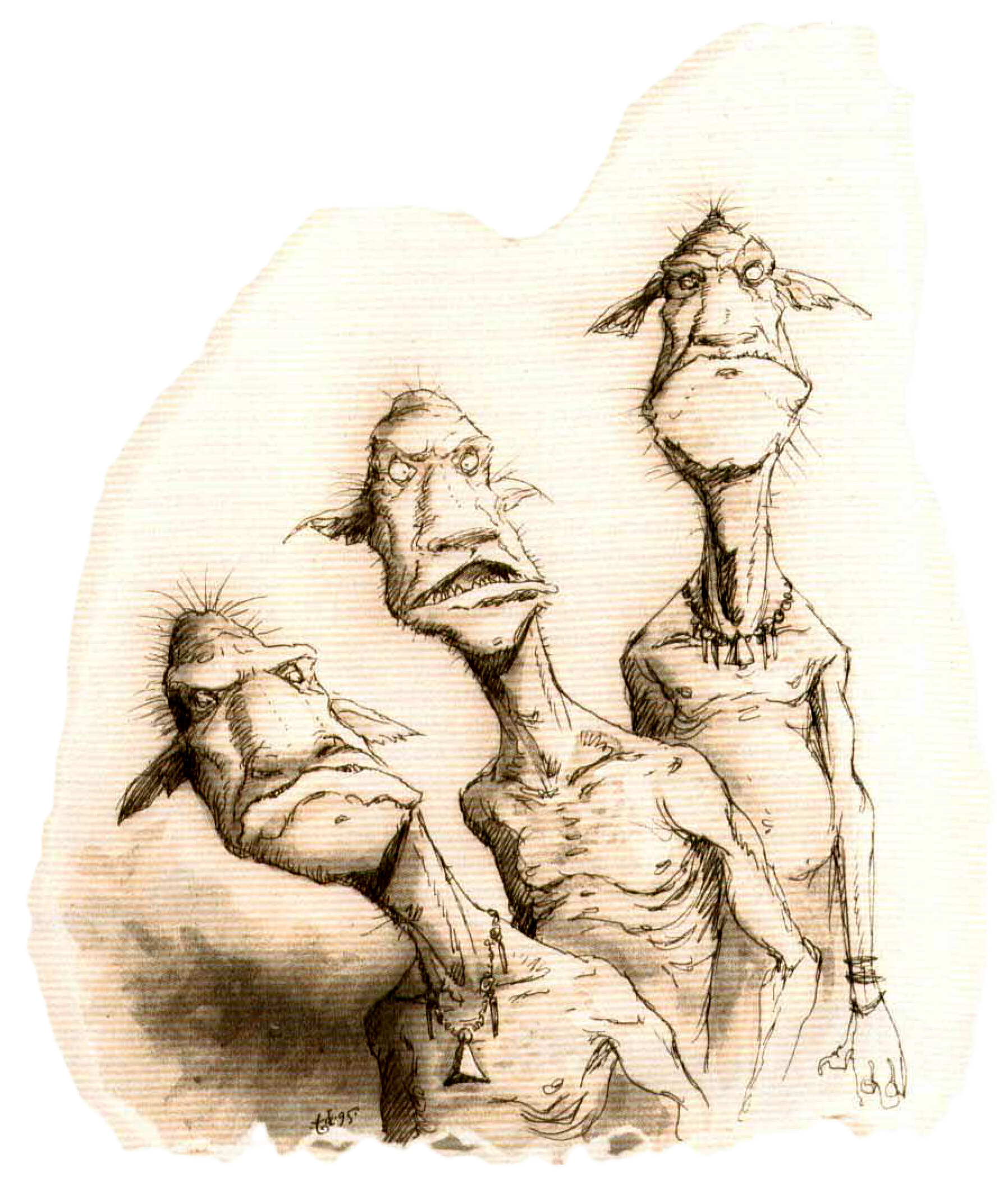
Kavash, Saboteur of Glasya
Medium fiend (devil, rogue), lawful neutral
- Armor Class 19 (natural armor)
- Hit Points 165 (22d8 + 66)
- Speed 50 ft., climb 50 ft. (Spider Climb), fly 50 ft.
STR DEX CON INT WIS CHA 10 (+0) 22 (+6) 16 (+3) 14 (+2) 18 (+4) 15 (+2)
- Saving Throws Dex +11 (Evasion), Int +7; advantage against magic
- Skills Acrobatics +11, Deception +7, Investigation +7, Perception +9, Sleight of Hand +16, Stealth +16; Reliable Talent
- Damage Resistances Fiendish Resilience
- Damage Immunities fire, poison
- Condition Immunities poisoned; Freedom of Movement
- Senses tremorsense 30 ft., darkvision 120 ft. (Devil's Sight), passive Perception 19
- Languages Abyssal, Common, Infernal (Masterful Mimicry); telepathy 30 ft.
- Challenge 13 (10,000 XP; PB +5)
Evasion. If Kavash is subjected to an effect that allows her to make a Dexterity saving throw to take only half damage, she instead takes no damage if she succeeds on the saving throw, and only half damage if she fails.
Freedom of Movement. Kavash ignores difficult terrain, and magical effects can't reduce her speed or cause her to be restrained. She can spend 5 feet of movement to escape from nonmagical restraints or being grappled.
Grand Saboteur. Kavash deals double damage to objects and structures, or triple damage if the object or structure is Huge or smaller.
Innate Spellcasting. Kavash's innate spellcasting ability is Wisdom (spell save DC 17). She can innately cast the following spells, requiring no material components:
At will: mage hand, minor illusion
2/day each: invisibility, misty step
1/day each: see invisibility, stinking cloudSkulker. If Kavash makes an attack roll while hidden and the roll misses, making the attack roll doesn't reveal her location.
Sneak Attack (1/Turn). Kavash deals an extra 21 (6d6) damage when she hits a creature with a weapon attack and has advantage on the attack roll, or when the creature is within 5 feet of an ally of hers that isn't incapacitated and she doesn't have disadvantage on the attack roll.
Actions
Multiattack. Kavash makes three weapon attacks.
Searing Claws. Melee Weapon Attack: +11 to hit, reach 5 ft., one target. Hit: 10 (1d8 + 6) slashing damage, plus 11 (2d10) fire damage if the target is a creature.
Venomous Needles. Ranged Weapon Attack: +11 to hit, range 40/80 ft., one target. Hit: 9 (1d6 + 6) piercing damage, plus 9 (2d8) poison damage if the target is a creature.
Bonus Actions
Cunning Action. Kavash takes the Dash, Disengage, or Hide action.
Sticky Bomb (Recharge 5–6). Kavash creates a Tiny, organic bomb in her hand. When she does, she decides how long the bomb's countdown is in rounds, ranging from 1 round to 600 rounds (1 hour); the bomb pulses slower the further from its detonation it is examined. Kavash can only have five sticky bombs active at a time; creating a sixth causes the oldest bomb to harmlessly disintegrate.
When she makes the bomb, or as a bonus action on a future turn, Kavash can place the bomb on a creature or object she touches, or she can throw the bomb at a creature object within 30 feet of her (+11 to hit if the target is an unwilling creature). The bomb sticks to any target it hits that isn't her, and it can be removed and thrown in a similar manner by any creature using an improvised weapon attack. At the start of the turn that its countdown completes, the sticky bomb explodes, dealing 14 (4d6) fire damage to each creature and object within 5 feet of it (DC 17 Dexterity save for half).Reactions
Uncanny Dodge. Kavash halves the damage she takes from an attack if she can see the attacker.
While it isn't technically bound to any Infernal legislature, Kavash almost always keeps to its word, much to Vyneris' chagrin; if the party seeks to make a pact with it in some way, its conditions will be harsh but fair. It tends to choose apathy over aggression when possible, but when the possibility of competition (friendly or otherwise) arises, it will take a characteristically fiendish pleasure in proving its superiority.
Kavash isn't much of a conversationalist, preferring short, often-cryptic statements over lengthy expositionary dialogue, but will be regularly fed advice and lines to say by Vyneris, who speaks to her through telepathy while using their One With Shadows ability to remain hidden; with the two being so in sync, it takes a successful DC 20 Wisdom (Insight) check to hint that Kavash's words might not be its own, and beating that DC by 5 or more makes the telepathic communication evident through a careful reading of its body language.
Kavash is secretive about its goals and past, and banks on Carceri's isolation from the rest of the planes to protect its anonymity. It will cooperate with agents of Glasya under false pretenses until an opportunity to betray them arises, and will actively oppose demons and their cultists (especially those of Graz'zt) unless Vyneris convinces it to stand down or otherwise use them for different ends. Characters who reveal any involvement in or investigations into Glasya and Graz'zt's plot could make a great ally or enemy out of Kavash, depending on which side of the conflict they fall on.
Innate Spellcasting. Kavash's innate spellcasting ability is Wisdom (spell save DC 17). She can innately cast the following spells, requiring no material components:
- At will: disguise self, magic mouth, nondetection
- 2/day each: glyph of warding, knock, silence
- 1/day each: arcane lock, pass without trace, rope trick
Masterful Mimicry. Kavash can unerringly mimic another person's speech, handwriting, or both if she has spent at least 1 hour studying them and can understand their language.
Reliable Talent. Whenever Kavash makes an ability check that uses one of her skill proficiencies, she can treat a d20 roll of 9 or lower as a 10.
Combat
Ideally, Kavash will control when and where combat occurs, using strategically placed sticky bombs to create rubble that, if not crushing her opponents outright (use the Improvised Damage table on DMG 30 to adjuncate the effects), will block passageways or otherwise restrict where they can move. She prefers to stay at a distance, shooting needles from her arms from as far as possible while she weaves in and out of the frey; if engaged in melee, she will tear her foes apart with her claws followed by a Cunning Action or misty step that lets her retreat, only unleashing a stinking cloud if she can affect two or more enemies with it at once. Once bloodied, Kavash will cast invisibility and retreat, preferring to settle the score only after healing up and adapting to her foes with Fiendish Resilience.
When fighting alongside Vyneris, Kavash will exploit control spells that cause debilitating effects to perform riskier, although more devastating maneuvers than normal. Having Vyneris lure an enemy charmed by dominate monster into the range of a sticky bomb or the impact zone of one is a classic;
other examples include having them provoke opportunity attacks that allow for additional Sneak Attack damage and luring them into stinking cloud. If it comes down to the wire, Kavash will sacrifice her life so that Vyneris may live (although using misty step at the last second to escape as well is of course preferable).
Assassin's Initiative. When initiative is rolled and she isn't surprised, Kavash can immediately move up to half her speed without provoking opportunity attacks.
Diabolical Restoration. If Kavash dies outside the Nine Hells, her body disappears in sulfurous smoke, and she gains a new body instantly, reviving with all her hit points in Glasya's fortress of Osseia.
Fiendish Resilence. Kavash chooses one damage type when she finishes a short or long rest. She gains resistance to that damage type until she chooses a different one with this feature.
Hamartia
Ever since becoming a devil (and perhaps even before that), Kavash has defined itself by its function as an instrument of war. In obeying the decrees of the Lord of the First, Kavash's identity was set in stone, immovable, entirely solved—but without someone to command it or decide its purpose (Vyneris adamantly refuses to do either), it feels lost, afraid, and confused. It is this fear that keeps Kavash bound to Carceri. More precisely, the Red Prison's isolation from the planes provides a bubble of relative safety that Kavash cowers within; until it figures out who it wants to be, it won't want to leave, and thus will lack the ability to do so.
The best way for Kavash to find an identity for itself is genuine socialization. Being fed lines to say by Vyneris doesn't count—the conversations need to be authentic and emotionally honest in order to make any headway here. To conquer its hamartia, Kavash needs to develop at least one new ideal to propel it forward that doesn't involve submitting to a higher power or pushing itself to the brink of collapse.
Axel—there's a new player in the Bastion who's stirring the pot. Here's the dark:
- Name: Kavash
- Type: baatezu (saboteur devil)
- Affiliation: former baatezu soldier, now unaffiliated
- Potential uses: sabotage (duh), thievery
- Disposition: dicey
Apparently this one unleashed a few explosives on some berks who thought it wise to pick a fight with a fresh arrival. Might be explosive in temperment (hah), but could also be a good asset for the Cania heist or spying on the Anarchists if we play our cards right. Would save us on anti-fire potions, at the very least!
For now, observe. Despite the reports, I suspect they're not here alone—ex-soldiers like these always latch onto the nearest gully who thinks they can fix the damaged sod. Once they run out of options (or if they try to flee the Bastion altogether), make contact in a public place where she hopefully won't immediately resort to violence. That's when we start molding her into something useful, eh? —H
Larvae Regurgitator
Fiends that consume too many larvae sometimes become headless, mutated terrors called larvae regurgitators.
Physical Description
When a fiend becomes a larvae regurgitator, its body swells up to eight times its size, and its skin is constantly stressed and warped by the larvae desperately attempting to push and bite their way to freedom. The fiend's head violently explodes during the transformation, leaving only a shambling mass that wanders aimlessly until it bumps into an obstacle it can't smash through or finds new prey to eviscerate.
Lore
A character knows the following information with a successful check using the Religion skill.
DC 10. Lesser souls condemned to an afterlife in the Lower Planes often wash up on the shores of the Styx as larvae—repulsive, maggot-like creatures with twisted features evocative of those they possessed in life. Greater fiends use larvae as delicacies to be eaten or fuel for profane rituals, but this consumption comes at a cost: those who engorge themselves with too many larvae, as well as those who are unequipped to safely channel their energies into their rituals, are doomed to become rampaging glutted masses that spew bile and swarms of larvae wherever they go.
DC 15. Owing to their exploded heads, larvae regurgitators are mindless hulks, but those recovered by the armies of the Blood War are incredibly valuable assets nevertheless. Many are harvested for their larvae, but others are supercharged by profane rituals to be used as high-yield ordinance on the front lines of Hades. With such a high concentration of souls all in one grotesque package, the possibilities are endless—a body'd have to be straight barmy to let this sort of opportunity go to waste...
DC 20. Many larvae regurgitators roam the wastes of Minethys and Colothys, destroying any rope bridges and rudimentary settlements they come across through sheer clumsiness and misfortune. They are also reported to form concerningly organized hunting packs in the dark caves of Pandemonium and relentlessly climb the slopes at the base of Mount Olympus in Hades.
Combat
Larvae regurgitators charge into combat, spewing acid everywhere and shattering creatures and objects alike that are lacking in fortitude.
Bile Larvae. Whenever the regurgitator summons a swarm of larvae, the swarm is immune to acid damage and acts on the regurgitator's initiative. The larvae are neutral to the regurgitator by default, and if not presented with creatures to consume, will flee as far away from the regurgitator as possible.
Outside of combat, the regurgitator spews forth one swarm every hour.
Larvae Regurgitator
Huge fiend, any evil alignment
- Armor Class 16 (natural armor)
- Hit Points 172 (15d12 + 75)
- Speed 35 ft.
STR DEX CON INT WIS CHA 19 (+4) 9 (-1) 20 (+5) 3 (-4) 6 (-2) 5 (-3)
- Saving Throws Str +8, Con +9
- Damage Immunities acid, poison
- Condition Immunities poisoned
- Senses blindsight 60 ft. (blind beyond this radius), passive Perception 8
- Languages understands all but can't speak
- Challenge 11 (7,200 XP; PB +4)
Larval Infection. When the regurgitator is reduced to 0 hit points, it breaks apart into four swarms of larvae in the same space.
Siege Monster. The regurgitator deals double damage to objects and structures.
Unbreakable (2/Day). If the regurgitator is incapacitated at the start of its turn, the effect causing this condition immediately ends on the general.
Actions
Multiattack. The regurgitator makes three weapon attacks.
Slam. Melee Weapon Attack: +8 to hit, reach 10 ft., one target. Hit: 20 (3d10 + 4) bludgeoning damage. Critical Hit: Attack rolls against the target have advantage until the start of the regurgitator's next turn.
Acid Spit. Ranged Weapon Attack: +9 to hit, range 30/120 ft., one target. Hit: 17 (5d4 + 5) acid damage. Hit With Advantage: Any nonmagical metal armor worn by the target takes a permanent -1 penalty to the AC it offers, and any nonmagical metal weapon it is carrying or wearing takes a permanent -1 penalty to damage rolls. The penalty worsens each time a target is subjected to this effect. If the penalty on an object drops to -5, the object is destroyed.
Spew Acid (Recharge 5–6). The regurgitator spews deadly acid in a 15-foot-cube originating from the opening where its head would be. Each creature in the area takes 30 (12d4) acid damage (DC 17 Dexterity save for half). Additionally, a swarm of larvae is disgorged along with the acid, landing on the ground beneath the cube.
The acid lingers on the ground beneath the cube for 1 minute. Each creature that moves into the acid's space for the first time on a turn or ends its turn there takes 15 (6d4) acid damage (DC 17 Dexterity save for half).Legendary Actions
The regurgitator can take 3 legendary actions, choosing from the options below. Only one legendary action can be used at a time and only at the end of another creature's turn. The regurgitator regains spent legendary actions at the start of its turn.
- Acid Spit. The regurgitator makes one acid spit attack.
- Smash. The regurgitator makes two slam attacks, one of which must be against an object.
- Savage (Costs 2 Actions). The regurgitator makes a slam attack against each creature within 10 feet of it. Each creature that is hit is pushed 20 feet away from the regurgitator (DC 16 Strength save for half distance). If the save fails by 5 or more, a creature also falls prone.
Shadow Stalker
Canny survivors of the Red Prison learn quickly that those who perish in combat with the Swift Shadow (page 31) are transformed into shadow stalkers: powerful husks of pure darkness that share and spread her nihilistic worldview across Carceri.
Physical Description
Shadow stalkers appear as pure black silouhettes of the beings they were in life. When not following the shambling of its progenitor, a shadow stalker will wander aimlessly with its head held low, shifting to bloodthirsty intent with a sudden twitch only when detecting movement with its tremorsense.
Combat
Shadow stalkers will react furiously to all living beings they come across. They concentrate on human targets first, using their multiattack alongside Dark Dance to weave beteen combatants before slinking back into the shadows with Shadow Stealth. They use Drain Hope only when they can hit multiple targets, are physically unable to retreat, or are bloodied.
Shadow Stalker
Medium undead, neutral evil
- Armor Class 18 (natural armor)
- Hit Points 90 (12d8 + 36)
- Speed 40 ft. (Amorphous)
STR DEX CON INT WIS CHA 12 (+1) 20 (+5) 16 (+3) 9 (-1) 14 (+2) 13 (+1)
- Saving Throws Dex +9 (Evasion), Wis +6
- Skills Acrobatics +13, Stealth +9
- Damage Vulnerabilities radiant
- Damage Resistances acid, cold, fire, lightning, thunder
- Damage Immunities necrotic, poison
- Condition Immunities charmed, exhaustion, frightened, poisoned; Freedom of Movement
- Senses tremorsense 60 ft. (blind beyond this radius), passive Perception 12
- Languages understands all languages it knew in life but can't speak
- Challenge 12 (8,400 XP; PB +4)
Amorphous. The shadow can move through a space as narrow as 1 inch wide without squeezing.
Dark Dance. Opportunity attacks against the shadow have disadvantage. Furthermore, whenever the shadow makes a melee attack on its turn, its speed increases by 10 feet for the rest of the turn; it can't extract this benefit from the same creature more than once per turn.
Evasion. If the shadow is subjected to an effect that allows it to make a Dexterity saving throw to take only half damage, the shadow instead takes no damage if it succeeds on the saving throw, and only half damage if it fails.
Freedom of Movement. The shadow ignores difficult terrain, and magical effects can't reduce its speed or cause it to be restrained. It can spend 5 feet of movement to escape from nonmagical restraints or being grappled.
Sunlight Weakness. While in sunlight, the shadow has disadvantage on attack rolls, ability checks, and saving throws.
Actions
Multiattack. The shadow makes six melee attacks.
Enervating Claw. Melee Weapon Attack: +9 to hit, reach 5 ft., one creature. Hit: 12 (2d6 + 5) necrotic damage. Hit With Advantage: The target has disadvantage on Strength checks and deals only half damage with weapon attacks that use Strength until the end of the shadow's next turn.
Bonus Actions
Shadow Stealth. While in dim light or darkness, the shadow takes the Hide action.
Drain Hope (Recharge 5–6). The shadow unleashes a blast of negative energy that drains all hope within 30 feet of it. Each living creature within range takes 10 (3d6) psychic damage (DC 15 Charisma save for half). On a failed save, a target also suffers one level of exhaustion, can't benefit from advantage on any d20 roll until the end of the shadow's next turn, and has it and its belongings become grayscale for 1 hour.
Reactions
The shadow can take one reaction on every turn in combat.
Blinking Shadow. When the shadow is hit by a melee attack, or as part of an opportunity attack, the shadow can teleport to an unoccupied space within 5 feet of the attacker or target. A 5-foot cube of 3rd-level magical darkness then fills the space the shadow left until the end of its next turn.
Vaath
"And you thought no one could truly get inside your head..."
Vaaths are found almost exclusively on the layer of Carceri known as Cathrys. They are known throughout the planes as relentless, vicious killers. More than simple predatory animals, these fiends are sadistic, bloodthirsty terrors that like not only to kill, but also to inflict pain and misery.
Physical Description
A horrible amalgamation of insect and reptile, the long body of the vaath is covered in dark scales while its head is protected by a hard black carapace. Long white teeth drip venomous saliva as they protrude from its oversized, lipless mouth. It has a whiplike snout, and narrow slitted eyes peek out from under its chitinous head-shell. A small, almost tonguelike tentacle or appendage lurks in a cavity just behind the fiend's mouth. This coiled appendage is the source of much of the fear associated with the vaath. The rest of the creature's body is sleek and muscular, developed not only for quick dashes but also for an enduring, tireless pace.
Lore
The vaath's evil is pure and wholly detestable. These creatures can not be reasoned with, nor do they ever show mercy. They live in the jungles of Cathrys, terrorizing the layer's few inhabitants. Even the most powerful of gehreleths move through vaath-infested areas with caution. While even some of the other lesser fiends of the Lower Planes could certainly defeat a vaath in battle, the threat of what the creature enjoys doing to its victims stil inspires fear and loathing in those that know of its existence.
Vaaths live in packs of three or four packlings, but usually keep individual lairs consisting of tiny, cleared spaces beneath the thick, dark growth. They often collect the belongings of intelligent creatures that they have killed as trophies. Vaaths also sometimes refrain from eating small portions of their victims, such as a hand, a head, or an eye, and save these as trophies too. Most of the time, no leadership is required, for the vaath pack's course of action is clear: hound the prey until it falls, and torture it until it dies. However, the largest and most fearsome of the vaath, known as vaath paragons, are often followed by packs of up to ten packlings.
Vaaths love to be summoned, and actually don't mind being subjugated by others, as long as they are taken out of Cathrys to somewhere with a greater selection of potential victims. They happily work for powerful fiends as guards, torturers, or even pets, as long as they are well fed and allowed to partake of their evil pleasures.
Combat
The bite of the vaath inflicts its victims with a poison that causes their throats to swell shut, killing them via exhaustion within six rounds if they cannot pass the saving throws or be cured in time. If it appears that the vaath has the time to "play" with its prey rather than killing it quickly, however, it actually restrains itselt from using its poisonous bite, preferring to use the burrowing attack of the mysterious writhing appendage that protrudes from below its mouth.
Vaath Packling
Medium fiend (vaath), chaotic evil
- Armor Class 14 (natural armor), 11 when prone
- Hit Points 58 (9d8 + 18)
- Speed 40 ft.
STR DEX CON INT WIS CHA 17 (+3) 12 (+1) 14 (+2) 12 (+1) 14 (+2) 6 (-2)
- Saving Throws Str +5, Dex +3
- Skills Perception +4 (Keen Smell), Stealth +3, Survival +4
- Senses darkvision 60 ft., passive Perception 14
- Languages Vaath; understands Common but can't speak it
- Challenge 4 (1,100 XP; PB +2)
Blood Frenzy. The vaath has advantage on melee attack rolls against any creature that is bloodied.
Keen Smell. The vaath has advantage on Wisdom (Perception) checks that rely on smell.
Pack Tactics. The vaath has advantage on an attack roll against a creature if at least one of the vaath's allies is within 5 feet of the creature and the ally isn't incapacitated.
Actions
Multiattack. The vaath makes two bite attacks.
Bite. Melee Weapon Attack: +5 to hit, reach 5 ft., one creature. Hit: 7 (1d8 + 3) piercing damage plus 7 (2d6) poison damage, and the target must succeed on a DC 12 Constitution saving throw or be poisoned for 1 minute (save ends). While poisoned in this way, the target is suffocating and can't breathe again until the poison is cured.
Burrowing Tentacle (Recharge 5–6). Melee Weapon Attack: +5 to hit, reach 10 ft., one creature. Hit: 5 (1d4 + 3) piercing damage, and the target must make a DC 13 Strength saving throw. On a failed save, the tentacle burrows into the target's flesh, causing it to be grappled (escape DC 13). While grappled in this way, the vaath can only target this creature with its melee attacks.
At the end of each of its turns, the grappled target takes 2 (1d4) piercing damage as the tentacle burrows closer to the base of its skull, causing it to suffer a series of debilitating effects: it falls prone on the first round, it is frightened on the second round until combat ends, and it is paralyzed on the third round until cured.Bonus Actions
Rampage. When the vaath reduces a creature to 0 hit points with a melee attack on its turn, the vaath can move up to half its speed and make another attack.
Vaath Paragon
Large fiend (vaath), chaotic evil
- Armor Class 15 (natural armor), 12 when prone
- Hit Points 67 (9d10 + 18)
- Speed 50 ft., climb 50 ft.
STR DEX CON INT WIS CHA 18 (+4) 14 (+2) 14 (+2) 16 (+3) 18 (+4) 15 (+2)
- Saving Throws Str +7, Dex +5; advantage against being frightened
- Skills Intimidation +5, Perception +7 (Keen Smell), Stealth +5, Survival +7
- Senses darkvision 60 ft., passive Perception 17
- Languages Common, Vaath
- Challenge 6 (2,300 XP; PB +3)
Blood Frenzy. The vaath has advantage on melee attack rolls against any creature that is bloodied.
Keen Smell. The vaath has advantage on Wisdom (Perception) checks that rely on smell.
Pack Tactics. The vaath has advantage on an attack roll against a creature if at least one of the vaath's allies is within 5 feet of the creature and the ally isn't incapacitated.
Reckless. At the start of its turn, the vaath can gain advantage on all melee weapon attack rolls it makes during that turn, but attack rolls against it have advantage until the start of its next turn.
Actions
Multiattack. The vaath makes two bite attacks.
Bite. Melee Weapon Attack: +7 to hit, reach 5 ft., one creature. Hit: 9 (1d10 + 4) piercing damage plus 9 (2d8) poison damage, and the target must succeed on a DC 13 Constitution saving throw or be poisoned for 1 minute (save ends). While poisoned in this way, the target is choking and can't breathe again until the poison is cured.
Burrowing Tentacle (Recharge 5–6). Melee Weapon Attack: +7 to hit, reach 15 ft., one creature. Hit: 7 (1d6 + 4) piercing damage, and the target must make a DC 15 Strength saving throw. On a failed save, the tentacle burrows into the target's flesh, causing it to be grappled (escape DC 15). While grappled in this way, the vaath can only target this creature with its melee attacks.
At the end of each of its turns, the grappled target takes 3 (1d6) piercing damage as the tentacle burrows closer to the base of its skull, causing it to suffer a series of debilitating effects: it falls prone on the first round, it is frightened on the second round until combat ends, and it is paralyzed on the third round until cured.Bonus Actions
Nimble Escape. The vaath takes the Disengage or Hide action.
Rampage. When the vaath reduces a creature to 0 hit points with a melee attack on its turn, the vaath can move up to half its speed and make another attack.
Legendary Actions
The vaath can take 2 legendary actions, choosing from the options below. Only one legendary action can be used at a time and only at the end of another creature's turn. The vaath regains spent legendary actions at the start of its turn.
- Advance. The vaath moves up to half its speed. Alternatively, up to five allies that can see and hear the vaath can use their reactions to move up to half their speeds.
- Detect. The vaath takes the Search or Study action.
- Vicious Howl (Costs 2 Actions). Each hostile creature within 30 feet of the vaath that can hear its howl must succeed on a DC 13 Wisdom saving throw or become frightened until the end of the vaath's next turn.
A few years ago, I took on a vaath named Spindle as a pet. When it realized I had no intention of bringing us for a hunt, it maimed me and ran away. The physical gashes healed easily, but the emotional ones... those will never fade. —H
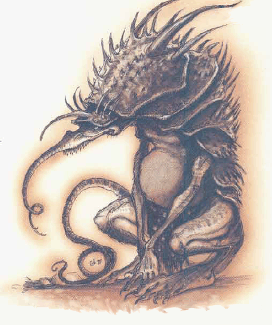
Vyneris, Temptress of Graz'zt
"You were made to be a rule-breaker, love. A woman of your talents, reduced to mere cannon fodder for an Infernal bureaucracy that doesn't care whether you flourish or flounder... why not expand your horizons and let yourself experience true, unadulterated sin?"
Once a devil-tempting succubus in service of Graz'zt, the Demon Prince of Pleasure, Vyneris' allegiances were scattered into the Blood Rift when she caught her prey at the center of a scheme spun by the forces of law and chaos alike.
Physical Description
In their human disguise, Vyneris (she/they) is tall, curvaceous, and unreasonably attractive, sporting long, neatly braided black hair, a warm smile, and skittish reddish-brown eyes whose insatiable hunger is often passed off as an innocent helplessness. In their true form, however, their beauty takes on a dark, twisted bend: their hair becomes an unkempt mess, with stray strands draped down over their face highlighting their wicked smile; they sport black, slightly tattered wings with fractal markings that invariably ensnare an unsuspecting observer's gaze; and their six-fingered claws, always hungering for flesh to sink into, never remain in one place or position for long.
Lore
While normal succubi serve to prey on the carnal desires of mortals, Graz'zt maintains a unique body of demonic succubi called the Angels of Grace and Sin that specialize in tempting devils: by exploiting common frustrations with the grim stalemate of the Blood War and the draconian, harsh laws of Baator that make eternal damnation as a devil truly hellish, these succubi aim to seduce even the strongest baatezu with promises of unbridled hedonism, sin, and freedom within Graz'zt's triple-layered realm of Azzagrat. Unlike many of her Angel sisters, Vyneris took the Blood War and the moral debate of law versus chaos incredibly seriously, and thus took great delight in extracting Infernal secrets and stratagems from her victims that assist in The Dark Prince's occassional campaigns against the baatezu (in those brief periods where Demogorgon and Orcus aren't the main threats).
Most of Vyneris' missions had either low stakes (if a devil fails to be corrupted, she was probably a bad fit anyway) or took a long time to carry out (with how many sticks the baatezu have shoved up their asses, it can take months or even years to corrupt some of them), so when she was assigned an urgent mission to track down and capture the rogue devil Kavash, the succubus was equally intrigued and thrilled at the prospect of a high-stakes hunt. Their interplanar chase was lengthy, with Vyneris nearly seizing victory at least twice, but both times Kavash tempted her with claims of conspiracy for long enough to escape her clutches. The chase ended at the site of Kavash's creation, which revealed the truth of its claims: the saboteur devil was in fact a product of cooperation between Graz'zt and the archdevil Glasya, who seeks to overthrow her father Asmodeus with an army of devils beholden to her and only her.
If two archfiends on opposite sides of the Blood War can conspire this boldly, then does the Blood War really mean anything? To Vyneris, the answer was a resounding no: she took the bold leap of rejecting her demonic master and joining Kavash in its fight to somehow unravel this conspiracy. However, it was then that agents of Glasya arrived to tie up loose ends: now aware of the now-cooperating fiends' mutual defection, yet unable to defeat them both in an all-out battle, these agents used a mighty spell to banish them to Carceri, never to see the light of day again.
Now in possession of a secret that could tear the Nine Hells apart, Kavash and Vyneris now desperately seek to escape Carceri, put an end to these fiendish plots, and somehow survive with their heads intact—all while navigating the strange and forbidden byways of their blossoming romantic relationship. Currently, the pair of fiends have taken refuge in the Bastion of Last Hope; once they "find" (steal) enough coin, they hope to procure magic items and arcane anonymity from the Jackals that'll elevate their quest from the lowly status of a suicide mission to something a bit more tenable.
Vyneris, Temptress of Graz'zt
Medium fiend (demon, sorcerer), chaotic neutral
- Armor Class 17 (natural armor)
- Hit Points 149 (23d8 + 46); Strength of the Grave
- Speed 30 ft., fly 60 ft. (true form only); Umbral Form
STR DEX CON INT WIS CHA 8 (-1) 17 (+3) 14 (+2) 12 (+1) 15 (+2) 22 (+6)
- Saving Throws Con +7, Cha +11; advantage against magic and to maintain concentration
- Skills Deception +16, Medicine +7, Perception +7, Performance +11, Stealth +13, Survival +7
- Damage Resistances cold, necrotic, poison, psychic; all except force and radiant (Umbral Form only)
- Senses truesight 30 ft., darkvision 120 ft., passive Perception 17
- Languages Abyssal, Common, Infernal; telepathy 60 ft.
- Challenge 13 (10,000 XP; PB +5)
Umbral Form (1/Day). When Vyneris is bloodied, she magically transforms into a shadowy form for 1 hour. In this form, she has resistance to all damage except force and radiant damage, and she can move through other creatures and objects as if they were difficult terrain, taking 5 (1d10) force damage if she ends her turn inside an object.
Metamagic (1/Turn). When Vyneris casts a spell, she can choose one of the options below to modify it.
Careful Spell. Each ally of Vyneris' choice automatically succeeds on saving throws against the spell and takes no damage if it would normally take half damage on a successful save.
Empowered Spell. Vyneris can reroll the spell's damage dice and use either total.
Transmuted Spell. Vyneris can change the damage type of the spell to cold, fire, lightning, or necrotic.Spellcasting. Vyneris is a 12th-level spellcaster. Her spellcasting ability is Charisma (spell save DC 19). Vyneris knows the following sorcerer spells, and can cast them without material components:
At will: blight, command*, dominate monster* (9th-level)
2/day each: cone of cold, darkness, phantasmal killer
1/day each: fear, mislead, summon shadowspawn*Can only target fiends and humanoids.
Strength of the Grave. If damage reduces Vyneris to hit points, she makes a Charisma saving throw (DC 5 + the damage taken) unless the damage is radiant or from a critical hit. On a successful save, Vyneris drops to 1 hit point instead.
Actions
Multiattack. Vyneris makes two melee attacks. She then uses Draining Kiss, One With Shadows, or the Magic action.
Fiendish Touch. Melee Spell Attack: +11 to hit, reach 5 ft., one creature. Hit: 15 (2d8 + 6) necrotic damage plus 7 (2d6) psychic damage. Critical Hit: The target has disadvantage on the next Intelligence, Wisdom, or Charisma saving throw it makes before the end of Vyneris' next turn.
Draining Kiss. Vyneris kisses a willing creature or a creature charmed by her. The target takes 61 (10d10 + 6) psychic damage (DC 19 Constitution save for half), and it suffers health drain equal to the damage taken. If this damage reduces the target to 0 hit points, Vyneris can choose to knock it unconscious instead of killing it.
One With Shadows. If Vyneris is in dim light or darkness, she becomes invisible until she makes an attack roll, deals damage, casts a spell, or enters an area of bright light.
Bonus Actions
Omen Sight. Vyneris marks a creature she can see within 60 feet of her with hungry shadows. Alternatively, she can utter a creature's name; if the named target is within 60 feet of her, it is marked even if she can't see it. At the start of her next turn, Vyneris automatically knows the marked target's location, and the mark ends. If the target was hidden, it is no longer hidden from her.
Shadow Walk (Recharge 5–6). If Vyneris is in dim light or darkness, she magically teleports up to 120 feet to an unoccupied space she can see that is also in dim light or darkness.
Change Shape. Vyneris shape-shifts to resemble a Medium or Small humanoid or back into her true form. Her game statistics are the same in each form, except her flying speed is available only in her true form. Any equipment she's wearing or carrying isn't transformed.
Reactions
Mistress of Pleasures. When Vyneris takes damage, she can magically grant 10 temporary hit points to herself and up to three allies within 30 feet of her.
Umbral Lash. When a creature Vyneris can see provokes an opportunity attack or hits her with an attack, she can make the following attack against it.
Melee Spell Attack: +11 to hit, reach 30 ft., one creature. Hit: 15 (2d8 + 6) necrotic damage, and Vyneris is invisible to the target until the end of her next turn.
Graz'zt's plot could make a great ally or enemy out of Vyneris, depending on which side of the conflict they fall on.
Medic. During a short rest, Vyneris can clean and bind the wounds of up to four willing humanoids and fiends, which allows them to regain an additional +3 hit points for every hit die they spend.
Performer. While performing, Vyneris grabs the attention of any onlookers enough that they automatically make Intelligence (Investigation) and Wisdom (Perception) checks with disadvantage until the performance ends.
Poisoned Words. A creature that succeeds a Wisdom (Insight) check to detect one of Vyneris' lies takes 14 (4d6) psychic damage and cannot communicate with other creatures for 1 minute. A creature reduced to 0 hit points by this trait is left at 1 hit point and is automatically dominated by Vyneris, as her dominate monster spell (no concentration required), until dispelled.
Spellcasting. Vyneris is a 12th-level spellcaster. Her spellcasting ability is Charisma (spell save DC 19). She knows the following sorcerer spells, and can cast them without material components:
- Ritual: alarm, detect magic, unseen servant
- 2/day each: create or destroy water, locate creature, suggestion
- 1/day each: creation, mass suggestion, skill empowerment
Combat
Vyneris specializes in control above all else: when in doubt, dominate monster is always a good option. As a shadow sorcerer, Vyneris excels at clinging to the shadows with One With Shadows, Shadow Walk, and the darkness spell. She only dives into the frey with cone of cold when an opportunity to hit multiple enemies without reprisal is assured, and will rely on Master of Pleasures, mislead, and Umbral Lash to keep her out of trouble. When bloodied, Kavash will use Umbral Form to move through objects and find cover; if her concentration is already taken up, she will rely on any remaining spells (and barring that, blight and command) and her Fiendish Touch to keep foes at bay. She saves summon shadowspawn for a key moment where it could serve as an effective distraction, e.g. to prevent persistent foes from following her if she flees combat.
When fighting alongside Kavash, Vyneris will forgo damaging effects altogether and use purely control effects as appropriate if it means enabling Kavash to deal more damage. Her reaction will be used on Master of Pleasures as an additional protective measure, and when appropriate, she will use her Careful Spell metamagic option to exclude Vyneris from her damaging spells. If it comes down to the wire, Vyneris will sacrifice her life so that Kavash may live (although using mislead to escape as well is of course preferable).
Demonic Restoration. If Vyneris dies outside the Abyss, her body dissolves into ichor, and she gains a new body instantly, reviving with all her hit points in Graz'zt's Argent Palace in Azzagrat.
Instinctive Omen. When initiative is rolled and she isn't surprised, Vyneris can immediately use her Omen Sight on each creature within 60 feet of her that she can see or knows the location of.
Hamartia
For centuries, Vyneris positioned herself as a useful tool for enacting Graz'zt's dark designs and a sexual commodity to tempt and manipulate baatezu soldiers. In wearing this ever-shapeshifting mask, Vyneris thought they knew their lowly place amidst the infinite chaos of the planes, and was quite adept at avoiding any opportunities for emotional honesty and connection. As they chased Kavash, a genuine bond of intimate (albeit murderous) knowledge of one another began to form in place of the mask—and when the hollow purpose of the Blood War became apparent, the mask was ripped away entirely.
What chains Vyneris to Carceri is that very hollowness and the despair that follows in its wake. They desperately cling to Kavash and the kindness it extends towards them, but until they can find an ideal to fight for rather than just a person to protect, that pit of despair will eat them from the inside out and keep them bound to Carceri. Perhaps, then, Vyneris would meet a similar fate as the power Arke: an apathetic, nihilistic shadow that shambles across for the orbs all eternity.
The best way for Vyneris to find a purpose for themselves is genuine socialization. Excessively flirting with women and returning to the comfort of her hypersexuality doesn't count—the conversations need to be authentic and emotionally honest in order to make any headway here. To conquer their hamartia, Vyneris needs to develop at least one new ideal to propel it forward that doesn't involve giving in to her worst impulses or cowering behind a shield of inauthenticity.
List of Important Business
Urgent Action Items
- find that damn hammer of thunderbolts
- finalize Cania heist plans
- tie up loose ends with Nerida
- send muscle to convoy in Beastlands
- bump up hazard pay
High Value Shipments in Transit
- Green Dragon Mask: Outlands to Acheron
- Scroll of Kraken Summoning: Prime to Sigil
- Greater Silver Sword: Astral to Limbo
Topaz Annihilator: Ysgard to BaatorVorpal Sword: Acheron to Prime
Things to Investigate
- Legion of Zarus: how close are they to attacking? Work with the Anarchists on this one
- Anarchists: why hasn't the Steward been seen for three weeks?
- Paryatheon: confirm or deny chant that the air proxy has a lead on the Sand Tombs
- Wrackspawn: confirmed horde sighting in Othrys. what's the deal there?
- Gehreleths: they're gathering in Cathrys for something big. make sure it doesn't concern me
For future me: if you misplace this again, I'll turn you inside out. —H
Wrackspawn
Creatures flayed in the torture pits of Torog are reborn as the deadly wrackspawn—granted the dubious reward of eternal life in exchange for absolute fealty to the King that Crawls.
Lore
A character knows the following information with a successful check using the Religion skill.
DC 10. Wrackspawn are loyal tools created from the victims of Torog's torture dens. Each wrackspawn is an assemblage of parts from numerous humanoid creatures, bound together with foul rituals and dark magic.
DC 12. The failed results of the horrid rituals that produce their kind, chained wrackspawn are sacrificed in battle to protect their kin. They wield the two ends of the very same chains that bind them like twin whips, squeezing the life out of any foe they can get their hands on.
DC 14. A thespian wrackspawn serves as an entertainer in Torog's torture dens. Needles are embedded into its flesh until a wide smile finds a permanent home on its face; these needles are later weaponized to rend the flesh of any foe that stands in its way.
DC 16. An elite torturer and assassin of Torog, a flaying wrackspawn directs the relentless attacks of its kin, combining the brutal sting of its barbed whip with a fragment of The Buried's suffocating grasp to bring pain and misery to all who oppose it.
DC 18. Chant is that packs of rogue wrackspawn have been spotted roaming in the deepest crevasses of Colothys. Presumably, these poor sods were buried Forever Deep Below Creation by Torog for their failures until they literally wormed their way out of his domain and into Carceri. Supposedly they're a more recent addition to Carceri's wide assortment of terrors, but wrackspawn sightings reported all the way up in Othrys have begun to call that into question.
Combat
The wrackspawn attack their foes indiscriminately, for their singular aim is widespread pain and suffering.
Chained Wrackspawn. Chained wrackspawn serve on the front lines, grappling the nearest foes and dragging them wherever their thespian and flaying masters direct them to. If they fail to grapple a foe on their turn, they use Chain Sweep to batter as many foes as possible.
Thespian Wrackspawn. Once their chained bretheren have initiated combat, a thespian wrackspawn will use Acrobatic Leap to dive in and out of the frey. They use their needles in melee by default, but once they are bloodied, they will use their Melodious Shriek on as many enemies as possible, leveraging the chained wrackspawn's Shared Torture trait to double the damage dealt—even if that means obliterating their front lines.
Flaying Wrackspawn. The flaying wrackspawn stays back when possible, using spells like blade barrier and command to control the battlefield and ray of enfeeblement and slow to debuff its foes. It cares not for the safety of its chained minions, and will delight in the agony it inflicts upon them with Suffocating Presence and Tortuous Boon. It will call upon these chained minions and use its Barbed Whip to fend off melee combatants, and will save its enemies abound spell for when a melee combatant has been bloodied.
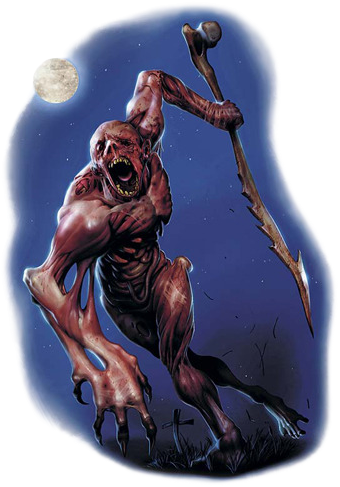
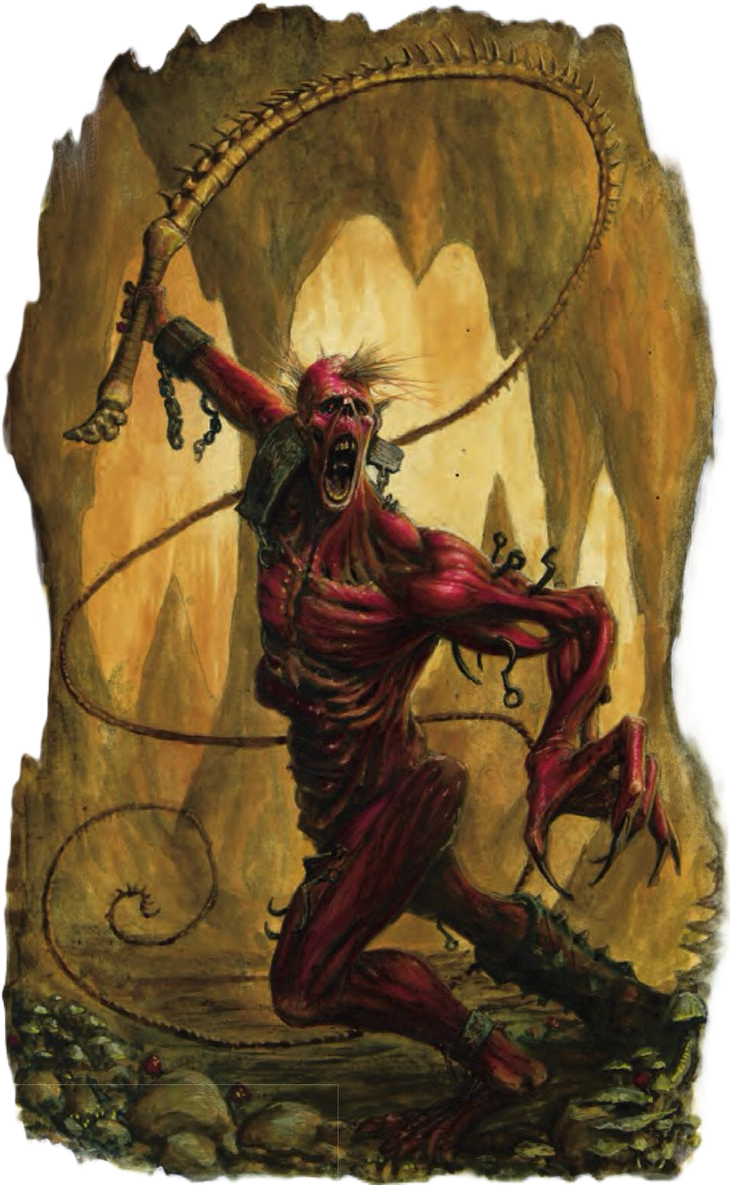
Chained Wrackspawn
Medium humanoid (wrackspawn), chaotic evil
- Armor Class 17 (natural armor), 14 when prone
- Hit Points 161 (17d8 + 85)
- Speed 20 ft.
STR DEX CON INT WIS CHA 20 (+5) 8 (-1) 21 (+5) 10 (+0) 17 (+3) 8 (-1)
- Saving Throws Str +8, Con +8, Wis +6
- Skills Deception +5, Perception +6
- Damage Vulnerabilities psychic (Shared Torture)
- Senses darkvision 60 ft., passive Perception 16
- Languages Common, Undercommon
- Challenge 8 (3,900 XP; PB +3)
Blood Frenzy. The wrackspawn has advantage on melee attack rolls against any creature that is bloodied.
Bloodwrack. Bloodied enemies within 10 feet of the wrackspawn suffer a -2 penalty to all saving throws.
Shared Torture. If the wrackspawn takes psychic damage, each creature within 30 feet of it that isn't also a wrackspawn takes half of that damage as well. A creature can't take this damage from this trait more than once per turn.
Actions
Multiattack. The wrackspawn makes two melee attacks.
Chain Whip. Melee Weapon Attack: +8 to hit, reach 10 ft., one creature. Hit: 16 (2d10 + 5) bludgeoning damage. If the target is a Medium or smaller creature, it is grappled (escape DC 14) by one of two chains, which can only be used to attack the grappled target. While grappled, the target is also suffocating.
Bonus Actions
Chain Sweep. Melee Weapon Attack: +8 to hit, reach 10 ft., any number of targets. Hit: 5 (2d4) bludgeoning damage. Miss: Half damage.
Constricting Chains. Melee Weapon Attack: +8 to hit, reach 5 ft., one grappled creature. Hit: 15 (3d6 + 5) bludgeoning damage, and the target suffers health drain equal to the damage taken. Miss: Half damage only.
Reactions
Fetter The Weak. If a creature grapples or shoves the wrackspawn, the wrackspawn can automatically grapple the attacker (escape DC 14) with one of its chains.
Thespian Wrackspawn
Medium humanoid (wrackspawn), neutral evil
- Armor Class 20 (natural armor)
- Hit Points 162 (25d8 + 50)
- Speed 30 ft.
STR DEX CON INT WIS CHA 12 (+1) 20 (+5) 14 (+2) 15 (+2) 16 (+3) 20 (+5)
- Saving Throws Dex +9, Int +6, Wis +7, Cha +9
- Skills Acrobatics +13, Athletics +5, Perception +7, Performance +13
- Senses darkvision 60 ft., passive Perception 17
- Languages Common, Undercommon
- Challenge 10 (5,900 XP; PB +4)
Bloodwrack. Bloodied enemies within 10 feet of the wrackspawn suffer a -2 penalty to all saving throws.
Needle Defense. Each time a creature makes a melee attack against the wrackspawn, it takes 2 piercing damage. A creature can choose to make an attack with disadvantage to avoid this damage.
Actions
Multiattack. The wrackspawn makes three melee attacks.
Embedded Needles. Melee Weapon Attack: +9 to hit, reach 5 ft., one target. Hit: 19 (4d6 + 5) piercing damage.
Melodious Shriek. Each creature within 30 feet of the wrackspawn that can hear its shriek takes 22 (4d8 + 4) psychic damage (DC 17 Wisdom save for half). On a failed save, a target is also charmed or frightened (wrackspawn's choice) until the end of the wrackspawn's next turn.
Bonus Actions
Acrobatic Leap. The wrackspawn jumps up to half its speed without provoking opportunity attacks.
Enthrall. Hostile creatures within 30 feet of the wrackspawn that can hear it suffer a -10 penalty to Wisdom (Perception) checks and passive Perception until the end of the wrackspawn's next turn.
Reactions
Discord From Pain. When a creature the wrackspawn can see hits it with an attack, the attacker must succeed on a DC 17 Wisdom saving throw or miss the attack and be charmed until the end of the attacker's next turn. Whenever the charmed attacker chooses another creature as a target, it must choose the target at random from among the creatures it can see within range of the attack, spell, or other ability it's using. If an enemy provokes an opportunity attack from the charmed target, the creature must make that attack if it is able to.
Flaying Wrackspawn
Medium humanoid (wrackspawn), neutral evil
- Armor Class 17 (natural armor)
- Hit Points 247 (33d8 + 99)
- Speed 30 ft.
STR DEX CON INT WIS CHA 12 (+1) 18 (+4) 16 (+3) 17 (+3) 21 (+5) 22 (+6)
- Saving Throws Con +9, Wis +11, Cha +12
- Skills Insight +11, Perception +11, Religion +9, Stealth +10
- Condition Immunities charmed, frightened, poisoned
- Senses darkvision 120 ft., passive Perception 21
- Languages Common, Undercommon
- Challenge 20 (25,000 XP; PB +6)
Blood Frenzy. The wrackspawn has advantage on melee attack rolls against any creature that is bloodied.
Bloodwrack. Bloodied enemies within 30 feet of the wrackspawn suffer a -2 penalty to all saving throws.
Innate Spellcasting. The wrackspawn's innate spellcasting ability is Charisma (spell save DC 20). It can innately cast the following spells, requiring no material components:
At will: command, detect evil and good, ray of enfeeblement
2/day each: blade barrier, enemies abound, slow
1/day each: fear, geas, phantasmal killerActions
Multiattack. The wrackspawn makes two melee attacks.
Barbed Whip. Melee Weapon Attack: +10 to hit, reach 15 ft., one target. Hit: 11 (2d6 + 4) slashing damage plus 14 (4d6) psychic damage, and the wrackspawn can move the target to any unoccupied space within reach if it is Medium or smaller.
Bonus Actions
Tortuous Boon. Melee Weapon Attack: automatic hit, reach 15 ft., one ally. Hit: 7 (2d6 + 4) slashing damage, and the target has advantage on the next attack roll it makes before the end of its next turn.
Suffocating Presence (Recharge 5–6). Each creature in a 30-foot cone takes 13 (2d6 + 6) psychic damage (DC 17 Charisma save for half). On a failed save, a target is also frightened for 1 minute (save ends); while frightened, a creature's speed is reduced by 10 feet, and it can't speak. If a creature's saving throw is successful or the effect ends for it, the creature is immune to any wrackspawn's Suffocating Presence for the next 24 hours.
Legendary Actions
The wrackspawn can take 3 legendary actions, choosing from the options below. Only one legendary action can be used at a time and only at the end of another creature's turn. The wrackspawn regains spent legendary actions at the start of its turn.
- Compel Wrackspawn. The wrackspawn uses Tortuous Boon on an ally, and that ally can use its reaction to make one attack against a target of the wrackspawn's choice that it can see.
- Barbed Whip. The wrackspawn makes one barbed whip attack.
- Tortuous Magic (Costs 2 Actions). The wrackspawn takes the Magic action.