
Summoner
The halfling waved his staff, intoning ancient words of power that would pierce the veil and bring forth a creature from another world. His connection to the monster was unwavering, and its powers would help him and his companions defeat the beast they were facing. As the arcane energies reached their apex, he raised his staff into the air, and shouted: "Scovalope, I choose you!"
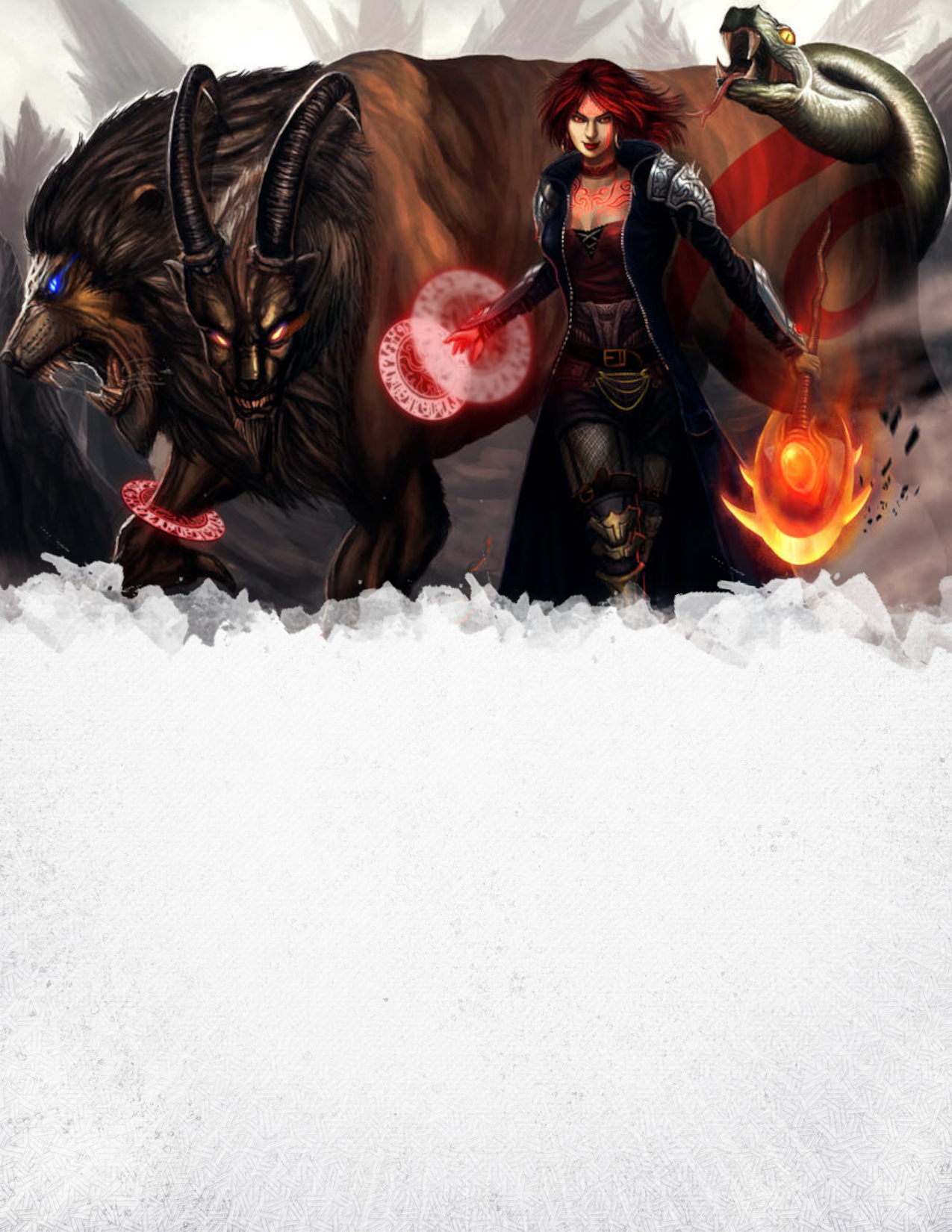
With a final blast of fire, the great beast wavered, collapsing in a heap and sending dirt and debris flying. Her companions cheered at their victory, but she rushed forward, already bringing to mind the ritual that would bind the creature to her soul. She laid a hand on its brow, chanting slowly, forcing arcane energies through its body and mind, battling its will. After a few moments, sweat on her brow, she turned to the rest of her band as the landshark slowly dissipated into arcane energy.
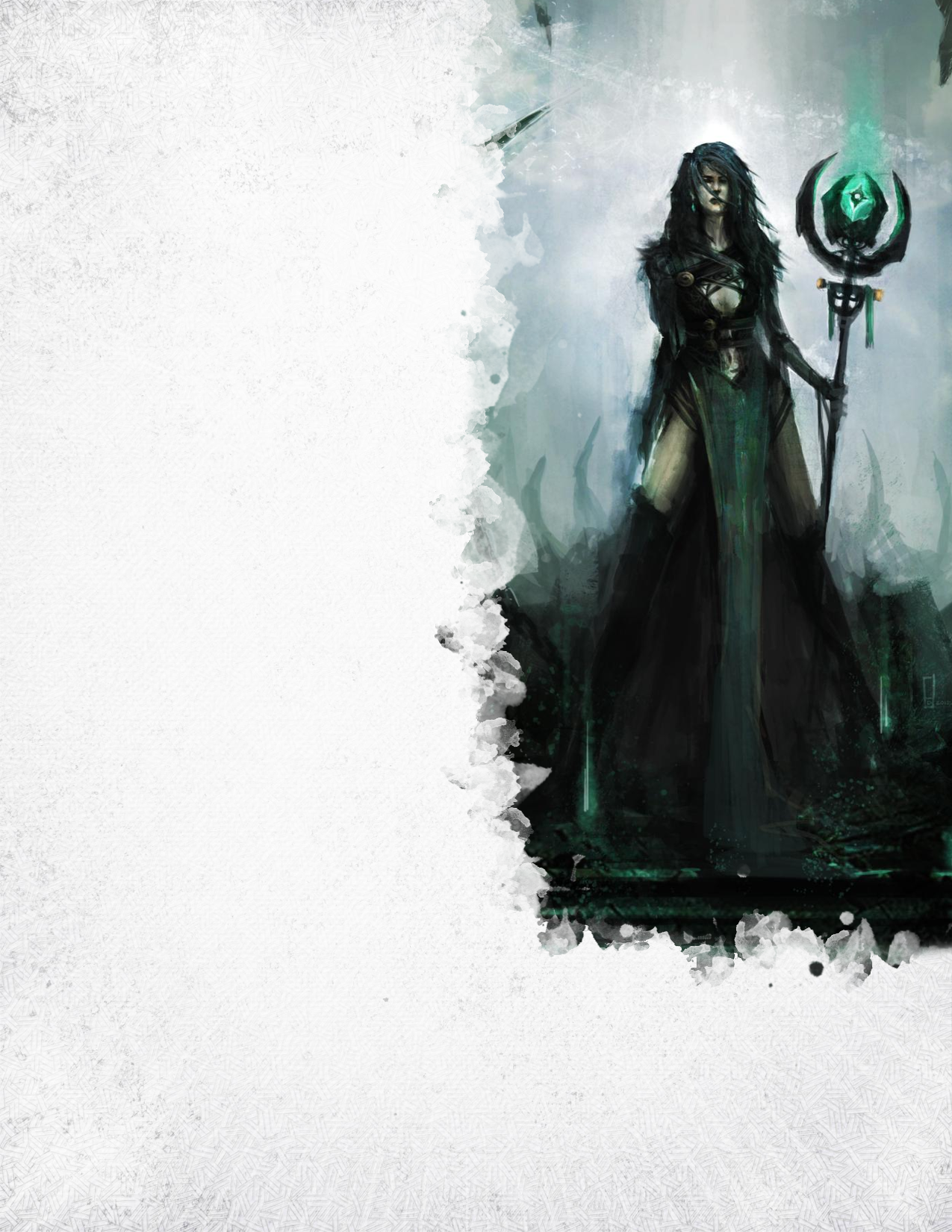
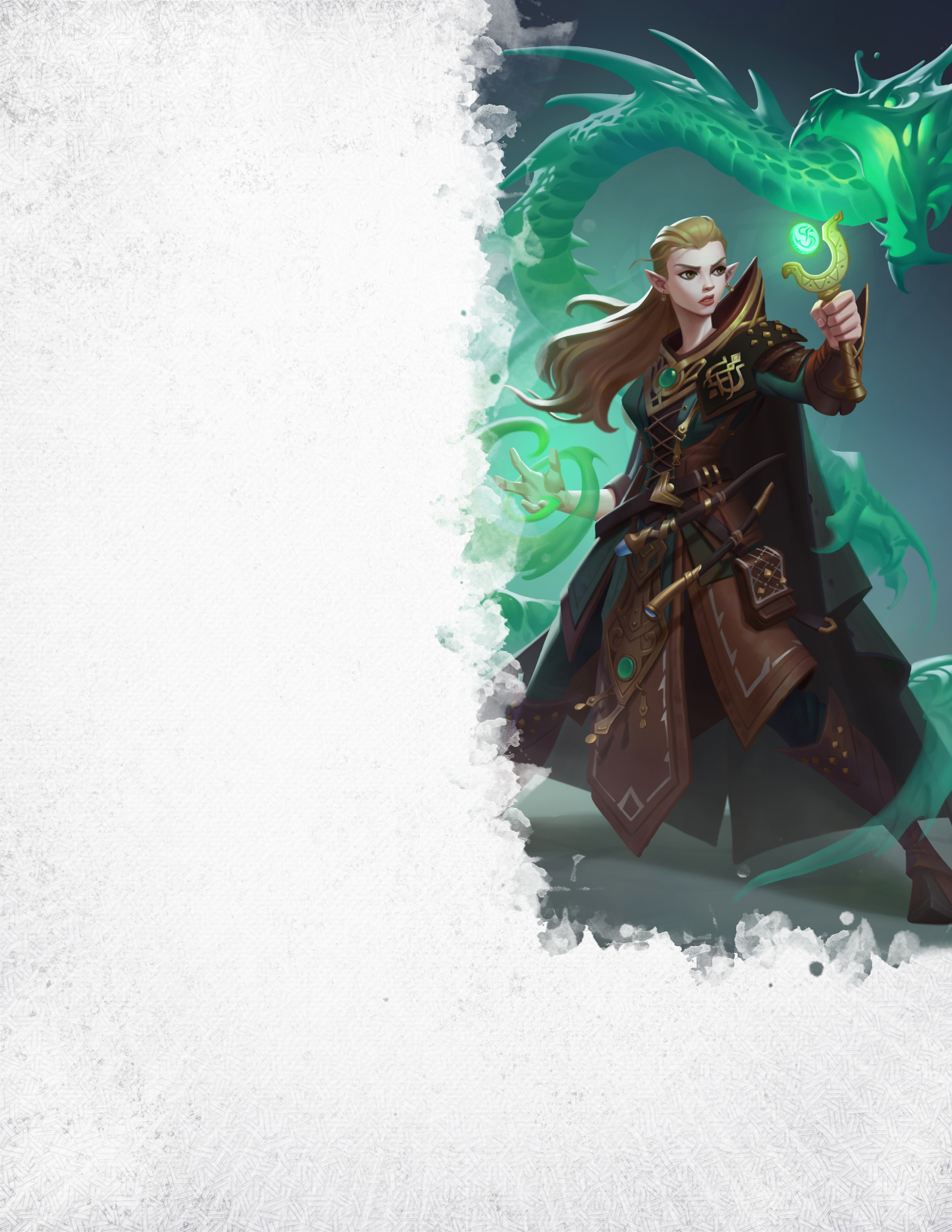
The dragonborn assessed the situation – he might not be much use with a spear, true, but he had learned how to read the lay of a battle the hard way. As the paladin faltered, hard-pressed under the onslaught of a score of undead, he dismissed the bat he'd called upon for reconnoitering, and called into existence his great ape, brought into the real at her side to support her.
Summoners are practitioners of a specific form of arcana: that of binding entities to their being and calling upon them for a variety of tasks. Most are proficient with basic magics, as well, though some delve deeper into spellcraft to augment the beings they summon. Regardless of their specific skills, summoners are able members of an adventuring band, bringing a variety of abilities to the table.
Here There Be Dragons
Unlike more traditional magics, summoning is less about committing arcane spell formulae to memory or studying tomes for ancient knowledge, and more about strength of will. That said, however, it is not much more than another specialization of sorcery, albeit one that lends itself towards a different sort of person than more typical paths.
The rituals involved in binding creatures and summoning them are more involved than most spells, though this is due to it having the additional component of a test of wills: not all beings serve willingly, at least initially. That such binding can sometimes involve besting would-be minions in combat also lends the discipline towards those of a more adventuresome mindset.
To Fight Monsters...
In a world where monsters are reality, the ability to suborn them to one's will and command them to do one's bidding is one that can be incredibly useful. While there are certainly ways to put summoning to more mundane uses – an arcane blacksmith may find it helpful to have a minion immune to fire, to assist in forgework – the vast majority of those who embark upon this path do so with the intent of using their summons to fight.
Adventuring summoners, then, are more common than
more traditional wielders of arcane might: while it is certainly possible, as a summoner, to acquire power safely, many also have a desire to put their creatures and battle acumen to the test.
Many of thsoe who take up this path pursue other studies and skillsets, to further complement their minions: when one can summon a deinonychus to fight for you. it frees yourself to find other ways to make yourself useful.
The Summoner
| Level | Proficiency Bonus |
Features | Summons | MaxSummon CR | Anima | Cantrips Known |
|---|---|---|---|---|---|---|
| 1st | +2 | Summoning, Cantrips, Channel | 2 | 1/4 | 3 | 3 |
| 2nd | +2 | Bond Senses, Master's Mark | 3 | 1/2 | 4 | 3 |
| 3rd | +2 | Summoner Circle | 3 | 1 | 4 | 3 |
| 4th | +2 | Ability Score Improvement | 3 | 2 | 5 | 4 |
| 5th | +3 | Augment Summoning | 4 | 2 | 5 | 4 |
| 6th | +3 | Otherworldly Armaments | 4 | 3 | 6 | 4 |
| 7th | +3 | Circle Feature | 4 | 4 | 6 | 4 |
| 8th | +3 | Ability Score Improvement | 5 | 4 | 7 | 4 |
| 9th | +4 | Augment Summoning | 5 | 5 | 7 | 4 |
| 10th | +4 | — | 5 | 6 | 8 | 5 |
| 11th | +4 | Circle Feature | 6 | 6 | 8 | 5 |
| 12th | +4 | Ability Score Improvement | 6 | 7 | 9 | 5 |
| 13th | +5 | Augment Summoning | 6 | 8 | 9 | 5 |
| 14th | +5 | — | 6 | 8 | 10 | 5 |
| 15th | +5 | Circle Feature | 6 | 9 | 10 | 5 |
| 16th | +5 | Ability Score Improvement | 6 | 10 | 11 | 5 |
| 17th | +6 | Augment Summoning | 6 | 10 | 11 | 5 |
| 18th | +6 | — | 6 | 11 | 12 | 5 |
| 19th | +6 | Ability Score Improvement | 6 | 12 | 12 | 5 |
| 20th | +6 | Anima Font | 6 | 12 | 13 | 5 |
Creating a Summoner
There are a number of questions you should answer when making an adventuring summoner: why this particular path of magic, what sort of creatures do you have at your beck and call, and how old were you when you decided to set out into the world? Are you the sort who wants to see the world to find new and exotic creatures to add to your menagerie? Are you of a tactical mind, learning to survey the battlefield to best position and direct your minions, or are you a battlethirsty warrior who fights alongside your pets?
Another consideration that doesn't come into play for most other classes is that of age. This particular profession can lend itself towards adventurers on the younger end of the spectrum: being a summoner means having an often-dangerous creature between you and harm's way, which means some societies might be less concerned about their young heading into the world with such beings at their disposal. There is certainly something to be said for being a 12-year-old who can throw dragons at their enemies.
Quick Build
As a summoner, Charisma is your most important ability score, then emphasize your other ability scores dependent upon the role you anticipate taking in combat; Dexterity is usually a good choice, regardless.
Your initial choice of summon is also quite important, and you should review the possible options and choose what works best thematically with your concept.
Then take the Urchin background.
Class Features
As a summoner, you have the following class features.
Traits
- Role: Petmaster. You can summon and control a number of creatures who can perform a variety of tasks, and can augment their abilities with a few of your own.
- Power Source: Arcane. You call upon the leylines to empower you with mana, which you can transform into a variety of physics-breaking abilities through force of will.
Hit Points
- Hit Dice: 1d8 per summoner level
- Hit Points at 1st Level: 8 + your Constitution modifier
- Hit Points at Higher Levels: 1d8 (or 5) + your Constitution modifier per summoner level after 1st
Proficiencies
- Armor: Light armor
- Weapons: Simple weapons
- Tools: None
- Saving Throws: Dexterity, Charisma
- Skills: Choose two from Arcana, Deception, Insight, Perception, Persuasion, and Sleight of Hand
Equipment
You start with the following equipment, in addition to the equipment granted by your background:
- (a) a quarterstaff or (b) a dagger
- (a) a scholar's pack or (b) an explorer's pack
Summon
As a summoner, you can pull forth eldritch beings from other dimensions into your service. These entities are entirely under your beck and call, and serve you unerringly.
Summoning
As an action, you can summon a creature you know (see "Summons Known") into a space adjacent to you into which it will fit. You can only have one creature summoned at a time, and can dismiss a creature you have summoned as a bonus action. You cannot dismiss a creature on the turn you summoned it, and a creature cannot take actions the turn it is summoned.
While you have a summoned creature, it can move and use its actions during your turn as you direct. You do not need to see or speak to the creature to direct it, it understands your will and acts accordingly. If you are incapacitated or unconscious at the start of your turn, your summoned creature takes the Dodge action.
A creature summoned by this feature can be affected by spells or other effects that banish or otherwise ward against supernatural creatures, and are treated as though they were the product of a spell you cast with an indefinite duration with a spell level equal to your proficiency bonus.
Summoned creatures cannot make use of legendary or lair actions, nor the Legendary Resistance ability. If a summoned creature has abilities with limited uses, uses of those abilities are retained when the creature is dismissed, and those abilities are refreshed when you finish a long rest.
Summoned creatures retain their hit points and other effects when dismissed. If a summoned creature is reduced to 0 hit points, it is immediately dismissed, and you cannot summon it again until after you finish a long rest. When you finish a long rest, all of your summoned creatures are restored to full hit points, and the durations of any effects they were benefiting or suffering from expire.
Your summoned creature is immediately dismissed if you die.
In Yskarithe: Summoning
If you are playing in the Yskarithe setting, you are more restricted in the creatures you can summon.
Specifically, you can only summon "pocket monsters." The stats for such creatures can be found if one looks hard enough. Additionally, a number of "fake" pocket monsters can be found an in accompanying document/appendix.
These restrictions completely replace the normal restrictions on creatures you can summon: you are not limited by creature type or Intelligence score. You must still abide by maximum challenge rating.
Other GMs using this material may also choose to limit their players in this fashion. This class is balanced around using those creatures, not those found in the SRD or other sources, and the author is not responsible for shenanigans involving players being able to summon creatures that may break the game. You have been warned.
Summons Known
You can summon two specific creatures. These can be any creature of the aberration, beast, celestial, construct, dragon, elemental, fey, fiend, monstrosity, ooze, plant, or undead types, provided their challenge rating is equal to or lower than the value for your summoner level in the Max Summon CR column of the Summoner table, and provided it has an Intelligence score of 7 or lower.
You learn new summons as you gain levels in this class, per the Summons column of the Summoner table.
When you gain a level in this class, you can trade out one of your known summons for a new one, following the restrictions as indicated above.
Acquiring New Summons
You know the capture summon spell, and can cast it a number of times equal to your Charisma modifier plus 1, minimum 1; when you cast this spell in this way, it has a spell level equal to your proficiency bonus minus 1. You regain uses of this ability when you finish a short or long rest.
If you have the ability to cast spells of 1st level or higher, you can cast this spell using those resources.
Anima
Your knowledge of summoning has resulted in your possession of an altered form of mana known as anima.
You have an amount of anima as shown in the Anima column of the Summoner table. When you spend anima, it is unavailable until after you finish a long rest, after which you refresh your full amount of anima.
As an action, you can spend a point of anima to do one of the following:

- Your summoned creature regains hit points equal to 1d6 + your Charisma modifier. This increases by 2d6 at 3rd level (3d6), and again at 6th (5d6), 11th (7d6), and 17th level (9d6).
- Your summoned creature either (a) recharges one of its recharge abilities, or (b) regains one use of an ability limited in another manner.
Cantrips
You know three cantrips of your choice from the spell list. You learn additional cantrips of your choice as you gain levels, as shown in the Cantrips Known column of the Summoner table.
When you gain a level in this class, you can choose one of the cantrips you know and replace it with a different cantrip from the spell list.
Casting Ability
Charisma is your casting ability for your summoner spells, as your form of magic is more about personal power than knowledge. You use your Charisma whenever a spell refers to your casting ability. In addition, you use your Charisma modifier when setting the saving throw DC for a summoner spell you cast and when making an attack roll with one.
Spell Save DC = 8 + your proficiency bonus + your Charisma modifier
Spell Attack Modifier = your proficiency bonus + your Charisma modifier
Channel
You can utilize the leftover energies of your summonings and twist them into a small spell.
When you summon a creature with your Summon feature, you can use your bonus action to cast a cantrip you know with a casting time of 1 action.
Bond Senses
2nd-level Summoner feature
You can see through the senses of your summoned creatures.
If your summoned creature is on the same plane as you, you can use a bonus action to perceive through your summoned creature's senses, which replace and suppress your own.
You can use a bonus action to return to your senses.
Master's Mark
2nd-level Summoner feature
Your command over your summons is complete, such that they can never harm you, and they can never be wrested from your will.
You are immune to damage from your summoned creatures. If your summoned creature would force you to make a saving throw against one of its abilities, you
automatically make that saving throw, and suffer no effects from that ability.
Your summoned creatures are immune to the charmed condition, and other creatures cannot exert control over your summoned creatures.
If your actions are being controlled or manipulated by another creature or effect, that creature or effect can direct you to modify your summoned creature's behavior.
Summoner Circle
3rd-level Summoner feature
You can further specialize in your knowledge of summoning eldritch creatures. Choose a circle from the following list: Animus, Conjurer, Magician, and Occultist.
Your choice grants you features when you choose it at 3rd level and again at 7th, 11th, and 15th level.
Ability Score Improvement
4th, 8th, 12th, 16th, 19th-level Summoner feature
You can increase one ability score of your choice by 2, or you can increase two ability scores of your choice by 1. As normal, you can't increase an ability score above 20 using this feature.
Martial Versatility. Whenever you reach a level in this class that grants you the Ability Score Improvement
feature, if you have the Fighting Style feature, you can choose a new Fighting Style from that list. This replacement represents a shift of focus in your martial practice.
Skill Proficiency. Whenever you reach a level in this class that grants you the Ability Score Improvement feature, you can also replace one of your skill proficiencies with a skill proficiency offered by this class at 1st level. This change represents one of your skills atrophying as you focus on a different skill.
Augment Summoning
5th, 9th, 13th, 17th-level Summoner feature
You glean greater knowledge of the eldritch creatures you command, and you also learn of arcane secrets that allow you to infuse them with your anima upon their summoning, strengthening them in some fashion.
If you have multiple options available, you can apply any combination of them at the same time to the same creature, paying for each effect separately.
Choose one of the following options. You choose another when you reach 9th, 13th, and 17th level.
Adaptational Arcana
When you use your Summoning feature to summon a creature, you can spend anima equal to its CR, minimum 1.

If you do, choose one damage type other than bludgeoning, piercing, or slashing. If the creature has vulnerability to that damage type, it loses that vulnerability; if it has resistance to that damage type, it gains immunity to it; if neither, it gains resistance to that damage type. This effect lasts until the creature is dismissed, it drops to 0 hit points, or you finish a long rest.
Eldritch Vitality
When you use your Summoning feature to summon a creature, you can also spend any amount of anima. The
summoned creature's current and maximum hit points are increased by 1d8 per anima you spend in this way. This effect lasts until the creature is dismissed, it drops to 0 hit points, or you finish a long rest.
Enchanted Precision
When you use your Summoning feature to summon a creature, you can also spend any amount of anima up to an amount equal to half your proficiency bonus, rounded down. The summoned creature gains a bonus to attack rolls and saving throw DCs of effects it produces equal to the amount of anima you spent in this way. This effect lasts until the creature is dismissed, it drops to 0 hit points, or you finish a long rest.
Invigorating Anima
When you use your Summoning feature to summon a creature, you can also spend any amount of anima. When the summoned creature deals damage, increase it by the amount of anima you spent in this way. This effect lasts until the creature is dismissed, it drops to 0 hit points, or you finish a long rest.
Occult Haste
When you use your Summoning feature to summon a creature, you can also spend any amount of anima. The summoned creature's movement speeds that are greater than 0 feet increase by 5 feet per anima you spend in this way. This effect lasts until the creature is dismissed, it drops to 0 hit points, or you finish a long rest.
Protean Magics
When you use your Summoning feature to summon a creature, you can spend anima equal to its CR, minimum 1. If you do, choose one damage type other than bludgeoning, piercing, or slashing, and then choose another damage type other than bludgeoning, piercing, or slashing. Whenever the creature deals damage with an attack or ability that would deal damage of the first damage type, it is instead of the second type. This effect lasts until the creature is dismissed, it drops to 0 hit points, or you finish a long rest.
Supernatural Resilience
When you use your Summoning feature to summon a creature, you can also spend any amount of anima up to an amount equal to half your proficiency bonus, rounded down. The summoned creature gains a bonus to AC and saving throws equal to the amount of anima you spent in this way. This effect lasts until the creature is dismissed, it drops to 0 hit points, or you finish a long rest.
Otherworldly Armaments
6th-level Summoner feature
Your well of anima naturally suffuses beings you summon, enhancing their claws and teeth to magical sharpness.
Creatures you summon with your Summoning feature treat their attacks as magical for the purposes of overcoming resistance to nonmagical bludgeoning,
piercing, and slashing damage.
When a creature you summon with your Summoning feature would deal bludgeoning, piercing, or slashing damage, it can deal your choice of force damage or its normal damage type.
Anima Font
20th-level Summoner feature
Your soul constantly replenishes your expended anima.
You regain all your expended anima after a short rest.
Summoner Circles
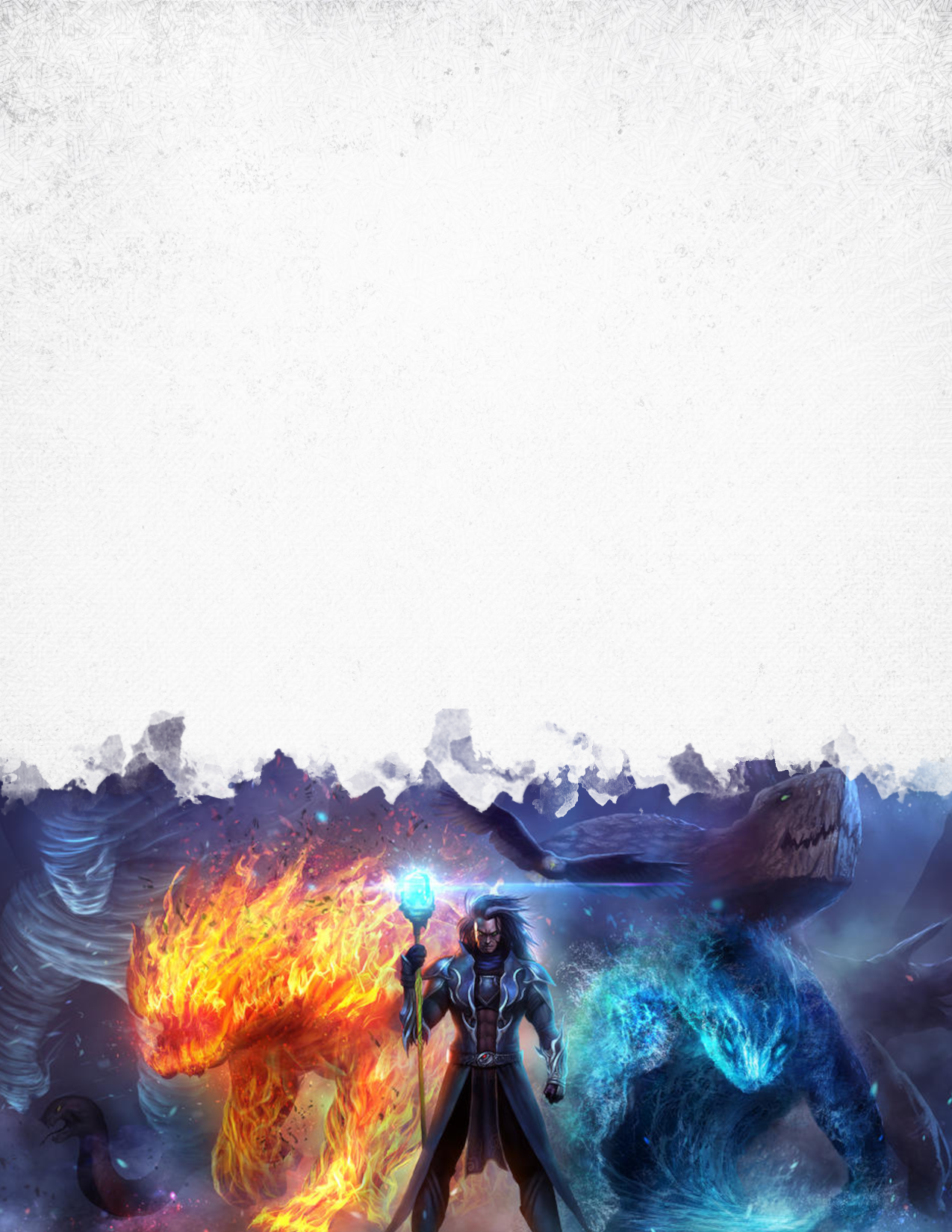
Though the art of summoning can be powerful on its own, many practitioners find that they cannot hope to learn all there is to know about it. Some choose to focus on various aspects of summoning, improving the depths of their knowledge, while others seek to augment their creatures through improving their own prowess in some fashion.
Animus
Animus summoners are those whose soul resonates more strongly with the arcane power of anima. You have learned to harness this resonance, allowing you to attune yourself to it more deeply, granting you a number of benefits.
Deep Anima
3rd-level Animus feature
Your soul's reserve of anima is larger than that of others.
You gain 1 additional anima. You gain an additional anima at 7th, 11th, and 15th levels.
Soulsight
7th-level Animus feature
Your understanding of anima and its connection to souls allows you to sense creatures whose souls are from other dimensions.
As an action, you can open your senses to the leylines. Until the end of your next turn, you know the location of any celestial, elemental, or fiend within 60 feet of you that is not behind total cover. You know the type (celestial, elemental, or fiend) of any being whose presence you sense, but not its identity.
You can use this feature a number of times equal to your Charisma modifier, plus 1. When you finish a long rest, you regain all expended uses.
Soulsurge
11th-level Animus feature
You can infuse your summons with anima, invigorating them temporarily.
As a bonus action, you can affect a creature you have summoned with your Summoning feature by one of the abilities granted to you by your Augment Summoning feature, as though you had just summoned it.
Soulwell
17th-level Animus feature
Your soul has admixed with the source of anima amidst the leys.
When you roll initiative, if you have fewer than 3 anima remaining, you gain 1 anima.
Conjurer
You have focused your efforts on perfecting the art of summon magicks, giving you greater control over the creatures you call into this world.
Beckon
3rd-level Conjurer feature
Your affinity to your summons allows them to sense your location and come to your aid, if required.
As an action, you can call your summoned creature to your location, provided it is on the same plane as you. This is a teleportation effect, and is blocked by effects that would prevent teleportation. The summoned creature appears adjacent to you in a space of your choice, or as close as possible if all adjacent spaces to you are occupied.
Transposition
7th-level Conjurer feature
Your connection to your summoned creatures allows you to swap locations with them.
When you use your Beckon feature, you can instead swap locations with your summoned creature. If your summoned creature is larger than you, you can appear in any squares occupied by the summoned creature. The summoned creature must occupy the space that you occupied if able, or as close as possible if it is not able.
Shield Ally
11th-level Conjurer feature
Your summoned creatures instinctively protect you when they are near.
When you are adjacent to your summoned creature, and your summoned creature is not incapacitated, attacks made against you have disadvantage.
Soulbond
17th-level Conjurer feature
Your spiritual connection to your summoned creatures allows you to share healing energy.
When you regain hit points, your summoned creature regains that many hit points, and your unsummoned creatures regain half that amount, rounded down. An unsummoned creature brought to more than 0 hit points in this manner can be summoned again.
When your summoned creature regains hit points, you regain half that amount, rounded down.
Magician
You have studied more traditional magic alongside that of summoning, allowing you to call more deeply upon the leys and work wonders through the application of arcane power.
Spellcasting
3rd-level Magician feature
You augment your anima with traditional mana, allowing you to cast spells.
Mana. The Magician Spellcasing table shows you how much mana you have to cast your spells of 1st level or higher. When you cast a spell of 1st level or higher, you must check for arcane backlash; if you suffer backlash, you also expend 1 mana on the spell. You cannot cast spells if you have no mana remaining. You regain all lost mana when you finish a long rest.
Spells Known of 1st Level and Higher. You know two 1st-level spells of your choice.
The Spells Known column of the Magician Spellcasting table shows when you learn more spells of 1st level or higher. Each of these spells must be of a level equal to or lower than the level in the Max Spell Level column of the

Magician Spellcasting
| Summoner Level |
Spells Known |
Mana | Max Spell Level |
|---|---|---|---|
| 3rd | 2 | 2 | 1st |
| 4th | 3 | 3 | 1st |
| 5th | 3 | 3 | 1st |
| 6th | 3 | 3 | 1st |
| 7th | 4 | 3 | 2nd |
| 8th | 4 | 3 | 2nd |
| 9th | 4 | 3 | 2nd |
| 10th | 5 | 4 | 2nd |
| 11th | 5 | 4 | 2nd |
| 12th | 5 | 4 | 2nd |
| 13th | 6 | 4 | 3rd |
| 14th | 6 | 4 | 3rd |
| 15th | 6 | 4 | 3rd |
| 16th | 7 | 5 | 3rd |
| 17th | 7 | 5 | 3rd |
| 18th | 7 | 5 | 3rd |
| 19th | 8 | 5 | 3rd |
| 20th | 8 | 5 | 3rd |
Magician Spellcasting table for your level.
Whenever you gain a level in this class, you can replace one of the spells you know with another spell of your choice from the spell list. The new spell must be of a level to which you have access.
Spellcasting Ability. Charisma is your spellcasting ability for your summoner spells, as you apply force of will to channel energy from the leys. You use your Charisma whenever a spell refers to your spellcasting ability. In addition, you use your Charisma modifier when setting the saving throw DC for a summoner spell you cast and when making an attack roll with one.
Spell Save DC = 8 + your proficiency bonus + your Charisma modifier
Spell Attack Modifier = your proficiency bonus + your Charisma modifier
Soul Link
7th-level Magician feature
You can make use of the arcane energies infused in your summoned creatures to transpose spells.
When you cast a spell, you can cast that spell as though you were in your summoned creature's space, rather than your own.
You can use this feature a number of times equal to your Charisma modifier, plus 1, minimum 1. You regain all expended uses when you finish a long rest.
Transmute Anima
11th-level Magician feature
You have unlocked the secret of the creation of anima from mana, and can reverse the process.
During a short rest, you can spend any amount of anima, up to your proficiency bonus. You regain that much mana.
Once you use this feature, you cannot use it again until you finish a long rest.
Power Transference
17th-level Magician feature
You have learned how to absorb the arcane energies binding a summoned creature, dismissing it and consuming the energies used to summon it.
As a bonus action, you can dismiss your summoned creature. When you do, you gain temporary mana equal to your summoner level. This temporary mana is used first when you cast a spell and lasts for up to 10 minutes.
You cannot summon a creature dismissed in this manner until you finish a long rest.
Occultist
Whereas other summoners may develop bonds with their summoned beasts, you have cultivated such bonds with intention: in so doing, you have found you can empower the creature, granting it abilities beyond what mere anima can achieve.
Favored Summon
3rd-level Occultist feature
You favor one of your summons above all others.
Choose one summon you know. That summon becomes your favored summon.
If you learn a new summon in place of your favored summon, you immediately choose a new favored summon.
When you use your Summon feature, you can summon your favored summon if it was dismissed due to death, by reducing one of your other summons to 0 hit points; however, it returns with only half of its maximum hit points.
Favored Combat
7th-level Occultist feature
You know your favored summon's combat style and abilities on a deep level, and can lend it aid when need be.
You can use the Help action as a bonus action to help your favored summon.
When you use the Help action to grant your favored summon advantage on their next attack roll, you can do so against a creature within 60 feet of you, rather than 5 feet.
Anima Attunement
11th-level Occultist feature
Your connection to your favored summon allows you to call upon anima to enhance it with minimal effort.
When you summon your favored summon, you can apply a single ability you have gained through your Augment Summoning feature without spending anima. If you do, treat the effects of that ability as though you spent the maximum amount of anima possible, up to your normal amount.
Soul Sanctum
17th-level Occultist feature
The bond between you and your favored summon is so great that it can serve as a temporary phylactery in the event of your untimely demise.
If you die while your favored summon is summoned, it is not immediately dismissed. You can continue to control its actions as though you were alive and concentrating on it. Your favored summon can serve as a replacement for your body for purposes of spells and effects that return a dead creature to life – if your original body has been lost or destroyed, your favored summon forms a new body out of its physical form as part of the process of returning you to life, including any body parts or organs integral for your survival.
While you are dead, your soul is housed within your favored summon, protecting it from harm. You have advantage on saving throws against effects that would target or otherwise manipulate your soul while it is housed by your favored summon.
Summoner Spells
These additional spells are not available to be taken as spells: they are only accessible via summoner class features.
Capture Summon
- 1st-level mastigos (conjuration) spell
- Casting Time: 1 action
- Range: 60 feet
- Duration: Instantaneous
Magic to join a creature's power to your own.
Choose a creature you can see within range. If the creature is not a creature you could summon, or if it is immune to the charmed condition, this spell fails.
Roll 3d6; if the target is bloodied, roll an additional 2d6, and for each condition or other effect the target is suffering from that could be ended by a successful saving throw, roll an additional 1d6. If the target's hit points are equal to or lower than the result, you successfully capture the creature as a summon.
A creature captured by this spell immediately disappears. Choose one of your summons known: you lose that summon, and replace it with the captured creature, as though you had gained a level and replaced a previous summon with a new one.
At Higher Levels. When you cast this spell as 2nd level or higher, double the number of dice you roll for each level above 1st; this doubling is cumulative.
Appendix: Fakemon

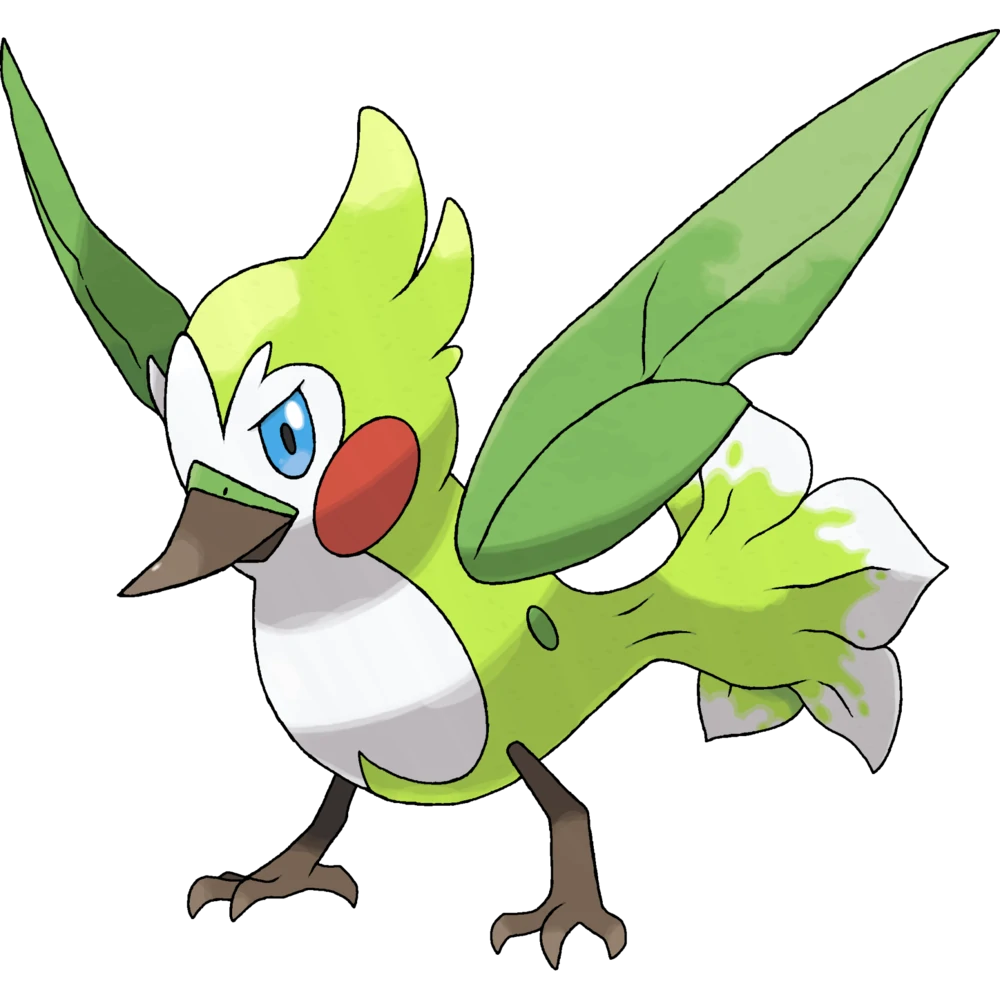
Foliat
Small plant, unaligned
- Armor Class 14
- Hit Points 16 (3d6+6)
- Speed 20 ft.
STR DEX CON INT WIS CHA 10 (+0) 18 (+4) 12 (+1) 6 (–2) 10 (+0) 10 (+0)
- Damage Resistances earth, lightning, water; bludgeoning, force, piercing, and slashing damage from plants
- Damage Vulnerabilities cold, fire, poison, wind
- Senses passive Perception 10
- Languages Pokemon
- Challenge 1/2 (100 xp)
Actions
Absorb. The pokemon attempts to drain a creature it can see within 30 feet. The target must succeed on a DC 10 Constitution saving throw or take 3 (1d6) acid damage. Foliat regains hit points equal to the amount of acid damage dealt.
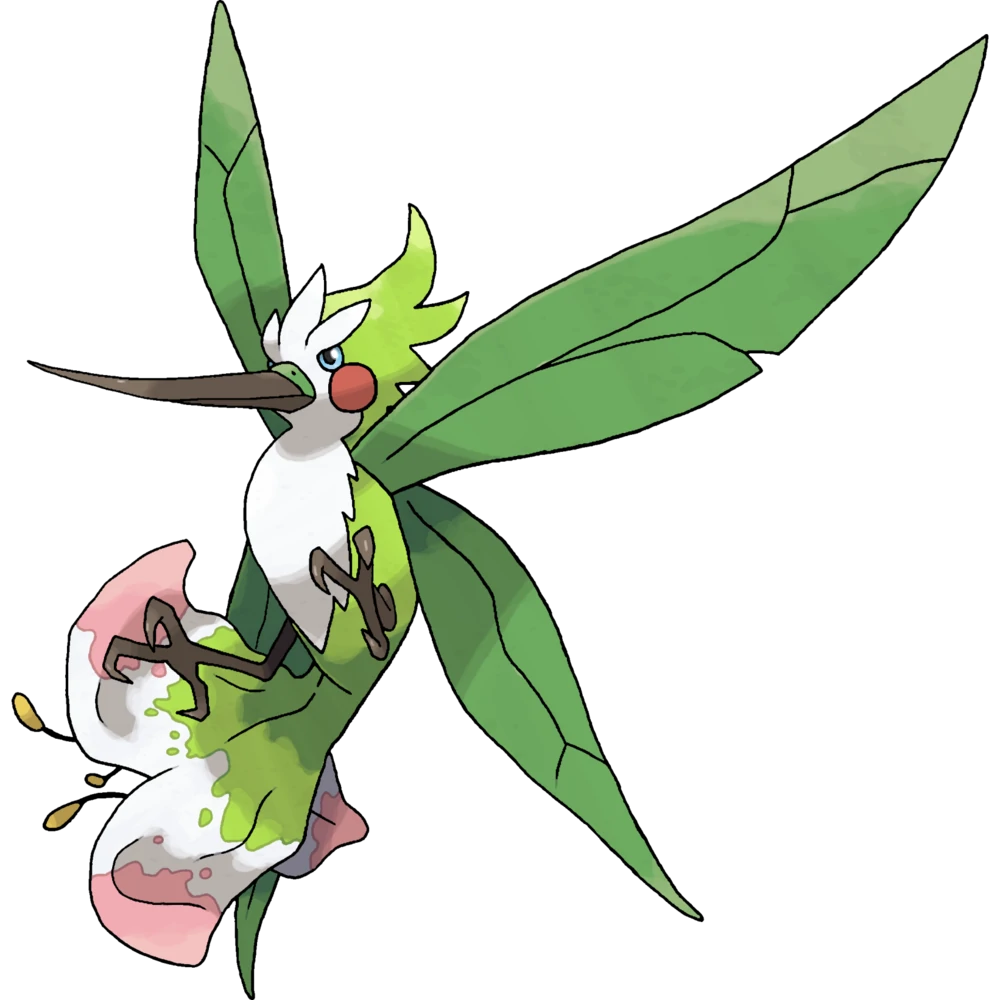
Florabri
Small plant, unaligned
- Armor Class 18 (natural armor)
- Hit Points 45 (10d6+10)
- Speed 20 ft., fly 40 ft. (hover)
STR DEX CON INT WIS CHA 10 (+0) 22 (+6) 12 (+1) 6 (–2) 10 (+0) 10 (+0)
- Damage Resistances water; nonmagical bludgeoning, piercing, and slashing; bludgeoning, force, piercing, and slashing damage from plants
- Damage Vulnerabilities cold, fire, poison, wind
- Senses passive Perception 10
- Languages Pokemon
- Challenge 2 (450 xp)
Actions
Mega Drain. The pokemon attempts to drain a creature it can see within 30 feet. The target must succeed on a DC 13 Constitution saving throw or take 12 (2d8+3) acid damage. Florabri regains hit points equal to the amount of acid damage dealt.
Wind Shear (Recharge 5–6). The pokemon creates a damaging surge of wind in a 15-foot cone. Each creature in the area must make a DC 13 Strength saving throw, taking 25 (7d6) wind damage on a failed save, or half as much on a successful one.
Floressum
Medium plant, unaligned
- Armor Class 22 (natural armor)
- Hit Points 130 (20d8+20)
- Speed 20 ft., fly 60 ft. (hover)
STR DEX CON INT WIS CHA 12 (+1) 26 (+8) 14 (+2) 6 (–2) 12 (+1) 14 (+2)
- Damage Resistances water; nonmagical bludgeoning, piercing, and slashing; bludgeoning, force, piercing, and slashing damage from plants
- Damage Vulnerabilities cold, fire, poison, wind
- Senses passive Perception 11
- Languages Pokemon
- Challenge 11 (7,200 xp)
Actions
Giga Drain. The pokemon attempts to drain a creature it can see within 30 feet. The target must succeed on a DC 18 Constitution saving throw or take 20 (3d10+4) acid damage. Floressum regains hit points equal to the amount of acid damage dealt.
Hurricane (Recharge 5–6). The pokemon creates a small 20-foot radius hurricane within 30 feet. Each creature in the area must make a DC 18 Strength saving throw, taking 46 (13d6) wind damage on a failed save, or half as much on a successful one.
Air Slash (Recharge 6). Ranged Weapon Attack: +8 to hit, range 60/120 ft., one target. Hit: 50 (8d10+6) wind damage, and the target must make a DC 18 Constitution saving throw or be stunned until the end of its next turn.
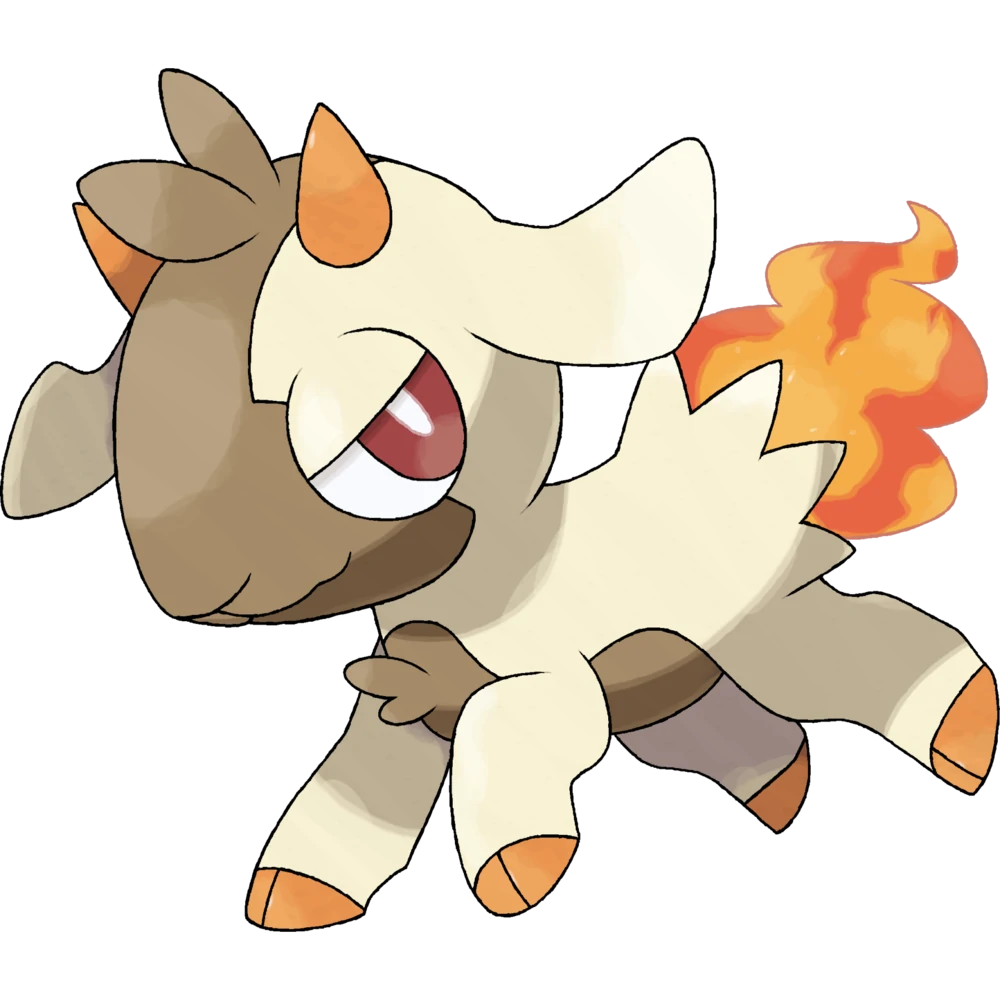
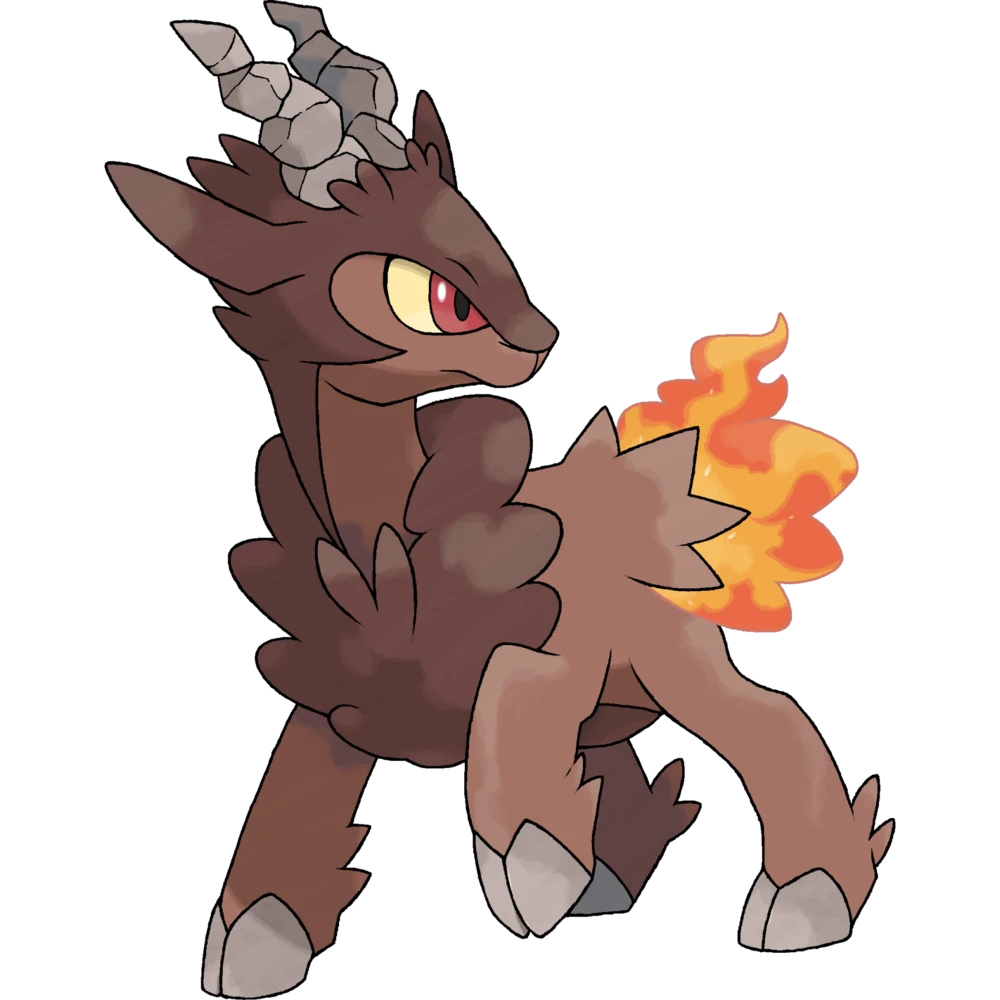
Kidling
Small beast, unaligned
- Armor Class 12 (natural armor)
- Hit Points 49 (9d6+18)
- Speed 30 ft.
STR DEX CON INT WIS CHA 16 (+3) 12 (+1) 14 (+2) 6 (–2) 10 (+0) 10 (+0)
- Damage Vulnerabilities earth, water
- Damage Resistances acid, cold, cosmic, fire, magnetic; bludgeoning, force, piercing, and slashing damage from plants
- Senses passive Perception 10
- Languages Pokemon
- Challenge 1/2 (100 xp)
Flame Charge. If kidling moves at least 10 feet in a straight line before making a melee attack, that attack deals an additional 3 (1d6) fire damage.
Actions
Headbutt. Melee Weapon Attack: +3 to hit, reach 5 ft., one target. Hit: 10 (2d6+3) bludgeoning damage.
Pyroat
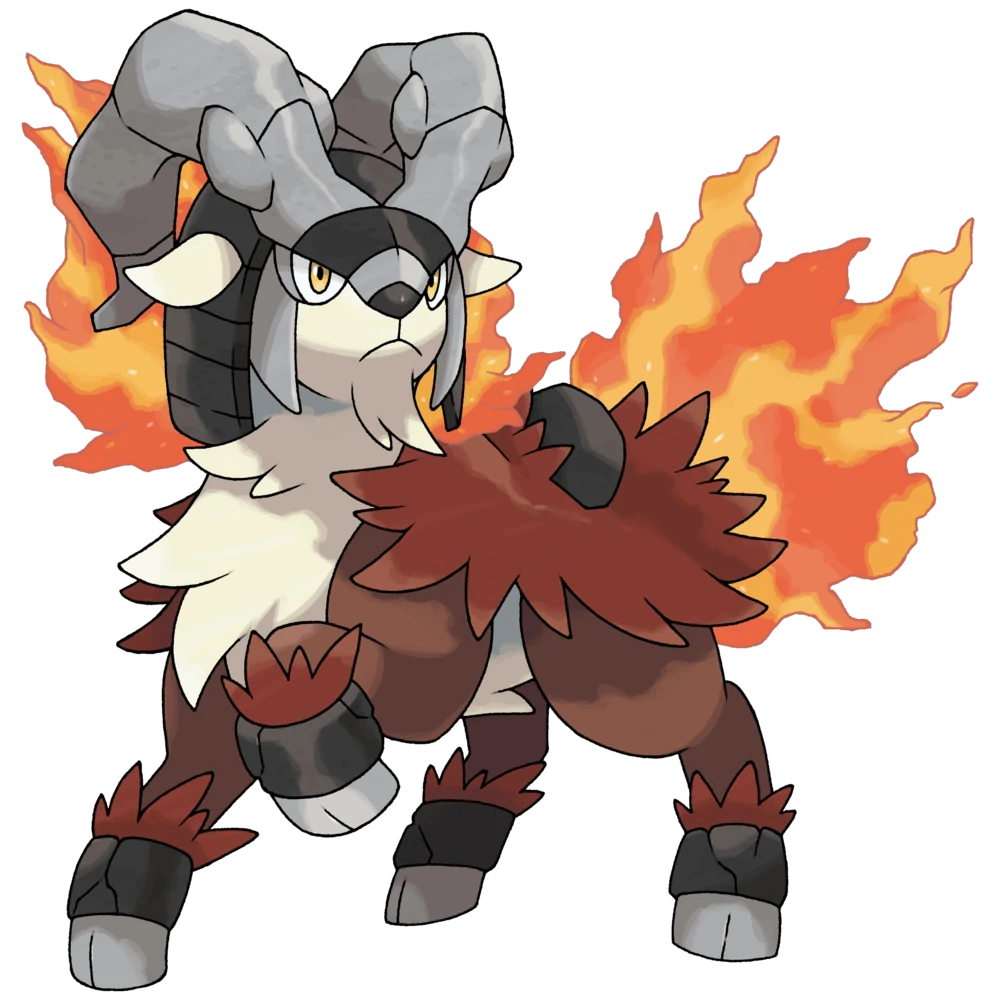
Medium beast, unaligned
- Armor Class 14 (natural armor)
- Hit Points 65 (10d8+20)
- Speed 30 ft.
STR DEX CON INT WIS CHA 20 (+5) 12 (+1) 14 (+2) 6 (–2) 10 (+0) 10 (+0)
- Damage Vulnerabilities earth, water; nonmagical bludgeoning, piercing, and slashing
- Damage Resistances acid, cold, cosmic, fire, poison, wind
- Senses passive Perception 10
- Languages Pokemon
- Challenge 2 (450 xp)
Flame Charge. If Pyroat moves at least 10 feet in a straight line before making a melee attack, that attack deals an additional 7 (2d6) fire damage.
Actions
Headbutt. Melee Weapon Attack: +5 to hit, reach 5 ft., one target. Hit: 25 (3d12+5) bludgeoning damage.
Battering Ram (Recharge 5–6). Melee Weapon Attack: +5 to hit, reach 5 ft., one target. Hit: 45 (6d12+5) earth damage, and if the target is subject to an effect that reduces damage it takes, that effect is removed from the target before this attack deals damage (if multiple, choose one at random).
Blaze Kick (Recharge 5–6). Melee Weapon Attack: +5 to hit, reach 5 ft., one target. Hit: 45 (6d12+5) fire damage. Pyroat scores a critical hit with this attack on an attack roll of 19–20.
Flairees
Medium beast, unaligned
- Armor Class 17 (natural armor)
- Hit Points 221 (26d8+104)
- Speed 30 ft.
STR DEX CON INT WIS CHA 24 (+7) 12 (+1) 18 (+4) 6 (–2) 14 (+2) 10 (+0)
- Damage Vulnerabilities earth, water; nonmagical bludgeoning, piercing, and slashing
- Damage Resistances acid, cold, cosmic, fire, poison, wind
- Damage Immunities fire
- Senses passive Perception 12
- Languages Pokemon
- Challenge 11 (7,200 xp)
Flame Charge. If Flairees moves at least 10 feet in a straight line before making a melee attack, that attack deals an additional 14 (4d6) fire damage.
Actions
Headbutt. Melee Weapon Attack: +8 to hit, one target. Hit: 55 (8d10+7) bludgeoning damage.
Battering Ram (Recharge 5–6). Melee Weapon Attack: +8 to hit, one target. Hit: 69 (12d10+7) earth damage, and if the target is subject to an effect that reduces damage it takes, that effect is removed from the target before this attack deals damage (if multiple, choose one at random).
Blaze Kick (Recharge 5–6). Melee Weapon Attack: +8 to hit, one target. Hit: 69 (12d10+7) fire damage. Flairees scores a critical hit with this attack on an attack roll of 19–20.
Lava Plume (Recharge 6). Flairees creates 20-foot plume of lava within 30 feet. Each creature in the area must make a DC 16 Dexterity saving throw, taking 55 (8d10+7) earth fire damage on a failed save, or half as much on a successful one.


Aguade
Small monstrosity, unaligned
- Armor Class 16 (natural armor)
- Hit Points 40 (9d6+9)
- Speed 30 ft.
STR DEX CON INT WIS CHA 14 (+2) 12 (+1) 12 (+1) 6 (–2) 14 (+2) 10 (+0)
- Damage Vulnerabilities lightning; bludgeoning, force, piercing, and slashing damage from plants
- Damage Resistances cold, fire, magnetic, water
- Senses passive Perception 12
- Languages Pokemon
- Challenge 1/2 (100 xp)
Actions
Scratch. Melee Weapon Attack: +3 to hit, reach 5 ft., one target. Hit: 9 (2d6+2) slashing damage.
Brine. Ranged Weapon Attack: +3 to hit, range 30/60 ft., one target. Hit: 9 (2d6+2) acid water damage.
Iguadium
Medium monstrosity, unaligned
- Armor Class 19 (natural armor)
- Hit Points 65 (10d8+20)
- Speed 30 ft.
STR DEX CON INT WIS CHA 18 (+4) 12 (+1) 14 (+2) 6 (–2) 14 (+2) 10 (+0)
- Damage Vulnerabilities cosmic, lightning, psychic, wind; bludgeoning, force, piercing, and slashing damage from plants
- Damage Resistances acid, cold, earth, fire, magnetic, necrotic, water
- Senses passive Perception 12
- Languages Pokemon
- Challenge 2 (450 xp)
Actions
Bite. Melee Weapon Attack: +3 to hit, reach 5 ft., one target. Hit: 14 (3d6+4) slashing damage.
Brine. Ranged Weapon Attack: +3 to hit, range 30/60 ft., one target. Hit: 14 (3d6+4) acid water damage.
Salt Crash (Recharge 5–6). Melee Weapon Attack: +3 to hit, reach 5 ft., one target. Hit: 28 (8d6) acid water damage, and weapon attacks made against Iquadium have disadvantage until the end of Iquadium's next turn.
Bonus Actions
Brace (Recharge 4–6). Whenever Iquadium takes damage, reduce it by 4 until the end of Iquadium's next turn.


Neureka
Tiny construct, unaligned
- Armor Class 13 (natural armor)
- Hit Points 37 (15d4+0)
- Speed 0 ft., fly 20 ft. (hover)
STR DEX CON INT WIS CHA 6 (–2) 12 (+1) 10 (+0) 10 (+0) 14 (+2) 12 (+1)
- Damage Vulnerabilities acid, earth, necrotic; bludgeoning, force, piercing, and slashing damage from undead
- Damage Resistances lightning, magnetic, psychic, wind; nonmagical bludgeoning, piercing, and slashing
- Senses passive Perception 12
- Languages Pokemon
- Challenge 1 (200 xp)
Levitate. While neureka is flying or hovering, it has immunity to earth damage.
Actions
Psybolt. Ranged Weapon Attack: +5 to hit, range 30/60 ft., one target. Hit: 9 (2d8) psychic damage.
Spark. Ranged Weapon Attack: +5 to hit, range 30/60 ft., one target. Hit: 9 (2d8) lightning damage.
Cerebrulb
Small construct, unaligned
- Armor Class 15 (natural armor)
- Hit Points 135 (40d6+40)
- Speed 0 ft., fly 30 ft. (hover)
STR DEX CON INT WIS CHA 6 (–2) 14 (+2) 12 (+1) 14 (+2) 16 (+3) 12 (+1)
- Damage Vulnerabilities acid, earth, necrotic; bludgeoning, force, piercing, and slashing damage from undead
- Damage Resistances lightning, magnetic, psychic, wind; nonmagical bludgeoning, piercing, and slashing
- Senses passive Perception 13
- Languages Pokemon
- Challenge 5 (1,800 xp)
Levitate. While cerebrulb is flying or hovering, it has immunity to earth damage.
Actions
Zap Cannon. Ranged Weapon Attack: +6 to hit, range 60/120 ft., one target. Hit: 32 (9d6) lightning damage.
Luster Purge (recharge 5–6). Ranged Weapon Attack: +5 to hit, range 30/60 ft., one target. Hit: 32 (9d6) psychic damage, and the target must also make a DC 16 Intelligence saving throw. On a failed save, the target has disadvantage on saving throws against spells and other powers until the end of its next turn.
Confuse Ray (recharge 5–6). One creature cerebrulb can see within 60 feet must make a DC 16 Intelligence saving throw. On a failure, that creature is confused as per the confusion spell for 1 minute, and can make a new saving throw at the end of each of its turns to end this effect.
Bonus Actions
Calm Mind (recharge 6). Cerebrulb has advantage on its next attack roll, or imposes disadvantage on the next saving throw it forces a creature to make, until the end of its turn.

Rocano
Tiny monstrosity, unaligned
- Armor Class 18 (natural armor)
- Hit Points 60 (11d4+33)
- Speed 20 ft.
STR DEX CON INT WIS CHA 12 (+1) 8 (–1) 16 (+3) 4 (–3) 10 (+0) 12 (+1)
- Damage Vulnerabilities earth, water; nonmagical bludgeoning, piercing, and slashing
- Damage Resistances acid, cold, cosmic, fire, poison, wind
- Senses passive Perception 10
- Languages Pokemon
- Challenge 1 (200 xp)
Sturdy. When Rocano has more than 1 hp and would be reduced to 0 hit points, it can make a Constitution saving throw against DC 12. On a success, it is reduced to 1 hp instead.
Actions
Incinerate. Ranged Natural Attack: +3 to hit, range 10/20 ft., one target. Hit: 8 (2d6+1) fire damage.
Rollout. Melee Natural Attack: +3 to hit, reach 5 ft., one target. Hit: 6 (2d4+1) earth damage. For each previous turn the target has been hit by Rocano's Rollout, this attack deals an additional 2 (1d4) earth damage, to a maximum of an additional 10 (5d4) earth damage.
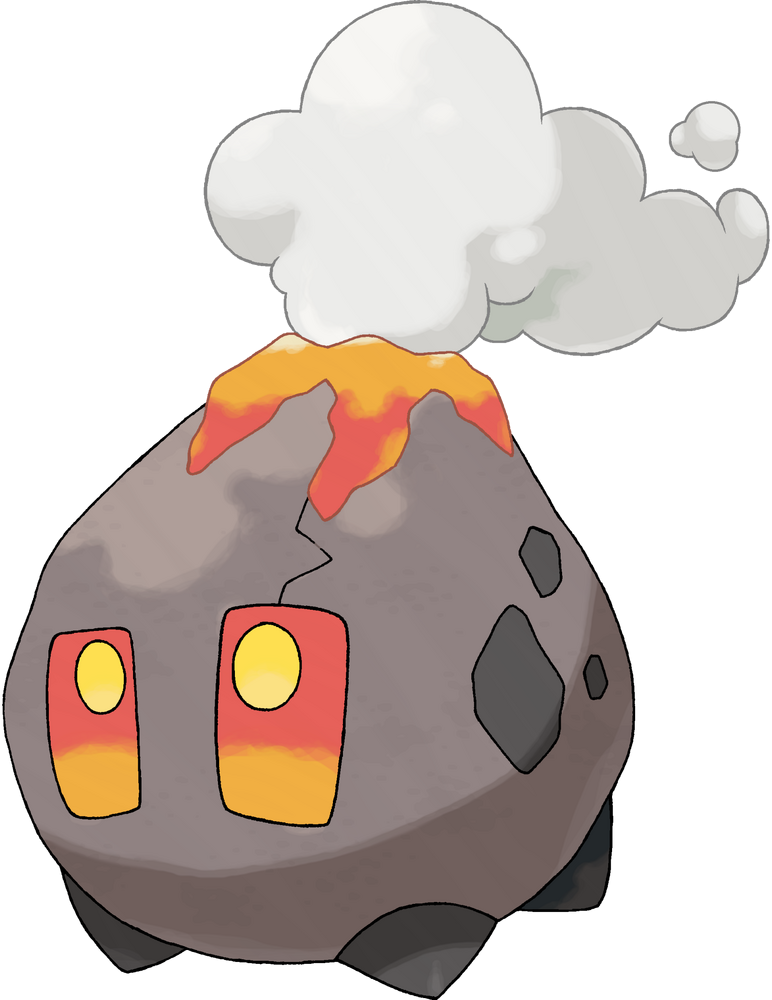
Volcaroc
Small monstrosity, unaligned
- Armor Class 20 (natural armor)
- Hit Points 82 (11d6+44)
- Speed 30 ft.
STR DEX CON INT WIS CHA 12 (+1) 10 (+0) 18 (+4) 4 (–3) 10 (+0) 10 (+0)
- Damage Vulnerabilities earth, water; nonmagical bludgeoning, piercing, and slashing
- Damage Resistances acid, cold, cosmic, fire, poison, wind
- Senses passive Perception 10
- Languages Pokemon
- Challenge 3 (450 xp)
Sturdy. When Volcaroc has more than 1 hp and would be reduced to 0 hit points, it can make a Constitution saving throw against DC 12. On a success, it is reduced to 1 hp instead.
Actions
Smack Down. Melee Natural Attack: +5 to hit, reach 5 ft., one target. Hit: 14 (4d6) earth damage, and the target loses and cannot gain a fly speed for 1 minute; the target can attempt a Constitution saving throw at the end of each of its turns against DC 13 to end this effect early.
Flame Burst (Recharge 5–6). Volcaroc unleashes a 20-foot burst of flame around itself. Each creature in the area must make a DC 13 Dexterity saving throw, taking 28 (8d6) fire damage on a failed save, or half as much on a successful one.
Bonus Actions
Iron Defense (Recharge 5–6). Until the end of your next turn, all attacks against Volcaroc have disadvantage, and Volcaroc has advantage on all saving throws.
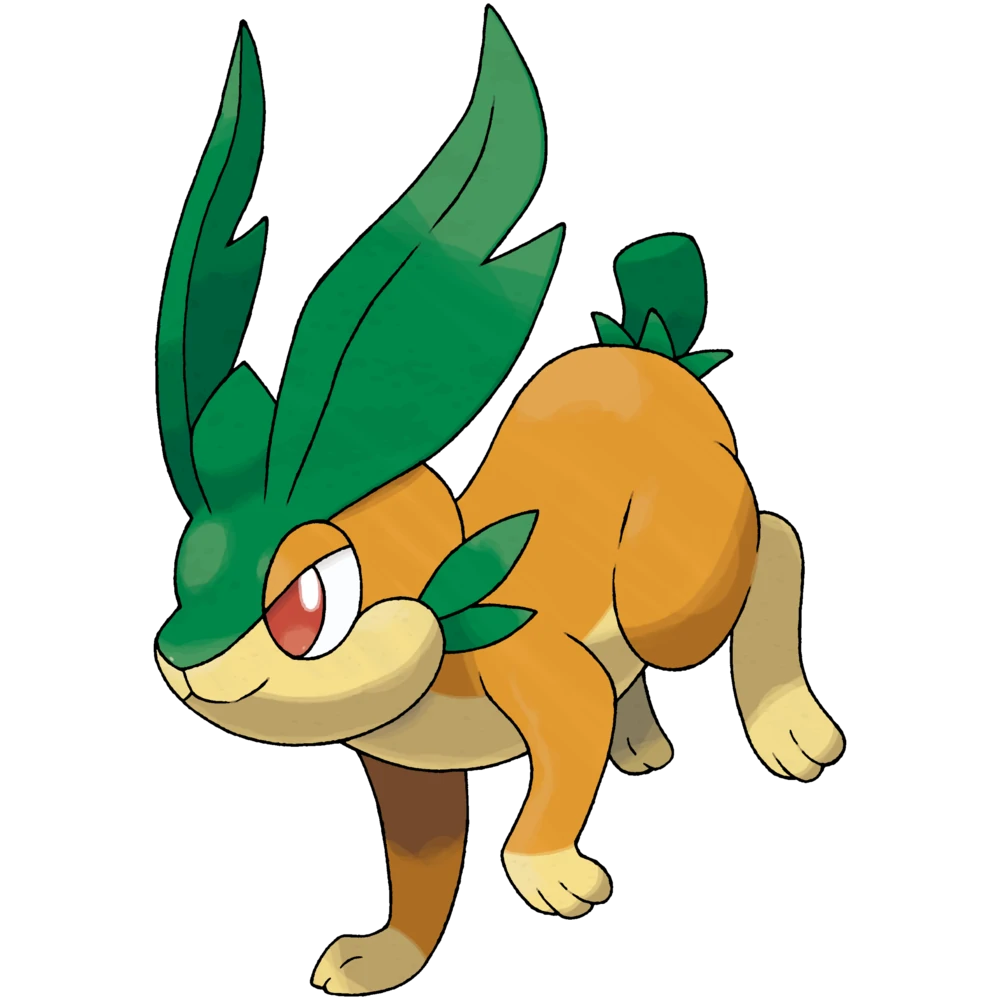
Peppit
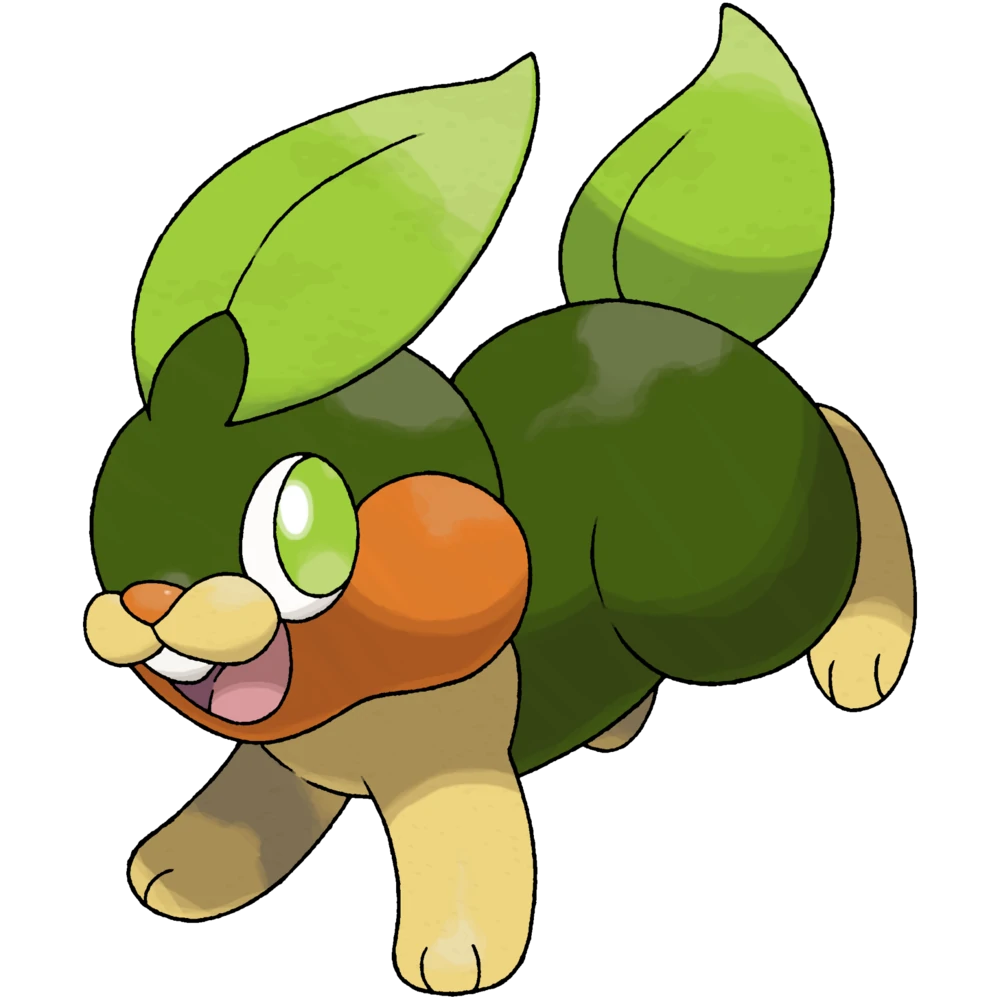
Tiny plant, unaligned
- Armor Class 17 (natural armor)
- Hit Points 31 (9d4+9)
- Speed 40 ft.
STR DEX CON INT WIS CHA 8 (–1) 20 (+5) 12 (+1) 6 (–2) 12 (+1) 16 (+3)
- Damage Vulnerabilities earth, poison, wind
- Damage Resistances cosmic, lightning, magnetic; bludgeoning, force, piercing, and slashing damage from plants
- Senses passive Perception 11
- Languages Pokemon
- Challenge 1/2 (100 xp)
Quickness. Peppit has advantage on Initiative checks.
Actions
Tackle. Melee Weapon Attack: +4 to hit, reach 5 ft., one target. Hit: 6 (2d6-1) bludgeoning damage.
Ember. Ranged Weapon Attack: +4 to hit, range 30/60 ft., one target. Hit: 6 (2d6-1) fire damage.
Hoppanero
Tiny plant, unaligned
- Armor Class 18 (natural armor)
- Hit Points 70 (20d4+20)
- Speed 60 ft.
STR DEX CON INT WIS CHA 10 (+0) 22 (+6) 12 (+1) 6 (–2) 16 (+3) 16 (+3)
- Damage Vulnerabilities earth, poison, wind
- Damage Resistances cosmic, lightning, magnetic; bludgeoning, force, piercing, and slashing damage from plants
- Senses passive Perception 13
- Languages Pokemon
- Challenge 2 (450 xp)
Quickness. Hoppanero has advantage on Initiative checks.
Agility. Hoppanero can take the Dash action as a bonus action.
Flame Charge. If hoppanero moves at least 10 feet in a straight line before making a melee attack, that attack deals an additional 7 (2d6) fire damage.
Actions
Tackle. Melee Weapon Attack: +4 to hit, reach 5 ft., one target. Hit: 9 (2d6+1) bludgeoning damage.
Flame Burst (Recharge 5–6). Hoppanero unleashes a 20-foot burst of flame around itself. Each creature in the area must make a DC 14 Dexterity saving throw, taking 28 (8d6) fire damage on a failed save, or half as much on a successful one.
Razor Leaf (Recharge 5–6). Hoppanero unleashes a flurry of razor sharp leaves in a 15-foot cone. Each creature in the area must make a DC 14 Dexterity saving throw, taking 28 (8d6) magical slashing damage on a failed save, or half as much on a successful one.

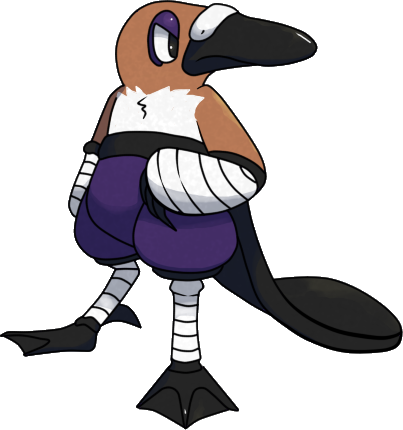
Platypow
Small monstrosity, unaligned
- Armor Class 15 (natural armor)
- Hit Points 67 (15d6+15)
- Speed 25 ft.
STR DEX CON INT WIS CHA 14 (+2) 14 (+2) 12 (+1) 6 (–2) 14 (+2) 12 (+1)
- Damage Vulnerabilities psychic, wind
- Damage Resistances acid, necrotic, poison; nonmagical bludgeoning, piercing, and slashing; bludgeoning, force, piercing, and slashing damage from plants
- Senses passive Perception 12
- Languages Pokemon
- Challenge 1 (200 xp)
Full Force. Whenever Platypow would roll damage, it can choose to maximize the damage instead. This is not reflected in the stats below.
Actions
Low Sweep. Melee Natural Attack: +4 to hit, reach 5 ft., one target. Hit: 9 (2d6+2) bludgeoning damage, and the target is knocked prone.
Poison Sting. Melee Natural Attack: +4 to hit, reach 5 ft., one target. Hit: 9 (2d6+2) poison damage, and the target must make a Constitution saving throw against DC 12. On a failure, the target is poisoned for 1 minute; the target can attempt the saving throw again at the end of each of its turns, ending it early on a success.
Platikhao
Medium monstrosity, unaligned
- Armor Class 17 (natural armor)
- Hit Points 97 (15d8+30)
- Speed 40 ft.
STR DEX CON INT WIS CHA 16 (+3) 16 (+3) 14 (+2) 6 (–2) 14 (+2) 12 (+1)
- Damage Vulnerabilities psychic, wind
- Damage Resistances acid, necrotic, poison; nonmagical bludgeoning, piercing, and slashing; bludgeoning, force, piercing, and slashing damage from plants
- Senses passive Perception 12
- Languages Pokemon
- Challenge 5 (1,800 xp)
Full Force. Whenever Platikhao would roll damage, it can choose to maximize the damage instead. This is not reflected in the stats below.
Actions
Multiattack. Platikhao makes three punch attacks.
Punch. Melee Natural Attack: +7 to hit, reach 5 ft., one target. Hit: 14 (3d6+3) bludgeoning damage.
Poison Jab (Recharge 5–6). Melee Natural Attack: +7 to hit, reach 5 ft., one target. Hit: 42 (9d6+9) poison bludgeoning damage, and the target is poisoned for 1 minute.
High Jump Kick (Recharge 6). Melee Natural Attack: +7 to hit, reach 5 ft., one target. As part of using this ability, before making the attack, Platikhoa can move up to its speed in any direction, including into the air, as though its movement speed were a fly speed. After the attack resolves, it returns to its original space. Hit: 81 (18d6+18) bludgeoning damage. Miss: Platikhao loses 42 (9d6+9) hit points, but cannot be reduced to less than 1 hp by this effect.
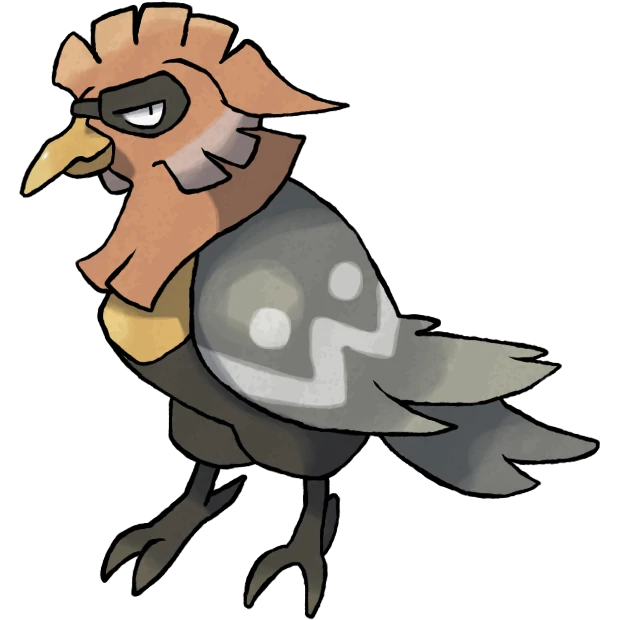
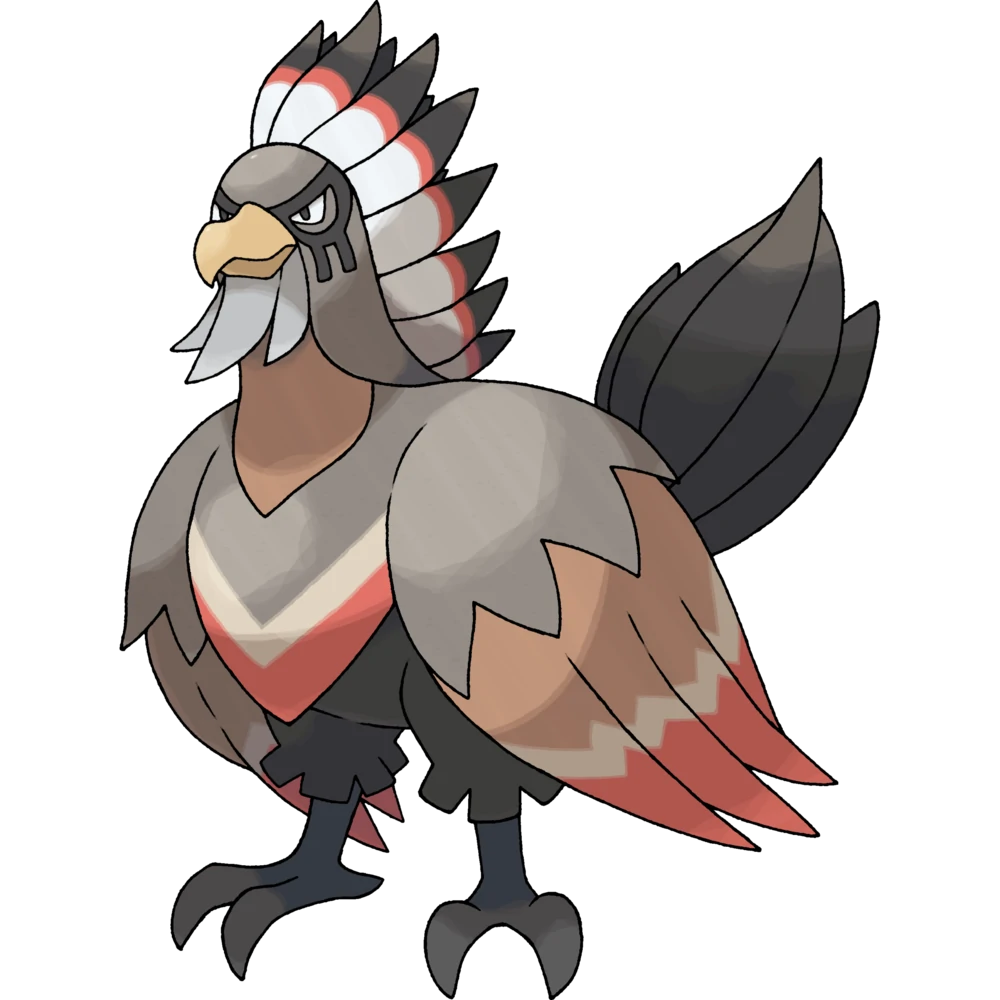
Fowattle
Small beast, unaligned
- Armor Class 13 (natural armor)
- Hit Points 84 (13d6+39)
- Speed 20 ft., fly 30 ft.
STR DEX CON INT WIS CHA 12 (+1) 14 (+2) 16 (+3) 6 (–2) 14 (+2) 10 (+0)
- Damage Vulnerabilities cold, water
- Damage Resistances acid, poison; nonmagical bludgeoning, piercing, and slashing
- Damage Immunities earth, lightning
- Senses passive Perception 12
- Languages Pokemon
- Challenge 2 (450 xp)
Actions
Multiattack. Fowattle makes two peck attacks.
Peck. Melee Weapon Attack: +4 to hit, reach 5 ft., one target. Hit: 10 (2d8+1) piercing damage.
Mud Shot. Ranged Weapon Attack: +4 to hit, range 30/60 ft., one target. Hit: 10 (2d8+1) earth damage, and the target is slowed until the end of its next turn.
Air Cutter. Ranged Weapon Attack: +4 to hit, range 30/60 ft., up to two targets within 10 feet of each other. Hit: 10 (2d8+1) wind damage. This attack scores a critical hit on 18–20.
Turkistador
Medium beast, unaligned
- Armor Class 16 (natural armor)
- Hit Points 153 (18d8+72)
- Speed 30 ft., fly 40 ft.
STR DEX CON INT WIS CHA 14 (+2) 14 (+2) 18 (+4) 6 (–2) 14 (+2) 12 (+1)
- Damage Vulnerabilities cold, water
- Damage Resistances acid, poison; nonmagical bludgeoning, piercing, and slashing
- Damage Immunities earth, lightning
- Senses passive Perception 12
- Languages Pokemon
- Challenge 8 (3,900 xp)
Actions
Multiattack. Turkistador makes three peck attacks.
Peck. Melee Weapon Attack: +9 to hit, reach 5 ft., one target. Hit: 17 (3d10) piercing damage.
Mudslide (Recharge 5–6). Turkistador causes an emormous swathe of mud to swamp creatures in a 20-foot radius burst around it. Each creature in the area must make a DC 17 Dexterity saving throw, taking 49 (14d6) earth damage on a failed save, or half as much on a successful one. Also on a failed saving throw, melee attacks against that creature are made with advantage until the end of turkistador's next turn.
Air Slash (Recharge 5–6). Ranged Weapon Attack: +9 to hit, range 30/60 ft., one target. Hit: 73 (13d10+2) wind damage, and the target must also make a DC 17 Constitution saving throw. On a failed save, the target is stunned until the end of its next turn.

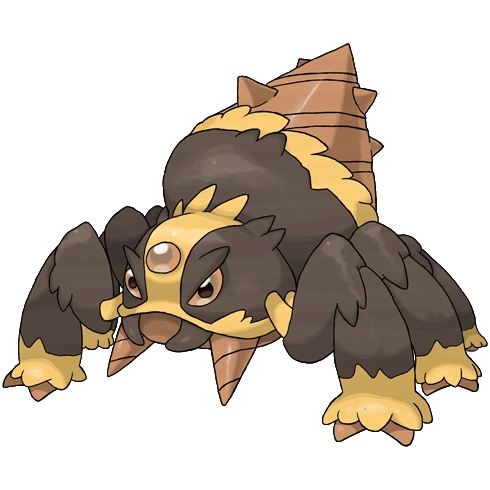
Minarac
Tiny beast, unaligned
- Armor Class 15 (natural armor)
- Hit Points 73 (21d4+21)
- Speed 20 ft., climb 20 ft.
STR DEX CON INT WIS CHA 10 (+0) 12 (+1) 12 (+1) 2 (–4) 14 (+2) 12 (+1)
- Damage Vulnerabilities cold, fire, water, wind
- Damage Resistances earth, poison; nonmagical bludgeoning, piercing, and slashing
- Damage Immunities lightning
- Senses passive Perception 12
- Languages Pokemon
- Challenge 1 (200 xp)
Arena Trap. Enemies that start their turn within 5 feet of Minarac must make a DC 12 Dexterity saving throw; on a failure, that creature cannot move to spaces not adjacent to Minarac.
Actions
Leech Life. Melee Weapon Attack: +4 to hit, reach 5 ft., one target. Hit: 6 (1d10+1) acid damage, and Minarac regains that many hit points.
Sandspin. Ranged Weapon Attack: +4 to hit, range 10/30 ft., one target. Hit: 8 (2d6+2) earth damage.
Web Ball (Recharge 5–6). Ranged Weapon Attack: +4 to hit, range 30/60 ft., one target. Hit: 8 (2d6+2) acid damage, and the target is dazed until the end of its next turn.
Trenchula
Small beast, unaligned
- Armor Class 16 (natural armor)
- Hit Points 153 (18d8+72)
- Speed 30 ft., burrow 30 ft., climb 30 ft.
STR DEX CON INT WIS CHA 12 (+1) 12 (+1) 14 (+2) 2 (–4) 14 (+2) 12 (+1)
- Damage Vulnerabilities cold, fire, water, wind
- Damage Resistances earth, poison; nonmagical bludgeoning, piercing, and slashing
- Damage Immunities lightning
- Senses passive Perception 12
- Languages Pokemon
- Challenge 4 (1,100 xp)
Arena Trap. Enemies that start their turn within 5 feet of Trenchula must make a DC 13 Dexterity saving throw; on a failure, that creature cannot move to spaces not adjacent to Trenchula.
Actions
Drill Run. Melee Weapon Attack: +5 to hit, reach 5 ft., one target. Hit: 26 (5d8+7) earth damage.
X-Scissor. Melee Weapon Attack: +5 to hit, reach 5 ft., one target. Hit: 26 (5d8+7) acid damage.
Poison Fang (Recharge 5–6). Melee Weapon Attack: +5 to hit, reach 5 ft., one target. Hit: 26 (5d8+7) poison damage, and the target takes ongoing 10 poison damage and is poisoned for 1 minute. The target can make a DC 13 Constitution saving throw at the end of each of its turns, ending both effects on a successful save.
Bonus Actions
Brace (Recharge 4–6). Whenever Trenchula takes damage, reduce it by 10 until the end of Trenchula's next turn.
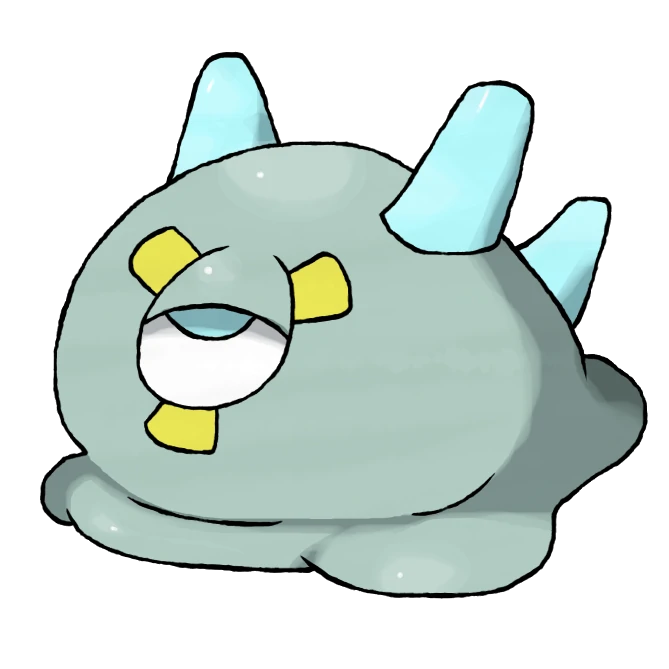

Icetope
Tiny aberration, unaligned
- Armor Class 15 (natural armor)
- Hit Points 126 (23d4+69)
- Speed 20 ft.
STR DEX CON INT WIS CHA 12 (+1) 10 (+0) 16 (+3) 6 (–2) 8 (–1) 6 (–2)
- Damage Vulnerabilities earth, fire, magnetic, psychic
- Damage Resistances acid, cold, necrotic, poison
- Senses passive Perception 9
- Languages Pokemon
- Challenge 2 (450 xp)
Actions
Poison Gas. Icetope emits a poisonous gas in a 5-foot radius around it. Each creature in the area must make a DC 13 Constitution saving throw, taking 5 (2d4) poison damage on a failed save.
Frost Breath. Melee Weapon Attack: +3 to hit, reach 5 ft., one target. Hit: 8 (2d6+1) cold damage. This attack scores a critical hit on 19–20.
Chillnobyl
Medium aberration, unaligned
- Armor Class 18 (natural armor)
- Hit Points 168 (16d8+96)
- Speed 20 ft.
STR DEX CON INT WIS CHA 14 (+2) 10 (+0) 22 (+6) 6 (–2) 10 (+0) 6 (–2)
- Damage Vulnerabilities earth, fire, psychic
- Damage Resistances acid, cold, necrotic, poison
- Senses passive Perception 10
- Languages Pokemon
- Challenge 5 (1,800 xp)
Actions
Discharge. Ranged Weapon Attack: +5 to hit, range 30/60 ft., one target. Hit: 14 (4d6) lightning damage.
Glaciate. Ranged Weapon Attack: +5 to hit, range 30/60 ft., one target. Hit: 7 (2d6) cold damage, and the target is slowed until the end of its next turn.
Acid Rain (Recharge 5–6). Chillnobyl creates a zone of acid rain in a 20-foot radius burst centered on a point it can see within 60 feet, which lasts for 1 minute or until this ability recharges. A creature that starts its turn or enters the area during its turn takes 7 (2d6) poison damage.
Meltdown. Chillnobyl explodes in a shower of vile energy in a 30-foot radius burst centered on it. Each creature in the area must make a DC 15 Constitution saving throw, taking 28 (5d10) poison damage on a failed save, or half as much on a successful saving throw. Chillnobyl is then reduced to 0 hit points.
Appendix: Arcane Spellcasting
This section details the alternative casting system presented in this document. This is not intended to be an exhaustive exploration of the mechanics, but instead is meant to give players and GMs enough information to use it alongside more typical character classes.
Mana
When a spellcaster gains the ability to cast leveled spells, part of their soul admixes with the arcane leys, producing a well of power known as mana. This mana is used in place of spell slots when casting leveled spells.
However, unlike spell slots, mana is not always expended when casting: it is instead more of a threshold, a limit of how much access the spellcaster has to the unlimited arcane power of the leys.
Requirements & Replenishment
In order to cast spells of 1st level or higher, you must have at least 1 mana remaining.
You regain all mana when you finish a long rest.
Casting A Spell
A wielder of the arcane must learn how to tame the reckless and wild energies of the leys. Doing so with caution eliminates risk, but reduces her ability to wield spells over time – while opening oneself to the leys can result in greater staying power, but carries the risk of arcane overload.
When you cast a leveled spell, you can choose to spend 1 mana on that casting. If you do, reduce your remaining mana by 1, and nothing else happens.
However, if you opt not to spend mana when casting a leveled spell, you must check for arcane backlash. When this happens, roll a die, whose size is dependent upon both the maximum spell level you can access, and the spell level of the spell being cast, per the Arcane Backlash Die table. Note that you can have advantage or disadvantage on this roll: that means roll two dice of the same size and use the appropriate one.
If the result of the die is a 1 or a 2, you suffer arcane backlash.
Arcane Backlash Die
| Max Spell Level |
1st | 2nd | 3rd | 4th |
|---|---|---|---|---|
| 1st | d4 | — | — | — |
| 2nd | d6 | d4 | — | — |
| 3rd | d8 | d6 | d4 | — |
| 4th | d10 | d8 | d6 | d4 |
| 5th – 6th | d12 | d10 | d8 | d6 |
Arcane Backlash
When you suffer arcane backlash, the arcane energies of the spell you were casting temporarily go wild, often resulting in physical harm.
Such backlash does not prevent the casting of the spell; you suffer the effects of arcane backlash after all effects of the spell you were casting have been determined.
When you suffer arcane backlash, you immediately lose 1 mana. If this would reduce your mana to 0, this does not prevent or otherwise impact the spell you just cast, as it has already been cast.
Then, to determine your backlash effect, roll d100 and consult the Arcane Backlash table.
Arcane Backlash
| Result | Effect |
|---|---|
| 1–15 | Weakened: Lose (spell level) hit dice. |
| 16–40 | Shocked: Lose (spell level × 4) hit points. |
| 41–95 | Hurt: Lose (spell level × 2) hit points. |
| 96 | Gifted: Regain 1 mana. |
| 97 | Renewed: Regain (spell level) hit dice. |
| 98 | Healed: Regain (spell level × 4) hit points. |
| 99 | Shrouded: Gain (spell level × 2) temporary hit points. |
| 100 | Restored: Regain all your mana. |
Summoner Spell List
Summoners can select cantrips and spells from the bard spell list.
Summoners consider 4th-level bard spells to be 3rd-level for purposes of selecting them as spells known.
Miscellany
Miscellaneous other things relevant to the summoner class.
Multiclassing
This section details multiclassing for the summoner class.
Classic
You must have a Charisma 13 to multiclass into summoner.
2024
Prime Ability: Charisma.
Weapon Proficiencies: Simple weapons.
Armor Training: Light armor.
Damage Types
If you or your GM prefer to avoid using some of the new damage types introduced in this document, you can use the following instead.
| Damage Type | Alternative |
|---|---|
| arcane | force |
| cosmic | radiant |
| earth | magical bludgeoning |
| magnetic | thunder |
| water | magical piercing |
| wind | magical slashing |
Art Credits
Art is listed in the order that it appears.
- Summoner Class Art: theDURRRRIAN
- Summoner Class Icon: Maxicons
- Summoner Art — Green Girl: Kira Nguyen
- Summoner Art — Chimera: Billy Christian
- Summoner Art — Dragon Man: jenwzm
- Summoner Art — Dragon Gal: Terry Wei
- Summoner Art — Elements: Billy Christian
- Summoner Art — Holy Dragon: Dopaprime
- Sage Fakemon: 4chan anons
- GnomeWorks Logo: GnomeWorks
Alternate Magician
If you or your GM are either unfamiliar with the alternate spellcasting rules used for this class, or would prefer to use something more akin to core casting, you can use the following variant of the Magician's spellcasting feature, below.
Spellcasting
3rd-level Magician alternate feature
You have studied more traditional magic alongside summoning, learning how to cast proper spells.
Cantrips. You learn two cantrips of your choice from the bard spell list. You learn an additional bard cantrip of your choice at 10th level.
Spell Slots. The Magician table shows how many spell slots you have to cast your summoner spells. The table also shows the level of those slots, all of which are the same level. You regain all expended summoner spell slots when you finish a short or long rest.
Prepared Spells. You prepare the list of level 1+ spells that are available for you to cast with this feature.
The number of spells on your list increases as you gain summoner levels, as shown in the Prepared Spells column of the Magician: Core Spellcasting table. Whenever that number increases, choose additional summoner spells from the bardspell list until the number of spells on your list matches the number in the table. The chosen spells must be of a level no higher what what's shown in the table's Slot Level column for your level.
Changing Prepared Spells. Whenever you gain a summoner level, you can replace one spell on your list with another summoner spell taken from the bard spell list of an eligible level.
Magician: Core Spellcasting
| Summoner Level |
Spells Prepared |
SpellSlots | Spell Level |
|---|---|---|---|
| 3rd | 2 | 1 | 1 |
| 4th – 6th | 3 | 2 | 1 |
| 7th – 9th | 4 | 2 | 2 |
| 10th – 12th | 5 | 2 | 2 |
| 13th – 15th | 6 | 2 | 3 |
| 16th – 18th | 7 | 2 | 3 |
| 19th – 20th | 8 | 2 | 4 |

Legal
This is unofficial Fan Content permitted under the Fan Content Policy. Not approved/endorsed by Wizards. Portions of the materials used are property of Wizards of the Coast. © Wizards of the Coast LLC.
The entirety of this work is Open Game Content under the Open Gaming License v1.0a, as described in Section 1(d) of said license.
The following text is the property of Wizards of the Coast, Inc. and is Copyright 2000 Wizards of the Coast, Inc ("Wizards"). All Rights Reserved.
-
Definitions: (a)"Contributors" means the copyright and/or trademark owners who have contributed Open Game Content; (b)"Derivative Material" means copyrighted material including derivative works and translations (including into other computer languages), potation, modification, correction, addition, extension, upgrade, improvement, compilation, abridgment or other form in which an existing work may be recast, transformed or adapted; (c) "Distribute" means to reproduce, license, rent, lease, sell, broadcast, publicly display, transmit or otherwise distribute; (d)"Open Game Content" means the game mechanic and includes the methods, procedures, processes and routines to the extent such content does not embody the Product Identity and is an enhancement over the prior art and any additional content clearly identified as Open Game Content by the Contributor, and means any work covered by this License, including translations and derivative works under copyright law, but specifically excludes Product Identity. (e) "Product Identity" means product and product line names, logos and identifying marks including trade dress; artifacts; creatures characters; stories, storylines, plots, thematic elements, dialogue, incidents, language, artwork, symbols, designs, depictions, likenesses, formats, poses, concepts, themes and graphic, photographic and other visual or audio representations; names and descriptions of characters, spells, enchantments, personalities, teams, personas, likenesses and special abilities; places, locations, environments, creatures, equipment, magical or supernatural abilities or effects, logos, symbols, or graphic designs; and any other trademark or registered trademark clearly identified as Product identity by the owner of the Product Identity, and which specifically excludes the Open Game Content; (f) "Trademark" means the logos, names, mark, sign, motto, designs that are used by a Contributor to identify itself or its products or the associated products contributed to the Open Game License by the Contributor (g) "Use", "Used" or "Using" means to use, Distribute, copy, edit, format, modify, translate and otherwise create Derivative Material of Open Game Content. (h) "You" or "Your" means the licensee in terms of this agreement.
-
The License: This License applies to any Open Game Content that contains a notice indicating that the Open Game Content may only be Used under and in terms of this License. You must affix such a notice to any Open Game Content that you Use. No terms may be added to or subtracted from this License except as described by the License itself. No other terms or conditions may be applied to any Open Game Content distributed using this License.
-
Offer and Acceptance: By Using the Open Game Content You indicate Your acceptance of the terms of this License.
-
Grant and Consideration: In consideration for agreeing to use this License, the Contributors grant You a perpetual, worldwide, royalty-free, non-exclusive license with the exact terms of this License to Use, the Open Game Content.
-
Representation of Authority to Contribute: If You are contributing original material as Open Game Content, You represent that Your Contributions are Your original creation and/or You have sufficient rights to grant the rights conveyed by this License.
-
Notice of License Copyright: You must update the COPYRIGHT NOTICE portion of this License to include the exact text of the COPYRIGHT NOTICE of any Open Game Content You are copying, modifying or distributing, and You must add the title, the copyright date, and the copyright holder's name to the COPYRIGHT NOTICE of any original Open Game Content you Distribute.
-
Use of Product Identity: You agree not to Use any Product Identity, including as an indication as to compatibility, except as expressly licensed in another, independent Agreement with the owner of each element of that Product Identity. You agree not to indicate compatibility or co-adaptability with any Trademark or Registered Trademark in conjunction with a work containing Open Game Content except as expressly licensed in another, independent Agreement with the owner of such Trademark or Registered Trademark. The use of any Product Identity in Open Game Content does not constitute a challenge to the ownership of that Product Identity. The owner of any Product Identity used in Open Game Content shall retain all rights, title and interest in and to that Product Identity.
-
Identification: If you distribute Open Game Content You must clearly indicate which portions of the work that you are distributing are Open Game Content.
-
Updating the License: Wizards or its designated Agents may publish updated versions of this License. You may use any authorized version of this License to copy, modify and distribute any Open Game Content originally distributed under any version of this License.
-
Copy of this License: You MUST include a copy of this License with every copy of the Open Game Content You Distribute.
-
Use of Contributor Credits: You may not market or advertise the Open Game Content using the name of any Contributor unless You have written permission from the Contributor to do so.
-
Inability to Comply: If it is impossible for You to comply with any of the terms of this License with respect to some or all of the Open Game Content due to statute, judicial order, or governmental regulation then You may not Use any Open Game Material so affected.
-
Termination: This License will terminate automatically if You fail to comply with all terms herein and fail to cure such breach within 30 days of becoming aware of the breach. All sublicenses shall survive the termination of this License.
-
Reformation: If any provision of this License is held to be unenforceable, such provision shall be reformed only to the extent necessary to make it enforceable.
-
COPYRIGHT NOTICE
- Open Game License v 1.0 Copyright 2000, Wizards of the Coast, Inc.
- System Reference Document 5.0 Copyright 2016, Wizards of the Coast, Inc.
- System Reference Document 5.2.1 Copyright 2025, Wizards of the Coast, Inc.
- ArcaneWorks: The Summoner Class, Copyright 2025, GnomeWorks
END OF LICENSE