Necromancer
A homebrew class by DragonZaid. (Work in progress)
At its core, necromancy is the art of communicating with the souls of those who have died and the manipulation and transfer of the energy that comprises life. A necromancer acquires, builds, and maintains this power by regularly performing intricate rituals through which they commune with the dead and form a connection with the energies of the underworld. Although some necromancers use this power to enslave the dead, such behavior is not inherent to the necromantic arts. Necromancy can be used to heal the wounded, save the dying, call on the souls of the dead for aid, and all manner of magical effects.
Power through Ritual
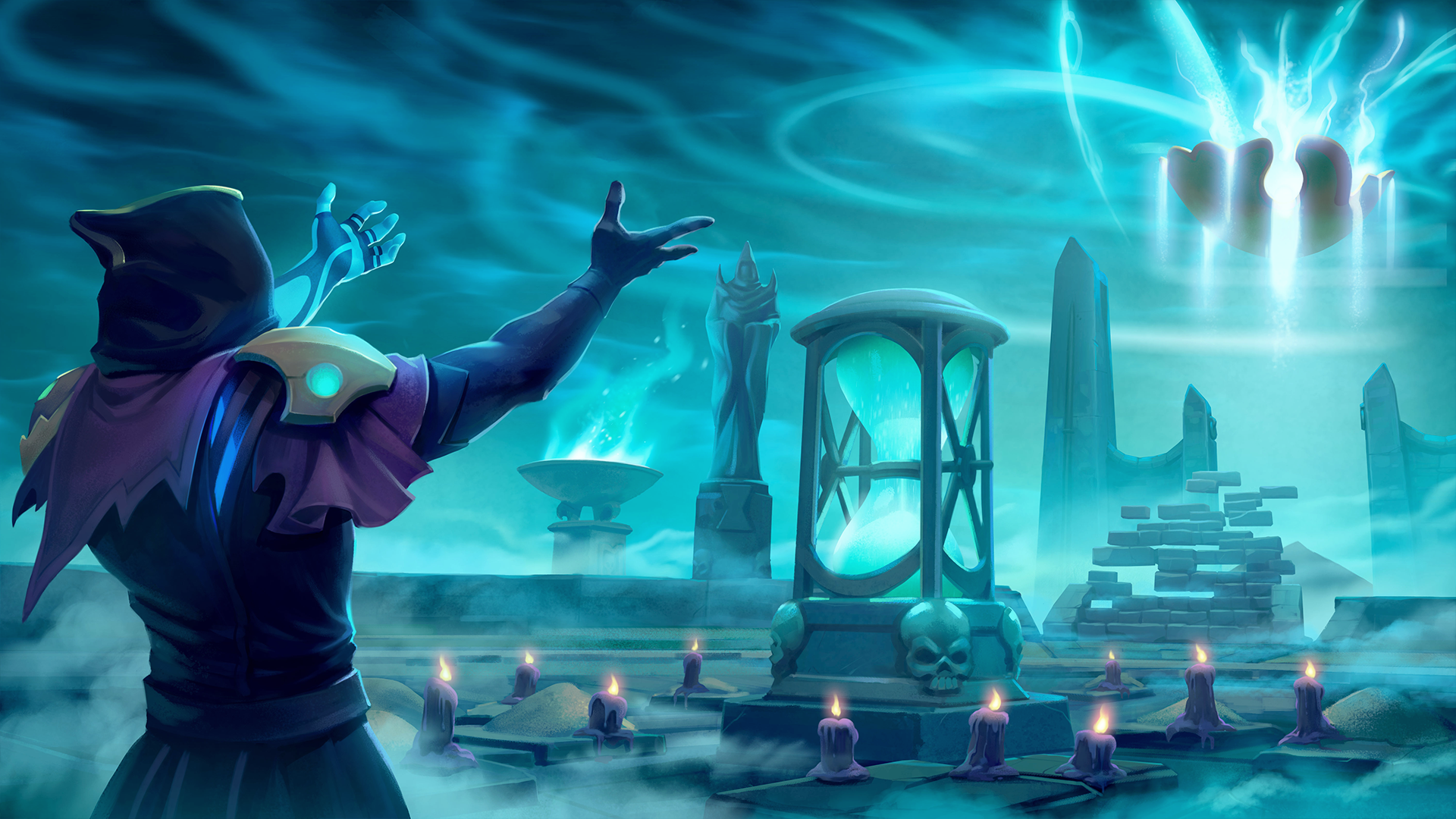
A necromancer's power is derived from tapping into the energies of the underworld and their communications with the dead through elaborate necromantic rituals. Communing with the dead in any capacity is a skill that normally requires extensive effort to learn—years spent studying old texts, practicing calligraphy, drawing glyphs, and performing candlelit rituals. Once this is achieved, a necromancer can begin to unravel the knowledge of the dead: the manipulation of necrotic energies into spells and other magical effects, the calling forth of souls from the underworld, and other secrets.
Command of the Dead
When a creature dies on Gielinor, its soul is separated from the body by Death and escorted to the underworld by the Menaphite god Icthlarin. Through their rituals, a necromancer can establish contact with the underworld and the souls it contains, and even call upon these souls to return
to Gielinor in the form of an undead creature. If they have the will and the aptitude, a necromancer can force a soul to return and obey their commands. However, they may find other ways to convince a soul to return and help them willingly. Some necromancers seek to burgeon favor with souls, promising services or providing information, such as the status of a soul's loved ones on Gielinor. Others may try to trick souls into providing their aid, lying about their motives or abandoning promises. Others yet may seek souls with whom they have a common goal or enemy, presenting a natural ally and maybe even a friend.
Thus the light in the sky and the waters of life became as one: From life came death, in the form of a son, Icthlarin. But death in the desert is not to be feared. Where Tumeken and Elidinis bring life, their son brought balance, caring for those that passed and leading them safely to the realm of the dead.
Creating a Necromancer
Despite their negative image in the eyes of some, not all necromancers are theatrically evil mages who torture and conjure armies of the damned, forcing them to do their bidding. As you create a necromancer, consider your character's principles and their releationship with the dead they summon and communicate with. Do they use their power to subjugate the dead, enslaving them to their will? Do they cooperate with willing souls to defeat a shared enemy or work toward a common goal? Or, do they bribe the dead with actionable favors or empty promises?

The Necromancer
| Level | Proficiency Bonus | Features | Cantrips Known | Incantations Known | 1st | 2nd | 3rd | 4th | 5th | 6th | 7th | 8th | 9th |
|---|---|---|---|---|---|---|---|---|---|---|---|---|---|
| 1st | +2 | Spellcasting, Necromantic Incantations, Residual Souls | 3 | 1 | 2 | — | — | — | — | — | — | — | — |
| 2nd | +2 | Summon Undead Minion | 3 | 2 | 3 | — | — | — | — | — | — | — | — |
| 3rd | +2 | Dead Covenant | 3 | 3 | 4 | 2 | — | — | — | — | — | — | — |
| 4th | +2 | Ability Score Improvement, Potent Necrosis | 4 | 3 | 4 | 3 | — | — | — | — | — | — | — |
| 5th | +3 | 4 | 4 | 4 | 3 | 2 | — | — | — | — | — | — | |
| 6th | +3 | Dead Covenant feature | 4 | 4 | 4 | 3 | 3 | — | — | — | — | — | — |
| 7th | +3 | 4 | 5 | 4 | 3 | 3 | 1 | — | — | — | — | — | |
| 8th | +3 | Ability Score Improvement, Residual Souls improvement | 4 | 5 | 4 | 3 | 3 | 2 | — | — | — | — | — |
| 9th | +4 | 4 | 5 | 4 | 3 | 3 | 3 | 1 | — | — | — | — | |
| 10th | +4 | Dead Covenant feature, Undead Minions improvement, Potent Necrosis improvement | 5 | 5 | 4 | 3 | 3 | 3 | 2 | — | — | — | — |
| 11th | +4 | 5 | 6 | 4 | 3 | 3 | 3 | 2 | 1 | — | — | — | |
| 12th | +4 | Ability Score Improvement | 5 | 6 | 4 | 3 | 3 | 3 | 2 | 1 | — | — | — |
| 13th | +5 | 5 | 6 | 4 | 3 | 3 | 3 | 2 | 1 | 1 | — | — | |
| 14th | +5 | Dead Covenant feature | 5 | 6 | 4 | 3 | 3 | 3 | 2 | 1 | 1 | — | — |
| 15th | +5 | 5 | 7 | 4 | 3 | 3 | 3 | 2 | 1 | 1 | 1 | — | |
| 16th | +5 | Ability Score Improvement, Residual Souls improvement | 5 | 7 | 4 | 3 | 3 | 3 | 2 | 1 | 1 | 1 | — |
| 17th | +6 | 5 | 7 | 4 | 3 | 3 | 3 | 2 | 1 | 1 | 1 | 1 | |
| 18th | +6 | Undead Minions improvement | 5 | 7 | 4 | 3 | 3 | 3 | 3 | 1 | 1 | 1 | 1 |
| 19th | +6 | Ability Score Improvement | 5 | 8 | 4 | 3 | 3 | 3 | 3 | 2 | 1 | 1 | 1 |
| 20th | +6 | Flowing Souls | 5 | 8 | 4 | 3 | 3 | 3 | 3 | 2 | 2 | 1 | 1 |
Consider also how your character might navigate the reputation of necromantic magic in the eyes of the adventuring party, figures of authority, and any bystanders. Will they try to hide their style of magic in crowded places and settlements, avoiding raising the dead or causing any suspicion? Will they try to reassure their good will? Or, will they flaunt their power in the face of authority?
Quick Build
You can make a necromancer quickly by following these suggestions. First, Charisma should be your highest ability score, followed by Constitution and Dexterity. Second, choose the sage background. Third, choose toll the dead, mage hand, and thaumaturgy cantrips, along with 1st-level spells arms of hadar, bone shield, inflict wounds, and mage armor.
Class Features
As a necromancer, you gain the following class features.
Hit Points
Hit Dice: 1d8 per necromancer level
Hit Points at 1st Level: 8 + your Constitution modifier
Hit Points at Higher Levels: 1d8 (or 5) + your Constitution modifier per necromancer level after 1st
Proficiencies
Armor: None
Weapons: Daggers, darts, sickles, slings, light crossbows
Tools: Calligrapher's supplies
Saving Throws: Charisma, Constitution
Skills: Choose two from Arcana, Deception, Insight, Intimidation, Persuasion, Stealth
Equipment
You start with the following equipment, in addition to the equipment granted by your background:
- (a) a dagger or (b) a sickle
- (a) a component pouch or (b) an arcane focus
- (a) a scholar's pack or (b) an explorer's pack
- calligrapher's supplies
Spellcasting
As a necromancer, you have an arsenal of spells at your disposal. See your player's guidebook for the general rules of spellcasting and see the end of this section for the necromancer spell list.
Cantrips
At 1st level, you know three cantrips of your choice from the necromancer spell list. You learn additional necromancer cantrips of your choice at higher levels, as shown in the Cantrips Known column of the Necromancer table.
Preparing and Casting Spells
The Necromancer table shows how many spell slots you have to cast your necromancer spells of 1st level and higher. To cast one of these spells, you must expend a slot of the spell's level or higher. You regain all expended spell slots when you finish a long rest.
You prepare the list of necromancer spells that are available for you to cast. To do so, choose a number of necromancer spells from the necromancer spell list equal to your Charisma modifier + your necromancer level (minimum of one spell). The spells must be of a level for which you have spell slots.
For example, if you're a 3rd-level necromancer, you have four 1st-level and two 2nd-level spell slots. With a Charisma of 16, your list of prepared spells can include six spells of 1st or 2nd level, in any combination, chosen from your spellbook. If you prepare the 1st-level spell inflict wounds, you can cast it using a 1st-level or a 2nd-level slot. Casting the spell doesn't remove it from your list of prepared spells.
You can change your list of prepared spells when you finish a long rest. Preparing a new list of necromancer spells requires time spent writing glyphs, performing necromantic rituals, and communing with the dead: at least 1 minute per spell level for each spell on your list.
Spellcasting Ability
Charisma is your spellcasting ability for your necromancer spells, since your magic is rooted in your influence over the dead. You use your Charisma whenever a spell refers to your spellcasting ability. In addition, you use your Charisma modifier when setting the saving throw DC for a necromancer spell you cast and when making an attack roll with one.
Spell Save DC = 8 + your proficiency bonus +
Spell attack modifier = your proficiency bonus +
Ritual Casting
You can cast a necromancer spell as a ritual if that spell has the ritual tag and you have the spell prepared.
Spellcasting Focus
You can use an arcane focus or calligrapher's supplies as a spellcasting focus for your necromancer spells.
Necromantic Incantations
Your study of the necromantic arts has granted you access to Necromantic Incantations, special rituals and effects you can harness to improve your command over the dead, increase your control of necromantic energy, and discover new secrets. You gain one incantation of your choice. When you gain certain necromancer levels, you gain additional incantations of your choice, as shown in the Incantations Known column of the Necromancer table.
If a necromantic incantation has prerequisites, you must meet them to learn it. A level prerequisite refers to your level in this class. You can learn the incantation at the same time that you meet its prerequisites. Each incantation can only be learned once, unless specified otherwise.
Additionally, when you gain a level in this class, you can choose one of the incantations you know and replace it with another incantation that you could learn at that level. You can't replace an incantation if it's a prerequisite for another incantation that you have.
Residual Souls
Your communes with the dead have taught you how to siphon energy from the souls of those who die around you. While you are in initiative and a creature you can see within 60 feet is reduced to 0 hit points, you gain one residual soul for 1 minute. You can only retain one residual soul at a time.
Soul Strike
Once per turn when you damage a creature with an attack or spell, you can expend a residual soul to direct its energy toward one target of the attack or spell, dealing an extra 1d6 necrotic damage.
The extra damage increases to 2d6 when you reach 8th level, and 3d6 when you reach 16th level.
Summon Undead Minion
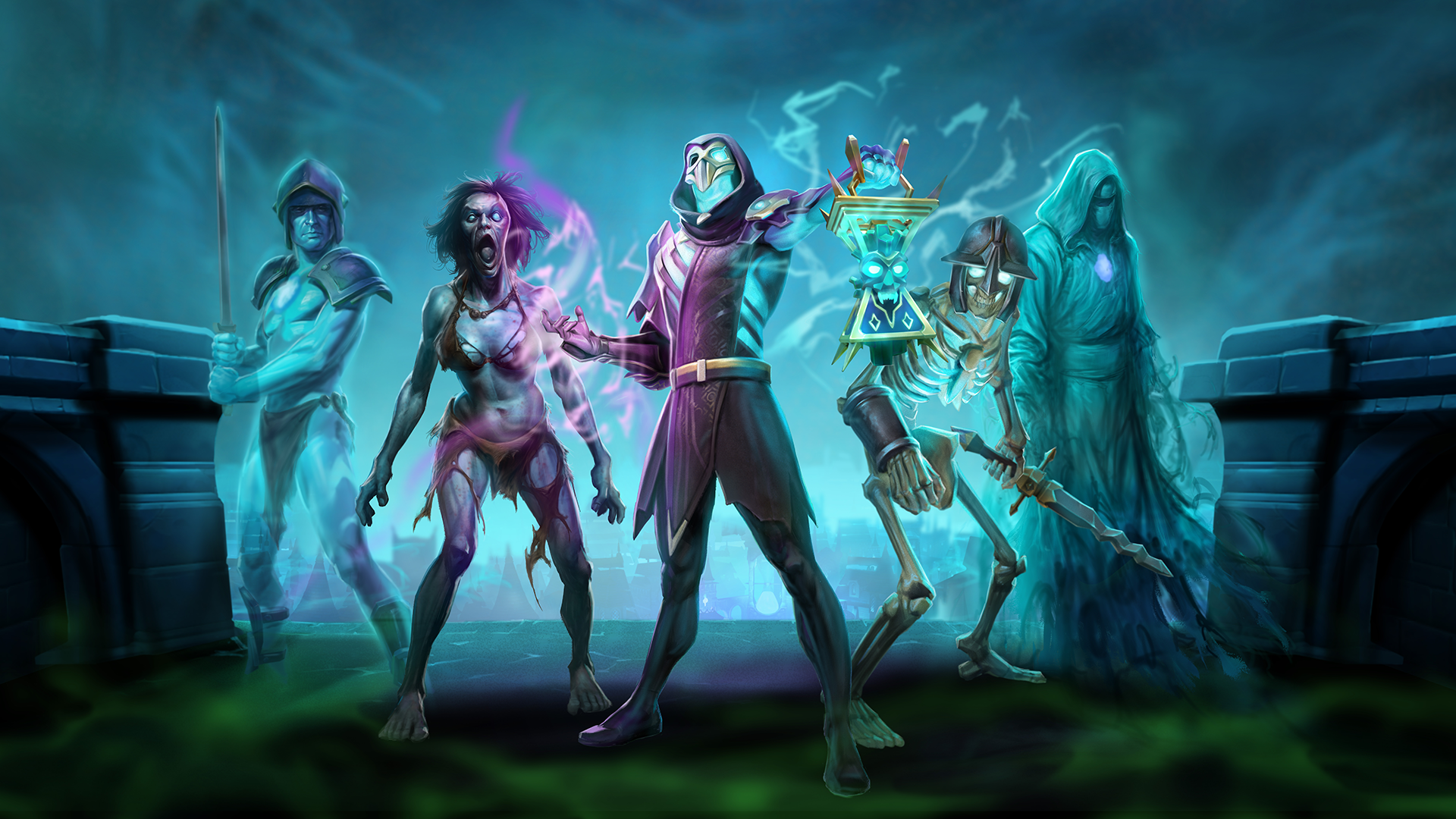
At 2nd level, you can call forth the dead with whom you commune in ritual to aid you. Using an action, you can summon a skeleton warrior, putrid zombie, vengeful ghost, or phantom guardian in an unoccupied space you can see within 30 feet. You must be holding a spellcasting focus or material pouch to do so.
The minion lasts for 1 minute or until you die or dismiss it using an action. If you summon a minion while you already have one present, the first one vanishes. The minion is friendly to you and your companions and obeys your commands. In combat, the minion acts during your turn. It can move, use its reaction, and use any available bonus actions on its own, but the only action it takes is the dodge action, unless you take a bonus action on your turn to
command it to take another action. That action can be one in its stat block or some other action. If you are incapacitated, the minion can take any action of its choice, not just dodge.
You can use this feature twice, and regain all uses when you finish a short or long rest.
When you reach 10th level, your undead minions' attacks and effects that subject a target to a saving throw deal an additional 2d6 necrotic damage. When you reach 18th level, the additional damage increases to 3d6.
Dead Covenant
At 3rd level, you choose a Dead Covenant, a focus of your study of the necromantic arts. Your choice grants you features at 3rd level and again at 6th, 10th, and 14th level.
Ability Score Improvement
When you reach 4th level, and again at 8th, 12th, 16th, and 19th level, you can increase one ability score of your choice by 2, or you can increase two ability scores of your choice by 1. As normal, you can't increase an ability score above 20 using this feature.
Potent Necrosis
Also at 4th level, your necromancy is more potent than that of other spellcasters. You and any undead creatures you summon (including your undead minions or those of some other effect or spell) ignore resistance to necrotic damage. Additionally, whenever one of these creatures deals damage, it can deal your choice of necrotic damage or its normal damage type.
Once you reach 10th level, when you or any undead creatures you summon would deal necrotic damage to a target that is immune to that damage, the target takes half the normal amount of necrotic damage instead of none.
Flowing Souls
At 20th level, your magic has become saturated with soul energy. You gain a residual soul each time you cast a necromancer spell of 1st level or higher.
Dead Covenants
A necromancer's power is rooted in their command over the dead with whom they commune in their rituals. Whether by force or mutual benefit, necromancers seek to form covenants with the dead in order to secure their aid, learn their secrets, and increase their control of necromantic magic.
Covenant of the Deathwarden
Necromancers that aim to best protect others—or themselves—from harm often enter the Covenant of the Deathwarden. In choosing to specialize in defensive techniques and magics, a Deathwarden might hope to ensure their survival in a dangerous world, protect themselves from the wrath of any dead they may have wronged, or safeguard those they care about from meeting too early the fate of the very souls they conjure.
Undead Ward
At 3rd level, your communes with the dead have taught you how to better protect yourself. You gain proficiency with shields.
Additionally, immediately after you make an attack or cast a necromancer spell, you can expend a residual soul to gain 1d8 temporary hit points.
The temporary hit points gained increase to 2d8 when you reach 6th level, 3d8 when you reach 10th level, and 4d8 when you reach 14th level.
Project Undead Ward
At 6th level, you've learned how to project your protective soul energy onto others. When you expend a residual soul with your Undead Ward feature, you can apply the temporary hit points to any creature you can see within 30 feet.
Life Surge
At 10th level, you can unlock a surge of life energy when you would be mortally wounded. When you are reduced to 0 hit points, you can choose to prevent yourself from being downed and regain hit points equal to twice your necromancer level. Additionally, you gain one residual soul as you absorb energy from your own faltering soul, and the next time you expend a residual soul with your Undead Ward feature within 1 minute, it grants the maximum possible amount of temporary hit points. Once you use this feature, you can't use it again until you finish a long rest.
Infallible Ward
At 14th level, you've enhanced your wards to provide protection against all manner of harmful effects. While a creature has temporary hit points from one of your wards, it can add your Charisma modifier to any saving throw it makes.

Covenant of Eternal Life
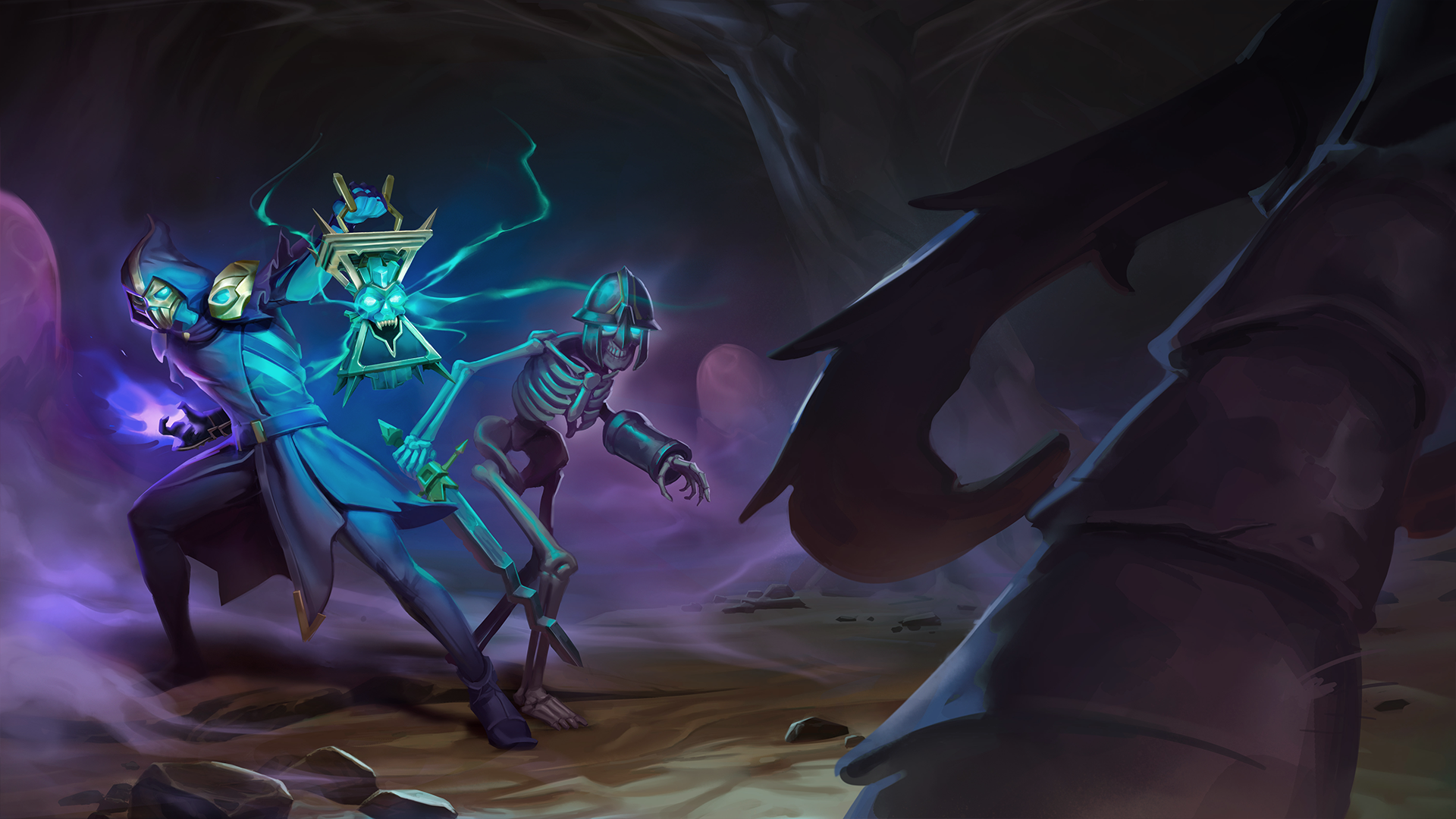
Necromancers that originate from Kharidian cultures or that study its views of the afterlife often take up the Covenant of Eternal Life. These desert cultures place great value in mummification, or the preserving of bodies in order to extend the afterlife experienced by the soul. Some necromancers expand upon this process further, using their talents to raise undead spirits and mummies, extend their lifespan beyond the naturally achievable, and ensure eternal life after death. The undead conjured by necromancers of the Covenant of Eternal Life can sometimes take on a mummy-like appearance, complete with linen wrappings.
Covenant Spells
Starting at 3rd level, your rituals have taught you the secrets of desert magic. You always have certain spells prepared after you reach particular levels in this class, as shown in the Eternal Life Spells table. These spells count as necromancer spells for you, but they don’t count against the number of necromancer spells you prepare.
Eternal Life Spells
| Necromancer Level | Spell |
|---|---|
| 3rd | alarm, color spray, continual flame, dust devil |
| 5th | catnap, wall of sand |
| 7th | giant insect, sickening radiance |
| 9th | insect plague, passwall |
Ushabti
Also at 3rd level, your study of souls has allowed you to create and utilize ushabti, small, simple clay vessels enchanted with your necromantic magic. Whenever you would gain a residual soul, you can instead capture some of the soul's magic in an ushabti that is in your possession. Any creature can use an action to direct the magic in a filled ushabti they are holding toward a creature they can see within 30 feet, producing one of the following effects of their choice:
- The target regains hit points equal to 1d6 + your Charisma modifier.
- The target is cured of one disease or magical contagion or neutralized of one poison affecting it.
A filled ushabti remains filled until the next dawn, after which the soul energy inside escapes and it becomes empty again. You can maintain a maximum number of filled ushabti at once equal to your Charisma modifier.
Restorative Vessels
At 6th level, you've learned to craft more powerful ushabti. Your ushabti gain the following options when activated:
- The target's exhaustion level is reduced by 1.
- The target is cured of one of the following conditions: blinded, defeaned, incapacitated, paralyzed, or stunned.
Additionally, when an ushabti is used to restore hitpoints, the number of hit points restored increases to 2d6 + your


Charisma modifier. If any other option is chosen when activating an ushabti, the target also gains 1d6 hit points.
Undying Nature
Beginning at 10th level, you've unlocked the secret to extending your lifespan by infusing yourself with necromantic energy. You can hold your breath indefinitely, and you don't require food, water, or sleep, although you still require rest to reduce exhaustion and still benefit from finishing short and long rests.
In addition, you age at a slower rate. For every 10 years that pass, your body ages only 1 year, and you are immune to being magically aged.
Eternal Form
Once you reach 14th level, your preparations for achieving eternal life are complete. When you die, you can choose to raise yourself from the dead. If you do, you appear with maximum hit points at the location of your body after 1 hour in a new form of your choice: mummy or spirit. If your body was destroyed, you appear at the location where you died.
If you choose the mummy form, you gain the following features in your new form:
- Mummy Body. You are immune to poison damage and the charmed, frightened, and poisoned conditions.
- Blinding Sands. After a creature targets you with a melee attack (whether or not the attack hits), the creature must succeed on a Constitution saving throw against your spell save DC or be blinded by whirling sands until the start of their next turn.
If you choose the spirit form, you gain the following features in your new form:
- Spirit Body. You are immune to the grappled, prone, and restrained conditions.
- Flight. You have a flying speed equal to your walking speed and can hover.
- Ethereal Movement. You can move through other creatures as if they were difficult terrain.
In your new form, your natural lifespan increases by 50 years (meaning you could live for at least another 500 years due to your Undying Nature feature). Additionally, your creature type becomes undead instead of the creature type you had before.
You can never use this feature to resurrect yourself again if you die while in your undead form, and you can't be restored to your initial living form short of a wish spell. If you die while in your undead form and are resurrected by other means, such as the revivify spell, you return in your undead form.

Covenant of the Hordemaster
Necromancers who enter the Covenant of the Hordemaster have focused their studies on enhancing their influence over the dead. By instilling the dead with whom they ritually commune with greater fear, respect, admiration, or loyalty, Hordemasters improve control over their undead minions and can summon them in greater numbers than other necromancers.
Soul Conduits
At 3rd level, you've learned to channel your power through your minions. When one of your undead minions deals damage to a creature with an attack or other effect, you can use your Soul Strike feature on that creature, applying the extra damage to your minion's attack or effect.
Additionally, when you cast a spell with a range other than self, the spell can originate from you or one of your undead minions.
Conjure Undead Army
At 6th level, when you use your Summon Undead Minion feature, you can summon and maintain two minions at once. You cannot summon more than one of the same minion. When you use a bonus action to command a minion, you can command both minions to use their actions.
At 14th level, the number of different undead minions you can summon, maintain, and command at once increases to three.
Undead Bond
At 10th level, you've discovered how to form a more powerful bond with the undead than other necromancers. You add your Charisma modifier to any ability check or saving throw your undead minions make.
Covenant of the Soulflame
While most necromancers are limited in the types of magical energies they can harness through their spells, those of the Covenant of the Soulflame devote themselves to careful study of the manipulation of rarer necromantic energies. Through arduous ritual and practice, Soulflames learn to sculpt their power into additional forms, including fire, lightning, and ice, in ways that are impossible for other necromancers to achieve. The distinguishing mark of a Soulflame over other mages is the ethereal coloration of their fire and lightning spells, which usually take on eerie hues of green, blue, purple, or cyan.
Soulflame Spells
| Necromancer Level | Spell |
|---|---|
| 3rd | absorb elements, dragon's breath, scorching ray, witch bolt |
| 5th | fireball, lightning bolt |
| 7th | fire shield, wall of fire |
| 9th | cone of cold, immolation |
Covenant Spells
Starting at 3rd level, your devotion to the study of necromantic energies has unlocked new spellcasting possibilities. You learn the fire bolt cantrip, which counts as a necromancer cantrip for you. Additionally, you always have certain spells prepared after you reach particular levels in this class, as shown in the Soulflame Spells table. These spells count as necromancer spells for you, but they don’t count against the number of necromancer spells you prepare.
Furthermore, when you cast one of the spells in the Soulflame Spells table, you can cast it without expending a spell slot. The spell must be cast at a level for which you have spell slots, and no higher than 5th level. Once you cast a spell in this way, you can't do so again until you finish a long rest.
Soulflame Strike
Also at 3rd level, you can manipulate residual souls into other energies as with your spells. When you use your Soul Strike feature to deal extra damage with a spell that deals cold, fire, or lightning damage, you can change the type of the extra damage from necrotic to the type dealt by the spell.
Potent Flame
At 6th level, you've increased the potency of your soulflame beyond even that of your necrotic magic. You can add your Charisma modifier (minimum of +1) to one damage roll of any necromancer spell you cast that deals cold, fire, or lightning damage.
Transmute Soulflame
At 10th level, you learn the Transmute Energy Necromantic Incantation, which doesn't count against the number of incantations you know. If you already know it, you learn another incantation of your choice. When you use Transmute Energy, you add cold, fire, and lightning to the list of transmutable damage types, and if you transmute a spell to one of these damage types, you don't need to expend a residual soul to do so.
Energy Resistance
At 14th level, you've grown resilient to the energies you weave into your spells. You and your undead minions have resistance to cold, fire, and lightning damage. Additionally, your undead minions automatically succeed on saving throws against your spells that deal cold, fire, and lightning damage, and they take no damage if they would normally take half damage on a successful save against such a spell.
Necromantic Incantations
The following Necromantic Incantations are available to choose from.
Detonate Zombie
Prerequisite: 3rd level
When you use your bonus action to command your putrid zombie minion, you can have it use its action to detonate in a burst of rotten flesh. Alternatively, you can use a reaction when the zombie is reduced to zero hit points to trigger the effect. The zombie dies, and each creature within 15 feet of it must make a Dexterity saving throw. Roll a number of d8's equal to your Charisma modifier. On a failed save, a creature takes poison damage equal to the total and is poisoned until the end of its next turn. On a successful save, a creature takes half the damage and suffers no further effects.
Extend Cantrip
You've learned an incantation that can be uttered to extend the reach of some of your most basic magic. Choose a cantrip you know that has a range of at least 10 feet. When you cast the chosen cantrip, its range is increased by 60 feet. You can change this effect to a different cantrip you know whenever you gain a level in this class.
You can learn this incantation multiple times, selecting a different cantrip each time.
Greater Reap Souls
Prerequisite: 5th level, Reap Souls, Soul Sapper
You conjure underworld energy into the shape of a scythe and swing it all around you using an action. Roll a number of d8's equal to your Charisma modifier. Each creature of your choice within 15 feet you must make a Constitution saving throw, taking necrotic damage equal to the total on a failed save or half as much on a successful one. Additionally, you gain one residual soul for each creature that took any damage. Once you use this feature, you can't use it again until you finish a short or long rest, unless you expend a spell slot of 3rd level or higher (no action required) to restore your use of it.
Greater Threads of Fate
Prerequisite: 5th level, Threads of Fate
You can also use Threads of Fate when you cast a necromancer spell of 2nd level or lower. To be eligible, a spell must be incapable of targeting more than one creature at the spell's current level. For example, arms of hadar isn't eligible, but inflict wounds is.
Haunt
Prerequisite: 3rd level
When you use your bonus action to command your vengeful ghost, you can have it use its action to produce a terrifying wail. Each creature within 10 feet of the ghost that can hear it must make a Wisdom saving throw. On a failure, a creature is frightened of the ghost for 1 minute. A frightened creature can repeat the saving throw at the end of each of its turns, ending the effect on itself on a success. Once you use this feature, you can't use it again until you summon another vengeful ghost.
Invoke Death
You can recite an incantation in the presence of the dying that hastens their end. Using a bonus action, you can mark a creature you can see within 60 feet for 1 minute. While a creature is marked you always know whether or not it is bloodied. When a marked creature that is already bloodied takes damage, roll a number of d6's equal to half your necromancer level (rounded up). The creature takes additional necrotic damage equal to the total and the mark is removed. You can use this feature a number of times equal to your Charisma modifier, and you regain all expended uses when you finish a long rest.
Invoke Lord of Bones
Prerequisite: 3rd level
When you use your bonus action to command your skeleton warrior to take an action, you can also command it to take the form of the Lord of Bones. If you do, until the end of your next turn, the skeleton’s size doubles in all dimensions, and its weight is multiplied by eight. This growth increases its size to Large. If there isn’t enough room for the skeleton to double its size, it attains the maximum possible size in the space available. It also has advantage on Strength checks and Strength saving throws. The skeleton’s weapons also grow to match its new size, and its attacks with them deal 1d8 extra piercing or slashing damage (the same type as the weapon). While transformed, the skeleton can attempt to shove a creature using its bonus action on each of its turns. Once you use this feature, you can't use it again until you summon another skeleton warrior.

Phantom Retaliation
Prerequisite: 3rd level
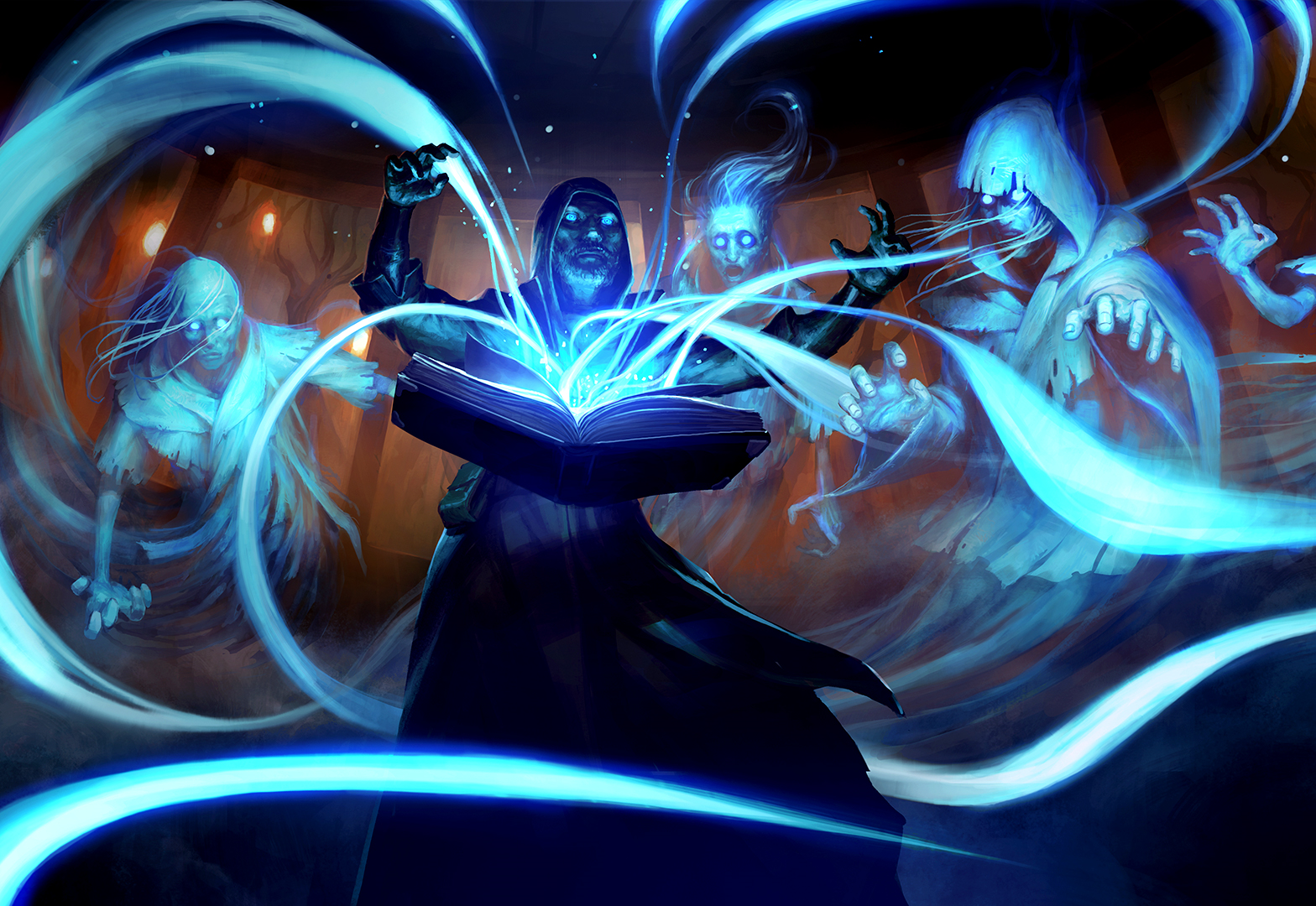
When your phantom guardian uses its Intercept reaction, you can have it reflect the damage it absorbs back against the attacker. Roll a number of d6's equal to your Charisma modifier. Instead of taking damage, your phantom can deal necrotic damage equal to the total to the attacker so long as it is within 30 feet of the phantom. Once you use this feature, you can't use it again until you summon another phantom guardian.
Reap Souls
You conjure underworld energy into the shape of a great scythe and swing it in front of you using an action. Roll a number of d4's equal to your Charisma modifier. Each creature in a 15-foot cone originating from you must make a
Constitution saving throw, taking necrotic damage equal to the total on a failed save or half as much on a successful one. Additionally, you gain one residual soul if at least one creature took any damage. Once you use this feature, you can't use it again until you finish a short or long rest, unless you expend a spell slot of 1st level or higher (no action required) to restore your use of it.
Ritualist
You've specialized your necromantic studies heavily into ritual spellcasting. Choose two spells on the necromancer spell list that have the ritual tag. The spells must be of a level for which you have spell slots. You can cast the chosen spells as rituals without needing to prepare them. Whenever you gain a level in this class, you can change one of the chosen spells to a different one.
You can learn this incantation multiple times, selecting a different set of spells each time.
Secrets of the Dead
You've focused your communes with the dead to learn new skills. You gain proficiency in one skill or set of artisan's tools of your choice.
You can learn this incantation multiple times, selecting a different proficiency each time.
Soul Sapper
You've trained yourself to maintain your grip on soul energy more easily. The maximum number of residual souls you can retain at once increases to 3.
Soul Volley
Prerequisite: 4th level, Soul Sapper
You've honed your control of residual souls well enough to combine their energy into a single, powerful blast. When you expend a residual soul using your Soul Strike feature, you can expend all of your residual souls at once, dealing the extra damage for each one you expend.
Superior Threads of Fate
Prerequisite: 9th level, Greater Threads of Fate
You can use Threads of Fate when you cast necromancer spells of up to 4th level. To be eligible, a spell must be incapable of targeting more than one creature at the spell's current level. For example, arms of hadar isn't eligible, but inflict wounds is.
Threads of Fate
You can recite an incantation that broadens the reach of your magic. When you cast a necromancer cantrip that targets only one creature and doesn't have a range of Self, you can cause it to target a second creature creature within 30 feet of the original target. To be eligible, a cantrip must be incapable of targeting more than one creature. For example, acid splash isn't eligible, but ray of frost is. Once you use this feature, you can't use it again until you finish a short or long rest.
Transmute Energy
You've studied a technique that expends soul energy to transmute your spells. When you cast a necromancer spell that deals a type of damage from the following list, you can expend a residual soul to change that damage type to one of the other listed types: acid, poison, and necrotic.
Undead Arsenal
You've focused your communes with the dead to learn the techniques required to master more complex weaponry. You gain proficiency with the following weapons: quarterstaff, battleaxe, glaive, greataxe, rapier, scimitar, and whip.
Undead Familiar
You can bind an additional small undead or other creature to your service. You always have the find familiar spell prepared, and it doesn't count against the number of spells you can prepare each day. It counts as a necromancer spell for you, and you can cast it as a ritual. When you cast the spell, you can choose one of the normal forms for your familiar or one of the following special forms, which retain the undead creature type: crawling hand and undead chicken.
Underworld Sight
Your study of the underworld's inhabitants has granted you the ability to see in the dark. You gain darkvision out to a range of 60 feet. If you already have darkvision, its range increases by 30 feet.
Undead Minions
Statistics for each of the undead minions are provided in this section. The stat blocks use your Charisma modifier (Cha) and spell attack modifier (SAM) in several places.
Phantom Guardian
Medium undead, your alignment
- Armor Class 13 + Cha (armor scraps, shield)
- Hit Points 4 + 4 times your necromancer level
- Speed 30 ft.
STR DEX CON INT WIS CHA 12 (+1) 8 (-1) 15 (+2) 6 (-2) 10 (+0) 5 (-3)
- Damage Resistances necrotic
- Damage Immunities poison
- Condition Immunities charmed, exhaustion, frightened, grappled, paralyzed, petrified, poisoned, prone, restrained
- Senses Darkvision 60 ft., passive Perception 10
- Languages The languages you know
- Challenge —
Actions
Mace. Melee Weapon Attack: +SAM to hit, reach 5 ft., one target. Hit: 1d6 + Cha bludgeoning damage.
Reactions
Intercept. When a creature within 5 feet takes damage from an attack, the phantom can intercept part of the damage. The damage dealt to the target is reduced by an amount equal to your necromancer level, and the phantom loses hit points equal to that amount of damage.
Putrid Zombie
Medium undead, your alignment
- Armor Class 6 + Cha
- Hit Points 5 + 5 times your necromancer level
- Speed 25 ft.
STR DEX CON INT WIS CHA 13 (+1) 6 (-2) 16 (+3) 3 (-4) 6 (-2) 5 (-3)
- Saving Throws Wis +0
- Damage Immunities Poison
- Condition Immunities Poisoned
- Senses Darkvision 60 ft., passive Perception 8
- Languages The languages you know
- Challenge —
Actions
Slam. Melee Weapon Attack: +SAM to hit, reach 5 ft., one target. Hit: 1d6 + Cha bludgeoning damage.
Rot. The zombie hurls a chunk of its flesh, a fistful of maggots, or a clump of bile at a creature within 20 feet in an attempt to infect it. The target must make a Dexterity save against your spell save DC, taking 2d6 poison damage on a failed save or half as much on a successful one.
Skeleton Warrior
Medium undead, your alignment
- Armor Class 11 + Cha (armor scraps)
- Hit Points 4 + 4 times your necromancer level
- Speed 30 ft.
STR DEX CON INT WIS CHA 14 (+2) 14 (+2) 13 (+1) 6 (-2) 8 (-1) 5 (-3)
- Damage Vulnerabilities bludgeoning
- Damage Immunities poison
- Condition Immunities exhaustion, poisoned
- Senses Darkvision 60 ft., passive Perception 9
- Languages The languages you know
- Challenge —
Actions
Longsword. Melee Weapon Attack: +SAM to hit, reach 5 ft., one target. Hit: 1d8 + 1 + Cha slashing damage.
Shortbow. Ranged Weapon Attack: +SAM to hit, range 80/320 ft., one target. Hit: 1d6 + 1 + Cha piercing damage.
Vengeful Ghost
Medium undead, your alignment
- Armor Class 11 + Cha
- Hit Points 4 + 4 times your necromancer level
- Speed 0 ft., fly 40 ft. (hover)
STR DEX CON INT WIS CHA 7 (-2) 13 (+1) 12 (+1) 10 (+0) 12 (+1) 15 (+2)
- Damage Immunities poison
- Condition Immunities exhaustion, grappled, poisoned, prone, restrained
- Senses Darkvision 60 ft., passive Perception 11
- Languages The languages you know, but can't be understood without a ghostspeak amulet
- Challenge —
Actions
Life Drain. Melee Weapon Attack: +SAM to hit, reach 5 ft., one creature. Hit: 1d6 + 1 + Cha necrotic damage and the ghost regains hit points equal to half the damage dealt. If you are within 30 feet of the ghost, you can choose to gain the hitpoints instead.


Necromancer Spell List
Cantrips
- Acid Splash
- Chill Touch
- Control Flames
- Dancing Lights
- Friends
- Frostbite
- Infestation
- Light
- Mage Hand
- Message
- Minor Illusion
- Poison Spray
- Prestidigitation
- Ray of Frost
- Resistance
- Shocking Grasp
- Spare the Dying
- Thaumaturgy
- Toll the Dead
1st Level
- Absorb Elements
- Arms of Hadar
- Bane
- Bone Shield
- Cause Fear
- Caustic Brew
- Charm Person
- Command
- Comprehend Languages
- Cure Wounds
- Detect Magic
- Disguise Self
- Expeditious Retreat
- False Life
- Fog Cloud
- Ice Knife
- Identify
- Illusory Script
- Inflict Wounds
- Mage Armor
- Ray of Sickness
- Shield
- Silent Image
- Sleep
2nd Level
- Acid Arrow
- Augury
- Blindness/Deafness
- Blood Siphon
- Blur
- Borrowed Knowledge
- Crown of Madness
- Darkness
- Darkvision
- Detect Thoughts
- Enhance Ability
- Enthrall
- Gentle Repose
- Gift of Gab
- Healing Spirit
- Hold Person
- Invisibility
- Lesser Restoration
- Levitate
- Locate Animals or Plants
- Magic Mouth
- Mirror Image
- Phantasmal Force
- Protection from Poison
- Ray of Enfeeblement
- See Invisibility
- Shadow Blade
- Silence
- Skywrite
- Soul Scythe
- Spider Climb
- Suggestion
- Warding Bond
- Web
- Wither and Bloom
3rd Level
- Animate Dead
- Antagonize
- Bestow Curse
- Clairvoyance
- Counterspell
- Dispel Magic
- Fast Friends
- Fear
- Feign Death
- Gaseous Form
- Glyph of Warding
- Haste
- Hunger of Hadar
- Life Transference
- Magic Circle
- Major Image
- Protection from Energy
- Remove Curse
- Revivify
- Slow
- Speak with Dead
- Spirit Shroud
- Stinking Cloud
- Summon Undead
- Tiny Hut
- Tongues
- Vampiric Touch
4th Level
- Arcane Eye
- Aura of Life
- Banishment
- Black Tentacles
- Blight
- Charm Monster
- Confusion
- Death Ward
- Divination
- Faithful Hound
- Freedom of Movement
- Greater Invisibility
- Hallucinatory Terrain
- Phantasmal Killer
- Shadow of Moil
- Spirit of Death
- Vitriolic Sphere
5th Level
- Bigby's Hand
- Cloudkill
- Commune
- Contagion
- Danse Macabre
- Destructive Wave
- Dominate Person
- Dream
- Enervation
- Geas
- Greater Restoration
- Hallow
- Hold Monster
- Legend Lore
- Mislead
- Negative Energy Flood
- Raise Dead
- Reincarnate
- Seeming
- Split Soul
6th Level
- Circle of Death
- Create Homunculus
- Create Undead
- Death Skulls
- Disintegrate
- Eyebite
- Flesh to Stone
- Forbiddance
- Harm
- Irresistible Dance
- Magic Jar
- Mass Suggestion
- Mental Prison
- Otherworldly Guise
- Programmed Illusion
- Soul Cage
- True Seeing
7th Level
- Etherealness
- Finger of Death
- Forcecage
- Living Death
- Mirage Arcane
- Power Word: Pain
- Project Image
- Regenerate
- Resurrection
- Symbol
8th Level
- Antipathy/Sympathy
- Clone
- Dominate Monster
- Feeblemind
- Horrid Wilting
- Illusory Dragon
- Maddening Darkness
- Power Word: Stun
9th Level
- Blade of Disaster
- Imprisonment
- Power Word: Heal
- Power Word: Kill
- Psychic Scream
- True Resurrection
- Weird
Necromancer Spells
The following spells are available exclusively to necromancers.
Bloat
3rd-level necromancy
- Casting Time: 1 action
- Range: 30 feet
- Components: V, S
- Duration: Concentration, up to 1 minute
You infect a creature within range, causing it to swell from the inside. The target must make a Constitution saving throw. On a failure, the target takes 5d6 poison damage and is poisoned for the duration. Once per turn while poisoned, if the taret makes an attack or willingly moves 5 feet or more, it takes 2d6 poison damage. The target can repeat the saving throw at the end of each of its turns, ending the effects on a success. On a successful save, the target takes half the initial damage and suffers no further effects.
At Higher Levels. When you cast this spell using a spell slot of 4th level or higher, the initial damage and the damage the target takes for moving or using an attack each increase by 1d6 for each slot level above 3rd.
Blood Siphon
2nd-level necromancy
- Casting Time: 1 action
- Range: Self (10-foot radius)
- Components: V, S
- Duration: Instantaneous
You siphon life energy from nearby enemies before weaponizing it against a creature. Each creature of your choice within a 10-foot radius must make a Constitution saving throw, taking 2d8 necrotic damage on a failed save or half as much on a successful one. You regain hit points equal to half the total amount of damage dealt to all creatures.
At Higher Levels. When you cast this spell using a spell slot of 3th level or higher, the damage increases by 1d8 for each slot level above 2nd.
Bone Shield
1st-level necromancy
- Casting Time: 1 bonus action
- Range: 60 feet
- Components: V, S, M (a small handful of bone fragments)
- Duration: Concentration, 10 minutes
Large bones envelop a creature of your choice within range like a piecemeal set of armor. For the duration, whenever the creature takes piercing or slashing damage, the damage is reduced by 2.
At Higher Levels. When you cast this spell using a spell slot of 2nd level or higher, the damage reduction increases by 1 for each slot level above 1st.
Death Skulls
6th-level necromancy
- Casting Time: 1 action
- Range: 60 feet
- Components: V, S, M (a small skull sculpted from bone or glass)
- Duration: Instantaneous
You manifest a magical skull dripping with necromantic energy and launch it toward a target of your choice that you can see within range. The skull then bounces to many as three other targets in sequence, each of which must be within 30 feet of the previous target. A target can be a creature or an object and may be targeted more than once, but not twice in a row within the sequence of bounces.
A target must make a Dexterity saving throw each time the skull targets it. The target takes 8d8 necrotic damage on a failed save, or half as much on a successful one.
At Higher Levels. When you cast this spell using a spell slot of 7th level or higher, one additional bounce is added to the sequence for each slot level above 6th.
Living Death
7th-level necromancy
- Casting Time: 1 bonus action
- Range: Self
- Components: V, S, M (a jewel-embellished skull, worth at least 500 gp)
- Duration: Concentration, up to 1 minute
You drench yourself in underworld magic as you take on the form of an undead skeleton, dripping with necrotic energy. You gain the following benefits until the spell ends:
- Ethereal Sight. You can see 60 feet into the Ethereal Plane when you are on the Material Plane, and vice versa.
- Horrific Visage. When you cast this spell, and as a bonus action on subsequent turns for the duration, you can create an image of woeful terror. Each creature within 30 feet that can see you and isn’t an undead must make a Wisdom saving throw. On a failed save, a creature takes 4d8 psychic damage and is frightened until the start of your next turn. While frightened in this way, a creature's speed becomes 0. On a successful save, a creature takes half the damage and isn't frightened.
- Magic Resistance. You have advantage on saving throws against spells.
Soul Scythe
2nd-level necromancy
- Casting Time: 1 bonus action
- Range: Self
- Components: V, S
- Duration: Concentration, up to 1 minute
You conjure underworld energy, shaping it into a spectral scythe in your hand which lasts for the duration. If you let go of the scythe, it disappears, but you can conjure it again as a bonus action.
You can use your action to make a melee spell attack with a reach of 10 feet using the spectral weapon. On a hit, the target takes 2d8 necrotic damage. In addition, the first two times you hit a creature with it, you gain one residual soul.
At Higher Levels. When you cast this spell using a 3rd- or 4th-level spell slot, the damage increases to 3d8 and the number of times you can gain a residual soul with the scythe increases to three. When you cast it using a 5th- or 6th-level spell slot, the damage increases to 4d8 and the number of times increases to four. When you cast it using a spell slot of 7th level or higher, the damage increases to 5d8 and the number of times increases to five.
Split Soul
5th-level necromancy
- Casting Time: 1 bonus action
- Range: Self
- Components: V, S
- Duration: Concentration, up to 1 minute
You form a rift in your own soul, drawing energy from yourself and directing it toward your foes. Once per turn for the duration, when you deal damage to a creature, you take 1d8 necrotic damage and one creature you damage takes an extra 3d8 necrotic damage. The self-inflicted damage cannot be reduced in any way, and it never interrupts your concentration on this spell.
At Higher Levels. When you cast this spell using a 7th- or 8th-level spell slot, the self-inflicted damage increases to 2d8 and the outgoing damage increases to 6d8. When you cast it using a spell slot of 9th level, the self-inflicted damage increases to 3d8 and the outgoing damage increases to 9d8.