Boss Barriers
What are Barriers?
Barriers are temporary effects that make bosses resistant or immune to damage. They force players to adapt, interact with their environment, and overcome unique combat challenges. When used creatively, barriers help prevent boss fights from feeling repetitive or solvable with brute force alone.
Zi-Chin's Tip
Think of barriers like puzzles that change the rules of the battlefield. Ensure the solution feels satisfying when players figure it out.
Why Barriers Matter
Barriers highlight moments of transformation, fear, or power in your boss fights. They offer the opportunity to show off a boss's intelligence or desperation. A barrier isn’t just a mechanical obstacle; it’s a story beat for your players to explore and interact with by scouring the environment and taking the time to understand the boss’s actions before they strike.
Barriers also help pace encounters, offering breathing room for DMs and strategic pauses for players. They provide clear phases of escalation that don’t require using formal stages.
What This Guide Covers
This guide discusses different examples of barriers that can be granted to bosses, the types of barriers, and their formation. At the end of this document will be a list of additional features and two major boss encounters to be used in your games or just as an example on how to implement these features.

Swamp Sage
The players hear the Amphibithian cast a spell as a yellow light begins to form a bubble shield around him. This orb stops all ranged attacks outside the barrier from hitting the Amphibithian. In order to damage him, the players have to be inside the 30-foot bubble and attack.
To make it harder for players to get inside the barrier (they see a beetle fly through the shield as a hint) and take the Amphibithian out, they need to dodge the boss’ attacks. As the Amphibithian controls the swamp water around the players, Amphibithian hits and pushes them back.
If a player manages to get inside and damage the Amphibithian, the Amphibithian makes a concentration check, and if they fail, the yellow light fades away.Duration: 2 to 3 rounds.


Barrier Creation
What Makes a Barrier
Every barrier should have four core components. This structure not only ensures mechanical balance but also helps create consistent and engaging gameplay. By defining how a barrier begins, ends, takes shape, and functions, DMs can design encounters that feel both fair and dynamic.
Components
| Component | Description |
|---|---|
| Start Condition | When or why does the barrier activate? This component will likely come from your chosen Barrier Origin and depicts what supplies the barrier/causes it to come into effect. Triggers could be health thresholds, environmental cues, or timed events, but can also come from passive sources. |
| End Condition | What causes it to drop? This is based on the Barrier Type and might involve time limits, player actions, damage thresholds, or destroying a linked object. Some barriers persist until a condition is met; others are designed to be broken through. |
| Shape | What form does the barrier take? This component is dictated by the Barrier Formation, and will answer some important questions about your barrier, such as; What does it protect? Is it a dome around a point or just a flat wall? Does it move with the boss? Use the formation type to change how players engage spatially. |
| Effect | What does the barrier do? The effect depends on the Barrier Type, determining whether it blocks, reflects, or absorbs. It might stop magic, physical attacks, or both, and can alter how players interact with the environment. |
Additional Barrier Mechanics
Once you understand the core components of a barrier, you can enhance them using additional mechanics. These tools allow you to create more dynamic and engaging encounters by adding layers of interaction and player choice while still maintaining their simplicity.
Brief Overview
| Additional Barriers | Descirptions |
|---|---|
| Barrier Fusions | barrier Fusions combine multiple barrier types or effects into a single encounter. They create layered challenges that require players to prioritise targets and adapt their approach. |
| Barrier Modifiers | Barrier Modifiers change how a barrier behaves during combat. They can disrupt, restrict, or escalate interactions, forcing players to rethink positioning and strategy. |
Narrative
After determining the four core components of a barrier, you can add a narrative layer to explain why the barrier exists. These optional story-based elements add emotional weight to the boss, making the barrier feel like an extension of their identity. By grounding the shield in the boss’s personality, values, or surroundings, it becomes more than just a mechanic; it becomes a statement of who they are and how they shape the world around them.
Narrative Plots
| Potential Narrative | Descirptions | Examples |
|---|---|---|
| Emotional Trigger | The barrier reflects the boss’s emotional state. | Anger might erupt into flames, fear could spread shadowy tendrils, and despair may summon a wall of ice or mist. |
| Apprentice Sacrifice | The barrier is powered by the boss’s followers, willingly (love) or unwillingly (fear). | A loyal apprentice creates a holy shield; a fearful one forms a cursed barrier. |
| Legacy Magic | The barrier is tied to the boss’s lineage or an ancient artefact. | Removing an inherited cursed item disables the barrier. |
| The Lair | The barrier is shaped by the environment or lair’s magic. | Sigils in the ground or fast-growing trees form natural barriers. |

Barrier Shapes
Three types of shapes can be applied to a barrier. The way barrier shapes work is by showing where bosses are protected from, whether the barrier fully encases them, or if it leaves them open to attacks from behind. Having different weak points for each barrier requires more thought from the players on their strategy to snuff out the barrier.
1. Full-Body Barrier
A full-body barrier encases the entire boss in a protective barrier. This form will only cover a single target and is the simplest of the formations. Think of them as a covering of magical armour that defends the boss from all angles.
2. Enclosed Barrier
An enclosed barrier covers a defined area of any size; it consists of a shape that extends outward from a specified point (which can include the boss itself or other moving object/creature).
Generally, nothing can enter the area unless it matches the barrier's bypass condition, which could just mean projectiles and spells are refused, while people are free to pass, or it may require dispelling or destruction completely before anything can pass through.
It is useful against ranged parties by forcing them to be close by getting within the boundary of the barrier, or careful placement of AoE spells.
Zi-Chin's Tip
Area of effect spells cast on the barrier still work unless an additional rule says otherwise, meaning your wizard can strike a powerful fireball off the ground next to the barrier, the wave of fire still passes through even though the spell is stopped on the outside. Encourage clever spell placement!
3. Directional Barrier
A directional barrier covers specific zones of the boss's body, such as front, sides, or rear. This formation encourages positioning and teamwork. The shield might rotate or shift based on the boss's movement.
In this case, the direction the shield faces is locked when a boss's turn ends, unless they take a legendary action that would make them change direction. The design of this barrier is to encourage tactical flanking, baiting, and coordination as the players need to shift around the map to find the weak spots.
Important note: This formation will not function properly when using Theatre of the Mind gameplay, as there isn’t a way to dictate a boss's direction effectively.
Some patterns for this formation may include:
Directional barrier patterns
| Pattern | Mechanic |
|---|---|
| Frontal Immunity | Covering the direction in which the boss faces. |
| Rotating Clock-Face | Changes every round to specific locations around the boss. |
| Randomised Angles | DM rolls for direction each turn, suggest using a d6 for hex gidded maps and a d8 for square gridded maps. |
Zi-Chin's Tip
Let players spot the pattern with a Perception or Arcana check to reward good observation.

Barrier Origins
How Barriers Can Be Granted
The purpose of barrier origins is to design encounters where each barrier features distinct activation conditions and behaviours, creating unique challenges for players. Barrier origins offer diverse methods for introducing barriers, each shaping how an encounter unfolds. This variety ensures that barrier gameplay feels less formulaic, encouraging players to stay engaged and think strategically.
1: Reactive Origin
These barriers activate in response to certain conditions, such as when the health drops, react with a certain material, or change phases (either through mythic actions or the Branching Boss Fights module). These barriers require the boss to have a reaction available to activate, or the activation of a mythic action.
2: Spell-based Origin
A boss using a barrier with this origin would have an action or ability that draws on powerful magic to activate a barrier, forcing players to dispel or circumvent the magic. These barriers require an action to activate, and can potentially be countered by certain spells such as Counterspell or Dispel Magic.
3: Support Origin
This barrier type is not conjured by the boss alone. It is earned through the support of others. These shields are formed through loyalty, divine favour, or a connection to the natural world. Some bosses are protected by devoted minions who cast spells to ward their master from harm, or who sacrifice themselves to create a barrier of blood that deflects attacks.
Others turn to higher powers. A boss might drop to their knees and pray to their dark god. In response, a shroud of dark smoke spreads across the battlefield, making it difficult for players to fight effectively unless they find a way to light the area.
4: Shield Generator Origin
Barriers can be created using shield generators, which are inanimate objects that cause a barrier to be created around a target. Advanced technology, magic sources, or even armour can generate barriers. Players may need to destroy these generators or deactivate them through environmental interactions. These will often have an easily identifiable source for the players to locate and interact with.

Spell Levels and Health Generated
When spells are used by bosses or minions, the spell level is dictated by the amount of shield health generated:
Directional barrier patterns
| Spells | Shield Health |
|---|---|
| Level 1 Spell | 2d12+5 |
| Level 2 Spell | 5d12+10 |
| Level 3 Spell | 8d12+20 |
| Level 4 Spell | 12d12+20 |
| Level 5 Spell | 16d12+30 |
| Level 6 Spell | 10d20+30 |
| Level 7 Spell | 12d20+30 |
| Level 8 Spell | 14d20+30 |
| Level 9 Spell | 18d20+30 |
Barrier Types
Each barrier will have a different set of circumstances for activation/deactivation. Below are the five options for a barrier’s type.
- Time-based barrier: Lasts a set number of rounds; players must survive until the barrier breaks.
- Objective-based barrier: Disable the barrier by interacting with the environment (e.g. pull a lever).
- Weak-Point barrier: Hit a hidden spot on the boss, found with player intuition or perception checks.
- Susceptibility barriers: Grants immunity to certain elements but also creates weaknesses to break the barrier.
- Sightline barrier: Only active if the boss is within sight of an object.
Beneath the description for each type of barrier will be two examples to help showcase why the use of this barrier can make a fight more engaging.
1: Time-Based Barriers
Time-based barriers grant the boss invulnerability (immunity to all or most damage types) for a predetermined number of rounds, during which the players must simply outlast the countdown or prepare for the next phase of the fight. The purpose of this barrier type is to have players focus on surviving the boss's onslaught while the timer ticks down.
This increases the difficulty by having the players endure the boss’s attacks, but also allows for creativity in how the players choose to avoid the attacks. Additionally, it allows the players to prepare themselves either with coordinated attacks or environmental objects to gain the advantage when the barrier runs out.
Endurance Rounds
Duration: 2 to 3 rounds
Effect: boss is immune (or resistant) to all damage
Mechanics:
- The barrier activates at a set trigger (phase change, boss reaction, HP threshold)
- For 3 rounds, the boss is immune to all damage
Zi-Chin's Tip
It is recommended to make it clear to the players how long the barrier will last. Additionally, time-based barriers should have a maximum time of 3 rounds.
Time-Based Example Bosses
| Origin | Example Boss | Visual Component |
|---|---|---|
| Reactive Origin | Badly wounded, the boss staggers back and drinks a shimmering potion, gaining brief invulnerability as their eyes flicker with unnatural light. | The potion’s glow pulses through their veins. On the final round, the light fades, their eyes dim, and they double over gripping their stomach as the magic violently leaves them. |
| Spell-Based Origin | The boss whispers arcane words that echo and distort the cavern. Flames swirl and erupt from their chest as they channel unstable magic. | Rounds 1–2: Heat radiates from the boss; anyone nearby begins to sweat, and cracks appear in the magical shield. Round 3: The shield sputters and releases a hiss of ashen smoke as it collapses. |
| Support Origin | A dying mechanical beast makes a final heroic sacrifice, collapsing its armour onto the boss to shield them and empower their strikes. | Players notice the armour weakens faster when the boss uses stronger moves or takes coordinated damage, accelerating its breakdown. |
| Shield Generator Origin | The boss overcharges nearby generators, forming a crackling electric dome that blocks entry unless bypassed magically. | Each round, the barrier flickers more violently. By round three, two generators explode, and the dome fades. |
2: Objective-Based Barriers
Objective-based barriers require players to complete specific tasks to deactivate the boss’s invulnerability. These objectives often involve manipulating the environment, deactivating complex devices, or uncovering hidden power sources.
These barriers shift the party’s focus from damage output to coordination and multitasking. Some players might need to distract the boss while others engage with environmental challenges or split off to complete secondary tasks.
Complete the Task
Choose one of the following objectives:
- Destroy Object: AC 16, 25 hp; immune to psychic and poison
- Skill Challenge: 3 successes before failure using Arcana, Athletics, or Insights
- Occupy a Control Point: Keep one person in the zone for 2 rounds
- Interact with Environment: pull lever, pushing statues
Zi-Chin's Tip
Drop environmental clues early! A humming stone, pulsing runes, or drained terrain might hint at a barrier source.

Objective Based Example Bosses
| Origin | Example Boss | Environmental Cues |
|---|---|---|
| Reactive Origin | As the boss took a staggering hit their eyes glow with a weird green magic and an impenetrable shield forms around them. Players must locate a hidden device which would depower the shield so they could easily beat the boss. | The players notice some books on a shelf are now glowing with a green hue. Upon closer inspection the players notice one book is glowing the brightest. |
| Spell-Based Origin | An anti-magic field sits in the centre of the battlefield; it is only while the boss is in this area that the players can get damage through its barrier. | The players see that the shield the boss has is the same colour as the symbols on the ground in the middle of the room. |
| Support Origin | A wizard waves his hands over one of the apprentices in the room. The apprentice then slams their staff into the ground and mutters random words under their mouth creating a white shield around the boss. | The apprentice’s eyes are glowing white, but the eyes are glowing in a weird blinking way. |
| Shield Generator Origin | Pylons scatter the battlefield, providing the boss with a shield for as long as they are active. If players investigate the pylons, they discover that each is powered by an elemental force. Striking a pylon with the matching elemental type will cause it to shut off. Once all are disabled, the boss is vulnerable once more. | They hear humming coming from different areas of the room. When investigating they see the pylons now vibrating and shaking rapidly with the orb slowly spinning atop them. |

3: Weak-Point Barriers
Weak-Point barriers protect the boss from damage unless a specific physical vulnerability is exploited. Weak-points may narratively come from old injuries, damaged armour, or a magic item, and all need to be manipulated in some way to break the barrier.
This type of barrier encourages observation and experimentation. Players might need to use clues from the environment or previous encounters in the campaign to identify the weak spot, then coordinate to exploit it before the opportunity disappears.

Strike the Weakness
Goal: Hit the correct location or exploit a vulnerability
Mechanics:
- A perception (DC 15) or Arcana (DC 17) check reveals weak point.
- Attacks against the weak point need to get over a higher AC (e.g. 18+) or hit it from a certain angle.
- Success bypasses the barrier entirely for that attack or lowers the barrier's HP by double.
Zi-Chin's Tip
Reward players who invent their own weak point strategies! Not every solution needs to be pre-written.
Weak-Point Based Example Bosses
| Origin | Example Boss | Weak-Point Clue |
|---|---|---|
| Reactive Origin | An open wound is barely covered by thick armour. If something can force back the plating, a powerful strike could get through. | When the boss lifts his right arm, the stretched hide reveals the injury beneath. |
| Spell-Based Origin | The boss picks up an orb, and the orb begins to whisper, and nothing happens once it stops (this spell is level 5). Or so the party thought until they struck the shield, and their strike hit a glowing red barrier. Which shimmered and rippled after the hit. | They noticed that the shield only covered the front and sides of the boss. The shield did not reach the back. |
| Support Origin | The boss gets badly injured, their armour is broken, and they look around in the workshop and notice the failed prototype machine in the room. They hurrily threw the prototype on as extra protection from the party. | A wall schematic reveals weak points and the shutdown sequence. Players must hit the correct sections in order (INT check DC 14 to read, then target AC 16 zones or sleight of hand DC 16). |
| Shield Generator Origin | A crystal embedded in the boss’s chest powers a swirling ice barrier. The moment it's struck, the shield flickers and collapses briefly before reforming. The boss uses the shield to absorb hits while repositioning or charging attacks. | The crystal has its own AC 17 and must be hit to disable the shield for 1 round. All other areas resist damage unless the crystal is struck first. |
4: Susceptibility Barriers
Susceptibility barriers make the boss immune or resistant to most damage types, but introduce a specific elemental* weakness. These barriers often display a visual cue, like flames, frost, or lightning, emanating from the boss that reveals the vulnerability. Players must identify the weakness, conserve the right resources, and adapt their strategy accordingly.
The biggest thing to remember when running a barrier of this type is that players need to have access to the vulnerability. It doesn't have to be easy for them to access, but it is best to have some way for the battlefield or adjacent areas to supply items or environmental effects that are capable of triggering the weakness, or else the players might find themselves devoid of spell slots, locked in a sluggish battle against a boss that refuses to lower their barrier. Clever placement of environmental tools can be used to substitute for magical options for a less-magical party.
Zi-Chin's Tip
Though this barrier most often works with elemental sources, a boss's weakness can come from anywhere. Perhaps a fae’s weakness is iron, or a dhampir grows weak when exposed to garlic.

Use the Right Element
Effect: Immune/resistant to most damage; vulnerable to one specific element or material.
Mechanics:
- Boss is immune to all damage except one type (e.g. cold, thunder, silvered weapons).
- Vulnerability is hidden unless revealed with Investigation or Nature check (DC 14–16) or known lore.
- Using the correct element bypasses immunity and deals +1d6 extra damage (plus +1d6 per spell level above 2, if magical).
Susceptibility Based Example Bosses
| Origin | Example Boss | Weak-Point Clue |
|---|---|---|
| Reactive Origin | A water boss gains a full body barrier when they enter water and use a legendary action. Once they gain the shield and leave the water, they then have this barrier for two more rounds. | Players must reduce water exposure or use quick actions to strip the shield early (e.g. dam, freeze, or magically dry the area). |
| Spell-Based Origin | The wind begins to pick up and circle around the boss creating a tornado around them (bubble shield). Players must find a way through like creating a stone wall or using misty steps. | Players walking through are swept back. They must teleport, fly, or use clever movement to bypass the spinning wall. |
| Support Origin | Speaking druidic, the boss commands trees to create a directional barrier in front of the boss. The players need to either get to a new angle to attack the boss or burn their way through the leaves and branches. | The players notice the trees are easier to climb over from the way they have bent and moved to block the path to the boss. |
| Shield Generator Origin | The boss has a necklace with different shaped crystals, the boss uses a legendary action to snap a crystal off and smash it in their palm. The crystals are different colours and provide different elemental shields. | When the boss’s veins glow (e.g. white for thunder), players can disrupt the crystal. Disabling the necklace prevents future shields. |

5: Sightline Barriers
A (typically) fixed object or creature on the battlefield will provide the boss with a barrier as long as nothing obscures the direct sightline between them.
This type of shield presents a unique challenge compared to the others, as players must find a way to break the line of sight. They can use spells, destroy the environment or kill enemies to do this. It also creates a side objective directly tied to the fight for players to overcome.

Break the Gaze
Effect: Barrier remains active as long as line of sight is maintained with a generator/minion/object.
Mechanics:
- Identify the source via Perception (DC 14) or Arcana (DC 15).
- Barrier only deactiviates when the source is obscured (wall, darkness spell) and source is destroyed (AC 15, 30 HP; Immune to psychic and poison damage).
- Line of sight updates at the end of the turn.
Zi-Chin's Tip
Allow for the players to creatively break the line of sight by breaking walls, columns, use sheets covering the source.
Sightline Based Example Bosses
| Origin | Example Boss | Weak-Point Clue |
|---|---|---|
| Reactive Origin | TThe boss slams their staff into the ground, firing a laser from a green crystal. The beam creates a shield when the boss is within eyesight of it. | The boss has a glowing green hue and flames in their eyes when protected by the beam. |
| Spell-Based Origin | The boss bleeds onto a sigil in the centre of the room. As they chant, a bright crimson light shoots up, hitting and creating a bubble shield. The players can cover the sigil up with a cloak or boxes to stop the shield. | The line is transparent, and they notice how, when bugs walk on top of the sigil, the line flickers. |
| Support Origin | The boss kneels before a skylight, chanting a prayer. Sunlight passes through the glass, forming a directional barrier that faces the light. | The players can see that wherever the boss's shadow is, there is no shield. |
| Shield Generator Origin | A pink crystal hovers between the boss and a pedestal, arcing with energy. It creates a two-sided barrier as long as line of sight is clear. | The shield vanishes when players block or disrupt sight between the boss and crystal (e.g. moving walls, stepping between them). |
Optional Rules
Here are advanced optional rules you can add to a barrier to make it tougher and more unique for your players. There are a few new optional rules, organised into separate subcategories to make them easier to understand. Below is a quick description of the new subcategories that can be added to barriers to make them more fun:
The first optional rules are Barrier Fusions, which let you combine barriers so one barrier can have multiple conditions to meet or multiple solutions, allowing for more creativity.
The second set of optional rules is Barrier Modifiers, which help make the barriers feel more interesting. Bosses can attempt to trap players, or the barrier can react to the party's mistakes. The three types of modifiers offer a different fight every time.
1. Barrier Fusions
Three types of barrier fusions create more unique barriers for bosses to use. Each of these fusions creates different ways for players to interact with the barriers, from tackling multiple problems to prioritising how they target them. Below is a more in-depth look at the three types of barrier fusions:
Zi-Chin’s Tip:
Only use one barrier fusion to keep the gameplay simple and reduce player friction with the rules.
1. Conduit Barrier
A Conduit Barrier enables multiple, overlapping barriers to exist at once, each with its own shape, type, and effect across the battlefield. These barriers originate from a single origin; taking down the one source will end the effect of all barriers.
This approach adds tactical depth, allowing players to decide whether to attack the boss directly, interact with specific barriers, or disrupt the conduit powering them. To keep the encounter engaging, ensure each barrier remains visually distinct so players can quickly recognise its function and respond accordingly.
Zi-Chin’s Tip:
Keep the source obvious. If players cannot identify what is creating the barriers, the fight becomes confusing rather than strategic.
Example 1: Eagle Statue
The boss bows before an enchanted statue, asking for help to kill the party because he is weak and may not be able to win this fight on his own. He needs help, and the eagle, as a legendary action, can grant him one of the three barriers below. The statue itself has an AC of 17 and 50 HP.
- When the stone eagle screeches, a Susceptibility-enclosed (thunder) barrier forms around the boss. Any silencing effect or radiant damage will break the barrier.
- When the stone eagle raises its wings, it activates two tornado barriers at marked locations. The boss can move or teleport between them.
- When the stone eagle’s eyes turn from grey to blue, a blue square barrier forms around the boss when the boss remains within the eagle's sight.
Example 2: Magical Longsword
The boss wields an ancient longsword etched with shifting runes. As a legendary action, the boss can channel the blade’s power to activate one of the following barriers. The sword can be targeted and destroyed (AC 16, HP 80), disabling all barrier effects tied to it.
- When the blade burns with red runes, it creates a full-body susceptibility barrier, making the boss immune to all damage but vulnerable to cold.
- When the blade strikes the ground, it forms an enclosed square-based barrier around a marked area, forcing players to either enter and engage directly or interact with the barrier to disable it.
- When the blade glows along one edge, it generates a directional sightline barrier, shielding the boss from one angle as long as the sword is held and facing that direction.
2. Multi-Barriers
Multi-barriers give the boss a barrier with multiple distinct ways to break it. This does not make the boss tougher; it makes it more fun, as players can find different ways to disable the barrier.
Each barrier option must be clearly defined and easily understandable to the party, as when looking at Thraxis. He had Susceptibility, Timer and Objective barriers all tied to his heat and anger.
- Susceptibility barrier provided cold attacks to deal more damage to the barrier, destroying it quickly.
- Timer barrier, the rage of Thraxis slowly exhausted him, and his barrier would dissipate.
- Objective barrier required the players to drench him in a large pool of water, instantly turning off the barrier.
The barriers were all tied to his anger and the heat it created, protecting him, finding a way to remove the heat had multiple solutions. The paths provided players with meaningful choices for destroying the shield, either through spells, environmental interactions, or pure damage.
Zi-Chin’s Tip:
Make each option visible. Players should quickly understand that they have choices, even if they don’t yet know which one is best.
Example 1: The Saint’s Reliquary
A boss carries a gilded reliquary chained to their chest. When they are threatened, the reliquary opens, releasing pale gold light that wraps around them in a full-body barrier. The barrier hums with layered voices, as if dozens of prayers are being spoken at once. This barrier has three ways it can be broken:
-
The reliquary can be targeted directly. It has AC 16 and 40 hit points. While it remains intact, the barrier reforms at the start of the boss’s turn.
-
A character can use an action to make a DC 15 Religion, Arcana, or Performance check to interrupt the rhythm of the prayer. On a success, the barrier drops until the end of their next turn.
-
When the stone eagle’s eyes turn from grey to blue, a blue square barrier forms around the boss when the boss remains within the eagle's sight.
Example 2: The Hollow King’s Shadow
The boss creates a shadowy figure of themselves. The shadow wraps around the body and mimics the bosses movement, the barrier shifts and twitches. Objects pass through the barrier seems to pass through sludge, as the weapon gets colder and black lines crack down the blade. This barrier provides immunity to all damage except radiant or fire, and has three ways it can be effected:
-
Players can use bright light (radiant or fire damage, sunlight, or powerful light sources) to force the shadow to recoil. When the shadow is hit by the light the boss becomes resistant to all damage except radiant or fire. Allowing the players to break through the hit points of the barrier.
-
The barrier needs to constantly be moving to remain effective so if the players restrain, grapple, or trap the boss against a solid surface, the shadow stiffens and cracks. While restrained, the barrier loses immunities to all damages.
-
Players can use an action to study the shadow's movement by making a DC 14 Investigation, Arcana or Perception check. On a success, they notice loose stones and debris occasionally pass through the shadow barrier without resistance, while metal and magical attacks are slowed down when they enter the barrier. Until the barrier collapses, attacks made using stone weapons, thrown rocks, or sharpened earth are not effected by the barrier’s immunities.
3. Combination Barriers
Combined requirement barriers require players to meet multiple conditions before they can break through. These barriers layer two or three barrier types together, forcing players to coordinate their actions and think more carefully about their approach.
Instead of solving a single problem, players must complete each requirement within the same window or sequence.
Zi-Chin’s Tip:
Limit combined requirements to two or three conditions at most, and only combine mechanics that logically work together.
Example 1: The Grafted Skin
A boss carries a gilded reliquary chained to their chest. When they are threatened, the reliquary opens, releasing pale gold light that wraps around them in a full-body barrier. The barrier hums with layered voices, as if dozens of prayers are being spoken at once. This barrier has three ways it can be broken:
-
Expose the Injection Site: Thunder damage or the clever use of items within the environment that make loud sounds causes the grafted skin to peel back for a moment. Until the start of the boss’s next turn, a bulging injection site becomes visible.
-
Destroy the Injection Site: While exposed, the injection site can be targeted directly. It has AC 12 and 30 hit points. Piercing, radiant, or fire damage prevents the wound from sealing. If the site is not destroyed while exposed, the skin grows back over it at the start of the boss’s next turn.

Example 2: The Storm Engine
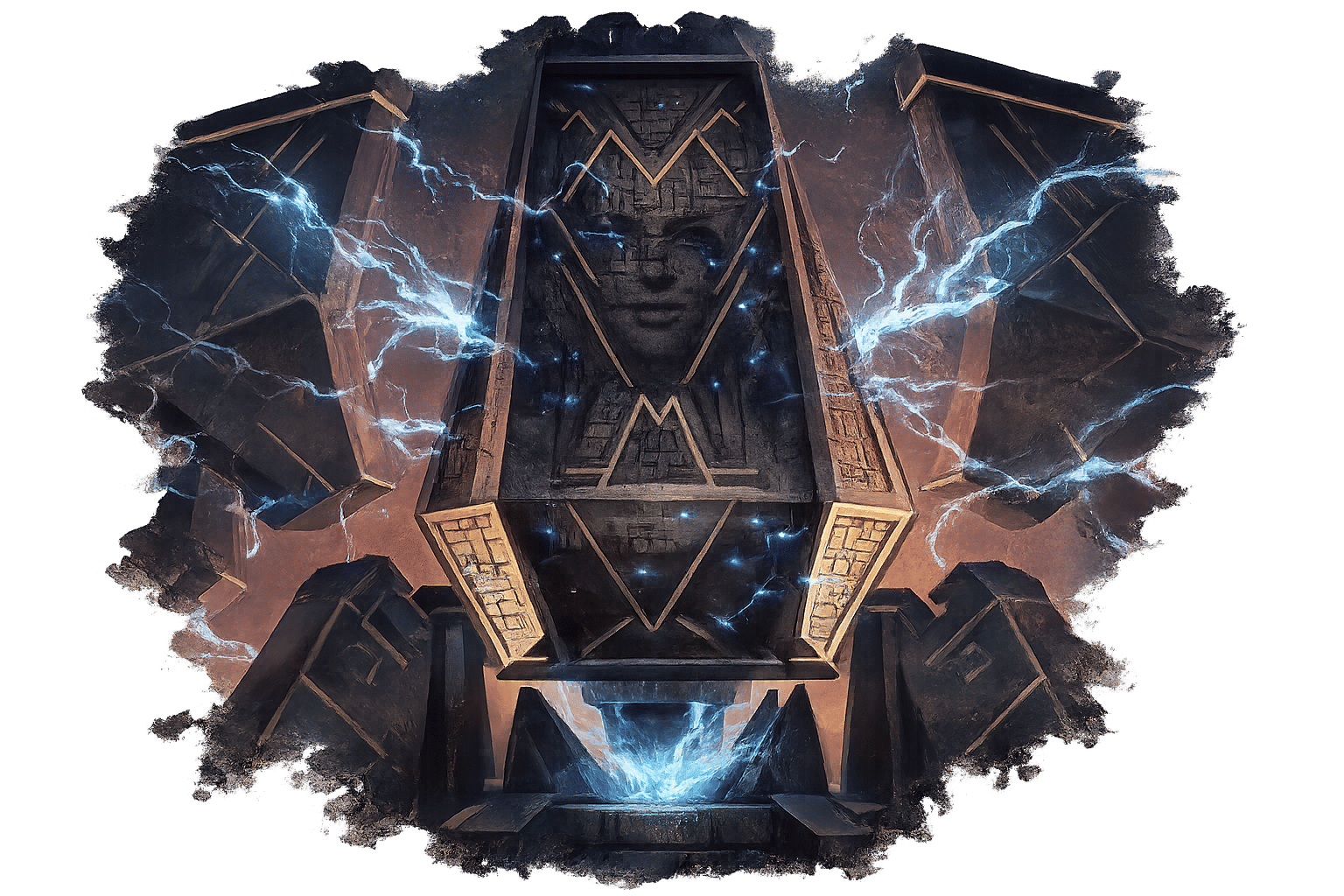
The boss stands inside a ring of broken generators. Lightning crawls between the machines and forms a full-body barrier around them, causing melee weapons to spark and recoil before they make contact. Two generators remain active, feeding power into the shield. To break the barrier, players must complete both steps:
-
Destabilise the Generators: At least two generators must be damaged, deactivated, or overloaded. Each generator has AC 14 and 25 hit points, or can be disabled with a DC 15 Arcana, Investigation, or Tinker’s Tools check.
-
Ground the Barrier: Once the generators are destabilised, the barrier must be grounded before it collapses. This can be done by driving metal into the floor, connecting the boss to a metal structure, flooding the area with water, or using lightning damage against one of the damaged generators.
Barrier Modifiers
Barrier Modifiers can be applied to the barriers you create. Instead of being more static, they can now interact more with the players. You could trap players, affect their actions, or harm them. With these additions, it can allow for more unique bosses with barriers, forcing players to engage more. How they interact can either make the barrier easier or more difficult.
1. Restrictive Modifier
Restrictive Modifiers are used to trap or isolate player/s, creating more battlefield control for bosses and their allies to gain an advantage over players. The barriers can form around a player or multiple players. A creature being targeted must make a Dexterity saving throw to avoid being trapped. If trapped players need to find a way to turn off the barriers through the usual methods.
Zi-Chin’s Tip:
These barriers should always be on a 2 or 3-round timer, and can be easy to break, so players trapped are not forced to miss all turns.
Restrictive Modifier Examples
| Origin | Example Boss | Clues |
|---|---|---|
| Reactive Origin | The boss slams a crude stone-and-gem staff into the ground. Vines erupt, forming a full-body barrier around a player. The target makes a Dexterity save or becomes trapped, repeating the save at the start of each turn. | The players have multiple ways to free their ally: they can use raw strength to stop the vines, use fire to burn them, or teleport the player out of the vines. |
| Spell-Based Origin | The boss chants as sigils flare. Energy coils around a player, forming a 10 ft triangle. The target makes a Dexterity save or is sealed inside (can still move within the area); on a success, they avoid it. | A trapped player can break the sigils, cast dispel magic, or teleport out. Allies can pressure the boss with heavy damage to disrupt concentration. In some cases, the barrier can buy the player time to heal before rejoining the fight. |
| Support Origin | The boss commands his three chanting apprentices, who fire beams of black light at three players. Each target makes a Dexterity save or is trapped in a full-body barrier; on a success, they dodge. At the start of their turn, trapped players can make a Constitution save to use both an action and bonus action that turn. | Failed targets remain trapped while in the apprentices’ line of sight unless they break the barrier or line of sight. Allies can free them by killing an apprentice, casting darkness, or blocking the beams with terrain. |
| Shield Generator Origin | The boss pulls a lever, revealing skulls that focus on the battlefield’s centre. Creatures within 30 ft must make a Dexterity save or be trapped in a 30 ft spherical barrier; on a success, they escape the area in time. | Players can block the skulls’ light to disable the barrier. They can uss spells like shatter the skulls, or freeze the skulls eyes. Teleportation also works, and multiple solutions should be possible. |

2. Disruptive Modifiers
Disruptive Modifiers disrupt player actions when they come into contact with them. Certain effects can occur, like pushing creatures away when they first enter the barrier, reducing movement, applying disadvantage to attacks, or dealing ongoing damage while inside the area. These barriers trigger in response to player behaviour, forcing them to adjust how they approach the fight. The barrier helps challenge standard actions and positioning without fully preventing players from acting.
Zi-Chin’s Tip:
Use disruptive effects to make players think, reposition, and take risks.
Disruptive Modifier Examples
| Origin | Example Boss | Clues |
|---|---|---|
| Reactive Origin | The players drop a building on the boss, the stone falling on top and crushing their body. Air begins to rush around the boss, and the stone bricks swirl in circles, slowly floating up. As they can, a small tornado of directional barriers floats around each turn. | A player who is hit by one makes a Dex save. On a fail, the player is pushed back 10 ft. and ranged attacks cannot go through the tornado. |
| Spell-Based Origin | The boss crosses his arms as runes appear along them. As he separates them, he gains a front directional barrier. The barrier emits a bright light. | Any player within 30 ft in front of the barrier has disadvantage on checks that require sight. |
| Support Origin | Water elementals surge forward, forming a swirling sphere of water around the boss that spills outward at the edges. Players who fight too close are caught in the churning current, gasping and disoriented. | If a player enters the barrier, they become submerged in water. Normal water d&d effects occur, and if they take more than 20 damage, they need to make a Constitution check to see if they begin drowning. |
| Shield Generator Origin | The boss traces symbols on the ground as the mud shifts, revealing a coffin. In the dirt below, a poison circle barrier appears around the boss. The poison lingers on the ground, eating at the vines, slowly disintegrating everything it touches. | For each turn, the players stay inside the barrier, their weapons and armour temporarily gain -1 (stacking to -5) as the acidic elements corrode their items. Resets on a long rest. |

3. Volatile Modifier
Volatile Modifiers cause barriers to build unstable energy when players interact with them in certain ways. Instead of simply blocking damage, the barrier stores pressure, heat, force, sound, or magic until it releases in a dangerous burst. Volatility can be tracked in two simple ways.
The first option is Volatility Points. Each time the barrier is struck by the triggering damage type, spell, or action, it gains 1 Volatility Point. When it reaches 3 points, it releases its stored effect at the end of the boss’s next turn, then resets to 0.
The second option is Stored Damage. The barrier stores damage from a specific source, such as fire, thunder, cold, or lightning. At the end of the boss’s next turn, it releases that stored damage as an explosion, beam, shockwave, or targeted strike.
Use Volatility Points when you want easy tracking. Use Stored Damage when you want the players’ choices to directly affect the danger of the release.
Zi-Chin’s Tip:
Track the energy clearly. Whether it’s shards growing, light intensifying, or sound building, players should be able to sense how close the barrier is to releasing the energy.
Volatile Modifier Examples
| Origin | Example Boss | Clues |
|---|---|---|
| Reactive Origin | As the boss creates a full-body ice shield, if the players hit the creature with water or cold damage, the ice gets small shards on the outside, and the more they are hit, the more those shards grow and shake rapidly. | At the end of the boss’s turn, the shards detonate, and the damage is the amount of water it was hit by and cold damage is applied. Creatures within a 15-foot sphere must make a Dexterity saving throw. On a fail, take full damage; on a success, take half. |
| Spell-Based Origin | The boss opens a book and starts reading aloud as a front directional barrier forms. The barrier stands before the boss, protecting them. When the players attack the barrier, it wobbles and shakes violently. | At the end of the boss’s turn, shiny walls are launched from the barrier, targeting players who last attacked that square of the barrier. Creatures targeted must make a Dexterity saving throw. On a fail, they are pushed back 15 ft and take 2d6 force damage, and on a success, they stay where they are and take half damage. |
| Support Origin | Four elemental minions form together, creating a barrier out of fire, water, air and earth. These elements matter. If the player strikes it wrong, they have dire consequences. | If the player hits fire with fire or thunder damage, a mini explosion happens. If they hit the air side of the barrier with thunder damage, a shockwave knocks them down and deals 1d10 damage. |
| Shield Generator Origin | A nearby construct jumps in front of the boss, absorbing all the damage the boss was meant to take. The construct latches onto the boss, providing a full-body barrier. | If the players hit the construct with lightning damage, they charge the construct up, and they shoot the lightning back at the player who targeted it. |



Boss Examples
The following boss encounters are designed to showcase how barrier mechanics can enrich a fight both narratively and mechanically. Each example highlights different barriers, while tying them into the emotional arc or environmental themes of the boss. Use these encounters as inspiration, templates, or drop-in enemies to reinforce how barriers can transform a standard slugfest into a cinematic, puzzle-laced encounter.
Thraxis the Betrayed
(Time-Based and Susceptibility Barrier)
Trigger Event:
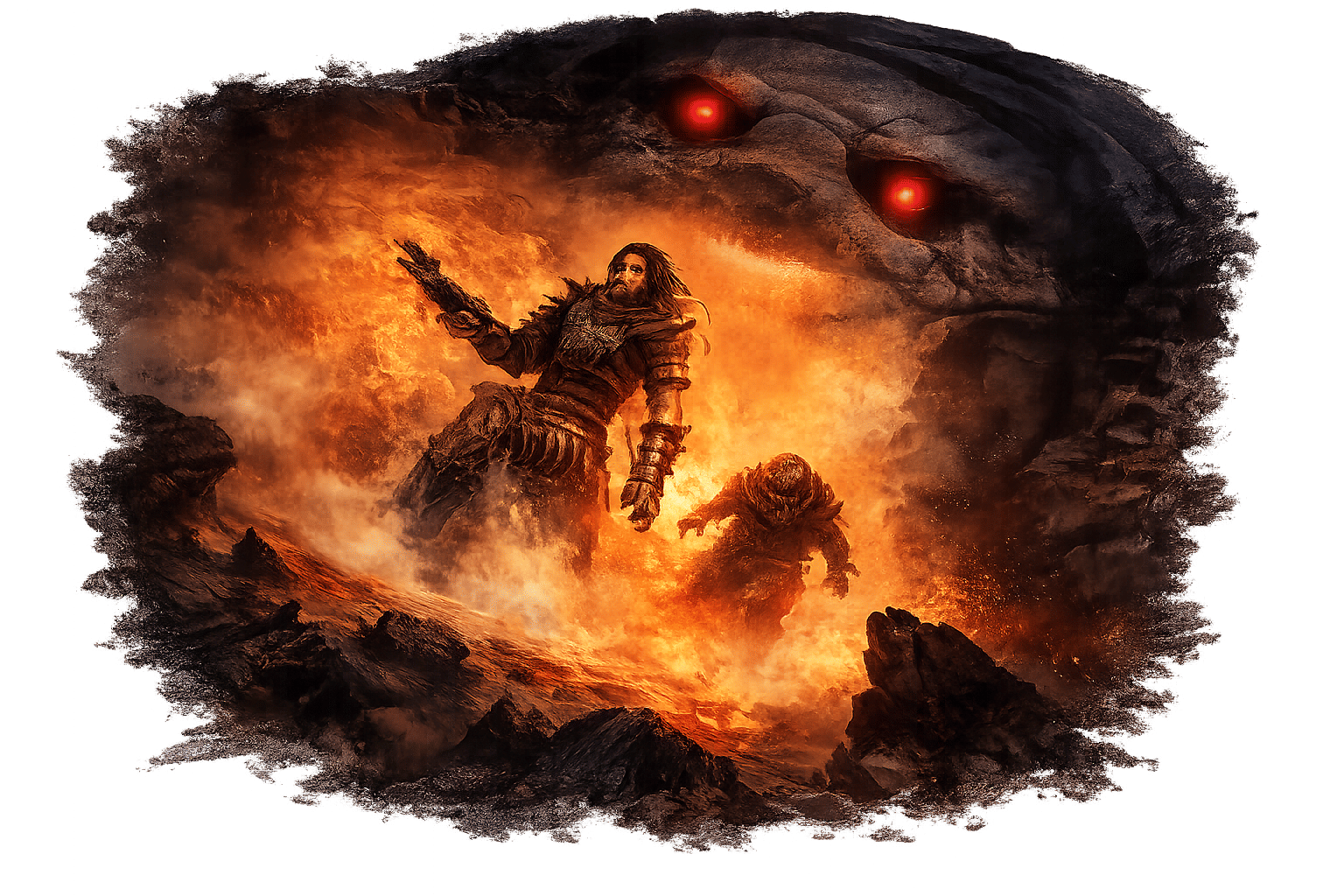
As the players land a devastating blow to the mechanical body of Thraxis, the runes etched across its frame begin to glow a searing orange. The molten sludge coursing through its metal veins now resembles lava, dripping onto the earth and scorching the grass beneath its hooves. Waves of intense heat ripple outward, and the party watches in horror as arrows melt mid-air before striking their mark.
Barrier Activation: Reactive Origin
A full body of molten radiates outward, creating a barrier. The heat is so intense that ranged attacks like arrows melt before reaching its metal hide. Melee attackers are slowed down due to the intense heat.
- Duration: 5 Rounds
- HP of Barrier: 85 hit points max. At 50 hit points, it begins to crack, and at 20 hit points, it partly breaks and parts of it drop to the ground (replacing its damage immunities with resistance to all but cold and psychic damage).
- Immunity: Thraxis is immune to all damage types during this phase except cold and psychic damage.

Environmental Weakness: Water Susceptibility Thraxis’ molten shield can be deactivated early if players use the environment tactically. In the fight there is a large lake and small pools of water which when submerged in affect Thraxis’ barrier.
Barrier Mechanics
| Water Type | Effect on Shield |
|---|---|
| Water Spell (e.g create or destroy water) | If a water spell is used and covers more than half their body then they are resistant to all damage except cold and psychic until the start of Thraxis’ next turn. |
| Small Body of Water | If Thraxis is pushed into small pools of water then they are no longer immune to all damage until their next turn. |
| Large Body of Water | When Thraxis is fully submerged within a large body of water the molten barrier is immediately extinguished. Thraxis loses all protection from the shield. |
Narrative Impact:
Thraxis was not always a monster. Bound by an ancient curse, his mechanical body bears green runes that pulse with necrotic restraint, constant reminders that he is not in control. In moments of pure emotion, particularly fury, those runes shift violently from cursed green to furious orange as Thraxis momentarily overrides the curse, driven by anger in battle.
The barrier surrounding him is not simply magical; it is the embodiment of his rage-fueled autonomy. In forcing control through a destructive emotion, Thraxis becomes a blazing inferno. The searing heat melts arrows, scorches the earth, and leaves a lifeless path in his wake.

Optional Modifiers: Thraxis
For Thraxis, you can add any of the below modifiers you wish to increase the difficulty of the fight for the players. The modifiers are focused on pure heat, taking over the player's mind and weakening their soul.
Restrictive Modifier: Soul-Heat Prison
Thraxis stares into one player’s soul, forcing their hidden guilt, fear, or burden to become physical. Heat gathers around the player as their body grows heavier and harder to move. The target must make a DC 15 Wisdom saving throw. On a failure, they are trapped inside a full-body heat barrier and cannot move. On a success, they are able to push through the heat.
At the start of each of the trapped player’s turns, they may repeat the saving throw. Other players can free the trapped player by weakening the barrier with water. They can throw water onto the barrier or use cold damage.
Disruptive Modifier: Crushing Heat
The heat around Thraxis becomes unbearable. Any creature within 10 ft. of Thraxis suffers a -2 penalty to attack rolls as sweat, dehydration, and burning air weaken the player's focus.
Volatile Modifier: Inferno Backlash
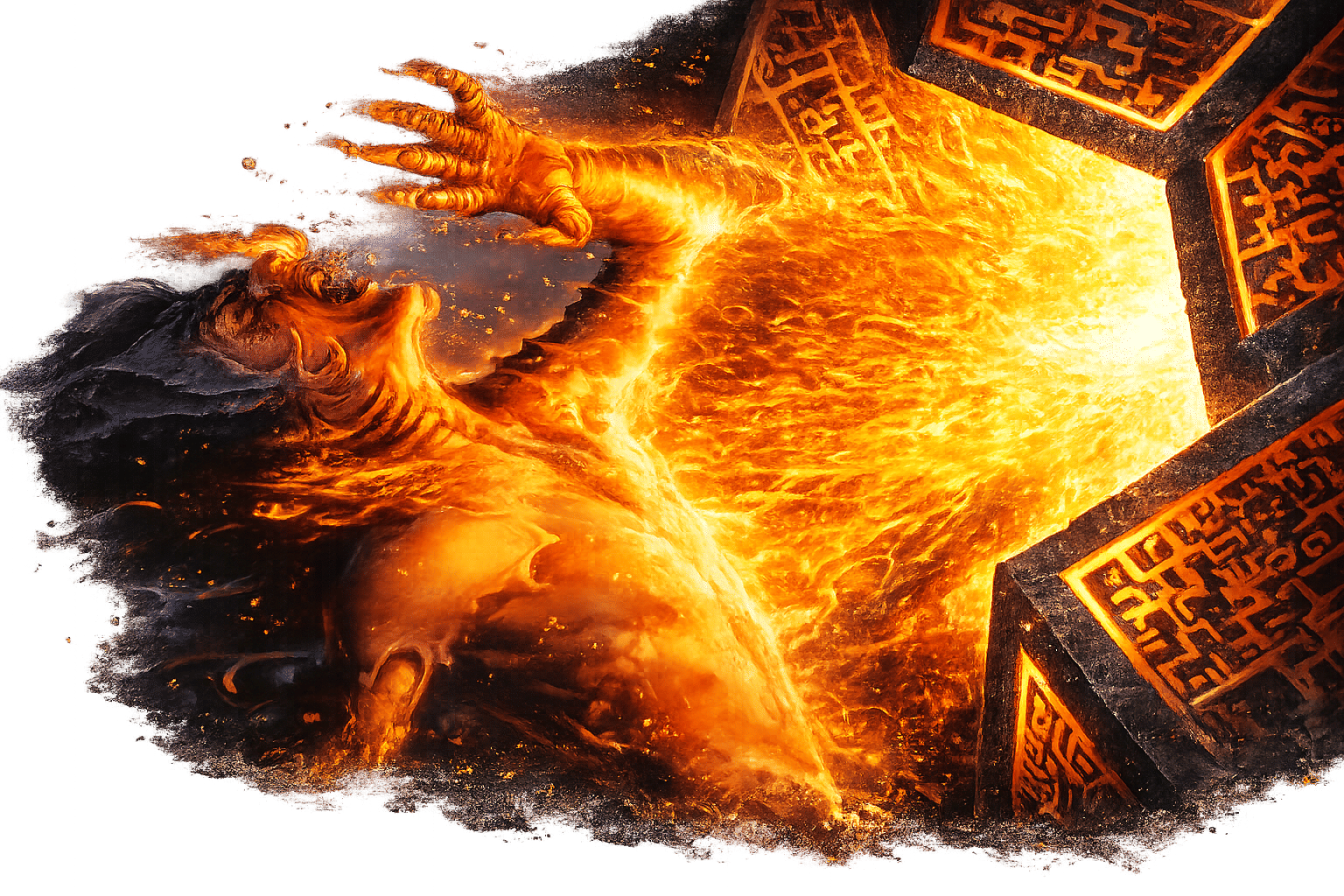
When Thraxis is hit with fire or thunder damage, the attack fuels the inferno inside his molten barrier. At the end of Thraxis’s next turn, the stored damage explodes outward from his body. Each creature within 15 ft. of Thraxis must make a DC 15 Dexterity saving throw. On a failed save, the creature takes damage equal to the fire or thunder damage stored and is pushed 10 ft. away. On a success, the creature takes half damage and is not pushed.
Gorath Bloodhorn
(Susceptibility & Objective)
Trigger Event:
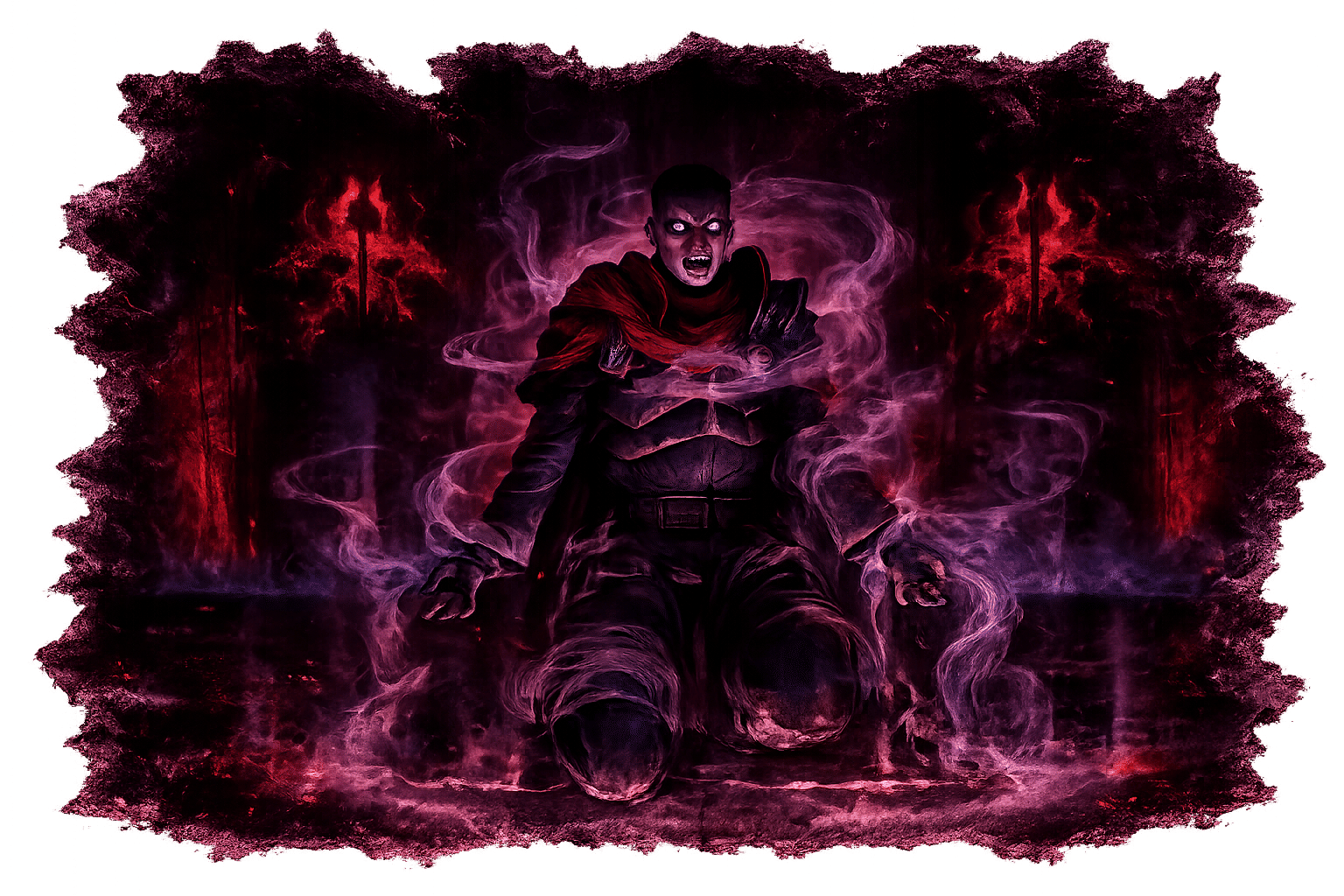
As the players defeat the last of his loyal soldiers, the Minotaur Commander collapses to one knee among the corpses of his kin. He surveys the battlefield, a single tear streaking through soot and blood. The orb in his left hand, lodged deep within his flesh, it glows violet and hums violently.
Veins of purple energy crack across his arm and begin spreading into his body. His breathing becomes erratic. With one final twitch of his fingers, lightning bursts forth from his palm, draining the life force of every remaining minion around him. Their bodies shrivel, and shadows of their souls are drawn into the orb.
Suddenly, a maelstrom of black and violet smoke explodes around him. Within the haze, a monstrous silhouette takes form, a monstrous version of the Minotaur, fused with void energy and warped by grief. The chamber rumbles. A final roar tears through the space before the smoke collapses inward, violently flinging players back as the Minotaur vanishes, leaving behind a trail of scorched footsteps and a cracked floor leading deeper into the lair.
Barrier Activation: Reactive Origin
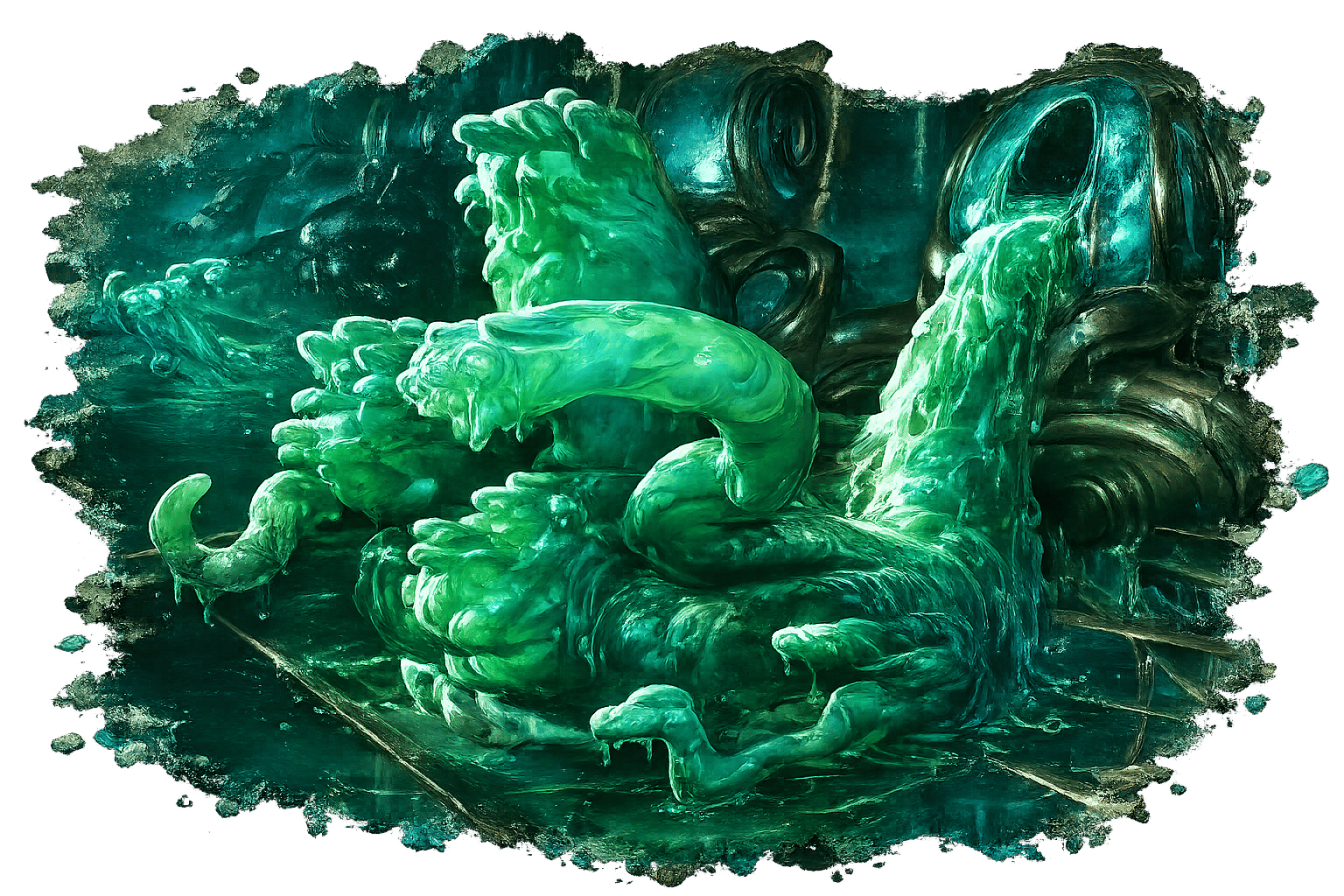
The Minotaur now bears a semi-liquid black-and-purple barrier swirling like sentient ooze across his body. The orb remains embedded in his left hand, still flickering with the stolen souls.
- Trigger Spell: Whenever the Minotaur casts his level 5 Vampiric Touch Spell, he absorbs life energy from a player. The spell works as normal, yet he also gains a barrier of HP equal to the amount of necrotic damage dealt, forming a stronger ooze shield.
- **Shield HP Cap:**60
- Resistance: The shield has resistance to all damage it isn’t immune to or vulnerable to, as explained in the table below.
- Effect Duration: Lasts until the shield is destroyed.

Type of Barrier:
Depending on the race or element of the player whose life energy was absorbed, the shield morphs, gaining new elemental immunities and vulnerabilities.
Barrier Mechanics
| Drained Player Race | New Immunity + New Vulnerability |
|---|---|
| Dragonborn (Lightning) | Immunity to Lightning + Vulnerable to Thunder |
| Fire Genasi | Immunity to Fire + Vulnerable to Cold |
| Sea Elf/Water Genasi | Immunity to Water + Vulnerable to Fire |
| Human/Dwarf/Elf | Immunity to non-magical slashing/peircing/bludgeoning damage + Vulnerable to Force Damage |
Narrative impact: the semi-liquid black and purple barrier that moves along the minotaur's body gains new colours if the minotaur uses the life absorption on elemental races.
Barrier Weakness:
The most effective way to shut down the Minotaur’s shield is to target the corrupted orb embedded in his left hand. This orb is the source of his power and the engine behind the Life Leech ability. A good hint for players to notice this is that the semi-liquid swirls around the orb, and once the barrier is activated, it comes to life.
Players who notice can either disarm it mid-combat or use magic to counter the spell. If the players want to remove the orb from his hand, they can make an ability check (DC 17), either athletics to overpower or slight of hand for stealthily take it. If successful Gorath can no longer gain a barrier, and he takes 3d10 psychic damage.
Optional Modifiers: Gorath
For Gorath, his modifiers are focused primarily on attacking. He can force someone into a confined duel within his barrier, which can be used to either show that he wants a challenging warrior or he is being tactical and using it against a weaker opponent. His goo can also attack the players back when they use the wrong element type.
Restrictive Modifier: Duel Sphere
When Gorath’s barrier would activate, he may instead form a 15 ft. sphere barrier around himself and one player. The targeted player may make a DC 15 Dexterity saving throw to dodge out of the forming sphere. On a failure, they are trapped inside with Gorath. On a success, they manage to get out of the area. The barrier can be destroyed the same way as Gorath’s normal barrier.
Disruptive Modifier: Living Goo Guard
When Gorath’s barrier is active, the elemental goo darts around his body, acting like a living shield. Gorath gains +2 AC while the barrier remains active.
Volatile Modifier: Elemental Retaliation
When Gorath’s barrier is active, if a player strikes it with the same element the goo is currently made from, the goo lashes back at them. Using the following stats:
- For Melee Weapon Attack, the goo becomes a hammer. Goo Strike: +7 to hit, 5 ft., one target. Damage: 2d10+4 damage.
- For Ranged Weapon Attack, the goo shoots out several darts. Goo Strike: +7 to hit, 10/40 ft., one target. Damage: 4d4+4 damage.
Welcome to the first enhanced boss battle from Zi Chin’s Guide to Epic Fights! This series is dedicated to dynamic, cinematic encounters that push players and Dungeon Masters alike to think creatively.
Artist Credits:
- Page 1: Xabi Gaztelua – Infantry Shield
- Page 2: Simon Dominic – Pond Prophet
- Page 4: Nicholas Gregory – Grief
- Page 5: Yohann Schepacz – Ephemeral Shields
- Page 6: Willian Murai – Reflector Mage
- Page 8: Tomasz Jedruszek – Dismantling Blow
- Page 9: Borja Pindado – Galvanic Giant
- Page 10: Svetlin Velinov – Anger
- Page 11: Rudy Siswanto – Moraug, Fury of Akoum
- Page 13: Wesley Burt - Stonewright
- Page 14: Jake Murray – Stoneskin
- Page 14: Colin Boyer – Lithoform Engine
- Page 15: Michael Phillippi – Trapped in the Screen
- Page 16: Magali Villeneuve – Wind Strider
- Page 17: Aaron J. Riley – Wingshield Agent
- Page 18: Victor Adame Minguez – Ajani, Adversary of Tyrants
- Page 19: Lie Setiawan – Ox of Agonas
- Page 20: Philip Straub – Inferno Trap
- Page 20: Franz Vohwinkel – Runeflare Trap
- Page 21: Pablo Mendoza – The Darkness Crystal
- Page 21: Domenico Cava – Soul Enervation
- Page 22: Lake Hurwitz – Biogenic Ooze
You'll also find exclusive maps and upcoming expansions on Patreon.
Team Credits
- Michael Cheeseman — Lead Designer
- Alex Deery — Editor-in-Chief
- Karl Corallo — Artist (Footer, Background, and Zi-Chin's Tip Art)
- Finn McClusky — Master Coder
- Jimmy Beaton — Quality Assurance
- Wren Boulton — Quality Assurance
- Noah — Quality Assurance