


Interactive Environment
What are Interactive Environment?
Interactive Scenery transforms static maps into living environments that players can alter, destroy, weaponise, or manipulate during combat and exploration.
Rather than fighting on a battlefield that simply exists as a backdrop, players are encouraged to engage with their surroundings by collapsing structures, triggering hazards, uncovering hidden opportunities, and using the terrain itself to gain an advantage.
Why add Interactive Environment?
It helps make players to think beyond their character sheets and engage directly with the world around them. By having players think of fun ways to use the environment it rewards creatifity, team work and creates memorable moments.
What This Guide Covers
This guide provides tools for turning ordinary battle maps into engaging environments filled with opportunities for player interaction through three different types of Interactive Environment:
- Passive Objects — Terrain features that provide static benefits or penalties.
- Interactive Objects — Movable or destructible props that players (or enemies) can manipulate.
- Interactive Scenery — Large-scale terrain elements that can reshape the battlefield itself.
Troll Encounter
| Beginning of the Fight |
|---|
| The players are searching for an ancient ruin hidden deep within a cave system when they are ambushed by a Troll. |
| Passive Objects |
|---|
| The troll swings its massive club toward the rogue, but the rogue quickly slips between a narrow passage of rock. The confined space restricts the troll's reach, causing the attack to miss entirely. |
| The passage way provided half cover to the rogue |
| Interactive Environment |
|---|
| As the troll stumbles forward, the fighter sees an opening and charges into the creature, knocking it backwards onto a cluster of sharp stalagmites. |
| The troll took 2d6+strength modifier from the shove into the stalagmites, and is prone allowing others a chance to have advantage against the troll |
| Middle of the Fight |
|---|
| Despite the injury, the troll continues fighting and the battle begins to turn against the party. Resources are running low and the creature shows little sign of slowing down. |
| Interactive Scenery |
|---|
| The wizard and warlock focus their attention on a damaged section of the cave ceiling above the troll. Combining their magic, they bring down part of the cavern, causing massive boulders to crash onto the troll. |
| The troll took 4d6 bludgeoning damage for every tile they have under the collapsed area. |
| Beginning of the Fight |
|---|
| The players barely escaped the collapsing terrain but have managed to kill the troll. |

Terrain Creation
What to add to the world
Each map should have four components considered to make it feel alive and fun. By defining how players can use the environment before combat, see what already exists (passive objects), see what can be used to their advantage (interactive objects), and what they can use to cause chaos and help win the fight better (interactive scenery).
Components
| Component | Description |
|---|---|
| Before Combat | Think about what can players learn, prepare, move, sabotage, or set up before initiative? |
| Passive Objects | What areas naturally affect movement, stealth, attacks, saves, or cover? |
| Interactive Objects | What small props can players grab, break, throw, flip, ignite, or manipulate? |
| Interactive Scenery | What major terrain feature can reshape the whole fight if used well? |
Before Combat
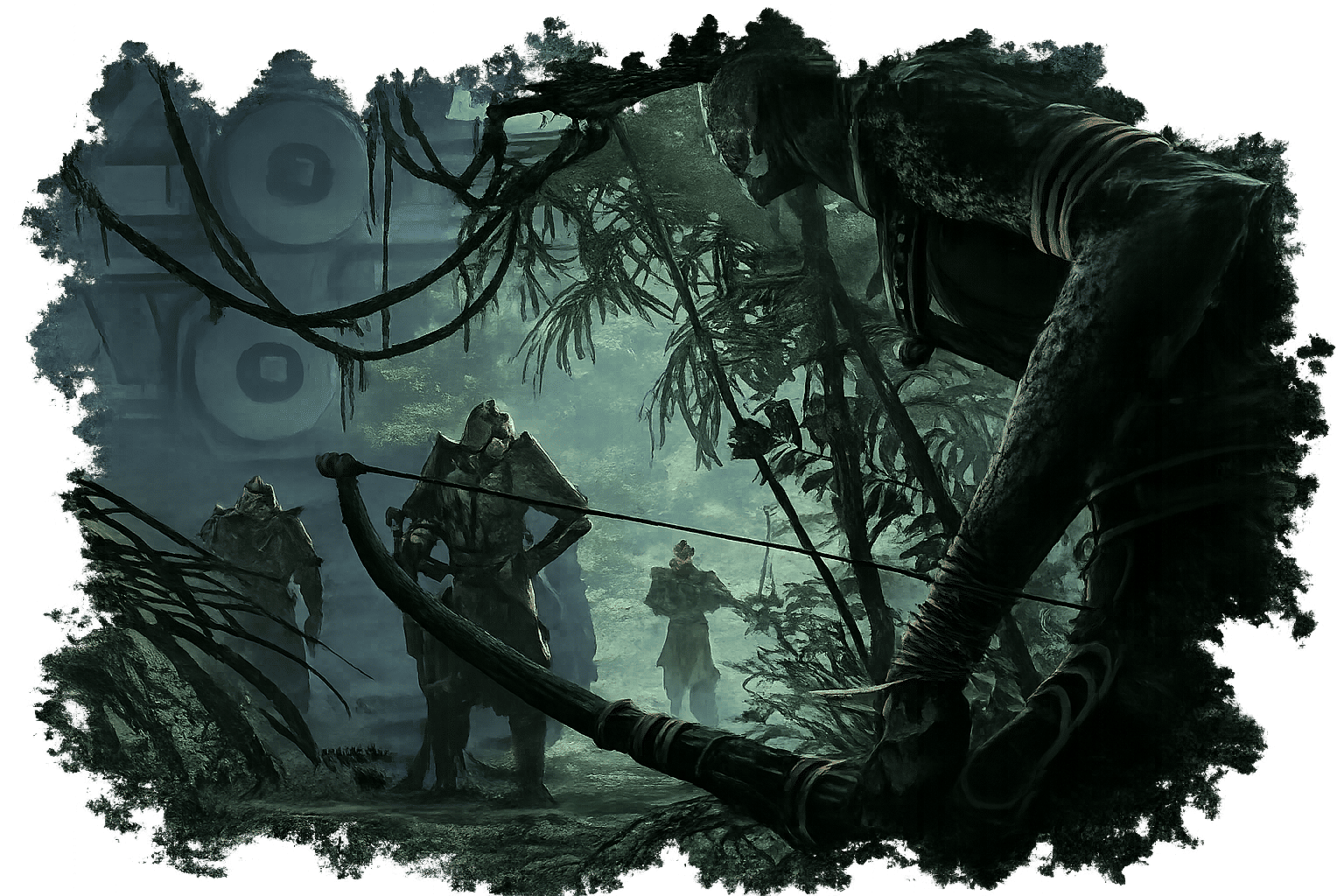
Not every battle begins the moment initiative is rolled. Sometimes, the most important part of the fight happens before the first attack is even made. Players can scout or prepare the environment depending on the type of encounter you are running, if they have to sneak into an encampment they can scout and prepare their own traps inside, or if they have to protect an object or building they can prepare the environment before and create distractions or funnel enemies one way into a trap.
Scout the Environment
Allow players to scout the environment, prepare traps, reposition objects, and plan ambushes before combat begins. This helps make stealth, infiltration, and ambush missions feel more tactical and rewarding while encouraging players to think about the battlefield itself rather than only their abilities.
Prepare the Environment
Players can prepare the environment before combat, allowing them to set up traps, block pathways, create distractions, or learn about interactive scenery. Each character who takes the time to observe the battlefield can do it by describing how they use a skill check and beating the DC’s for finding the objects (explained in each section).
There are clear benefits to players meaningfully engaging with the environment before combat. Once per character, a meaningful environmental preparation before combat may award 2 Morale, provided it creates a clear tactical advantage or risk. By allowing players to use the environment before a fight, they gain an advantage both on the battlefield and in Morale Points.
Zi-Chin's Tip
When using this in stealth, it becomes more dynamic as using vines to scale or rocks to distract can help gain points.



Passive Objects
Passive objects are elements of the battlefield that provide continuous bonuses or penalties depending on where creatures are positioned. These don't require active input; they simply affect creatures based on proximity or positioning. They help shape the battlefield naturally.
They shape the battlefield through static presence. The effects could include:
- Granting cover or concealment
- Slowing movement
- Creating slippery footing
- Enhancing stealth or weakening attacks
DM Implementation Tips
- Have a separate version of the battle map with colour-coded zones showing where each passive object is located.
- Keep it simple—limit to 4–5 passive object zones per map to avoid slowing gameplay.
- Let players roll Perception or Survival as a bonus action to spot beneficial or hazardous zones.
- Don’t overcomplicate. Use these as tools to add immersion, not extra mental load.
Below are some ways you may implement passive objects on your battlefield.
Zi-Chin's Tip
Let players use Passive Object zones tactically. For example, they may bait enemies into mud or use clumped trees for defence. This shapes encounters, adds tension, and rewards clever thinking.

Passive Object Examples
| D8 | Object Type | Effect |
|---|---|---|
| 1 | Clumped Trees | Grants half cover for any creatures within the trees. |
| 2 | Tall Grass | Advantage on Stealth; Creatures make ranged attacks with Disadvantage while inside the area. |
| 3 | Ice | –2 Dex saves; Moving more than 10ft through ice has a chance to knock characters prone. |
| 4 | Smoke/Fog | Disadvantage on Perception and ranged attack rolls while inside the cloud, but gain half cover from outside attacks. |
| 5 | Muddy Ground | –5ft. speed; Upon starting their turn in the area, a creature must succeed on a DC 10 Dex save or have their movement speed reduced by an additional 10ft. |
| 6 | Rubble | –2 Dex saves, standing up from prone takes an additional 5ft of movement. |
| 7 | Bright Light | Direct sunlight or bright torchlight imposes Disadvantage on Stealth within 10 ft. |
| 8 | Shallow Water | Half cover against ranged attacks if prone; vulnerable to freezing effects. |

Interactive Objects
An interactive object is any small, movable, or destructible element within the environment that players can manipulate during combat or exploration. These interactions often involve quick actions or skill checks, offering tactical advantages or disrupting enemy plans.
There are three ways to use Interactive Objects:
- General Use — Anyone can use them (flip a table, throw a chair, cut a rope).
- Class-Specific Use — Certain classes can push harder by spending resources to interact in unique ways (e.g., monks parkouring, druids animating vines).
- Multiple Players - Multiple players can use an object to more easily pass a DC or increase the reward from using it.
Zi-Chin's Tip
Treat the environment as a participant in combat. Ask yourself: “What could players grab, knock over, or destroy here?”
1. General Use
These interactions are available to any character, regardless of class. Whether it’s toppling a bookcase, throwing a barrel, or wrapping someone in a carpet, if it’s in the scene, it can be used creatively.
The following table is here to provide quick inspiration for how to incorporate General Use items into your game.
Zi-Chin's Tip
Use these as inspiration. Let players invent their own. Say “yes” often, and use checks to moderate success.

General Use Object Examples
| D8 | Object Type | Example Use |
|---|---|---|
| 1 | Chair | Action: Smash into an enemy for 1d6 bludgeoning. On a hit from behind, the target must succeed on a DC 13 Strength save or be knocked prone. |
| 2 | Table | Action: Flip to create half cover. Larger tables may block a 10-ft line of movement. |
| 3 | Bookshelf | Action: Tip to create a barrier or crush enemies in a line. Targets make a DC 13 Dexterity save or take 2d6 bludgeoning. |
| 4 | Curtain/Tapestry | Bonus Action: Cut loose from the wall. Action: can attempt to wrap a creature in the curtain; the target must make a DC 12 Strength saving throw to break free, or they will be restrained. |
| 5 | books | Bonus Action: Scatter across the floor. The area (10 ft square) becomes difficult terrain until cleared. |
| 6 | Lever | Bonus Action: Activate a trapdoor, portcullis, hidden mechanism, or pre-planned hazard. |
| 7 | Lantern | Action: Smash to ignite oil or flammable material. Starts a 5-ft radius flame that spreads 1d6 feet per round. |
| 8 | Bottles/Crockery | Bonus Action: Break and use as an improvised weapon (1d4 slashing). On a critical hit or if the target is unarmoured, they takes an extra 1d4 damage per turn until healed. |
2. Class-Specific Object Use
Some classes can push their fantasy further by spending resources to manipulate the environment in unique ways. The cost might be a spell slot, Ki/Focus point, Rage, Superiority Die, Channel Divinity, or simply their Action.
Below are just some examples, but let the players take charge and come up with fun ideas for their class identity and let them really get into their class fantasy.

Running Interactive Objects as a DM
Let players be creative with the environment. Use the Rule of Cool, but balance it with the cost of extra actions, resource spend, or trade-offs.
Tips:
- Encourage players to describe cool ideas, then work with them to find fair mechanics.
- Reward creative thinking with small boons (advantage, temporary cover, reduced damage).
- Add risks if they’re reaching far—maybe a skill check, or using a higher-level resource.
Class-Specific Object Use Examples
| Class | Example Use |
|---|---|
| Druid & Vines | Spotting hanging vines, the druid expends a 1st-level spell slot to animate them, sealing off a passage and forcing enemies to funnel through another path. |
| Monk & Acrobatics | Spending 1 Ki point, the monk kicks an enemy and uses it to boost their jumping distance to traverse higher up on the battlefield. |
| Barbarian & Door Shield | Dropping their Rage, the barbarian rips a metal door from its hinges and braces against a dragon’s breath, reducing damage to allies behind them. |
| Paladin & Sacred Ground | Using Channel Divinity, the paladin sanctifies a ruined altar, granting allies within 10 ft advantage on Wisdom saves while they stand near it. |
| Rogue & Chandeliers | Spending Cunning Action, the rogue swings across the battlefield from a chandelier, without provoking opportunity attacks, and if they attack a creature as they land, they can add a d6 to the damage. |
| Wizard & Arcane Interference | Casting a spell into an unstable glyph carved into the scenery, the wizard redirects it, altering the battlefield in unpredictable ways. |
| Bard & Tanning Rack | When you use bardic inspiration you can also use a spell slot to have anyone within 15 feet of the tanning rack also get the bardic inspiration. |
| Fighter & Versatility | Sacrificing their bonus action, the fighter quickly adjusts to an unfamiliar weapon or improvised weapon, gaining proficiency until the end of their next turn as they spot the perfect opening for a decisive strike. |
3. Multi-Person Use
Some Interactive Objects may require two or more characters to use effectively. These objects are often larger, heavier, or more dangerous to manipulate alone. Multi-Person objects can apply to both General Use Objects and Class-Specific Use Objects. This allows players to work together to create more effective use of the environment.
When two or more characters work together to use the same Interactive Object, the DM can improve the result in one of four ways:
- Reduce the DC by 2–5,
- Increase the area or number of targets affected,
- Increase the damage or condition inflicted, or
- Reduce the risk of failure.
For these bonuses to happen, characters helping the main character need to explain how they help, and the DM provides them with what resource they have to spend (Action, Bonus Action, Reaction, Class Resource). Keeping the resource use in line with the rules from General Use and Class-Specific Uses.
Zi-Chin's Tip
Multi-Person Use works best when it makes players feel like they are physically wrestling with the battlefield. Let teamwork make objects feel heavier, louder, messier, and more dramatic.
These objects are still small in use and do not heavily alter the environment, yet they encourage teamwork and creativity. Players can manipulate the environment without help, but if another member sacrifices their action to help, the object's impact is enhanced.
General Use Examples
| Examples | Additional Effects |
|---|---|
| Two players lift and throw a boulder | The DC drops from 15 to 12. On a hit, the boulder deals increased damage and may knock the target prone. |
| Two players shove a bookcase down | The bookcase can block a doorway fully instead of partially. Creatures behind it gain full cover until it is destroyed or moved. |
| Three players drag a statue into place | The statue blocks a 10-ft-wide passage, creating a chokepoint. Moving it alone would be impossible during combat. |
| Four players overturn a banquet table | The table becomes three-quarters covered instead of half covered and can protect multiple adjacent creatures. |
Class-Specific Object Use Examples
| Examples | Additional Effects |
|---|---|
| A druid animates vines while a fighter pulls them tight. | The vines restrain a larger creature or restrain two smaller creatures instead of one. |
| A wizard freezes spilled water while a monk slides across it. | The monk moves up to their speed without provoking opportunity attacks and can make one attack at the end of the movement. |
| A barbarian lifts a broken gate while a rogue jams the mechanism. | The gate stays open or shut for 1 minute, creating a temporary route or letting reinforcements enter the battle. |
| A sorcerer ignites alchemical vapour while a ranger marks the safest path. | Allies who were warned have advantage on the saving throw, while enemies do not. |


Interactive Scenery
Interactive Scenery transforms static maps into living, breathing environments that can be altered, destroyed, weaponised, or controlled by players. These are physical features of the battlefield that reward creativity, teamwork, and problem-solving.
There are two types of interactive scenery:
-
Shatterpoint Elements: Features with a pool of hit points that can be broken or altered through damage (e.g., collapsing a wall, breaking a dam, toppling a tree). Striking the object's weak points can deal extra damage (e.g., the Load-Bearing section of the wall, redirecting water pressure in the dam, or striking the rotting area of the tree).
-
Intuitive Elements: Environment-based puzzles or hazards that respond to clever use of skills, abilities, or spells (e.g., unstable glyphs, complex machinery, volatile gas vents).
Finding Interactive Scenery
Interactive scenery features aren’t always obvious. To help players find them, there are two ways to help as the DM:
- Through the use of Passive Perception and Investigation
- Through the use of a bonus action
1. Passive Perception and Investigation
Observant or intelligent characters naturally notice details about the environment simply by moving through the battlefield.
Each Interactive Scenery feature has three discovery thresholds. When a creature moves within 30 feet, compare the relevant passive score to the thresholds below. Passive Perception is used for shatter points, and Passive Investigation is used for Intuitive Elements to beat.
The three information thresholds are:
- Something seems off: 12-13
- You can see what the scenery is: 14-15
- You know how it works: 16 or more.
Below is a chart to show what a player might notice depending on the score they have:
Shatterpoint Elements
| Threshold | Broken Cliff | Rotting Tree |
|---|---|---|
| 12-13 | Small rocks fall from the cliff when a medium-sized bird lands on it. | The tree leans and creaks loudly when a small gust of wind hits it. |
| 14-15 | A large crack runs from the top to the very loose stone in the middle. | The roots are mostly visible, rotting and crisp. |
| 16 or more | Multiple thunderous impacts from the middle and top of the cliff destroy it, causing it to crash to the ground below. | Pulling out the roots is a good way to bring the tree down. |
Intuitive Elements
| Threshold | Scratches on a wall | Arcane Pillar |
|---|---|---|
| 12-13 | Strange marks cover the wall. | The runes pulse with energy |
| 14-15 | The scratches were made by previous victims trying to mark safe and unsafe paths. | The runes react to elemental magic when players cast it nearby. |
| 16 or more | The scratches reveal the safest route through the room that avoids crossing any complete coloured line. | Certain elements may overload the pillar. |


Bonus Action
A character can use their Bonus Action to actively search for Interactive Scenery during combat. Unlike Passive Perception and Investigation, this represents a player intentionally studying the battlefield to look for weaknesses, hidden interactions, or ways to manipulate the environment.
Players may use Perception, Investigation, Arcana, Nature, Survival, or another appropriate skill, depending on the scenery and how they describe interacting with it.
The DC is typically 15, but it could be higher or lower depending on: how obvious the scenery use is, how much time the players have had before the fight, and how complex the usage is.
If the players succeed on the check, they learn what the scenery is, how it works, and its possible weaknesses and how they would impact the battlefield.
Below is a table to show what a player might notice when searching using a bonus action:
Interactive Scenery Searches
| D4 | Examples |
|---|---|
| 1 | A player studies cracks in a cliff to identify the best point for collapse. |
| 2 | A wizard analyses glowing runes to determine what element may overload them and has a good guess as to what could happen if overloaded. |
| 3 | A ranger examines animal tracks, noting how deep they are, and the cracks around them reveal that the ground will open with enough force applied. |
| 4 | A druid studies plants and identifies nearby poisonous spores. |
With both types of search, the system still works seamlessly in high-intensity combat, and players can search more effectively and understand the environment better if they take their time.
1. Shatterpoint Elements
When it comes to Shatterpoint Elements, they require the team to work together. A piece of scenery using this element is assigned a health pool that players can deal damage to either on their own or as a team.
While working in a team, the object's total health pool is reduced (Halved for each additional member beyond the initial attacker). They aren’t impossible to do solo, but are made much easier when in a team.
Readied Actions:
When using Readied Actions for a shatterpoint element, players can ready multiple attacks, but never more than their class normally allows. This means a player may strike once or twice during their turn, then hold any remaining attacks to participate in the interactive scenery. This rule ensures that higher-level characters with extra attacks can still contribute their full damage potential without sacrificing output by holding a single attack.
For Spellcasters, when they ready an action, it works differently as they must maintain focus before releasing their spell as part of the Synchronised Combination.
- When a spell is readied, the caster must make a Constitution saving throw (DC = 10 + Spell Level). If they fail the save, then the spell fails.
- If enemies notice the spell casting charging up a spell they can attempt to break the concentration with attacks, forcing the caster to make a Concentration saving throw as normal.
Additionally, spellcasters can use a readied action to half the hit points and to add a bonus to other players' attacks by looking for a weak point, or guiding a blade with the use of a Mage Hand.
By having both martial and magical readied action rules, it ensures both types of attacks are balanced.
Shatterpoint Elements track damage normally. However, teamwork can temporarily reduce the remaining hit point threshold for that round, halving the total health every time another player joins in on the combination. If the object is not destroyed by the end of the round, the temporary reduction ends, but any actual damage remains.
Residual damage:
Shatterpoint Elements are massive structures, meaning attacks against them may cause debris to break away even before the object is fully destroyed. Whenever a single attack deals 20 or more damage to a Shatterpoint Element, debris falls from the object. The debris travels in the direction of the attack or with gravity, depending on how the object is struck.
Examples below:
- If a cliff wall is struck from the side, debris flies outward from the point of impact.
- If a pillar is struck from above, debris crashes beneath it.
- If a tree is pushed toward creatures below, debris and branches fall in that direction.
Any creature within the debris area must make a DC 12 Dexterity Saving throw. On a success, the creature takes half damage and on a fail they take full damage. The damage dealt to the object determines the amount of falling debris created/damage output. Starting at 20 damage to the shatterpoint element, and for every 10 points over the 20 damage the number of die rolled is increased. At 20 damage the die rolled for each square the residual damage hits is 3d4, and for every 10 more damage another 3d4 is added.
- 20 to 29 = 3d4
- 30 to 39 = 6d4
- 40 to 49 = 9d4
- 50 to 59 = 12d4

The amount of damage is intended to represent falling rubble (e.g., collapsing stone, splinters, or tree branches) that comes crashing down onto creatures. Residual Damage helps make Shatterpoint Elements feel more dangerous and reactive even before they fully collapse. It also rewards players who position enemies near unstable scenery before attacking it.
General stats of objects:
| Party Level | Baseline Object AC | Weakpoint AC | Hit points | Save DC for object effects | Damage to the objects |
|---|---|---|---|---|---|
| Level 1 to 5 | 11-12 | 14-15 | 30 to 40 | 12-14 | 2d6-3d6 |
| Level 6 to 10 | 12-13 | 15-16 | 60 to 80 | 14-16 | 4d6-5d6 |
| Level 11 to 15 | 13-14 | 16-17 | 100 to 120 | 15-17 | 6d6-7d6 |
| Level 16 to 20 | 14-16 | 17-19 | 140 to 160 | 17-19 | 8d6-9d6 |
Example 1: Cracking the Dam Wall
- Stats: Armour Class 14, Hit Points 120.
- Weakpoint: Redirecting water towards the crack and any attack done deals an extra d6 damage.
- Effect of destruction: It floods part of the map, creating a rushing river. Any creature caught in the way must make a DC 15 Strength saving throw or be knocked prone and swept 20 feet downstream.
Example 2: Precarious Cliff Edge
- Stats: Armour Class 10, Hit Points 80.
- Weakpoint: A cracked, unstable section near the edge. A creature can identify the best spot to strike with a DC 14 Nature check. Once noticed, players can declare attacks against the weak point, which has an Armour Class of 14. Damage against the weak point is doubled. Additionally, any thunder damage dealt to the cliff is doubled.
- Effect of destruction: The edge collapses in a 20-ft line. Creatures below must make a DC 13 Dexterity saving throw. A target takes 3d6 bludgeoning and becomes restrained under rubble on a failed save, or half as much damage and is not restrained on a successful save.
Zi-Chin’s Tip:
When players are trying to break the object, if they fail to beat the hit points and are close (within 5 hit points), consider allowing them to sacrifice spells or class abilities to deal the last bit of damage to lead to a satisfying conclusion.
2. Intuitive Elements
Intuitive Elements require players to analyse the object and find a way to use it creatively. To do so, a character may spend a bonus action and attempt a skill check, usually tied to Intelligence or Wisdom.
These elements are designed to encourage teamwork, with different skills providing different insights, so that multiple characters can contribute to discovering how the object works.
These are designed to reward player creativity and problem-solving, but can slow combat down. To ensure intuitive elements are still practical and useful, either add exploration before combat or make them easier to decipher during combat.
- Exploration before combat: allows for clues to be partially hidden, have multiple skill checks, and players need to search the area.
- Deciphering during combat: clues are obvious, effects are easy to trigger, and it is clear how the scenery works.
Intuitive Element: Scratches on the wall
| Exploration before combat | Deciphering during combat |
|---|---|
| Notes describe safe paths through the room, noticing that they avoid all coloured tiles or lines on the ground. | Players notice weird lines on the ground, and when they interact with each colour, they encounter the same trap. |
| Players can find a book in the room which describes | The players get pushed back into the scratches, setting off 3 random traps. |
Below are more in-depth examples that you can use to help better understand how these mechanics work in-game:
Example 1: Arcane Conduit
- Object: They notice a stone pillar pulsing with energy, with runes along the sides running down the pillar.
- Skill Checks: Players can roll a DC 13 Arcana check to partially decipher the runes, which read “may the elements be with those who have mastered them.” The players may struggle to understand what this means, so they make a DC 14 history check to recall that the previous line is from an old tale of elemental sorcerers who were known for channelling their magic through objects.
- Object Ability: Different elements interact with the pillar in unique ways, such as: A druid who casts Call Lightning upon the pillar provides their allies additional lightning damage when using metal weapons. Or a sorcerer who casts Fireball at the pillar causes another, secondary explosion to occur around the pillar at the end of the turn.
Example 2: Alchemical Gas Vein
- Object: Bubbling, sulphuric crack emits faint wisps of gas that stretches underground.
- Skill Checks: Players can roll a DC 14 Survival or Nature check to learn that this sulphuric material runs deep underground, and that it is extremely volatile. The players can further roll a DC 12 Intelligence check to determine what it might take to cause combustion within the vein.
- Object Ability: Small sources of fire (i.e. a torch or tinderbox) cause the vein to burst into fire briefly, damaging all creatures nearby for 2d4+4 fire damage (on a failed DC12 Dex saving throw). However, larger sources of fire (i.e. Create Bonfire, Fireball, or Alchemist's Fire) cause the entire vein to ignite and combust, causing any creatures within 10ft of the 20ft line to make a DC 15 Dex saving throw, or else take 3d8+12 fire damage on a failed save, or half as much on a successful save
Zi-Chin's Tip
With these, it is good to have a general idea of what checks are needed for the object, but also allow players to suggest them and why that would fit for their character and knowledge.

Bringing It Together
Let’s use a forest map as an example. It has unstable cliffs in the top left corner with a dirt path used by travellers; however, something suspicious is afoot. A large tree is blocking the path, and a cart is damaged and has been dragged under a nearby tree.
Passive Objects:
- Clump of Trees: +2 AC for anyone within due to cover and visual interference.
- Muddy Patches: Reduces speed, requires Strength saves to avoid getting stuck.
- Campfire Smoke: Disadvantage on Perception and ranged attacks within radius.
Interactive Objects:
- Tree Stump Jump: As part of making an attack, players can sacrifice a bonus action to jump off a tree stump to add +2 to their attack roll.
- Log Smash: A Barbarian may pick up a fallen tree to slam into enemies as a one-time use burst of massive damage that requires a DC 15 strength check to achieve.
- Helpful Animals: The druid can sacrifice a spell slot to communicate with nearby animals to gain temporary allies.
- Vines: The rogue could sacrifice cunning action to throw the vine around an enemy's neck and knock the creature unconscious if they fail an opposed athletics check.

Interactive Scenery: Shatterpoint Element
- Weak Tree: A Large tree near a cliff is shown to be unstable (a bird lands on it and it shifts ominously). AC 13 and 60 hitpoints. Its roots are weak, and any spell, action, or ability that is used to uproot the tree and pull it off the cliff will additionally reduce the health pool by 15 points. The players can make more of an impact with the tree by: Luring enemies underneath, or a player can grapple an enemy underneath the tree, ready to take the damage in return for ensuring the enemy is also injured.
Interactive Scenery: Intuitive Element
- Strangers Cart: The players notice a strange light coming from damaged crates near a broken cart. Passing a DC 14 Nature or Survival check helps them learn that there are herbs, roots and flowers that each have unique properties to them.
Intuitive Element: Scratches on the wall
| Object | Description |
|---|---|
| Glowing Spores | When destroyed, a 10-foot cube cloud of spores is created around the point of destruction, lasting for two rounds. When a creature enters the area or starts their turn inside the cube, they must succeed on a DC 13 Constitution Saving throw, or receive the poisoned condition. |
| Fireblossoms | Fireblossoms emit a constant low light in a 5ft radius. When destroyed, they explode, dealing 1d4 fire damage in a 5ft radius. |
| Mossy Bark | Bark with bright green moss. Consuming the moss heals a creature for 1d4 hitpoints but also deals 1d4 of poison damage. |
Each class is meaningful, the environment becomes a weapon, and the scene feels alive.
Below is an annotated map for use of the DM to guide where each object is.
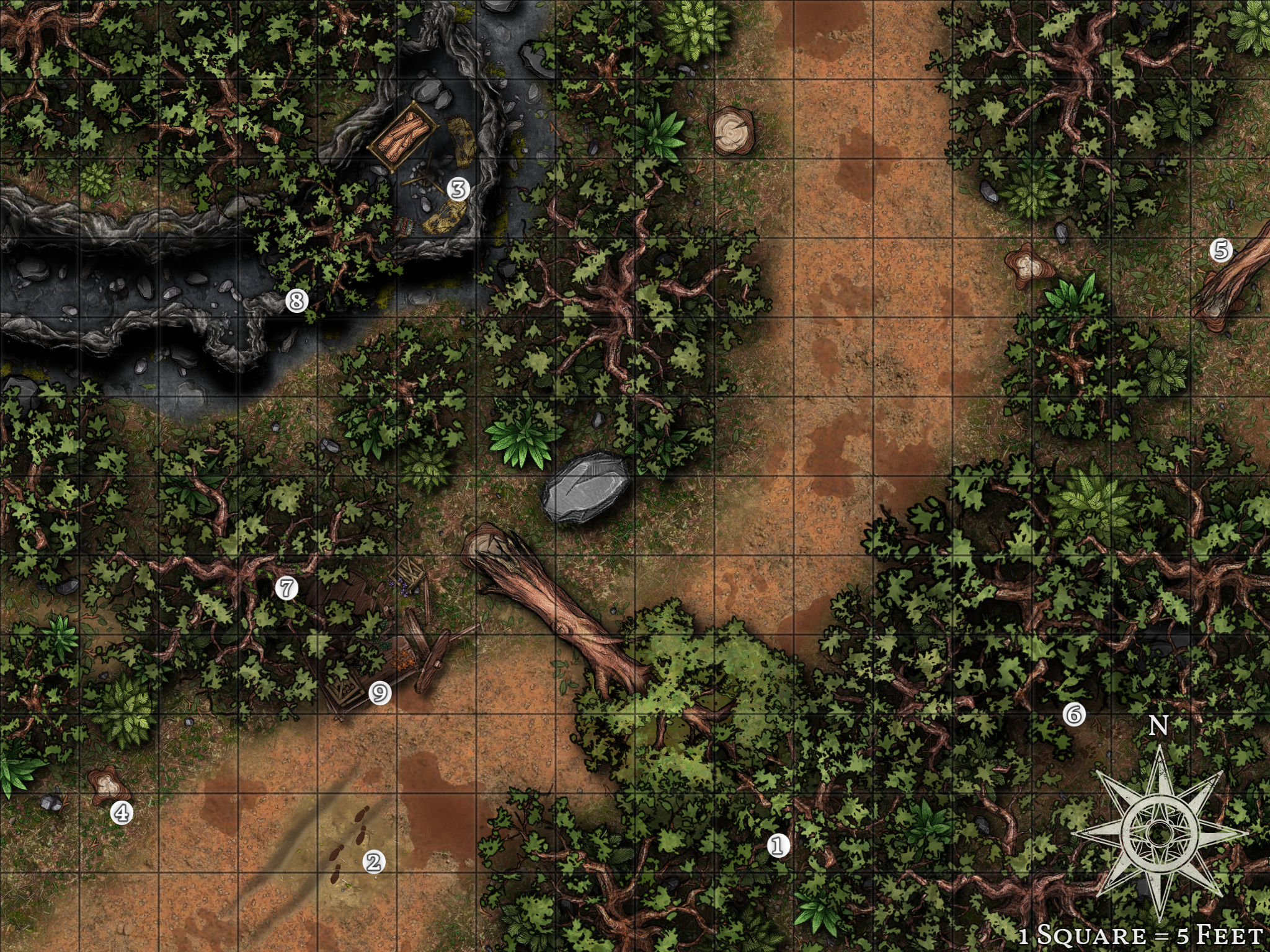
Map 1.1: Ambush (Forest)

Boss Examples
The following boss encounters are designed to further showcase the way this mechanic can work. As well as showing how to make each environment feel different and stand out.
Thraxis the Betrayed
(Cave Fight) This boss encounter takes place within a sprawling cave system filled with underground pools, hanging vines, unstable rock formations, and hidden sulphur veins. Thraxis has claimed the cave as his domain, and the sulphuric cracks can be used by him to explode lines and redirect the explosion at players.
Passive objects:
- Ponds: These small ponds link up underground, allowing players to swim between them to avoid opportunity attacks or trick enemies.
- Vines: Players can climb up vines to get to higher levels or lower themselves down with them.
Interactive objects:
- Stalagmites: Can push an enemy off higher ground onto them below, dealing an additional 2d4 damage.
- Mushroom: A collection of poisonous mushrooms; if ingested, the creature must succeed on a DC 15 Constitution saving throw or become poisoned for 1 minute.
- Boulder: A barbarian can pick up a boulder and throw it, spending a rage slot to do so and dealing 3d8+STR bludgeoning damage to the target.
- Bones: Expending a ki/focus point, a monk can pick up bones scattered on the ground to throw at a target creature, dealing 3d4+DEX piercing damage.

Interactive Scenery: Shatterpoint Element
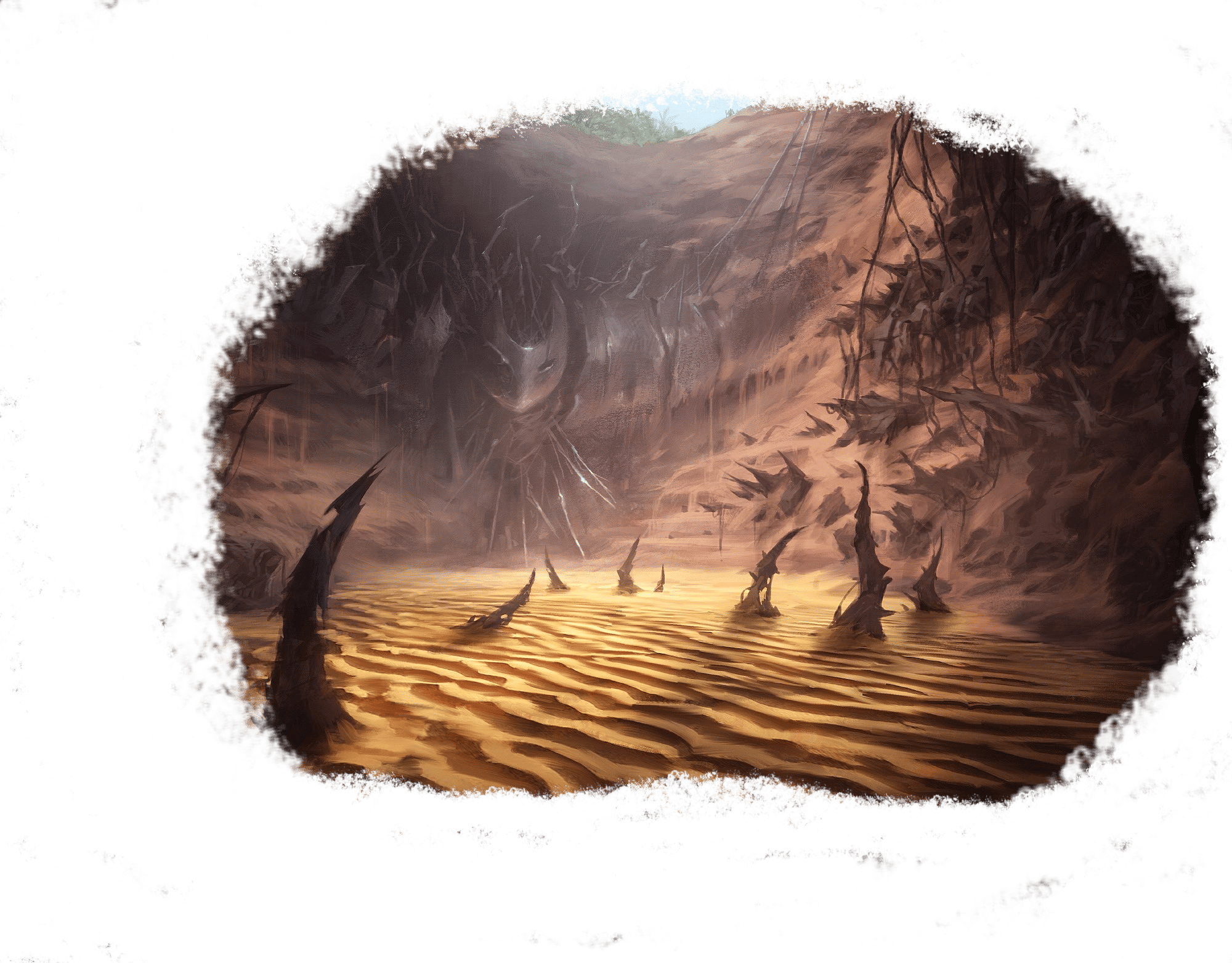
- Dirt Bridge: There is no support holding up the bridge, making it very unstable.AC 10, hit point 60. Its weakness is thunder damage or any effect that would manipulate the earth. When it is destroyed, any creature within a 10ft sphere from the centre of the bridge must make a DC 13 Dexterity saving throw. A target takes 3d6 bludgeoning and is submerged in the water on a failed save, or half as much damage and avoids the water on a successful save.
Interactive Scenery: Intuitive Element
- Sulphuric Cracks: The players enter the cave and are greeted by a disgusting smell of rotten eggs. As the players walk through they notice white cracks along the ground. If a player investigates they can make a Nature or Survival check DC 14 to determine that this is sulphur. It is highly flammable. If enough heat is applied the cracks can blow up, creatures on the crack must make a DC 14 Dexterity saving throw. A target takes 2d6 fire damage on a failed save, or half as much damage on a successful save. During the second phase of the boss when it enters its extreme heat moment, the players can roll an intelligence check to learn that they should avoid being near these cracks as the heat from the gorgon could blow the cracks up.


Map 2.1: Thraxis Boss Fight
(Cave - Bottom Level)
.jpg?updatedAt=1756605640244)
Map 2.2: Thraxis Boss Fight
(Cave - Middle Level)
.jpg?updatedAt=1756605641410)
Map 2.3: Thraxis Boss Fight
(Cave - Top Level)
Gorath Bloodhorn
(Cathedral Fight)
This boss has two maps where they start in the cathedral and when the boss enters into their second phase as they transform they damage the cathedral and open up a new pathway to the catacombs below. The catacombs were sealed off by the Gorath to hide his past and the sword that calls to him constantly.
Map 1
Passive objects:
- Sandbags: Provides half cover when firing from behind them.
- Rubble: Standing on the rubble imposes disadvantage on Dexterity saving throws.
- Unlit torches: At the back of the cathedral are unlit torches hiding enemies; any ranged attacks made against enemies in the dark are made with disadvantage.
Interactive objects:
- Dirt in your eyes: players can damage the bags and send dirt flying into creatures eyes who are 5 feet behind the bags.
- Banners: Players can cut down the banners and use them to grapple opponents, either one large or two to three smaller creatures.
- Extra gear: A fighter could use their bonus action to throw a sword from the weapons rack into an enemy.
- Chains: A rogue can use cunning action to swing 15 feet across and avoid opportunity attacks.
- Barrel of water: A druid can use a spell slot to create mini sharp icicles from the barrel of water and attack a creature, dealing 3d4 cold damage to them.
- Super kick: A barbarian can use a rage slot to kick the table into a group of enemies, dealing 1d6 damage.
Interactive Scenery: Shatterpoint Element
- Damaged Pillar: The pillar can be knocked down by the players. AC 14, hit points 80. The pillar collapses in a 20-ft line. Creatures below must make a DC 13 Dexterity saving throw. A target takes 3d6 bludgeoning and becomes restrained under the pillar on a failed save, or half as much damage and avoids the pillar on a successful save.
Interactive Scenery: Intuitive Element
- Unusual Pot: The players discover a pot with green liquid and smoke pouring out of it. Using an Investigation check DC 13, the players spot a nearby notebook. When reading it using Arcana or Nature check DC 15, they learn that this liquid is a potion that, when mixed with the right chemical, can become an airborne toxin. Any creature inside a 15-foot sphere at the start of their turn to make a DC 14 Constitution saving throw or take 2d6 poison damage.

Map 2
Passive objects:
- Echoes: the corners of the rooms create an echo when someone speaks there. It makes any sound-based spells more deadly when cast in that area, dealing double damage and dazing an enemy if they fail a DC 14 Constitution saving throw.
- Graves: a creature who breaks an intact grave is targeted by an undead creature who rises from that grave.
Interactive Objects:
- Vines: The minotaur can charge at a creature, and if the minotaur misses, the player targeted has a chance to sacrifice an ability or class resource to push the minotaur into the vines, causing it to get stuck. The minotaur can break out with a DC 15 athletics check, but uses its action to do so.


Map 3.1: Gorath Boss Fight
(Cathedral)
.jpg?updatedAt=1756605801803)
Map 3.2: Gorath Boss Fight
(Cathedral)
After interactive scenery was used

Map 4.1: Gorath Boss Fight
(Catacombs)
Apendix A: Maps
Ambush


.jpg?updatedAt=1756607617034)
Thraxis Boss Fight
(Bottom Layer)
.jpg?updatedAt=1756607618658)
Thraxis Boss Fight
(Middle Layer)
.jpg?updatedAt=1756607619824)
Thraxis Boss Fight
(Top Layer)
.jpg?updatedAt=1756607619896)
Gorath Boss Fight
Map 1
.jpg?updatedAt=1756607614248)
Gorath Boss Fight
Map 1 (Interactive Scenery Used)
%20(GMBinder).jpg?updatedAt=1756607616171)
Gorath Boss Fight
Map 2
.jpg?updatedAt=1756607609059)
Welcome to the first enhanced boss battle from Zi Chin’s Guide to Epic Fights! This series is dedicated to dynamic, cinematic encounters that push players and Dungeon Masters alike to think creatively.
Artist Credits:
- Page 1: Howard Lyon – The Great Forest
- Page 3: James Paick – Scout the Borders
- Page 4: Jesper Ejsing – Gratuitous Violence
- Page 5: L. A. Williams – Whip Vine
- Page 6: Aleski Birclot – Sapseep Forest
- Page 12: David Palumbo – Hunter's Ambush
- Page 14: Victor Adame Minguez – Ajani, Adversary of Tyrants
- Page 15: Julian Kok Joon Wen - Dominaria United
- Page 15: Rob Alexander - Deserted Temple
- Page 19: Mark Winters - Living Death
- Page 19: Peter Lee - Tristam Cathedral
You'll also find exclusive maps and upcoming expansions on Patreon.
Team Credits
- Michael Cheeseman — Lead Designer
- Alex Deery — Editor-in-Chief
- Karl Corallo — Artist (Footer, Background, and Zi-Chin's Tip Art)
- Finn McClusky — Master Coder
- Jimmy Beaton — Quality Assurance
- Wren Boulton — Quality Assurance
- Noah — Quality Assurance