
Table of Contents
The Alerion Ranger
Class Introduction -------------------------------------------------------3 Class Table ----------------------------------------------------------------4 Class Features ---------------------------------------------------------5-8 Optional Class Features ------------------------------------------------9 Spell-Less Variant Features-------------------------------------------10
Ranger Companies
Ghost ----------------------------------------------------------------------11 Marksman ----------------------------------------------------------------12 Pathfinder ----------------------------------------------------------------13 Vanguard ---------------------------------------------------------------14
Ranger Spell List
Ranger Spells --------------------------------------------------------16 New Spell Descriptions -------------------------------------------17-21
Appendices
Appendix A: Exploring the Wilderness -----------------------------21 Appendix B: New Weapons and Equipment ----------------------22 Appendix C: Rules Glossary-------------------------------------------23
Legal Information
This work includes material taken from the System Reference Document 5.1 (“SRD 5.1”) by Wizards of the Coast LLC and available at https://dnd.wizards.com/resources/systems-reference-document.
The SRD 5.1 is licensed under the Creative Commons Attribution 4.0 available at https://creativecommons.org/licenses/by/4.0/legalcode.
Lady Sienna Erren's Rules of Ranging, 1745 AR
- I. Always keep your equipment, arms and armor in fighting order, and be prepared for any eventuality.
- II. Remember the past and learn from it. Be willing and able to adapt to changes in your environment.
- III. Protect the helpless and the innocent to the bitter end. We are the bastion that stands between civilization and the unexplored wilderness.
- IV. When you kill a creature, do so only in self-defense, or in defense of your cause. Do not commit atrocities in the name of justice, for you will eventually become like the very monsters you have sworn to destroy.
- V. Take from nature only that which is needed to survive.
- VI Not all beasts of the wilds are enemies of civilization. If you befriend and protect them, they will protect you in kind.
- VII. Always weigh the risks before choosing to engage the enemy. There is no sense committing to a fight you are sure to lose badly.
- VIII. Always study the enemy before committing to a fight.
- IX. When reporting what you observed on a scout or patrol, be honest and spare no detail. Your allies are depending on you.
- X. Never announce your presence while on patrol. Always cover your tracks.
- XI. If you are allowed to dictate where a battle is to be fought, do not waste the opportunity you have been given. Use the terrain and the surrounding environment to its fullest advantage.
- XII. Don't expose yourself unnecessarily. Use cover and hit the enemy from the where they least expect it.
- XIII. If an enemy forces you to fight, use every resource at your disposal to defeat him.
- XIV. Likewise, when presented with an opportunity to exploit an enemy, do so swiftly and decisively.
- XV. Face your enemies with courage and resolve. Do not give in to fear or adversity.
- XVI. When faced with superior adversaries, it is not cowardly to retreat and recollect your forces. Better to keep the cause alive than to die needlessly in a fool's errand.
- XVII. If you are driven from the field, take time to replenish and resupply before returning to the fight. Do not allow vengeance to consume your thoughts.
- XVIII. An enemy's unguarded supplies are free resources. Claim them whenever possible, to prevent the foe from successfully waging war.
- XIX. When fighting a monstrous foe, the rules of war come second to the rules of survival.
- XX. Complacency is a killer. Always complete a task thoroughly and to the best of your ability.
The Alerion Ranger
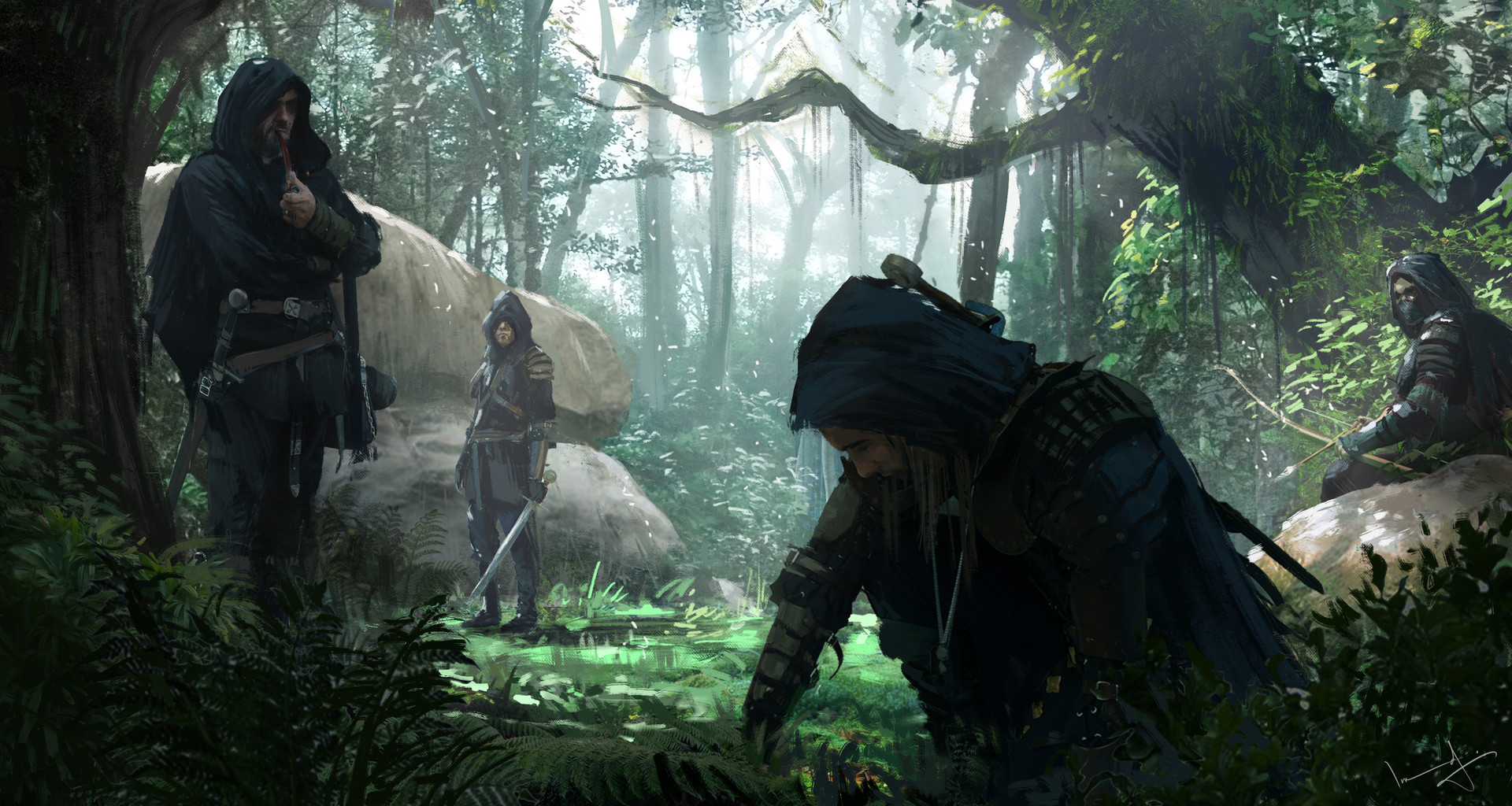
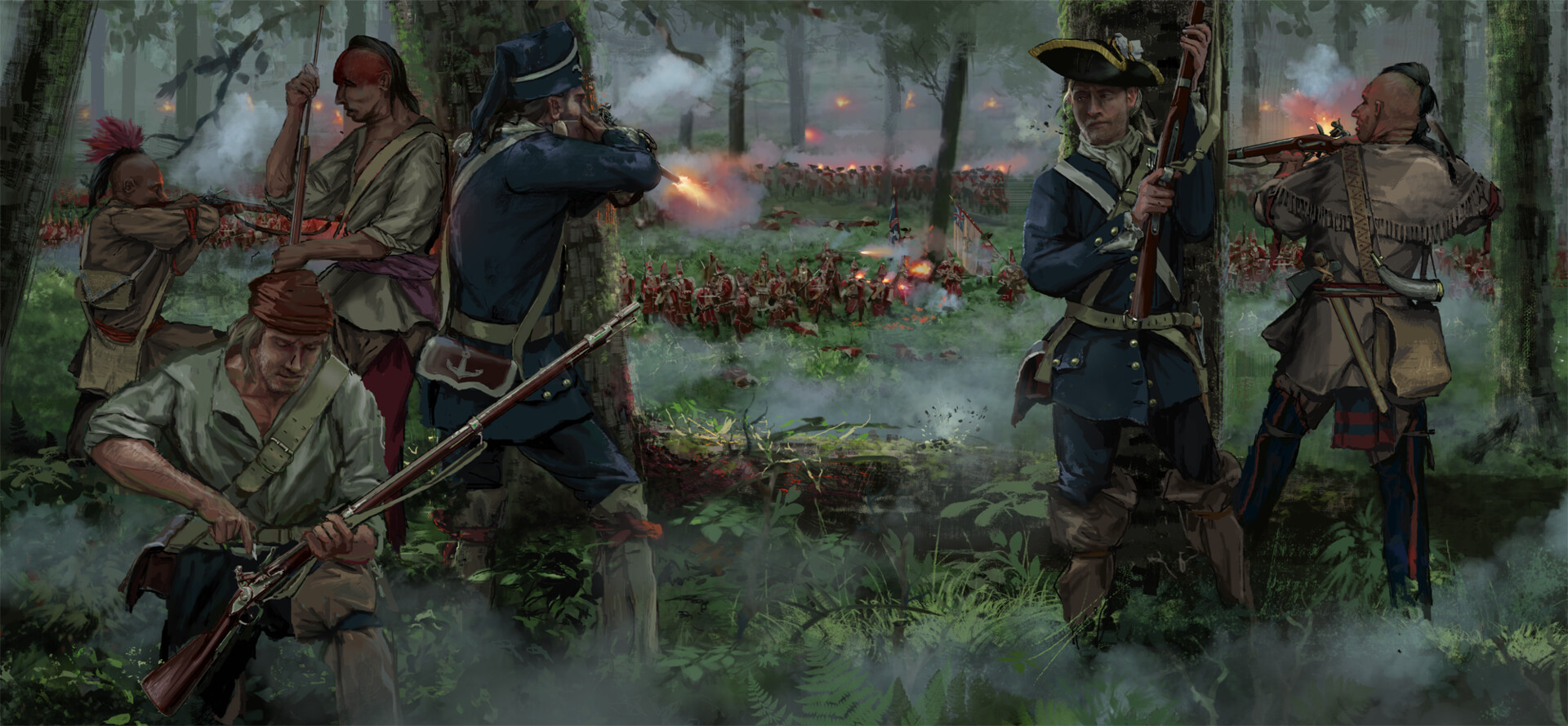
With a determined expression on his face, a human man clad in the uniform of the Tynarian rebellion stalks alone through the dense undergrowth, pursuing the Kingsguard regulars that he knows are conducting a raid on a nearby settlement. Affixing a sword bayonet to the muzzle of his rifle, he becomes a whirlwind of shot and steel, cutting down one soldier after another before vanishing into the trees.
A goblin chieftain suddenly tumbles from his mount, an arrow lodged squarely in the base of his skull. From two-hundred yards away, a concealed elf lowers her bow, ducks back into the underbrush, and prepares to ambush her next enemy.
Holding his hand high, a dwarven scout signals to his companions, directing them to remain silent. At his command, the group ducks out of sight of the massive troll, narrowly avoiding its gaze. After it passes by, the dwarf motions to his companions to return to the trail and continue on their way.
Across the Realm of Alerion, rangers maintain a constant vigil against dangerous monsters, marauding raiders, and the advancing forces of hostile armies. From the northern wastes of Syralon to the southern plains of Cathadrion, these stalwart men and women stand as the tip of the spear between the civilized world and the harshness of the untamed wilds.
Adaptable Skirmishers
While the professional soldiers of the Kingsguard might consider asymmetrical warfare and guerrilla tactics to be uncivilized and even barbaric, most of the Realm's rangers hardly consider themselves bound to societal expectations of honor and decorum. To them, there is only one rule in a fight: Survive.
Most rangers are deft skirmishers, relying on speed, stealth, and surprise to overcome their enemies in combat. They are masters of cover and concealment, moving stealthily through any terrain and concealing themselves in the surrounding undergrowth. Rangers focus their combat training on techniques that are particularly useful against the enemies they are most likely to face in combat, be they bloodthirsty monsters, hordes of marauding goblins, or the organized forces of a hostile nation.
Thanks to the Realm's numerous magical leylines and other sources of supernatural energy, it is unsurprising that the realm's rangers have learned to harness these primal forces. Like their martial abilities, a ranger's spells tend to focus on mobility, scouting, and wilderness survival. This unique combination of martial prowess and highly adaptable spellcasting makes confronting a ranger a particularly deadly proposition, as they are incredibly mobile, unpredictable, and almost impossible to pin down.
Seasoned Survivors
The only thing more impressive than a ranger's combat prowess is their ability to survive and endure the harshness of the wilds. Fiercely independent, rangers are true trailblazers and explorers, venturing beyond the relative safety of civilization to expand the borders of the frontier.
Rangers are expert scouts and survivors, capable of spending days, weeks, or even months at a time away from civilization. They can navigate the wilds with relative ease, forage and gather supplies that less experienced travelers might be completely unaware of, and can endure the wilderness's harshest perils, from extreme temperatures and perilous pitfalls to poisonous foliage and hidden predators. These skills and experiences make rangers expert guides and pathfinders for those seeking passage through the perilous wilds that stretch between the realm's many cities and towns.
Creating a Ranger
As you create your ranger character, consider the nature of the training that gave you your particular capabilities. Did you train as a member of the Kingsguard's elite light-infantry companies, mastering the art of wilderness combat and escorting travelers from settlement to settlement? Are you a former Greenwarden of the House of Tynarath, hunted by Lord Kylan for remaining loyal to the old ways? Or perhaps you are an independent hunter or scout, self-taught in the art of wilderness fighting and survival.
What kind of enemies has your ranger made during their time on the frontier? Are you a defender of the borderlands, hunting down monsters before they can ravage the local population? Or are you a professional soldier, trained to harrass and outmaneuver hostile forces on the field of battle? The kind of enemies you've made will influence the combat tactics you use to fight your foes and the survival skills you've acquired during your adventures.
Quick Build
You can make a ranger quickly by following these suggestions.First, make Strength or Dexterity your highest ability modifier, depending on whether you want to focus on melee combat or on ranged weapons (or finesse weapons). Your next-highest score should be Wisdom. Second, choose the Scout or Huntsman background.
The Alerion Ranger
| Level ─Spell Slots per Spell Level─ |
Proficiency Bonus |
Features | Mark Uses |
Quarry Die |
1st | 2nd | 3rd | 4th | 5th |
|---|---|---|---|---|---|---|---|---|---|
| 1st | +2 | Bushfighter, Rules of Ranging | — | — | — | — | — | — | — |
| 2nd | +2 | Martial Prowess, Ranger's Quarry, Spellcasting | 2 | 1d6 | 2 | — | — | — | — |
| 3rd | +2 | Ranger Company, Swift Alacrity | 2 | 1d6 | 3 | — | — | — | — |
| 4th | +2 | Ability Score Improvement | 2 | 1d6 | 3 | — | — | — | — |
| 5th | +3 | Extra Attack | 3 | 1d6 | 4 | 2 | — | — | — |
| 6th | +3 | Instinctive Defense | 3 | 1d8 | 4 | 2 | — | — | — |
| 7th | +3 | Ranger Company feature | 3 | 1d8 | 4 | 3 | — | — | — |
| 8th | +3 | Ability Score Improvement, One with the Undergrowth | 3 | 1d8 | 4 | 3 | — | — | — |
| 9th | +4 | — | 4 | 1d8 | 4 | 3 | 2 | — | — |
| 10th | +4 | Fade from Sight | 4 | 1d8 | 4 | 3 | 2 | — | — |
| 11th | +4 | Ranger Company feature | 4 | 1d10 | 4 | 3 | 3 | — | — |
| 12th | +4 | Ability Score Improvement | 4 | 1d10 | 4 | 3 | 3 | — | — |
| 13th | +5 | — | 5 | 1d10 | 4 | 3 | 3 | 1 | — |
| 14th | +5 | Hit and Fade | 5 | 1d10 | 4 | 3 | 3 | 1 | — |
| 15th | +5 | Ranger Company feature | 5 | 1d10 | 4 | 3 | 3 | 2 | — |
| 16th | +5 | Ability Score Improvement | 5 | 1d10 | 4 | 3 | 3 | 2 | — |
| 17th | +6 | — | 6 | 1d12 | 4 | 3 | 3 | 3 | 1 |
| 18th | +6 | Heightened Senses | 6 | 1d12 | 4 | 3 | 3 | 3 | 1 |
| 19th | +6 | Ability Score Improvement | 6 | 1d12 | 4 | 3 | 3 | 3 | 2 |
| 20th | +6 | Master Skirmisher | 6 | 1d12 | 4 | 3 | 3 | 3 | 2 |
Class Features
As a ranger, you gain the following class features.
Hit Points
- Hit Dice: 1d10 per ranger level
- Hit Points at 1st Level: 10 + your Constitution modifier
- Hit Points at Higher Levels: 1d10 (or 6) + your Constitution modifier per ranger level after 1st
Proficiencies
- Armor: Light armor, medium armor, shields
- Weapons: Simple weapons, martial weapons, flintlock firearms, bayonets
- Tools: Choose one from Cartographer's Tools, Fletching Kit, Herbalism Kit, Hunter's Tools, or Ordinance Kit
- Saving Throws: Strength, Dexterity
- Skills: Choose three from Animal Handling, Athletics, Insight, Investigation, Nature, Perception, Stealth, and Survival
Equipment
You start with the following equipment, in addition to the equipment granted by your background:
- (a) scale mail or (b) leather armor and a marksman’s cloak
- (a) a melee weapon and a shield or (b) two melee weapons
- (a) an infantry musket, a socket bayonet, and a pouch containing 20 paper cartridges or (b) a longbow and a quiver of 20 arrows
- (a) a dungeoneer's pack or (b) an explorer's pack
- One set of tools with which you are proficient

Bushfighter
As a ranger, you have significant experience moving, tracking, and fighting in the wilderness. While you aren't wearing heavy armor, your movement speed increases by 5 feet and any opportunity attacks provoked by your movement are made with disadvantage. This bonus increases when you reach certain ranger levels: to 10 feet at 6th level and to 15 feet at 14th level.
In addition, your keen eye for detail makes you an adept tracker and observer. While in natural terrain, you have advantage on Wisdom (Perception) and Wisdom (Survival) checks made to locate other creatures or track them through the wilderness.
Rules of Ranging
Also at 1st level, your self-reliance has made you adept at bushcraft and wilderness survival. Choose two of your skill or tool proficiencies from the ranger class. Your proficiency bonus is doubled for any ability check you make that uses either of those proficiencies.
In addition, your extensive experience has taught you to skillfully guide your allies through the untamed wilds. You gain the following benefits while traversing natural terrain for an hour or more:
- Adapt and Overcome. You have advantage on all your Wisdom (Survival) checks made to navigate the wilderness, as well as on your ability checks and saving throws to identify and overcome natural hazards.
- Cover your Tracks. You can move stealthily while traveling at a normal pace and other creatures have disadvantage on ability checks to locate you.
- Live off the Land. While foraging, you find twice as many supplies as you normally would if you succeed on the Wisdom (Survival) check and half as many supplies as you normally would if you fail.
- Remain Vigilant. You don't suffer the -5 penalty to your passive Wisdom (Perception) score while traveling at a fast pace, and even when you are engaged in another activity while traveling — such as foraging, navigating, or tracking — you remain alert to danger.
- Study the Foe. When you successfully analyze a set of tracks, you also learn the exact number of creatures you are tracking, their sizes, and how long ago they passed through the area.
Martial Prowess
By 2nd level, you have undergone extensive training to bolster your skill at arms. Choose one of the following Fighting Styles. You can't take a Fighting Style option more than once, even if you later get to choose again.
In addition, choose two weapons that you are proficient with. You learn the 1st-degree Martial Exploits associated with those weapons. You learn higher-degree Martial Exploits when you reach 5th, 9th, 13th, and 17th levels in this class.
Whenever you finish a long rest, you can replace your chosen Fighting Style or one of your chosen weapons with a different option available to you.
Ambuscade APC
During the first round of combat,you gain a +10 bonus to the first attack roll you make during that turn.
Archery
You gain a +2 bonus to attack rolls you make with bows and crossbows.
Defense
While you are wearing armor, you gain a +1 bonus to AC.
Dueling
When you are wielding a melee weapon or pistol in one hand and no other weapons, you gain a +2 bonus to damage rolls with that weapon.
Guerrilla Fighting APC
You get a +1 bonus to attack and damage rolls you make while hidden or receiving the benefits of at least half-cover.
Light-Infantry APC
While wearing light or medium armor, if you move at least 15 feet away from your starting position prior to making a weapon attack, you get a +2 bonus to the damage roll for that attack.
Musketry APC
You get a +1 bonus to attack and damage rolls you make with firearms.
Two-Weapon Fighting
When you engage in two-weapon fighting, you can add your ability modifier to the damage of the second attack.


Spellcasting
By 2nd level, you've learned to weave the primal energy of the world into your mundane herbalism and bushcraft, allowing you to cast spells.
Preparing and Casting Spells
The Ranger table shows how many spell slots you have to cast your ranger spells. To cast one of your ranger spells of 1st level or higher, you must expend a slot of the spell's level or higher. You regain all expended spell slots when you finish a long rest.
You prepare the list of ranger spells that are available for you to cast, choosing from the ranger spell list. When you do so, choose a number of ranger spells equal to your Wisdom modifier + half your ranger level, rounded down. The spells must be of a level for which you have spell slots.
For example, if you are a 5th-level ranger, you have four 1st-level and two 2nd-level spell slots. With a Wisdom of 14, your list of prepared spells can include four spells of 1st or 2nd level, in any combination. If you prepare the 1st-level spell animal friendship, you can cast it using a 1st-level or a 2nd-level slot. Casting the spell doesn't remove it from your list of prepared spells.
You can change your list of prepared spells when you finish a long rest. Preparing a new list of ranger spells requires time spent in meditation: at least 1 minute per spell level for each spell on your list.
Spellcasting Ability
Wisdom is your spellcasting ability for your ranger spells, since your magic draws on your attunement to nature. You use your Wisdom whenever a spell refers to your spellcasting ability. In addition, you use your Wisdom modifier when setting the saving throw DC for a ranger spell you cast and when making an attack roll with one.
Spell save DC = 8 + your proficiency bonus +
your Wisdom modifier
Spell attack modifier = your proficiency bonus +
your Wisdom modifier
Instinctual Casting
You have a pool of Instinct Points equal to your proficiency bonus. You can use these points to cast a ranger spell without a spell slot if that spell has the Instinct tag and you have the spell prepared.
Spellcasting Focus
You can use a set of tools or a weapon that you are proficient with as a spellcasting focus for your Ranger spells.
Ranger's Quarry
Beginning at 2nd level, when you hit a creature with an attack roll, you can focus your senses upon that creature, marking it as your quarry. Your mark lasts until you finish a short or long rest, or until you fall unconscious or use this feature again to mark a another creature.
Whenever you damage your quarry with a weapon attack or a ranger spell that requires an attack roll, you increase that damage by one roll of your Quarry Die, which is a d6. You can also add your Quarry Die to any Intelligence or Wisdom checks you make to locate your quarry, determine its intentions, or recall information about it.
You can mark quarry the number of times shown for your ranger level in the Mark Uses column of the Ranger table. You regain one expended use when you finish a short rest and all expended uses when you finish a long rest.
Your Quarry Die scales when you reach certain ranger levels, as shown in the Quarry Die column of the Ranger table.
Ranger Company
At 3rd level, you choose to emulate the ideals and training of a ranger company, such as the Ghost, Marksman, Pathfinder, or Vanguard. Your choice grants you features at 3rd level and again at 7th, 11th, and 15th level.

Swift Alacrity
Beginning at 3rd level, you have learned to move swiftly and decisively through the wilderness. After damaging a creature with a weapon attack, you can use your bonus action to take the Disengage, Hide, or Scout action.
If you hit the target of your Marked for Death feature, you can also move up to half your movement speed as a part of the same bonus action. This movement doesn’t provoke opportunity attacks.
Ability Score Improvement
When you reach 4th level, and again at 8th, 12th, 16th, and 19th level, you can increase one ability score of your choice by 2, or you can increase two ability scores of your choice by 1. As normal, you can't increase an ability score above 20 using this feature.
Extra Attack
Beginning at 5th level, you can attack twice, instead of once, whenever you take the Attack action on your turn.
Instinctive Defense
Starting at 6th level, when an attacker you can see hits you with an attack, you can use your reaction to roll your Quarry Die and add the result to your AC, potentially causing that attack to miss you.
If the triggering creature is also the target of your Marked for Death feature, you have advantage on saving throws against that creature's spells and innate abilities until the start of your next turn.
One With the Undergrowth
Starting at 8th level, moving through natural difficult terrain costs you no extra movement. You can also pass through nonmagical hazards associated with that terrain (such as sharp rocks or thorny plants) without being slowed by them and without taking damage from them.
In addition, while in natural terrain, you treat partial cover as one step higher (from one-quarter to half or half to three-quarters) and you can attempt to hide even if you are only lightly obscured.
Fade From Sight
By 10th level, you can call upon primal forces to obscure you from your foes. When you attempt to hide using your Swift Alacrity feature, you can magically shroud yourself, along with any equipment you are wearing or carrying, until the start of your next turn.
While shrouded in this way, you are considered invisible, and you can't be tracked by nonmagical means unless you choose to leave a trail.
You can use this feature a number of times equal to your Wisdom modifier (a minimum of once), and you regain all expended uses when you finish a long rest.


Hit and Fade
Starting at 14th level, your time in the wilds has shaped you into an experienced wilderness combatant. Once on each of your turns, you can reroll an attack roll or damage roll you make against the target of your Marked for Death feature. If you do, you must use the second result.
In addition, while in natural terrain, you can attempt to hide even if you aren’t obscured or are being directly observed by another creature.
Heightened Senses
At 18th level, your enhanced senses allow you to strike with perfect accuracy. As long as you aren't blinded or deafened, you have blindsight with a range of 30 feet.
Additionally, attack rolls made against creatures within 30 feet of you can't be made with disadvantage.
Master Skirmisher
At 20th level, you are a master of the wilderness and an unparalleled hunter of your foes. You gain the following benefits:
- Your Strength or Dexterity score increases by 2, and your Wisdom score increases by 2. Your maximum for those scores also increases by 2.
- You can add your Wisdom modifier to attack and damage rolls you make against the target of your Marked for Death feature.
- As long as you aren't surprised or incapacitated, you are considered to be under the effects of the Freedom of Movement spell.