
Barbarian
Path of the Fiend ........................................2| Restriction-free version
Path of the Proud ........................................3
Path of the Trophy Hunter .........................4
Fighter
Marine ...........................................................5
Pathcutter .....................................................6
Rune Breaker ...............................................7
Monk
Way of the Houdeam .................................9 | Restriction-free version
Way of the Wyrm ......................................10
Paladin
Oath of the Wing Seeker ........................11
Ranger
Grove Guardian ........................................12
Trickster Conclave ....................................13 | PHB version
Sorcerer
Deathsinger ...............................................15
Giant Bloodline Sorcerous origin .........16
Warlock
Planar Patron ............................................17
Why racially restricted?
The first one I did of these was the Deathsinger sorcerous origin, simply because I wanted the sorcerer to have a similar option to the bladesinger, while also changing some of the aspects about the bladesinger that I didn't like. In particular the inclusion of Extra Attack and the "scagtrips", which contradict each other in my opinion. And from there I decided to limit it to drow, and to give it a slightly "darker" feeling, based on how drow are often viewed, at least in my experience.
Then, 3 months later, I found myself wanting to see if I could use the same approach I used for the Deathsinger and drow to other races. And there began this series of archetypes that I either tried to tailor to a race's strengths and lore, or to make "sub-optimal" combinations more viable, like the sorcerous origin for goliaths and orcs.
Although I was aware that many don't like racially restricted archetypes, I basically felt that it was a design space that gave me both the restrictions and possibilites I needed to come up with something slightly new, and hopefully, if you're reading this, you're not completely opposed to them either.
Brief Insight To My Thought Process
First of all, I realise that I might not have been entirely consequent in following the ideas and thoughts I'll put here, but know that I've tried.
Some of these archetypes started out with an idea for an archetype first, then I fitted that to a race, and sometimes I started with a race, then attempted to come up with an archetype idea for that.
I mostly used two angles for deciding which classes, and what kind of features, made sense ; the genetic angle, or the cultural angle. (I should probably mention here that I mostly used the lore about races from the Player's Handbook, combined with my own interpretation of it and various other sources mostly focused on Forgotten Realms, so a mostly 'generic fantasy'.)
For the genetic angle, I tried to come up with features that took use of a race's inherent traits. The obvious examples here are the two dragonborn ones, which are focused around their breath weapon. Basically, I asked myself "How would a race with such a dominant trait approach this class?", and worked from there.
The cultural angle encompasses a bit more, and is more dependant on each reader's own interpretation, so I had both more room to play in, so to speak, but also a larger "miss-zone".
An example of this is the triton martial archetype, where I started with how they strike me as a militant, orderly people, with a long tradition of being soldiers and fighting various threats.
Where I with tritons started with what their 'default' personality would lend itself too, I took a slightly different route when determining what fit elves. I failed to find a 'mental' hook to base something on, so for them I instead thought about how and where they fight. And the first image that came to mind was the stereotypical answer "in the woods". I then tried imaginging what particular hindrances one would face while fighting in a forest, and the answer I landed at was 'space'. Or rather, the variance of it. A fighter in the woods that could seamlessly and quickly switch from delivering blows with huge swings, to quick stabs, to ranged combat once the distance increased, would have a great advantage. It'd take time to master this way of fighting though. Thankfully, elves as a race have that time.
Miscellaneous
As usual, it is up to the DM to allow and/or change features and archetypes as these. In regards to the racial restrictions, I've added suggestion notes to some of them, and links to alternative, restriction-free versions of some in the index.
In the case of the Trickster Conclave ranger, I decided to include the version designed with the revised ranger in mind, simply because I like that a little better personally, but there's a link to a version made for the PHB version in the index.
Also, this is of course a "living document", in the sense that the more feedback I get, the better chance I have to tweak both the flavor and the balance of the brews contained within, so please feel free to drop me any and all feedback you want, whether it's on Reddit or the Discord of Many Things.
Credits
- Created by redditor groggen2
- Thanks to everyone on the Discord of Many Things and r/UnearthedArcana who helped me lots.
- Template provided by The Homebrewery
- Art credits:
Cover: Jimmy 'Dreadjim' Ling
Path of the Fiend: Dave Rapoza
Path of the Proud: Steve Argyle
Path of the Trophy Hunter: johnnymorrow for Pathfinder and daarken for Warhammer Online
Marine: Ryan Pancoast for WOTC
Pathcutter: Demon Hunter-Reg by crow-god and GaleForce Nine
Rune Breaker: Andrey Vasilchenko and GoldenDaniel.
Way of the Houdeam: From Lord of the Dragons by Gameco.com
Way of the Wyrm: Kerem Beyit
Oath of the Wing Seeker: Kenku art by Colby Marchi and cloudscape from walldevil.com
Grove Guardian: Thiago Almeida
Trickster: Eric Belisle and Scott Altmann
Deathsinger: Tyler Jacobson
Giant sorcerous origin: Kerem Beyit
Planar Patron: Hideaki Takamura, Jason Engle, Greg Staples, and Anastasia Ovchinnikova
- This is version 1.2 (2017-11-18)
- GMBinder version
Path of the Fiend
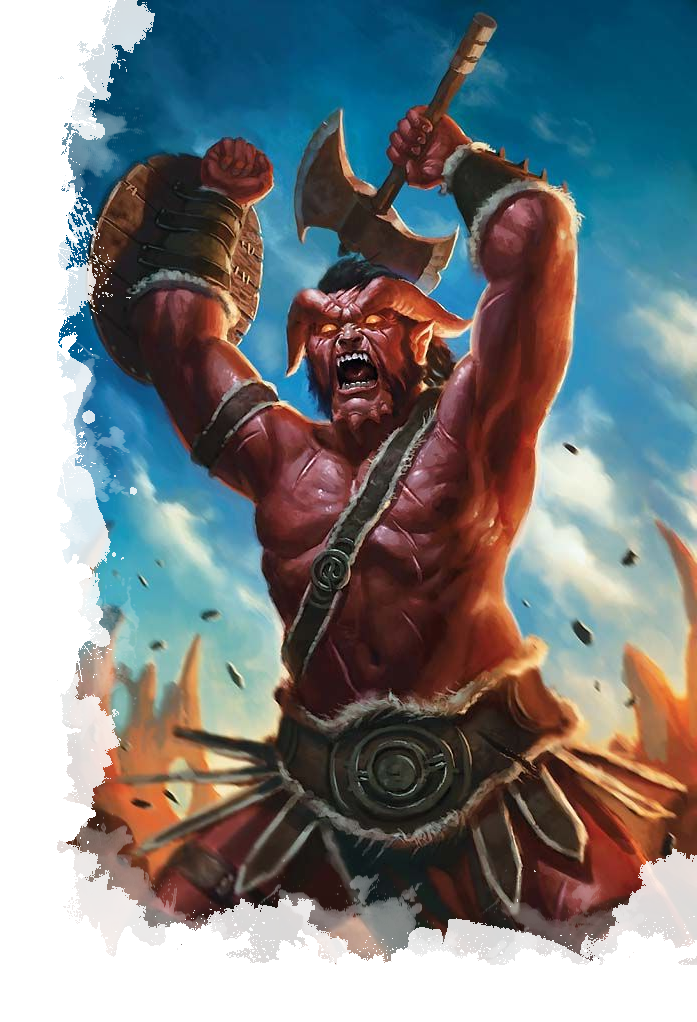
You embrace your cursed bloodline, and the essence of Asmodeus, overlord of the Nine Hells, that courses through it. Whether you do so for the good of others, or for your own personal glory, you learn to draw out more and more power from your fiendish blood.
Restriction: Tiefling only
Only tieflings can choose the Path of the Fiend archetype.
Your DM can lift this restriction to better suit the campaign.
Might Unleashed
Starting when you choose this path at 3rd level, your natural traits and features develop to more closely match your ferocious nature. Your tail grows bigger and stronger, your horns become harder, and your teeth even sharper. While you're raging, you can use a bonus action to attempt to grapple a target with your tail, and when you reduce a creature you are grappling to 0 hit points, you can use a reaction to magically teleport up to 20 feet to an unoccupied space you can see.
Additionally, you gain proficiency in the Intimidation skill if you don't have it already, and unarmed attacks that you make with your horns or your bite deal 1d4 damage.
Magic Enraged
Beginning at 6th level, the magic within you bursts to the surface when your emotions elevate. When you enter a rage, you regain one use of one of the spells granted to you by your Infernal Legacy or Devil’s Tongue trait.
Additionally, you can cast and concentrate on your racial spells while raging, and casting a spell that's 1st level or higher counts as having made an attack for the purpose of rage.
Weakening Gaze
Beginning at 10th level, your eyes are windows to the very depths of the Nine Hells.
As an action, you can choose one creature that you can see within 30 feet of you. If the creature can see you, it must make a Constitution saving throw (DC equal to 8 + your proficiency bonus + your Charisma modifier). On a failed save, the target deals only half damage with weapon attacks for l minute. The target can repeat the saving throw at the end of each of its turns, ending the effect on itself on a success. This effect also ends if the creature ends its turn out of line of sight or more than 60 feet away from you, or you use it on another creature.
If the creature succeeds on its saving throw, you can't use this feature on that creature again for 24 hours.
Fiery Aura
Starting at 14th level, combat makes your blood boil, and others feel the heat. While raging, you have immunity to fire damage. Additionally, when a creature ends its turn within 5 feet of you, it takes 1d8 + your Charisma modifier fire damage.
Lifting the restriction
Lifting the restriction on this path would involve more than minor tampering with the features, so I've also made an alternate version, which can be found here

Path of the Proud
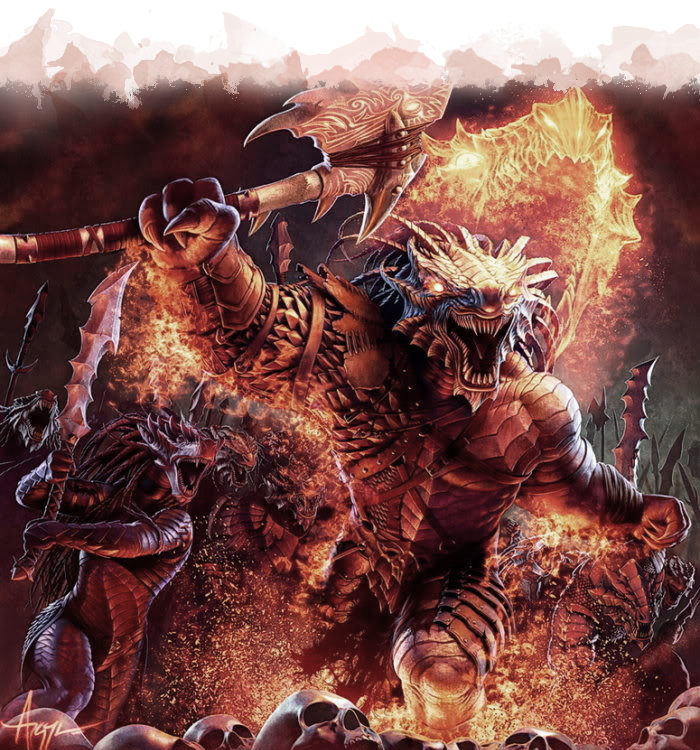
The Path of the Proud is a constant striving to become stronger, greater, and more dangerous. By drawing from the gifts they are born with, strengthening and honing them, they seek to prove their worth against any foe, and ultimately, to rival the very dragons that gave birth to their kin.
Restriction: Dragonborn only
Only dragonborn and individuals with the gift of a breath weapon can choose the Path of the Proud archetype.
Your DM can lift this restriction to better suit the campaign.
Lungs of Death
Starting when you choose this path at 3rd level, you learn how to put more effort into your breath weapon, thereby increasing its potency. You can use it two additional times before you must finish a short or long rest to use it again. While raging, its damage dice increase to d8s, and you add your Constitution modifier to its damage roll. Using your breath weapon counts as making an attack in regards to maintaining your rage.
Additionally, when you reduce a creature to 0 hit points with your breath weapon, you can make a melee weapon attack as a bonus action. When you reach 5th level, you can make this bonus action attack whenever you use your breath weapon.
Draconic Awareness
Beginning at 6th level, your draconic heritage affords you an increased awareness of your surroundings and the fortitude to stand against even the weather itself. You can use a bonus action to take the Search action, light obscurement doesn't impose disadvantage on ability checks you make related to sight, and you ignore the effects of extreme cold or heat.
Savage Roar
Beginning at 10th level, your aura becomes awe-inspiring, like a mighty dragon's. As an action, you can feint with a melee weapon you're holding while letting out a mighty roar. Each hostile creature within reach of your melee weapon must succeed on a Dexterity saving throw (DC equal to 8 + your proficiency bonus + your Strength modifier) or immediately move 5 feet away from you.
Draconic Flight
At 14th level, your rage carries you forth in more ways than one. When you use a bonus action to enter rage, a pair of dragon wings sprout from your back as part of the same action, giving you a flying speed equal to your current speed. The wings fade away when your rage ends. You can also expend one use of your rage to manifest the wings for 1 minute if you are not in combat. You can’t manifest your wings while wearing armor unless the armor is made to accommodate them, and clothing not made to accommodate your wings might be destroyed when you manifest them.
Additionally, you can expend two uses of your breath weapon to expand the area of it. If you do, a cone becomes 25 feet, and a line becomes your choice of 10 by 30 feet or 5 by 60 feet.
Suggestions if lifting the restriction
If used with a race without a breath weapon, the 3rd level feature could grant the character a breath weapon like dragonborns' innate trait, with two uses per short or long rest, but not get the full increase to its damage.
Path of the Trophy Hunter
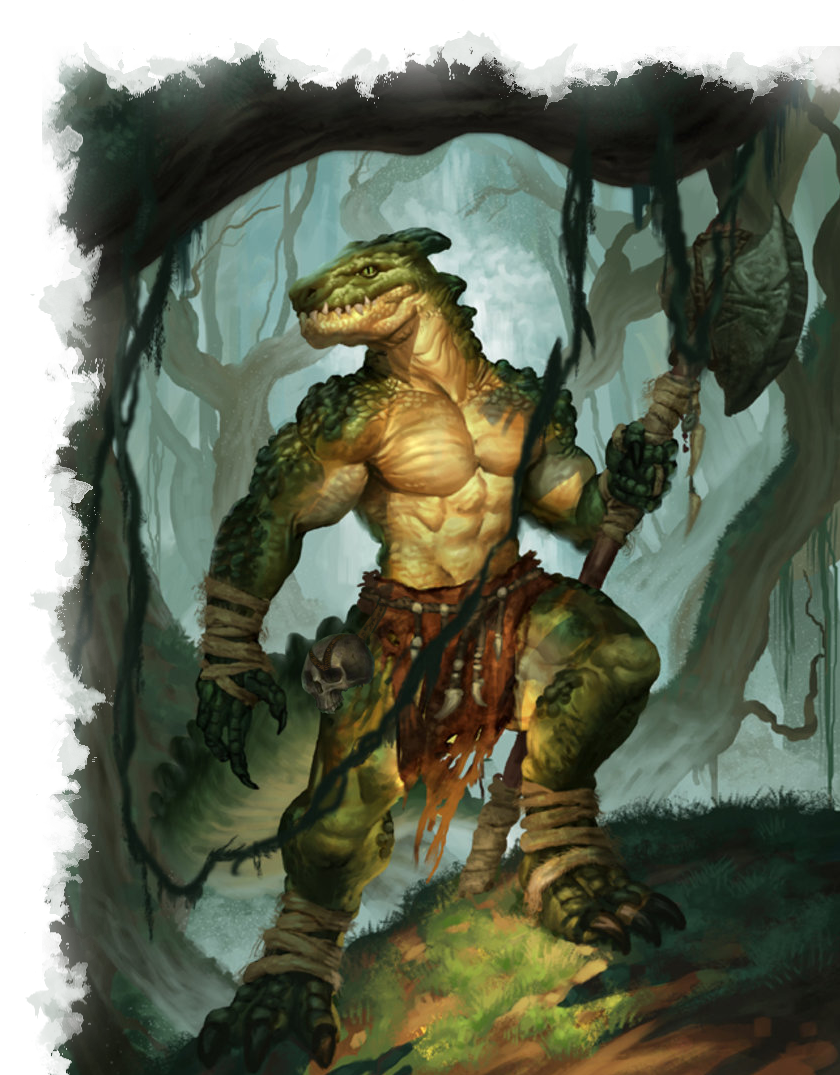
Although they are cold and calculating, the followers of this path combine ancient teachings and new knowledge to instill emotion and aggressiveness in themselves. Utilizing rituals and animalistic behavior, these trophy hunters seek not only to outlive bigger and stronger foes, but to exceed them, and to become the alpha creature that all others fear.
Restriction: Lizardfolk Only
Only lizardfolk follow this path, although there are instances of individuals of other races seeking out this knowledge.
Your DM can lift this restriction to better suit the campaign.
Spoils of the Hunt
When you choose this path at 3rd level, you learn an ancient ritual that lets you tap into your primal side by drawing out memories from fallen creatures. To perform this ritual, you must spend 1 hour with the trophy of a creature that's been dead no more than 24 hours. The ritual counts as light activity. While wearing or carrying the trophy, you gain the following benefits that last until you perform this ritual again.
- While raging, you can add your Wisdom modifier to damage rolls against that creature's type.
- While raging, you can make a bite attack as a bonus action against that creature's type.
- You can use your Hungry Jaws trait one additional time before you must finish a short or long rest.
- When you reduce a creature to 0 hit points, other hostile creatures of the same type that can see you must succeed on a Wisdom saving throw (DC equal to 8 + your proficiency bonus + your Charisma modifier) or be frightened of you until the end of their next turn. A creature that succeeds on this saving throw is immune to this effect for 24 hours.
Insightful Predator
At 6th level, your familiarity with the strange, alien minds of other creatures has grown, and the knowledge you're able to draw out from a trophy increases. You have advantage on Wisdom (Perception) checks, Wisdom (Insight) checks, and Charisma (Intimidation) checks made against creatures of the same type as your current trophy, and you can't be surprised by enemies if at least one of them is that creature type.
Glory to the Pack
Beginning at 10th level, you're able to convey your knowledge and instincts to others. When a friendly creature you can see makes an attack roll or ability check against a creature of the same type as your current trophy, you can use a reaction to give it advantage.
Lifting the restriction 1
Mechanically, the reliance of the features on the bite attack and Hungry Jaws trait make this inaccessible to all but races that share those traits. In order to open this path up to other races, one can replace any mention of "a bite attack" with "an unarmed strike that deals 1d4 bludgeoning damage".
Vicious Hunger
Beginning at 14th level, your bloodthirst has been both awakened and heightened by the numerous creatures you've connected to with your trophy rituals. When you reduce a creature to 0 hit points with a melee weapon attack while raging, you can make a bite attack against a different creature. Additionally, if the slain creature was of the same type as your current trophy, you can immediately move up to half of your movement speed.
Lifting the restriction 2
Simply giving a PC the Hungry Jaws trait, usable once per short rest, would be the easiest fix for that particular problem. Alternatively, one could replace it with this feature instead:
- When you perform a trophy ritual, you draw out any remaining essence from it. You gain temporary hit points equal to your Constitution modifer. Once you've used this feature, you must finish a short or long rest before you can do so again.
Marine
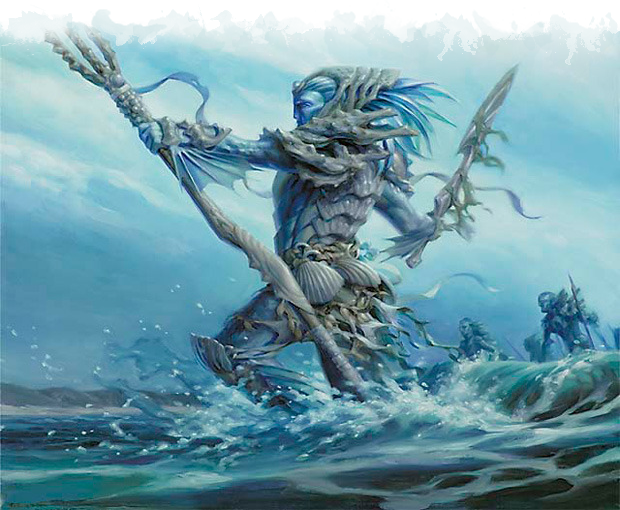
"After countless skirmishes and battles defending our protectorates in the oceans, and indeed, the very world, we marines use our vast knowledge and experience to lead those less experienced when we set forth on land.
The twodimensional battles on land are, of course, easier to plan and lay strategies for, but they still need someone with a clear mind and bravado to make them less chaotic and lethal. That's where us marines shine, like fish on land, gleaming in the sun."
Restriction: Tritons only
Only tritons can choose this martial archetype for fighters.
Your DM can lift this restriction to better suit the campaign.
Rallying Tactics
Starting at 3rd level, as a bonus action, you can rally one creature within 30 feet of you. The creature gains one of the following benefits on its next turn (you choose each time you use this feature):
- It can Disengage as a bonus action
- It can Dash as a bonus action
- It gains advantage on the first attack it makes
- It can use a bonus action to gain temporary hit points equal to two times your Charisma modifier
Once you've used this feature a number of times equal to your Charisma modifier, you must finish a short or long rest before you can use it again.
Soldier On
Starting at 7th level, you can inspire resolve and vigor in your allies. By spending 1 minute on a pep talk, up to 5 allies (including yourself) that can hear you ignore disadvantage to ability checks due to exhaustion for one hour. In addition, each of those allies gains a d6, which can be added to one ability check, attack roll, or saving throw the ally makes within one hour. The choice to add this die is made before the roll itself. Once you've used this feature, you must finish a short or long rest before you can use it again.
Additionally, you have advantage on Wisdom (Survival) checks to find your way if visibility is reduced due to heavy rain, fog, and similar conditions.
Drill Sergeant
Starting at 10th level, you can draw out the innermost fighting spirit of allies. As a bonus action, you can call out to a friendly creature within 15 feet of you that has 0 hit points, pulling it back from the brink of death. The creature regains 1 hit point.
Once you use this feature, you must finish a short or long rest before you can use it again. Starting at 18th level, you can use it twice before a rest.
Veteran Commander
Starting at 15th level, you are able to put more gusto in your commands. You can expend two uses of your Rallying Tactics feature when you use it to have it affect each creature of your choice within 30 feet of you. You choose which benefit to grant each creature individually.
Always On Duty
At 18th level, you are never lost for words. When you roll initiative and have no uses of your Rallying Tactics feature left remaining, you regain 1 use of it.
Pathcutter
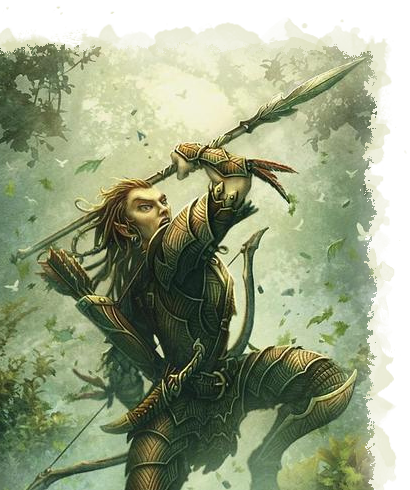
Pathcutters are elven fighters trained in not only various fighting and weapon techniques, but also how to combine them into a deadly array. Weaving from one movement into another, from one weapon to another, they are able to adapt to any and all adversaries, whether they're facing a single, lumbering beast or a flock swooping down from the skies.
Effortlessly intermingling melee and ranged attacks, their graceful fluttering around on the battlefield could almost resemble a beautiful dance, were it not for the carnage it left in its wake.
Restriction: Elves Only
These techniques are taught to elves and half-elves only, although there are instances of individuals of other races being deemed worthy to receive this training and knowledge.
Your DM can lift this restriction to better suit the campaign.
Fervent Fluidity
When you choose this archetype at 3rd level, you learn how to seamlessly transition between melee and ranged attacks. On your turn, drawing or stowing a melee weapon doesn't use your object interaction.
Whenever you take the Atttack action and make a ranged weapon attack, you can use a bonus action to move 5 feet. If you do, you can make a single melee weapon attack. Whenever you take the Attack action and make a melee weapon attack, you can use a bonus action to move 5 feet. If you do, you can make a single ranged weapon attack.
You don’t add your ability modifier to the damage of the bonus attack, unless that modifier is negative.
The movement granted by this feature isn't hindered by nonmagical, difficult terrain, and increases to 10 feet at 7th level, 15 feet at 10th, and 20 feet at 15th.
Graceful Strength and Wise Knowledge
Starting at 7th level, both your body and your mind knows how to quickly shift focus. When you fail a Strength or Dexterity check, you can reroll the check using the other ability modifier for the roll instead. Alternatively, you can reroll an Intelligence or Wisdom ability check you fail, using the other ability modifier for the roll instead.
Once you've used this feature, you can’t use it again until you finish a short or long rest.
Measured Steps
Beginning at 10th level, your swift, precise attacks and nimble movement catch your foes off guard. When you move using your Fervent Fluidity feature, you can choose to move without provoking opportunity attacks. If you do so, you must target a creature you have already attacked this turn with the attack granted by the feature.
Additionally, if you attack a creature you haven't already attacked this turn with the bonus action attack granted by your Fervent Fluidity feature, you deal one additional weapon damage die if you hit.
Second Weapon, Second Nature
At 15th level, your familiarity with the constant switching of your weapons is greatly improved. You add your ability modifier to the damage of the bonus action attack granted by your Fervent Fluidity feature.
Astounding Delivery of Death
Starting at 18th level, you've learned how best to capitalize on your momentum for maximum carnage. Once on each of your turns, when you score a critical hit or reduce a creature to 0 hit points with a weapon attack, you can make a weapon attack with a different weapon against another creature that is within 15 feet of the original target and within range of your weapon.

Rune Breaker
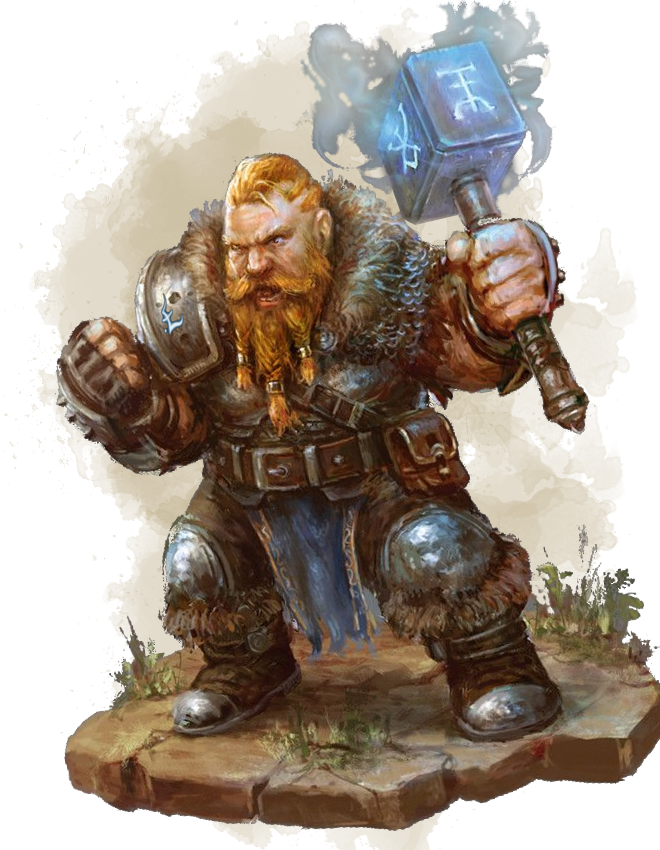
Rune breakers are dwarven fighters who have learned how to harness the power of runes. By inscribing runes on solid objects, they make sure they always have a trick up their sleeve.
Closely guarded secrets and techniques accumulated over centuries even teach them the insight and craftsmanship necessary to alter the effect they can draw out from an inscribed rune.
Restriction: Dwarves Only
These techniques are taught to dwarves only, although there are instances of individuals of other races being deemed worthy to receive this training and knowledge.
Your DM can lift this restriction to better suit the campaign.
Runic Inscribing
When you choose this archetype at 3rd level, you learn two Simple runes, which are detailed at the end of the archetype description.
You learn one additional Simple rune at 7th level. Also at 7th level, you can replace one Simple rune you know with a different one.
Inscribing a rune takes 10 minutes, and counts as light activity. When you activate a rune on an object you are in physical contact with, the rune is spent, and whether you painted the rune on a surface, carved it into wood, or chiseled it in metal or stone, the surface returns to the state it was in before you applied the rune to it.
Some of your runic effects require a saving throw to resist the rune's effect. The saving throw DC is calculated as follows:
your Wisdom modifier
You can only have a number up to or equal to your Wisdom modifier of Simple runes inscribed at the same time, and after inscribing a number of Simple runes equal to your Wisdom modifier, you must finish a short or long rest before you can do so again.
Tools of the Trade
Also starting at 3rd level, you gain proficiency in either calligrapher's supplies, smith’s tools, or woodcarver's tools. These tool kits can all be used to properly inscribe the runes you learn onto objects.
Honed Technique
At 7th level, your proficiency bonus is doubled for any ability check you make that uses the tool proficiency you gained at 3rd level.
Additionally, as long as you are carrying or wearing at least one object with a rune inscribed on, you can cast light and detect magic without providing material components or spending a spell slot. Casting detect magic in this way removes one rune from the object.
Grand Runes
At 10th level, you learn one Grand rune, which are detailed at the end of the archetype description.
At 15th level, you learn one additional Grand rune, and you can also replace one Grand rune you know with another Grand rune.
Grand runes are more taxing to correctly inscribe than Simple runes. After inscribing a number of Grand runes equal to your Wisdom modifier, you must finish a long rest before you can do so again.
Additionally, the magic in Grand runes fade away when you take a long rest.
Inner Strength
At 15th level, you learn the Inner Strength rune, and can inscribe it once during a long rest. Its effect depends on which object you inscribe it upon, and the rune fades away after 24 hours if left unused.
***Weapon.*** When you use your Action Surge feature, you can activate this rune as part of it. If you do, you can add your Wisdom modifier to the damage rolls of weapon attacks you make this turn.
Armor. When you use your Second Wind feature, you can activate this rune as part of it. If you do, the hit points you would gain from it are doubled.
Item. When you use your Indomitable feature, you can activate this rune as part of it. If you do, you can treat the reroll as a 20.
Break the Bank
Starting at 18th level, you can draw energy directly from runes. As a bonus action, you can choose to draw on the magic from any number of Simple runes currently on objects you're wielding, wearing, or carrying. If you do, instead of gaining the effects from the runes, you're suffused with their raw magical power. Until the start of your next turn, you get a bonus to your armor class and all rolls you make equal to the number of runes you spent this way.
Simple Runes
Empowering Rune
Weapon. While wielding the inscribed weapon, you can cast shillelagh on it. When you take a short rest, the rune fades away.
Armor. While wearing the inscribed armor, you can cast message. When you take a short rest, the rune fades away.
Item. While holding or carrying the inscribed item, you can cast mage hand. When you take a short rest, the rune fades away.
High-Density Rune
Weapon. You can activate this runic effect as a bonus action. When you do, when you hit a creature no more than one size larger than you with a weapon attack this turn, it must succeed on a Strength saving throw or be knocked prone.
Armor. You can activate this runic effect as a bonus action. When you do, your armor hardens to absorb more of the impacts you might suffer. Until the end of your next turn, you have resistance to bludgeoning, piercing, and slashing damage.
Item. You can activate this runic effect as an action. When you do, the item's density becomes impossibly high. To move the item, a creature can use an action to make a DC 30 Strength check, moving the item up to 10 feet on a success. You can end this effect at will. Otherwise it ends after 1 minute has passed.
Low-Density Rune
Weapon. You can activate this runic effect as a bonus action. When you do, your weapon gains the thrown property for 1 minute, with a range of 60/120. As long as the weapon has neither the two-handed nor the heavy property, it also gains the light property.
Armor. You can activate this runic effect as a bonus action. When you do, your armor becomes as light as a feather. For the next minute, the armor doesn't impose disadvantage on Dexterity (Stealth) checks or have a Strength requirement if it normally does, and your movement speed increases by 10 feet.
Item. You can activate this runic effect as an action. When you do, the item's weight becomes 1 lb, regardless of what it normally weighs. This effect can only be applied to an item that would fit in a 5-foot cube. You can end this effect at will. Otherwise it ends after 10 minutes have passed.
Preservation Rune
Weapon. You can activate this runic effect as a bonus action. When you do, your weapon becomes suffused with a warm, soft light. The next time you hit a creature with a weapon attack using this weapon before the end of your next turn, it deals an additional 1d6 radiant damage, and you regain 1d6 hit points.
Armor. You can activate this runic effect as a bonus action. When you do, your armor becomes comfortably warm on the inside, while seemingly assisting you in avoiding harm. The next time you would take damage before the end of your next turn, you can reduce the damage by 3d6.
Item. (Must be applied to an object or container holding liquid.) You can activate this runic effect as an action. When you do, the liquid inside gains a rejuvenating effect. The first creature that drinks from it before 2 hours have passed regains 2d4+2 hit points.
Spectral Sight Rune
Weapon. You can activate this runic effect as a bonus action. When you do, your weapon aids you in seeking out foes. Until the end of your next turn, attacking an unseen target doesn't impose disadvantage on the attack roll.
Armor. You can activate this runic effect as a bonus action. When you do, your armor senses harmful intent. Until the end of your next turn, unseen attackers targeting you don't gain advantage on the attack roll.
Item. You can activate this runic effect as an action. When you do, you must place the item on the ground or suitable surface. For 1 hour, any invisible creatures within 30 feet of it become outlined by a dim light.
Grand Runes
Luck Rune
Weapon. You can activate this runic effect as a bonus action. When you do, you allow pure luck to guide your weapon. Until the end of your turn, you can have neither advantage nor disadvantage on attack rolls you make.
Armor. You can activate this runic effect as a bonus action. When you do, the ebb and flow of luck has no sway over your fate. Until the end of your next turn, creatures can have neither advantage nor disadvantage on attack rolls against you.
Item. You can activate this runic effect as an action. When you do, once during the next minute, when you would make an ability check or saving throw, you can instead flip a coin.
Mist Rune
Weapon. You can activate this runic effect as a bonus action. When you do, you can instantly switch places with a willing creature you can see within 60 feet of you. You then have advantage on the first weapon attack you make before the end of the turn.
Armor. You can activate this runic effect as a bonus action. When you do, you become invisible until the end of your next turn. If you make an attack or cast a spell, this effect ends.
Item. (Must be applied to an object or container holding liquid.) You can activate this runic effect as an action. When you do, the first creature that drinks from it before 2 hours have passed becomes invisible. This effect ends if it makes an attack roll, casts a spell, or after 1 hour has passed.
Vibration Rune
Weapon. You can activate this runic effect as a bonus action. When you do, your weapon starts vibrating at its core. Until the end of your turn, you have advantage on weapon attacks against creatures wearing armor or a shield.
Armor. You can activate this runic effect as a bonus action. When you do, your armor starts vibrating, seemingly shifting and wavering. Until the end of your next turn, all creatures have disadvantage on attack rolls against you.
Item. You can activate this runic effect as an action. When you do, you can become fully intangible for 6 seconds, making you able to pass through nonmagical materials. The maximum width of the materials you can pass through are 1 foot of stone, 1 inch of common metal, or 3 feet of wood or dirt.
Wind Rune
Weapon. You can activate this runic effect as a bonus action. When you do, a small whirlwind forms around your weapon. Until the end of your next turn, the weapon's range or reach is doubled.
Armor. You can activate this runic effect as a bonus action. When you do, gusts of wind carry you to safety. Until the end of your next turn, your movement speed increases by 10 feet, opportunity attacks against you are made with disadvantage, and when you're hit by a melee weapon attack, you can allow the force of it to push you 10 feet directly away from your attacker.
Item. You can activate this runic effect as an action. When you do, whichever creature holding the item in its hand is lifted 20 feet up in the air by a gentle wind. The creature can move freely vertically, but must push or pull on something to move horizontally. This effect lasts one minute or until the creature lets go of the item, whichever comes first.
Way of the Houdeam
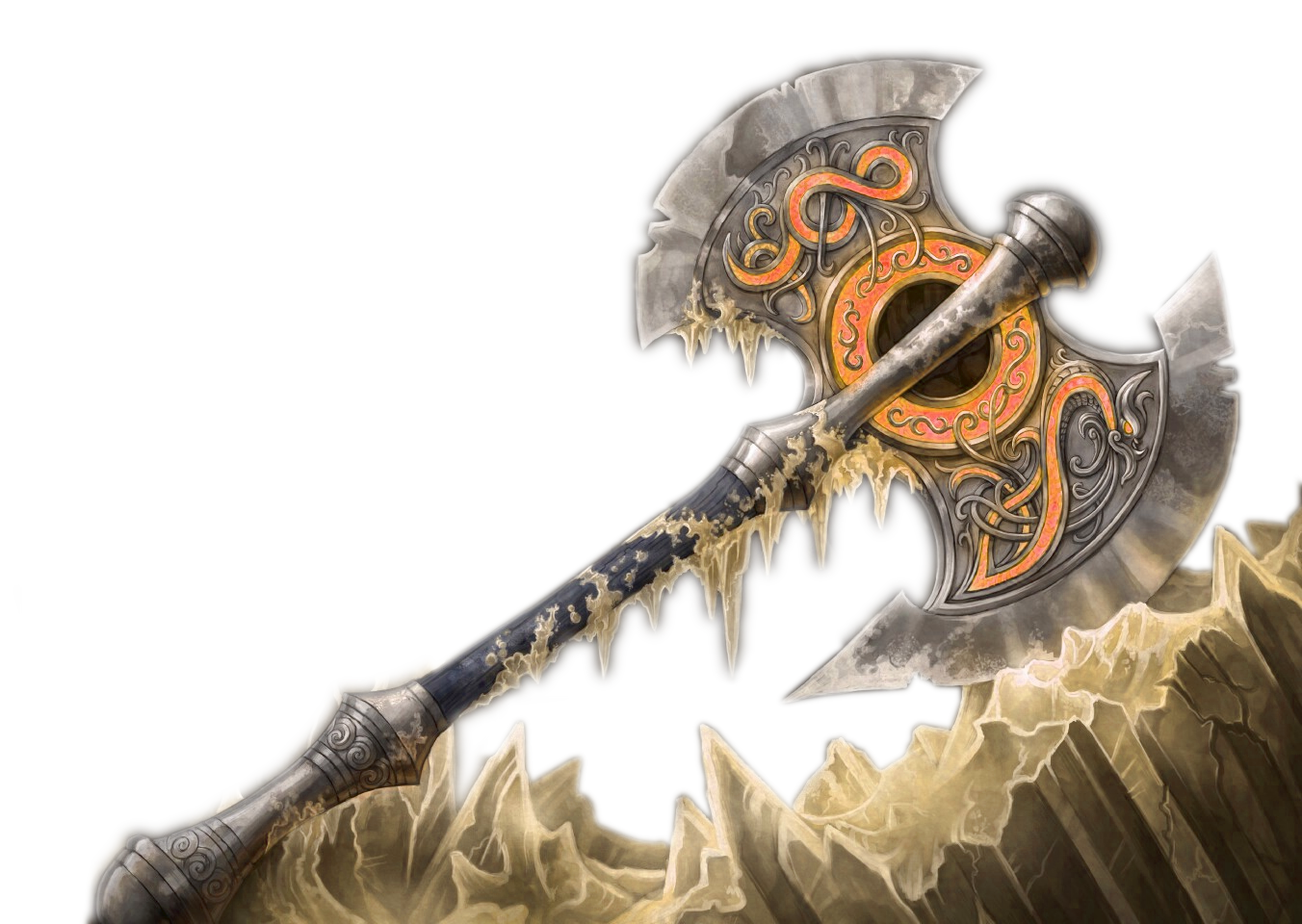
Monks of the Way of the Houdeam learn techniques that focus on utilizing the power of Air to enhance their inherent mobility and speed. Passing down teachings and skills that stem from the vaati's guardians of the Vale of Aaqa, they are especially adept at fighting aerial enemies, like their nemeses, the gargoyles, and creatures slower than themselves.
Restriction: Aarakocra only
Only aarakocra and those granted permission by the Wind Dukes of Aaqa can choose the Way of the Houdeam archetype.
Your DM can lift this restriction to better suit the campaign.
Wing Blast
Starting when you choose this tradition at 3rd level, you learn how to use your wings for more than merely flight. Immediately after you take the Attack action on your turn, you can spend 1 ki point to beat your wings with great force as a bonus action. When you do, each creature within 5 feet of you must succeed on a Strength saving throw or take 1 martial arts die bludgeoning damage and be pushed 10 feet away from you. If a creature that fails this saving throw is at least one size smaller than you and on the ground, it is also knocked prone.
Aerial Reflexes
Also at 3rd level, the training you've undergone has instilled life-preserving instincts in you that are considered vital for anyone that might find themselves in combat above the ground. You can spend 1 ki point to use your Slow Fall feature even if you don't have a reaction.
Gifts of the Vaati
At 6th level, techniques originating from the Elemental plane of Air allow you to use your ki to duplicate the effects of certain spells. As an action, you can spend 2 ki points to cast earthbind or gust of wind. Additionally, as a reaction, you can spend 1 ki to cast feather fall.
Sonic Burst
Beginning at 11th level, your mastery of the air surrounding you grants you the fine control needed for extreme bursts of speed. As an action, you command the air to propel you forward. You can move up to your movement speed in a straight line, hitting everyone foolish enough not to get out of harm's way. Each hostile creature in or within 5 feet of your path must make a Dexterity saving throw or take magical bludgeoning or slashing damage (your choice) equal to your martial damage die + your Strength or Dexterity modifier (your choice). This movement allows you to move through an enemy's space without spending extra movement, and doesn't provoke opportunity attacks.
You can increase the movement's damage by spending ki points. Each point you spend, up to a maximum of 3, increases the damage by one martial arts die.
The Circling Shadow
By 17th level, you have learned how to use your momentum to greater effect. When you hit with a melee weapon attack after moving at least 20 feet in a straight line, you can spend 1 to 10 ki points to increase the damage dealt by 1 martial arts die per ki point spent. If you started this movement from a higher elevation than the creature, it must also succeed on a Strength saving throw or be knocked prone.
Way of the Wyrm
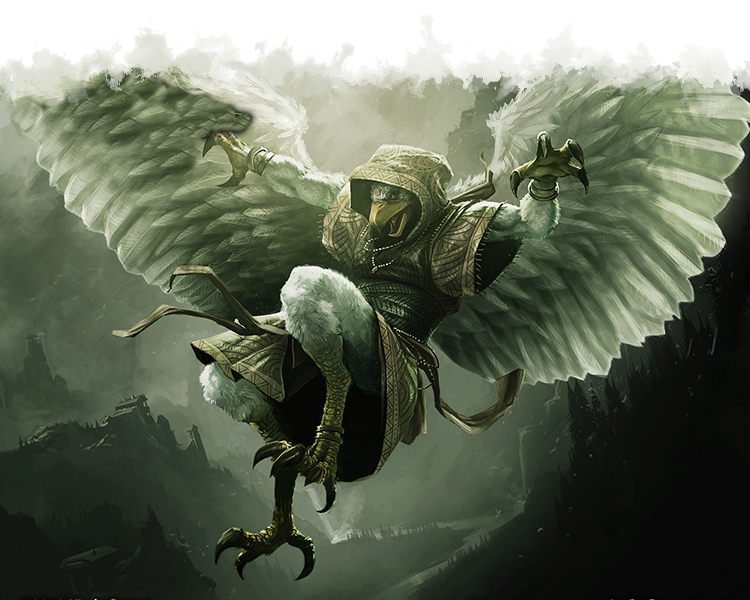
Monks of the Way of the Wyrm work diligently in order to gain the strength and acumen of the majestic beings they descend from. Focusing their efforts on achieving greater control of their innate abilities, while incorporating their own form's ability to deliver smaller, quicker bursts and strikes than their ancestors, they are a formidable foe for anyone that goes up against them.
Restriction: Dragonborn only
Only dragonborn and individuals with the gift of a breath weapon can choose the Way of the Wyrm archetype.
Your DM can lift this restriction to better suit the campaign.
Roaring Whisper
Starting when you choose this tradition at 3rd level, you develop techniques that allow you to use your breath weapon both quicker and more often. You can spend 2 ki to gain one use of it (no action required), you can use it as a bonus action, and you can spend additional ki points to increase its damage. Each additional ki point you spend increases the damage by 1d6. The maximum number of ki points that you can spend in this way equals your Constitution modifier.
Additionally, your control of it allows you to choose its shape each time you use it. The shapes available to you are a 5 by 30 ft. line, or a 15 ft. cone.
Strength of the Scale
Also starting at 3rd level, you've regained the aptitude to deflect blows with your scales that so many of your kin has lost. While using your Unarmored Defense feature, you can choose to use your Constitution modifier instead of your Wisdom modifier.
Draconic Awareness
At 6th level, you've gained a dragon's ability to react quickly, daze your enemies, and to utilize the winds to glide through the sky. When a hostile creature’s movement provokes an opportunity attack from you, you can use your reaction to use your breath weapon, rather than making an opportunity attack. You must include the enemy who triggered the opportunity attack in the area of your breath weapon.
In addition, creatures that fail their saving throw against your breath weapon can't make opportunity attacks until the end of your turn, and when you use your Slow Fall feature, you can choose to move 5 feet horizontally for every 5 feet you fall.
Elemental Attunement
Beginning at 11th level, your mastery of your inborn element allows you to both ignore and change it as you see fit. As a reaction, you can spend 1 ki point to gain immunity to the damage type associated with your draconic ancestry until the end of your next turn. Additionally, when you would make an ability check using Strength, Dexterity, or Constitution, you can expend one use of your breath weapon to fuel yourself, giving you advantage on the roll.
In the Dragon's Shadow
At 17th level, you gain the ability to channel a dragon's awe-inspiring presence. As an action, you can spend 5 ki points to project an aura that grants you and nearby allies one of two benefits (you choose each time you use this feature).
Might. You and friendly creatures within 30 feet of you can add one martial arts die of your breath weapon's damage type to the damage roll of weapon attacks.
Resilience. Friendly creatures within 30 feet of you gain resistance to the damage type associated with your draconic ancestry, and you gain immunity.
On subsequent turns, you must use a bonus action to maintain this aura. Maintaining one of these auras for a number of rounds higher than your Constitution modifier forces you to make a Constitution saving throw at the end of your turn. The DC is 12 + the total number of rounds you've maintained the aura. If you fail, the aura ends and you gain one level of exhaustion.
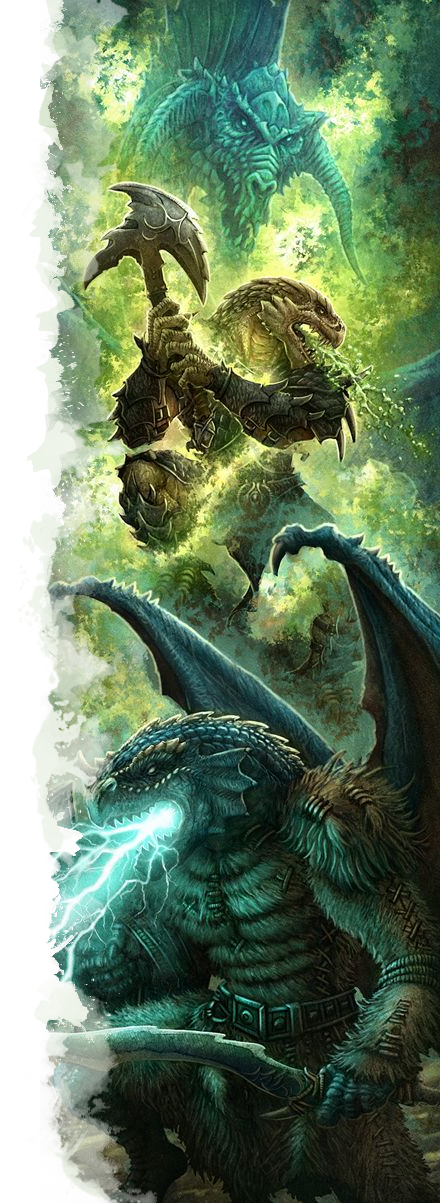
Oath of the Wing Seeker
While some kenku seek magical knowledge in order to achieve their dream of flight, paladins of the oath of the Wing Seeker wander from their flock, determined to seek the means to end their kin's unjust fate for all. In their quest to end the plight that has plagued their race for some long-forgotten reason for so long, these paladins will follow any and all gods if it gets them closer to unravel the mysteries of their own past and to break the curse that looms over them.
Restriction: Kenku Only
This oath is only taken by kenku. Who else would, frankly?
Tenets of the Wing Seeker
The tenets for this oath does not vary, neither in words nor pitch, though the meaning derived from them might differ from paladin to paladin.
Slight Courage. Never fear to act, though [alarm bell] caution is [old man humming] wise.
Pick Your Fights Carefully. Faced with a choice of fighting my sworn foes or combating a lesser evil. I choose the [squeak] evil.
No Mercy for the Wicked. Ordinary foes might win my mercy, but my [flap flap flap] enemies do not.
Be the Flight. Be a glorious beacon for all who live in despair. Let the [swoosh] of your joy and courage shine forth in all your deeds.
Oath Spells
| Paladin Level | Spells |
|---|---|
| 3rd | featherfall, jump |
| 5th | earthbind, levitate |
| 9th | fly, tongues |
| 13th | freedom of movement, polymorph |
| 17th | control winds, seeming |
Channel Divinity
When you take this oath at 3rd level, you gain the following two Channel Divinity options.
Live to See the Skies Again. You can use your Channel Divinity to ensure your flock can escape danger. As an action, you can let out a warning cry to alert your allies to pending doom. Each creature of your choice that can hear you within 30 feet of you can immediately move up to their movement speed without provoking opportunity attacks.
Kenku Can Too. You can use your Channel Divinity to elevate your talent for mimicking to new heights. As a reaction to a creature casting a spell with verbal components, you can temporarily imprint it to your short-term memory. Until the end of your next turn, you can cast that spell without material components, but otherwise using the regular spellcasting rules.
Aura of Aviation
At 7th level, you've cracked the secret of flight. Almost. You and friendly creatures within 10 feet of you have a jump distance equal to your movement speed.
At 18th level, the range of this aura increases to 30 feet.
Noisy Feathers
Beginning at 15th level, you are always under the effect of a feather fall spell.
Additionally, you can cast spells with verbal components even if you are silenced, whether it be by magical or nonmagical means.
True To Your Heart
At 20th level, you can assume the form of what your heart is telling you that your race once was.
Using your action, you undergo a transformation. For 1 minute, you gain the following benefits:
- Your size becomes Large.
- You gain a flying speed equal to double your normal movement speed.
- Your talons are natural weapons, which you can use to make unarmed strikes. If you hit with them, you deal slashing damage equal to 3d6 + your Strength or Dexterity modifier, and you can choose to grapple the target. A creature grappled in this way can use its action to make a Strength check against your spell save DC. If it succeeds, it is no longer grappled. Until this grapple ends, the target is restrained, and you can't use your talons on another target.

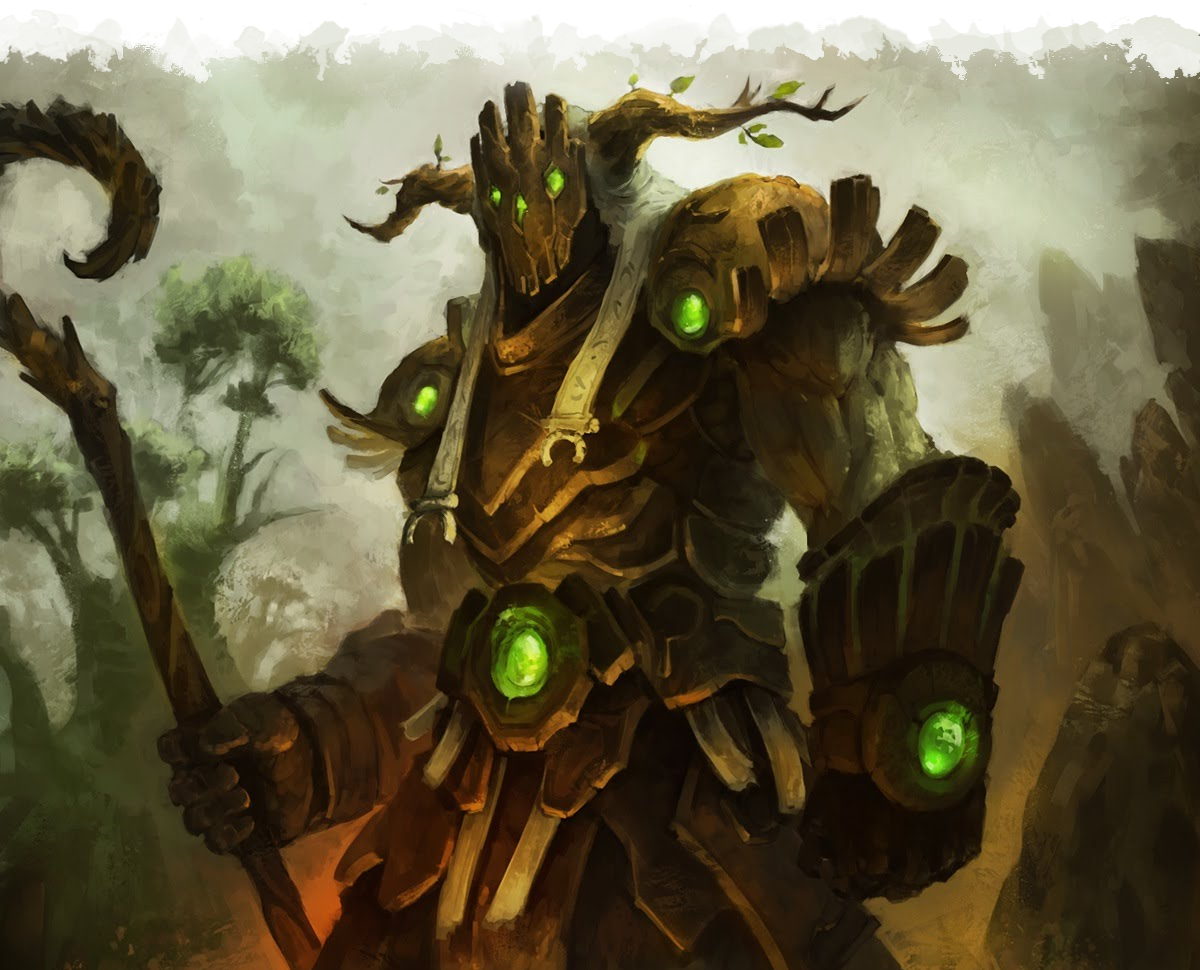
Grove Guardian
Most rangers have a close relationship with nature, but sometimes nature itself forms a particularly close bond to a ranger, gifting it with the means to better protect its groves and forests.
Rangers tasked with this employ an ancient kind of magic that allows them to wield weapons and armor made entirely from organic material, although they also view metal as a natural material and will not hesitate to use whatever they get their hands on in order to fulfill their mission.
Restriction
It's mostly Firbolgs that have proven they are worthy of this crucial task, but individuals of other races have also been known to receive nature's blessing in this way, although it is rare.
Your DM can lift this restriction to better suit the campaign.
Weapons of the Wild
At 3rd level, your bond with nature allows you to shape organic material to your liking.
As a bonus action, you can transform up to two pieces of wood at least the size of your fist into any melee weapon. You can’t be disarmed of a weapon transformed this way unless you are incapacitated. You can also use a bonus action to change the weapons' form or revert them to their original form. At 7th level, these weapons count as magical for the purpose of overcoming resistance and immunity to nonmagical attacks and damage.
Additionally, once on each of your turns, when you hit with an attack you make with a melee weapon, you can add your Wisdom modifier to the damage roll.
Recycled Protection
Also at 3rd level, nature does its part to keep one of its chosen protectors alive. You can transform an armor into a nut, similar in size to a chestnut, by performing an ancient, magical ritual while you hold the armor. You perform the ritual over the course of 1 hour, which can be done during a short rest. Up to two armors can be under the effect of this magic, and if you attempt to
perform the ritual with a third armor, one of the other armors loses its magic, becoming an ordinary nut.
When the ritual is complete, as a bonus action, you can touch the nut and make the nut grow into a wood armor covering your body, using the same statistics as it had before the ritual, or revert to a nut. You can only benefit from one armor in this way.
Additionally, when you would take damage, you can use a reaction to instantly harden the wood armor, giving you resistance to nonmagical bludgeoning, piercing, and slashing damage until the start of your next turn.
Once you've used this reaction, you can't use it again until you've finished a short or long rest.
Extra Attack
Beginning at 5th level, you can attack twice, instead of once, whenever you take the Attack action on your turn.
Thousand Eyes of the Forest
At 7th level, your bond with nature gives you the benefits of an enhanced sense to discover and react to danger. Dim light doesn’t impose disadvantage on your Wisdom (Perception) checks relying on sight, and while conscious and outdoors, you can't be surprised.
Reaching Branches and Vines
Starting at 11th level, your weapons seem to become more alive. The reach for weapons created by your Weapons of the Wild feature is 5 feet greater than normal, and when you hit a creature on your turn with one, the target must succeed on a Strength saving throw against your spell save DC or be pulled up to 10 feet toward you.
Additionally, when you successfully pull a creature this way, you can use a bonus action to attempt to grapple it.
Rejuvenating Connection
At 15th level, the ground beneath you provides you with sustenance and vitality. As long as you are touching the ground or another natural surface, you gain temporary hit points equal to twice your Wisdom modifier at the start of each of your turns.
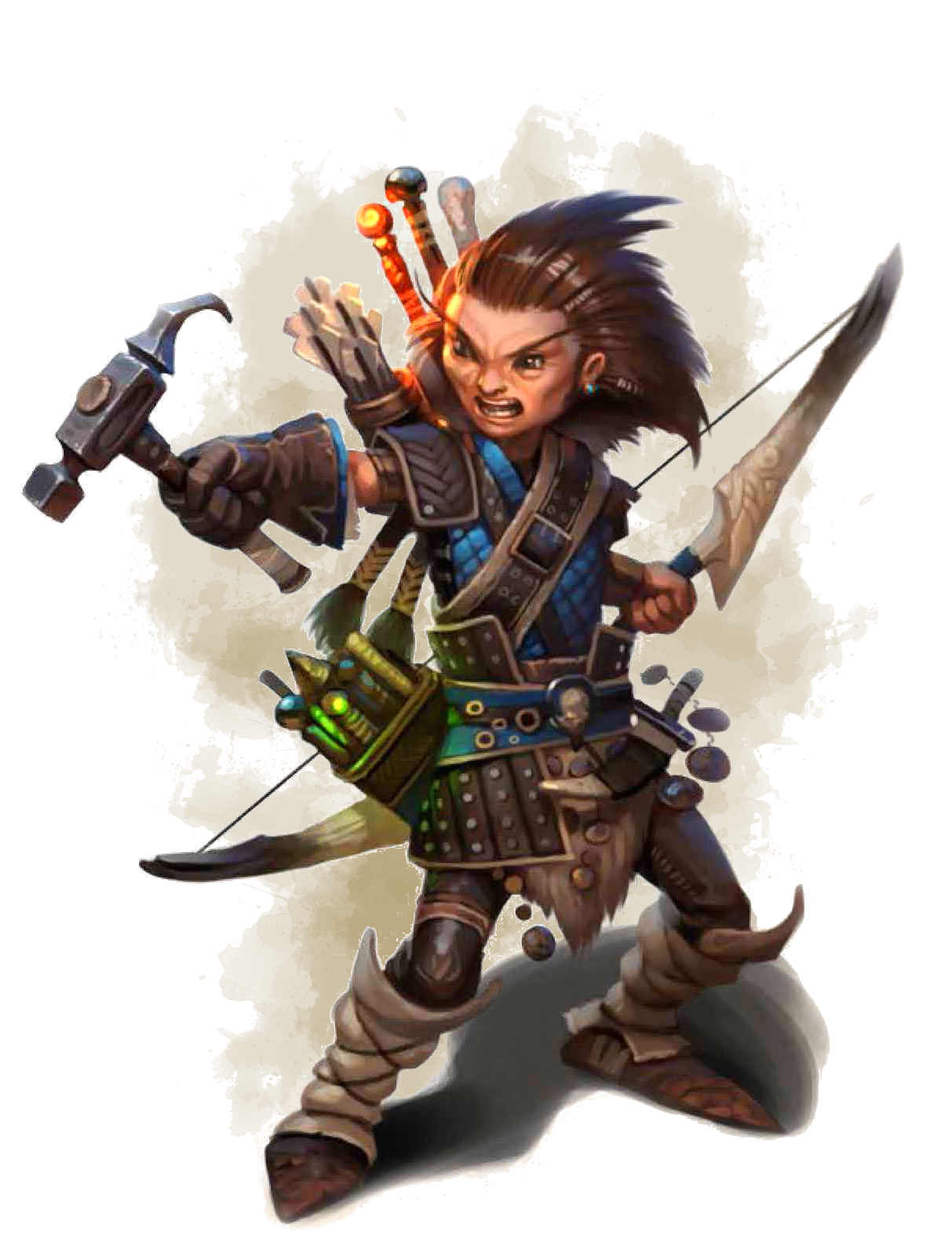
Trickster Conclave
Gnome rangers are regularly underestimated, but those in the Trickster conclave use that lack of esteem as both a defense and an offense, when need be. Using their keen intellect and various talents, they create their own advantages in order to level the playing field.
Restriction: Gnomes only
Only gnomes can choose this archetype.
Your DM can lift this restriction to better suit the campaign.
Combat Trickster
Starting when you join this conclave at 3rd level, you learn how to use your gnomish ingenuity, deft hands, and the knowledge you've accumulated, to counteract that you are physically at a disadvantage to most foes. You gain proficiency with artisan’s tools (tinker’s tools) if you don't have it already.
Combat Tricks. The conclave has entrusted you with three blueprints and designs for combat tricks; items meant to hinder your enemies. The combat tricks are detailed at the end of the archetype description.
You learn the design of one additional combat trick at 7th and 15th level.
Trick Capacity. Using your tinker tools, you can spend parts of a short or long rest crafting or repairing combat tricks. You can only carry four of these combat tricks at any given time.
Your trick capacity increases by one at 7th level and 15th level.
Saving Throws. Your combat tricks require creatures that trigger them to make a saving throw to avoid its effects. The saving throw DC is calculated as follows:
Opportune Strike
At 3rd level, you learn how to exploit the openings your combat tricks create. When a creature fails a saving throw against one of your combat tricks, you can use a reaction to make one weapon attack against it. Additionally, you never trigger your own combat tricks unless you want to.
Rabbit From a Hat
Beginning at 5th level, your familiarity with the combat tricks you employ improves your handling of them. You can choose to use combat tricks as a bonus action. Additionally, when you craft or repair a combat trick, you can spend a spell slot to enchant it. An item enchanted in this way deals your choice of fire or poison damage when a creature fails its saving throw against it. The damage is 3d6 for a 1st-level spell slot, plus 1d6 for each spell level higher than 1st. If more than one combat trick is placed in the same area, a creature only takes damage from the most powerful of them. Regardless of whether the creature fails its saving throw or not, the magic imbued in the item is expended.
*This subclass is designed with the Revised Ranger in mind. If you're playing the PHB version, use this version instead (Homebrewery) or this (PDF).
Out of Sight, Out of Reach
Starting at 7th level, you always have a plan to get out of a sticky situation. You can use a bonus action to gain a burrow speed equal to your movement speed until the end of your turn. You must resurface at the end of this movement.
Exploitative Nature
At 11th level, your keen eye knows exactly which signs to look for, and how to exploit a show of weakness, no matter how slight it is. When you use a reaction to attack a creature because it failed a saving throw against one of your combat tricks, you can make two weapon attacks instead of one.
Elusive Foe
At 15th level, you can use every opportunity to get out of dodge. When a creature fails a saving throw against one of your combat tricks, you can use your reaction to move up to half your speed.
Lifting the restriction
If the restriction on this is lifted, the 7th level feature could be replaced with "You can use a bonus action to take the Disengage action." if a burrow speed doesn't fit the flavor of the race.
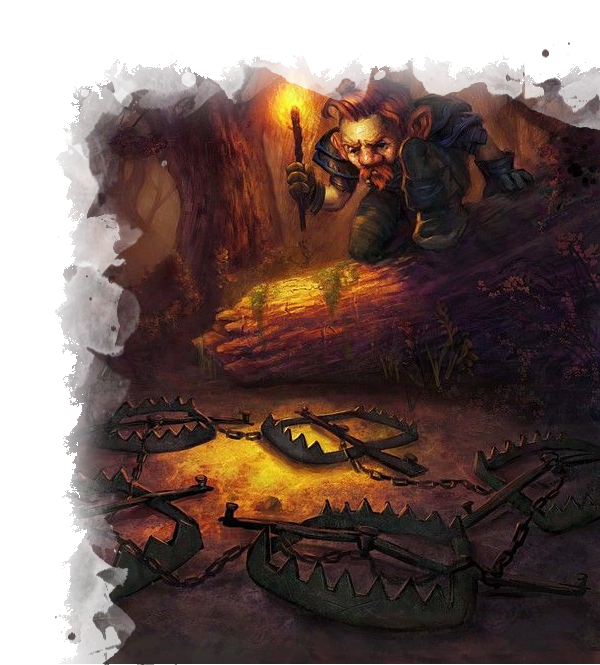
Combat tricks
Some of the items here are also in the Player's Handbook, but these versions are slightly improved, due to the time, effort, and talent poured into making them.
In addition to hindering your enemies in some way, some are also designed to harm. When combat tricks deal damage, they refer to your trick die, which starts out as d6, and at 7th level it becomes d8.
Ball bearings (bag of 1,000). As an action, you can spill these tiny metal, glass, crystal, stone, or bone balls from their pouch to cover a level area 10 feet square. The first Large or smaller creature moving across the covered area must succeed on a Dexterity saving throw or fall prone, taking 1 trick die of bludgeoning damage.
Blood Thinners (bag of 20). As an action, you can spread a single bag of these caltrop-like items covered with a mixture of natural spices to cover a 5-foot-square area. The first creature that enters the area must succeed on a Dexterity saving throw. If it fails, the next weapon attack that hits it before the end of its next turn deals 3 trick dice of additional damage with the same type as the weapon.
Caltrops (bag of 20). As an action, you can spread a single bag of caltrops to cover a 5-foot-square area. The first creature that enters the area must succeed on a Dexterity saving throw or stop moving and take 2 trick dice of piercing damage. Until the creature regains at least 1 hit point, its walking speed is reduced by 10 feet. A creature moving through the area at half speed makes the saving throw with advantage.
Flash Rods (one pair). As an action, you can place these two rods connected by a thin wire on a flat surface. The first creature that passes between the rods trips the wire, making the rods flare up in an intensely bright light. The creature must succeed on a Constitution saving throw or be blinded until the end of the turn.
Oil Fountain. As an action, you can place this small metal cube attached to a pressure plate on the ground. The first creature that steps on the plate must succeed on a Dexterity saving throw or be sprayed with a highly volatile substance. If the creature takes fire or lightning damage before the substance evaporates at the start of its next turn, it takes 1 trick die fire damage and must succeed on a Wisdom saving throw to withstand the shock of being lit on fire. If it fails, it must use its reaction to move its movement speed in a random direction. Special. An oil trap is harder to place efficiently, so it can only be placed as an action.
Portable Ice (Bag of 50). As an action, you can spread a single bag of these compressed ice pellets to cover a 5-foot-square area. The first creature that enters the area triggers the pellets, making them expand rapidly, forming a 20-feet tall ice pillar that immediately shatters. Any Large or smaller creatures in the area must succeed on a Dexterity saving throw or be lifted by the pillar. Tiny creatures don't trigger the pellets.
Special. You need access to water to craft these pellets, and they melt after 1 hour if in extreme heat.
Screeching Sirens (soundproof container). As an action, you can place the brittle container on the ground. The first Small or larger creature that enters its 5-foot area causes the container to break, releasing the short-lived bugs inside it. The bugs are drawn to the nearest source of body heat, while emitting a high-pitched sound. Until the start of its next turn, the creature must succeed on a Charisma saving throw in order to cast a spell with verbal components.
Special. You need access to bugs normally found in the wild to collect enough of them to be efficient, so the DM may rule that a city, dungeon or similar restricts how many, if any, you can craft.
Snap trap. When you use your action to set it, this trap forms a saw-toothed steel ring that snaps shut when a creature steps on a pressure plate in the center. The trap is affixed by a heavy chain to an immobile object, such as a tree or a spike driven into the ground. A creature that steps on the plate must succeed on a Dexterity saving throw or take 1 trick die of piercing damage and stop moving. Thereafter, until the creature breaks free of the trap, its movement is limited by the length of the chain (typically 3 feet long). A creature can use its action to make a Strength check, freeing itself or another creature within its reach on a success. Each failed check deals 1 trick die of piercing damage to the trapped creature.
Special. A snap trap is harder to place efficiently, so it can only be placed as an action.
Sonic Sphere. As an action, you can place a small metal sphere on the ground. Highly sensitive to vibrations in the ground, the sphere will activate when the first creature enters its 5-foot area, creating a burst of thunderous sound, which can be heard 100 feet away. The creature must make a Constitution saving throw or take 1 trick die thunder damage and be deafened until the end of its next turn.
Sneezing Powder Pellets (bag of 10). As an action, you spread a single bag of these hollow, lightweight husks filled with ground seeds to cover a 5-foot square. The first creature that enters the area must succeed on a Constitution saving throw or take 1 trick die of poison damage and spend its action sneezing violently.
Twitchers (bag of 40.). As an action, you use a single bag of these tiny metal rods holding trace amounts of lightning energy to cover two 5-foot-square areas. The first creature that enters an area must succeed on a Constitution saving throw or take 1 trick die of lightning damage from the small current running through them. A creature that fails this saving throw has disadvantage on the next attack it makes before the end of its next turn.
Deathsinger
Unlike the similar style of the surface elves' Bladesong, Deathsong isn't taught, merely 'unlocked' as a talent. For while all drow have the potential for innate spellcasting, some are born with an affinity for magic and mayhem that's well beyond most. Many drow will credit this to a blessing from the god Vhaeraun, but just as many believe that it's Lolth's favor that has been granted. Regardless of belief, however, all know that these individuals have the Deathsong flowing through their veins, and that they can be both brutal and effective with little effort on their part.
The name Deathsong itself comes from the eerie sound the slashing weapons make when whirled in wide arcs, along with the deathsingers' disquieting tendency to sing to the rhythm of the thrusts and parries.
Although a deathsinger makes the dancing attacks and the fluid motions of the slim longswords that most deathsingers use seem more like an art, or a performance even, it would be a mistake to simply admire the display, for it is truly a brutal and deadly combination of magic and steel.
Restriction: Drow Only
Only drow and half-elves with drow ancestry can choose the deathsinger sorcerous origin. Your DM can lift this restriction to better suit the campaign.
Deathsinger Origin Spells
| Sorcerer Level | Spells |
|---|---|
| 1st | shield |
| 3rd | shadow blade |
| 5th | fear |
| 7th | shadow of Moil |
| 9th | steel wind strike |
| 11th | circle of death |
Training in Death and Delivery
Starting when you choose this origin at 1st level, you gain proficiency with light armor, battleaxes and longswords. You can use Dexterity instead of Strength for the attack and damage rolls of these weapons.
You also gain proficiency in the Intimidation skill.
Deathsong
Starting at 1st level, you can awaken the drow magic called the Deathsong, provided that you aren't wearing medium or heavy armor or using a shield. It graces you with supernatural agility and focus.
You can use a bonus action to start the Deathsong, which lasts for 1 minute. It ends early if you are incapacitated, if you don medium or heavy armor or a shield, or if you use two hands to make an attack with a weapon, unless that weapon is one you gained proficiency with when you chose this sorcerous origin. You can also dismiss the Deathsong at any time you choose (no action required). While your Deathsong is active, you gain the following benefits:
- You gain a bonus to your AC equal to half your Charisma modifier (rounded up).
- You can use a bonus action on your turn to intimidate one creature within 5 feet of you. That creature must make a Wisdom saving throw against your spell save DC. If it fails, until the end of your next turn, you have advantage on your next attack roll against that creature.
- When you start your Deathsong, and when you reduce a creature within 5 feet of you to 0 hit points, you gain temporary hit points equal to your Charisma modifier + half your sorcerer level (minimum of 1 temporary hit point).
You can use this feature twice. You regain all expended uses of it when you finish a short or long rest.
Lacerating Strokes
Starting at 6th level, once on each of your turns, when you hit with a melee weapon attack, you roll one additional weapon damage die.
Additionally, once on each of your turns, when you roll the maximum on the damage die for a slashing weapon, you lace the wound with necrotic energy, making it deal 1d8 necrotic damage to the target at the start of its next turn.
Dance of Death
Starting at 14th level, you've further developed your ability to weave from one motion to another. When you score a critical hit or reduce a creature to 0 hit points while your Deathsong is active, you can cast a cantrip or make a melee weapon attack as a reaction.
Death Incarnate
Beginning at 18th level, while your Deathsong is active, you can sing with a high-pitched, magically enhanced voice, unsettling those in proximity to you. As an action, you can spend 5 sorcery points to intimidate all hostile creatures within 30 feet of you. Each creature must make a Charisma saving throw against your spell save DC. If a creature fails, until the end of your next turn, the first attack that hits it deals maximum damage. A creature that succeeds on this saving throw is immune to this effect for 24 hours.
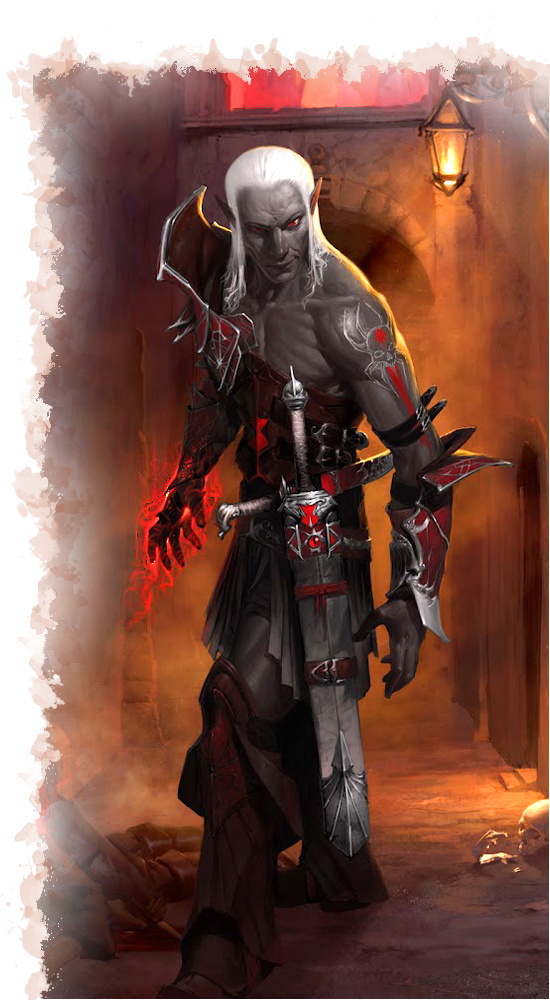
Giant Bloodline
Your innate magic comes from the giant blood in your bloodline. Instead of this ancestry manifesting as the brute strength your kin values above all, you inherited an affinity for magic. While some among your kind might consider this a flaw, you've found ways to gain an edge in combat by combining your magic with physical strength.
Restriction: Goliaths, orcs and half-orcs only
Only goliaths, orcs and half-orcs can choose the Giant origin.
Your DM can lift this restriction to better suit the campaign.
Giant Origin Spells
| Sorcerer Level | Spell |
|---|---|
| 1st | inflict wounds |
| 3rd | enlarge/reduce |
| 5th | vampiric touch |
| 7th | stoneskin |
| 9th | conjure volley |
| 11th | investiture of stone |
Unflinching Defense
Your heritage and upbringing have not only instilled in you a desire for close quarters combat, but also taught you the means to survive it. You gain proficiency with light and medium armor.
The Lethal Touch
Starting at 1st level, your body is a conduit of harmful and dazzling magical energy. Sorcerer spells that require a ranged spell attack can instead be cast as a melee spell attack with a range of Touch, and when you make a melee spell attack, you can choose to use your Strength modifier for the attack roll.
Additionally, when you hit with a melee spell attack with a range of Touch, add your Strength modifier to the damage roll once.
Might & Magic
At 6th level, you can use your might to keep your foes close, and your magic to punish them for it. When you make a melee spell attack, you can use a bonus action to attempt to grapple the target, and you have advantage on melee spell attacks against targets you are grappling.
Vital Vigor
Also at 6th level, your magic sustains you. As a bonus action, you can expend a spell slot to gain an amount of temporary hit points equal to five times the spell slot's level. While you have temporary hit points, you shed dim light of a hue of your choice in a 5-foot radius.
Beacon of War
Starting at 14th level, the magical energy overflows your corporeal boundaries, becoming a tangible layer of protection. While you're shedding light from your Vital Vigor feature, you have resistance to bludgeoning, piercing, and slashing damage from nonmagical weapons.
Giant in the Midst
Beginning at 18th level, your ancestry is more than your history, it's also your present and your future. As an action, you can spend 3 sorcery points to draw on the power of your bloodline. When you do, your size doubles in all dimensions, and your weight is multiplied by eight. This growth increases your size by one category - from Medium to Large, for example. If there isn't enough room for you to double your size, you attain the maximum possible size in the space available. In addition, your reach increases by 5 feet, you have advantage on Strength checks and Strength saving throws, and when you hit with a melee spell attack, it deals one additional die of damage. This effect ends after 1 minute or if you are knocked unconscious.

Planar Patron
You've reached out to your ancestral plane in search for power, and a being of immense power has answered your plea. The being might be one of your ancestors, looking to empower one of its descendants, a being that wants an emissary or champion on the Material Plane, or one with an agenda you've yet to unravel. Either way, it grants you access to both knowledge and power to better fit its vision of your future.
Restriction: Genasi only
Only genasi can choose this otherworldly patron for warlocks .
Your DM can lift this restriction to better suit the campaign.
Expanded Spell List
The Planar Patron lets you choose from an expanded list of spells when you learn a warlock spell. The following spells are added to the warlock spell list for you.
| Spell Level | Spells |
|---|---|
| 1st | absorb elements, chromatic orb |
| 2nd | flame blade, darkvision |
| 3rd | elemental weapon, protection from energy |
| 4th | leomund's secret chest, vitriolic sphere |
| 5th | *planar binding, dispel evil and good * |
For the spells in bold, the damage type changes according to genasi race.
Air = lightning; Earth = acid; Fire = fire; Water = cold
Patron's Toll
Starting at 1st level, once each turn, when you kill a hostile creature, its body vanishes in a flash of elemental energy, as it's instantly transported to your patron's plane, leaving only its material possessions behind. Each hostile creature within 5 feet of it must make a Dexterity saving throw against your warlock spell save DC or take damage of a type corresponding to the plane. The damage is equal to your Charisma modifier + half your warlock level.
Shelter of the Plane
At 6th level, your patron can magically ward its investment from harm. As a reaction to taking damage, you can call on your patron's protection, granting you resistance to the triggering damage. If the damage is of the type corresponding to your patron's plane, it grants you immunity instead.
Once you use this feature, you can't use it again until you finish a short or long rest.
Elemental Servant
Starting at 10th level, your patron has gifted you with a servant to aid you in times of trouble. As an action, you call forth this elemental servant. An elemental of challenge rating 5 or lower appropriate to your patron's plane appears in an unoccupied space within 30 feet of you.
The elemental is friendly to you and your companions. Roll initiative for the elemental, which has its own turns. As an action, you can issue it a verbal command that it follows to a point. If you don't issue any commands to the elemental, it defends itself from hostile creatures but otherwise takes no actions. Additionally, whenever you cast a 1st level spell or higher that deals damage corresponding to its plane of origin, it gains temporary hit points equal to your warlock level.
After 10 minutes, or if the elemental is reduced to 0 hit points, it returns to its native plane.
Once you use this feature, you can't use it again until you finish a long rest.
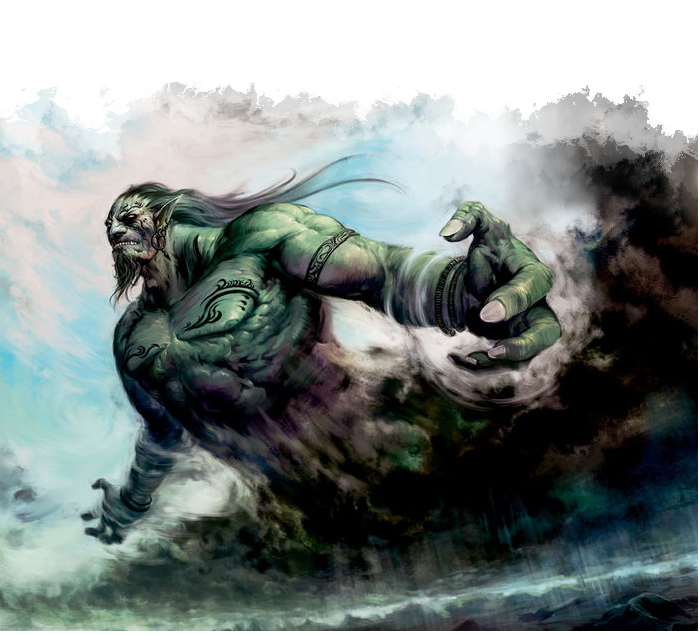
Planar Conduit
Starting at 14th level, you can use an action to surround yourself with the glory and essence of your patron's plane. A sphere with a 15-foot radius comes into existence centered on you. The sphere lasts for 1 minute, or until you lose your concentration (as if you were concentrating on a spell). When a hostile creature enters the sphere for the first time on a turn or starts its turn in it, it must make a Charisma saving throw against your warlock spell save DC. On a failed save, the creature takes 3d10 damage of the type corresponding to your patron's plane. On a successful save, the creature takes half as much damage.
In addition, while the sphere lasts, you can add your Charisma modifier to any damage roll you make that deals the same damage type as the sphere.
Once you use this feature, you can't use it again until you finish a short or long rest.

Pact Boon
At 3rd level, the warlock gains the following additional choice of pact boon, if the DM allows it.
Pact of the Plane
Prerequisite: Planar Patron
You gain resistance to the damage type associated with your patron's plane. If you already have resistance to that damage type, it is also reduced by your Constitution modifier. Additionally, you learn two cantrips from the sorcerer's spell list. If they deal damage, they deal the damage type associated with your patron's plane instead of their stated damage.
Eldritch Invocations
The following section presents new invocations for the warlock. These invocations follow the same rules as invocations found in the Player’s Handbook.
Breezy Embrace
Prerequisite: 9th level, air genasi
You can cast feather fall at will, without expending a spell slot or material components.
Elemental Step
Prerequisite: 9th level, genasi
Wisps of fire, tendrils of air, miniature waves, or rolling pebbles carry you forth. As an action, you can start to hover 1 foot above the ground. While hovering in this way, your movement speed is increased by 5 feet, and moving through nonmagical difficult terrain costs you no extra movement. You can stop hovering as a bonus action.
Earth Glide
Prerequisite: 15th level, earth genasi
As an action, you can connect with the ground beneath your feet. For 1 minute, you can burrow through nonmagical, unworked earth and stone. While doing so, you don't disturb the material you move through. Your movement speed in this state is equal to your normal movement speed.
You can’t take this action again until you finish a long rest.
Frozen Greetings
Prerequisite: 7th level, water genasi
You can cast ice storm without expending a spell slot or material components. You must finish a long rest before you can use this invocation again.
Localized Inferno
Prerequisite: 7th level, fire genasi
You can cast wall of fire without expending a spell slot or material components. You must finish a long rest before you can use this invocation again.
Master of the Waves
Prerequisite: 12th level, water genasi
You can cast water walk on yourself at will, without expending a spell slot or material components.
Me Fit Better
Prerequisite: 5th level, Pact of the Chain, genasi
When you cast find familiar, you can choose to summon a mephit befitting your subrace. If the mephit has a breath attack or spell, you can use your action to order it to use it. Once it has used one of these actions, you must finish a short or long rest before it can use that action again.
Patron's Power
Prerequisite: 7th level, Planar Patron
When you roll damage of the type associated with your patron's plane, you can choose to deal maximum damage, instead of rolling.
You can't do so again until you finish a long rest.
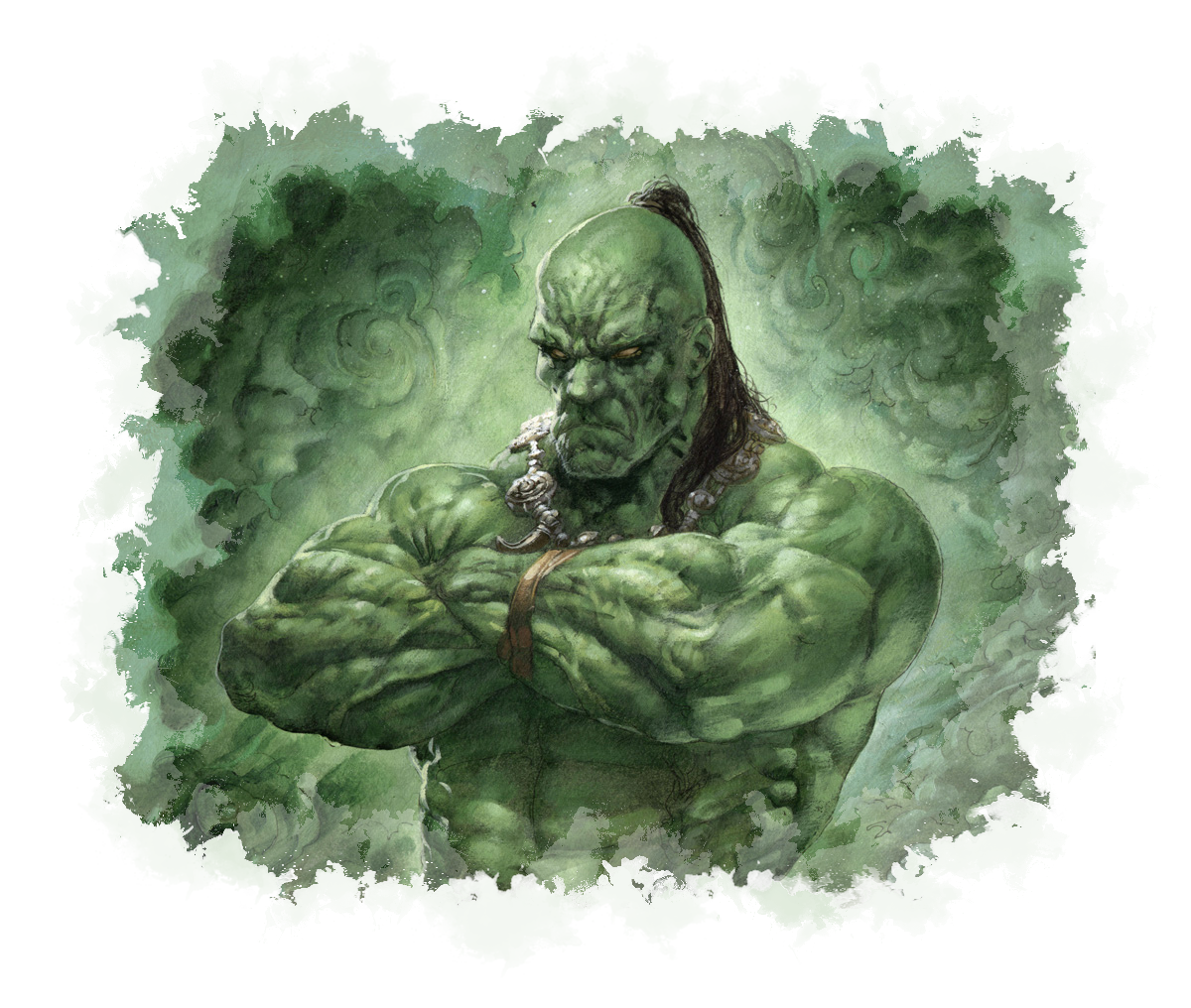
Planar Conduit
Prerequisite: Pact of the Plane
When you cast a cantrip learned from your Pact Boon, add your Charisma modifier to the damage it deals on a hit.
Symbiotic Servitude
Prerequisite: 15th level, Planar Patron
You gain a stronger link with the elemental summoned by your Elemental Servant feature. You can cast spells of 1st level or higher as if you were occupying its space, using its senses.
Additionally, if damage would reduce you or the elemental to 0 hit points, either one of you can use your reaction to instantly switch places if you're within 120 feet of each other. If you do, the other takes the triggering damage instead.
You can’t do so again until you finish a long rest.
Tempered Steel
Prerequisite: 12th level, Pact of the Blade, genasi
When you hit a creature with your pact weapon, the creature takes extra elemental damage equal to your Charisma modifier (minimum 1). The damage type is determined by your subrace.
Thunderstruck
Prerequisite: 5th level, air genasi
You can cast call lightning without expending a spell slot or material components. You must finish a long rest before you can use this invocation again.
Unforgiving Plane
Prerequisite: Pact of the Blade, genasi
As a bonus action, you can make your inner element roar. All creatures within 5 feet of you take damage equal to your Constitution modifier + half your warlock level of the damage type associated with your race.
After using this action, you must succeed on a DC 10 Constitution saving throw or gain one level of exhaustion.
Each time you use this invocation after the first, the DC increases by 5. When you finish a long rest, the DC resets to 10.
Weapon of the Planes
Prerequisite: Planar Patron, Pact of the Blade
When you create your pact weapon, you can infuse it with energy. If you do, you can use your Charisma modifier for the attack and damage rolls of melee attacks using that weapon, and the weapon's damage type becomes the damage type associated with your patron's plane.
Additionally, when you hit with this weapon, you can choose to open a pathway to your patron's plane directly through it and deal additional damage equal to twice your warlock level to the target. When you do, the weapon disappears, and must be created as an action again.
Lifting the restriction
If a DM wants to allow both the patron and these invocations, one could simply replace all instances of 'genasi' in the prerequisites with 'Planar Patron'.
If the invocations are allowed, but not the patron, either remove both genasi and 'Planar Patron', or just 'Planar Patron'.
