Table of Contents
| Section Number | Title | Page Number |
|---|---|---|
| 1 | Introduction | 3 |
| 2 | Mercia's Neighbors | 4 |
| 3 | The World | 7 |
| 4 | History of Dukain | 8 |
| 5 | Demographics | 10 |
| 6 | Culture and Society | 11 |
| 7 | The Council | 12 |
| 8 | Military | 14 |
| 9 | Economy | 15 |
| 10 | Religion | 16 |
| 11 | Cities and Towns | 21 |
| 12 | Places of Interest | 23 |
| 13 | Criminal Elements | 25 |
| 14 | Important Organizations | 26 |
| 15 | Player Instructions | 27 |
| 16 | Homebrew Material | 28 |
Introduction
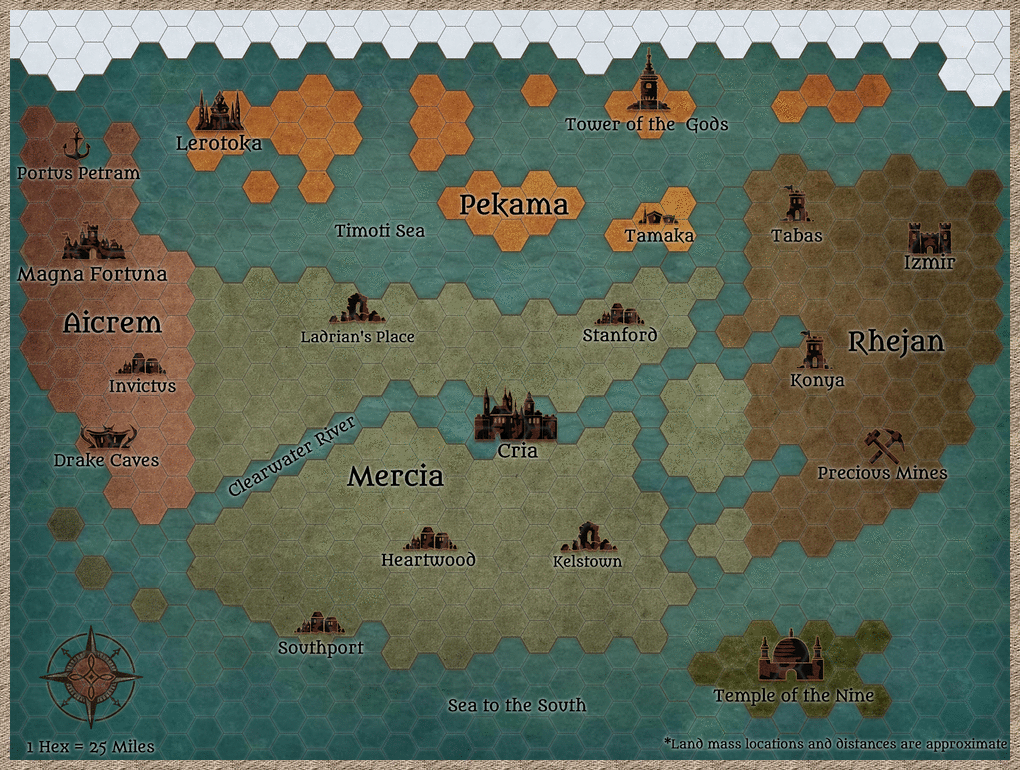
Dukain is a world full of natural beauty and magical wonders. Although the land has seen many people and nations rise and fall, we have all but forgotten Dukain’s ancient history. For the past 400 years, the Four Powers have coexisted: Mercia, Aicrem, Pekama, and Rhejan. The largest power in Dukain is the great state of Mercia. My name is Callicrates Pulcher, Historian and Seer to The Council of Mercia. This guide has been written in an effort to capture this moment in our history. For years we've had the closest thing to peace Mercia has seen in generations, but the winds are shifting and I foresee darkness on the horizon. My only hope is that should disaster strike, this guide will survive for a future generation.
Mercia’s Neighbors
The Bor Dynasty of Aicrem
A mostly human realm governed by Messenio the Bor, Aicrem is Mercia’s longtime rival. With a population of roughly 100,000, Aicrem is the second largest of Dukain’s 4 powers. The hills bordering Mercia run for about 150 miles before giving way to sparsely vegetated steppes. It has long been the goal of Aicrem to gain access to the rich farmlands around Clearwater River through conquering the western territory of Mercia. Not a family dynasty, each Bor selects the next ruler from within their ranks of military advisors and generals. Despite this, no fights for succession or civil wars have interrupted a transfer of leadership in Aicrem’s history. Aicrem primarily worships The One Who Judges And Perfects above all other deities, but Mercian adherents to the God of the South would not even recognize the barbaric practices of Aicrem’s religious ceremonies and traditions. The minority races in Aicrem include Dragonborn, Tabaxi, Tieflings, and Half-orcs.
Life in Aicrem is simple. Although by Mercian standards they are little more than literate barbarians, Aicremians take great pride in being a society of "warrior poets."" The Aicremian economy is the poorest of the 4 powers, with most farming being for sustenance, most weapons made for their own military, and most fine craftmanship kept in the homes of the makers or given as gifts. During times of good harvest or prolonged peace, they trade with Pekama for food, textiles and seatar. Their primary export is domesticated animals – typically horses, hounds, and panthers. However, if their price can be met and they can be convinced the buyer has no love for Mercia, they may even be willing to part with the eggs of their terrible Drake battle mounts.
Major Cities
Magna Fortuna
Aicrem's capital is a fortress, with multiple rings of walls of steel and stone, nearly endless stores of food and supply, and an underground system supplying fresh water, tunnels, and shelter from an invading army's siege weapons. It is said to be the most secure settlement outside of Rhejan, but its walls and nerve have never been tested. With the Gods' blessings they'll never force our hand and make us reduce such a structure to dust.
Camp Invictus
Aicrem's eastern most city, Invictus is well fortified and surrounded by the only decent farmland in Aicrem, making it a vital supply point for Aicrem's large military force stationed on or near the eastern border.
Landmarks
Drake Caves
Home of their feared battle mounts, the exact location of the entrance to these caves is unknown to outsiders.
Portus Petram
Although most of Aicrem's shoreline is made up of high, unclimbable cliffs, Petram is a shallow and reportedly beautiful cove in which the cliffs give way to a small and safe port. Not deep enough to allow Aicrem to build large ships that can rival Mercia's navy, the cove still allows them to build trading ships and smaller vessels.
Important Figures
Messenio the Bor
The current Bor is near the end of his reign, about to enter his 90th year of life and the 30th year of his rule. He is thought to have been the driving force behind the reduction in hostilities over the previous few decades.
Soteris the Elder
An influential advisor to the Bor, it is thought that Soteris will be Messenio's successor. While not as peaceful in his perspective as the current Bor, he is Messenio's staunchest defender from the hard-liners within the government and military that are hungry for war.
The Isles of Pekama
A small Elven island kingdom, Pekama is insular in terms of politics and friendship, but trades with all three other powers, refusing to take sides in any conflict. With a population of 30,000 it is the smallest of the 4 powers. It is the only power that sees magic as an everyday part of life for the general populace. Its economy is based on textiles, fishing, and magic trinkets and materials. Recently they’ve started to export a new liquid – seatar, that burns longer and hotter than pitch or oils previously in use. When it comes to trade, they have one rule – we will come to you. Outsiders like us are forbidden from landing on the shores of all but one of Pekama's islands.
The royal family of Pekama, House Timoti, claims to be descended from the first high elves born from Sky Tinted Water’s eggs. As such, Sits Upon Clouds is worshiped as the head of the divine pantheon in Pekama. Unlike here in Mercia, the social structure of Pekama is extremely rigid – with nobles living almost entirely separately from the commoners, artisans, and laborers. While nobility and most of the wealth in Pekama is in the hands of elves, other races co-exist peacefully, making up about 20% of the kingdom's total population.
The details of everyday life in Pekama are not widely known, but it seems that the average citizen of Pekama is well educated, knowledgeable of at least one craft or trade, and has basic magical abilities. Pekaman families are small, with each couple rarely having more than 2 children, despite the six-hundred year lifespan of the average citizen. The reason for Pekama’s isolationist nature seems to outsiders to stem from the haughty and proud nature of the high elves that lead the kingdom, but rumor and old ghost stories tell the tale that they keep to themselves because they’re burdened with protecting some terrible secret.
Major Cities
Lerotoka
A small city compared to the other state capitals, Lerotoka is home to the ruling family, the three largest noble houses in Pekama (House Fanaafi, House Ioane, and House Manaia) and not much else. Based on reports from our sailing vessels, most citizens live on the islands to the east in smaller towns and village.
Tamaka
Larger than the Capital by nearly three fold, Tamaka is the busiest trading hub of the kingdom and the only island of Pekama to allow a limited foreign presence.
Landmarks
Timoti Sea
A sea as smooth as glass, Timoti Sea has not seen a storm in this age of the world. Whether due to divine providence or mortal intervention is a matter of heated debate among north-shore dwelling Mercians.
Tower of the Gods
Constantly surrounded by storm, Pekama's powerful mages are trained at the Tower of the Gods. No outsider has set foot on the island in living memory.
Important Figures
Queen Oea
Little is known of House Timoti, or Queen Oea, the daughter of Pekama's founder, Queen Marama. Her rein, now in its second century, has been peaceful, prosperous, and just as insular as ever.
Prince Elekana
The queen's husband is the patriarch of an influential trading family, House Asau. Although wielding no official power in the government, his proximity to the queen and role as an unofficial advisor has served his family's business extremely well.
Prince Iaka
Queen Oea's son and only heir, Prince Iaka is rumored to take the guise of a trader with one of his father's caravans and travel throughout Dukain on a regular basis.
The Kingdom of Rhejan
A monarchy like its northern neighbor, Rhejan is 70,000 citizens strong, of mostly dwarves, but also Drow, Firbolg, and Gnomes. Mercia has enjoyed close relationships with Rhejan for generations, trading them the food and wood-based items that they need in exchange for the most finely crafted metalwork in the lands. Additionally, the deepest mines of Rhejan are Dukain’s only known sources of Adamant, Mithral, and Aurorum. While Rhejan supports Mercia in its efforts against Aicrem, they rarely mobilize troops to join the effort. This has often led to minor spats between the two powers, as Aicrem will never be satisfied until Dukain is under their domain entirely and Mercia continously must bear the brunt of preventing that fate. Like Pekama, Rhejan has a sophisticated social class structure, with limited mobility. King Nirud II leads the kingdom and its nobility, which is broken up into five great Dwarven houses:
-
House Taner: the king’s house, High Dwarves.
-
House Genic: the miners, Mountain Dwarves
-
House Ceren: the smiths, Hill Dwarves
-
House Sahin: the jewelers, Hill Dwarves
-
House Yavuz: the soldiers, Mountain Dwarves
Men and women both work the mines and workshops of Rhejan. Warfare is rarely a reality in the remote mountain kingdom, but tournaments, dueling, and weapon-related sports are incredibly popular among the dwarves of Rhejan, and are an excellent way for a skilled commoner to attempt to climb the social ladder. While spellcasting is rare among the dwarves outside of House Taner, their smithing utilizes the inherent magic in fine craftmanship, believed to be the gift of Creator of Thought and Mastery, the head of the pantheon worshiped in Rhejan. The Drow, Firbolg, and Gnomes of Rhejan are the most magically adept and experienced people of Dukain, outside of the Pekamans.
Little strife comes to the wealthy mountain kingdom, but I have begun to hear whispers that their most precious mines are running dry, and that drilling new shafts has become more and more dangerous.
Major Cities
Izmir
The capital of Rhejan, Izmir's uppermost caverns are 800 yards underground. Izmir is a sprawling maze of halls, caves, open caverns and dead ends and the home to nearly half of Rhejan's population.
Konya
Rhejan's second largest city, Konya is located inside the tallest mountain in Rhejan, predictably named Mount Konya.
Tabas
Tabas is the trading center and western-most city in Rhejan. Built to encourage trade and openness, it is the only large surface city within the kingdom.
Landmarks
Precious Mines
The most valuable mines in all of Dukain, the contain the only known and accessible sources of Adamant, Mithral, and Aurorum in the world.
Important Figures
King Nirud II, Son of Nirud I
The grandson of King Haldun the Great, Founder of Rhejan, and one of only a few living high dwarves, King Nirud II is a quiet and solemn dwarf, who rarely communicates with those outside of the noble houses.
General Aclan of House Yavuz
The chief general in Rhejan's military, Aclan is the most outspoken of the King's advisors, and the most likely to travel abroad.
The World
Biomes and Climate
Dukain is made up of many climates varying widely and quickly. A jungle to the North of Clearwater River consumes the entirety of Northern Mercia, all the way to the Northern shore and Timoti Sea, across which lies the Island kingdom of Pekama, a tropical, stormless paradise. Even further north, adjacent to the warm and silent Timoti Sea, lies an arctic shelf of ice and snow that seem to stretch forever northward. To the south of the Clearwater River is a wild forest, leading to southern cliffs and the Sea to the South. What is beyond the Sea to the South is left to legend and faith. At the western border of Mercia the vegetation gives way to lightly forested hills and the steppes of Aicrem. To the east are the mountainous regions of Rhejan. Beyond the steppes to the west and the mountains to the east, the Sea to the South wraps around north until it meets Timoti Sea and the ice.
The Jungle
Wild, untamed, dangerous, and nearly impossible to navigate outside of the roads connecting its towns and villages, The Jungle is home to some of the most unnatural creatures in Dukain. Only Woodshire and Stanford are completely surrounded by the Jungle. They owe their existence to the Tabaxi clans – groups of jungle-cat like humanoids that befriended the first wood elves to move into the area that was to become Mercia. Outside of the towns and villages of civilization, one can find all sorts of creatures – mostly of the fey and monstrous variety. In the deepest parts of The Jungle however, darker magic is thought to be at work.
Heartwood Forest
While much brighter and less dense than The Jungle, Heartwood Forest has its own share of challenges. It is positively teeming with wildlife – beasts of countless shapes, sizes, and dispositions. Deep within it are thought to be the two most important remaining pieces of the First Civilization – the ruins of Kelstown and Dockson’s Barrow, where Dukain’s first heroes were laid low, even in their victory.
Sea to the South
Many have attempted to map the Sea to the South, all have failed. Many perish to its frequent storms, magically appearing whirlpools, and powerful inhabitants. The lucky ones return home after weeks and months at sea, swearing the sea has no end.
The Sun and Moon
Mercia's brilliant red sun and dull blue moon serve as muses for bards and storytellers across Dukain. It is a common belief that the moon, Nodel, is inhabited by an ancient race of elves. Others believe that the gate to The South is only accessible when Nodel rests on the southern horizon directly in front of the sun, an event that occurs on the last day of every month, but only for a few minutes each time.
Other Planes and Worlds
If you listen to those among us with the greyest hair and longest teeth, long ago, during the First Civilization of Dukain, the mages and sorcerers of the world had unlocked the secret to controlled and safe planar travel. They built portals that not only allowed them to visit mystical places like the Fey Wild and the Ethereal Plane, but also, according to legend, visit other worlds on the material plane, on which Dukain exists. Ghost stories and old wives' tales tell of visitors from other lands. Some say that a few of the more mysterious races of Dukain came from other worlds, but the truth of their origins, and the secrets to inter-world travel, have been lost of centuries. For now we're content to track down visitors from these strange places and glean from them what information they're willing to share.
History of Dukain
First Civilization: FC1 to FC100,000
Although no creation story can be agreed on by the people of Dukain, it is commonly understood that Humans, Elves, Halflings, and Dwarves where the first intelligent creatures to live in Dukain. At first, we lived in harmony, but over nearly 100,000 years tensions arose, factions formed, rival states grew, and wars were fought. During this period the minor races of Dukain also arrived or awoke.
First Darkness: FC100,000 to FC170,000 (approximately)
At the start of the 100,000th year of the First Civilization, the Demon God Zehir led an army of Yuan Ti from deep within the earth, destroying the peaceful opulence of the world and subjecting it to 70,000 years of darkness and death. The forefathers of the Drow and Duergar were the first to support the invasion, in hopes of securing a better outcome for themselves. In exchange they were granted innate magic and assigned to guard and serve at the sacred underground pits of the Yuan Ti. Throughout the First Darkness, as it came to be known, the gods of Dukain wrestled with Zehir, weakened by magic he had created to dampen their power and render them mortal whenever they crossed out of the South. Eventually they lured him to the Southern Isle where their greatest temple had once stood. There he met their champions, who challenged him in battle, prevailed and banished him to the South, where the gods imprisoned him. The Champions, as history remembers, equipped and enabled our forefathers, Zehir’s slaves, to rise up against the Yuan Ti.
Although Zehir is still imprisoned and the Yuan Ti are extinct, the First Darkness led to the destruction of much of Dukain’s historical record and all concrete knowledge of its creation, deities, and traditions. Zehir’s other lingering effect is that his magic forcing the major deities of Dukain to remain physically in the South or else become mortal is still active and as powerful as ever.
Historians named this period the First Darkness as a reminder that Zehir is merely imprisoned and could return with his Yuan Ti army at any time, so the people of Dukain should always be ready.
The Creation of the Four Powers of the Second Civilization: SC1
The current age of the world is known as the Second Civilization. Although less fractured than during the First Darkness, its Four Powers all struggle to live up to the mythology of the First Civilization. Years of slavery and domination by Zehir and the Yuan Ti have led to a world in which common folk are drawn to those that offer protection and security. Three of the four current powers grew out of racial divisions that existed before the First Darkness but got worse during them.
In an attempt to deal with these issues and sort out life without the Yuan Ti, leaders from each race formed the Council of the Second Civilization immediately after the war was won. The humans that led the army and lost the most kinsmen during the war and hunting of the Yuan Ti resented the other races for what they percieved as cowardice and reluctance to put their own lives at risk to throw down their slavers. After their militancy and demands for their ‘rightful place in power’ were rejected by the others of the Council, they were led west by Epidicus the Bor, where they formed Aicrem.
Most of the High Elves, whose leader, Marama Timoti, led the Champions to victory on the Southern Isle, almost immediately separated themselves and went North, forming the Kingdom of Pekama. They have never given a reason for their abrupt departure and isolation, leading to much speculating and theorizing.
Rhejan was formed when a mysterious Dwarf named Haldun made his way to the first (and only) meeting of the Council of the Second Civilization. He stood taller than other dwarves and claimed direct lineage to the Dwarves that accompanied Kel when he came to the North. Many Dwarven folk, longing to return to the mountains of their ancient homes, followed him east.
Mercia alone boasts a truly diverse citizenry and representative government (at least centrally). The state was formed by those remaining at the Council, led by a halfling named Verkis Greenspan, whose passion for allowing all elements of society to have a say in its governance was particularly well received by those so recently enslaved by cruel masters.
The Second Civilization: SC1 to SC403 (present)
The past 400 years in Mercia have been marked by growth and war. Growth in population, knowledge, power, and friendship with Rhejan. War with Aicrem, whose populace view themselves as the rightful rulers of Dukain. Magic, which was once lost except for the charms inherent to some races or bloodlines, has been rekindled, even if its use is often foolishly associated by the common folk with that of the slavers of their ancestors.
Aicrem has not sent a major invasion force since SC200, the last time they were repelled. It’s rumored that they have been suing for peace in secret, but such negotiations are above my station. Harvests have been strong, trade has been profitable, and a sense of calm has been restored, seemingly for the first time in thousands of years. Some recent developments of note:
-
A growing part of the population feels that magic should be regulated, and that its users should be watched by the government.
-
Although attacks from beasts and other wild creatures have grown less frequent, the ones that happen have been deadlier than usual, with creatures that haven’t been seen before in remembered history being spotted by the smaller villages of Mercia.
-
The priests and devotees at the Temple of Eversight have begun hiring adventures for an expedition to the Southern Isle and the ancient Temple of the Seven.
-
The population of Rhejan has noticeably shrunk over the past 20 years, a development often blamed on declining birth rates and more dangerous mining practices.
Major Events in Mercia during the Second Civilization
The New Year's Invasion: SC17
Aicrem's first invasion into Mercia took the larger state by surprise. Nearly two decades of quiet animosity gave way to open war that lasted for 9 months. Aicrim's army quickly swept across Western Mercia, only to be repelled by the combined force of Mercia's military and fledgling magical users at the walls of Cria. The next 300 years were pockmarked with minor incursions and invasions, but nothing of a similar scale.
Deniz's Folly: SC139
The only point of great tension in the relationship between Mercia and Rhejan came when dwarven soldiers loyal to House Deniz, a High Dwarven noble house, attacked and briefly occupied Minton and Irondale. After both captive cities were confronted by Mercia's military, the army of Rhejan took their own countrymen by surprise from deep mountain tunnels and wiped out House Deniz's army. King Haldun the Great spared no expense in apologizing to Mercia's people and government, and the leaders of House Deniz were never seen by outsiders again.
The Drake War: SC200
Aicrem's second major invasion came on the eve of Mercia's 200th anniversary festival. Riding terrible domesticated drakes, Aicrim's cavalry was like nothing Mercia had ever seen. The Army was able to conquer nearly all of Mercia, before once again falling against the strong walls of Cria. After losing much of their army in an all-out assault, they settled in for a long winter siege at the beginning of SC201. Only through the accomplishments of a group of 6 previously unknown adventurers was the siege broken and Aicrem's army slowly pushed back to their steppes.
Spread of the Great Sickness: SC246
The Sickness was characterized by a deep sense of dread, weakness of the limbs, profuse sweating, and eventually, unless you were lucky, paralysis and death. It spread unchecked for nearly 9 months, cutting Dukain's population in all four states by up to half. The birthrate in Dukain has been severely reduced ever since.
The Visit of Queen Oea: SC331
Upon the passing of Pekama's founder and the coronation of a new queen, the new monarch saw fit to travel Dukain and introduce herself to her the states her kingdom shares the world with. In Mercia, this was cause for the largest non-centenial celebration the state had ever seen. Quen Oea was reportedly shocked at the hospitality, prosperity, and technological and magical advances that had occured in Mercia over the previous three centuries.
Advances of the Second Civilization
The great minds of this age of Dukain do not hide their desire to move civilization forward to a point where a return of Zehir and his host would be met with the demon's final defeat. While many see harnessing ancient magics as the route to this end, others see science and developing technologies as the means to prevent a Second Darkness. Others, like Inventions Unlimited, see the future as one that combines invention and magic. In Mercia, it would be uncommon, but not shocking, to see a small magic-fueled machine accompanying a mage through the streets of Cria or a a particularly wealthy individual's bodyguard with a newly-invented musket slung on his back. We truly have come far from our humble roots.
Demographics
Population
Mercia is not a densely populated place. Birthrates are incredibly low throughout Dukain. Cria has around 80,000 citizens, with the 14 towns (combined with their associated villages) each having between 2,000 and 7,000 residents. Another 3,000 or so citizen live outside of the governance of Cria and the Towns. All in all, the last census put Mercia’s population at 147,211, making it by far the largest of Dukain’s 4 powers.
Race
Mercia is an incredibly diverse place, with racial tensions rarely flaring up between the 4 races of the First Civilizations (Humans, Elves, Dwarves, and Halflings). Even the less common races rarely face discrimination, except for Drow and Duergar. But even these two can get by in polite society, albeit a little more carefully.
Humans 20%
Primarily Millerton, Millbrook, and Krackenport
High Elves: 10%
Primarily Tivoli and Landis
Wood Elves: 10%
Primarily Woodshire, Laston, and Stanford
Dwarves: 20%
Primarily Clifton, Minton, Irondale
Halflings: 20%
20%: Primarily Heartwood, Southport, Clifton, and Fishkill
Other: 20%
Dragonborn, Drow, Faun, Gnomes, Firbolg, Half-Elves, Half-Orcs, Jungle Elves, Tabaxi, Tieflings, Tortles, and Triton can all be found in pockets of Mercia. Although they do form small villages of their own, most of the less common races can be found in Cria.
Although Humans, Elves, Halflings, and Dwarves are considered to be the first sapient creatures to walk Dukain, the other races all trace their lineage to at least the latter half of the First Civilization.
Wealth
The vast majority of the citizens of Mercia outside of Cria own small plots of land. The villages and towns primarily run on a bartering system, although those with business in the city prefer to use coin. Most city dwellers do not own land, but the city government does allow them to buy structures in and around the city. Successful artisans, merchants, entertainers, and others often buy land outside the city, although it’s sold at a high premium by the Bureaucrats (on behalf of the Mercian government of course!).
Language
All who are part of civilization speak versions of the Common tongue, Dukainian. Though Aicrem and Pekama, and even Rhejan to a certain extent have developed unique dialects, communication is generally simple between the citizens of each state. Racial communities often speak their own languages when conversing at home or with their own kin, but Dukainian is used for all business and government in Mercia. More ancient languages are never heard spoken outside of the universities and temples, and even then, rarely.
Education
Most Mercians read and write at a decent enough level to get by. Education is primarily received at homes in the villages, a schoolhouse in the towns, and larger schools in Cria. Temples, guilds, and universities provide options for further education for young adults with the necessary resources.

Culture and Society
Mercian culture is open, social, and occasionally fiercely regional. Each town and its associated villages have their own traditions and values, but the overarching religion, many holidays, and some general beliefs are shared across the state.
Calendar
The Mercian calendar is based on the lunar and solar cycle, which are perfectly aligned. Days last 25 hours, weeks are 5 days long, months are all 25 days and there are 250 days in a year. Although climates change throughout Dukain and seasons differ, the amount of daylight is constant throughout the world. However, daylight hours do change as the year progresses, starting at their shortest and peaking on the 126th day of the year.
The ten month calendar was adopted from early men, and thus follows their language traditions. The months are as follows: Martius, Aprilis, Maius, Iunius, Quintilis, Sextilis, September, October, November, and December.
The week is divided into 5 days. The Mercian calendar uses the elven language for each: Antaur, Bavaur, Cristaur, Dwilaur, and Echaur.
Religion
Nearly everyone in Mercia worships The Seven in some way. See later sections for more details about the deities and where they're primarily worshiped.
The Council
Mercia is run by The Council. Each of the seven elements of Mercian society appoint one person to represent their interests on the Council. In reality, only 5 of the 7 seats have ever been filled.
Decisions on the Council are made by a simple majority. The Council leads the Military and the Bureaucracy (including the governance if Cria, the state’s capital city), but rarely interferes with the towns and villages (excepting the collection of taxes and levying troops).
The Seven Seats
Military
The General’s Council (all generals or those of equivalent rank in the 3 branches of the Mercian Military) elects its representative through a secret ballot, after all generals wishing to be considered face each other in a tournament. Magic is forbidden in this tournament, as many in the military consider magic users untrustworthy or weak.
Clergy
Mercia’s founding documents gave the clergy a seat on the council, but they’ve never been able to agree on a representative due to the divisions between the devotees of the world’s 7 deities. Since the founding of Mercia, their seat has remained vacant.
Merchants and Artisans
This group is divided into powerful and territorial guilds. Like the clergy, the guilds have never gotten along well enough to agree on a representative to the Council. It’s believed by many that they influence a quasi-vote through their constant contact with Mercia’s bureaucracy.
Bureaucracy
Consisting of tax collectors, judges, administrators and, controversially, nobles from the towns of Mercia, no one outside really knows how they select their representative, but they seem to always end up being the oldest member of the Council.
Academics
All Scholars in Mercia are invited to participate in a public debate, after which they vote by secret ballot with each Scholar, participating or not, receiving one vote. To be considered a Scholar you must have received a Note of Completion from one of the 2 universities in Cria. All with a Note are expected to continue in scholarship or service to the universities or else lose their vote and eligibility for the debate. A committee of previous Council representatives oversee the debate, Scholarly membership, the revocation of votes and serve as Trustees of the universities in the capital.
City Commoners
The capital city’s laborers and commoners (by far the most populous of the 7 groups) select their representatives through a random lot. Every few years a new system is proposed, but due to the decentralized nature of this group, nothing has gained traction.
Rural Citizens
Those not living in Cria nor falling into one of the other Elements fall into this category. The 14 towns of the State rotate their Councilor every year. Each town (and its connected villages) selects its councilor in their own unique way.
Current Councilors
Military
General Arihi Asiata
A high elf career officer of the Border Guard, General Asiata has spent the past 4 years serving on the council. Prior to this appointment she was responsible for the Border Guards chain of supply from the capital to the front.
Clergy
Vacant
This seat has never been filled, although Temple of Eversight's Board of Trustees has reportedly made progress on a compromise that would lead to the vacancy ending.
Current Councilors (cont.)
Merchants and Artisans
Vacant
This seat has never been filled, and few believe it will be within their lifetime.
Bureaucracy
Cario Sitius, Chief Tax Collector
Cario Sitius, Esquire as he insists on being called is an elder member of the Bureaucracy, having begun as a member of his families banking empire and making the switch to 'public service' after his relatively high profile ouster from the Bank's Board of Governors when his half-elven lineage and bastard status was revealed publicly. Sitius quickly rose through the clerical system and has served as the Chief Tax Collector for 12 years and the Bureaucracy's representative on The Council for 3.
Academics
Elknet Auvryt'tar, Dean of the College at Clearwater
A male Drow, originally from Stanford, Professor Auvryt'tar was the first Drow to earn placement as a professor at either of Mercia's universities. An ethicist by training, he won last year's Councilor's Debate by challenging the ethics and morality of the very structure of Mercia's government.
City Commoners
Yanik Okur, a local stableman
A recent immigrant from Rhejan, Mr. Okur works at one of the largest stables just outside the Crian walls. Only a citizen of Mercia for 3 months before being selected by random lot, he's thoroughly enjoyed the fully catered meetings of the Council during the first 6 months of his term.
Rural Citizens
Waldrada Underfoot, Citizen of Fishkill
A charismatic halfling woman who spends most of her time in Cria complaining about how crowded it is and reprimanding the Council and Bureaucracy for ignoring rural issues.
Other Governing Bodies
Each of the towns runs in their own unique system of government, but most based loosely on the Council. The 14 towns also have a Body of Mayors, made up of 1 representative from each Town. They meet occasionally throughout the year to discuss issues that Cria and the Council may miss or be ignoring.
Military
Directed by the Council, Mercia’s military is split between 3 groups: City and Town Watches, the Border Guard, and the Rangers. In times of war, all three components can see their everyday duties change rapidly to deal with Aicrem's encroaching army.
City and Town Watches
All members of the City and Town Watches are trained centrally in Cria, and the members of most town watches are veteran Crian guards having returned home after at least 5 years in the capital. Those working outside the walls of Cria deal with beasts and creatures as often as they do with drunks and criminals. Overall about 1,100 individuals serve in the city and town watches.
In Cria, the watch is divided into multiple specialties, including safety, government protection, investigation, magical defense and monster hunting.
Border Guard
Stationed on the border with Aicrem, the Mercia's primary military force is comprised of heavily trained soldiers and sailors, including a navy, cavalry and, due to The Council's insistence, mages. Due to the near-constant threat of war from Aicrem, the Border Guard consists of nearly 30,000 active soldiers (about 5,000 of which serve on Mercia's naval vessels). In times of war, the force can swell to over 80,000 as troops are levied and called to defend the state. In a full levy, all able-bodied male citizens of fighting age are required to join the Border Guard, but female and older citizens are encouraged to do so as well.
Rangers
The rangers primarily guard the internal territory of Mercia, but in times of war are devastatingly effective in open combat. Their training and experience often lie in defeating the beasts and monsters that too often leave the deepest parts of the Forest and Jungle. Although they technically fall under the direction and control of to The Council, they operate with the most independence, without uniform, and are the most likely of the Mercian military to rely heavily on magic to accomplish their missions. Although I'm not at liberty to reveal the true number of Rangers and most would only be guessing if they were asked how many travel the roads and wilderness of Mercia, a typical estimate is around 300.
Important Leaders
Sam Turner, Captain of the Crian Watch
Captain Turner has rarely left the city walls of Cria. A human woman, Turner is the youngest daughter of a highly respected blacksmith. She quickly rose in the ranks and has served as Captain for 7 years.
Jelnoa Timbers Quickeye, Chief Investigator of the Crian Watch
A gnomish woman, Quickeye leads Cria's most experienced guards in the investigative work necessary to fight crime in the capital city and nearby villages. She has spent her career hunting the mysterious leadership of Shiverblade Nigh.
Ozenli Coban, General of the Border Guard Infantry
A dwarven man, General Coban is nearly 200 years old and has yet to lose a battle, duel, or foot race.
Hanno Arius, General of the Border Guard Cavalry
General Arius was born in Aicrem, but came to Mercia as a refugee with his parents before his 5th birthday. Knowing he would always face discrimination for this blood and name, he joined the Border Guard at the age of 16 to get out of a life of poverty. Like many of Aicremian decent, he quickly showed a proficiency for mounted combat and rose to his current rank through skill and determination.
Maota Alofipo, Arch Mage of the Border Guard
A high elf Woman born of the same lineage as House Timoti in Pekama, Mage Alofipo is one of the few outsiders to have set foot in Pekama. She studied both with Pekama's mages and at the University of Jadel.
Zarae, Commander of the Rangers
A male wood elf who came into his adulthood under Zehir's reign, Zarae is the stoic leader of the mysterious Rangers. He and his seemingly unaging companion, a fey Blink Dog, spend most of their days traveling from outpost to outpost managing the affairs of the Rangers.
Economy
Mercia is a thriving state, rich in resources and fine weather in which to grow food. Neither disease nor war have had significant impact on most of its citizens, outside those closest to Aicram. It enjoys limited trading with the Kingdom of Pekama to the North and open and close trade with Kingdom of Rhejan to the east.
Old and powerful guilds run the economy in Mercia, most of which have expanded past their original trades and purposes.
Currency
The economies and currency systems in each of Dukain's powers are based on gold. While each stamps their own coins, most merchants will accept the coins of any state without much hesitation. In Mercia, gold coins are called "Greenspans" or "Spans." They're named after Mercia's founder, whose likeness is stamped on them. Silver coins are similarly named, called "Tullas" after Cario Tullas, the first commander of Mercia's border guard. Copper pennies are used for mundane purchases and are rarely stamped with anything more intricate than a "CP."
Major Guilds
Merchant’s League
A wide variety of traders – dominated by caravan and shipping companies.
Waterman’s Guild
Including sailors, rivermen, boat makers, and other skilled laborers.
Performer’s Guild
Bards, jesters, musicians, singers, etc. This guild holds surprising sway within Cria and is often linked to criminal elements in the capital.
Inn and Tavernkeeper’s Guild
Simple people, fiercely loyal to each other.
Baker’s Guild
Having expanded beyond its original membership, the Baker’s Guild now includes farmers, butchers, and others associated with food production.
Masters of Hammer, Nail, and Stone
Arguably the most pretentious guild, MHNS includes carpenters, masons, roofers, and others in the building business.
Maker’s Guild
The Maker's Guild includes blacksmiths, coopers, armorers, tinsmiths, and most weapon makers.
Bowers and Fletchers Industrymen
A small offshoot of the Makers, having split with them over a dispute as to the honor of a soldier that would rather shoot a bow than face an adversary face to face. Although all involved in the dispute are long since dead, the BFI maintains their independence.
Cartographer's Guild
Small, but influential, many in the cartographer's guild are retired and active adventurers.
Stablemaster's Guild
A proud guild, its membership includes stable owners, horse trainers, saddlers, horseshoers, breeders, etc.
Laborer's Collective
Although not recognized politically, the Collective attempts to get better conditions for commoners throughout Mercia. They are especially antagonistic to anything resembling royalty.
Champion’s Legacy
Although not a strictly economic guild, the Champions are a guild made up of adventurers, bounty hunters (a practice that is legal in Mercia, although only government officials can approve bounties), and other thrill seekers.
Significant Industries
Fishing
Southport, Krackenport, Tivoli
Mining
Minton, Irondale
Farming
Fishkill, Clifton, Laston, Stanford
Milling
Millerton, Millbrook
Woodwork
Woodshire, Landis, Stanford
Metalwork
Irondale, Fishkill, Clifton
Jewelry
Minton, Heartwood, Krackenport
Shipbuilding
Tivoli, Southport
Religion
The Pantheon worshiped in Mercia (and Dukain as a whole) consists of seven deities, often simply referred to as The Seven. While they make up one pantheon, worship of them is divided evenly among the populace. The world’s true Creation story is forgotten to history, and devotees to each God believe in a story that puts their preferred Deity at the top of the pantheon and the myth of creation. Few truly worship more than 1 or 2 of the 7, although all are widely believed to exist and exert some influence in the world, despite no living creature ever communing with the Gods directly in remembered history. Like much in Dukain's history, the deities true names were lost during the First Darkness. The names given to them below are the ones most widely used by the people of Mercia. It is believed that they are crude translations of their original names, names once written in the lost tongue of the gods.
In general, it is believed that life in Dukain is split between the North, or the physical world, and the South, paradise. Many believe that those tired of the physical world can take a boat south into the sea, eventually finding the gates. Whether this is myth or reality, no one has ever been able to prove. If anyone has found the gates, they’ve never returned North to tell their tale. In this age of the world very few make the journey, but the draw still exists among many communities, particularly the devotees of The One Who Judges and Perfects.
Worship
Most who worship The Seven (that is, the vast majority of people in Dukain) do so at temples dedicated to one or more of the deities. Although ceremonies and worship services only occur on holidays and for special occasions like weddings and funerals, clergymen and women, called Gothi, are always available to assist with the spiritual needs of their believers. The leader of a temple will usually be referred to as the ArchGothi.
Many temples provide basic healing services and counseling to all who ask, but only the largest temples have true magic users on site. In Mercia, only the Temple of Eversight has a dedicated staff of practiced clerics, powerful paladins and experienced researchers all working to uncover the lost mysteries of divine history and power.
It is very common for Mercians to keep a small shrine and prayer book on the mantle of their homes, and for devotees to invoke the name of their preferred god or demigod in casual conversation.
The Seven
Warrior Who Is Unbeaten
Domain
War, Power, and Victory.
Symbols
Warrior Who is Unbeaten's crest is a crossed sword and quill over a gold gilded shield. Her followers often use symbols of warfare and military might to demonstrate their commitment to her.
Primary Worshipers
The Military, Landis, Lastin, Fighters and Warriors of all types.
Follower Alignments
Varying widely, but tending to be lawful and/or good, although Warrior Who Is Unbeaten is the most likely of the pantheon to have evil followers.
Demigods
-
Gift of Power: The embodiment of the goddess's spirit who, in times long past, came North and taught magic to the first war mages of Dukain. Her physical form is said to be nearly impossible for mortals to look upon without quaking in fright.
-
Restless One: A portion of his goddesses’s physical power, Restless One is a mythological hero who, in one creation story, led the first civilization (including men, elves, dwarves, and halflings) out of the South.
Creation Story
Warrior Who is Unbeaten gave a sliver of her own power to create the first mortals. She then sent her child, Restless One, to lead them out of the South and into Dukain. The other Gods were instructed to create the terrain, plants, and other sentient life. However, they were jealous of Warrior Who is Unbeaten and the forefathers of the First Civilization spent many years conquering the beasts and monsters placed in Dukain by the six, who wanted nothing more than to prove she could be defeated.
The Seven (cont.)
Where the Wind Blows From
Domain
Health, Light, and Sustenance
Symbols
Although she has no one crest, Where the Wind Blows From's devotees can be recognized by their light and sun iconography.
Primary Worshipers
Fishkill, Southport, Life and Light Clerics
Follower Alignments
Almost always good and lawful or neutral more often than chaotic.
Demigods
-
Rippling Brook: The patron saint of healers, herbalists and physicians, Rippling Brook is the spirit believed to be summoned anytime divine healing magic is used or medical knowledge is recalled.
-
The First Daughter: In Where the Wind Blows From's creation story, The First Daughter was a celestial being sent by Where the Wind Blows From to breathe life into the world. Today she is invoked by those harnessing nature magic to shape the world around them.
Creation Story
Where the Wind Blows From first sent the other six to prepare the terrain, flora, and fauna. Once that was done to her satisfaction, she released The First Daughter to breathe life into the world. From the dirt, man; from the plants, halflings; from the rocks; dwarves; from the water, elves. Where The Wind Blows From’s devotees believe that the first life was created perfectly, and only through the jealous interference of the other 6 could dark creatures have ever been given life.
The One Who Judges and Perfects
Domain
The Afterlife, Time, and Order
Symbols
The god's crest is an ornate compass pointing southward. His followers often use sundials and death-related imagery as well.
Primary Worshipers
Bureaucrats, Millerton, Millbrook, Grave Clerics, Necromancers.
Follower Alignments
Followers, good or evil, are almost always lawful
Demigods
-
Keeping the Silent Watch: The guardian of the afterlife, Keeping the Silent Watch challenges and defeats all who attempt to return North after having died or making the journey South.
-
She Brings Us Home: A being of order, She Brings Us Home ensures that all whose time has come make the journey South safely. She is often invoked by bureaucrats for her passionless efficiency.
Creation Story
All life in Dukain are immportal souls that The One Who Judges and Perfects reincarnates to force them to grow in a world where pain and hunger exist. They’re birthed into Dukain without the memories of their lives in the South because each has a lesson to learn. When they return (through death or the Journey), they hold onto their memories from Dukain, hopefully now deserving of life in paradise.
To devotees of the God of the Afterlife, our mortal world is little more than a carefully designed puzzle meant to challenge and teach us life lessons that our souls will remember once we've grown enough to be deserving of eternity.
The Seven (cont.)
Sits Upon Clouds
Domain
Water, Air, and the Skies
Symbols
Sits Upon Clouds's crest is a soaring osprey on a plain blue background, but other sea and sky imagery is commonly found in their temples and on devotee's clothing and weaponry.
Primary Worshipers
Tivoli, Heartwood, Druids, Rangers.
Follower Alignments
Generally good, more likely be chaotic than lawful
Demigods
-
Voice That Carries: The form in which Sits Upon Clouds's will is said to come North when she wills it, Voice That Carries is a being of wind and water and is the messenger of the Gods.
-
Sky Tinted Water: Most often told in legend as a giant osprey, Sky Tinted Water is the first mother in Sits Upon Clouds’s creation story.
Creation Story
Long ago, Sits Upon Clouds came North out of boredom with the paradise of the South. It was her that first tamed the waves, hurricanes, and storms of the wild lands, subduing them and allowing their chaos to give way to dry land. She then sent Sky Tinted Water to lay eggs in the four corners of Dukain – five eggs were laid in the north. Each birthed two elves – one of High Elves, one of Wood Elves, one of Jungle Elves, one of Sea Elves and the final the Drow. The Western egg birthed two humans – Bor and Cria. The Eastern eggs fell into a mountain ravine, and the six dwarves that emerged had to learn to cut rock before they ever saw the sun. Of 3 pairs, only the Hill and Mountain Dwarves ever emerged. The final two were Duergar, and to this day their descendants hide from the sun. The southern eggs were cradled by the woodlands, giving birth to the carefree and fun-loving Halflings. Of these there were four races: The Stouts, the Lightfoots, the Seamists, and the oft forgotten Ghostwise.
One of Eternal Bloom
Domain
Land, Creatures, and Cultivation
Symbols
Although often represented by a wide variety of land related imagery, One of Eternal Bloom's followers can always be identified by their crest: a large fruit tree giving shade to a sleeping deer and farmer.
Primary Worshipers
Woodshire, Stanford, Druids, Rangers, farmers.
Follower Alignments
Generally good, but widely varying
Demigods
-
Before the Forest: A massive Ent-like being, Before the Forest is the mother tree, the origin of all plant-life on Dukain. It is said that the treehouse village of Woodshire is built upon the arms she lost fighting to tame the Jungle for the First Civilization
-
Crook and Plow: In all legends, Crook and Plow is the simplest of the Demigods. In appearance, a simple farmer, it is said that he came North after the First Civilization organized their first villages. Crook and Plow taught them to find edible plants and harvest and sow their seeds. He taught them to domesticate the beasts of the land, taming the first wolves, oxen, and wild horses.
-
Crash of Thunder: A changer of shapes and hues with a legendary temper, Crash of Thunder is the patron of druids and credited with crafting the beasts of the world. They are often worshiped by hunters and those who view the world as a kill-or-be-killed place.
Creation Story
One of Eternal Bloom was dissatisfied with The South. He challenged the other members of his order, the other 6, to create something truly original. Coming together, they reached into the material plane and formed a new world - one of water and sky, but with no dry land. It was then that One of Eternal Bloom raised the continent and islands. Still bored, he commissioned further work by his order. Each of their projects he allowed into the world, saving only the intelligent mortal races and unthinking plantlife for his own creations. He then sent his servants into the world to teach his new people the primary skills of survival: farming and hunting.
The Seven (cont.)
Creator of Thought and Mastery
Domain
Craft, Trade, and Knowledge
Symbols
Creator of Thought and Mastery's sigil is a large tome with an anvil resting atop it, all in front of a wide sail blowing in the background. Some followers prefer simpler iconography, selecting symbols of their given trade or research domain to represent the deity.
Primary Worshipers
Traders and Artisans, Irondale, Minton, Artificers, Wizards.
Follower Alignments
Worshiped by those of every alignment
Demigods
-
Timber's Renewal: The greatest woodworker in the South, Timber's Renewal is said to be responsible for the magic found in finely crafted instruments of wood, wands, wooden weapons, and shields.
-
Iron Among The Coals: The greatest smith in the South, Iron Among The Coals is said to have created the magic properties that can be discovered in finely crafted metalwork - including weaponry, armor, and jewelry.
-
He Knows: The creator of written word, He Knows is the muse of scholars and wizards. He is believed to have taught the first civilization the seven languages of magic: Sylvan, Primordial, Druidic, Draconic, Abyssal, Celestial, and Infernal. Called Jadel by some, he is the namesake for one of Dukain's two colleges.
Creation Story
Creator of Thought and Mastery was the first of the 7 to leave the South. She raised the continent from the Great Sea before sending the other six to prepare the flora and fauna. Once that was done to her satisfaction, she released her craftsmen to awaken each of the four first races and craft them in different versions of her image. It is a common belief that the evil in the world came from the careless work of the other gods and the three craftsmen. Monsters, sickness and disease are the chaff, slag, and shavings left behind after the creation of living beings, plants, and the natural world.
For Whom the Sun Shines
Domain
Love, Beauty, and Birth
Symbols
Most of For Whom the Sun Shines's followers display a crossed paintbrush and chisel over an ornate banner, some say in mockery of Warrior Who Is Unbeaten's crest. Others use symbols involving motherhood, flowering plants, and hearts.
Primary Worshipers
Clifton, Krackenport, Bards.
Follower Alignments
More good than evil, more chaotic than lawful
Demigods:
-
He Laughs: The primary patron of arts, He Laughs taught the hard people of the First Civilization to laugh, enjoy creativity, and relish in the finer things in life.
-
Measured Touch: As much as He Laughs taught the people of the First Civilization to enjoy the finer things in life, Measured Touch taught them to enjoy each other. She represents sexuality, fertility, and intimacy – in both base and high forms.
Creation Story
Devotees of For Whom the Sun Shines believe that the world was sung into existence, with For Whom the Sun Shines leading the chorus. Each of the Gods contributed shape and structure, but For Whom the Sun Shines made it all fit together. Ugly and evil things in the world are believed to be a result of each other Deity believing that their verse should take priority over the others. To For Whom the Sun Shines’s followers, the fear of death is due to The One Who Judges And Perfects’ pride. Tarnished and broken lands are a result of Creator of Thought and Mastery’s miserly tendencies. Evil creatures result from One of Eternal Bloom’s chaotic nature. Storms, floods ands famines can be blamed on Sits Upon Clouds’s impatience. Where the Wind Blows From caused sickness through her inability to see the benefit of occasional hunger and discomfort. Warrior Who Is Unbeaten caused war and crime through an unwavering belief that the strong must always prevail.
Other Deities and Powerful Forces
While most other powerful beings in the South (other than the Gods) have never been allowed to exert their influence in Dukain, a few malevolent creatures been able to sneak north and grow cult like followings. Still others are thought to have come to Dukain from other planes.
Raidyrth the GodDragon
Worshipped by the Scale of Might. Little is known about him outside of the cult and those dedicated to combating their influence in Mercia.
Zehir the Demon God
One thing every devotee of The Seven agree on is that Zehir is the reason for the death of the First Civilization and the loss of Dukain's history. Depicted as a massive and immortal snake, Zehir led an army of Yuan Ti from deep within the earth, destroying the peaceful opulence of the world and subjecting it to 70,000 years of darkness and death. Eventually he was defeated and imprisoned in the South, where he remains to this day.
Bokrug the Unknown
A being from another plane of existence, Bokrug lurks in the deep waters of the Sea to the South. Some say it is a servant of The Seven tasked with preventing mortals from finding the way to The South. Others believe it spends its days searching for entrance to the afterlife for its own purposes. No one has seen the beast in person and lived to tell the tale. Ghost stories tell tale of Bokrug's lair being somewhere to the west of Aicrim where the Sea to the South wraps north around the continent.
The Feylord
A wildly unpredictable creature that is known to travel Dukain with no apparent purpose, the Feylord is a powerful shapeshifter, prankster, and all around master of chaos. While not intentionally dangerous, he is known to underestimate the harm his pranks can cause mortal bodies.
Cities and Towns
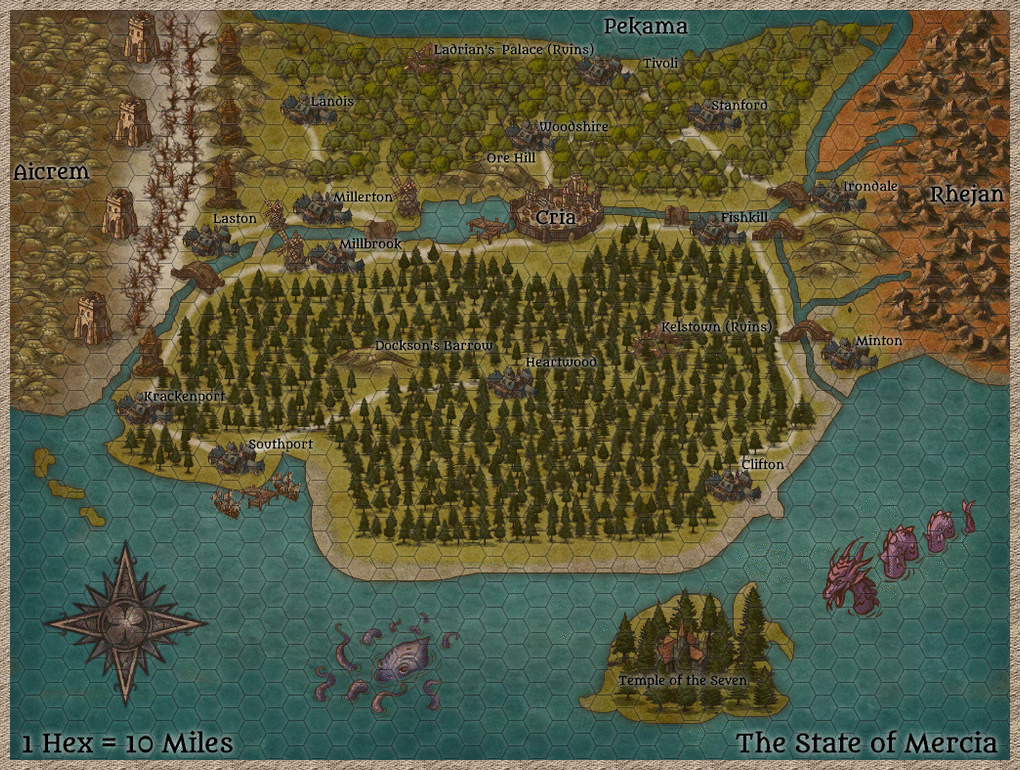
Mercia is organized into its capital city of Cria and 14 smaller towns, each with a few villages or communities under their care. Additionally, we have a variety of smaller, unincorporated communities outside of the more civilized parts of the state.
Cria
Cria is the capital of Mercia and by far the largest city in Dukain. A city of its size would normally be unsustainable, but it has developed over the past 400 years due to its access to the Clearwater River, almost unbelievably fertile farmland, and a nearby small hilly region rich in iron and gold. An engineering marvel, Cria spans the banks of the Clearwater River and much of the city is built on platforms over the river's surface.
Population
Approximately 80,000
Religion
Every deity is worshiped within Cria, including some outside of the pantheon.
Common Races
All. More likely to see one of the less common races than in any place in Mercia. Humans outnumber the others, but not by a significant margin.
Tivoli
Population
Approximately 3,000.
Religion
Primarily devoted to Sits Upon Clouds.
Common Races
Mostly high elves, small population of Sea Elves and other races.
Landis
Population
Approximately 4,000.
Religion
Primarily devoted to Warrior Who Is Unbeaten.
Common Races
High Elves, Dragonborn.
Woodshire
Population
Approximately 3,000.
Religion
Primarily devoted to One of Eternal Bloom.
Common Races
Primarily Wood Elves, but a village of “Dead” Jungle Elves is part of the Town’s community.
Stanford
Population
Approximately 5,500.
Religion
Primarily devoted to One of Eternal Bloom.
Common Races
Wood Elves, Tabaxi.
Laston
Population
Approximately 4,000.
Religion
Primarily devoted to Warrior Who Is Unbeaten.
Common Races
Wood Elves, Tabaxi.
Millerton
Population
Approximately 6,500.
Religion
Primarily devoted to The One Who Judges And Perfects.
Common Races
Humans, Tiefling.
Cities and Towns (cont.)
Millbrook
Population
Approximately 7,000.
Religion
Primarily devoted to The One Who Judges And Perfects.
Common Races
Humans, nearby village of Half-Orcs.
Fishkill
Population
Approximately 5,000.
Religion
Primarily devoted to Where the Wind Blows From.
Common Races
Halflings, Firbolg.
Irondale
Population
Approximately 5,000.
Religion
Primarily devoted to Creator of Thought and Mastery.
Common Races
Dwarves, Drow.
Heartwood
Population
Approximately 6,500.
Religion
Primarily devoted to Sits Upon Clouds.
Common Races
Halflings, Gnomes, Fauns.
Krackenport
Population
Approximately 4,000.
Religion
Primarily devoted to For Whom the Sun Shines.
Common Races
Humans, Triton, Tortles.
Southport
Population
Approximately 8,000.
Religion
Primarily devoted to Where the Wind Blows From.
Common Races
Halflings, Triton, Tortles.
Clifton
Population
Approximately 3,500.
Religion
Primarily devoted to For Whom the Sun Shines.
Common Races
Dwarves, Halflings.
Minton
Population
Approximately 4,000.
Religion
Primarily devoted to Creator of Thought and Mastery.
Common Races
Dwarves, Drow.
Places of Interest
Cladent's Arena
Like the dwarves of Rhejan, the citizens of Clifton and Irondale find great joy in martial sporting events. This arena in Irondale was once used by the Yuan Ti for brutal rituals and games, but has been repurposed and rebuilt in even grander style. Every year citizens from all corners of Dukain come to participate in and observe competitions of might, magic, and movement in an event known as Retton's Revelry. The arena is named after a mythical warrior from ages past.
Circus Elendus
The only structure in Mercia dedicated to carriage and horse races, the Circus is home to frequent sporting events, jousts, and public spectacles.
College at Clearwater River
Clearwater focuses on the study of philosophy and governance, and is where most bureaucrats and public servants hone their craft. Additionally, resident scholars are often known to host lively debates, riddle contests, and philosophical discussions in an open forum.
Dockson's Barrow
The final resting place of the Champions, Dockson's Barrow is where they gave their lives to defeat the greatest Yuan Ti warriors and the majority of their army. The ground is deeply sacred and only those deemed holy by passing The Trials at the Temple of the Nine are permitted to enter it.
The Forest's Heart
Giving the name to the town nearby, the Forest's Heart is the home to an ancient Arch Druid. Rarely seen leaving his grove, no one knows the secret to his longevity, but it is believed that he spends his years tending to the health and growth of the forest. Those how have seen him talk of his eccentricity, unpredictable temper, and love of all things beautiful.
The Graveyard
A village of Woodshire, The Graveyard is a settlement of Jungle Elves, so called because Jungle Elves that interact with the rest of society are termed 'The Dead' by their tribes. These Dead, while never allowed to permanently return to the community from whence they came, are welcome and respected guests of not only their original tribe, but also of any other tribe they may encounter. Residents of The Graveyard often travel deep into the jungle and are valued as scouts, guides, and warriors.
The Great Reef
One of the most beautiful natural landmarks in Dukain, the Great Reef, off the shore of Southport is home to the Triton people's only shallow-water community.
Johnstown
A community located near Laston, Johnstown is mostly populated by rural villagers who have fled the Aicremian border, deserters from Aicrem, and refugees from the rival state. These refugees are mostly non-humans who have fled to the more tolerant Mercia.
Kelstown
Thought to be the remains of the capital city of the First Civilization, the Kelstown ruins have been picked clean by a combination of time and scavengers.
Sits Upon Clouds's Place
These ruins were once home to a a community of rebels, the last pocket of resistance against the Zehir and his army. They used underground tunnels connecting to the ocean to survive and launch attacks. The sacking of Sits Upon Clouds's Place occurred sometime prior to Zehir's defeat and the land surrounding it is still devoid of all life.
Ore Hill
One reason for Cria's growth is Ore Hill, a rich mining site with unbelievable amounts of gold and iron to be extracted. Closely guarded by the Crian city guard, the hill is only a few miles from the city walls.
Places of Interest (cont.)
Plank's Hill
Plank's Hill marks the entrance to the only diamond and ruby mine in Mercia, and as such is one of the most protected places in the State. Mages of the University of Jadel are never far from the hill, jealously protecting the components necessary for their most potent magic.
Soothills
Just south of Fishkill, only a few miles into the forest, are the Soothills, the ancestral home of the Firbolg. The Soothills are thought to be the most magic place in Mercia, but Firbolg, while friendly and inviting, rarely let visitors spend more than a few days in the place of their ancestors.
The South
The home of the afterlife. A physical entrance is thought to exist somewhere in the sea, to the south of the Temple of the Nine.
Stonehead Bluff
The shoreline of Clifton is raised high above the Sea to the South, and no point is higher than Stonehead Bluff. It is said that on a clear day one can see from the edge of the bluff into the abandoned Temple of the Nine.
Temple of Eversight
The Temple of Eversight was built in Cria as a united effort between multiple faiths after a dispute about temple locations. The temple houses several smaller churches and a great library within its walls. The temple is as much a work of art as a place of worship. Priests of the Seven provide educational and spiritual services to citizens of Mercia.
Temple of the Nine
On an island to the south lies the Temple of the Nine, the place of Zehir's defeat and the most sacred ground in Dukain. Once the home of the consolidated priesthood of the world, the island has been overgrown and abandonded since the Champions left it to lead the war against the Yuan Ti. Perhaps the most mysterious aspect of the temple is its name: Dukain's known pantheon includes 7 dieties, yet scholars are adamant that the temple is correctly named.
University of Jadel
Part college, part research institute, the University of Jadel is the premier location in Mercia for learning history, lore, and the arcane. It frequently works with the military to provide magical support and doubles as a containment location to store dangerous and cursed magical items, creatures, and people. The oldest institution in Mercia, it in fact predates the capital in which it sits.
Criminal Elements
Bandits
Bandit camps are not an uncommon sight in the Heartwood Forest and near the western border. It seems that they’re mostly made up of disgruntled war veterans, former citizens of Aicrem, and other down and out members of society.
Duergar
While not all criminal, and certainly not organized into one criminal group, most Duergar living near Minton and Irondale are petty bandits and thugs for hire.
Drow
Like the Duergar, Drow are more likely than not to be associated with one of the criminal guilds or organized criminal activity. Those that aren’t often must fight assumptions to the contrary.
Orcs
Mostly insular and hidden, orc communities are usually immediately aggressive to outsiders that find their way into their territory. Those that have left their tribes often find work as mercenaries, thieves, bodyguards, and thugs.
Scale of Might
Not much is known about this cult. They worship the GodDragon Raidyrth, but their goals as a group remain shrouded in misinformation. They are loosely organized, but are quite capable in organizing large scale efforts when the right circumstances arise. Their primary goal is to collect long-lost relics related to Raidyrth. To what end, nobody is really sure.
Whisperwyn
Whisperwyn is the largest crime guild in the region. They maintain a series of speakeasies that are quite popular among the shadowy personalities and covert types (or so I've heard). They have on rare occasion worked with the Crian City Guard to help fight major threats to the region. Most of the top thieves in Mercia are members of this guild.
Shiverblade Nigh
The Shiverblade Nigh is a deadly assassin guild. I've heard that new members often have to survive assassination attempts as part of their trials to join the group. Unfortunately, Shiverblade Nigh has contacts in nearly every settlement in Dukain.
The Praxus Inquisitors
An order dedicated to purging the world of magic and their practitioners, it is believed by some that they are secretly funded and supported by Aicrem. Recently, their loosely associated political arm, the Trackers, have won a significant victory, with two of the five Councilors now supporting registration of powerful magic users.
The Golden Legacy
The Golden Legacy are a terrorist group composed of the descendants and worshippers of a long dead gold dragon. The dragon left behind its naturally good outlook on life in pursuit of greater power, starting a cult during the process. Even though it has been centuries since the dragon’s passing, members of all races can be found among the ranks of those that believe that the dragon will return one day.
The organization is led by gold dragonborn of the Nemmonis clan who are believed to be of the dragon’s lineage and are thereby holy in the organization’s eyes. The faction’s main focus is to seize the “holy land”, which had originally been the dragon’s lair, now long buried under the town of Millerton. While their base of operations is hidden and unknown to Mercia’s military, it is certainly somewhere within The Jungle.
Important Organizations
Sitheld
Sitheld is a banking organization primarily owned by the Sitius family. Their banks are some of the most secure in the state and they quickly earned a place in Mercia as economic leaders. While they do make business loans, they do have very strict management and collection rules. Sitheld invests heavily in acquiring business property. The banking dominance of Sitheld has resulted in all but the smallest of other banks closing and the end of the Banking Guild.
The Seekers
The Seekers are a well-funded organization that specializes in the tracking and uncovering of requested information. If they have the knowledge being sought, the requester will generally receive it immediately, but if they don't, a Seeker Agent gets dispatched and begins to track down the knowledge. Agents usually have multiple inquiries at once and while they don't have any real authority, they are highly respected. The more difficult a pierce of information is to acquire, the higher the price. Although this price can usually be paid in gold, the value they place on new information is always a much better deal for the requester.
The Congregation of Many Orders
Mostly referred to by outsiders as 'The Orders' due to their rigid codes and structure, this group of Paladins often work together to eliminate evil threats within Mercia's borders, mostly from the areas in which the Underdark meet the surface world. Notable for the fact that they're made up of adherants to all 7 deities, most view the Order as aloof and stuffy, but worthy of the greatest respect.
The Society of Elend
The Society of Elend is a group of Mercia's richest and most well connected. Dedicated to the finer things in life, members almost always display the society's purple stallion crest in their homes and on their persons. Although often laughed at by commoners, no other group in Mercian society has spent more coin on arts, literature, and well funded adventures.
The Spear's Tip
An organization of hunters committed to the glory of the hunt. They hunt not out of a sense of duty or protection, but for sport, wealth, and fame. The organization's code gives the title of Chief Marshal to the living member who has felled the largest quarry. From the organization's inception this honor has belonged to the same hunter, a high elven woman by the name of Alanna.
The Ivory Faces
An order of monks with no monastery, the Ivory Faces operate out of their members' homes throughout Mercia. Dedicated to a code of peace through strength, they often work with both victims and perpetrators of crimes to bring healing to those involved. When forced to prove the 'strength' portion of their mantra, they don masks of ivory and adamant.
Inventions Unlimited
A league of artificers, inventors, and creative types, Inventions Unlimited is an organization growing quickly in Cria. They are seen as dangerous and eccentric by some, including most scholars at Mercia's two universities, but the common folk find them to be amusing and entertaining for the most part.
Wind Song
A monastery built within the ruined remains of a large grounded sailing ship, Wind Song's location is a well guarded secret and is protected by a tribe of monks that worship the sea and the wind. In order to even step foot inside, you must have at least spent 13 years of your life at sea.
Players Instructions
Playable Races
All WoTC races mentioned earlier in this guide, the Sea Elf from Unearthed Arcana, and the homebrew races and subraces listed below are able to be played. If you really want another, feel free to ask.
Playable Classes
All WoTC official classes/subclasses are fair game, as are most from Unearthed Arcana, just check first. If there's a home-brew class or subclass that you're dying to play, feel free to ask.
Character Building
We'll build our characters at Session 0. Have an idea or two! Characters should be from Mercia and/or have a reason to want the state to thrive. Good characters preferred, neutral ones are welcome. No evil characters.
If we play a while and you character dies or you'd like to retire them, new characters will start at the same level as the rest of the party. Gear will depend on level.
Optional Rules
We will be playing with the following optional rules from the DMG (occasionally with minor changes). Let me know if you need the specifics.
- Renaissance Firearms, which will count as ranged martial weapons for the purpose of proficiency (pg. 268)
- Lingering Injuries when dropping to 0 HP (pg. 272)
- Slow Natural Healing (pg. 267)
- Hitting Cover (pg. 272)
- Additional Combat Action Options (pg. 271)
These are all, of course, subject to change based on how they actually work at the table.
House Rules
We will adhere to the following house rules (subject to change and discussion!):
- Potions can be taken by a player as a Bonus Action but it's an action to feed one to another creature.
- Everyone, including the DM, gets 1 point of inspiration at the start of every session. It expires at the end of the session. 'Earned' inspiration will still be awarded, but a player may not have more than 2 points of inspiration at any time.
- When helping another character with a skill check to provide advantage, the character providing help must be proficient in the skill.
- Sometimes we'll resolve checks with a group check, where a majority or half of the party need to pass a check. Natural 1s count as two failures. Natural 20s count as two successes.
- The lucky feat is banned. It's overpowered and thematically useless.
- Regular and Variant humans are replaced with a new version. See homebrew section below.
- When making a check with a skill you're proficient in, you're able to 'take 10' instead of rolling a d20 if, in the DM's view, you're able to perform the attempted task without being under significant pressure or any time constraint.
Homebrew Material
Races
Human (Race)
It’s hard to make generalizations about humans because they all seem to think they're better then the humans from one town over.
Description. Humans look...well...human. All 'races' of humans exist in Dukain.
Ability Score Improvement. One ability score of your choice increases by 2 and another ability score of your choice increases by 1.
Age. Humans reach adulthood in their late teens and live less than a century.
Alignment. Humans tend toward no particular alignment. The best and the worst are found among them.
Size. Humans vary widely in height and build, from barely 5 feet to well over 6 feet tall. Regardless of your position in that range, your size is Medium.
Speed. Your base walking speed is 30 feet.
Versatility. You gain proficiency in one skill or tool of your choice.
Human Determination. When you make an attack roll, an ability check, or a saving throw, you can do so with advantage. Once you use this ability, you can’t use it again until you finish a short or long rest.
Languages. You can speak, read, and write Common and one extra language of your choice. Humans typically learn the languages of other peoples they deal with, including obscure dialects. They are fond of sprinkling their speech with words borrowed from other tongues: Elvish musical expressions, Dwarvish military phrases, etc.
Faun (Race)
"Listen, son, Fauns are just like you and I. They build, they destroy, they love, they hate. The only difference is... They really don't like tile floors." His son stared questioningly. "Hooves. No traction."
Description Cow ears, tails, and horns and legs like a goat separate Fauns from humans in appearance. These Fey-ancestry humanoids are light-hearted and prone to taking it easy. They range in height from the shortest at 3.5 feet to the tallest at just over 6, with most at about 5.5 and run the gamut of hair colors and styles. In Merica, they are native to the edges of the steep mountain ranges in the east and the Heartwood forest in the south and have adapted to their surroundings over long periods of time. They breed often, having litters of 2-8 kids every decade or so. A Faun would be most content working as a craftsman, researcher or farmer, though their innate nimbleness makes them fantastic hunters and fighters.
Ability Score Improvement. Your Charisma score increases by 2.
Age. Fauns mature at about the same rate as humans, or a little slower. They can generally expect to live up to 150-200 years.
Alignment. Most are generally kind and gracious in nature. In fact, nearly all Fauns are good. Their fey ancestry means fauns generally tend to be more chaotic than lawful.
Size. Fauns vary widely in build, some being stocky and wide, others being willowy and thin. Generally, your height will be around 5 and a half feet. Your size is Medium.
Speed. Your base walking speed is 30 feet.
Darkvision. You can see in dim light within 60 feet of you as if it were bright light, and in darkness as if it were dim light. You can't discern color in darkness, only shades of gray.
Fey Ancestry. You have advantage against saving throws against being charmed, and magic can't put you to sleep.
Trance. Fauns sleep very lightly compared to other races, remaining semiconscious, for 4 hours a day. After resting in this way, you gain the same benefit that a human does from 8 hours of sleep.
Crafters and Artists. Fauns are naturally drawn to creating and crafting. You gain proficiency with one set of artisan tools of your choice.
Languages. You can speak, read and write Common and Sylvan.
Subrace. Faun differ depending on the environment they grew up in or were born into. Select one of the subraces below.
Subraces
Forest Faun
As a Forest Faun, you have a deep understanding of the great woods and their denizens both plant and animal. Your hind legs may appear more deer-like than goat-like, and your hair is likely to be brownish, with or without white spots. Bows and slings feel right in your hands and hunting comes naturally.
Ability Score Increase. Wisdom score increases by 1.
Natural Camouflage. You can attempt to hide even when you are only lightly obscured by foliage, heavy rain, falling snow, mist, and other natural phenomena.
Forest Magic. You know one cantrip of your choice from the Druid spell list. Wisdom is your spellcasting ability for it.
Mountain Faun
More Mountain Goat than domesticated Goat, these Fauns are at home on the uneven and extremely steep terrain of mountains. These Fauns tend to be deeper thinkers and scholars, preferring botany over bushcraft and animal husbandry over hunting. They still consider themselves close to nature, but they see it in an academic approach. Most of the Aristocracy of this subrace will be a remnant from the old kingdoms.
Ability Score Increase. Strength score increases by 1.
Adapted hooves. Your people have adapted to mountainous terrain and are able to climb with ease. You gain 20 foot climb speed.
Nimble Footed. Since mountain fauns are well suited to difficult terrain, they ignore the extra movement cost of non-magical difficult terrain.
Plains Faun
These Fauns are more rural than their city-dwelling counterparts, preferring an agrarian lifestyle in villages or small towns farming and living off the land. Faun villages are typically communal-living arrangements of up to a couple hundred Fauns in houses that will contain up to 5 families each. A central living area with both sleeping and private chambers are surrounded by animal pens and fields in a radial arrangement to the other buildings. These Fauns are more antelope-like than the others, being able to jump great heights and run very fast to catch their prey and avoid becoming it.
Ability Score Increase. Constitution score increases by 1.
Strider. Your legs are naturally better at jumping, your jump distance is doubled.
See Them Coming. You have advantage on initiative rolls while in plains, grasslands and other open natural environments.
City Faun
Centuries of civilization have taken the wild out of these Fauns. Their legs are the most goat-like, and the hair on them is much less rough than their cousins. They make good merchants and are frequently seen as traders between countries, or as spies to those less trusting of them.
Ability Score Increase. Dexterity score increases by 1.
Extra Language. You can speak, read, and write one extra language of your choice.
Merchants Tongue. You have proficiency in the Persuasion skill.
Jungle Elf (Subrace)
Deep within the Jungle live a race of elves that used to be considered Wood Elves. These people traveled deep into the dense underbrush, to form tribes of their own, to live according to the laws of the wild. The jungle elves are a diminutive race of fey climbers, with long, powerful fingers and prehensile, monkey-like feet. Their bark-brown skin is mottled with the myriad greens and oranges of the jungle flora and their bodies are often painted in bright pigments drawn from the many lurid flowers around them.
Size. Jungle Elves are smaller than their brethren, ranging between 4 and 5 feet tall and have extremely slight builds. Your size is small.
Speed. Your base walking speed is 25 feet.
Ability Score Improvement. Your Wisdom Score increases by 1.
Adapted to the Trees. You have a climbing speed of 30 feet.
Inherently Stealthy. You have proficiency in the Stealth skill.
Fey Veil. Your people have always had a knack for going unseen. You know and can cast the Pass without Trace spell once with this trait, without the required material components, and regain the ability to do so when you finish a long rest.
Isolationists by Choice
The tribal communities that the Jungle Elves form are extremely small and close-knit. They value their traditions and customs and, perhaps most of all, their privacy in the depths of the jungle.
Contact between tribes is exceptionally limited, much less willing contact with outsiders. Those who do leave their original communities are henceforth termed the Dead. The name stems from the fact that most who become separated from their tribe in the jungles, die and never return.
These Dead, while never allowed to return to the community from whence they came, are welcome and respected guests of not only the original tribe, but also of any other tribe they may encounter. Never allowed to stay for more than a few days, they are, none-the-less , valued for their ability to freely travel between the tribes, facilitating trades, carrying news and negotiating temporary peace treaties and alliances.
These Dead are also the only members of their society that may wish to venture out into the broader world.
Racial Feat
Verdant Pathways
Prerequisite: Elf (jungle)
A lifetime spent navigating the dense undergrowth of the jungles has granted you an eye for the pathways that wind through the undergrowth. You gain the following benefits:
- Increase your Dexterity or Wisdom score by 1, to a maximum of 20.
- Moving through nonmagical difficult terrain in wooded areas costs you no extra movement.
- Nonmagical difficult terrain in wooded areas doesn't slow your group's travel.
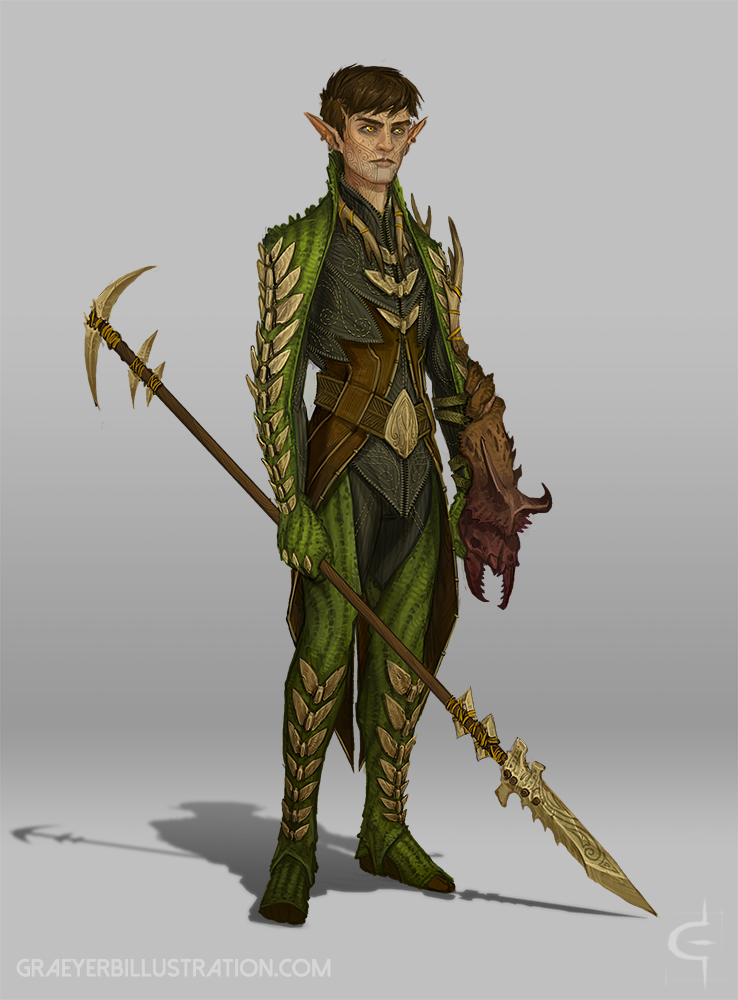
Seamist Halfling (Subrace)
Seamist halflings spend their lives divided between a love of land and the sea. An amphibious people, many Seamist Halflings have two homes: one under the shallow coastal waters and the other among the land-based races who live nearby. Many Seamist Halflings find work navigating the small rivers and waterways of Mercia.
Size. You’re taller than the average halfling, but rarely over 4 feet in height.
Speed. You have a swim speed equal to your base walking speed.
Ability Score Improvement. Your Strength score increases by 1.
Amphibious. You can breath air and water.
Seacliff Dwarf (Subrace)
Seacliff dwarves are more charming and free spirited than most of their race. Often they have spent the entirety of their lives near a coast or out at sea, giving them a natural affinity for life atop the waves. Sea Dwarves are prone to adventure by their very nature. Due to the nature of life at sea, many Seacliff dwarves keep their hair and beards trimmed or braided with shells and other nautical jewelry to avoid being caught in rigging.
Size. You’re less stocky than the average dwarf, but similar in height.
Salty. You gain proficiency with navigator's tools and vehicles (water). This trait replaces the Tool Proficiency trait.
Marine. You have proficiency with the scimitar, rapier, trident, hand crossbow, and net. This trait replaces the Dwarven Combat Training trait.
Ability Score Improvement. Your Charisma score increases by 1.
Born Atop the Waves. Whenever you make an Athletics check related to swimming or climbing, you are considered to have expertise in the skill.
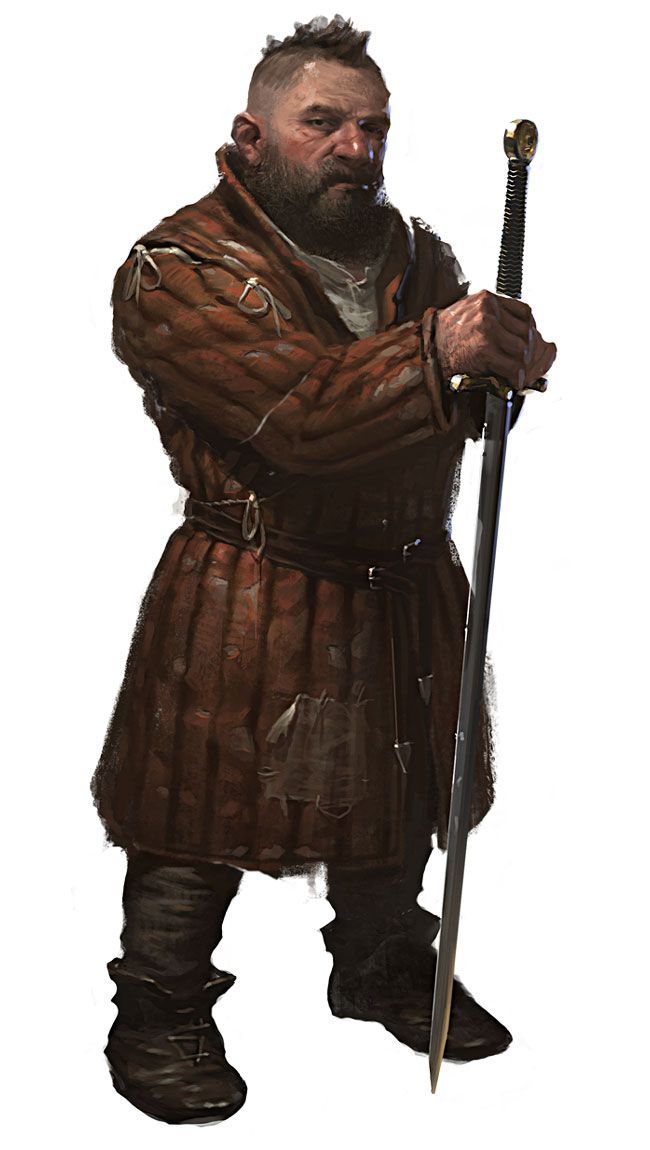
Weapons Redone
The following weapons tables replace the tables in the Players Handbook:
Simple Melee Weapons
| Weapon | Damage | Properties |
|---|---|---|
| Club | 1d4 Bludgeoning | Light, Sunder |
| Dagger | 1d4 Piercing | Finesse, Light, Parry, Thrown 20/60 |
| Handaxe | 1d6 Slashing | Sunder, Thrown 20/60 |
| Javelin | 1d6 Piercing | Thrown 30/120 |
| Light Hammer | 1d4 Bludgeoning | Finesse, Light, Thrown 20/60 |
| Quarterstaff | 1d6 Bludgeoning | Versatile (d8) |
| Sickle | 1d4 Slashing | Finesse, Light, Seize |
| Spear | 1d6 Piercing | Brace, Thrown 20/60, Versatile (d8) |
Martial Melee Weapons
| Weapon | Damage | Properties |
|---|---|---|
| Battleaxe | 1d8 Slashing | Sunder, Versatile (d10) |
| Dueling Shield | 1d8 Piercing | Heavy, Special, Two-Handed |
| Executioner's Sword | 1d10 Slashing | Sunder, Heavy, Hemorrhage, Two-Handed |
| Flail | 2d4 Bludgeoning | Special, sunder |
| Glaive | 1d10 Slashing | Heavy, Hemorrhage, Two-Handed |
| Greataxe | 1d12 Slashing | Heavy, Sunder, Two-Handed |
| Greatclub | 1d10 Bludgeoning | Two-Handed, Sunder |
| Greatpick | 1d12 Piercing | Seize, Heavy, Two-Handed |
| Greatsword | 2d6 Slashing | Heavy, Parry, Two-Handed |
| Heavy Flail | 3d4 Bludgeoning | Heavy, Special, Two-Handed |
| Katana | 1d10 Slashing | Parry, Sunder, Two-Handed |
| Lance | 1d12 Piercing | Brace, Reach, Special |
| Long Sword | 1d8 Slashing | Parry, Versatile (d10) |
| Mace | 1d6 Bludgeoning | Sunder |
Martial Melee Weapons (cont.)
| Weapon | Damage | Properties |
|---|---|---|
| Maul | 2d6 Bludgeoning | Heavy, Two-Handed, Sunder |
| Morningstar | 2d4 Piercing | Hemorrhage, Sunder |
| Pike | 1d8 Piercing | Brace, Reach, Two-Handed |
| Poleaxe | 1d10 Slashing | Heavy, Reach, Special, Two-Handed |
| Rapier | 1d8 Piercing | Finesse, Parry |
| Scimitar | 1d6 Slashing | Finesse, Hemorrhage, Light |
| Shortsword | 1d6 Slashing | Finesse, Light, Parry |
| Trident | 1d6 Piercing | Seize, Versatile (d10), Thrown 30/60 |
| War Pick | 1d8 Piercing | Seize, Versatile (d10) |
| Warhammer | 1d8 Bludgeoning | Sunder, Versatile (d10) |
| Whip | 1d6 Slashing | Finesse, Light, Reach |
Simple Ranged Weapons
| Weapon | Damage | Properties |
|---|---|---|
| Bola | — | Special, Thrown (20/60) |
| Crossbow, Light | 1d8 Piercing | Ammunition (range 80/320), Loading, Two-Handed |
| Dart | 1d4 Piercing | Finesse, Thrown (range 20/60) |
| Longbow | 1d8 Piercing | Ammunition (range 150/600), Heavy, Two-handed |
| Shortbow | 1d6 Piercing | Ammunition (range 80/320), Two-Handed |
| Sling | 1d4 Bludgeoning | Ammunition (range 30/120) |
Martial Ranged Weapons
| Weapon | Damage | Properties |
|---|---|---|
| Blowgun | 1 Piercing | Ammunition (range 25/100) |
| Crossbow, Heavy | 1d10 Piercing | Ammunition (range 100/400), Heavy, Loading, Two-Handed |
| Crossbow, Hand | 1d6 Piercing | Ammunition (range 30/120), light, loading |
| Greatbow | 1d10 Piercing | Ammunition (range 200/800), Heavy, Loading, Special, Two-handed |
| Musket | 1d12 Piercing | Ammunition (range 40/120), Loading, Two-Handed, Special |
| Net | — | Special, Thrown (range 5/15) |
| Pistol | 1d10 Piercing | Ammunition (range 30/90), Loading, Special |
Weapons Redone (cont.)
Weapon Properties
The following weapon properties are in addition to those found in the Player's Handbook
Brace
As a bonus action, choose a creature you can see that is at least 20 feet away from you. If that creature moves within your weapon's reach on its next turn, you can make a melee attack against it with your braced weapon as a reaction. You can't use this ability if the creature used the Disengage action before moving.
Hemorrhage
Critical hits scored with a Hemorrhage weapon deal extra damage equal to the modifier of the ability score used to make the attack.
Parry
As a reaction to being hit by a melee attack with a weapon, you can reduce Bludgeoning, Piercing or Slashing damage taken by your proficiency bonus.
Seize
Immediately after you hit a creature with a Seize weapon, you can attempt to grapple it with the weapon as a bonus action. If you grapple a creature with a Seize weapon, you can't make attacks with the weapon, and you must keep a hand on it to keep the creature grappled. As usual, the grappled creature can make a contested Athletics or Acrobatics check to free itself.
Sunder
When you roll a 20 on your attack roll against a creature with a Sunder weapon, that creature has disadvantage on their next attack roll until the end of their next turn.
Special Weapons
Flail/Heavy Flail
You can make a grapple while wielding a flail/heavy flail even if you do not have an empty hand. If you grapple a creature with a flail, you can't make attacks with it and you must keep a hand on the flail to keep the creature grappled. As usual, the grappled creature can make a contested Athletics or Acrobatics check to free themselves.
Dueling Shield
While wielding this weapon in two hands, you have a +2 bonus to your AC and are considered to be wielding a Two-Handed weapon and a shield.
Poleaxe
When you make an attack with a poleaxe, you can change the poleaxe's damage type from slashing to bludgeoning or piercing.
Lance
You have disadvantage when you use a lance to attack a target within 5 feet of you. Also, a lance requires two hands to wield when you aren't mounted.
Net
A Large or smaller creature hit by a net is restrained until it is freed. A net has no effect on creatures that are formless, or creatures that are Huge or larger. A creature can use its action to make a DC 10 Strength check, freeing itself or another creature within its reach on a success.
Dealing 5 slashing damage to the net (AC 10) also frees the creature without harming it, ending the effect and destroying the net.
Greatbow
Greatbows take great strength to wield. As such, they use your Strength modifier for attack and damage rolls instead of your Dexterity modifier.
Additionally, you have disadvantage on attacks made on creatures within 15 feet of you. Greatbows have a minimum Strength requirement of 15.
Bola
A medium or smaller creature hit by a bola is knocked prone and grappled by it until it is freed. A bola has no effect on creatures that are formless, or creatures that are large or larger. A creature can use its action to free itself or another creature within its reach.
Dealing 5 slashing damage to the bola (AC 10) also frees the creature without harming it, ending the effect and destroying the bola.
Musket/Pistol
When you roll a natural 1 on an attack roll with a Musket or Pistol, your weapon jams or misfires. You must use a bonus action to make an intelligence check (DC12) to fix the malfunction. If this check fails, the weapon is inoperable until you spend 1 minute making repairs and clearing the weapon of any blockages.
Well..
how was it?
There definitely might be typos or things that don't make sense! If that's the case, let me know!
V2 3.24.2021
Credits
Cover Art: charro-art
Logos Generate with GW2 Emblem Generator
Jungle Elves: u/ilovegoodfood
Seacliff Dwarves: Adapted from Homebrew by u/Marvl101 and u/skut
Some Factions and Groups Inspired by and Stolen from Tales of Syne
Human replacement: u/ApolloLumina
Faun: D&D Wiki