

The
Savant
An elf cleaned her glasses
with the corner of her cloak as
the dust settled. The emperor had
paid her a large sum to locate this
forgotten place, and after months of
pouring over ancient maps, she had
pieced together the once-lost location
of the primeval temple. Now, she had
a decision to make. If she reported the
location of the temple to her benefactor,
it would be ruthlessly stripped of valuables.
But, if she kept the location to herself, she
could preserve the ancient knowledge
contained within. For a savant, knowledge
is more precious than any sum of gold.
An aging human warrior silently assessed the
soldiers under his command. They were exhausted
and almost out of supplies. It was the tenth night of a
brutal siege, and the graying commander knew that no reinforcements were coming to their rescue. He was too
old to be of much use in battle, but if his soldiers followed his orders without any hesitation, they might have a chance of survival. He stood up, and for what could very well be his final time, drew his weathered sword from its scabbard.
A young dwarf bent over his unconscious comrade in the midst of battle, his hands shook as he examined his brother's wounds. His clan had spent a small fortune sending him to study at the finest university in the land. All the hours spent in lectures and libraries, all for this moment. He thought back to his lessons and began to dress his brother's wounds.
The characters described above are just some examples of the adventuring intellectuals known as Savants. Armed with only their wit, they aid their allies and outwit their enemies.
Magnificent Minds
There are many wonderfully intelligent people in the world, but few are true Savants. Born with the innate desire to learn anything they can, and the potential for genius-level intellect, Savants spend their lives learning anything that those around them are willing to teach. Often recognizable at an early age, a Savant's unquenchable hunger for knowledge draws them to the great libraries, universities, and other places of higher learning. They are willing to go to any lengths to unlock the secrets of the world, often turning to lives of adventure. For
a Savant, no price is too steep for the promise of discovery.
Intense Focus
Savants are hyper-focused on their chosen area of study and often become obsessed with learning all they can about their specialty. In their quest for discovery, Savants are willing to set aside any conviction, political, religious, or otherwise, to acquire the information they seek. To them, their desire for knowledge is more important than loyalty to any ideology.
Often at great personal cost, Savants will not stop their research until they have made a revolutionary discovery in their area of study. It is not unusual to encounter one such scholar far from the safety of a university and its libraries.
Creating
Your Savant
When creating a Savant, consider their upbringing and the level of their formal education. Were they a star pupil at the finest university gold could buy? Or, were they a child of the streets, fighting for every scrap of knowledge that they could get their hands on? Maybe their mind was trained from birth to be the perfect analytical tool for a noble house or family.
Also, consider why your Savant would rely on only their intellect rather than use their gifts in pursuit of the arcane or in the service of a higher power. Are they cursed to never be able to produce even the most mundane spell? Or, have they sworn never to rely on the magic that destroyed their family?
Finally, why did your Savant become an adventurer rather than live the life of an academic? Have they advanced beyond normal study and look forward to the endless discoveries of adventure? Or, have they always been a student of the world?
Multiclassing and the Savant
If your group uses the optional multiclassing rule, here is everything you need to know if you choose to take at least one level in the Savant class.
Ability Score Minimum. As a multiclass character, you must have a minimum Intelligence score of 13 in order to take a level as a Savant, or to take a level in another class if you are already a Savant.
Proficiencies Gained. If Savant is not your initial class, here are the proficiencies you gain when you take your first Savant level: light armor, one skill of your choice from the Savant skill list, and one set of artisan's tools of your choice.






Class Features
Hit Points
- Hit Dice: 1d8 per Savant level.
- Hit Points at 1st Level: 8 + your Constitution modifier
- Hit Points at Higher Levels: 1d8 (or 5) + your Constitution
modifier per Savant level after 1st
Proficiencies
- Armor: Light armor
- Weapons: Simple weapons, rapiers, shortswords, whips
- Tools: One set of Artisan's Tools of your choice
- Saving Throws: Intelligence, Wisdom
- Skills: Choose two from Arcana, History, Investigation, Insight, Medicine, Nature, Persuasion, or Religion
Starting Equipment
As a Savant, you start with the following equipment, along with the equipment granted to you by your Background:
- (a) a simple weapon of your choice or (b) a shortsword.
- (a) a light crossbow and 20 bolts or (b) two daggers.
- a set of Artisan's Tools, leather armor, and scholar's pack.
Quick Build
You can make a Savant quickly by using these suggestions.
First, make Intelligence your highest ability score, followed by your Dexterity. Second, choose the Noble Background.
Adroit Analysis
Starting at 1st level, you can use your bonus action to take the Help or Search action, or make an Intelligence ability check.
When you take the Search action, you can study a creature that you can see within 60 feet, designating it as your Focus, learning one of the following Characteristics of your choice:
| Armor Class | Highest Ability Score |
| All Special Senses | Lowest Ability Score |
| Resistances, Immunities, & Vulnerabilities |
One Trait or Action from its stat block |
It remains your Focus for 1 minute, but it ends early if you are Incapacitated, or you use this feature on another creature. For the duraiton, you gain the benefits and limitations below:
Intellect Die
Your genius is represented by your Intellect Die, a d4. When a feature uses your Intellect Die, always roll the Die. If you ever add more than one Intellect Die to a roll, roll all your Intellect Dice, but only apply the highest result to your roll.
At certain levels, the size of your Intellect Die increases, as shown in the Intellect Die column of the Savant class table.
Saving Throws
If one of your features requires your Focus to make a saving throw, the save DC is calculated using your Intelligence:
Intellect save DC = 8 + your Proficiency Bonus
+ your Intelligence modifier
Predictive Dodge
So long as you can see your Focus, it has disadvantage on all
attacks, both weapon and spell, that it makes against you.
The Savant
| Level | PB | Features | Intellect Die |
|---|---|---|---|
| 1st | +2 | Adroit Analysis, Analytical Defense |
d4 |
| 2nd | +2 | Potent Observation, Scholarly Pursuits |
d4 |
| 3rd | +2 | Academic Discipline | d4 |
| 4th | +2 | Ability Score Improvement | d4 |
| 5th | +3 | Calculated Fourish, Swift Reflexes (2) |
d6 |
| 6th | +3 | Sharp Mind | d6 |
| 7th | +3 | Discipline Feature | d6 |
| 8th | +3 | Ability Score Improvement | d6 |
| 9th | +4 | Keen Awareness | d8 |
| 10th | +4 | Unrivaled Genius | d8 |
| 11th | +4 | Swift Reflexes (3) | d8 |
| 12th | +4 | Ability Score Improvement | d8 |
| 13th | +5 | Discipline Feature | d10 |
| 14th | +5 | Unyielding Will | d10 |
| 15th | +5 | Flawless Analysis | d10 |
| 16th | +5 | Ability Score Improvement | d10 |
| 17th | +6 | Swift Reflexes (4) | d12 |
| 18th | +6 | Discipline Feature | d12 |
| 19th | +6 | Ability Score Improvement | d12 |
| 20th | +6 | Incomparable Intellect | d12 |
Single Minded
While you have a Focus, you cannot cast or concentrate on spells, or use other features that require your concentration.
Studied Strike
Whenever you make a weapon attack against your Focus, you can use your Intelligence for your attack and damage rolls.
Once per turn when hit your Focus with an attack, you deal bonus damage equal to your Intellect Die. You can forgo this damage to learn another Characteristic from the table above.
Analytical Defense
Also at 1st level, your predictive capabilities aid your defense. So long as you are not wearing armor or a shield, your Armor Class equals 10 + your Dexterity and Intelligence modifiers.
Potent Observation
Starting at 2nd level, you can quickly inform your allies of the insights you gain. When another creature within 30 feet that can hear and understand you, deals damage to your Focus, or makes an ability check using a tool or skill you are proficient in, you can use a reaction to add your Intellect Die to its roll.
Scholarly Pursuits
You are always expanding your knowledge base. At 2nd level, you master one Scholarly Pursuit from the end of this class.
You master one additional Scholarly Pursuit of your choice when you reach 5th, 11th, and 17th level in this class.
Academic Discipline
At 3rd level, pick an Academic Discipline from the list below that best represents the knowledge and study of your Savant:
| Archaeologist | Naturalist |
| Investigator | Physician |
| Mentor | Tactician |
Your Discipline grants you features at 3rd, 7th, 13th, and 18th level. All Discipline features use your Intellect save DC.
Ability Score Improvement
At 4th level, and again at 8th, 12th, 16th, and 19th levels, you can increase one ability score by 2, or two ability scores by 1. You can't use this feature to increase an ability score over 20.
Calculated Flourish
You are always ready to dodge deadly blows. Beginning at 5th level, when you are hit by an attack you can see, you can use a reaction to add your Intellect Die to your Armor Class against that attack, possibly turning a hit into a miss.
Swift Reflexes
The speed that you observe and react to your surroundings is incredible. At 5th level, you can take up to two reactions each round, but can never use more than one reaction per trigger.
When you reach certain Savant levels, you gain additional reactions per round: at 11th level (3) and at 17th level (4).
Sharp Mind
Your genius is truly wondrous. Beginning at 6th level, you add your Intellect Die to all Intelligence, Wisdom, and Charisma saving throws, so long as you are not Incapacitated.
Also, you can now use Potent Observation when a creature
in range of the feature is forced to make a saving throw.
Keen Awareness
You are always prepared for danger. Beginning at 9th level, so long as you aren't Incapacitated, you cannot be Surprised, and you can add your Intelligence modifier to initiative rolls.
Unrivaled Genius
Your intellect has risen to near-supernatural heights. At 10th level, the features listed below improve in the following ways:
Potent Observation
You can use Potent Observation any time another creature in range deals damage to any target, not just your Focus. If used against your Focus, you add two Intellect Dice to the damage.
Calculated Flourish
When you use Calculated Flourish and the attack misses, you can either move up to 10 feet without provoking opportunity attacks, or make a single weapon attack against your attacker.
Unyielding Will
At 14th level, you gain proficiency in Charisma saving throws.
You also have advantage on saving throws that your Focus forces you to make, and any saving throws you make to resist or end the Charmed and Frightened conditions.
Flawless Analysis
At 15th level, you learn to flawlessly predict your Focus's next move and inform your allies. As an action, you can force your Focus to make an Intelligence saving throw. On a failure, the following effects take place until the start of your next turn:
- Your Focus has disadvantage on all ability checks, attack rolls, and saving throws, so long as it remains your Focus.
- Creatures of your choice within 30 feet have advantage on any saving throw your Focus forces them to make.
Once you attempt to use Flawless Analysis on a Focus, you can't use it on that creature again until you finish a long rest.
Incomparable Intellect
At 20th level, you realize your true potential. Your Intelligence score increases by 4, up to a maximum of 24. Also, if you roll an Intellect Die and roll lower than your Intelligence modifier, you can replace the roll with your Intelligence modifier.

Scholarly Pursuits
Listed below are the Scholarly Pursuits available to a Savant. To learn a Scholarly Pursuit, you must meet its prerequisites:
Instruction
Your studies have made you an exceptional teacher. Over the course of 1 hour, which can be during a rest, you can grant a number of creatures (up to your Savant level), of Intelligence 8 or higher, proficinecy with a single skill, tool, or weapon that you are proficient in, or the ability to speak and understand one language you know. Creatures you instruct must be able to hear and understand you for the duration of the hour.
The knowledge lasts until the creature finishes a long rest.
Perfect Recall
You can recall picture-perfect details from anything that you commit to memory. If you spend at least 1 minute observing an object or creature, you can perfectly recall any observable information about it at any point in the future.
For example, you could memorize a map, one page from a book, a mysterious inscription, or a creature's appearance.
Quick Study
You learn exceptionally fast. Over the course of 1 hour, which can be during a short or long rest, you can gain proficiency in a skill or tool, or learn a language. You must have an example, such as a manual or another creature, to learn from, and this knowledge lasts until you use this feature again.
You can also take the Search action when you roll initiative, so long as you are not Surprised or Incapacitated.
Astrology
Prerequisites: 4th-level Savant
You are a disciple of heavenly bodies and use this knowledge to twist fate. You gain proficiency in Arcana, and you can add your Intellect Die to any Arcana checks you make.
During each long rest that you can see the night sky, roll a d20 and record the number. Once before the end of your next long rest, you can choose to use that roll in place of a d20 for an ability check, attack roll, or saving throw, before you roll.
Falconry
Prerequisites: 4th-level Savant
You can train birds of prey for scouting and combat. You gain proficiency in Perception, and you can add your Intellect Die to any Perception checks you make.
You also gain a trained Falcon that uses the following rules:
Statistics. The Falcon uses the Hawk stat block, but it has an Intelligence score of 8. You can communicate simple ideas with one another using only gestures and sounds.
Combat. The Falcon is unwaveringly loyal and acts during your turn in combat. It can move and its reaction on its own, but it only takes the Dodge action unless you use your bonus action to command it to take an action from its stat block, or another action. If you are Incapacitated, your Falcon can act on its own, and will defend you to the best of its abilities.
Death. If your Falcon falls to 0 hit points, it makes death saving throws as a player character would. Should it die, your unique skills allow you to track and train another Falcon over the course of an 8-hour period using 5 gold worth of bait, so long as such a creature can reasonably be found in the area.
Linguistics
Prerequisites: 4th-level Savant
You are a student of language and the spoken word. You gain proficiency in Persuasion, and you can add your Intellect Die to any Persuasion checks you make.
You also learn to speak, read, and write a number of bonus languages equal to your Intelligence modifier (minimum of 1). If your Intelligence modifier increases (or decreases) this also increases (or decreases) the bonus languages that you know.
Physical Fitness
Prerequisites: 4th-level Savant
You know that the key to a healthy mind is a healthy body. You gain proficiency in either Athletics or Acrobatics, and you can add your Intellect Die to ability checks with that skill. You also gain a climb or swim speed equal to your walking speed.
You can master this Scholarly Pursuit twice. However, you must choose different skills and movement speeds each time.
Riddles
Prerequisites: 4th-level Savant
You have spent many hours learning to speak in both riddles and rhymes. You gain proficiency in Deception, and you can add your Intellect Die to any Deception checks you make.
When you speak, you can choose to speak in Riddles. You appear to be speaking normally, but you can include hidden messages laced in your rhyming words.
Over the course of 1 hour, which can be during a short or long rest, you can teach another creature with an Intelligence of 8 (or higher) to understand the secret messages contained in your Riddles. If its Intelligence is 11 (or higher) it can reply to you with similar encoded riddles and rhymes.
Secrets & Whispers
Prerequisites: 4th-level Savant
You know the right places to eavesdrop and just where to go for information. You gain proficiency in Stealth, and you can add your Intellect Die to any Stealth checks you make.
Whenever you spend a long rest in a Settlement, you can spend 1-hour gathering local rumors to learn of a significant, even secret, event which occurred there within the last week.
Theology
Prerequisites: 4th-level Savant
You are a dedicated scholar of various holy texts and sacred rites. You gain proficiency in Religion, you can speak, read, and write Celestial, and you can add your Intellect Die to all Religion checks you make.
Also, once between each short or long rest, you can draw on this knowledge to perform a 10 minute Ritual and impart the benefits of one of the following spells: bless, ceremony, detect evil & good, or protection from evil & good. You need not expend a spell slot or the normal material components.
Traditions
Prerequisites: 4th-level Savant
You are a student of culture, politics, and traditions. You gain proficiency in History, and you can add your Intellect Die to any History checks you make.
If you can incorporate your knowledge of local traditions, customs, or manners when interacting with a local creature, you can make History checks in place of Charisma checks.
Academic Disciplines
Choose an Academic Discipline from the list below that
represents the unique genius and skills of your Savant:
| Archaeologist | Naturalist |
| Investigator | Physician |
| Mentor | Tactician |
Archaeologist
Specializing in the study of lost civilizations, ancient
ruins, and uncharted lands, Archaeologists bring the
light of discovery to the dark and deadly places of the
world. Doing their best to uncover the wisdom of ages
past, they tend to feel kinship with the civilizations they
study and go to great lengths not to offend their memory.
Student of Archaeology
3rd-level Archaeologist Discipline feature
You gain proficiency in both History and Investigation,
and you add your Intellect Die to checks with both skills.
Time spent exploring ancient places has given you a knack for navigating their dangers, granting you the following skills:
- You learn to speak, read, and write two extra languages
of your choice, often archaic or forgotten tongues. - Any time you make an ability check related to a trap, you add your Intellect Die to the result of your roll.
- If you spend at least 1 minute examining an object, you can ascertain its value, origin, and age. If it has magical properties, you learn them as if by the identify spell.
Eye for Antiquity
3rd-level Archaeologist Discipline feature
Your knowledge of ancient civilizations allows you to unlock their lost technologies. During a long rest in a Settlement or dungeon, you can spend 1 hour studying antiques or debris to unearth one Curio. The Curio is a Tiny magical item with the properties of a Common magical item, of your choice. Curios always use Intelligence as their Spellcasting Ability, and you ignore the Single Minded restriction of Adroit Analysis when you cast and concentrate on spells produced by Curios.
Due to their age, you must spend 1 hour during each long rest maintaining Curios, or they revert to mundane items. If a Curio was expendable (like a spell scroll), it regains its magic during this hour. You can maintain a number of Curios equal to your Intelligence modifier (a minimum of one).
Adventuring Academic
7th-level Archaeologist Discipline feature
Your ability to navigate deadly ruins in search of knowledge is without peer. Whenever you make a saving throw to avoid the effects of a trap, you add your Intellect Die to your roll.
You also gain a climb speed equal to your walking speed.
Obscure Rule: Duplicate Proficiency
If a character gains proficiency in the same tool, skill, or language from two different sources, they instead gain another proficiency of the same kind.
Ancient Insights
7th-level Archaeologist Discipline feature
You have advanced in your understanding of ancient
technologies. You ignore all class, race, and alignment restrictions for the attunement and use of magic items, scrolls, and potions.
In addition, when you use Eye for Antiquity to unearth a
Curio, you can unearth Curios with properties of Common
or Uncommon magic items, following all other rules.
Lore Master
13th-level Archaeologist Discipline feature
You study every detail of every myth, legend, and folk tale you come across. When you observe a person, place, or object for at least 10 minutes, you mystically recall information about it as if it were the target of a legend lore spell.
The target of this feature does not need to be of legendary importance in order for you to gain information. However, if there is no relevant lore about the target, you learn nothing.
Unearthed Arcana
13th-level Archaeologist Discipline feature
You are an unparalleled expert with ancient magical devices. You can use your Intellect save DC for your magic item saving throws unless the magic item's innate DC is higher.
Moreover, each time you finish a short or long rest, you can cause one Curio you touch to regain expended Charges or its uses equal to your Intelligence modifier (a minimum of 1).
Master Archaeologist
18th-level Archaeologist Discipline feature
Exposure to the magic of the ancient world has given you an innate resilience to its effects. You gain Resistance to damage from spells, magic items, and magical traps.
Finally, you can have a single Curio with the properties of a Rare magic item.



Investigator
Masters at unraveling mysteries, conspiracies, and secrets of all kinds, Investigators possess an uncanny ability to read the intent of others. They often dedicate their genius to thwarting any who deceive the innocent and take advantage of common trust. Their considerable intellect and eye for the truth stand in the way of thieves, shapeshifters, and corrupt politicians.
Student of Truth
3rd-level Investigator Discipline feature
You gain proficiency in Insight and Investigation, and you can add your Intellect Die to your checks with both skills. You can also use Intelligence, in place of Wisdom, for your Insight and Perception checks, including passive checks.
Your intuitive nature also grants you the following benefits:
- When you take the Search action, you gain information as if you spent a full minute searching instead of one action.
- You learn to speak, read, and decode messages in Thieves' Cant, the language of the criminal underworld.
- For every minute you spend speaking with your Focus, you
can learn one of its Ideals, Traits, Bonds, or Flaws.
Rough & Tumble
3rd-level Investigator Discipline feature
You have gained unsavory skills working in the underbelly of civilization. Your unarmed strikes deal Bludgeoning damage equal to your Intellect Die + your Strength modifier on hit, and whenever you take the Attack action, you can make an unarmed strike as a bonus action on that turn.
Once per turn, when you hit your Focus with an unarmed strike, you can forgo the bonus damage of Studied Strike to force it to make a Dexterity saving throw. On a failure, it is
Blinded, Deafened, or can't speak until the start of your next
turn; or if it is Large or smaller, you can knock it Prone.
Illicit Contacts
7th-level Investigator Discipline feature
You are deeply familiar with the criminal elements of
society. While communicating in Thieves' Cant, you
add your Intellect Die to any ability checks you make
to influence others who understand Thieves' Cant.
You also master the Secrets & Whispers Scholarly
Pursuit. If you have already learned it, you can instead
learn your choice of either Perfect Recall or Traditions.
Underhanded Brawler
7th-level Investigator Discipline feature
You learned to fight in back alleys, where the only thing
that matters is who is left standing at the end of a scrap.
You gain the following underhanded benefits:
Cunning Flourish. When you use Calculated Flourish
and the attack misses, you can force your attacker to
make a Dexterity saving throw against your Rough
& Tumble feature as part of the same reaction.
Discombobulate. If your Focus fails its saving throw
against Rough & Tumble you can apply two of the
of the normal effects instead of one. For example,
you can cause your Focus to be both Blinded and
Deafened, or cause it to be Blinded and unable to
speak until the start of your next turn.
Slippery Combatant. When a creature you can see
makes a weapon or spell attack against you, you can
use your reaction to designate the attacker as your Focus,
imposing disadvantage on the triggering attack roll.
Piercing Gaze
13th-level Investigator Discipline feature
You see through the most intricate deception and conspiracy. You are always aware if your Focus is lying, and you instantly detect the presence of visual Illusions and Shapeshifters that are within your line of sight. However, this does not allow you to see through either of those effects.
In addition, when your Focus fails its saving throw against Rough & Tumble, you can forgo all normal effects to cause it to be Stunned until the start of your next turn instead.
Master Investigator
18th-level Investigator Discipline feature
Your sense for the truth rivals immortals. You gain Truesight out to a 30-foot radius. Within this radius, you detect hidden doors and traps, and you are aware if creatures are lying.
Last, when you hit your Focus with an attack or use Potent Observation against your Focus, you can cause that attack to become an automatic critical hit. Once you do so, you must finish a short or long rest before you can do so again.
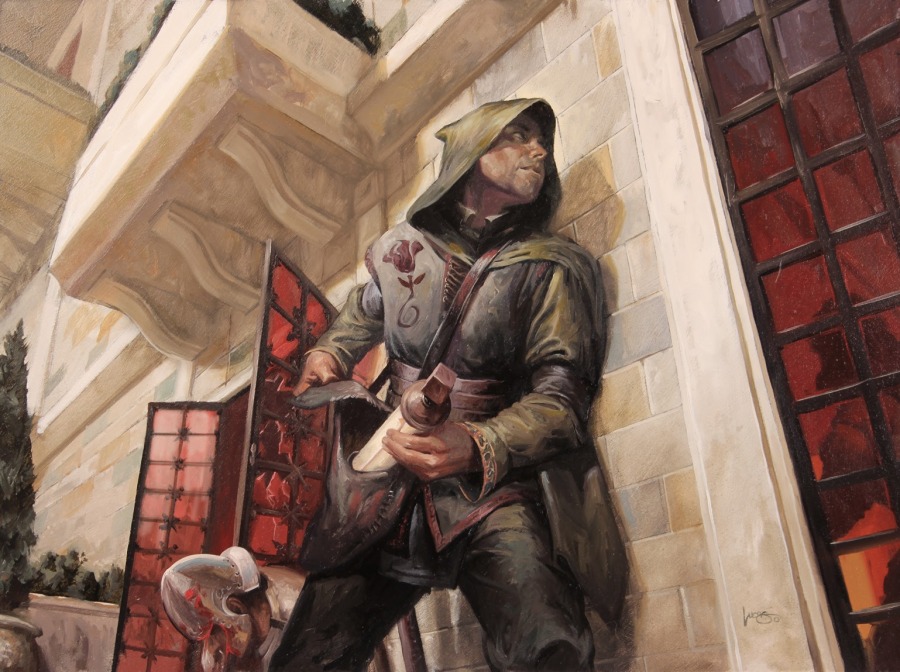


Mentor
While most Savants use their vast intellect in pursuit of their chosen discipline, Mentors use their gifts in service of others. Most often, they are past their prime and looking to pass their knowledge to the next generation. Whether community elder, retired adventurer, or someone with knowledge beyond their years, Mentors are ready to gently guide those around them.
Student of Life
3rd-level Mentor Discipline feature
You gain proficiency in History, Insight, and a set of Artisan's Tools of your choice, and you add your Intellect Die to checks with these proficiencies. You can also use your Intelligence, in place of Wisdom, for Insight checks.
Your lived experiences also grant you the benefits below:
- You master the Instruction Scholarly Pursuit. If you have mastered this Pursuit, you instead master Quick Study.
- Whenever you roll a 1 on an Intellect Die, you can reroll your Intellect Die, but you must keep the new roll.
- You can take the Help action to aid another creature within 10 feet of you in attacking your Focus.
Astute Advice
3rd-level Mentor Discipline feature
You know just what to say to help others learn from failures. When another creature within 30 feet that can both hear and understand you fails an ability check, attack roll, or a saving throw, you can use a reaction to have it re-roll its d20.
You can use this reaction a number of times equal to your Intelligence modifier (minimum of once). You regain one use when you finish a short rest, and all uses after a long rest.
Calm Demeanor
7th-level Mentor Discipline feature
You are able to keep your composure in the chaos of battle. If you end your turn without dealing damage or forcing another creature to make a saving throw, you can gain temporary hit
points equal to your Intelligence modifier (minimum of 1).
Soothing Presence
7th-level Mentor Discipline feature
Your calming presence allows others to truly relax. Creatures that complete a short rest with you have advantage on any Hit Die rolls they make to regain hit points.
Wondrous Advice
13th-level Mentor Discipline feature
Your insightful observations carry your allies to new heights. When you use Astute Advice, you can choose for the creature to either add your Intellect Die to the new result of its roll, or to gain temporary hit points equal to your Intellect Die. You can choose the benefit after you see its new roll.
In addition, you now regain all uses of Astute Advice when you complete a short or long rest, and when you roll initiative, you regain a single expended use of Astute Advice.
Mystical Intuition
13th-level Mentor Discipline feature
Your life experience and extraordinary intuition can give you mystical insights into the world around you. You can spend 1 minute meditating on a question you have, or a question that another creature has asked you. You then mystically intuit the answer to the question as if you had cast the commune spell. However, unlike commune, you can only intuit an answer if it is known to another mortal.
Once you gain an answer to a question using this feature, you must finish a long rest before you can do so again.
Master Mentor
18th-level Mentor Discipline feature
Your advice is legendary and your very presence helps allies live up to their true potential. Creatures of your choice, other than yourself, who can hear you within 15 feet can add your Intelligence modifier (minimum of +1) to any ability checks and saving throws they make.
Finally, each time you finish a short or long rest, you gain the benefits of your Mystical Intuition feature.

Naturalist
The Naturalist's classroom begins at the edges of civilization. Scholars of the wild, they will go to great lengths to preserve nature as it exists, free from civilization. A true Naturalist is both conservationist and expert at predicting weather, caring for wild animals, identifying toxic and medicinal plants, and guiding others safely through uncharted wilds of the world.
Student of Nature
3rd-level Naturalist Discipline feature
You gain proficiency in both Animal Handling and Nature, and you can add your Intellect Die to your checks with both skills. You can also use Intelligence, in place of Wisdom for your Animal Handling and Survival checks.
Your knowledge of the wilds allows you to mark creatures as your Focus by studying signs of their passing, like tracks or markings, even when you cannot see the creature.
Naturalist's Journal
3rd-level Naturalist Discipline feature
You compile your research on fantastical flora and fauna in a Naturalist's Journal. During the course of a short or long rest, you can spend 1 hour detailing your current Environment, or a specific Beast, Plant, or Monstrosity (like a Griffon or Bear), that was your Focus within the past 24 hours. You gain these benefits against creatures and Environments in your Journal:
- You have advantage on related Intelligence checks.
- When you make a weapon attack against a Focus
detailed in your Journal, you can forgo your Studied
Strike bonus damage to add your Intellect Die
to your attack roll. - In a detailed Environment, you
and those travelling with you
can ignore non-magical difficult
terrain, and you cannot get lost.
Call of the Wild
7th-level Naturalist Discipline feature
Drawing upon eons of understanding, you can bend the wild creatures to your will. As an action, you can force a creature within 30 feet that is also detailed in your Journal to make a Charisma saving throw. Creatures of a CR equal to half your Savant level, or higher, automatically succeed. On a failure, it is Charmed by you and uses these rules for the duration:
Control. The creature is Friendly to you and your allies. As a bonus action, you can issue a verbal command, which it will do its best to obey on its next turn. When it is not carrying out a command, it will defend itself to the best of its abilities.
Morale. If the creature takes damage, it repeats its saving throw at the start of its next turn. On a success, it is no longer Charmed. If it makes this saving throw you can use a reaction to subtract one Intellect Die from its roll, if it can hear you.
Duration. If the creature does not escape sooner, the effect ends if you become Unconscious, you free it with a command, or you attempt to use this feature on another creature.
Once a creature succeeds on any saving throw against this feature, it is immune to its effects until it finishes a long rest.
Advanced Studies
13th-level Naturalist Discipline feature
Your knowledge of the wild does not stop with the mundane. You can detail Dragons, Giants, Oozes, and Undead in your Journal. Your Journal also grants additional benefits:
- You gain Focus benefits against all detailed creatures.
- While in a detailed Environment, you and those travelling with you ignore magical difficult terrain and make saving
throws to resist environmental effects with advantage.
Master Naturalist
18th-level Naturalist Discipline feature
Your natural knowledge surpasses all others. You can
detail any non-Humanoid creature in your Journal,
and you have advantage on attack rolls against all
creatures detailed in your Journal.
Finally, Call of the Wild only ends when you
willingly free the creature, you use it on another
creature, or you or the Charmed creature dies.




Physician
Physicians use their considerable intellect to heal the
sick and tend the wounded. They spend their lives
studying the anatomy and biology of mortals,
and use this knowledge to keep their
allies in top condition and cripple
foes. Using this medical training,
they offer aid to those that do not
have access to the luxury of divine
magic or other healing spells.
Student of Medicine
3rd-level Physician Discipline feature
You gain proficiency in Medicine and Sleight of
Hand, and you add your Intellect Die to checks
with both skills. You can also use Intelligence, in
place of Wisdom, for Medicine checks.
Your studies also grant you the benefits below:
- For each minute you spend examining
your Focus, you can identify one disease,
poison, or curse currently afflicting it. - When you hit your Focus with a weapon
attack, you can forgo the Studied Strike
bonus damage to reduce its speed by
10 feet until the start of your next turn. - Over the course of 1 hour, which can be during a
short or long rest, you can hold a Healer's Kit to
restore a number of its expended uses equal to
your Intelligence modifier (minimum of 1).
Combat Medic
3rd-level Physician Discipline feature
You have studied to administer medicinal aid in the field.
You gain the Combat Medic actions below, which you can only use on other creatures. When you use a Combat Medic action, you can expend one use of a Healer's Kit to treat any Intellect Dice rolled as the maximum possible result:
Adrenaline Jolt. You touch a creature that has a disease, or is Blinded, Charmed, Deafened, Frightened, or Poisoned, and it can immediately repeat its saving throw to end that effect with a bonus equal to your Intellect Die.
Dress Wounds. You touch a creature that is below its hit point maximum, and it gains temporary hit points equal to your Intellect Die. These temporary hit points can't exceed the number of hit points the creature is missing.
Healing Surge. One creature you touch can immediately expend one of its Hit Dice to regain hit points equal to that Hit Die + its Constitution modifier + your Intellect Die.
If you use this ability on a living creature at 0 hit points, it is instantly Stabilized even if it does not expend a Hit Die.
Field Doctor
7th-level Physician Discipline feature
You can easily navigate the chaos of battle to administer aid. Whenever you take a Combat Medic action, you can use your bonus action to Dash, Disengage, or make a weapon attack.
Steady Hands
7th-level Physician Discipline feature
Your confidence in your medical capabilities has grown. You can use Combat Medic actions on yourself, so long as you are
not Blinded, Incapacitated, Paralyzed, or Restrained.
Medical Expertise
13th-level Physician Discipline feature
Your techniques push allies to their physical limit. When you use a Combat Medic action, you can empower it, granting it the corresponding bonus below. You can do so a number of times equal to your Intelligence modifier (minimum of once), and you regain all uses when you finish a short or long rest:
Adrenaline Jolt. You instantly end one of these conditions: Blinded, Charmed, Deafened, Frightened, Paralyzed, Petrified, Poisoned, Stunned, one level of Exhaustion, one reduction to an ability score, or one reduction to its maximum hit points.
Dress Wounds. You can either reattach one severed limb or digit, or grant the target temporary hit points equal to the difference between its current and maximum hit points.
Healing Surge. You can use this feature on a creature that has died within the past minute, and it can spend one Hit Die to return to life with hit points from your Healing Surge. This feature cannot restore missing body parts, and cannot return a creature to life that dies of old age.
Master Physician
18th-level Physician Discipline feature
Your knowledge of anatomy allows you to perform legendary feats of medicine. When a creature you are touching expends a Hit Die to regain hit points, it treats it as the maximum roll. This includes any Hit Dice spent during short rests, and Hit Dice spent as part of your Healing Surge action.



Tactician
Every successful monarch, conqueror, and revolutionary has a master Tactician responsible for their victory. These shrewd leaders remain always one step ahead of foes and have a plan for every outcome. Alone, a Tactician is not a threat, but with powerful allies, they become a formidable fighting force.
Student of War
3rd-level Tactician Discipline feature
You gain proficiency in History, Persuasion, and two Gaming Sets of your choice, and you can add your Intellect Die to any ability checks you make with these proficiencies.
Your study of warfare also grants you the benefits below:
- You gain proficiency in medium armor, shields, and all martial weapons that do not have the Heavy property.
- You can use your Intelligence, in place of Dexterity to calculate your Armor Class in light and medium armor.
- You can use Potent Observation on initiative rolls.
Tactical Command
3rd-level Tactician Discipline feature
You can use your knowledge of tactics to direct your allies on the battlefield. You learn to use the following Orders. To issue an Order, take the Attack action, then forgo an attack to issue an Order to another creature that can see or hear you within 30 feet. You can forgo any number of attacks to issue Orders:
Attack Order. If this creature takes the Attack
action before the beginning of your next turn,
it makes one additional attack as part of that
Attack action.
Defensive Order. The creature gains the
benefits of the Dodge action until the start
of your next turn.
Maneuvering Order. As a reaction, this
creature can move up to its speed without
provoking opportunity attacks.
Support Order. This creature can take the
Help, Hide, Search, or Use an Object action.
Advanced Tactics
7th-level Tactician Discipline feature
Your continued study of the art of war grants you knowledge of the following additional Orders, which use the same rules:
Enlivening Order. On the creature's next turn, it gains the benefits of the Dash action, and it has advantage on Strength and Dexterity checks.
Rejuvenating Order. The creature can immediately repeat one saving throw to end one condition currently affecting it.
Strategic Superiority
7th-level Tactician Discipline feature
You can attack twice, instead of once, whenever you take the Attack action on your turn. Moreover, if you use your action to Dash, Dodge, or Disengage, you can make a single attack or issue an Order as a bonus action on that turn.
Tactical Genius
13th-level Tactician Discipline feature
Your genius allows you to control the flow of each battle from the outset. When you roll Initiative, you can issue one Order before any creatures have a chance to act.
Also, when another creature that can hear you attacks your Focus, you can use Potent Observation on its attack roll. You can do so after it rolls, but before you know if its attack hits.
Master Tactician
18th-level Tactician Discipline feature
Your words inspire heroism in your allies. Any time you issue an Order to a creature, you can grant it temporary hit points equal to your Intelligence modifier (minimum of 1).
Finally, you learn the following legendary Orders. These Orders can only be issued once each per short or long rest:
Heroic Order. Until the beginning of your next turn, the creature has Resistance to all damage, and it has advantage on all ability checks, attack rolls, and saving throws.
Revitalizing Order. You issue this Order to a creature that died in the past minute. It immediately stands up and regains
hit points equal to your level + your Intelligence modifier.
This Order cannot revive creatures that die of old age.



The Savant
A brilliant new class for the world's greatest roleplaying game. Includes six genius Academic Disciplines: Archaeologist, Investigator, Mentor, Naturalist, Physician, and Tactician!
Version 5.6.1 - Created by /u/laserllama
Last Updated: September 6th, 2026
Artist Credits:
Cover - Sara Winters - Compulsive Research
Page 1 - Eelis Kyttanen - Weatherlight Stalwart
Page 3 - Mitchell Malloy - Frantic Search
Page 5 - Anna Steinbauer - Seek the Wilds
Page 6 - Lucas Graciano - Marchesa's Infiltrator
Page 7 - Lucas Graciano - Borderland Explorer
Page 8 - Wei Guan - Mentor of the Meek
Page 9 - Bram Sels - Valiant Rescuer
Page 10 - Howard Lyon - Star Pupil
Back - Adam Paquette - Jace's Sanctum
Additional laserllama Homebrew content
can be found for free on GM Binder.
Support me on Patreon for access to
five exclusive Academic Disciplines:
Engineer - Marksman - Mechanist
Occultist - Tinker - Voyager
Check out the Savant: Expanded for a multitude of additional Feats, Magic Items, Scholarly Pursuits, and four Academic Disciplines!