

The Savant Class: Expanded
The Savant is an Intelligence-based, non-magical class that focuses on gathering information and supporting their allies. Provided here are a multitude of additional Savant options:
Personality & Quirks. Use these roleplaying tables to randomly determine your Savant's quirks and personality; take what you like, or use the options here for inspiration
Scholarly Feats. It is no secret that Intelligence is the ability score with the least useful and synergistic options for Feats. The Feats presented here look to solve that problem!
Magic Items. Enhance your loot with a variety of magic items of all rarities designed specifically for the Savant.
Additional Scholarly Pursuits. Also included are eight additional Scholarly Pursuits for your Savant to master.
Additional Academic Disciplines. Finally, included here are six bonus Academic Disciplines for Savants: Artistocrat, Culinarian, Orator, Philosopher, Rune Scribe, and Virtuoso!
Personality & Quirks
Having trouble creating a personality for your Savant, or just looking for inspiration? Choose an Obsession, Eccentricity, and Irrational Fear from the tables presented here.
Obsessions
In their desire to answer every question, Savants can develop obsessions. These inexplicable questions and phenomena gnaw at a Savant until they find the answers that they seek.
d4
Obsession
1
You discovered a strange script in the margin
of a book. The best scholars cannot identify it.
2
As a child you saw a majestic golden bird fly
across the sky that left a rainbow in its wake.
3
Your father charged you to find the legendary,
and most likely fictional, chalice of Bahamut.
4
You use the word "inconceivable" all the time
even though you aren't exactly sure what it means
Eccentricities
Often, with great intellect and intense mental focus comes some strange habits. A Savant's eccentricities are usually the result of them spending too much time on their field of study.
d6
Eccentricity
1
You assume that every person you talk to cares
about the minutiae of your area of expertise.
2
You have a really bad habit of only speaking
in the technical jargon of your field.
3
You don't understand children.
4
When someone doesn't understand something,
you just haven't explained it enough times.
5
You take diligent notes on everything
even when it isn't socially appropriate.
6
You are so dedicated to your field of study that
you find yourself explaining things to your foes.
Good Luck Charms
Often, despite their intellect, Savants develop attachments to mundane charms, objects, or clothing they perceive as lucky.
d6
Lucky Trinket
1
You refuse to place your faith in a single deity
so you carry a multitude of holy symbols.
2
Your father was a farmer who paid for your
education. You wear his hat in his memory.
3
Despite its ineffectiveness, you carry a
whip to impress and intimidate others.
4
You carry a scroll of insane ramblings.
One day you will figure out its meaning.
5
You wear a pair of crystal spectacles
even though you have perfect vision.
6
You never leave home without a copy of
your mentor's thesis on owlbear anatomy.





Irrational Fears
Despite their impressive minds, Savants tend to develop fears that anyone with common sense would find totally irrational.
d6
Irrational Fear
1
You are convinced you contracted a minor form
of lycanthropy from a dog that bit you as a child.
2
You will do literally anything to
avoid interacting with fire magic.
3
You always make sure to sleep with a silver
coin in your hand to ward off night hags.
4
You hate snakes and snake-like creatures.
5
You are so afraid of undead that the sight
of them causes you to vomit.
6
You give out code words to your allies so
they can prove they aren't doppelgangers.
Scholarly Feats
If your group uses the optional rule for Feats, the following Feats are available alongside those in the Player's Handbook:
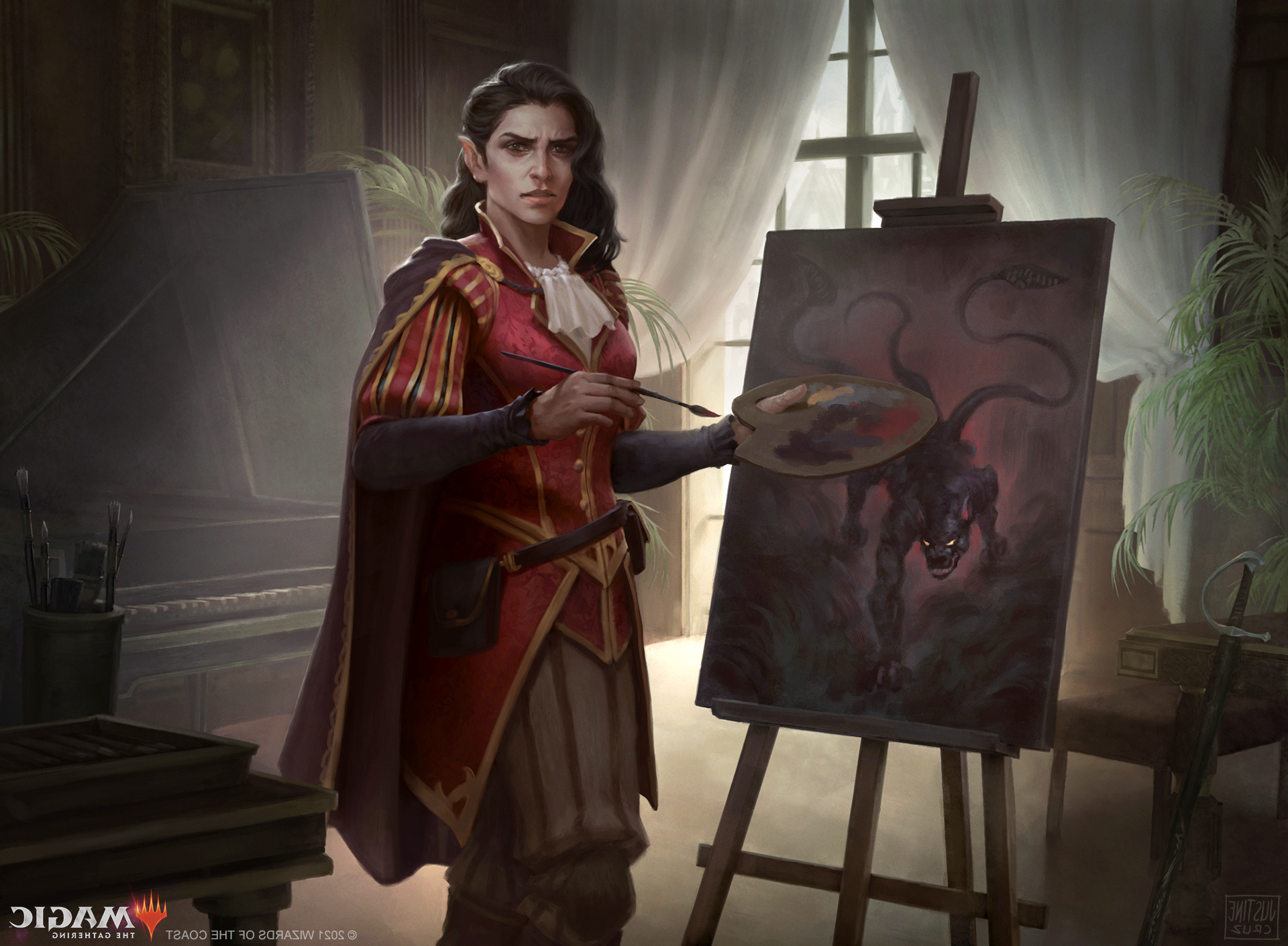
Classical Artist
Your great intellect has allowed you to master what many would consider the fine arts. You gain the following benefits:
Ability Score Increase. Increase either your Intelligence or Dexterity score by 1, up to a maximum of 20.
Classically Trained. You gain proficiency in Mason's Tools and Painter's Supplies. Whenever you make an ability check with either Tool, you treat a d20 roll of 9 or lower as a 10.
Eye for Value. You have advantage on all ability checks to asses they value of paintings, sculptures, and other art.
Fine Art. You can use Mason's Tools or Painter's Supplies and appropriate materials to create a work of Fine Art.
For each 8-hour workday you spend working on it,
the value of your Fine Art increases by 10 gold.
Helpful Insights
You always seem to have helpful advice for
any situation. You gain the benefits below:
Ability Score Increase. You increase your
Intelligence or Wisdom score by 1, up to
a maximum of 20.
Quick Advice. You can use the Help
action as a bonus action on your turn.
Words of Wisdom. When you use
the Help action to give advantage
on an ability check with a skill or
tool you are proficient with, the
target treats a d20 roll of 7 or
lower as an 8.
Lifelong Learner
You never stop learning. You gain all the benefits below that correspond to your current Intelligence modifier and lower.
If your Intelligence modifier changes, the benefits you gain from this Feat also increase (or decrease) with your modifier:
Modifier
Benefit
+1
You learn to speak, read, and write one
additional language of your choice.
+2
You gain proficiency with one set
of Artisan's Tools of your choice.
+3
You gain proficiency in one skill of your choice.
+4
For one skill proficiency of your choice, you
treat a roll of 7 or lower on the d20 as an 8.
+5
Whenever you are forced to make a Wisdom
saving throw, you can choose to make an
Intelligence saving throw instead.
Mental Acuity
Your mind is a wonderful thing, capable of bursts of insight and mental fortitude. You gain the following benefits:
Ability Score Increase. Increase your Intelligence score by 1, up to a maximum of 20.
Well Read. You gain proficiency with two of these skills: Arcana, History, Investigation, Medicine, Nature, or Religion.
Wondrous Memory. Choose two skills from the list above; they need not be the skills you gained proficiency in with this Feat. Any time you make an ability check with either skill, you can treat a d20 roll of 7 or lower as an 8.
Scholar of Lore
You have spent time learning everything there is to know about a specific area of study. You gain the following benefits:
Ability Score Increase. Increase your Intelligence score by 1, up to a maximum of 20.
Scholarly Pursuit. You master a Scholarly Pursuit of your choice from those available to the Savant. If the Pursuit has a Savant level prerequisite, you can learn it if your total level
meets the prerequisite level for that Scholarly Pursuit.
Intellect Die. If the Scholarly Pursuit requires an Intellect
Die, always use a d4, unless
yours is already higher.

Magic Items
Consider adding the following scholarly magic items to your game, particularly if one of your players is playing a Savant.
Blade of the Scribe
Weapon (rapier), rare (requires attunement by a Savant)
The handle of this elegant rapier is fashioned from silver and steel, and the hollow blade is filled with ink. It bears an Elvish inscription that, when translated, reads "The pen is mightier than the sword, but this is mightier still". You gain a +1 bonus to both attack and damage rolls with this magic weapon.
This magic rapier has 4 Charges. When you hit a target with this weapon, you can expend 1 Charge to release a blast of ink. The target must succeed on a DC 15 Dexterity saving throw or be Blinded for 1 minute. This effect ends early if the creature uses its action to wipe the ink from its eyes.
This magic rapier regains 1d4 Charges daily, at dawn.
Doctoral Robes
Wondrous item, legendary (requires attunement by a Savant)
These luxurious robes were fashioned by a long-forgotten empire for the headmaster of an academy of higher learning.
While attuned to the robes, you gain the following benefits:
- So long as you are not wearing any armor, your Armor Class is equal to 15 + your Intelligence modifier.
- When you are forced to make a saving throw, you gain a bonus to your roll equal to your Intelligence modifier.
- When another creature that can hear you within 30 feet makes an ability check, you can use your reaction to add
your Intelligence modifier to the result of its roll.
Living Quill
Wondrous item, common
This fanciful quill looks to be made from the feather
of a bird of mysterious origin. As an action, you can
speak the Quill's command word and touch the Quill
to a piece of paper or parchment. As long as the Quill
can hear you, it transcribes your words exactly. The
Quill transcribes for 1 hour, but it stops sooner if you
speak its command word again.
Monocle of the Linguist
Wondrous item, uncommon (requires attunement)
This elegantly constructed single eyeglass allows
you to read and understand all writing you view
through it as if it were your native tongue.
Ring of Lost Lore
Ring, rare (requires attunement)
This bronze ring is etched with hieroglyphics
from a forgotten civilization. It has 3 Charges,
and it regains 1 expended Charge daily, at dawn.
While you wear this ring, you can expend 1
Charge and focus your thoughts on one object or
creature you can see to instantly learn one piece
of significant, forgotten, or secret knowledge
about it, so long as such information exists.
Staff of the Headmaster
Staff, very rare (requires attunement by a Savant)
This staff was once a symbol of the headmaster at an
imperial academy. The staff can be wielded as a magic
quarterstaff that grants a +2 bonus to attack and damage
rolls made with it. When holding it, you have a +2 bonus to any ability checks that use your Intelligence or Wisdom.
Moreover, you can use an action to plunge this staff into the ground, producing the effect of private sanctum within a 30-foot radius of that point. The area within the spell appears as an ornate study in addition to the normal effects of the spell.
Once you use the staff to cast private sanctum in this way, the staff cannot do so again until the following dawn.
Tome of Everlasting Genius
Wondrous item, very rare (requires attunement by a Savant)
This elegantly made ageless tome has been passed down by generations of geniuses, each adding more information to its pages. This tome contains 1d4 +1 entries from those listed below. You can roll randomly, or the DM can choose them.
For each entry in the tome, you gain proficiency in the skill that corresponds with the genius who wrote the entry, and an additional +5 bonus to any checks you make with that skill.
Genius (Proficiency)
Genius (Proficiency)
Actor (Performance)
Psychologist (Insight)
Astronomer (Nature)
Surgeon (Medicine)
Cultist (Deception)
Researcher (Investigation)
Linguist (Persuasion)
Ritualist (Arcana)
Magistrate (History)
Theologian (Religion)
Once you are attuned to this tome for a year and a day, you add your own entry to the tome, detailing your area of study, choosing one relevant skill that you are proficient in to add.



Scholarly Pursuits
Listed below are additional Scholarly Pursuits available to
a Savant that can be included with those in the base class:
Bushcraft
Prerequisites: 4th-level Savant
You can use your knowledge of nature to thrive in the wilds. You gain proficiency in Nature, and you add your Intellect Die to any Nature checks you make.
Over the course of 10 minutes, which can be during a short or long rest, you can gather natural material and use a dagger or handaxe to create one of the following objects: a club, 1d4 darts, a javelin, a net, 10 feet of rope, or a Bushcraft Snare.
As an action, you can set a Bushcraft Snare in an adjacent, unoccupied, 5-foot space. The first Large or smaller creature to move into the space must make a Dexterity saving throw against your Intellect save DC or be Restrained by the Snare.
As an action, a creature can make a Strength check against your Intellect save DC, escaping from the Snare on a success.
When the creature escapes, the Snare is destroyed.
Deduction
Prerequisites: 4th-level Savant
You are able to put together seemingly unconnected pieces of information to discover hidden truths and mysteries. You gain proficiency in Investigation, and you add your Intellect Die to any Investigation checks you make.
When you designate a creature as your Focus, it remains so until you choose to end it, or you designate another Focus.
Once between each long rest, you can ponder a Hunch you have about your Focus, and ask the DM a question regarding it that can be answered with a "yes", "no", or "unclear".
Equestrianism
Prerequisites: 4th-level Savant
You have learned to tend to horses and other trained mounts. You gain proficiency in Animal Handling, and you add your Intellect Die to any Animal Handling checks you make.
When you ride a trained mount, you gain certain benefits:
- In combat, your mount acts during your turn.
- When your mount makes an ability check, damage roll,
or saving throw, it can add your Intellect Die to its roll.
- As a bonus action, you can command your mount to attack, or to use another action in its stat block.
Finally, if you spend 8 hours training a friendly quadruped creature and spend 50 gold on necessary training materials
and food, it is considered to be a trained mount for you.
First Aid
Prerequisites: 4th-level Savant
You have studied basic medicinal techniques to aid allies. You gain proficiency in Medicine, and you add your Intellect Die to any Medicine checks you make.
During a long rest, you can spend 1-hour using a Healer's Kit to produce a number of potions of healing equal to your Intelligence modifier (minimum of 1).
These potions of healing become useless after 24 hours.
Marksmanship
Prerequisites: 4th-level Savant
You bring your intellect to bear in the use of ranged weapons. You gain proficiency in Sleight of Hand, and you can add your Intellect Die to any Sleight of Hand checks you make.
You also gain proficiency with all martial ranged weapons, and whenever you make a ranged weapon attack, you can use your Intellect Die in place of the weapon's damage die.
Finally, if your setting includes firearms, and your Savant has been exposed to the inner workings of such devices, they are considered proficient with simple and martial firearms.
Mercantilism
Prerequisites: 4th-level Savant
You are an astute scholar of economics, trade routes, and the marketplace. You gain proficiency in Insight, and you can add your Intellect Die to any Insight checks you make.
Also, while trading with a creature whose Intelligence and Wisdom are both lower than your Intelligence score, all items you purchase from the creature cost 10 percent less, and any items you sell are purchased for 10 percent more than usual.
Musicianship
Prerequisites: 4th-level Savant
You have talent for music and song. You gain proficiency in Performance and with one Musical Instrument, and you add your Intellect Die to any checks you make with these skills.
Also, when you play a Musical Instrument or perform for
a creature for 1 minute or longer, you have advantage on any ability checks you make to interact socially with that creature for 1 hour. This benefit instantly ends if you or your allies do anything harmful to the creature or to its allies.
Polymath
Prerequisites: 4th-level Savant
You have a knack for picking up new skills, though you may not be a master of them all. Choose two of your skill or tool proficiencies. You can add your Intellect Die to any checks you make with those proficiencies.

Additional Disciplines
At 3rd level, a Savant gains the Academic Discipline feature. The following Academic Disciplines are available to Savants, along with those presented with the base Savant Class:
Aristocrat
Philosopher
Culinarian
Rune Scribe
Orator
Virtuoso
Aristocrat
Your genius was nourished by the lavish education of nobility. You had access to every tutor, library, and lesson that a mortal mind could dream of, and you took every advantage. You now combine your great intellect with the generational reputation of your name, leveraging both to become a master of politics.
Student of High Society
3rd-level Aristocrat Discipline feature
You gain proficiency in History, Persuasion, and in one set
of Artisan's Tools of your choice. You can add your Intellect Die to all checks you make with these proficiencies.
Your elite education also grants you one of these Scholarly Pursuits, even though you do not yet meet their prerequisites: Equestrianism, Linguistics, Mercantilism, or Traditions.
Inherited Wealth
3rd-level Aristocrat Discipline feature
Your family name has a great fortune associated with
it, and as you rise in stature and influence, you are able
to draw on its great coffers. You gain 300 gold. This is a
one-time benefit, and you must withdraw it from a bank
or similar institution in a Settlement of appropriate size,
as determined by the DM.
Each time you gain a Savant level, you gain an additional one-time sum of gold, which must be withdrawn in the same way, equal to 100 times your current level in this class.
Uphold Reputation
3rd-level Aristocrat Discipline feature
Your family name comes with certain expectations that you mustn't fail to meet. When you miss with an attack roll, or fail an ability check or saving throw, you can choose to add your Intellect Die to your result, possibly changing the outcome.
You can use this feature a number of times equal to your Intelligence modifier (minimum of once). You regain one use when you finish a short rest, and all uses after a long rest.
Aversion to Violence
7th-level Aristocrat Discipline feature
Your true value lies in your connections and wealth, not your ability to take a hit. When a creature you can see targets you with an attack or spell, you can use a reaction to immediately switch places with a conscious and willing creature within 5 feet. It becomes the target of the attack or spell in your place.
When you use this reaction, you can choose to grant the creature you switch places with a number of temporary hit points equal to your Intellect Die.
You can grant the temporary hit points a number of times equal to your Intelligence modifier (a minimum of once), and
you regain all uses when you finish a short or long rest.
Well Connected
13th-level Aristocrat Discipline feature
You can leverage your family name's generational reputation, connections, and finances to arrange powerful favors. While you are in a Settlement, you can spend 1 hour arranging such a favor. The scope of such a favor cannot exceed the effects of a 7th-level spell, and this favor's gold value cannot exceed 500 times your Savant level.
For example, you might secure a rare material component for a spell, the service of an elite mercenary company, access to a forbidden library, or the loyalty of your enemy's servant.
Once you arrange such a favor, you cannot do so again until you finish a long rest. However, you cannot arrange a favor in that same Settlement until 1d4 days have passed.
Ascendant House
18th-level Aristocrat Discipline feature
Your reputation exceeds that of kings and emperors. All who hear your words must obey. You can use Aversion to Violence to switch places with a conscious and willing creature within 15 feet of you, or a conscious and unwilling creature within 5 feet of you. Unwilling creatures must make a Wisdom saving throw to resist the effect. You cannot target your attacker.
Finally, you regain all expended uses of Uphold Reputation whenever you finish a short or long rest.



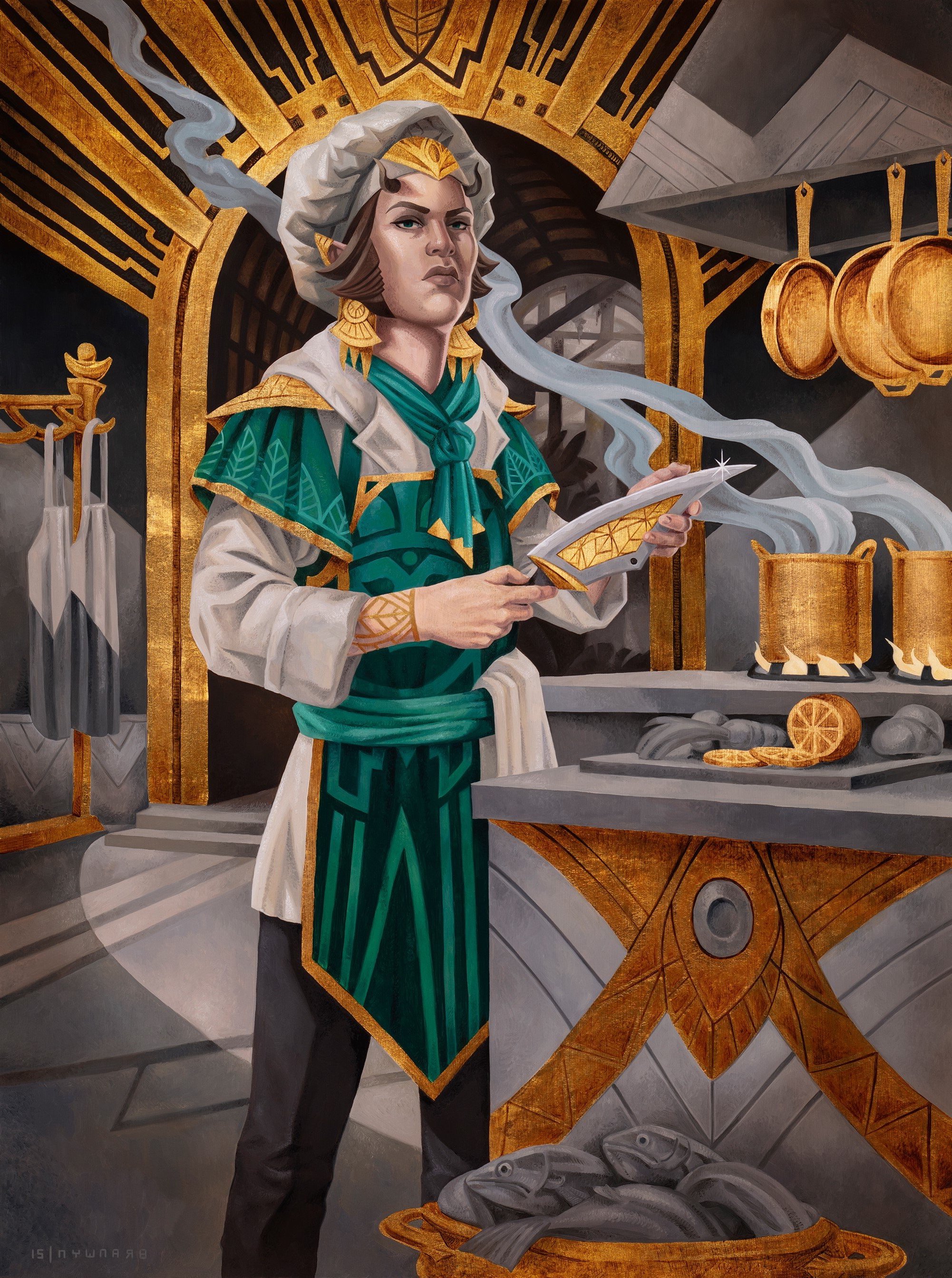
Culinarian
The Savants known as Culinarians put their great intellects
to work in the science of food and drink. Ever the adventurer, they leave their kitchens behind, venturing out into the world in a lifelong search for new wondrous and exotic ingredients. What strange and exciting recipes will you come to discover?
Student of Flavor
3rd-level Culinarian Discipline feature
You gain proficiency in Nature, Sleight of Hand, and Cook's Utensils, and you can add your Intellect Die to all checks you make with these proficiencies.
Your culinary training and advanced palate also grant you the following benefits:
- So long as you have access to Cook’s Utensils and edible ingredients, any creature that expends a Hit Die to regain hit points during a short rest with you also regains bonus hit points equal to your Intellect Die.
- Cook's Utensils count as simple melee weapons with the Finesse property for you. On hit, they deal Bludgeoning, Piercing, or Slashing damage (depending on the utensil) equal to your Intellect Die.
- Over the course of 1 minute, you can use Cook's Utensils to determine if food or drink has been poisoned or altered in any way, including by magic, as if by a detect poison & disease spell. You do not need to taste it to do so.
Culinarian's Cook Book
3rd-level Culinarian Discipline feature
You are compiling a Cook Book which contains the
exotic Recipes you discover during your adventures:
Recipes Known. You know two Recipes of your
choice from the list at the end of this Discipline.
Adding a Recipe. As an action, you can use your
Cook's Utensils to harvest a Sample of a creature
that has died within the last minute.
Before the end of your next long rest, you must
spend 1 hour (which can be during a rest), using
Cook's Utensils and that Sample to experiment,
adding the Recipe from the end of this Discipline
which corresponds to the Sample's creature type
to your Cook Book.
Preparing a Morsel. At the end of each short or
long rest, you can use your Cook's Utensils to prepare
a number of Morsels equal to your Intelligence modifier.
Each Morsel you prepare has the properties of one Recipe
of your choice from your Cook Book.
You don't need Samples from a creature corresponding
to a Recipe to prepare a Morsel with that Recipe. Morsels
you prepare lose their potency at the end of the next short
or long rest as they become inedible and bland.
Serving Morsels. As an action, any creature can eat a Morsel, or feed it to a willing creature within its reach. A creature that eats a Morsel gains the benefits detailed in
the Recipe description. A creature can only benefit from
one Morsel at a time, and eating another Morsel instantly
ends any previous Morsel benefits.
Replacing a Cook Book. If your Cook Book is lost or destroyed, you can spend 1 hour adding each of your old Recipes to a new Cook Book from memory. You do not
need to rediscover any Recipes that were lost.
Cut Above
7th-level Culinarian Discipline feature
As an action, you can touch one of your Morsels with Cook's Utensils and change it to a Morsel of another Recipe.
Also, when you use your action to eat or feed a Morsel to a creature, you can make a weapon attack as a bonus action.
Improved Recipes
13th-level Culinarian Discipline feature
Your Recipes invigorate your allies along with their normal benefits. A creature that eats one of your Morsels also gains temporary hit points equal to your Savant level.
Master Culinarian
18th-level Culinarian Discipline feature
You are a master monster chef and can cook with anything, anywhere. Over the course of 1 hour, which can be during a short or long rest, you can use Cook's Utensils and any foods to prepare a wondrous feast to feed yourself and a number of other creatures equal to your Savant level.
If a creature spends 10 minutes eating its
meal, it is instantly cured of any poisons,
diseases, or any other hostile condition
that is effecting it, and for 24 hours, it
is immune to both the Frightened and
Poisoned conditions, and it adds your
Intellect Die to any ability checks or
saving throws it makes that use its
Wisdom or Constitution.

Culinarian Creature Recipes
The following Recipes are available for Culinarian Savants to learn. To learn a Recipe, you must use a Sample that matches the creature type listed. If a Recipe has a prerequisite Savant level, you can learn as soon as you meet the level prerequisite.
Invigorating Morsel
Sample: any Beast without a flying or swimming speed
The creature that eats this Morsel regains hit points equal
to your Intellect Die + your Intelligence modifier.
Limbering Morsel
Sample: any Beast with a flying speed
For 1 hour, the creature gains a bonus to its initiative rolls equal to your Intelligence modifier (minimum of +1), and its walking speed increases by 10 feet.
Monstrous Morsel
Sample: any Monstrosity of CR 1 or higher
For 1 hour, the creature gains the "Change Appearance" or "Natural Weapons" benefit from the alter self spell.
Subterranean Morsel
Sample: any Beast with a burrowing speed
For 1 hour, the creature gains Darkvision out to 60 feet. If a creature already has Darkvision, its radius grows by 30 feet.
Thalassic Morsel
Sample: any Beast with a swimming speed
For 1 hour, the creature gains a swimming speed equal to its walking speed, and it can hold its breath for up to 10 minutes.
Verdant Morsel
Sample: any Plant of CR 1 or higher
The creature is instantly cured of the following conditions: Blinded, Deafened, Paralyzed, Petrified, Poisoned, a reduction to an ability score, or a reduction to its hit point maximum.
Draconic Morsel
Prerequisite: 7th-level Savant
Sample: any Dragon of CR 1 or higher
For 1 hour, the creature gains Resistance to the damage type dealt by the Sample dragon's breath weapon attack.
You can create a unique Recipe in your Cook Book for each different type of Dragon you have harvested a Sample from.
Psionic Morsel
Prerequisite: 7th-level Savant
Sample: any Aberration of CR 1 or higher
For 1 hour, the creature can communicate telepathically with any creature within 30 feet. However, in order to respond to you, a creature must be able to speak at least one language.
Titanic Morsel
Prerequisite: 7th-level Savant
Sample: any Giant of CR 1 or higher
For 1 hour, the creature grows in size to become the size of the Sample giant. While it is enlarged, it must concentrate on this effect as if it were concentrating on a spell. Moreover, the creature gains a bonus to its ability checks and saving throws that use its Strength equal to your Intelligence modifier.
You can create a unique Recipe in your Cook Book for each different Giant you have harvested a Sample from.
Viscous Morsel
Prerequisite: 7th-level Savant
Sample: any Ooze of CR 1 or higher
For 1 hour, when the creature takes Acid, Lightning, Poison,
or Slashing damage, it can reduce the damage by an amount equal to your Intelligence modifier (minimum of 1 damage).
Aerial Morsel
Prerequisite: 13th-level Savant
Sample: any Air Elemental of CR 1 or higher
For 1 hour, the creature can take the Dash action as a bonus action on each turn, and it can hold its breath indefinitely.
Aqueous Morsel
Prerequisite: 13th-level Savant
Sample: any Water Elemental of CR 1 or higher
For 1 hour, the creature can breathe both air and water, gains a swimming speed equal to its walking speed, and can use its reaction to turn a critical hit into a normal hit.
Ignan Morsel
Prerequisite: 13th-level Savant
Sample: any Fire Elemental of CR 1 or higher
For 1 hour, the creature gains Resistance to Fire damage and Immunity to both the Charmed and Frightened conditions.
Terran Morsel
Prerequisite: 13th-level Savant
Sample: any Earth Elemental of CR 1 or higher
For 1 hour, the creature gains Tremorsense out to a 15-foot radius, and it gains Resistance to non-magical Bludgeoning, Piercing, and Slashing damage.
Celestial Morsel
Prerequisite: 18th-level Savant
Sample: any Celestial of CR 1 or higher
For 1 hour, the creature manifests a pair of ethereal angelic wings which grant it a flying speed equal to its walking speed.
Infernal Morsel
Prerequisite: 18th-level Savant
Sample: any Fiend of CR 1 or higher
For 1 hour, the creature has advantage on any saving throw
it is forced to make to resist a spell and other magical effects.
Sylvan Morsel
Prerequisite: 18th-level Savant
Sample: any Fey of CR 1 or higher
For 1 hour, the creature can use a bonus action on each turn to teleport up to 30 feet to an unoccupied space it can see.
Creating your own Recipes
Part of the genius of a Culinarian is the creation of custom signature Recipes. If you have an idea for a Recipe based on a creature type that isn't included here, work with your DM to design a suitable effect based on the abilities of a creature of that type.
Whatever Recipe you design, its effects should last for 1 hour and should be equal in power to the other available Recipes that a Culinarian can add to their Cook Book at that prerequisite level.
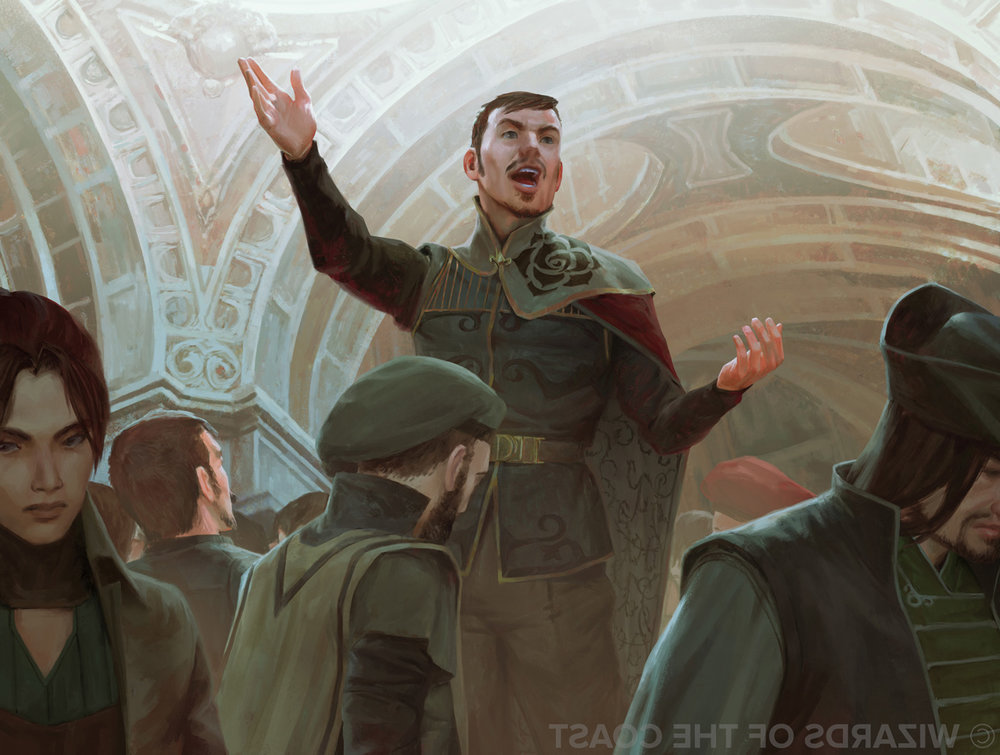
Orator
Orators are true masters of linguistics and the
spoken word. These wordsmiths use nothing but
their wit and mastery of rhetoric to rebuff foes and
empower their allies. With utmost confidence, they
stride boldly into hostile situations, confident that
they can win anyone with their eloquence.
Unlike those who use their charm to cajole, Orators
embolden their allies and win over their enemies with nothing but reasonable logic and convincing rhetoric.
Student of Logic
3rd-level Orator Discipline feature
You gain proficiency in both Deception and Persuasion, and you add your Intellect Die to checks with both skills. You can also use Intelligence, in place of Charisma, for Deception and Persuasion checks.
Your mastery over words grants you the benefits below:
- You master your choice of the Instruction, Riddles,
or Traditions Scholarly Pursuit, even if you do not
meet the normal level prerequisite for that Pursuit.
- You learn to speak, read, and write a number of extra languages equal to your Intelligence modifier.
- Whenever you speak a language, you sound as if you
were a native speaker of that language.
Rhetorical Superiority
3rd-level Orator Discipline feature
Your mastery of various languages allows you to inspire,
dominate, and charm with words. You gain the rhetorical
abilities below, which can affect any creature, so long as
the target can both hear and understand you:
Convincing Conversation. If you spend at least 1 minute talking with a creature that isn't Hostile toward you, you can force it to unknowingly make a Wisdom saving throw. On a failure, it is Charmed by you for 1 hour, or until you or your allies do anything harmful to it or any of its allies.
You can only have one creature Charmed by this feature. Charming another target ends this effect for all others.
Cutting Retort. When a creature you can see within 30 feet makes an attack, you can use your reaction to distract it with a cutting remark. It must succeed on a Wisdom saving throw or subtract your Intellect Die from its attack roll.
Once a creature succeeds on this Wisdom saving throw,
it is immune to the effects of this feature for 24 hours.
Invigorating Word. Immediately after another creature that you can see within 30 feet takes damage, you can use your reaction to grant it temporary hit points equal to your Intellect Die.
Uplifting Remark. When another creature that you can see within 30 feet fails an Intelligence, Wisdom, or Charisma saving throw, you can use a reaction to allow it to roll again.
Iron Logic
7th-level Orator Discipline feature
Your masterful grasp of logic allows you to resist all but the strongest mind-altering effects. You have advantage on any saving throw you are forced to make to resist Enchantment spells, and you are immune to the Charmed condition.
Moreover, when you use your Cutting Retort reaction, the
target takes Psychic damage equal to your Intellect Die.
Peerless Rhetoric
13th-level Orator Discipline feature
You can bend the masses to your will with your words. If you speak to a group of creatures that can hear and understand you for 1 minute, you can Inspire or Persuade a number of creatures in that crowd equal to your Savant level, as detailed below. You can use each of these abilities once between each short or long rest:
Inspire. Creatures gain a number of temporary hit points equal to your Savant level, and while they last, creatures have advantage on saving throws to resist Enchantment spells and gain Immunity to the Frightened condition.
Persuade. Creatures must make a Wisdom saving throw or become Charmed by you for up to 24 hours as if by a mass suggestion spell.
Master Orator
18th-level Orator Discipline feature
Your absolute mastery over the spoken word allows you to bend all but the strongest creatures to your will. When you force a creature to make a saving throw to resist one of your Rhetorical Superiority abilities or Peerless Rhetoric, it has disadvantage on the roll if both its Intelligence and Wisdom scores are lower than your Intelligence score.

Philosopher
Philosophy is considered by many to be the purest Discipline a Savant can pursue. They expend their genius pondering the deep questions of existence; the purpose of life, the nature of the multiverse, and the relationships between mortal beings and gods. Through the study of the multiverse, Philosophers reach for perfect knowledge of the true nature of reality.
Student of Thought
3rd-level Philosopher Discipline feature
You gain proficiency in both Arcana and Religion, and you add your Intellect Die to any checks with those skills.
Your grasp of reality also grants you the following benefits:
- You add your Intellect Die to all checks to communicate with creatures not native to the Material Plane.
- You can learn the following Characteristics with Adroit Analysis: current alignment, native plane of existence, or its spellcasting ability and the level of its highest spell.
Words of Power
3rd-level Philosopher Discipline feature
In your study, you have learned to speak Words of Power that were used to shape the multiverse. If your Focus is within 30 feet and can hear you, you can speak a Word of Power at it:
Confound. If your Focus makes an ability check or attack roll, you can use a reaction to force it to make an Intelligence saving throw. On a failure, it takes Psychic damage equal to your Intellect Die and has disadvantage on that roll.
Disorient. As an action, you force your Focus to make a Wisdom saving throw. On a failure, it takes Psychic damage equal to your Intellect Die, and has disadvantage on the first saving throw it makes before the start of your next turn.
Dread. As an action, you can force your Focus to make a Wisdom saving throw. On a failure, it takes Psychic damage equal to your Intellect Die, and it becomes Frightened of a creature of your choice until the start of your next turn.
Halt. When your Focus attempts to move, you can use a reaction to force it to make a Strength saving throw. On a failure, it takes Psychic damage equal to your Intellect Die and its speed is reduced to zero until the
start of your next turn.
Unwavering Focus
7th-level Philosopher Discipline feature
Your resolute sense of purpose bolsters your Words of Power. You can speak Words of Power at any creature that can hear you within 30 feet, not just your Focus.
Also, when a creature fails its saving throw against a Word of Power, the number of Intellect Dice of Psychic damage it takes increases to two. It increases again at certain Savant levels: at 13th level (three), and finally at 18th level (four).
Supreme Understanding
13th-level Philosopher Discipline feature
Your ever-deepening understanding of the nature of reality grants you knowledge of more potent Words of Power. You learn the Words of Power below, which can only be used against your Focus. You can speak each of these Words of Power once between each short or long rest:
Enfeeble. As an action, you force your Focus to make an Intelligence saving throw or take Psychic damage equal to three Intellect Dice and become Stunned for 1 minute.
It can choose to repeat this saving throw at the end of each of its turns. On a success, this effect ends, but on a failure, it takes Psychic damage as if it failed the initial save again.
Shunt. As an action, you can force your Focus to make a Charisma saving throw. On a failure, it takes Psychic damage equal to three Intellect Dice and is shunted from your current plane for up to 1 minute. If it is native to the current plane, it is banished to a harmless demiplane. If it isn't native to the current plane, it is banished to its native plane.
It can choose to repeat this saving throw at the end of each of its turns. On a success, it returns to the space that it was shunted from, or the closest unoccupied space. On a failure, it takes Psychic damage as if it failed the initial save again.
Master Philosopher
18th-level Philosopher Discipline feature
Your willpower rivals that of the most powerful extraplanar beings. You are always under the effects of a protection from evil & good spell.
Finally, you learn the most powerful Words of Power. Once per long rest, you can speak a Word of Power that replicates the effects of either power word: heal or power word: kill.


Rune Scribe
Legends say that rune magic is the most ancient arcane art to have been mastered by mortals. Savants who dedicate their lives to the study of these Runes are known as Rune Scribes. They learn all they can about these ancient sigils that embody the magic of creation. The magic of runes isn't widely known, and its secrets are jealously guarded by those who master it.
Student of Runes
3rd-level Rune Scribe Discipline feature
You gain proficiency with Arcana, History, and Calligrapher's Supplies, and you can add your Intellect Die to ability checks you make with these skills.
You also learn to speak, read, and write two of the following Runic Languages, which are used to inscribe the Runes you learn: Draconic, Druidic, Dwarvish, Giant, or Primordial.
Rune Carving
3rd-level Rune Scribe Discipline feature
You have learned the artful and ancient magic of Runes.
Runes Known. You learn two Runes of your choice from the list at the end of this Discipline description. If a Rune has a Savant level prerequisite, you must meet it to learn it. When you gain a Savant level, you can replace one Rune you
know with another Rune which you could learn.
You learn one additional Rune of your choice at
7th, 10th, 13th, and 18th level in this class.
Inscribing Runes. Over the course of 1 hour, you
can use Calligrapher's Supplies to inscribe a Rune
you know into a weapon, suit of armor, or an object
which can be worn or held, choosing which Runic
language the Rune is inscribed in. The creature
that bears the Runic object gains all of the
benefits of that Rune.
Each Rune that you know can only be
inscribed in one object at a time. If you
inscribe the Rune again, any previous
inscriptions of the Rune are dispelled.
Invoking Runes. If the bearer of the
Runic object speaks the language the
Rune is inscribed in, it can Invoke it.
Once a Rune has been Invoked, it can
not be Invoked again until the Rune
Scribe finishes a long rest, even if it
is inscribed in a different object.
Runic Casting. You ignore the
Single Minded restriction of Adroit
Analysis if you cast and concentrate
on spells from Runes. Your Runes use the
following when making a spell attack roll:
Runic attack modifier = your Proficiency
Bonus + your Intelligence modifier
Elder Magicks
7th-level Rune Scribe Discipline feature
Your Runic objects count as magical for as long as
the Rune is inscribed. Also, during the course of a
short rest, you can perform a short 10-minute ritual
to reawaken the magic of a Rune that has already been Invoked for the day. Then, it can be Invoked one more
time before the end of your next long rest.
Runic Ward
13th-level Rune Scribe Discipline feature
Your Runes offer a measure of protection to those that bear them. If a creature bearing at least one of your Runic objects is forced to make a saving throw to resist the effects of a spell or another magical effect, they gain a bonus to their roll equal to your Intelligence modifier (medium of +1).
Moreover, each time you finish a long rest, you can replace one Rune you know with another Rune of your choice.
Master Rune Scribe
18th-level Rune Scribe Discipline feature
You can draw on the magic of your Runes to protect yourself in times of great need. When you are reduced to 0 hit points but not killed outright, you can draw on the power of a Runic object within 60 feet of you, instantly dispelling the Rune and any of its effects, and you fall to 1 hit point instead of 0.


Runes
Listed below are the Runes available to Rune Scribe Savants:
Rune of Enchantment
Item: a bracelet, diadem, necklace, or ring
Creatures treat the bearer one stage friendlier than normal. For example, Indifferent creatures treat them as Friendly, or Hostile creatures treat them Indifferently. This ends instantly if the bearer attacks the creature.
Invoking this Rune. As an action, can cast either the calm emotions, charm person or command spell, against a number of creatures equal to the Rune Scribe's Intelligence modifier.
Rune of Evocation
Item: a simple or martial melee weapon
On inscription, choose Acid, Cold, Fire, Poison, or Lightning damage. This weapon deals bonus damage of the chosen type equal to your Intellect Die on hit.
Invoking this Rune. When the bearer deals damage with this weapon, it causes the attack to deal additional damage of the imbued damage type equal to three Intellect Dice.
Rune of Illusion
Item: a cloak, robe, or suit of armor
As an action, the bearer can change its physical appearance to that of a creature it has seen before, so long as it has the same arrangement of limbs. The bearer can determine the specifics, including race, coloration, hair length, sex, height, and weight, but it cannot change its size. This illusion does not affect clothing, equipment, or game statistics.
The illusion can be detected with a successful Intelligence (Investigation) check vs. the Rune Scribe's Intellect save DC.
Invoking this Rune As an action, the bearer turns invisible for 10 minutes, or until they attack or force a saving throw.
Rune of Necromancy
Item: a belt, ring, or suit of armor
As a bonus action, the bearer can grant itself temporary hit points equal to the Rune Scribe's Intelligence modifier.
Invoking this Rune. When the bearer is reduced to 0 hit points, but not killed outright, it falls to 1 hit point instead.
Rune of Abjuration
Prerequisite: 7th level Savant
Item: a cloak, robe, shield, or suit of armor
Once per turn, the bearer can reduce the damage from a spell or magical effect by the Rune Scribe's Intelligence modifier.
Invoking this Rune. When a creature within 30 feet of the bearer casts a spell, the bearer can use a reaction to force the spellcaster to make a Constitution saving throw. On a failure, the triggering spell fails and has no effect.
Rune of Conjuration
Prerequisite: 7th-level Savant
Item: a belt, cloak, ring, or suit of armor
As an action, the bearer expends any amount of its remaining movement speed to instantly teleport to an unoccupied space it can see within that distance.
Invoking this Rune. As an action, the bearer can force two creatures it can see within 60 feet to make a Charisma saving throw. They can choose to fail. If both fail, they switch places.
Rune of Divination
Prerequisite: 13th-level Savant
Item: a wand, staff, robe, or spellcasting focus
The bearer can use the object as a Spellcasting Focus to cast the comprehend languages, detect magic, and identify spells as Rituals, without the normal material components.
Invoking this Rune. As an action, the bearer empowers its vision for 1 hour, gaining Truesight out to a 120-foot radius.
Rune of Transmutation
Prerequisite: 13th-level Savant
Item: a bracelet, diadem, ring, or necklace
The bearer gains its choice of a 30-foot swimming speed, a 30-foot climbing speed, or has its walking speed increased by 10 feet. As a bonus action, the bearer can switch its current benefit for another from the above list.
Invoking this Rune. As an action, the bearer transforms itself into a Beast with a CR equal to the Rune Scribe level or lower, but otherwise using the rules of the polymorph ll spell. However, this transformation does not require concentration.

Virtuoso
Bending their impressive intellect toward the study of music, Virtuosos are known for the impressively complex music they write and perform. These masterful composers know how to manipulate the emotions of their listeners with themes, and, with the right sequence of notes, they can fill a listener with feelings of sorrow, anger, indifference, or absolute adoration.
Student of Music
3rd-level Virtuoso Discipline feature
You gain proficiency in Insight, Performance, and
three Musical Instruments of your choice. When
you make an ability check with these skills or any
Musical Instrument, you add your Intellect Die to
your roll. You can also use your Intelligence, in place
of Charisma, for Performance checks.
Moreover, if you spend 1 hour practicing with a Musical Instrument, you gain proficiency with it. However, only one Instrument can benefit from this feature at a time.
Wondrous Theme
3rd-level Virtuoso Discipline feature
You have composed powerful Themes that stir the hearts of any creature who can hear them. As an action, you can begin to play your Theme using a Musical Instrument that you are proficient with. Your Theme continues until the start of your next turn, unless you choose to end it (no action required).
It can be heard up to 120 feet away, but it only influences creatures within 30 feet of you who can hear it.
On subsequent turns, you can use your bonus action to continue the Theme, without interruption for another turn. While performing your Theme, you can use your reaction to
alter its sound in the following ways:
Discordant Note. When a creature under the influence
of your Theme attacks another target you can see, you can use a reaction to play this Note, and subtract your Intellect Die from its attack roll, possibly causing it to miss.
Inspiring Tune. When a creature under the influence of your Theme takes damage from a source you can see, you can use a reaction to play this Tune, reducing the triggering
damage by your Intellect Die.
Raucous Assault. When a creature enters or starts its turn under the influence of your Theme, you can use a reaction to force it to make a Constitution saving throw. On a failure, it takes Thunder damage equal to two Intellect Dice.
Uplifting Melody. When a creature under the influence of your Theme makes a saving throw to resist being Charmed, Frightened, Incapacitated, or Stunned, you can use a reaction to play this Melody to have it automatically succeed.
Disarming Melody
7th-level Virtuoso Discipline feature
You weave threads of disarming music through your Theme. When a creature under the influence of your Theme attacks you, it must first make a Wisdom saving throw. On a failure, it must attack another target of its choice within range. If there isn't another target, its attack misses. Creatures that succeed on this saving throw are immune to this effect for 24 hours.
In addition, whenever you use your action to begin your Theme or your bonus action to continue the Theme, you can force a creature under the influence of your Theme to make a
saving throw against Raucous Assault.
Empowered Theme
13th-level Virtuoso Discipline feature
The complexity and beauty of your Theme has increased. Creatures within 60 feet of you are under the influence of your Theme so long as they can hear it.
Also, when you use a Wondrous Theme reaction, you can grant another creature under the influence of your Theme temporary hit points equal to your Intelligence modifier.
Shrill Assault
13th-level Virtuoso Discipline feature
You can empower the music of your Theme to inflict auditory pain upon your foes. The Thunder damage dealt by Raucous Assault increases to three Intellect Dice. Moreover, whenever a creature fails the saving throw, you can reduce the Thunder damage by one Intellect Die to cause it to become Deafened until the start of your next turn.
At 18th level, this damage increases to four Intellect Dice.
Master Virtuoso
18th-level Virtuoso Discipline feature
Your musical genius and the complexity of your compositions grant your Theme supernatural qualities. All creatures within range of your Theme are considered to be under its influence even if they cannot hear or are Deafened.
Finally, once per short or long rest when you use an action to begin your Theme, you can force creatures of your choice under the influence of your Theme to make the saving throw against Raucous Assault.


Savant Expanded
A multitude of additional options for the Savant! Includes Roleplaying Quirks, Feats, Magic Items, Scholarly Pursuits, and six Academic Disciplines:
Aristocrat - Culinarian - Orator
Philosopher - Rune Scribe - Virtuoso
Version 5.6.1 - Created by /u/laserllama
Last Updated: September 6th, 2026
Artist Credits:
Covers - Lie Setiawan - Founder of Lat-Nam
Page 1 - Titus Lunter - Silverquill Campus
Page 2 - Justine Cruz - Kalain, Reclusive Painter
Page 3 - Gabi Vitoria - Artifact Collector
Page 4 - Matt Stewart - Research Desk
Page 5 - Justyna Gil, Ageless Innovator
Page 6 - Alix Branwyn - Cabaretti Caterer
Page 8 - Lake Hurwitz - Garrulous Sycophant
Page 9 - Eric Deschamps - Esteemed Speaker
Page 10 - Svetlin Velinov - Story Seeker
Page 11 - Svetlin Velinov - Graven Lore
Page 12 - Paul Canavan - Harmonic Prodigy
The Savant is an Intelligence-based, non-magical class that focuses on gathering information and supporting their allies. Provided here are a multitude of additional Savant options:
Personality & Quirks. Use these roleplaying tables to randomly determine your Savant's quirks and personality; take what you like, or use the options here for inspiration
Scholarly Feats. It is no secret that Intelligence is the ability score with the least useful and synergistic options for Feats. The Feats presented here look to solve that problem!
Magic Items. Enhance your loot with a variety of magic items of all rarities designed specifically for the Savant.
Additional Scholarly Pursuits. Also included are eight additional Scholarly Pursuits for your Savant to master.
Additional Academic Disciplines. Finally, included here are six bonus Academic Disciplines for Savants: Artistocrat, Culinarian, Orator, Philosopher, Rune Scribe, and Virtuoso!
Personality & Quirks
Having trouble creating a personality for your Savant, or just looking for inspiration? Choose an Obsession, Eccentricity, and Irrational Fear from the tables presented here.
Obsessions
In their desire to answer every question, Savants can develop obsessions. These inexplicable questions and phenomena gnaw at a Savant until they find the answers that they seek.
| d4 | Obsession |
|---|---|
| 1 | You discovered a strange script in the margin of a book. The best scholars cannot identify it. |
| 2 | As a child you saw a majestic golden bird fly across the sky that left a rainbow in its wake. |
| 3 | Your father charged you to find the legendary, and most likely fictional, chalice of Bahamut. |
| 4 | You use the word "inconceivable" all the time even though you aren't exactly sure what it means |
Eccentricities
Often, with great intellect and intense mental focus comes some strange habits. A Savant's eccentricities are usually the result of them spending too much time on their field of study.
| d6 | Eccentricity |
|---|---|
| 1 | You assume that every person you talk to cares about the minutiae of your area of expertise. |
| 2 | You have a really bad habit of only speaking in the technical jargon of your field. |
| 3 | You don't understand children. |
| 4 | When someone doesn't understand something, you just haven't explained it enough times. |
| 5 | You take diligent notes on everything even when it isn't socially appropriate. |
| 6 | You are so dedicated to your field of study that you find yourself explaining things to your foes. |
Good Luck Charms
Often, despite their intellect, Savants develop attachments to mundane charms, objects, or clothing they perceive as lucky.
| d6 | Lucky Trinket |
|---|---|
| 1 | You refuse to place your faith in a single deity so you carry a multitude of holy symbols. |
| 2 | Your father was a farmer who paid for your education. You wear his hat in his memory. |
| 3 | Despite its ineffectiveness, you carry a whip to impress and intimidate others. |
| 4 | You carry a scroll of insane ramblings. One day you will figure out its meaning. |
| 5 | You wear a pair of crystal spectacles even though you have perfect vision. |
| 6 | You never leave home without a copy of your mentor's thesis on owlbear anatomy. |
Irrational Fears
Despite their impressive minds, Savants tend to develop fears that anyone with common sense would find totally irrational.
| d6 | Irrational Fear |
|---|---|
| 1 | You are convinced you contracted a minor form of lycanthropy from a dog that bit you as a child. |
| 2 | You will do literally anything to avoid interacting with fire magic. |
| 3 | You always make sure to sleep with a silver coin in your hand to ward off night hags. |
| 4 | You hate snakes and snake-like creatures. |
| 5 | You are so afraid of undead that the sight of them causes you to vomit. |
| 6 | You give out code words to your allies so they can prove they aren't doppelgangers. |
Scholarly Feats
If your group uses the optional rule for Feats, the following Feats are available alongside those in the Player's Handbook:
Classical Artist
Your great intellect has allowed you to master what many would consider the fine arts. You gain the following benefits:
Ability Score Increase. Increase either your Intelligence or Dexterity score by 1, up to a maximum of 20.
Classically Trained. You gain proficiency in Mason's Tools and Painter's Supplies. Whenever you make an ability check with either Tool, you treat a d20 roll of 9 or lower as a 10.
Eye for Value. You have advantage on all ability checks to asses they value of paintings, sculptures, and other art.
Fine Art. You can use Mason's Tools or Painter's Supplies and appropriate materials to create a work of Fine Art.
For each 8-hour workday you spend working on it,
the value of your Fine Art increases by 10 gold.
Helpful Insights
You always seem to have helpful advice for
any situation. You gain the benefits below:
Ability Score Increase. You increase your
Intelligence or Wisdom score by 1, up to
a maximum of 20.
Quick Advice. You can use the Help
action as a bonus action on your turn.
Words of Wisdom. When you use
the Help action to give advantage
on an ability check with a skill or
tool you are proficient with, the
target treats a d20 roll of 7 or
lower as an 8.
Lifelong Learner
You never stop learning. You gain all the benefits below that correspond to your current Intelligence modifier and lower.
If your Intelligence modifier changes, the benefits you gain from this Feat also increase (or decrease) with your modifier:
| Modifier | Benefit |
|---|---|
| +1 | You learn to speak, read, and write one additional language of your choice. |
| +2 | You gain proficiency with one set of Artisan's Tools of your choice. |
| +3 | You gain proficiency in one skill of your choice. |
| +4 | For one skill proficiency of your choice, you treat a roll of 7 or lower on the d20 as an 8. |
| +5 | Whenever you are forced to make a Wisdom saving throw, you can choose to make an Intelligence saving throw instead. |
Mental Acuity
Your mind is a wonderful thing, capable of bursts of insight and mental fortitude. You gain the following benefits:
Ability Score Increase. Increase your Intelligence score by 1, up to a maximum of 20.
Well Read. You gain proficiency with two of these skills: Arcana, History, Investigation, Medicine, Nature, or Religion.
Wondrous Memory. Choose two skills from the list above; they need not be the skills you gained proficiency in with this Feat. Any time you make an ability check with either skill, you can treat a d20 roll of 7 or lower as an 8.
Scholar of Lore
You have spent time learning everything there is to know about a specific area of study. You gain the following benefits:
Ability Score Increase. Increase your Intelligence score by 1, up to a maximum of 20.
Scholarly Pursuit. You master a Scholarly Pursuit of your choice from those available to the Savant. If the Pursuit has a Savant level prerequisite, you can learn it if your total level
meets the prerequisite level for that Scholarly Pursuit.
Intellect Die. If the Scholarly Pursuit requires an Intellect
Die, always use a d4, unless
yours is already higher.
Magic Items
Consider adding the following scholarly magic items to your game, particularly if one of your players is playing a Savant.
Blade of the Scribe
Weapon (rapier), rare (requires attunement by a Savant)
The handle of this elegant rapier is fashioned from silver and steel, and the hollow blade is filled with ink. It bears an Elvish inscription that, when translated, reads "The pen is mightier than the sword, but this is mightier still". You gain a +1 bonus to both attack and damage rolls with this magic weapon.
This magic rapier has 4 Charges. When you hit a target with this weapon, you can expend 1 Charge to release a blast of ink. The target must succeed on a DC 15 Dexterity saving throw or be Blinded for 1 minute. This effect ends early if the creature uses its action to wipe the ink from its eyes.
This magic rapier regains 1d4 Charges daily, at dawn.
Doctoral Robes
Wondrous item, legendary (requires attunement by a Savant)
These luxurious robes were fashioned by a long-forgotten empire for the headmaster of an academy of higher learning.
While attuned to the robes, you gain the following benefits:
- So long as you are not wearing any armor, your Armor Class is equal to 15 + your Intelligence modifier.
- When you are forced to make a saving throw, you gain a bonus to your roll equal to your Intelligence modifier.
- When another creature that can hear you within 30 feet makes an ability check, you can use your reaction to add
your Intelligence modifier to the result of its roll.
Living Quill
Wondrous item, common
This fanciful quill looks to be made from the feather
of a bird of mysterious origin. As an action, you can
speak the Quill's command word and touch the Quill
to a piece of paper or parchment. As long as the Quill
can hear you, it transcribes your words exactly. The
Quill transcribes for 1 hour, but it stops sooner if you
speak its command word again.
Monocle of the Linguist
Wondrous item, uncommon (requires attunement)
This elegantly constructed single eyeglass allows
you to read and understand all writing you view
through it as if it were your native tongue.
Ring of Lost Lore
Ring, rare (requires attunement)
This bronze ring is etched with hieroglyphics
from a forgotten civilization. It has 3 Charges,
and it regains 1 expended Charge daily, at dawn.
While you wear this ring, you can expend 1
Charge and focus your thoughts on one object or
creature you can see to instantly learn one piece
of significant, forgotten, or secret knowledge
about it, so long as such information exists.
Staff of the Headmaster
Staff, very rare (requires attunement by a Savant)
This staff was once a symbol of the headmaster at an
imperial academy. The staff can be wielded as a magic
quarterstaff that grants a +2 bonus to attack and damage
rolls made with it. When holding it, you have a +2 bonus to any ability checks that use your Intelligence or Wisdom.
Moreover, you can use an action to plunge this staff into the ground, producing the effect of private sanctum within a 30-foot radius of that point. The area within the spell appears as an ornate study in addition to the normal effects of the spell.
Once you use the staff to cast private sanctum in this way, the staff cannot do so again until the following dawn.
Tome of Everlasting Genius
Wondrous item, very rare (requires attunement by a Savant)
This elegantly made ageless tome has been passed down by generations of geniuses, each adding more information to its pages. This tome contains 1d4 +1 entries from those listed below. You can roll randomly, or the DM can choose them.
For each entry in the tome, you gain proficiency in the skill that corresponds with the genius who wrote the entry, and an additional +5 bonus to any checks you make with that skill.
| Genius (Proficiency) | Genius (Proficiency) |
|---|---|
| Actor (Performance) | Psychologist (Insight) |
| Astronomer (Nature) | Surgeon (Medicine) |
| Cultist (Deception) | Researcher (Investigation) |
| Linguist (Persuasion) | Ritualist (Arcana) |
| Magistrate (History) | Theologian (Religion) |
Once you are attuned to this tome for a year and a day, you add your own entry to the tome, detailing your area of study, choosing one relevant skill that you are proficient in to add.
Scholarly Pursuits
Listed below are additional Scholarly Pursuits available to
a Savant that can be included with those in the base class:
Bushcraft
Prerequisites: 4th-level Savant
You can use your knowledge of nature to thrive in the wilds. You gain proficiency in Nature, and you add your Intellect Die to any Nature checks you make.
Over the course of 10 minutes, which can be during a short or long rest, you can gather natural material and use a dagger or handaxe to create one of the following objects: a club, 1d4 darts, a javelin, a net, 10 feet of rope, or a Bushcraft Snare.
As an action, you can set a Bushcraft Snare in an adjacent, unoccupied, 5-foot space. The first Large or smaller creature to move into the space must make a Dexterity saving throw against your Intellect save DC or be Restrained by the Snare.
As an action, a creature can make a Strength check against your Intellect save DC, escaping from the Snare on a success.
When the creature escapes, the Snare is destroyed.
Deduction
Prerequisites: 4th-level Savant
You are able to put together seemingly unconnected pieces of information to discover hidden truths and mysteries. You gain proficiency in Investigation, and you add your Intellect Die to any Investigation checks you make.
When you designate a creature as your Focus, it remains so until you choose to end it, or you designate another Focus.
Once between each long rest, you can ponder a Hunch you have about your Focus, and ask the DM a question regarding it that can be answered with a "yes", "no", or "unclear".
Equestrianism
Prerequisites: 4th-level Savant
You have learned to tend to horses and other trained mounts. You gain proficiency in Animal Handling, and you add your Intellect Die to any Animal Handling checks you make.
When you ride a trained mount, you gain certain benefits:
- In combat, your mount acts during your turn.
- When your mount makes an ability check, damage roll,
or saving throw, it can add your Intellect Die to its roll. - As a bonus action, you can command your mount to attack, or to use another action in its stat block.
Finally, if you spend 8 hours training a friendly quadruped creature and spend 50 gold on necessary training materials
and food, it is considered to be a trained mount for you.
First Aid
Prerequisites: 4th-level Savant
You have studied basic medicinal techniques to aid allies. You gain proficiency in Medicine, and you add your Intellect Die to any Medicine checks you make.
During a long rest, you can spend 1-hour using a Healer's Kit to produce a number of potions of healing equal to your Intelligence modifier (minimum of 1).
These potions of healing become useless after 24 hours.
Marksmanship
Prerequisites: 4th-level Savant
You bring your intellect to bear in the use of ranged weapons. You gain proficiency in Sleight of Hand, and you can add your Intellect Die to any Sleight of Hand checks you make.
You also gain proficiency with all martial ranged weapons, and whenever you make a ranged weapon attack, you can use your Intellect Die in place of the weapon's damage die.
Finally, if your setting includes firearms, and your Savant has been exposed to the inner workings of such devices, they are considered proficient with simple and martial firearms.
Mercantilism
Prerequisites: 4th-level Savant
You are an astute scholar of economics, trade routes, and the marketplace. You gain proficiency in Insight, and you can add your Intellect Die to any Insight checks you make.
Also, while trading with a creature whose Intelligence and Wisdom are both lower than your Intelligence score, all items you purchase from the creature cost 10 percent less, and any items you sell are purchased for 10 percent more than usual.
Musicianship
Prerequisites: 4th-level Savant
You have talent for music and song. You gain proficiency in Performance and with one Musical Instrument, and you add your Intellect Die to any checks you make with these skills.
Also, when you play a Musical Instrument or perform for
a creature for 1 minute or longer, you have advantage on any ability checks you make to interact socially with that creature for 1 hour. This benefit instantly ends if you or your allies do anything harmful to the creature or to its allies.
Polymath
Prerequisites: 4th-level Savant
You have a knack for picking up new skills, though you may not be a master of them all. Choose two of your skill or tool proficiencies. You can add your Intellect Die to any checks you make with those proficiencies.
Additional Disciplines
At 3rd level, a Savant gains the Academic Discipline feature. The following Academic Disciplines are available to Savants, along with those presented with the base Savant Class:
| Aristocrat | Philosopher |
| Culinarian | Rune Scribe |
| Orator | Virtuoso |
Aristocrat
Your genius was nourished by the lavish education of nobility. You had access to every tutor, library, and lesson that a mortal mind could dream of, and you took every advantage. You now combine your great intellect with the generational reputation of your name, leveraging both to become a master of politics.
Student of High Society
3rd-level Aristocrat Discipline feature
You gain proficiency in History, Persuasion, and in one set
of Artisan's Tools of your choice. You can add your Intellect Die to all checks you make with these proficiencies.
Your elite education also grants you one of these Scholarly Pursuits, even though you do not yet meet their prerequisites: Equestrianism, Linguistics, Mercantilism, or Traditions.
Inherited Wealth
3rd-level Aristocrat Discipline feature
Your family name has a great fortune associated with
it, and as you rise in stature and influence, you are able
to draw on its great coffers. You gain 300 gold. This is a
one-time benefit, and you must withdraw it from a bank
or similar institution in a Settlement of appropriate size,
as determined by the DM.
Each time you gain a Savant level, you gain an additional one-time sum of gold, which must be withdrawn in the same way, equal to 100 times your current level in this class.
Uphold Reputation
3rd-level Aristocrat Discipline feature
Your family name comes with certain expectations that you mustn't fail to meet. When you miss with an attack roll, or fail an ability check or saving throw, you can choose to add your Intellect Die to your result, possibly changing the outcome.
You can use this feature a number of times equal to your Intelligence modifier (minimum of once). You regain one use when you finish a short rest, and all uses after a long rest.
Aversion to Violence
7th-level Aristocrat Discipline feature
Your true value lies in your connections and wealth, not your ability to take a hit. When a creature you can see targets you with an attack or spell, you can use a reaction to immediately switch places with a conscious and willing creature within 5 feet. It becomes the target of the attack or spell in your place.
When you use this reaction, you can choose to grant the creature you switch places with a number of temporary hit points equal to your Intellect Die.
You can grant the temporary hit points a number of times equal to your Intelligence modifier (a minimum of once), and
you regain all uses when you finish a short or long rest.
Well Connected
13th-level Aristocrat Discipline feature
You can leverage your family name's generational reputation, connections, and finances to arrange powerful favors. While you are in a Settlement, you can spend 1 hour arranging such a favor. The scope of such a favor cannot exceed the effects of a 7th-level spell, and this favor's gold value cannot exceed 500 times your Savant level.
For example, you might secure a rare material component for a spell, the service of an elite mercenary company, access to a forbidden library, or the loyalty of your enemy's servant.
Once you arrange such a favor, you cannot do so again until you finish a long rest. However, you cannot arrange a favor in that same Settlement until 1d4 days have passed.
Ascendant House
18th-level Aristocrat Discipline feature
Your reputation exceeds that of kings and emperors. All who hear your words must obey. You can use Aversion to Violence to switch places with a conscious and willing creature within 15 feet of you, or a conscious and unwilling creature within 5 feet of you. Unwilling creatures must make a Wisdom saving throw to resist the effect. You cannot target your attacker.
Finally, you regain all expended uses of Uphold Reputation whenever you finish a short or long rest.
Culinarian
The Savants known as Culinarians put their great intellects
to work in the science of food and drink. Ever the adventurer, they leave their kitchens behind, venturing out into the world in a lifelong search for new wondrous and exotic ingredients. What strange and exciting recipes will you come to discover?
Student of Flavor
3rd-level Culinarian Discipline feature
You gain proficiency in Nature, Sleight of Hand, and Cook's Utensils, and you can add your Intellect Die to all checks you make with these proficiencies.
Your culinary training and advanced palate also grant you the following benefits:
- So long as you have access to Cook’s Utensils and edible ingredients, any creature that expends a Hit Die to regain hit points during a short rest with you also regains bonus hit points equal to your Intellect Die.
- Cook's Utensils count as simple melee weapons with the Finesse property for you. On hit, they deal Bludgeoning, Piercing, or Slashing damage (depending on the utensil) equal to your Intellect Die.
- Over the course of 1 minute, you can use Cook's Utensils to determine if food or drink has been poisoned or altered in any way, including by magic, as if by a detect poison & disease spell. You do not need to taste it to do so.
Culinarian's Cook Book
3rd-level Culinarian Discipline feature
You are compiling a Cook Book which contains the
exotic Recipes you discover during your adventures:
Recipes Known. You know two Recipes of your
choice from the list at the end of this Discipline.
Adding a Recipe. As an action, you can use your
Cook's Utensils to harvest a Sample of a creature
that has died within the last minute.
Before the end of your next long rest, you must
spend 1 hour (which can be during a rest), using
Cook's Utensils and that Sample to experiment,
adding the Recipe from the end of this Discipline
which corresponds to the Sample's creature type
to your Cook Book.
Preparing a Morsel. At the end of each short or
long rest, you can use your Cook's Utensils to prepare
a number of Morsels equal to your Intelligence modifier.
Each Morsel you prepare has the properties of one Recipe
of your choice from your Cook Book.
You don't need Samples from a creature corresponding
to a Recipe to prepare a Morsel with that Recipe. Morsels
you prepare lose their potency at the end of the next short
or long rest as they become inedible and bland.
Serving Morsels. As an action, any creature can eat a Morsel, or feed it to a willing creature within its reach. A creature that eats a Morsel gains the benefits detailed in
the Recipe description. A creature can only benefit from
one Morsel at a time, and eating another Morsel instantly
ends any previous Morsel benefits.
Replacing a Cook Book. If your Cook Book is lost or destroyed, you can spend 1 hour adding each of your old Recipes to a new Cook Book from memory. You do not
need to rediscover any Recipes that were lost.
Cut Above
7th-level Culinarian Discipline feature
As an action, you can touch one of your Morsels with Cook's Utensils and change it to a Morsel of another Recipe.
Also, when you use your action to eat or feed a Morsel to a creature, you can make a weapon attack as a bonus action.
Improved Recipes
13th-level Culinarian Discipline feature
Your Recipes invigorate your allies along with their normal benefits. A creature that eats one of your Morsels also gains temporary hit points equal to your Savant level.
Master Culinarian
18th-level Culinarian Discipline feature
You are a master monster chef and can cook with anything, anywhere. Over the course of 1 hour, which can be during a short or long rest, you can use Cook's Utensils and any foods to prepare a wondrous feast to feed yourself and a number of other creatures equal to your Savant level.
If a creature spends 10 minutes eating its
meal, it is instantly cured of any poisons,
diseases, or any other hostile condition
that is effecting it, and for 24 hours, it
is immune to both the Frightened and
Poisoned conditions, and it adds your
Intellect Die to any ability checks or
saving throws it makes that use its
Wisdom or Constitution.
Culinarian Creature Recipes
The following Recipes are available for Culinarian Savants to learn. To learn a Recipe, you must use a Sample that matches the creature type listed. If a Recipe has a prerequisite Savant level, you can learn as soon as you meet the level prerequisite.
Invigorating Morsel
Sample: any Beast without a flying or swimming speed
The creature that eats this Morsel regains hit points equal
to your Intellect Die + your Intelligence modifier.
Limbering Morsel
Sample: any Beast with a flying speed
For 1 hour, the creature gains a bonus to its initiative rolls equal to your Intelligence modifier (minimum of +1), and its walking speed increases by 10 feet.
Monstrous Morsel
Sample: any Monstrosity of CR 1 or higher
For 1 hour, the creature gains the "Change Appearance" or "Natural Weapons" benefit from the alter self spell.
Subterranean Morsel
Sample: any Beast with a burrowing speed
For 1 hour, the creature gains Darkvision out to 60 feet. If a creature already has Darkvision, its radius grows by 30 feet.
Thalassic Morsel
Sample: any Beast with a swimming speed
For 1 hour, the creature gains a swimming speed equal to its walking speed, and it can hold its breath for up to 10 minutes.
Verdant Morsel
Sample: any Plant of CR 1 or higher
The creature is instantly cured of the following conditions: Blinded, Deafened, Paralyzed, Petrified, Poisoned, a reduction to an ability score, or a reduction to its hit point maximum.
Draconic Morsel
Prerequisite: 7th-level Savant
Sample: any Dragon of CR 1 or higher
For 1 hour, the creature gains Resistance to the damage type dealt by the Sample dragon's breath weapon attack.
You can create a unique Recipe in your Cook Book for each different type of Dragon you have harvested a Sample from.
Psionic Morsel
Prerequisite: 7th-level Savant
Sample: any Aberration of CR 1 or higher
For 1 hour, the creature can communicate telepathically with any creature within 30 feet. However, in order to respond to you, a creature must be able to speak at least one language.
Titanic Morsel
Prerequisite: 7th-level Savant
Sample: any Giant of CR 1 or higher
For 1 hour, the creature grows in size to become the size of the Sample giant. While it is enlarged, it must concentrate on this effect as if it were concentrating on a spell. Moreover, the creature gains a bonus to its ability checks and saving throws that use its Strength equal to your Intelligence modifier.
You can create a unique Recipe in your Cook Book for each different Giant you have harvested a Sample from.
Viscous Morsel
Prerequisite: 7th-level Savant
Sample: any Ooze of CR 1 or higher
For 1 hour, when the creature takes Acid, Lightning, Poison,
or Slashing damage, it can reduce the damage by an amount equal to your Intelligence modifier (minimum of 1 damage).
Aerial Morsel
Prerequisite: 13th-level Savant
Sample: any Air Elemental of CR 1 or higher
For 1 hour, the creature can take the Dash action as a bonus action on each turn, and it can hold its breath indefinitely.
Aqueous Morsel
Prerequisite: 13th-level Savant
Sample: any Water Elemental of CR 1 or higher
For 1 hour, the creature can breathe both air and water, gains a swimming speed equal to its walking speed, and can use its reaction to turn a critical hit into a normal hit.
Ignan Morsel
Prerequisite: 13th-level Savant
Sample: any Fire Elemental of CR 1 or higher
For 1 hour, the creature gains Resistance to Fire damage and Immunity to both the Charmed and Frightened conditions.
Terran Morsel
Prerequisite: 13th-level Savant
Sample: any Earth Elemental of CR 1 or higher
For 1 hour, the creature gains Tremorsense out to a 15-foot radius, and it gains Resistance to non-magical Bludgeoning, Piercing, and Slashing damage.
Celestial Morsel
Prerequisite: 18th-level Savant
Sample: any Celestial of CR 1 or higher
For 1 hour, the creature manifests a pair of ethereal angelic wings which grant it a flying speed equal to its walking speed.
Infernal Morsel
Prerequisite: 18th-level Savant
Sample: any Fiend of CR 1 or higher
For 1 hour, the creature has advantage on any saving throw
it is forced to make to resist a spell and other magical effects.
Sylvan Morsel
Prerequisite: 18th-level Savant
Sample: any Fey of CR 1 or higher
For 1 hour, the creature can use a bonus action on each turn to teleport up to 30 feet to an unoccupied space it can see.
Creating your own Recipes
Part of the genius of a Culinarian is the creation of custom signature Recipes. If you have an idea for a Recipe based on a creature type that isn't included here, work with your DM to design a suitable effect based on the abilities of a creature of that type.
Whatever Recipe you design, its effects should last for 1 hour and should be equal in power to the other available Recipes that a Culinarian can add to their Cook Book at that prerequisite level.
Orator
Orators are true masters of linguistics and the
spoken word. These wordsmiths use nothing but
their wit and mastery of rhetoric to rebuff foes and
empower their allies. With utmost confidence, they
stride boldly into hostile situations, confident that
they can win anyone with their eloquence.
Unlike those who use their charm to cajole, Orators
embolden their allies and win over their enemies with nothing but reasonable logic and convincing rhetoric.
Student of Logic
3rd-level Orator Discipline feature
You gain proficiency in both Deception and Persuasion, and you add your Intellect Die to checks with both skills. You can also use Intelligence, in place of Charisma, for Deception and Persuasion checks.
Your mastery over words grants you the benefits below:
- You master your choice of the Instruction, Riddles,
or Traditions Scholarly Pursuit, even if you do not
meet the normal level prerequisite for that Pursuit. - You learn to speak, read, and write a number of extra languages equal to your Intelligence modifier.
- Whenever you speak a language, you sound as if you
were a native speaker of that language.
Rhetorical Superiority
3rd-level Orator Discipline feature
Your mastery of various languages allows you to inspire,
dominate, and charm with words. You gain the rhetorical
abilities below, which can affect any creature, so long as
the target can both hear and understand you:
Convincing Conversation. If you spend at least 1 minute talking with a creature that isn't Hostile toward you, you can force it to unknowingly make a Wisdom saving throw. On a failure, it is Charmed by you for 1 hour, or until you or your allies do anything harmful to it or any of its allies.
You can only have one creature Charmed by this feature. Charming another target ends this effect for all others.
Cutting Retort. When a creature you can see within 30 feet makes an attack, you can use your reaction to distract it with a cutting remark. It must succeed on a Wisdom saving throw or subtract your Intellect Die from its attack roll.
Once a creature succeeds on this Wisdom saving throw,
it is immune to the effects of this feature for 24 hours.
Invigorating Word. Immediately after another creature that you can see within 30 feet takes damage, you can use your reaction to grant it temporary hit points equal to your Intellect Die.
Uplifting Remark. When another creature that you can see within 30 feet fails an Intelligence, Wisdom, or Charisma saving throw, you can use a reaction to allow it to roll again.
Iron Logic
7th-level Orator Discipline feature
Your masterful grasp of logic allows you to resist all but the strongest mind-altering effects. You have advantage on any saving throw you are forced to make to resist Enchantment spells, and you are immune to the Charmed condition.
Moreover, when you use your Cutting Retort reaction, the
target takes Psychic damage equal to your Intellect Die.
Peerless Rhetoric
13th-level Orator Discipline feature
You can bend the masses to your will with your words. If you speak to a group of creatures that can hear and understand you for 1 minute, you can Inspire or Persuade a number of creatures in that crowd equal to your Savant level, as detailed below. You can use each of these abilities once between each short or long rest:
Inspire. Creatures gain a number of temporary hit points equal to your Savant level, and while they last, creatures have advantage on saving throws to resist Enchantment spells and gain Immunity to the Frightened condition.
Persuade. Creatures must make a Wisdom saving throw or become Charmed by you for up to 24 hours as if by a mass suggestion spell.
Master Orator
18th-level Orator Discipline feature
Your absolute mastery over the spoken word allows you to bend all but the strongest creatures to your will. When you force a creature to make a saving throw to resist one of your Rhetorical Superiority abilities or Peerless Rhetoric, it has disadvantage on the roll if both its Intelligence and Wisdom scores are lower than your Intelligence score.
Philosopher
Philosophy is considered by many to be the purest Discipline a Savant can pursue. They expend their genius pondering the deep questions of existence; the purpose of life, the nature of the multiverse, and the relationships between mortal beings and gods. Through the study of the multiverse, Philosophers reach for perfect knowledge of the true nature of reality.
Student of Thought
3rd-level Philosopher Discipline feature
You gain proficiency in both Arcana and Religion, and you add your Intellect Die to any checks with those skills.
Your grasp of reality also grants you the following benefits:
- You add your Intellect Die to all checks to communicate with creatures not native to the Material Plane.
- You can learn the following Characteristics with Adroit Analysis: current alignment, native plane of existence, or its spellcasting ability and the level of its highest spell.
Words of Power
3rd-level Philosopher Discipline feature
In your study, you have learned to speak Words of Power that were used to shape the multiverse. If your Focus is within 30 feet and can hear you, you can speak a Word of Power at it:
Confound. If your Focus makes an ability check or attack roll, you can use a reaction to force it to make an Intelligence saving throw. On a failure, it takes Psychic damage equal to your Intellect Die and has disadvantage on that roll.
Disorient. As an action, you force your Focus to make a Wisdom saving throw. On a failure, it takes Psychic damage equal to your Intellect Die, and has disadvantage on the first saving throw it makes before the start of your next turn.
Dread. As an action, you can force your Focus to make a Wisdom saving throw. On a failure, it takes Psychic damage equal to your Intellect Die, and it becomes Frightened of a creature of your choice until the start of your next turn.
Halt. When your Focus attempts to move, you can use a reaction to force it to make a Strength saving throw. On a failure, it takes Psychic damage equal to your Intellect Die and its speed is reduced to zero until the
start of your next turn.
Unwavering Focus
7th-level Philosopher Discipline feature
Your resolute sense of purpose bolsters your Words of Power. You can speak Words of Power at any creature that can hear you within 30 feet, not just your Focus.
Also, when a creature fails its saving throw against a Word of Power, the number of Intellect Dice of Psychic damage it takes increases to two. It increases again at certain Savant levels: at 13th level (three), and finally at 18th level (four).
Supreme Understanding
13th-level Philosopher Discipline feature
Your ever-deepening understanding of the nature of reality grants you knowledge of more potent Words of Power. You learn the Words of Power below, which can only be used against your Focus. You can speak each of these Words of Power once between each short or long rest:
Enfeeble. As an action, you force your Focus to make an Intelligence saving throw or take Psychic damage equal to three Intellect Dice and become Stunned for 1 minute.
It can choose to repeat this saving throw at the end of each of its turns. On a success, this effect ends, but on a failure, it takes Psychic damage as if it failed the initial save again.
Shunt. As an action, you can force your Focus to make a Charisma saving throw. On a failure, it takes Psychic damage equal to three Intellect Dice and is shunted from your current plane for up to 1 minute. If it is native to the current plane, it is banished to a harmless demiplane. If it isn't native to the current plane, it is banished to its native plane.
It can choose to repeat this saving throw at the end of each of its turns. On a success, it returns to the space that it was shunted from, or the closest unoccupied space. On a failure, it takes Psychic damage as if it failed the initial save again.
Master Philosopher
18th-level Philosopher Discipline feature
Your willpower rivals that of the most powerful extraplanar beings. You are always under the effects of a protection from evil & good spell.
Finally, you learn the most powerful Words of Power. Once per long rest, you can speak a Word of Power that replicates the effects of either power word: heal or power word: kill.
Rune Scribe
Legends say that rune magic is the most ancient arcane art to have been mastered by mortals. Savants who dedicate their lives to the study of these Runes are known as Rune Scribes. They learn all they can about these ancient sigils that embody the magic of creation. The magic of runes isn't widely known, and its secrets are jealously guarded by those who master it.
Student of Runes
3rd-level Rune Scribe Discipline feature
You gain proficiency with Arcana, History, and Calligrapher's Supplies, and you can add your Intellect Die to ability checks you make with these skills.
You also learn to speak, read, and write two of the following Runic Languages, which are used to inscribe the Runes you learn: Draconic, Druidic, Dwarvish, Giant, or Primordial.
Rune Carving
3rd-level Rune Scribe Discipline feature
You have learned the artful and ancient magic of Runes.
Runes Known. You learn two Runes of your choice from the list at the end of this Discipline description. If a Rune has a Savant level prerequisite, you must meet it to learn it. When you gain a Savant level, you can replace one Rune you
know with another Rune which you could learn.
You learn one additional Rune of your choice at
7th, 10th, 13th, and 18th level in this class.
Inscribing Runes. Over the course of 1 hour, you
can use Calligrapher's Supplies to inscribe a Rune
you know into a weapon, suit of armor, or an object
which can be worn or held, choosing which Runic
language the Rune is inscribed in. The creature
that bears the Runic object gains all of the
benefits of that Rune.
Each Rune that you know can only be
inscribed in one object at a time. If you
inscribe the Rune again, any previous
inscriptions of the Rune are dispelled.
Invoking Runes. If the bearer of the
Runic object speaks the language the
Rune is inscribed in, it can Invoke it.
Once a Rune has been Invoked, it can
not be Invoked again until the Rune
Scribe finishes a long rest, even if it
is inscribed in a different object.
Runic Casting. You ignore the
Single Minded restriction of Adroit
Analysis if you cast and concentrate
on spells from Runes. Your Runes use the
following when making a spell attack roll:
Runic attack modifier = your Proficiency
Bonus + your Intelligence modifier
Elder Magicks
7th-level Rune Scribe Discipline feature
Your Runic objects count as magical for as long as
the Rune is inscribed. Also, during the course of a
short rest, you can perform a short 10-minute ritual
to reawaken the magic of a Rune that has already been Invoked for the day. Then, it can be Invoked one more
time before the end of your next long rest.
Runic Ward
13th-level Rune Scribe Discipline feature
Your Runes offer a measure of protection to those that bear them. If a creature bearing at least one of your Runic objects is forced to make a saving throw to resist the effects of a spell or another magical effect, they gain a bonus to their roll equal to your Intelligence modifier (medium of +1).
Moreover, each time you finish a long rest, you can replace one Rune you know with another Rune of your choice.
Master Rune Scribe
18th-level Rune Scribe Discipline feature
You can draw on the magic of your Runes to protect yourself in times of great need. When you are reduced to 0 hit points but not killed outright, you can draw on the power of a Runic object within 60 feet of you, instantly dispelling the Rune and any of its effects, and you fall to 1 hit point instead of 0.
Runes
Listed below are the Runes available to Rune Scribe Savants:
Rune of Enchantment
Item: a bracelet, diadem, necklace, or ring
Creatures treat the bearer one stage friendlier than normal. For example, Indifferent creatures treat them as Friendly, or Hostile creatures treat them Indifferently. This ends instantly if the bearer attacks the creature.
Invoking this Rune. As an action, can cast either the calm emotions, charm person or command spell, against a number of creatures equal to the Rune Scribe's Intelligence modifier.
Rune of Evocation
Item: a simple or martial melee weapon
On inscription, choose Acid, Cold, Fire, Poison, or Lightning damage. This weapon deals bonus damage of the chosen type equal to your Intellect Die on hit.
Invoking this Rune. When the bearer deals damage with this weapon, it causes the attack to deal additional damage of the imbued damage type equal to three Intellect Dice.
Rune of Illusion
Item: a cloak, robe, or suit of armor
As an action, the bearer can change its physical appearance to that of a creature it has seen before, so long as it has the same arrangement of limbs. The bearer can determine the specifics, including race, coloration, hair length, sex, height, and weight, but it cannot change its size. This illusion does not affect clothing, equipment, or game statistics.
The illusion can be detected with a successful Intelligence (Investigation) check vs. the Rune Scribe's Intellect save DC.
Invoking this Rune As an action, the bearer turns invisible for 10 minutes, or until they attack or force a saving throw.
Rune of Necromancy
Item: a belt, ring, or suit of armor
As a bonus action, the bearer can grant itself temporary hit points equal to the Rune Scribe's Intelligence modifier.
Invoking this Rune. When the bearer is reduced to 0 hit points, but not killed outright, it falls to 1 hit point instead.
Rune of Abjuration
Prerequisite: 7th level Savant
Item: a cloak, robe, shield, or suit of armor
Once per turn, the bearer can reduce the damage from a spell or magical effect by the Rune Scribe's Intelligence modifier.
Invoking this Rune. When a creature within 30 feet of the bearer casts a spell, the bearer can use a reaction to force the spellcaster to make a Constitution saving throw. On a failure, the triggering spell fails and has no effect.
Rune of Conjuration
Prerequisite: 7th-level Savant
Item: a belt, cloak, ring, or suit of armor
As an action, the bearer expends any amount of its remaining movement speed to instantly teleport to an unoccupied space it can see within that distance.
Invoking this Rune. As an action, the bearer can force two creatures it can see within 60 feet to make a Charisma saving throw. They can choose to fail. If both fail, they switch places.
Rune of Divination
Prerequisite: 13th-level Savant
Item: a wand, staff, robe, or spellcasting focus
The bearer can use the object as a Spellcasting Focus to cast the comprehend languages, detect magic, and identify spells as Rituals, without the normal material components.
Invoking this Rune. As an action, the bearer empowers its vision for 1 hour, gaining Truesight out to a 120-foot radius.
Rune of Transmutation
Prerequisite: 13th-level Savant
Item: a bracelet, diadem, ring, or necklace
The bearer gains its choice of a 30-foot swimming speed, a 30-foot climbing speed, or has its walking speed increased by 10 feet. As a bonus action, the bearer can switch its current benefit for another from the above list.
Invoking this Rune. As an action, the bearer transforms itself into a Beast with a CR equal to the Rune Scribe level or lower, but otherwise using the rules of the polymorph ll spell. However, this transformation does not require concentration.
Virtuoso
Bending their impressive intellect toward the study of music, Virtuosos are known for the impressively complex music they write and perform. These masterful composers know how to manipulate the emotions of their listeners with themes, and, with the right sequence of notes, they can fill a listener with feelings of sorrow, anger, indifference, or absolute adoration.
Student of Music
3rd-level Virtuoso Discipline feature
You gain proficiency in Insight, Performance, and
three Musical Instruments of your choice. When
you make an ability check with these skills or any
Musical Instrument, you add your Intellect Die to
your roll. You can also use your Intelligence, in place
of Charisma, for Performance checks.
Moreover, if you spend 1 hour practicing with a Musical Instrument, you gain proficiency with it. However, only one Instrument can benefit from this feature at a time.
Wondrous Theme
3rd-level Virtuoso Discipline feature
You have composed powerful Themes that stir the hearts of any creature who can hear them. As an action, you can begin to play your Theme using a Musical Instrument that you are proficient with. Your Theme continues until the start of your next turn, unless you choose to end it (no action required).
It can be heard up to 120 feet away, but it only influences creatures within 30 feet of you who can hear it.
On subsequent turns, you can use your bonus action to continue the Theme, without interruption for another turn. While performing your Theme, you can use your reaction to
alter its sound in the following ways:
Discordant Note. When a creature under the influence
of your Theme attacks another target you can see, you can use a reaction to play this Note, and subtract your Intellect Die from its attack roll, possibly causing it to miss.
Inspiring Tune. When a creature under the influence of your Theme takes damage from a source you can see, you can use a reaction to play this Tune, reducing the triggering
damage by your Intellect Die.
Raucous Assault. When a creature enters or starts its turn under the influence of your Theme, you can use a reaction to force it to make a Constitution saving throw. On a failure, it takes Thunder damage equal to two Intellect Dice.
Uplifting Melody. When a creature under the influence of your Theme makes a saving throw to resist being Charmed, Frightened, Incapacitated, or Stunned, you can use a reaction to play this Melody to have it automatically succeed.
Disarming Melody
7th-level Virtuoso Discipline feature
You weave threads of disarming music through your Theme. When a creature under the influence of your Theme attacks you, it must first make a Wisdom saving throw. On a failure, it must attack another target of its choice within range. If there isn't another target, its attack misses. Creatures that succeed on this saving throw are immune to this effect for 24 hours.
In addition, whenever you use your action to begin your Theme or your bonus action to continue the Theme, you can force a creature under the influence of your Theme to make a
saving throw against Raucous Assault.
Empowered Theme
13th-level Virtuoso Discipline feature
The complexity and beauty of your Theme has increased. Creatures within 60 feet of you are under the influence of your Theme so long as they can hear it.
Also, when you use a Wondrous Theme reaction, you can grant another creature under the influence of your Theme temporary hit points equal to your Intelligence modifier.
Shrill Assault
13th-level Virtuoso Discipline feature
You can empower the music of your Theme to inflict auditory pain upon your foes. The Thunder damage dealt by Raucous Assault increases to three Intellect Dice. Moreover, whenever a creature fails the saving throw, you can reduce the Thunder damage by one Intellect Die to cause it to become Deafened until the start of your next turn.
At 18th level, this damage increases to four Intellect Dice.
Master Virtuoso
18th-level Virtuoso Discipline feature
Your musical genius and the complexity of your compositions grant your Theme supernatural qualities. All creatures within range of your Theme are considered to be under its influence even if they cannot hear or are Deafened.
Finally, once per short or long rest when you use an action to begin your Theme, you can force creatures of your choice under the influence of your Theme to make the saving throw against Raucous Assault.
Savant Expanded
A multitude of additional options for the Savant! Includes Roleplaying Quirks, Feats, Magic Items, Scholarly Pursuits, and six Academic Disciplines:
Aristocrat - Culinarian - Orator
Philosopher - Rune Scribe - Virtuoso
Version 5.6.1 - Created by /u/laserllama
Last Updated: September 6th, 2026
Artist Credits:
Covers - Lie Setiawan - Founder of Lat-Nam
Page 1 - Titus Lunter - Silverquill Campus
Page 2 - Justine Cruz - Kalain, Reclusive Painter
Page 3 - Gabi Vitoria - Artifact Collector
Page 4 - Matt Stewart - Research Desk
Page 5 - Justyna Gil, Ageless Innovator
Page 6 - Alix Branwyn - Cabaretti Caterer
Page 8 - Lake Hurwitz - Garrulous Sycophant
Page 9 - Eric Deschamps - Esteemed Speaker
Page 10 - Svetlin Velinov - Story Seeker
Page 11 - Svetlin Velinov - Graven Lore
Page 12 - Paul Canavan - Harmonic Prodigy