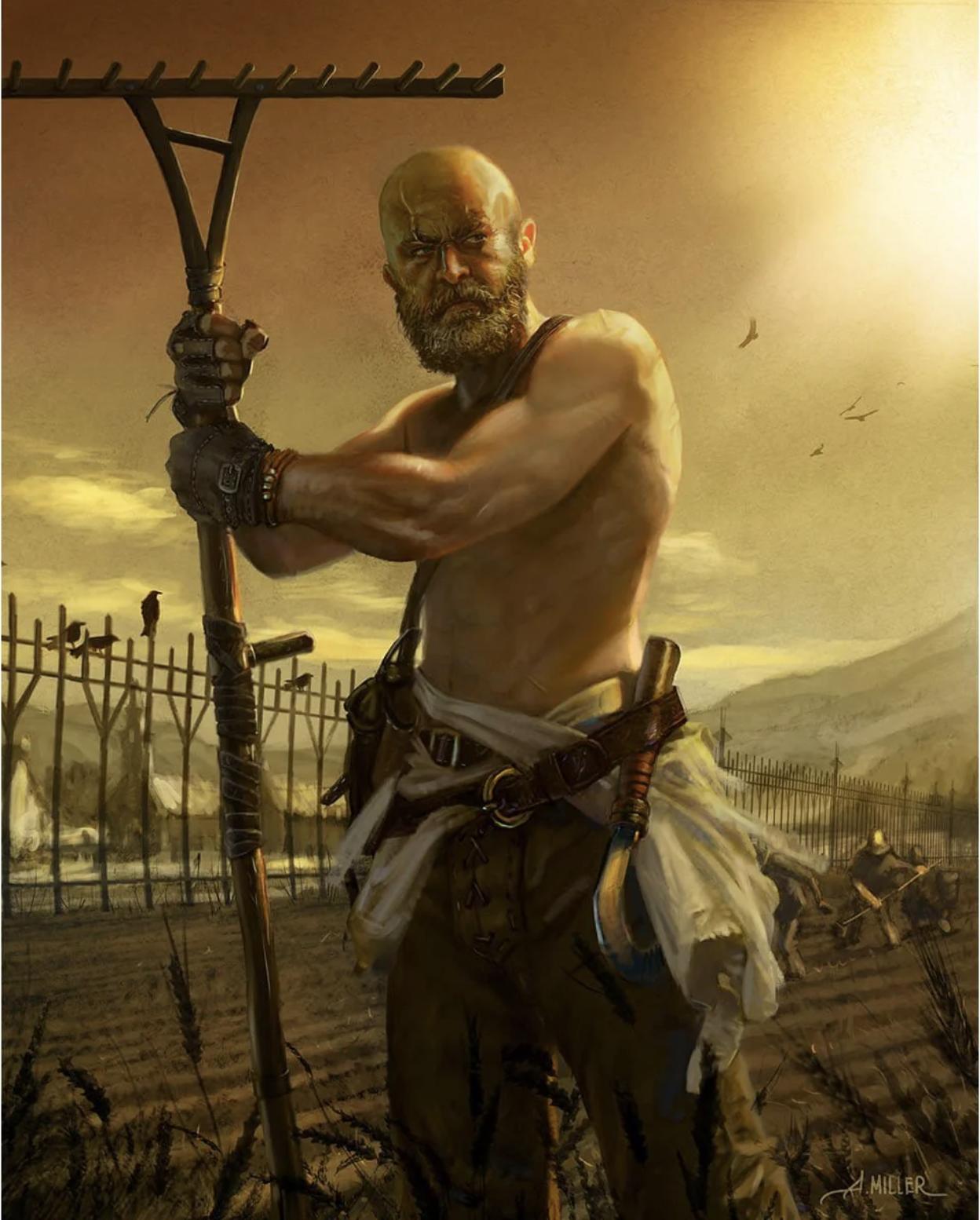

The Commoner
A sunburned halfling farmer griped his
trusty shovel as he pat his prized hog on
its head. The farmer and his strangely loyal
pig were all that stood between his family
farm and the goblins encroaching from the
nearby forest. As the latest party of goblin
marauders emerged from the wood, the hog
charged forward to defend its homestead.
The half-orc innkeeper surveyed his pub
for what would be the last time. As he looked
over the smoldering remains of his town, he made
a vow to whatever gods were listening. He would
avenge his fellow villagers, but more importantly,
he would get revenge on the bandits who destroyed
the pub that had been in his family for generations.
The hulking dwarf woman wiped the sweat from her
brow as she admired her hard day's work. She had finally
laid the final stones for the wall that would protect the new
settlement her clan had established outside the mountains. As she surveyed her work, satisfaction turned to anger. On the horizon, she saw the banners of the hobgoblin legion that had razed her previous home. She would not run again. As the horns bellowed in the distance she hefted her hammer.
The folk described above are all Commoners, simple folk of the land. Sometimes, if there are no heroes to be found, these folk are forced to take up arms to defend their homes.
People of the Land
Folk of the land, Commoners rely on the land under their feet to eke out a living. Finding work as farmers, herdsmen, and laborers, most commoners live a simple, yet exhausting life. Though, their labor-intensive lives make Commoners some
of the most resilient folk out there. They may not be the best looking or the most intelligent, but once a Commoner makes up their mind, there is nothing that can get in their way.
Humility & Grit
Commoners are many things, but above all they are humble. Relying on each year's harvest to make it through the winter, Commoners are no strangers to hardship. Most of the simple folk have experienced a great deal of difficulty in their lives: plague and disease, droughts and flooding, roving bands of orcs, and horrible monsters. Despite all of their struggles and hardship, Commoners have the grit to press on with life.
Creating a Commoner
When creating a Commoner, make sure to ask yourself, "why am I not just playing a class from the Player's Handbook?" Commoners are just that, common. They are not meant for adventure, and if you insist on playing as a Commoner, you are most likely going to be killed by the first rat you fight in a tavern basement. Should you somehow survive past the first monster encounter, consider why this character is still one of the common folk instead of a Fighter, Bard, or Barbarian.
In fact, I'm not at all certain why I decided to give this class the ability to make it past level 1, let alone all the way up to level 11! If you've made it this far you have probably made up
your mind on playing a Commoner. Good luck and enjoy!
Common
Superstition
Commoners aren't the brightest folk, and they often hold
to varying superstitions based on where they are from.
| d6 | Superstition |
|---|---|
| 1 | You refuse to step on cracks between floor boards or between the stones that line the roads for fear that your mother will break her back. |
| 2 | If you sneeze that means someone, somewhere is planning to kill you. |
| 3 | The real king died many years ago, but he was replaced by a secret council of lizardfolk. |
| 4 | Your town drunk was convinced that you were all part of a made-up game played by alien beings... and you are starting to believe him. |
| 5 | You always sleep with a bag over your head for fear you soul will slip out in your sleep. |
| 6 | You know for a fact that real adventurers will eat part of any monster they slay. |
Multiclassing and the Commoner
If your group uses the optional multiclassing rule, here's what you need to know if you choose to take your first level in the Commoner class.
Ability Score Minimum. As a multiclass character, you must have at least a Constitution score of 13 to take a level in Commoner, or to take a level in another class if you are already a Commoner.
Proficiencies. If Commoner isn't your initial class, here are the proficiencies you gain when you take your first level as a Commoner: nothing!





Class Features
Hit Points
- Hit Dice: 1d8 per Commoner level
- Hit Points at 1st Level: 8 + your Constitution modifier.
- Hit Points at Higher Levels: 1d8 (or 5) + your Constitution modifier per Commoner level after 1st
Proficiencies
- Armor: Light armor
- Weapons: Clubs, daggers, quarterstaffs, slings, and improvised weapons (usually pitchforks and torches)
- Tools: One set of Artisan's Tools of your choice
- Saving Throws: Strength, Constitution
- Skills: Choose two of the following: Animal Handling, Athletics, Insight, Persuasion, Religion, and Survival
Equipment
As a Commoner, you start with the following equipment, along with the equipment granted by your Background:
- (a) leather armor or (b) a cloak, a sling, 20 rocks
- (a) a club and dagger or (b) a quarterstaff
Quick Build
You can make a Commoner by using this suggestion: Don't.
If you insist on playing as a Commoner... make Constitution your highest ability score, followed by your Wisdom. Second, choose either the Folk Hero or Guild Artisan Background.
Grit
You have grown accustomed to a life of hardship. At 1st level, you gain a pool of Grit Dice, which are d4s, to represent your determination. When you make an attack roll, ability check, or saving throw, you can expend Grit Dice up to your Wisdom modifier (minimum of 1) roll them, and add them to your roll. You do so after you roll the d20, but before you know the outcome, success or failure.
You have a number of Grit Dice in this pool equal to your Commoner level + your Constitution modifier. You regain all
expended Grit Dice when you finish a short or long rest.
The Commoner
| Level | PB | Features | Tall Tales |
|---|---|---|---|
| 1st | +2 | Grit, Rough & Ready, Trade | ─ |
| 2nd | +2 | Old Reliable, Tall Tales | 2 |
| 3rd | +2 | Trade Feature | 2 |
| 4th | +2 | Ability Score Improvement | 3 |
| 5th | +3 | Gumption | 3 |
| 6th | +3 | Weather the Storm | 4 |
| 7th | +3 | Know-How | 4 |
| 8th | +3 | Ability Score Improvement | 4 |
| 9th | +4 | True Grit | 5 |
| 10th | +4 | Trade Feature | 5 |
| 11th | +4 | Common No More | 5 |
Rough & Ready
You may not be the quickest on your feet, the strongest, or the most educated, but you are hardy. Starting from 1st level, you can use Constitution, in place of Dexterity, when calculating your Armor Class, unless you already add your Constitution.
Trade
Also at 1st level, choose a Trade from the list below that best represents your livelihood and how you spend your days:
| Farmer | Merchant |
| Innkeeper | Old Timer |
| Laborer | Town Guard |
The Trade you choose grants you features at 1st level, and again when you reach 3rd, and 10th level in this class.
Old Reliable
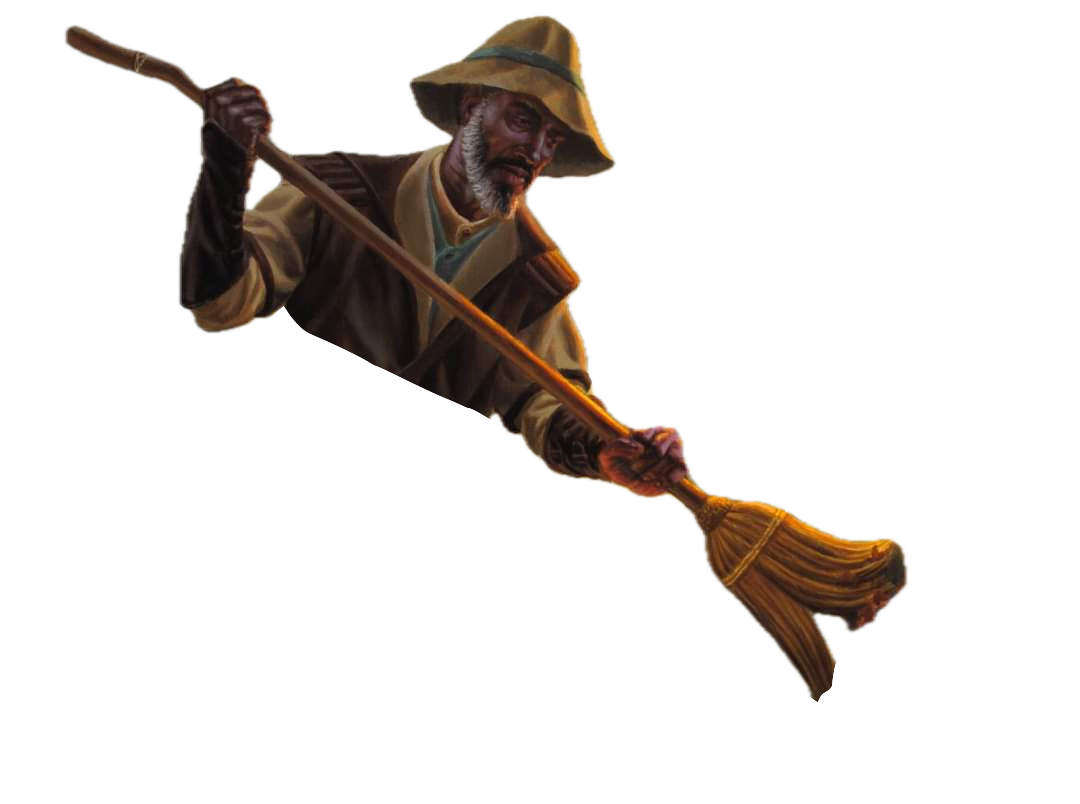
You may not be able to conjure wondrous spells or wield the deadly weapons of war, but you know the tools of your Trade like the back of your hand. At 2nd level, you choose one tool or weapon proficiency you gained through your Trade. That tool or weapon becomes your Old Reliable and you use your intuitive understanding of it to wield it as a weapon.
If you choose a tool proficiency, you wield tools from that set as improvised weapons that deal either 1d6 bludgeoning, piercing, or slashing damage on hit. If you choose a weapon, its damage die becomes 1d6 unless it was already larger.
While wielding your Old Reliable, you can use Wisdom,
in place of Strength, for its attack and damage rolls.
Tall Tales
As one of the common folk, you have heard many legends
and stories throughout your life that contain small bits
of wisdom. Should you somehow reach 2nd level, you
learn two Tall Tales of your choice from the list at the
end of this class description. The Tall Tales column of
the Commoner table shows when you are able to learn
more Tall Tales of your choice.
When you gain a Commoner level, you can replace one
Tall Tale you know with another Tall Tale of your choice.
Ability Score Improvement
If you survive to reach 4th level, and again at 8th level, you can increase one ability score of your choice by 2, or two ability scores by 1. As normal, you cannot increase one of
your ability scores above 20 using this feature.
If your game uses the optional rule for Feats, you are not eligible to take a Feat in place of an Ability Score Increase.
Gumption
You are finally starting to get the hang of this adventuring life, and can apply your Grit in combat. Starting at 5th level, when you hit with an Old Reliable attack, you can expend Grit Dice and add them to the damage roll of your attack.
Your harsh life has also thickened your skin. Whenever you take damage, you can use your reaction to expend a Grit Die and reduce the incoming damage by an amount equal to your Grit Die roll + your Constitution modifier (minimum of +1).
Weather the Storm
You may not be able to dodge or deflect incoming blows very well, but you can take a hit better than most. Beginning at 6th level, when you are subjected to a spell or another effect that allows you to make a Constitution or Wisdom saving throw to take only half damage, you take no damage if you succeed on your saving throw, and only half damage on a failure.
Know-How
You share your simple wisdom. Beginning at 7th level, when a creature within 30 feet makes a saving throw or ability check that you are proficient in, you can use your reaction to shout and add your Wisdom modifier (minimum of +1) to its roll.
You can use this reaction a number of times equal to your Wisdom modifier (a minimum of once), and you regain all of
your expended uses when you finish a long rest.
True Grit
Your experience adventuring has toughened your resolve and ability to withstand any hardship you may face. Beginning at 9th level, you regain a single expended Grit Die at the start of each of your turns in combat.
Common No More
You have achieved the utmost pinnacle of what a Commoner can be. Upon reaching 11th level, your Grit Dice become d6s.
You also take one level in another class of your choice, but you can ignore the normal multiclassing requirements. If the class grants you Spellcasting, you use your Wisdom in place of its normal Spellcasting Ability.
Finally, your 11th Commoner level does not count against your total character level. For example, if you played to 20th level you could have 11 Commoner levels and 10 Bard levels.
Not So Common Adventurers
If you've made it this far into the commoner class you may be thinking, "where are levels 12 to 20?" The answer is a simple one, they don't exist!
Commoners are just that, common. If a player somehow survived all the way to 11th level with their Commoner character then congratulations, it is time to multiclass into a different class.


Trades
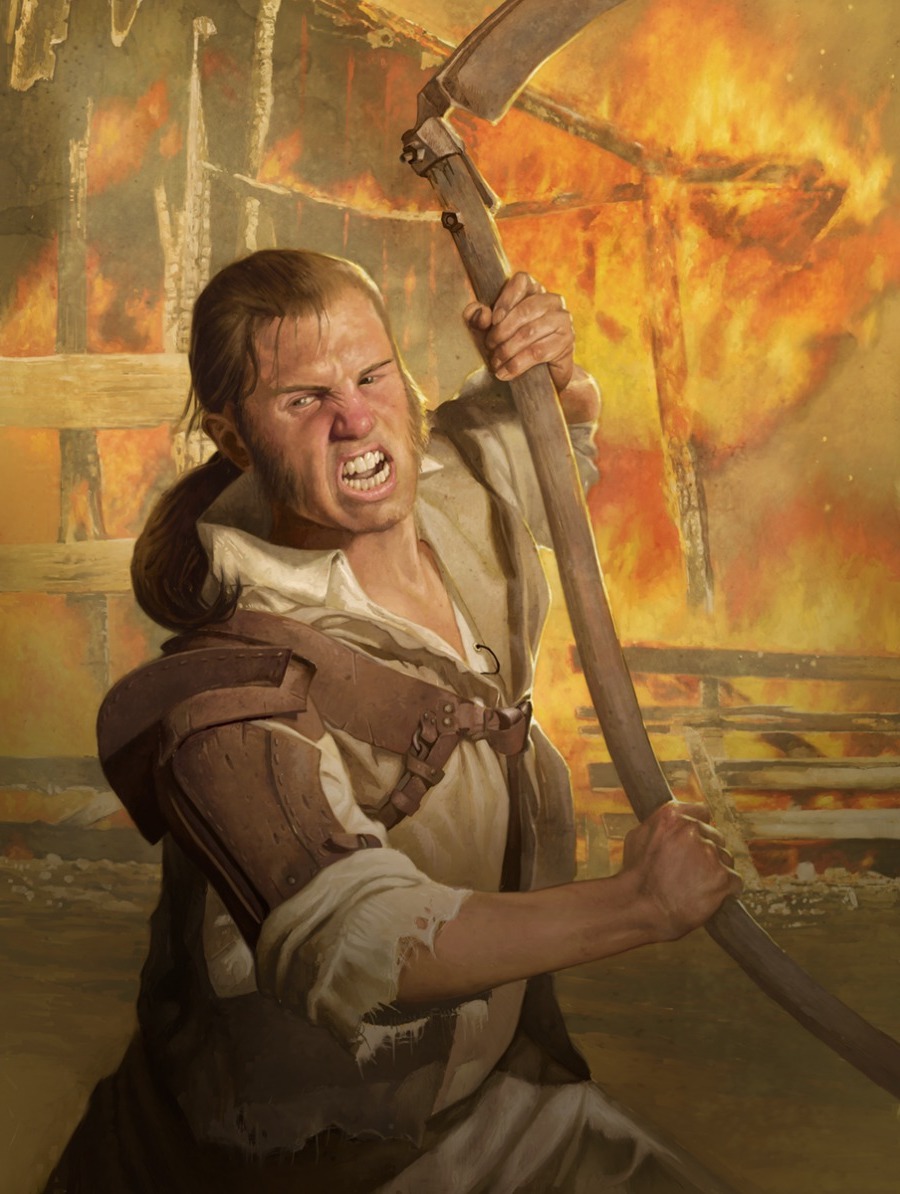
Choose the Trade below to best represents your livelihood:
| Farmer | Merchant |
| Innkeeper | Old Timer |
| Laborer | Town Guard |
Farmer
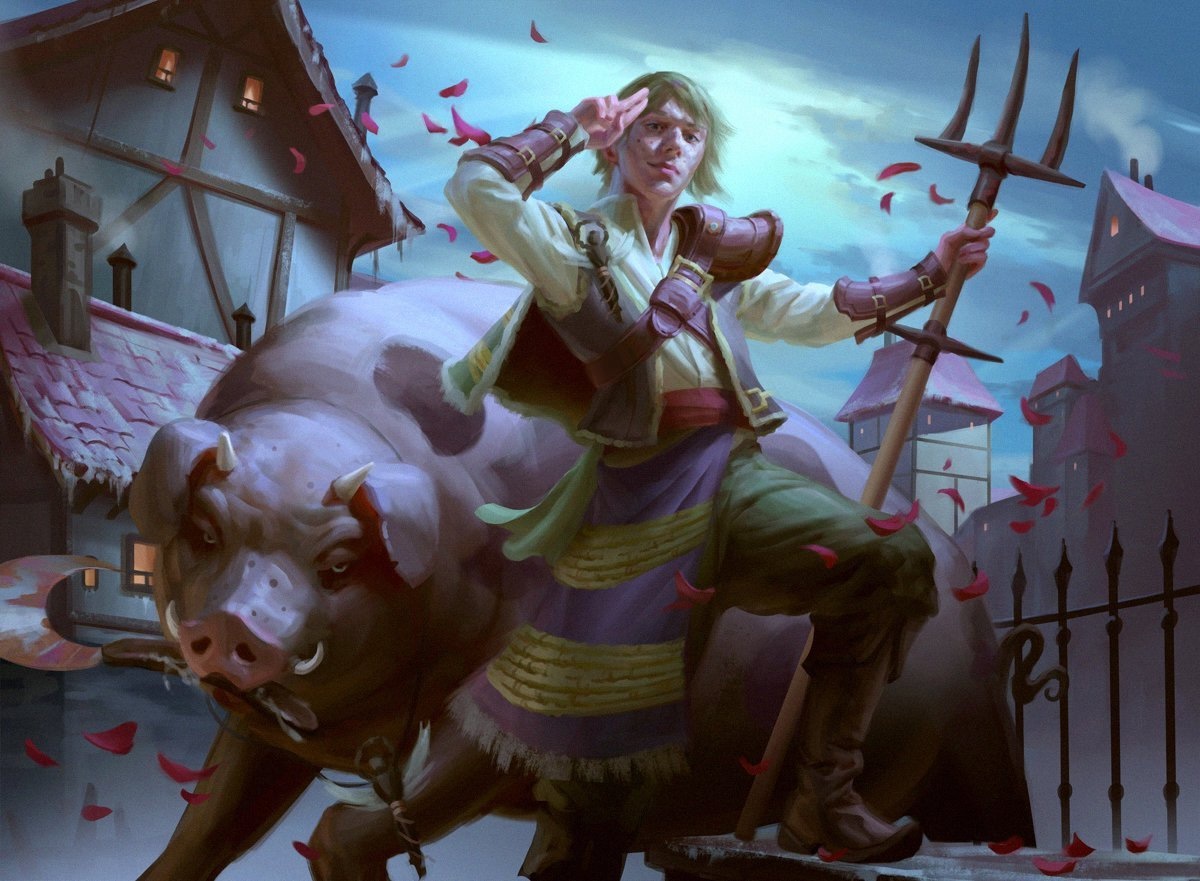
You are a Farmer, the true salt of the earth that brings forth a bountiful harvest each season. You know all there is to know about cultivating crops, livestock, and child-rearing - but little else. With your Farmer's Tools and trusty Loyal Livestock
at your side, you are ready to face the adventuring life!
Green Thumb
1st-level Farmer feature
You know the way around a farm. You gain proficiency
in Farmer's Tools (hoes, plows, rakes, scythes, shovels)
and your choice of either Animal Handling or Nature.
Fresh Produce
1st-level Farmer feature
You always seem to have samples of your produce. As an action, you can expend one Grit Die and produce a piece of Produce. As part of that action, you can eat it, or feed it to a willing creature within your reach, granting it temporary hit points equal to your Grit Die + your Wisdom modifier.
Loyal Livestock
3rd-level Farmer feature
You have somehow cajoled a farm animal to adventure at your side. This Loyal Livestock uses the following rules:
Statistics. The Loyal Livestock is Friendly to you and your allies and obeys your commands. It uses the corresponding stat block, which uses your Proficiency Bonus (PB).
Choose if it is Male or Female, this effects the abilities in its stat block. If you acquire a farm animal of the opposite gender, you can train it to be a Loyal Livestock during a long rest. You can only have one Loyal Livestock at a time.
Combat. In combat, your Livestock acts during your turn. It can move and use its reaction on its own, but it can only act if you use your bonus action to command it to take an action or to use an action from its stat bock.
If you are Incapacitated, your Livestock acts on its own and will defend you to the best of its simple abilities.
Death (oh no!). If your Livestock is reduced to 0 hit points, it makes Death Saving Throws like a player character would.
Prizewinner
10th-level Farmer feature
You may not be wealthy, powerful, or intelligent, but your produce is bountiful. You gain the benefits listed below:
- Your Loyal Livestock grows to Large in size, and its hit point maximum increases by your Commoner level.
- When you command your Loyal Livestock to use its Stomp action, it can Stomp twice instead of once.
- If you spend 8 hours or more working up to one square mile of viable farmland, the land you work gains the effects of the 8-hour casting of the plant growth spell.
Loyal Livestock
Medium Beast, Unaligned
-
AC 10 +PB (natural armor)
- HP 7 + five times your Commoner level
- Speed 30 ft.
| MOD | SAVE | Str | 16 | +3 | +3 |
|---|---|---|---|
| Int | 4 | -3 | -3 |
| MOD | SAVE | Dex | 10 | +0 | +0 |
|---|---|---|---|
| Wis | 10 | +0 | +0 |
| MOD | SAVE | Con | 15 | +2 | +2 |
|---|---|---|---|
| Cha | 4 | -3 | -3 |
Traits
Beast of Burden. The Livestock counts as one size larger for the purpose of determining its carrying capacity and the amount of weight that it drag, lift, push, and pull.
Farmer's Bond. When the Livestock is forced to make an ability check or saving throw, it adds your PB to its roll.
Hit Dice. Your Livestock has a total number of d12 Hit Dice equal to your Commoner level. It also gains all the normal benefits of both short and long rests.
Charge (Male Only). If the Livestock moves at least 20 ft. in a line, then hits a creature equal to its size (or smaller) with its Stomp, the target must make a Strength saving throw (DC 11 +PB) or be knocked Prone.
Mother's Milk (Female Only). During each long rest, the Farmer can spend 1 hour milking the Livestock to gain PB Bottles of Milk, that function as potions of healing.
Actions
Stomp. Melee Weapon Attack: 3 +PB to hit, reach 5 ft., one target. Hit: (2d4 +PB) bludgeoning damage.
Innkeeper
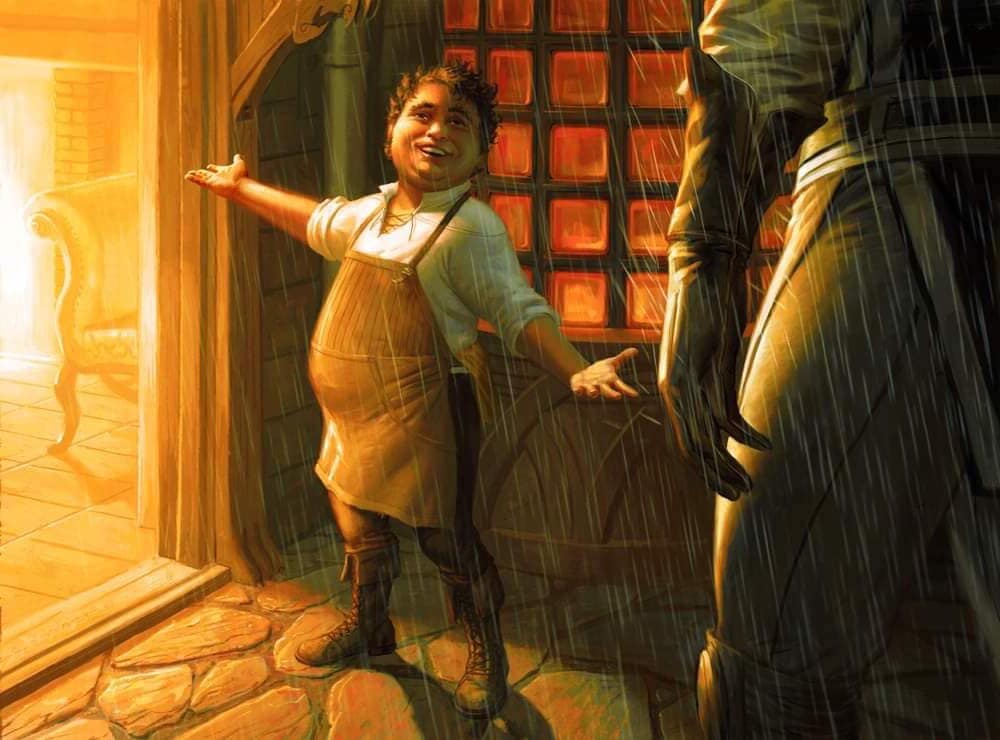
Innkeepers usually find themselves at the epicenter of their small villages. With a quick wit and a keen ear for gossip, an Innkeeper is adept at navigating the complex social structure of small towns and villages. Armed with their country charm and a few coins, these affable folk can befriend anyone.
Country Charm
1st-level Innkeeper feature
When you need to convince a rough customer of something, you can lace your speech with country wit to charm foe and friend alike. As an action, you can spend Grit Dice to mimic the effect of one of the spells on the table below. It specifies how many Grit Dice you must spend to mimic each spell.
| Grit Dice | Spell Effects |
|---|---|
| 0 | friends ll, guidance ll, vicious mockery ll |
| 3 | charm person, heroism, hideous laughter |
| 6 | calm emotions, enthrall, suggestion |
| 8 | catnap, enemies abound |
Saving Throws. Some Country Charm spells require your target to make a saving throw to resist their effects. Based on your Wisdom, their saving throw DC is calculated as follows:
Country Charm save DC = 8 + your Proficiency Bonus
+ your Wisdom modifier.
Rustic Hospitality
1st-level Innkeeper feature
You have spent many years comforting guests with full pints and open ears. You gain proficiency with Brewer's Supplies and Cook's Utensils, and in either Insight or Persuasion.
Whenever you make an ability check that uses one of these proficiencies, you treat a roll of 7 or lower on the d20 as an 8.
Storyteller
3rd-level Innkeeper feature
You have heard every story under the sun from your patrons, though you do have trouble remembering them all. Whenever you finish a short or long rest, you can replace one Tall Tale you know with another Tall Tale of your choice.
Moreover, any time you finish a long rest in a settlement, you learn one rumor currently circulating in the settlement.
Full-Belly-Bravery
10th-level Innkeeper feature
You can inspire heroism with nothing more than food, drink, and a story. You, and any creature that completes a short or long rest with you, gains temporary hit points equal to your Commoner level + your Wisdom modifier (minimum of 1).
While a creature has these temporary hit points it cannot be Charmed or Frightened, and it gains a bonus to its saving throws equal to your Wisdom modifier (minimum of +1).
Finally, the Grit Die cost of your Country Charm spell effects are reduced by 1 (to a minimum 0 Grit Dice).

Laborer
Strong as oxen, laborers are Commoners who use their skills to keep village running. Carpenters, woodsmen, masons, and blacksmiths are all Laborers. Often experts in their signature Tools (and little else), a Laborer isn't afraid to put their body on the line to see a task through. When you need a tough job done, a Laborer is the Commoner you need by your side.
Bulky
1st-level Laborer feature
Spending your life in manual labor has made you strong and hardy like the great Beasts of the fields. At 1st level, and each time you gain a level in this class, both your current hit points and maximum hit points each increase by 1.
You also count as one size larger when determining your carrying capacity and the weight you can push, drag, or lift.
True Craftsman
1st-level Laborer feature
As a laborer, you are skilled with large physical tools. You gain proficiency with mauls, warhammers, greataxes, and battleaxes. However, these weapons you have trained with resemble simple tools rather than true weapons of war
You also gain proficiency in two of the following tool sets
of your choice: Carpenter Tools, Mason Tools, Smith Tools,
or Woodcarver Tools. When you make an ability check with that Tool, you add double your proficiency bonus to the roll.
Fortify
3rd-level Laborer feature
You can use your knowledge of construction to craft simple structures of wood, stone, and iron. While you have access
to True Craftsman tools and a supply of wood, stone, metal
or other material, you can construct simple structures.
For every 10 minutes spent laboring, you can create one simple Medium structure with hit points equal to 10 times your Commoner level and AC equal to your Wisdom score.
Unflinching
3rd-level Laborer feature
Even the terrors of adventuring cannot compare to the pain of years of manual labor. After you take damage, you can use your reaction to expend one Grit Die and gain temporary hit points equal to your Grit Die + your Constitution modifier.
Great Labor
10th-level Laborer feature
You are a laborer of great renown, but skilled in little else. Over the course of 10 minutes, which can be during a short or long rest, you can use True Craftsman Tools to replicate the effects of the passwall or wall of stone spell, so long as you have access to enough raw materials. These structures are non-magical in nature and permanent.
If you use this feature again before 1 hour has passed, you immediately suffer 1 level of Exhaustion upon completion.
Iron Body
10th-level Laborer feature
Your body has been hardened by a lifetime of grueling work.
Any time you take bludgeoning, piercing, or slashing damage,
you can expend a Grit Die to gain Resistance to that instance
of damage, then gain the benefits of Unflinching.
Laborers of the World
Laborers are the most common type of Commoner in the world, and their True Craftsman Tool choice determines what sort of labor they actual do:
Carpernter Tools are used by builders, carpenters, fence-makers, roofers, thatchers, and wheelwrights.
Mason Tools are used by architects, bricklayers, ditch diggers, builders, and stonemasons.
Smith Tools. are used by blacksmiths, locksmiths, armorers, and sword smiths.
Woodcarver Tools. are used by fletchers, basket weavers, lumberjacks, and woodsmen.

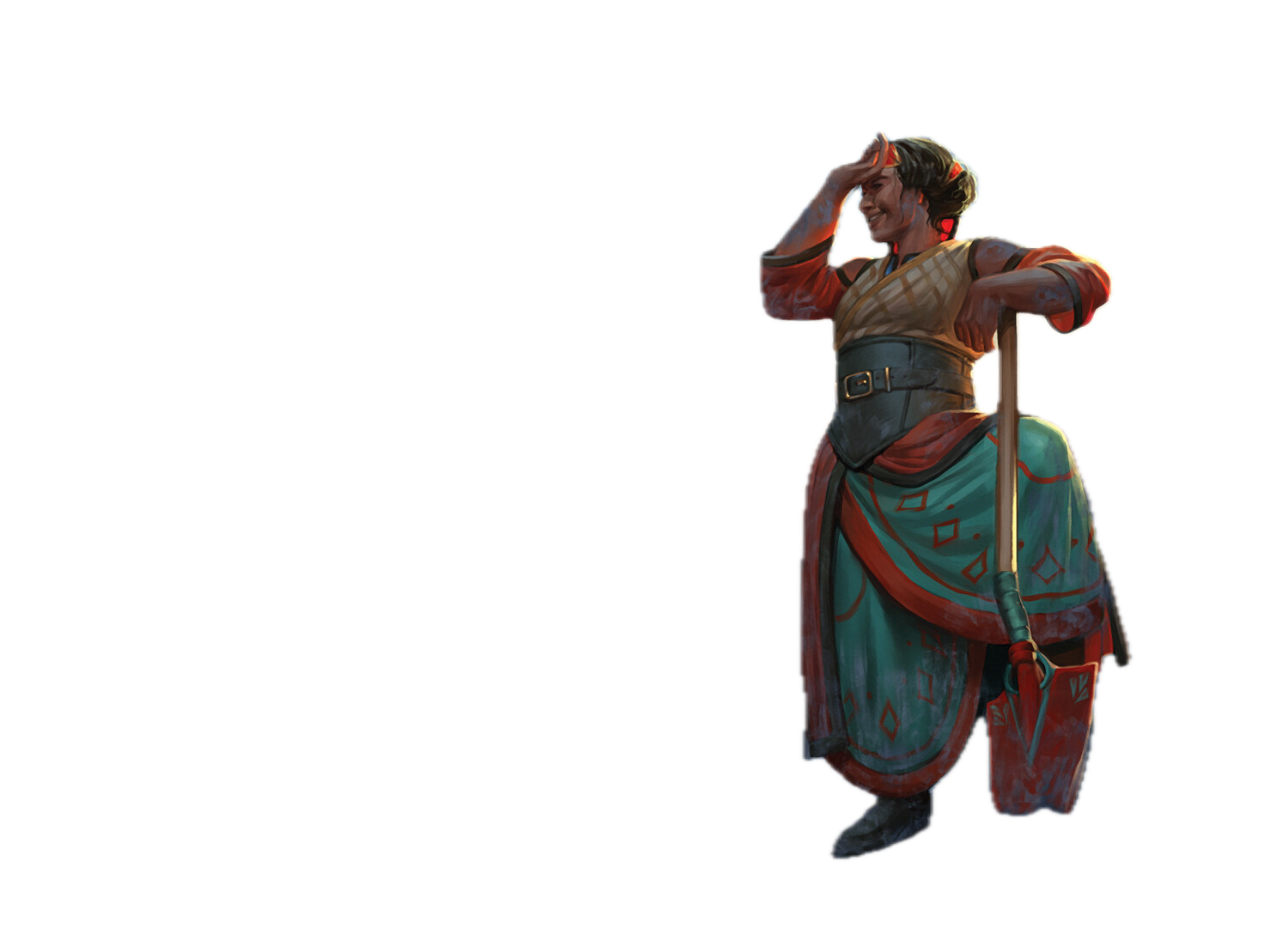
Merchant
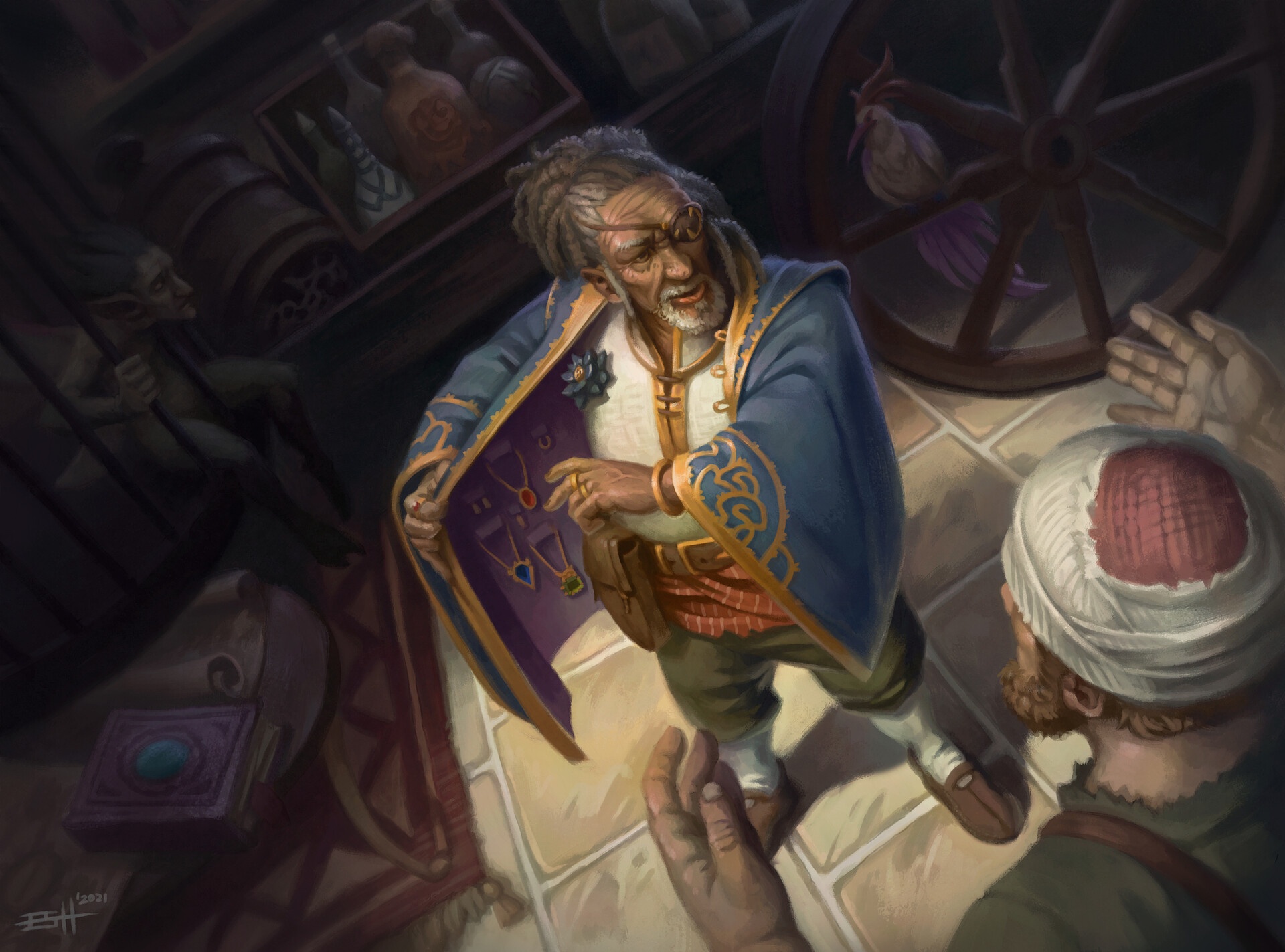
You are a lively member of the marketplace, always looking to strike a deal or make a new contact. More than likely, you are one of the shrewdest minds in your villiage, and a true master of negotiation, you are the traveling town Merchant.
Haggler
1st-level Merchant Trade feature
You cut your teeth in the ruthless market of your small town. You learn to speak, read, and write on additional language of your choice, you gain proficiency in one set of Artisan's Tools of your choice, and in either Deception or Persuasion.
Also, whenever you make a Deception or Persuasion check to negotiate a deal, haggle, or discuss a price while speaking to a creature in its native tongue (other than Common), you gain a bonus to your roll equal to your Grit Die.
Bottomless Inventory
1st-level Merchant Trade feature
You have a way of always having the right item when needed. As an action, you can reach into a bag and expend Grit Dice (up to your Wisdom modifier), and pull out one non-magical item of your choice. You must have seen such an item before to draw it out, and its value in gold cannot exceet ten times the number of Grit Dice you spent to draw it out.
To use this feature again, you must place the previous
item back into your bag as you pull out
another. If not replaced in your
bag, it disappears at the end
of your next long rest.
Eye for Value
3rd-level Merchant Trade feature
You apply your regionally shrewd mind to finding the value in all things. If you examine an object for 1 minute, you gain the same benefits as if you had cast the identify spell on it.
You also find the best value for your strikes. Once per turn when you hit a creature with an Old Reliable attack, you gain a bonus to your damage roll equal to your Grit Die.
Market Insights
10th-level Merchant Trade feature
You are a master of the marketplace (or at least you consider yourself to be). Any time you make a purchase, no matter how expensive, you reduce the cost by a percentage equal to your Commoner level. As an example, at 10th level, you would get 10% off any purchses you make.
Rare Find
10th-level Merchant Trade feature
Your ability to somehow always have the correct item at the ready extends to magical objects. When you use Bottomless Inventory, you can expend 5 Grit Dice to pull a Common or Uncommon Magic Item from your bag.

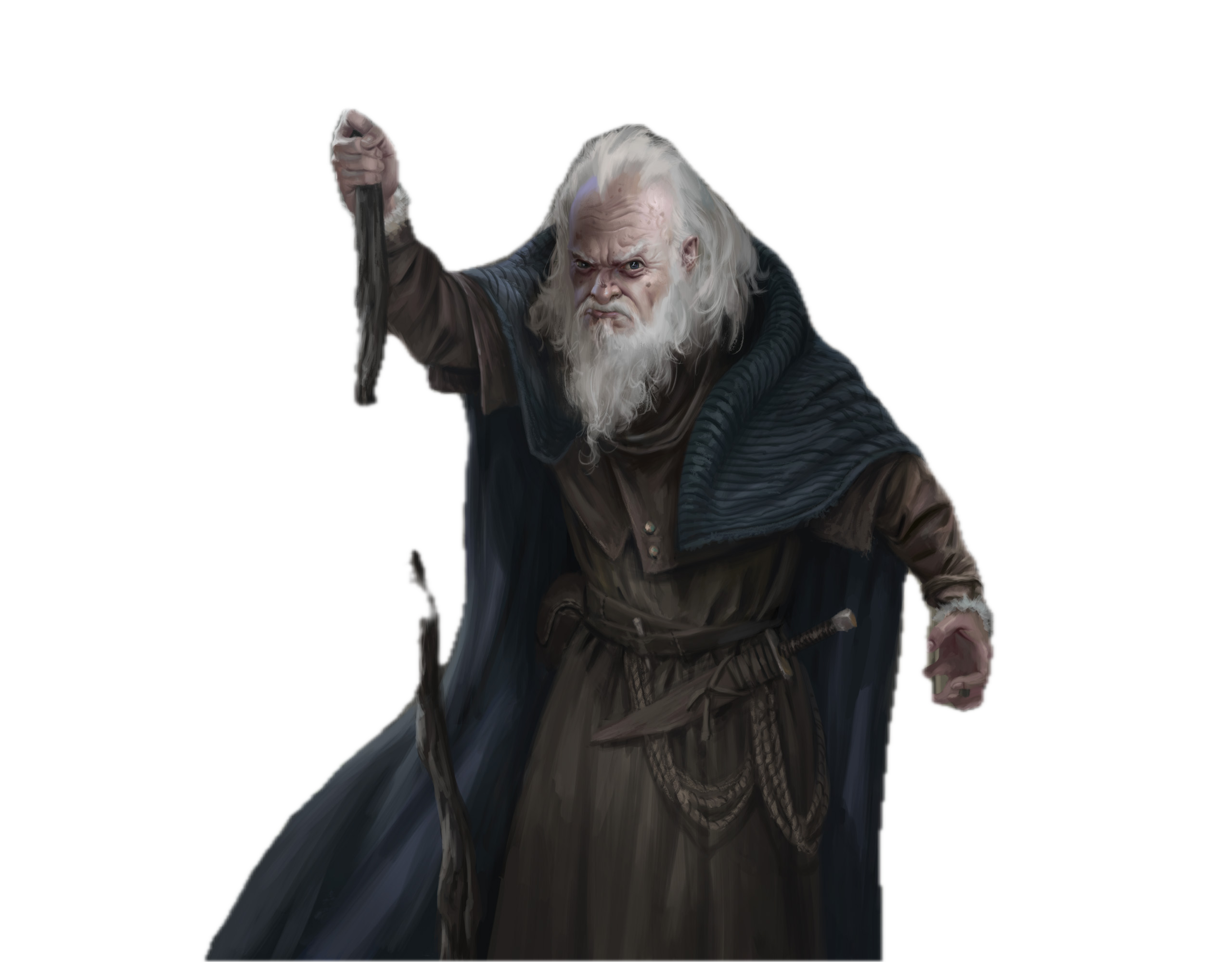
Old Timer
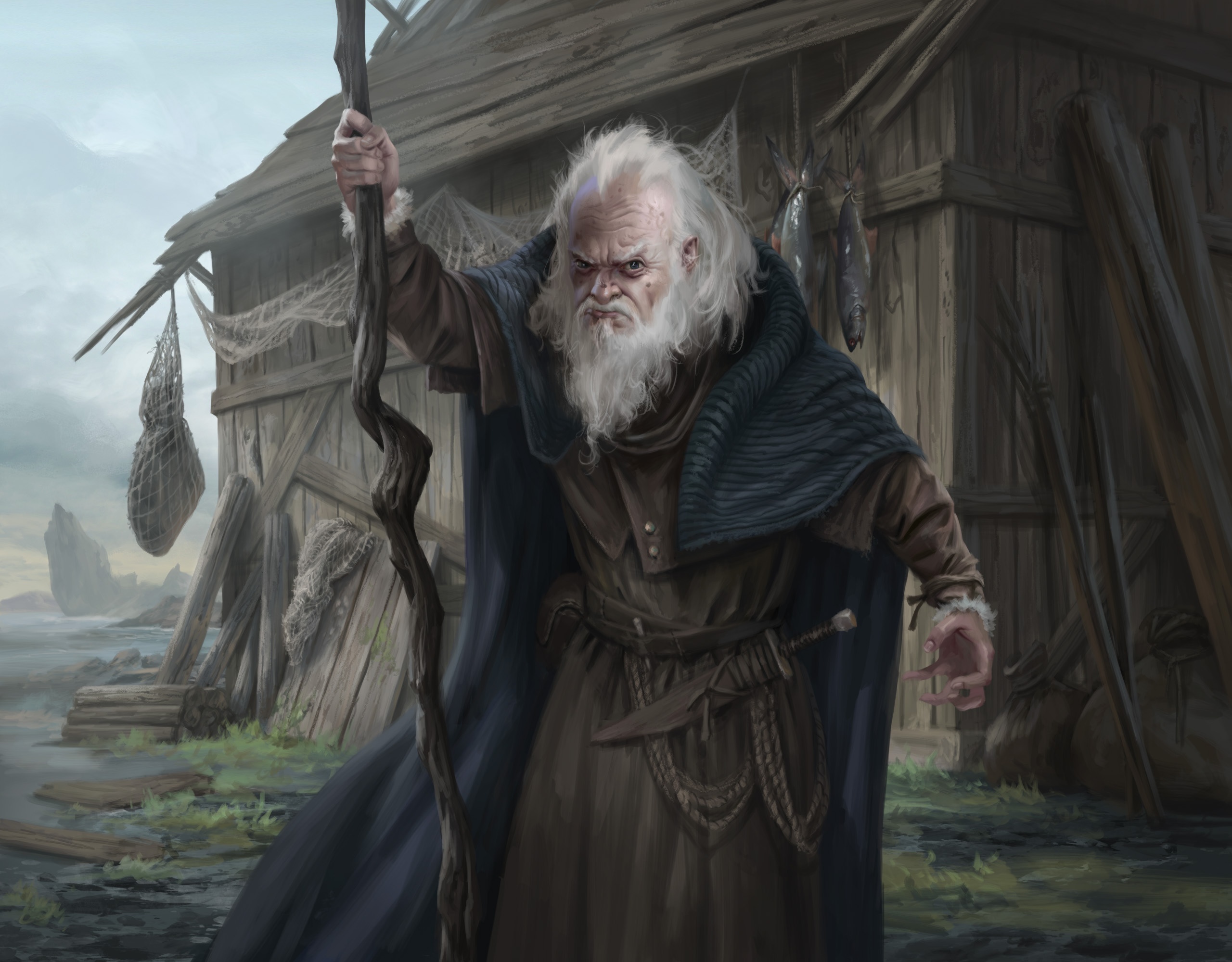
You are a grizzled elder of your town or village who has seen an uncountable number of winters. Though your exact age is a mystery, it is safe to say you are the oldest living person in your town. With your many years comes wisdom, but also a heavy dislike for anything that appears to be new.
Village Elder
1st-level Old Timer feature
Over your many years, you have gained a unique amount of rustic knowledge. You gain proficiency in one type of Artisan's Tools of your choice, and you learn to speak, read, and write two additional languages of your choice.
Sage Advice
1st-level Old Timer feature
You have learned many things over the years, and can't help but share this knowledge, even when it isn't wanted. You gain proficiency in History, and you can use your Wisdom, in place of Intelligence, whenever you make a History check.
You can also take the Help action as a bonus action on each of your turns, though it is mildly annoying to those you Help.
Rustic Spellcasting
3rd-level Old Timer feature
You can draw on your rustic knowledge of the natural world to cast minor magic spells, using the following rules
Spell Slots. At 3rd level, you gain two 1st-level spell slots. To cast a Rustic Spell that you have prepared, you expend one of these spell slots. You regain all spell slots when you finish a short or long rest. As you gain levels, your spell slots grow in level, as shown on the Old Timer Magic table above.
Should you somehow not die from old age before then, at 7th level, your Rustic Magic slots become 2nd-level slots.
Prepared Spells. At the end of a long rest, you prepare a list of spells that are available for you to cast from the Rustic Spell List below. You can prepare a number of spells equal to your Wisdom modifier + half your Commoner level. Any spell you prepare must be of a level for which you have spell slots.
Spellcasting Ability. Wisdom is your spellcasting ability for your Rustic spells as you use the wisdom you have gained over many years to perform spells. Use Wisdom when a spell refers to your Spellcasting ability, Save DC, or attack roll:
Spell save DC = 8 + your Proficiency Bonus
+ your Wisdom modifier
Spell attack modifier = your Proficiency Bonus
+ your Wisdom modifier
Rustic Knowledge
10th-level Old Timer feature
Your rustic magic is more flexible than that of classically
trained mages. You can change your list of prepared Rustic
spells each time you complete a short or long rest.
Rustic Spell List
Here's the list of spells you consult when you prepare Rustic Magic spell. Spells are organized by spell level, not character level. They are from the Player's Handbook, Xanathar's Guide to Everything *, and Tasha's Cauldron of Everything **.
Spells marked with ll are found in the laserllama Spell Compendium, which includes both new and alternate spells.
1st-Level
animal friendship
bane
beast bond ll
bless
ceremony
charm person
create snare ll
create water ll
cure wounds
detect evil & good
detect magic
detect poison & disease
entangle
fog cloud
hex
longstrider
protection from evil & good
purify food & drink
sanctuary
speak with animals
unseen servant
2nd-Level
aid
animal messenger
augury
awaken plant ll
barkskin ll
blindness/deafness
calm emotions
conjure beast ll
enhance ability
gentle repose
locate creature ll
lock/unlock ll moonbeam
pass without trace ll
protection from poison
restoration ll
silence
spike growth
suggestion
warding bond
warding wind
zone of truth

Town Guard
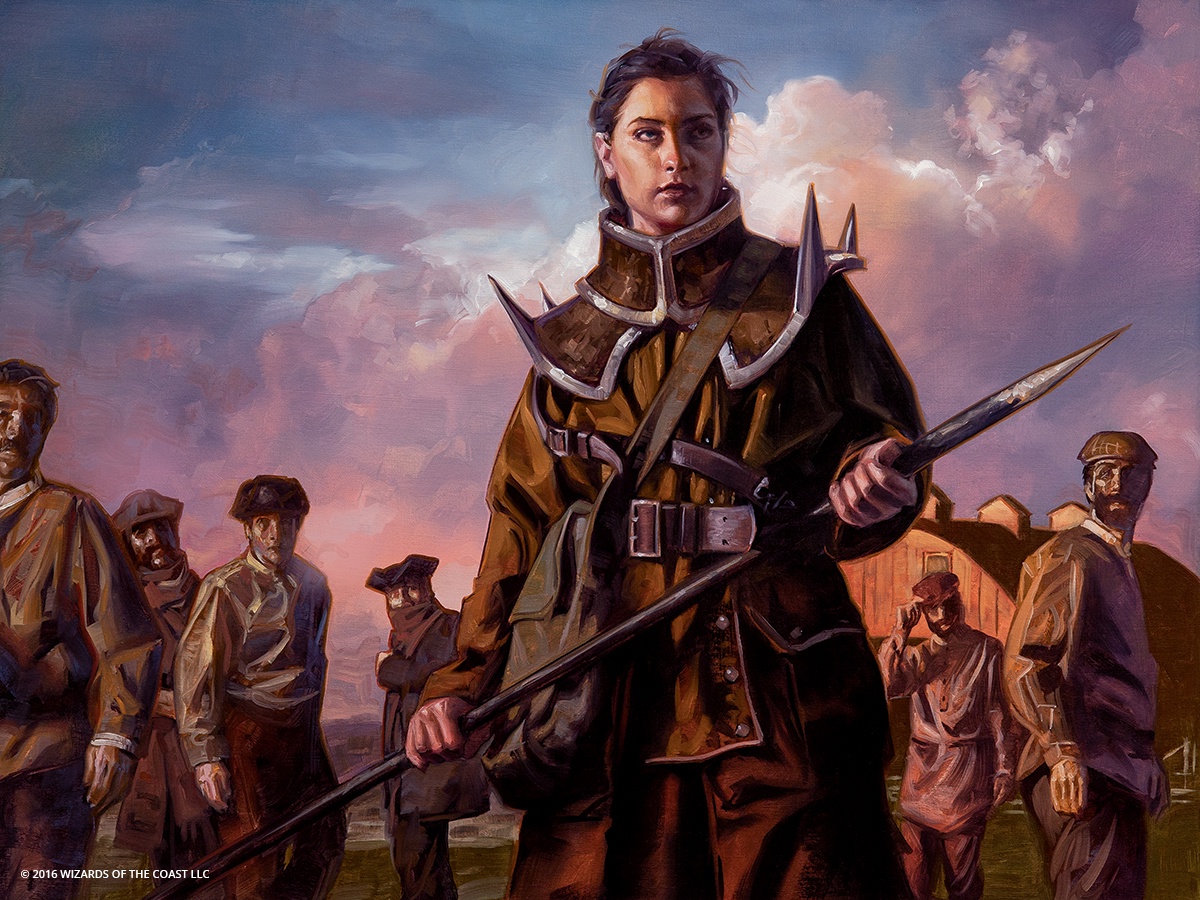
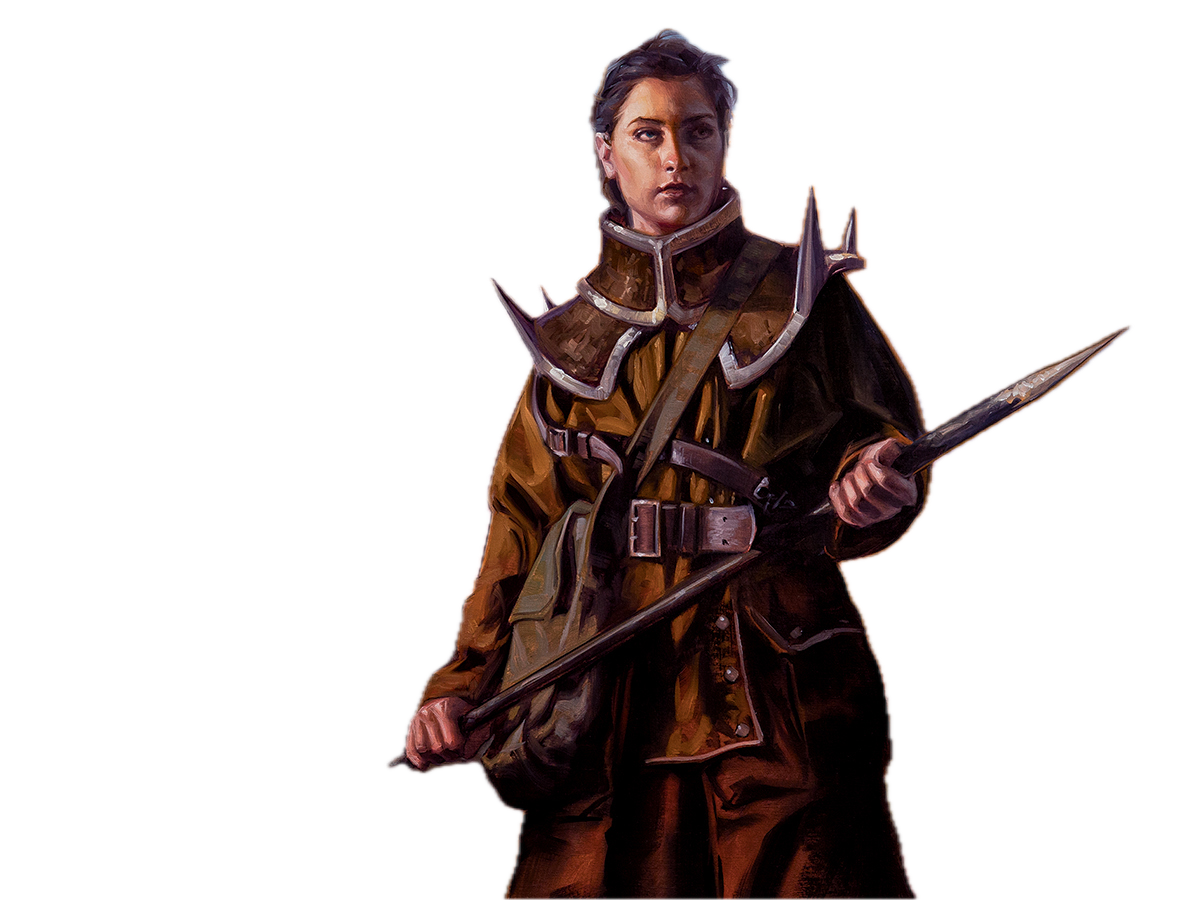
You are the shield that protects your town from terrible trolls, the spear that keeps the darkness at bay, you stand watch in the midnight hours when all are asleep and evil lurks about, you are the noblest of Commoners, the Town Guard.
Militia Training
1st-level Town Guard feature
You have spent days learning the weapons of war that you may stand in defense of your village. You gain proficiency in medium armor, shields, and a single martial weapon of your choice. However, this martial weapon can't have the Heavy, Finesse, Special, or Two-handed property.
Lieutenant Guard
3rd-level Town Guard feature
Your skill in battle puts the other part-time Town Guards in your village to shame. You gain one of the following Fighting Styles, so long as you meet any prerequisites it may have:
Balanced Fighting
When wielding a melee weapon in one hand and no other weapons, you gain a +2 bonus to weapon damage rolls. You can use a shield and still gain this benefit.
Defensive Fighting
When you are wearing medium armor, heavy armor, or a shield you gain a +1 bonus to your Armor Class.
Protection
When a creature you can see hits you, or a target within 5 feet with a melee attack, you can use a reaction to add your Proficiency Bonus to the target's Armor Class against that attack. You must be wielding a shield or a melee weapon.
Simple Exploits
3rd-level Town Guard feature
You wield the armaments of war as well as anyone who first picked up a spear three days ago, using the rules below:
Exploits Known. At 3rd level, you learn a number of 1st-degree Exploits equal to your Wisdom modifier (minimum of 1), choosing from those available to the Alternate Fighter. If your Wisdom modifier ever increases (or decreases), you can learn an additional (or forget) one Exploit using these rules.
Grit Dice. To execute the few Simple Exploits you know, you must expend your Grit Dice in place of the Exploit Dice an Exploit may call for. Always roll your Grit Dice.
Limited Skill. Despite your rigorous hours of training, you can only use a maximum of one Exploit per turn in combat.
Saving Throws. If an Exploit requires a creature to make a saving throw, the saving throw DC is calculated as follows:
Exploit save DC = 8 + your Proficiency Bonus
+ your Wisdom modifier.
Elite Guardsman
10th-level Town Guard feature
You are the champion of your small town or hamlet, and folk have started to wonder if you'll leave to join the local platoon of soldiers! You learn two 2nd-degree Exploits of your choice from those available to the Alternate Fighter.
In addition, any attacks you make with your Old Reliable weapon score a critical hit on a roll of 19 or 20 on the d20.
Rustic Fury
10th-level Town Guard feature
You can channel your Grit in defense of those
you hold dear, or in desperation for your own
life. When you take the Attack action, you can
expend one Grit Die to attack twice.
Tall Tales
Listed below are the Tall Tales available to a Commoner. Each time you gain a level in this class you can replace one of the Tall Tales you know with another Tall Tale of your choice, losing all the benefits and skills of the Tall Tale you replaced.
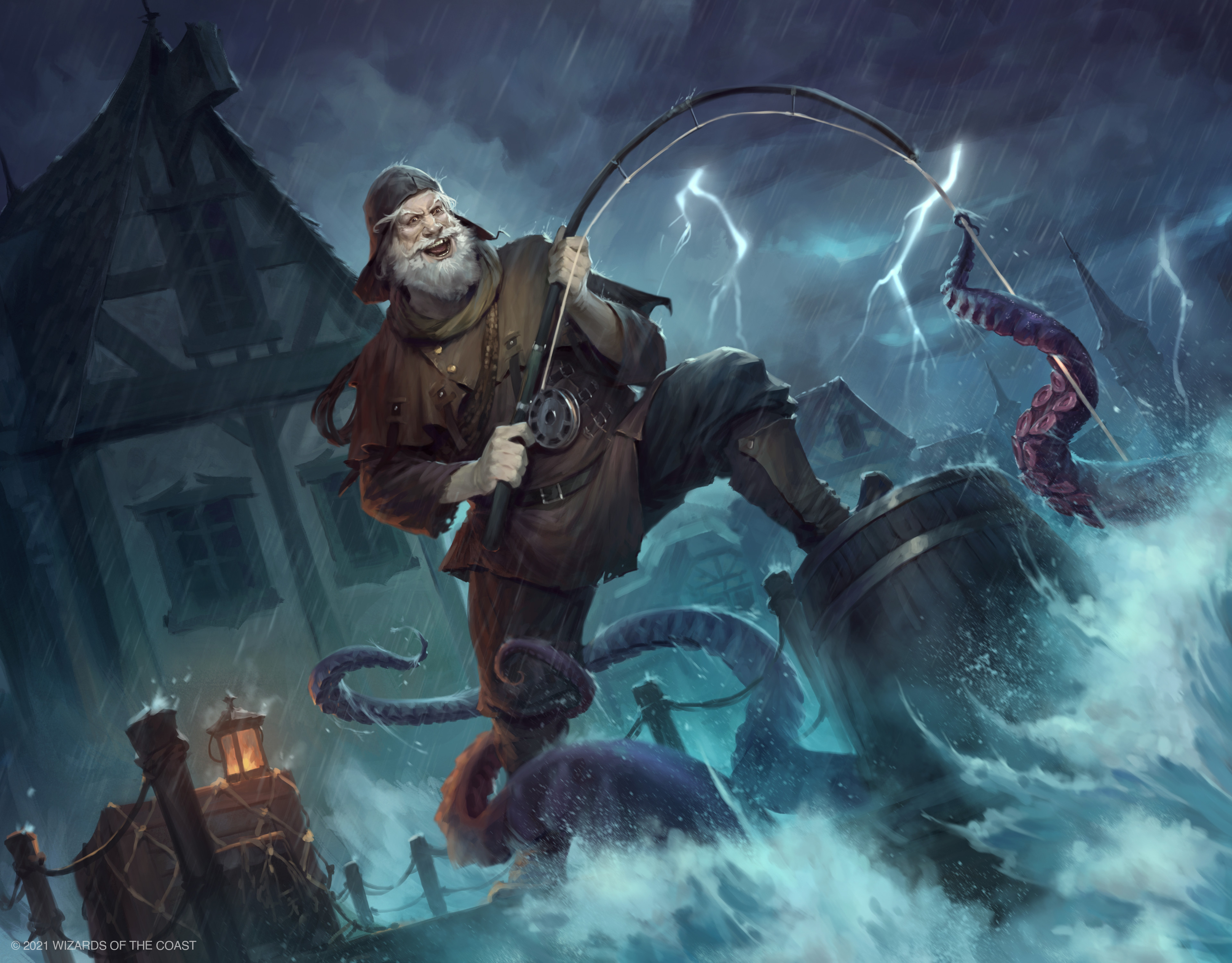
Tale of the Big Fish
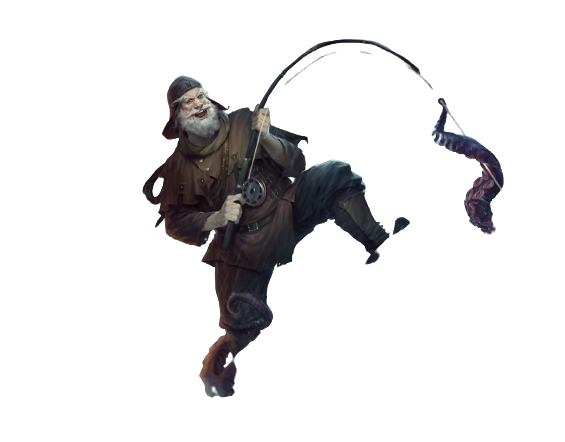
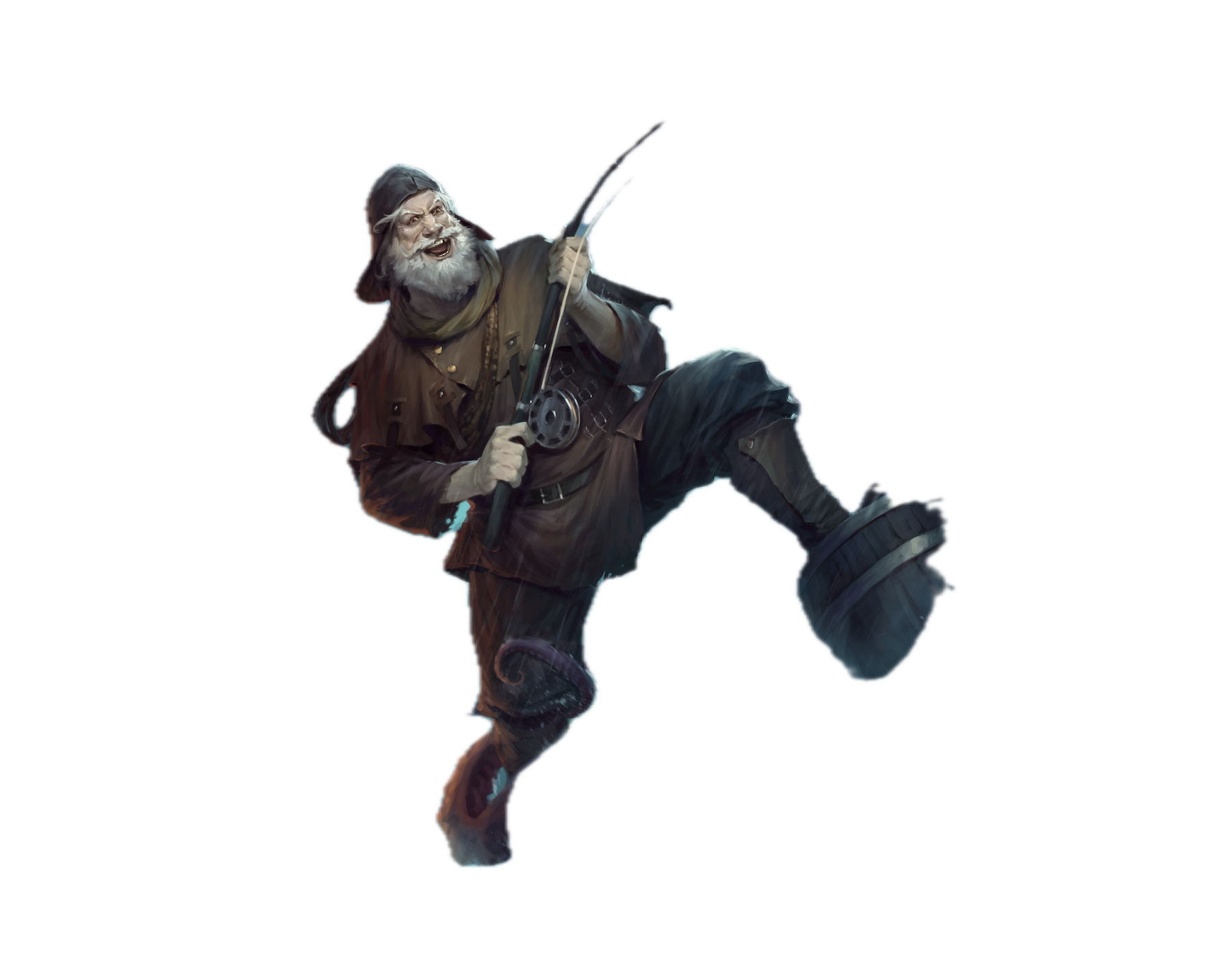
A friend once told you the tale of their uncle who pulled a sea monster out of the ocean. You gain proficiency with Fishing Tackle and Water Vehicles. If you have access to a body of water you can feed yourself and your companions for a day.
Once a day, you can tell your fish story to willing listeners. Those listeners become Friendly toward you, though their continued amicability on their part depends on your actions.
Tale of the Boisterous Bard
When you were a young child you loved the tale of a Bard who traveled from town to town singing songs of heroes. You gain proficiency in Performance and one Musical Instrument.
When you travel to a new town you can always find a place to shelter you so long as you perform there each night.
Tale of the Crooked Con Artist
You know the story of the con man who pulled the wool over the eyes of your village. You gain proficiency in Deception and with disguise kits, and you make Wisdom (Deception) checks in place of the normal Charisma (Deception) checks.
Also, over a long rest, you can create a second identity that includes a disguise that allows you to assume that persona.
Tale of the Fearless Farmer
Your parents have passed down the story of a farmer from your village who many years ago stood up to a great tyrant. You gain proficiency with a martial
melee weapon of your choice that
lacks the Heavy, Finesse, Special,
or Two-handed properties.
Also, when you tell this tale,
common folk will offer you food
and shelter, though they won't
risk their lives for you.
Tale of the Menacing
Mercenary Company
Your friends always told the
story of a savage company of
mercenaries who roam the land.
You gain proficiency in shields
and a Gaming Set of your choice.
You have also learned enough
to pose as one of its members and gain
any of the benefits offered to members.
Other Tall Tales
The Tall Tales listed here are based on Backgrounds. To create custom Tall Tales, select one proficiency, one Background feature, and write an outlandish story to explain it all!
Tale of the Harrowing Haunt
The old crone in your town told you tales of the ghastly and grim monsters that used to haunt the village graveyard. You gain proficiency in Religion and Intimidation, and you can use this Tale to make Wisdom (Intimidation) checks.
Also, whenever you make an Intelligence check to recall information about evil or Undead creatures, or Necromancy magic, you can add your Wisdom modifier to your roll.
Tale of the Midnight Thief
Your cousin's neighbor once told you the tale of the world's greatest thief. Whenever you enter a new settlement, you are able to identify a den of criminal activity or thieves' guild.
Also, you gain proficiency with Thieves' Tools and gain the ability to identify, read, and communicate in Thieves' Cant.
Tale of the Unfortunate Orphan
Your parents always scared you with the tale of a child left to live alone on the streets of a big city. You have acquired a pet mouse like the child in the story. Your mouse is trained to obey simple commands and carry out simple tasks.
You also have advantage on ability checks made to find hidden routes, passages, and hideouts in towns and cities.
Tale of the Wandering Woodsman
Your grandmother told you stories of the woodsmen that protect your town from monsters. You gain proficiency with shortbows and in your choice of Perception or Survival.
Also, provided the land is not barren, you can hunt for
enough wild game to feed
up to five creatures.

The Commoner
Venture out into the dangerous wilds beyond your village armed with nothing by your Grit,
Tall Tales, and one of five Commoner Trades:
Farmer - Innkeeper - Laborer - Merchant
Old Timer - Town Guard
Version 2.0.0 - Created by /u/laserllama
Last Updated: April 1st, 2026
Artist Credits:
Covers - Aaron Miller - Serf Token
Page 1 - Raoul Vitale - Devoted Grafkeeper
Page 2 - Howard Lyon - Idyllic Grange
Page 3 - John Stanko - Human Token art
Page 4 - Eelis Kyttanen - Rural Recruit
Page 5 - Eric Deschamps - Prosperous Innkeeper
Page 6 - Caroline Gariba - Fallaji Archaeologist
Page 7 - Edgar Hidalgo - Trinket Merchant
Page 8 - Daarken - Malevolent Hermit
Page 9 - David Palumbo - Militia Captain
Page 10 - Konstantin Porubov - Tireless Angler