Trailblazer
Strength isn't enough. As the troll quailed under the gaze of the diminuitive creature in front of her, this thought ran through her mind for the first time in her existence.
Force was her livelihood, the club was her key. But this pointy-ears, this ant, had ruined her. Its unnatural focus stayed her blows. Its attacks, while not precise, always hit with vigor, and its will seemed to crush hers.
The troll shook off these thoughts, landing a satisfying thonk on a scaly, fire-breathing ant. However, her joy quickly turned to pain as the unshakable ant sliced her from behind.
The last sight her fading eyes took in was the elf, bruised yet somehow more fierce than before, raising its sword one last time. She was left with a final thought as the sword came down one last time. I hate fire. But I fear this one.
Trailblazers make their own path, pursuing what they want with a willful single-mindedness. While confident in their own prowess, trailblazers are at their best when working with others, using either intellect or persona to fuel their inner flame and accomplish whatever they set out to do.
Unbridled Determination
Crusader. Traitor. Heretic. Hero. No matter what name a trailblazer goes by, there is an underlying drive to accomplish. This flame that burns within is what defines the trailblazer.
No cliff is to steep, and no monster too fierce, for a trailblazer to give up before the fight has started. And when the fight does start, they make their presence known through force of will, more than making up for any lack of proper training. Even in times of failure, remembering those failures is only a reminder to be more prepared for the next challenge.
At the Forefront of History
Trailblazers harbor deep commitments, which can range from noble ideals to selfish pursuits. Because of this, they often leave lasting impressions throughout history. An inspiring ruler, fighting for a valued cause. An embattled rebel, striving to topple a brutal government. A pragmatic adviser, steering others toward the sensible path. An idealistic reformer, speaking their truth regardless of the consequence. Each pitted against the other, working tirelessly towards their own goals. History may remember only one, but all four changed the world they left behind.
Creating a Trailblazer
When creating a trailblazer character, think about your origin. What are you set on accomplishing, and why? Was there a defining moment in your life that pushed you to become who you are now? You are set apart by your ever-burning will, your intense passion. This came from somewhere, and it’s fueling something.
With the help of your GM, try to fit your backstory into the game as much (or as little) as you are comfortable with, whether your goal is gaining wealth to start your own orphanage, searching for lost treasure to enrich yourself, or campaigning to end a war after your parents died tragically.
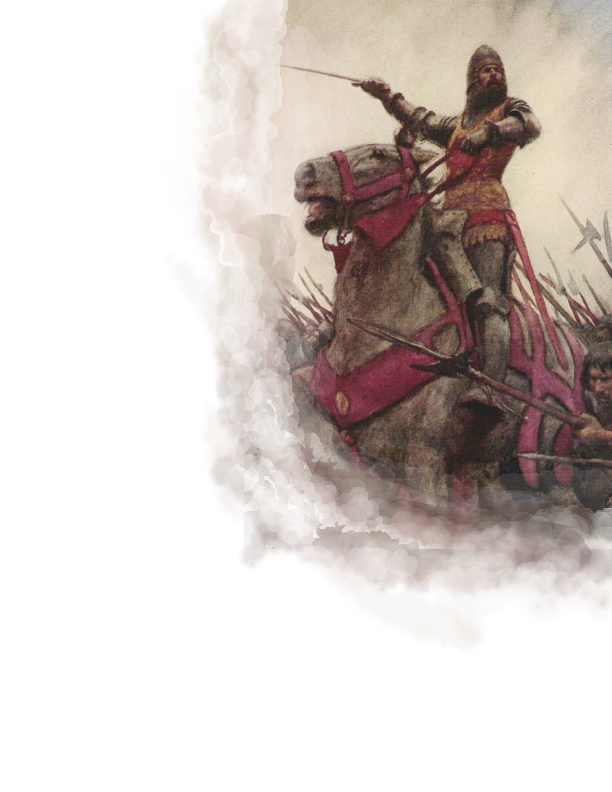
The above image is The Land of My Fathers by A.C. Michael.
Defining Feature: Guiding Presence
While all trailblazers carry themselves with an inexhaustible fire, how they channel that flame differs. Some harness their tact and knowledge, while others choose to forge ahead with an inspiring passion.
While this does not affect the class's basic characteristics, it does define your guiding attribute, provide bonus features, and lead to unique subclasses.
Shrewd Presence
These trailblazers use Intelligence to analyze the battlefield and choose the best course of action. They can be competent conversationalists, but are best when engaging enemies.
Valiant Presence
These trailblazers use Charisma to fight at the forefront, aiding allies while attacking. Outside of combat, they are capable speakers, able to draw in and inspire others.
Quick Build
You can make a trailblazer quickly by following these suggestions, depending on your guiding presence.
Shrewd: Choose noble as your background. Make Dexterity your highest ability score, followed by Intelligence.
Valiant: Choose folk hero as your background. Make Strength your highest ability score, followed by Charisma.
Trailblazer
| Level | Proficiency Bonus | Flame Die | Mindsets | Feature |
|---|---|---|---|---|
| 1st | +2 | 1d4 | -- | Flame, Oppose Nature, Resourceful Speaker |
| 2nd | +2 | 1d4 | 1 | Improved Flame, Mindsets |
| 3rd | +2 | 1d4 | 2 | Ethos, Wordsmith |
| 4th | +2 | 1d4 | 2 | Ability Score Improvement |
| 5th | +3 | 1d6 | 3 | Extra Attack |
| 6th | +3 | 1d6 | 3 | Ethos feature, Improved Flame |
| 7th | +3 | 1d6 | 3 | Extra Effort |
| 8th | +3 | 1d6 | 3 | Ability Score Improvement |
| 9th | +4 | 1d6 | 4 | Improved Flame |
| 10th | +4 | 1d6 | 4 | Quick Recovery |
| 11th | +4 | 1d8 | 4 | Ethos feature, Improved Mindsets |
| 12th | +4 | 1d8 | 4 | Ability Score Improvement |
| 13th | +5 | 1d8 | 5 | Improved Flame |
| 14th | +5 | 1d8 | 5 | Improved Extra Effort |
| 15th | +5 | 1d8 | 5 | Ethos feature |
| 16th | +5 | 1d8 | 5 | Ability Score Improvement |
| 17th | +6 | 1d10 | 6 | Improved Flame |
| 18th | +6 | 1d10 | 6 | Bulwark |
| 19th | +6 | 1d10 | 7 | Ability Score Improvement |
| 20th | +6 | 1d10 | 7 | Ethos feature |
Class Features
As a trailblazer, you gain the following class features
Hit Points
- Hit Dice: 1d8 per trailblazer level
- Hit Points at 1st Level: 8 + your Constitution modifier
- Hit Points at Higher Levels: 1d8 (or 5) + your Constitution modifier for every level after 1st
Proficiencies
- Armor: light armor, medium armor, shields
- Weapons: simple weapons, 2 martial weapons of your choice
- Tools: none
- Saving Throws: Wisdom (see Guiding Presence for second)
- Skills: Choose two of Acrobatics, Athletics, Deception, History, Insight, Intimidation, Investigation, or Persuasion
Guiding Presence
Choose either Shrewd Presence or Valiant Presence, which are described in more detail in the class introduction above.
Shrewd Presence
Leads to the Adamant, Firebrand, Guerilla, and Visionary subclasses. Intelligence is your guiding attribute, and you prioritize attacking enemies. Gain the following proficiencies.
- Saving Throws: Intelligence
- Skills: choose one Intelligence-based skill
Valiant Presence
Leads to the Adamant, Firebrand, Apostle, and Emblem subclasses. Charisma is your guiding attribute, and you prioritize helping allies. Gain the following proficiencies.
- Saving Throws: Charisma
- Skills: choose one Charisma-based skill
Equipment
You start with the following equipment, in addition to the equipment granted by your background:
- (a) a chain shirt or (b) leather armor
- (a) a martial melee weapon or (b) two simple weapons
- (a) a ranged weapon with 20 ammo or (b) a shield
- (a) a diplomat's pack or (b) an explorer's pack
Flame
At 1st level, you build fiery passion in battle, then harness it's power. When in combat, you can choose to become ablaze. While ablaze, build a flame die, a d4, at the start of your turn. You also build a flame when you land a critical hit or succeed on a saving throw. You also gain advantage on saves against being charmed or frightened. You cannot have concurrent flames built above your guiding modifier (minimum of 1).
You can extinguish one or more flames to push yourself after landing or taking a hit, rolling a flame die for each flame extinguished. If you land a hit, add the result to your weapon damage roll. If you take a hit, add the result to your AC, potentially turning the hit into a miss.
If you are knocked unconscious, or if your turn ends and you haven't attacked a hostile creature since your last turn or taken damage since then, you lose all flames, as well as all benefits of the Flame feature. You can regain these benefits by hitting a hostile creature or by spending an uninterrupted minute reinvigorating yourself.
Your flame die changes when you reach certain levels of trailblazer, as shown in the Fire Die column of the class table.
Flame Feature: Direction
Also at 1st level, your flame reaches beyond the battlefield. When you obviously succeed on a saving throw or an ability check while outside of combat, build a flame. A flame built out of combat last for ten minutes or until combat starts.
As an action, you can grant the flame to a creature you can communicate with, allowing it add the flame to the result of one ability check or saving throw it rolls before the ten minutes ends. You cannot grant this benefit to yourself, and cannot grant a new flame until the one you granted is used.
Flame Feature: Focus
At 2nd level, your passion reaches both friends and foes, affecting them with your flame. Once per round when you attack a hostile creature, you can transfer one of your flames to it, allowing you to focus on it until the end of your next turn. Before your focus ends, you can extinguish the flame to either reduce its AC against an attack that misses it or decrease the result of a weapon damage roll it makes. You also gain advantage on ability checks against it.
Similarly, once per round, you can encourage a friendly creature other than yourself within 5 feet by transferring one of your flames to it, allowing you to focus on it until the end of your next turn. If the creature is prone, it can stand up as a reaction. Before your focus ends, the creature can extinguish the flame to either increase its weapon damage roll or increase its AC against a hit.
Flames that have been transferred to other creatures do not count against your concurrent total. If your focus ends before a flame is used, it extinguishes with no effect.
Shrewd-only benefit: If you focus on a hostile creature and miss the attack, it still takes a flame die of damage.
Valiant-only benefit: If you focus on a friendly creature and it uses or has used its reaction, the creature regains it.
Flame Feature: Confrontation Style
Also at 2nd level, choose one of the following, which represents your method of interacting with focuses.
At 13th level, this feature no longer requires a reaction. Once you use it, you can't use it again until your next turn.
Accomplice
When a friendly focus attacks a creature, quickly attack the same creature as a reaction. This attack deals half damage
Challenger
When a hostile focus within melee range attacks or casts a harmful spell on a creature other than you, attack it as a reaction.
Duelist
When a hostile focus deals damage to you, quickly attack it as a reaction. This attack deals half damage.
Tactician
When a hostile focus attacks you at disadvantage and misses or forces you to roll a saving throw with advantage and you succeed, attack it with advantage as a reaction.
Flame Feature: Smoldering Flame
At 6th level, your passion carries beyond the moment. When you spend a minute to reinvigorate yourself, build a flame. Also, if all your flames would extinguish, all but one of them extinguish instead. This does not apply while in combat.
Flame Feature: Surging Flame
At 9th level, you can draw sudden strength from your own life force, converting a hit die into a flame as a bonus action. If you do so while your current health is below your trailblazer level, roll the hit die and gain that much health.
Flame Feature: Igniting Flame
At 17th level, your flame brighter than ever. If you build a flame at the start of your turn, build two instead of one.
Oppose Nature
Also at 1st level, you see the environment as a test of your will, to be beaten no matter the cost. If you fail a saving throw or skill check to overcome natural obstacles or terrain, such as harsh mountain winds or noxious fumes from a swamp, you can choose to gain a level of Exhaustion to succeed on the roll instead, assuming you are capable of success.
If you succeed, any friendly creatures you can communicate with that rolls against the obstacle during or immediately after your attempt can add your guiding modifier to its result.
Resourceful Speaker
Also starting at 1st level, your actions can speak just as well as your words. You can communicate simple ideas through gestures to any creature whose culture you have knowledge of, even if you don't speak its language.
You are also capable of expressing yourself clearly through a mix of gestures, facial expressions, and symbols with any creature you have spent at least a week with, or have spent at least an hour forming a strong bond with.
Shrewd: You have a knack for language. Learn languages equal to half of your Intelligence modifier, rounded up.
Valiant: Your expressiveness draws others in. Add a flame die to any Charisma skill checks made to attract attention.
Mindsets
At 2nd level, you gain access to mindsets, which grant more ways to use flame. Choose one mindset, shown at the end of the class. You gain additional mindsets as you gain levels in trailblazer, as shown in the class table.
All of your mindsets improve starting at 11th level.
Ethos
At 3rd level choose an ethos, which defines how you fight and what you aspire to be. Pick either Adamant or Firebrand. Based on your guiding presence, you can alternatively choose Guerilla, Visionary, Apostle, or Emblem, all detailed at the end of the class descriptions. The Ethos you choose grants you a feature at 3rd, 6th, 11th, 15th, and 20th level.
Wordsmith
Starting at 3rd level, your speech is sharpened by experience. Gain proficiency in Deception, Intimidation, or Persuasion.
Shrewd: You can choose to use Intelligence as the ability modifier for one of the skills listed above.
Valiant: If you already have proficiency in your chosen skill, you can gain expertise in it instead, doubling your proficiency bonus for rolls made using that skill.
Ability Score Improvement
When you reach 4th level, and again at 8th, 12th, 16th, and 19th level, you can increase one ability score of your choice by 2, or you can increase two ability scores of your choice by 1. As normal, you can’t increase an ability score above 20 using this feature.
Extra Attack
Beginning at 5th level, you can attack twice, instead of once, whenever you take the Attack action on your turn.
Extra Effort
At 7th level, your will to free yourself from the constraints of others becomes palpable. At the start of your turn, you can roll a saving throw against one effect that a save at the end of your turn could end. Failing this saving throw cannot cause an effect to worsen or progress, and you still roll against the effect at the end of your turn if necessary.
At 14th level, your fortitude becomes even stronger. You have advantage on all saving throws to end ongoing effects.
Quick Recovery
Starting at 10th level, you steel yourself against your body's inadequacies. Gain proficiency in Constitution saving throws as well as advantage on saving throws against disease.
You can now finish a short rest in 30 minutes and a long rest in 4 hours, 3 of which must include sleep (or trance if available). Alternatively, you can take an 8 hour long rest. If you do, treat it as if you took two long rests in a row.
Shrewd: When you take an hour long short rest, a number of friendly creatures equal to your Intelligence modifier can reroll any hit dice they roll, but must use the new result.
Valiant: When you take an hour long short rest, you can spend your own hit dice to heal others, using the die result + your Charisma modifier for the amount healed.
Bulwark
At 18th level, as long as you are not incapacitated, you are immune to being knocked prone against your own volition.
In addition, your influence on the battlefield is heightened.
Shrewd: Hostile focuses within 15 feet of you cannot attack or roll saving throws with advantage.
Valiant: Friendly focuses within 15 feet of you cannot be forced to attack or roll saving throws with disadvantage.
Ethoses
Flame is shared by all trailblazers, but how they use that flame differs greatly. Choose an ethos that reflects your goals.
Adamant
Adamants prioritize keeping themselves and their allies alive while chipping down the enemy when possible.
Grazing Blow
Beginning at 3rd level, when you use a flame to increase your AC, increase the die tier by 1 (e.g. from 1d10 to 1d12).
Also at 3rd level, you have a knack for noticing when an attack is close to hitting, causing it to become a grazing blow.
If a friendly focus extinguishes a flame to increase its AC and is still hit, all damage from the attack is halved. Likewise, if you use a flame to decrease a hostile focus's AC and the attack still misses, it does half damage. To use this feature, you must be able to communicate with the focus in some way.
You can use this feature a number of times equal to your guiding modifier (a minimum of once). You regain all uses after finishing a long rest.
Shrewd: When a hostile focus is grazed, the attacker can apply effects that require the attack to hit.
Valiant: When a friendly focus is grazed, the attacker cannot apply effects that require the attack to hit.
Resilient Body
Starting at 6th level, your hit point maximum is increased by 1 for each level you have in trailblazer. Your body can be subjected to harsh climate conditions with no effect, and can handle pain and most forms of torture without flinching.
If you prove this to a creature, such as by holding your hand directly over an open fire, you gain advantage on an Intimidation check against it, but take 1d4 damage of the appropriate type.
Headstrong
Starting at 11th level, you push yourself to recover just as much as you push yourself to survive. Whenever you gain health or temporary hit points, add a flame die to the result.
Shrug It Off
At 15th level, after you are dealt non-magical bludgeoning, piercing, or slashing damage, you can gain resistance to that type of damage for the next minute as long as you have at least 1 flame built. You can only have one resistance granted by this feature at once.
Shrewd: If you are hit by a hostile focus, you can gain the resistance immediately, instead of after the damage is dealt.
Valiant: Friendly focuses gain the same resistance you do.
Never Say Die
At 20th level, if your health would fall below 5 hit points, it is set to 5 instead. Whenever you take damage while your health is at 5 or below, you take a single point of damage instead.
If you are healed or granted temporary hit points while in this state, you lose the benefit of this feature until you finish a long rest. You can choose to ignore any healing granted.
Firebrand
The firebrand uses trickery to bring trouble, manipulating situations to their advantage. While their powers of coercion are formidable, their ability to orchestrate changes in momentum on the battlefield is also scary to behold.
Force of Will
Some firebrand features call for a creature to make a saving throw. If the creature is willing, it can choose to fail.
Save DC: 8 + your proficiency + your guiding modifier
Inciting Movement
At 3rd level, you use your force of will to compel others. As a bonus action, force a creature to move half its speed in a direction of your choice, while avoiding dangerous terrain, unless it succeeds on a Wisdom saving throw. If it is attacked, it can stop its movement, and can make an attack against a creature attacking it as a reaction. You can use this feature a number of times equal to your guiding modifier (a minimum of once). You regain all uses after finishing a long rest.
Also, you shape fight outcomes, instilling fear in enemies:
Shrewd: If a hostile focus hits a creature on your turn, you can extinguish a flame to lower its attack roll. If the attack misses, the creature becomes frightened of you until the end of your next turn if it fails a Wisdom saving throw.
Valiant: If a friendly focus misses a creature on your turn, you can extinguish a flame to increase its attack roll. If the attack hits, the target becomes frightened of you until the end of your next turn if it fails a Wisdom saving throw.
The Trailblazer Trail Behinder
The Steward ethos is listed as an appendix at the end of this document. It supports a distinct, hands off style that is not for everyone. It is avaialable to both Shrewd and valiant presences.
Agitator
Starting at 6th level, you know how to stir up others to unruly behavior. When making a skill check to convince others to do something brash or disruptive, you can roll at advantage.
In addition, you are skilled at causing turmoil. If you are in a crowded area, you can spend the next minute causing a disruption. If you are not stopped before then, you can change your next roll to a natural 20. Once you use this feature, you cannot use it again until you finish a long rest.
Fiery Disposition
Starting at 11th level, when you roll a flame die you can reroll it, and must keep the new result. Once you use this feature, you cannot use it again until the start of your next turn.
Provoke Recklessness
Starting at 15th level, you can enrage a creature, causing it to lash out unpredictably. As an action, you can provoke a creature you can see, forcing it to use its reaction to attack a creature hostile to it of your choice with advantage unless it succeed on a Wisdom saving throw.
If the attack misses, it instead hits another creature within range, chosen at random, dealing half damage. If the attack hits, all attacks against the creature have advantage until the start of your next turn.
Shrewd: If you provoke a hostile focus and it misses its attack, you can choose which creature takes damage instead.
Valiant: If you provoke a friendly focus and it hits, it only grants advantage to the next attack against it.
Formidable Bravura
At 20th level, when you succeed on a saving throw, force a creature you are focusing on to make a Wisdom saving throw.
If the creature fails, it becomes frightened of you. If it is already frightened of you, it becomes terrified of you instead. You have advantage on all attack rolls against a terrified creature, and it cannot target you with abilities or magical effects. Frightened or terrified creatures can roll the saving throw at the end of their turn to end the effect.
Shrewd: Guerilla
The guerilla uses every advantage it can muster, and try to set up fights to guarantee victory.
Figurehead
At 3rd level, you gain a figurehead, a projection of your will onto the battlefield. It is not a tangible creature, so therefore has no hit points or other stats. You can use your own movement to move your figurehead in your stead.
You can use any trailblazer features that requires you to be within a certain range as if you were standing in the location of your figurehead, though you must still be able to see any targets. If you move, your figurehead returns back to you.
Also, if you have any flames built, you can hide as a bonus action. While hidden, moving will not return your figurehead.
Renegade's Savvy
Beginning at 6th level, your ability to read others' intentions is near impeccable. When you are engaged with a creature regarding a deal, request, or pledge, you can gain the initial effects of the 2nd level spell detect thoughts against that creature without it knowing. You cannot probe deeper.
In addition, you learn to read people based off of memorized cues. You can choose to use Intelligence as your ability score modifier for the Insight skill.
Bag of Tricks
At 11th level, you've mastered some skulduggery that can be used to turn the tide in your favor. Choose one trick. You can use it if you have at least 1 flame built, and haven't used a trick yet this round. After you use it, swap it for another one.
You can't use any trick more than once in a single combat.
Don't Look Back. When your turn starts, increase your movement speed by 15 feet. You can't attack this turn.
Hit and Run. When you hit a creature, gain the effects of the Disengage action.
Just as Planned. When an ally misses an attack while you are hidden, use your reaction to attack the missed creature.
Strategic Shove. When an ally attacks an enemy within 5 feet of you, use your reaction to shove it before the attack.
Underhanded Tactics
At 15th level, you and your allies can get the jump on your targets. If you have at least one minute to prepare for combat, gain one of the listed benefits on the first round:
- Start Strong: all friendly creatures that were with you previously can roll with advantage on their first attack if their target has already been hit this round
- Rush Forward: all friendly creatures that were with you previously can move their speed right after Initiative is rolled
- Confuse the Enemy: a single enemy that you can see has disadvantage on all saving throws, ability checks, and attacks rolls it makes
The Upper Hand
At 20th level, you fight best when you're in an advantageous position. If you have not taken damage, been targeted with an attack roll, or forced to roll a saving throw since the start of your last turn, use the max result for all flame dice you roll.
Shrewd: Visionary
The visionary uses its remarkable powers of prediction and foresight to take the best route possible while in combat.
Unreadable
At 3rd level, your ability to understand how combat plays out allows you to be prepared for almost anything. When you use the Ready action, it does not require a reaction to activate, and you can act as if it were your turn during the action.
In addition, when you Ready an action, you can hunker down until you're ready to carry out your plan. If you don't move on your turn, as a bonus action you can conserve your speed, allowing you to move up to half your speed when your trigger occurs, but before using your readied action.
Swift Uptake
Beginning at 6th level, you are able to examine your surroundings and act upon your findings incredibly quickly. You can add your Intelligence modifier to your Initiative rolls.
In addition, you can piece together situations much faster than most. When you make an Investigation check, roll at advantage.
Proactive Planning
At 11th level, when you Ready an action other than Attack, you can also make a single weapon attack on your turn for free, using Intelligence as your ability modifier for the attack.
Combat Analysis
Starting at 15th level, you are able to notice details about a creature that are not immediately obvious. At the start of each turn, you can ask one of the following questions about one creature you are focusing on, which the Dungeon Master must answer truthfully with Yes or No.
- Is this creature's health below half?
- Is it resistant/immune (choose one) to this status effect?
- Can it travel to this location with its current speed?
- Is it resistant/vulnerable/immune to this type of damage?
Prepared Defense
At 20th level, you can choose to not ask a Combat Analysis question about a creature, and instead choose one of its known abilities. All friendly creatures that can hear you gain advantage on saving throws and the effect of the Dodge action against that ability until the start of your next turn.
In addition, when you Ready an action and do not move on your turn, you position yourself in the best way possible, gaining a bonus to AC equal to your Intelligence modifier until your readied action occurs or you use a reaction.
Valiant Presence: Apostle
To the apostle, beliefs are the foundation on which everything else is built. They use their flame to exhort and assist others.
Words of Power
Starting at 3rd level, your zeal is carried in your words. As a bonus action, any trailblazer features that normally require you to be within 5 feet of a friendly creature now have a range of 30 feet. This benefit lasts until the start of your next turn.
Also, if you use this feature and still transfer a flame or use a Mindset on a friendly creature while within 5 feet of it, it gains temporary hit points equal to half your trailblazer level + your Charisma modifier (minimum of 1). These hit points stack with other potential temporary hit points you grant at the same time.
Convincing Speech
Beginning at 6th level, you are able to quell the uncertainties of others with ease. When you are telling the full truth, you can cause non-hostile creatures to immediately believe you.
You can also uplift downtrodden allies. After spending a short rest with a conscious creature, it ignores a chosen condition until it leaves your presence or finishes a long rest. If the condition stacks, then it ignores 1 level of it instead.
Bedrock
At 11th level, gain immunity to the charmed and frightened conditions. If a creature attempts to frighten or charm you, build a flame. In addition, while a creature has temporary health granted by your trailblazer features, it has advantage on saves against both the frightened and charmed conditions.
Lend Aid
Starting at 15th level, when you grant temporary hit points, you can also grant the creature a number of hit points equal to half your trailblazer level. The creature can also roll a saving throw against an effect that a save can end.
You can use this feature a number of times equal to your Charisma modifier (minimum of 1). You regain all uses after finishing a long rest.
Unshakable Belief
At 20th level, your belief further strengthens those you assist. Whenever you grant a creature temporary hit points, it gains resistance to all damage until those hit points are depleted.
Valiant Presence: Emblem
The emblem fights valiantly and with spirit. They lead by example, using their actions to show their devotion and will.
Fire and Glory
Your valor drives you forward in combat. From 3rd level onwards, if you have 1 or more flames built, you can make an attack roll as a bonus action, using Charisma as your ability modifier. If the attack misses, lose 1 flame. If it hits, you must extinguish a flame as part of the damage roll.
Reassuring Demeanor
At 6th level, you are a constant reminder that there's hope, no matter the circumstance. You have advantage on ability checks to soothe or comfort others. Also, if a frightened friendly creature can see you or communicate with you, it can use its action to end the frightened condition on itself as long as you are not frightened or incapacitated.
Spirited Combatant
Starting at 11th level, once per turn when you extinguish a flame on a damage roll, deal an additional flame die of damage.
Comeuppance
At 15th level, you and your allies team up to deliver a mortal blow to a debilitated enemy. If you are within melee range of a creature that has a condition granting advantage on attacks against it, each hit against it by a friendly creature you are focusing on deals an additional flame die of damage.
Staggering Persona
At 20th level, no matter whether the creatures you meet are hostile or friendly, they are awed by your presence. If a creature with 6 or more Intelligence and a CR of 5 or lower knowingly makes a roll against you, it rolls at disadvantage.
Mindsets
Trailblazers are driven to accomplish, allowing them to excel at an activity based on their current mindset.
Choose from the following. You can switch out a single mindset for another one whenever you finish a long rest.
Anchor
As an action, you can grant a friendly focus within 5 feet +2 to its AC as well as advantage on saves against a condition of your choice, such as poison. The creature gains temporary hit points equal to your guiding modifier + your trailblazer level, and your focus on it lasts for an additional minute.
The benefit lasts for the next minute or until all flames on the creature are extinguished. You can't use this feature again until you finish a short or long rest.
Starting at 11th level, add your guiding modifier to the result of flames rolled to directly benefit the target.
Cripple
When you attack a creature you are focusing on, you can attempt to guide the attack. If the attack hits, the creature must make a saving throw against 8 + proficiency + your attack's ability modifier (likely Strength or Dexterity). If the attack was ranged, it rolls the save with advantage. If the creature is immune to being prone, it automatically succeeds.
If it fails, the creature's speed is halved, it cannot move upward, and it cannot use the Dash or Disengage action until the start of your next turn. You can use this feature a number of times equal to your guiding modifier. You regain all uses after finishing a long rest.
At 11th level, the creature is also knocked prone if it fails the saving throw. Also, if you have 0 uses of this feature, you regain 1 use of this featuring after finishing a short rest.
Help
You can use Help as a bonus action to aid a creature you are focusing on. Alternatively, you can provide lingering assistance. If you choose to use Help as an action instead, the benefit of Help can be used twice instead of once.
At 11th level, you can spend a minute exhorting a creature about a task, giving it advantage on up to 3 skill checks of its choice related to that task before it finishes a long rest. You must finish a long rest before using this feature again.
Rally
When you extinguish a flame increase one of your damage rolls, gain temporary hit points equal to the result of the highest roll. If the result is below your guiding modifier, gain temporary hit points equal to your guiding modifier instead.
At 11th level, gain temporary hit points equal to the result + your guiding modifier.
Thwart (requires level 7)
When a creature you are focusing on becomes affected by a condition that a saving throw can end, before the end of your next turn you can end the condition as an action. You can use this feature a number of times equal to your guiding modifier. You regain all uses after finishing a long rest.
At 11th level, if you are within 5 feet of the creature when the effect is applied, you can do this as a reaction. Also, if you have 0 uses, you regain 1 use after a short rest.
Ethos Mindsets
These Mindsets are only available to their specified Ethos.
Adamant: Defy
When you are at 0 hit points, you do not lose flames due to time passing. In this state, build flames only from succeeding on death saving throws, and you can extinguish a flame to increase any result besides 1. If this causes the result to be a 20 or above, you becomes conscious with 1 hit point.
At 11th level, you must fail 5 death saving throws to die, instead of 3. You still only require 3 successes to stabilize.
Firebrand: Taunt
When you hit a hostile focus within 30 feet, you can draw its attention. Roll a Charisma (Performance) check contested by its Insight. If the creature speaks the same language as you, you can use Intelligence as your ability modifier.
If you succeed, the creature loses awareness of all other creatures besides you until it attacks you, targets you with an ability, or it is attacked by another creature.
At 11th level, the creature must deal damage to you or be dealt damage by another creature to end the effect.
Guerilla: Feint
When you move while hidden, roll an Intelligence (Stealth) check. If you succeed, hostile creatures believe you are in a plausible location within 30 feet of your starting location. If you fail, you are no longer hidden. If a creature attacks that location, it realizes you are not there, but you can attack it with advantage as a bonus action on your next turn.
At 11th level, you can spend half your movement speed to roll the Intelligence (Stealth) check with advantage.
Visionary: Weaken
When you hit a hostile focus while it is that creature's turn, you can extinguish a flame to reduce all damage rolls it makes until the end of its turn, (minimum of your Intelligence modifier) instead of to increase your own damage.
At 11th level, it also has disadvantage on its next attack roll.
Apostle: Rescue
When a friendly creature is dealt damage, you can dash toward it as a reaction. If you move within 5 feet of it, all your flames are extinguished. It gains hit points equal to the result + your Charisma modifier, plus an additional flame die for every opportunity attack you took while dashing. If it's health would have dropped to 0, it is set to 1 instead.
Once you use this feature on a creature, you must finish a long rest before you can use it on that same creature again.
At 11th level, you roll double the flame dice when calculating temporary hit points.
Emblem: Intervene
If a friendly focus within half your movement speed is attacked, you can extinguish a flame to move to its location as a reaction and take the attack instead, allowing it to move 5 feet in any direction without provoking Opportunity Attacks. Reduce any damage you take during this reaction by your Charisma modifier + the result of the flame die.
At 11th level, if you are also focusing on the attacker, the attack is at disadvantage.
Shrewd Presence Mindsets
This Mindsets can be chosen if you chose Shrewd Presence.
Disorient
You can focus multiple flames at once on a hostile creature. When you hit a creature you are focusing on, it can't use reactions against you until the end of your next turn. Also, hostile focuses have disadvantage on rolls to hide from you.
At 11th level, when you transfer a flame to a hostile creature, increase the die by a tier (e.g. from 1d10 to 1d12).
Instruct/Unsettle (requires level 7)
When you or a creature you are focusing on rolls a saving throw, the transferred flame can be used to increase or decrease the roll. You can use this feature a number of times equal to your Intelligence modifier. You regain all uses after finishing a long rest.
At 11th level, if you have 0 uses, you regain 1 use after a short rest.
Overwhelm
If a hostile focus is dealt damage by two or more friendly creatures besides yourself since the end of your last turn, you can add your Intelligence modifier to your first damage roll against it. Additionally, you can reroll any 1s that result from any dice you roll to deal damage from the attack.
At 11th level, you can also reroll 2s from the damage dice.
Warn (exploration)
When you build a flame outside of combat, you can extinguish it over the course of 1 minute to Warn a number of creatures equal to your Intelligence modifier.
Warned creatures gain temporary hit points equal to your trailblazer level, advantage on Perception checks and a +5 to Passive Perception, and they can add your Intelligence modifier to their Initiative rolls for the next hour or until the temporary hit points are depleted. You must finish a short or long before using this feature again.
At 11th level, this feature only needs a round to take effect.
Consider Yourself Promptly Warned
The mindsets tagged with (Social) or (Exploration) will be of limited use in a campaign focused on fighting.
Valiant Presence Mindsets
This Mindsets can be chosen if you chose Valiant Presence.
Avenge
If a hostile focus has dealt damage to two more more friendly creatures, which could include yourself, since the end of your last turn, your first attack against it on your turn crits on a 19-20. You can choose to preemptively extinguish one or more flames before rolling the attack. If the attack hits, roll double those flame dice in damage.
At 11th level, the attack crits on an 18-20.
Empower
You can focus multiple flames at once on a friendly creature. When you use the Attack action, you can forgo an attack roll to grant an attack roll to a friendly focus if it uses its reaction. The creature can add the result of a flame die to both its attack and damage roll. Once you use this feature, you must finish a short rest before using it again.
At 11th level, when you transfer a flame to a friendly creature, increase the die by a tier (e.g. from 1d10 to 1d12)
Fortify/Hinder (requires level 7)
When a hostile or friendly focus rolls an attack, the transferred flame can be used to modify the roll. You can use this feature a number of times equal to your Charisma modifier. You regain all uses after finishing a long rest.
At 11th level, if you have 0 uses, you regain 1 use after a short rest.
Hearten (exploration)
When you build a flame outside of combat, you can extinguish it over the course of a minute to Hearten a number of creatures equal to your Charisma modifier.
Heartened creatures gain temporary hit points equal to your trailblazer level, and gain 10 additional feet of movement speed and advantage on saving throws against natural elements for the next hour or until the temporary hit points are depleted. You must finish a short or long before using this feature again.
At 11th level, this feature only needs a round to take effect.
Feats: Combat Approach
You develop an approach that represents your preferred style of combat. You must have at least 1 flame built to gain the benefits of the feature, and must meet a statistical prerequisite to choose one of these feats.
Sudden Blitz
Prerequisite: 14 Strength
You can use two bonus actions on one turn as long as they are different actions. If you do, you cannot use any bonus actions on your next turn.
In addition, you can Shove as a bonus action if you extinguish a flame, adding the die's result to your roll.
Quick Reactions
Prerequisite: 14 Dexterity or 14 Intelligence
You can Disengage and Interact with Objects as bonus actions.
Additionally, you can move up to 10 feet without provoking opportunity attacks. This is in addition to your normal movement, and can be done as a reaction to a creature moving within 5 feet of you if you did not use it on your turn.
Battlefield Shift
Prerequisite: 14 Dexterity or 14 Charisma
When you attack a creature, a willing creature other than yourself that is within 10 feet of your target can move 5 feet without provoking opportunity attacks from it.
Additionally, once per turn when you melee attack a creature, roll Acrobatics against Acrobatics or Athletics. On a success, you and the target each move 5 feet to locations of your choice without provoking opportunity attacks. After the movement, you must still be within melee range of it.
Bloodlust
Prerequisite: 14 Charisma or 14 Strength
When your turn ends, you can choose a creature you attacked but did not hit on your turn. You gain advantage on attacks against it and disadvantage on all other attacks until you hit it, it dies, or you choose to drop your bloodlust.
Additionally, if you hit a creature when you have advantage, ignore its resistances. If it wouldn't resist your damage, add your guiding modifier to the damage roll instead.
Constant Scheming
Prerequisite: 14 Intelligence
At the start of each round, you can either swap your turn order with a willing creature or you can move your turn directly after a creature with an Initiative is lower than yours.
Additionally, either you or a friendly focus can roll Initiative at the end of their turn, using the new result at the start of the next round. You can only use this feature once per combat.
Stand Firm
Prerequisite: 14 Constitution
If you did not move on your turn and have taken damage at least once since then, you can Dodge as a reaction to being targeted by a hostile creature.
Additionally, once per round when you are attacked or forced to roll a saving throw, you can choose to be hit or fail the save, but gain resistance to any damage dealt.
Appendix: Actions
Use this as a reference for actions mentioned in trailblazer.
Dodge
When you take the Dodge action, you focus entirely on avoiding attacks. Until the start of your next turn, any Attack roll made against you has disadvantage if you can see the attacker, and you make Dexterity Saving Throws with advantage. You lose this benefit if you are Incapacitated (as explained in Conditions ) or if your speed drops to 0.
Help
You can lend your aid to another creature in the completion of a task. When you take the Help action, the creature you aid gains advantage on the next ability check it makes to perform the task you are helping with, provided that it makes the check before the start of your next turn.
Alternatively, you can aid a friendly creature in attacking a creature within 5 feet of you. You feint, distract the target, or in some other way team up to make your ally's attack more effective. If your ally attacks the target before your next turn, the first attack roll is made with advantage.
Hide
When you take the Hide action, you make a Dexterity (Stealth) check in an attempt to hide, following the rules for Hiding. If you succeed, you gain certain benefits, as described in the “Unseen Attackers and Targets” section.
Ready (an excerpt)
First, you decide what perceivable circumstance will trigger your reaction. Then, you choose the action you will take in response to that trigger, or you choose to move up to your speed in response to it. Examples include “If the cultist steps on the trapdoor, I'll pull the lever that opens it,” and “If the goblin steps next to me, I move away.”
When the trigger occurs, you can either take your reaction right after the trigger finishes or ignore the trigger. Remember that you can take only one reaction per round.
Shove
Using the attack action, you can make a special melee attack to shove a creature, either to knock it prone or push it away from you. If you’re able to make multiple attacks with the Attack action, this Attack replaces one of them.
The target must be no more than one size larger than you and must be within your reach. Instead of making an attack roll, you make a Strength (Athletics) check contested by the target’s Strength (Athletics) or Dexterity (Acrobatics) check (the target chooses the ability to use). If you win the contest, you either knock the target prone or push it 5 feet away from you.
Use an Object
You normally interact with an object while doing something else, such as when you draw a sword as part of an Attack. When an object requires your action for its use, you take the Use an Object action. This action is also useful when you want to interact with more than one object on Your Turn.
Appendix: Steward Ethos
The steward works with a partner, pushing them to excel.
Battlefield Partner
You've done a bit of fighting, and it's not for you. But helping others fight? That's something you can get behind. At 3rd level, you can mark a friendly creature that can see or hear you as a bonus action. The mark lasts until the creature dies, you lose track of each other, or you mark someone else.
When you are capable of using an action on your turn but choose not to, your partner can used an enhanced version of either the Attack, Dash, or Dodge action on its next turn as long as it is within 30 feet of you when it uses the action.
At 11th level, this range increase to 60 feet.
Prepared for Danger
Starting at 6th level, you and your battlefield partner cannot be surprised if your opposite is not surprised. Additionally, you are able to efficiently direct others in chaotic situations. When multiple voices or sounds are occurring at once, everyone within earshot will still be able to pick out and understand what you say.
Lasting Camaraderie
At 11th level, you have developed enduring chemistry with someone. Choose a friendly creature as a comrade. While you are within 60 feet of each other, you implicitly each know the other's location and general state of mind.
If you have no current partner, you automatically mark your comrade, assuming you are able to do so. If your comrade is your partner, they gain all benefits of your 1st level Flame feature, but can only gain up to 1 flame, which stays at 1d4.
You can pick a new comrade at any time. However, they only gain the benefits of this feature after a day has passed.
Tag Team
At 15th level, you work in concert with your partner. You can use your reaction to do one of the following at the start of your partner's turn.
Supporting Fire
Make a single weapon attack against a hostile creature, using your guiding modifier as your ability score for the attack. If it hits, it deals no damage, but the creature has disadvantage on its next saving throw before the end of this turn.
Shrewd: If the creature is a hostile focus, the attack also deals damage equal to your flame die + Intelligence modifier.
Supporting Maneuver
Move up to half your speed. If you end your movement within 5 feet of a hostile creature, your partner has advantage on its first attack against it on this turn.
Valiant: you can use this feature as a reaction to the start of any friendly focus's turn.
Double the Fun
At 20th level, you can have up to two creatures marked at once. If you don't use an action on your turn, they both can use enhanced actions
A Different Way to Play
This ethos, which belongs to the Trailblazer class, is meant to play very differently from other trailblazer ethoses. Because of this, it's not included in the main class's subclass list.
To provide a bit more context, the trailblazer draws a lot of inspiration from the warlord, and as such looks to provide a similar playstyle. However, the "never attack" strategy was not initially part of the trailblazer, so this adds in that possibility.
Enhanced Actions
If your partner uses one of the following as an action, they gain the listed benefits.
Attack
Your partner attacks an additional time. At 5th level, they instead attack two additional times. You can focus a flame on hostile creatures as if you were the one attacking, and attacks made in this way count as your own for the purposes of staying ablaze.
Dash
Your partner also gains the effects of the Disengage action.
Valiant: If you are focusing on your partner, they also have advantage on any ability checks or saving throws until the end of their turn.
Dodge
If a creature attacks your partner at disadvantage and misses, your partner can attack it as a reaction.
Shrewd: If the creature is a hostile focus, your partner can attack with advantage. If both rolls would hit, the creature is stunned until the start of its next turn.
Steward Mindset: Boost
When you grant a friendly creature a flame, it can move up to half its speed as a reaction. If it does so and does not use the flame before the next creature in turn order acts, the die goes away.
At 11th level, if the creature is your partner, it can move up to its speed instead.
Confrontation Style: Guardian
At 3rd level, you can choose this in place of your current Confrontation Style.
When a hostile focus attacks your partner, impose disadvantage on the attack as a reaction. If the attack misses, your partner can use their reaction to attack the creature, adding your guiding modifier to its attack roll.
Credit: Reddit user and noted homebrewer /u/KibblesTasty, whose core Warlord class mechanic Battlefield Presence was stolen repurposed for this ethos.
Appendix: Steward Ethos
The steward works with a partner, pushing them to excel.
Battlefield Partner
You've done a bit of fighting, and it's not for you. But helping others fight? That's something you can get behind. At 3rd level, you can mark a friendly creature that can see or hear you as a bonus action. The mark lasts until the creature dies, you lose track of each other, or you mark someone else.
When you are capable of using an action on your turn but choose not to, your partner can used an enhanced version of either the Attack, Dash, or Dodge action on its next turn as long as it is within 30 feet of you when it uses the action.
At 11th level, this range increase to 60 feet.
Prepared for Danger
Starting at 6th level, you and your battlefield partner cannot be surprised if your opposite is not surprised. Additionally, you are able to efficiently direct others in chaotic situations. When multiple voices or sounds are occurring at once, everyone within earshot will still be able to pick out and understand what you say.
Lasting Camaraderie
At 11th level, you have developed enduring chemistry with someone. Choose a friendly creature as a comrade. While you are within 60 feet of each other, you implicitly each know the other's location and general state of mind.
If you have no current partner, you automatically mark your comrade, assuming you are able to do so. If your comrade is your partner, they gain all benefits of your 1st level Flame feature, but can only gain up to 1 flame, which stays at 1d4.
You can pick a new comrade at any time. However, they only gain the benefits of this feature after a day has passed.
Tag Team
At 15th level, you work in concert with your partner. You can use your reaction to do one of the following at the start of your partner's turn.
Supporting Fire
Make a single weapon attack against a hostile creature, using your guiding modifier as your ability score for the attack. If it hits, it deals no damage, but the creature has disadvantage on its next saving throw before the end of this turn.
Shrewd: If the creature is a hostile focus, the attack also deals damage equal to your flame die + Intelligence modifier.
Supporting Maneuver
Move up to half your speed. If you end your movement within 5 feet of a hostile creature, your partner has advantage on its first attack against it on this turn.
Valiant: you can use this feature as a reaction to the start of any friendly focus's turn.
Double the Fun
At 20th level, you can have up to two creatures marked at once. If you don't use an action on your turn, they both can use enhanced actions
A Different Way to Play
This ethos, which belongs to the Trailblazer class, is meant to play very differently from other trailblazer ethoses. Because of this, it's not included in the main class's subclass list.
To provide a bit more context, the trailblazer draws a lot of inspiration from the warlord, and as such looks to provide a similar playstyle. However, the "never attack" strategy was not initially part of the trailblazer, so this adds in that possibility.
Enhanced Actions
If your partner uses one of the following as an action, they gain the listed benefits.
Attack
Your partner attacks an additional time. At 5th level, they instead attack two additional times. You can focus a flame on hostile creatures as if you were the one attacking, and attacks made in this way count as your own for the purposes of staying ablaze.
Dash
Your partner also gains the effects of the Disengage action.
Valiant: If you are focusing on your partner, they also have advantage on any ability checks or saving throws until the end of their turn.
Dodge
If a creature attacks your partner at disadvantage and misses, your partner can attack it as a reaction.
Shrewd: If the creature is a hostile focus, your partner can attack with advantage. If both rolls would hit, the creature is stunned until the start of its next turn.
Steward Mindset: Boost
When you grant a friendly creature a flame, it can move up to half its speed as a reaction. If it does so and does not use the flame before the next creature in turn order acts, the die goes away.
At 11th level, if the creature is your partner, it can move up to its speed instead.
Confrontation Style: Guardian
At 3rd level, you can choose this in place of your current Confrontation Style.
When a hostile focus attacks your partner, impose disadvantage on the attack as a reaction. If the attack misses, your partner can use their reaction to attack the creature, adding your guiding modifier to its attack roll.
Credit: Reddit user and noted homebrewer /u/KibblesTasty, whose core Warlord class mechanic Battlefield Presence was stolen repurposed for this ethos.