Calliope
-
Character
- Features & Traits
- Feats & Spellcasting
- Class Description
- Subclass Description
- Background Description
- Personal & Family
- Backstory
- Other, Tattoos & Factions
-
Attacks & Gear
UPDATED
October 2, 2025
- working on TOC
See Also
- Work in Progress: Primer on Dierde
- Work in Progress: Atlas of Dierde
- Active Campaign: Wild Cards of Dierde
- Characters: Wild Card Characters (This Book)
- Homebrew: Stronghold Rules
- WIP: 2014 Races
- WIP: 2014 Classes
- 2014 All Spells, and Homebrew Allowed in Dierde
- 5E Magic Tattoos
Settlements
- Outding Refuge, Vyerith's Crown
- Skola Vale
- Forlione
- Sutley
- Rotham
- River's Keep
- New Haven
- Thornwinds
Characters
- Barlo
- Bastion
- Calliope
- Sas
- Shadow
Not related: Sace
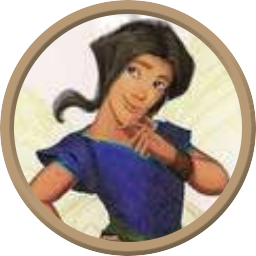
Calliope Galanodel
Level 14 Bard | School of Glamour
Alignment: Chaotic Good
Race: Satyr | Faun
Background: Inheritor
| HP | Init | AC | Speed |
|---|---|---|---|
| 97 (12d8 + 2) | +5 | 19 (Stud Leather Gem+1 | 35 ft. |
| Stand Leap | Running Leap | Swim | Climb | Fly |
|---|---|---|---|---|
| 5 ft. | 11 ft. | 14 ft. | 14 ft. | 0 ft. |
Ability Scores
| STR | DEX | CON | INT | WIS | CHA |
|---|---|---|---|---|---|
| 11 | 16 | 14 | 11 | 12 | 18 |
| 0 | +3 | +2 | 0 | +1 | +4 |
Saving Throws
| ☐ +1 | Strength | ☐ +1 | Intelligence |
| ☑ +9 | Dexterity | ☐ +2 | Wsdom |
| ☐ +3 | Constitution | ☑ +10 | Charisma |
Skills
| ☑ +8 | Acrobatics (D) | ☐ +3 | Medicine (W) |
| ☐ +3 | Animal Handl'n (W) | ☐ +2 | Nature (I) |
| ☐ +2 | Arcana (I) | ☑ +11 | Perception (W) |
| ☐ +2 | Athletics (S) | ☑ +14 | Performance (C) |
| ☑ +14 | Deception (C) | ☑ +14 | Persuasion (C) |
| ☑ +10 | History (I) | ☐ +2 | Religion (I) |
| ☐ +3 | Insight (W) | ☑ +8 | Sleight of Hand (D) |
| ☐ +6 | Intimidation (C) | ☐ +5 | Stealth (D) |
| ☐ +2 | Investigation (I) | ☑ +6 | Survival (W) |
Languages / Proficiencies
- Armor: Light
- Weapon: Hand Crossbow, Longsword, Rapier, Shortsword, Simple Weapons
- Languages: Common, Celestial, Sylvan
- Dice Set
- Instruments: Pan Flute, Drum, Flute
- Feats none
- Proficiency Bonus +5
- Passive Perception 21



Appearance
Medium sized female piebald Fawn.
- White face
- Blue Eyes & Dark Lashes
- Reddish brown fur with white spots on her back which fades to a white furry legs
Character Backstory
Went to find the Menagerie to assist save homeland
Personality Traits
Traits: I don't eat cloven-hooved animals. Too close to cannibalism.
Everyone is worth something. No matter what race you are.
Ideals: creative. Harmony, whether it be in the party or worldwide.
Bonds: Idolize a hero.
Everyone is worth something. No matter what race you are.
Flaws: Has a tendency to take shiny things.
I have the urge to set livestock free, though I do my best not to.
Features and Traits
Satyr
- Ability Scores. Charisma +2; Dexterity +1
- Size. Medium
- Speed. 35 ft.
Age. Satyrs mature and age at about the same rate as humans.
Alignment. Satyrs delight in living a life free of the mantle of law. They gravitate toward being good, but some have devious streaks and enjoy causing dismay.
Size. Satyrs range from just under 5 feet to about 6 feet in height, with generally slender builds. Your size is Medium.
Fey. Your creature type is fey, rather than humanoid.
Ram. You can use your head and horns to make unarmed strikes. If you hit with them, you deal bludgeoning damage equal to 1d4 + your Strength modifier.
Magic Resistance. You have advantage on saving throws against spells and other magical effects.
Mirthful Leaps. Whenever you make a long or high jump, you can roll a d8 and add the number rolled to the number of feet you cover, even when making a standing jump. This extra distance costs movement as normal.
Reveler. You have proficiency in the Performance and Persuasion skills, and you have proficiency with one musical instrument of your choice.
Languages. You can speak, read, and write Common and Sylvan.
You may roll for your character's height and weight on the Random Height and Weight table. The roll in the Height Modifier column adds a number (in inches) to the character's base height. To get a weight, multiply the number you rolled for height by the roll in the Weight Modifier column and add the result (in pounds) to the base weight.
Random Height and Weight
| Base Height | Base Weight | Height Modifier | Weight Modifier |
|---|---|---|---|
| 4'8" | 100 lb. | +2d8 | × 2d4 lb. |
Bard
Hit Points
Hit Dice: 1d8
Hit Points at 1st Level: 8 + your Constitution modifier
Hit Points at Higher Levels: 1d8 (or 5) + your Constitution modifier per Bard level after 1st
Proficiencies
Armor: light armor
Weapons: simple weapons, hand crossbows, longswords, rapiers, shortswords
Tools: three musical instruments of your choice
Saving Throws: Dexterity, Charisma
Skills: Choose any 3.
Starting Equipment
You start with the following items, plus anything provided by your background.
- (a) a rapier, (b) a longsword, or (c) any simple weapon
- (a) a diplomat's pack or (b) an entertainer's pack
- (a) a lute or (b) any other musical instrument
- Leather armor, and a dagger
Alternatively, you may start with 5d4 × 10 gp to buy your own equipment.
Multiclassing
Ability Score Minimum: Charisma 13
When you gain a level in a class other than your first, you gain only some of that class's starting proficiencies.
Armor: light armor
Tools: one musical instrument of your choice
Skills: Choose any skill.
Source: PHB, page 51. Available in the SRD 5.1 and the Basic Rules (2014).
Feats
none
🔮 Spellcasting
Calliope is a 14th-level spellcaster. Her spellcasting ability is Charisma (spell save DC 17, +9 to hit with spell attacks). She regains spell slots after finishing a long rest. She knows the following Bard spells:
Bard Spellbook
- Cantrip: Mage Hand, Vicious Mockery, Blade Ward, Weapon's True Strike, Prestidigitation
- 1st Level (4): Charm Person, Tasha's Hideous Laughter, Dissonant Whispers, Comprehend Languages, Feather Fall, Earth Tremor, Oblivious Technique
- 2nd Level (3): Cloud of Daggers, Invisibility, Dragon's Breath
- 3rd Level (3): Leomund's Tiny Hut, Hypnotic Pattern, Major Image
- 4th Level (3): Phantasmal Killer, Polymorph, Charm Monster
- 5th Level (2): Modify Memory, Dominate Person, Animate Objects, Synaptic Static
- 6th Level (1): Mass Suggestion
- 7th Level (1): Mirage Arcane, Teleport
2014 All Spells, and Homebrew Allowed in Dierde

Bard
Humming as she traces her fingers over an ancient monument in a long-forgotten ruin, a half-elf in rugged leathers finds knowledge springing into her mind, conjured forth by the magic of her song—knowledge of the people who constructed the monument and the mythic saga it depicts.
A stern human warrior bangs his sword rhythmically against his scale mail, setting the tempo for his war chant and exhorting his companions to bravery and heroism. The magic of his song fortifies and emboldens them.
Laughing as she tunes her cittern, a gnome weaves her subtle magic over the assembled nobles, ensuring that her companions' words will be well received.
Whether scholar, skald, or scoundrel, a bard weaves magic through words and music to inspire allies, demoralize foes, manipulate minds, create illusions, and even heal wounds.
Music and Magic
In the worlds of D&D, words and music are not just vibrations of air, but vocalizations with power all their own. The bard is a master of song, speech, and the magic they contain. Bards say that the multiverse was spoken into existence, that the words of the gods gave it shape, and that echoes of these primordial Words of Creation still resound throughout the cosmos. The music of bards is an attempt to snatch and harness those echoes, subtly woven into their spells and powers.
The greatest strength of bards is their sheer versatility. Many bards prefer to stick to the sidelines in combat, using their magic to inspire their allies and hinder their foes from a distance. But bards are capable of defending themselves in melee if necessary, using their magic to bolster their swords and armor. Their spells lean toward charms and illusions rather than blatantly destructive spells. They have a wide-ranging knowledge of many subjects and a natural aptitude that lets them do almost anything well. Bards become masters of the talents they set their minds to perfecting, from musical performance to esoteric knowledge.
Learning from Experience
True bards are not common in the world. Not every minstrel singing in a tavern or jester cavorting in a royal court is a bard. Discovering the magic hidden in music requires hard study and some measure of natural talent that most troubadours and jongleurs lack. It can be hard to spot the difference between these performers and true bards, though. A bard's life is spent wandering across the land gathering lore, telling stories, and living on the gratitude of audiences, much like any other entertainer. But a depth of knowledge, a level of musical skill, and a touch of magic set bards apart from their fellows.

Only rarely do bards settle in one place for long, and their natural desire to travel—to find new tales to tell, new skills to learn, and new discoveries beyond the horizon—makes an adventuring career a natural calling. Every adventure is an opportunity to learn, practice a variety of skills, enter long-forgotten tombs, discover lost works of magic, decipher old tomes, travel to strange places, or encounter exotic creatures. Bards love to accompany heroes to witness their deeds firsthand. A bard who can tell an awe-inspiring story from personal experience earns renown among other bards. Indeed, after telling so many stories about heroes accomplishing mighty deeds, many bards take these themes to heart and assume heroic roles themselves.
Creating a Bard
Bards thrive on stories, whether those stories are true or not. Your character's background and motivations are not as important as the stories that he or she tells about them. Perhaps you had a secure and mundane childhood. There's no good story to be told about that, so you might paint yourself as an orphan raised by a hag in a dismal swamp. Or your childhood might be worthy of a story. Some bards acquire their magical music through extraordinary means, including the inspiration of fey or other supernatural creatures.
Did you serve an apprenticeship, studying under a master, following the more experienced bard until you were ready to strike out on your own? Or did you attend a college where you studied bardic lore and practiced your musical magic? Perhaps you were a young runaway or orphan, befriended by a wandering bard who became your mentor. Or you might have been a spoiled noble child tutored by a master. Perhaps you stumbled into the clutches of a hag, making a bargain for a musical gift in addition to your life and freedom, but at what cost?
Quick Build
You can make a bard quickly by following these suggestions. First, Charisma should be your highest ability score, followed by Dexterity. Second, choose the entertainer background. Third, choose the dancing lights and vicious mockery cantrips, along with the following 1st-level spells: charm person, detect magic, healing word, and thunderwave.
The following information is from Xanathar’s Guide to Everything, page 12.
“Music is the fruit of the divine tree that vibrates with the Words of Creation. But the question I ask you is, can a bard go to the root of this tree? Can one tap into the source of that power? Ah, then what manner of music they would bring to this world!”
— Fletcher Danairia, master bard
Bards bring levity during grave times; they impart wisdom to offset ignorance; and they make the ridiculous seem sublime. Bards are preservers of ancient history, their songs and tales perpetuating the memory of great events down through time—knowledge so important that it is memorized and passed along as oral history, to survive even when no written record remains.
It is also the bard's role to chronicle smaller and more contemporary events—the stories of today's heroes, including their feats of valor as well as their less than impressive failures.
Of course, the world has many people who can carry a tune or tell a good story, and there's much more to any adventuring bard than a glib tongue and a melodious voice. Yet what truly sets bards apart from others—and from one another—are the style and substance of their performances.
To grab and hold the attention of an audience, bards are typically flamboyant and outgoing when they perform. The most famous of them are essentially the D&D world's equivalent of pop stars. If you're playing a bard, consider using one of your favorite musicians as a role model for your character.
You can add some unique aspects to your bard character by considering the suggestions that follow.
“Music is stupid. Wait. I changed my mind. Music is fun. Play more music. No, I was right the first time. Music is stupid. But I won't maim you after all, in case I change my mind again.”
— Xanathar
Defining Work
Every successful bard is renowned for at least one piece of performance art, typically a song or a poem that is popular with everyone who hears it. These performances are spoken about for years by those who view them, and some spectators have had their lives forever changed because of the experience.
If your character is just starting out, your ultimate defining work is likely in the future. But in order to make any sort of living at your profession, chances are you already have a piece or two in your repertoire that have proven to be audience pleasers.
Instrument
In a bard's quest for the ultimate performance and the highest acclaim, one's instrument is at least as important as one's vocal ability. The instrument's quality of manufacture is a critical factor, of course; the best ones make the best music, and some bards are continually on the lookout for an improvement. Perhaps just as important, though, is the instrument's own entertainment value; those that are bizarrely constructed or made of exotic materials are likely to leave a lasting impression on an audience.
You might have an "off the rack" instrument, perhaps because it's all you can afford right now. Or, if your first instrument was gifted to you, it might be of a more elaborate sort. Are you satisfied with the instrument you have, or do you aspire to replace it with something truly distinctive?
Embarrassment
Almost every bard has suffered at least one bad experience in front of an audience, and chances are you're no exception. No one becomes famous right away, after all; perhaps you had a few small difficulties early in your career, or maybe it took you a while to restore your reputation after one agonizing night when the fates conspired to bring about your theatrical ruin.
The ways that a performance can go wrong are as varied as the fish in the sea. No matter what sort of disaster might occur, however, a bard has the courage and the confidence to rebound from it—either pressing on with the show (if possible) or promising to come back tomorrow with a new performance that's guaranteed to please.
A Bard's Muse
Naturally, every bard has a repertoire of songs and stories. Some bards are generalists who can draw from a wide range of topics for each performance, and who take pride in their versatility. Others adopt a more personal approach to their art, driven by their attachment to a muse—a particular concept that inspires much of what those bards do in front of an audience.
A bard who follows a muse generally does so to gain a deeper understanding of what that muse represents and how to best convey that understanding to others through performance.
If your bard character has a muse, it could be one of the three described here, or one of your own devising.
Nature. You feel a kinship with the natural world, and its beauty and mystery inspire you. For you, a tree is deeply symbolic, its roots delving into the dark unknown to draw forth the power of the earth, while its branches reach toward the sun to nourish their flowers and fruit. Nature is the ancient witness who has seen every kingdom rise and fall, even those whose names have been forgotten and wait to be rediscovered. The gods of nature share their secrets with druids and sages, opening their hearts and minds to new ways of seeing, and as with those individuals, you find that your creativity blossoms while you wander in an open field of waving grass or walk in silent reverence through a grove of ancient oaks.
Love. You are on a quest to identify the essence of true love. Though you do not disdain the superficial love of flesh and form, the deeper form of love that can inspire thousands or bring joy to one's every moment is what you are interested in. Love of this sort takes on many forms, and you can see its presence everywhere—from the sparkling of a beautiful gem to the song of a simple fisher thanking the sea for its bounty. You are on the trail of love, that most precious and mysterious of emotions, and your search fills your stories and your songs with vitality and passion.
Conflict. Drama embodies conflict, and the best stories have conflict as a key element. From the morning-after tale of a tavern brawl to the saga of an epic battle, from a lover's spat to a rift between powerful dynasties, conflict is what inspires tale-tellers like you to create your best work. Conflict can bring out the best in some people, causing their heroic nature to shine forth and transform the world, but it can cause others to gravitate toward darkness and fall under the sway of evil. You strive to experience or witness all forms of conflict, great and small, so as to study this eternal aspect of life and immortalize it in your words and music.
Bardic Inspiration
You can inspire others through stirring words or music. To do so, you use a bonus action on your turn to choose one creature other than yourself within 60 feet of you who can hear you. That creature gains one Bardic Inspiration die, a d6.
Once within the next 10 minutes, the creature can roll the die and add the number rolled to one ability check, attack roll, or saving throw it makes. The creature can wait until after it rolls the d20 before deciding to use the Bardic Inspiration die, but must decide before the DM says whether the roll succeeds or fails. Once the Bardic Inspiration die is rolled, it is lost. A creature can have only one Bardic Inspiration die at a time.
You can use this feature a number of times equal to your Charisma modifier (a minimum of once). You regain any expended uses when you finish a long rest.
Your Bardic Inspiration die changes when you reach certain levels in this class. The die becomes a d8 at 5th level, a d10 at 10th level, and a d12 at 15th level.
Spellcasting
You have learned to untangle and reshape the fabric of reality in harmony with your wishes and music. Your spells are part of your vast repertoire, magic that you can tune to different situations. See chapter 10 for the general rules of spellcasting and chapter 11 for the bard spell list.
Cantrips
You know two cantrips of your choice from the bard spell list. You learn additional bard cantrips of your choice at higher levels, learning a 3rd cantrip at 4th level and a 4th at 10th level.
Spell Slots
The Bard table shows how many spell slots you have to cast your bard spells of 1st level and higher. To cast one of these spells, you must expend a slot of the spell's level or higher. You regain all expended spell slots when you finish a long rest.
For example, if you know the 1st-level spell cure wounds and have a 1st-level and a 2nd-level spell slot available, you can cast cure wounds using either slot.
Spells Known of 1st Level and Higher
You know four 1st-level spells of your choice from the bard spell list.
You learn an additional bard spell of your choice at each level except 12th, 16th, 19th, and 20th. Each of these spells must be of a level for which you have spell slots. For instance, when you reach 3rd level in this class, you can learn one new spell of 1st or 2nd level.
Additionally, when you gain a level in this class, you can choose one of the bard spells you know and replace it with another spell from the bard spell list, which also must be of a level for which you have spell slots.
Spellcasting Ability
Charisma is your spellcasting ability for your bard spells. Your magic comes from the heart and soul you pour into the performance of your music or oration. You use your Charisma whenever a spell refers to your spellcasting ability. In addition, you use your Charisma modifier when setting the saving throw DC for a bard spell you cast and when making an attack roll with one.
Spell save DC = 8 + Charisma modifier + Proficiency Bonus
Spell attack modifier = Charisma modifier + Proficiency Bonus
Ritual Casting
You can cast any bard spell you know as a ritual if that spell has the ritual tag.
Spellcasting Focus
You can use a musical instrument as a spellcasting focus for your bard spells.
Jack of All Trades
Starting at 2nd level, you can add half your proficiency bonus, rounded down, to any ability check you make that doesn't already include your proficiency bonus.
Song of Rest (d6)
Beginning at 2nd level, you can use soothing music or oration to help revitalize your wounded allies during a short rest. If you or any friendly creatures who can hear your performance regain hit points by spending Hit Dice at the end of the short rest, each of those creatures regains an extra 1d6 hit points.
The extra hit points increase when you reach certain levels in this class: to 1d8 at 9th level, to 1d10 at 13th level, and to 1d12 at 17th level.
Magical Inspiration
2nd-level bard optional feature
If a creature has a Bardic Inspiration die from you and casts a spell that restores hit points or deals damage, the creature can roll that die and choose a target affected by the spell. Add the number rolled as a bonus to the hit points regained or the damage dealt. The Bardic Inspiration die is then lost.
Bard College
At 3rd level, you delve into the advanced techniques of a bard college of your choice from the list of available colleges. Your choice grants you features at 3rd level and again at 6th and 14th level.
Expertise
At 3rd level, choose two of your skill proficiencies. Your proficiency bonus is doubled for any ability check you make that uses either of the chosen proficiencies.
At 10th level, you can choose another two skill proficiencies to gain this benefit.
Ability Score Improvement
When you reach 4th level, you can increase one ability score of your choice by 2, or you can increase two ability scores of your choice by 1. As normal, you can't increase an ability score above 20 using this feature.
If your DM allows the use of feats, you may instead take a feat.
Bardic Versatility
4th-level bard optional feature
Whenever you reach a level in this class that grants the Ability Score Improvement feature, you can do one of the following, representing a change in focus as you use your skills and magic:
- Replace one of the skills you chose for the Expertise feature with one of your other skill proficiencies that isn't benefiting from Expertise.
- Replace one cantrip you learned from this class's Spellcasting feature with another cantrip from the bard spell list.
Bardic Inspiration (d8)
At 5th level, your Bardic Inspiration die changes to a d8.
Font of Inspiration
Beginning when you reach 5th level, you regain all of your expended uses of Bardic Inspiration when you finish a short or long rest.
Countercharm
At 6th level, you gain the ability to use musical notes or words of power to disrupt mind-influencing effects. As an action, you can start a performance that lasts until the end of your next turn. During that time, you and any friendly creatures within 30 feet of you have advantage on saving throws against being frightened or charmed. A creature must be able to hear you to gain this benefit. The performance ends early if you are incapacitated or silenced or if you voluntarily end it (no action required).
Bard College feature
At 6th level, you gain a feature from your Bard College.
Ability Score Improvement
When you reach 8th level, you can increase one ability score of your choice by 2, or you can increase two ability scores of your choice by 1. As normal, you can't increase an ability score above 20 using this feature.
If your DM allows the use of feats, you may instead take a feat.
Song of Rest (d8)
At 9th level, the extra hit points gained from Song of Rest increases to 1d8.
Bardic Inspiration (d10)
At 10th level, your Bardic Inspiration die changes to a d10.
Expertise
At 10th level, you can choose another two skill proficiencies. Your proficiency bonus is doubled for any ability check you make that uses either of the chosen proficiencies.
Magical Secrets
By 10th level, you have plundered magical knowledge from a wide spectrum of disciplines. Choose two spells from any classes, including this one. A spell you choose must be of a level you can cast, as shown on the Bard table, or a cantrip.
The chosen spells count as bard spells for you and are included in the number in the Spells Known column of the Bard table.
You learn two additional spells from any classes at 14th level and again at 18th level.
Ability Score Improvement
When you reach 12th level, you can increase one ability score of your choice by 2, or you can increase two ability scores of your choice by 1. As normal, you can't increase an ability score above 20 using this feature.
If your DM allows the use of feats, you may instead take a feat.
Song of Rest (d10)
At 13th level, the extra hit points gained from Song of Rest increases to 1d10.
Magical Secrets
At 14th level, choose two additional spells from any classes, including this one. A spell you choose must be of a level you can cast, as shown on the Bard table, or a cantrip.
The chosen spells count as bard spells for you and are included in the number in the Spells Known column of the Bard table.
Bard College feature
At 14th level, you gain a feature from your Bard College.
### Bardic Inspiration (d12)
At 15th level, your Bardic Inspiration die changes to a d12.
### Ability Score Improvement
When you reach 16th level, you can increase one ability score of your choice by 2, or you can increase two ability scores of your choice by 1. As normal, you can't increase an ability score above 20 using this feature.
If your DM allows the use of feats, you may instead take a feat.
### Song of Rest (d12)
At 17th level, the extra hit points gained from Song of Rest increases to 1d12.
### Magical Secrets
At 18th level, choose two additional spells from any class, including this one. A spell you choose must be of a level you can cast, as shown on the Bard table, or a cantrip.
The chosen spells count as bard spells for you and are included in the number in the Spells Known column of the Bard table.
### Ability Score Improvement
When you reach 19th level, you can increase one ability score of your choice by 2, or you can increase two ability scores of your choice by 1. As normal, you can't increase an ability score above 20 using this feature.
If your DM allows the use of feats, you may instead take a feat.
### Superior Inspiration
At 20th level, when you roll initiative and have no uses of Bardic Inspiration left, you regain one use.
College of Glamour
The College of Glamour is the home of bards who mastered their craft in the vibrant realm of the Feywild or under the tutelage of someone who dwelled there. Tutored by satyrs, eladrin, and other fey, these bards learn to use their magic to delight and captivate others.
The bards of this college are regarded with a mixture of awe and fear. Their performances are the stuff of legend. These bards are so eloquent that a speech or song that one of them performs can cause captors to release the bard unharmed and can lull a furious dragon into complacency. The same magic that allows them to quell beasts can also bend minds. Villainous bards of this college can leech off a community for weeks, misusing their magic to turn their hosts into thralls. Heroic bards of this college instead use this power to gladden the downtrodden and undermine oppressors.
Mantle of Inspiration
When you join the College of Glamour at 3rd level, you gain the ability to weave a song of fey magic that imbues your allies with vigor and speed.
As a bonus action, you can expend one use of your Bardic Inspiration to grant yourself a wondrous appearance. When you do so, choose a number of creatures you can see and that can see you within 60 feet of you, up to a number equal to your Charisma modifier (minimum of one). Each of them gains 5 temporary hit points. When a creature gains these temporary hit points, it can immediately use its reaction to move up to its speed, without provoking opportunity attacks.
The number of temporary hit points increases when you reach certain levels in this class, increasing to 8 at 5th level, 11 at 10th level, and 14 at 15th level.
Enthralling Performance
Starting at 3rd level, you can charge your performance with seductive, fey magic.
If you perform for at least 1 minute, you can attempt to inspire wonder in your audience by singing, reciting a poem, or dancing. At the end of the performance, choose a number of humanoids within 60 feet of you who watched and listened to all of it, up to a number equal to your Charisma modifier (minimum of one). Each target must succeed on a Wisdom saving throw against your spell save DC or be charmed by you. While charmed in this way, the target idolizes you, it speaks glowingly of you to anyone who talks to it, and it hinders anyone who opposes you, although it avoids violence unless it was already inclined to fight on your behalf. This effect ends on a target after 1 hour, if it takes any damage, if you attack it, or if it witnesses you attacking or damaging any of its allies.
If a target succeeds on its saving throw, the target has no hint that you tried to charm it.
Once you use this feature, you can't use it again until you finish a short or long rest.
“Illusions? How quaint. Before I destroy you, make one that looks like a really big goldfish—like as big as me! Hmm. That's too big. Goodbye!”
— Xanathar
Background
Inheritor
- Skill Proficiencies: Survival, plus one from among Arcana, History, and Religion
- Languages: Any one of your choice
- Tool Proficiencies: Your choice of a gaming set or a musical instrument
- Equipment: Your inheritance, a set of traveler's clothes, the tool you choose for this background's tool proficiency (gaming set or musical instrument), and a pouch containing 15 gp
Feature: Inheritance
Choose or randomly determine your inheritance from the possibilities in the table below. Work with your Dungeon Master to come up with details: Why is your inheritance so important, and what is its full story? You might prefer for the DM to invent these details as part of the game, allowing you to learn more about your inheritance as your character does.
The Dungeon Master is free to use your inheritance as a story hook, sending you on quests to learn more about its history or true nature, or confronting you with foes who want to claim it for themselves or prevent you from learning what you seek. The DM also determines the properties of your inheritance and how they figure into the item's history and importance. For instance, the object might be a minor magic item, or one that begins with a modest ability and increases in potency with the passage of time. Or, the true nature of your inheritance might not be apparent at first and is revealed only when certain conditions are met.
When you begin your adventuring career, you can decide whether to tell your companions about your inheritance right away. Rather than attracting attention to yourself, you might want to keep your inheritance a secret until you learn more about what it means to you and what it can do for you.
Suggested Characteristics
Use the tables for the folk hero background in the Player's Handbook as the basis for your traits and motivations, modifying the entries when appropriate to suit your identity as an inheritor.
Your bond might be directly related to your inheritance, or to the person from whom you received it. Your ideal might be influenced by what you know about your inheritance, or by what you intend to do with your gift once you realize what it is capable of.
Personal
Calliope's Family
Siblings
None known.
Additional
Medium sized female piebald Fawn.
- White face
- Blue Eyes & Dark Lashes
- Reddish brown fur with white spots on her back which fades to a white furry legs
Age: 22 4/14/1998
Backstory
Birth: 4/14/1998
Calliope was born into the nestled highlands of the Oraniad Mountains. The Skola Vale, wild and free, blessed by the gods and inhabited by whimsical Satyrs and Fawns. Deep within it among the lush valley, reside the Dawngreets, a long generational line of storytellers and lore keepers.
Calliope was raised by her father, as most Fawns are, and frolicked her younger days carefree by the rivers and streams, picking wildflowers, finding interesting plants and vegetation, and exploring the nooks and crannies of her domain. Unburdened by the hardships others faced outside of the gods’ realm, she had great plans of collecting every single specimen of the Vale and, some day, displaying all her hard work for everyone to enjoy. It was a fascinating pursuit!
Around her 20th year (the age of maturity), an elder of the Dawngreets came to her while out collecting the newly blossomed flowers. “You are destined for greater things!” was the message, which very suddenly and quite dramatically squashed her dreams of rooms filled with the beautifully collected foliage. In an instant, Calliope’s planned future branched to inherit the centuries old lore of the Satyrs.
In an effort to fulfill her “told destiny” Caliope left the faewild and set off on a most exciting adventure to discover new lands and places, all the while developing her skills of music and storytelling. The history of the Skola Vale depends on it! Trouble is… she spent so much time collecting plants and flowers, Calliope rarely practiced this most notable legacy of her people. In fact, she is quite terrible!
Other
Member of the Dawngreets - keepers of the Satyr Lore From the Skola Vale in the Faewyld.
Mentee of the Leonin "Reginald" in Kampos.
Father: Melios Lamphi
-
Calliope is a unique fawn. Her piebald coloring isn't something you'd see normally, but the alternative pigmentation does pop up every few generations among a certain line. According to a myth, this is a trait of the legendary lore keepers of her family.
-
Her constant exuberance and delight of the world around her hinders her ability to concentrate on her studies and tasks at hand. Joy and excitement of new things drive her to bounce from one to the other very quickly. She is always after the rush of adrenaline.
-
She despises negativity and avoids negative emotion at all cost. She is in constant flight of any sort of failure or sadness and much prefers to cover it up with beautiful things.
-
As she is extremely excitable and has a speed of 35, Calliope tends to prance and bounce as she walks or when standing around. Those around her may want to give her hooves some extra space for the sake of their toes.
-
Like most Satyrs, she is also very fond of beautiful things that bring happiness. To the point of obsession almost. While Calliope is good, the direct nature of the Satyr is chaotic. The drive to cherish, experience, and fulfill is strong... as is the desire to employ a 5 finger discount.
Treasures
- trinket: single glass chess piece
- Small notebook where she keeps hidden little bits of flowers and plants within the pages.
- a magic compass from her father
- enchanted dagger shortsword - +10 to hit, radiant damage 1D8 (miss by 1, still half damage)
- Mark of the Adventurer: You could choose between : Advantage on initiative 1 skill proficiency or language +1d10 to your long/high jump 1 cantrip +1d3 to unarmed
Luminous Hairpin: A beautifully crafted hairpin adorned with tiny, glowing gems. When worn, it grants the wearer a +1 to Charisma checks related to beauty or elegance.
Gem of Many Colors: A rare gem that shifts hues. Once per long rest, the user can choose one of the following effects: Gain advantage on one saving throw. Regain 1d4 hit points. Cast Color Spray.
Moonlit Dust: This pale, silvery glitter glows softly in darkness. It can be used to create an area of dim light when sprinkled.
Dust of Disappearance - 10ft radius, everyone disappears
fire breath - 1 vial
stylish cap
5 hot peppers- for fire breath spell
10 critical bolts
Blue sapphire - from the cats
1x a day, reroll - anyone including enamies 1x a day cast invisibility on anyone
Marks & Tattoos
Tattoos
- Mark of the Adventurer (left ankle, proficiency in sleight of hand)
- Eye of Darkvision (Head, Small Average)
- Done by Tipsy
Factions & Connections
- Lady of Kampos to the Lady of Skola Vale
- Connection to Paradox through the Elder's Connections
- Mother is in Bogan
- Friends with King Reginald
- Connection to the Elder
Attacks & Gear
| Name | Attack Bonus | Damage/Type |
|---|---|---|
| 🔮🗡️+2 Shortsword of Eberron, Radiant 1d8, Glancing Blow | 10 | 1d6+3 piercing + 1d8 Radiant+ 2 Magic Bonus |
| Shortsword | 8 | 1d6+3 Piercing |
| Ram | 5 | 1d4 bludgeoning |
| Vicious Mockery | DC17 | 3d4 Psychic |
| Cloud of Daggers | - | 4d4 Slashing |
| 5 | 0 | |
| Hand Crossbow | 8 | 1d6+3 Piercing |
| Phantasmal Killer | DC17 | 4d10 Psychic |
| Dissonant Whispers | DC17 | 3d6 Psychic |
| TRUESTRIKE | 🔮🗡️+2 Shortsword of Eberron, Radiant 1d8, Glancing Blow | 11 |
| Earth Tremor | DC17 | 1d6 Bludgeoning |
| Dragon's Breath | DC17 | 3d6 See text |
| Synaptic Static | DC17 | 8d6 Psychic |
| Q | Item | Total Weight |
|---|---|---|
| 1 | Dice set | 0.02 |
| 1 | Shortsword | 2 |
| 1 | 🎒Backpack | 5 |
| 5 | Candle | 0.02 |
| 5 | Rations | 2 |
| 1 | Waterskin | 5 |
| 1 | Disguise kit | 3 |
| 1 | Pan Flute | 2 |
| 1 | Flower Book | 5 |
| 4 | 🔮 Potion of Healing | 0.5 |
| 1 | 🔮 Potion of Greater Healing | 0.02 |
| 1 | 🔮 Ring of Truth Telling [A] | 0.02 |
| 1 | 🔮 Magic Golden Compass | 0.02 |
| 1 | 🔮 Uncommon Glamorweave | 0.02 |
| 1 | Traveler Clothes | 0.02 |
| 2 | red dragon scales | 0.0004 |
| 1 | 🔮 Treant Draught (Eldertwig) | 0.2 |
| 1 | 🔮 Amulet of Proof Against Detection [A] | 0.02 |
| 1 | Magical Glove -- Now, just an ability | - |
| 1 | Hand Crossbow | 3 |
| 33 | Crossbow bolts | 0.075 |
| 1 | 🔮 Ring of Protection | 0.02 |
| 1 | Notebook from Elder to take "notes" | 1 |
| 1 | 🔮🗡️+2 Shortsword of Eberron, Radiant 1d8, Glancing Blow | 1 |
| 1 | 🔮 Cli Pan Flute | 2 |
| 1 | Heward's Handy Haversack | 5 |
| 1 | Gem-Studded Leather Armor +1 | 13 |
| 1 | Shield | 6 |
| 1 | strange black obsidian dagger |
Calliope's Handy Haversack
| Q | Item | Total Weight |
|---|---|---|
| 🎒 | 🎒Large Central (8 cubic feet, 80 lbs.) 🎒 | 🎒 |
| 🎒 | 🎒Left Side (2 cubic feet, 20 lbs.)🎒 | 🎒 |
| 🎒 | 🎒Right Side (2 cubic feet, 20 lbs.)🎒 | 🎒 |
| 1 | 📖 A Guide to the Underdark by Drizzt Do'Urden (Mostly Read) | 2.5 |
| 1 | 📕 The Magic of Stone and the Souls of Mountains by Theoderus (Not Read) | 3 |
| 1 | 📕 Analysis of Divination Spell Extension into the Astral Plane by Yaphyll (Not Read) | 2.5 |
| 1 | 📕 This Ore That; Choosing your first Rock Golem by Safiya (Not read) | 2.5 |
| 1 | 📕 Making Friends; a History of Necromancy by Xzar (Not read) | 5.5 |
| 1 | 📖 The Monster Harvester’s Handbook (Mostly read) | 5 |
| 1 | Art Objects (750gp) | |
| 1 | Art objects (750g) | |
| 1 | Art Objects (750 g) |
Bag of Holding (Sas)
| Q | Item | Total Weight |
|---|---|---|
| 1 | 💎 bag of diamond dust (50gp) | |
| 1 | 💎 bag of gems (~100gp) | 0.02 |
| 1 | 🔮Alchemy Jug | 0.02 |
| 1 | 🔮Amulet of Proof against Detection and Location | 0.02 |
| 1 | 🔮Magic 8 Ball | 0.02 |
| 2 | 🔮Potion of Superior Healing | 0.02 |
| 1 | 🔮Chime of Opening (5 uses) | 0 |
| 4 | 🔮 Greater Healing Potion | 0.02 |
| 1 | 🔮Immovable Rod | 2 |
| 1 | 🔮 Potion of Diminution | 0.02 |
| 1 | 🔮Potion of Gaseous Form | 0 |
| 1 | 🔮 Ring of Free Action | 0.02 |
| 2 | 🔮 Potion of Supreme Healing | 0.02 |
| 1 | 🔮 Scroll of Expeditious Retreat | |
| 1 | 🔮 Scroll of Light | |
| 1 | 🔮 Scroll of Telescription | 0.0004 |
| 1 | Letter from Ursa | 0.0004 |
| 1 | Letter about Reggie | 0.0004 |
| 1 | 📖 Devil Men of the Deep, the Study of the Walking Piscine Killers (Mostly Read) | 2.5 |
| 1 | 📓 Jacoby's Journal (Little read, but lars Read) | 2.5 |
| 1 | 📖 Green Thumb, Gardening Book(not read) | 2.5 |
| 1 | 📖 Known Claims of the Far Realm | 5 |
| 1 | 📖 Necromantic Artes v.1 (Read by Bastion) | 5 |
| 1 | 📖 Rocks, Crystals, and Gemstones (Not Read) | 2 |
| 1 | 📕 Short History of Dwarves | 4 |
| 1 | 📕 Basic Carpentry for Complex Dungeons | 5 |
| 1 | 💎 amber 100gp | |
| 0 | 💎 amethyst 100gp | |
| 2 | 💎 azurite | 0.0004 |
| 1 | 💎 bloodstone (50gp) | 0.0004 |
| 1 | 💎 blue quartz | 0.0004 |
| 0 | 💎 carnelian (50gp) | 0.0004 |
| 2 | 💎 chalcedony (50gp) | 0.0004 |
| 2 | 💎 black stone oval | Chardyln |
| 2 | 💎 chrysoberyl 100gp | |
| 1 | 💎 chrysoprase (50gp) | 0.0004 |
| Q | Item | Total Weight |
|---|---|---|
| 1 | 💎 citrine (50gp) | 0.0004 |
| 2 | 💎 coral 100gp | |
| 7 | 💎 diamonds (50gp) | 0.0004 |
| 2 | 💎 agate | 0.0004 |
| 1 | 💎 golden locket | 0.02 |
| 2 | 💎 hematite | 0.0004 |
| 3 | 💎 jade 100gp | |
| 2 | 💎 jasper (50gp) | |
| 1 | 💎 jet 100gp | |
| 1 | 💎 lapis lazuli | |
| 1 | 💎 moonstone (50gp) | 0.0004 |
| 1 | 💎 onyx (50gp) | 0.0004 |
| 4 | 💎 pearl 100gp | |
| 1 | 💎 rhodochrosite | 0.0004 |
| 1 | 💎 star rose quartz (50gp) | 0.0004 |
| 1 | 💎 tiger eye | 0.0004 |
| 1 | bottle of honey | 0.2 |
| 1 | notched giant eagle claw | 0.02 |
| 1 | human bone necklace | 0.02 |
| 1 | pouch chewing tobacco | 0.02 |
| 1 | 📖 Spellbook of a Botanist | 5 |
| 1 | 📓 Journal of a Botanist | 5 |
| 1 | small mirror | |
| 1 | potion of growth | |
| 1 | brass key | |
| 1 | cloth gloves | |
| 1 | bottle of honey | |
| 1 | set of fine brushes (5gp) | |
| 1 | potion of climbing | |
| 1 | pieces of Solec's shell | |
| 1 | iron tea set | |
| 1 | oil of slipperiness | |
| 1 | harvesting kit | 30 |
| 1 | 1 Hemp Rope 50ft | |
| 1 | ring with AO signet | |
| 1 | burned book with Meklans handwriting | |
| 4 | 💎smoky quartz (10gp each) | |
| 11 | 💎15 onyx (10go each) | |
| 10 | 💎gems (10gp each) |
| Q | Item | Total Weight |
|---|---|---|
| 2 | Garnets 100g each | |
| 1 | blue crystal powder | |
| 1 | red crystal powder | |
| 1 | Glyph Stone | |
| 5 | adamantine ingot 1000gp/e | |
| 1 | Acid Sling ring | |
| 1 | Bracers of Celerity | |
| 1 | 💎alexandrite 500gp | |
| 2 | 💎blue spinel 500gp/e | |
| 1 | 💎aquamarine 500gp | |
| 5 | 💎black pearl 500gp/e | |
| 2 | 💎peridot 500gp/e |
Calliope's Handy Haversack
| Q | Item | Total Weight |
|---|---|---|
| 🎒 | 🎒Large Central (8 cubic feet, 80 lbs.) 🎒 | 🎒 |
| 🎒 | 🎒Left Side (2 cubic feet, 20 lbs.)🎒 | 🎒 |
| 🎒 | 🎒Right Side (2 cubic feet, 20 lbs.)🎒 | 🎒 |
| 1 | 📖 A Guide to the Underdark by Drizzt Do'Urden (Mostly Read) | 2.5 |
| 1 | 📕 The Magic of Stone and the Souls of Mountains by Theoderus (Not Read) | 3 |
| 1 | 📕 Analysis of Divination Spell Extension into the Astral Plane by Yaphyll (Not Read) | 2.5 |
| 1 | 📕 This Ore That; Choosing your first Rock Golem by Safiya (Not read) | 2.5 |
| 1 | 📕 Making Friends; a History of Necromancy by Xzar (Not read) | 5.5 |
| 1 | 📖 The Monster Harvester’s Handbook (Mostly read) | 5 |
| 1 | Art Objects (750gp) | |
| 1 | Art objects (750g) | |
| 1 | Art Objects (750 g) |
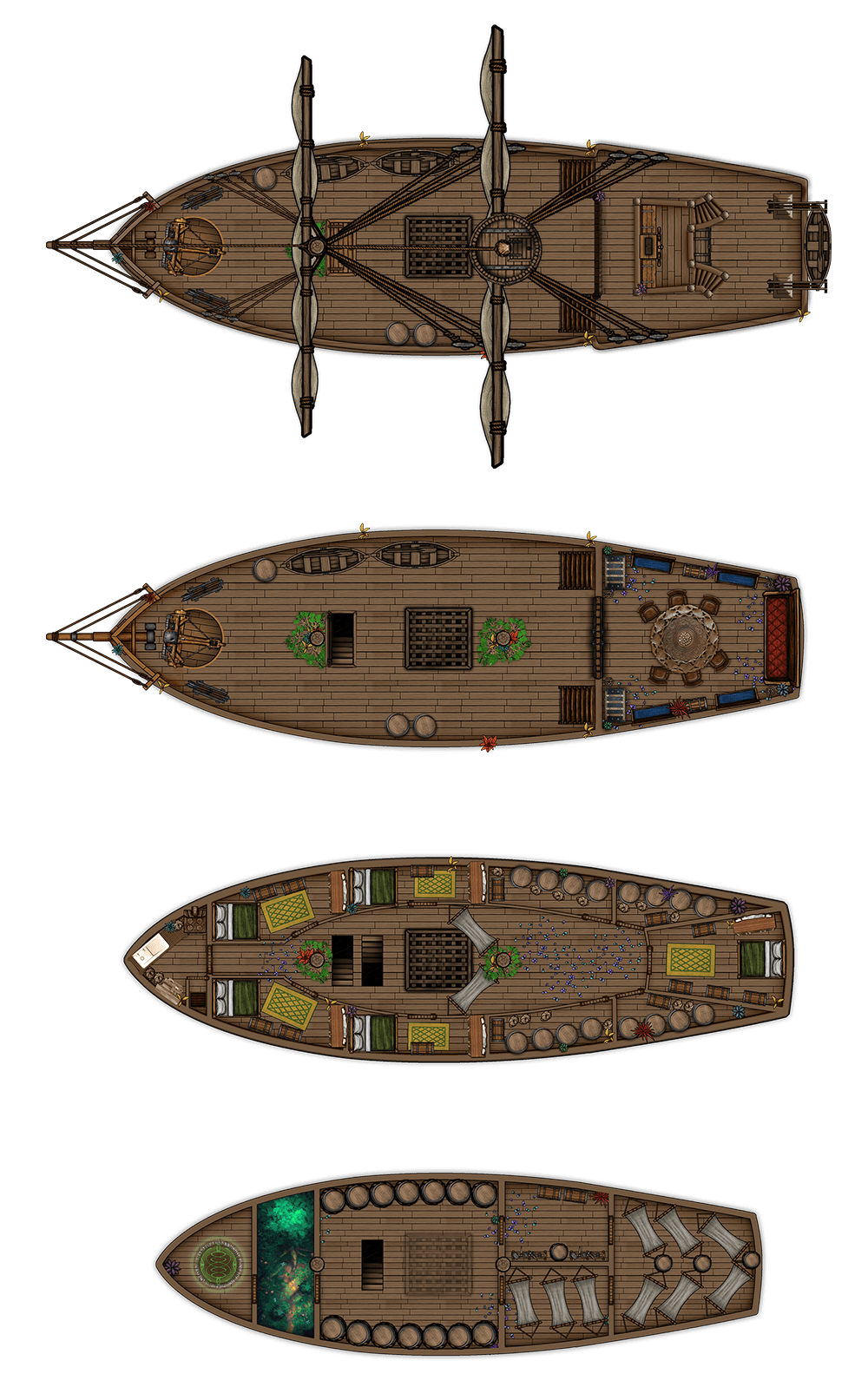
The Audacity
The Crew



Ship's Quartermaster/Ship's Bosun /Ship's Sailing Master





Ship's Crew (deckhand)
Ship's deckhand (Rigger, also Ship's Mage