“The Universe is a Machine.
Funnels of power to heal.”
Mordenkainen Simulacra
Contents
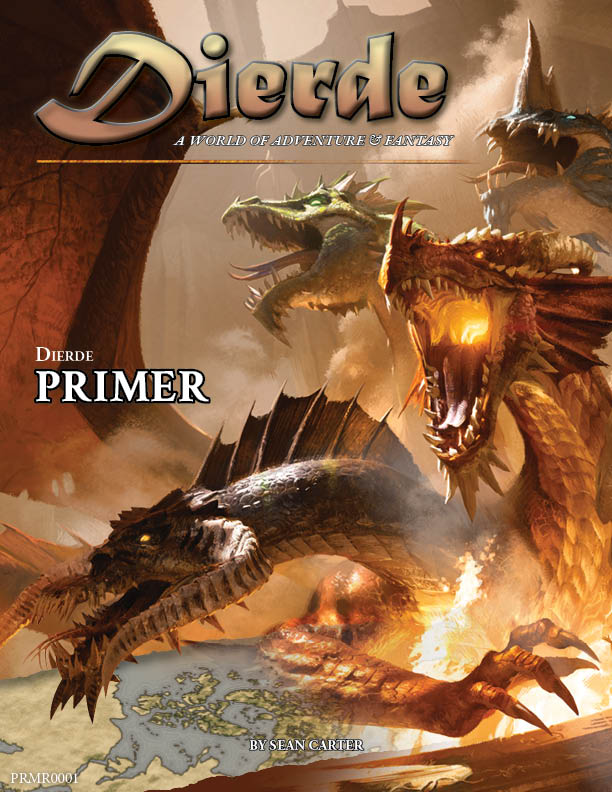
Dierde Primer
-
Table of Contents
-
- Ancient History
- The First Cycle Prehistory until -500k
- The Second Cycle -500k until -9k
- The Third Cycle -9k until now -Major Events of Current Time
-
Constellations
-
The Moons of Dierde
-
Continents
-
Races
-
Moons
UPDATED
September 1, 2025
- screwed up... need to fix.
See Also
- Work in Progress: Primer on Dierde (This Book)
- Work in Progress: Atlas of Dierde
- Active Campaign: Wild Cards of Dierde
- Active Campaign: WC Homebrew Collection
- Homebrew: Property Rules
- Homebrew: Tools & Kits
- Homebrew: Tattoo Kit
- Homebrew: Magic Item Crafting Rules
- Homebrew: Harvesting
- WIP: 2014 Races
- WIP: 2014 Classes
Settlements
- Outding Refuge, Vyerith's Crown
- Skola Vale
- Forlione
- Sutley
- Rotham
- River's Keep
- New Haven
- Thornwinds
Characters
Not related: Sace
Precis
A world of adventure. A wide variety of different societies spread out all trying to find their way with little known of the far past or of the threat that rests in the Earth.
Conspectus
The societies are not too advanced, but in some centers of a high population, there are those who have become more civilized and are starting to learn more about the world they live in. In most regions species and races get along, but there have been past wars and of course, there are those for which they seek power or they hold nefarious plans. There are countless religions and secret societies that have found their way into all of the more civilized nations, and they all are playing out long-game scenarios for power. As one goes further away from the civilized centers they will surely find all manner of Beasts and monsters as well as long-lost cultures or relics from times long past and forgotten. No one goes too far south for that is where the dragons roam and rule. There are those who seek out adventure and that is the one thing that can always be found on Dierde.


Introduction
Dierde is a world of adventure, meant to be full of possibilities for the players. For those “living” in the world they find it to be a world of survival -- whether in a large city where anyone can be out to get you, or in the wilderness where any number of beasts can find you.
There are many factions and individuals seeking power and history has shown it can be stopped only with those brave enough to stand up to them. Currently the world seems to be in “relative” peace as no major outright wars have been taking place. Sure there are regional conflicts that flare up from time to time, but the factions in the shadow know that war only cuts into their profit margins and risks their loss of power so they tend to try and find their own ways to “keep the peace.”
There used to be many wars, based on those seeking power, those wishing to show racial superiority, the wars of jingoism, or just those seeking resources. This is just history for the race of man, but many of the long-living races still have more vivid memories of those days. They ended though as a common problem literally broke through the earth and threatened the survival of all on Dierde. This legend of the Sleeping Dragon and the Great King who brought the nations together have begun to fall away into legend these days.
Many are now seeking fame and glory whether in adventures of exploration or by seeking out the growing evils that have been appearing in various lands.
The adventures can be across new unexplored lands, in ancient forgotten temples, in the sprawling and dangerous Underdark, or it can go into space. Once in the Wild Space of the Realmspace around Dierde you can explore one of the nearby planets, have any number of encounters or even find a way to navigate the Phlogistan into a whole different world.
There are various other planes which are not as hospitable to such adventurers, but that has not stopped them before. Seek your power, your wealth, and whatever your heart may desire -- but hopefully you will get to enjoy it before the Sleeping Dragon once again wakes and no one is able to stop it.
This primer will try to explore much of the things that could assist you in playing this game with me and of course it is always possible that errors are made, that things have changed, or these are the things that someone wanted others to believe instead of the truth. In the end, have fun exploring
World History
The Main History of Dierde
The First Cycle
- Pre-Creation -360B,000+ YBKC
- The Time of Creation -360B YBKC
- Creation Myths
- Creation
- The First Betrayal
- The First War of the Gods
- The Dragon Gods
- The End of Creation
- Creation of Dierde
- The Time of the First Gods -200B
- The Time of the Dark Demons -160B
- The Stewards Arrive -140B
- The Time of Dinosaurs -100B
- The Ice Age -10B
- The Rise of Man -1,000,000
- The Downfall of the Elves -500,000
The Second Cycle
Third Cycle
Ancient History
"The dragon needed some rest and so he created this universe to protect him as he slumbered."" —unknown
The First Cycle
Everything Before -500,000 YBKC
There has been many different cultures and societies of varied races. Many have either created their own myths or have been told some myth by their “Gods” or those claiming to be a god. There is a real creation to this universe and the players may or may not know this.
This Universe is the very same that held the “Forgotten Realms, and even our Earth... Most of this is NOT known by characters or most alive during the current times. There are no “dates” during these times as they are myth, legend, and possibly true.
(This is important because anything that existed in those realms can have a possibility of existing in the new universe to come for a variety of reasons. There are whole schools of learning in the Grand Athenaeum of Elhyrst trying to find ways to better understand these times. There has been very little progress.)
-360B+ YBKC
Pre-Creation. Lord AO creates all, the many early realms of TSR and WoTC that come and go. In the end, all of everything falls back to chaos and emptiness. The Weave is obliterated and the essence of all that ever existed ceases to exist and yet still has echoes in these empty realms. All of the Forgotten Realms, and other histories exist at the beginning part of the timeline. By the end, all has gone dark. Some gods, artifacts, creatures, and such do find pocket universes to exist within for the time being.
Creation of the World. There were no exact accounts on how Lord AO created the universe, but nonetheless he was credited for the deed. In some traditions, Lord AO just created the sphere that covered Realmspace, and the goddesses Selûne and Shar, and they later went to create all the worlds and stars, and other heavenly bodies. In other accounts, it was Lord AO who directly created all that exists, not only Realmspace, but also the worlds and heavenly bodies, and even the Astral Sea, using the raw energy of the Phlogiston.
-360B YBKC – -200B YBKC
The Time of Creation. Almost every culture and clan has their own “version” of the creation. Many are close to the real thing, but due to the timey-wimey nature of a magical universe it is possible that this history as written has faults.
Creation. Around this time there is another “Dimension”, one where some of the old gods still live and other events occur. That Dimension is now about to fall as the gods have all begun to fight one of the strongest gods ever --- D’erletztesøhn. All of the other gods from many different realities banded together to destroy him, and they fought a wonderful battle. As the Dragon God “D’erletztesøhn” was mortally wounded he knew he would soon be destroyed if he did not retreat. He needed rest, and even if that rest was to the ends of eternity it would be better than utter destruction.
They wounded him so gravely that in a last-ditch effort to safe himself from utter destruction he seeks refuge in this empty space. D’erletztesøhn was a large and powerful deity had an insatiable thirst for destruction and power. He often was signified as a Dragon that was as large as our sun (or smaller of course). He had found ways of going in and out of other realities, universes, even invading imaginary places — that was how far-reaching his power was.
In this space he created a pocket universe to retreat to, but one god from one of the planes followed. She was Gaea, and she was the only god D’erletztesøhn would never harm for he loved her and only her (and power of course). He trusted her enough to let her in, especially after she said she would help protect him.
Gaea is trusted by the Dragon Gods as she is trusted by all -- she only seeks survival and balance for all things. She doesn’t want the Dragon god to come back, but she also doesn’t want him destroyed. She convinces the dragons to take a part of her and become “planets” so they can better funnel the energies of the planes they are working with. If they cycle the “Sun” it helps funnel the energy to the sun. What she was unaware of was The Weave that was still in the Universe. The rotations began to make sense of the chaos that is all that is left of The Weave and the old gods and even AO.
Gaea was finding ways to stop or slow down the healing and the dragons were finding new ways to funnel more of the chaos and elemental magics into the Dragon God. Through various proxies and mechanisms -- which is how most everything comes to be. This constant need for healing the evil and Gaea trying to stop it.
As much as he loved her, he knew he couldn’t trust her completely and so as he began to create a flaming shell to protect him some of his blood and scales became new gods. He pierces the Universe and creates a hole to the Elemental Plane of Fire to summon the power he needs to begin the process. It engulfs him and he begins to hibernate.
He creates his children to protect him, and to help create the machination that would help him restore his strength.
First was the eldest son E’erste and he was put in a protective shell that made him the first “planet”, then came his daughter T’wêde who was the second planet. These two rotated around D’erletztesøhn as his protectors and they would awaken only if D’erletztesøhn was awoken or attacked.
The third son was D’ierde and he would remain the one Dragon God who would stay awake and he roamed around in a wide arc around his two siblings and father. He had many talks with Gaea as she tried to convince him that peace was better than war and destruction. D’ierde wanted so much to destroy her, but feared his father would wake and destroy him for such an action. He believed that if he could allow some of the other gods in without the knowledge of his father then he would be rid of her, one way or another.
As the Father funneled energy from the plane of fire, E’erste funneled in from the Plane of Earth, T’wêde funneled Plane of Air, and D’ierde focused on the Plane of Water.
The First Betrayal. D’ierde slowly made small holes in the far edges of the universal bubble when he knew it was safe. He learned that there were some moments where his siblings, father, and even Gaea were stronger or weaker and so when he was able to notice the lulls in all of their powers he took those opportunities. This took a very long time which would be in the trillions of “years”, but time works differently in this universe, especially compared to other universes. In fact there were a few times D’ierde was sure that time might have reversed because he found some holes were gone but he was sure he had poked them.
The First War of the Gods. Eventually some of the other gods that originally fought D’erletztesøhn found the holes and saw an opportunity to attack D’erletztesøhn. They slowly came in and formulated plans after plans.
They too began to discover that the power waxed and wane based on the positions of the gods in their rest. They sought a moment where they believed they would be best able to make their attack and they all charged in, piercing the bubble of the universe in their wake.
D’ierde saw his opportunity, but didn’t realize how over-powered he was and when he saw Gaea try to put up non-lethal defenses he knew that his priority was protecting his family and if he could find a way to hurt Gaea that was a distant second now. He was cut and as his blood dropped he began to turn those drops into his own offspring. The first were the most powerful.
The Dragon Gods. D’iestern, was so beautiful that instantly D’ierde fell in love with her and they were very protective of each other.
His next drop of blood was D’ermond and he also was in love with his sister D’iestern who he would ultimately want to marry.
The next was D’iethloki and this dark Dragon came out and screamed a deadly cry at the warring gods that caused great dragons to come out of his mouth.
The End of the Creation. In this very long battle not a single step was taken near D’erletztesøhn and his two sleeping sons as all the others were able to stave them off. D’ierde saw D’iestern (his daughter) almost die and this caused him to get really angry. He pushed all of his power and might out which then formed the universe. It put D’iestern, D’ermond, and D’iethloki into protective shells it also banished all of the gods out of the universe.
Their banishments along with some of the errant dragons were put out with such force that they caused all types of holes in the Universe Bubble which would later be called our stars. There was a very bright band that encircles the “waist” of the Bubble and it would be the “Trail of Warriors” (very similar, but more uniform and brighter than our Milky Way). Many of the other dragons formed by D’iethloki (and there were dragons made by the other Dragon gods amidst the battle) found themselves as other resting guards. These would be other stars and such sights we see in the night sky.
Creation of Dierde. As D’ierde was about to become nothing due to the power being emitted he found himself enveloped by Gaea. She wanted to protect him and help him rest, and even thought D’ierde was not satisfied with the situation he knew it was the only way to protect his father, siblings, and offspring.
Gaea became the D’ierde shell and inside of her he shone as a bright sun. Some of the non-resting dragons rested on Gaea. One of these dragons was Geskiedenis, a curious Dragon who began to understand the magic around her. Remnants of power left by all the Dragon gods and Deities who had been in this pocket universe. Gaea began to converse with her and all of the history of the universe was parted to Geskiedenis. She created a monastery in the cold north and Gaea had shown her the form of a Human which she found to be more suitable for the creation of her library. She realized she needed more people to suitably help her create the history of the universe, especially since she wanted to catch up to the times she currently lived in. This was difficult since she could not see the current events as she was too busy writing what happened so long ago. Quite a dilemma.
Gaea also recreated Mystra in a new form, a spider. This spider began to fix The Weave, starting from a single seed that Gaea gave her.
-200B YBKC – -160B YBKC
The Time of the First Gods. The Time of the First Gods. Many of the old gods began to find existence again due to the new solar system and Giae tried to hide their existence from the Dragon Gods. They all left the Universe, but their presence would open up pathways to allow their magic to flow in and out of this Universe as they would come and go into other Universes.
At this point the Original Forgotten Realms Gods were finding an ability to enter the Universe, but only in essence. It was very limited. Mystra, in the form of a spider, was able to work on The Weave, and this helped those gods. The Weave also began to take on new threads that were remnants of AO, and this was interesting as it began to give him a way to come back from the void. However, he saw that he was not as powerful as he once was and was not pleased with the direction of his old universe -- especially the Dragon gods here.
The Dragon Gods were all in hibernation and their revolutions created a magical machination to funnel the energy from the 4 Elemental Planes (Elemental Plane of Air, Elemental Plane of Earth, Elemental Plane of Fire, Elemental Plane of Water), the Positive Energy Plane and Negative Energy Plane (These seemed to funnel to two of the moons on Dierde) as well as the Feywild and Shadowfell which are tied to Dierde. The other Planes of Existence and the Astral Plane seem to be the biggest bulwark to the Dragon’s healing. This is why we see so many gods creating avatars and why the dragons have begun creating some too.
-160B YBKC – -140B YBKC
The Time of the Dark Demons. The Dragon Gods were able to bring forth the worst demons and nightmares. This was a time of Chthulu type demons and darker things that came from the Far Realm. A place never destroyed.
As the presence of the old Faerun gods and other gods were felt by the Dragon gods they began to create and allow access to this Universe to protect them from the old gods and other gods.
They were the ones to banish the gods and they began to rule. Using their dark magics to find new ways to funnel more of the chaosweave into healing the Dragon god. They also opened up many cracks between the Far Realm and this Universe.
The Rise of Other Races. The Mindflayers also spread during this time, as well as other races. In the shadows a saurian race that built an extensive if short-lived civilization. Its survivors eventually became the nagas, lizardfolk, troglodytes, and similar creatures.
An aquatic race of shapechangers that became amphibious developed late during the saurian civilization and crept onto the land, building proud cities. These creatures contributed to the downfall of the saurians, but they themselves eventually fell into barbarism under pressure from Sahuagin, merfolk, and tritons. The survivors of this race are the locathah in the sea and doppelgangers on land. Similar to what had happened in the early creation of Toril.
Least known of the creator races are the Sylvan people that populated the forests and other wooded areas, living in harmony with nature and leaving few traces. They had come from the Fey Lands. The pocket universe that had survived even since the days of Faerun. It is believed that their civilization fragmented after a great plague created by a Draconic or demonic power. Their descendants are the sprites and other small woodfolk that populate secret parts of Dierde today. Similar to what had happened in the early creation of Toril.
The last creator race, and the one that spent the longest time in a primitive state, is the humans. Always adaptable and ingenious, humans made advances with incredible speed and efficiency when circumstances allowed for their rise to prominence. Of the five creator races, only the humans truly survive as a cohesive civilization form today. The individual dragons war with each other, and the others have vanished from the world or splintered among their subraces. Through this period they are nothing more than a small primitive race, mostly in the colder North reaches.
-140B YBKC – -100B YBKC
The Stewards Arrive. To banish the Dark Gods it took Gaea to bring forth the elven race. They banished the old gods and then helped populate Dierde with all types of animals. There were events that caused some animals to be corrupted. Some would become Beasts and monsters.
Gaea felt for the planet and out of the forests in many regions she brought forth, from the Fey the Elves. Gaea and Geskiedenis sought only the best elves to be monks in the new order that would catalogue all of history. As the elves began to settle and the dragons found their niches the presence of them allowed some of their gods from other planes to enter the Dierde (as the planet would become to be called). They showed the dragons and elves how to shape the magic around them and they both began to create much of the flora and fauna on the Dierde. In the north the monastery grew strong with new elves and even shape-shifting dragons who helped build a great temple underground and a flying monastery above it. Due to the bond Geskiedenis had formed with Gaea she became an immortal who was in charge of noting down the history and she now was able to have different monks write the history of different times simultaneously.
The First Flowering. With the discovery of magic by the creator races, talented individuals began experimenting with Planar Travel, contacting and visiting other worlds. Through these early portals came natives of these other worlds - dwarves, treants, elites, and mind flayers, in that order. Other races appeared, either through crossbreeding, planar immigration, or transformation by magic. Shams and phaerimms are believed to have appeared during this time, and may have been birthed by the primal energies of The Weave.
To banish the Dark Gods it took Gaea to bring forth the elven race. They banished the old gods and then helped populate Dierde with all types of animals. There were events that caused some animals to be corrupted. Some would become Beasts and monsters.
Near the end of this era there was The Corruption and many Beasts began to change, the world became dark, and it turned out many of the Dark Gods had done the same as the elves with an alternative plane -- a plane of Shadows and Nightmares. As the world grew dark and cold, and while many animals became corrupt the first of “Man” -- a more paleolithic version -- began to spread.
-100B YBKC – -10,000,000 YBKC
The Time of the Dinosaurs. The corruption of the animals then created a time of giant lizards. During this time period the Elves began to migrate and centralize in certain areas, no longer as ubiquitous as they had long been. Fighting these beasts was less easy since they were considered more “natural” and therefore not to just be banished. During this time they also began to find dwarves and gnomes as well as a few halfling populations.
-10B YBKC – -1,000,000 YBKC
The Ice Age. In an effort to convert the chaos weave into positive anti-Dragon power the gods bring Man to the Universe. Many different adventures, much of the men died quickly due to the strength of nature.
Those that survived began to slowly seek out new lands, challenges, and rewards.
-1,000,000 YBKC
The Rise of the First Man. Rise of Man. Finally some of the men go to warmer climates and begin establishing societies.
-1B YBKC – -100,000 YBKC
The Downfal of the Elves. Some of the darker gods began to find their way into the universe and one named Lolth found her way into the universe. Now, understand most of these gods found it very difficult to actually enter, but they were finding ways of allowing their thoughts, powers, and other influential forces to enter. Lolth used this opportunity to distort some of the more vile elves who then revolted.
The First War: The War of the Elves. This was the first war; the elves and the dark elves. Some dragons took sides, but most stayed out of the conflict. Amidst the conflict some of the Human gods found ways of entering the universe and with pacts formed with Giae they were able to create different humans in different regions. The Dwarf gods made pacts with Giae in the hopes of creating great tunnels and mining great wealth. So now humans and dwarves began to find their place, this would Lead to the other gods to find ways into the universe; halflings, gnomes, orcs, etc… The Second War: The War of the Races. Then war.
At the end of the great hundred year war the different beings began to find their place in the universe. Humans found their various homes based on their environments and gods, elves in the forest, dark elves underground, dwarves in the mountains, halflings in the hills, orcs found their lands, dragons settled on a large island to the south with many others dispersed throughout. Especially as there was wealth coming out of the mountains.
The Second Cycle
-500,000 YBKC – -9,000 YBKC
As the last embers of the The War of the Races began to go out the Humans began to become the dominant race. In many places they sought to not make the same mistakes which led to the century of devastation, and their interests went to innovation and study as they created great societies. There are some rumors in some circles that there were even those who made spelljamming ships and began to explore the stars...
As the civilizations began to grow, so did the the beasts and monsters... then everything fell apart.
The first rise of D’ierde and now people knew the prophecy of the Dragon That Slumbers was real. Many came together to help defeat the dragon. It did not stop the release of so many other dragons.
The Age Of Explorations. Man begins to mix simple technology with science. A space race happens, leading to SpaceJammer adventures. It also leads to others finding Dierde. Technology begins to get a bit out of hand and it is sabotaged by both sides of the Dark War.
Outside of the Great Library, many of the events from this time are lost to time. There are ruins lost to many and no memory of those who left for space. It was not seen as important to many of the other races (for the most part) and therefore not in many of their histories either.
It is a time of powerful weapons, magic, and other things though that could still have merit for current days.
The Lost Space Race. As the different races sought all types of power and fought various battles they gave power to many of their different gods. Some of these gods found ways to actually enter and as technology advanced for many of the different species there was a great space race as some of the more intelligent and magically-inclined found ways to create spaceships that would leave the planet they called home. With the great need to learn, conquer, and explore they sought new adventures and of course even Geskiedenis used this to send some monks to other planets and places. She had learned from Giae that D’erletztesøhn sought rest to heal from his wounds, he sought great warriors who would ascend to immortality and in that pursuit some would succumb to his side as sacrifices to grant him more power. Geskiedenis and Giae wanted to stay abroad of any signs that would show D’erletztesøhn was getting ready to awake because they knew that would spell the end of their universe. They also sought a way to protect the diversity of life that was evolving on Gaea.
-500,000 YBKC – -200,000 YBKC
The Age of Exploration. Man begins to mix simple technology with science. A space race happens, leading to SpaceJammer adventures. It also leads to others finding Dierde. Technology begins to get a bit out of hand and it is sabotaged by both sides of the Dark War.
Outside of the Great Library, many of the events from this time are lost to time. There are ruins lost to many and no memory of those who left for space. It was not seen as important to many of the other races (for the most part) and therefore not in many of their histories either.
It is a time of powerful weapons, magic, and other things though that could still have merit for current days.
-200,000 YBKC – -100,000 YBKC
The Lost Space Race. As the different races sought all types of power and fought various battles they gave power to many of their different gods. Some of these gods found ways to actually enter and as technology advanced for many of the different species there was a great space race as some of the more intelligent and magically-inclined found ways to create spaceships that would leave the planet they called home. With the great need to learn, conquer, and explore they sought new adventures and of course even Geskiedenis used this to send some monks to other planets and places. She had learned from Gaea that D’erletztesøhn sought rest to heal from his wounds, he sought great warriors who would ascend to immortality and in that pursuit some would succumb to his side as sacrifices to grant him more power. Geskiedenis and Gaea wanted to stay abroad of any signs that would show D’erletztesøhn was getting ready to awake because they knew that would spell the end of their universe. They also sought a way to protect the diversity of life that was evolving on Gaea.
-100,000 YBKC – -10,000 YBKC
The Rise of the Beasts & Monsters. The Rise of the Beasts & Monsters. The end of the exploration age was brought up by the hubris of many and by the rise of monsters. Caused by many factors -- one is that a great device was made to harness the Black Glass and set off a prophecy of awakening the sleeping dragon in Dierde. As he began to awake (just beginning), it created a hollow Earth and monsters began to form which all came out and took over many parts of the Earth. This would all lead to a major explosion and the heralds of the dragon god would break free…
This also opened up some of the evil gods, very much like the “old gods” of the void. They caused much havoc and helped create much of the monsters on the planet. This lasted for 5,000 years and one day. On that final day Gaea was able to take some of the energy that had built up from D’ierde’s rest to banish these old gods. Some were unable to be banished and they were put into deep hibernations in different places. For another 5,000 years and a day the main races slowly built their societies. All while the dragons began to flex their muscles causing havoc and pain. Some were killed, others went to hibernation.
This was the Age of Monsters. Much before the dragons attacking places is unknown to most people at this time. Some of it is fragmented and erroneous history or repurposed by some cultures. These words are the closest to the “reality” of what has happened in this universe, but there are many events left out, some that Geskiedenis is still researching. Of course one problem is the magical retconning effect that randomly occurs and actually transforms some events currently and historically in this universe. Regardless of what the effects of this random magical problem caused by trillions of trillions of years of various magics it doesn’t create paradoxes (usually.) So, it could erase your birth yet you still exist and some random people may or may not remember the birth even though it technically didn’t happen. Confusing, of course, but so are the ways of magic.
The First Fall of Technology. In this second cycle some of the gods also found ways to use great and powerful people of their respective races to give them more power and influence in this universe. Immortality was granted to many great and powerful creatures. This lead to the Battle of the Gods. This battle would reshape the surface of the planet and would help destroy many old cities and technologies. Many to never see the light of day again, including the ability to leave the planet. The only ones who retained this knowledge was Geskiedenis and a select few of her monks. They protect this knowledge and ability to the death. They still periodically send out ships, but it has become rarer and rarer.
Lolth and her dark elves dug so much into the earth with their various slaves that they soon found D’ierde in the center resting from his wounds. This awoke D’ierde who was unaware of what happened over the past few billion years and he was not happy with what Giae had done. He also was not happy that all the different gods fought outside of his shell. He was happy that they were too busy fighting amongst themselves to attack his family, but he felt he had gained enough power to fully banish them for once and for all.
The Rise of D’ierde. He escaped his shell and this caused a great hole in the islands where his dragons slept. The continent they rested upon was destroyed and became all types of various islands in that region.
This was D’ierde’s First Known Escape.
All of the gods, wizards, sorcerers, clerics, dragons, or anyone who could wield any form of magic or power focused their power on D’ierde and was able to force him into the bowels of Giae who used her power to turn him into a “sun” inside of the planet. Much of that magic floated inside of the now hollow planet. It helped create a very lush interesting terrain inside of the planet. This also forced all the gods and deities out of the universe. This also created Hollow Erde and was the entrapment of D’ierde.
The Final Banishment. Since then there has never been a time where all of these gods have been able to reenter the universe. They do find ways to sway and influence the creatures and characters of the worlds with occasional occurrences where one or a few are able to enter this plane. They are still trying to find ways though and their avatars are getting stronger… This was also the final settling of the current planes.
-20,000 YBKC
The Fall of Technology. As the monsters began to spread across the land and corruption led through civilzation it led to problems with the “technology” used by the people.
-10,000 YBKC
The Fall of Technology. Many had long heard the prophecy of the Dragon That Slumbers and yet this was the first known and evident movement of that dragon as he woke and began to crash through the crust.
There were many who were there to stop this armageddon and mass destruction as it created the Taídz as it appears today, destroying the mass magical civilization that once existed on the continent there.
To stop the dragon it was believed it got triggered from the many gods living in the realm near the planet, and so there was The Final Banishment.
The Final Banishment. After D’ierde’s first escape, All of the gods, wizards, sorcerers, clerics, dragons, or anyone who could wield any form of magic or power focused their power on D’ierde and was able to force him into the bowels of Gaea who used her power to turn him into a “sun” inside of the planet. Much of that magic floated inside of the now hollow planet. It helped create a very lush interesting terrain inside of the planet. This also forced all the gods and deities out of the universe. This also created Hollow Erde and was the entrapment of D’ierde.
The Final Banishment. Since then there has never been a time where all of these gods have been able to reenter the universe. They do find ways to sway and influence the creatures and characters of the worlds with occasional occurrences where one or a few are able to enter this plane. They are still trying to find ways though and their avatars are getting stronger… This was also the final settling of the current planes.
-10,000 YBKC – -9,000 YBKC
The Rise of Dragons. Dragons began to overtake the world and as the Dragon who slumbered tried to break free it took all of the power of all the races to put him back to sleep.
From there it becomes a very slow power race as the Humans begin to create their societies and many other races begin to settle into their niche.
The Third Cycle
-9,000 YBKC – Present Day
As the dragons began to once again take over the lands it would be the rise of the heroes to put them back in place. And as people felt safe enough to explore again, they were hit by war. Many wars took place and things were constantly changing.
Pre-Common Era
The Age of Heroes (and the Second Rise of Immortals). This is the Era where more records are kept and some history may be known by people. Mostly in large cities and scholarly circles, but it is the “ancient history” for this world analogous to our ancient history. The Era ends in great wars that would Lead to the somewhat “peaceful” era of the Common Era.
Now came the time where the Dragon gods and the misplaced gods felt they needed to raise up their heroes. In each culture they found a few heroes, some who join the ranks of immortals. Some of these immortals found ways to escape this universe and others were “eaten” by D’erletztesøhn to feed his needs to come back
Many of the dragons not slain nor in slumber either moved to the Broken Isles and others left the planet to form a forth planet. They tired of the heroes who came to conquer them and Giae was grateful for them leave and so helped grant the necessary magics to create the fourth planet.
The planet that was formed was a big deal in many cultures and led to many myths and other events. As the heroes and immortals rose to great prominence many different societies were formed in different regions and pockets.
This led to
The Age of Exploration. The Age of Exploration is how many of the modern societies began, but it led to
The Age of War. Many wars raged and great kingdoms rose and fell until a Romanesque kingdom began to spread. They allowed other cultures to retain their cultures and all they sought were taxes.
This helped spread the Common Tongue, even though many retained their local dialects. In some regions there sprouted mixed languages, but this allows someone who speaks only Common to have a good chance in conversing with people in almost any region. Almost any.
This mixing of cultures however led to some of the gods taking and collecting different species which they hid inside Hollow Erde.
As the Age of War settled and most cultures were complacent in the taxes, but benefiting off the peace and ability to better study things this led to the Common Era.
5,000 YBKC – 0 YBKC
Common Era
The Enlightenment. More than the previous generation this is the most likely known events. It comes after the great wars and leads to the current make-up of the world. Different cultures and societies. Some non-races intermingle with the Human populations, but many of them stick to their own niche. Most of the monsters live on their continents. There are some pockets of places untouched -- such as The Ice Age region which has mostly been untouched since the days of the original ice age.
The period where magic became more concrete as it stands today, it led to the language, coinage and other features one expects in such a setting.
Then the Great Kingdom had turmoil and taxes were raised with a new dictator who sought for world dominion. This led to
The Rebellion. This is where many cultures wanted their independence and as the world war raged they finally brought down the Great Kingdom. All of the regions found their own autonomy and the Great Kingdom lived on in it’s own portion, no longer in control of other cultures. This led to
0 - 1000 KC
The Great Peace.
Commerce was the new thing that really spread and now there was mostly peaceful connection between most societies even though some skirmishes did arise for a variety of reasons. Here is where we stand today in
1000+
The Modern Era
The King is killed and since then we see how the world shifts away from this nation.
1914
The Last Dragon Unsettling
NOTE: All of this history is debatable, but it is the most commonly accepted claims currently. Concern and recording of "history" has only become more "important" in past few thousand years, but there are many factors to why history is not reliable.
Current Situation
Many regions are settled in their ways and with no concern of who is in charge. As long as the economy is going and the monster attacks are abated they are satisfied to let things be. In other regions there are those who are seeking power. Various kingdoms and regions have found their own freedom and has seen to them finding their own way and setting the stage for various coups. It is a time of loose stability.
Recent History
Over 2,020 years ago a king of crazy heritage (he had links to major human, orc, human, elf, dwarf, gnome, and even halfling heritage) came to power. With might, strategy, and prowess he brought many of the main civilizations to unity. He put down a calendar and gold standard.
Then he died. Since then many regions have become more isolated and only concerned themselves with other regions for major issues, but usually avoiding any magor alliances.
Current Situation. Many regions are settled in their ways and with no concern of who is in charge. As long as the economy is going and the monster attacks are abated they are satisfied to let things be. In other regions there are those who are seeking power. Various kingdoms and regions have found their own freedom and has seen to them finding their own way and setting the stage for various coups. It is a time of loose stability.
The Recent History of Dierdian Adventurers
Timeline of The Mighty Menagerie
See also: The Mighty Menagerie, who are now officially called The Wild Cards. - Menagerie: Barlo
Major Events
The world seems to need evil just as much as it seems to need good. —Dark Triad motto
The Third Cycle
-9,000 YBKC – Present Day
PRE-COMMON ERA -9,000--5,000
- The Age of Heroes
- The Age of Exploration
- The Age of War
COMMON ERA -5,000-0
- -1486: Tabaxi Appear
The Rebellion
-
-339: The Second Rise of D’ierde The Rise Of D’ierde Disaster / Destruction Dierde Rises.
-
Dragons Spread.
-
Magic Is Corrupted.
0-1000: The Great Peace
- 0: The Great King’s Official Rule Begins
Political Event The Great King
- 687: Undermountain Construction
MODERN ERA 1000+
Year 0
- 1000: The King Dies
- 1419: Phandelver’s Pact Established
- 1421: Cult Of The Dragon Creates The First Dracoliches
- 1470: Battle Of Philander
- 1821: Split Of Arcane Order
- 1897: Wanda Is Born
1990s
- 1914: The Last Dragon Unsettling, Released Dragons To Take Out Forges…
- 1927 “Birth Of Shadow Clan Shaman”??
- 1949: Birth Of Brave Lace
- 1953: Birth Of Spell Of Rain
- 1957: Birth Of Mother Of Barlo Lucky Song “Song”
- 1960: Birth Of Father Of Barlo Jade Gift (A.K.A. “Gift”)
- 1963 Birth Of Raven
- 10 Highsun 1966: Birth Of Sister of Barlo, Mellow Robin “Mellow”
- 1968: Birth Of Flame Of Passion
- 1980 Snowmonth 1980: Birth Of Barlo
- 1981: Birth Of Three Tree
- 1985: Birth Of Curious Dust
- 1987: Barlo Befriends A Goblin Girl
15 Winterswane
- 1988: Birth Of Reginald
- 1988: Birth Of Belly Of A Beast
- 1988: Birth Of Icy Deer
1990s
- 1993: Barlo Begins Apprenticeship
- 1993: Birth Of Little Luck
- 24 Firemonth 1994: Birth Of Bastion “Bladesinger”
- 1995: Birth Of Quirky Time
- 1996: Barlo’s Neighbor Runs Away
- 1997: Settlers Return To Philander
- 27 Frostmonth 1997: Birth Of Sister of Barlo, Sapphire Branch “Branch”
- 1997: Barlo Has Some Family Issues
- 1998: Barlo Breaks Bad 1998**: War In The Dark Rain Forest
- 14 Rainmonth 1998: Birth Of Calliope
- 18 Frostmonth 1999: Birth Of Shadow in the Snow
2000s
- 2000: Dyrt Plague
- 2004: Bastion Meets Grognard
- 18 Firemonth 2005: Birth Of Sas R.W. Rayce
- Apx. 2006: When She Was “Very Young”, Sas’s Father Is “Taken Away”; Life, Trauma/ Loss
- Frostmonth 2018: Jacoby Comes To Outding Refuge (Officially)
- 2018: Rainmonth
- Frostmonth 2019: Gruzzussk Discovers Abandoned Mindflayer Colony
- Fellnight 2019: Gruzzusk Connects To Dragon Crystal
2020
- 18 Frostmonth 2020: Shadow’s 21st Nameday
- 1 Winterswane 2020: Murder Hobos Meet In Neyer
- 20 Winterswane 2020: Philander Mystical Forge Is Discovered
- 23 Winterswane 2020: Sas Has A Vision Of Bast And Gives Up Hermitage
- 1 Fireswane 2020: Shadow Helps Her Brother Steal Something
- 1 Lowsun 2020: The Party Boards The Frontenac
- 7 Lowsun 2020: Mutiny On Frontenac
- 25 Lowsun 2020: Fortunate Mead Heroes Shipwrecked
- 1 Redfall 2020: Menagerie Shipwrecked
- 2 Redfall 2020: Sahuagin Crystal Fixed At Outding Refuge
- 3 Redfall 2020: The Menagerie Discover Secret In The Crypts
- 3 Redfall 2020: Bastion Replaces Reginald
- 4 Redfall 2020: Magic Returns To Outding Refuge
- 5 Redfall 2020: Arktos Joins
- 6 Redfall 2020: ternal Winter Of Outding Refuge Ends As Menagerie Explore Widow’s Peak
- 8 Redfall 2020: Baron Sahuagin Of Outding Refuge Defeated
- 10 Redfall 2020: Calliope Is Attacked
- 12 Redfall 2020: Calliope Leaves For Outding Refuge
- 20 Redfall 2020: The Menagerie Begin To Explore Under The Ruins Of Outding Refuge
- 21 Redfall 2020: The Menagerie Discover One Of Tharros’ Hideouts & The Menagerie Meet The Myconids
- 23 Redfall 2020: The Menagerie Discover The Abandoned Mindflayer Colony
- 24 Redfall 2020: Calliope Gets To Outding Refuge
- 26 Redfall 2020: The Menagerie Leaves Outding Refuge Fall Of Jacoby
- 4 Leafall 2020: The Menagerie Discover Captain Lazarius Isn’t Dead
- 14 Leafall 2020: Get To Wide Berth
- 15 Leafall 2020: The Menagerie Explore Trolldeth Forest Fall Of Vedergrime
- 16 Leafall 2020: Bastion & Sas Gets Their Darkvision Tattoo Red Dragon Attacks The Mighty Menagerie En Route To Forlione
- 24 Leafall 2020: The Discovery Of A Lost Tharizdun Temple Skola Vale Returns
- 6 Fellnight 2020: The Menagerie Rescue The Meenlock Prisoners**
- 7 Fellnight 2020: The Menagerie Trapped By Tharros**
- 7 Fellnight 2020: The Menagerie Get To The Feywild Forest**
NTO: Need to add more
Constellations
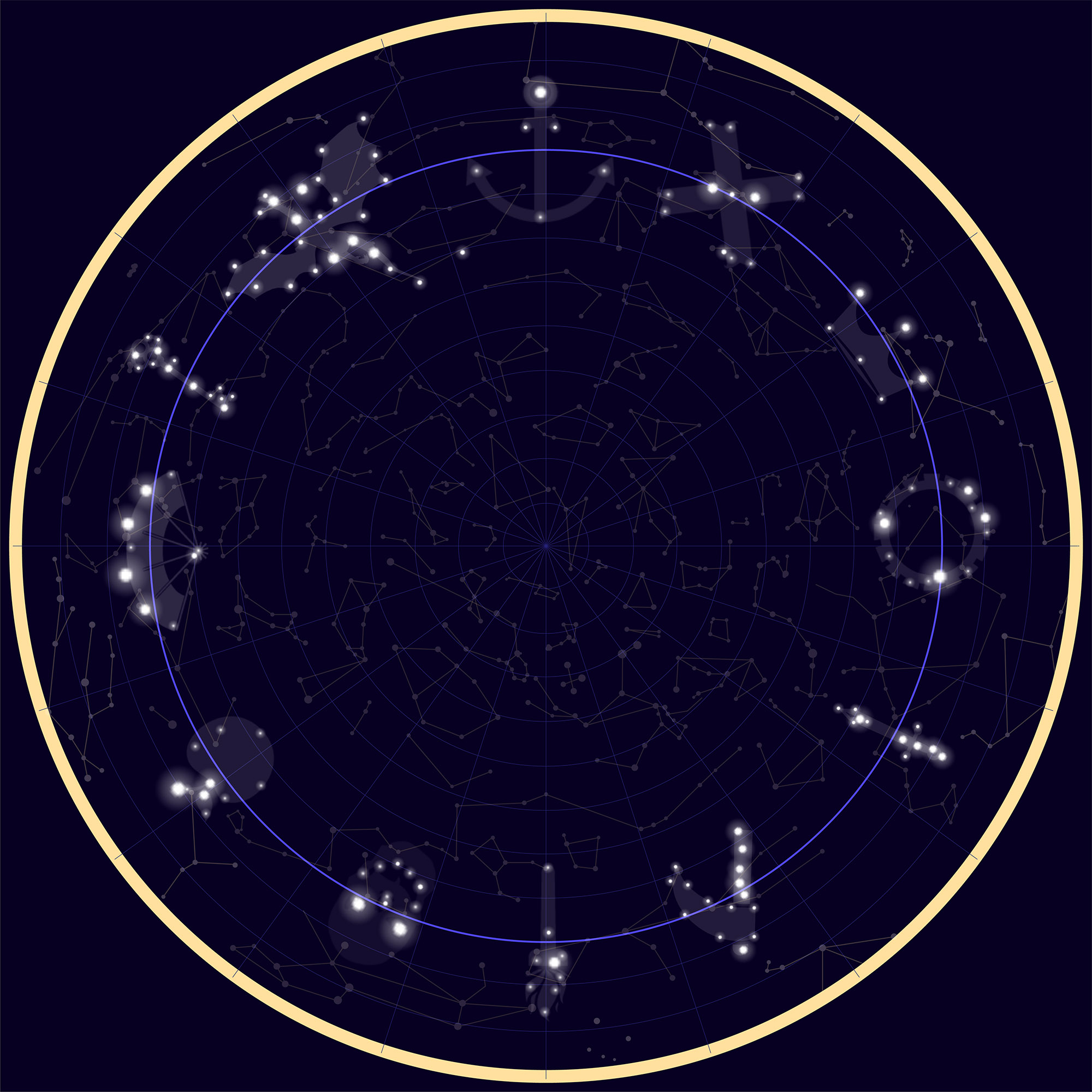
Like everything else, there are different interpretations of signs and of the stars. The Common interpretation has four distinct sectors and each is divided into 3 main sections --Element, Class, and Caste. The main constellations fall in the following pattern though.
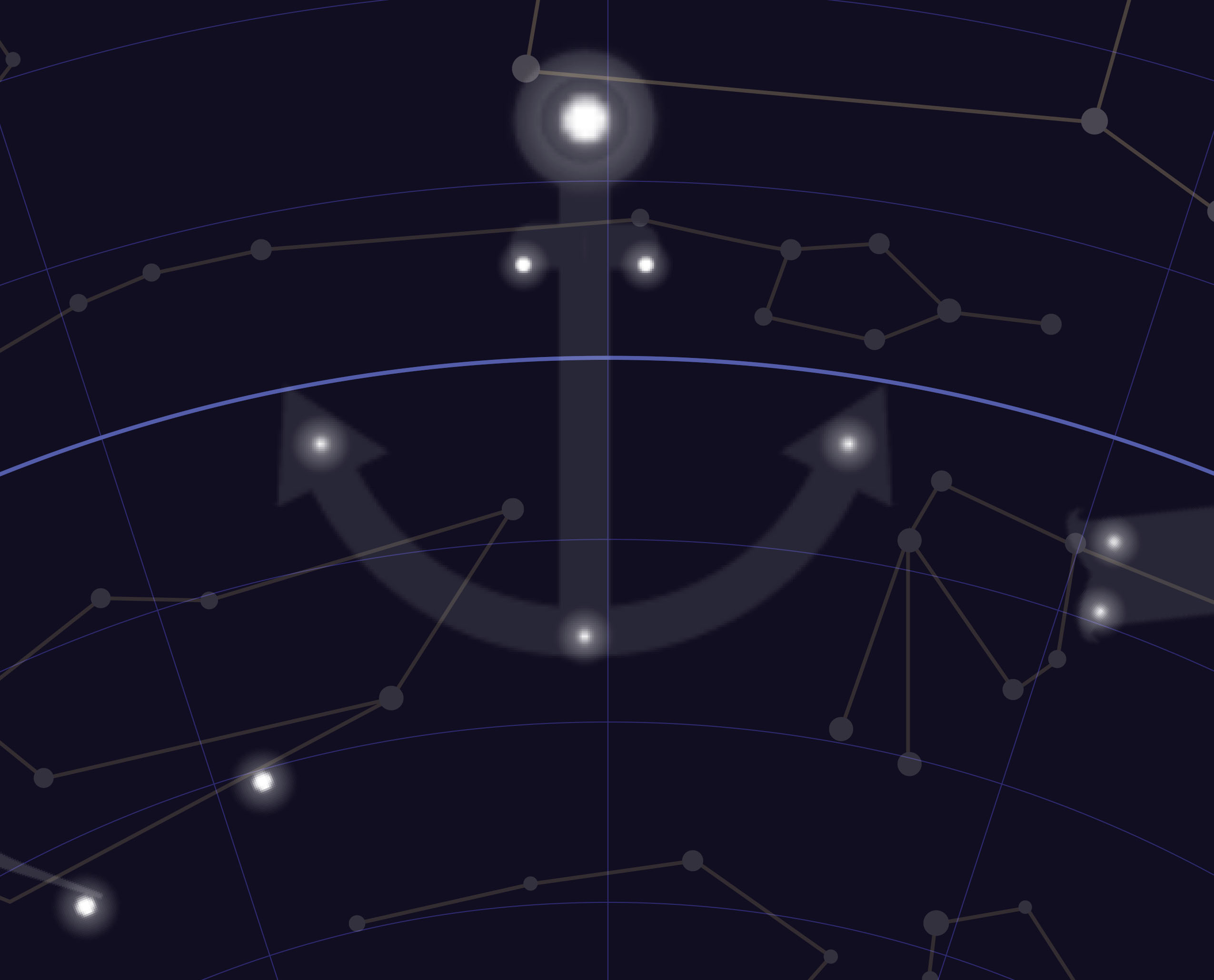
01 | Water - Teardrop
The beginning of the year, beginning of Winter, and a very important date in all cultures. The month of Frostyulí signifies water and the constellation attached is the Teardrop Constellation, even though most modern cultures actually use The Anchor as the symbol but it is one that has a lot more history than most others since it is so ubiquitous and essential for most societies. The first star sign has one major star. It resembled a teardrop to the early societies and many see it as an anchor. It ties to water and is an element constellation.
Frostmonth
The month of the Water
| Moonsestaí | Towerstaí | Winestaí | Thunderstaí | Firestaí | Swordestaí | Saintestaí |
|---|---|---|---|---|---|---|
| 1 | 2 | 3 | 4 | 5 | 6 | 7 |
| 8 | 9 | 10 | 11 | 12 | 13 | 14 |
| 15 | 16 | 17 | 18 | 19 | 20 | 21 |
| 22 | 23 | 24 | 25 | 26 | 27 | 28 |
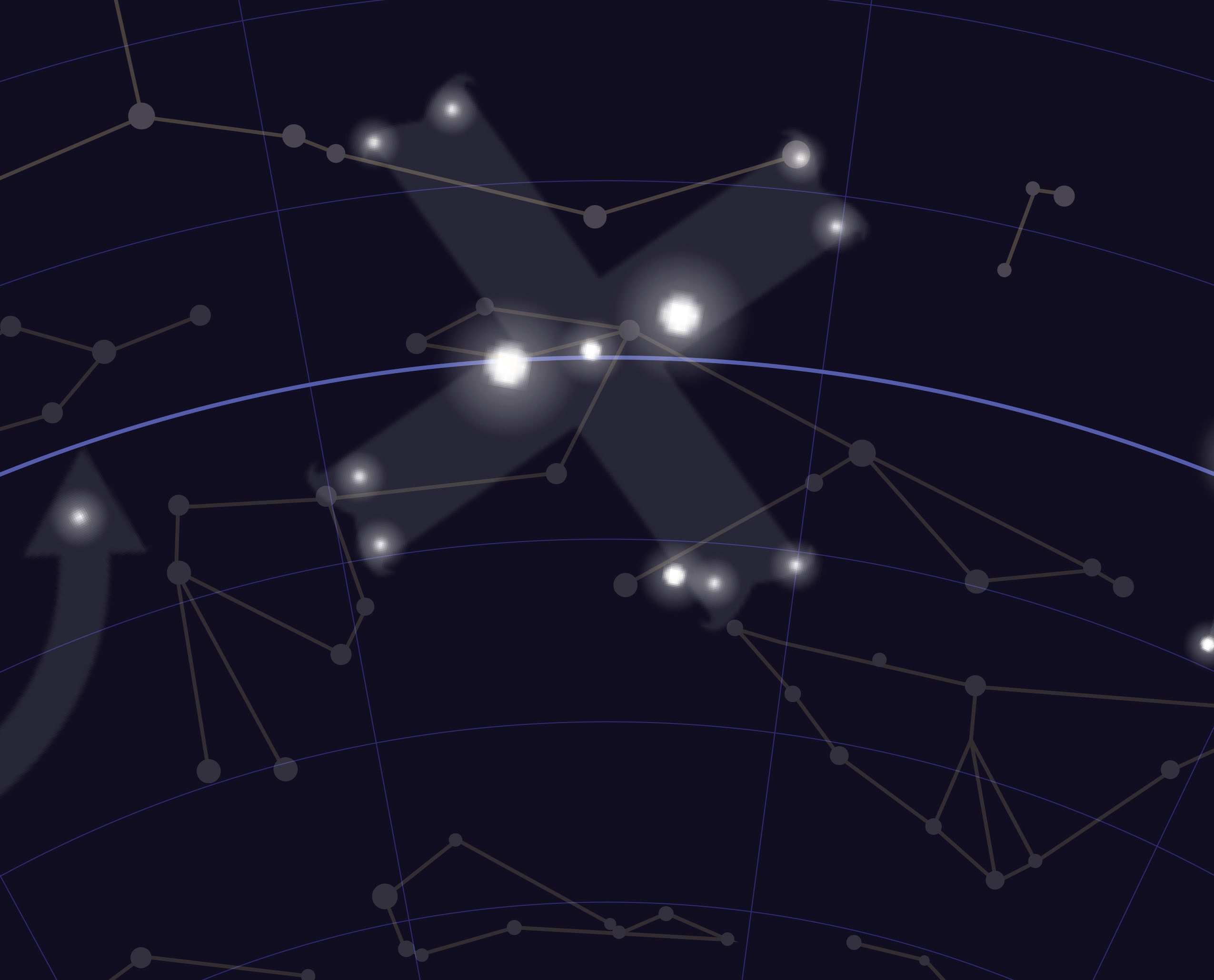
02 | Healer - The Cross
The second month has two major stars and makes an “X”, a cross that is considered holy among many religions. It ties to the adventurers and society. Winter and Snow marks this month. The month of Snowyulí is the month of the healer and priests which is shown with the X in the sky, The Cross.
Snowmonth
The month of the Healer
| Moonsestaí | Towerstaí | Winestaí | Thunderstaí | Firestaí | Swordestaí | Saintestaí |
|---|---|---|---|---|---|---|
| 1 | 2 | 3 | 4 | 5 | 6 | 7 |
| 8 | 9 | 10 | 11 | 12 | 13 | 14 |
| 15 | 16 | 17 | 18 | 19 | 20 | 21 |
| 22 | 23 | 24 | 25 | 26 | 27 | 28 |
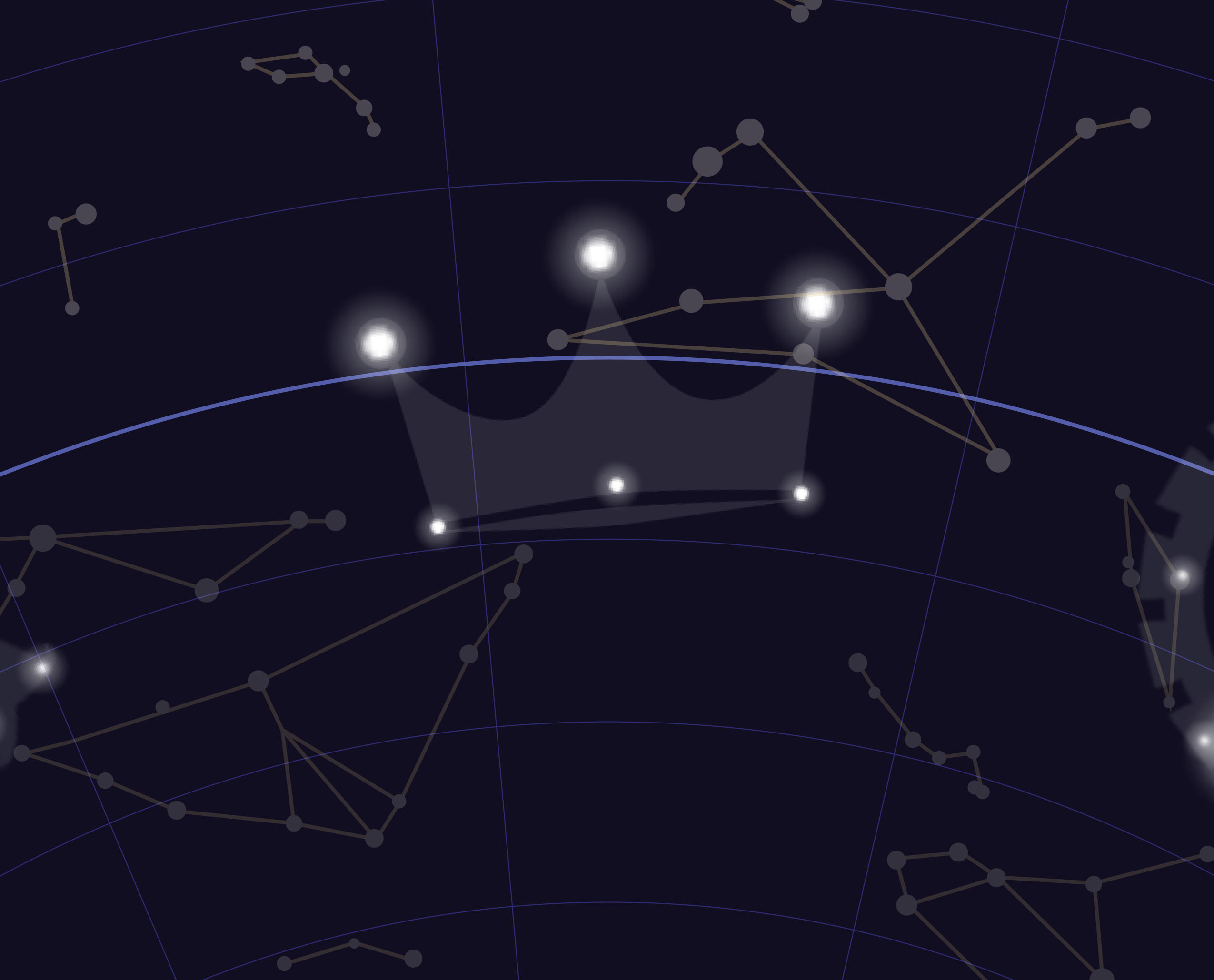
03 | Royalty - Crown
As the snow begins to slow and cold recedes we come to Winterswaneyulí where it is the waning of Winter. It is the time for the Royals as it will soon be time for growing. The Crown is seen bright in the sky and reminds people that there are those who were granted power by birth, and that there are ways for those to gain power by deeds. The third month has three major stars and is a crown in the sky. It is a caste system constellation.
Winterswane
The month of the Royalty
| Moonsestaí | Towerstaí | Winestaí | Thunderstaí | Firestaí | Swordestaí | Saintestaí |
|---|---|---|---|---|---|---|
| 1 | 2 | 3 | 4 | 5 | 6 | 7 |
| 8 | 9 | 10 | 11 | 12 | 13 | 14 |
| 15 | 16 | 17 | 18 | 19 | 20 | 21 |
| 22 | 23 | 24 | 25 | 26 | 27 | 28 |
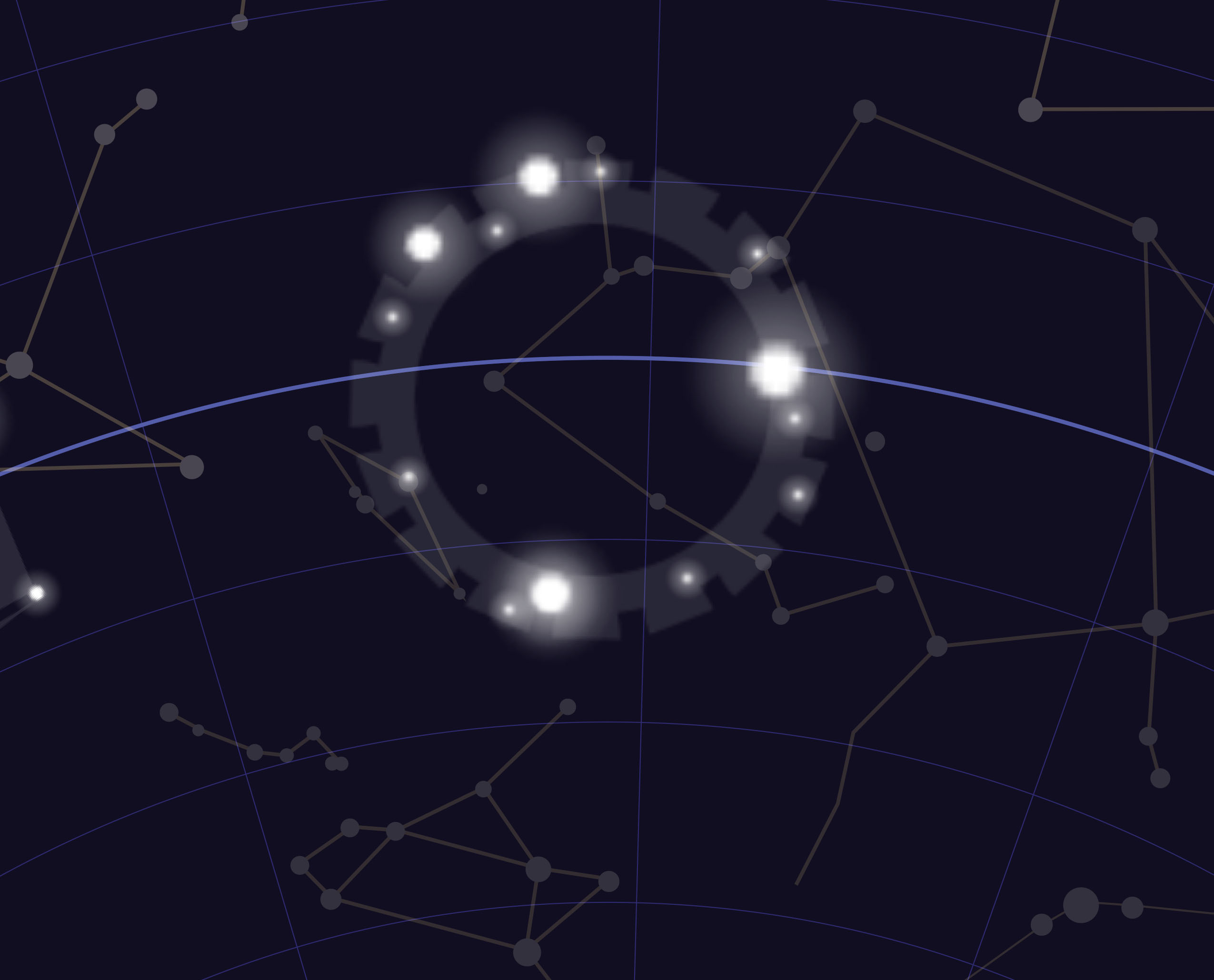
04 | Earth - The Orb
This is the beginning of Spring, and therefore we see @Rainyulí is a time to honor the Earth. It has long been known that the shape of Dierde is a globe and the circle is an important icon in many cultures. The Orb in the sky is the constellation to remind people of the circle of life and rebirth. There are many meteors in this month and it has led to many tales of the orb being a portal that showers down on Dierde. The Orb has four major stars and is an element constellation.
Rainmonth
The month of the Earth
| Moonsestaí | Towerstaí | Winestaí | Thunderstaí | Firestaí | Swordestaí | Saintestaí |
|---|---|---|---|---|---|---|
| 1 | 2 | 3 | 4 | 5 | 6 | 7 |
| 8 | 9 | 10 | 11 | 12 | 13 | 14 |
| 15 | 16 | 17 | 18 | 19 | 20 | 21 |
| 22 | 23 | 24 | 25 | 26 | 27 | 28 |
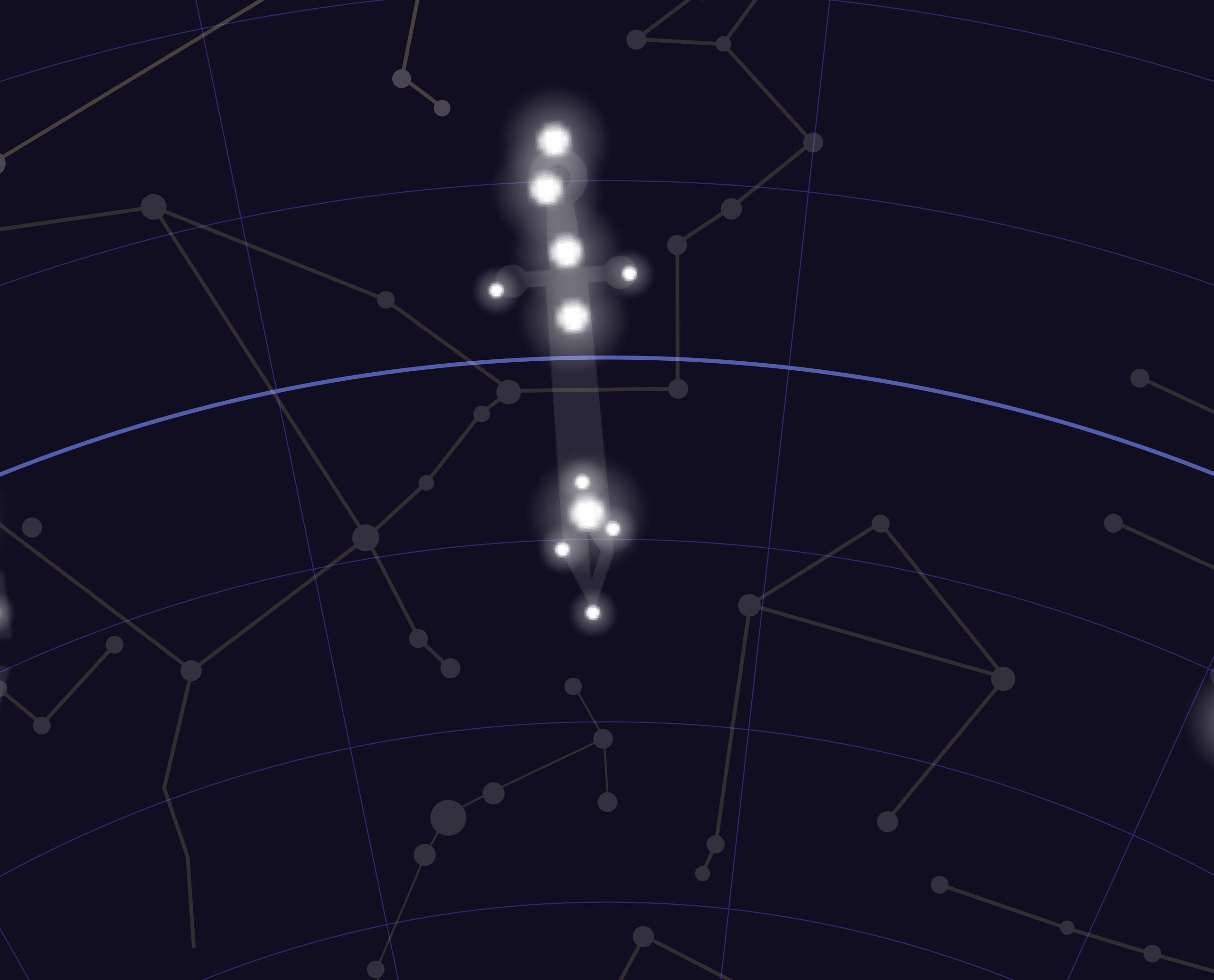
05 | Fighter - The Sword
As we get into the middle of Spring it is the time of the Fighter and the Warriors, of the Adventurers and Hunters. The Constellation of The Sword gives strength to all during the month of Palesunyulí, the Month of the Pale Sun. This sword in the sky has five major stars and is a class constellation.
Palesun
The month of the FIghter
| Moonsestaí | Towerstaí | Winestaí | Thunderstaí | Firestaí | Swordestaí | Saintestaí |
|---|---|---|---|---|---|---|
| 1 | 2 | 3 | 4 | 5 | 6 | 7 |
| 8 | 9 | 10 | 11 | 12 | 13 | 14 |
| 15 | 16 | 17 | 18 | 19 | 20 | 21 |
| 22 | 23 | 24 | 25 | 26 | 27 | 28 |
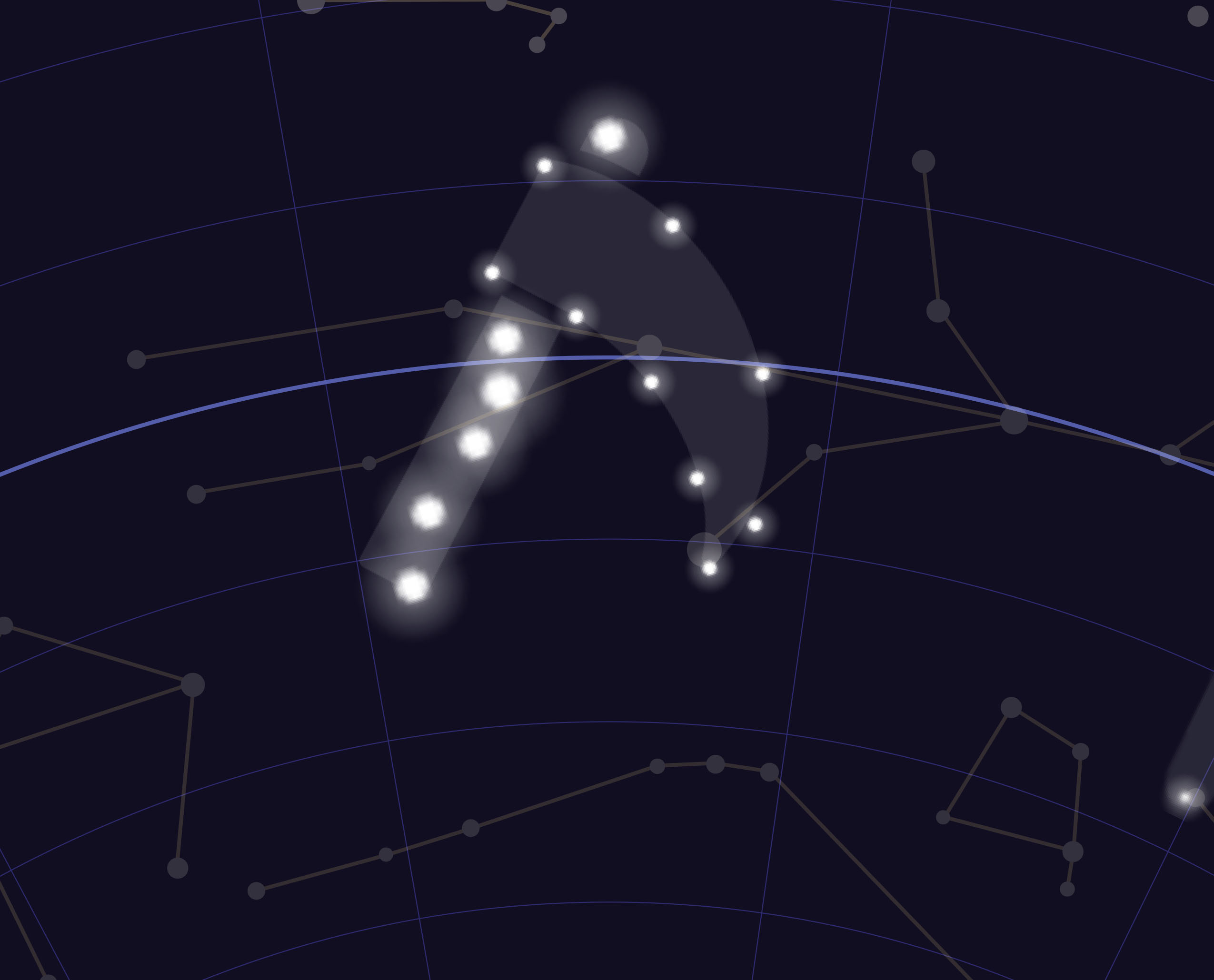
06 | Commoner - The Tool
At the end of Highsunyulí is the Summer Solstice and to that we honor the commoners, and the farmers as we see The Tool rise in the sky. It is a sign that the year is on its way out and growing season will be rough. To the common man, we have the tool and it has six major stars.
Highsun
The month of the Commoner
| Moonsestaí | Towerstaí | Winestaí | Thunderstaí | Firestaí | Swordestaí | Saintestaí |
|---|---|---|---|---|---|---|
| 1 | 2 | 3 | 4 | 5 | 6 | 7 |
| 8 | 9 | 10 | 11 | 12 | 13 | 14 |
| 15 | 16 | 17 | 18 | 19 | 20 | 21 |
| 22 | 23 | 24 | 25 | 26 | 27 | 28 |
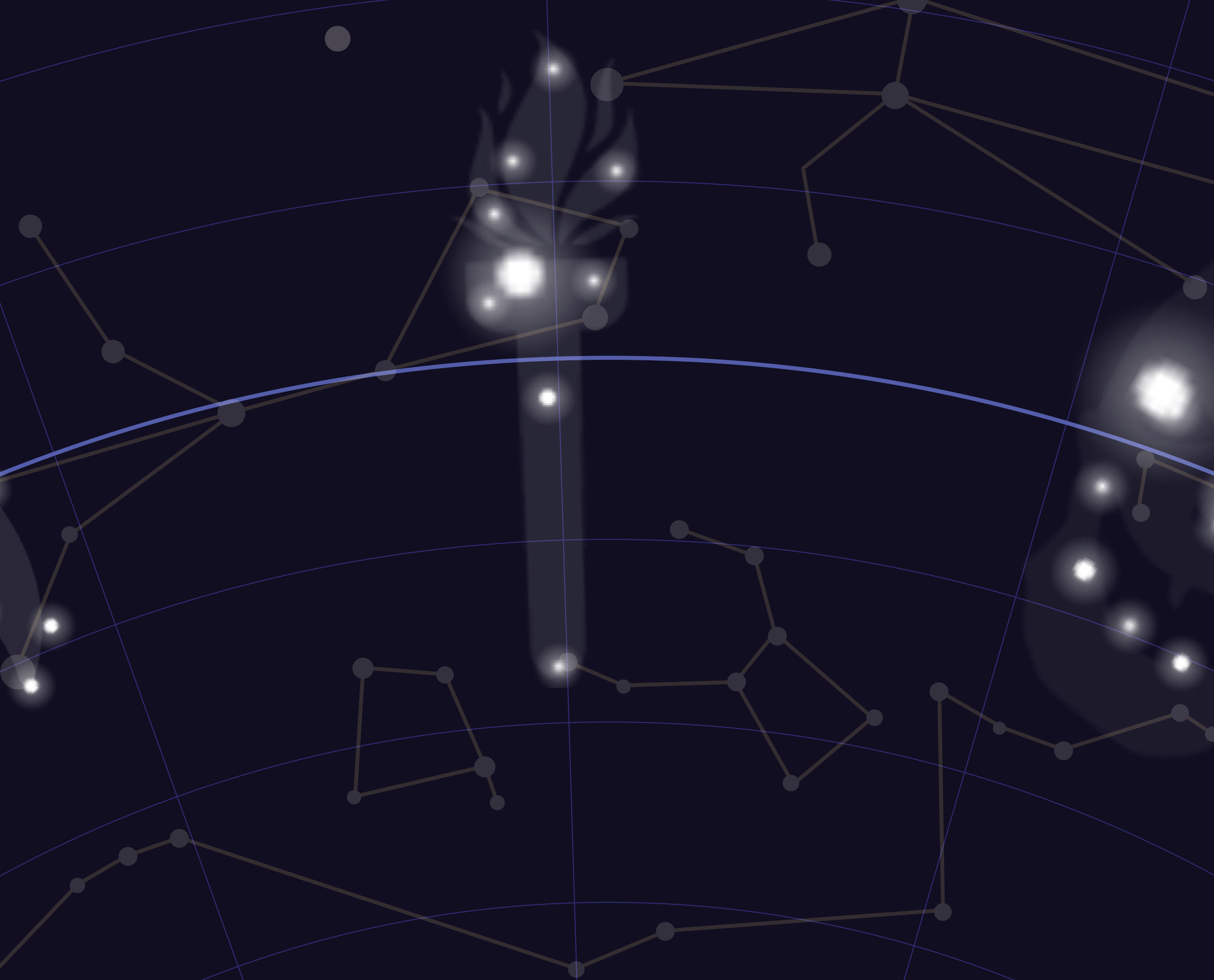
07 | Fire - The Torch
The first month of Summer is Fireyulí and it is the Fire month, hence The Torch. The official solstice is on the first of the month. As the climate turns warm we have a torch to further Lead our way. The pattern of major stars starts again and we see only 1, this goes up one each month.
Firemonth
The month of the Fire
| Moonsestaí | Towerstaí | Winestaí | Thunderstaí | Firestaí | Swordestaí | Saintestaí |
|---|---|---|---|---|---|---|
| 1 | 2 | 3 | 4 | 5 | 6 | 7 |
| 8 | 9 | 10 | 11 | 12 | 13 | 14 |
| 15 | 16 | 17 | 18 | 19 | 20 | 21 |
| 22 | 23 | 24 | 25 | 26 | 27 | 28 |
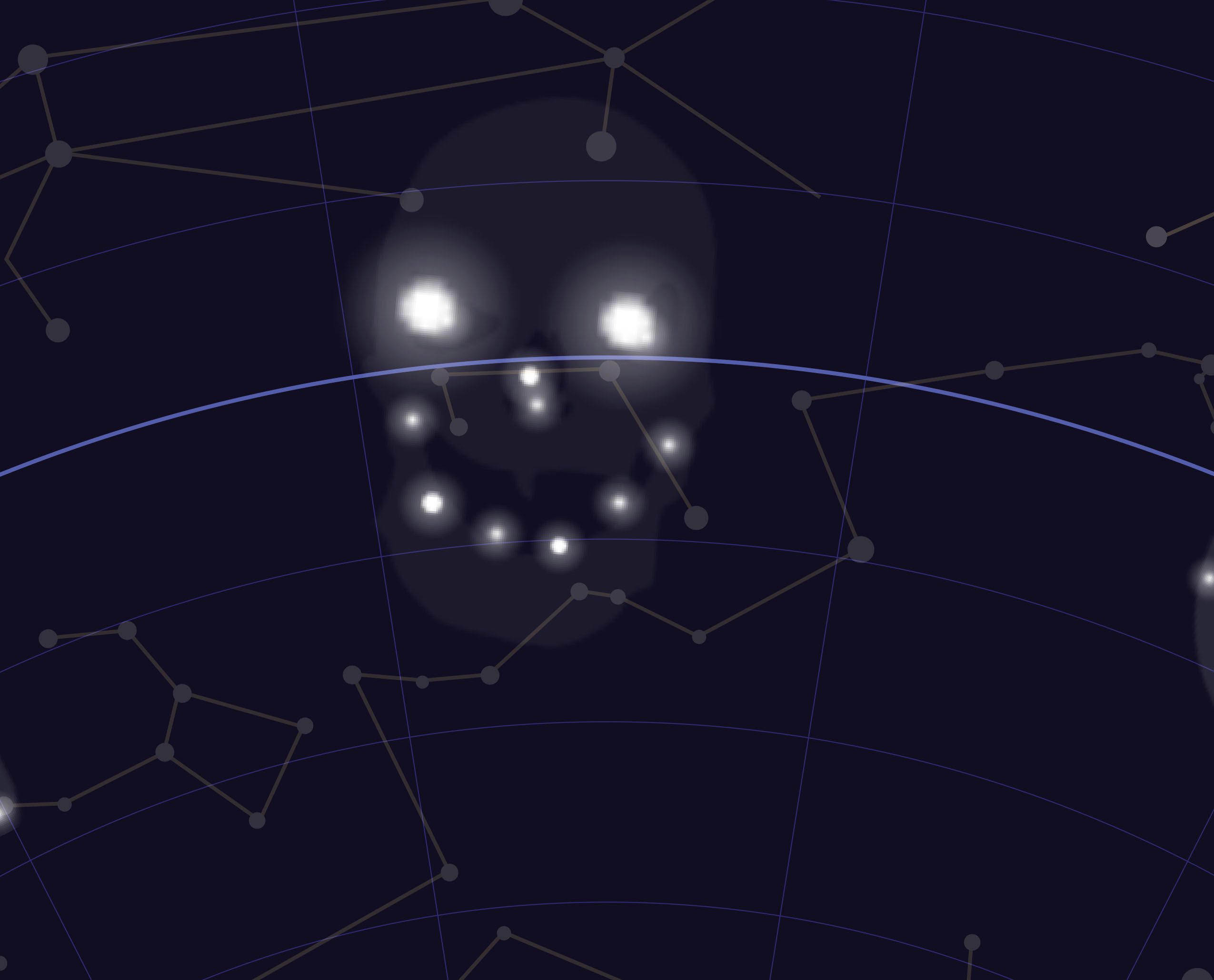
08 | Mage - The Skull
Those who practice magic bend the rules of death and so they see a skull in the sky. The middle of summer brings forth The Skull in the sky. It was the magic-users, the mages, those who could bend the elements which helped many survive some of the worst summers especially in some of the most hottest of climates. The Elemental Plane of Fire is closer during these times.
Fireswane
The month of the Mage
| Moonsestaí | Towerstaí | Winestaí | Thunderstaí | Firestaí | Swordestaí | Saintestaí |
|---|---|---|---|---|---|---|
| 1 | 2 | 3 | 4 | 5 | 6 | 7 |
| 8 | 9 | 10 | 11 | 12 | 13 | 14 |
| 15 | 16 | 17 | 18 | 19 | 20 | 21 |
| 22 | 23 | 24 | 25 | 26 | 27 | 28 |
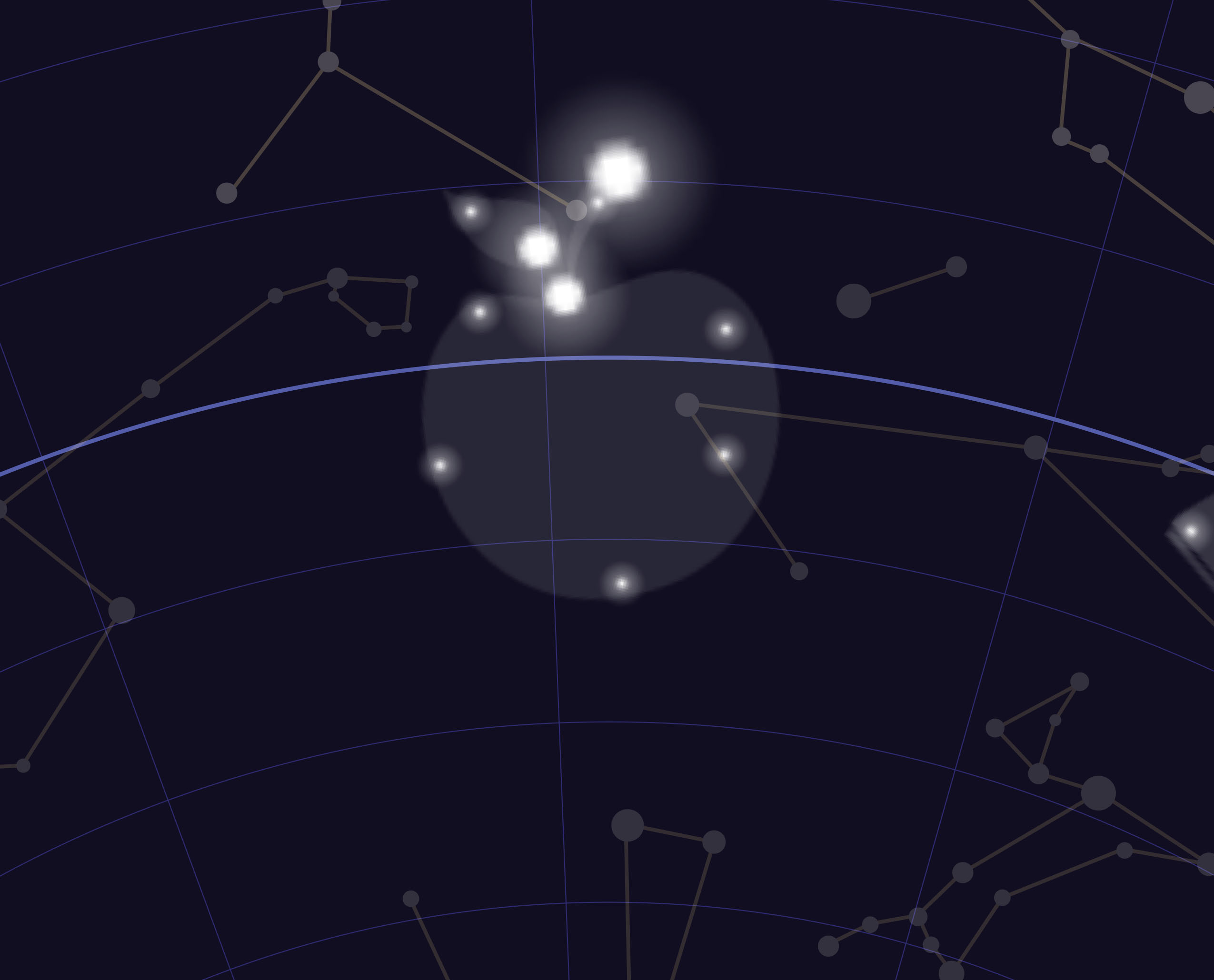
09 | Poor - The Fruit
Access to fruits, not stolen or foraged, is a rare treat for the poor. Almost as a cruel joke the constellation for the poor is a fruit, which is interesting when one looks at some myths and how it was fruits that corrupted some men. The final month of summer is the month of the poor and one where some cultures have tried to help the poorest of their communities especially as the year is starting to get cooler. It is because the days are getting shorter that it is referred to as Lowsunyulí.
Lowsun
The month of the Poor
| Moonsestaí | Towerstaí | Winestaí | Thunderstaí | Firestaí | Swordestaí | Saintestaí |
|---|---|---|---|---|---|---|
| 1 | 2 | 3 | 4 | 5 | 6 | 7 |
| 8 | 9 | 10 | 11 | 12 | 13 | 14 |
| 15 | 16 | 17 | 18 | 19 | 20 | 21 |
| 22 | 23 | 24 | 25 | 26 | 27 | 28 |
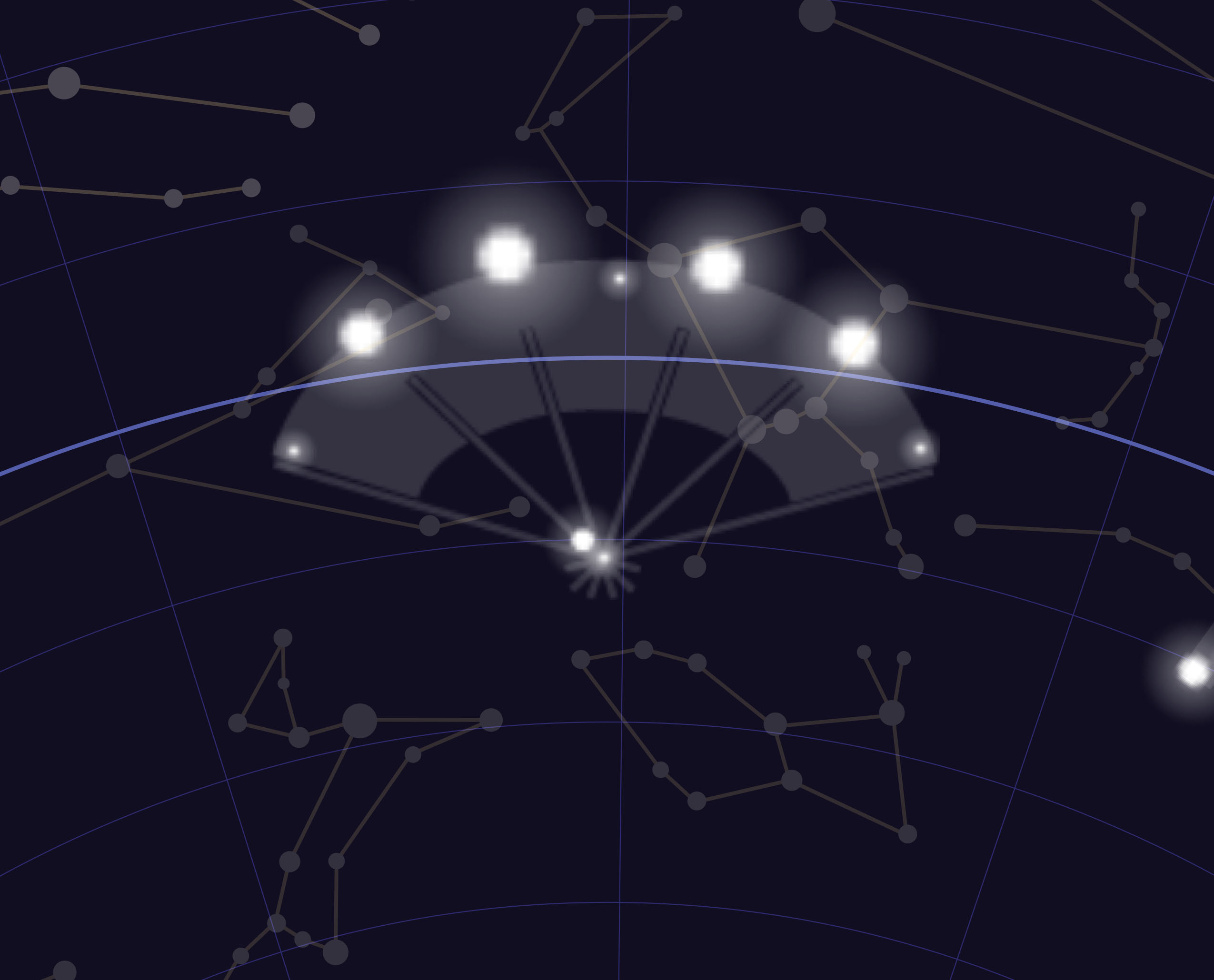
10 | Air - The Fan
Redfallyulí is the beginning of Autumn and the winds begin to pick up taking all the leaves off the trees. It is very telling that the symbol is a fan, man making wind for their own purposes. In fact -- most of the constellations are creations of men, but these are the more modern of "common" symbols.
Redfall
The month of the Air
| Moonsestaí | Towerstaí | Winestaí | Thunderstaí | Firestaí | Swordestaí | Saintestaí |
|---|---|---|---|---|---|---|
| 1 | 2 | 3 | 4 | 5 | 6 | 7 |
| 8 | 9 | 10 | 11 | 12 | 13 | 14 |
| 15 | 16 | 17 | 18 | 19 | 20 | 21 |
| 22 | 23 | 24 | 25 | 26 | 27 | 28 |
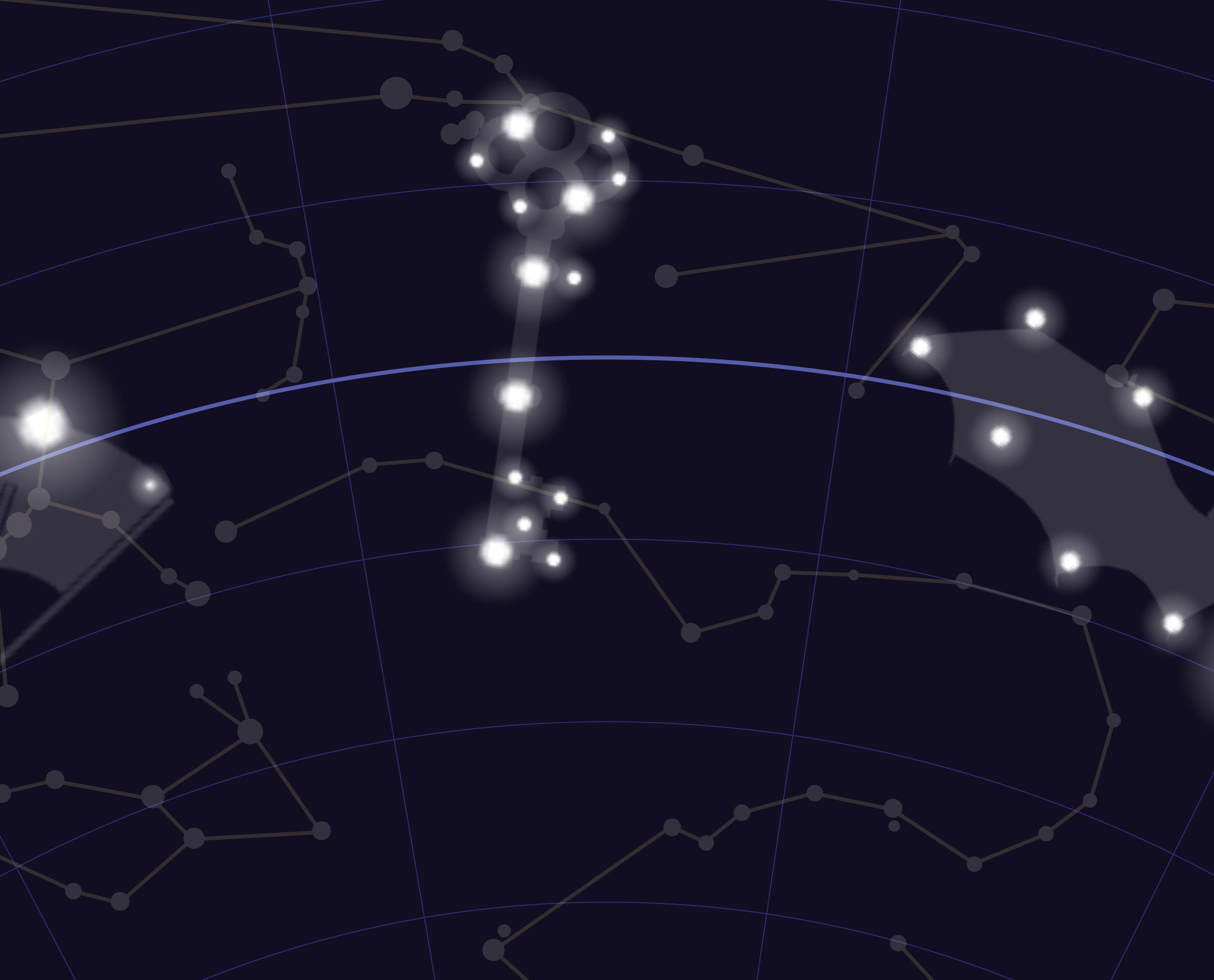
11 | Rogue - The Key
Now the middle of Autumn, and the month Leafallyulí. The time to ensure one is prepared for the cold long nights -- and to be aware of rogues. The Key is ironically the symbol for the rogue as they can unlock anything.
Leafall
The month of the Rogue
| Moonsestaí | Towerstaí | Winestaí | Thunderstaí | Firestaí | Swordestaí | Saintestaí |
|---|---|---|---|---|---|---|
| 1 | 2 | 3 | 4 | 5 | 6 | 7 |
| 8 | 9 | 10 | 11 | 12 | 13 | 14 |
| 15 | 16 | 17 | 18 | 19 | 20 | 21 |
| 22 | 23 | 24 | 25 | 26 | 27 | 28 |
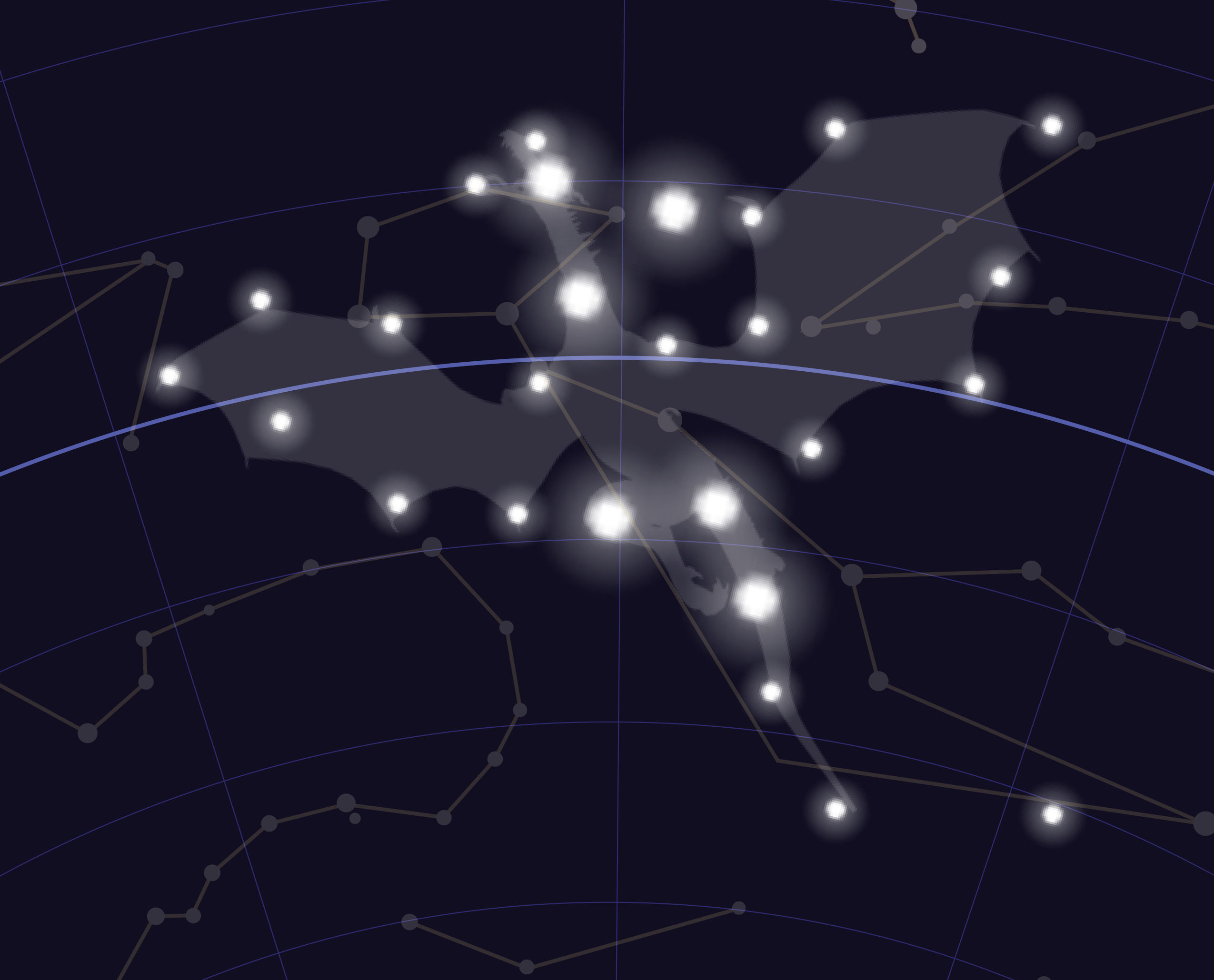
12 | The Dragon
As Fellnightyulí is the end of the year, the end of the cycle, as is the Dragon the end of life. The dragon is so mighty that it is considered a class above all. There are so many myths and legends about why the dragon is given this prominence.
Fellnight
The month of the Dragon
| Moonsestaí | Towerstaí | Winestaí | Thunderstaí | Firestaí | Swordestaí | Saintestaí |
|---|---|---|---|---|---|---|
| 1 | 2 | 3 | 4 | 5 | 6 | 7 |
| 8 | 9 | 10 | 11 | 12 | 13 | 14 |
| 15 | 16 | 17 | 18 | 19 | 20 | 21 |
| 22 | 23 | 24 | 25 | 26 | 27 | 28 |
The Moons of Dierde
This is a planet with a long unknown history. What is known is a long history of wars, civilization, monsters, and exploration. This region is a continent rife with opportunities for explorers. North-West is a large continent where the Elves dwell, North-East is the hearty Nordish Vikingr, South-West is the wild and dangerous islands where many pirates reside -- only venturing out from time to time to attack ships for supplies and fame. Further West and South of those island chains live all types of creatures and humanoid-animal types. To the East are the vast nations of Dierde. Past those limits much is unknown, and mostly resides in myth and legend.
Krídzjash. This moon goes through its whole cycle in a week. Starting the week as a full moon, meaning it also starts the year as a full moon, it has long been used to track time. For most cultures, the moons have been used more than the Sun to track time. There are stories of a large Dragon or many dragons on or in this moon. It is often given male attributes, especially since many hunter/gathering type societies based their hunts on the week. In some select circles, it is referred to as “D’ermond”, or a similar name. It is the moon of the hunter, the warrior, the fighter, and anyone who must use violence or weapons to attack, defend, or hunt. It is also the moon of neutrality.
Yulíjash. This is often given a female attribute, due to reproductive reasons. It is thought of as a moon with healing and rebirth properties. She has long been used to track the months and is the moon for farmers, healers, priests, and those in the forests. She starts as a full moon and as the month goes on there is the middle day of the month where both she and her brother are absent from the sky. Some have seen various disturbances, changes, and other occurrences more frequently on such midpoint days. By those who have heard of D’ermond they call this moon “D’iestern”. She is the moon of Law.
Rustulítsaíjash. This moon does not follow the Calendar and is off by a day from the year. In the first year of the King’s Calendar, it was a full moon on the first day, which was year 0. It was this event that helped them choose it as the year of the King’s Calendar. This is the moon of wizards, sorcerers, demons, the dark, for chaos. D’iethloki it is called by some. This moon is notable for many reasons and is carefully studied by many occultic scholars.
Calendar
Months
Using Yulîjash one can track the 12 months that make up most calendars, and like most things they go by many names. Using Common though we can see the traditional monikers. It is believed that each month favors a caste, an adventurer’s profession, or an element -- this is also part of the horoscopes.
Kings Calendar. The current Calendar is using the Kings Calendar based on what the Great King put down 2,020 years ago as the final Calendar. Since then many regions have left the “kingdom”, but they have kept the Calendar. Not much is different with the KC Calendar and many other previous calendars that use the day/night cycle.
The Moons of Dierde. There are three moons that circle Diedre. One that follows the cycle of the year (almost) and that one is the dimmest. There is then the one that cycles following the months, and finally, the one that cycles the week. Many myths, legends, and religions follow these moons.
The Calendar and Magic. Magic is a strange element on Dierde, since it comes from many different sources. A lot of the magic is a natural part of the universe since the original creator’s essence still exists all around, but with the Dragon God in the Sun, a Dragon God in the planet and moons, and of course Gïa in the planet as well that is a lot of powerful magic floating around. Then all of the many gods who have come and gone from this universe, there is a lot of powerful magic that gets affected by the seasons and the placement of the planets and moon.
Time
Many different cultures have used and are currently using various means to tell time -- just as their calendars may differ. The Common method of time is to divide the day into 24 hours, similar to what we do. Simple clocks and other devices are used in most places.
Daytime. Many inhabitants tend to divide the day into ten segments. Common names for these divisions of the day are: - Dawn: The time around sunrise.
- Morning: The time between sunrise and Highsun.
- Highsun: When the sun was directly overhead; also called “noon” or “twelve bells”.
- Afternoon: The time after noon.
- Dusk: The time before sunset.
- Sunset: The time around sunset.
- Evening: The time after sunset.
- Midnight: The time roughly 12 hours after noon; also called “twelve bells”.
- Moondark: The darkest part of night; also called “night’s heart”.
- Night’s end: The time before sunrise. Other divisions in common use include: - Godswake: The time before dawn.
- Harbright: From dawn to Highsun.
- Elsun: The latter hours of morning.
- Thulsun: The early hours of afternoon.
- Tharsun: The latter hours of afternoon.
- Eventide: Same as evening, twilight, or gloaming.
- Nightfall: Same as dusk.
- Night: The hours of darkness.
- Deepnight: Same as midnight. None of these divisions were precise. Different folk’s usages might overlap with others. In general, however, these slots of time ranged between one and four hours.
Bells. In larger cities, bells were sometimes used to mark the hours. The churches of Gond and Lathander were also particularly interested in accurate timekeeping. In such cases, hours were numbered 1 through 12 twice, with 12 being both Highsun and midnight. Bells were commonly used on spelljammers as well.
Magically Auspicious Times. When practicing the art of magic, the position of the sun could have noticeable effects on the efficacy of certain spell components. These times of day and the item affected:
Foredawn: The quarter-hour before 5 am to the quarter-hour after 5 am. Magical immersions using Turquoise were best used at this time.
Mornbright: The quarter-hour before 8 am to the quarter-hour after 8 am. Any spells or magical writings using amethysts were more likely to succeed during this interval.
Midmorn: The quarter-hour before 10 am to the quarter-hour after 10 am. Magical workings using sapphires were best done during this period.
High morn: The quarter-hour before 11 am to the quarter-hour after 11 am. When enchanting a weapon adorned with garnets, starting the procedure during this interval generally produced the most favorable results.
Highsun: “Noon”, as above. Magical workings involving Diamond dust produced an increase in effectiveness when the sun was directly overhead.
Waterclock: The quarter-hour before 2 pm to the quarter-hour after 2 pm. Casting spells or other magical processes using emeralds as a component had an increased chance of success if performed at this time.
Time of summer sunset: About 5 o’clock in the afternoon. Enchantments involving powdered Ruby were most effective when performed at this time of day. Twilight: Around 6 o’clock in the evening. Steps of an Enchantment process using opals had the greatest chance for success at this time.
Candleglass time: The quarter-hour before 9 pm to the quarter-hour after 9 pm. Powdered Jade was best added to magical immersions during this interval.
NEED TO REDO, but the basis from wiki:
will also need to split up main magic types
Magic
Magic was the ability possessed by some individuals to manipulate the ambient energies of the world to produce desired results, or so most thought. In the Realms, arcane magic was commonly referred to as "the Art", while divine magic was referred to as "the Power". In addition to granting spellcasting abilities, magic was an influential force in the Realms. It served as the source of energy for enchanted items, allowed Faerûnians to travel across Toril and through the extra-planar cosmology and even shaped the physical landscape of the planet. The basic essence of magic was known as raw magic.
The goddess Mystra controlled the Weave which was the main medium for channeling the arcane energies of Toril. The goddess Shar controlled the Shadow Weave, a dark and distorted imitation of the Weave which flowed in-between its empty space. Divine magic was drawn from specific deities.
“ It was an entreaty she had made so many nights before. And would again, for there was nothing so glorious as when the Art stirred in her and surged through her, and her mind and eyes flickered blue-white and alive with power... ” — Jhessail Silvertree
History
Creation of the Weave
Lord Ao created the universe. At first it was nothing but energy, with neither light nor dark, heat nor cold. Eventually the energy created two deities – Selûne and Shar. Together they created heavens and Chauntea, the embodiment of the world of Toril. Chauntea begged for light and warmth so that she could create life on the new world, Selûne supported this endeavor and Shar opposed it vehemently.
The subsequent war between the sisters created new deities—war, murder, and destruction among them. When Selûne lit one of the nearby heavenly bodies on fire to provide the light and warmth needed for Chauntea, Shar became enraged and tried to extinguish light everywhere. Selûne tore the energy from her own body and flung it at Shar, where it joined with Shar's energy and passed from both of them, thus creating the goddess of magic, Mystryl. The birth of Mystryl not only brought a truce to Selûne and Shar, but created the Weave.
Karsus's Folly
“ Whole magic? Since when has magic been less than whole? ” — Malik el Sami.
When the phaerimm, a race dwelling under the surface of the earth, began to cast spells draining the empire of Netheril of its magic, a powerful mage named Karsus created a link to Mystryl in an attempt to steal her power, become a god, and save his empire. This caused a great rift in the Weave, and Mystryl was so weakened that she sacrificed herself to save the world. Since she was the Weave, magic immediately ceased all across Toril. A new goddess of magic named Mystra was born, and she was able to repair the Weave in a way that such powerful spells could never be used against it again.
While the shared belief among most scholars was that the new Mystra altered the Weave to prevent another similar catastrophe, others offered another interpretation. They believed this event caused the Weave to be permanently split, granting some practitioners to a different form of arcane magic from a distinctly separate source. Magic as it existed previously was later referred to as 'whole magic' by the Netherese who held to this theory.
Avatar crisis
In 1358 DR, the gods Bane and Myrkul attempted to steal the Tablets of Fate, artifacts that recorded the names and duties of all of deities, from Lord Ao. In retribution, the Overgod declared that every god be forced into mortal bodies upon Toril. As a result, divine magic ceased to function unless the caster was within one mile of the avatar of their patron deity.
During the crisis, the avatar of Mystra was destroyed by Helm, which caused the force of the Weave to be released into the land of Toril itself. This resulted in the appearance of areas of wild magic and dead magic across the Realms. The goddess of magic was eventually reincarnated in the body of her chosen, a wizard named Midnight. After the tablets were returned to Ao, he destroyed them, thus beginning a period known as the Era of Upheaval.
Spellplague
On Tarsakh 29, the Year of Blue Fire, 1385 DR, a storm of massive blue flames erupted over southwest Faerûn and rapidly grew in size. The changes to Toril were immense, the planet exchanged continents with its twin Abeir, resulting in the Plaguewrought Lands over what was the nation of Halruaa as well as the appearance of earthmotes within the sky. Some creatures and people became warped and disfigured by the storm. They came to be known as plaguechanged, some of whom gained arcane powers through spellscars.
However, these effects paled in comparison to the overall destruction across the other planes. The homes of the gods, previously known as the World Tree were set adrift across the Astral Sea. Mystra herself was assassinated by the god Cyric, via the machinations of Shar. Seemingly as a result, the bonds of the Weave were destroyed and magic ceased to function as expected. This change in magic, along with the effects of the storm on Toril, would rage for 10 years, in a period that would come to be known as the Wailing Years.
Although many believed the collapse of the Weave to have been caused by Mystra's death, this was not the exact truth. After Mystra's death, Shar believed that by destroying Mystra's divine realm of Dweomerheart, via power from the Far Realm, she could gain control of the Weave. Instead, the Dark Goddess destroyed the bonds of the Weave and released all the magic of the Realms. Cyric's insanity had manifest physically, further corrupted by the plane of madness, and entwined into the magic released by the unraveling of the Weave.
Present Age
The Era of Upheaval continued for almost a century, until Lord Ao decided to rewrite the Tablets of Fate, and begin the Second Sundering. Many of the changes brought on by the Spellplague were reversed, and perhaps most notably, Elminster reattained the rank as Mystra's Chosen and returned to the Goddess of Magic. Over time this brought back her power, and by the year 1479 DR, her divinity was restored. Both She and the Weave returned to their roles before the Era of Upheaval. As it was centuries before, Mystra was the Weave.
Divine magic
Magic that originated from a spell-granting deity, usually through prayer, was considered divine in nature and called the Power by the common folk. Clerics, druids, paladins, rangers, and others all derived their spells and spell-like-abilities from their deity. A practitioner of the Power had no affinity with the Art, as their spells were planted in their minds directly by their patron deity, and they did not tap the Weave. Casting divine spells was more like an exclamation of faith that brought about a sensation appropriate to the patron deity to whom the faith was devoted.
Spheres and domains
As each pantheon had spiritual reign over certain regions or populations on the world of Toril, so too did each deity have dominion over specific spheres of influence, or as they came to be known after the Avatar Crisis, as domains (part of their overall portfolio). The spells of clerics, paladins and other divine casters came from these domains or spheres.
Prior to the Time of Troubles a deity's divine realm was referred to as their domain.
Subtypes
- Faith magic: A small subcategory of divine spells could make use of the "devotional energy" that came from many worshipers congregated in a specific location dedicated or sacred to a deity. Once a focus was created to harness this energy, it could be used for protecting people, improving harvests, controlling weather, aiding communication between diverse peoples, and improving public health.
- Candle magic: The mystics of Faerûn took herbalism to greater heights and could create candles that had the same or similar effects as some spells.
Arcane magic
Any magic that didn't originate from a deity was defined as arcane magic. The use of arcane magic was referred to in day-to-day speech as the Art, and a wide variety of people were able to practice it, to a small or larger extent, though the way in which they accessed the Weave differed dramatically.
Most wizards spent long years researching their art, gathering spells to their personal book, and each day they could only memorize a small fraction of these. The memory of the spell is wiped from his or her mind as it was cast. The wizard had to re-study the spell before he or she can cast it again, unless more than one casting of the spell in question was prepared. This changed at the conclusion of the Spellplague when the goddess Mystra was reborn, and the casting of magic changed once again with her rebirth. Spells only require preparation once per day and are not forgotten upon casting, meaning that as long as the wizard has spell slots, the spell can be cast repeatedly.
Sorcerers, also known as innatoths, for their innate mastery of the Weave, were not required to research spells. They tapped into the Weave in a more direct manner, but because of this, the selection of spells available to a sorcerer was more limited than those available to a wizard.
Warlocks gained access to their arcane power by forging pacts with supernatural beings of the Realms, such as powerful aberrations from the depths of the Underdark, or even the ancient fey of Evermeet. Even bards of the Realms had access to the Weave to use certain magical abilities. Some, such as assassins and swordmages, could blend their arcane gifts with martial prowess.
Schools Schools of magic, also known as schools of philosophy, were categories into which spells were organized by function. Spells were created by wizards with these schools in mind.
Wizards chose to specialize in spells from a certain school; they focused more effort into these spells than any other, but at the expense of all spells from one or more other schools. These schools of magic had been in existence for ages and their origins were mostly unknown. They were not yet used by the arcanists of Netheril, however, who only distinguished three schools or Fields of Mythal: Inventive, mentalism and variation.
The major schools of magic were:
Schools of Magic PHB 2E Revised The opposing schools of magic and their traditional symbols.
Abjuration : A collection of spells of a protective nature. Transmutation : Formerly also known as alteration, these spells could transform the nature of the physical world or objects in it. Conjuration : This group of spells created or transported people, energy or objects. Divination : This school had fewer spells than others, but allowed the caster to see things that they normally would not be able to. Enchantment : An area of arcane study that specialized in manipulating the minds of others. Evocation/Invocation : Although spells of this school seemingly created effects out of nothing, they drew raw power from out of the Weave. Illusion : This school was almost a secret society prior to the Time of Troubles, even possessing their own language. Their spells were those that fooled the senses. Necromancy : A dichotomous school that wielded positive energy into healing spells, and negative energy to affect both the dead and undead. Universal : A small number of spells were not associated with any school but universally available, even to specialists. Other schools The rarely studied schools of chronomancy and wild magic were special cases, as they contained many spells that can be used only by those specializing in them. The latter was even a school of magic in the discipline of thaumaturgy.
Chronomancy : Spells that used and manipulated time and included time travel. Some schools of magic were unique to certain cultures. These spellcasters of Maztica each used their own selection of exclusive spells, which was somewhat of a cross between a school of magic and a priestly sphere.
Hishna : Talonmagic shaped the dangerous aspects of nature with the help of talismans to dominate and help in warfare. Pluma : Feathermagic used the benevolent aspects of nature, in what were often bird-related spells, for the benefit of communities. Similarly, the mages of Zakhara distributed their spells into the elemental provinces of wind, sand, flame, and sea, as well as the universal province, open to all wizards.
Alternative Systems of Magic Some casters organized arcane spells not into the traditional schools of philosophy, but instead, based on what they produced. These were known as schools of effect:
Dimensional: Mages known as dimensionalists employed space, time and the planes for their purposes. Elemental: Spellcasters that worked in this school of effect, known as elementalists, specialized in spells of one of the four elemental schools of air, earth, fire, and water. Force: This school concentrated on constructs of and manipulation of energy into cohesive, tangible effects. A specialist in this school was known as a "force mage". Incantation: This magic specialized in spells that affected magic itself. A practitioner of this school was known as Incantatrix. Shadow: Practitioners of this school, which was also known as talfirian magic, used twilight, darkness and forces from the Plane of Shadow. Followers of path magic did not recognize schools of magic, but specialized in paths of power, much smaller selections of spells of increasing power unified by a single topic.
Thaumaturgy The schools of thaumaturgy not only put spells into categories different from the traditional schools, but used alternative ways to access magical energy:
Artifice: This school taught the use of substances and magical items to channel magic. Geometry: To channel magic, this school used diagrams, symbols and complex geometric patterns. Song: Any spell that required singing or command of the voice belonged to this school of thaumaturgy. Wild magic: A school whose spells tapped into raw magic, with powerful but often chaotic results. Raw magic Raw magic was a powerful force, locked within all matter, that was difficult and dangerous for even the most patient of mortals to wield.
Mana: Also referred as "spell power", this form of raw magic appeared as a golden light and was gathered through meditation. Spellfire: This rare, supernatural-arcane ability was refined and controlled raw magic, drawing the living energy from diverse sources throughout the world. This manifested in a variety of ways, such as destructive silver bolts, healing radiance of silver light or white-hot jet of consuming energy. It was believed to uniquely manifest in a single person once per generation, granting the wielder magnificent feats capable of great magical transference or absolute mass destruction. Wild magic: Areas where the weave had been badly damaged during the Time of Troubles, which produced wild magic effects, were scattered sporadically throughout Toril, similarly to dead-magic zones. They caused spells and spell-like abilities cast within their borders to exhibit random complications like spell failure, effects rebounding back to the caster, or random creatures being assigned as a spell's target, among others. Study of these effects inspired the development of a thaumaturgical school of magic. Weird Magic The magic of hags was often described by other creatures as "weird magic", being mistaken as a distinct form that didn't follow the normal rules of magic. In actuality, hags simply called upon the Weave in ways that were different from others.
Weird magic took on a multitude of forms with various means of activation, all of which were strange and unusual to other creatures. Each hag spent her life time developing her weird magic. Because of this individualized nature to weird magic, it was impossible to predict what a hag was capable of. And because hags carefully shepherded their use of weird magic, it was often impossible to duplicate or replace the magic items they created.
High magic Main article: Elven high magic This ancient form of magic, Arselu'Tel'Quess in elven, meaning the Great Art of the People, went far and beyond normal spellcasting, often affecting massive areas and vast populations of their kind. It was an incredibly rare type of magic to learn, required decades of study and research and was only taught to a select few of their kin. A single spell, or ritual, required anywhere from a single to dozens of mages casting a spell over the course of days.
Mythals One of the more widely-known uses of Elven High Magic was the ritual used in the creation of mythals, such as the one that protected the ruined city of Myth Drannor.
Shadow Weave The Shadow Weave was a source of magic, alternate to the Weave, that in a way, occupied its negative space. It was created by the goddess Shar as a response to the birth of Mystra. This source of arcane power was not without its advantages; it was immune to disruptions of the Weave, such as areas of wild magic or dead magic. However, as it was still a source of magic itself, antimagic effects would still nullify any spells cast by those who tapped into the Shadow Weave, such as the Shadow adepts.
Spellcasters accessing the Shadow Weave were bolstered when using spells from the necromancy, illusion and enchantment schools of magic but experienced weakened effects with evocation and transmutation spells. While magic from the Shadow Weave was evocative of shadow magic, they were in fact unrelated.
Psionics Unlike traditional arcane arts that tapped into the Weave, or that which accessed the Shadow Weave, psionics was a manifestation of magic came from the inner life force of their practitioners, known as psions. Also known as the invisible art, psionic abilities appeared in only a select few, but were more common among certain races such as illithids, yuan-ti and even the ghostwise halflings.
The collective psionic powers were broken down into 6 disciplines, analogous to the philosophical schools of arcane magic. Scions were capable of crafting magical items through a process known as empowerment.
Elemental Magic Main article: Elemental magic A form of magic that revolved around the elements. Unlike psionics, arcane magic, and divine magic — which all accessed and manipulated elemental power — in this system of magic, spells were driven by elemental power.
Casting Alena-dubrovina-elminster-spellcasting Elminster Aumar mid-casting a fire-based spell.
Preparation Arcane spellcasters copied all of their known spells into what was an invaluable item to them, their spellbook. These often included personal notes and specifications from the mages, and their own personal mage sigil. Before they slept for the night, or otherwise rested for an extended period, they would prepare certain spells from their book for use for the next day, or at least until their next rest. These books went by other names such as arcanabulae, a workbook used by mages during travel, and grimoires, large, often disproportional anthologies of magic.
Arcane casters from certain wizard guilds could also often access magical reservoirs known as spellpools. These locations allowed casters, who had been granted access, to swap one known spell for another that had been placed within the pool, albeit at the cost of one of their own. The circle magic extensively used by the Red Wizards of Thay and the Witches of Rashemen allowed groups cooperating spellcasters to grant extraordinary powers to a leading wizard.
Divine casters were required to pray to their patron deity for access to the power of their spells. The time of day of these prayers would typically be at dawn, noon, dusk or at midnight, depending on the deity. For example, priests of Ilmater prayed for their spells in the morning, while the clergy of Waukeen prayed just before sundown.
Components The casting of both arcane and divine spells required certain components. Some spells only needed one or two, while others required all three:
Verbal component: Many spells required the caster to speak certain words, or, in the case of a bard, create music, to cast a spell. Being prevented from speaking, such as being gagged or magically silenced, made it impossible for a caster to cast such a spell. A deafened caster could fail when casting a spell, by misspeaking, which caused the spell to be lost. Somatic component: Many spells required the caster to make a motion to cast the spell. If the caster was immobilized or otherwise unable to move their hands or body, the spell could not be cast. Wearing armor or using a shield interfered with the somatic components of arcane spells, creating a risk of spell failure. Some casters, like bards, could cast spells in light armor without this risk. Material components: Casting a spell often requires that the caster sacrifice some sort of material component. While often these were virtually worthless, some spells, such as spells to raise the dead, required material components costing thousands of gold pieces. If a caster is unable to access or use the correct spell component, the spell cannot be cast. As the spell was cast, the material components were destroyed and were not reusable in any way. Magical focus: Alternatively, casting a spell could require that the caster have access to a holy symbol or other special object, to focus on when casting the spell; after which they were not damaged and could be reused. This was required more often in the casting of divine spells. Magic items Main article: Item enchantment The power and energy of both arcane and divine spells could also be imbued into items. Many items shared similar effects to the point where they were named, such as blueshine or everbright armor, while others, such as the longsword Namarra, had unique properties. The most powerful magical items, typically created by archmages, liches or even the gods themselves were known as artifacts and relics. The main difference between the two being the significance of the latter to a particular faith or holy sect. Most magical items drew upon power from alternative planes of existence.
Creation Although there could be a dozen different ways to create the same magical item, the crafting process generally followed the same steps:
Design:The crafter planned out the form and function of their item and prepared their focal stones. Primary casting: The energy of spells, from which the item would draw its properties, were linked to the stones via the casting of specific spells. Shell creation: The non-magical components of the item were prepared, usually made from select woods and metals, and then magically joined together, if multiple substances were used. Enstarment: Spells were used to allow a prepared shell to accept magical energy. Mastering: The focal stones, holding the energy of cast spells, were joined with the prepared shell in a time-sensitive stage of the process that determined whether the item came out successful or otherwise. Rune magic This form of magical writing, similar to the process of inscribing scrolls, originated from the shield dwarves of the north. Symbols of the Dwarven written language of Dethek, were painted, drawn or engraved on a surface and imbued with a spell's magical energy.
After a runestone, or other rune-inscribed surface, was imbued with magic it would be triggered by touch. Unlike glyphs of warding they were not magically concealed at all.
Gem magic Similar to how a gemstone could be imbued with the energy of a spell to create a focal stone, a gem could be attuned to receive the same magical energy, to store it for release later on. A practitioner of this long-since-lost art could imbue a gem with the effects of a spell, affix it to another item, say the pommel of a sword or end of a staff, and in the willful process of destroying the gem, release the spell's effects.
Other items created with these attuned gems, known as gem wards, could be harmlessly handled until their wielder chose to trigger their effects. These preservative items tended to be enchanted with protective magics.
Portals Main article: Portal While capable of travelling vast distances across Toril, or even to other planes of existence, portals were simply just a permanent teleportation effect (akin to the spell teleport without error). For a magical means of conveyance, they were particularly durable, often remaining for centuries or millennia after their creation.
Portals came in a number of varieties including, keyed portals, which required a specific trigger to activate, portal networks, where one portal entrance had multiple destinations, elfgates to the island of Evermeet and the elemental vortices that permanently connected Toril to the four elemental planes, among others.
Magic locations The world of Toril was abundant with places of magical power, both natural in origin and artificially created. Some could hamper the magical powers of spellcasters within while others would amplify their abilities.
Fey crossroads: These magical archways, well known to fey creatures, druids and some bards alike, granted access across Toril via the Feywild. They functioned very much like portals, but were protected by guardians. Earth node: Geological anomalies where streams of arcane energy crossed one another. They were often linked to particular rituals, granted boons to spellcasters in a manner similar to a spark and could be used as if it were a permanent teleportation circle. Earthmotes: These floating patches of land were a result of the geographical shifts between Toril and Abeir in 1386 DR, following the Spellplague. Fey mounds: Hidden within the deep, untouched locales of nature, these were the communal burial sites of fey creatures such as dryads, pixies, satyrs, and others. As generations of fey were interred and had decomposed within the same barrow, the ground became hallowed (as per the spell) and radiated magical energy that promoted growth of flora, caused hallucinatory effects, induced sleep and even put creatures under a geas. Mystic maelstrom: Also known as mystic whirlpools, these naturally-occurring areas put anyone within their radius under the effects of Dispel magic and antimagic field. Spark: These phenomena would greatly magnify the effects of any spell cast therein. As such, knowledge of their locations were well-kept secrets. When rumors of a newly-discovered spark did arise, wizards would flock to its location for an opportunity of increased magical power.
The Weave & Magic
Magic is what truly makes this world go round. Much of this unknown, assumeed, or even untrue. However somewhere in all of this is some kernel of truth.
The Weave, controlled by Mystryl or one of her successors, was a way through which raw magic was accessed, tapped into and used by casters of magic. The Weave was the way in which magic presented itself to beings for their use, and it flowed throughout the world, touching almost every corner of existence, with exception of dead-magic zones. The Weave coexisted with the Shadow Weave.
Nature of the Weave
“
Thus comes the question: what is the Weave? It is an essential element of the universe. It runs through everything in unseen threads. It is what makes magic possible. [...] The Weave isn't magic, precisely. Rather, it is the raw material from which magic is woven, not entirely unlike how a collection of threads is shaped and formed into a garment.
”
— Excerpt from Magic of the Weave - An Introduction.
The Weave was considered many things, including Mystra's body, the source of magic, all the studies of casters, arcane and divine alike, and the many energies and forces that existed around the planes. Many saw it as a "fabric" on which magic was "drawn", and damaging the fabric caused magic to go awry. Preparing a spell was a means by which a small amount of the Weave could be "contained" and transported for a specific effect, while the casting of a spell was equivalent to telling the Weave to rearrange itself to create the effect.
Importantly, the Weave was not magic itself, but rather a force by which its flows could be channeled, and a means by which magic could be understood and harnessed. In the years after the Spellplague, the term Weave also became a synonym of the use of magic, although this was not true either. Other systems for calling upon magic had always existed within the Realms, but the Weave was by far the most commonly used, thoroughly refined and best understood.
The Weave was also linked to fate, and a rare few individuals could manipulate such connection to alter the future to their advantage. However, usually the Weave punished those who used "her" in such a way.
Spellfire was the raw magical energy of the Weave. Some people had the rare talent to manipulate this underlying energy directly, producing many magical effects. Silver fire was a similar ability granted by Mystra only to the Chosen of Mystra that enabled its users to envelop themselves in silvery white flames that bestowed many potent magical powers.
Some textbooks deliberately falsified the nature of the Weave, as an attempt to limit the knowledge associated with spellcasting. One book that correctly outlined the nature of the Weave was Magic of the Weave, although its wizard author demonstrated a clear bias towards his own form of spellcasting.
The relationship between Mystra and the Weave was roughly analogous to different parts of a body, Mystra being the brain that has degrees of control over the heart that is the Weave.
Special Practitioners
“ Those with the necessary talent and skill can manipulate the Weave and perform magic by casting spells. Developing this skill takes years of learning and constant practice. You might have heard of those who can cast spells because they are born with an innate connection to the Weave (commonly called Sorcerers), or worse, because they struck a bargain with an otherworldly creature (also known as Warlocks). Do not be deceived. Their magic is unpredictable, uncontrolled, and in some cases, not even rightfully theirs. ” — The write of Magic of the Weave - An Introduction, showing his biases.
Elves of the Realms were born with a natural and special bond to the Weave.
The Weave Across Reality
The Weave did not extend across all reality. For example, it did not exist on Abeir, making casting magic in that world more difficult than in Toril. At the same time, many other worlds and planes have Weaves of magic, yet they are not the same as the Weave of Toril and Realmspace. Other realms had their own natural cycles of energy and magic, and thus their own Weaves.
Weave-based spellcraft functioned even on worlds with a Weave different to the caster's own. Every mortal spellcaster or magic-item wielder called upon tiny amounts of their original Weave stored within themselves or their items, and could do so until they exhausted that power source. Afterwards, a caster on another plane of existence (such as the Outer Planes), would have to regain their spells and other magical energies by calling on the Weave of their current plane to power them.
The spells gained from different Weaves could have subtle differences, even if cast on one's plane of origin or if carried to another plane and cast there. For example, when working with the Weave of Avernus, first of the Nine Hells, spells that conjure hands, like mage hand or bigby's hand, might instead create fiendish claws; spells that find things, like find familiar or find the path, may call forth an imp to do the desired tasks; and telepathic communication may be accompanied by vague whispers and the feeling of being watched, whether or not an archdevil or other infernal presence is listening in.
The Weave of Realmspace could be brought into other planes, such as by Mystra (who was the Weave) entering a given plane herself. In this case the Torillian Weave would be present, but as an aura enfolded tightly around the goddess unable to operate reliably beyond her. The Chosen of Mystra were also known to carry their own tiny cycle of the Weave within themselves, which they could send parts of throughout the planes of existence to rejoin the "parent Weave". These small parts of the Weave hold the potential to be "tainted" by extraplanar influences, and thus permanently lost to Mystra. More dangerous is the possibility that insidious influences could be implanted in the wayward cycles of magic, through which the masters of other planes could influence the Weave.
There is also the broader issue of instability that comes when two Weaves meet, for the resultant clashing can open planar rifts. The violent collision between and roiling mixing of the energy flows of two planes causes wild magic to be ever-present. Similarly spread across the planes will be the tendency of the fabrics of both to try and knit themselves back together and seal the breach, usually after many elements and creatures from both have "leaked" into the other.
History
Spellplague
Because Mystra (and formerly Mystryl) was inextricably bound to the Weave (one cannot exist without the other), when Mystra was assassinated by Cyric and Shar on Tarsakh 29 1385 DR, the Weave collapsed and initiated the Spellplague. Henceforth, it presented itself as scraps of burning crystal tumbling through an endless void. With the death of Mystra, Shar was unable to maintain the Shadow Weave and it collapsed as well.
In 1479 DR it was revealed that Mystra foresaw her own fall and let it happen because the Weave was growing more and more unstable, and needed to be renewed as part of a cycle fated to repeat again and again. In 1487 DR the Weave was almost repaired to its former state.
This section is a stub. You can help us by expanding it.
Phenomena
Dead Magic Zones
Dead magic zones were places where the Weave was no longer in existence. Both it and its boundaries could be detected in the same way a wild magic zone could, but from outside the zone. Unlike wild magic zones, most casters innately knew when they've stepped into a dead magic zone. A dead magic zone could only be fixed with a wish spell or silver fire.
Everywhere but Evermeet
When the elves caused the First Sundering, they did almost destroy everything, which the timely intervention of the Seldarine limited to the destruction of a continent.
Alongside sundering the continent of Faerûn, they ripped the Weave in an irrecoverable manner beyond its self-repairing capabilities with the parts in Evermeet being the only whole parts of it, turning it into the only normal Weave to exist, and thus causing no abnormalities to exist on that island.
According to Corellon Larethian, the elves robbed themselves of the ability to cast true elven high magic outside of Evermeet and people such as the Grand Master Laeroth Runemaster suspected in the 13th century DR, that their ancestors did indeed destroy the entire elven race's special connection to the Weave when they caused the disaster.
Shadow Magic
Certain practitioners of shadow magic could create a form of "dimensional twisting" from shadowstuff. By creating a barrier in this manner, a shadow mage could prevent anyone from passing through a designated area, and cut off access to the Weave for anyone within.
Wild Magic Zones
In wild magic zones, a spell could backfire upon its caster, target the wrong location, be dramatically increased in power, or many other things. A wild magic zone and its parameters could be detected using a detect magic spell. A caster could temporarily fix a wild magic zone with any dispel or permanently fix it using a wish spell.
Cosmic disasters like the Time of Troubles caused the emergence of severe wild magic zones after the Weave was heavily damaged. After the Time of Troubles, most wild magic zone disappeared but some remained.
Another source of wild magic zones were the artificial distortions of the Weave called mythals. Apart from decay due to neglected maintenance, events such as the Fall of Netheril or the Time of Troubles damaged them. The damage turned these corrupted mythals into - even by wild magic standards - unpredictable wild magic zones.
Weave whispers
Weave whispers were echoes of utterances, repeated as a byproduct of uncontrolled magic.
the weave & Magic
The Weave magic ... and the weave... and far realms... the realmverse The planes NOT READy... point is that this realmspace was in its final moments before the Far Realms was about to destroy it when the dragon entered. His restoration required the funneling of energy, so it tapped into the four elemental planes, the others began to connect to Dierde as it had to Toril -- the inner planes, the outer planes, etc... Life flourished, the weave was restored. The weave also is known as the Force to some and they believed it was light and dark -- ultimately it seems Dierde is the only realm still in existence, as the rest have been destroyed in one way or another. Many (if not all) have become orbs and as there seems to be no other realm they are beginning to appear across the Realms. If 333 are collected and a ritual performed it will lead to the end of all things as Tharizdun rises once again. That is a TLDR summary... may have changes later.
Magic Edit Magic was the ability possessed by some individuals to manipulate the ambient energies of the world to produce desired results, or so most thought. In the Realms, arcane magic was commonly referred to as "the Art", while divine magic was referred to as "the Power". In addition to granting spellcasting abilities, magic was an influential force in the Realms. It served as the source of energy for enchanted items, allowed Faerûnians to travel across Toril and through the extra-planar cosmology and even shaped the physical landscape of the planet. The basic essence of magic was known as raw magic.
The goddess Mystra controlled the Weave which was the main medium for channeling the arcane energies of Toril. The goddess Shar controlled the Shadow Weave, a dark and distorted imitation of the Weave which flowed in-between its empty space. Divine magic was drawn from specific deities.
“ It was an entreaty she had made so many nights before. And would again, for there was nothing so glorious as when the Art stirred in her and surged through her, and her mind and eyes flickered blue-white and alive with power... ” — Jhessail Silvertree
Contents History Creation of the Weave Karsus's Folly Avatar crisis Spellplague Present Age Divine magic Spheres and domains Subtypes Arcane magic Schools Other schools Alternative Systems of Magic Thaumaturgy Raw magic Weird Magic High magic Mythals Shadow Weave Psionics Elemental Magic Casting Preparation Components Magic items Creation Rune magic Gem magic Portals Magic locations Appendix Further Reading External Links References
AD
Advertisement
AD
Advertisement
Unmute
Advanced Settings
Fullscreen
Pause
Rewind 10 Seconds
Up Next
History Main article: History of Magic Creation of the Weave Lord Ao created the universe. At first it was nothing but energy, with neither light nor dark, heat nor cold. Eventually the energy created two deities – Selûne and Shar. Together they created heavens and Chauntea, the embodiment of the world of Toril. Chauntea begged for light and warmth so that she could create life on the new world, Selûne supported this endeavor and Shar opposed it vehemently.
The subsequent war between the sisters created new deities—war, murder, and destruction among them. When Selûne lit one of the nearby heavenly bodies on fire to provide the light and warmth needed for Chauntea, Shar became enraged and tried to extinguish light everywhere. Selûne tore the energy from her own body and flung it at Shar, where it joined with Shar's energy and passed from both of them, thus creating the goddess of magic, Mystryl. The birth of Mystryl not only brought a truce to Selûne and Shar, but created the Weave.
Karsus's Folly “ Whole magic? Since when has magic been less than whole? ” — Malik el Sami. When the phaerimm, a race dwelling under the surface of the earth, began to cast spells draining the empire of Netheril of its magic, a powerful mage named Karsus created a link to Mystryl in an attempt to steal her power, become a god, and save his empire. This caused a great rift in the Weave, and Mystryl was so weakened that she sacrificed herself to save the world. Since she was the Weave, magic immediately ceased all across Toril. A new goddess of magic named Mystra was born, and she was able to repair the Weave in a way that such powerful spells could never be used against it again.
While the shared belief among most scholars was that the new Mystra altered the Weave to prevent another similar catastrophe, others offered another interpretation. They believed this event caused the Weave to be permanently split, granting some practitioners to a different form of arcane magic from a distinctly separate source. Magic as it existed previously was later referred to as 'whole magic' by the Netherese who held to this theory.
Elminster2 Elminster, one of the most recognizable wizards in the Realms.
Avatar crisis In 1358 DR, the gods Bane and Myrkul attempted to steal the Tablets of Fate, artifacts that recorded the names and duties of all of deities, from Lord Ao. In retribution, the Overgod declared that every god be forced into mortal bodies upon Toril. As a result, divine magic ceased to function unless the caster was within one mile of the avatar of their patron deity.
During the crisis, the avatar of Mystra was destroyed by Helm, which caused the force of the Weave to be released into the land of Toril itself. This resulted in the appearance of areas of wild magic and dead magic across the Realms. The goddess of magic was eventually reincarnated in the body of her chosen, a wizard named Midnight. After the tablets were returned to Ao, he destroyed them, thus beginning a period known as the Era of Upheaval.
Spellplague On Tarsakh 29, the Year of Blue Fire, 1385 DR, a storm of massive blue flames erupted over southwest Faerûn and rapidly grew in size. The changes to Toril were immense, the planet exchanged continents with its twin Abeir, resulting in the Plaguewrought Lands over what was the nation of Halruaa as well as the appearance of earthmotes within the sky. Some creatures and people became warped and disfigured by the storm. They came to be known as plaguechanged, some of whom gained arcane powers through spellscars.
However, these effects paled in comparison to the overall destruction across the other planes. The homes of the gods, previously known as the World Tree were set adrift across the Astral Sea. Mystra herself was assassinated by the god Cyric, via the machinations of Shar. Seemingly as a result, the bonds of the Weave were destroyed and magic ceased to function as expected. This change in magic, along with the effects of the storm on Toril, would rage for 10 years, in a period that would come to be known as the Wailing Years.
Although many believed the collapse of the Weave to have been caused by Mystra's death, this was not the exact truth. After Mystra's death, Shar believed that by destroying Mystra's divine realm of Dweomerheart, via power from the Far Realm, she could gain control of the Weave. Instead, the Dark Goddess destroyed the bonds of the Weave and released all the magic of the Realms. Cyric's insanity had manifest physically, further corrupted by the plane of madness, and entwined into the magic released by the unraveling of the Weave.
AD
Advertisement Present Age The Era of Upheaval continued for almost a century, until Lord Ao decided to rewrite the Tablets of Fate, and begin the Second Sundering. Many of the changes brought on by the Spellplague were reversed, and perhaps most notably, Elminster reattained the rank as Mystra's Chosen and returned to the Goddess of Magic. Over time this brought back her power, and by the year 1479 DR, her divinity was restored. Both She and the Weave returned to their roles before the Era of Upheaval. As it was centuries before, Mystra was the Weave.
Divine magic Main article: Divine magic Magic that originated from a spell-granting deity, usually through prayer, was considered divine in nature and called the Power by the common folk. Clerics, druids, paladins, rangers, and others all derived their spells and spell-like-abilities from their deity. A practitioner of the Power had no affinity with the Art, as their spells were planted in their minds directly by their patron deity, and they did not tap the Weave. Casting divine spells was more like an exclamation of faith that brought about a sensation appropriate to the patron deity to whom the faith was devoted.
Spheres and domains As each pantheon had spiritual reign over certain regions or populations on the world of Toril, so too did each deity have dominion over specific spheres of influence, or as they came to be known after the Avatar Crisis, as domains (part of their overall portfolio). The spells of clerics, paladins and other divine casters came from these domains or spheres.
Prior to the Time of Troubles a deity's divine realm was referred to as their domain.
Subtypes Faith magic: A small subcategory of divine spells could make use of the "devotional energy" that came from many worshipers congregated in a specific location dedicated or sacred to a deity. Once a focus was created to harness this energy, it could be used for protecting people, improving harvests, controlling weather, aiding communication between diverse peoples, and improving public health. Candle magic: The mystics of Faerûn took herbalism to greater heights and could create candles that had the same or similar effects as some spells. Arcane magic Arcane Endeavor AFC Arcane magic was a complex field that took plenty of study to master.
Main article: Arcane magic Any magic that didn't originate from a deity was defined as arcane magic. The use of arcane magic was referred to in day-to-day speech as the Art, and a wide variety of people were able to practice it, to a small or larger extent, though the way in which they accessed the Weave differed dramatically.
Most wizards spent long years researching their art, gathering spells to their personal book, and each day they could only memorize a small fraction of these. The memory of the spell is wiped from his or her mind as it was cast. The wizard had to re-study the spell before he or she can cast it again, unless more than one casting of the spell in question was prepared. This changed at the conclusion of the Spellplague when the goddess Mystra was reborn, and the casting of magic changed once again with her rebirth. Spells only require preparation once per day and are not forgotten upon casting, meaning that as long as the wizard has spell slots, the spell can be cast repeatedly.
Sorcerers, also known as innatoths, for their innate mastery of the Weave, were not required to research spells. They tapped into the Weave in a more direct manner, but because of this, the selection of spells available to a sorcerer was more limited than those available to a wizard.
Warlocks gained access to their arcane power by forging pacts with supernatural beings of the Realms, such as powerful aberrations from the depths of the Underdark, or even the ancient fey of Evermeet. Even bards of the Realms had access to the Weave to use certain magical abilities. Some, such as assassins and swordmages, could blend their arcane gifts with martial prowess.
AD
Advertisement Schools Schools of magic, also known as schools of philosophy, were categories into which spells were organized by function. Spells were created by wizards with these schools in mind.
Wizards chose to specialize in spells from a certain school; they focused more effort into these spells than any other, but at the expense of all spells from one or more other schools. These schools of magic had been in existence for ages and their origins were mostly unknown. They were not yet used by the arcanists of Netheril, however, who only distinguished three schools or Fields of Mythal: Inventive, mentalism and variation.
The major schools of magic were:
Schools of Magic PHB 2E Revised The opposing schools of magic and their traditional symbols.
Abjuration : A collection of spells of a protective nature. Transmutation : Formerly also known as alteration, these spells could transform the nature of the physical world or objects in it. Conjuration : This group of spells created or transported people, energy or objects. Divination : This school had fewer spells than others, but allowed the caster to see things that they normally would not be able to. Enchantment : An area of arcane study that specialized in manipulating the minds of others. Evocation/Invocation : Although spells of this school seemingly created effects out of nothing, they drew raw power from out of the Weave. Illusion : This school was almost a secret society prior to the Time of Troubles, even possessing their own language. Their spells were those that fooled the senses. Necromancy : A dichotomous school that wielded positive energy into healing spells, and negative energy to affect both the dead and undead. Universal : A small number of spells were not associated with any school but universally available, even to specialists. Other schools The rarely studied schools of chronomancy and wild magic were special cases, as they contained many spells that can be used only by those specializing in them. The latter was even a school of magic in the discipline of thaumaturgy.
Chronomancy : Spells that used and manipulated time and included time travel. Some schools of magic were unique to certain cultures. These spellcasters of Maztica each used their own selection of exclusive spells, which was somewhat of a cross between a school of magic and a priestly sphere.
Hishna : Talonmagic shaped the dangerous aspects of nature with the help of talismans to dominate and help in warfare. Pluma : Feathermagic used the benevolent aspects of nature, in what were often bird-related spells, for the benefit of communities. Similarly, the mages of Zakhara distributed their spells into the elemental provinces of wind, sand, flame, and sea, as well as the universal province, open to all wizards.
AD
Advertisement Alternative Systems of Magic Some casters organized arcane spells not into the traditional schools of philosophy, but instead, based on what they produced. These were known as schools of effect:
Dimensional: Mages known as dimensionalists employed space, time and the planes for their purposes. Elemental: Spellcasters that worked in this school of effect, known as elementalists, specialized in spells of one of the four elemental schools of air, earth, fire, and water. Force: This school concentrated on constructs of and manipulation of energy into cohesive, tangible effects. A specialist in this school was known as a "force mage". Incantation: This magic specialized in spells that affected magic itself. A practitioner of this school was known as Incantatrix. Shadow: Practitioners of this school, which was also known as talfirian magic, used twilight, darkness and forces from the Plane of Shadow. Followers of path magic did not recognize schools of magic, but specialized in paths of power, much smaller selections of spells of increasing power unified by a single topic.
Thaumaturgy The schools of thaumaturgy not only put spells into categories different from the traditional schools, but used alternative ways to access magical energy:
Artifice: This school taught the use of substances and magical items to channel magic. Geometry: To channel magic, this school used diagrams, symbols and complex geometric patterns. Song: Any spell that required singing or command of the voice belonged to this school of thaumaturgy. Wild magic: A school whose spells tapped into raw magic, with powerful but often chaotic results. Raw magic Raw magic was a powerful force, locked within all matter, that was difficult and dangerous for even the most patient of mortals to wield.
Mana: Also referred as "spell power", this form of raw magic appeared as a golden light and was gathered through meditation. Spellfire: This rare, supernatural-arcane ability was refined and controlled raw magic, drawing the living energy from diverse sources throughout the world. This manifested in a variety of ways, such as destructive silver bolts, healing radiance of silver light or white-hot jet of consuming energy. It was believed to uniquely manifest in a single person once per generation, granting the wielder magnificent feats capable of great magical transference or absolute mass destruction. Wild magic: Areas where the weave had been badly damaged during the Time of Troubles, which produced wild magic effects, were scattered sporadically throughout Toril, similarly to dead-magic zones. They caused spells and spell-like abilities cast within their borders to exhibit random complications like spell failure, effects rebounding back to the caster, or random creatures being assigned as a spell's target, among others. Study of these effects inspired the development of a thaumaturgical school of magic. Weird Magic The magic of hags was often described by other creatures as "weird magic", being mistaken as a distinct form that didn't follow the normal rules of magic. In actuality, hags simply called upon the Weave in ways that were different from others.
Weird magic took on a multitude of forms with various means of activation, all of which were strange and unusual to other creatures. Each hag spent her life time developing her weird magic. Because of this individualized nature to weird magic, it was impossible to predict what a hag was capable of. And because hags carefully shepherded their use of weird magic, it was often impossible to duplicate or replace the magic items they created.
AD Advertisement High magic Main article: Elven high magic This ancient form of magic, Arselu'Tel'Quess in elven, meaning the Great Art of the People, went far and beyond normal spellcasting, often affecting massive areas and vast populations of their kind. It was an incredibly rare type of magic to learn, required decades of study and research and was only taught to a select few of their kin. A single spell, or ritual, required anywhere from a single to dozens of mages casting a spell over the course of days.
Mythals One of the more widely-known uses of Elven High Magic was the ritual used in the creation of mythals, such as the one that protected the ruined city of Myth Drannor.
Shadow Weave The Shadow Weave was a source of magic, alternate to the Weave, that in a way, occupied its negative space. It was created by the goddess Shar as a response to the birth of Mystra. This source of arcane power was not without its advantages; it was immune to disruptions of the Weave, such as areas of wild magic or dead magic. However, as it was still a source of magic itself, antimagic effects would still nullify any spells cast by those who tapped into the Shadow Weave, such as the Shadow adepts.
Spellcasters accessing the Shadow Weave were bolstered when using spells from the necromancy, illusion and enchantment schools of magic but experienced weakened effects with evocation and transmutation spells. While magic from the Shadow Weave was evocative of shadow magic, they were in fact unrelated.
Psionics Unlike traditional arcane arts that tapped into the Weave, or that which accessed the Shadow Weave, psionics was a manifestation of magic came from the inner life force of their practitioners, known as psions. Also known as the invisible art, psionic abilities appeared in only a select few, but were more common among certain races such as illithids, yuan-ti and even the ghostwise halflings.
The collective psionic powers were broken down into 6 disciplines, analogous to the philosophical schools of arcane magic. Scions were capable of crafting magical items through a process known as empowerment.
Elemental Magic Main article: Elemental magic A form of magic that revolved around the elements. Unlike psionics, arcane magic, and divine magic — which all accessed and manipulated elemental power — in this system of magic, spells were driven by elemental power.
Casting Alena-dubrovina-elminster-spellcasting Elminster Aumar mid-casting a fire-based spell.
Preparation Arcane spellcasters copied all of their known spells into what was an invaluable item to them, their spellbook. These often included personal notes and specifications from the mages, and their own personal mage sigil. Before they slept for the night, or otherwise rested for an extended period, they would prepare certain spells from their book for use for the next day, or at least until their next rest. These books went by other names such as arcanabulae, a workbook used by mages during travel, and grimoires, large, often disproportional anthologies of magic.
Arcane casters from certain wizard guilds could also often access magical reservoirs known as spellpools. These locations allowed casters, who had been granted access, to swap one known spell for another that had been placed within the pool, albeit at the cost of one of their own. The circle magic extensively used by the Red Wizards of Thay and the Witches of Rashemen allowed groups cooperating spellcasters to grant extraordinary powers to a leading wizard.
Divine casters were required to pray to their patron deity for access to the power of their spells. The time of day of these prayers would typically be at dawn, noon, dusk or at midnight, depending on the deity. For example, priests of Ilmater prayed for their spells in the morning, while the clergy of Waukeen prayed just before sundown.
AD
Advertisement Components The casting of both arcane and divine spells required certain components. Some spells only needed one or two, while others required all three:
Verbal component: Many spells required the caster to speak certain words, or, in the case of a bard, create music, to cast a spell. Being prevented from speaking, such as being gagged or magically silenced, made it impossible for a caster to cast such a spell. A deafened caster could fail when casting a spell, by misspeaking, which caused the spell to be lost. Somatic component: Many spells required the caster to make a motion to cast the spell. If the caster was immobilized or otherwise unable to move their hands or body, the spell could not be cast. Wearing armor or using a shield interfered with the somatic components of arcane spells, creating a risk of spell failure. Some casters, like bards, could cast spells in light armor without this risk. Material components: Casting a spell often requires that the caster sacrifice some sort of material component. While often these were virtually worthless, some spells, such as spells to raise the dead, required material components costing thousands of gold pieces. If a caster is unable to access or use the correct spell component, the spell cannot be cast. As the spell was cast, the material components were destroyed and were not reusable in any way. Magical focus: Alternatively, casting a spell could require that the caster have access to a holy symbol or other special object, to focus on when casting the spell; after which they were not damaged and could be reused. This was required more often in the casting of divine spells. Magic items Main article: Item enchantment The power and energy of both arcane and divine spells could also be imbued into items. Many items shared similar effects to the point where they were named, such as blueshine or everbright armor, while others, such as the longsword Namarra, had unique properties. The most powerful magical items, typically created by archmages, liches or even the gods themselves were known as artifacts and relics. The main difference between the two being the significance of the latter to a particular faith or holy sect. Most magical items drew upon power from alternative planes of existence.
Creation Although there could be a dozen different ways to create the same magical item, the crafting process generally followed the same steps:
Design:The crafter planned out the form and function of their item and prepared their focal stones. Primary casting: The energy of spells, from which the item would draw its properties, were linked to the stones via the casting of specific spells. Shell creation: The non-magical components of the item were prepared, usually made from select woods and metals, and then magically joined together, if multiple substances were used. Enstarment: Spells were used to allow a prepared shell to accept magical energy. Mastering: The focal stones, holding the energy of cast spells, were joined with the prepared shell in a time-sensitive stage of the process that determined whether the item came out successful or otherwise. Rune magic This form of magical writing, similar to the process of inscribing scrolls, originated from the shield dwarves of the north. Symbols of the Dwarven written language of Dethek, were painted, drawn or engraved on a surface and imbued with a spell's magical energy.
After a runestone, or other rune-inscribed surface, was imbued with magic it would be triggered by touch. Unlike glyphs of warding they were not magically concealed at all.
AD
Advertisement Gem magic Similar to how a gemstone could be imbued with the energy of a spell to create a focal stone, a gem could be attuned to receive the same magical energy, to store it for release later on. A practitioner of this long-since-lost art could imbue a gem with the effects of a spell, affix it to another item, say the pommel of a sword or end of a staff, and in the willful process of destroying the gem, release the spell's effects.
Other items created with these attuned gems, known as gem wards, could be harmlessly handled until their wielder chose to trigger their effects. These preservative items tended to be enchanted with protective magics.
Portals Main article: Portal While capable of travelling vast distances across Toril, or even to other planes of existence, portals were simply just a permanent teleportation effect (akin to the spell teleport without error). For a magical means of conveyance, they were particularly durable, often remaining for centuries or millennia after their creation.
Portals came in a number of varieties including, keyed portals, which required a specific trigger to activate, portal networks, where one portal entrance had multiple destinations, elfgates to the island of Evermeet and the elemental vortices that permanently connected Toril to the four elemental planes, among others.
Magic locations The world of Toril was abundant with places of magical power, both natural in origin and artificially created. Some could hamper the magical powers of spellcasters within while others would amplify their abilities.
Fey crossroads: These magical archways, well known to fey creatures, druids and some bards alike, granted access across Toril via the Feywild. They functioned very much like portals, but were protected by guardians. Earth node: Geological anomalies where streams of arcane energy crossed one another. They were often linked to particular rituals, granted boons to spellcasters in a manner similar to a spark and could be used as if it were a permanent teleportation circle. Earthmotes: These floating patches of land were a result of the geographical shifts between Toril and Abeir in 1386 DR, following the Spellplague. Fey mounds: Hidden within the deep, untouched locales of nature, these were the communal burial sites of fey creatures such as dryads, pixies, satyrs, and others. As generations of fey were interred and had decomposed within the same barrow, the ground became hallowed (as per the spell) and radiated magical energy that promoted growth of flora, caused hallucinatory effects, induced sleep and even put creatures under a geas. Mystic maelstrom: Also known as mystic whirlpools, these naturally-occurring areas put anyone within their radius under the effects of Dispel magic and antimagic field. Spark: These phenomena would greatly magnify the effects of any spell cast therein. As such, knowledge of their locations were well-kept secrets. When rumors of a newly-discovered spark did arise, wizards would flock to its location for an opportunity of increased magical power. Appendix Note, while all magic is accessed through the Weave, which is maintained by a deity, this does not make all magic divine magic.
AD
Advertisement Further Reading Charles Olsen (September 1984). “The many types of magic”. In Kim Mohan ed. Dragon #89 (TSR, Inc.), pp. 22–24. External Links Magic article at the Eberron Wiki, a wiki for the Eberron campaign setting. Magic article at the Critical Role Wiki.
the weave
Weave
The Weave, controlled by Mystryl or one of her successors, was a way through which raw magic was accessed, tapped into and used by casters of magic.[1] The Weave was the way in which magic presented itself to beings for their use, and it flowed throughout the world, touching almost every corner of existence, with exception of dead-magic zones. The Weave coexisted with the Shadow Weave.[2]
Contents
Nature of the Weave[]
“
Thus comes the question: what is the Weave? It is an essential element of the universe. It runs through everything in unseen threads. It is what makes magic possible. [...] The Weave isn't magic, precisely. Rather, it is the raw material from which magic is woven, not entirely unlike how a collection of threads is shaped and formed into a garment.
”
— Excerpt from Magic of the Weave - An Introduction.[3]
The Weave was considered many things, including Mystra's body, the source of magic, all the studies of casters, arcane and divine alike, and the many energies and forces that existed around the planes. Many saw it as a "fabric" on which magic was "drawn", and damaging the fabric caused magic to go awry.[2] Preparing a spell was a means by which a small amount of the Weave could be "contained" and transported for a specific effect,[4] while the casting of a spell was equivalent to telling the Weave to rearrange itself to create the effect.[2]
Importantly, the Weave was not magic itself, but rather a force by which its flows could be channeled, and a means by which magic could be understood and harnessed.[4][5] In the years after the Spellplague, the term Weave also became a synonym of the use of magic,[1] although this was not true either. Other systems for calling upon magic had always existed within the Realms, but the Weave was by far the most commonly used, thoroughly refined and best understood.[6]
The Weave was also linked to fate, and a rare few individuals could manipulate such connection to alter the future to their advantage. However, usually the Weave punished those who used "her" in such a way.[7]
Spellfire was the raw magical energy of the Weave. Some people had the rare talent to manipulate this underlying energy directly, producing many magical effects. Silver fire was a similar ability granted by Mystra only to the Chosen of Mystra that enabled its users to envelop themselves in silvery white flames that bestowed many potent magical powers.[8]
Some textbooks deliberately falsified the nature of the Weave, as an attempt to limit the knowledge associated with spellcasting.[9] One book that correctly outlined the nature of the Weave was Magic of the Weave, although its wizard author demonstrated a clear bias towards his own form of spellcasting.[3]
The relationship between Mystra and the Weave was roughly analogous to different parts of a body, Mystra being the brain that has degrees of control over the heart that is the Weave.[10]
Special Practitioners[]
“
Those with the necessary talent and skill can manipulate the Weave and perform magic by casting spells. Developing this skill takes years of learning and constant practice. You might have heard of those who can cast spells because they are born with an innate connection to the Weave (commonly called Sorcerers), or worse, because they struck a bargain with an otherworldly creature (also known as Warlocks). Do not be deceived. Their magic is unpredictable, uncontrolled, and in some cases, not even rightfully theirs.
”
— The write of Magic of the Weave - An Introduction, showing his biases.[3]
Elves of the Realms were born with a natural and special bond to the Weave.[11]
The Weave Across Reality[]
The Weave did not extend across all reality. For example, it did not exist on Abeir, making casting magic in that world more difficult than in Toril.[12] At the same time, many other worlds and planes have Weaves of magic, yet they are not the same as the Weave of Toril and Realmspace. Other realms had their own natural cycles of energy and magic, and thus their own Weaves.[10]
Weave-based spellcraft functioned even on worlds with a Weave different to the caster's own. Every mortal spellcaster or magic-item wielder called upon tiny amounts of their original Weave stored within themselves or their items, and could do so until they exhausted that power source. Afterwards, a caster on another plane of existence (such as the Outer Planes), would have to regain their spells and other magical energies by calling on the Weave of their current plane to power them.[10]
The spells gained from different Weaves could have subtle differences, even if cast on one's plane of origin or if carried to another plane and cast there.[10] For example, when working with the Weave of Avernus, first of the Nine Hells, spells that conjure hands, like mage hand or bigby's hand, might instead create fiendish claws; spells that find things, like find familiar or find the path, may call forth an imp to do the desired tasks; and telepathic communication may be accompanied by vague whispers and the feeling of being watched, whether or not an archdevil or other infernal presence is listening in.[13]
The Weave of Realmspace could be brought into other planes, such as by Mystra (who was the Weave) entering a given plane herself. In this case the Torillian Weave would be present, but as an aura enfolded tightly around the goddess unable to operate reliably beyond her. The Chosen of Mystra were also known to carry their own tiny cycle of the Weave within themselves, which they could send parts of throughout the planes of existence to rejoin the "parent Weave". These small parts of the Weave hold the potential to be "tainted" by extraplanar influences, and thus permanently lost to Mystra. More dangerous is the possibility that insidious influences could be implanted in the wayward cycles of magic, through which the masters of other planes could influence the Weave.[10]
There is also the broader issue of instability that comes when two Weaves meet, for the resultant clashing can open planar rifts. The violent collision between and roiling mixing of the energy flows of two planes causes wild magic to be ever-present. Similarly spread across the planes will be the tendency of the fabrics of both to try and knit themselves back together and seal the breach, usually after many elements and creatures from both have "leaked" into the other.[10]
History[]
Spellplague[]
Because Mystra (and formerly Mystryl) was inextricably bound to the Weave (one cannot exist without the other),[9] when Mystra was assassinated by Cyric and Shar on Tarsakh 29 1385 DR, the Weave collapsed and initiated the Spellplague.[14][1] Henceforth, it presented itself as scraps of burning crystal tumbling through an endless void.[15] With the death of Mystra, Shar was unable to maintain the Shadow Weave and it collapsed as well.[1]
In 1479 DR it was revealed that Mystra foresaw her own fall and let it happen because the Weave was growing more and more unstable, and needed to be renewed as part of a cycle fated to repeat again and again.[16] In 1487 DR the Weave was almost repaired to its former state.[17]
| This section is a stub. You can help us by expanding it. |
Phenomena[]
Dead Magic Zones[]
Main article: Dead-magic zone
Dead magic zones were places where the Weave was no longer in existence. Both it and its boundaries could be detected in the same way a wild magic zone could, but from outside the zone. Unlike wild magic zones, most casters innately knew when they've stepped into a dead magic zone. A dead magic zone could only be fixed with a wish spell or silver fire.[8]
Everywhere but Evermeet[]
Main article: Evermeet
When the elves caused the First Sundering, they did almost destroy everything, which the timely intervention of the Seldarine limited to the destruction of a continent.[18][19]
Alongside sundering the continent of Faerûn, they ripped the Weave in an irrecoverable manner beyond its self-repairing capabilities with the parts in Evermeet being the only whole parts of it, turning it into the only normal Weave to exist,[20] and thus causing no abnormalities to exist on that island.[21]
According to Corellon Larethian, the elves robbed themselves of the ability to cast true elven high magic outside of Evermeet[22] and people such as the Grand Master Laeroth Runemaster suspected in the 13th century DR, that their ancestors did indeed destroy the entire elven race's special connection to the Weave when they caused the disaster.[21]
Shadow Magic[]
Main article: Shadowshell
Certain practitioners of shadow magic could create a form of "dimensional twisting" from shadowstuff. By creating a barrier in this manner, a shadow mage could prevent anyone from passing through a designated area,[23] and cut off access to the Weave for anyone within.[24][25]
Wild Magic Zones[]
Main article: Wild magic
In wild magic zones, a spell could backfire upon its caster, target the wrong location, be dramatically increased in power, or many other things. A wild magic zone and its parameters could be detected using a detect magic spell. A caster could temporarily fix a wild magic zone with any dispel or permanently fix it using a wish spell.[2]
Cosmic disasters like the Time of Troubles caused the emergence of severe wild magic zones after the Weave was heavily damaged. After the Time of Troubles, most wild magic zone disappeared but some remained.[2]
Another source of wild magic zones were the artificial distortions of the Weave called mythals.[2] Apart from decay due to neglected maintenance,[26] events such as the Fall of Netheril or the Time of Troubles damaged them. The damage turned these corrupted mythals into - even by wild magic standards - unpredictable wild magic zones.[27]
Weave whispers[]
Main article: Weave whispers
Weave whispers were echoes of utterances, repeated as a byproduct of uncontrolled magic.[28]
Appendix[]
See Also[]
Appearances[]
Novels
Referenced only
The Nether Scroll • Return of the Archwizards (The Summoning, The Siege)
Maybe start with the realms nad planes ....
great wheel cosmology....
Solar System....
Then continents/climates
Races
This is NOT complete, but covers the PC races (for the most part)
- Human
- Elf
-
- High Elf (Moon & Sun)
-
- Wood Elf
-
- Drow
-
- Eladrin [Nearly unheard of]
-
- Sea Elf [Nearly unheard of]
-
- Shadar-Kai [Mostly unheard of]
-
- Astral Elf [Mostly unheard of]
- Dwarf
-
- Hill Dwarf
-
- Mountain Dwarf
-
- Duerger
- Halfling
-
- Lightfoot Halfling
-
- Stout Halfling
-
- Lotusden
-
- Ghostwise
- Dragonborn
-
- Base Dragonborn
-
- Chromatic
-
- Metallic
-
- Gem
- Gnome
-
- Forest Gnome
-
- Rock Gnome
-
- Deep Gnome (aka svirfneblin)
- Half-Elf
-
- High Elf Descent (Moon & Sun)
-
- Wood Elf Descent
-
- Drow Descent
-
- Aquatic Elf Descent [Rare]
- Half-Orc
- Tiefling
-
- Asmodeus
-
- Baalzebul
-
- Dispater
-
- Fierna
-
- Glasya
-
- Levistus
-
- Mammon
-
- Mephistopheles
-
- Zariel
-
- Devil's Tongue
-
- Infernal Legacy
-
- Winged
-
Beast Races
- Birdfolk
- Leonin
- Lizardfolk
- Centaur
- Frog & Toad Humanoids
- Harengon
- Piscine (fish)
- Loxodon
- Minotaur
- Satyr & Faun
- Tabaxi
- Tortle
- Thri-Kreen
- Giff
- Hadozee
-
Monster Races
- Goblinoids
- Gnoll
- Grimlock
- Kobold
- Orc
- Troglodyte
- Undead
-
Exotic Races
- Aasimar
-
- Protector
-
- Scourge
-
- Fallen
- Fairy
- Firbolg
- Genasi
-
- Air
-
- Earth
-
- Fire
-
- Water
- Gith
-
- Githyanki
-
- Githzerai
- Goliath
- Kalashtar
- Dopplelgangers
-
-
- Beasthide
-
-
-
- Longtooth
-
-
-
- Swiftstride
-
-
-
- Wildhunt
-
- Triton
- Automatons
- Yuan-Ti
-
- Yuan-Ti-Pureblood
- Merfolk
- Plasmoid
- Dhampir
- Hexblood
- Reborn
-
Special PC Options
- Lycanthropes
- Vampirism
Languages
| Name | Type | Script |
|---|---|---|
| Aarakocra | — | — |
| Abyssal | Exotic | Infernal |
| Alzhedo | — | Thorass |
| Blink Dog | — | — |
| Bothii | — | — |
| Bullywug | — | — |
| Celestial | — | Celestial |
| Celestial | Exotic | Celestial |
| Chessentan | — | Thorass |
| Chondathan | — | Thorass |
| Common | — | Common |
| Common | Standard | Common |
| Damaran | — | Dethek |
| Dambrathan | — | Espruar |
| Deep Crow | — | — |
| Deep Speech | Exotic | None |
| Draconic | — | Draconic |
| Draconic | Exotic | Draconic |
| Druidic | Secret | — |
| Dwarvish | Standard | Dwarvish |
| Elvish | Standard | Elvish |
| Giant | — | Minotaur |
| Giant | Standard | Dwarvish |
| Giant Eagle | — | — |
| Giant Elk | — | — |
| Giant Owl | — | — |
| Gith | — | Tir'su |
| Gnoll | — | — |
| Gnomish | Standard | Dwarvish |
| Goblin | Standard | Dwarvish |
| Grell | — | — |
| Grung | — | — |
| Guran | — | Thorass |
| Halfling | Standard | Common |
| Halruaan | — | Draconic |
| Hook Horror | — | — |
| Ice Toad | — | — |
| Illuskan | — | Thorass |
| Infernal | Exotic | Infernal |
| Name | Type | Script |
|---|---|---|
| Ixitxachitl | — | — |
| Kruthik | — | — |
| Leonin | — | Common |
| Loross | — | Draconic |
| Midani | — | Thorass |
| Minotaur | — | Minotaur |
| Modron | — | — |
| Mulhorandi | — | Thorass |
| Netherese | — | Draconic |
| Olman | — | — |
| Orc | Standard | Dwarvish |
| Otyugh | — | — |
| Primordial | — | Common |
| Primordial | Exotic | Dwarvish |
| Qualith | — | Qualith |
| Rashemi | — | Thorass |
| Roushoum | — | Thorass |
| Sahuagin | — | — |
| Shaaran | — | Dethek |
| Shou | — | Thorass |
| Slaad | — | — |
| Sphinx | — | — |
| Sphinx | — | — |
| Sylvan | — | Elvish |
| Sylvan | Exotic | Elvish |
| Thayan | — | Thorass |
| Thieves' Cant | Secret | — |
| Thri-kreen | — | — |
| Tlincalli | — | — |
| Troglodyte | — | — |
| Tuigan | — | Thorass |
| Turmic | — | Thorass |
| Uluik | — | Thorass |
| Umber Hulk | — | — |
| Undercommon | Exotic | Elvish |
| Untheric | — | Thorass |
| Vegepygmy | — | — |
| Waelan | — | Thorass |
| Winter Wolf | — | — |
| Name | Type | Script |
|---|---|---|
| Worg | — | — |
| Yeti | — | — |
| Yikaria | — | — |
Celestial Exotic Celestial PHB
Dwarvish Standard Dwarvish PHB
Aarakocra
Typical Speakers: aarakocra
Abyssal
Exotic language
Typical Speakers: demons
Script: Infernal
Alzhedo
Typical Speakers: Calishite ethnic group
Script: Thorass
Option: Human Languages
Many human ethnicities and nations in Faerûn have their own language, in addition to Common. Most human languages are written in Thorass, the alphabet of Old Common, derived from the Chondathan language that traders used as their common tongue. A few human languages use other alphabets, including Draconic, Dethek, and Espruar.
If your Dungeon Master allows this option, then any human from an ethnic group that has its own language is assumed to know that language as well as Common. This ethnic language is treated as a free additional language for such individuals.
Blink Dog
Typical Speakers: blink dogs
Bothii
Typical Speakers: Uthgardt barbarians, Uthgardt shamans
Bullywug
Typical Speakers: bullywugs
Celestial
Typical Speakers: Gods
Script: Celestial
Celestial
Exotic language
Typical Speakers: celestials
Script: Celestial
Chessentan
Typical Speakers: Mulan ethnic group
Script: Thorass
Option: Human Languages
Many human ethnicities and nations in Faerûn have their own language, in addition to Common. Most human languages are written in Thorass, the alphabet of Old Common, derived from the Chondathan language that traders used as their common tongue. A few human languages use other alphabets, including Draconic, Dethek, and Espruar.
If your Dungeon Master allows this option, then any human from an ethnic group that has its own language is assumed to know that language as well as Common. This ethnic language is treated as a free additional language for such individuals.
Chondathan
Typical Speakers: Chondathan ethnic group, Tethyrian ethnic group
Script: Thorass
Option: Human Languages
Many human ethnicities and nations in Faerûn have their own language, in addition to Common. Most human languages are written in Thorass, the alphabet of Old Common, derived from the Chondathan language that traders used as their common tongue. A few human languages use other alphabets, including Draconic, Dethek, and Espruar.
If your Dungeon Master allows this option, then any human from an ethnic group that has its own language is assumed to know that language as well as Common. This ethnic language is treated as a free additional language for such individuals.
Common
Typical Speakers: Humans
Script: Common
Common
Standard language
Typical Speakers: humans
Script: Common
Damaran
Typical Speakers: Damaran ethnic group, Nar ethnic group
Script: Dethek
Option: Human Languages
Many human ethnicities and nations in Faerûn have their own language, in addition to Common. Most human languages are written in Thorass, the alphabet of Old Common, derived from the Chondathan language that traders used as their common tongue. A few human languages use other alphabets, including Draconic, Dethek, and Espruar.
If your Dungeon Master allows this option, then any human from an ethnic group that has its own language is assumed to know that language as well as Common. This ethnic language is treated as a free additional language for such individuals.
Dambrathan
Typical Speakers: Arkaiun ethnic group
Script: Espruar
Option: Human Languages
Many human ethnicities and nations in Faerûn have their own language, in addition to Common. Most human languages are written in Thorass, the alphabet of Old Common, derived from the Chondathan language that traders used as their common tongue. A few human languages use other alphabets, including Draconic, Dethek, and Espruar.
If your Dungeon Master allows this option, then any human from an ethnic group that has its own language is assumed to know that language as well as Common. This ethnic language is treated as a free additional language for such individuals.
Deep Crow
Typical Speakers: deep crows
Deep Speech
Exotic language
Typical Speakers: mind flayers, beholders
Script: none
Draconic
Typical Speakers: Dragons
Script: Draconic
Draconic
Exotic language
Typical Speakers: dragons, dragonborn
Script: Draconic
Draconic is thought to be one of the oldest languages and is often used in the study of magic. The language sounds harsh to most other creatures and includes numerous hard consonants and sibilants.
Druidic
Secret language
Typical Speakers: druids/druids, treants
Druidic is the secret language of druids. It can be spoken or used to leave hidden messages. Creatures who know this language automatically spot such a message. Others spot the message's presence with a successful DC 15 Wisdom (Perception) check but can't decipher it without magic.
Dwarvish
Standard language
Typical Speakers: dwarves
Script: Dwarvish
Dwarvish is full of hard consonants and guttural sounds, and those characteristics spill over into whatever other language a dwarf might speak.
Elvish
Standard language
Typical Speakers: elves
Script: Elvish
Elvish is fluid, with subtle intonations and intricate grammar. Elven literature is rich and varied, and their songs and poems are famous among other races. Many bards learn their language so they can add Elvish ballads to their repertoires.
Giant
Typical Speakers: Cyclopes, giants
Script: Minotaur
Giant
Standard language
Typical Speakers: ogres, giants
Script: Dwarvish
Giant Eagle
Typical Speakers: giant eagles
Giant Elk
Typical Speakers: giant elks
Giant Owl
Typical Speakers: giant owls
Gith
Typical Speakers: githzerai monks, githyanki warriors, githzerai zerths, githyanki knights
Script: Tir'su
The Gith Alphabet
The gith use a written language composed of alphabetic symbols arranged in circular clusters called tir'su. Each "spoke" on the wheel corresponds to a letter of the alphabet. Each cluster of characters represents a single word, and multiple tir'su connect to form phrases and sentences.
Githyanki and githzerai both speak Gith, but each race has a distinct dialect and accent. Similarly, the two races of gith differentiate their language by how they write it. Githyanki write a tir'su clockwise, starting at the top. Githzerai use the same letter symbols but write their tir'su counterclockwise, starting from the bottom.
This language is a family which includes the following dialects: Githyanki, Githzerai. Creatures that speak different dialects of the same language can communicate with one another.
Gnoll
Typical Speakers: gnolls, gnoll pack lords, gnoll fangs of Yeenoghu
Gnomish
Standard language
Typical Speakers: gnomes
Script: Dwarvish
The Gnomish language, which uses the Dwarvish script, is renowned for its technical treatises and its catalogs of knowledge about the natural world.
Goblin
Standard language
Typical Speakers: goblinoids
Script: Dwarvish
Grell
Typical Speakers: grells
Grung
Typical Speakers: grungs, grung wildlings, grung elite warriors
Guran
Typical Speakers: Gur ethnic group
Script: Thorass
A patois of Roushoum and Rashemi.
Option: Human Languages
Many human ethnicities and nations in Faerûn have their own language, in addition to Common. Most human languages are written in Thorass, the alphabet of Old Common, derived from the Chondathan language that traders used as their common tongue. A few human languages use other alphabets, including Draconic, Dethek, and Espruar.
If your Dungeon Master allows this option, then any human from an ethnic group that has its own language is assumed to know that language as well as Common. This ethnic language is treated as a free additional language for such individuals.
Halfling
Standard language
Typical Speakers: halflings
Script: Common
The Halfling language isn't secret, but halflings are loath to share it with others. They write very little, so they don't have a rich body of literature. Their oral tradition, however, is very strong. Almost all halflings speak Common to converse with the people in whose lands they dwell or through which they are traveling.
Halruaan
Typical Speakers: Halruaan ethnic group
Script: Draconic
Option: Human Languages
Many human ethnicities and nations in Faerûn have their own language, in addition to Common. Most human languages are written in Thorass, the alphabet of Old Common, derived from the Chondathan language that traders used as their common tongue. A few human languages use other alphabets, including Draconic, Dethek, and Espruar.
If your Dungeon Master allows this option, then any human from an ethnic group that has its own language is assumed to know that language as well as Common. This ethnic language is treated as a free additional language for such individuals.
Hook Horror
Typical Speakers: hook horrors
Ice Toad
Typical Speakers: ice toads
Illuskan
Typical Speakers: Illuskan ethnic group
Script: Thorass
Option: Human Languages
Many human ethnicities and nations in Faerûn have their own language, in addition to Common. Most human languages are written in Thorass, the alphabet of Old Common, derived from the Chondathan language that traders used as their common tongue. A few human languages use other alphabets, including Draconic, Dethek, and Espruar.
If your Dungeon Master allows this option, then any human from an ethnic group that has its own language is assumed to know that language as well as Common. This ethnic language is treated as a free additional language for such individuals.
Infernal
Exotic language
Typical Speakers: devils
Script: Infernal
Ixitxachitl
Typical Speakers: ixitxachitl, ixitxachitl clerics, vampiric ixitxachitl, vampiric ixitxachitl clerics
Kruthik
Typical Speakers: young kruthiks, adult kruthiks, kruthik hive lords
Leonin
Typical Speakers: Leonin
Script: Common
Loross
Script: Draconic
Loross, a language spoken by the Netherese, is a dead tongue. Very few creatures in the world today would recognize it, much less speak it. Loross used the Draconic alphabet in its written form, while the spoken language had many similarities with Elvish, due to the cultural influence the elves had on Netherese civilization. A character who speaks Elvish can understand what a creature speaking Loross is saying, and vice versa. A character who has the Cloistered Scholar or Sage background, or a warlock who knows the Eyes of the Rune Keeper invocation, can translate written Loross without an ability check.
Midani
Typical Speakers: Bedine ethnic group
Script: Thorass
Option: Human Languages
Many human ethnicities and nations in Faerûn have their own language, in addition to Common. Most human languages are written in Thorass, the alphabet of Old Common, derived from the Chondathan language that traders used as their common tongue. A few human languages use other alphabets, including Draconic, Dethek, and Espruar.
If your Dungeon Master allows this option, then any human from an ethnic group that has its own language is assumed to know that language as well as Common. This ethnic language is treated as a free additional language for such individuals.
Minotaur
Typical Speakers: Minotaurs
Script: Minotaur
Modron
Typical Speakers: monodrones, duodrones, tridrones, quadrones, pentadrones
Mulhorandi
Typical Speakers: Mulan ethnic group
Script: Thorass
Option: Human Languages
Many human ethnicities and nations in Faerûn have their own language, in addition to Common. Most human languages are written in Thorass, the alphabet of Old Common, derived from the Chondathan language that traders used as their common tongue. A few human languages use other alphabets, including Draconic, Dethek, and Espruar.
If your Dungeon Master allows this option, then any human from an ethnic group that has its own language is assumed to know that language as well as Common. This ethnic language is treated as a free additional language for such individuals.
Netherese
Script: Draconic
Olman
No information available.
Orc
Standard language
Typical Speakers: orcs
Script: Dwarvish
Orc is a harsh, grating language with hard consonants. It has no script of its own but is written in the Dwarvish script.
Otyugh
Typical Speakers: otyughs
Primordial
Typical Speakers: Tritons
Script: Common
Primordial
Exotic language
Typical Speakers: elementals
Script: Dwarvish
Primordial is a guttural language, filled with harsh syllables and hard consonants.
This language is a family which includes the following dialects: Aquan, Auran, Ignan, Terran. Creatures that speak different dialects of the same language can communicate with one another.
Qualith
Typical Speakers: Mind Flayers
Script: Qualith
The "writing" of mind flayers, known as Qualith, isn't as simple as a set of symbols representing sounds or ideas. An inscription in Qualith captures the thoughts of its creator and psionically transmits the thoughts to a mind flayer who later reads the inscription by touching it with its tentacles. Mind flayers write in Qualith by psionically imprinting their messages on nonmagical, nonliving material they grasp or caress with their tentacles. The imprinting causes imperceptible surface changes to the object, and abrasion or degradation of the material can cause the inscription to fade and fail.
An expression in Qualith is made up of four-line stanzas packed into interlocking blocks, creating complex patterns that are indecipherable by other creatures. Someone that touches a Qualith inscription, however, can receive fragmentary insight into the multilayered thoughts contained within it. A non-illithid that wants to understand a Qualith inscription can make an Intelligence check (DC based on the complexity of the contained thoughts) to try to derive some of the inscription's meaning. Multiple successful attempts might uncover different aspects about the illithid author, its intended meaning, and its intended audience. A failed attempt results in a crushing headache and, in extreme cases, madness. A comprehend languages spell provides understanding of the inscription roughly equivalent to what a mind flayer would get from it.
Rashemi
Typical Speakers: Rashemi ethnic group
Script: Thorass
Option: Human Languages
Many human ethnicities and nations in Faerûn have their own language, in addition to Common. Most human languages are written in Thorass, the alphabet of Old Common, derived from the Chondathan language that traders used as their common tongue. A few human languages use other alphabets, including Draconic, Dethek, and Espruar.
If your Dungeon Master allows this option, then any human from an ethnic group that has its own language is assumed to know that language as well as Common. This ethnic language is treated as a free additional language for such individuals.
Roushoum
Typical Speakers: Imaskari ethnic group
Script: Thorass
Option: Human Languages
Many human ethnicities and nations in Faerûn have their own language, in addition to Common. Most human languages are written in Thorass, the alphabet of Old Common, derived from the Chondathan language that traders used as their common tongue. A few human languages use other alphabets, including Draconic, Dethek, and Espruar.
If your Dungeon Master allows this option, then any human from an ethnic group that has its own language is assumed to know that language as well as Common. This ethnic language is treated as a free additional language for such individuals.
Sahuagin
Typical Speakers: sahuagin, sahuagin priestesses, sahuagin barons
Shaaran
Typical Speakers: Shaaran ethnic group
Script: Dethek
Option: Human Languages
Many human ethnicities and nations in Faerûn have their own language, in addition to Common. Most human languages are written in Thorass, the alphabet of Old Common, derived from the Chondathan language that traders used as their common tongue. A few human languages use other alphabets, including Draconic, Dethek, and Espruar.
If your Dungeon Master allows this option, then any human from an ethnic group that has its own language is assumed to know that language as well as Common. This ethnic language is treated as a free additional language for such individuals.
Shou
Typical Speakers: Shou ethnic group
Script: Thorass
Option: Human Languages
Many human ethnicities and nations in Faerûn have their own language, in addition to Common. Most human languages are written in Thorass, the alphabet of Old Common, derived from the Chondathan language that traders used as their common tongue. A few human languages use other alphabets, including Draconic, Dethek, and Espruar.
If your Dungeon Master allows this option, then any human from an ethnic group that has its own language is assumed to know that language as well as Common. This ethnic language is treated as a free additional language for such individuals.
Slaad
Typical Speakers: slaad tadpoles, red slaadi, blue slaadi, green slaadi, gray slaadi, death slaadi
Sphinx
Typical Speakers: gynosphinxes, androsphinxes
Sphinx
Typical Speakers: Sphinxes
Sylvan
Typical Speakers: Centaurs, satyrs
Script: Elvish
Sylvan
Exotic language
Typical Speakers: fey creatures
Script: Elvish
Thayan
Typical Speakers: Mulan ethnic group
Script: Thorass
Option: Human Languages
Many human ethnicities and nations in Faerûn have their own language, in addition to Common. Most human languages are written in Thorass, the alphabet of Old Common, derived from the Chondathan language that traders used as their common tongue. A few human languages use other alphabets, including Draconic, Dethek, and Espruar.
If your Dungeon Master allows this option, then any human from an ethnic group that has its own language is assumed to know that language as well as Common. This ethnic language is treated as a free additional language for such individuals.
Thieves' Cant
Secret language
Typical Speakers: assassins, rogues
Thieves' cant is a secret mix of dialect, jargon, and code that allows messages to be hidden in seemingly normal conversation. Only a creature that knows thieves' cant understands such messages. It takes four times longer to convey such a message than it does to speak the same idea plainly.
Thri-kreen
Typical Speakers: thri-kreen
Tlincalli
Typical Speakers: tlincalli
Troglodyte
Typical Speakers: troglodytes
Tuigan
Typical Speakers: Tuigan ethnic group
Script: Thorass
Option: Human Languages
Many human ethnicities and nations in Faerûn have their own language, in addition to Common. Most human languages are written in Thorass, the alphabet of Old Common, derived from the Chondathan language that traders used as their common tongue. A few human languages use other alphabets, including Draconic, Dethek, and Espruar.
If your Dungeon Master allows this option, then any human from an ethnic group that has its own language is assumed to know that language as well as Common. This ethnic language is treated as a free additional language for such individuals.
Turmic
Typical Speakers: Turami ethnic group
Script: Thorass
Option: Human Languages
Many human ethnicities and nations in Faerûn have their own language, in addition to Common. Most human languages are written in Thorass, the alphabet of Old Common, derived from the Chondathan language that traders used as their common tongue. A few human languages use other alphabets, including Draconic, Dethek, and Espruar.
If your Dungeon Master allows this option, then any human from an ethnic group that has its own language is assumed to know that language as well as Common. This ethnic language is treated as a free additional language for such individuals.
Uluik
Typical Speakers: Ulutiun ethnic group
Script: Thorass
Option: Human Languages
Many human ethnicities and nations in Faerûn have their own language, in addition to Common. Most human languages are written in Thorass, the alphabet of Old Common, derived from the Chondathan language that traders used as their common tongue. A few human languages use other alphabets, including Draconic, Dethek, and Espruar.
If your Dungeon Master allows this option, then any human from an ethnic group that has its own language is assumed to know that language as well as Common. This ethnic language is treated as a free additional language for such individuals.
Umber Hulk
Typical Speakers: umber hulks
Undercommon
Exotic language
Typical Speakers: underdark traders
Script: Elvish
Untheric
Typical Speakers: Mulan ethnic group
Script: Thorass
Option: Human Languages
Many human ethnicities and nations in Faerûn have their own language, in addition to Common. Most human languages are written in Thorass, the alphabet of Old Common, derived from the Chondathan language that traders used as their common tongue. A few human languages use other alphabets, including Draconic, Dethek, and Espruar.
If your Dungeon Master allows this option, then any human from an ethnic group that has its own language is assumed to know that language as well as Common. This ethnic language is treated as a free additional language for such individuals.
Vegepygmy
Typical Speakers: vegepygmies, vegepygmy chiefs
Waelan
Typical Speakers: Ffolk ethnic group
Script: Thorass
Option: Human Languages
Many human ethnicities and nations in Faerûn have their own language, in addition to Common. Most human languages are written in Thorass, the alphabet of Old Common, derived from the Chondathan language that traders used as their common tongue. A few human languages use other alphabets, including Draconic, Dethek, and Espruar.
If your Dungeon Master allows this option, then any human from an ethnic group that has its own language is assumed to know that language as well as Common. This ethnic language is treated as a free additional language for such individuals.
Winter Wolf
Typical Speakers: winter wolves
Worg
Typical Speakers: worgs
Yeti
Typical Speakers: yetis, abominable yetis
Yikaria
Typical Speakers: yakfolk priests, yakfolk warriors
GODS
religions
legendary items and unique items
specific lands (or this should go in atlas....)
The Continents

Dierde Continents
Due to the very long history of this planet and the many societies, languages, cultures, and species, there are many names that have been used to name features. In the current age, the Common Tongue still uses some of the original names as they were set down by early explorers. The language of those from Maídzian has old roots and much of it was used to name the continents.
The Main Continents
Eushia
The center of most civilized trade. It is the hub that connects many of the Western Nations with those across Æwrûn. The lands on the west are the most "civilized" with a large "monster" civilization on the east coast that tends to not be peaceful ot outsiders. Many places away from the western city-state of Neyer tend to deal with these monster-races or the wandering barbarians that mostly hail from Nurdgard.
Carrune Islands
East of Eushia is the Carrune islands that are home to many pirate clans such as the The Free Pirates of Carrune. It can be very dangerous to travel south of the Trade Mar Route.
Hyulla-Putyor
North of these regions is Hyulla-Putyor, the land of the Elves. Most of the inland is forested mountains where any non-elves will be hunted, but there are lots of coastal cities where many races live in peace.
Kampos
Mostly known for the Anthropomorphic Creatures that reside here in a variety of cultures and nations.
Æwrûn
The western portions of Æwrûn are full of civilized nations which tend to become more sparse as one travels East.
Nurdgard
Formerly named Prek, is populated by Giants and hearty barbaric warriors who tend to roam around and invade their neighbors from time to time.
Towekind
Formerly called Smuzstongz, is a land of wizards and home to many magic schools. Notably the Mage Schools like Grand University of Mysthaven.
Major Continents
- Eushia (Hwomdyaolrá) This continent was home to so many gold mines, and myths. One of the most notable locations is NeyersWinter. A city built from the gold and smuggling that the Gnome Neyer once accumulated and invested into his winter home.
- Kampos (Gir) A land of mystery where many animal humanoids reside. Other societies also live here, and they do trade and interact with other societies.
- Carrune (Yulílvz) This chain of islands are the home of many a pirate. As trade routes go between Gir, Kyeft, and other lands they must go near here and every past event to rid the islands has failed.
- Hyulla-Putyor (Kyeft) The home of the Elves, non-Elf races are only allowed on the SouthEast coast with very few exclusions.
- Nurdgard (Prek) This Northern land is populated by giants and hearty barbaric warriors who tend to roam around and invade their neighbors from time to time.
- Towekind (Smuzstongz) A land of wizards and Magic Colleges.
- Æwrûn (Maídzian) A land of civilization, deceit, mystery and adventure. Some of the older nations exist here and was once the power seat of The Grand Kingdom.
- Lapisith (Lungglúts) These desert sands hold all types of societies with large pyramids and strange gods.
- Plethrá Below the Spine Range are hills where Halflings and Gnomes reside. These lands are often haunted by roaming monsters, but the Halflings and Gnomes have found ways with the local Dwarves from the Spine Range to generally keep the monster populations at bay.
- S’Legte Plek (Fromdaolrá) Another land of mystery named “Endangered Land”. No accurate maps, only myths and legends of monsters and death.
- Gebreekte’ding (Shúngaolrá) Another land of mystery, named the Deathlands. Myths of beasts, monsters, and no accurate maps.
- Krídh A scary land where little is known except for the large lizard beasts that seem to live everywhere on these islands.
- East Isles (Planaílmaínt) A chain of islands where all types of tribal cultures reside. There are no substantial resources and so there is not much contact.
- Londholm (Heínyaolrá) A land of ancient cultures, neanderthal-type humans. Nomads. Giants and mammoths roam these cold lands.
- Ulímiprend A land known as death. Not much is known of this continent outside of the fact that very few have ever returned. There are no known accurate maps of this region.
- Oudnhuis (Krulwá) Another land of unknowns. So much is unknown of this continent and it also lacks any accurate map.
- D’raak Rotse (Taídz), aka Saurian Isles These dangerous rock islands carry many legends. Tales of dragons in every color, large holes to the center of the Earth, and of course no accurate maps.
- Wutang These lands are populated with a mostly Human society with samurai and monks.
- Agroswoud (Ag Bafíld) A land of various tribes and nomads. Very few reliable maps exist.
- Diéslagge (Pablá) The land bridge, no reliable maps. Sneighs’lek (Hweíla) The North Pole, a land of ice and glaciers. Very little lives here. No maps.
- Sníncheti’lek (HweílaDot) The South pole and similar to the North, no maps.
The Continents
Eushia (Hwomdyaolrá)
This continent is a large island which has always been very independent, even during the years of The Great King. They were one of the very first to be blatant in how they no longer considered themselves of the “Kingdom” after the king died.
The westside of the continent is settled by many various races and cultures, with the east being avoided by most except the more “monster-kin” of species such as Bugbears, Hobgoblins, Orcs, Goblins, and others. Most of the roads are generally safe, but there are occasionally bandits who find stretches to attack and raid. There are also ocean raids during certain times of year against the more northern and southern settlements. The Free Lords’ Alliance has been growing in power since the fall of the king seeking to help stave off such dangers.
The most notable trading city is Neyer (aka Neyerswinter) on the westside. It is not raided, but has other dangers it faces. Many of the various nations trust the artisans and mints of Neyer for minting new coinage and it is a great trading center for most anything. The continent does have a large mountain range where gnomes and dwarfs live as well as many monsters who reside on the continent. The west side of the continent is mostly civilized with Neyer as the Jewel of the North and a bustling market center. Near the center are tall mountains that house many dwarves and gnomes who mine for metals, stone, and precious gems to sell and trade for other goods and services. There is a colony of Dark Elves who also reside there. On the other side of the mountains are various tribes of monsters who do tend to seek resources from time to time. There have been incidents in the past where the monsters have overtaken major areas and there have been times where the civilized folk have beat back the monsters. The cost to eradicate all the monsters is just not feasible, and so it is pretty stable right now.
Kampos (Gir)
A land of mystery where many animal humanoids reside. Other societies also live here, and they do trade and interact with other societies. There are some trade centers on the West coast, but the further East that one travels they get into uncharted lands. Past the Eastern villages and trading posts there is very little known for certain outside of rumors and myths. The most notable location is Wideberth on the west coast which is a major trading port. Off the coast is Oth’Mar, an island nation settled by Tortles. More inland the continent is a sprawling rainforest. A large network of Tabaxi and Leonin nations are around the North side with a loose affiliation to the Majestic Empire of Enond. A notable nation of Leonin reside in a grand city called Forlione, the Kingdom of Lights and there is a nomadic tribe of Tabaxi in the Shadowed Highlands which treats the world as a grand adventure.
There are many great resources to be found by those willing to work as the Bronze Canyon continue to find all types of metals and gems in their mines. Near the center of the continent is the Skola Vale and the Village in that area has a unique connection to the Feywlid. They export some uniqe woods, herbs, and other items sought after by many around the world. There are many mines for precious metals and stones in this area as well. Most of these places are in the Dark Rain Forest which gets a magic influx with its unique Feywlid connection from Skola Vale.
Carrune (Yulílvz)
This chain of islands is the home of many a pirate. As trade routes go between Kampos and Eushia, and other lands they must go near here and every past event to rid the islands has failed. The Main Trading Mar is north of the islands and is generally safe, but the pirates find many ways to lead ships into their islands. It is also known as Thousand Isles these jungle-filled islands and beautiful beaches also are home to many various pirate cultures and encampments. Generally in an effort to attack traders who may drift too far from Eushia or those coming and going from Kampos The East is full of very dangerous reefs that come up from the water. There is an underwater society under those reefs and they do have some trade with the land walkers, as well as some past aggression.
South of these islands is Lost Sailor Pass which leads to Outding Refuge before the Straits of Madness. Outding Refuge was a small trading port, especially for adventurers seeking fame and glory to the south in the less established lands. Around the year 2020 there was a large magic research facility established by the leader of this island, Lars Heyton.
Hyulla-Putyor (Kyeft)
Aka, the Green Isle. The home of the Elves, non-Elf races are only allowed on the SouthEast coast with very few exclusions. There have been stories about some smaller Elf societies to the Northwest with the bulk of the Elven societies living in the thick jungles and mountains. There are many mixed settlements around the south that use the Trade Mar to trade all matter of things on and off this large nation. The Elven Nations here have a Royal Council that speaks for them on world matters. The Royal Council was meant to be a temporary situation, but the heir to the last queen was never found, but if one is ever found the nation is sworn to bow before them.
It is said that this continent, or at least part of it, is actually a part of Arvandor, a realm in the first layer of the Outer Plane of Arborea. It was the home and shared divine realm of most of the Seldarine (Elven Pantheon, Elvish for “fellowship of brothers and sisters of the wood”). The continent seems to be in a state of coexistence between the Prime, the Feywild, and Arvandor. The nation has a long history of staving off attacks, but not in a long time as it has a very powerful navy and military which has scared off any potential attackers as well as a few aerial forces that have aided in keeping attackers at bay.
In the local seas, a series of intricately patterned water currents and benign gusts of wind, created by Aerdrie Faenya, placidly turned away non-elven ships that approached the Green Isle. Beyond the redirecting weather, closer to the island, was a region of defensive storms and destructive cyclones. Massive water spouts emerged from the sea, surrounded incoming vessels, and could outright destroy them.
Further in towards the isle was a maze of reefs, sandbanks and regions of shallow water that made safe passage all-but impossible without knowledge of the route between the hazards. This path was known only to the sea elves of the region and select elven navigators and pilots.
Several great aquatic creatures were magically persuaded to defend the Evermeet. Among the isle’s known protectors were a kraken, a leviathan and a dragon turtle. The alu-Tel’Quessir, and their dolphin allies, served as sub-aquatic defenders against scrags or sahuagin.
Nurdgard (Prek)
The land of Giants. Not just “giants”, but also of some larger-than-average barbarians who tend to come down to other lands to raid and go Viking, they are often referred to as the Västra Rus even though there are many different clans and tribes with ever-changing allegiances.
There are also many giants and large mammoths that have made this continent their home. The southern portion does have some fields for crops and grazing, but it is a hard life nonetheless.
Towekind (Smuzstongz)
This mountainous continent is well-known for the schools of magic that exist here. The majority of trained wizards have come to this area to either enroll in a college, find tutelage, or to research their magic in some way.
The most prominent of colleges is one that was established centuries ago, some say by a band of adventurers - others say some aliens traveled here to establish the school to better control the study of magic. It is comprised of very large floating towers made of specific stones and gems with a tower for every “school” of magic and an even wider center tower for other purposes.
Since the University is very expensive it means that most other schools are either established colleges, loose affiliations of professors, or even meetings in the park to experiment and teach magic.
Æwrûn (Maídzian)
A land of civilization, deceit, mystery and adventure. Some of the older nations exist here and was once the power seat of The Grand Kingdom. A land of civilization, deceit, mystery and adventure. is full of many various cultures, most are human-centric. As one goes further East they hit The Great Divide a mountain range that keeps many monsters at bay as it is well known that nothing human can live East of the mountains. Through the mountains reside many dwarves, gnomes, and even Dark Elf cultures and societies.
There are many societies of various nations here including The Empire of Caedal, Dyrt, and the Empire of D’yrokin.
Lapisith (Lungglúts)
These desert sands hold all types of societies with large pyramids and strange gods. A land of pharoahs, mummies, and jackal-headed sorcerers.
Plethrá
Below the Spine Range are hills where Halflings and Gnomes reside. These lands are often haunted by roaming monsters, but the Halflings and Gnomes have found ways with the local Dwarves from the Spine Range to generally keep the monster populations at bay.
S’Legte Plek (Fromdaolrá)
Another land of mystery named “Endangered Land”. No accurate maps, only myths and legends of monsters and death.
Gebreekte’ding (Shúngaolrá)
Another land of mystery, named the Deathlands. Myths of beasts, monsters, and no accurate maps.
Krídh
A scary land where little is known except for the large lizard beasts that seem to live everywhere on these islands.
East Isles (Planaílmaínt)
A chain of islands where all types of tribal cultures reside. There are no substantial resources and so there is not much contact.
Londholm (Heínyaolrá)
A land of ancient cultures, neanderthal-type humans. Nomads. Giants and mammoths roam these cold lands.
Ulímiprend
A land known as death. Not much is known of this continent outside of the fact that very few have ever returned. There are no known accurate maps of this region.
Oudnhuis (Krulwá)
Another land of unknowns. So much is unknown of this continent and it also lacks any accurate map. There is a gnome community known as Gnomengraad here on the Eastern side of Oudnhuis in what is considered the outskirts of Krulwá where a large community of Giants live.
D’raak Rotse (Taídz), aka Saurian Isles
These dangerous rock islands carry many legends. Tales of dragons in every color, large holes to the center of the Earth, and of course no accurate maps.
Wutang
These lands are populated with a mostly Human society with samurai and monks. Outside of trade, these lands are very isolated.
Agroswoud (Ag Bafíld)
A land of various tribes and nomads. Very few reliable maps exist.
Diéslagge (Pablá)
The land bridge, no reliable maps.
Sneighs’lek (Hweíla)
The North Pole, a land of ice and glaciers. Very little lives here. No maps.
Sníncheti’lek (HweílaDot)
The South pole and similar to the North, no maps.
Region - Country Location: Capital: Government: Leader/Ruler: Important People:
major factions
major enemies
notes
Locations
This is the list as of 9/11/2025 based on what was properly tagged. To keep up to date, check out the Locations on Worldanvil
Settlements
Kampos Settlements
ÆWRÛN Settlements
Eushia Settlements
Outding Refuge Settlements
Other Settlements
Taverns & Shops
- The Vale Vault
- Berecha and Akatat's Scriptorium
- Enchanted trinkets of Coralhaven
- Griffon's Emporium
- Helga's Herbs & Oddities
- Hilde & Eofar's Scrolls
- Ogre's Ladder
- Psychotic Frog
- Riautar's Weaponry
- The Captain's Coin
- The Howling Gale
- The Illustrated Woman
- The Iridescent Vault
- The Rampant Fox
- The Silken Line
- The Sleepy Seahorse
- The Weaver's Mark
- The Yawning Portal
- Wild Mother's Grace
Dungeons
Main Landmarks
Outding Refuge Landmarks
- Abandoned Mindflayer Colony Under Outding Refuge
- Bauerson Lodgings
- D'Thurrani Lodgings
- Heyton Family Crypt
- Heyton Thorpe Library
- Heyton Manor
- Myconid Colony "Under" Outding Refuge
- Outding Refuge Church
- Outding Refuge City Hall
- Outding Refuge Docks
- Outding Refuge Garrison Tower
- Outding Refuge Mayor's House
- Outding Refuge Temple Ruins
- Outding Refuge Village Storehouse
- Shipwreck Shore
- Tharros Underdark Hideout "Near" Outding Refuge
- Wavecrest Tavern
- Weir Lodgings
- Widow's Peak
- Black Tower of the Netheril Nexus
- Floating Keep of Tharros Near Outding
- Menagerie Manor of Outding Refuge
- Red Tower of the Netheril Nexus
- Tipsy's Totally Torrid and Top-Notch Magic, and Non-Magic Tattoos of the First Waters
- White Tower of the Netheril Nexus
Kampos Landmarks
- The Sahuagin Humbled Settled
- Wide Berth North Ward
- The Great Drunkard Settled
- Fractured Hills
- Skola Vale Ceremony Hill
- Bronze Canyon
- Wide Berth Market
- Mount Wideberth
- River's Keep
- The Honorable Knight Settled
- Wide Berth Field Ward
- Vengus Summit
- The God Catcher Settled
- The Swordmaiden Settled
- The Shadowed Highland
- Orc Outpost
- Wide Berth Castle Ward
- The Dark Rain Forest
- Wide Berth Trades Ward
- The Griffon Settled
- Trolldeth Forest
- The Hawk Man Settled
- Wide Berth Dock Ward
- The Lady Dreaming Settled
- Peaktop Aerie
- Beach of a Thousand Colors
- Fossilized Forest
Æwrûn Landmarks
Eushia Landmarks
Feywild Landmarks
Skola Vale Landmarks
Oth'Mar Landmarks
Carrune Landmarks
Nurdgard Landmarks
Towekind Landmarks
Oceans & Seas Landmarks
Eberron Landmarks
The Planes & Cosmology
Inner Planes
Echo Planes
- The Feywild
- The Shadowfell
Elemental Planes
Para-Elemental Planes
- Elemental Plane of Smoke
- Elemental Plane of Magma
- Elemental Plane of Ooze
- Elemental Plane of Ice
Quasi-Elemental Planes
- Elemental Plane of Radiance
- Elemental Plane of Mineral
- Elemental Plane of Steam
- Elemental Plane of Lightning
- Elemental Plane of Ash
- Elemental Plane of Dust
- Elemental Plane of Salt
- Elemental Plane of Vacuum
Energy Planes
Transitive Planes
Outer Planes
-
- Cynosure
- The Fugue
-
- Abellio
- Buxenus
- Menausus
-
Celestia
- Lunia
- Mercuria
- Venya
- Other layers
-
- Dothion
- Shurrock
-
- Amoria
- Eronia
- Belierin
- Thalasia
-
The Beastlands
- Krigala
- Brux
- Karasuthra
-
- Arvandor
- Arvandor
- quallor
- Mithardir
-
- Ysgard
- Muspelheim
- Nidavellir
-
- Pandesmos
- Cocytus
- Phlegethon
- Agathion
-
The Abyss
- Pazunia
- Other layers
-
- Orthrys
- Cathrys
- Minethys
- Other layers
-
- Oinos
- Niflheim
- Pluton
-
- Khalas
- Chamada
- Mungoth
- Krangath
-
The Nine Hells
- Avernus
- Dis
- Minauros
- Phlegethos
- Stygia
- Malbolge
- Maladomini
- Cania
- Nessus
-
- Avalas
- Thuldanin
- Tintibulus
- Ocanthus
Other Planes
- Dream Domain
- Far Realms
- Time Subdomain
City Maps

Space Maps
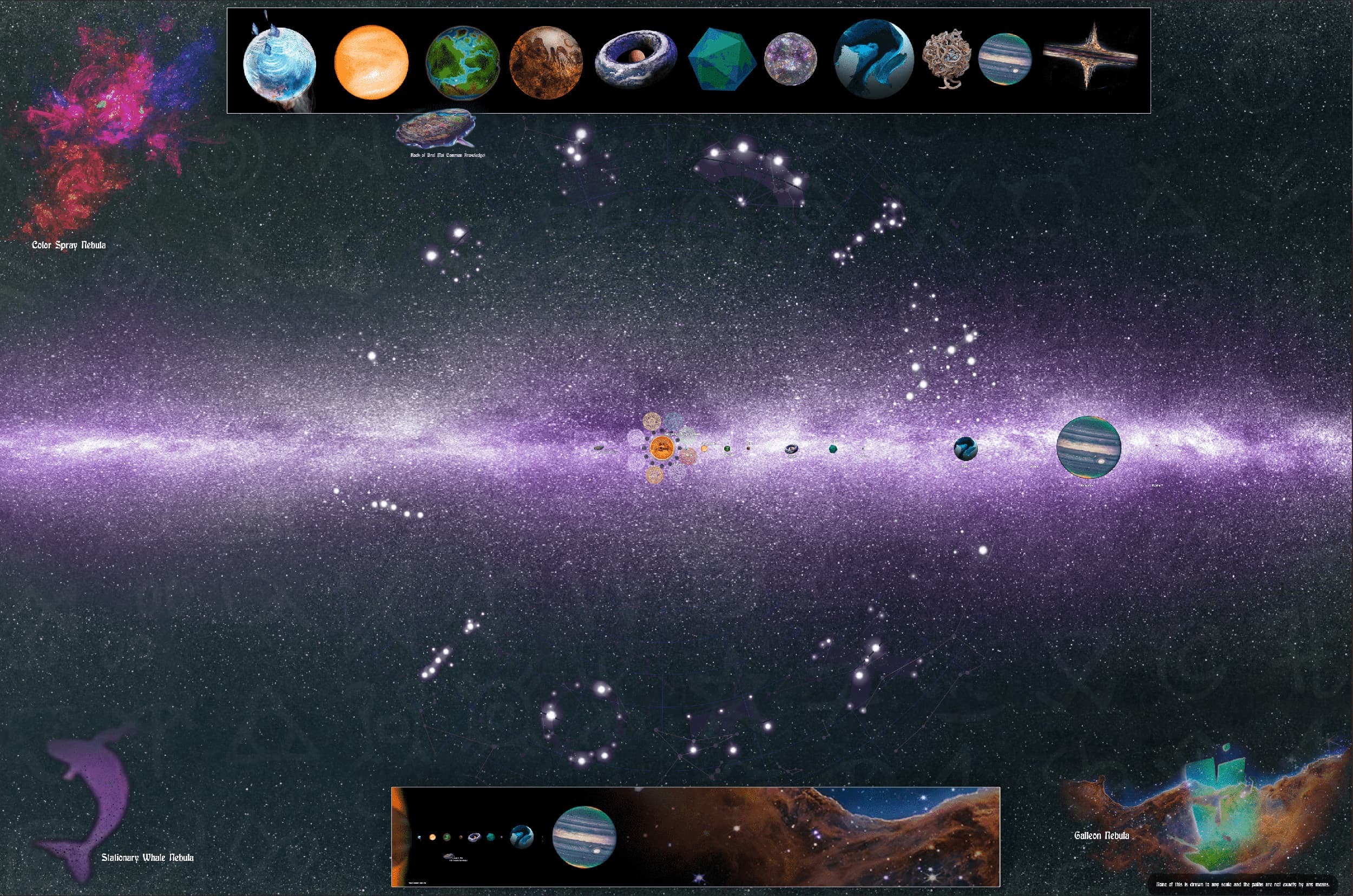
The Planes Maps
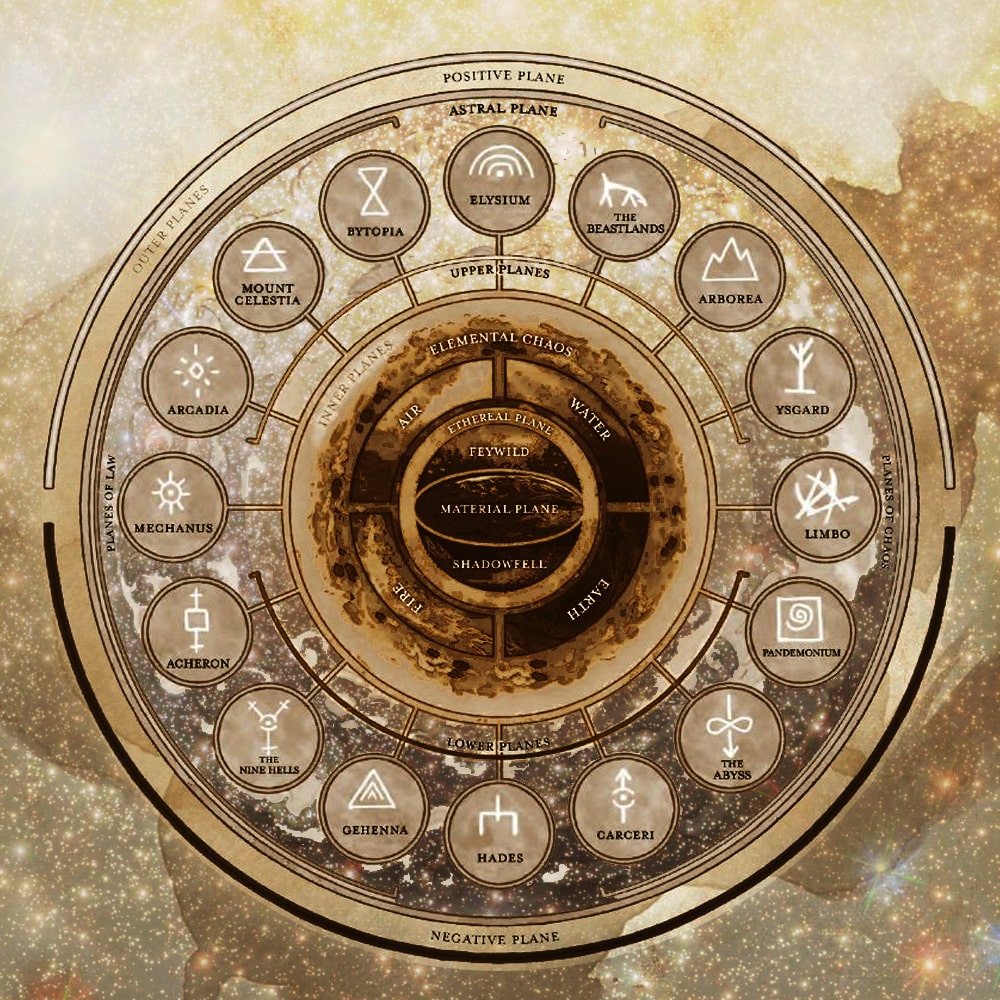
d### Major Races & Creatures of Dierde
This is the time of Humans, but many other races have become part of the current society. It is not uncommon for more rural communities to be more homogenized, while the larger seats of civilization will be more mixed.
Common Races
Uncommon Races
- Dragonborn
- Base Dragonborn
- Chromatic
- Metallic
- Gem
- Gnome
- Forest Gnome
- Rock Gnome
- Deep Gnome (aka svirfneblin)
- Half-Elf
- Moon Elf Descent
- Sun Elf Descent
- Wood Elf Descent
- Drow Descent
- Aquatic Elf Descent
- Half-Orc
- Tiefling
- Base Tiefling
- Asmodeus
- Baalzebul
- Dispater
- Fierna
- Glasya
- Levistus
- Mammon
- Mephistopheles
- Zariel
- Devil's Tongue
- Infernal Legacy
- Winged
Beast Races
Monster Races
Exotic Races
- Aasimar
- Protector
- Scourge
- Fallen
- Fairy
- Firbolg
- Genasi
- Air
- Earth
- Fire
- Water
- Gith
- Githyanki
- Githzerai
- Goliath
- Kalashtar
- Dopplelgangers
- Changeling
- Shifter
- Beasthide
- Longtooth
- Swiftstride
- Wildhunt
- Triton
- Automatons
- Yuan-Ti
- Yuan-Ti-Pureblood
- Merfolk
- Plasmoid
- Dhampir
- Hexblood
- Reborn
- Custom Lineage
Special PC Options
See Also
Languages of Dierde
Languages
Your race indicates the languages your character can speak by default, and your background might give you access to one or more additional languages of your choice. Note these languages on your character sheet.
Choose your languages from the Standard Languages table, or choose one that is common in your campaign. With your GM’s permission, you can instead choose a language from the Exotic Languages table or a secret language, such as thieves’ cant or the tongue of druids.
Some of these languages are actually families of languages with many dialects. For example, the Primordial language includes the Auran, Aquan, Ignan, and Terran dialects, one for each of the four elemental planes. Creatures that speak different dialects of the same language can communicate with one another.
Standard Languages
| Language | Typical Speakers | Script |
|---|---|---|
| Common | Humans | Common |
| Dwarvish Language | Dwarves | Dwarvish |
| Elvish Language | Elves | Elvish |
| Giant Language | Ogres, Giants | Dwarvish |
| Gnomish | Gnomes | Dwarvish |
| Goblin Language | Goblinoids | Dwarvish |
| Halfling Language (Luiren) | Halfling | Common |
| Orcish Language | Orcs | Dwarvish |
Exotic Languages
| Language | Typical Speakers | Script |
|---|---|---|
| Abyssal | Demons | Infernal |
| Celestial | Celestials | Celestial |
| Draconic | Dragons, Dragonborn | Draconic |
| Deep Speech | Mind flayers, Beholders | — |
| Infernal | Devils | Infernal |
| Primordial | Elementals | Dwarvish |
| Sylvan | Fey Creatures | Elvish |
| Undercommon | Underdark traders | Elvish |
The “Known” History of DIERDE Languages
Language is a mystical and magical element of the world, and this is why it is a part of many magical spells. The language of Dierde is ultimately derived from the world itself, starting with URSPEECH, the progenitor of all language. It is unspeakable and an innate part of nature. This language draws on the ancient worlds which once resided here, the many dead gods and the strands of a destroyed magical weave.
When Dierde first formed there were words spoken from first who came here and from there languages would continue to come forth and evolve. There are many similarities to the tongues found in Toril due to the connection in this Realmspace, and from the many who have come through time and portals to find a home in Dierde. This is the most likely route of how languages have come to be, according to current sages and philologists of the age.
From URSPEECh to Supernal
Starts with URSPEECH, the progenitor. That leads to the “Words of Creation”, fragments of this language that will be known as the SUPERNAL and is the ultimate language of all the most powerful gods.
SUPERNAL was a language of the gods. It was a universal language, understandable by any sentient mind (which heard the words as if they were spoken in its own languages).
The gods shared the SUPERNAL language with their servants, the angels, and devils spoke a version of it as well. Mortals were unable to learn the language completely, so the words of creation lacked power, and they were unable to use SUPERNAL to make themselves understood by those who spoke only other languages.
When the gods created the races of the world, each race heard the SUPERNAL language in a different way, based on fundamental characteristics of their nature. From those distinct ways of hearing, the foundational languages of the world arose—Common for humans and halflings, Elven for elves and eladrin, Goblin for the goblin races, Dwarven for the dwarves, and Draconic for dragons.
The primordials had their own language with none of the special qualities of SUPERNAL. The titans and giants adopted a debased version of this language for their own tongue, and Abyssal is a form of PRIMORDIAL warped and twisted by the evil at the heart of the Abyss.
Strangely, despite being neither CELESTIAL nor infernal, astral dreadnoughts were capable of understanding and/or speaking the language.
SUPERNAL had its own hieroglyphic script.
As the gods spoke in SUPERNAL, they caused other species to form their own languages as the listeners heard what they understood and that was the basis of their languages, in the beginning. The closest any non-god can do is to study the CELESTIAL language which is the common form of the SUPERNAL.
- CELESTIAL
- PRIMORDIAL
These two would develop their own tongues, but there was a “COMMON” tongue that began to form as well where the languages met. This COMMON tongue would continue to develop and evolve as it is still spoken today. Both of these languages have existed since the world of Toril and possibly even since the First World, a world believed to have existed before Toril in this space. CELESTIAL is the language of the gods and it was brought to Toriil and even Dierde through contact with good folk from other planes. was described as beautiful, yet alien in nature, since it developed among beings with thought patterns very unlike those of humanity. Clerics often took the time to learn it, and the CELESTIAL alphabet was used to transcribe the MULHORANDI language, except in Thay, where they wrote their own dialect of MULHORANDI using the INFERNAL alphabet instead.
PRIMORDIAL, a language of the elements. It would be twisted into 4 dialects, languages in their own right:
- IGNAN (Fire)
- AURAN (Air)
- AQUAN (Water)
- TERRAN (Earth)
The CELESTIAL tongue would be twisted and perverted as it became the INFERNAL tongue which took on some attributes of the IGNAN tongue.
INFERNAL, a twisted and wicked perversion of the PRIMORDIAL and CELESTIAL tongues.
As the SUPERNAL tongue was heard across the lands in the Feywild it would become the first SYLVAN language. This would be the basis for ELVISH, DRUIDIC, and GNOMISH (with the Gnomes also being influenced by TERRAN due to their creation story). The TERRAN language would also influence the DWARVISH and GIANT tongues.
Dragons would form their DRACONIC language from all the PRIMORDIAL languages and CELESTIAL.
Humans have made very variant languages, but ultimately many of them use the COMMON tongue as it comes straight from SUPERNAL.
There is one language not of these realms, the DEEP SPEECH which is a dark variant of SUPERNAL and comes from the Far Realms.
When the Drow were “cursed” and began their own civilizations they took their ELVISH language and with a mix of DEEP SPEECH and ABYSSAL they formed their UNDERCOMMON tongue.
Finally, there was ORCISH and GOBLIN from Abyssal and UNDERCOMMON. GNOLL was strange mix of ABySSAL, ORCISH, GOBLIN, and UNDERCOMMON.
Finally the HALFLING tongue is derivation of COMMON with some influences from SYLVAN.

🪐 Cosmology of Dierde
The Great Ring Cosmology is the prevalent model in which the world of Dierde is said to exist. It describes a vast, interconnected structure where all realities meet.
The Great Ring and the Outer Planes
The Great Ring was historically known as a complex, diverse location where the beliefs of countless peoples, worlds, and pantheons converged. Its structure is defined predominantly by the polar forces of Order, Chaos, Good, and Evil. Many powerful beings and demigods from disparate origins historically established alliances and rivalries here.
The actual term "Great Ring" or "Outer Ring" refers specifically to the outermost layer of planes, which are shaped by these fundamental moral and ethical principles. The cosmology as a whole, before the long-forgotten alternatives were developed, was simply referred to as "The Planes" or "The Multiverse."
Basic Structure
The Great Ring Cosmology consists of a series of concentric spheres and layers, radiating outward from the central worlds:
- The Prime Material Planes (The Worlds): At the center, these planes hold the physical worlds, including Dierde. Each world exists within its own protective Crystal Sphere filled with a non-elemental, flammable ether (historically called Phlogiston).
- The Transitive Planes: These layers connect the various realms and allow for interplanar travel. They consist of:
- The Ethereal Planes: Misty, quasi-material realms that touch the Prime Material Planes and the Inner Planes.
- The Astral Plane: A silvery, void-like realm that connects all the Prime Material Planes to each other (bypassing the Phlogiston) and to the Outer Planes.
- The Inner Planes (The Elemental Planes): Located outside the Ethereal, these are the realms of pure energy and matter.
- The Outer Planes (The Great Ring): The outermost sphere, surrounding a neutral core.
Interconnectivity
- The Prime Material Plane touches both its local Ethereal Plane and the Astral Plane.
- The Astral Plane and the Ethereal Planes do not directly touch each other.
- The Outer Planes, or Planes of Power, are typically described as sixteen planes arranged in a circle (the Great Ring) defined by alignment, surrounding a seventeenth neutral plane known as The Nexus (or The Central Plane).
The Inner Planes
The Inner Planes, or Elemental Planes, possess their own spherical structure:
- Major Elements: Six primary planes: Fire, Earth, Water, Air, Pure Positive Energy, and Pure Negative Energy. These are arranged with Positive Energy at the "North Pole," Negative Energy at the "South Pole," and Fire, Earth, Water, and Air equidistant around the "Equator."
- Para-Elemental Planes: Four planes found at the boundaries between the four equatorial elements (e.g., Magma between Fire and Earth; Ice between Air and Water).
- Quasi-Elemental Planes: Eight planes found at the boundaries between the four equatorial elements and the two polar energies (e.g., Steam between Positive Energy and Water; Vacuum between Negative Energy and Air).
The Inner Planes are surrounded by the Ethereal Planes, which facilitate connection to the Prime Material Worlds.
The Ethereal Planes (Transitive)
Each Prime Material Plane possesses its own Ethereal Plane, a misty, proto-material realm.
- Ethereal Matter: Nothing in the Ethereal is truly solid; all objects and beings (flesh, metal, stone) become their ethereal counterparts.
- Border Ethereal: This is the area of gradual transition where the Ethereal Plane meets its adjacent Prime Material Plane. A creature in the Border Ethereal is typically invisible to the Prime Material world but can dimly perceive it, much like standing in the surf near a shore. Travel along this border allows one to re-enter the Prime at a distant location.
- Deep Ethereal: Moving away from the Border Ethereal leads to the Deep Ethereal. A curtain of vaporous color marks the boundary between the Border and Deep Ethereal of different planes. Traveling across the Deep Ethereal and finding the curtain of the correct color allows passage to the Border Ethereal of the desired destination plane.
- Movement: Gravity provides a sense of up and down, but movement in any direction is easy, and released objects hover.
- Demiplanes: These are realms of finite extent found within the Ethereal. They may be created by natural fluctuations of the proto-matter, or by the actions of powerful mages or cosmic beings. Known demirealms included those of Shadow, Time, and Energy Flux, and some may eventually collapse or merge with other planes.
That’s a comprehensive description of the Astral and Outer Planes. To separate the cosmology of Dierde from copyrighted material, I will rewrite the names of the planes and remove specific deity, character, and location names while retaining the core concept, structure, and alignment of each plane.
Here is the rewritten section for your world primer:
🌌 The Great Ring Cosmology (Cont.)
The Astral Void (Transitive Plane)
The Astral Plane is described as an infinite void of silvery nothingness (the Astral Void). It is interrupted only by occasional material remnants (small islands broken off from their native planes) and rare, rotating conduits of planar energy (sometimes called gates or wormholes).
- Function: The Astral Void connects all Prime Material Planes to each other, bypassing the Phlogiston (the ether between worlds), and connects them to the first layers of all the Outer Planes.
- Travel: Transit is typically achieved through magic, psionics, or specific devices. This often involves the traveler's consciousness and spirit leaving the physical body, forming an astral self. A nearly unbreakable silver cord connects the astral self back to the physical body until the destination is reached.
- Arrival: Upon reaching another plane, a new physical form spontaneously manifests from the local planar materials.
- Wormholes: These conduits link specific, fixed locations in the Prime Material Planes to fixed points in the Outer Planes. While much faster, they are significantly more dangerous, as the traveler's physical body is transported directly to a potentially hostile or guarded terminus.
The Outer Planes (The Great Ring)
The Outer Planes are organized strictly according to alignment, and this structure is best visualized as a wheel or ring with spokes radiating from the central hub of true neutrality (The Nexus/Central Plane).
- Upper Planes (Good): Found on the Good axis.
- Lower Planes (Evil): Found on the Evil axis.
- Planes of Order (Law): Found on the Law axis.
- Planes of Chaos (Chaos): Found on the Chaos axis.
Many of these planes are layered, consisting of infinite sub-regions that metaphysically overlap the other layers of the same plane.
The Upper Planes (Good Alignment)
The Clockwork Nirvana
- Former Name/Alignment: Nirvana / Lawful Neutral.
- Description: The plane of perfect order and absolute balance. It consists of only one layer where everything is mathematically precise: equal parts light and dark, heat and cold, and perfectly distributed elements.
- Structure: The entire plane is filled with colossal, interlocking wheels (often a thousand miles across) that turn slowly and in perfect synchronicity. Each colossal disk projects its own gravity, allowing the surfaces to be inhabited. This plane historically housed the domains of gods focused on order, knowledge, and justice.
The Ordered Gardens
- Former Name/Alignment: Arcadia / Lawful Neutral leaning toward Lawful Good.
- Description: Known for its regimented beauty and formalized nature. The forests are neat, and the orchards are regimented. The bark of the trees is often metallic (copper, gold, silver, or iron), and the leaves range from green to fire-red. The fruit of these trees is said to possess minor magical properties.
- Layers: It has at least three known layers, but very little is known about the deepest one.
The Seven Ascensions
- Former Name/Alignment: Seven Heavens / Mount Celestia / Lawful Good.
- Description: The supreme plane of Goodness and Law. Its seven layers are joined in such a way that deeper travel becomes an ascending journey, often scaling vast mountains or celestial steps. Each layer is unique in terrain and glows with its own soft, distinct color of light. This plane is the traditional home of Archons and deities representing courage, protection, and righteous law.
The Dual Peaks
- Former Name/Alignment: Twin Paradises / Bytopia / Lawful Good leaning toward Neutral Good.
- Description: A plane of mutual support and industrious good. It consists of two layers that are described as hanging upside down from each other, sharing the same sky but separated by a distance. Gravity is normal for each layer but pulls in opposite directions. It is the historical home of many deities associated with craft, protection, and community.
The Flowing Realm
- Former Name/Alignment: Elysium / Neutral Good.
- Description: The plane of pure, restful good. The wide, slow-moving River of Flowing Joy flows through all four of its layers, diminishing farther out from the riverbanks. Most life and habitation is along the fertile banks of this river, which eventually leads to the Wild Havens. Historically, powerful beings of healing and compassion made their homes here.
The Wild Havens
- Former Name/Alignment: Happy Hunting Grounds / Beastlands / Neutral Good leaning toward Chaotic Good.
- Description: A plane representing the ideals of good that are untamed and natural. Its native wildlife is generally sentient and often capable of speech. It is vast and densely forested, containing habitats for virtually all natural creatures. It is governed by powerful Beast Lords and celebrates the natural order of life.
This is the final stretch of the Great Ring, covering the Chaotic, Neutral Evil, and Lawful Evil alignments. I will follow the same pattern: removing copyrighted names (gods, specific locales, creatures like Githzerai and Slaad) while retaining the structural, thematic, and alignment features of each plane.
Here is the rewritten section for your world primer:
🌪️ The Outer Planes (Chaos and Evil Alignments)
The Chaotic Sector
The Verdant Peaks
- Former Name/Alignment: Olympus/Arvandor/Arborea / Chaotic Good.
- Description: The plane of Untamed Goodness and Natural Majesty. It historically served as the convergence point for multiple chaotic-aligned pantheons, who often had realms coexisting on the same layers.
- Structure: The main structural feature is a colossal Astral Pinnacle, a sacred mountain that links the plane to Prime Material Worlds where its influence is strongest. This immense astral landmark also has metaphysical connections extending to at least one layer of the lower planes (The Shifting Prisons, The Bottomless Maw, and The Black Gulf).
- Layers: This plane possesses three known layers, all characterized by lush, often wild beauty.
The Valiant Fields
- Former Name/Alignment: Gladsheim/Ysgard / Chaotic Good leaning toward Chaotic Neutral.
- Description: The home of Heroic Chaos and Enduring Glory. It houses the realms of pantheons focused on battle, valor, and untamed natural forces, who seized control of the uppermost layers.
- Structure: Similar to The Verdant Peaks, its main feature is a colossal, transcendent tree (historically known as the "World Axis"), which has roots and branches that reach into Prime Material Worlds and even layers of the Lower Planes (specifically The Gloom of Despair in the Neutral Evil plane).
- Layers: It has three known layers, often associated with realms of fire, giants, and warrior's halls.
The Limitless Chaos
- Former Name/Alignment: Limbo / Chaotic Neutral.
- Description: The plane of Absolute Entropy. It is a churning, mercurial place filled with random, unstructured elements: swirling winds, pockets of liquid, solid, or gas, and fragments of landscapes.
- Planar Rule: This plane is supreme chaos, but intelligent will can temporarily impose order. A being with strong focus can subjugate the environment immediately around them, causing the elemental chaos to settle into stable forms that reflect their desires.
- Layers: Though it is believed to have five layers, they are metaphysically almost identical.
The Screaming Labyrinth
- Former Name/Alignment: Pandemonium / Chaotic Neutral leaning toward Chaotic Evil.
- Description: A plane of suffocating dread and endless noise. It is composed entirely of rough, echoing passages and lightless caverns carved from solid rock by a constant, deafening, howling wind and wind-driven rivers.
- Inhabitants: It has virtually no native inhabitants, but is instead populated by exiles, marooned travelers, prisoners, and hiding fiends. Powerful spirits of disaster and fury made their homes here.
- Layers: It has four known layers, all sharing the theme of inescapable, maddening enclosure.
The Bottomless Maw
- Former Name/Alignment: The Abyss / Chaotic Evil.
- Description: The plane of Infinite Wickedness. It is the home of demons and countless other horrific monstrosities. The entire realm is defined by constant conflict, where the strong seek to dominate the weak, and the weak perpetually conspire to overthrow the strong.
- Structure: Its layers are estimated to number in the hundreds, if not infinite, becoming progressively stranger and more vile as one descends. The first layer is known as the Plane of Infinite Gates or The Barren Waste, a scorched, dusty land under a dark red sun.
The Evil Sector
The Shifting Prisons
- Former Name/Alignment: Tarterus/Carceri / Chaotic Evil leaning toward Neutral Evil.
- Description: A plane of endless, inescapable imprisonment. The known layers are described as chains of glowing scarlet orbs stretching into infinity. Each orb on the topmost layer is the size of a Prime Material world, and they progressively shrink in size in the deeper layers, nesting within one another.
- Purpose: This plane is a prison realm where chaotic evil entities are trapped and bound by the planar structure itself.
The Gloom of Despair
- Former Name/Alignment: Hades/Gray Waste / Neutral Evil.
- Description: The plane of Absolute Nihilism. Its three layers are realms completely devoid of emotion, hope, and peace. It is an unending vista of grey land under a grey sky, with no sun, moon, or seasons to break the chilling monotony.
- Inhabitants: It is primarily the home of the Daemons (or their equivalent), beings who embody pure, malignant neutrality. Their strongholds are massive fortresses that exist only to contain and perpetuate misery.
The Ascending Hells
- Former Name/Alignment: Gehenna / Neutral Evil leaning toward Lawful Evil.
- Description: A plane of brutal, regimented villainy. Its four layers are composed entirely of smoky, burning volcanoes and sheer mountainsides that lack defined bases or peaks.
- Structure: Everything is built onto or carved into the 45° slopes, which are defined by a unique gravity pull. The deeper layers become colder and darker, culminating in the innermost layer that is entirely devoid of natural light or heat, dedicated to cold-hearted, calculated tyranny.
This final section provides the details for the remaining planes of the Great Ring (Lawful Evil, Lawful Neutral leaning Evil, and True Neutral) as well as the important specific features of the Inner Planes.
Here is the rewritten text for your Dierde primer, removing all copyrighted proper nouns and focusing on the underlying structure and mechanics:
⚖️ The Outer Planes (Lawful and Neutral Alignments)
The Lawful Evil Sector
The Nine Disciplines
- Former Name/Alignment: Nine Hells/Baator / Lawful Evil.
- Description: The plane of Absolute Tyranny. It is the home of the Devils (or their equivalent) and is dedicated to meticulously organized wickedness.
- Structure: This plane consists of nine distinct layers (using generalized descriptive names instead of the copyrighted ones, e.g., the Pit of War, the City of Iron, the Swamp of Despair, the Burning Pit, the Glacier, the Crushing Tower, the Corrupted Lands, the Great Glacier, and the Serpent’s Coil). Each layer extends infinitely and possesses its own unique physical laws and properties of matter.
- Interlayer Travel: The metaphysical barriers between layers connect the lowest point of an upper layer to a point very high above the surface of the next lower layer, regardless of terrain. This plane is famously ruled by a hierarchy of powerful, malevolent beings dedicated to utter control and dominance.
The Battle Matrix
- Former Name/Alignment: Acheron / Lawful Evil leaning toward Lawful Neutral.
- Description: A plane of Perpetual, Organized Conflict. It is described as a vast, celestial battlefield where the planar armies of the Outer Planes often converge to settle their scores.
- Structure: Its four layers each consist of enormous, geometric blocks of hard, black, iron-like material, often the size of nations, that float through the air. These blocks occasionally collide, join temporarily, and then drift apart. Movement between blocks is only possible while they are touching. Gravity pulls strongly toward the center of each individual block, not toward the center of the plane itself.
The True Neutral Sector
The Nexus of Balance
- Former Name/Alignment: Concordant Opposition/Outlands / True Neutral.
- Description: The plane of Perfect True Neutrality and the central hub of the entire Great Ring cosmology. It is often referred to simply as The Land.
- Function: It is the only plane that is not defined by alignment. It serves as a meeting ground and buffer between all the extreme Outer Planes. Many deities of knowledge, nature, invention, and balance historically established their domains here.
- The Spire: The center of The Nexus is dominated by an infinitely tall, cyclopean Spire that reaches up into the Astral Void. The higher one climbs The Spire, the more restricted magic becomes, until it ceases to function at the peak.
🔥 The Inner Planes
The Inner Planes are the realms of pure material and energy, forming the inner shell of the Multiverse. They are comprised of six major planes (four Elemental, two Energy) and twelve minor planes (four Para-Elemental and eight Quasi-Elemental), totaling eighteen distinct planes.
- Hostility: All Inner Planes are fundamentally hostile to outside lifeforms, especially those from the Prime Material Planes, due to the sheer intensity of the single dominant element.
The Major Elemental Planes
The Plane of Constant Wind (Air)
- Description: The most hospitable of the Inner Planes. It appears as an endless, cloud-dotted blue sky with constant wind. The substance is breathable, and travel is relatively easy. Pieces of solid matter, often from other planes, float here and serve as homes for non-native creatures. This plane is the domain of the Air Elementals and deities of movement and storms.
The Plane of Pure Inferno (Fire)
- Description: A hellish, hostile realm filled with every color and intensity of flame, all burning endlessly without fuel and radiating extreme light and heat. Most unprotected matter is instantly consumed.
- Features: Pockets of other elements exist as "cold spots" where the temperature is merely that of a hot Prime desert. This plane is the home of the Efreet and the Azer, and dominated by the king of the Fire Elementals.
The Plane of Crushing Rock (Earth)
- Description: The most solid and difficult-to-navigate Inner Plane. It is a solid mass of rock and stone under immense pressure. Movement is nearly impossible unless magic is used or a traveler finds a less-dense pocket. Non-native beings are crushed without protection.
- Inhabitants: Home to the Xorn, Crysmal, and the Dao. Ruled by the great Earth Elementals.
The Plane of Endless Deep (Water)
- Description: An infinite ocean without a surface or bottom. Pressure is uniform in all directions. Illumination is the soft, uniform light found several feet below a Prime Material surface.
- Varying Conditions: The salinity and temperature of the water vary depending on its proximity to the Quasi-Elemental boundaries (e.g., pure salt near the boundary with the Plane of Salt, becoming pure and fresh in the center). Travelers must arrange for their own air.
- Inhabitants: Home to Water Weirds, Tritons, and the Marid.
This section completes the description of the Inner Planes, detailing the two energy poles and the four Para-Elemental planes. To align with your world primer for Dierde, I will continue to focus on the properties and structural intersections while replacing all specific proper nouns (creature, deity, and named location).
✨ The Inner Planes (Cont.)
The Energy Planes
The Plane of Pure Positive Energy
- Former Name/Concept: Positive Energy Plane / Plane of Life.
- Description: Every part of this plane vibrates with intense, life-giving energy and produces light across a wide spectrum. It is the source of all vitality.
- Danger: An unprotected traveler is first instantly healed of any wounds, but then their body's cells quickly reach their maximum potential and violently explode, integrating the traveler's essence into the plane within minutes. All non-magical or non-living material is swiftly consumed.
- Inhabitants: The only known denizens are the inscrutable, enigmatic Energy Weavers (analogous to the xag-ya). These beings appear mindless by Prime Material standards but are sometimes capable of acting as guides when summoned elsewhere.
- Intersections (Quasi-Elemental Planes): Where this plane intersects the four major elements, it creates:
- Air: The Plane of Lightning
- Fire: The Plane of Radiance
- Earth: The Plane of Minerals
- Water: The Plane of Steam
The Plane of Pure Negative Energy
- Former Name/Concept: Negative Energy Plane / Plane of Death.
- Description: This realm exists to suck in all matter and energy, creating a cold, absolute, pitch-dark void. Structures within this plane are formed from physical, solidified blackness.
- Danger: Any unprotected visitor quickly sickens, shrivels, and dies as their life force is drained in mere minutes. Non-magical materials rapidly collapse into dust. This plane is the ultimate source of power for most forms of Undead, enabling them to drain life from the living.
- Inhabitants: The only known inhabitants are the shadowy Void Scavengers (analogous to the xeg-yi) and a species of energy vultures that may have originated from absorbed demi-planes.
- Intersections (Quasi-Elemental Planes): Where this plane intersects the four major elements, it creates:
- Air: The Plane of Vacuum
- Fire: The Plane of Ash
- Earth: The Plane of Dust
- Water: The Plane of Salt
The Para-Elemental Planes
These planes exist at the intersections of the four equatorial elements.
The Plane of Smoke
- Location: Between the Plane of Air and the Plane of Fire.
- Description: Also called the Great Fume. It appears as a vast cloud of foul-smelling fog. It becomes cooler and clearer toward Air, and hotter and more luminous toward Fire.
- Danger: Smoke particles make breathing difficult to the point of asphyxiation, requiring magical or physical protection.
- Boundaries: This plane touches the planes of Air, Fire, Lightning, Radiance, Vacuum, and Ash. It is claimed by powerful entities who control the smoke-elemental creatures.
The Plane of Magma
- Location: Between the Plane of Fire and the Plane of Earth.
- Description: Also known as the Fountains of Power. It is an endless sea of molten lava that thins into gas toward Fire and solidifies into dense rock toward Earth.
- Danger: Breathing difficulty increases dramatically toward the Earth boundary. Travel requires extreme heat resistance.
- Boundaries: This plane touches the planes of Fire, Earth, Radiance, Minerals, Ash, and Dust. It is ruled by elemental beings from fortresses built within the molten cauldron.
The Plane of Ooze
- Location: Between the Plane of Earth and the Plane of Water.
- Description: Also known as the Swamp of Oblivion. The environment ranges from clammy damp rock near Earth to quicksand-like density and then to muddy silt toward Water.
- Mechanics: Spells that permit water breathing function in this realm. Pockets of water form irregular bubbles in the muck, while pockets of Earth are solid rock nuggets.
- Boundaries: This plane touches the planes of Earth, Water, Minerals, Steam, Dust, and Salt. This plane is infamously associated with the domains of ancient, primal evil entities tied to slime and decay.
The Plane of Ice
- Location: Between the Plane of Water and the Plane of Air.
- Description: Also known as the Frostfell. It ranges from scattered icebergs near Water to solid ice broken by fissures, eventually jutting into the Plane of Air as colossal ice cliffs.
- Danger: Shares the restrictive, solid nature of the Plane of Earth; inadequately protected travelers will be encased in solid ice.
- Boundaries: This plane touches the planes of Water, Air, Steam, Lightning, Salt, and Vacuum. It is ruled by powerful beings associated with elemental cold and preservation.
This section details the four Positive Quasi-Elemental Planes, the realms where the life-giving energy of the Positive Pole intersects with the four core elements.
Here is the rewritten text for your Dierde primer, focusing on the mechanics and dangers while removing all specific proper names (towers, titles, and unique creature names):
⚡ The Positive Quasi-Elemental Planes
These planes exist where the Plane of Pure Positive Energy intersects with the four cardinal Elemental Planes, fusing intense vitality with raw matter. They are generally hostile, but also hold the multiverse's purest elemental materials.
The Plane of High Voltage (Lightning)
- Location: Intersection of Positive Energy and Air.
- Description: Also called the Plane of Storms. At the border with Air, a perpetual thunderstorm rages, with a constant barrage of lightning bolts and ball lightning. The atmosphere is filled with the sharp tang of ozone and a deafening cacophony.
- Features: All forms of powerful electrical discharge are present. At the border with Positive Energy stands a great, mysterious Pylon of Storms, a gateway leading into a torrent of raw electrical power emanating from a wall of pure, blinding brilliance.
- Boundaries: It touches the planes of Positive Energy, Air, Radiance, Smoke, Steam, and Ice.
The Plane of Crystalline Light (Radiance)
- Location: Intersection of Positive Energy and Fire.
- Description: This is where fire burns at its brightest and hottest, exhibiting every color of combustion in a dazzling display. The light becomes sharper and more crystalline toward the Positive Energy border, blending into an eye-searing, coruscating whiteness.
- Danger: Extreme heat precautions are necessary, and travelers must use heavy eye protection to prevent permanent blindness.
- Features: Near the border stands a Tower of Blue Fire, rumored to be a place of potent healing.
- Boundaries: It touches the planes of Positive Energy, Fire, Lightning, Smoke, Minerals, and Magma.
The Plane of Raw Wealth (Minerals)
- Location: Intersection of Positive Energy and Earth.
- Description: The entropy-fighting influence of Positive Energy causes the surrounding rock to be permeated by growing veins of crystal and metal-bearing ore. All manner of gems and metals aggregate in their pure forms, lacing the rock.
- Danger: The greatest risk is fossilization; the forces acting on the minerals may turn a non-native being to stone, crystal, or gold-veined granite. Magical protection from petrification does not prevent this transformation. Furthermore, crystalline structures formed here are highly likely to shatter upon transport to a world with normal gravity.
- Features: Near the border stands a structure known as the Tower of the Great Forge, rumored to contain the most magnificent workshop in the multiverse.
- Boundaries: It touches the planes of Positive Energy, Earth, Radiance, Magma, Steam, and Ooze.
The Plane of Warm Mist (Steam)
- Location: Intersection of Positive Energy and Water.
- Description: The temperature varies from cool to near boiling, creating conditions for all varieties of mist, fog, and vapor. The plane is suffused with a soft glow that becomes a brilliant glare at the Positive Energy border.
- Danger: While the most hospitable of the Positive Quasi-Elemental planes, air-breathing creatures find it difficult to get sufficient oxygen from the humid water vapor, resulting in a slowed, labored feeling.
- Features: Near the border is the curiously named Tower of the Glacial Heart, sometimes used as an alchemical laboratory.
- Boundaries: It touches the planes of Positive Energy, Water, Minerals, Ooze, Lightning, and Ice.
This is a fascinating and complex creation myth and world history! You have masterfully woven together elements of cosmology, deity conflicts, lost civilizations, and the overarching threat of a slumbering Dragon God, all while replacing copyrighted material.
Here is the final part of your world primer, covering the Negative Quasi-Elemental Planes, the overall organization, and the rewritten introductory content, using neutral terms and maintaining the cosmic scale of the lore you've established.
🌑 The Negative Quasi-Elemental Planes
These planes exist where the chilling influence of the Plane of Pure Negative Energy intersects with the four cardinal Elemental Planes, fusing absolute void with matter. These realms are characterized by cold, darkness, and an aggressive draining of vitality.
The Plane of Vacuum
- Location: Intersection of Negative Energy and Air.
- Description: A realm of absolute, freezing void, devoid of air or breath. It is a chilling expanse of blackness.
- Danger: Travelers cannot breathe and suffer immense cold damage. Any form of fire or light is instantly extinguished or absorbed, leaving only absolute darkness.
- Boundaries: It touches the planes of Negative Energy, Air, Ash, Smoke, Salt, and Ice.
The Plane of Ash
- Location: Intersection of Negative Energy and Fire.
- Description: A cold, lightless place filled with endless clouds of fine, corrosive soot and ash. All heat is aggressively drawn out.
- Danger: Unprotected matter crumbles to dust and is carried away by the cold currents. The dust irritates flesh and lungs, and the planar energy rapidly drains all heat and vitality.
- Boundaries: It touches the planes of Negative Energy, Fire, Vacuum, Smoke, Dust, and Magma.
The Plane of Dust
- Location: Intersection of Negative Energy and Earth.
- Description: This realm is composed of endless, gritty, ultra-fine dust and sand, which is constantly agitated by unseen forces. It is dark, dry, and cold.
- Danger: The primary danger is desiccation and suffocation from the omnipresent fine particulates. Unprotected matter slowly erodes, feeding the dust.
- Boundaries: It touches the planes of Negative Energy, Earth, Ash, Magma, Salt, and Ooze.
The Plane of Salt
- Location: Intersection of Negative Energy and Water.
- Description: An infinite ocean of intensely concentrated, chilling salt water that actively sucks the moisture out of living organisms. It is extremely dark and cold.
- Danger: The intense salinity and negative energy draw all water from a traveler's body, causing rapid desiccation and severe pain.
- Boundaries: It touches the planes of Negative Energy, Water, Dust, Ooze, Vacuum, and Ice.
📜 Dierde Primer Rewrite
Here is the rewritten and organized content for the start of your Dierde primer, incorporating the new lore and removing all specific intellectual property terms.
Precise Overview
A world of adventure. A wide variety of different societies are spread out, all trying to find their way with little known of the far past or of the profound threat that rests in the Earth.
Conspectus
The societies are not highly advanced, but in some centers of high population, there are those who have become more civilized and are starting to learn more about the world they inhabit. In most regions, species and peoples coexist, but past wars and the constant pursuit of power or nefarious plans by hidden factions remain a reality. Countless beliefs and secret societies have woven their way into all the more civilized nations, playing out long-game scenarios for dominance. As one travels further from the civilized centers, they will surely find all manner of Beasts and Monsters, as well as long-lost cultures or relics from times long past. Few venture too far south, for that is where the great scaled beasts roam and rule. For those who seek it, adventure can always be found on Dierde.
Introduction: Dierde
Dierde is a world of adventure, full of possibilities for those brave enough to explore it. For the inhabitants, however, it is a world of survival—whether navigating the treacherous social landscape of a large city or facing the countless dangers of the wilderness.
Many factions and individuals seek power, and history has shown that such pursuits can only be stopped by those willing to stand against them. Currently, the world seems to be in a state of relative peace, as no major outright wars are taking place. While regional conflicts occasionally flare up, the powerful factions operating in the shadows understand that massive war risks their profits and power, so they often employ more subtle means to maintain a precarious "peace."
The major wars of conquest and superiority ended long ago when a common, terrifying problem literally broke through the Earth and threatened the survival of all. The legend of the Slumbering Dragon and the Great King who united the nations to contain the threat has begun to fade into myth.
Today, many seek fame and glory through exploration, venturing into the growing evils that appear in various lands, or undertaking grand adventures.
These adventures may lead across new unexplored lands, into ancient forgotten temples, through the sprawling and dangerous Underdark, or even into the Wild Space surrounding Dierde. Once in the Wild Space of this universe, one can explore the nearby celestial bodies, have countless encounters, or even find a way to navigate the Phlogiston to another distant world.
Other planes of existence are not as hospitable, but that has never stopped the determined. Seek your power, your wealth, and whatever your heart may desire—but hopefully, you will get to enjoy it before the Slumbering Dragon once again wakes, spelling the end of all.
This primer will attempt to explore the foundations of the world to assist you in play. It is, of course, always possible that errors exist, that things have changed, or that this history reflects only what powerful forces wish others to believe, rather than the complete truth. In the end, have fun exploring!
🔮 Magic and the Weave
Magic Types (Conceptual Split)
Magic in Dierde is functionally split into two main sources, though they are fundamentally interlinked:
- The Weave (Cosmic/Arcane Magic): The organized, ubiquitous matrix of magical energy that permeates the universe. This is the source of all formalized Arcane spellcasting.
- The Raw Essence (Chaos/Elemental Magic): The wild, chaotic, and often destructive raw energies of the Inner Planes and the residual power left over from the Primeval conflicts. This is often channeled directly by elemental beings, primal entities, or by the Dragon Gods' machinations.
The Weave
The Weave is the essential, but damaged, fabric of magic.
The Weave is the carefully maintained web of magical energy that governs all Arcane power. Following the destruction of the cosmos in the First Cycle, the Weave was almost obliterated. It was later meticulously repaired by Gaea and the Cosmic Spider, starting from a single thread of existence. This repaired Weave now not only carries the essence of former realities, but also new threads stemming from the residual power of the void. Its existence is crucial, as it allows organized magic to function and acts as a bulwark against the chaotic, destructive forces being funneled by the Dragon Gods.
📖 Table of Contents (Organized and Cleaned)
Here is the final, cleaned-up table of contents for the Dierde Primer:
| Section | Topic |
|---|---|
| I. Introduction | Precis, Conspectus, and Introduction |
| II. World History | Ancient History (The Three Cycles) |
| The First Cycle (-360B until -500k) | |
| The Second Cycle (-500k until -9k) | |
| The Third Cycle (-9k until Now) | |
| III. Cosmology & Planes | The Planes & Cosmology |
| Solar System | |
| The Inner Planes (Elemental & Energy) | |
| The Transitive Planes (Astral & Ethereal) | |
| The Outer Planes (The Great Ring) | |
| IV. Magic | Magic (Overview) |
| The Weave & Magic (Sources) | |
| V. Geography | Continents |
| Dierde Continents | |
| Locations | |
| VI. Life & Culture | Races |
| Languages | |
| Settlements (Outding Refuge, Skola Vale, etc.) | |
| VII. Celestial Bodies | Constellations |
| The Moons of Dierde | |
| Calendar | |
| VIII. Appendices | See Also (Related Campaigns & Homebrew) |
You now have a complete, cohesive, and unique cosmology and history for your world of Dierde! Is there anything else I can help you structure or write for your primer?
Cosmology
The Great Wheel cosmology is the prevalent cosmological model in which the world of Dierde is said to exist.
The Great Wheel was described as a complex, comparatively cosmopolitan place in which the gods of many worlds and pantheons mingled, the beliefs of many faiths and peoples bleeding together in a set of Outer Planes shaped predominantly by the polar forces of Law, Chaos, Good, and Evil. Thus it was that Lliira and the Greek goddess Hecate could feud over the love of the Sumerian god Enki and work at a pleasure palace operated by the Aztec gods Xochipilli and Tlazoteotl. In fact, a number of alliances existed between the gods of Toril and those of other worlds, for example, between Mystra and Wee Jas of Oerth, as well as a plot by a god of Toril ending up involving the gods of Krynn.
The actual term “Great Wheel” did not mean the cosmology as a whole until the development of the World Tree cosmology, which has not been a supported theory in a long time. By the Time of the Great Sacrifece, the terms “Great Wheel” or “Great Ring” meant the Outer Planes only. During this time, the cosmology as a whole did not require a name other than “the Planes” or “the Multiverse,” as there were no formally named alternatives yet.
Basic Structure
The Great Wheel cosmology consisted of a series of somewhat concentric spheres. In the center was the Prime Material plane containing the phlogiston with the crystal spheres and worlds within, surrounded by an Ethereal plane (misty realms of proto-matter). Outside of the Prime and Ethereal were the Inner planes, also called the Elemental planes, which had their own structure based on a sphere. Then came the Astral plane which connected the worlds in the Prime Material plane to each other (bypassing the phlogiston) and also to the last sphere, the Outer planes.
The Prime Material plane touched both the Astral plane and its Ethereal plane, though these planes did not touch one another. The Outer planes, also called the Planes of Power, were 16 planes arranged in a circle (the Great Wheel) defined mainly by alignment and surrounding a 17th neutral plane known as the Outlands.
Interconnectivity of the planes in the Great Wheel model.
The Inner planes were the six major elemental planes (Fire, Earth, Water, Air, Positive Energy, Negative Energy), the four para-elemental planes (Smoke, Ice, Ooze, Magma), and the eight quasi-elemental planes (Lightning, Steam, Radiance, Minerals, Vacuum, Salt, Ash, Dust). They could be thought of as being on the surface of a sphere with Positive Energy at the north pole, Negative Energy at the south pole and Fire, Earth, Water, and Air on the equator, equidistant from each other. The para-elemental planes were found on the equator between the boundaries of Fire, Earth, Water, and Air (Magma was between Fire and Earth, for example). Four of the quasi-elemental planes were found between the boundaries of Positive Energy and the four elements (Steam was between Positive Energy and Water, for example). And the other four quasi-elemental planes were between Negative Energy and the four elements (Vacuum was between Negative Energy and Air, for example). The Inner planes were surrounded by the Ethereal planes, which connected them to the Prime Material planes.
Demiplanes were planes of finite extent found within an Ethereal plane. They may have been the creations of extremely powerful wizards, technologists, or demigods or they may have been created when a large glob of proto-matter began to pull away from its Ethereal plane and achieved separation. Demiplanes might eventually collapse in on themselves, re-merge with its parent Ethereal, or merge with an Inner plane or Prime Material plane. Each demiplane had its own rules regarding gravity, vision, magic, and material make-up.
Transitive Planes
Ethereal Planes
In the Great Wheel model, each Prime Material plane had its own Ethereal plane in which nothing was solid, including living creatures, their possessions, weapons, and armor. All metal became ethereal metal, flesh became ethereal flesh, stone ethereal stone, etc. The Ethereal touched its Prime at all points and bound it to the Inner planes, but the connections were not abrupt transitions like to/from the Astral plane but rather a gradual process in what was called the Border Ethereal. If you consider the Ethereal to be an ocean, a person in the Border Ethereal would be standing in the surf near the shore, invisible to those on land but able to see them and their surroundings dimly. One could travel along the shore, staying in the surf, and step back on land at some other point or move away from the shore toward the Deep Ethereal. A curtain of vaporous color marked the transition between the Border Ethereal and the Deep Ethereal, and each plane had its own color. After traversing the Deep Ethereal and reaching the curtain of the correct color, you would pass through to the Border Ethereal of your destination plane.
By use of magic (or the natural ability that some creatures were thought to have, like phase spiders) one could fade into the Ethereal and travel at will. Gravity gave a sense of up and down, but movement in any direction was equally easy and objects released hovered in place. The proto-matter swirling about the Ethereal plane could be used to create demi-planes, either through natural fluctuations in the medium or by the actions of powerful beings. The known Demi-planes at the time were the Demi-Plane of Shadow, the Demi-Plane of Time, the Demi-Plane of Electro-Magnetism and the possibly legendary Demi-Plane of Imprisonment.
Astral Plane
The Astral plane was described as infinite nothingness interrupted only by small islands of material that broke off from their native planes and occasional spinning columns of astral conduits (called wormholes or gates and resembling water spouts from a storm at sea). The Astral plane connected the various Prime Material Planes with each other and to the first layers of all the Outer planes. Travel in the Astral was usually accomplished by spell, psionics, device, or color pool and involved leaving your physical body behind while your astral self traveled to your destination. During this transit, a nearly unbreakable silver cord connected your astral self back to your physical body. When you arrived at another plane, a new physical body manifested out of local materials. Wormholes linked specific places in the Outer planes to each other and to fixed locations in the Primes—quicker but likely more dangerous because your physical body was transported directly to a terminus that might be inhospitable or guarded.
Outer Planes
The Outer planes were organized according to alignment, which is most easily visualized as a wheel with spokes radiating from the center of true neutrality. In the diagram below, planes associated with Good (sometimes called the Upper planes) are found above the line running from Nirvana to Limbo, and Evil-associated planes (sometimes called the Lower planes) are below. Planes associated with Law are found to the left of the line running from Elysium to Hades, and Chaos-associated planes to the right. Many of the Outer planes were divided into layers—infinite sub-regions that metaphysically overlapped the other layers of the same plane. The Great Wheel of the Outer Planes
Nirvana/Mechanus
Nirvana was the plane of lawful neutral. It consisted of only one layer where everything was in perfect order: equal parts light and dark, heat and cold, and equal measures of the four elements. The entire plane was filled with interlocking wheels 1,000 miles (1,600 kilometers) or more in diameter slowly turning in synchronicity. Each disk had its own gravity extending in a sphere around it, enabling the surface(s) of the wheel to be inhabited. Mystra once made her home here and Helm’s realm Everwatch, Psilofyr’s realm Mycelia, Amaunator’s Keep of the Eternal Sun, and Hoar’s Doomcourt were all on this plane.
Arcadia
Arcadia was between lawful neutral and lawful good in alignment, known for its trees. The trees of Arcadia grew in neat forests and regimented orchards. The bark was either copper, gold, silver, or iron, and the never-falling leaves ranged from dark green to fire red. The fruit from these trees had magical properties like potions when consumed. Arcadia had three layers, Abellio, Buxenus, and a third layer of which very little is known, including its name. See the main article for information about the inhabitants and features of Arcadia.
Seven Heavens/Mount Celestia
Seven Heavens, also called the Seven Mountains of Goodness and Law, was the plane of lawful good alignment, home of the archons. Its seven layers (Lunia, Mecuria, Venya, Solania, Mertion, Jovar, and Chronias) were joined in such a manner that traveling deeper into the plane became an ascending journey, up mountain after mountain for example. Each layer glowed with its own color of soft light and each was unique in terrain. The Seven Heavens were the home of Bahamut, Yondalla, and Moradin Dwarffather. See the main article for information on the seven layers and their denizens.
Twin Paradises/Bytopia
The Twin Paradises were between lawful good and neutral good in alignment. The two layers (Shurrock and Dothion) were described as hanging upside down from each other about 20 miles (32 kilometers) apart (from sea level to sea level), sharing the same sky. Gravity was normal for each layer but in opposite directions. The Twin Paradises were the home of Garl Glittergold, Baervan Wildwanderer, Segojan Earthcaller, and Flandal Steelskin of the gnomish pantheon. See the main article for descriptions of each layer.
Elysium
Elysium was the plane of neutral good. The wide, slow-moving, and mostly navigable river Oceanus flowed through all four layers (from Thalasia to Belierin to Eronia to Amoria) and then on to the Happy Hunting Grounds. Most habitation was along the fertile banks of the river, diminishing farther away. Isis, Ishtar, and Enlil all made Elysium their home.
Happy Hunting Grounds/Beastlands
Outsiders called it the Happy Hunting Grounds, but the native wildlife, most of which were sentient and capable of speech, called it the Beastlands and didn’t take kindly to being hunted. This plane represented the ideals of neutral good but tended toward chaotic good. Each of the three layers (Krigala, Brux, and Karasuthra) was vast and densely forested, but included habitats for all manner of natural creatures: mammals, birds, fish, reptiles, amphibians, insects, invertebrates, and their giant varieties. Skerrit the centaur god made his home here as well as the Beast Lords. See the main article for information on the different layers and the “faces in the clouds”.
Olympus/Arvandor/Arborea
Occasionally called Olympus, or Arvandor, Arborea was the plane of chaotic good, home of both the Greek and Elvish pantheons. The two realms coexisted on the topmost layer of the plane at the pinnacle of their respective realms. The main feature was Mount Olympus, a huge mountain that linked the Greek part of the plane with the Prime Material Planes where they were strongest. This astral landmark also extended to at least one layer each of Gehenna, Hades, and Tarterus. This plane’s three layers were called, in Greek/Elvish, Olympus/Arvandor, Ossa/Aquallor, and Pelion/Mithardir. Tucked away in a corner (so to speak) was the realm of Nephthys. See the main article for more information about this fascinating plane.
Gladsheim/Ysgard
Sometimes called Ysgard, Gladsheim was between chaotic good and chaotic neutral in alignment and was the home of the Norse pantheon (of which Tyr was a member) which, despite a tendency to chaotic behavior, effectively seized control of the uppermost of the three layers. Their realm gives the first layer its name, Asgard, followed by Muspelheim and Nidavellir. Like Mount Olympus in Olympus, the main feature of this plane is Yggdrasil, the “World Ash”, a tree that has roots and branches in the Prime Material Planes where the Norse gods are recognized as well as Niflheim in Hades. Forgotten Realms deities that made their home here were Selûne, Sharess (in her aspect as Bast), Marthammor Duin, and Eilistraee. See the main article for more information on Gladsheim.
Limbo
Limbo was the plane of chaotic neutral, home of the Githzerai and the Slaad. This plane was supreme chaos: a twisting, quicksilver place filled with bits and pieces of rocks, trees, the four elements, entire landscapes, strong winds, and random pockets of liquid, solid, or gas. Intelligent beings could subjugate the environment around them, causing the chaos to settle into forms of his or her desire. It was believed Limbo had five layers but they were all generally the same. Leira, Tempus, and Fenmarel Mestarine made their home here.
Pandemonium
Pandemonium was the plane between chaotic neutral and chaotic evil in alignment and had no native inhabitants but many that were either immigrants, exiles, marooned, or prisoners. The entire plane was made of passages and caverns seemingly carved from solid rock by the constant howling wind and wind-driven rivers. Demons and quasits lived or hid here and shadow demons were plentiful. Talos made his home here, and temporary visitors included Loki from Gladsheim and Loviatar of Gehenna. See the main page for more details on Pandemonium and its four known layers: Pandesmos, Cocytus, Phlegethon, and Agathion.
The Abyss
The Abyss was the plane of chaotic evil, home of the demons and a seemingly limitless number of other foul monstrosities. The stronger sought to dominate the weaker and the weaker conspired to overthrow the stronger. It was estimated the Abyss had 666 layers but it could well have been an infinite number.
The first layer was called Pazunia (after Pazuzu, who was most often found there) or the Plane of Infinite Portals, or the Palace of 1,001 Closets. It was a barren land of dusty deserts scorched by a red sun. See the main article for information on the myriad layers of the Abyss.
Tarterus/Carceri
The plane of Tarterus was located midway between chaotic evil and neutral evil in alignment. Each known layer of Tarterus is described as a chain of glowing scarlet orbs stretching into infinity. Each orb of the top layer is the size of a Prime Material world and the orbs get smaller with each successive layer. The orbs of the “inner” layers can be imagined as nesting within the orbs of the “outer” layers like Matryoshka dolls. See the main article for descriptions of the known layers of Tarterus. The Companions of the Hall visited this plane in the novel The Halfling’s Gem.
Hades/Gray Waste
Hades, also known as the Gray Waste, was the plane of neutral evil, home of the daemons. The three layers of Hades were Oinos, Niflheim, and Pluton. Pluton is sometimes mistakenly referred to as Hades. The layers of Hades were called glooms for good reason; they were realms devoid of emotion, hope, and peace—grey land and grey sky throughout, with no sun, moon, or seasons to break the monotony. Here Anthraxus ruled in his mighty fortress, the Khin-Oin. See the main article for descriptions of the glooms and their denizens.
Gehenna
This plane was midway between neutral evil and lawful evil in alignment. Each of the four layers (Khalas, Chamada, Mungoth, and Krangath) were composed of mountains and smoky, burning volcanoes with no bases or peaks—everything was built onto or carved into the sides of these mountains and gravity was at a 45° angle with the ground. Deeper layers had less heat and volcanic activity until you got to Krangath which had no natural light or heat. See the main article for descriptions of the layers of Gehenna.
Nine Hells/Baator
The Nine Hells, also known as Baator was the plane of lawful evil, home of the devils. The nine layers were: Avernus, Dis, Minauros, Phlegethos, Stygia, Malbolge, Maladomini, Cania (spelling changed in newer sources), and Nessus, and each extended infinitely in all directions and had its own physical laws and properties of matter. The barriers between layers connected the lowest points of the upper layer with points very high above the surface of the next lower layer, regardless if there was a structure (like a mountain or tall tower) there or not. Some infamous and powerful beings made their home in Baator, such as Asmodeus, Mephistopheles, Baalzebul, Belial, Mammon, and Tiamat. See the main article for descriptions of the Nine Hells.
Acheron
Acheron was located between lawful evil and lawful neutral in alignment and was a place where armies of the Outer Planes would come to do battle in the afterlife. The four layers (Avalas, Thuldanin, Tintibulus, and Ocanthus) each consisted of huge blocks of hard black iron-like material the size of countries that floated through air, joining for a time and then parting again. While blocks were touching, a being could move from one block to the next. Gravity pulled toward the center of each block. See the main article for descriptions of the layers of Acheron and the few who lived or visited there.
Concordant Opposition/Outlands
Concordant Opposition, also called the Friendly Opposition, the Outlands, Godsland, and simply the Land, was the plane of true neutrality. Divine realms on this plane included the Caverns of Thought, Ilsensine’s realm; the Court of Light, Shekinester’s realm; Dwarven Mountain, which was the realm of Dumathoin, Vergadain, and Dugmaren Brightmantle; Annam’s Hidden Realm, Semuanya’s Bog, Sheela Peryroyl’s Flowering Hill, Thoth’s Estate, Oghma’s House of Knowledge, Silvanus’s realm of Summeroak, Gond’s realm of Wonderhome, and Ubtao’s Labyrinth of Life.
The Inner Planes.
The four elemental planes—one each for Air, Fire, Earth, and Water—plus the two energy planes—one for positive energy and one for negative energy—made up the six major Inner planes. Between each pair of adjacent elemental planes was a para-elemental plane. The eight quasi-elemental planes were found between the four elemental planes and the two energy planes. The four para- and eight quasi-elemental planes added up to twelve minor planes for a total of eighteen Inner planes. Each plane was made up of primarily one type of matter, but pieces of other Inner planes may have found their way in (or been brought in by powerful forces). One thing all Inner planes had in common was that they were all hostile to lifeforms from outside, particularly from the Prime Material Planes.
Elemental Planes
Elemental Plane of Air
This plane was the most hospitable to beings from the Primes because the substance of the plane was breathable and travel was fairly easy. The whole plane looked like the bluest sky on a summer day with only the occasional cloud or storm indicating the intrusion of some other element into the constant wind that was the Plane of Air. Pieces of solid matter floated in this realm and became home to other-planer creatures. The open space belonged to the air elementals. Bahamut was thought to have a citadel here, as well as many other deities of various pantheons. Akadi, the queen of free-willed elementals was said to dwell in The Great Funnel, within a huge maelstrom able to swallow the known world.
Elemental Plane of Fire
The Plane of Elemental Fire was a hellish place, filled with all manner and color of flame from the candle to the white-hot glow of heated steel, all burning without fuel and radiating light and heat at maximum levels. Most unprotected matter was quickly consumed by the flames but pockets of other elements could survive in “cold spots” where the temperature was near that of a hot Prime desert. The evil efreet and their fabled City of Brass resided here. Also the dwarf-like azer mined the basalt rocks that survived the heat for metals for their craft. Kossuth, the tyrant-king of the fire elementals dwelt in his palace at the center of his realm called The Crimson Pillar.
Elemental Plane of Earth
More inhospitable than even the Plane of Fire, the Plane of Elemental Earth was so solid that movement was nearly impossible unless a traveler could find a pocket of some less dense element or use magic to force an opening or permit them to walk through solid material. Without some protection, a non-native being would be caught like a fly in amber under tremendous pressure from the surrounding rock and without air to breathe or light to see. Inhabitants of this plane included xorn, crysmal, and the dao. Grumbar, the largest and most powerful Earth elemental, resided in The Great Mountain. Ogremoch, the prince of evil earth creatures, had his own flat-topped mountain inside the largest pocket of vacuum known to exist in the plane. The only deity from the Realms to make his home here was Geb in his Caverns Under the Stars.
Elemental Plane of Water
An ocean without a surface, the Plane of Elemental Water had uniform pressure in all directions and felt like being several feet below the surface of a typical body of water in a Prime Material Plane, and indeed was illuminated with the same soft light of that depth. The salinity of the water varied depending on proximity to the Negative Energy plane—pure salt at the boundary with the quasi-elemental Plane of Salt, briny as you moved away, becoming pure and fresh in the middle, then getting warmer and more agitated as you approached the quasi-elemental Plane of Steam. Pockets of the other elements could be found here, but travelers that required air to breathe needed to make other arrangements. Inhabitants of this plane included water weirds, nereids, tritons, and the marid. Istishia made his home here in a realm called the Sea of Timelessness. The Murky Depths was the realm of Blibdoolpoolp. Shelluria was the realm of Eadro and Persana.
Energy Planes
Positive Energy plane
Also known as the Positive Material plane and the Plane of Life, every atom of this plane vibrated with intense energy and produced light across a wide spectrum. An unprotected traveler, if continuously exposed to the energies of this plane, would at first be healed of any wounds, then the cells of the body would quickly reach their maximum potential and then explode and become part of the plane, all in a matter of minutes. All non-magical or non-living material was quickly destroyed. The only known inhabitants of this plane were the inscrutable xag-ya which seemed mindless by Prime Material plane standards, but must have had some intelligence because they could act as a local guide or a guardian when summoned to other planes. Where the Positive Energy plane metaphysically intersected with the four major elemental planes, Air, Fire, Earth, and Water, it created the quasi-elemental planes of Lightning, Radiance, Minerals, and Steam respectively.
Negative Energy plane
Also known as the Negative Material plane or the Plane of Death, everything in this plane sucked in all matter and energy creating a cold, pitch dark realm with structures made up of physical, solid blackness. Any unprotected visitor would quickly sicken, shrivel up, and die in mere minutes. Magical light sources could barely penetrate the darkness and non-magical material collapsed into dust and joined the black. Many undead drew their animating force from the Negative Energy plane which allowed them to drain life force from the living. The only known inhabitants of this plane were the mysterious xeg-yi, analog to the xag-ya in the Positive Energy plane, and a species of “energy vulture” called the trillochs which may have originated on a demi-plane that got absorbed. Where the Negative Energy plane metaphysically intersected with the four major elemental planes, Air, Fire, Earth, and Water, it created the quasi-elemental planes of Vacuum, Ash, Dust, and Salt respectively.
Para-Elemental Planes
Para-Elemental Plane of Smoke
Between the planes of elemental Air and elemental Fire was the plane of para-elemental Smoke, also called plane of Ash or the Great Conflagration. It appeared as a cloud of foul-smelling fog which got a little more pleasant as you approached the plane of Air, or hotter and more luminous as you moved toward the plane of Fire. Smoke particles made breathing difficult to the point of asphyxiation so travelers needed to be prepared or death was delayed only as long as you could hold your breath. Pockets of Air were a welcome relief. Pockets of Fire looked like free-floating fireballs. Using the sphere model discussed above, the para-elemental plane of Smoke touched the planes of Air, Fire, Lightning, Radiance, Vacuum, and Ash, and could be reached directly through the Ethereal plane. Ehkahk, the Smoldering Duke, lived in the Choking Palace and proclaimed himself ruler of the smoke mephits.
Para-Elemental Plane of Magma
Between the planes of elemental Fire and elemental Earth was the plane of para-elemental Magma, also known as the Fountains of Creation. It was a long sea of molten lava that thinned out and became gaseous toward the plane of Fire, or thickened until it became solid rock toward the plane of Earth. Breathing difficulty went from bad to worse in the same manner. Pockets of Fire would be bubbles of elemental Fire and the thin gasses from that plane. Pockets of Earth were pillars of granite or rough-cut stone floating in the magma. The para-elemental plane of Magma touched the planes of Fire, Earth, Radiance, Minerals, Ash, and Dust, and could be reached directly through the Ethereal plane. Chilimba, First General of the Cauldron, Master of All Mephits, claimed rulership over the entire plane from his stronghold Caldera.
Para-Elemental Plane of Ooze
Between the planes of elemental Earth and elemental Water was the plane of para-elemental Ooze, also known as the Swamp of Oblivion. Close to Earth the rocks and dirt took on a clammy dampness. As you moved toward Water, the density decreased to a quicksand-like state and then thinned out to muddy silt. Spells and devices that provided water breathing capability worked in this plane also. Pockets of Water would form an irregular bubble in the muck. Pockets of Earth were solid nuggets suspended in the ooze. The para-elemental plane of Ooze touched the planes of Earth, Water, Minerals, Steam, Dust, and Salt, and could be reached directly through the Ethereal plane. Ooze was the location of Ghaunadaur’s realm, the Cauldron of Slime. The only other name that survives in lore related to this plane is Bwimb, another possible prince of para-elemental evil.
Para-Elemental Plane of Ice
The plane of para-elemental Ice, also known as the Frostfell, was found between the planes of elemental Water and elemental Air. Scattered icebergs marked the border with Water, eventually becoming solid ice broken by fissures and caverns until finally jutting into the plane of Air as ice cliffs. This plane shared the restrictively solid nature of the plane of Earth. Inadequately protected travelers would soon find themselves preserved for all time in sheer ice. Pockets of Water took the form of an underground lake while pockets of Air would form ice caverns of any shape or size. The para-elemental plane of Ice touched the planes of Water, Air, Steam, Lightning, Salt, and Vacuum, and could be reached directly through the Ethereal plane. Cryonax, the prince of evil cold-using creatures, built his massive castle of ice, rock crystal, and glass on this plane and named it the Chiseled Estate.
Positive Quasi-Elemental Planes
Quasi-Elemental Plane of Lightning
Where the Positive Energy plane intersected with the plane of elemental Air, it created the quasi-elemental plane of Lightning, also called the plane of Storms, the Vengeful Land, or the Great Illumination. At the border with Air was a continual thunderstorm with a constant barrage of lightning bolts arcing between ominously dark clouds. The atmosphere was filled with the sharp tang of ozone and a deafening cacophony of thunderclaps. All form of electrical discharge could be found here: lightning bolts, ball lightning, sheet lightning, static shocks and the gentle glow of St. Elmo’s fire. It is said that quasi-elemental creatures cavorted amid the chaos. At the border with the Positive Energy plane stood the mysterious Tower of Storms, gateway to a continuous torrent of electrical power that issued from a wall of pure brilliance. Following the sphere model discussed above, the quasi-elemental plane of Lightning touched the planes of Positive Energy, Air, Radiance, Smoke, Steam, and Ice, and could be reached directly through the Ethereal plane.
Quasi-Elemental Plane of Radiance
Between the Positive Energy plane and the plane of elemental Fire was the plane of quasi-elemental Radiance where all manner of flame and fire burned at its brightest and hottest. Every color of combustion could be found here in a dazzling display seen nowhere else, and the creatures were equally brilliant. As you approached the Positive Energy plane, spheres, walls, and lines of prismatic force crisscrossed the plane as the light became sharper and more crystalline until finally blending into the coruscating whiteness of blinding intensity that indicated you had reached the border. Standing at the border was a tower of blue light called the Heart of Light that was rumored to be a place of great healing. In addition to the precautions necessary to travel the Plane of Fire, eye protection was needed to prevent permanent blindness while in this plane. The quasi-elemental plane of Radiance touched the planes of Positive Energy, Fire, Lightning, Smoke, Minerals, and Magma, and could be reached directly through the Ethereal plane.
Quasi-Elemental Plane of Minerals
Between the planes of Positive Energy and elemental Earth was the plane of quasi-elemental Minerals. Upon crossing the border from the Plane of Earth, the entropy-fighting influence of the Positive Energy plane manifested in growing veins of crystal and metal-bearing ore permeating the rock, which itself became black marble. All manner of gems and metals aggregated in their pure forms and laced the marble, becoming increasingly fragile and vibrating with energy until finally shattering at the fluctuating cliff-face border with the Positive Energy plane. Near the border was the Tower of Lead, said to contain the most magnificent forge in the multiverse, where master craftsmen sometimes would risk death to perfect their art.
In addition to all the difficult and deadly conditions of the Plane of Earth, this plane presented even more challenges. Sharp crystalline edges could cut travelers not native to this plane or elemental Earth as they passed through. Likewise the delicate insect-like inhabitants were beautiful jeweled creatures with sharp angular features. By far the greatest danger to any being not native this plane was fossilization.
The longer one stayed in this plane, the greater the chance the forces acting on the minerals would turn you to stone (if you were lucky) or transform you into crystal, gemstones, or gold-veined granite. Magical protection from petrification did not prevent fossilization. On top of that, any crystal that formed in the intense pressure and zero gravity of the Plane of Minerals was almost certain to shatter when brought into a plane with gravity and normal atmospheric pressure. The quasi-elemental plane of Minerals touched the planes of Positive Energy, Earth, Radiance, Magma, Steam, and Ooze, and could be reached directly through the Ethereal plane.
Quasi-Elemental Plane of Steam
Where the Positive Energy plane intersected with the plane of elemental Water, it created the quasi-elemental plane of Steam. The temperature of this plane varied from cool to near boiling, creating the conditions for all varieties of mist, fog, and vapor. The entire plane was suffused with a soft glow which eventually became a brilliant glare at the border with the Positive Energy plane. Near the border was the strangely named Tower of Ice which was used by alchemists as a laboratory to enhance potion brewing. Air-breathing, lung-using creatures found it difficult to get enough air from the muggy water vapor and were effectively slowed by water gathering in the lungs. Overall, this was the most hospitable of the Positive quasi-elemental planes. Using the sphere model discussed above, the quasi-elemental plane of Steam touched the planes of Positive Energy, Water, Minerals, Ooze, Lightning, and Ice, and could be reached directly through the Ethereal plane.
Negative Quasi-Elemental Planes
Quasi-Elemental Plane of Vacuum
Between the Negative Energy plane and the plane of elemental Air was the plane of quasi-elemental Vacuum. As in other Inner planes, standard physics did not apply to this plane; as the air got thinner moving toward the Negative Energy plane the temperature and pressure remained the same even when the region of perfect vacuum was reached—there was just nothing there. Spells that offered protection from the elements did not protect from the lack of all elements. Even beings from neighboring planes could not survive for long as they began to consume their own essence to stay alive. The ambient light radiating from the Plane of Air faded to absolute black at the border with the Negative Energy plane, and there is where the Doomguard built a structure called Citadel Exhalus, Portal of the Last Breath. Creatures of invisible force flitted through the gloom, but for what purpose no one has ever discovered. The quasi-elemental plane of Vacuum touched the planes of Negative Energy, Air, Smoke, Ash, Ice, and Salt, and could be reached directly through the Ethereal plane.
Quasi-Elemental Plane of Ash
Between the planes of Negative Energy and elemental Fire was the plane of quasi-elemental Ash. Moving from the Plane of Fire, the last embers died out leaving the cold remnants of combustion hanging in the gloomy atmosphere. The temperature dropped quickly to a bone-chilling cold, all light from the Fire plane was rapidly blocked from view, and the ash steadily thickened toward the Negative Energy plane until it ended in a gray wall in the darkness at the border. Vision was limited and breathing impossible without assistance of some sort. This plane would leech the warmth out of any creature with a body temperature above freezing, especially natives of Fire, Smoke, and Magma which would die in a matter of minutes. Creatures of Ash shunned warmth because their bodies could explode into lumps of ash if brought to room temperature. Another of the Doomguard’s strongholds, the skull-shaped Citadel Cavitius, was here at the border with the Plane of Death, but it was taken over by the lich Vecna long ago. They subsequently built a replacement and named it the Crumbling Citadel. The quasi-elemental plane of Ash touched the planes of Negative Energy, Fire, Magma, Dust, Smoke, and Vacuum, and could be reached directly through the Ethereal plane.
Quasi-Elemental Plane of Dust
Where the Negative Energy plane intersected with the plane of elemental Earth it created the quasi-elemental plane of Dust, home of the dune stalkers, sandlings, and sandmen. From the border with the Plane of Earth, the earth and rock cracked and split into smaller and smaller pieces, losing cohesion and variation until nothing was left except fine sand. At the same time the pressure experienced in the Earth plane was reduced to normal but there was still no breathable atmosphere. Continuing on, the grains got finer and farther apart, the empty blackness between the dust motes grew until finally all motes dispersed and only Negative Energy was left. Here the Doomguard built their favorite tower, the Citadel Alluvius. The disassociation and dispersal properties of this plane acted on anything solid that lacked protection. In a matter of minutes, non-native items and creatures, including beings from neighboring Inner planes that were at least partially solid, would break down and drift apart long past the point where life was sustainable. The quasi-elemental plane of Dust touched the planes of Negative Energy, Earth, Ooze, Salt, Magma, and Ash, and could be reached directly through the Ethereal plane.
Quasi-Elemental Plane of Salt
Between the Negative Energy plane and the plane of elemental Water was the plane of quasi-elemental Salt. Entering this plane from the Plane of Water, the brine overwhelmed the merely salty water and quickly solidified into hard crystalline lumps of salt. All water was soon absorbed or evaporated and the lumps joined to form a solid block of salt which continued until it ended in a great cliff overlooking the Negative Energy plane. At the border, carved out of the salt cliffs, was the Doomguard stronghold Citadel Sealt. All unprotected beings containing water quickly dehydrated until their desiccated remains were encased in salt. Denizens of this plane feared water in any quantity because it would start to dissolve them or violently shatter them if immersed. The quasi-elemental plane of Salt touched the planes of Negative Energy, Water, Ice, Vacuum, Ooze, and Dust, and could be reached directly through the Ethereal plane.
Revision
When sages of the late 15th century began to use the Great Wheel model again, they revised it to include the new planes discovered after the Spellplague and normally associated with the World Axis model.
The Elemental Chaos was considered to be the farthest extent of the inner planes, a hostile and unknown plane where all the elemental planes were combined. Some speculated it was home to strange elemental creatures.
The Feywild and the Shadowfell were considered to be parallel planes to the Prime Material, extreme echoes of the worlds of the Prime much like in the World Axis model. Those planes replaced the Plane of Faerie and the Plane of Shadow of the earlier version of the Great Wheel model. The Echo Planes have caused a lot of confusion as they seem to have many layers, so you could be in the same Shadowfell or Feywild you have been to in the past, or even a pocket of those Planes so almost as if in a different version.
Solar System
For most people there is the Sun, the Earth, The Moons, and the Stars, that is the extent of their knowledge of the Universe. Then there are those who are knowledgeable of the Constellations or other little things about the solar system. In academic circles though, there is more to be found about this Universe and most if it is true but it still doesn’t scratch the surface of what is to be discovered.
This is just a simple overview of the main locations in the Solar System, and it is not all exactly “common knowledge”.
Crystal Shell
Similar to all crystal spheres. the crystal shell of Realmspace is so vast that it appears as a perfectly flat, solid wall to most observers, though the surface itself is somewhat bumpy and cold to the touch. The crystal shell is made of a dark ceramic material that is completely invulnerable, and is immune to damage from all known forms of attack, including magic.
However, throughout the crystal shell, seemingly naturally occurring portals open to the phlogiston, allowing solid bodies to pass through to and from the Flow, without allowing the phlogiston itself to enter the perfect vacuum of wildspace. The portals themselves appear to open and close at random. These temporary doorways can be found through the use of divination spells or by magical items specifically designed for that purpose. Portals can also be opened through the use of magic, allowing the magic user to open a portal whenever desired. However, opening a portal immediately closes a naturally occurring portal on the other side of the sphere, with possibly catastrophic results for any ship or creature passing through the portal.
Unique to Realmspace, the entire interior surface of the crystal shell is covered by millions upon millions of glyphs and wards. The symbols and words are hundreds of miles tall and completely illegible. However, a suitably powerful mage can read the glyphs if they so wish, by casting a read magic spell, but this would be a mistake: merely discerning the meaning of the words invokes the magic inherent to these writings, The magic stored within the glyphs are many times more powerful than an equivalent spell cast by a magic user, and there is only one-in-one-thousand chance that the spell triggered is beneficial in any way. The glyphs appear to be permanent, allowing them to be triggered over and over. For some unknown reason, the glyphs cannot be duplicated in any way, and cannot even be copied onto paper.
The Wanderers
Also unique to Realmspace is the group of humanoids, known as the Wanderers, who continually walk across the inside of the crystal sphere. These humanoids, representing all known sentient bipedal lifeforms within the sphere, number in the hundreds of thousands. Aligning themselves in a perfectly straight line, they walk side by side across the inside of the sphere, in a north-south direction. They all possess the mark of Torm on their palms.
The Wanderers walk continually and without interruption. Their mouths move in a rhythmic pattern, resembling chanting, and their hands make various gestures, similar to the gestures made when casting spells. There is no way to communicate with them, and there is no way to interrupt their journey. According to legend, the Wanderers are the souls of individuals who died performing evil deeds of horrific proportions. When they died, they were cursed to eternal servitude; to march in perfect formation while chanting across the sphere for the rest of their existence.
Their purpose is to create, through their chanting, the portals that allow spelljammers to pass in and out of the crystal sphere. If the Wanderers were to cease to exist, the portals would no longer spontaneously open throughout the sphere. Without the chanting of at least one Wanderer, the crystal sphere would be sealed until another evil individual dies within the sphere. Occasionally a portal will open directly in the path of the Wanderers, and individual Wanderers can actually fall through the portal, into the phlogiston. Once gone, the missing Wanderers can be replaced, but the process is incredibly slow (only every five years or so is an individual deemed reprehensible enough to warrant this eternal servitude.)
Constellations
Every dot, dash and tilde within the glyphs that cover the surface of the crystal sphere shines with the flickering, everlasting light of the stars of Realmspace. Each of these pseudo-stars is in fact a gate that opens to the Quasi-Elemental Plane of Radiance, and it is these gates that give the sphere’s inhabitants the illusion of twinkling stars and constellations.
The portals to the Plane of Radiance all range in diameter from only a few yards to hundreds of miles long, and it is this difference in size which gives the illusion of distance in the celestial heavens. Most of the gates are large enough for spelljamming ships to pass through, but travelling through these planar portals is tantamount to suicide.
Once a ship enters the Plane of Radiance, any wood, cloth, or other combustible material bursts into flame immediately, and soon after all metallic substances begin to melt. All living creatures that enter the Plane are either immolated immediately or die soon after if they cannot escape. Creatures can escape easily enough by backing out or by turning around, assuming they survive the heat long enough to do that.
Luckily, the tremendous heat within the Plane of Radiance does not spill over into the vacuum of wildspace. Additionally, as long as a spelljamming vessel remains at least a hundred miles away, the bright light radiating from a star poses little danger to the eyes of any passengers or crew. When a spelljamming vessel breaches the crystal sphere, the portal supersedes the planar gate, allowing safe passage over it. Once the portal closes, the planar gate once again shines with its never ending brilliance. Any inhabitant planet-side who happens to be watching the stars at that particular moment will see one of the stars wink out of existence for a few minutes.
The stars form patterns that make up various constellations. However, few of the constellations of Realmspace have ever been identified by name. These include the Dragon of Dawn, the Firbolg, the Harp and the Sword and Dagger. Subsequent to the events of the Time of Troubles, the Dragon of Dawn and the Firbolg were combined to create a new constellation, named the Lady of Mystery in honor of the newly ascended goddess Mystra (formerly the mortal woman known as Midnight.)
The Sun, aka D’erletztesøhn
Primary Center is the Sun. The sun is actually a sleeping primordial dragon god named D’erletztesøhn which is healing. The shell is lit with flames from the Plane of Fire and stoked by the funneling of the weave and other magical energies produced by the planets and satellites in the system.
The truth is that all those energies are actually keeping him imprisoned and in a stasis on the brink of death. Gaea convinced them she was helping, but in actuality she was preserving them to stop their destruction and stopping them from destructing more. She also saw an opportunity to create a solar system of life and more nature. She also has not had as much power and control as she had hoped as Dierde is a bit of a wildcard.
Dierde does not have a lot of spacejammers from other Realms as there was a powerful casting LONG ago by the first Netherese of the Epic Spell Proctiv’s breach crystal sphere. This was done out of fear of the phaerimm. There are those who have settled across the wildspace though, either from the early years in the long-forgotten spacewars as well as those who found round-about methods to enter this wildspace.
The largest fire body of Realmspace was located at its center and radiated a comfortable amount of warmth throughout the entire sphere. It was particularly susceptible to solar flares, which erupted almost continually.
The sun of Realmspace, rarely also called Sol, and Lizu Sapa in the Kukalatu language of the Malatran Plateau, was an enormous sphere of fire at the center of that crystal sphere, and the source of light and heat of the eight planets circling around it. In fact, the sun was so hot that any closer inspection was impossible for creatures not naturally immune to fire, even if magical aid was employed.
Features
The sun’s surface was made up of varying areas of molten earth and fluid flame, a distinction which only was useful for its fire-loving inhabitants. Some areas called sunspots were somewhat cooler than their surroundings and could be recognized by their darker color. At other places, pillars and loops of flame could violently spurt outward from the sun’s surface for millions of miles.
The surface also featured hundreds of portals to the Elemental Plane of Fire, allowing access to the natives of that place.
Another dreaded feature could be found 40 million miles (64 million km) away from the sun: like balls on the spokes of a wheel, twelve spherical dead-magic zones with a diameter of 100,000 miles (160,000 km) each orbited Realmspace’s central body. They were called the sargassos and were feared by every spelljammer crew, which depended on magic for movement after all.
Inhabitants
The surface of the sun is dotted by hundreds of small portals to the Elemental Plane of Fire, which allow various fire elementals and other fire-loving creatures to make their homes on this stellar object. Many of these creatures are relatively well known, such as the efreeti, firenewts, salamanders, and fire minions. Other less well-known creatures also make their homes here, including lavaworms and helians. The creatures that live on the sun appear to be able to return to their native planes, but they all seem to prefer the sun to their original homes.
The sun was inhabited by many creatures originally native to the Elemental Plane of Fire: efreet, fire elementals, firenewts, fire minions, helians, lavaworms, and salamanders had been recognized. It has also been surmised that inhabitants of other fiery places on the planes made their home there.
Only a few attempts by the sun’s denizens to leave their home have been registered, but any spelljamming ship that got close to the sun was violently attacked by them, especially the helians.
Trade
Unfortunately, there has been no reliable way of communicating with the sun’s inhabitants. Additionally, whenever a spelljamming vessel gets within ten million miles (16 million kilometers) of the sun and survives, the inhabitants react with hostility and attack the vessel. There have been many documented accounts of helians riding a solar flare from the sun’s surface and throwing burning fragments of intense nuclear heat at all ships passing within range.
However, it is believed that some of the more intelligent elemental creatures living on the sun are aware of spelljamming technology. There have been several reported cases of spelljamming vessels made entirely out of flames. There is even a documented case from a reliable source who reported that such a ship had departed from the sun. Unfortunately, the flames of the ship had died long before the vessel could reach the orbit of Deana.
Since there has only been one reported case from a reliable source, it is believed that the sun’s inhabitants either have no desire to exploit this particular mode of transportation or that they view spelljamming as being too unreliable. Since the Elemental Plane of Fire is as broad and expansive as the prime material, there is still much that requires exploration.
History
The wildspace of the Realmspace crystal sphere was unusually warm compared to others. This led sages to speculate that the sun and Realmspace itself were the oldest among the generally known crystal spheres.
It was believed by sages and priests that the sun was created when the goddess Chauntea begged for a source of warmth, so that she could sustain the life flowering on Toril. The goddess Selûne ignited one of the heavenly bodies floating in Realmspace with pure flame from the Elemental Plane of Fire, creating the sun. This act started the enmity between Selûne and Shar that had lasted ever since.
According to old sarrukh legends and Abeiran traditions, during the cosmic cataclysm known as the Dawn War, the primordial known as Dendar the Night Serpent devoured the sun, starting the time period known as the Shadow Epoch. It was believed that a new sun was created to support life after the war was over.
Climate
One of eternal heat. There is no known magical item that will enable a creature from the Prime Material to survive here.
Prominent Land Features
The Sun does have certain features, but they are completely unusable to the standard character races.
Sargassos (Wildspace)
The sargassos were twelve enormous dead-magic zones that closely orbited the sun of Realmspace and presented a major hazard for spelljammers traveling in that area.
Geography
Each sargasso was a globe about 100,000 miles (160,000 kilometers) in diameter. They orbited the sun at a distance of 40 million miles (64 million kilometers) and were all equidistant to each other. From that orbit, they could pass as close as two spelljamming hours away from Anadia, which orbited at a distance of 50 million miles (80 million kilometers) from the sun.
A spelljammer that entered a sargasso powered down in bursts until the spelljamming helm and any other magic items onboard stopped working within a few seconds, giving very little time for the navigator or the crew to react. For the helmsman, the sickening feeling of an approaching sargasso was similar to that of falling off a cliff. If the helmsman were unsuccessful in maneuvering the ship away, it slowly drifted into the sargasso carried by its own inertia, incapable of escaping until it reached the other side, which could take months.
Deana
Deana is a Water World that is tidal locked with the sun so it doesn’t exactly rotate, having the same face of the planet towards the sun at all times. That side is in constant boil and mostly steam, the opposite side is constantly frozen, cold, and dark. Similar to how the Sun is a part of the Elemental Plane of Fire in this realm, so is Deana to the Plane of Water.
Near the “center” are “portals” where the plane of water connects and so it adds more water. As the water “boils” near the sun it creates all kinds of storms on that side, and the boiling (and gravity) is so strong it pulls a lot of the water into “space” this water freezes and so as the planet moves it is constantly leaving water in its wake that instantly freezes… the planet also hits old frozen water from a year ago causing an area of constant meteor showers and bombardments.
Jonahhelmun
Is the second planet, and it is the world that is connected to the Elemental Plane of Air. There are many who inhabit this planet in pockets of civilizations, especially Aarakokra.
Population Analysis
Avian humanoids, reptiles, and avian life.
Climate
Because of its proximity to the Sun, the planet is quite warm. The temperature never falls below 75 degrees F. except at the poles, where it can reach 40 during the winter.
Prominent Land Features
Inside the huge atmospheric envelope float thousands of earth and water islands. The upper atmosphere is completely shrouded with a 100-mile thick cloud cover making vision into the interior impossible.
Resources/Trade
The aarakocra are known to trade gems for smokepowder and weapons. The lizard men import SJ technology in exchange for aarakocra meat and feathers, gems and water.
Ports of Call
There are 50 different trading posts throughout the planet.
Dierde
This world has a connection to the Plane of Earth, and is on of the most active and important planets in this realm.
The Rock of Bral
The Rock of Bral is NOT known by really anyone on Dierde, unless they are familiar with Spacejammers. This is the Rock of Bral from Toril that was transported here long ago. It resides on the path of Dierde, but on the exact opposite side. It is surrounded by many large rocks and debris, like a mini asteroid field, occasionally the smaller rocks do stop following and those do end up generally falling onto Dierde.
Citiel
This rusted metallic planet is home to all types of metallic dragons, gnomes, dwarves and others. It can be a bit dangerous, as it is hard, sharp, and rusty.
Blyvain
This donut shaped planet is home to many chromatic dragons with a dwarf and gnome population living in the center ball. They are constantly at war.
Ouadez
This d20 shaped planet has strange very large black obelisks at its points. It is full of life, but very “primitive”.
Berura
This crystallized planet has no oxygen, and is home to many undead and constructs.
Avdrnen
This is a hollow world. The external is devoid of any real life…
“Garden”
The “base” of a large elf population. It is of the original Toril Garden, but has grown in size, including now having the other planets not fully represented from that realmspace.
Kieiayaben
A gas giant planet which can be seen as a star on Dierde and is a “Wandering Star”. Not much is really known of this planet.
H’Catha^2
This is a flat world, with a very large and pointed middle in the center goes out on both the top and the bottom. It is said that this is the the H’Catha from Toril that somehow came here, but was mirrored on itself.
Nebulae and Other Satellites
There are three main nebulae in the sky which are out at the farthest reaches, the Galleon Nebula and the Color Spray Nebula both rotate on opposite sides of each other, and there is the Stationary Whale Nebula.
Other objects exist, but not a lot is known about them. This includes the Skull of the Void and the Dark Stars.